
Are you ready to transform your outdoor space into a cozy oasis?
Most “outdoor patio ideas” articles read like every option is equally appropriate for everyone. They aren’t. A Mediterranean terrace works in zone 9 and dies by January in zone 5. A sand-floor beachfront retreat is gorgeous in photos and a vacuum-cleaner’s nightmare.
An outdoor pizza oven runs $300 in entry form or $4,000+ for built-in. The 31 ideas below cover 14 styles and 17 features, every one is a real direction someone has built, but with the costs, climate constraints, and trade-offs that determine whether it will work for you.

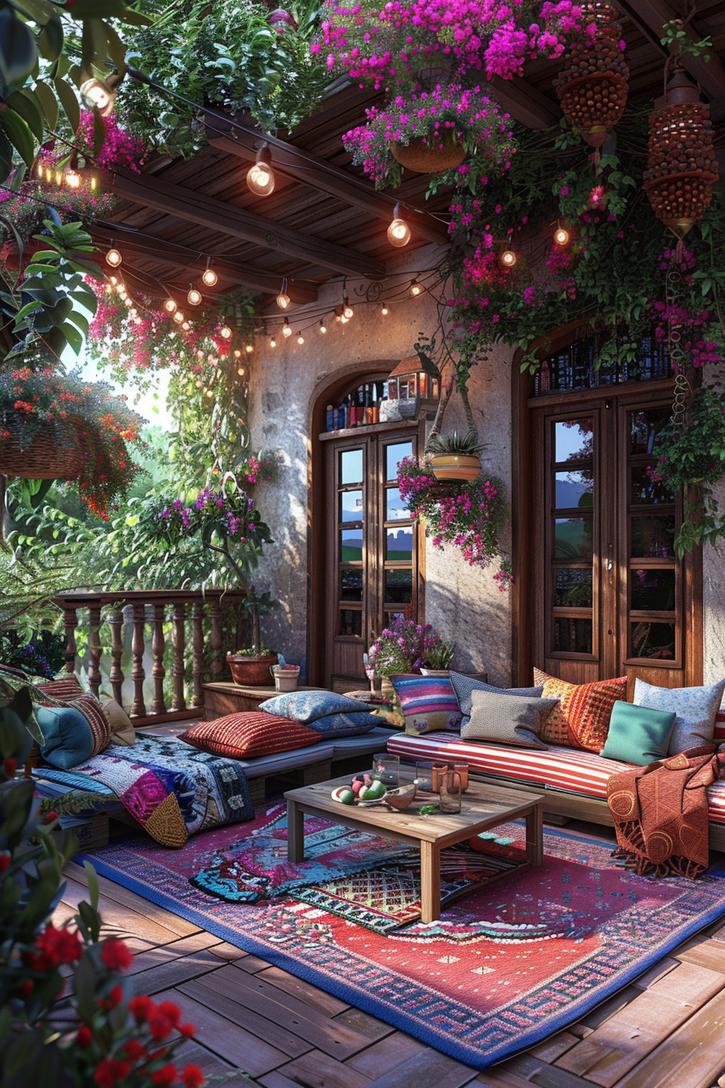
1. Boho Patio with Cozy Vibes
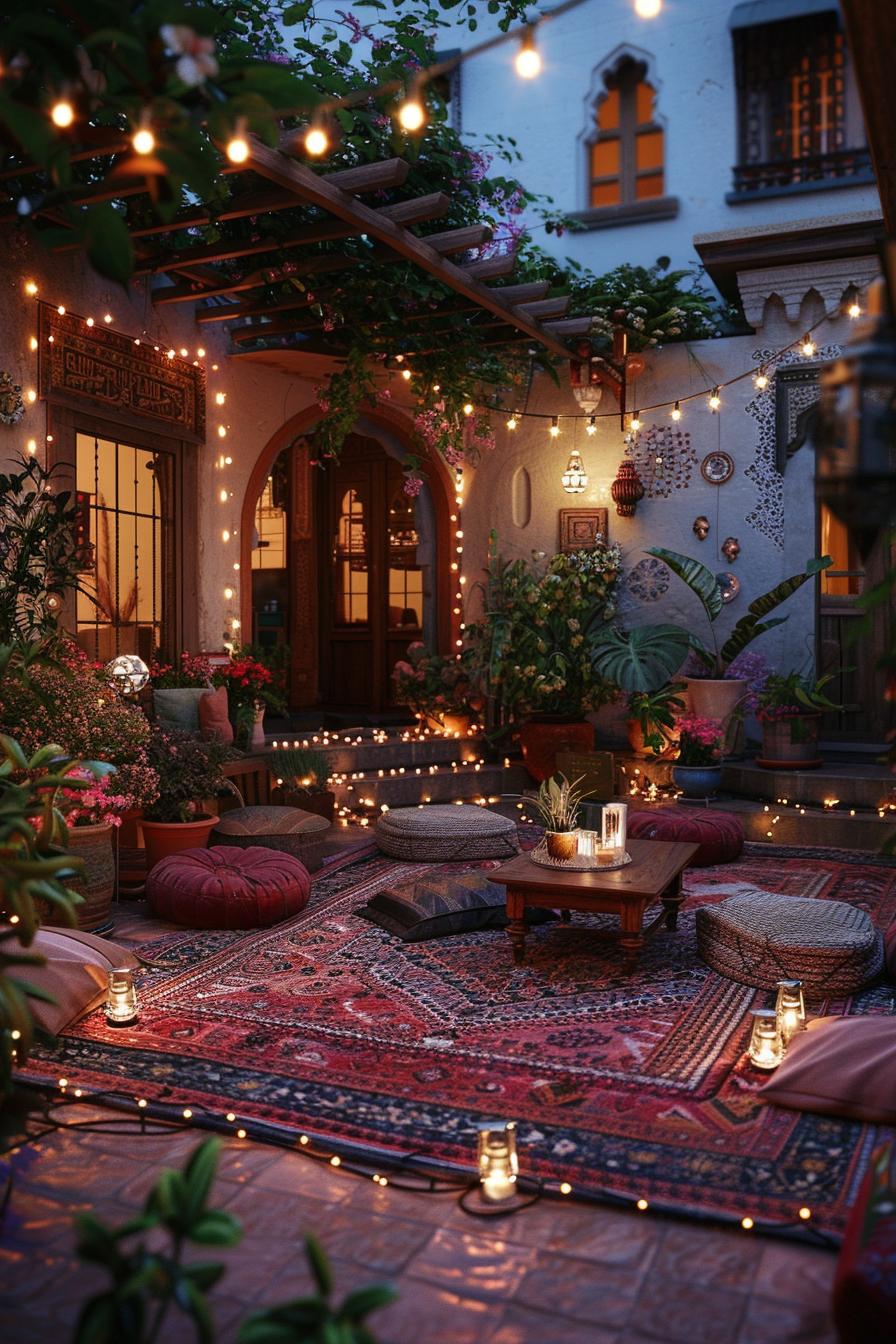
Boho works by layering: a base outdoor rug (5×7 ft polypropylene, $80–150), 3–5 floor cushions or poufs in mixed warm tones ($30–60 each), low seating like a daybed or pallet sofa, and overhead café lights or fairy lights. The aesthetic depends on textile density, under-furnished, it reads as a yard sale; over-furnished, it reads as storage.
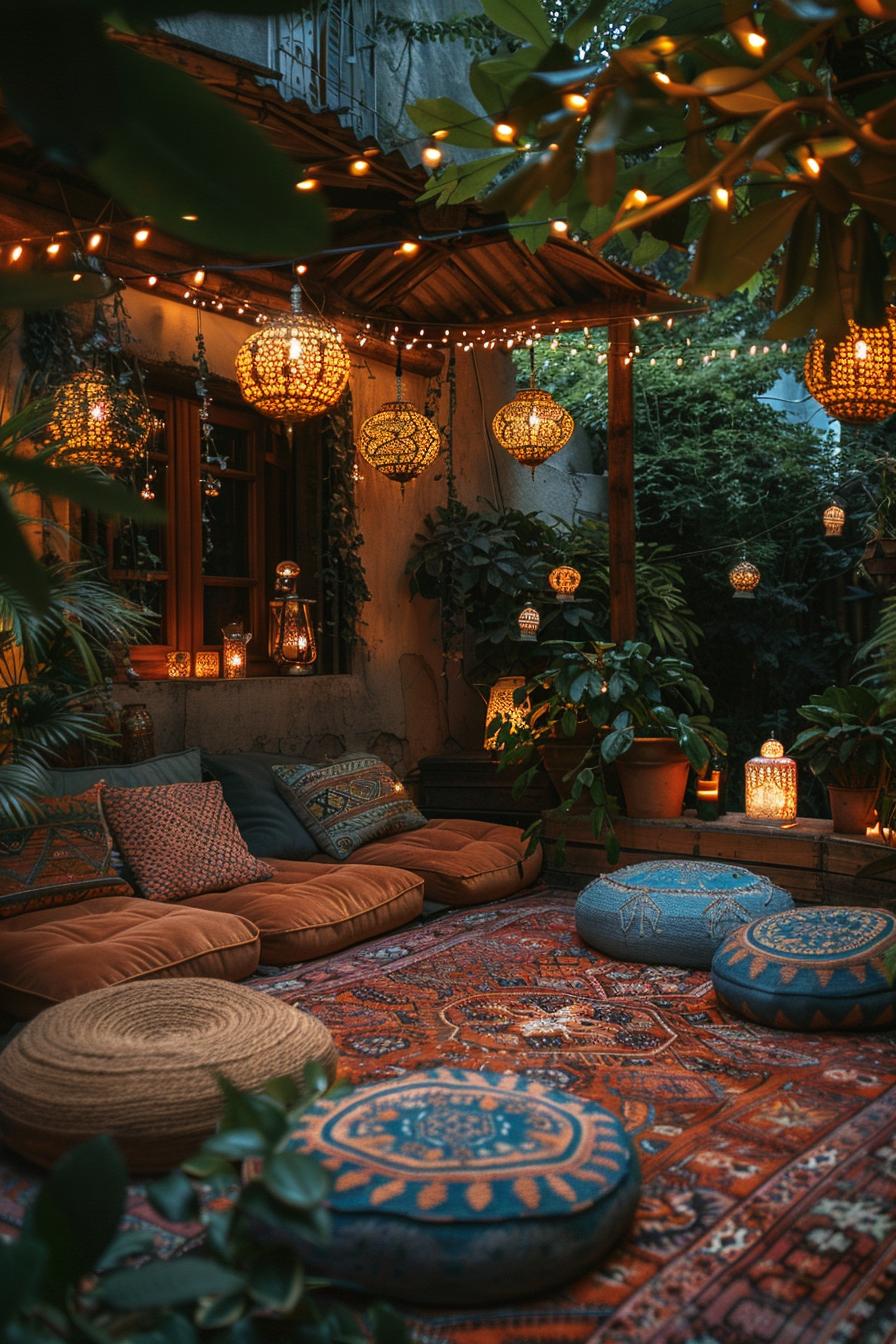
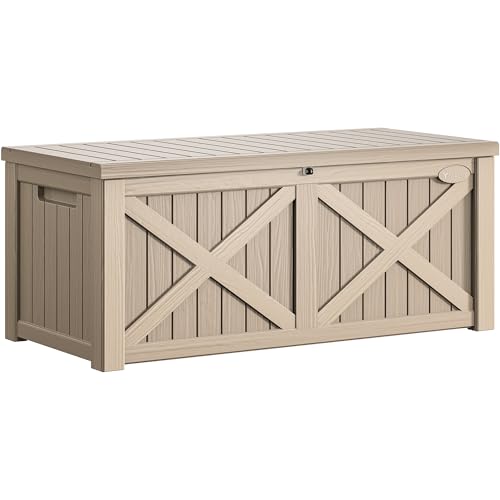
Storage and longevity: outdoor-rated textiles (Sunbrella, Outdura) cost 2–3x more than indoor cushions but survive 3–5 years vs. one season for indoor cotton. The cheap-fabric route works only if you have a 50-gallon deck box (Suncast or Keter, $80–150) to bring everything in nightly. Café lights: commercial-grade strands like Feit’s 48-ft set at $29–45 outlast dollar-store versions by years.

Shop this style 👇


2. Tranquil Bamboo Zen Patio Retreat
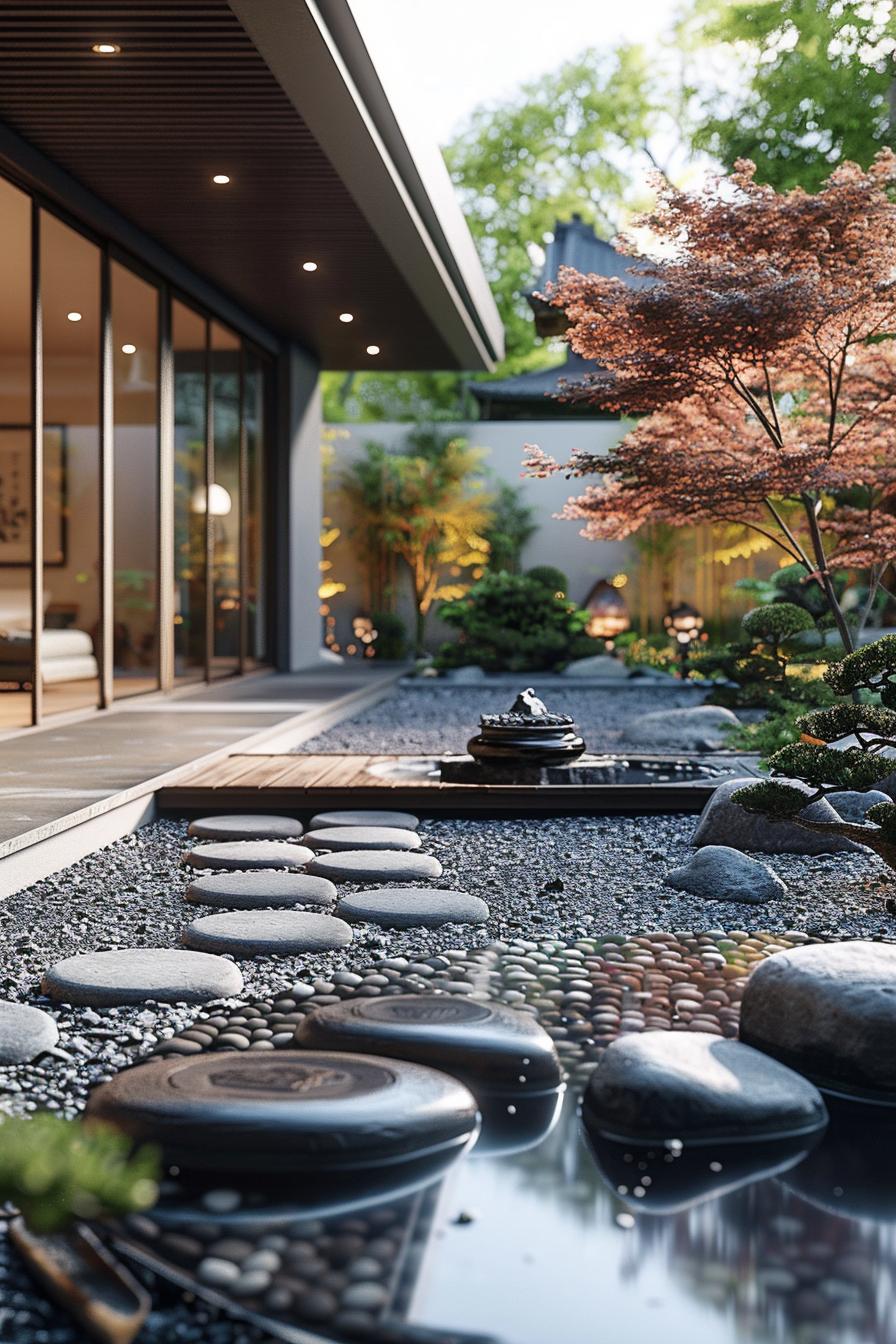
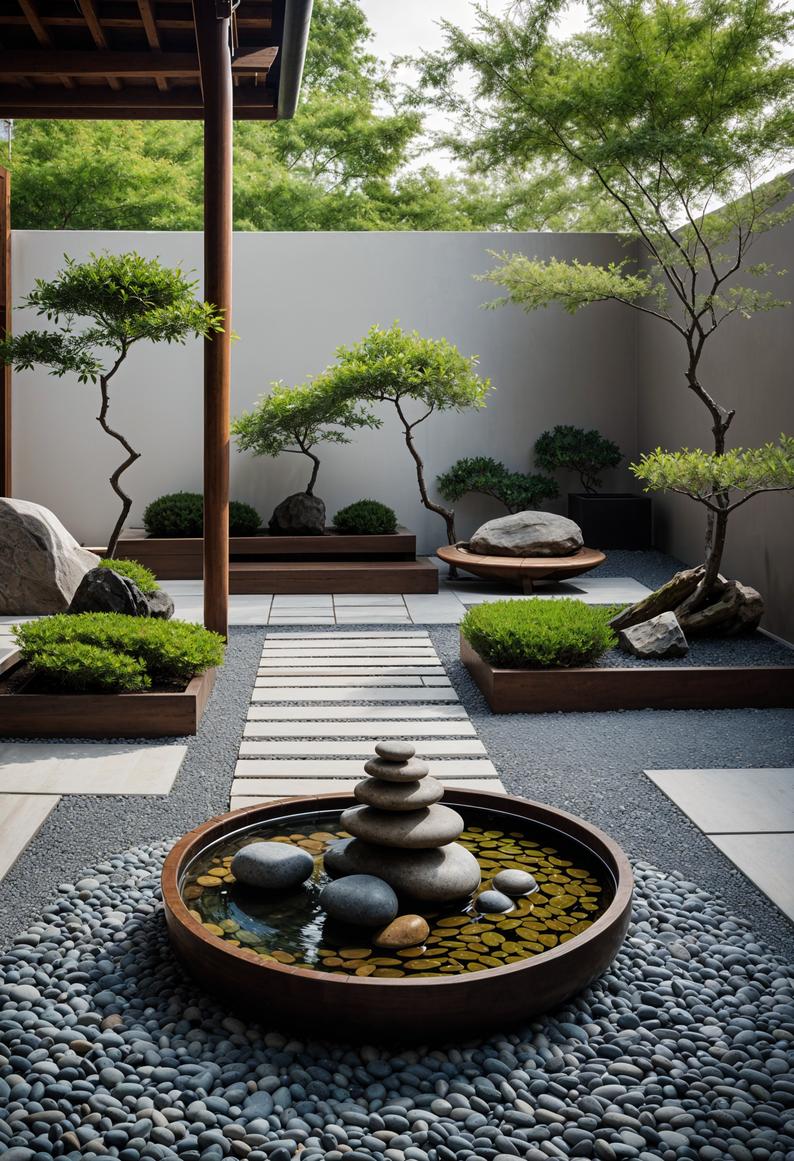
A minimalist Japanese-influenced patio is the discipline of subtraction. Three elements do almost all the work: a fine-gravel or sand surface (decomposed granite, $5–8 per 50-lb bag), a single bamboo water feature (shishi-odoshi-style “deer scarer” runs $80–200; pump-fed bamboo spouts $40–100), and one or two accent plants, Japanese maple, bamboo grass, or moss in a low container.
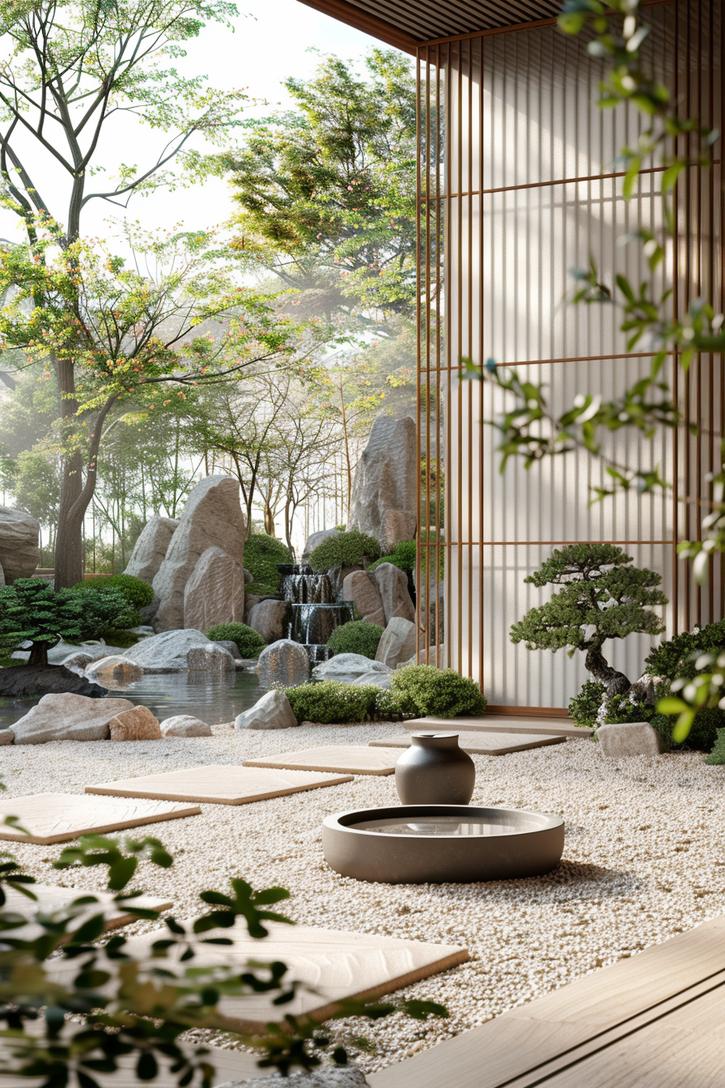
The maintenance reality: raked gravel patterns last about a week before leaves and pet hair disrupt them. Plan to refresh the pattern weekly with a bamboo or wooden rake ($15–25). Running bamboo (Phyllostachys) is invasive and will tunnel under fences; if you want bamboo in-ground, use clumping varieties (Fargesia) or contain running bamboo with a 30″-deep root barrier.
Shop this style 👇


3. Vivid Moroccan Patio Retreat
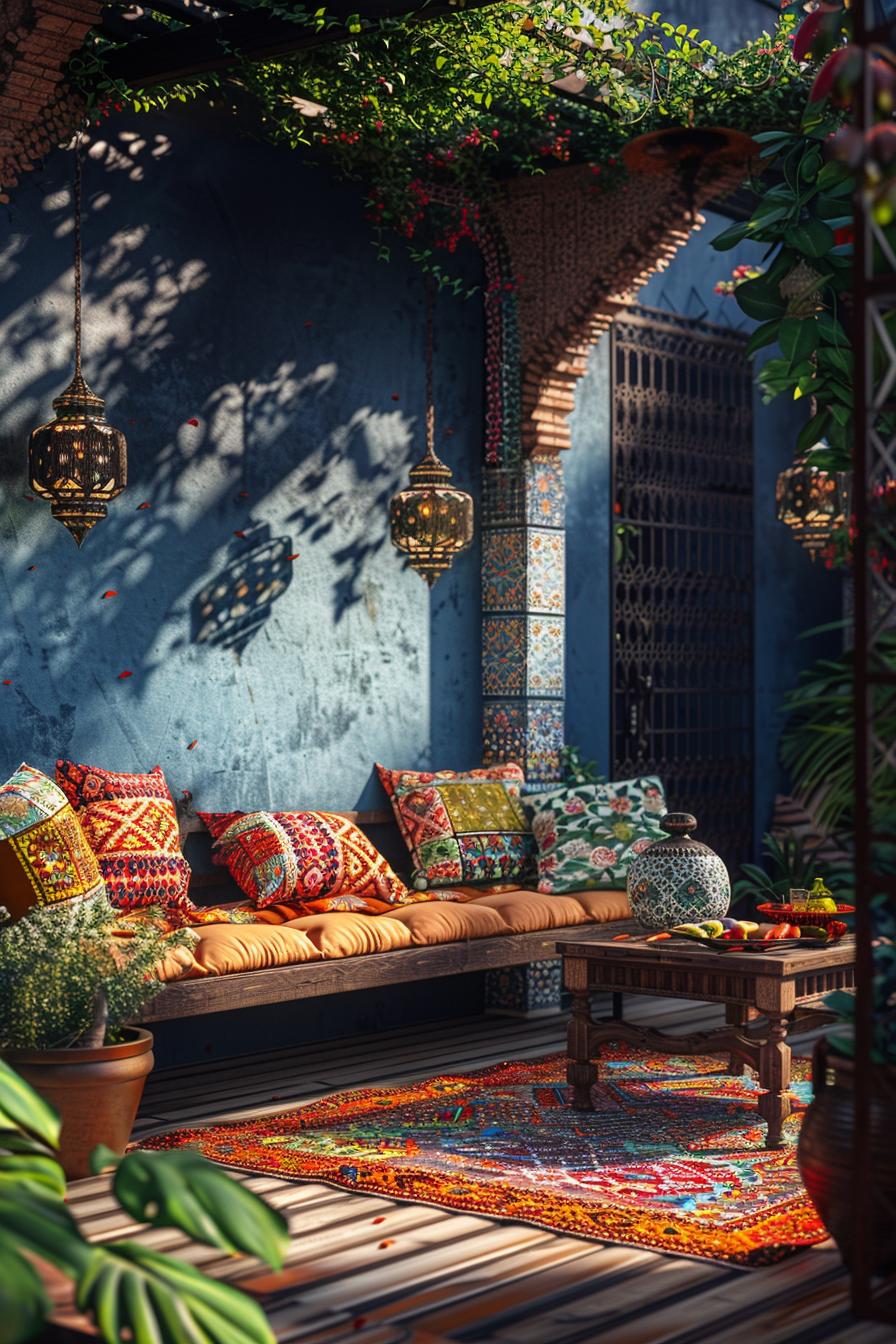
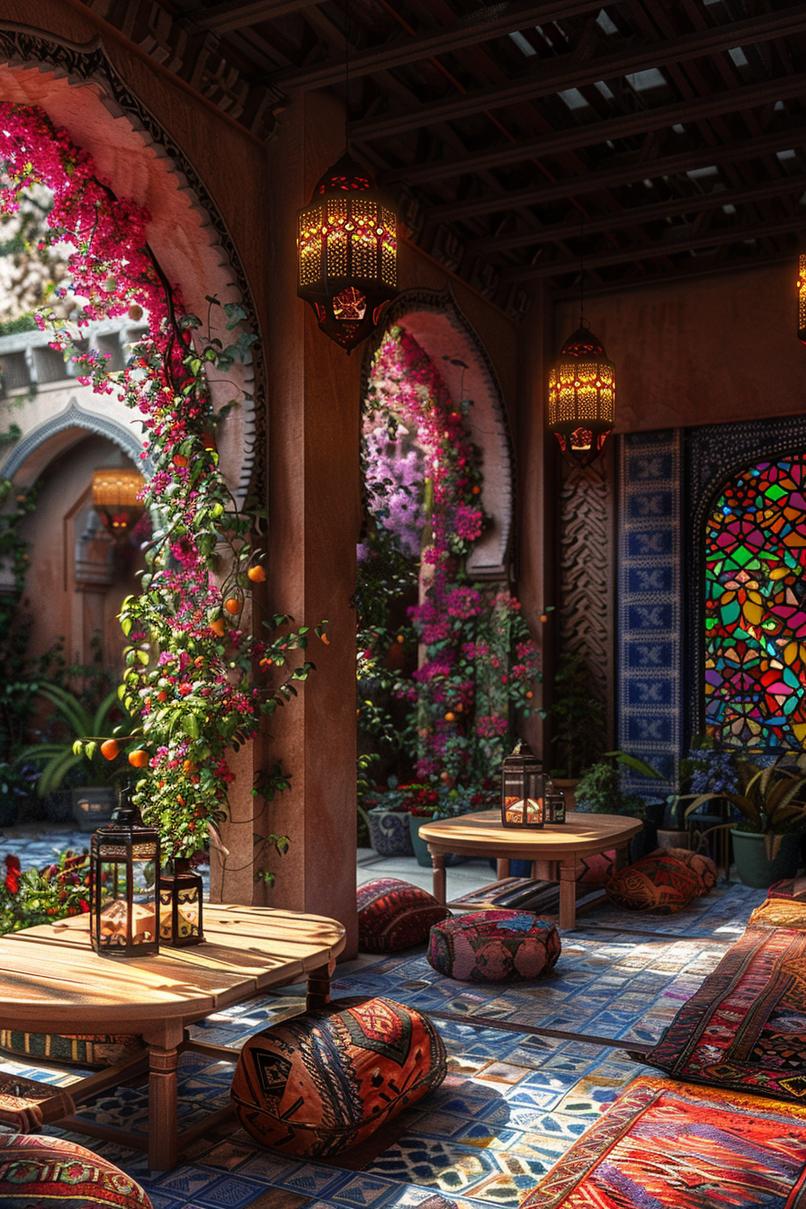
The Moroccan look hinges on three signature elements: zellige or Moorish-pattern tile, low platform seating with bolster cushions, and pierced-metal lanterns that throw geometric shadows on surrounding walls. Authentic zellige tile is hand-cut and expensive ($25–80 per sq ft); cement tile alternatives ($8–18/sq ft) give the same visual with a different feel underfoot. Like Talavera, glazed Moroccan tile is slippery when wet, use it on walls, fountain surrounds, and table inlays rather than as full floor field.
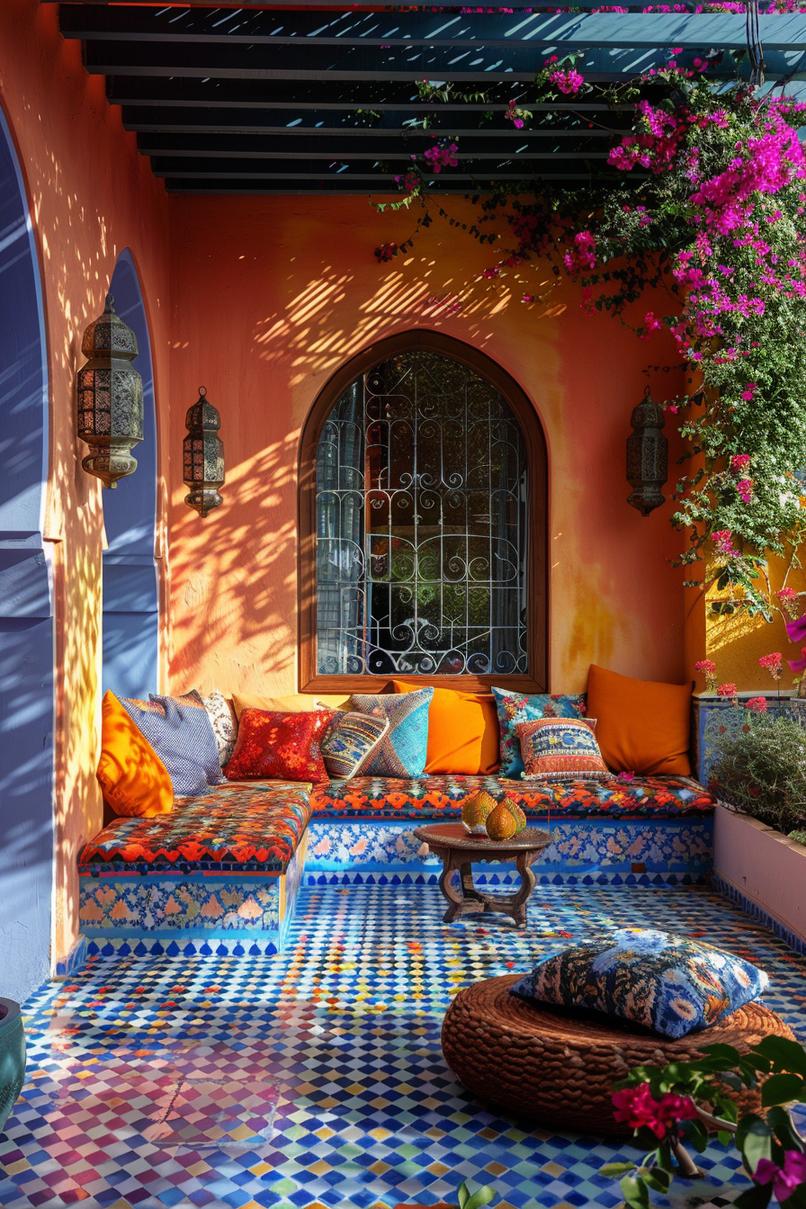
Low-seating reality: floor-level cushion seating (10–14″ off the ground) is the cultural standard but unfamiliar for most Western adults. Plan to add bolsters along walls so guests can lean back; without back support, an hour of low seating becomes uncomfortable. A few hanging Moroccan lanterns ($40–150 each in pierced brass or tin) at varying heights create the dappled light pattern that’s the signature visual.
Shop this style 👇


4. Farmhouse Patio Design with Steel

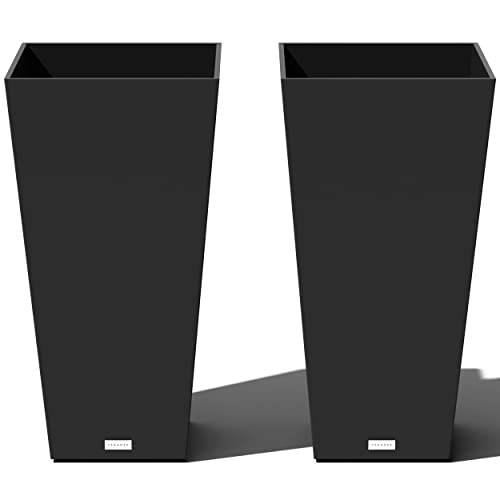
Galvanized steel planters (large stock-tank style, 2×4 ft, $80–180) are the visual anchor of the modern farmhouse look. They take heavy plantings, herbs, vegetables, dwarf fruit trees, without rotting like wood, and the patina deepens over years. Drill 4–6 half-inch drainage holes in the bottom before planting; without drainage, roots rot and the tank becomes a mosquito breeding pool within a week.
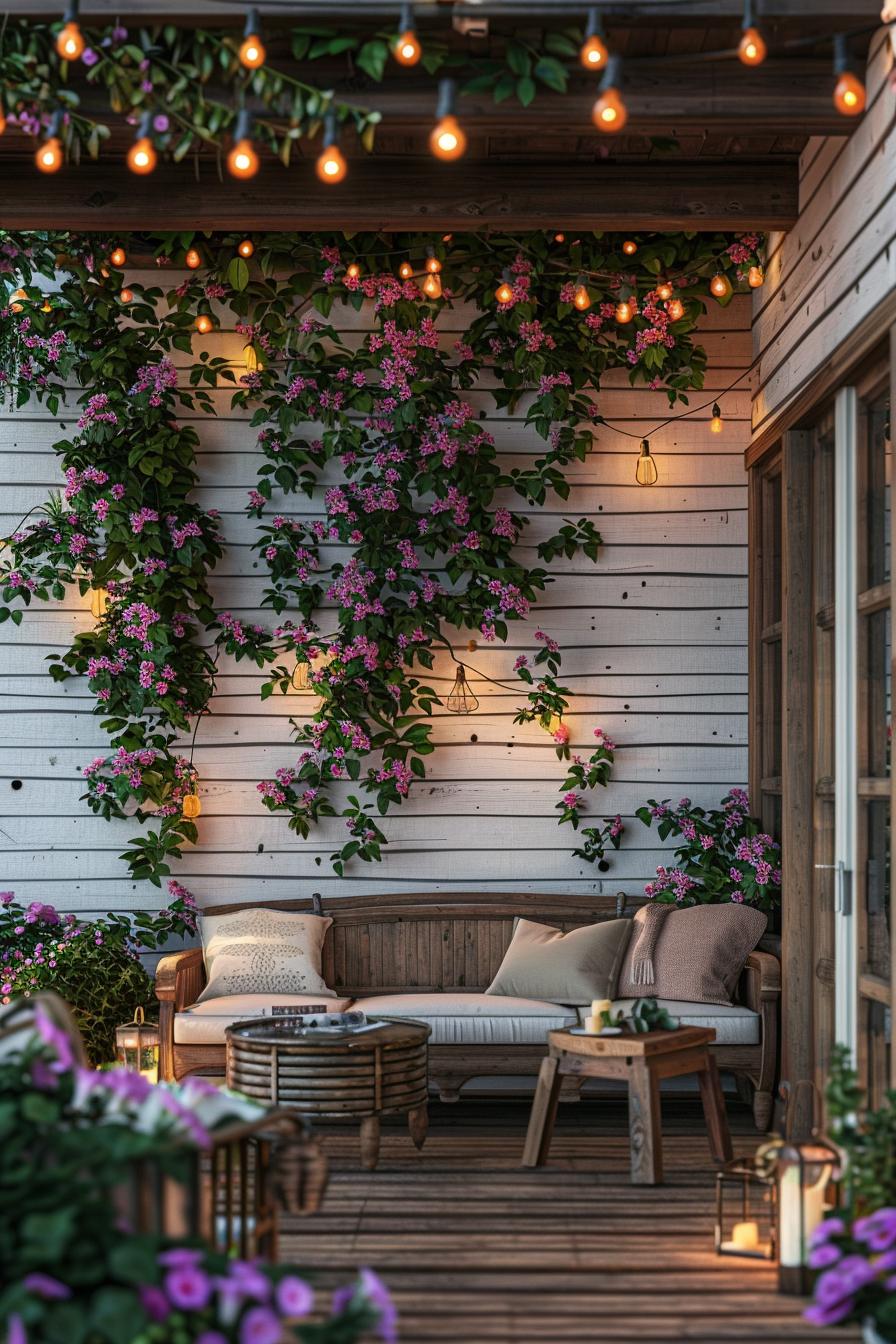
Pair with reclaimed wood and white linen. The steel reads industrial on its own; a weathered-pine farmhouse table (or a salvaged barn door turned table, $50–150 at architectural salvage), white-painted Adirondack chairs ($60–120 each), and white outdoor cushions soften it into the farmhouse aesthetic. Galvanized steel does dent under impact, if you have kids or play equipment nearby, expect cosmetic dings.


5. Eco-Friendly Patio Design Ideas
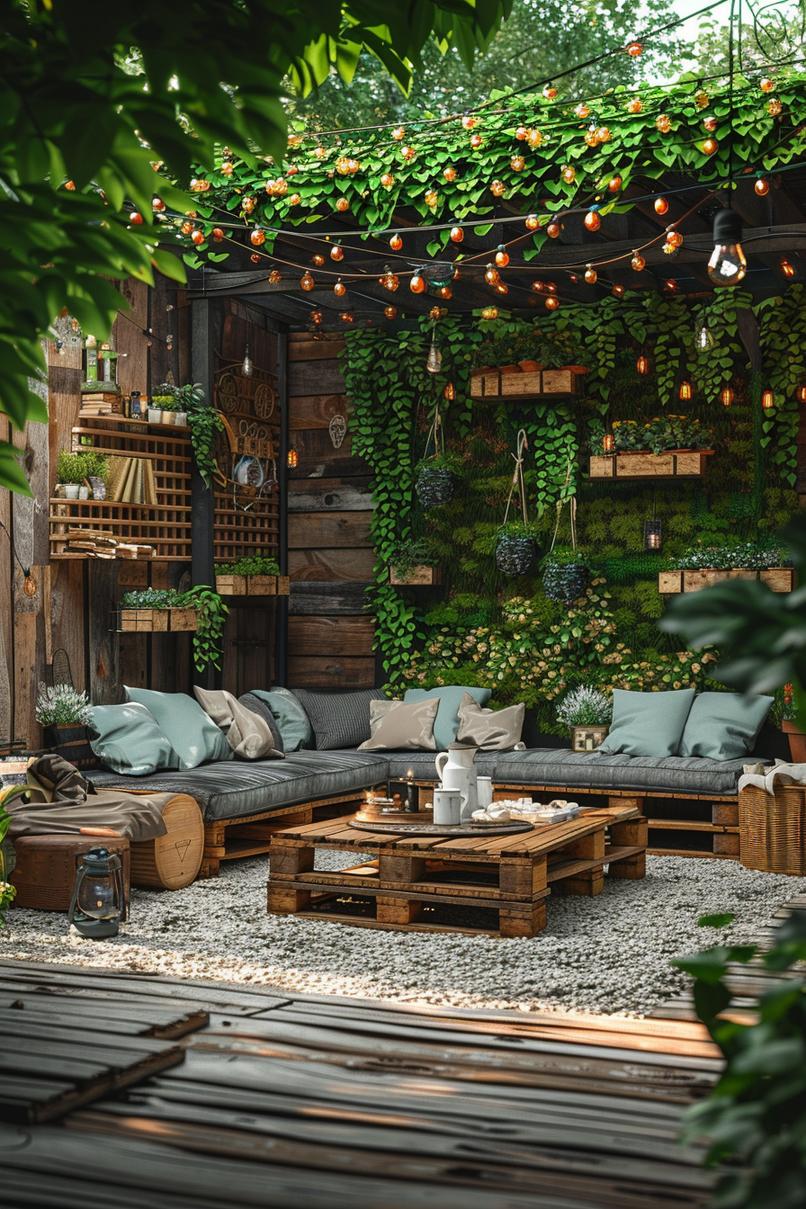
An honest eco-patio combines three principles: reuse instead of new (upcycled wood furniture, secondhand pots), vertical growing instead of horizontal (uses less water, more food per square foot), and rainwater capture for irrigation. A 50-gallon rain barrel ($80–150) connected to a downspout captures enough water for a 3×6 ft vertical garden through most summer dry stretches in temperate climates.
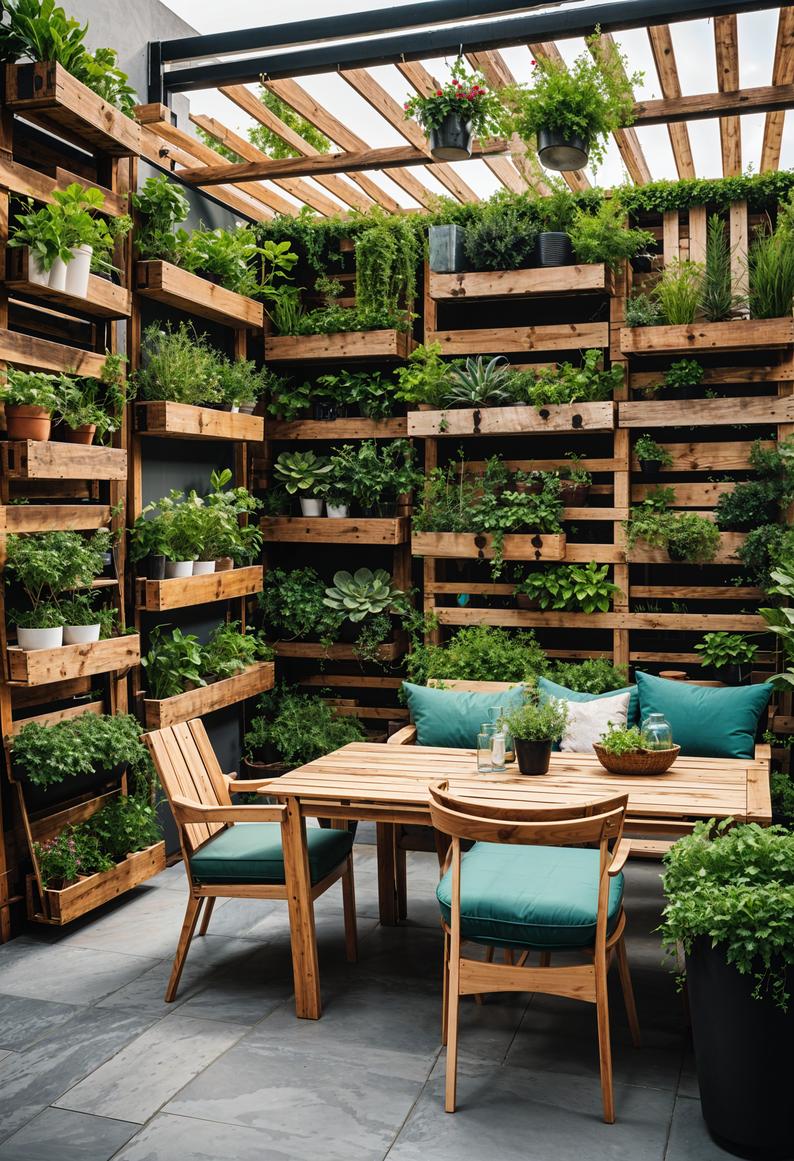
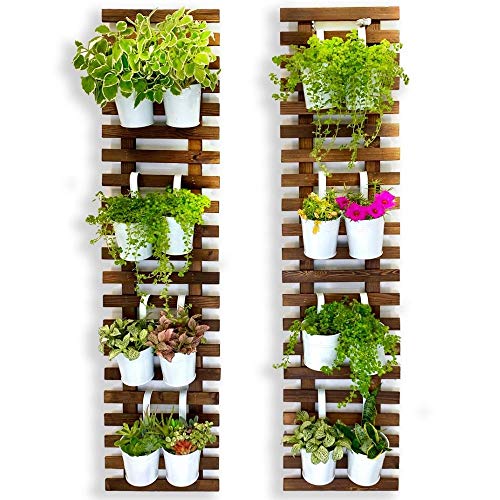
Vertical garden options ranked by longevity: wood-frame pocket planters ($40–100 DIY) last 2–4 seasons; metal frame planters with felt pockets ($60–180) last 5–8 years; living wall systems with built-in drip irrigation ($200–500+) last a decade. Avoid felt pocket walls in humid climates, the bottom pockets stay wet and rot the substrate fast.
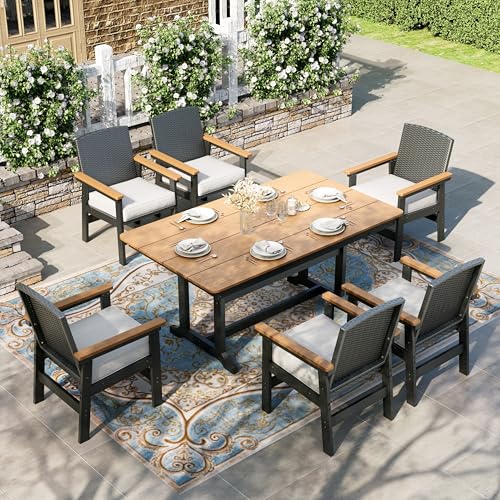
6. Hammock Chair Reading Retreat
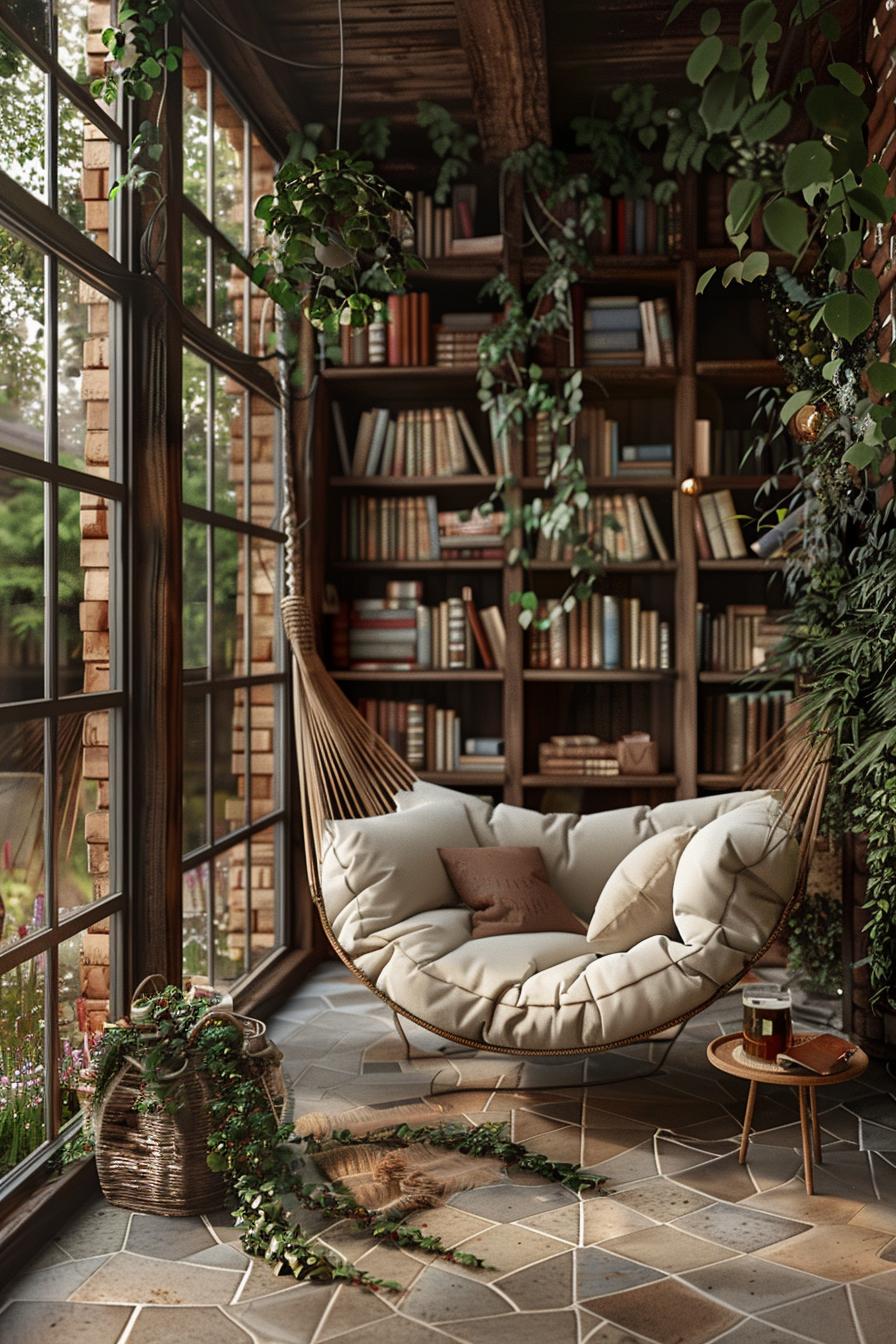
A hanging hammock chair is the smallest-footprint full seating option for a patio, it fits in a corner that’s too small for a chair-and-ottoman setup. The two anchor options: a swing stand (no ceiling required, $80–200 for a metal stand rated to 250+ lbs) or a ceiling/beam mount (requires structural framing and a swing hook rated to 600+ lbs into a joist, not just drywall).
Chair selection: macramé hammock chairs ($40–120) read boho but stretch over months and feel less supportive; rattan or padded canvas chairs ($80–250) hold their shape and are comfortable for extended reading. A small side table for the book and drink completes the setup, without it, you’re constantly putting things on the floor.

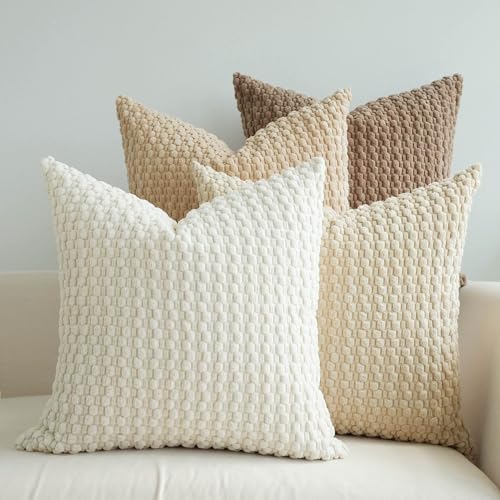
7. Al Fresco Movie Night Extravaganza
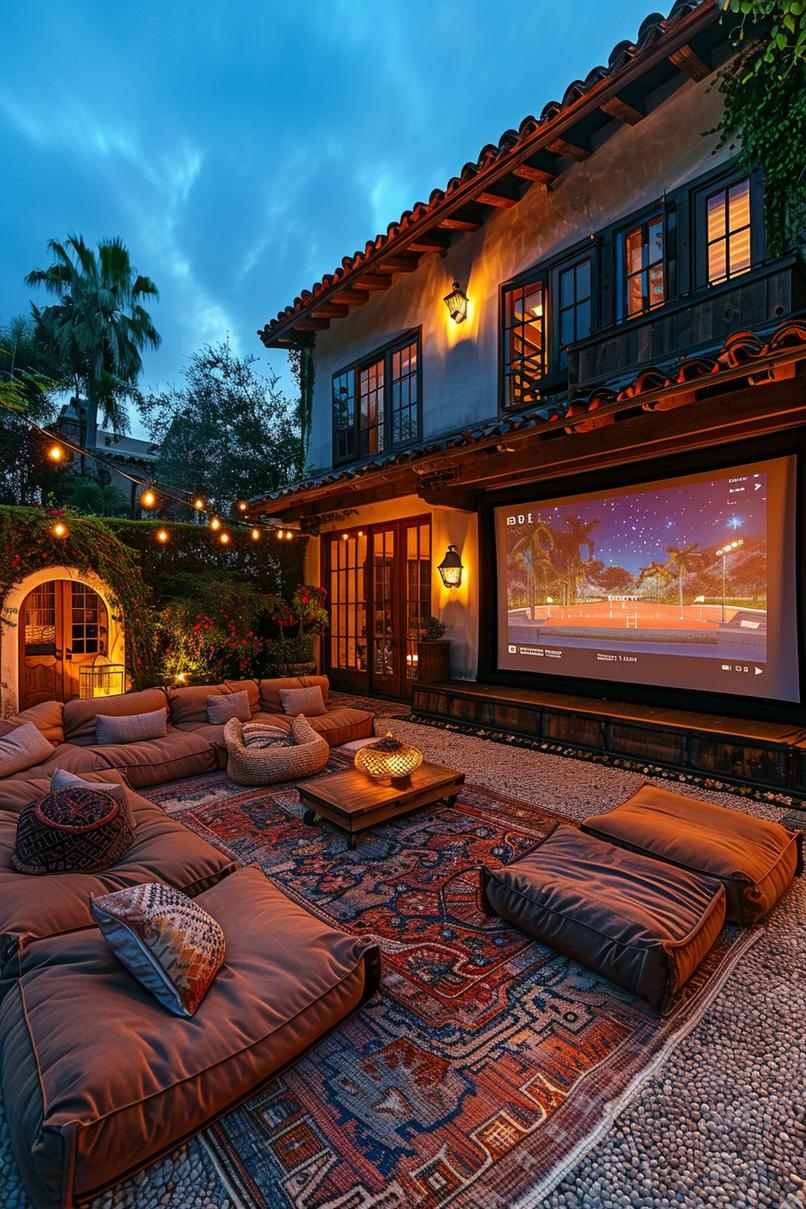
Real cost tiers (2026)

Lumens determine whether it actually works. Projectors under 250 ANSI lumens produce a washed-out image even after sunset. Aim for at least 300 ANSI lumens (note: the entry-level XGIMI Vibe One listed above runs at approximately 240 lumens, below this threshold; it is only suitable in total darkness with a true projector screen), and note that “LED lumens” or “lux” on cheap projector listings are inflated marketing numbers; ANSI lumens is the honest spec. Plan the screen to face away from streetlights and neighbor porch lights; ambient light affects picture quality more than projector brightness. Start movies 30–45 minutes after sunset.


8. Seaside Charm: Rope and Driftwood
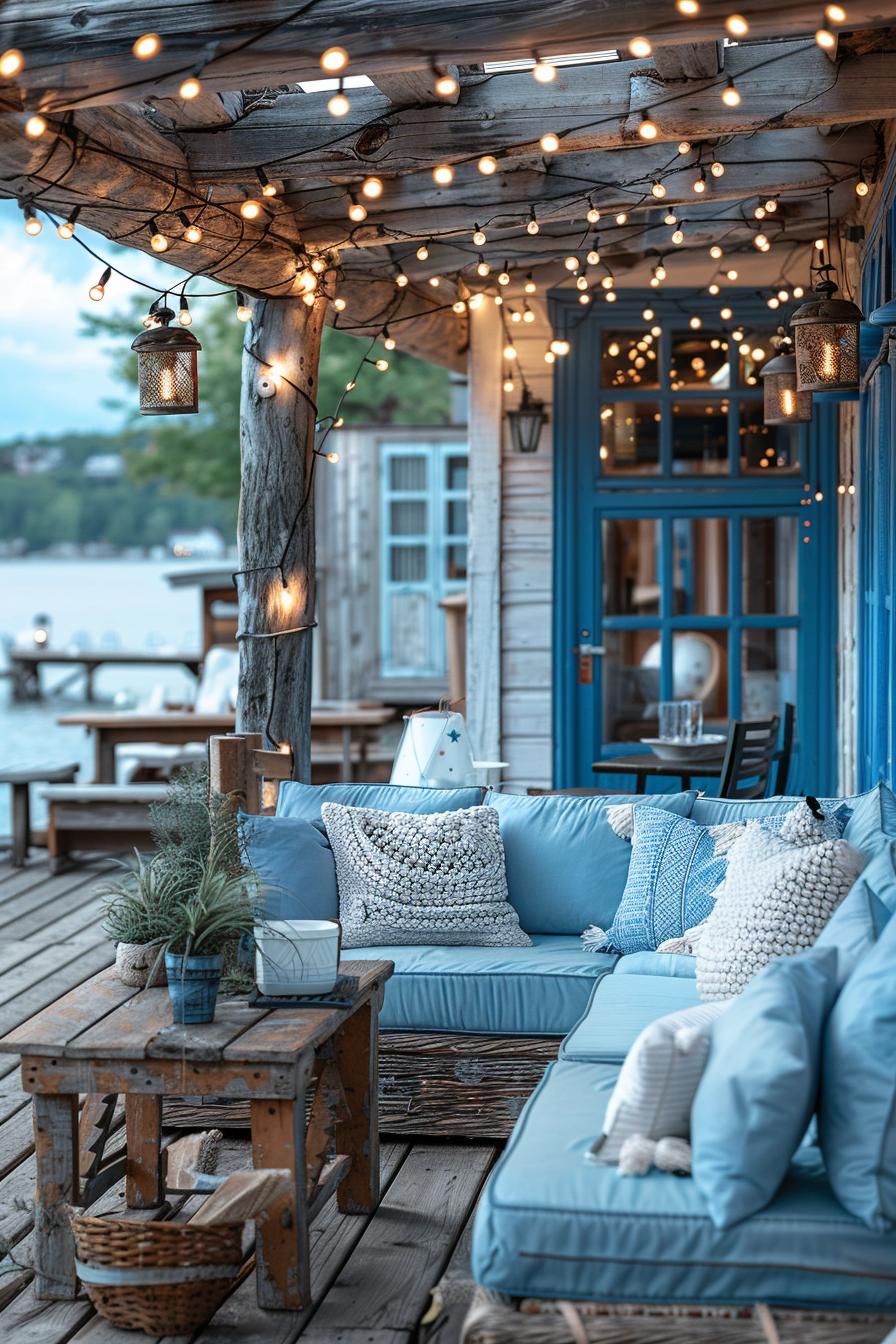
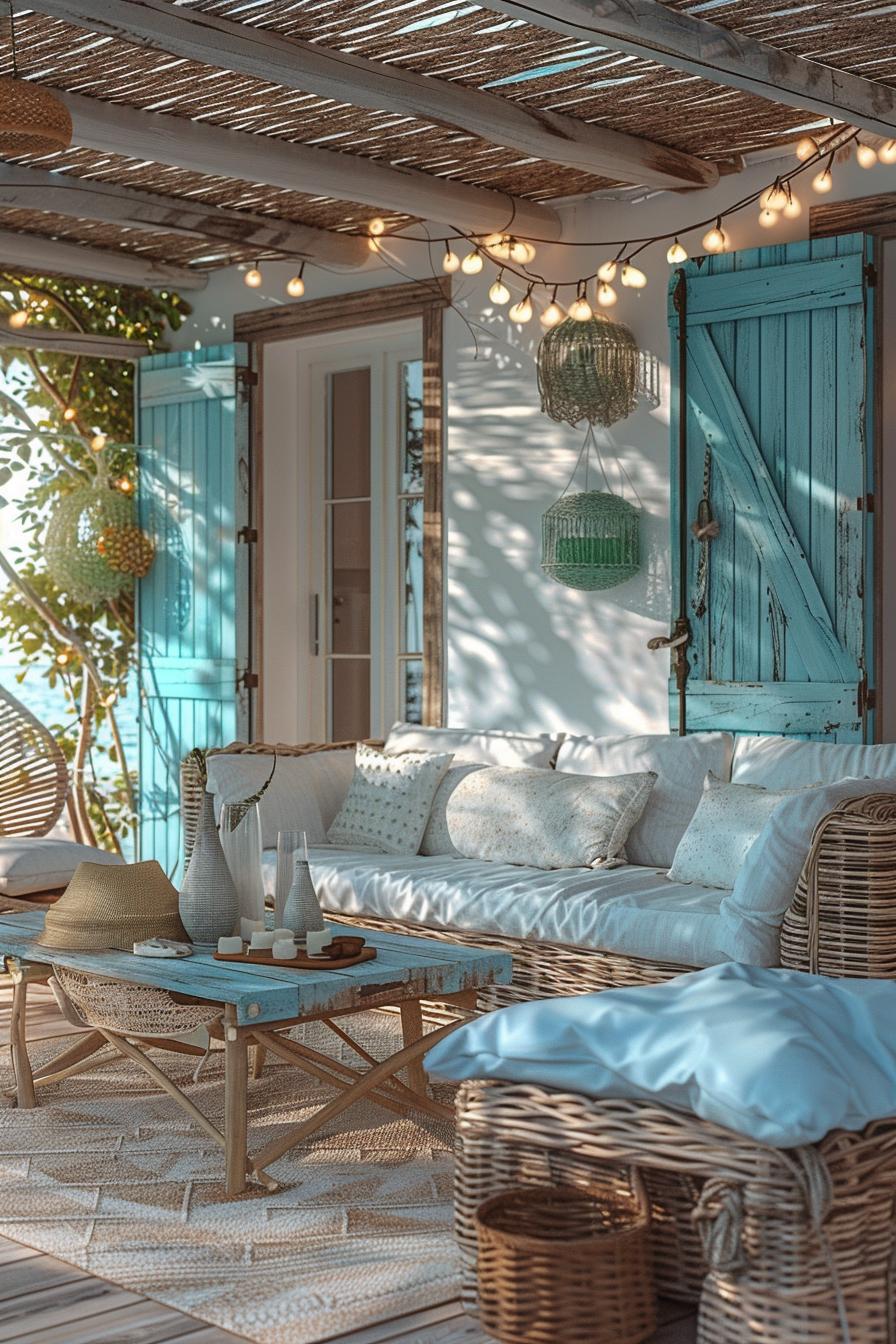
The coastal-rope-and-driftwood look uses 1/2″ or 3/4″ diameter manila or hemp rope ($1–3 per foot at hardware stores or marine supply), driftwood pieces collected legally from public beaches (check local rules, many state and national parks prohibit removal), and a navy-and-white palette to ground everything. Marine-grade rope ($4–8 per foot) outlasts cheaper natural rope by years and resists UV degradation.

Driftwood prep: beach-collected driftwood often hosts marine bugs and salt residue. Soak each piece in a 1:10 bleach-water solution for 24 hours, rinse, and let dry in the sun for a week before bringing it onto your patio. Untreated driftwood develops mildew in humid climates within months. Outdoor rope lighting (UL-rated for wet locations) costs $40–80 per 25-ft strand and gives the warm nautical glow.
Shop this style 👇



9. Enchanting Garden Patio Oasis
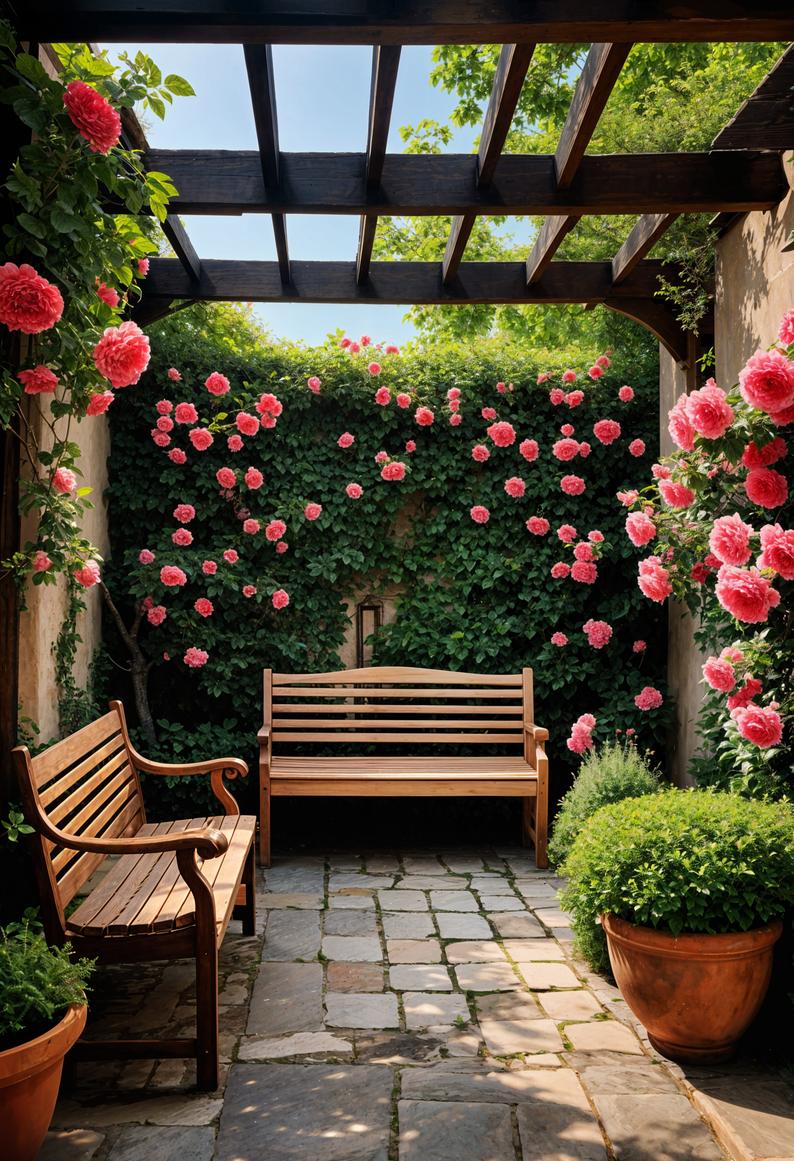
A secret-garden patio works through enclosure and discovery, climbing plants on every vertical surface, a winding rather than straight path, and at least one seating area that isn’t visible from the entry. Fast-growing climbers for quick enclosure: morning glory (annual, full cover in 6–8 weeks from seed), hyacinth bean (annual, similar speed), and clematis (perennial, 2–3 years to fill in but returns annually).
The plants to avoid: English ivy is invasive in most of the US and damages whatever it climbs; wisteria pulls down arbors over years; trumpet vine is aggressive and difficult to remove. Stick with climbing roses (David Austin varieties for English-garden character, $25–50 each), clematis, and honeysuckle (native varieties only) for perennial climbers.


10. Modern Glamour in Outdoor Spaces

Art Deco outdoor design uses three signature elements: geometric pattern (sunburst, fan, chevron motifs in tile, rugs, or wallpaper), metallic accents (gold or brushed brass on planters and lantern frames), and bold contrast (black-and-white plus one strong color, usually emerald, navy, or burgundy).
The hardest part is restraint, Art Deco only works at high concentration in 1–2 sightlines; spread across the whole patio, it becomes pattern-on-pattern overload.

Start with one statement piece, not full commitment. A single geometric outdoor rug ($150–400) plus a pair of brass-toned planters ($60–120 each) is enough to signal the style without overwhelming. Add chevron-pattern throw pillows for cushioning. Avoid mixing Art Deco with rustic or natural-material pieces in the same sightline, the styles don’t share visual vocabulary.

11. Beachfront Oasis: Sand & Fire
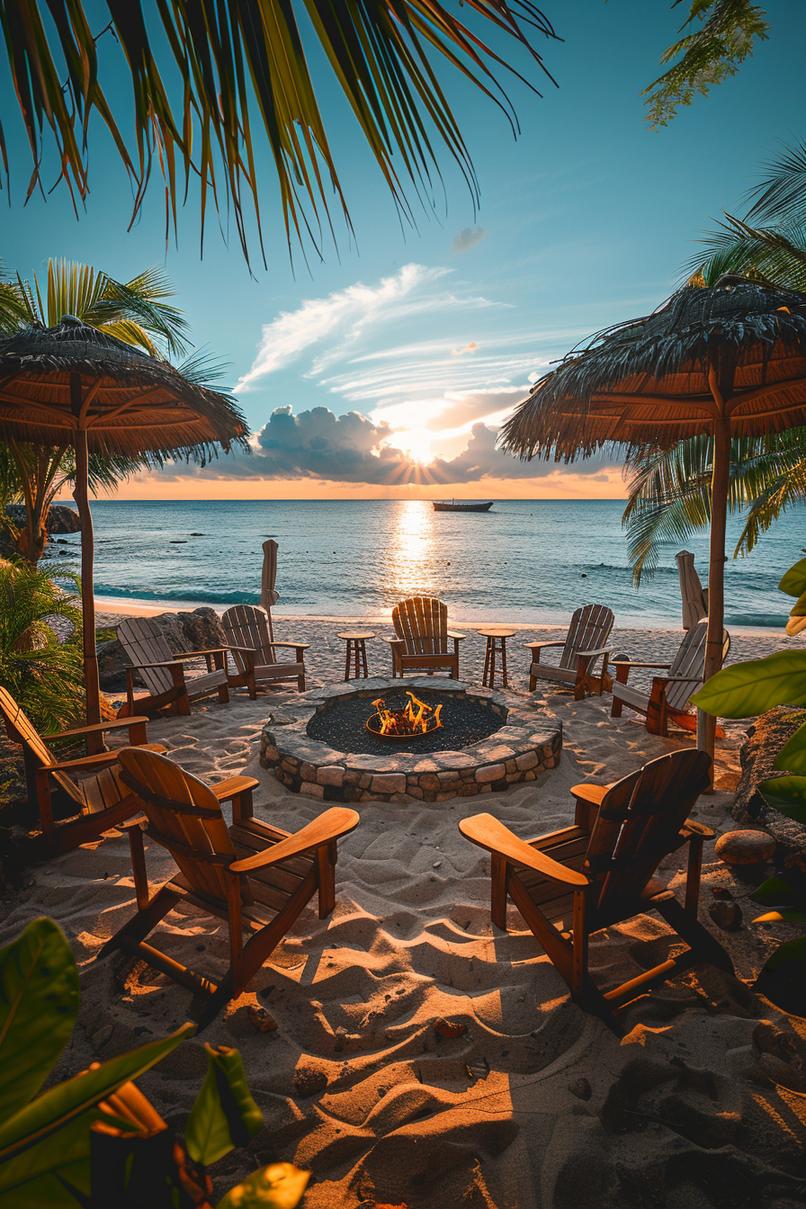
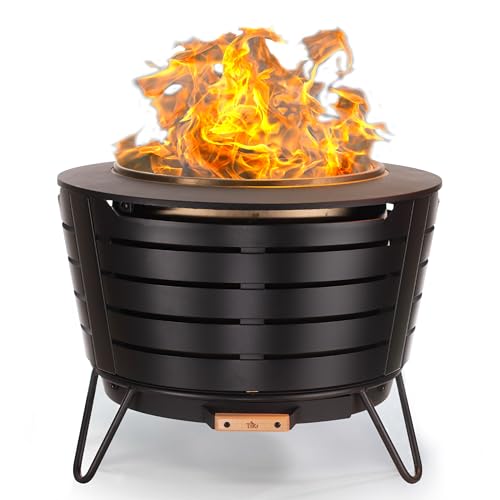
A genuine sand-floor patio uses 30–50 tons of washed white play sand or paver-base sand, for a 200 sq ft area at 4″ depth, you’re looking at $300–700 in bulk sand delivered, plus a contained perimeter (timber edging, concrete curb, or steel landscape edging $4–8 per linear foot) to stop the sand from migrating into surrounding lawn. The fire pit at the center is what makes the space work as a destination at night.
Do this
- Use coarse paver-base sand, not fine play sand (drains better, less tracking)
- Set a stone, brick, or steel ring perimeter at least 12″ tall
- Place fire pit on a concrete pad sunk flush with the sand surface
- Top up sand 1–2 times per year as it compacts and migrates
Avoid
- Don’t use a sand floor if you have indoor pets — they track everything inside
- Don’t skip the perimeter edging; sand spreads onto every adjacent surface
- Don’t place fire pit directly on sand (no thermal mass, fire pit settles unevenly)
- Don’t expect sand to drain in clay-soil regions without a gravel sublayer


12. Vintage Tea Party Inspiration
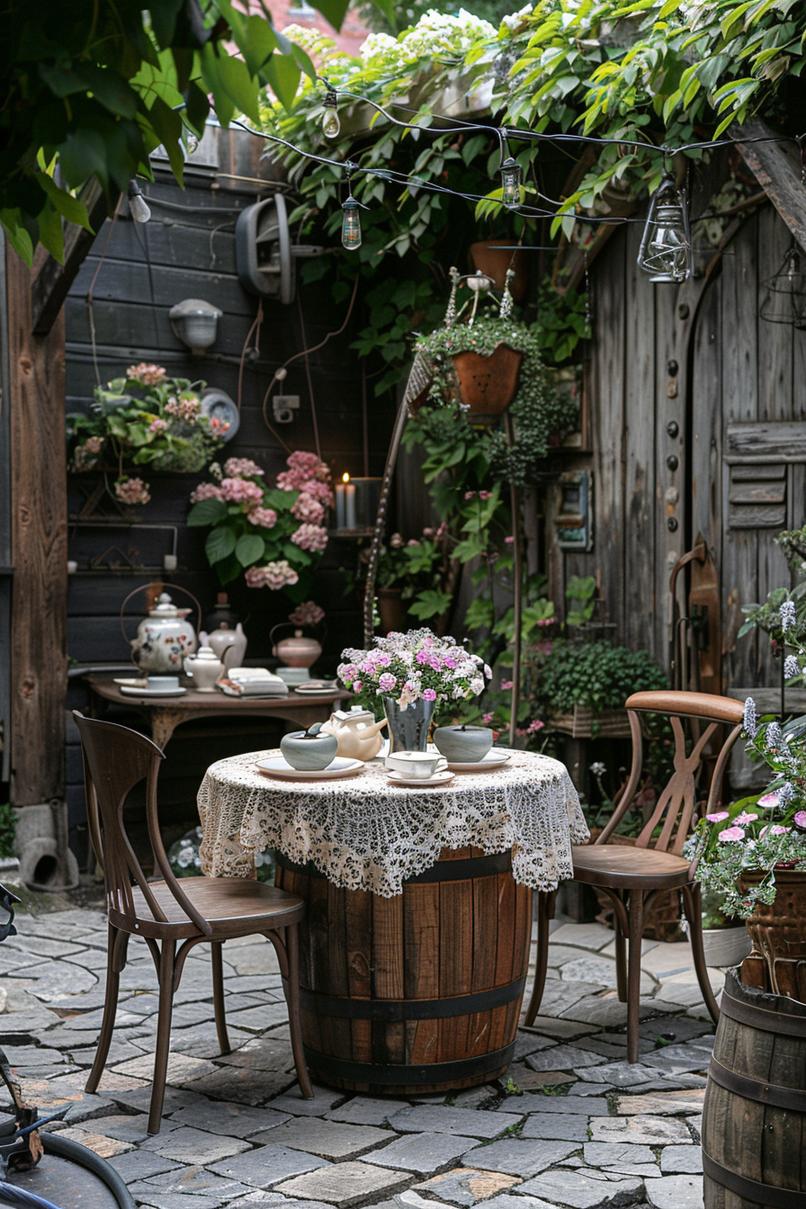
A vintage tea party setup works for a specific occasion (high tea, bridal shower, anniversary brunch) rather than as an everyday patio mode. The signature pieces, mismatched antique china, lace tablecloths, mid-back wicker chairs, and three-tier serving stands, work because they read as set dressing for a planned event, not as ongoing patio decor.
Sourcing the look without estate-sale hunting: rental companies (Borrow, Birch & Brass, local event-rental shops) offer matched-and-mismatched vintage china at $1–4 per place setting. For a 12-person tea, that’s $24–60 vs. potentially hundreds spent at antique stores. For a permanent setup, Replacements.com sells discontinued vintage china patterns at $3–15 per piece. Pair with hand-cut wildflowers in mason jars or crystal vases for the cheapest authentic touch.


13. Mediterranean Terrace Oasis with Olives
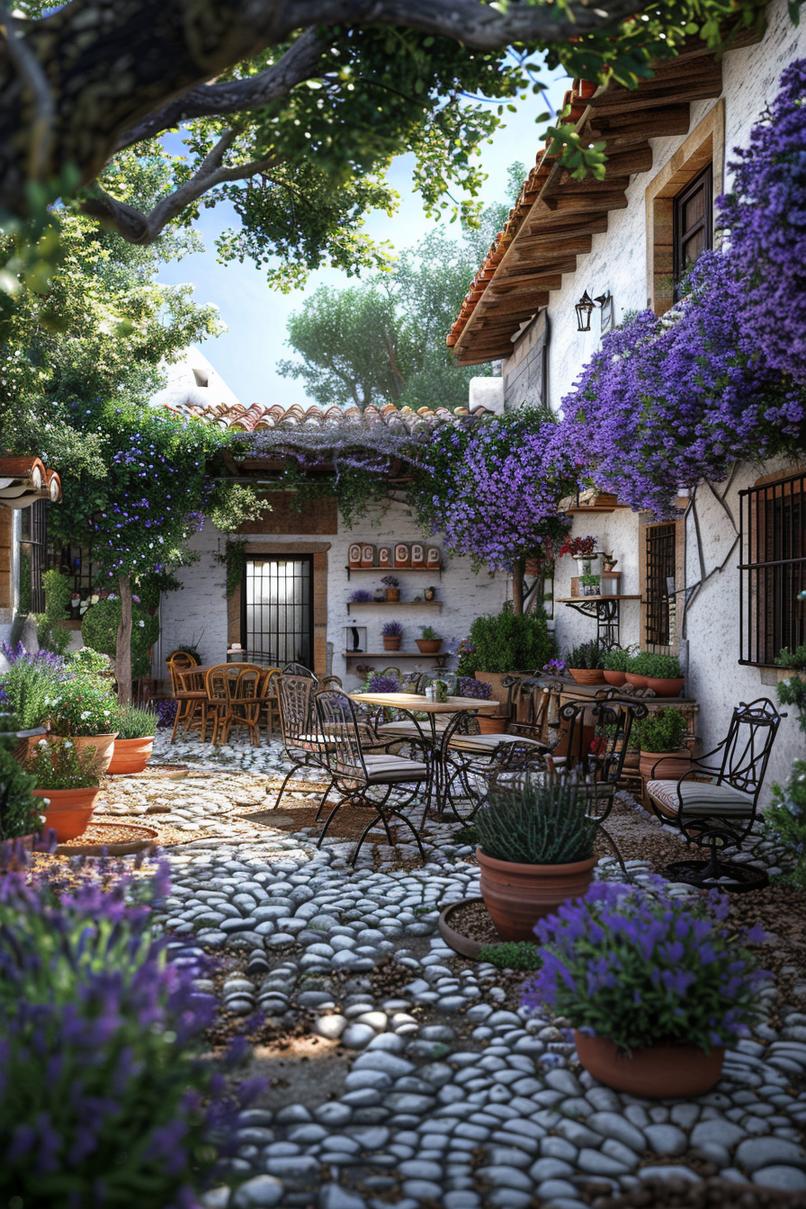
The Mediterranean look anchors on three plants, potted olive, lavender, rosemary, and three materials, terracotta, wrought iron, weathered wood. A 5–7 ft potted olive tree from a nursery runs $200–600 depending on age and size; lavender and rosemary in 1-gallon pots run $8–15 each. The full palette only “reads” Mediterranean if you commit to gray-green foliage and avoid bright flowers; introducing pink petunias or yellow marigolds breaks the visual.
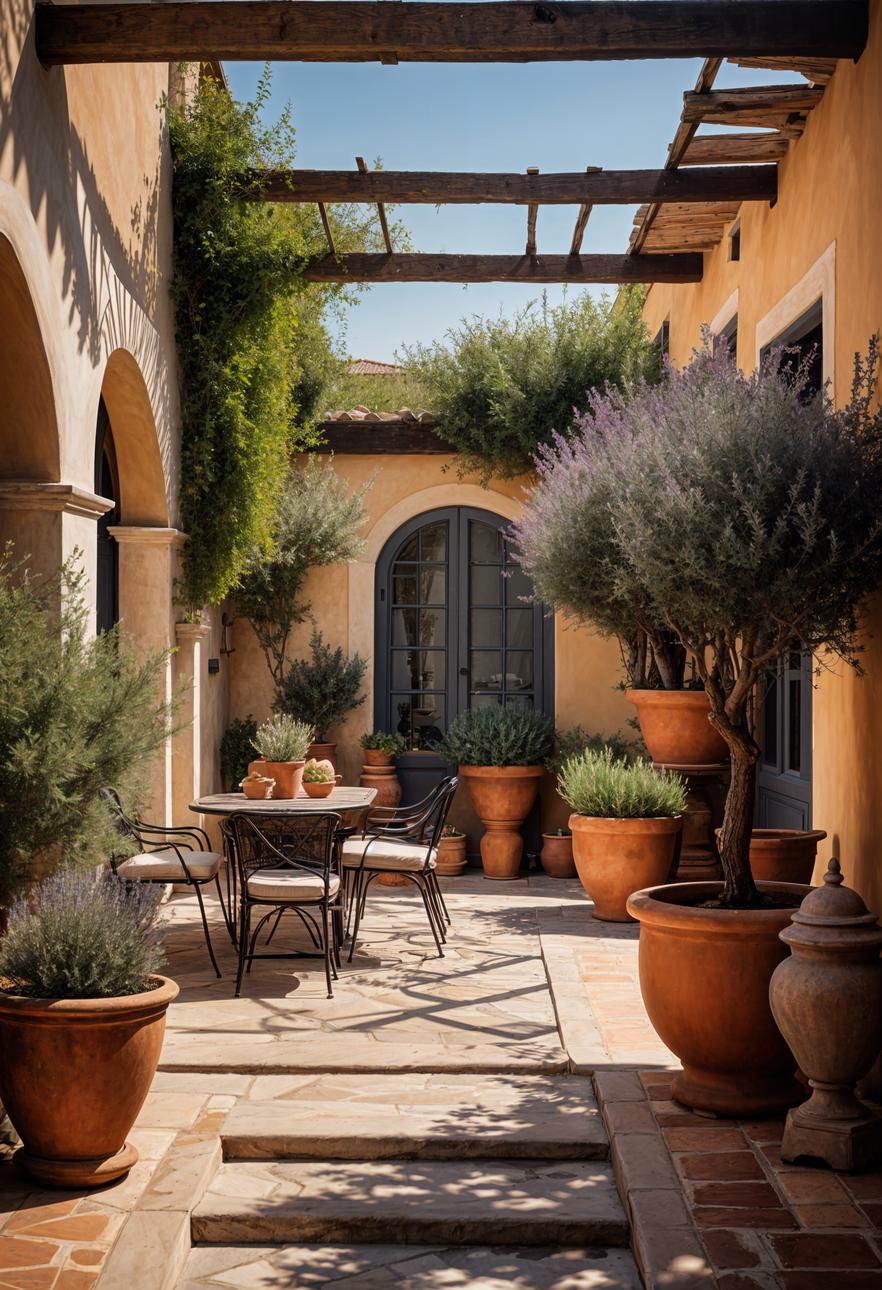
By climate: in zones 9–11, plant olives in ground; they live 50+ years and the look matures with the tree. In zones 7–8, pot-grown olives stay outdoors year-round but stop fruiting reliably. In zones 5–6, treat olive as an indoor-overwintered specimen, substitute with a hardy alternative like Russian olive or hardy bay laurel for the in-ground effect.


14. Tiki Torches & Bamboo Bar
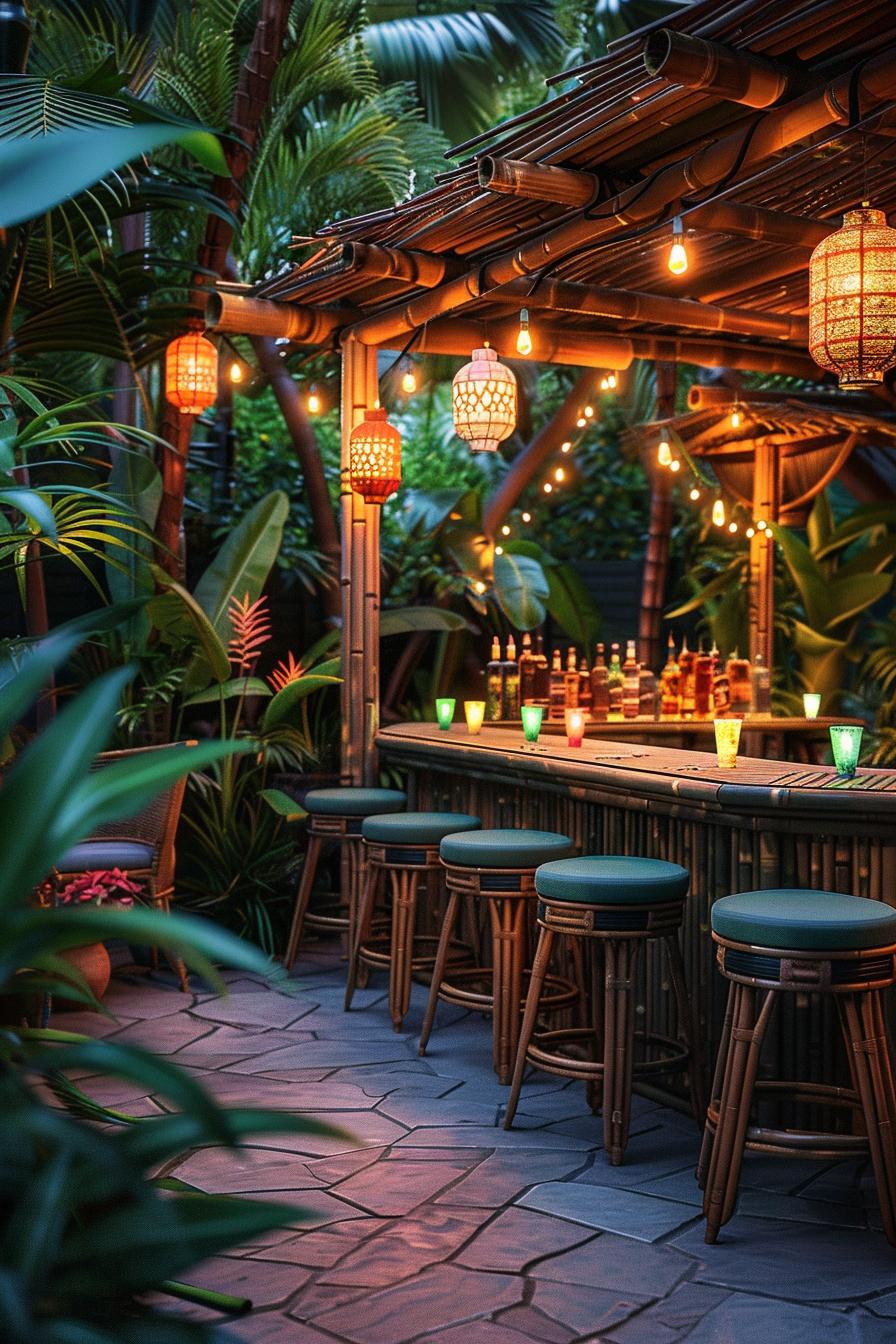
A tiki bar setup is one of the most affordable themed builds — a pre-made bamboo or thatched-roof bar runs $300–800 (Cost Plus World Market, Lowe’s Allen + Roth, and local tiki specialists carry them), traditional bamboo tiki torches run $8–15 each (you want 4–8 staked around the perimeter), and citronella torch fuel adds mosquito control during use.
Fire-safety reality: tiki torches are open flames at face height. Stake them 8+ feet from structures, awnings, and overhead branches; never bring them onto wood decks without metal stake bases; refill in the morning before guests arrive, never near the flame. Citronella effectiveness drops sharply more than 4 feet from the torch, torches near seating help, torches across the patio don’t.
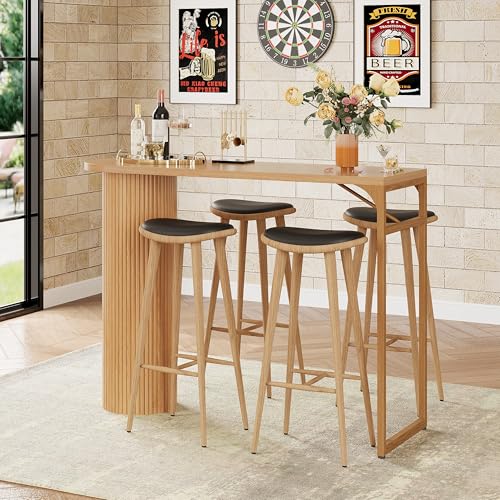

15. Pallet Deck & Colorful Cushions
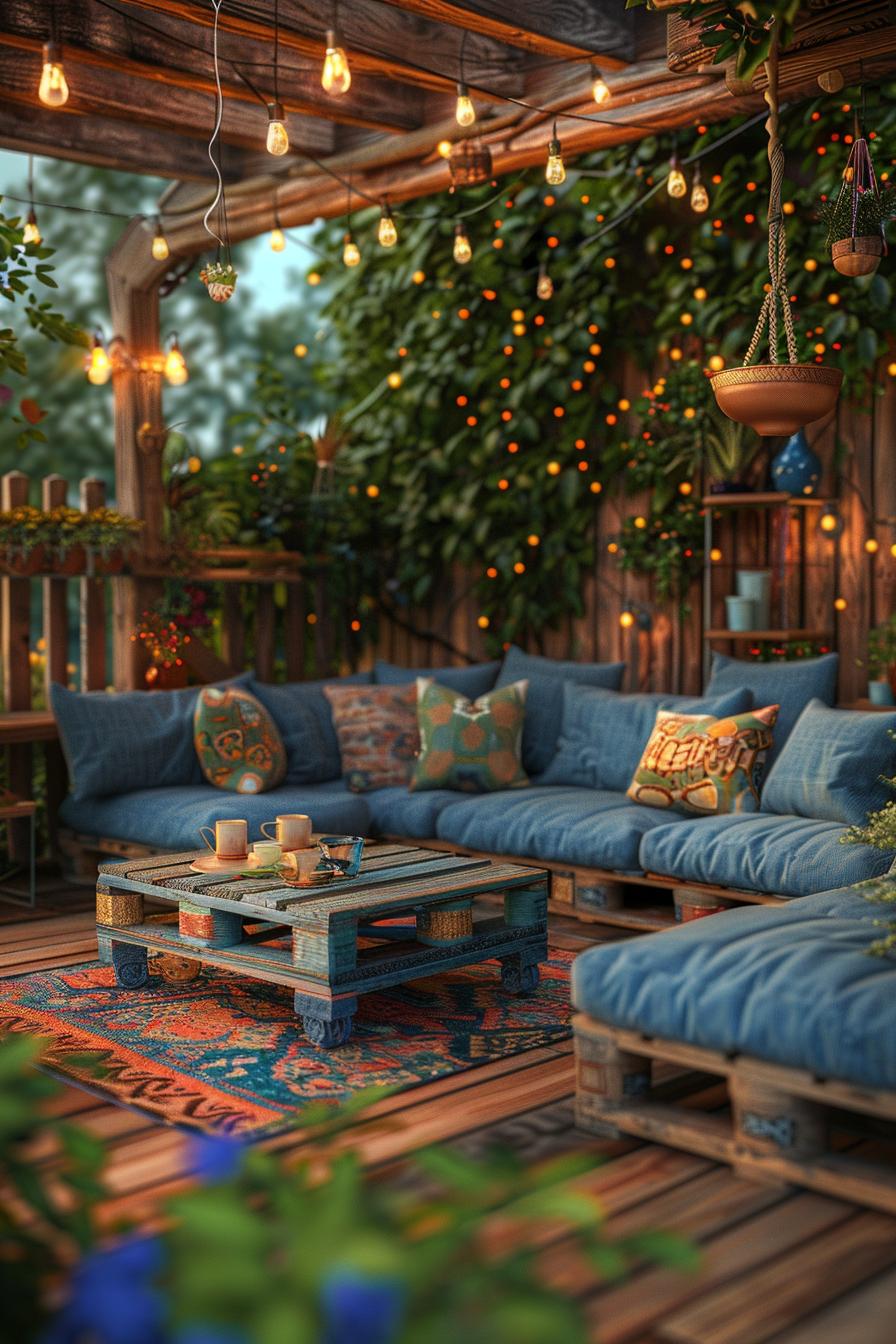
A pallet deck is the cheapest path to a defined outdoor seating area, free or near-free pallets, a weekend of labor, and you have a raised platform and built-in low seating. The critical detail: only use pallets marked HT (heat-treated). Avoid any stamped MB (methyl bromide fumigant). Unstamped pallets are usually domestic and fine.
Finish and longevity: sand to 120-grit, then apply two coats of exterior wood stain plus Thompson’s WaterSeal or similar. Without sealing, untreated pallet wood goes gray and splinters in 1–2 seasons; sealed properly, expect 5–8 years. For cushions, outdoor-rated Sunbrella covers ($40–80 each for replacement covers) over foam inserts outlast indoor decorative pillows by 4–5x.

Shop this style 👇
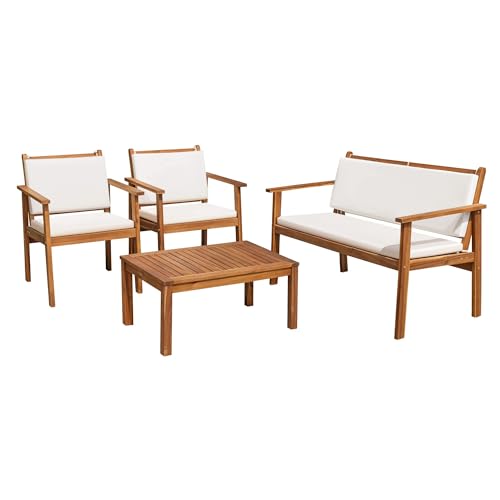

16. Cozy Winter Patio Vibes
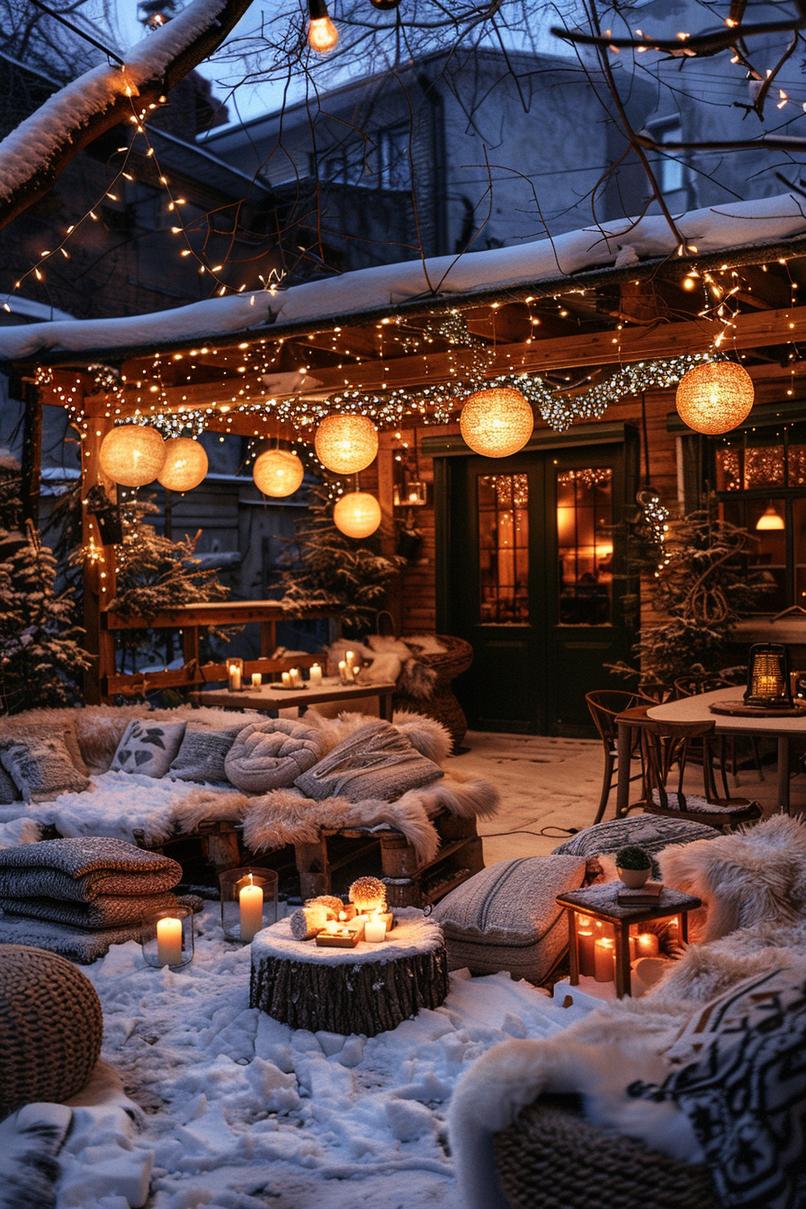
A winter-usable patio in cold climates (zones 5–7) needs heat, wind block, and insulating textiles in that order. Propane patio heaters (Hampton Bay, Fire Sense, Costco Coleman: $150–400) put out 40,000–48,000 BTU and claim a 12–15 ft radius (real-world effective warmth is typically 7–10 ft). Electric infrared overhead heaters ($200–700) are cleaner and quieter but need hardwired 240V power for the larger sizes.
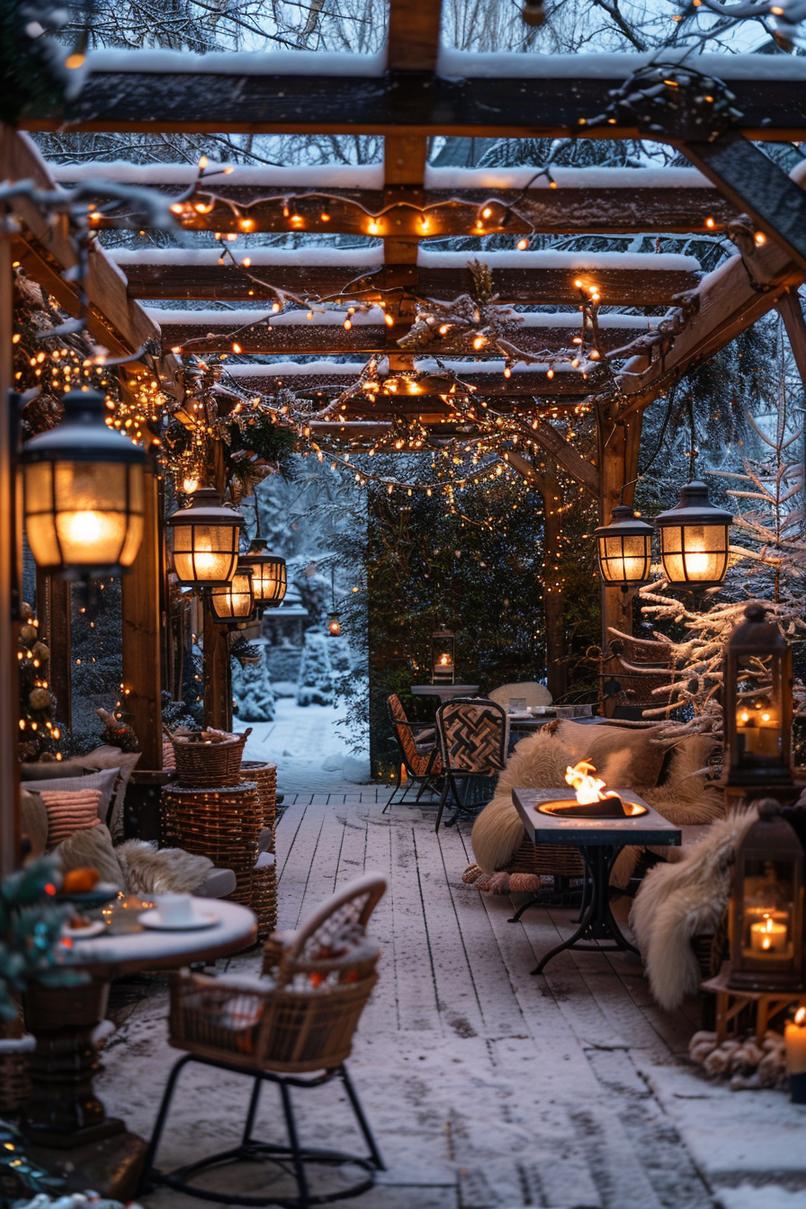
Wind block matters more than people expect. Even with a 48,000 BTU heater running, a 15 mph wind makes the patio unusable. Retractable wind screens, clear vinyl panels on the open sides of a covered patio ($80–250 per panel from Castlecreek or Coverstore), or a tall hedge along the windward side. Faux-fur throws ($40–100 each) over Sunbrella outdoor cushions add 15–20°F of perceived warmth, the cheapest single upgrade for winter usability.


17. Enchanting English Cottage Garden Ideas
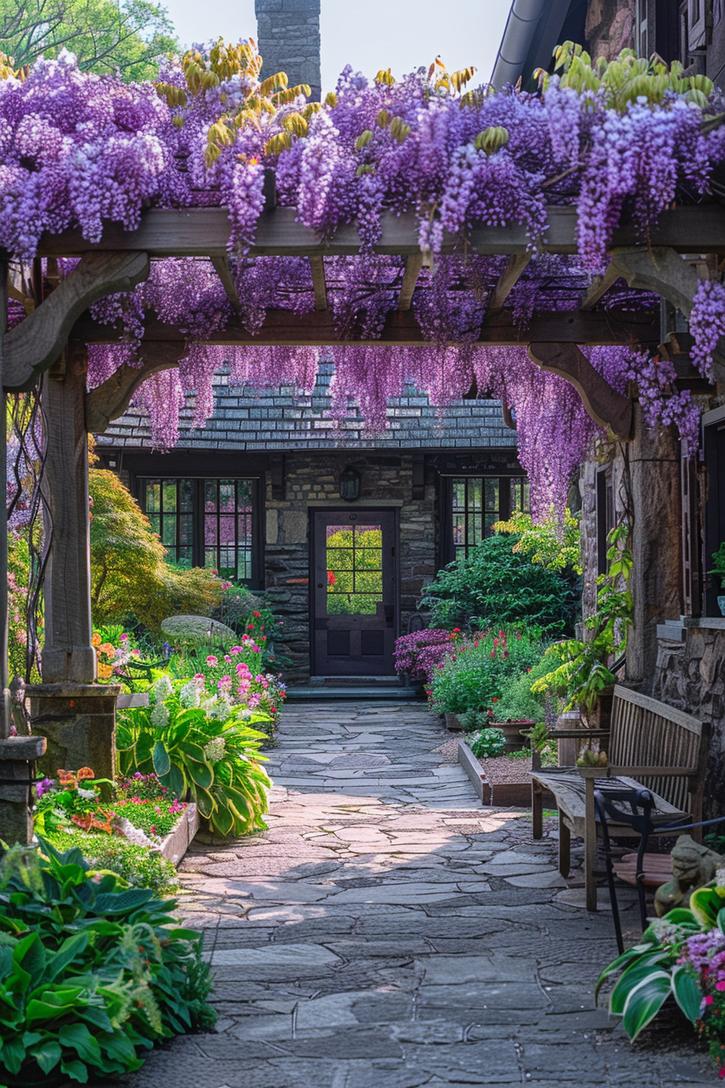
An English cottage patio works through plant abundance and informal arrangement, the opposite of the Mediterranean style’s discipline. The signature elements: a wisteria-covered arbor or pergola, irregular stone paving with creeping thyme or moss in the joints, climbing roses on walls or trellises, and mixed perennial borders with hollyhocks, foxglove, delphinium, and lavender. Plan on 2–3 seasons before the planting matures into the photo-worthy look.
Wisteria warning: wisteria is structurally aggressive. Mature plants can pull down gutters, lift roof tiles, and crack arbors that weren’t built for the load. Use Chinese wisteria (Wisteria sinensis) or Japanese (W. floribunda) only on heavy-duty pergolas with 6×6 posts on concrete footings; American wisteria (W. frutescens) is lighter, less aggressive, and the right pick for a standard arbor. Annual pruning twice a year is non-negotiable.


18. Smart Outdoor Oasis: Lighting & Sound
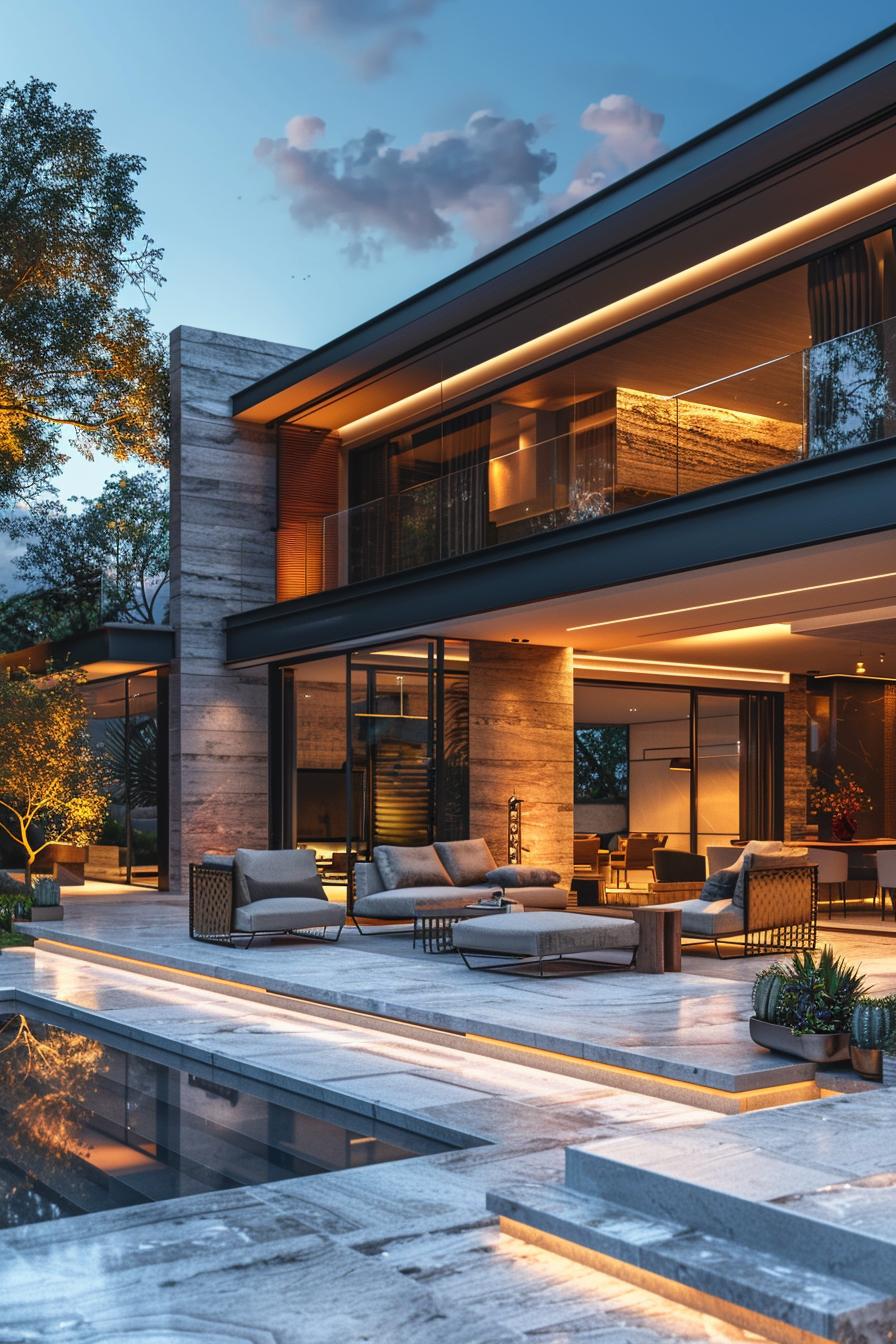
A smart-controlled outdoor setup has two components: lighting (Philips Hue Outdoor strip lights $230–250 per 5m run, plus the Hue Bridge $50 if you don’t have one; Govee outdoor RGBIC strips are the budget alternative at $40–80) and audio (Sonos Outdoor by Sonance speakers $999/pair are the premium pick, weatherproof (passive speakers requiring a separate Sonos Amp, ~$699, to operate; total system cost $1,700; mid-range Bose or Polk outdoor speakers run $300–500/pair). Wired-in versions need an electrician and an outdoor-rated wall plate; plug-and-play versions need a covered outdoor outlet.
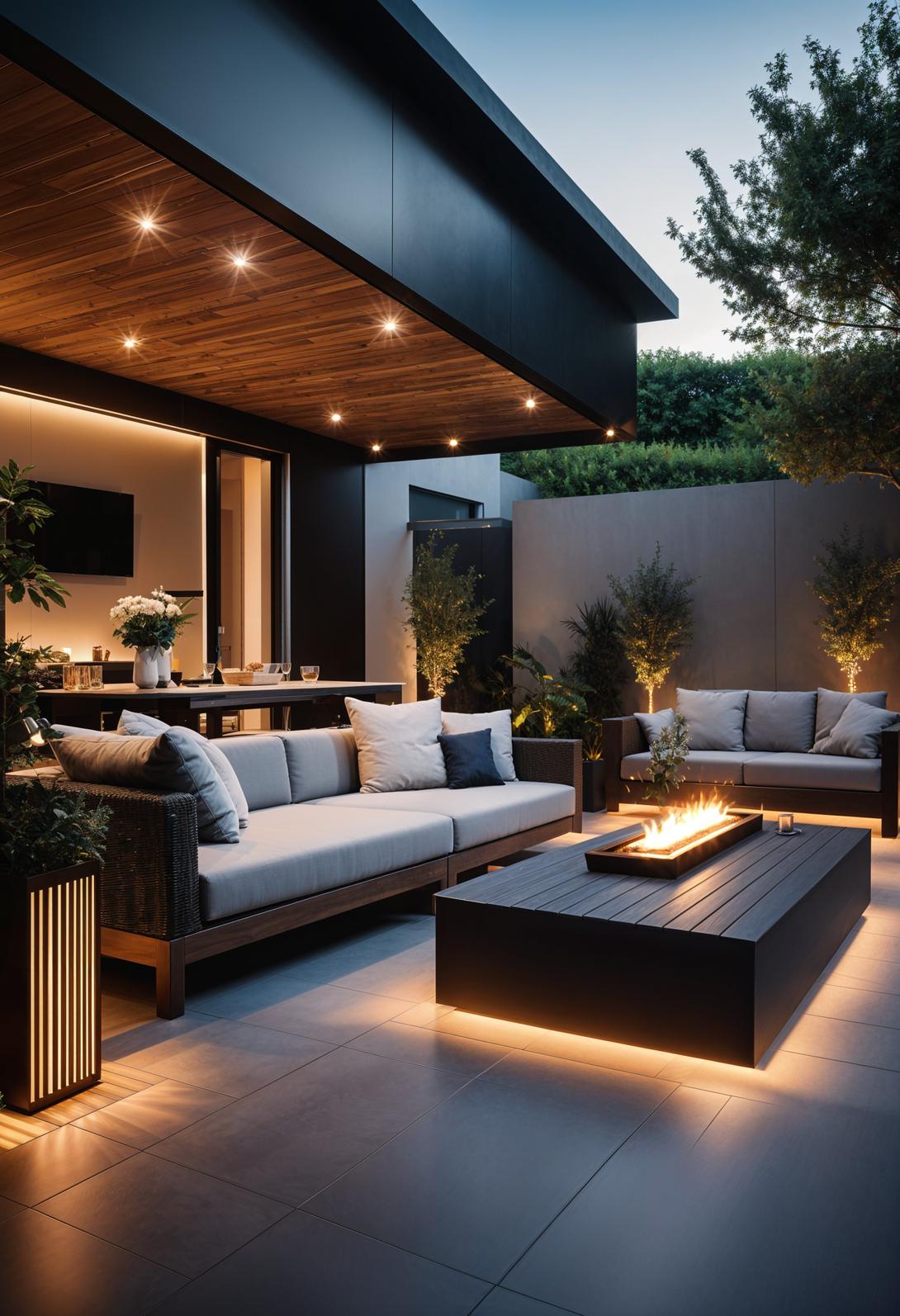
Realistic expectations: wi-fi range is the limiting factor for most installs, patios more than 30 feet from the nearest indoor router need a mesh extender or outdoor access point ($50–150). Smart outdoor lighting saves time on sunset-on/sunrise-off scheduling but adds complexity when something stops working; have a fallback manual switch on every fixture so guests aren’t troubleshooting your app at 9pm.


19. Gypsy Corner Patio Inspiration
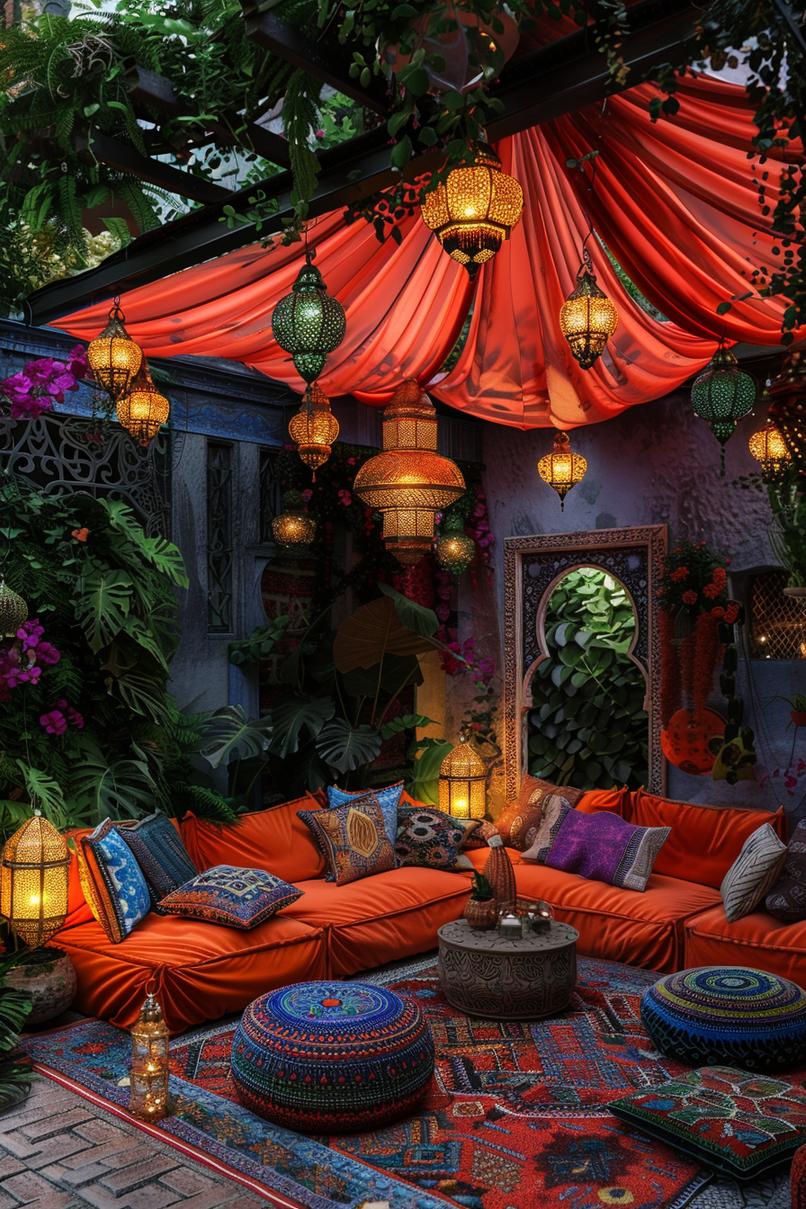
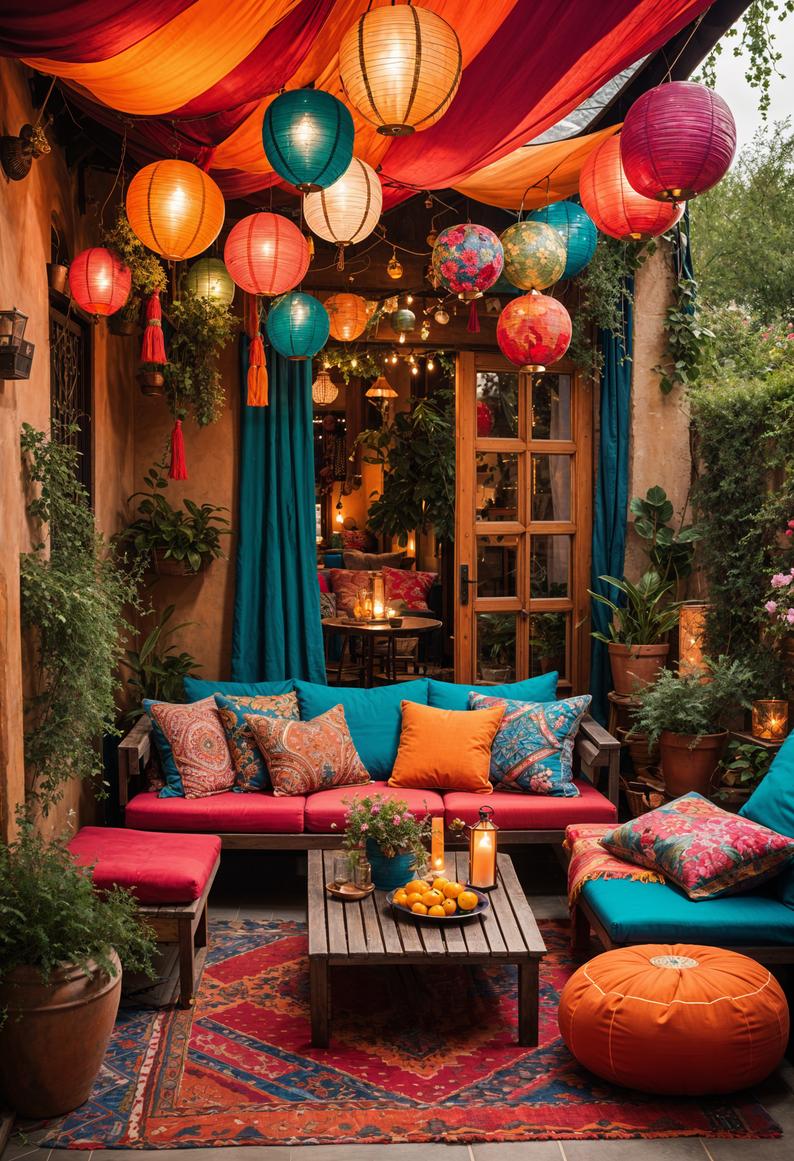
An eclectic corner setup works as a “second room” of the patio rather than the whole patio’s theme. Use it in a corner that’s underutilized, typically a small triangular space where two fences meet or where the patio meets a planted bed. The signature: an overhead canopy (vintage scarf, market umbrella, or fabric sail $30–100), a layered floor of indoor/outdoor rug plus floor cushions, and 3–5 lanterns at different heights.
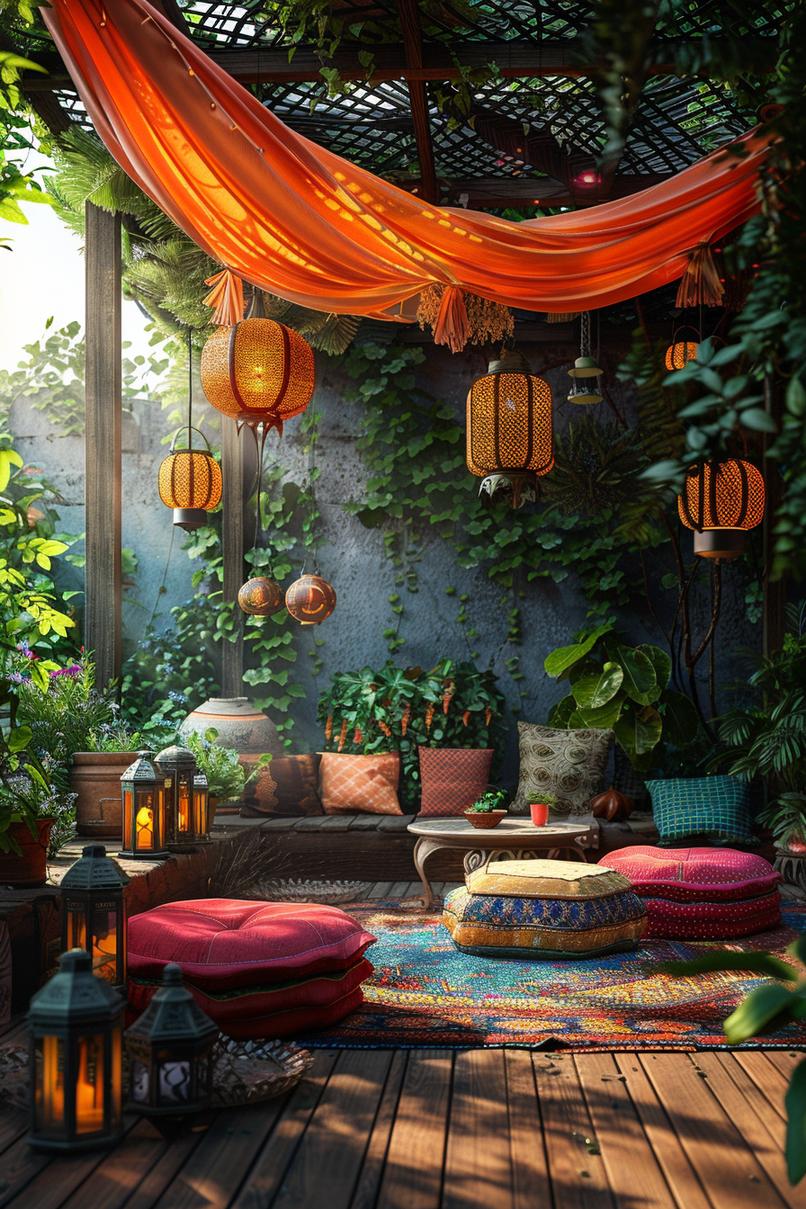
The pattern-mixing rule: three pattern scales, small (paisley, small geometric), medium (mid-scale stripes or florals), and large (a single bold motif). One of each, repeated across textiles, reads layered. Five of each reads chaotic. The same warm-tone palette tie everything together (terracotta, mustard, deep red, cream).
Shop this style 👇


20. Outdoor Yoga Oasis: Water and Sculptures
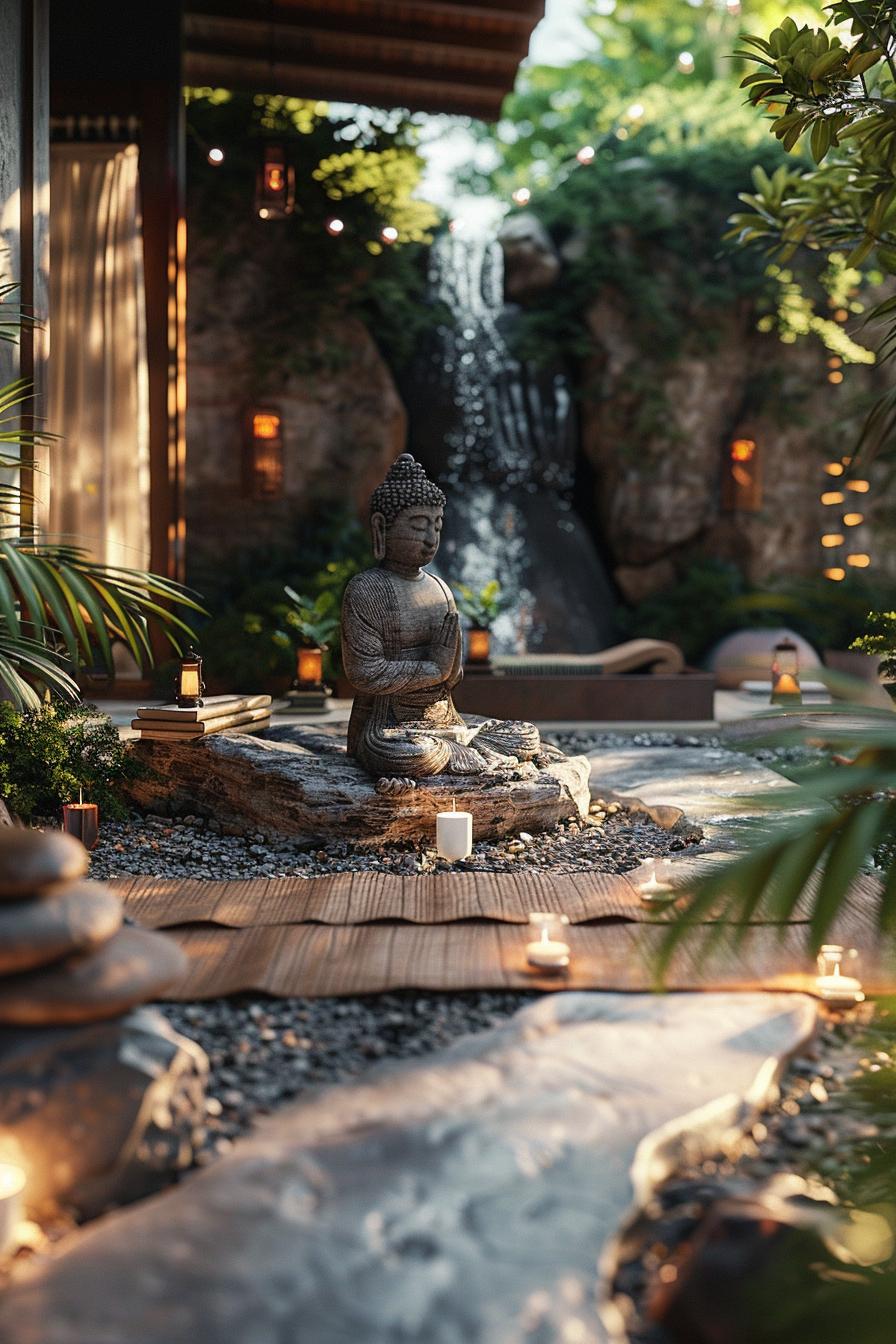
A meditation/yoga patio needs three things: a flat, clean surface large enough to roll out a yoga mat with arms extended (about 4×8 ft minimum), low ambient noise (mostly handled by a small water feature masking traffic), and visual cues that the space is dedicated. A tabletop or floor-standing water feature in stone or ceramic ($60–300) provides the auditory mask; a single Buddha statue, abstract stone sculpture, or simple urn in the sightline marks the intention of the space.

Surface matters for yoga: wood decks and smooth concrete work; pea gravel and uneven flagstone don’t. If your existing patio surface is too irregular, an outdoor yoga mat or 6×8 ft outdoor rug provides a stable platform. Avoid practicing on tile in direct sun, surface temperatures over 130°F are common in summer and will burn through a yoga mat.


21. Vibrant Mexican Courtyard Design
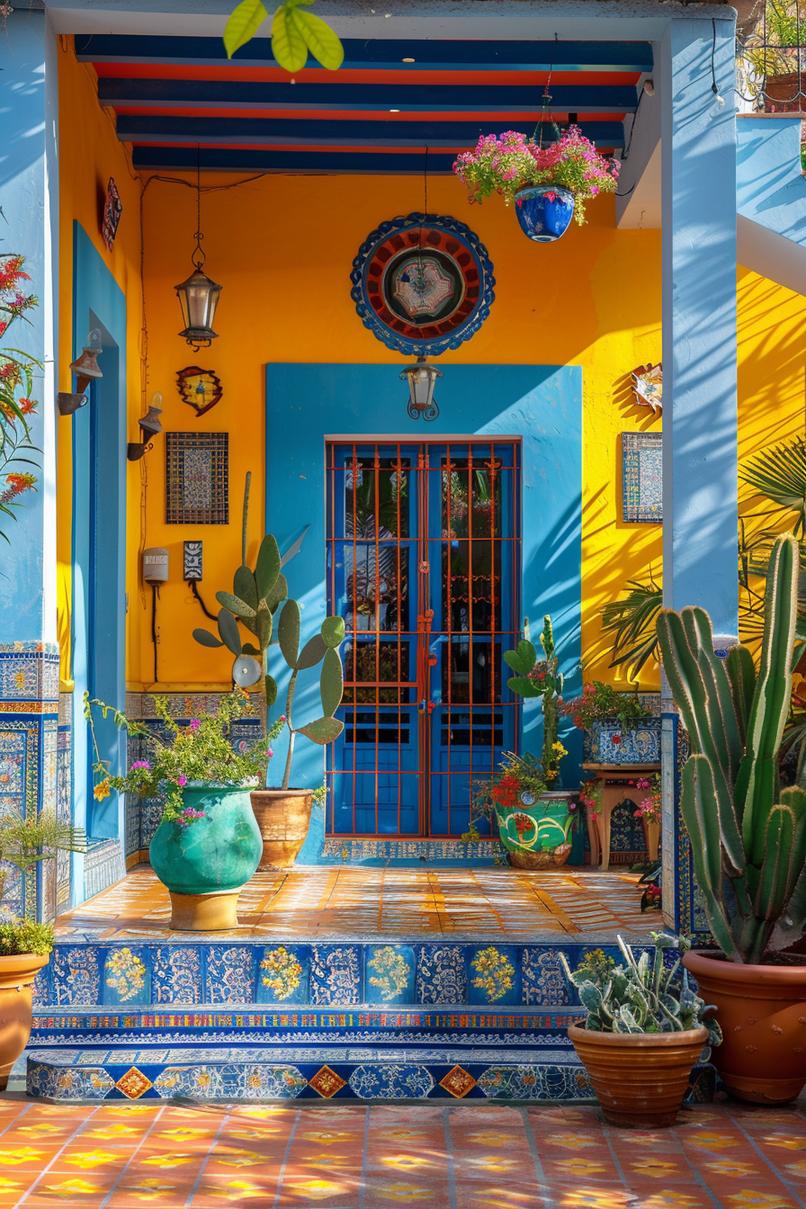
The Mexican look is a regional system, not a color palette, Talavera tile from Puebla, equipales from Jalisco, terracotta saltillo flooring, and bougainvillea as the climbing anchor. Authentic Talavera tile carries a “DO4″ denomination of origin stamp and runs $4–8 per hand-painted 4×4” tile. Generic “Talavera-style” runs $1–2 per tile and has thinner glaze that chips faster.
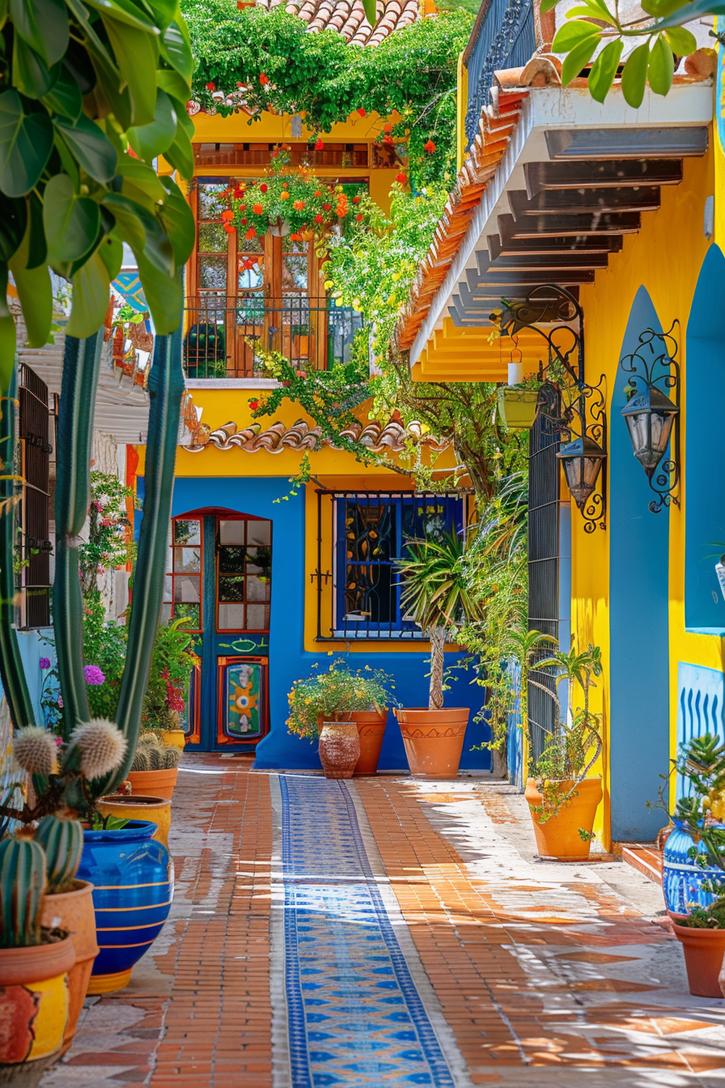
Use Talavera as accent, not field. Stair risers, fountain surrounds, tabletop inlays, and a single feature wall give you the visual weight without the cost or the slippery-when-wet floor problem. Pair with cool-toned saltillo flooring or stained concrete as the main surface. For a deeper guide on this style, the companion piece below covers the 15-element framework.

22. Sleek Industrial Patio Design
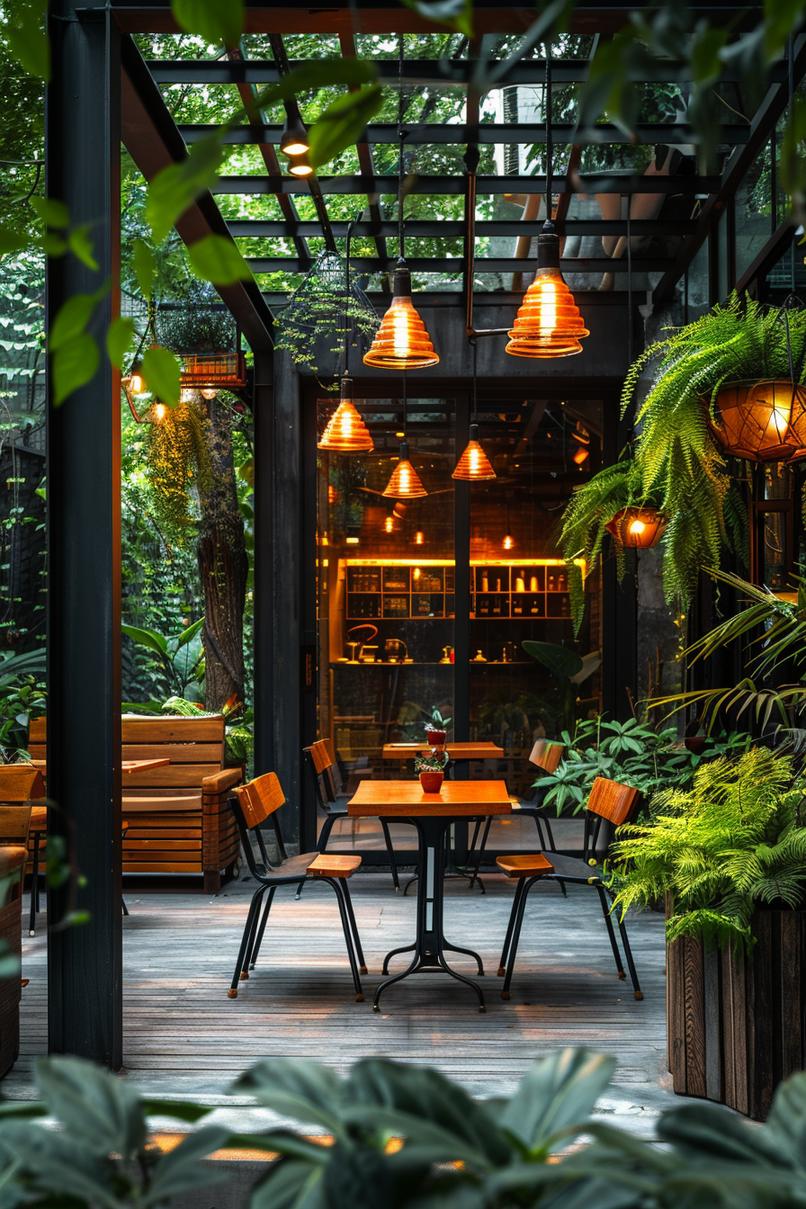
The industrial look depends on three materials: concrete (flooring, planters, side tables), powder-coated steel (furniture frames, structural elements), and exposed lighting (Edison bulbs, caged sconces). Concrete planters in 12–18″ cube or cylinder form run $60–180 each from West Elm or Crate & Barrel; DIY concrete planters from $20–40 in materials if you have molds and patience.
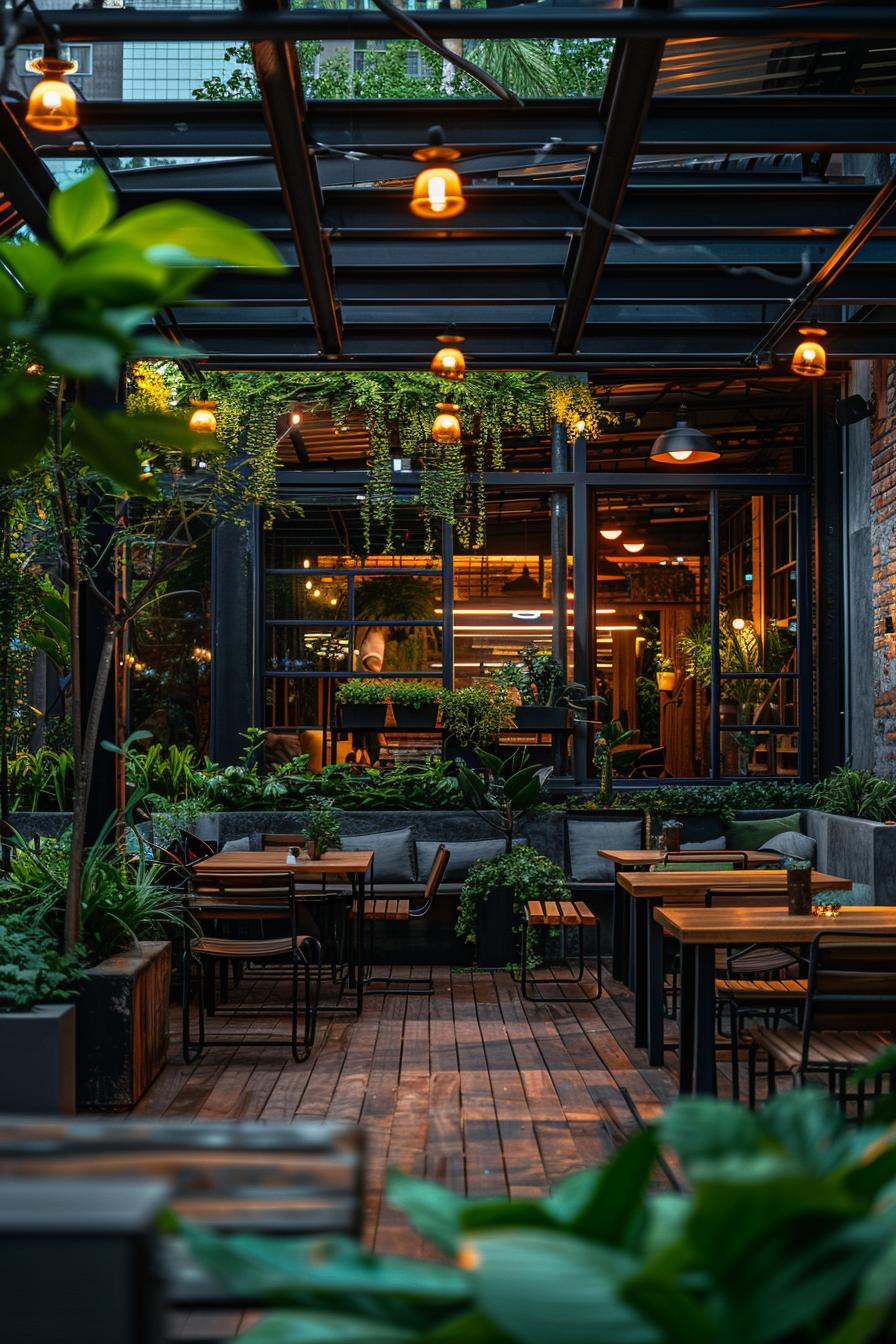
The hot-steel problem: dark steel furniture in direct sun reaches 140–160°F surface temperature in summer, uncomfortable to touch, dangerous for bare skin contact. Either choose powder-coated steel in light colors (sand, gray, off-white) or plan for cushions on every seat. Concrete is heat-stable but cold in winter; combined with steel, this is a style that wants cushions/throws year-round.


23. Fluttering Oasis: Butterfly Garden Ideas
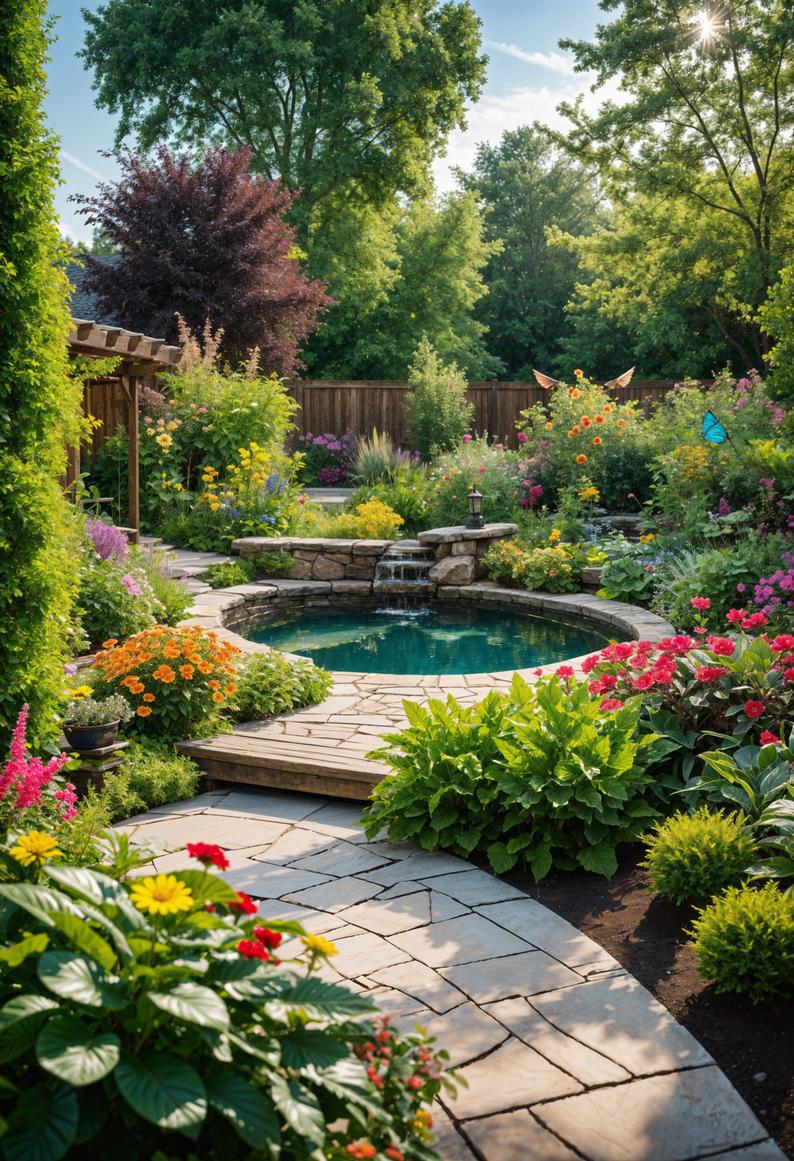
A working pollinator patio combines host plants (where butterflies lay eggs and caterpillars feed) with nectar plants (where adult butterflies feed). Most “butterfly gardens” only do the nectar half and don’t actually support the full life cycle. The right mix for most of the US: milkweed (Asclepias incarnata or A. tuberosa) as the host plant for monarchs, plus nectar sources, coneflower, black-eyed Susan, zinnia, lantana, and butterfly bush (be aware: butterfly bush is invasive in some states).
Skip the butterfly feeders. Commercial nectar feeders attract more wasps and ants than butterflies and need constant cleaning to prevent fermentation. Real butterflies prefer real flowers. The exception: shallow water dishes with stones for landing perches, butterflies puddle on damp ground to collect minerals, and a $5 terracotta saucer with damp sand gets used daily during summer.


24. Kid-Friendly Outdoor Play Area
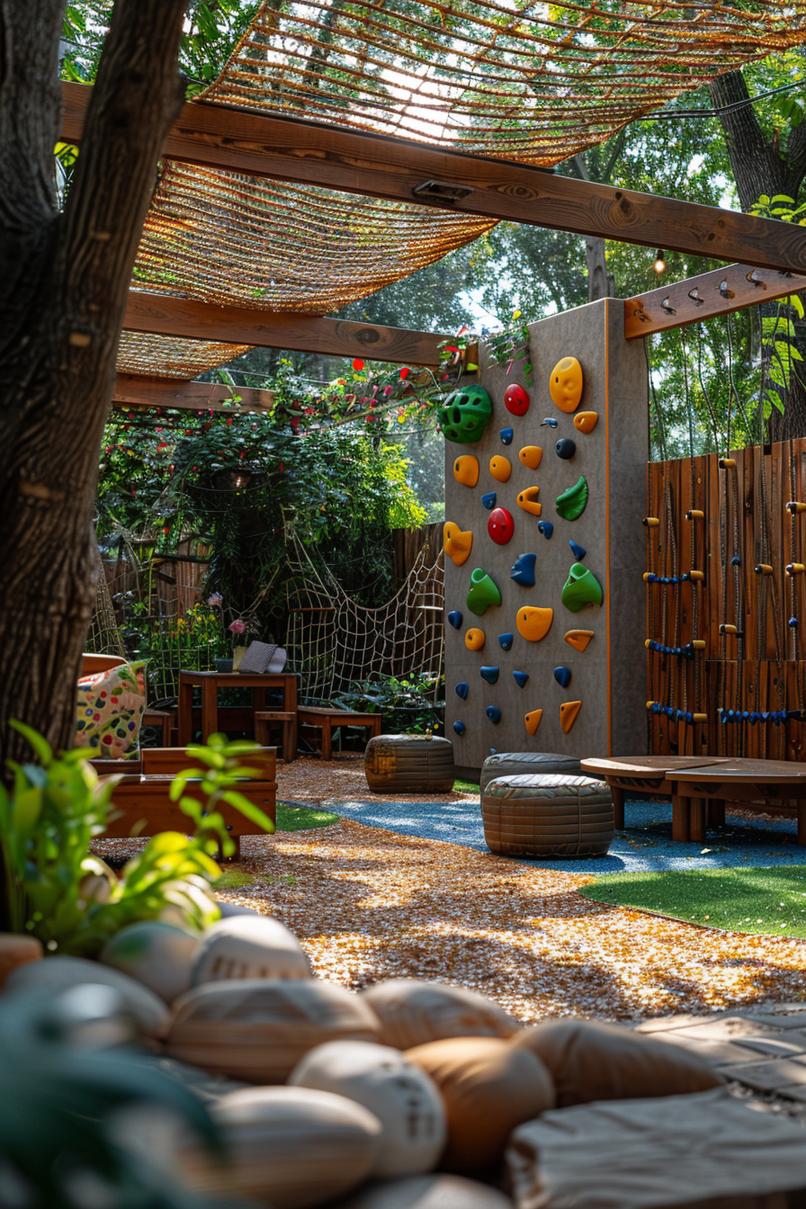
A safe kid play zone has three layers: impact-absorbing surface (rubber mulch $30–50 per cubic yard; interlocking rubber mat tiles $3–8 per square foot; engineered wood fiber chips $25–40 per cubic yard), age-appropriate equipment, and shade. The CPSC recommends 9″ of loose-fill surfacing (wood chips, engineered wood fiber, sand, or pea gravel) or 6″ of shredded rubber under most climbing equipment.
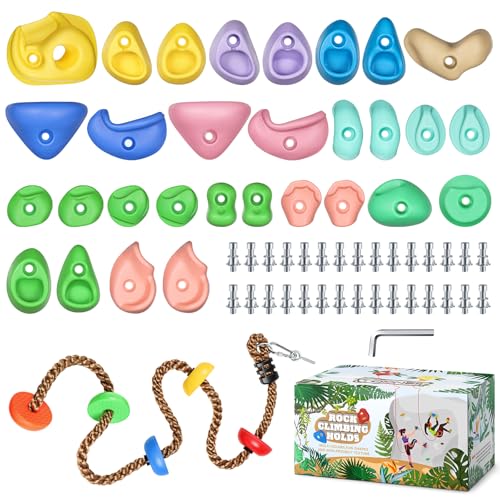
Equipment scaled to age: for toddlers (1–4 years), low slides with handrails and sensory panels work best. For ages 4–7, a small climbing wall (Trail Brand or Atlas Climbing handholds, $40–120 for a starter set) on a sturdy plywood wall plus a swing or two earns most outdoor playtime hours. Sand and water tables ($60–150) get heavy use across the toddler-through-early-elementary range. Plan to retire or upgrade equipment every 2–3 years as kids age out, built-in playground sets become wasted space within 5–7 years.

25. French Country Patio Oasis
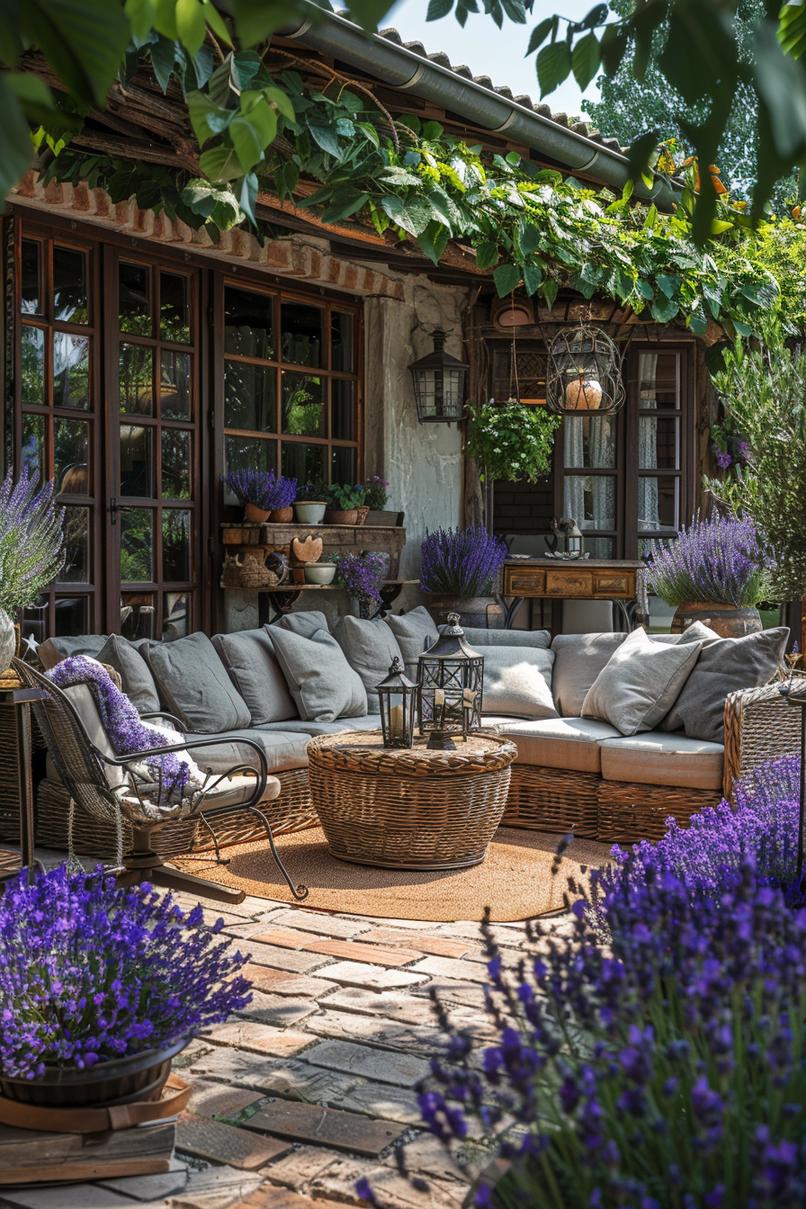
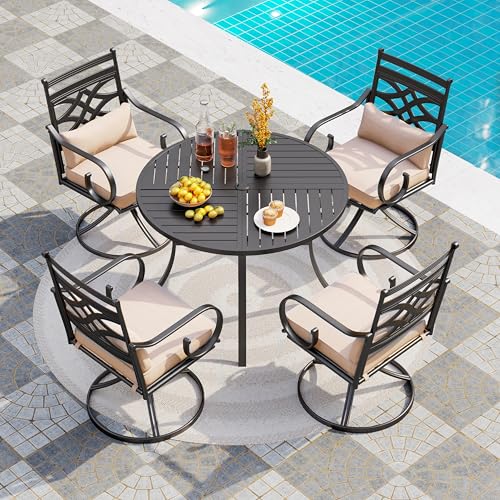
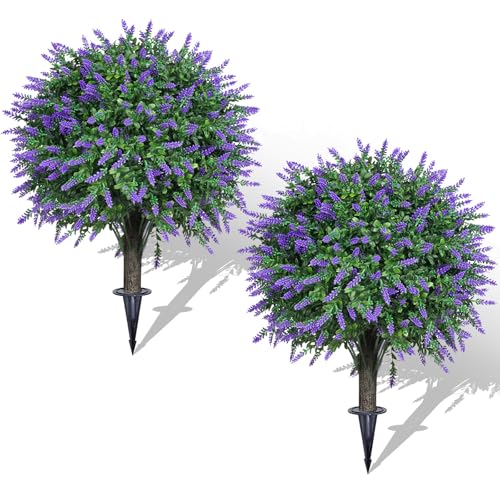
French country pairs three signatures: lavender borders (Hidcote or Munstead varieties for the deepest purple and most fragrance), wrought-iron furniture in white or matte black, and aged-stone or pea-gravel flooring. A wrought-iron bistro table-and-chair set runs $150–400 new, $50–150 from estate sales; antique wrought iron from architectural salvage runs $200–800 per piece and carries the patina that gives the style its depth.
Wrought iron rust management: all wrought iron rusts outdoors, even powder-coated pieces eventually. Plan for a quick wire-brush and touch-up paint annually (Rust-Oleum Universal in matte black, $8–15 per can), and consider a clear automotive lacquer spray over the paint to slow oxidation. Pea-gravel surfaces drain well and feel right underfoot but track into the house, keep a stiff brush mat at every doorway.


26. Desert Patio Paradise: Succulent Haven
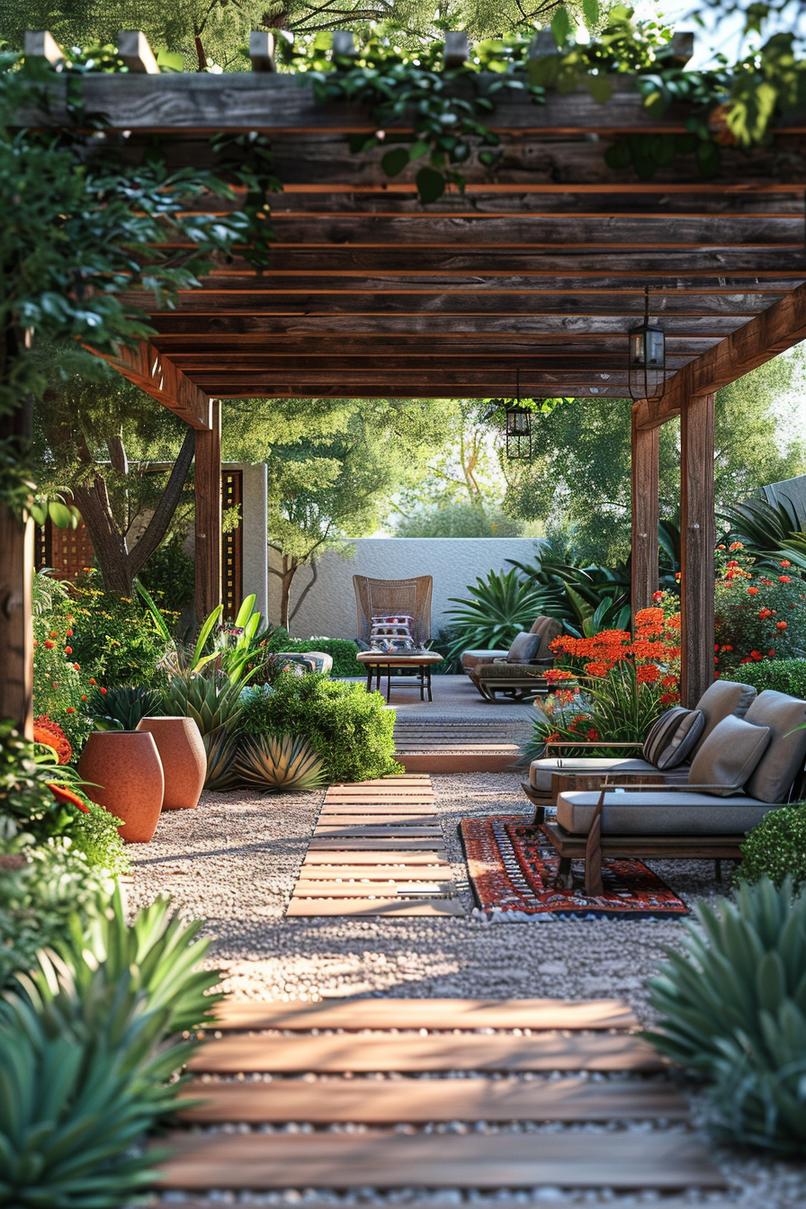
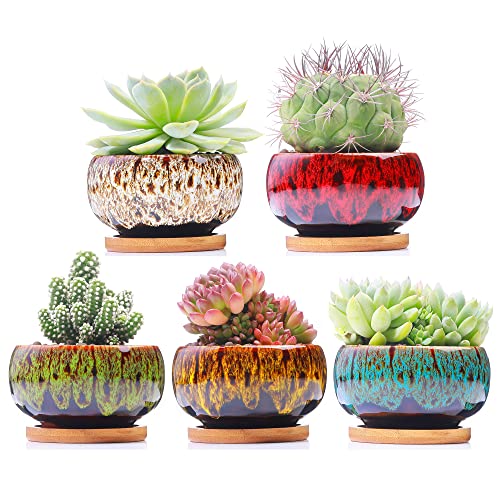
A succulent-and-pergola desert patio is one of the lowest-maintenance options for hot, dry climates, but the visual depends on plant scale variety. Mix three sizes: large statement specimens (mature agave americana, $80–250; aloe vera $20–60; barrel cactus $40–150), mid-sized accents (echeveria, aeonium, paddle plant), and groundcover sedums or hens-and-chicks filling between.
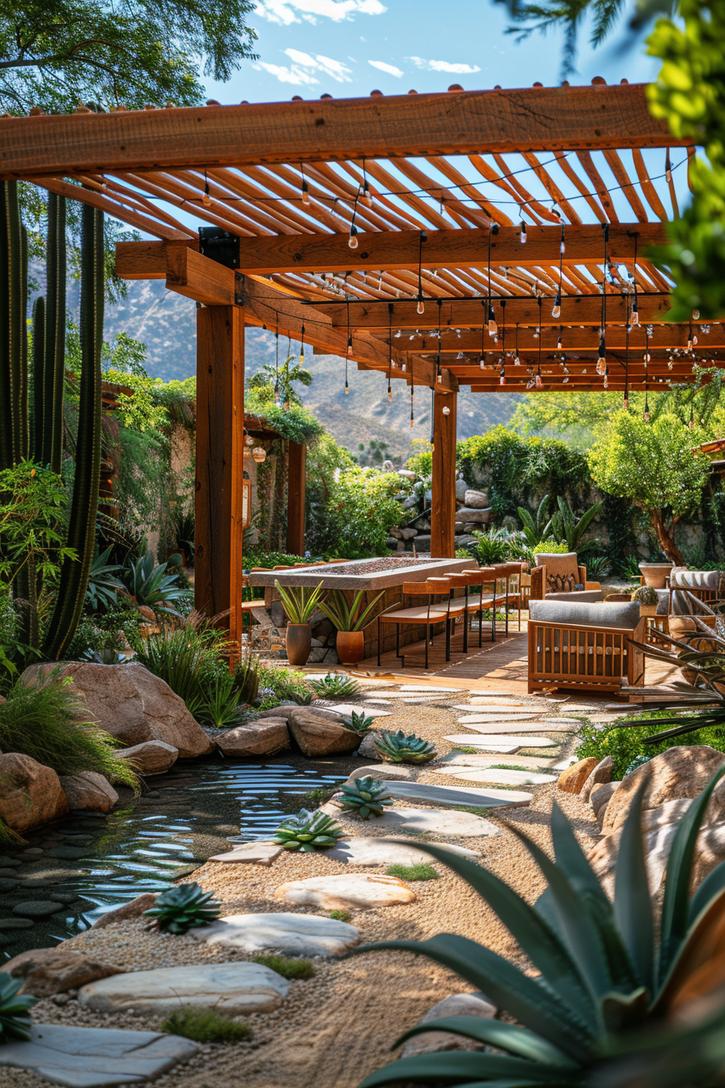
Pergola materials matter in desert heat: standard pine pergola posts split and gray within 3–5 seasons in zones 9–11; cedar lasts 8–12 years; pressure-treated southern yellow pine lasts 15+ years but reads less elegant. Aluminum or steel pergola kits ($800–2,500) need no maintenance and survive desert UV indefinitely. Provide 50–70% shade cover with retractable canopies or rated shade cloth for actual usability in summer.


27. Serene Spa Patio Retreat
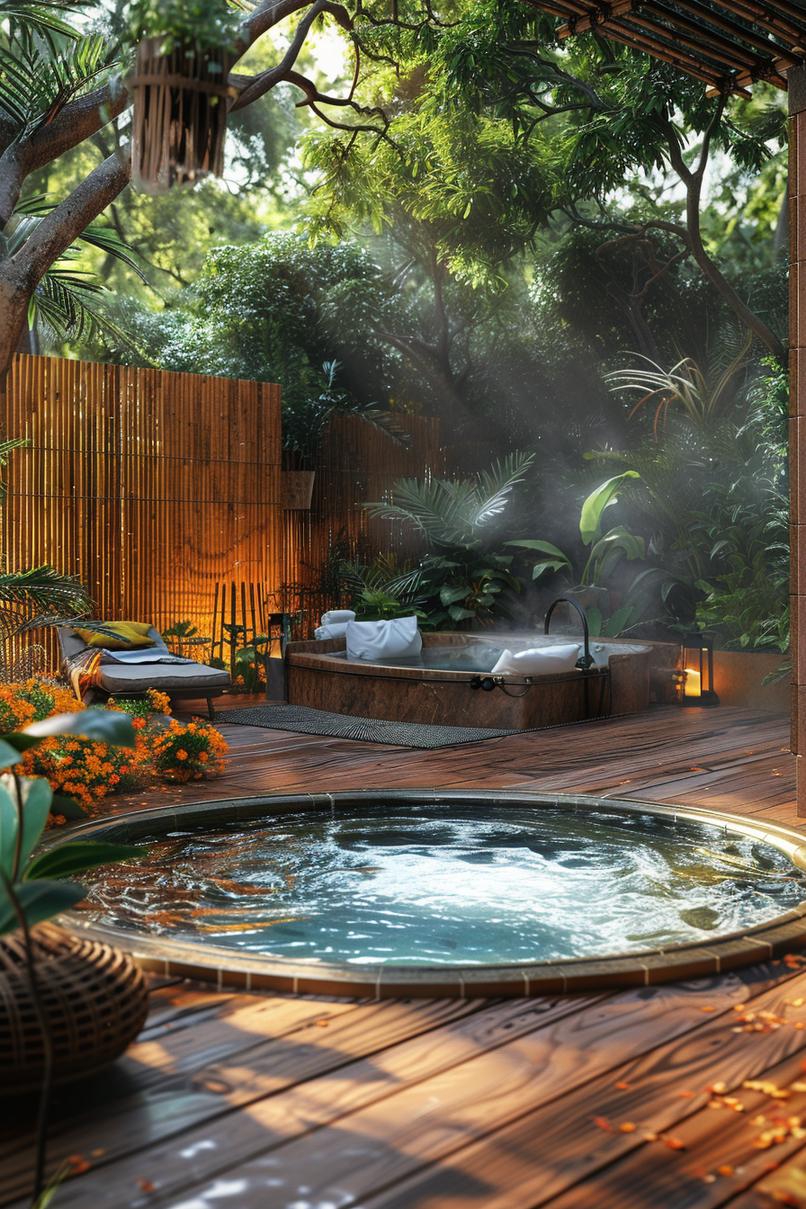
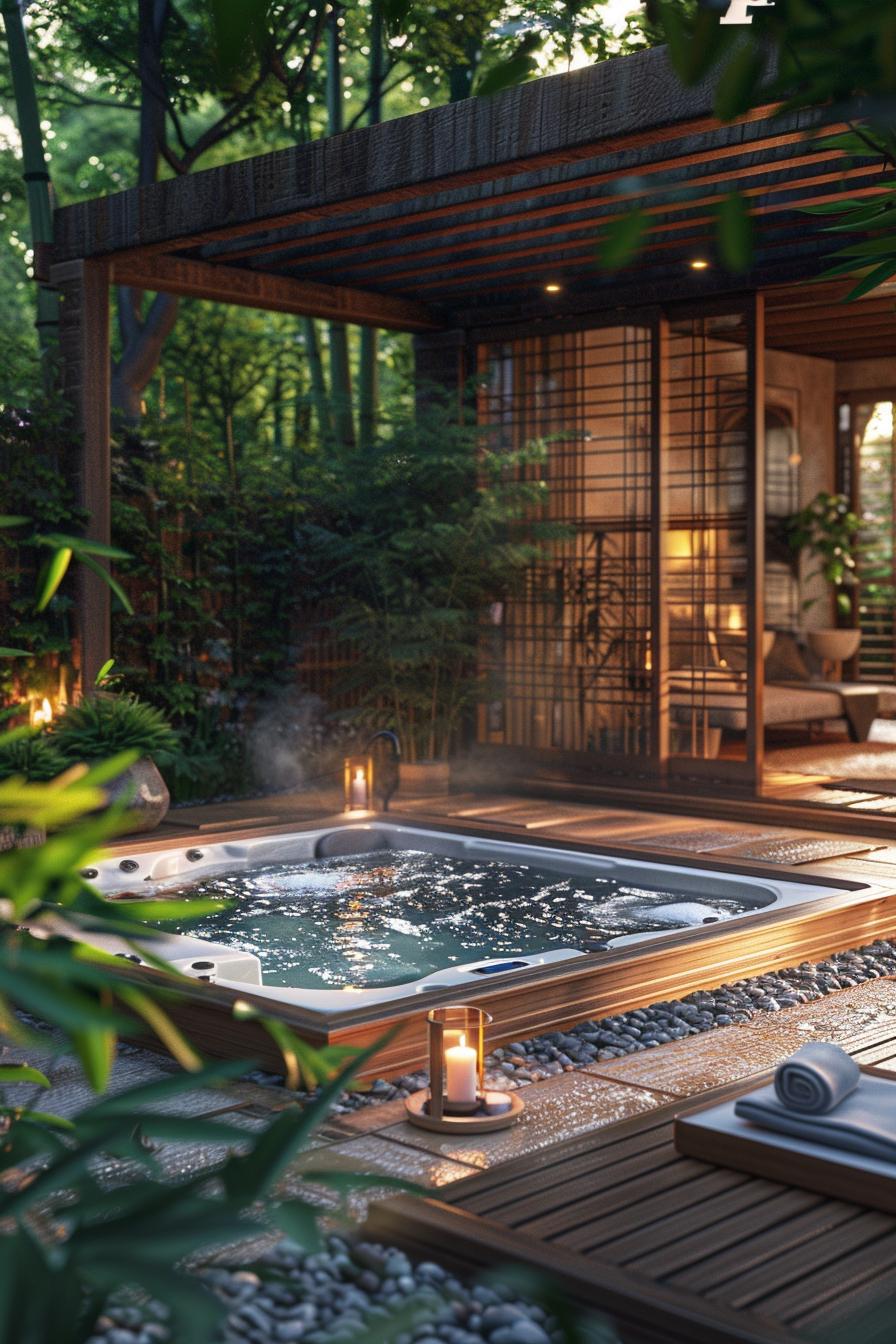
A hot tub patio is a serious financial commitment. Inflatable spas (Intex PureSpa, $300–600) are the entry option and last 3–5 seasons. Plug-and-play rotomolded spas (Lifesmart, Aquarest, $2,000–4,500) are a middle ground, 110V power, no electrician required, 4–6 person capacity. Built-in spas with full 220V power, jet systems, and lounger seats start around $6,000 and reach $20,000+ for premium brands like Hot Spring or Sundance.

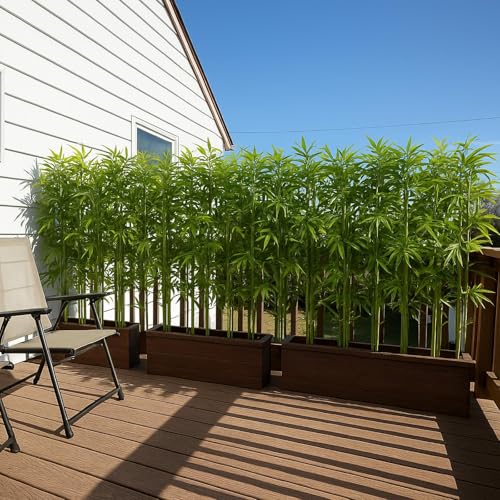
Privacy and structural considerations: filled hot tubs weigh 3,000–5,000 lbs, a standard wood deck handles a 4-person tub fine, but anything larger needs deck reinforcement or a concrete pad. Tall privacy screens (cedar slat panels $40–80 each at Home Depot, or living screens with bamboo or arborvitae) make the difference between a spa that gets used and a spa that gets ignored because neighbors can see in.
Shop this style 👇



28. Creative Outdoor Art Studio Space

An outdoor art studio sounds romantic and is occasionally practical, natural light is better than any indoor lamp for color work, and the open air is a relief for media that produce dust, fumes, or splatter (charcoal, oil paint, plaster, spray fixatives). The catch: outdoor work demands more setup and breakdown than indoor work, since materials can’t stay outside.
What works outdoors: sketching, watercolor in mild weather, sculpture work with stone or clay, large-format collage with weights. What doesn’t: anything requiring stable humidity, oil paintings that need controlled drying, anything involving small parts that wind can scatter. Invest in a folding easel ($40–150), a weighted rolling cart for supplies, and a covered area or pop-up canopy for direct-sun protection, UV degrades most art materials within hours.

29. Ultimate Outdoor Fan Cave Ideas

A true outdoor TV (not a moved indoor TV) is the difference between this working and failing, outdoor-rated displays from SunBriteTV, Furrion Aurora, or Samsung Terrace ($1,500–6,000+ depending on size and shade rating) are designed for direct or partial sun and can survive humidity and pollen indoor TVs can’t. Cheaper indoor TVs in a covered outdoor setup last 2–4 seasons before screen issues from temperature swings.
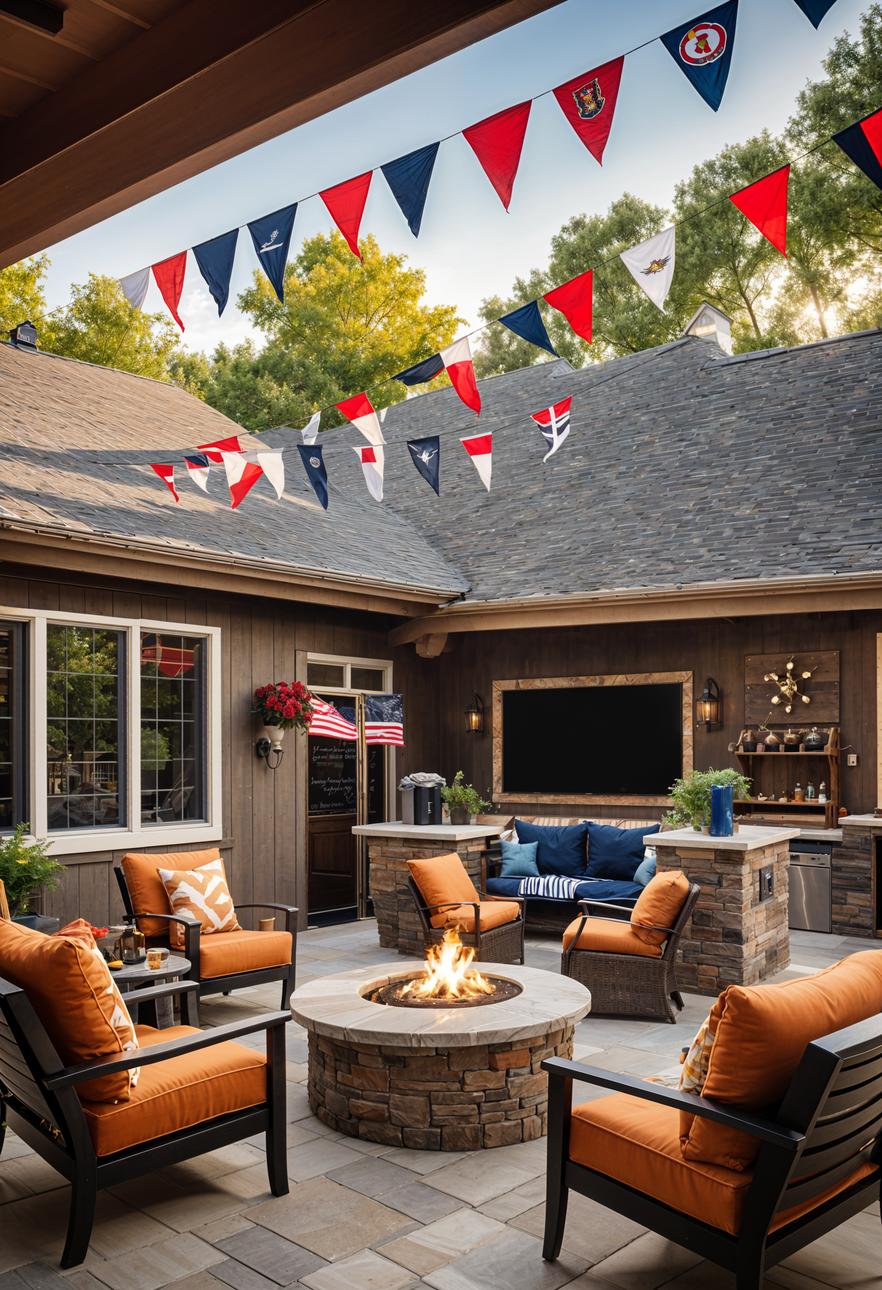
Anti-glare positioning: point the screen north (no direct sun at any time in the northern hemisphere) or under a deep-shade pergola. Most outdoor TVs include matte anti-glare coatings but they only help with reflected light, not direct sun on the panel. Pair with outdoor-rated speakers (covered in #18) for sportscast audio that doesn’t disappear into open air.


30. Glass-Enclosed Greenhouse Patio Haven

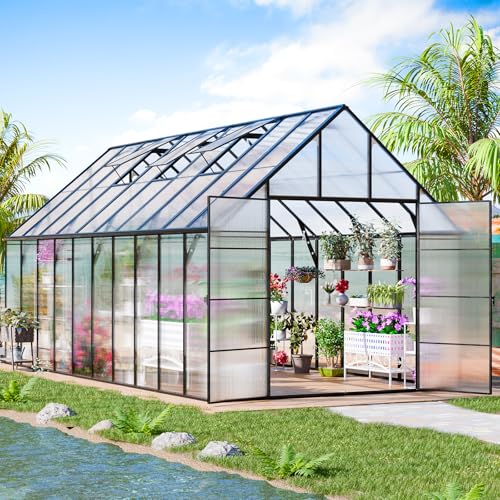
A four-season sunroom or glass-walled patio is the most expensive option in this article, pre-fab kits start around $8,000 for an 8×10 ft conservatory and run $25,000–60,000+ for a contractor-built 200 sq ft glass enclosure with HVAC. The reward is a usable patio in deep-freeze zones (5 and below) where outdoor patios are unusable 5–6 months per year.
Critical specs that determine success: dual-pane low-E glass with argon fill (single-pane glass turns the room into an oven in summer and an icebox in winter); roof venting plus an exhaust fan for summer heat dump; supplemental heat (electric baseboard or mini-split) for winter; epoxy or stained concrete flooring with floor drains, since tropical plants drip water everywhere. Without active climate control, a glass enclosure cooks plants in summer and freezes them in winter.


31. Al Fresco Culinary Corner

An entry pizza oven is more achievable than most people expect. The Ooni Karu 12 ($299–399 depending on sale) is the cult-favorite portable wood/charcoal/gas oven that hits 950°F and cooks a 12″ Neapolitan-style pizza in 60 seconds. It weighs 26 lbs and folds for storage. Built-in masonry pizza ovens are an entirely different category, $4,000–15,000+ installed, and they become permanent landscape features.

What you actually need beyond the oven: a 14″ pizza peel ($25–50), an infrared temperature gun for monitoring stone temp ($30–60), and an outdoor table strong enough to hold the oven plus prep space (Ooni’s stand is $130). The herb garden in the adjacent planter is functional, not just decorative, fresh basil, rosemary, and thyme within reach of the prep station is the actual upgrade over indoor cooking.


Conclusion
Thirty-one ideas is too many to combine. The point of this article isn’t to do all of them, it’s to give you 31 honest starting points so you can pick one that fits your budget, climate, household, and use pattern, then commit to it. The most common patio failure is style-mixing: a Mediterranean terracotta-and-lavender base with a tiki bar in the corner and an industrial steel pergola overhead reads as a furniture warehouse, not a designed space.
Three takeaways across the 31 options:
- Match the style to your climate, not your aspiration. Mediterranean and Mexican die in cold winters. Glass greenhouses and pallet decks work everywhere. Pick from the climate column of the matrix at the top rather than the photo that caught your eye.
- The expensive parts are usually the heating, cooling, and screens. Furniture is cheap compared to a hot tub, an outdoor TV, a pergola with heaters, or a glass enclosure. Budget the structural decisions first; decor is the affordable layer on top.
- Maintenance compounds. Every theme has an ongoing care cost, sealing wood, refilling tiki torches, raking gravel, treating wrought iron, refreshing stencil paint, replacing felt pocket walls. Pick a style whose maintenance you’ll actually do, not one whose photos you most admire.
If you want to go deeper on any single style, the companion articles below cover the spatial logic, structural fundamentals, and sourcing detail that this overview piece can only sketch.
Related Topics: