
Looking for a clever way to grow more herbs in less space? Herb spiral gardens pack a punch, turning a small patch into a green goldmine.
These spirals use height, curves, and clever planting to squeeze the most from every inch.
Ever wondered why gardeners rave about these spirals? They blend beauty with brains, giving each herb the sun, water, and soil it loves.
From brick circles to stone twists, you’ll see practical ideas and easy ways to start your own.
1. A dark concrete herb spiral garden with cascading water.
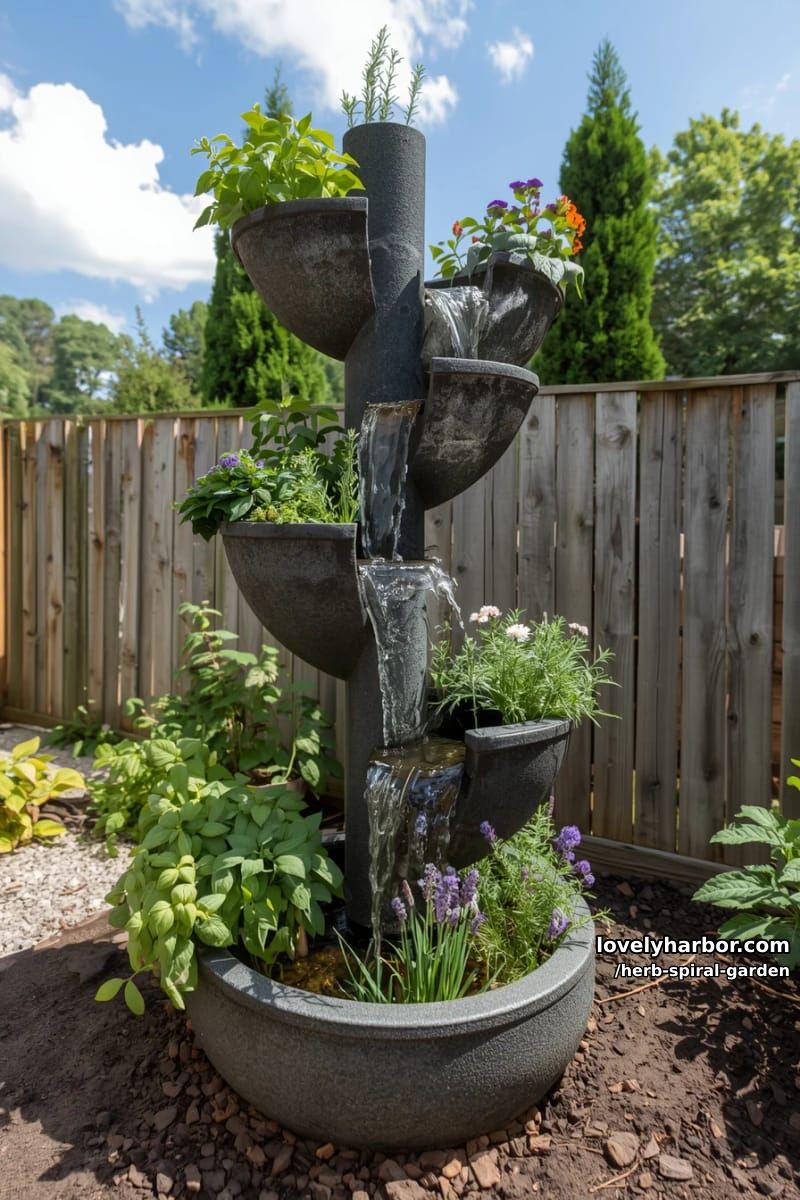
Imagine building a modern herb spiral using dark concrete material to give your small garden a unique look with impactfull charm and function. Concrete holds warmth and cascading water saves you time and resource.
Gathering these items is easy, think curbside finds or leftovers from past projects.

Spiral patterns offer more than visual appeal. A tight curve creates microclimates: drier at the top, moist at the base. This gives you a place for rosemary, mint, and basil, all in one spot.
Additionally, a concrete spiral garden is easy to do so you can DIY. Don't worry about imperfections. Sometimes, it adds more character than symmetry ever could.
2. Raised brick spiral herb bed with dense green herbs and flowers.

A raised brick spiral herb bed isn't just a treat for the eyes; it's a smart use of space. The spiral shape lets you layer herbs by their sun and water needs.
Place rosemary and thyme up top for good drainage, while basil and mint can hug the shadier, moister bottom.

Dense green herbs peppered with flowers attract pollinators and discourage pests. Imagine snipping fresh oregano or lavender steps from your kitchen.
However, brick beds can heat up quickly, so stay alert during dry spells, herbs can wilt if thirsty. Regular watering and mulch help keep everything lush.

3. Stone spiral herb garden beside a pond in a lush backyard.

Imagine stepping outside to a stone spiral herb garden next to a shimmering pond, your senses meet mint, basil, and thyme, all within arm’s reach.
This design saves space, boosts drainage, and creates microclimates for different herbs. It’s practical and beautiful, drawing butterflies and bees to your backyard.
Building with stones adds rustic charm, but keep in mind that they warm quickly in the sun. Some delicate herbs might struggle on hot days.
Place thirstier plants near the pond’s edge for easier watering. Mix in mulch to hold moisture and make tending your spiral less work each week.
4. Circular tiered stone planter with steps and sketch-like textures.
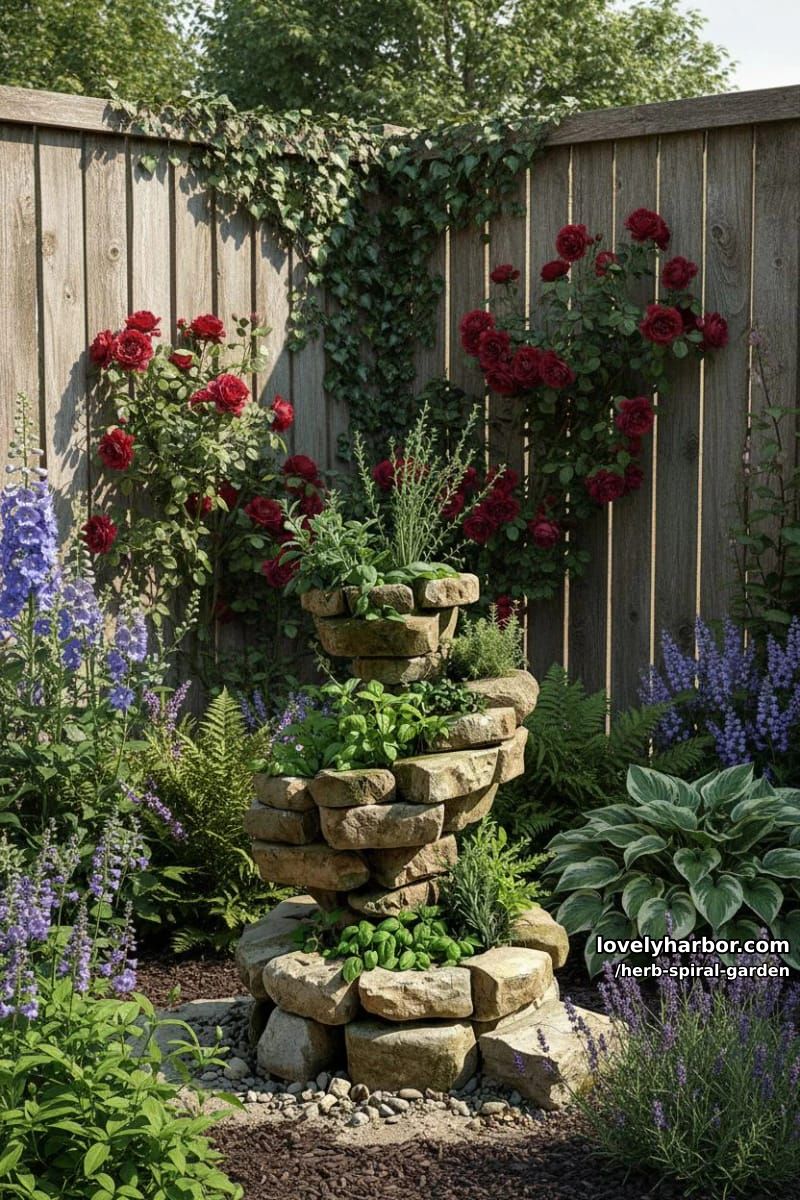
Imagine a circular tiered stone planter, each level rising like a tiny amphitheater. Add steps, and it’s as if your plants have front-row seats to the sun.
The sketch-like textures on the stones lend an artisanal feel, making the garden look both intentional and a little bit whimsical.

This design isn’t just pretty. The steps give you easy access for watering and harvesting, while the spiral shape creates microclimates, basil basks on top, while parsley chills below.
Be warned: building it can test your patience. Stones shift and settle, so plan for a little maintenance every year.
5. Herb spiral with zones for different herbs and pond.

Think of a top-down herb spiral as a living map. Place Mediterranean herbs like rosemary and thyme at the sun-drenched top; they love dry spots.
Descend the spiral, planting parsley and chives in moister middle sections. At the bottom, tuck in water-loving mint near a small pond for extra humidity.
This setup isn’t just pretty; it’s practical. Each zone matches the herbs’ thirst and sun cravings. The pond attracts helpful insects and keeps the lowest zone damp.
However, mint can take over if left unchecked, plant it in a buried pot to keep it from running wild.
6. Light stone spiral herb garden with dense leafy plantings.
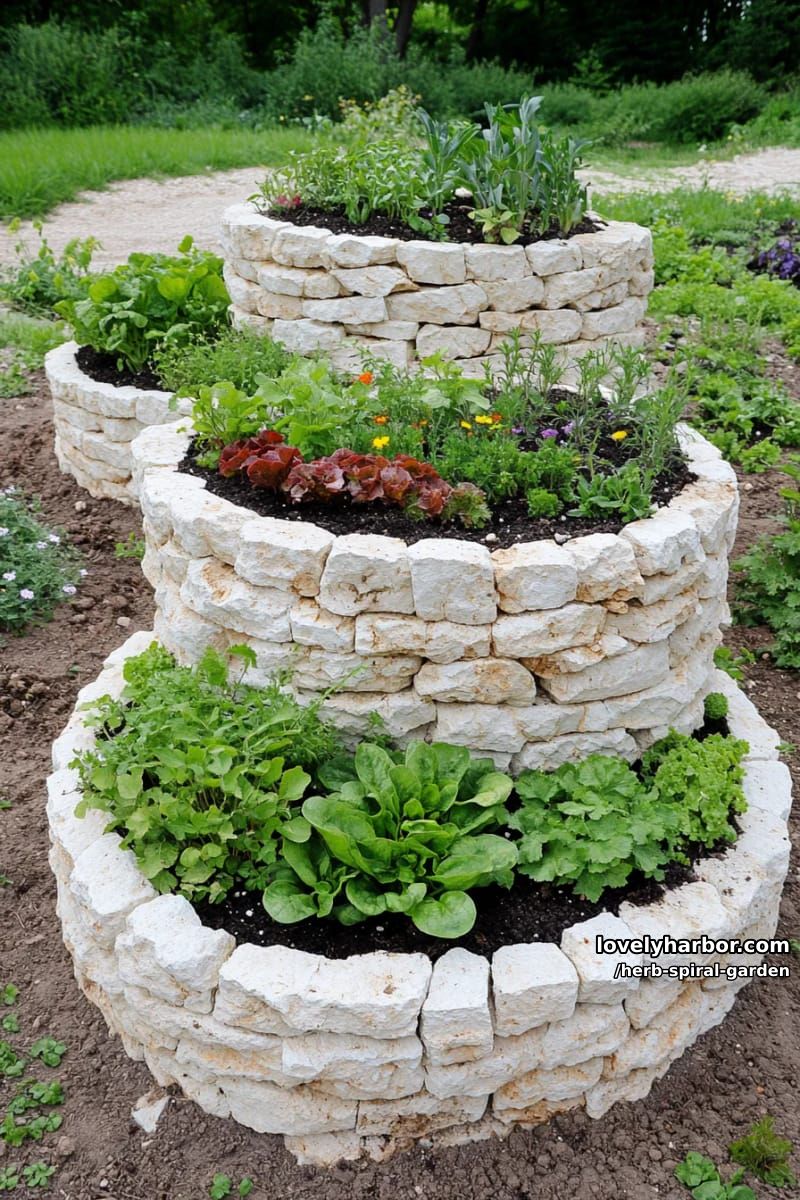
Imagine a light stone spiral, sunlight glinting off its surface, packed with basil, thyme, and curly parsley. Such dense plantings create a lush, edible sculpture.
The layered design lets you fit more herbs into a small space, and the stones help hold warmth, encouraging faster growth.

However, too many leafy herbs can invite pests or crowding. Regular trimming is a must, or your mint may muscle out the oregano.
Still, the visual impact and constant supply of fresh leaves make the little extra effort worthwhile. Why settle for plain garden rows when you can have a living centerpiece?
7. Stone nautilus spiral herb garden with herb clusters.
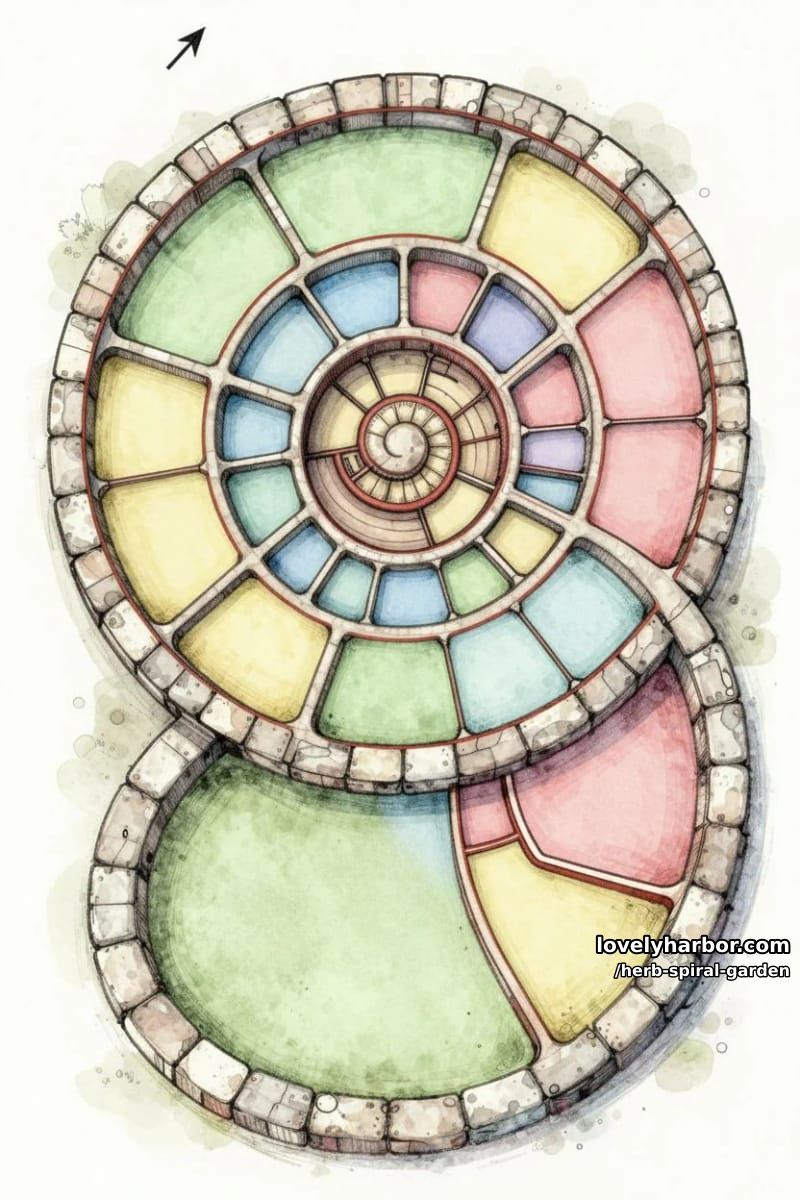
A hand-drawn stone nautilus spiral floor plan brings an artistic spark to any herb garden. Colored sections help visualize where each herb thrives, making planning less of a guessing game.
Why settle for a generic patch of green when you can have a vibrant pattern underfoot?

Color coding isn’t just for fun. It lets you group herbs by sunlight needs, water preferences, or culinary use. Imagine grabbing basil and mint from their assigned spots.
Sure, drawing by hand takes a bit of patience, but the payoff is a garden that feels both personal and practical.
8. Herbs in spiral stone garden bed on grass.

A spiral stone bed isn’t just pretty, it helps each herb get the light and drainage it craves.
Higher stones keep Mediterranean herbs dry, while lower spots hold water for parsley or mint. Smart, right?
Building a spiral garden saves space and adds flair to any yard. But it’s not magic; weeding between stones can test your patience. Still, the payoff is fresh herbs within arm’s reach.
Want to impress your neighbors and your taste buds? Start stacking stones and get planting.
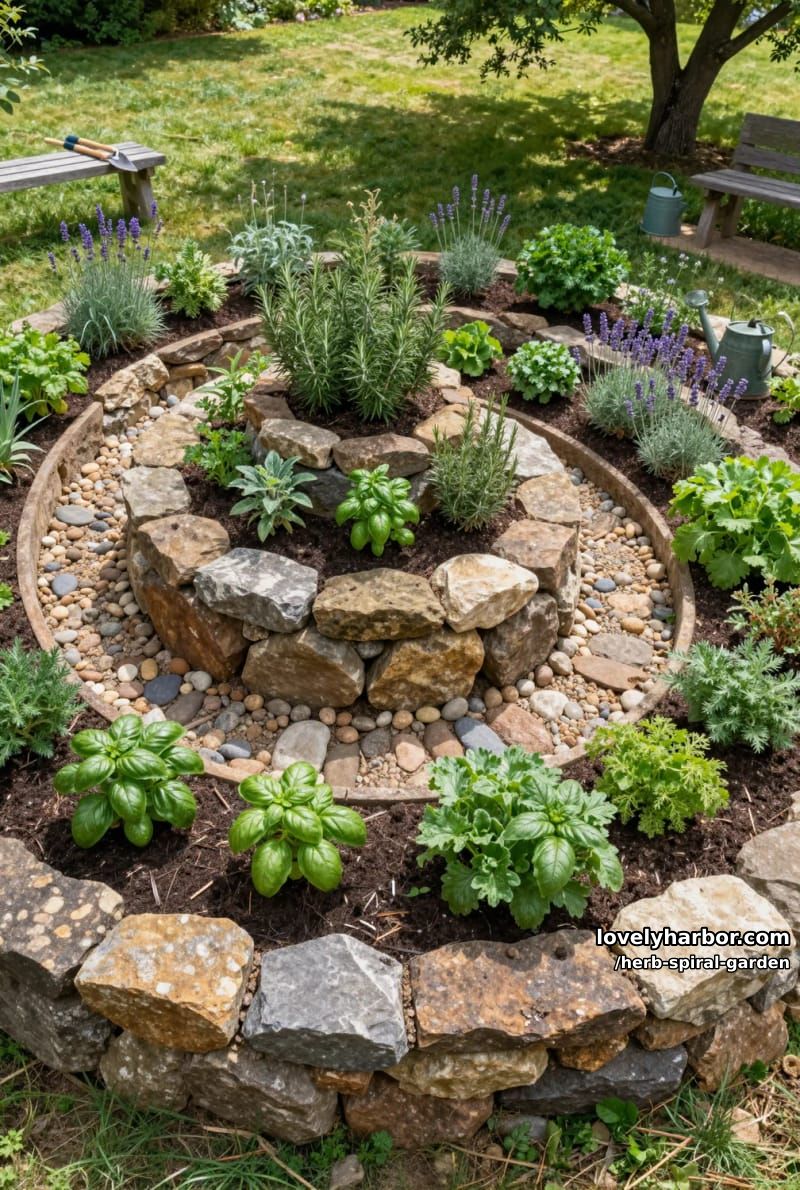
9. Large three-tiered stone spiral herb garden in woodland.
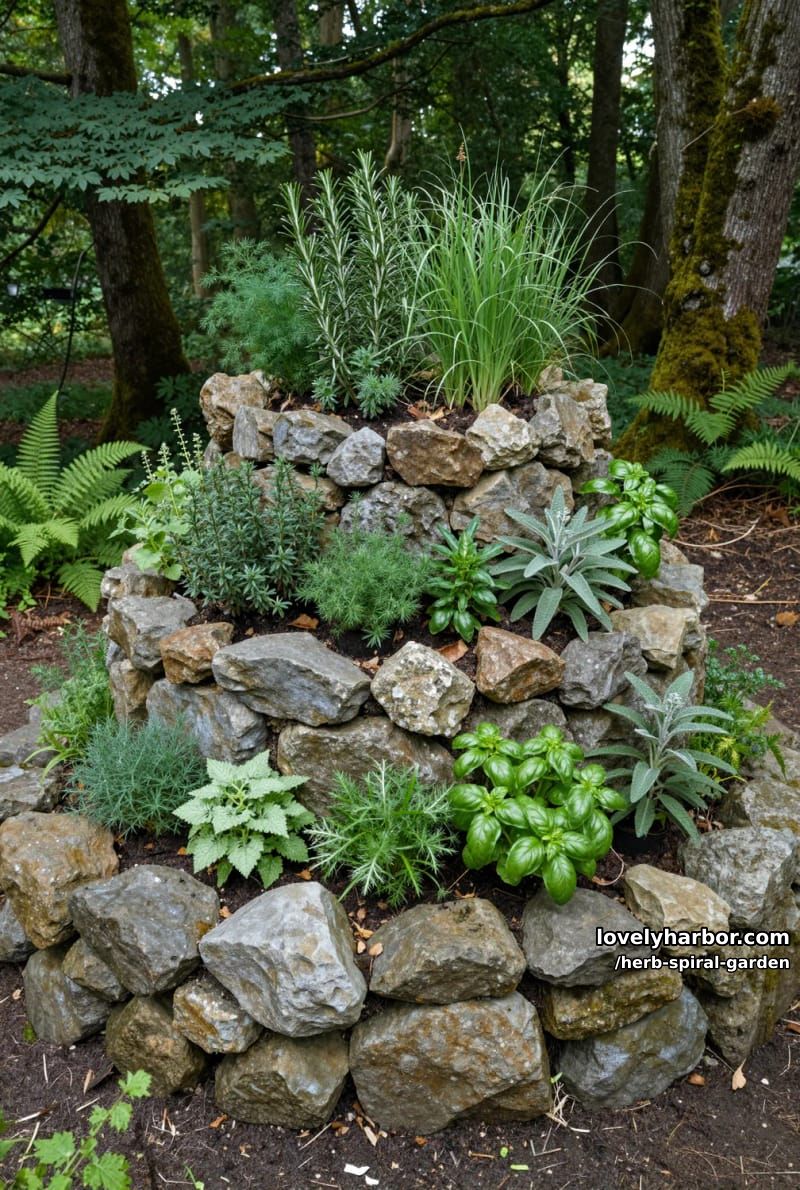
Imagine a large, three-tiered stone spiral herb garden tucked into woodland.
This structure blends function and art, letting you grow shade-tolerant herbs like mint or chives at the base, while sun-loving rosemary and thyme bask on the upper tiers.
It’s a smart way to use uneven, dappled light.
Building with stones helps retain warmth and moisture, but watch for critters like slugs that love the cool crevices. Maintenance can be trickier in a forest setting, fallen leaves and acorns need regular clearing.
Still, the payoff? Fresh herbs at arm’s reach and a centerpiece that sparks conversation.
10. Step-by-step construction of raised brick herb spiral garden.
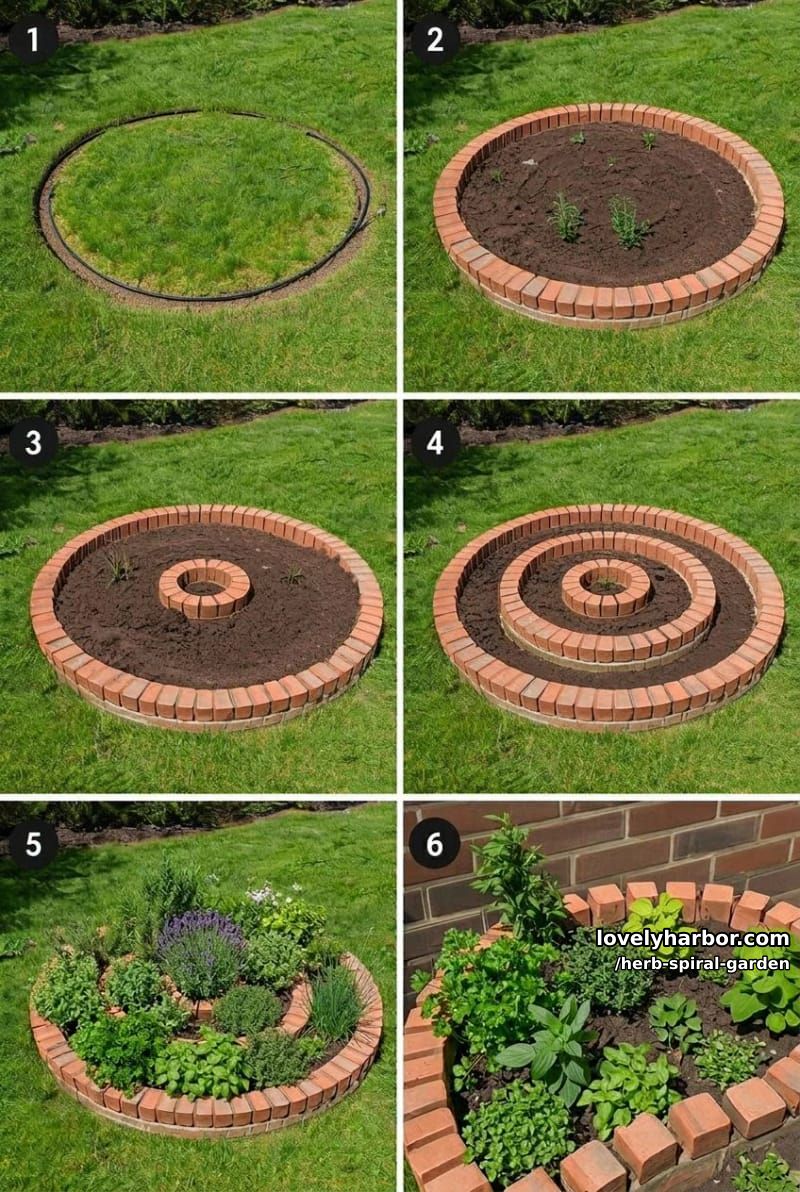
Start with a sunny spot and clear a circle about two meters wide.
Lay cardboard or newspaper as a weed barrier, then arrange your bricks in a spiral pattern, gently stacking higher toward the center. No fancy tools, just patience and a keen eye.
Remember, gaps between bricks help drainage. The same goes if you decide to create a semi-circle brick herb garden bed.
Fill the spiral with a mix of compost and garden soil. Plant Mediterranean herbs like rosemary at the top, where it’s driest, and shade-loving herbs like mint at the base.
Water thoroughly but avoid overdoing it. This spiral saves space and encourages healthier, more flavorful herbs.
11. Spiral garden with red and white bricks on cardboard.

Kids stacking red and white bricks on cardboard to make a spiral garden? That’s hands-on learning at its best.
They get messy, problem-solve as a team, and see their effort turn into a living sculpture. Plus, it’s cheaper than fancy raised beds and lets them recycle basic materials.

Sure, the bricks can heat up in the sun, so some herbs might wilt if placed on the outer edges. Yet, the spiral shape helps with drainage and creates microclimates, great for different herbs.
It’s a fun way for young people to see science and creativity grow side by side.
12. Brick and stone spiral herb garden with distinct planting sections.

Picture a winding brick and stone spiral, each curve offering its own sun and shade.
This setup makes it easy to plant basil up top, where it dries out, and tuck mint or parsley below, where it stays damp. No more guessing where to put your favorite herbs.
The spiral’s natural sections help prevent herbs from fighting for space. Organizing by water and light preference boosts plant health.
It’s easy to maintain, and you can grab what you need without wading through a tangle. Who knew a little geometry could make gardening so much easier?
13. Spiral gardens made of bricks, metal, river rocks, and wooden logs.

Building a spiral garden using bricks, metal, river rocks, and wooden logs gives you flexibility and character. Bricks hold heat well, extending the growing season for heat-loving herbs.
Metal brings a modern twist, though it can get hot in direct sun. River rocks add earthy charm but may shift over time.
Wooden logs fit easily into rustic landscapes and break down naturally, feeding the soil as they age. Mixing materials isn't just for looks; it helps tailor the spiral to your climate and style.
Try combining two or more for extra visual pop and to balance cost, durability, and aesthetics.
14. Multi-tiered metal ring spiral herb garden with river stone accents.
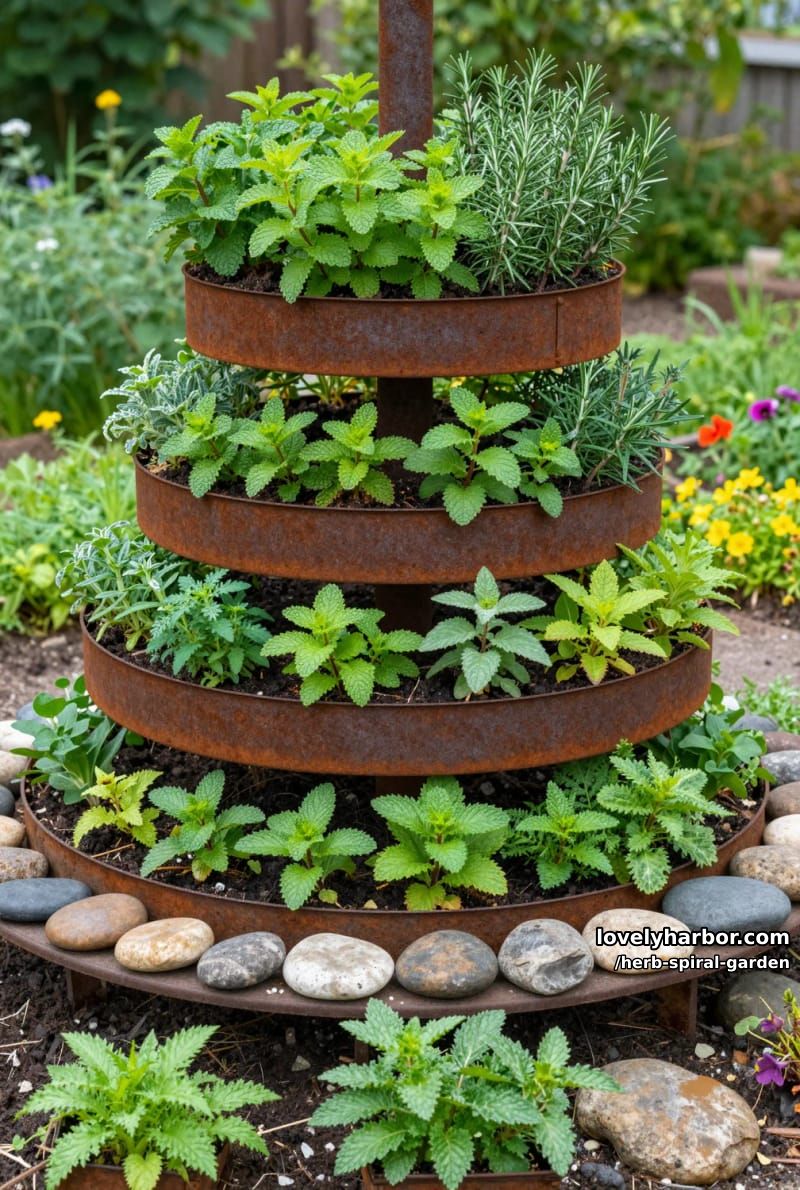
A multi-tiered metal ring spiral herb garden with river stone accents makes gardening both efficient and eye-catching. These spirals use vertical space, letting you grow a range of herbs in a small area.
Metal rings add a modern edge, while river stones offer natural charm and help with drainage.
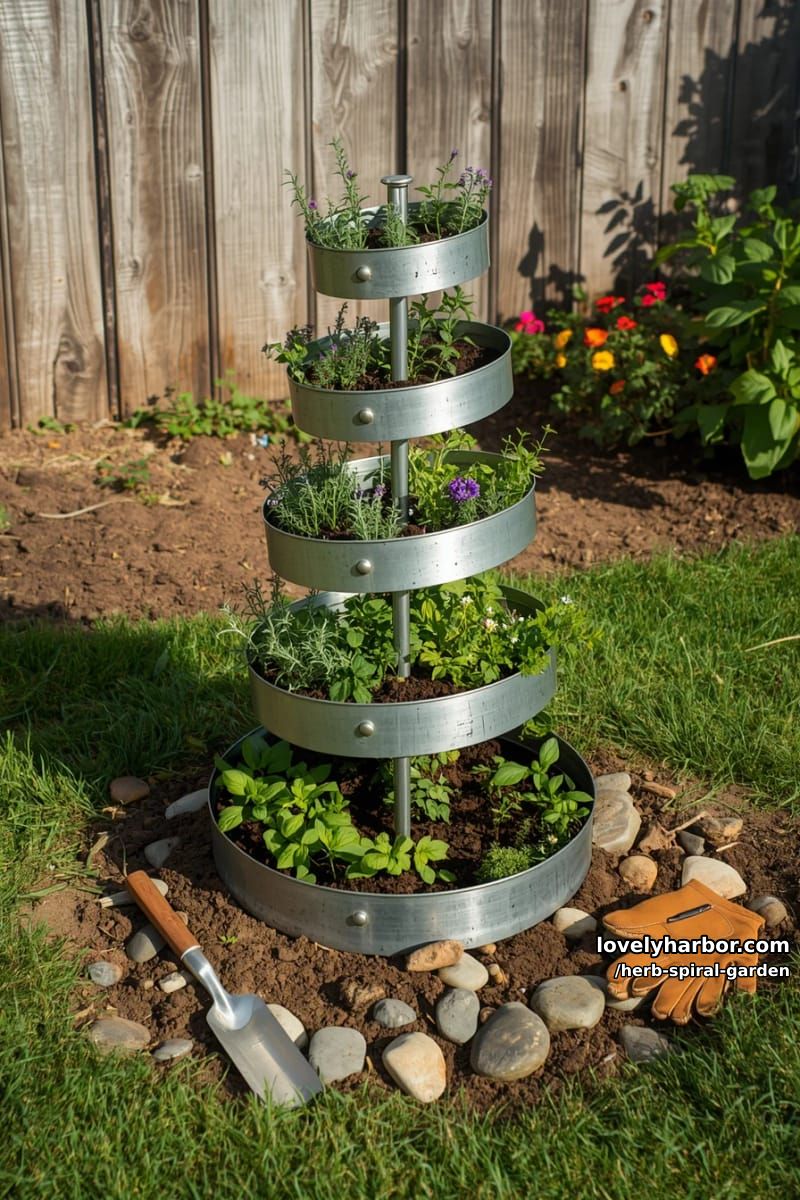
Think about how sunlight hits each level, parsley thrives in partial shade, but rosemary wants full sun. The metal can heat up, so water retention may be tricky in hot months.
Consider drought-tolerant herbs for the top tier. This setup isn’t just practical, it invites compliments from every visitor.
15. Three-tiered flat stone garden bed with central stone pathway.

A three-tiered flat stone garden bed looks appealing and serves a practical purpose. Each level creates microclimates, basil flourishes up top in the sunlight, while parsley thrives below, shaded by stones.
The central stone pathway means you won’t trample your plants while harvesting. Who wouldn’t want easier access to fresh herbs?
Of course, it’s not all roses. Lifting and arranging heavy stones can be backbreaking, think of it as a free workout. Drainage might demand extra attention, especially if stones aren’t well positioned.
Still, with a bit of patience and some gardening gloves, the effort pays off with a vibrant, organized herb oasis.
16. Figure-eight raised brick garden bed with two circular planting sections.

Imagine a figure-eight raised brick garden bed, two round sections joined in the middle, right in your yard. This setup is a real conversation starter.
It lets you separate herbs that love sun from those that prefer shade, all in one eye-catching structure. Plus, brick keeps roots warm in cool months.

Building this layout takes some elbow grease. You’ll need bricks, soil, and a plan for drainage. The curves make planting fun, not fussy. Want mint to stay put? Give it its own circle.
Basil, thyme, or chives? Pop them in the other. Your kitchen will thank you.
17. Reddish-brown brick spiral garden with herbs and flowers.

A reddish-brown brick spiral garden instantly draws the eye. The warm tones add charm, making herbs and flowers pop. Think thyme cascading over the edges, purple chives swaying above marigolds.
This setup saves space and offers varied sun exposure, perfect for basil up top, shade-loving mint below.

Yet, bricks can absorb heat, sometimes drying out soil faster. Regular watering is a must, especially in summer.
Still, the visual appeal and easy access to fresh herbs make this a small patch of paradise. Want something both practical and pretty? This spiral could be your answer.
18. Spiral garden diagrams and real-life examples.

Imagine a collage displaying both hand-drawn spiral garden sketches and photos from actual backyards. These visual examples offer more than inspiration, they reveal smart plant placement, creative material choices, and clever space-saving designs.
It’s like flipping through a living cookbook for any green thumb or curious beginner.
Some diagrams highlight irrigation tricks, while real-life photos show how the spiral works in tiny urban plots or sprawling rural yards. You might spot one built from reclaimed bricks, another from river stones.
These images remind us: every spiral garden reflects its creator’s needs, space, and imagination, flaws, quirks, and all.
19. Flat spiral herb garden with natural stone edging.
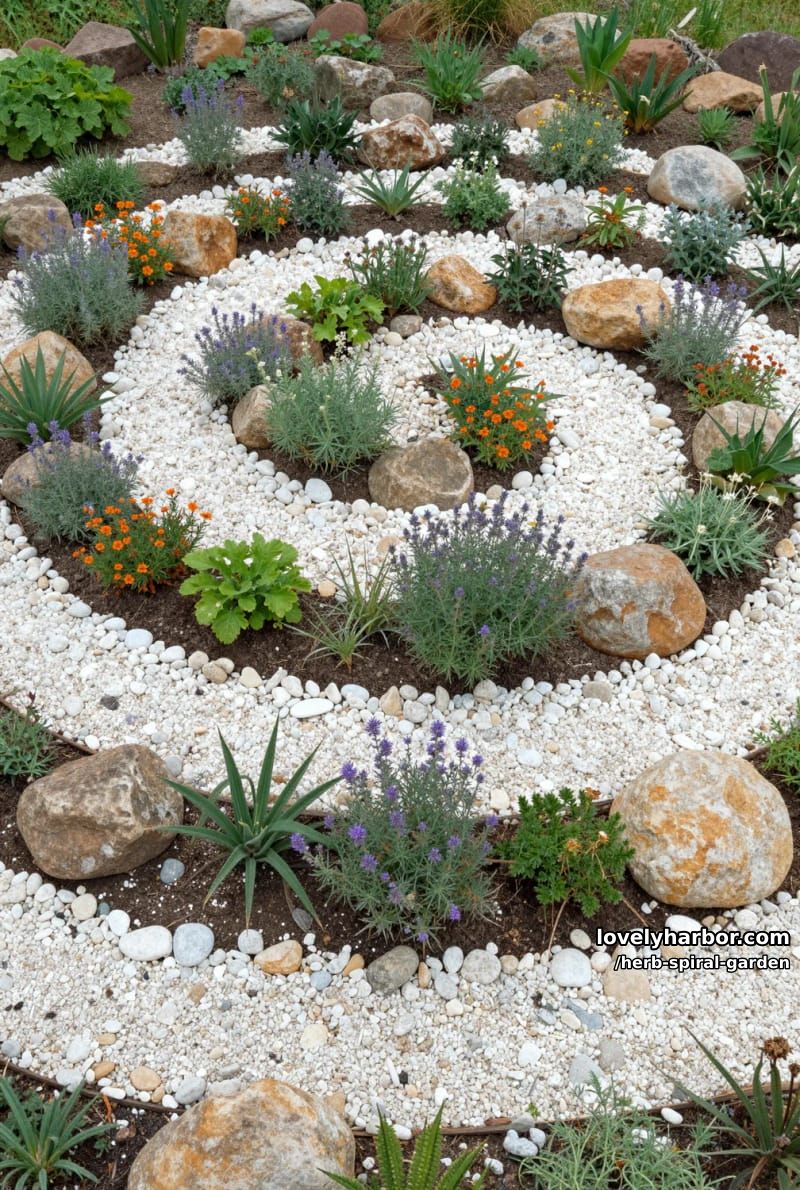
Picture a low, ground-level spiral traced gently across the earth, its curves defined by smooth river stones and pale gravel. Unlike raised designs, this one hugs the land, creating a calming, almost meditative pattern that draws your eye inward.
Clusters of herbs and flowering plants fill each segment of the spiral, blending soft purples, warm oranges, and fresh greens. The mix feels organic rather than rigid, as if the garden shaped itself over time rather than being strictly planned.
The contrast between white pebbles, warm-toned rocks, and dark soil adds texture and depth without overwhelming the scene. Every element stays close to the ground, reinforcing the idea that beauty doesn’t need height to stand out.
This kind of spiral garden feels approachable and adaptable, perfect for small spaces or relaxed landscapes. It shows how a simple, flat design can still create movement, structure, and quiet visual drama.
20. Small two-tier stone garden bed beside a shallow pond.

A small two-tier stone garden bed beside a shallow pond adds both charm and function to any outdoor space. Herbs thrive in this setup, benefiting from good drainage and varying moisture levels.
The proximity to water helps keep the microclimate stable, while stones retain heat for healthier, more vigorous growth.
However, be mindful of plant selection. Some herbs dislike soggy roots, so place water-loving varieties like mint on the lower tier closer to the pond, while drought-tolerant options, think thyme or oregano, belong higher up.
This thoughtful placement keeps maintenance simple and your herb harvests bountiful.
Conclusion
A herb spiral garden combines creativity and smart use of space. Whether you use bricks, stones, or recycled materials, these spirals fit almost any yard. Imagine sipping mint tea or snipping fresh basil, steps from your kitchen door.
Why not start planning your own spiral? Sketch a design, gather materials, and choose your favorite herbs. With each spiral, you gain both beauty and flavor for your table.
Let your garden reflect your style, no green thumb required, just a little curiosity and effort.