

Tired of bland backyard spaces? A rock garden offers instant style without endless upkeep. Busy weeknights or wild weather won’t undo your hard work.
Add a splash of color with low-water plants or let interesting rocks steal the show, options abound.
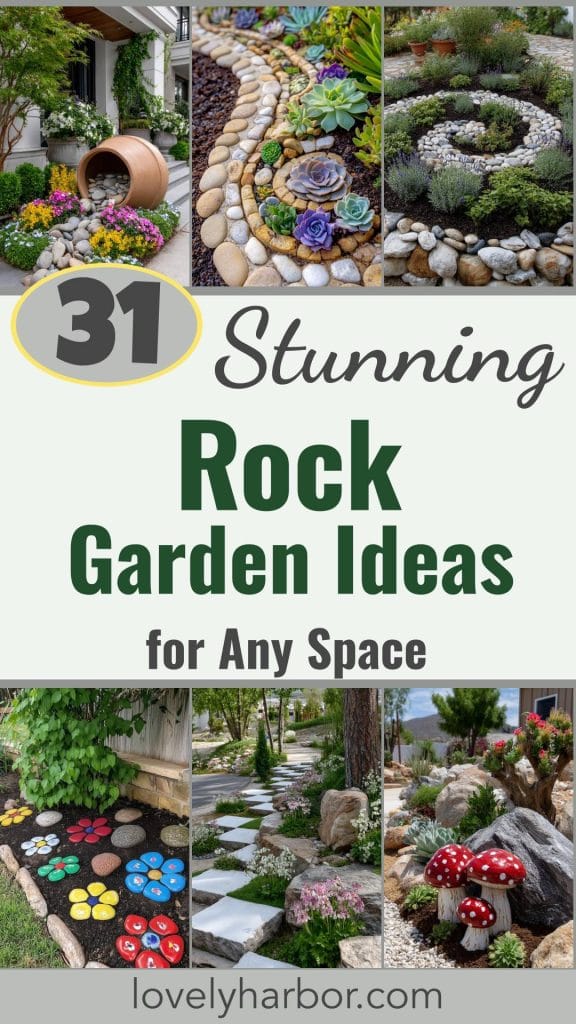
How do you choose stones, arrange plants, or build that perfect balance of wild and neat? Anyone can bring these ideas to life, whether you have a sprawling yard or a balcony full of pots and pebbles.
Let’s get your hands just a little dirty.
1. Spiral pebble path surrounded by succulents
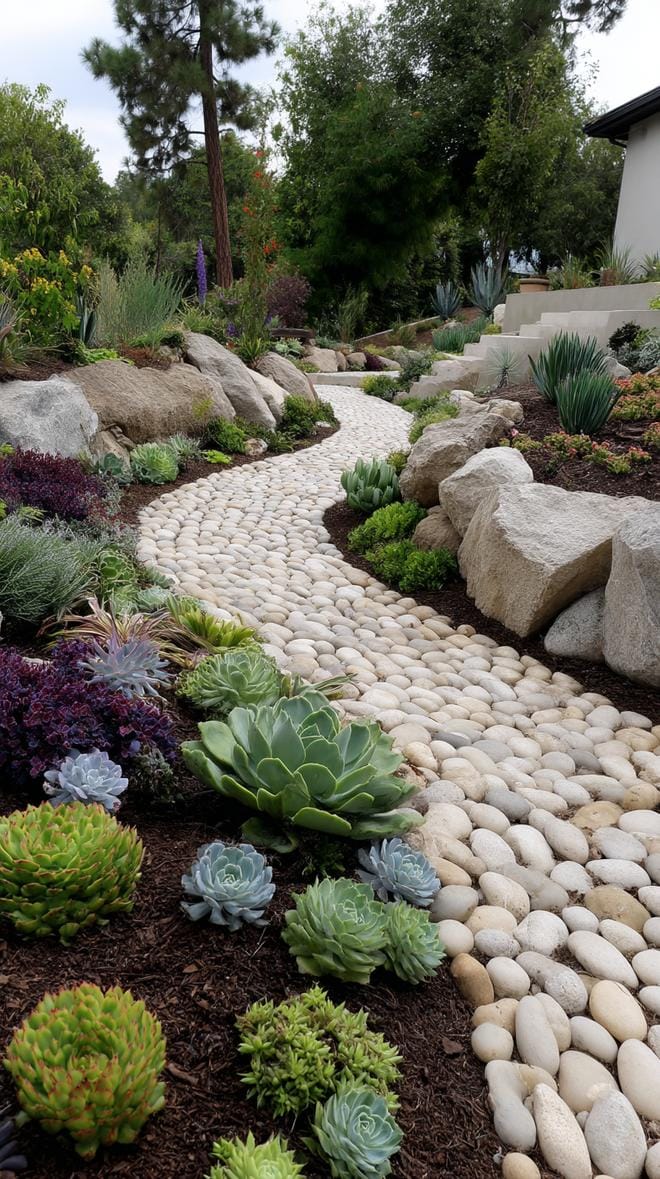
Why settle for ordinary lawns when you can create a spiral pebble path edged with cheerful succulents? The winding design draws eyes in, breaking up plain layouts and lending an artistic vibe.
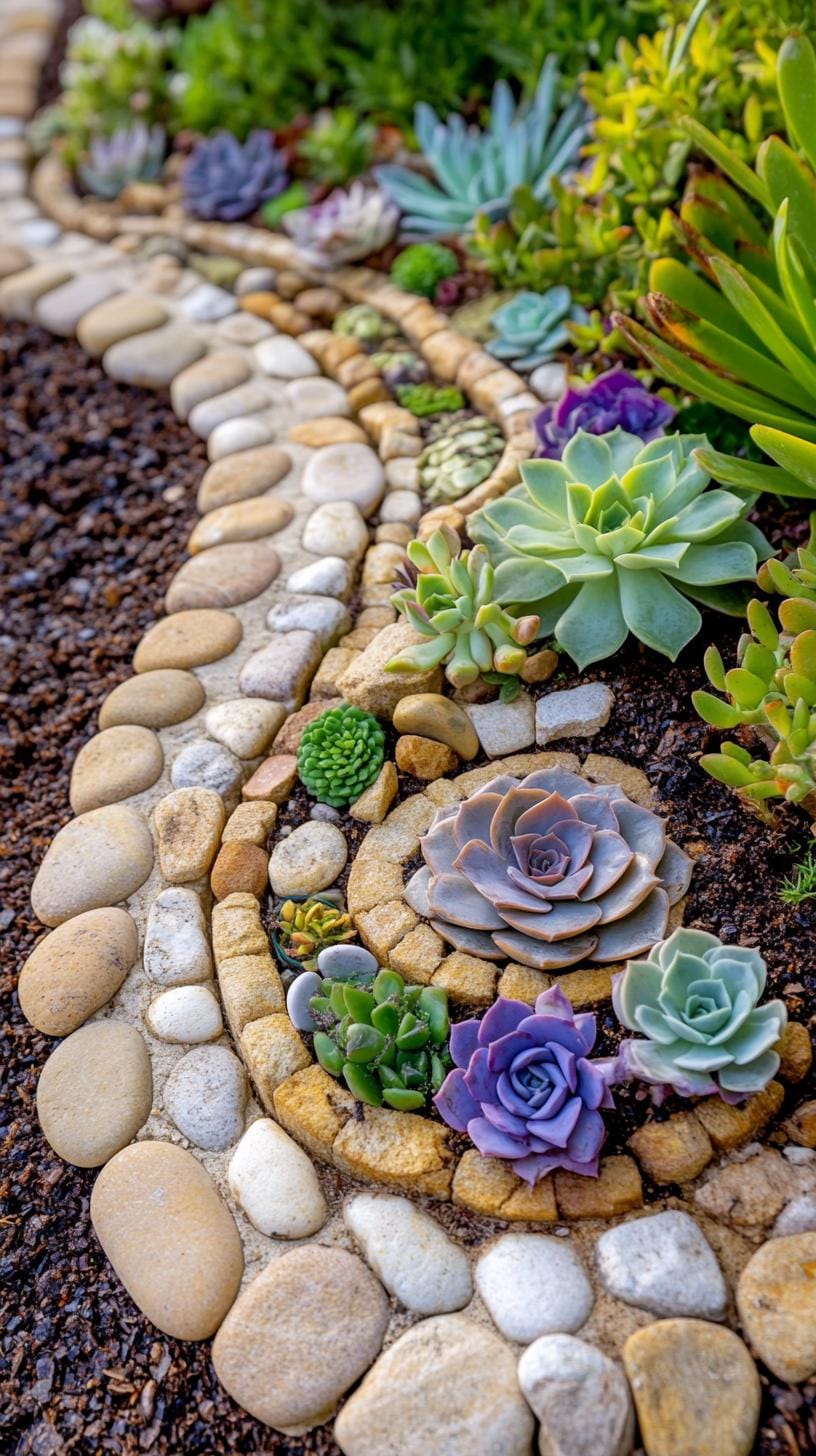
Pebble surfaces cut back on weeding and watering, while succulents thrive with hardly a complaint, making upkeep nearly effortless.
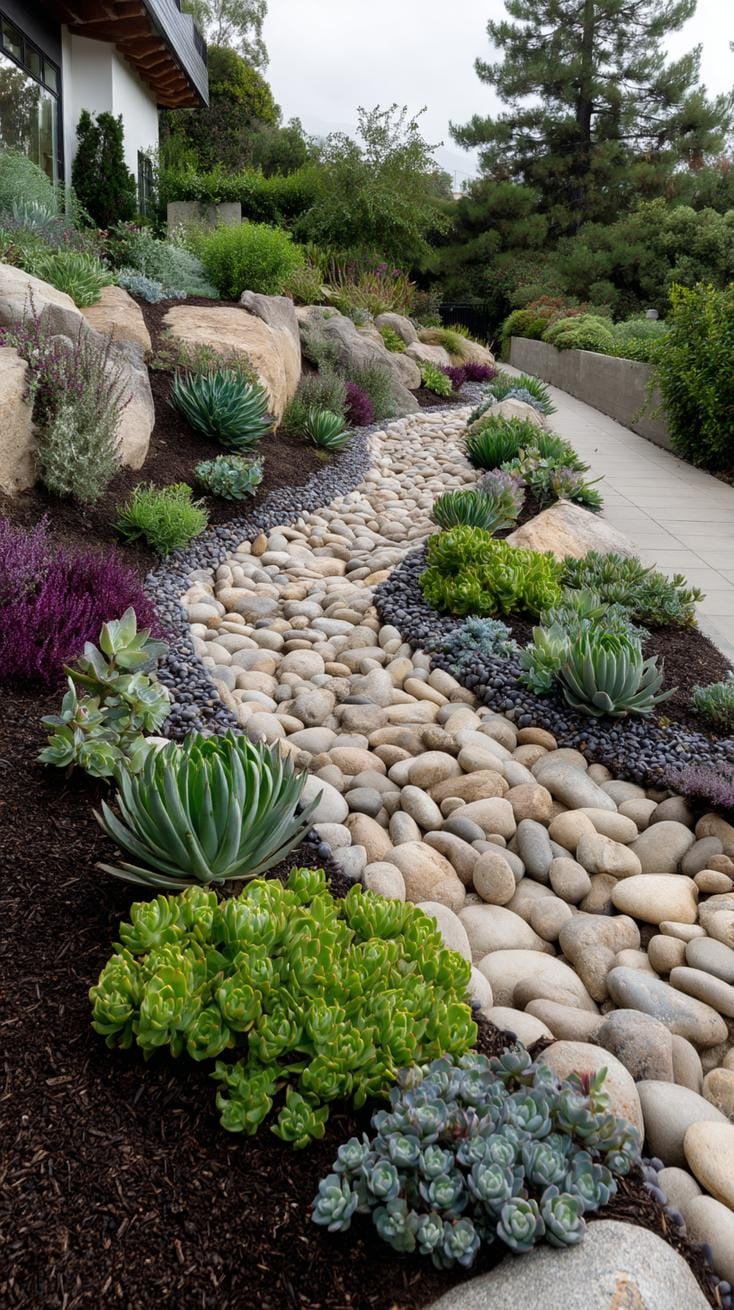
Some folks worry spiral paths are tough to construct, but with patience and a plan, it’s within reach for DIY fans.


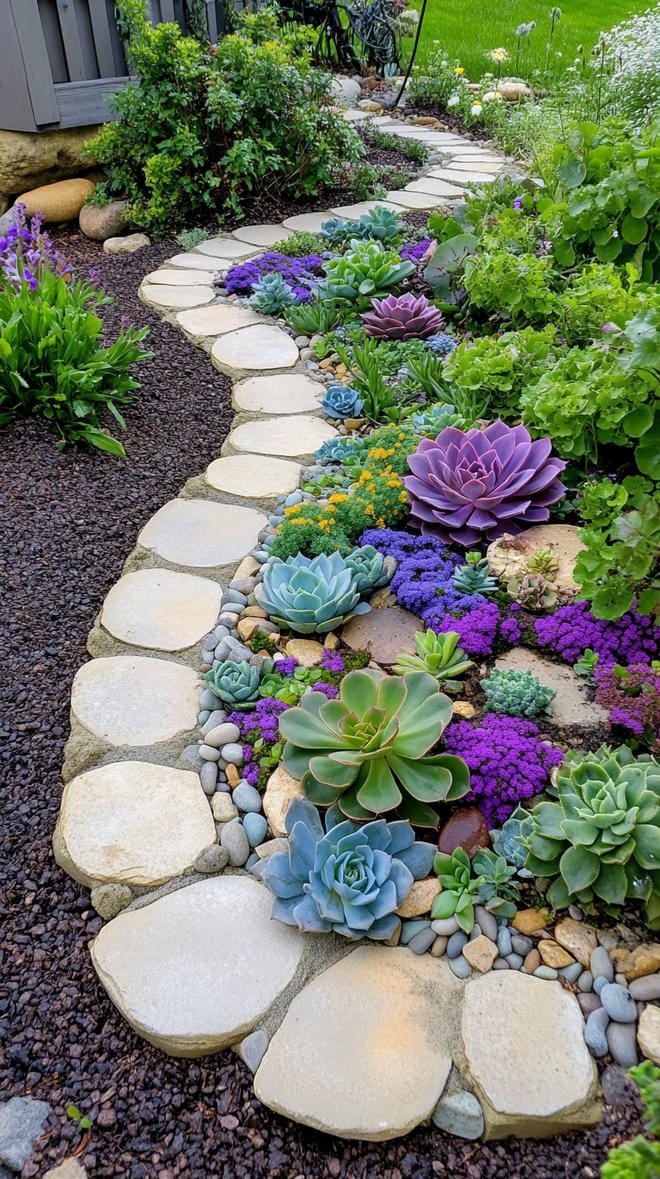
Sketch your shape, lay weed barrier fabric, pour pebbles, then plant vivid succulents along the coils. Done right, it invites wandering feet and plenty of neighbor envy.
2. Spilled pot rock design with blooming flowers
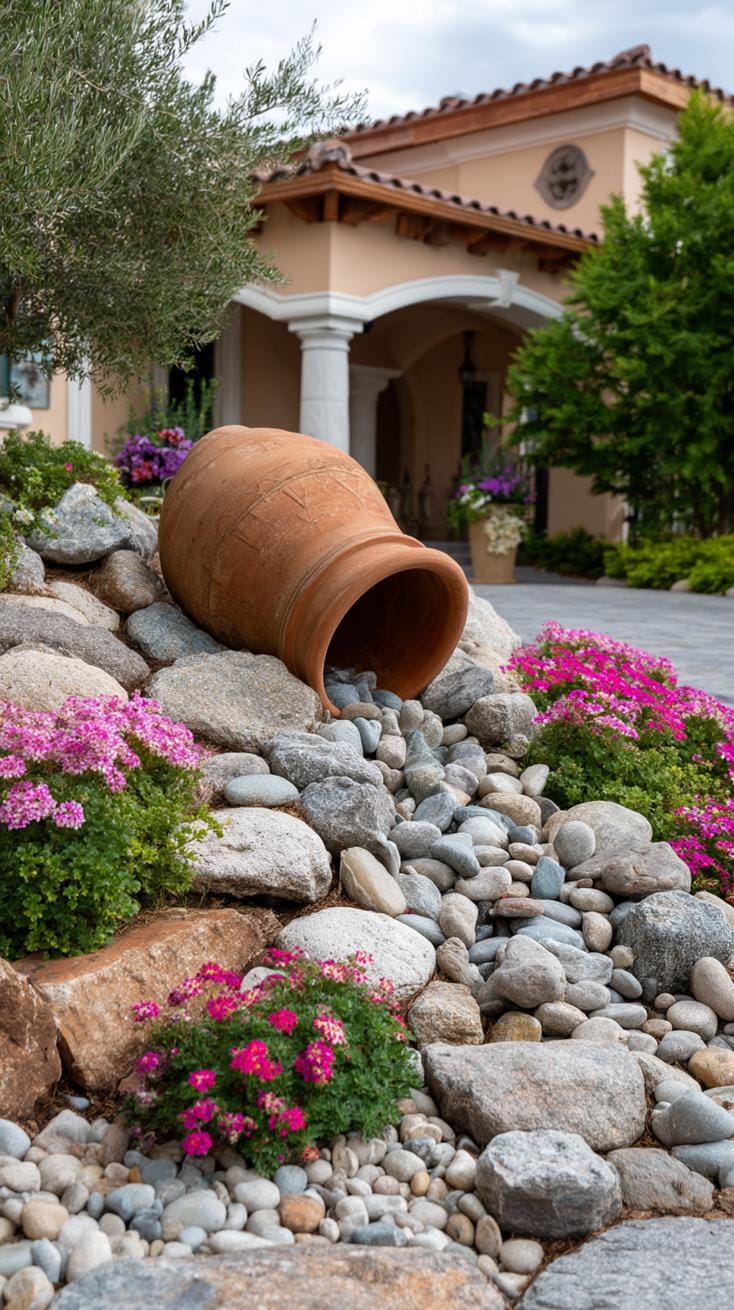
Try arranging a large, tipped pot so it looks as if flowers and rocks have spilled naturally onto your garden bed. Using bright petunias, alyssum, or marigolds creates a playful effect.
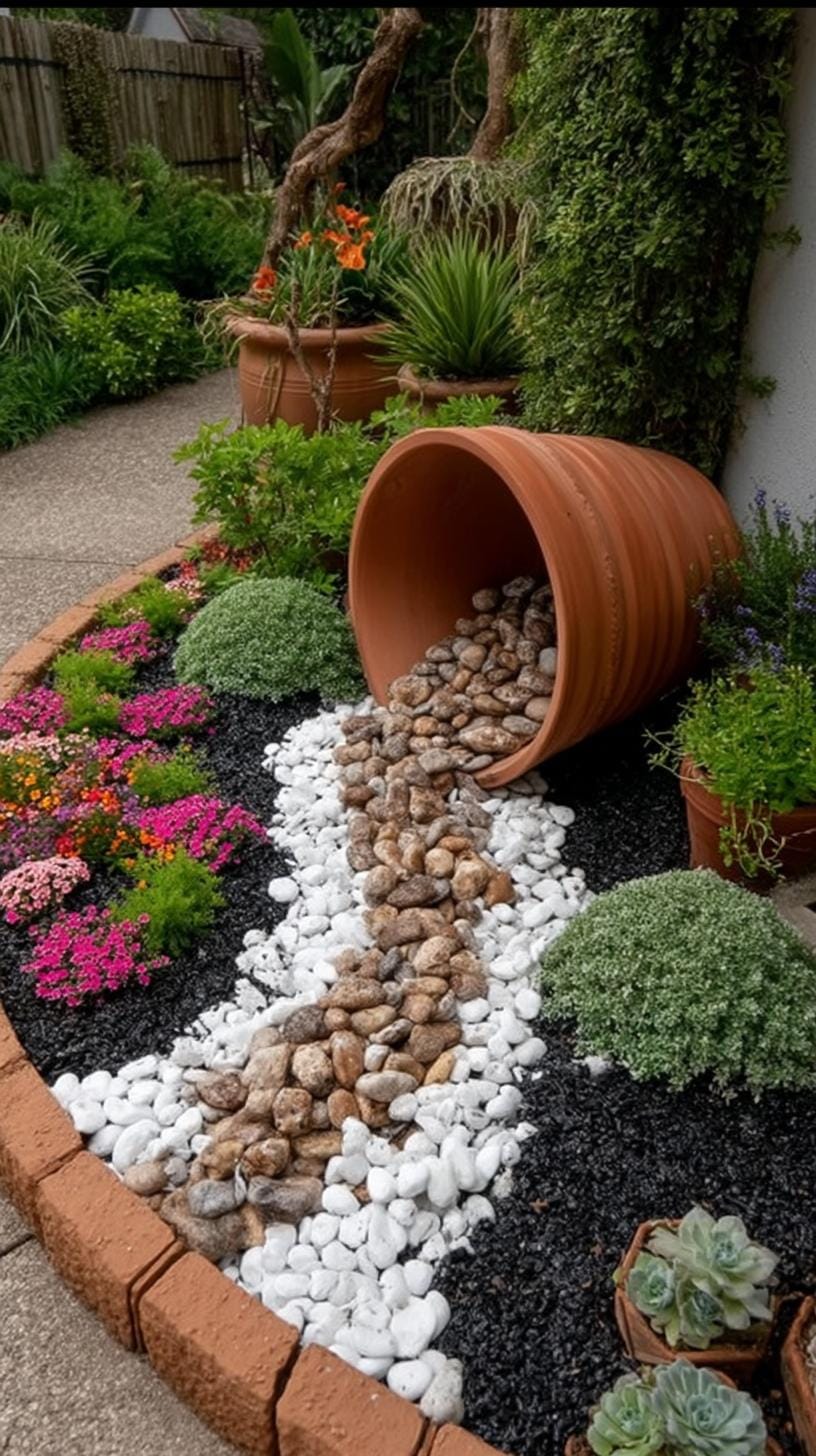
Fill the space with pebbles that contrast the blooms. Neighbors will stop and stare, guaranteed conversation starter.


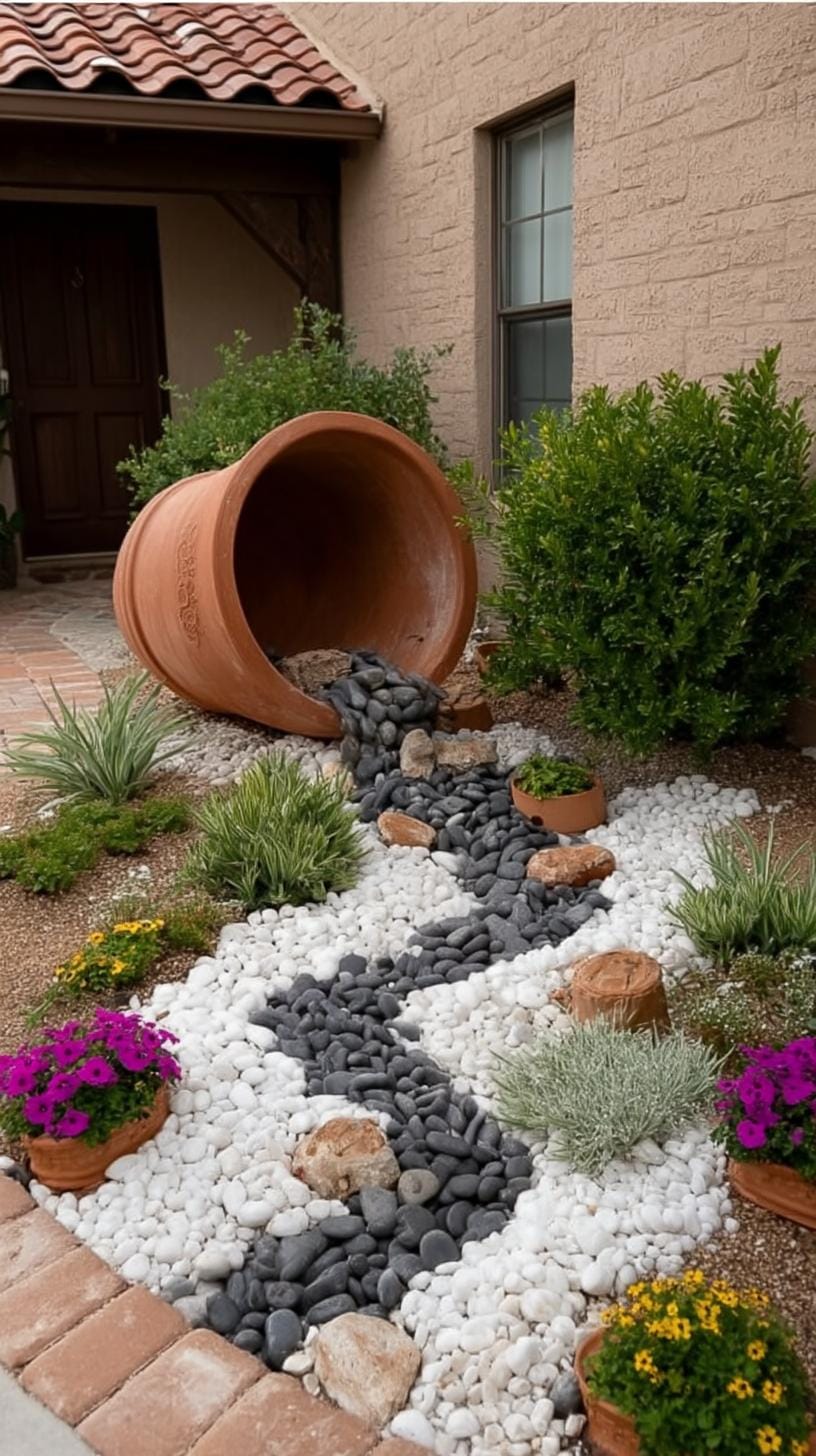
Maintenance isn’t difficult, but overwatering can turn the area messy fast, so use drought-tolerant plants. Can’t find weathered pots? An old, cracked one will do the trick.
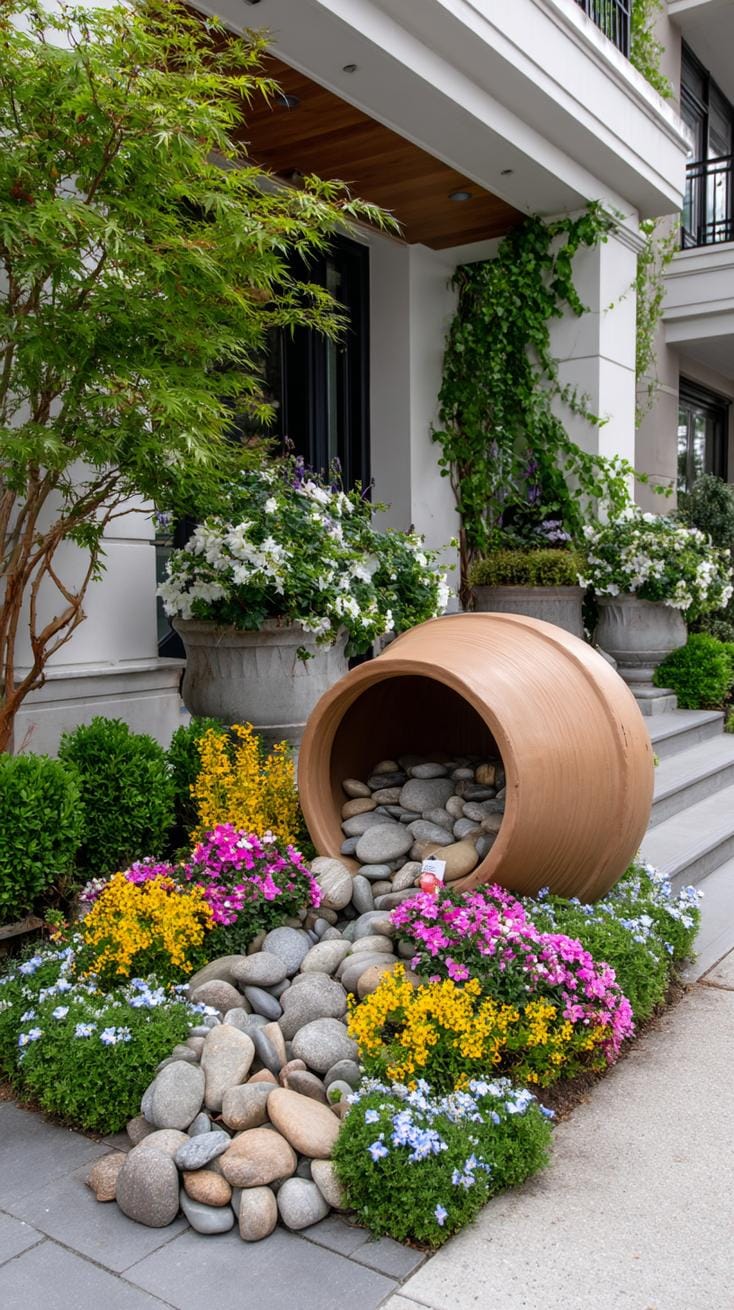
This setup thrives almost anywhere: sunny spot, partial shade, small corner, or even by your mailbox. Simple and charming never goes out of style.
3. Painted floral rock bed border for front yard
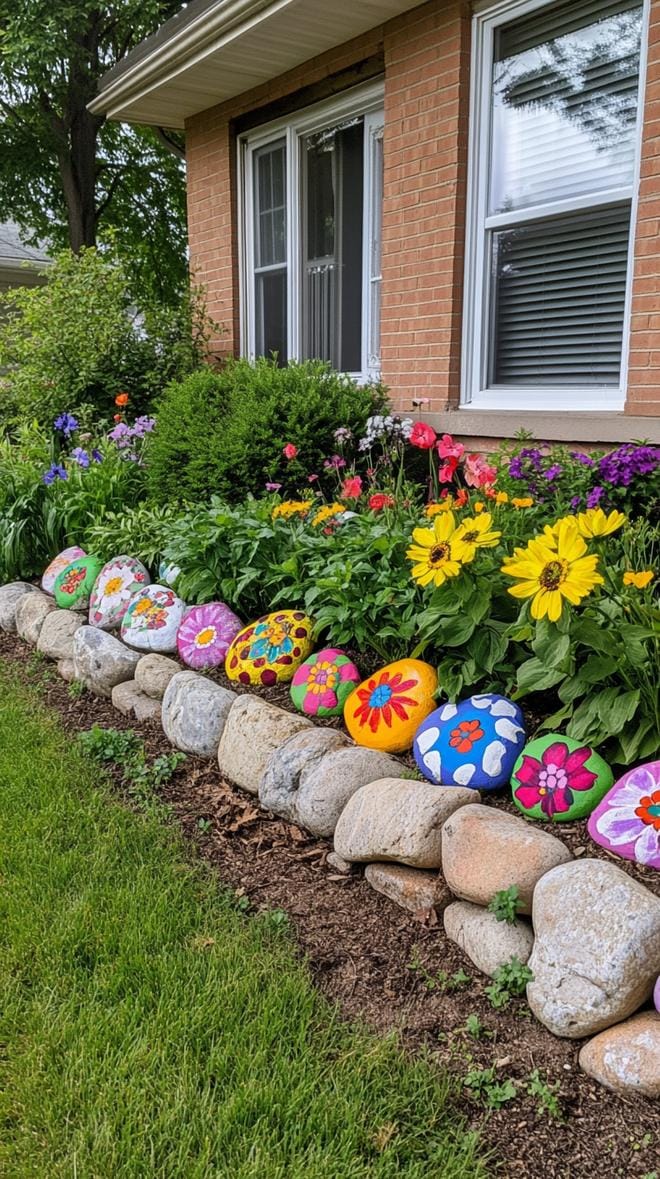
Painted floral rocks offer a budget-friendly border that instantly attracts attention. Simply collect flat stones, paint on your favorite blooms, then line them along the edge of your flower bed.
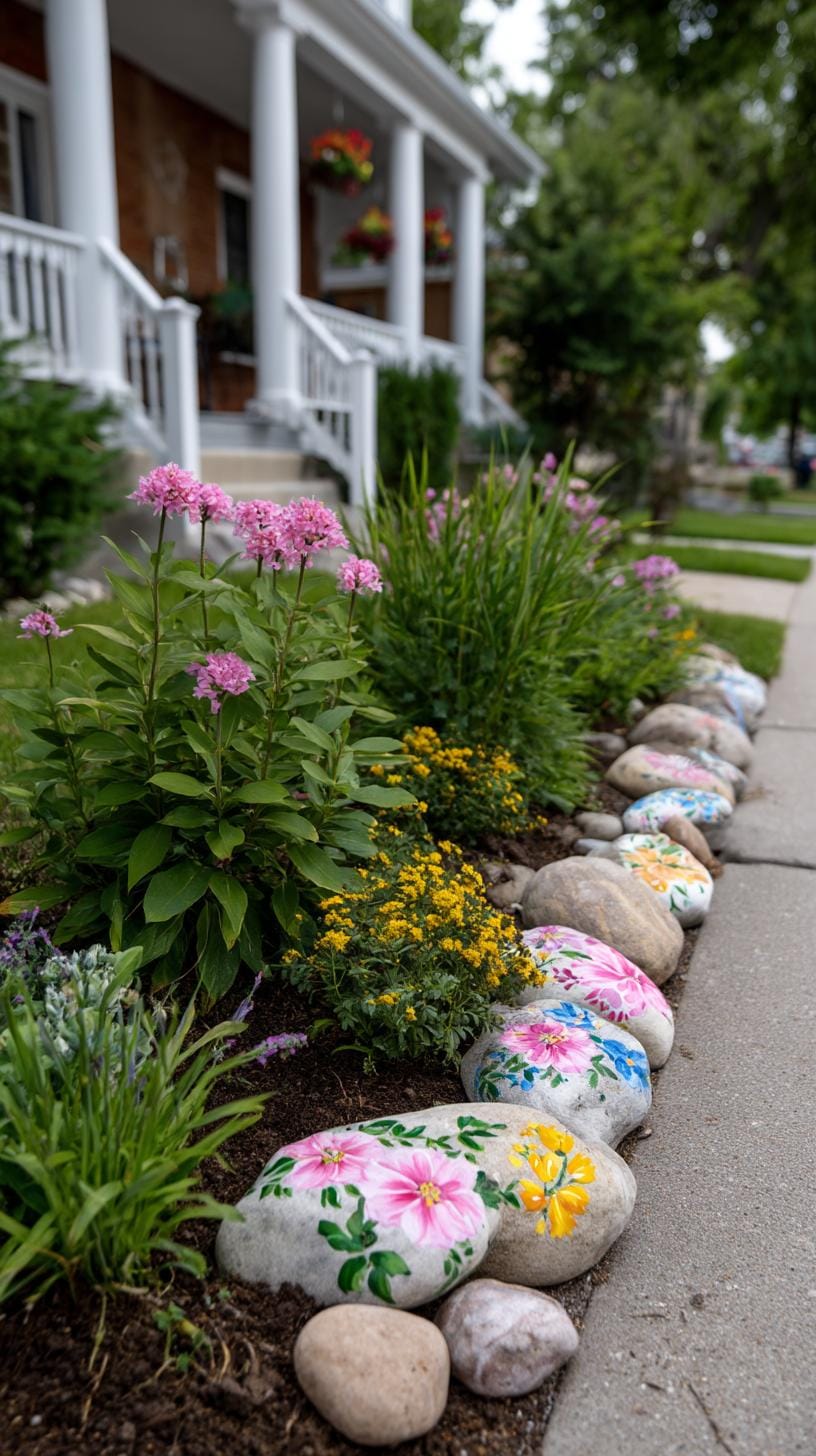
Neighbors may stop to admire your creativity. Kids love helping with the painting, making the project both practical and fun.
While this approach saves money and adds character, paint may fade over time. Consider using weather-resistant acrylics and applying a sealant for longer-lasting color.
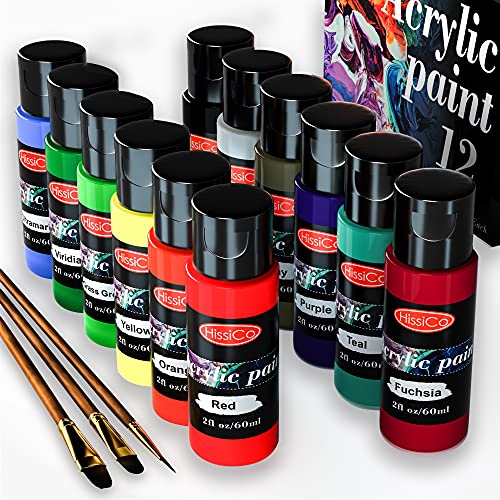

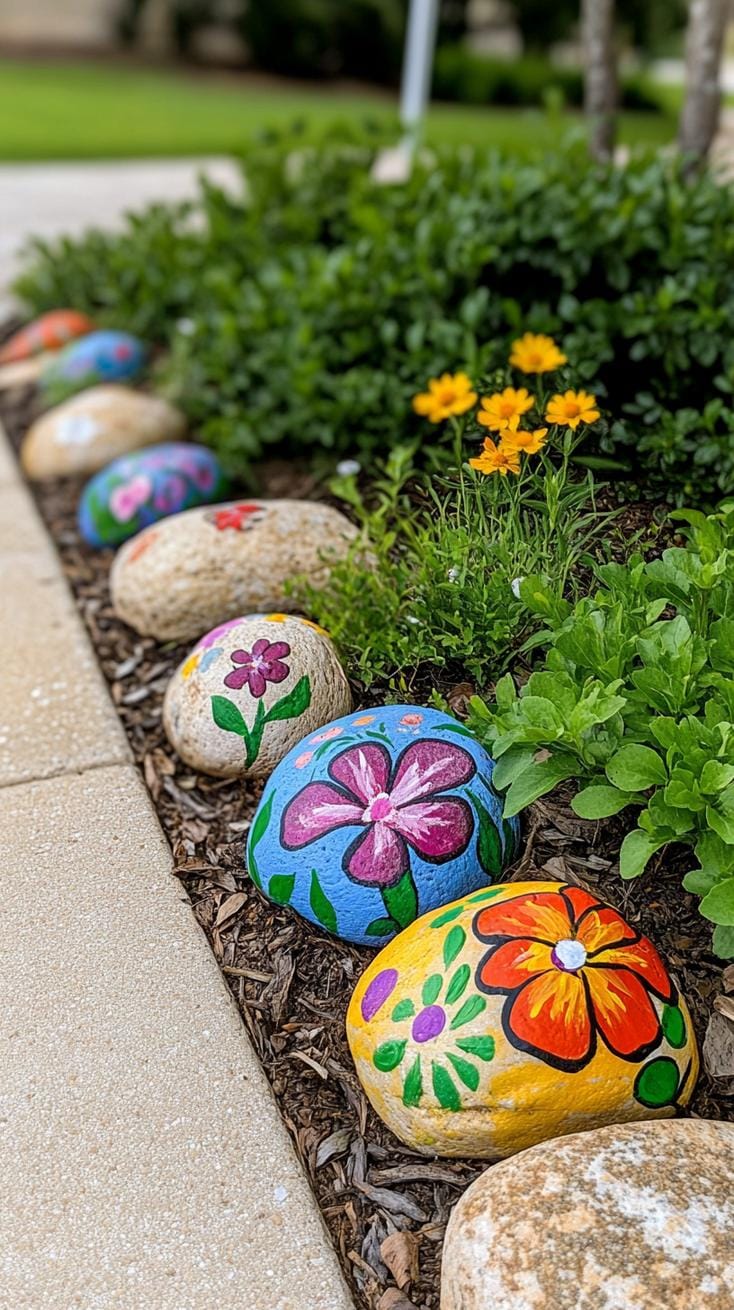
If you’re unsure about your painting skills, simple designs like daisies or tulips work just fine. The border can always be repainted as seasons change.
4. Stacked stone spiral centerpiece with mulch
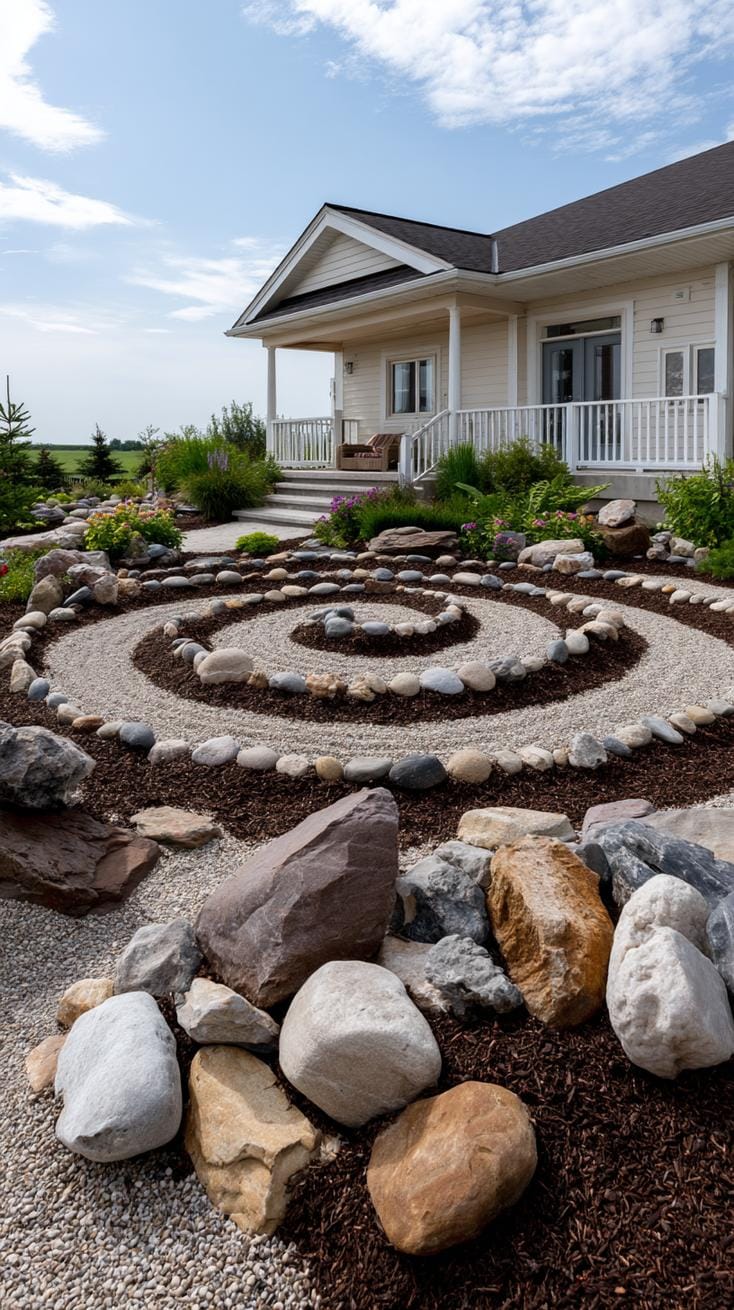
Imagine a spiral of stacked stones, twisting gracefully in your garden. This centerpiece doubles as a visual anchor and a practical way to guide the eye.
Add mulch within the spiral for weed protection and moisture. It’s low maintenance and striking, a win-win unless you expect vibrant colors year-round.


Practical tip: Combine various stone sizes for a textured look. Mulch in earthy tones keeps things neat and keeps roots cool.
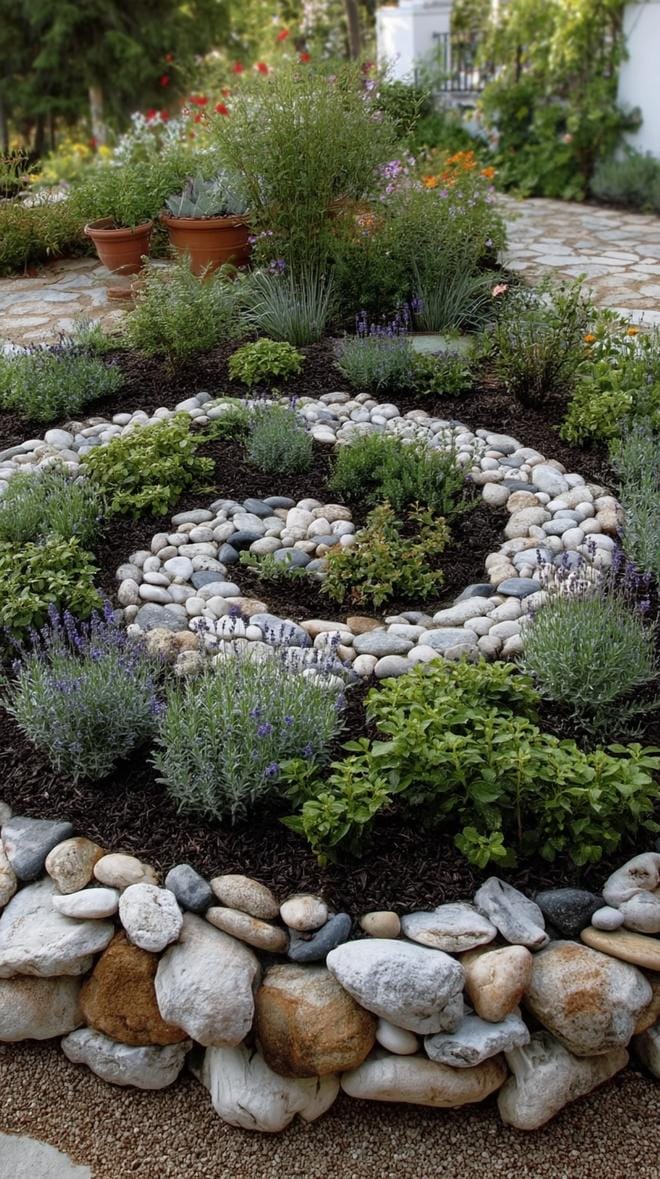
While the design is sturdy, it requires careful stacking; one strong nudge from a kid or pet and your spiral could quickly become a pile.
5. Minimalist black and white wave rock layout
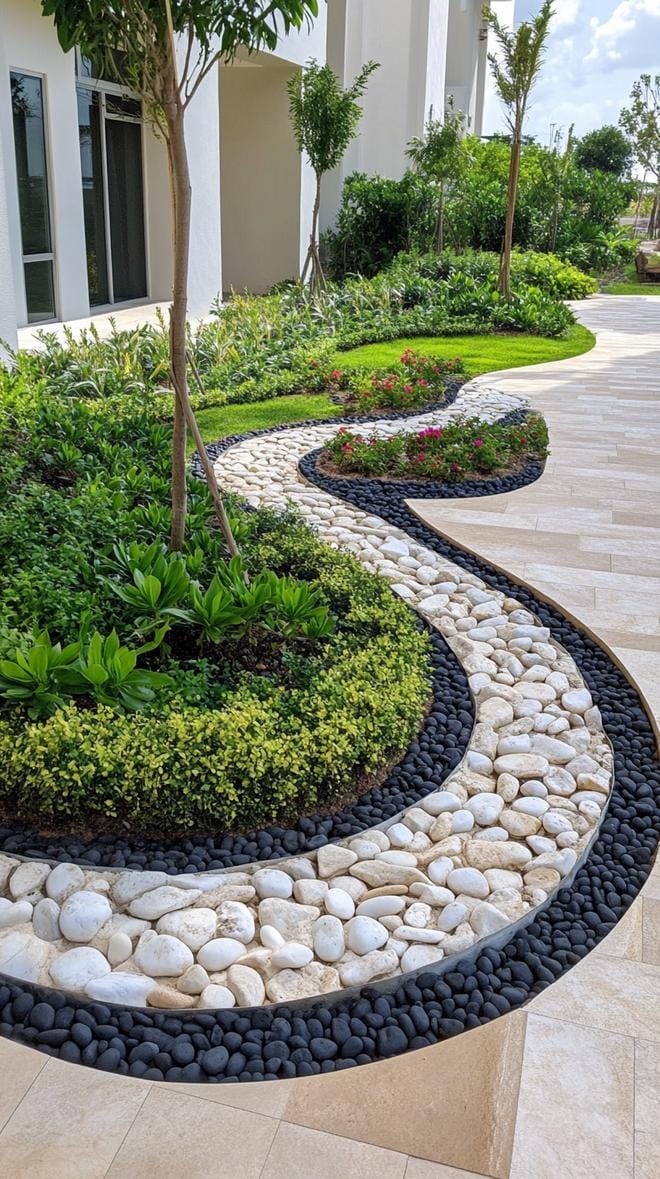
Minimalist black and white wave rock layouts whisper elegance without clutter. This approach uses contrasting stones arranged in fluid, wavelike patterns. The result? Clean lines and a striking visual effect.
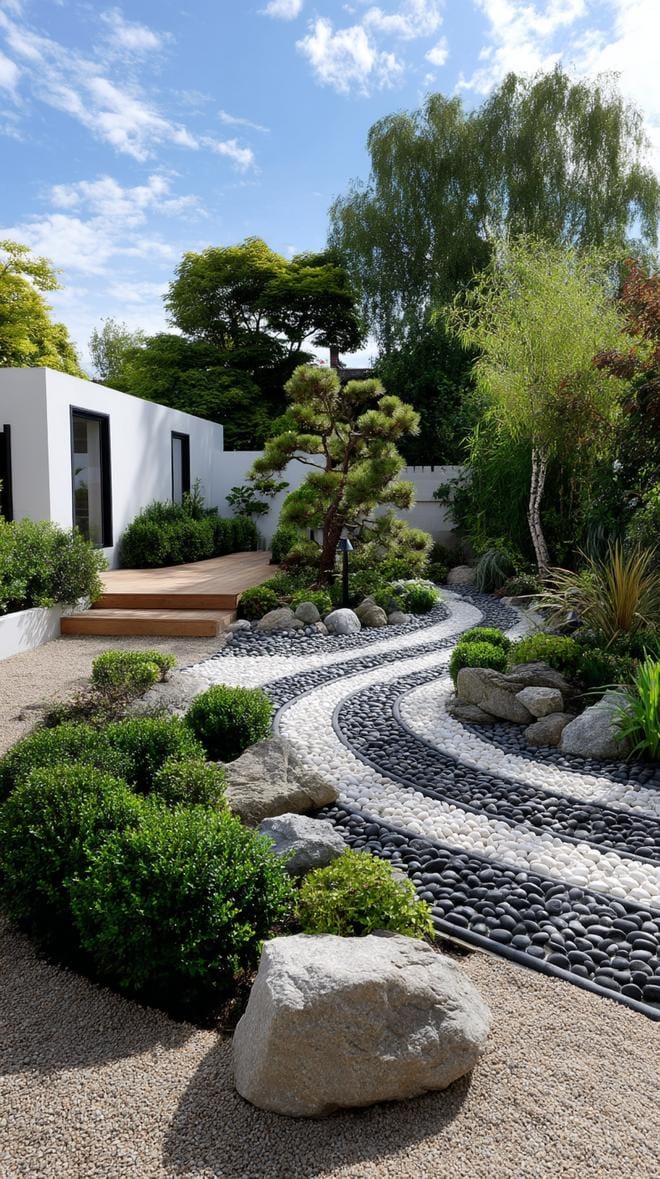
It’s a smart way to create drama with little fuss, perfect for small yards or no-fuss gardeners.


However, the simplicity hides a catch. Keeping those crisp black and white rocks spotless can feel like a never-ending job, leaves, dust, and weeds stand out.
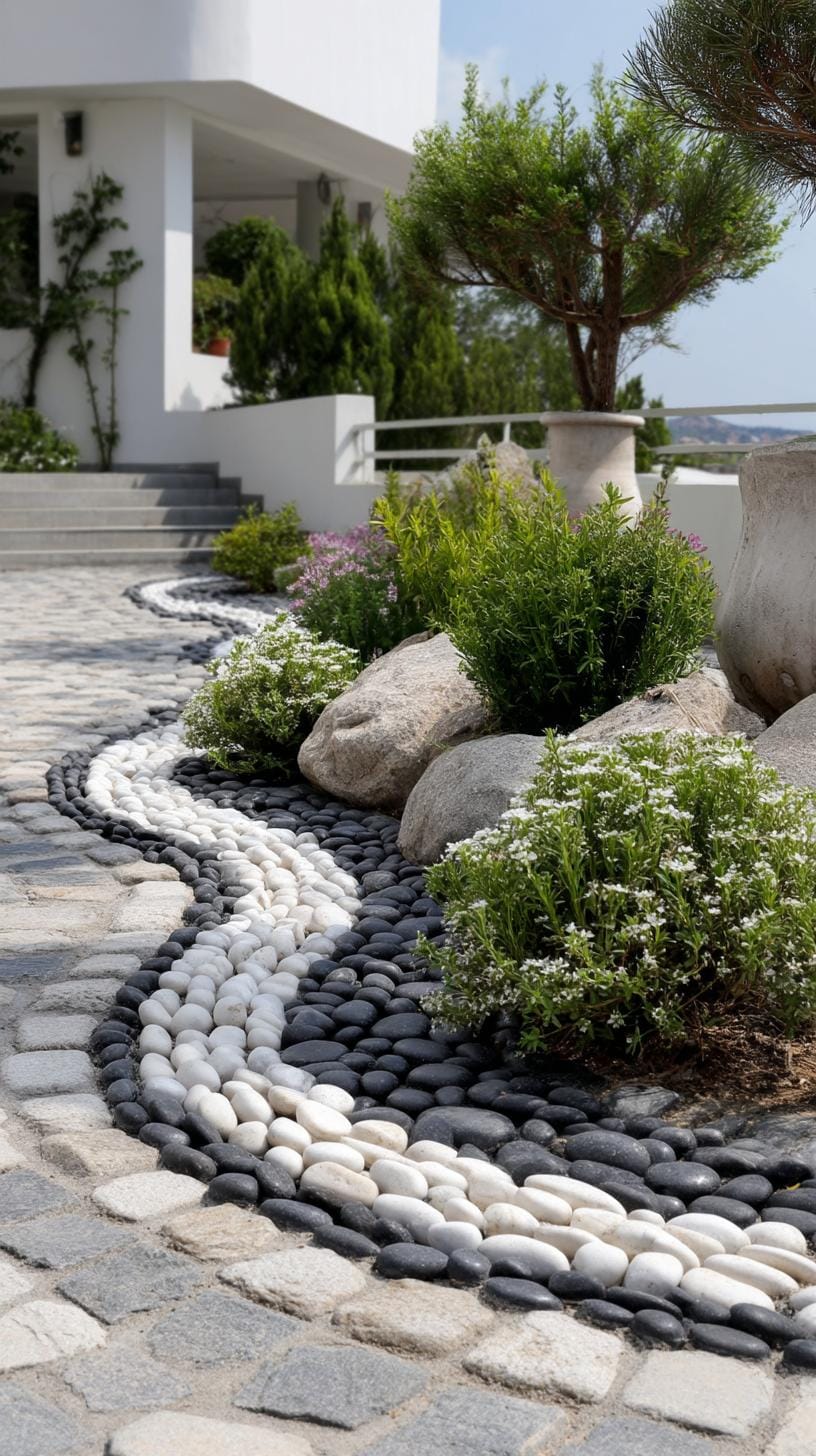
Is the striking style worth the upkeep for you? If monotony sets in, try adding a weathered log or small lantern for a fresh twist.
6. Rock waterfall illusion with creeping greenery
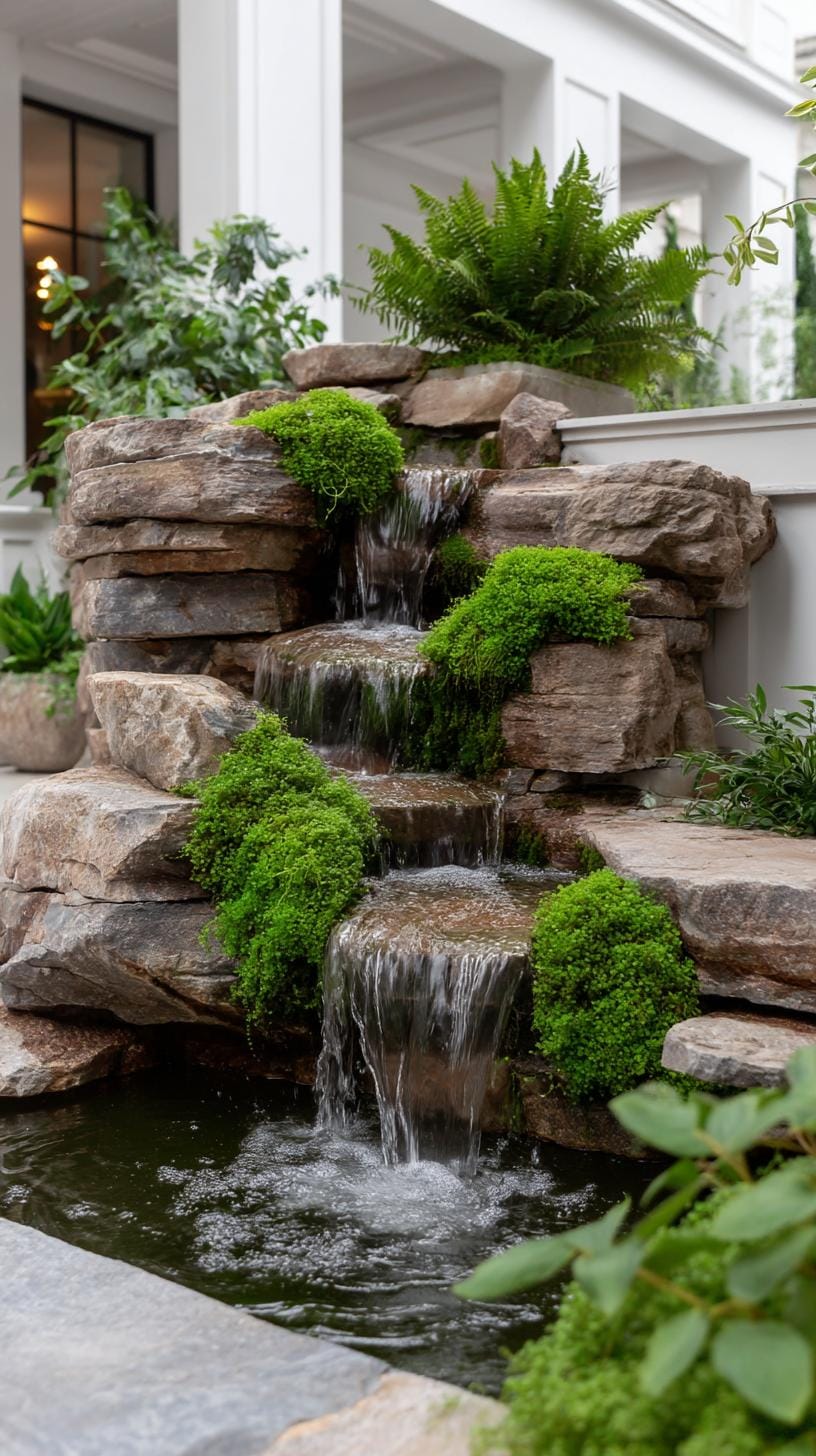
Imagine a cascading rock waterfall made even more striking by greenery that weaves between the stones. Creeping Jenny and thyme work wonders, tricking the eye into believing water flows there year-round.
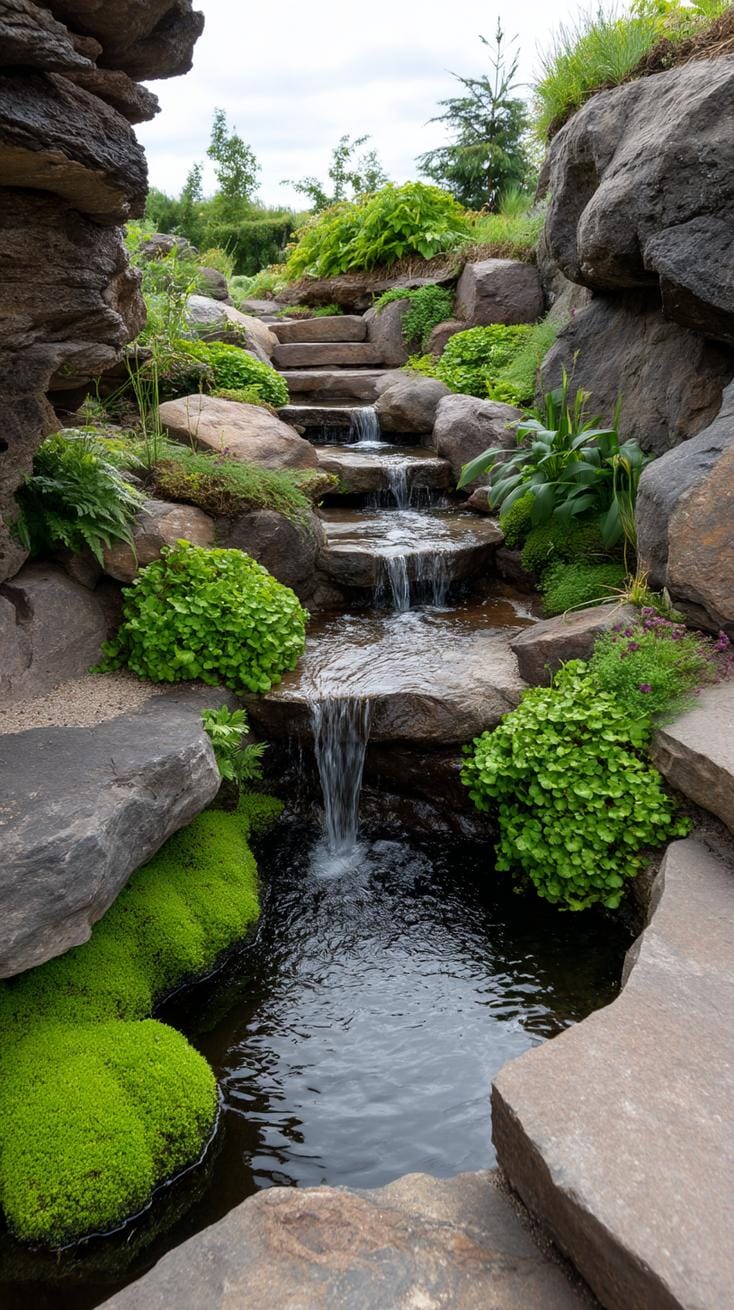
This style gives movement without the upkeep or water usage of a real feature, smart and soothing.


Try layering rocks of varying sizes for extra texture. Tuck in seedlings at odd angles for a natural look. Maintenance mostly involves trimming runners and watching for weeds.
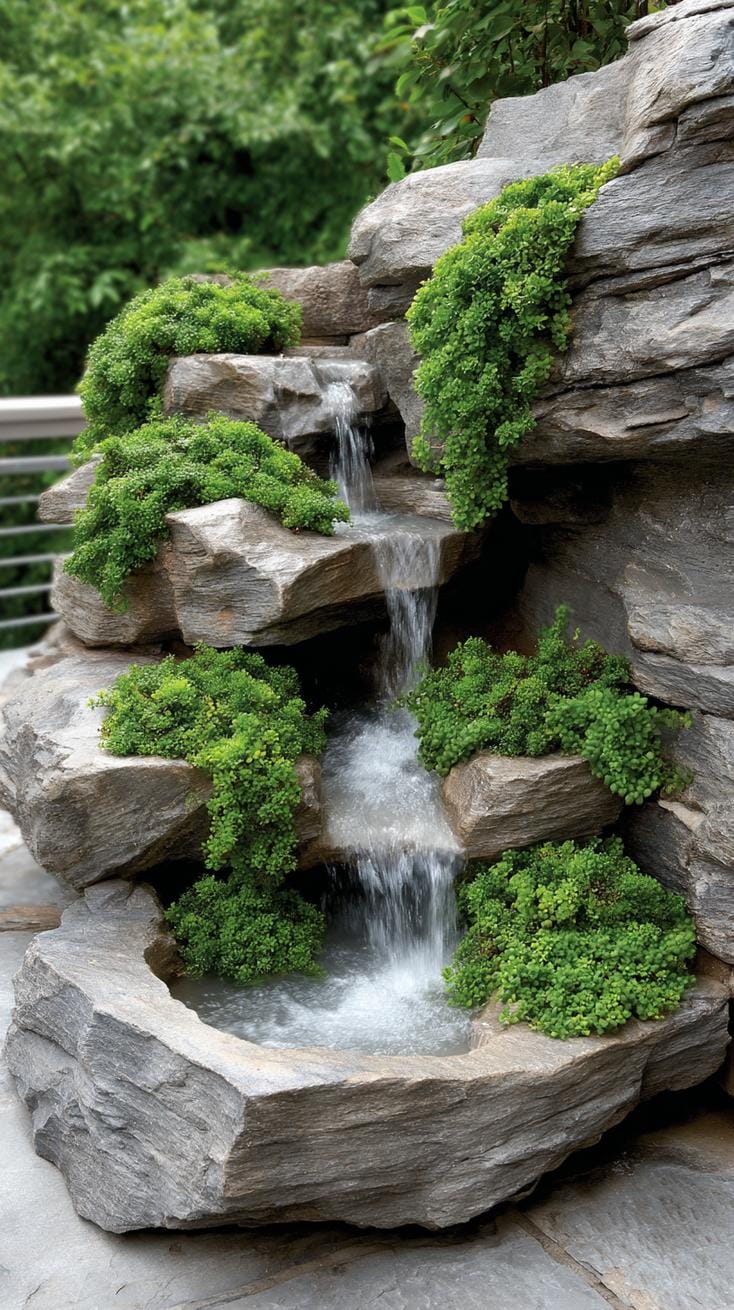
If you crave low-water landscaping that still demands attention, this illusion is a winner, though aggressive green varieties may occasionally go wild.
7. Flat stepping stones in lush flower clusters
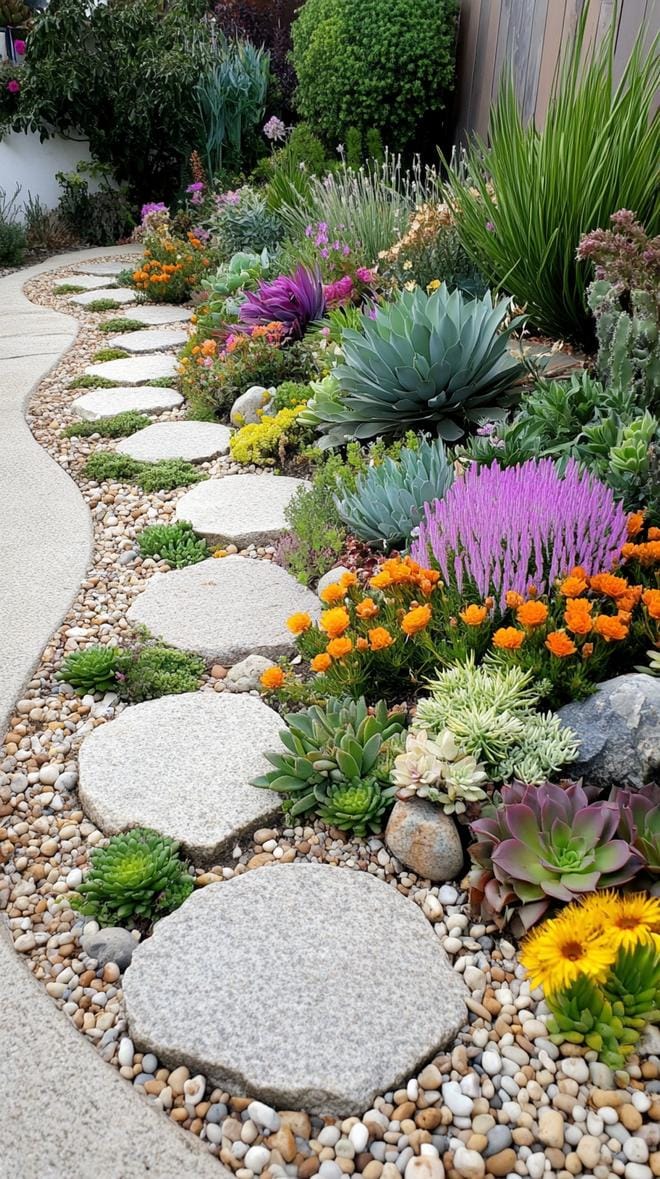
Flat stepping stones cut across a tangle of blooming flowers, guiding feet and eyes alike. Their subtle presence keeps shoes clean and gives a natural sense of order.
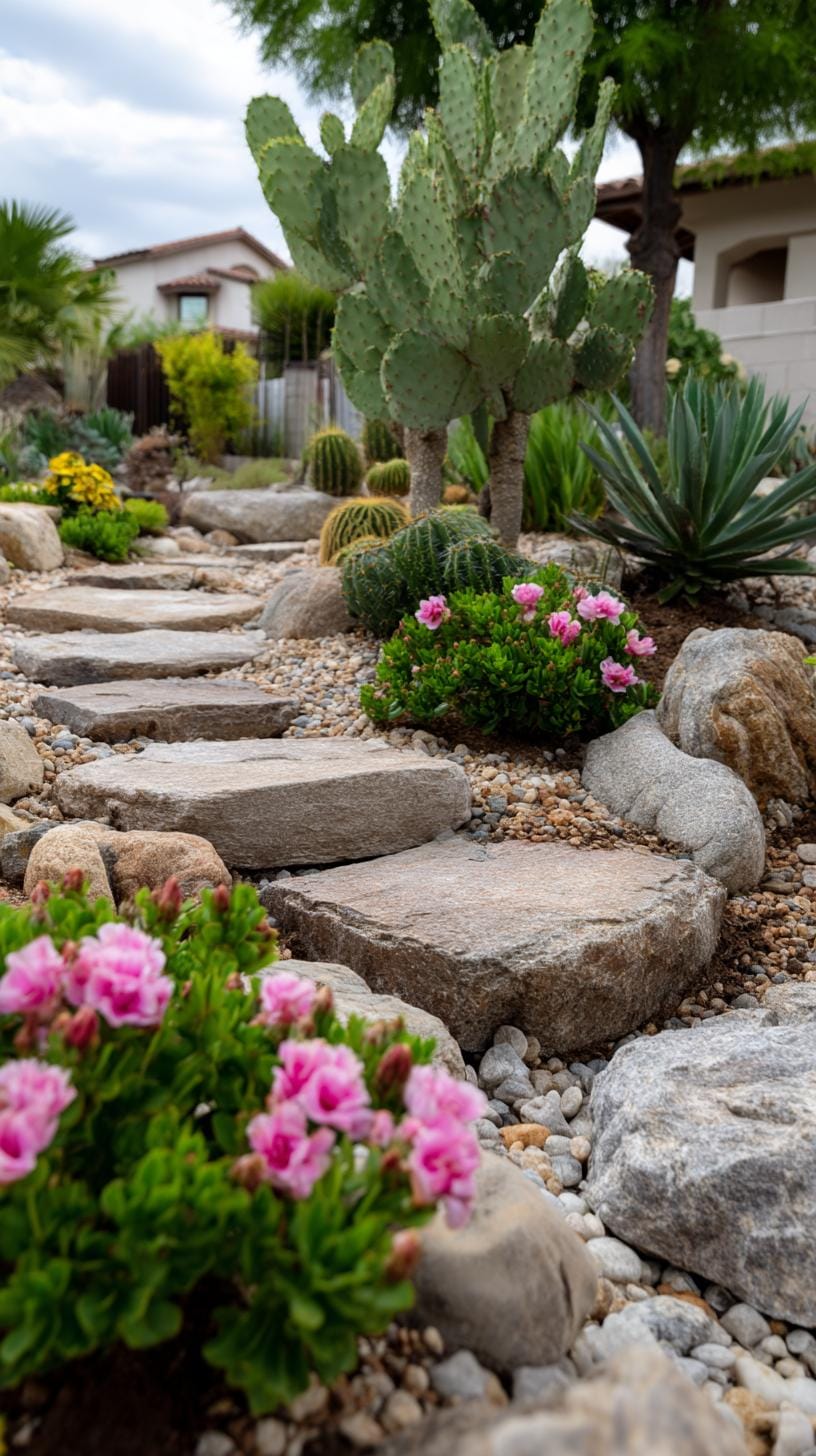
Imagine petunias spilling onto the path’s edge, their color popping against gray slate. The effect: practical and visually satisfying, with minimal upkeep.


Stone paths do mean regular weeding and the odd stone may shift after rain.
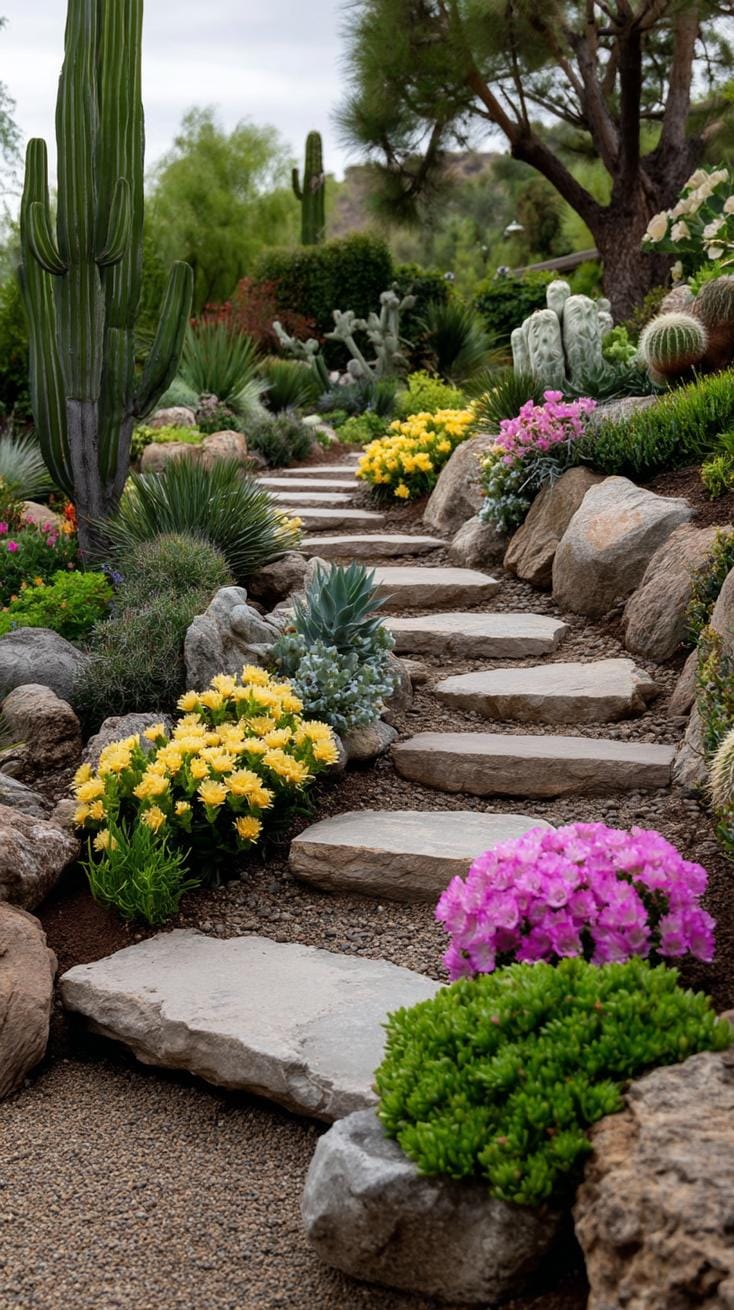
But isn’t that minor compared to the comfort and storybook charm they add? With each footstep, you get closer to a garden that feels both welcoming and thoughtfully plotted, without sacrificing your plants or your shoes.
8. Curved border garden with large river rocks
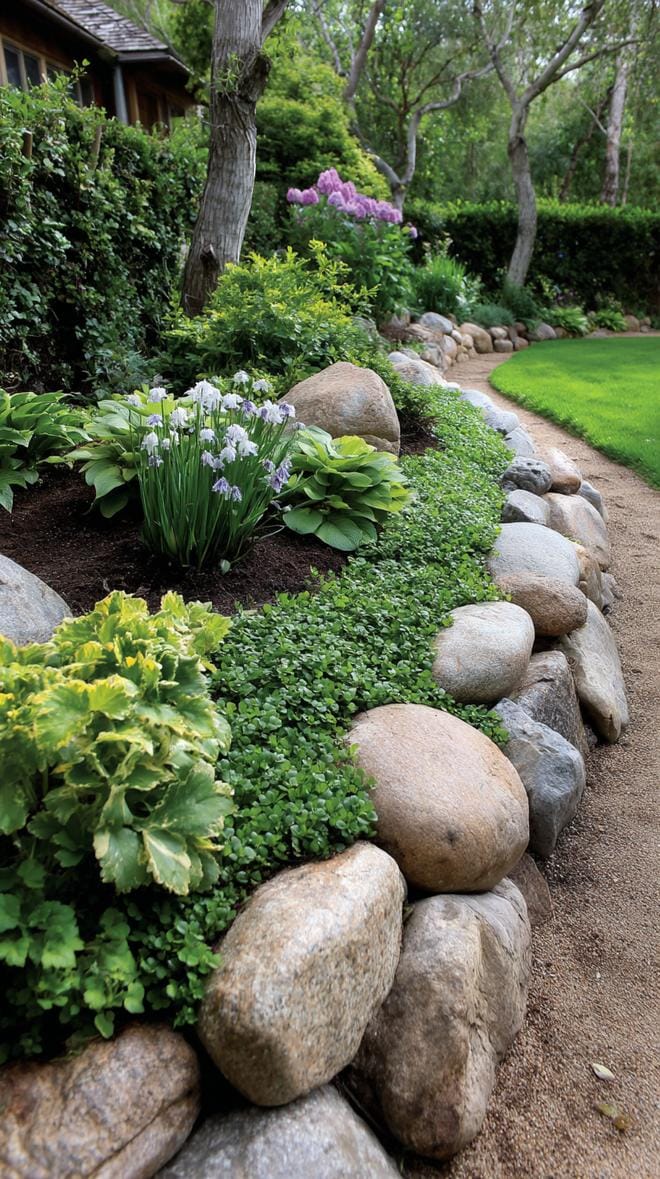
Curved borders with large river rocks add subtle drama to any landscape. The stones create visual flow, making small spaces feel more dynamic.
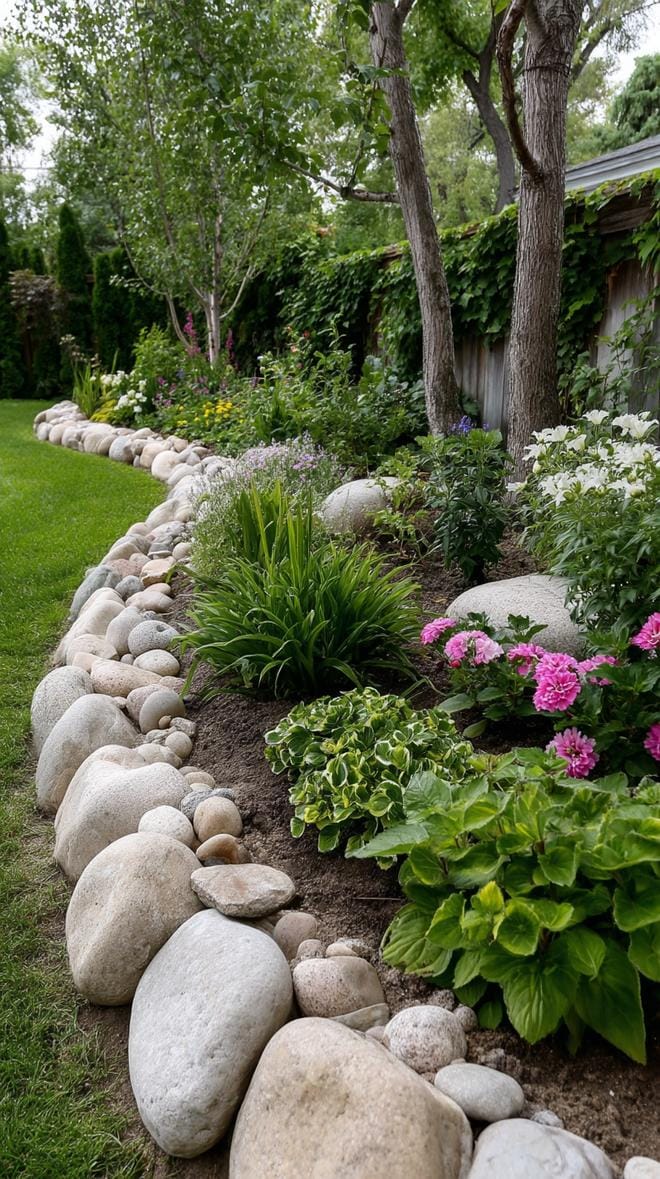
Plus, river rocks make garden maintenance easier, no fussy trimming, less dirt splashing onto paths, and weeds stand little chance. Neighbors might just ask for your secret.
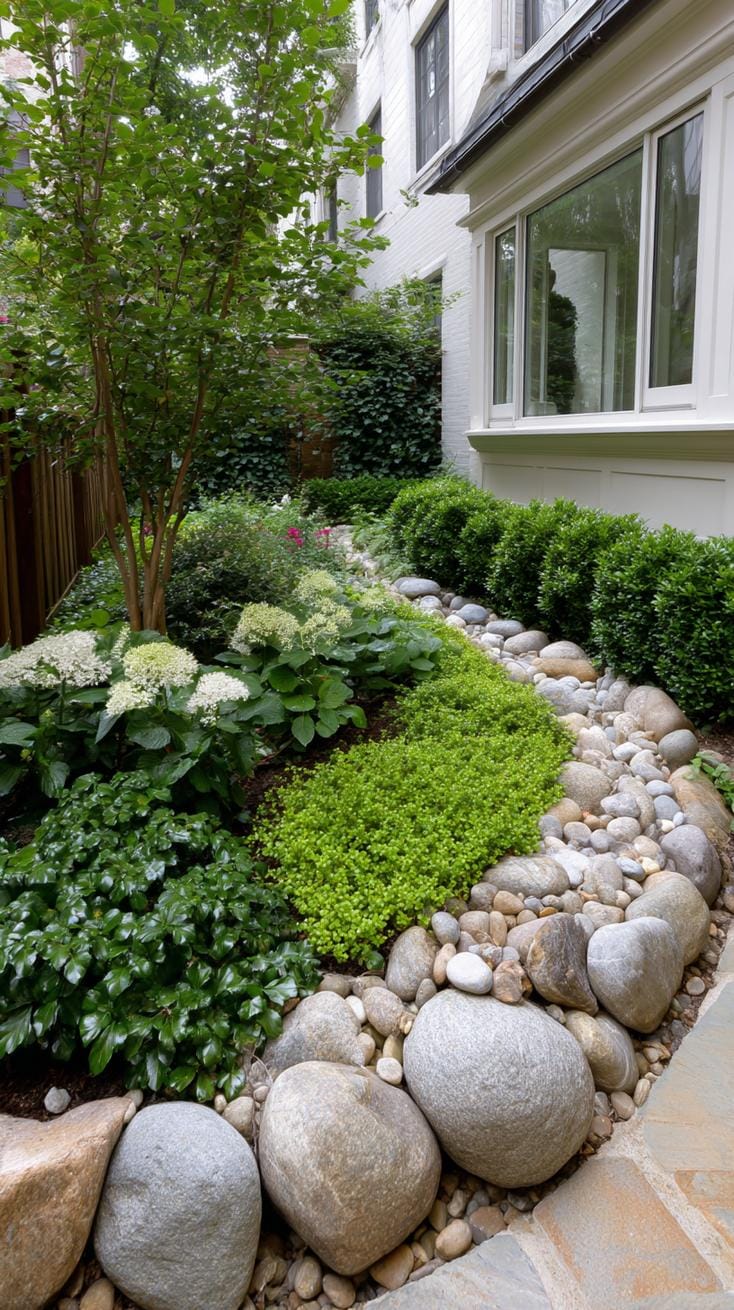
Curves, unlike straight lines, invite the eye to wander. They soften sharp corners and lend a relaxed, welcoming vibe. That said, large river rocks can be heavy and costly.


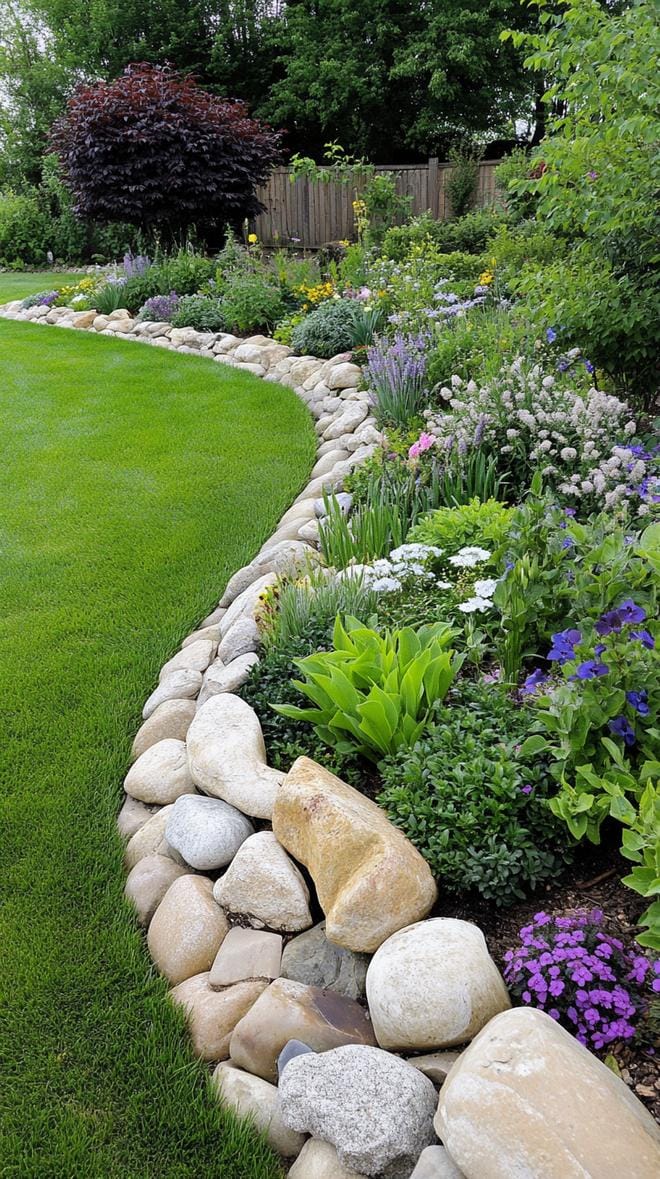
Start with one section, get a feel for the work, and don’t be afraid to mix rock sizes for extra charm.
9. Tiered rock wall with pastel blooming layers
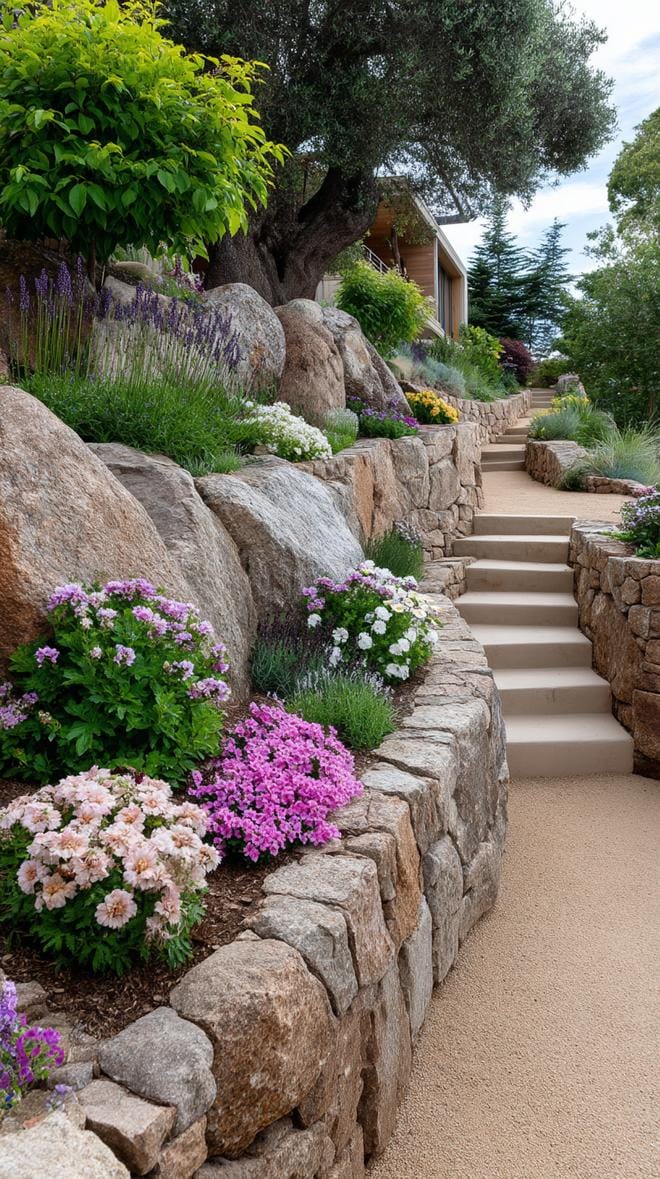
Building a tiered rock wall brings structure and visual story to your garden. Grouping soft pastel blooms, think lavender, creeping phlox, and dianthus, creates gentle bands of color.
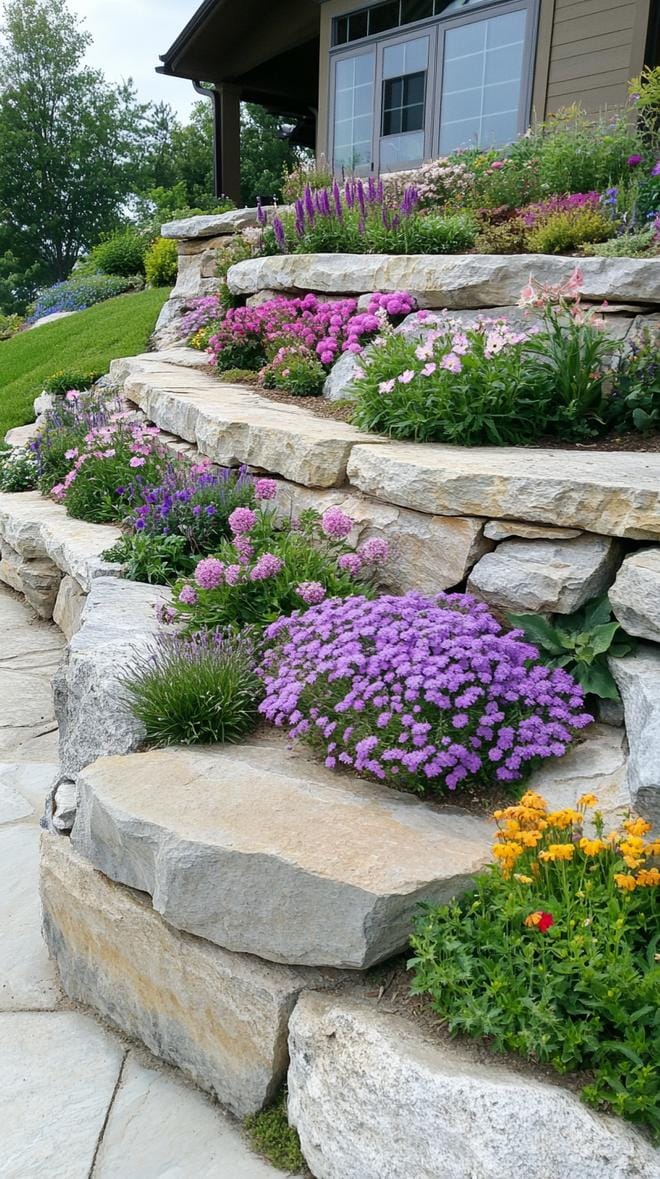
This approach pairs natural stones with lush, layered plants, giving the scene both organization and character without needing constant attention.
Some people worry about tricky upkeep, but a well-chosen mix of drought-tolerant flowers and groundcovers can skirt high maintenance. Want a quick tip? Work from the bottom up, placing tougher plants lower down.


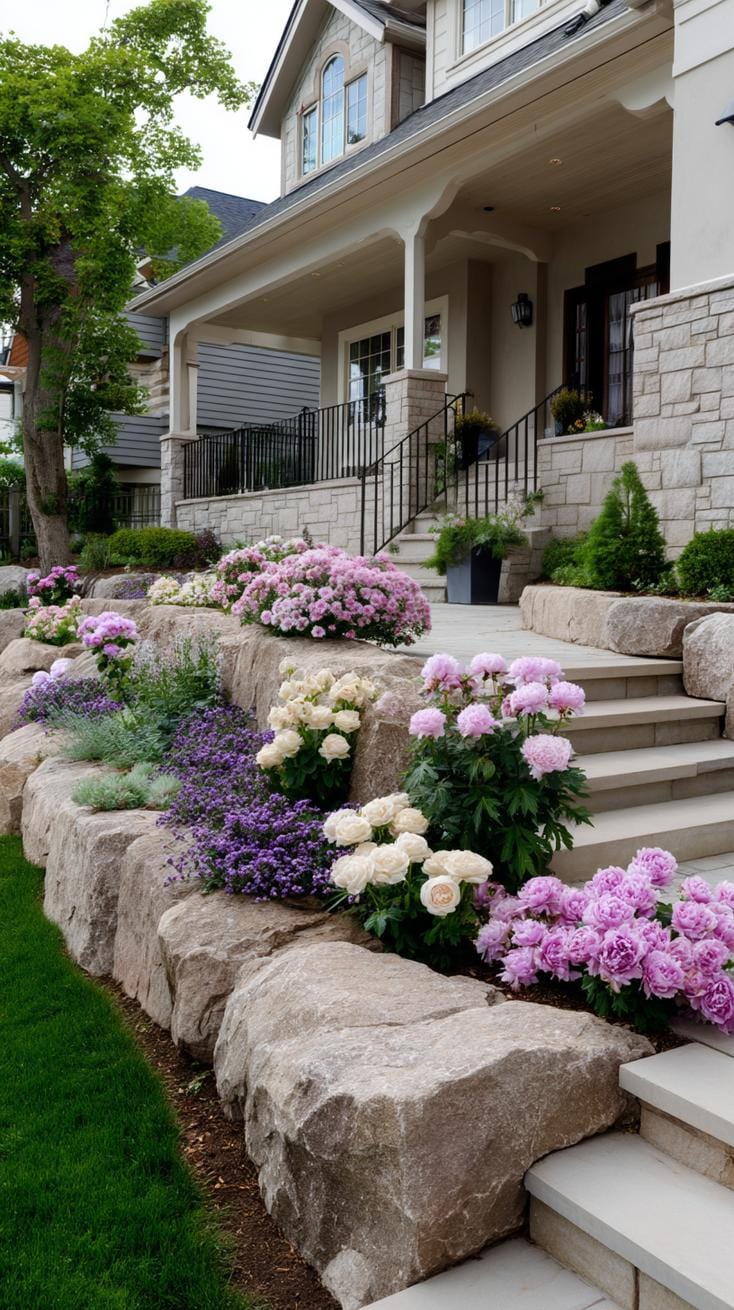
Tiers make watering easy and keep each layer basking in sunlight.
10. Circle rock feature with vertical stone stacks
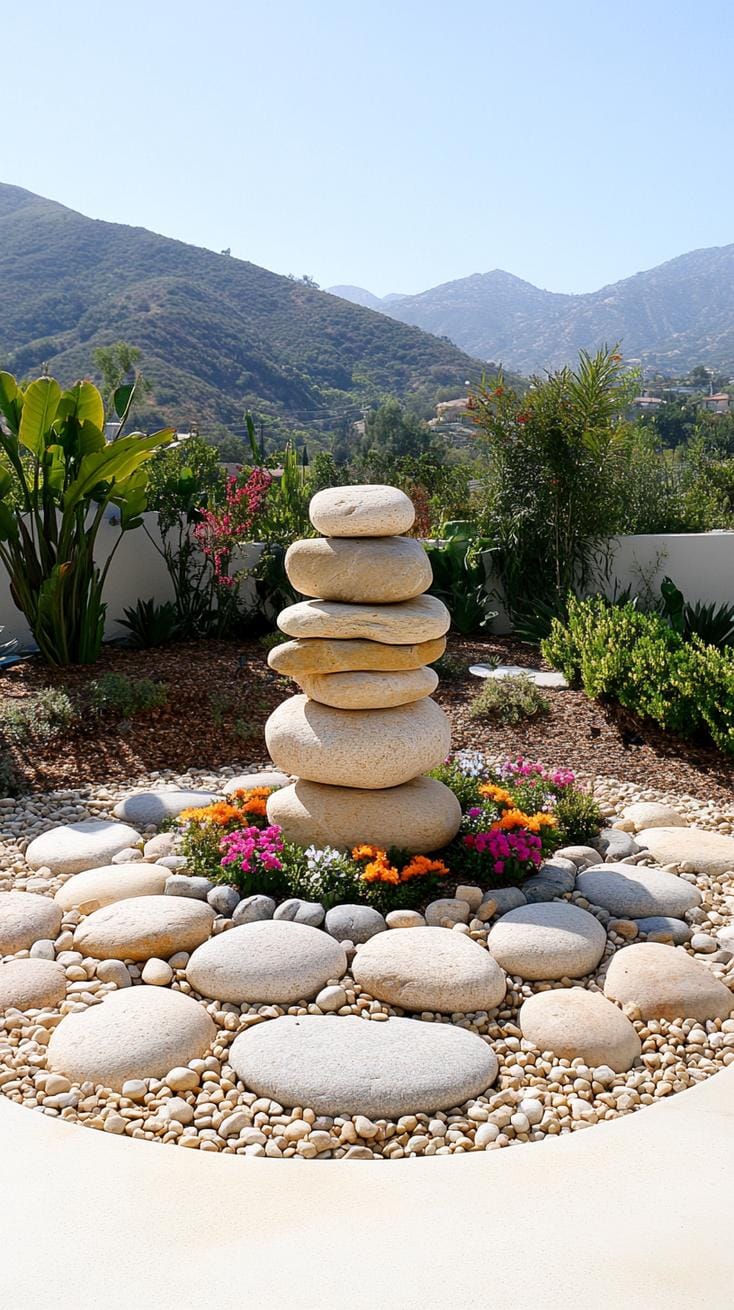
Why settle for flat stone arrangements? A circular rock feature with vertical stone stacks becomes an instant eye-catcher. The upright stones give texture and drama. Surround the stacks with smaller pebbles for contrast.
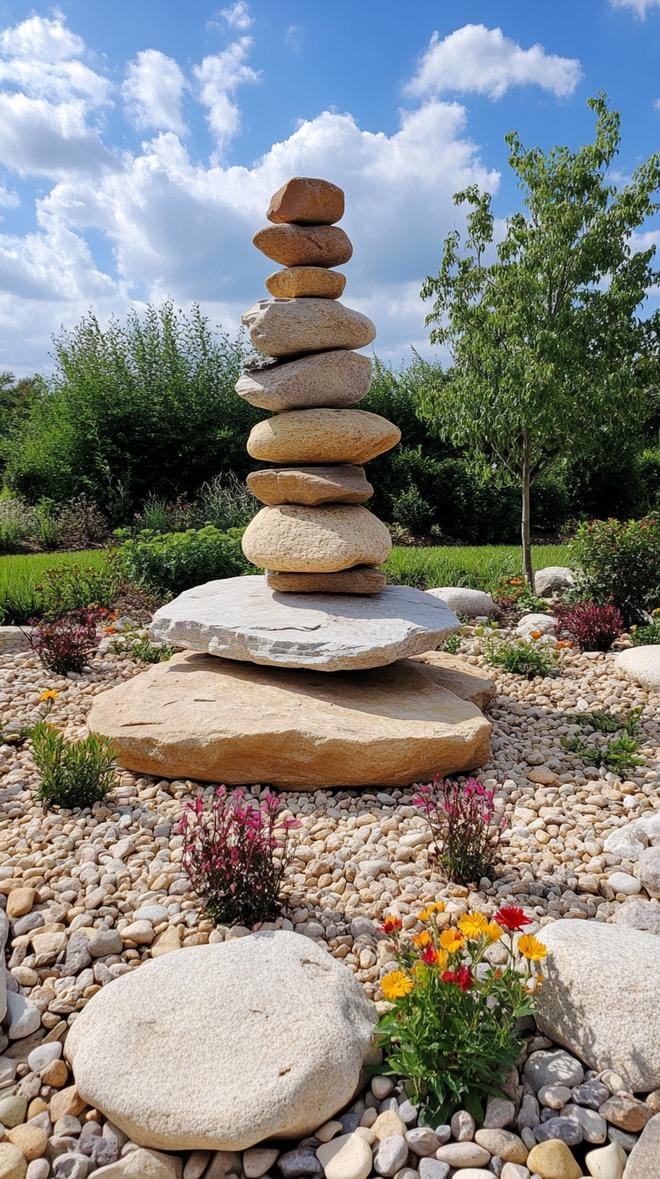
Consider mixing heights, short, tall, chunky, skinny, to keep things interesting. Easy maintenance is a nice bonus.
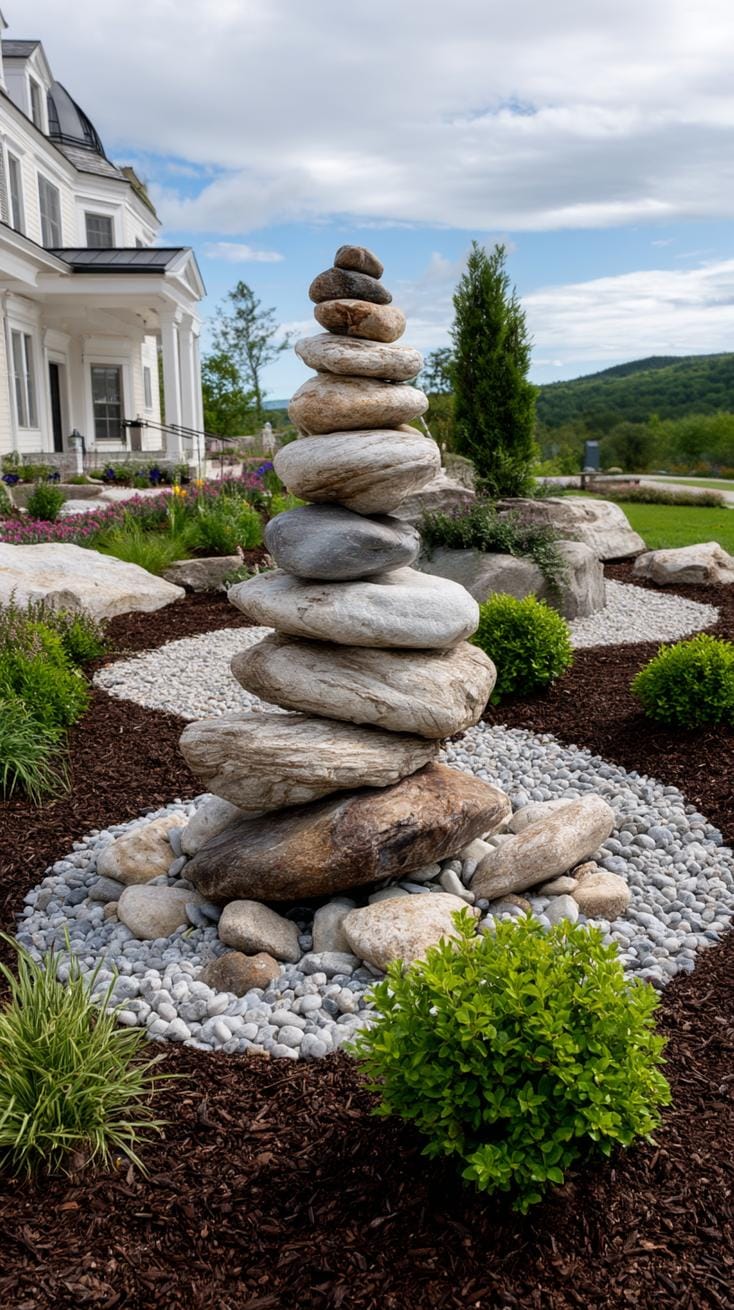
Many homeowners love this look for its sculptural appeal, but watch out for wobbly stones. Use sand or landscaping adhesive for stability.


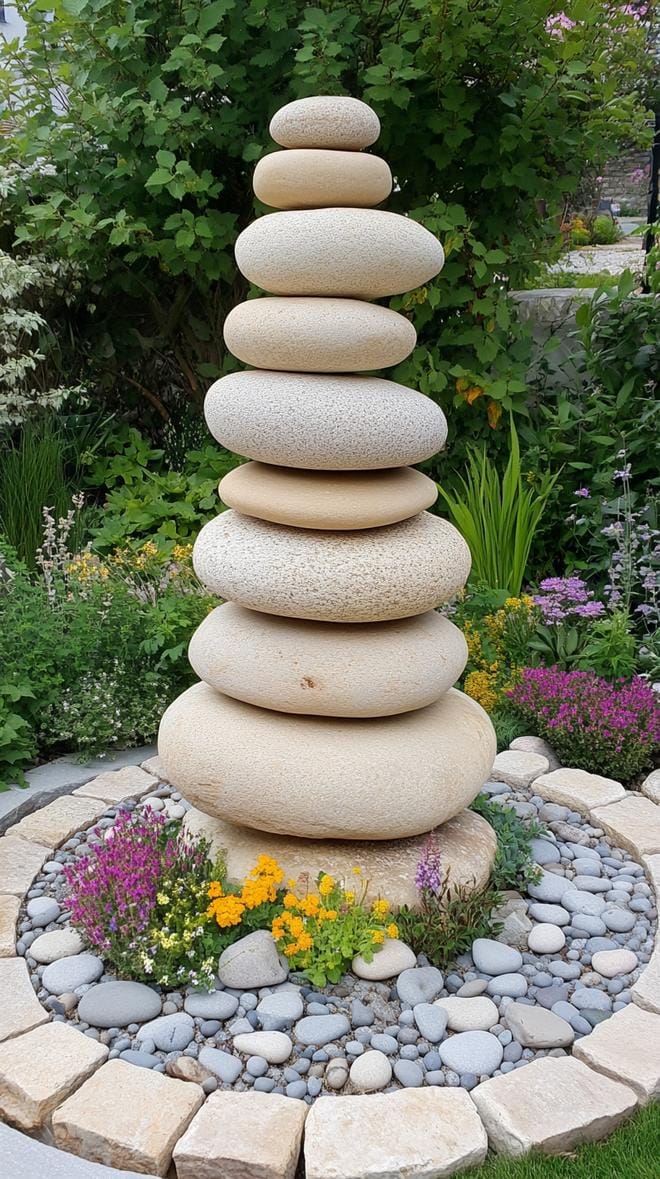
Kids might find the stacks tempting to topple, so place the circle where little hands are less likely to reach. With a few precautions, your stone feature brings lasting impact.
11. Japanese Zen garden with sand and boulders

A Japanese Zen garden built with raked sand and carefully placed boulders offers more than just visual appeal. The simplicity creates calm, while the sand’s ripples suggest water or flow.


Even in a cramped yard, this minimalist style gives peace. Imagine a contemplative corner, no plants to constantly water.
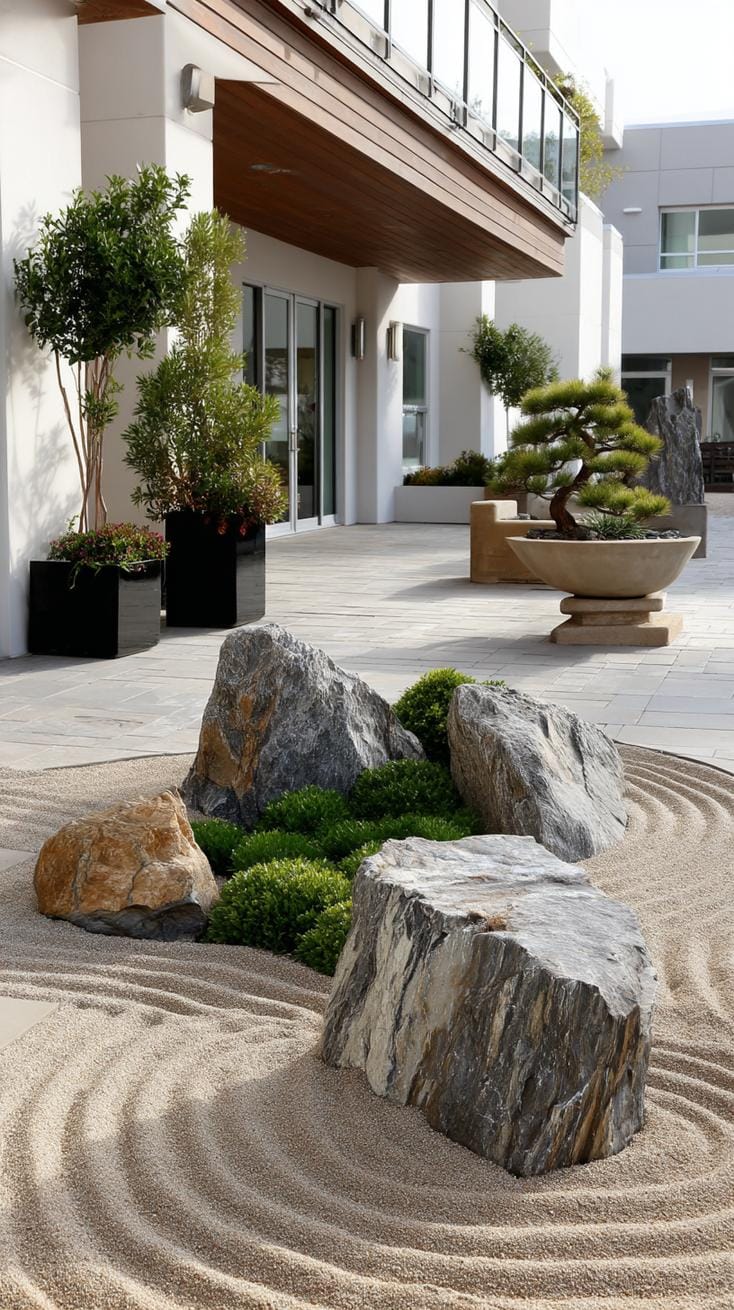
Still, not everyone relishes the steady upkeep. Leaves quickly spoil a Zen garden’s soft lines, demanding frequent attention.
Yet, for those craving simplicity and order, a few raked patterns and bold rocks may be all it takes to foster a sense of tranquility, right outside your door.
12. Hollowed-out log planter filled with succulents
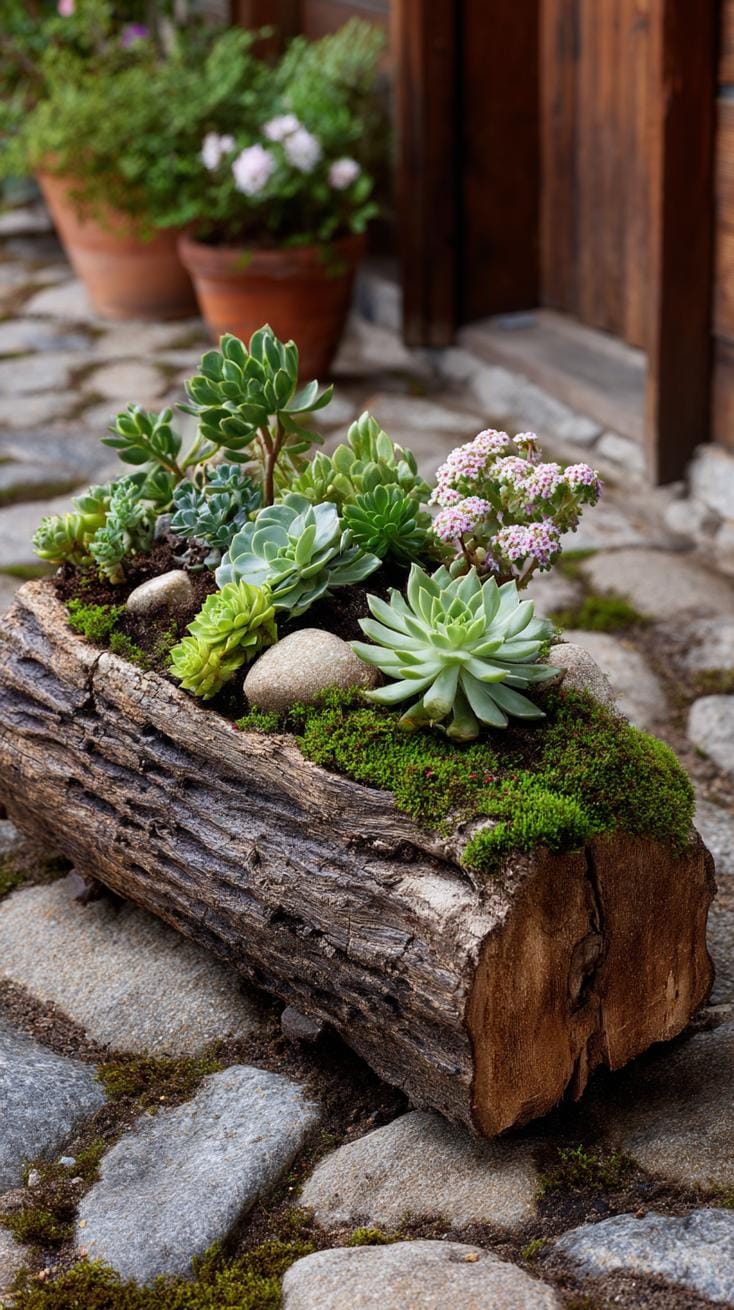
A hollowed-out log planter packed with succulents brings rustic charm to any rock garden. The log blends with natural stones, while succulents offer endless variety, think spiky, plump, or rosette-shaped.
Compared to ceramic pots, wood retains moisture better. However, logs may decay over time, so monitor for rot.
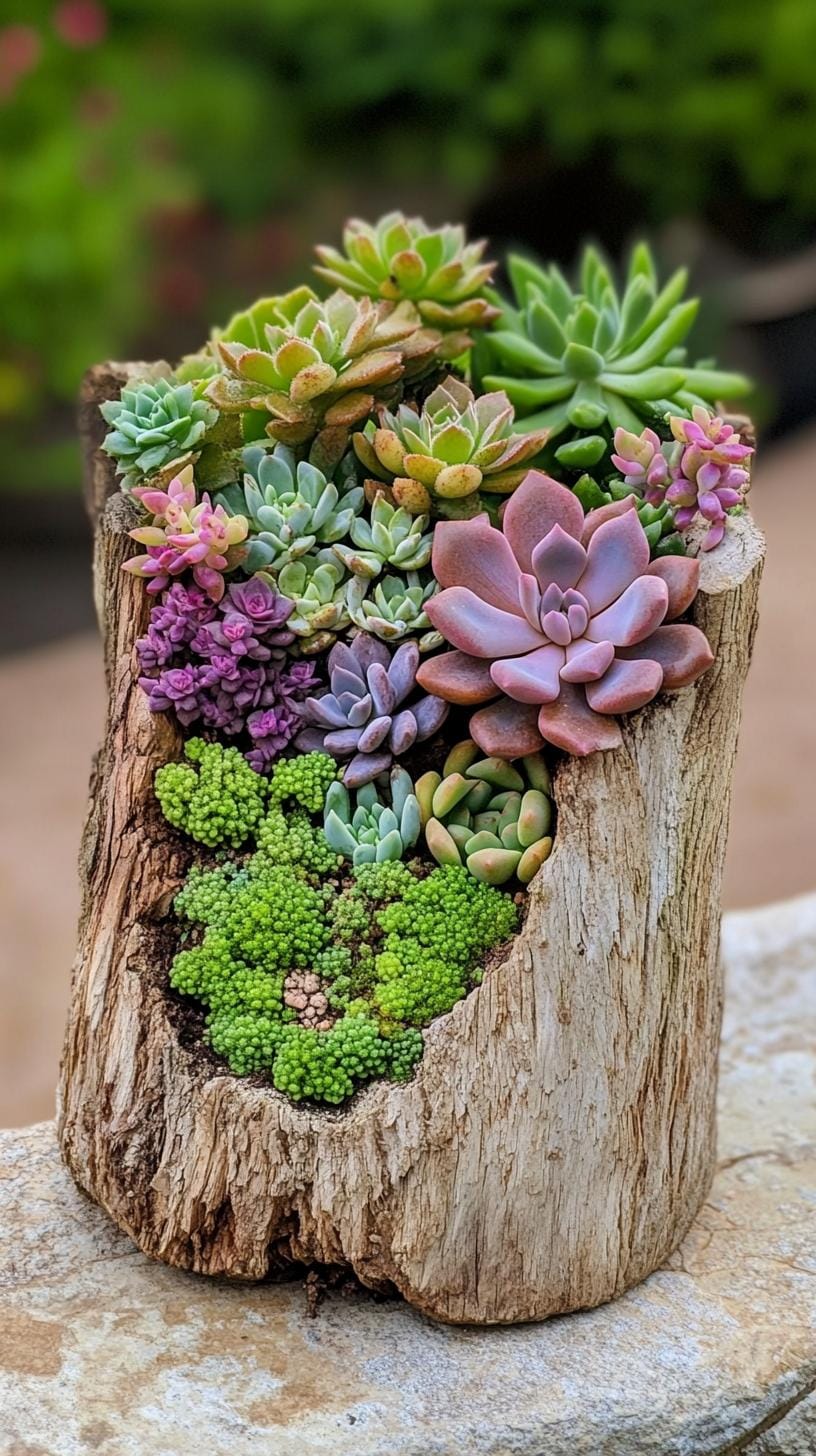
Consider arranging succulents by height for dramatic effect. Mix colors, blue echeveria next to bright green sedum, perhaps. Water sparingly; succulents don’t like soggy feet. Rotating the log occasionally can slow wood breakdown.

This setup invites conversation and provides a simple, eco-friendly touch.
13. Heart-shaped rock bed filled with sedum
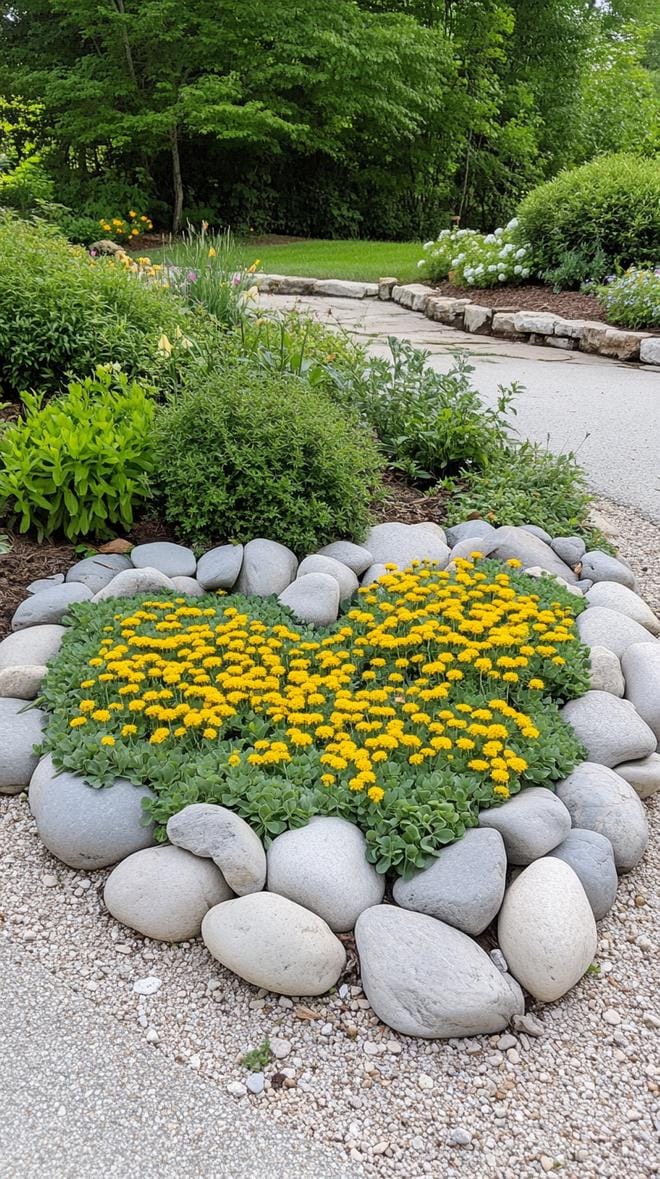
Imagine a heart-shaped rock bed in your yard. It’s a creative statement that pulls double duty, art and low-maintenance garden. Fill it with sedum, a tough, colorful succulent.
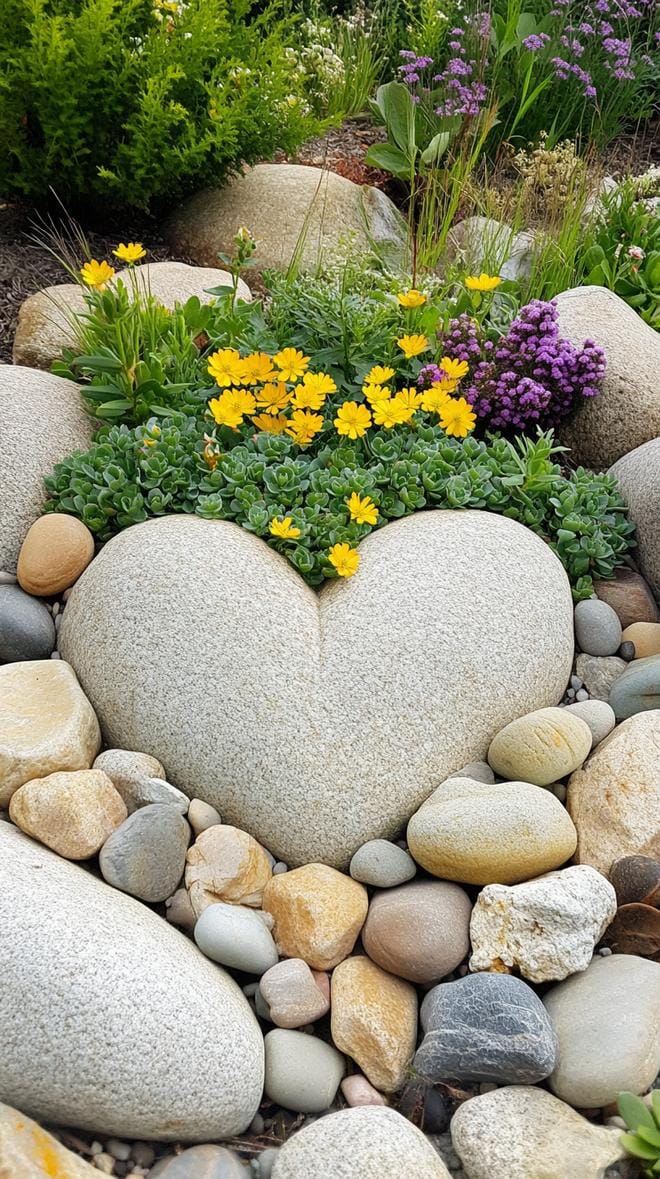
Sedum hugs the stones and shrugs off drought, making upkeep a walk in the park. Who said romance needs roses?
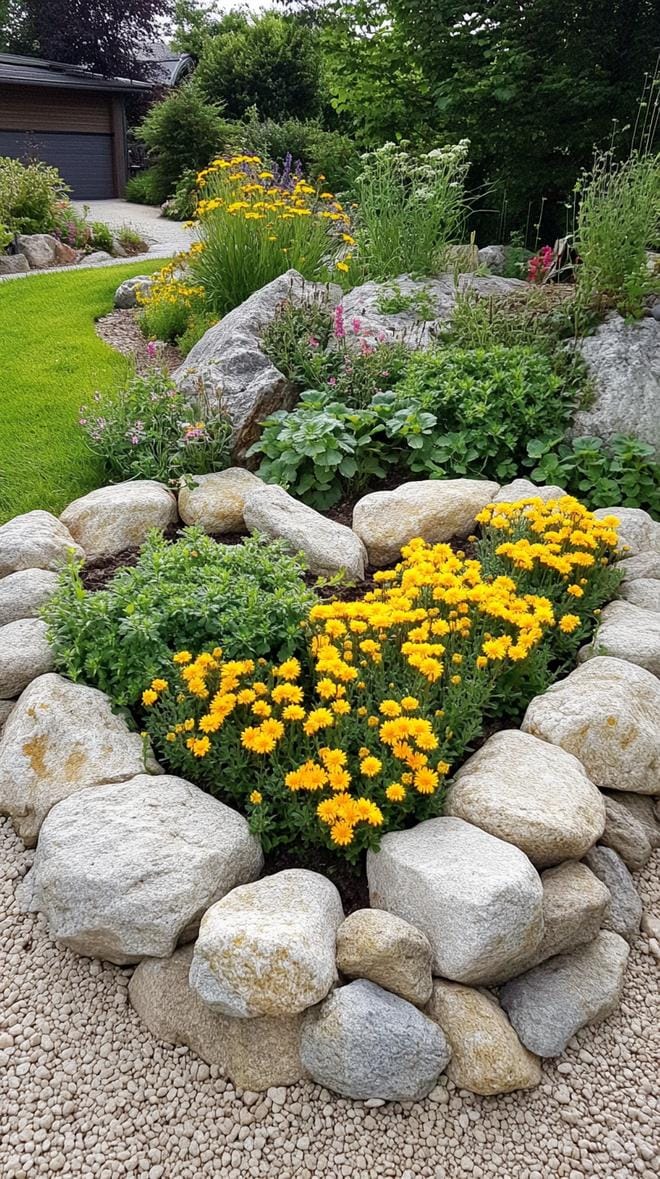
Of course, shaping stones into a clean heart outline tests your patience. Uneven rocks might challenge your design, but a little effort pays off. Sedum quickly spreads, covering gaps and quirks.

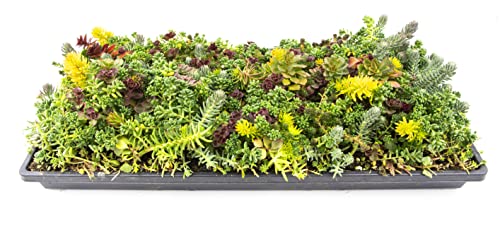
Invite guests to spot the heart; it’s a conversation starter that gives your landscape real personality.
14. Potted plants nested into gravel and pebbles
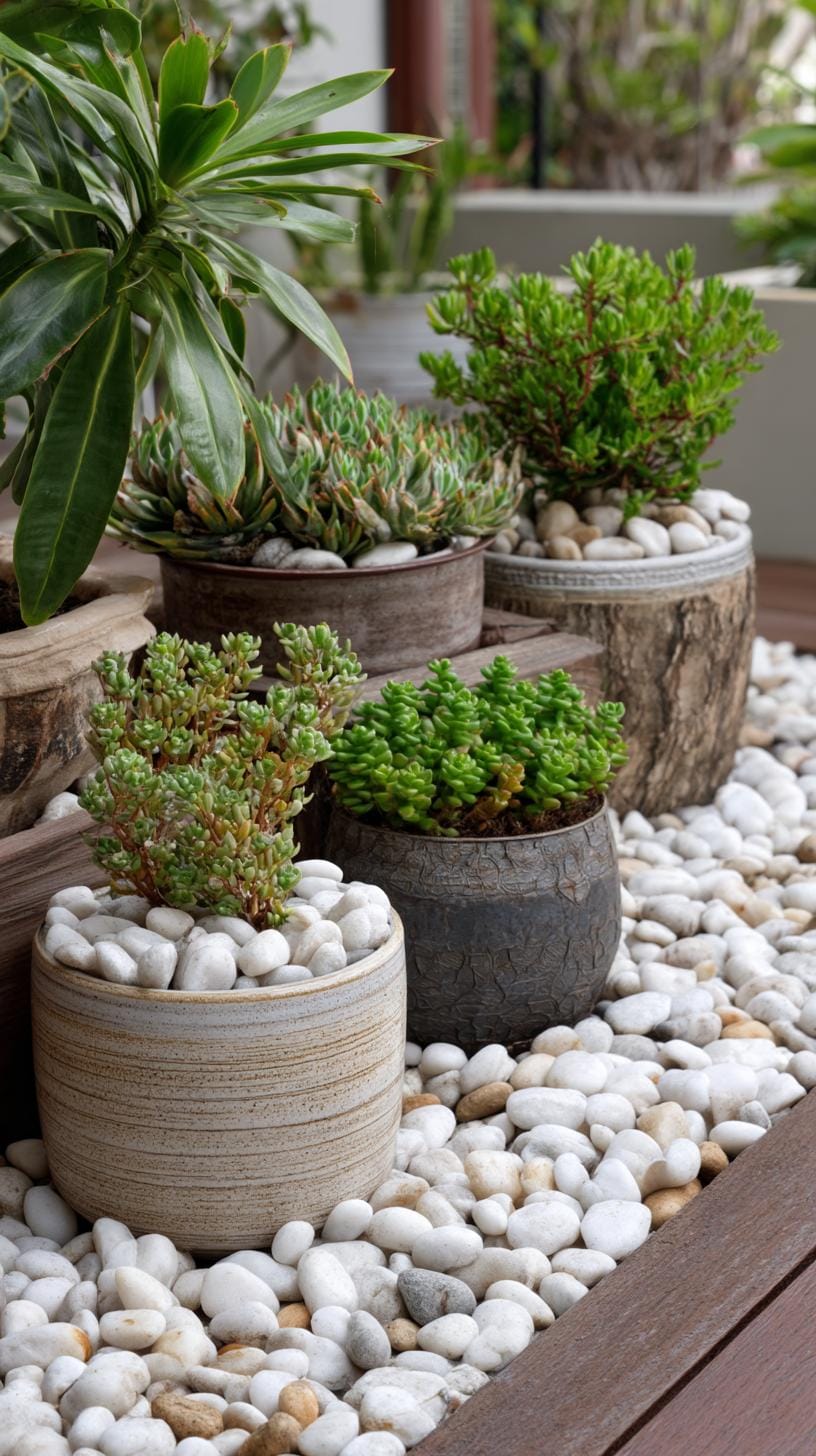
Place pots in pockets among gravel for a lively mix of texture and color. Succulents, grasses, or dwarf evergreens thrive here. Want low upkeep? Pick hardy varieties.
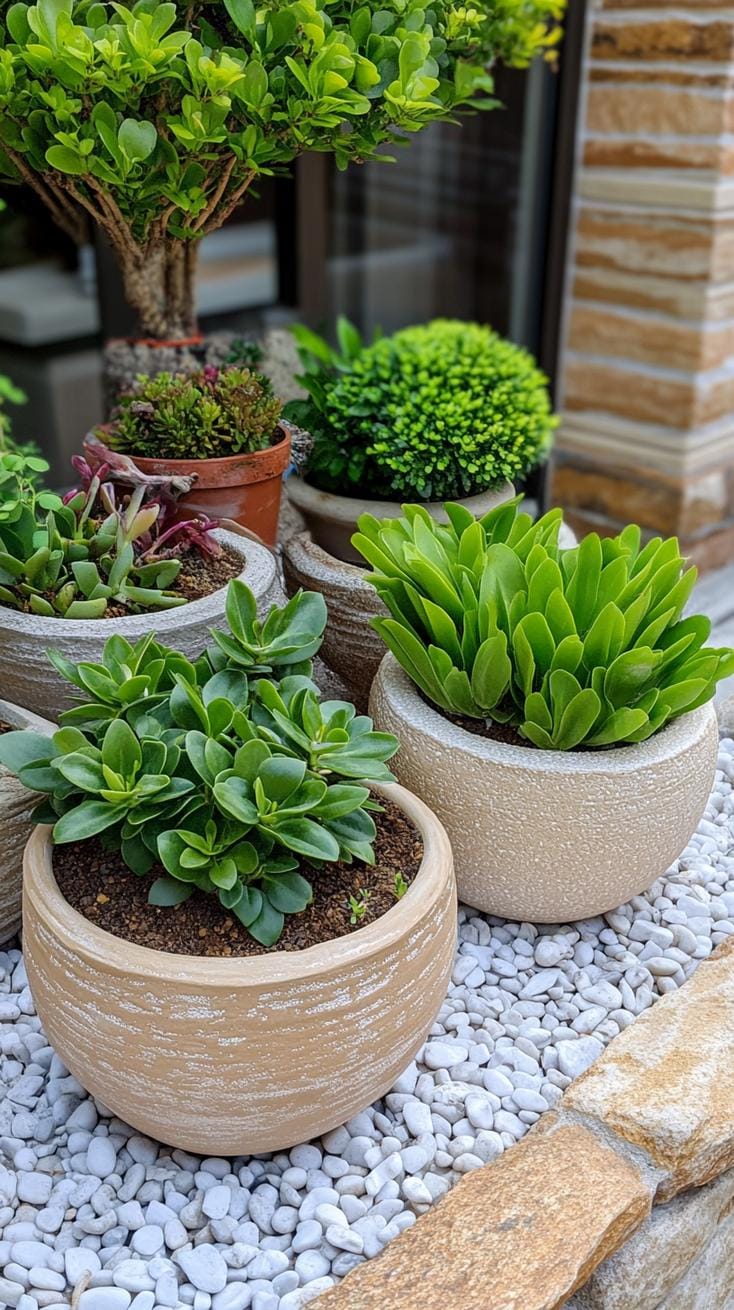
Swapping plants is a breeze, no digging needed. It’s less permanent, more playful, yet still drought-friendly and visually striking.
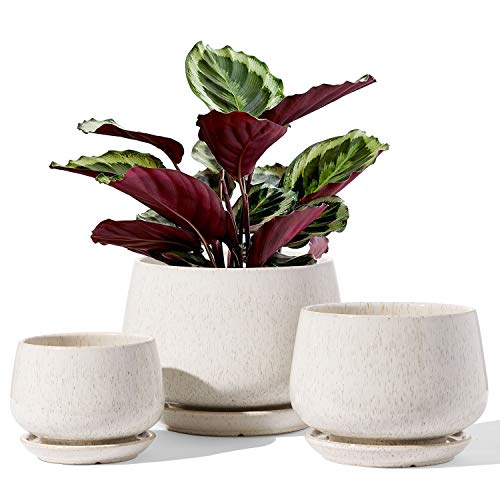

Worried about pots looking out of place? Choose containers in earthy tones or stone finishes. This trick helps them blend with their rocky surroundings, creating harmony.
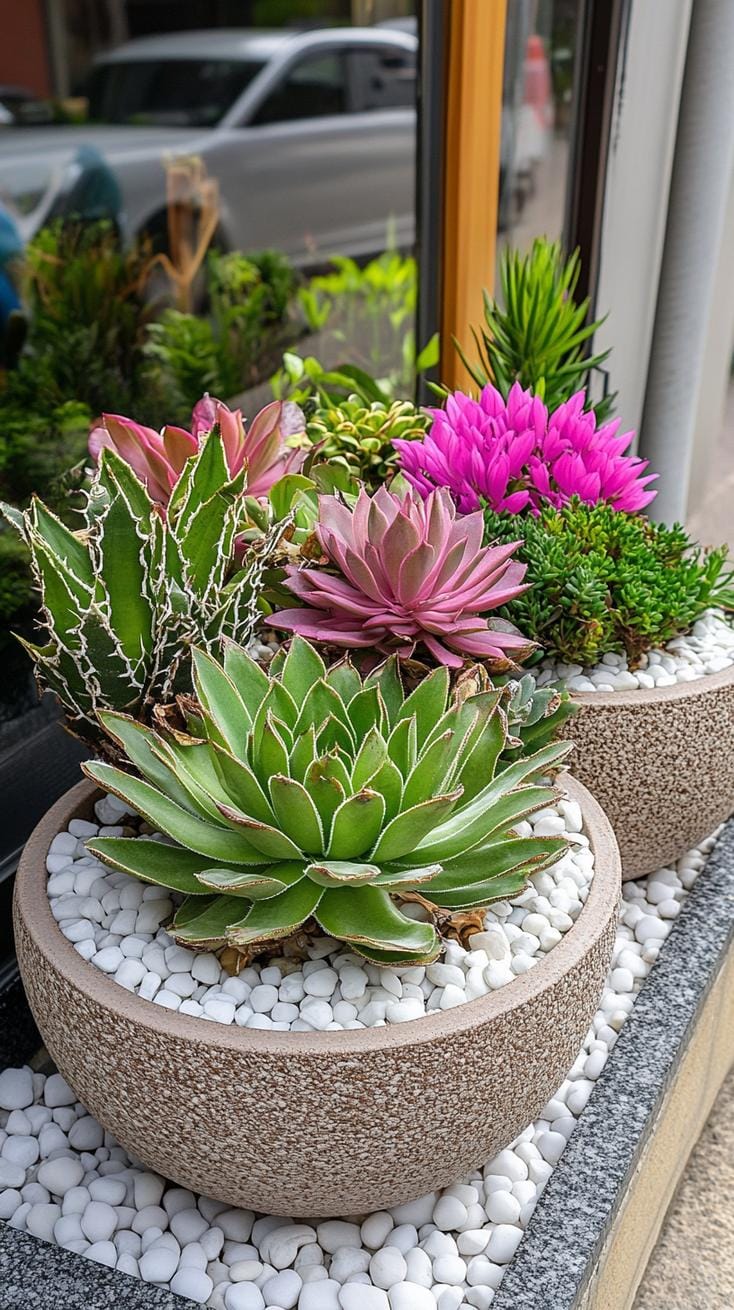
Let some pebbles spill over the rim, and your space will feel intentional, almost like each pot grew right there.
15. Bright painted rocks forming garden flowers
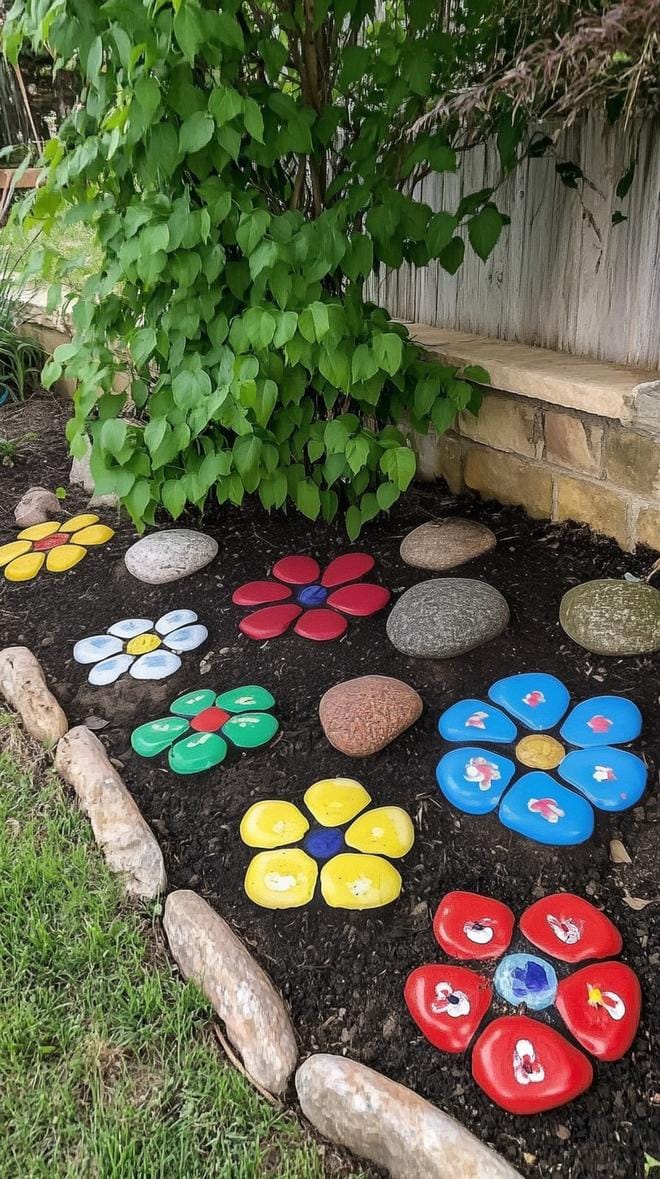
Painted rocks bring instant color to any outdoor space. Choosing pebbles in different shapes lets you design playful petals and bold centers that mimic real blooms, no watering required.
Kids can get involved, adding their personal touch. Weather-resistant paints will help your creations survive rain and sun.


But beware: painted rocks can sometimes fade or chip. To sidestep disappointment, apply a clear sealant after painting. Ever thought a sunflower could last all year? With this cheerful craft, it can.
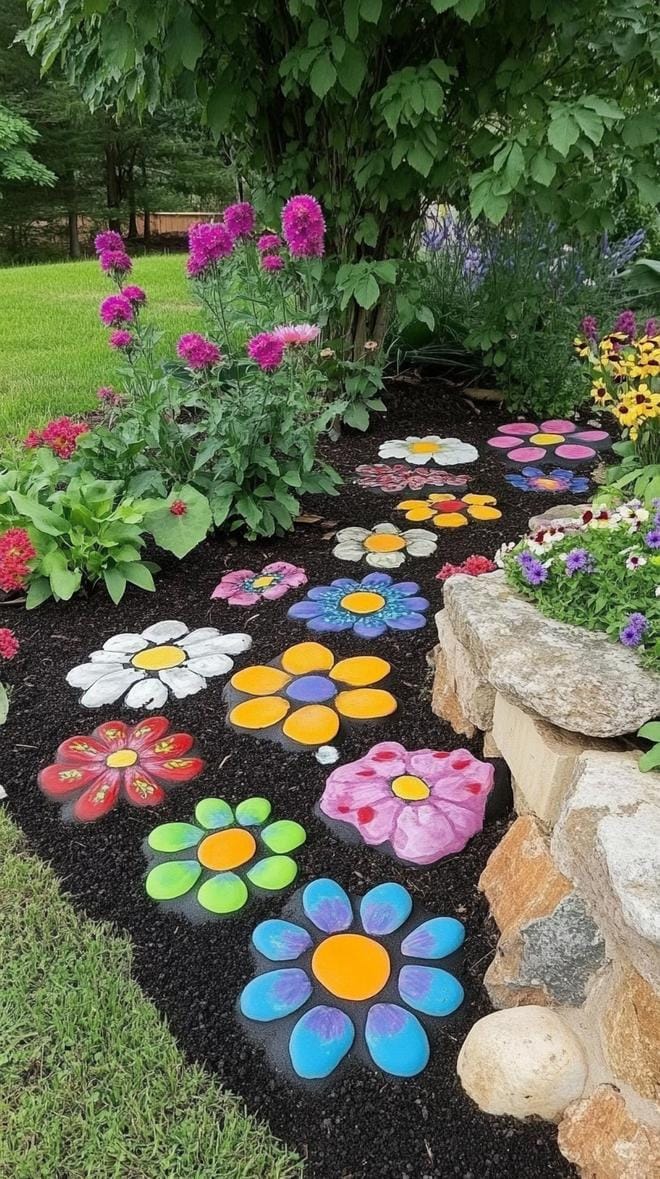
Plus, it’s budget-friendly and far less fussy than digging up flowerbeds.
16. Rocky slope landscape with ornamental grass
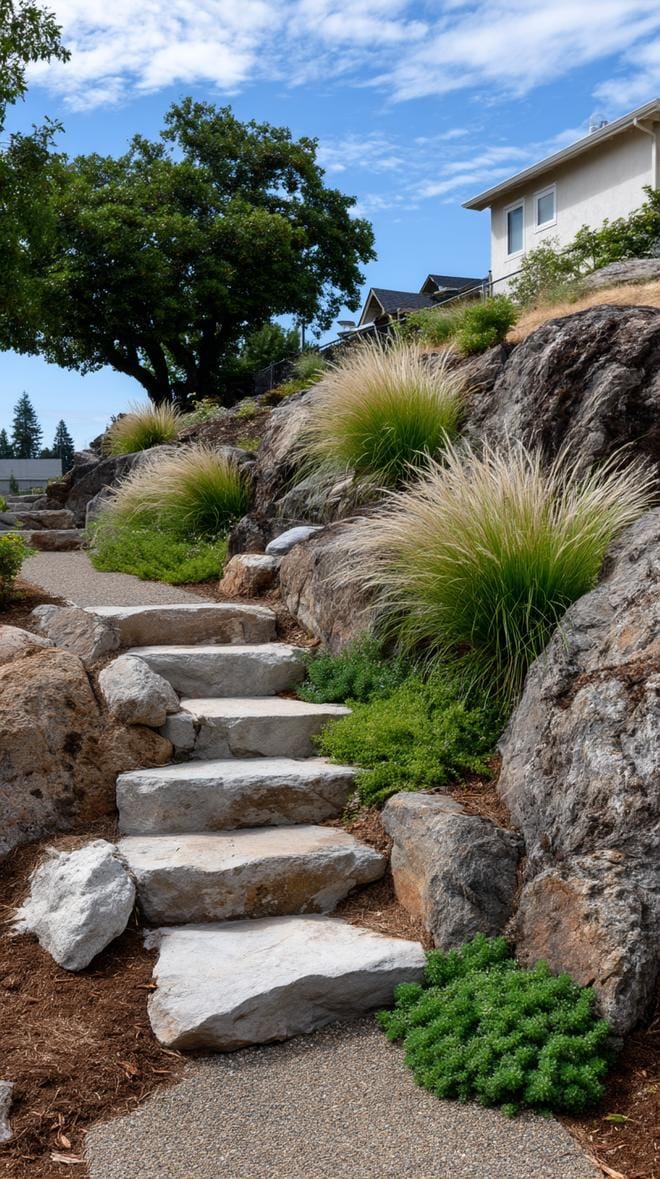
Tired of mowing hills? Swap grass for boulders and feather reed grass. The stones keep rain from washing away soil, while slender grasses sway in the breeze.
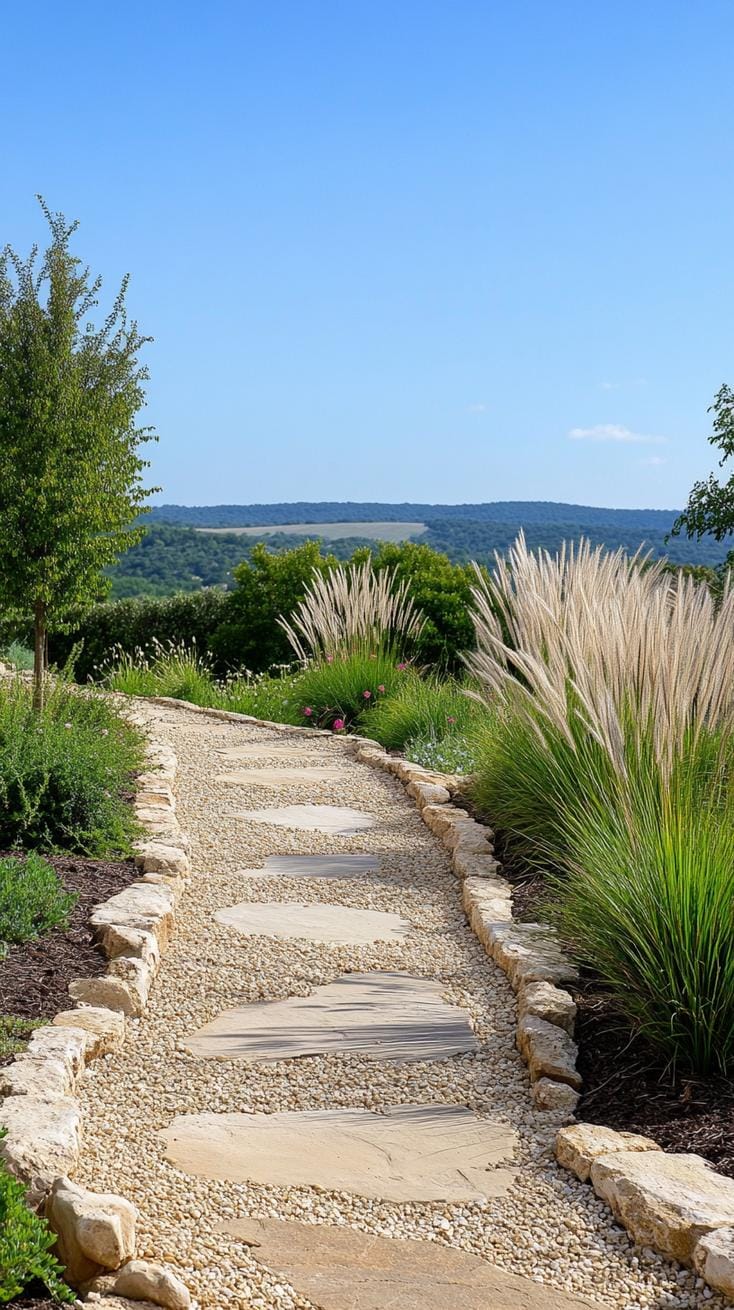
It’s not just practical, ornamental grass adds motion and texture. Even the neighbor’s cat will treat your landscape like performance art.


Choosing native grasses means less watering and fewer fertilizers. Blue fescue and pampas grass, for instance, play nicely together. However, upkeep is not zero.
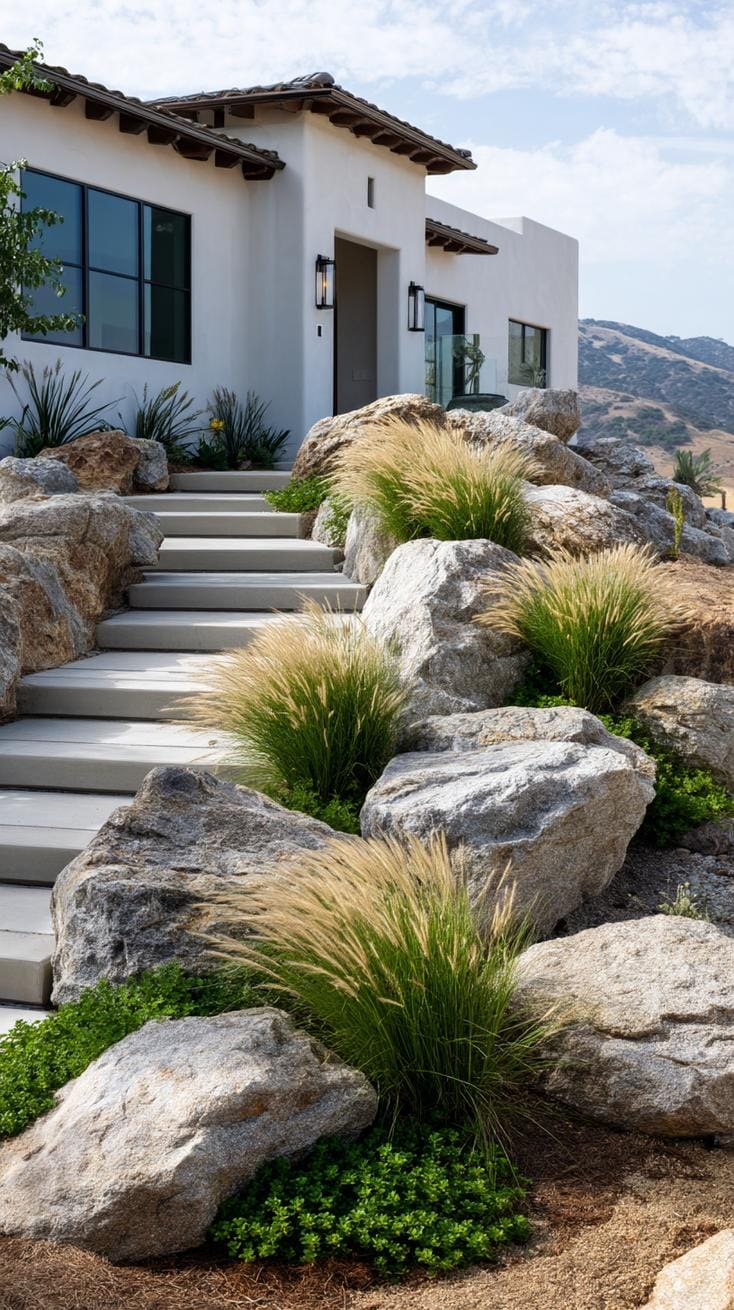
Grasses require occasional trimming to prevent that wild, overgrown look, but the result is relaxed beauty that’s easy on both eyes and wallet.
17. Swirling pebble mosaic as garden focal point

A swirling pebble mosaic catches eyes instantly, turning bland rock beds into conversation starters. Picture smooth stones arranged in twisting patterns, a low-effort trick with remarkable payoff.

Even a small mosaic commands attention, pulling together plant groupings and boulders. This adds personality and richness, especially to gardens with muted color schemes.

Building a mosaic isn’t as tricky as you think. Gather river rocks, outline your swirl, and fill the gaps with contrasting gravel for pop. It’s cost-effective and hardy, practically laughs at weeds.

Downside? Picking and placing every stone takes patience. Still, the payoff is a garden centerpiece that lasts decades.
18. Tall cactus cluster in gravel-edged bed
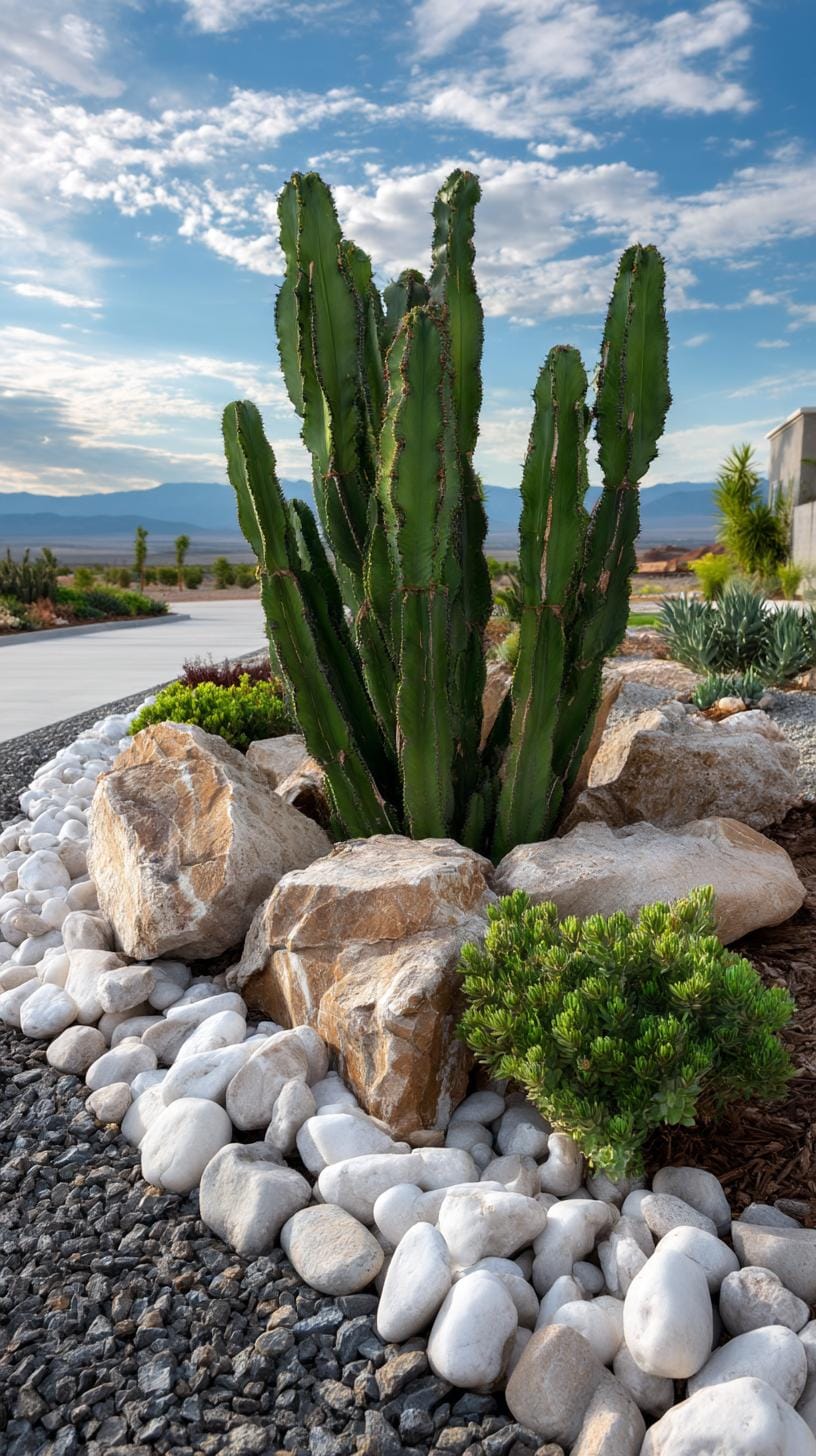
A tall cactus cluster can become a show-stopper in your gravel-edged bed. Bold forms and spiny silhouettes instantly grab attention. Gravel prevents moisture from pooling, so rot stays away.
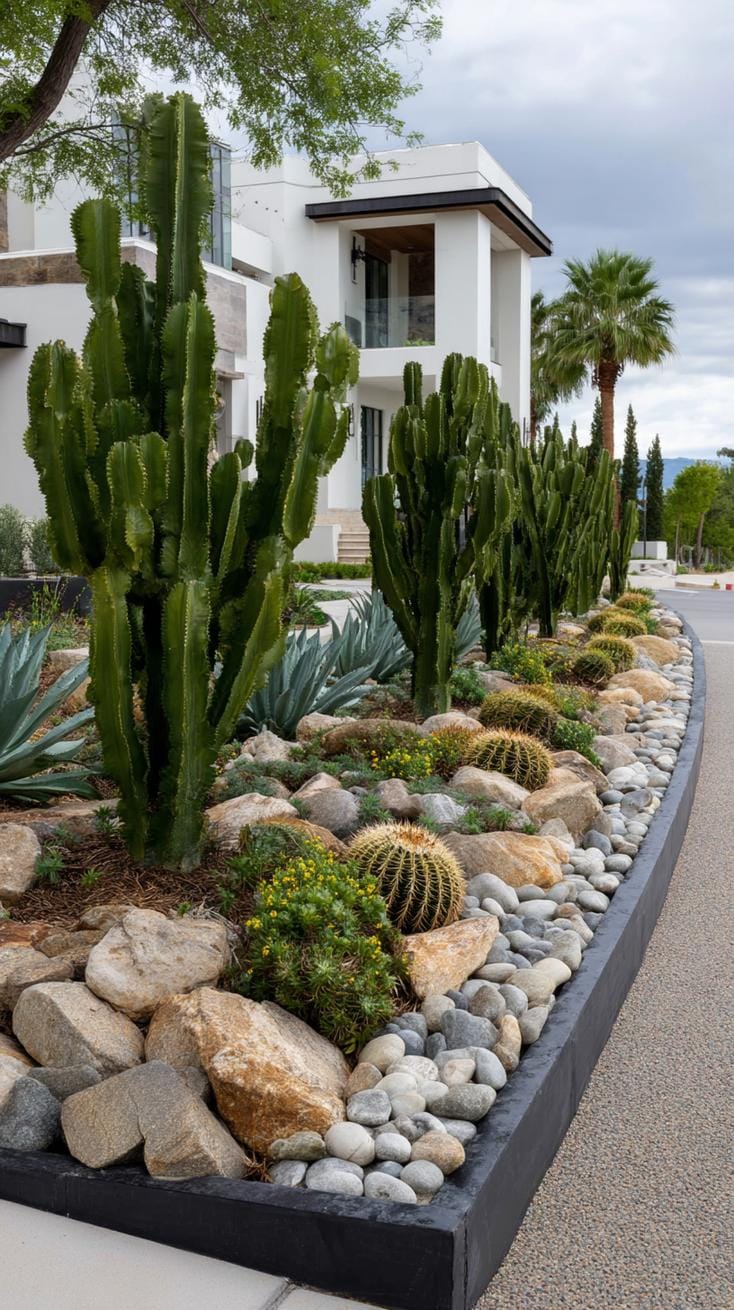
Friends might say it’s a desert, but with less fuss, no constant watering or pruning needed.

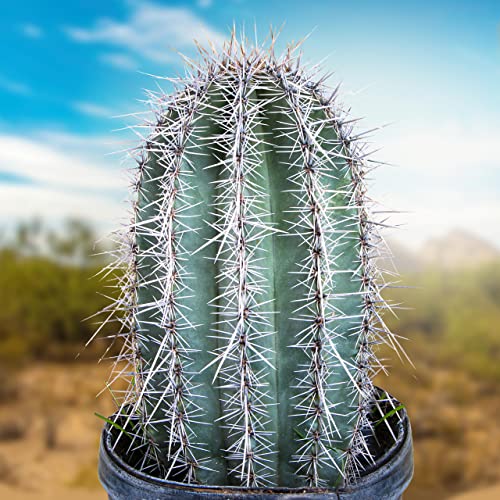
Still, tall cacti do need space to grow. Smaller beds risk crowding roots, and some neighbors may fear those spines.
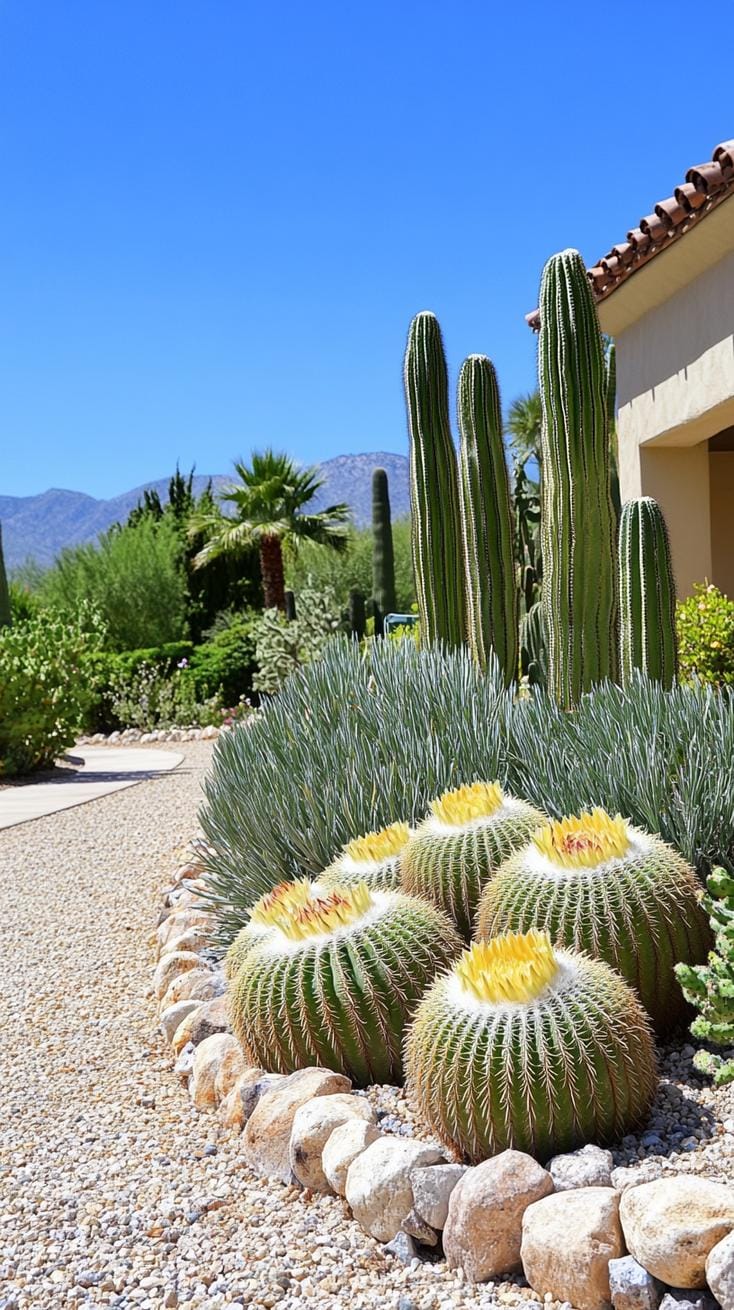
Place them thoughtfully, give room for growth, and watch the sun hit those fascinating shapes each morning. It’s beauty with a wild, practical twist, just remember heavy gloves for planting.
19. Black mulch path with white stone swirl border
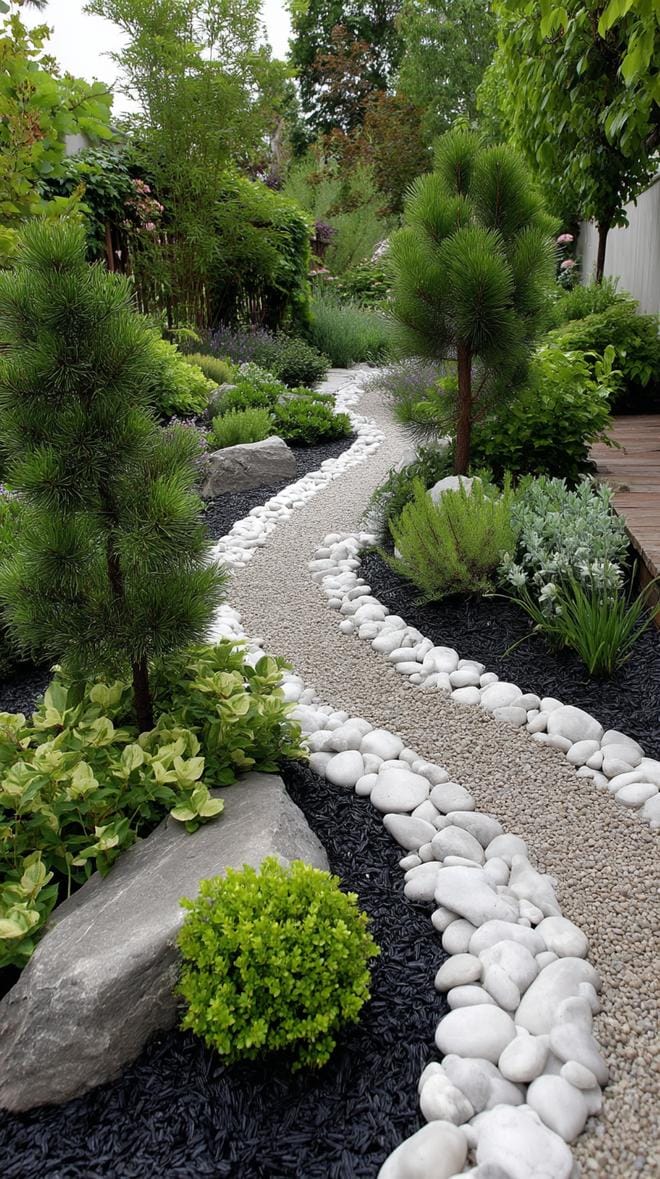
Try laying a path with deep black mulch; it draws the eye like ink against a pale canvas. Flank it with swirling borders of chunky white stones.
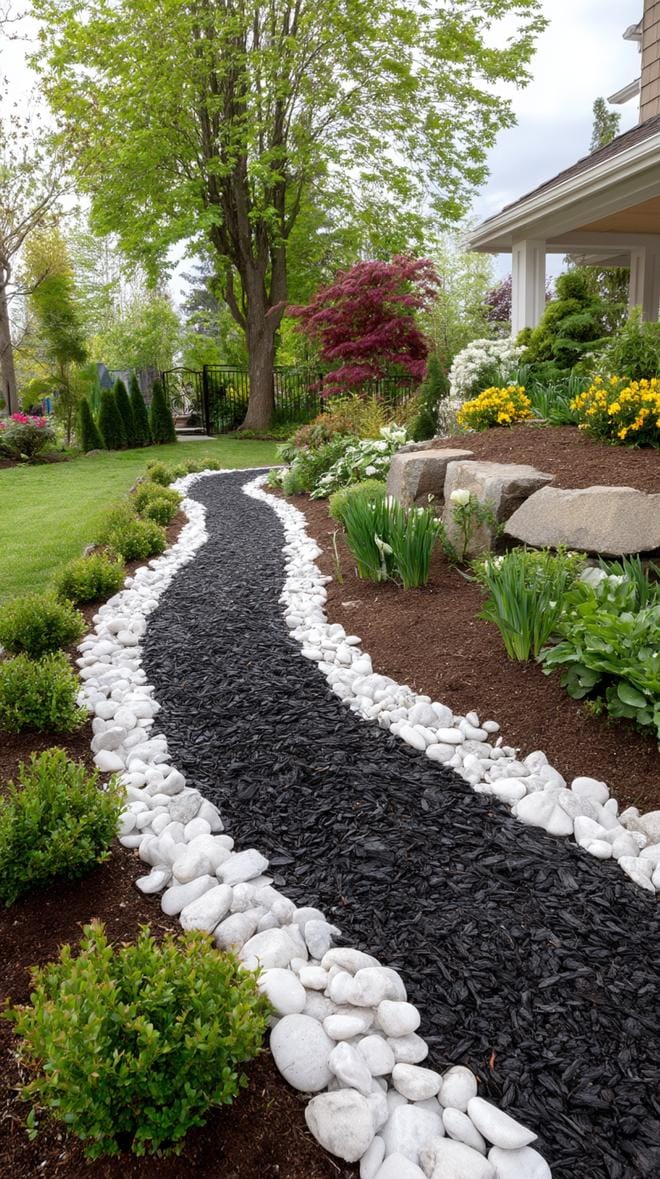
This striking contrast brings instant drama and order. It’s a cost-effective idea, but beware, white stones need regular cleaning to stay bright.
People love this look for its punchy style and low upkeep. Black mulch keeps weeds at bay and moisture around your plants.
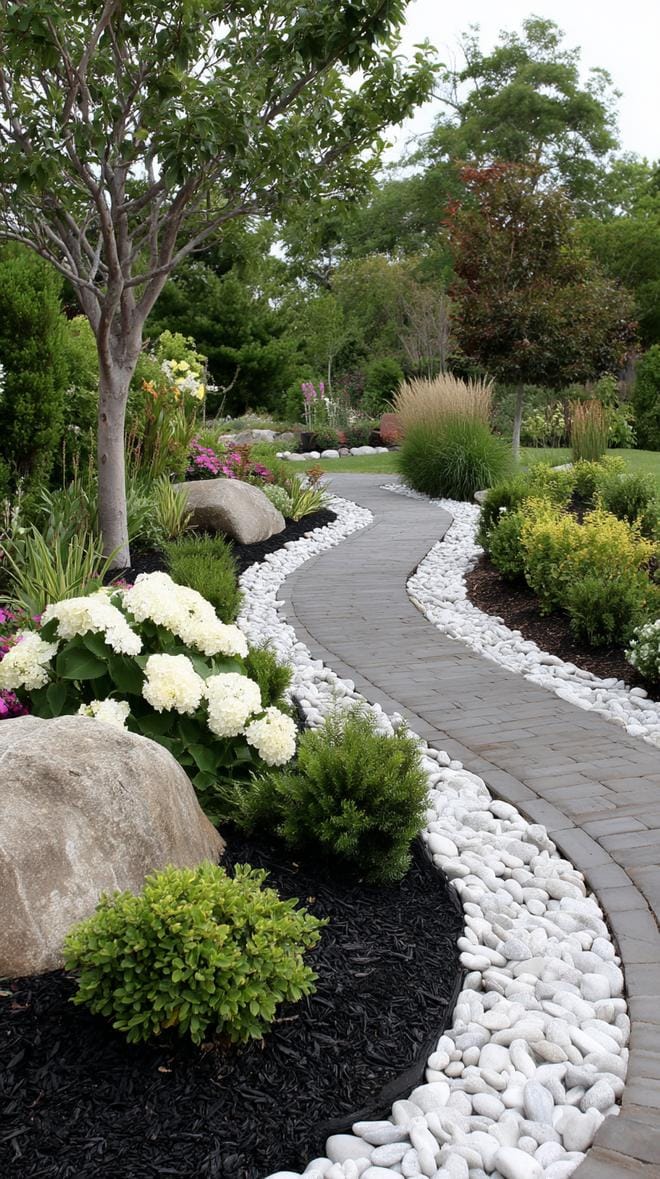
Toss in hardy succulents or creeping thyme beside the stones for texture. Want appeal that stops passersby? This border pulls it off with little fuss.
20. Mixed stone and purple flower garden strip

Ever thought about teaming chunky limestone with creeping phlox? The look pops with contrast, gray meets vibrant violet. Low-growing purple flowers spill between boulders, breaking up monotony and attracting pollinators.
It’s practical too, requiring little watering or fuss. This combo wins with serious curb appeal and low maintenance.


Still, remember that not every purple flower thrives in rocky soil. Check if your picks tolerate dry, well-drained ground.

If you pick water-loving varieties, you might just be fighting a losing battle, plant smart, and your strip will keep wowing, not wilting.
21. Backyard spiral made with varied rock tones
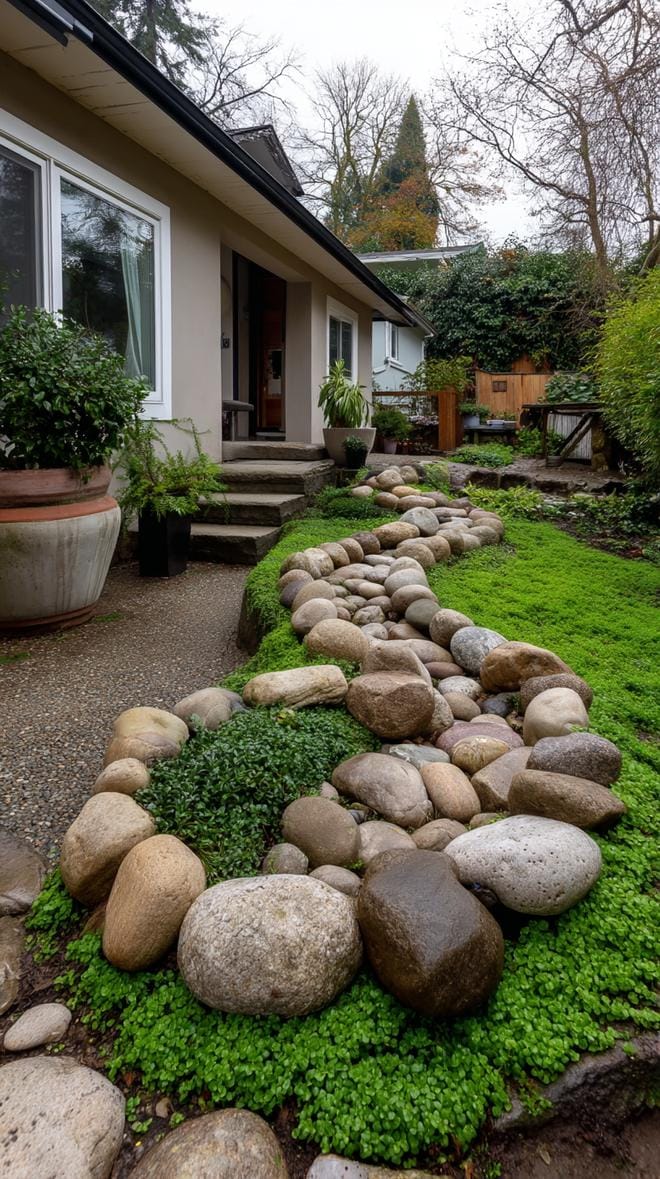
Backyard spirals built with different stone shades bring both function and visual punch. They trick the eye, making small spaces feel bigger, like a well-placed mirror at a yard sale.
Why settle for dull borders when earth tones, slate, and river rock can form a stunning centerpiece right under your nose?

Start small, mark the spiral, choose combinations of dark and pale stones, and plant low-growing succulents between layers. Maintenance is easy, as rocks suppress most weeds.
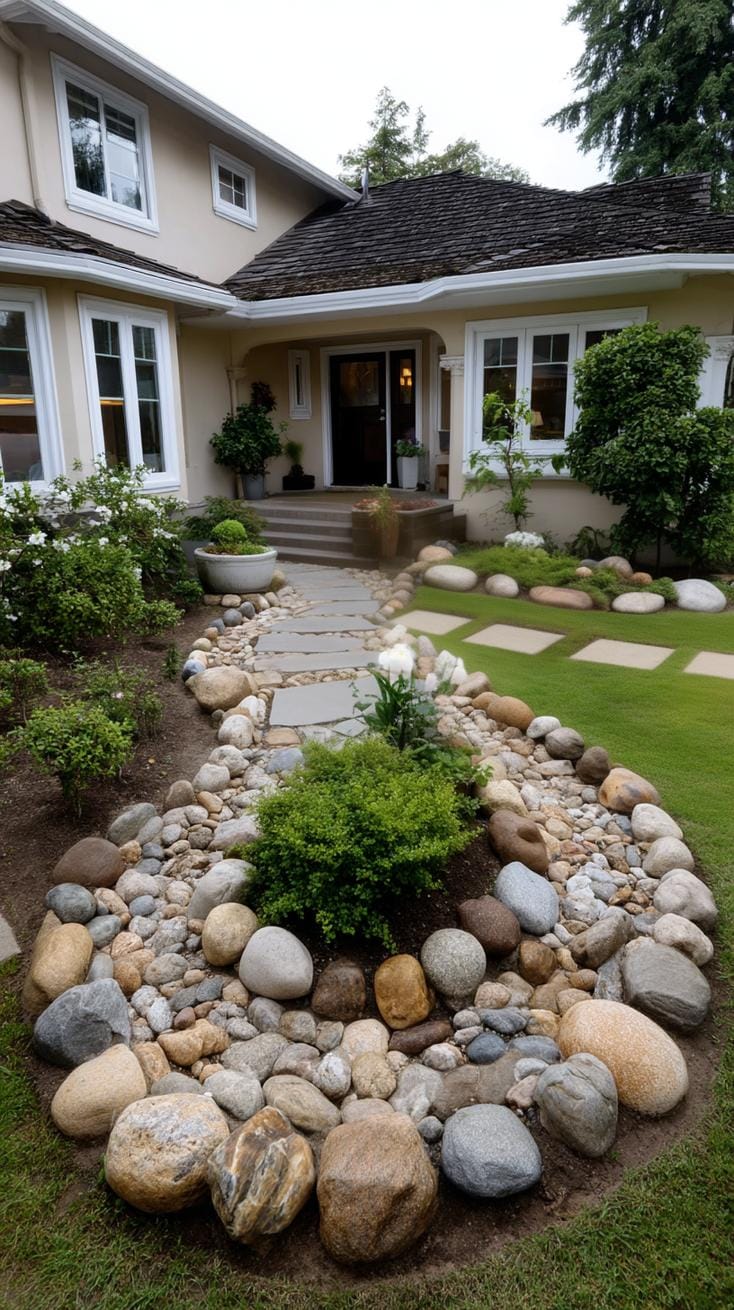
Some folks find that uneven settling of stones calls for periodic restacking, but the charm far outweighs the minor tweaks. Give it a try; you’ll see.
22. Moss-covered boulders in shaded woodland patch

Shade doesn’t have to mean drab. Moss-covered boulders create a lush, almost fairytale look in a woodland patch. They’re low maintenance, no trimming, no fuss.

Just keep the space moist and let nature handle the rest. Want texture and interest? Layer ferns or hostas nearby for extra green drama.


Not everything is rosy. Too much sun scorches moss, leaving you with scruffy rocks. Pet owners may complain their dogs track mud from these damp areas.
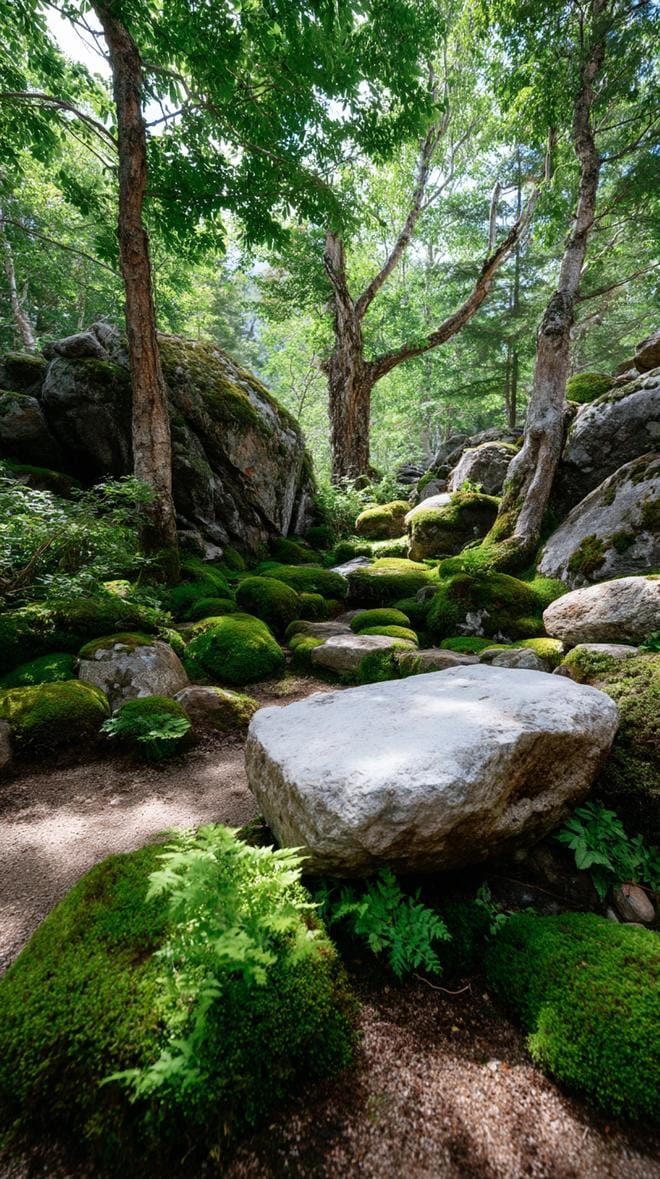
Still, if you want serene charm and minimal upkeep for a shaded nook, it’s tough to beat mossy boulders for mood and simplicity.
23. Succulent-filled crevice garden with upright stones

Succulent-filled crevice gardens use narrow gaps between upright stones as miniature homes for tough yet alluring plants. Try hardy varieties like Sempervivum and Sedum. These thrive with little water and minimal fuss.

Have rocky soil? Perfect. If not, add gritty sand for drainage, these beauties dislike soggy roots.

Mixing stone shapes adds visual interest and helps guide plant arrangement. Cracks and gaps make space for roots, so select stones thoughtfully. Maintenance is low, mostly occasional weeding and a quick trim.

Costs can rise fast if you source premium rocks, but clever scavenging keeps budgets sane. Who doesn’t love a garden that almost takes care of itself?
24. Rocky terrain dotted with yellow perennial blooms
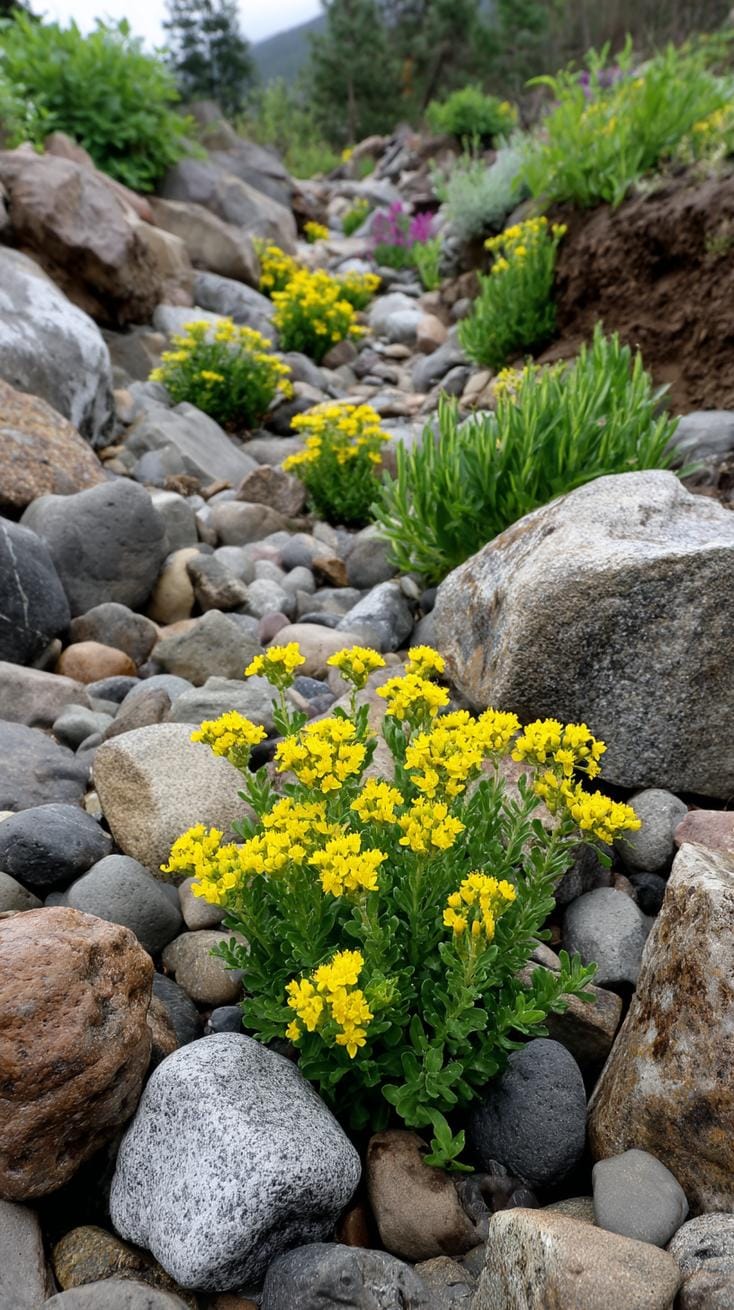
Imagine a garden where rough stone and delicate gold blossoms meet. Yellow perennials like coreopsis or golden alyssum can brighten rocky ground, giving pops of color that last through summer.
These plants thrive with little fuss. Isn’t it refreshing to see beauty emerge where most wouldn’t expect it?

Maintenance stays minimal. Drought-tolerant perennials require less water and fussing over. Rocks absorb heat, keeping roots happy and discouraging weeds.
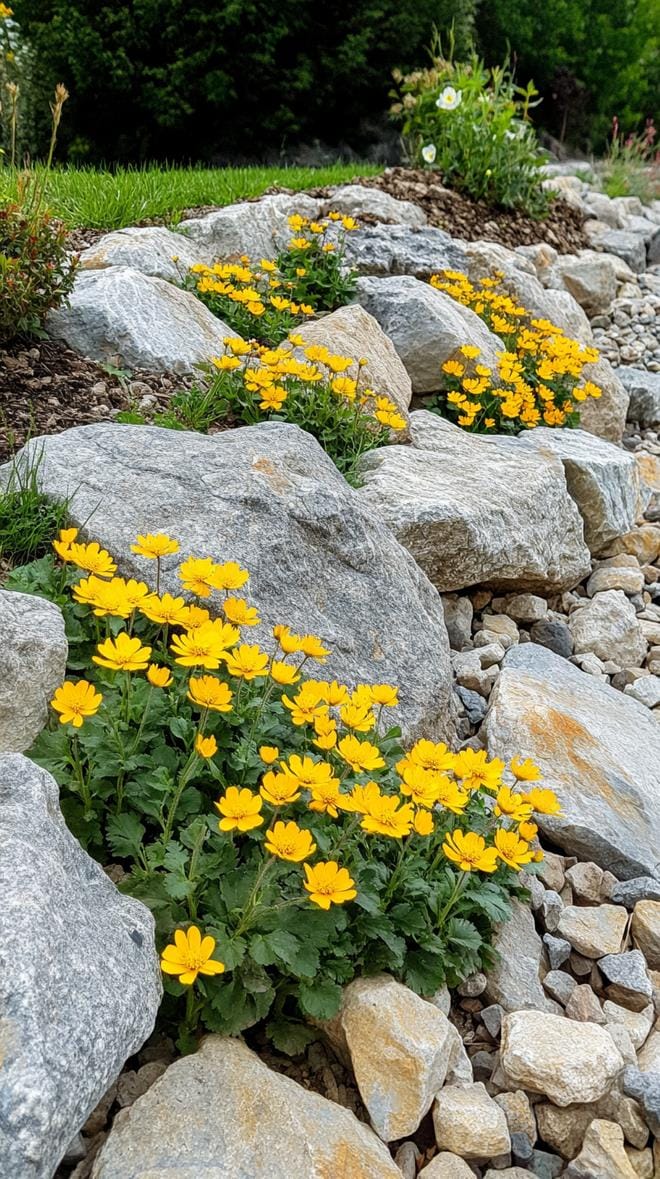
However, some blooms may fade from intense sun unless provided a bit of afternoon shade. Still, that contrast of stone and yellow feels downright cheerful, almost like nature’s own fireworks.
25. Rustic rock ring planter with vibrant flowers
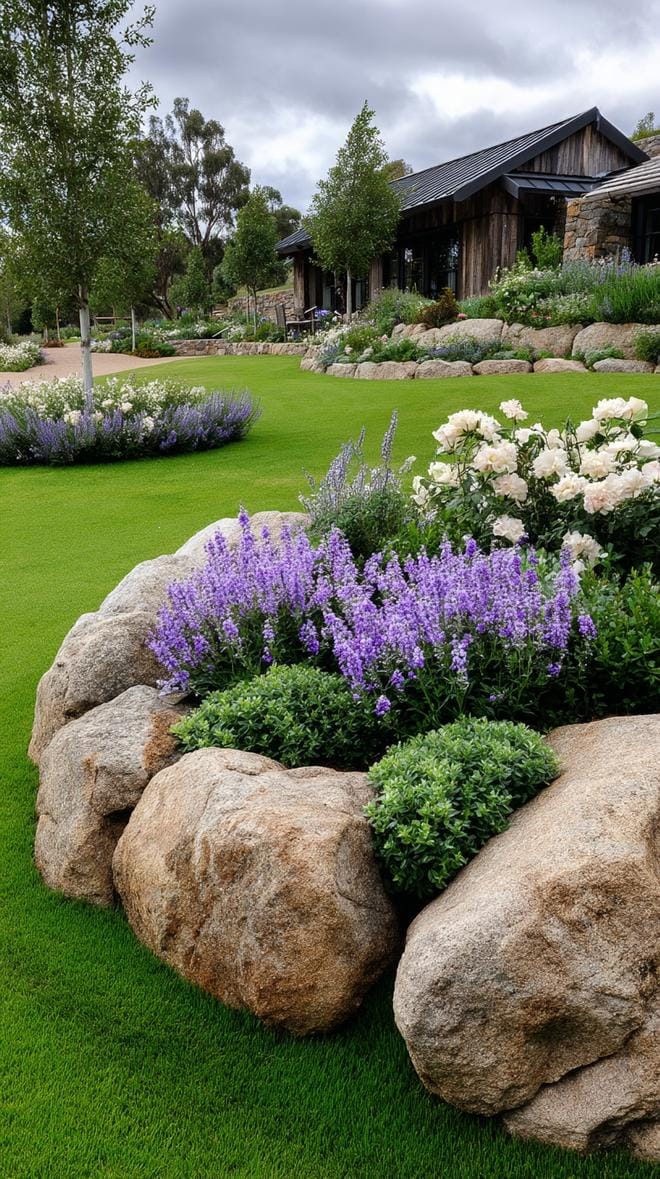
Think of a classic rock ring planter. Place weathered stones in a jagged circle and fill it with marigolds or petunias.
Why does it work so well? The contrast between rough stones and bright flowers catches the eye. Maintenance is simple, just weed occasionally and add compost each spring.
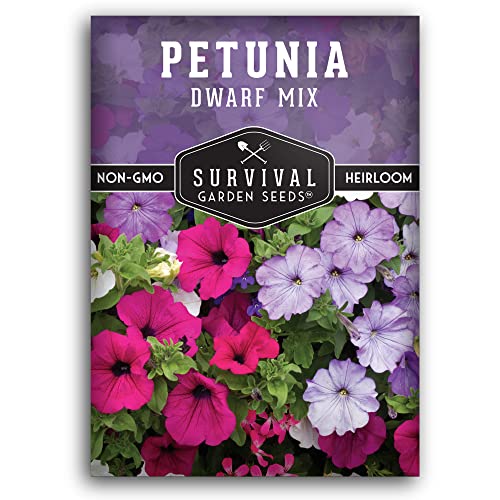
Oddly enough, not every flower will thrive. Sun-loving varieties like zinnias or creeping phlox give the best results. Avoid shade-lovers, or you’ll end up with drooping stems and disappointment.
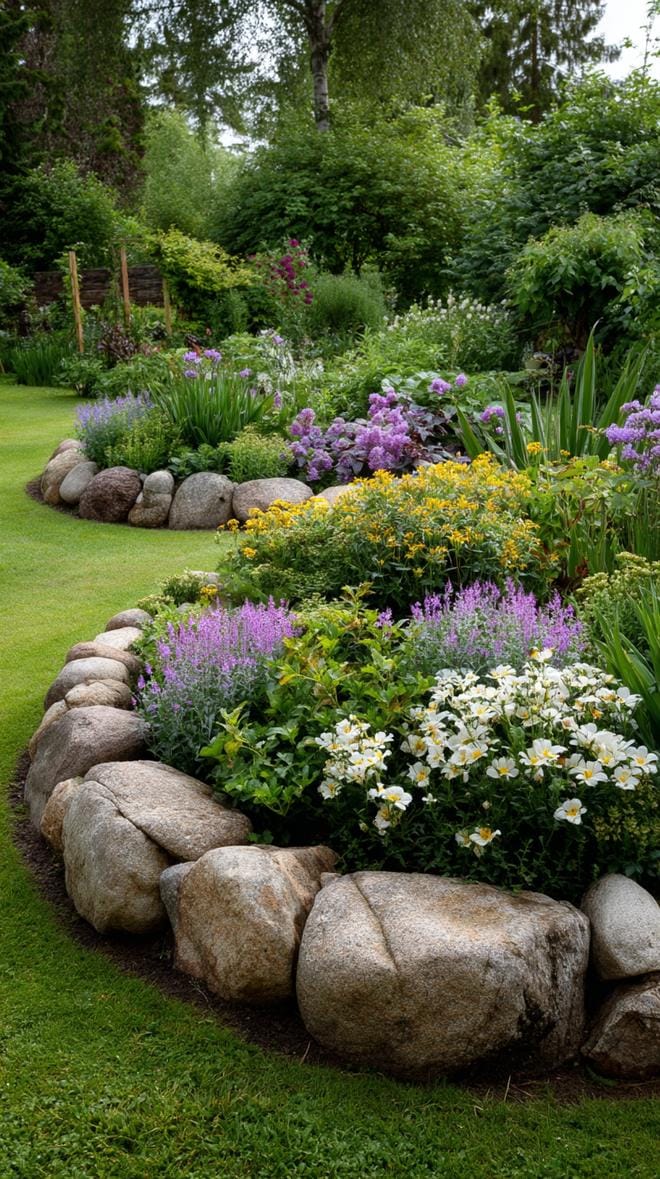
Try experimenting with color arrangements; some folks swear by bold clashing palettes, while others go for peaceful monotones. Your garden, your rules.
26. Tiered slope garden using stacked rock walls
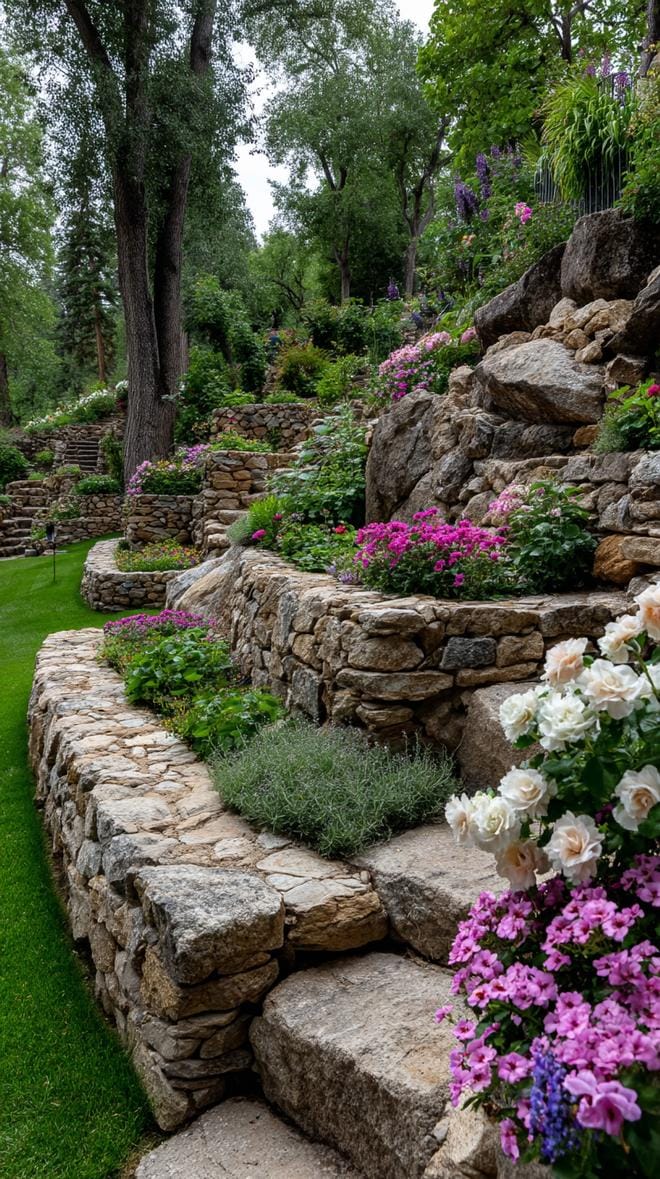
Imagine layering flat stones to shape your sloped yard into a tiered display. Using stacked rock walls, you create planting spots at every level. It’s easier on maintenance and stops soil erosion.
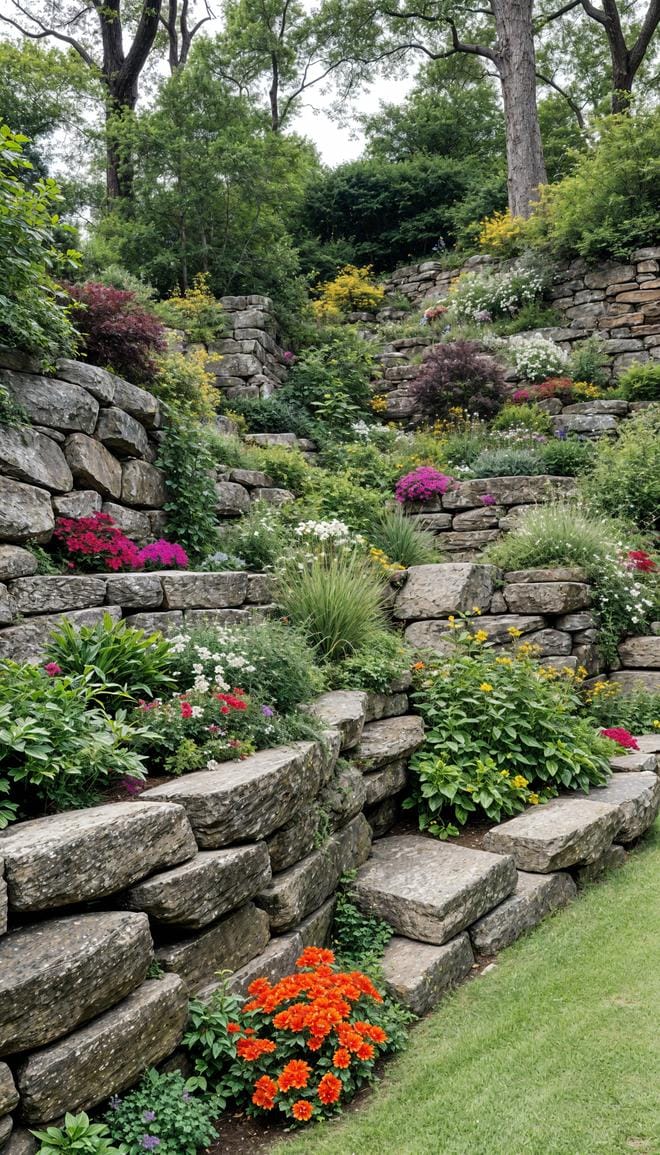
The approach saves water, too, each tier holds moisture longer, helping your plants thrive with less effort.
But not all rocks suit every space. Shifting stones can slip if not set properly. Investing in good drainage pays off. Use smaller plants with shallow roots so they don’t topple the walls.


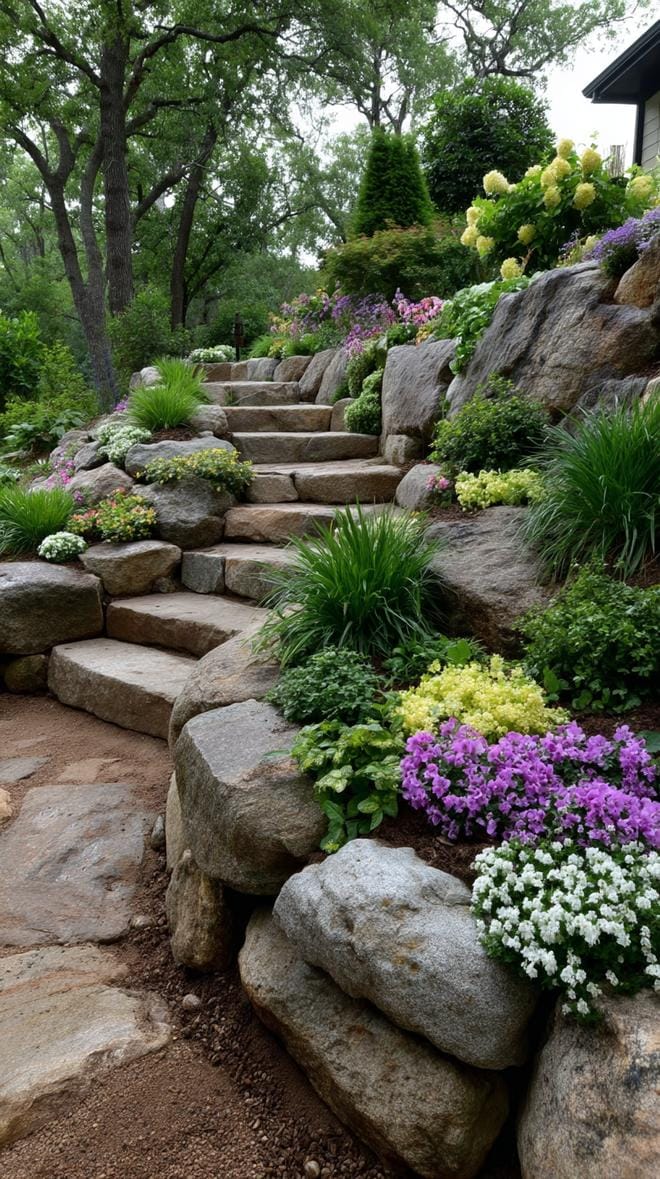
Try mixing ornamental grasses with succulents for a look that’s more wow than weed patch.
27. Checkerboard rock path with flower accents
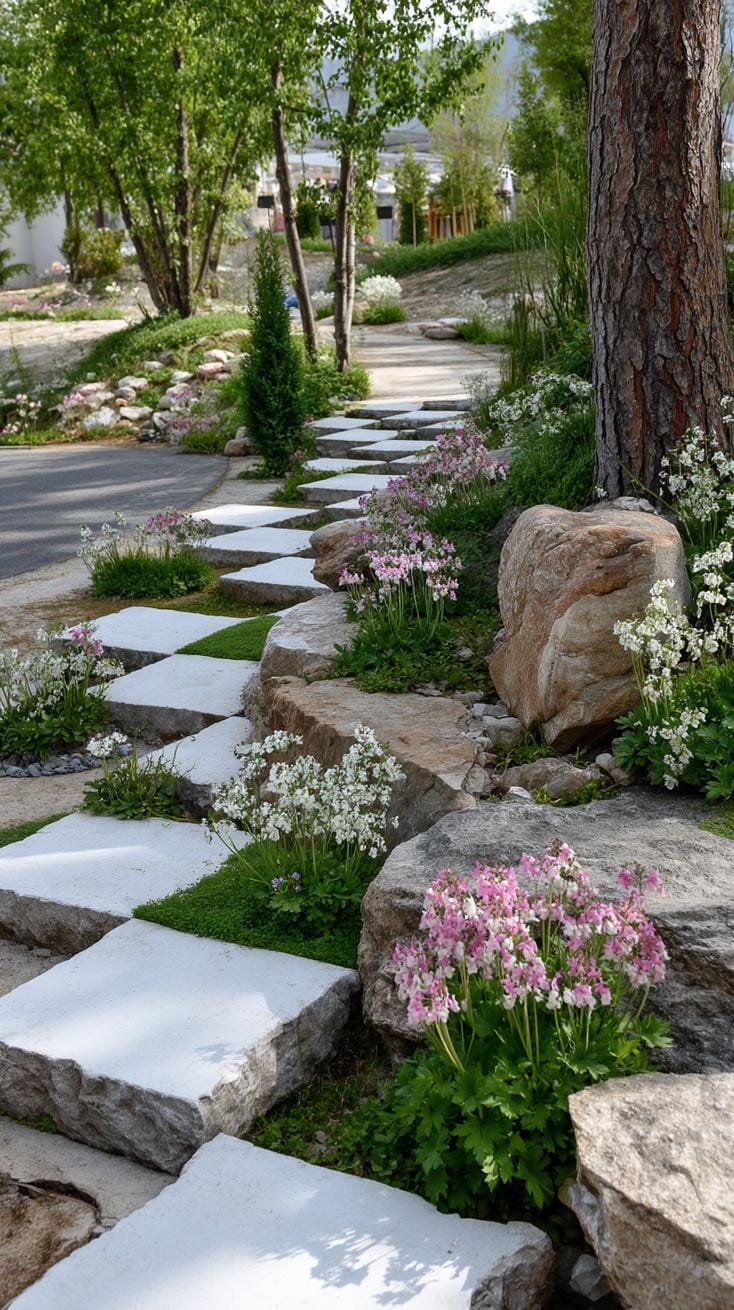
Picture this: crisp geometric rock tiles form a checkerboard path, adding instant structure and a playful twist to your garden. Sprinkle creeping thyme or moss between stones for texture and lush color.
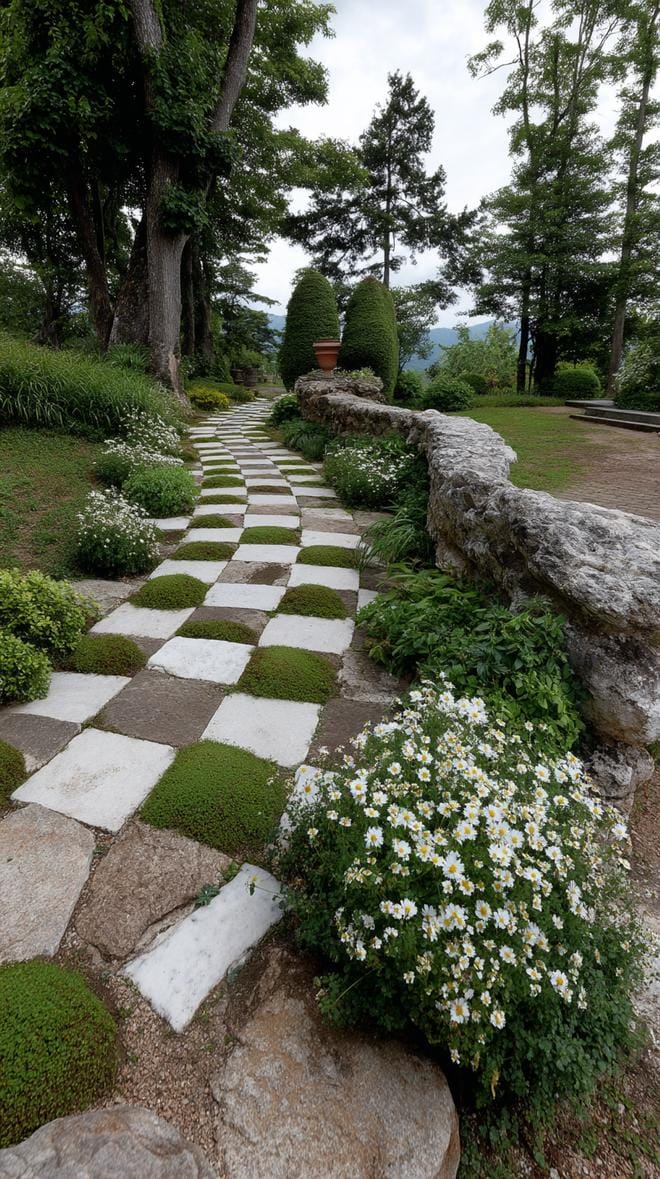
Why go plain when a path can double as a work of art right outside your door?

But, let’s face it, checkerboard paths have quirks. Weeds sometimes sneak through, and precise spacing demands a steady eye. Still, the visual impact can be worth the fuss.
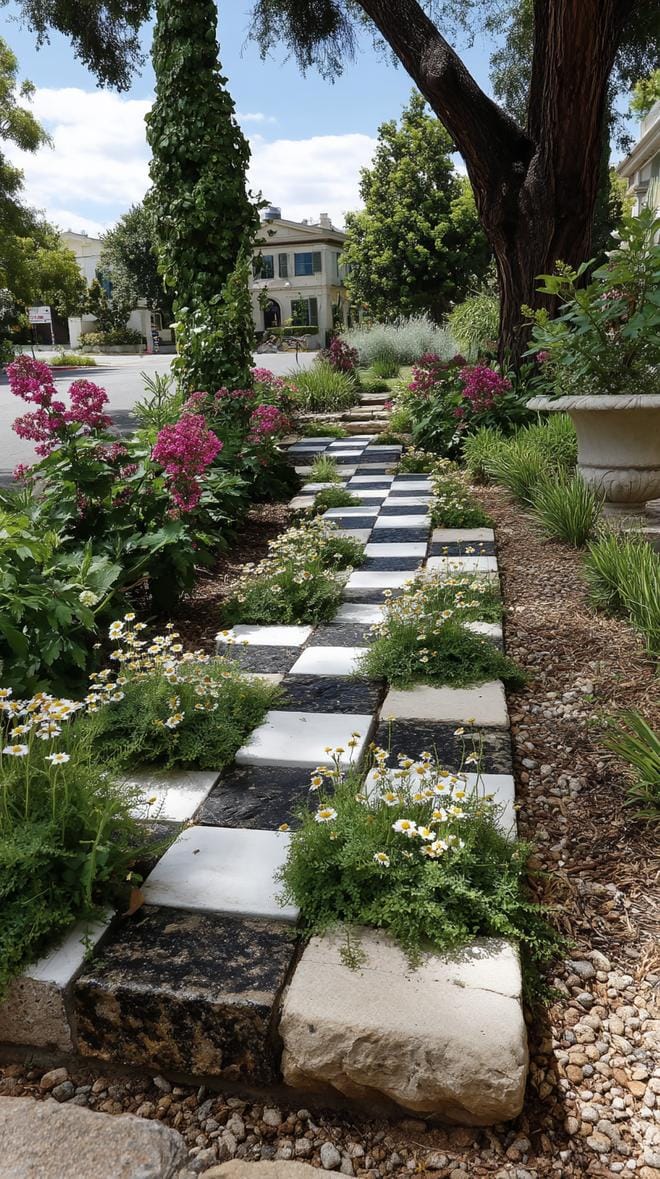
Try alternating stone colors or integrating low-growing blooms, simple changes make ordinary stepping stones sing. Isn’t variety the spice of garden life?
28. Zen garden with sculpted gravel and stone lanterns
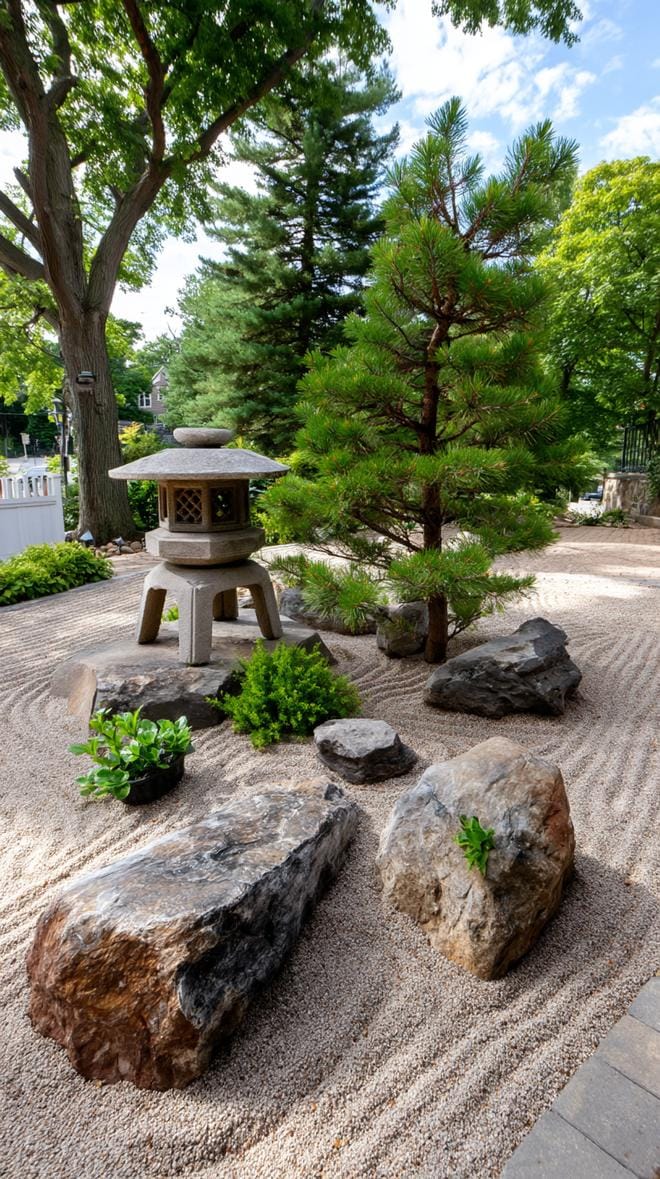
A Zen garden offers peaceful simplicity. Sculpted gravel raked into flowing patterns mimics water, instantly calming the mind. Stone lanterns add timeless beauty and create focal points.
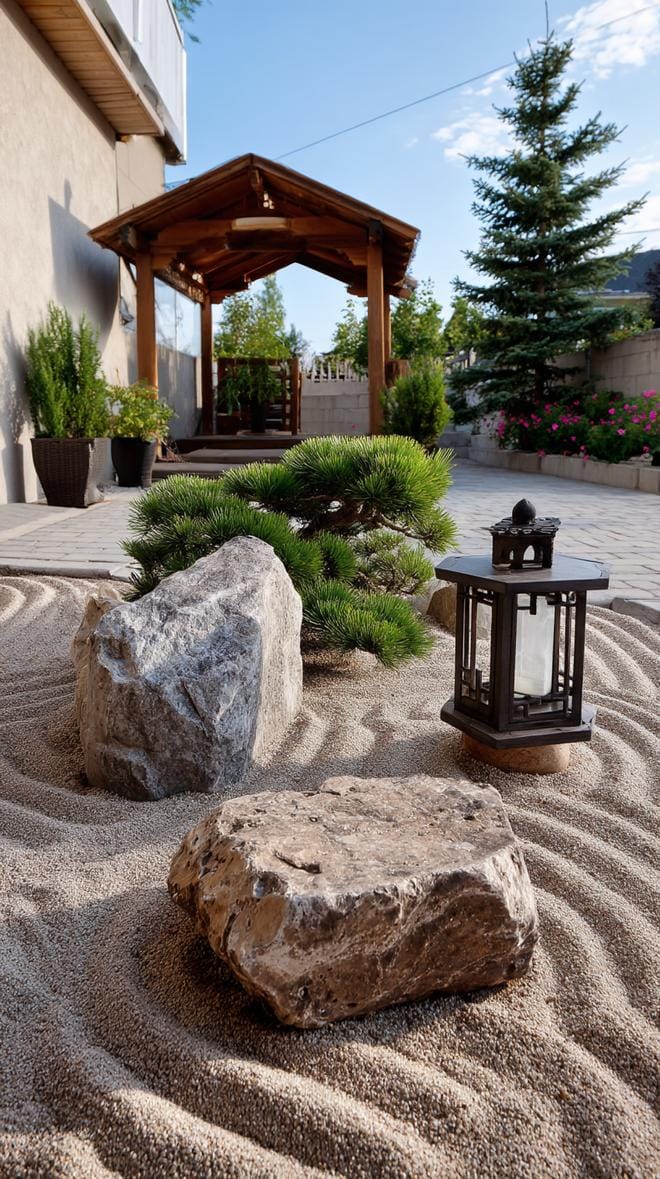
Why not add a small bench? Pause, breathe deeply, and absorb nature’s serenity. It beats staring at screens, right?


Still, achieving perfection with gravel lines demands patience and a steady hand. Wind, pets, or even stray shoes can disrupt the harmony.
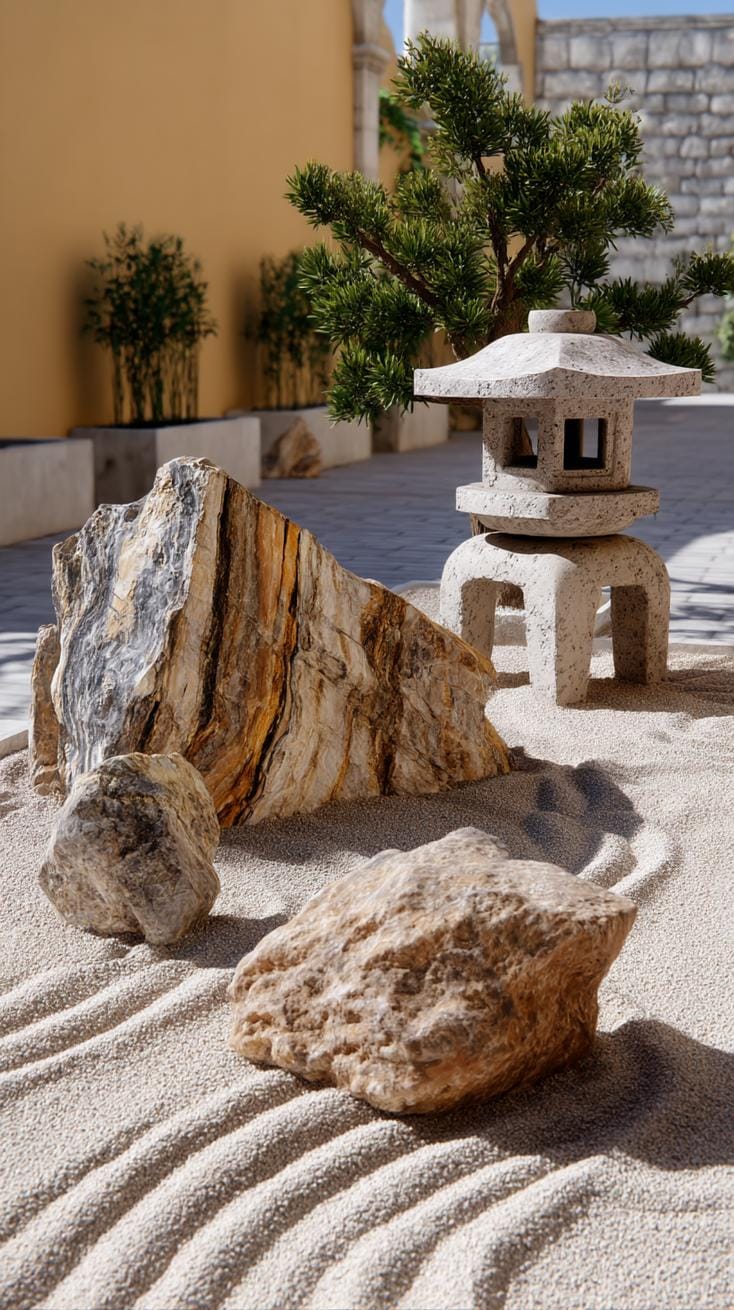
Accepting these small flaws is part of the experience, reminding us that beauty often comes with a touch of imperfection.
29. Dry creek bed with cascading plants and boulders

A dry creek bed with cascading plants and boulders turns plain yards into visual interest. Gravel and river rocks mimic water’s path. Add low-growing sedum or creeping thyme to soften hard edges.
It’s low-maintenance, drought-resistant, and keeps rainwater in check. Just don’t expect lush color year-round.

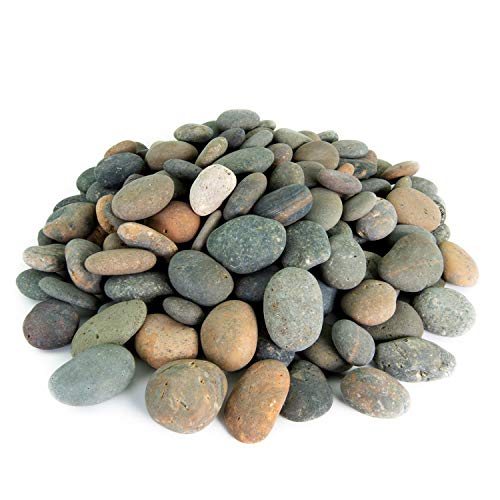
Want more drama? Use bigger boulders for contrast, and stagger them. Try planting trailing varieties like vinca minor to drape softly over the rocks. This setup stands strong through seasons.

But it can look sparse in winter, so mix evergreen groundcovers for off-season appeal.
30. Whimsical rock art mushrooms painted by hand

Hand-painted rock art mushrooms turn a plain plot into a playful, storybook space. Kids especially love spotting them peeking from under shrubs.

All you need: smooth stones, outdoor paint, and a touch of patience. They’re cheap, durable, and even rainy seasons can’t wash away their charm.


But let’s be real, these little fungi aren’t perfect for every taste. Too many and the garden can look more cartoonish than relaxing. A handful, artfully arranged, brings delight without clutter.

If you lean crafty, grab a brush; if not, maybe leave room for real moss and blooms.
31. Dense low shrubs around pebble border curve
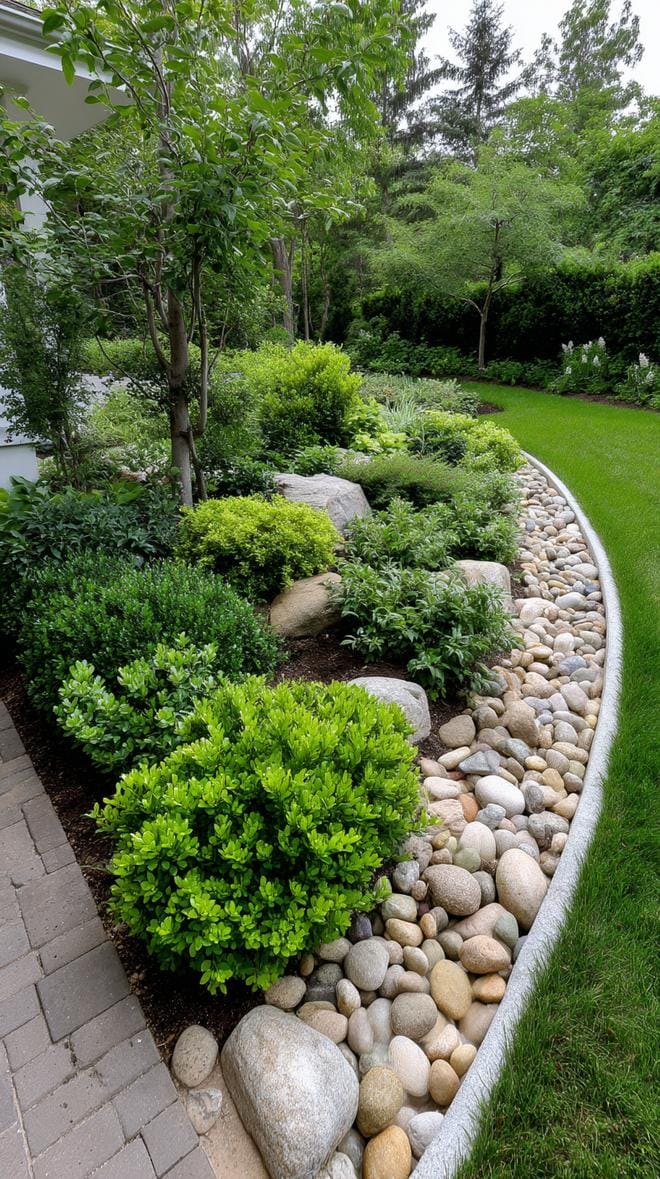
Dense low shrubs hug a curved pebble border, delivering both structure and softness. Think boxwoods or spreading junipers, they’re tough, evergreen, and need little fuss.


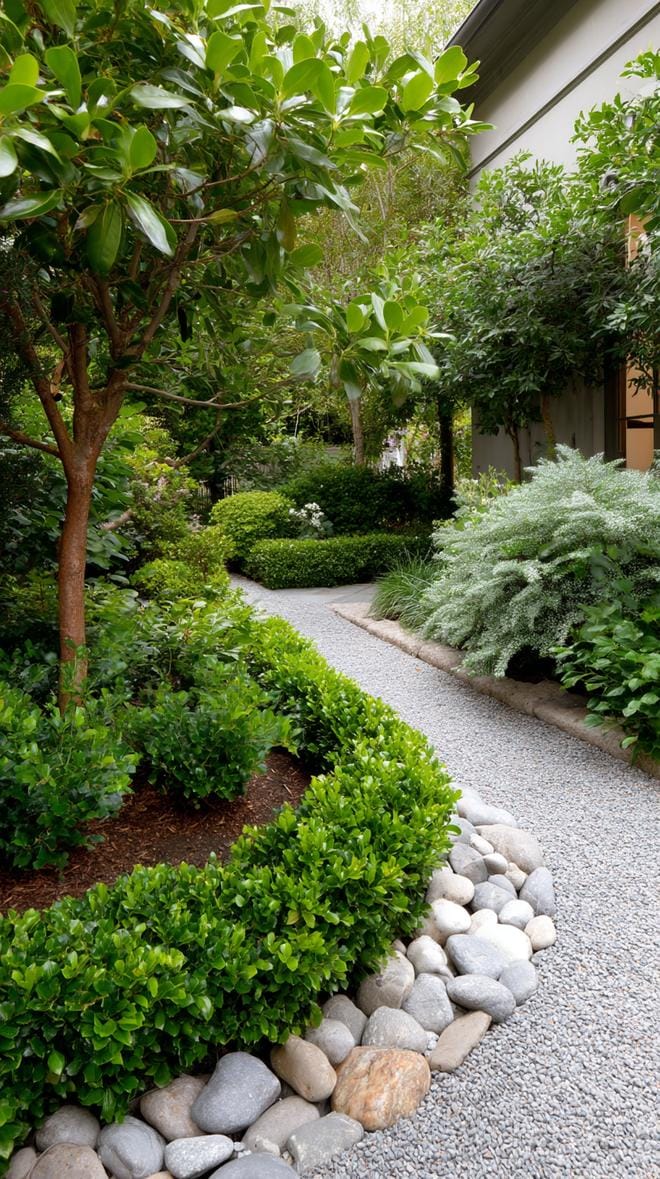
Their compact shapes keep weed invasion at bay and lock in soil. Why settle for bare gravel when texture and greenery boost visual interest year-round?
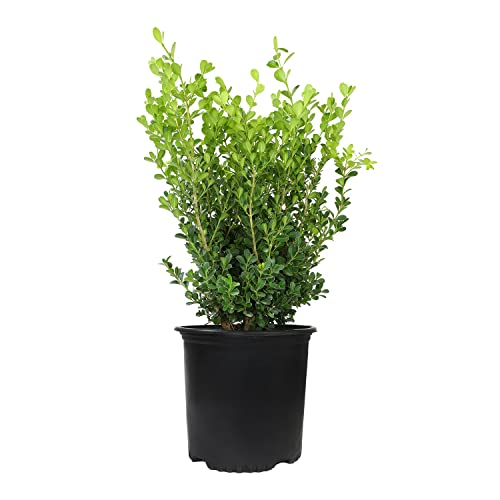

Some folks worry about maintenance, but truthfully, these shrubs demand just an occasional trim. Pebbles reduce mess and moisture loss.
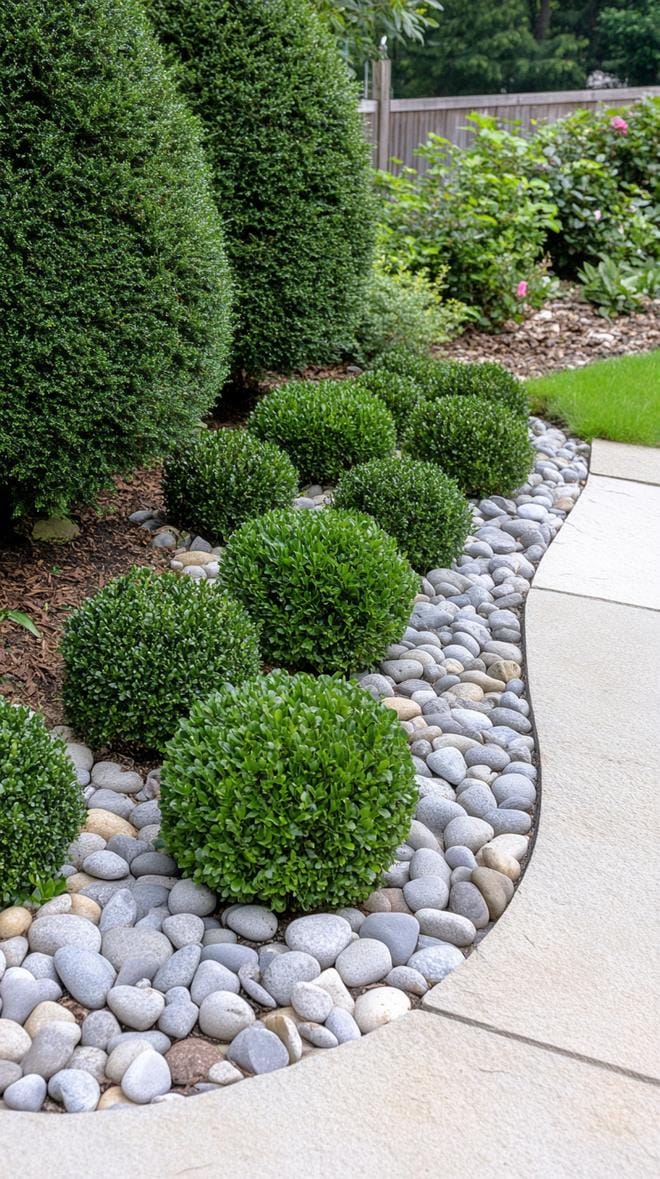
If color feels lacking, tuck in lavender for scent or creeping thyme for pops of purple. It’s a simple upgrade that wows neighbors and skips the garden drama.
Conclusion
Transforming your yard with a rock garden isn’t rocket science, it’s like arranging a puzzle, but you choose the pieces. Mix small boulders, pebbles, and drought-loving plants. Suddenly, you have a spot that’s both simple and attention-grabbing.
Start small if unsure. Experiment with gravel paths or planting tough perennials between stones. Each step moves you closer to a low-maintenance retreat.
Ready to roll up your sleeves and give your garden some personality? The rocks are waiting.
Related Topics: