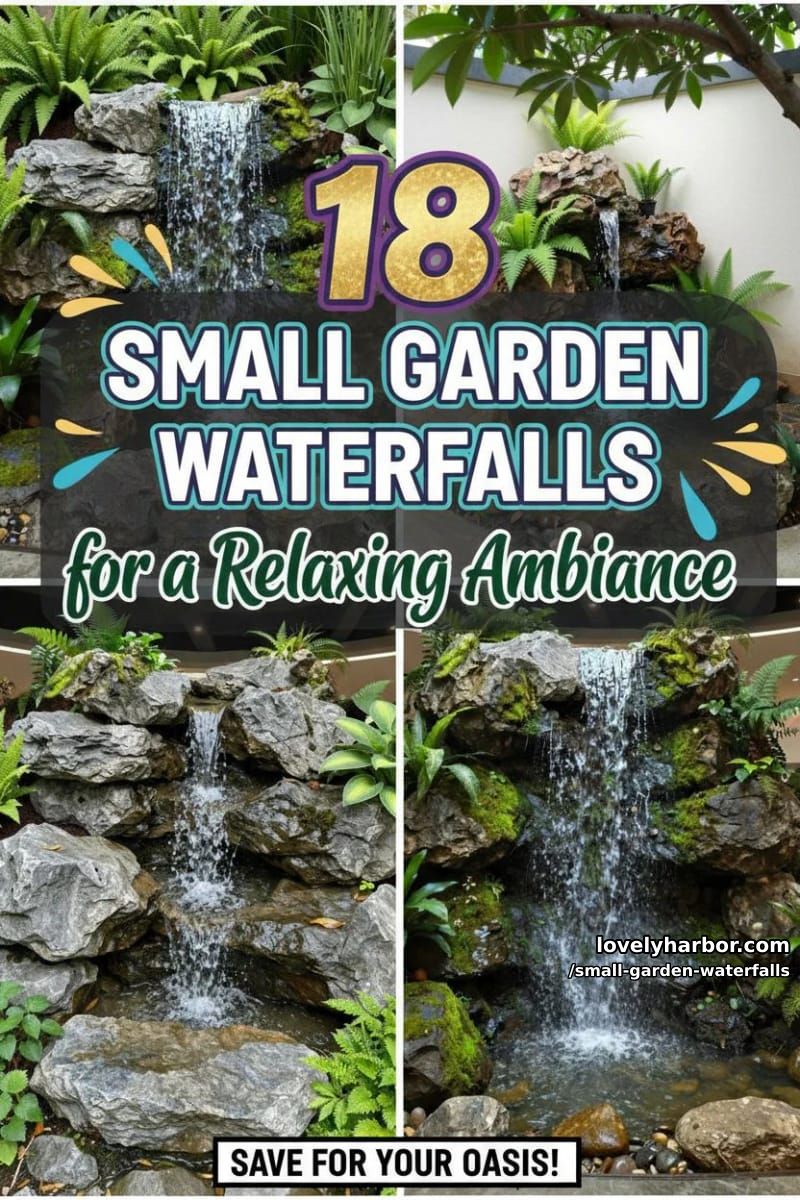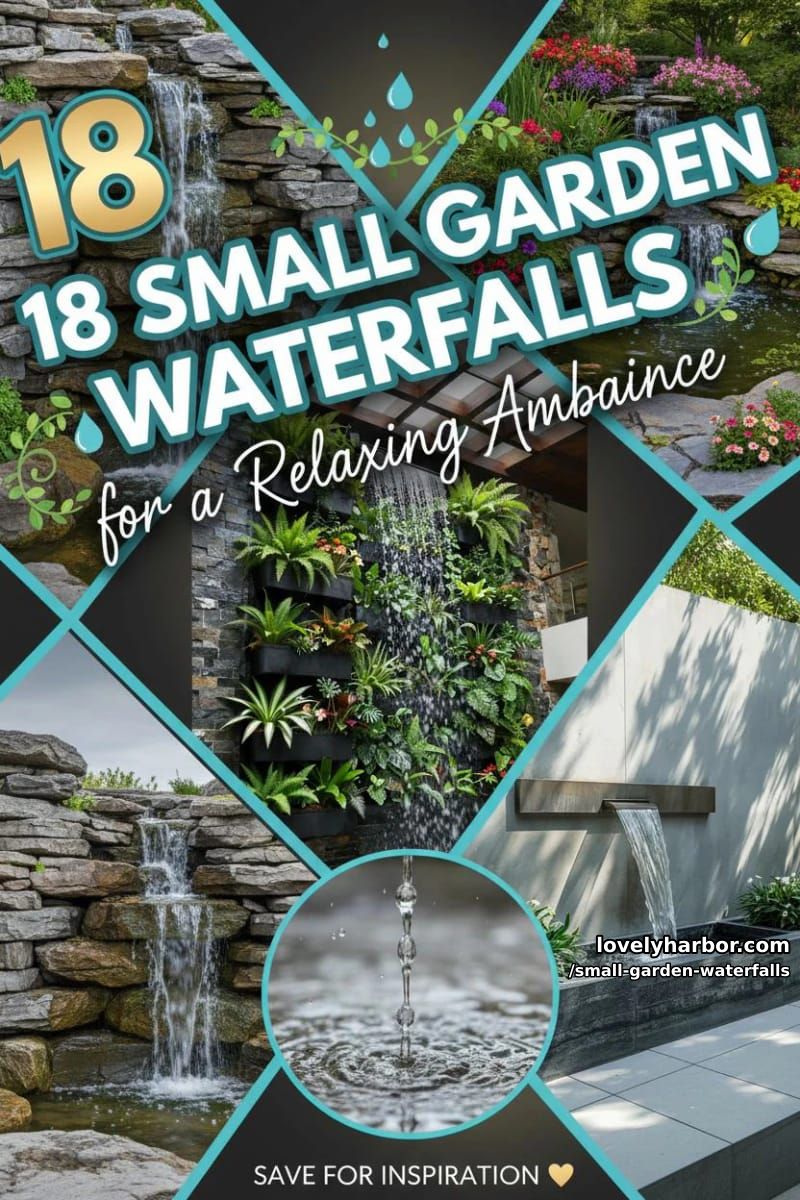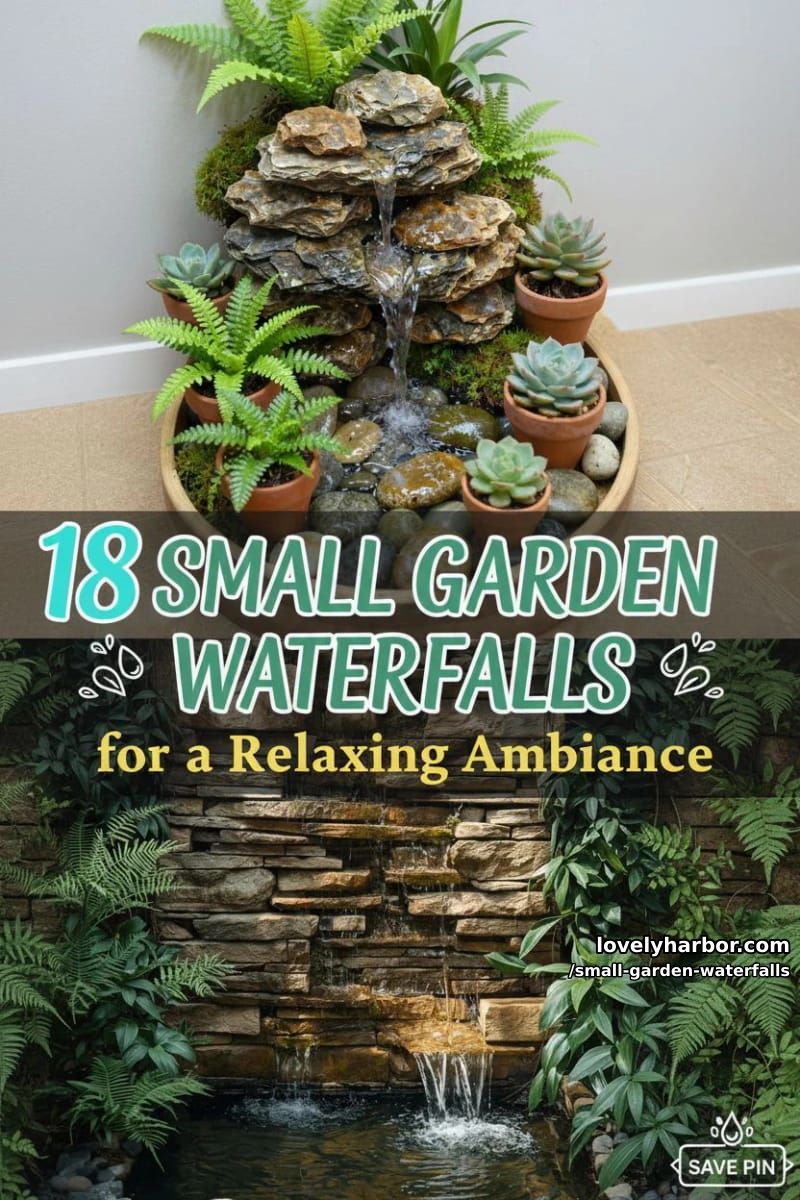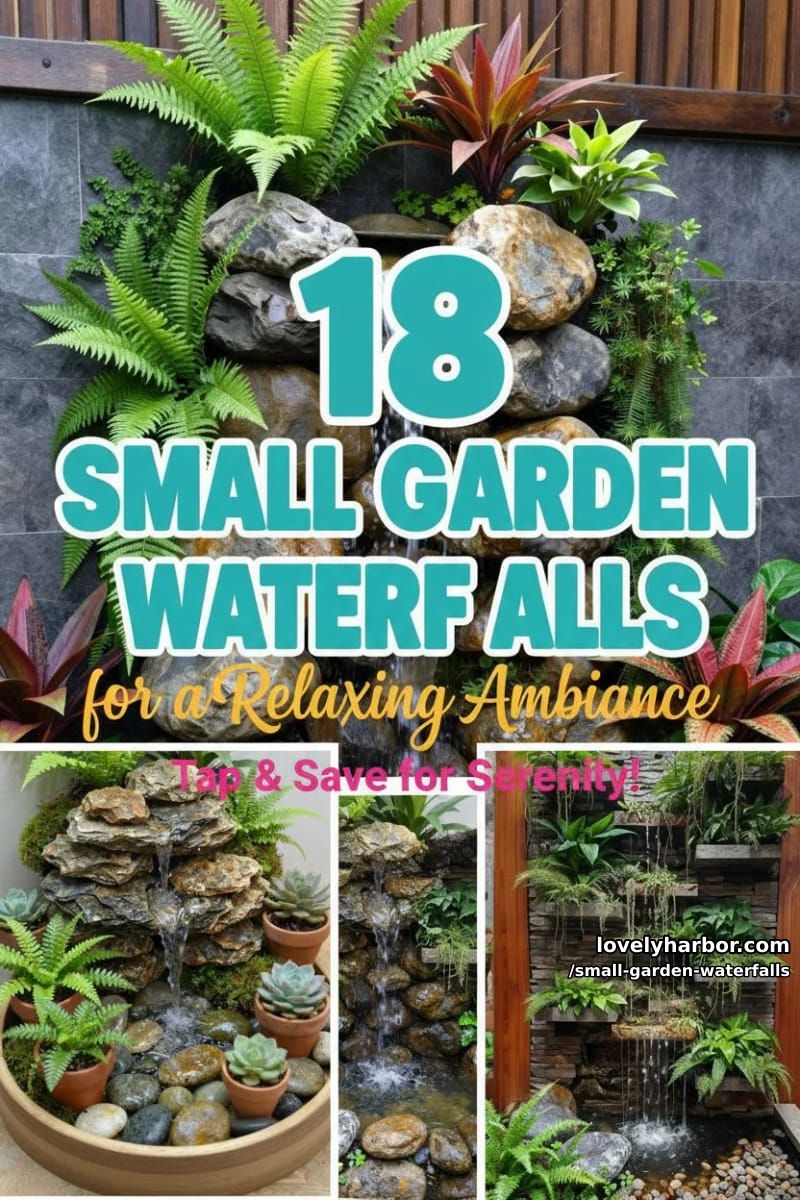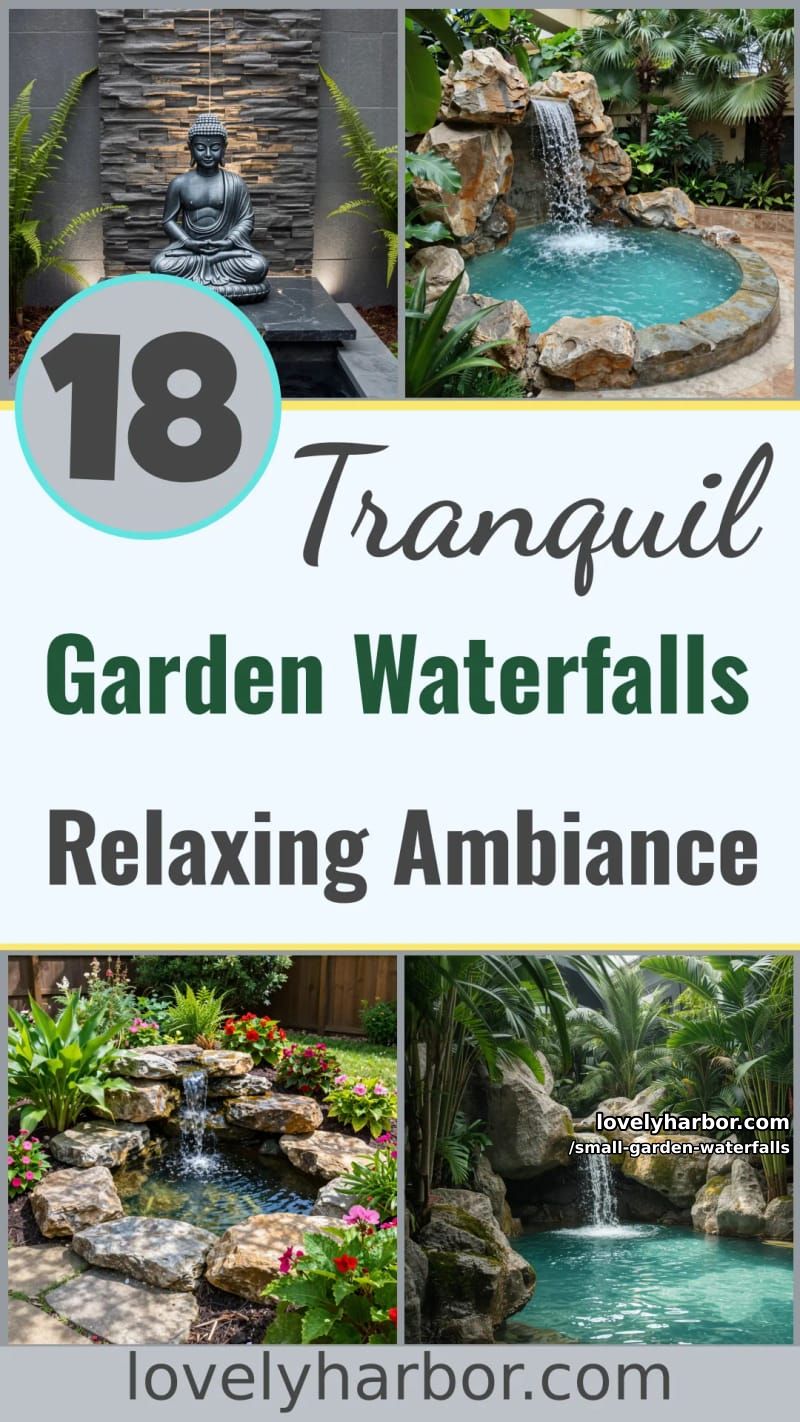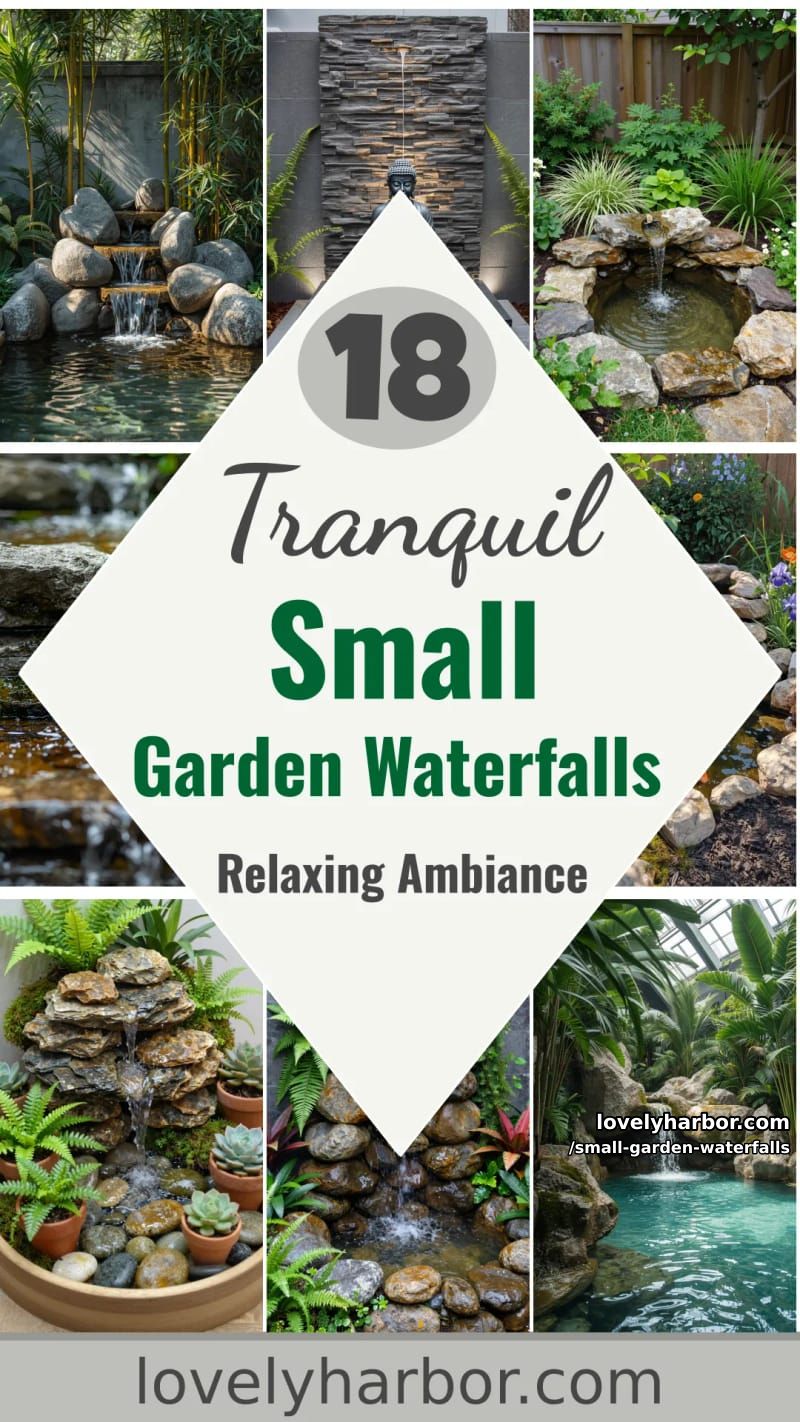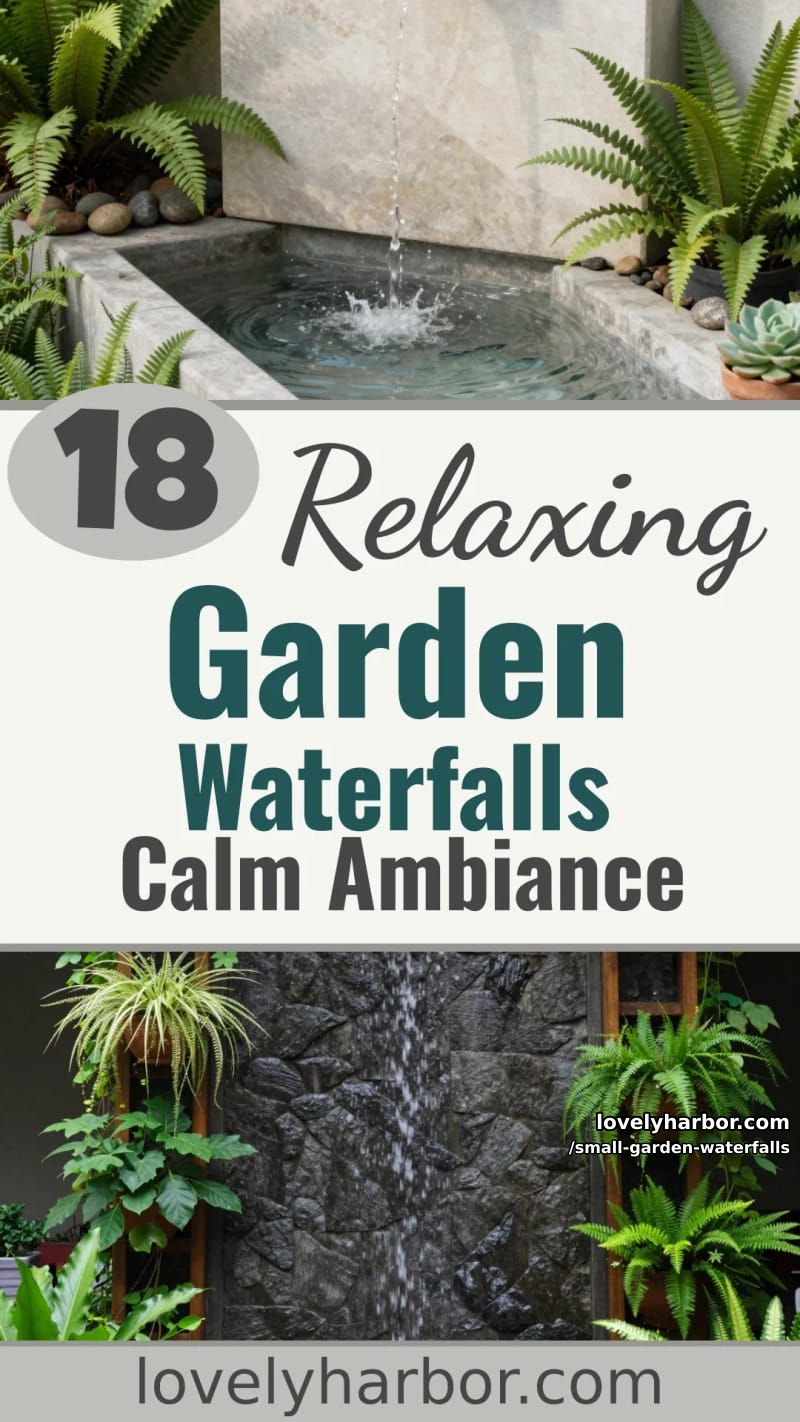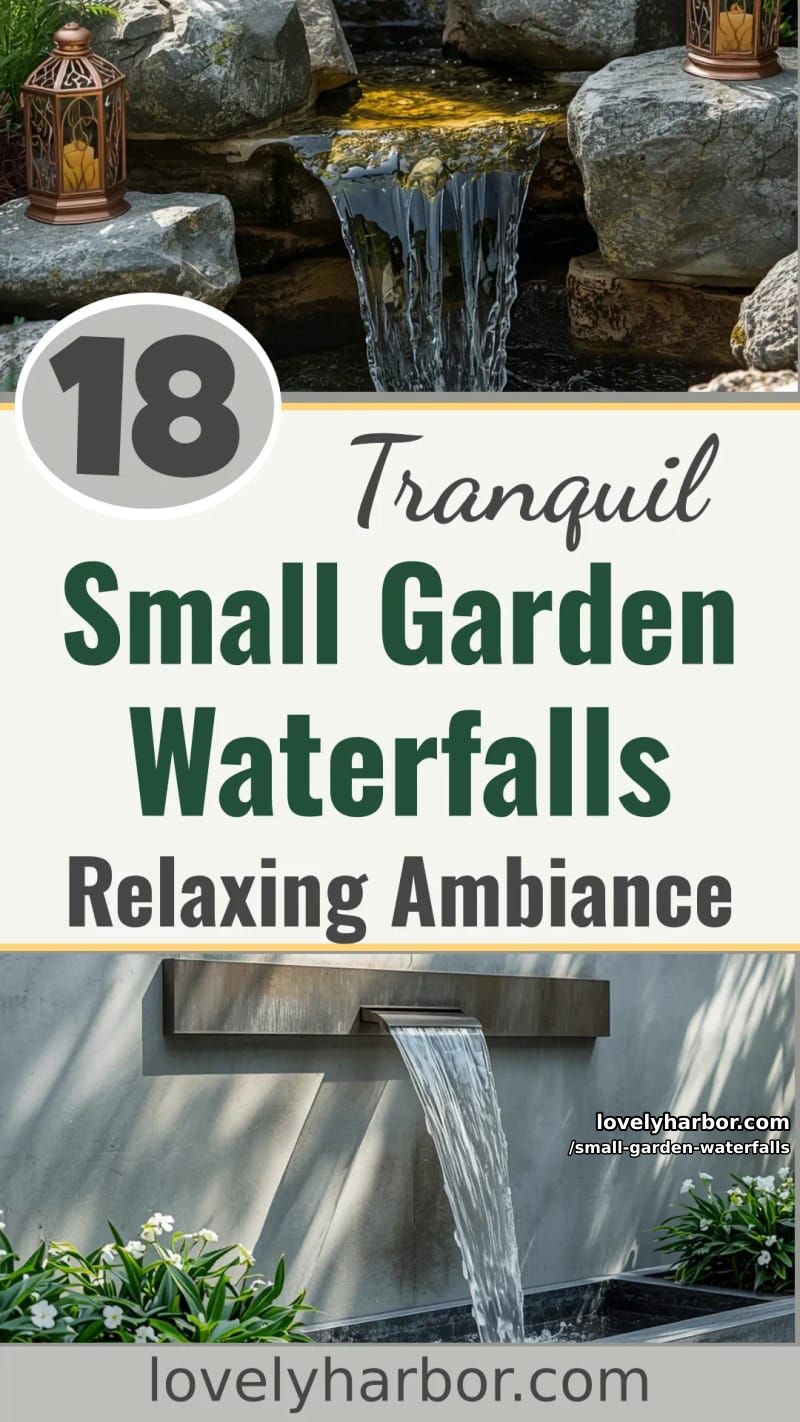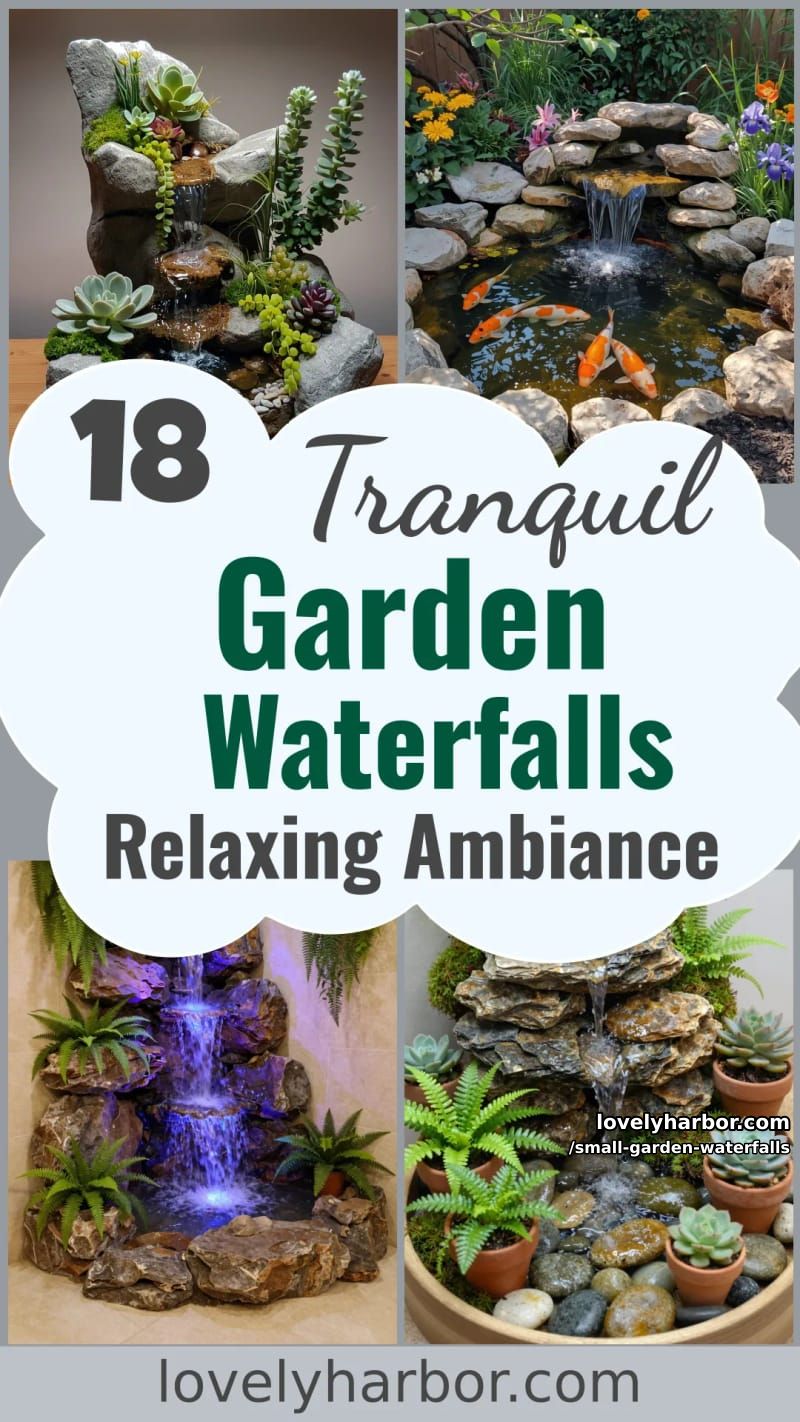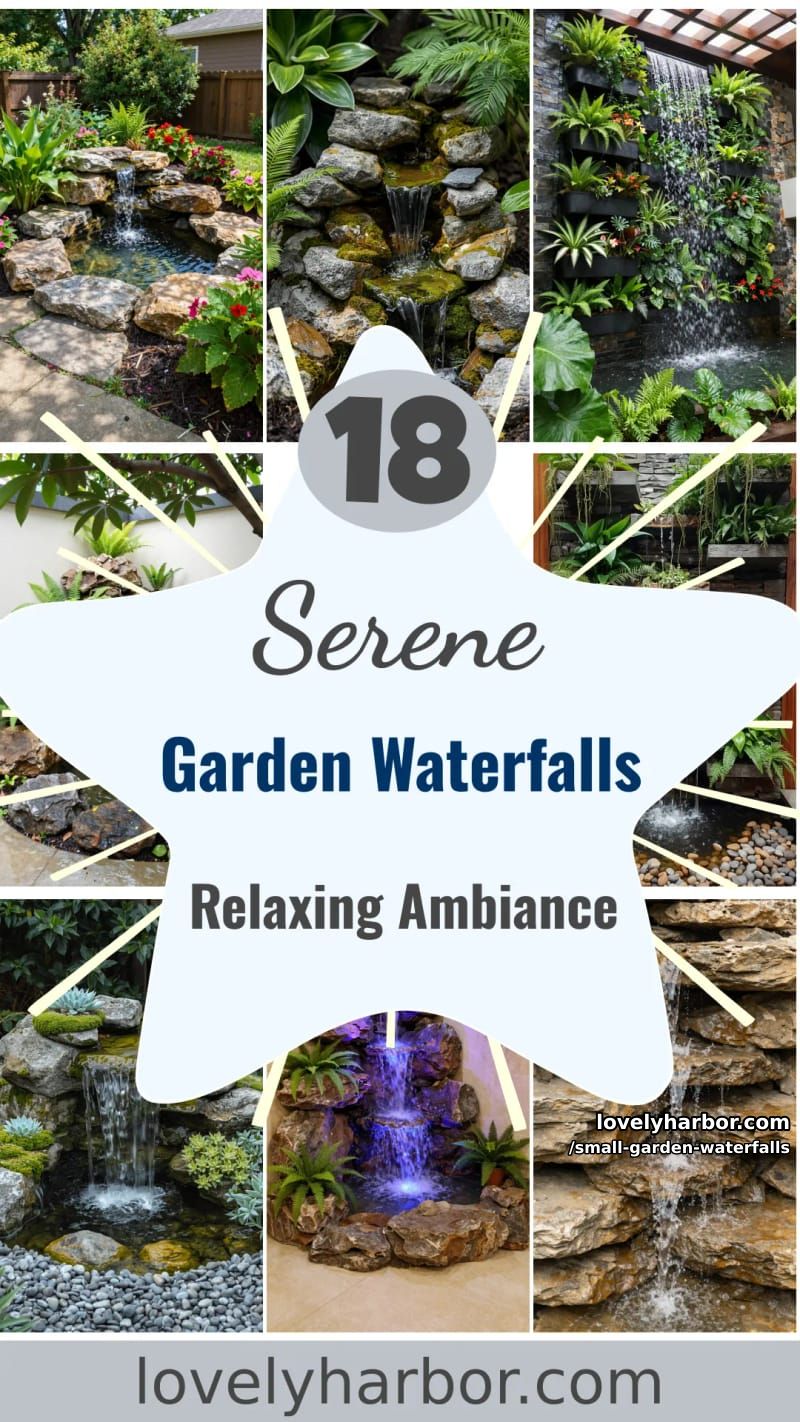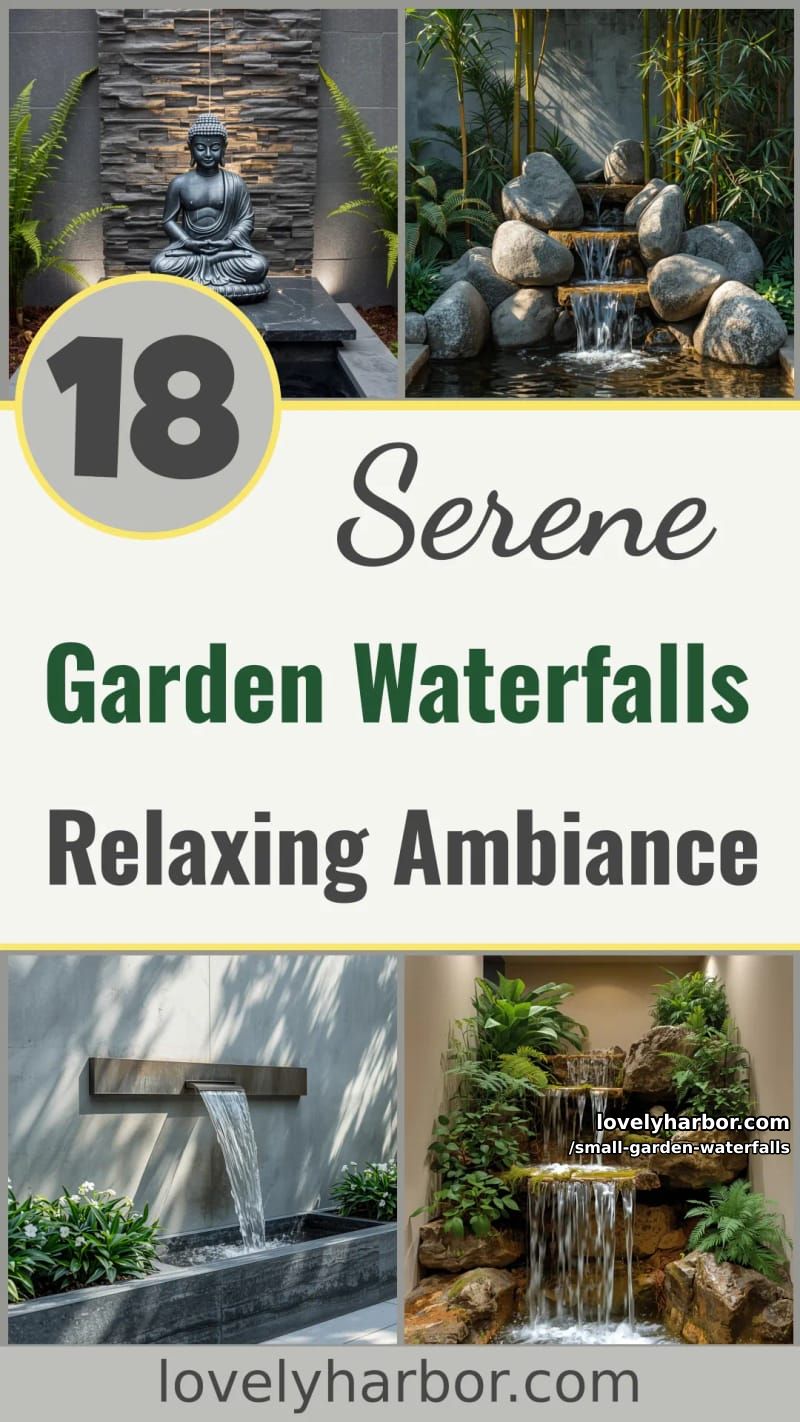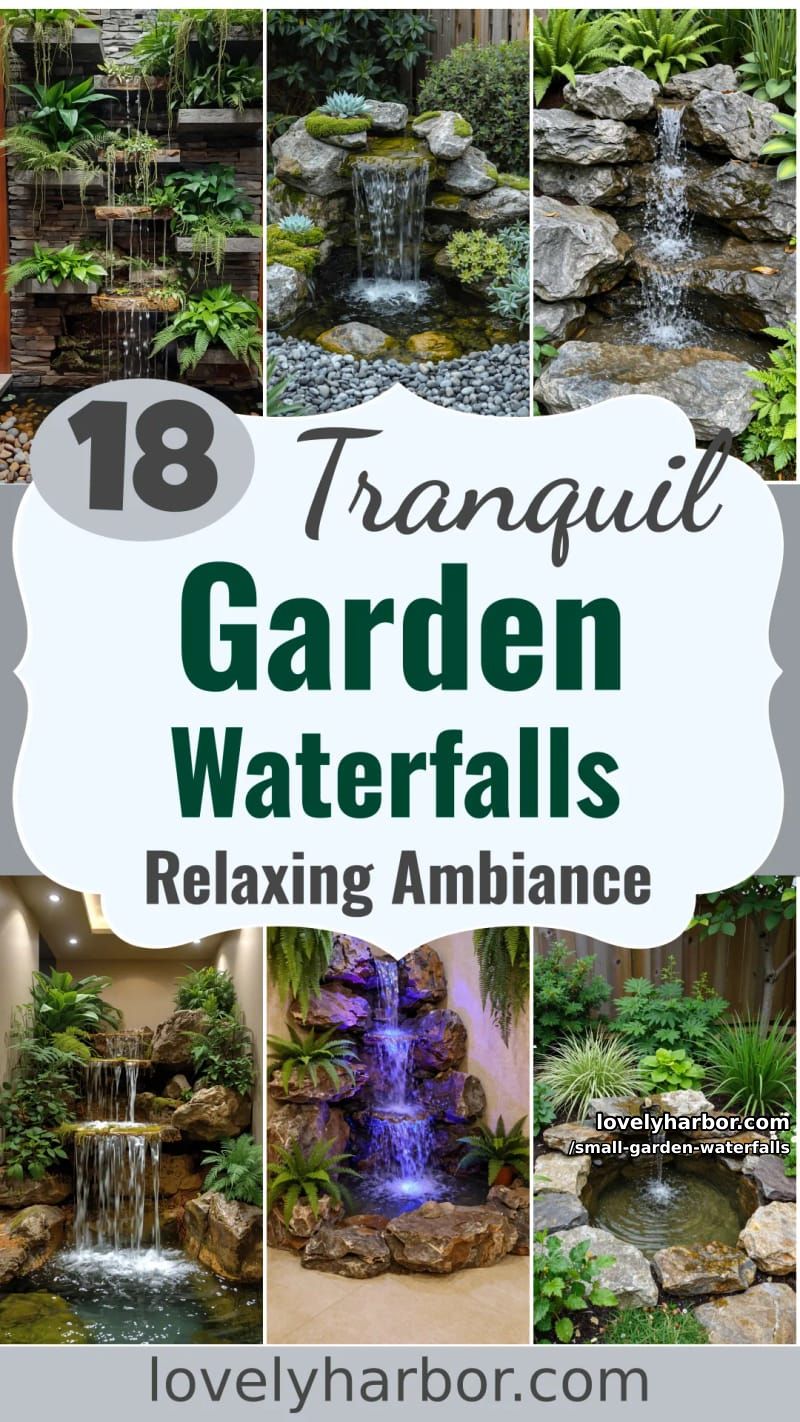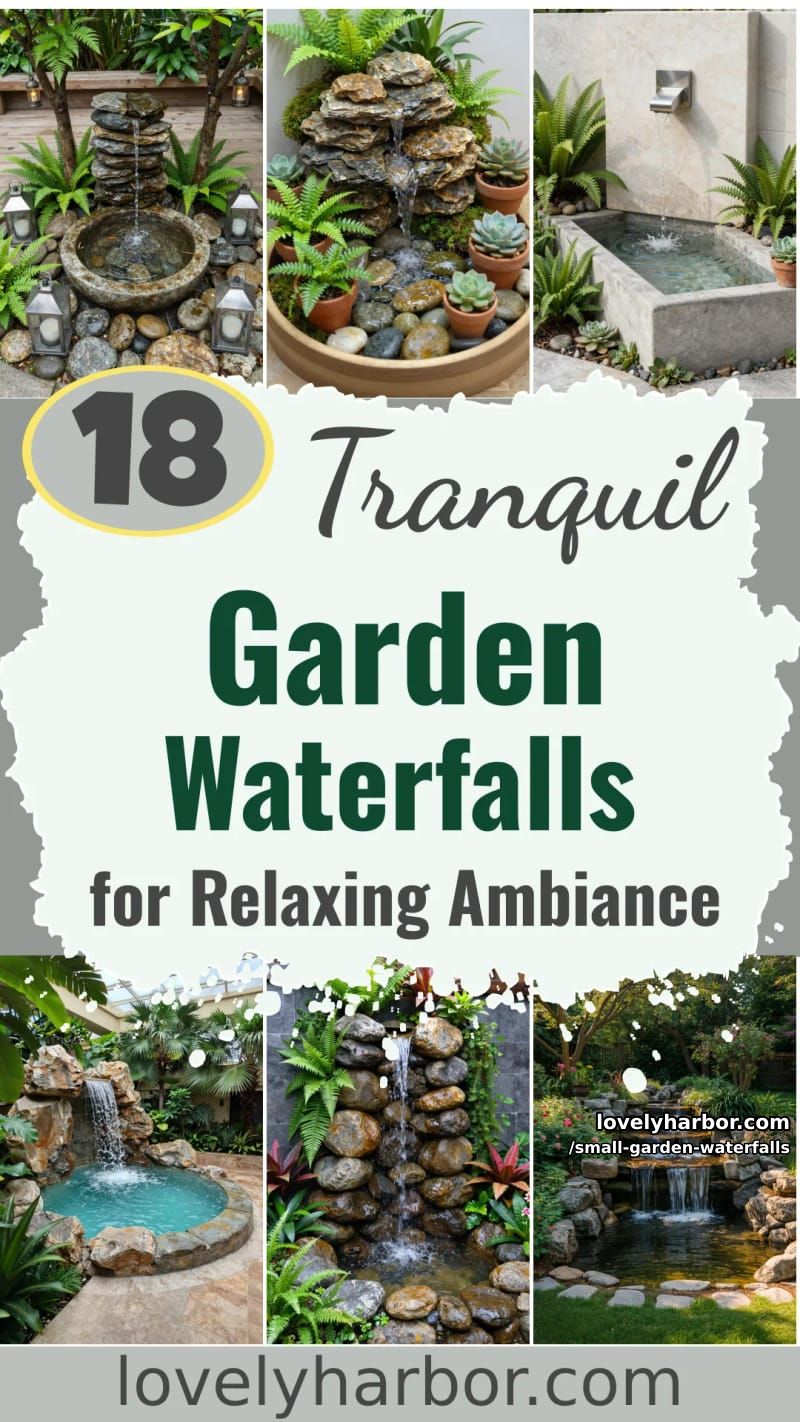
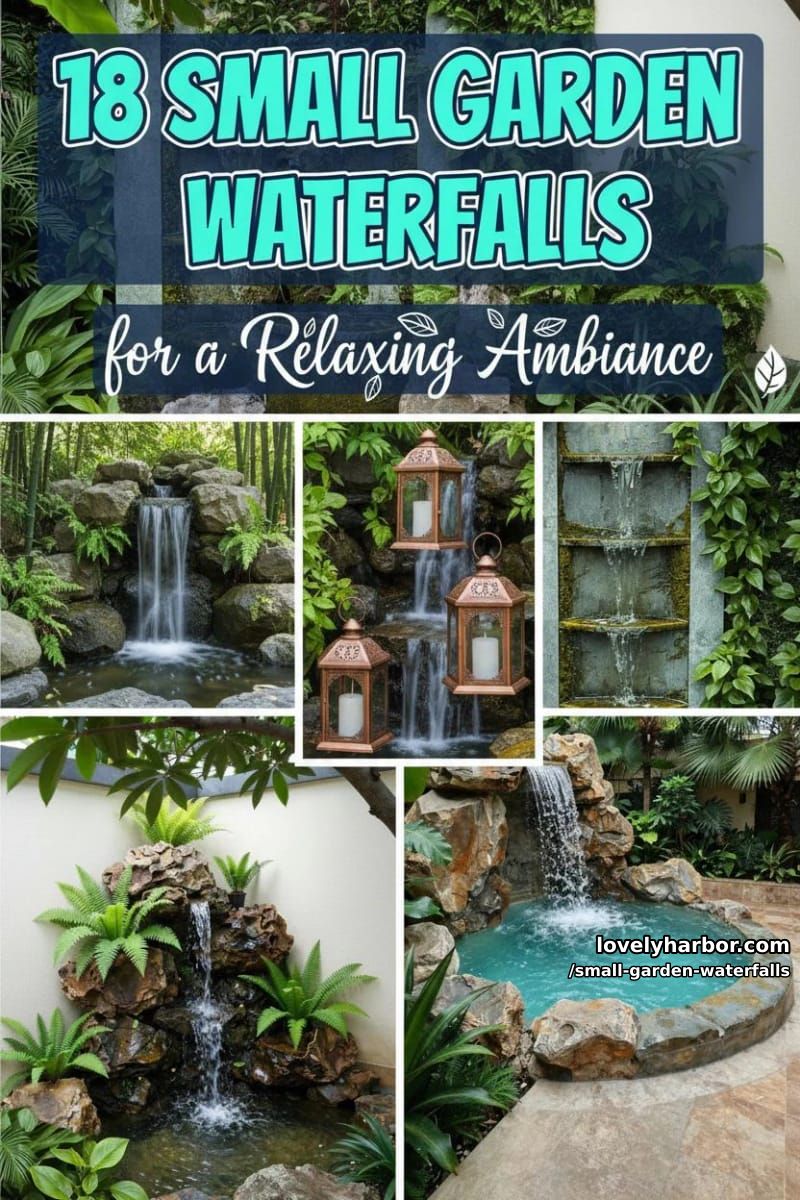
The rocks get all the attention, but a small garden waterfall lives or dies on two boring things: a pump sized to the drop, and a basin wide enough to catch the splash. Get those right and a cheap build sounds as good as an expensive one.
The 18 setups below run from a tabletop bowl you can finish in an afternoon to a koi pond that most small yards have no business attempting, and I say which is which as they come up.
1. Vertical stone wall water feature with cascading streams and lush greenery.
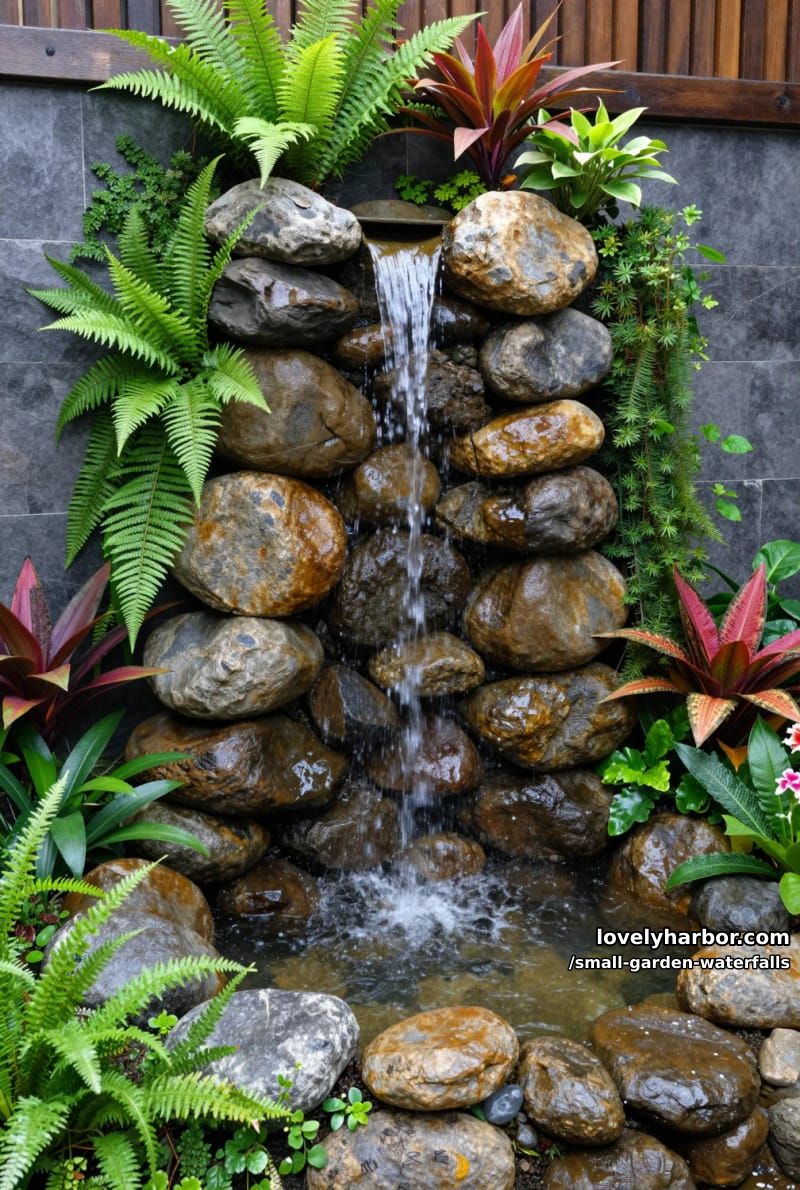
Decide first whether you want a sheet of water or a trickle, because the two need different pumps and read completely differently. A thin film sliding down flat slate wants high flow and a wide spillway, a pump in the 550 to 800 GPH range for a wall a few feet tall. A broken, rock-by-rock trickle wants far less and forgives a sloppy build. Pick the look before you buy the pump, not after.

The greenery is what sells the illusion that the wall has always been there. Mosses, hart’s-tongue fern, trailing creeping fig: anything that likes its feet damp and its light indirect. Skip the succulents the photos keep promising; they rot in constant spray.
Constantly wet vertical stone grows a green-black film within weeks, worse in shade. Keep the water moving (a stalled or undersized pump is the usual culprit) and add an inline UV clarifier or a few drops of barley extract instead of scrubbing the wall every weekend.
2. Miniature indoor garden with two-tiered rock waterfall and succulents.

This is the easiest entry on the list: a bowl, a hidden reservoir, a small pump, and stacked slate. A 95 to 160 GPH pump moves plenty for something this size and runs near silent, and the whole thing lands around $30 to $50 if you buy the stone from a landscape yard by the pound rather than a craft store by the bag.

The succulents in the staged shots are a problem. Echeveria and most rosette types hate humid spray and will stretch, pull apart, and rot inside a season. If you want that look, set Haworthia well back from the splash, or fake it with a pothos cutting that actually wants the damp.
3. Small stone waterfall with moss, succulents, and tranquil backyard atmosphere.
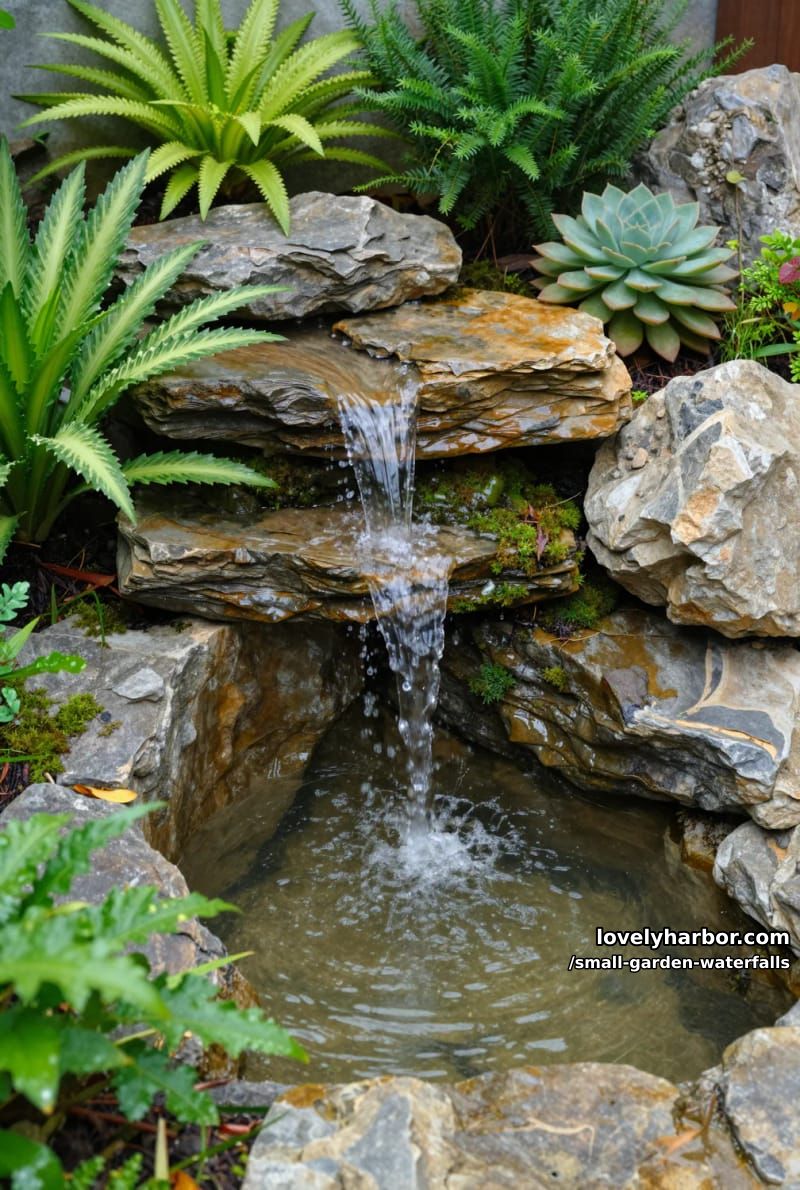
Moss is the whole appeal here, and the part everyone gets wrong by waiting for it to show up on its own. It won’t, not on new stone, not quickly. Transplant sheet moss from a shaded corner of your own yard, or blend a handful with buttermilk or plain yogurt and paint it onto the rock to speed colonization.

The moss-and-succulent combo only works because the two live in different spots: moss in the shaded, splashed lower stones, succulents up top where it drains and catches sun. Plant them in the same wet zone and one of them dies. Give the moss six to eight weeks of steady moisture before you decide it failed.
4. Multi-tiered stone waterfall in lush backyard garden with flowers and trees.
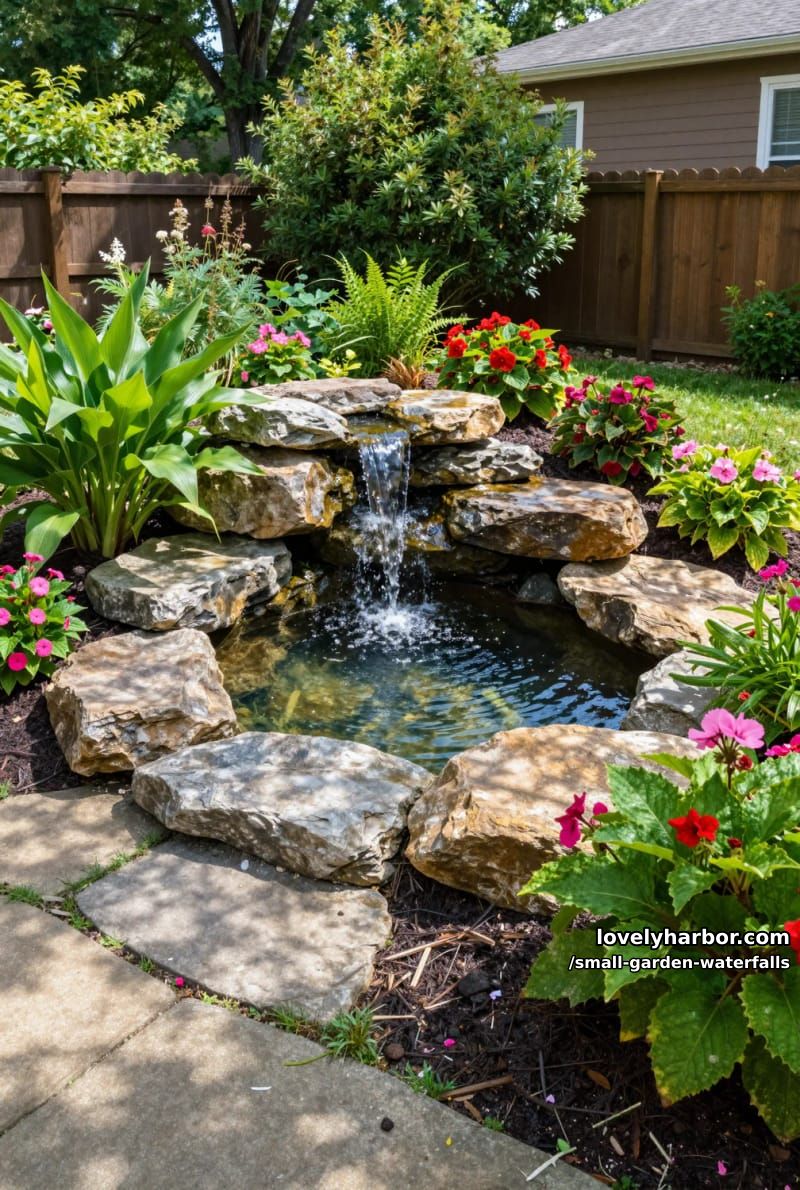
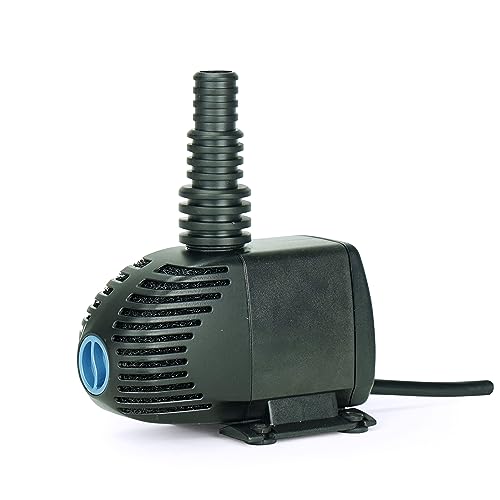
Tiers are where pump choice stops being optional. Each drop costs you “head,” the vertical lift the pump has to overcome, and a pump that looks strong on the box can dribble once it’s pushing water up three levels. For a multi-tier feature around three to four feet tall, look for roughly 400 GPH with a max lift above five feet, and read the lift number, not just the flow rating.
Mag-drive and oil-free, quiet enough that you hear the water and not the motor, with a 7.5 ft max lift that handles a stacked build without gasping.

“Lush” is doing a lot of work in that heading, and it mostly comes from planting the gaps between stones, not the stones themselves. Tuck creeping jenny, dwarf mondo grass, or astilbe into the planting pockets so the structure looks grown-in rather than assembled. Plan to net leaf litter out of the lowest basin every couple of weeks once the trees start dropping in fall.
5. Close-up of cascading water over layered, textured stone slabs.

For that close-up sparkle, where water catches light on every ledge, the stone matters more than the pump. Use rough, layered slate or stacked bluestone, never smooth river rock; the broken edges are what make the water shatter into the little flashes the photo is selling. Stagger the slab depths by half an inch or so, so each layer throws its own line of water.

Honest caveat: this look photographs better than it sounds. Thin sheets over stacked slabs make a soft hiss, not the gurgle most people picture, so if sound is the point you want fewer, deeper drops. Set a couple of slabs to overhang the one below by a full inch to get an audible fall instead of a whisper.
6. Tropical indoor pool with waterfall, large rocks, palms, and turquoise water.

This one is a building project, not a weekend.
An indoor pool with a rock waterfall means waterproofing, a dehumidification system, and structural support for several tons of rock and water, so you’re into five figures before the first palm goes in. If that isn’t the budget, the same feeling comes from a large rock waterfall spilling into a stock-tank plunge pool, outdoors, for a small fraction of the cost.

The part nobody photographs is the air. Water this size indoors can push humidity past 70 percent, which warps trim, peels paint, and grows mold in wall cavities, so a dedicated dehumidifier or heat-recovery ventilator isn’t optional. Real palms (areca, kentia) survive only with bright light; without it, get the tropical read from the rockwork and water color and pick hardier plants.
7. Indoor vertical garden wall with cascading waterfall and vibrant foliage.

A living wall with water running through it has to be built back-to-front like a roof, or it will rot your drywall. The whole job is keeping the water on a sealed face and off the building behind it.
1. Waterproof membrane or PVC sheet against the wall, sealed at every seam.
2. A rigid panel or felt-pocket system on furring strips, with an air gap behind it.
3. A catch tray at the base, wide enough to take the full flow, draining into the pump reservoir.
4. Plants set into the pockets, watered by the same circulating water.

For foliage that lives, lean on moisture-lovers: ferns, pothos, philodendron, peace lily, fittonia near the spray. A dim corner needs an LED grow bar (a clip-on full-spectrum strip runs $20 to $35) or the back rows yellow out within a month. “Vibrant” really means evergreen and dense here, so mix leaf shapes rather than chasing flowers, which mostly sulk in low indoor light.
8. Three-tiered backyard waterfall with large gray rocks and lush green plants.

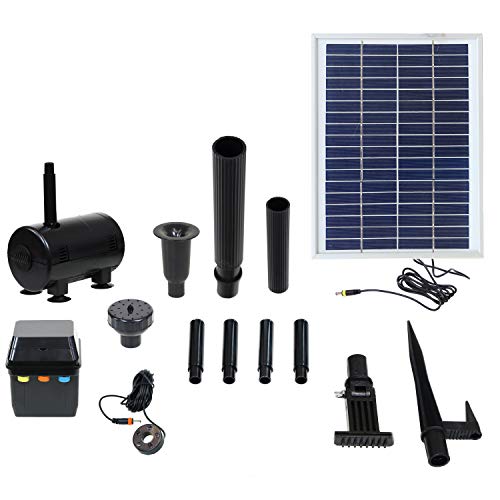
Three tiers of gray stone is a forgiving build, since the rock hides a multitude of leveling sins, but a bare solar pump deserves a caveat. It only runs when the sun is on the panel, so the waterfall stutters to a stop every time a cloud passes, which is maddening next to a patio. If you want solar, buy a kit with a battery so it keeps flowing through shade and into the evening.
Battery pack plus an LED light, so the water keeps moving when the sun ducks behind a cloud and still glows after dark. The 132 GPH flow suits a low, stepped three-tier drop.

Set each tier to overhang the one below, or the water sheets down the face and you lose the stepped sound entirely. Plant the margins with hostas, Japanese forest grass, or ferns that take the splash. Top up the basin weekly in a dry spell; evaporation off three exposed tiers is faster than people expect.
9. Rustic stone water fountain in backyard with pond and ornamental grasses.

A fountain feeding a small pond is the most wildlife-friendly setup on this list, but a still pond is a mosquito nursery, so the pump has to actually run, not just look the part. Keep the surface moving and the trickle constant. For the quiet corners the flow can’t reach, drop in a mosquito dunk (Bti, harmless to birds, fish, and pets) once a month through summer.

For the grasses, match the plant to your region instead of copying the photo. Switchgrass and little bluestem suit most of the country and stand up to wind; in the dry Southwest, deer grass or Mexican feather grass reads right and barely needs water. Set the tallest clumps behind the fountain so they catch low evening light without screening the water.
10. Tiered stone water fountain with bamboo and leafy plants in serene garden.

The bamboo spout in this style is a shishi-odoshi, the Japanese deer-scarer, and knowing how it works changes the build. The classic version is a pivoting bamboo tube that fills, tips, empties, and knocks against a stone with a hollow clack; the fixed-spout version in most photos just guides a steady trickle. Choose deliberately, because the moving kind needs careful balancing and the still kind is far easier to keep silent.

Pair it with a low tsukubai-style basin and restrained planting: a single Japanese maple, some moss, a clump of black mondo grass. The common mistake is crowding it. The whole style depends on empty space around the water, so resist filling every gap with the leafy plants the heading promises; two or three are enough.
11. Small koi pond with tiered rock waterfall and colorful flowers.

Most small koi ponds are too small for actual koi, and the staged photos don’t help. A single koi can reach two feet and wants something like 250 gallons to itself, plus serious filtration to handle the waste, so the cute tiered setup in the pictures is usually a goldfish pond with delusions. That’s fine, as long as you stock it accordingly.
A pond under roughly 1,000 gallons and three feet deep will stunt or kill koi over time and won’t protect them from herons or a hard freeze. Stock comet goldfish or shubunkins instead: hardy, colorful, far cheaper, and genuinely happy in the size of pond most yards can fit.

Build it right and the waterfall earns a second job as aeration, which fish need in summer when warm water holds less oxygen. For the colorful flowers, edge the pond with marsh marigold, pickerel rush, or Japanese iris rather than bedding annuals; they tolerate wet feet and return every year.
12. Indoor stone waterfall with three tiers, LED lights, and hanging plants.

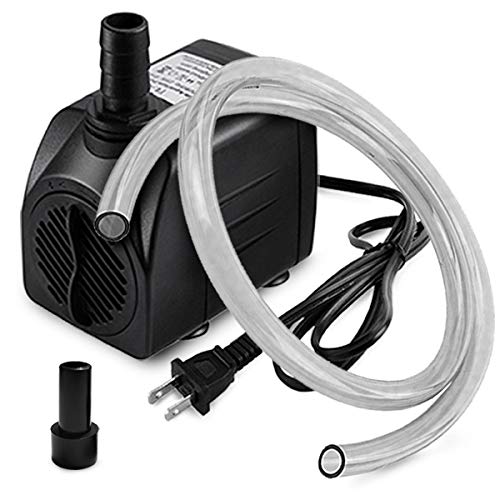
An indoor three-tier waterfall is mostly a reservoir-management problem: a small hidden pump recirculates the same water, and your real chore is topping it up as it evaporates and clouds the glass. A quiet pump in the 100 to 200 GPH range is all a tabletop or console unit needs, something like this PULACO 160 GPH ultra-quiet submersible fountain pump.

Light it from the side, not the front. Side-lit water throws shadow and catches the falling line, while front lighting flattens it into a wet wall. Warm-white LEDs (around 2700K) look like candlelight on stone; cool white reads like a hospital. For the hanging plants, pothos or string-of-hearts trailing from the top ledge handle both the humidity and the low light a corner usually gets.
13. Garden water fountain with stone basin, river rocks, and lanterns.

This is really two systems sharing a corner, water and light, and you can build them independently. The water needs only a low-flow pump (150 to 250 GPH) hidden under the rock, recirculating into a small sump. For the light, skip hardwired fixtures and use solar lanterns with a warm-white setting: no trenching, no electrician, and you can move them when you rearrange the bed.

River rock looks natural and traps every fallen leaf and fleck of algae in the gaps, so plan to lift and rinse it a couple of times a season. One move actually worth doing: line the basin with black liner under the rock instead of pale stone. A dark background makes the water read deeper and hides debris between cleanings.
14. Indoor waterfall cascading over mossy rocks and ferns under modern ceiling.

Indoor moss is the catch nobody mentions. It needs humidity most homes don’t have and indirect light most corners can’t give, so it browns out fast unless you mist it daily or enclose the feature behind glass. The realistic move is to fake the moss zone with sheet-moss panels you swap out occasionally, and put your real effort into ferns that genuinely live indoors.

Bird’s-nest fern, maidenhair, and Boston fern all take the damp air a waterfall throws off and read as forest. Watch the humidity, though: a feature in a closed room can hold the air above 60 percent, fogging windows and inviting mold, so the same room wants airflow or a small dehumidifier. The contrast with hard ceiling lines works precisely because the planting is unruly, so let the ferns spill instead of trimming them into shape.
15. Modern outdoor wall fountain with rectangular spout, basin, and potted plants.

A rectangular sheet spout is the least forgiving design here, because a sheet of water shows every millimeter the spout is out of level. If one end sits low, the sheet tears into a stream and the clean line is gone, so set it with a real level and shim until the water falls evenly across the whole lip.
I’ve watched more of these get ripped out than any other style on this list, almost always over the leveling, so this is the one build where I’d buy a manufactured weir rather than improvise.

Match the basin to the drop. A shallow or narrow basin under a tall sheet flings water onto the patio in any breeze, so give it depth and a width at least equal to the height of the fall. Frame it with one or two species in pots (clipped boxwood, a tall grass) rather than a mixed jumble; this style falls apart the moment it gets busy. In a tight courtyard, the wall mount earns its place by taking no floor space.
16. Artificial rock waterfall in garden corner with ferns and leafy plants.

Faux rock has gotten good enough that the cheap stuff, not the material itself, is the giveaway. The thin, shiny, uniformly-gray resin shells you find at big-box garden centers read fake from across the yard, while cast-concrete or polyurea boulders carry varied color and matte texture and cost more for a reason. In a shaded corner, even a decent faux rock improves once real moss and lichen colonize it over a season and soften the seams.

Do this
- Japanese painted fern, which takes shade and splash and adds silver color
- Hostas, whose broad leaves hide pump lines and basin edges
- Creeping jenny, to spill over rock lips and break hard edges
- Autumn fern, tidy and near-evergreen in mild zones
Avoid
- Sun-loving succulents (rot in a damp, shaded corner)
- Running bamboo (invades the whole bed within a year or two)
- Annual impatiens (gone by frost, leaving bare gaps)
- Anything thirsty and fast (overgrows and hides the water entirely)
17. Vertical garden wall fountain with cascading water and lush vines.

Vines and a recirculating pump are a slow-motion conflict the photos never show. Climbing roots work their way into a wet wall and eventually into the pump intake, where they tangle and stall it, so screen the intake and keep aggressive growers (English ivy above all) away from the waterline. The cleaner approach is to train the vines on a trellis a few inches off the wet face, so they drape over the water without rooting in it.

For plants that behave, use star jasmine, creeping fig, or a trailing pot at the top rather than a true wall-climber. Check the mounting too: a soaked vertical panel plus growth is heavy, and lag bolts into a stud or masonry, not drywall anchors, are the difference between a feature and a repair bill. A compact wall unit like this fits a balcony where a freestanding fountain wouldn’t.
18. Modern outdoor water feature with Buddha statue, stone wall, and LED lights.

The lighting makes this feature work after dark, and most people buy the wrong fixture rating. Anything submerged or in the splash zone needs an IP68-rated waterproof LED, not the IP65 “weather-resistant” kind that corrodes and fails within a season near constant water. Uplight the statue and graze the stone wall from the side; lighting the falling water head-on just glares back at you.

On the figure itself, cast stone and concrete weather into the settled, mossy look people actually want, while cheap resin stays plasticky and fades, so spend a little more or buy secondhand and let it age. Keep the planting minimal and architectural (a single sculptural agave, or one clipped shrub) so the eye lands on the statue and the water. Solar LED options exist, but for reliable nightly lighting near water, low-voltage wired fixtures on a transformer hold up far better.
Conclusion
If you build only one of these, start with the tabletop two-tier from idea 2 or the basin fountain in idea 13. They’re cheap, forgiving, and they teach you how a pump and reservoir behave before you commit to digging. Two things carry across every project here: size the pump to the lift and not just the flow, and make the basin wider than feels necessary. And if a koi pond is the dream, reread idea 11 before you buy fish. Spend on the pump and the leveling; the rocks are the cheap part.
Related Posts
- Small Garden Ideas
- Courtyard With Water Feature
- Garden Decor Ideas
- Whimsical Garden Ideas For Backyard
- Vintage Garden Decor Ideas