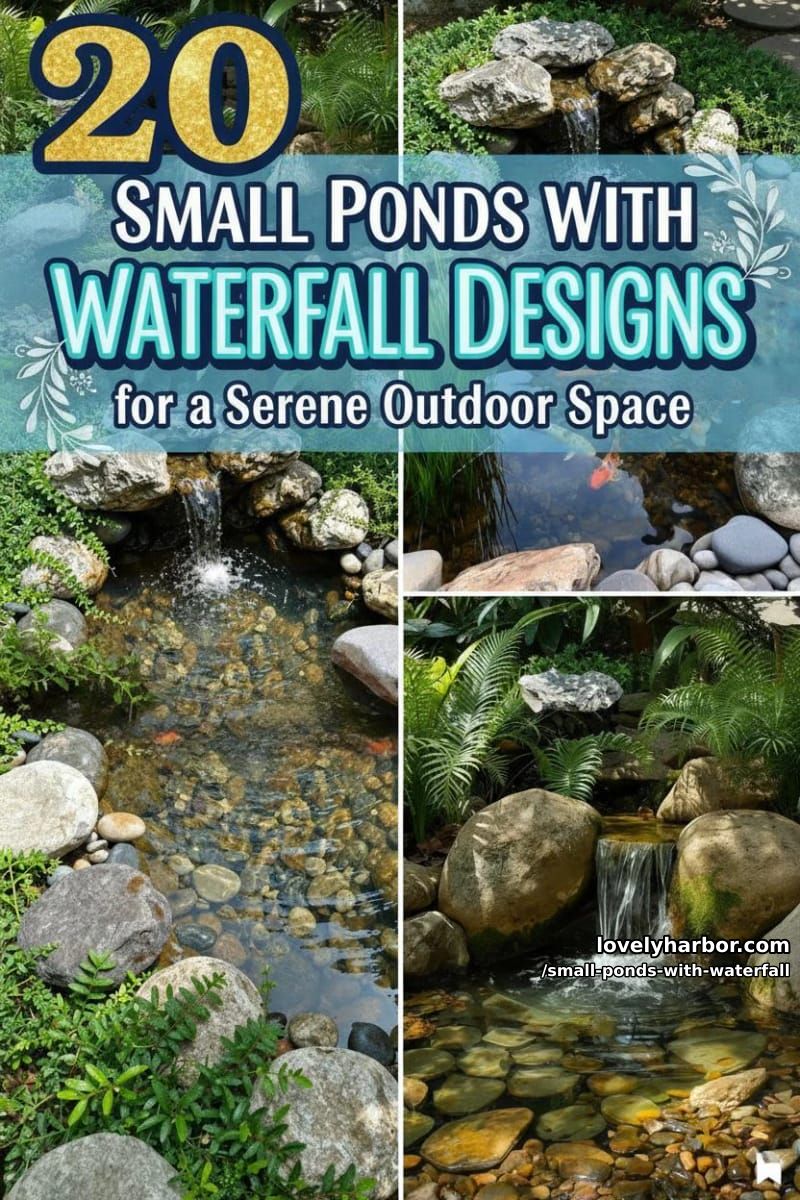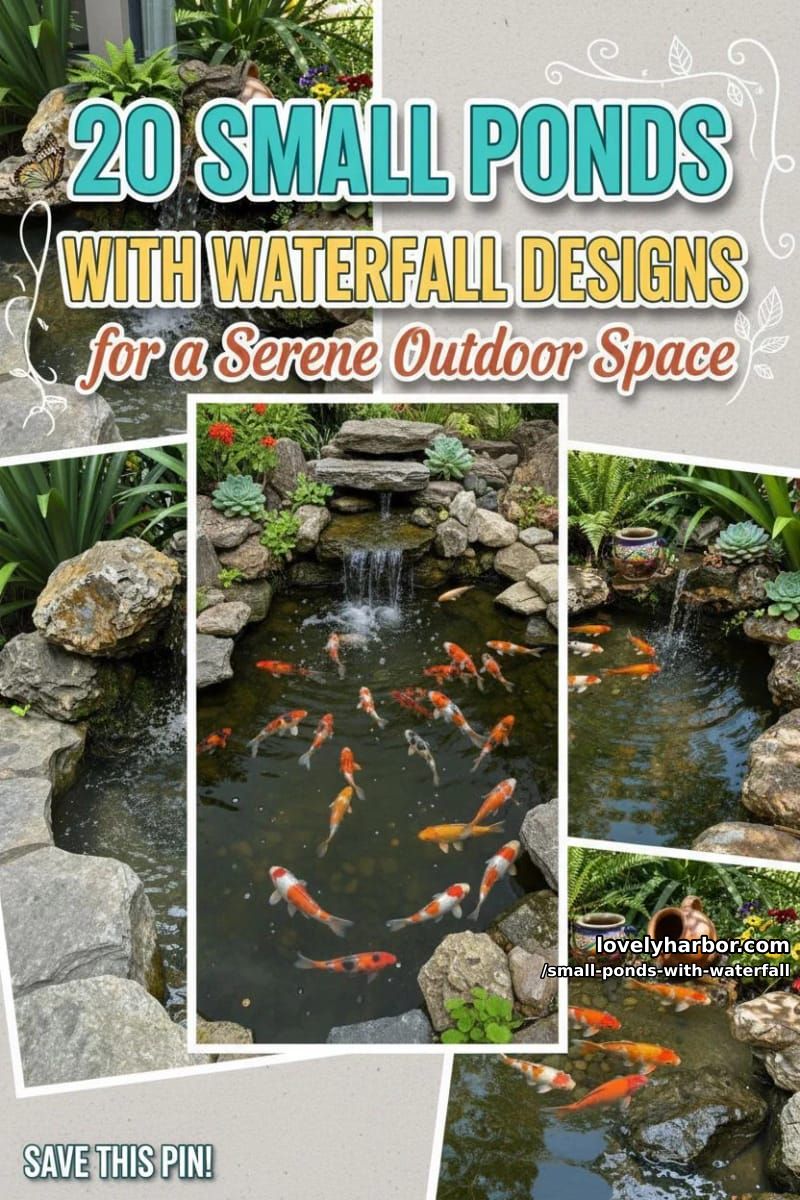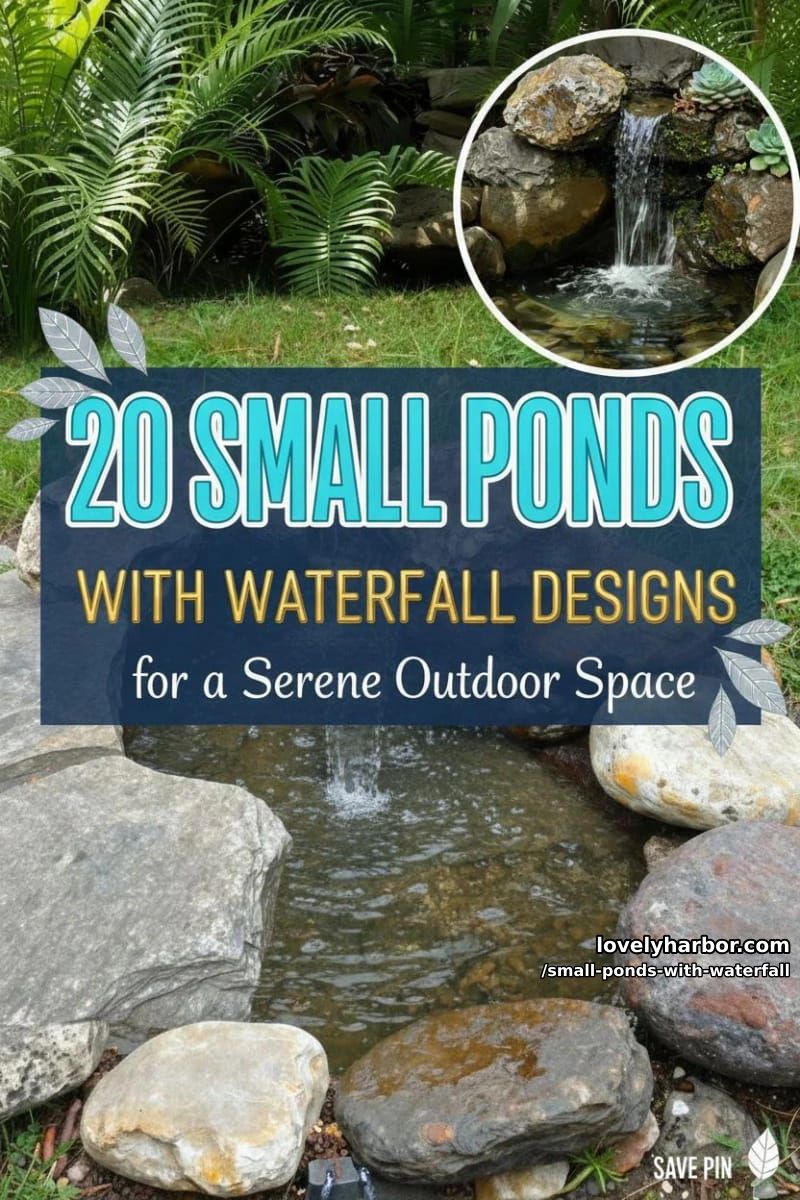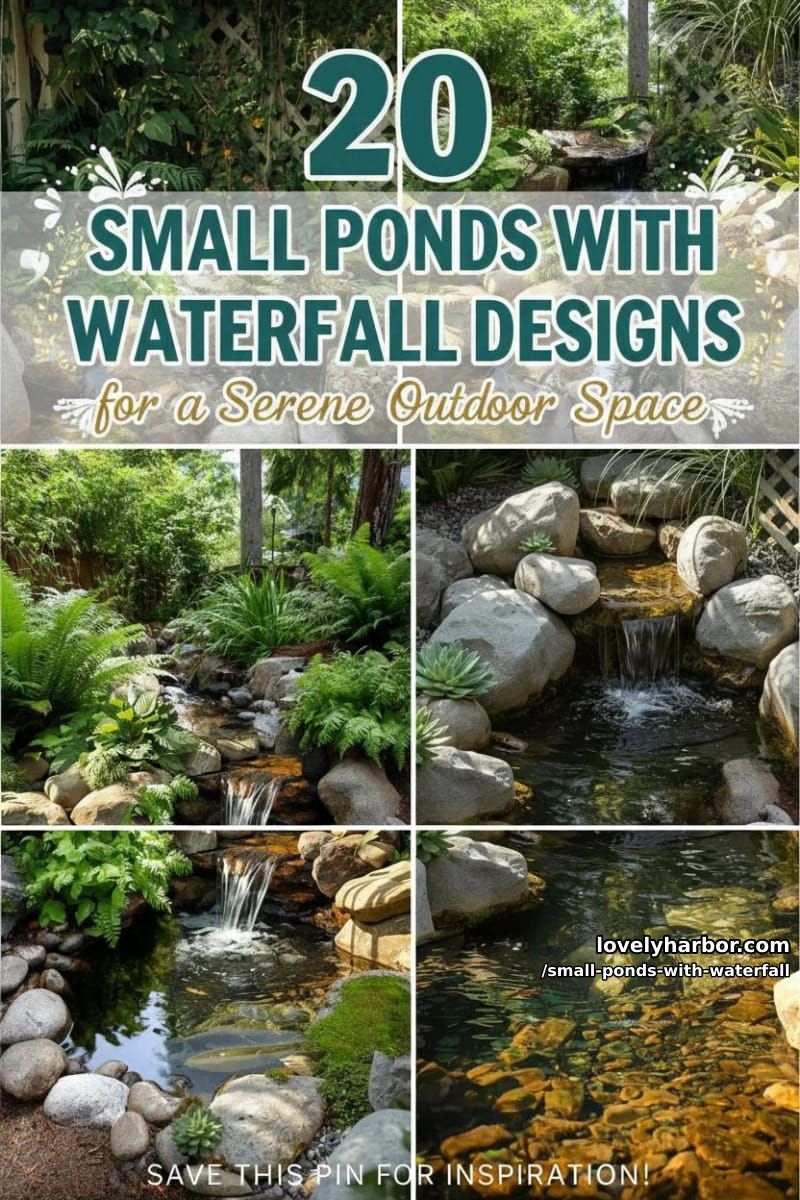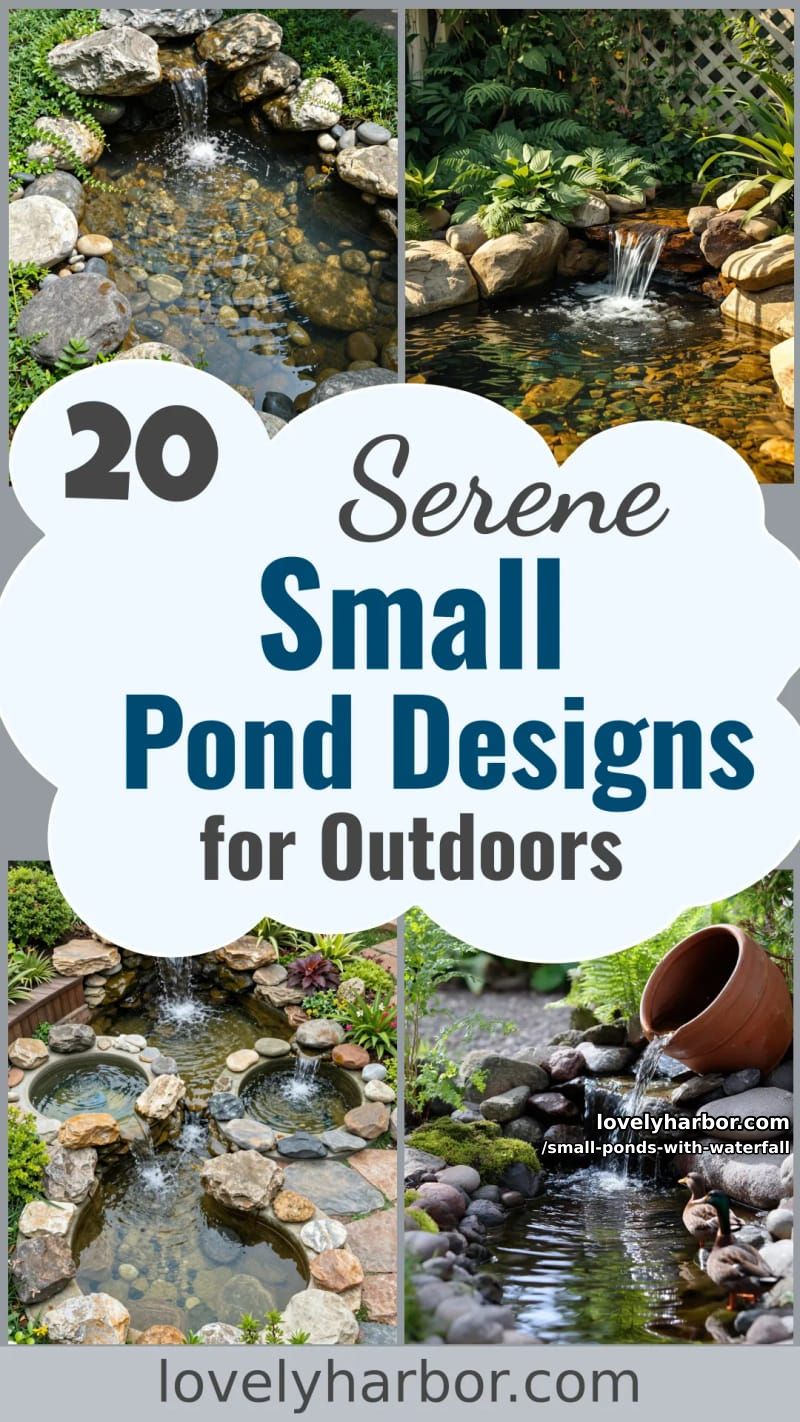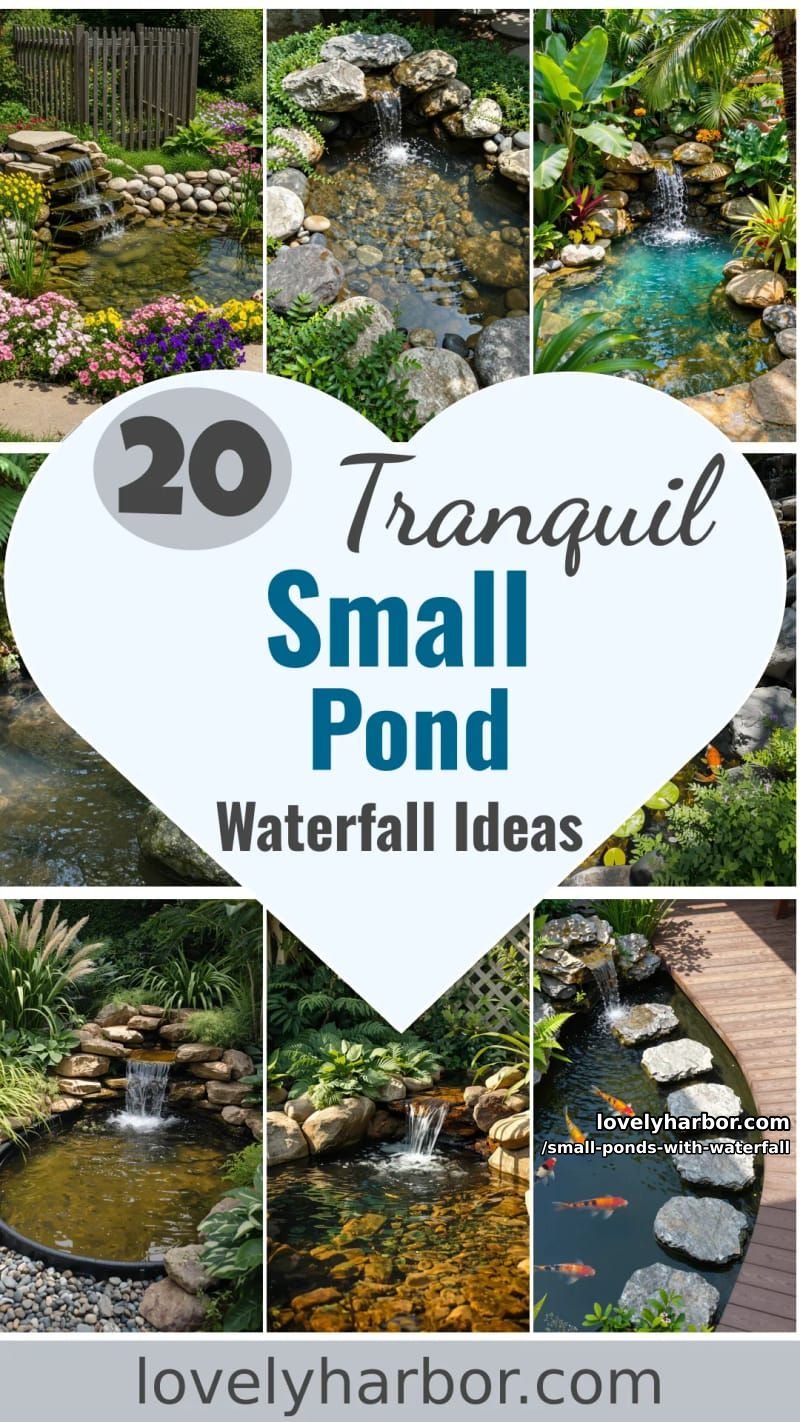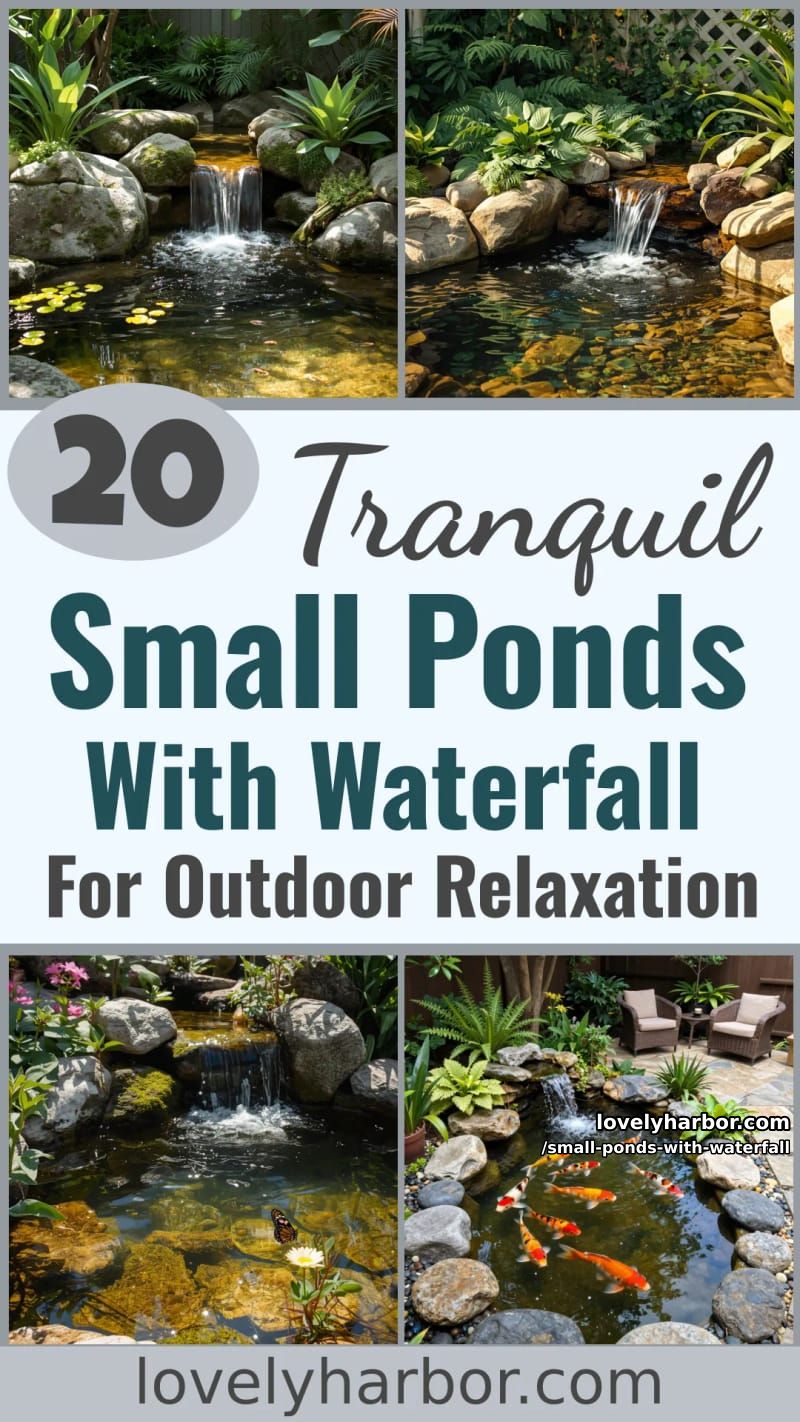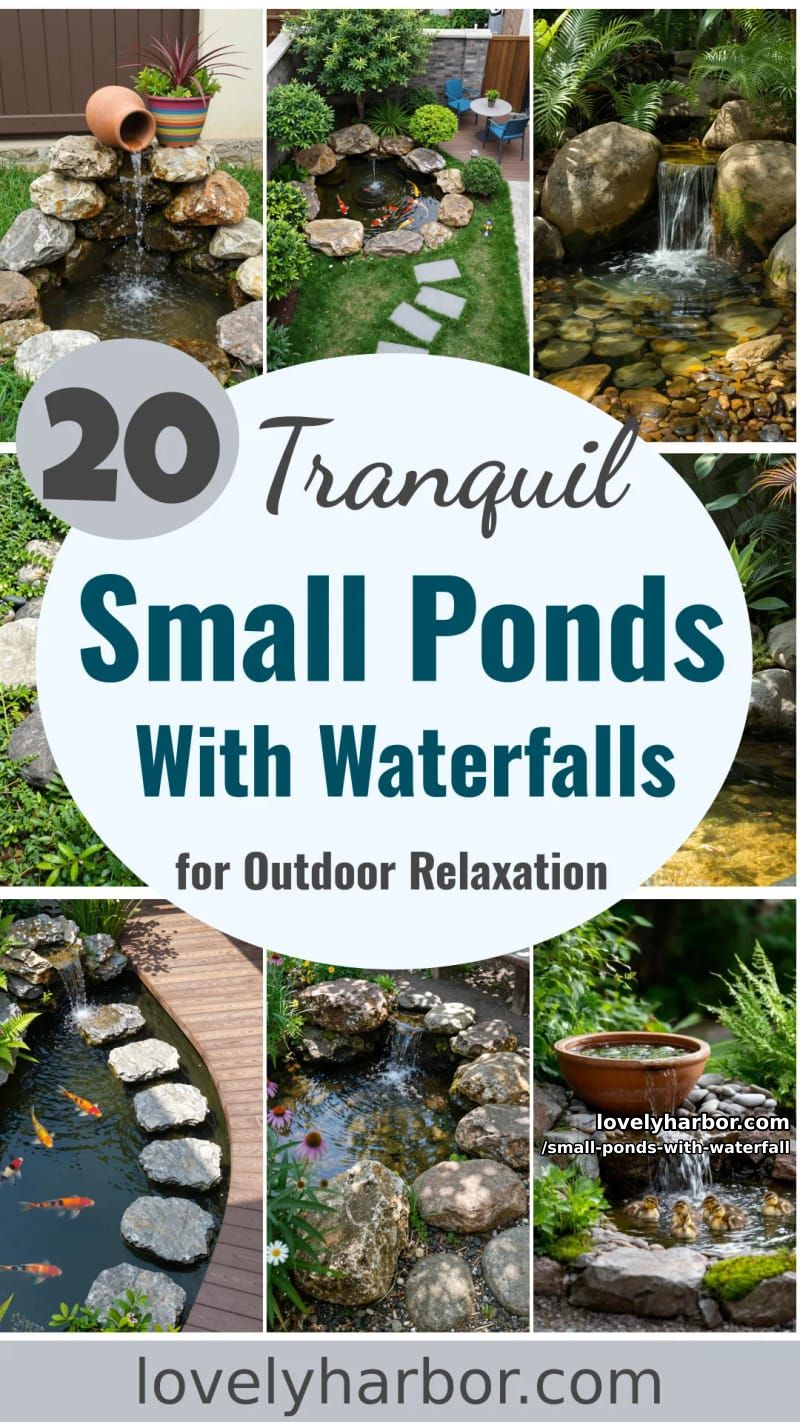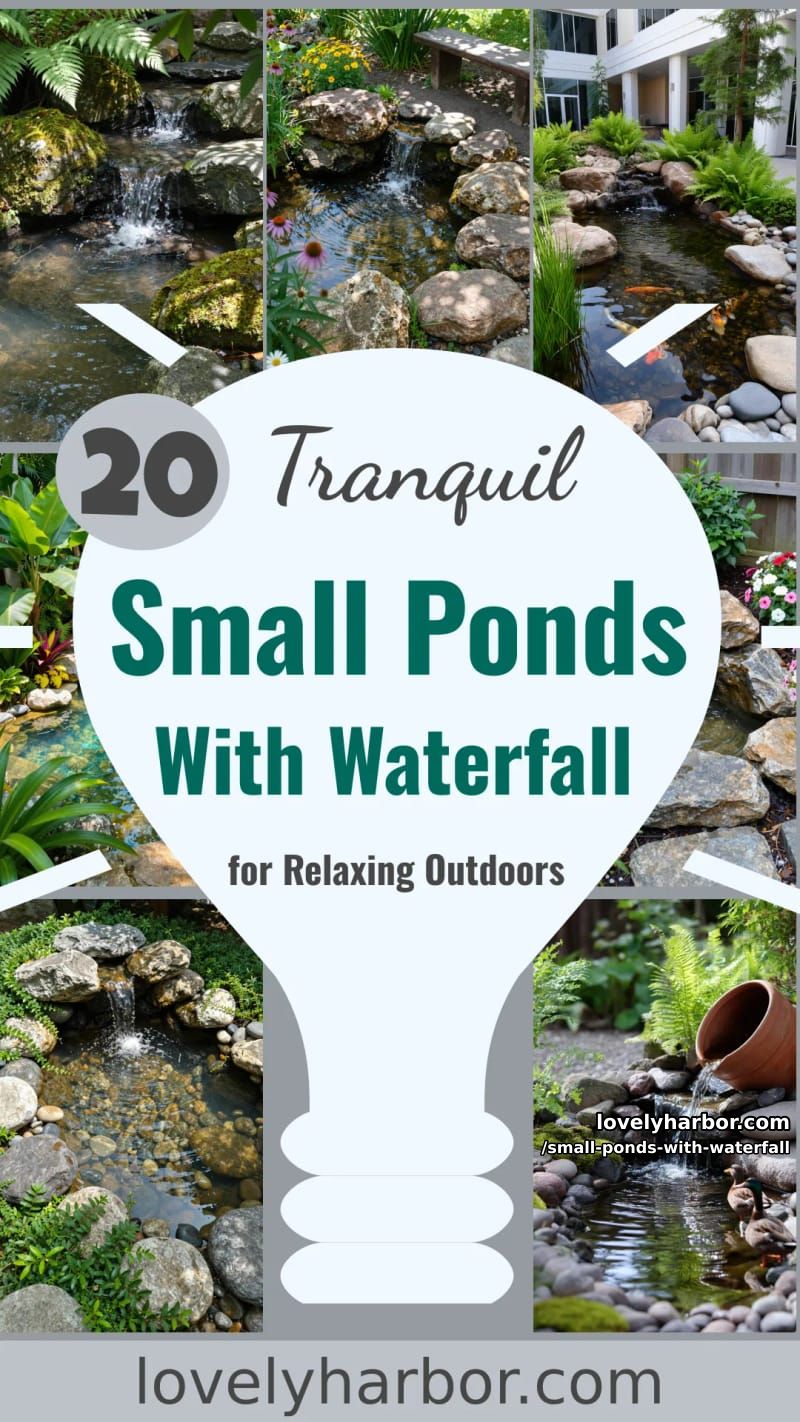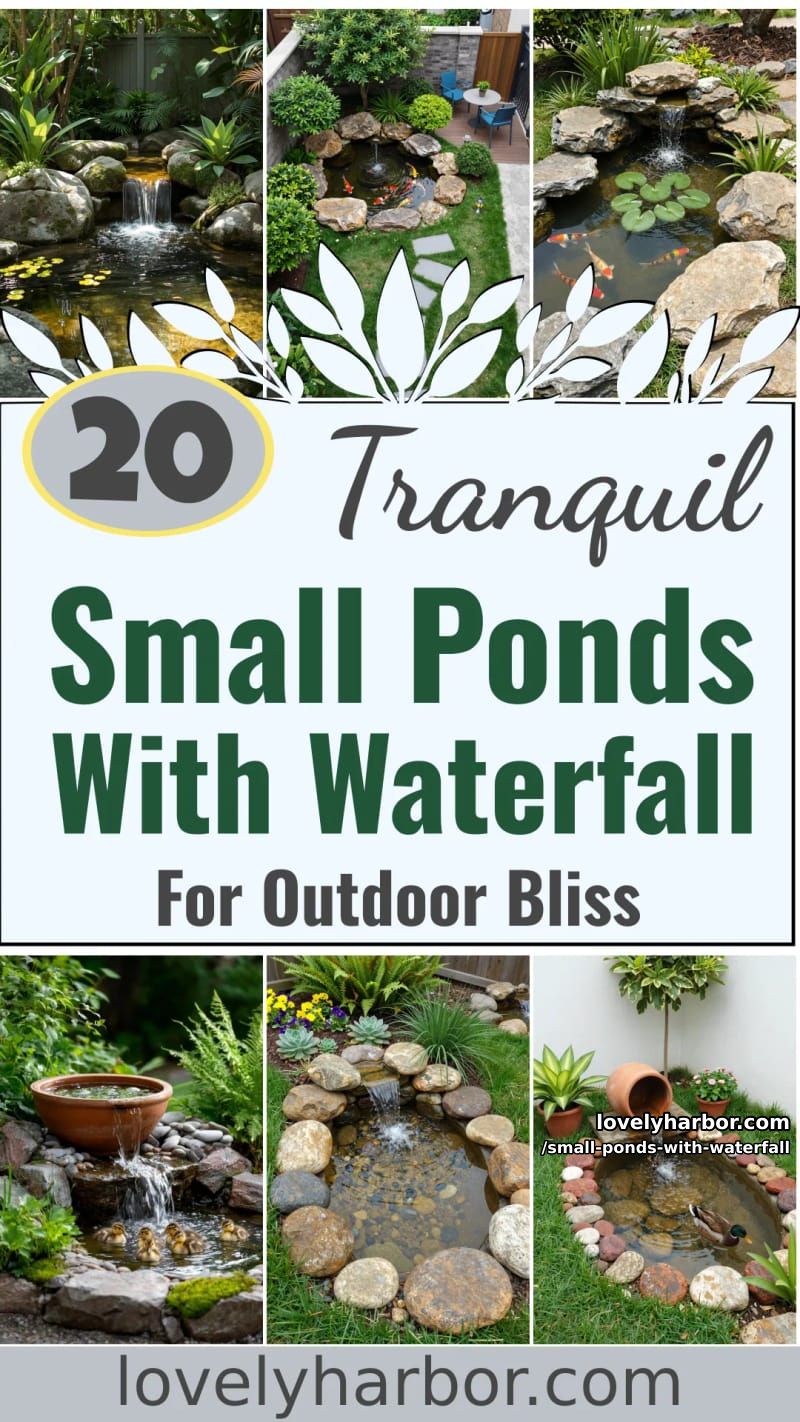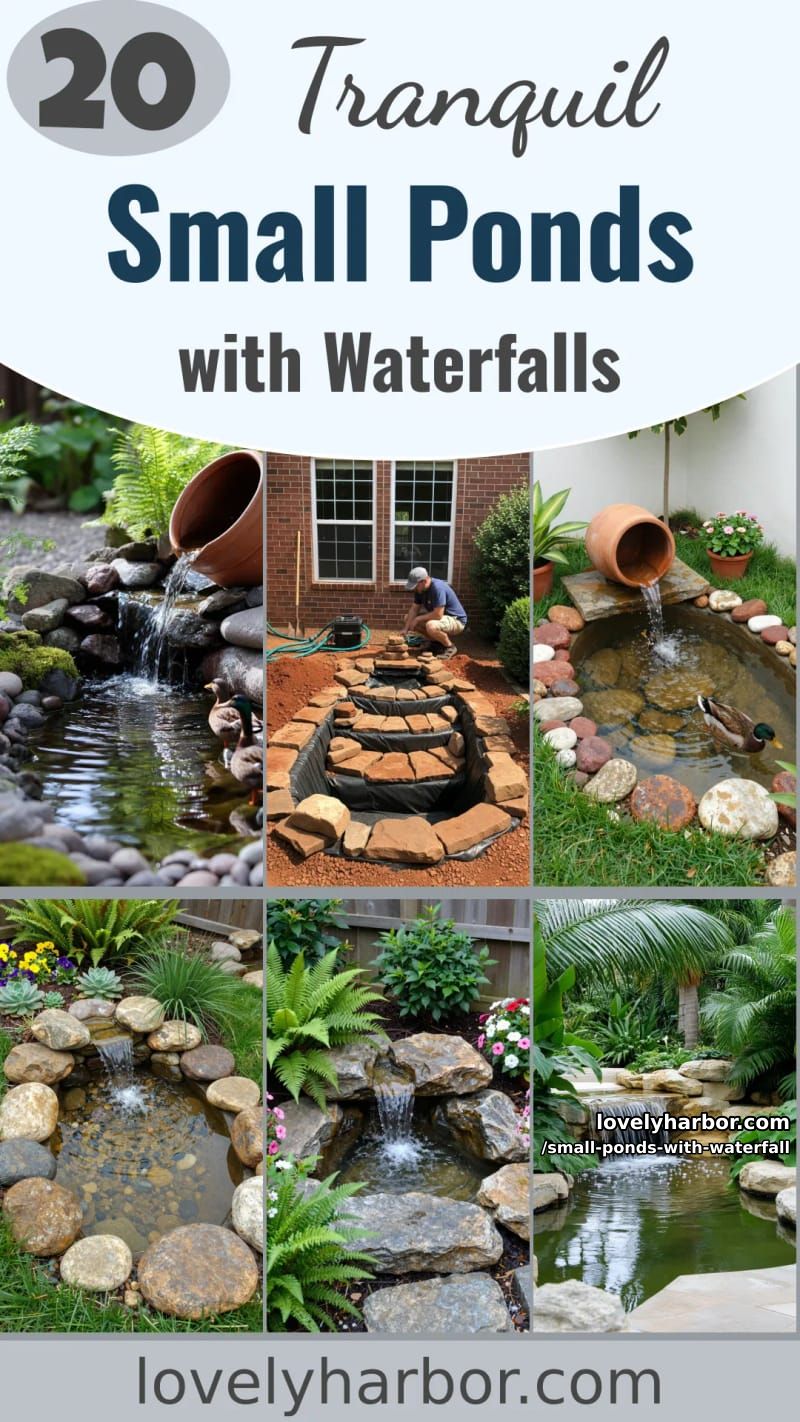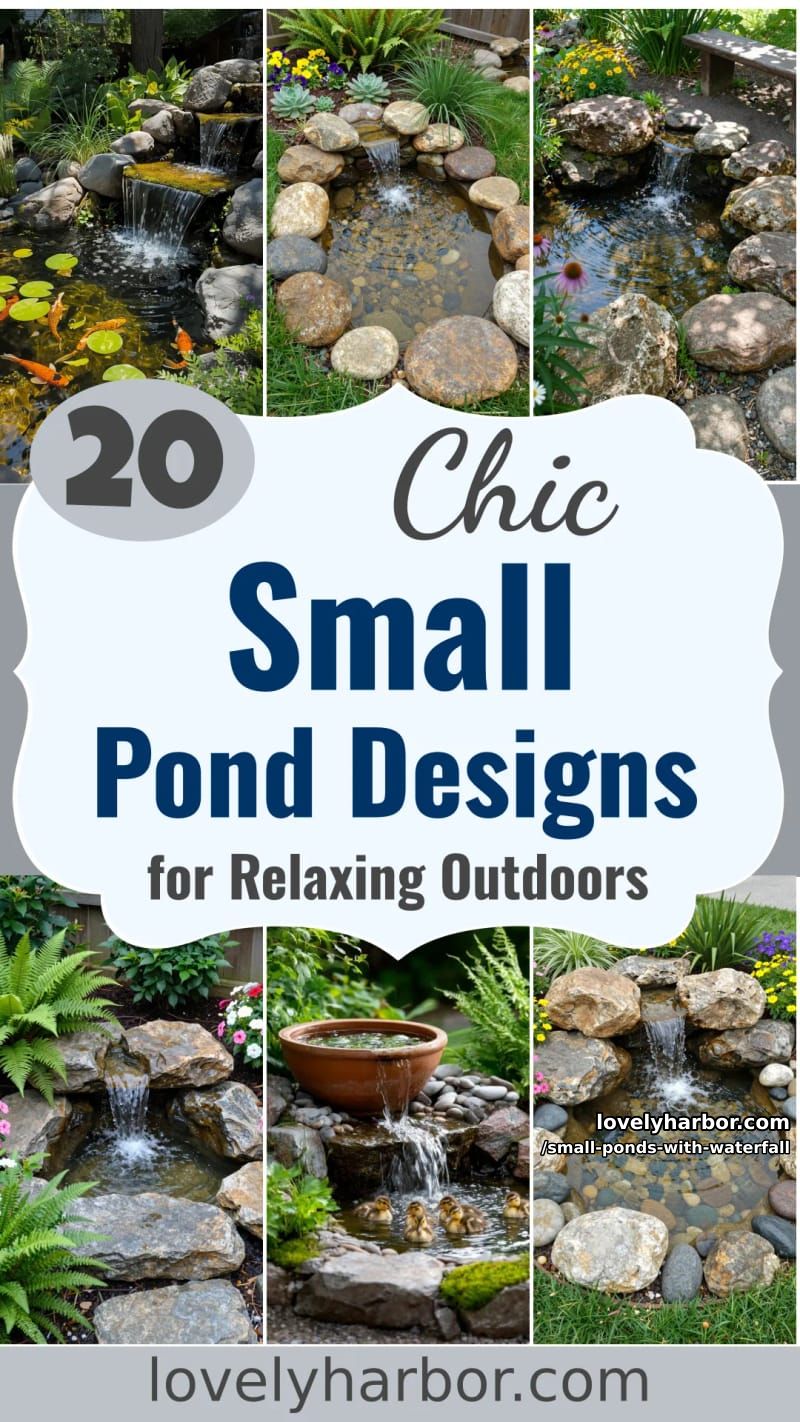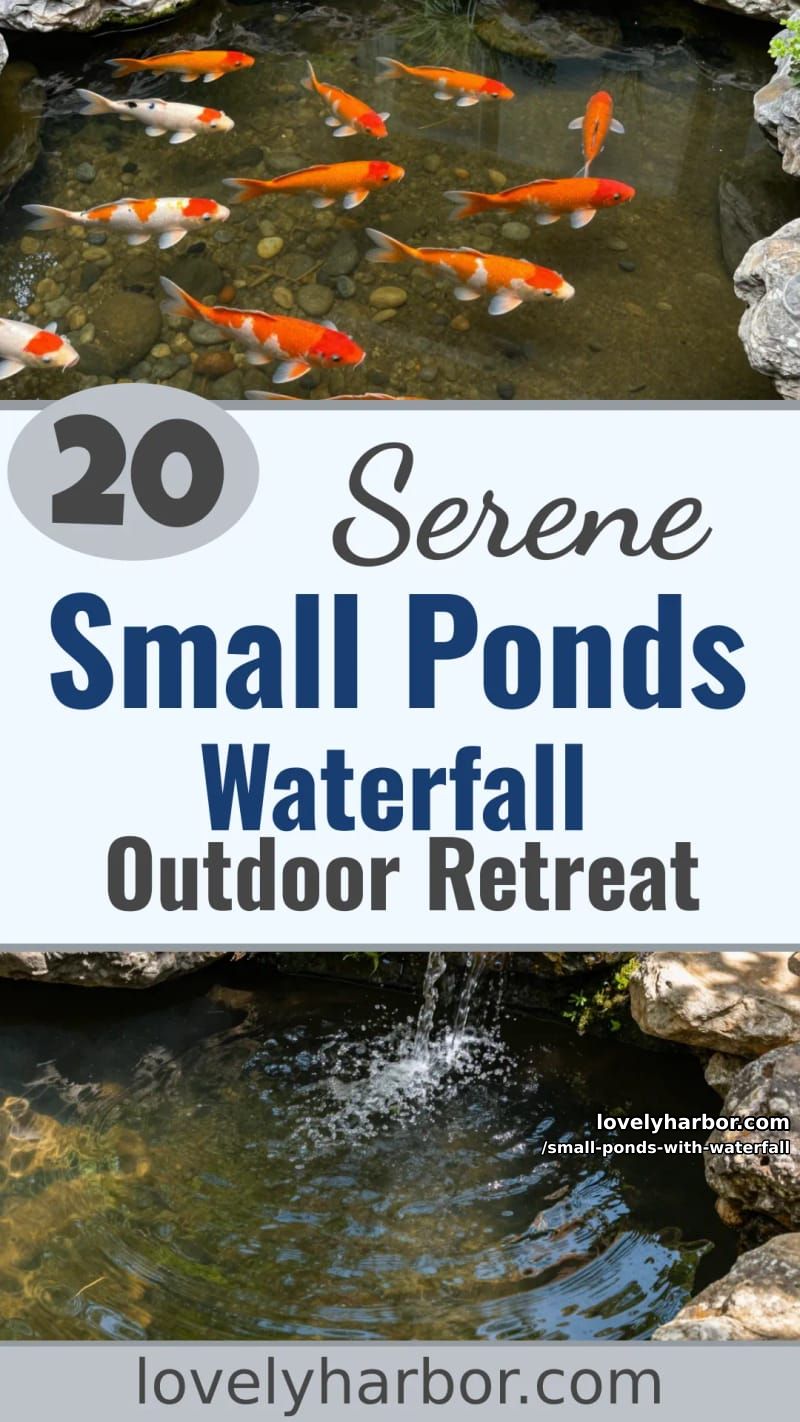
A waterfall pond is mostly plumbing wearing a costume of stone and fern, and the gap between the ones that look like the photo and the ones that turn into a green, mosquito-breeding puddle comes down to a few calls the pretty pictures never mention: how deep you dig, how big a pump you buy, and which plants actually survive a splash zone.
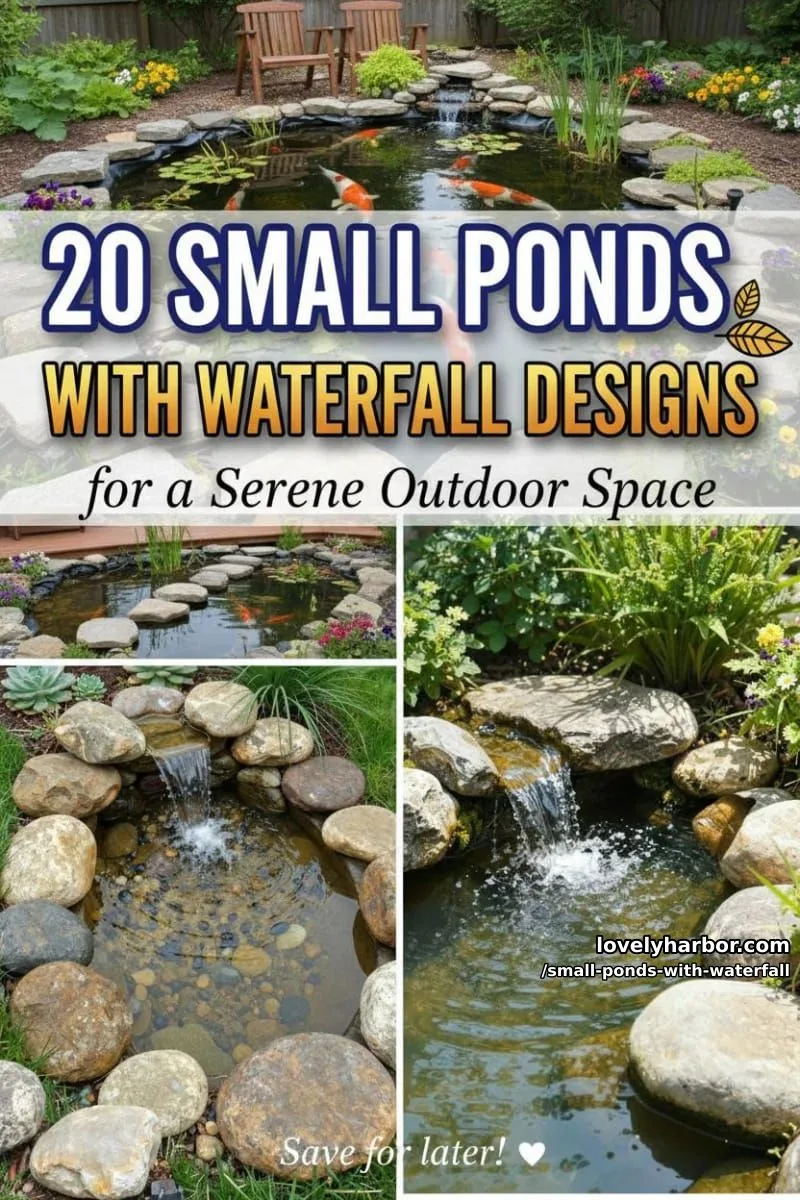
The twenty ideas below are sorted by what they ask of you, with the depth, pump, and plant decisions spelled out, plus the couple I would talk you out of (looking at you, shallow koi pond).
1. Small garden pond with cascading waterfall and vibrant flowering plants.
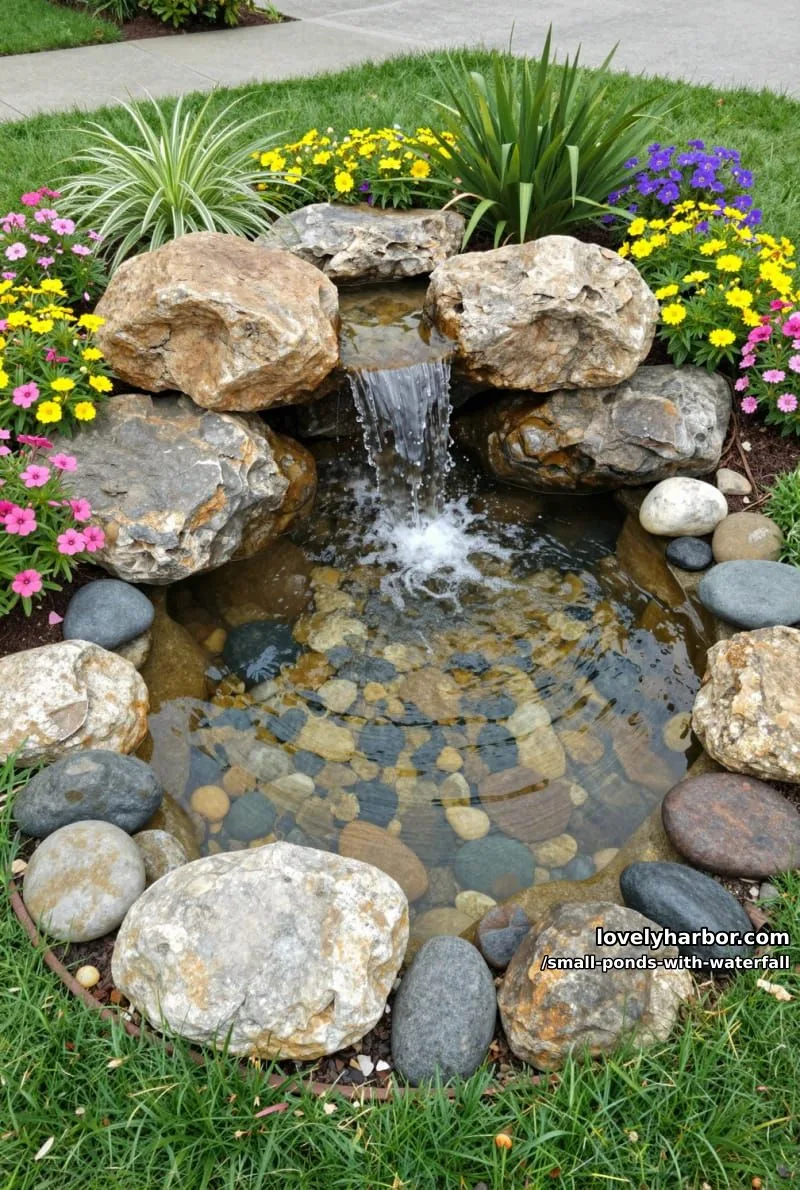
Keep the flowers off the turbulent water and they will actually bloom. A waterfall churns the surface, and the water lily that everyone reaches for first refuses to open in moving water, so push the lilies to the calm far end and line the splash side with marginals that like a shallow shelf: pickerel rush, marsh marigold, blue flag iris.
Aim for plants shading roughly 60 percent of the surface by midsummer. That coverage is the cheapest algae control there is, no clarifier required. The overstuffed cottage-pond look in plant catalogs usually runs closer to full coverage, which is exactly why those ponds go to soup by August.
2. Lush tropical pond with multi-tiered stone waterfall and palm trees.
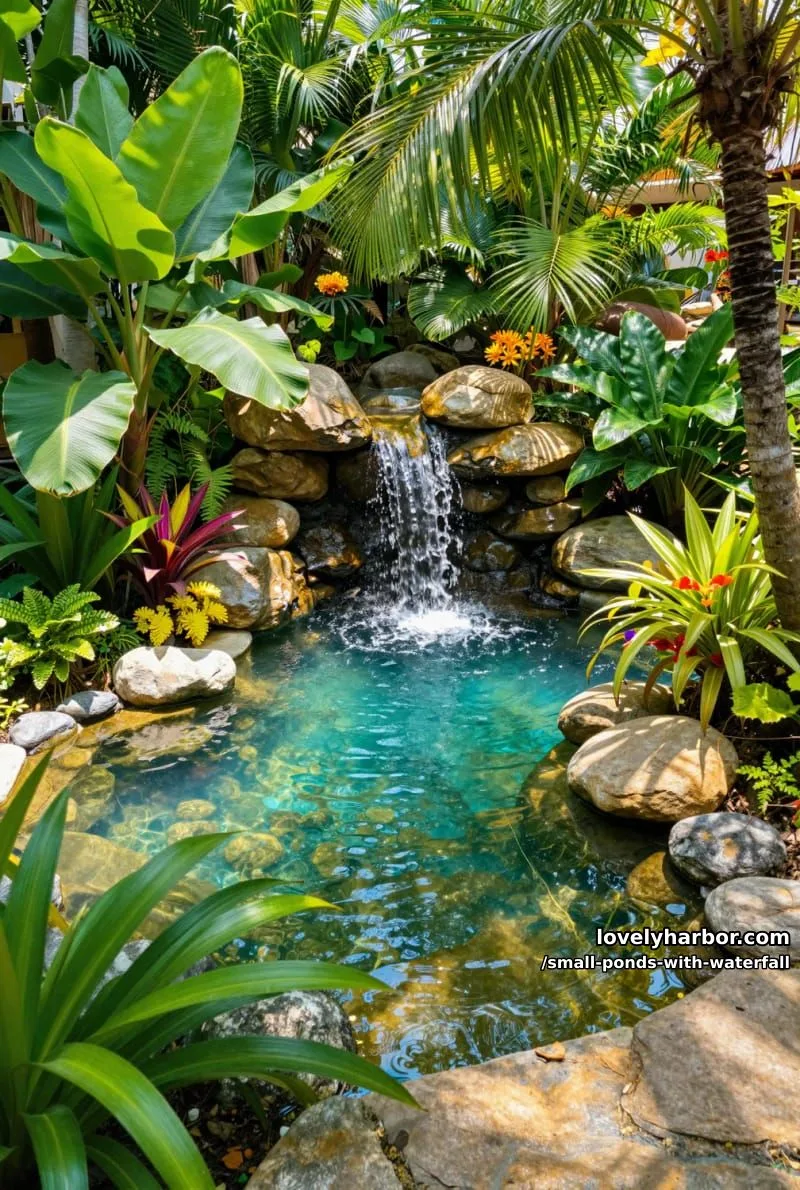
A tropical pond outside the actual tropics is a summer act, so treat the palms as a temporary cast. In zone 7 and colder the only palm that overwinters in the ground is the windmill palm (Trachycarpus); everything else goes in pots that come inside for winter, and the pump comes in with them.
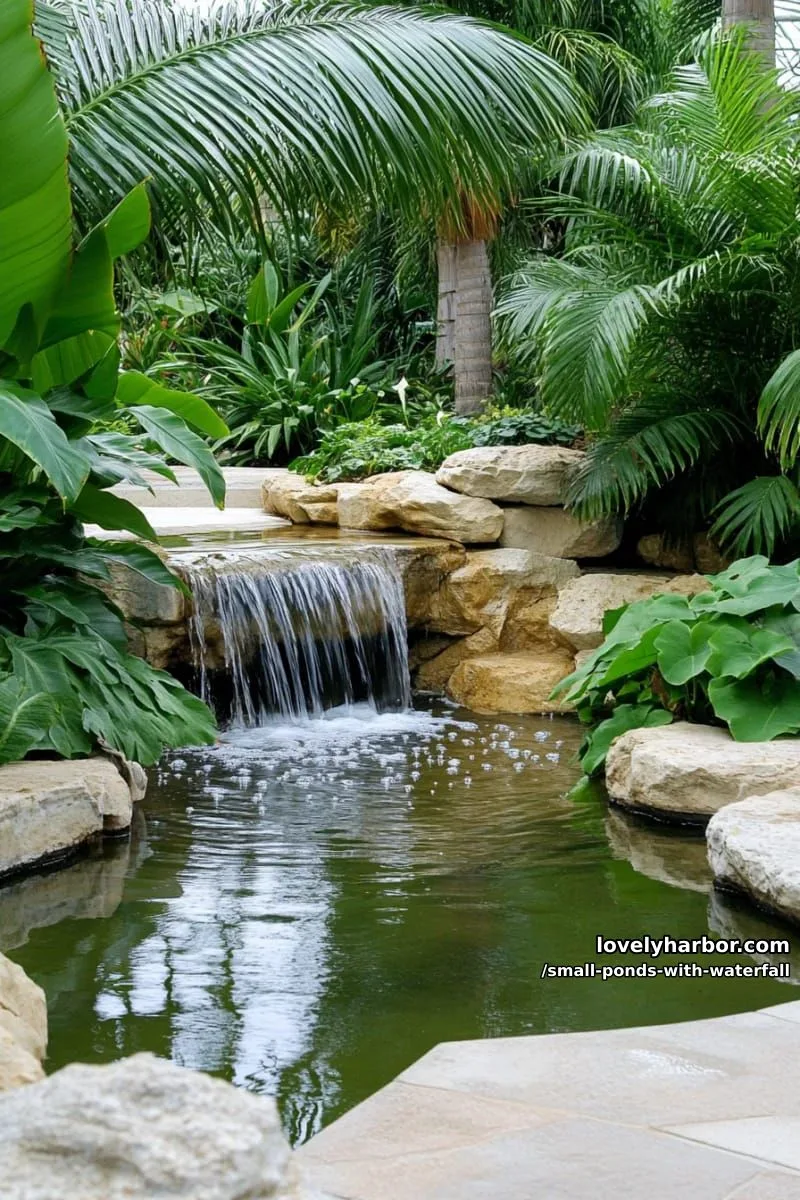
For the tiers, give every drop a lip that overhangs the pool below by at least an inch, or the water clings to the stone face and dribbles down it. People email asking why their three-tier waterfall sounds like a leaky faucet, and the cause is almost always a flush lip with no undercut.
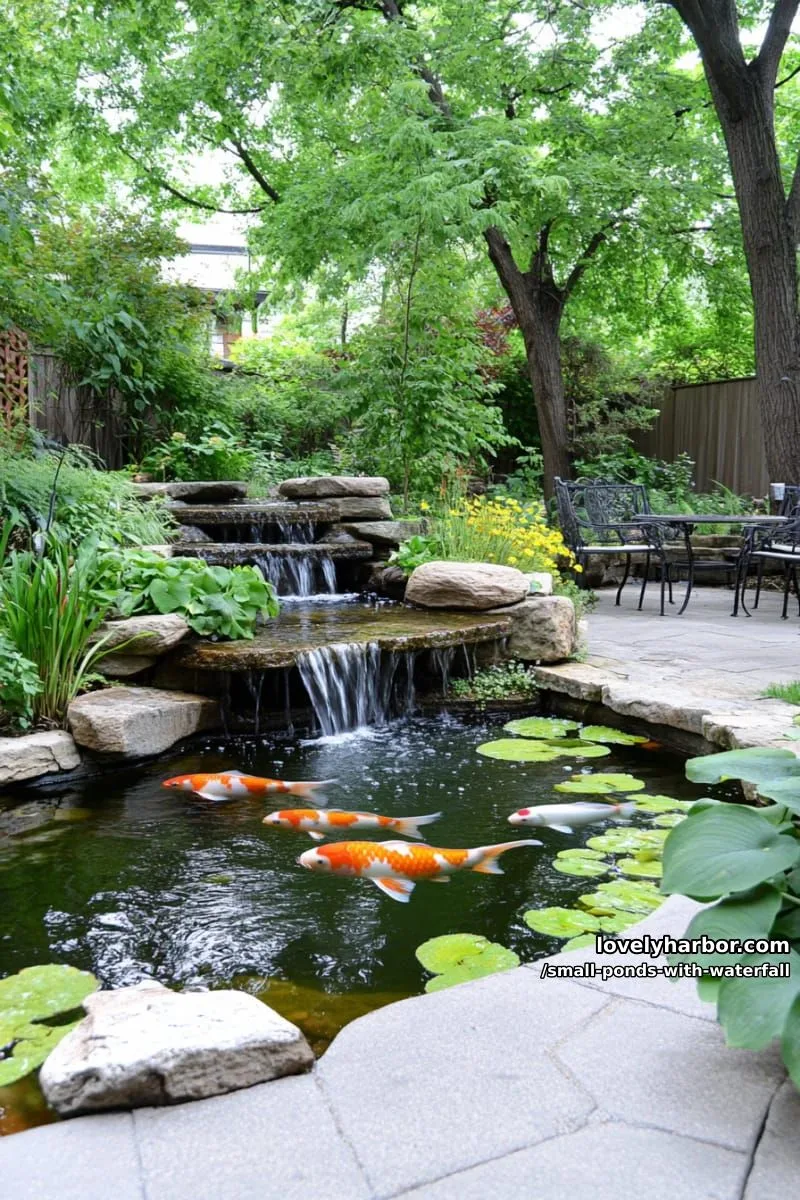
3. Backyard pond with tiered waterfall, lily pads, koi fish, and greenery.
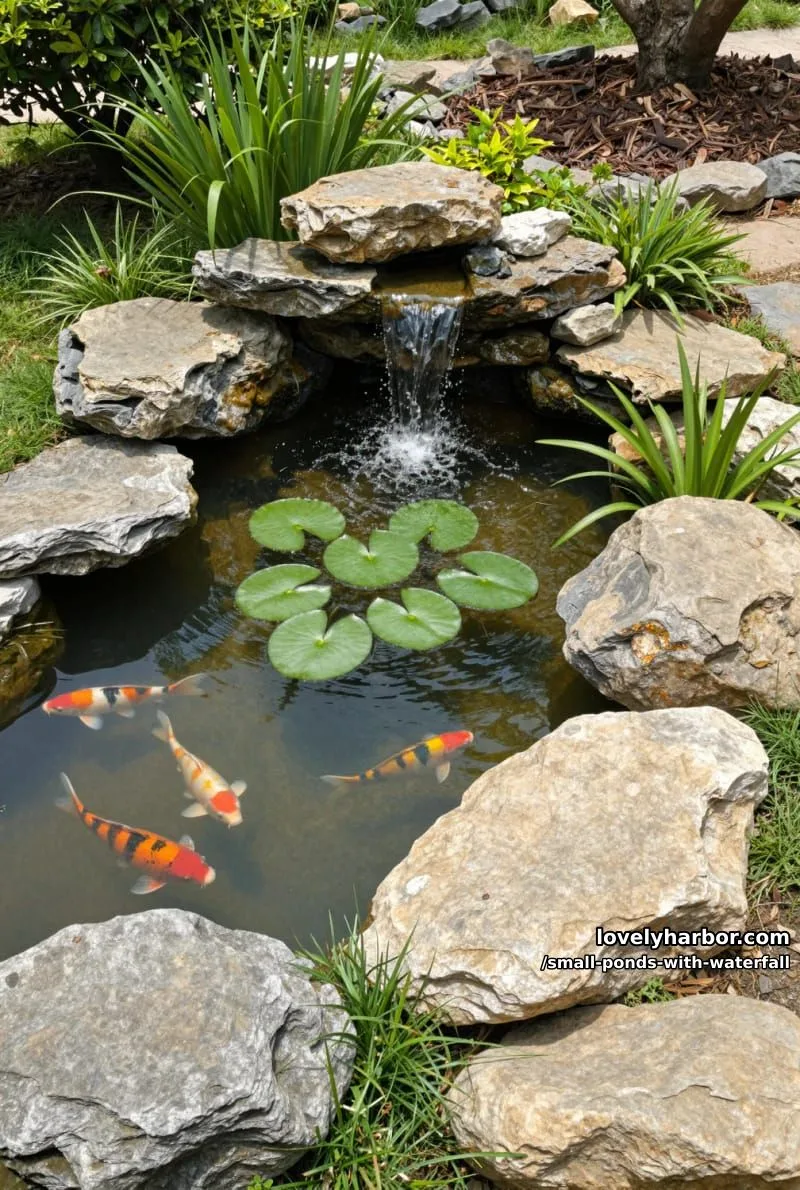
Koi need depth, not surface area, so this idea lives or dies on how far down you dig. Twenty-four inches is the floor; three feet lets fish ride out a heat wave and a hard freeze without you running a heater all season.
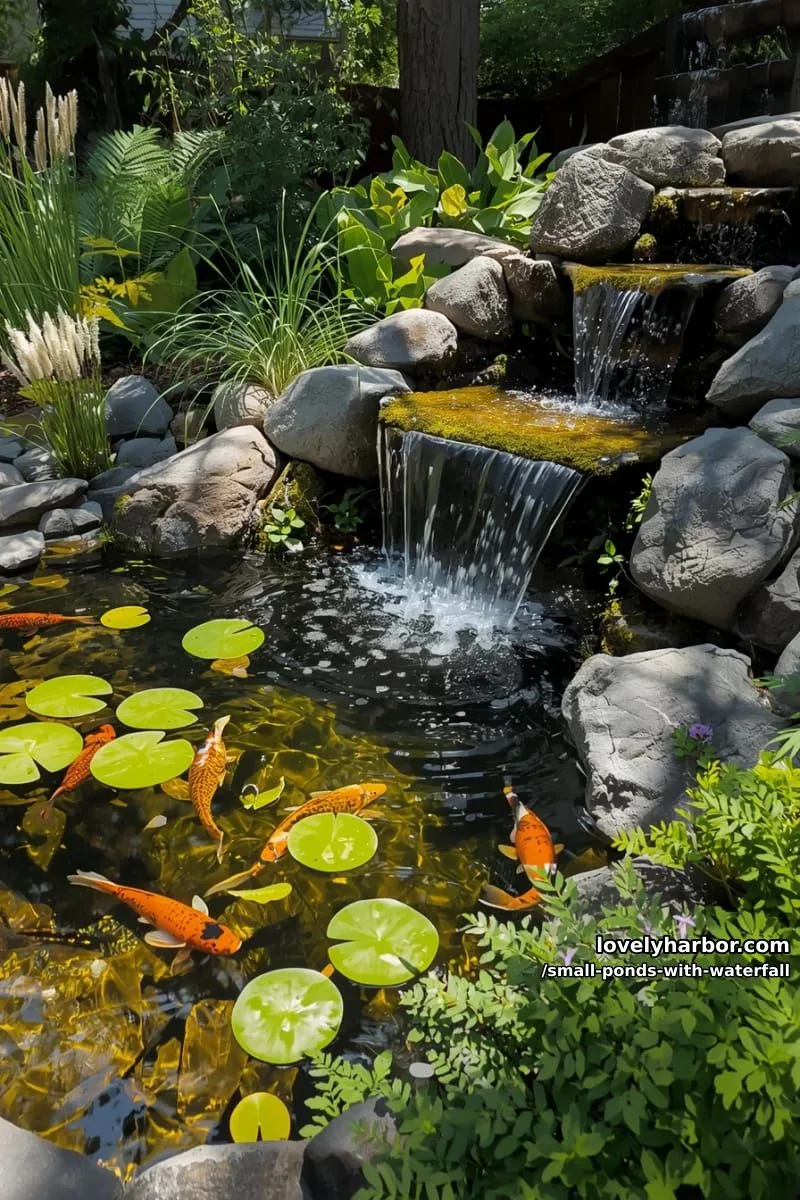
Stock light, around one adult koi per 250 to 300 gallons; the crowded ponds in photos are either brand new or about to crash. Hold the lily pads to a third of the surface so the koi keep open water to cruise, and skip a floating plant carpet, since koi treat it as salad.
4. Simple stone waterfall pond with lush plants and white lattice fence.
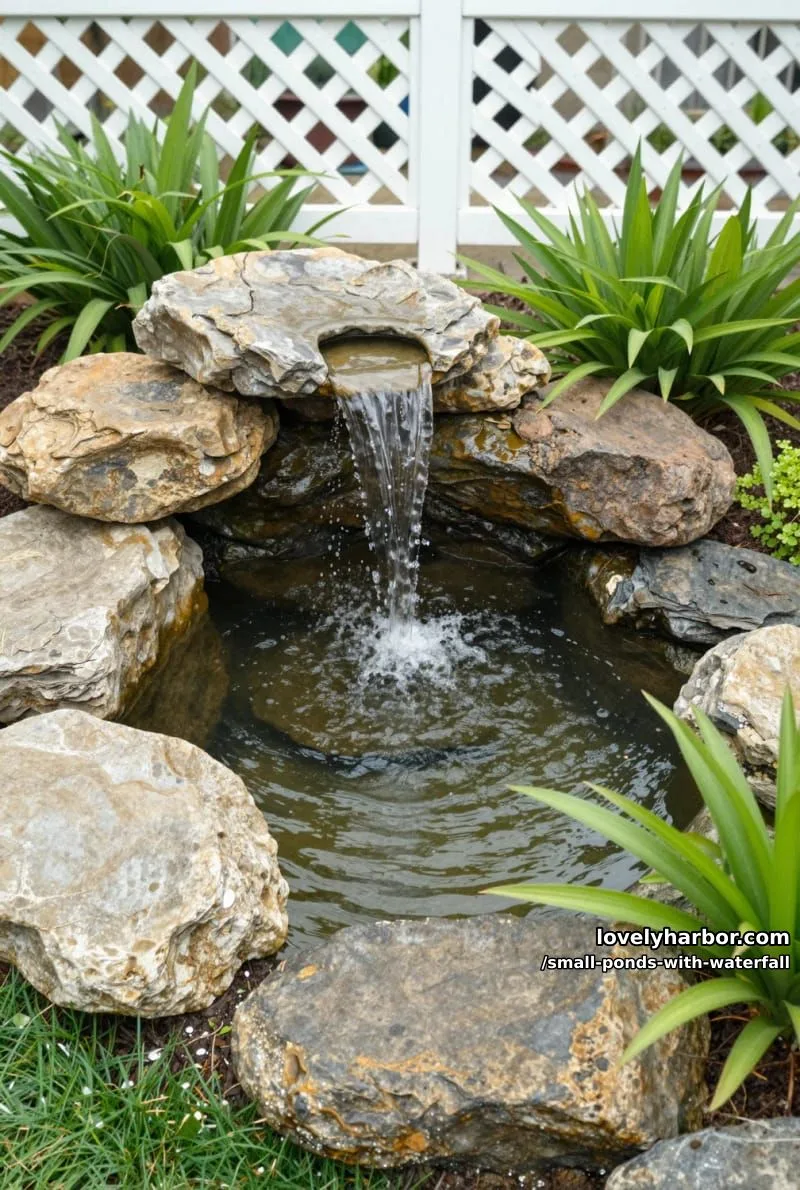
The make-or-break here is the spillway lip, not the fence. Dry-stacked stones look honest, but water finds the gaps and slips behind them, so you end up with a loud pump running a dry-looking waterfall.
Set the top spillway stone and the channel behind it in black pond foam (the expanding kind made for water features). Without it, much of the flow runs between and under the rocks and never crosses the face. If your stream level drops fast but the liner tests intact, this is almost always why.
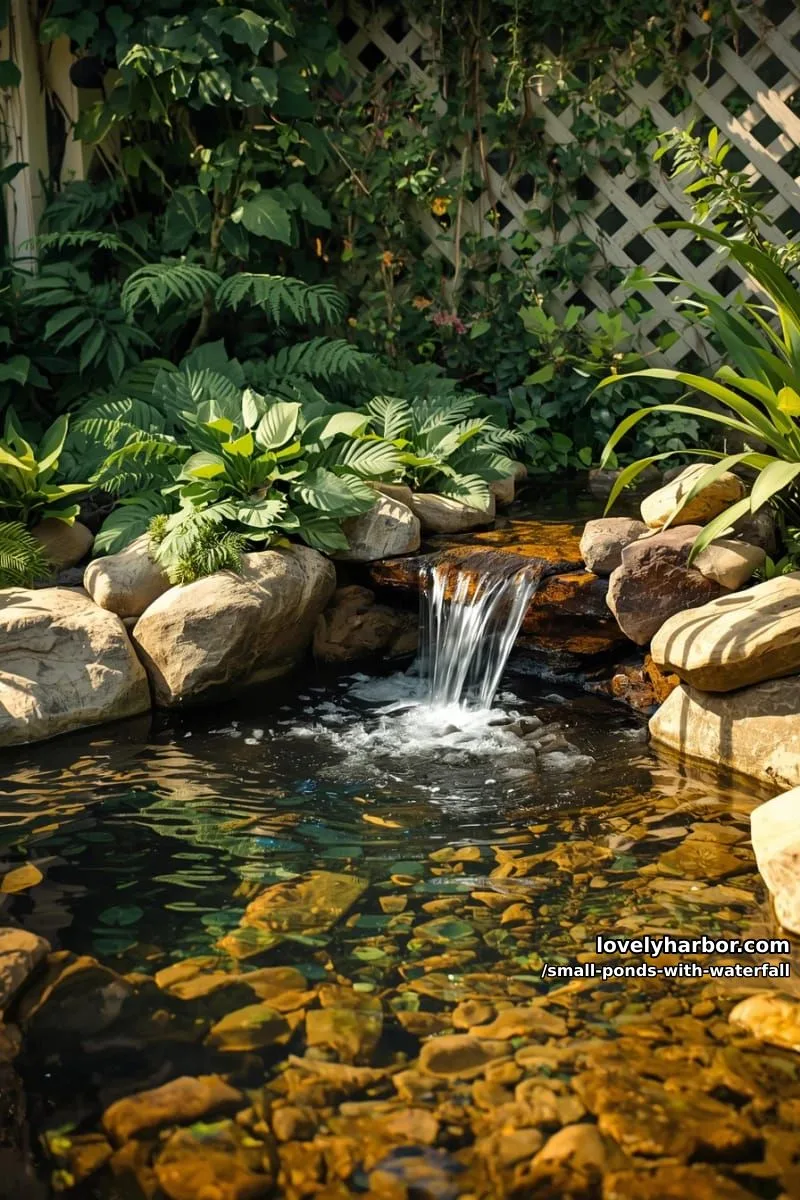
On the planting side the lattice throws shade, so reach for hostas and ferns rather than sun lovers that scorch against a white fence bouncing afternoon light back at them. Plan on repainting that lattice every couple of seasons; constant splash and white paint are not friends.
5. Collection of small ponds with waterfalls, natural stone, and lush greenery.
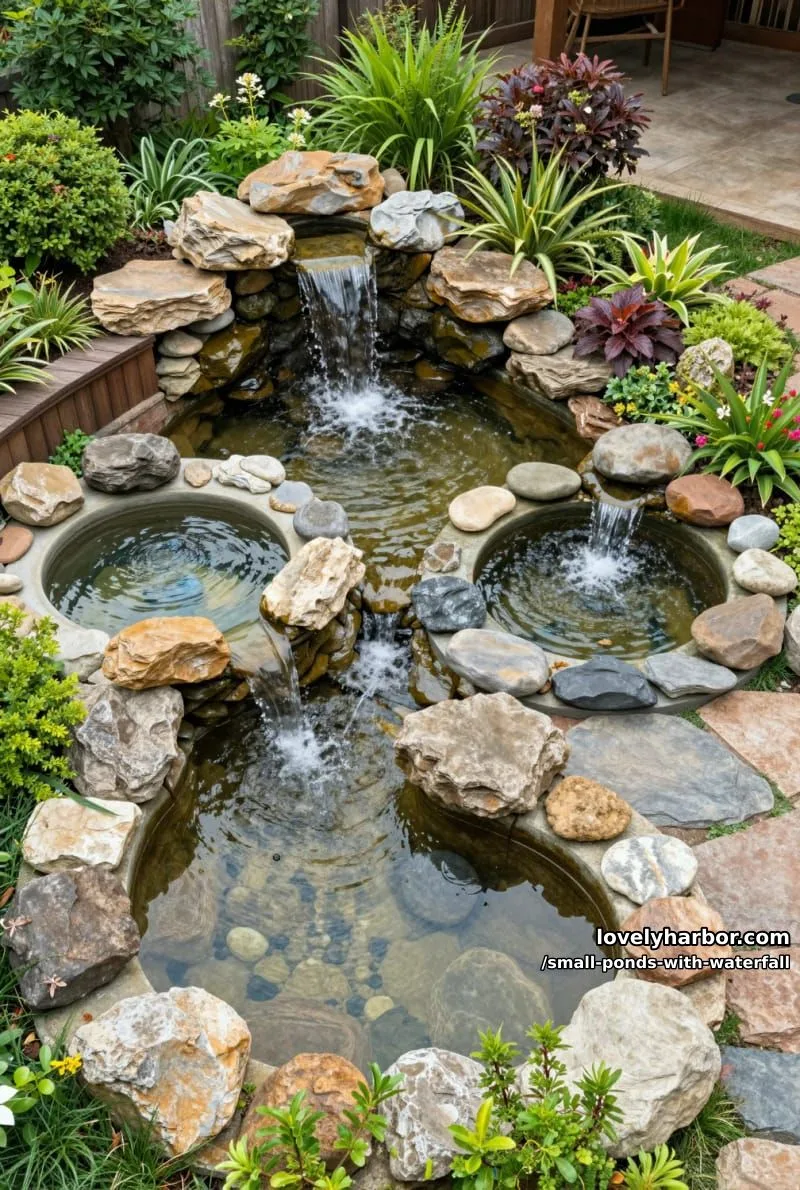
A chain of small basins is really a header pool feeding a staircase, and it forgives more than one big pond because every drop re-oxygenates the water on its way down. Size the pump to the whole run: figure roughly 100 to 150 gallons per hour for each inch of spillway width, then add capacity for the climb back up to the top.
Granted, this only pays off on a slope. On dead-flat ground you are building the grade up with spoil and stone, which is real labor. The reward is that a series of quiet little drops hides a multitude of leveling sins, since each basin only has to sit level to itself.
6. Garden pond with gentle waterfall, flowering plants, moss, and butterfly.
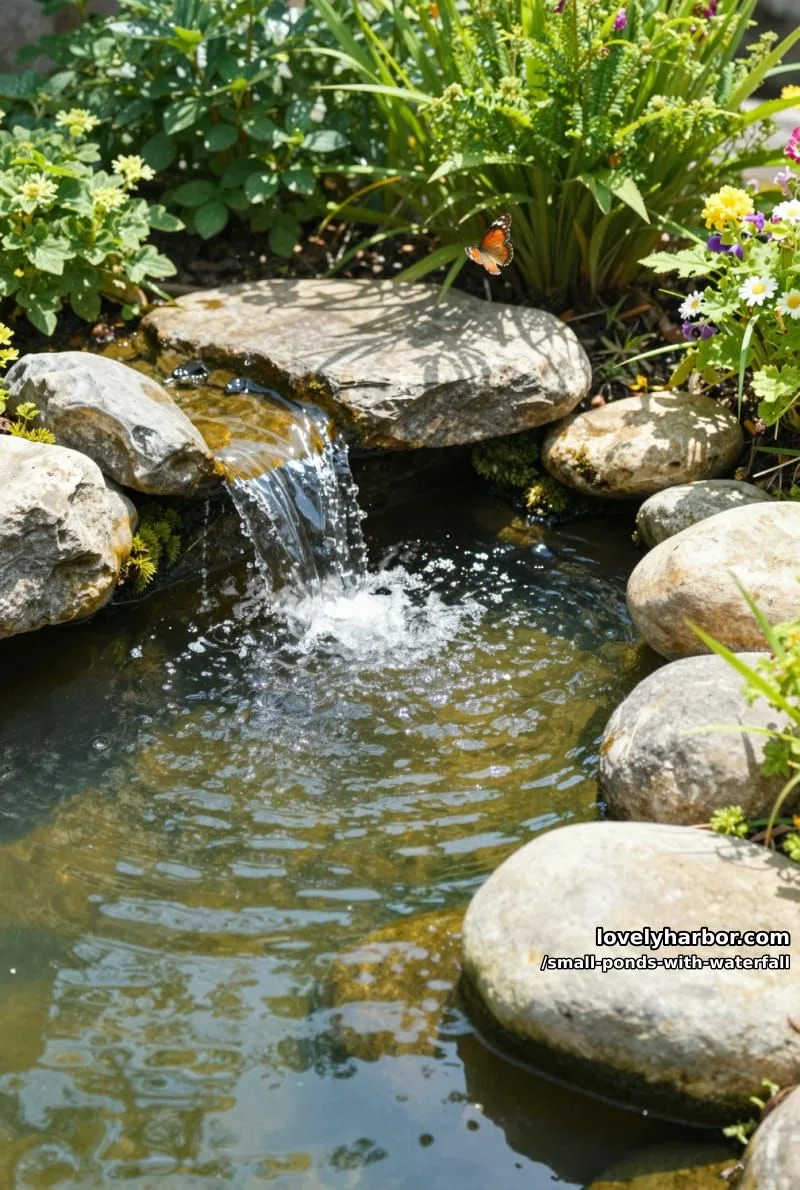
Butterflies will not drink from open pond water, so if you want them at the edge, build them a puddling spot: a shallow gravel margin kept damp where they can land and sip. The waterfall is for you and the moss; the butterflies need the muddy shoulder.
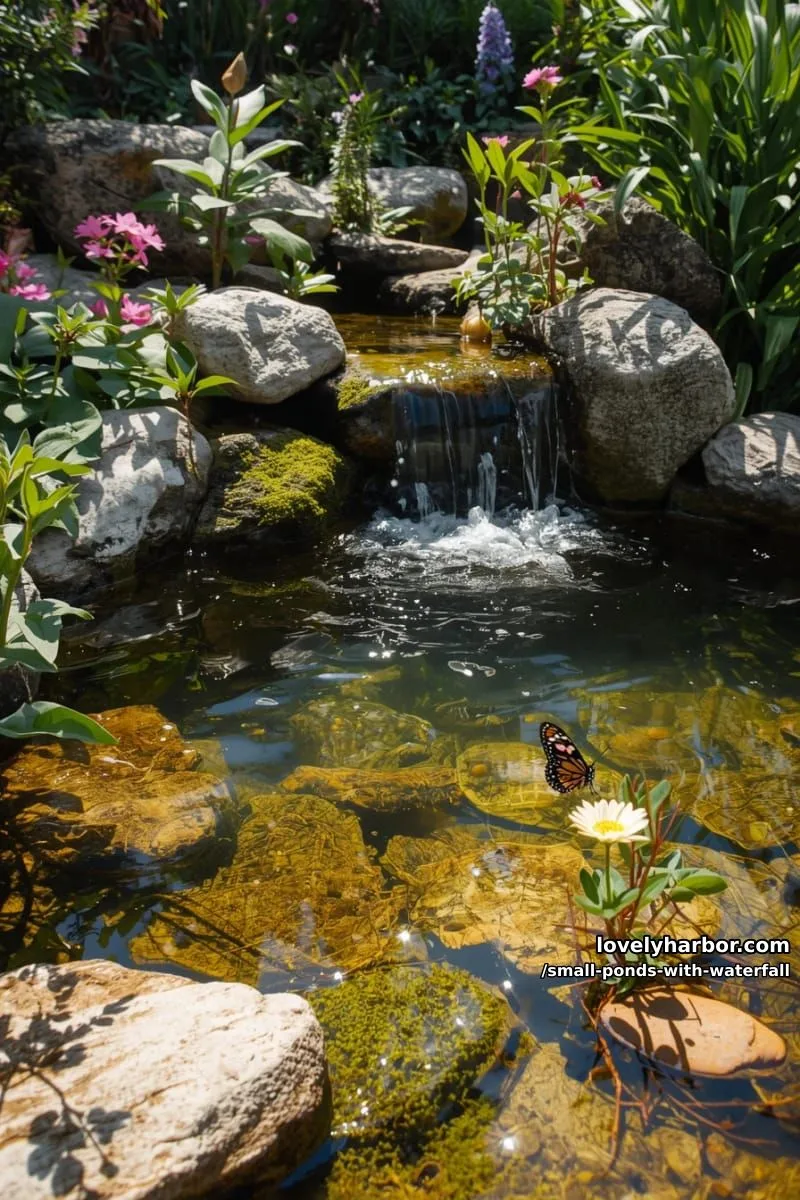
Moss wants shade and steady humidity, both of which the splash zone hands out for free, so plant it on the north-facing rocks and save the sunny side for nectar plants like bee balm and coneflower. One long damp ledge of native bloomers does more for pollinators than a dozen flowers scattered around the rim.
7. Waterfall with mossy rocks, succulents, and tropical foliage in backyard.
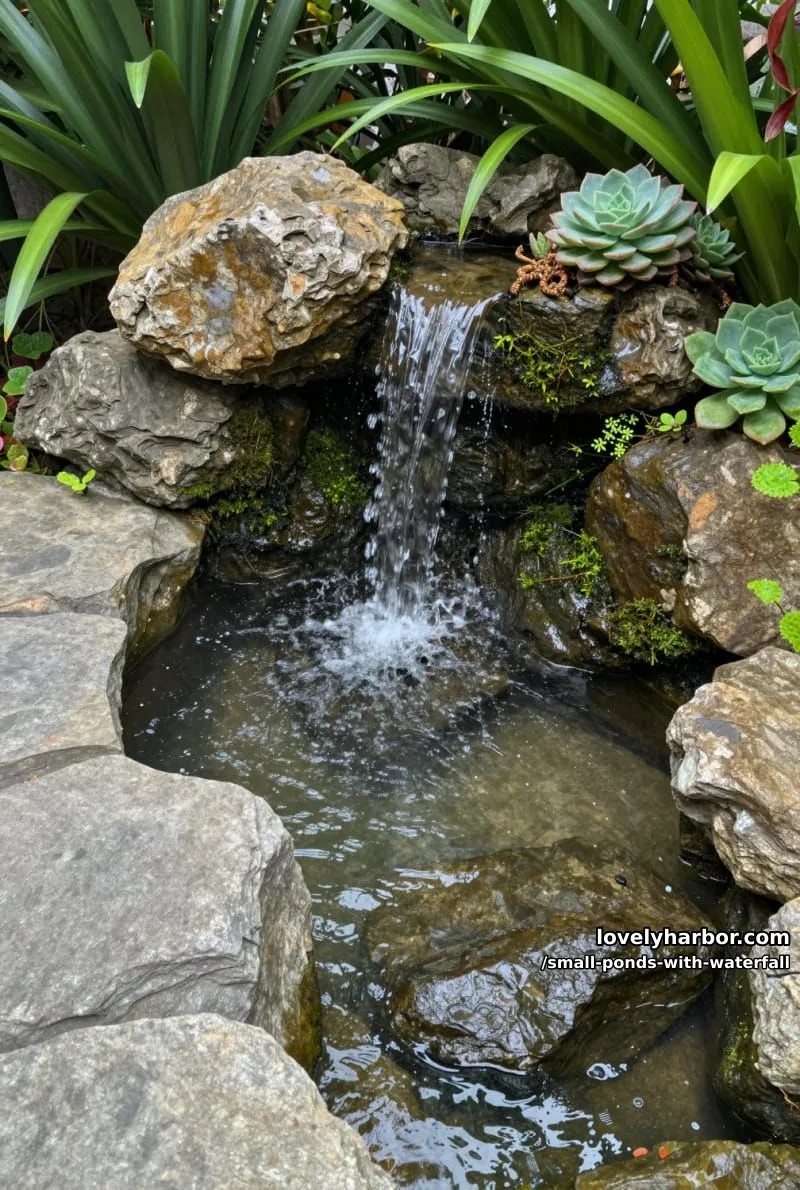
Succulents and a waterfall want opposite things, and pretending otherwise is how you rot a nice echeveria. The feature photographs beautifully with succulents tucked into the rocks, and then the splash and humidity turn the lower ones to mush inside a month.
Do this
- Keep succulents on the dry, sun-baked upper ledge, well clear of any spray.
- Fill the damp zone with ferns, calatheas, and moss, which want exactly that.
- Group every plant by its water need, not by how it looks next to the last one.
Avoid
- Tucking succulents into the splash zone, where they rot from the base up.
- Mixing drought lovers and moisture lovers in one pocket; one of them always loses.
- Counting on “good drainage” to save a succulent in constant spray. It won’t.
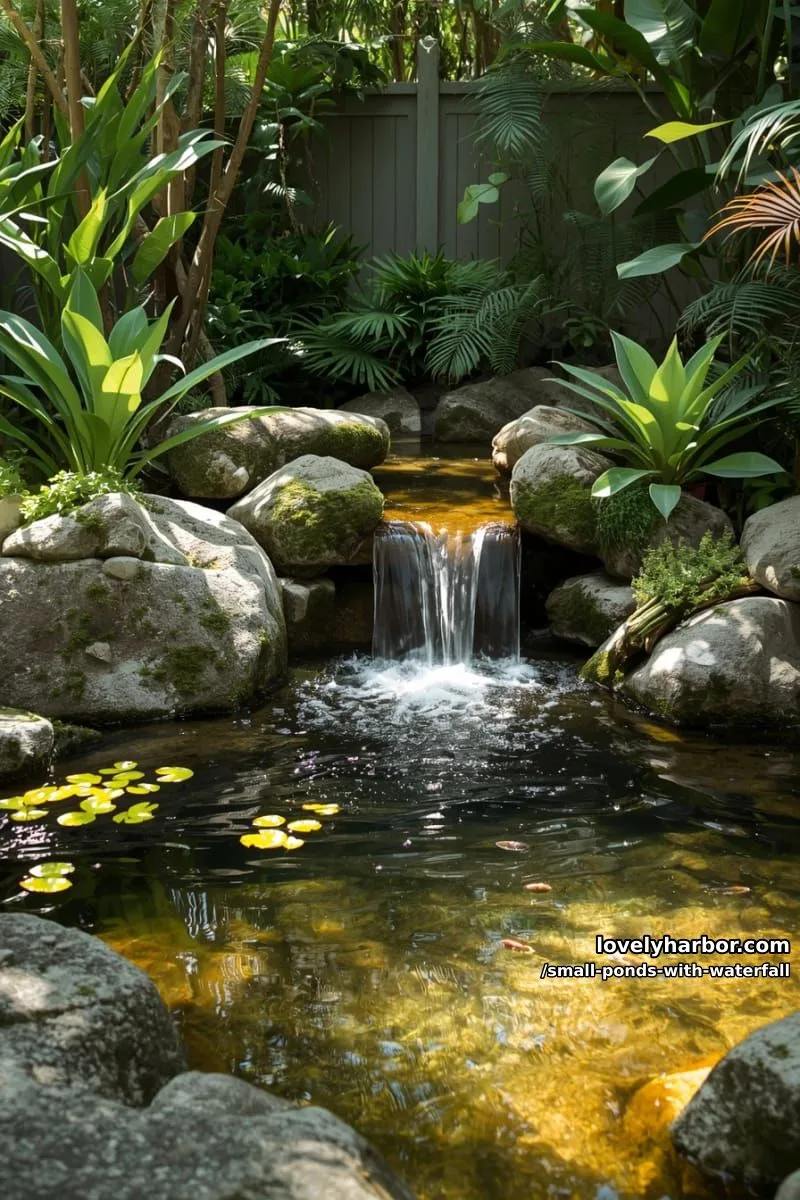
The mossy-rock look itself is low effort once it takes: keep the stone wet, keep it shaded, and resist scrubbing off the first green film, because that film is the surface the moss colonizes.
8. Cascading stone waterfall pond with blooming flowers and wooden fence.
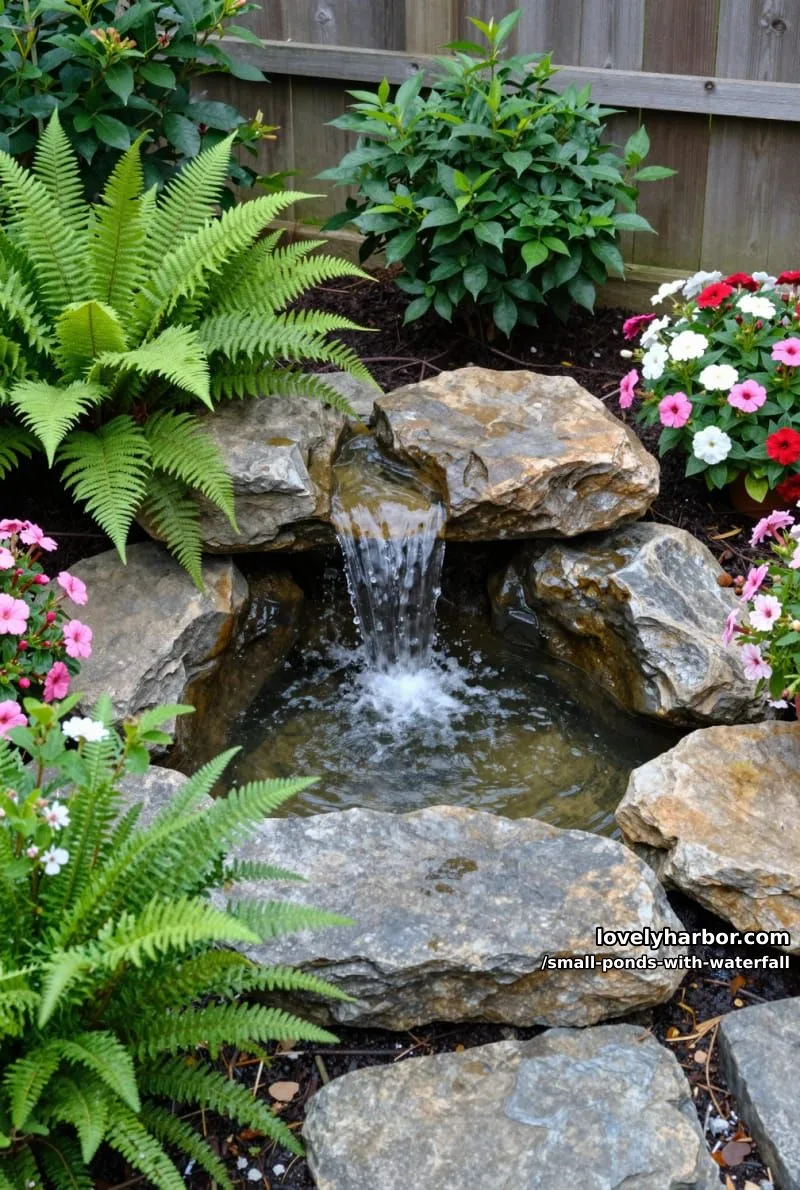
Seal the fence before the water ever runs, because splash plus untreated end-grain rots cedar in two seasons. For color at the waterline, iris is the reliable performer: Louisiana and Japanese iris both take wet feet and bloom hard, unlike the cottage flowers people keep planting that hate soggy roots.
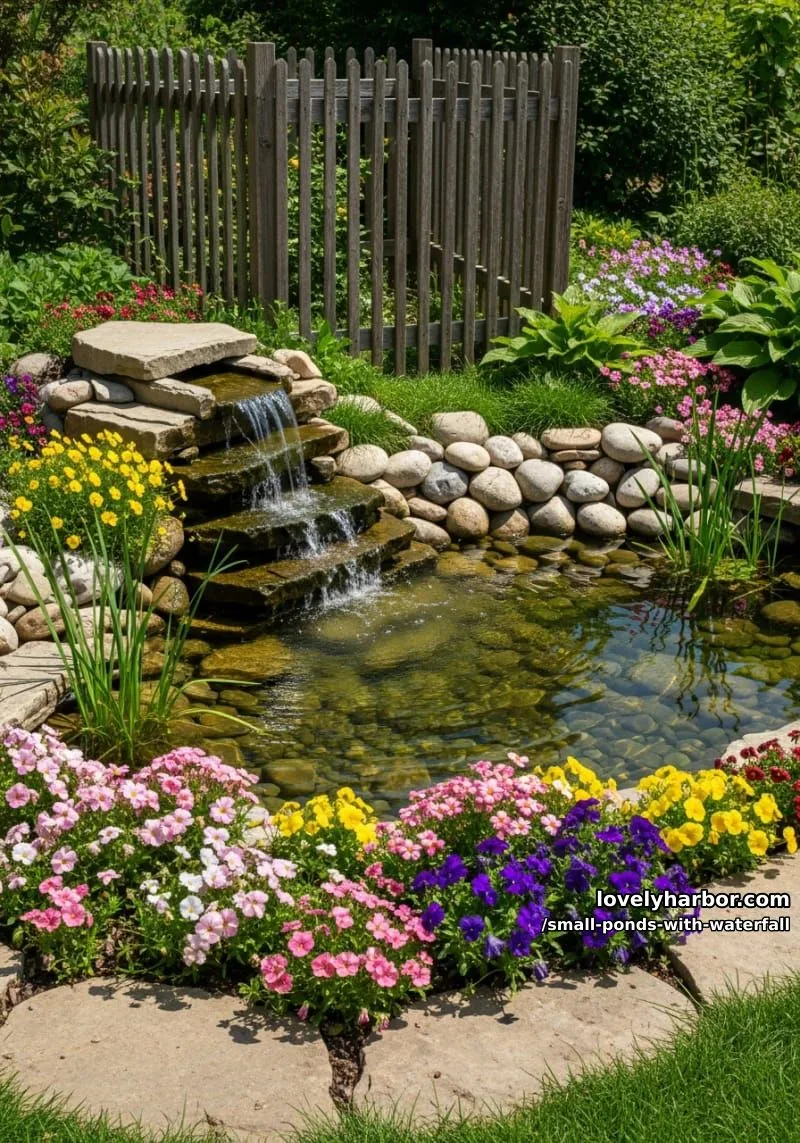
Mortar only the cap stones along the top of the falls and leave the rest dry-laid so the structure can flex with frost heave. A rigidly mortared waterfall cracks the first hard winter, and the crack always opens right where the water puts it on display.
9. Pond with waterfall, smooth stones, succulents, and ornamental grasses.
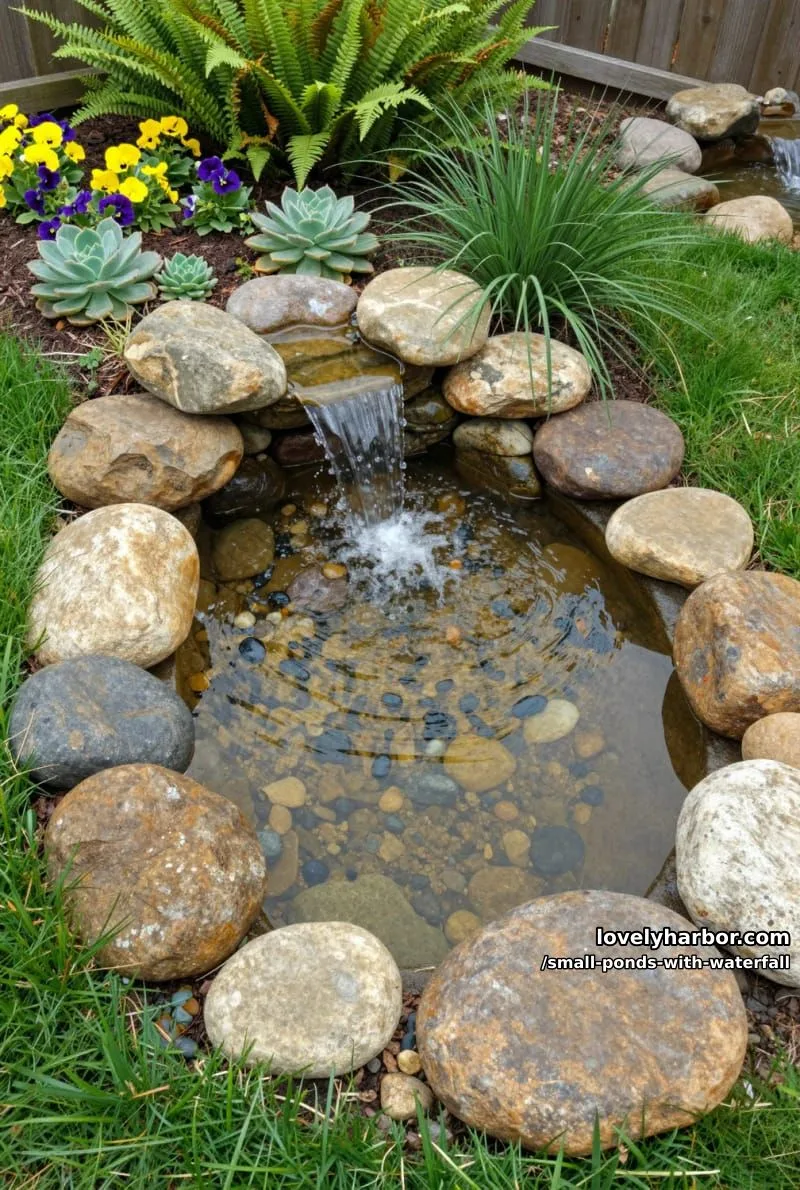
Pick grasses that want wet feet, because most ornamentals don’t. Carex and sweet flag (Acorus) thrive at a pond edge; miscanthus and fountain grass, the two most often sold as “ornamental grass,” brown out and sulk in the muck.
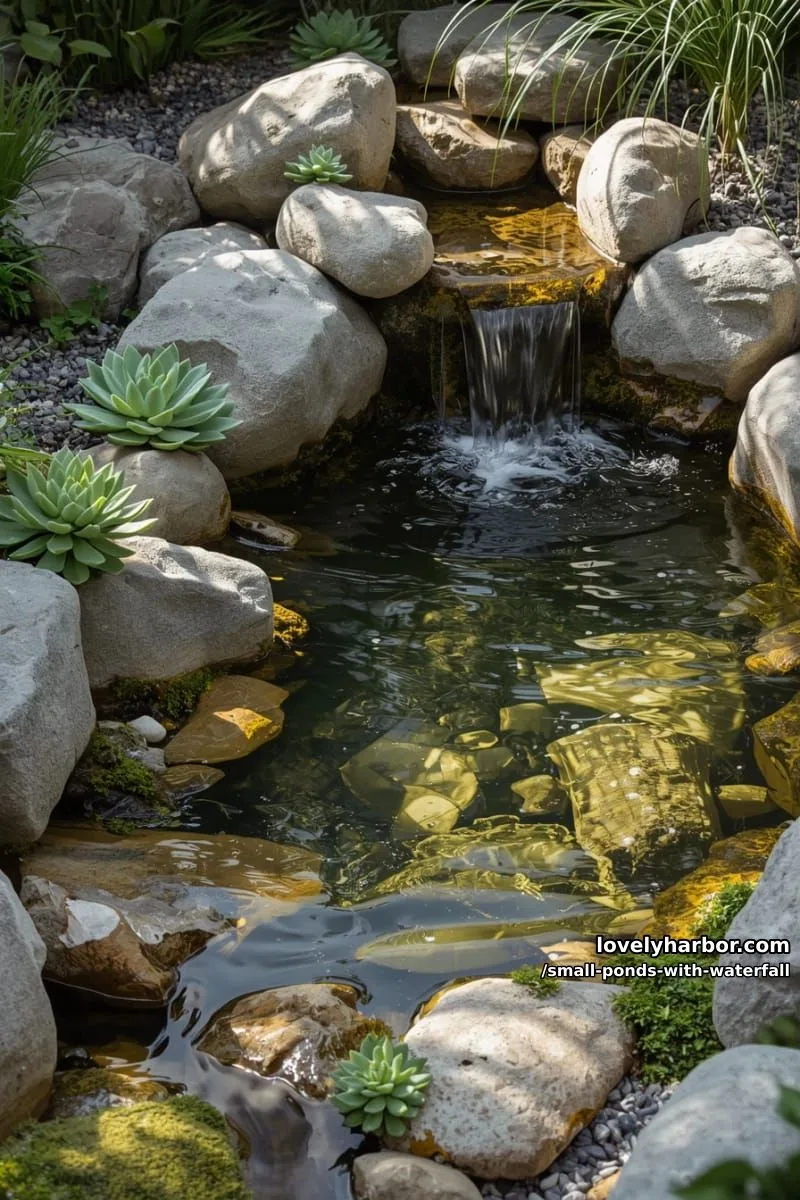
The succulents here belong on the dry rim again, not wedged between the wet stones. If you want the spiky vertical line without the rot risk, drop a dwarf cattail into a submerged pot; it gives you the same movement and shrugs off standing water.
10. Tiered slate waterfall pond with ferns and mossy boulders
Slate is thin, slick, and happy to crack, so bed every shelf on a mortar pillow pitched a couple of degrees toward the drop. Water that pools on a flat slate ledge and then freezes is what splits the stone, and the split runs with the grain where you can’t hide it.
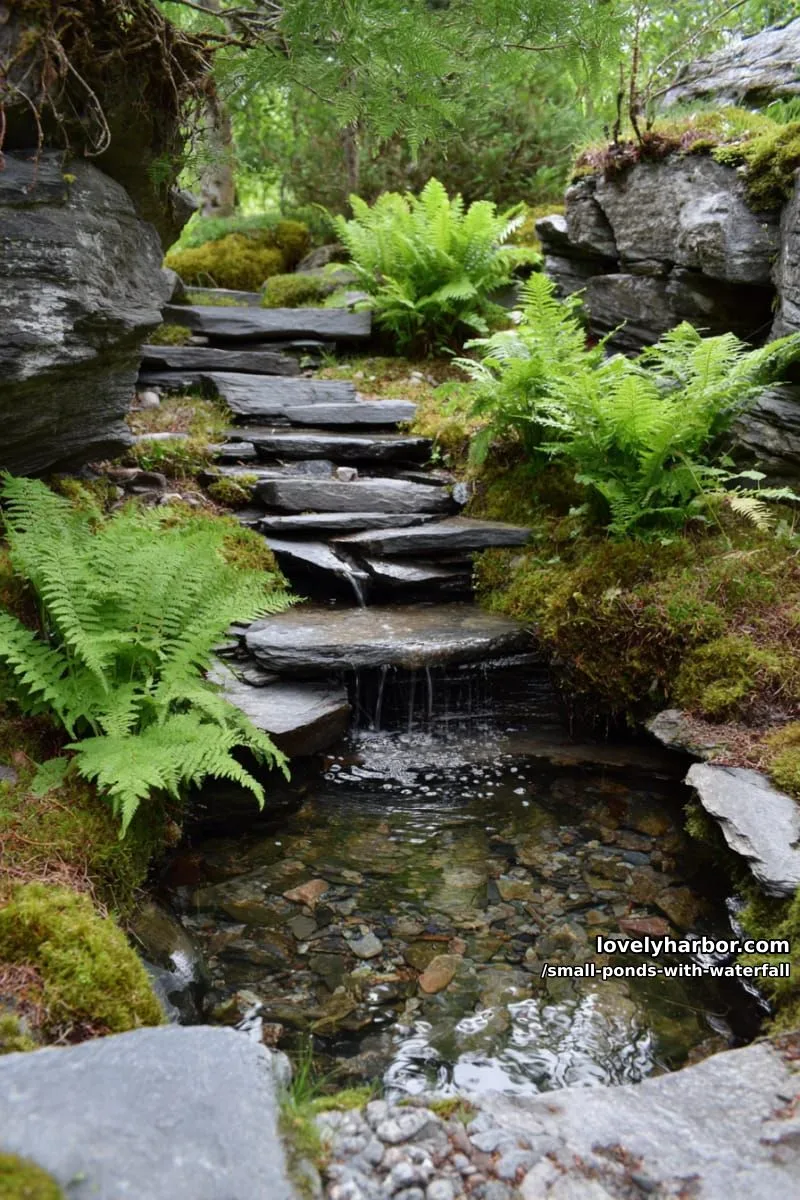
The planting stays simple if you keep it woodland: autumn fern for the rusty new fronds; lady fern for soft fill; a dwarf hydrangea or two to anchor the back. Moss arrives on its own and settles on the boulders, provided you keep them in the splash line.
11. Compact rock waterfall pond with creeping groundcover and river pebbles
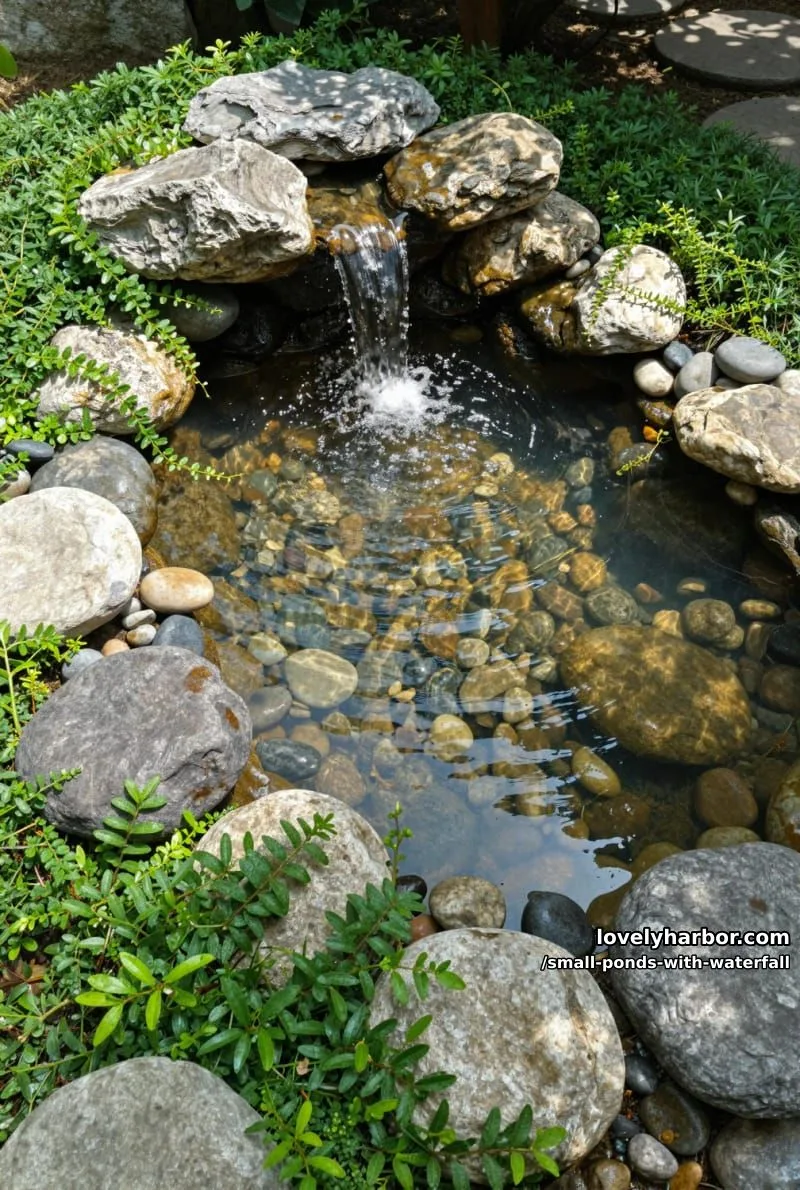
Skip creeping thyme right at the waterline. It gets recommended for crevices but rots in constant wet, while creeping Jenny (Lysimachia) and baby’s tears actually want the damp and will knit between the stones the way the photos promise.
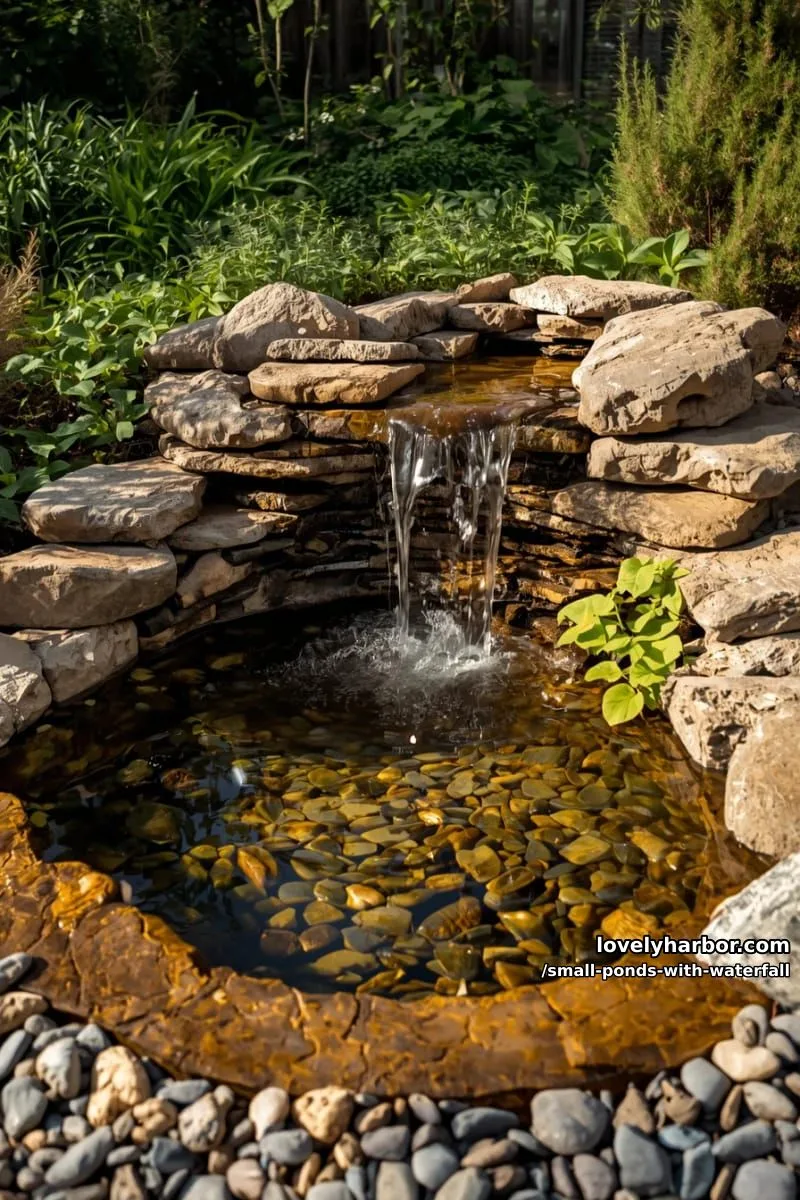
For the pebble field, mix sizes, roughly one to three inch cobble, so it reads like a streambed instead of an aquarium floor. Uniform bagged pebbles are the quickest way to make a natural feature look bought at a garden center.
12. Aerial view of koi pond with stepping stone path and wooden deck.
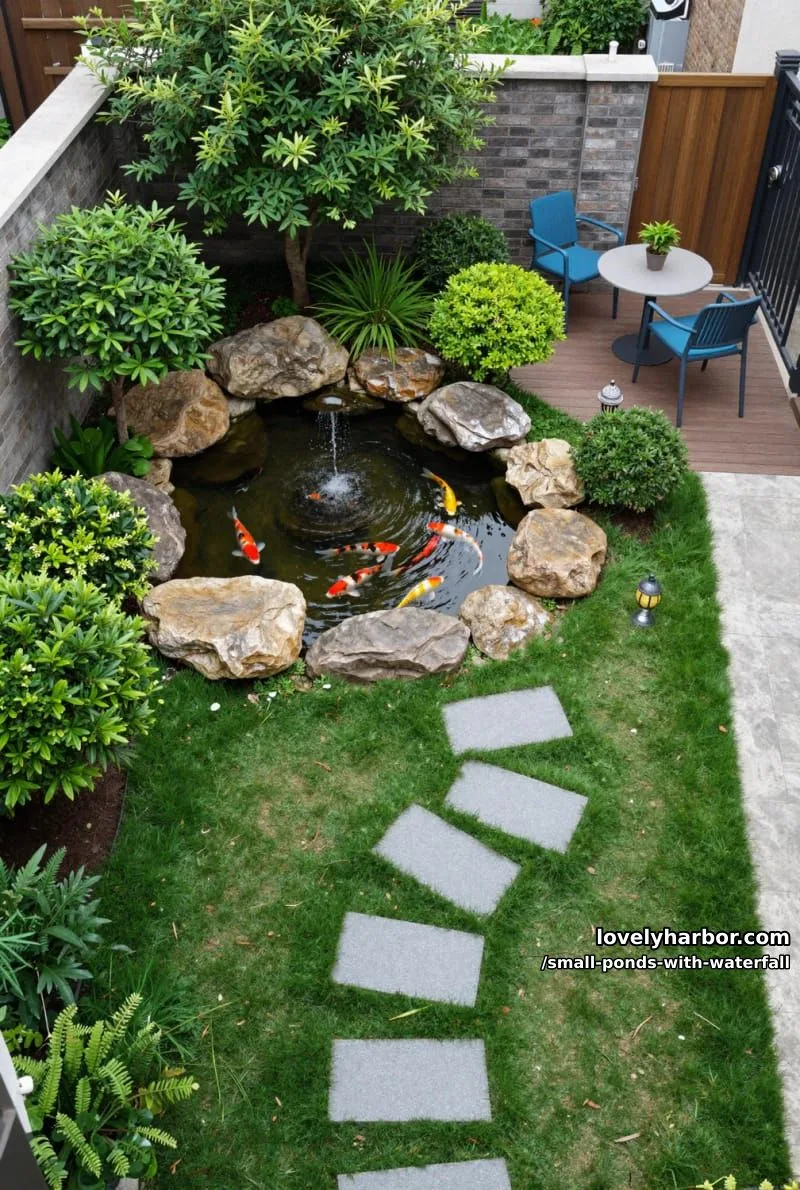
Decking over water looks clean from above and traps you the day you need to net a sick fish, so leave a removable access hatch of at least a foot somewhere over the deep end. You will be on your knees with a net eventually, grateful you planned for it.
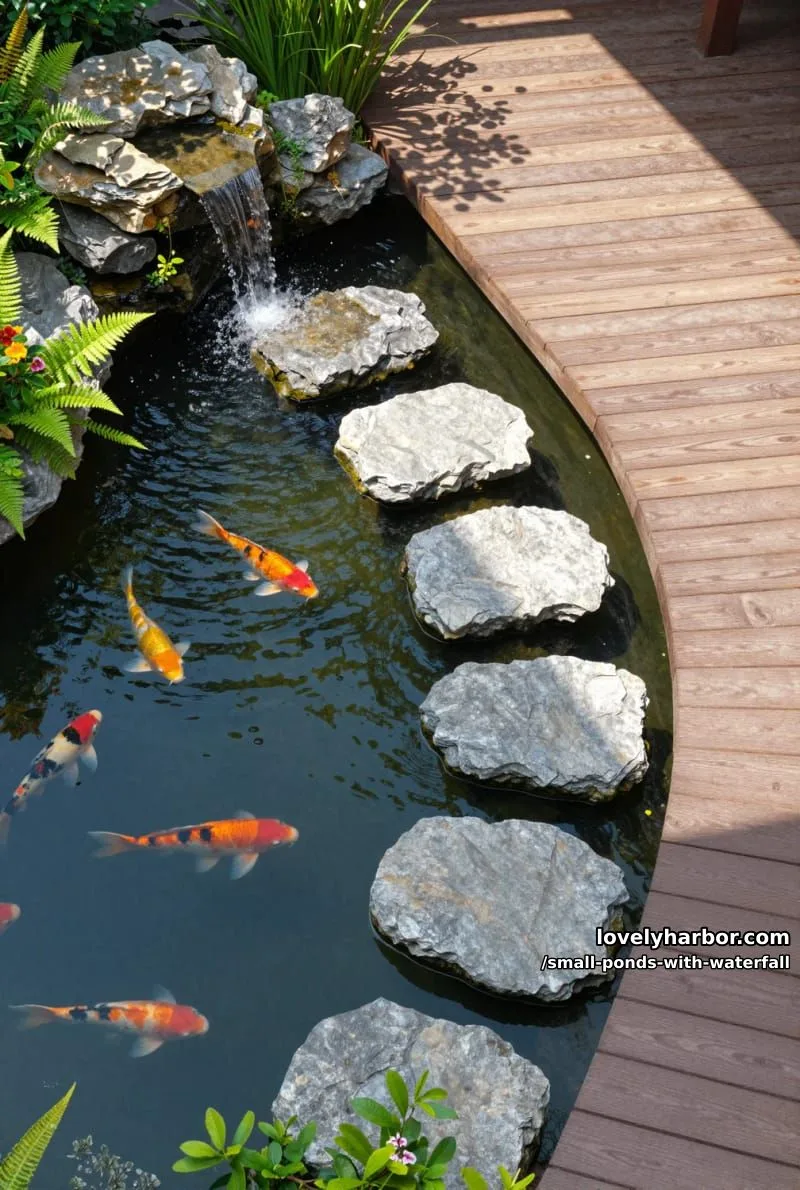
Set the stepping stones on footings or a gravel pad, never resting straight on the liner, where a sharp corner will work a hole through over time. Put the skimmer at the opposite end from the waterfall so the whole surface circulates instead of the current short-cutting across one corner.
13. Natural rock waterfall pond with wildflowers and rustic wooden bench
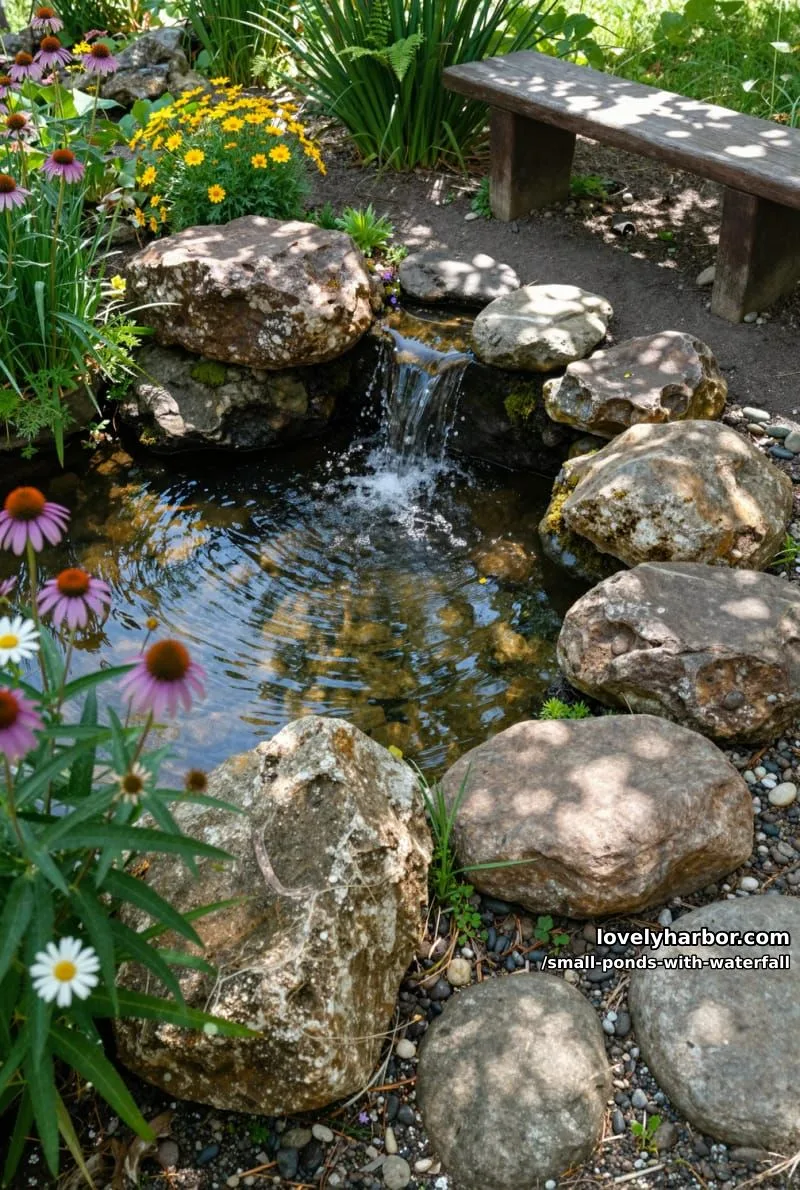
A wildflower edge drops a whole season of petals and stems into the water, so put a planted bog shelf between the meadow and the open pond to catch and filter the runoff before it clouds things. The flowers stay where you want them; the litter gets intercepted on the way in.
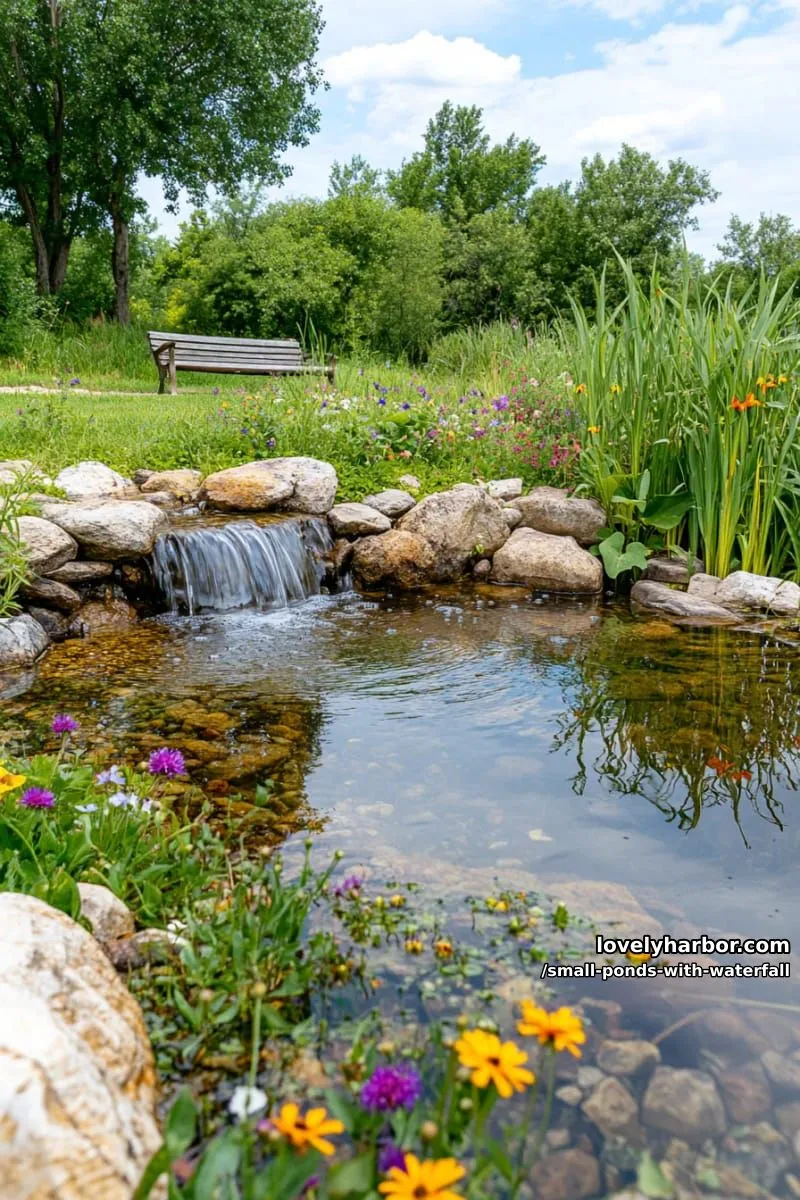
Match each plant to the moisture line, which the romantic photos quietly ignore. Lavender goes on the dry bench side where it wants to be; the moisture lovers like Joe Pye weed and cardinal flower go down by the water. Lavender planted at the waterline is a dead lavender by July.
14. Garden pond with plastic liner, cascading waterfall, and lush plants.
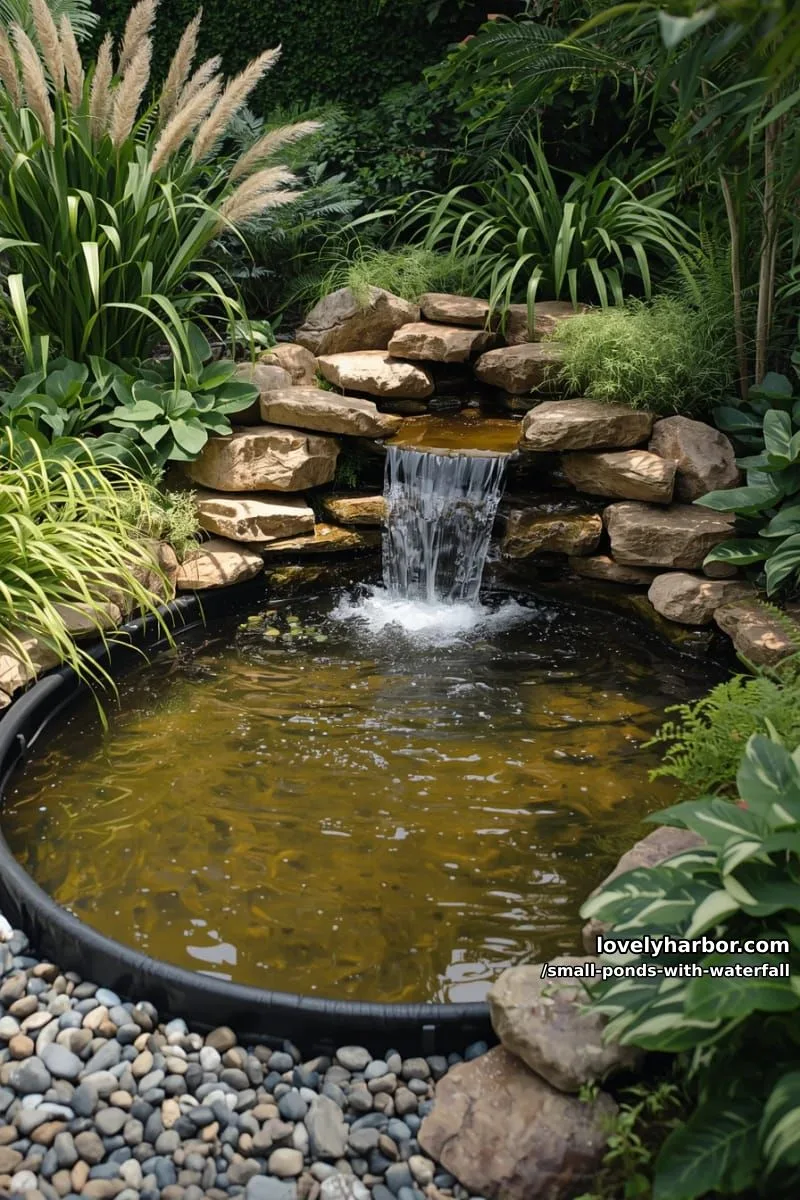
If you take one spec from this whole list, take the liner: 45 mil EPDM over a protective underlayment, not the thin PVC that comes in starter kits. EPDM is fish-safe, stays flexible in the cold, and lasts twenty years and up, while cheap PVC goes brittle and splits at the folds in a few seasons.
Size it before you buy with a plain rule: maximum length, plus twice the depth, plus two feet of overlap, and run the same math for the width. Hide the cut edge under a stone overhang rather than a gravel lip, because gravel slides into the water and the liner shows through anyway.
15. Naturalistic waterfall with ferns, spider plants, and river stones.
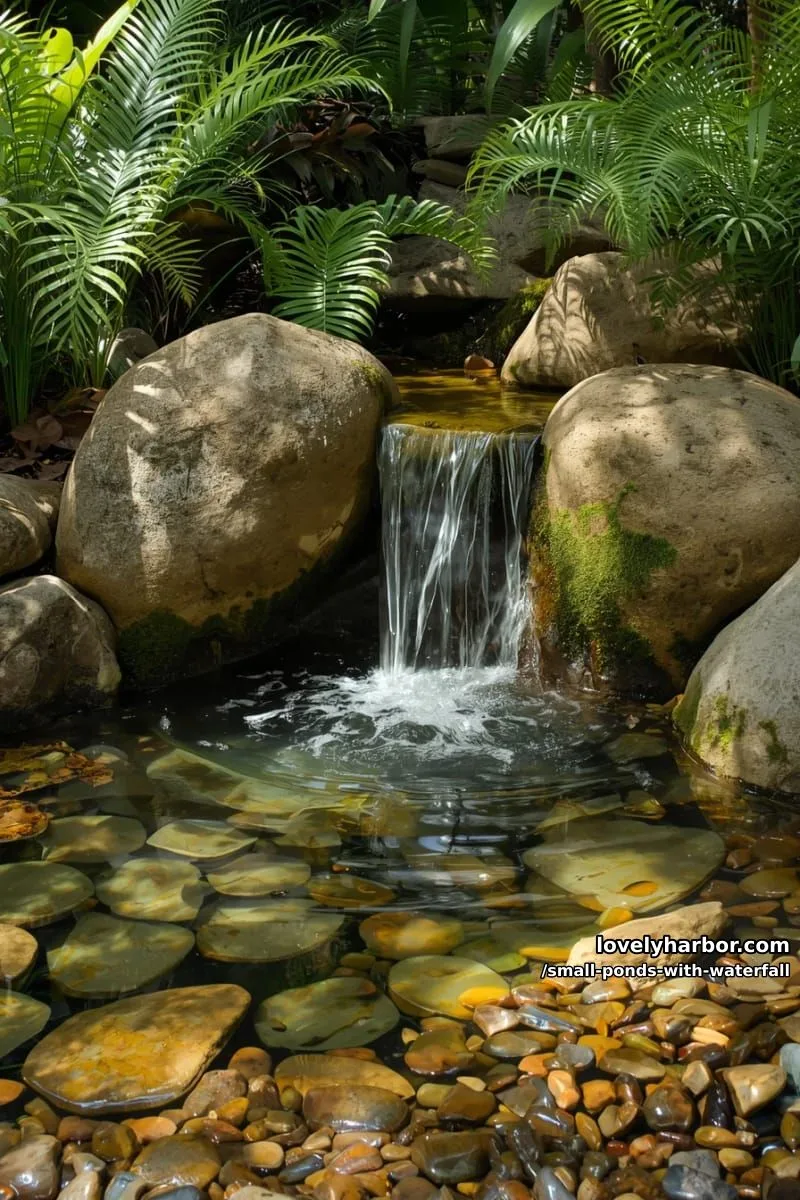
Spider plants are houseplants, full stop. Set one at a waterline and it drowns. The naturalistic look this section is chasing comes from real marginals, sweet flag, dwarf cattail, water forget-me-not, not from a pot plant borrowed off a windowsill.
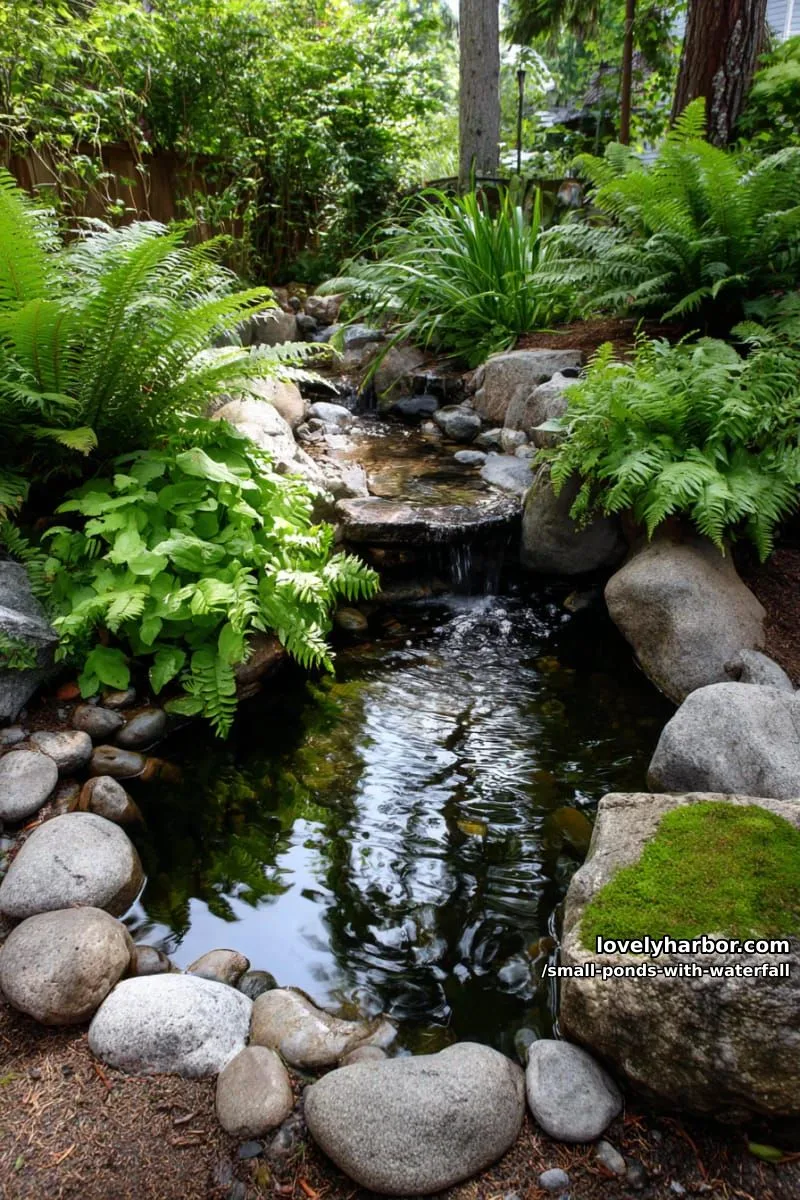
Ferns are right for the damp shade, and the river stone earns its keep by holding bank soil out of the water. If you love that arching spider-plant shape, keep one potted and set back on dry rock where the spray won’t reach it, and let the marginals carry the waterline.
16. Shallow koi pond with smooth stones, lush plants, and modern building.
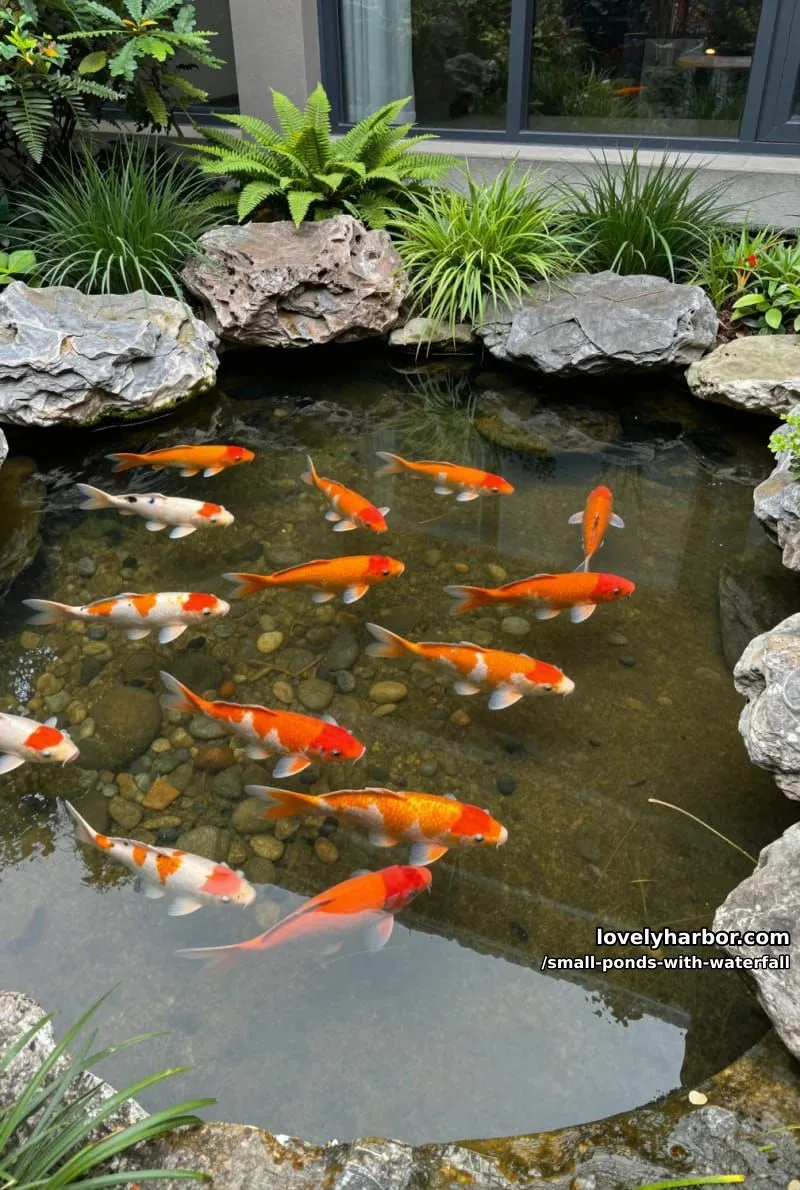
Shallow and koi is the one pairing on this list I would talk you out of. Shallow water cooks in summer sun and leaves koi nowhere to hide from a heron, and a sun-bouncing modern facade only heats it faster.
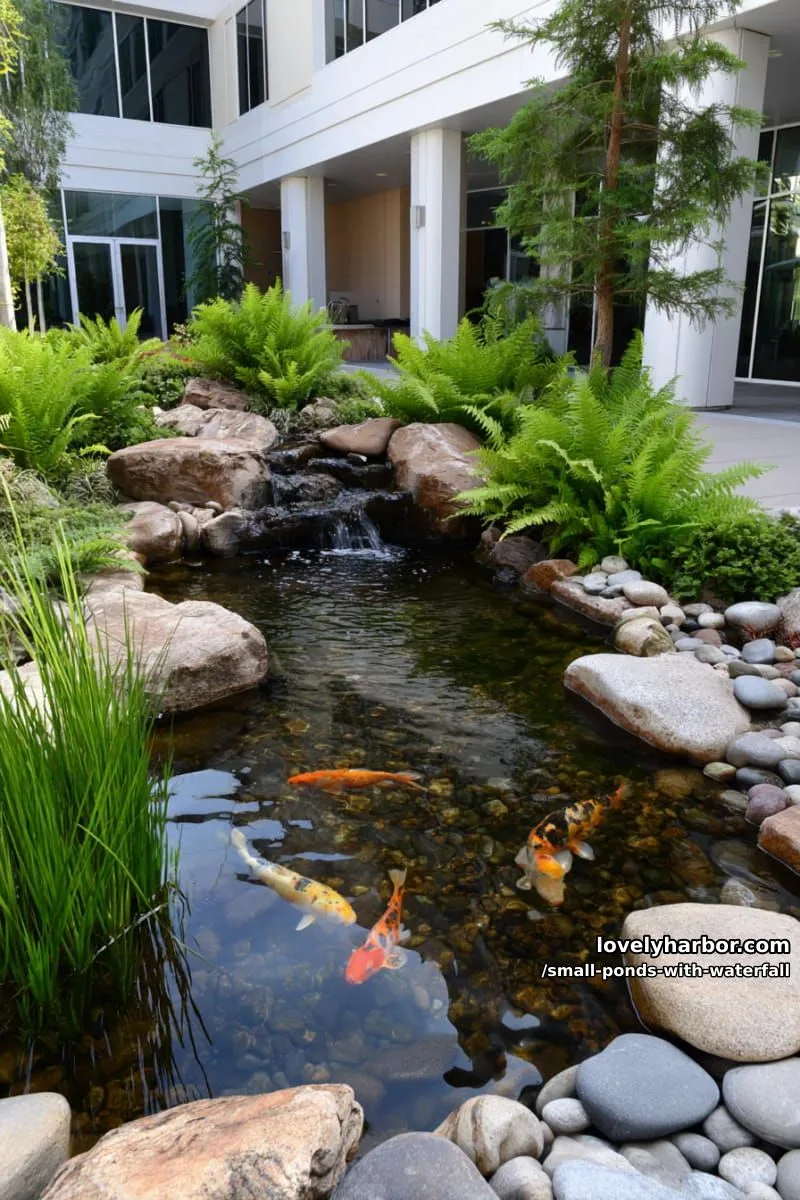
If the architecture demands a shallow sheet of water, make it a pondless feature, or stock goldfish, which forgive far more, or carve one deep refuge pocket of two feet plus into the design. The clean-lined urban pond is a good look; just don’t ask koi to survive August in four inches of water.
17. Water feature with terracotta pot, cascading stones, and ducks.
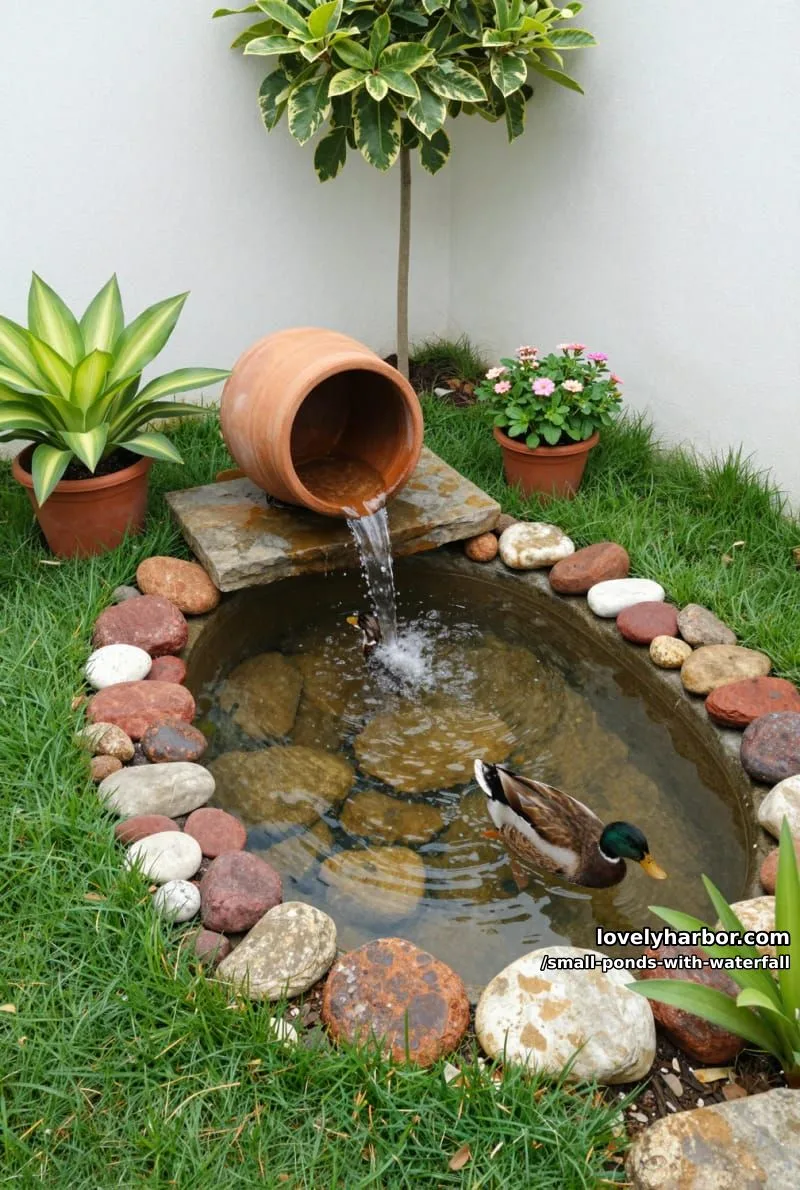
Lose the ducks. Ducks foul a small pond within days, eat the plants, and stir the bottom to mud; the charming image of two of them paddling an ornamental pond is a maintenance problem wearing feathers.
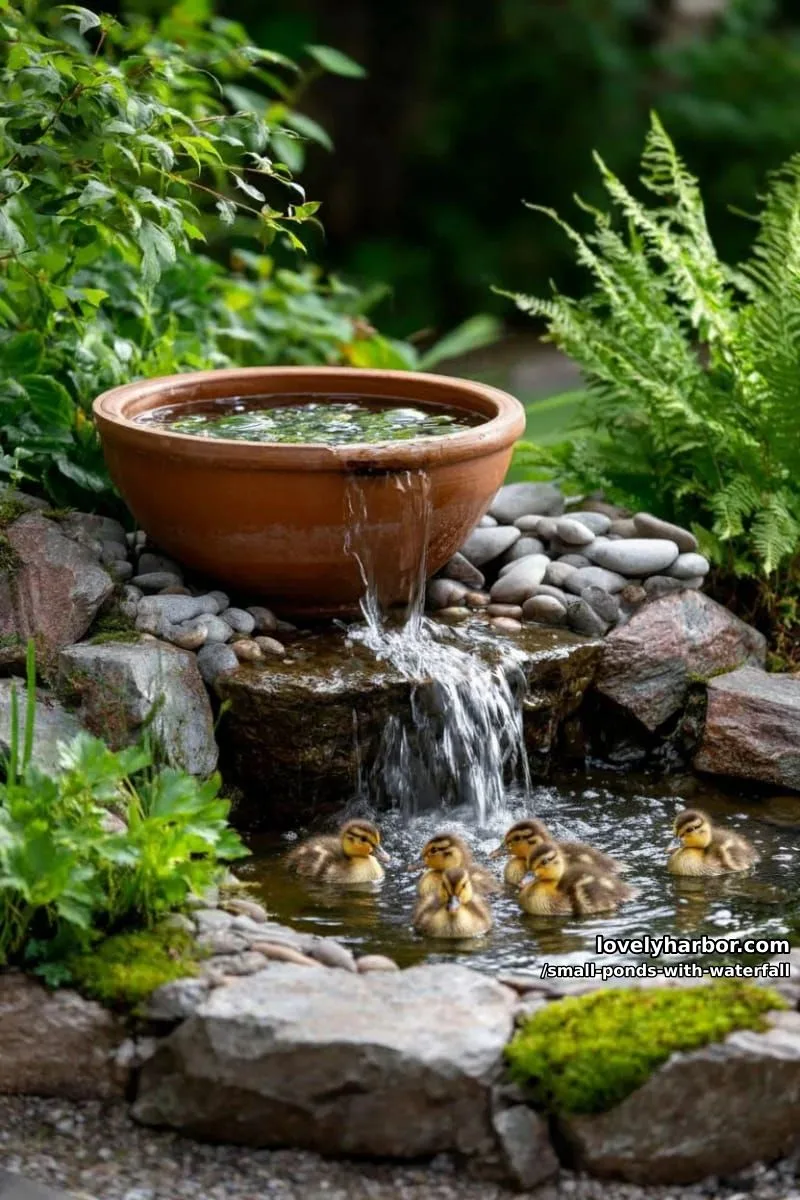
What this idea actually is, underneath the ducks, is a pondless jug fountain. Drill the terracotta pot, set it over a hidden reservoir and pump, and let it spill onto cobble that drains back down out of sight. No standing water to foul, almost nothing to skim.
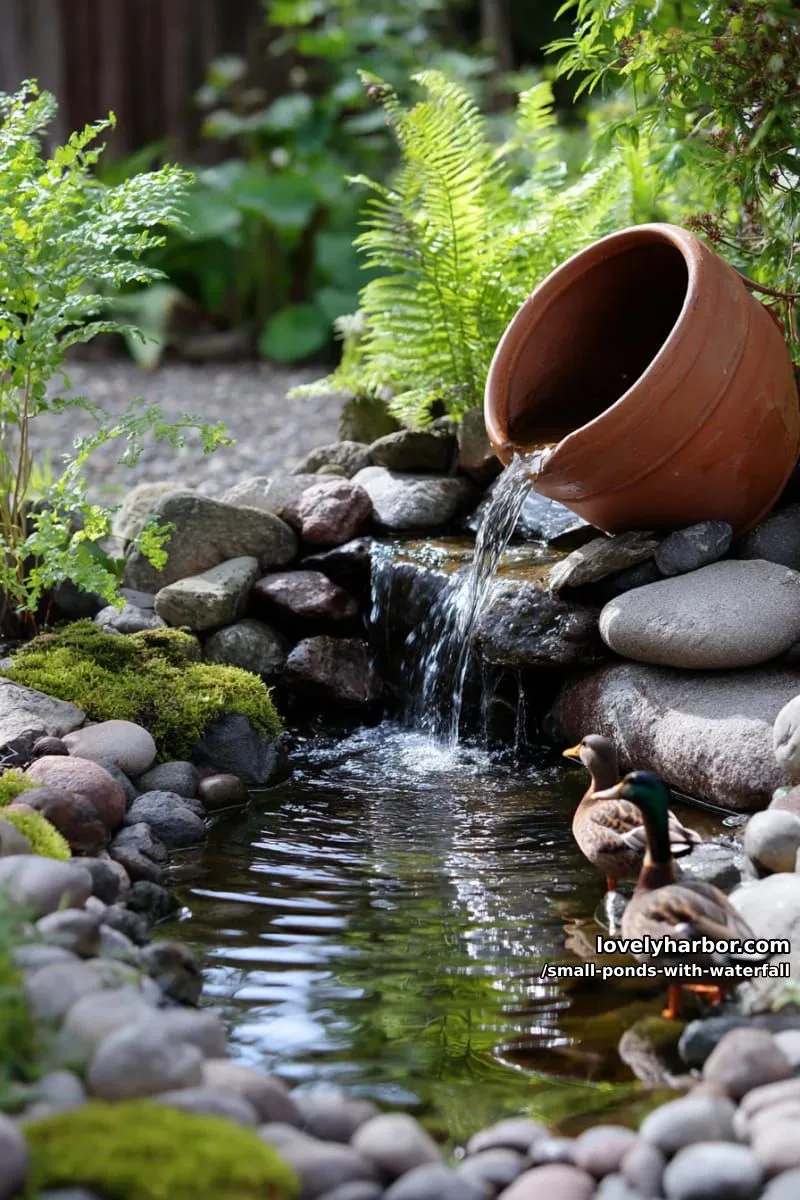
Still want the wildlife? A shallow stone basin at the base reads as a bird bath and pulls in songbirds, who are far tidier guests than waterfowl.
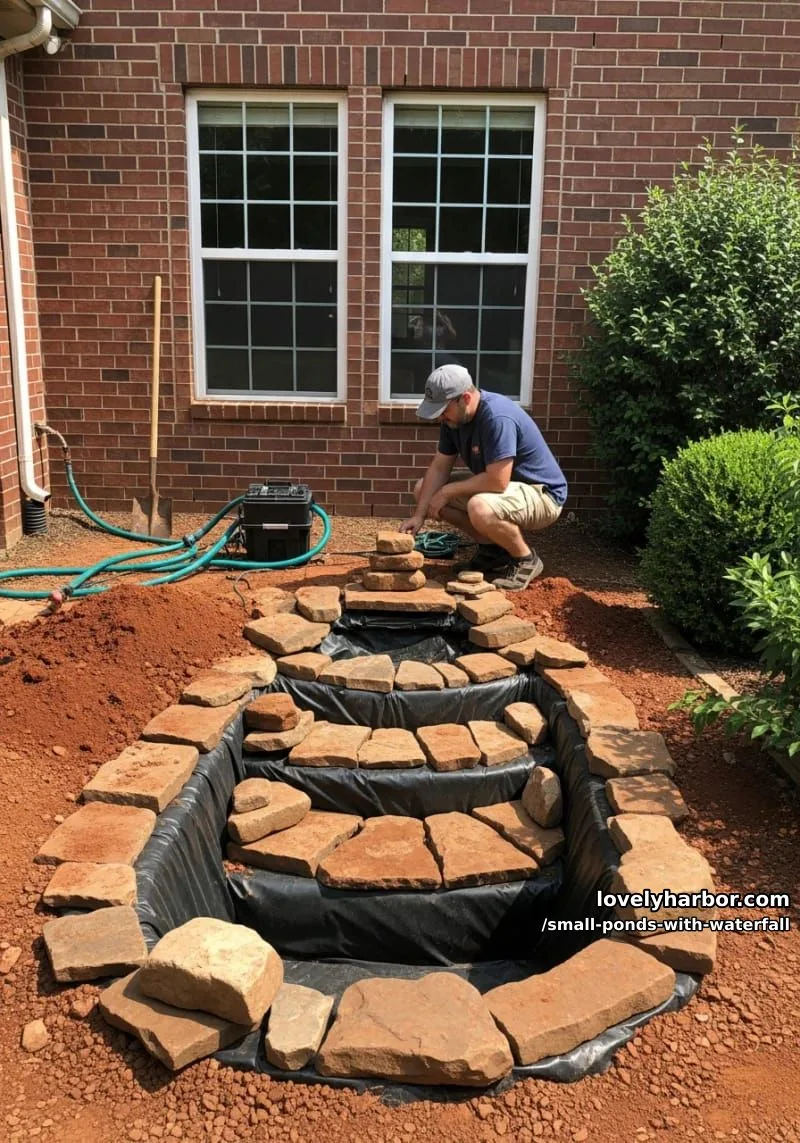
18. Backyard pond under construction with rocks and aquatic plant.
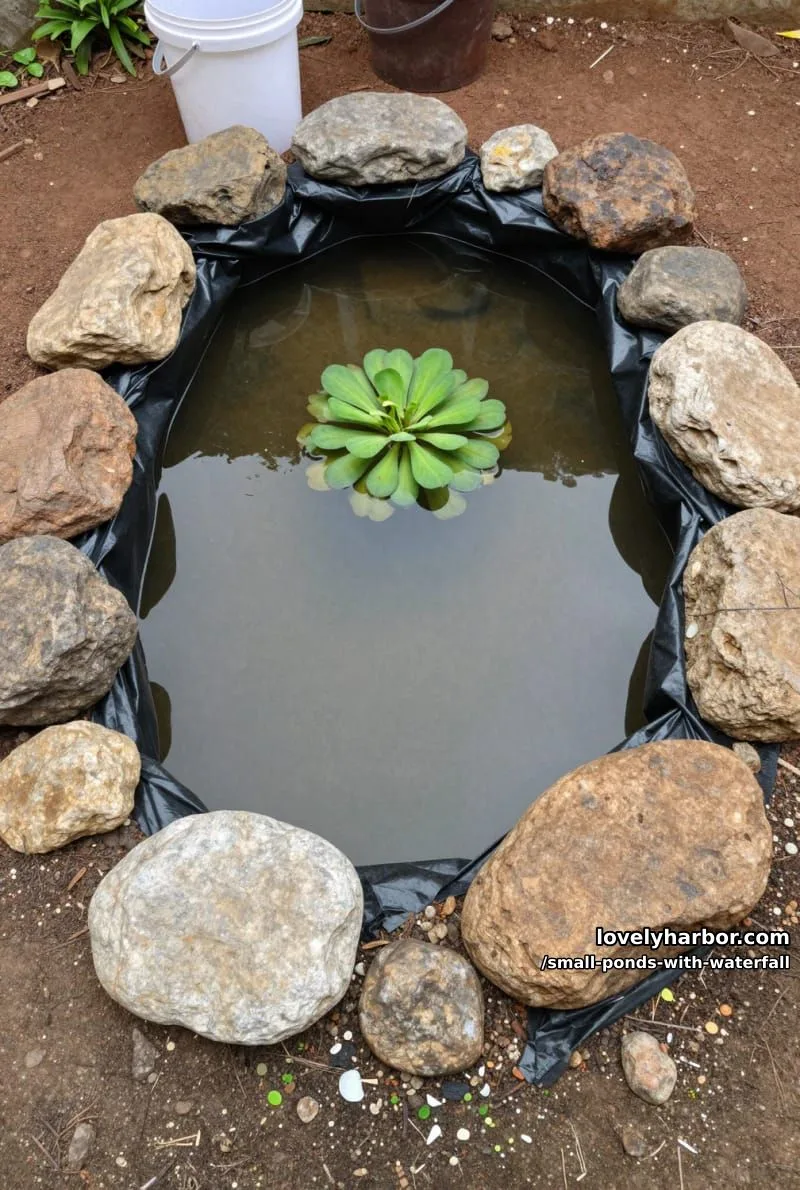
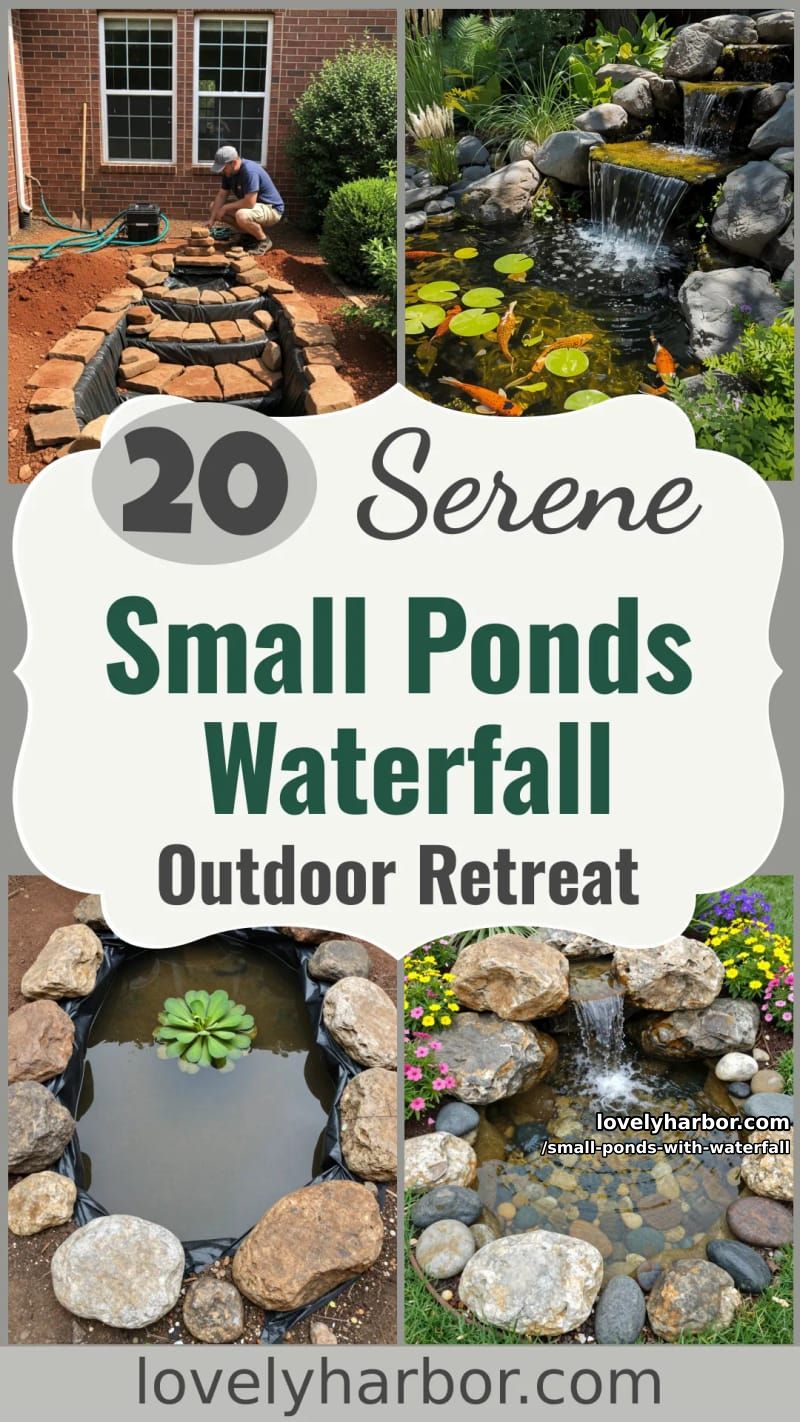
Build from the bottom up and in order, because the sequence is what keeps the liner intact and the pump honest. Dig the deep zone first, then cut planting shelves as you climb so plants and rock each have a ledge to sit on.
- Excavate in tiers: a deep zone (24 in plus if there are fish), a marginal shelf around 9 to 12 in, and a shallow waterline shelf for edge plants.
- Underlayment, then liner: geotextile or even old carpet under 45 mil EPDM stops root and stone punctures.
- Rock from the bottom up: set the heavy base stones before you backfill behind the liner.
- Pump rule: turn the full volume over about once an hour. A 500 gallon pond wants a 500 GPH pump, more if the waterfall climbs high.
- Power: the pump runs off a GFCI outlet. For outdoor water that is code, not a preference.
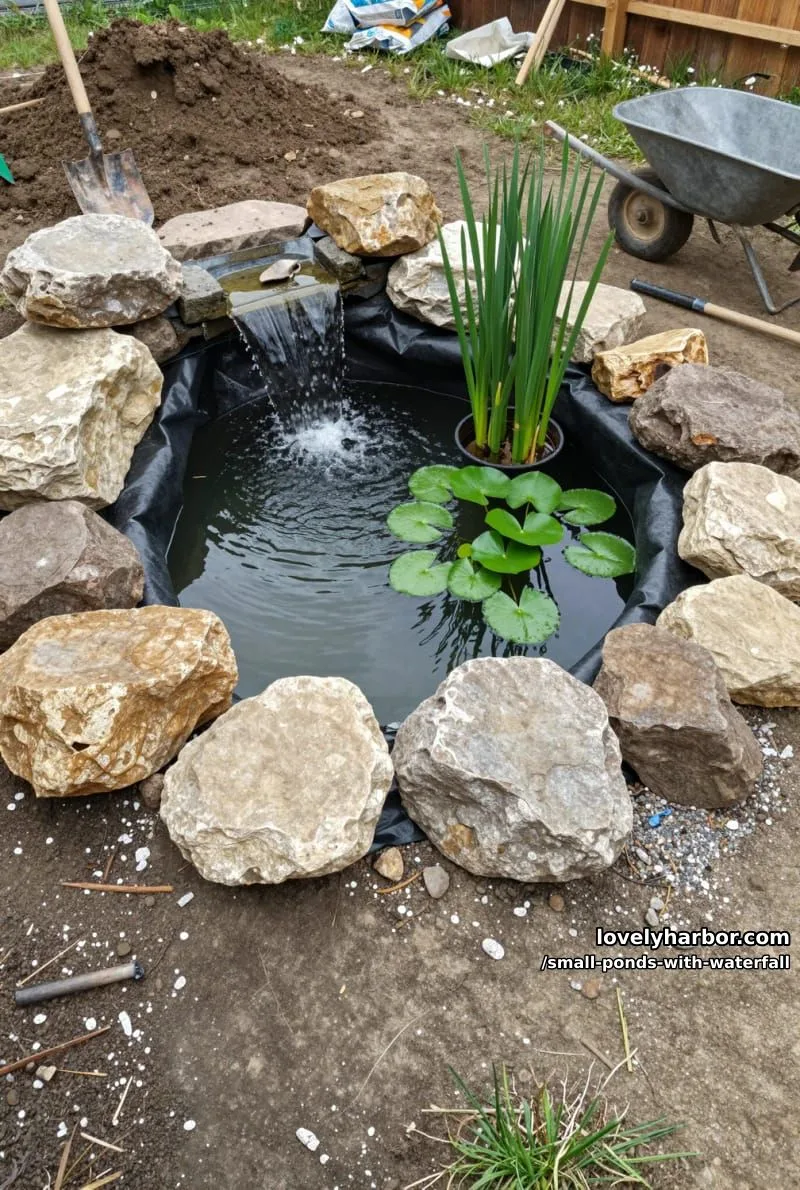
Don’t rush the planting. Let the liner settle and the water clear for a week before you set marginals, or you will spend the next weekend replanting things that floated loose. Water lilies and cattails are the forgiving starters while you find your footing.
19. Koi pond with waterfall, patio seating, and shaded by tall trees.
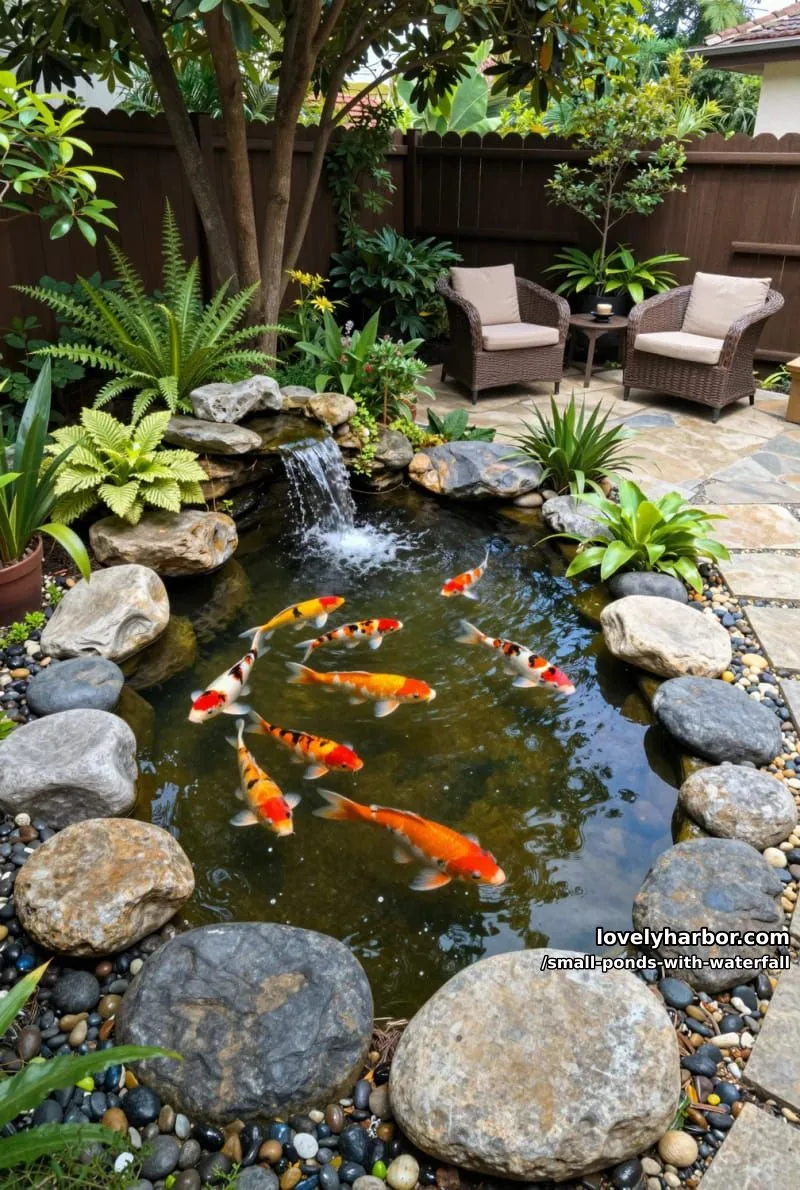
Tall trees over a koi pond mean leaf load and tannins, so plan for both before you fall for the dappled-shade photo. A fall leaf net stretched across the pond beats daily skimming, and oak and pine drop acidifies the water, which a skimmer plus a monthly carbonate-hardness check keeps in line.
For the patio, sit on the downwind side of the falls so the sound carries toward your chair rather than away from it; a waterfall you can barely hear from where you sit is a strange thing to have built. Shade is a genuine asset here, holding water temperatures steady, as long as you stay ahead of the litter it drops.
20. Small waterfall pond with terracotta jug and colorful pot.
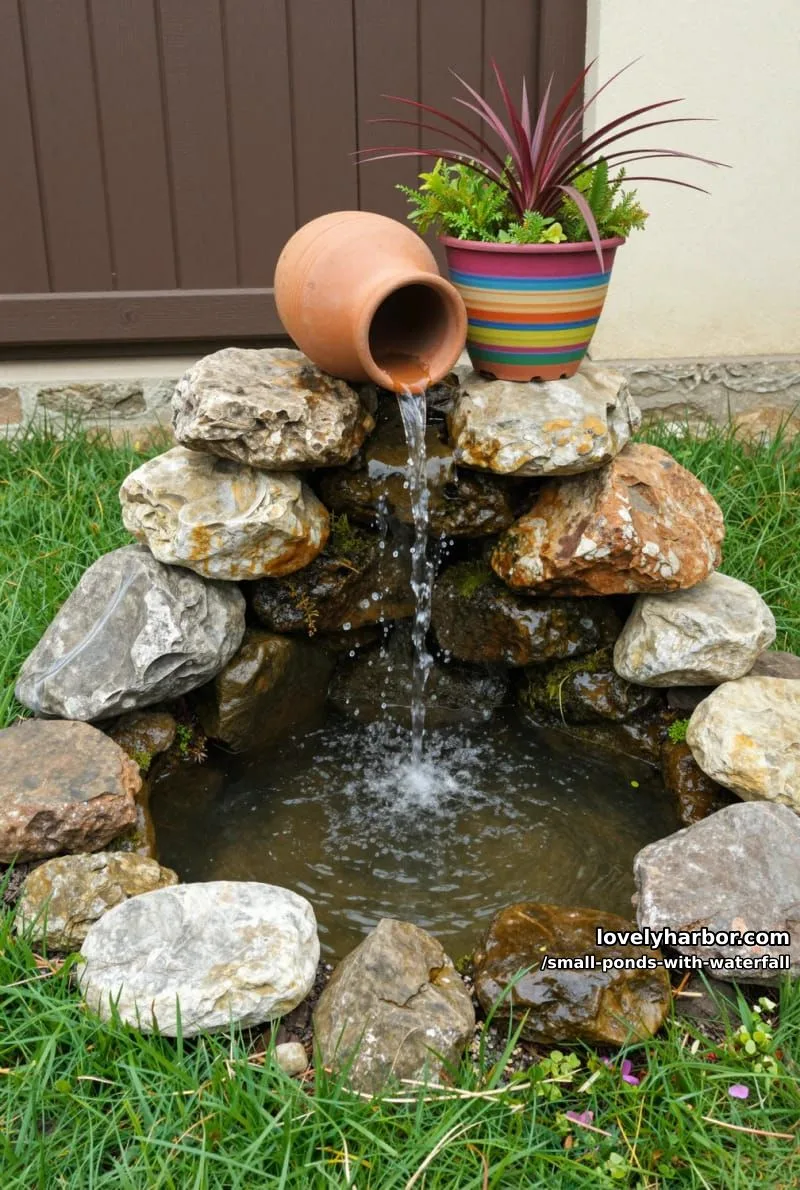
This is the easiest entry on the list: a pondless container fountain. A drilled terracotta jug tipped over a hidden ten to fifteen gallon reservoir, run by a small 120 to 300 GPH pump, gives you the sound and movement with no liner to dig and no fish to keep alive.
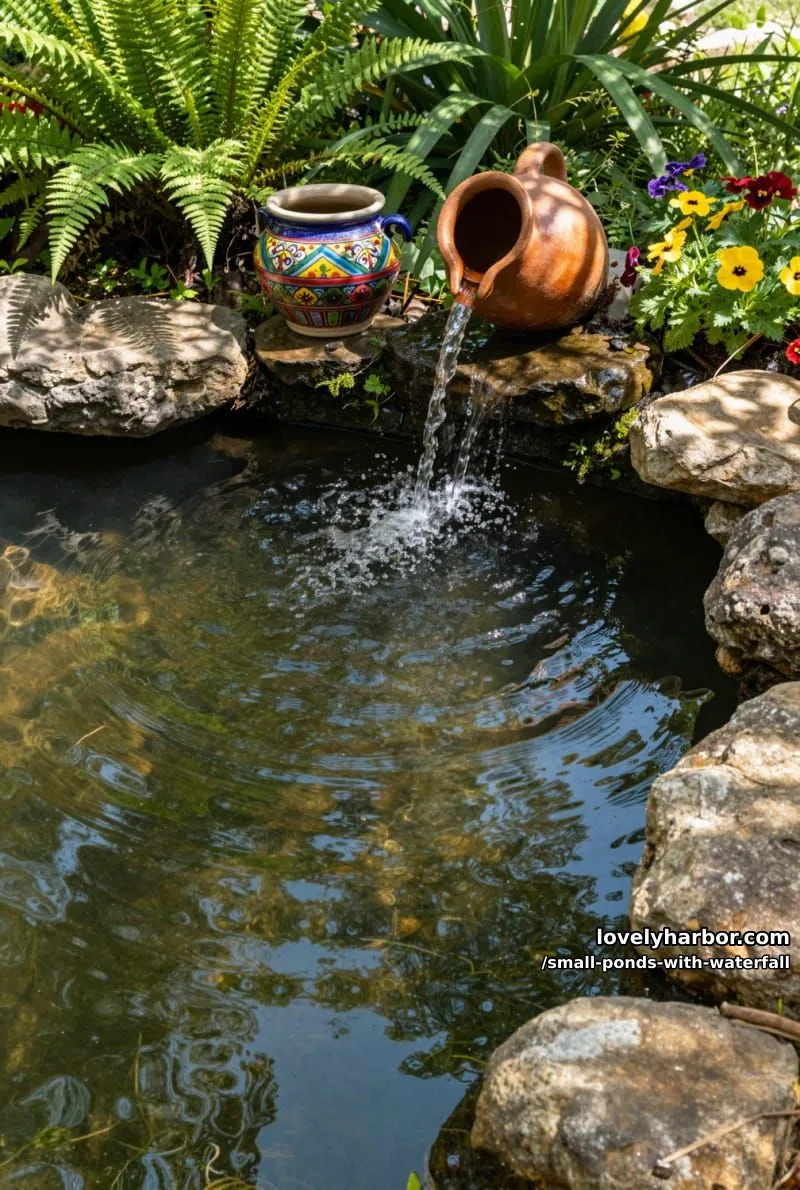
Top it off weekly, more in a heat wave, since a small reservoir evaporates fast and a pump that runs dry burns out. For renters and tiny patios this beats a full pond outright. You can lift it and take it with you when you move.
Conclusion
If you build only one of these, start with the container fountain in idea 20 and learn how a pump and reservoir behave before you commit to digging anything. When you do dig, the two specs that separate a clear pond from a green one are depth and liner: 24 inches and up, 45 mil EPDM, every time. The shallow koi pond is worth saying twice, since koi need a deep place to ride out both August and January. I don’t fully understand why a small bale of barley straw in the pump zone clears water as well as it does, but it has saved me more clarifier money than any gadget. Sequence it slowly, plant after the water settles, and skip the ducks.
Related Posts
- Backyard Garden Ideas
- Small Backyard Ideas
- Courtyard With Water Feature
- Whimsical Garden Ideas For Backyard
- Backyard Flower Garden