
The trick that makes these look store-bought instead of crafty is the mold: a cracked-open eggshell gives the cap a smooth, slightly squat dome you cannot get from a yogurt cup or a muffin tin, and the shell peels off in flakes once the cement cures. You pour cement into the shells, stand a bamboo dowel in each one, let it set, then snap the shell away and paint the dome the classic fly agaric red with white dots.
Below is the full sequence, the cement that actually holds a thin rim without crumbling, and the four or five places people wreck the batch.
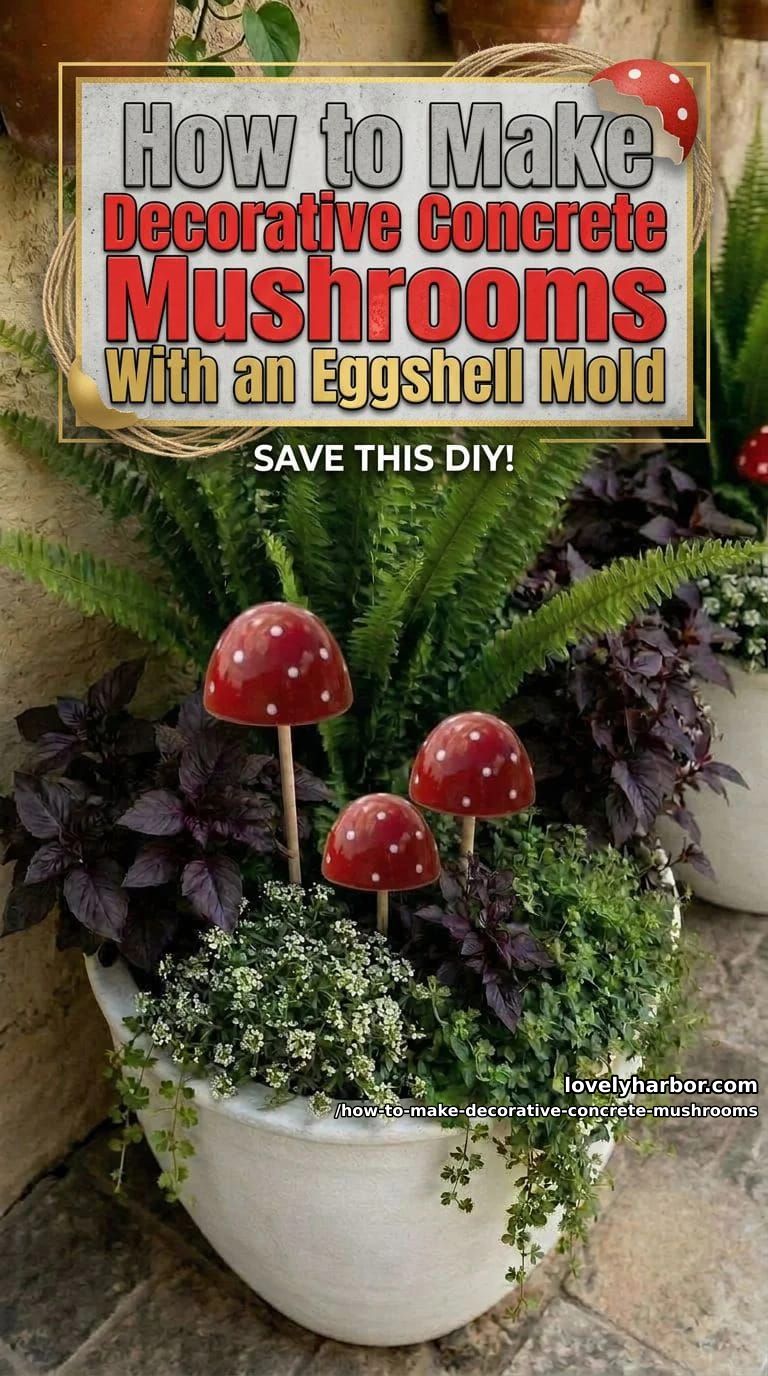
One thing up front, because it changes what you buy: regular sand-and-gravel concrete will not work here. The egg-shell wall is thin, the dome edge is thinner, and a coarse aggregate mix flakes at that rim every time. You want a fine, non-shrink repair cement. I learned this the annoying way, with a first batch of play-sand mortar that lost half its caps to crumbled edges.
What you are actually building
Each mushroom is a single bamboo dowel with a cement dome cast onto one end. The rounded bottom of the egg becomes the top of the cap; the dowel runs through the center and out the open side, so when you flip the piece upright in the garden the long tail of the dowel becomes the stem and the anchor that goes into the soil. No glue, no two-part assembly, no separately molded stem balanced on top (which is how most concrete-mushroom tutorials do it, and why their tops fall off).
Shopping list
Split into what gets used up and what stays in your drawer. If you already own craft paint and brushes, the real project cost is closer to the materials column alone.
Materials (consumables)
| Qty | Item | Spec | Price |
|---|---|---|---|
| 6 to 12 | Eggshells | Large eggs, cracked near the top, rinsed | Free |
| 1 box | Rapid Set Cement All non-shrink repair cement, 25 lb | Fine cement and sand blend, sets in about 15 minutes | $25 to $35 |
| 1 set | Apple Barrel acrylic craft paint set with red and white | 2 oz bottles, multi-surface, works on concrete | $12 to $20 |
| 1 bottle | Mod Podge Outdoor clear gloss sealer, 8 oz | Water-based, weather-resistant topcoat | $8 to $13 |
| 1 pack | Bamboo dowels, 1/4 in x 12 in | sold in 50-packs; you use four | $7 to $12 |
| Materials subtotal | $41 to $70 | ||
Tools (one-time, reusable)
| Qty | Item | Spec | Price |
|---|---|---|---|
| 1 | Cardboard egg carton | Holds the filled shells and dowels upright | Free |
| 1 | Plastic mixing cup and stir stick | A deli or yogurt cup works; cement ruins it for food | Free |
| 1 set | Fine detail paint brush set, sizes 000 to 6 | The small rounds make clean white dots | $6 to $10 |
| 1 pair | Disposable gloves | Wet cement is caustic; do not skip these | Have on hand |
| Tools subtotal | $6 to $10 | ||
| Combined total if buying everything | $47 to $80 | ||
Prices are approximate ranges as of June 2026; verify before purchase.
Step 1: Prep the eggshell molds
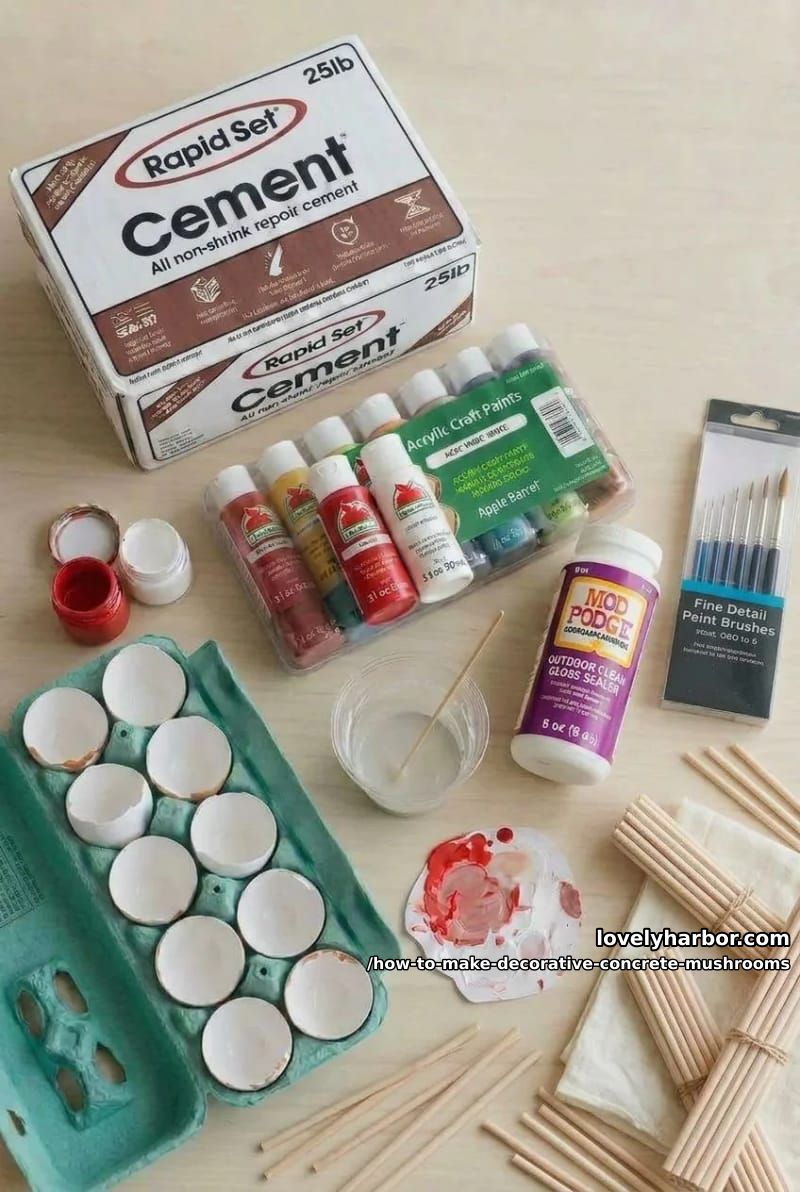
Save shells over a week of normal cooking rather than wrecking a dozen eggs at once. You want the deeper, rounded half, and you want the opening as clean and level as you can manage.
- Crack near the narrow top. Tap a ring around the pointed end and lift the cap off, leaving the wide rounded base intact as the bowl. A bigger opening makes pouring easier.
- Empty and rinse. Rinse the inside with warm water, peel out the loose membrane if it lifts, and let the shells dry. The membrane is fine to leave; it just helps demolding slightly when it stays.
- Seat them in the carton. Stand each shell open-side up in an egg carton cup. This is your casting rack, your drying rack, and the thing that keeps the dowel vertical, all at once.
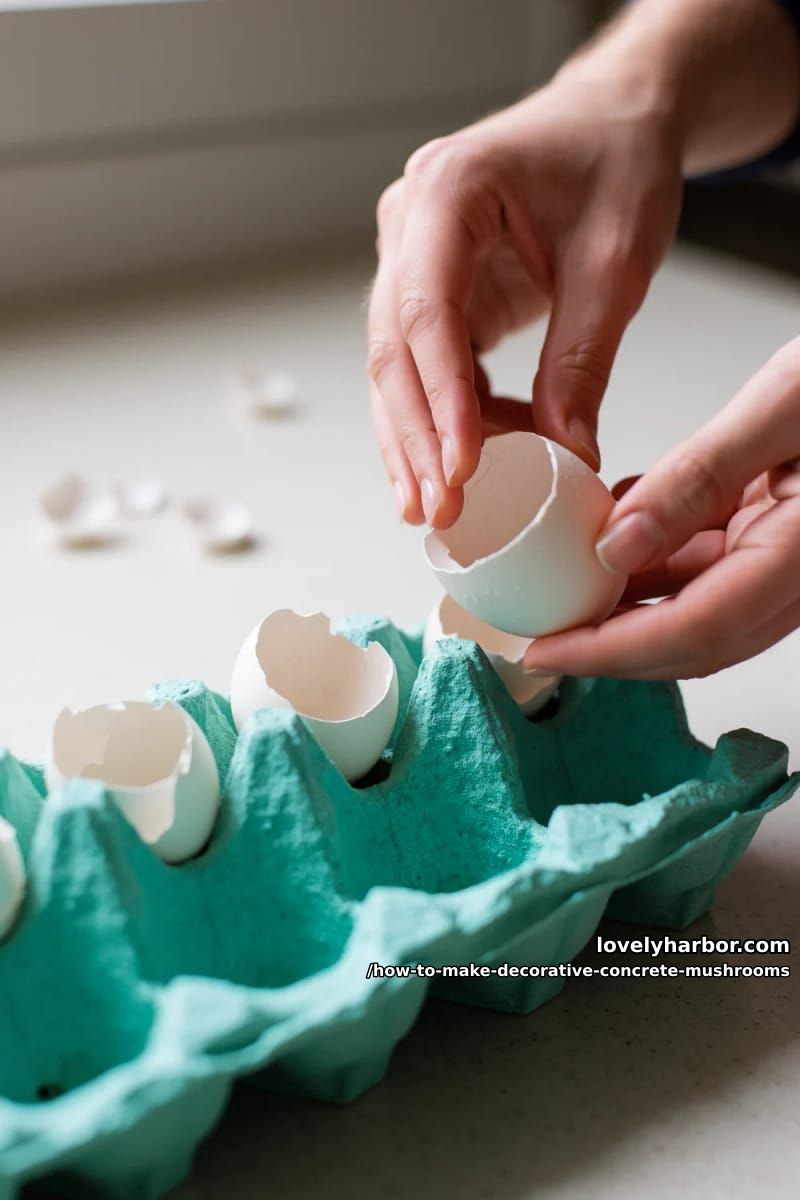
Chicken eggs cap out around plum-sized. Want something chunkier? Swap in a goose egg. They run roughly twice the volume, the shell is thicker and easier to handle without crushing, and the rounded base casts a fat, squat dome that reads like a proper forest toadstool. Same method, bigger pour, sturdier dowel.
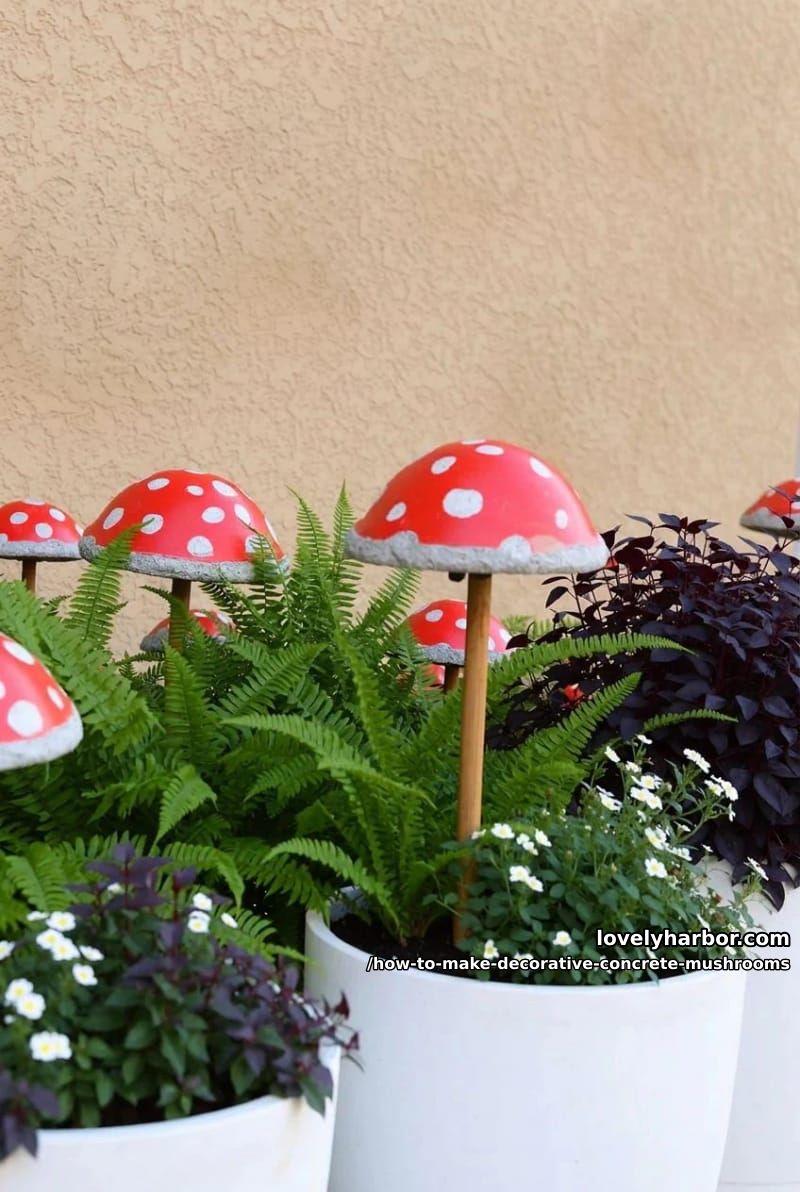
A few oversized goose-egg caps towering over a cluster of chicken-egg ones is what sells the whole grouping. Here's an example of larger mushrooms made from goose egg shells 👇
Step 2: Mix the cement
This is the step that decides whether you get crisp domes or crumbling rims. Rapid Set Cement All is a blend of fast cement and fine sand, no gravel, so it pours into a thin shell and holds an edge. It also sets fast, which is the catch: you have roughly 10 to 15 minutes of working time before it stiffens, so mix small.
Ratio: start around 3 to 4 parts cement powder to 1 part water by volume, then adjust.
Texture: thick pancake batter. It should pour in a slow ribbon and self-level in the shell, not plop out in clumps and not run like milk.
Batch size: mix only what fills 4 to 6 shells at a time. A larger batch sets in the cup before you finish pouring.
Wear gloves and avoid breathing the dry powder; wet cement can burn skin on long contact. And do not walk away to answer the door mid-batch. Quick-set cement that hardens in the cup is wasted, and rinsing it down a sink can clog the drain, so scrape leftovers into the trash.
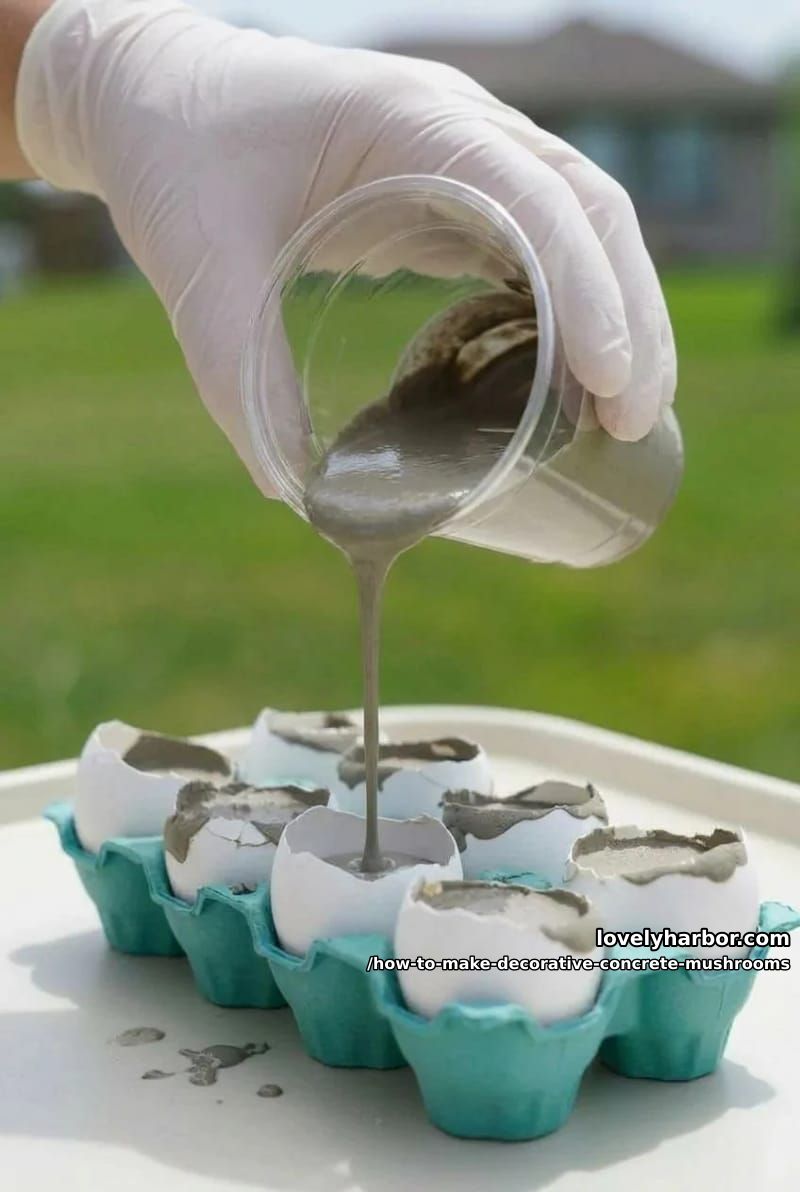
Step 3: Fill the shells and stand the stems
Fill each shell almost to the rim, then push a full-length bamboo dowel straight down into the wet cement until it nearly touches the bottom of the dome. Hold it vertical for fifteen or twenty seconds; quick-set grabs fast and the dowel will stay put on its own after that. The carton keeps everything standing while it cures.
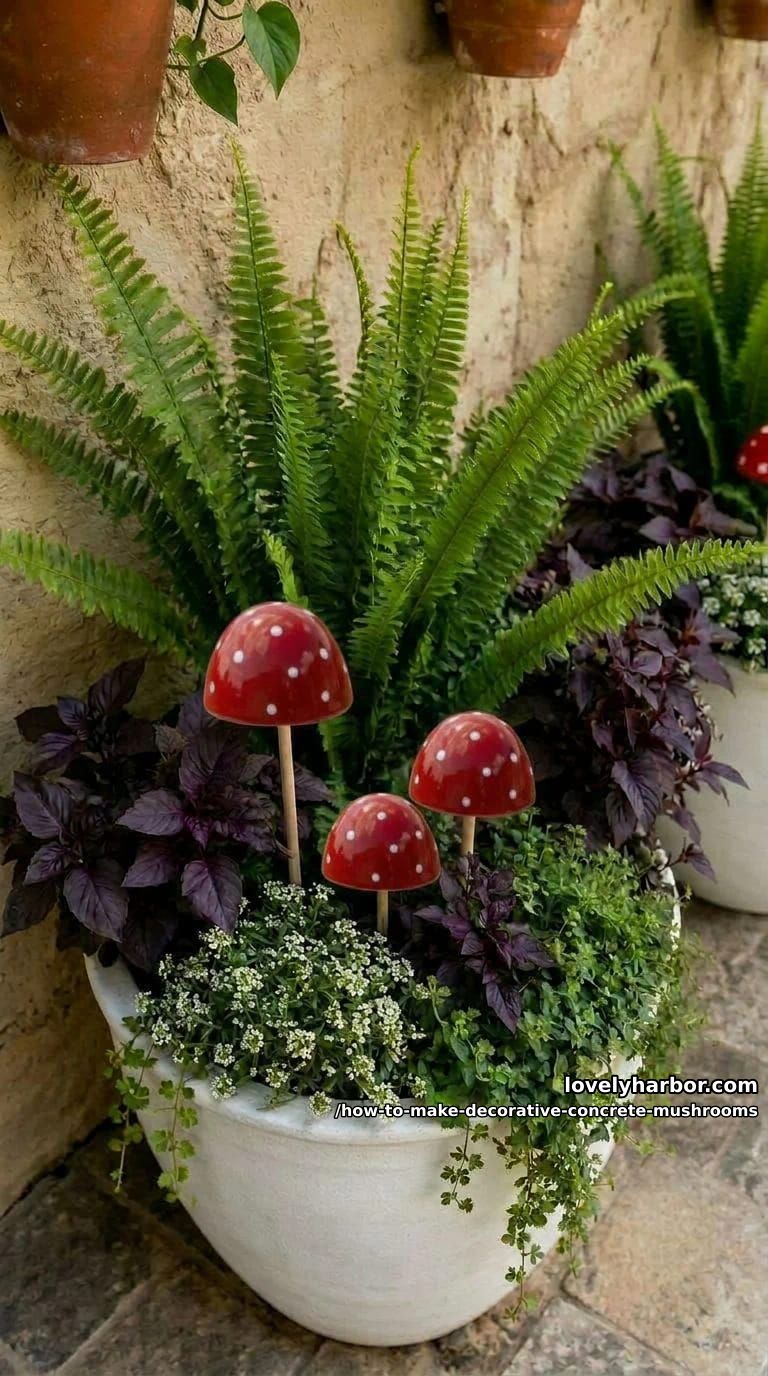
Vary the dowel heights on purpose. A cluster where every stem is identical reads like a factory set; a mix of tall and short ones, like the reference planter, looks like mushrooms that actually grew there. You can also leave a couple of shells dowel-free and cast solid little button caps to nestle at soil level.
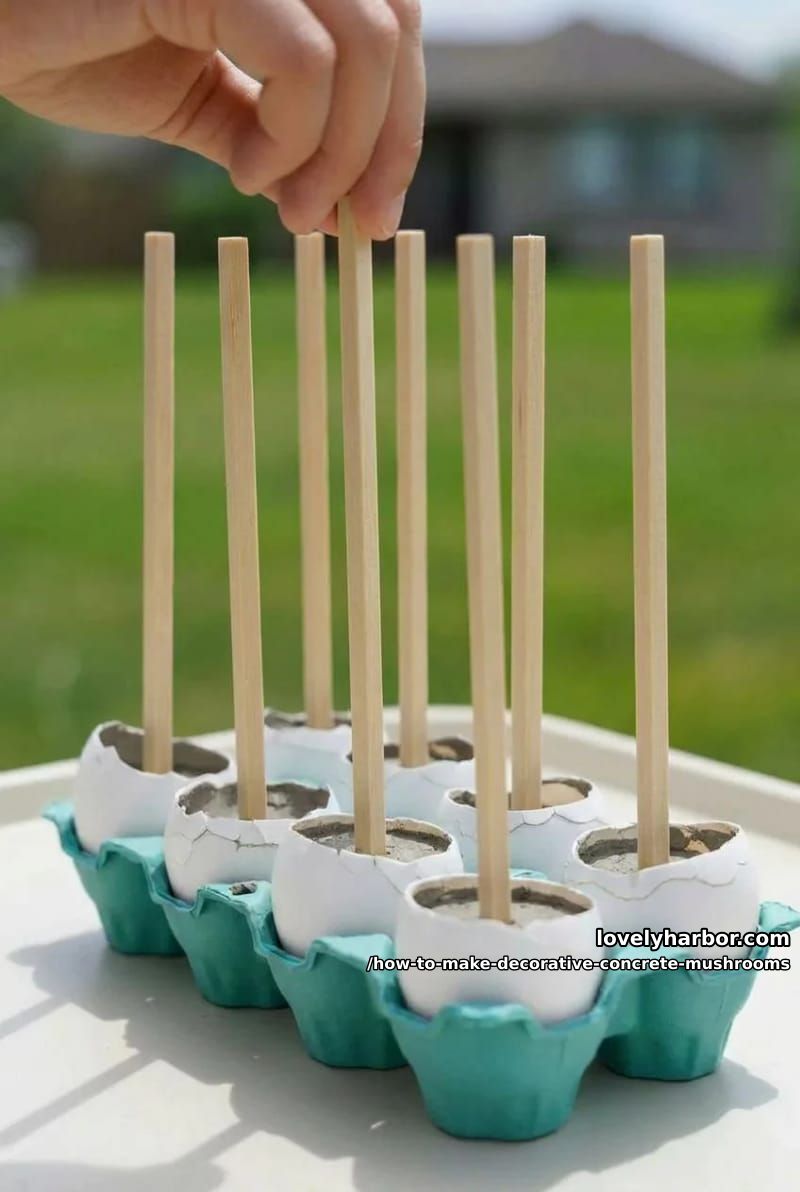
Step 4: Cure, then peel the shells
Cement All is firm enough to handle in about an hour, but give thin egg-shell castings a few hours, ideally overnight, before you demold. Patience here costs nothing and rushing cracks the dome.
To demold, hold the cured piece by the dowel and gently crush the shell with your fingers; it flakes off in white chips the way it does off a hard-boiled egg. The surface underneath comes out smooth and faintly speckled. Pick off any stubborn bits at the rim with a thumbnail. Flip it dowel-down and you have a mushroom: dome on top, stem below.
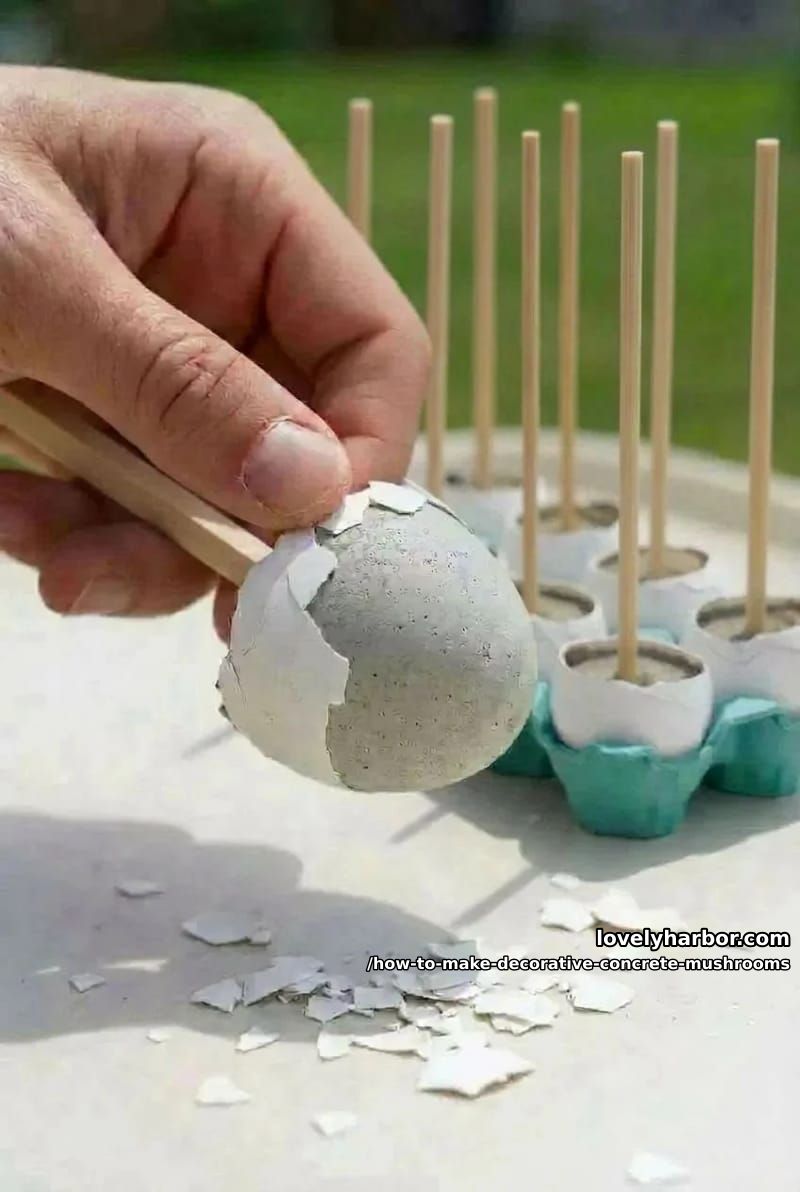
Step 5: Paint the caps
The look in the reference photo is Amanita muscaria, the storybook toadstool: a saturated red dome with scattered white dots. Base-coat the whole dome red first and let it dry, then add the dots. Acrylic craft paint grips bare cured concrete well; you do not need a primer for a piece this small.
- Two thin red coats. One coat looks chalky over grey concrete. A second, after the first dries, gives the deep even red. Leave the bamboo stem unpainted, the way real-looking versions do.
- Dot with the back of a brush. Dip the tip end of a dowel or a round detail brush handle into white, then press straight down for a clean circle. Scatter them unevenly and in two or three sizes; perfectly spaced dots look printed.
- Skip high-gloss paint. A satin or matte red reads more like a real cap. Save the shine for the sealer in the next step, where you can control how wet it looks.
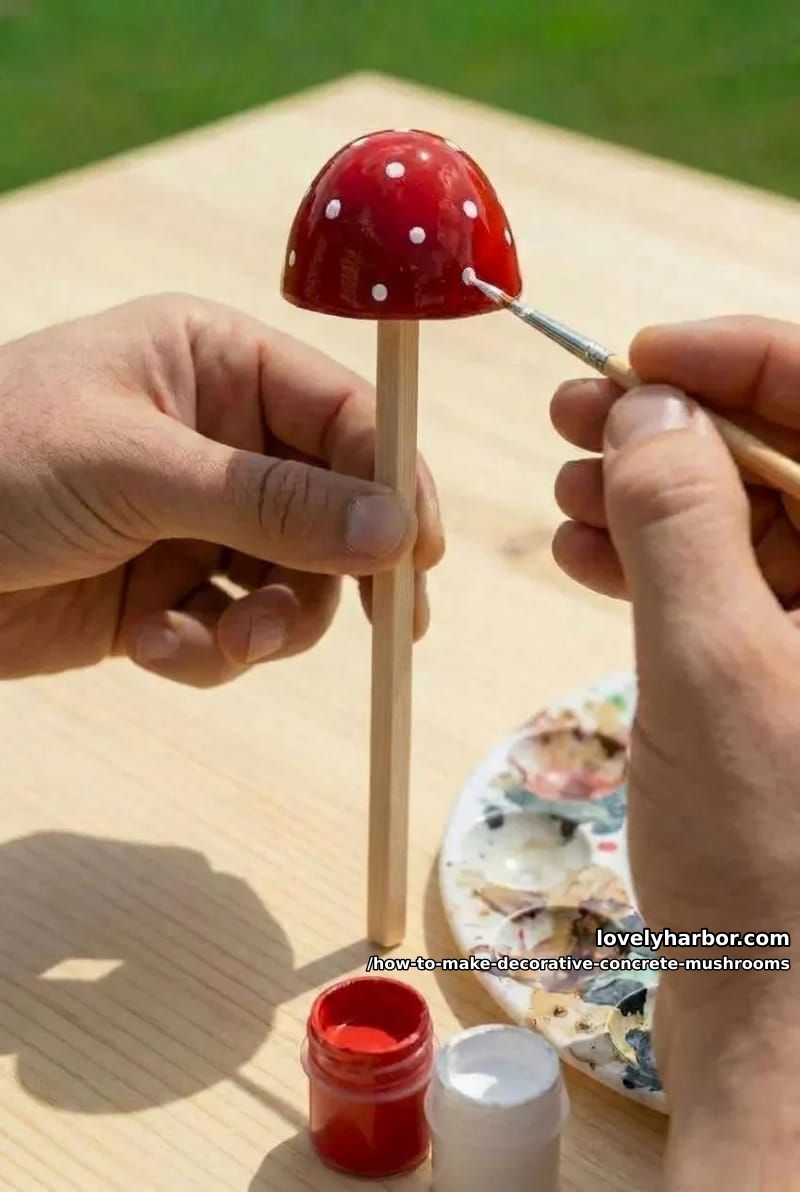
Step 6: Seal for the garden
Bare painted concrete left outdoors will chalk and fade within a season. Brush on two thin coats of an outdoor water-based sealer like Mod Podge Outdoor, drying between coats. Gloss gives that wet, just-rained toadstool sheen; matte keeps them looking like stone. Coat the cap and the top of the stem, and let them cure a full day before they go in the ground.
Pick the right cement and consistency
Do this
- Use a fine non-shrink repair cement or a sand-topping mix.
- Mix to thick pancake batter so it pours and self-levels.
- Work in small batches you can pour before it stiffens.
- Demold thin domes after several hours, not minutes.
Avoid
- Gravel concrete mix: the aggregate crumbles the thin rim.
- A soupy mix: it leaks through shell cracks and stays weak.
- A stiff, dry mix: it leaves voids and a rough cap surface.
- Forcing the dowel in after the cement starts setting.
Mistakes that ruin the batch
- Wrong cement. The single most common failure. Coarse concrete will not hold the egg-shell dome edge; buy the fine repair blend.
- Mixing too much at once. Quick-set cement hardens in the cup in minutes. A half-set batch poured into shells gives lumpy, weak caps.
- Dowel drifts off-center. If you let go too soon it tilts as the cement settles, and a crooked stem will not stand straight in soil. Hold it vertical until it grips.
- Demolding too early. Crush the shell off a soft casting and you crush the cap. If the surface dents under a fingernail, wait longer.
- Skipping the sealer. Unsealed acrylic over concrete fades and flakes after a few weeks of sun and rain, and the white dots go first.
Build-day timing
- Over the week before: rinse and save 6 to 12 eggshells.
- Day 1, morning: mix cement, fill shells, set dowels. Working time per batch is about 15 minutes.
- Day 1, evening or overnight: let the castings cure fully.
- Day 2: peel the shells, base-coat red, let dry, add white dots.
- Day 2, later: two sealer coats, then cure a full day before planting.
Conclusion
If you make only one change from the usual tutorials, make it the cement. Everything else here is forgiving, but a coarse mix will crumble the rim no matter how careful your pour. Once you have a working batch, the marginal cost of the next mushroom is basically one eggshell and one dowel, so cast more than you think you want and plant them in odd-numbered clusters at staggered heights. And if the painted red starts feeling like a lot of the same toadstool, leave a few caps in plain sealed grey or paint them tan with darker speckles; mixed in among the red ones, they read less like a craft project and more like something that wandered in from the woods.