
The cheapest outdoor decorations are the ones you build from things already sitting in the garage: a tomato cage, a pool noodle on clearance, the cardboard a delivery showed up in, a dollar-store planter turned upside down. Every project below costs less than a single store-bought inflatable, most of them under fifteen dollars a piece, and the ones I have flagged for weather will still be upright after the first ice storm. I have also marked the ones that quietly fail outside (cardboard, looking at you), so you find out here instead of at 11pm in January with a flashlight.
Power and wind, in that order. Use LED strings only: they sip electricity and never get hot enough to soften a plastic box or scorch paper, which matters once you are wrapping cardboard and foam. Run everything to an outdoor-rated extension cord on a GFCI outlet, and put the whole display on a $10 mechanical timer so you are not reaching behind a frozen shrub every night. Then anchor anything light enough to lift with one hand, because a December gust will cartwheel it down the block. Sand in the base, a length of rebar through the middle, a tent stake and fishing line: pick one before it goes out, not after you find it in a neighbor’s hedge.
1. Stacked light-up gift boxes for the porch
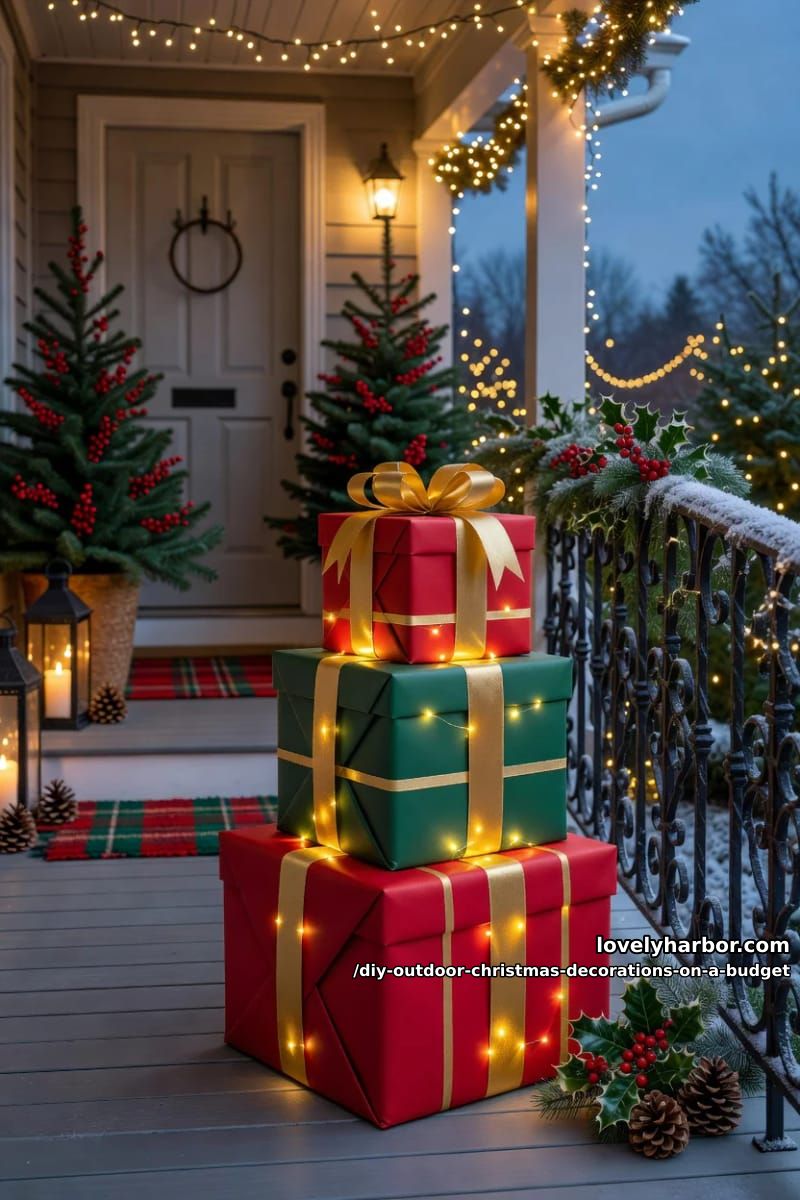
This is the single highest-impact build for the money, and the material you pick decides whether it lasts one week or five winters. On an open porch or in the yard, skip cardboard entirely and use corrugated plastic (Coroplast), the stuff political yard signs are made of. A 20 by 30 inch sheet cuts into five squares, and if you nest your cuts you can get the medium and small cubes out of the offcuts from the big one.
Tape the five panels into an open cube with strong packing tape, then run colored Duck Tape across each face for the ribbon and thread a single LED strand inside through a slit. Cardboard wrapped in foil paper looks identical on day one and turns to mush by the second rain, so reserve it for a porch that genuinely stays dry.
| Box material | Holds up where | Rough cost per stack of 3 |
|---|---|---|
| Cardboard + foil wrap | Covered, dry porch only | Near free |
| Coroplast sheet | Open porch, yard, snow | $15 to $25 |
| Plywood or pallet frame | Years, full weather | $0 if you scavenge wood |
2. Frozen ice globe luminaries (if your winter cooperates)
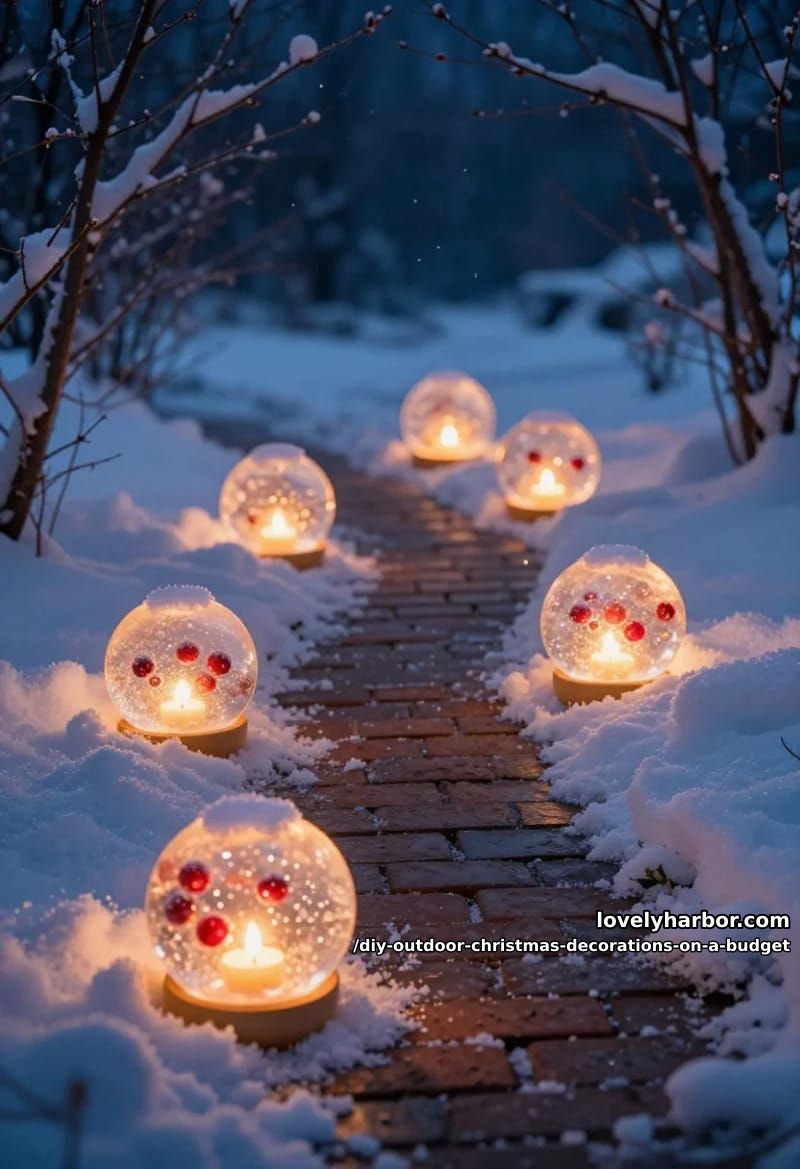
Nearly free, and there is nothing else on this list that gets you that diffuse amber glow lining a driveway. Fill balloons with water, set them outside (tied end up) once it is below about 20°F, and check after a day: when the outer shell has frozen solid but the core is still liquid, snip the balloon off, poke a hole in the bottom, and drain. Drop a battery tea light underneath and set the hollow globe on top. Add a few drops of food coloring or some cranberries before freezing if you want them less plain.
One honest caveat I cannot explain: the globes I have frozen in a chest freezer come out clearer and tougher than the ones I leave outside, even at the same temperature. If you are somewhere that never reliably drops below freezing, this whole idea is not for you, and no amount of wishing changes that. Everyone else gets a decoration that costs the price of a bag of balloons.
3. Tomato cage or PVC light trees in a group of three
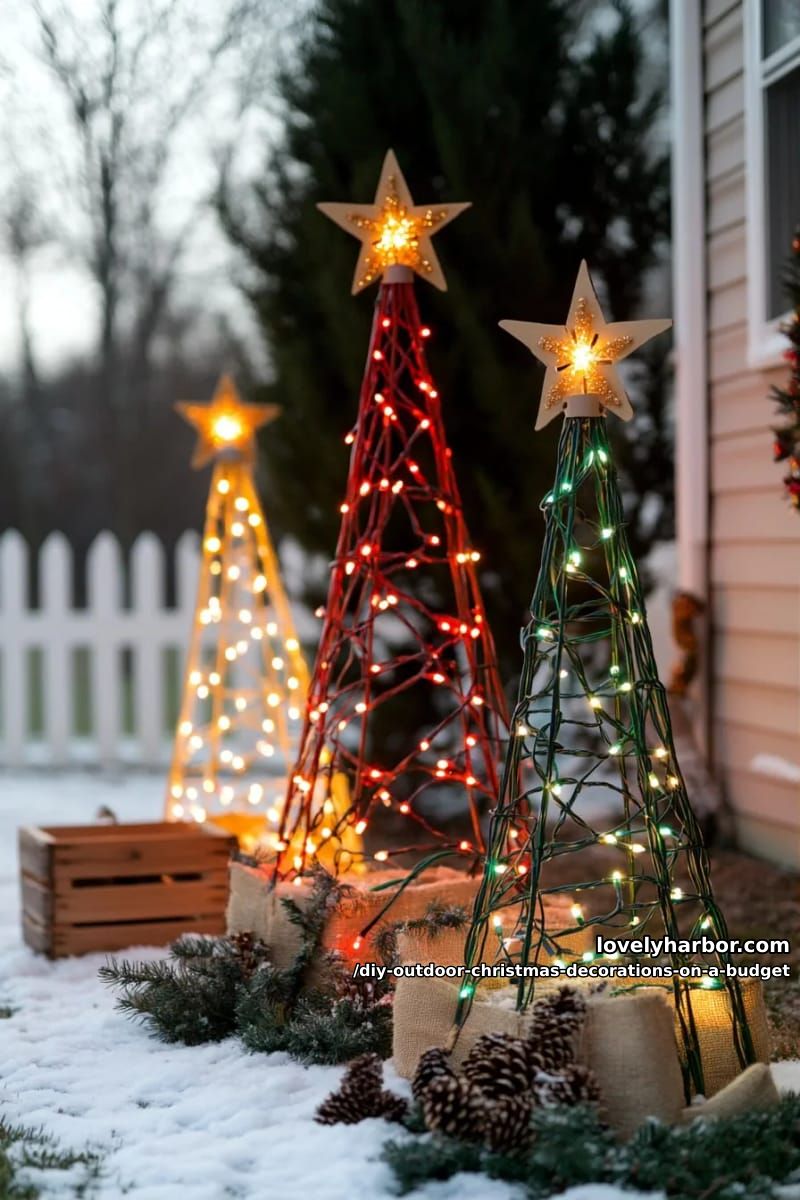
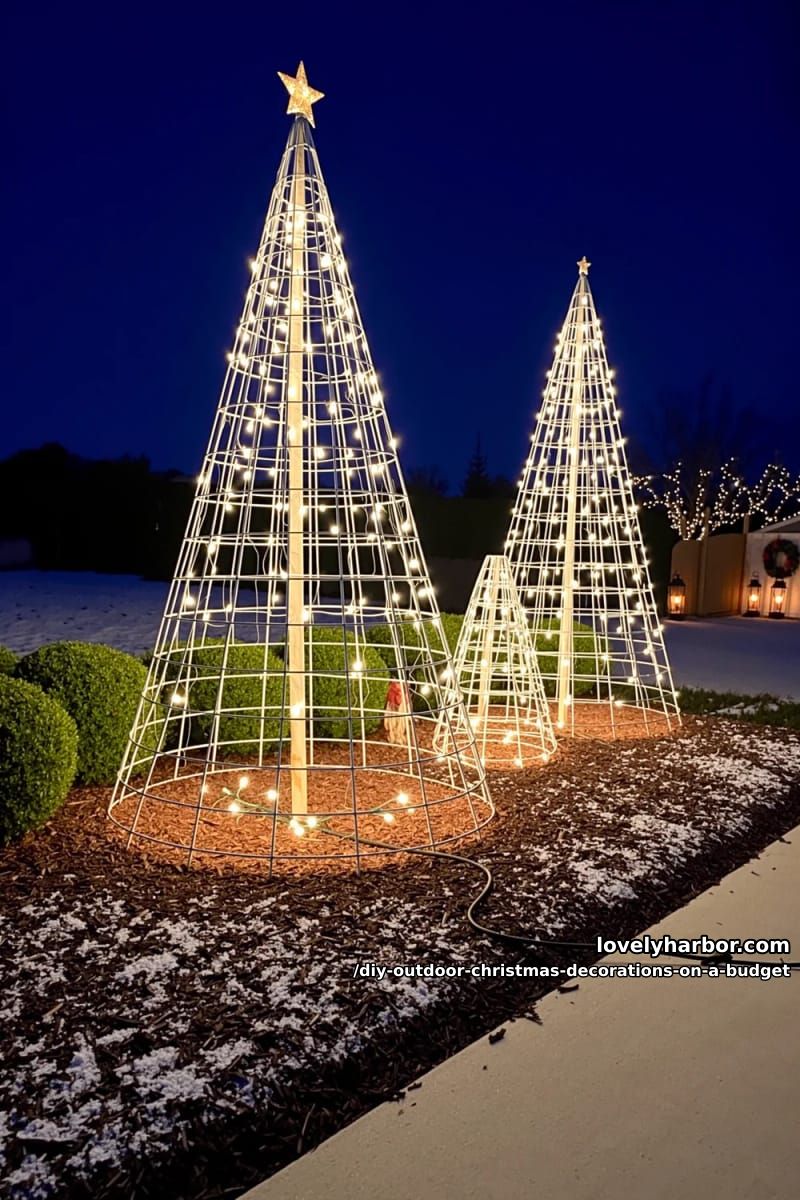
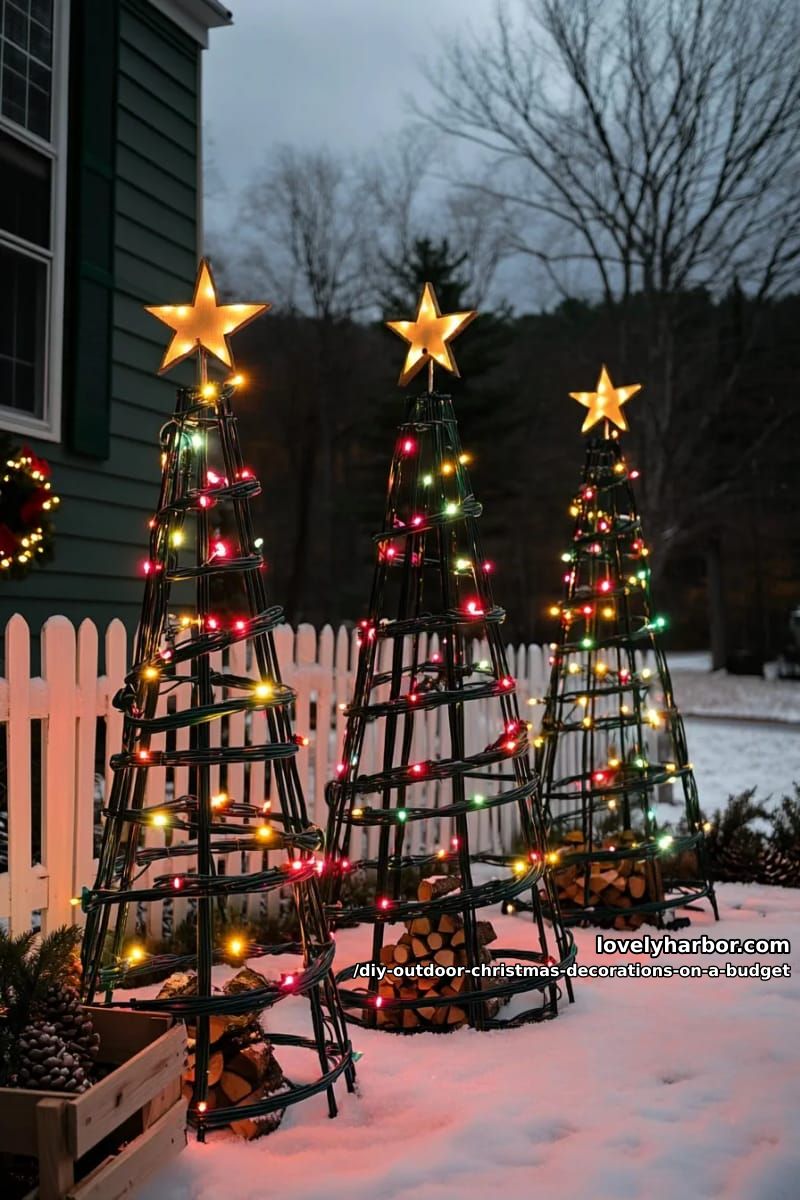
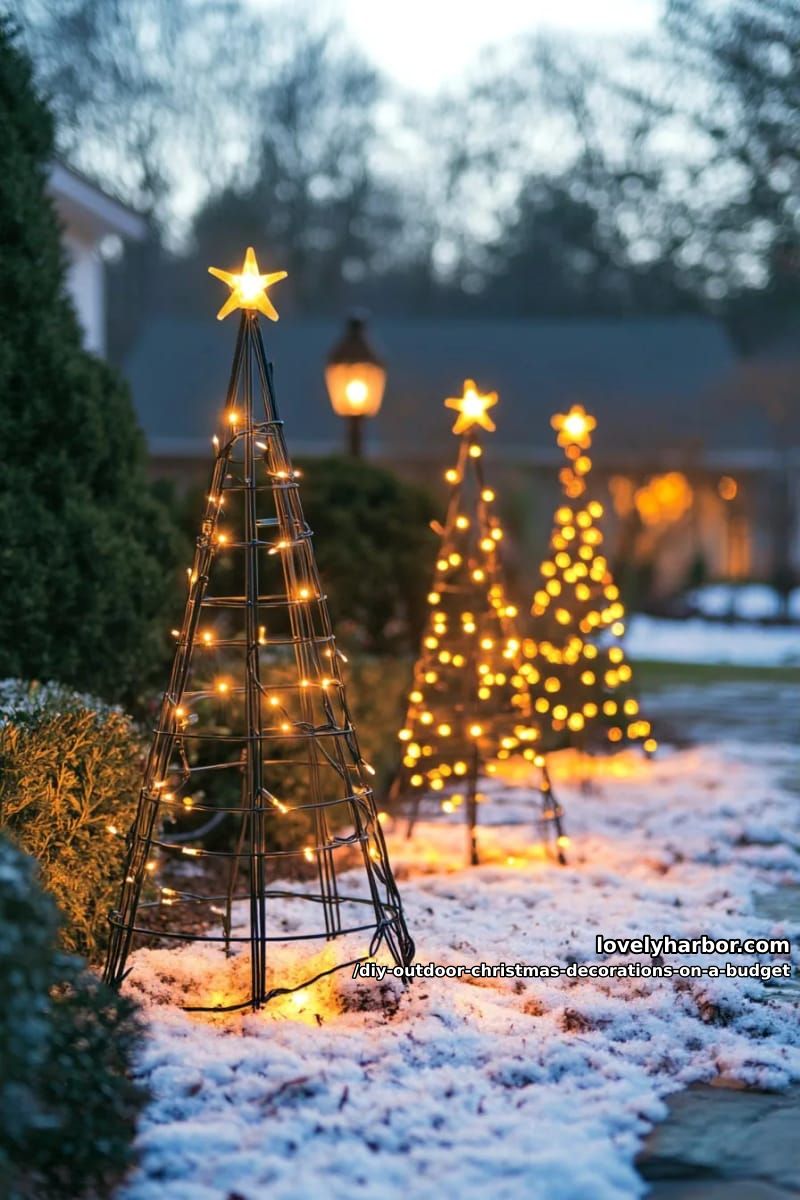
Flip a wire tomato cage upside down, gather the three prongs at the top and zip-tie or rubber-band them into a point, then wrap a 100-count light strand from top to bottom. That is the whole project, and it runs roughly five to nine dollars a tree if you buy the cages, less if last summer's are already rusting in the shed.
The trick that separates a homemade-looking one from a sharp one is grouping: make three at different heights and cluster them, never a lone tree marooned on the lawn. PVC pipe lashed into a cone does the same job for about twenty-five dollars across three if you have no cages, but the cages are faster and you probably own some.
Do this
- Pick one light color and commit. Warm white across the whole display reads intentional; a different multicolor strand on every piece reads like a clearance bin.
- Wrap an extra loop wherever two wires cross so the lights do not sag and slide down by New Year’s.
- Stake the base. A 3-foot cage catches wind like a sail.
Avoid
- Incandescent strands. They cost more to run and the old glass bulbs shatter in a hard freeze.
- Glass anything near a wind tunnel of a porch.
- One strand stretched thin. Two or three packed strands are what makes it glow instead of flicker.
4. Giant bells from dollar-store planters
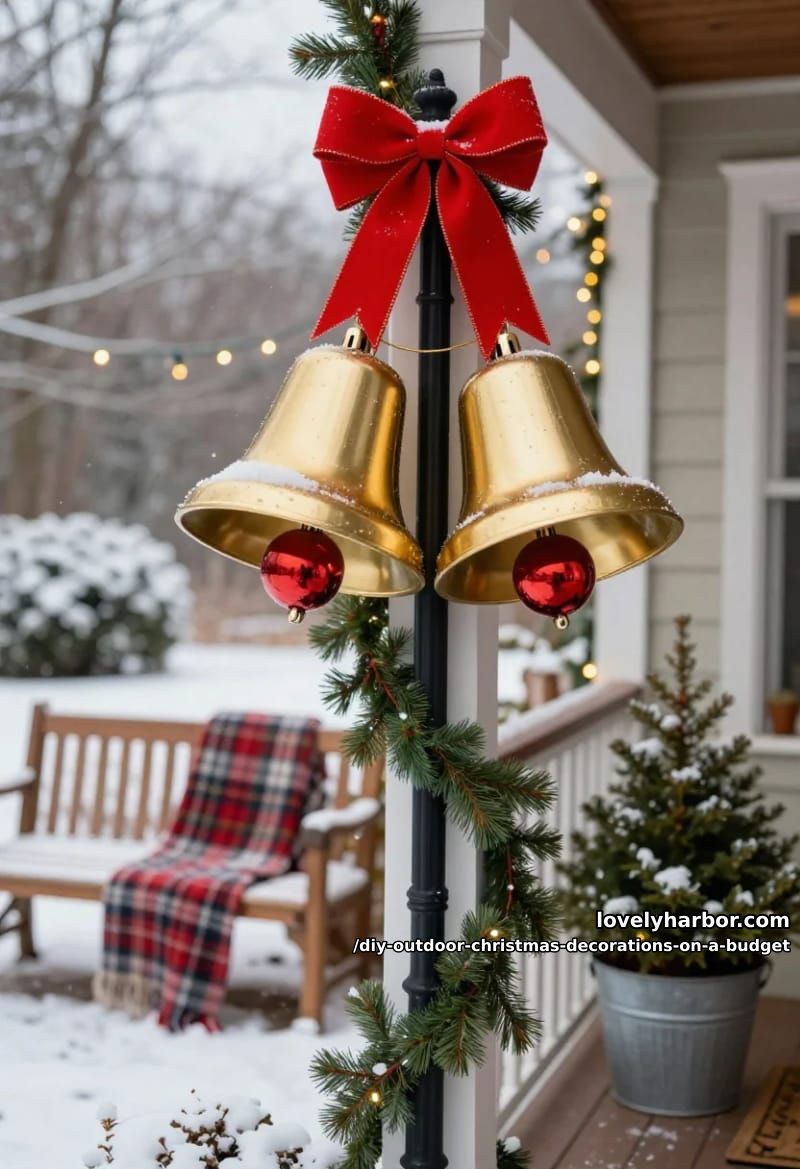
This is the runaway favorite in the budget-decor world right now, and for once the hype is earned. Take a cheap plastic flowerpot, spray it gold or silver, flip it upside down, and hang a large ornament from the drainage hole so it dangles below the rim like a clapper. Two or three tied together with wire-edged ribbon read as a single expensive bell cluster from the street. Dollar Tree planters are the usual base, though be warned they went to $1.25 a while back, so this is no longer the literal one-dollar project the older tutorials promise; budget about four dollars more for a can of metallic spray paint. Renters with no yard: this is your project, because it hangs on a door, a railing, or a shepherd's hook and leaves nothing behind.
5. A pool noodle candy cane walkway
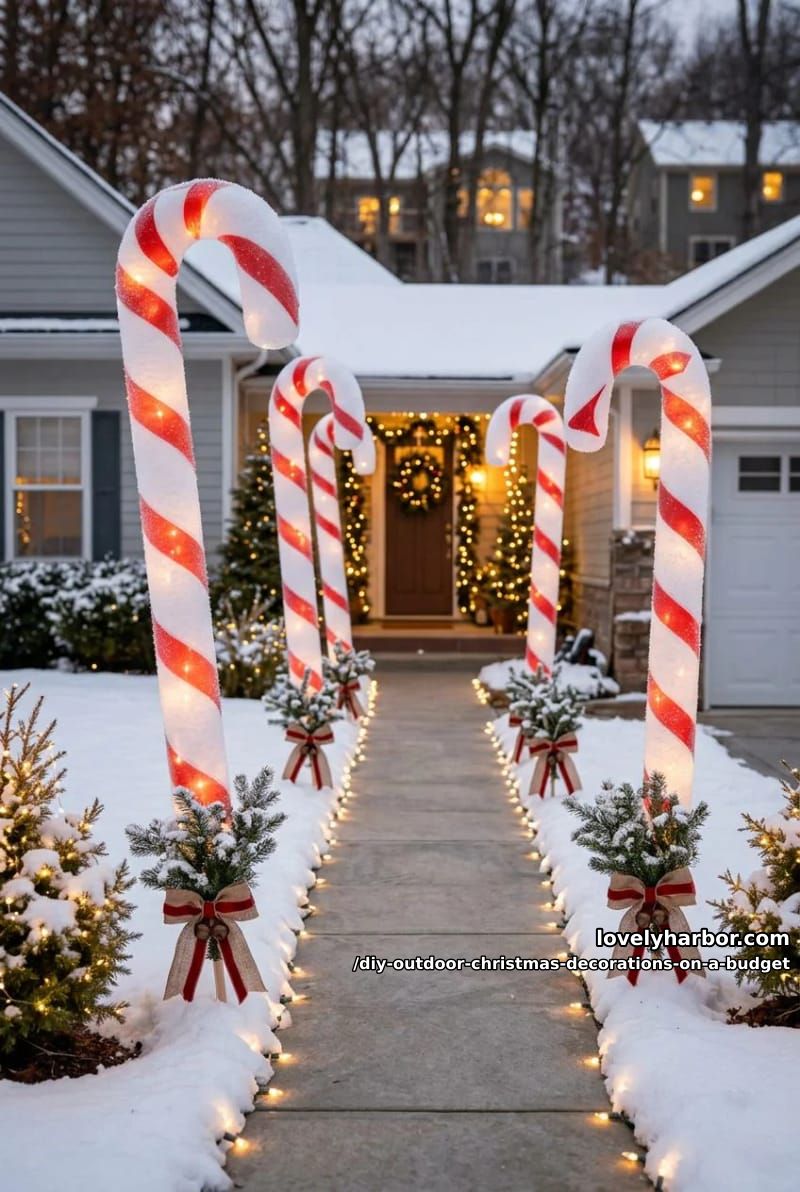
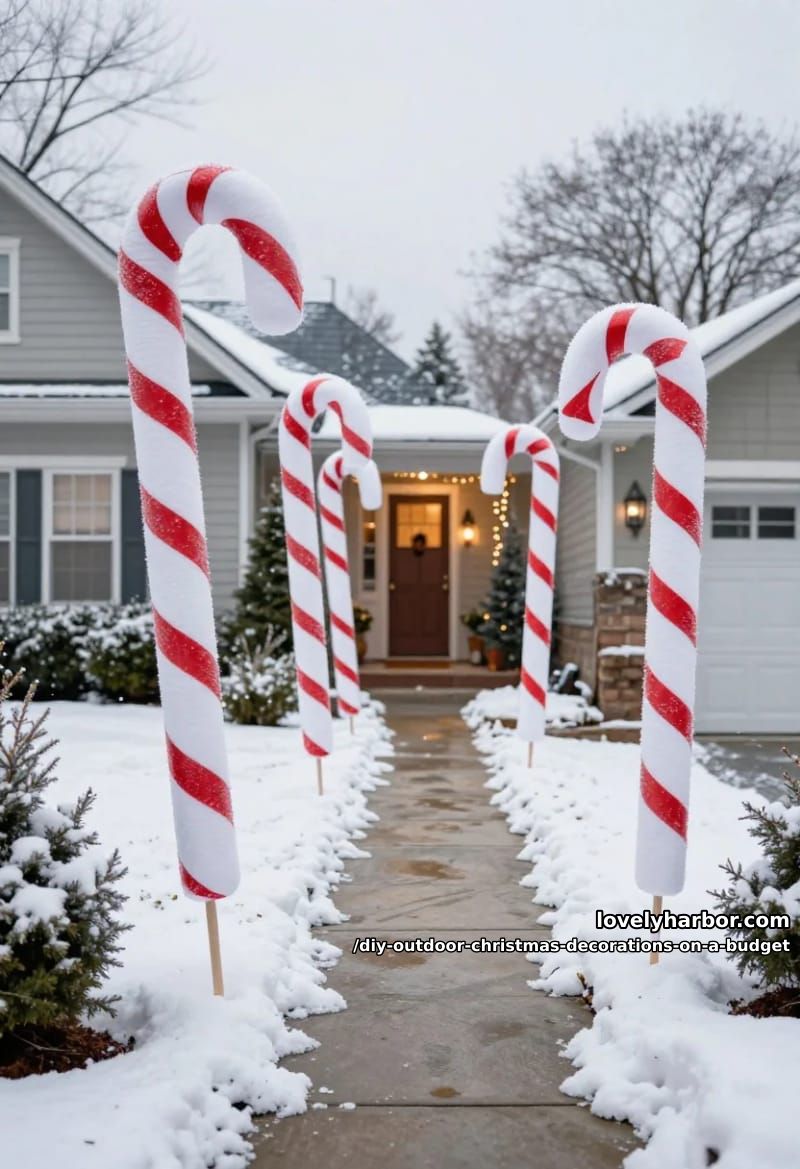
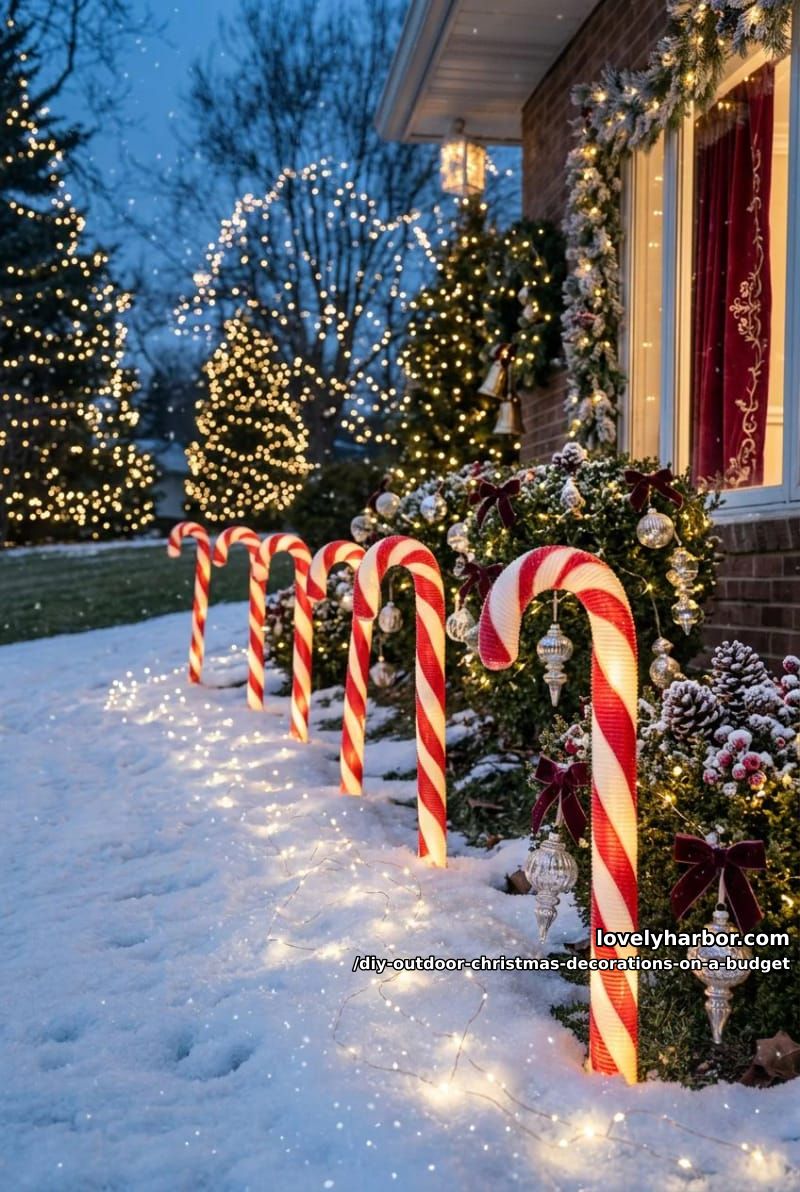
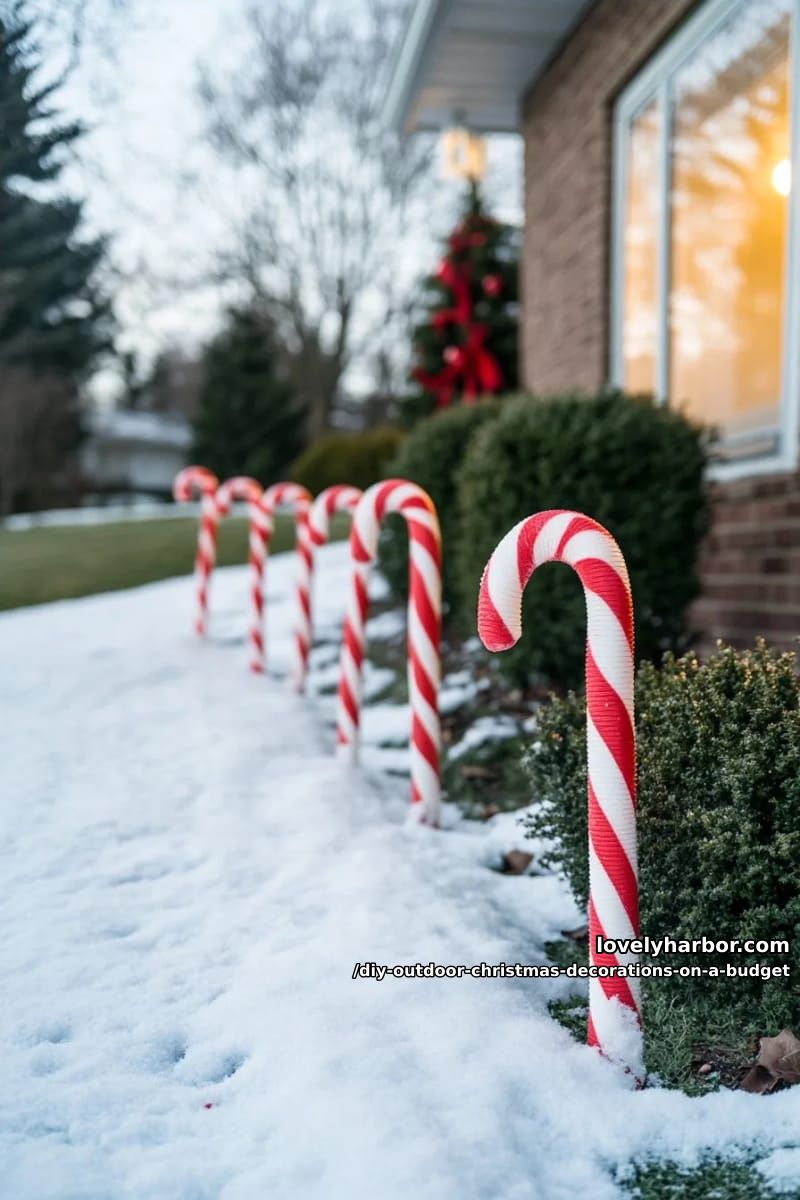
Wrap a white pool noodle in diagonal red duct tape, curve the top into a hook, and slide the hollow bottom over a length of PVC or rebar hammered into the lawn. The stake is the entire secret to wind survival; friction alone holds the noodle on, and they cost under five dollars each. Noodles run a dollar at the dollar store, sometimes a quarter on post-summer clearance at Walmart if you stockpile in September, which is the move. For the giant arched canes that flank a door, thread 16-gauge galvanized wire up the hollow center before wrapping so it holds the curve instead of springing straight again.
6. An oversized waterproof paper chain garland
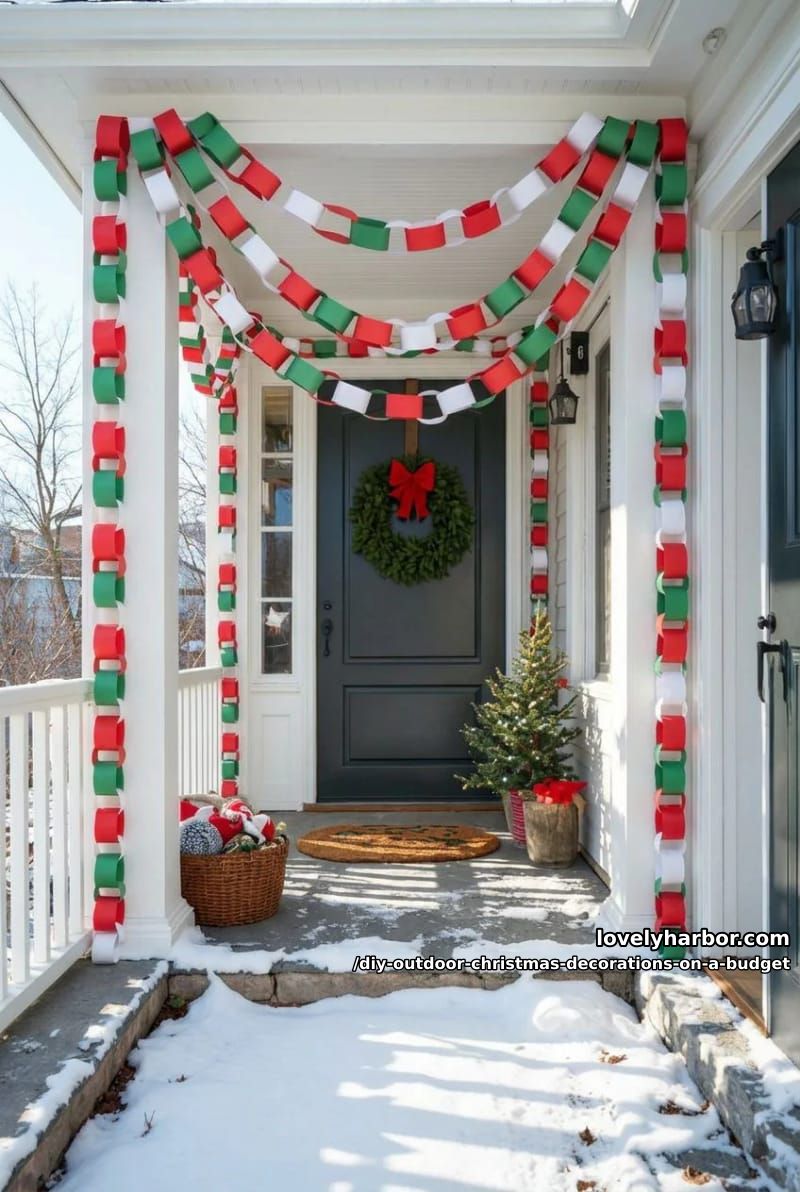
The childhood paper chain, scaled up to porch size, is having a real moment, and it photographs better than almost anything else here for the effort involved. The catch nobody mentions on the first pass: construction paper turns to pulp the instant it meets weather, so the only version worth building outdoors uses plastic. Cut links from a roll of poly tablecloth, Tyvek, or even colored shopping bags, staple them into a chain, and swag it across a railing or between two posts. Mine took about two hours and survived a wet December because I used dollar-store plastic tablecloths instead of paper, which is the one substitution the cute tutorials skip right past.
7. Galvanized buckets of free evergreen clippings
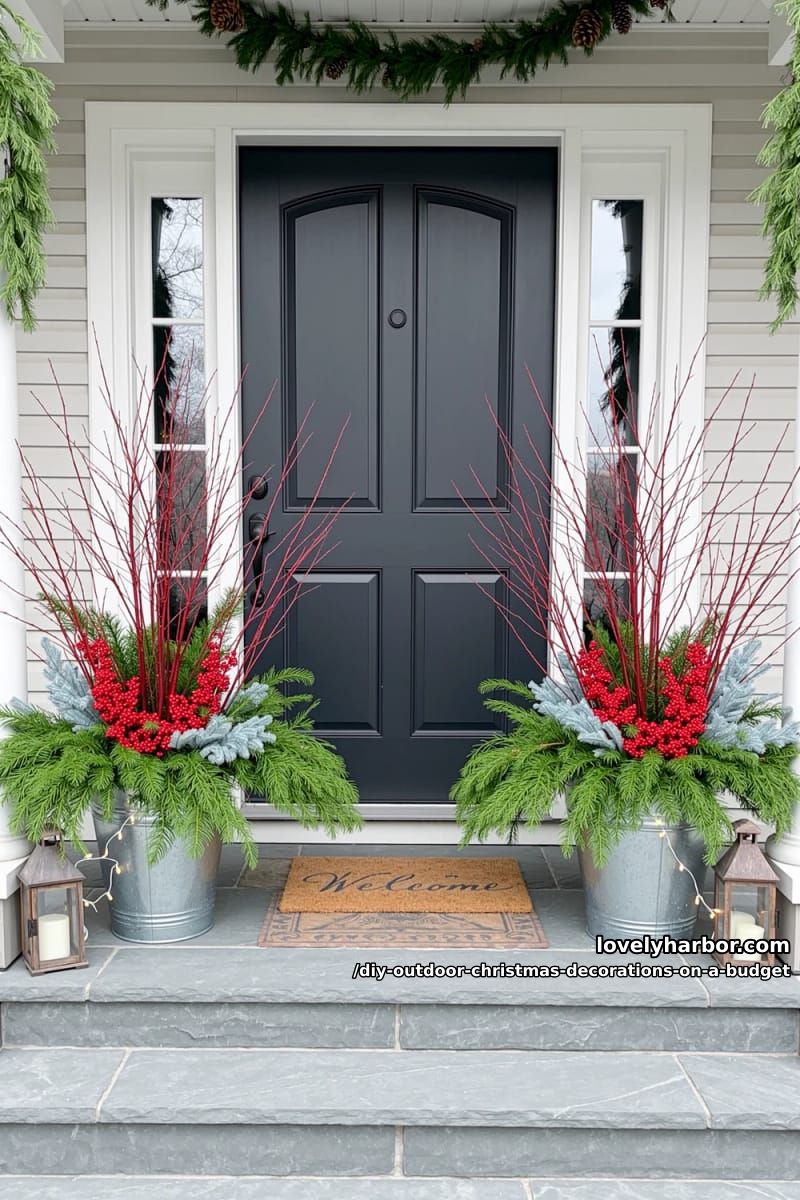
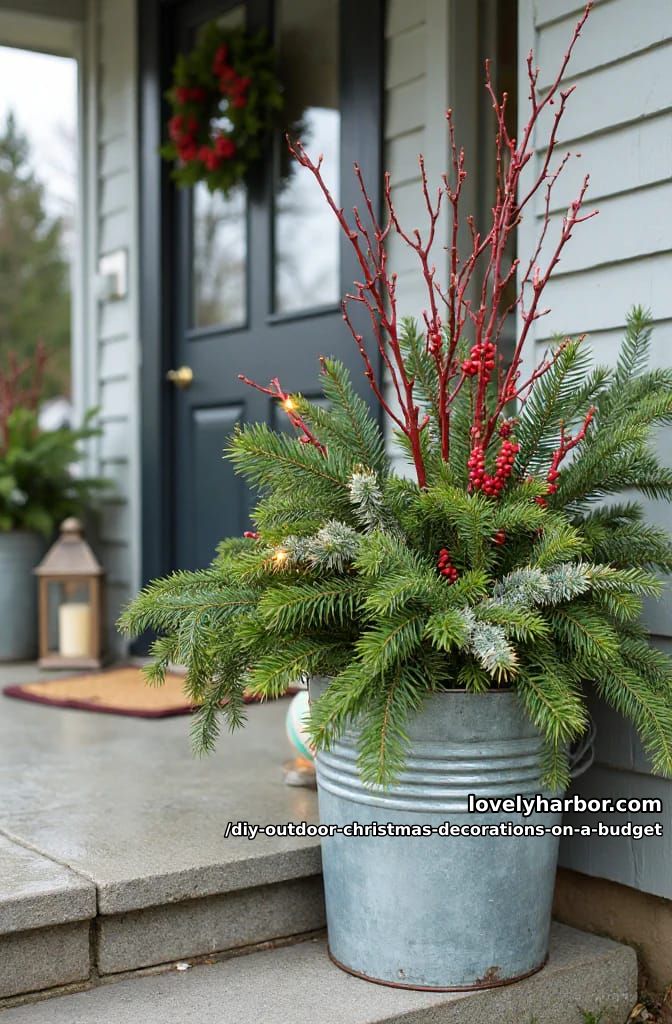
The greenery is the part you do not pay for. Trim a few boughs from your own evergreens, or ask a Christmas-tree lot for the bottom branches they saw off every sale anyway (they hand them over free, usually relieved someone wants them). Stuff a galvanized bucket or a thrifted pot with the clippings, wedge in a few red-twig dogwood stems for height, and you have the look that garden centers sell as a forty-dollar "winter porch pot." Fresh cuttings hold their color for weeks in the cold. This is the cheapest way on the list to make a doorway look styled rather than decorated.
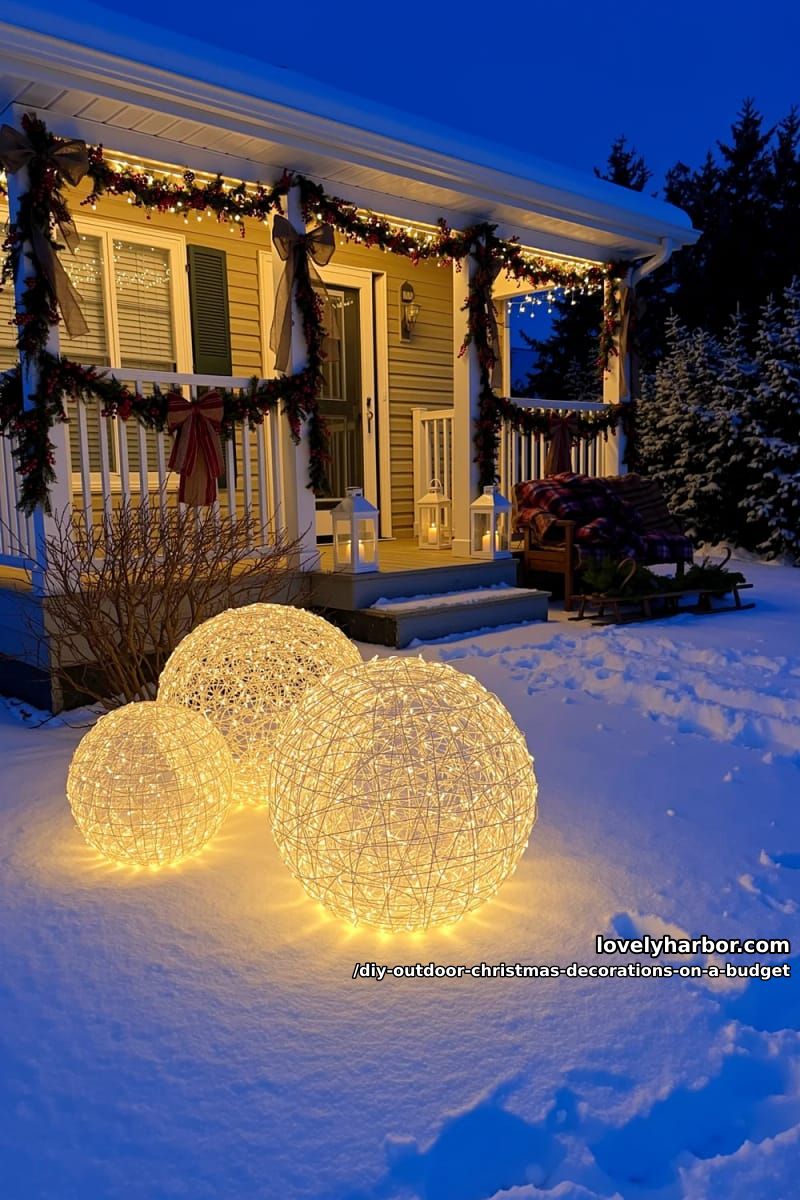
8. Chicken wire light spheres
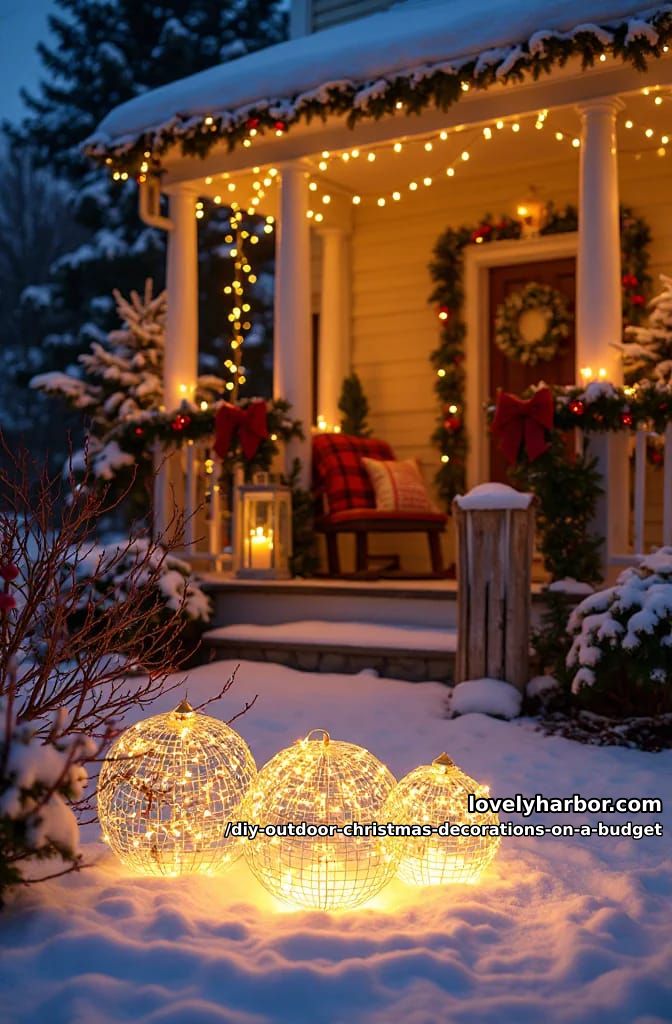
Roll a length of chicken wire into a ball, hook the cut ends back into the mesh to hold the shape, and wind a strand of LED or net lights around it until it glows as a solid orb. They cost the price of the lights plus a few dollars of wire, they pack flat-ish for storage, and a trio of different sizes scattered across a lawn or a porch corner looks far more deliberate than a single one. Wear gloves; cut chicken wire is genuinely vicious and will find every knuckle.
9. A porch tree built from scrap fence pickets
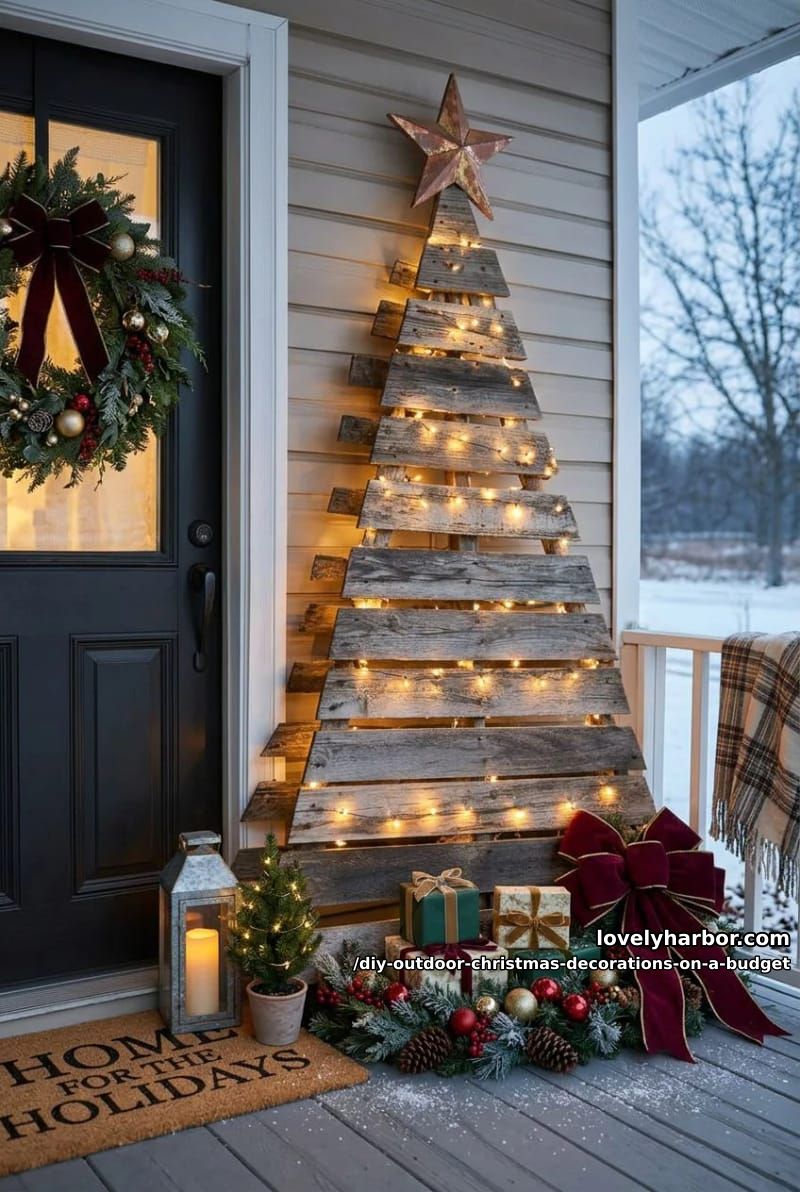
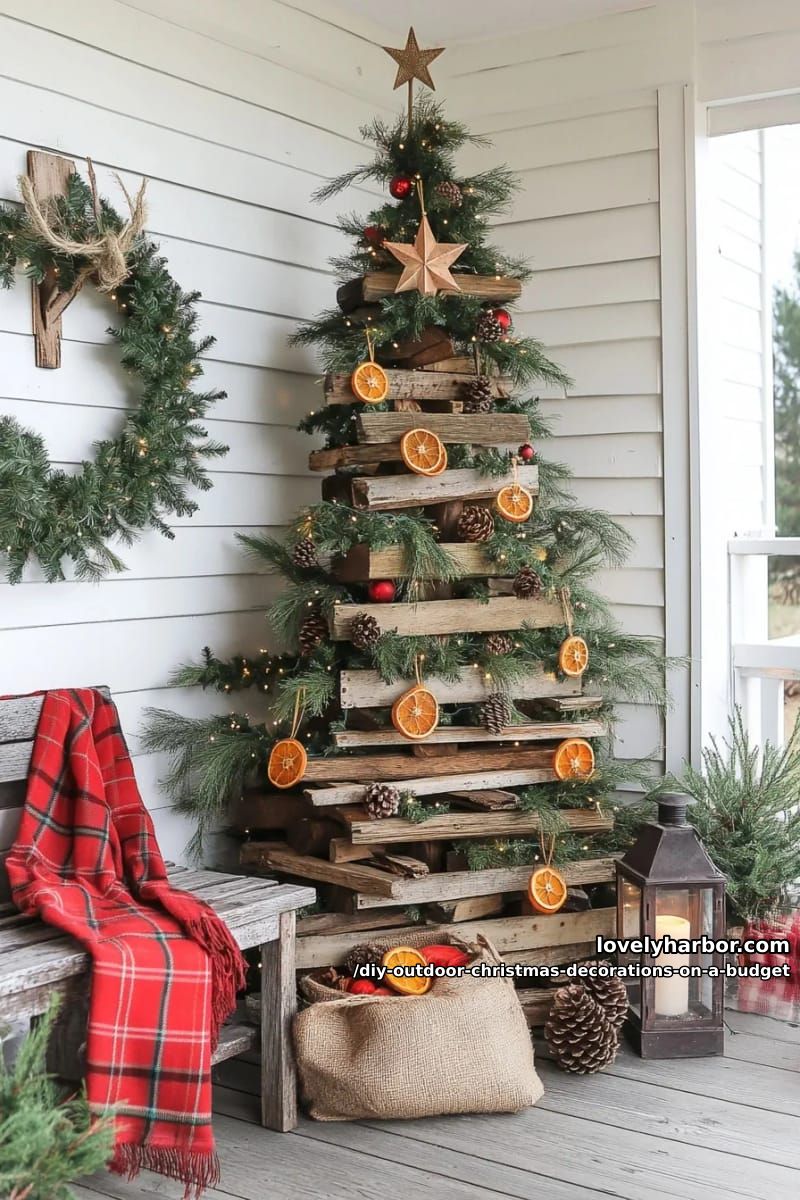
If you have pallet wood or leftover fence pickets, this costs nothing but an afternoon. Cut the slats to descending lengths, nail them across a vertical backer board into a triangle, and either leave the wood grey and weathered or paint it. A wooden star at the top, a zigzag of lights, maybe a bow at the base, and it leans against the porch wall taking up almost no footprint.
The pallet Christmas tree is one of the most-saved versions of this whole category, which tells you it photographs as well as it stores: flat against a garage wall for eleven months of the year.
10. Milk jug snowmen luminaries
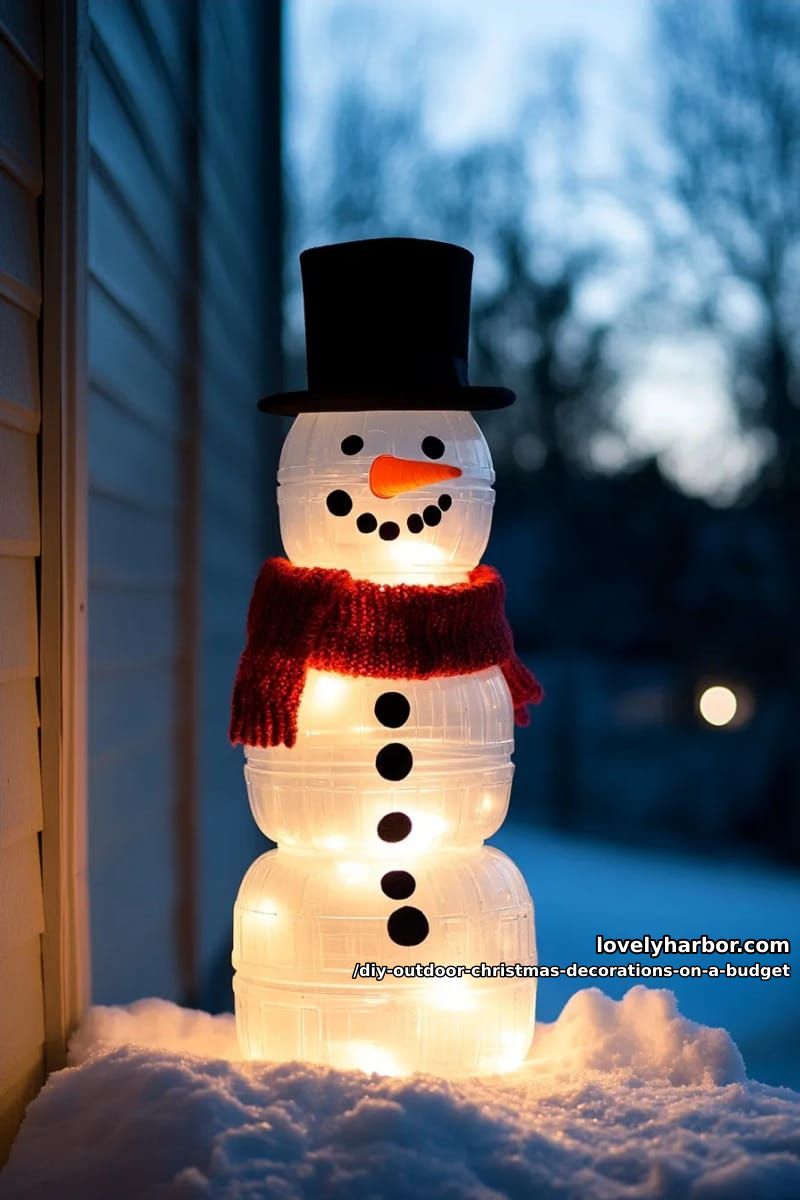
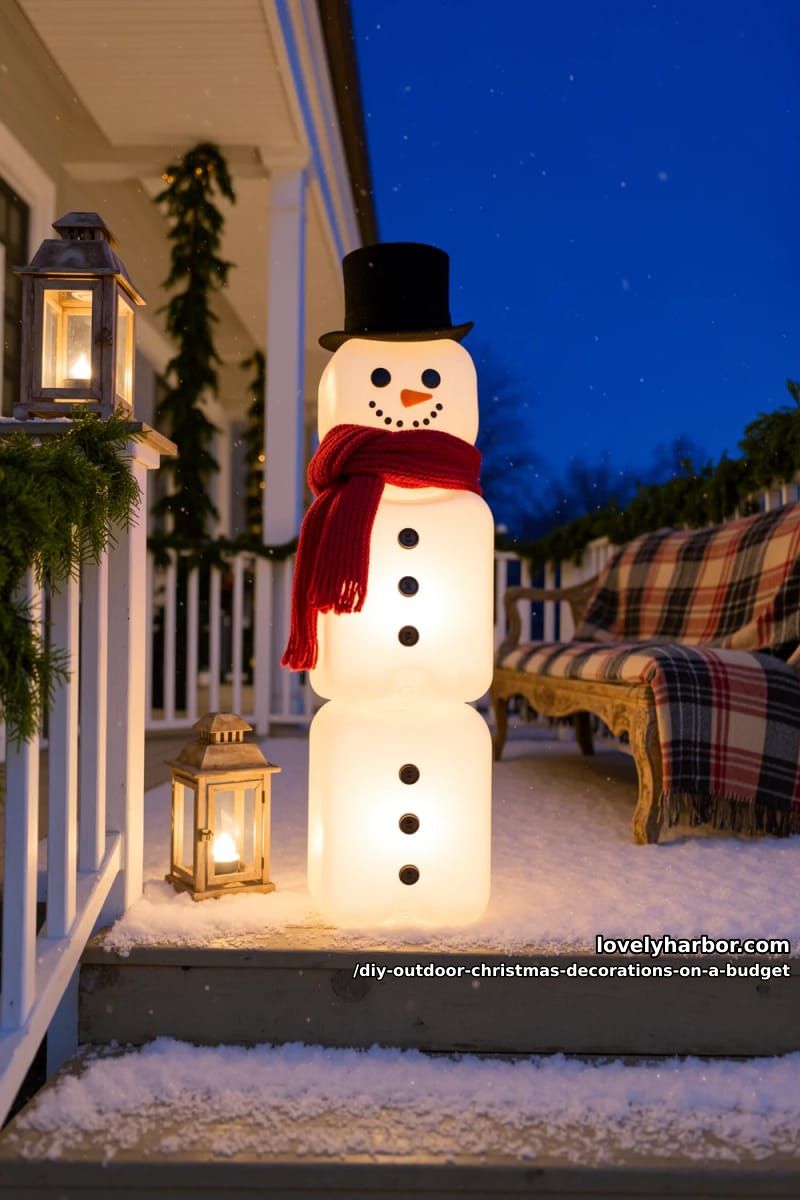
Save three empty gallon jugs, draw a face and buttons on with permanent marker, stack them, and tuck a string of battery lights or a couple of LED tea lights inside so the whole thing glows from within at night. Near-zero cost, genuinely charming on a step or a balcony, and small enough that an apartment dweller can line three along a railing. Kids can do most of it, which is either a selling point or a warning depending on your tolerance for marker on the patio.
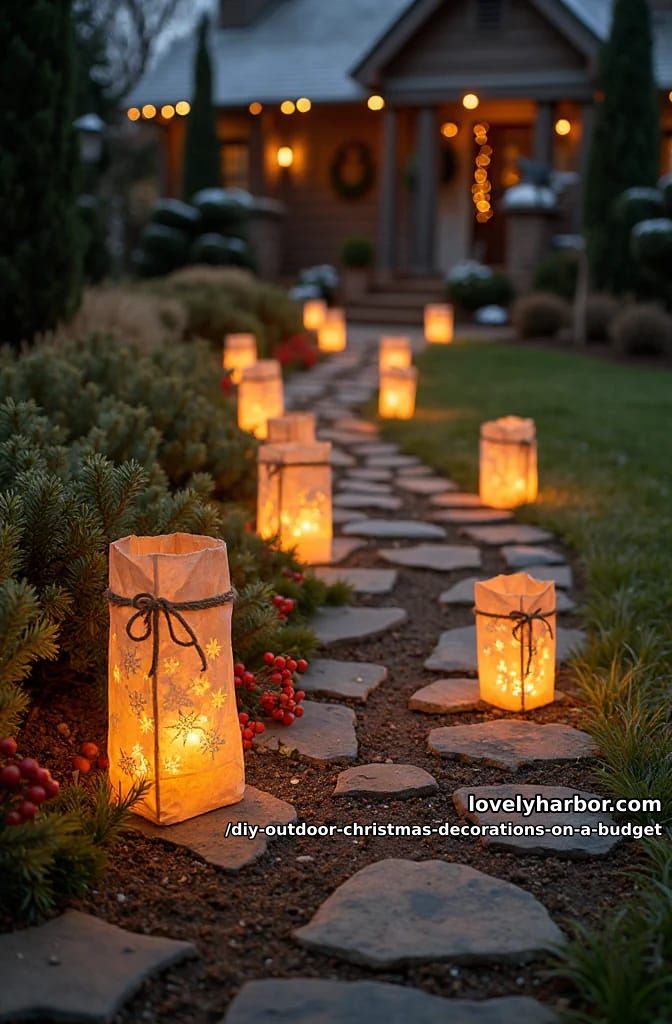
11. A paper bag luminaria pathway
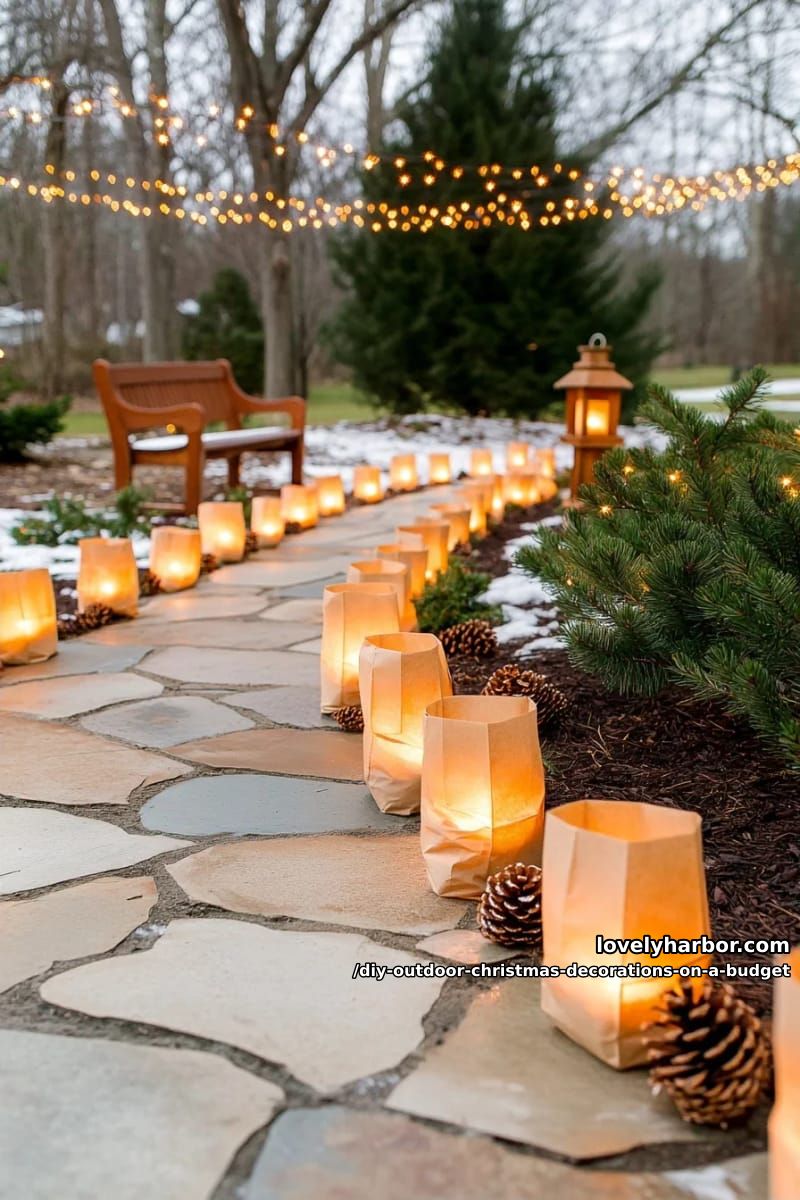
The oldest trick here and still one of the warmest: a paper lunch bag, a handful of sand or kitty litter in the bottom to weight it, and a battery LED tea light. Cents per bag. Punch a star or a tree shape in the side for a sharper point of light. Use battery candles, not real flames, because paper plus an open flame plus a breeze is exactly the sentence that ends with calling someone. They will not survive heavy rain, so set them out the evening you want them and not before.
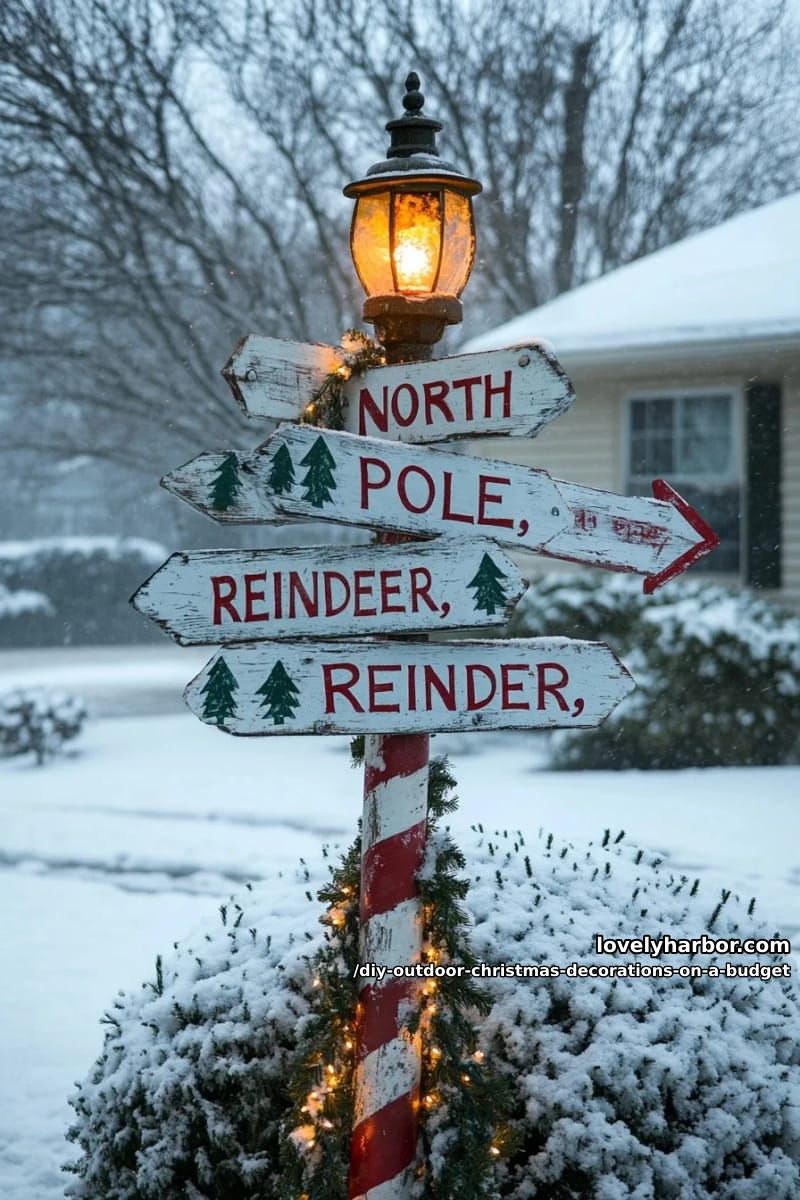
12. A North Pole signpost from a leftover fence post
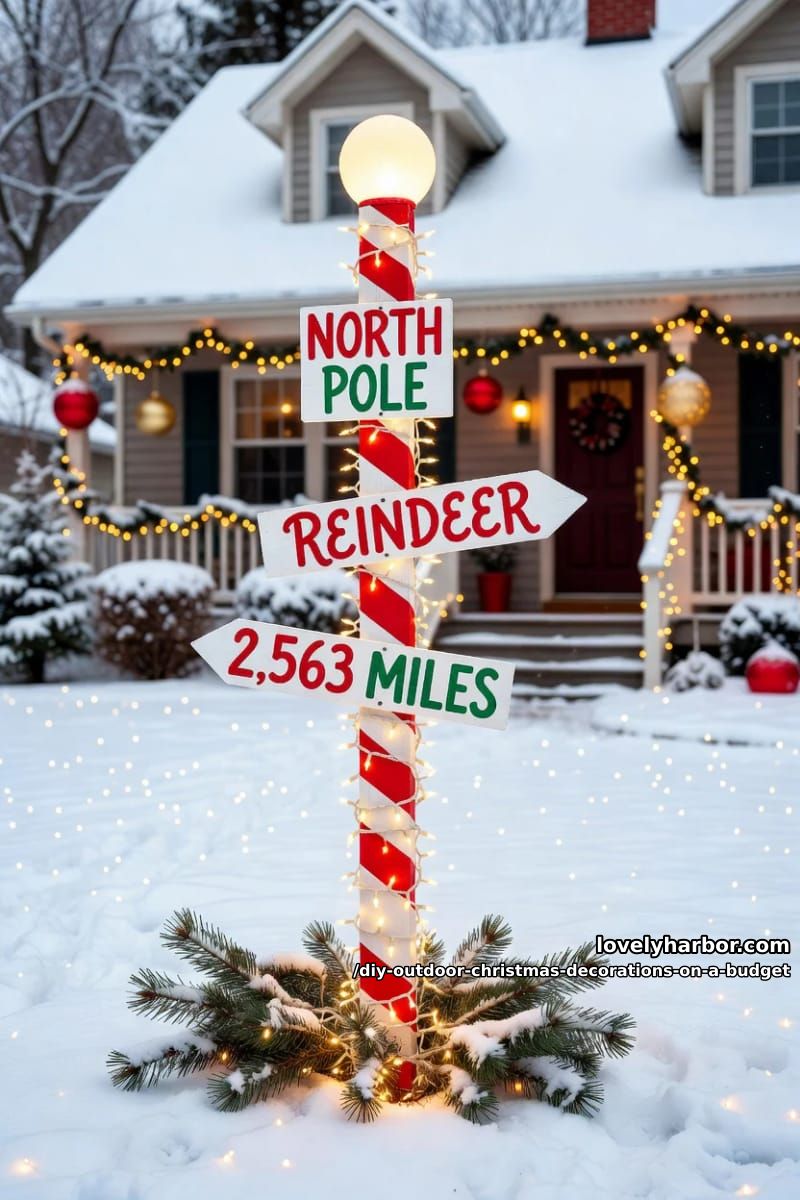
A leftover 4×4, fence post, or even a sturdy cardboard tube becomes a North Pole marker with diagonal stripes of paint or tape and a few hand-lettered arrow signs screwed on pointing nowhere in particular. Cap it with a lit ornament or a cheap solar lamp. It is pure whimsy and reads instantly from the road, which is the whole job of a yard decoration. Sink it on a stake or in a bucket of quick-set concrete so it stands straight through the season.
A whole front display for about $45
Small covered porch plus a strip of front-yard bed, starting from near zero.
This assumes you already own a few extension cords and own or can scavenge the tomato cages and pallet wood. The point is to show that the lights, not the structures, are where the money goes, which is why reusing strands year to year is what actually keeps this cheap.
Shopping list
| Qty | Item | Spec | Price |
|---|---|---|---|
| 6 | LED light strands | 100-count, warm white, outdoor-rated | $18 to $30 |
| 3 | Pool noodles | Dollar store or clearance | $1 to $3 |
| 1 | Roll red duct tape | For candy-cane stripes | $5 to $8 |
| 2 | Plastic planters | For the gold bells | $2 to $3 |
| 1 | Metallic spray paint | Gold or silver | $4 to $7 |
| 1 | Mechanical outdoor timer | Single outlet, photocell optional | $8 to $12 |
| Total | $38 to $63 | ||
Prices are approximate ranges as of the 2025 season; verify before purchase.
Conclusion
If you only build one thing this year, make it the cluster of three light trees in section three, because grouping and a single light color are what separate a display that looks chosen from one that looks leftover, and those two rules cost nothing. Sequence the rest by your weather: the ice globes and luminaria pathway go out the night you want them, the Coroplast presents and gold bells live outside all month, and the pallet tree quietly waits flat against the garage wall for next December. Whatever you do, resist running a sixth strand of lights when three packed trees already glow. I used to wrap every railing in the place and replaced three shorted-out strands a winter before I stopped.