
The fastest way to make a farmhouse porch look like a Hobby Lobby endcap is to buy the matching set: the buffalo-check everything, the pre-fluffed garland, the sign that says "Merry & Bright" in a font that comes on forty thousand other signs. The porches that actually stop people on Pinterest do the opposite.
They layer one real evergreen against one weathered object against one warm light source, and they leave room to walk. What follows is twelve specific moves, some of them cheap, one of them slightly contrarian, that get you the lived-in version instead of the showroom version.

1. Run real garland on the rail, and buy 1.5 times the length you measured
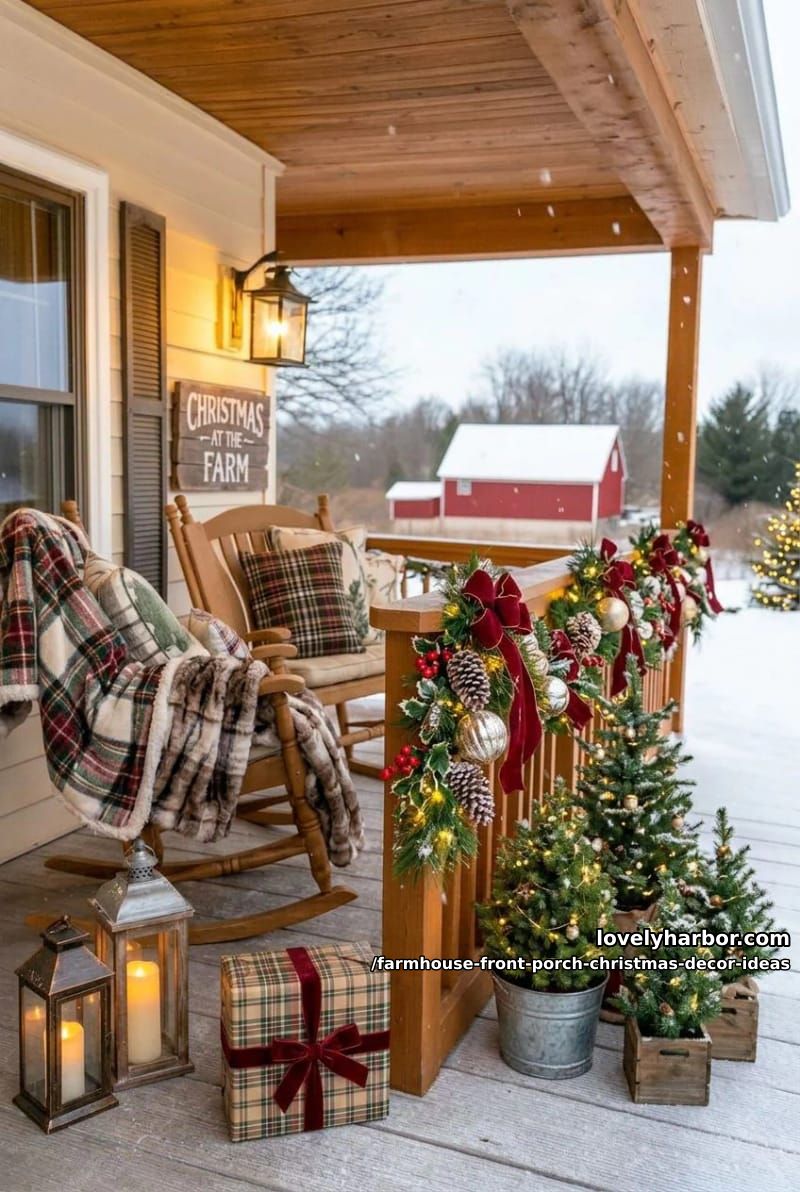
Measure your railing or post run, then buy that length times 1.5 so the garland can swag instead of stretching tight as a clothesline; a 6-foot mantel wants about 9 feet of greenery. Fraser fir holds needles best and has those silver-backed needles that catch porch light, but a grocery-store cedar-and-pine mix is a third of the price and looks nearly identical from the sidewalk.
The trick almost nobody does: soak the whole garland in a bathtub of room-temperature water for a few hours before you hang it, then mist it every two or three days. In cold, shaded outdoor air a fresh garland can hold up for four to six weeks, which is most of the season; the same garland indoors over a heat vent is brown in two.
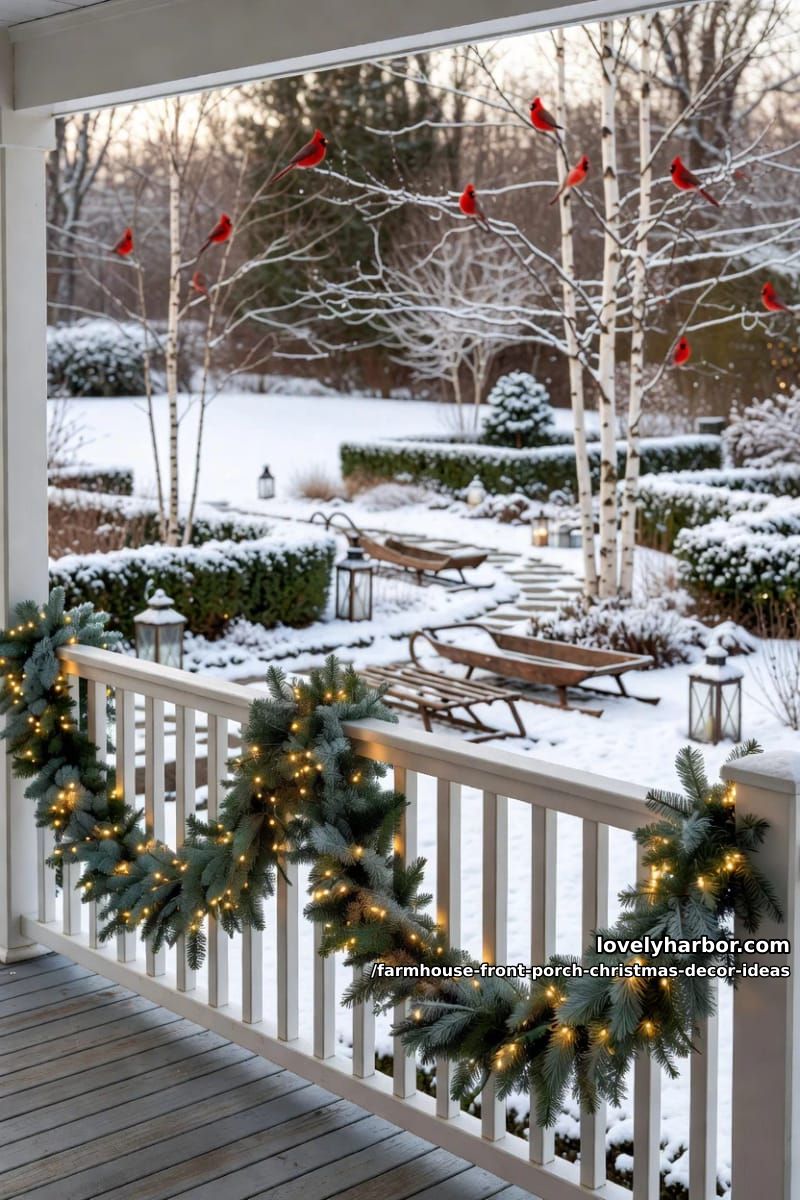
One thing I got wrong for years was wrapping incandescent mini-lights through fresh greenery. They run hot and dry the needles out faster. Switch to LED and the garland lasts noticeably longer.
2. Hang one oversized red wreath, not three medium ones
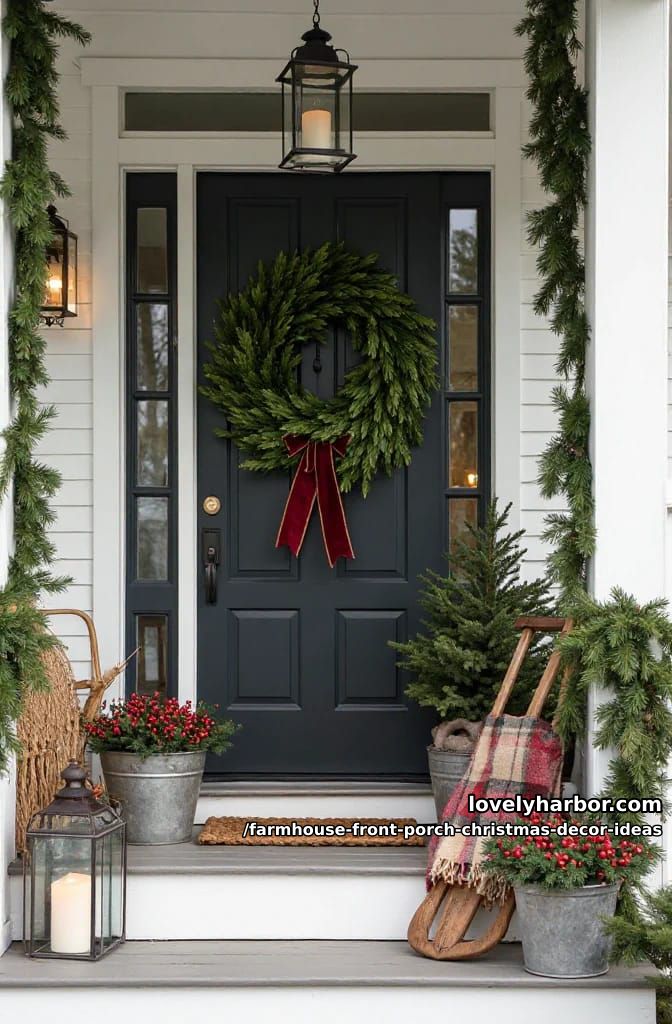
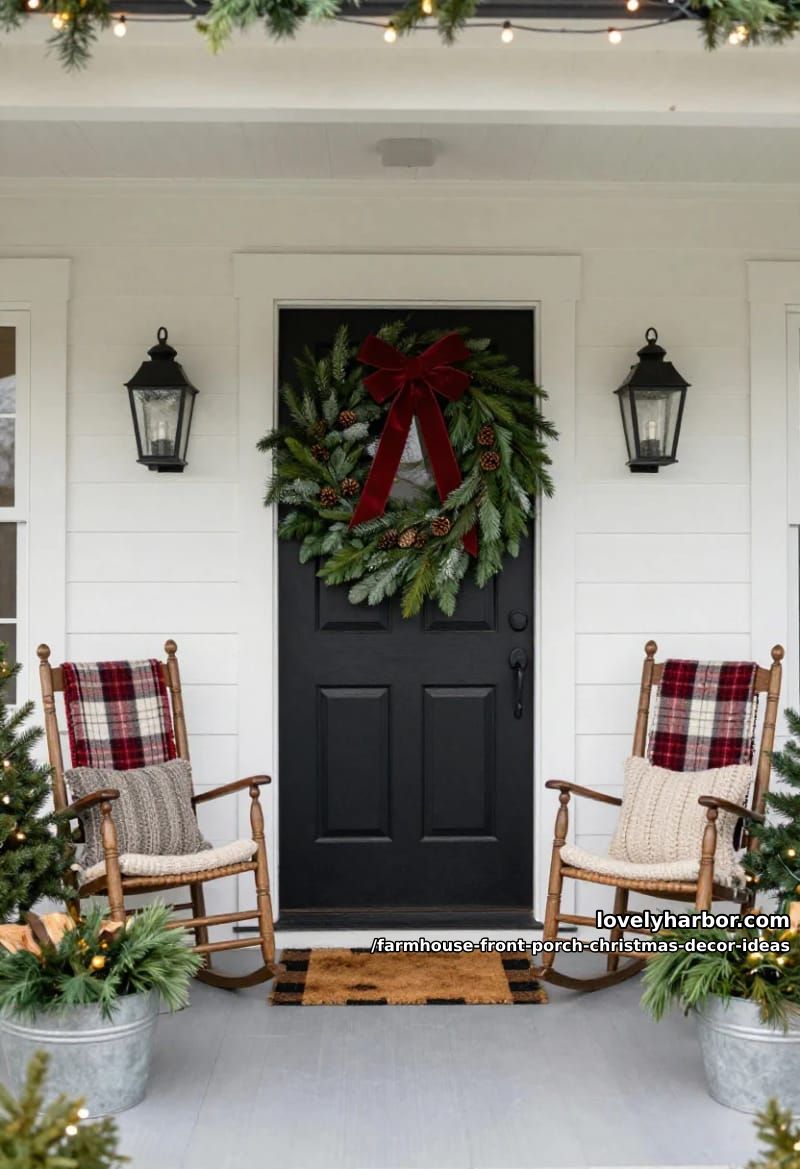
A wreath that looks too big for the door is the single highest-impact move on a farmhouse porch, and it photographs better than a cluster of small pieces because the door reads as one bold focal point instead of a busy grid. Scale up: if your door is standard 36 inches wide, a 30-inch wreath looks intentional where a 22-inch one looks apologetic. Red against a black or deep-green door is the highest-contrast combination, which is why it dominates the saved pins. If you want the look without the maintenance, a good faux base with a few fresh tucks of cedar wired in fakes it convincingly, and you reuse the base every year.
3. Galvanized buckets with birch logs (the workhorse of the whole style)
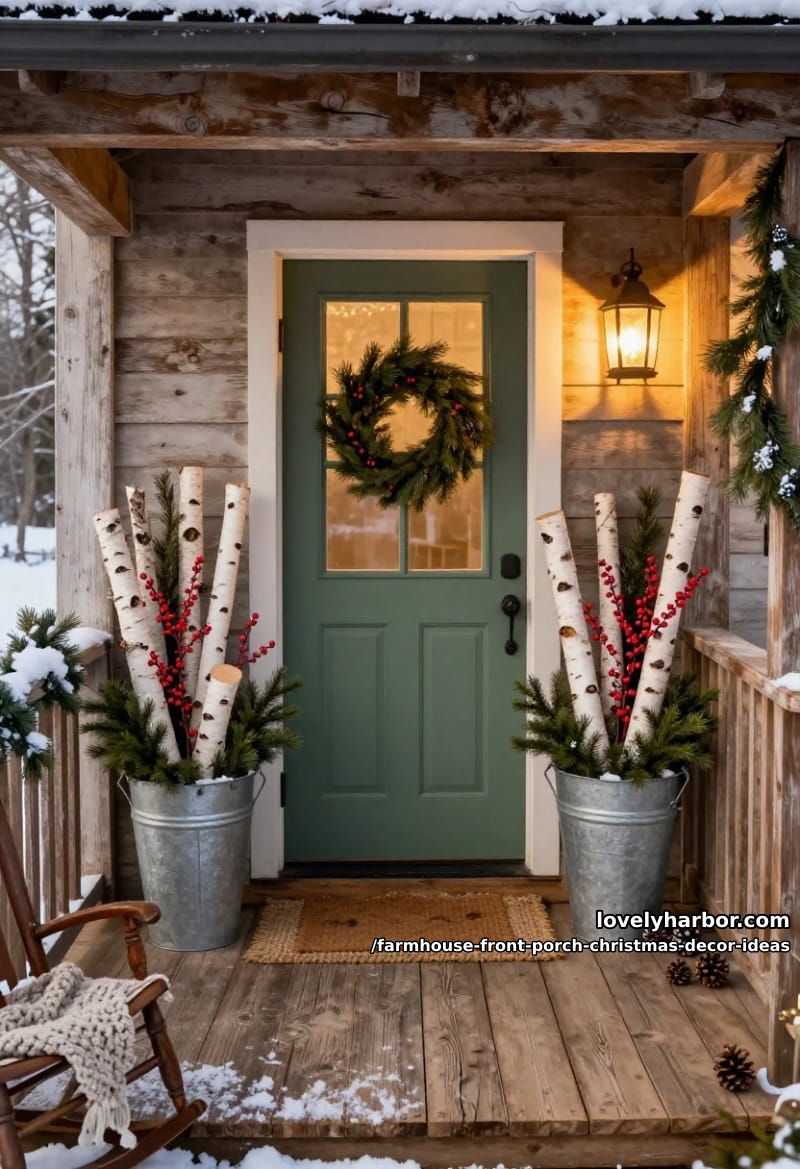
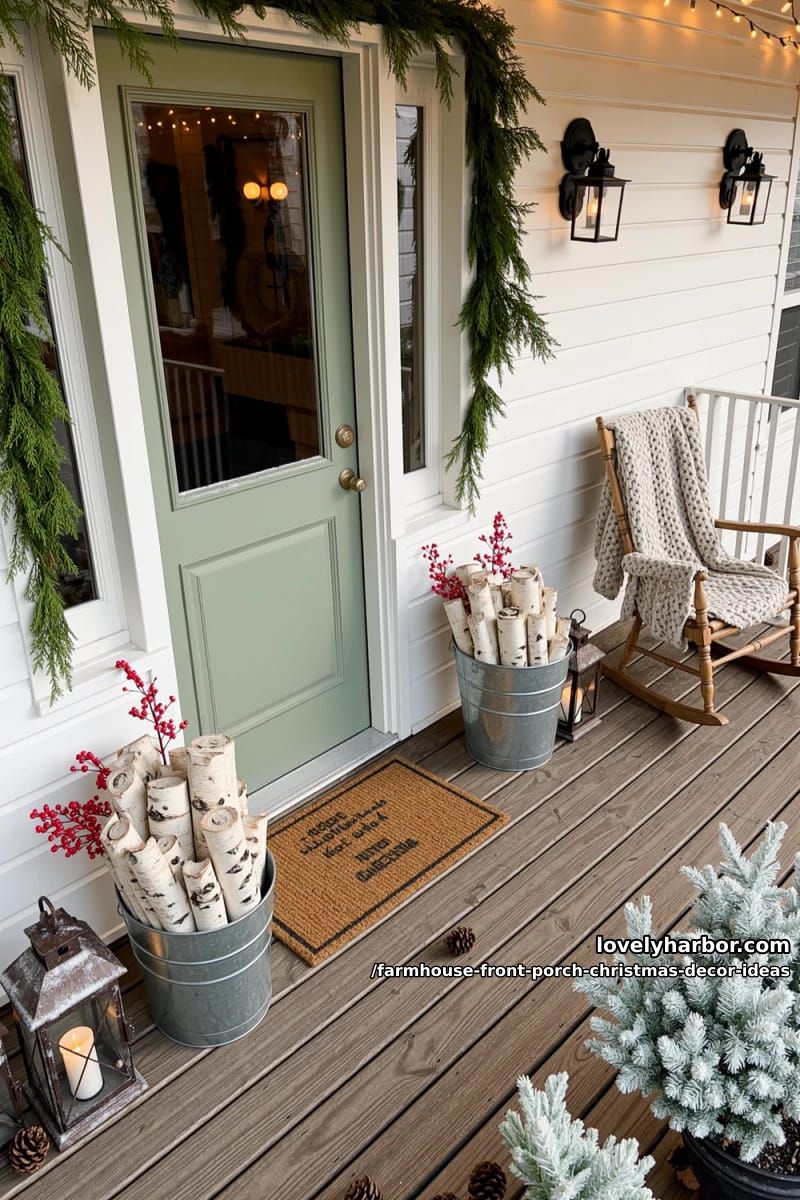
This is the cheapest idea here that looks the most expensive, which is why it shows up on nearly every high-saving farmhouse pin. Fill a galvanized bucket or an old milk can with white birch logs stood on end, tuck a few fir sprigs and red berry stems into the gaps, and you have a substantial doorway anchor for the cost of a bundle of firewood. Vary the log heights so the tops aren't a flat line. If you can find actual birch (white bark, dark horizontal markings), use it; the contrast is the whole point, and a bucket of generic brown firewood does not read the same. Real galvanized beats the painted "galvanized-look" plastic, which goes shiny and obvious in direct light.
4. A vintage sled, a milk can, or a red wagon: pick one piece with a past
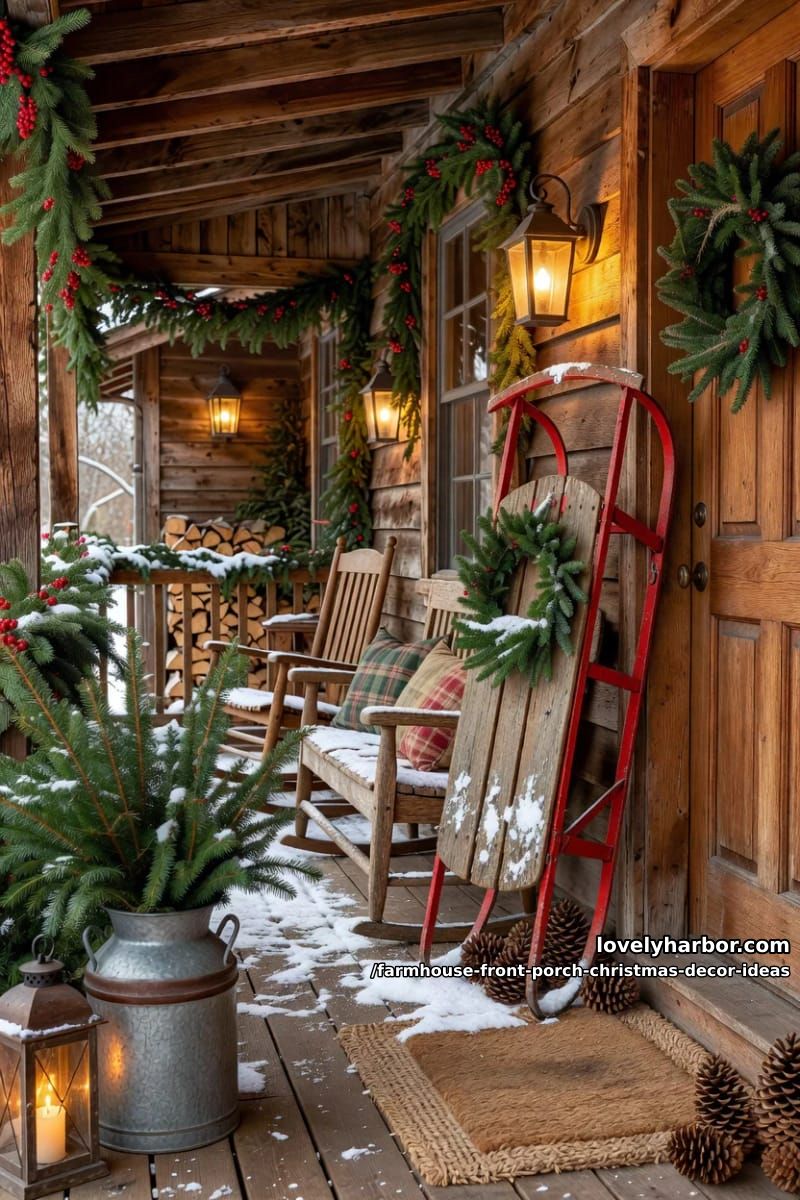
One genuinely old object does more for the farmhouse story than a dozen new accessories, because age is the one thing you cannot buy in a kit. A wooden sled leaned by the door, a dented galvanized milk can, a red metal wagon loaded with wrapped "presents" or a small potted tree: each carries the worn-paint, real-metal texture that the whole aesthetic is imitating.
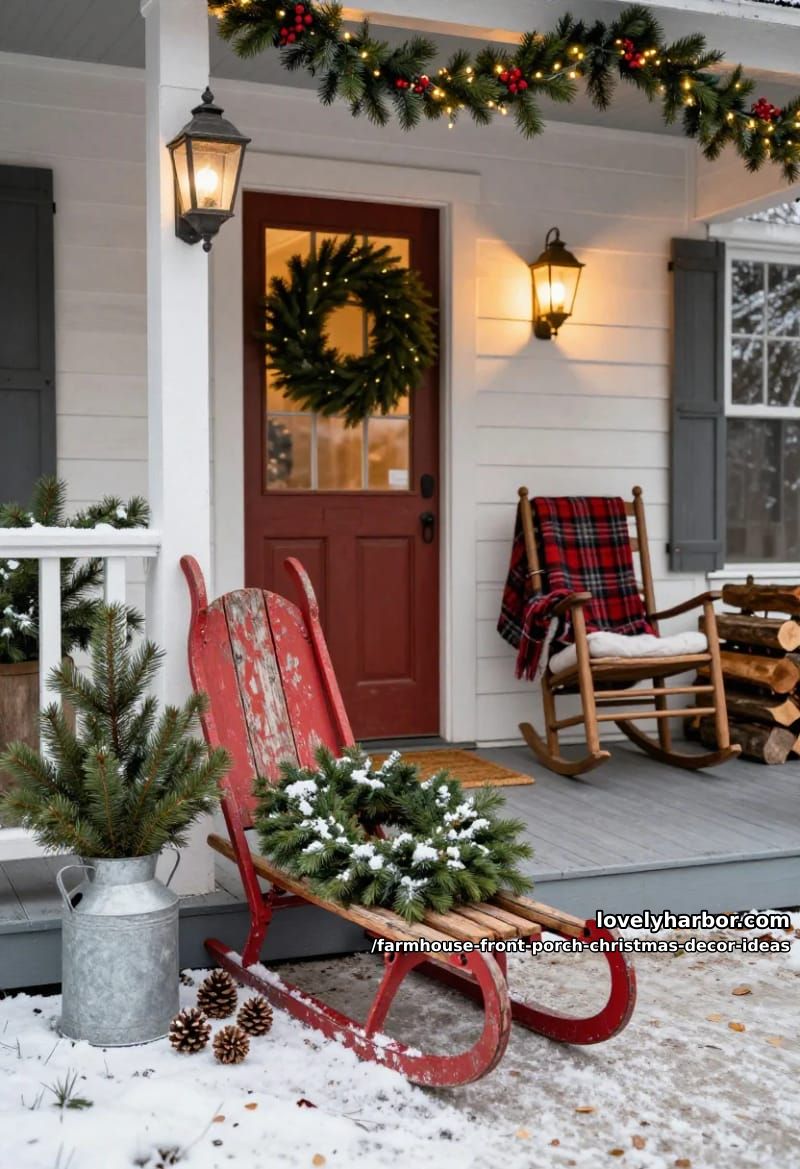
Estate sales and Facebook Marketplace beat antique malls on price for these; a real vintage sled runs a fraction of the reproduction "vintage-style" sleds that places like Pottery Barn sell for well over a hundred dollars. Resist the urge to add a second and a third. The power is in restraint, and a porch with four "vintage finds" reads as a booth at a flea market.
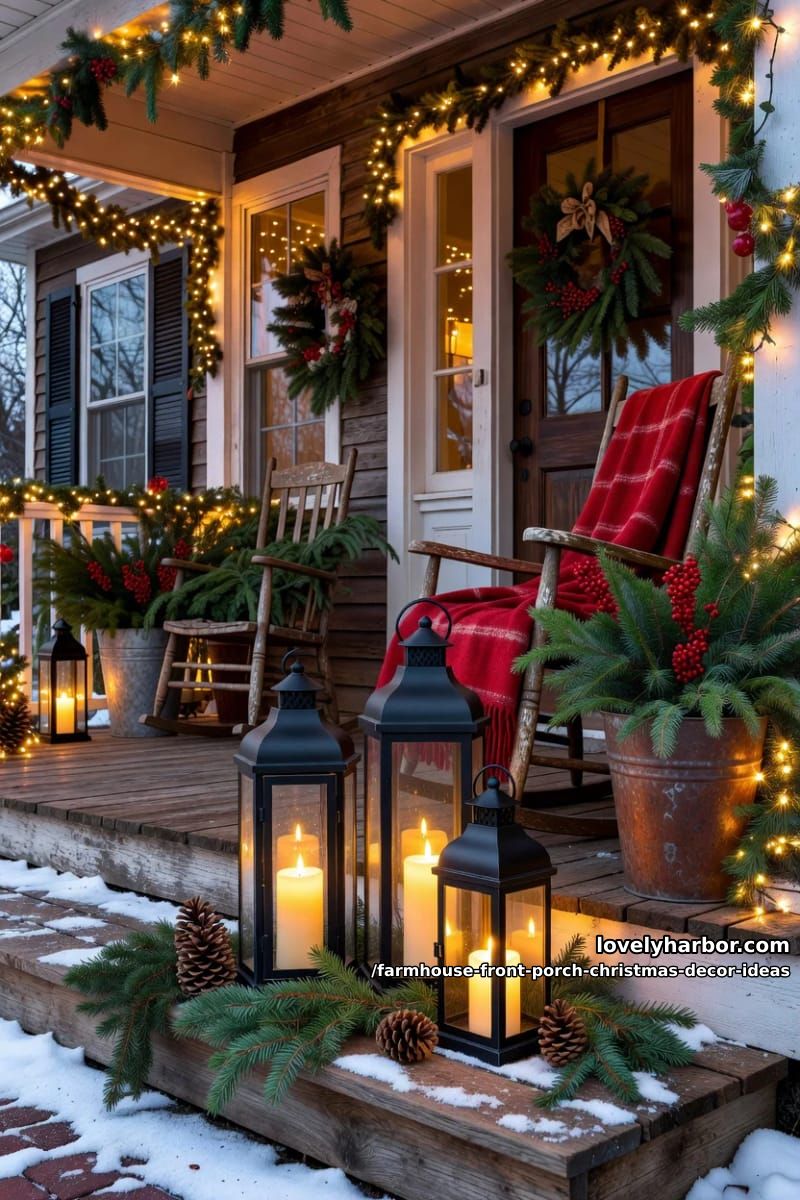
5. Cluster lanterns at staggered heights and skip the real flame
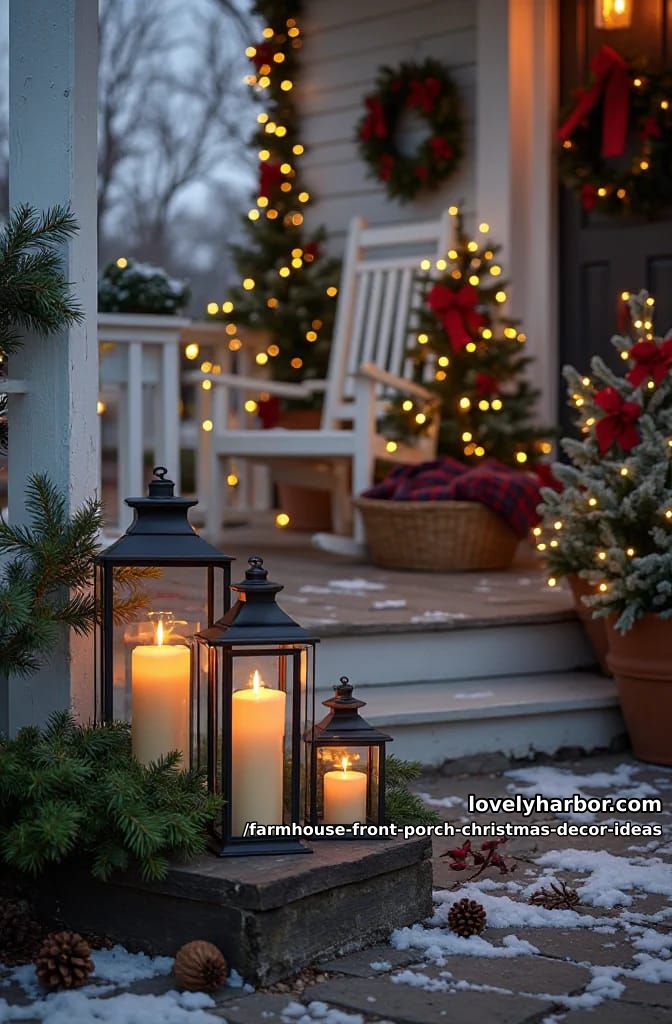
Lanterns work because they add a warm low light source at ground level, which is where most porches go dark and flat at night. Group an odd number at three different heights rather than lining them up like soldiers. Use battery pillar candles with a six-hour timer so they switch on at dusk and you never touch them; open flame near dry greenery on a covered porch is a genuine fire risk, not a styling preference, and the better flickering LEDs are hard to tell from real at a distance. Black lanterns read modern-farmhouse, oil-rubbed bronze reads warmer and more traditional, and galvanized ties back to your buckets if you went that direction.
6. Stand a flocked tree (or two) in a crate by the door
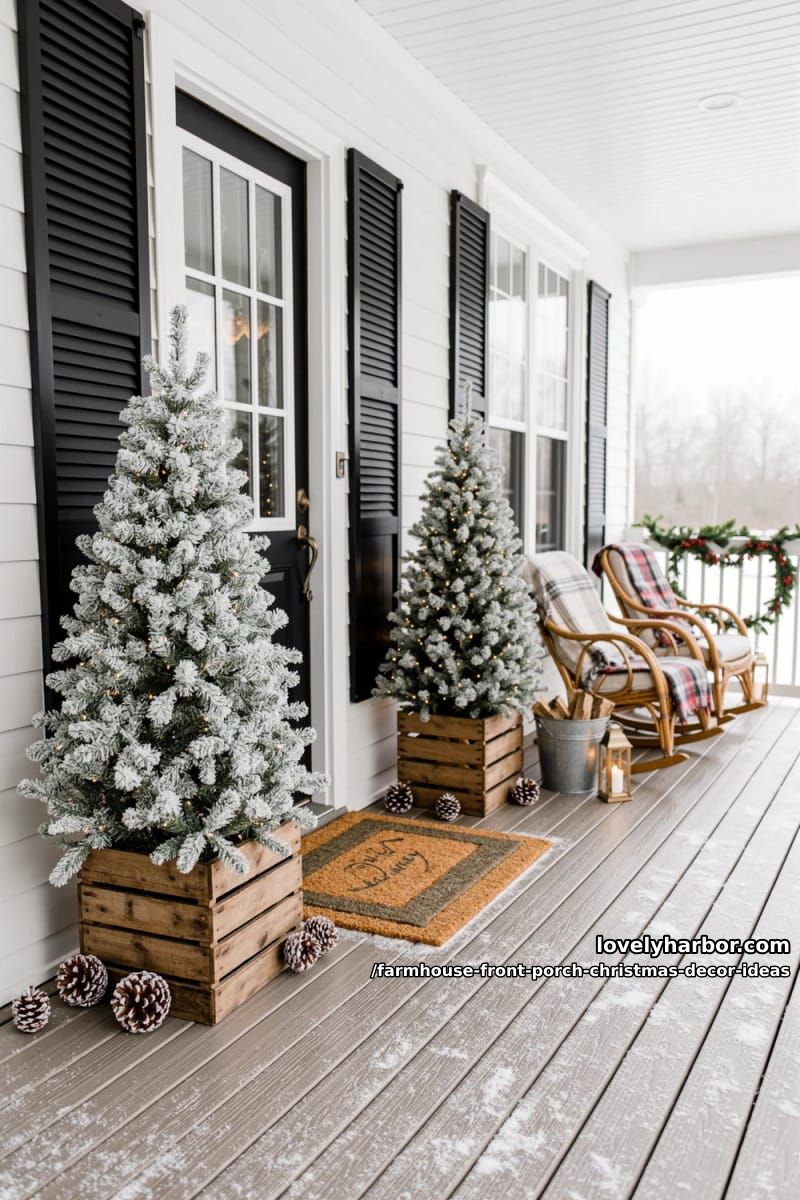
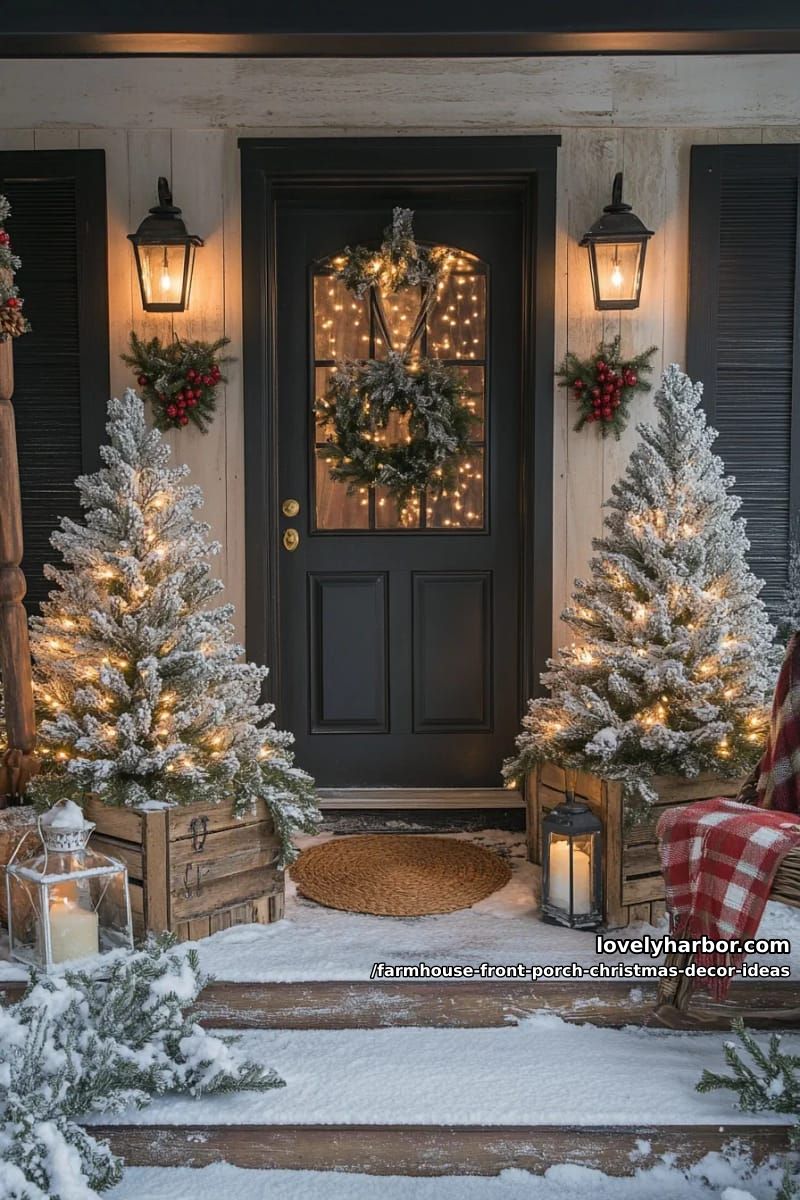
A second Christmas tree on the porch reads as generous and is one of the strongest-performing ideas in the saved pins. Set a small flocked tree (or a pair at different heights) into a wooden crate or a basket to hide the stand and add texture. Flocked sells the "snowy" look even in climates that never see snow, and a pre-lit version saves you fighting an extension cord in the cold. Two trees flanking the door symmetrically reads formal and tidy; a single off-center tree reads more casual and collected-over-time. If you go faux, spend on the flocking quality, because cheap flocking sheds white flakes all over the porch the first windy day.
7. The contrarian take: retire the buffalo check, reach for ticking stripe
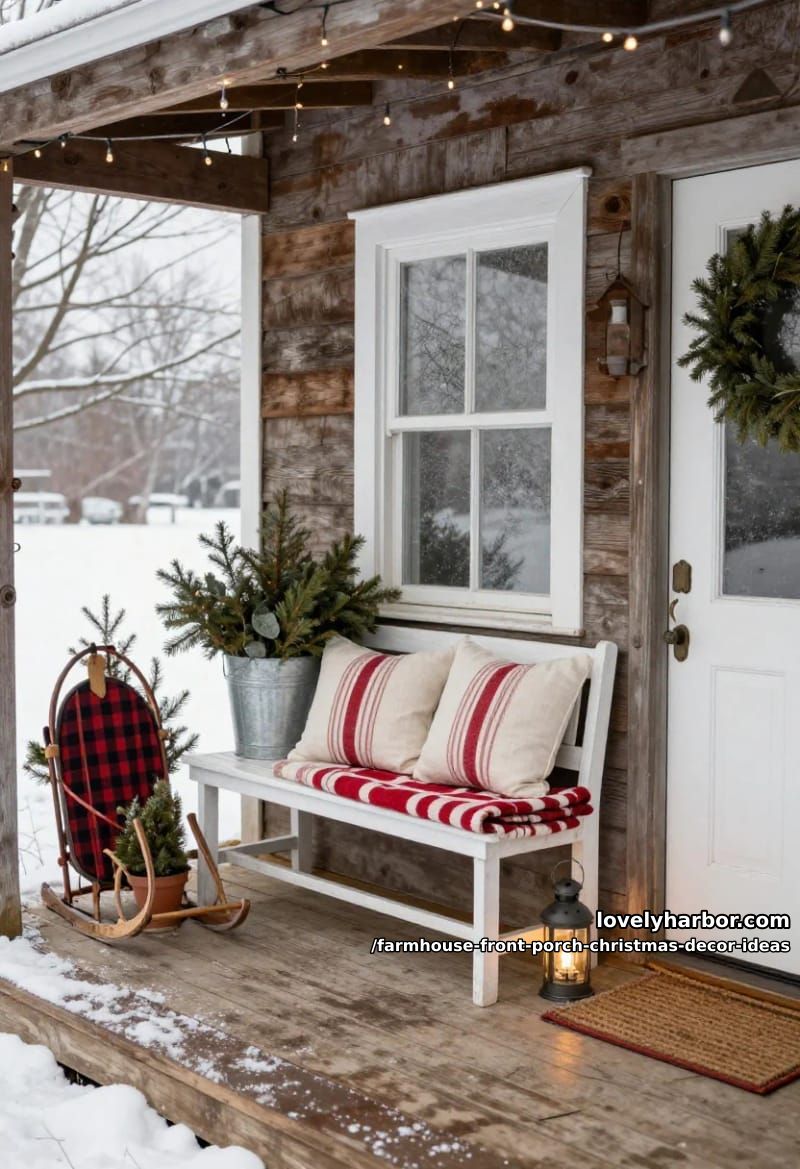
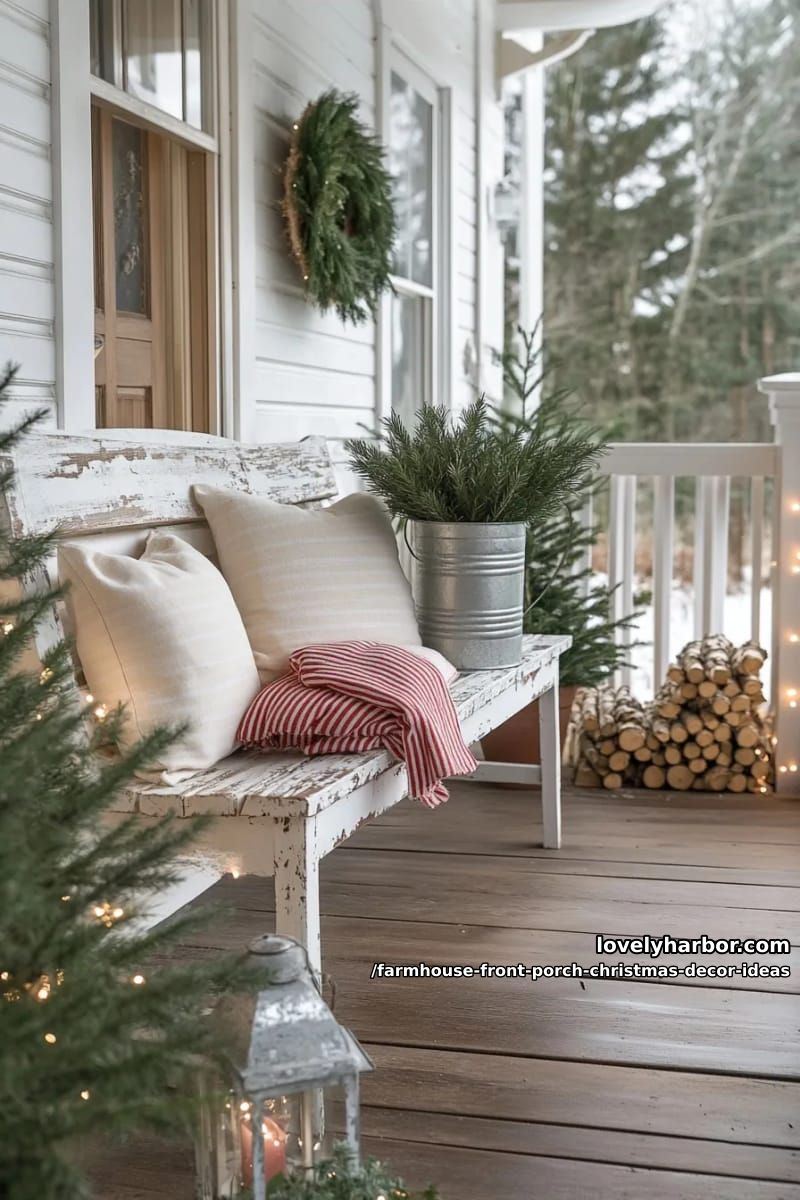
Buffalo check is not wrong, it's just everywhere, and after a decade of it the red-and-black grid has stopped reading "farmhouse" and started reading "bought the whole display." Designers have been quietly swapping in red ticking stripe, the thin even pinstripe you see on old grain sacks and mattresses, which gives the same cozy nostalgic note with a fraction of the visual noise. It layers under greenery without competing the way a bold check does. If you love your buffalo check, the fix isn't to ditch it, it's to use it once (a doormat, or a single bow) instead of repeating it across the pillows, the throw, the wreath ribbon, and the planter wrap until the porch vibrates.
Do this
- Pick one pattern and let it appear once or twice, surrounded by solids and natural texture.
- Try ticking stripe, grain-sack stripe, or a quiet cream-and-tan check if you want pattern without the buffalo-check fatigue.
Avoid
- Matching buffalo check across doormat, pillows, bow, and bucket. It stops being a choice and starts being a theme.
- Glossy plastic “plaid” anything, which catches light and instantly cheapens the rest.
8. Layer two doormats so the entry has depth
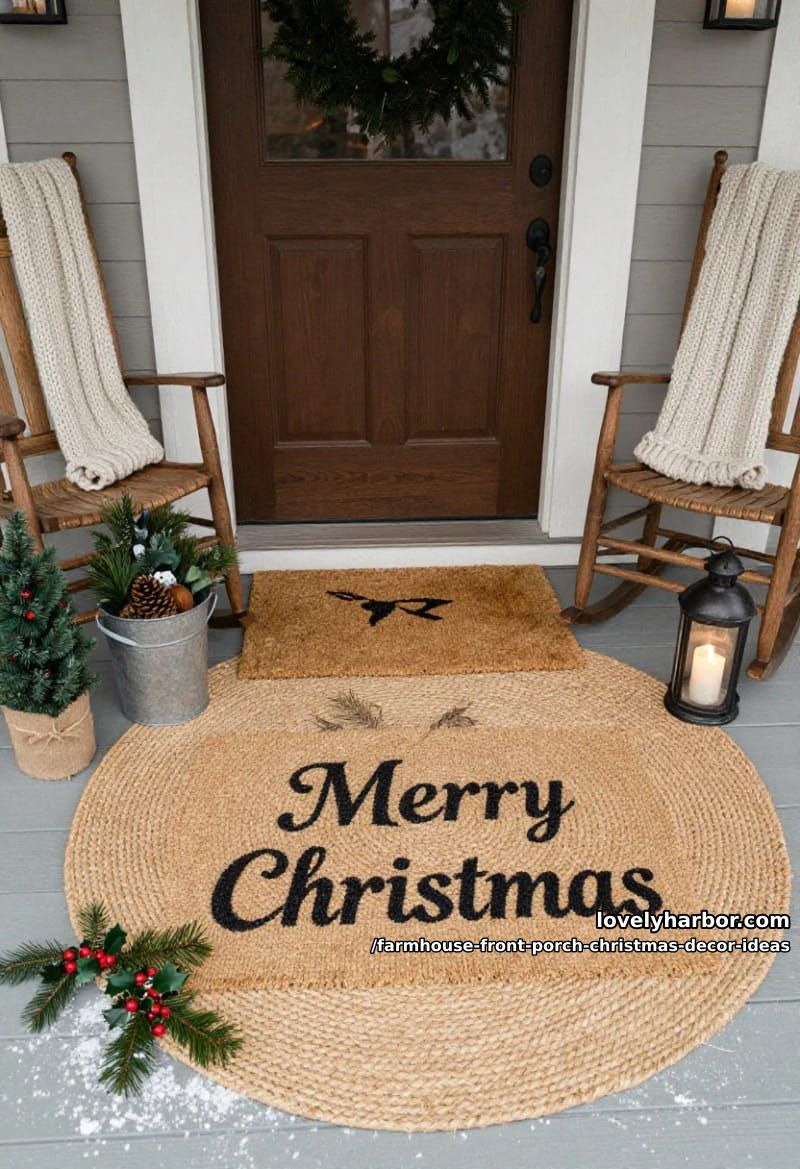
Two stacked mats, a big plain woven one under a smaller printed one, give the doorway the same layered look stylists use indoors with rugs, and it costs almost nothing. Keep the message restrained; "Merry Christmas" or a simple "Joy" ages better than anything with a pun. The honest reason this works in photos is depth: a single thin mat reads flat from above, two mats read intentional. Buy the printed top mat in a low-dye design, because the cheap heavily-printed ones bleed and fade by January.
9. Plant porch pots you'll actually keep into February
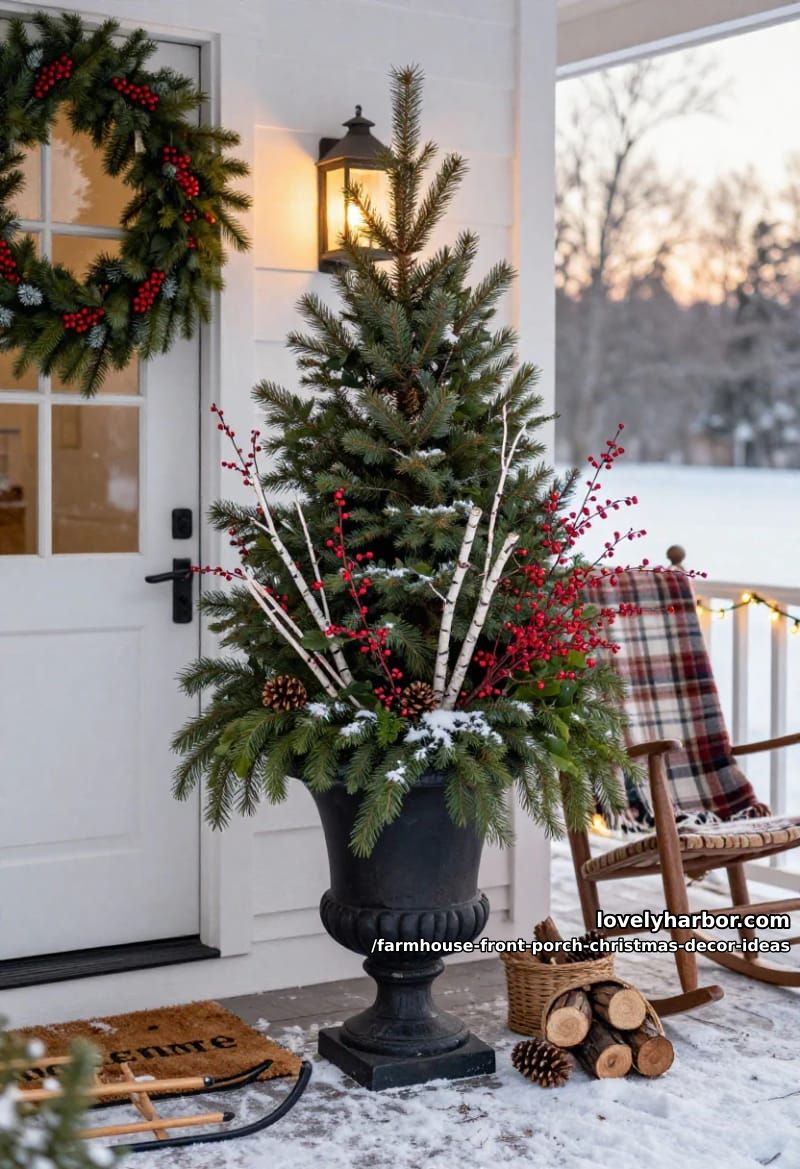
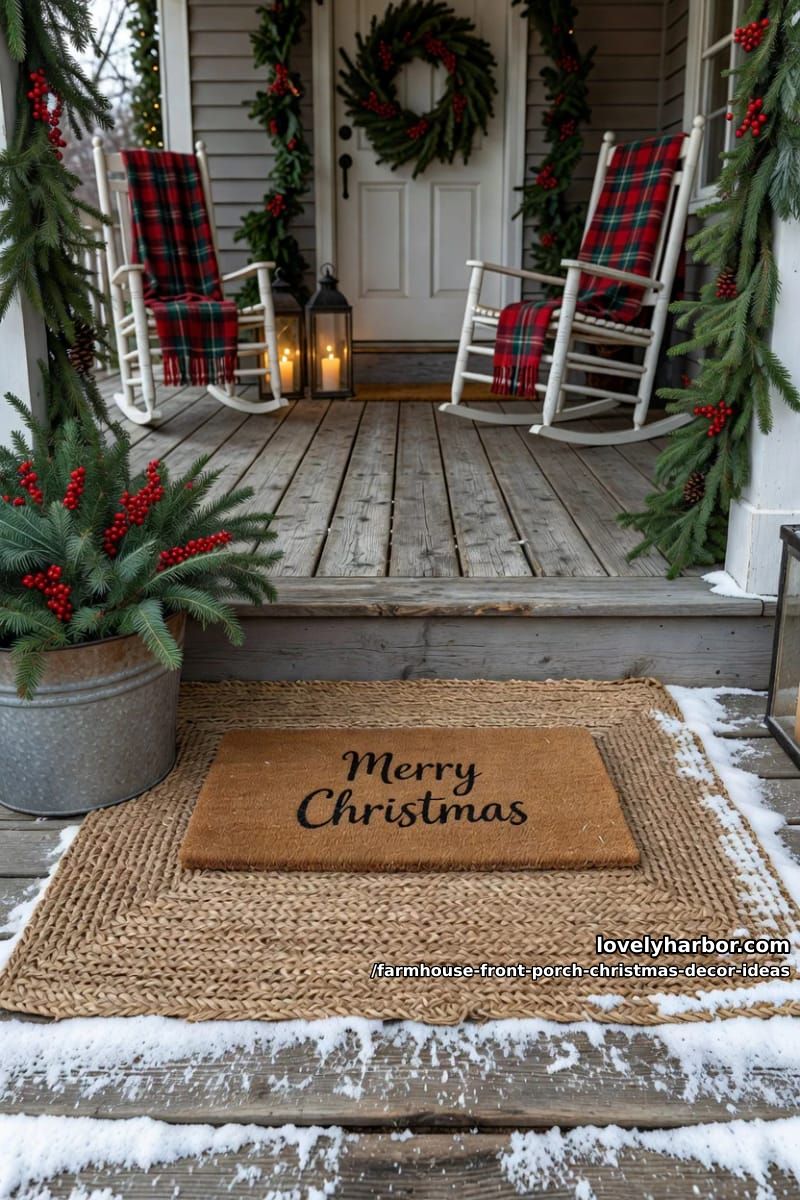
Build the porch pot in the florist's order: a tall central "thriller" of fir branches, a trailing "filler" of cedar over the rim, and vertical red dogwood or curly willow stems for height and color. Stuff the branches into the soil that's already in your summer planters (or a block of floral foam, or even damp sand) and they'll root-set in the cold and last well past the holidays.
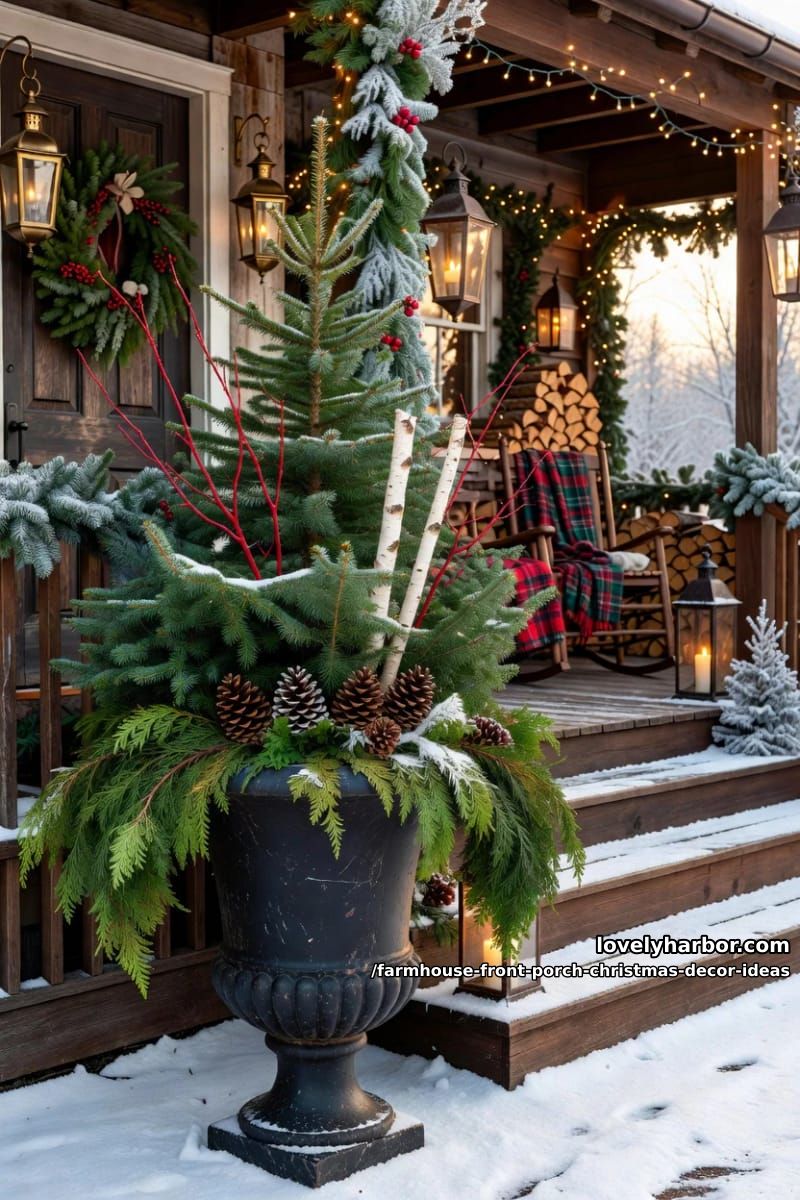
The move that earns these their long Pinterest life is the red dogwood: those bare crimson stems shooting up give you Christmas color now and a clean wintry look in January once you pull the obviously festive bits. A pair flanking the door is the classic; a single oversized one on a small stoop reads better than two crammed pots.
10. Hang oversized ornaments from the porch ceiling
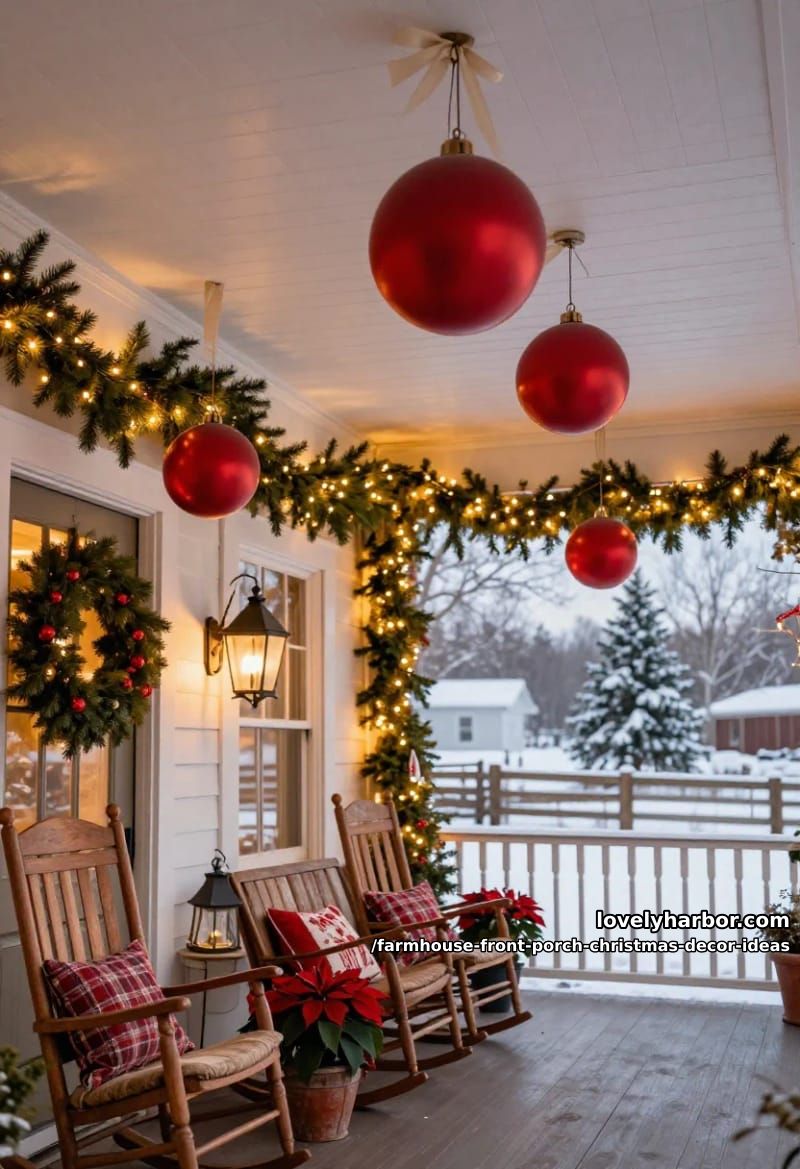
Big ornaments hung from the porch ceiling fill the empty vertical space above eye level that most people forget, and the effect photographs beautifully because the camera looks up into a layer of color that's usually just blank ceiling. Use shatterproof outdoor ornaments in the 6-to-10-inch range, hung at staggered heights on ribbon, three or five of them rather than a tidy even number. Matte finishes read more farmhouse than high-gloss. Hang them where the wind can't bang them against a post, and use a clear fishing-line loop above the decorative ribbon so the actual weight isn't on the ribbon, which frays and drops the ornament on a cold night.
11. Wrap the posts, then add warm light low and high
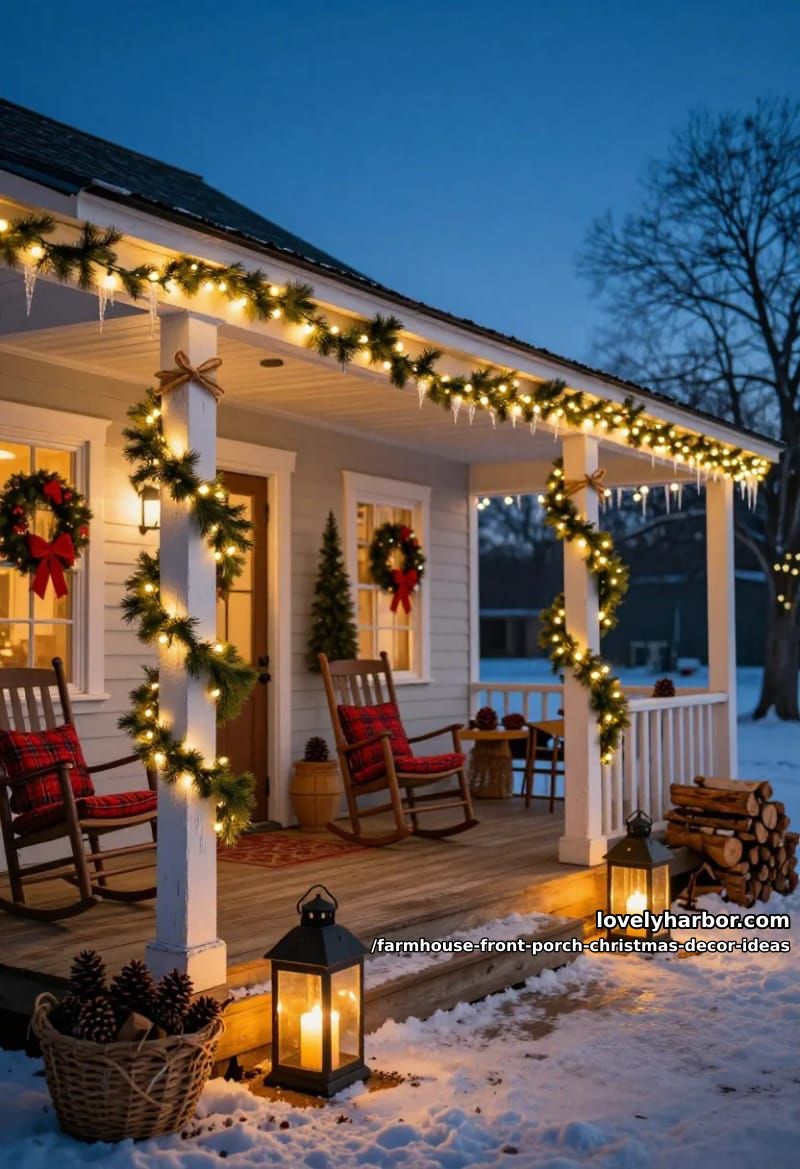
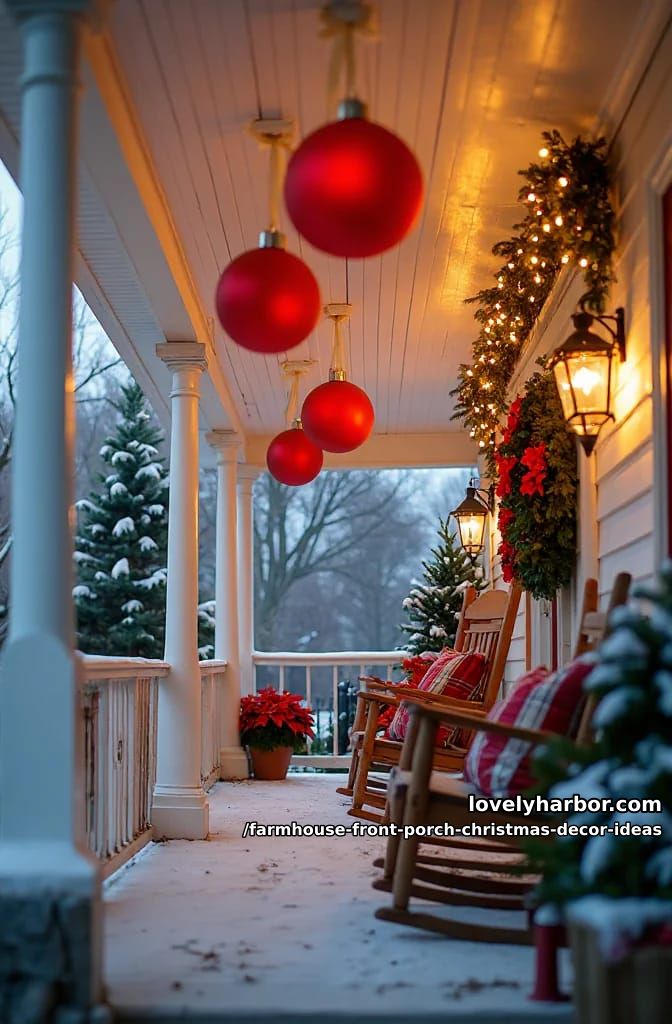
Spiral-wrap garland and warm-white lights up the porch posts to carry the greenery vertically instead of letting it all sit at floor and door level. Warm white (around 2700K) is the color temperature that reads cozy and farmhouse; cool white and especially the blue-white "daylight" LEDs read like a parking lot and kill the whole mood, so check the box before you buy. Anchor the wrap with jute twine rather than visible plastic clips. Then double the light at the base with a lantern so the post glows from both ends.
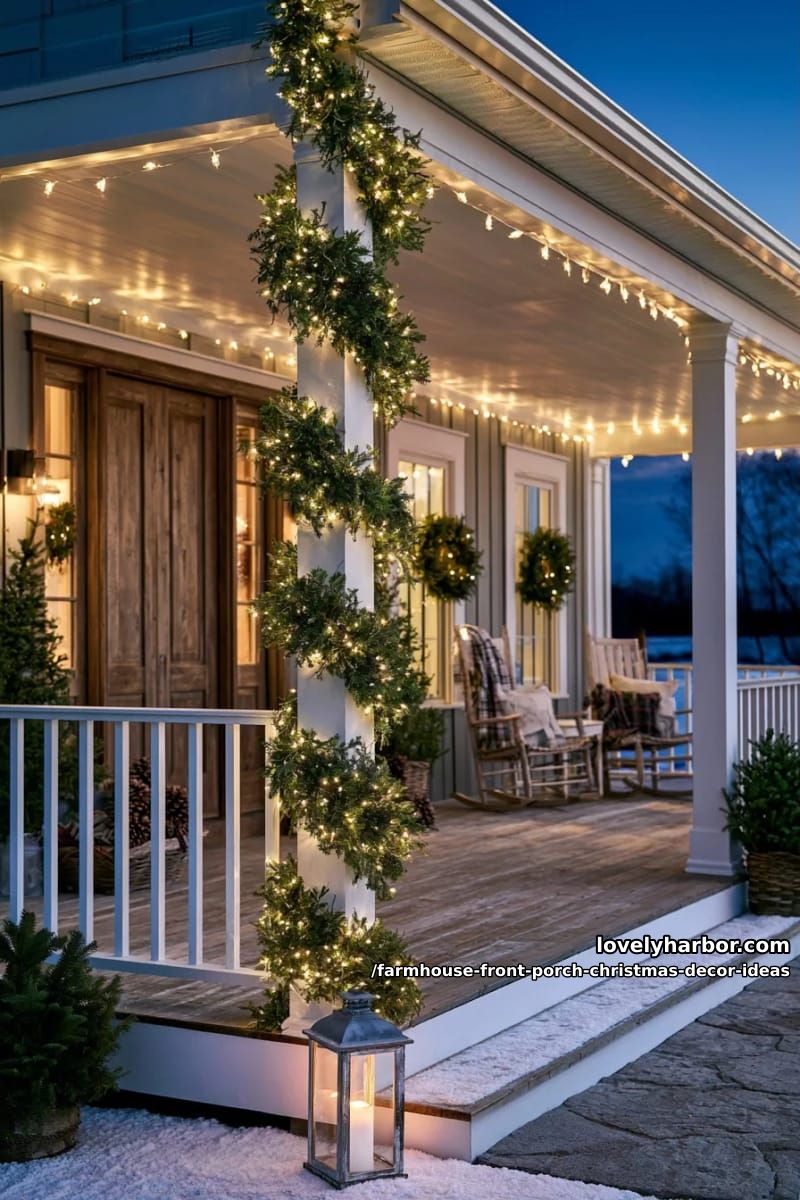
Mixing light temperatures is the most common porch mistake. One strand of warm-white garland lights next to a cool-white wreath light next to a builder-grade blue-white porch fixture reads as chaos after dark. Pick one temperature, warm white, and if your permanent porch light is a harsh cool bulb, swap it for a 2700K bulb for December. It’s a two-dollar fix that does more for your night photos than anything else on this list.
12. Leave negative space, and put something on the floor
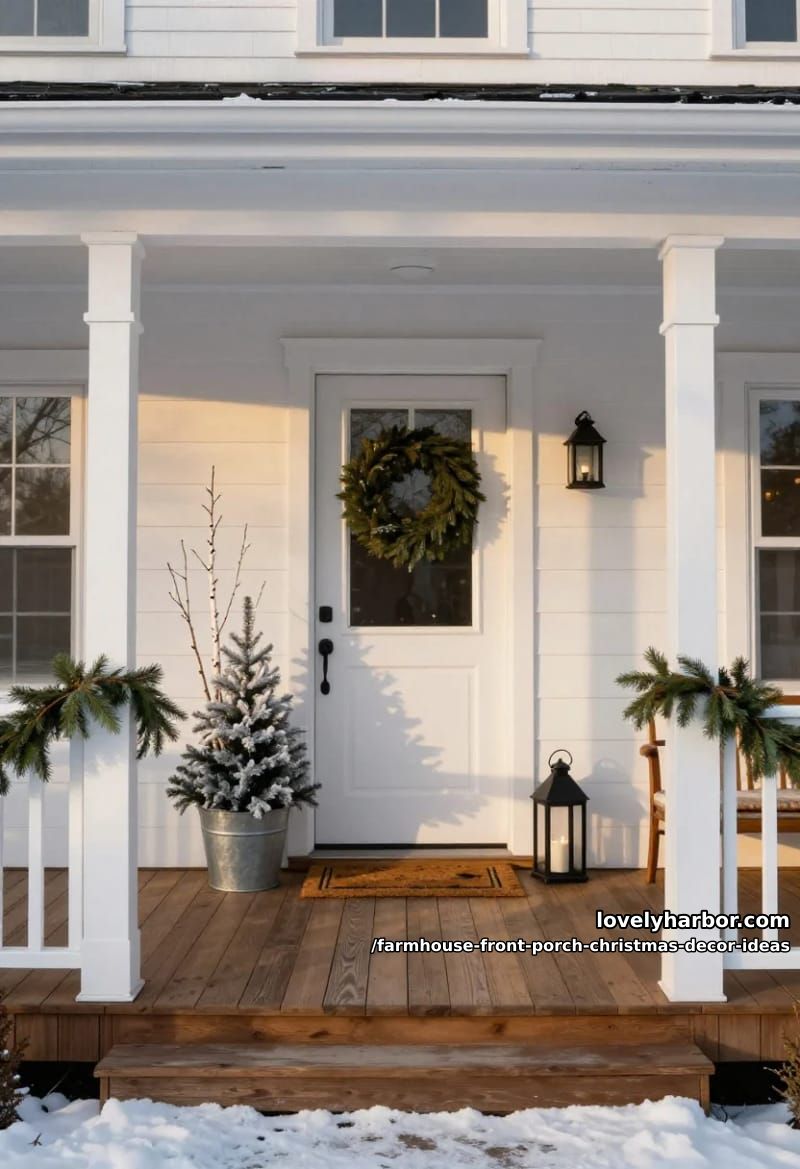
Restraint is the hardest idea to sell because it's the one you can't buy, but the porches that look designed rather than decorated all leave breathing room. Group your pieces into two or three clusters (the door, one corner, the steps) and leave actual empty floor between them.
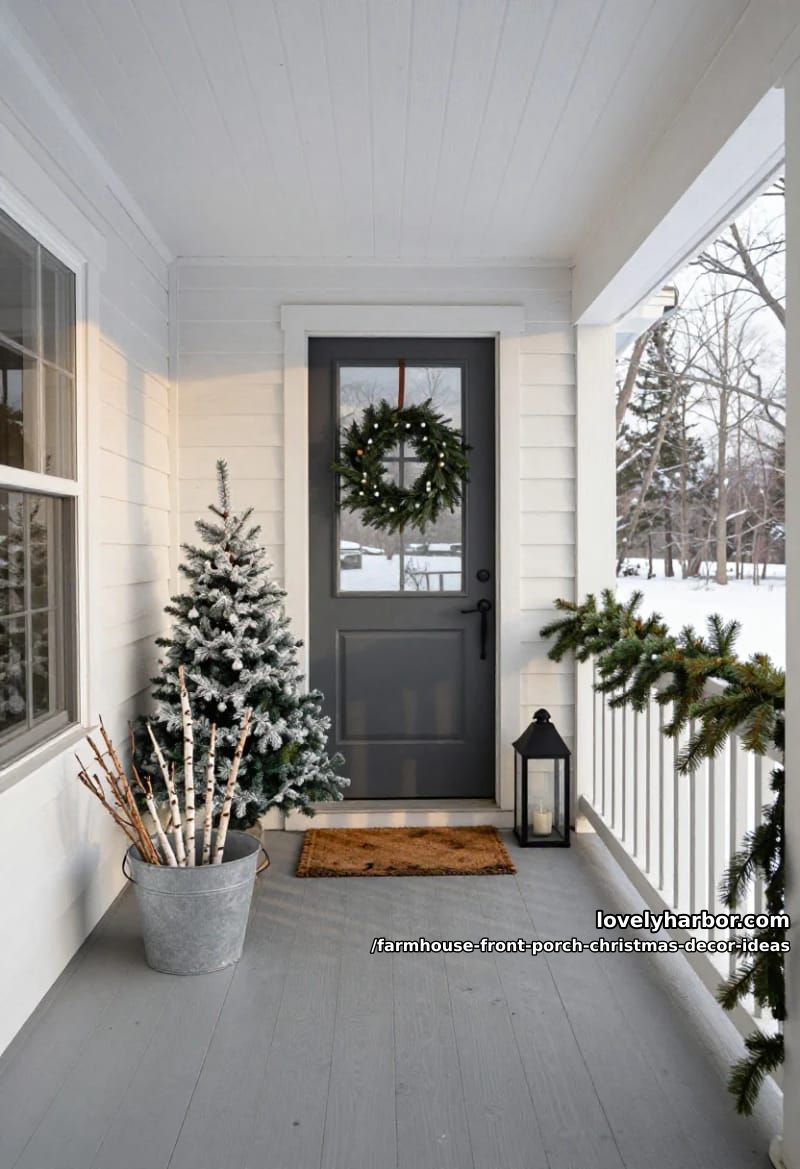
A common pitfall is treating the porch like a shelf to fill; the eye needs somewhere to rest, and the empty boards make the decorated spots read as choices. Pull the warmest grouping down to floor level too. Decor that all sits at door height leaves the bottom of the frame dead, which is why a bucket or a lantern on the ground makes a porch photo suddenly look complete.
Conclusion
If you only do three of these, make it the oversized red wreath, the galvanized bucket of birch, and warm-white light at one consistent temperature: that combination is the backbone of nearly every farmhouse porch that gets saved, and it costs under a hundred dollars if you buy a faux wreath base and a firewood bundle. Add the vintage piece the year you find the right one, not the year you go looking. And whatever you skip, skip the urge to fill every board; the open space between the birch bucket and the lantern is doing as much work as the decor itself.