
The mantel is the one surface in the house where almost everyone goes wrong the same way: a single thin strand of garland laid flat, stockings drooping off pointy little hooks, and three random candles. The fixes are mostly about quantity and physics, not taste. Below are eleven ways to build a fireplace mantel that reads full and intentional from across the room, ordered roughly from the structural decisions (how much greenery to buy, how to keep stockings from face-planting onto the hearth) to the styling moves that make people stop and look. A couple of them push past the red-and-green default, because 2026 is firmly into jewel tones and chocolate-brown neutrals, and you might as well know that before you buy.

1. Buy roughly twice the garland you think you need, then drape it
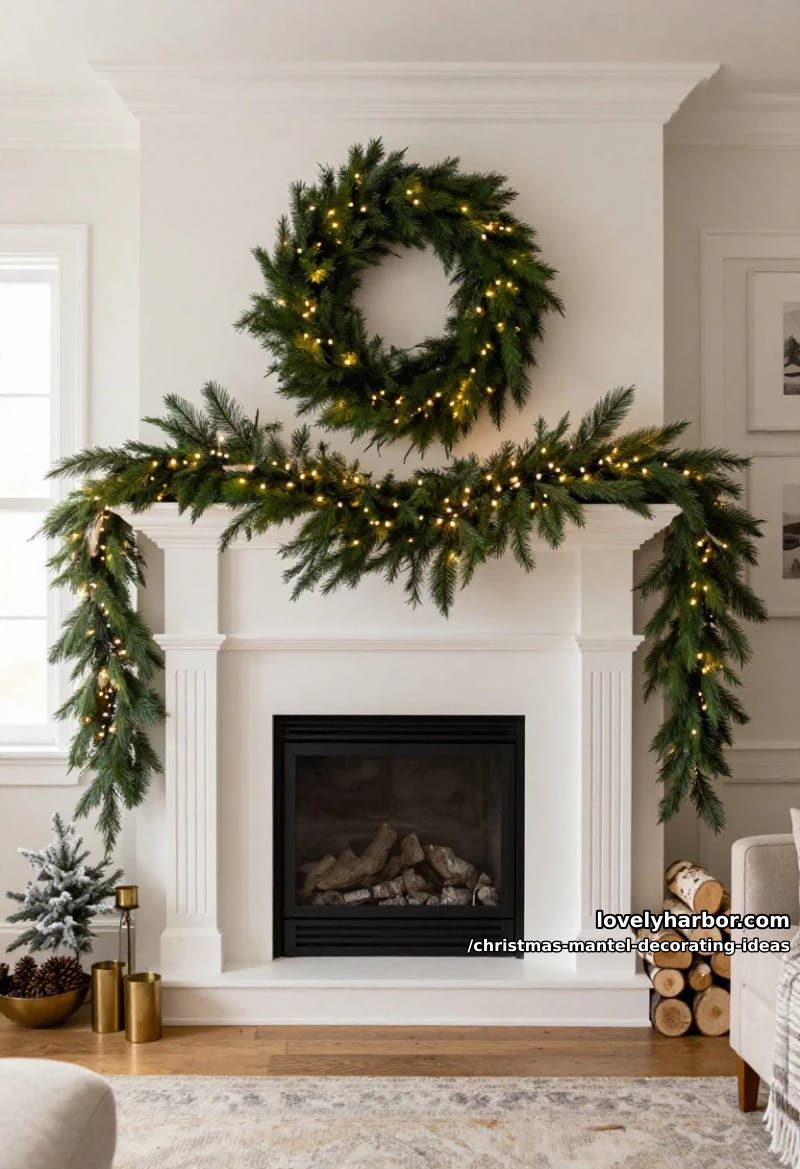
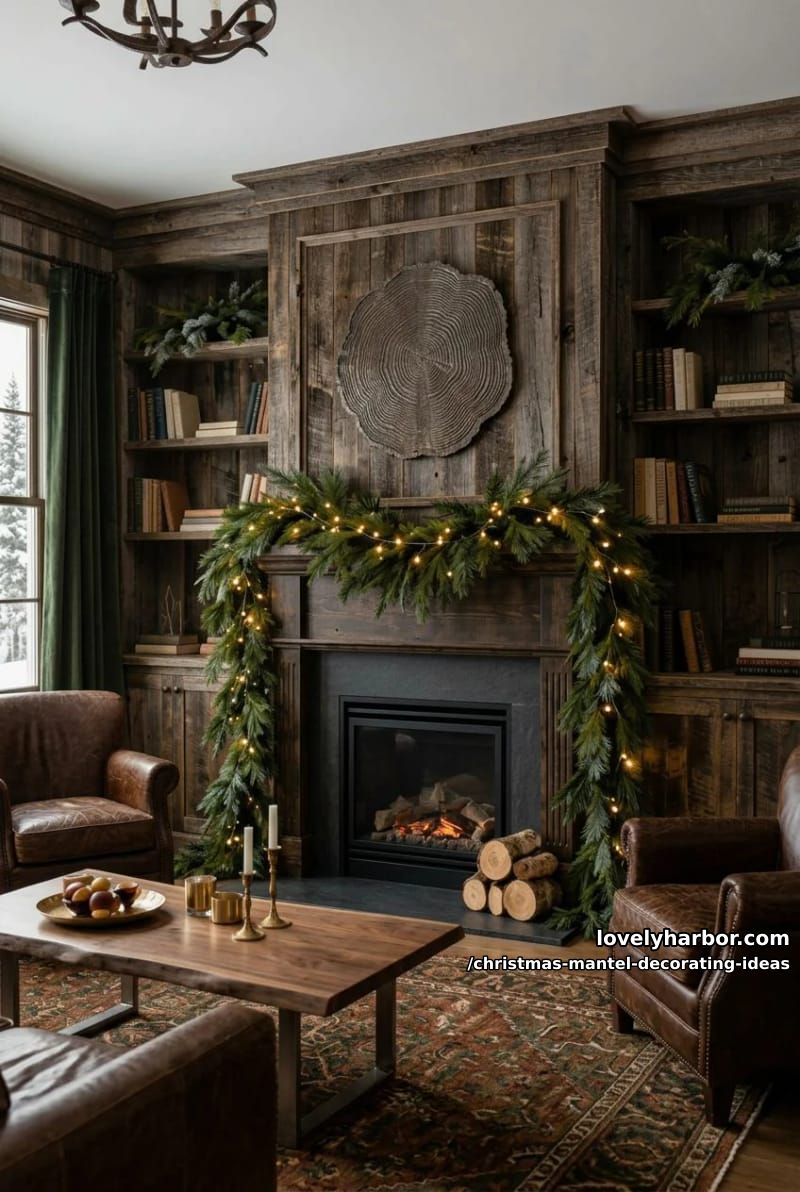
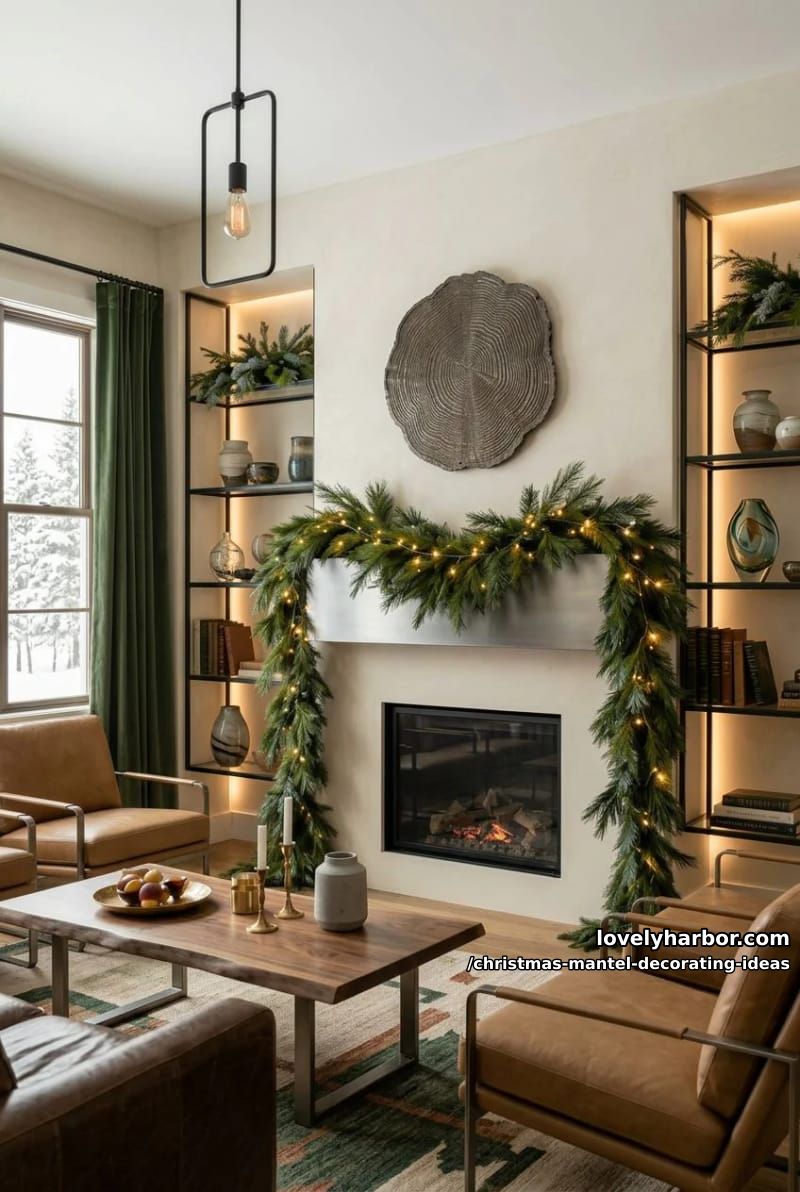
Measure your mantel's width and multiply by 1.5 to 2, then buy that much garland. A standard mantel runs 6 to 9 feet, so you're usually looking at 9 to 18 linear feet, which almost always means joining two pieces end to end with floral wire. The single-strand look that most people default to is the tell; designers double or triple it because a doubled garland costs about the same as one premium "extra full" strand and reads twice as dense.
Drape it, don’t lay it taut. You want a soft swag dipping in the center with the ends trailing a foot or two past each side, which is also where the extra length goes. Driven by Decor uses a simple formula for the swag-and-trail look: garland length equal to your mantel’s width plus its height. If you’d rather run it flat across the top and let the ends spill down the sides, add about two feet.
2. Hang stockings on cantilevered hooks, not the pretty heavy ones
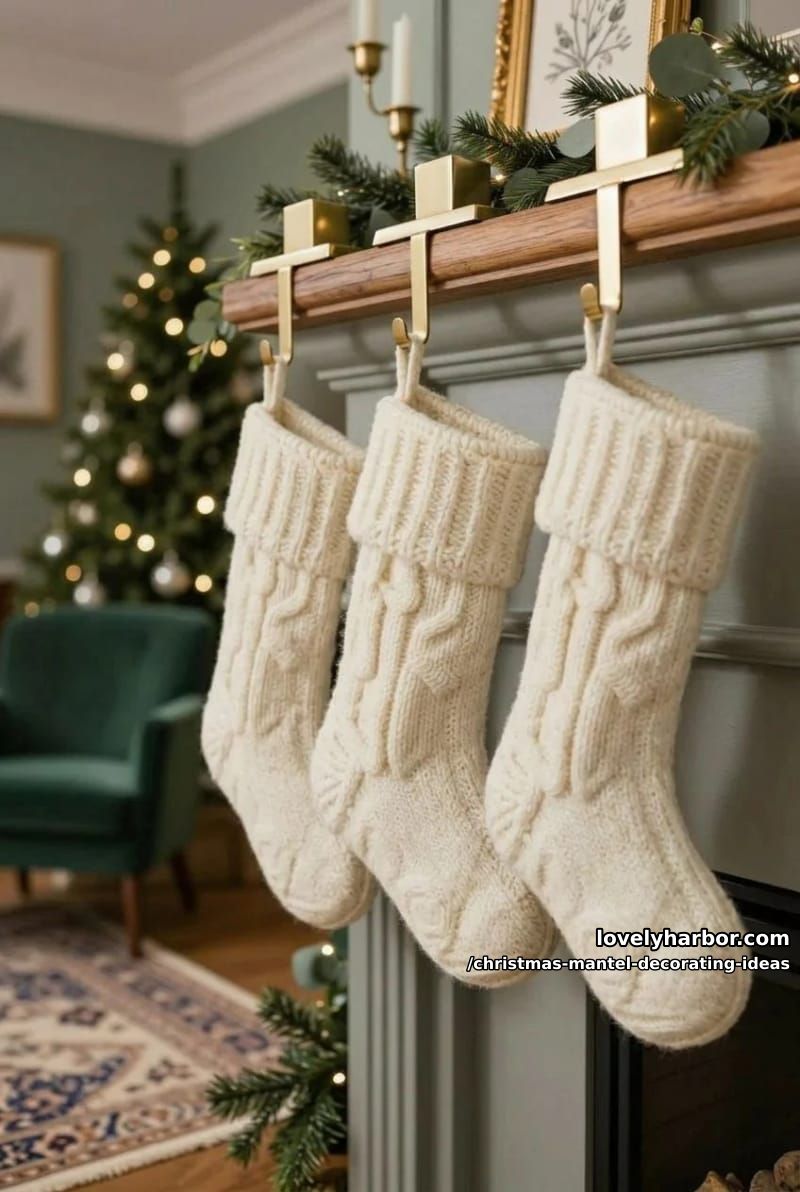
The weight of a stocking holder has almost nothing to do with whether it holds. What matters is the hook's geometry. The decorative cast-metal ones with a little hook sticking straight out the front create a pivot point right on the mantel edge, so a filled stocking levers them off the shelf and onto the hearth, usually on Christmas Eve, usually onto someone's foot. Look instead for hooks that curve back underneath the shelf; that redistributes the load an inch or two behind the edge, and Chica and Jo's testing held nine pounds on hooks that weigh ounces.
If you have toddlers, skip freestanding holders entirely. Heavy stocking statues fall on heads, and there are emergency-room stitches stories to prove it. The renter-and-parent-friendly move is heavy-duty Command hooks on the front face of the mantel, hidden behind the garland, with the stockings hung from those.
Those gorgeous weighted “JOY” or reindeer holders photograph beautifully in the store and tip the instant a stocking has anything in it. If you love the look, run a thin curtain rod or a birch branch through the loops of two of them and rest it across the whole mantel, so the weight sits back from the edge instead of pivoting on it. The holders become bookends, not load-bearers.
3. Layer three depths: a back layer, a mid layer, and things that overhang the edge
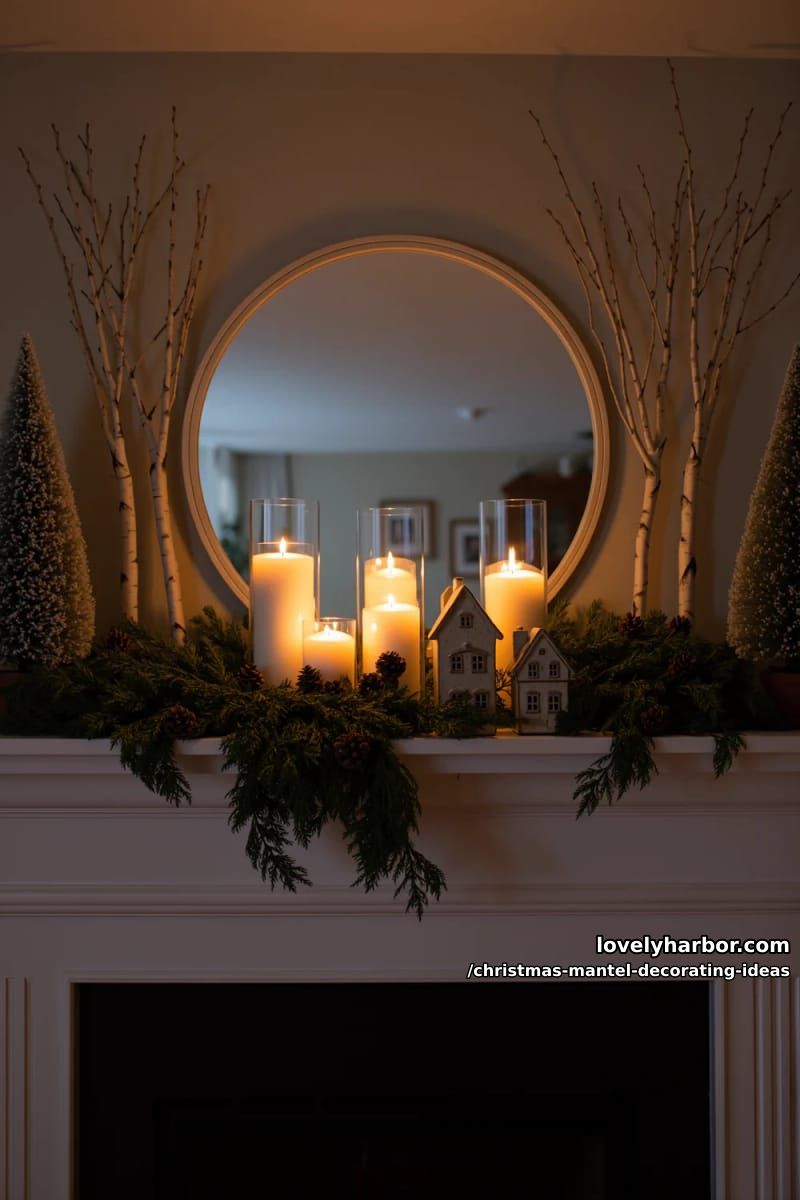
A flat mantel reads flat. The fix is building in three planes: something tall leaning at the back (a mirror, framed art, a bare-branch arrangement), the garland and mid-height pieces in the middle, and a front layer of candles, small objects, and greenery tips that break the front edge of the shelf. That overhang is the single most overlooked move, because objects sitting in a neat row two inches back from the edge always look staged.
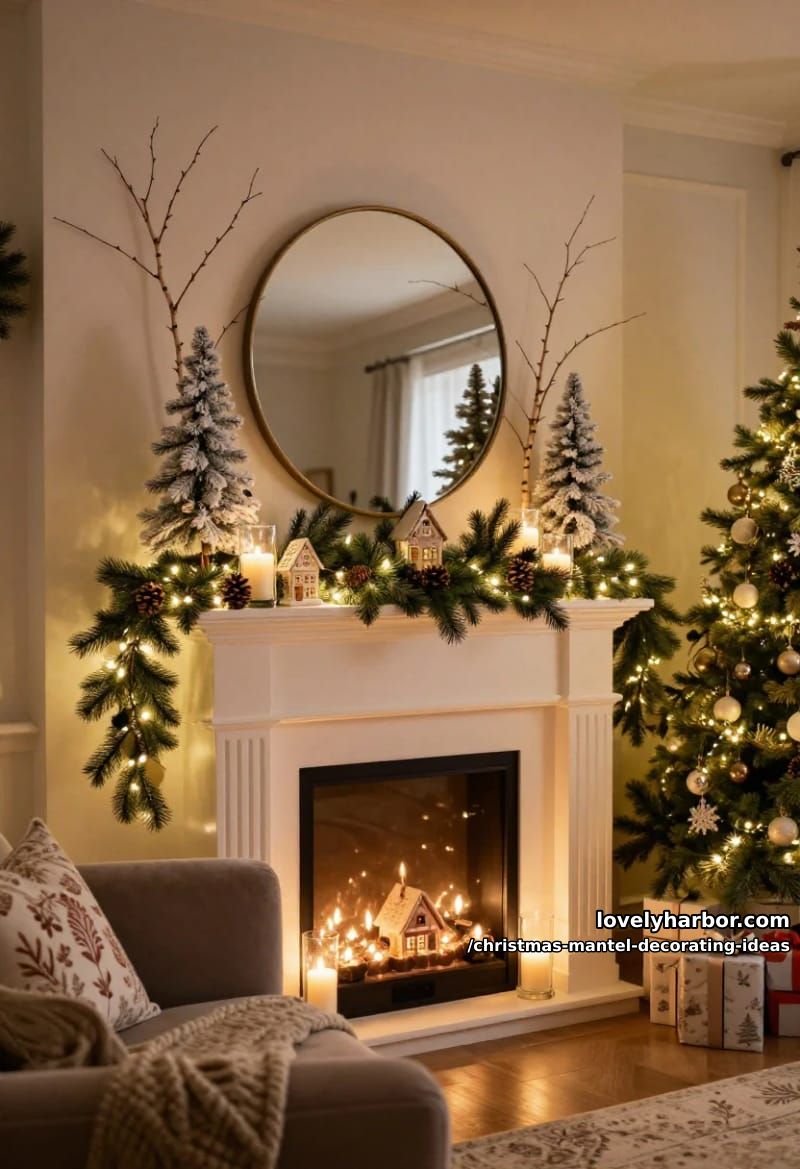
Arrange heights into an uneven triangle rather than a symmetrical pyramid. Tallest item off-center, a gentle descent to the other side. Symmetry is fine and classic, but it's also the look every big-box store sells pre-packaged, and asymmetry is what the 2026 features are leaning into anyway.
4. Build a tiny lit village or a bottlebrush forest along the shelf
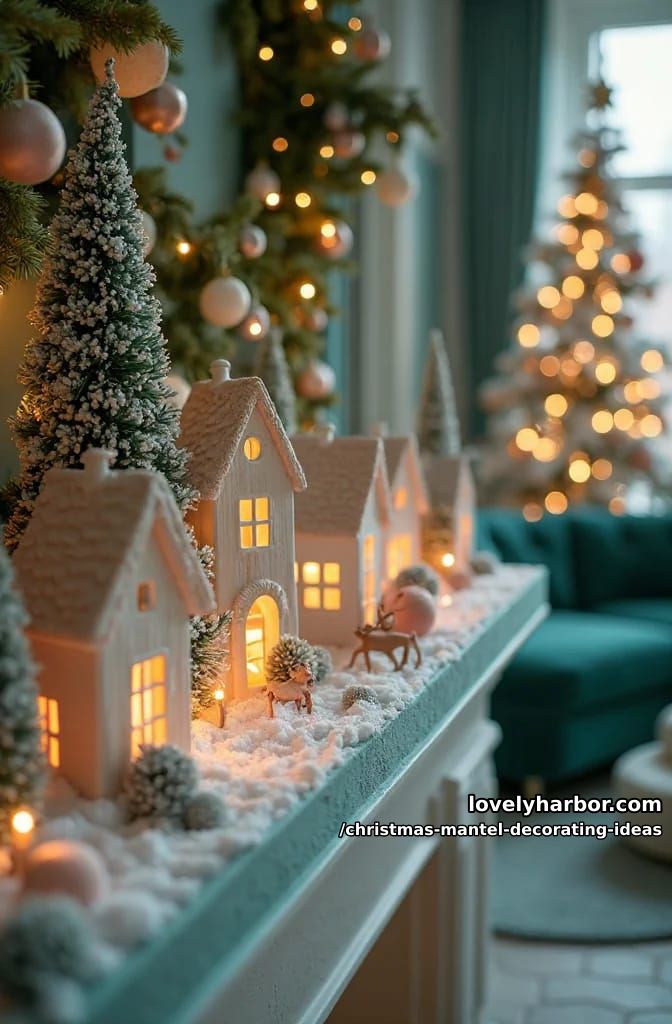
A row of lit ceramic or paper houses nestled into the garland turns the whole shelf into a single scene, which is far more striking than scattered objects. Run a strand of battery fairy lights behind them so the windows glow, bury the wire in the greenery, and add faux snow and a few graduated bottlebrush trees between houses for depth. This is the rare mantel idea that looks better the more crowded it gets.
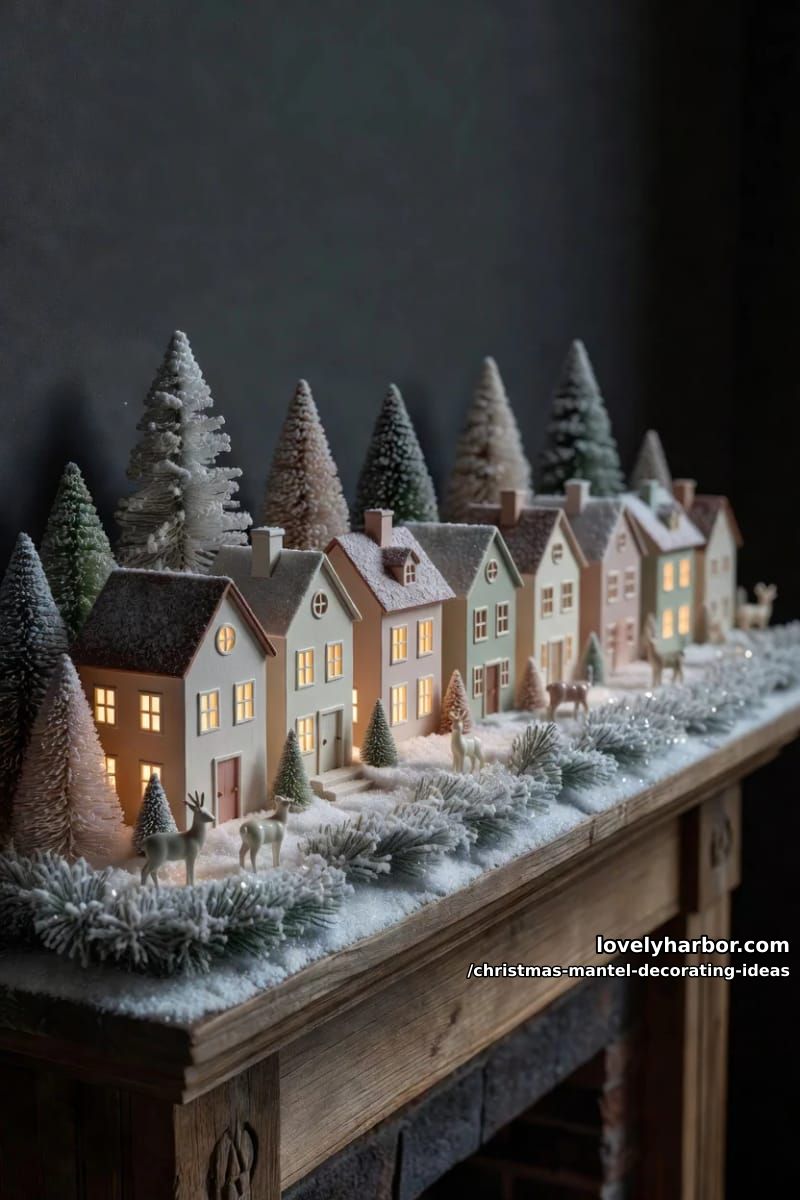
The colorful version skips the village for a forest of bottlebrush trees alone, 24 to 36 of them in graduated sizes, arranged either in a tonal gradient or full rainbow. If you can't find the colors you want, buy cream ones and dye them with fabric dye, which costs a few dollars and gives you a palette nobody else has.
5. String dried citrus and let the mantel smell like the season
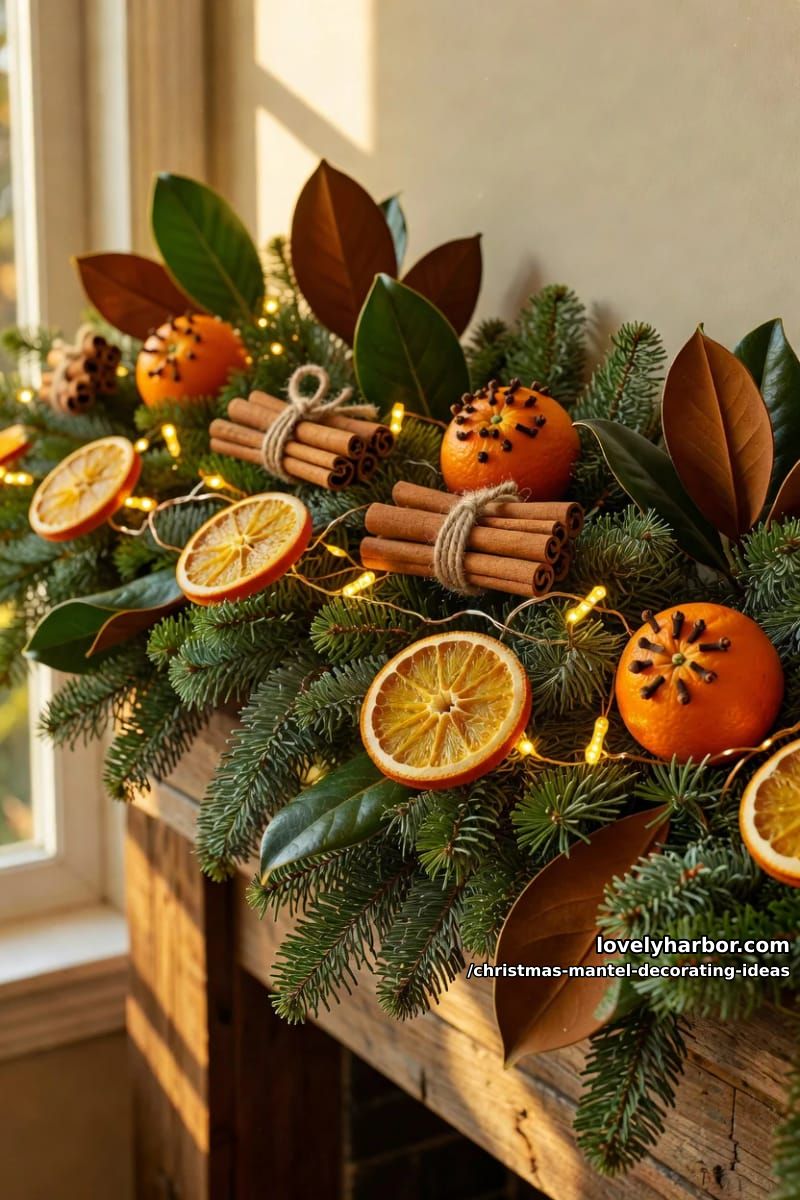
Dried orange slices are the cheapest upgrade on this list and the only decoration that also makes the room smell like Christmas. Slice oranges a quarter-inch thick, dry them in a 200°F oven for two to three hours flipping halfway, and string them with twine or wire them straight into the garland. They read amber and glowing when backlit, and they cost the price of a bag of oranges.
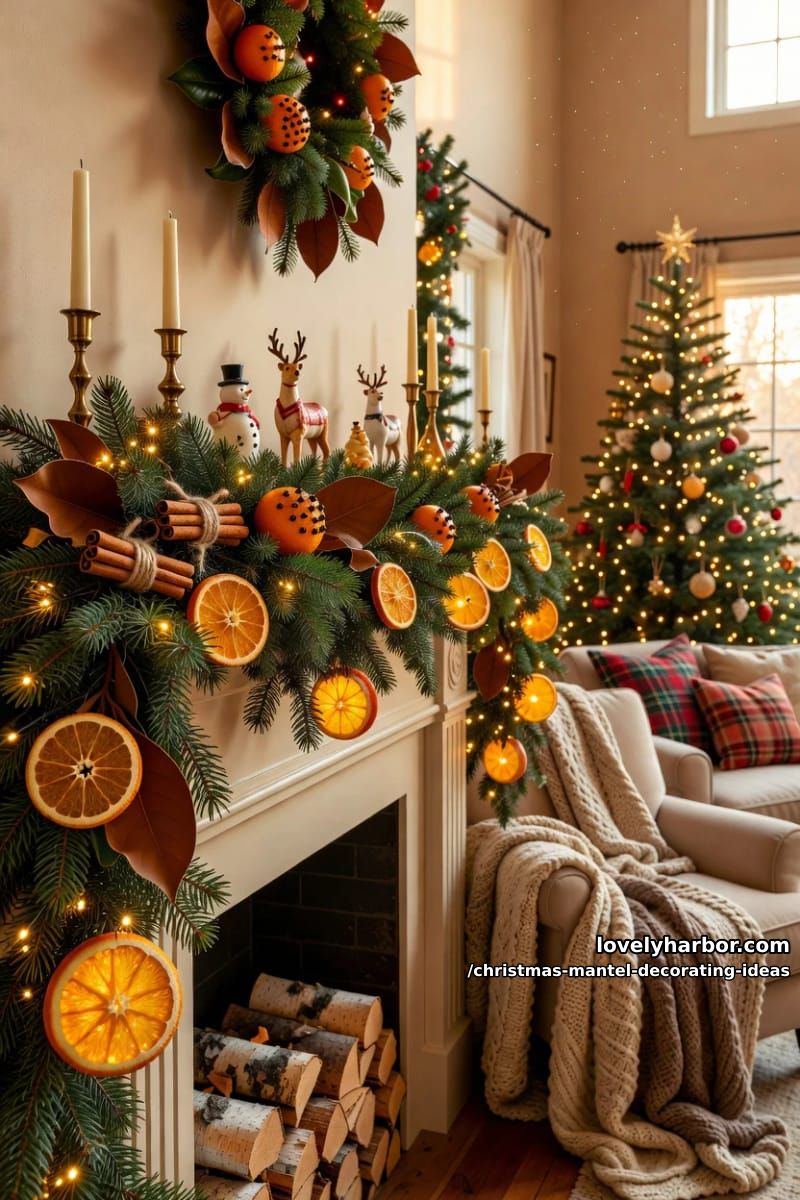
Pair them with cinnamon-stick bundles, clove-studded whole oranges, and a few magnolia leaves for the brown felted undersides. This is the natural, earthy direction that's been climbing for a couple of seasons, and it's the antidote to a mantel that looks like it came out of one box from one store.
6. Anchor the wall above with one oversized statement, not a gallery
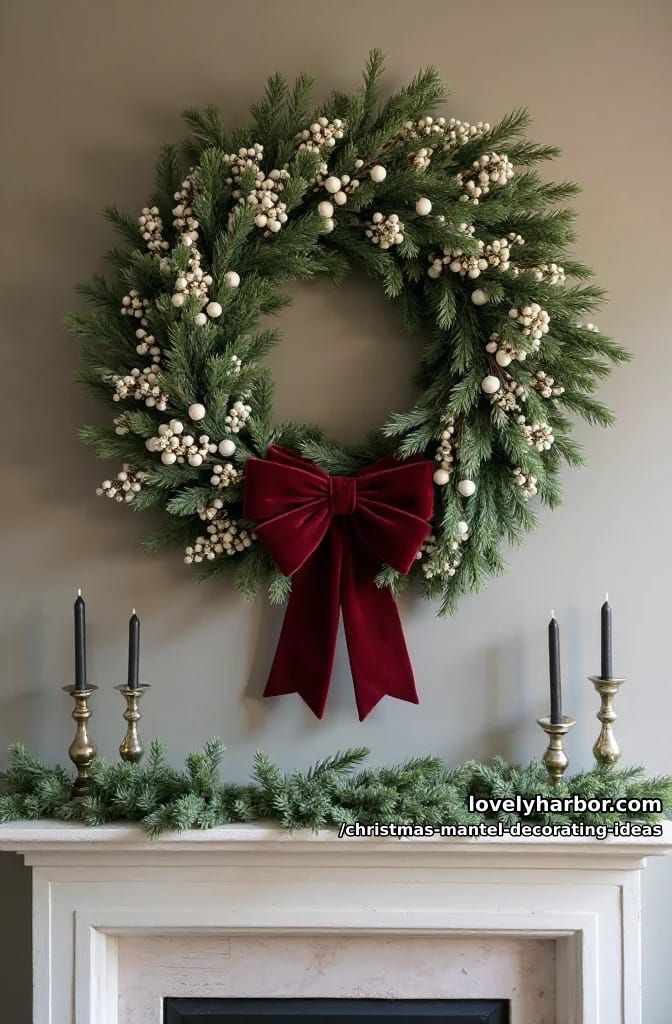
One large object above the mantel beats a scatter of small ones. A wreath should be big enough to fill about two-thirds of the wall space between the shelf and whatever's above it, hung 4 to 12 inches up from the mantel; a mirror or piece of art should cover roughly the same proportion. Anything smaller floats and looks accidental.
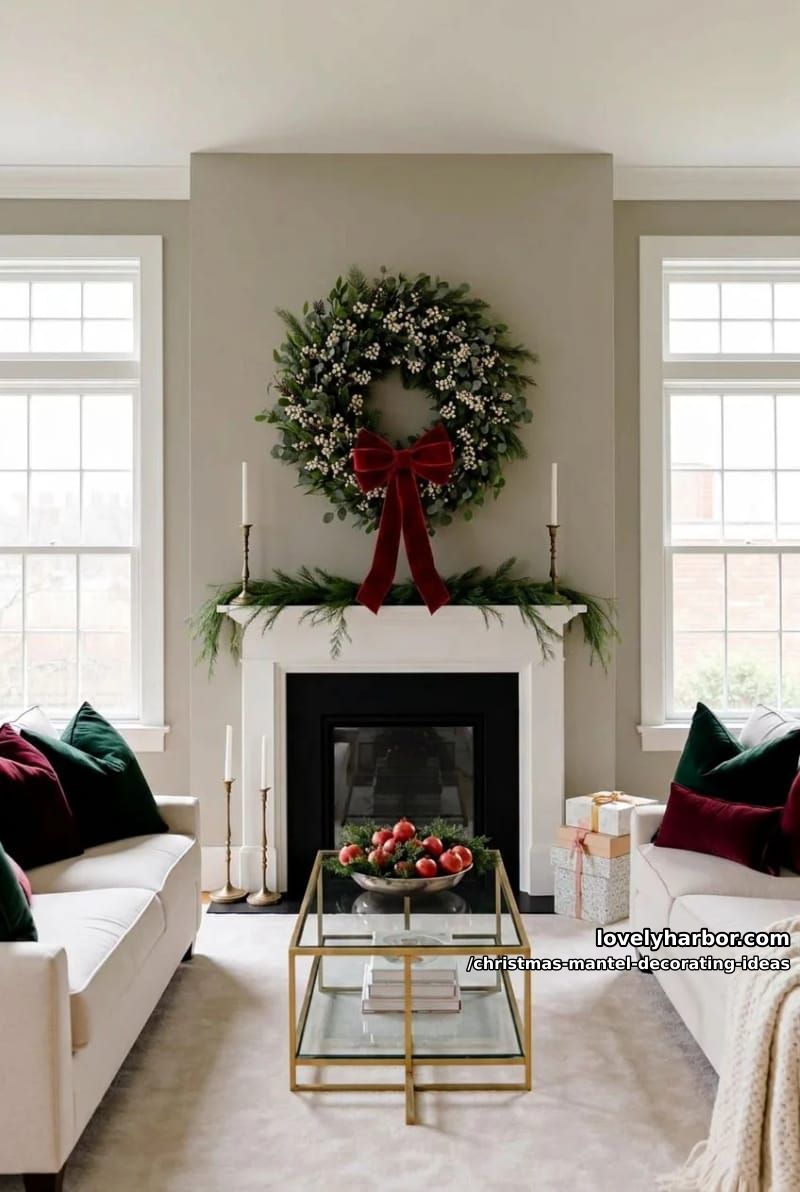
You don't even have to hang it. Leaning an oversized wreath or framed piece against the wall, slightly off-center, reads more relaxed and is renter-proof. Top it with an oversized velvet bow, which is genuinely everywhere this year, in a deep burgundy or a wide satin ribbon, and you've covered the season's biggest single trend with one accessory.
7. Go monochrome neutral: chocolate, cream, and bouclé
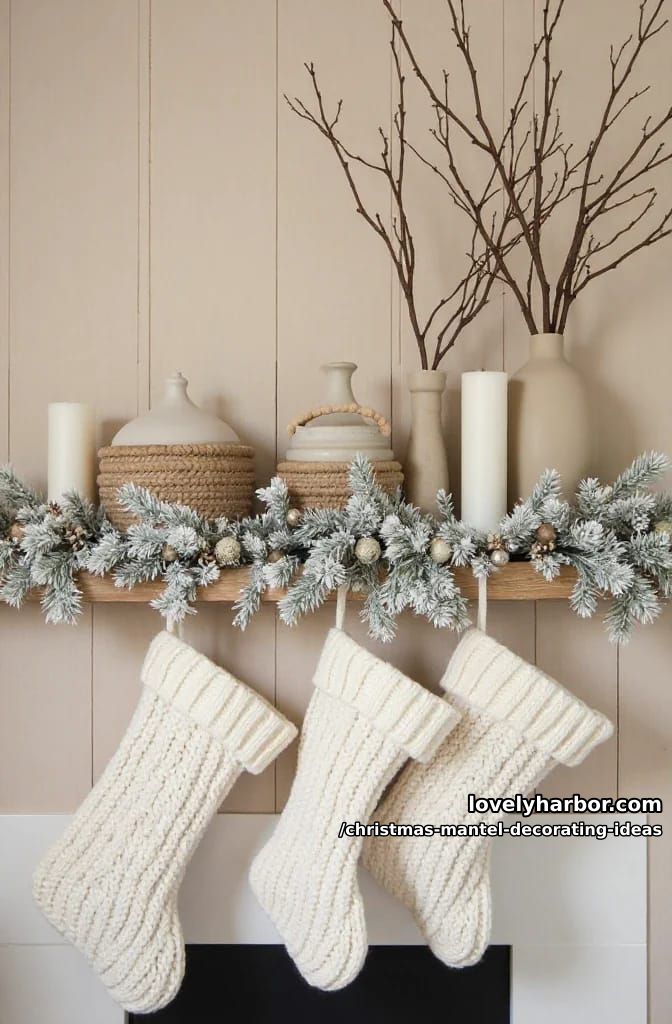
If red-and-green has never felt like your house, the neutral holiday mantel is having a real moment: creamy whites, chocolate browns, oatmeal, and natural wood, with texture doing the work that color usually does. Think bouclé or chunky-knit stockings, a flocked white garland, wooden bead garland, woven baskets, and ceramic ornaments. It still reads festive because of the greenery and candlelight; it just skips the saturation.
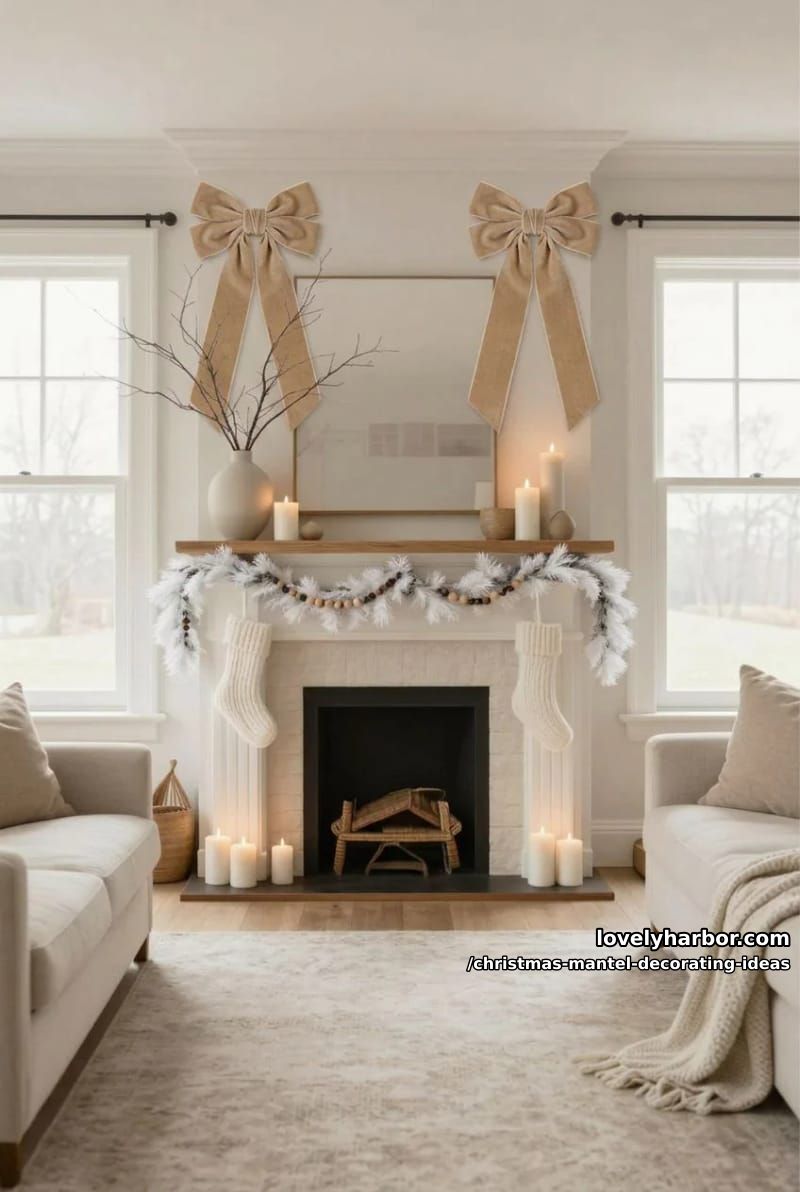
The discipline here is sticking to two or three tones and layering textures instead. Matte against shine, knit against ceramic, wood against linen. A neutral mantel with only one texture looks unfinished, not minimal.
8. Pick a jewel-tone palette if you want the opposite of quiet
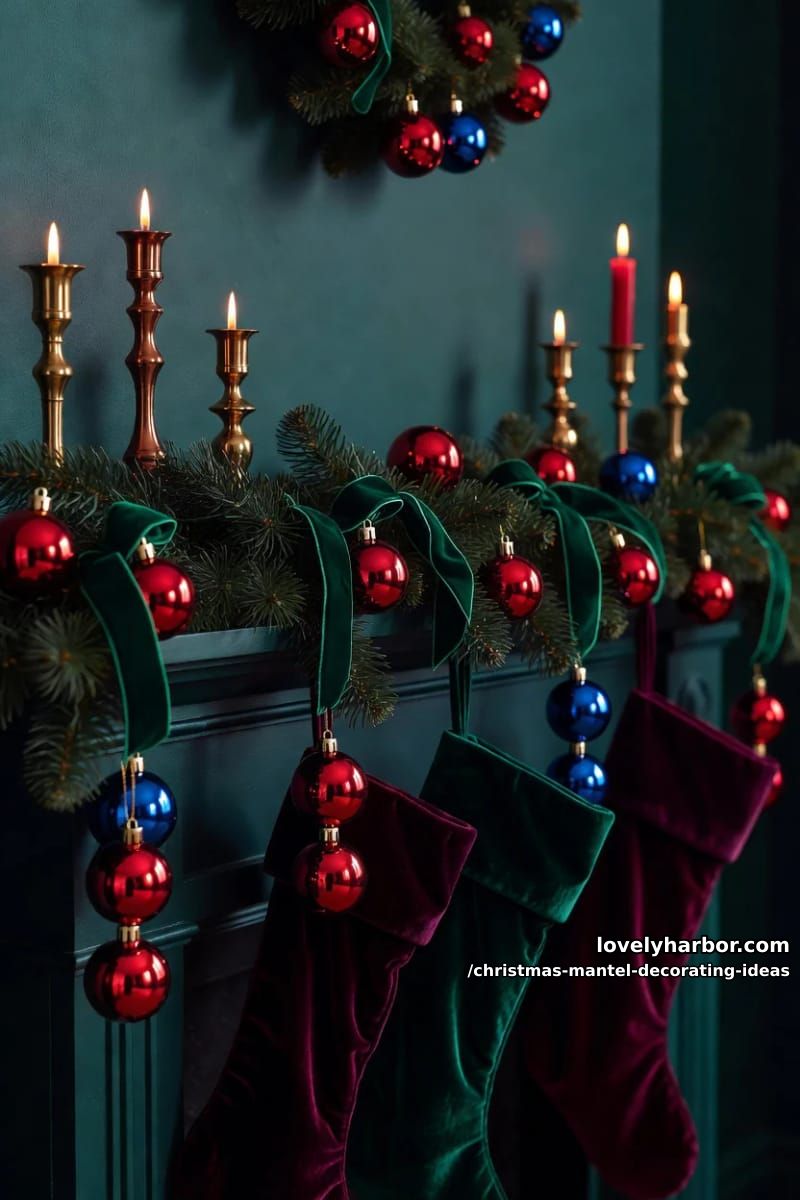
Emerald and ruby with warm metallics is the loud end of the 2026 trend list, and it works best against a dark or moody wall rather than white. Cluster glass ornaments in odd-numbered groups (threes and fives) instead of spacing them evenly; clusters read intentional, even spacing reads like a store display. Weave emerald or wine velvet ribbon through the garland, and lean on brass, copper, and antique gold rather than silver, which pulls the whole thing warmer.
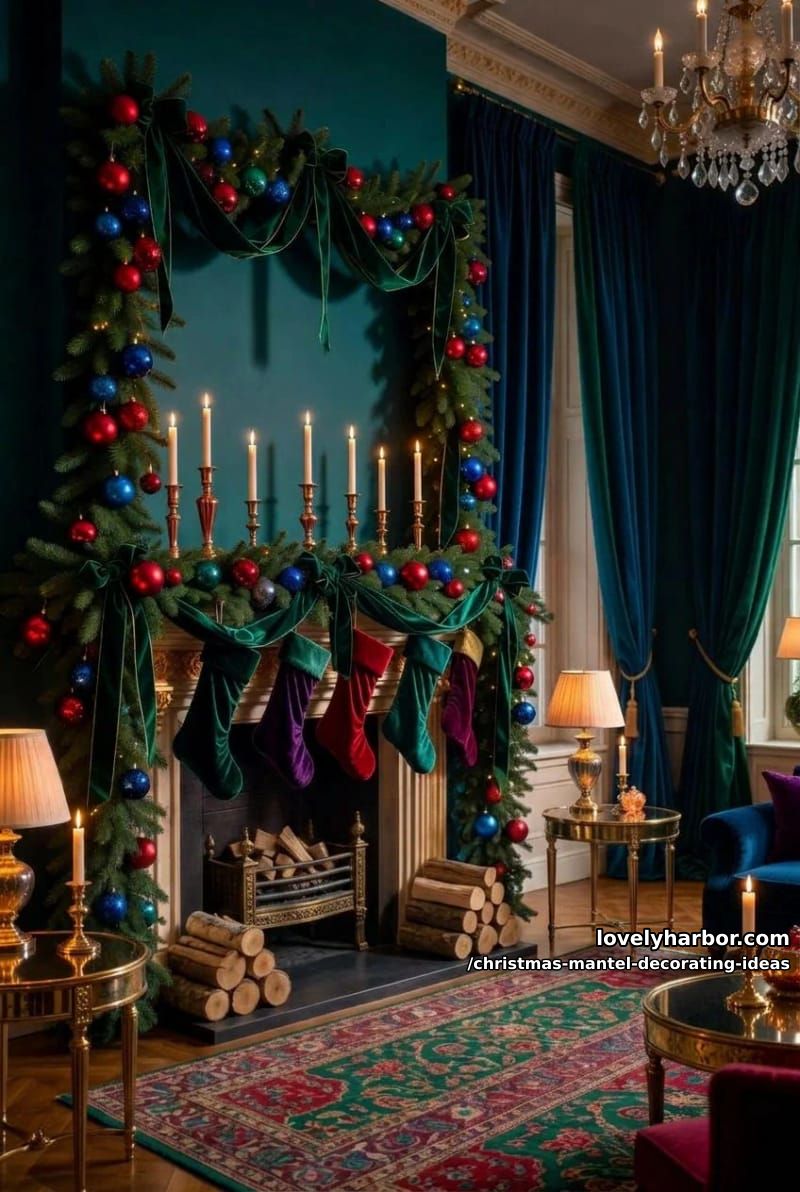
One honest caution: jewel tones swallow light. If your mantel is in a dark corner, double the candles and add fairy lights, or the whole arrangement disappears after sunset.
9. Run ribbon, beads, or pom-pom garland as a second horizontal line

A second garland gives the mantel a layered, custom look that a single strand never will. The classic is wired ribbon woven through the greenery in a loose S, dipping in and out so it disappears and reappears rather than wrapping like a candy cane. Tartan, velvet, or a wide cream satin all work; wired edges let you shape the loops and they stay put.
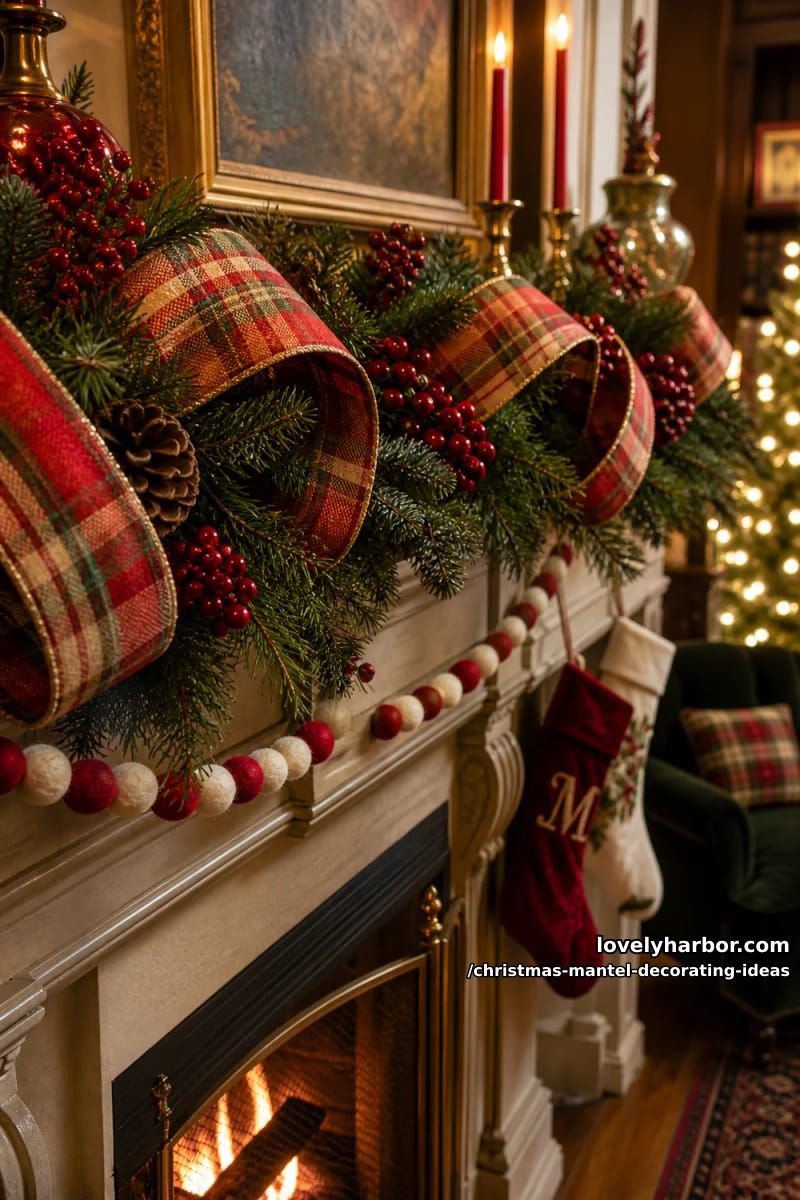
For a more playful, kid-friendly version, swag a felt pom-pom garland or a wooden-and-tassel bead strand along the front edge of the mantel as its own line, below the greenery. Two horizontal lines of different texture is a small move that reads as effort.
10. Cluster candles at three heights and skip the open flame near greenery
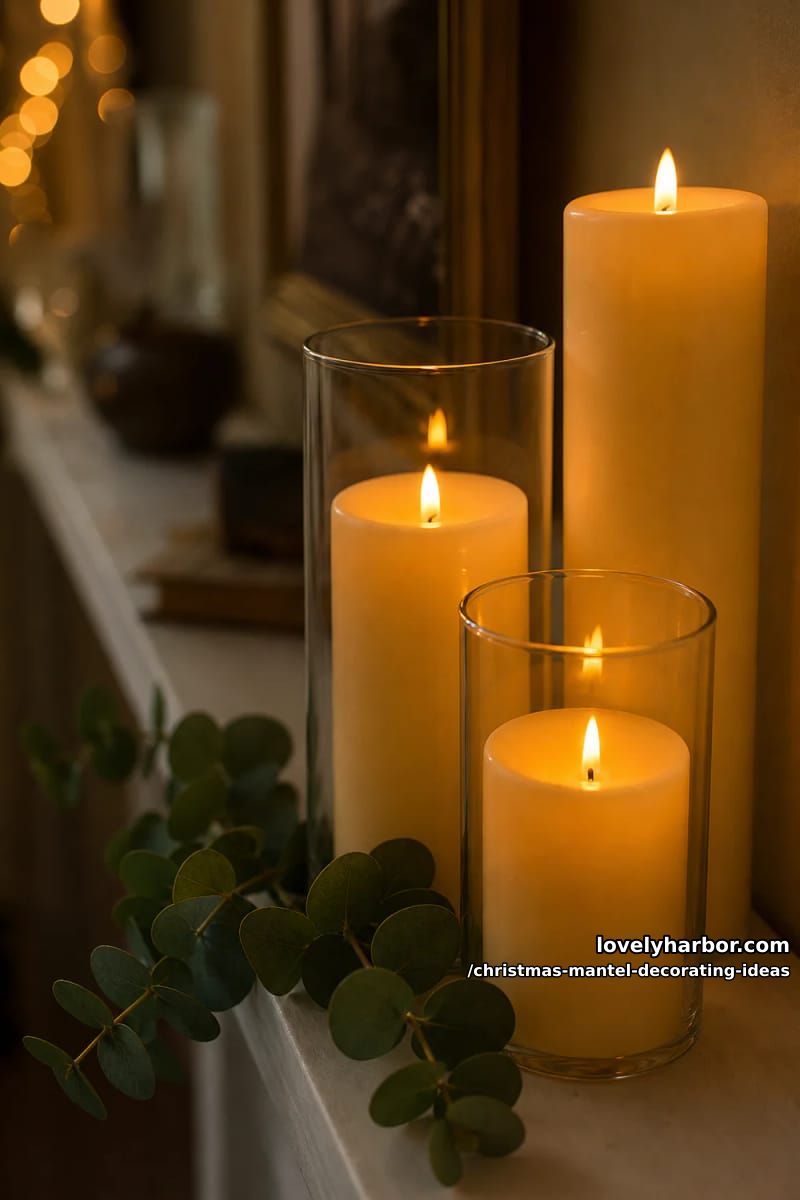
Candles do the heavy lifting at night, but group them rather than lining them up. Three or more pillars at staggered heights, clustered tightly to one side, throw more visual weight than the same candles spaced evenly across the shelf. Put a few inside glass hurricanes for variation in height and to keep the light glowing rather than scattered.
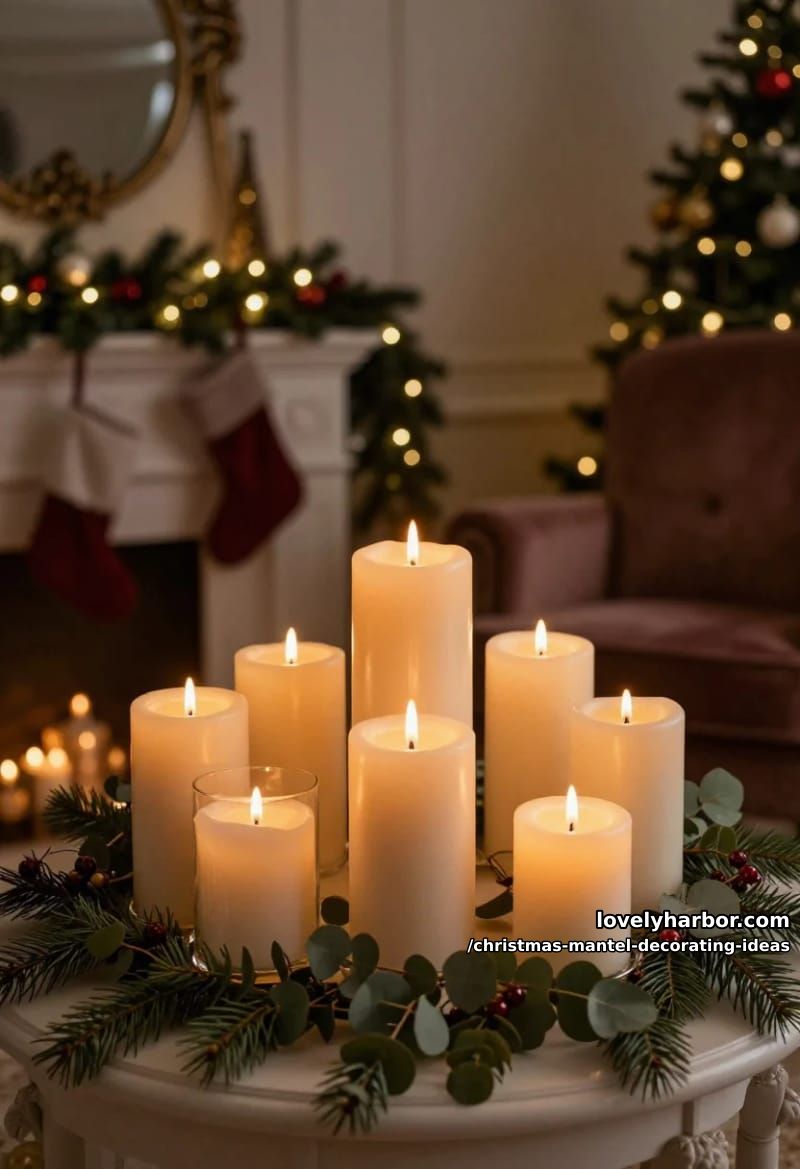
Use flameless LED candles if there's any greenery within reach, which on a decorated mantel there always is. Dried garland, ribbon, and faux picks are flammable, and a real flame six inches under a swag of cedar is how mantels make the news. If you insist on real candles, keep them well clear of the greenery and choose wide, stable bases that won't tip.
11. Let one corner spill onto the hearth and floor
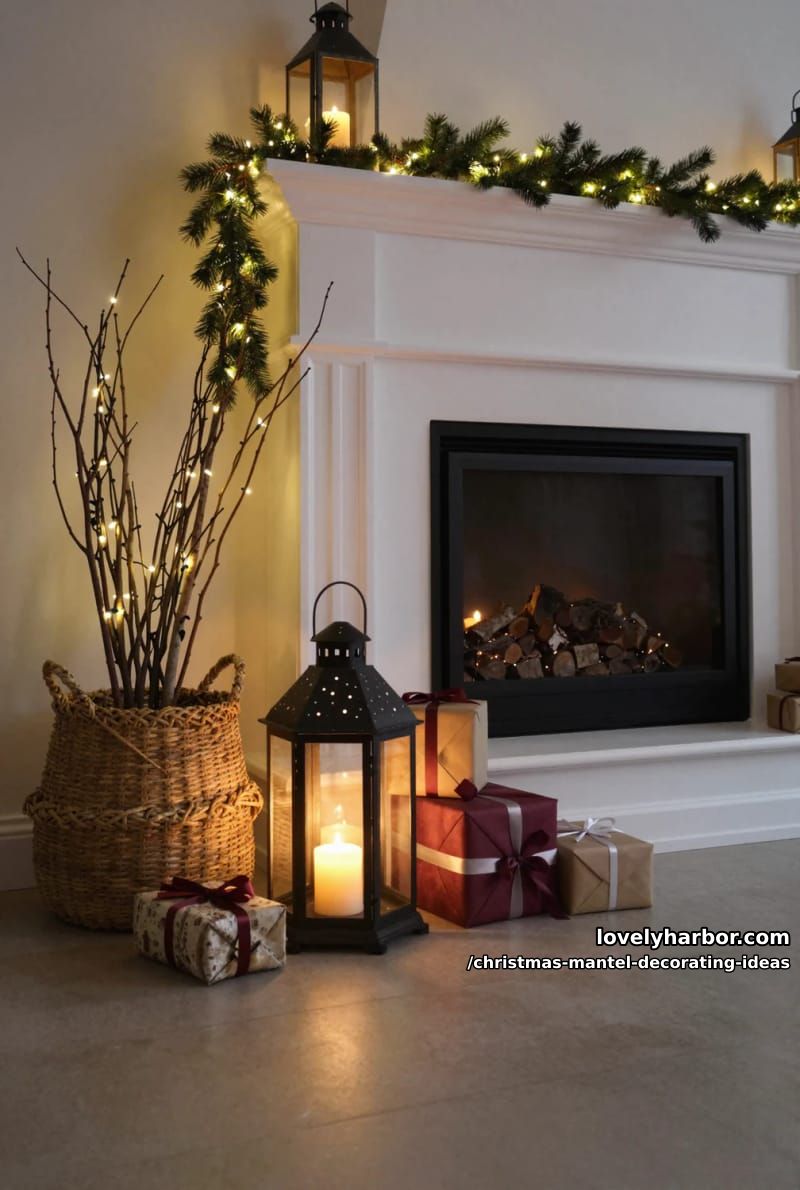
A mantel that stops dead at the shelf edge looks like a shelf with stuff on it. Letting the decoration flow down onto the hearth and floor, on one side only, ties the fireplace into the room and gives the whole thing a grounded, designed feel. Trail the garland long down one end, then continue the line on the floor with a tall basket of branches, stacked logs, a pair of oversized lanterns, and a few wrapped boxes.
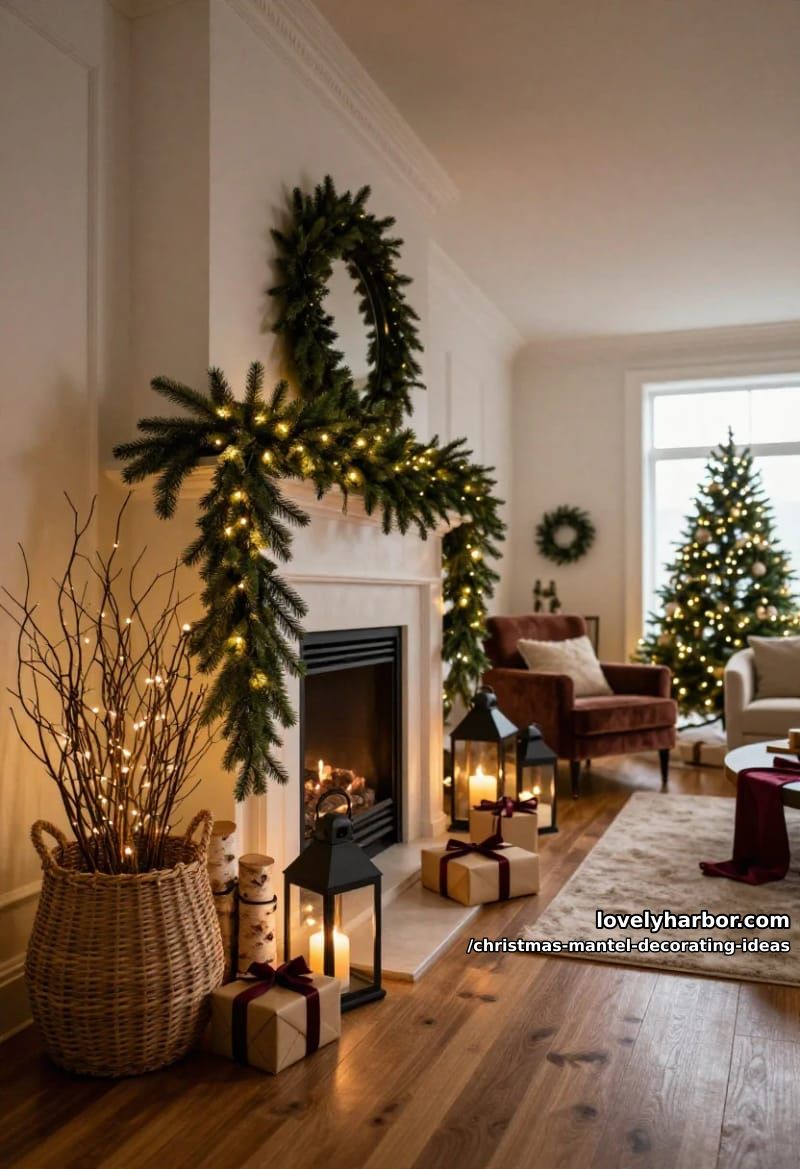
Keep it to one side. A floor grouping on both ends boxes the fireplace in and reads heavy; a single diagonal sweep from mantel-top down to the hearth on the left or right is the difference between styled and cluttered.
Do this
- Buy 1.5 to 2 times your mantel width in garland and double thin strands together.
- Choose stocking hooks that curve back under the shelf, and hide Command hooks behind greenery.
- Build three front-to-back layers and let greenery break the front edge.
- Cluster ornaments and candles in odd-numbered groups at staggered heights.
Avoid
- A single taut strand laid flat across the top with nothing trailing.
- Real flames anywhere near dried or faux greenery.
- Evenly spaced everything. Symmetry is fine; a rigid grid of identical objects is not.
- More than three main colors, or you get visual noise instead of a scheme.
Conclusion
If you only fix two things this year, make them the garland quantity and the stocking hooks, because those are the two that quietly wreck otherwise-nice mantels. Sequence the rest like this: greenery and lights first, then stockings, then the wall anchor above, and styling objects dead last, once you can see how much room is actually left. The dried-citrus and the lit-village ideas are the ones worth starting early, since the oranges take an afternoon to dry and the good bottlebrush trees and realistic faux garlands genuinely sell out by mid-November. Everything else you can pull together the weekend you put the tree up.