
A cozy Christmas living room comes down to two things wearing a holiday sweater: the quality of the light, and how many soft things you can reach without getting up. Most lists hand you forty ornaments and call it done. This one starts at the wall switch, makes the case for warm-white tree lights over multicolor, and ends at a cocoa corner you can run from one armchair. The room you nest in for six weeks should reward sitting still, not a photo.
1. Trade the overhead light for table lamps and a 2700K glow
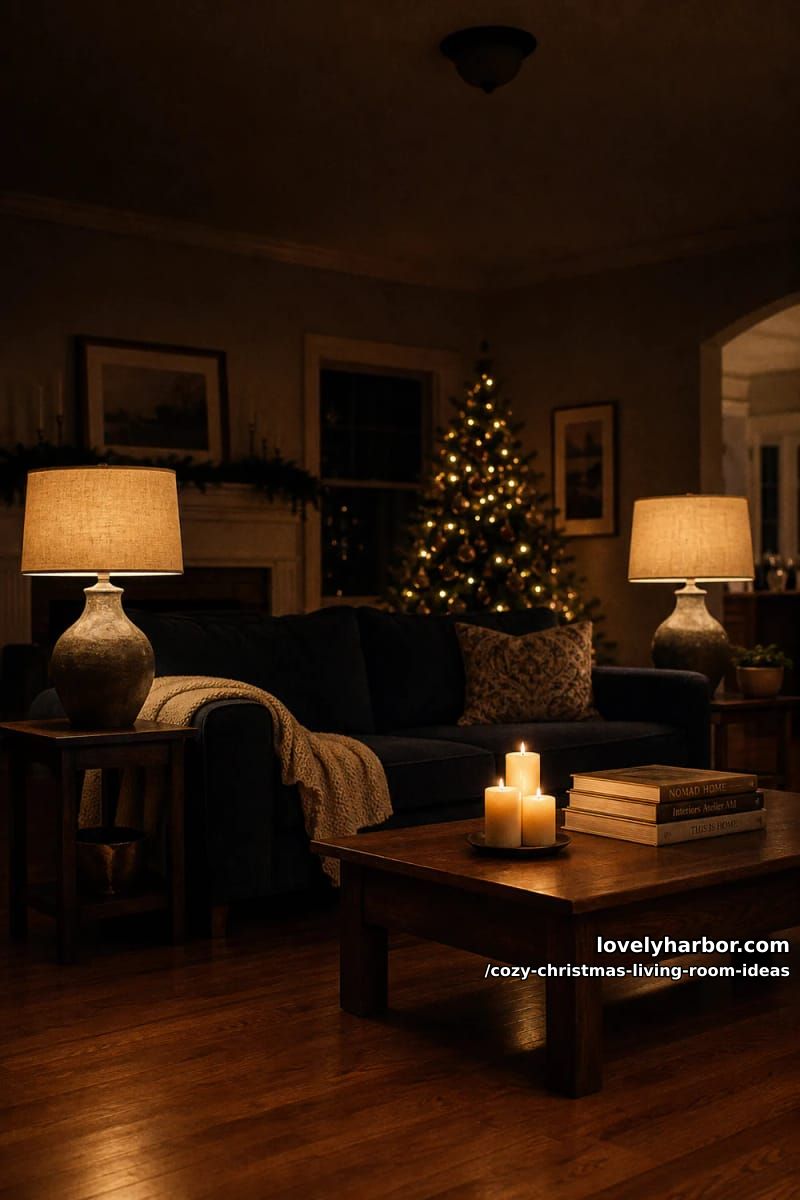
Switch off the ceiling light before you buy a single ornament. I’m serious about the order here. One central fixture flattens a room; the same room lit by two or three lamps at eye level and below picks up the shadow and depth the word “cozy” is actually pointing at. And the bulb matters more than the lamp it sits in , a beautiful lamp with the wrong bulb is just a cold lamp. Designers chasing hygge reach for bulbs rated 2700K or lower, which sit near candlelight, and they use overhead lights sparingly if at all.
The practical version: swap your lamp bulbs for 2700K soft-white LEDs (a four-pack runs about $8 to $15), put the main lamp on a plug-in dimmer for around $12, and set a few flameless pillars near the tree so you get the flicker without an open flame on a drying conifer. Then pull the lamps off the walls and into the seating. Corners are where lamps go to be useless.
Table and floor lamps: 2700K soft-white LED, 450 to 800 lumens, on a dimmer.
Tree, garland, window: 2200K to 2700K warm-white LED string. Cool white indoors is a mistake; it reads like a parking garage.
Mantel and shelves: real-wax flameless pillars on a 6-hour timer, so the room’s already lit before you walk in.
2. Warm-white tree lights beat multicolor in a room you actually sit in

If you want a room you relax in and not a yard display, go warm white and don't look back. Warm-white LEDs land around 2200K to 2700K and read like candlelight, kind to wood tones and skin alike. Cool white pushes toward 5000K and up and turns the whole corner clinical. It's the quiet consensus among people who stage rooms for a living, too: most interior designers reach for white tree lights because they glimmer without shouting over the ornaments. None of which makes multicolor wrong. It's a different brief, the big-bulb, candy-colored nostalgia a lot of us grew up on, and if that full-tilt, maximalist Christmas is the feeling you want, warm white will read too quiet to you.
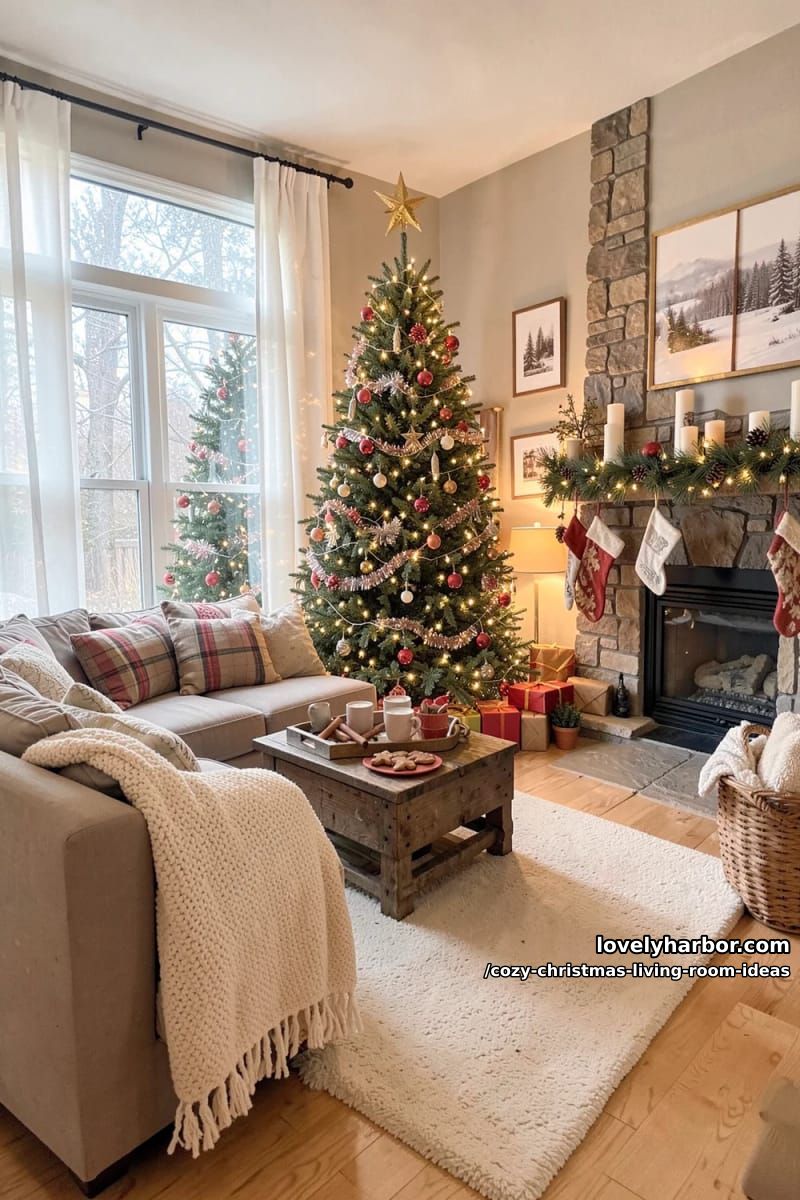
The two just don't sit in the same room comfortably, because multicolor pulls a neutral, layered scheme toward festive maximalism while warm white disappears into it, which is the only reason this article keeps steering you toward the white.
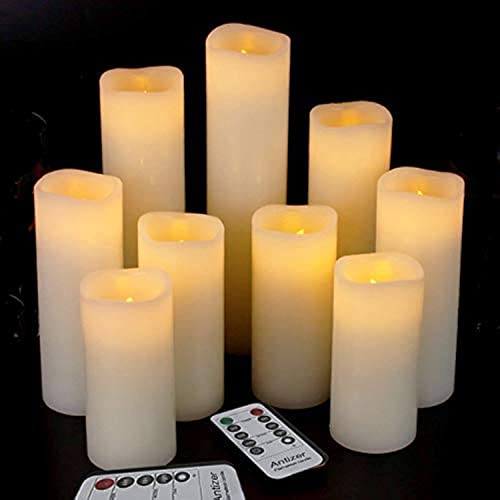
Buy lights by count, not by string length. A 6 to 7 foot tree wants 400 to 500 warm-white bulbs at the very least for that buried-in-glow look, which usually means four to five 100-light strings, or one dense cluster set. The firecracker-style cluster below packs 300 LEDs onto a thin copper wire that vanishes into the branches, and the remote dims them once the room goes dark.
| Light type | Color temp | What it does to the room |
|---|---|---|
| Warm white | 2200K to 2700K | Candlelit and golden. Flatters wood and skin. This is the one |
| Pure white | 3500K to 4500K | Clean, modern, bright , though it can go a little flat after dark |
| Cool white | 5000K and up | Icy and blue; reads “winter wonderland” but sits cold beside you |
| Multicolor | Mixed | Playful and nostalgic. The maximalist look, not the editorial one; pulls a neutral scheme toward festive |
The thin copper wire disappears into the branches, and 300 warm-white LEDs get you to that buried-in-glow look without wrestling three tangled strings.

3. Build a cozy Christmas palette on warm neutrals plus one deep accent

There are really two ways to take a Christmas palette, and they pull in opposite directions. One is the classic red-and-green split, full nostalgic maximalism, the holiday most of us picture by default, and there is nothing broken about it if a bright, loaded, sentimental room is what you're after. The other, the elevated-editorial look this section is built around, starts with warm neutrals and adds exactly one deep color so it doesn't go beige-on-beige. The 2025 holiday rooms designers are actually getting asked for lean on the second camp, warm neutrals with spice-toned or jewel accents instead of candy-cane contrast, and the logic is practical: cream, oatmeal, taupe, and soft gold recede, which lets the firelight and the tree become the event. Pick one anchor color and repeat it three or four times around the room: oxblood, forest green, deep brass, smoky blue. One accent, repeated, reads collected. Five accents read like the clearance aisle.
Do this
- Start with cream, oatmeal, camel, and warm wood
- Then one deep accent , oxblood, forest, brass , repeated 3 to 4 times
- Matte finishes, and pick one metal: aged brass or pewter, not both plus a third
- Let real greenery be the green instead of painted ornaments
Avoid
- A 50/50 red-and-green split if it's the editorial look you're after , it swings the room nostalgic, not elevated
- Anything icy and blue-white parked next to warm bulbs
- Five competing brights with no neutral in charge
- Silver, gold, and rose gold all in one sightline
4. Layer holiday throws in three weaves, not three chunky knits

Three blankets in the same chunky knit is a pile, not a layer. What makes a sofa look styled instead of heaped is contrast in the weave , one bulky hand-knit for heft, one flat woven plaid or waffle for structure, one short-pile fleece or sheepskin for the soft thing your hand finds first. Your eye reads three textures as a decision and three identical knits as laundry. Keep them all in the same palette and the layering stays quiet.

The giant-yarn chenille knit is the anchor, with one honest caveat: the very loose ones snag and stretch, so look for a tighter knit around five pounds that keeps its shape. The Bedsure below is a hand-knit chenille at about 5 lbs that survives a wash if you bag it first. Park the overflow in a basket by the couch instead of stacking all four in plain sight , which, conveniently, also says "curl up here" to anyone walking in.
A tighter five-pound knit that drapes without the gaping holes and sag of the cheaper giant-yarn throws.

5. Fake the fireplace with an electric stove if you rent
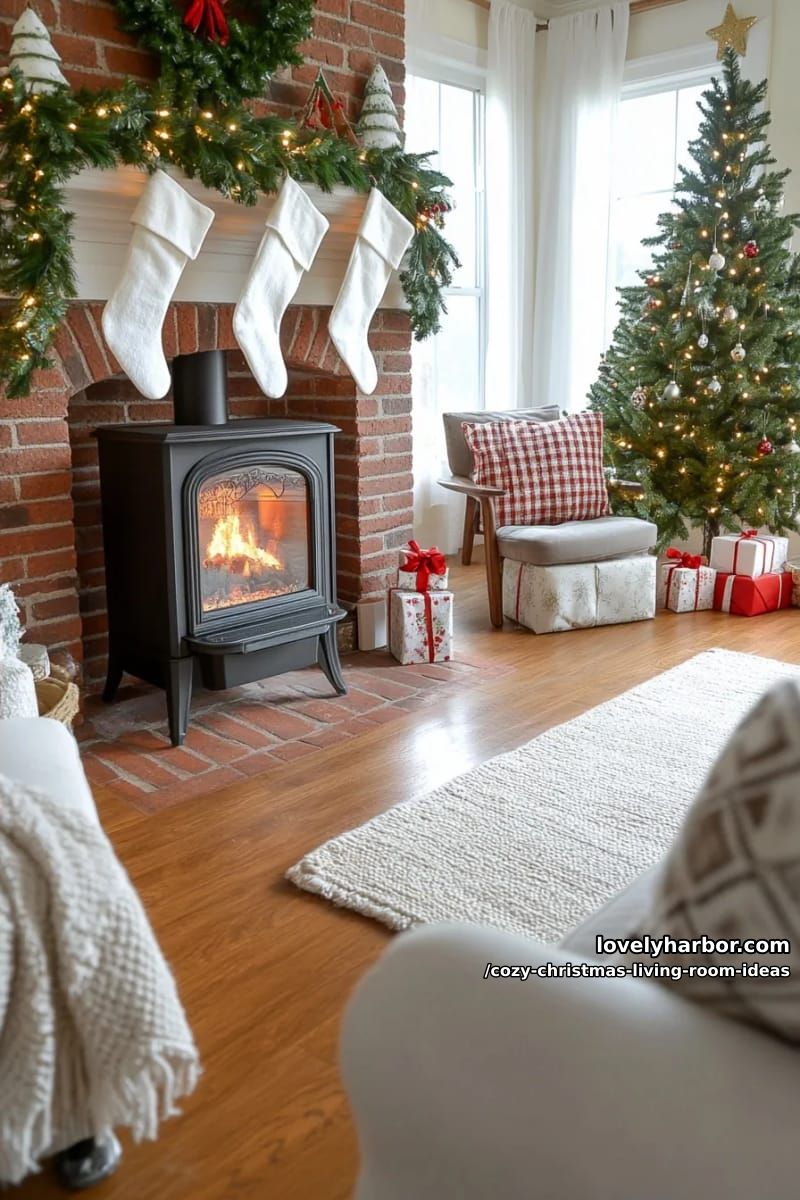
No mantel, no chimney, no problem. A freestanding electric stove is the single most "settled in for winter" object a renter can put in a room, and I'd buy one before I bought a tree. The good ones run the flame effect with the heat switched off, which is the whole trick: you get the amber flicker in October and the real warmth in January out of one appliance instead of two. The Duraflame stove heater is the one people keep pressing on each other , a 5,200 BTU unit that takes the chill off a space up to roughly 1,000 square feet, usually $200 to $260. It runs off a standard outlet and goes together in about ten minutes, legs and all.
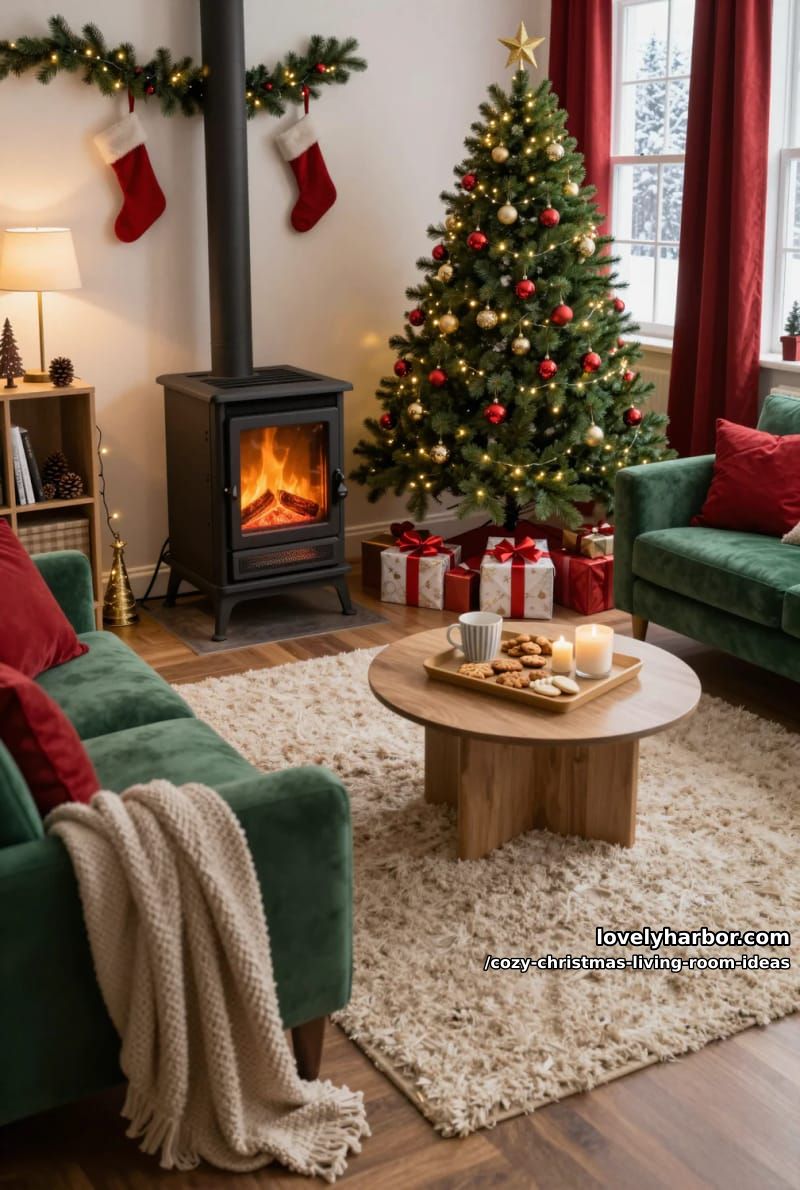
Then style it like a hearth even though it isn't one. A basket of birch logs to one side (decorative , please don't burn them in it), a low stool with a blanket thrown over it, a few candlesticks clustered on the floor beside it. And angle it into the room a little rather than flat against the wall, so the glass throws light across the floorboards instead of straight ahead.
The flame runs with or without heat, so it glows in fall and earns its keep in deep winter.

6. Drape the mantel with layered cedar, not a flat store-bought swag

A single thin garland laid flat across the mantel looks like exactly what it is, a thing from a box. Depth is what sells a mantel, and depth comes from layering one full faux base with a few real cuttings worked in. Start with a dense faux cedar , two 6-foot lengths run front and back so you skip the sad gap down the middle , then push in fresh eucalyptus, a couple of cedar tips begged from the tree lot's discard pile, and dried orange slices for the parts that catch light. The pros building those lush, full mantels layer two or three kinds of greenery (Fraser fir, boxwood, white pine), because one variety on its own always looks a little thin.
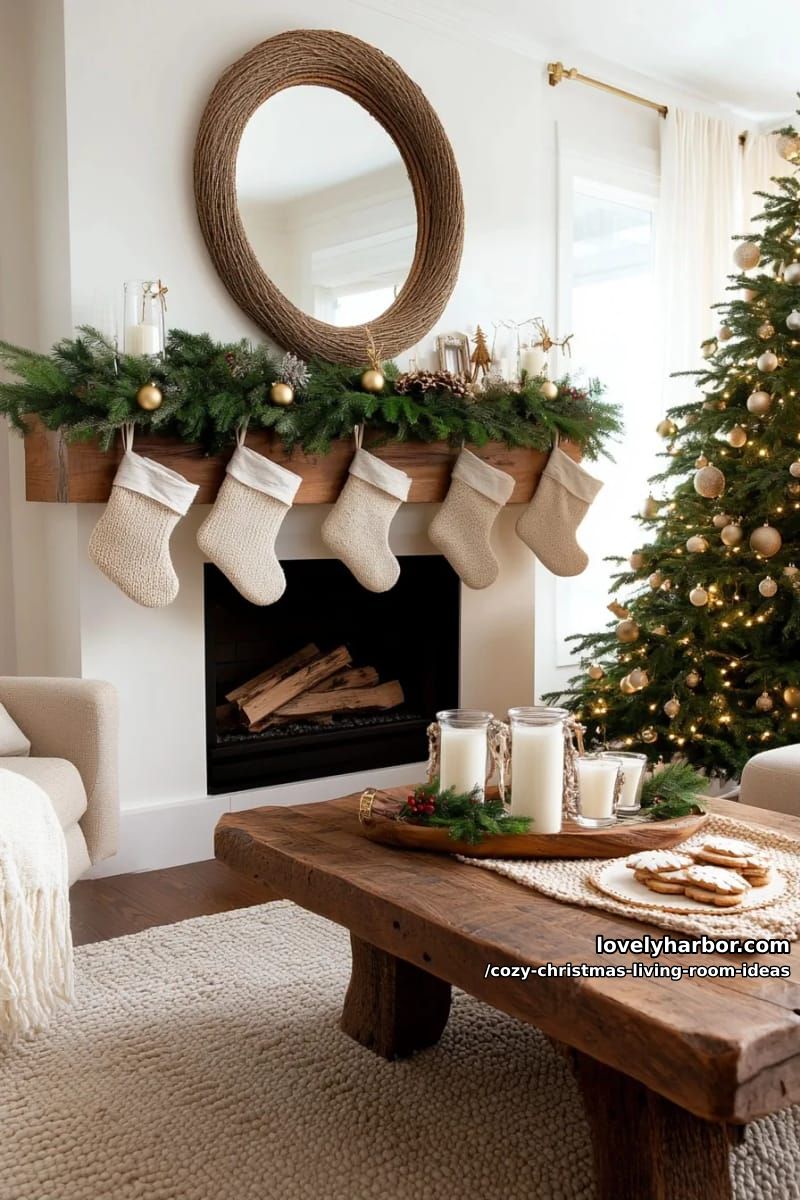
Then stop. Greenery, two or three candlesticks at staggered heights, the stockings , that reads warm. Trim every last inch and it reads craft fair. Velvet ribbon if you want a finish that isn't glitter.

7. Warm a cold winter floor by layering a wool rug over jute
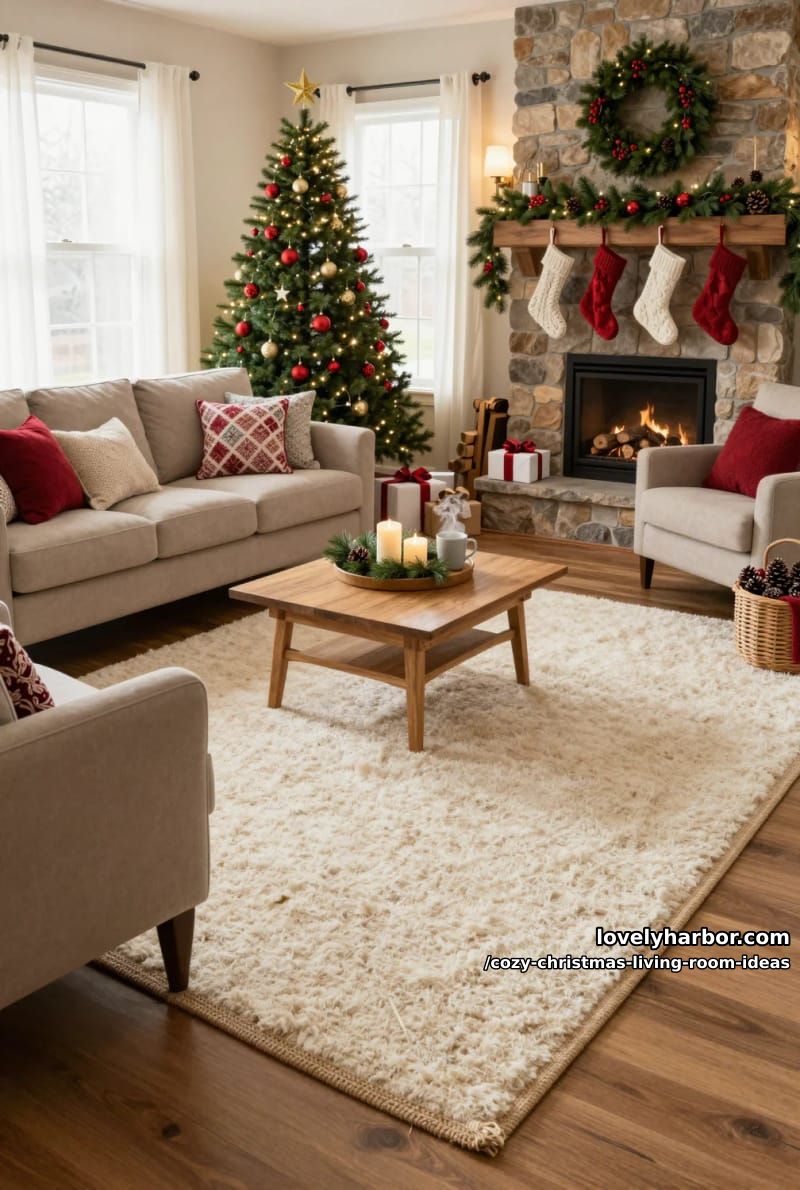
A cold floor undoes everything else, and the fix is two rugs. A big natural jute one sets a textured base over cold hardwood or sad wall-to-wall, and a smaller wool rug on top gives you the soft landing where your feet actually land. Wool for warmth, jute for size , together they cost less than one big wool rug that does neither job well.
Buy the jute oversized so it reads as the floor , an 8×10 under most seating. Let the top rug carry the color, which is a good place to repeat your one accent. Two catches: jute sheds for the first few weeks and hates moisture, so keep it out of a damp basement, and put a thin pad under both layers or the top one wanders off every time you stand up.
8. Carve out a cocoa corner you can reach without standing up
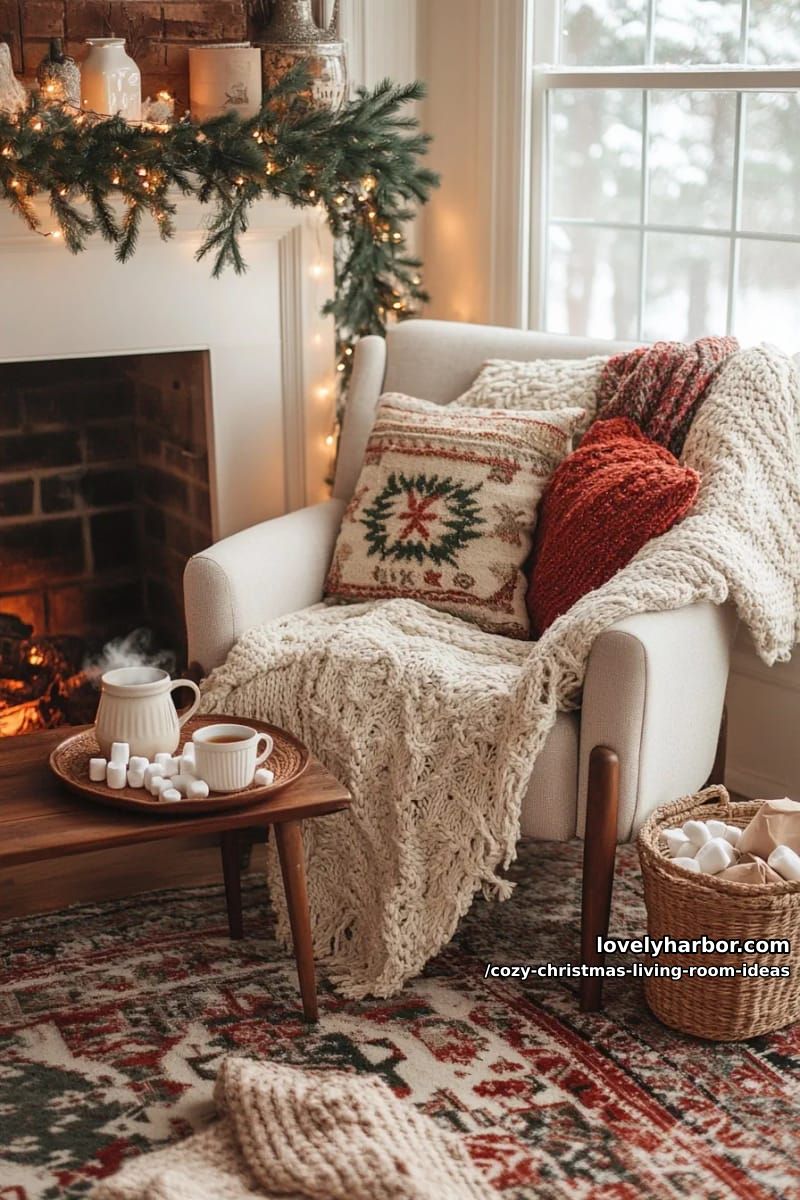
What separates a real nesting spot from a staged one is reach. Everything you want should be grabbable without standing up. A chair you sink all the way into, a lamp at reading height, a small table within arm's length for the mug and the book, a basket of blankets at your feet. That's the whole recipe, and it fits in the three-foot corner most people waste.
A cocoa corner in a 3 by 4 foot bay
Renter-friendly, roughly $250 to $400 if you’re starting from nothing
Angle a wingback or deep armchair toward the window so you can see out and catch the tree at the same time. Put a 16-inch round wood side table on your dominant-hand side. Add a small brass lamp with a 2700K bulb on a smart plug, so it’s glowing by 4 p.m. without you lifting a finger. One knit throw, a blanket basket on the floor, and nothing on the table but three things: lamp, mug, book. Keep it turned away from the TV , the corner works precisely because nothing on it competes with the window.
9. Pick one Christmas scent for the whole room and stop

One scent from one source reads as a home. A balsam candle on the mantel fighting a cinnamon plug-in by the door and a pine diffuser on the shelf reads as a gift shop, and I've never once walked into a room like that and thought "cozy." Pick a single note and commit to it: cedar and cinnamon, balsam fir, clove and orange , the ones that smell like a December living room instead of a bath aisle. Yankee Candle's Balsam & Cedar is the dependable default, though any mid-size three-wick from a maker you trust will do it, as long as it's the only thing burning.

Layer it by method, not by piling on competing smells. When people are coming over, simmer orange peel, a cinnamon stick, and a few cloves on the stove for twenty minutes; the rest of the time, let the candle hold the baseline. Pets or a sensitive household? A single reed diffuser in the same note beats burning anything.
10. Leave a third of every holiday surface bare
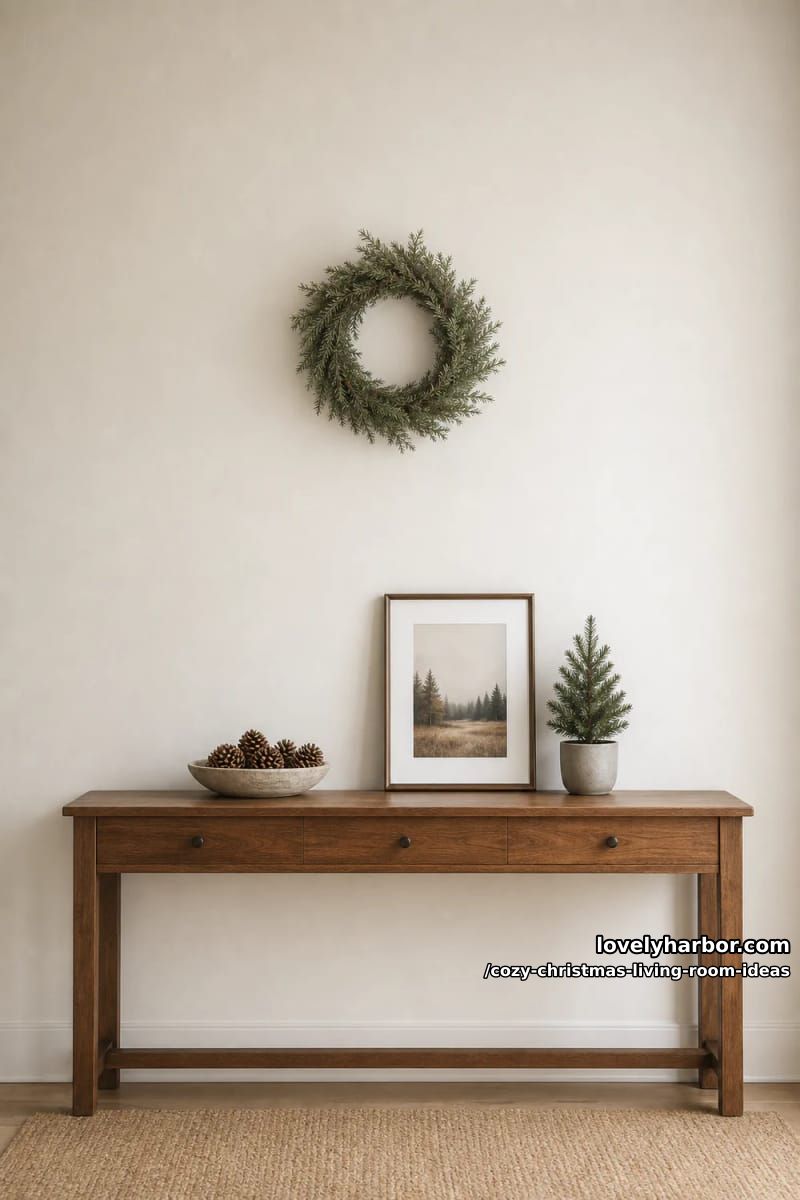
Decorating every surface is how “warm” tips over into “Santa’s workshop exploded.” Cozy needs breathing room as much as it needs stuff. Leave roughly a third of each surface , mantel, console, shelves, coffee table , genuinely empty, and leave the bookshelf mostly alone. That negative space is what lets your eye settle on the tree and the firelight instead of ricocheting around twelve little vignettes.
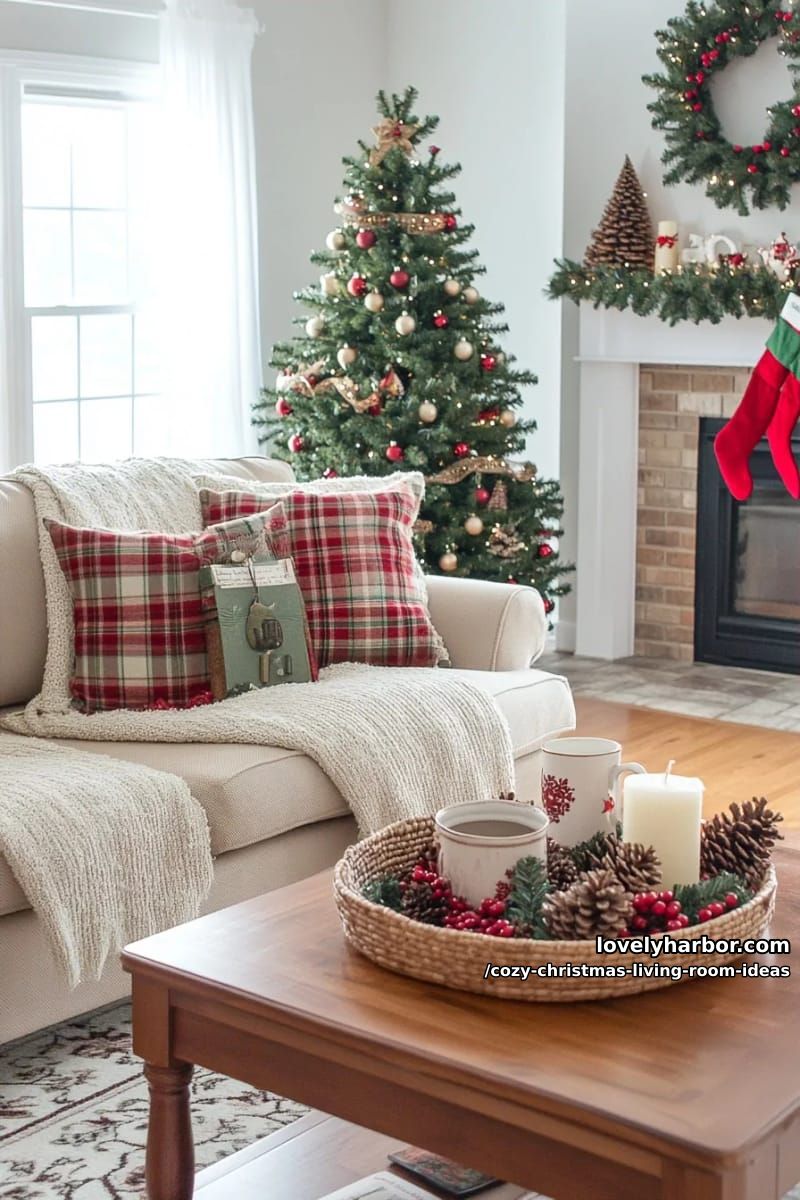
When a room feels off, the answer is almost always subtraction. Clear a third of the objects off your shelves before the holiday layer arrives, so the greenery and candles have somewhere to land. And keep a few of your ordinary, non-holiday pieces out while you're at it , that's what keeps the room yours instead of a seasonal stage set you're itching to tear down on December 26.
11. Swap summer cottons for velvet, wool, and heavier curtains
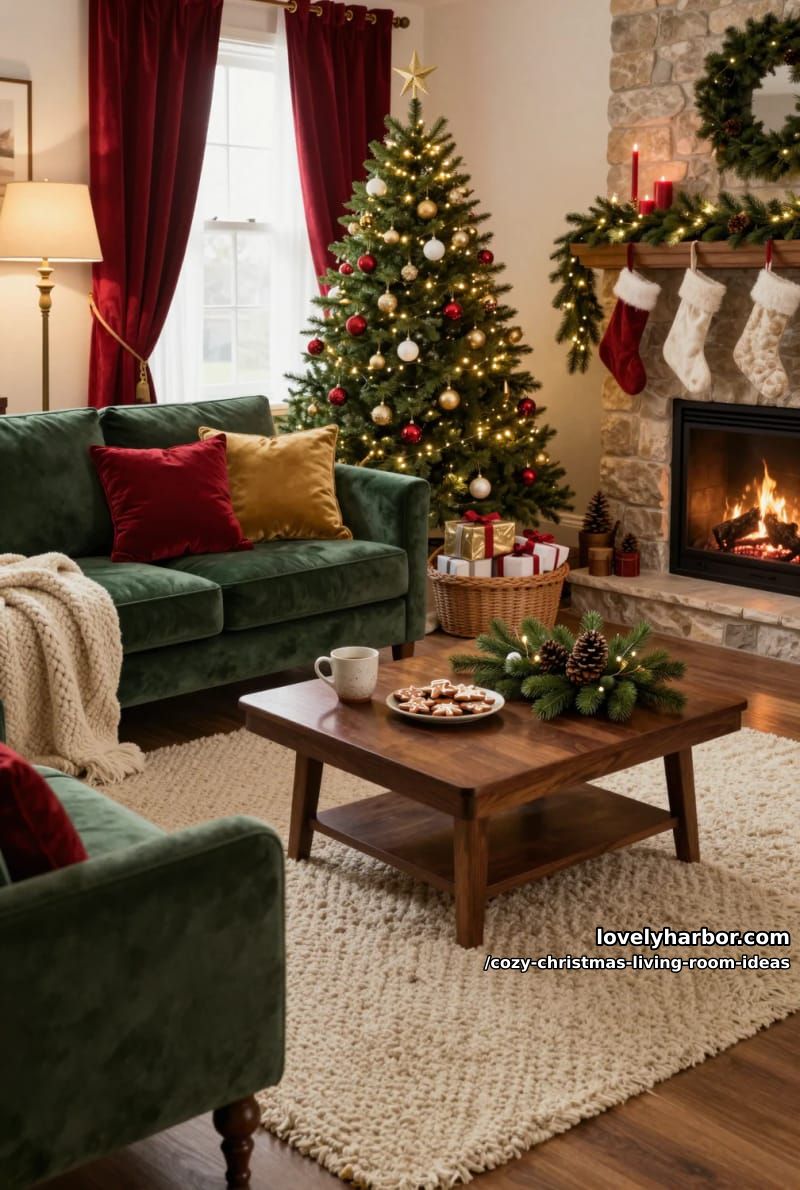
Half of cozy is a seasonal swap people forget to make. The light cotton and linen that felt right in July reads thin and chilly by December. Trade it for weight and nap: velvet pillow covers (H&M Home runs them under $20 in deep tones; West Elm velvet pillow covers start around $44), a wool or alpaca throw in place of the summer waffle, heavier curtains. Three moves, and not one of them touches the layout.
Curtains do the most work and get skipped the most. Floor-length panels in a heavyweight linen-wool blend, hung wide and high and just long enough to kiss the floor, insulate a cold window and frame the tree in one go. Swap them in November, swap them back in March, and stash the summer set wrapped in a closet, the way Camille Styles stores her off-season living-room mirror.
12. Add a second tabletop tree to light a dark corner

A second small tree is the easiest fix for the dead corner every living room has. The 2025 trend of scattering multiple trees as "zones" is really just lighting strategy in a costume , a 2 to 3 foot tabletop tree on a side table or console turns a dark corner into its own glowing pocket and pulls the holiday into a second sightline. Use the same warm-white lights as the main tree so the two read as a set, not a competition.
Keep the little one restrained , a handful of cream or gold ornaments, nothing more , and put it on the same smart plug as everything else so the whole room comes on at once at dusk. Bonus: a mini tree in a woven basket quietly solves the bare console you were otherwise about to over-decorate.
Conclusion
Start with the bulbs. Kill the overhead light, drop 2700K into the lamps, and you've already done more for "cozy" than any ornament will , order the rest however you like after that. If I'm honest, the one move here I might talk you out of is the second tree; it's lovely, but it's also one more thing to box up in January, and most rooms only need the one.
The firelight is what your eye should land on, real hearth or Duraflame standing in for one, so keep everything else quiet around it. And when the room still feels faintly off in mid-December , it will , take a third of it back off the shelves before you add a single thing more.