
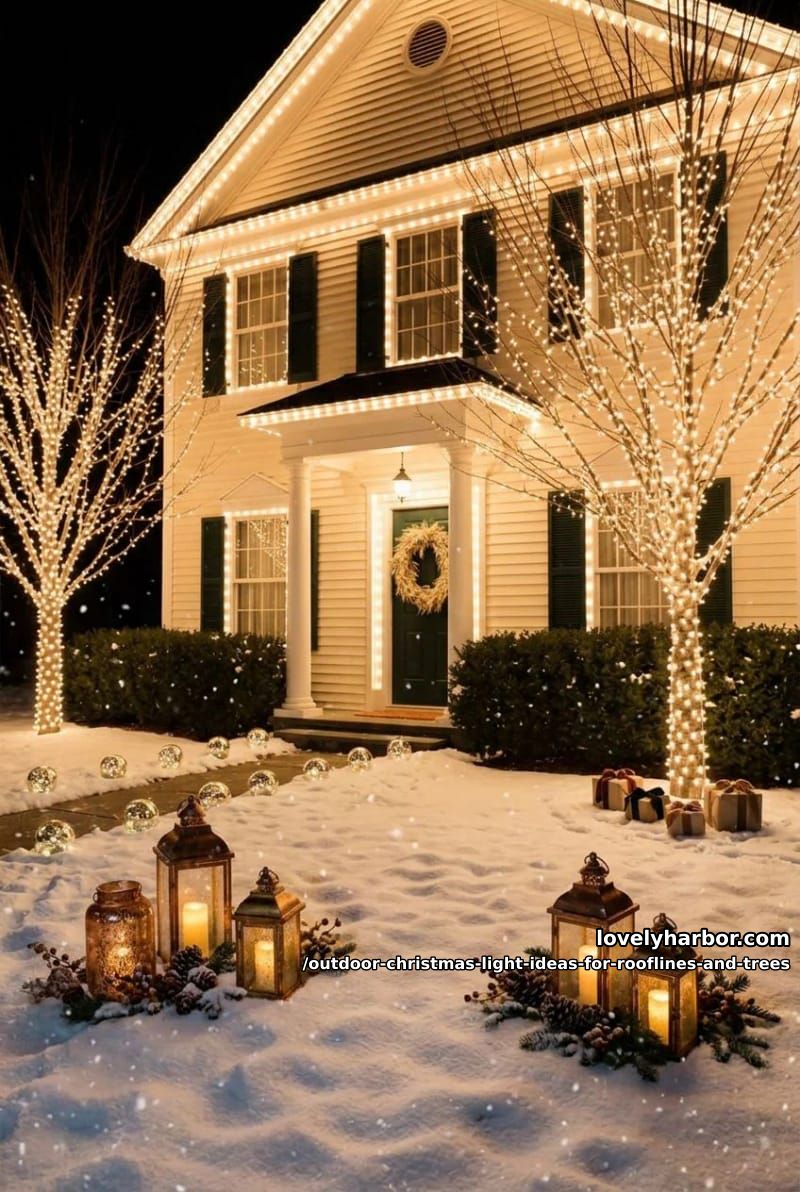
The advice you usually get is "more lights, more cheer," and it's wrong. A roofline crammed with mismatched strands and a tree choked in three brands of white reads as cluttered from the street, not festive. The gap between a display that looks designed and one that looks thrown on comes down to maybe four decisions: bulb size, a single color temperature, the right clip for your surface, and how densely you wrap. Get those, and a modest run of warm white will outclass a yard buried in lights.
This is specifically about the two surfaces that carry an exterior display, the roofline and the trees. Pathway and ground lighting are their own project. Everything below works whether you're hanging $40 of C9 bulbs yourself or weighing a permanent track system that costs as much as a sofa.
One practical note before you buy anything: LED strings can usually run 40 to 45 sets end to end on a single plug, while old incandescent sets top out around 3 to 5, so plan your runs and your outdoor outlet before you're up a ladder holding a tangle. I'll flag the other common mistakes where they come up.
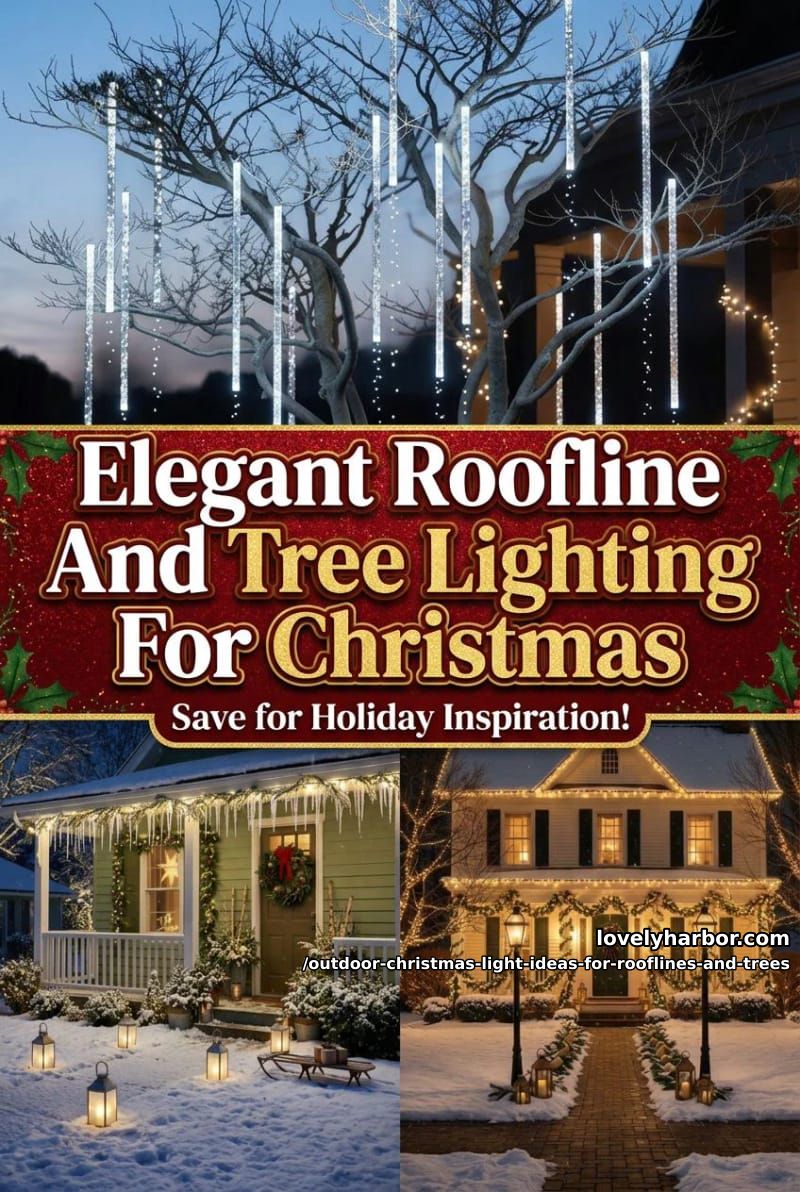
1. Outline the roofline in C9 bulbs, not mini strands
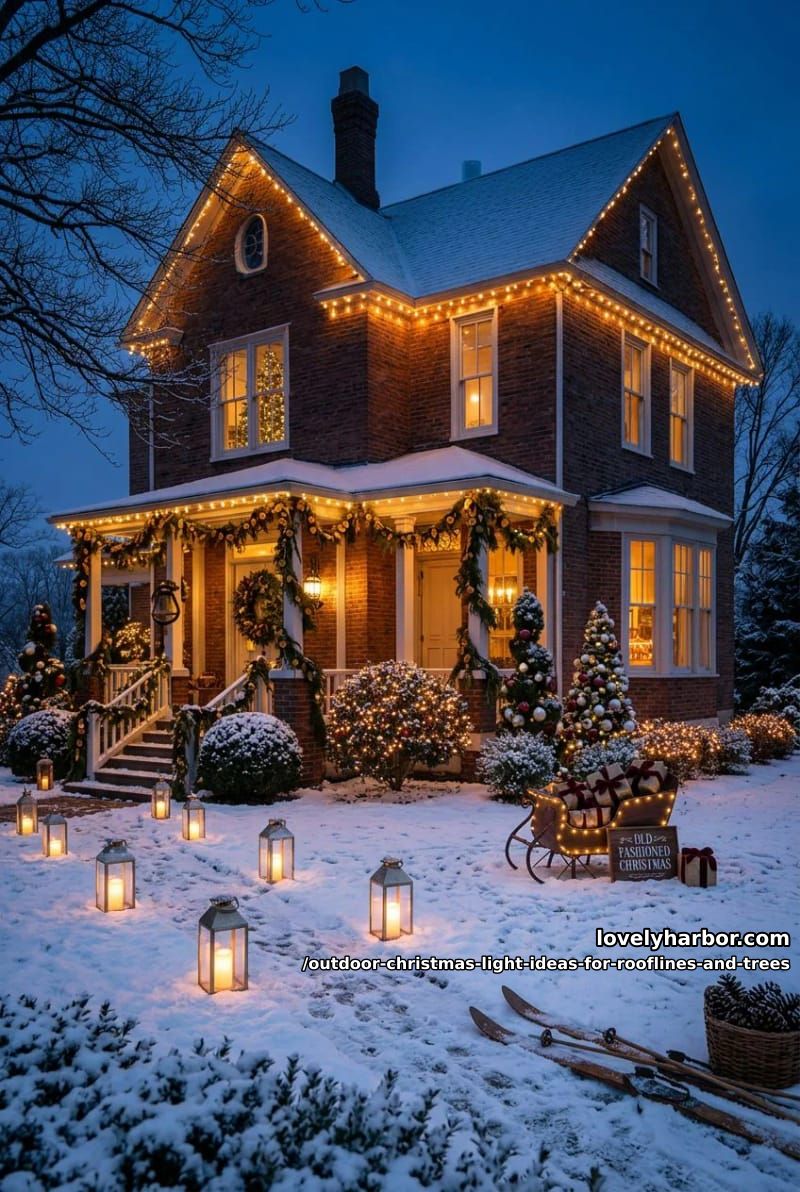
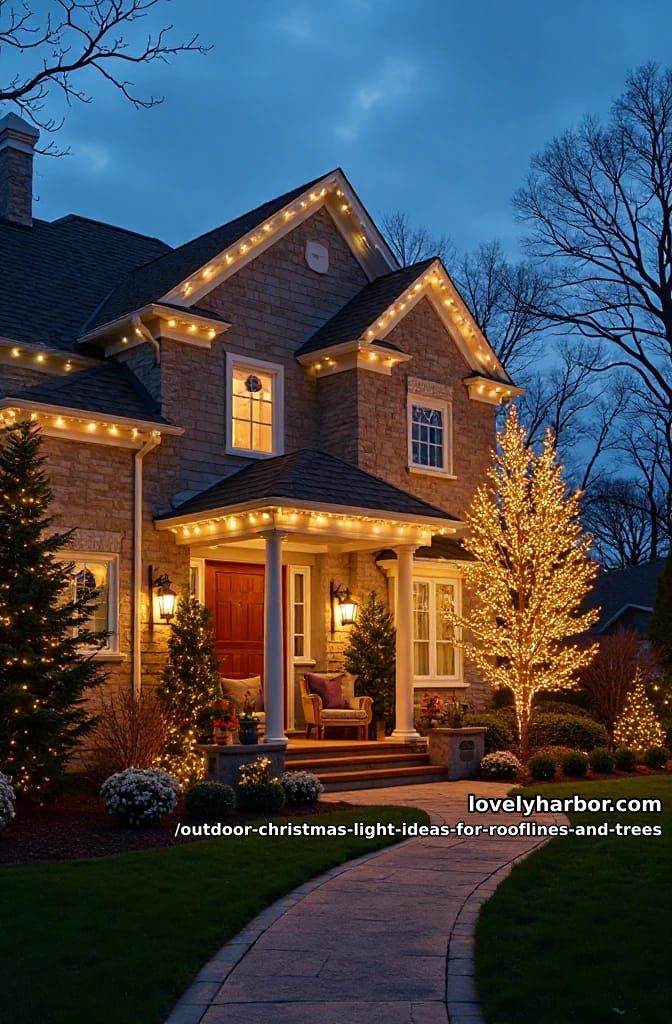
For the roofline itself, use C9 bulbs. They're the architectural standard for a reason: at about an inch and an eighth across and roughly two inches tall, a C9 reads clearly from the street and traces the shape of the house, where a mini strand just becomes a faint blur of dots above the gutter. C7s are the smaller sibling and belong on detail work, which I'll get to.
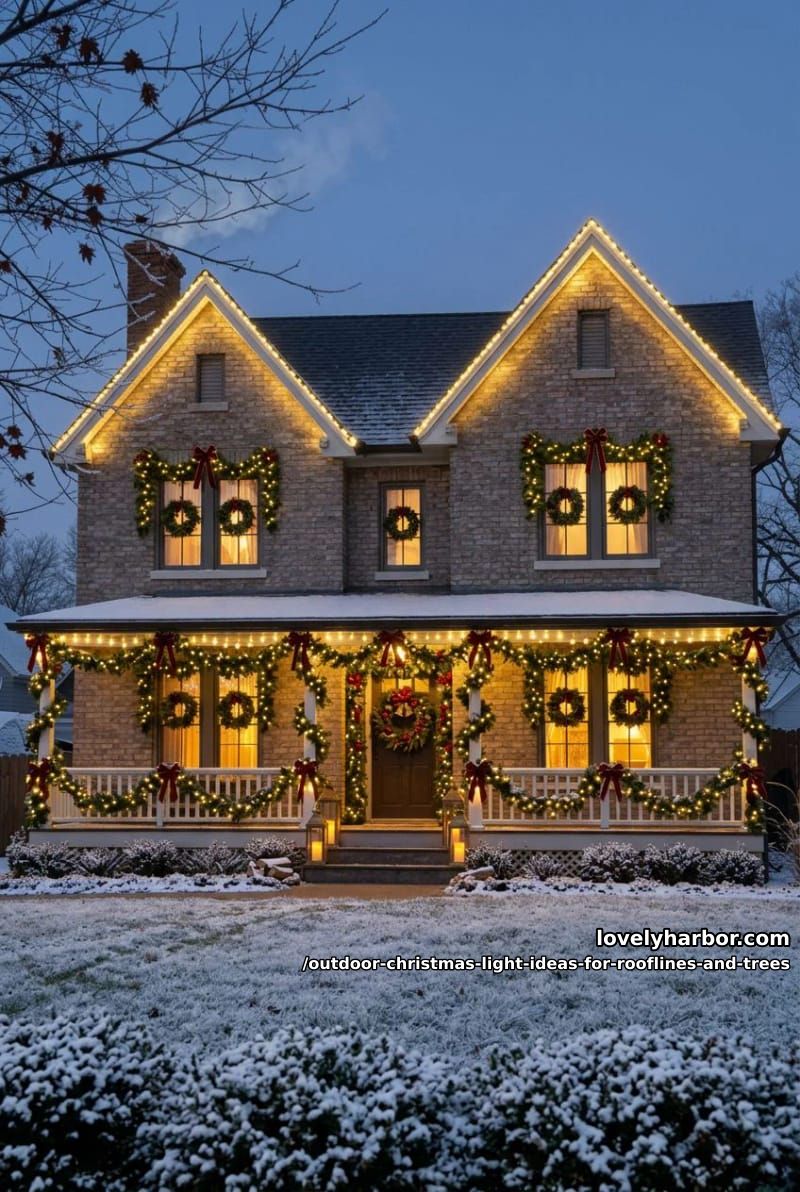
Why C9 reads from the street
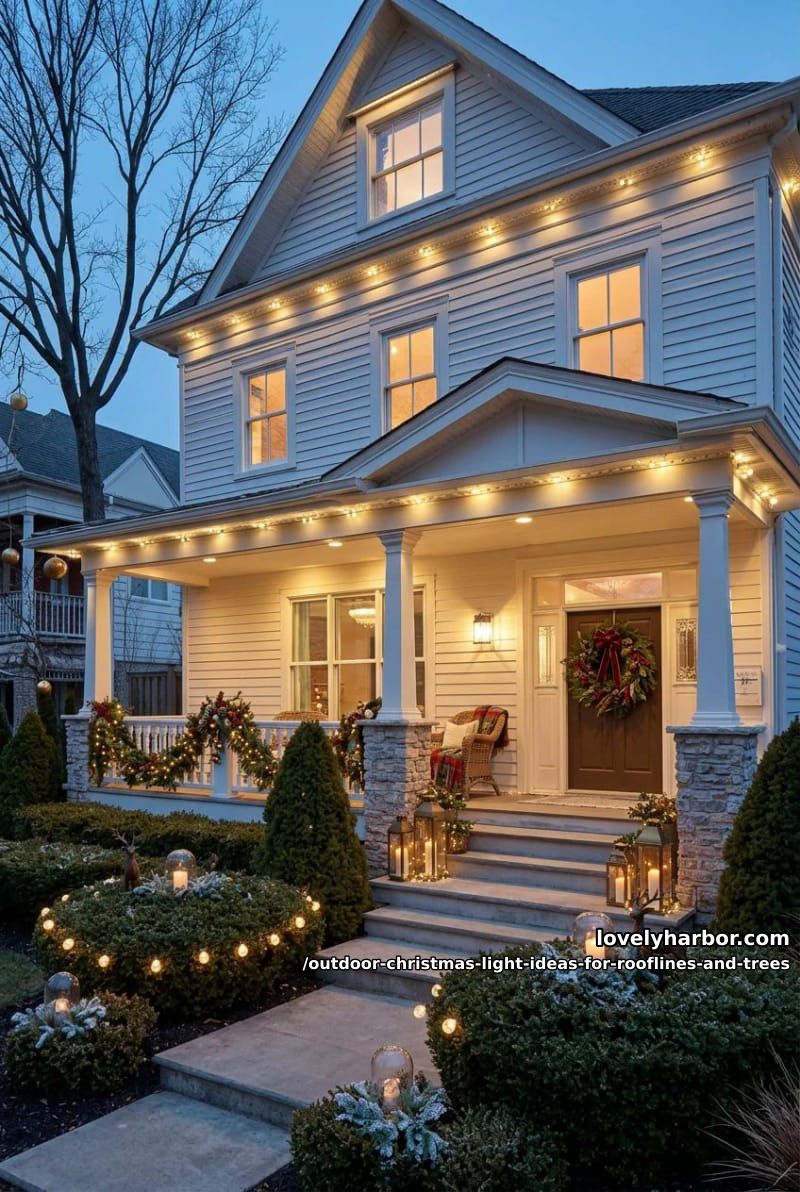
A simple test: if your neighbors can pick out individual bulbs from across the road, you want C9; if you're lighting something you walk right up to, C7 is cleaner. Window frames, door surrounds, and porch columns are C7 territory, slightly smaller so they outline the detail without overwhelming it. A modern LED C9 from a brand like the Christmas Light Emporium's ProCore line draws about 0.84 watts, so a full roofline is pennies a night, not the power bill people still expect from incandescents.
Match the clip to the surface, not the bargain bag
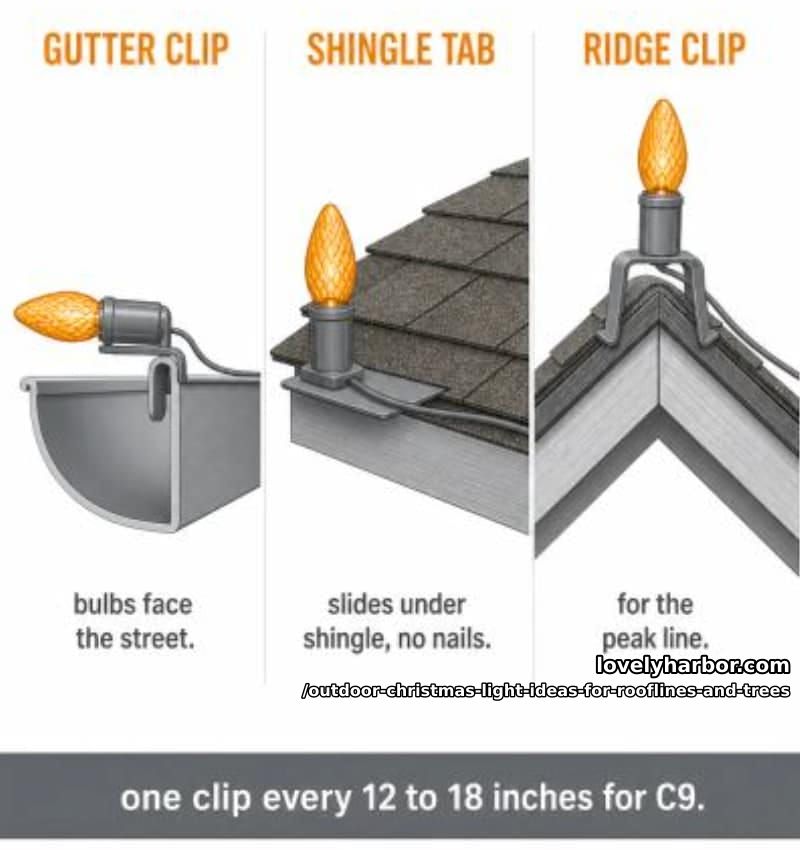
Grab a random bag of clips and your bulbs will sag, twist off-angle, and pull loose in the first storm. The fix is matching the clip to where it's going. Gutter clips hook the front lip and hold the bulb facing the street. Shingle tabs (TuffClips and the generic "all-purpose" tabs both work) slide under a shingle edge and let the bulb point up, for runs with no gutter. Ridge clips straddle the peak. Metal fascia or a steel garage beam takes a magnetic clip. None of these need a nail or adhesive, so nothing voids your roof warranty. Space them every 12 to 18 inches for C9, which conveniently matches the standard 12-inch socket spacing on the stringer.
Assemble it on the ground first
Pros lay the whole run out on the driveway, screw the bulbs into the socket line, and snap the clips on before a single trip up the ladder. It's faster, the spacing comes out even, and you're not balancing on a rung trying to thread a tiny clip in the cold. Twelve-inch spacing is the classic look; tighter reads brighter and more deliberate, wider reads more vintage, so pick on purpose rather than letting the stringer decide for you.
2. Wrap tree trunks with 5mm lights, and respect the math
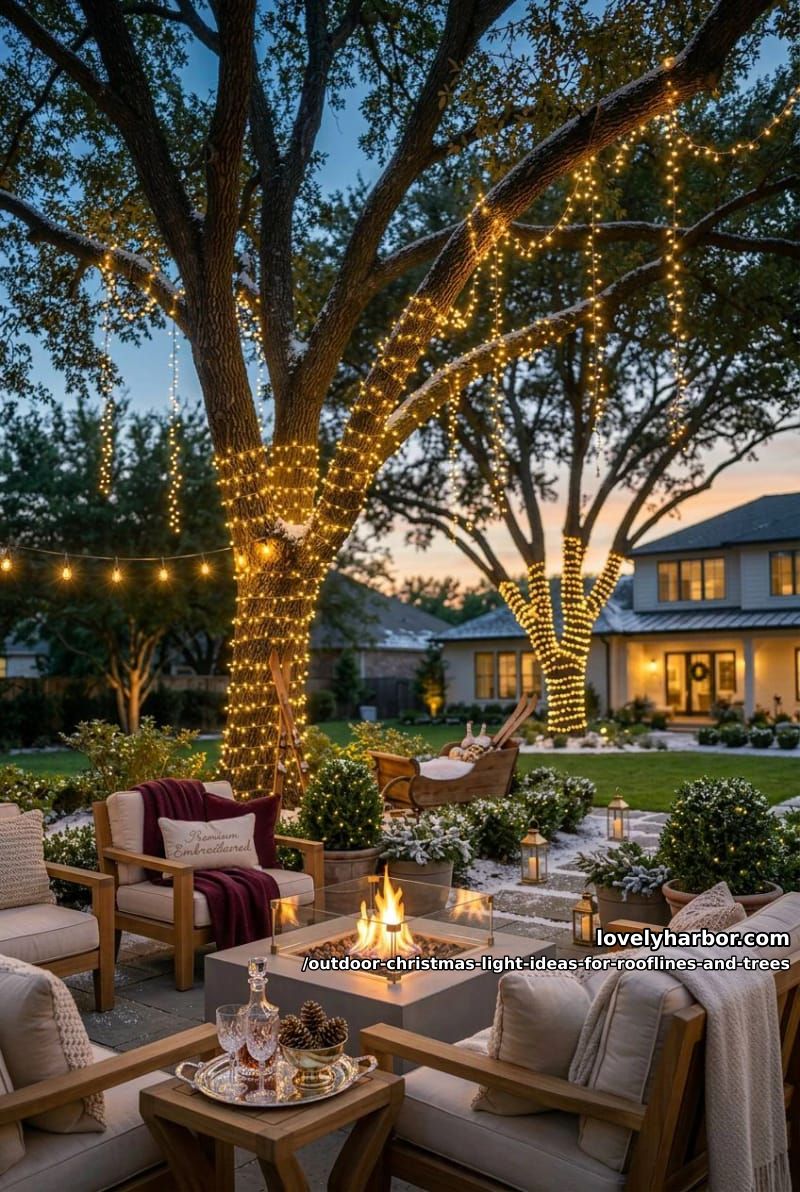
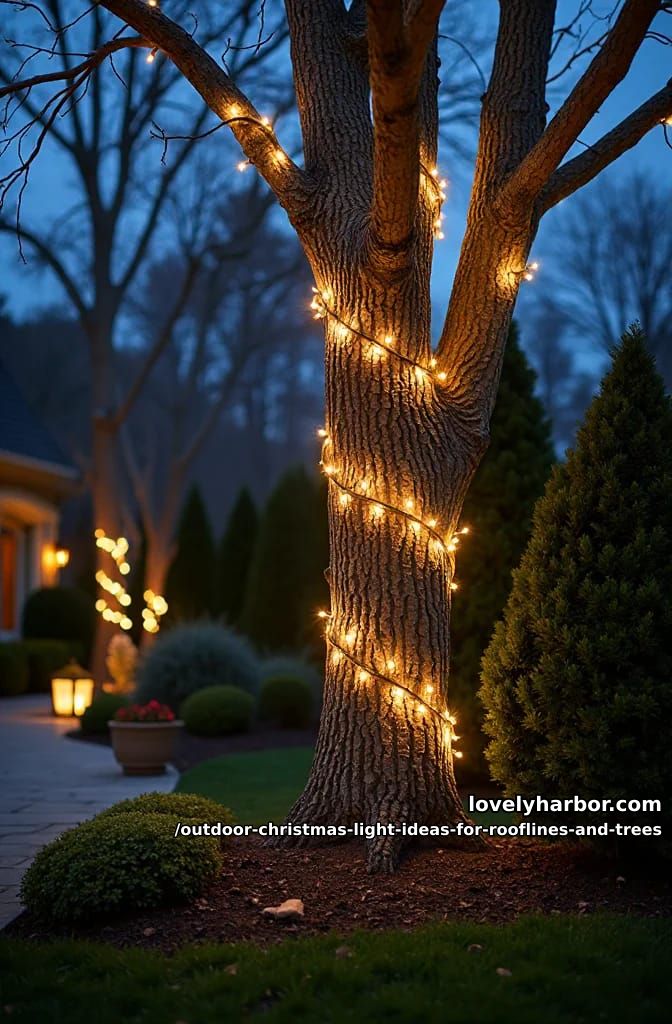
The bulb you want on a wrapped trunk is the 5mm wide-angle LED, not a C9. Its little faceted lens throws a roughly 70-degree beam, so the trunk glows evenly with fewer bulbs, and the small profile disappears into the bark instead of looking like ornaments bolted to the tree. C9s are too heavy and too widely spaced for trunk work; they'll sag and gap. C7 with wide spacing is what some commercial crews use to cut weight on big trees, but for a yard tree, 5mm is the easy answer.
How many lights (the number that actually matters)
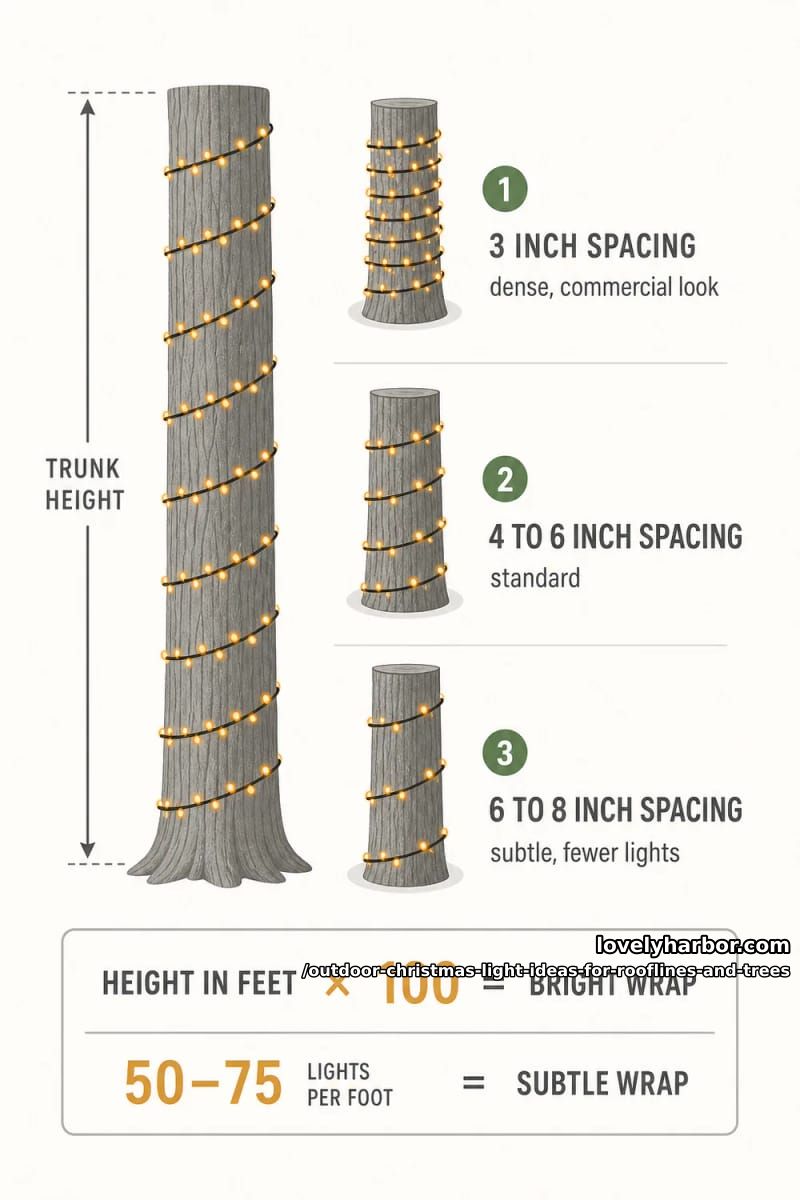
Plan on about 100 lights per vertical foot of whatever you're wrapping for a dense, bright look, or 50 to 75 per foot if you want something quieter. A five-foot trunk section at full density is roughly 500 lights; a small tree you wrap trunk-and-branches can swallow well over a thousand. Wrap spacing matters as much as bulb count: 3 to 4 inches between turns is the tight, commercial-grade glow, 4 to 6 inches is normal, and 6 inches and up gives you a sparser look that uses far less product. Always buy a string or two extra. Coming up short at the top of the tree on December 22nd is its own kind of misery.
5mm wide-angle, not C9, and don't strangle the branches
Wrap as you go, spiraling up the trunk and out along the two or three sturdiest branches, and keep it loose enough that the wire isn't biting into bark, both so it doesn't damage the tree and so you can get it back off in January. That said, if it's a deciduous tree you'll be wrapping bare every year, plenty of people leave the trunk wrap on year-round and only swap the branch strings; the bark hides it well enough at six inches of spacing.
3. Pick one white and zone the whole display around it
The single fastest way to make a display look cheap is to mix color temperatures by accident, and almost everyone does it. Warm white sits at 2700 to 3000K, the golden, candle-like tone; cool white runs up around 5000 to 6500K and reads icy and blue, the snow-globe look. Both are fine. What's not fine is alternating them at random, because the eye reads the mismatch as bulbs that are dying rather than a design choice.
I learned this the embarrassing way, alternating two "warm white" sets I'd bought on sale from different brands; from the curb it looked like every third bulb had failed. The trick is to assign each surface a temperature and stay consistent across that zone. Buy enough of one SKU at once for a whole zone, because LEDs are sorted into color bins at the factory and two strings labeled the same can land 300K apart.
Warm white vs cool white, and why one usually wins
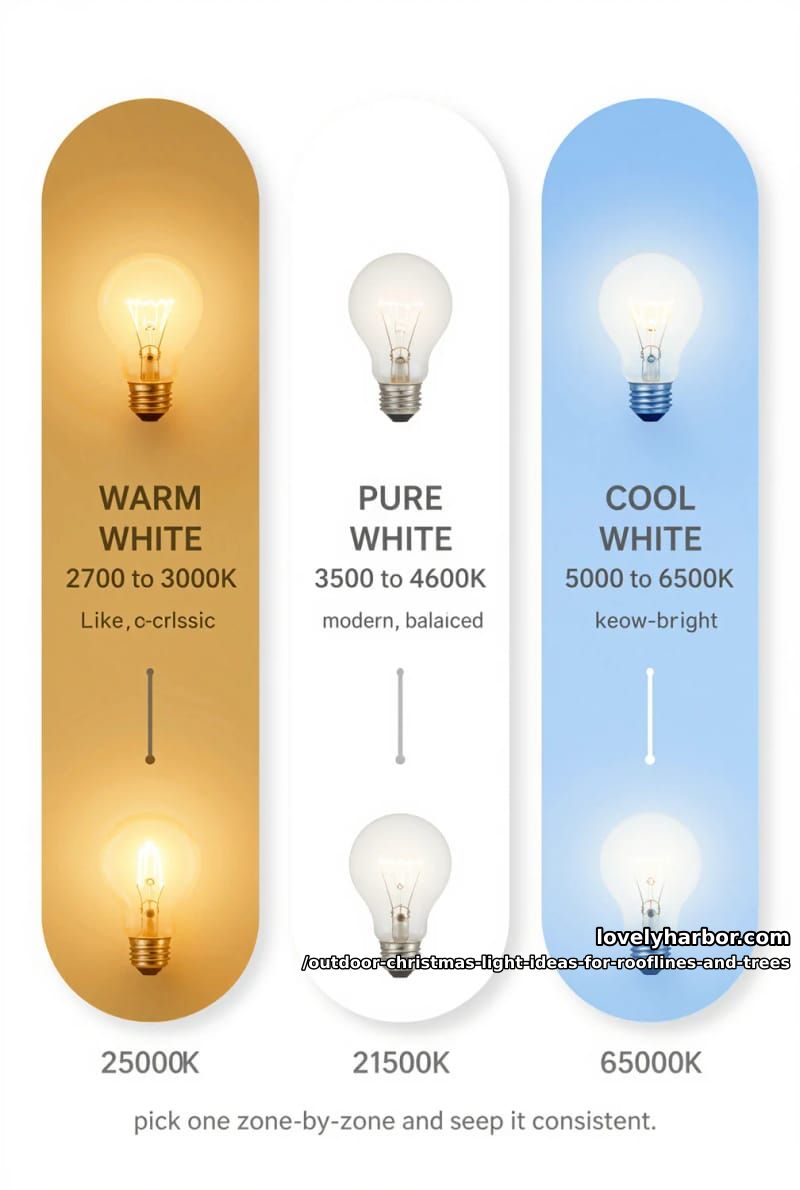
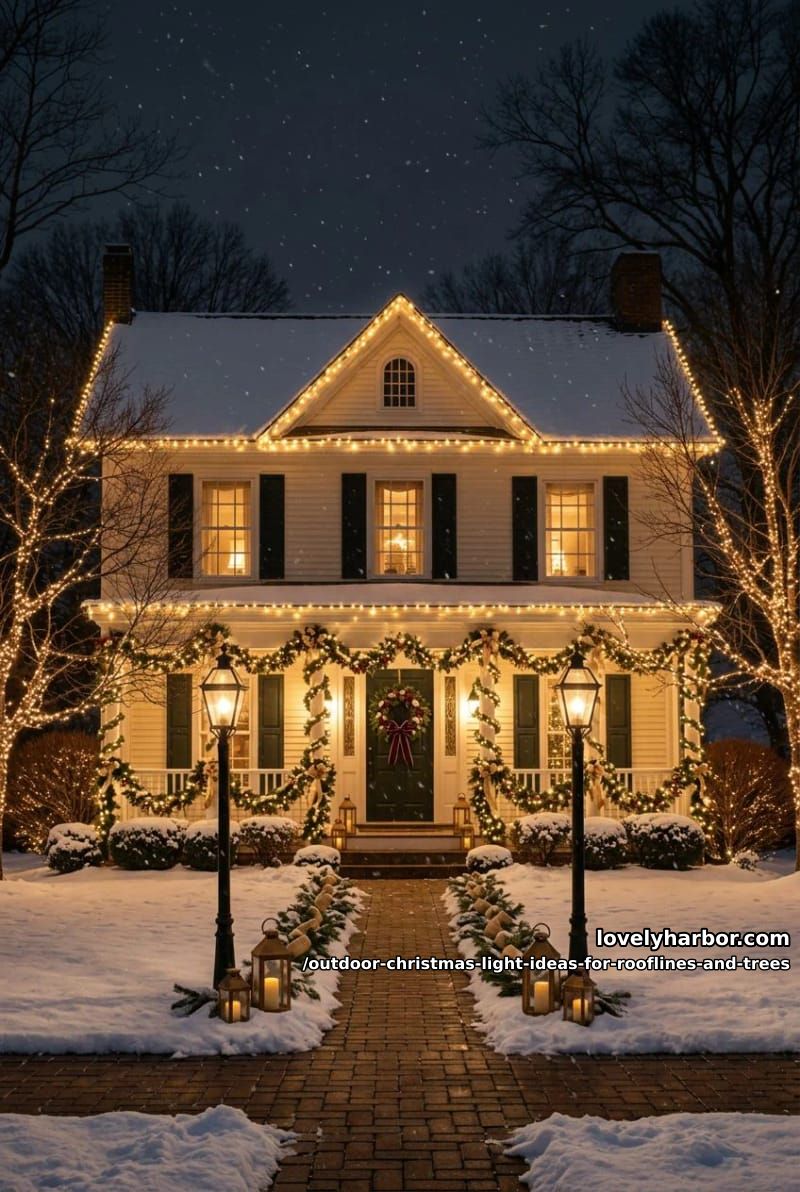
Warm white is the safer default for most houses because it flatters brick, warm siding, and red-and-green decor, and it's forgiving even when you use a lot of it. Cool white earns its place on modern or grey-toned homes and against snow, where that crisp blue-white pops. A defensible middle path: warm white C9s on the roofline, warm white 5mm on the trees, and a single champagne or gold accent over the door for a little depth. Pure white at around 4600K is the neutral compromise if warm feels too yellow against a cool grey exterior.
Where multicolor still works
Multicolor isn't automatically dated, despite what the warm-white purists tell you. Faceted C7 or C9 multicolor on a roofline, done in a clean even run, reads nostalgic and intentional rather than chaotic. What kills it is mixing multicolor strands of different vintages and bulb sizes on the same surface. If you go color, commit the whole roofline to it and keep the trees a single coordinating tone.
4. Hang icicle lights where a single-story eave needs depth
Icicle lights are the move for a low, flat eave that a straight bulb line leaves looking bare. The drops hang vertically off a horizontal feeder wire, varying from about 12 to 18 inches, so they break up a long single-story gutter with some movement and depth that a flat C9 run can't give you.
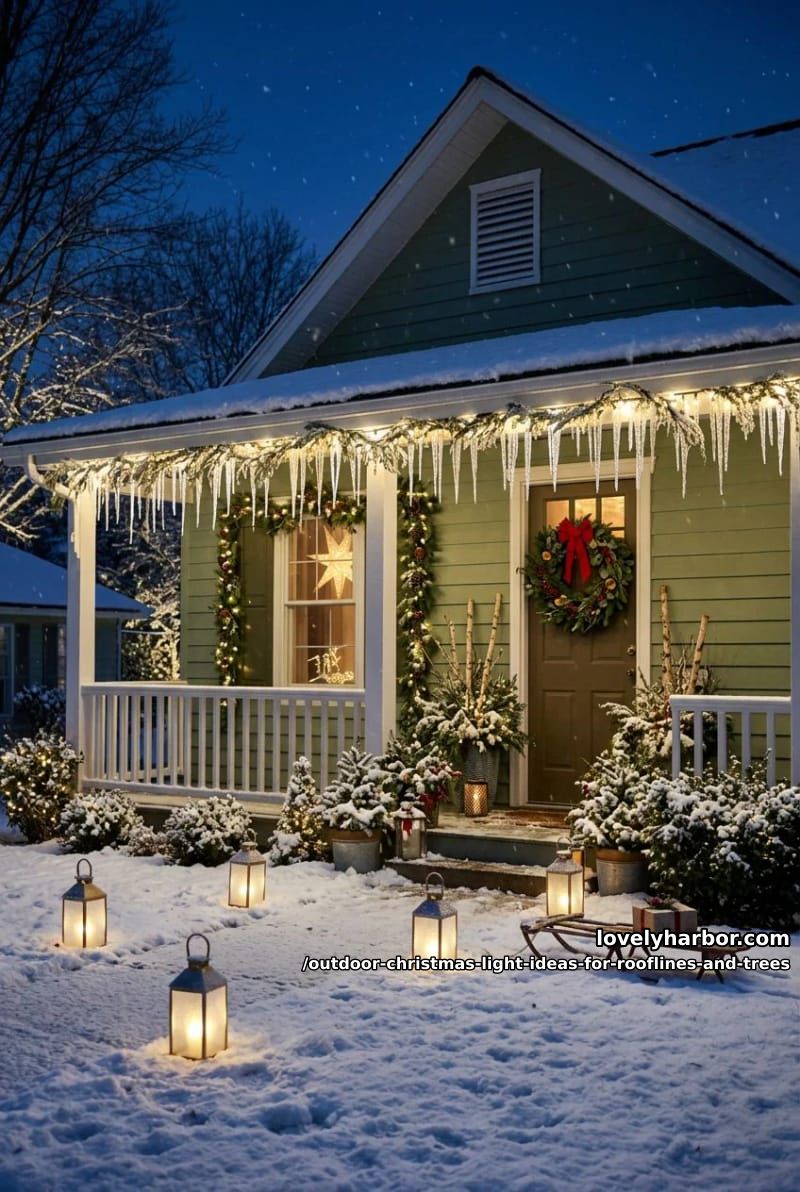
Clip the feeder wire along the gutter with the same gutter or shingle clips you'd use for C9, or an icicle-specific clip if the drops won't sit right. One caution: icicles look thin and sad on a tall two-story eave seen from far below, where the drops disappear. They're a single-story and porch-overhang idea. Keep them off the same run as your C9 outline; pick one or the other per edge so the roofline reads clean.
5. Hang oversized G50 globes in a bare canopy
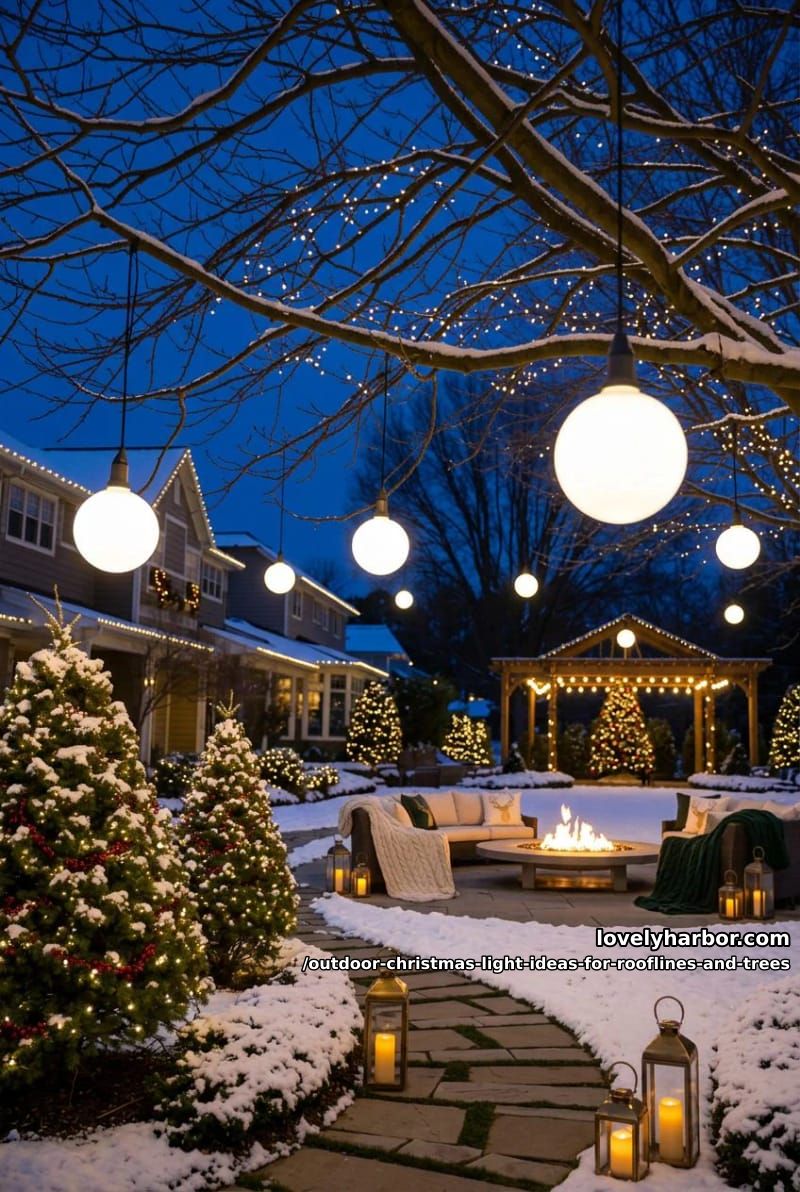
Instead of wrapping a deciduous tree's trunk, light the canopy from above by hanging oversized G50 globe bulbs from the bare upper branches. Each globe is about two inches across, and spaced wide and irregular they read as glowing orbs floating in the branches rather than a dense wrap, which is a completely different look for an old maple or oak whose bare winter structure is worth showing off.
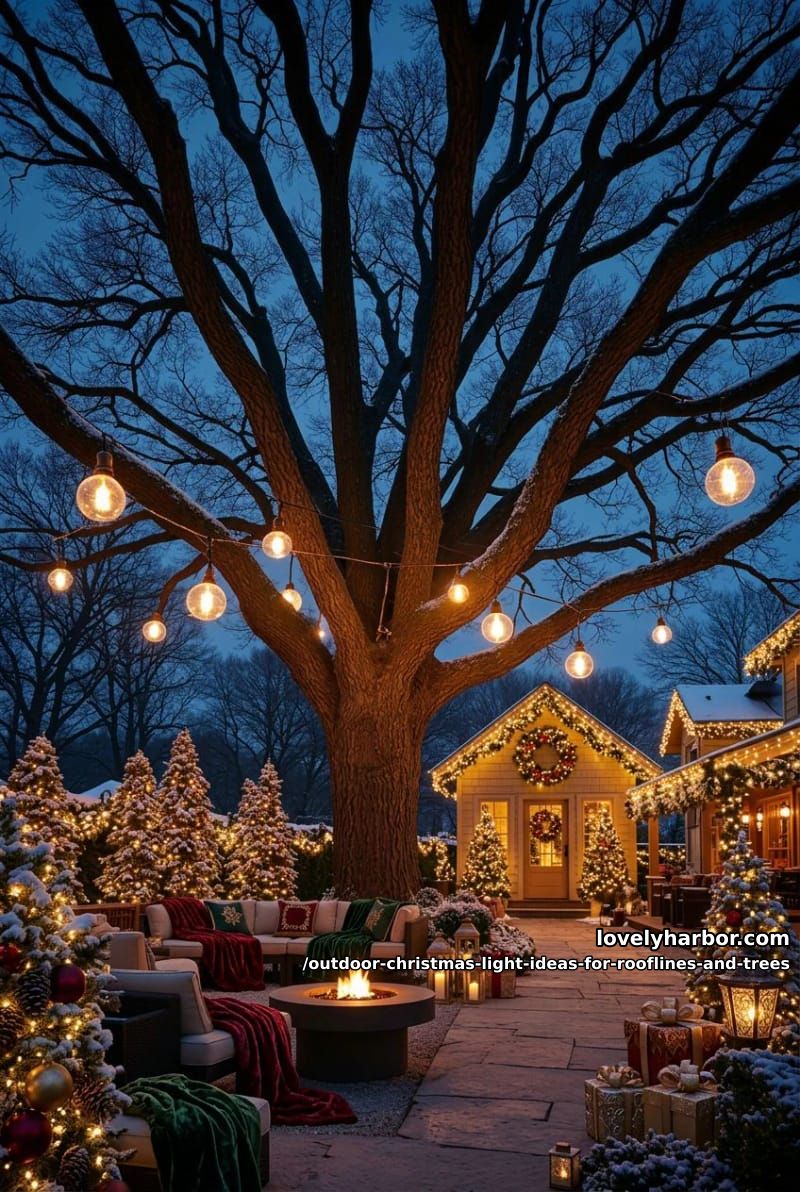
This is a small-budget, high-impact idea, since you're covering a big tree with a few strands of widely spaced globes instead of a thousand mini lights. Getting them up there is the catch: a telescoping pole with a hook, or a careful throw over a branch, beats dragging a ladder onto frozen ground. Skip it on evergreens, where the dense foliage swallows the gaps that make the effect work.
6. Consider a permanent track system before you climb the ladder again
If you've sworn at a tangle of lights one too many Decembers, a permanent roofline system is worth pricing out. Brands like Trimlight, Jellyfish, Gemstone, and Oelo install a slim aluminum channel of individually addressable RGBW points under your eaves, color-matched to the trim so it nearly vanishes by day, and you run the whole thing from an app, holiday colors in December, soft warm white the rest of the year.
What it costs, honestly
Installed, these run roughly $20 to $35 per linear foot, with most street-facing-only jobs landing between about $2,500 and $6,000, plus a separate controller in the $250 to $850 range depending on the brand. One controller typically drives up to around 250 feet. Complex rooflines cost more, not because they're longer but because every dormer, peak, and turret means more cuts and seal points; a short, fussy facade can cost as much as a long, simple one. Off-season installation in spring or summer usually shaves the price.
The warm-white catch, and the cheaper DIY route
Here's the part the glossy brochures skip: several of these systems can't produce a true warm white, because their RGB diodes only approximate it, and the result is a slightly sterile "white" that the warm-white crowd will notice immediately. Installers who sell against the major brands make exactly this point, pushing systems with a dedicated warm diode (RGBW). If a true 2700K accent glow is what you're after year-round, ask to see it lit before you sign. And if the four-figure quote is a non-starter, Govee and similar make DIY permanent-style outdoor LED runs you mount yourself for a fraction of the cost, with most of the app control and a lot less of the clean built-in look.
7. Add motion with snowfall tubes, sparingly
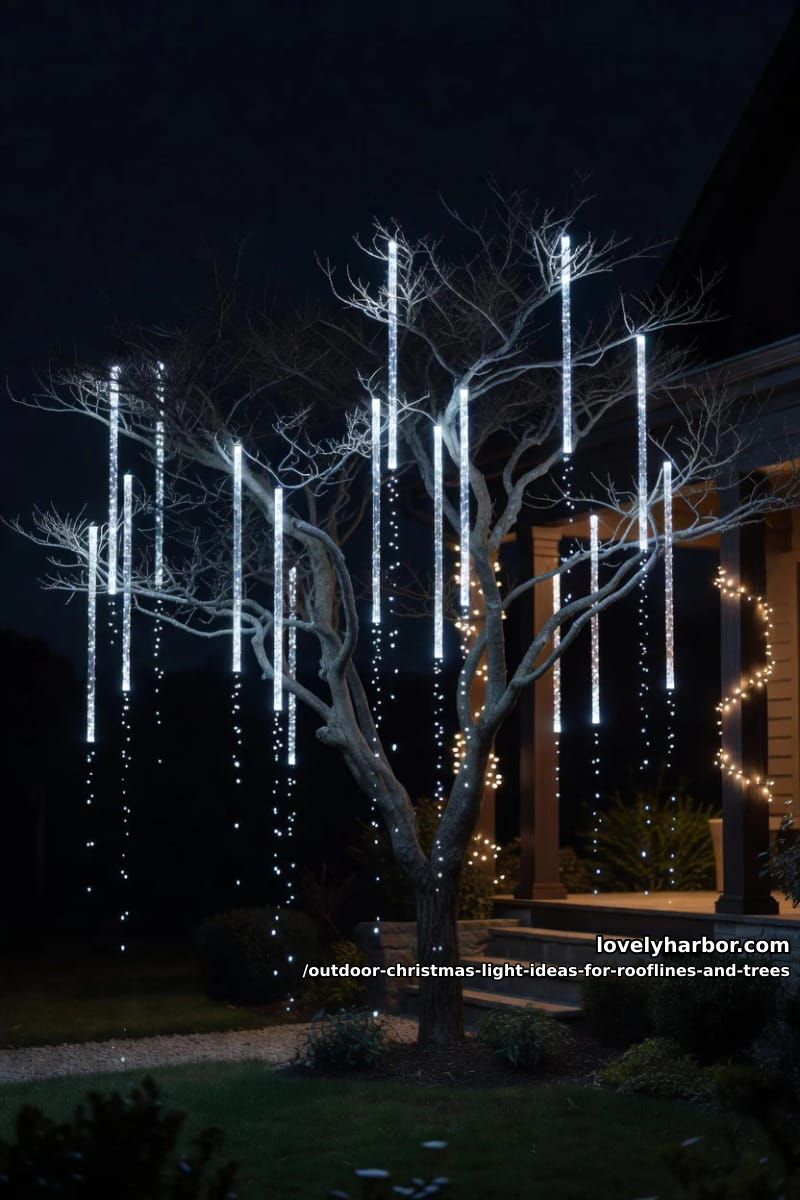
Snowfall or meteor tubes, the ones with points of light chasing down a clear tube to mimic falling snow, add genuine movement to a tree or an eave, and a little goes a long way. Run them on one tree or a single dormer, not the whole house. Wall-to-wall animation reads busy and restless, and it fights with the steady glow doing the real work elsewhere. Cool white around 5000K sells the snow effect better than warm here, which is the one place I'd break the single-white rule from earlier, since motion plus a cooler tone is what reads as falling snow rather than dripping honey.
Conclusion
If you do this in order, the roofline comes first because it's the backbone of the whole display, then the trees, then everything else hangs off those two. Settle your single color temperature before you buy a thing, because mismatched whites is the mistake that's expensive to fix once the bulbs are up and the receipts are gone.
For most houses that's a warm white 2700K C9 outline with 5mm-wrapped trees in the same tone, the clip matched to your actual roof surface, and one accent for depth. Add icicles only on low eaves, globes only on bare deciduous canopies, motion only in one spot.
The permanent systems are a real option if the annual ladder ritual has worn thin, just go in knowing the warm-white question and asking to see it lit. Whatever you land on, wrap a test string of your chosen white around one porch column first and look at it from the street at dusk before you commit a whole roofline to it.