
Fresh greenery on a front door has one advantage faux never matches and one liability faux never has: it smells like the season, and it browns by New Year's if you ignore it. These eleven ideas lean into the first and plan around the second, starting with a fifteen-minute mixed-green swag and building up to dried-orange accents, eucalyptus for dark modern doors, and a pair of flanking urns that do more for curb appeal than anything you can hang. Sourcing notes and a low-fuss way to keep cut greens alive are folded into the sections where they matter, not buried in a footnote.

1. Build a mixed-green swag instead of buying one wreath
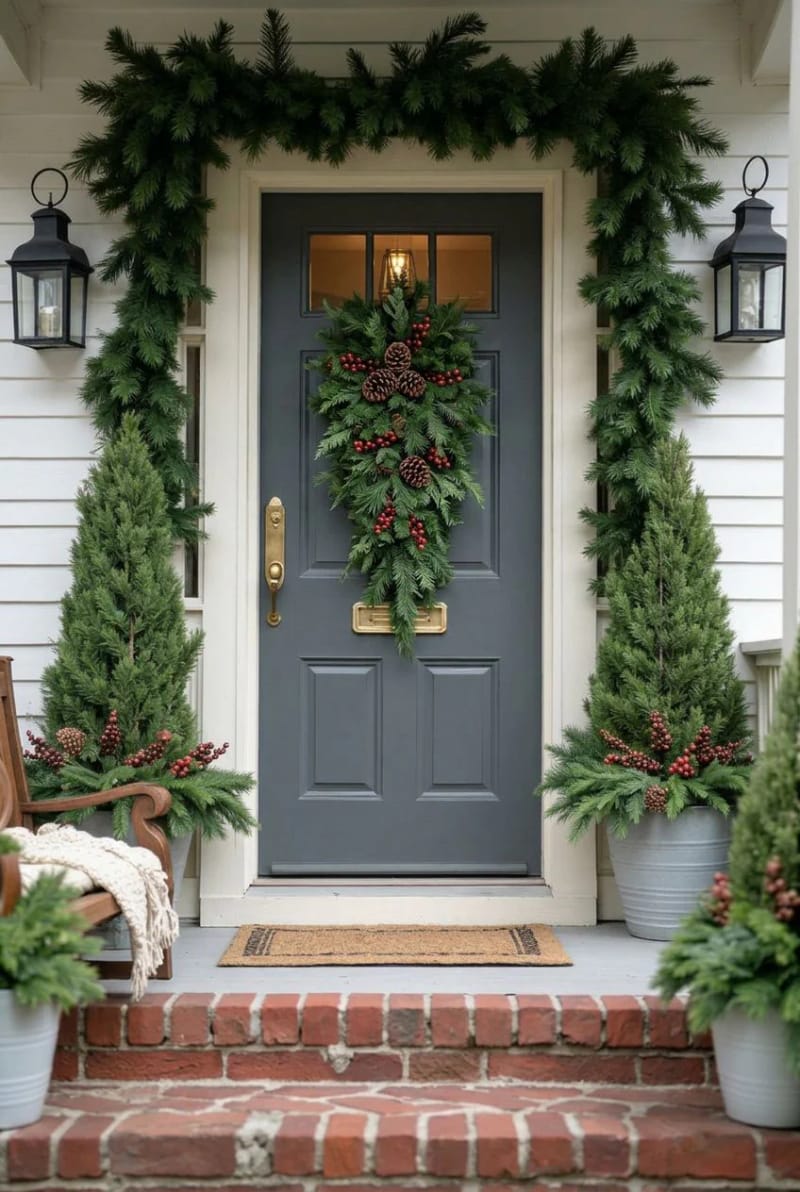
Start with a swag, not a wreath, if you want fresh greenery to read as deliberate rather than grabbed off an endcap. A swag is just a loose bundle of cut stems wired at the top and hung point-down, and it takes about fifteen minutes. The move that separates a good one from a flat one is mixing textures: pair feathery western red cedar with flat noble or Fraser fir, then let a few stems of white pine trail past the bottom for length. A single-species bundle looks one-note no matter how full it is. Keep your one accent (a berry cluster, a few pinecones) low and off to one side.
You don't need a florist's full garland for this. A single bunch of mixed cut greens runs roughly $15 to $25 at a garden center or tree lot, and if you have a yard with anything evergreen in it, the clippings are free. Florist garland sold by the foot, by contrast, lands around $12 to $17 per foot, which adds up fast for a whole door.
Cut evergreens dry out from the needles, not the stems. Before you hang anything, soak the whole swag in a tub of water overnight so it goes up fully hydrated. Then hang it where it gets cold air and avoids afternoon sun, a north-facing or shaded door is genuinely the difference between three weeks and six. The one product worth buying is Wilt-Pruf, a pine-resin anti-transpirant (about $25 a quart) that coats the foliage in a clear film and slows water loss for the season; nurseries spray their own wreath stock with it. Spray outdoors, let it dry three to four hours, then hang. Misting every couple of days helps too, but the spray does most of the work.
2. Doorscape the whole frame, not just the center of the door
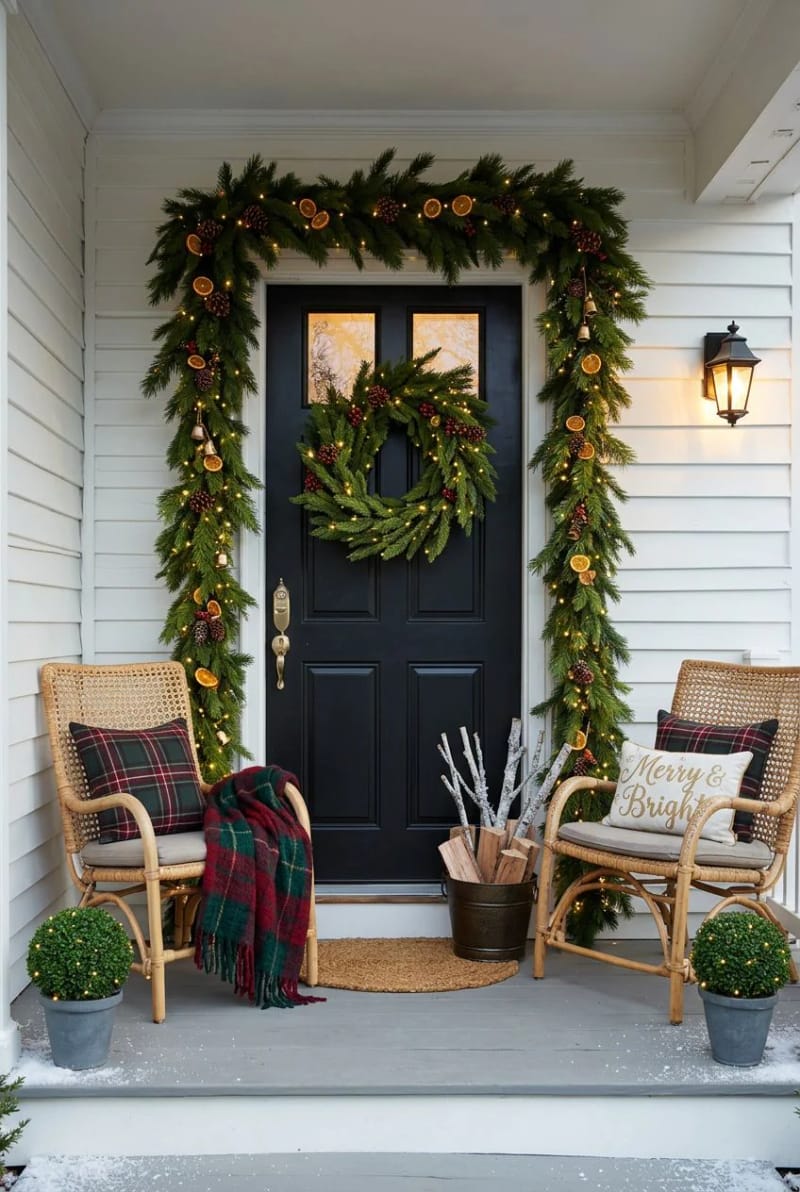
Don't stop at hanging a wreath on the door; run garland up both sides of the casing and across the top so the whole opening is outlined. The look got a name a few years back, "doorscaping," and it just means treating the door surround as the canvas instead of a single hook at eye level. The effect is architectural, and it photographs far better than a lone wreath on a wide door.
For a standard eighty-inch door you'll want two nine-foot garlands meeting at the top, then a wreath centered over the seam to hide it. Renters, you don't need to drill: 3M outdoor Command hooks hold a fresh garland fine through a normal winter, and they peel off clean in January. Cup hooks screwed into the trim are sturdier if you own the place and plan to repeat the look.
3. Flank the door with urns of birch branches and loose boughs
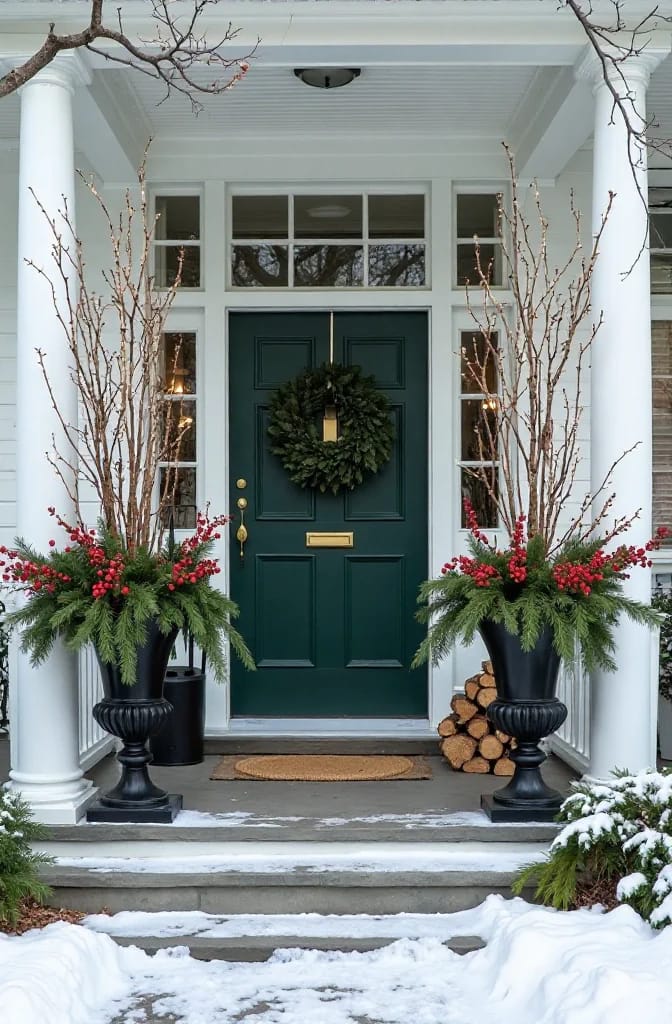
A matched pair of urns flanking the door does more for curb appeal than anything hanging on the door itself, and it's the single most-saved idea in this category (the top fresh porch-pot pin has nearly 6,000 saves for exactly this setup). The reliable formula is three layers: a tall vertical element for height, a collar of loose evergreen boughs spilling over the rim, and one pop of color or a lantern. Birch branches or curly willow give you the vertical line; cedar and fir do the spilling.
If your ground freezes, you can't just stick stems in soil, so pack the urn with damp sand or a block of floral foam to hold everything upright. Here's a starting build for a pair.
A pair of 18-inch porch urns
Two flanking urns, birch-and-evergreen build, standard front stoop
This is the version that holds up outdoors through December without watering, anchored in sand so wind doesn’t tip the branches.
Shopping list
| Qty | Item | Spec | Price |
|---|---|---|---|
| 2 | Outdoor urns | 16 to 18 in, frost-proof resin or iron | $40 to $120 / pair |
| 1 bundle | Birch or curly willow branches | 4 to 5 ft tall | $15 to $30 |
| 2 bunches | Mixed cut evergreen boughs | cedar, fir, white pine | $20 to $40 |
| 1 bunch | Winterberry or red dogwood stems | accent, optional | $8 to $15 |
| 1 bag | Play sand or floral foam | to anchor stems | $5 to $12 |
| Total | $90 to $220 | ||
Prices are approximate ranges as of the 2025 season; verify before purchase.
4. Trade pine for eucalyptus and olive on a dark or modern door
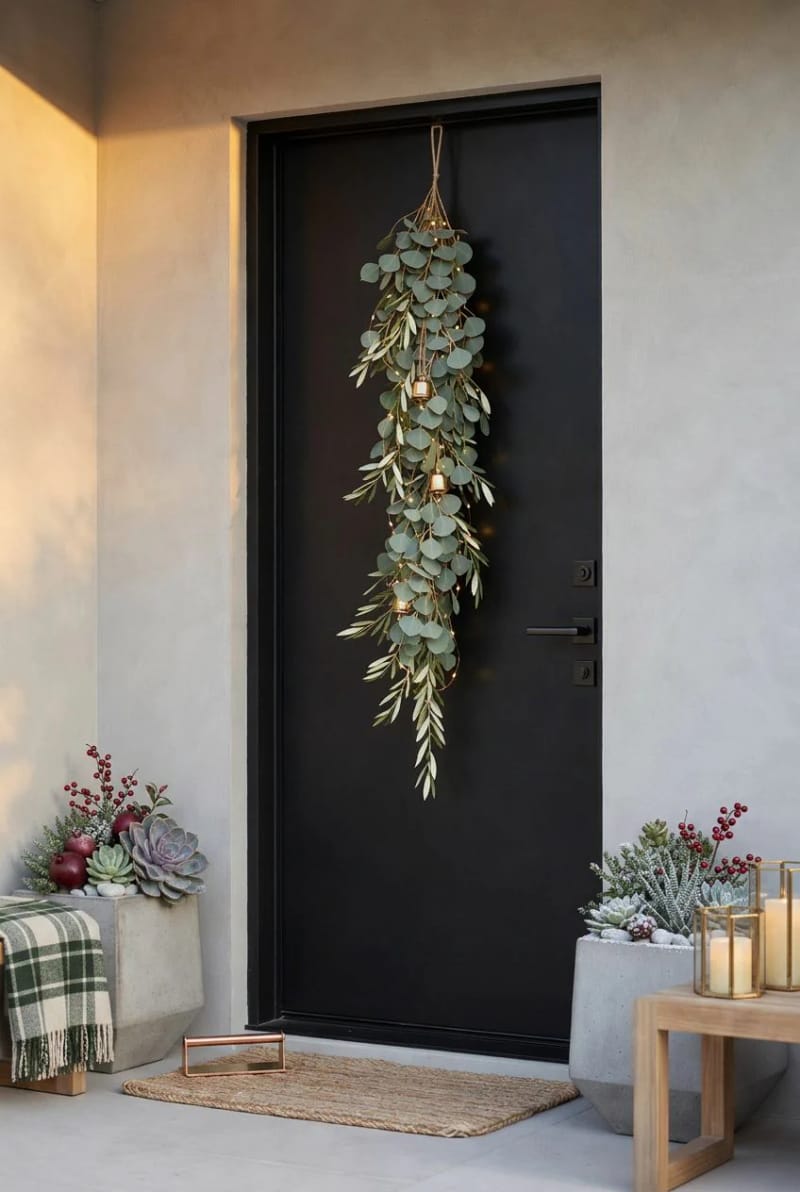
If your door is black, navy, or a flat modern slab, skip the pine and reach for silver-dollar eucalyptus and olive branches instead. The grey-green reads softer and more current against a dark door than full-on Christmas evergreen, and it has a practical edge: eucalyptus and olive dry in place rather than shedding, so they hold their shape as they fade. People email me asking why their eucalyptus looks crunchy by January, and the honest answer is that it's supposed to, it dries instead of rotting, and a lot of decorators leave it up well past the holidays for that reason.
Which green you choose changes both the look and how long it survives outside. Here's the rough hierarchy.
| Greenery | Outdoor lifespan | Look | Worth knowing |
|---|---|---|---|
| Western red cedar | 3 to 4 weeks, longer in cold | Feathery, drapes well | Cheapest, most available, great filler |
| Noble / Fraser fir | 4+ weeks, holds needles | Flat stiff sprays, classic | Sturdiest; the most Christmassy of the bunch |
| White pine | Several weeks, sheds a little | Long soft wispy needles | Adds length and movement, not structure |
| Silver-dollar eucalyptus | Dries in place, weeks | Round grey-green coins | Modern; fades rather than dropping |
| Magnolia | Long, leaves curl as they age | Big two-tone leaves | Formal and dramatic; a little goes far |
| Boxwood | 2 to 3 weeks, browns sooner indoors | Tight bright clipped green | Tidy and classic, but the first to brown |
5. Use greens and red berries only, and skip the bow
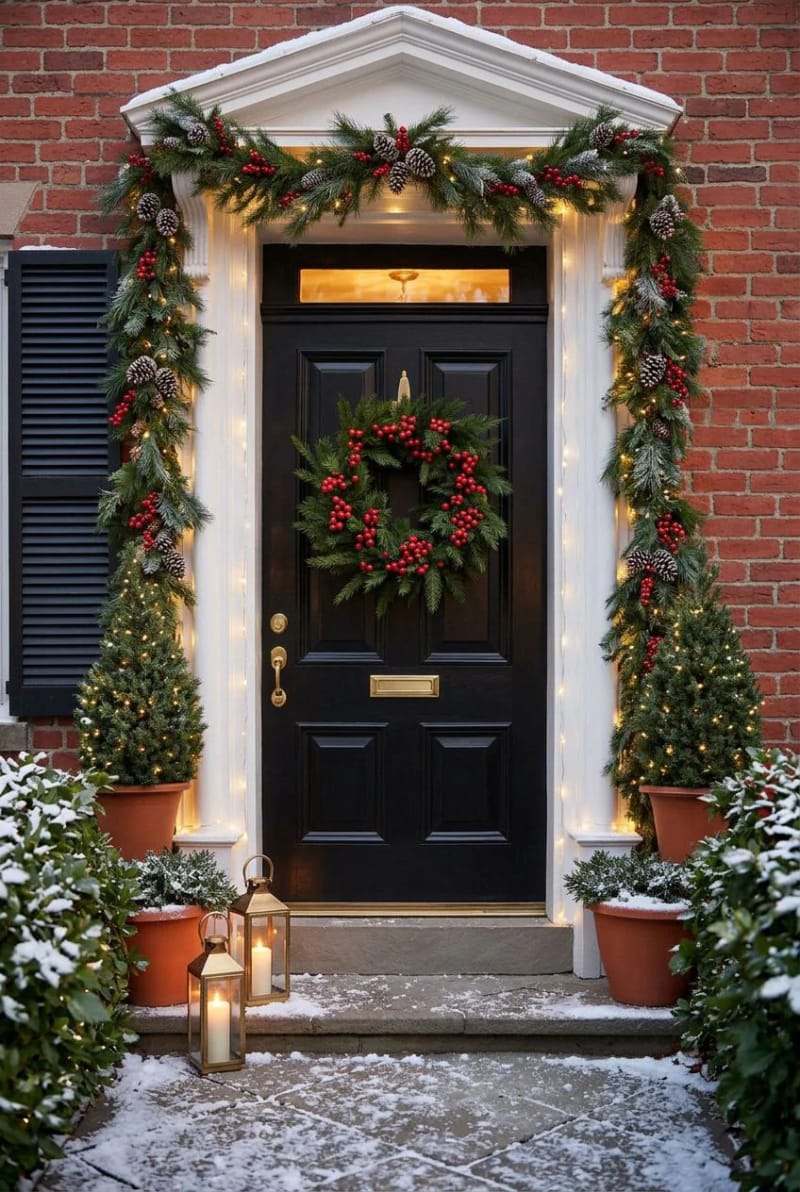
The most arresting holiday doors, the Beacon Hill and brick-townhouse kind, almost always use exactly two things: dark evergreens and red berries. No bow, no baubles, no ribbon. The restraint is the whole point, and it photographs as more expensive than the over-decorated version because nothing competes. A wreath that's just cedar, fir, and a scatter of winterberry against a black or deep-green door is hard to get wrong.
If you can't get fresh winterberry (it shatters and drops, fair warning), faux berry picks wired in are the one synthetic shortcut I'll actively recommend here, because real berries rarely outlast the greens anyway. Keep the berry color true red, not burgundy, against a dark door; burgundy disappears.
6. Hang a magnolia garland for the two-tone, big-leaf look
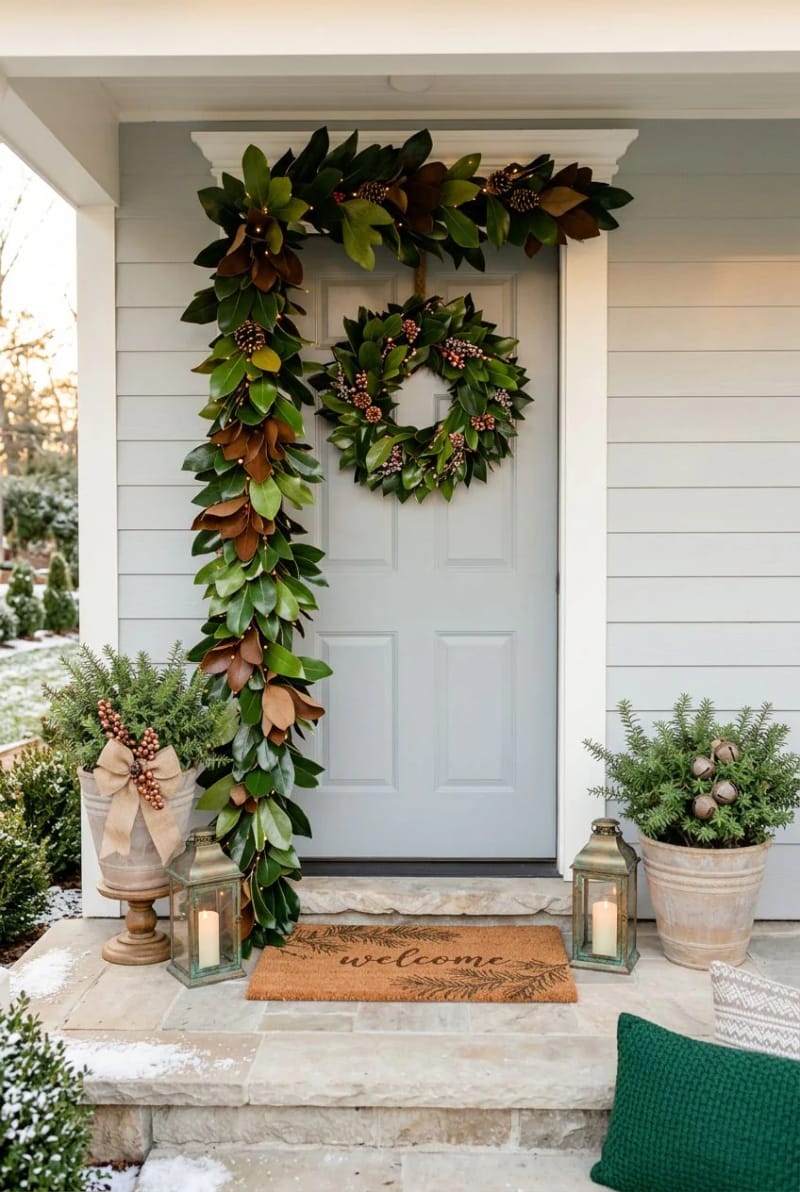
Magnolia gives you a two-tone effect no other green can: glossy deep green leaf faces with suede brown undersides, and the trick is turning some leaves brown-side-out so both colors show. It reads formal and Southern, and it lasts a long time outdoors because the leaves are leathery rather than needled.
Frontgate and Southern Living Plants both sell faux magnolia garland that looks convincing from the street, but if you have a magnolia tree (or a neighbor with one and a ladder), a few fresh branches go further than you'd expect. One caveat I learned the hard way: fresh magnolia leaves curl and cup as they dry, so the garland looks different by week three than it did on day one. Some people like that aged look; if you don't, the faux version holds flat.
7. Wire dried orange slices and cinnamon into the greenery
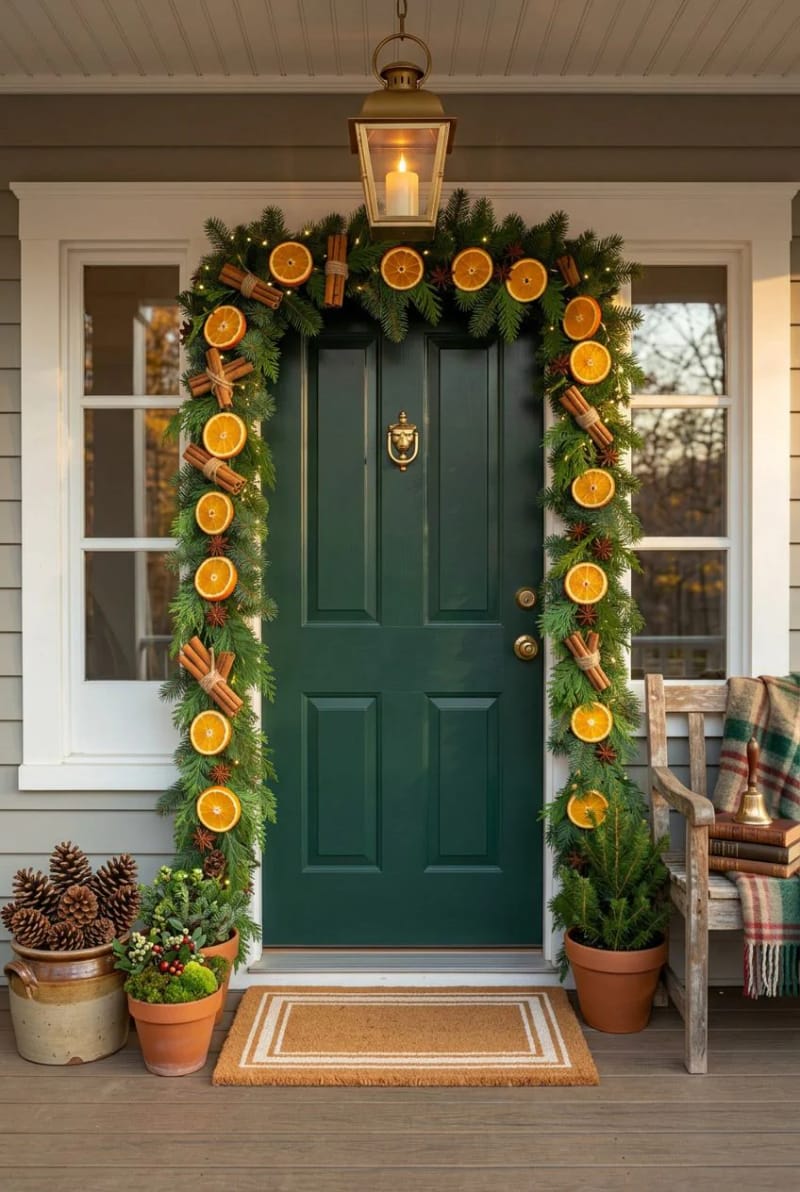
Wire dried orange slices and small cinnamon-stick bundles into the greenery for warm color and a scent pine can't produce on its own. Backlit by late sun or a string of warm lights, the slices glow amber, and the cinnamon and a few star anise pods add the mulled-cider smell people actually stop and comment on. This is the cheapest upgrade on the list and the one that makes the door feel handmade.
Drying the slices is genuinely foolproof: cut oranges into quarter-inch rounds, lay them on a wire rack over a baking sheet, and put them in the oven at its lowest setting (most ovens bottom out around 170 to 200°F) for four to six hours, flipping every hour or so until they're no longer sticky. They finish drying in the air afterward, and they keep for years in a paper bag. Then poke floral wire through the rind and twist them onto the garland. One warning from the humid-climate readers: if you live somewhere damp, dry them fully or they'll mold, so don't pull them early.
8. Layer two or three garlands so the frame reads full, not skimpy
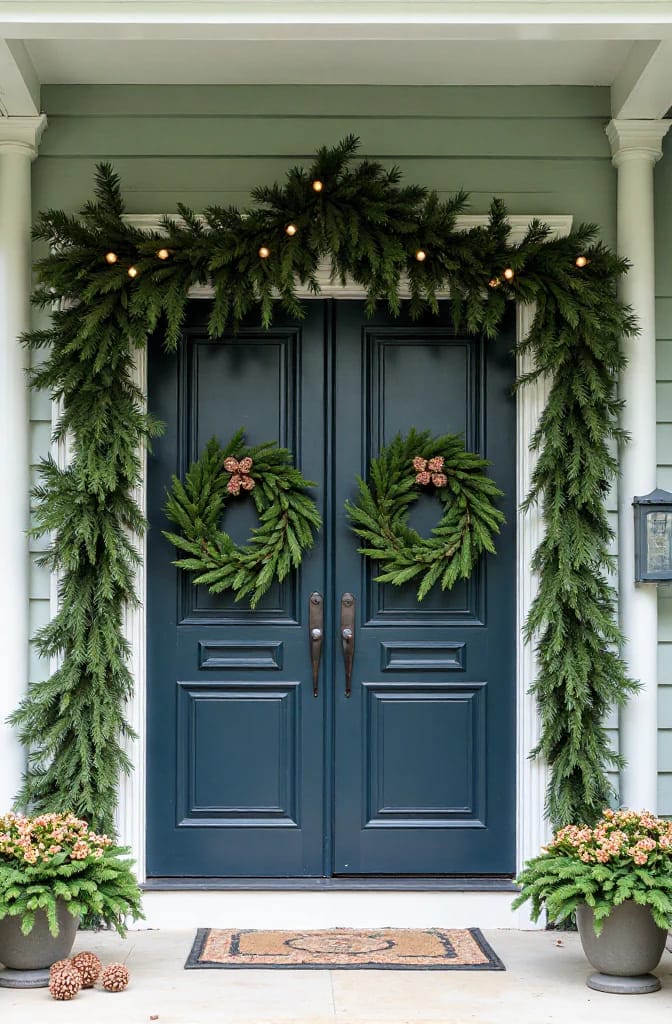
A single strand of garland over a wide door looks thin and apologetic; the fix is layering two or three strands bundled together and zip-tied at intervals so they read as one fat, full rope. The much-pinned Pottery Barn porch that everyone saves is doing exactly this, multiple strands faking the fullness of an expensive custom garland. It's the cheapest way to get the high-end look.
Do this
- Layer at least two strands and zip-tie them together every couple of feet so the bundle holds its shape in wind.
- Let the garland swag slightly in the center rather than pulling it taut; a little droop looks natural, a straight line looks like a curtain rod.
- Tuck extra loose boughs into any thin or gappy spots after it’s hung.
Avoid
- One skinny strand on a wide door.
- Over-decorating a layered garland. Once it’s full, it needs less, not more.
- Hanging it on flimsy tape that lets go the first cold night.
9. Carry the same greens to window boxes and sidelights
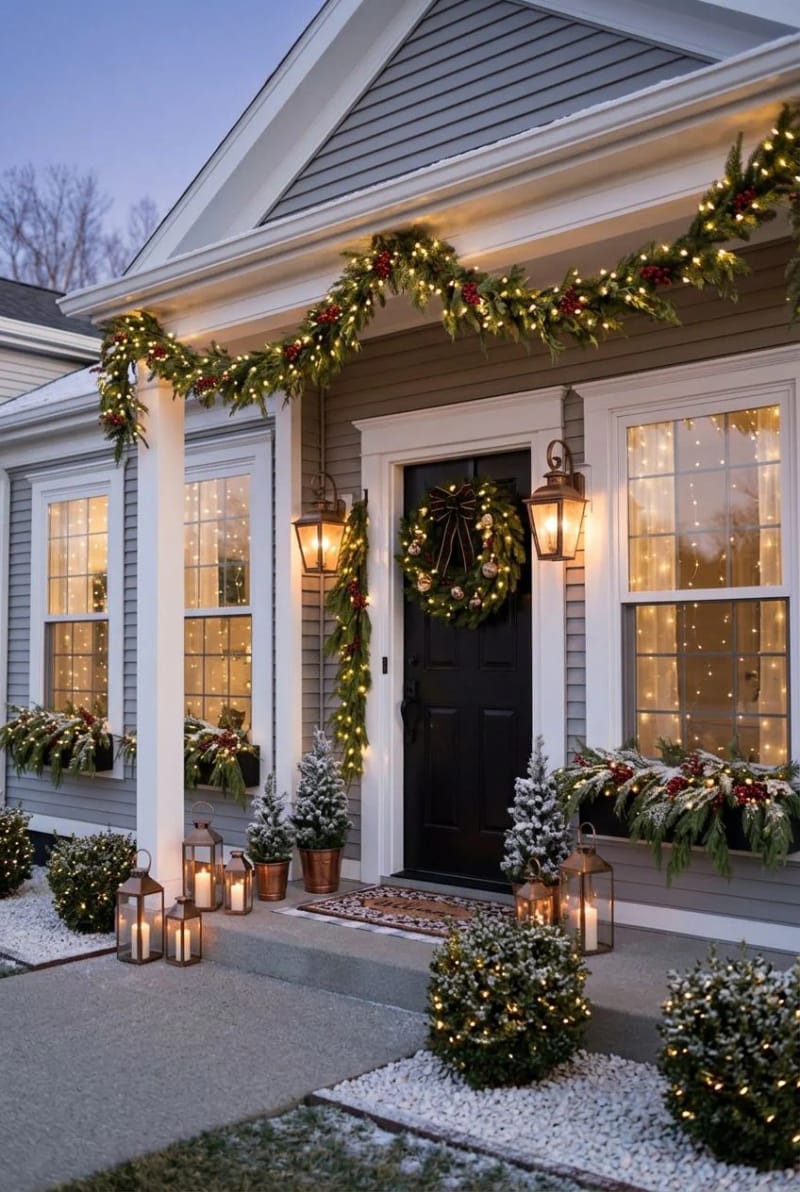
Carry the same greens to the window boxes and the sidelights so the door isn't a single decorated island on a bare facade. Repeating one material across the whole front, wreath on the door, boughs in the window boxes, a slim garland on the sidelight, is what makes a porch look styled rather than spotty. It's the same principle as repeating a color through a room.
Empty summer window boxes are the easiest win here: jam them with the leftover bough clippings from your swag and urns and you've used up the scraps. For renters without boxes, a couple of stems propped on the windowsill behind the glass do a quieter version of the same thing.
10. Add brass bells and let green-and-gold replace red entirely
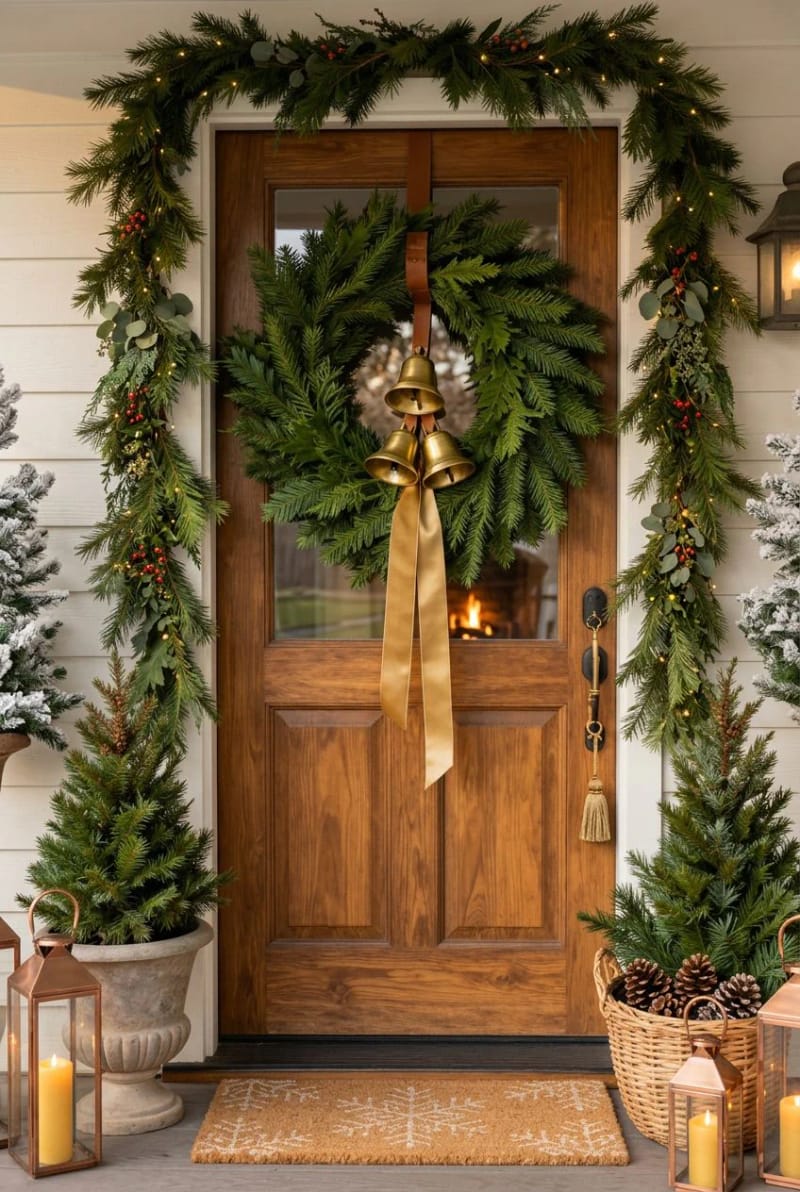
Swap red for gold and the whole door tips from traditional to modern in one move. A cluster of brass bells on a strip of leather or jute, a little thin gold ribbon woven through the greenery, and nothing red at all, that green-and-gold combination is the look dominating the modern-farmhouse feeds right now. Bells also do something red berries can't: they make a sound when the door opens, which sells the welcome.
Keep the gold restrained, real-metal brass beats shiny plastic gold every time, and let the green stay the star.
11. Weave warm-white fairy lights through the boughs for the dark
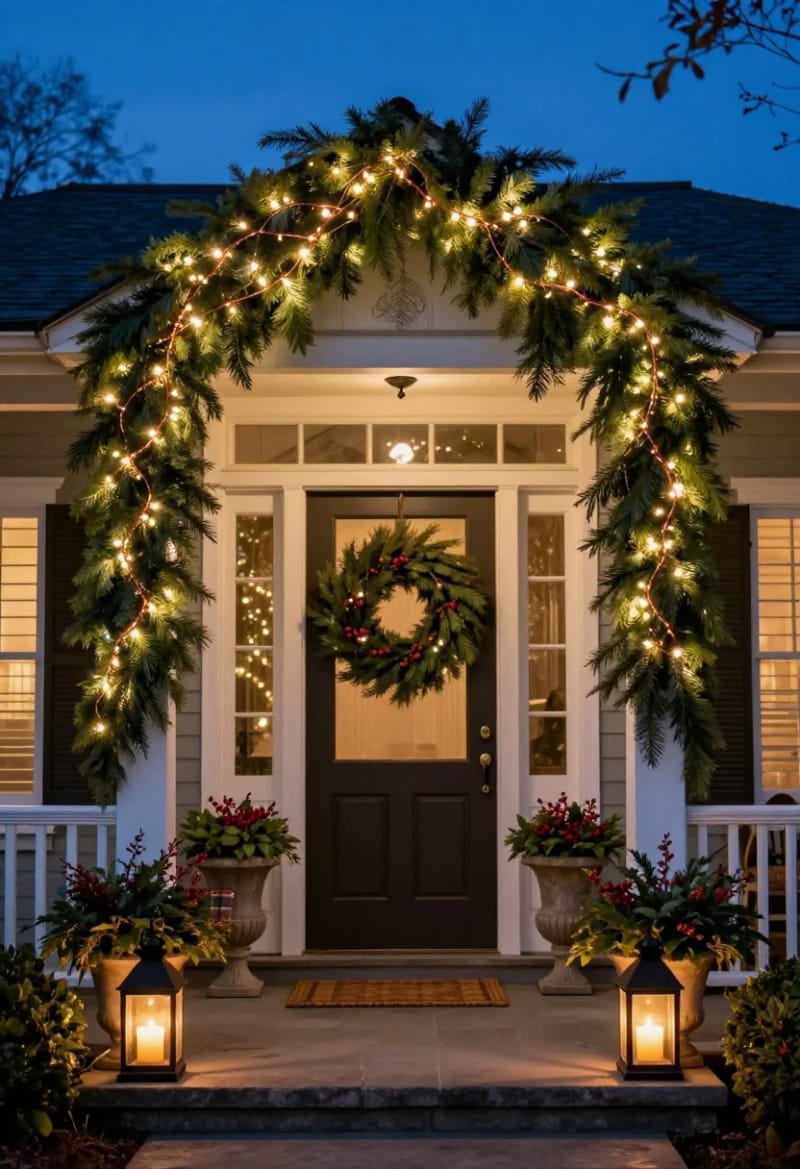
Weave warm-white battery fairy lights through the boughs, because your front door is dark by 4:30 in December and undecorated-looking greenery at night is a missed opportunity. Copper-wire micro-lights are the ones to buy: the wire vanishes into the greenery in daylight and the lights read as scattered points of glow at night rather than obvious strands. Scatter them through, don't run them in lines.
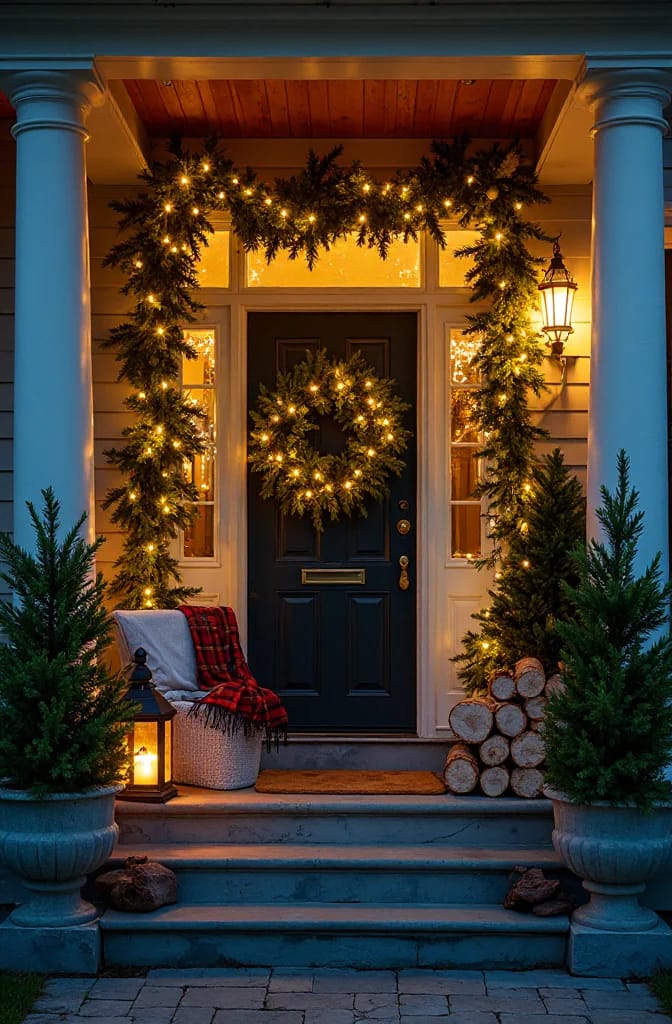
One firm opinion: avoid cool-white. Against green foliage it goes blue and clinical, the opposite of what you want at a front door. Battery packs with a built-in timer (6 hours on, 18 off is the standard) save you from fiddling with them every evening, and they free you from needing an outdoor outlet, which matters on an apartment landing or a porch with no power.
Conclusion
If you're doing all of this in one go, sequence it: build the swag or layered garland and set the urns first, spray everything with Wilt-Pruf the same day so the clock on browning starts as late as possible, then add the dried oranges, berries, bells, or lights as the finishing layer once the structure is up. The fresh-versus-faux question doesn't have to be all-or-nothing either; a lot of the doors worth copying use a faux garland as the base and tuck fresh cedar and a few real berry stems into it, so the scent and the movement are real even when the bones aren't. The one rule I'd never skip is the overnight soak before hanging, because a swag that goes up thirsty is brown before you've finished your coffee on the 26th.