
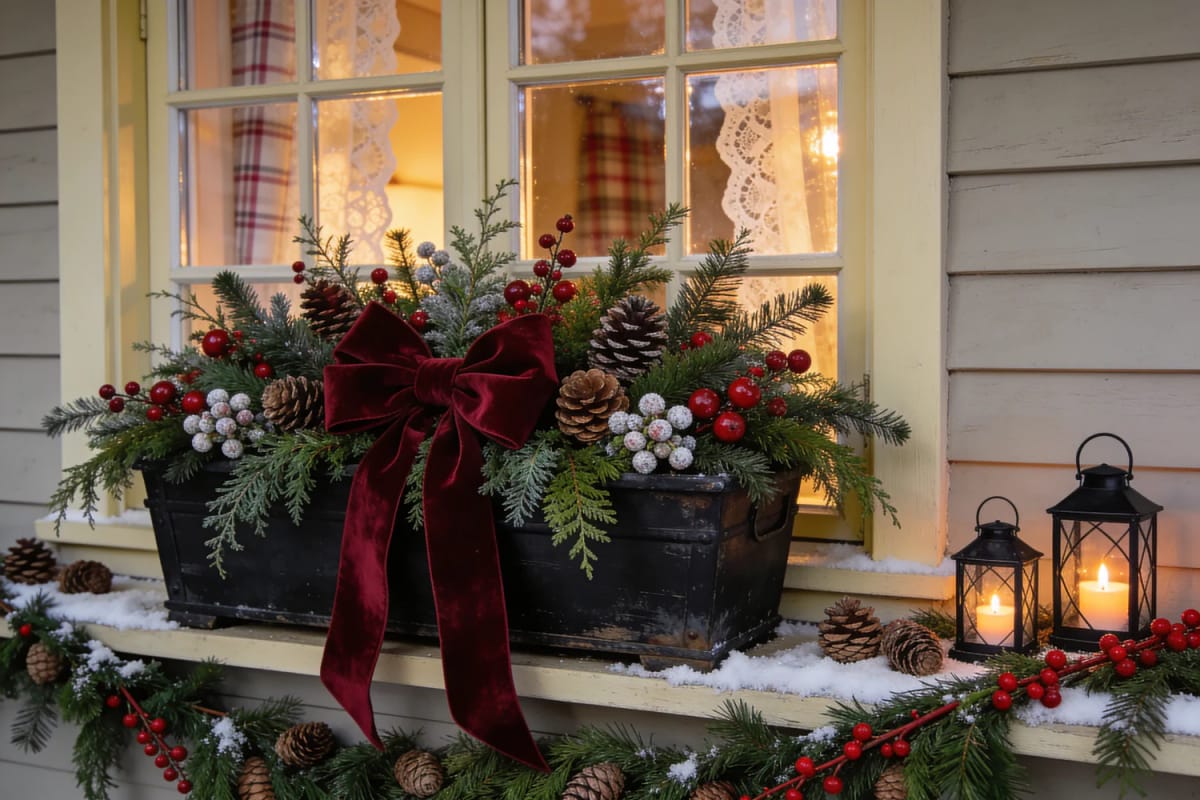
Most window box displays fail in the second week of December. Not because they looked wrong on day one, but because the stems were pushed two inches into dry potting mix and the first hard wind took the whole arrangement sideways. The twelve ideas below are built the other way around: structure first, then colour that still reads at noon, plus a few arrangements that use no greenery at all and one fix for windows that have no boxes under them yet.
1. Build the window box on three heights of cut conifer before anything else goes in
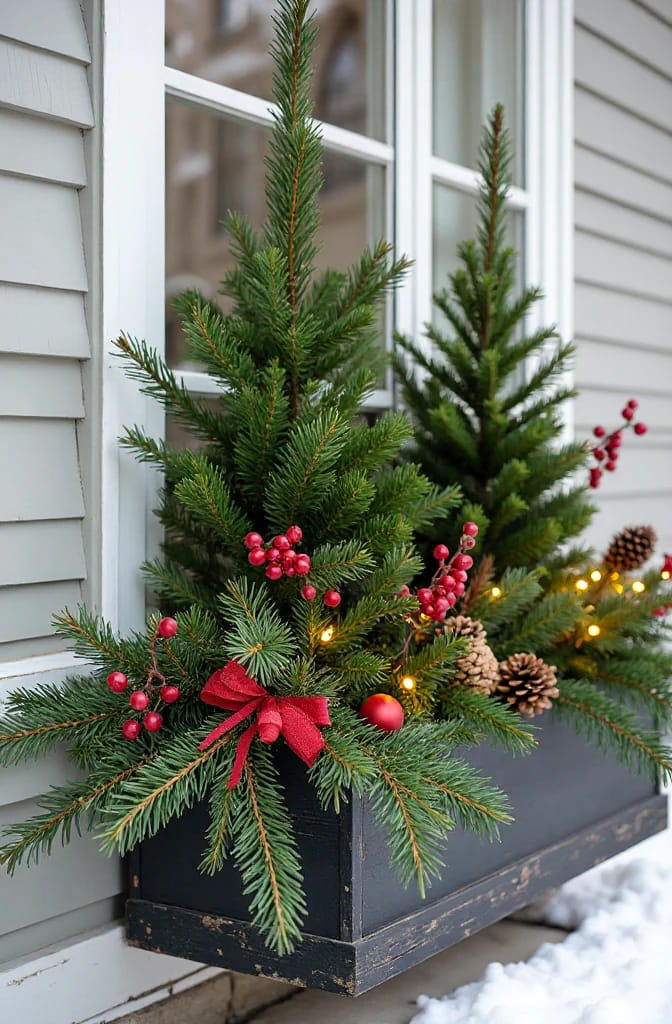
Cut greens go in first, in three distinct lengths, and they go in deep. The short pieces (roughly six inches) sit flat and hide the rim of the box. The medium ones fan outward and forward so the arrangement overhangs the front edge by a hand's width, which is the single thing that makes a window box read as full from the street rather than as a trough with sticks in it. The long ones angle up and back against the siding.
Set every stem at least four inches into the soil, then water the box heavily on a day above freezing and let it freeze solid. Frozen soil grips a cut stem harder than any floral foam, and it stays gripped until March. Boxes that come apart in the first storm are almost always boxes that were arranged after the ground had already locked up, when the stems could only be laid on the surface.
| Cut green | How it behaves below freezing | What it does in the box |
|---|---|---|
| Fraser or noble fir | Holds needles longest of the common cut greens; stays a matte blue-green | The backbone. Short, dense pieces for the base layer |
| White pine | Soft five-inch needles, holds well, droops slightly as it dries | The overhang. Long, feathery pieces off the front edge |
| Western red cedar | Browns first, often by early January in a dry cold snap | Filler only, and cheap enough to replace mid-season |
| Boxwood | Holds shape but bronzes in deep cold and full sun | Tight round texture against the loose needled stuff |
| Magnolia | Leathery leaves last the whole winter, curl slightly | Broad glossy faces with a copper-brown reverse |
2. Stand birch logs upright in the window box for structure greenery can't give you
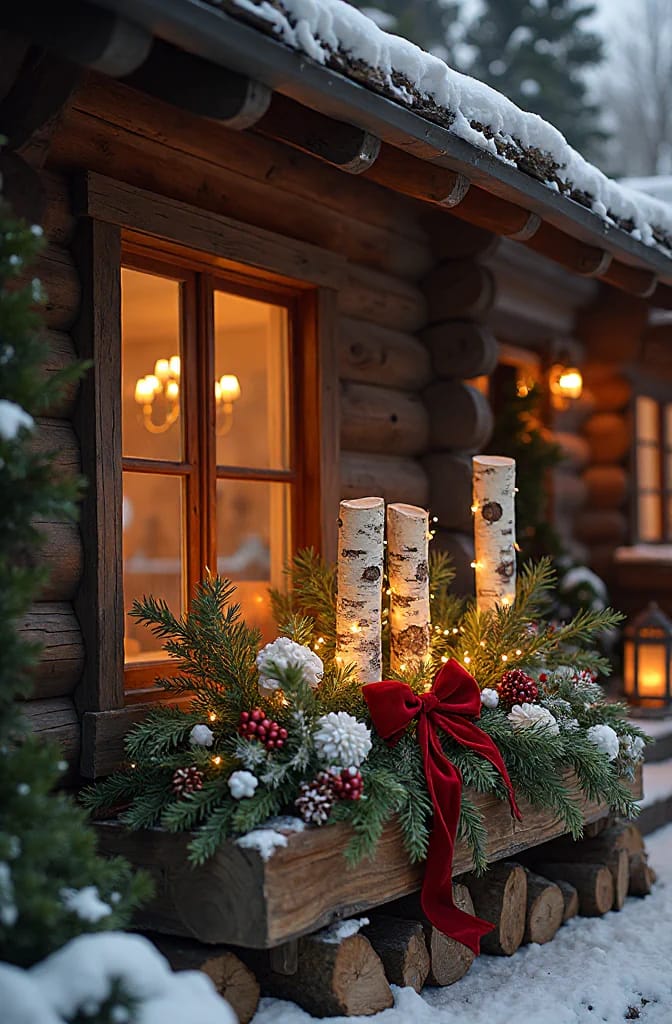
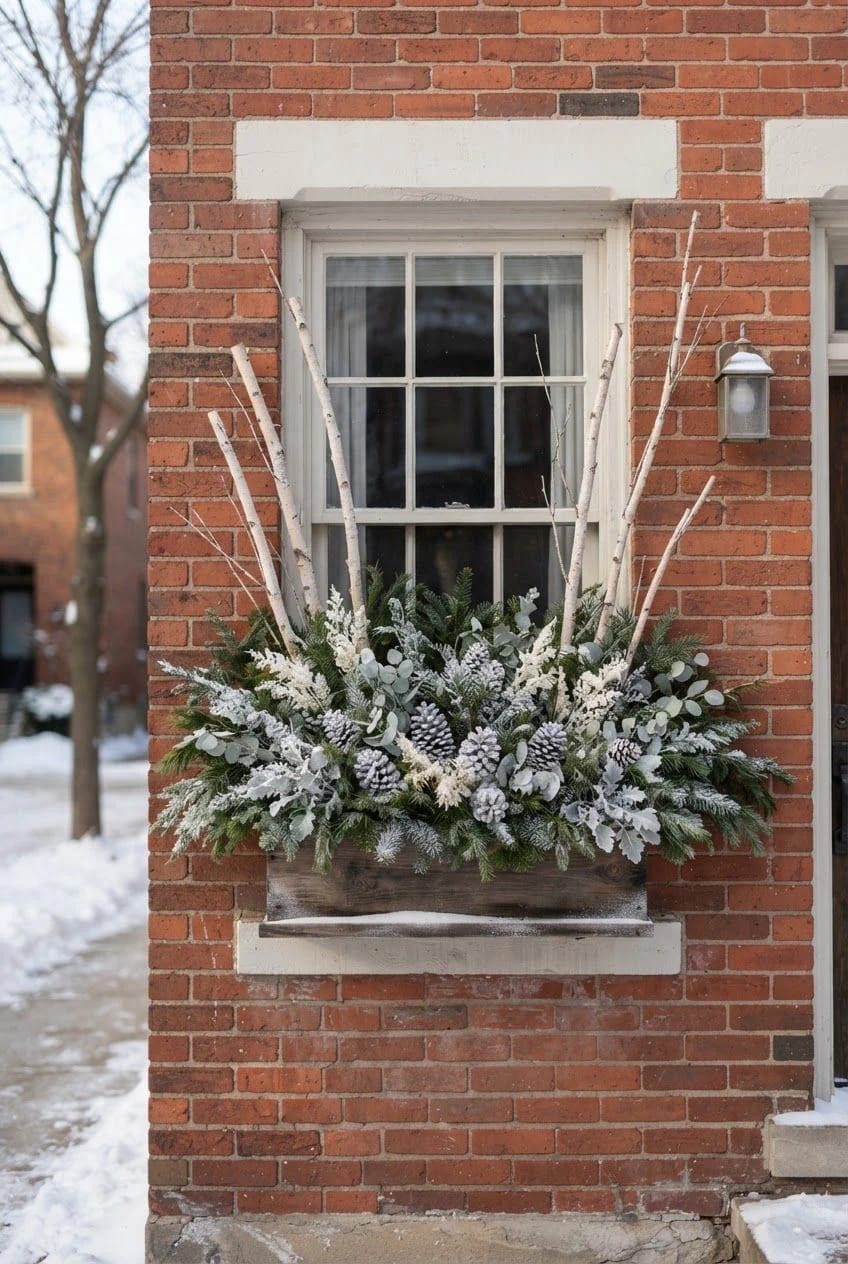
Three birch logs, cut to between fourteen and twenty inches and stood on end at the back of the box, do the job a tall spike plant does in summer. The white bark reads from a long way off, it holds against a dark facade the way nothing green can, and it costs nothing if you have a birch or a neighbour clearing one.
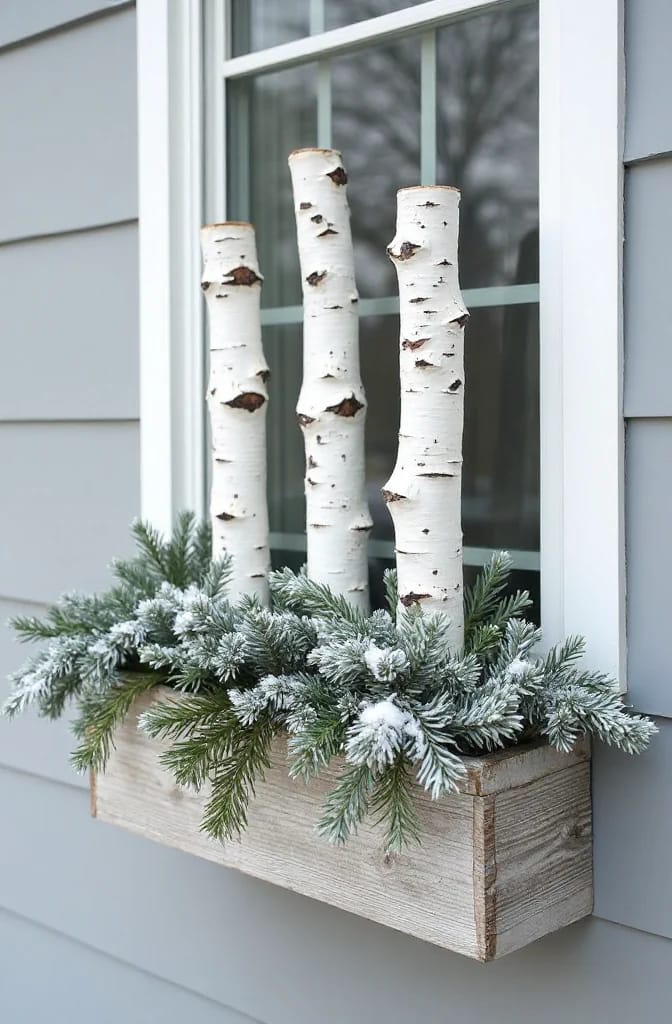
Cut the bottoms square so they stand without wobbling, and drive a bamboo stake down through the soil beside each one if the box is shallow. If you are working from what is already in the garage and the woodpile, the same logic runs through the rest of a whole list of outdoor projects built from scrap that still hold up in a real winter, most of which cost less than a bundle of cut greens.
3. No window box? A bracket-mounted galvanized trough turns a bare exterior sill into one
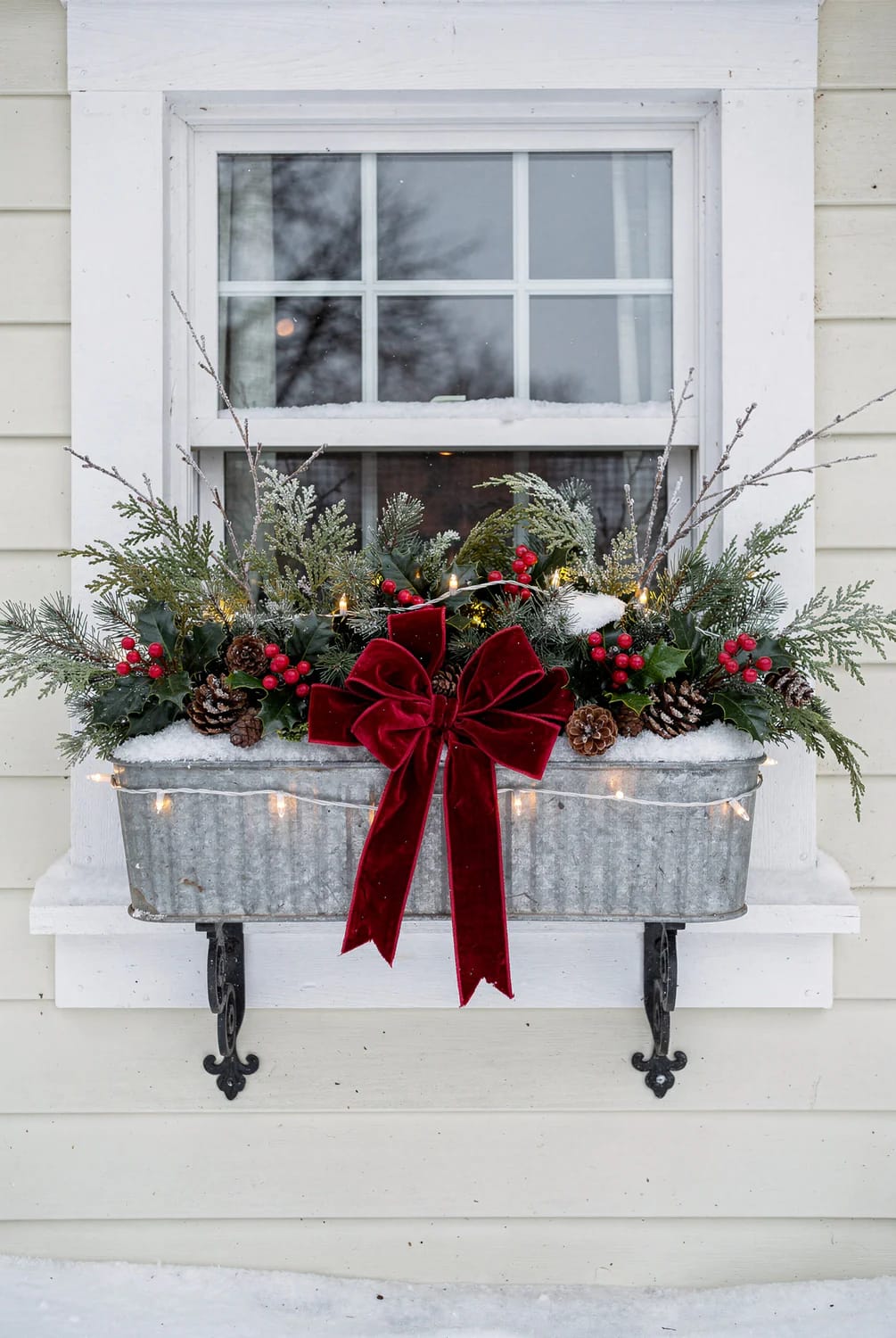
Plenty of houses have a projecting exterior sill and no box, and the assumption is that adding one is a summer project. It isn't. A metal trough on two brackets goes up in under an hour with a masonry bit or a couple of lag screws into the studs, and because you are filling it with cut stems rather than living roots, drainage and soil volume barely matter.
Galvanized steel with drainage plugs, sized to a standard window, and it takes separate wall brackets so you can set the height yourself rather than bolting it flush to the sill.
Achla Designs galvanized window flower box, 24 by 9.5 by 7.5 inches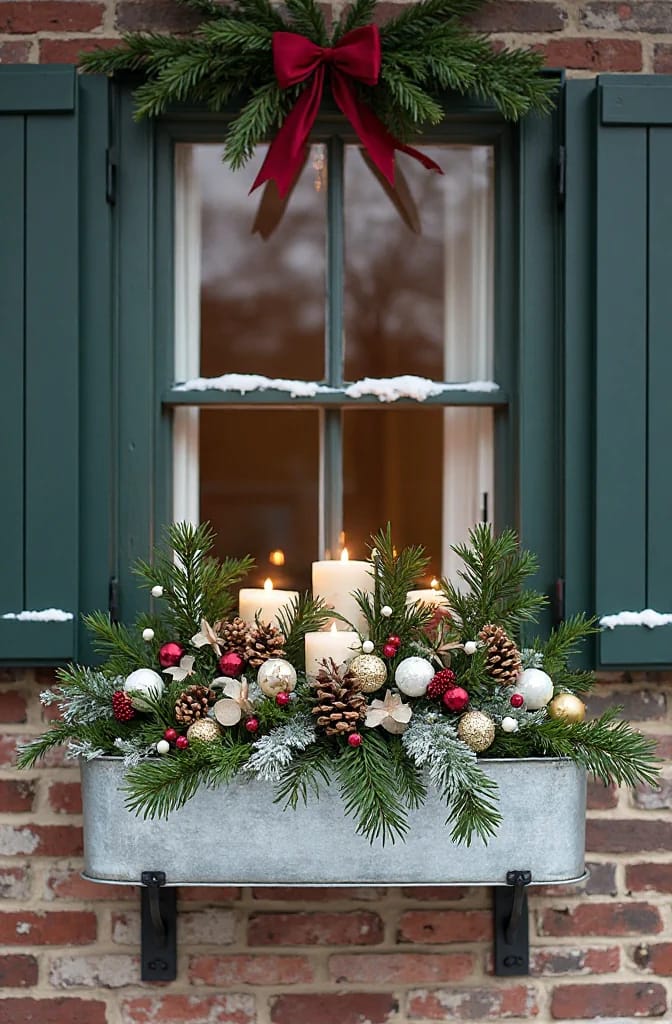
What the brackets actually have to hold
A 30-inch box packed with wet soil and greens, then frozen, is heavier than people expect. Rate the mounting for around forty pounds and put the fixings into brick, mortar, or framing, never into siding alone. Two brackets set roughly a quarter of the way in from each end distribute the load better than two at the far corners.
The version that doesn't touch the wall
Renters have a cheaper route. A trough that sits directly on the sill, wedged against the frame and weighted with a brick under the soil, holds fine on a sill with any depth to it, and it comes down in March with nothing to patch. The whole calculation of which two elements carry a display and which ones are wasted money is worked through in more detail in this breakdown of what a porch display actually needs to cost.
4. Red twig dogwood beats artificial picks for colour that reads at noon
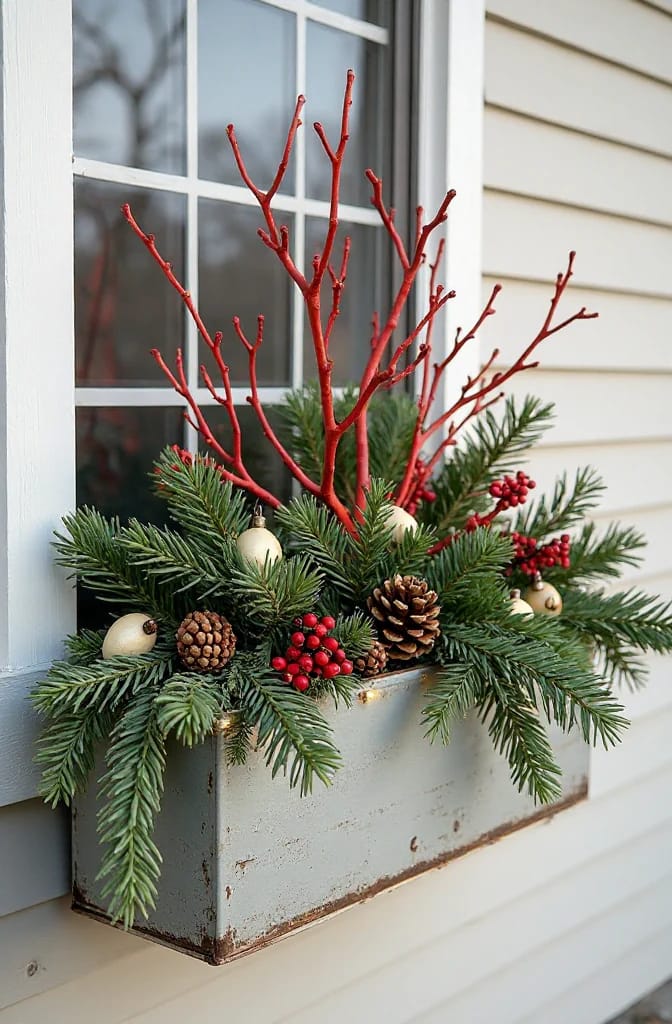
Artificial berry picks look convincing in the store, under warm retail lighting, at arm's length. Under flat December daylight from thirty feet away, the cheap ones go plasticky and the glitter reads as grey. Cut red twig dogwood does not have that problem, because the colour is bark, not paint, and it holds all winter without fading.
Bundles typically run somewhere between fifteen and thirty dollars at a garden centre, and one bundle dresses two average windows. If you have any damp ground on the property, plant a shrub in spring and you will be cutting your own stems within two or three years. Winterberry adds the small orange-red dots that dogwood can't, but expect birds to strip cut branches within a couple of weeks in a hard winter.
 Front Door Christmas Decorations With Fresh Greenery: 11 Ideas That Look Intentional and Last the Season Eleven fresh-green ideas built around the same browning problem, sized for a door rather than a sill.
5. A pair of wooden stars on stakes, set at two different heights
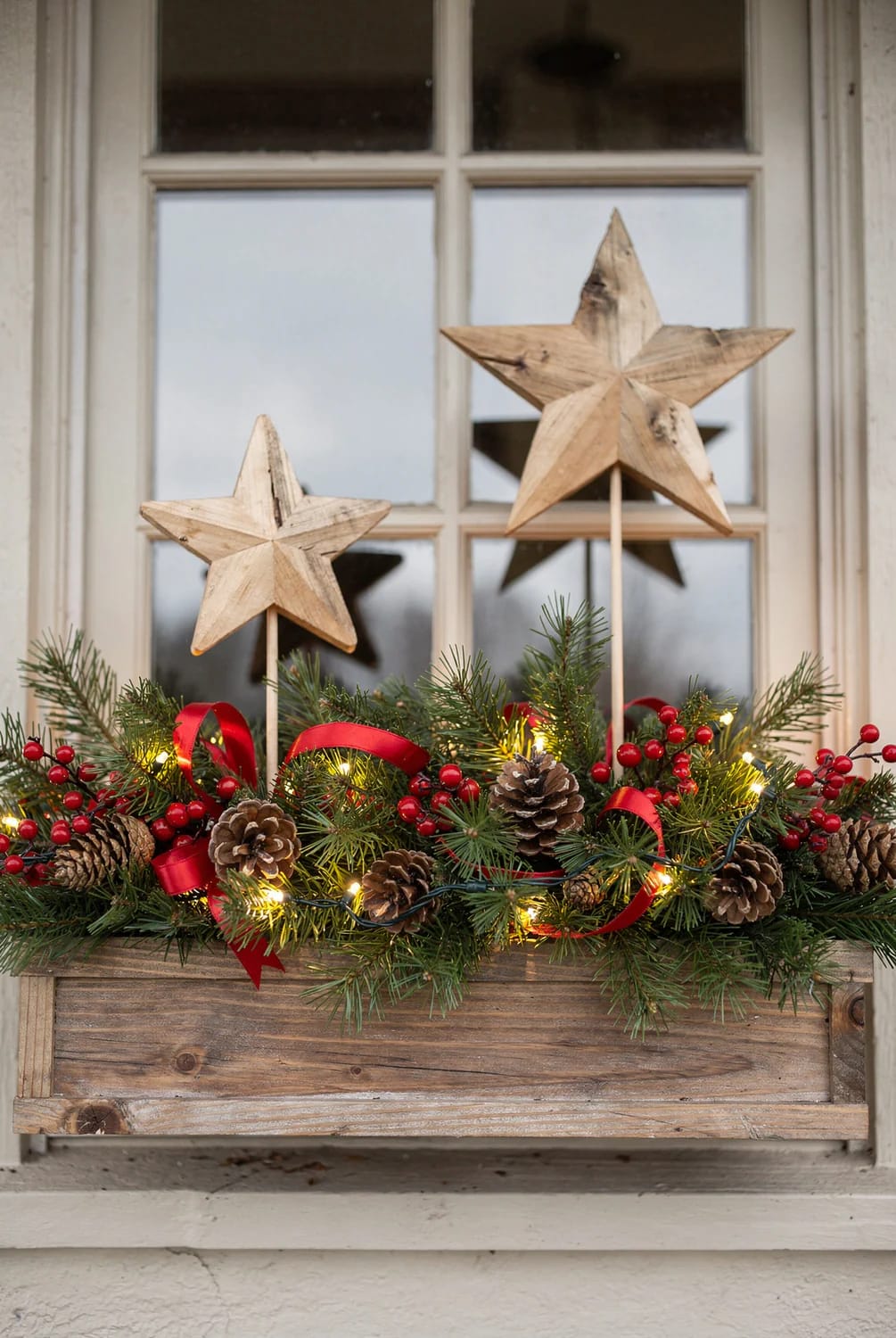
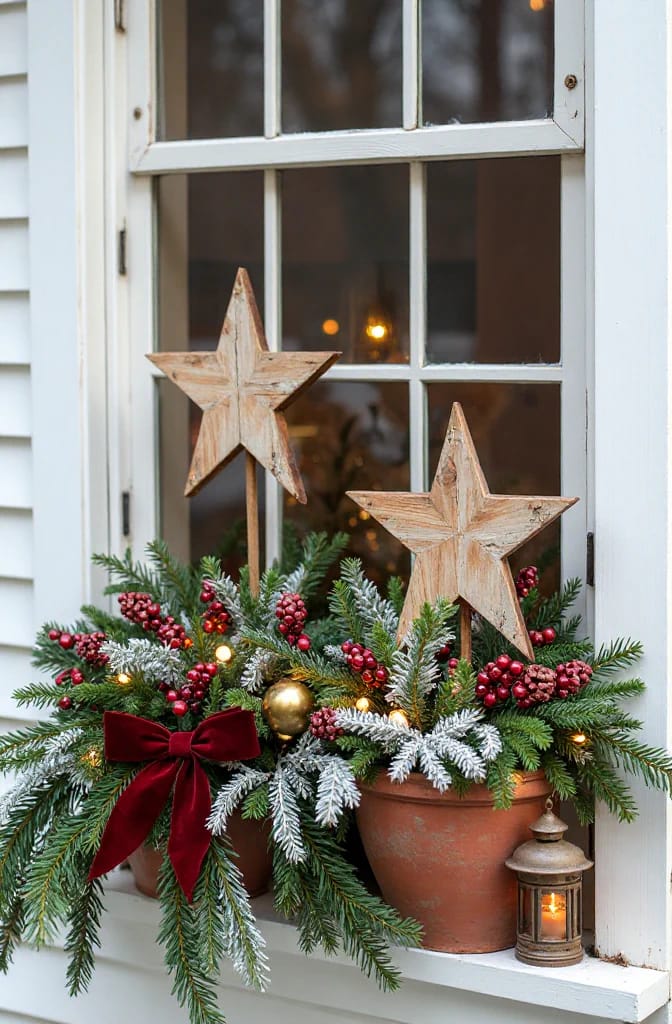
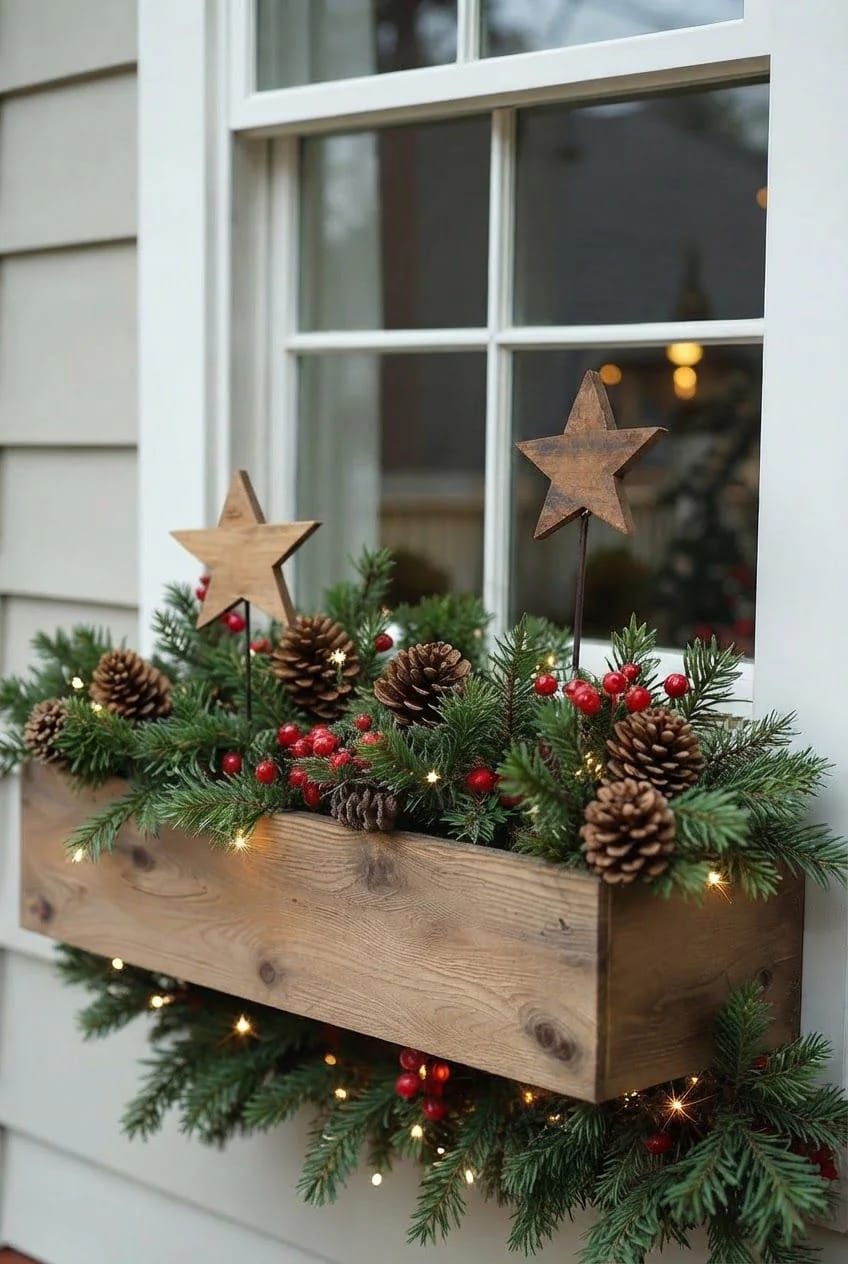
Two stars at the same height read as a pair of ornaments. Two at different heights read as a composition. That is the whole idea, and it takes ten minutes with a jigsaw and a length of scrap pine.
Leave them unfinished. A raw pine star greys down over one winter into something that looks weathered rather than new, and it does not compete with the greens the way a painted or glittered version does.
6. On red brick, take the red out of the window box entirely
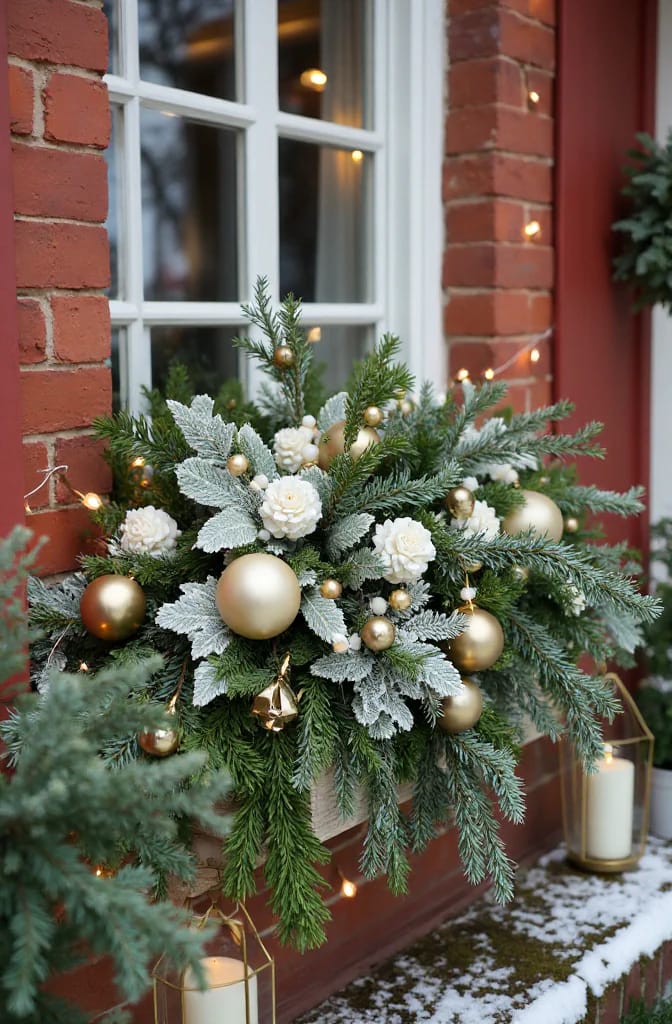
Red decorations on a red brick house cancel out. From the street, the ribbon and the berries and the brick all merge into one warm-toned smear, and the display disappears at exactly the distance you wanted it to work at. Green, white, silver and bare birch give you the contrast the brick is already denying you.
The inverse holds on white or pale grey siding, where red is the only thing with enough weight to punch through, and where a green-on-white box can look underdressed. This restraint-as-the-actual-move approach shows up across a lot of exterior decorating, and the case for doing less on a modern facade makes the argument at whole-house scale.
7. Bury the lights inside the greenery instead of draping them across the front
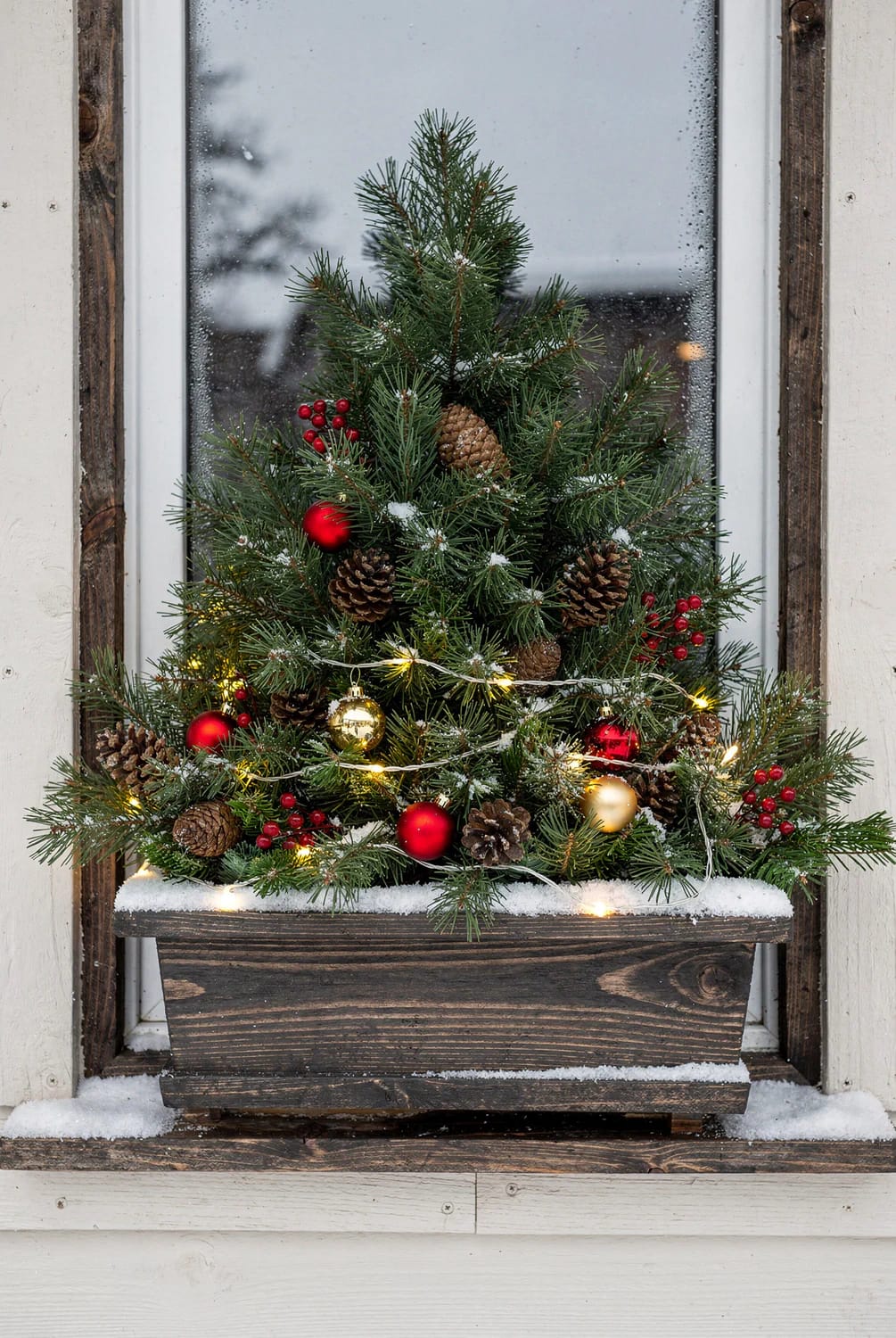
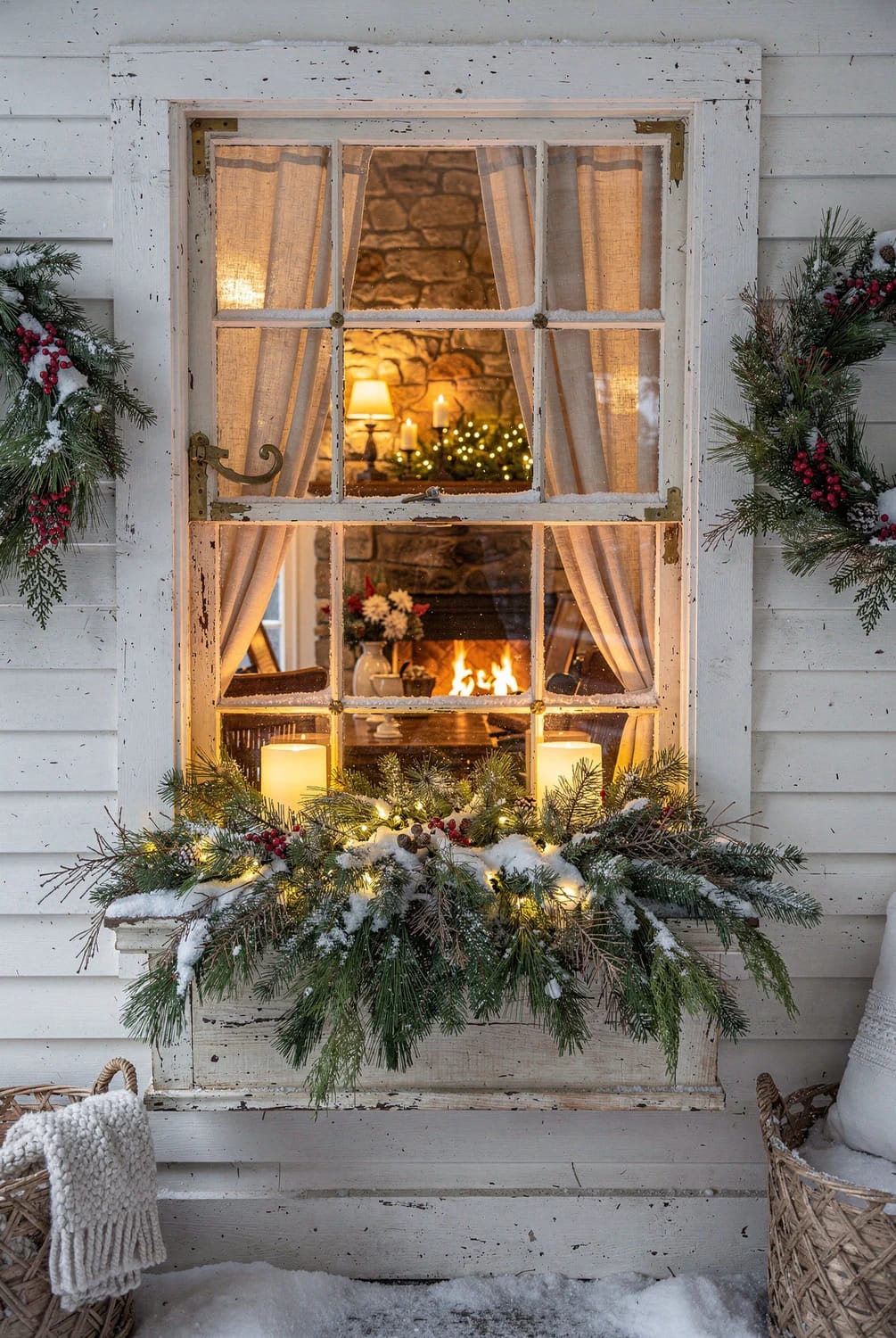
Lights laid over the top of a window box read as a light strand sitting on a plant. Lights pushed down into the greenery, so only the points glow through the needles, read as a lit window box. It is the same strand and a completely different result, and it takes about five extra minutes per box.
Warm white, or nothing
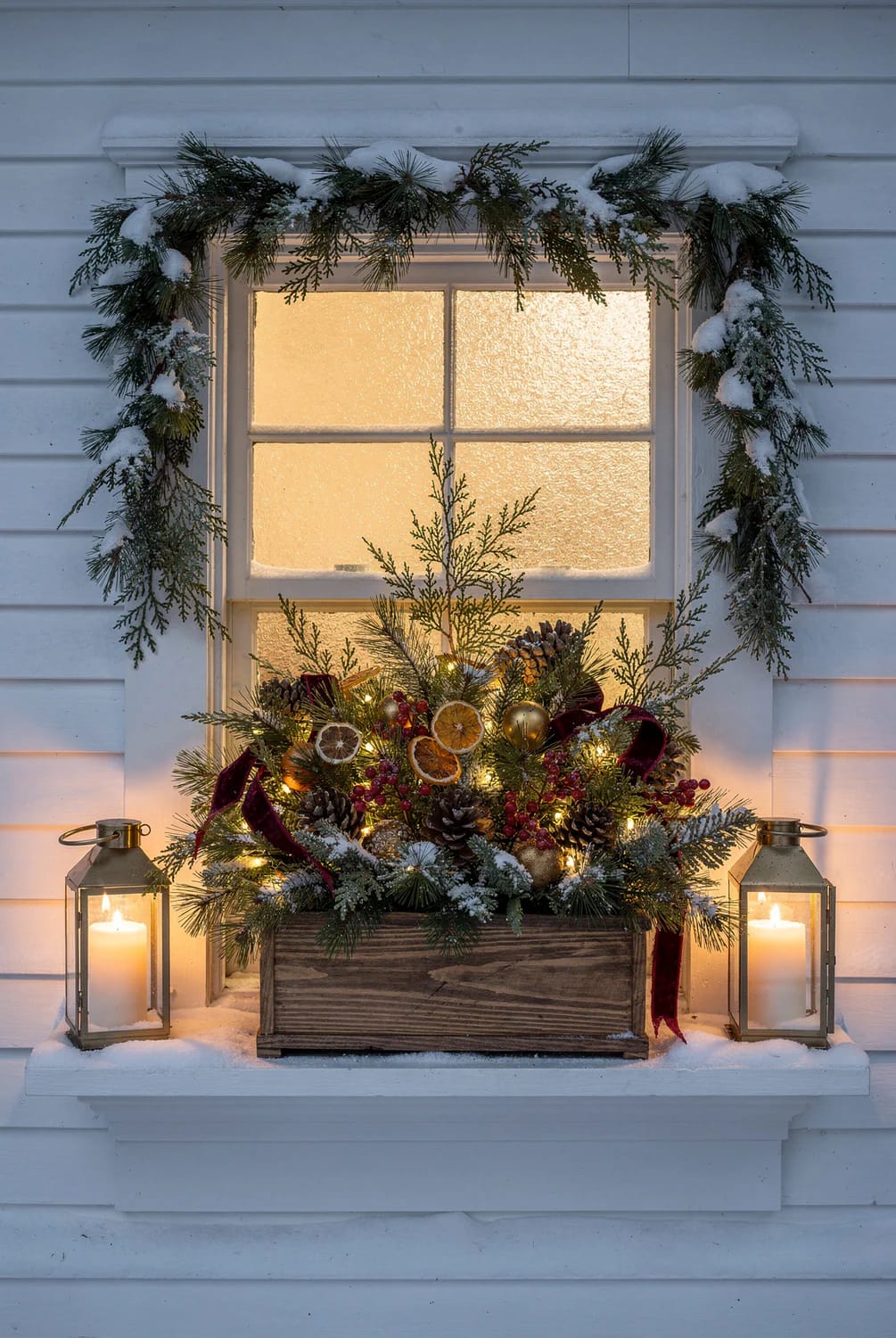
Mixing colour temperatures across two windows on the same wall is the most common and most visible error. Pick one warm white and stay with it. A 36-foot strand with an IP65 battery housing gives you enough length to weave through a standard box twice, which is what you want for that buried effect.
A set like the koopower 36ft 100-LED battery fairy lights with timer and IP65 waterproof housing covers one long box with slack to spare, and the sealed battery case is the part that matters outdoors.
Where the battery box goes
Under the greenery, on top of the soil, propped on a stone so it is not sitting in meltwater. Never buried in the soil itself, which is where they die.
The cold is the real enemy, not the damp
Alkaline AA cells lose a large share of their usable capacity once the temperature drops below freezing, which is why a strand that ran for weeks in October gives up after four nights in January. Lithium primary AAs cost more per cell and hold their output far lower down the scale. Swap them in December and you will not be back out there in the sleet with a screwdriver.
Three things kill a lit window box, and none of them is the strand itself. Meltwater pooling in an unsealed battery compartment corrodes the contacts within a week. Extension cords run to a mains strand through a window frame hold the sash open a quarter inch all season and ice the frame shut. And an unsecured strand whipping in wind will saw through fine copper wire against a bracket edge in one storm. Tie the strand to a stem with a twist of florist wire at both ends before you walk away.
 Outdoor Christmas Light Ideas for Rooflines and Trees That Actually Look Designed How to get the rest of the house agreeing with the warm white you just committed to.
8. Faux snow belongs on the box lip and the sill, not on the greenery
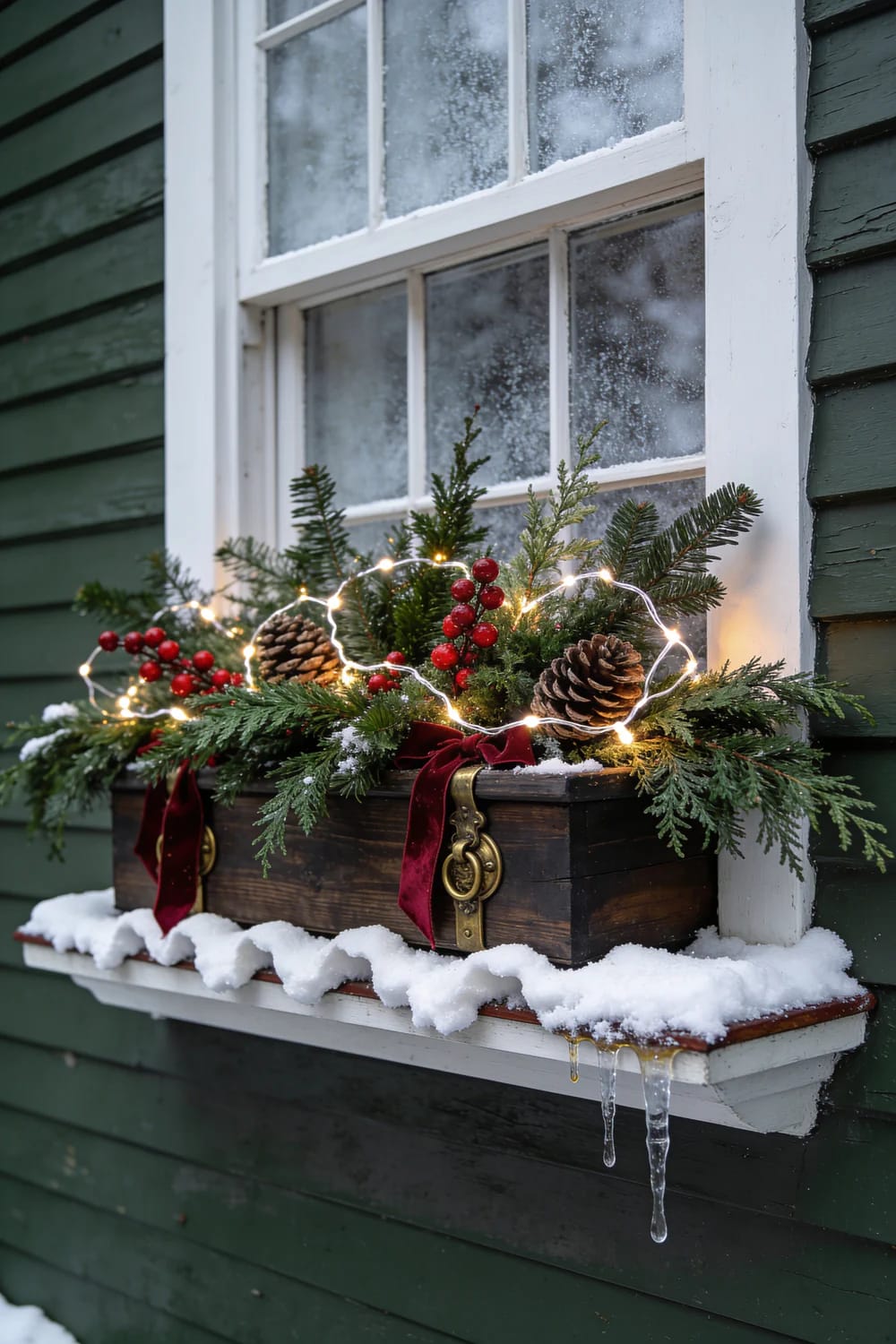
Sprayed over the greenery, faux snow reads as dust. Laid along the horizontal surfaces where actual snow would settle, it reads as snow. Give the drift an uneven edge, thicker at one end, and stop before you have covered the whole lip.
Glass or acrylic icicle ornaments hung from the underside of the box lip do the same work in the opposite direction, and they catch what little light a December afternoon gives you. The stencil-and-flocking techniques that apply to the glass above the box, including the distance question that ruins most attempts, are covered in this piece on faux snow and stencils on window glass.
9. One nutcracker or one lantern per window, and nothing else on that sill
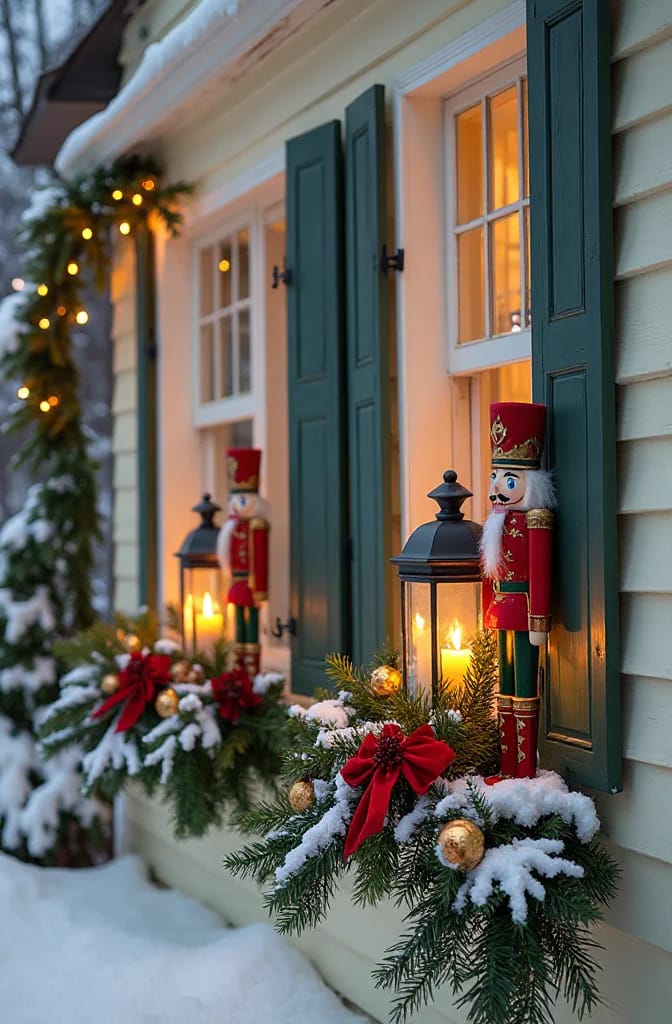
Figures on a sill are the part of this that most often goes wrong, because they multiply. One nutcracker is a decision. Four nutcrackers and a resin snowman is a shelf. Keep it to one object per window and let the empty stone on either side do the framing.
10. Dried citrus, pinecones and hydrangea heads for a window box with no greenery in it
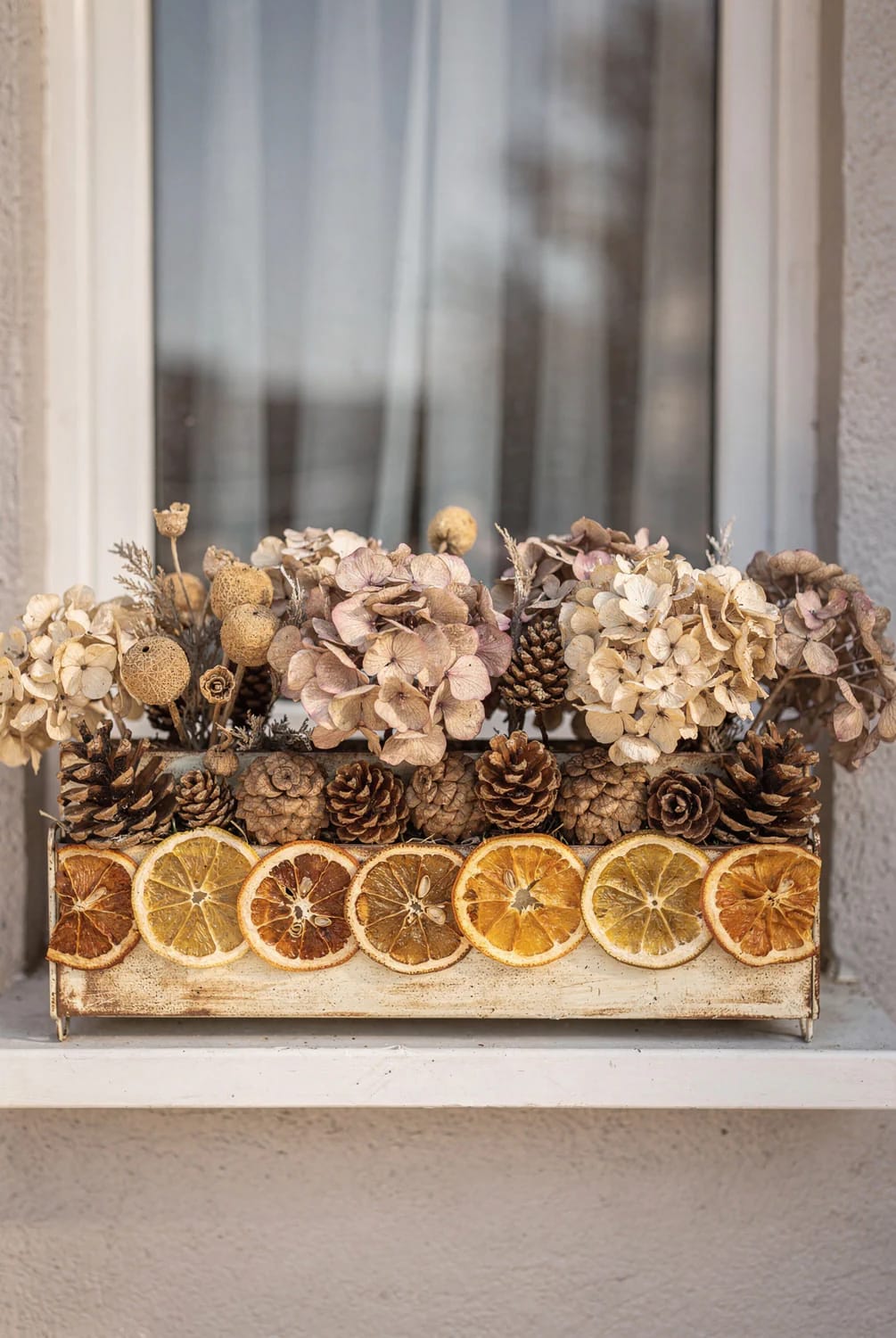
Cut greens are a recurring cost every single year, and in some regions they are genuinely hard to get before mid-December. A box built from dried material costs almost nothing after the first season, packs flat in a shoebox, and comes out again next November.
Drying citrus so it doesn't go to mush
Slice oranges to about a quarter inch, blot both faces hard, and dry at the lowest oven setting your range will hold, usually around 175 to 200°F, for four to six hours with the door cracked. Thicker slices trap moisture and go leathery and dark; thinner ones scorch at the edges. They will soften in a wet week outdoors regardless, so treat them as a one-season material.
Pinecones open and close with the weather
This catches people out. A pinecone that looks full and open on a dry afternoon will close up tight after two days of rain, and the box visibly loses volume. Use more than you think you need, and put the largest ones at the front where the change matters least.
11. Run plaid ribbon as one long band down the box front instead of tying bows
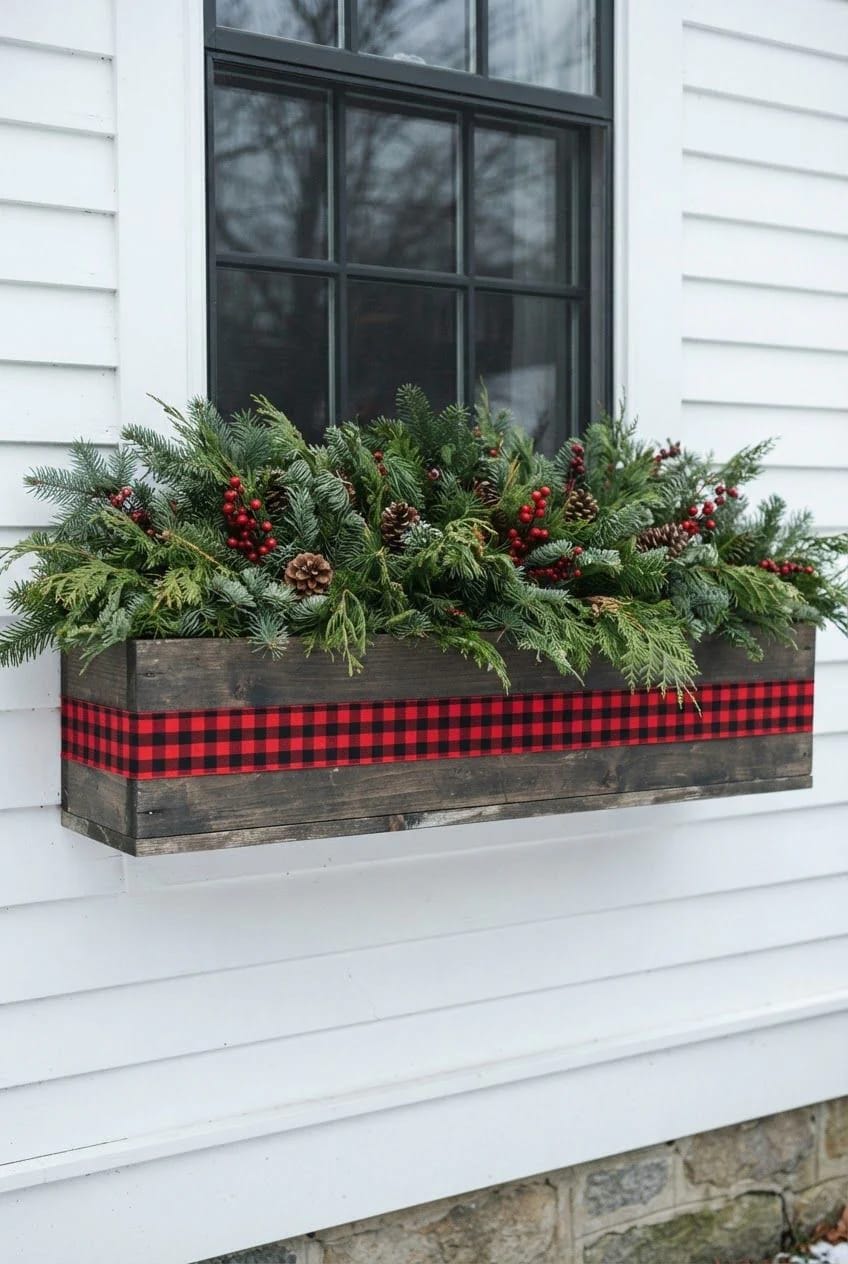
A bow on a window box is at the wrong scale for the distance it is viewed from. At thirty feet a bow becomes a blob; a two-and-a-half-inch band of buffalo check running the full width of the box stays legible as pattern. Staple or wire it at both ends behind the box returns so the fixings never show.
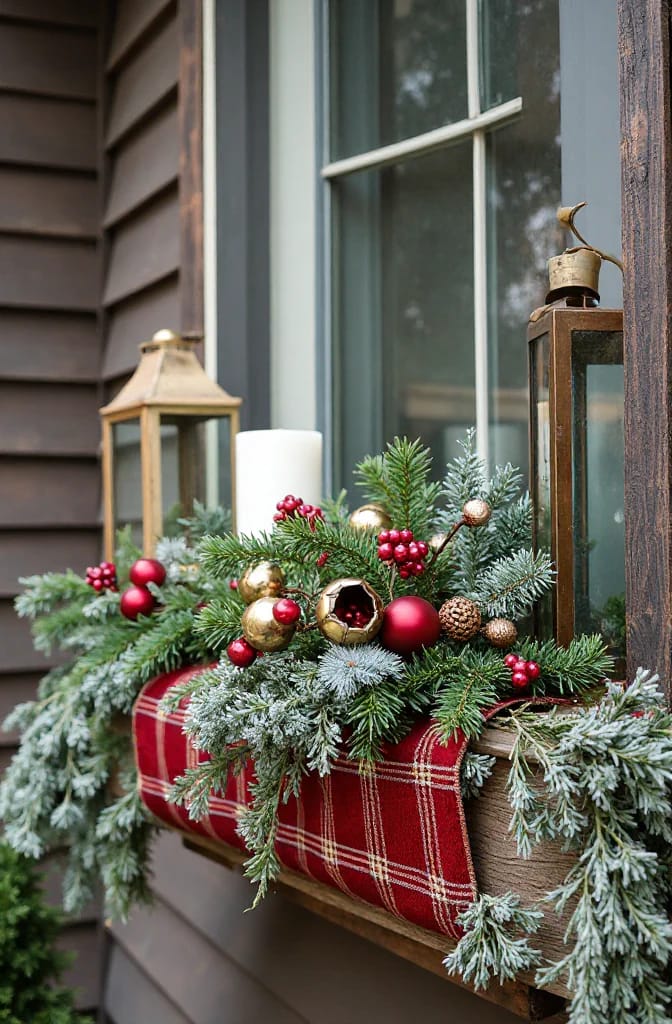
Material matters more than pattern here. Paper-backed burlap ribbon wicks water, sags within a week and grows a fringe of mould at the fold; a waterproof polyester like Royal Imports 2.5-inch wired buffalo check ribbon in black and red holds its colour through rain because the dye does not run when it is soaked.
Do this
- Pull the band tight enough that wind cannot get behind it
- Match the ribbon width to the box height, roughly one to three
- Let the greenery overlap the ribbon’s top edge by an inch or two, so it looks integrated rather than applied afterwards
Avoid
- Glitter-coated ribbon, which sheds in the first rain and looks grey by week two
- Tails. On a horizontal box they just flap.
12. Swap the red for silver and blue in the first week of January
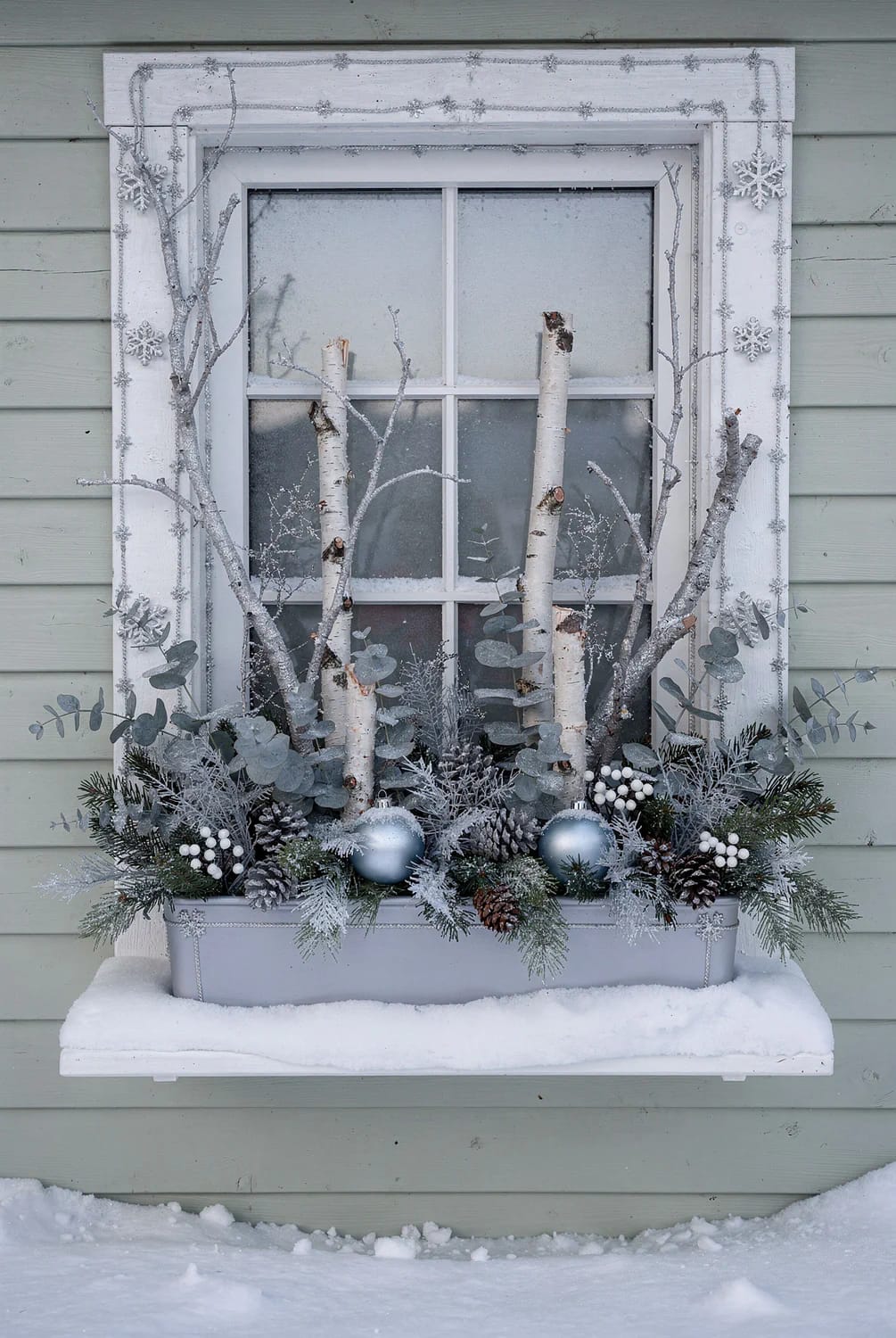
The fir, the birch and the pinecones are all still fine on January 3rd. The plaid, the red berries and the nutcracker are not. Pulling the four or five explicitly festive elements and dropping in something cool-toned buys you six more weeks out of an arrangement you have already built, and it is why the winter version of this outperforms the Christmas version on a house that gets looked at all season.
Live hardy material carries the transition better than anything cut. A dwarf conifer, a couple of heuchera in bronze or plum, and trailing ivy will sit happily in a window box down to well below freezing and be there in March when you want to plant it out. The same logic applies to the glass above the box, where a broader set of window treatments for the season includes several that are not date-stamped to December at all.
If you only do two things from this list, do the third-height overhang in section one and the buried lights in section seven. Those are the two that change how a window box reads from the street, and everything else on this page is decoration sitting on top of them.
Related Posts
- 15 Easter Home Decor for Window Sills That Feels Fresh and Festive
- 25 Best Christmas Window Decor Ideas to Try This Year
- Farmhouse Christmas Kitchen Decor Ideas That Survive an Actual December
- Front Door Christmas Decorations With Fresh Greenery: 11 Ideas That Look Intentional and Last the Season
- 12 DIY Outdoor Christmas Decorations on a Budget That Survive a Real Winter
- 18 Creative Outdoor Christmas Decor Ideas For 2025