
Ever feel like your sewing room is one tangled mess of threads and fabric scraps? You’re not alone.
Even a creative genius can lose valuable minutes hunting for that one elusive pair of scissors or the right shade of thread.
Getting your sewing space in order doesn’t need to be an endless struggle. With a few clever tricks, you can turn clutter into calm.
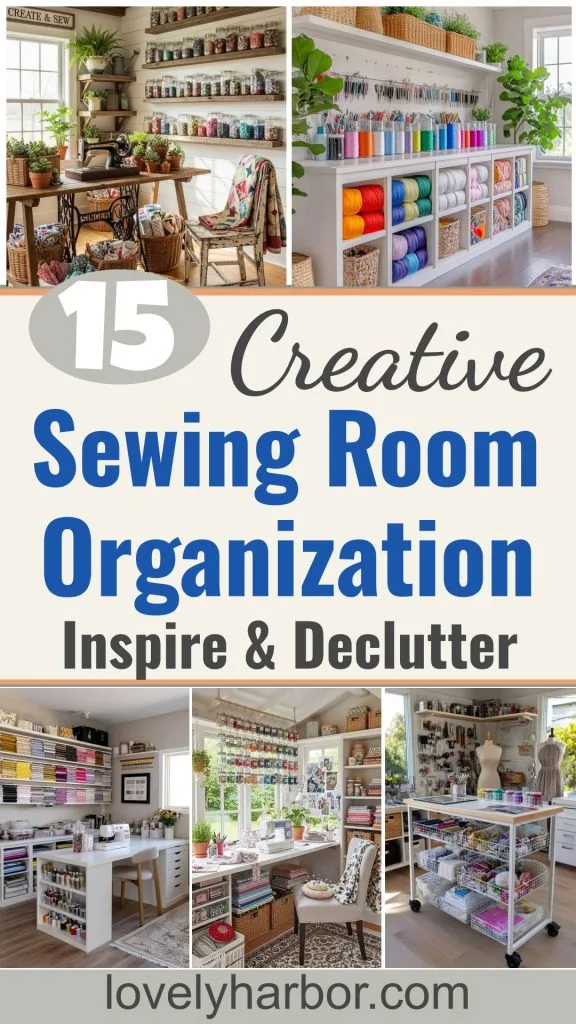
Ready to make every stitch count and find joy in your workspace? Let’s get sorting!
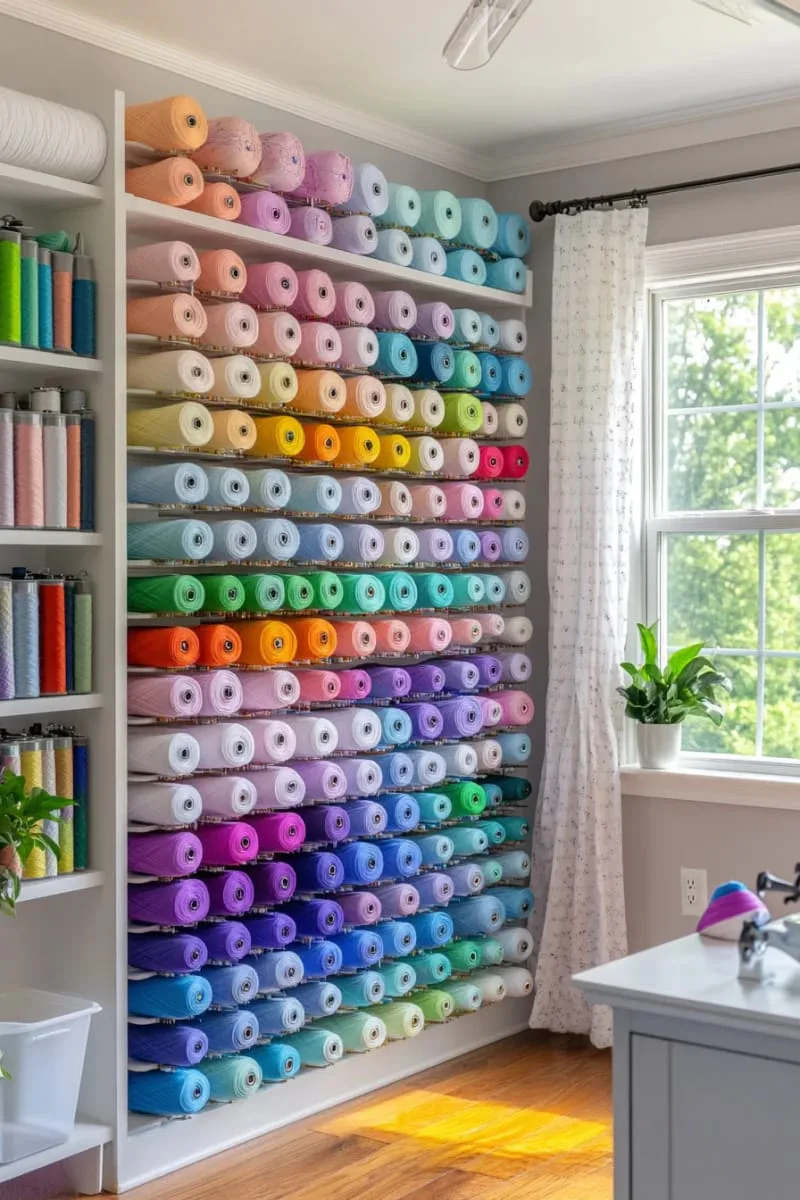
1. Rainbow-thread wall display using floating acrylic shelves for instant color-coded inspiration
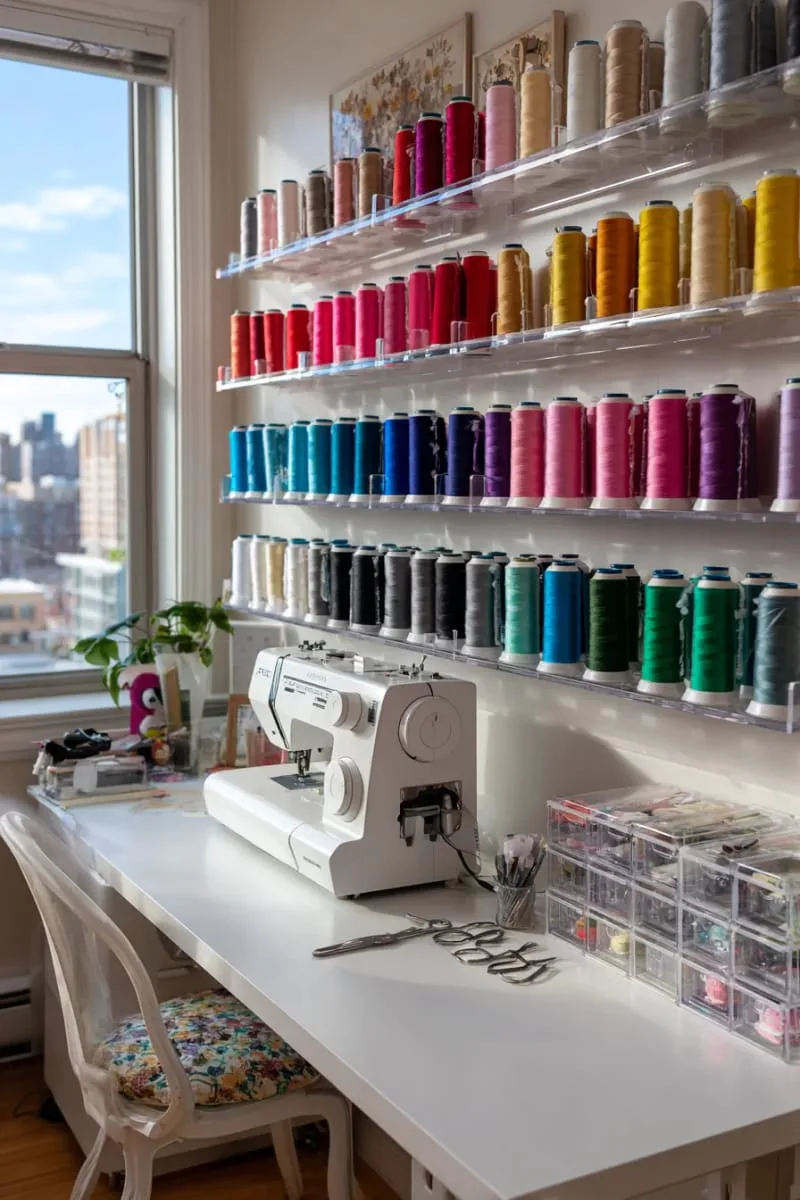
Ever stare at tangled thread spools and wish for a change? Floating acrylic shelves make your wall a living palette. Arrange threads by color, and you instantly turn chaos into a spectrum.
It’s like having a rainbow on standby, quickly spot what you need and spark creativity every time you walk in.
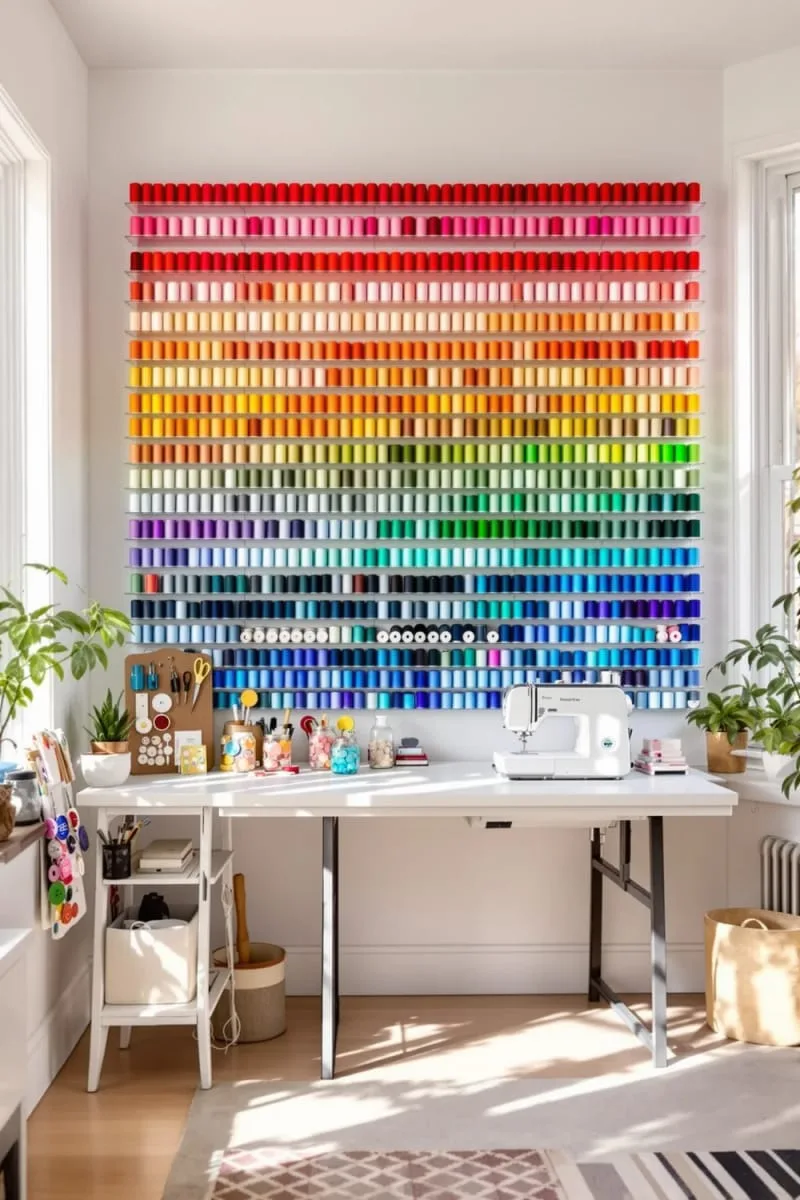


This setup isn’t just pretty; it’s practical. Clear shelves keep dust at bay and let you see every shade. Installation is simple with a level and a drill.


One downside: sunlight can fade thread over time, so pick a spot away from direct rays. Still, you’ll wonder how you managed before.
2. Pegboard tool wall with labeled hooks for scissors, rulers, and rotary cutters
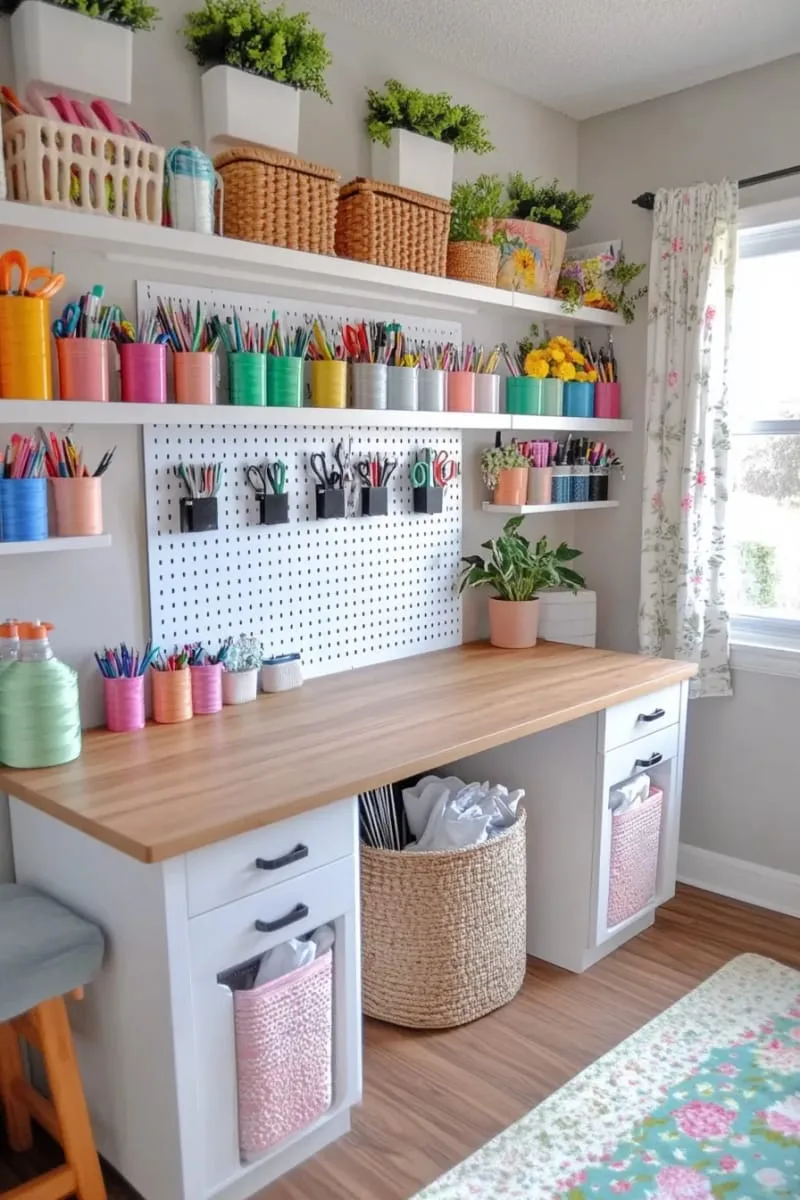
Think your sewing tools deserve more than a tangled drawer? A pegboard wall with labeled hooks brings order to chaos. Hang scissors, rulers, and rotary cutters in plain view.
You’ll save time hunting for supplies, and those labels stop the “where’d I put that?” routine cold.
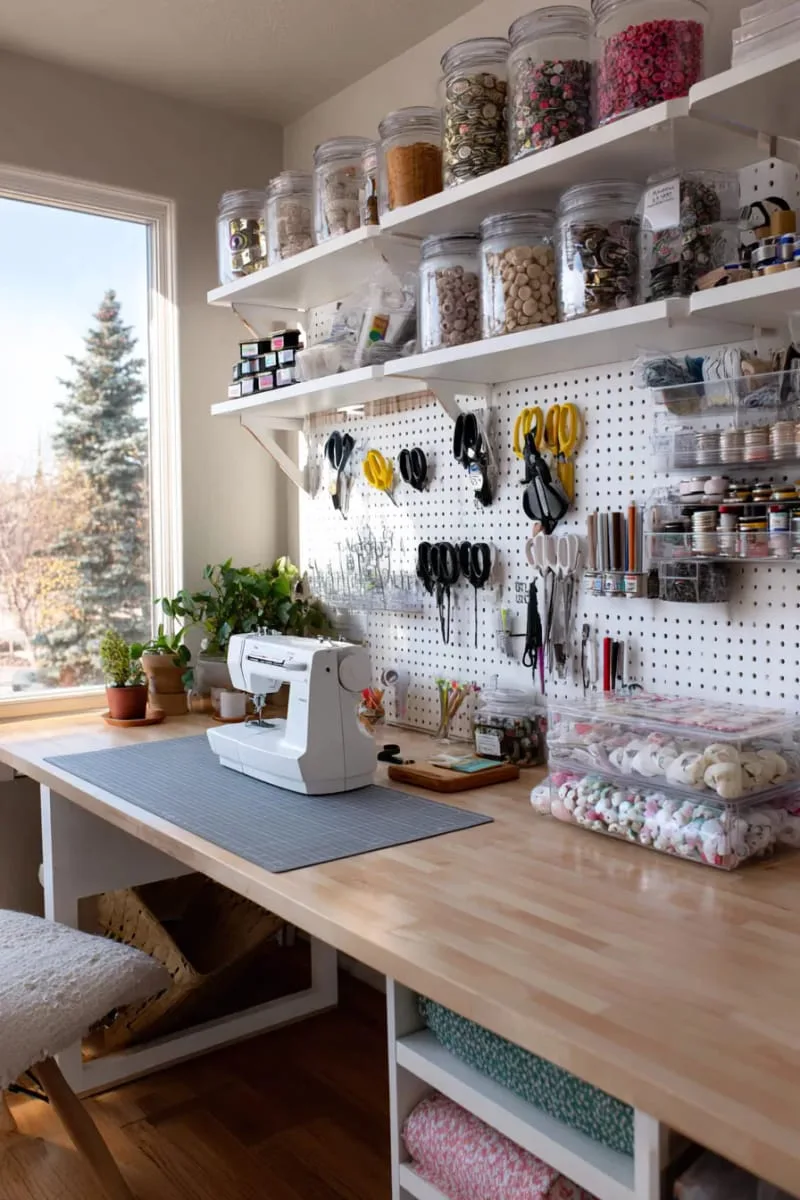
Some worry pegboards look cluttered, but a simple arrangement and clear labels keep things tidy. Start with the tools you use daily. Place them within easy reach. Adjust hooks as your needs change.


This system helps you sew smarter and keeps your workspace inviting, not overwhelming.
3. Repurposed IKEA Kallax cubes for fabric stacks and vintage basket storage
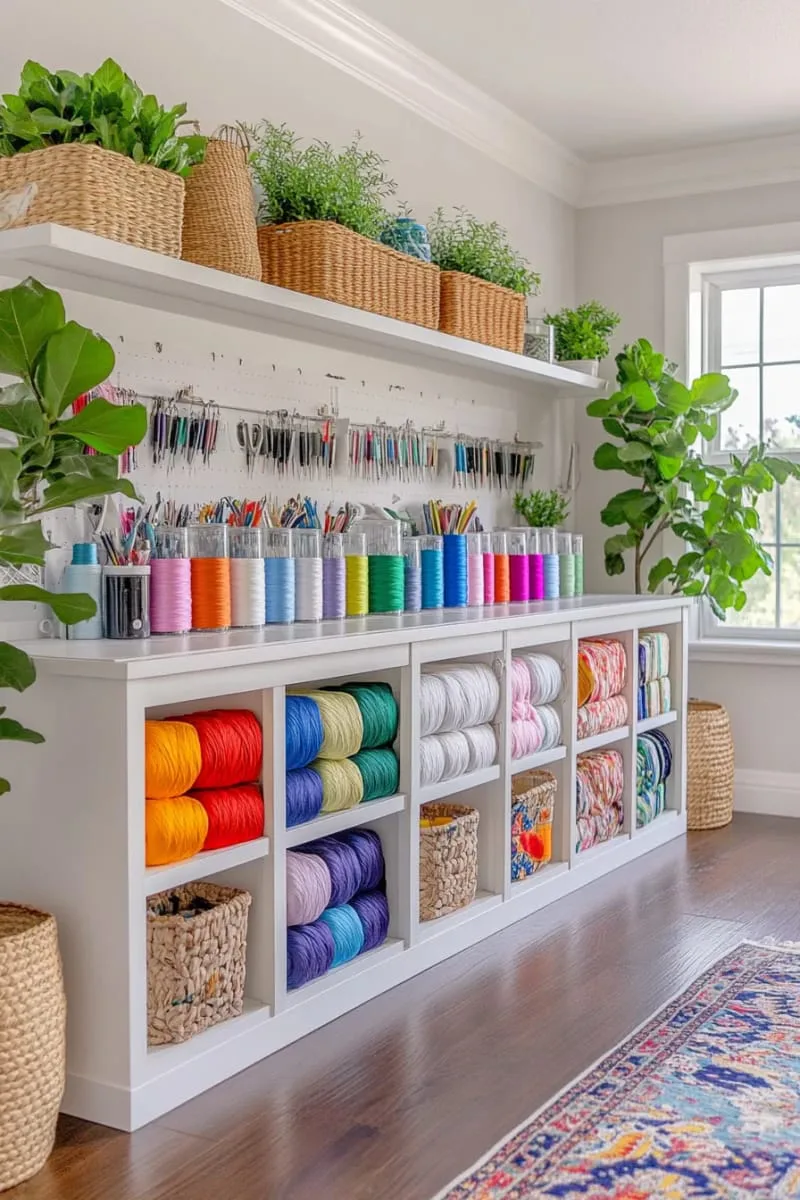
Many sewists swear by IKEA Kallax cubes for fabric storage. These simple shelves become game changers when repurposed horizontally. Stack fabric in color-coded piles for instant visibility.
Add a dash of nostalgia with vintage baskets in empty cubes, perfect for stashing ribbons, zippers, or oddly-shaped notions.
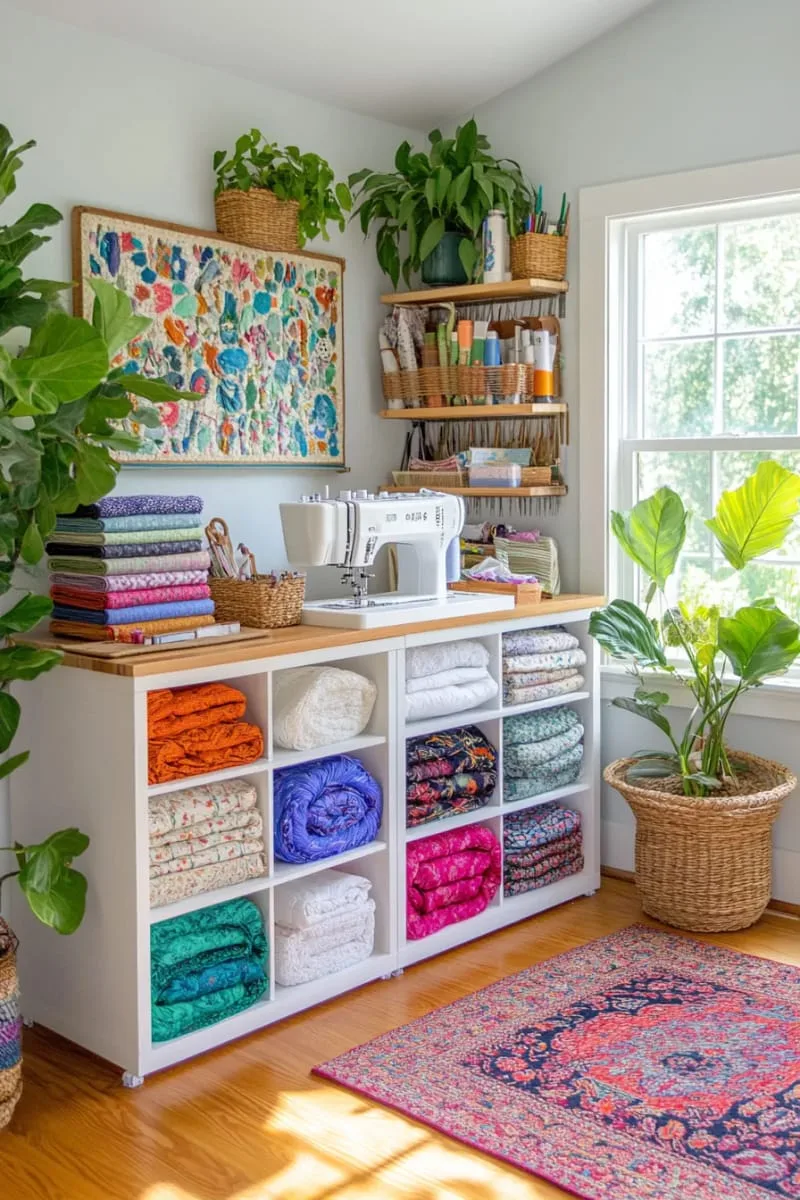
Mixing modern cubes and old baskets brings both order and charm. Need to swap a basket for a box? Easy. The system adapts as your collection grows or shrinks.


One caution: open cubes can gather dust, so rotate fabric and dust often. This approach keeps your supplies neat and your space inviting.
4. Fold-down wall-mounted cutting station with hidden linen closet behind
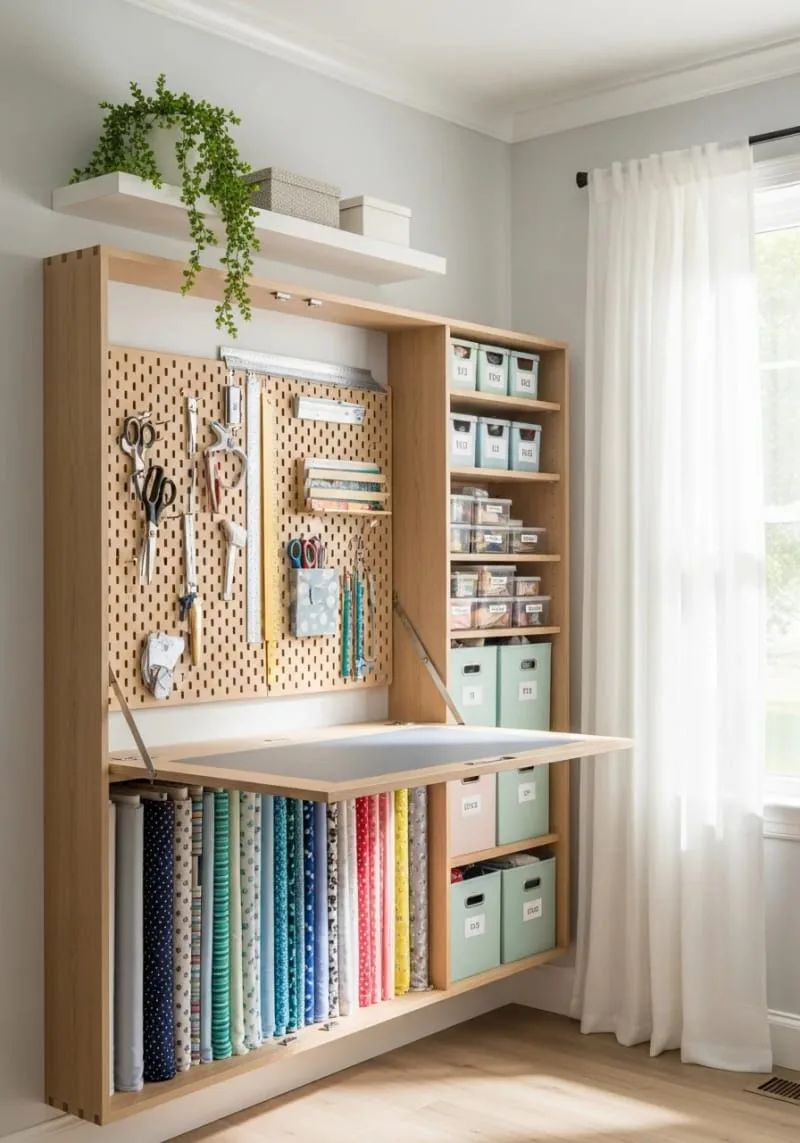
Imagine a cutting station that folds down from the wall, saving precious floor space and vanishing when you’re done.
This clever setup keeps your sewing area open and welcoming, while still offering a sturdy surface for fabric work. It’s a real game-changer for tight or shared rooms.
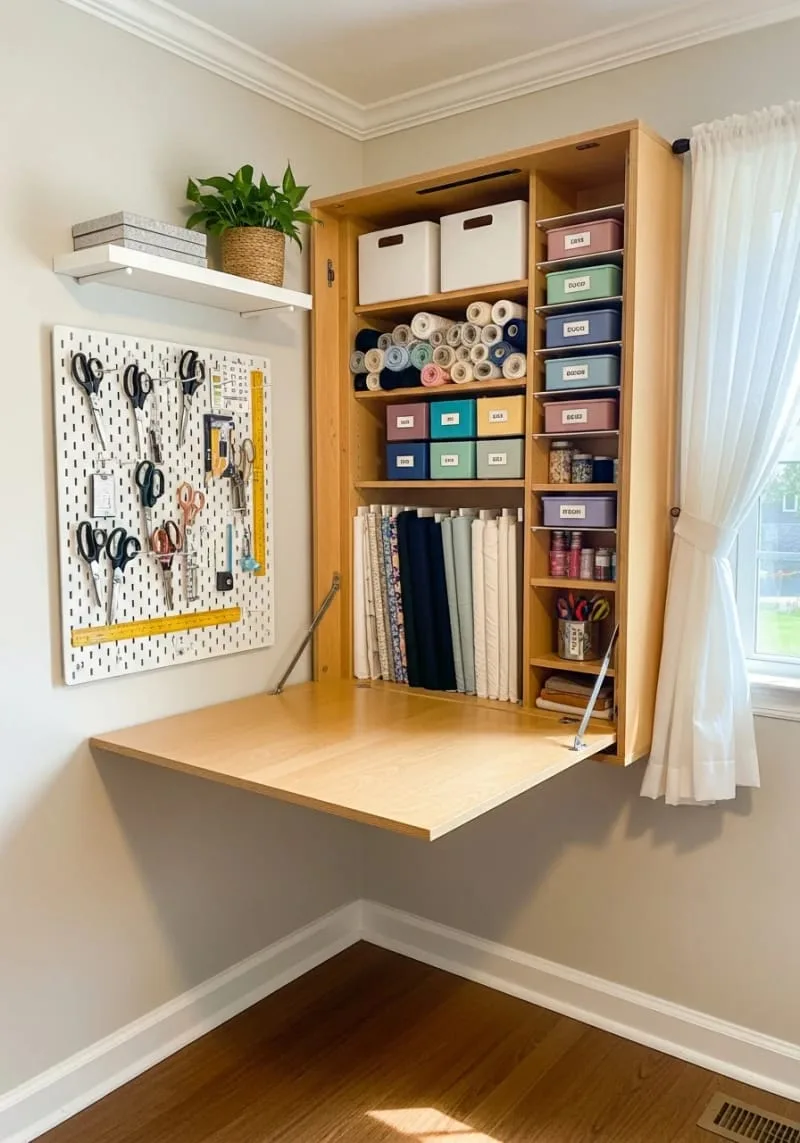
Hidden behind the cutting station, a linen closet keeps fabric bolts, batting, or finished projects neatly tucked away. No more tripping over piles or hunting for that elusive scrap.


If you work in a small space, this solution brings both order and style, though you’ll need basic wall-mounting skills to install it safely.
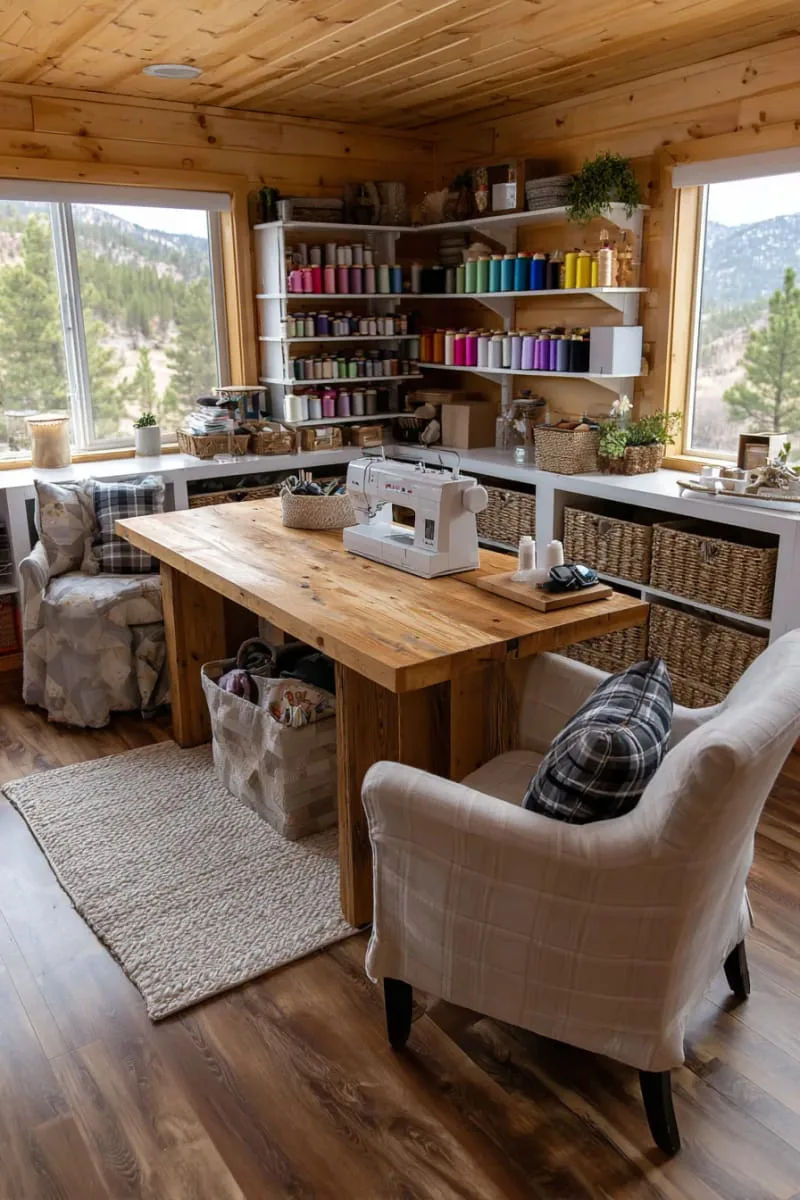
5. Window-side sewing table with hanging mason jar notions rack
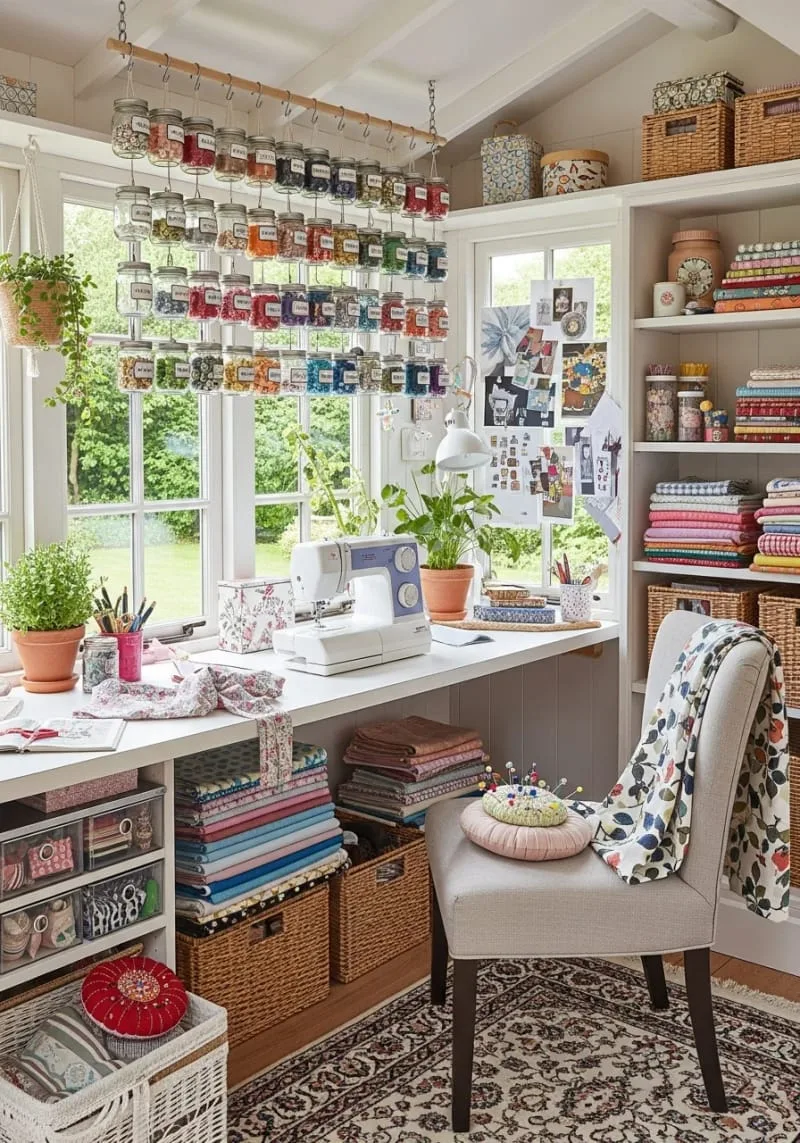
Placing your sewing table beside a window brings natural light right to your workspace. Imagine stitching with sunlight streaming in, reducing eye strain and making color matching a breeze.

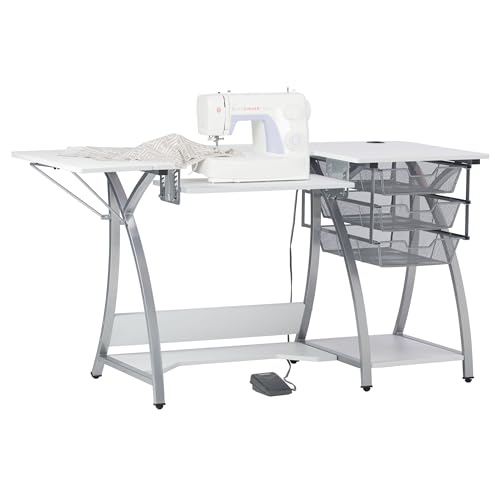
Add a mason jar rack above. Notions, buttons, pins, threads, stay visible and tidy, not buried in some drawer abyss.
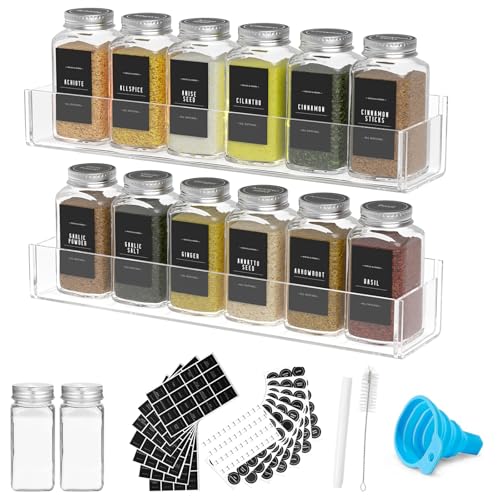
Mounting mason jars on a simple wooden rack keeps supplies easy to grab but out of the way. This setup saves time spent searching, frees up desk space, and just looks downright charming.
The only hiccup? Dust can collect in open jars, so give them a quick wipe now and then.
6. Slim vertical trolley for easy-access bobbin, thread, and pin storage
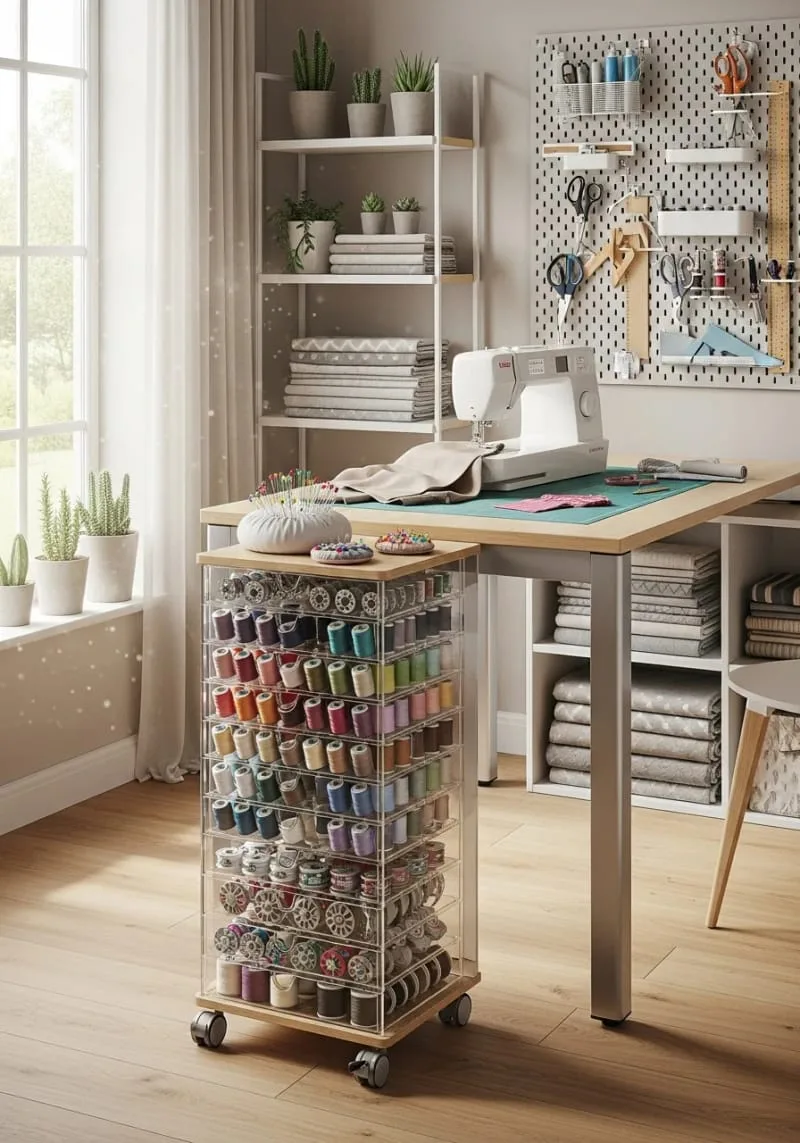
Tired of digging through cluttered drawers for that one spool of thread? A slim vertical trolley keeps essentials like bobbins, pins, and threads upright and visible.
It slides into small spaces and wheels out with a gentle tug. No more wasted time or lost supplies, just grab and sew.
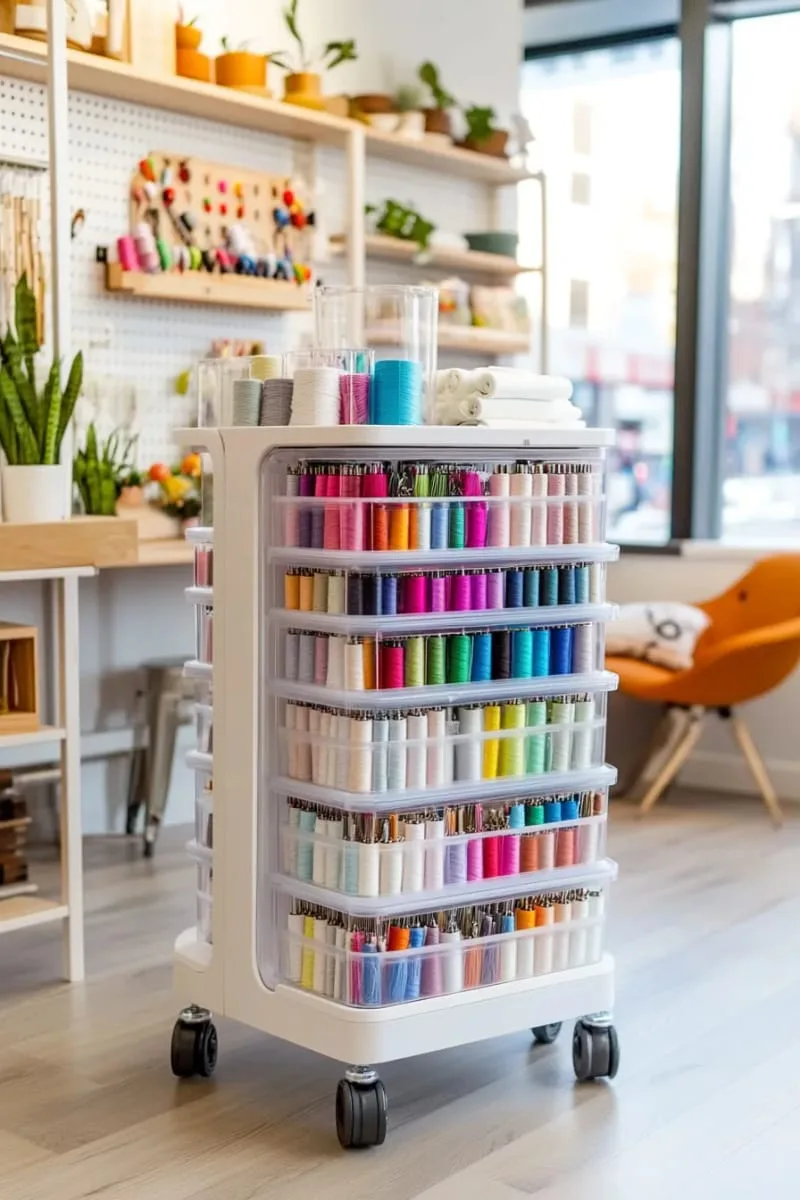
However, smaller trolleys can tip if overloaded or hold fewer items than bulkier cabinets. Consider your supply size and floor space. Choose sturdy wheels and an easy-to-clean surface for the best experience.


With a bit of planning, you’ll wonder how you ever stitched without one.
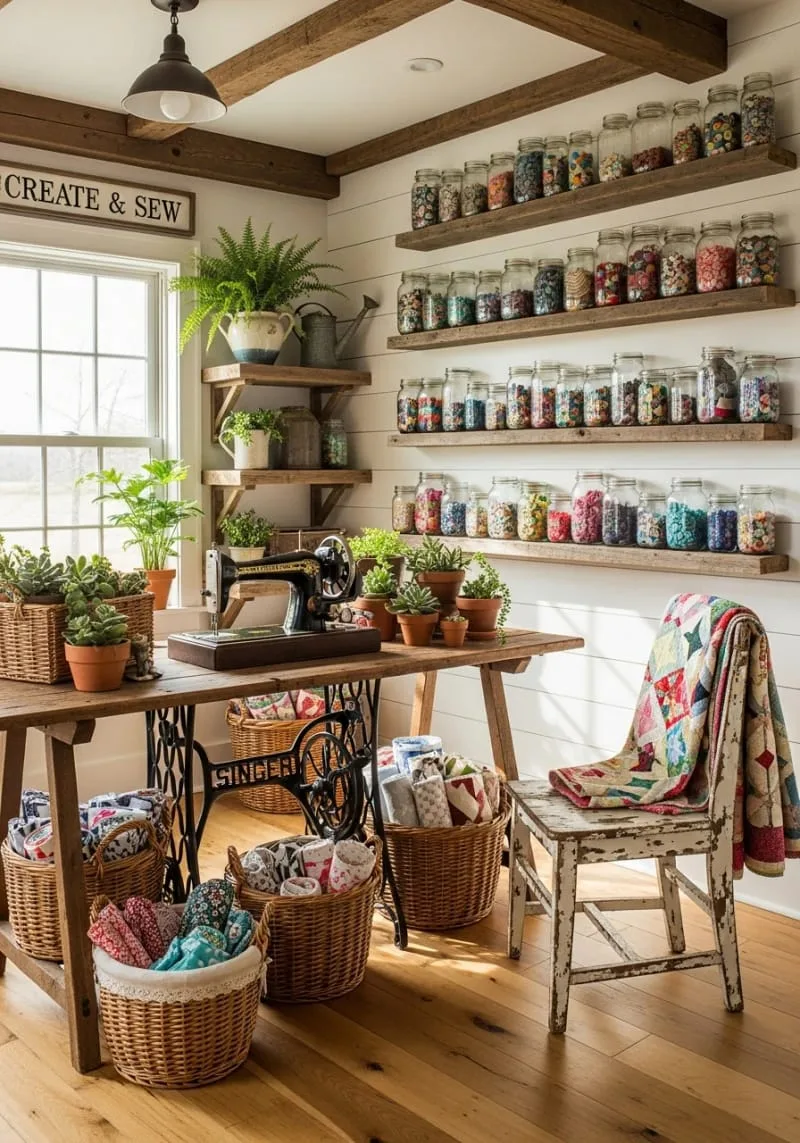
7. Repurposed glass jars on wooden ledges for button and embellishment sorting
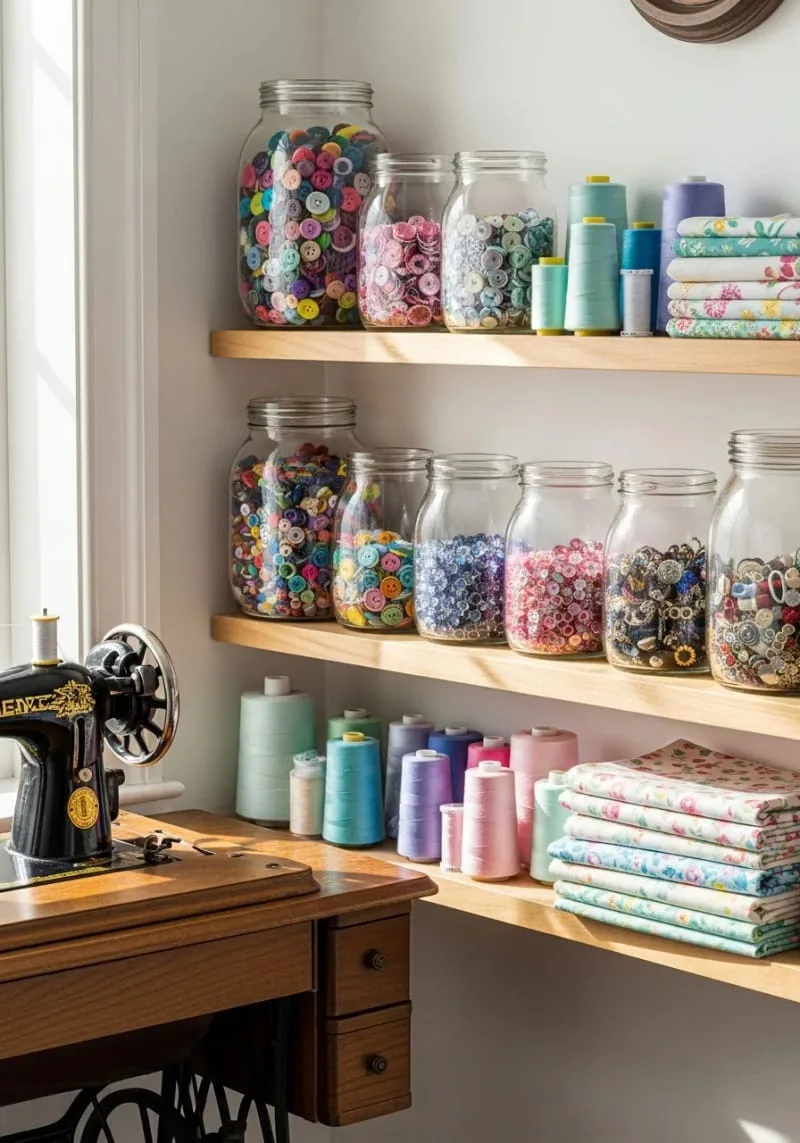
Glass jars, once home to jam or pickles, become ideal storage for buttons or sequins. Place them on wooden ledges within arm’s reach.
You’ll see everything at a glance, so rummaging for that perfect plum button becomes a thing of the past. Plus, it adds vintage charm.
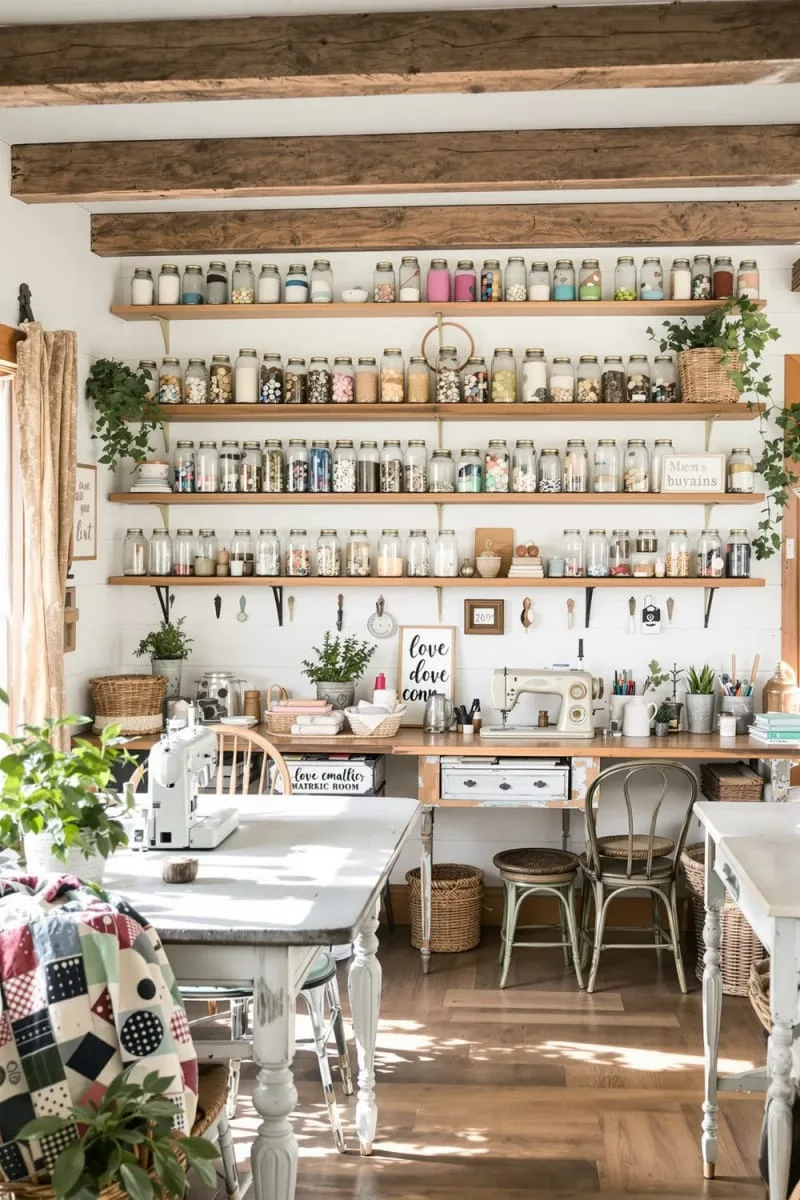
However, beware overcrowding your ledges. Too many jars can look cluttered and make dusting a chore. Keep only the essentials up top and rotate contents by season or project type.


This system works best for sewists who love both order and a touch of nostalgia.
8. Under-desk pull-out fabric bins for concealed yet reachable storage
Tired of tripping over piles of fabric? Under-desk pull-out bins solve this mess. They keep materials hidden but always at your fingertips.
Imagine finishing a project and tucking scraps away with one swift motion. This storage trick saves space and reduces clutter, making your workspace more inviting.
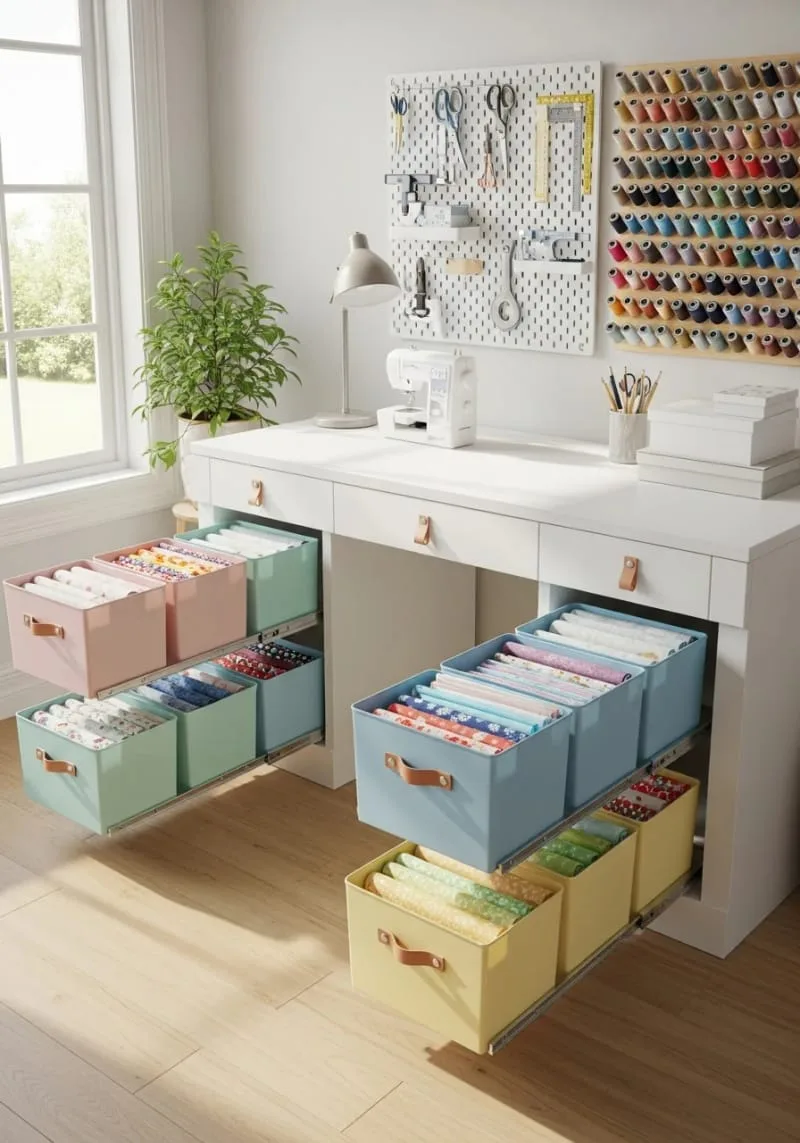
Granted, measuring before installing is vital, no one wants bins that don’t fit or jam. Opt for sturdy rails and bins with smooth glides.


A quick label on the front saves time hunting for that elusive velvet. Sometimes, the simplest solutions are the most satisfying.

9. Magnetic knife bar mounted to hold metal sewing tools and snips
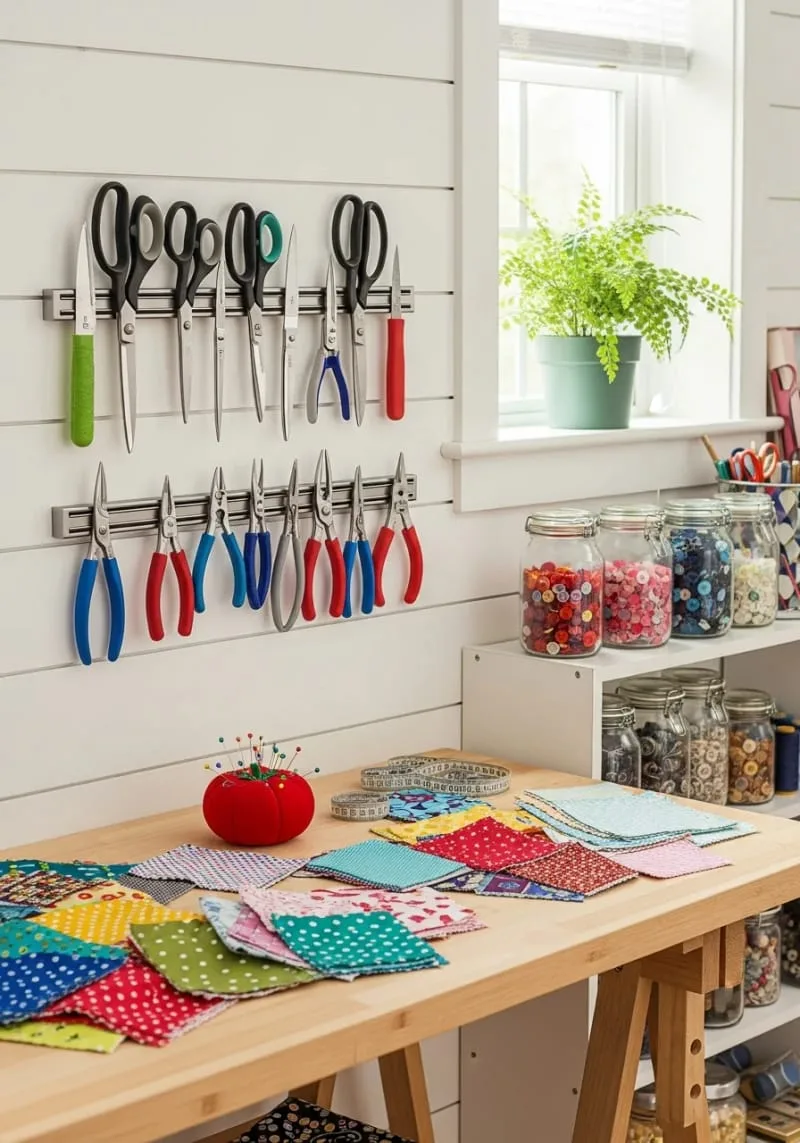
Ever tried rummaging through a cluttered drawer for your favorite snips? Mounting a magnetic knife bar on the wall keeps metal sewing tools visible and within arm’s reach.
With everything displayed, you’ll sew faster and face fewer interruptions. It’s like having a tidy assistant, minus the small talk.
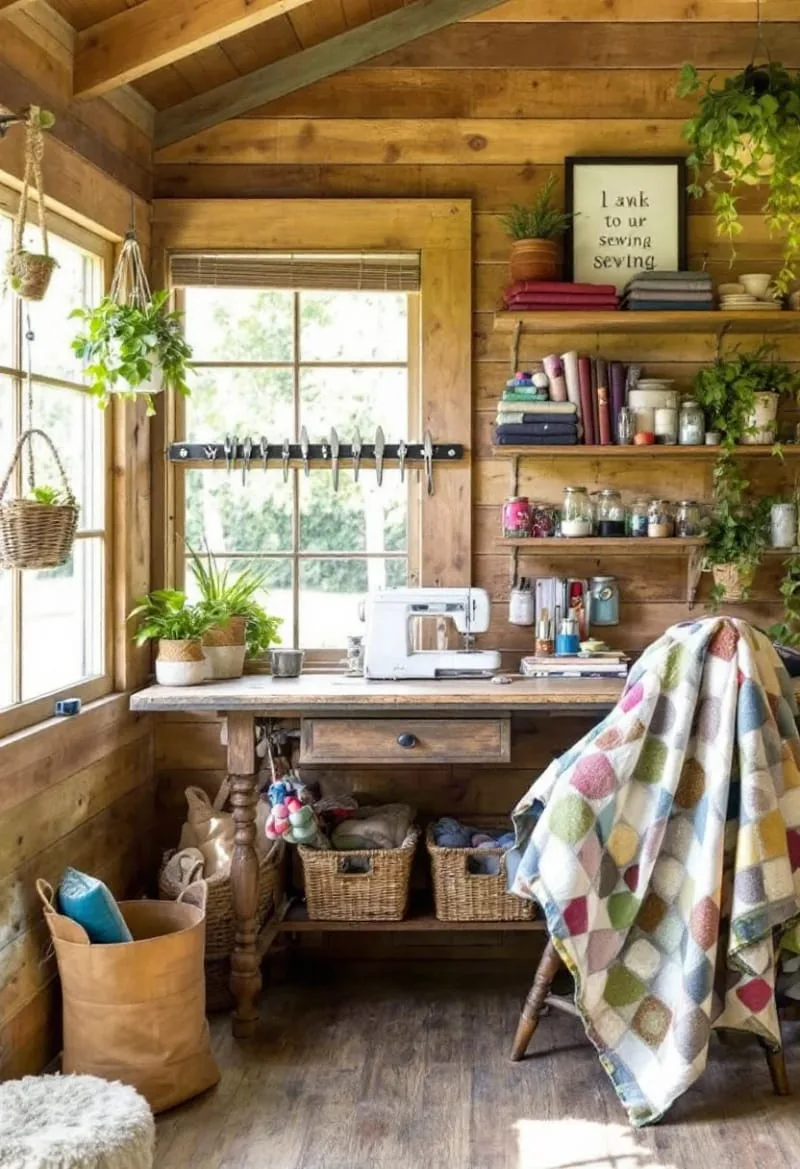
Magnetic bars aren’t perfect for every tool, though. Lightweight items like threaders may not stick well, and plastic-handled tools won’t cling at all.

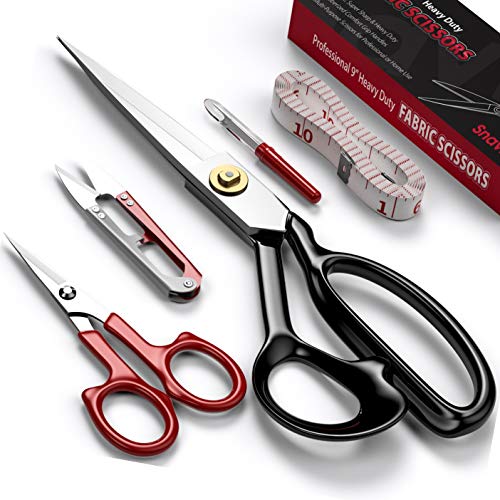
Still, for scissors, tweezers, and seam rippers, this setup beats any jar or basket. Give it a try, you might finally stop losing those tiny embroidery scissors.
10. Hanging fabric swatch banners for quick color-matching and decor
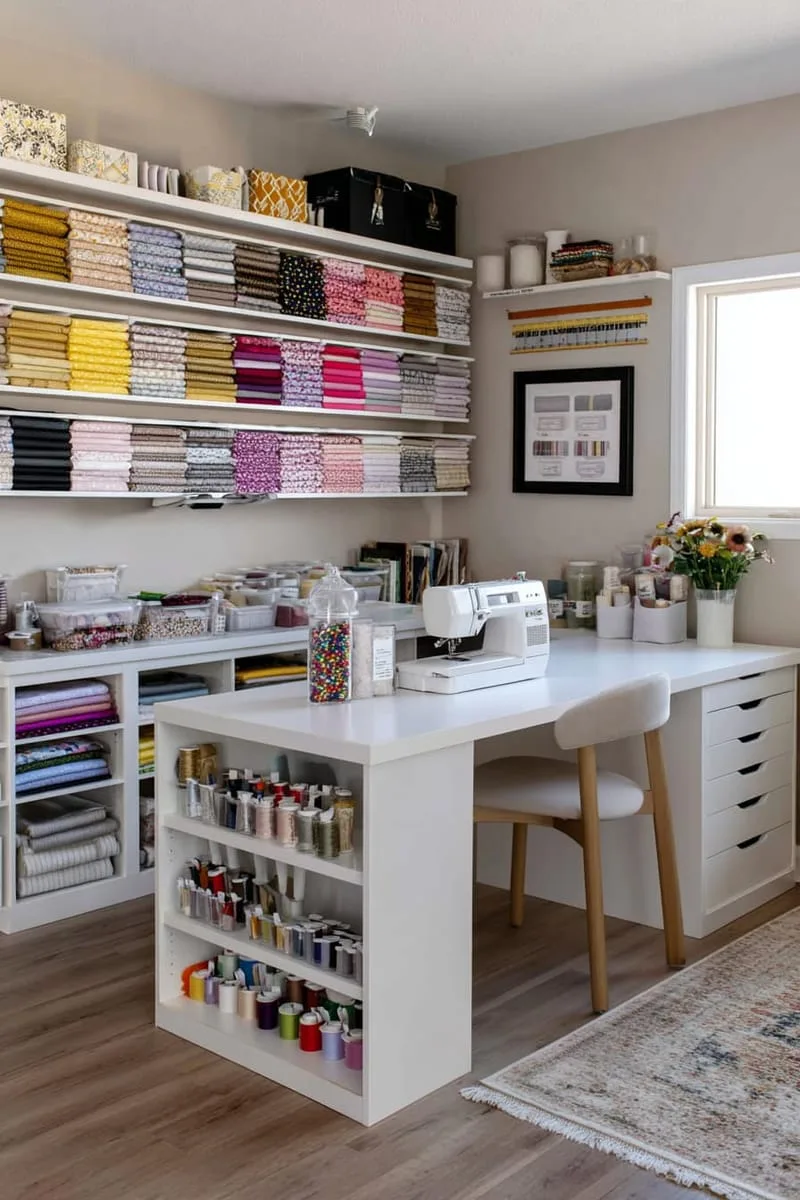
Fabric swatch banners are simple but make a real difference. Hang rows of small, labeled fabric pieces near your work area.
When you need to match colors, just glance up, no more rummaging through bins or unrolling bolts. It’s handy, and your space suddenly looks more inviting.
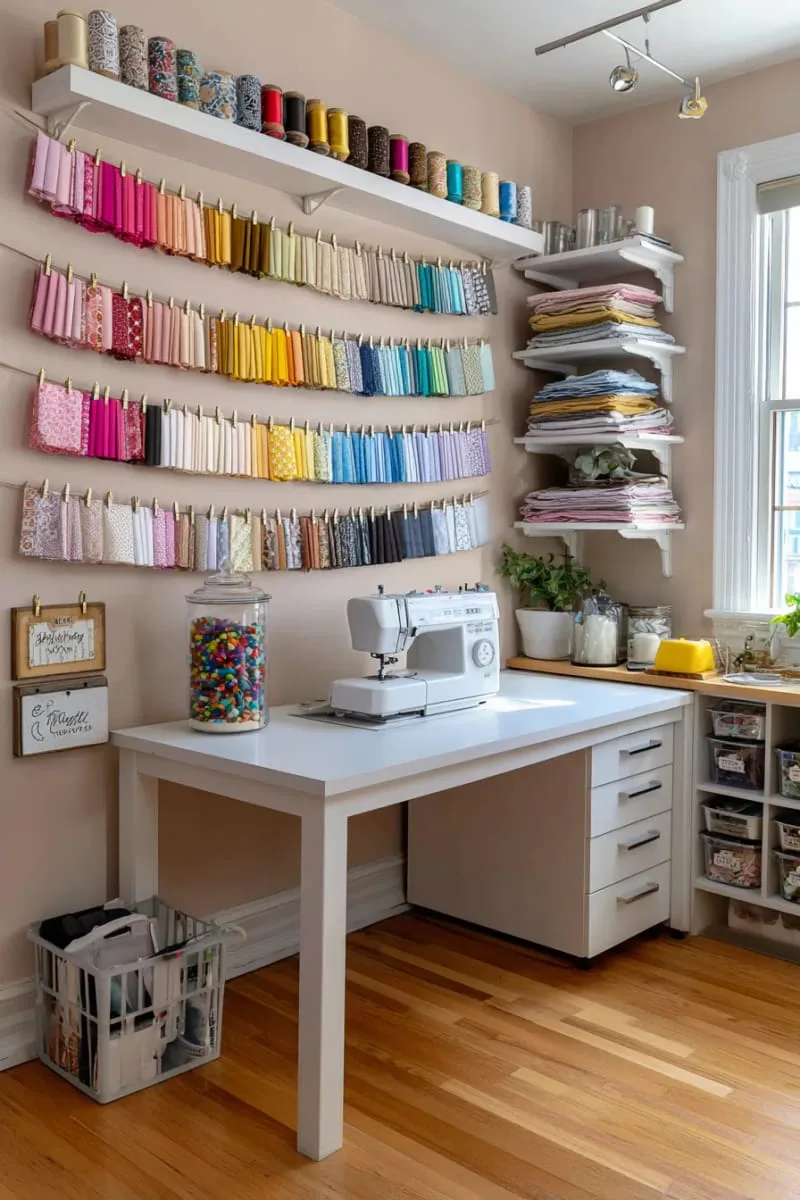
However, be careful with sunlight. Too much exposure can fade your swatches, making color-matching harder over time. Try to place banners on a wall that doesn’t get direct sun, or rotate swatches seasonally.
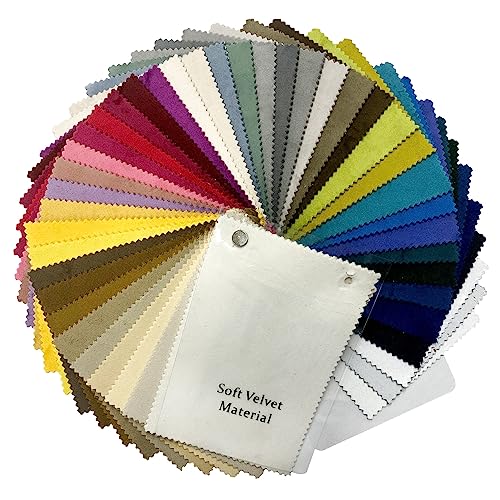

Organization doesn’t have to be boring or complicated, sometimes, it can double as cheerful wall art.
11. Multi-tiered rolling cart for project-in-progress and tool organization
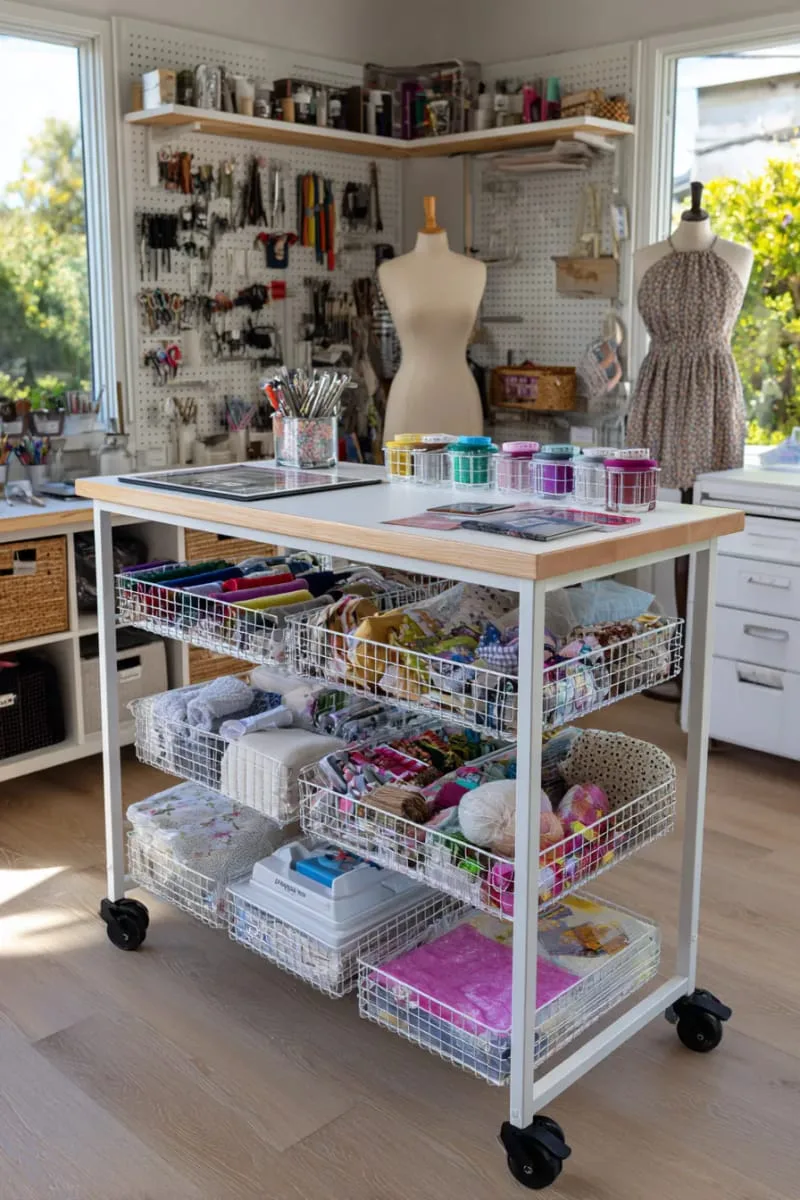
Rolling carts with multiple tiers can be a lifesaver in any sewing room. Imagine having all your fabrics, threads, and scissors within arm’s reach as you move from machine to table.
Instead of hunting for misplaced tools, you simply glide your supplies alongside you, saving precious time and reducing frustration.
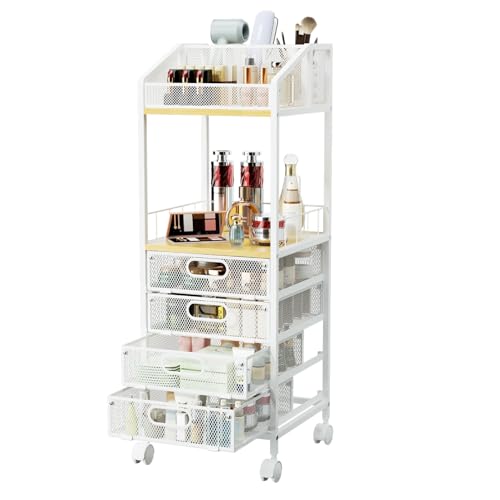

However, not all carts are created equal. Some wobble under heavy loads or have shelves too shallow for larger items. Choose one with sturdy wheels and adjustable shelves.
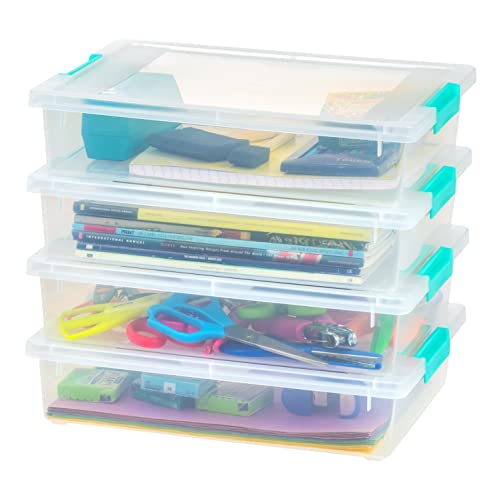

A label maker helps too, clearly marked bins mean no more guessing games. Investing in the right cart turns chaos into calm, one project at a time.
12. Tiny labeled drawers for zippers, snaps, and elastic—perfect for small spaces
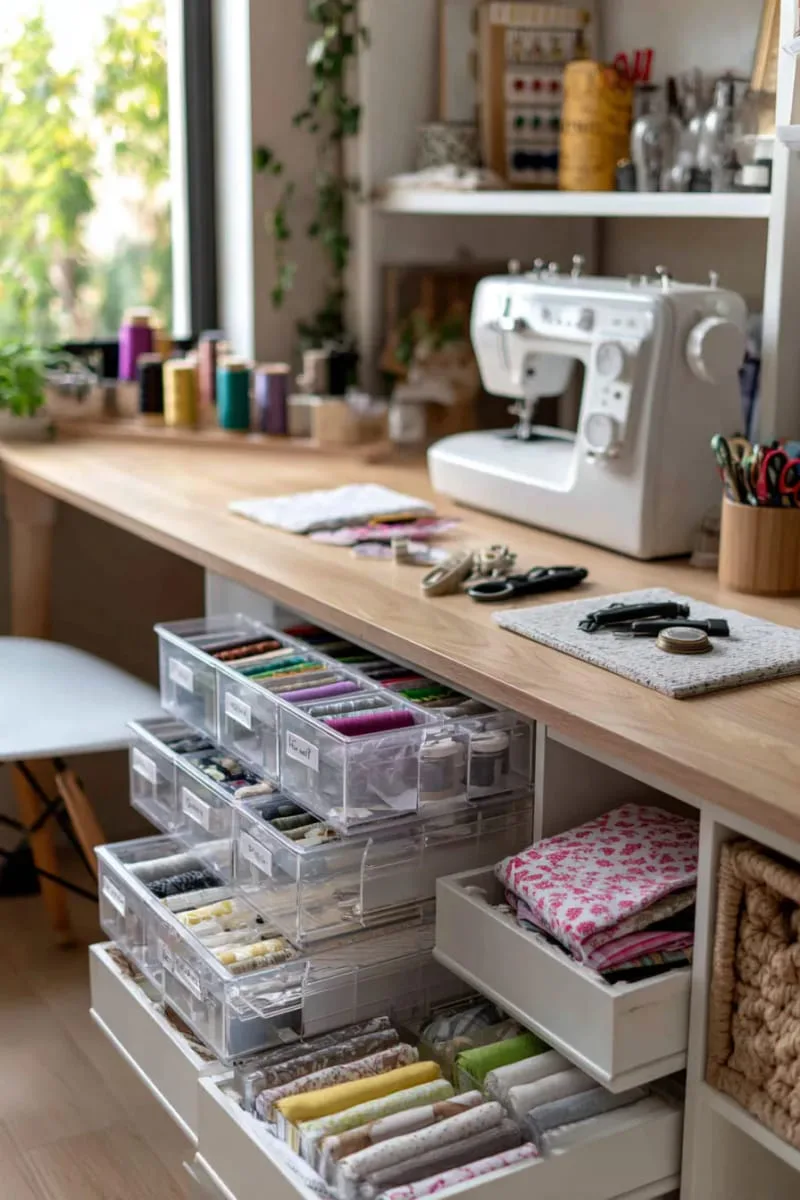
Small drawers with clear labels save time and prevent endless searching. Sorting zippers, snaps, and elastic by type or color means you’ll always know what you have.
No more hunting for that elusive purple zipper or right-sized snap. Plus, these drawers fit neatly into any cramped sewing nook.
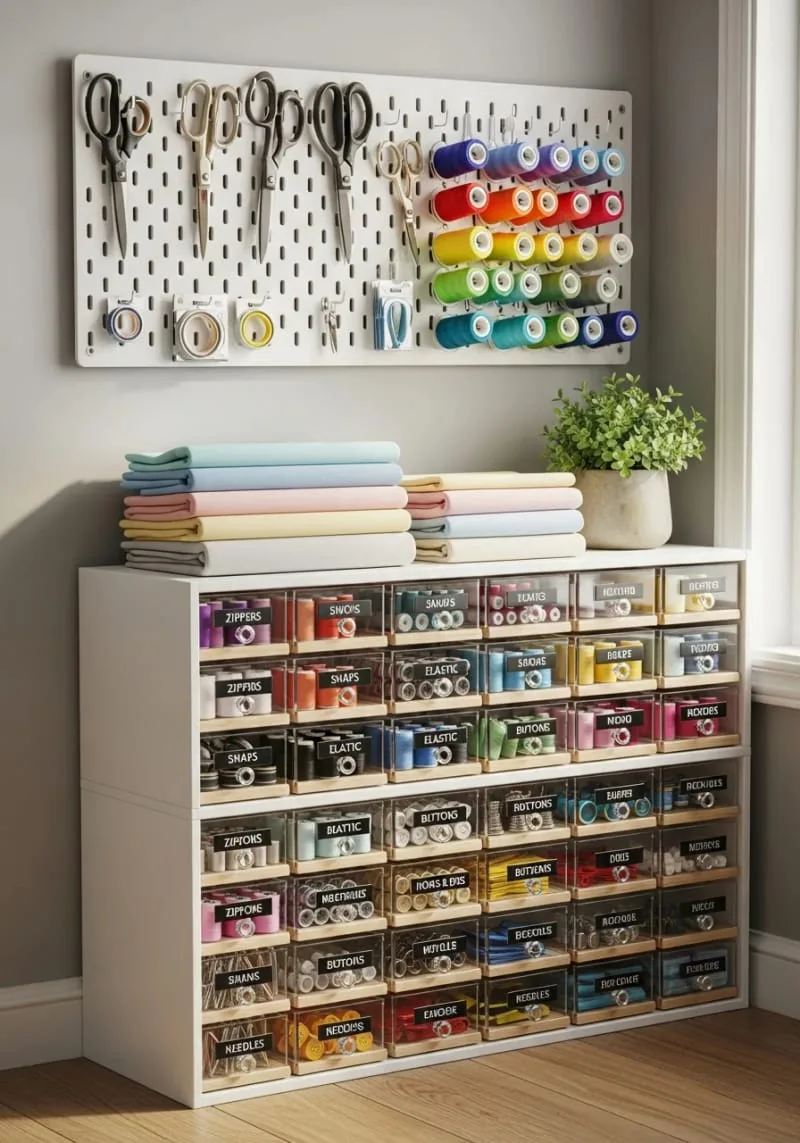
On the downside, tiny drawers can become cluttered quickly if overfilled. Keep only what you use most often inside, and do an occasional clean-out.


Want an extra tip? Use leftover jars or boxes for overflow supplies so drawers stay manageable. Organization shouldn’t feel like wrangling wild cats!
13. Open bookshelf stacked with folded fat quarters and color-coded bins
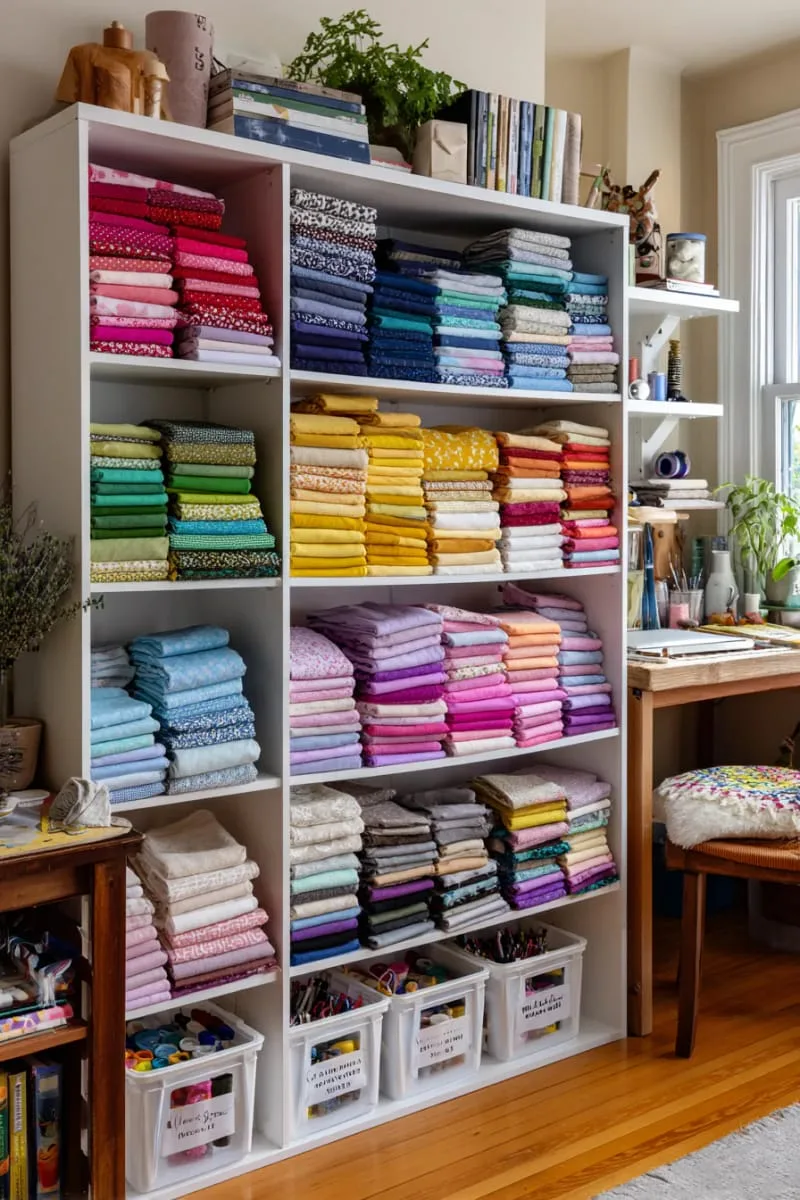
Open bookshelves can turn fabric storage into art. Folded fat quarters, neatly stacked, show off vibrant colors and patterns. Color-coded bins add structure and speed up finding what you need.
This method encourages tidiness but does require discipline, messy stacks can quickly defeat the purpose.
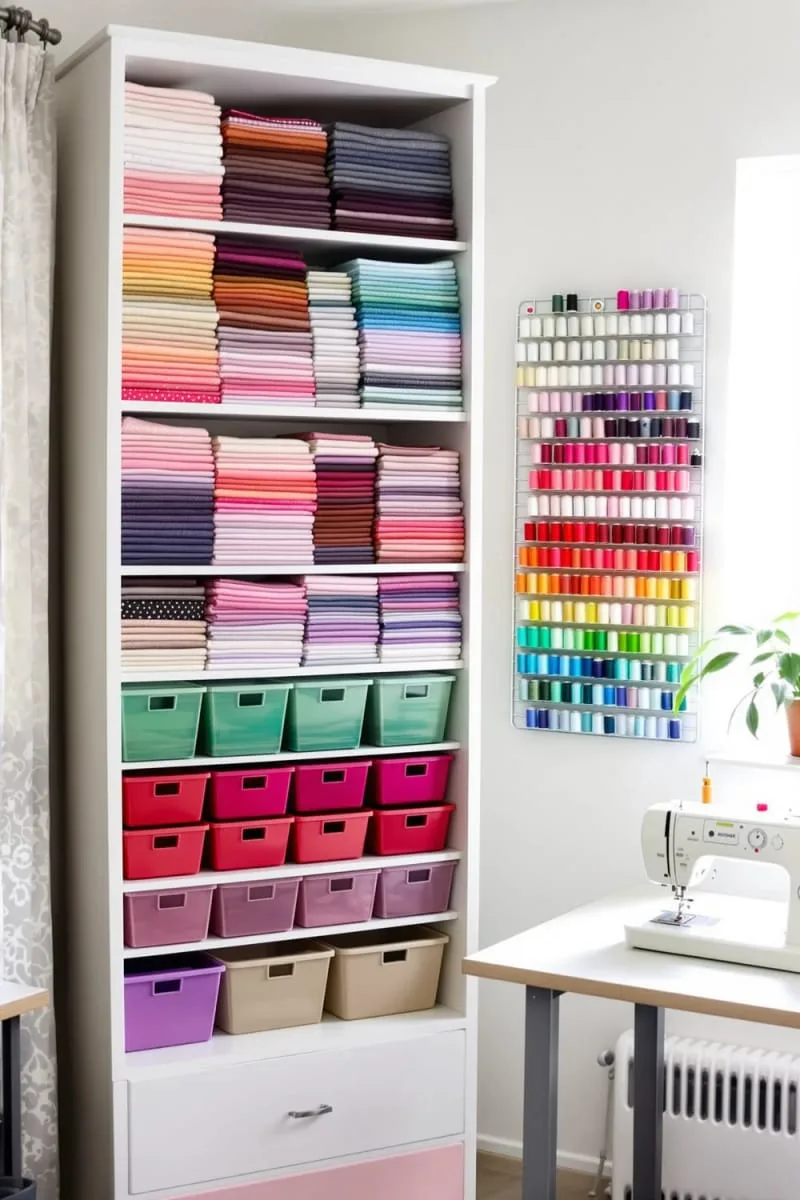
Think about how easy it is to grab a bin and locate a fabric for your next quilt. Visible storage inspires creativity and keeps materials top of mind.


If dust is a worry, consider clear bin lids. Regularly refolding fabrics keeps everything looking sharp and prevents chaos.
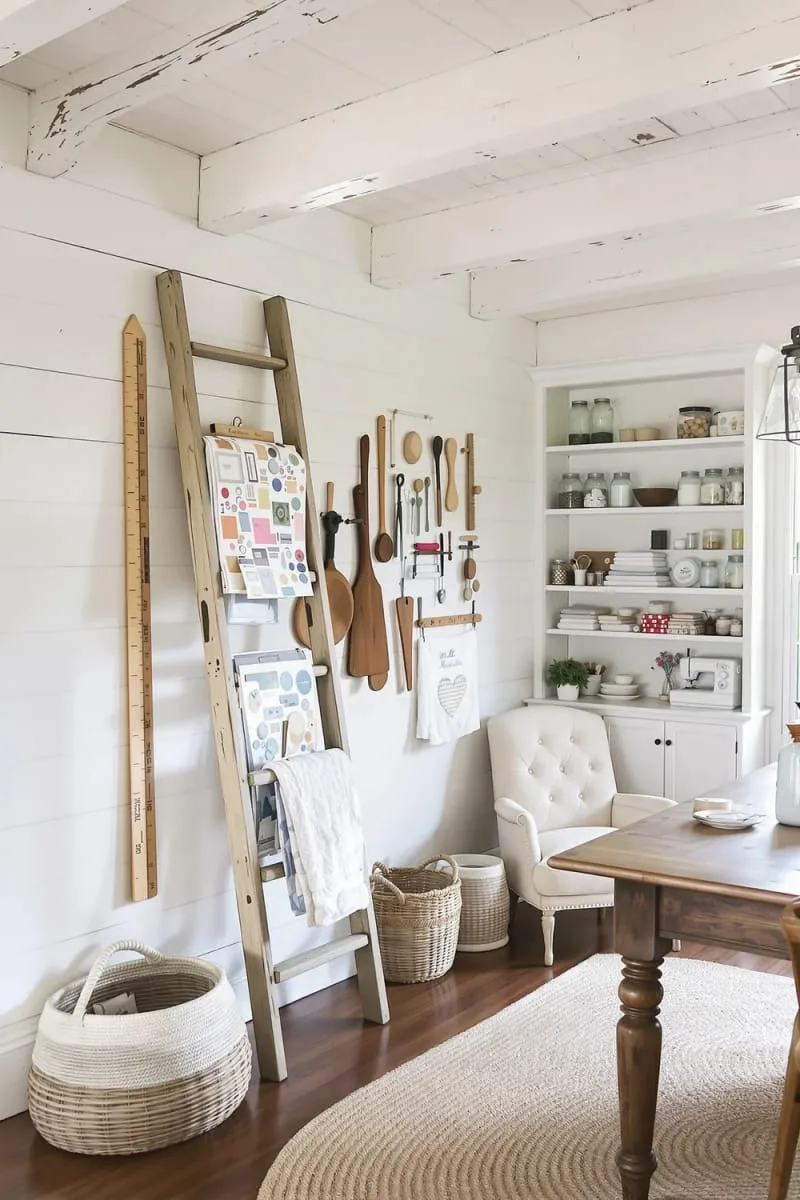
14. Vintage ladder leaned against the wall for draping patterns and rulers
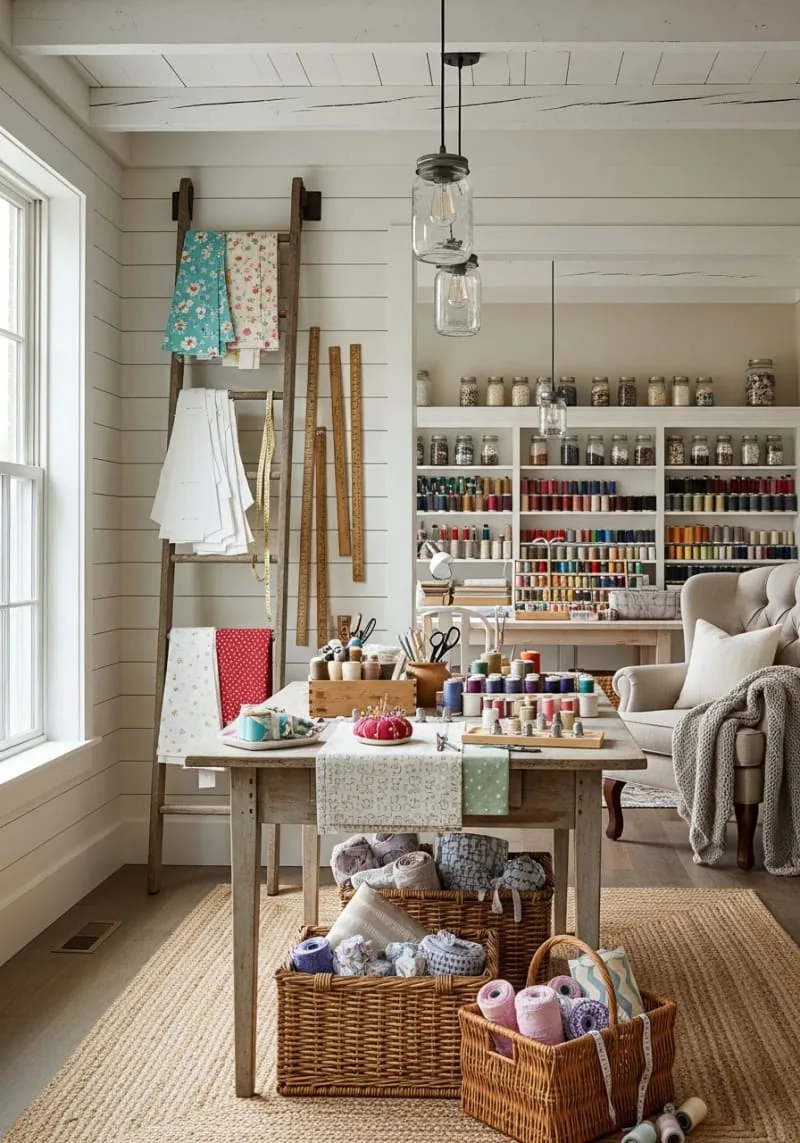
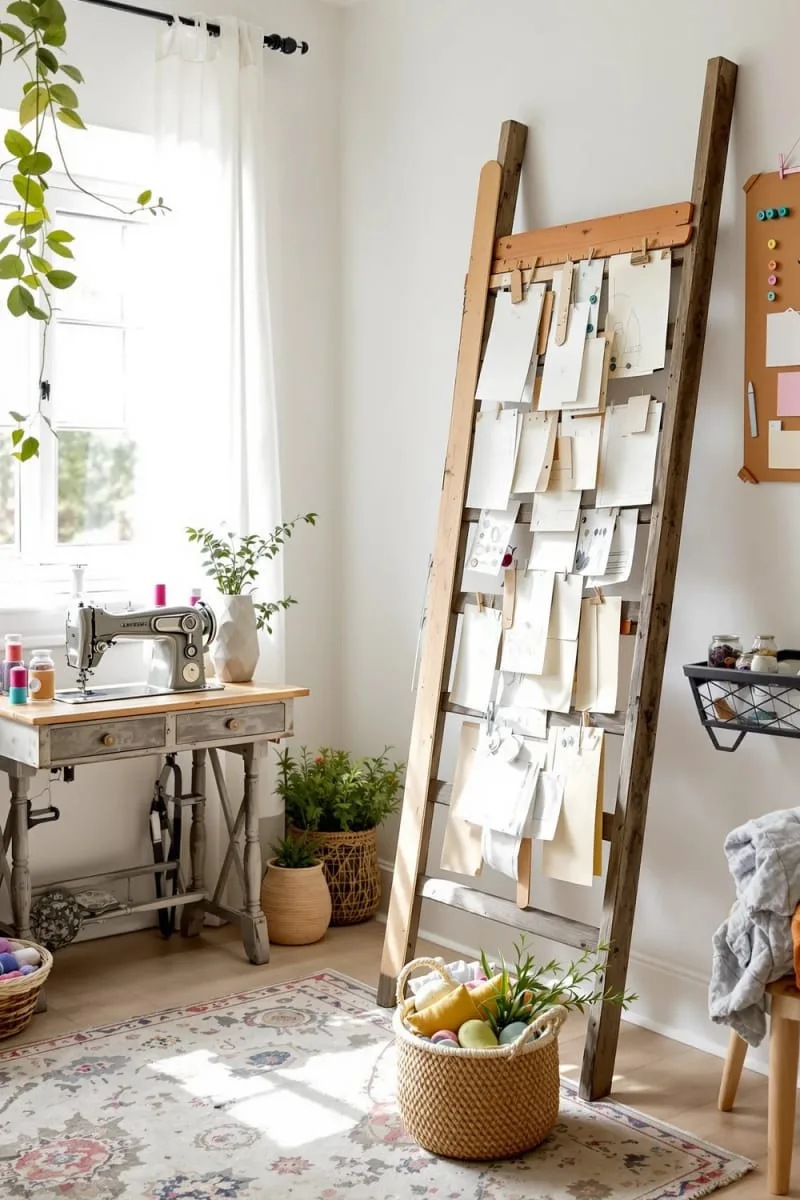
An old wooden ladder can become a quirky, practical fixture in your sewing space. Lean it against a wall and suddenly you have a clever rack for patterns and measuring tools.
Instead of digging through drawers, just reach over and grab what you need. It’s fast and it looks charming.
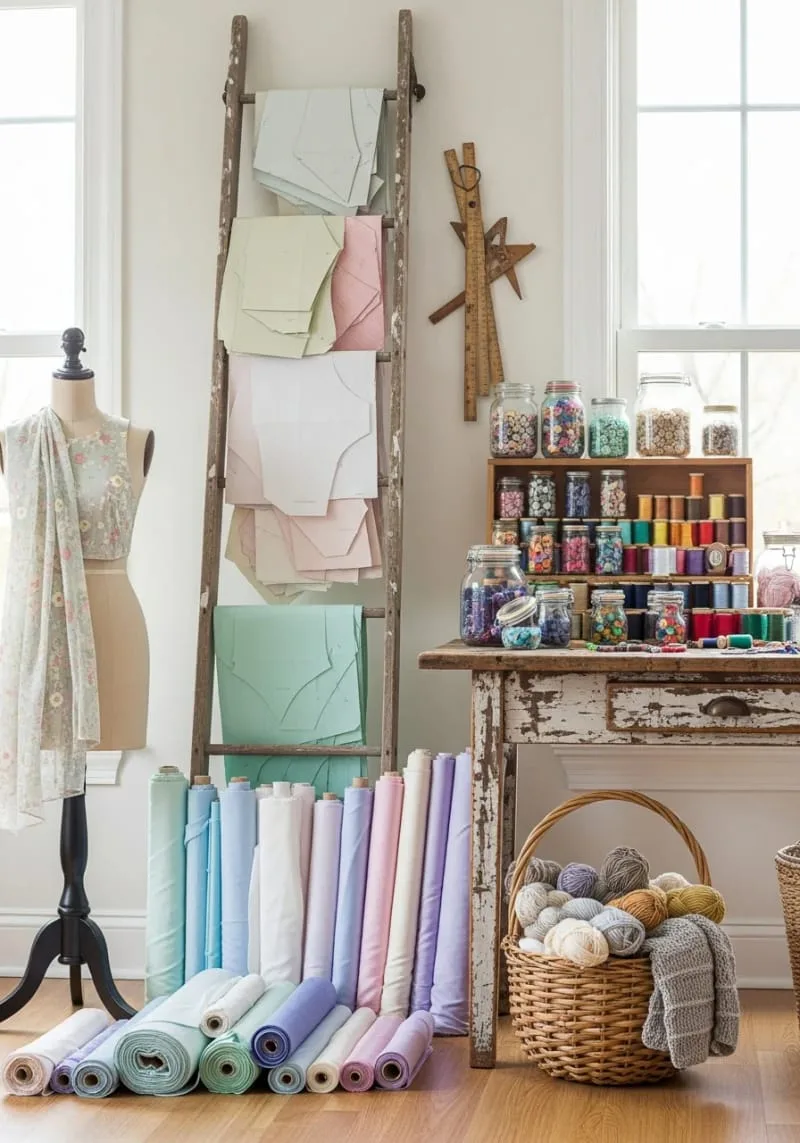
However, ladders with splinters or wobbly legs might spell trouble. Sand rough edges and check stability before loading it up. Hang rulers on the rungs and let patterns drape over each step.


This simple trick keeps your creative mess off the floor and your favorite supplies in plain sight.
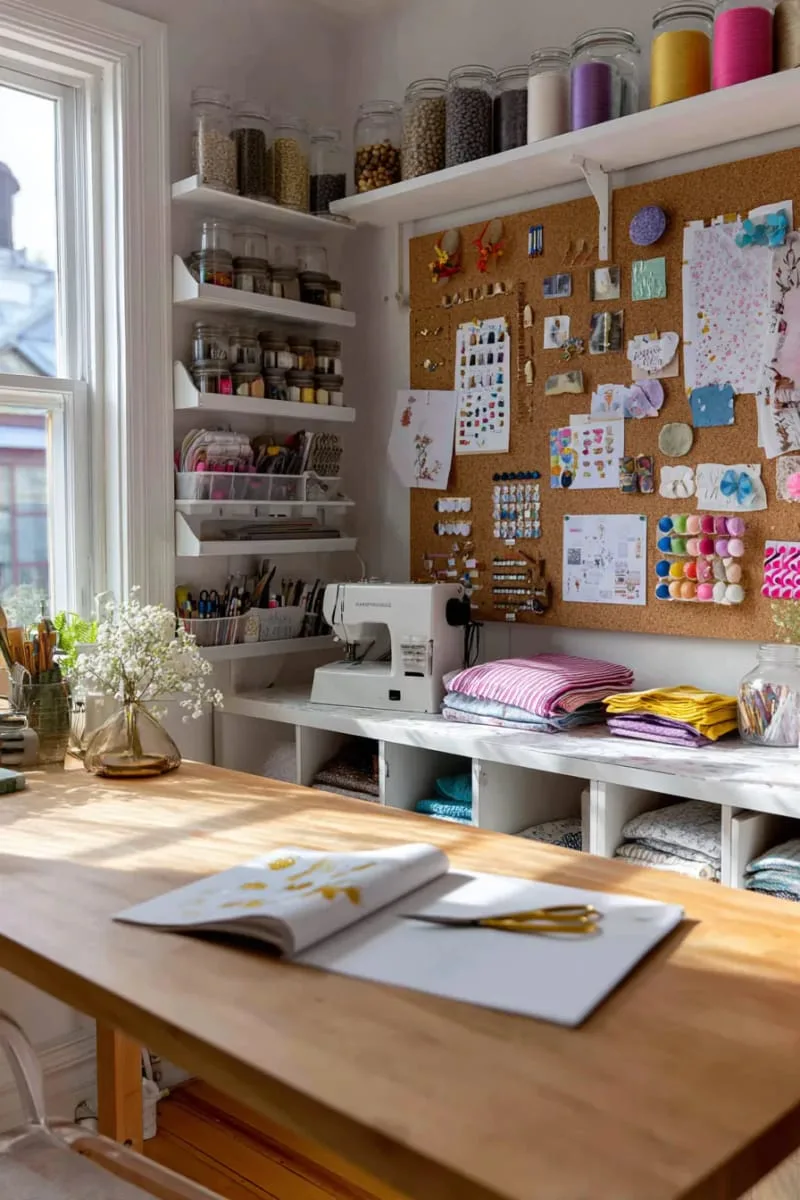
15. Corkboard inspiration wall with pinned sewing patterns and fabric cuttings
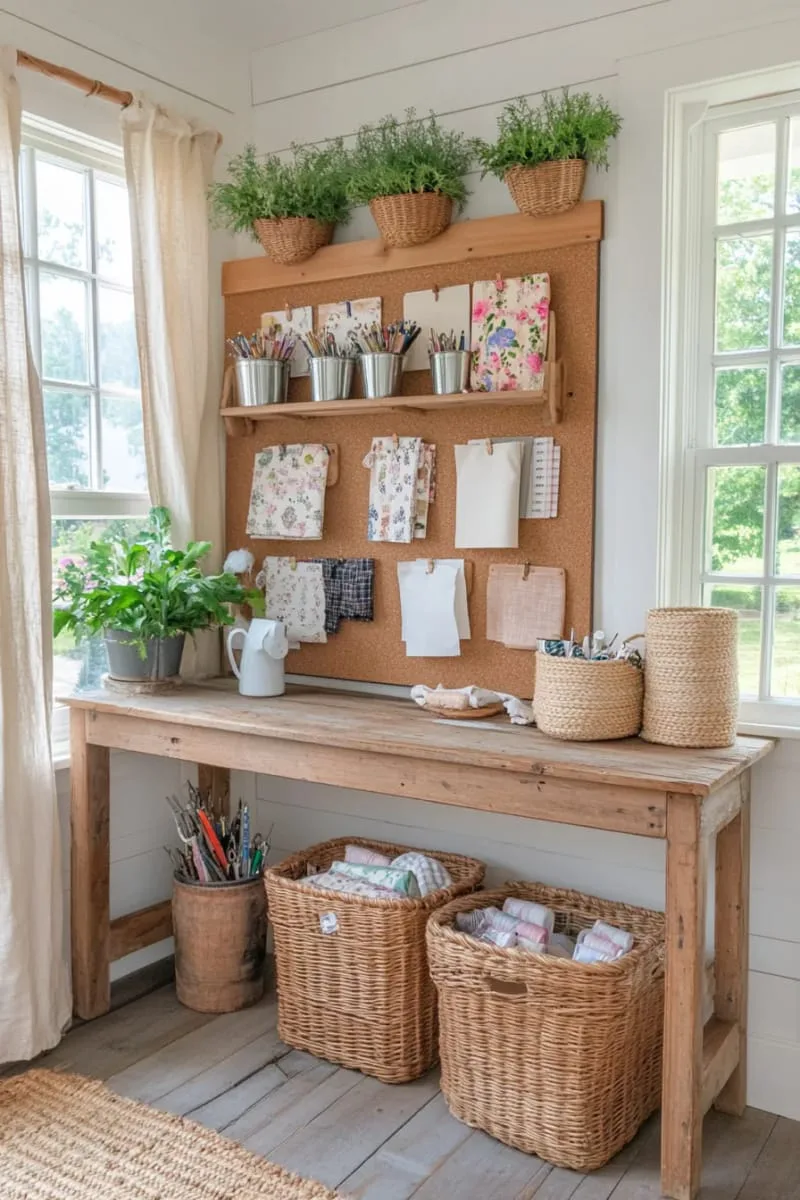
A corkboard inspiration wall offers instant visual motivation. Pin up sewing patterns, fabric samples, and sketches to spark creativity. Instead of rummaging through drawers, glance up and see your next project mapped out.
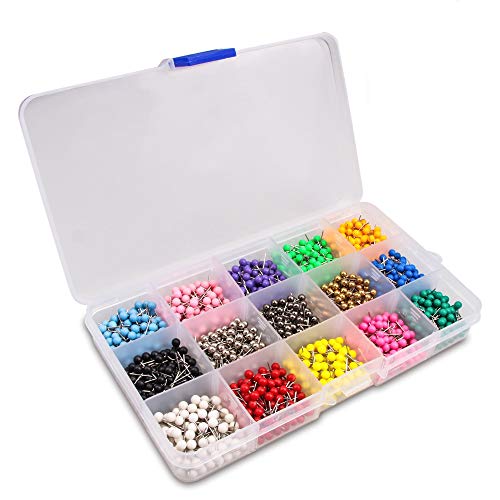
It’s like giving your workspace a window into your imagination, no tech needed, just a handful of pins.
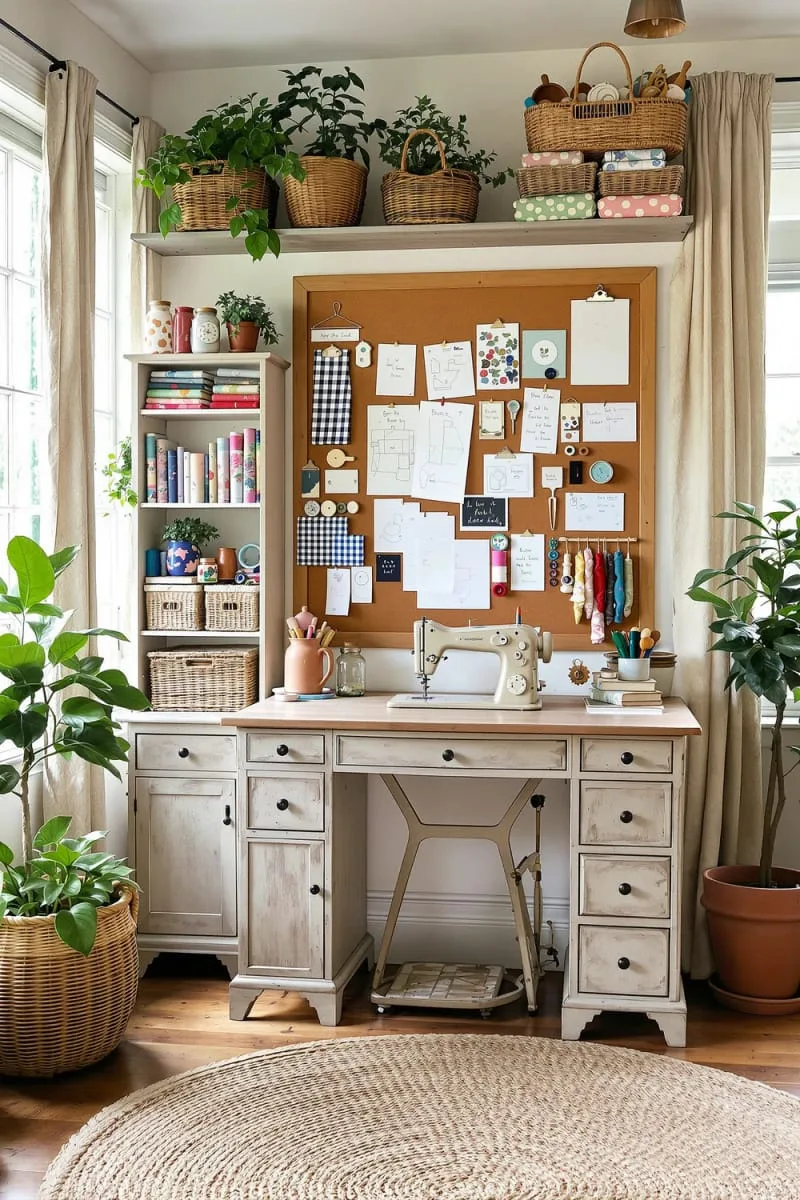
However, keep in mind clutter can sneak in. Too many fabric scraps or overlapping patterns can turn inspiration into chaos. Stick to a rotation system, refresh your wall monthly.

This way, only current projects and favorite ideas stay in view, while the rest get archived or reused elsewhere.
Conclusion
Creating a well-organized sewing room doesn’t require a massive overhaul or fancy gadgets.
With a few simple tweaks, like a rainbow-thread display or a pegboard for tools, your creative space can become both inspiring and efficient. Why not start small and see the difference?
Try mixing old and new: repurpose a vintage ladder or glass jars, add a functional rolling cart, and watch clutter vanish.
Remember, a tidy sewing room saves time, reduces stress, and sparks new ideas. Ready to stitch up some order in your space?