
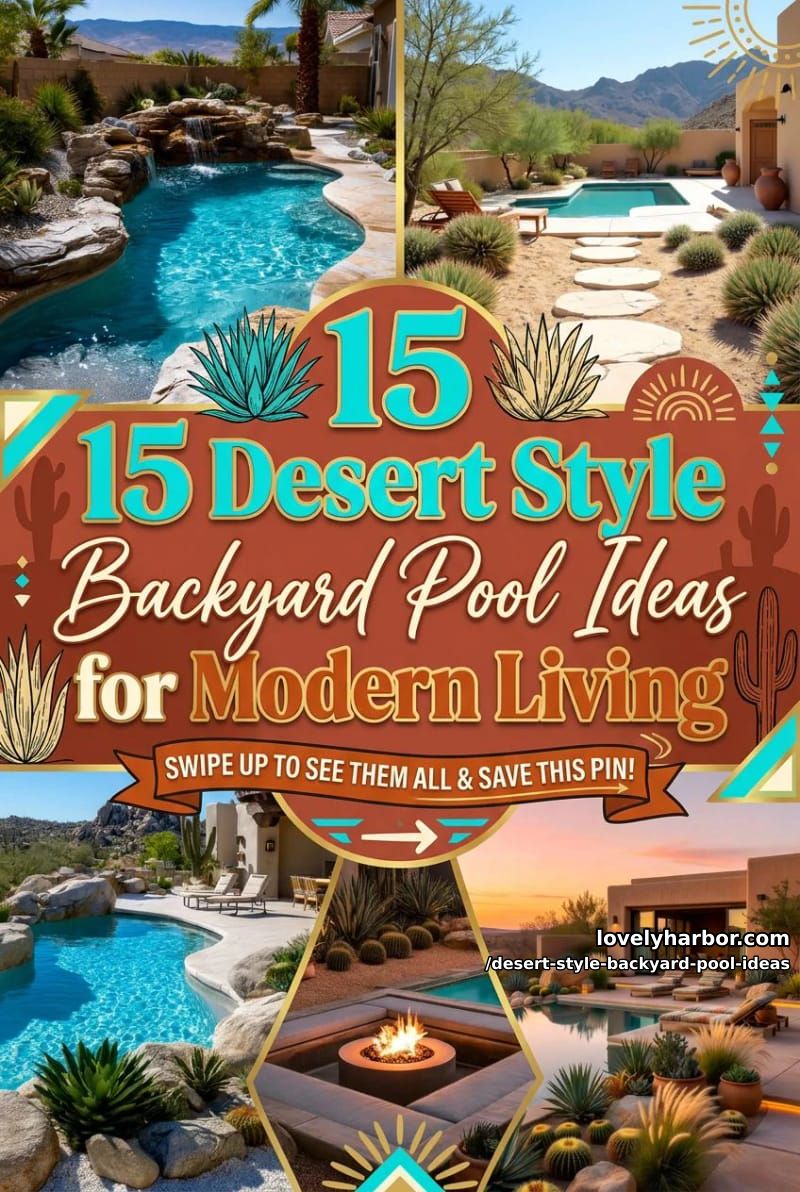
The good desert pools all share one trick: they work with a dry climate instead of fighting it, which is why the ideas below lean on gravel, native plants, and shade structures rather than thirsty lawn ringing the water. You will find the realistic version of the saguaro fantasy (there is a permit involved), what a plunge pool actually costs against a full build, and how far drip irrigation and the right plant grouping can drop your summer water bill. Scroll for the fifteen, grouped loosely from sculptural showpieces down to small-yard and budget-minded fixes.
1. Raised infinity-edge pool surrounded by sculptural agave and golden barrel cactus
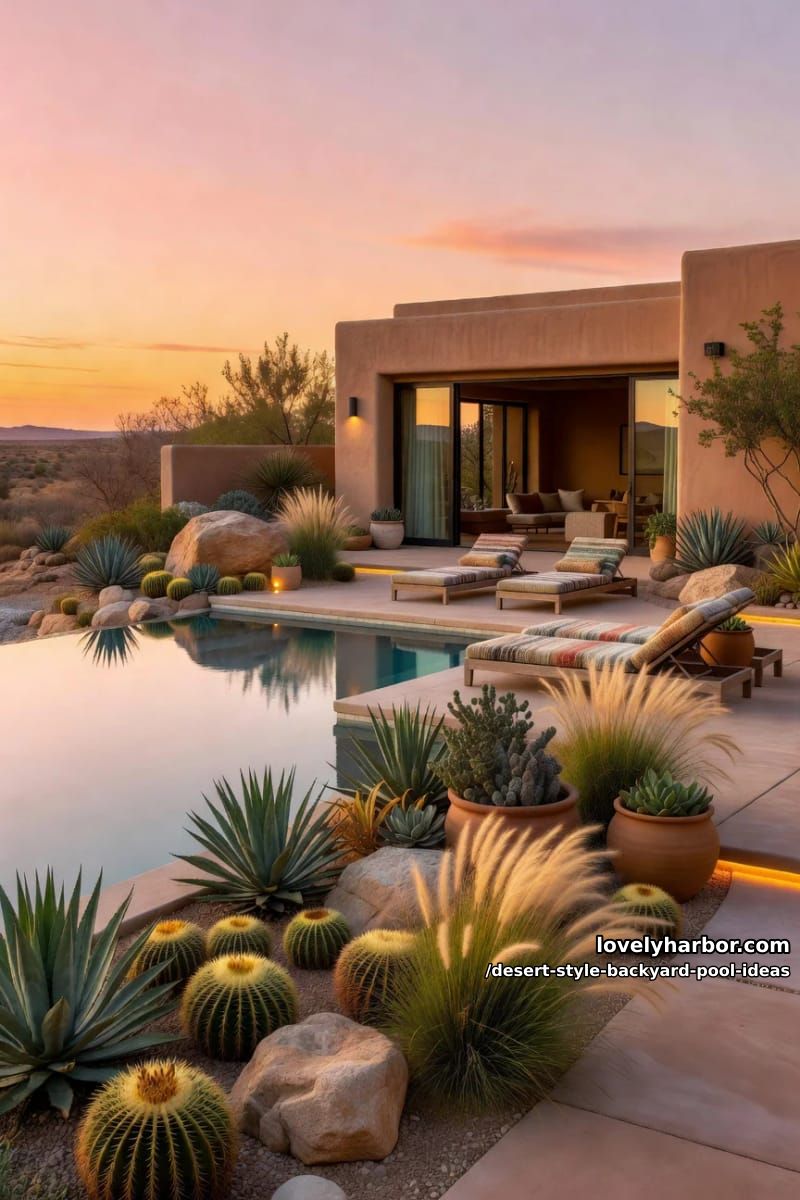
Pair a raised infinity edge with rosette plants and the contrast does the design work for you: a flat, mirror-still water line against the heavy radial geometry of agave and golden barrel. Plant the barrels in odd-numbered clusters (three or five) rather than a tidy row, and know that Agave americana is monocarpic, meaning it sends up one tall flower spike after eight to twenty years and then dies. So build in replacements rather than treating any single agave as permanent. Golden barrel is slow, an inch or two of girth a year, so buy the size you actually want now.
Agave tips and barrel spines puncture skin and pool floats, and the wet path back from the steps is exactly where people walk barefoot and distracted. Keep any spined plant at least three feet back from coping, steps, and lounge zones, and never put one where a kid cannonballing in would surface next to it.
2. Minimalist rectangular pool with desert boulders and palo verde tree shade
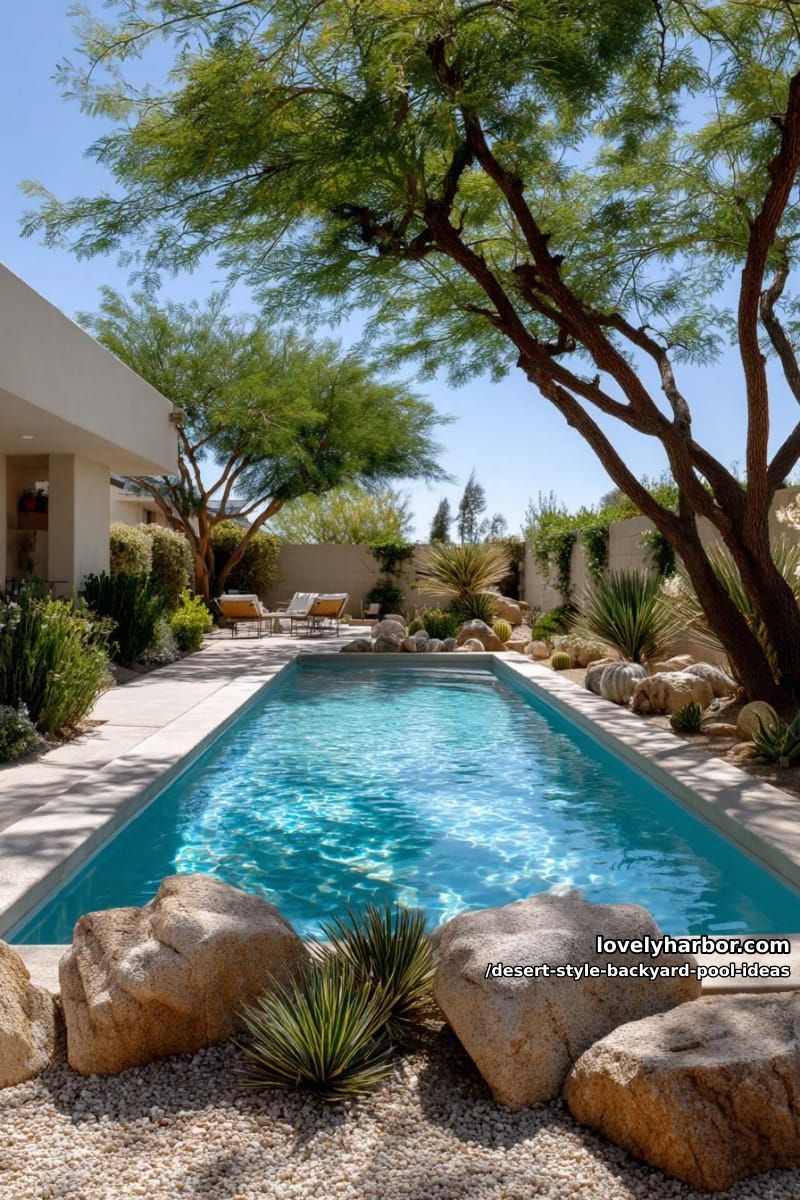
A clean rectangle plus a palo verde gives you architectural calm and filtered shade without a dense canopy dropping debris into the water. The palo verde is Arizona's state tree, and its green bark photosynthesizes, so even leafless it reads alive. Light passes through the fine foliage instead of blacking out the pool the way a ficus would.
The boulders are where people go wrong. Buy local stone that matches the geology you can see from your yard, then set each one a third buried so it looks like it was always there rather than delivered on a flatbed. One large, well-placed boulder beats five scattered medium ones.
Granted, palo verde does shed: fine leaflets year-round and a brief blizzard of yellow flowers in spring. Plan on skimming for a couple of weeks in April and otherwise leave it alone.
3. Curved pool bordered with terracotta tiles and tall saguaro cacti accents
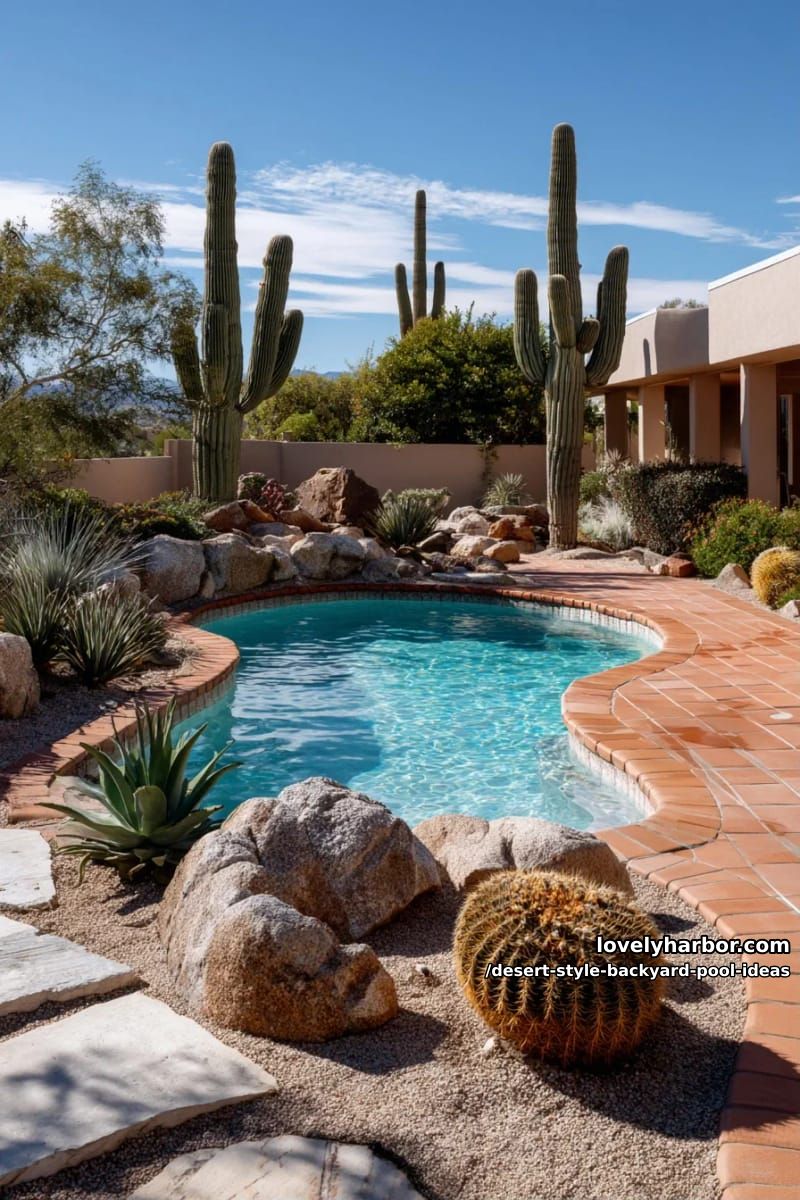
Curved coping in terracotta softens a pool the way a hard rectangle never will, and a saguaro behind it supplies the vertical drama. The catch is the saguaro itself. In the wild it adds only about 1 to 1.5 inches a year early on and does not branch until somewhere between 50 and 70 years old, so the iconic armed silhouette you are picturing is a century-old plant. Buy a nursery-propagated specimen and pay for the height you want.
Saguaro is protected under Arizona’s native plant law. Moving one taller than four feet from its growing site requires a permit, tag, and seal from the Arizona Department of Agriculture, and taking or destroying a saguaro without that paperwork is a class 1 misdemeanor. The Marana golf course that lost two saguaros to a contractor in 2023 made the news for exactly this. Source from a licensed nursery with a tag, or skip it.
One material note: unglazed saltillo gets genuinely painful underfoot in July. Run a sealed or lighter-bodied tile in the splash zone and save the raw terracotta for shaded borders.
4. Poolside sunken fire pit with gravel landscaping and string lights overhead
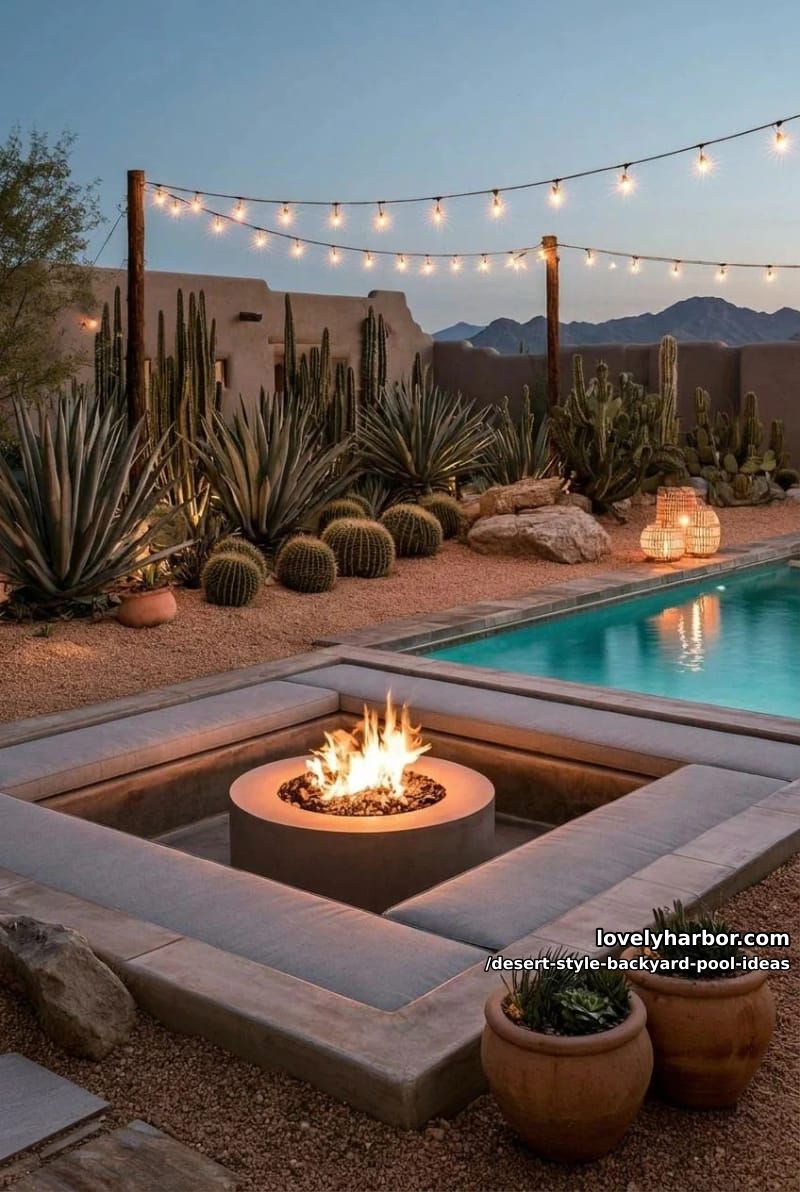
A sunken conversation pit gives the pool a second life after the swimming is done, and the gravel surround handles drainage and dust at the same time. Use decomposed granite rather than loose pea gravel for the seating area; DG compacts into a firm, almost paved surface that does not migrate into the pool or roll underfoot. Run a gas line to the pit instead of burning wood. Gas means no embers drifting toward the water and no ash to vacuum out of the deep end the next morning.
For the lights, spend on commercial-grade strands with shatterproof bulbs and a real gauge of wire. The bargain strings sag, corrode at the sockets, and quit after one Phoenix summer.
5. Modern plunge pool with geometric stepping stones among yucca and stone mulch
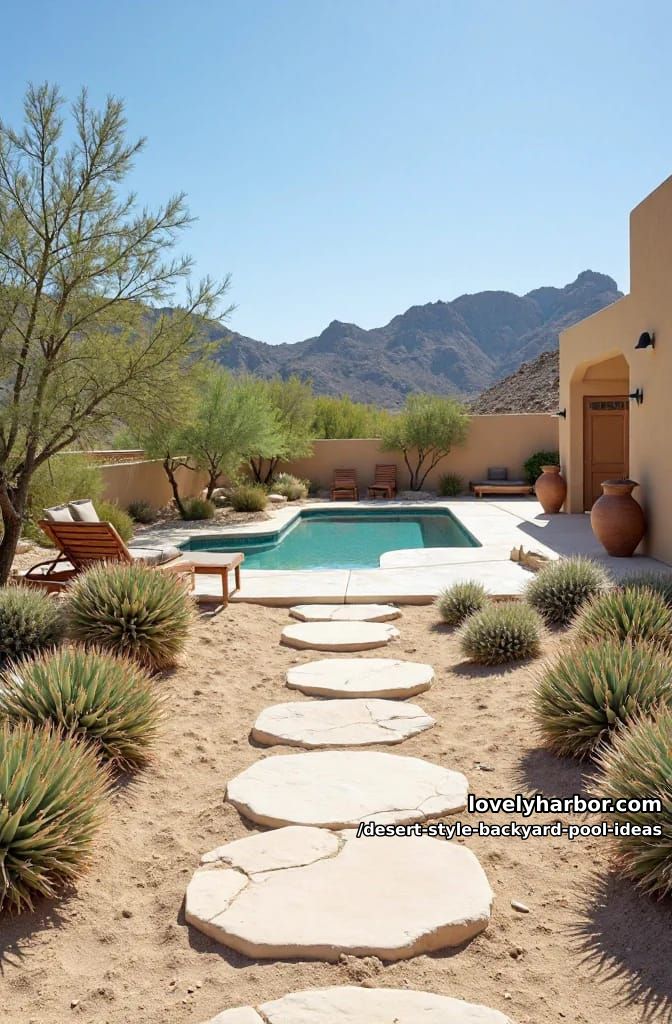
A plunge pool is the answer when you want water in a small yard without committing to a full build. Most run 6 to 12 feet wide and 4 to 8 feet deep, enough to submerge and cool off, and an inground one typically lands between $15,000 and $40,000 installed, averaging around $27,000. A prefab above-ground shell can start near $3,000. Set rectangular concrete pavers as floating stepping stones across one corner and let yucca and a stone-mulch field carry the planting; yuccas give you almost no shade but a lot of architectural line.
| Factor | Plunge pool | Full-size inground |
|---|---|---|
| Typical installed cost | $15k to $40k | $50k to $100k |
| Footprint | Fits a courtyard | Needs real yard |
| Main use | Cool-off, soak, lounge | Laps, play, swimming |
| Water and chemical load | Low | High |
6. Small backyard oasis with adobe walls and blooming desert succulents
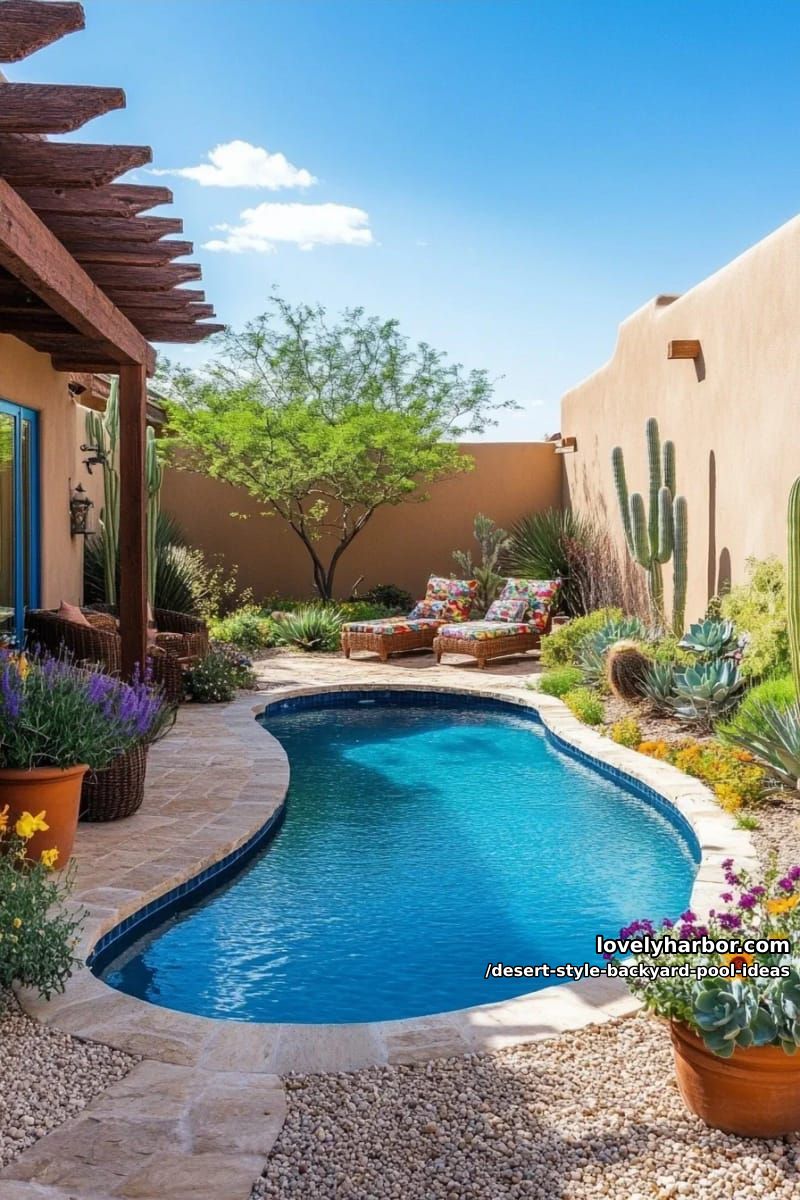
Walls are what make a small space feel like a room rather than a leftover gap, and the warm tone of adobe does it best. Be honest about the material, though: true adobe needs periodic replastering, so most of what you see in these yards is slump block or stucco troweled over standard CMU, which gives you the look without the upkeep.
For color against that earthy plaster, lean on succulents that actually flower. Ice plant throws magenta in spring, aloes spike coral and orange in winter, and none of them ask for more than a deep soak every couple of weeks. Add a small recirculating wall fountain if you want sound; it uses almost no water once filled.
7. Lagoon-style pool with rock waterfall and natural sandstone coping
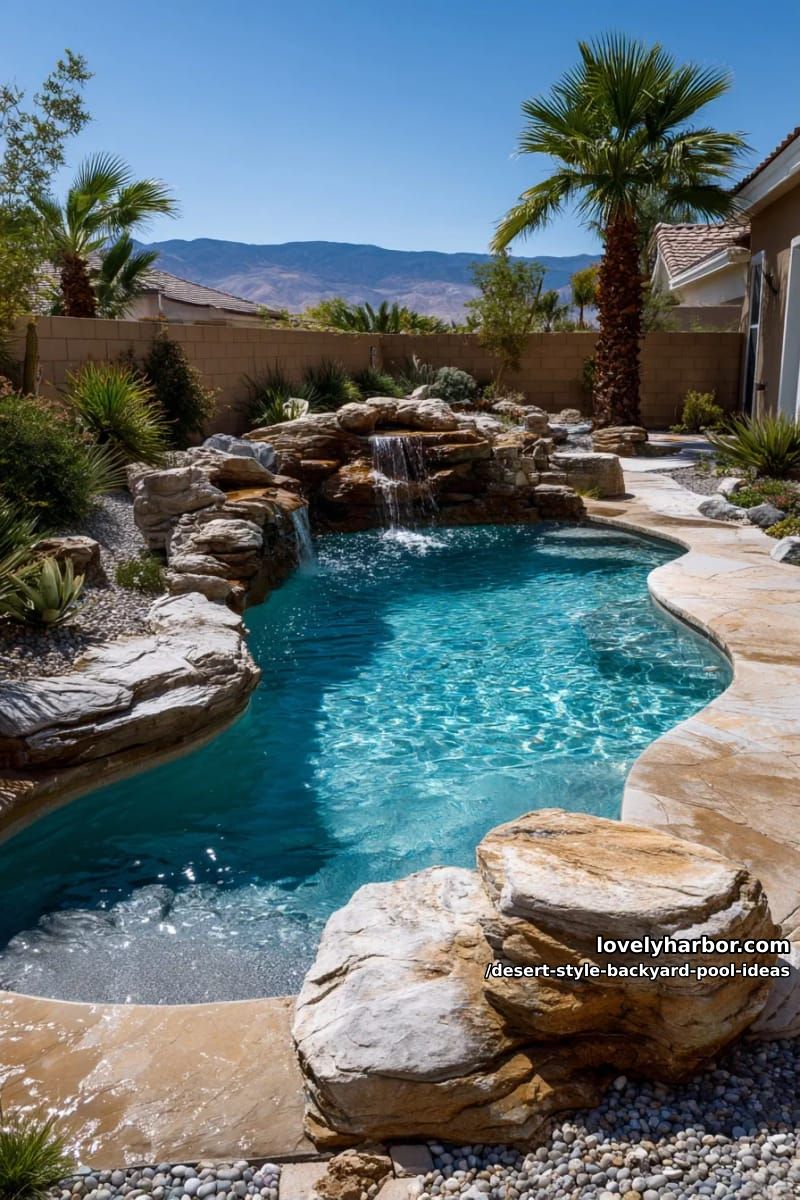
A lagoon shape with a boulder waterfall trades crisp modern lines for a resort feel, and it is the highest-maintenance pick in this list, so go in knowing that. The waterfall adds a second pump and a recirculating feature that grows scale and algae if you ignore it, and sandstone is porous. Skip the romance and seal it.
Do this
- Treat sandstone coping with a penetrating sealer and re-coat every year or two.
- Run the waterfall on a timer so the pump isn’t grinding 24/7.
- Choose a thicker, cleft flagstone that stays cooler than thin tile.
Avoid
- Leaving raw sandstone unsealed, where pool chemicals stain and spall it.
- Dark, dense stone right at the waterline. It bakes to skillet temperature by noon.
8. Outdoor lounge deck with woven hammock and oversized clay planters
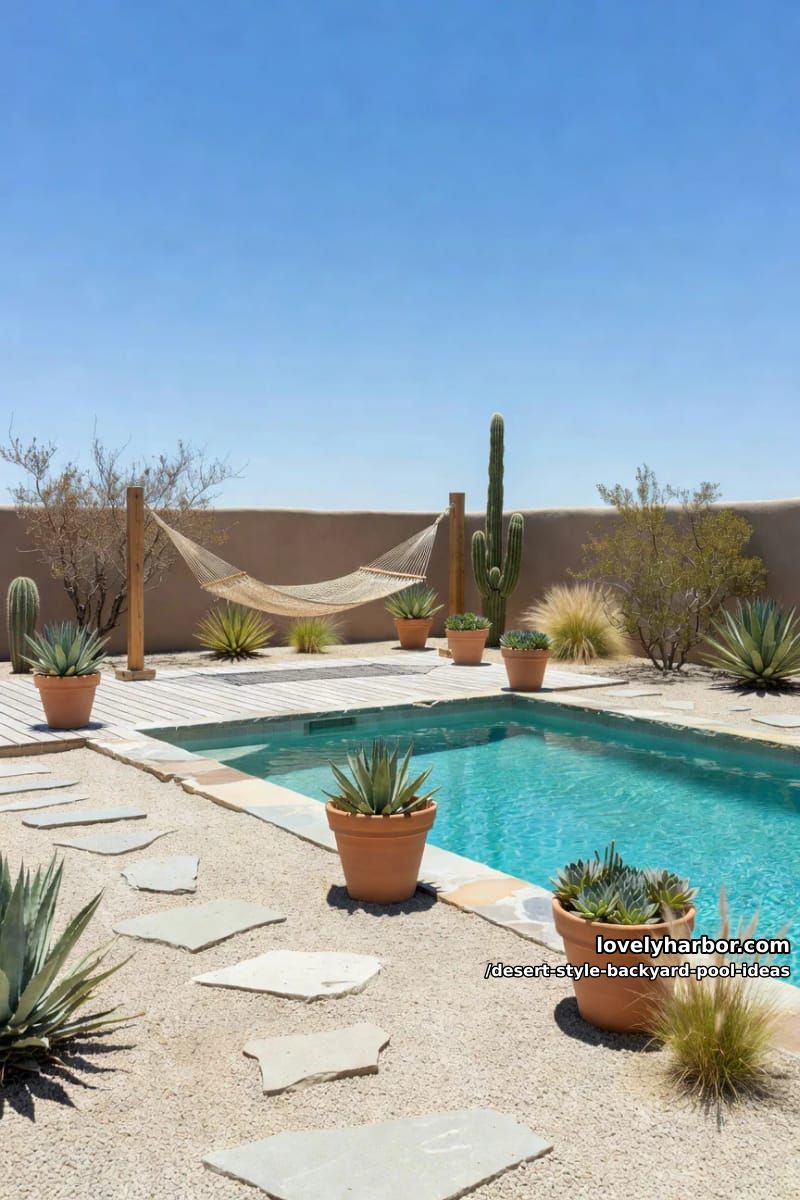
This idea lives or dies on the deck material and the shade structure, not the hammock. A slatted pergola or ramada gives you filtered shade that moves with the sun, which beats a solid roof that traps heat underneath. For the decking, here is an unpopular opinion: composite boards that the showroom swears stay cool will burn the soles off your feet in full desert sun. Real wood, stone pavers, or porcelain tile run noticeably cooler.
The oversized terracotta pots are the other trap. Cheap unglazed clay cracks the first time temperatures swing below freezing on a winter night, which happens across most of the Southwest. Glazed pots or quality fiberglass survive the freeze-thaw and the move.
Plant the big containers with a single sculptural specimen each, a tall euphorbia or a fishhook agave, rather than a fussy mixed arrangement. One bold plant per pot reads intentional.
9. Pool with integrated spa, surrounded by red rock and drought-tolerant plants
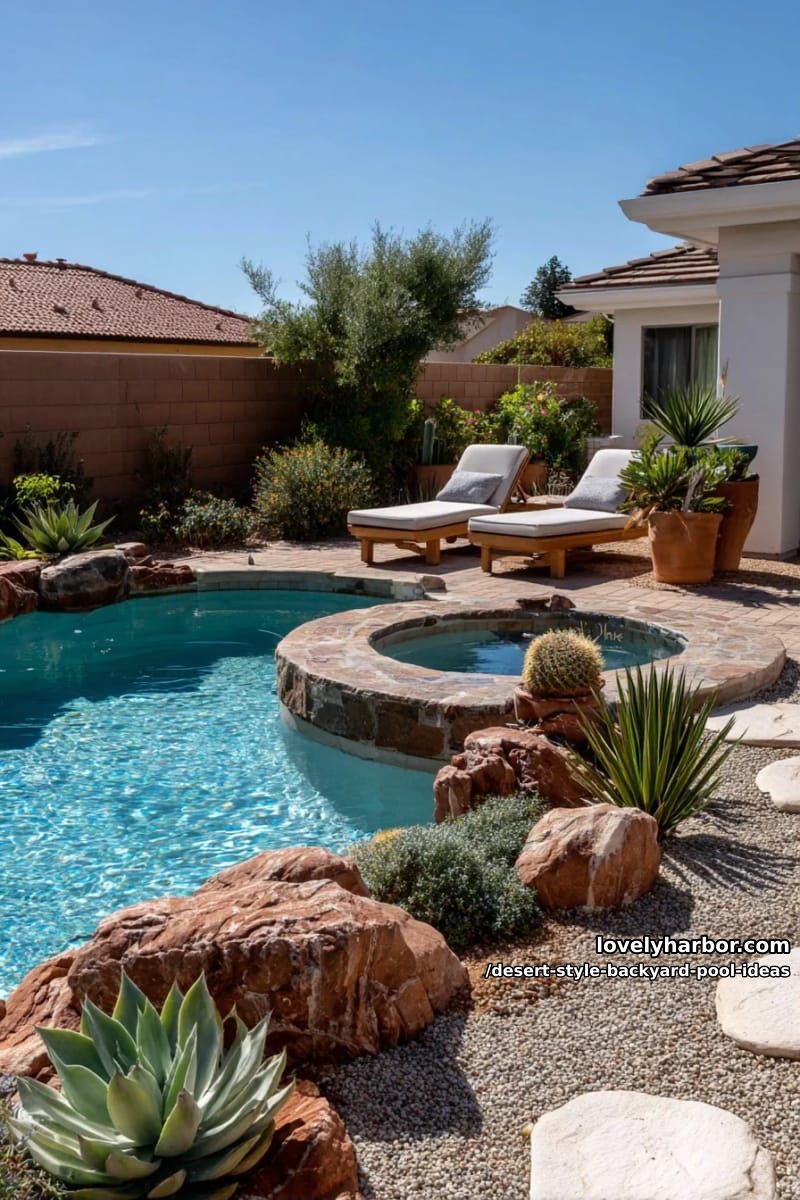
An integrated spa is the smart way to get year-round use out of a desert pool, because a raised spillover spa shares the pool's pump and filtration and pours warm water back into the pool as a feature. Frame it in red rock and ring it with agave and yucca that ask for almost no irrigation.
The one comfort issue: that red rock soaks up heat all afternoon and radiates it back at you well past sunset. Keep at least one seating zone in shade or in a cooler-toned material, and add low-voltage solar accents so the spa still reads warm and inviting after dark.
10. Sleek rectangular pool with poolside pergola draped in light linen, cactus garden underneath
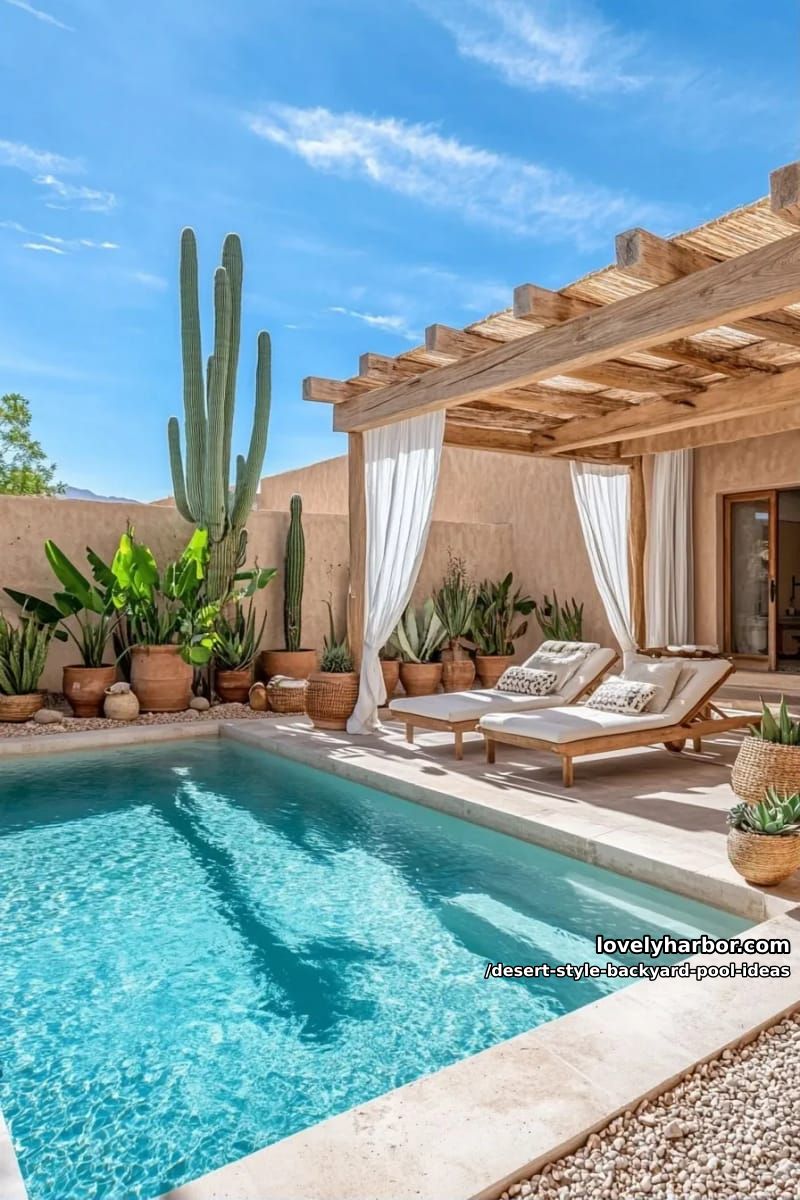
Draping fabric across a pergola is the cheapest way to get a resort feel over a rectangular pool, and the movement of the cloth in the breeze is half the appeal. Just do not use actual linen. It fades, mildews, and shreds in UV within a season. Outdoor-grade solution-dyed fabric like Sunbrella holds its color for years and sheds water.
Underneath, a low cactus and gravel garden keeps the planting maintenance near zero so the only thing you fuss over is the fabric.
11. Twilight pool scene with soft LED ground lights and spiky agave borders
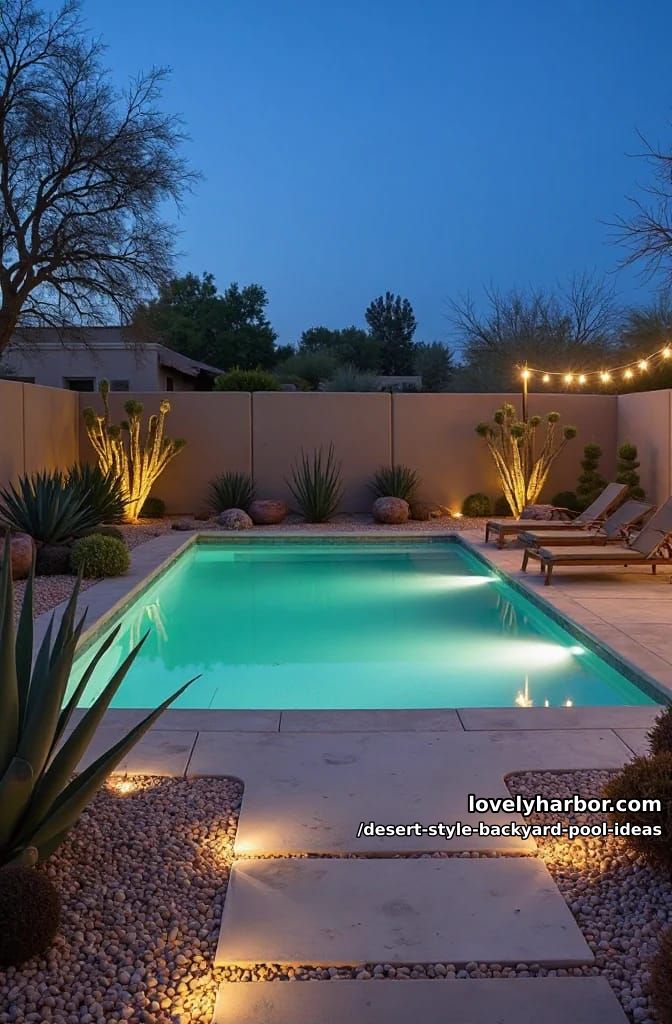
Low-voltage LED lighting is what makes a desert pool worth looking at after dark, and the desert plants are the reason. A 12-volt landscape system in warm white (around 2700K) used as uplighting throws the spiky silhouette of an agave onto a wall as a shadow far more striking than the plant in daylight. Twelve-volt also means you can tuck fixtures into gravel beds yourself without an electrician for every run.
Keep a few fixtures aimed low along the path back from the steps too, because that is the wet, dark stretch where people slip.
12. Desert mountain view pool framed by native grasses and rustic timber seating
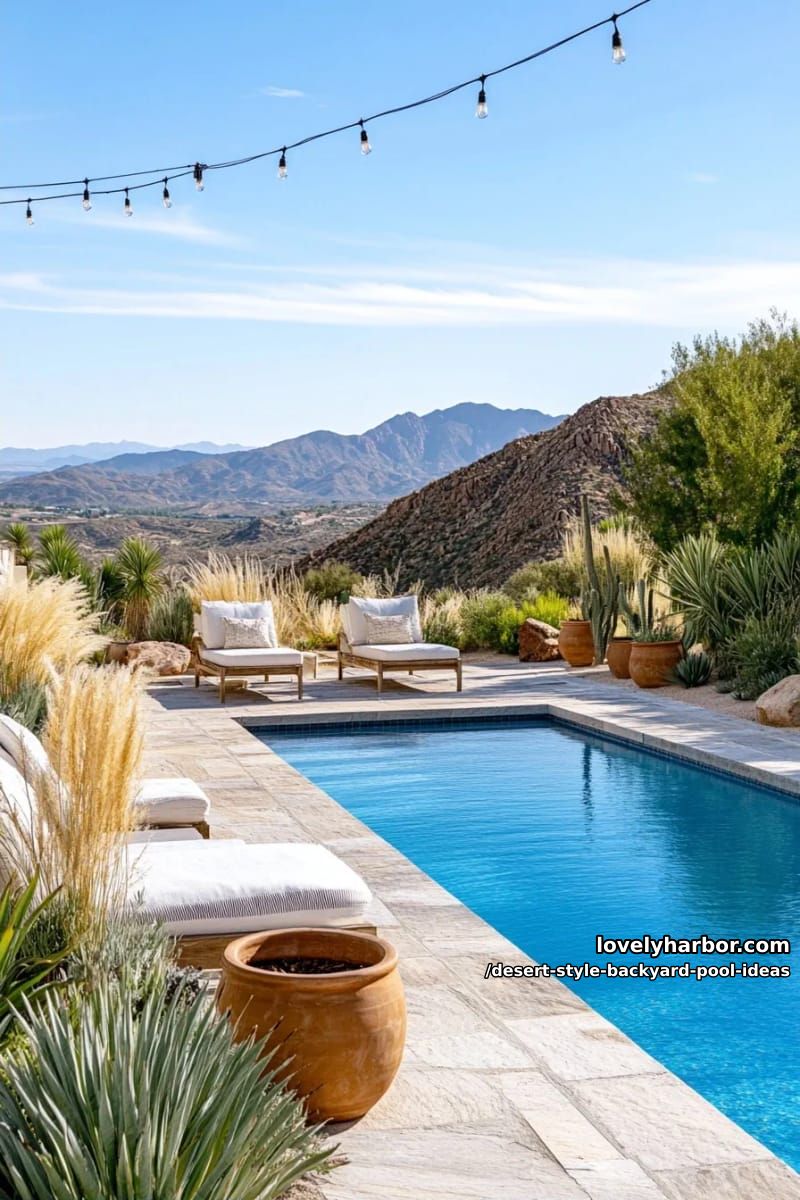
If you have a mountain view, the entire design job is to not block it. Keep everything between the pool and the horizon low: native bunchgrasses like deergrass and bush muhly that top out around three feet and catch the late light, and bench seating no taller than it needs to be. Resist the urge to plant a privacy hedge that walls off the very thing you bought the lot for.
Timber benches age honestly in this climate. Left raw, they silver and check (small surface cracks) within a year or two, which some people love and some hate. If you want to hold the warm tone, a penetrating oil finish once a year keeps the wood from going grey and slows the cracking.
Native grasses get a hard cutback to a few inches once a year in late winter and otherwise need almost nothing.
13. Poolside outdoor kitchen with clay pizza oven and low-water landscaping
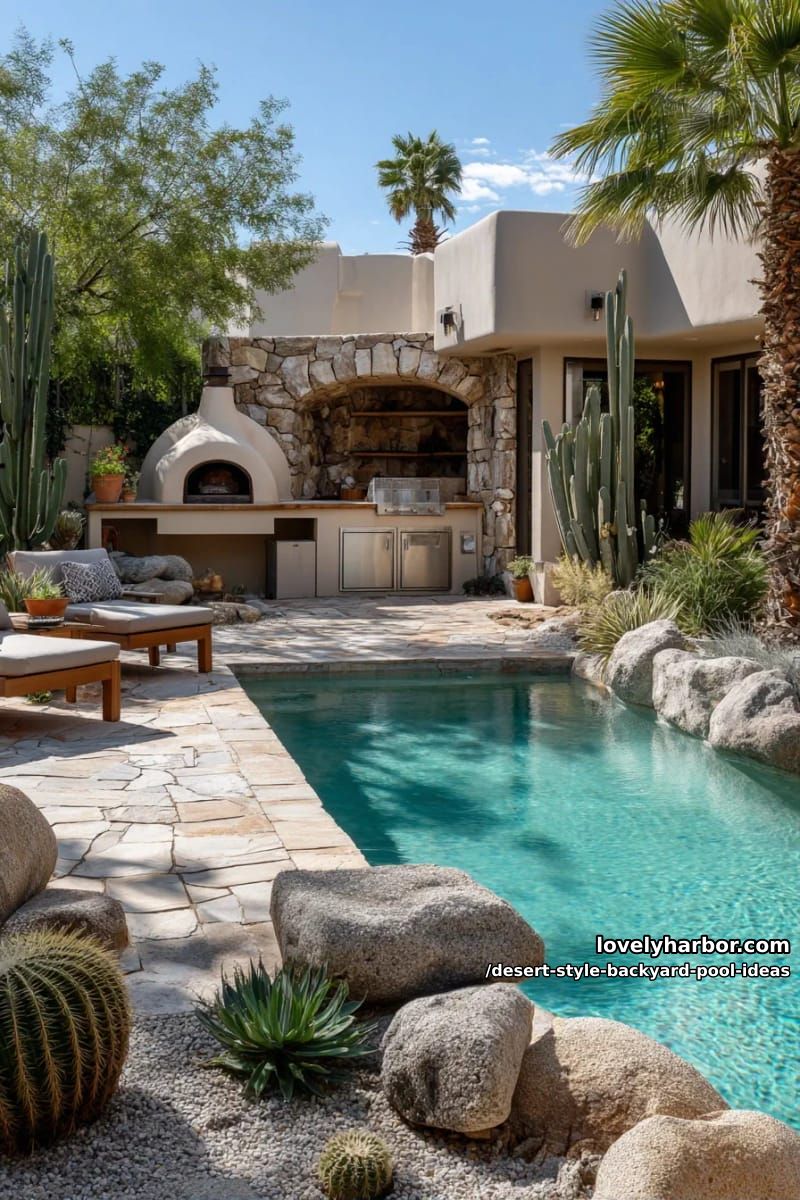
A wood-fired oven turns the pool deck into where everyone actually ends up, and pairing it with low-water planting keeps the maintenance from spiraling. A proper clay or refractory oven holds 700 to 900°F, which cooks a pizza in 90 seconds and stays hot for a roast long after the flame is out. Site it downwind of the seating so smoke does not drift across the loungers.
Hydrozoning means putting plants with similar water needs on the same irrigation valve, so the thirsty herbs near the kitchen run on one line and the cactus beds on another (or none). Combined with drip irrigation that delivers water straight to the roots, this is what lets xeriscaping cut outdoor water use by roughly 50 to 75%, and outdoor use is 30 to 60% of a typical household’s total. Several Southwest cities pay turf-replacement rebates if you tear out lawn to do it.
14. Freeform swimming pool, desert-style patio with white gravel and aloe
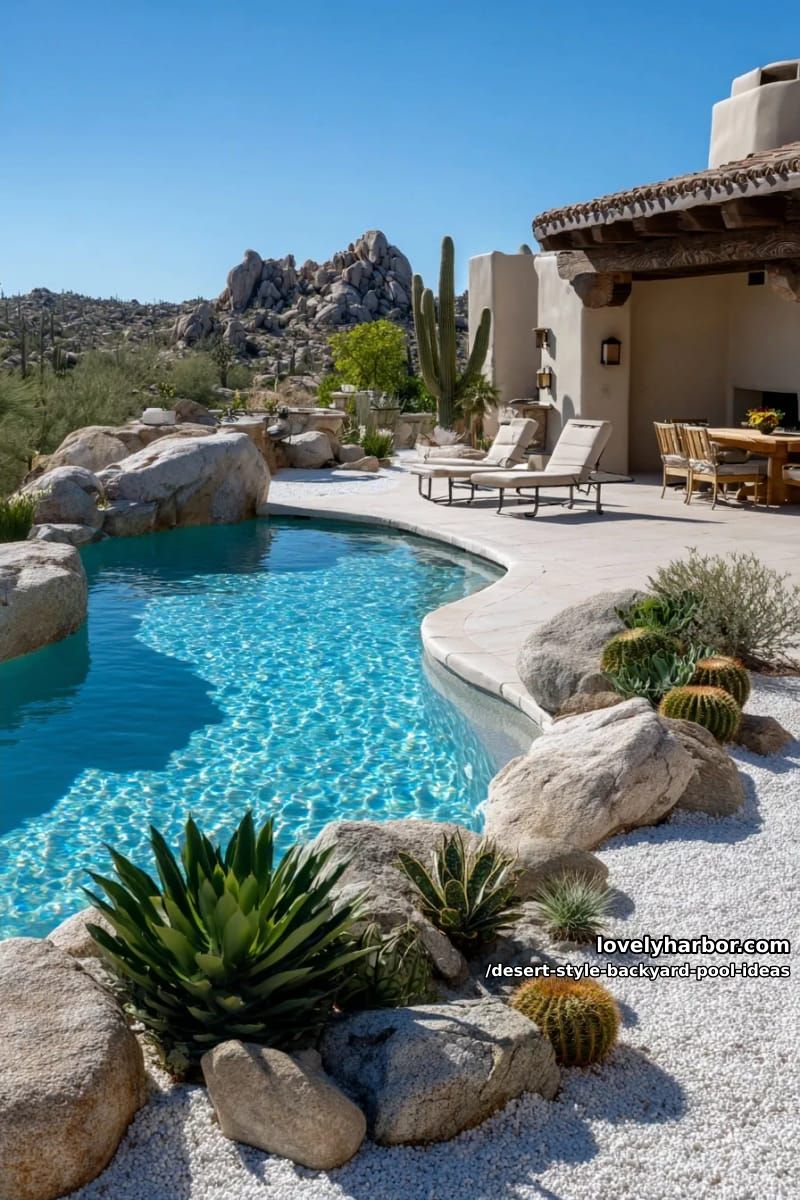
A freeform shape reads relaxed and curves naturally into a loose gravel patio, and light-colored gravel reflects heat instead of storing it the way dark stone does. Aloe is the obvious planting partner, tough enough for reflected glare and happy to flower in winter when little else does.
One honest drawback of bright white gravel: the glare off it at midday is rough on the eyes, and every fallen leaf or speck of algae shows. Set wide concrete or flagstone stepping stones on the routes you actually walk so bare feet aren't crunching across loose rock, and consider a warmer buff-toned gravel if the white turns out to be too much.
15. Rustic split-level pool with built-in bench, mesquite trees, and desert wildflowers
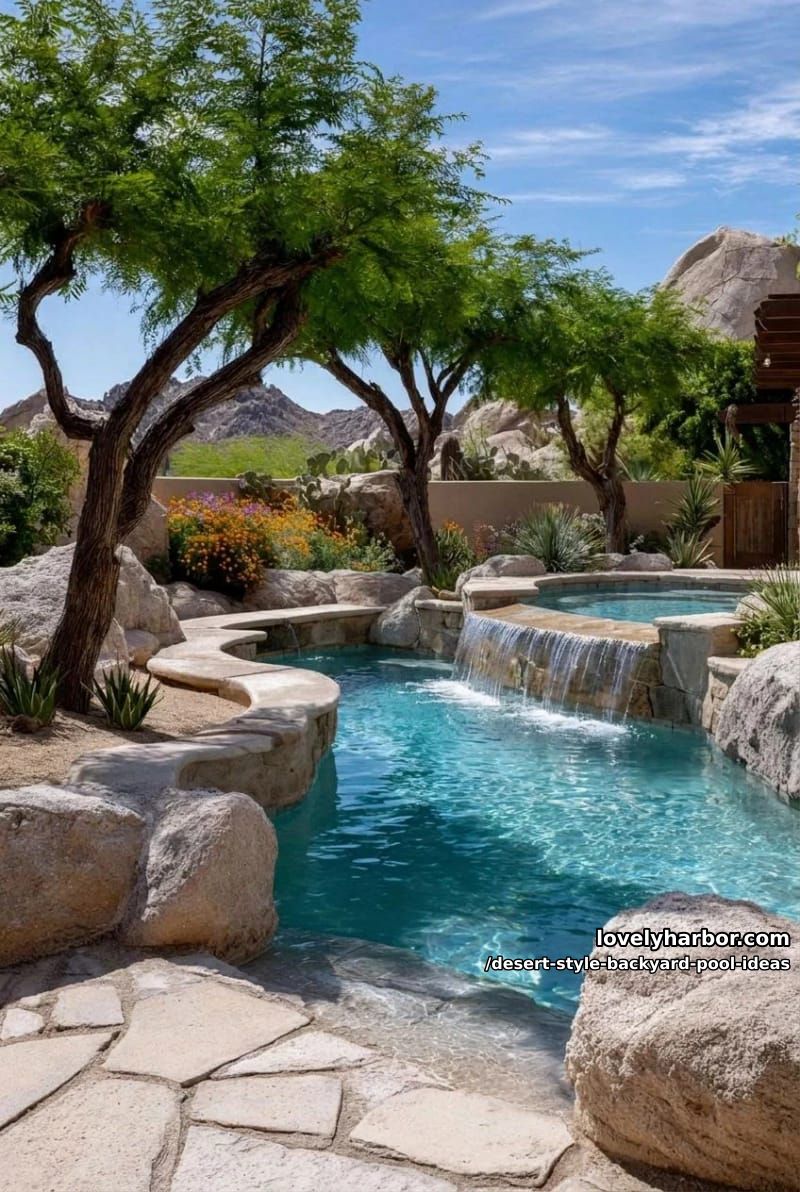
A split-level pool with a built-in bench gives you somewhere to actually sit in the water, which is the feature people use most once they have it. The submerged ledge (pool builders call it a Baja shelf or tanning shelf) doubles as a spot for a lounger in a few inches of water. Edge it in rough stone for the rustic note.
Mesquite is the right shade tree here because it grows fast and casts dappled, filtered shade, but it earns its keep with mess: bean pods and fine leaflets that you will be skimming through late spring and summer. Underplant with desert wildflowers that reseed themselves, globe mallow, desert marigold, and penstemon, which pull in hummingbirds and need a single cutback rather than constant deadheading.
Conclusion
If you take one thing from this list, sequence the build right: settle the hardscape and the shade structure first, because retrofitting a pergola or a Baja shelf after the deck is poured costs real money, and the plants go in last. Two of these ideas hinge on a decision you should make before you fall in love with the picture. The saguaro needs a tagged, nursery-grown specimen and possibly a permit, and the plunge pool versus full pool question decides your budget before anything else. Get those two answered early, lean on gravel and drip irrigation to keep the water bill sane, and the rest is mostly choosing which plant casts the shadow you want to see lit up at night.