
Most porch decorating advice is secretly about lights, which means it falls apart the second the sun is up and your entry looks like bare greenery and a sad bow. This list is the opposite: it leans on wreaths, garland, porch pots, and oversized ornaments that hold their shape at noon, with the lighting treated as the after-dark bonus it actually is. A few of these (the giant shatterproof ornaments, the weatherproofed gift stack, the wood-round risers) are doing the heavy lifting in this year's pins, and I'll tell you which ones are worth the money and which look cheap up close.
1. Size the front door wreath to the door, not to the box it shipped in
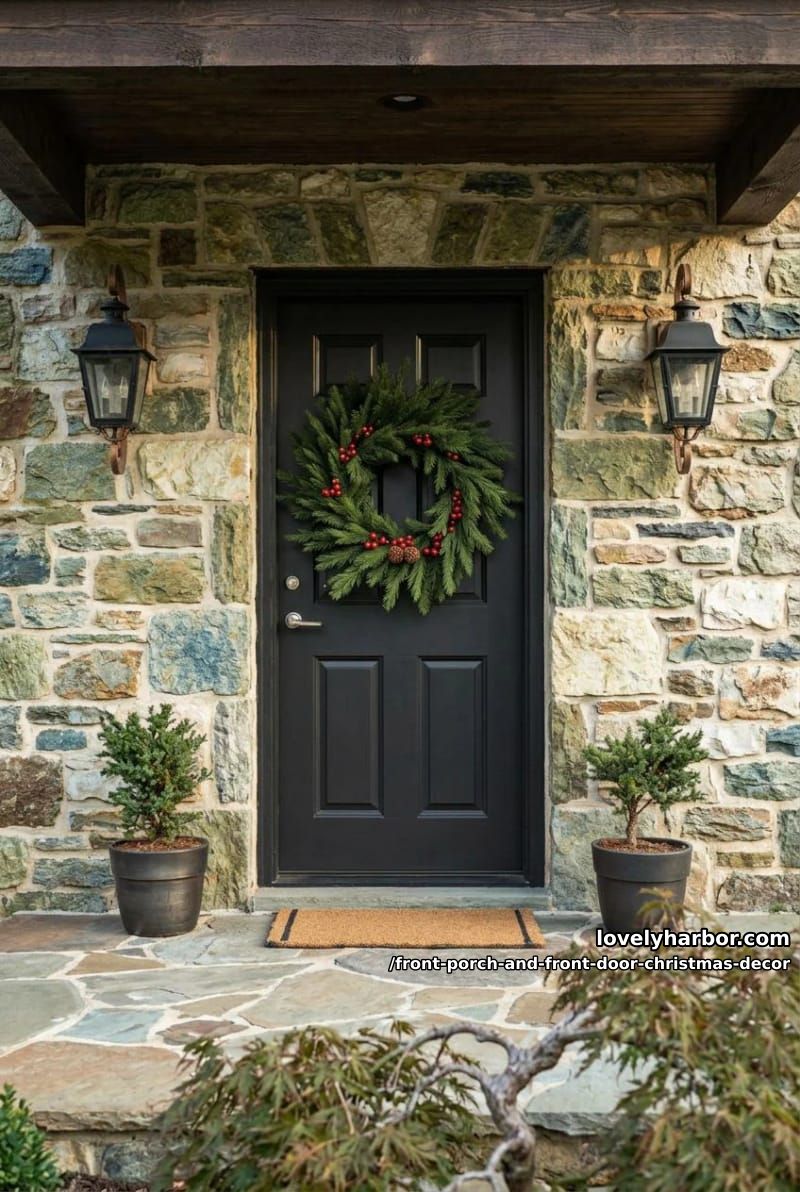
A 24-inch wreath on a 36-inch door looks like a wreath someone forgot to upgrade. The rule decorators actually use: the wreath should cover 50 to 75 percent of the visible door width, so on a standard 36-inch door you want something in the 28 to 34-inch range once it's fluffed. Measure after shaping, because a "30-inch" faux wreath compresses to about 26 in the box.
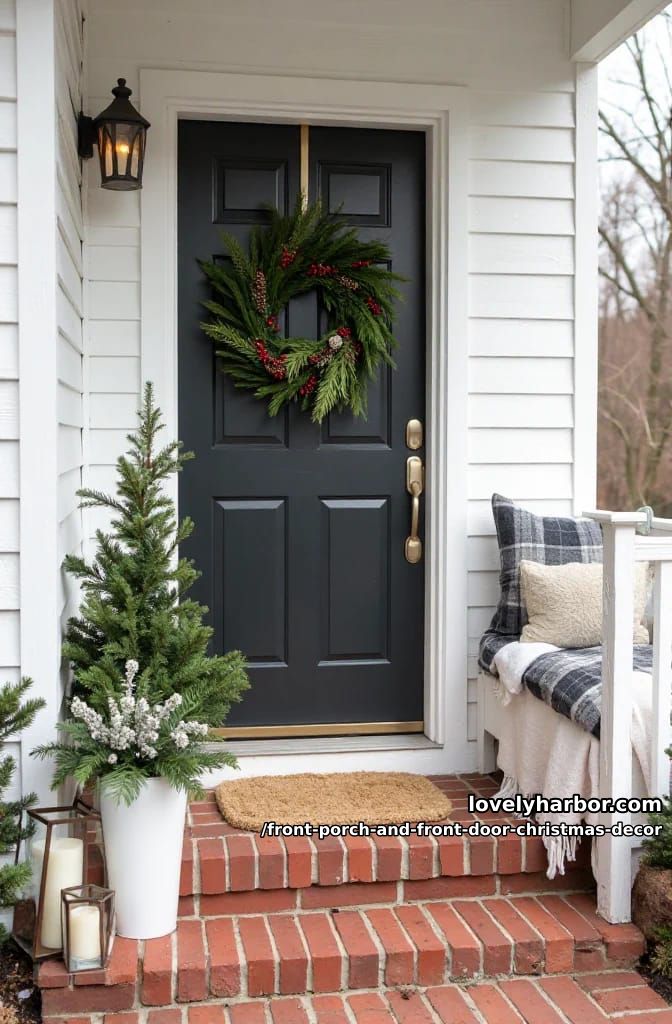
If you're buying faux, the giveaway between the Balsam Hill tier and the gas-station tier is needle variety. One uniform green plastic needle reads fake from the curb; three or four needle types (a flat fir, a soft pine, a stiff cedar) catch light differently and that's what sells it as real. Skip anything pre-frosted with white tips unless you genuinely want the dusted-snow look, because it photographs grey.
2. Hang oversized shatterproof ornaments in the greenery, not just on the door
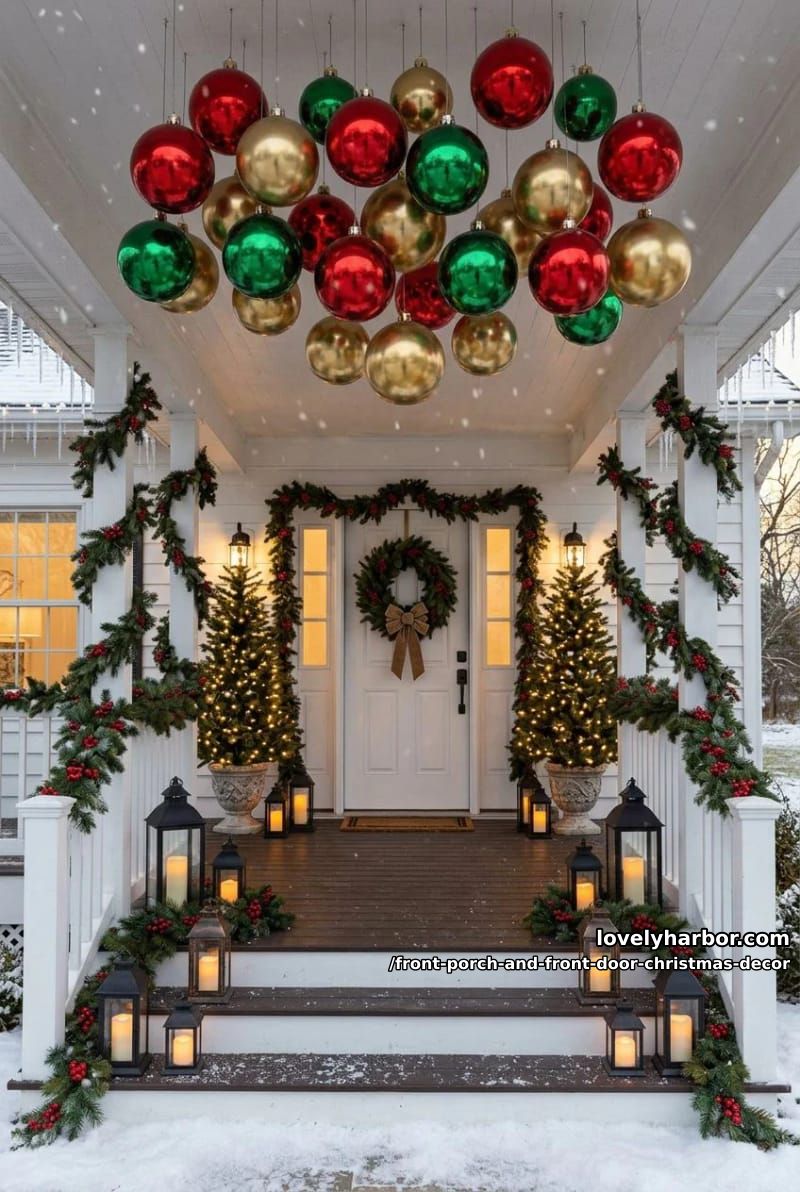
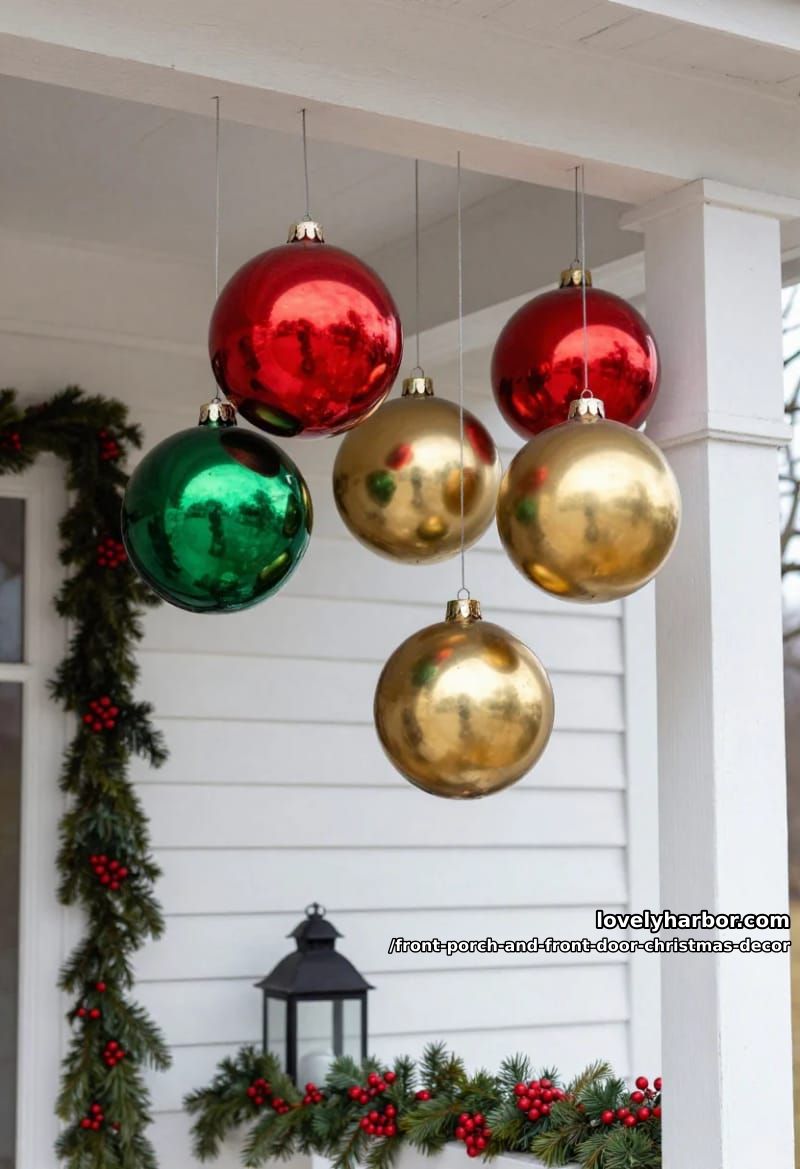
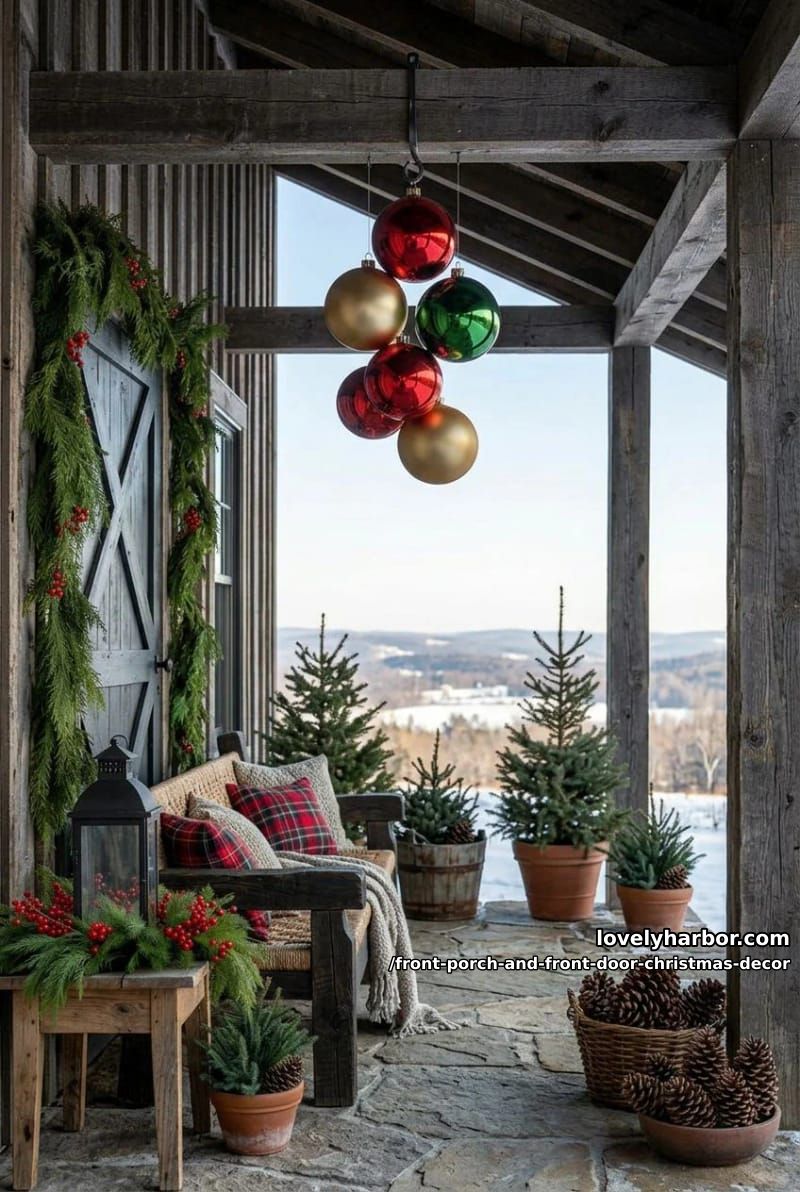
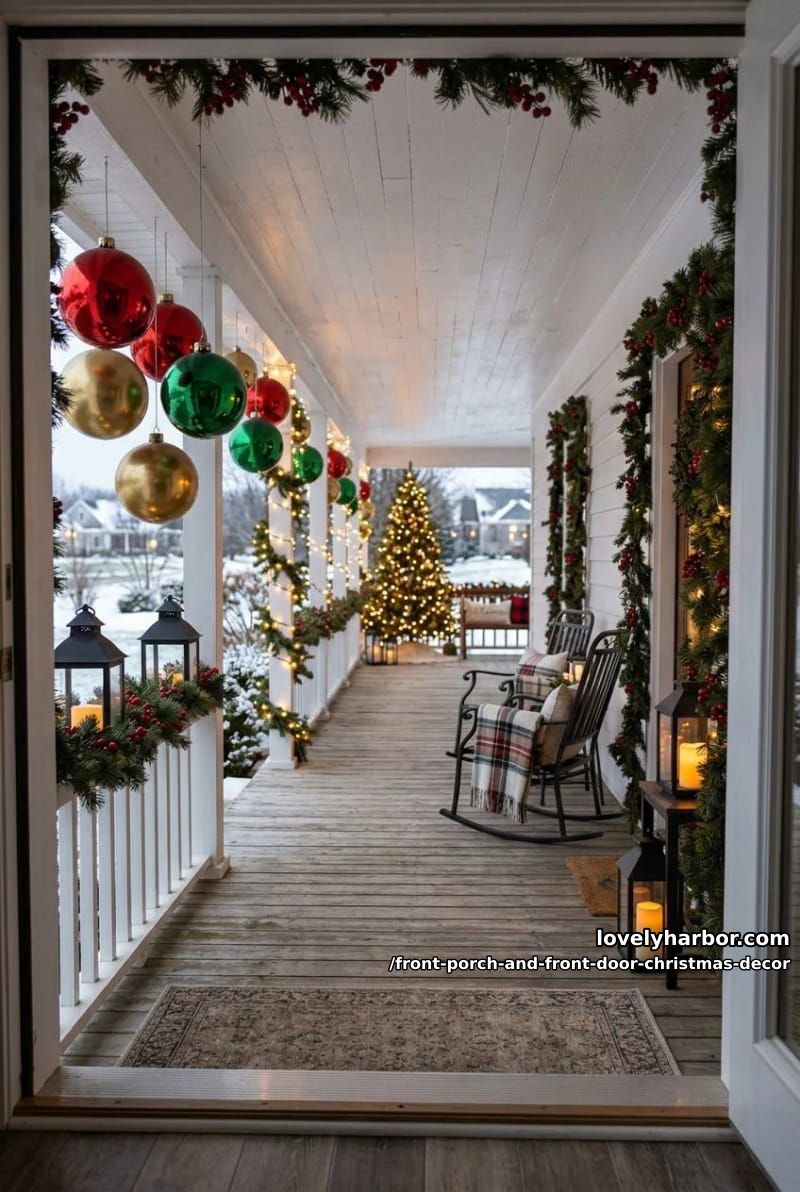
Buy shatterproof plastic, not glass, and buy them bigger than feels reasonable. The clusters you're seeing on Pinterest, where giant red and gold balls hang from the porch ceiling or nestle into the garland over the door, only work at scale: 6 to 10-inch diameters read from the street, while standard 3-inch ornaments disappear into the greenery. Plow & Hearth and Vickerman both sell UV-resistant outdoor versions that won't fade to chalk by January.
Hang them on clear fishing line at uneven heights and in odd numbers. Three or five, never four in a tidy row. The single most common mistake here is spacing them evenly, which instantly looks like a store display instead of something that grew on the porch.
3. Flank the door with porch pots built on the thriller-filler-spiller formula
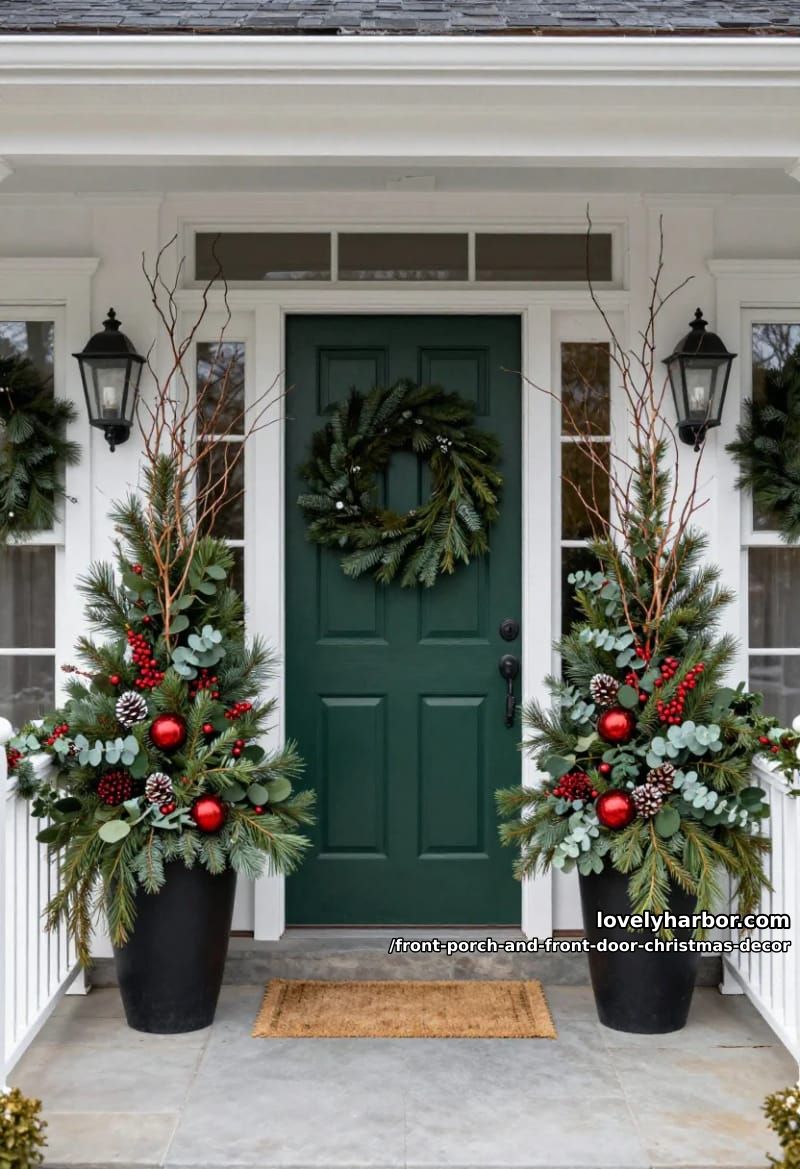
This is the highest-impact thing you can build yourself, and it costs a fraction of buying pre-made. The formula florists use is thriller-filler-spiller: one tall vertical element for height, a dense middle for volume, and trailing greens over the edge. HGTV's rule of thumb is that the thriller should stand roughly twice the height of the container, which is why a 24-inch pot wants branches pushing 4 feet.
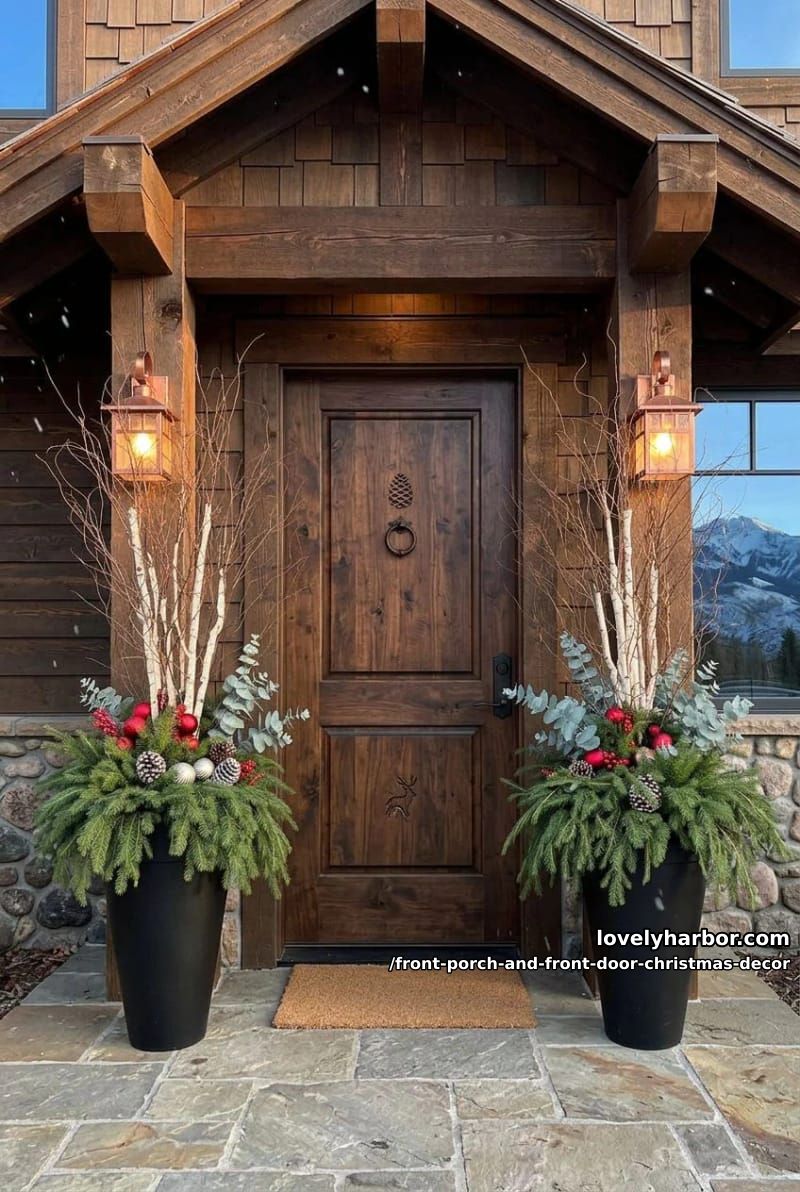
- Anchor the empty pot with packed sand, soil, or a bundle of twigs so wind doesn’t tip it. Skip floral foam; it crumbles and it’s not biodegradable.
- Set your thriller dead center: curly willow, redtwig dogwood, or white birch branches.
- Pack fillers around it at an outward angle. Mix needle types, then tuck cedar or white pine to spill over the rim.
- Last, the personality. Ornaments, berry picks, one bow, whatever ties it to the door.
Cut fresh stems early and store them on a cold porch; the cut ends seal and they'll hold up to two weeks before you arrange. Real greenery in a cold climate lasts the whole season outdoors. In a warm one it browns by week two, so that's the case for faux.
4. Frame the door with garland that falls down, not garland pulled tight across the top
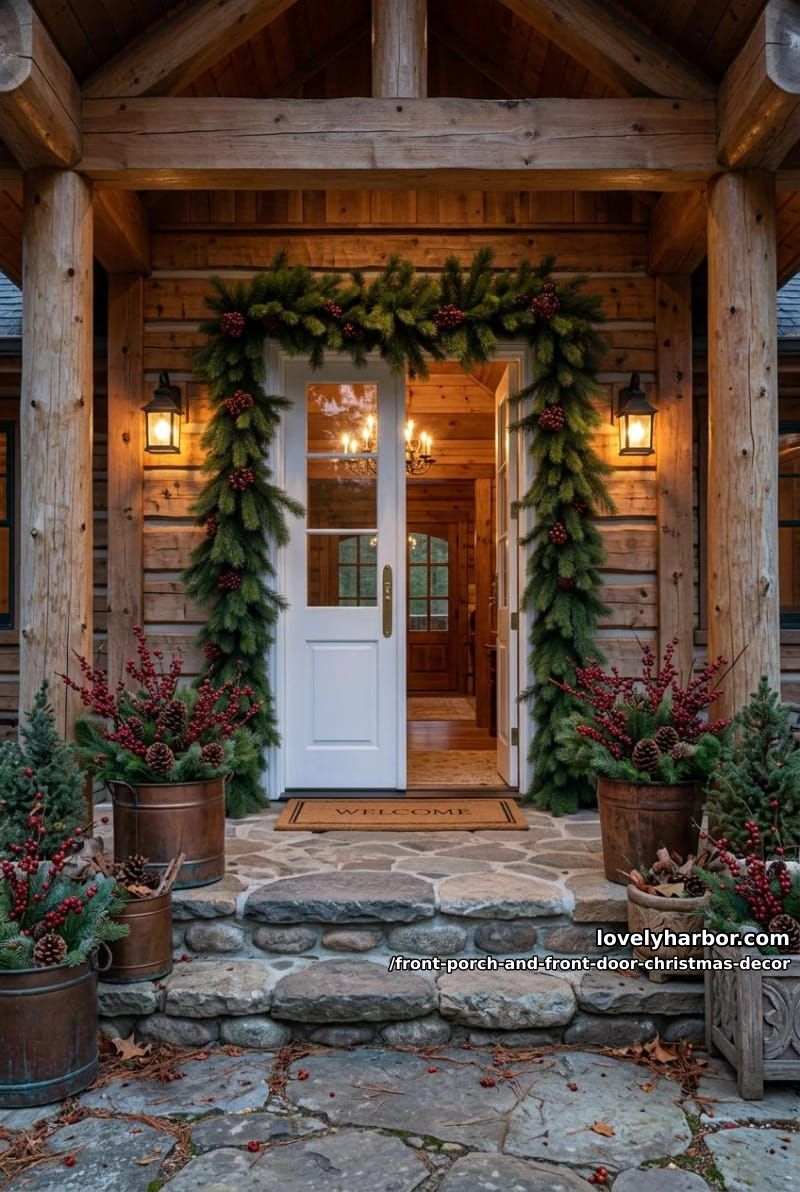
The detail that separates a framed door from a draped-junk door is direction: the branch tips should fall toward the ground. Matt Bowman of Tradition Company installs garland over front doors by cutting it into two sections, tying them at the center top, and letting each piece lie in opposite directions so the branches lean downward. Pulled flat and taut, garland looks like a green pool noodle stapled to the trim.
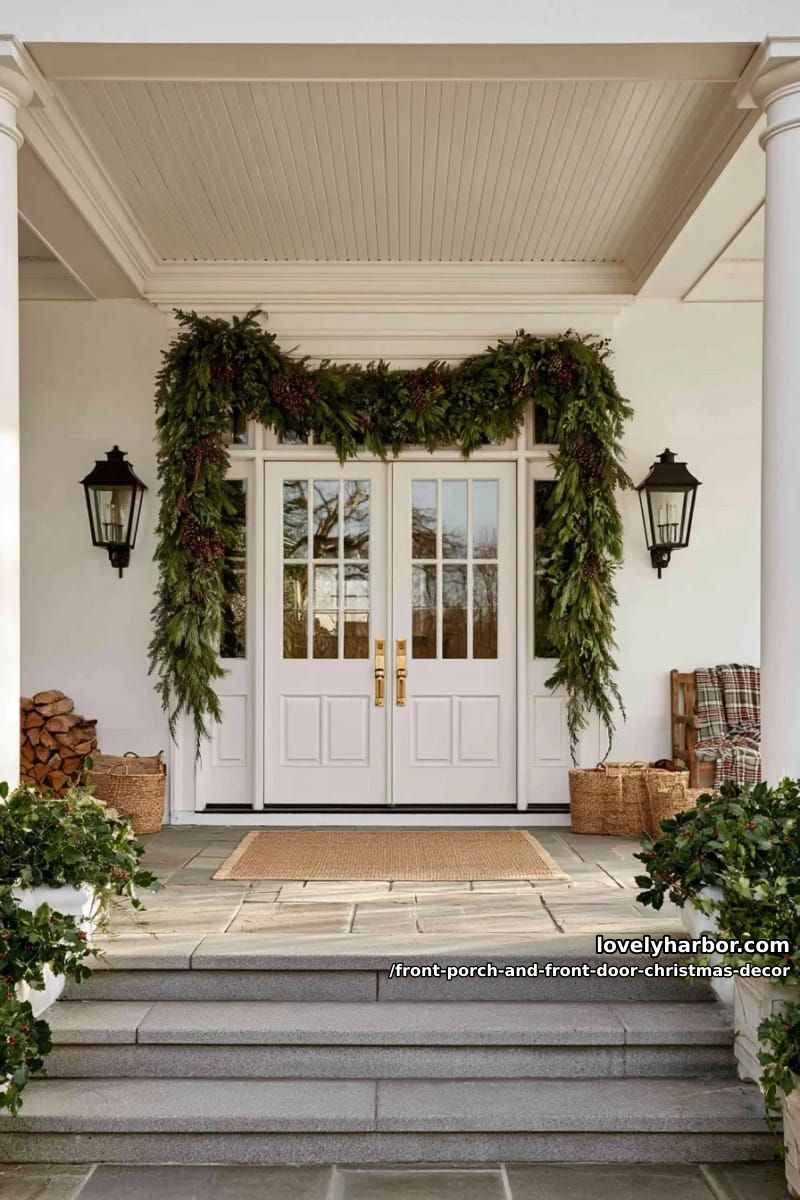
Footage is where people guess wrong and end up with a stingy garland that doesn't reach. Here's the math worth saving:
| Where it goes | How to measure | Rough footage |
|---|---|---|
| Single front door | Top plus both sides | 9 to 12 ft |
| Double door | Top plus both sides | 18 to 20 ft |
| Porch column | Spiral wrap | 2x the column height |
| Railing or swag | Length of the run | 5 to 2x the span |
When in doubt, wrap a piece of string the way you plan to run the garland, then measure the string. It sounds fussy. It saves a second trip to the store.
5. Try an all-greenery, no-red front door for once
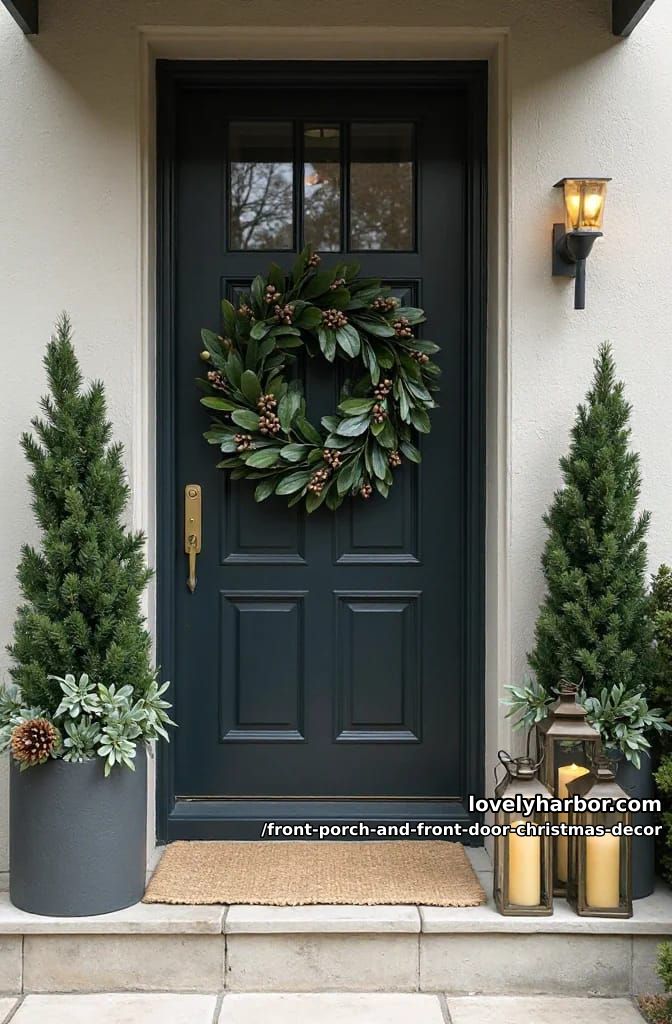
Red-and-green is the default, and the default is fine, but an all-greenery door with brass or gold accents looks more expensive than it is and photographs beautifully in flat daylight. Magnolia leaves are the secret weapon here: the glossy dark front and the suede brown back give you two-tone contrast without a single ornament. Anthropologie and Pottery Barn both lean hard on this look in their holiday catalogs, and it's a fraction of the cost to copy.
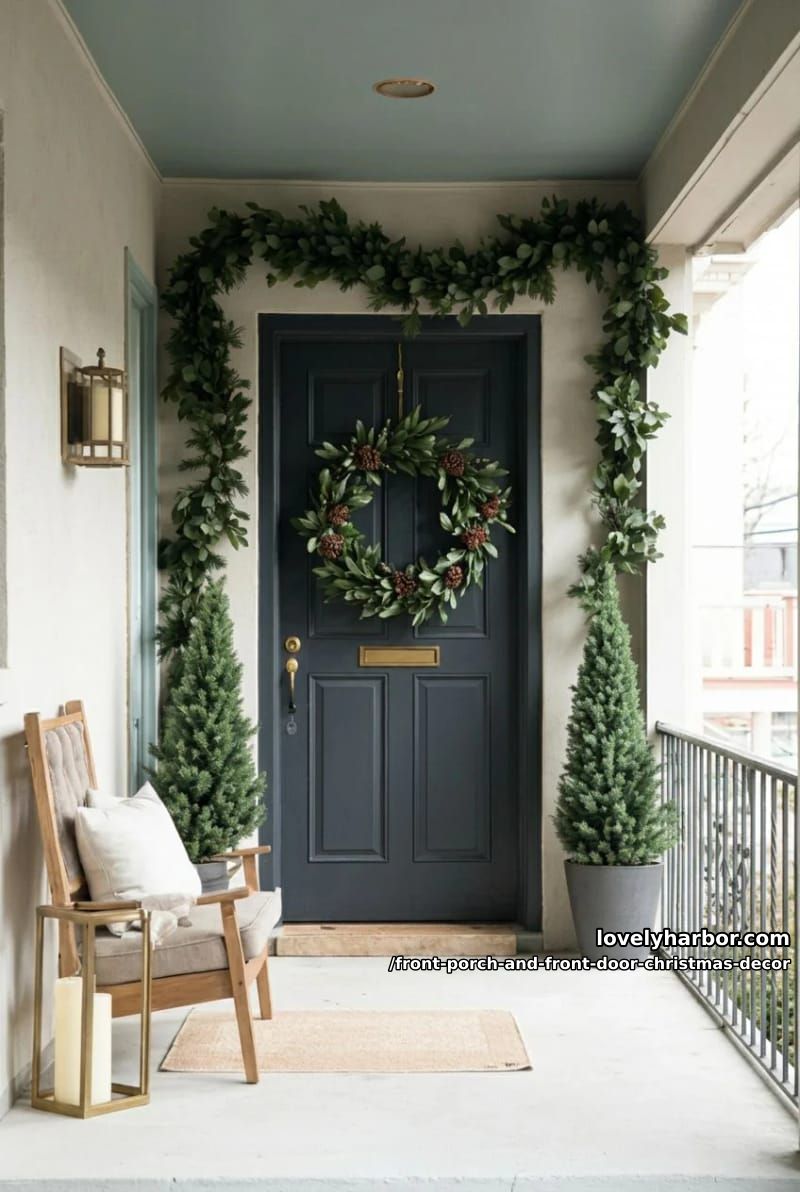
Granted, this only works if your door color can carry it. Against a black, charcoal, or deep-green door, layered greenery reads rich and architectural. Against a builder-beige door it can look like you ran out of decorations. If that's your situation, one wide velvet ribbon in a deep tone fixes it instantly.
6. Stagger lanterns and pillar candles at the threshold for after-dark depth
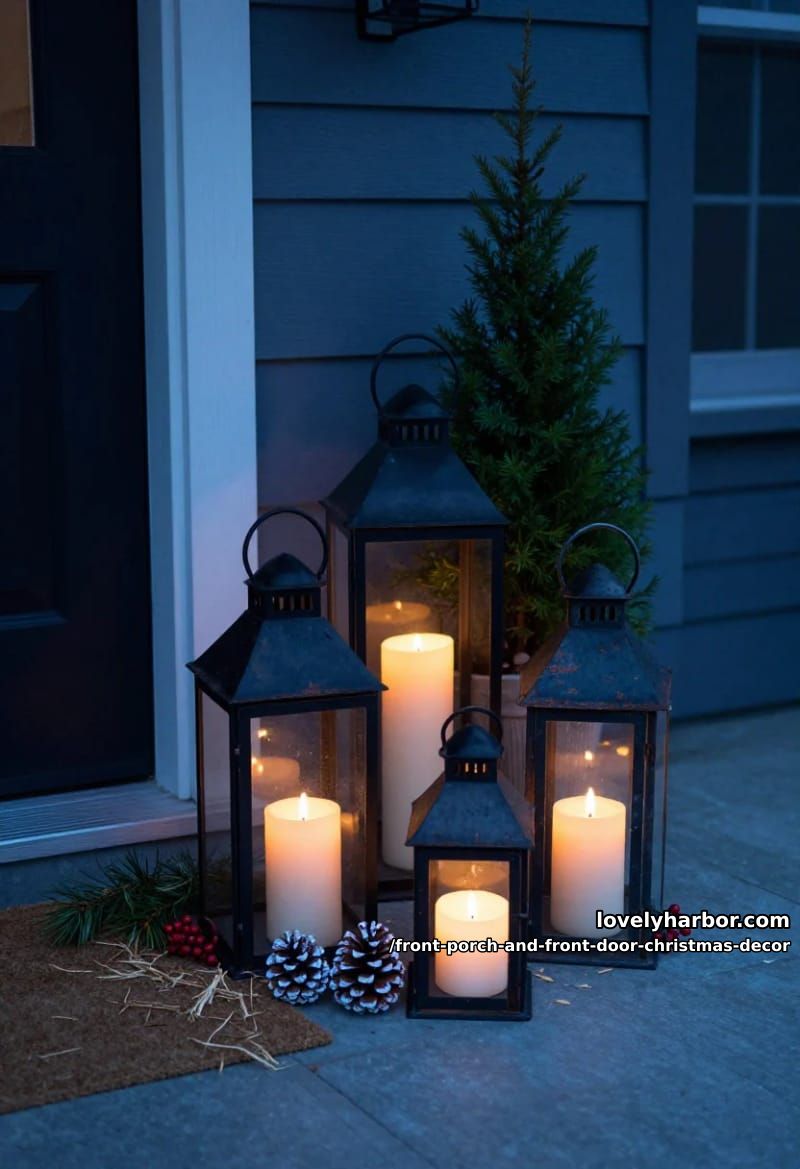
Lanterns earn their keep precisely because they read both ways: structural and sculptural in daylight, glowing at night. The trick is height variation. Three lanterns at 24, 18, and 12 inches make a composition; three identical lanterns make a showroom. Cluster them to one side of the door rather than splitting them symmetrically, and tuck loose greenery and pinecones around the bases so they look planted instead of placed.
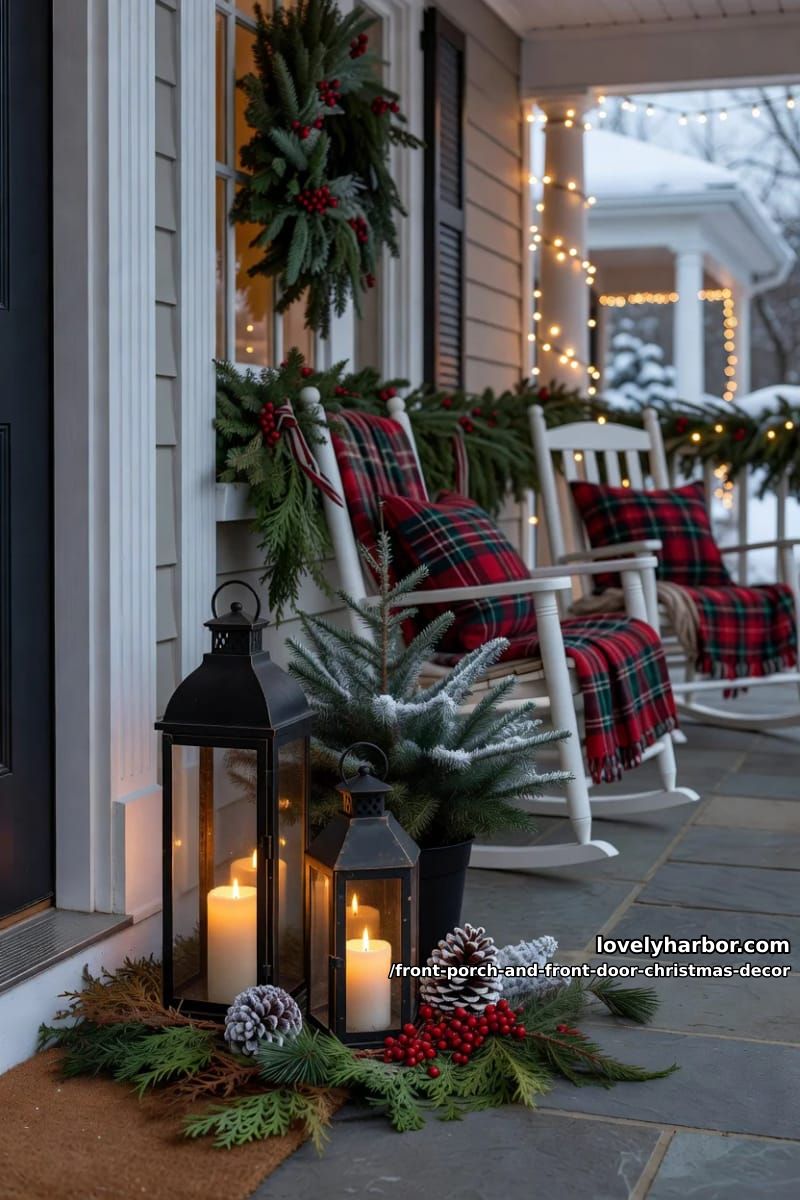
Use battery pillar candles with a 6-hours-on, 18-hours-off timer so they light themselves at the same time each evening. Real flame on a windy covered porch is a genuine fire risk near dry greenery, and I've stopped recommending it.
7. Make one oversized velvet bow the focal point instead of scattering ten small ones
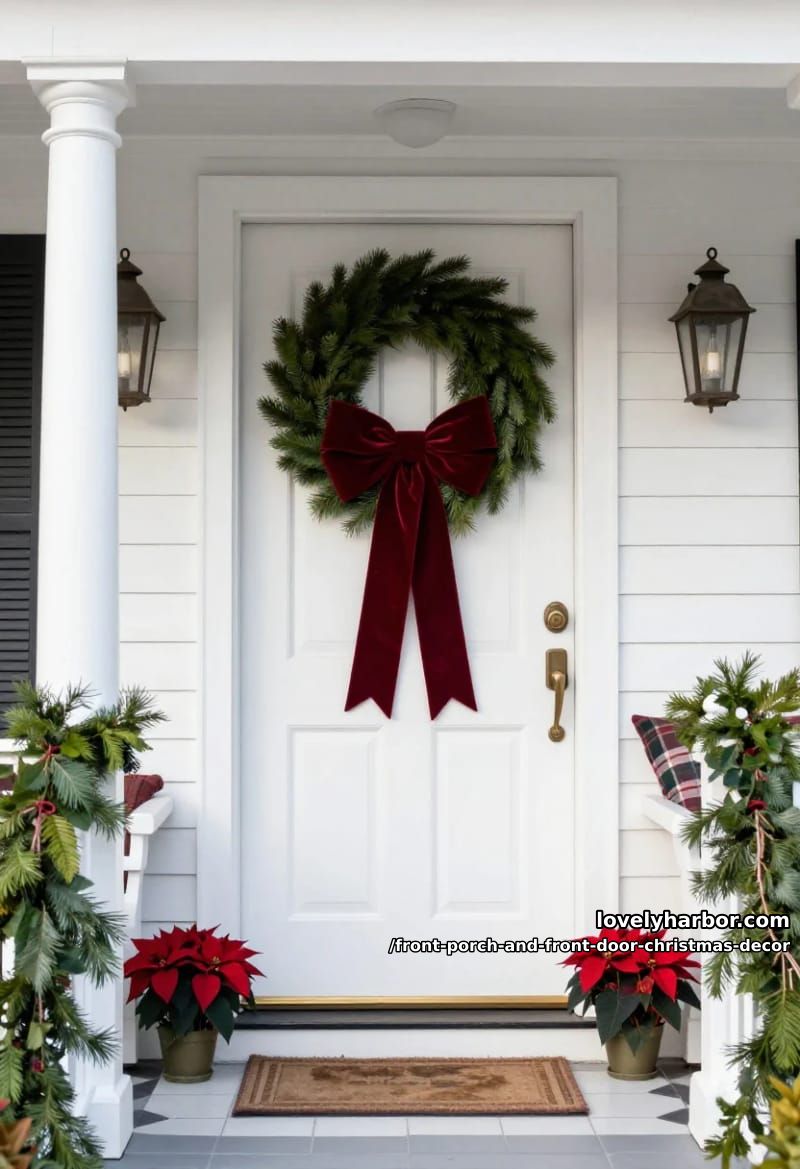
One big bow beats a dozen little ones, every time. A single 18 to 24-inch velvet bow with long tails draping down the door is a focal point; the same ribbon chopped into ten tiny bows tied to every baluster is visual clutter that reads as trying too hard. Velvet specifically, not the wire-edged satin that goes shiny and cheap in photos. Burgundy, hunter green, and a true poppy red all hold up; pastel anything looks Easter.
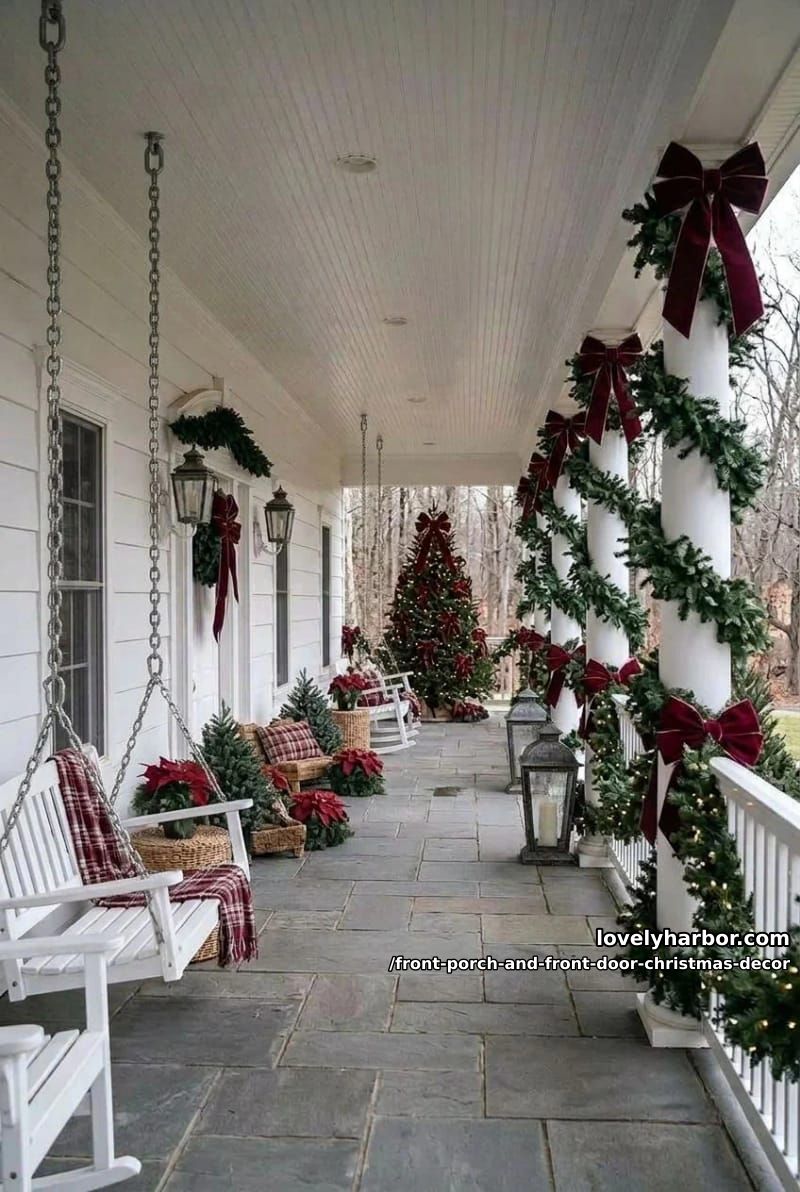
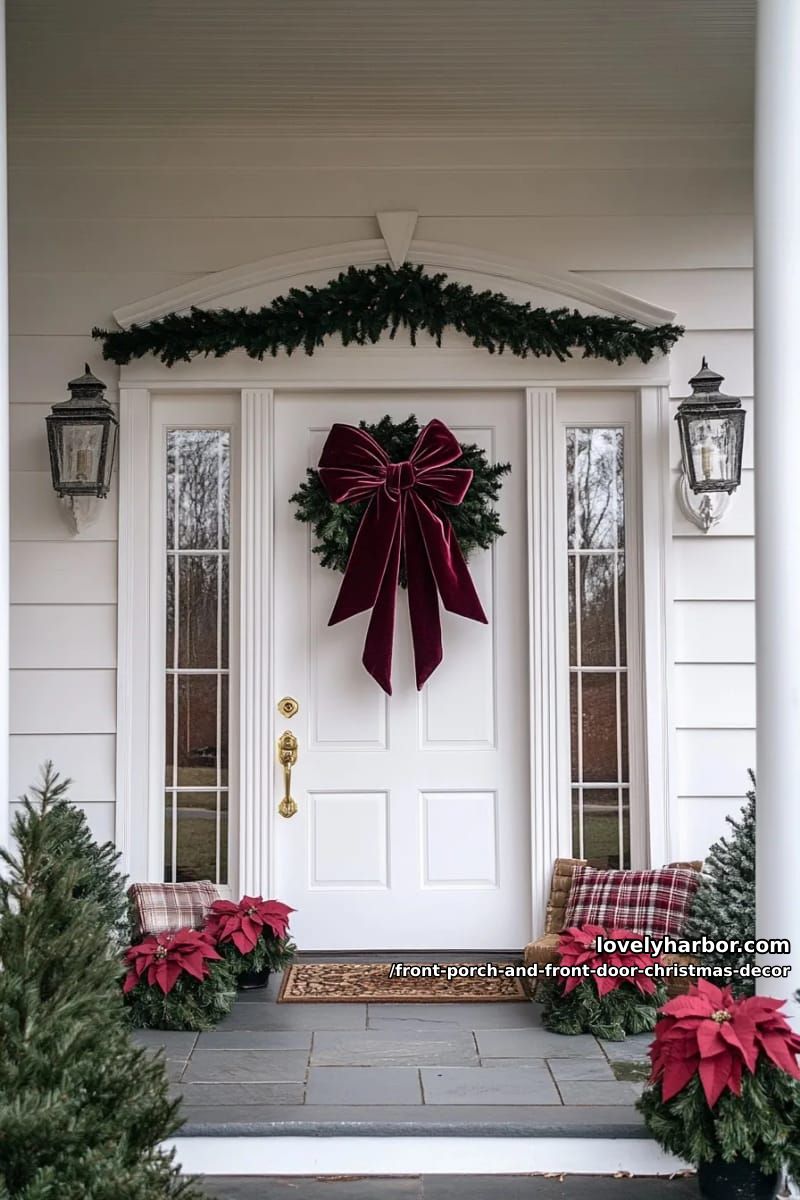
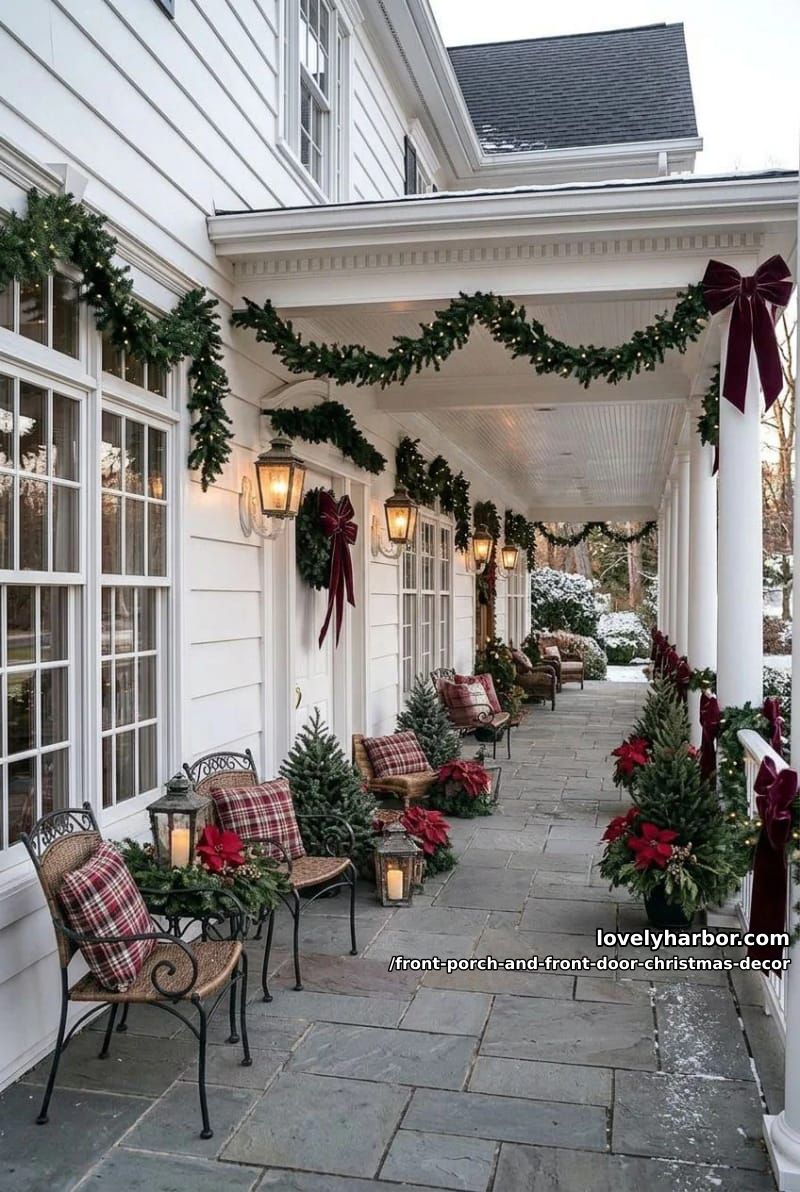
Do this with bows
- One statement bow on the door, or one per porch post, never both.
- Tails long enough to drape, at least half the door height.
- Reuse the same ribbon color in the porch pots to tie it together.
Avoid
- Wire-edged satin in bright primary colors. It photographs plastic.
- A bow on the wreath and the door and every railing post.
- Skimpy tails that stop a few inches below the knot.
8. Stack faux gift boxes on the porch floor, but waterproof them first
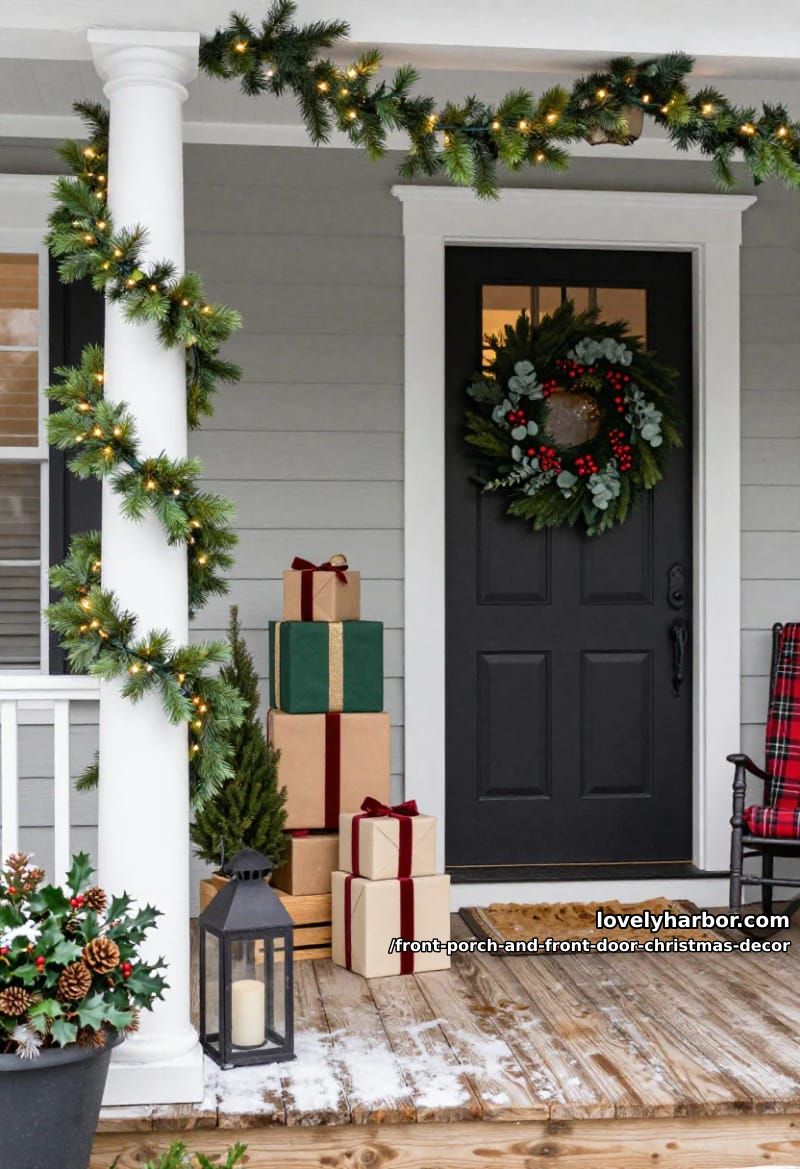
Faux gift-box stacks are one of the cheapest ways to fill empty porch floor, and they're also the fastest to turn into a soggy disaster. Real wrapping paper outdoors lasts about one rainstorm. The fix: wrap sturdy boxes (or weatherproof "present" forms) in outdoor vinyl or laminated paper, finish with weatherproof ribbon, and set the whole stack on a riser like an upturned crate so it isn't sitting in meltwater.
Stack in a rough pyramid, largest on the bottom, and vary the wrap so it isn't three identical boxes. If you live somewhere it actually snows, just accept these are a two or three-week decoration and store them the moment the wrapping starts to pucker.
Another super cute idea with gift boxes: you can just hang them on the porch celing for a stunning effect!
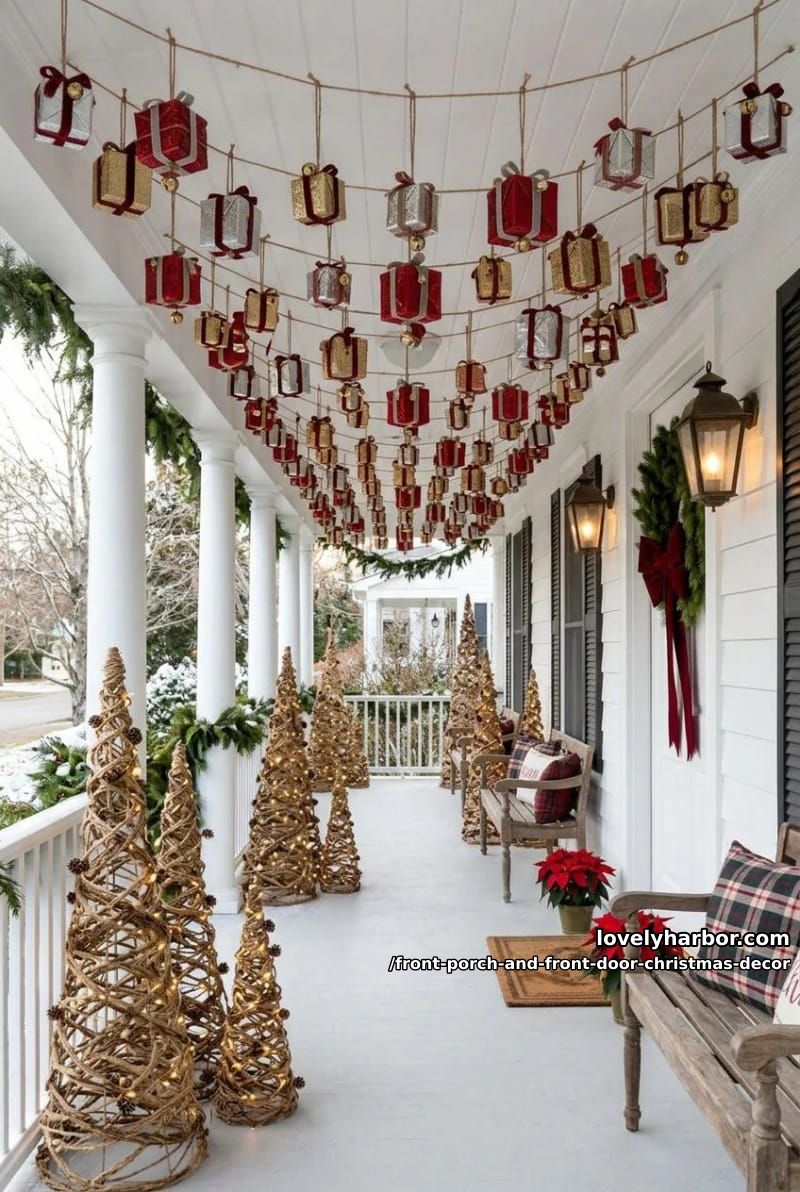
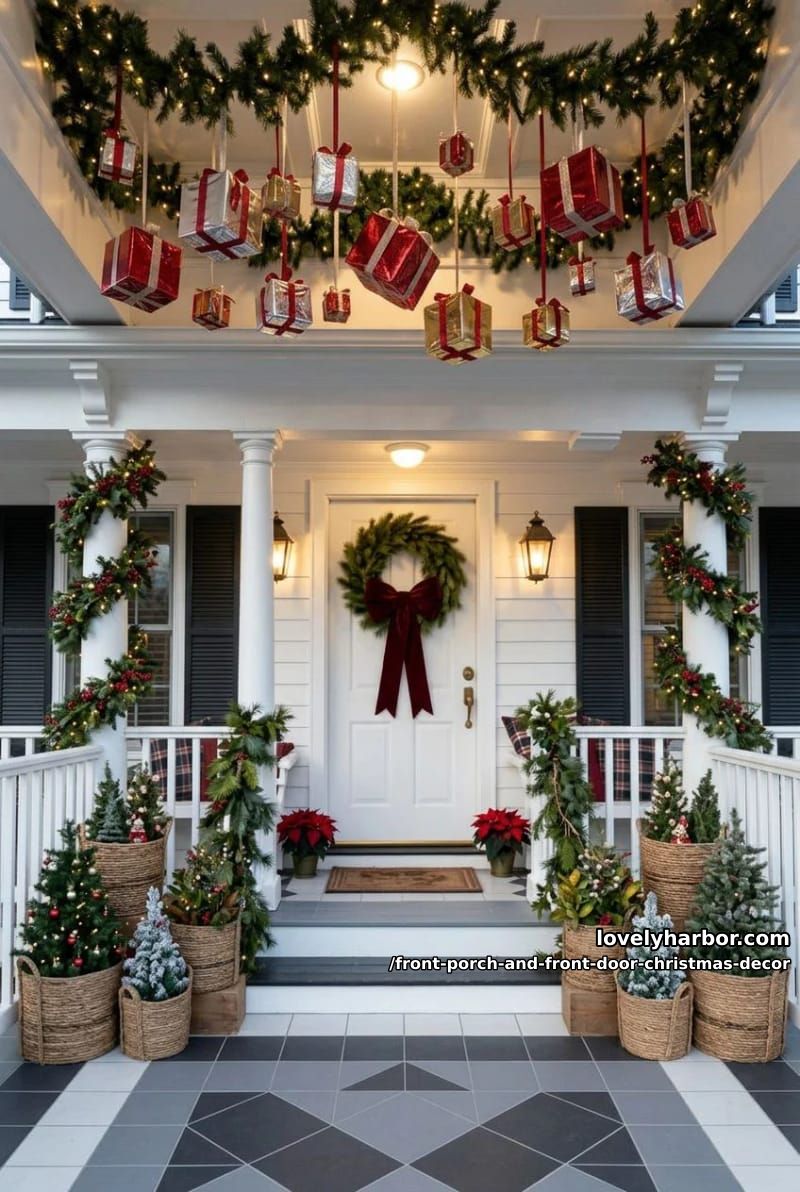
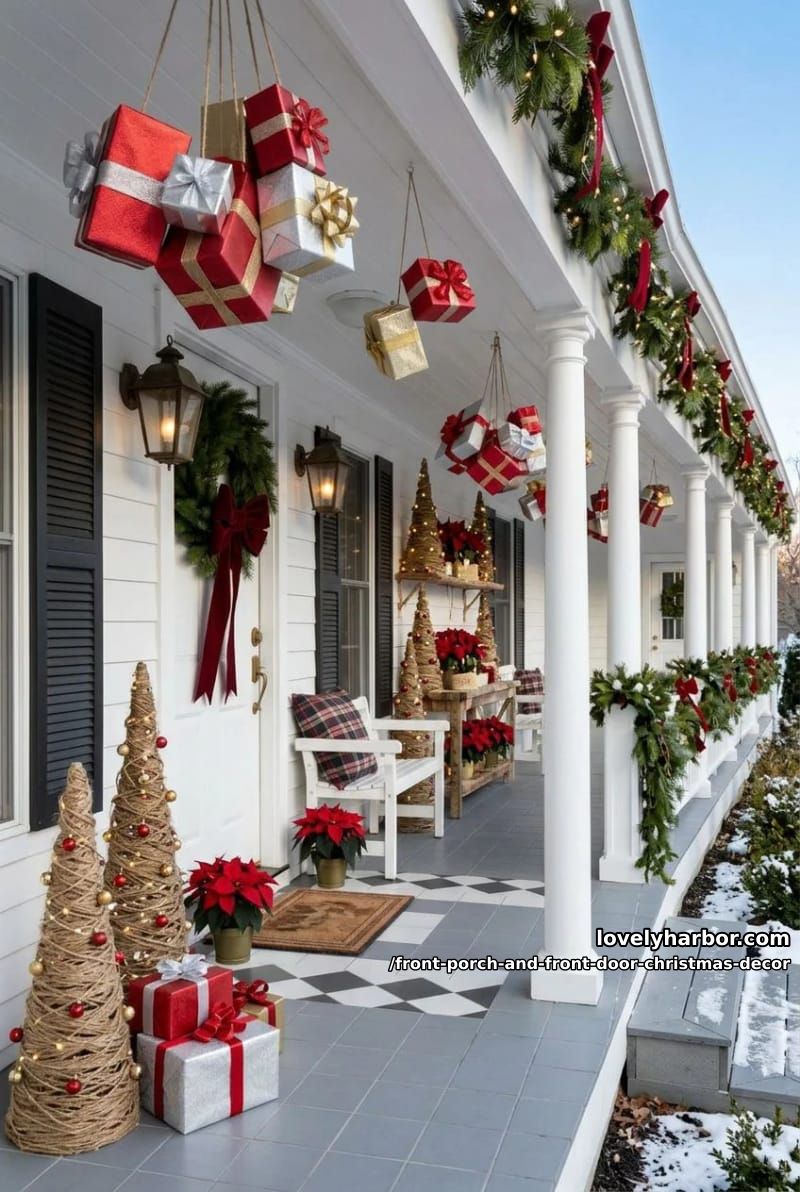
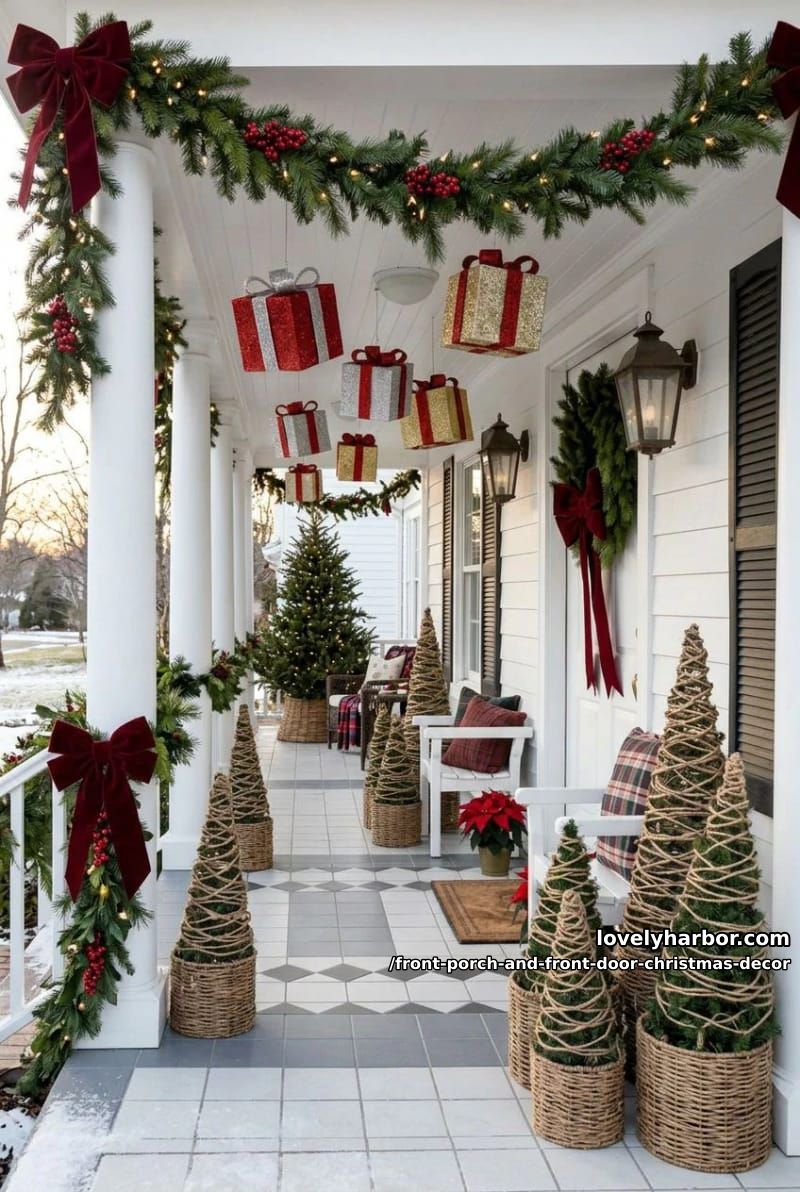
9. Use wood-round risers and log stumps to add natural texture at the base
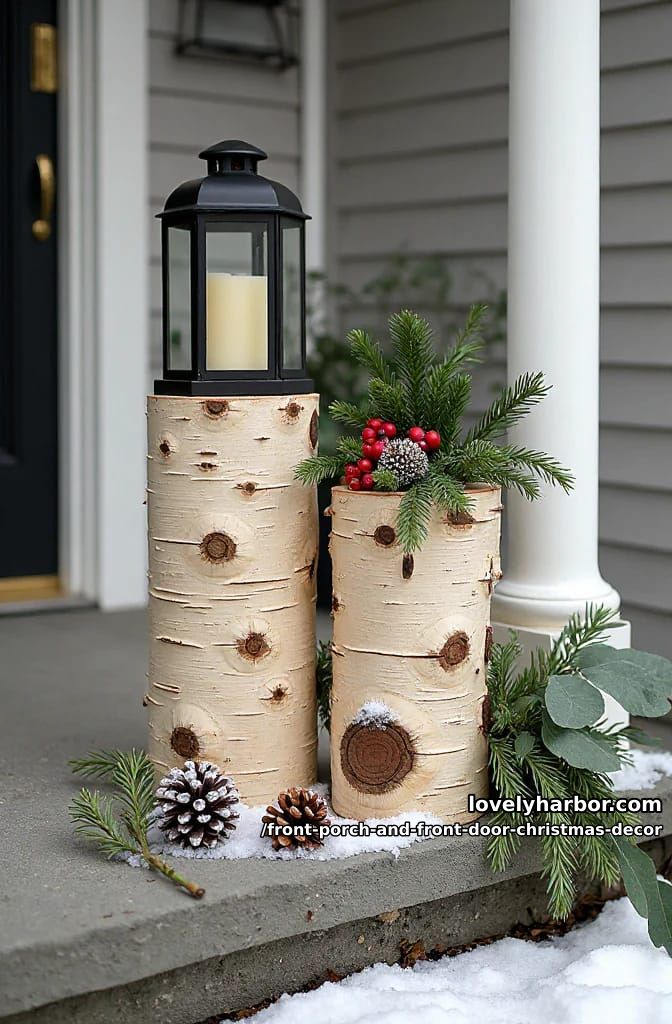
Cut logs and birch rounds are the detail that makes a porch look styled by a person rather than bought as a kit. Stand two or three stumps of different heights to act as pedestals for lanterns or small arrangements, which solves the perennial problem of everything sitting flat on the ground at the same level. Birch reads brightest against evergreen, but any clean hardwood round works, and if you have a fireplace you probably already own the raw material.
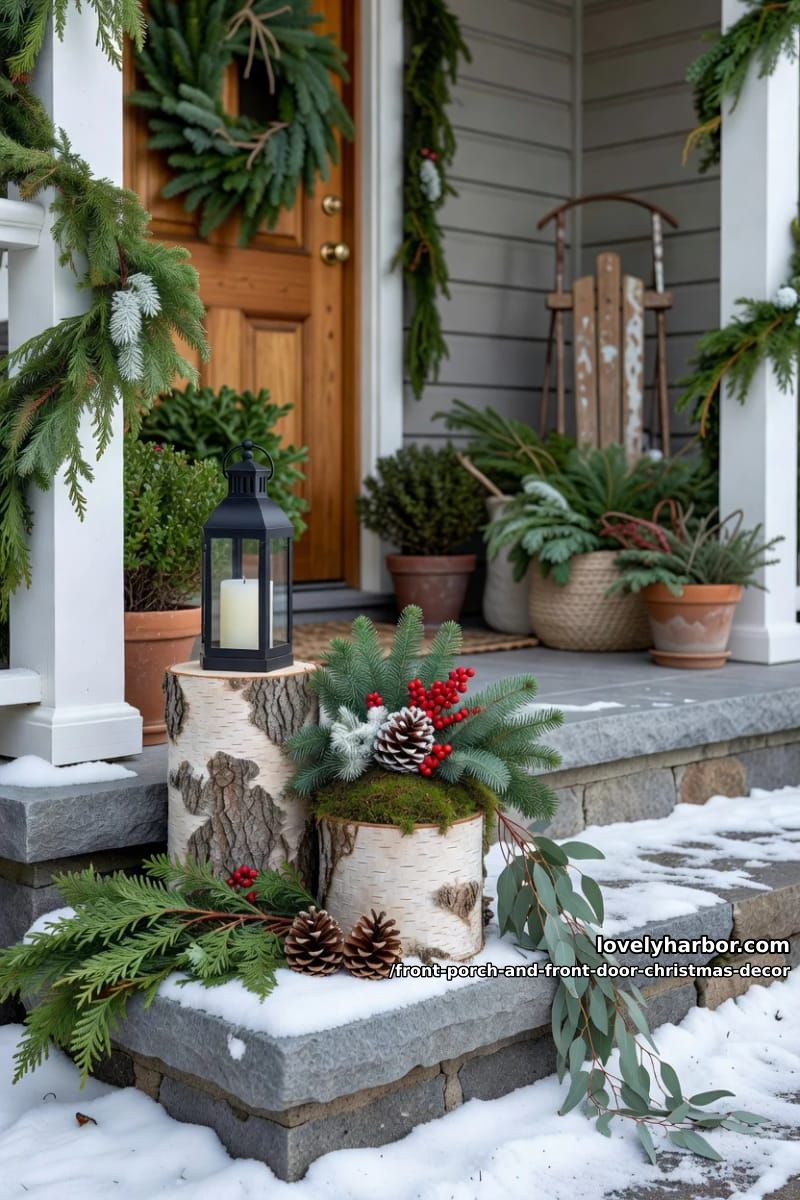
This is also the budget move hiding as a design move. A free log from the woodpile doing the job of a $60 pedestal.
Overloading. The pins that look elegant are usually working in two or three colors and one or two textures, repeated. The ones that look chaotic have red, gold, green, silver, plaid, nutcrackers, candy canes, and inflatables all fighting on one small porch. Pick a tight palette, repeat it across the door, the pots, and the floor, and leave deliberate empty space. A porch that’s 70 percent decorated looks intentional; one that’s 100 percent decorated looks like a clearance aisle.
10. Flank the door with a pair of nutcrackers or potted topiary for symmetry that holds
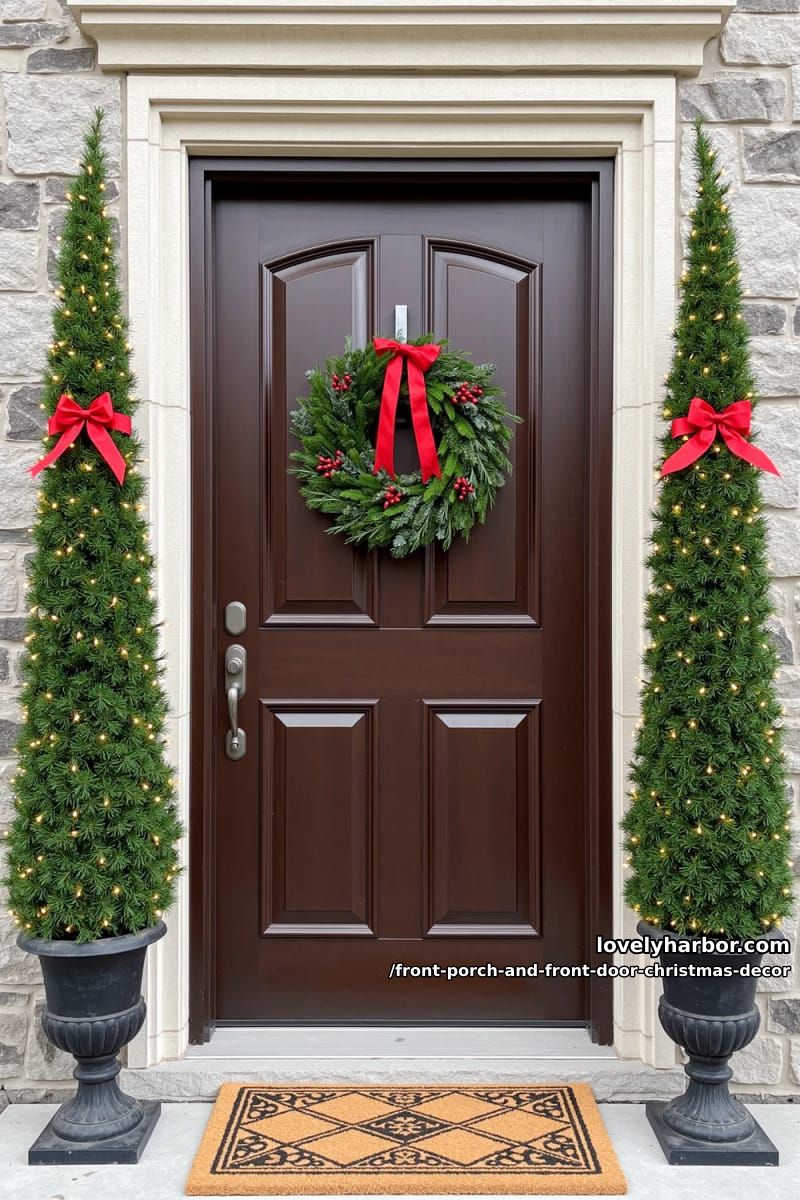
A flanking pair frames the door and gives the eye an obvious focal point, which is why nearly every polished porch on Pinterest has matched elements on both sides. Two slim potted spruces, two boxwood cones, or, if your style runs more maximalist, two oversized nutcrackers standing sentry. The 4 to 5-foot nutcracker look is having a real moment this year, and it splits people: some find it charming, some find it theme-park. I'm mildly in the second camp, but it photographs well and that's what most people are after.
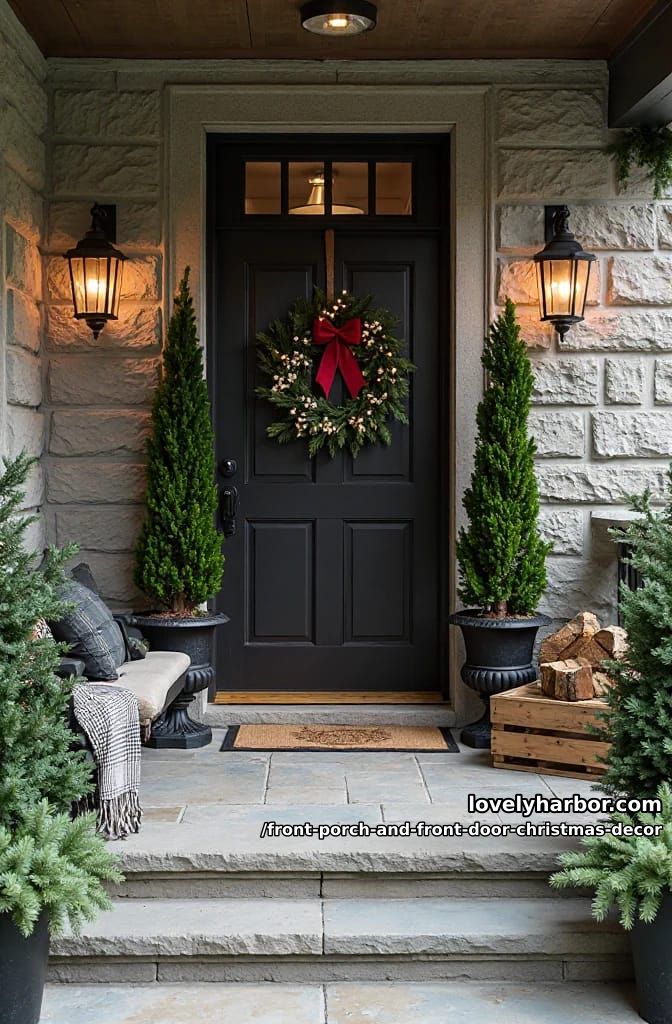
If you go the potted-tree route, the urns matter as much as the trees. Cheap thin-walled plastic pots tip in wind and read flimsy; weighted resin or real stone holds the composition through a storm.
11. Wrap the columns and railings so the architecture itself does the decorating
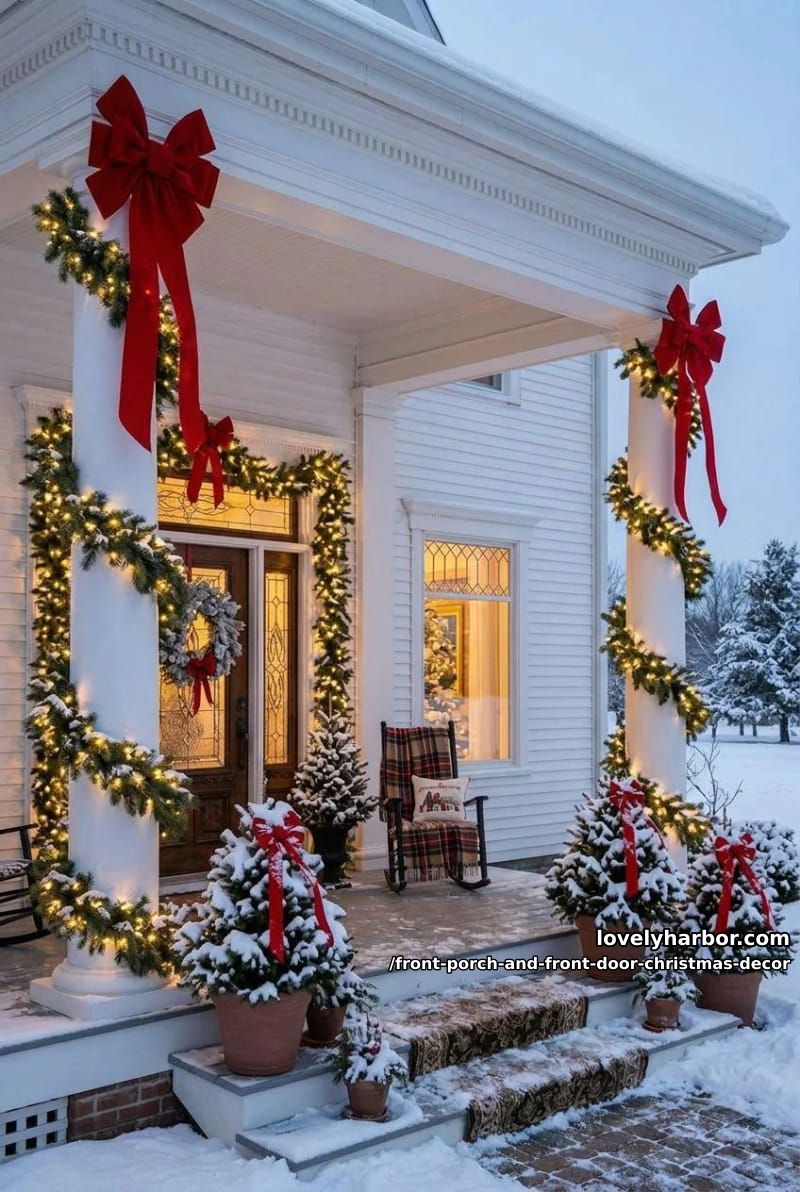
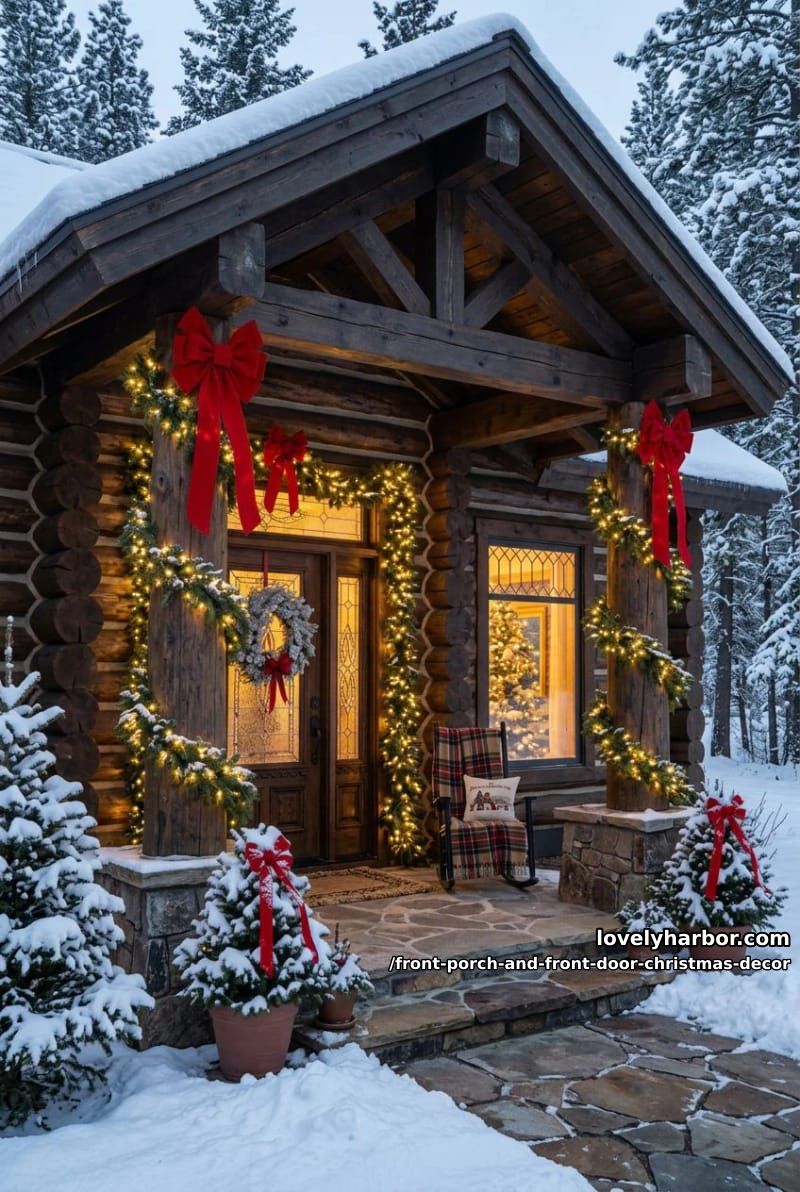
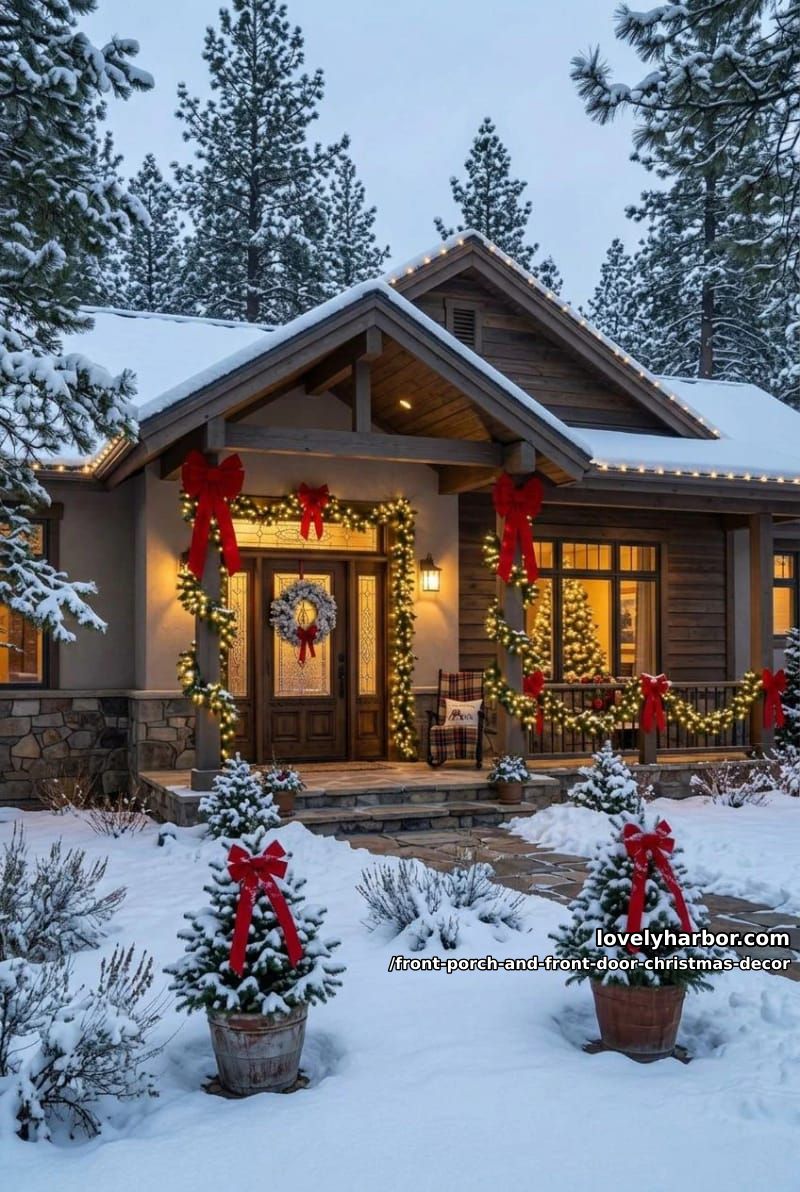
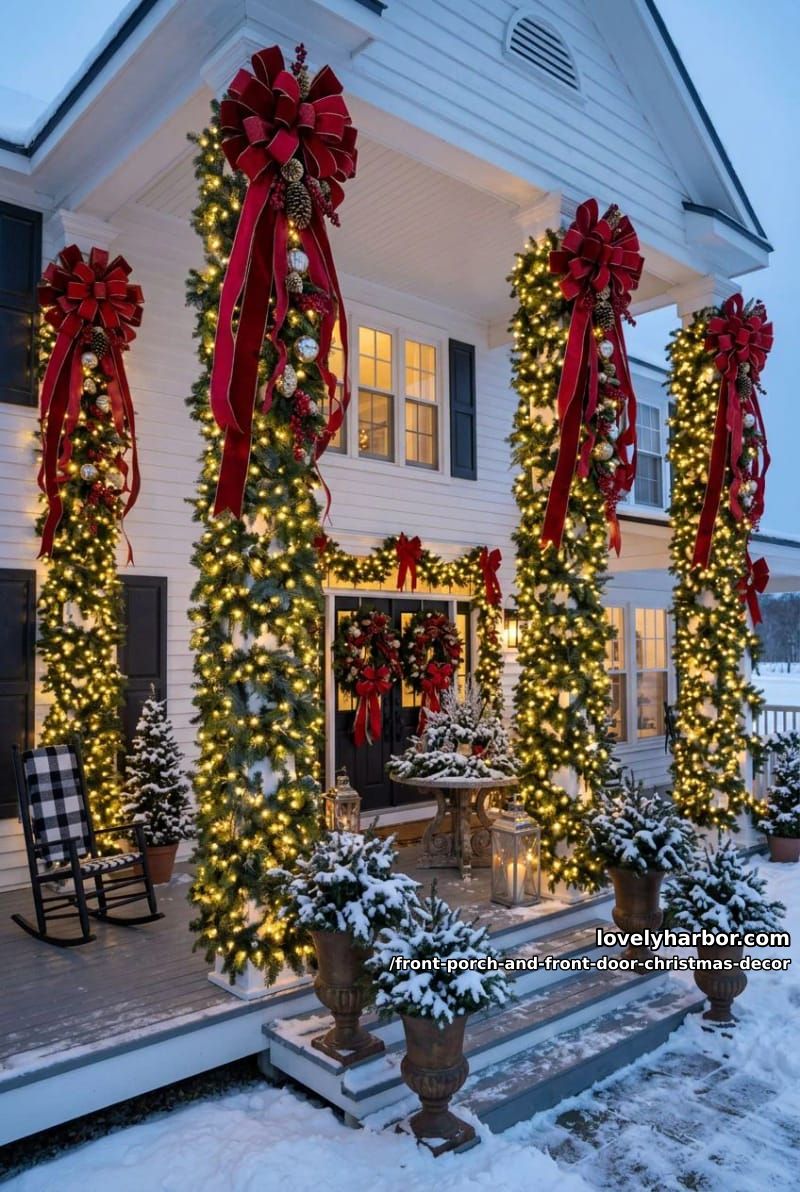
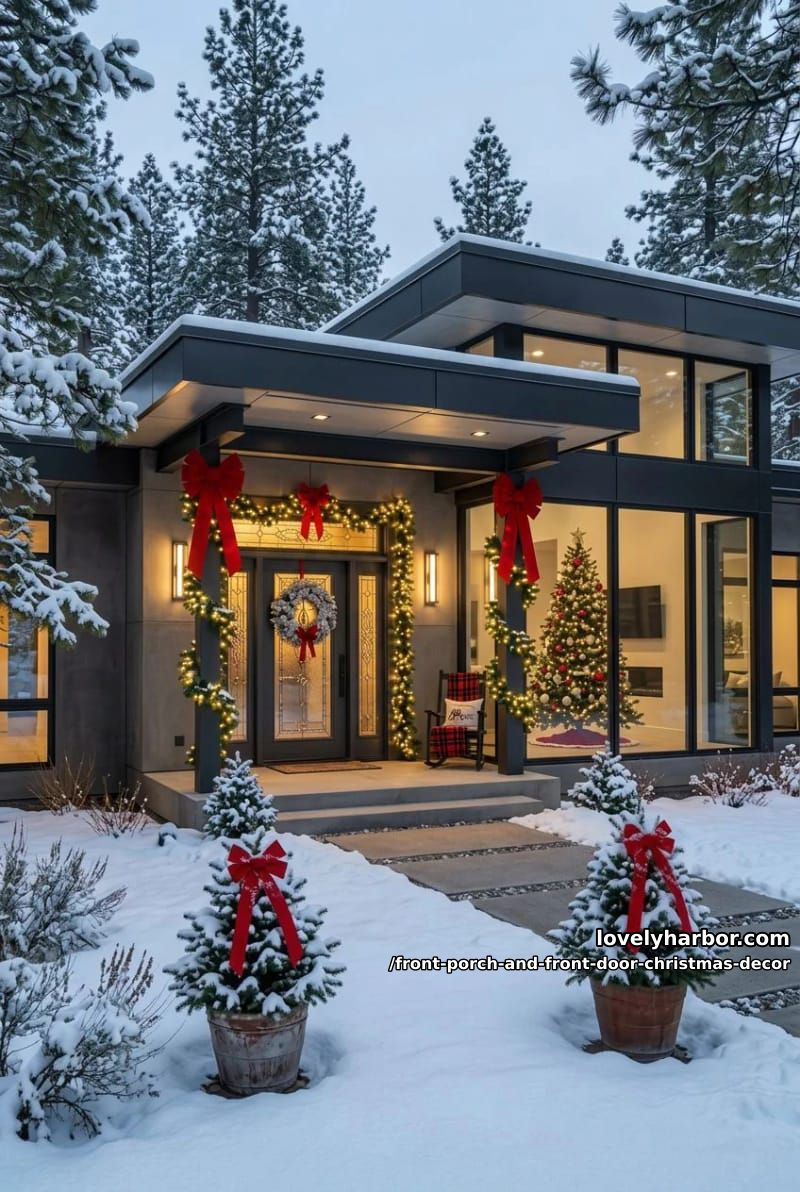
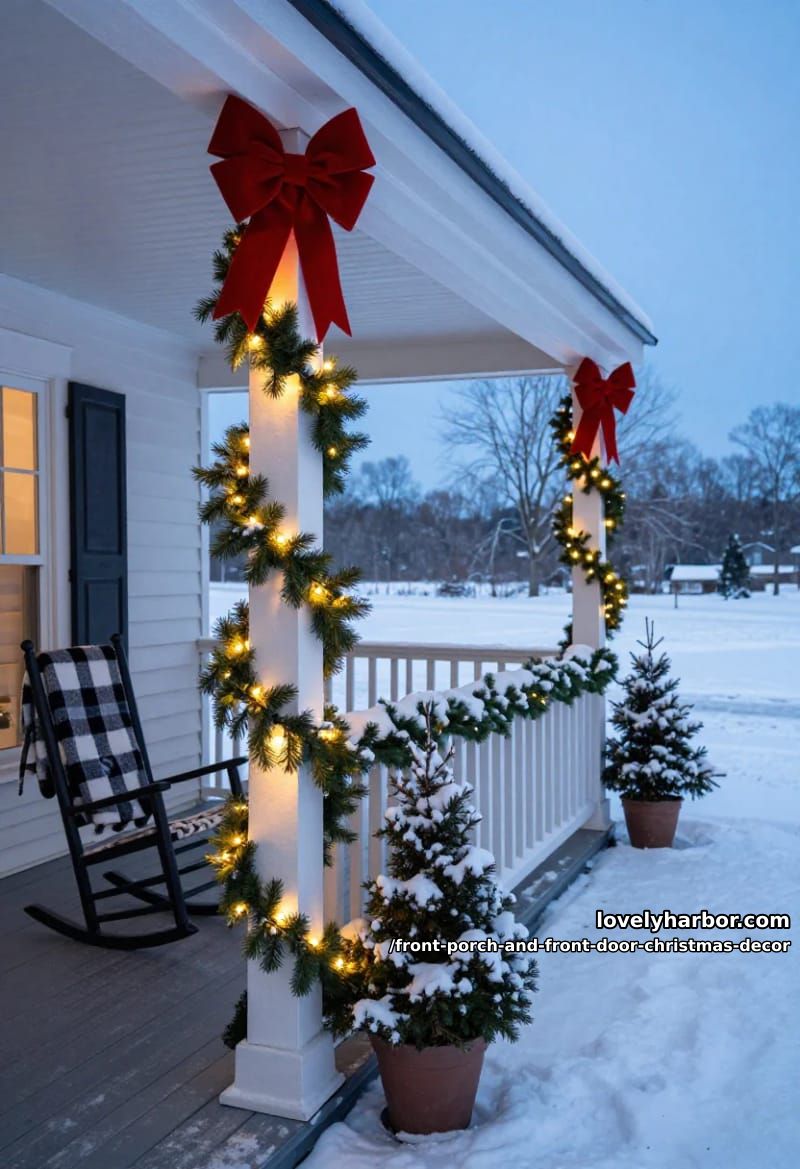
Wrapping the structure is what turns a decorated door into a decorated porch. Spiral garland up the columns and swag it along the railing between posts, and the bones of the porch start doing the work. Use twice the column height in garland for a clean spiral wrap, and 1.5 to 2 times the railing length so the swags drape soft instead of pulling tight.
Thread mini lights through the garland before you hang it, not after, and tuck the battery pack or cord at the top of the column where it's hidden. This is the one layer where lights genuinely earn their place, because a garland-wrapped column reads as greenery by day and as glowing architecture by night, which is the whole point of decorating something you'll mostly see in December darkness.
Conclusion
If you only do three of these, make them the wreath sized correctly to the door, the pair of flanking porch pots, and the column wrap, in that order. The wreath fixes the focal point, the pots fill the dead space on either side, and the wrapped columns frame the whole thing, and you can add the oversized ornaments, the bow, and the lanterns over the following weekends as time allows. Build the greenery first and the lighting last; a porch that only works after dark is a porch you've half-decorated, and you'll see it in daylight far more often than your neighbors will see it lit.