
Driftwood-effect luxury vinyl plank has a branding problem. Walk into any showroom and the display is propped with a starfish and a reclaimed oar, and the assumption hardens: ultra-wide planks (8 inches and up) in a weathered finish belong in a Cape Cod rental. They don't. A good driftwood LVP, with its cool washed-out neutrality, is one of the most flexible floors you can run through a modern house, a moody library, or a Mediterranean kitchen , provided you stop treating it as a beach trope. Eleven rooms below where wide driftwood planks earn their keep without a single piece of rope.
1. Soft white walls, dirty plaster, and the cool-undertone problem
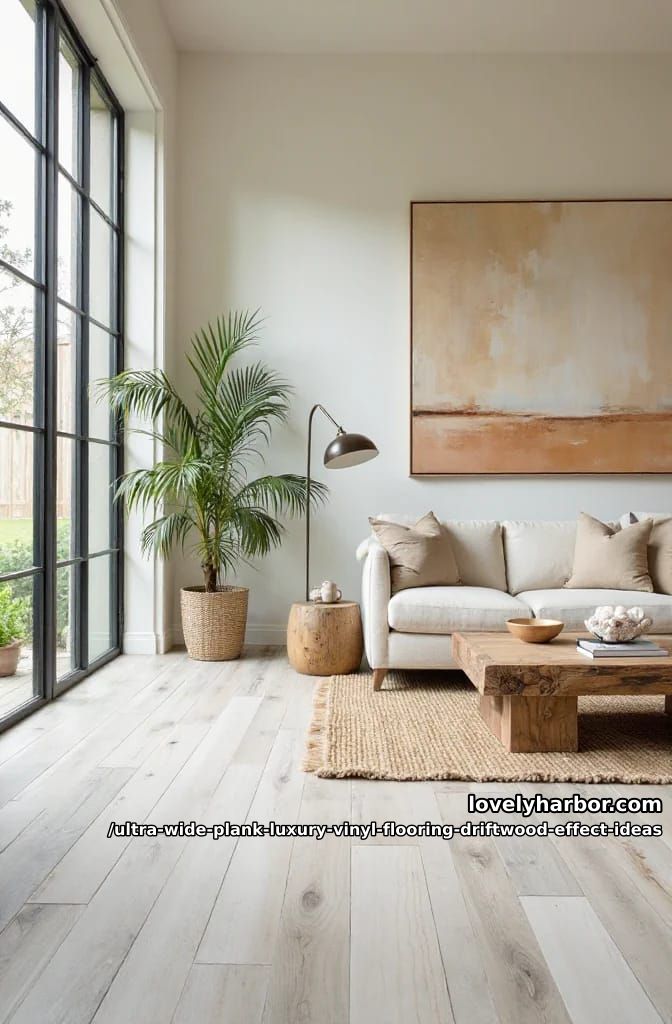
Cool driftwood LVP against bright white walls reads sterile, fast. The white needs to be broken. Limewash one wall, paint the trim half a shade off the wall color, or hang a textile with warmth in it (raw silk, undyed wool, vegetable-tanned leather). The floor's gray-taupe wants something with body next to it. Flat white paint won't do it.
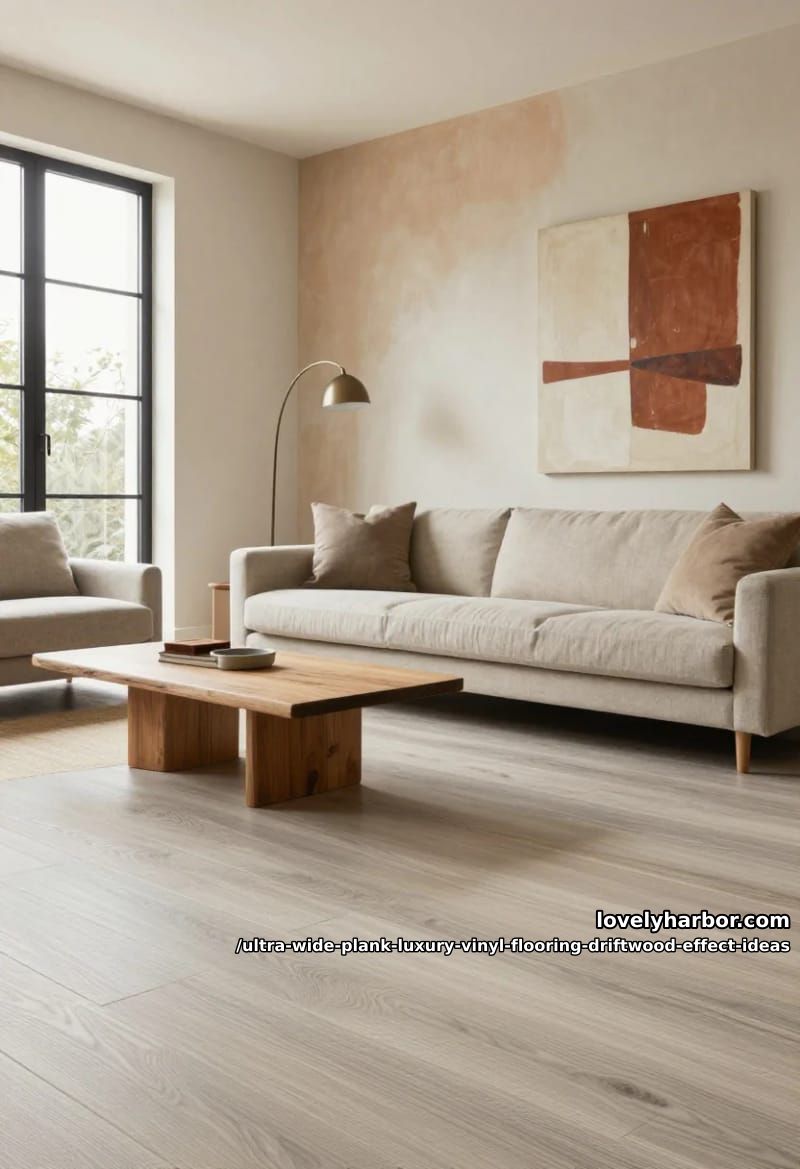
If your driftwood plank reads cool (gray-taupe, silvered, ash), keep 60% of the room in cool neutrals, 30% in warm neutrals (oatmeal, ochre, raw leather), and 10% in a saturated warm accent (terracotta, burnt sienna, ochre). Cool floors with all-cool decor go morgue.
2. The moody library that nobody expects
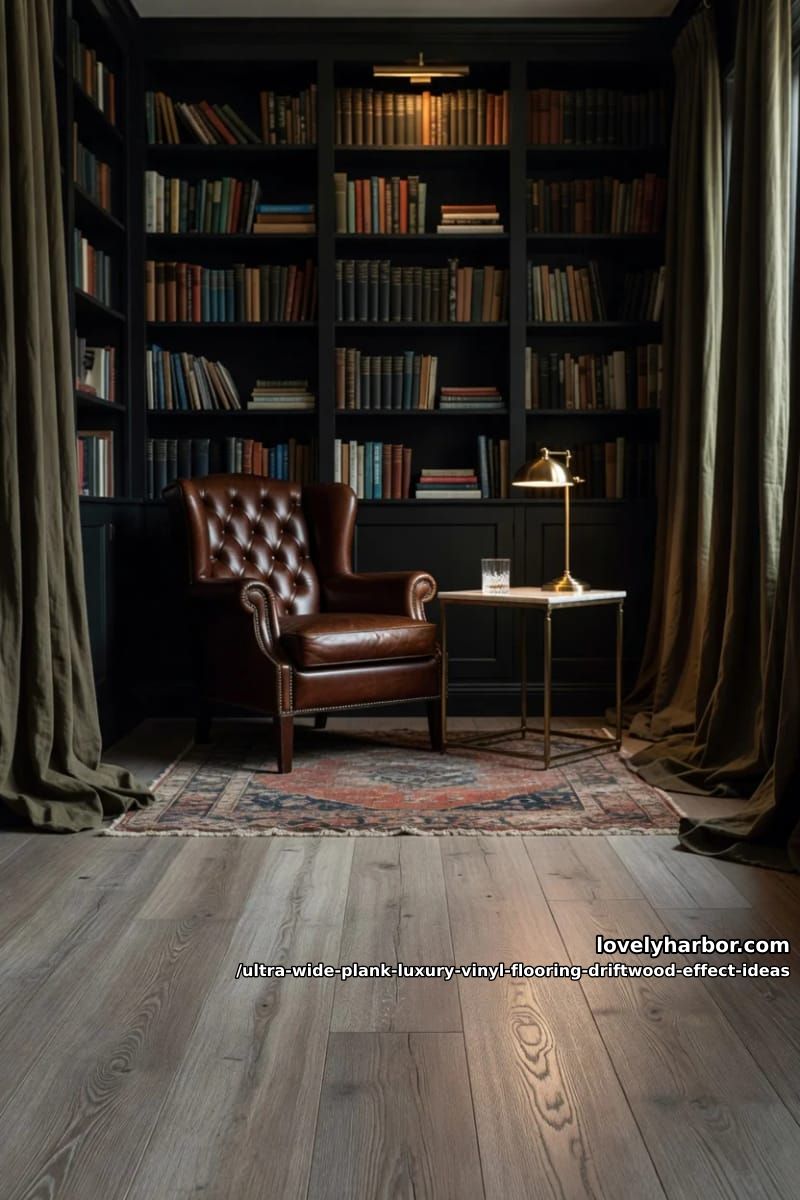
This is the combination I keep recommending and clients keep balking at, and then they come back six months later saying I was right. Pale driftwood under dark green or oxblood walls is the single most undersold pairing in LVP design. Against saturated walls, the cool floor reads like worn limestone or aged terrazzo, not driftwood at all. The best executions of it I've seen treat the floor as the lightest element in a high-contrast room: deep walls, heavy curtains, an antique rug, brass everywhere. The plank stops being beachy and starts reading like a 1920s Belgian study.
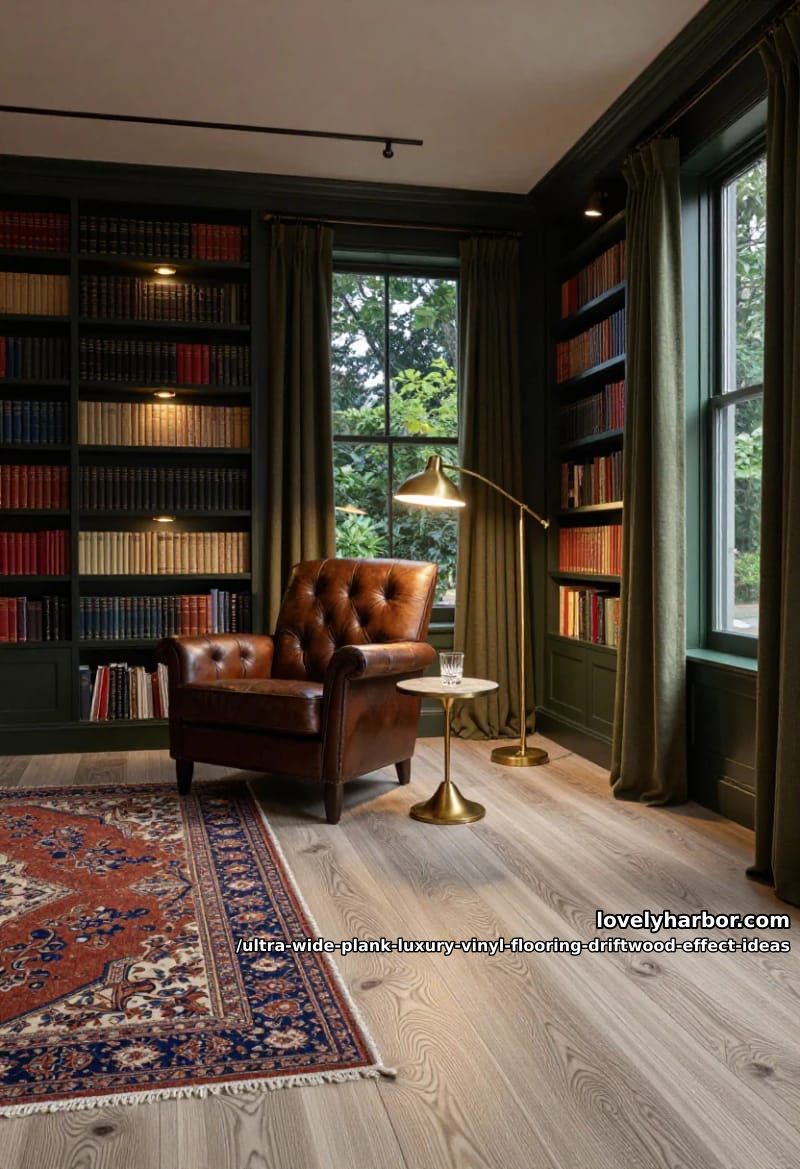
Matte sheen, not satin. Anything with shine kills the limestone illusion and shoves the floor back toward beach cabin. Look for LVP in the 4 to 8 GU (gloss units) range , most manufacturers call this "low matte" or "natural."
3. Mixed-width planks for actual visual rhythm
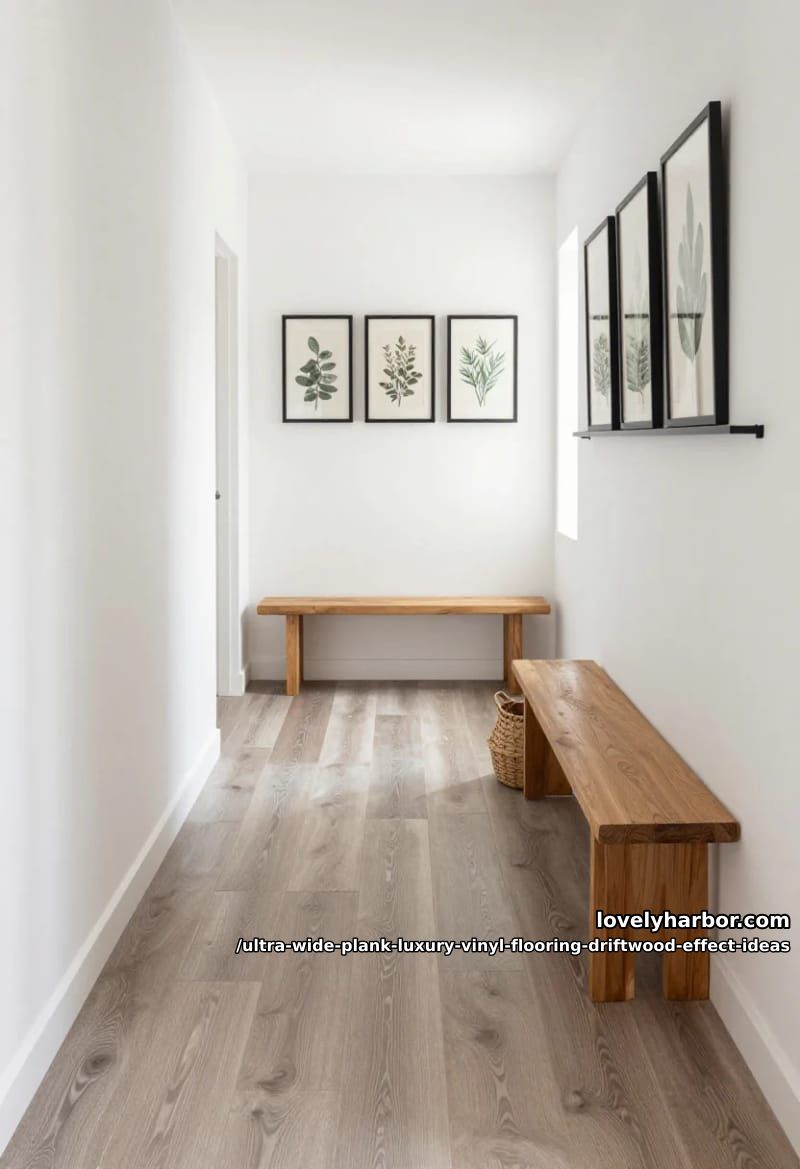
Uniform-width ultra-wide planks can read like a stadium floor , regular, flat, dull. Spec a mixed-width product, or buy two compatible SKUs from the same line and blend them. Floor & Decor and Cali Vinyl both sell multi-width driftwood-effect LVP, and the difference in a wide room is significant.
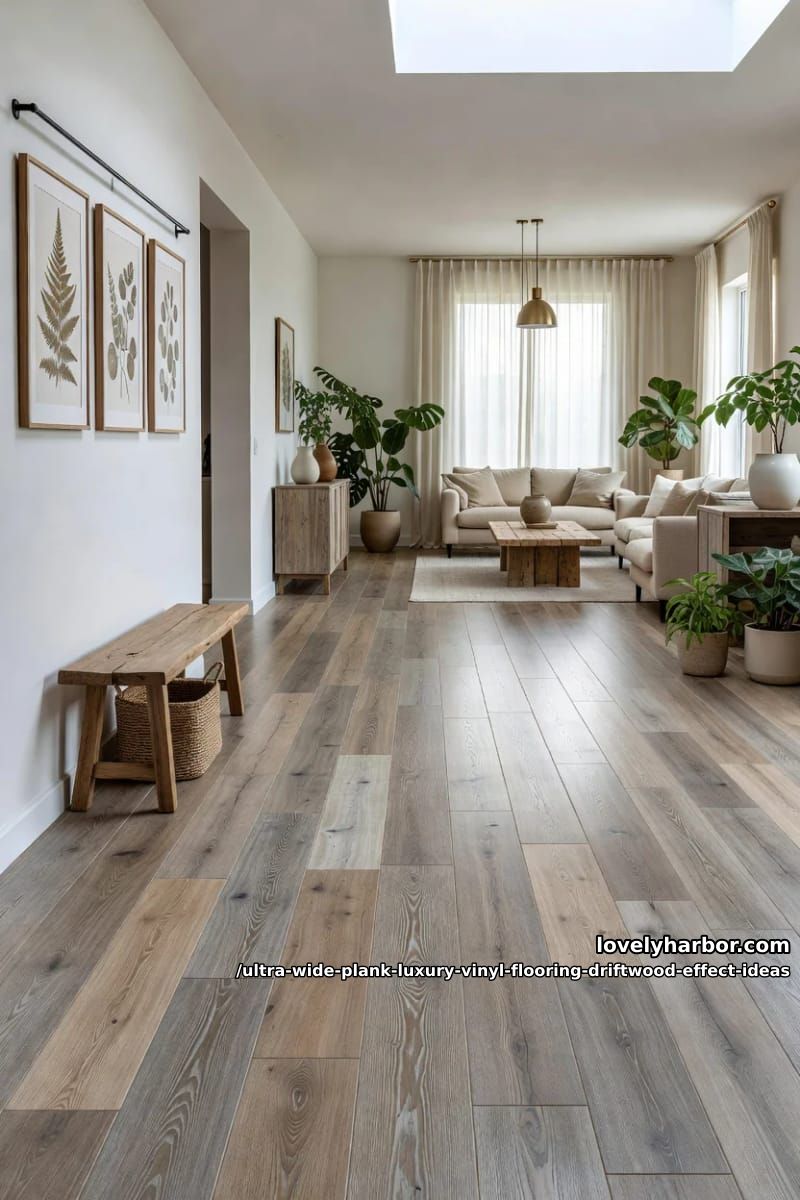
A 9-inch by 48-inch loose-lay plank with a believable weathered grain, useful when you want a true wide format without the click-lock learning curve. Loose-lay sits flat under furniture and lifts out cleanly when a plank gets damaged.

4. Open-plan continuity, and the run direction nobody talks about
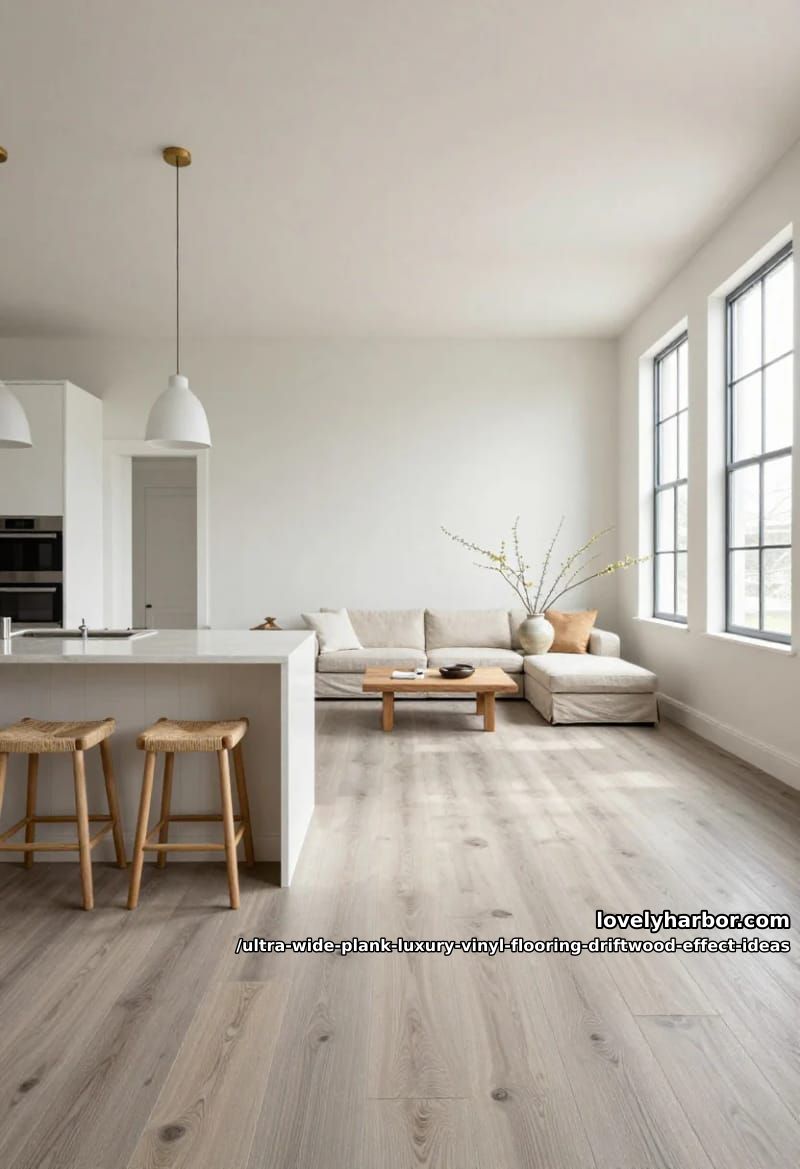
The rule installers won't volunteer: ultra-wide planks should run parallel to your longest exterior wall, not perpendicular to the front door , which is the dated default and the reason your contractor will suggest it. With 9-inch planks, perpendicular runs from the entry chop the open plan into stripes. Parallel to the long wall makes the space read longer and lets the seams disappear into the architecture.
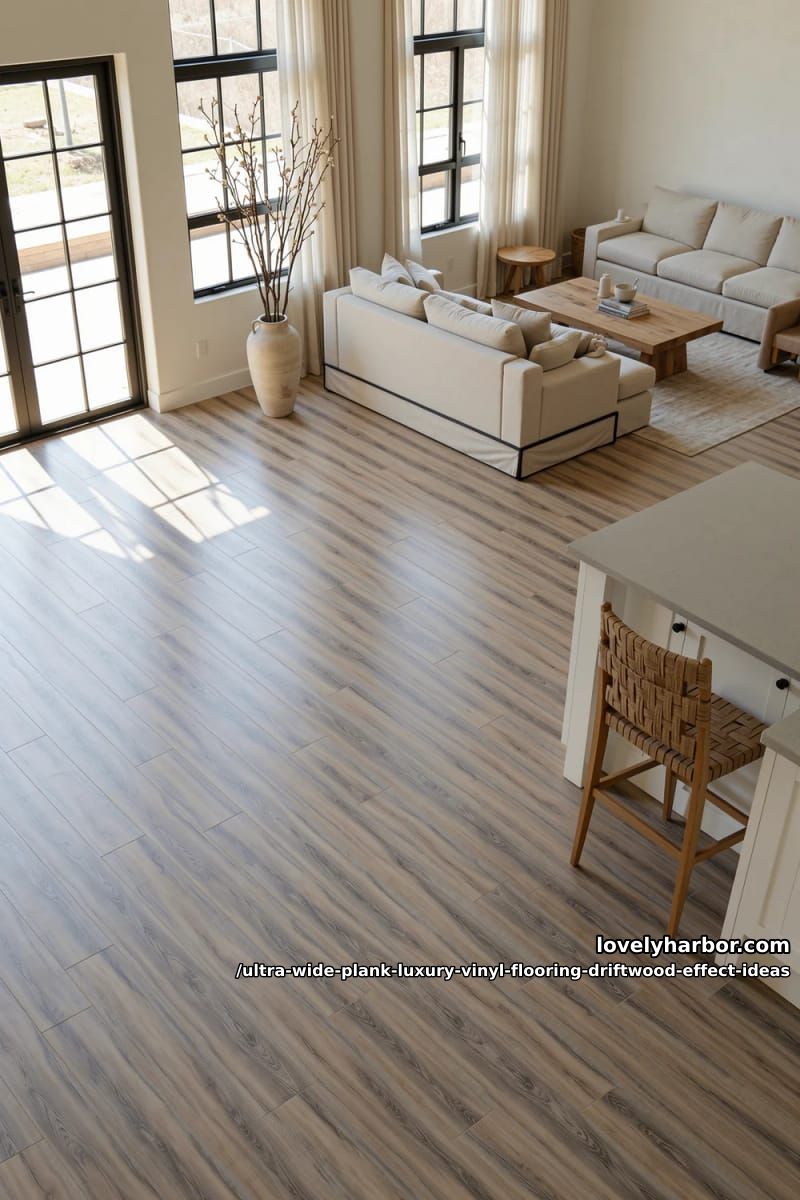
Keep the same run direction through every connected room, even if it means a less flattering layout in one of them. Pivoting plank direction at every doorway in an open plan turns the floor into a quilt. Pick the long axis, commit, and let the closets and the pantry take the awkward cuts.
5. Limewash walls and the warmer driftwood story
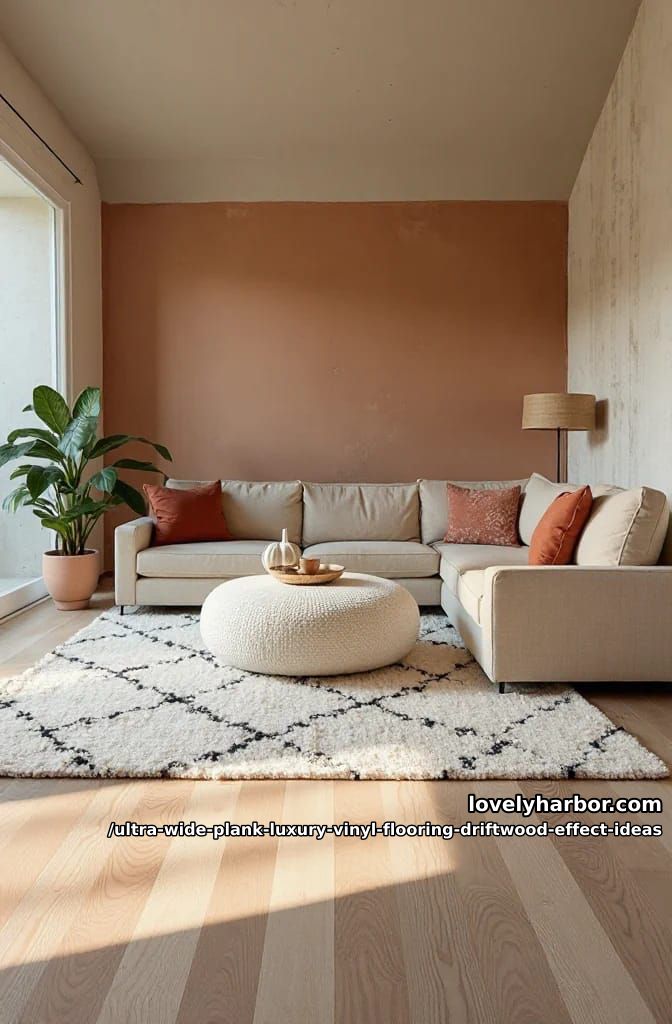
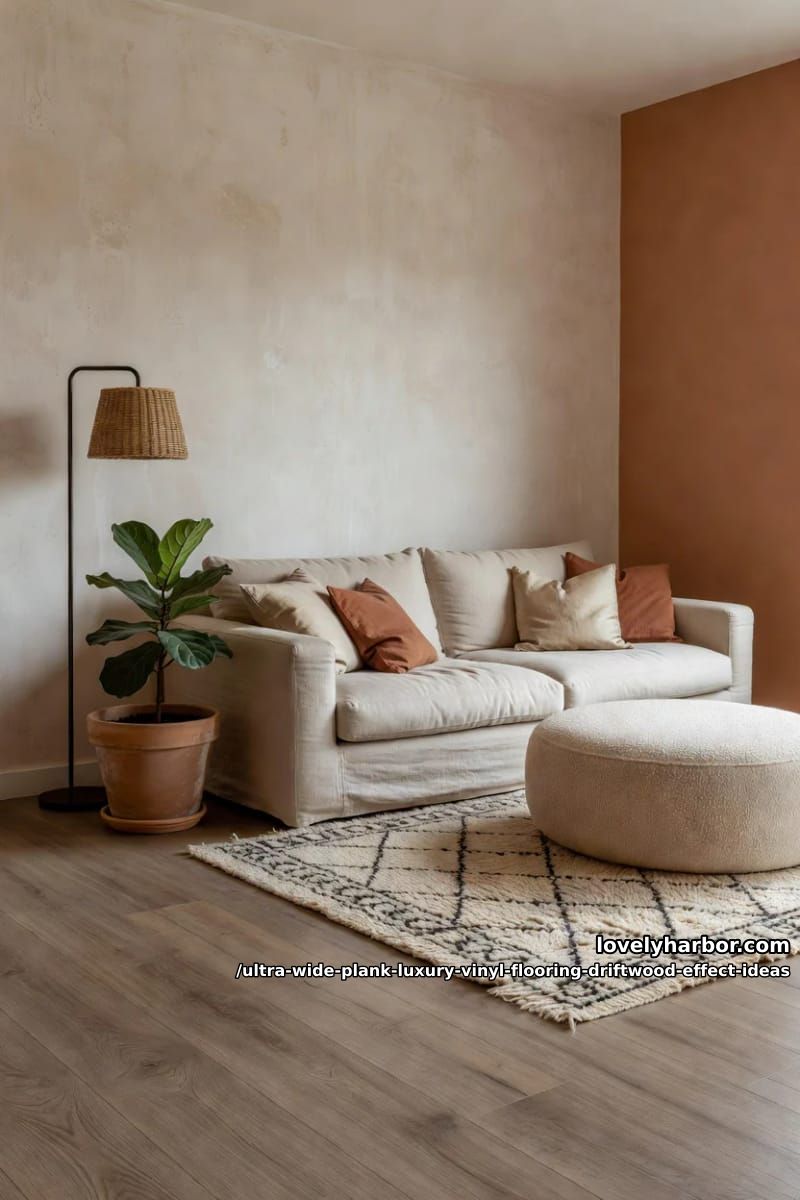
Limewash on the wall plus a warm-undertone driftwood floor is the pairing that's quietly replaced the gray-everything beach palette. You keep the soft, weathered character. You lose the cold blue-gray cast. Brands shipping warm-undertone driftwood right now include Mannington's Adura Max in colors like "Driftwood Sand," and Karndean's Knight Tile in the bleached-oak family , mushroom and putty undertones rather than steel gray. Expect to pay $4 to $7 per square foot for the Karndean tier and $3 to $4 for Mannington.
6. Coastal, the smart way
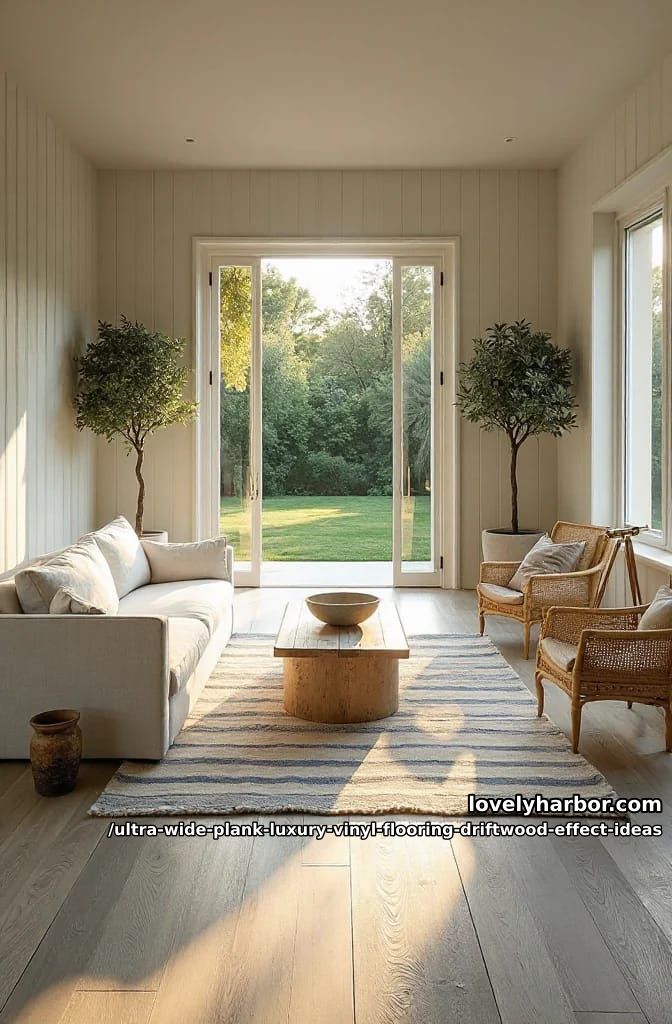
If the room is going coastal, do the version that costs more and lasts longer. That means no decorative oars, no driftwood signs from HomeGoods, no jute rope mirrors. Lean on the architecture , shiplap, lime plaster, painted ceiling beams , and add one or two genuinely old maritime objects: a brass sextant on a stack of books, a real antique map framed in plain oak. Let the floor do the rest. The Pottery Barn version of coastal looks like a hotel lobby. The smart version looks like someone's grandfather lived on Nantucket and you inherited two good objects.
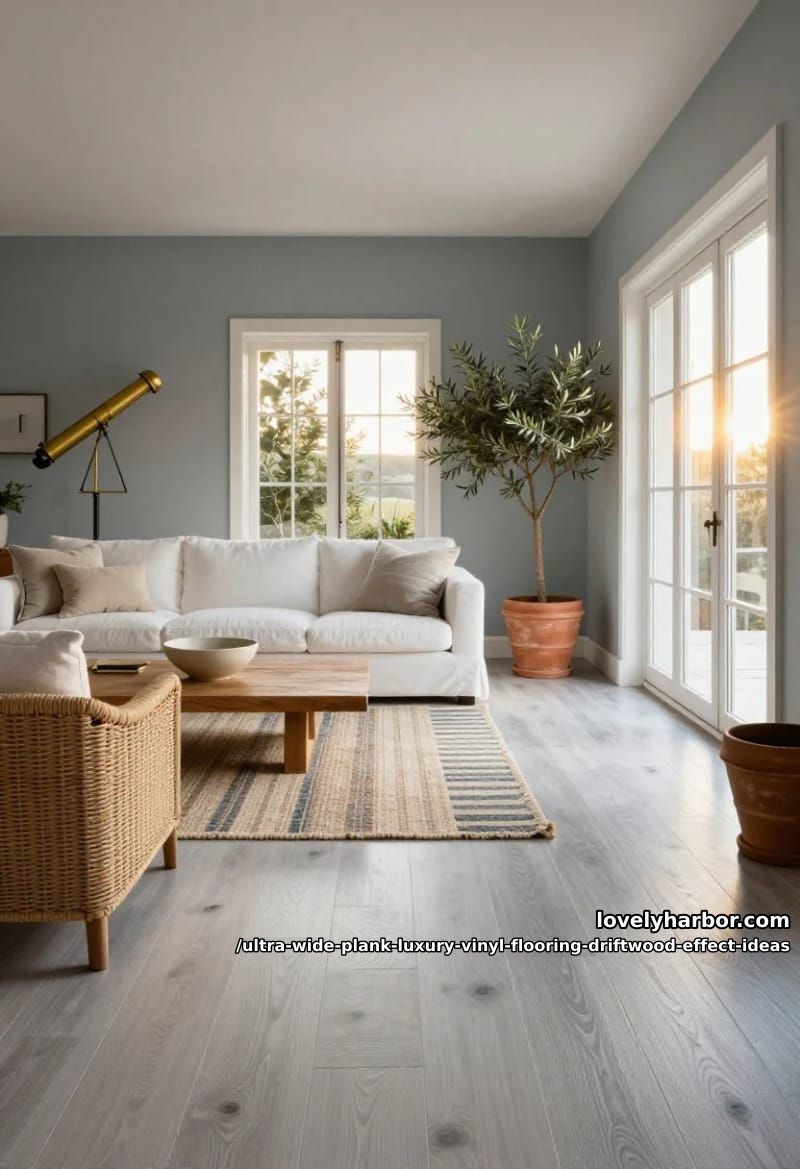
Do this
- One genuinely old object, prominently placed
- Architectural cues , shiplap, lime plaster, painted beams
- Indigo and ivory stripes (rugs, throws)
- Terra cotta or unglazed stoneware vessels
Avoid
- Decorative oars or paddles
- Rope mirrors and rope-wrapped lamps
- Anything with the word “Beach” or “Coastal” painted on it
- A starfish, ever, indoors
7. Brass, lacquered black, and the high-contrast bedroom
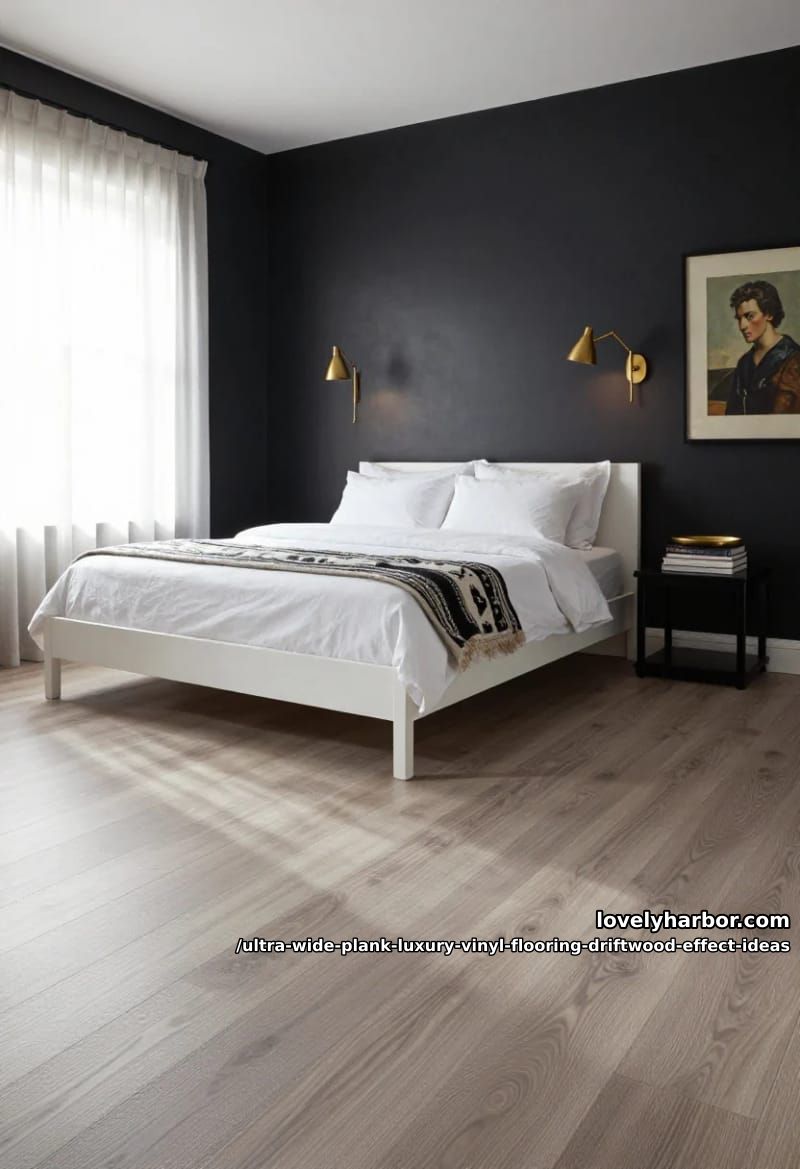
Black walls over a pale floor is the design equivalent of a white t-shirt with raw selvedge denim. It looks too easy until you try to do it badly. Add aged brass , sconces, picture lights, drawer pulls , and one lacquered black surface (a side table, a tray) and the room stops reading "modern minimal" and starts reading like a Brussels apartment that's been around a while. The driftwood floor is what keeps the composition from going gothic.
8. Bathrooms, where LVP earns its keep
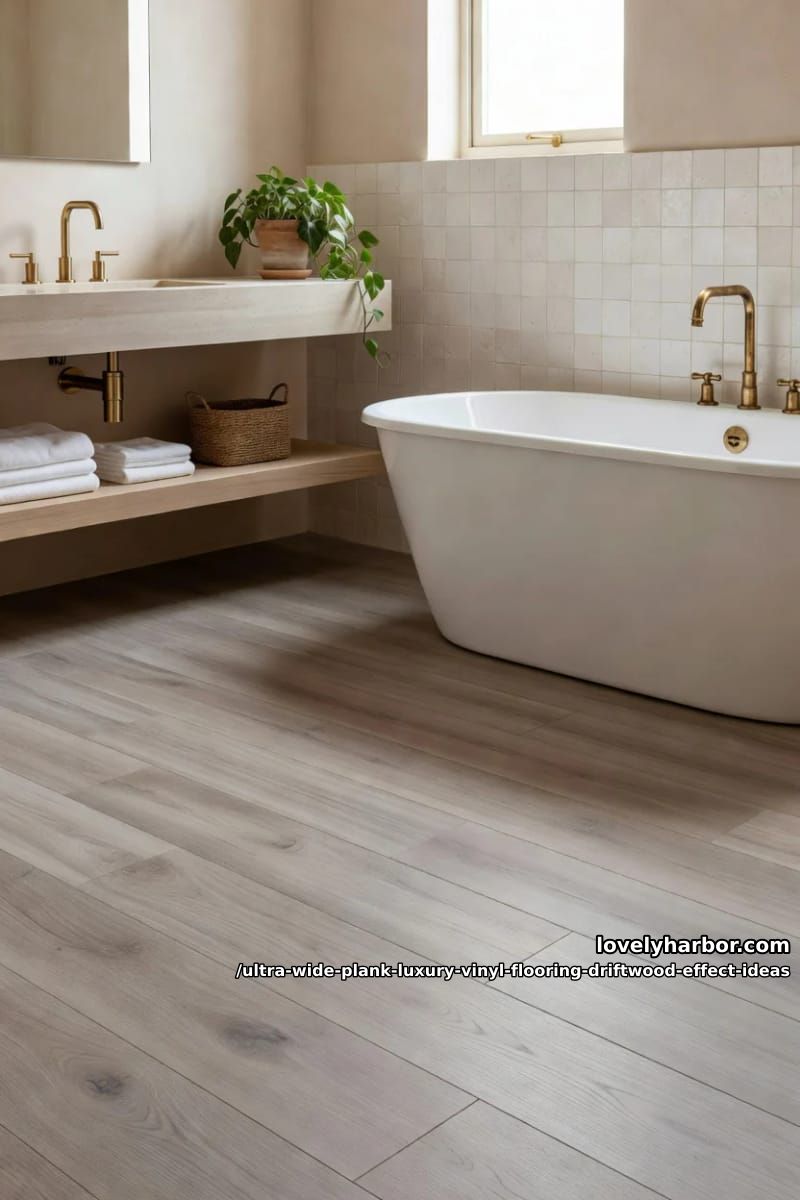
Bathrooms are where the choice between SPC (stone-polymer composite) and WPC (wood-polymer composite) actually starts to matter. SPC uses a dense stone-based core that is thinner and more rigid; WPC uses a foamed core that is softer underfoot. In a bathroom, SPC is the right call. It doesn’t expand with humidity swings the way WPC can, and it tolerates direct standing water at the perimeter , around toilets, tub aprons, vanity bases , substantially better. Aim for a 20-mil wear layer minimum and look for products with a tongue-and-groove seam that includes a polyurethane or wax seal at the edge.
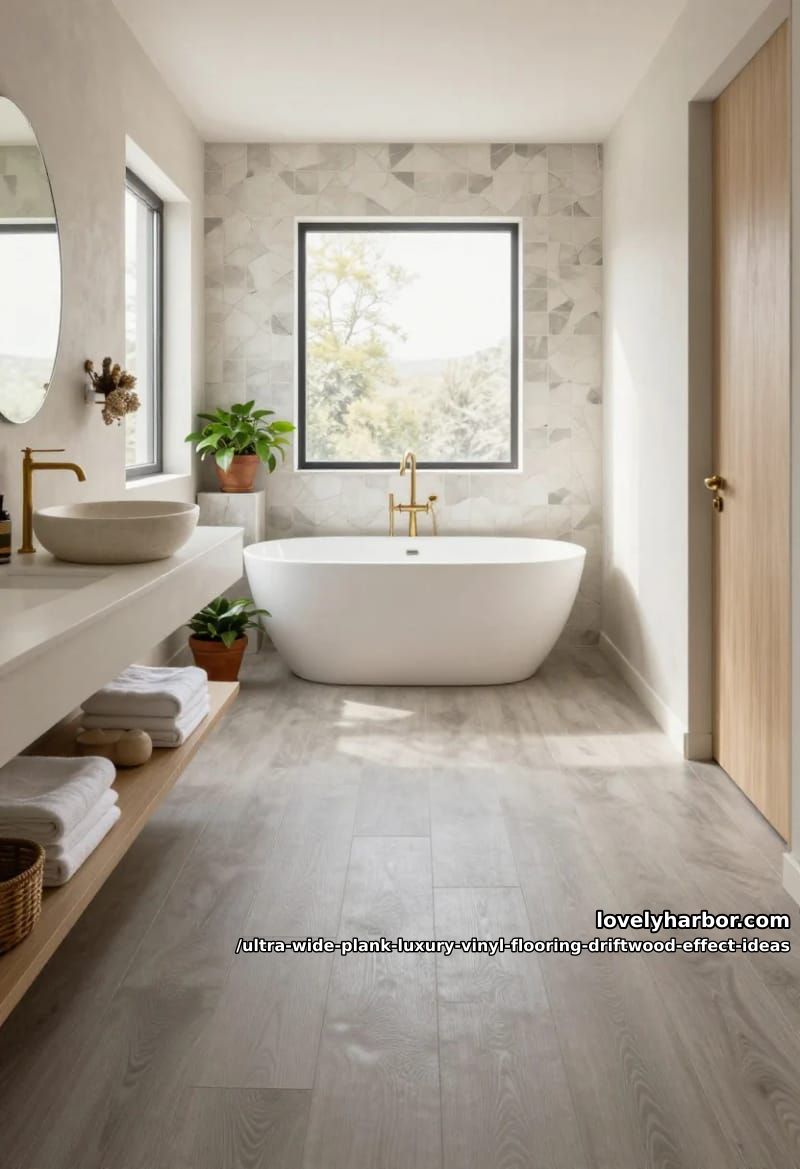
Tempted by the cheaper WPC because it's warmer underfoot? Install electric radiant heat mats under the SPC instead. You get the warm-floor feel without the dimensional instability. Total system cost runs about $9 to $14 per square foot installed (floor plus heat), versus $5 to $8 for WPC alone.
A pH-neutral cleaner designed for vinyl is non-negotiable if you want the matte finish to stay matte. Generic floor cleaners build up a hazy film on LVP that you can only fix by stripping. This one doesn’t.

9. Mushroom and putty: the warm driftwood pivot
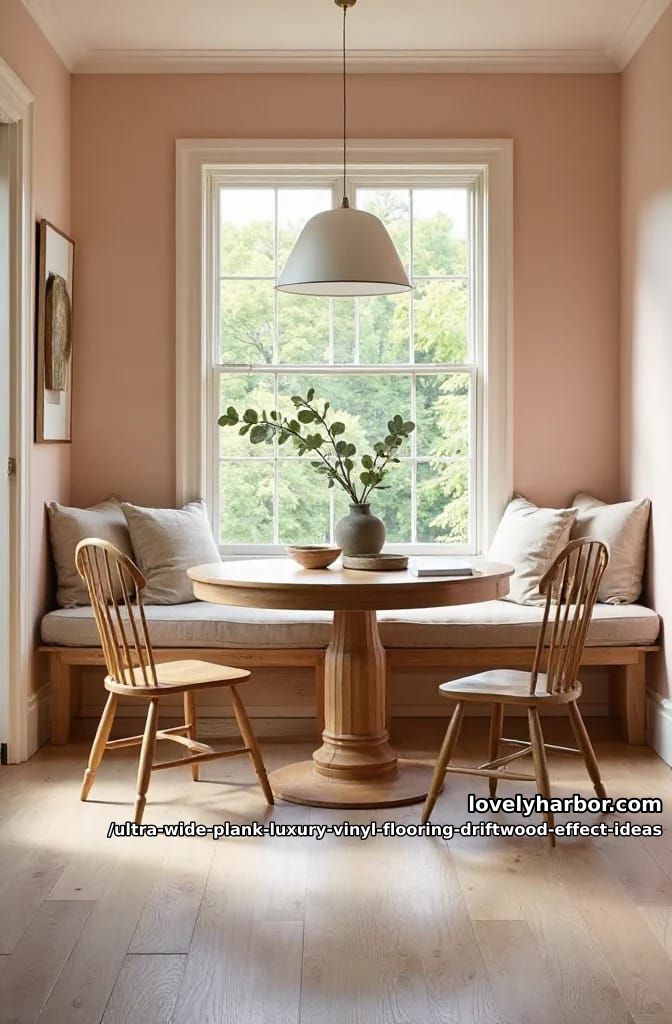
Cool gray-driftwood peaked around 2018 and has been quietly aging itself out of the conversation since. The replacement is warm driftwood , same weathered character, mushroom and putty and faint pink undertones in place of steel and ash. It plays better with the limewash, clay-paint, and earthy plaster colors that have replaced gray on walls.
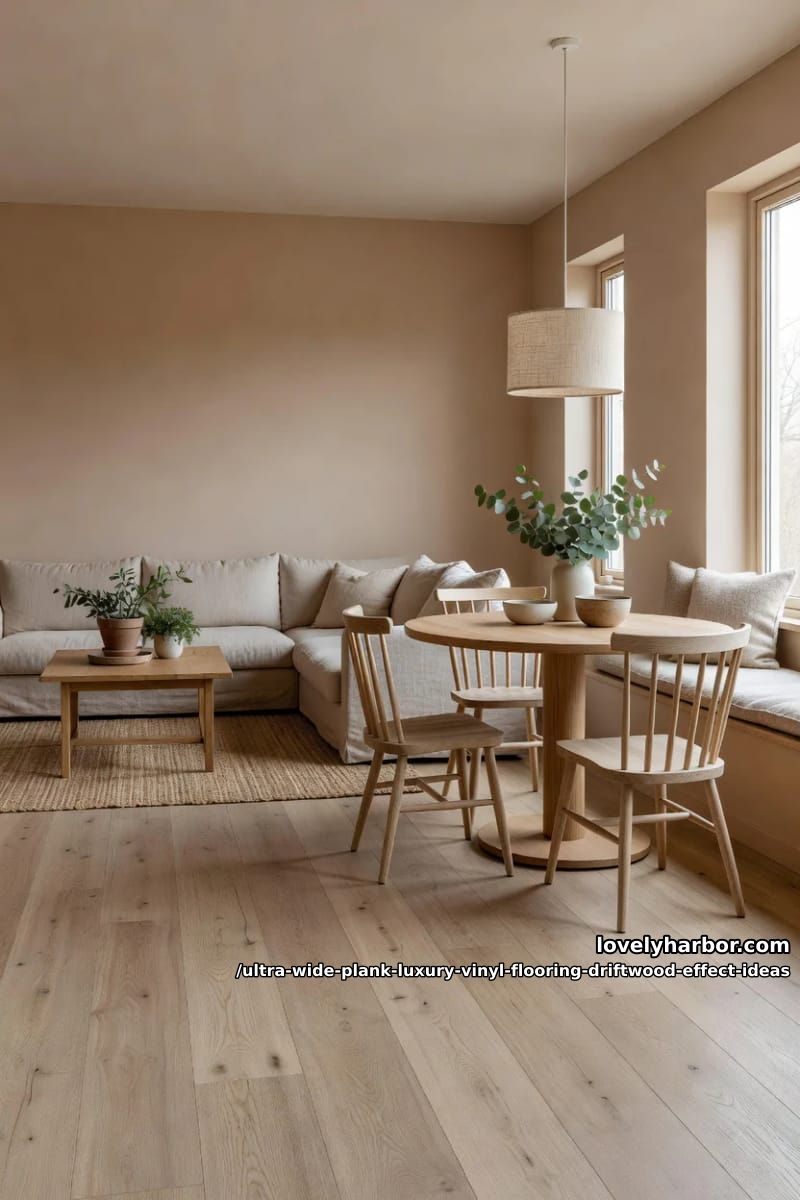
The two colorways designers keep reaching for are Mannington Adura Apex in "Sandcastle" and Karndean Korlok in "Texas White Ash." Both run $4.50 to $7 per square foot before installation. Avoid anything with "ocean," "fog," "mist," or "silver" in the name unless you've held the sample under your own light , the digital photos are calibrated to make cool floors look warmer than they actually are.
10. Herringbone with a 9-inch plank, if you're brave
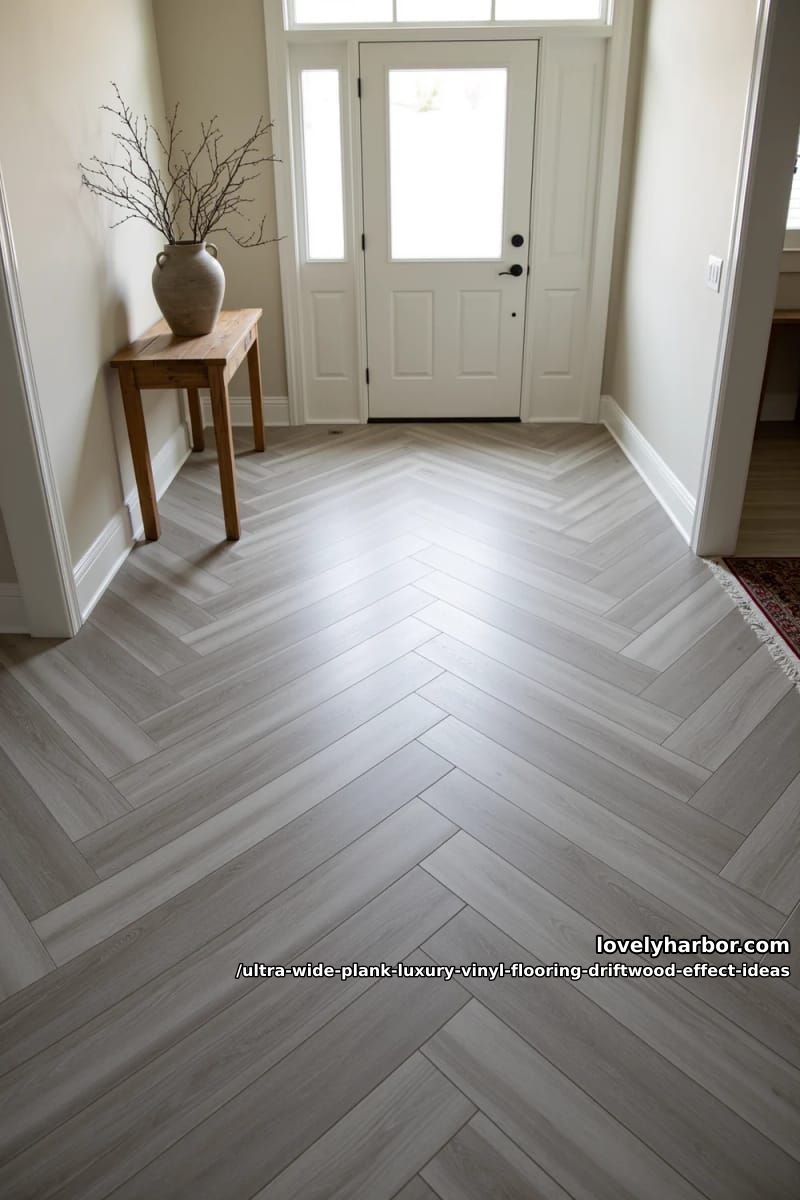
Conventional wisdom says herringbone is a narrow-plank pattern. Conventional wisdom is wrong, at least for entry foyers, mudrooms, and powder rooms under 80 square feet , small spaces where a wide-plank herringbone reads as a graphic statement that disappears the moment you walk into the next room with regular linear runs. Cut 9-inch by 60-inch planks down to 9-inch by 36-inch (or order pre-cut herringbone-format LVP, which a few brands now offer) and install on a 45-degree axis to the longest wall.
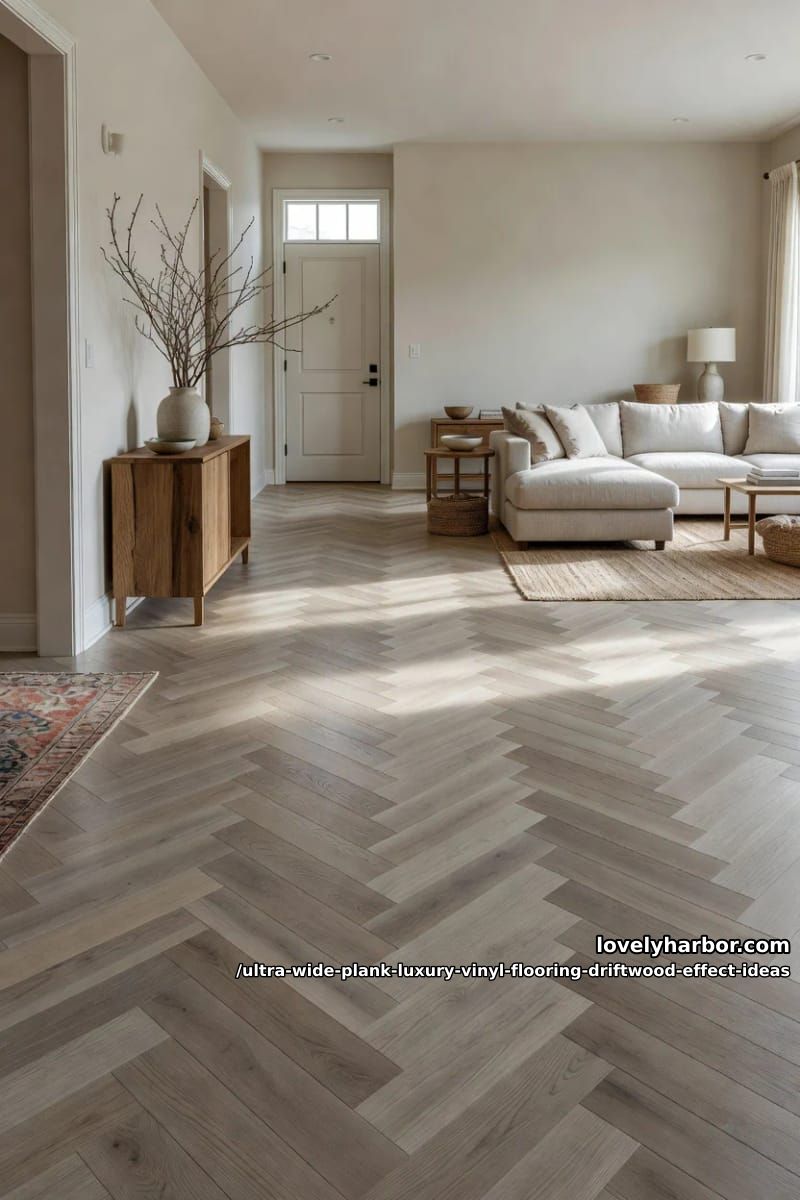
The labor cost is real. Plan on 1.5 to 2 times the linear-install rate, or roughly $4 to $7 per square foot in labor on top of materials. For a 60-square-foot entry, that's about $200 in upcharge , the cheapest entry-design move you can make.
11. Kitchen with mid-tone cabinets, not white
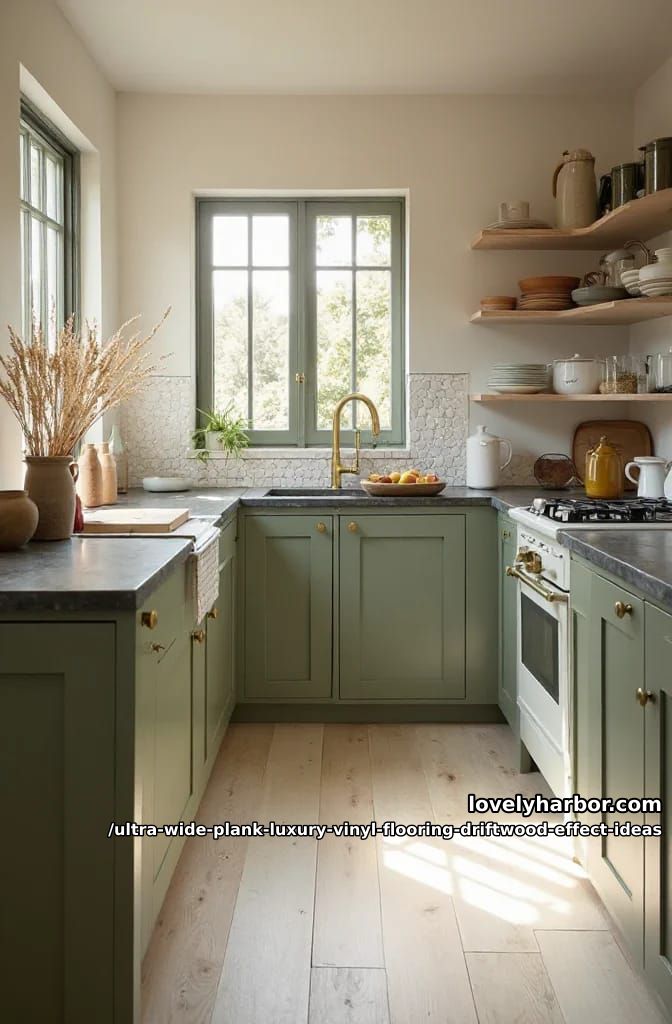
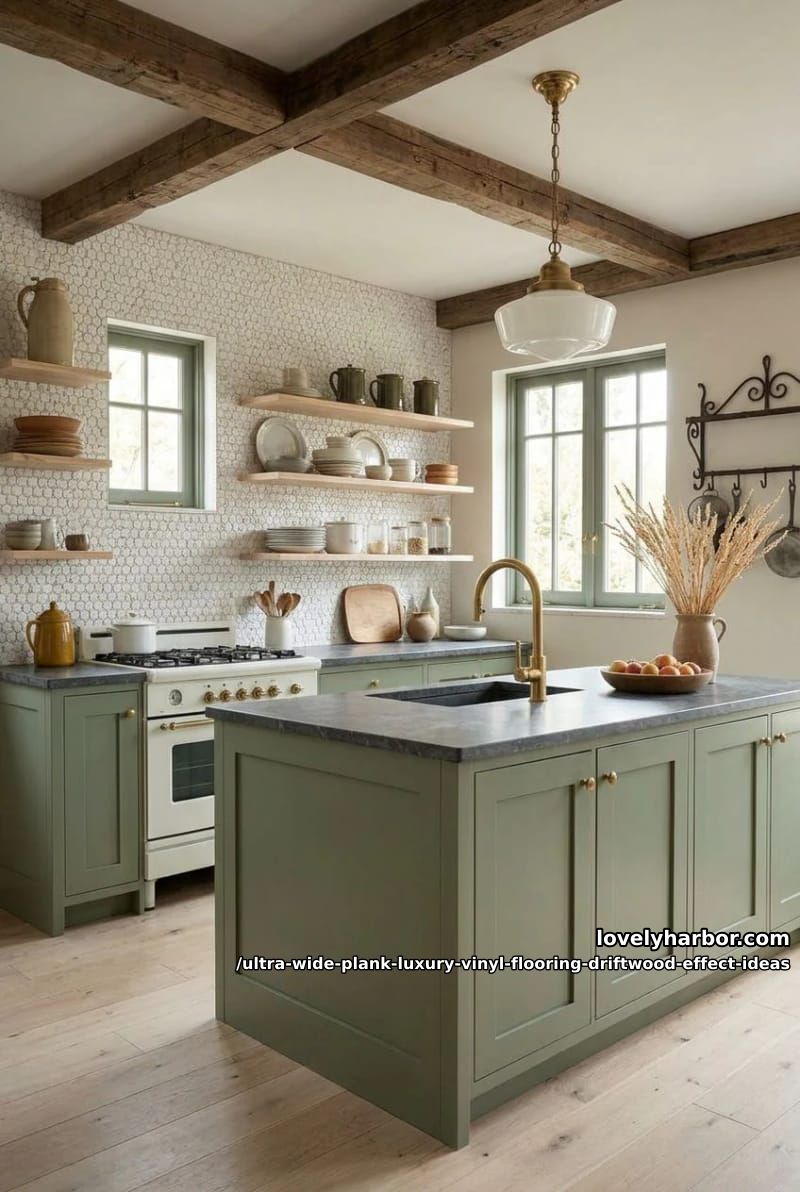
White shaker over driftwood is the kitchen equivalent of a tract house in 2017: technically fine, completely forgotten. What's still working is mid-tone painted cabinets , deep olive, blue-gray, oxblood, charcoal , over the pale floor, with one warm metal (unlacquered brass, oil-rubbed bronze) carried through. The floor becomes the bright, light element. The cabinets, not the walls, do the color.
Olive cabinets, brass
Deep olive flat-front shaker, unlacquered brass cup pulls, warm white plaster on the walls. Reads English country with modern restraint.
Blue-gray cabinets, oil-rubbed bronze
Slate-blue lower cabinets, oil-rubbed bronze pulls and faucet, soapstone counters. Floor reads cool but the bronze keeps it grounded.
Oxblood lower, white oak upper
Deep oxblood lower cabinets, open white oak upper shelving instead of upper cabinets. Plaster walls. Driftwood floor stops the red from going claustrophobic.
Charcoal cabinets, polished nickel
Matte charcoal cabinetry, polished nickel hardware and faucets, white marble or quartzite counters. Driftwood floor is the only soft element in the room.
How the major driftwood-effect LVP brands stack up
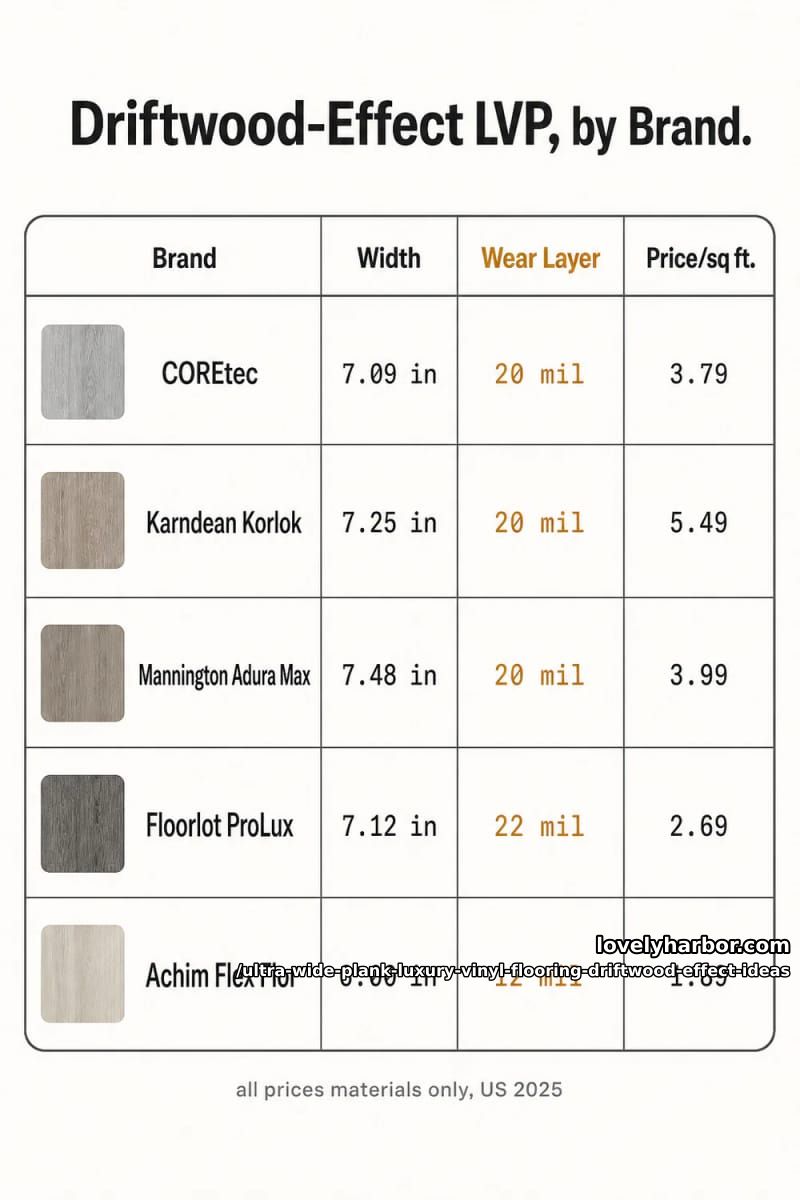
Three tiers. COREtec starts around $4.79 per square foot and is the safe specifier’s choice , wide retail availability, consistent quality, cork-backed planks that quiet the room underfoot. Karndean costs more ($5 to $9 typically) and the visual realism is a real step up. Mannington Adura sits between the two, with strong wide-plank driftwood colorways and slightly thinner wear layers than Karndean.
| Brand / Line | Width | Wear Layer | Price/sq ft |
|---|---|---|---|
| COREtec Pro Plus | 7 in. | 20 mil | $4.79 to $6.50 |
| Karndean Korlok | 7 to 9 in. | 20 mil | $5.00 to $9.00 |
| Mannington Adura Max | 6 to 7 in. | 20 mil | $3.99 to $6.50 |
| TRUCOR 9 Series | 9 in. | 20 mil | $4.00 to $6.00 |
| MSI Everlife Studio | 9 in. | 22 mil | $3.50 to $5.50 |
For a rental, an investment property, or a basement you don’t want to think about, the MSI Everlife Studio collection in driftwood-adjacent colorways is honestly hard to beat: extra-wide 9 by 60 inch planks with a 22-mil commercial-grade wear layer at well under $6 installed. It won’t have Karndean’s visual nuance, but at half the price you’d be hard-pressed to tell across a 12-foot room.
One last thing: protect the floor before you move furniture
Wide LVP shows scratches differently than narrow plank. A drag mark across a 9-inch face is more visible than the same mark on a 5-inch face because there's nowhere for the eye to go. Felt pads on every chair leg, glides under every cabinet, a runner anywhere wheeled traffic happens (dining chairs, office chairs). Skip this on a driftwood floor and six months later you'll find out why the showroom samples looked so much better than your kitchen.
Tap-in felt glides outlast peel-and-stick pads by years. The wool-blended felt slides smoothly on LVP without leaving the gray scuff lines that cheap synthetic pads grind into the wear layer.

Conclusion
Spend the extra $1.50 a square foot for SPC over WPC if you're spec'ing a bathroom. That's the one I'd argue hardest for. The other thing I'd say, and it isn't in the article above because it didn't fit anywhere cleanly: order more samples than you think you need, and look at all of them in your actual room, in the actual light, at the hour you'll be in the room most. Driftwood colorways shift dramatically between fluorescent showroom light and a north-facing afternoon, and the floor you fell in love with in the store is occasionally not the floor you bought.