
The difference between a front door that looks designed and one that looks decorated is almost never the budget, it is the restraint. The ideas below lean on a handful of moves that reliably read as classy from the curb: one oversized wreath instead of a dozen small ornaments, warm-white light at the right Kelvin, a grounded neutral palette that has quietly overtaken red-and-green, and the single trending detail (an oversized velvet bow) that designers like Shea McGee took outdoors this year. A few of these run counter to what the big-box displays push, so read past the obvious ones.
1. One oversized wreath beats a scatter of small ornaments
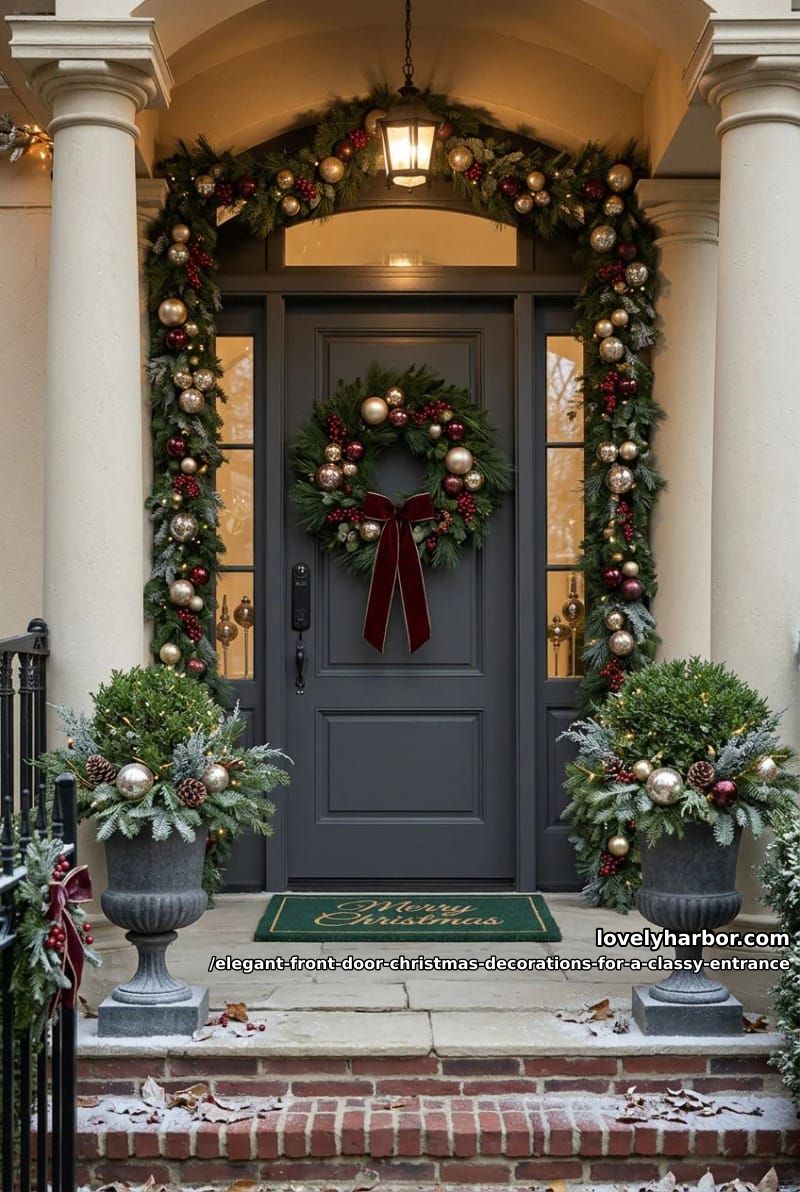
Scale up to one statement wreath rather than spreading small pieces across the door, the kickplate, and the sidelights. A thirty-inch wreath on a standard thirty-six-inch door fills the visual field the way a smaller one never will, and it photographs as intentional instead of leftover. The cheap version of this idea is a flat twenty-inch faux ring from the seasonal aisle; the problem is depth, not size, so build out with a second layer of loose cedar tucked behind a denser fir base.
On an entrance, one object at the right size carries more authority than three objects fighting for the same wall. Size the wreath to roughly two-thirds the door width and let it be the only thing the eye lands on.
2. Frame the whole doorway with garland, not just the door
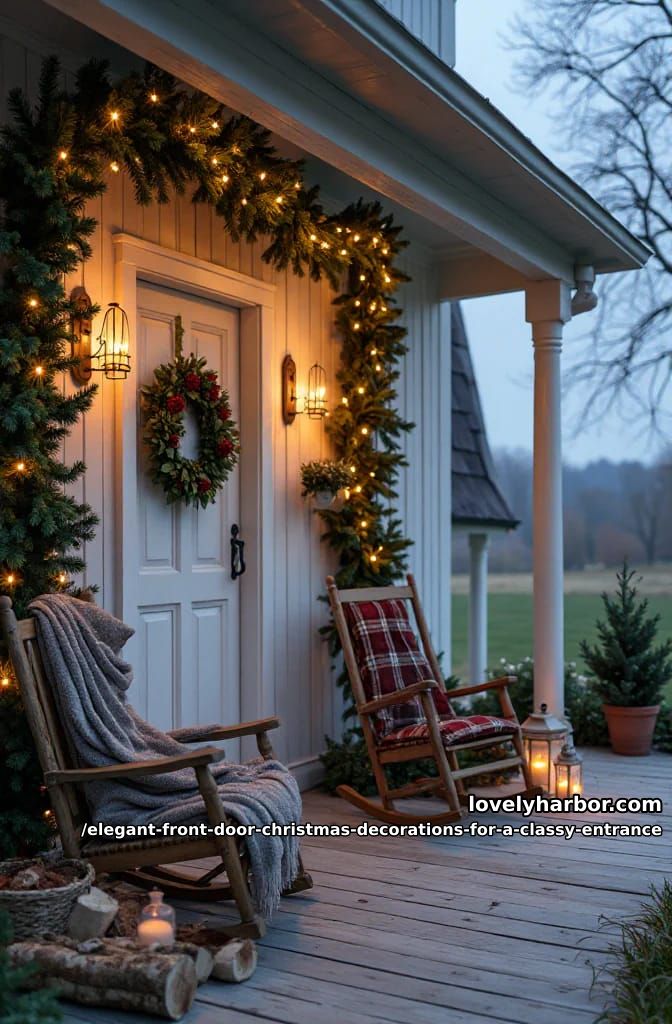
Run garland up both sides of the door casing and across the top so the entry reads as an architectural frame, which is the move that separates a styled porch from a wreath stuck on a slab. Fresh cedar is the material worth paying for here: Western red and incense cedar drape with a loose, wispy fall that no plastic strand mimics, and the fragrance does real work on guests. Expect to pay roughly two to three dollars a running foot for fresh, and to mist it every couple of days so it does not crisp by mid-December.
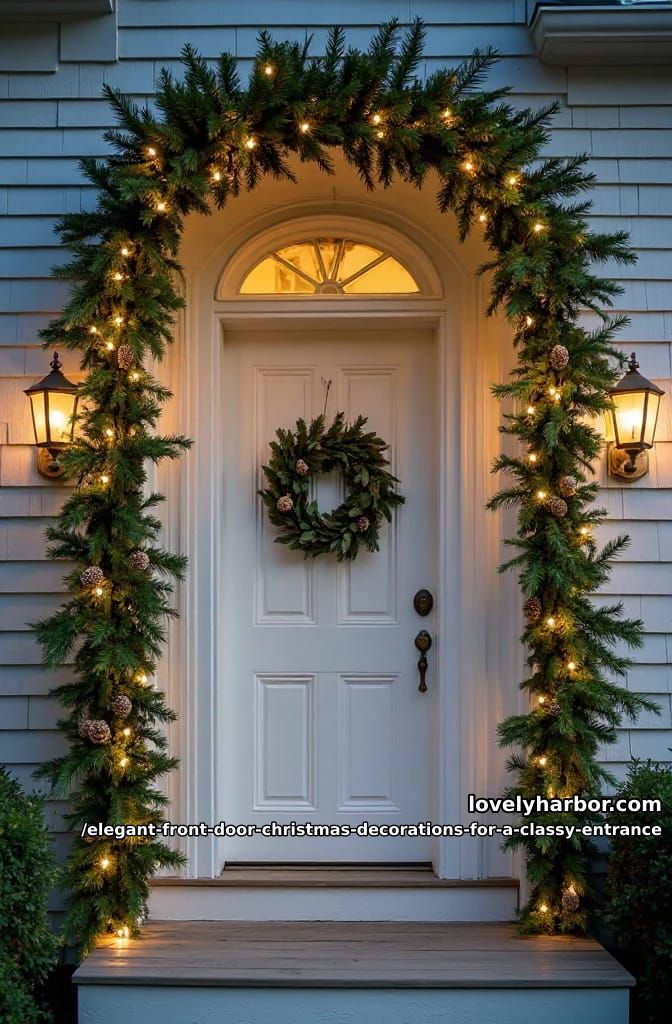
If you would rather buy once and reuse, a faux cedar strand runs around thirty-five dollars for nine feet and you double it up to kill the see-through-to-the-branch look. Norfolk pine faux garland drapes more naturally than the stiff bottlebrush stuff most stores carry.
3. Add one oversized velvet bow, and stop there
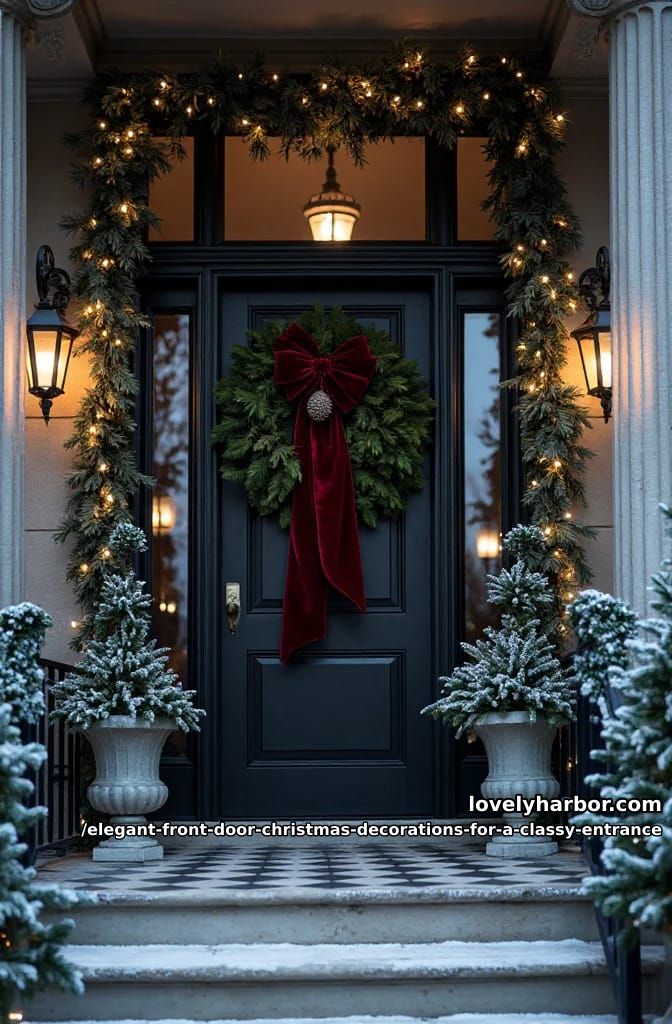
Tie one large velvet bow at the top of the wreath or the crown of the doorway and resist adding a second, third, and fourth. Bows are the loudest trend of the 2025 and 2026 seasons, and Shea McGee's widely shared porch (draping bows around the door with mini trees flanking it) is the reason your feed is full of them. The trap is repetition: a bow on the wreath, bows on every baluster, bows on the lanterns, and suddenly the entrance looks like a gift-wrap counter. Wide velvet in claret, forest, or a warm spice tone, one focal placement, long tails. That is the whole idea.
4. Flank the entrance with two matched planters
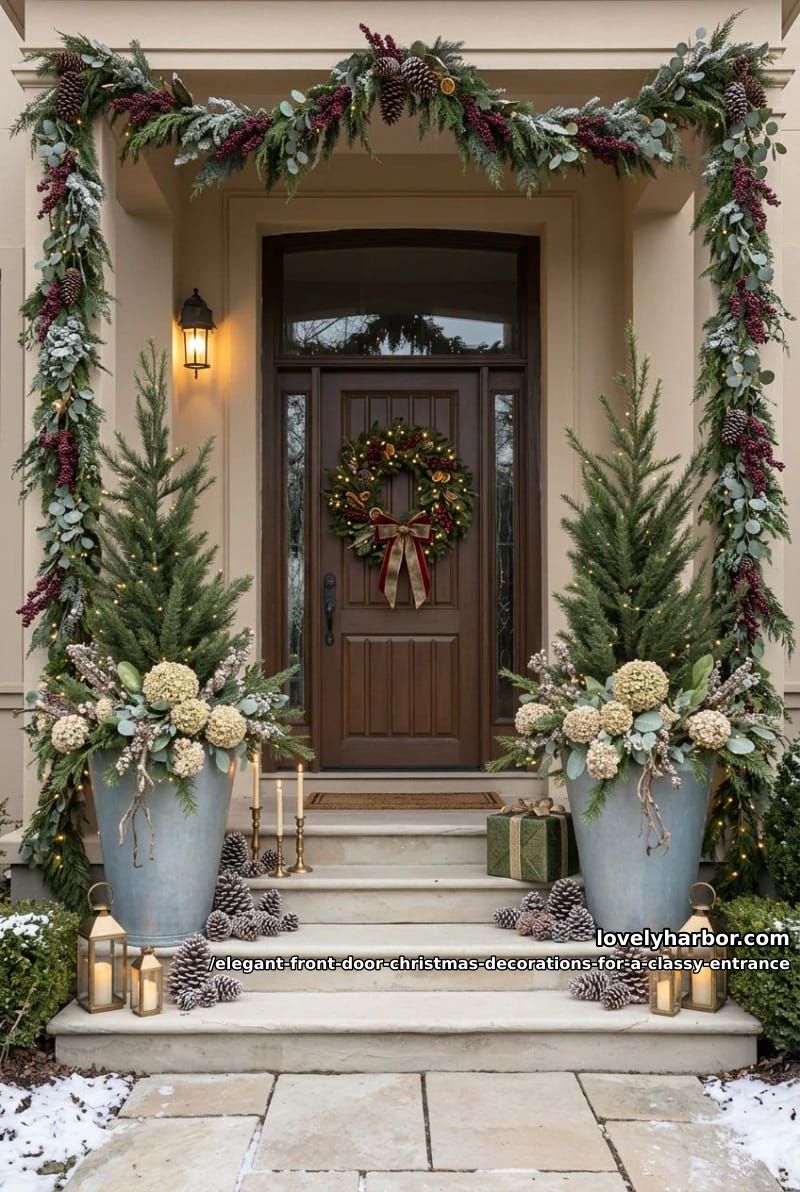
Set two identical planters on either side of the steps and you get instant symmetry that the brain reads as deliberate before it registers a single ornament. The arrangement matters more than the pot: build a tall back of fir or spruce branches, a mid-layer of eucalyptus or magnolia, and a few curling birch or red-twig dogwood stems for height and movement. Galvanized zinc and matte black both photograph cleaner than glazed terracotta, which tends to pull focus.
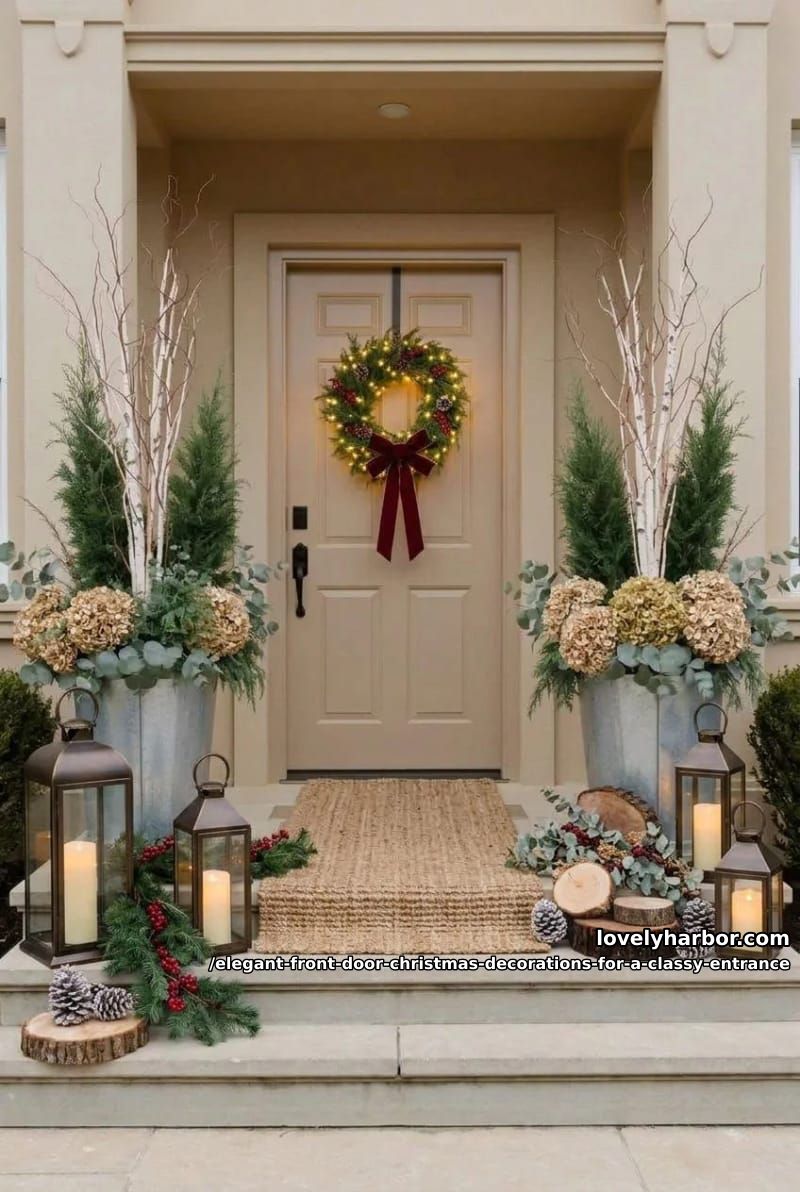
Small stoop with no room for floor planters? Mount two matching wall planters at shoulder height instead, or use a pair of tabletop urns on the step itself. The symmetry is the point; the footprint is negotiable.
5. Use warm white light only, and skip the multicolor
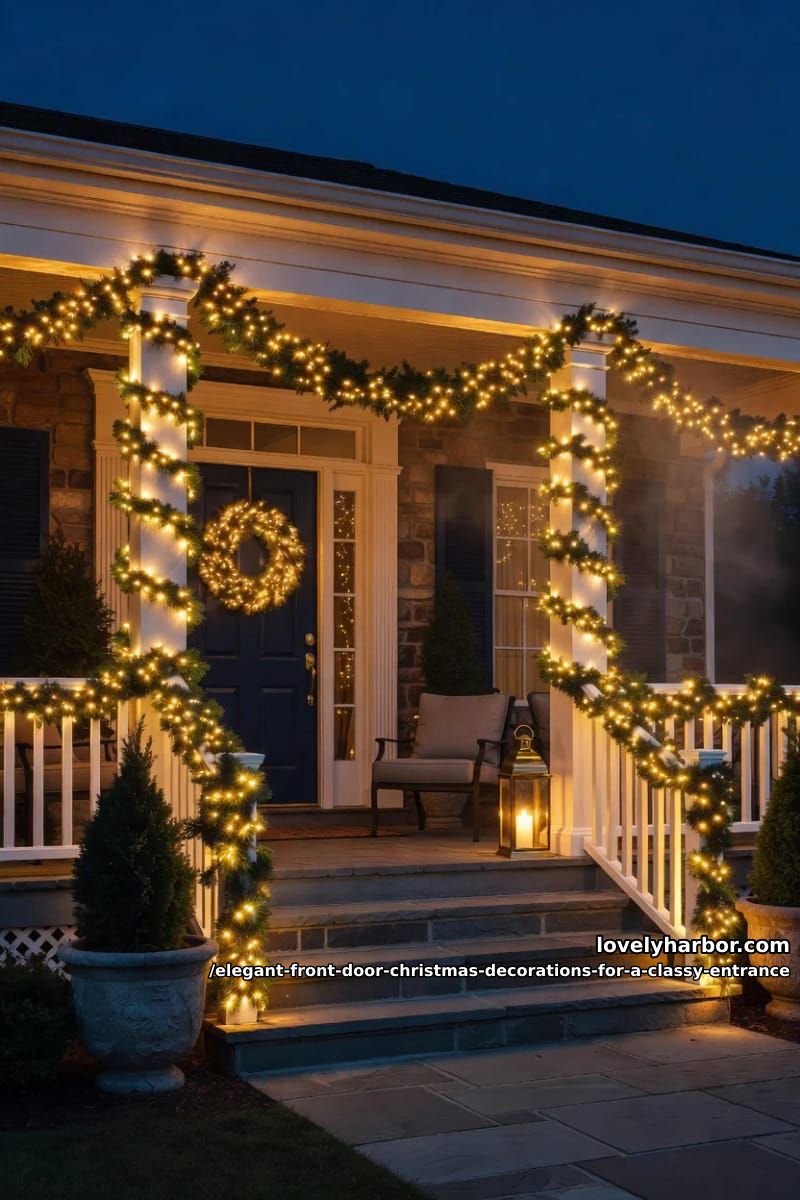
Choose warm white in the 2700K to 3000K range and run nothing else, because color temperature is the single setting that decides whether an entrance looks premium or looks like a parking lot. Lighting installers draw the line clearly: 2700K to 3000K reads residential and golden, while anything from 3500K up reads commercial and cold. Buy by the Kelvin number printed on the box, not by the word "warm" on the front, and buy your whole run from one batch so the strands actually match.
Blinking or chasing multicolor lights, plastic candy canes lining the path, an inflatable anything within ten feet of the door, and four competing themes at once. Any one of these undoes a hundred dollars of fresh greenery. If you want color, add it through ornaments and ribbon, not through the bulbs.
6. Try a grounded neutral palette instead of red and green
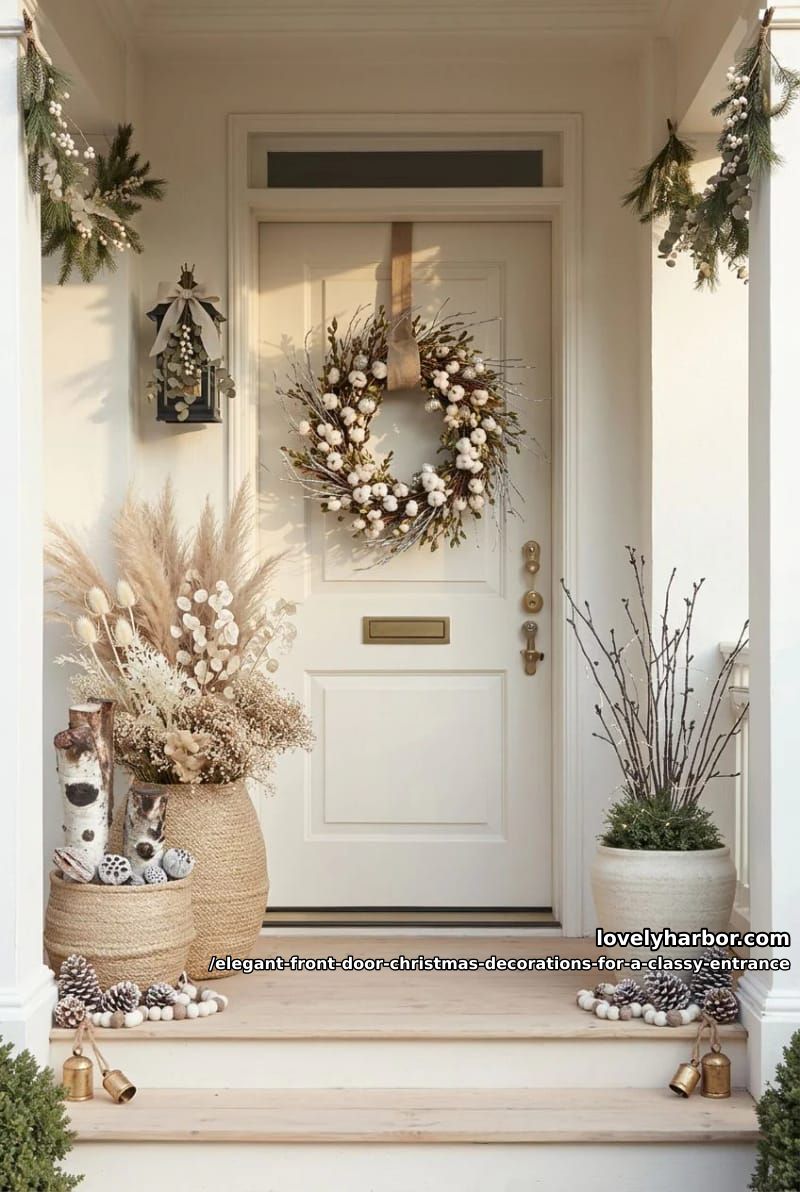
Drop the red-and-green entirely and build the door in cream, oatmeal, champagne, and raw wood, the grounded, "quiet luxury" direction that designers and trend forecasters have been pushing hard for two seasons. Dried elements carry it: bleached eucalyptus, wheat, cotton stems, pale hydrangea, wood-bead garland, a jute or linen ribbon instead of velvet. It looks expensive partly because it does not look like Christmas at first glance, and it has a practical upside, since a neutral door transitions straight into January when everyone else is dragging dead greenery to the curb.
One honest caveat. Neutral reads as restrained on a brick or stone house and can read as washed-out on a pale-painted one, so this palette wants a door with some contrast (a deep walnut, a black, a forest green) to sit against.
7. Line the steps with lanterns and flameless candles
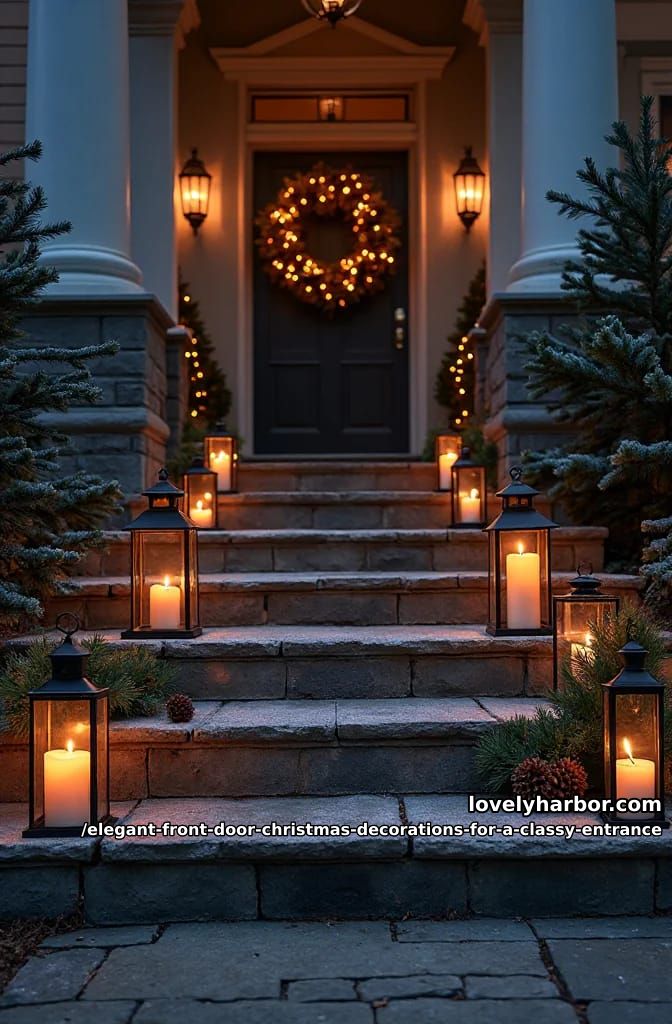
Stagger lanterns up the steps with flameless candles inside and you add the one thing string lights cannot, which is a low, grounded glow at ankle height that makes the whole approach feel lit rather than outlined. Use real metal lanterns in black or aged brass, not the thin powder-coated ones that rust by February, and set the candles to the same warm tone as your strings so the entrance holds one color of light. Cluster a little cedar and a pinecone at each base so the lanterns look planted, not parked.
8. Set a pair of potted trees on either side of the door
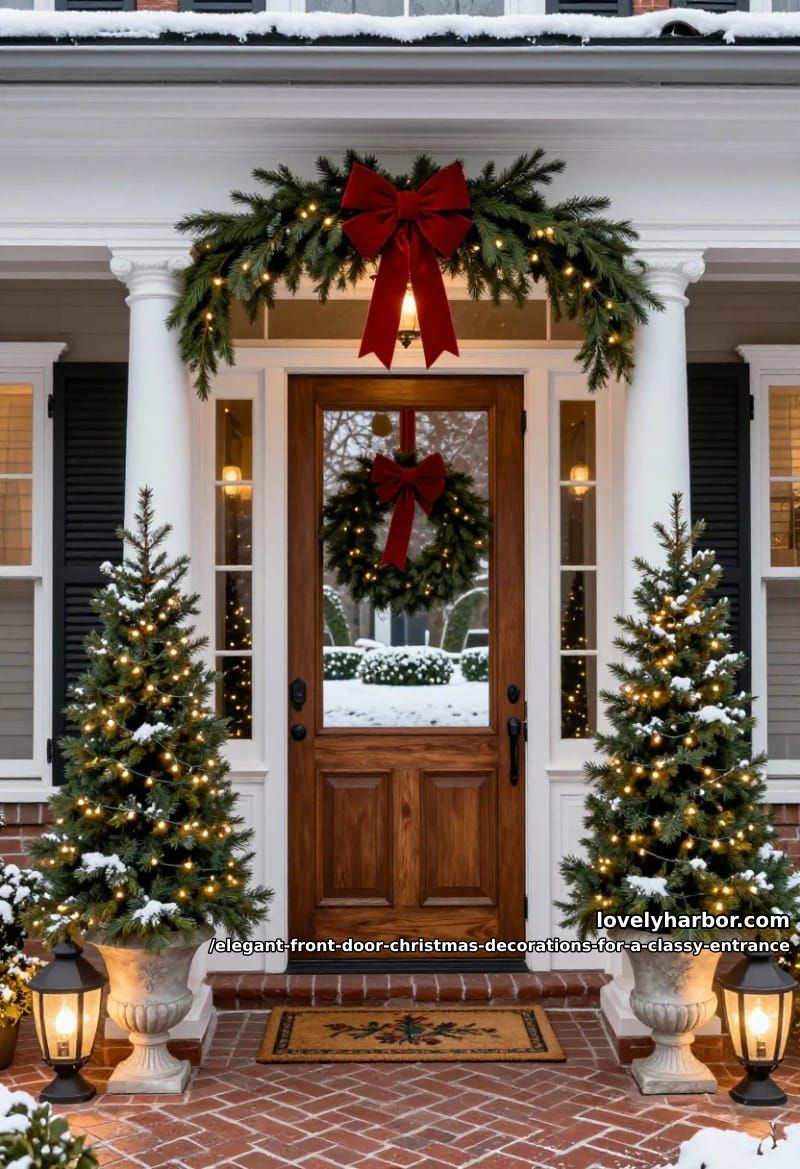
Stand a matched pair of potted evergreens (spruce, boxwood cones, or slim cypress) in identical planters on either side of the door for a look that reads modern and expensive with almost no styling. Matte black planters keep it contemporary; aged zinc pulls it traditional. Wrap each tree in warm-white lights and add one small bow near the top if you want a nod to the trend, then stop. The genuine advantage is reuse: a hardy potted boxwood lives on the porch year-round and only needs lights added in December, which is a far better hundred dollars than another box of single-season plastic.
9. Go black and gold for a glamorous front door
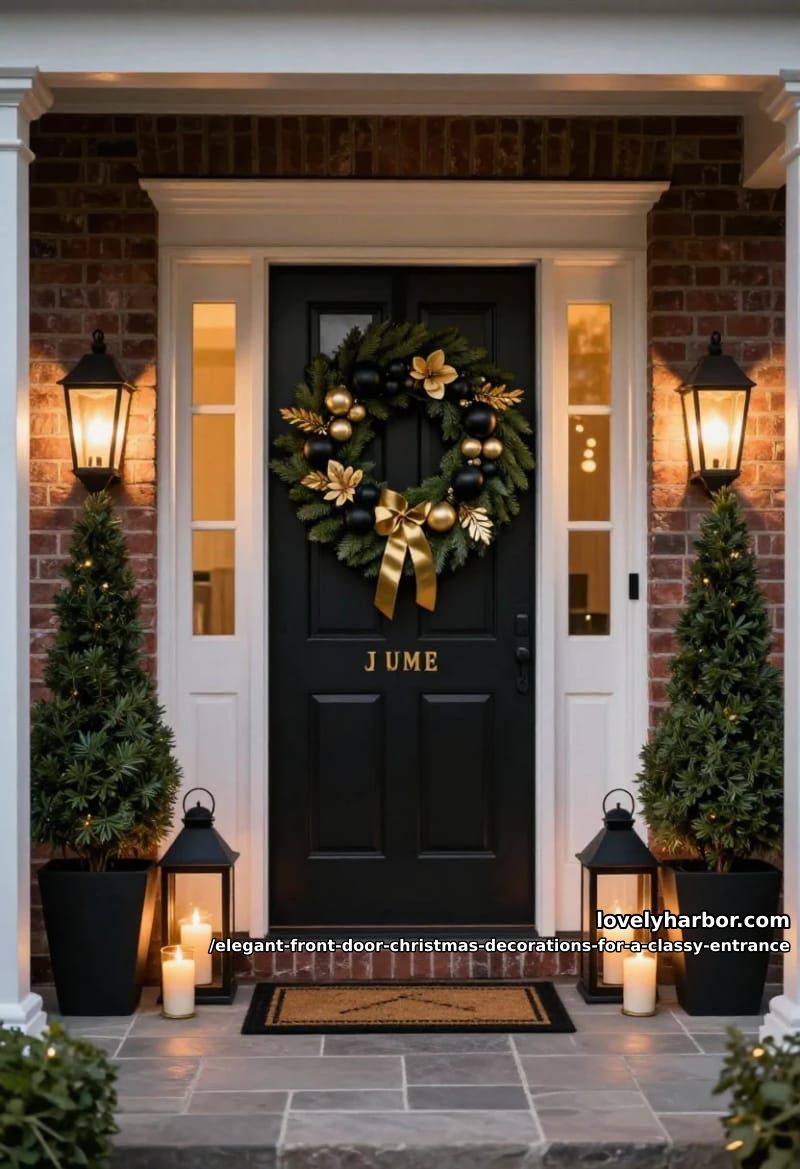
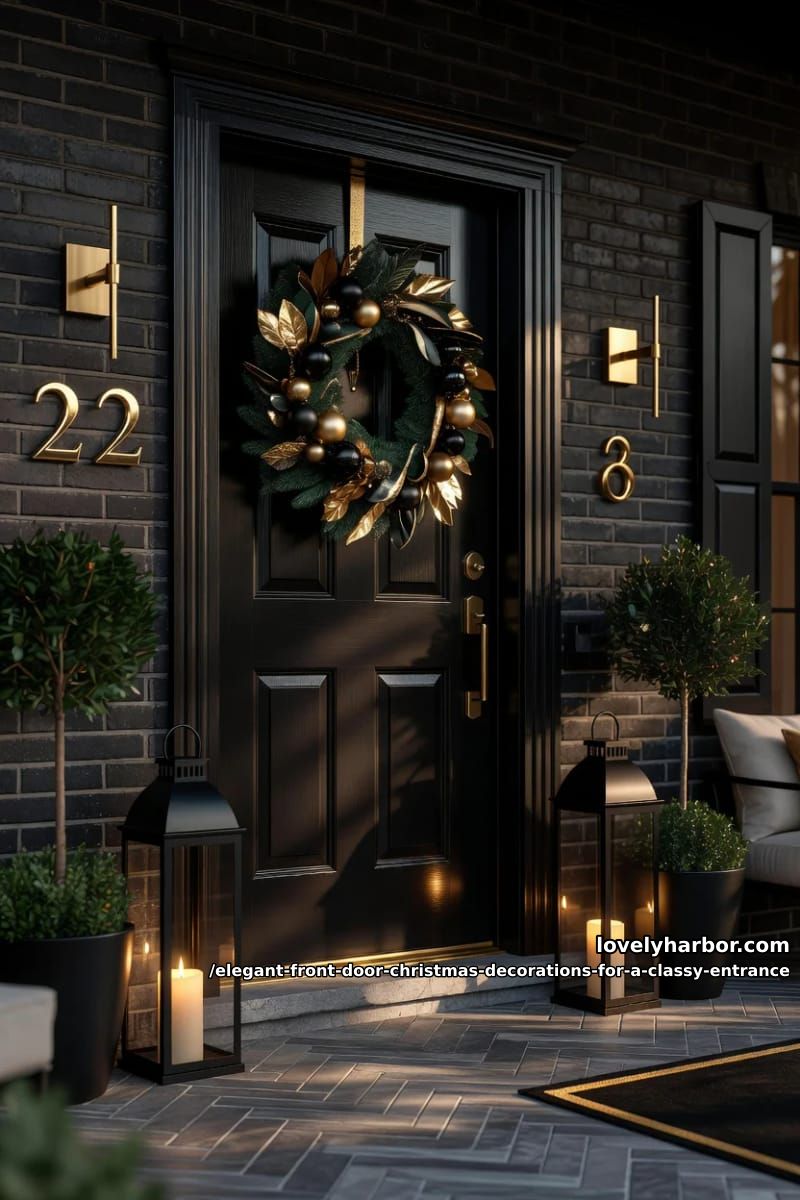
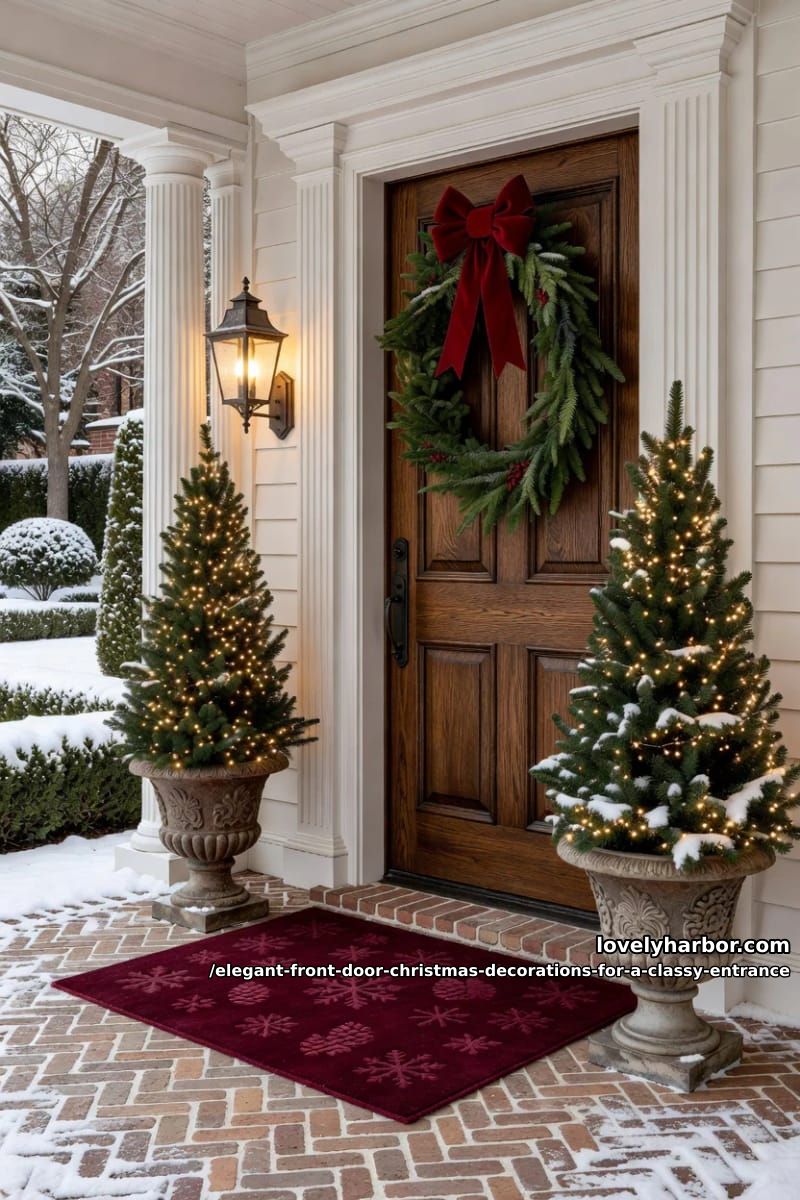
Black and gold is the dressiest palette an entrance can wear, and it works because the discipline is built in: two finishes, nothing else. A glossy black or very dark door is the ideal backdrop; against it, gold and matte-black ornaments read as jewelry rather than clutter. The failure mode is metal creep, where gold turns into gold-plus-silver-plus-copper-plus-rose-gold and the whole thing goes muddy. Pick two and hold the line.
| Palette | Reads as | Door colors it suits | Watch out for |
|---|---|---|---|
| Red and gold | Traditional, warm | White, navy, forest green | Goes loud fast; keep red to one tone |
| Green and gold | Refined farmhouse | Cream, black, natural wood | Needs real or convincing greenery, not plastic |
| Black and gold | Glamorous, formal | Glossy black, charcoal, deep grey | Mixing in a third metal kills it |
| Neutral and cream | Quiet, modern | Walnut, black, forest green | Washes out against pale-painted doors |
10. Commit to a single color and a single material
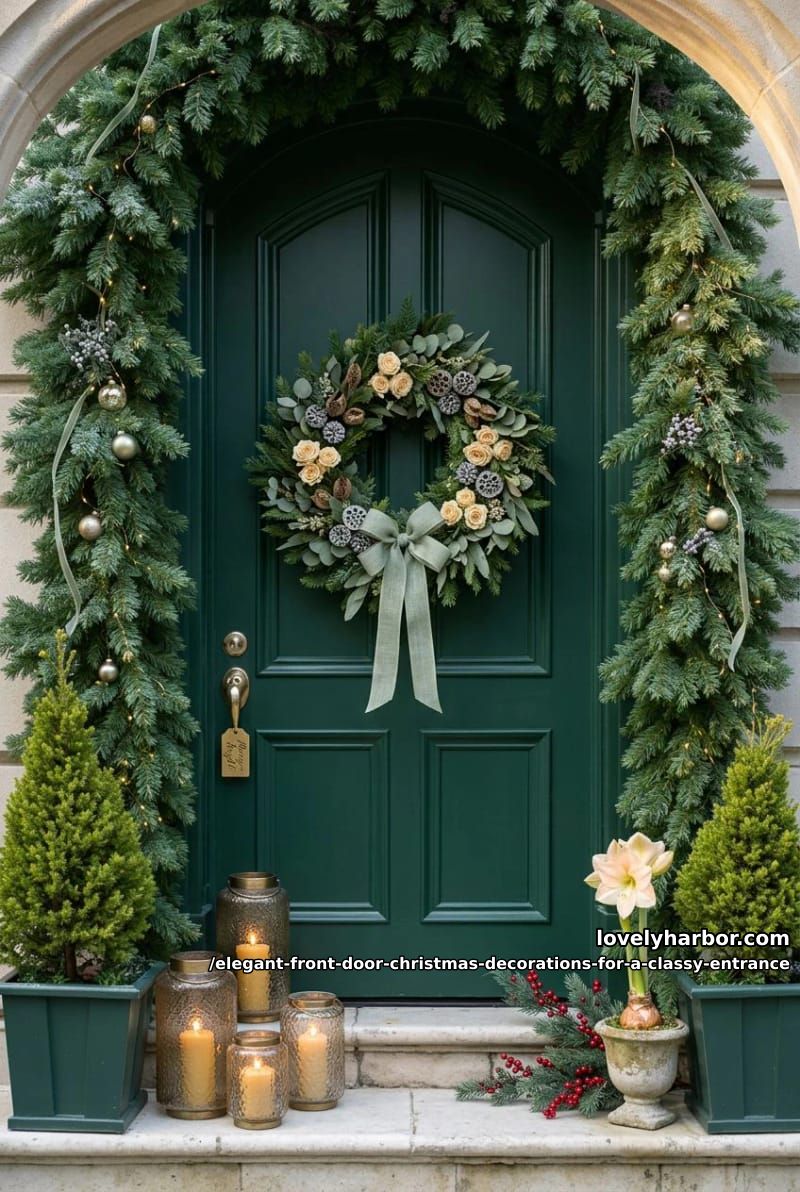
Strip out every color but one and let texture do the work, which is the most underused move on this list and the one that consistently reads as designed. An all-green door (fir, cedar, eucalyptus, boxwood, no ribbon, no baubles) looks like a florist made it. All-white, all-brass, all-natural-dried: the principle holds. People email me asking why their porch looks busy when they used "tasteful" colors, and the honest answer is usually that three palettes are quietly competing. One color, varied texture, full coverage. It is harder to get wrong than it sounds.
11. Match the decorations to your door's paint color
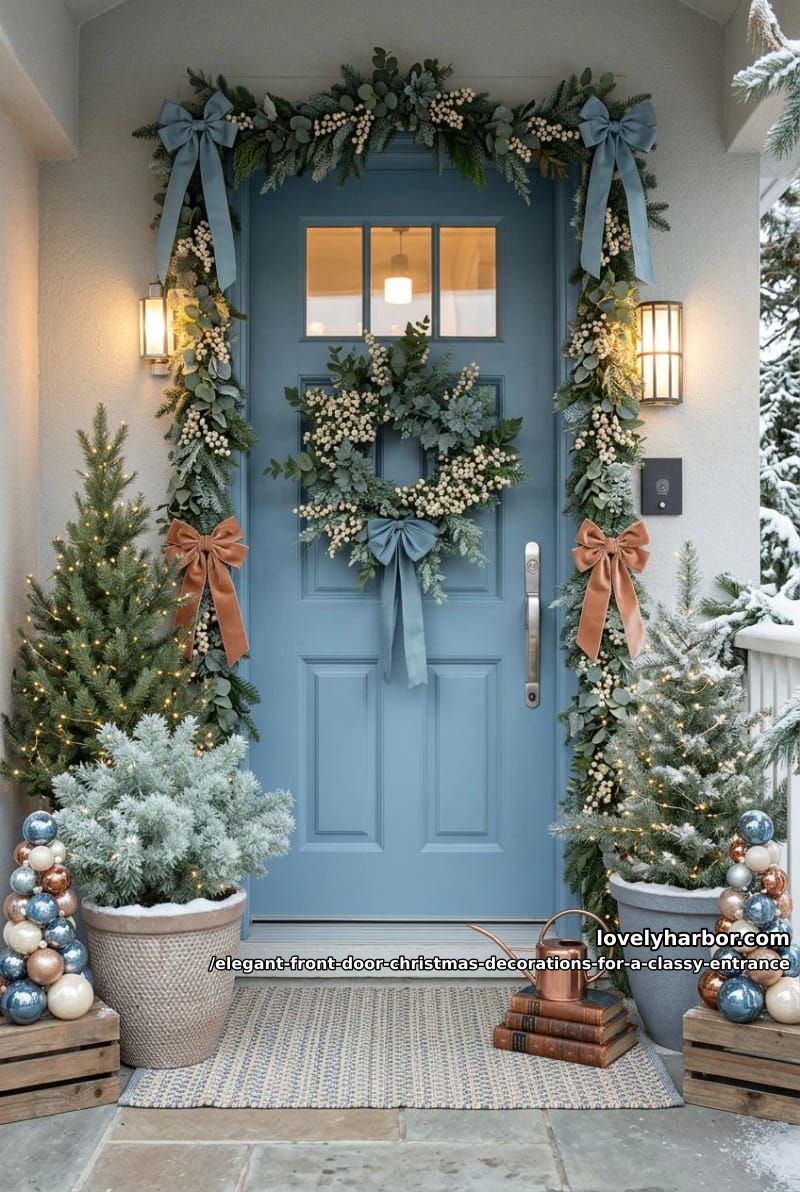
Pull your decorations from the door's existing paint color instead of defaulting to red, and the entrance suddenly looks composed rather than applied. A blue door wants blue spruce and silvery eucalyptus, not scarlet bows. A black door takes black-and-gold or all-green cleanly. A red door is already carrying a strong color, so load it with greenery and warm white light and almost nothing else, because piling more red onto red is how the "hotel lobby" Pottery Barn look happens. This is the kind of small coordinating decision that costs nothing and that nobody consciously notices, which is exactly why it works.
12. Finish the threshold with a layered doormat and brass
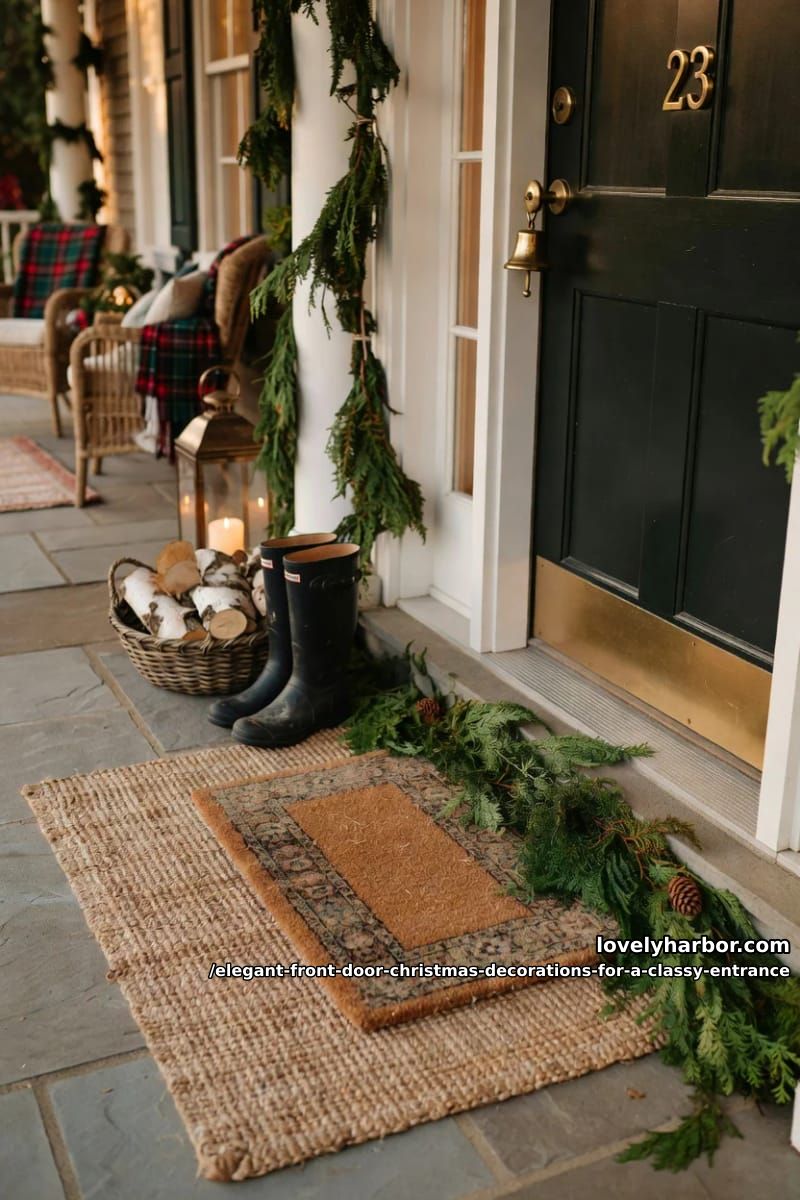
Dress the floor and the hardware, because the threshold is where guests actually stand and where a styled door either lands or falls apart. Layer a smaller patterned coir mat over a larger plain jute one for depth, and swap shiny builder-grade house numbers for brushed brass if yours have gone dull. Coir handles weather far better than felt or rubber-backed mats that hold water and warp.
Keeps it classy
- Layered natural-fiber mats, weather-rated, in muted tones
- Brushed brass numbers, a small bell, or an aged door knocker
- One or two ribbon materials across the whole entrance, no more
Cheapens it
- A novelty slogan mat fighting the rest of the styling
- Plastic everything: candy canes, light-up figures, hollow baubles that catch wind
- Mixing four metals and three palettes because each piece was bought separately. Pick a scheme first, then shop to it.
Conclusion
If you do only three of these, make them the oversized wreath, warm-white light at 2700K to 3000K, and a single committed palette, since those carry the most weight for the least fuss and protect you from the multicolor-and-plastic tells that cheapen an entrance fastest. Sequence the work in that order too: hang and light the structure first (wreath, garland, the columns), live with it for an evening at dusk, and only then decide whether it needs a bow or a pair of potted trees. Most doors are finished before that last step, which is the quiet argument running through all twelve ideas. The neutral and black-and-gold palettes both reward stopping early; the busy ones never know when to.