
This is a list of outdoor Christmas lighting that reads expensive without a blow-up snowman in sight. Every idea here leans on the same small set of decisions that separate a refined display from the yard that looks like a clearance aisle: one warm color temperature, light placed on architecture instead of scattered across the lawn, and restraint about how much glows at once.
One scope note before the ideas, because the search term is doing real work. "Without inflatables" is not just a stylistic preference here; it rules out the entire category of figural blow-ups, and it also quietly rules out their cousins, the giant light-up candy canes and the herds of wire reindeer. I am not against a single sculptural piece (see number 10), but the move that makes lights look classy is almost always subtraction.

1. Commit to one warm white and never mix temperatures
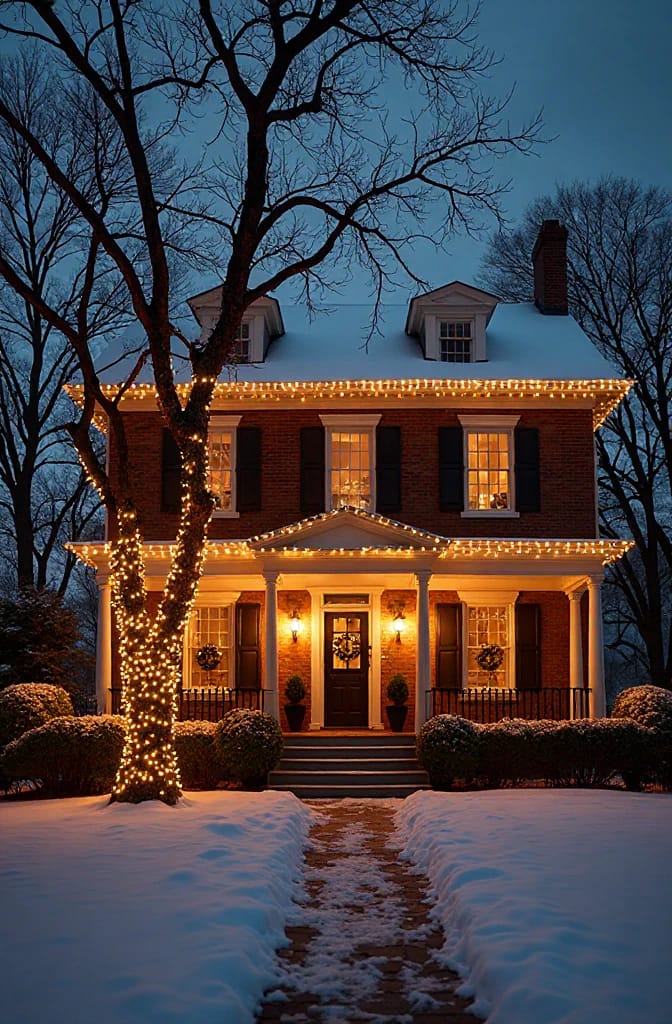
Pick warm white at 2700K and put it everywhere, full stop. The single fastest way to make a display look cheap is to mix color temperatures, so the icicle lights read blue, the roofline reads yellow, and the tree reads somewhere in between. Designers who light houses for a living buy one product line in one temperature and refuse to deviate; you should copy that discipline before you copy anything else here.
If you already own a tangle of mismatched strands, this is the year to stop fighting them and replace in stages. Start with whatever the eye lands on first (usually the roofline or the front tree), get those onto matched 2700K strands, and let the leftover strands die off over a couple of seasons. Cool white, the 5000K-and-up stuff sold as "bright white," is the one I would never buy for a home; it looks like a parking lot and it photographs worse than it looks in person.
Reads classy
- One warm white temperature across the whole property, 2700K to 3000K.
- Lights on the house and the trees, dark ground in between.
- Matched bulb style: all mini, or all C9, not a jumble.
Reads cheap
- Multicolor plus white plus blue, all running at once.
- Net lights thrown over a shrub so the grid shows.
2. Uplight the facade so you never see the bulb
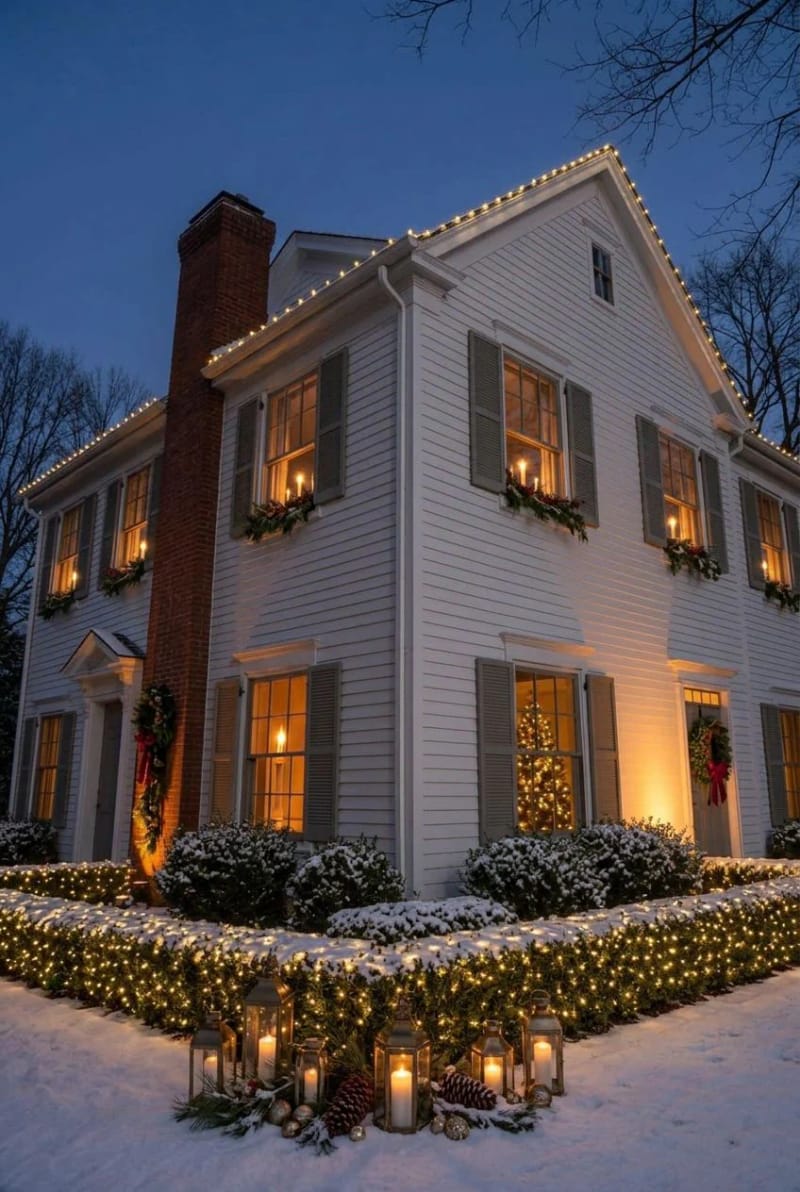
The most expensive-looking trick on this list shows no string lights at all. A pair of warm LED spotlights staked in the beds and aimed up at the house grazes the brick or siding with light, throws the texture into relief, and gives you that hotel-entrance glow that bulbs strung along a gutter can't. People assume it is wildly involved; it is two or three stake fixtures and an outdoor extension cord.
Where to aim the fixtures
Aim up the corners and any vertical feature: a chimney, a column, a tall evergreen against the wall. Grazing close to the surface (fixture a foot or two off the wall) shows texture; pulling it back floods the wall flat and loses the effect. Two fixtures handle a typical facade; a wide house wants three or four.
Warm, not blue
Buy fixtures rated 2700K to 3000K, the same as your strings, and check the box for "warm white" rather than "daylight." A blue-white wash on a house at Christmas looks like a crime scene. Decent warm LED uplights run roughly $25 to $50 each; you do not need the contractor-grade ones for a few weeks a year.
3. Wrap one bare tree trunk-to-branch, not the whole yard
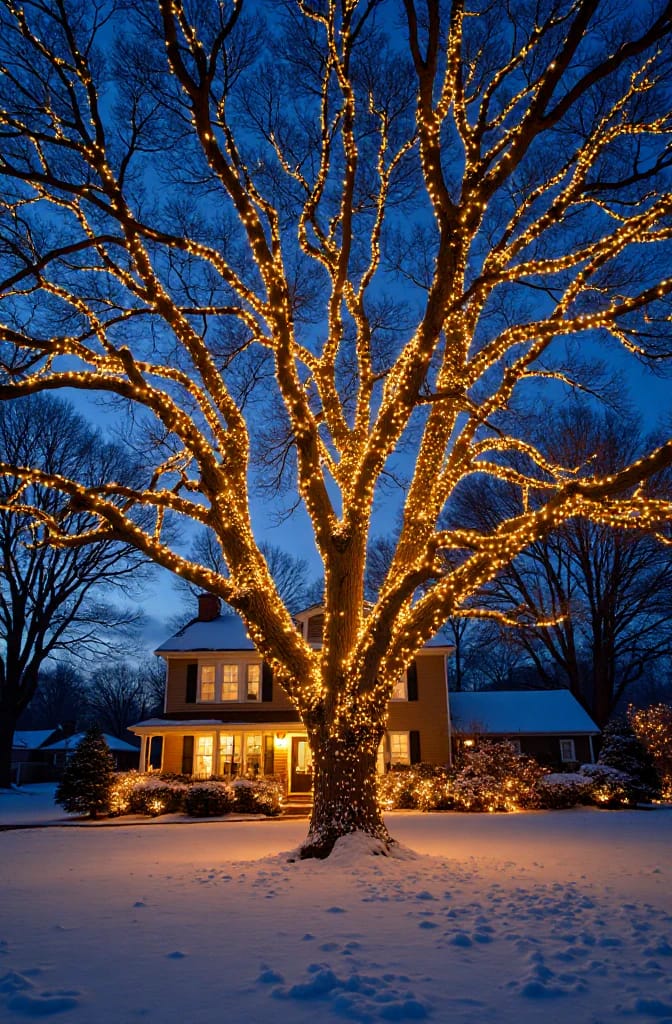
A single deciduous tree wrapped properly outperforms a yard full of half-measures. The look that lands is the trunk and the major limbs sleeved in light so the bare branch structure glows from the inside; the look that fails is a few strands lobbed at the canopy from the ground. This is the most labor of anything here, and it is the one I would actually budget a full afternoon for.
How many lights, roughly
Plan on a lot more than you think. A rough working number is around 100 lights for every foot or so of trunk and limb you genuinely want covered, which is why a mature tree can swallow two thousand bulbs without looking dense. Buy more than your estimate; returning unopened boxes in January is easier than driving back out mid-wrap.
Wrap from the inside out, with slack
Start at the base, wrap up the trunk, then follow each major limb out and back, leaving a little slack so the strand does not strangle the bark or snap taut in a cold snap. Commercial crews wrap tight and consistent at about three inches between passes; do not chase perfection on the high branches nobody will inspect.
4. Outline the roofline in one continuous, clean run
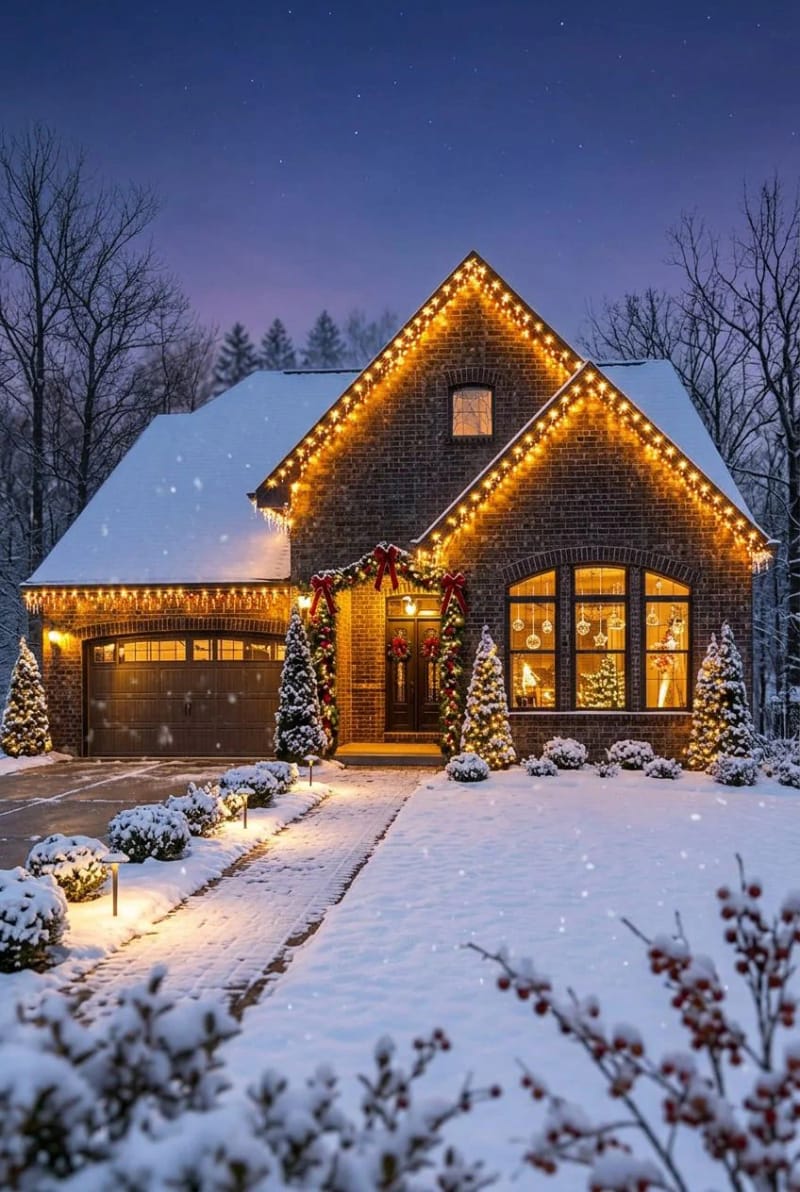
Outline the architecture, not the whole envelope. One clean run along the roofline, the gable edges, and maybe the porch fascia gives you a graphic, drawn-on look; lights crawling over every shrub, railing, and window frame at the same time turns the house into noise. Spaced C9 bulbs read more traditional and more expensive than dense mini lights here, and the gaps between them are the point.
Getting the line straight is the entire job, so use all-in-one clips that sit the bulbs at a consistent angle along the gutter or shingle edge. Sagging swoops between attachment points are the tell that someone stapled the strand up in a hurry. If your roof is steep or two stories, this is the one task on the list I would hand to a professional installer rather than risk a January ladder fall.
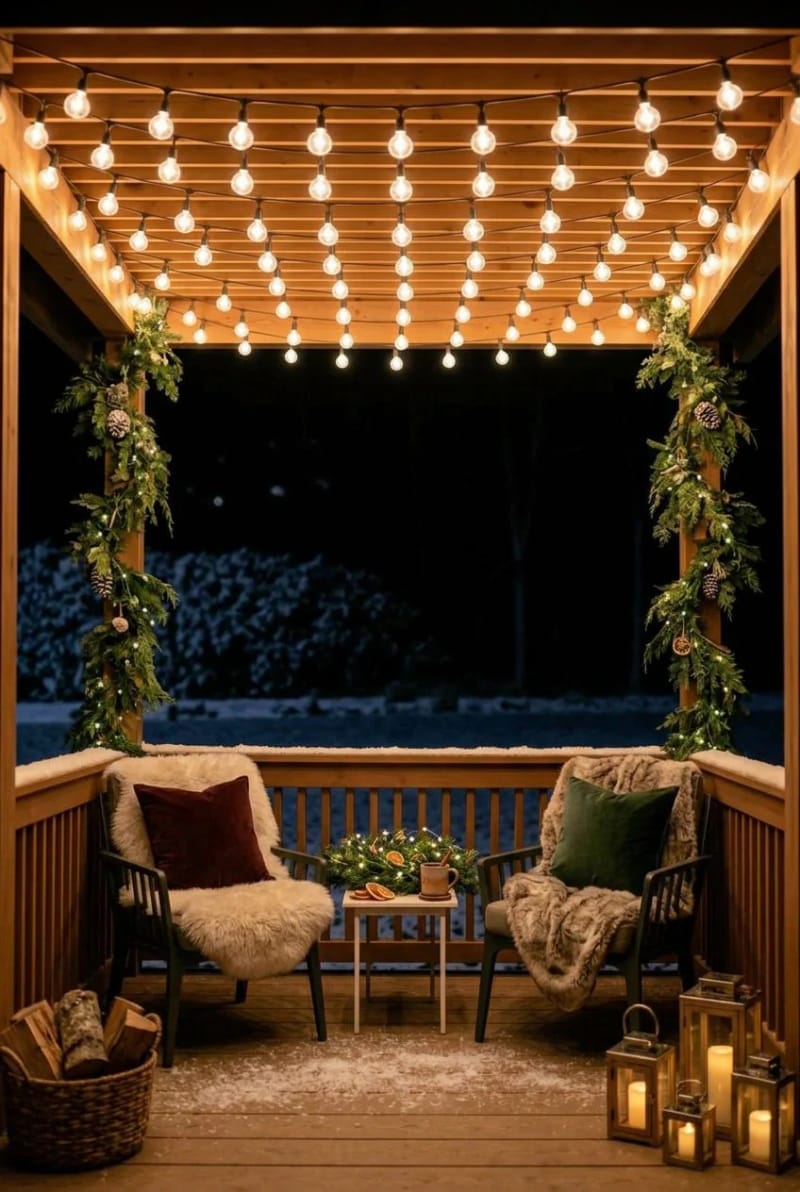
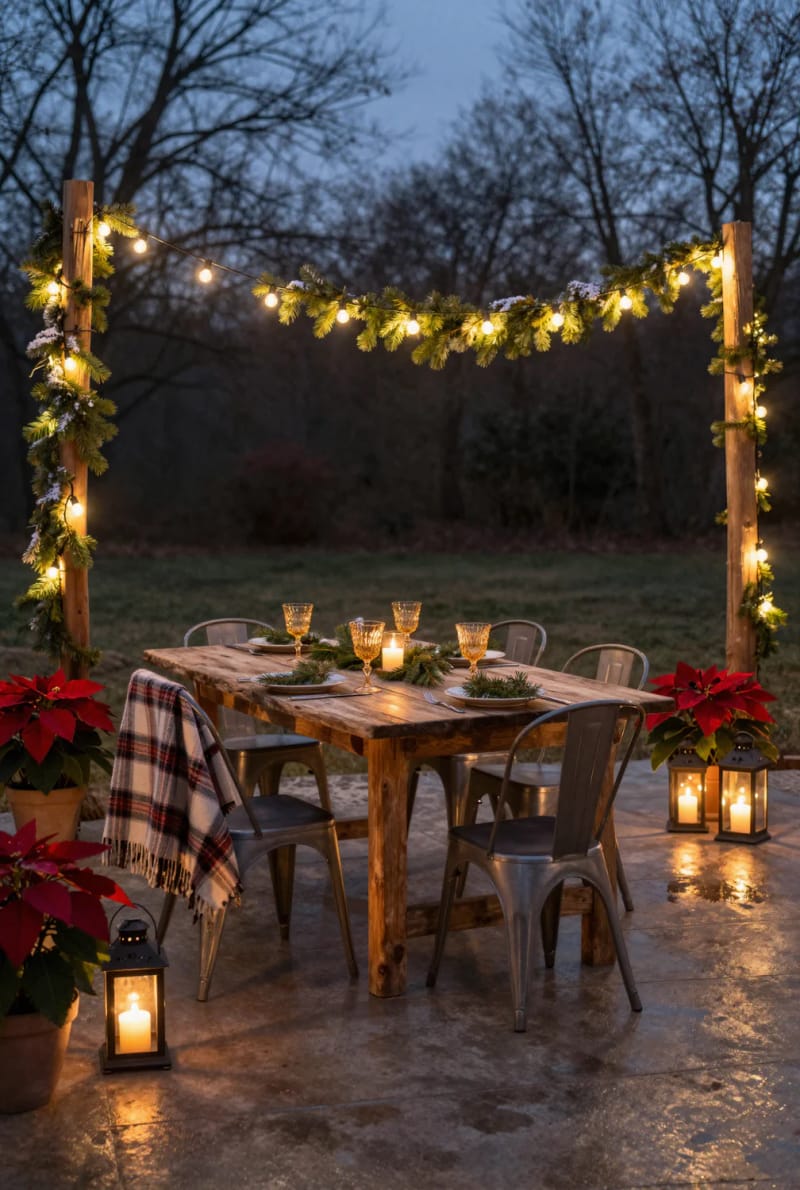
5. Hang bistro lights low over the patio or between posts
Cafe-style string lights with spaced Edison-look bulbs turn a back patio into an evening room, and unlike most Christmas lighting they stay up year-round without looking seasonal. The classy version hangs low and taut overhead in straight runs or a crisscross; the sad version droops in a single sagging line nailed to the fence. These are warm, oversized bulbs on a heavy black cord, not mini lights.
Run a support cable first
The reason cheap installs sag is that the light strand is carrying its own weight. Run a length of coated steel guy wire between your anchor points first, tension it, then zip-tie the string lights to the cable. The bulbs hang dead level and the strand lasts years instead of one windy week.
Hide the transformer and the extra cord
Buy the spec that matches your span so you are not coiling thirty feet of leftover cord at one post (a dead giveaway). Tuck the plug and any transformer behind a planter or up under the eave. Heavy-duty commercial bistro strands cost more, in the $40 to $80 range for a usable length, and they survive being left out, which the dollar-store version will not.
6. Cluster lit spheres in the planters and on the lawn
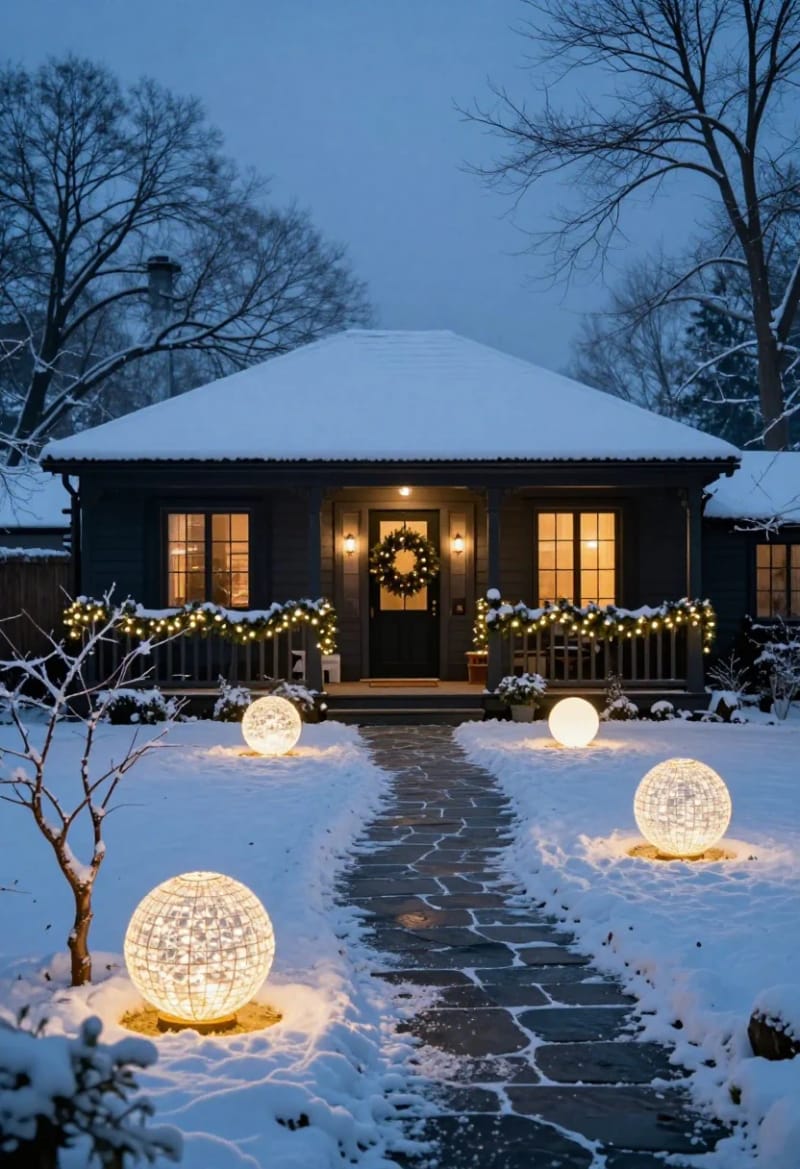
Lit orbs are the modern alternative to figural decor, and grouping them in odd numbers at varied heights is what keeps them from looking like stray gazing balls. Three spheres of different sizes clustered in a bed reads intentional; one lonely sphere on the lawn reads like you lost the rest. The ready-made warm white ones from a place like Frontgate or Balsam Hill look the part, though you can build them cheaper with a wire frame and a strand of warm minis.
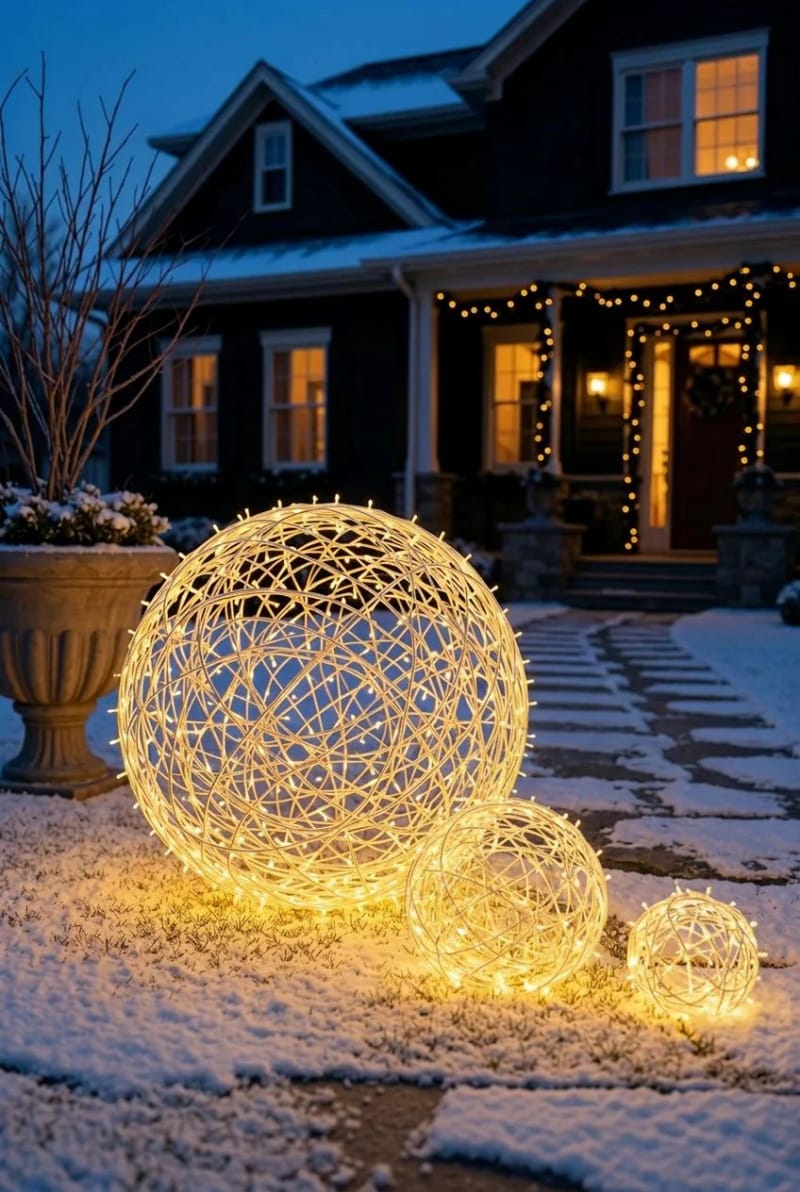
Keep them all the same finish and the same warm white. Mixing a chrome sphere, a twig sphere, and a colored one undoes the whole effect, which is the same one-temperature, one-material logic running through this entire list.
7. Put a single electric candle in every front window
Nothing on this list is cheaper or more reliably elegant than one warm candle in each front-facing window. It is a colonial New England habit for a reason: the even rhythm of identical small lights across a facade does quiet, symmetrical work that no amount of yard decor matches. Buy the LED versions with a dusk-to-dawn sensor so they switch themselves on and you never touch them again.
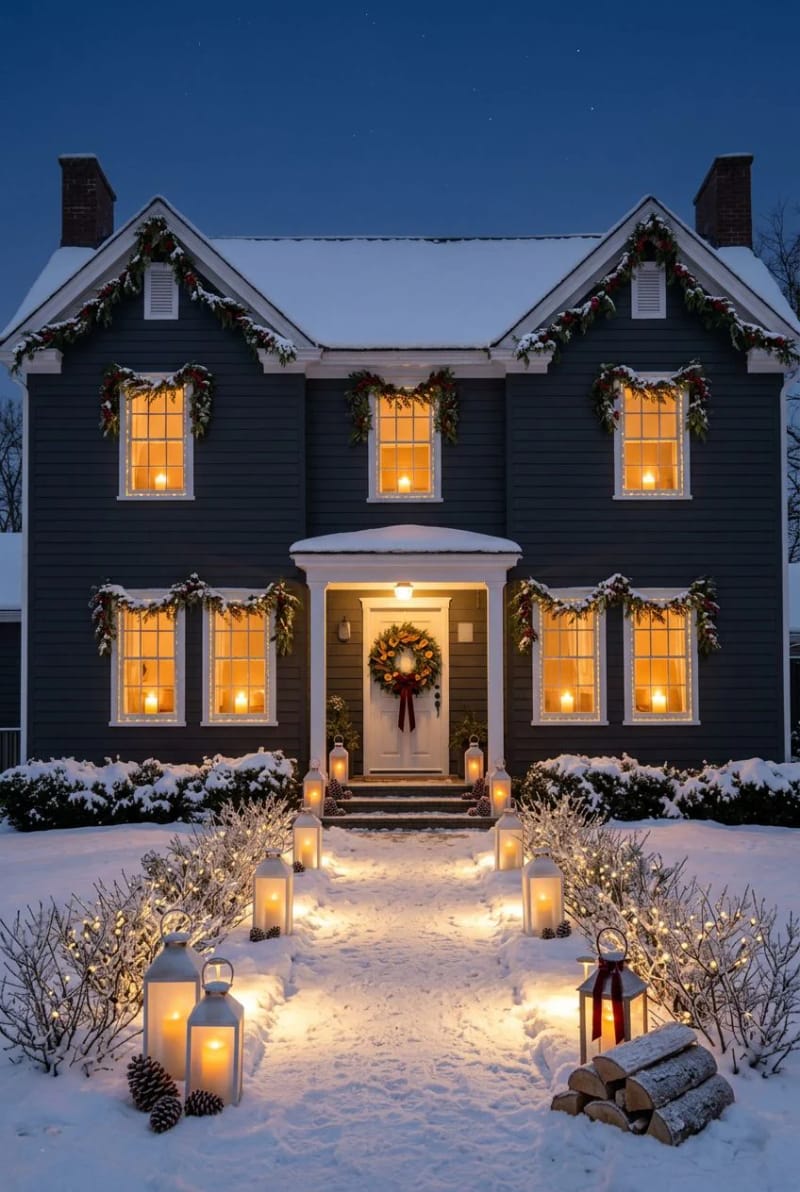
The thing that ruins it is candles of different heights and brightnesses, so buy a matched set in one purchase rather than accumulating singles over years. A set of six to eight runs maybe $20 to $40 and lasts seasons. Center each one in its sash; off-center candles read as an accident, not a choice.
8. Flank the door with pre-lit potted trees or boxwood
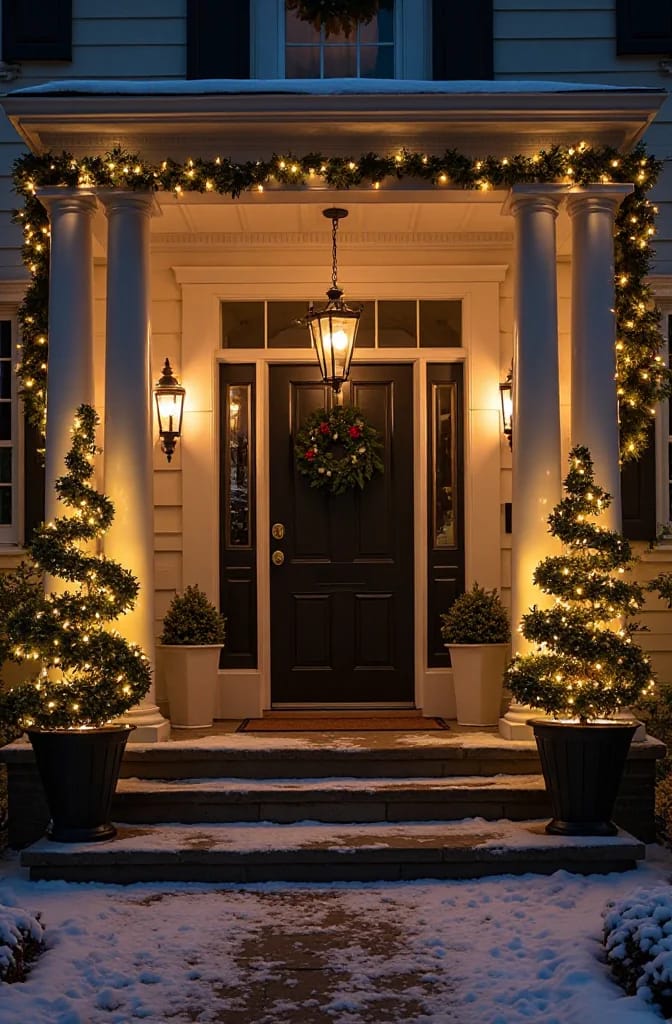
Two matching lit trees on either side of the entry give you instant symmetry, which is the cheapest shortcut to looking expensive. Boxwood cones, spiral topiaries, or a pair of potted evergreens all work, wrapped in the same warm white as everything else. The rule is that they match: same plant, same planter, same light, mirrored left and right.
Renters and small-porch dwellers, this is your highest-value idea. Two pre-lit potted trees need no ladder, no clips, no holes in anything, and they store in a closet. I lived with a pair on a third-floor landing for years and they did more than any amount of railing wrapping ever did.
9. Run pathway lighting low and warm, and skip the jumbo candy canes
Path lighting should whisper. A low, even line of small warm stake lights or a few simple lanterns guides the eye up the walk and disappears into the design; the giant C9 candy cane stakes and the bubbling peppermint posts that flood the search results do the opposite, shouting for attention at ankle height. I know they rank and sell. They also read as cheap the second they are out of the box, and I would steer you away from them even though half the internet disagrees.
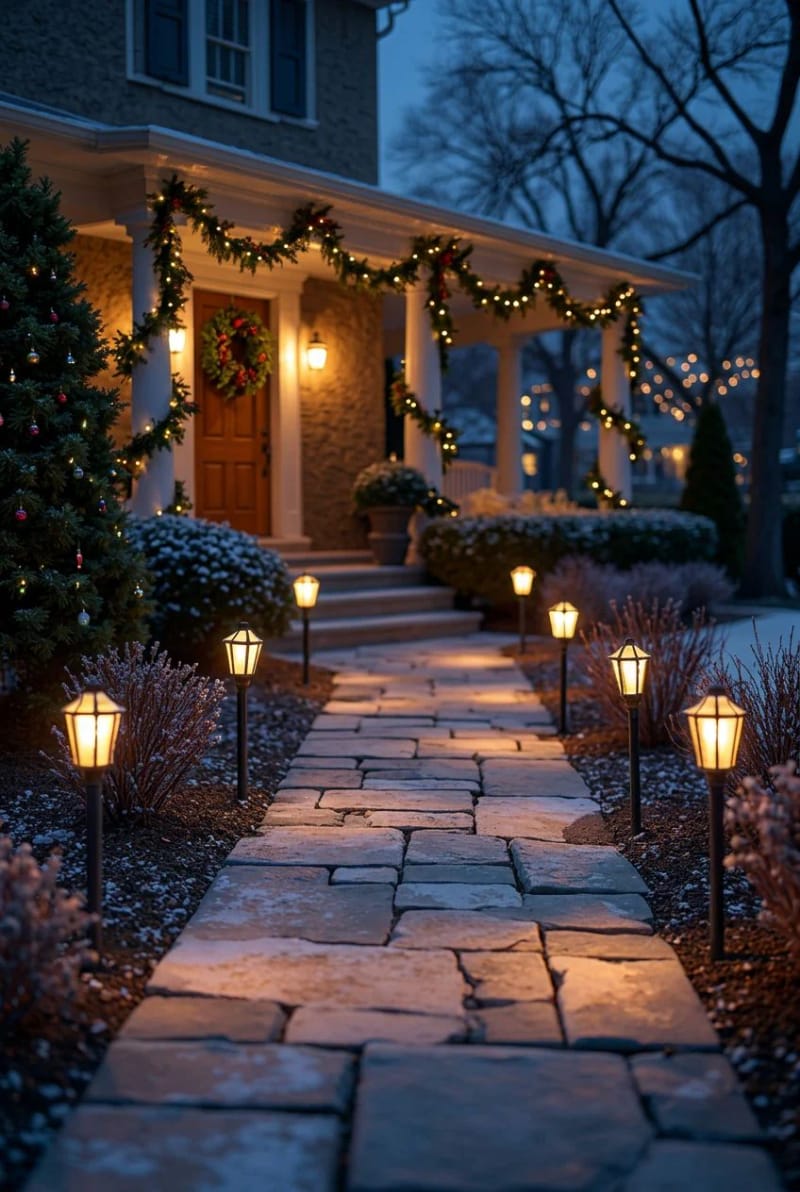
If you want a little more presence than bare stake lights, a pair of real lanterns at the start of the walk does it without the noise. Whatever you choose, keep the spacing even and the count low; a path lined with too many lights looks like a runway. Solar versions are tempting for the no-wiring convenience, but most read dim and slightly blue, so I prefer the plug-in kind on the same circuit as the rest of the warm white.
10. Add one sculptural silhouette, never a herd
You can have exactly one figural piece and still look refined, which is the loophole the "without inflatables" crowd usually misses. A single warm white wire-frame deer standing alone in a bed, or one lit star or wreath on the gable, works precisely because it is solitary; the failure is the family of three light-up reindeer plus a sleigh plus a polar bear, at which point you are back in inflatable territory by other means.
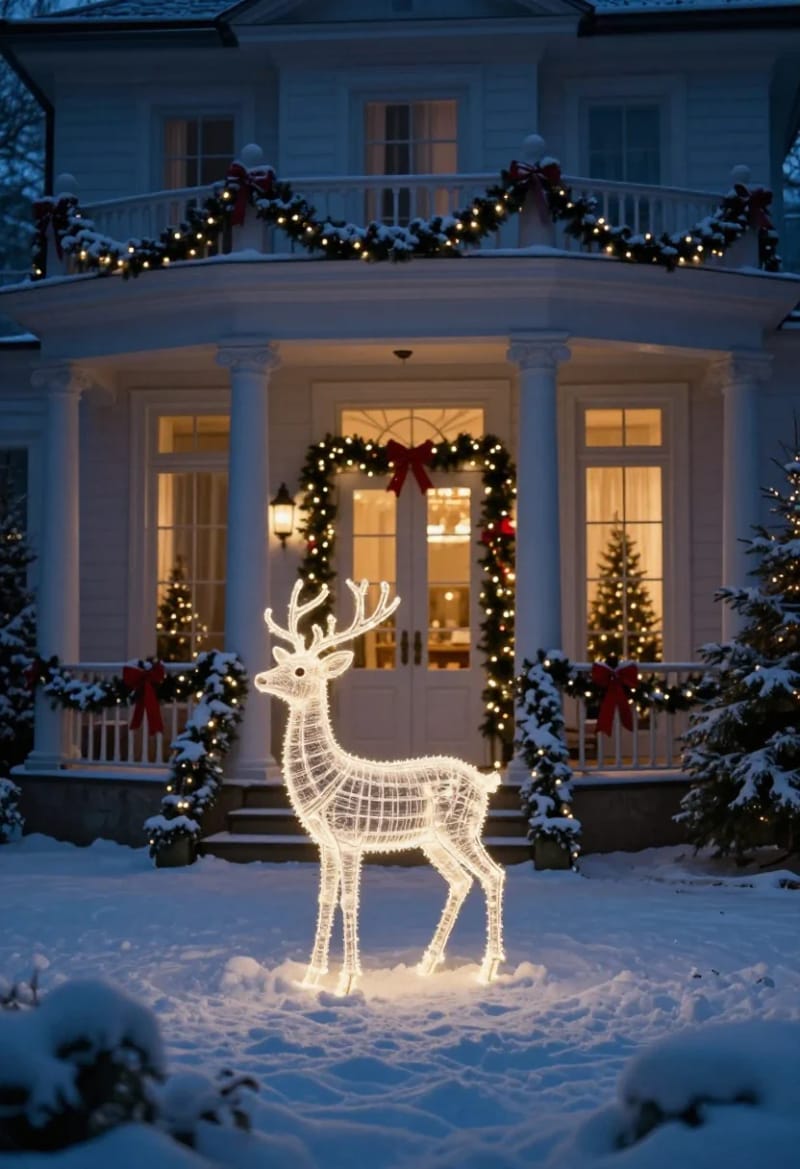
Choose a piece with a fine metal frame and warm white LEDs, not the cheap molded ones with a few sparse bulbs and a visible battery pack. The good versions cost more, often $60 to $150 for a substantial deer, and the difference shows in how dense and even the light reads. Set it slightly off to one side rather than dead center on the lawn, where it competes with the house.
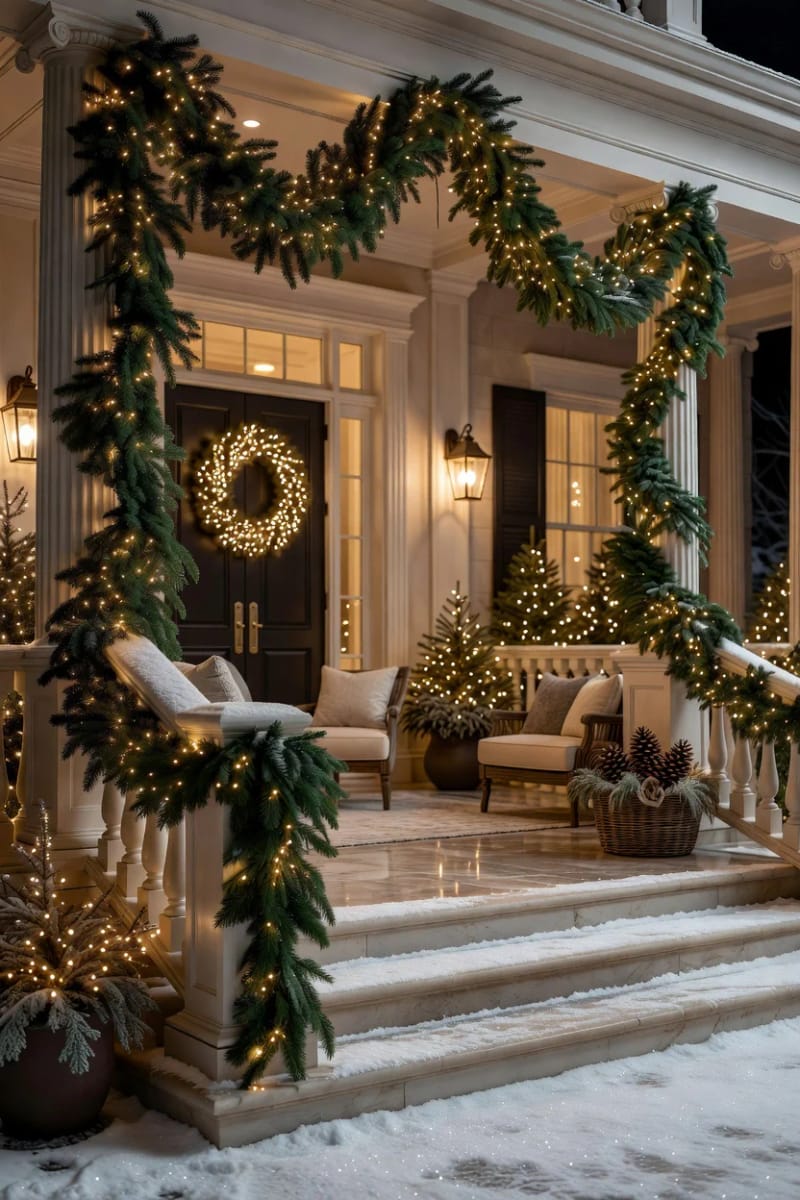
11. Layer a lit garland on the railing and door
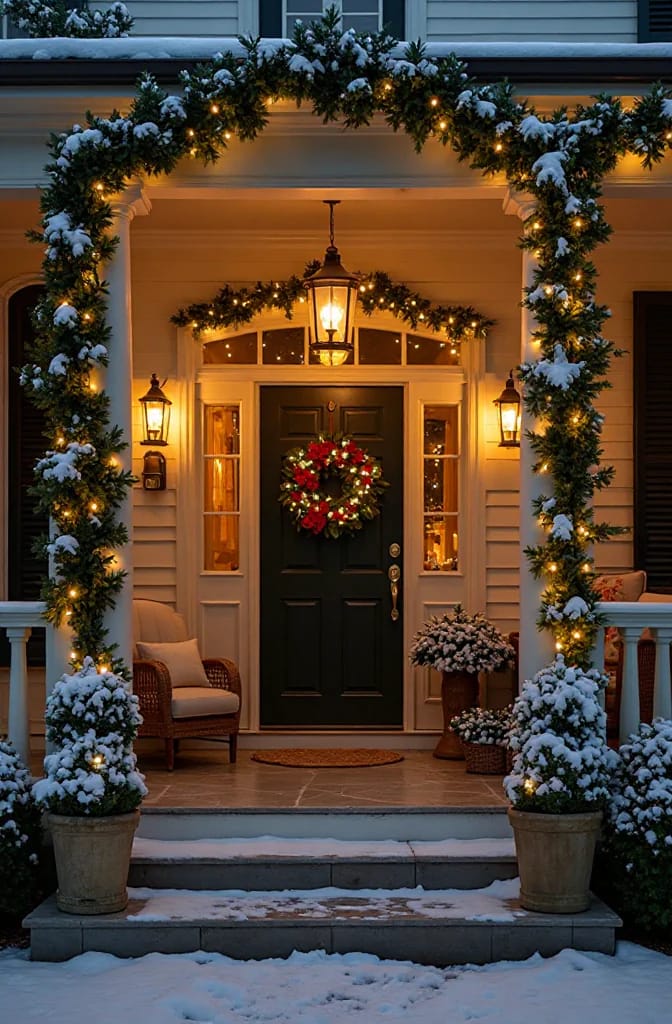
A pre-lit or hand-wrapped evergreen garland on the porch railing and door is the finishing layer that ties the entry together. The trick is weaving the lights down into the greenery so the foliage glows from within instead of looking like a strand laid on top. Match the warm white again, and pick a fuller faux garland over a thin one; the cheap garlands are see-through and the lights read as bare wire.
This is also where I will admit a bias against the Pottery Barn approach to the whole thing, which is to buy the matched garland, wreath, planter, and bow as a set so the porch looks like a catalog page and like nobody actually lives there. A little asymmetry, a real wreath gone slightly crisp by New Year's, is the part that keeps it from looking staged.
Conclusion
If you do nothing else, sequence it: lock in one warm white temperature, put a single architectural run somewhere (the roofline from number 4 or one wrapped tree from number 3), then add accents only after those two are working. The window candles, the flanking trees, and the one sculptural deer are layers on top of a restrained base, not substitutes for it, and the reason this whole approach beats a yard of inflatables is that it gives the eye one or two clear things to land on instead of a dozen competing for attention. Get the base right in year one and add an accent a year; that is how the displays that actually look expensive get built.