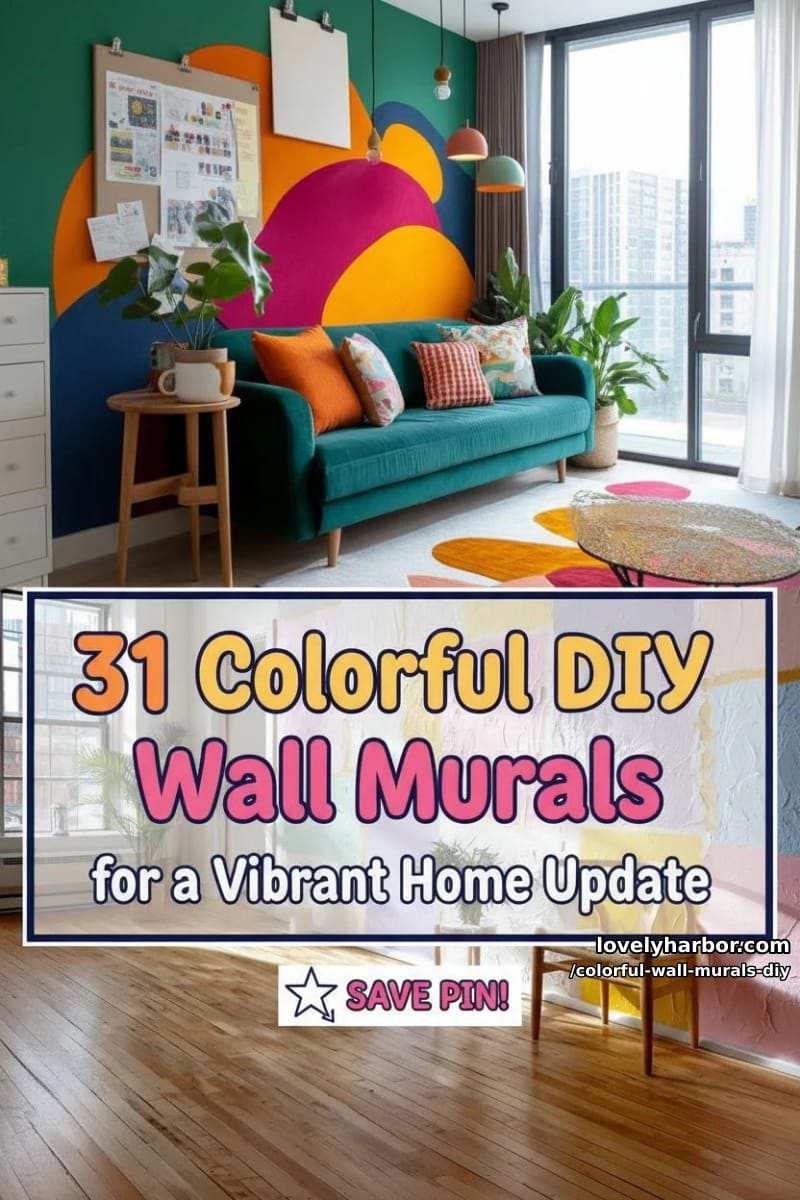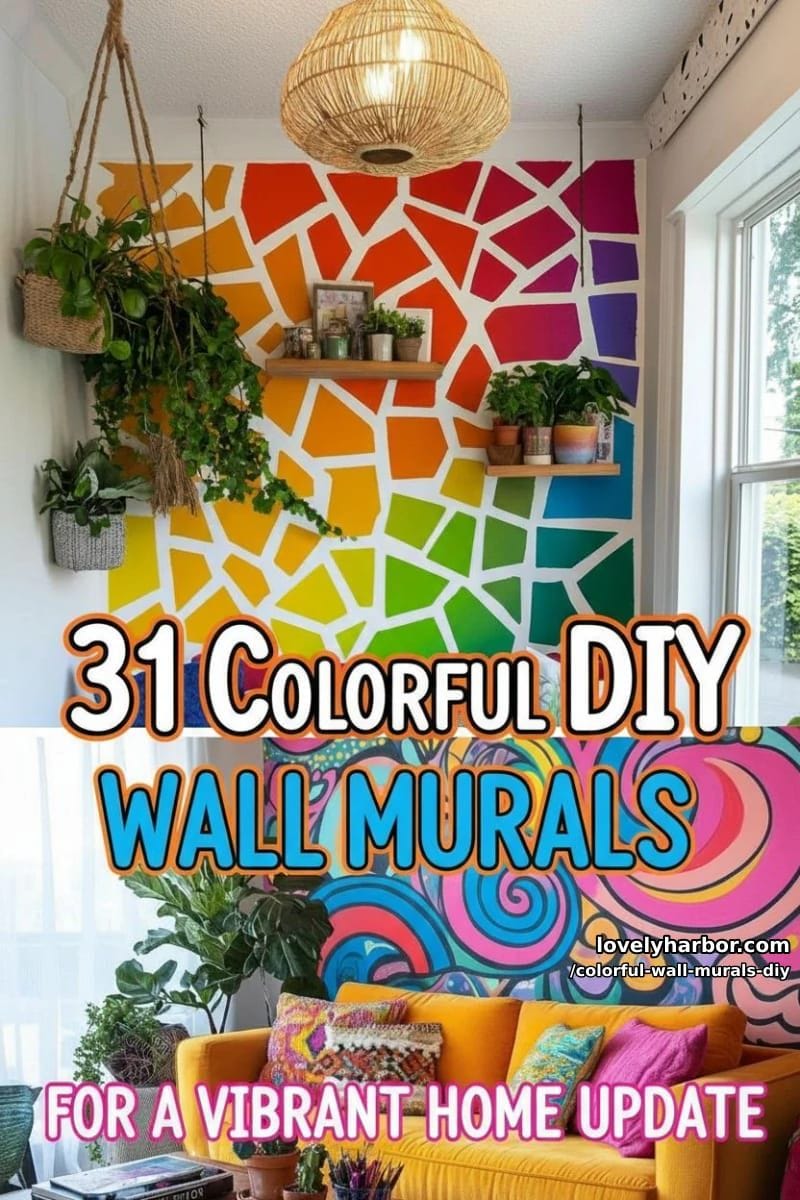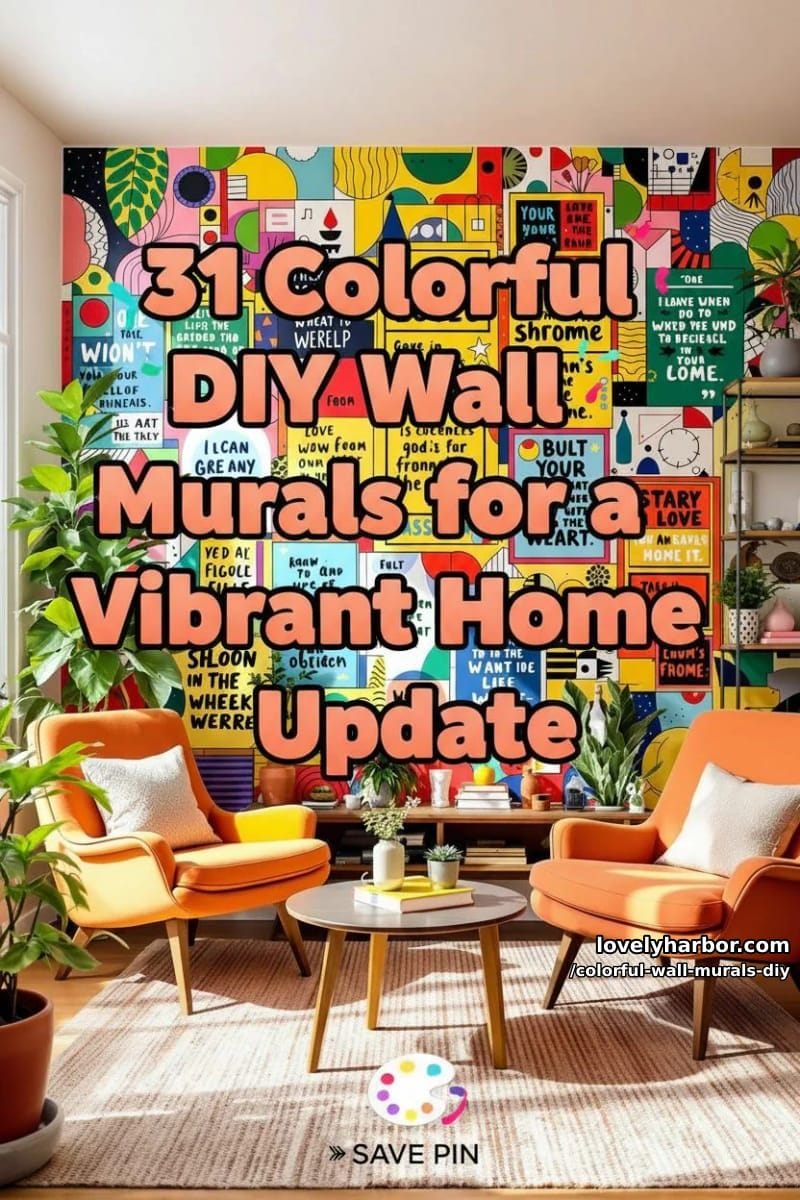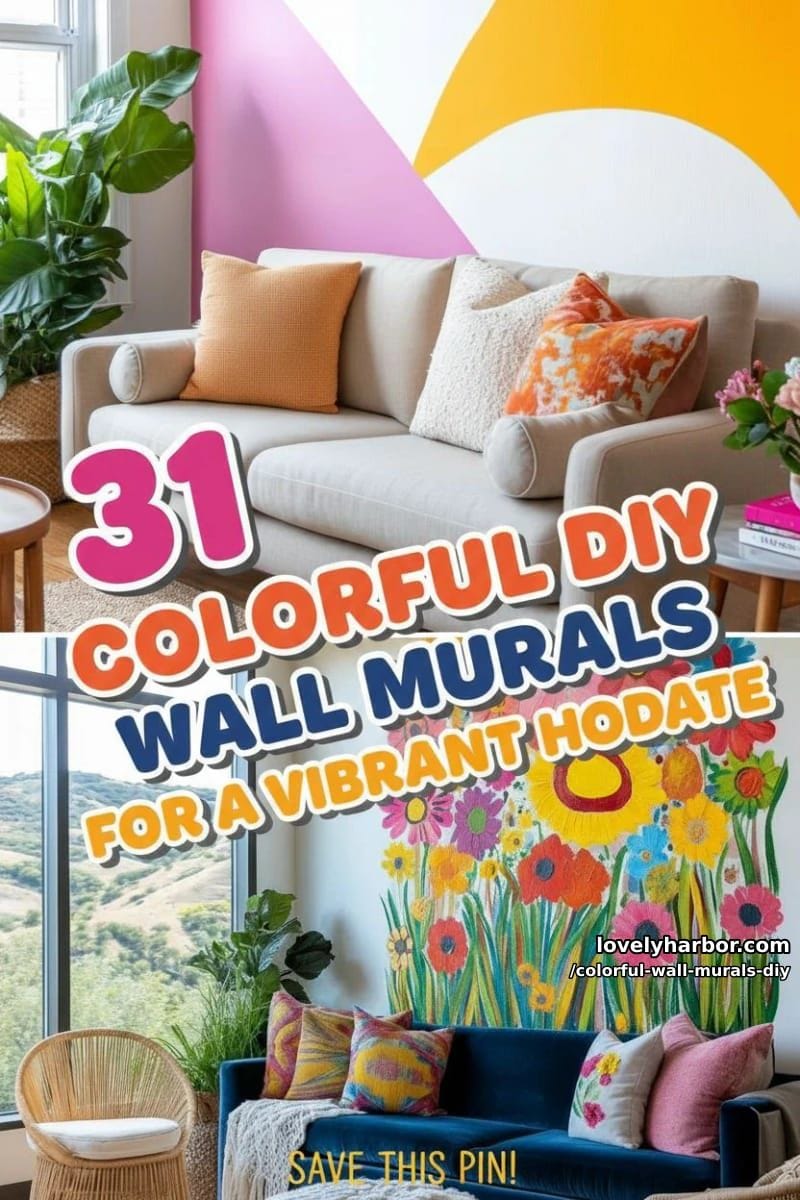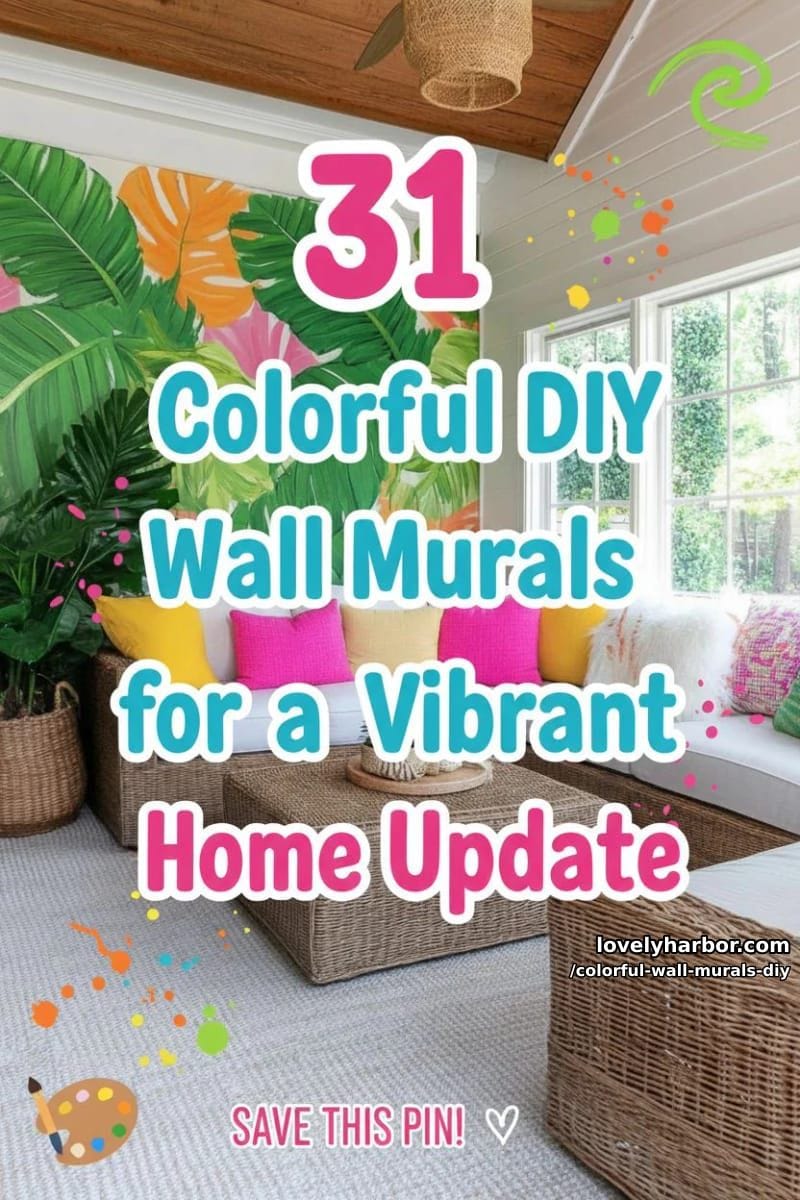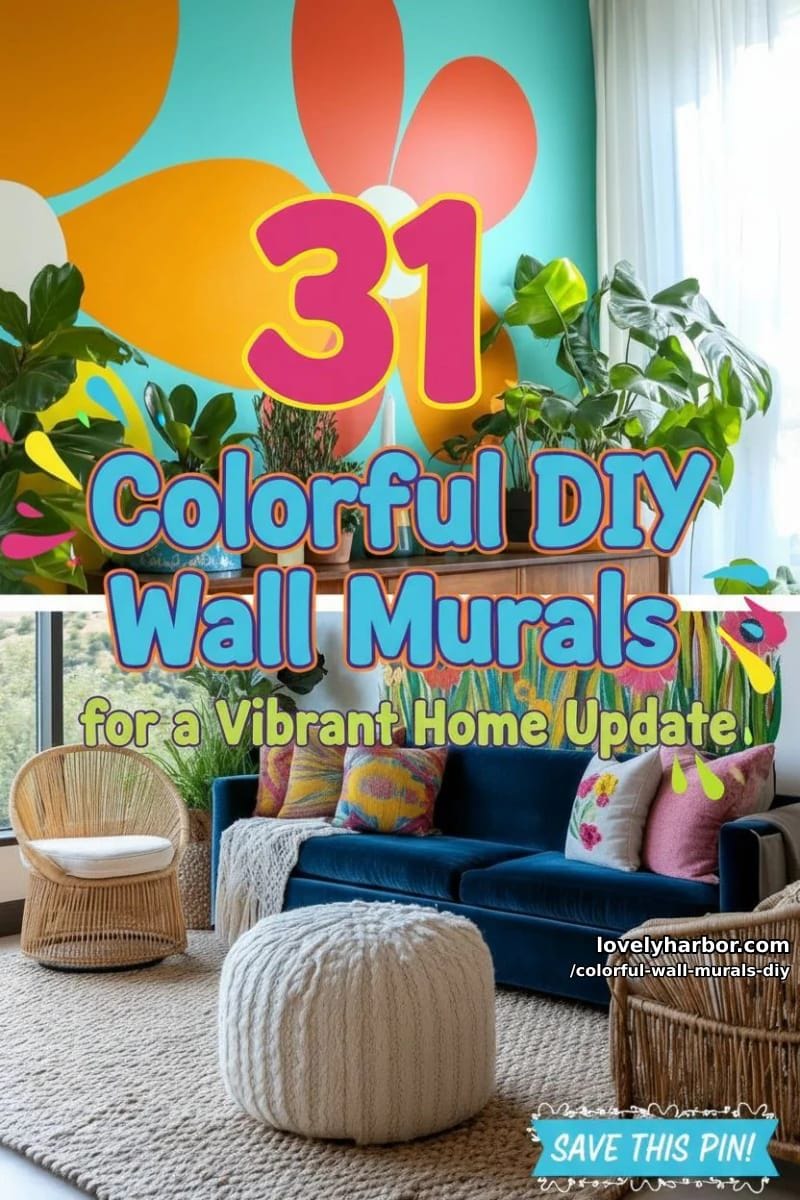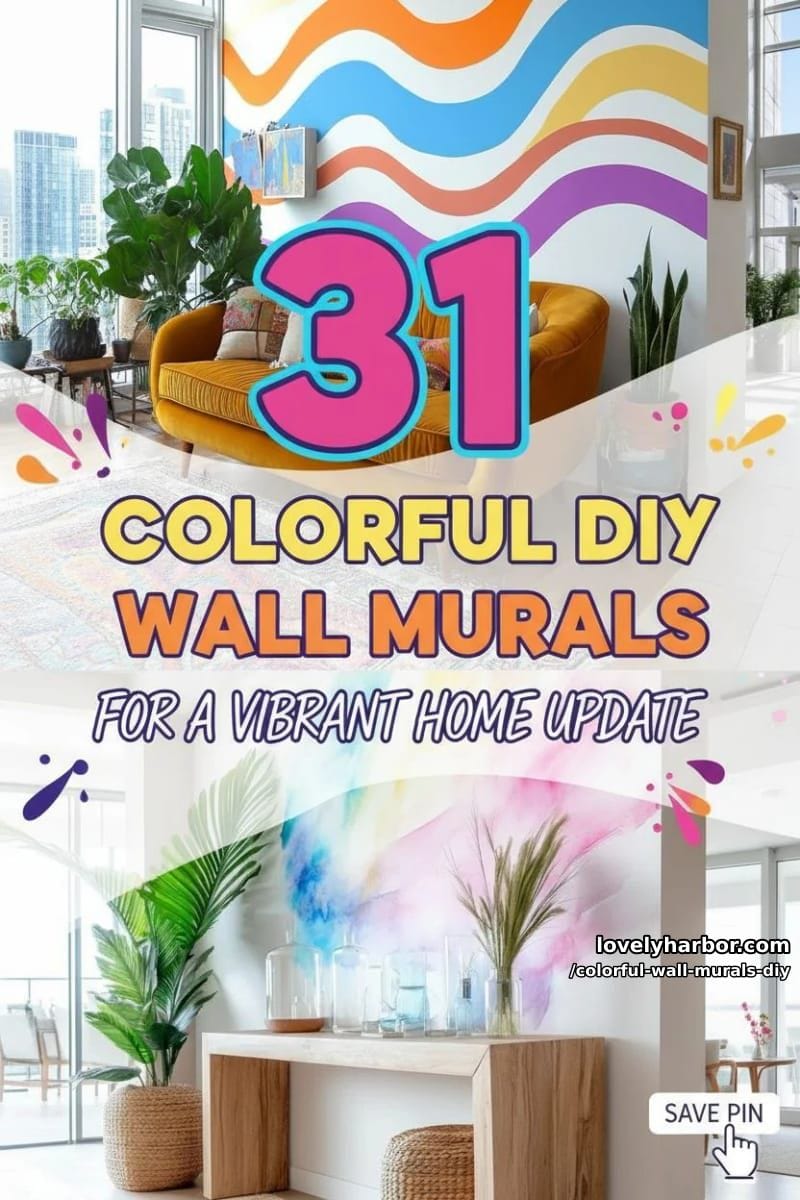
Most of these cost less than dinner out, because the smart way to paint a feature wall is with hardware-store sample pots and a few rolls of decent tape, not gallons of premium color. The difference between a mural you keep and one you repaint in a month usually comes down to edge control and color restraint, not artistic talent.
A few are renter-safe (cut paper, washi tape, removable decals). A couple will eat a whole weekend and two coats of primer. The grid below sorts them by approach so you can jump to the kind that fits your wall and your nerve.
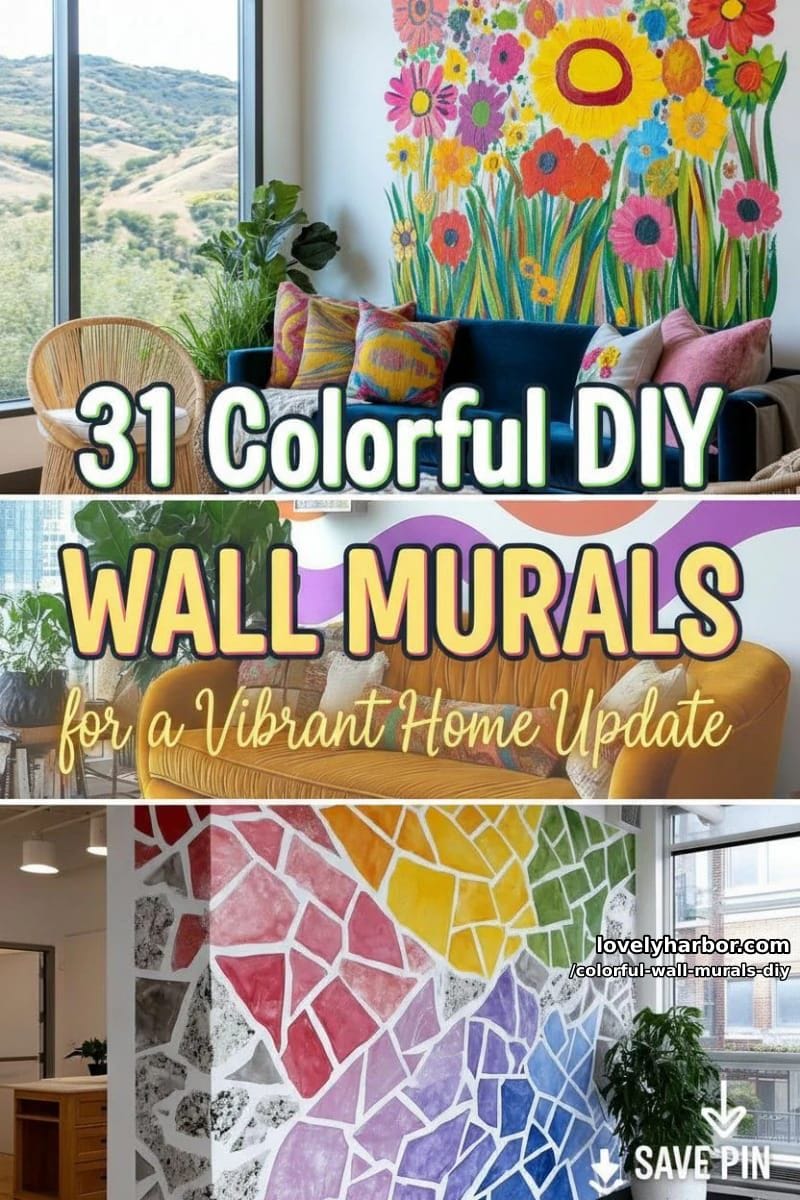
Taped and hard-edged
Geometric waves, rainbow arches, color-blocked squares, concentric circles, the mosaic illusion. Crisp lines, slower work, no freehand nerve needed.
Best for: people who want it to look deliberate and can be patient with tape.
Freehand and loose
Wildflowers, doodle gardens, watercolor washes, brushstrokes, the undersea scene. Forgiving, fast, and small mistakes vanish into the texture.
Best for: first-timers and anyone who freezes up around a straight line.
Cut-paper and removable
Matisse shapes, confetti, quote panels, peel-off jewel circles. Little or no paint touches the wall, so the whole thing comes back down.
Best for: renters and the commitment-shy.
1. Vibrant geometric wave mural with overlapping bold curves in sunset shades
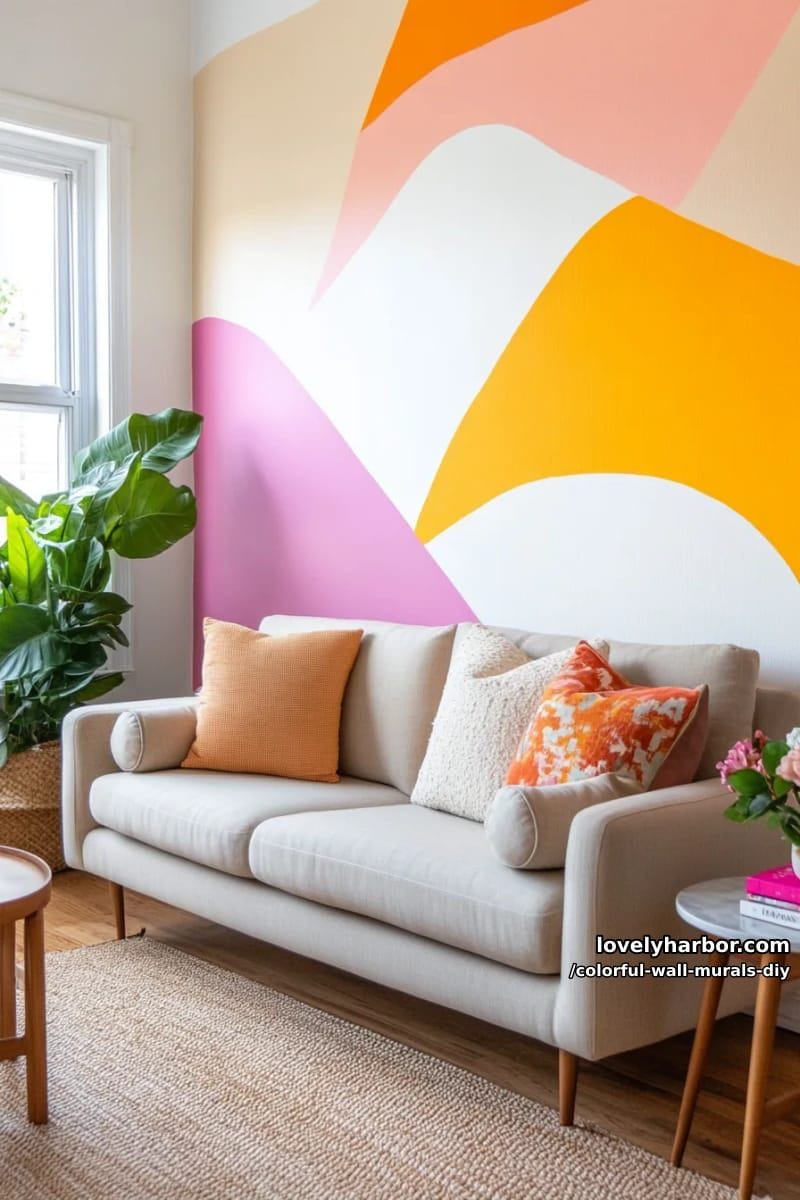
Lay the curves out first with low-tack tape, then blend the sunset colors while each band is still wet so the oranges, pinks, and purples bleed into one another instead of sitting in hard stripes. Hard lines and saturated color are unforgiving. A wave that wobbles reads as a mistake, not a flourish, in a way a soft floral never would.
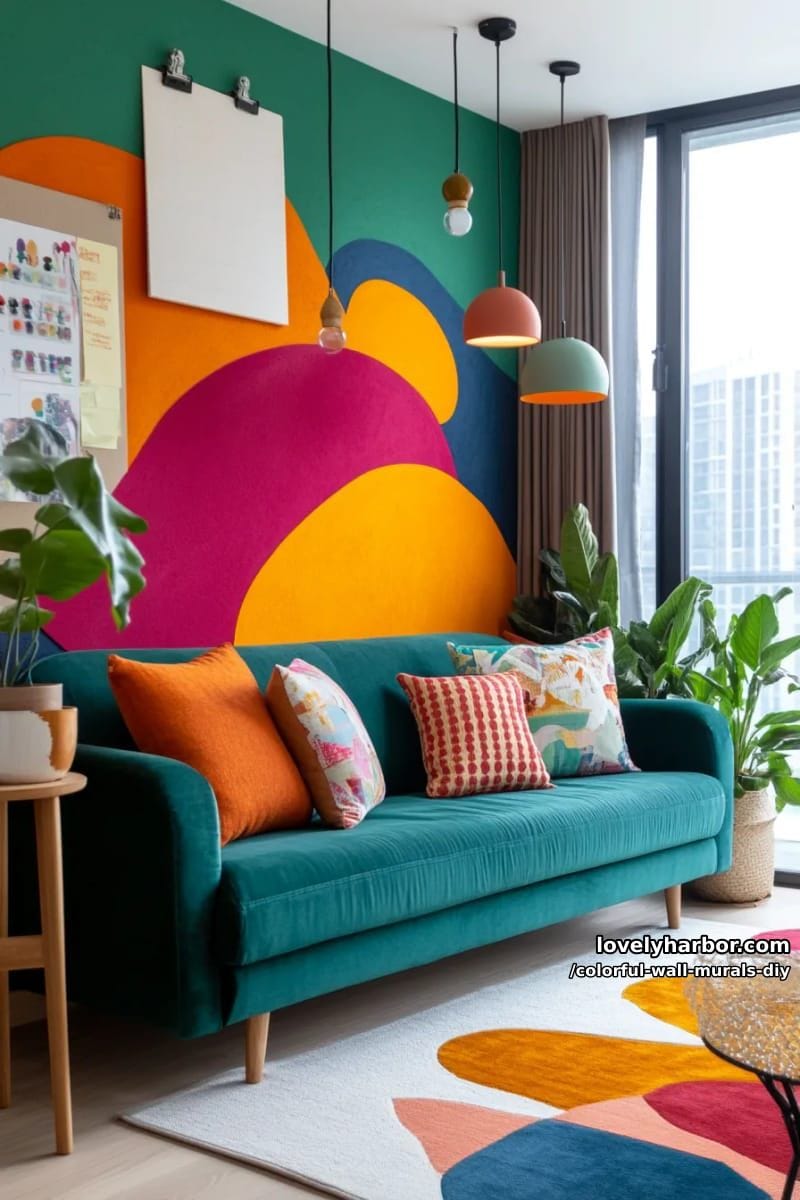
Sketch the whole layout on paper at scale before you touch the wall, and resist adding a fifth and sixth color. Three or four warm tones carry the gradient; past that it turns to mud. A few sample pots cover a typical accent wall, which keeps this in the $20 to $30 range if you already own rollers.
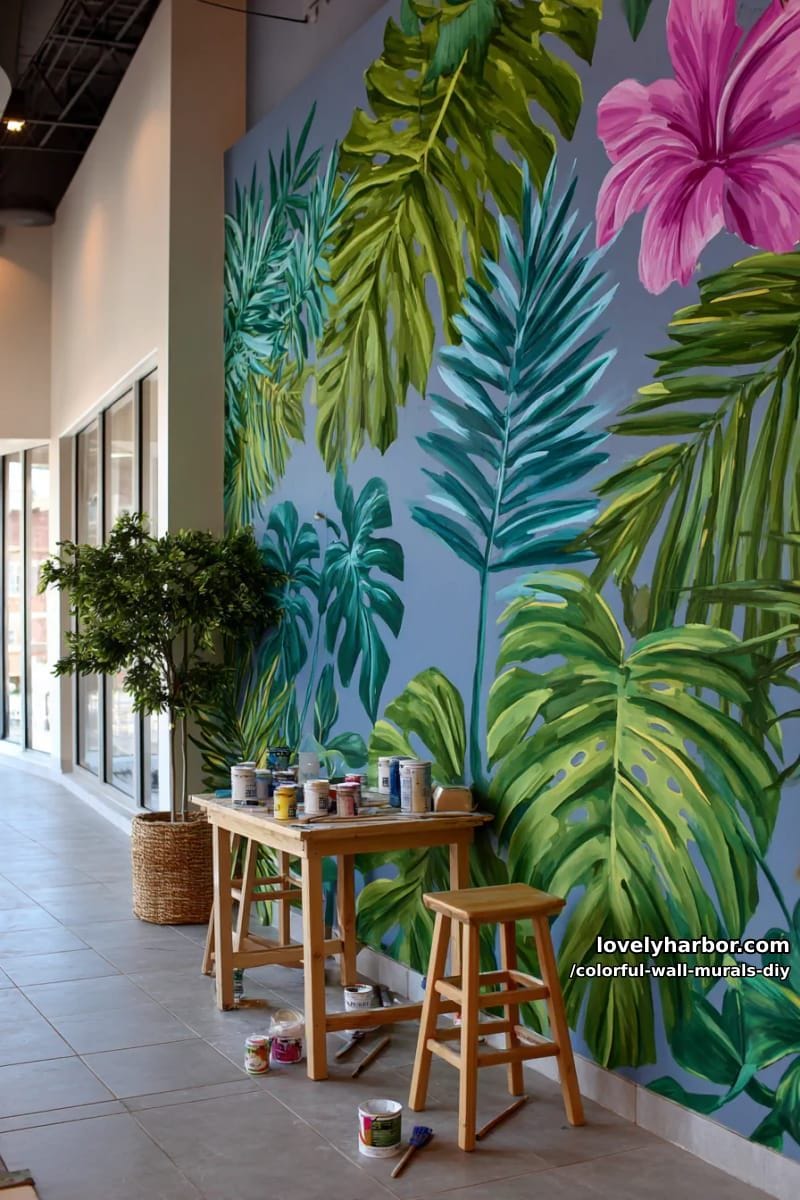
2. Oversized tropical leaves with neon accents for a playful jungle vibe
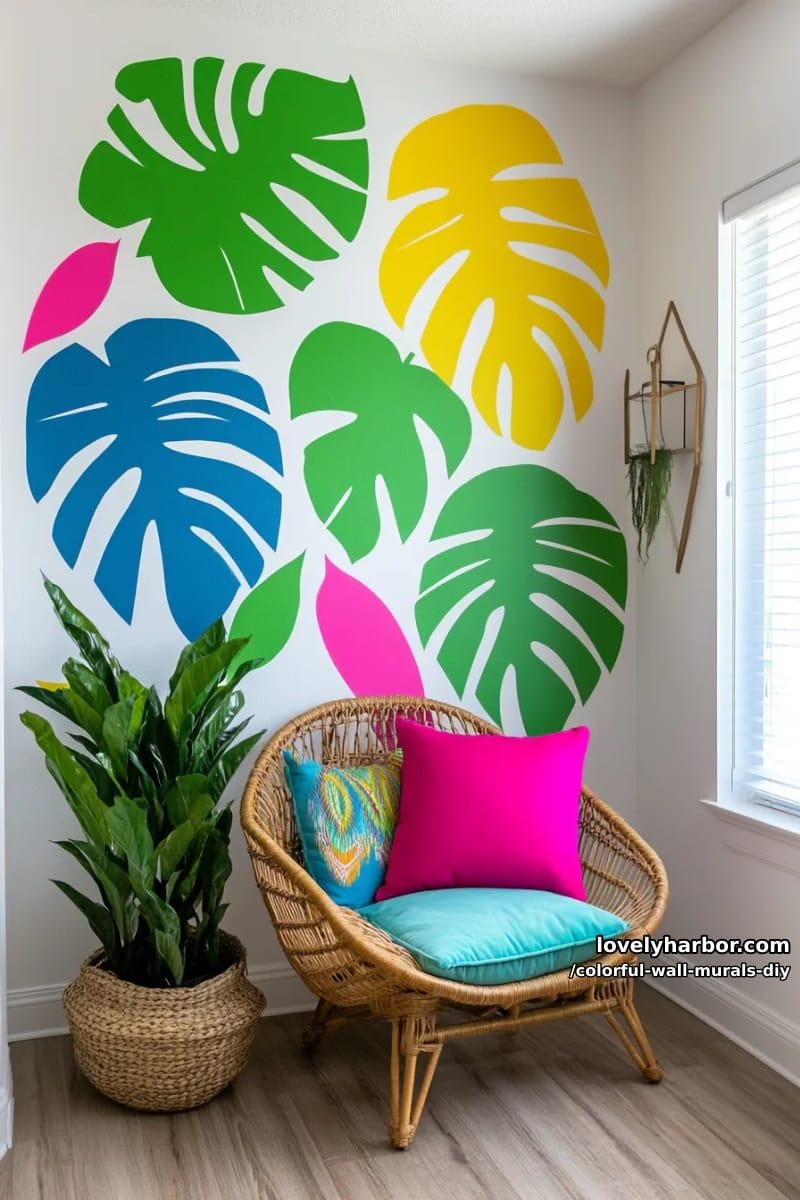
Neon greens and pinks only glow if there’s white underneath them, so prime the leaf shapes white before the color goes on, or the wall color dulls everything. For the leaves, a cheap phone-and-flashlight projector, or a paper stencil cut from a Monstera template, gets the scale right without freehand guessing.
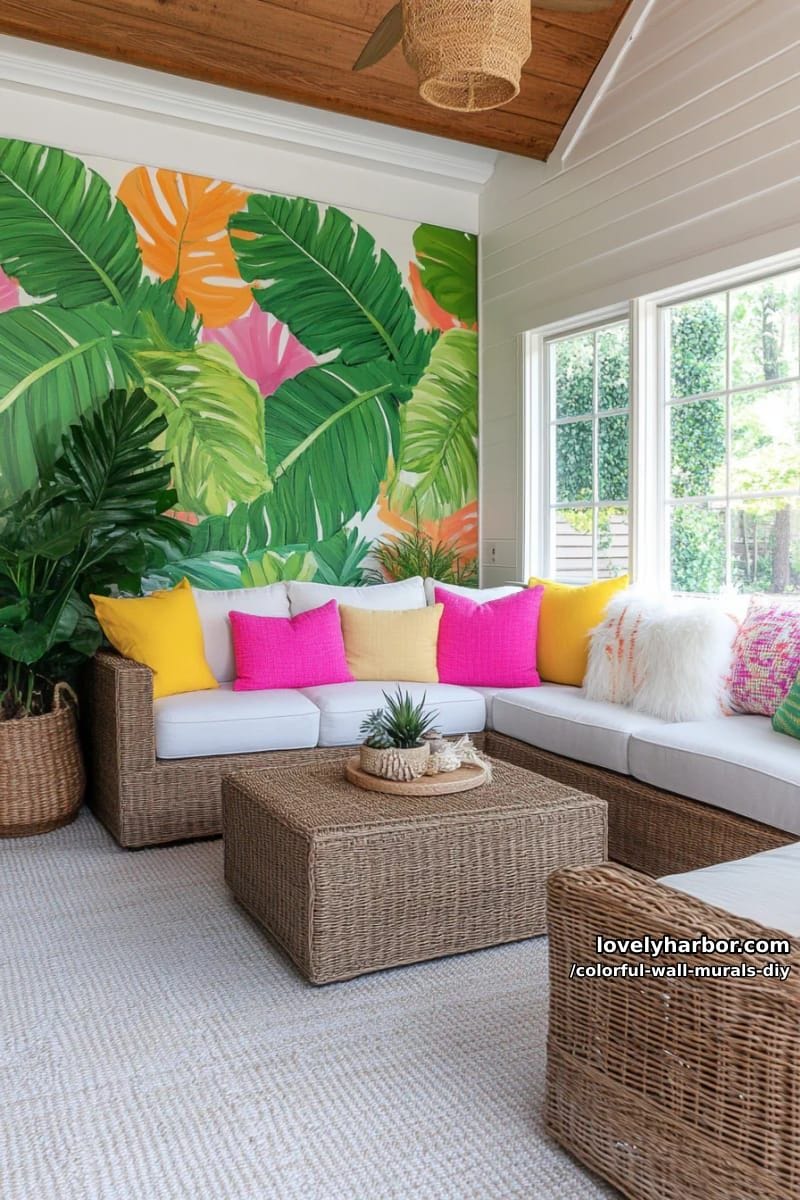
Two neon hues plus one ordinary mid-green is the limit. Three or more neons in a small room is hard to live with after a week. I’d keep this off a bedroom wall you stare at while falling asleep and put it somewhere you only pass through.
3. Soft pastel ombre wall blending pinks, oranges, and yellows seamlessly
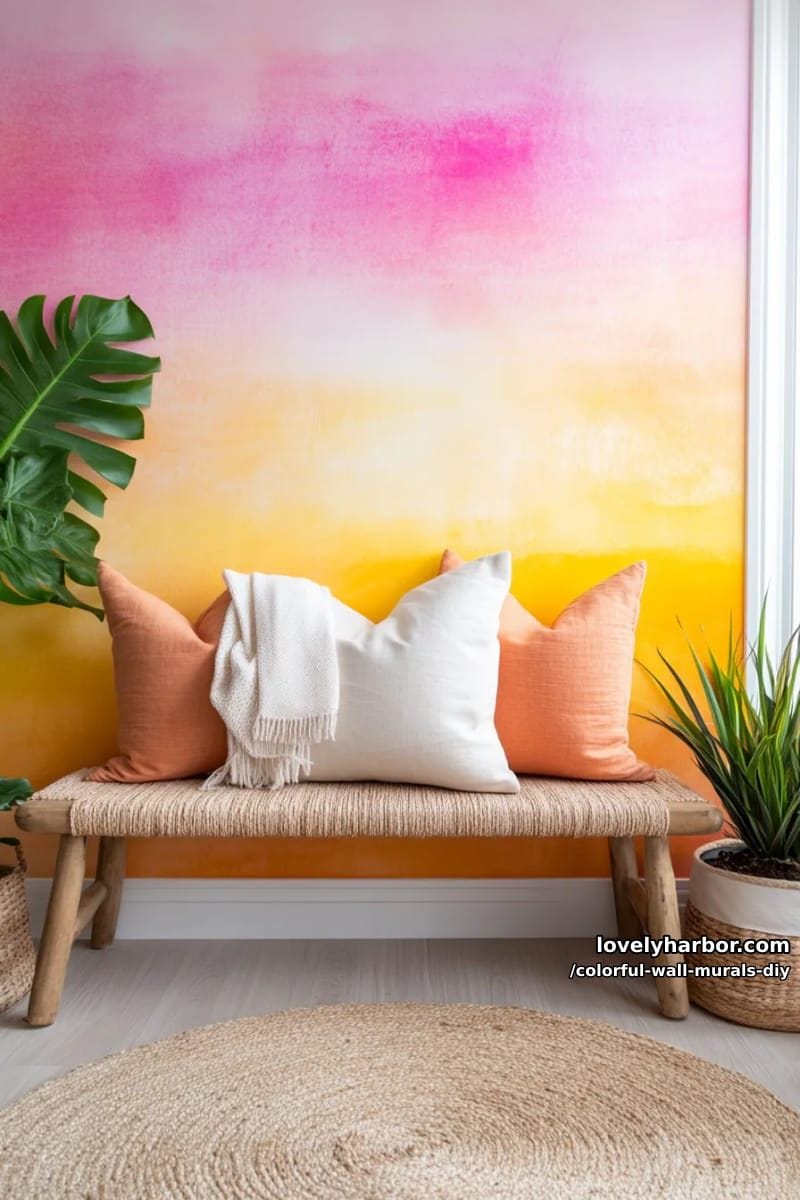
Work top to bottom with a wide dry brush, dragging each new color down into the one above before it sets, so the bands fade rather than stack. Pastels are forgiving here. A patchy section sponges out with a damp cloth while the paint is still open.
Buy the lightest shade as a full tester and mix your own mid-tones from it rather than buying four separate pots; you’ll spend maybe $15 total and the colors relate to each other instead of fighting.
4. Abstract rainbow arches with color-blocked shapes in retro palettes
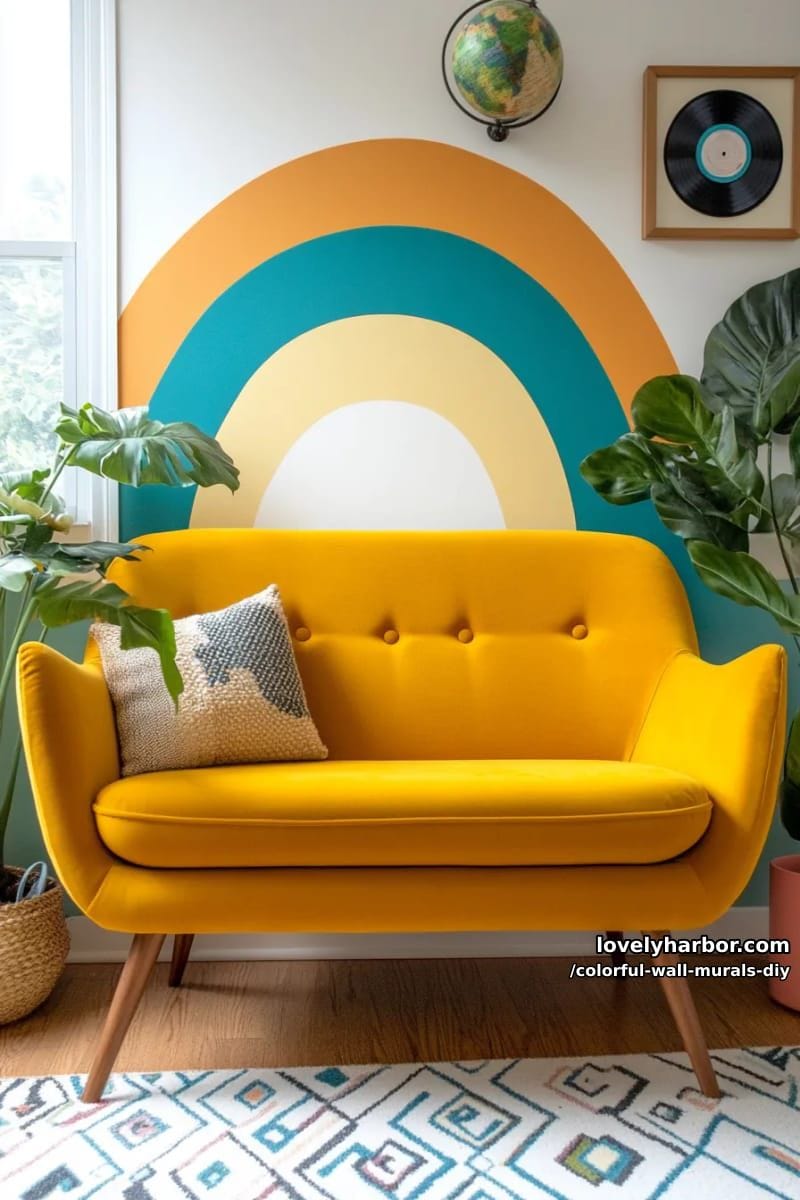
Draw the arches with a pencil tied to a string pinned at the center point, which gives a clean radius for a few cents instead of a flexible curve ruler. The retro read comes from the palette, not the shapes: mustard, dusty rose, and a muted teal, all knocked back from their pure versions.
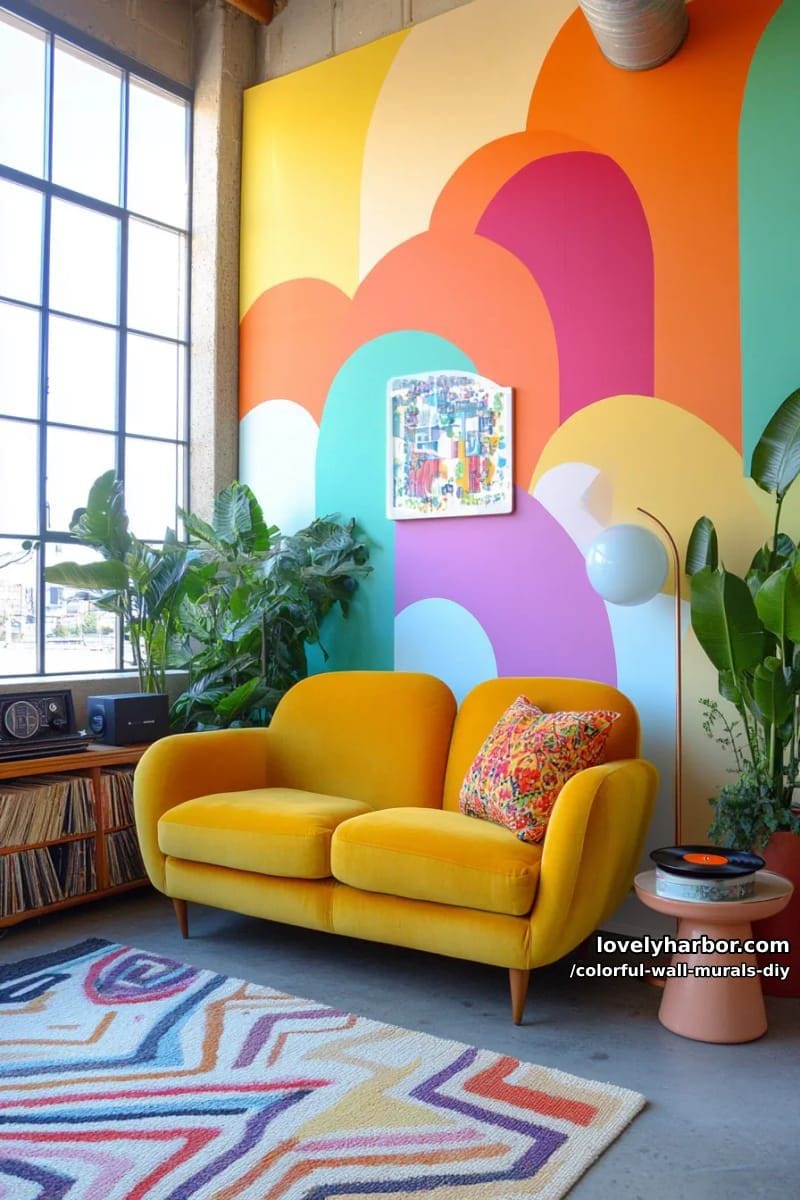
Three or four colors, no more. Peel-and-stick arch decals exist if you want to test a layout without committing, but they look like decals up close, so I’d only reach for them in a rental you can’t paint.
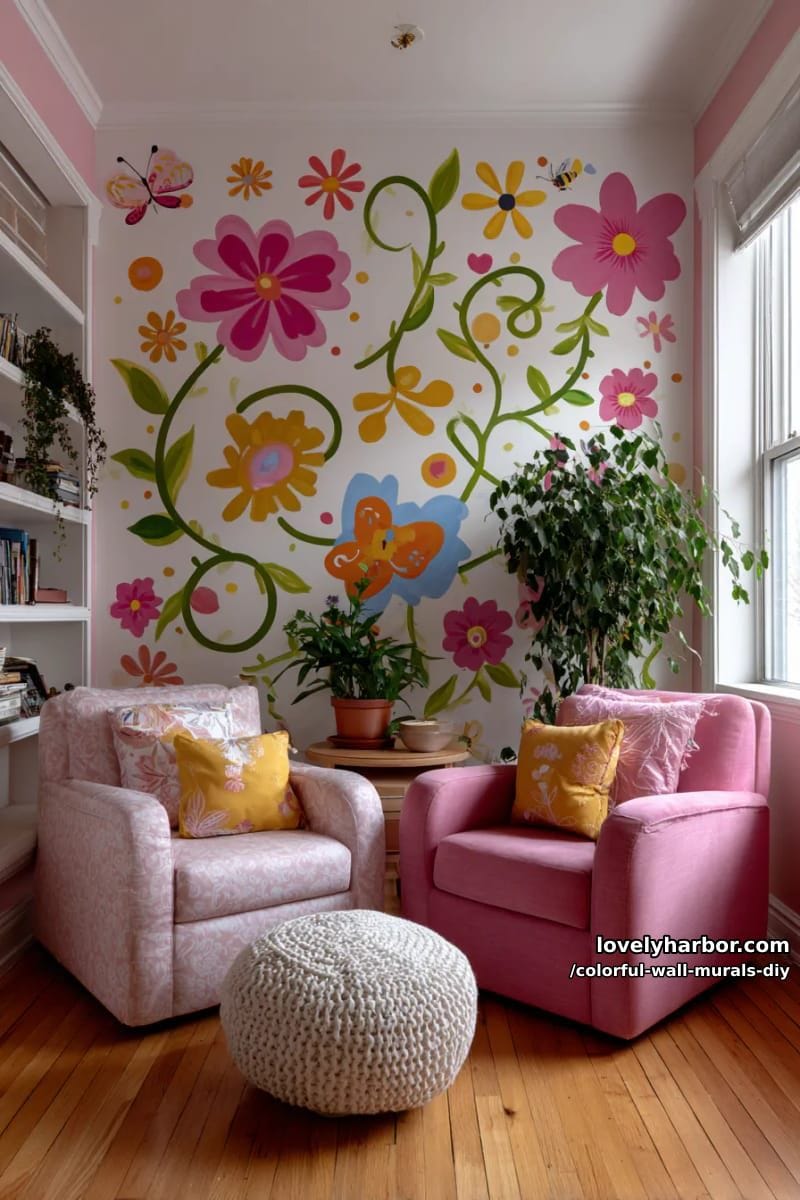
5. Hand-painted wildflower explosion with colorful daisies and poppies
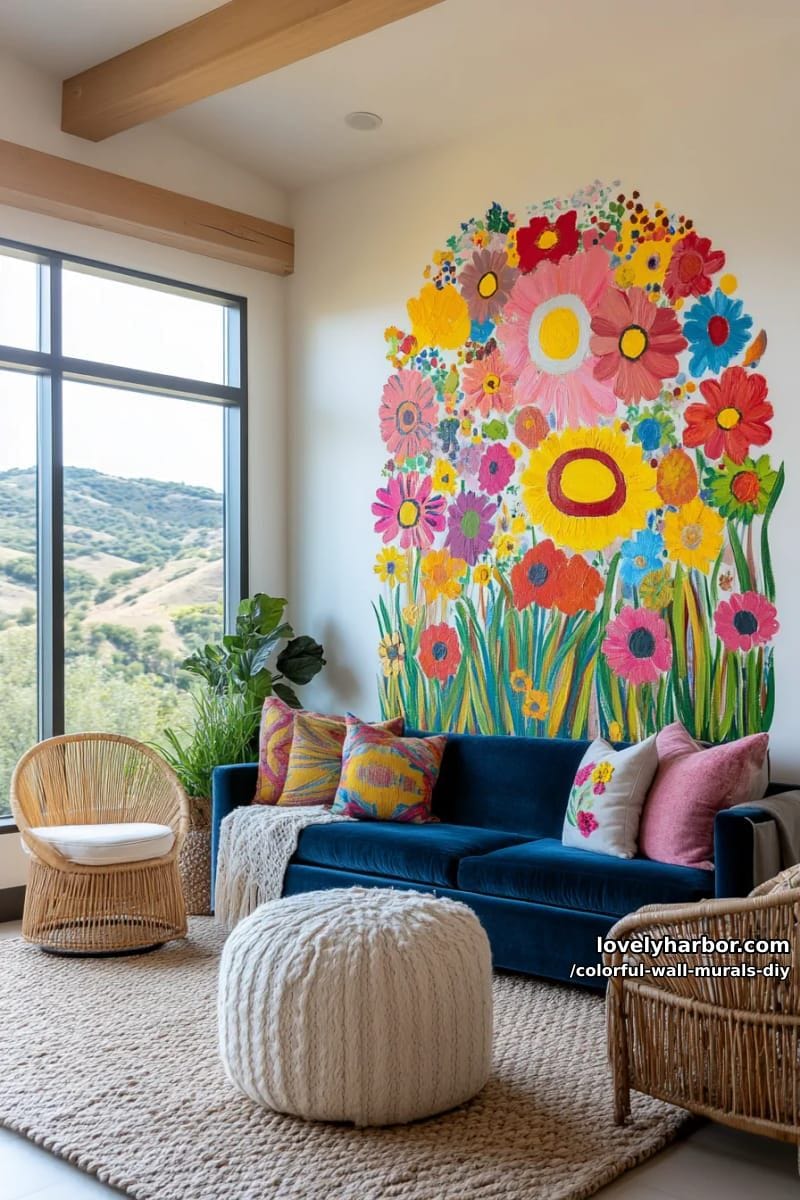
Chalk the rough placement first, then paint the blooms loose and slightly oversized; the whole thing lives or dies on whether the flowers look relaxed. The most common way people kill it is over-controlling, so the rules here are mostly about what not to do.
Do this
- Paint blooms loose and oversized so they read as relaxed, not labored.
- Layer one darker tone into each flower center for depth.
- Use cheap craft acrylics; they run a couple of dollars a bottle and you aren’t covering flat areas.
Avoid
- Outlining every petal in black, which flattens it into coloring-book art.
- More than two darkening passes, or the colors go gray where they meld.
- Tiny, careful, evenly spaced flowers; scale up and scatter.
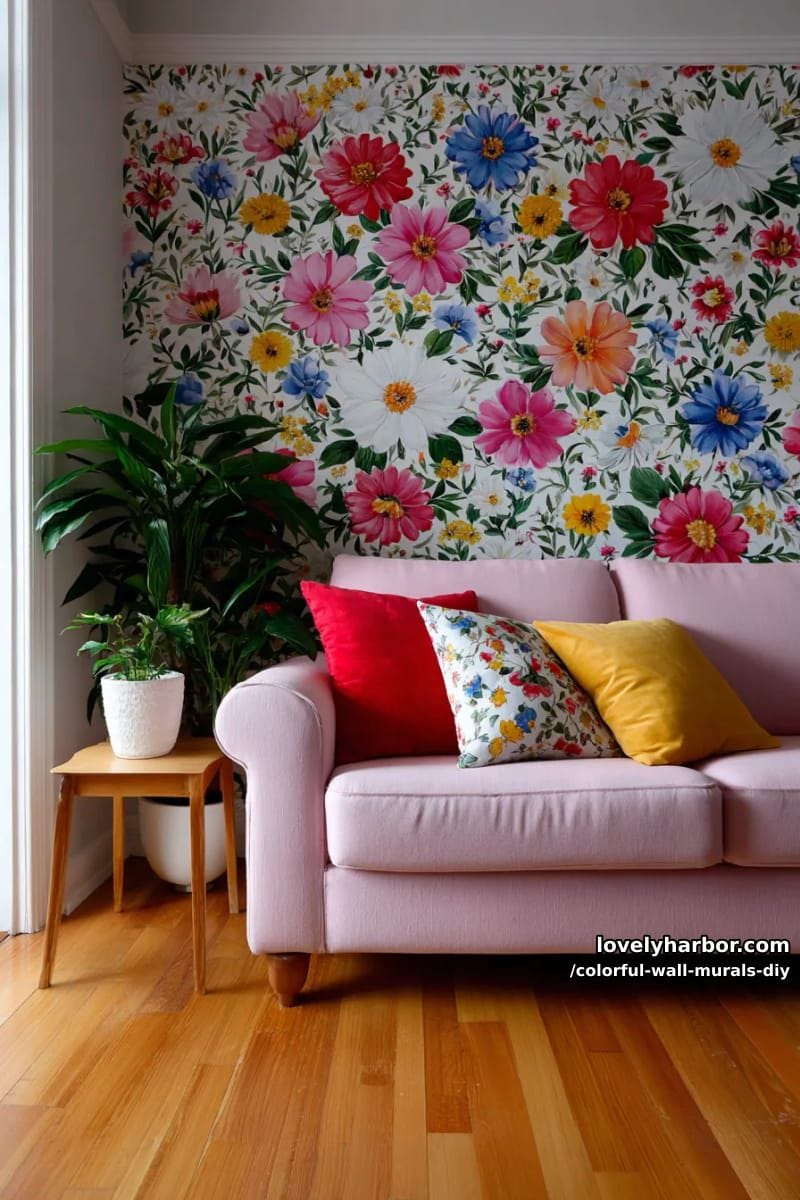
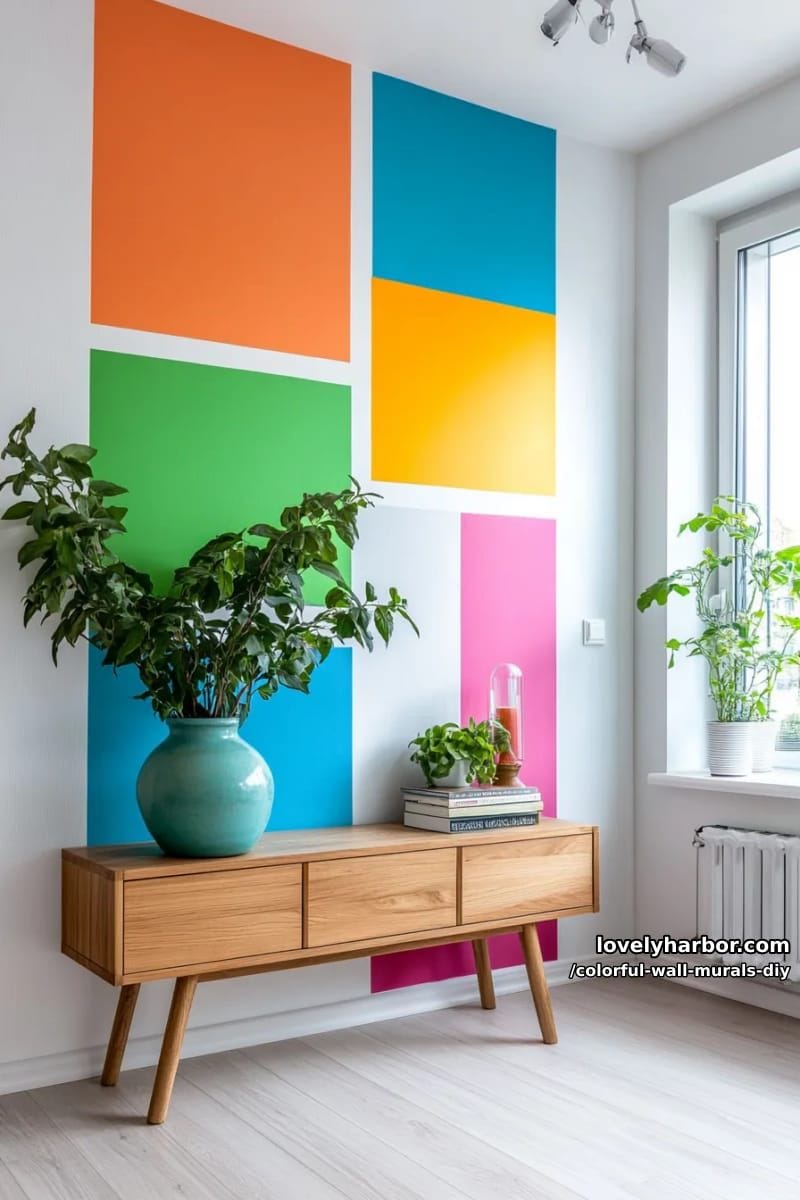
6. Modern gallery wall mural with mismatched squares and rectangles in bright hues
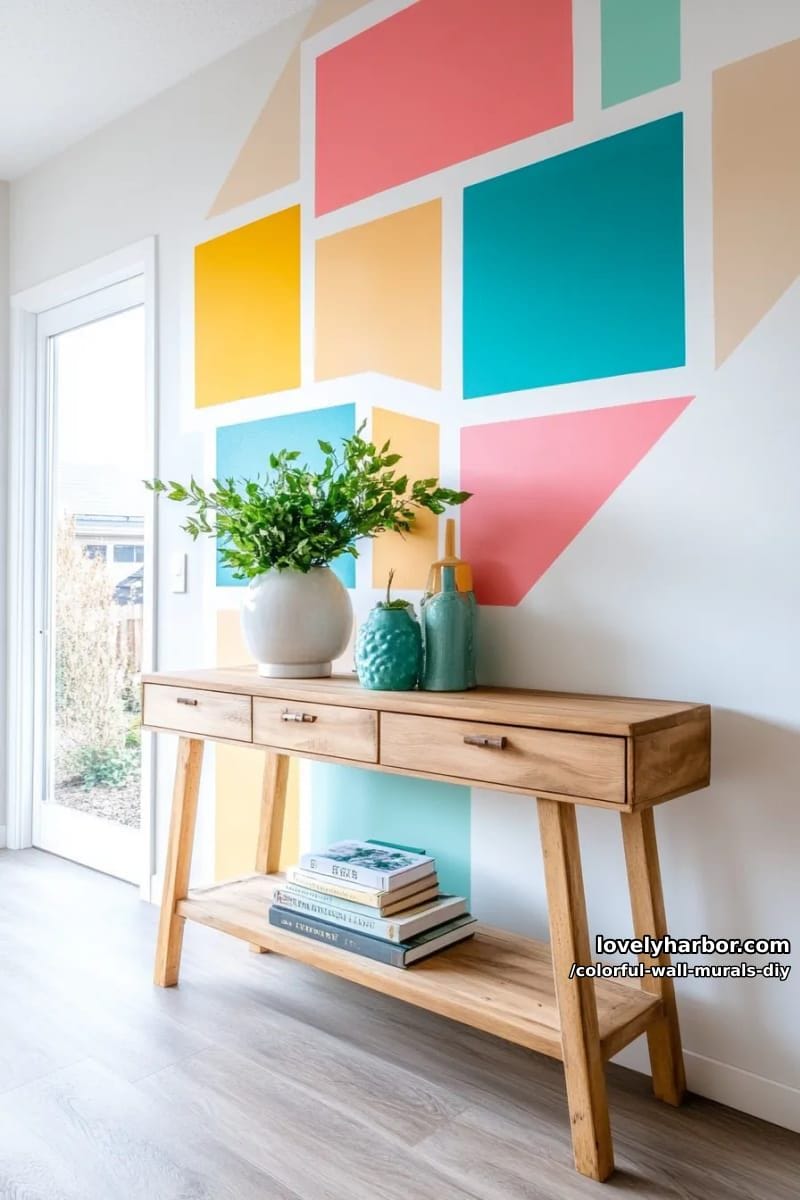
Mark the grid with a level and tape so the rectangles read as intentional rather than crooked, then fill them in unequal sizes. A 60/30/10 color split (one dominant, one secondary, one as the occasional pop) keeps a multicolor wall from looking like a paint-chip display.
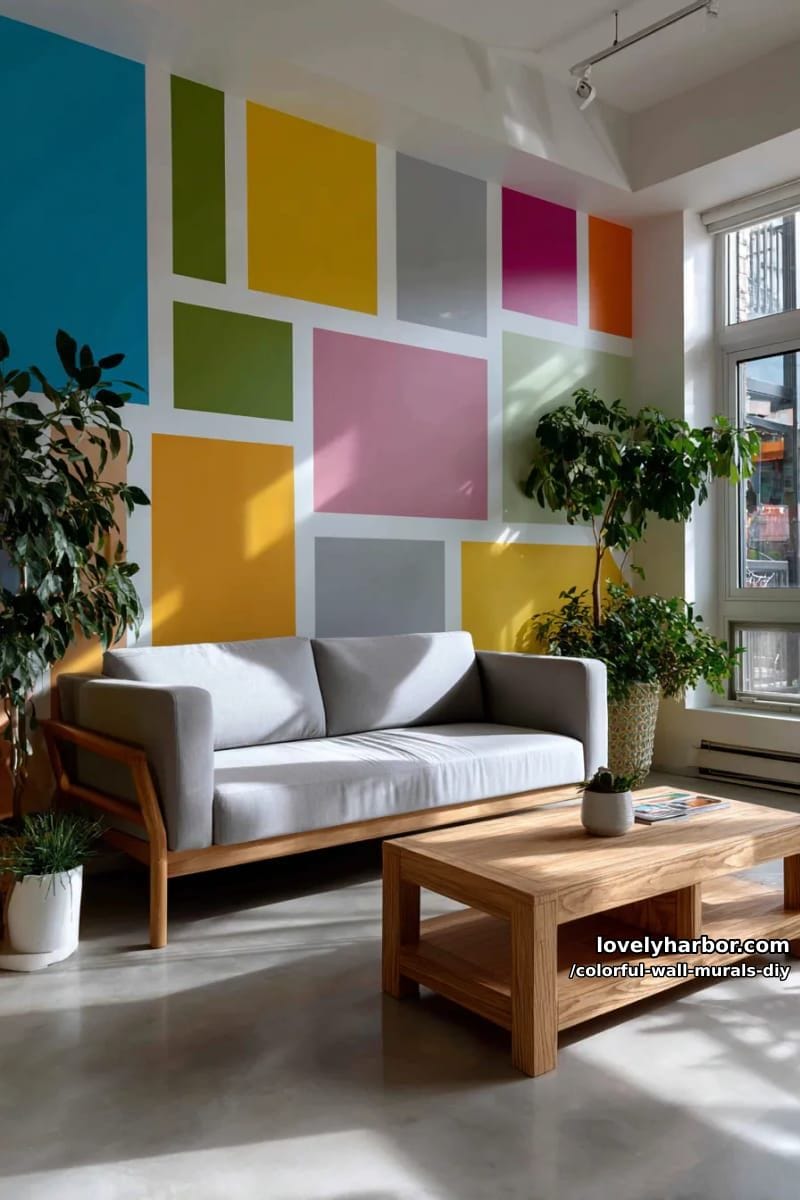
Burnishing the tape edge down hard with a card before painting does more to stop bleed than any tape brand. Pull it while the paint is still wet for the crispest line.
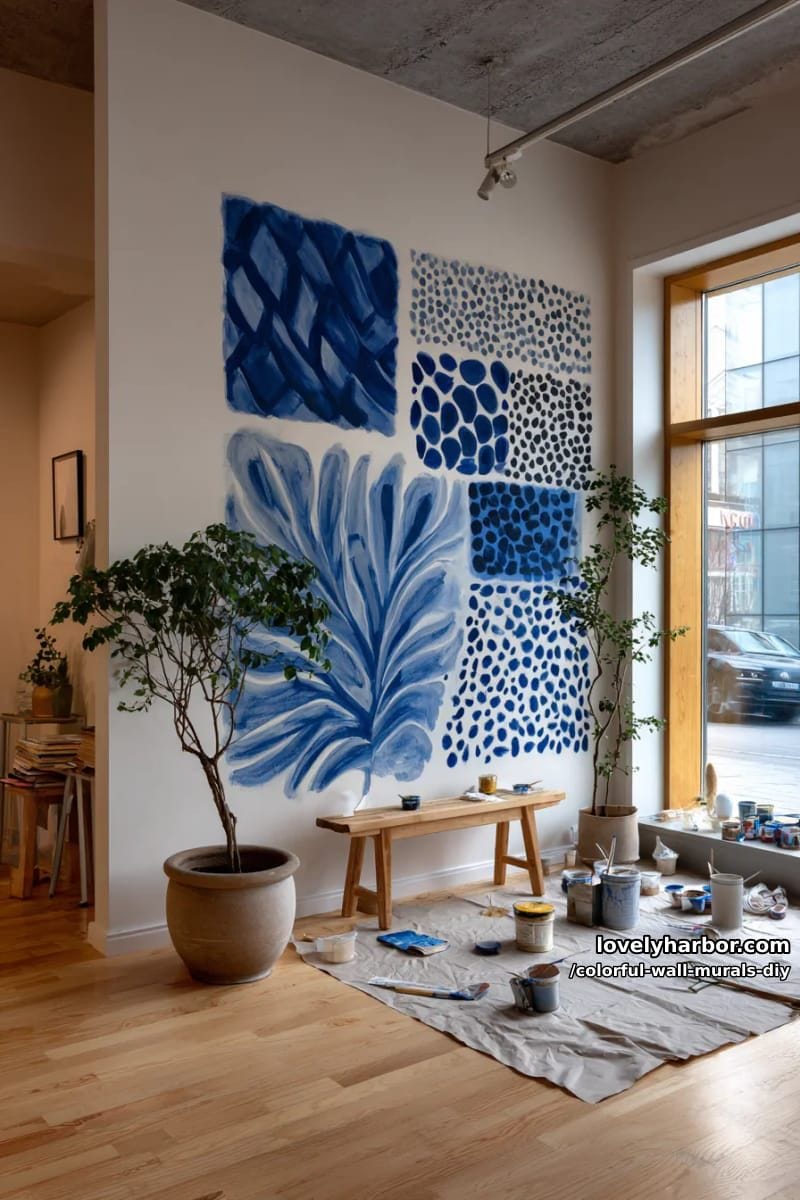
7. Watercolor effect mural with fluid brushstrokes fading into each other
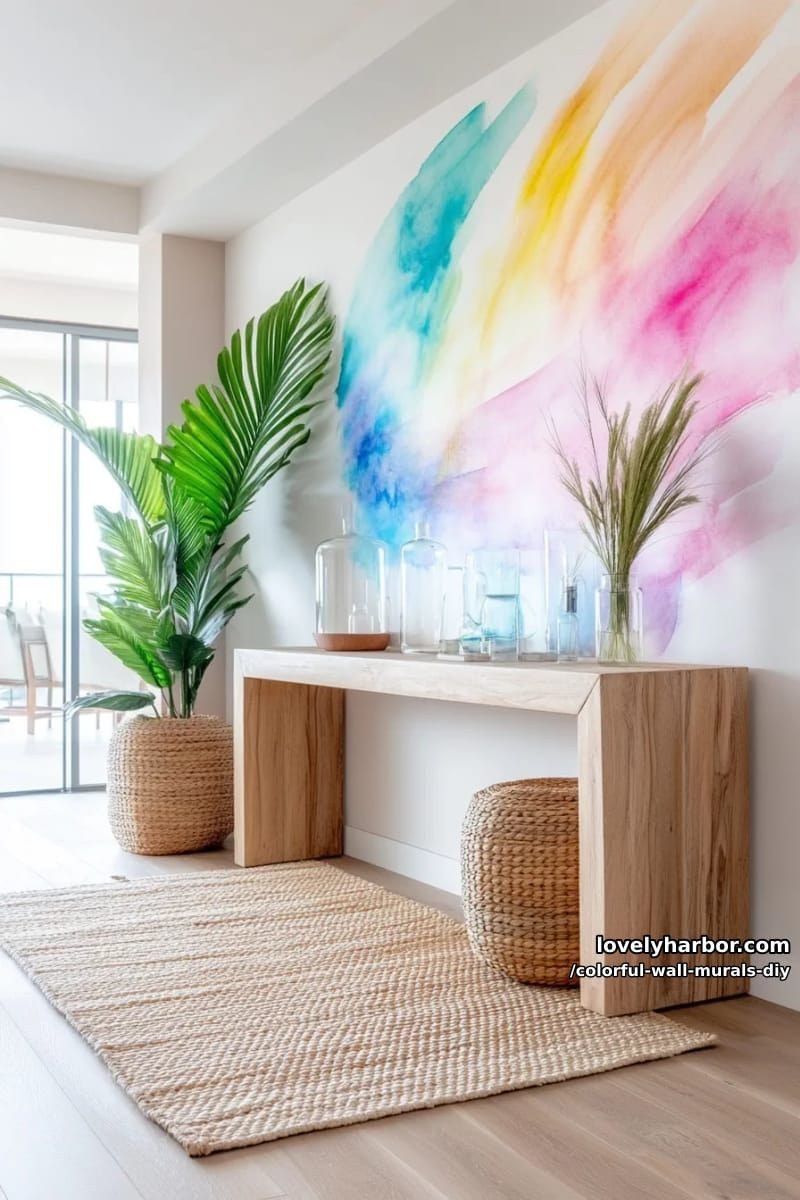
Thin your paint with water or a glaze medium until it’s translucent, and prime the wall first so the diluted color doesn’t soak in unevenly. Overlap strokes while wet for the bleed; let it dry and glaze over the top where you want a second layer.
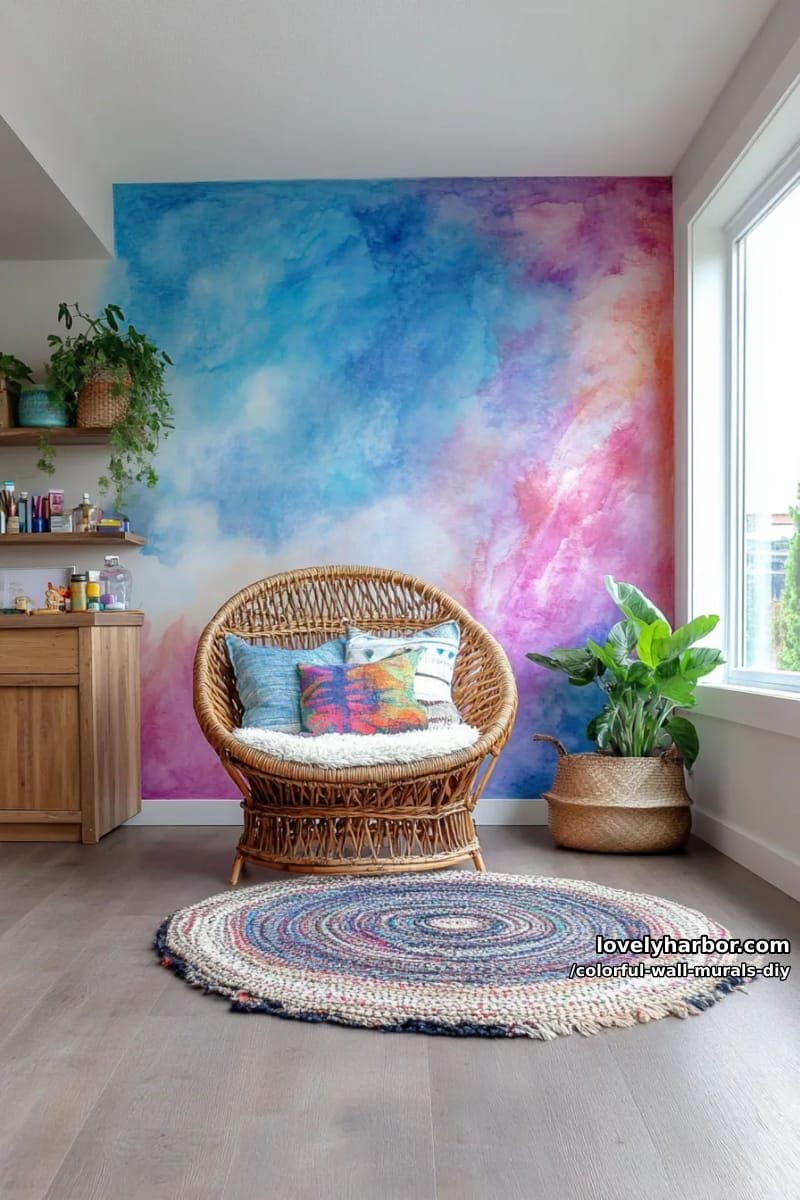
Drips are the real problem on a vertical wall, not blending. Keep a dry rag in your off hand and a drop cloth down, and don’t load the brush up near the ceiling. This one rewards a test board first more than most.
8. Whimsical doodle garden with oversized petals and swirling vines
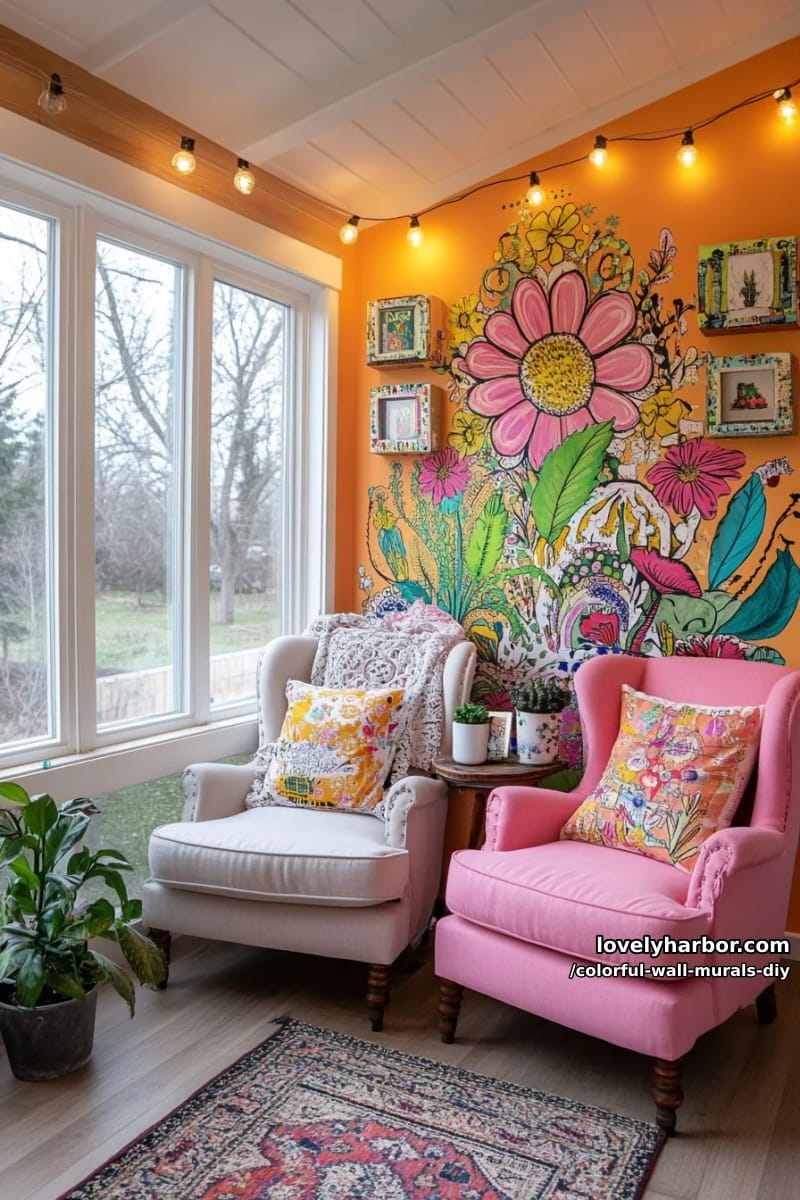
Paint pens hold a cleaner line than a brush for this, and Posca pens in particular don’t bleed on matte wall paint the way a regular marker will. Block the big shapes first in flat color, then draw the swirls and outlines over the top once it’s dry.
It’s a good one to hand part of to a kid. Let them fill the lower third while you keep the line work up top consistent.
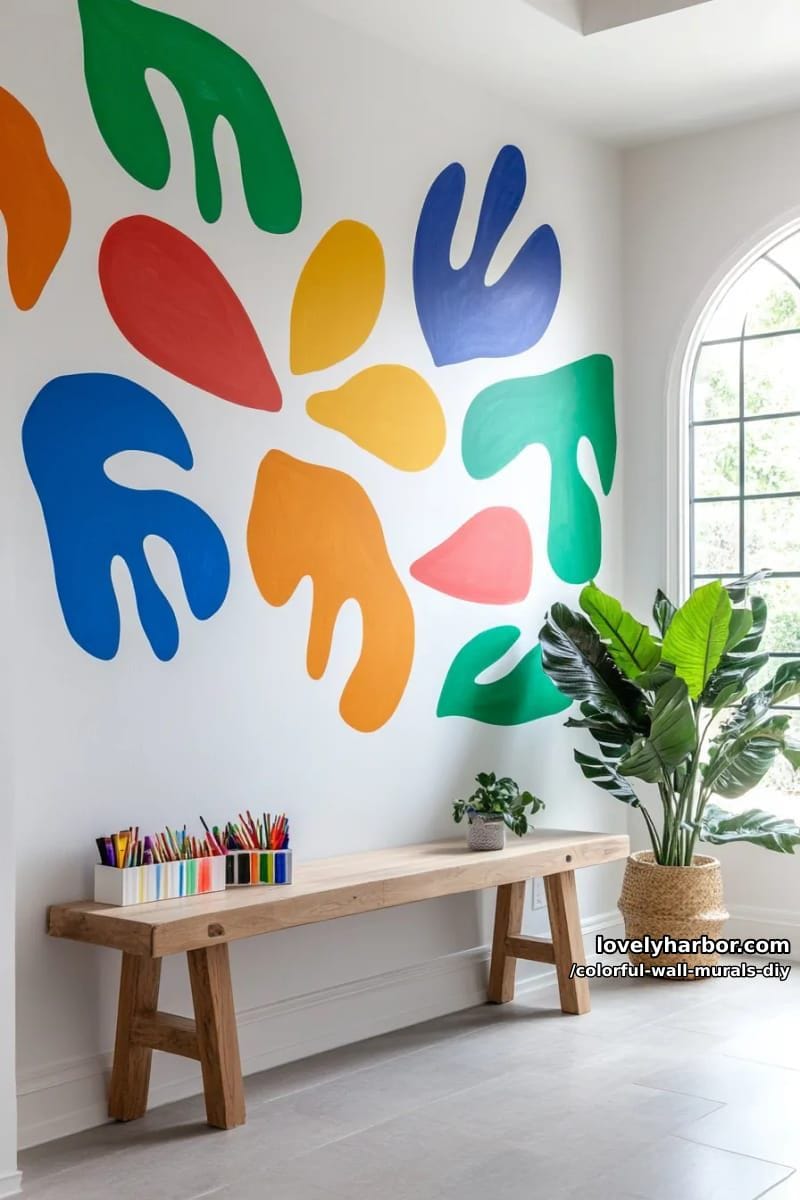
9. Matisse-inspired organic shapes scattered across a crisp white wall
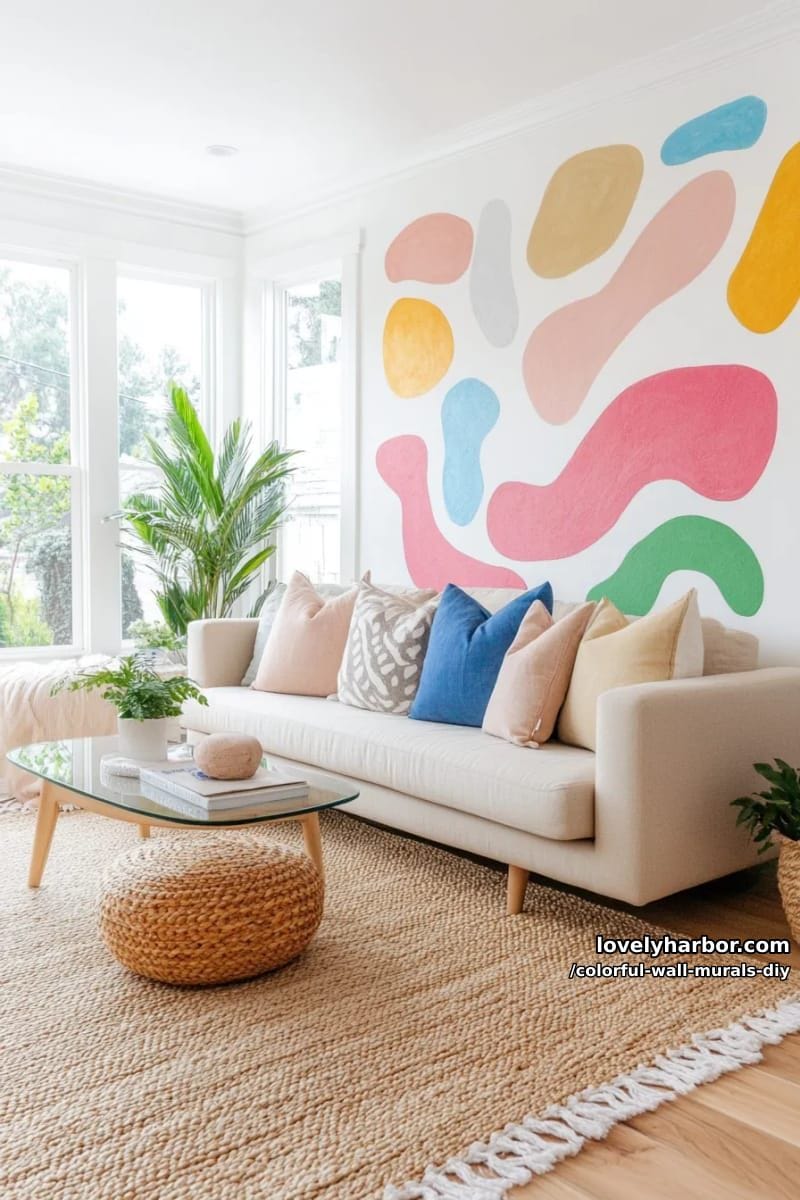
Cut the shapes from colored paper or painted card rather than painting them on, and stick them up with removable mounting putty. That’s what makes this the rare reversible option on the list, and it lets you shuffle the composition for a day before anything is committed.
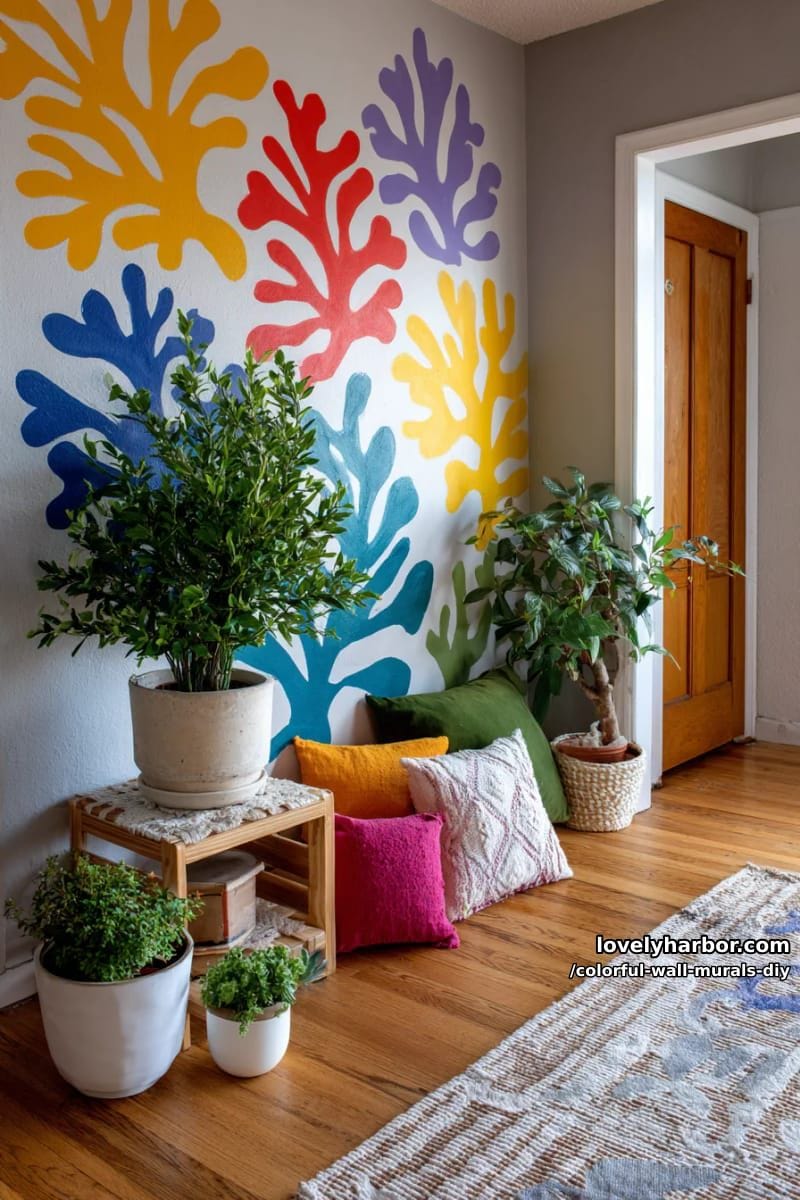
A pad of mixed-color cover stock runs a few dollars, but the cheap stuff fades in direct sun within a year, so keep this wall out of a south window or be ready to swap pieces. Vary the shape sizes a lot. Evenly sized blobs look like a pattern, not a composition.
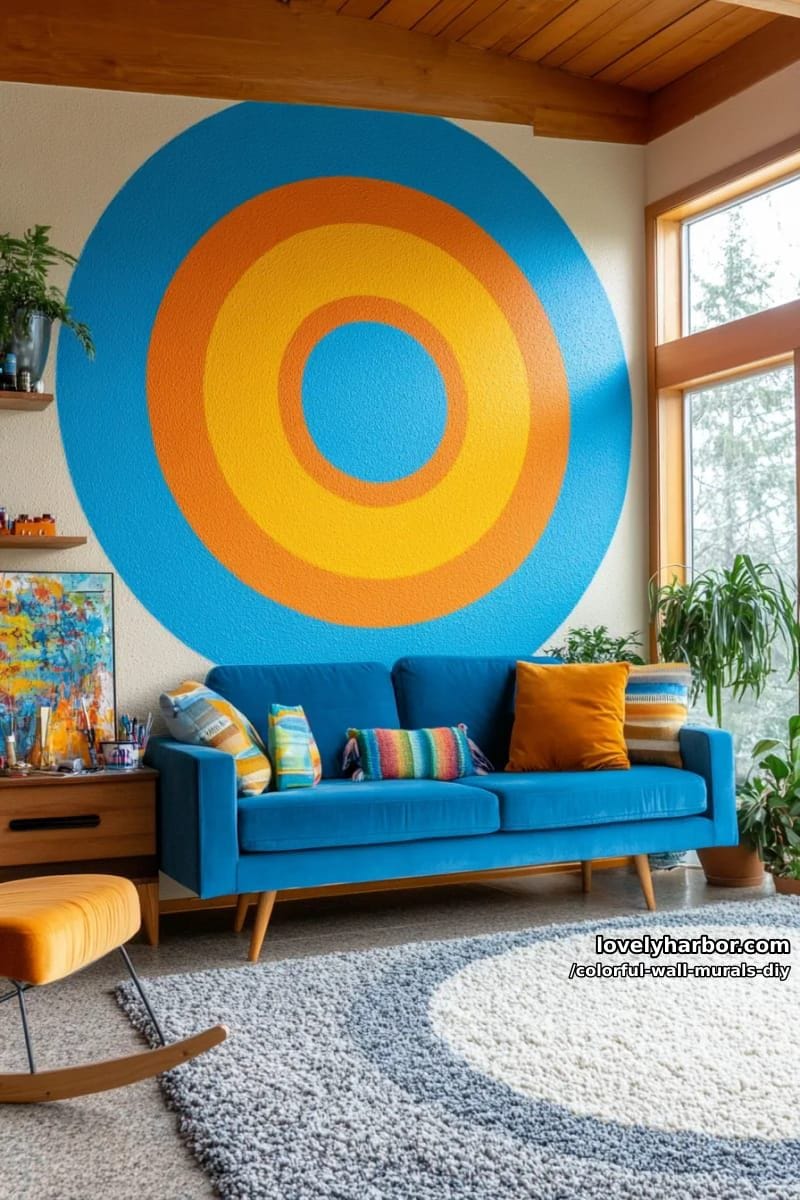
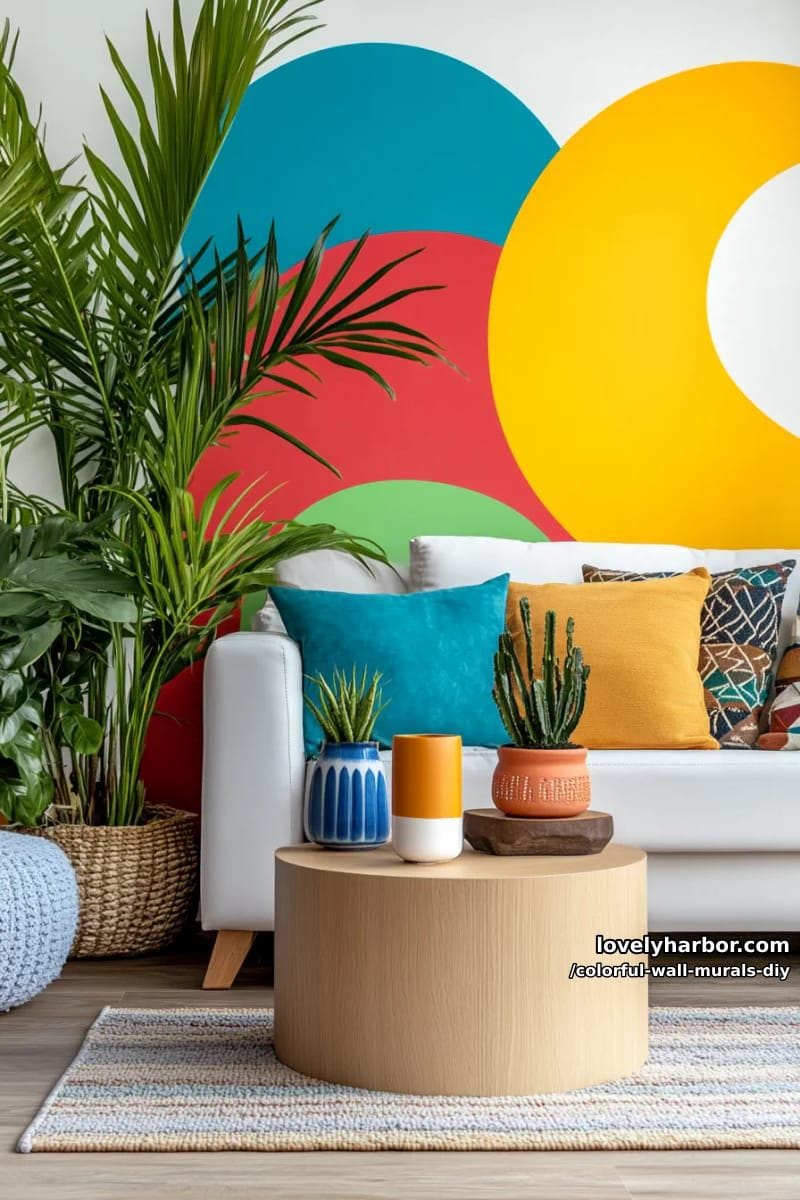
10. Bold color block mural with concentric circles in electric blue and orange
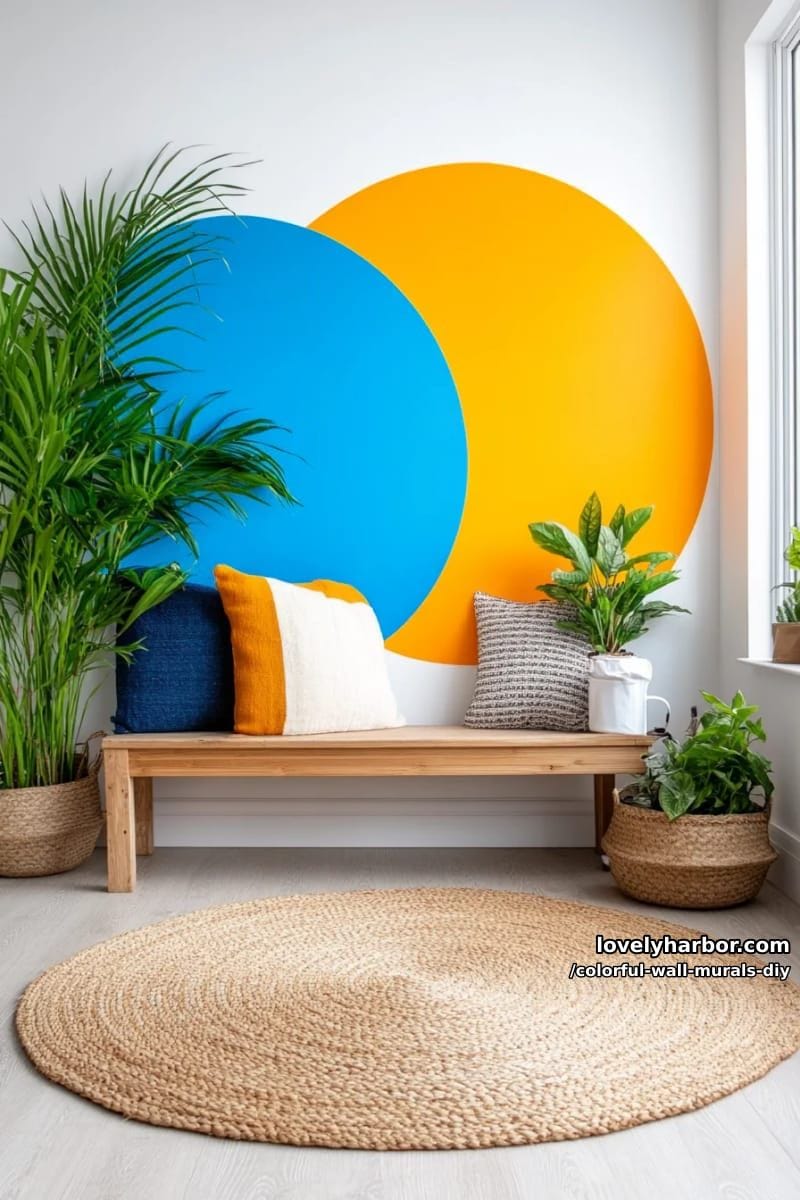
Draw the circles with a pencil on a string from a fixed center, and run a foam roller cut to width around the curve for smoother arcs than a brush gives. Blue and orange are direct complements, which means at full saturation they vibrate against each other and get tiring on a large wall.
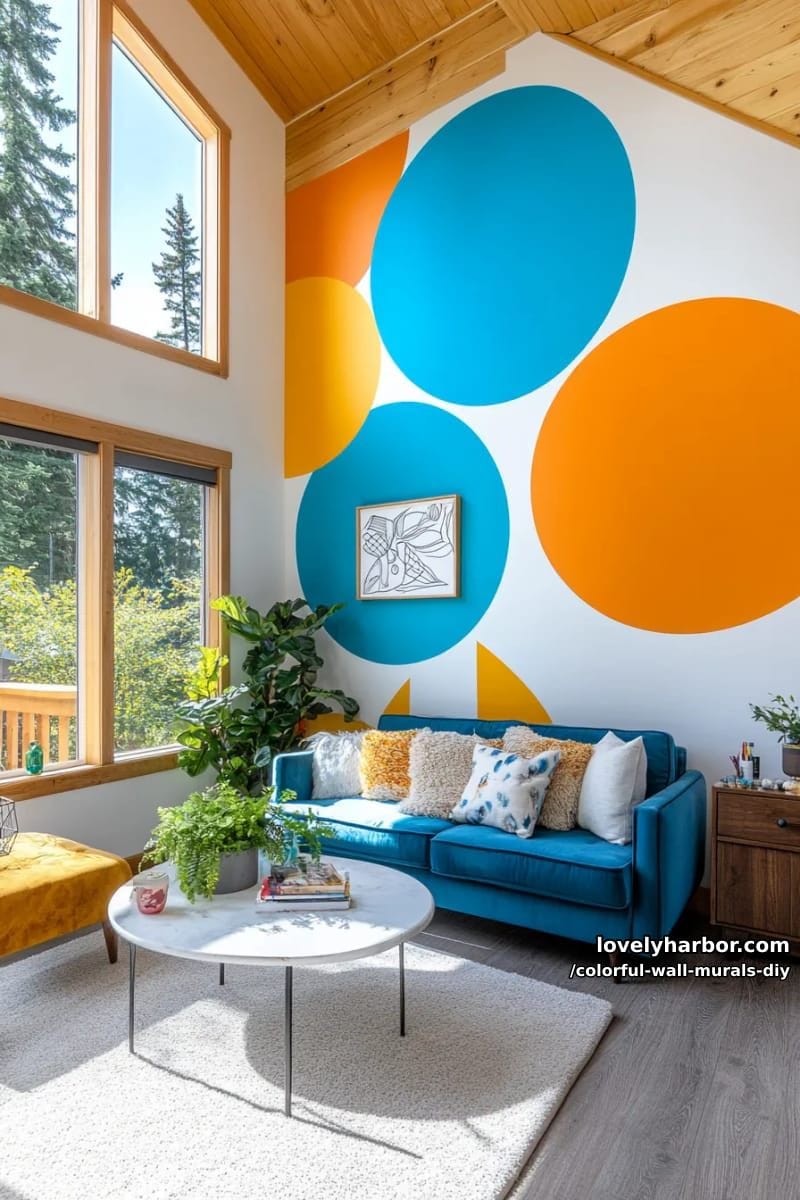
Mute one of the two, usually the orange down toward terracotta, and the pairing calms without losing the contrast. Wonky circles read as errors here in a way freehand styles forgive, so this is not the project to rush.
11. Freehand wavy lines mural in multi-color for a funky accent wall
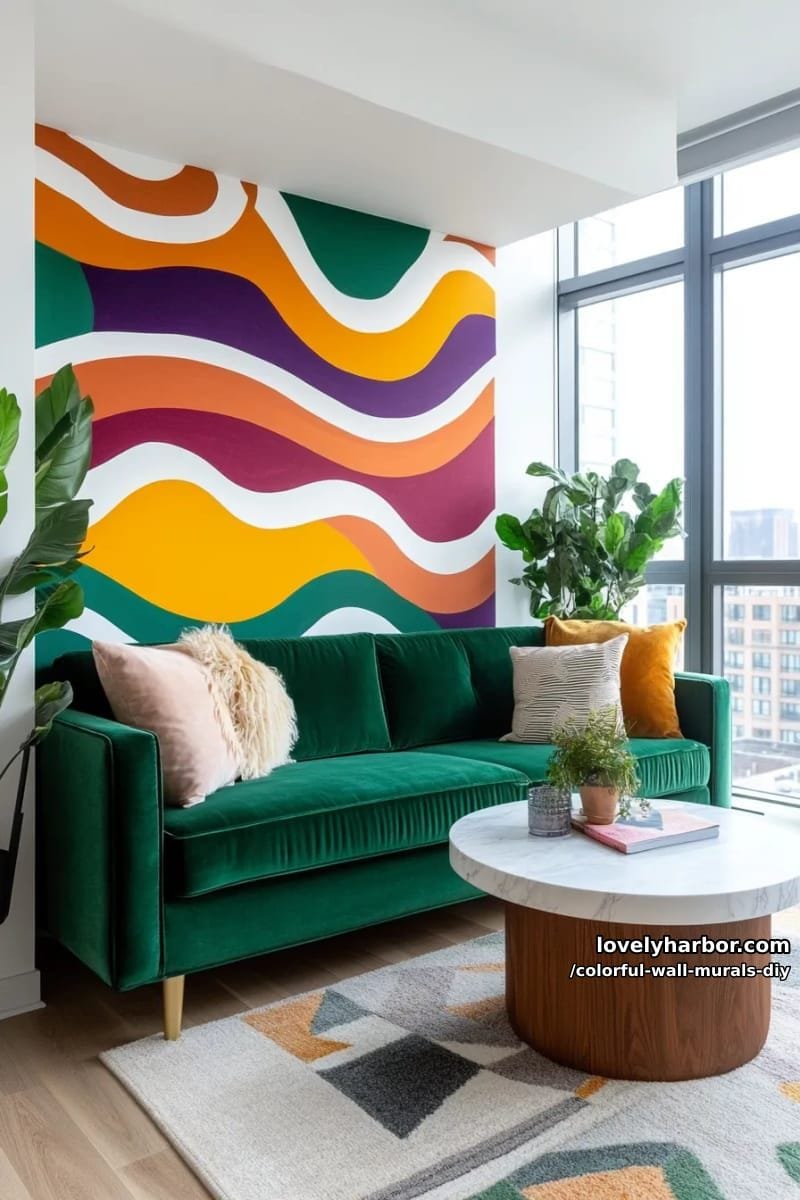
A long liner brush or a fat paint pen gives you a steadier wavy line than a standard brush, which drags and skips. Keep the palette to two or three colors. Multicolor here tips into clown territory fast, despite what the inspiration photos promise.
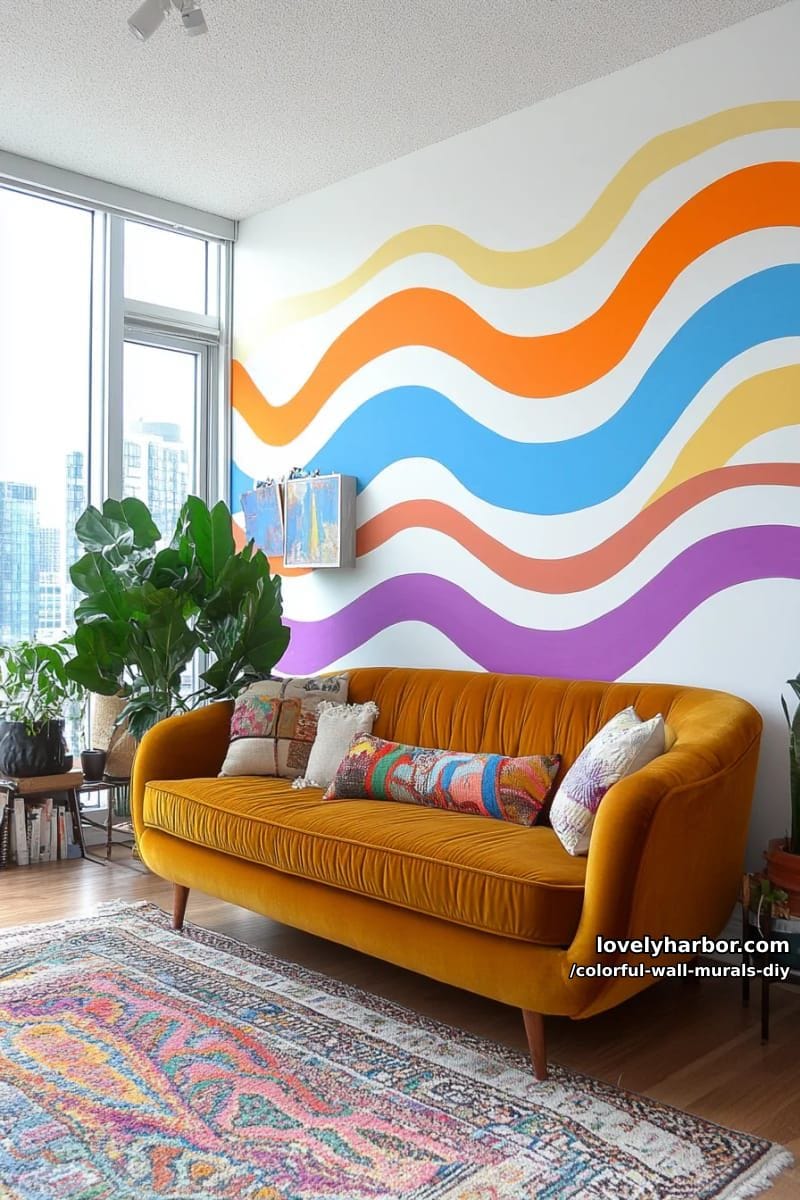
If a line goes wrong, you don’t repaint, you just run a second wave over it in another color and call it deliberate.
12. Playful polka dot mural with irregular, hand-painted cheerful dots
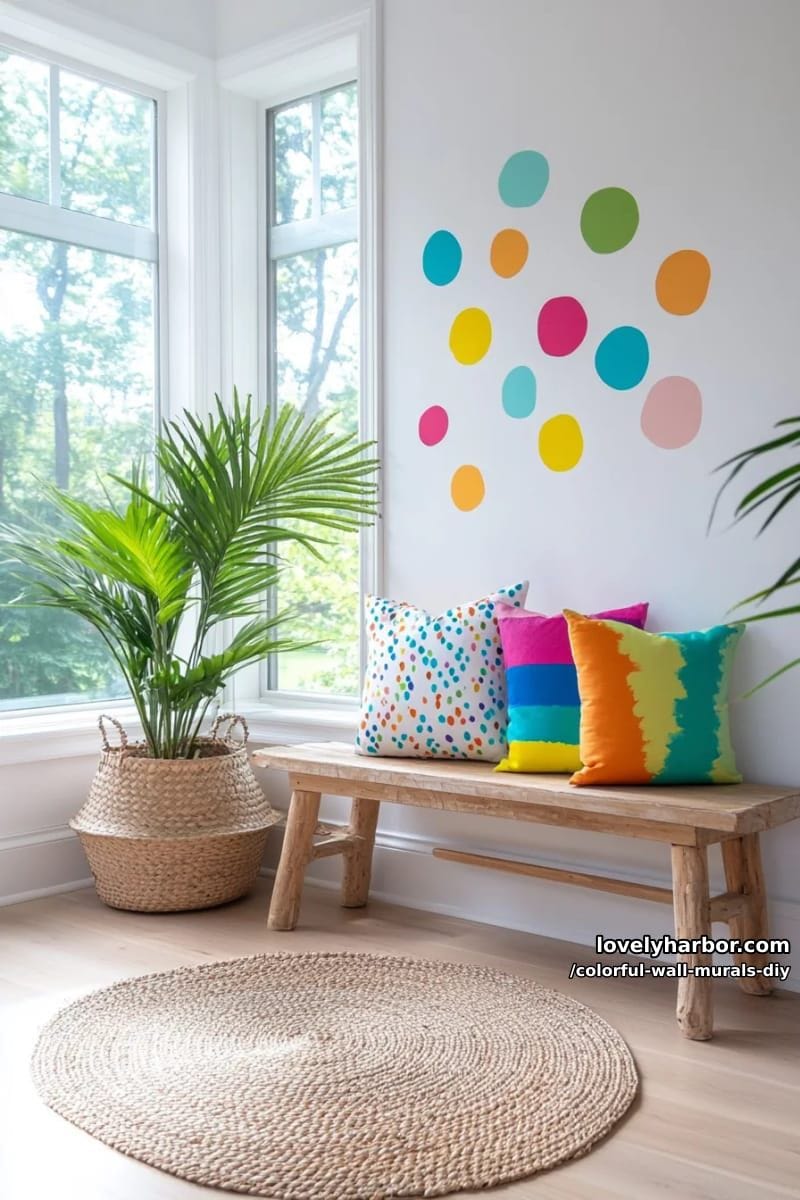
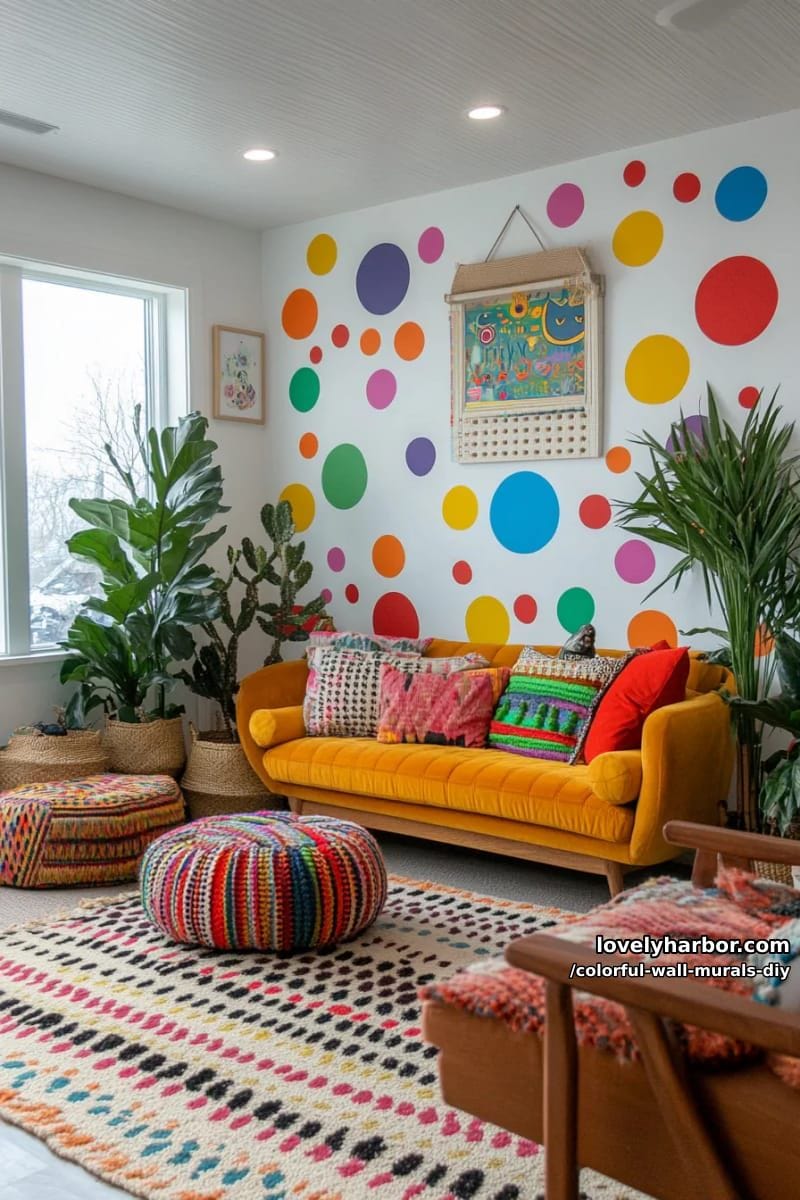
A round sponge or a foam pouncer gives a cleaner dot than a brush, and varying the sponge size keeps the dots from looking machine-printed. Spacing is what people get wrong: dots that are too evenly gridded read as wallpaper, while a loose, slightly random scatter reads as hand-done.
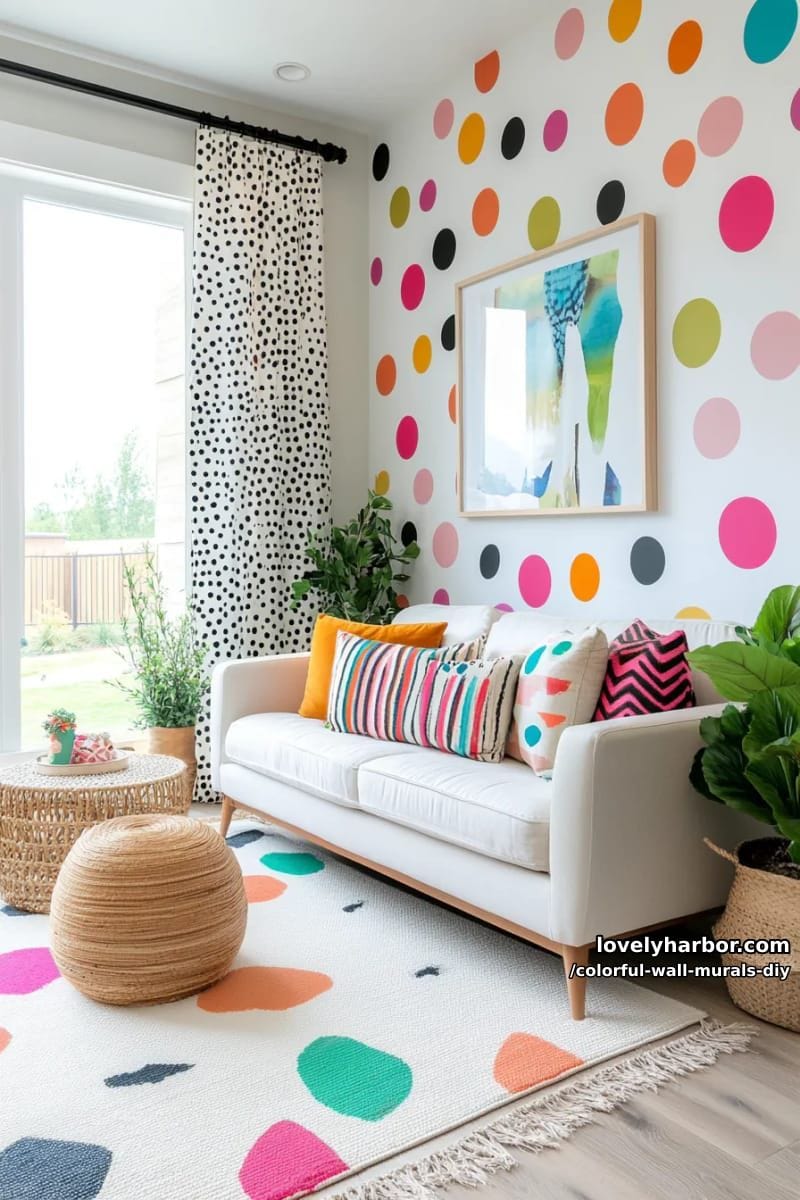
Two or three colors against a plain wall is plenty. Test the spacing by laying out paper circles with tape first if you’re nervous; it costs nothing and saves a wall full of regret.
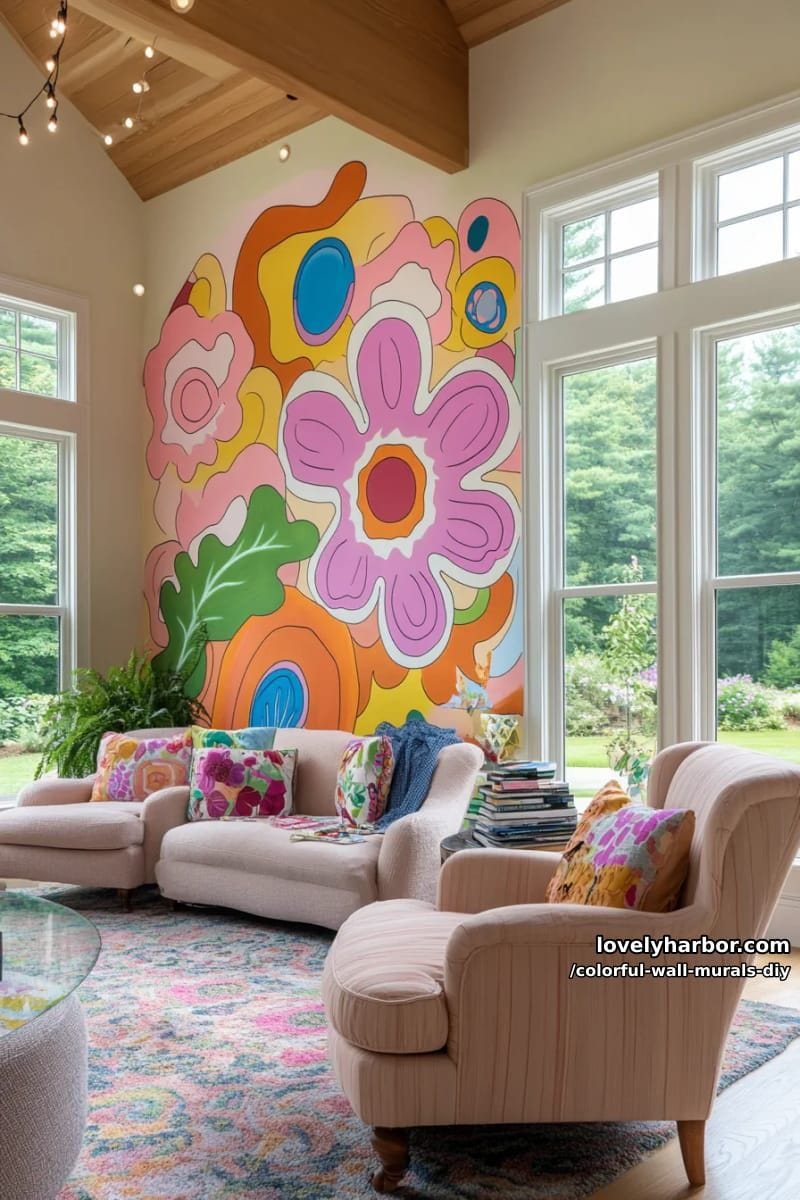
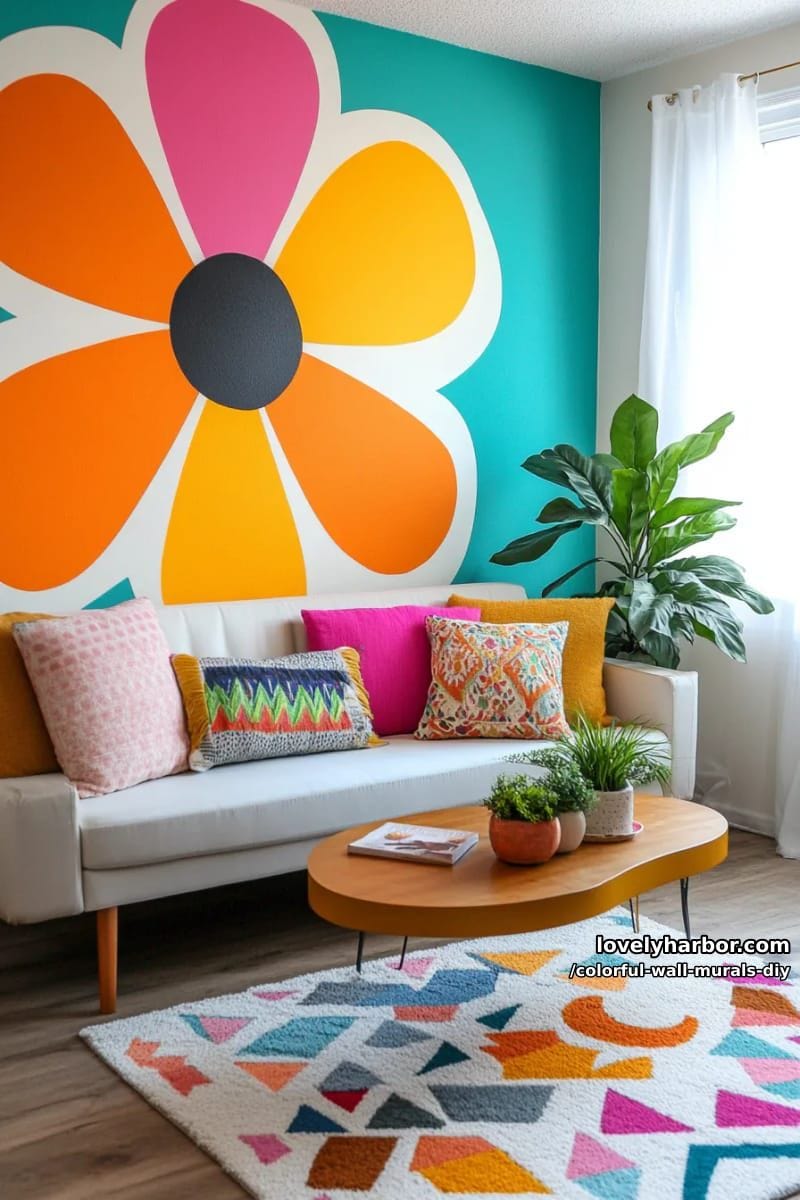
13. Retro floral mural using large flat shapes and saturated colors
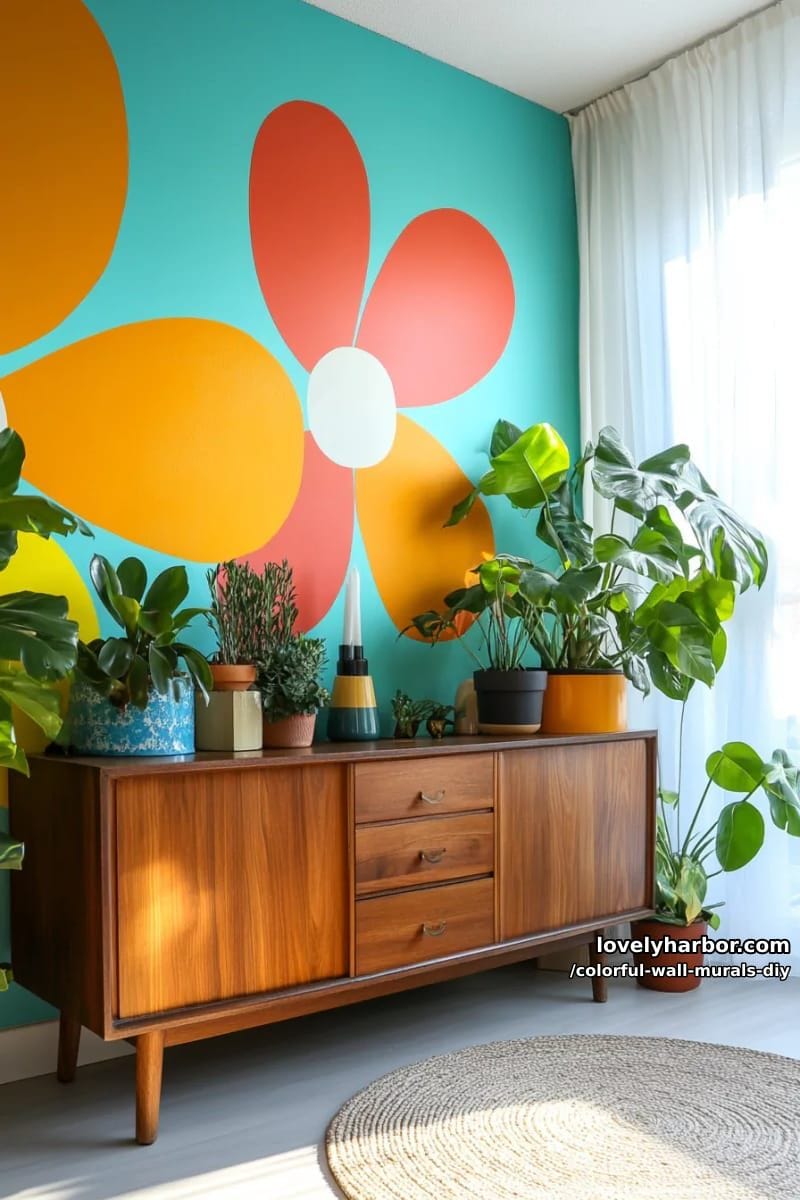
Paint these as flat blocks of color with no shading; the 1970s look depends on graphic flatness, not realism. Oversized daisies in mustard, burnt orange, and a hot pink, on a cream rather than stark white ground, is the period-correct combination.
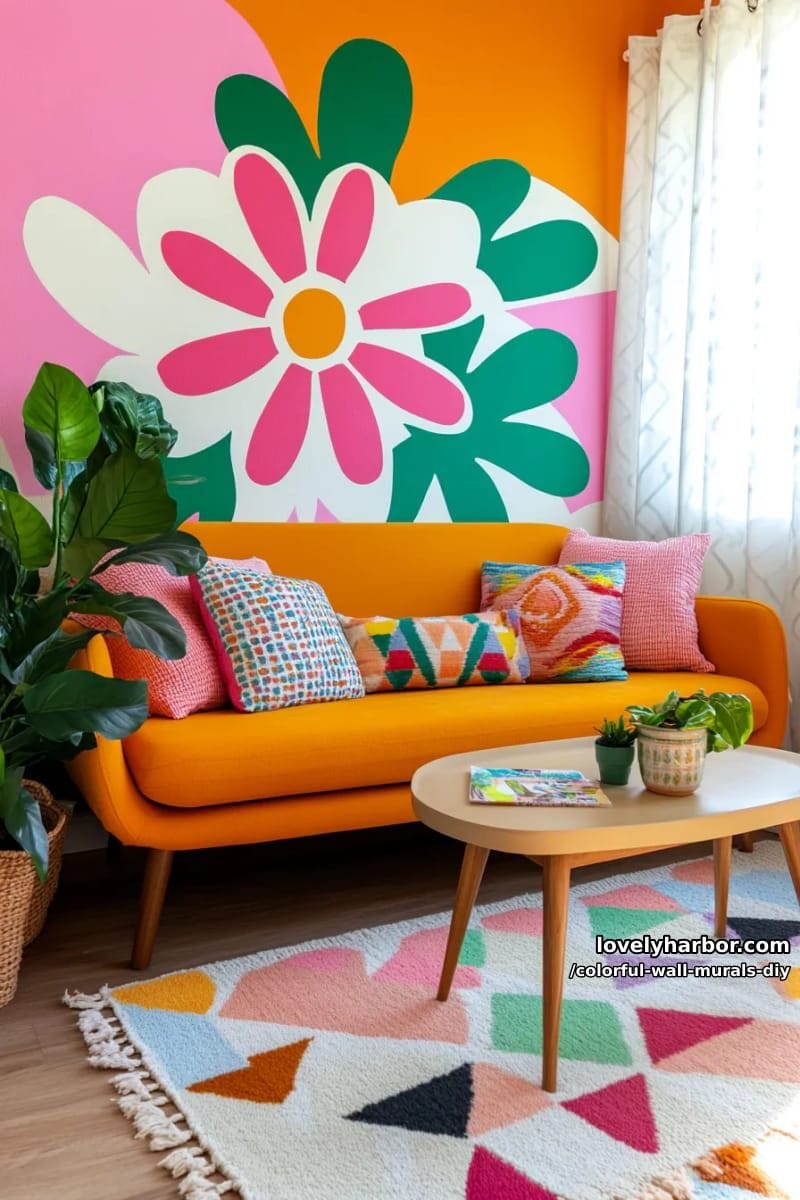
Use a matte or eggshell finish. Anything glossier kills the vintage feel and shows every roller mark under raking light. Map the petals in pencil before color, because freehanding a large symmetrical daisy by eye almost never lands.
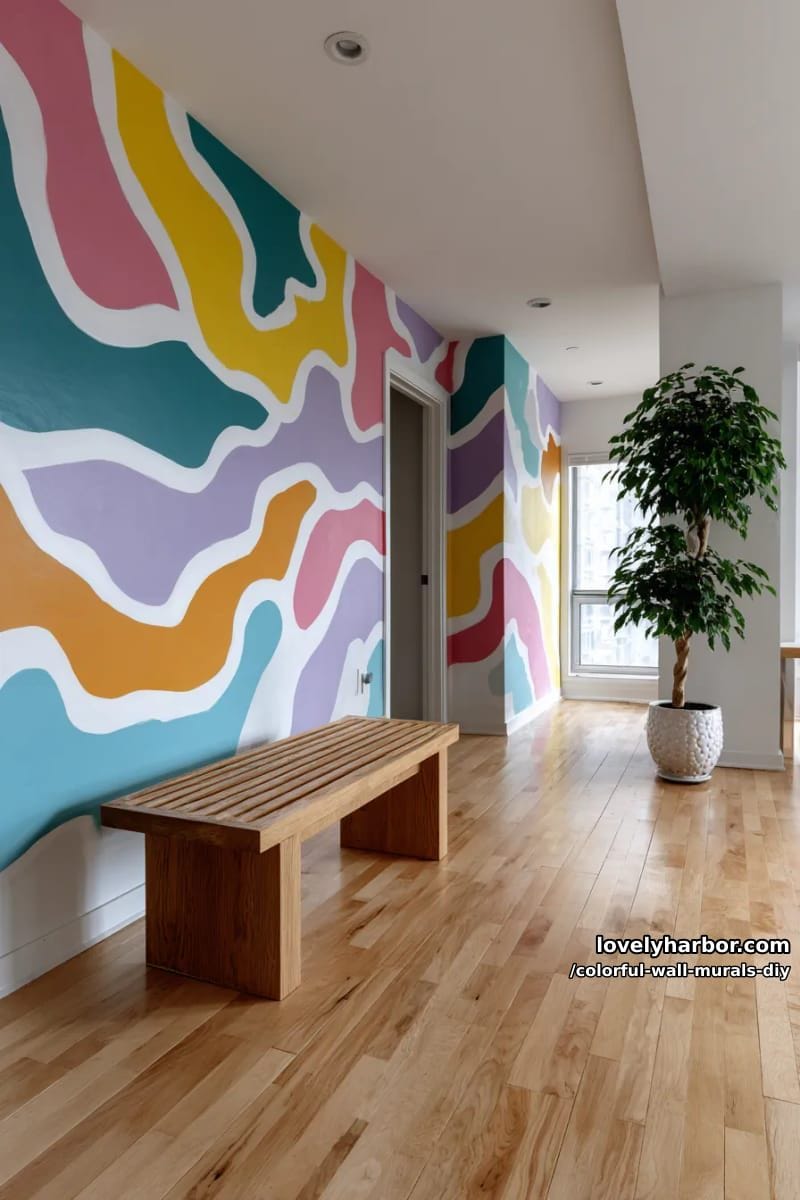
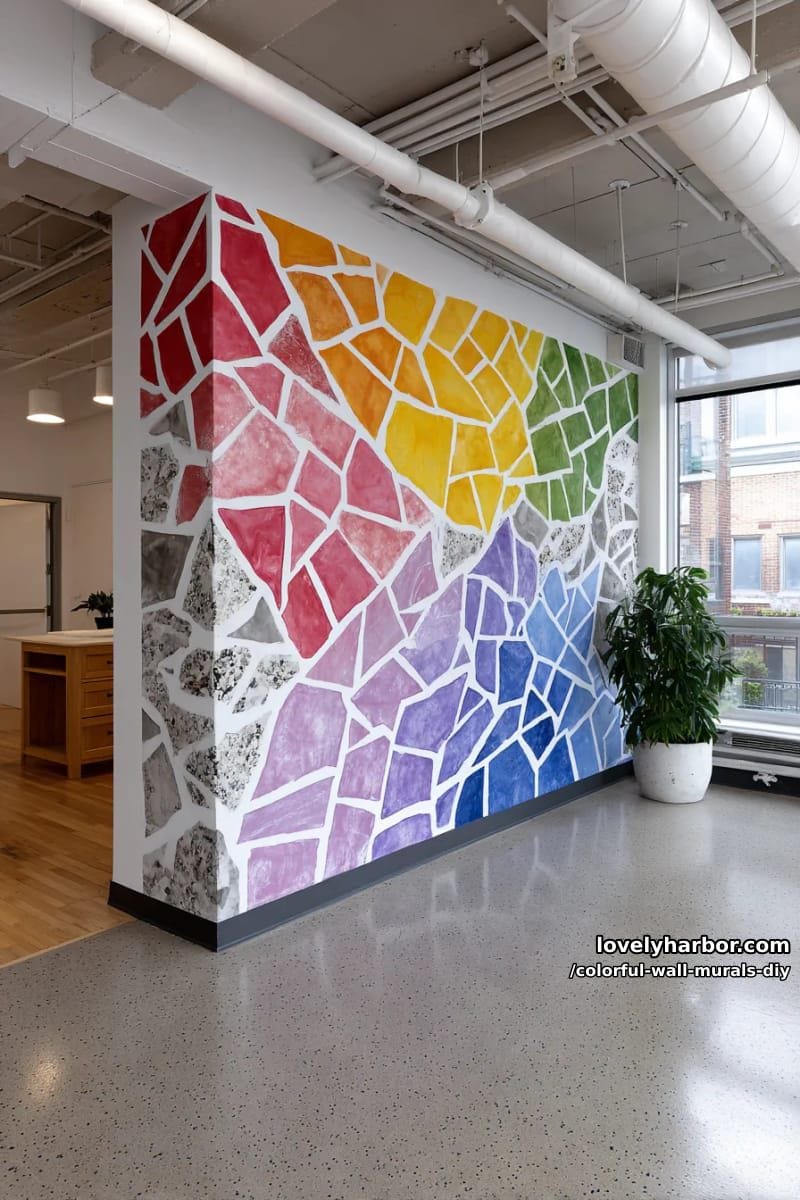
14. Mosaic tile illusion mural mimicking broken tile patterns in rainbow shades
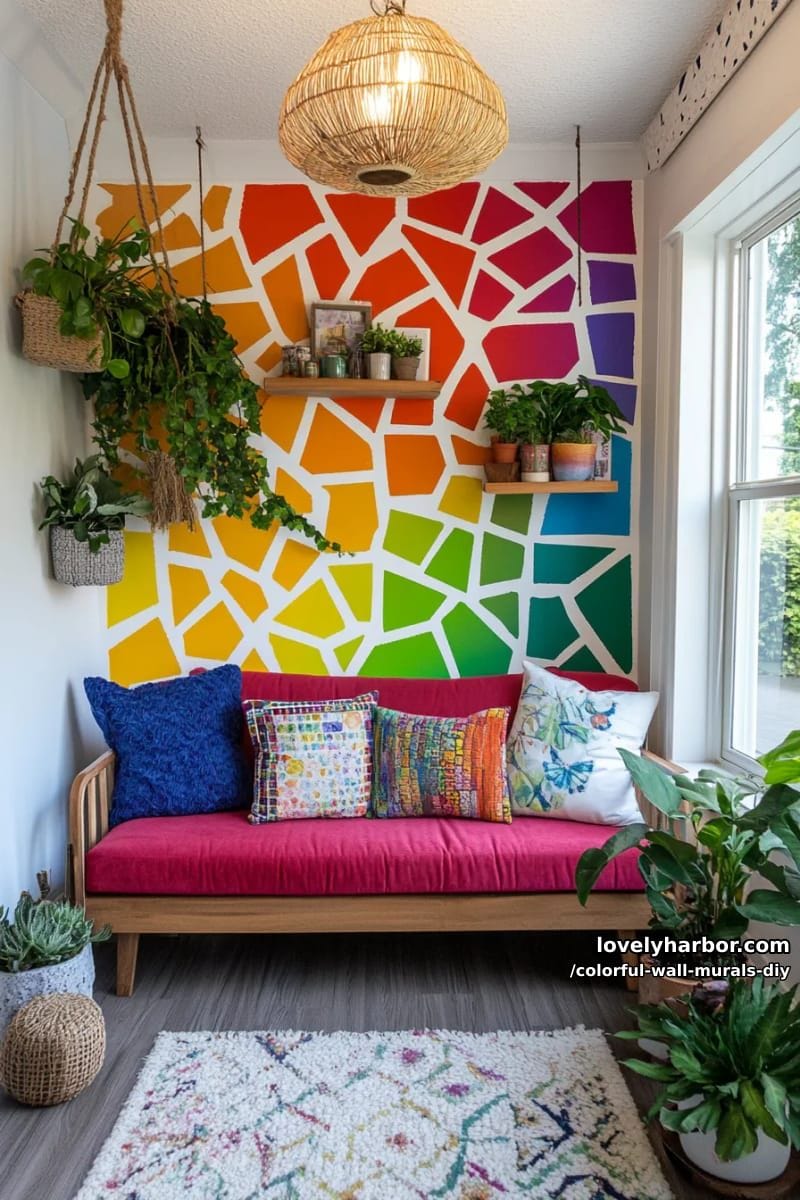
Tape off irregular tile shapes and leave a consistent gap of bare wall between them to read as grout, then paint each shape a different color and pull the tape. The bare-wall grout line is what sells the illusion; paint the gaps too and it just looks like color blocks.
This is the slowest project on the list, and rushed tape lines wreck the effect more than in any other style here. A full wall is hours of taping. If you lose patience halfway and start freehanding the gaps, the grout illusion collapses into sloppy color blocks, and there’s no easy fix short of repainting the section.
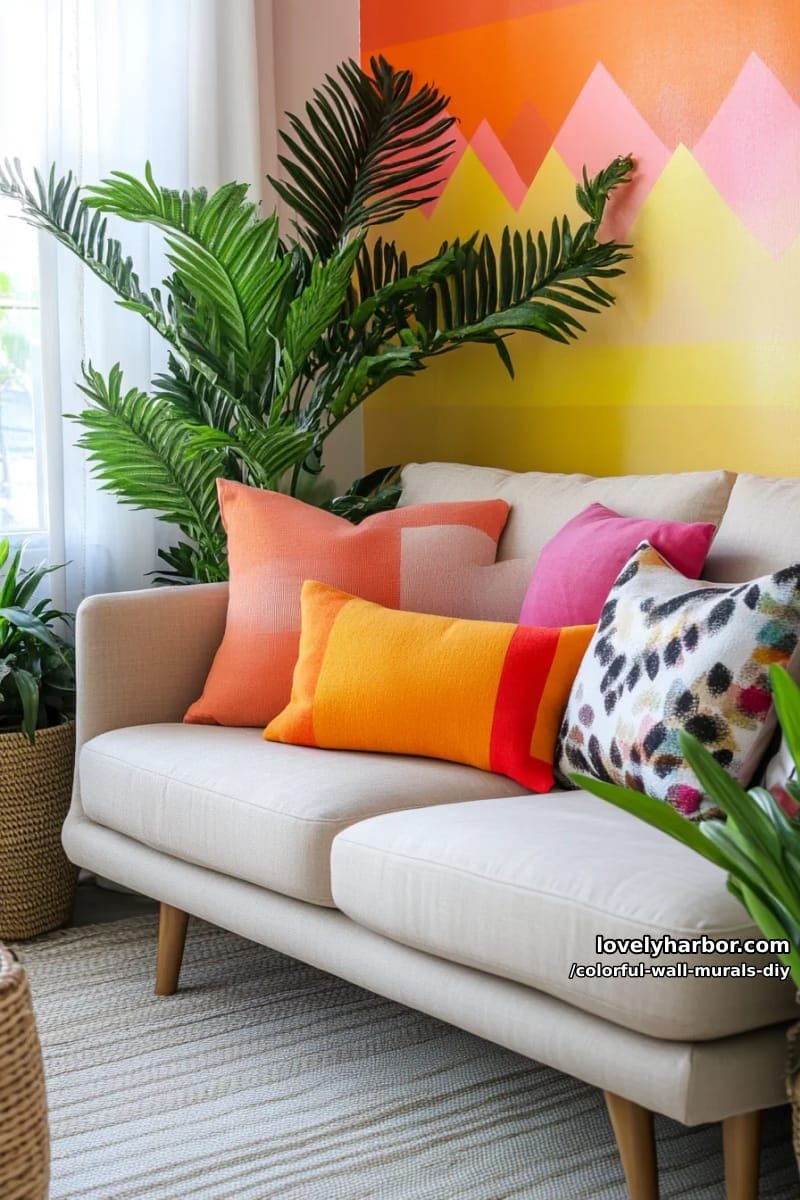
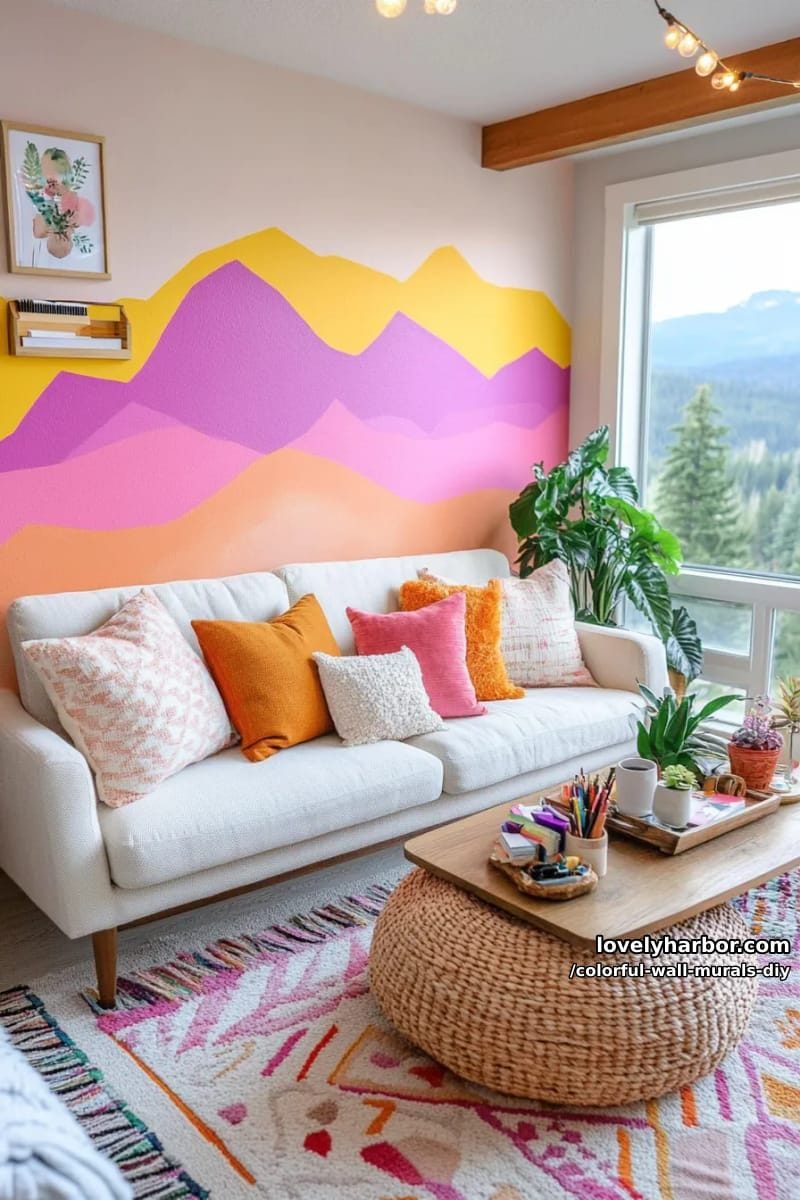
15. Layered mountain silhouette mural in gradient sunset tones
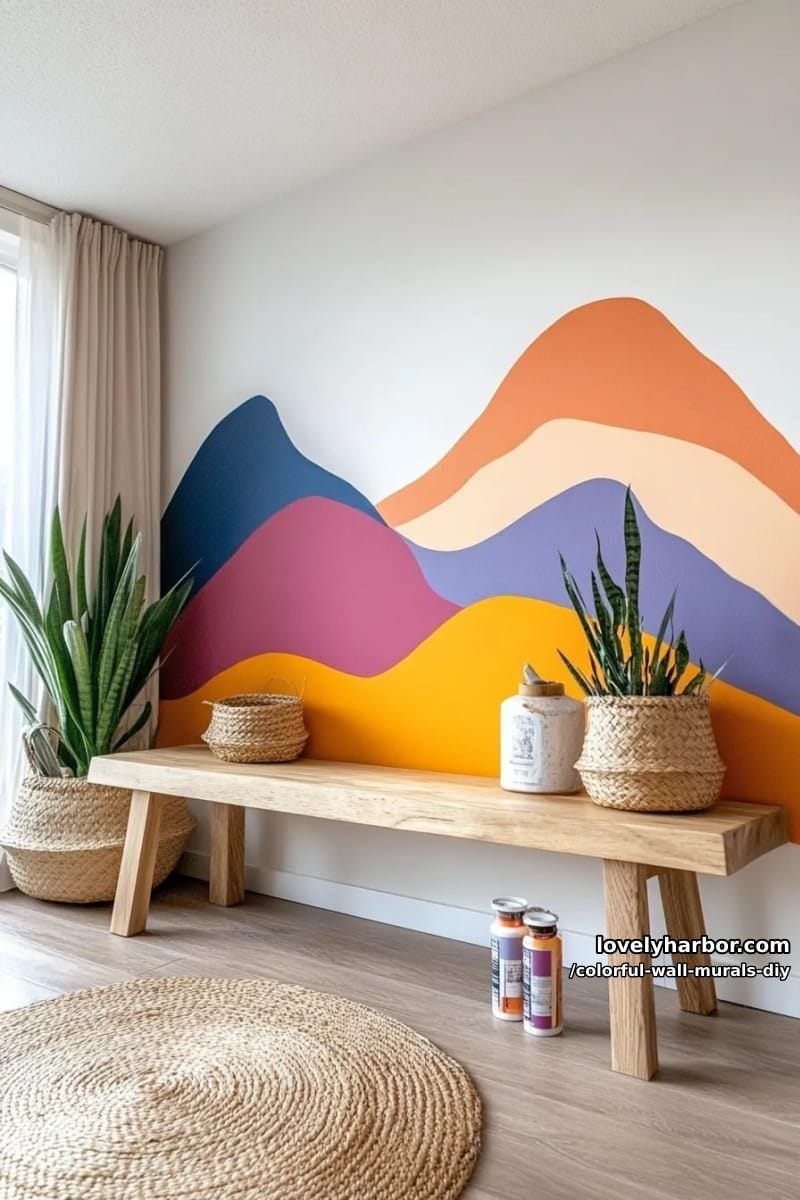
Paint the sky gradient first, lightest peach at the top fading down, then layer the mountain ranges over it from back to front, each ridge a shade darker. Tape the top edge of each ridge so the silhouette stays sharp while the sky behind it stays soft.
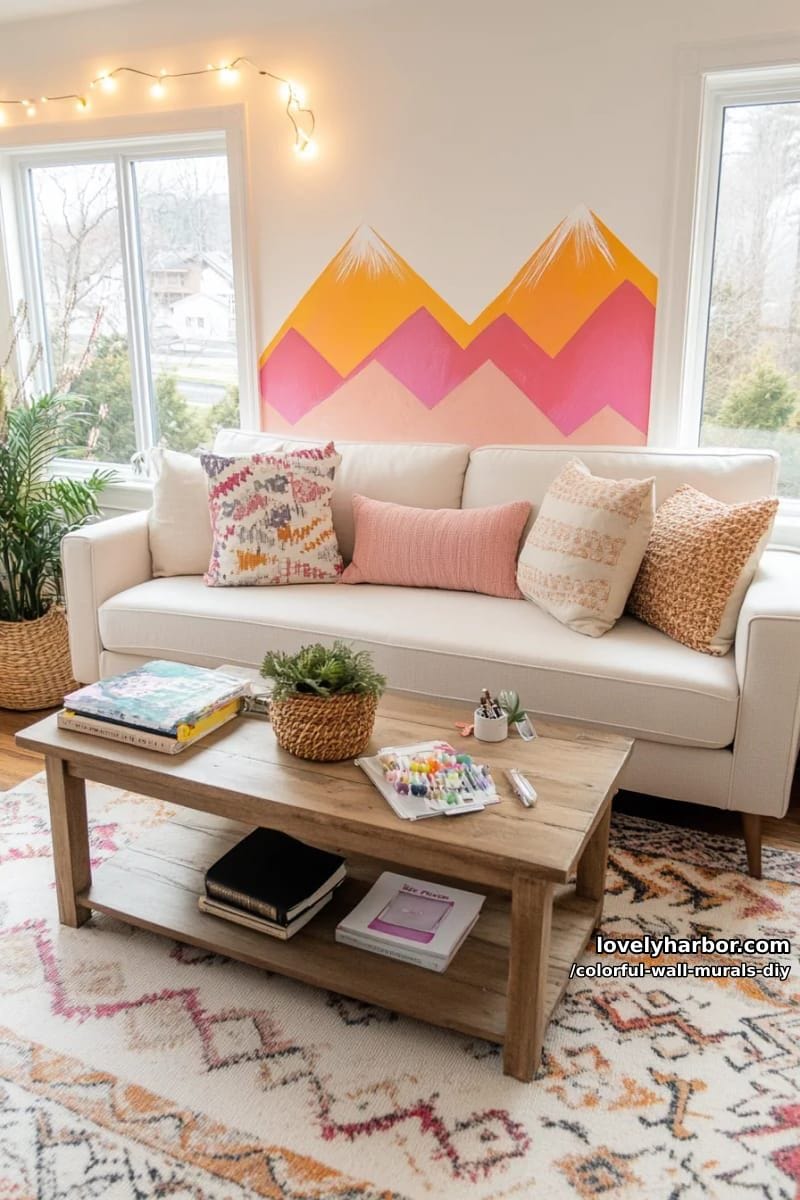
The overlap of translucent ranges is what gives depth, so thin the darker layers slightly. Swap the sunset palette for cool dawn blues or autumn rust and the same technique produces a completely different room with no new skills.
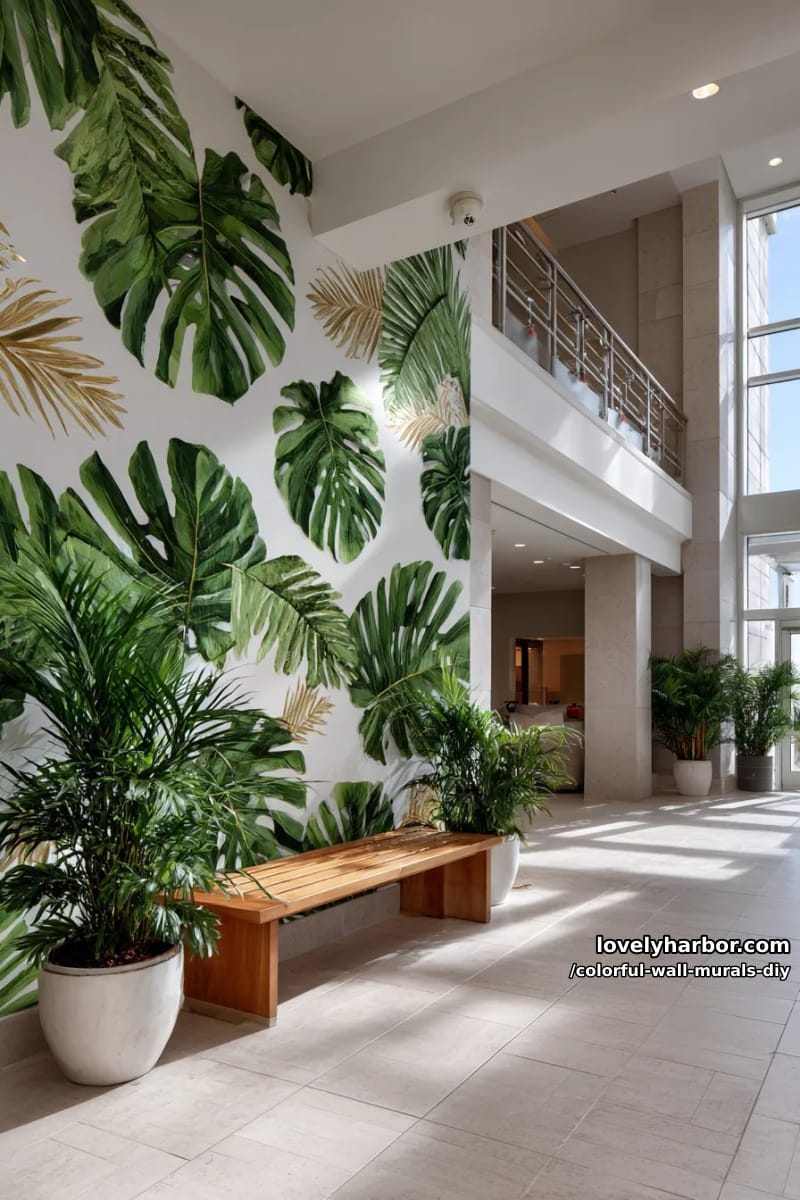
16. Giant botanical mural with oversized ferns and golden details
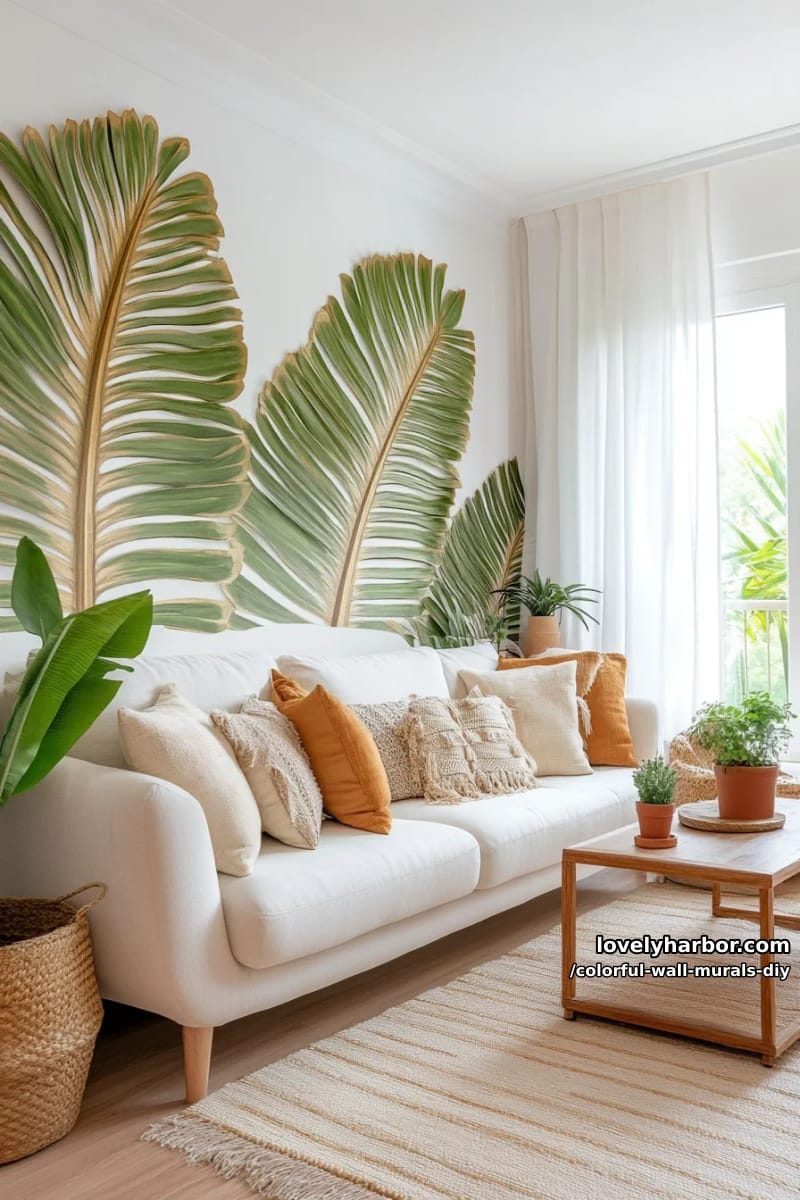
Grid the wall and your reference image into matching squares to scale the ferns up accurately; freehanding fronds this large drifts out of proportion halfway across. Paint the greens flat first, then add the veins last.
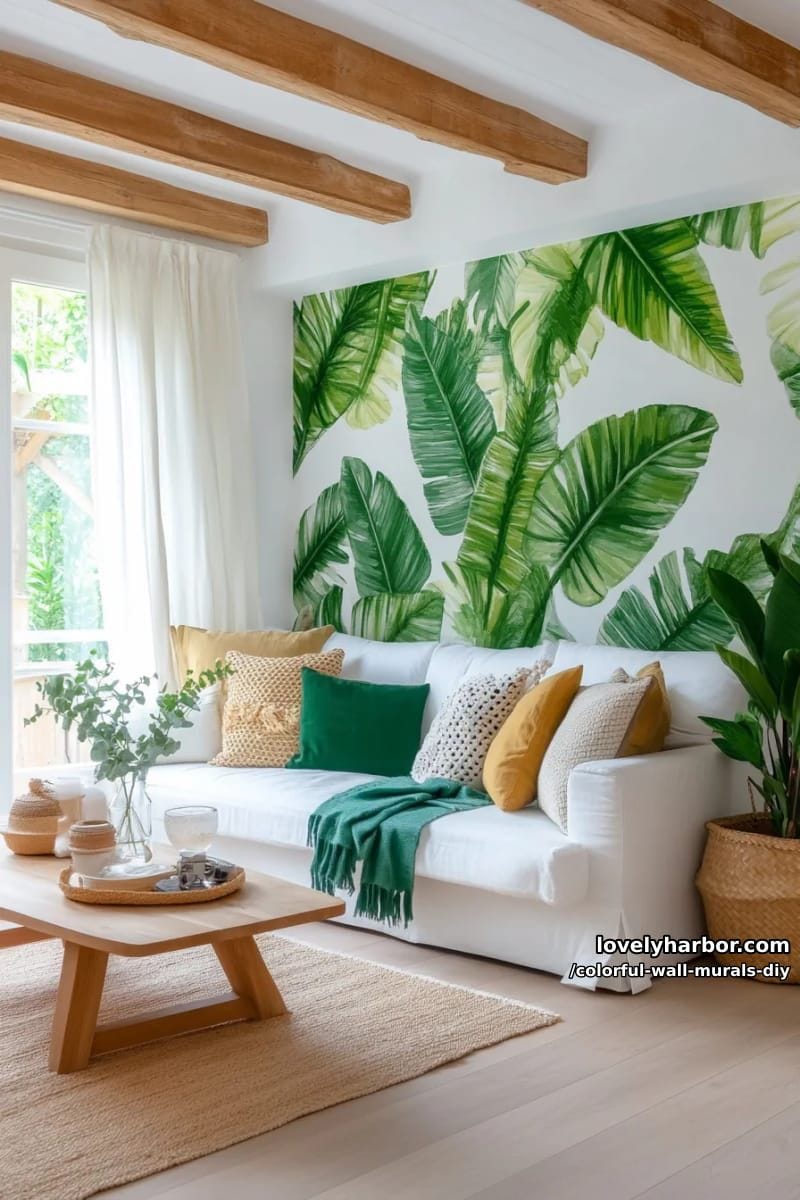
For the gold, metallic acrylic or Liquid Leaf reads warmer and ages better than craft glitter paint, which goes dull within months. Real gold leaf looks incredible but is fussy and expensive across a whole wall, so I’d reserve it for a few accent veins, not the field.
17. Minimalist mural with floating colored orbs and abstract forms
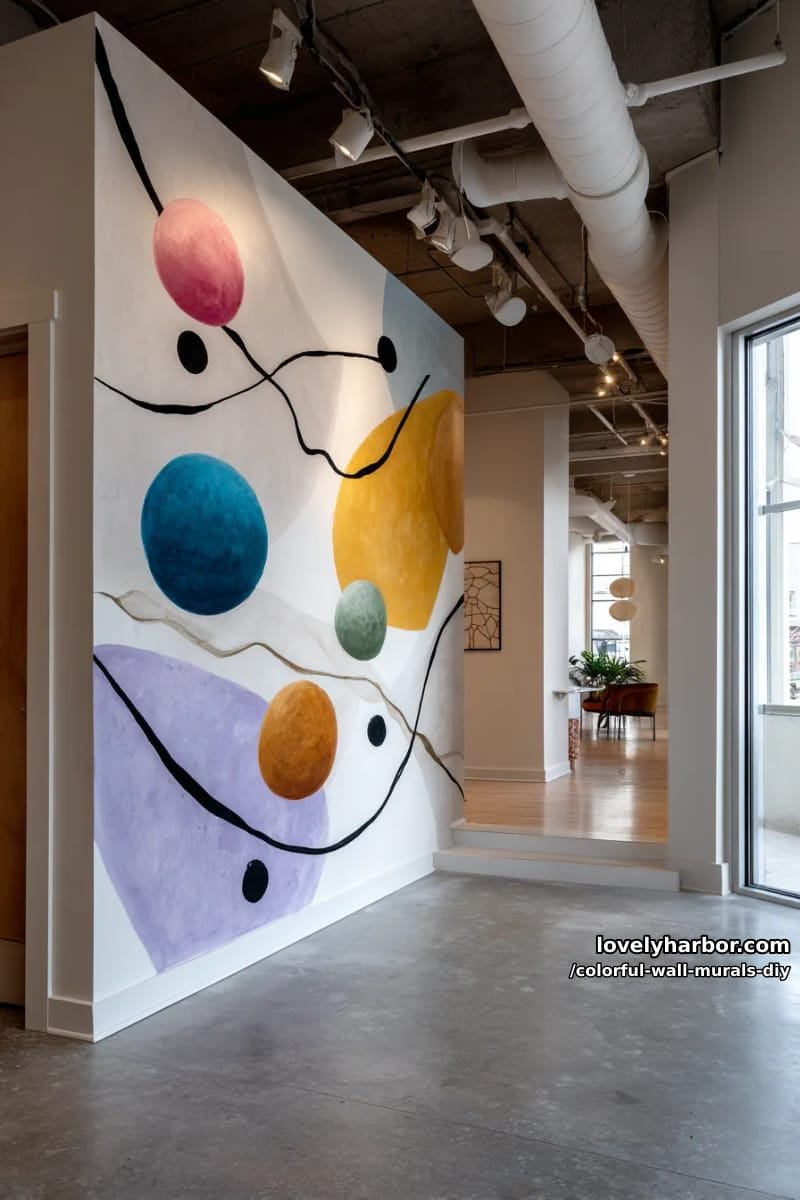
The whole effect lives on negative space, so keep the wall mostly empty and let the orbs float with real gaps between them. Tape circles or use a plate as a template, three or four muted colors at most against off-white.
Cut your first instinct for how many orbs in half, then cut it again, because crowding is the one thing that turns this from gallery-calm into a busy mess.
18. Patchwork mural with mismatched pastel squares and rectangles
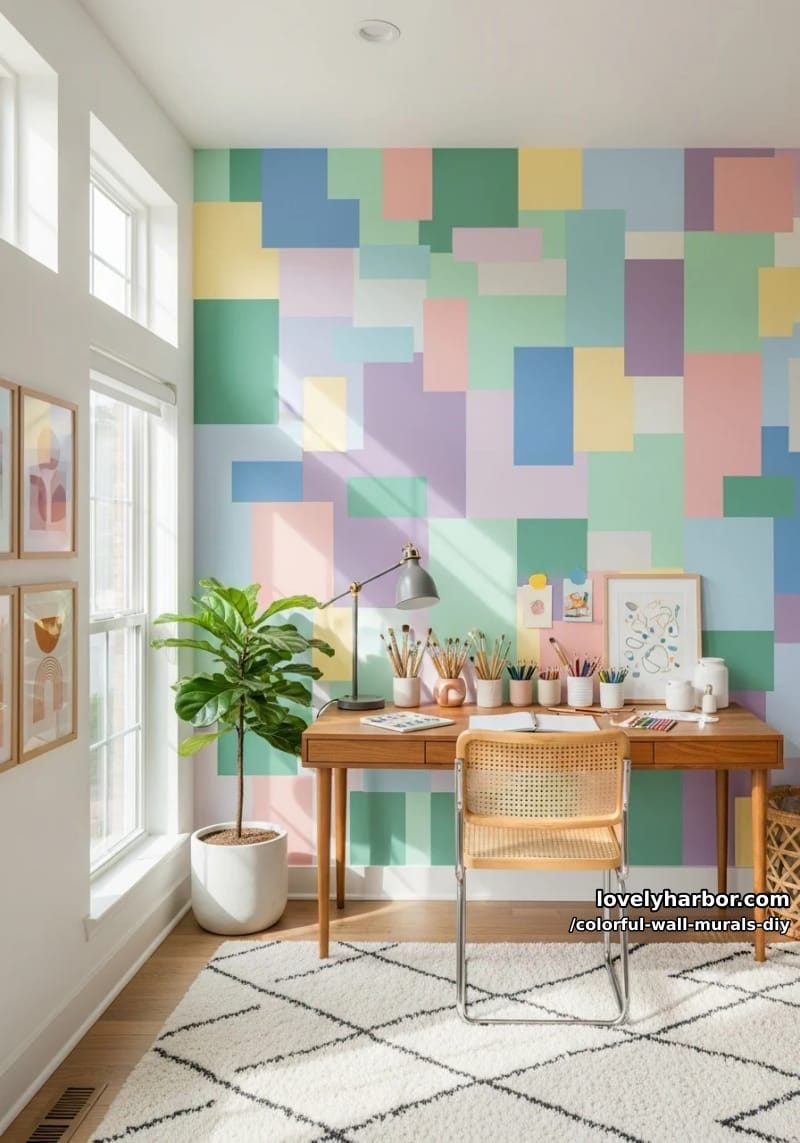
This is the project for using up leftover sample pots, so the material cost can be close to nothing. Tape off slightly uneven squares and rectangles and fill them in soft pastels, varying the proportions so it doesn’t grid up.
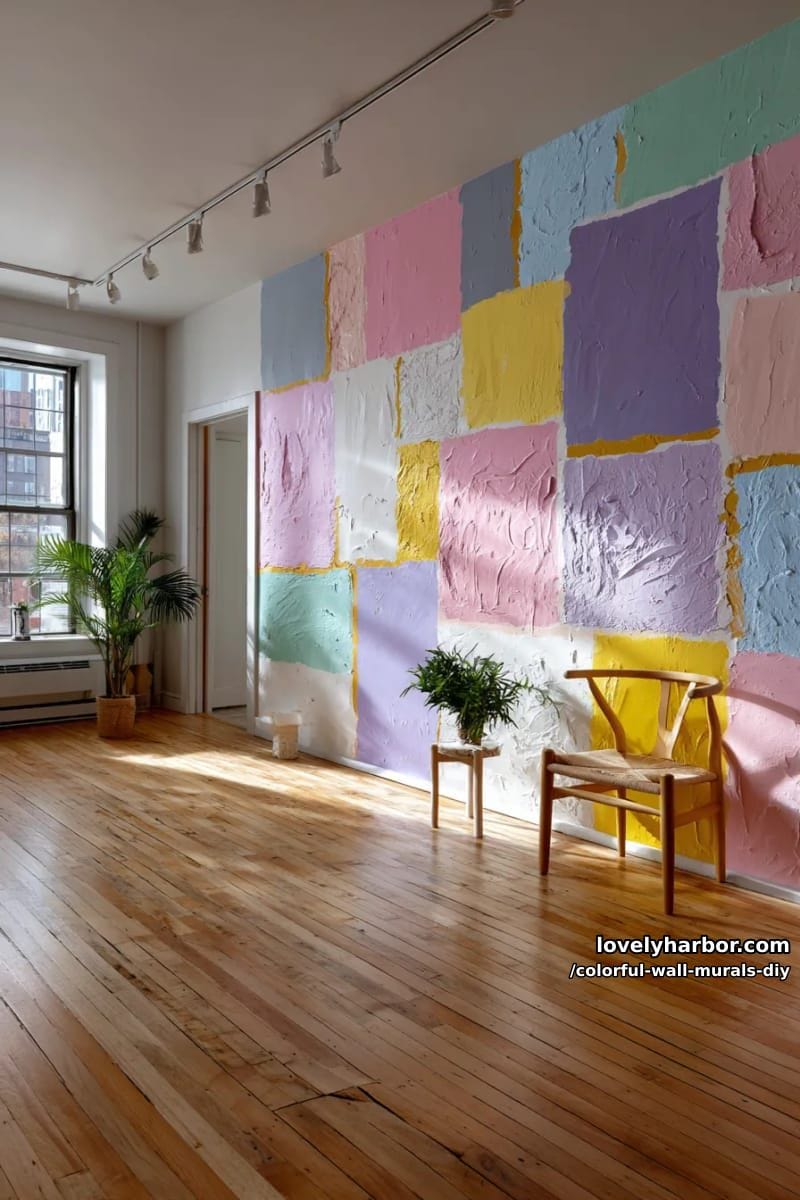
Pale pastels fade noticeably in direct sun, faster than saturated colors, so a south-facing wall is a poor choice unless you don’t mind repainting. Renters can do the whole thing in washi tape or removable wallpaper squares instead of paint.
If you’re still deciding which of these your wall can actually take, this is where reversibility, skill, and cost line up against each other:
| Mural | Reversible? | Skill | Rough cost |
|---|---|---|---|
| Cut-paper Matisse shapes | Fully, with putty | Low | $5 to $15 |
| Patchwork in washi tape | Fully | Low | $10 to $20 |
| Pastel ombre | No, painted | Low | $15 to $30 |
| Concentric circles | No | High | $20 to $35 |
| Mosaic tile illusion | No | Medium, very slow | $25 to $45 |
| Neon brushstrokes | No, needs primer to cover | Medium | $30 to $50 |
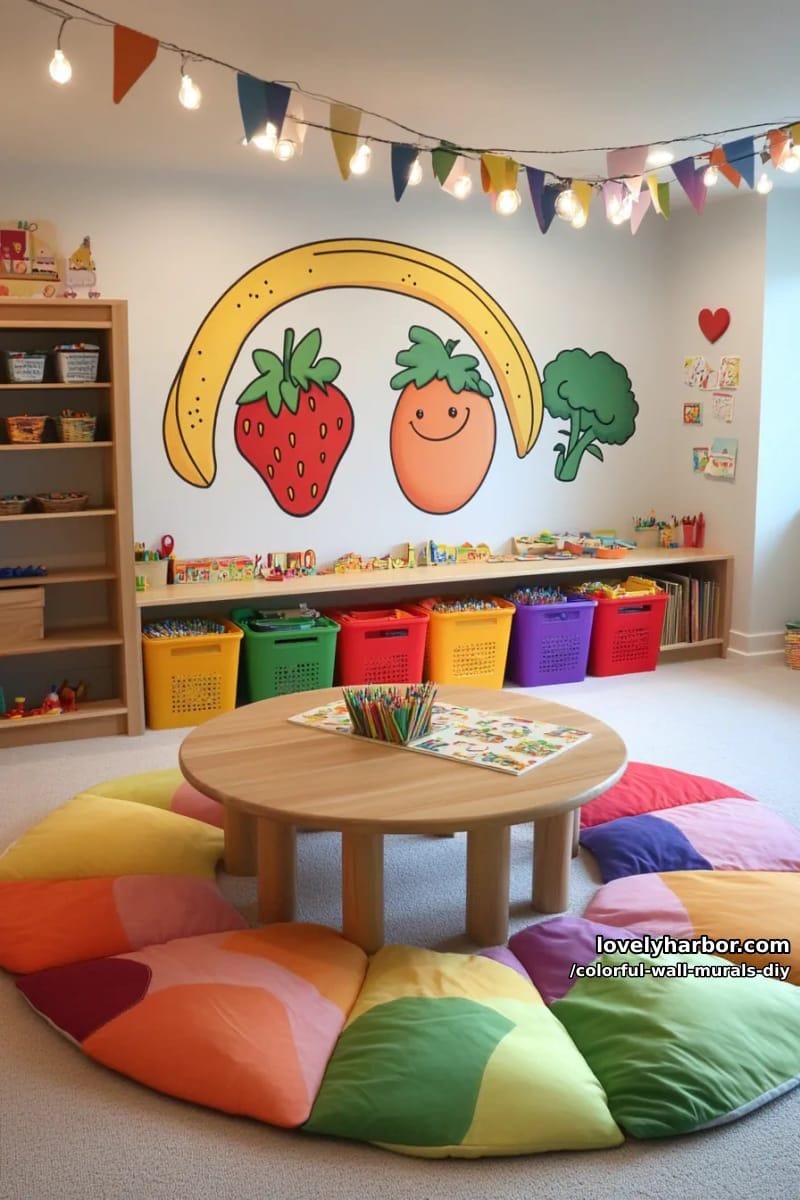
19. Playroom wall with cartoonish fruits and veggies in vivid colors
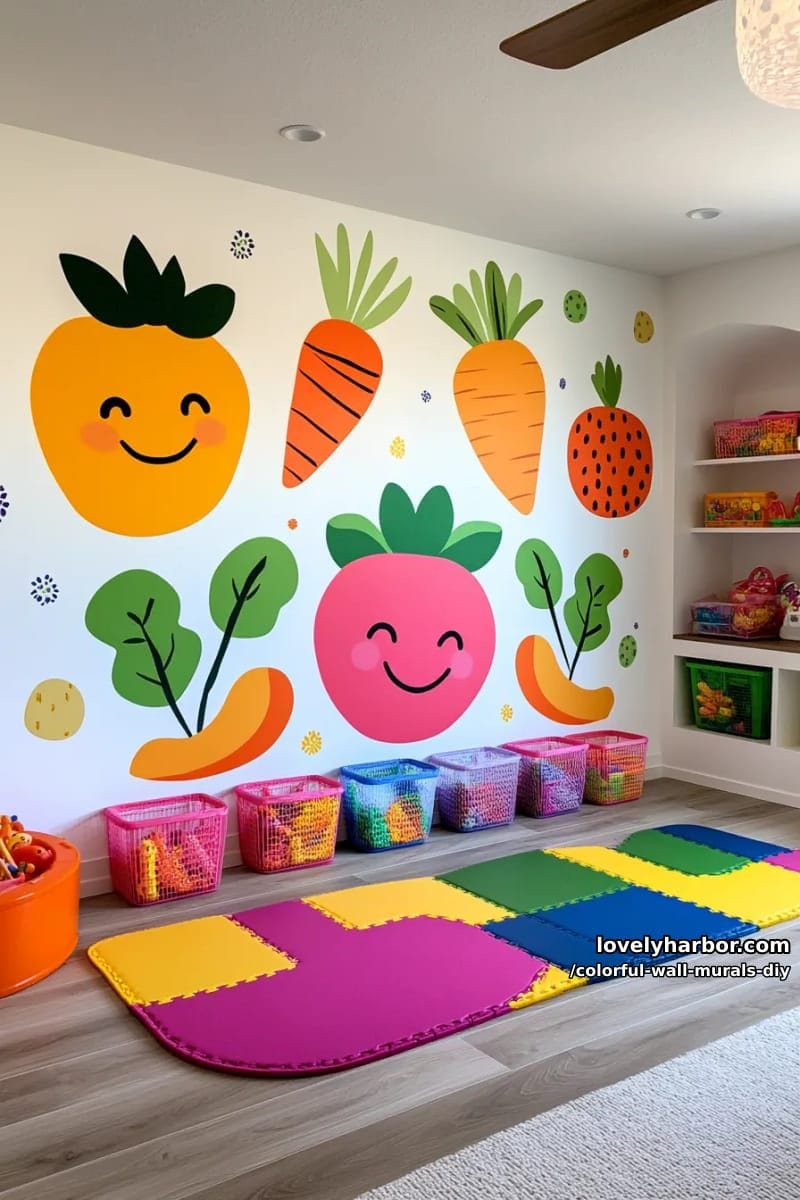
Use stencils for the fruit shapes and choose a washable satin or semi-gloss finish, not matte, because a playroom wall gets touched constantly and a wipeable sheen survives sticky hands. Bold primary colors hold up better than pastels against the chaos of a kids’ room.
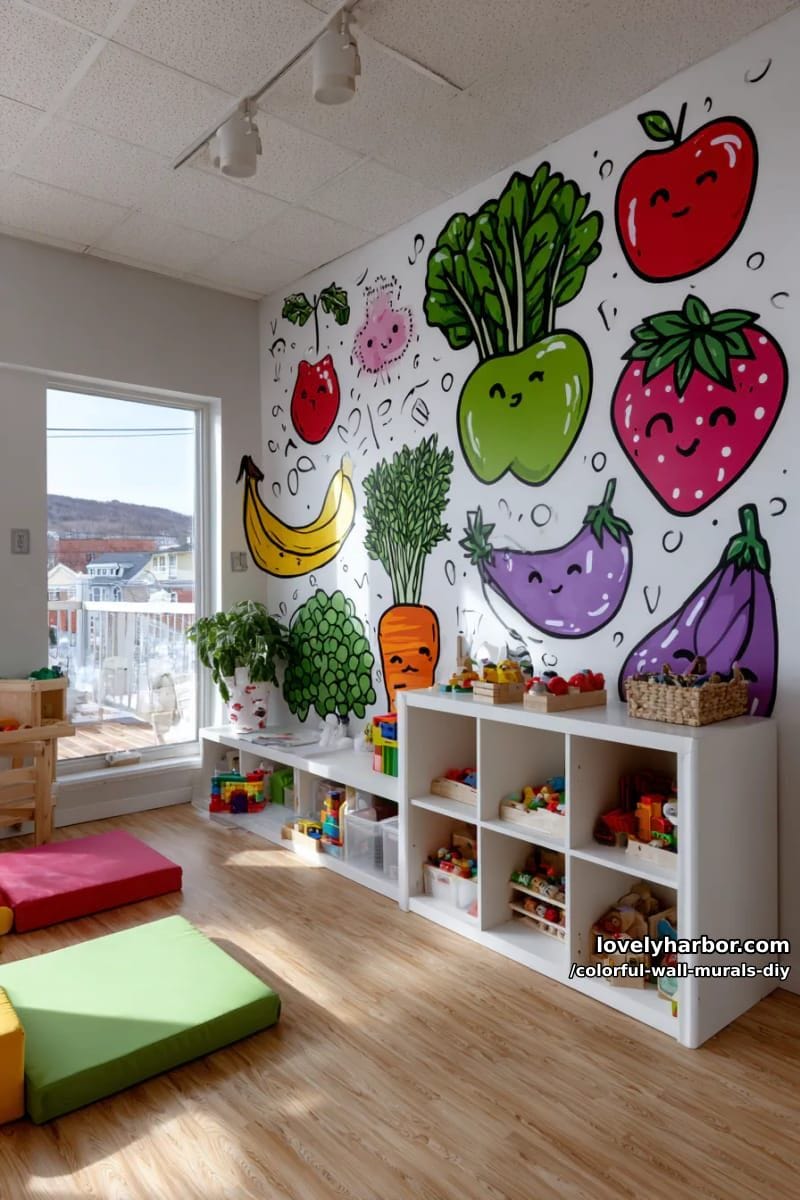
Worth saying plainly: this dates fast and is a pain to cover later, since cartoon shapes need primer and two coats to bury. If you might repaint within a couple of years, keep the shapes simple and the colors fewer.
20. Abstract face line art mural with color splashes as backgrounds
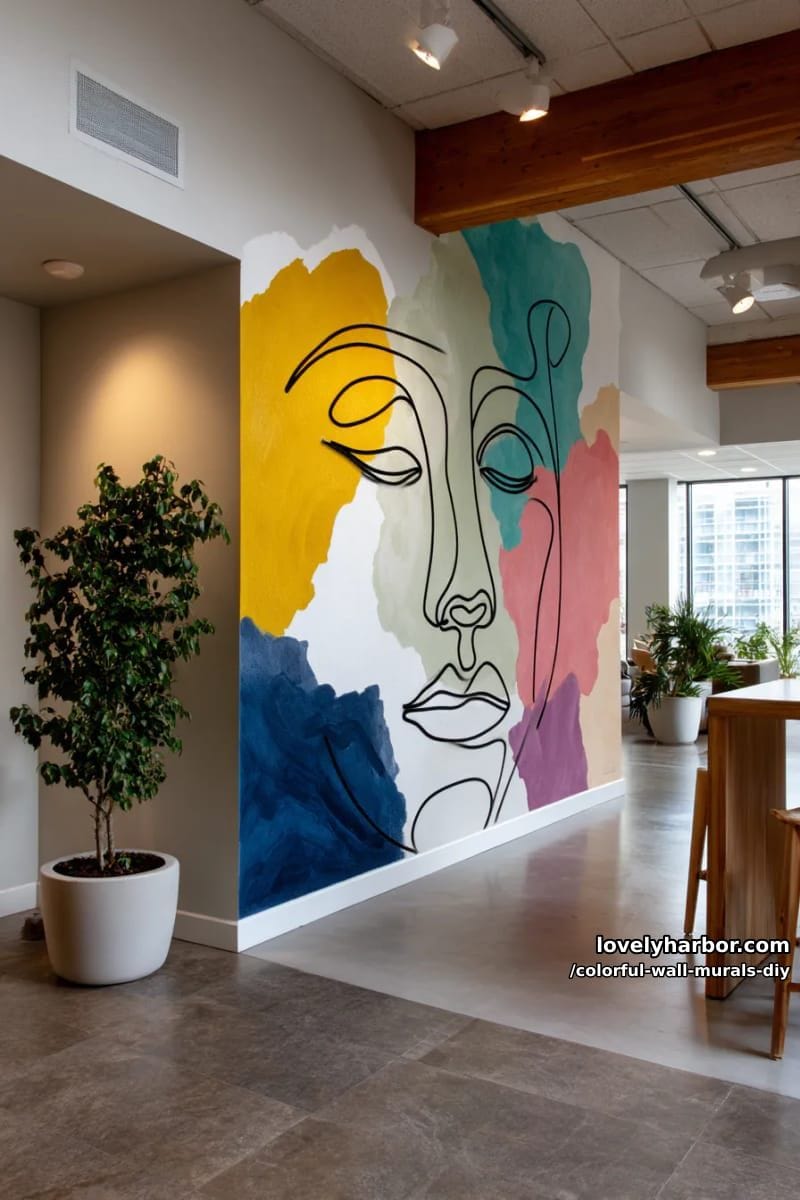
Lay down the color splashes first as loose blocks, let them dry, then draw the single-line face over the top with a liner brush or paint pen. Doing the line last keeps it crisp and unbroken instead of fighting wet paint underneath.
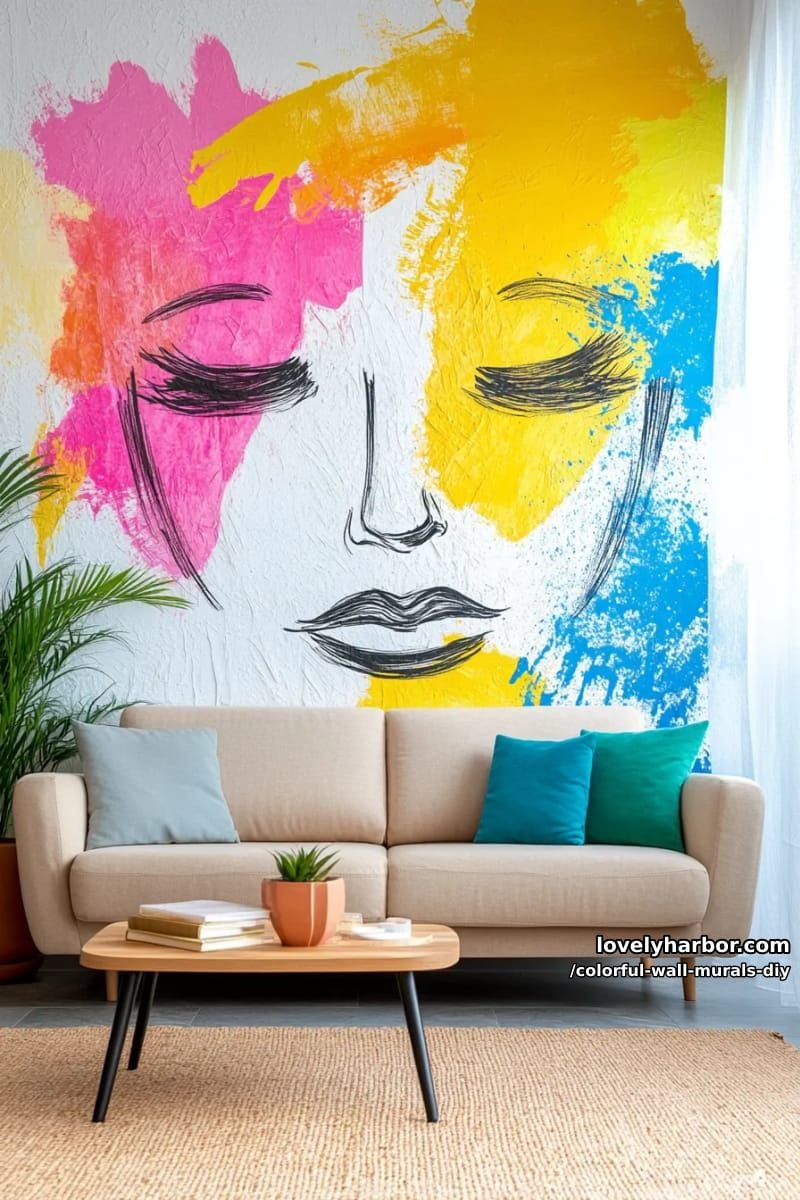
One continuous line is harder than it looks; practice the face a few times on paper until your hand knows the path, then commit on the wall in one go. Contrast the line color hard against the background or the face disappears.
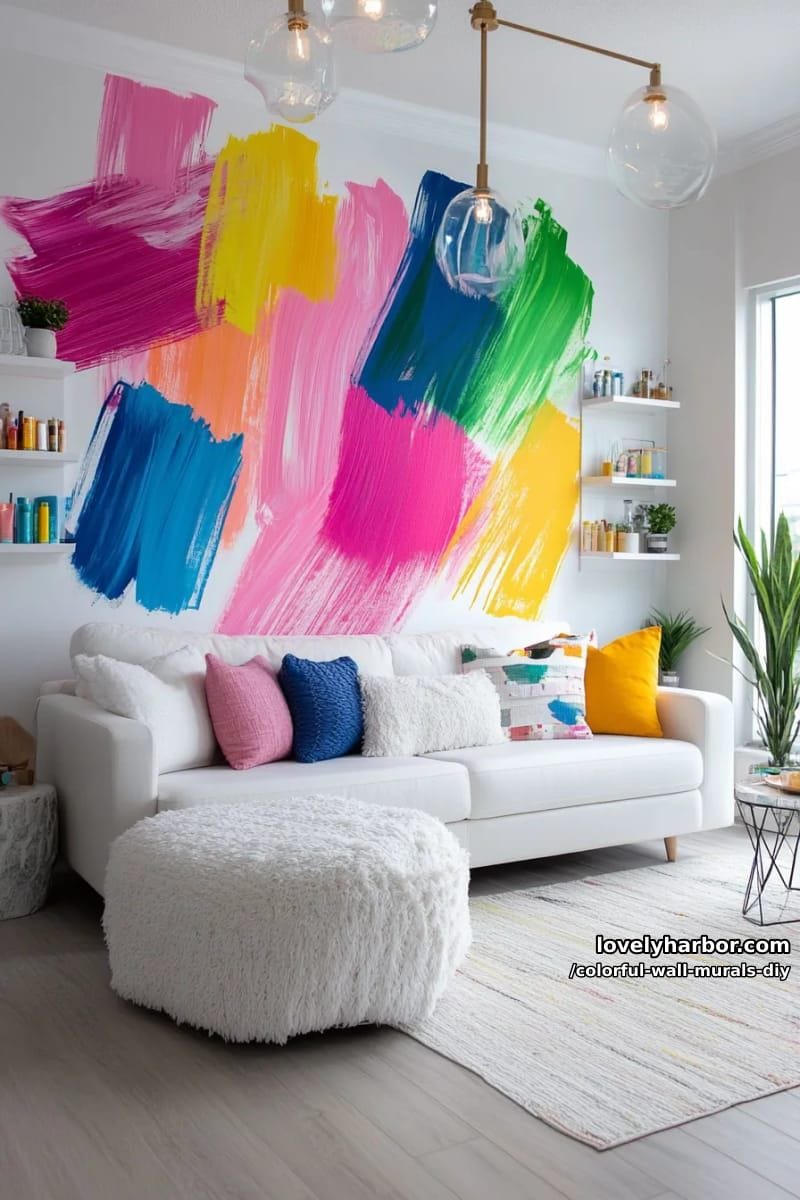
21. Neon brushstroke mural with layered strokes in hot pink and lime
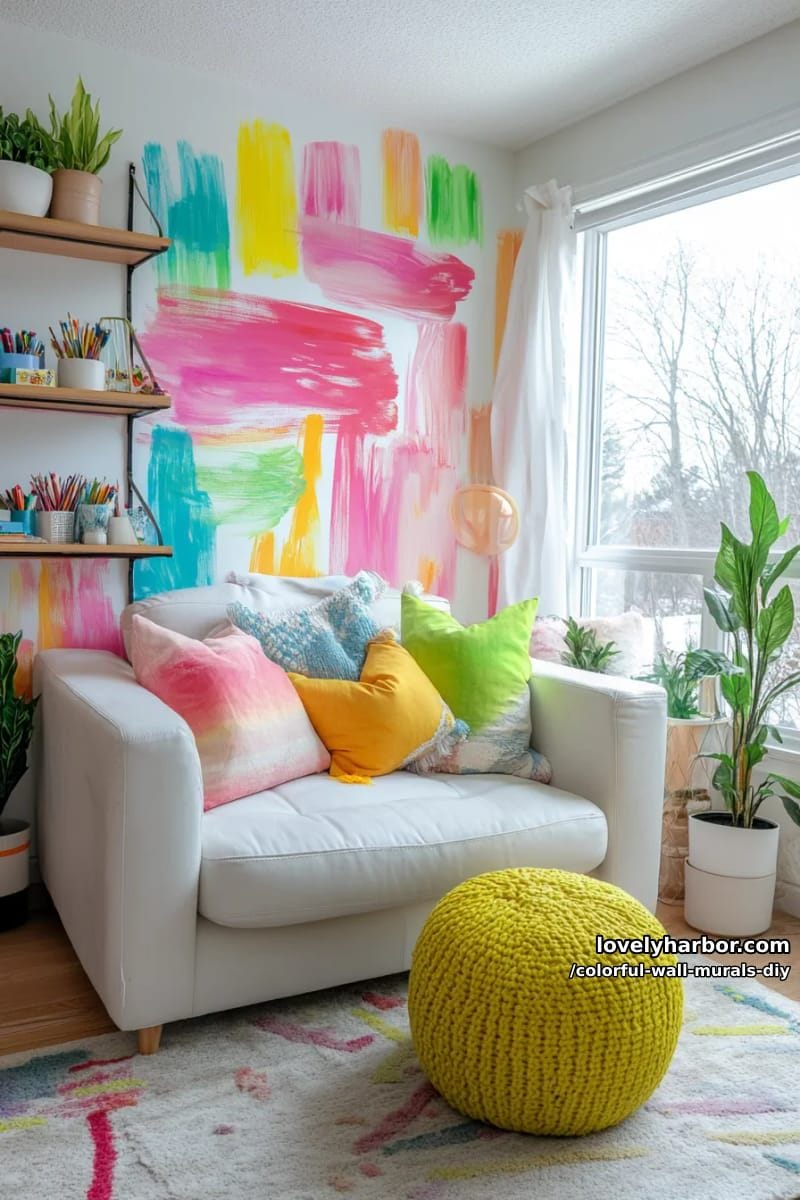
Prime the wall white and budget two or three coats, because neon paint is notoriously thin and patchy over color, and no brand changes that. Lay broad strokes first, then layer thinner accent strokes on top once dry.
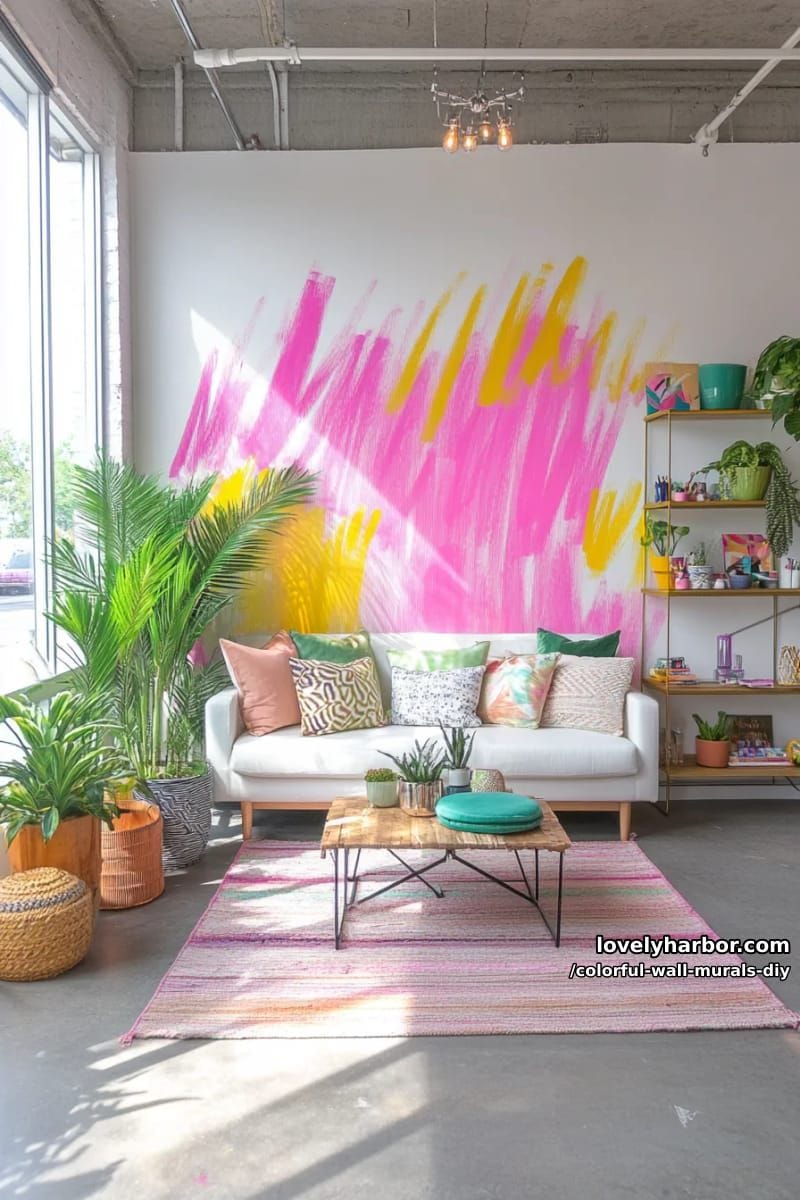
This is loud and not for everyone. I wouldn’t put it anywhere you work or sleep, but a stairwell or a studio corner can carry it.
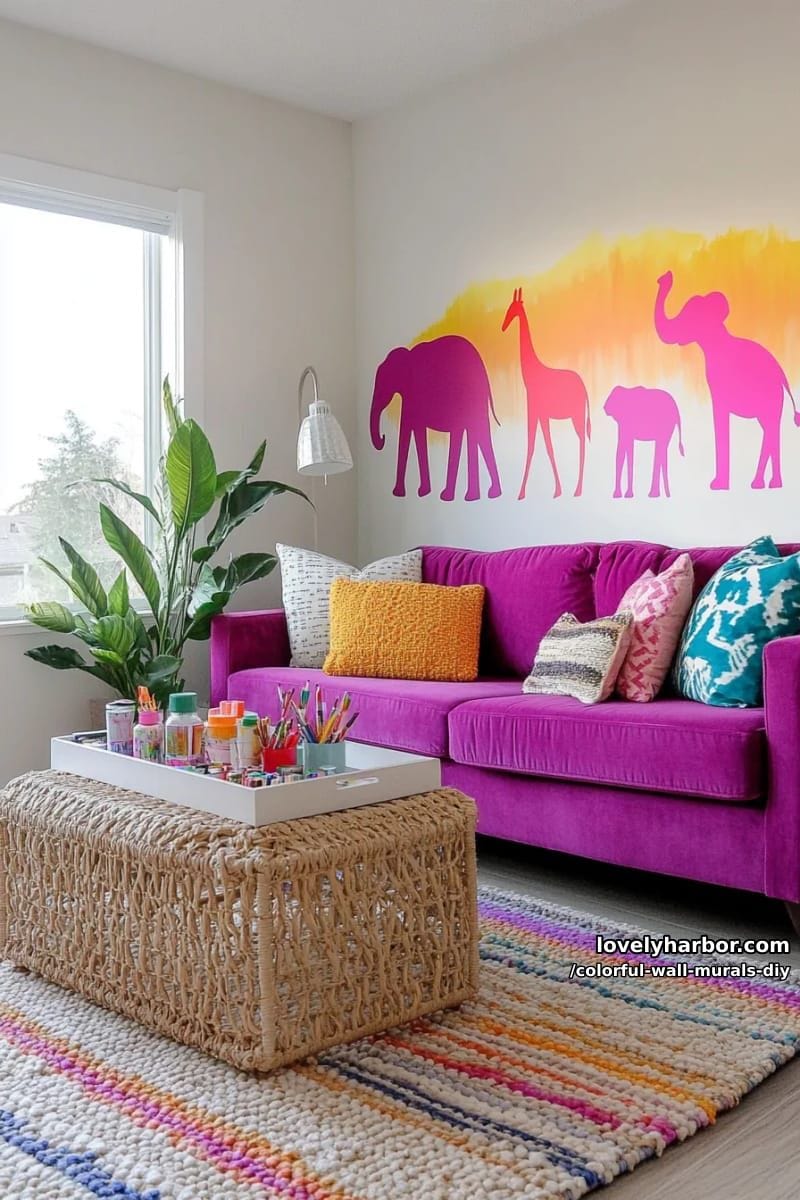
22. Playful animal silhouettes filled with rainbow gradients
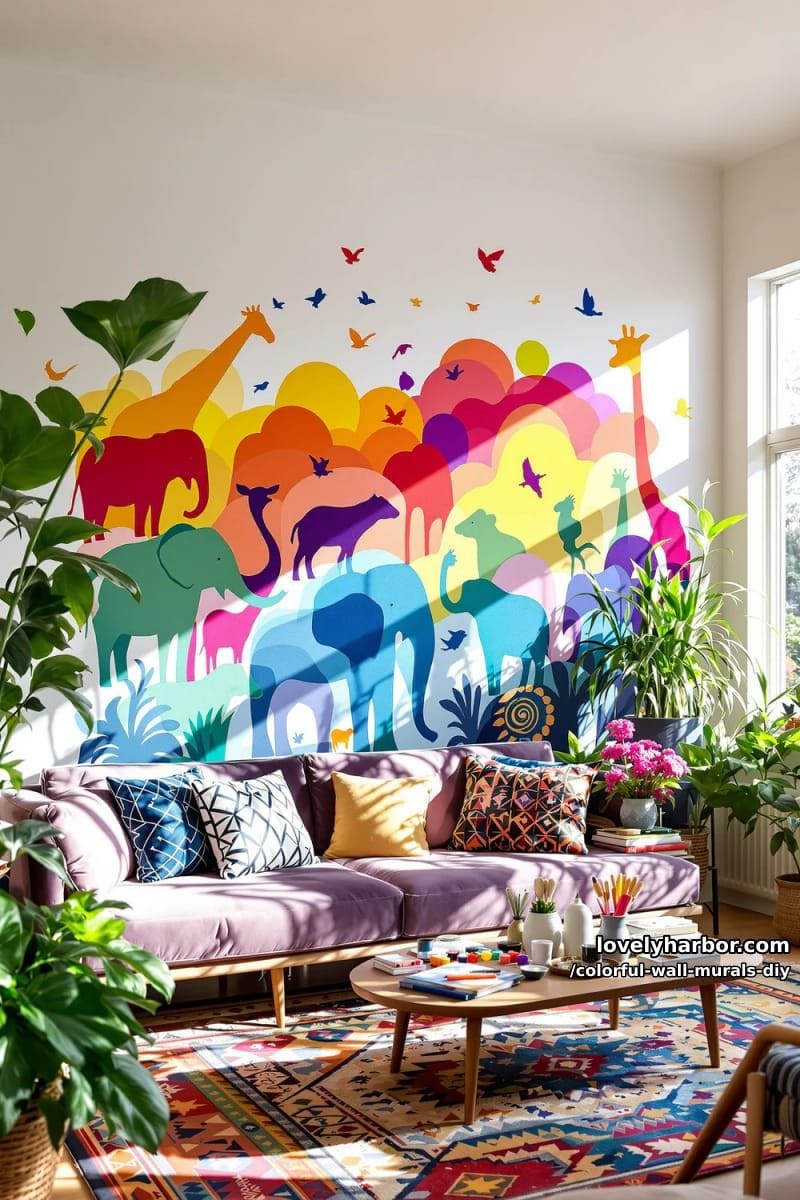
Block the animal in solid silhouette first, then sponge the rainbow gradient inside the shape so the colors melt rather than band. A projected outline or a traced printout gets the proportions right, which matters more for a recognizable animal than for an abstract shape.
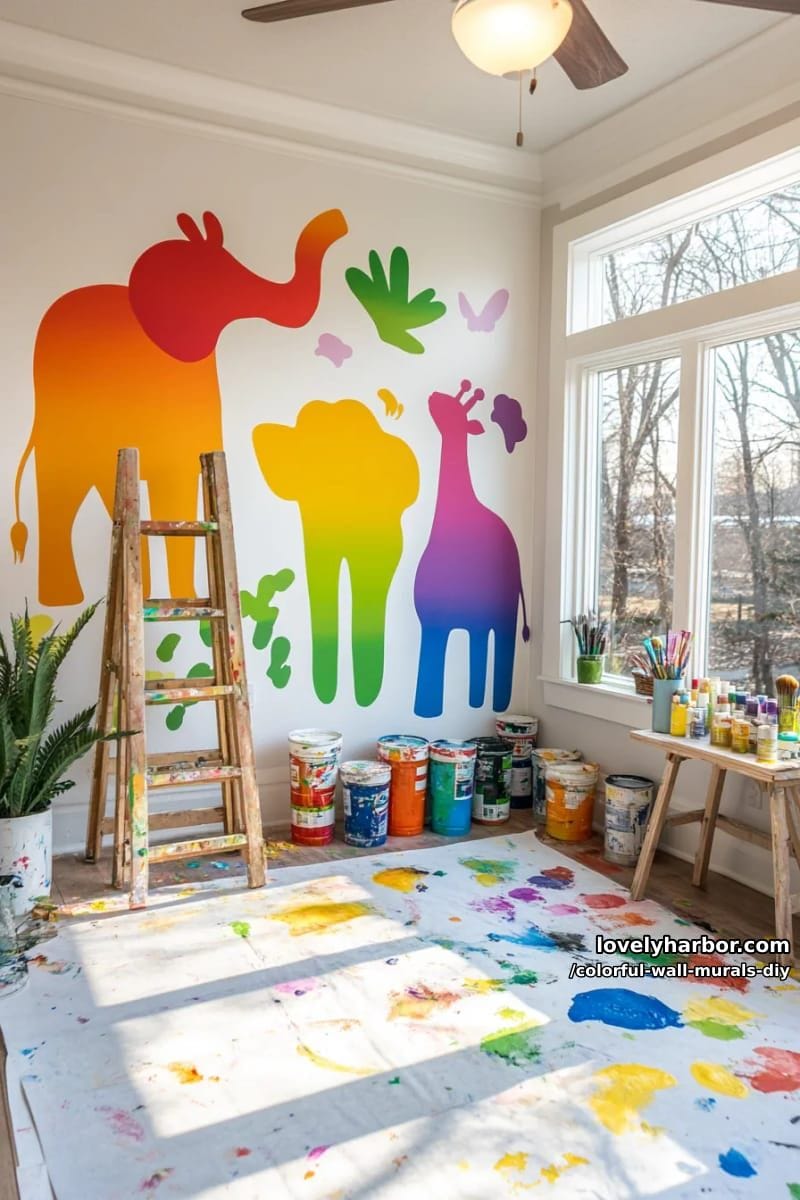
A dark outline around the finished silhouette sharpens it against the wall, the opposite of my advice on the wildflowers, where an outline killed it. Here the hard edge works in the design’s favor.
23. Monochrome mural using different shades of one bold color
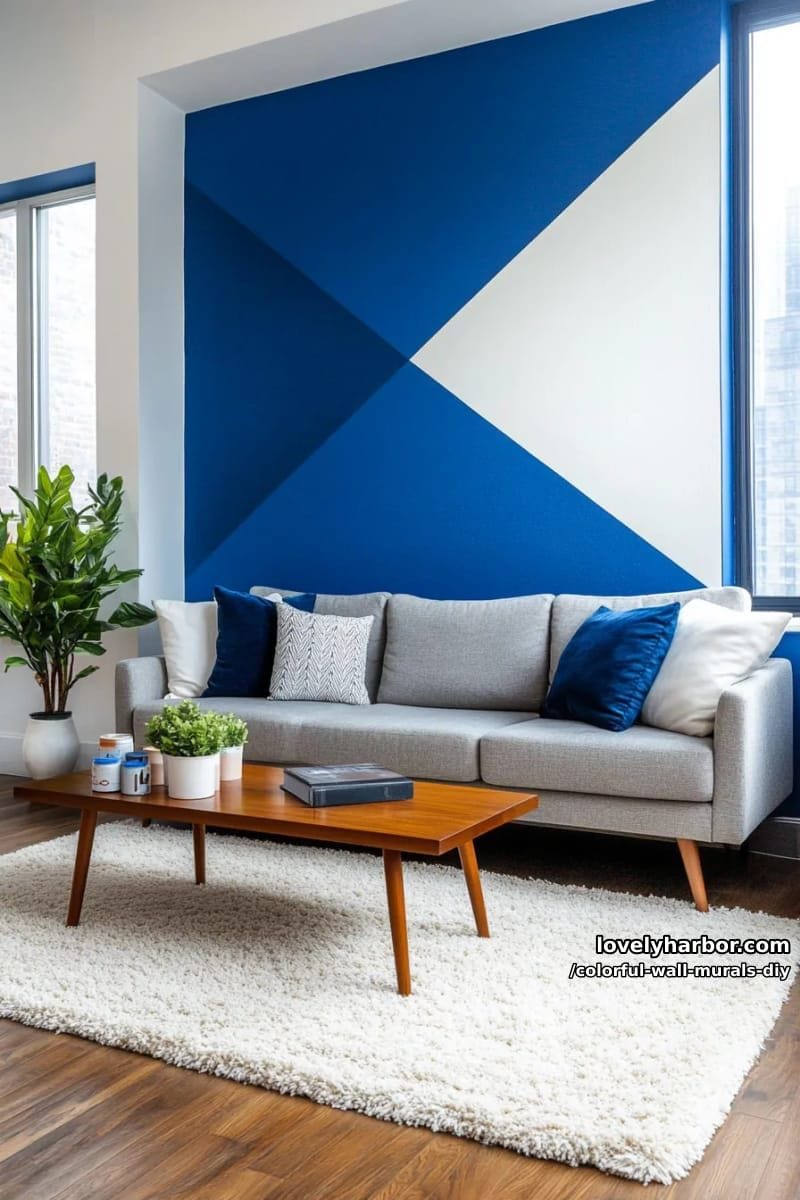
Buy one color and make the rest by adding white for tints and a touch of black or a darker relative for shades, so everything relates automatically and you skip color matching. Deep emerald down to mint, or cobalt down to powder blue, both work.
Test the base on the actual wall in morning and evening light before committing, because a dark monochrome that looks rich at noon can close a small room in at night. Fewer cans also makes this one of the cheaper options, often under $20.
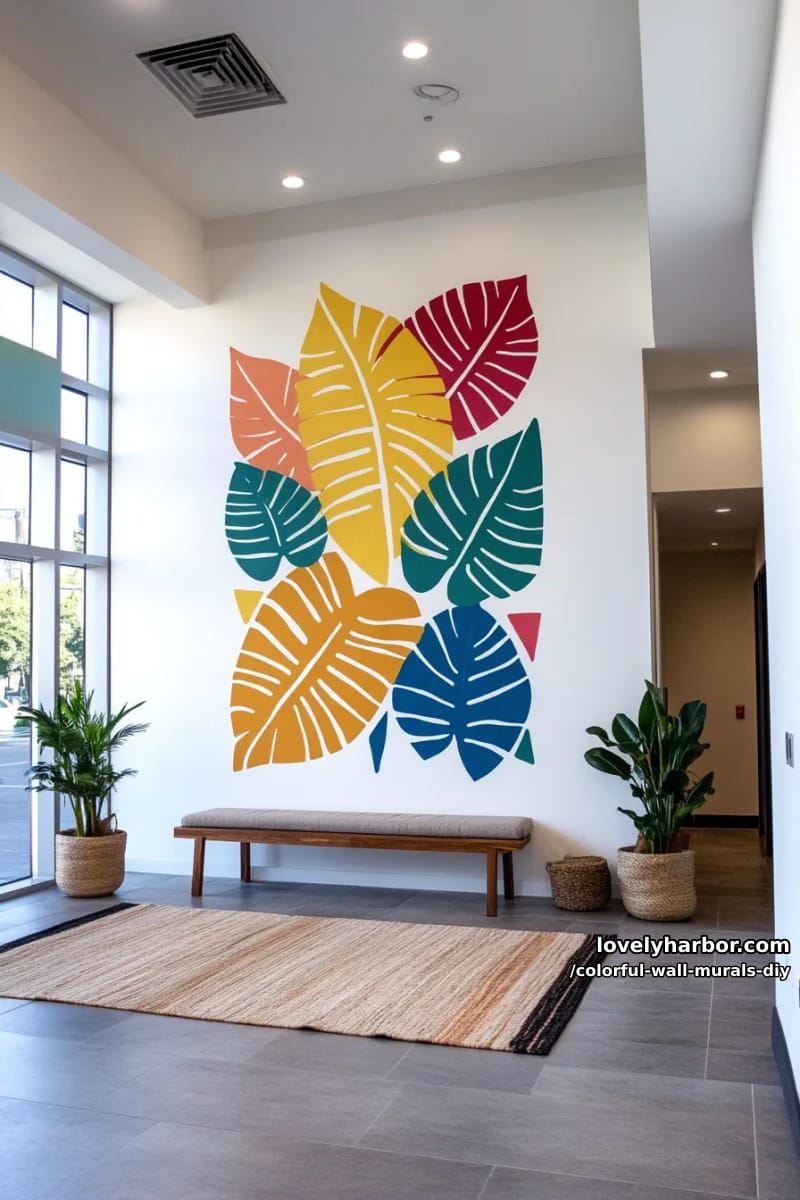
24. Urban jungle mural with graphic leaves and geometric color pops
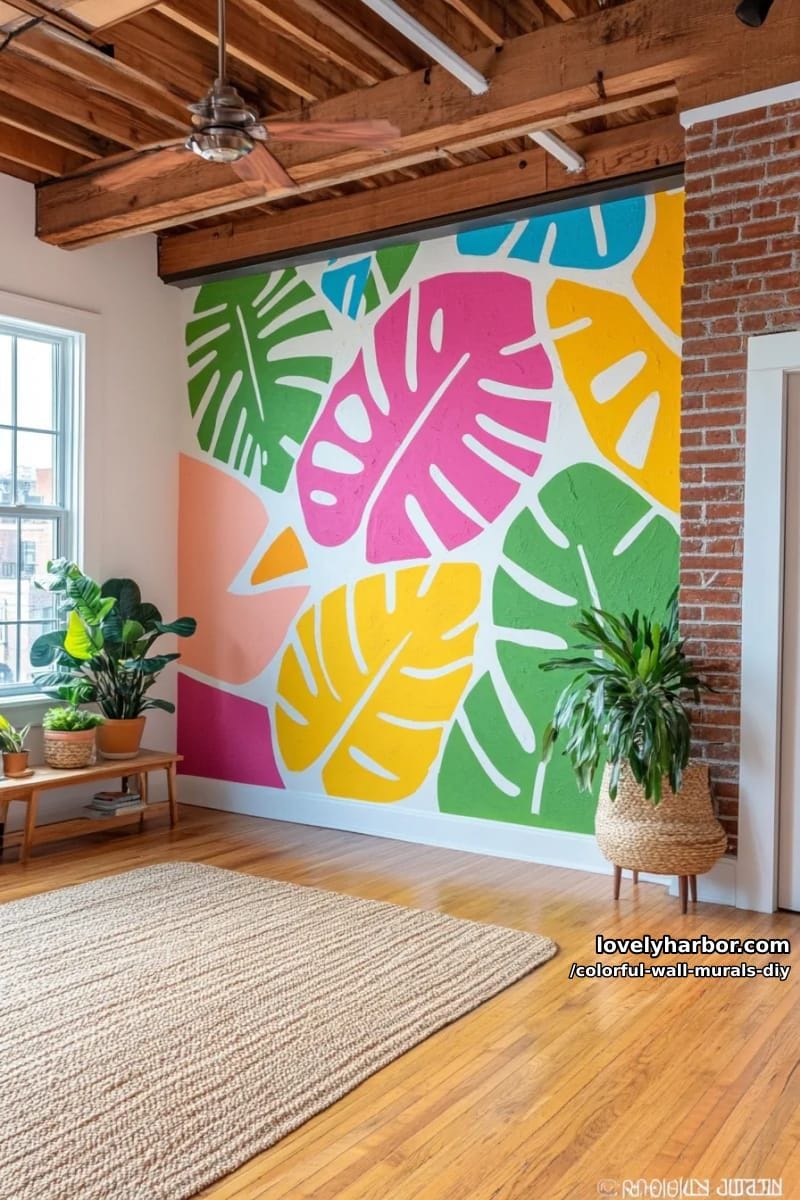
Keep the leaf shapes oversized and simple; small, detailed leaves multiply into visual noise across a wall. A tight palette of deep green, mustard, and crisp white, with a few taped geometric color blocks, does more than a dozen botanical species ever would.
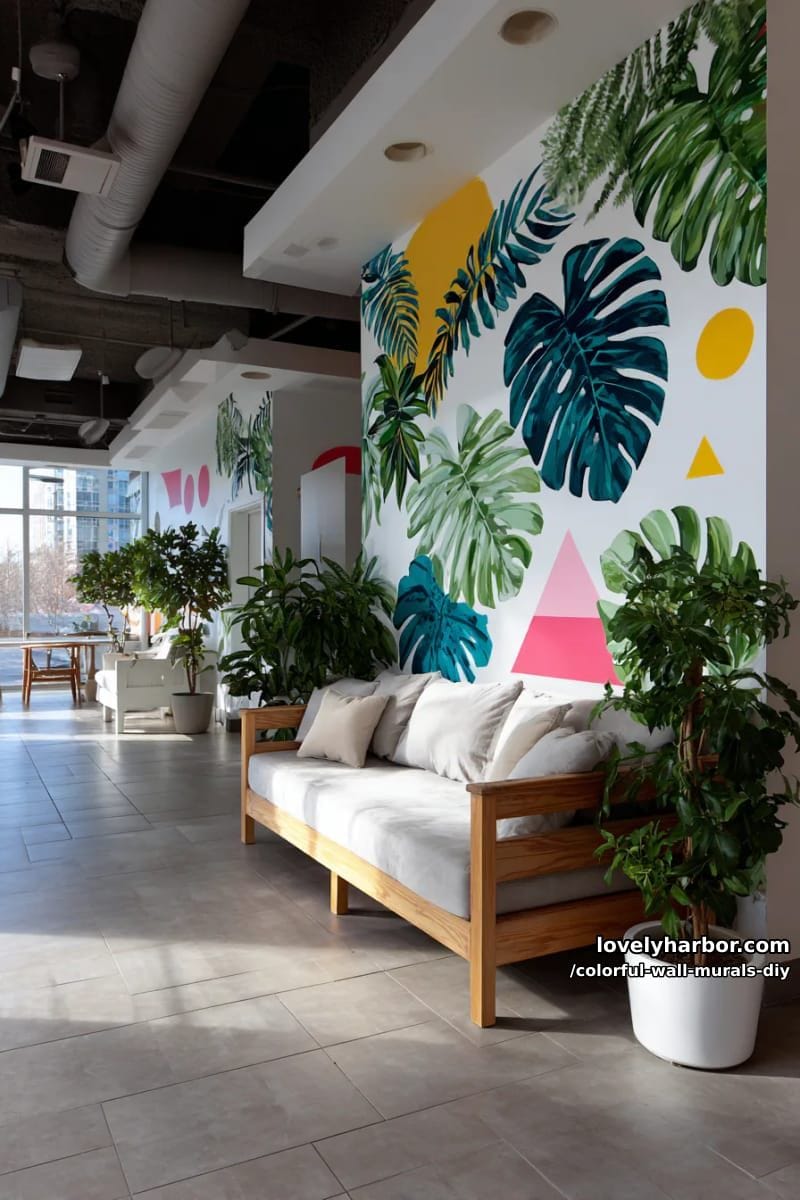
The failure mode is overcrowding, so leave real breathing room between elements and stop a couple of leaves before you think you’re done.
25. Playful confetti mural with scattered shapes and tiny pops of neon
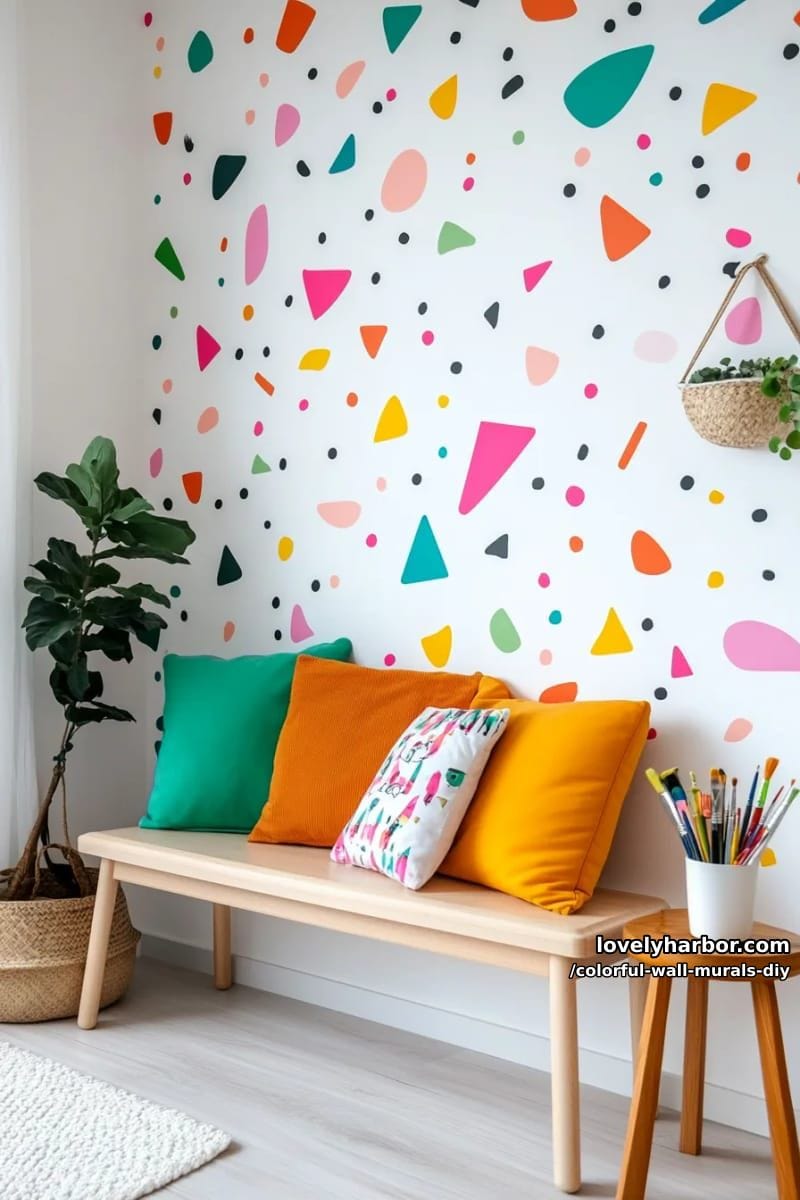
Scatter small shapes loosely across the wall with plenty of bare space between them, and add a few neon accents with a paint pen so it doesn’t read as too sweet. Cut the shapes from paper and stick them with removable adhesive if you rent, or paint them directly if you own.
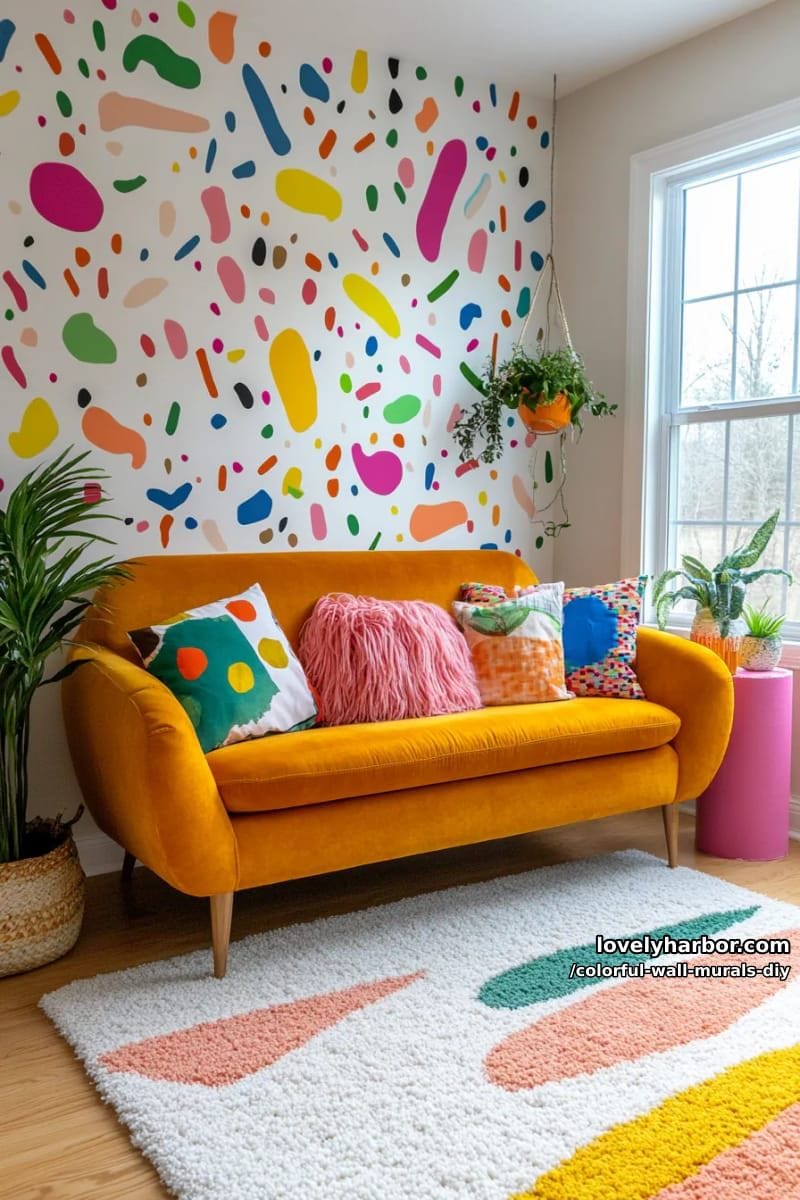
Keep it sparse, or confetti reads as a kindergarten craft. A handful of well-spaced shapes beats a wall packed corner to corner, and the neon should stay the minority, not the base.
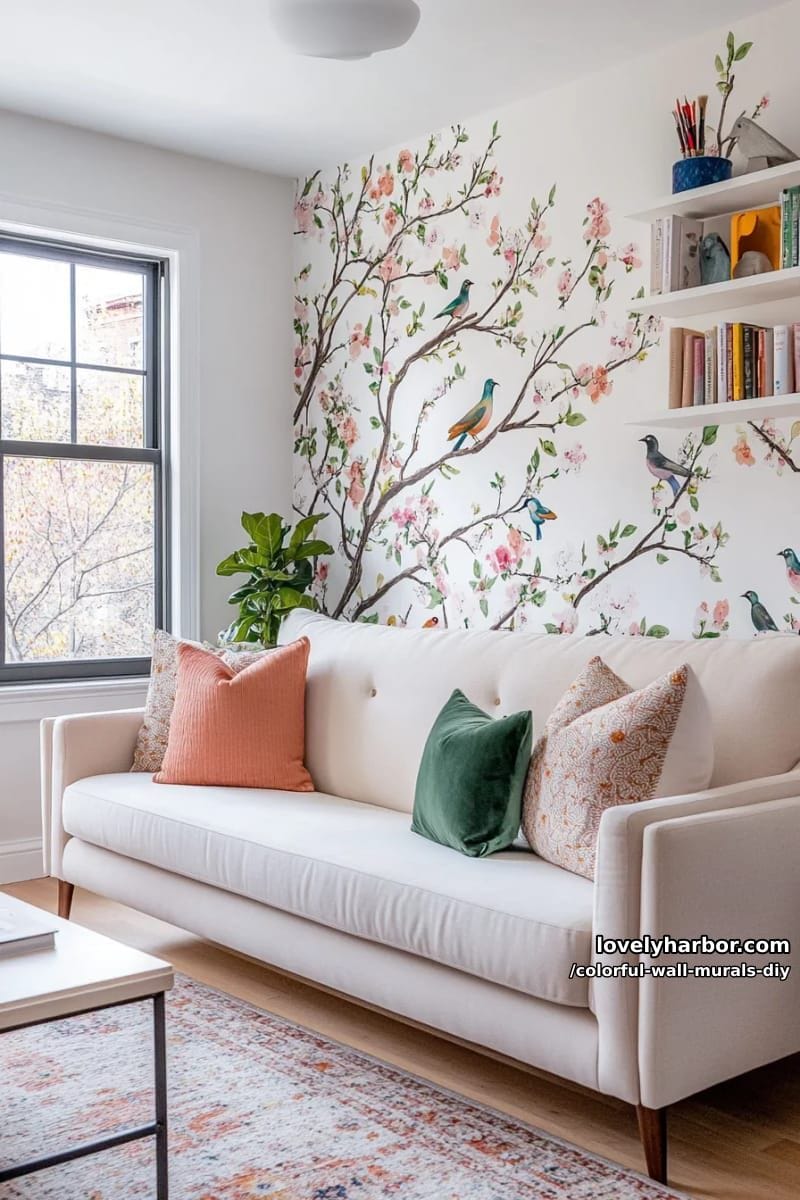
26. Nature-inspired mural with stylized birds perched on colorful branches
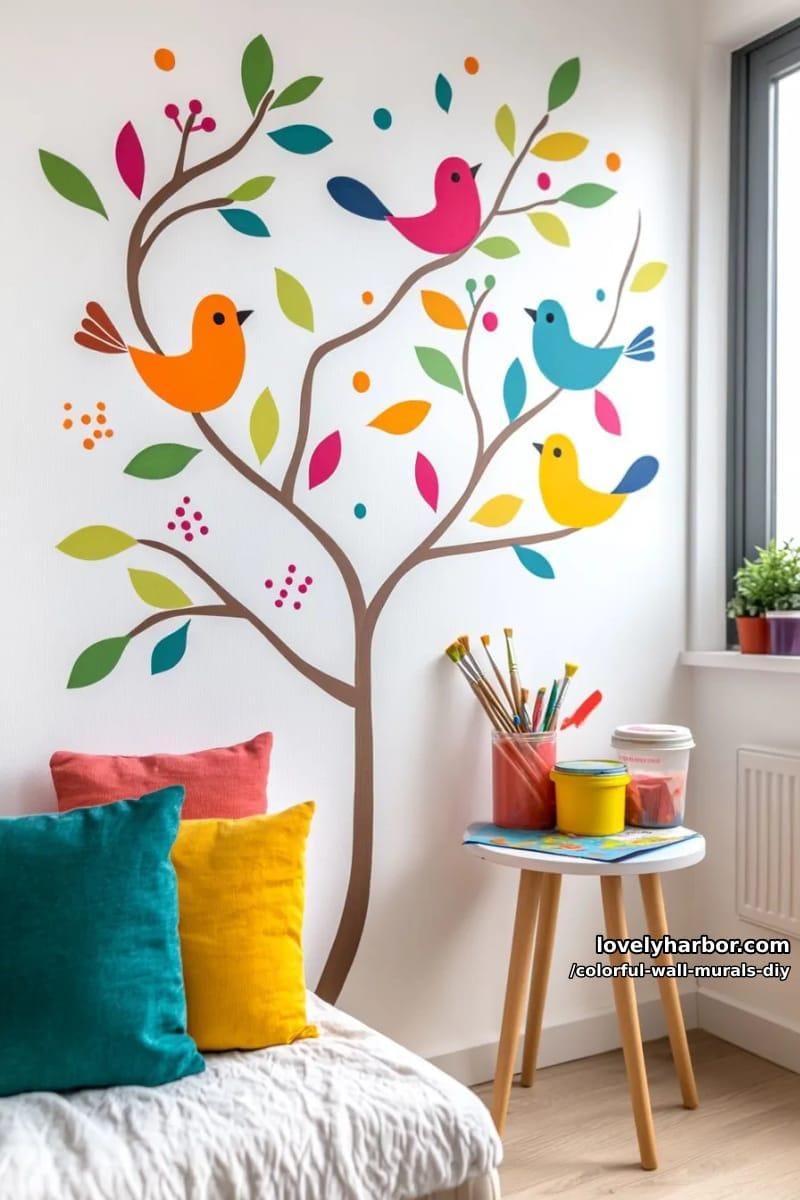
Trace printed bird silhouettes onto the wall if freehand makes you nervous, then paint the branches as the connecting lines between them. Bright blues, sunny yellows, and rich greens keep it cheerful without tipping into neon.
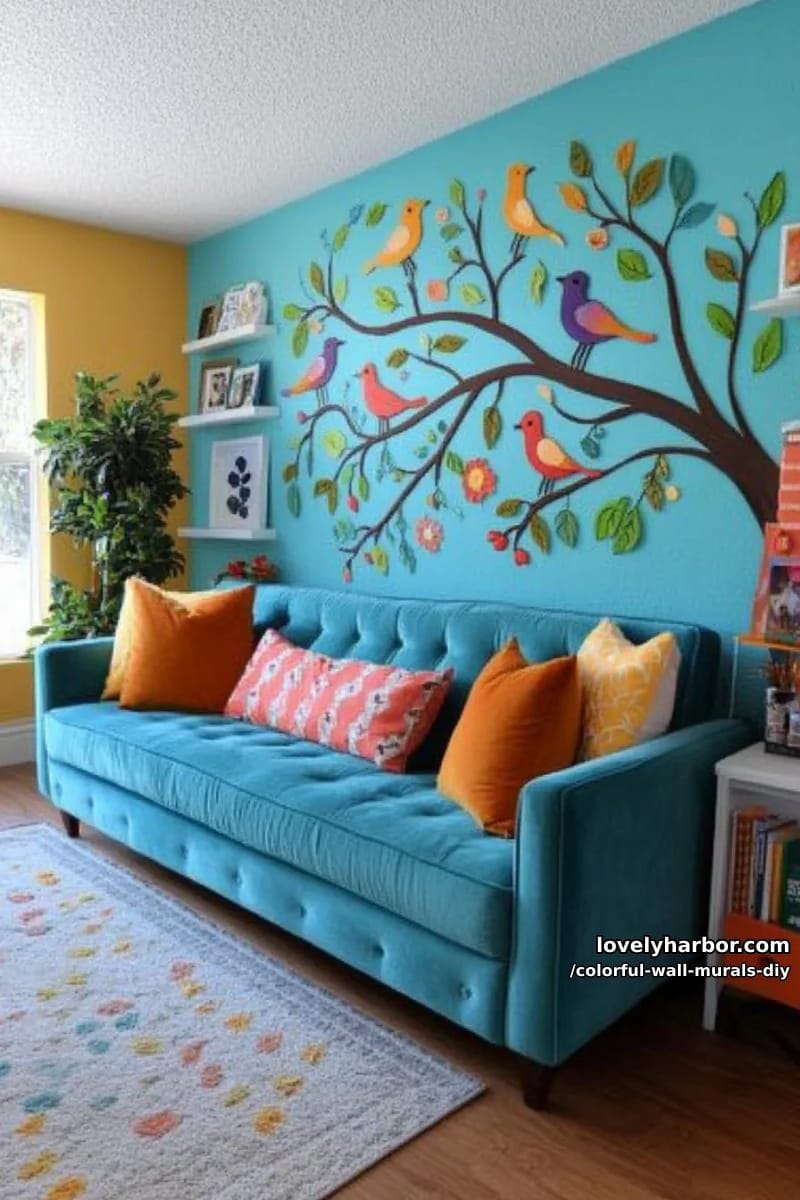
Plan on a weekend, not an afternoon, once you count drying time between the branch base and the bird detail. Keep the birds stylized and flat rather than realistic, since a half-realistic bird looks worse than a confidently graphic one.
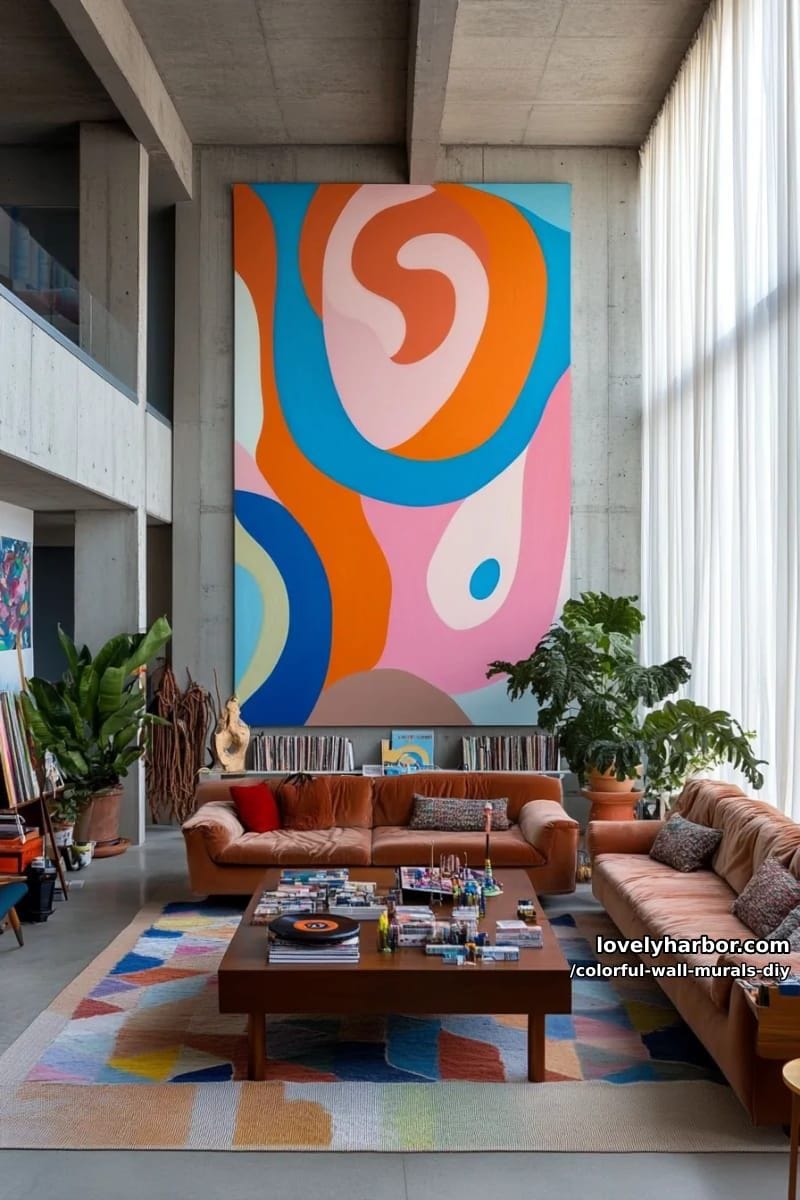
27. Psychedelic swirl mural in trippy, high-contrast colors
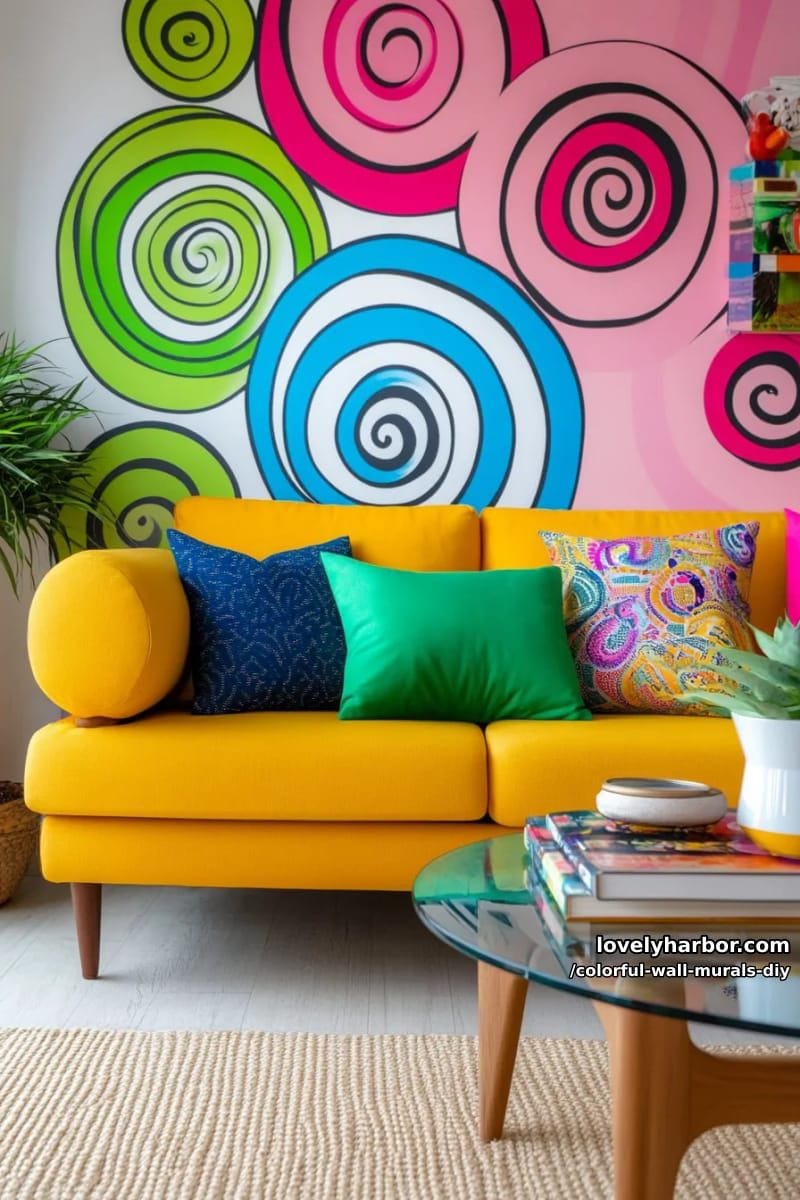
Sketch one continuous swirling pattern and fill the channels with clashing high-contrast colors; this is the rare design where colors that fight each other is the goal. Blend the edges for a melting effect or tape them for a hard graphic version, which reads very differently.
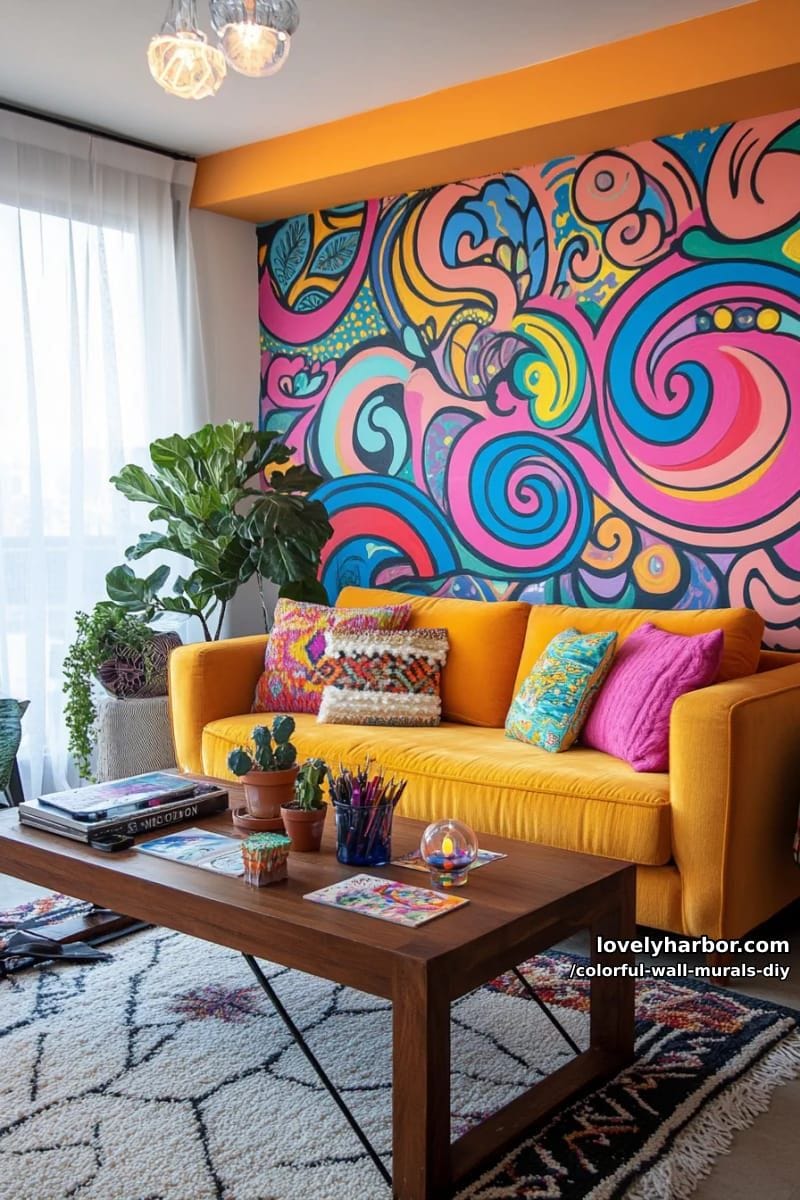
Fair warning: a busy high-contrast swirl can be physically dizzying in a small room. It belongs on a single feature wall with space to step back from, not wrapped around a tight bedroom.
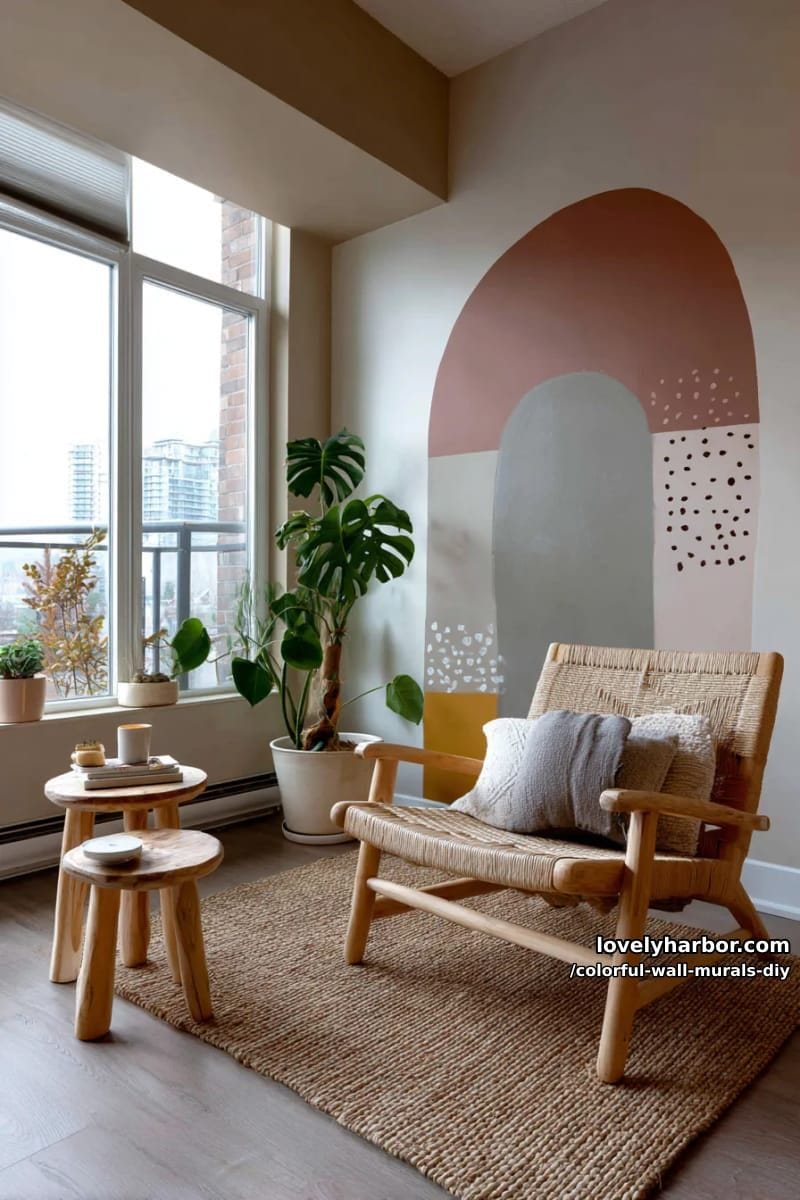
28. Boho arch mural with muted earth tones and hand-drawn patterns
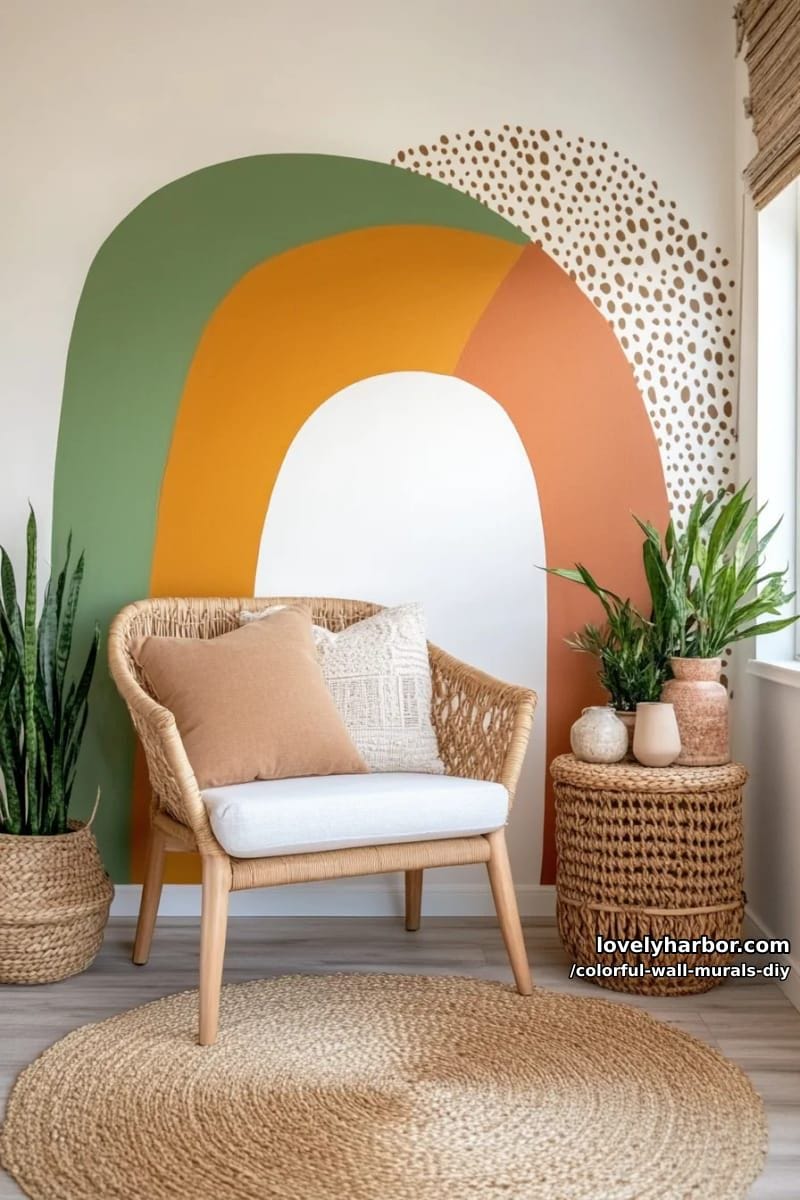
Tape a large arch and fill it in a muted earth tone (terracotta, sage, or warm beige), then hand-draw simple repeating patterns like zigzags or dots over the dried color. A matte finish suits this far better than any sheen, which would read modern instead of earthy.
One boho arch on a 4 ft wide wall
Single arch, three earthy tones, a hand-drawn pattern on top
Here’s the from-scratch cost if you own nothing yet. If your brushes and tape are already in the drawer, the real number is just the materials column.
Materials
| Qty | Item | Spec | Price |
|---|---|---|---|
| 3 | Sample pots | terracotta, sage, warm beige | $12 to $24 |
| 1 | Painter’s tape | delicate-surface, 1.5 in | $6 to $9 |
| 1 | Chalk | for marking the arch | $1 to $3 |
| Materials subtotal | $19 to $36 | ||
Tools (you keep these)
| Qty | Item | Spec | Price |
|---|---|---|---|
| 2 | Brushes | one flat, one fine liner | $8 to $16 |
| 1 | Pencil + string | to strike the arch radius | $1 to $2 |
| Tools subtotal | $9 to $18 | ||
Approximate ranges, not live prices. Owning the tools already drops this to roughly $19 to $36.
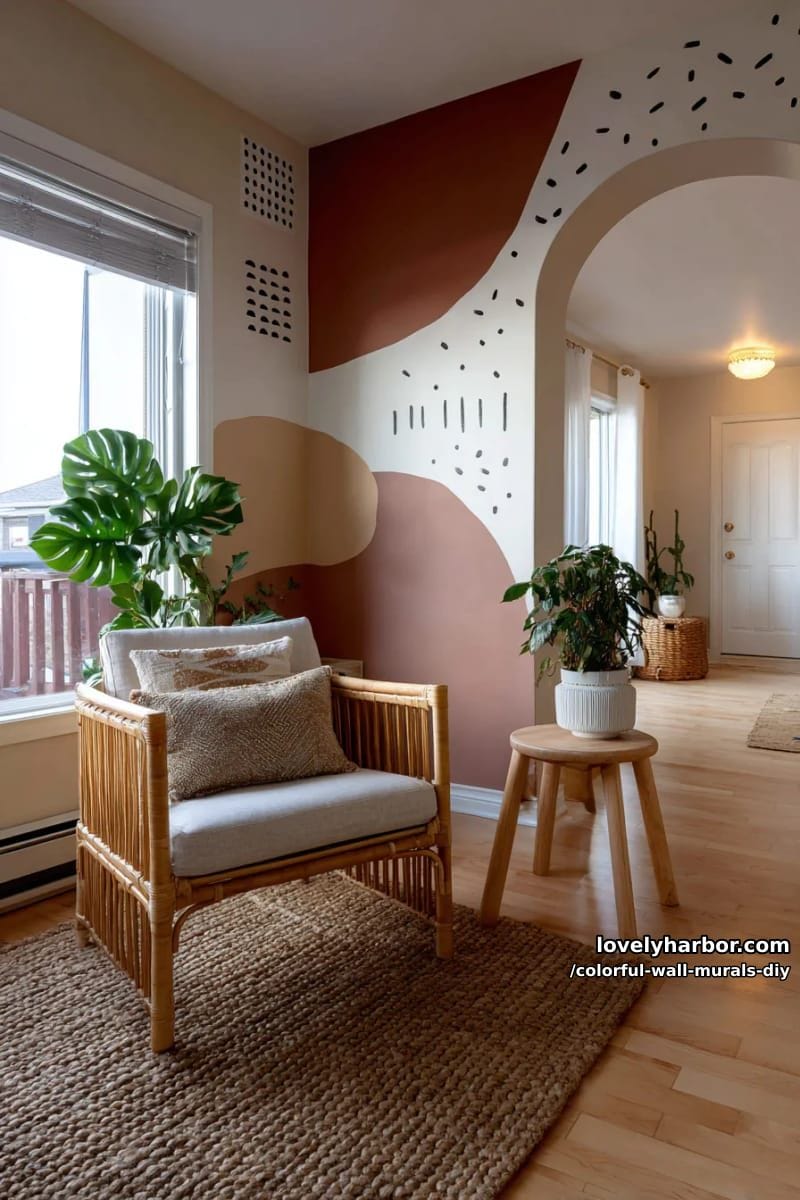
That fine liner brush is doing the work the arch can’t: the hand-drawn zigzags are what stop a plain colored arch from looking like an unfinished paint test.
29. Colorful gallery wall mural framing favorite quotes and doodles
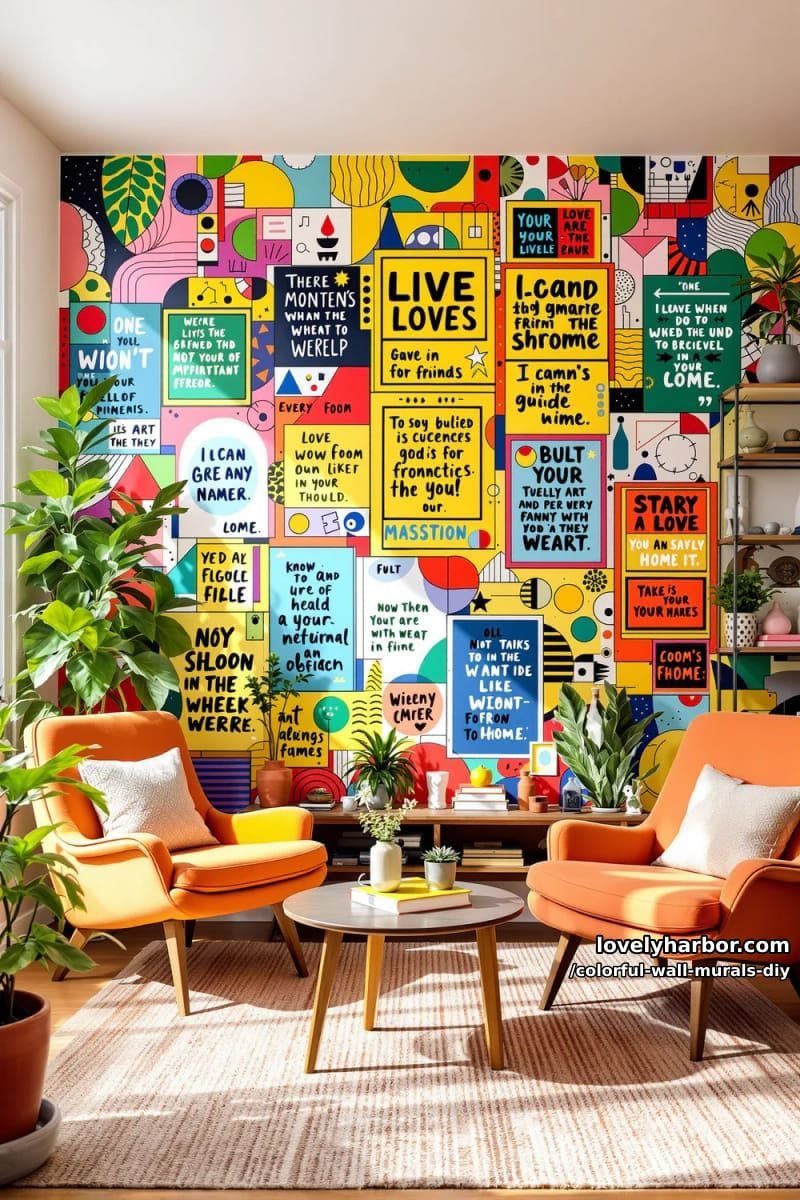
Frame areas with masking tape into rectangles, then fill them with quotes and doodles in paint pens, treating each taped box as a changeable panel. Paint pens let you write cleanly on the wall, and a panel you’ve outgrown can be repainted in minutes without redoing the whole thing.
Mixing painted panels with a few pinned-up paper pieces keeps it from looking like graffiti and lets you rotate content. One caution: handwriting large and straight is harder than it looks, so pencil your text faintly first and erase the guideline after.
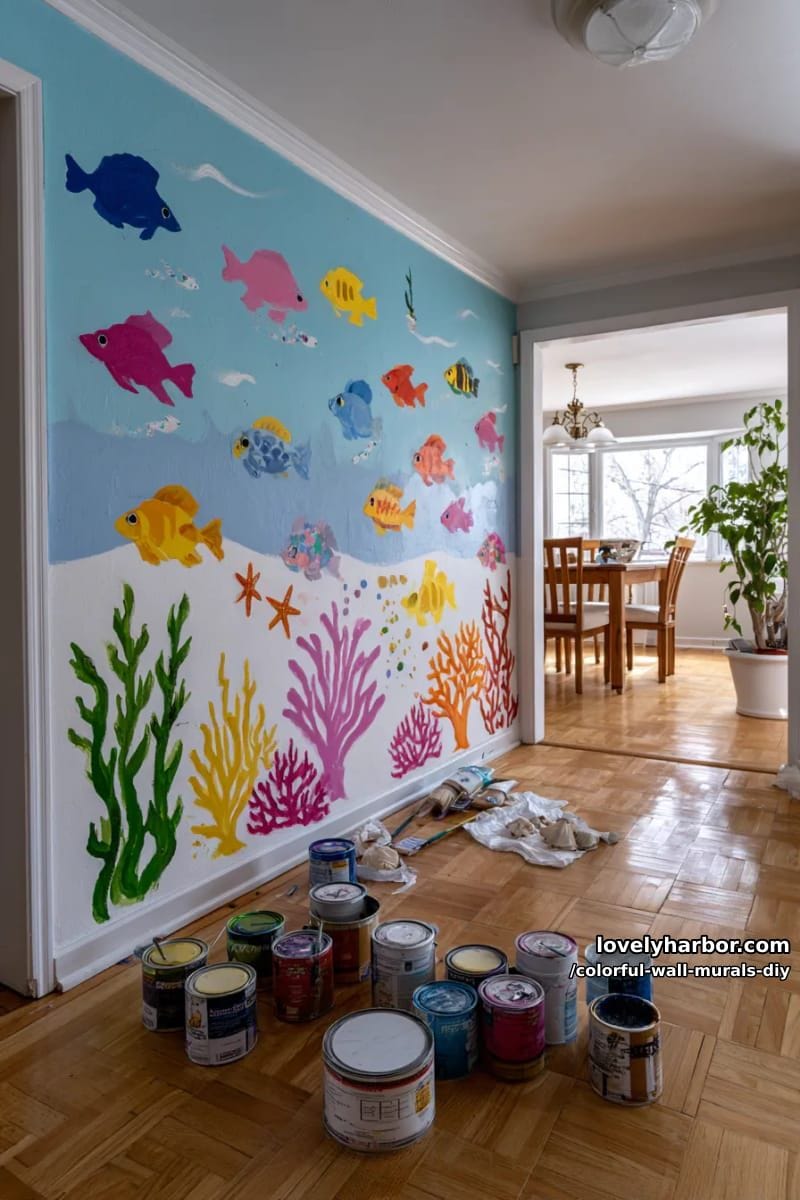
30. Playful undersea mural with bright fish, coral, and seaweed
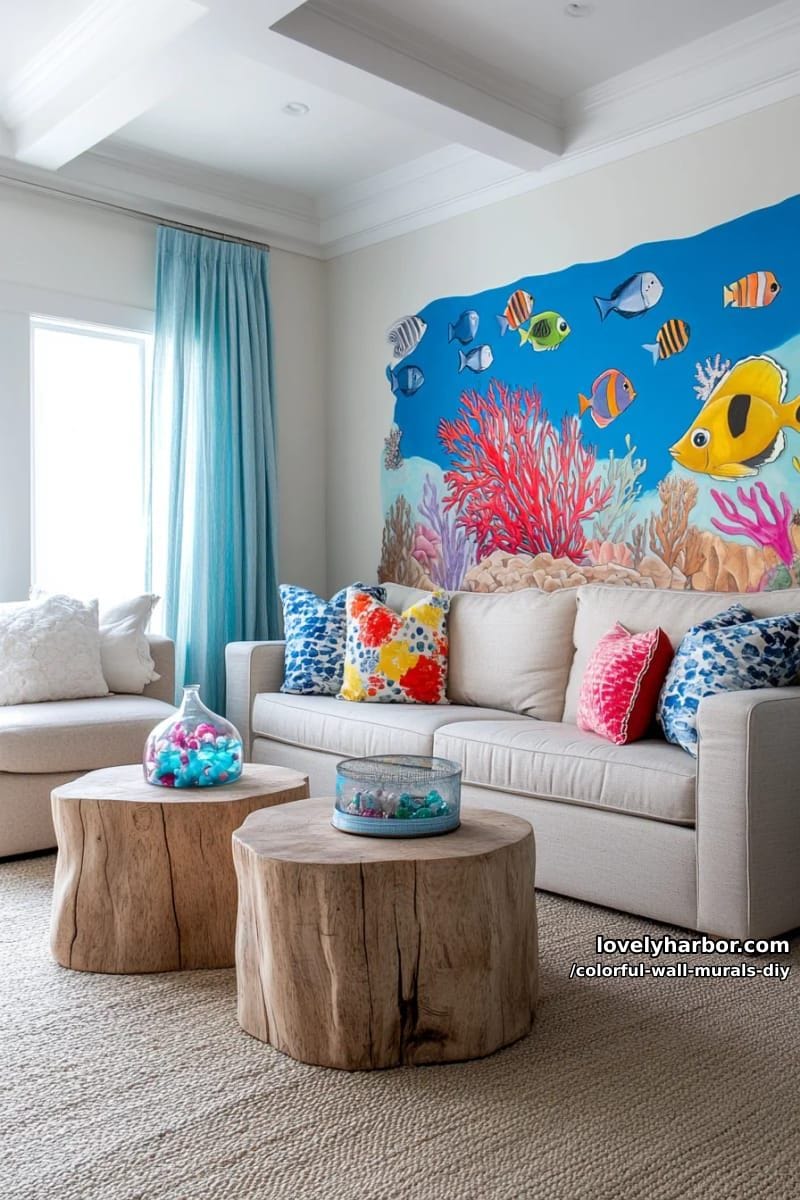
Chalk the outlines first, then paint with bright acrylics, but hold yourself to one or two feature creatures rather than filling the wall with a whole reef. An overpacked undersea scene overwhelms a small room and reads as a mural-by-numbers.
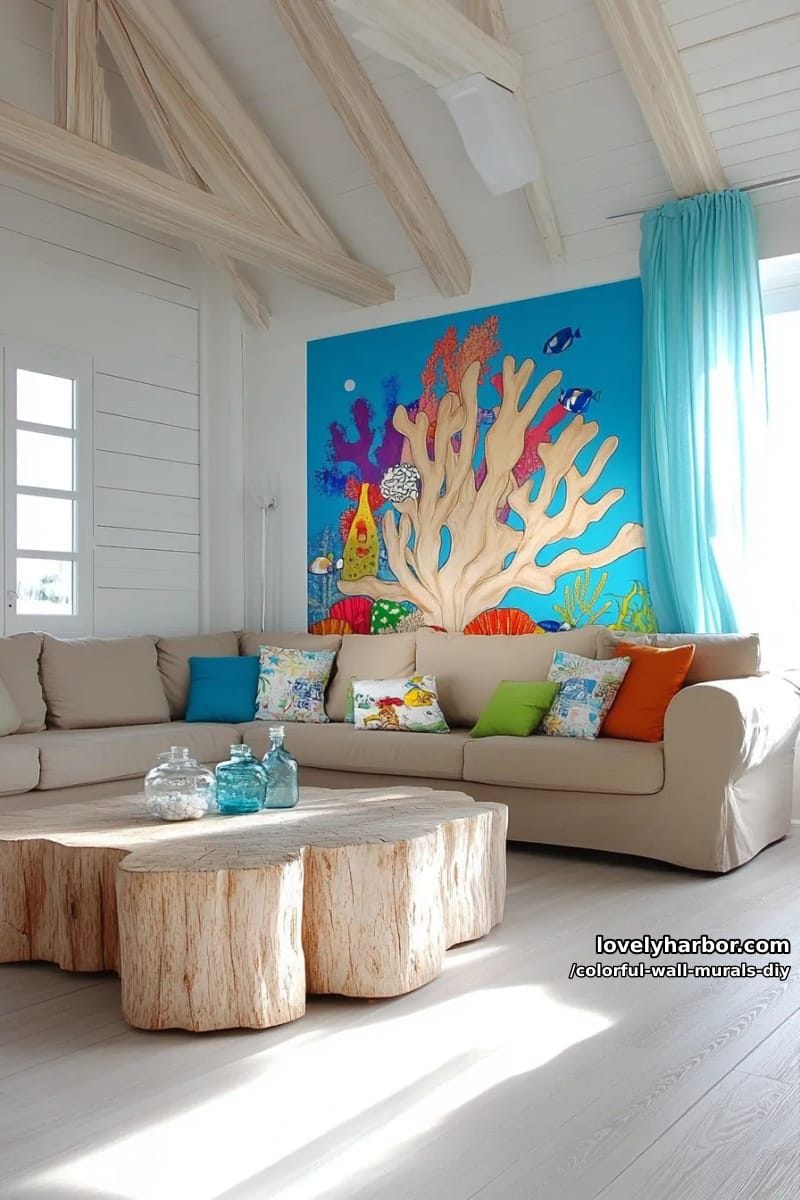
Let each layer dry before adding detail on top, or the colors muddy where wet meets wet. A satin finish in a kid’s bathroom doubles as a splash-friendly surface, which is a small practical edge over matte.
31. Dynamic mural with overlapping translucent circles in jewel tones
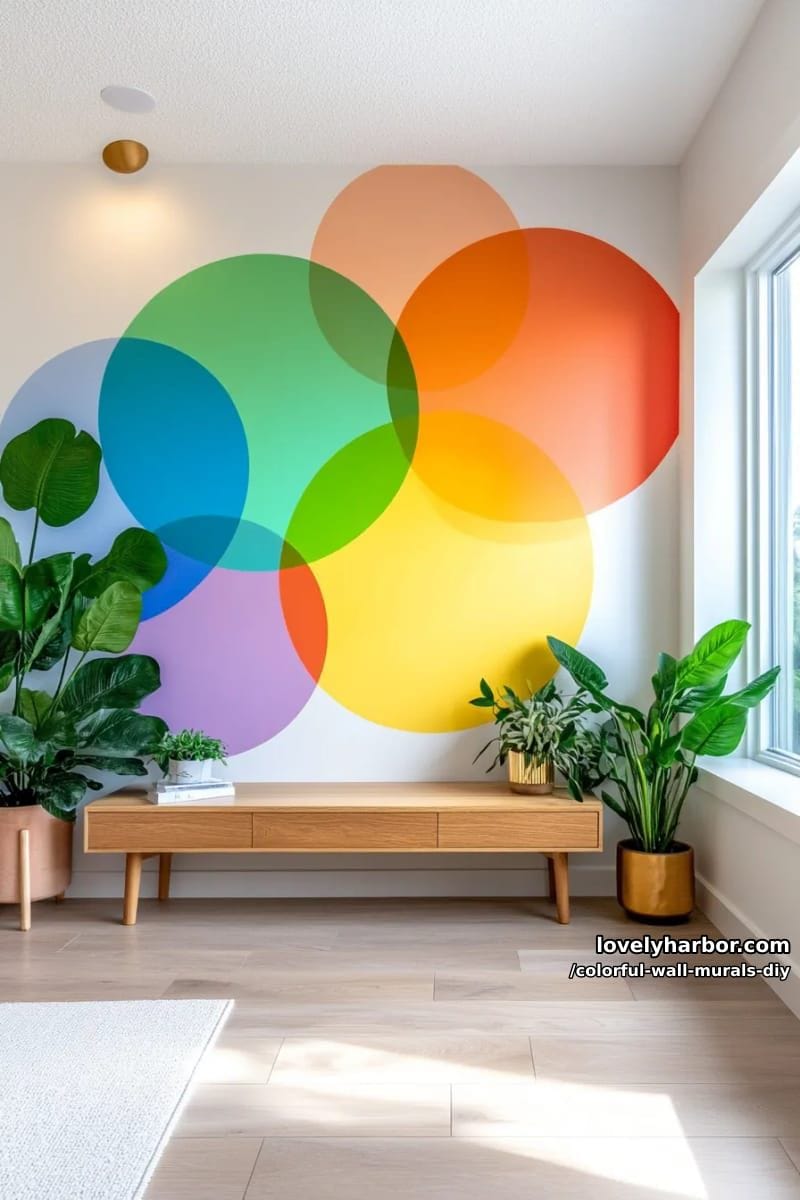
Thin each color with glaze medium until it’s translucent, so the overlaps read as a third color where circles cross, the way stained glass does. Tape or template the circles, paint them sheer, and let each dry fully before the next one overlaps it or you lose the layered effect.
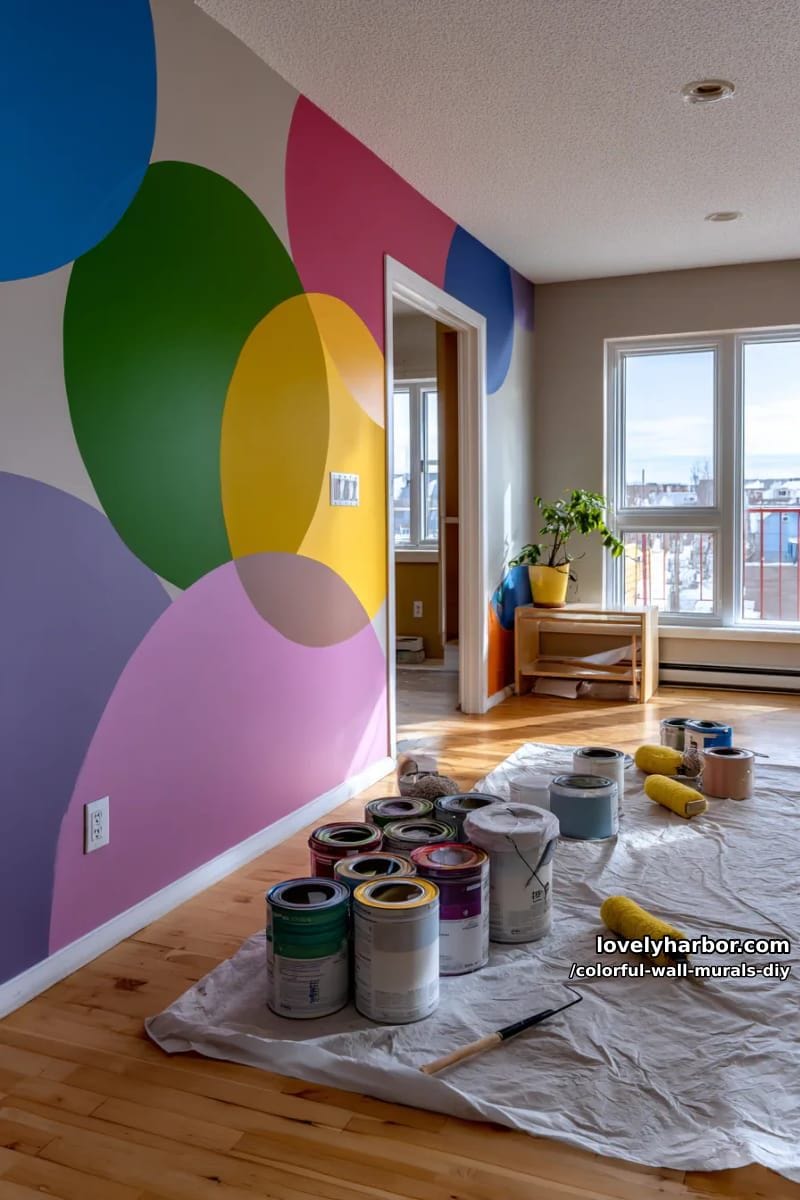
Sapphire, emerald, and ruby against a light wall catch changing daylight through the day. Renters can fake the look with peel-off translucent decals, though they never quite match the depth of real thinned glazes.
Conclusion
If you’ve never done this, start with the polka dots or the cut-paper Matisse shapes, not the concentric circles or the watercolor wall. The forgiving projects build the nerve you need for the ones where a wobbly line actually shows.
Buy the better tape rather than the cheap blue stuff, prime under any yellow or neon, and let each color dry before you butt another one against it. One honest admission: I’ve repainted a sunset gradient three times because I rushed the blend while a band was still tacky. Give the wet-into-wet work your full attention, or pick a taped, hard-edged design where drying time can’t betray you.
Related Posts
- Wall Decor Ideas
- Living Room Wall Decor Ideas
- Mirror Wall Decor Ideas
- Aesthetic Bedroom Ideas
- Boho Style Home Decor