
The reason most gold-and-glass trees look cheaper than the sum of their ornaments is not the ornaments. It is that the golds fight each other (a brassy star, a rose-gold bauble, a lemon-yellow ribbon, all reading as different metals) and the glass is all one glossy finish, so light bounces off the surface instead of moving through it. Elegant is not a matter of spending more. It is a matter of narrowing the palette to one gold and widening the glass to three finishes, then letting warm light do the rest. The twelve ideas below are grouped the way you would actually build the tree: palette first, then the glass, then the layering and light, then the base and the room it sits in.
Get the Gold and the Whites Right First
1. Anchor on one warm, aged gold and refuse the brassy stuff
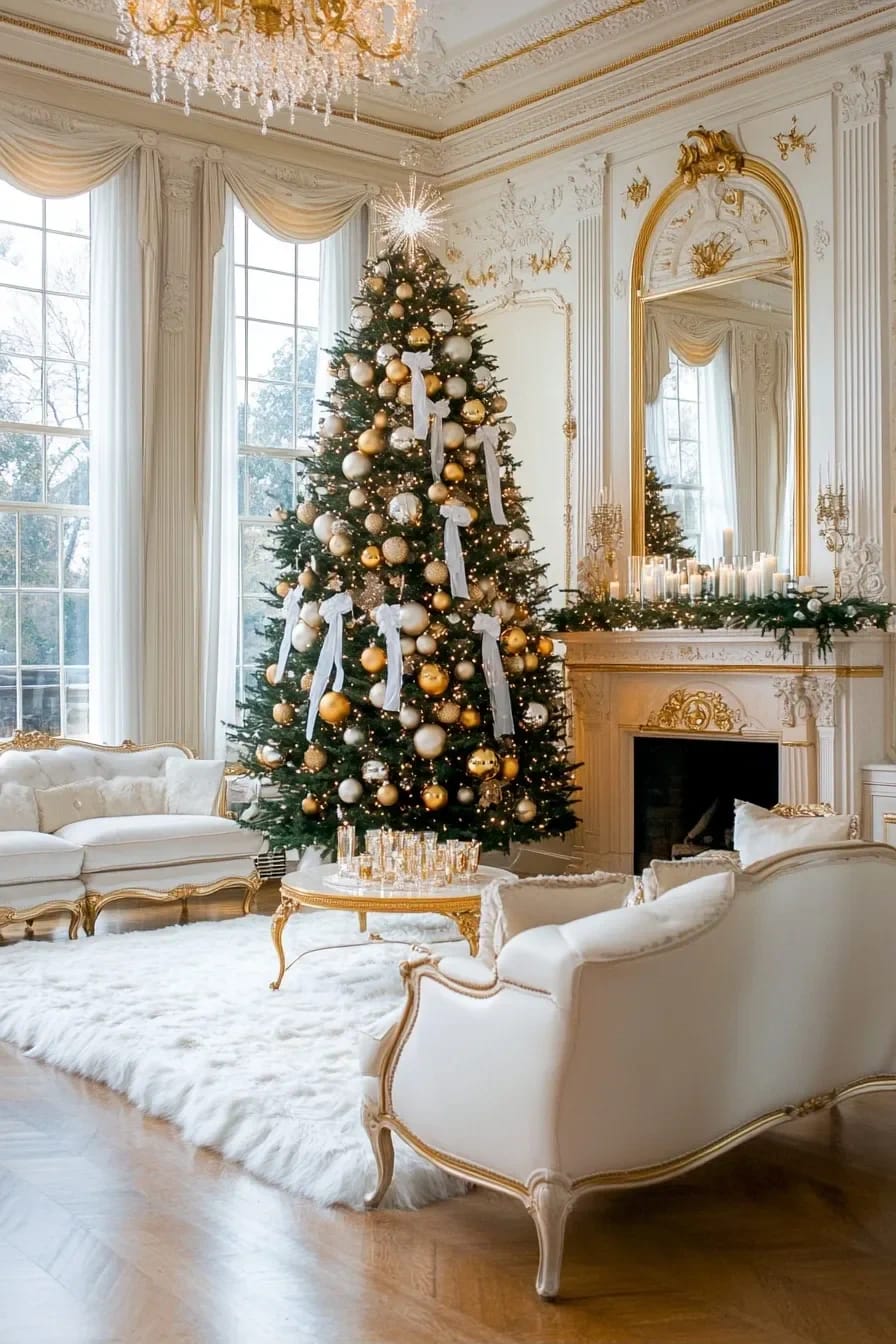
Pick the gold before you buy a single ornament, because the whole tree lives or dies on whether the metals agree. Warm, aged, slightly matte gold (think old picture frames or unpolished brass) reads expensive; bright chrome-gold and rose-gold read like party supply. The catch is that ornaments sold as "gold" span that entire range, so you cannot order blind. Lay a few candidates on a cream towel in daylight and pull the ones with a champagne or honey cast; return the ones that look yellow or pink next to them.
Granted, one exact gold across every piece would go flat, so allow a narrow spread within the warm family: brushed gold, champagne, a little antiqued bronze on the largest ornaments for weight. What you are avoiding is a cold gold sitting next to a warm one, which the eye clocks instantly as a mistake even when it cannot name why. If you want to bring a second metal in at all, the safest move is learning how to mix metallics without them clashing before you add copper or pewter to the mix.
2. Let cream and ivory stand in for "white"
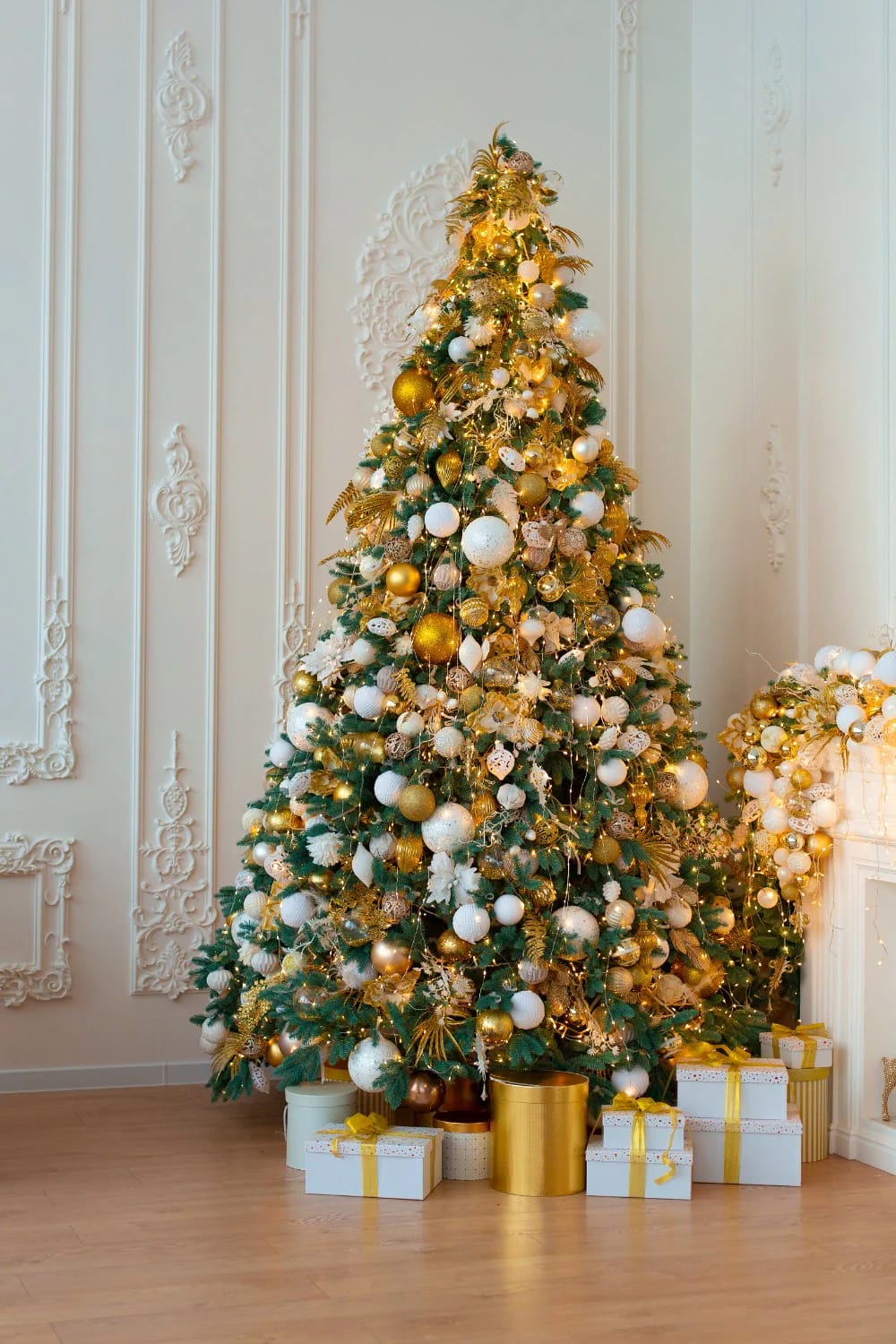
Swap stark white for cream, ivory, and champagne and the tree stops looking like a showroom and starts looking like it belongs in a lived-in room. True bright white next to warm gold creates a cold seam down the tree; ivory and oyster sit in the same temperature as the gold, so the palette reads as one idea rather than two colors negotiating. This is the single change that pushes a gold tree from "festive" toward the quieter, more expensive end, and it costs nothing extra.
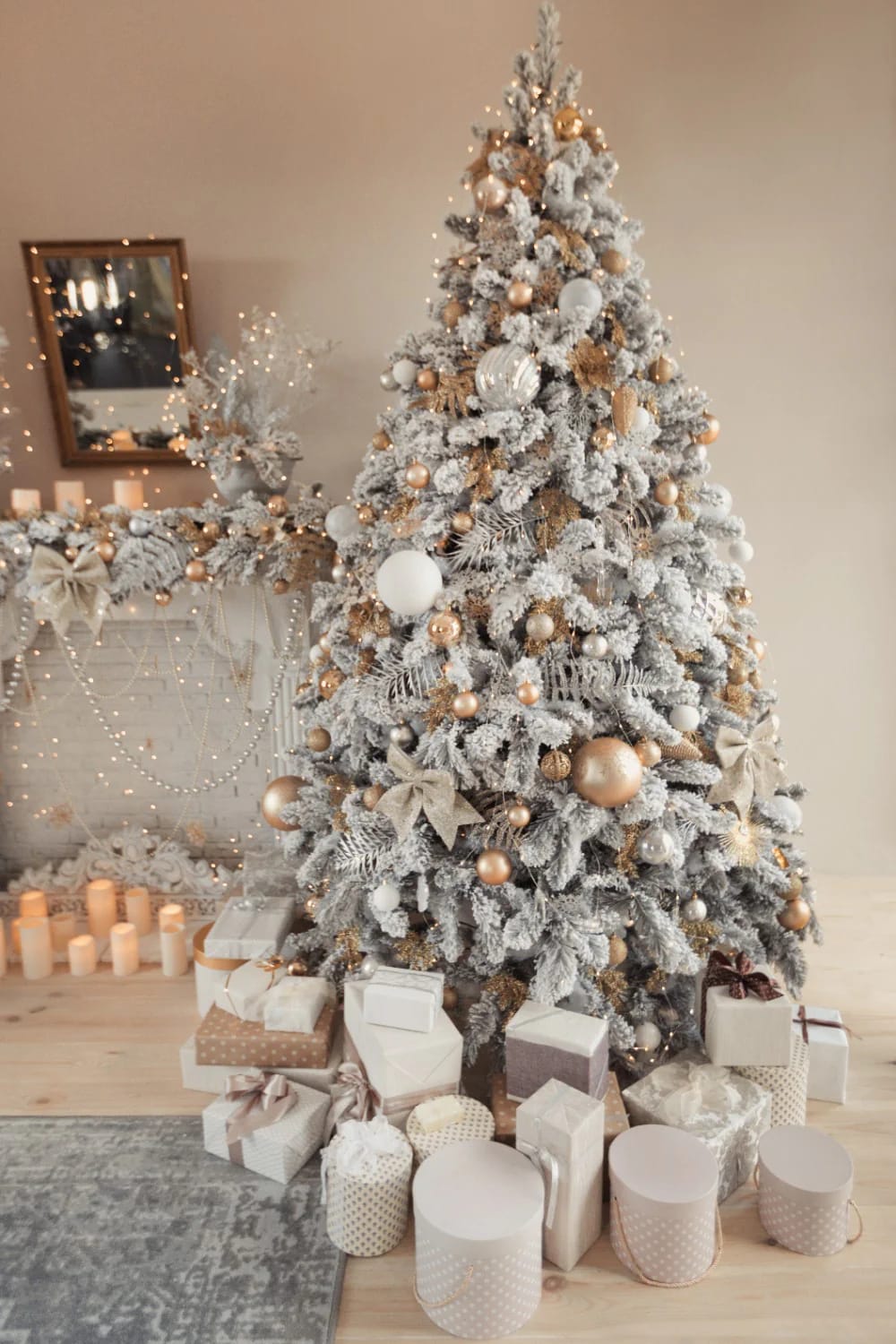
The exception is if your room is genuinely cool and modern, all greys and crisp white walls, where warm cream can look dingy against the architecture. There, pull toward pearl and frost-white instead and keep the gold on the champagne side. If you want to see the full range worked out, a dedicated white and cream Christmas palette shows how far you can push the neutrals before the tree loses its warmth.
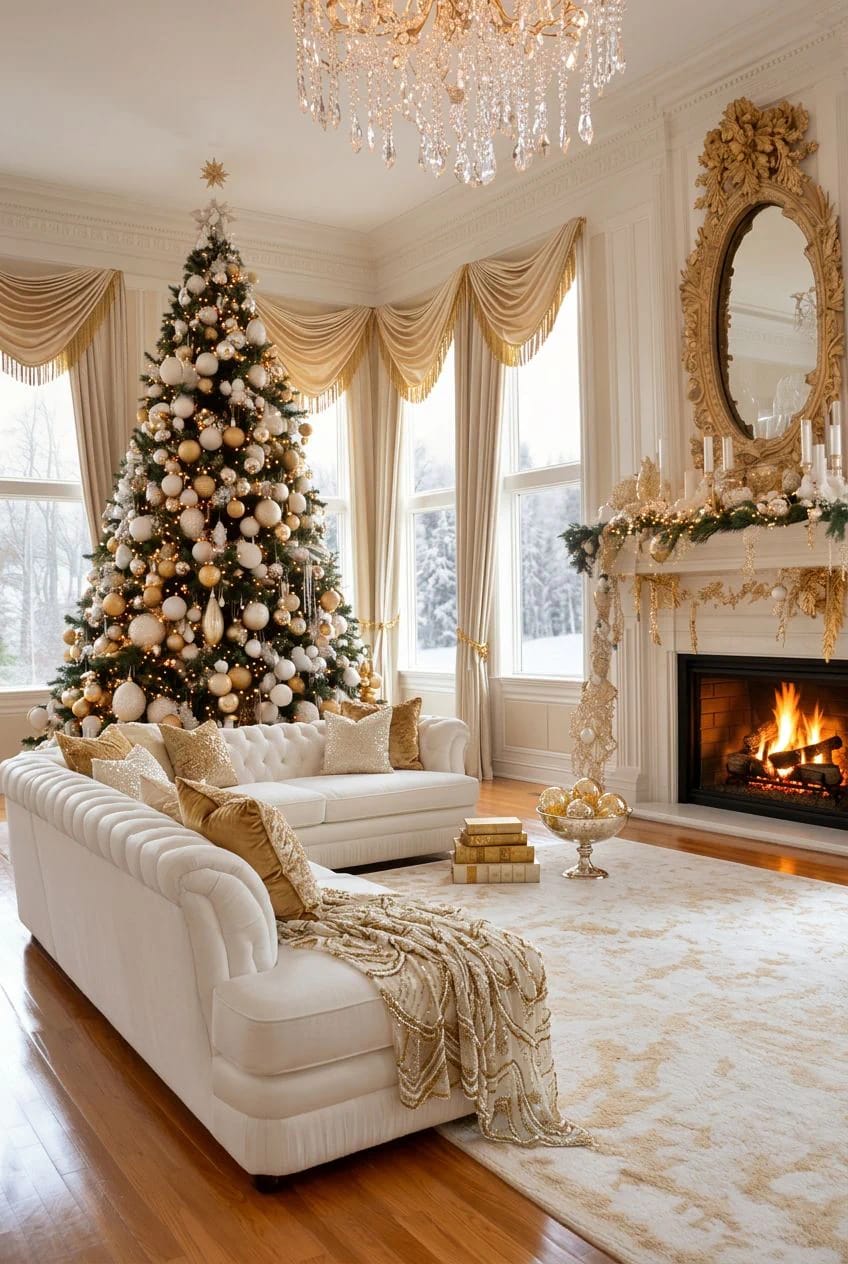
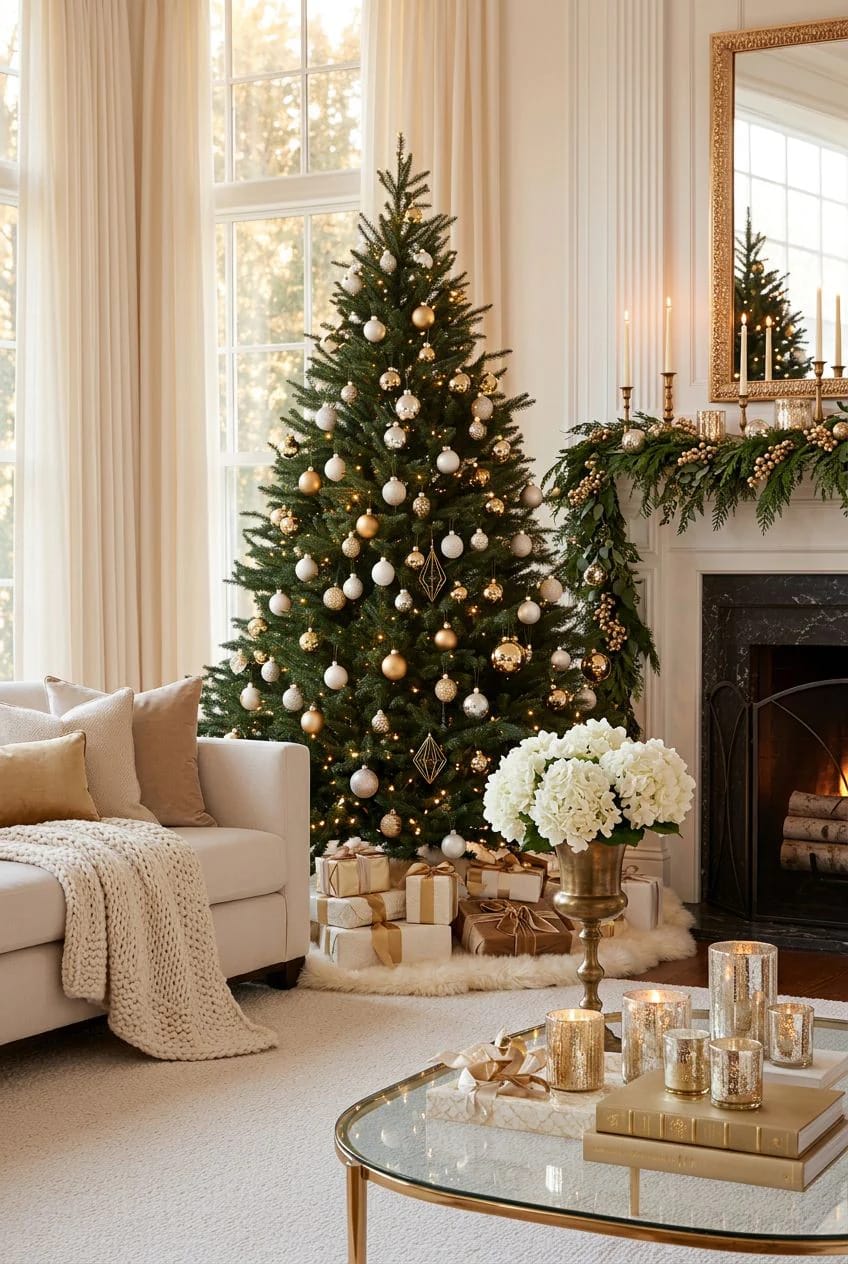
3. Run three glass finishes, not one
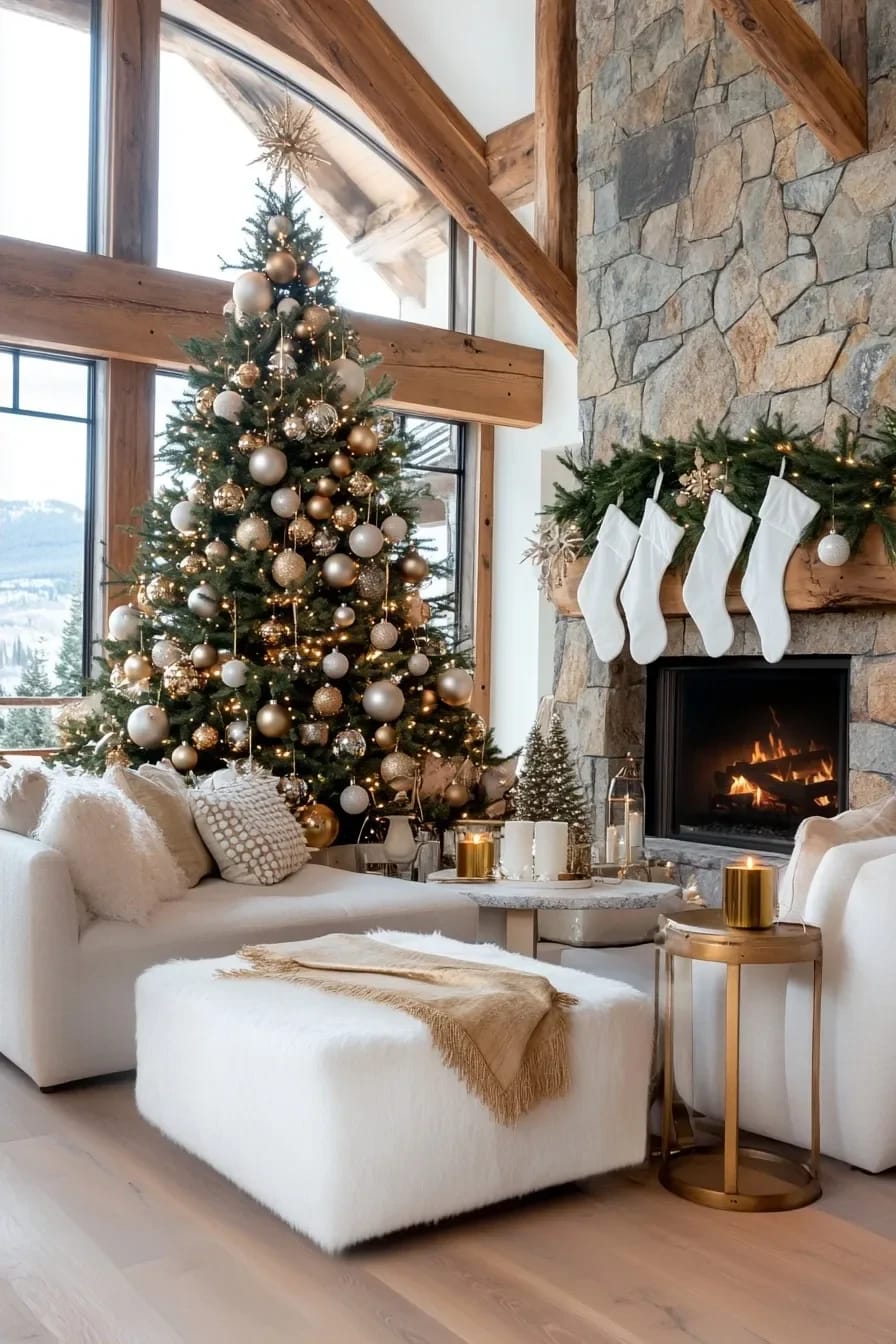
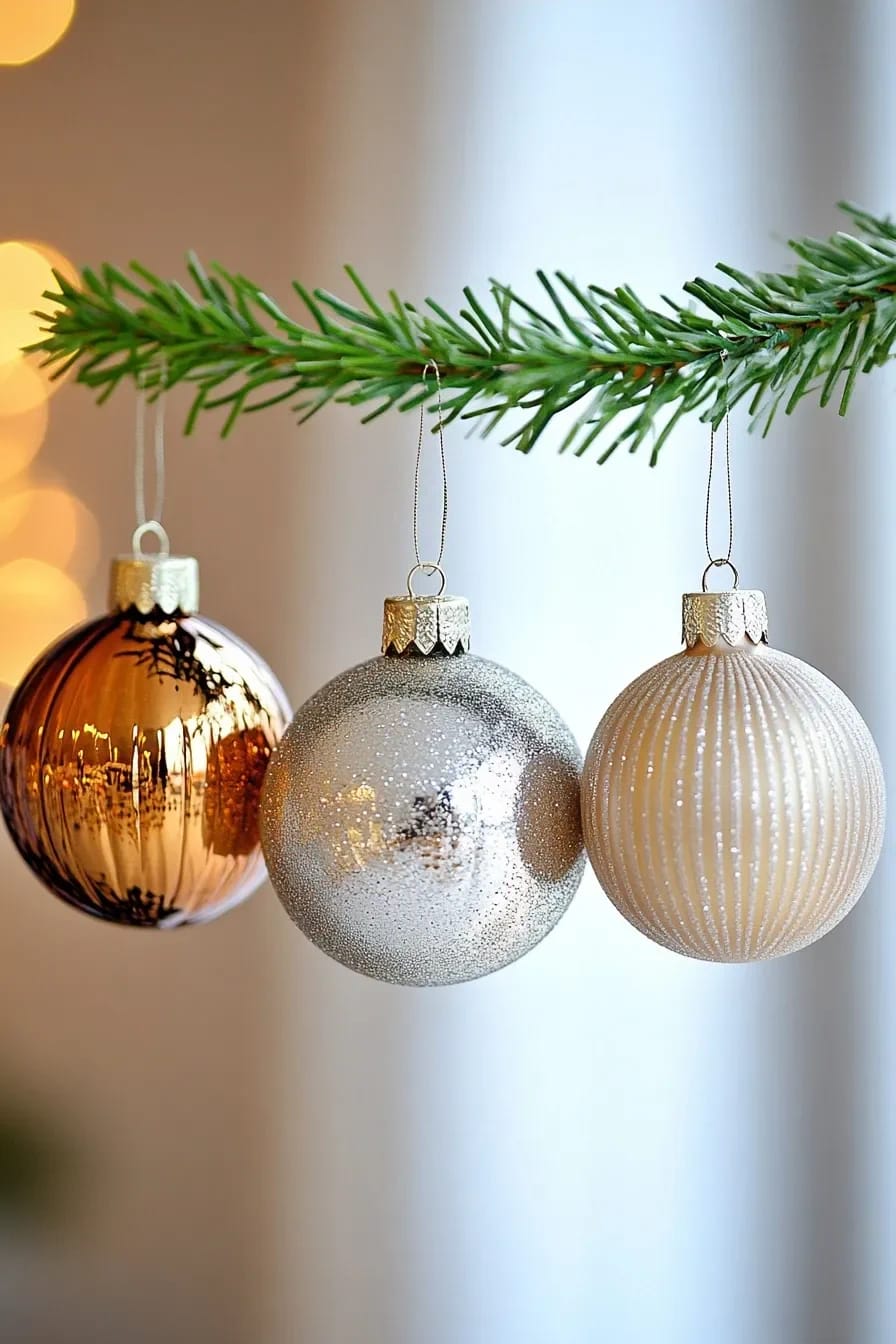
The fastest way to make a gold-and-glass tree look considered is to use clear glossy, mercury (silvered), and matte-frosted glass in roughly equal measure, because a tree of all-shiny baubles reads as one hard sheet of reflection. Glossy throws sharp highlights, mercury glass holds a soft internal shimmer, and matte absorbs light and gives the eye somewhere to rest. Put all three near each other and the surface gets depth. This is a texture decision more than a color one, which is why it belongs here at the foundation and not further down.
Do this
- Settle on one warm gold temperature (champagne to honey) and buy every metallic piece within it.
- Split the glass roughly a third glossy, a third mercury, a third matte, so no single finish dominates.
- Let one neutral (cream) be the quiet majority; gold is the accent, not the base coat.
Avoid
- Shiny chrome-gold sitting next to antiqued gold. The eye reads it as two metals.
- Equal amounts of every color and finish. Even distribution looks bought, not styled.
- An all-glossy tree. Beautiful for ten seconds, then it flattens into glare.
Choose Glass That Earns Its Place
4. Mercury glass for depth the eye keeps moving through
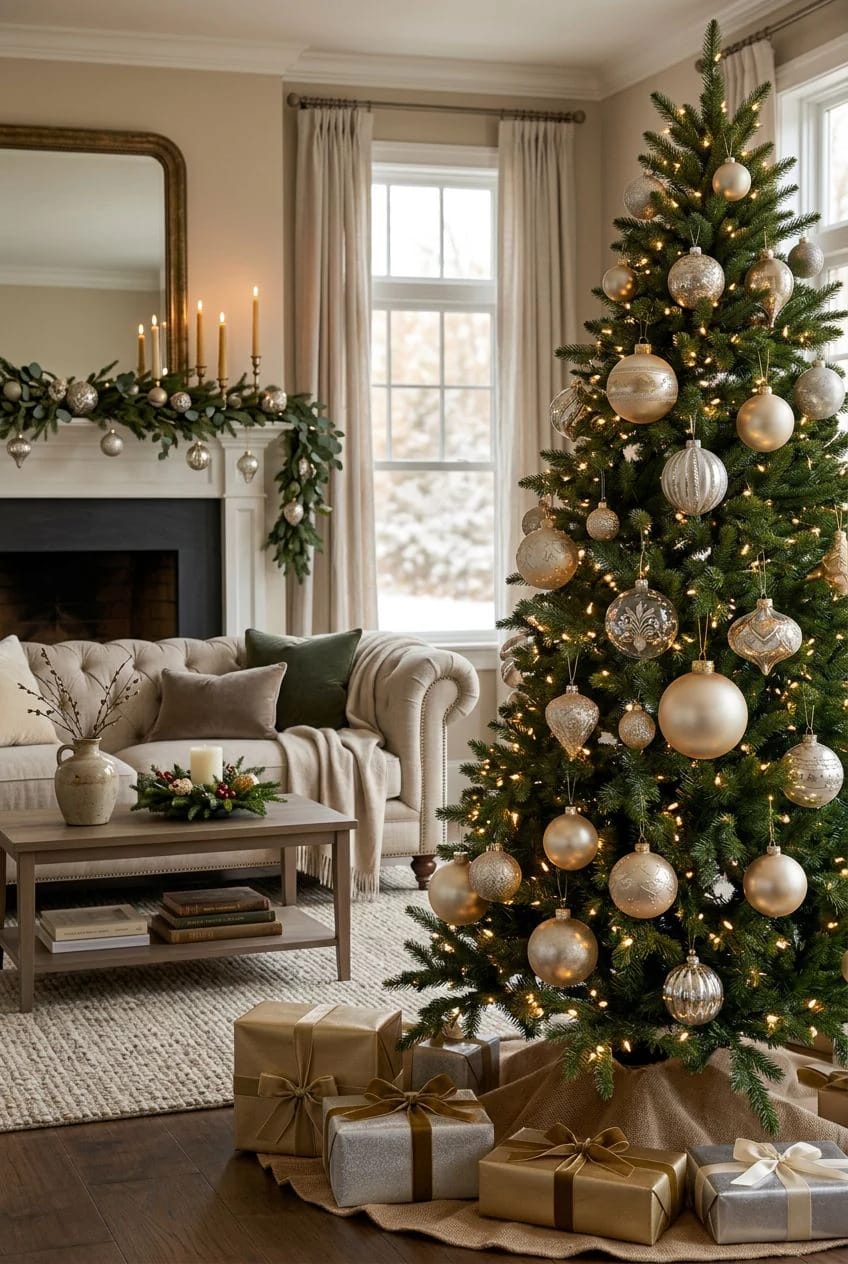
Mercury glass is the workhorse of an elegant gold tree because the silvering inside is applied unevenly, so each ornament reads as a soft mottled glow instead of a hard mirror. That broken surface is what keeps a viewer's eye traveling around the tree rather than snagging on one bright spot. Raz and other holiday-ornament makers produce genuinely good mottled mercury finishes; a lot of the cheap versions are just chrome spray on plastic, which you can spot because the reflection is perfectly even and slightly blue.
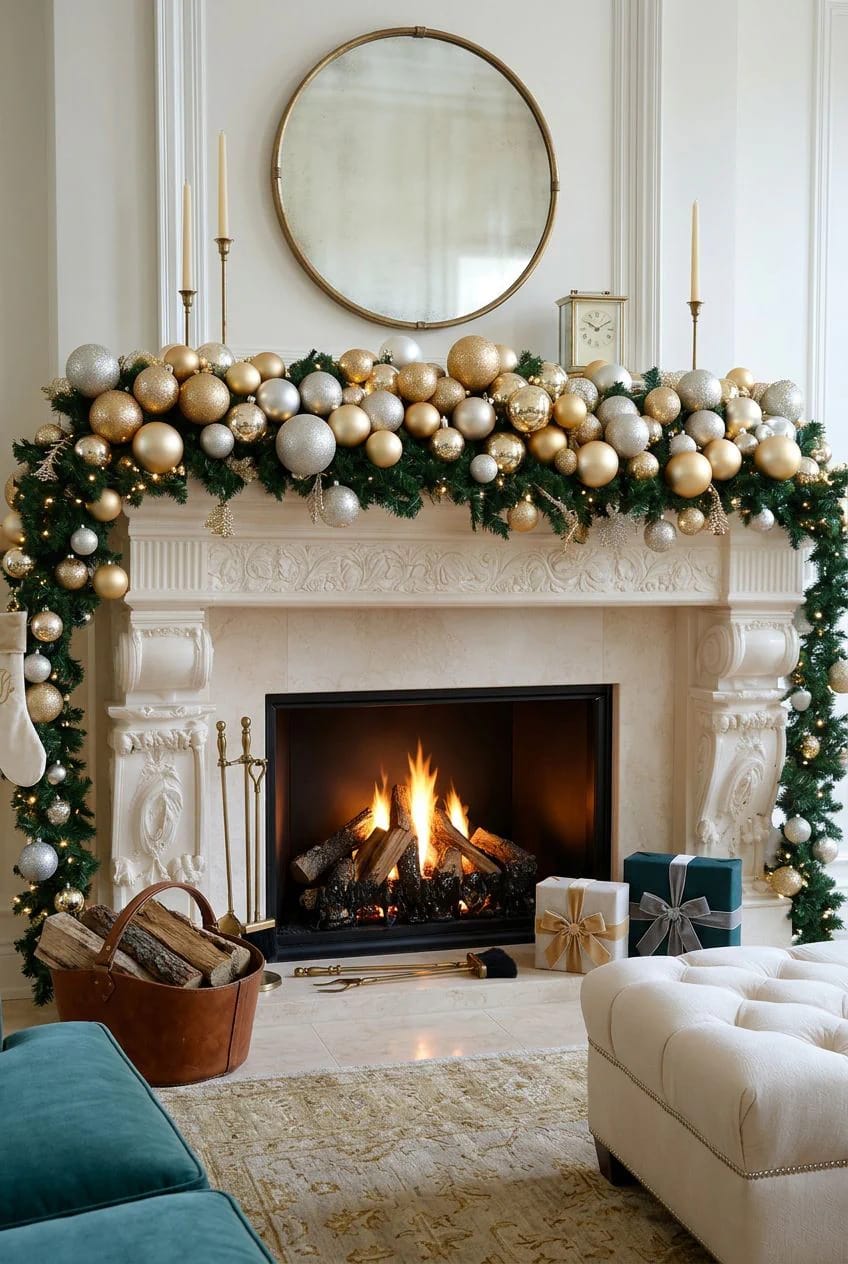
Carry two or three of these onto the mantel or table so the tree does not feel like an island. Mercury-glass votives in particular pull the same finish into a Christmas table centerpiece, which is how a room starts to feel decorated rather than just a tree in a corner.
5. Clear glass with a gold interior beats a solid gold bauble
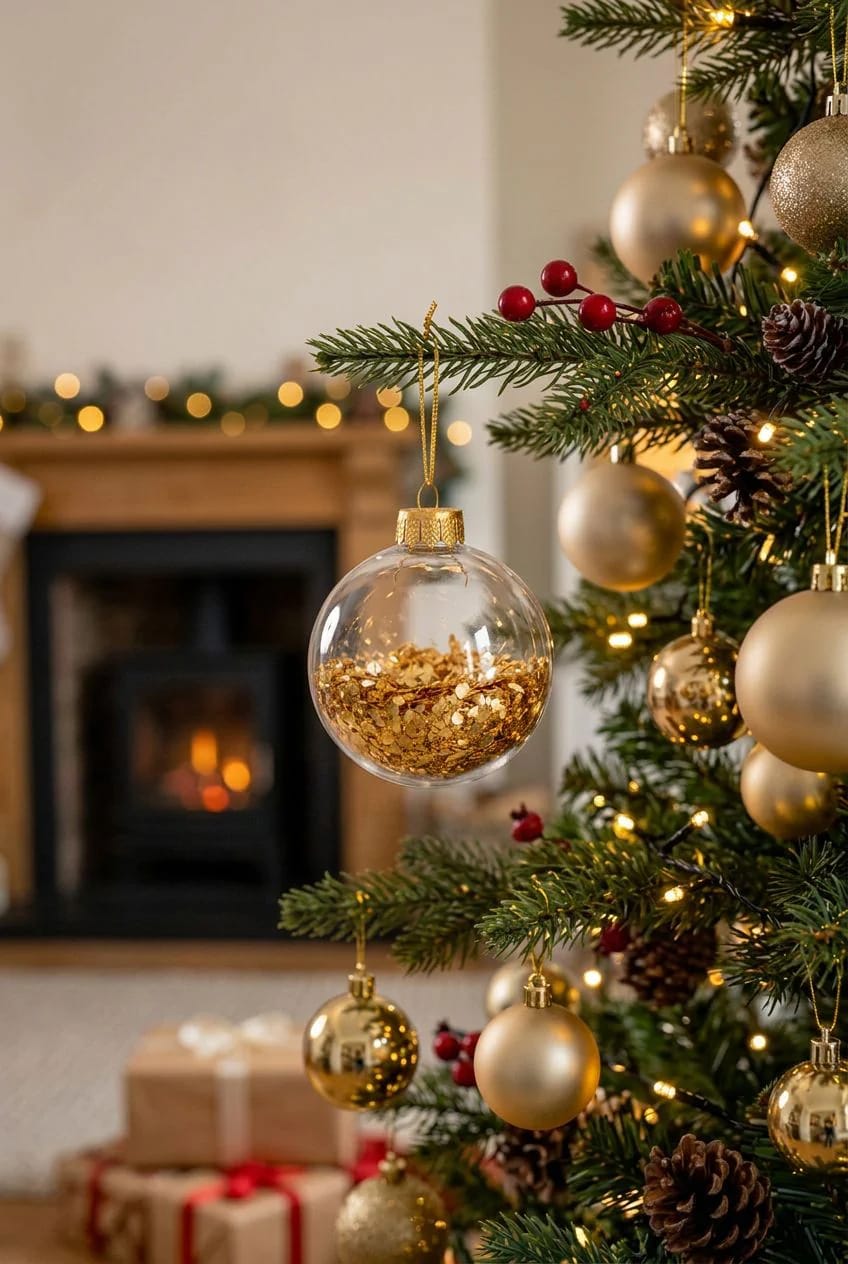
A clear glass sphere with gold leaf or confetti loose inside it does something a solid gold ball cannot: it lets the light in, catches the gold from within, and changes as you move past it. Solid metallic baubles only ever reflect what is around them, so on a dim December afternoon they go dull. The gold-fill version keeps a warm interior glow even in low light, which is exactly when the tree is on. Hang these where a light sits directly behind them and the fill lights up like a small lantern.
The honest caveat is that thin clear glass is fragile in a way plastic never will be, so if you have a cat, a toddler, or a tree that gets bumped in a narrow hallway, keep the true glass at eye level and above and let sturdier shatter-resistant pieces take the lower branches.
6. A few oversized spheres do more than a hundred small ones
Three or four oversized glass spheres, five inches and up, placed deep and slightly staggered, give the tree a sense of scale that a uniform field of small baubles never does. Big ornaments set back toward the trunk read as depth; the smaller pieces then feel like they are orbiting something. Cluster the large ones in a loose vertical zig-zag rather than a ring, so the eye is pulled up and down the tree instead of around it in a belt.
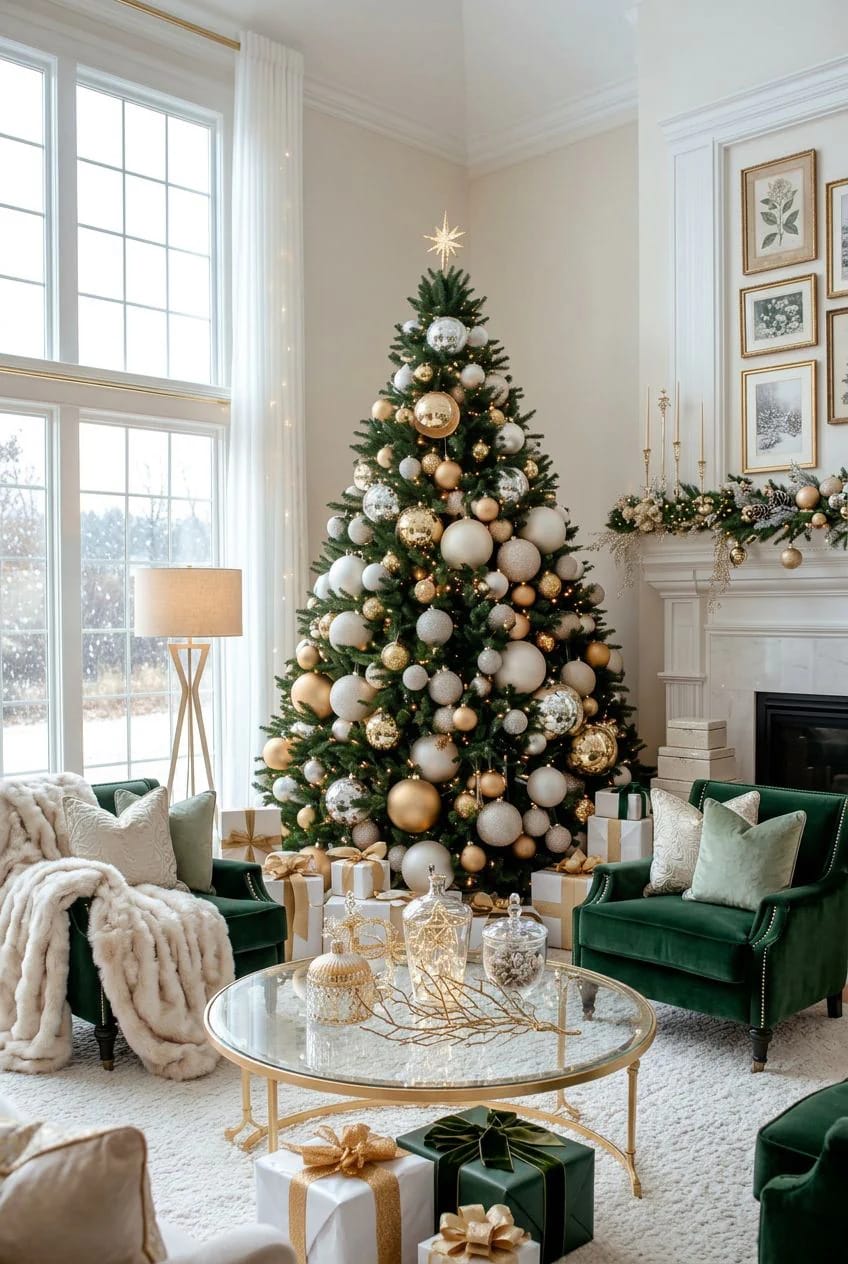
This is also the cheapest high-impact move on the list, because you only need a handful. If you want a second tier of interest, a small companion tree nearby dressed in the same glass reads beautifully, and there are plenty of ways to work extra trees into a room without doubling the ornament budget.
7. Pearled and hand-blown finishes are the hotel-lobby trick
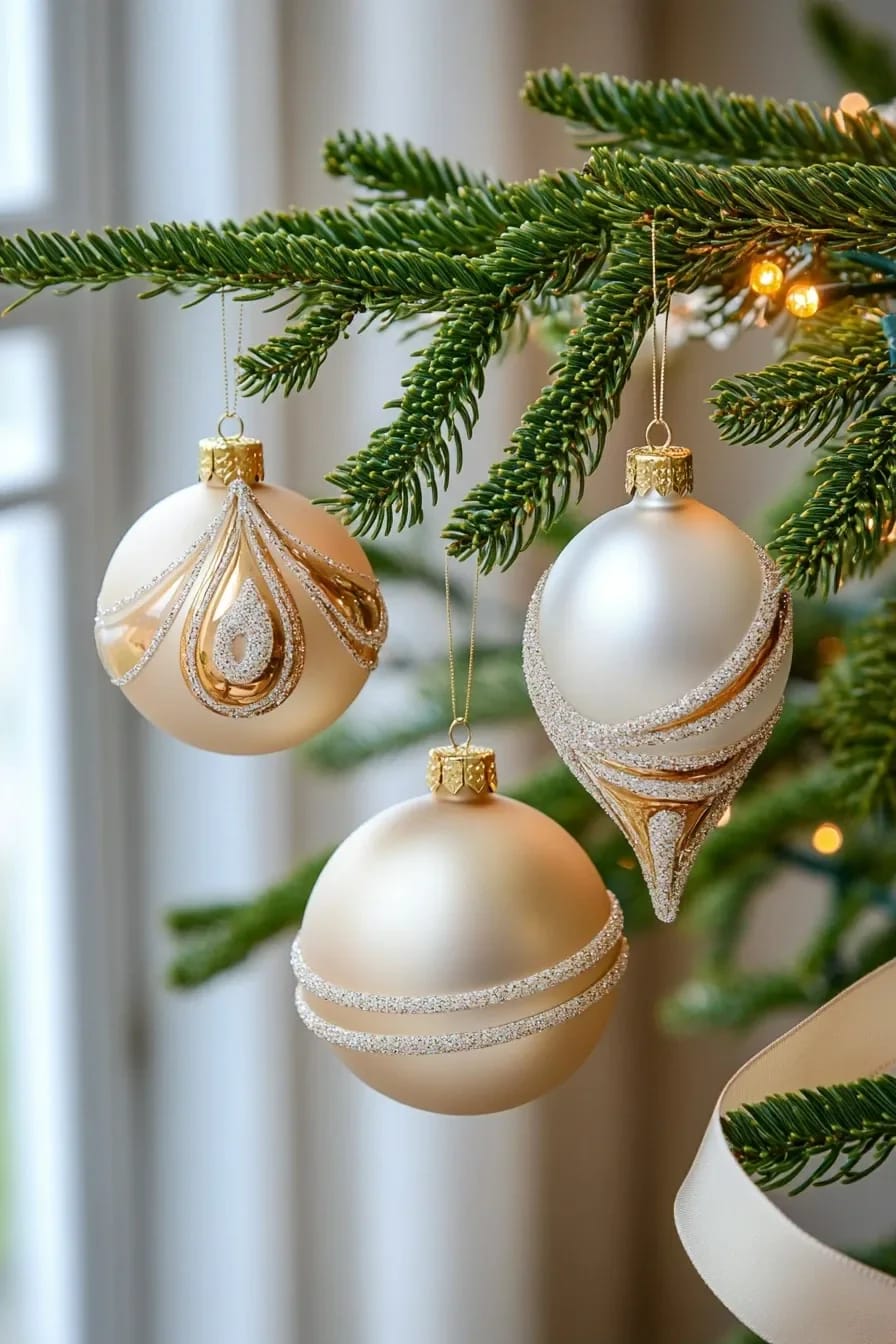
Pearled and hand-blown glass is what separates a hotel-lobby tree from a home one. The pearl finish is satin rather than sparkly, shifting between ivory and champagne as you pass it, and hand-blown pieces carry faint internal swirls that catch light softly. A few of these among your glossy and mercury pieces raises the whole tree, because they read as objects rather than decorations. Buy fewer and better here; six good pearled baubles do more than a full box of glittered ones.
| Glass finish | What the light does | Best role on the tree |
|---|---|---|
| Clear glossy | Sharp reflections and bright rim highlights | Near lights, mid-depth, for sparkle |
| Mercury (silvered) | Soft mottled internal shimmer, no hard mirror | Spread throughout as the connective finish |
| Matte / frosted | Absorbs light, gives the eye a rest | Between shiny pieces to break up glare |
| Pearled / hand-blown | Satin shift between ivory and champagne | Fewer, at eye level, as the standout pieces |
 27 Unique Christmas Tree Ornaments for a Magical Holiday A wider set of ornament ideas if you want a few personal pieces alongside the gold and glass.
Layer, Light, and Drape
8. Wired ribbon garland, gold mesh or velvet, tucked not bowed
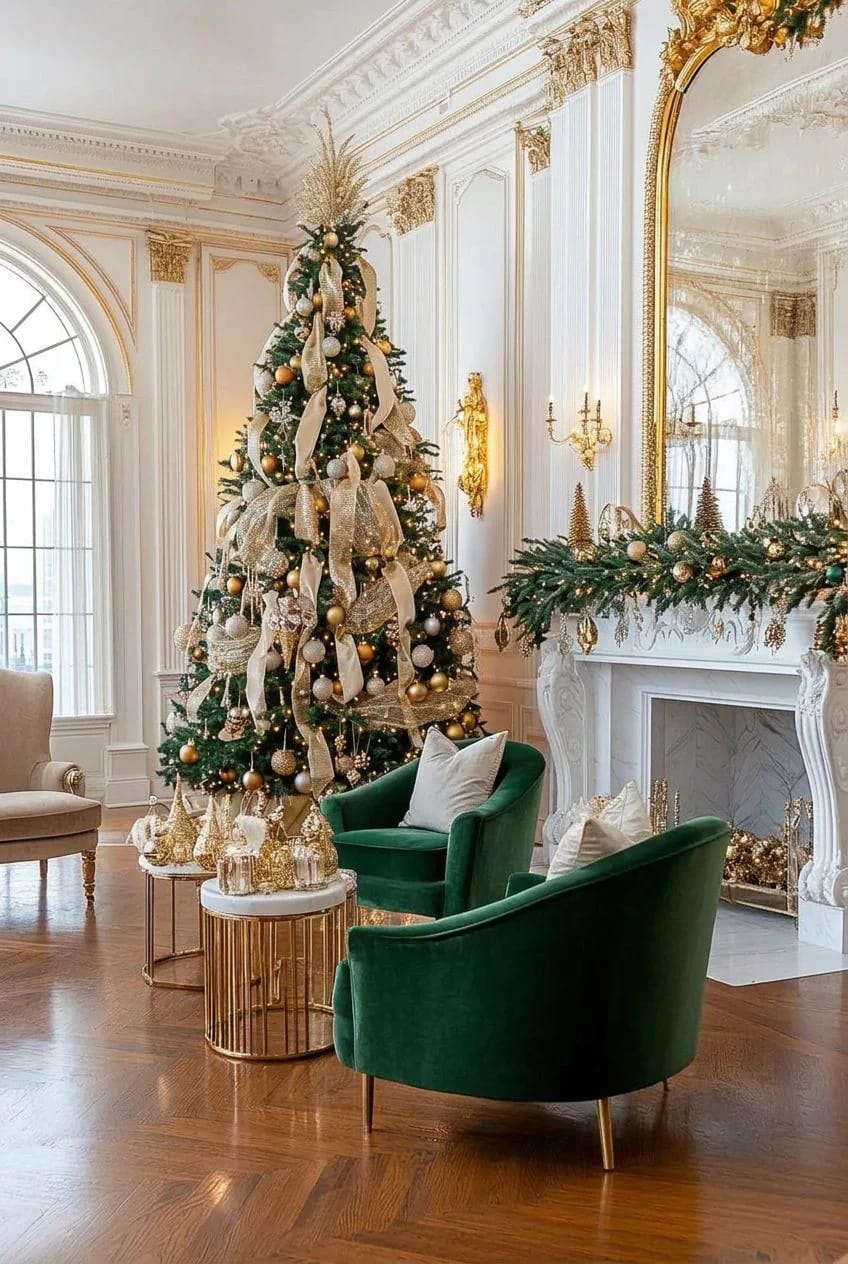
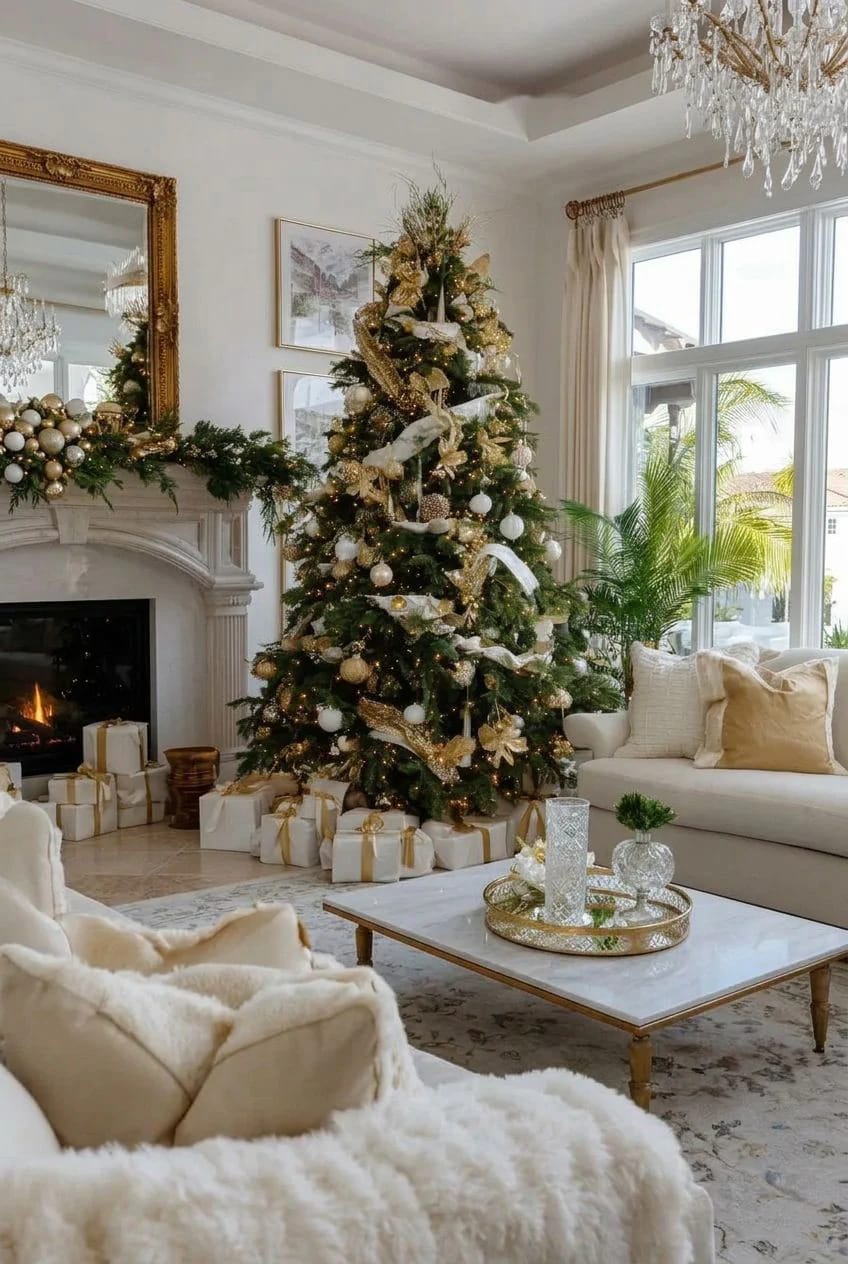
Wired ribbon woven vertically down through the tree in loose folds, not tied into bows, is the layer that fills the gaps between ornaments and gives the tree a spine. Gold mesh brings shine that moves; cream velvet brings a matte nap that reads soft and expensive against the glass. The wired edge is what lets you tuck and shape it so it stays put; unwired satin just sags. Feed it in near the trunk and let it surface and dive between the branches so it looks like it grows out of the tree.
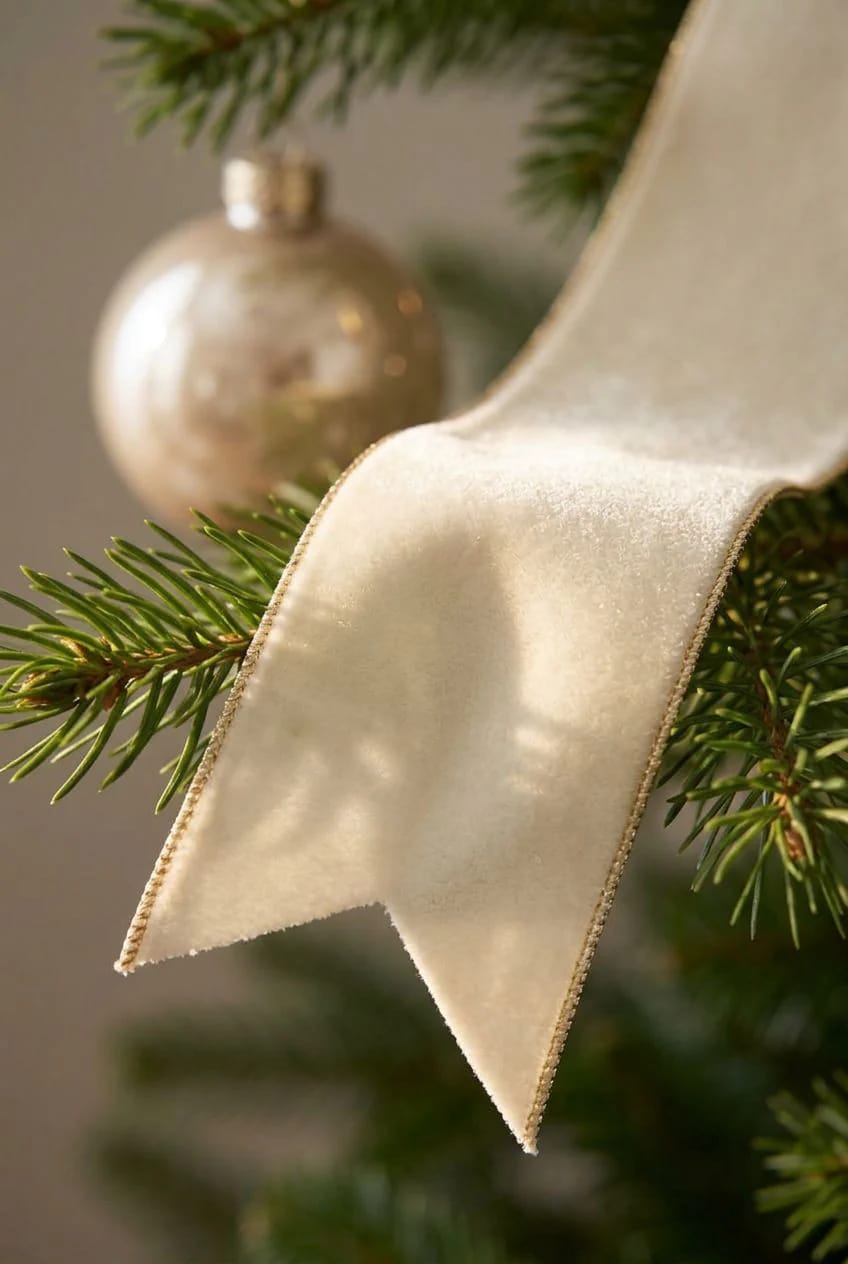
Skip bows unless you are genuinely good at them, because a mediocre bow is the fastest way to make an elegant tree look like a gift-wrap aisle. If you want more structured drama, there are gentler ways to dress the tree with ribbon and garland that hold their shape without turning into a bow situation.
9. Warm-white lights only, and more of them than you think
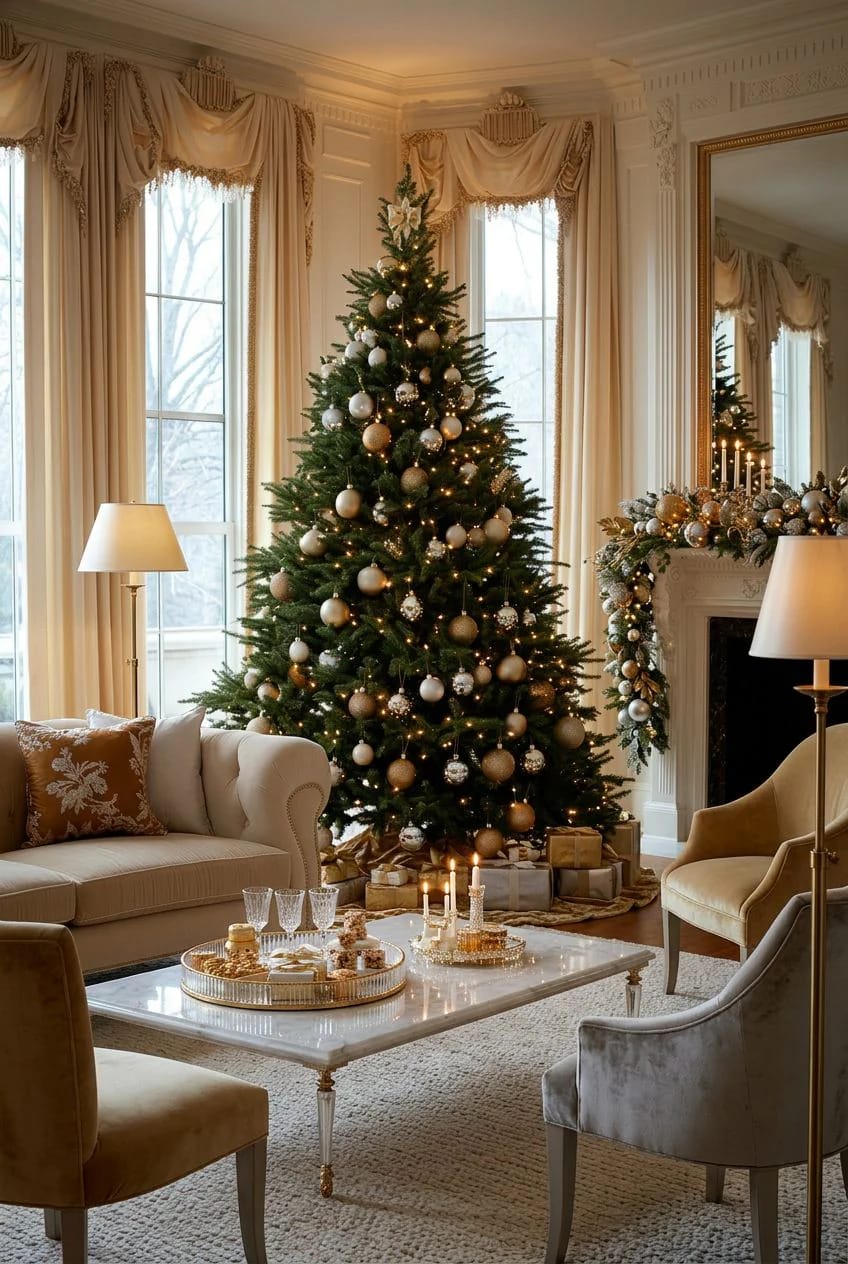
Use warm-white lights only, never cool white, and use more of them than feels reasonable. Cool white (anything up in the blue 4000K-and-above range) turns gold grey and makes glass look like plastic; warm white around 2700K is what makes the metals glow. On quantity, the industry starting point is roughly 100 lights per vertical foot for a restrained look, and closer to 150 to 200 per foot for the dense, magazine-full glow that actually flatters a glass tree. A seven-foot tree at the fuller end lands north of a thousand lights, which is far more than most pre-lit trees ship with.
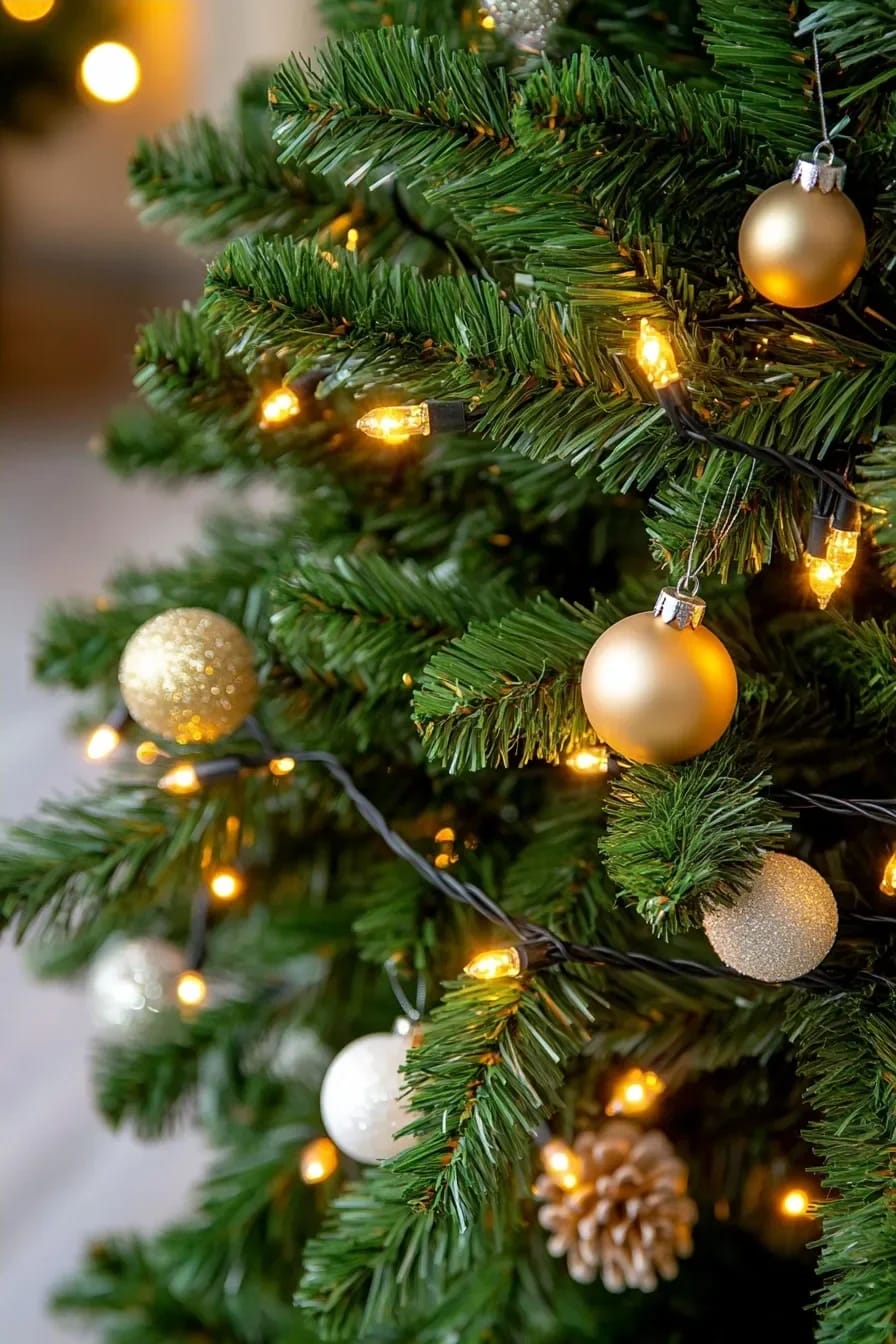
The part people skip is wrapping branch by branch, in toward the trunk and back out to the tip, instead of spiraling lights around the outside. Interior lights are what give the tree depth after dark, lighting the glass from behind so the mercury and gold-fill pieces come alive. It is tedious. It is also the difference between a tree that glows and one that has a bright shell over a dark center.
10. Glass drops and icicles on the outer tips for movement
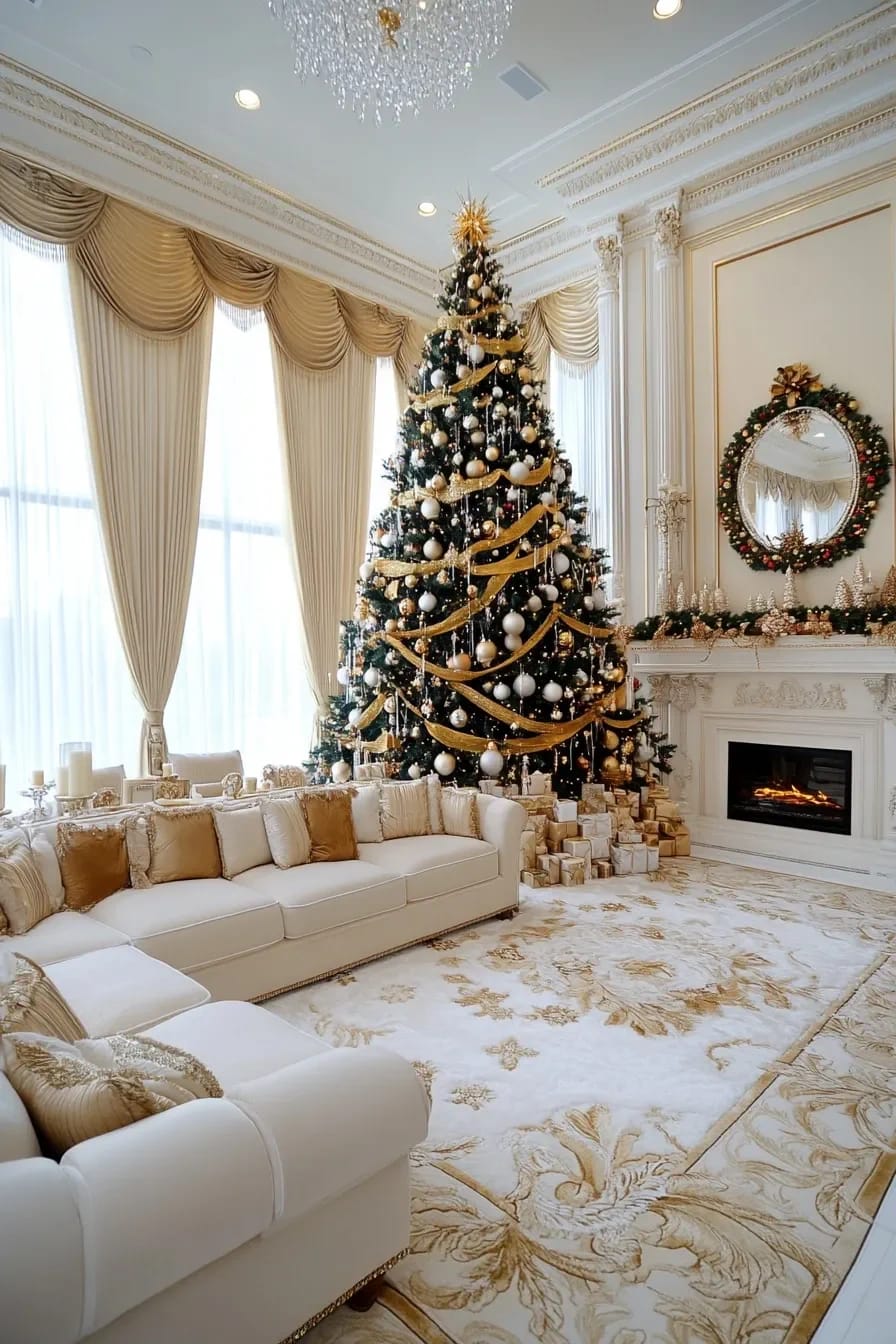
Hang clear glass drops, icicles, and faceted teardrops on the outermost tips where they can turn and swing slightly, and the tree stops being static. These pieces catch and split light as air moves through the room, adding a low sparkle that fixed baubles cannot. Keep them to the outer third of the branches; buried inside, they do nothing. A dozen well-placed drops read as shimmer without tipping into busy.
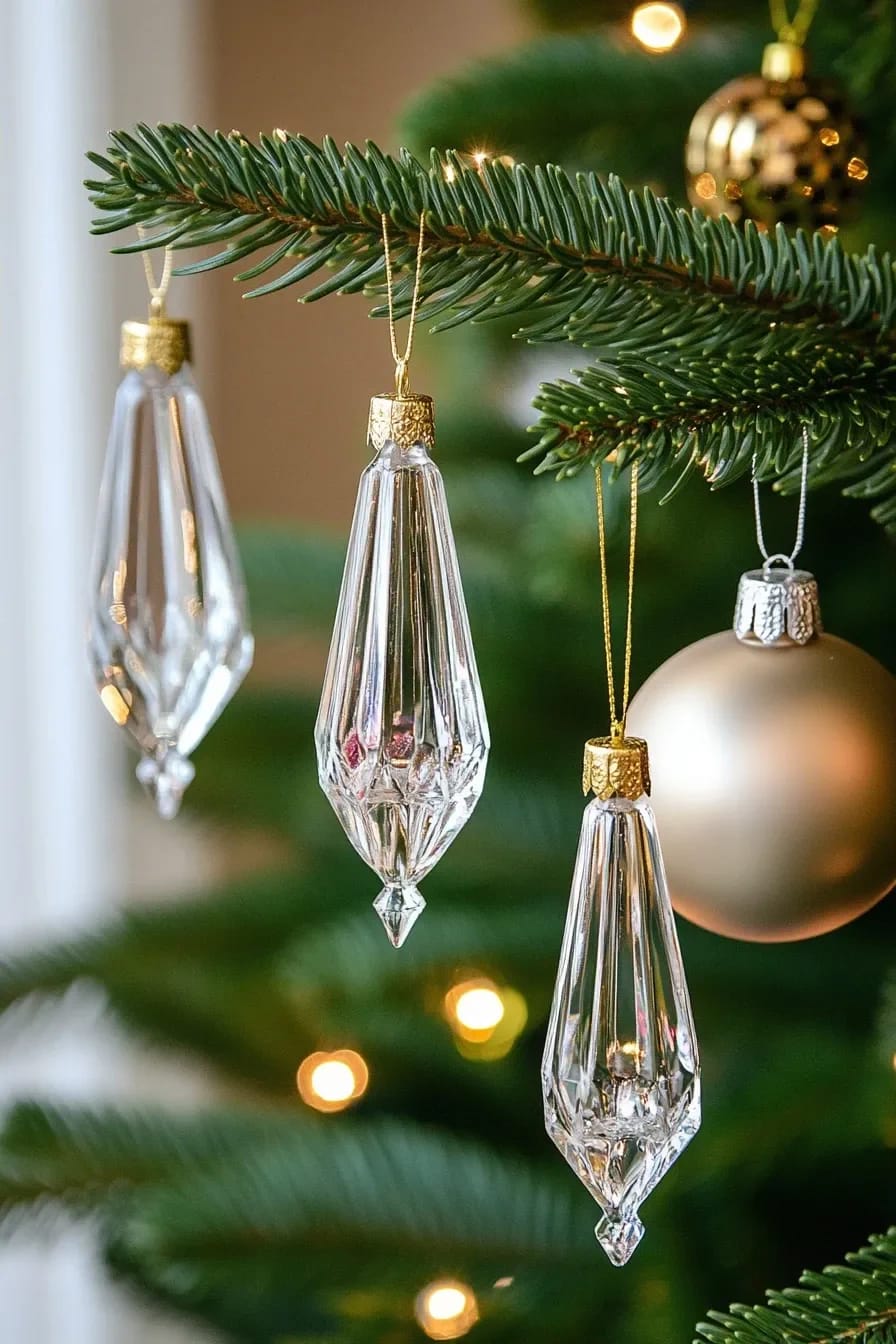
The common failure on a gold-and-glass tree is not too little, it is too much shine with no rest. When every ornament is glossy, every ribbon is metallic, and the lights are cool and bright, the tree reads as glare rather than glow. If it looks busy in a photo, the fix is almost always to pull out a handful of shiny pieces and swap in matte and cream ones, not to add more gold. Restraint is the expensive-looking part.
Finish at the Base and in the Room
11. A metallic skirt or a collar, never a bare stand
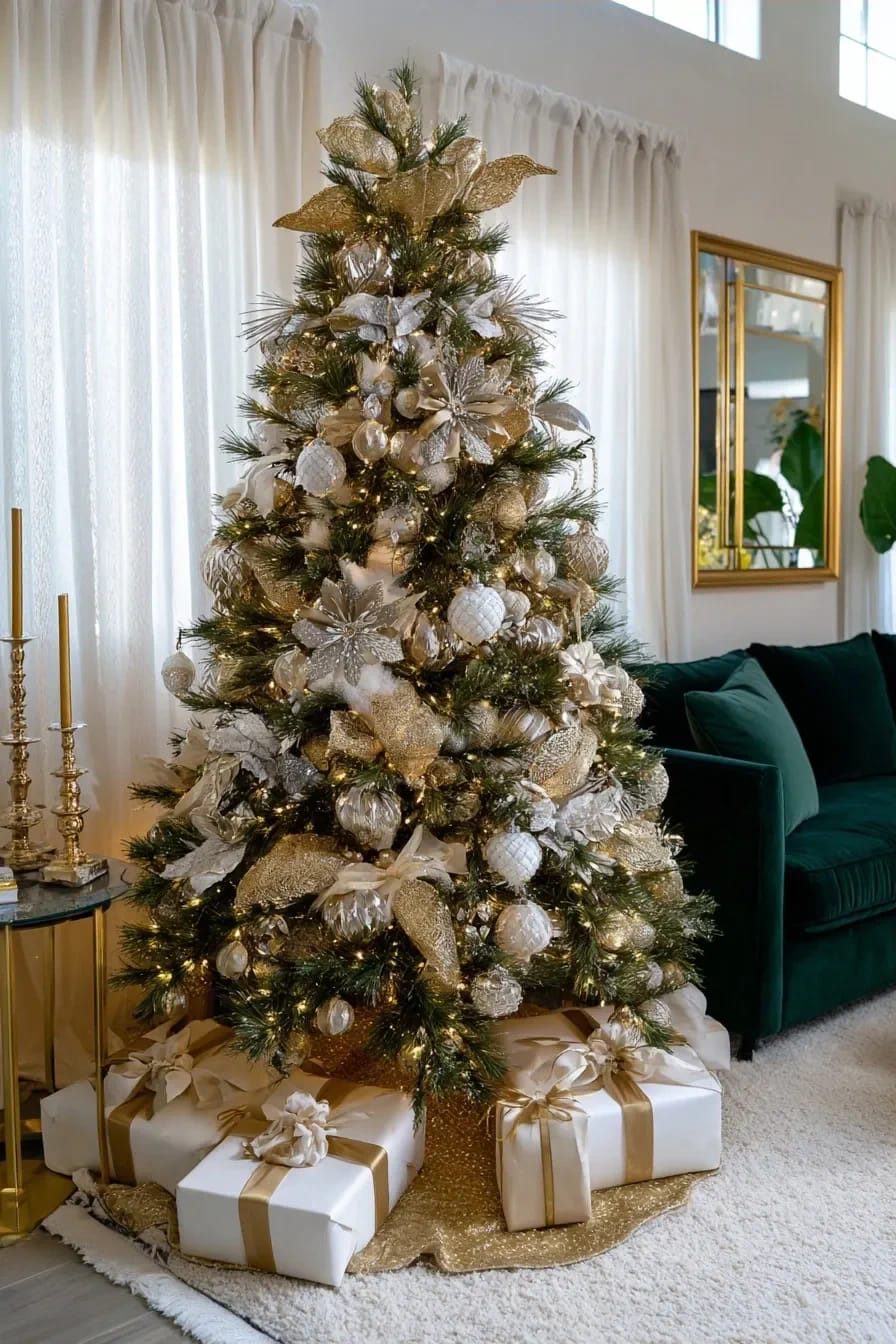
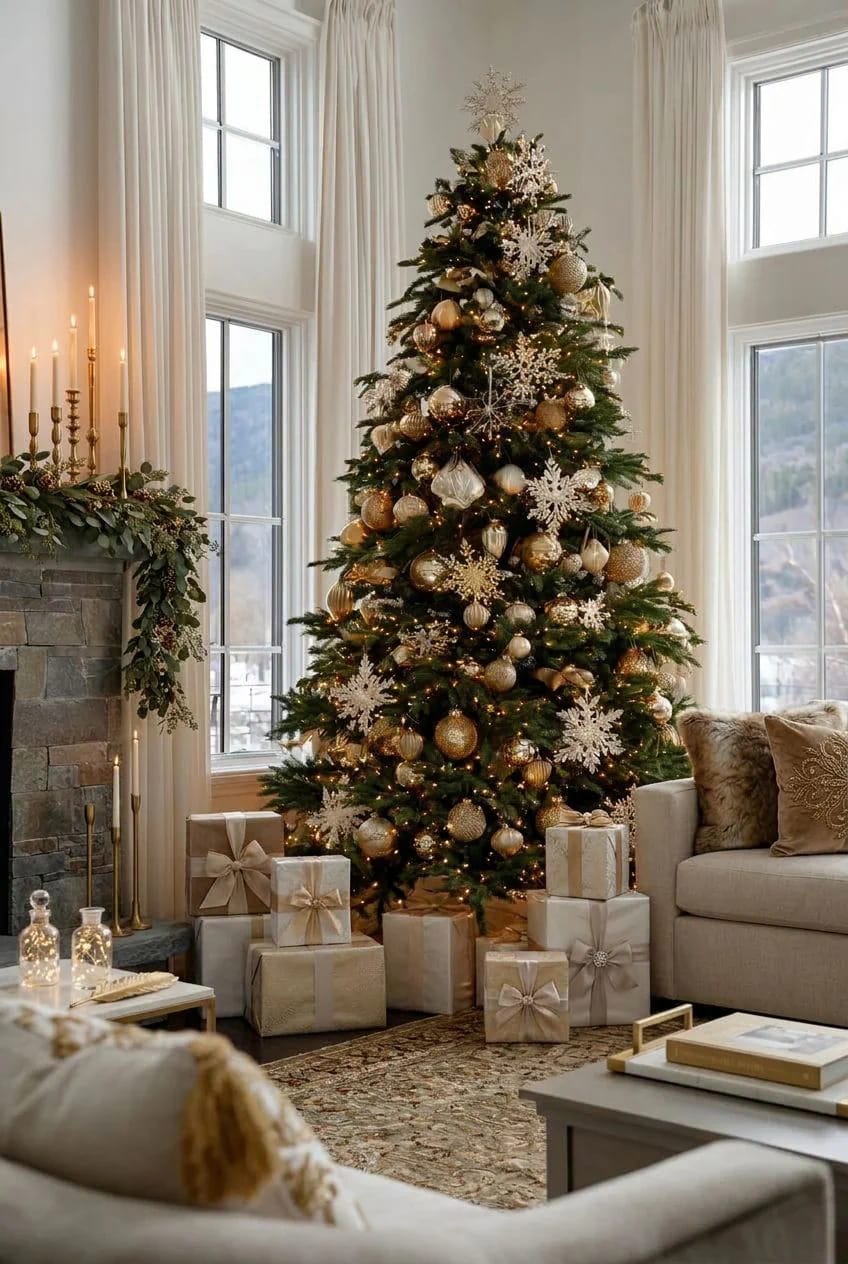
Finish the base or the whole tree unravels at the floor. A soft gold metallic skirt in loose folds, or a brushed-metal collar for a cleaner modern look, hides the stand and closes the palette at the bottom. A bare green stand or a bin bag around a water bucket undoes everything above it. Collars suit a slim modern tree; a pooled fabric skirt suits a fuller traditional one. Either way, wrap a few gifts in cream and gold paper to continue the scheme rather than breaking it with cartoon reds and greens.
12. Style the tree to the room, not in isolation
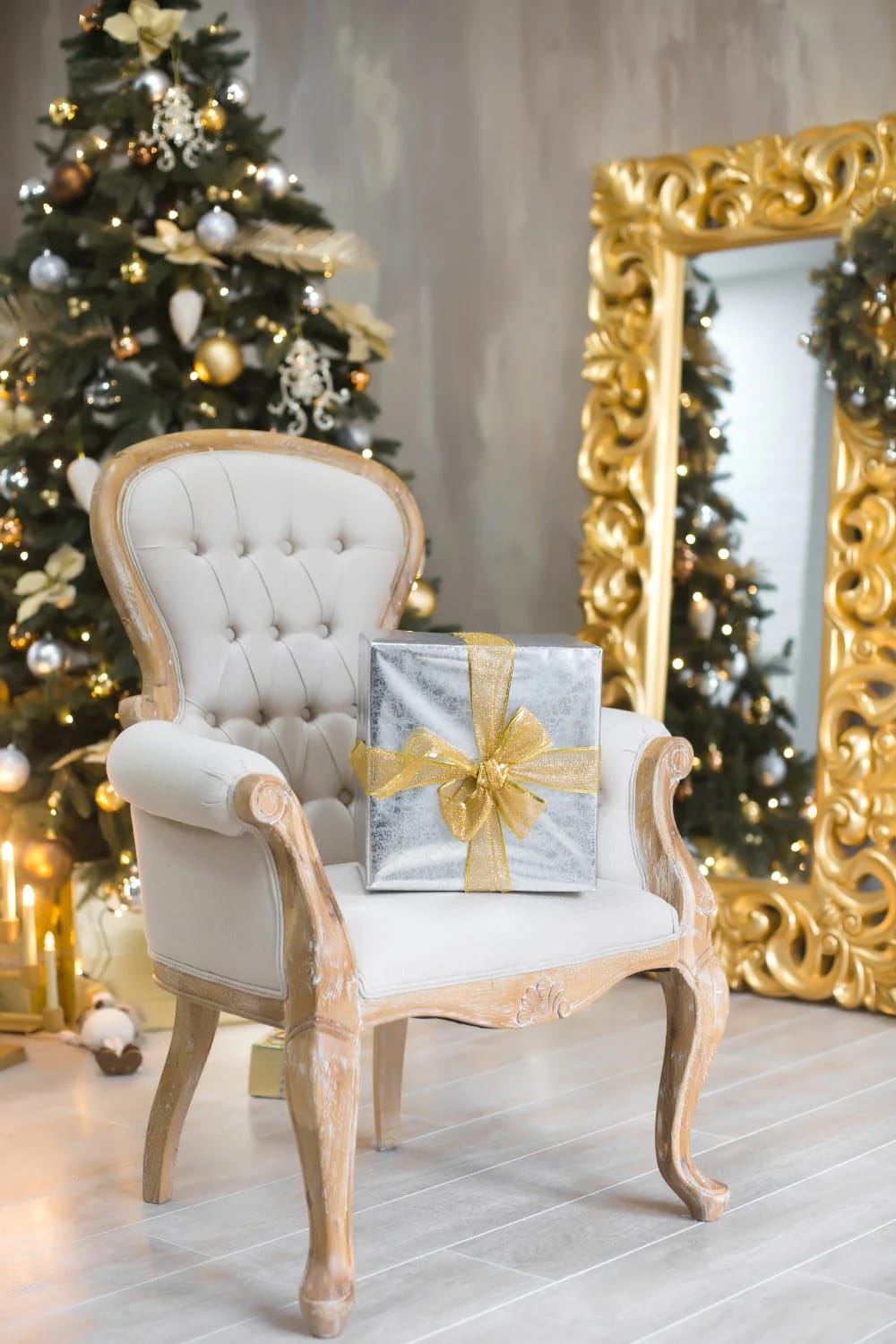
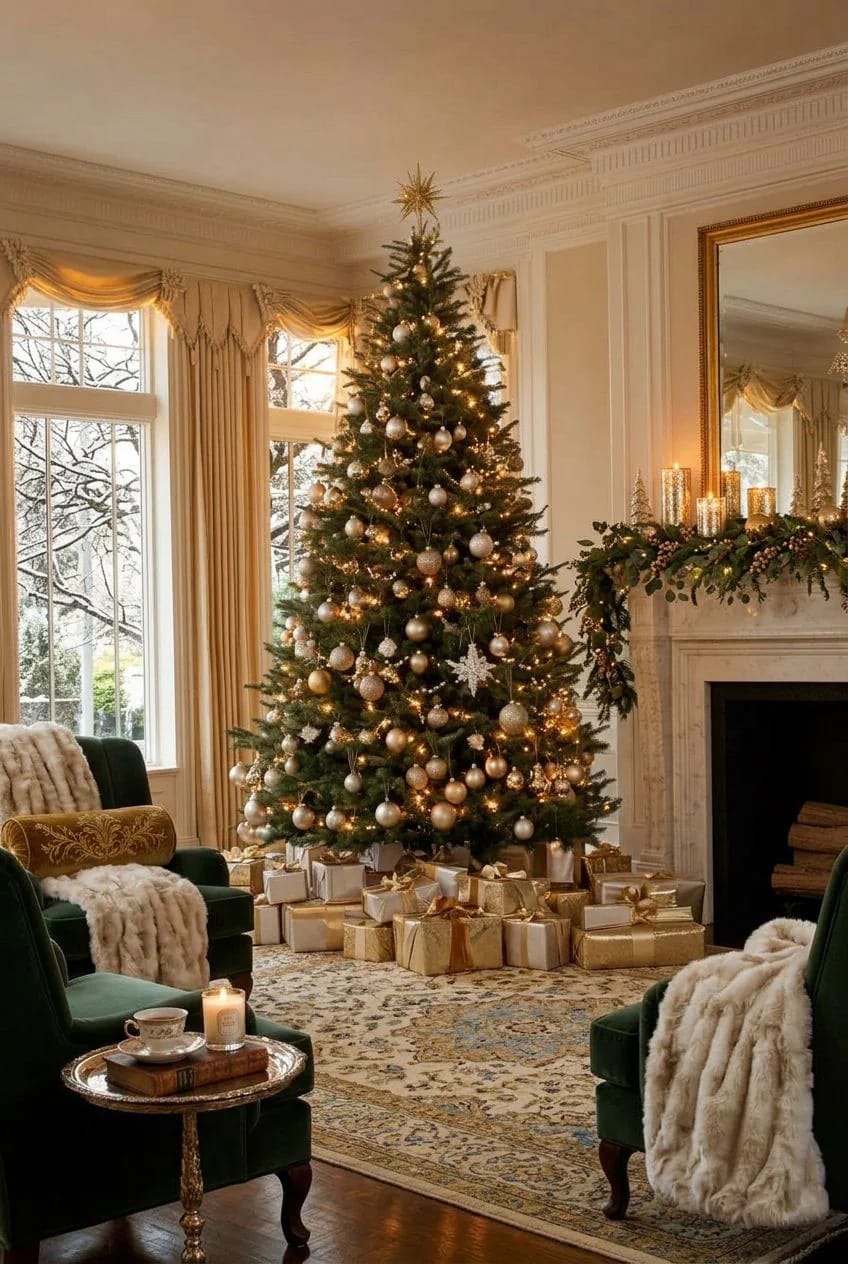
The most elegant trees are styled to their rooms, so the palette should nod to what is already there. Against a green velvet sofa and a marble fireplace, gold and cream look intentional; dropped into a busy room with competing colors, the same tree looks marooned. Pull one or two gold notes into the surrounding space (a mirror, candlesticks, a bowl of ornaments on the mantel) so the tree reads as the anchor of a scheme rather than a decorated object sitting alone.
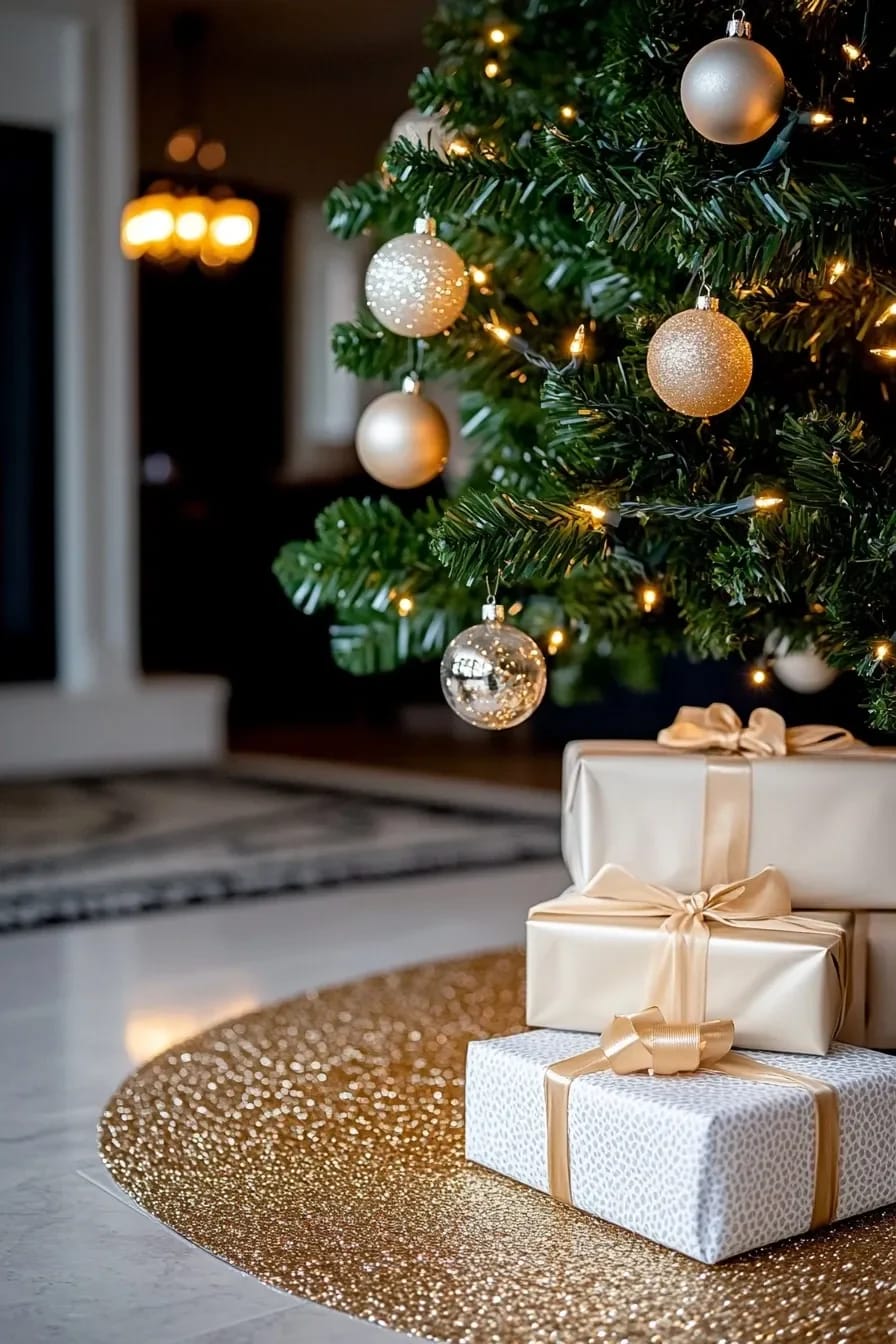
That thinking extends past the living room, too. Carrying the champagne-and-gold palette out to the entry means the tree is not a surprise the moment someone walks in, and the same restraint that works indoors translates cleanly to gold accents on the front porch.
 15 Gorgeous Luxury Christmas Decor Ideas to Elevate Your Home Where to take the gold-and-glass look once the tree is done and the rest of the room needs to catch up.
Where to Start If You're Redoing a Tree You Already Have
Work in the order the sections run, because each step depends on the one before it. Sort your golds first and cull anything that reads cold or pink, then sort your glass into glossy, mercury, matte, and pearled so you know what you actually have before you buy more. Only then does the ribbon go in, then the lights (wrapped in toward the trunk, warm white, more than you think), and last the skirt and the gifts. Doing it out of order, ribbon before you have fixed the palette, is how people end up buying twice.
If your budget is tight, spend it on the lights and a handful of good pearled or mercury pieces and let cheaper shatter-resistant baubles fill the interior where nobody looks closely. The one thing worth being fussy about is that single warm gold: get that right and even an inexpensive tree looks like you meant it.
Related Posts
- 15 Gorgeous Luxury Christmas Decor Ideas to Elevate Your Home
- 21 Decorating With Trees for Christmas: Ideas for a Magical Home
- 21 Magnificent White Christmas Decor Ideas
- 15 Red and Gold Christmas Front Porch Decor Ideas For A Classic Holiday Look
- 23 Extravagant Christmas Decor Ideas to Create Over-the-Top Holiday Magic
- 23 Christmas Table Centerpiece Ideas for a Magical Holiday Setting