
Decorating a small living room on a budget isn’t about sacrifice; it’s about creativity. With the right approach, even the tiniest space can become a cozy, stylish retreat that feels uniquely yours.

Whether you’re furnishing your first apartment or revamping a compact family room, this guide is packed with clever ideas to help you stretch your dollars while maximizing style and function.
Start With the Tape Measure, Not the Cart
The cheapest half hour of this whole project happens before you spend a dollar. Measure, sketch, and be honest about what the room is fighting you on, because a loveseat that arrives two inches too wide is not a bargain.
Start With a Vision: Set a Budget-Friendly Plan
Before shopping, pause and plan. Measure your living room and map out essentials like seating, storage, and lighting. Define your style, boho textures, modern minimalism, or rustic charm, to avoid impulse buys and focus on pieces that truly fit.
Tip: Create a floor plan (on paper or online) before buying furniture. It saves you from squeezing in pieces that don’t fit.

Written out, the planning stage is short:
Before you shop
- Measure the room wall to wall and write the numbers down.
- Map the essentials first: seating, storage, lighting.
- Draw the floor plan, on paper or online, before any furniture is ordered.
Before you fall for something
- Pick a style and name it. Boho textures, modern minimalism, rustic charm.
- Hold every impulse buy against that decision.
Small Space Challenges Can Be Opportunities
Low ceilings, narrow floors, and awkward corners may seem like obstacles, but they invite creative solutions.
Light colors reflect natural light to make the room feel airy and open, while smart layouts borrowed from very small rooms, like floating furniture or using rugs to define zones,improve flow and functionality.
Multipurpose pieces, such as ottomans with storage, help reduce clutter and maximize space, transforming challenges into opportunities for a cozy and stylish living area.

Furniture, Surfaces, Storage, and the Soft Stuff
Everything past this point can be done one piece at a time, in whatever order the money shows up. Layout is the exception. Get the seating and the walkways right first, because no rug, gallery wall, or string of lights rescues a room you have to sidestep through.
Maximize Every Inch With Smart Layouts
Choose the Right Furniture
Opt for the slim, leggy furniture minimalist small rooms rely on to create a sense of openness. A loveseat or small sectional works better than an oversized sofa. Nesting tables and storage ottomans add flexibility without clutter.

Tip: Don’t push all furniture against walls. Floating key pieces a few inches inward can make the room feel bigger and more intentional.
Arrange for Flow and Function

Float your sofa or angle chairs to soften corners. In long, narrow spaces, divide areas into zones, a conversation nook and a reading corner.
Tip: Leave at least 18 inches of walking space around furniture to avoid a cramped feel.
Create Zones in Open-Plan Spaces
If your living room opens into a dining area or kitchen, use a rug, plants, or a bookshelf as subtle dividers. This defines each area without closing things off.
Sorted into what helps and what quietly shrinks the room:
Do this
- Float the sofa and the other key pieces a few inches off the wall.
- Leave at least 18 inches of walking space around furniture.
- Split a long, narrow room into zones: a conversation nook at one end, a reading corner at the other.
- A rug, a few plants, or a bookshelf will divide an open plan without walling it off.
Avoid
- Pushing every piece flat against the walls.
- An oversized sofa where a loveseat or small sectional fits.
- Ordering anything the floor plan hasn’t confirmed will fit.
Affordable Style for Walls, Floors, and Ceilings
Budget-Friendly Wall Ideas
Walls are your blank canvas. Try peel-and-stick wallpaper for a bold look or paint an accent wall. A gallery wall with thrifted frames and favorite prints adds personality.
If you are not a fan of wall stickers, you can repurpose blankets or fabrics into an artsy tapestry to add character to your living room. Affordable yet vivid tapestry can also be store-bought.


Tip: Hang art or mirrors at eye level (about 57 inches from the floor) for balance.
Elevate Floors With Cozy Textures
Use one large, low-pile rug to define the space and add warmth with throw pillows and blankets.
Tip: A Veken rug pad gripper keeps rugs in place and prevents slipping.
Use Vertical Space and Ceilings
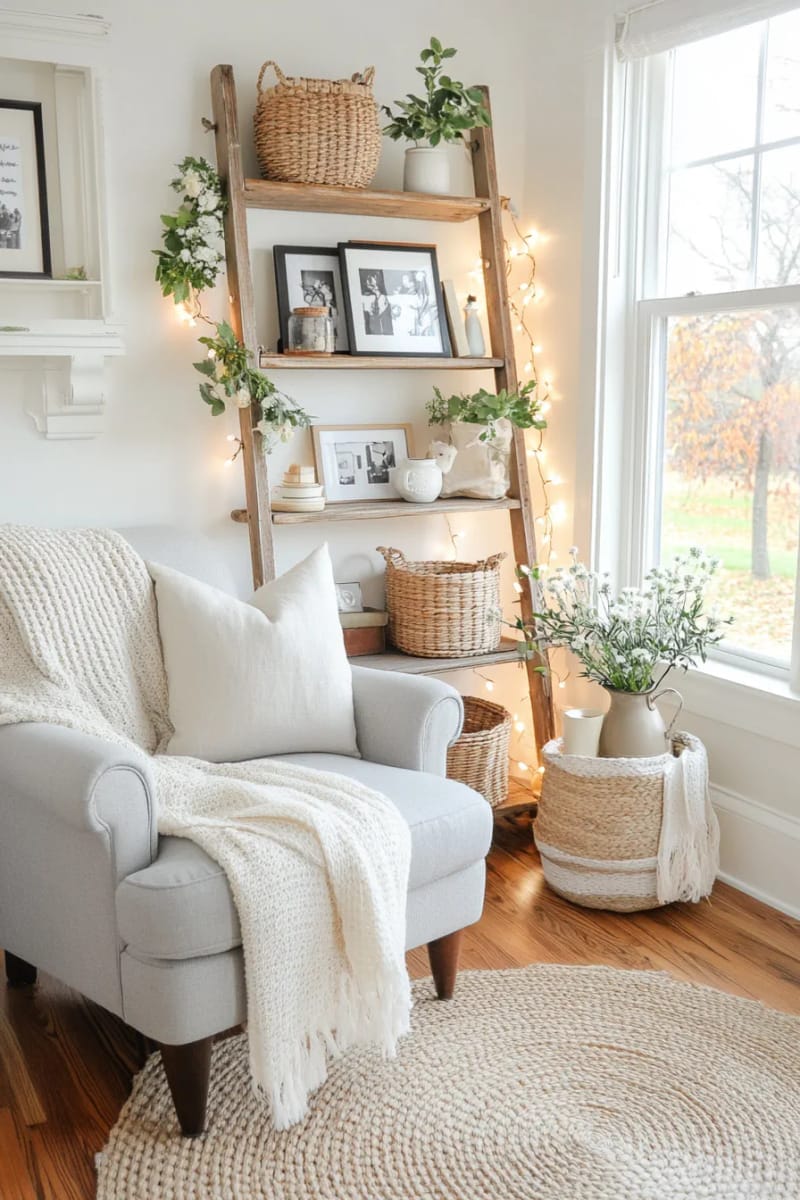
Hang statement light fixtures or string fairy lights to draw the eye upward. Floating shelves and vertical plant hangers maximize wall space without crowding the floor.

Creative Storage and Organization
Dual-Purpose Furniture
Storage ottomans, sofa beds, and nesting coffee tables reduce clutter. Even old trunks can double as coffee tables with hidden storage.
Tip: Always look for pieces with built-in storage, like an Amazon Basics storage ottoman .
Open Shelving and Repurposed Finds
Style open shelves with books, baskets, or favorite mugs. Repurpose ladders as blanket racks, crates as rustic shelving, and vintage suitcases as side tables.

Tip: Keep heavier items on lower shelves for safety and easy access.
Add Personality With Budget Decor
Thrifted and DIY Decor
Scout thrift stores for furniture with good bones and give them new life with paint or updated hardware. A bold paint color or new knobs can turn an outdated table into a focal point.

Tip: Clean and sand furniture before painting to ensure durability.
Bring in Greenery

Plants instantly freshen up a space. Try Mkono’s 35-inch macramé plant hanger for vertical greenery or cluster potted succulents on a windowsill.
Tip: For low-light rooms, use low-maintenance plants like pothos or realistic faux greenery.

Play With Light
Mirrors reflect light and make small spaces feel larger. Sheer curtains let in natural light, and battery-powered copper-wire fairy lights in glass jars add cozy ambiance.


Tip: Place mirrors opposite windows to maximize brightness.
Style for Comfort and Coziness

Throw blankets, textured cushions, and poufs add comfort and personality. Mix patterns but stick to a cohesive color palette to keep things balanced.
Tip: Use removable pillow covers for easy seasonal updates.

Decorating a small living room on a budget doesn’t have to be overwhelming. With a clear vision, a little planning, and some creative problem-solving, you can craft a space that feels open, functional, and full of personality.
The key is to focus on what truly matters to you whether it’s creating cozy reading corners, incorporating meaningful décor, or finding smart storage solutions that fit your lifestyle.
Remember, it’s the little touches (thrifted finds, pops of greenery, and soft lighting) that make the biggest difference. By embracing DIY projects and shopping wisely, you can give your living room a high-end look without the high-end price tag.
The result? A beautiful, comfortable space that feels entirely your own.