
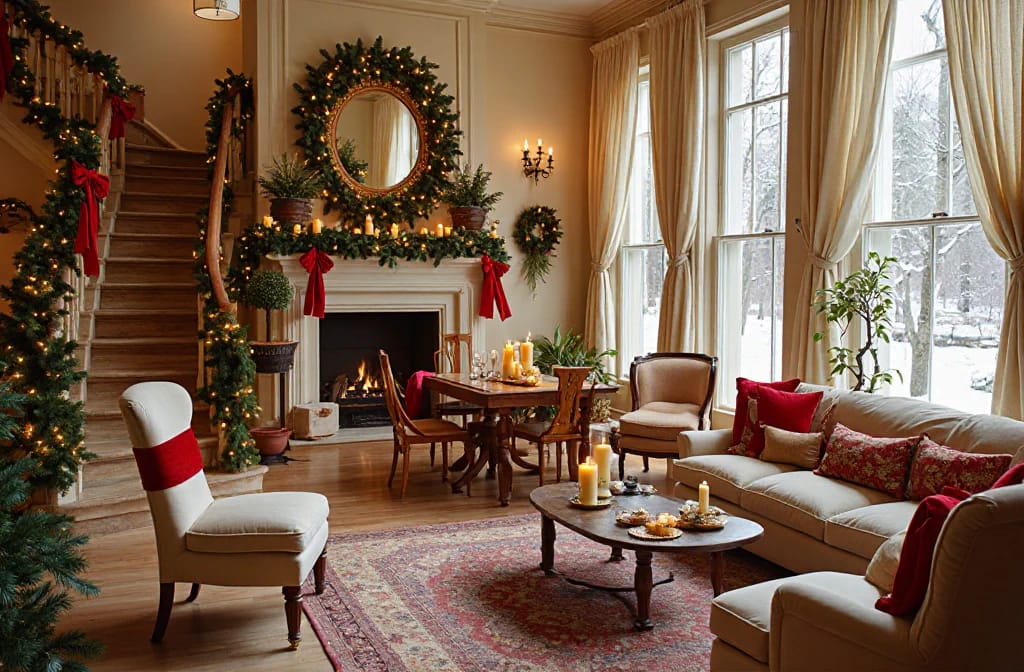
Most red ribbon gets spent on the tree, and by the time anyone thinks about the stair rail there are eleven inches left on the roll and a lot of wishful thinking. That is the real constraint on ribbon away from the tree, and it is not taste: it is quantity and width. What follows is where red ribbon actually earns its place on handrails, candlesticks, chair backs, cabinet knobs and window sashes, including the widths that hold a loop and the ones that go limp by the second week of December.
Spiral the ribbon down the stair rail instead of bowing every baluster
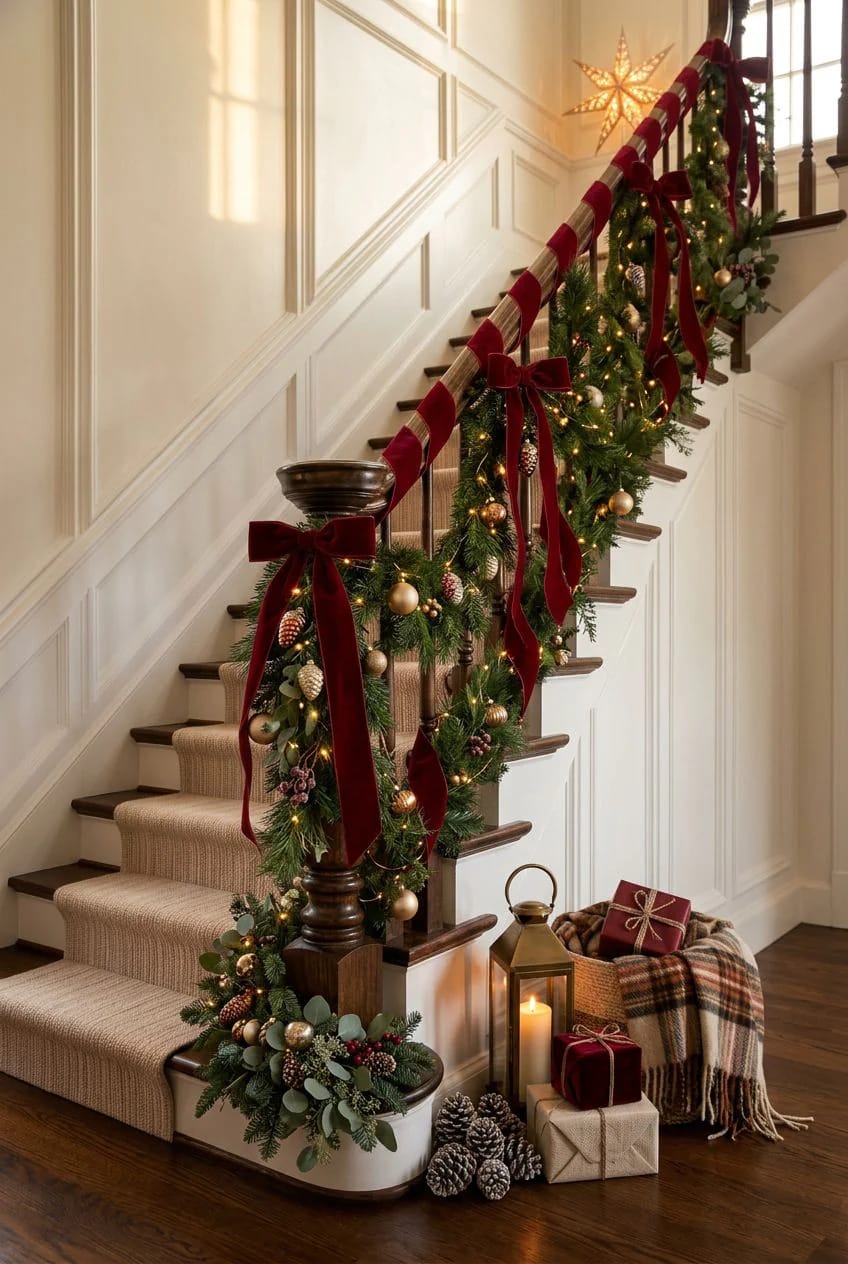
One continuous ribbon wrapped around the handrail in a slow spiral will beat fourteen individual baluster bows every time, and it is not close. The spiral gives the eye one line to follow up the flight; a row of identical small bows gives it fourteen stopping points, which is why that version photographs like a school fundraiser no matter how good the ribbon is.
Pitch matters more than material here. Turns spaced about ten to twelve inches apart on a standard rail read as deliberate; tighter than that and you get a candy cane, looser and the ribbon looks like it slipped. Buy roughly two and a half times your rail length to allow for the wrap, measure the rail before you go rather than after, and anchor each end with green florist wire rather than tape, because tape pulls the finish off an oiled handrail when you take it down in January.
That said, the spiral only works on a rail people can still hold. If the ribbon covers the whole grip surface, someone will grab it on the way down and unwind four feet of your afternoon. Keep the wrap to the outer face of the rail on a staircase that gets real traffic, and save the full wrap for a formal flight nobody uses.
The newel post is the one place an oversized red bow belongs
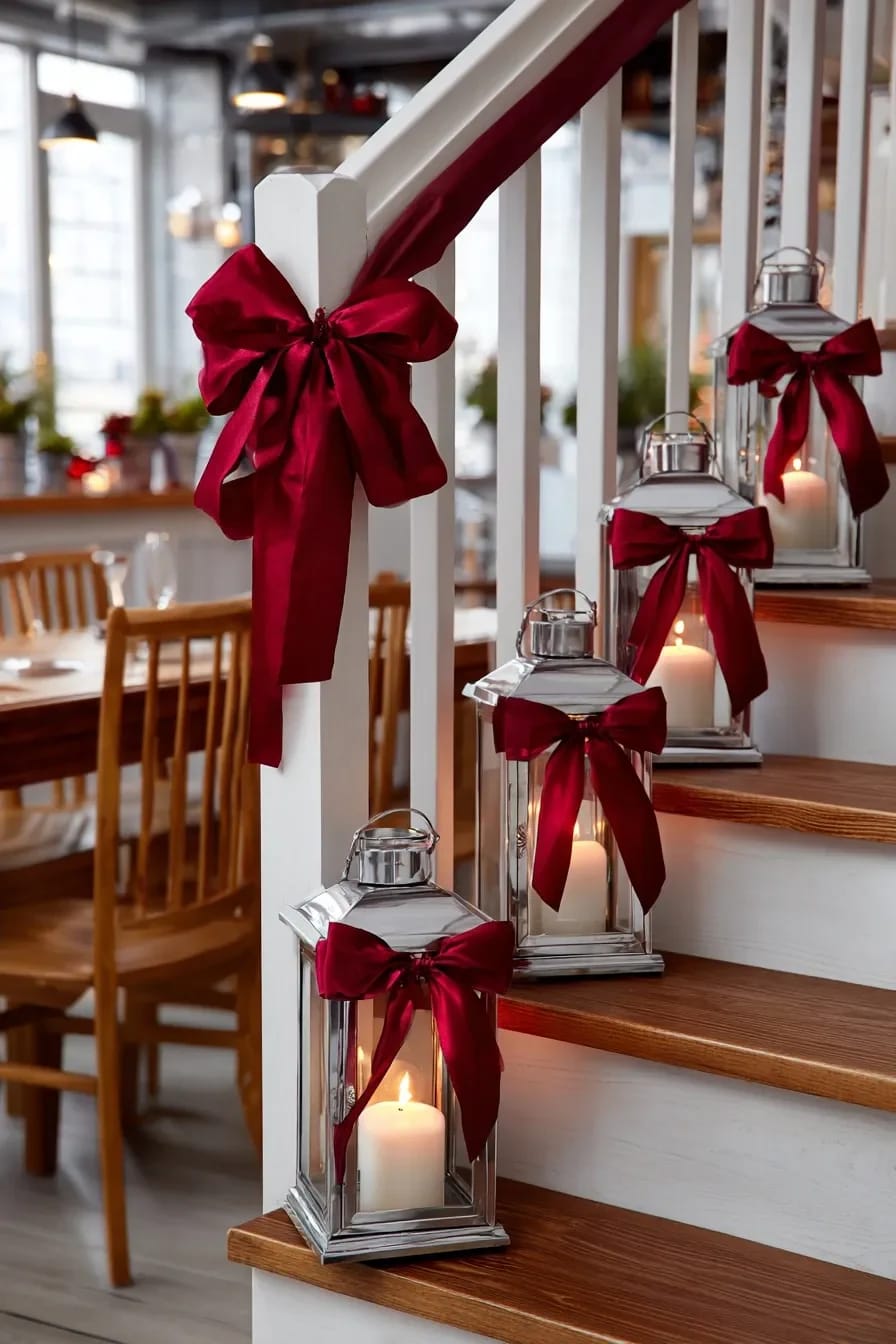
Put your single biggest bow on the newel post and nowhere else. It anchors the bottom of the run, it sits at eye level for anyone walking in the front door, and it gives the spiral somewhere to end instead of just stopping.
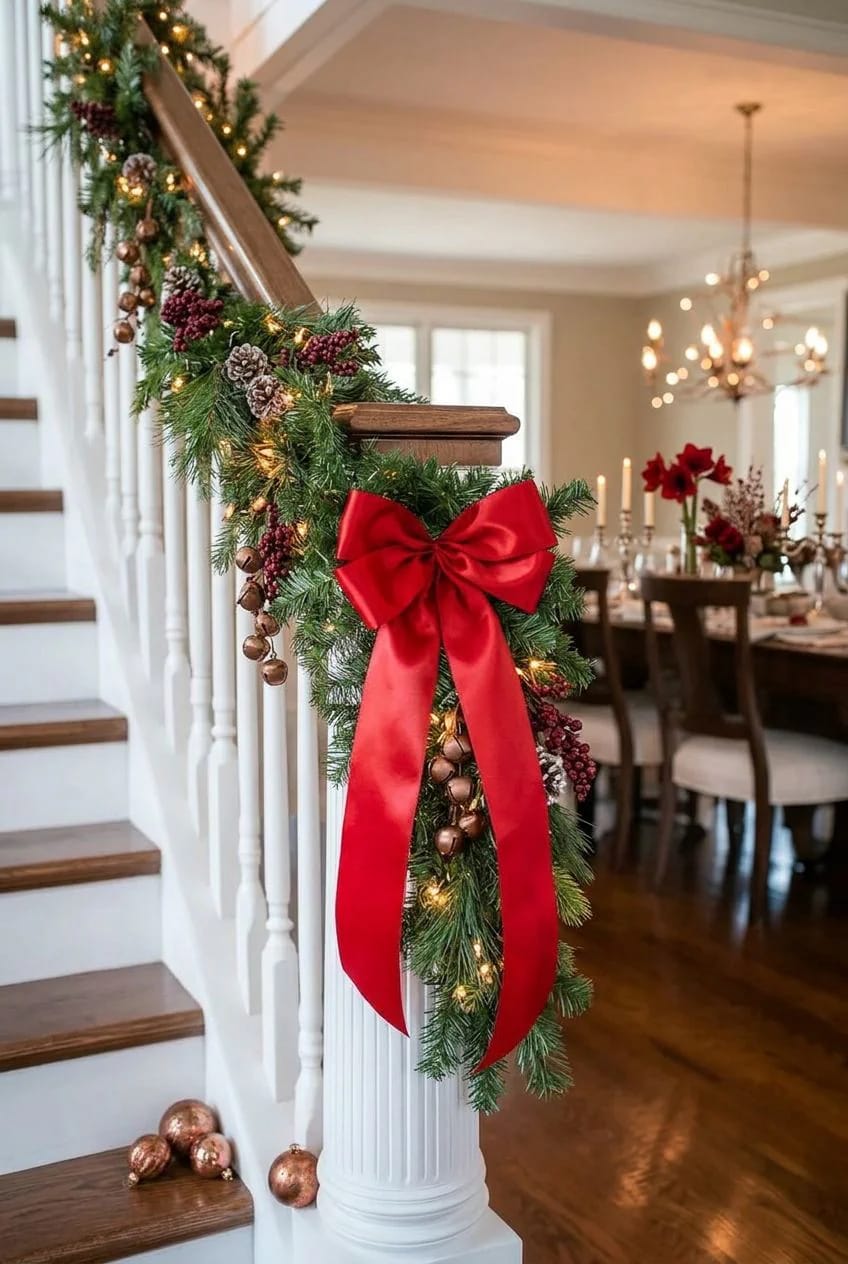
Scale is the whole decision: a bow face of fourteen to eighteen inches across looks intentional on a standard post, anything under ten inches looks like a gift topper somebody lost. Let the tails run long, down past the second or third tread, and cut them on a deep diagonal or an inverted V so they do not fray into a fringe by New Year.
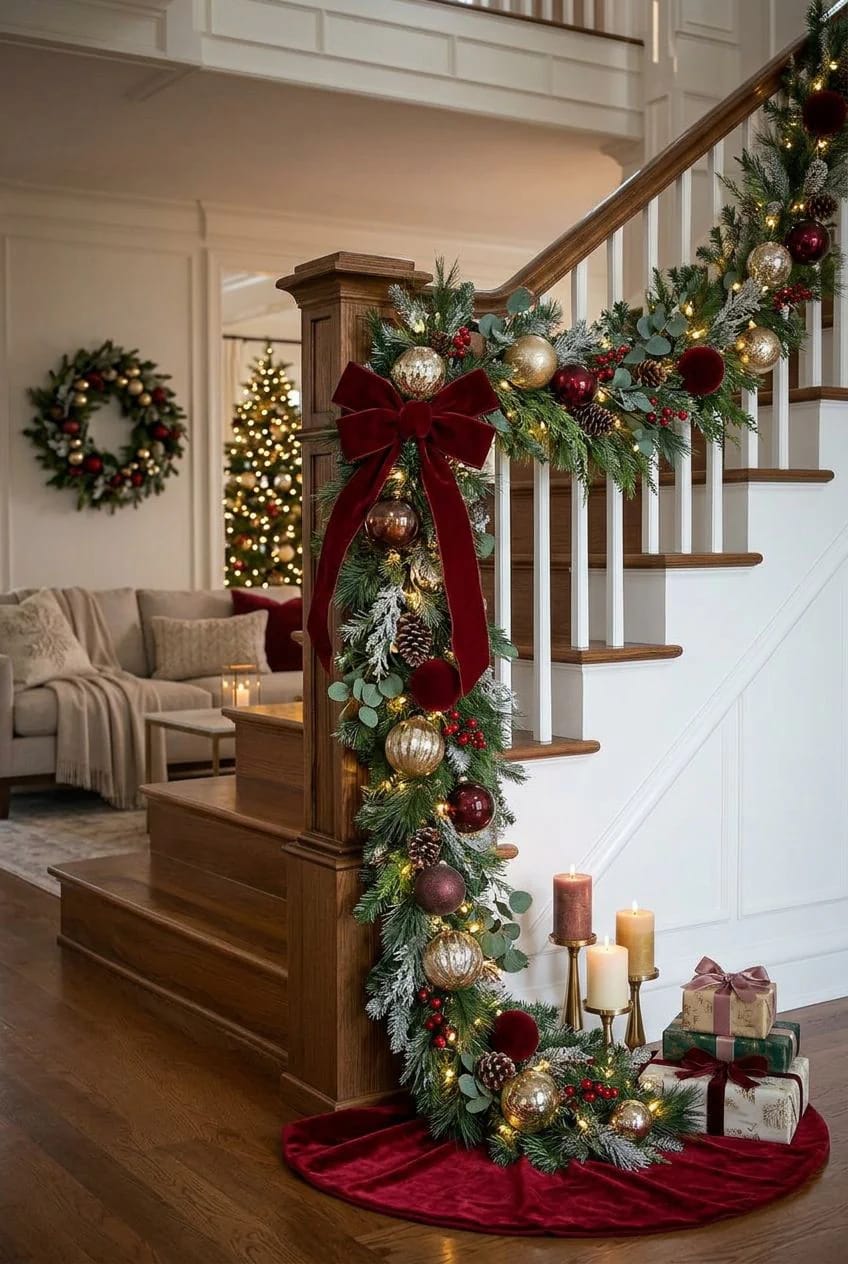
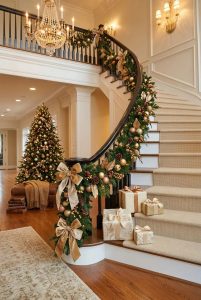 12 Christmas Garland Ideas for Staircases and Banisters That Don’t Just Look Draped-On How to get enough greenery on the rail so the ribbon has something to sit against.
Wired #40 ribbon is the width that actually holds a loop on a handrail
Buy 2.5-inch wired ribbon for anything structural and stop agonizing. In the florist numbering system that is #40, and it is the smallest width that holds a bow loop open on a surface as wide as a handrail or a newel cap without a wire armature underneath.
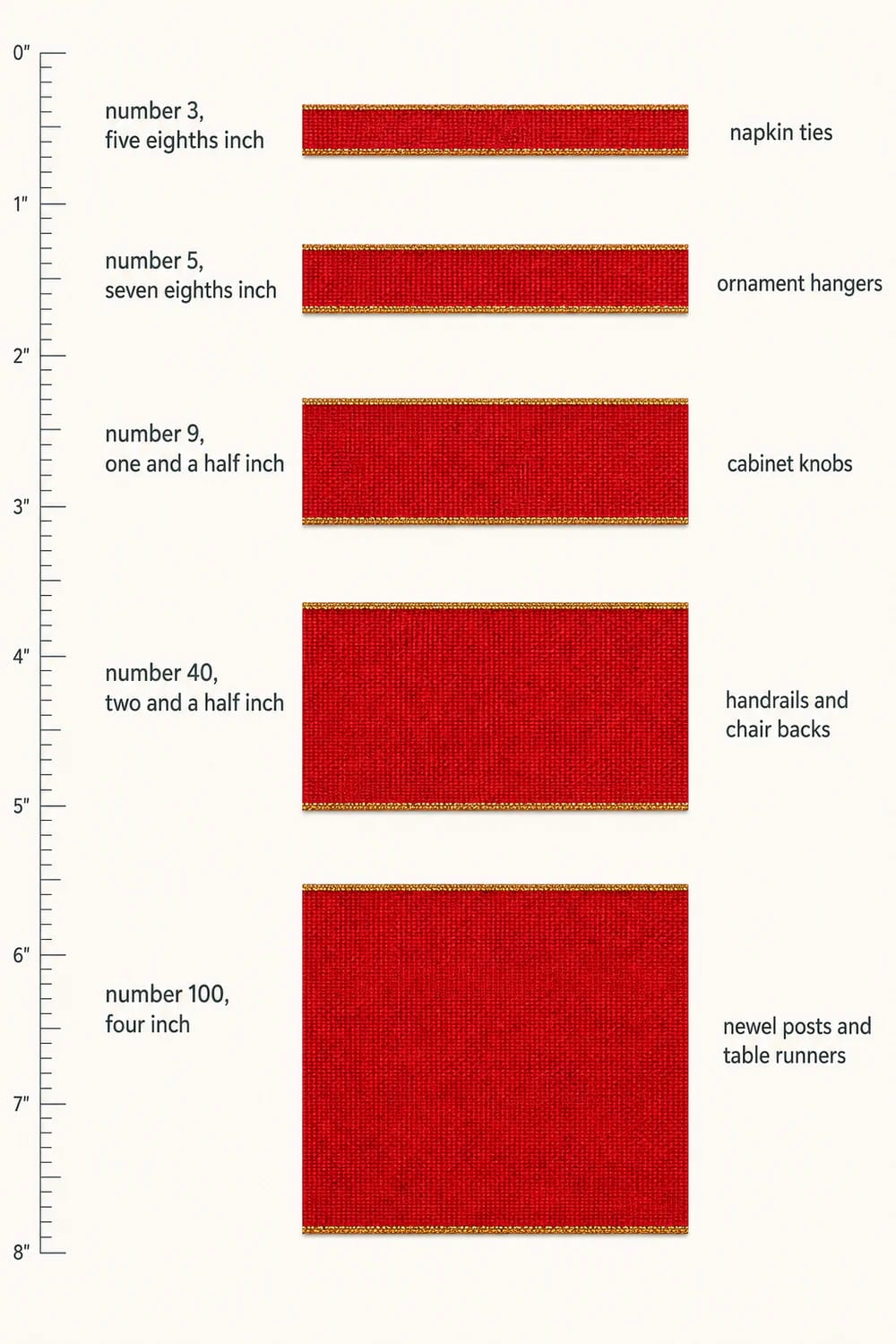
The numbering is old wholesale shorthand with no arithmetic logic behind it, so it just has to be looked up: #3 is 5/8 inch, #5 is 7/8 inch, #9 is 1.5 inches, #40 is 2.5 inches, #100 is a full 4 inches. Supply houses have pointed florists at #40 and #100 for rails, posts and windows for decades, which is a fairly good argument on its own.
The other spec worth caring about is which red. A blue-leaning crimson and a warm orange-red in the same room will read as a mistake even though both are objectively red, and the same clash is what makes a painted red front door so hard to decorate without going muddy. Pick one bolt and commit to it for the whole house.
| Ribbon | Width to buy | Holds a loop? | Where it earns its place |
|---|---|---|---|
| Wired velvet | #40, 2.5 in | Yes, indefinitely | Handrails, newel post, chair backs |
| Wired taffeta or satin | #40 to #100 | Yes, with sharper edges | Newel post, window sashes, lantern handles |
| Grosgrain | #9, 1.5 in | Only in small bows | Cabinet knobs, napkins, ornament hangers |
| Flat unwired velvet | #100, 4 in | No, and that is the point | Table runner, picture drops |
| Polypropylene outdoor | #40, 2.5 in | Yes, wet or dry | Porch rails, exterior wreaths |
Tie the ribbon to the candlestick, not the candle
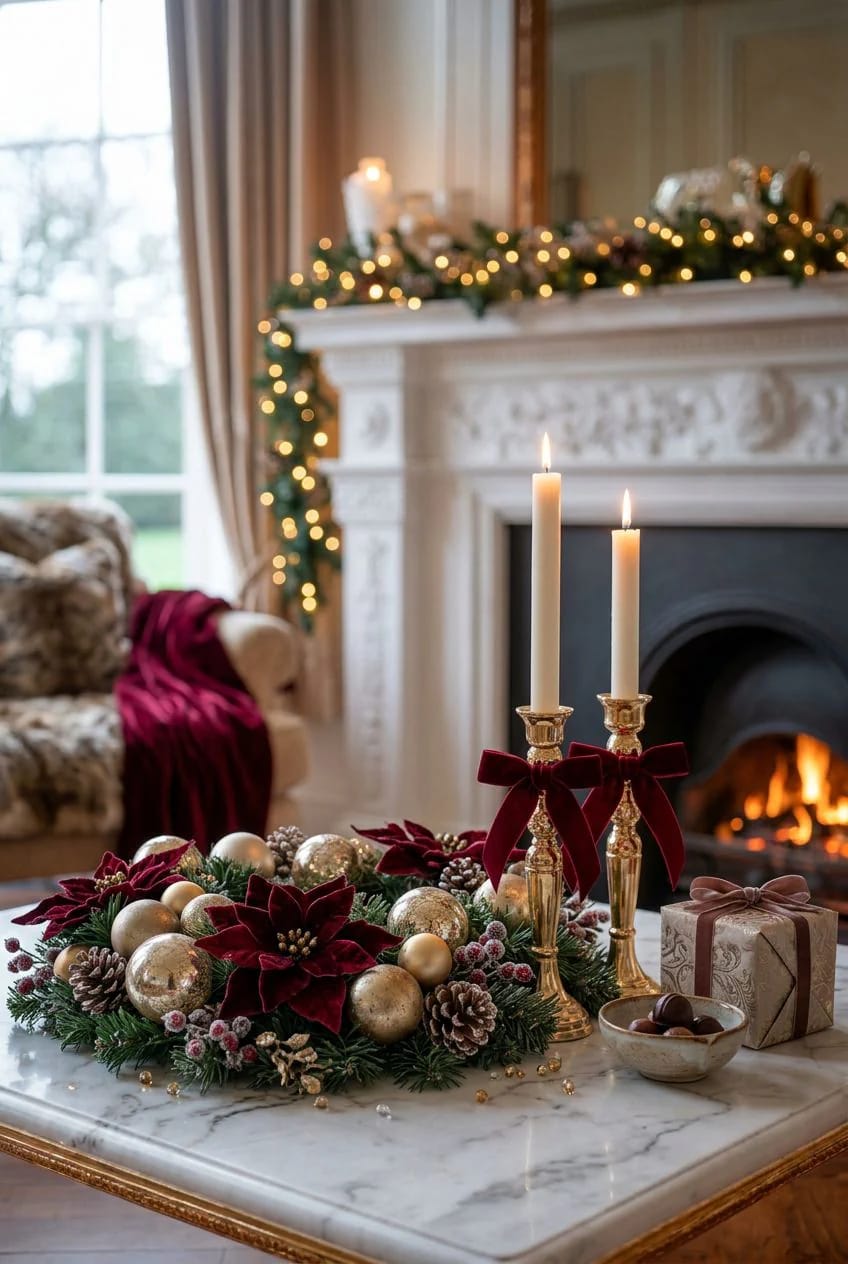
The bow goes around the stem or base of the holder, low, where the flame is nowhere near it. Every photograph you have seen of ribbon tied halfway up a lit taper was styled by someone who blew the candle out before the shutter fired, and the version where you leave it lit through dinner is a genuinely bad idea.
The numbers are not subtle. The NFPA reports that December is the peak month for home candle fires, that Christmas Day sees close to three times the daily average, and that three of every five candle fires start because something combustible was sitting too close to the flame. The standing recommendation is a foot of clearance between a candle and anything that burns, which a length of velvet wrapped around the wax does not remotely satisfy.
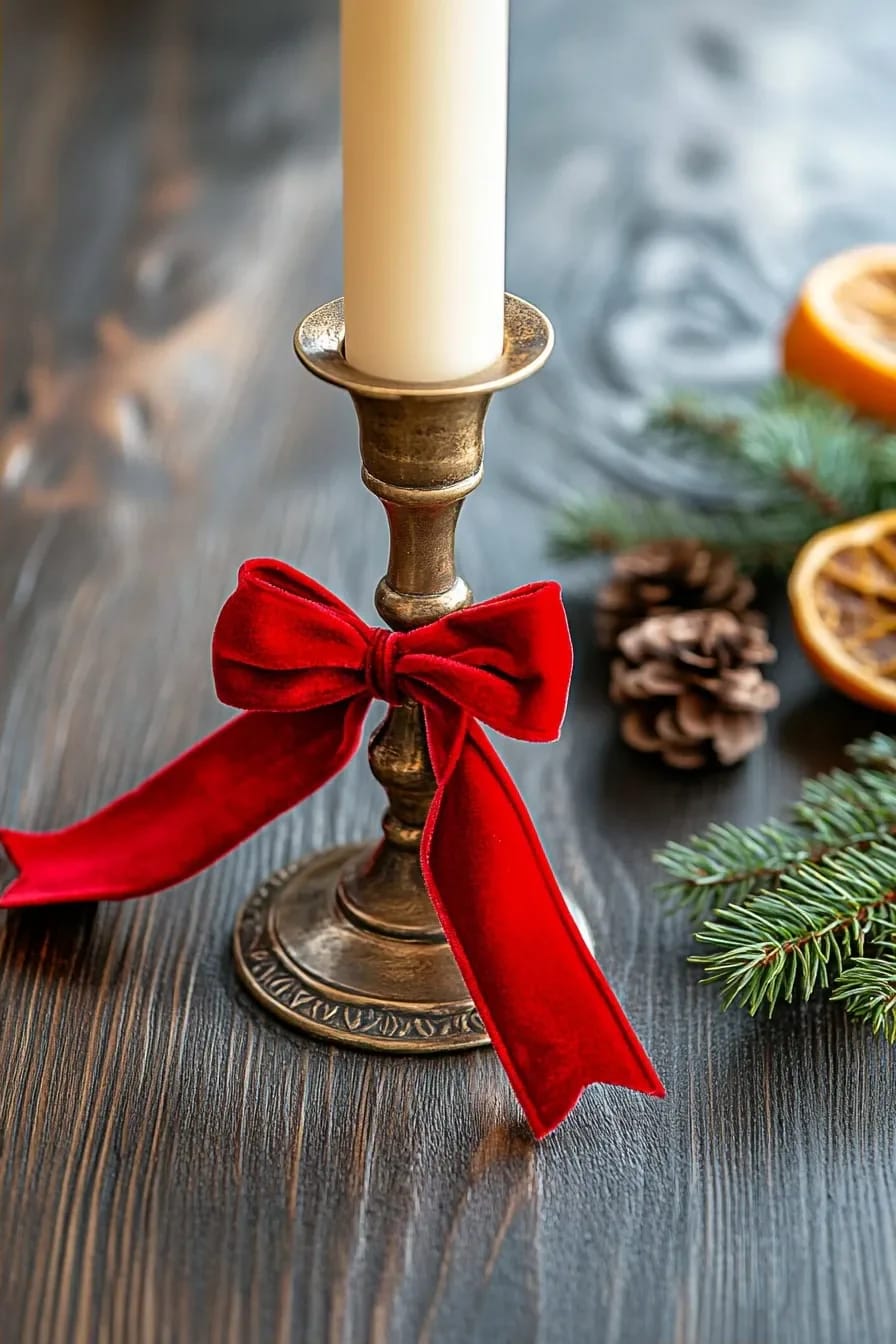
Which leaves you two workable options. Ribbon the metal, keep the greenery a hand span back from the holder, and light the candle as normal; or ribbon whatever you like and go flameless. Flameless tapers have improved past the orange plastic era, and the ones with a real wax shell and a moving wick pass at three feet, though the cheap ones still glow like a rental car dashboard and no amount of velvet fixes that.
Two chairs get bows, not eight
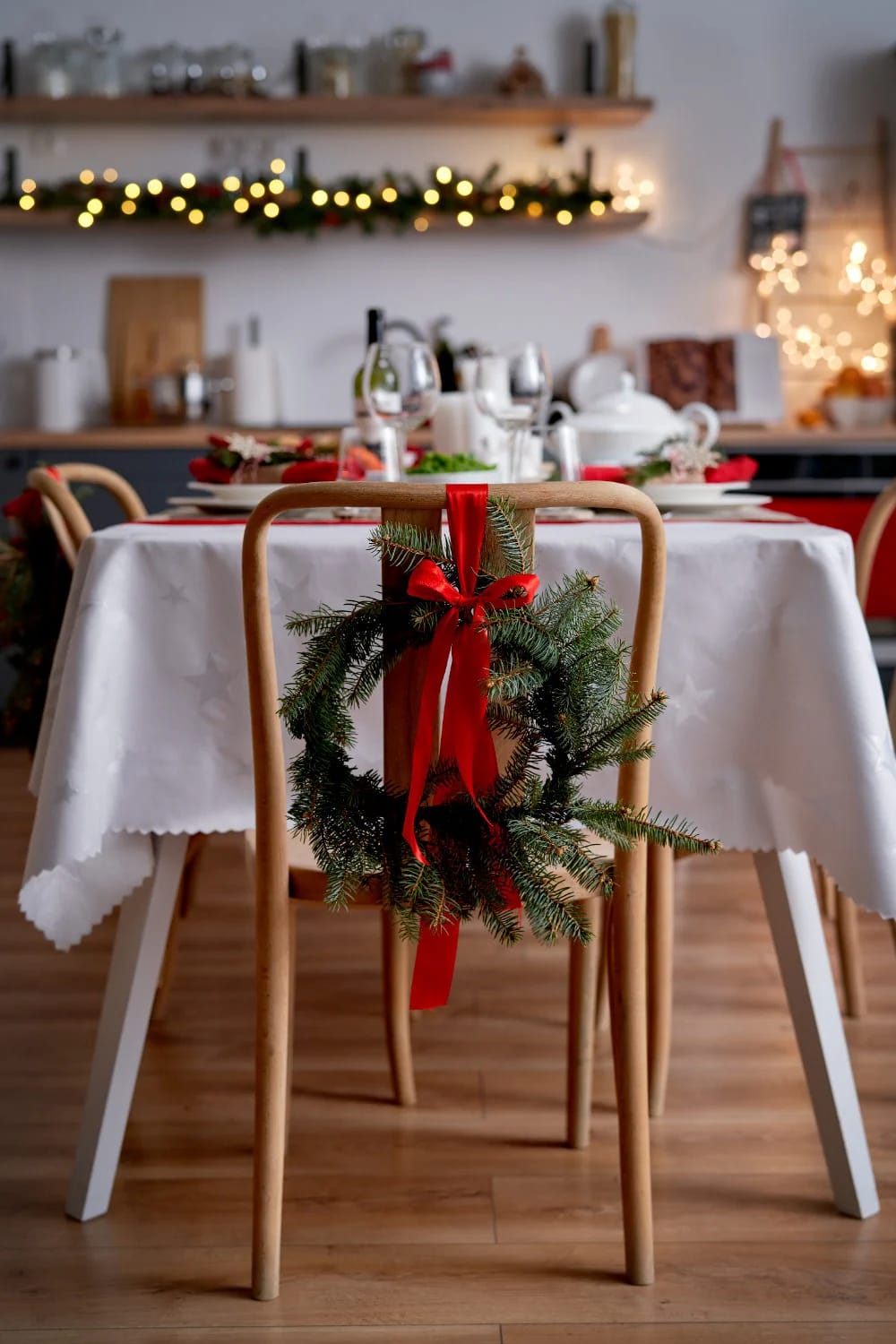
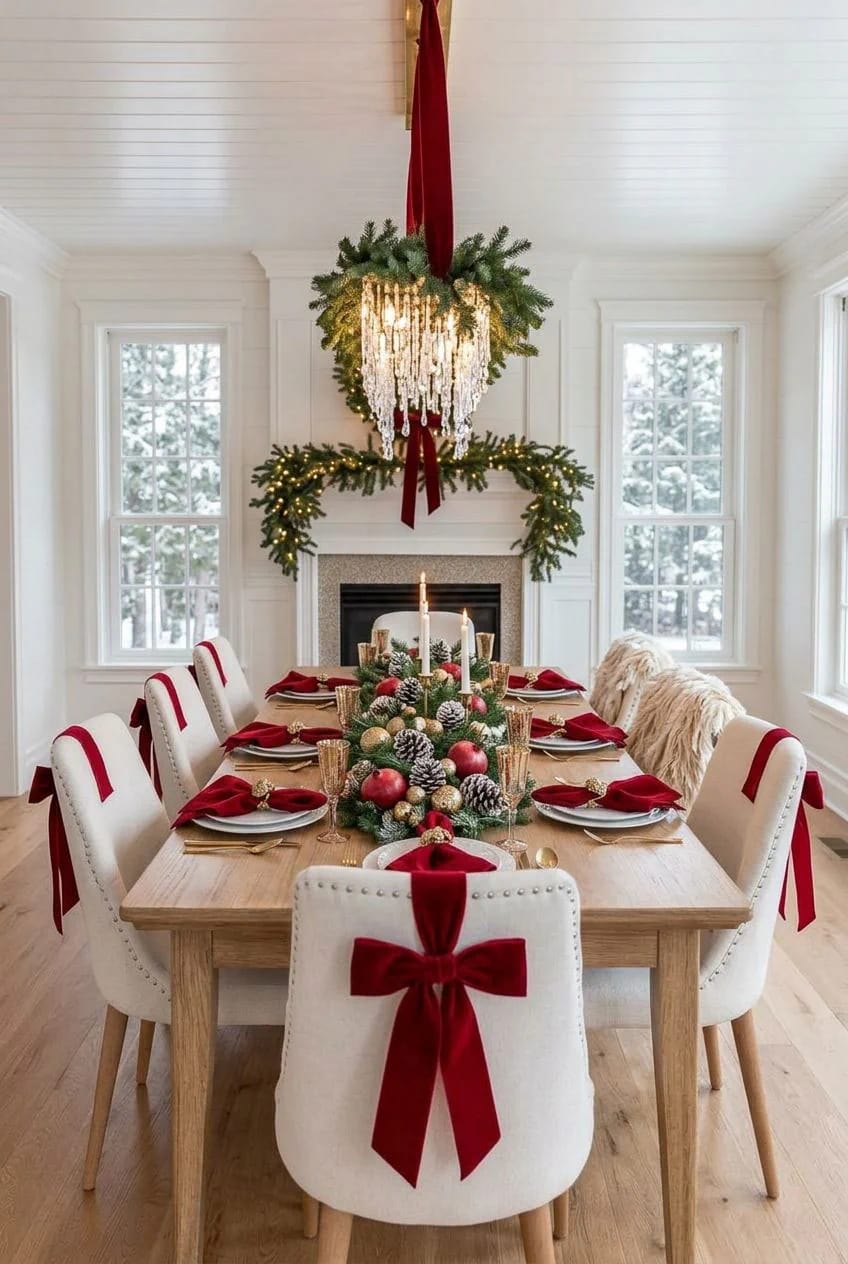
Bow the two end chairs and leave the sides bare. A dining set with every chair bowed reads as a hired banquet room, and the version where only the heads are dressed reads as a house where somebody made a decision. It also costs you two bows instead of eight, which matters when #40 velvet runs somewhere around $12 to $20 for a 10-yard roll.
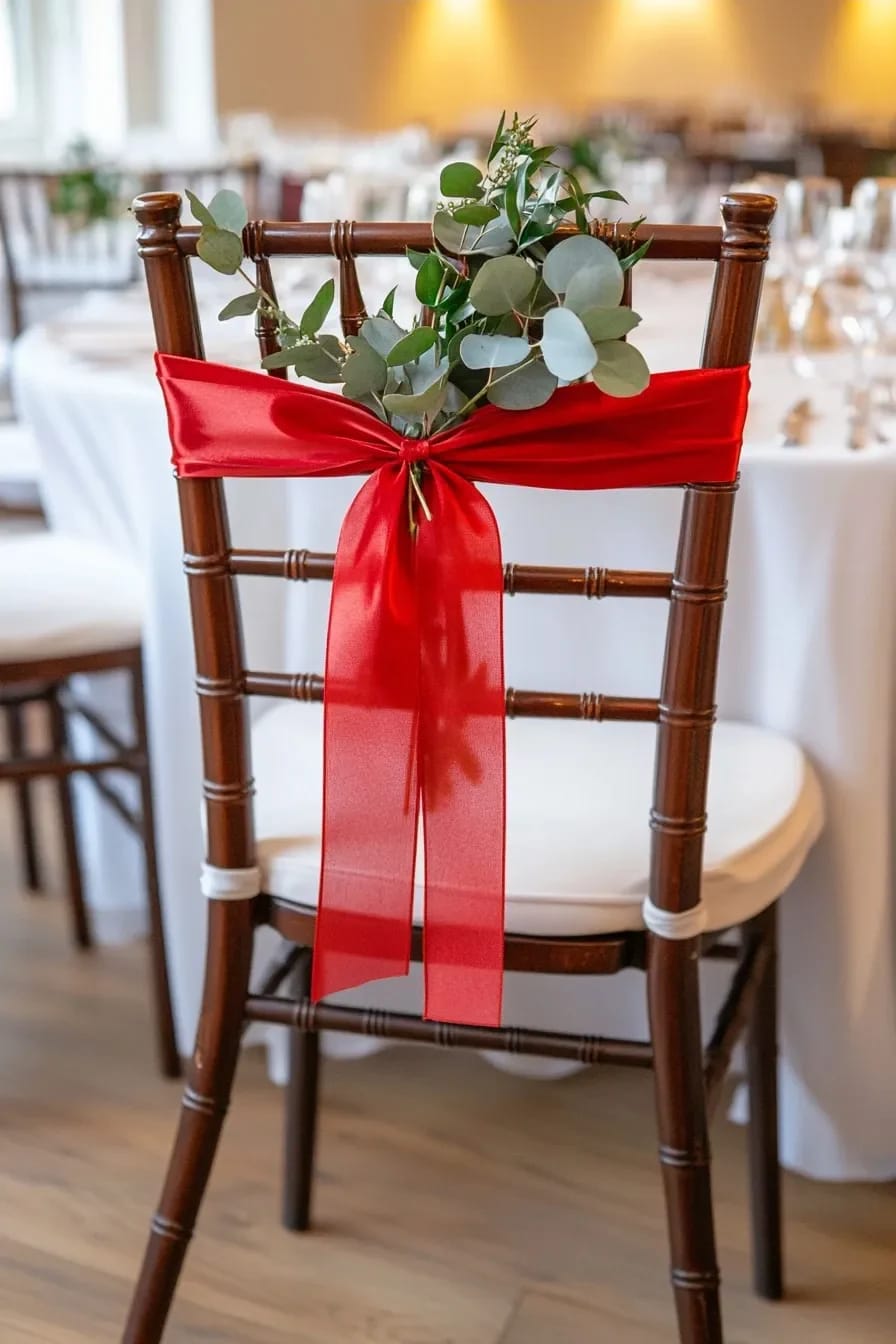
Ladderbacks and spindle backs take a bow cleanly because there is a rail to knot against. Upholstered parsons chairs do not: there is nothing to grip, the ribbon slides down the back, and by the main course it is sitting on the floor. On those, run the ribbon around the whole chair back like a belt and knot it at the rear rather than trying to perch a bow on top of nothing. The rest of the room follows the same logic as a room-by-room red and green plan, where the discipline is always about where you stop.
Red velvet bows on cabinet knobs are worth exactly one run of cabinets
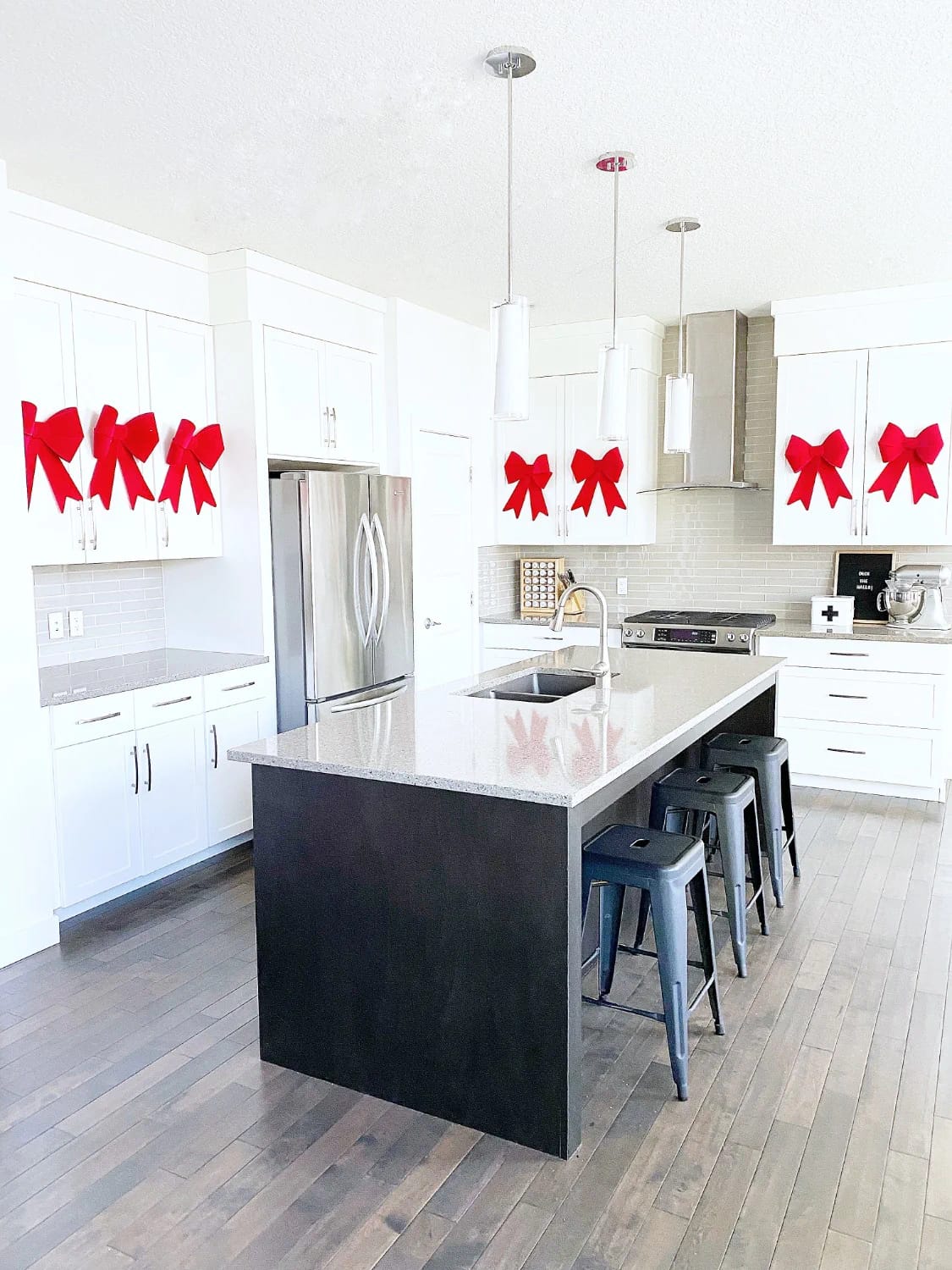
Pick one bank of cabinets, tie four to six bows, and stop. The whole-kitchen version, every knob and every drawer pull, is the one that turns up in December photos and looks like a shop fitting by the third day, mostly because you have to touch half of them to cook anything.
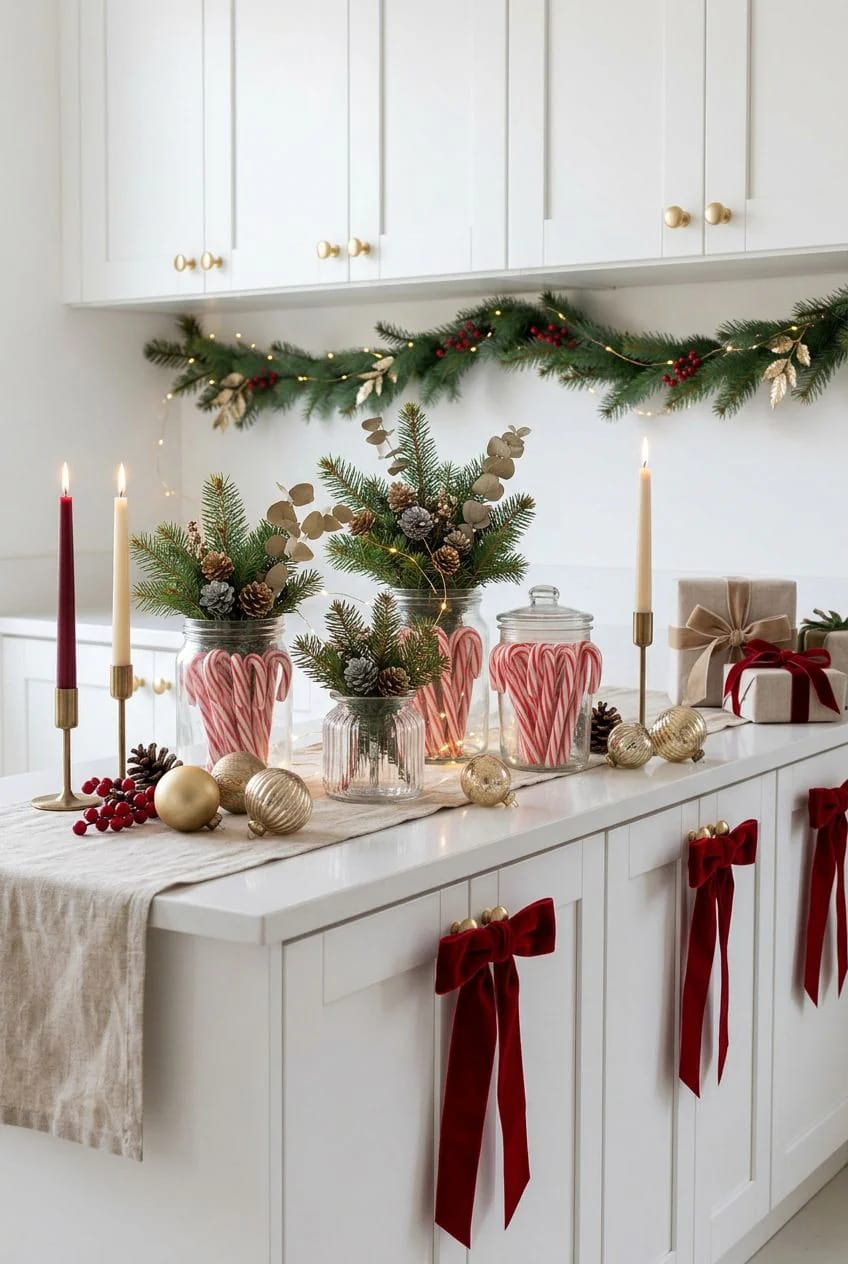
Use #9 grosgrain or a narrow velvet here rather than the 2.5-inch. Tie the loops horizontally so they sit flat against the door instead of dangling over the face, and take the ones near the range down before you roast anything, because velvet holds cooking grease permanently and does not come out.
 Christmas Tree With Red Velvet Ribbon and Bows: 12 Ways to Style It Without Looking Overdone Where the same roll goes on the tree without tipping into craft-store territory.
Run flat red ribbon down the table and set the candlesticks on it
A 4-inch flat velvet ribbon running the length of the table does the job of a runner for a fraction of the price and a fraction of the bulk. Unwired is essential here: wire buckles the moment you put a candlestick on it, and you end up with a ridge down the middle of your table.
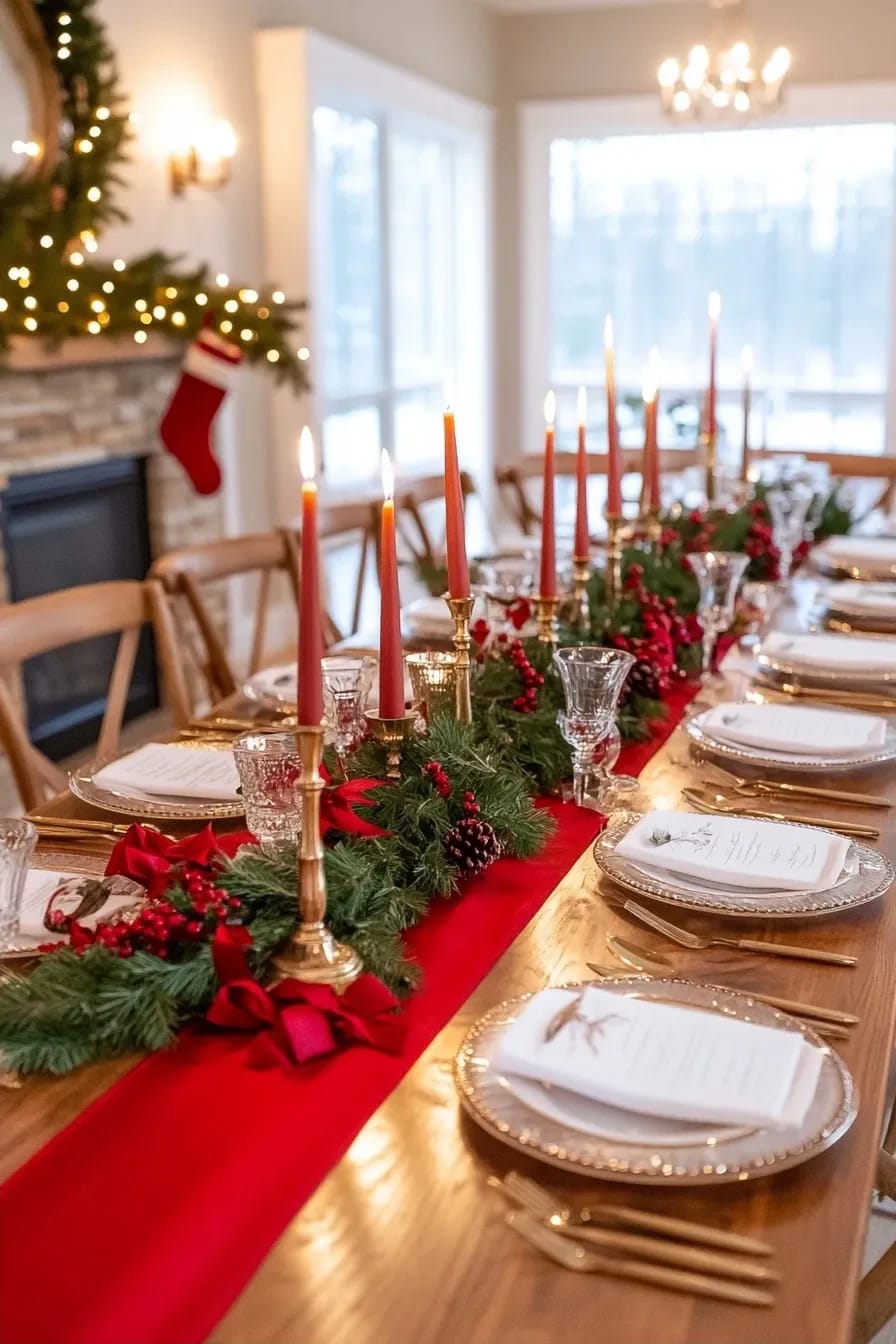
Let it overhang the ends by six to eight inches so it reads as fabric rather than tape. The ribbon also solves the height problem that ruins most holiday tables, since it puts nothing above eye level at all, which is the same reasoning behind the low centerpiece approach that keeps guests able to see each other.
Hang the window wreaths on long ribbon drops, not on suction hooks
A wreath suspended on a visible length of red ribbon looks considered; the same wreath stuck to the glass on a clear plastic hook looks like it is falling off, because eventually it is. Loop 2.5-inch ribbon over the sash lock or a small cup hook screwed into the top of the window trim, and let the wreath hang eight to twelve inches below the top rail so the drop is clearly part of the design.
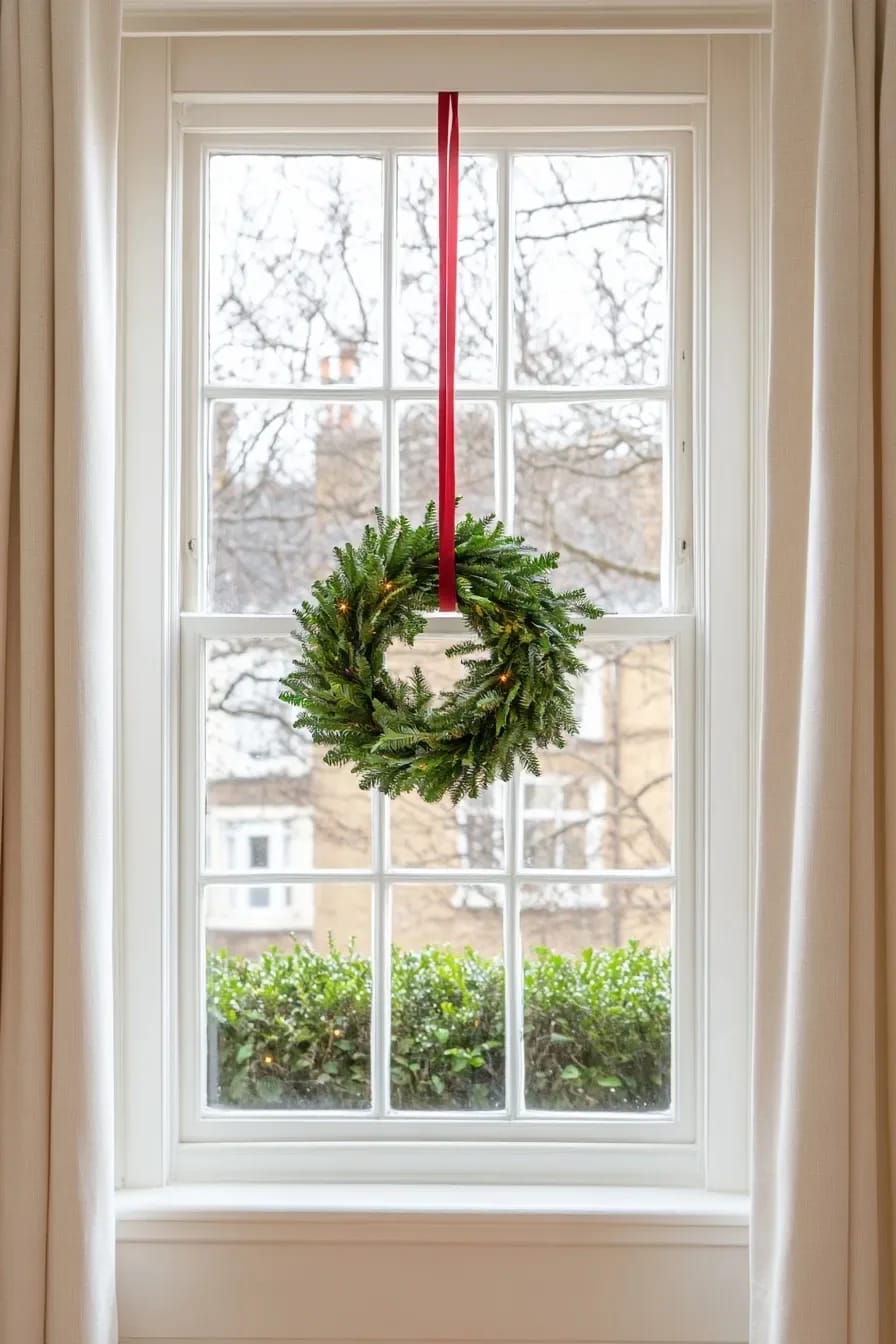
One thing worth knowing before you commit to the exterior version: adhesive hooks lose grip on cold glass, and anything you stick to the outside of a window in a climate that drops below about 40 degrees will come down in the first hard night. Screw a hook into the trim instead, or build the wreath light enough that a ribbon over the sash carries it. If you are making rather than buying, the construction is the same as a hand-wired door swag, just scaled down.
Chandelier streamers only work under a low ceiling
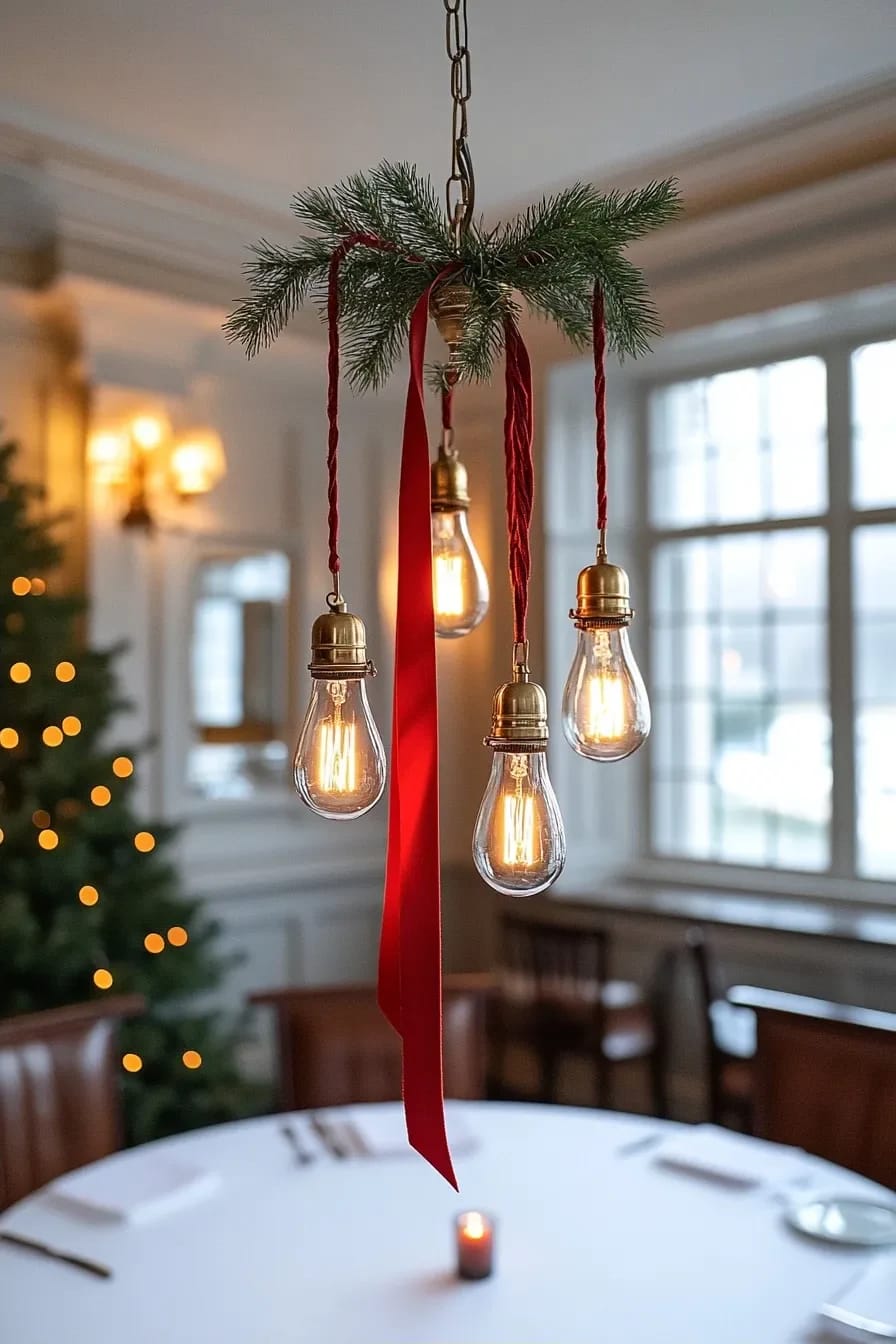
Ribbon tails hanging from a light fixture need to be seen from below at close range, which means an eight or nine foot ceiling. Under a two-storey foyer the same streamers just look like something got caught up there.
Hang one picture on a long red ribbon the way the Victorians hung everything
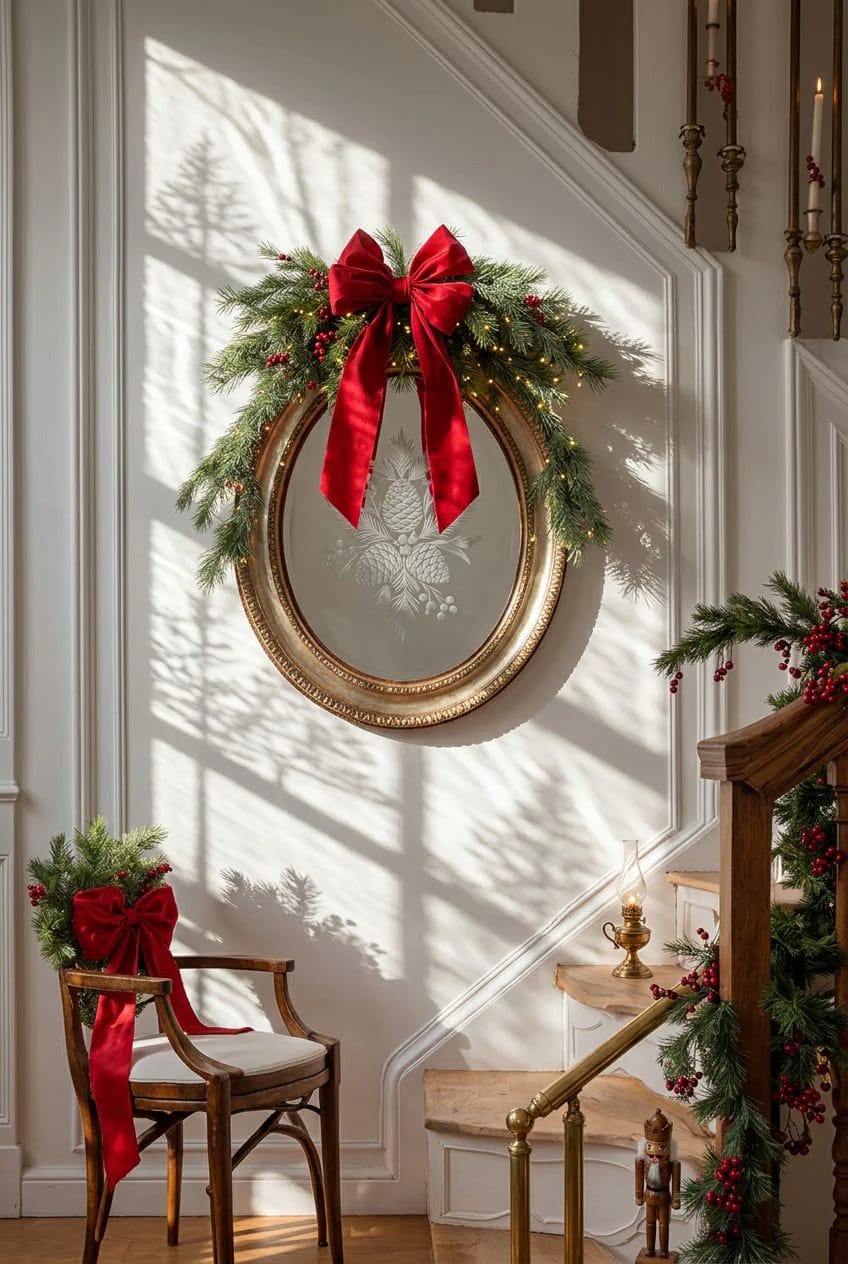
Take one framed piece off its hook, run a wide red ribbon behind the frame, and hang the whole thing from a single hook near the picture rail with a bow at the top. It is a nineteenth century hanging method that briefly gets to be seasonal decoration, and it works because the ribbon becomes a vertical line in a room that otherwise has none.
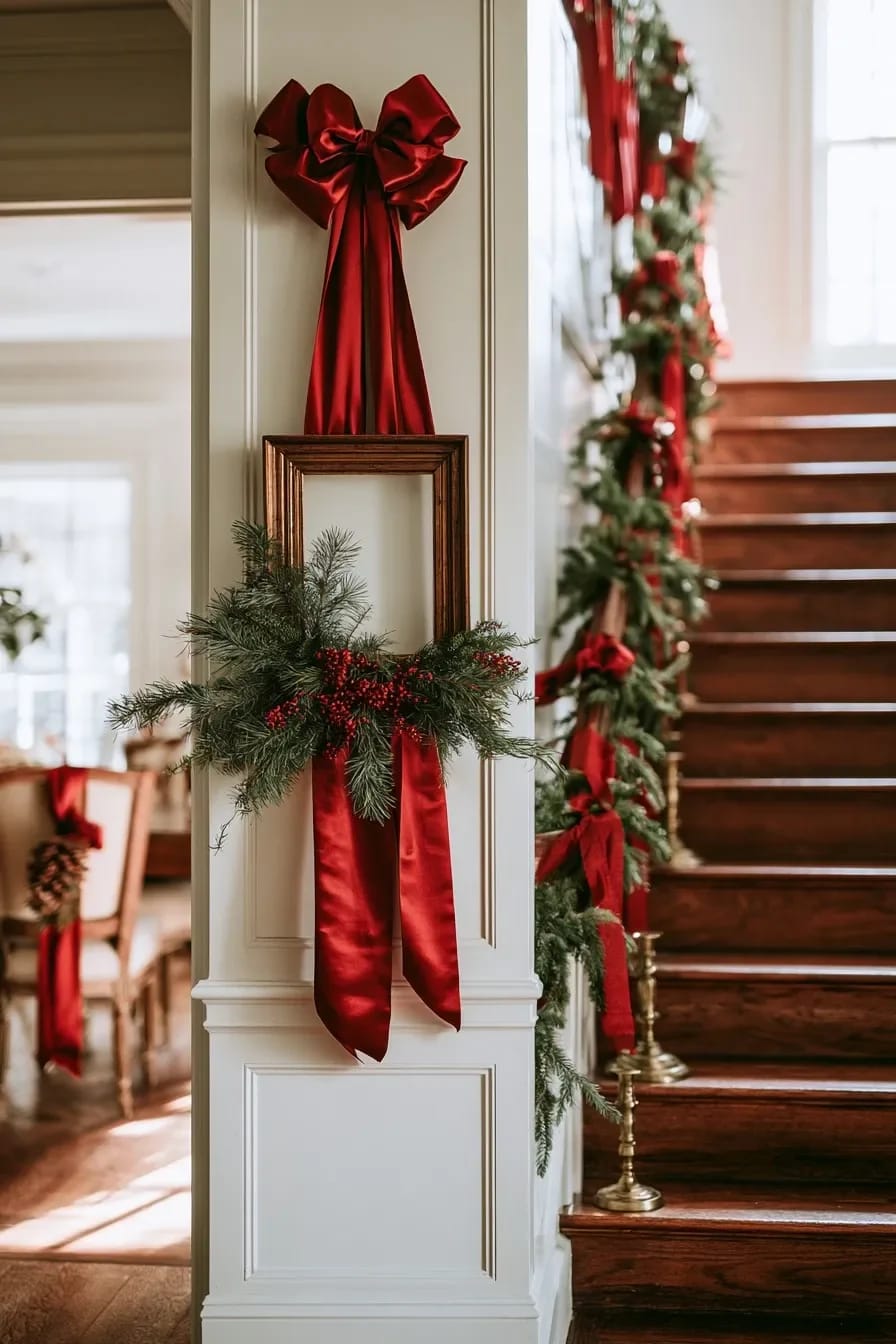
Choose the frame carefully: the piece has to be light enough that the ribbon carries it without stretching, so a modest print in a wooden frame yes, the heavy mirror no. Keep the ribbon width proportional to the frame, roughly a quarter of the frame's width, or the hanging reads as a gift bag.
Lantern handles take a bow better than lantern bodies
Tie the bow to the carrying handle, at the point where it meets the frame, and leave the glass panels alone. A ribbon wrapped around the body of a lantern blocks the one thing a lantern does.
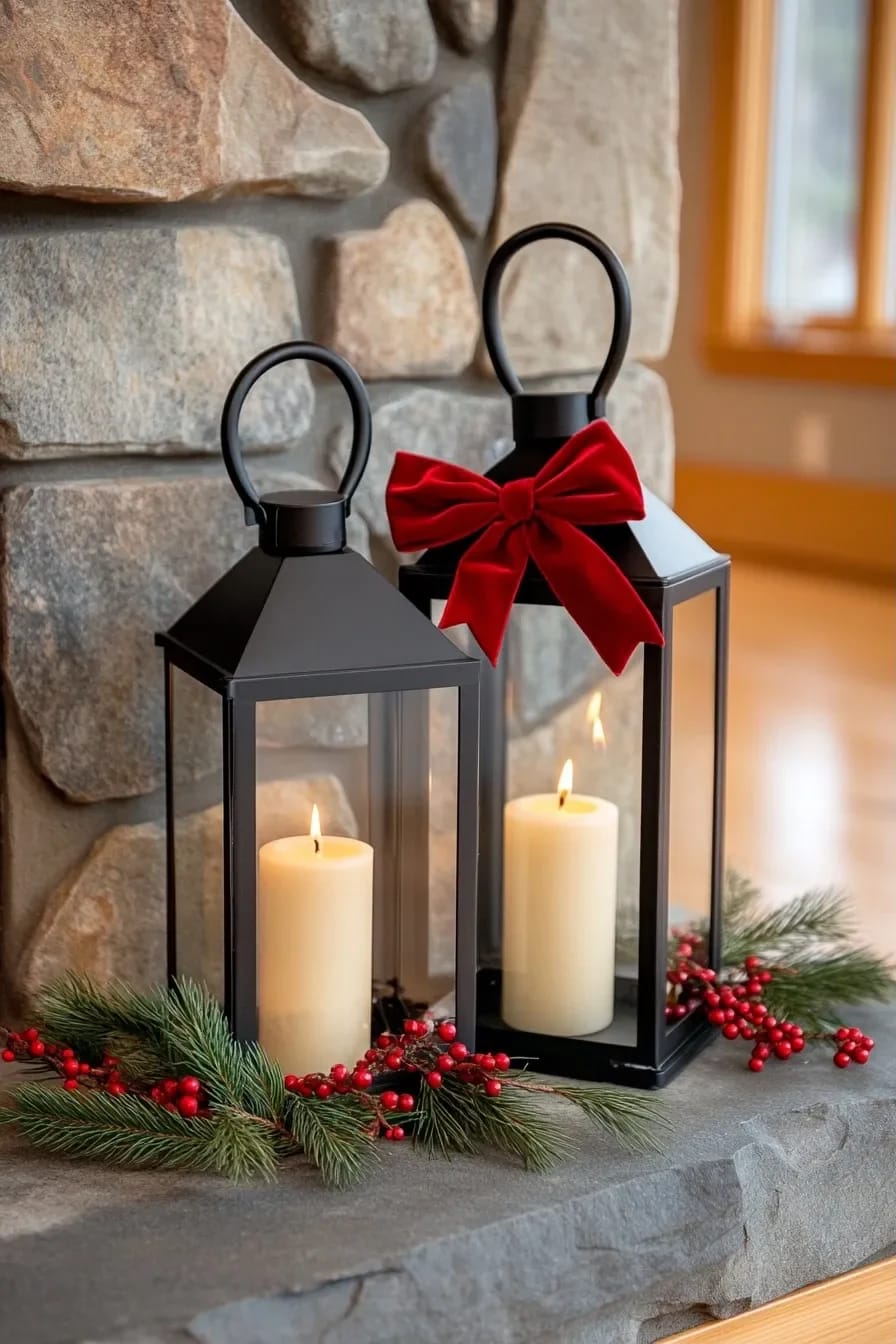
Two lanterns of different heights, one ribboned and one bare, beats a matched pair with matching bows. The same restraint applies on a mantel where the garland is already doing the work, and the shelf below is usually where a spare lantern ends up anyway.
Outdoor rails need polypropylene, not velvet
Velvet outdoors is a one-week decoration. It absorbs rain, mats flat, drops to a dull maroon and never recovers, so the deck rail or porch balustrade takes polypropylene ribbon instead, which holds its color wet and dries stiff enough to keep a loop.
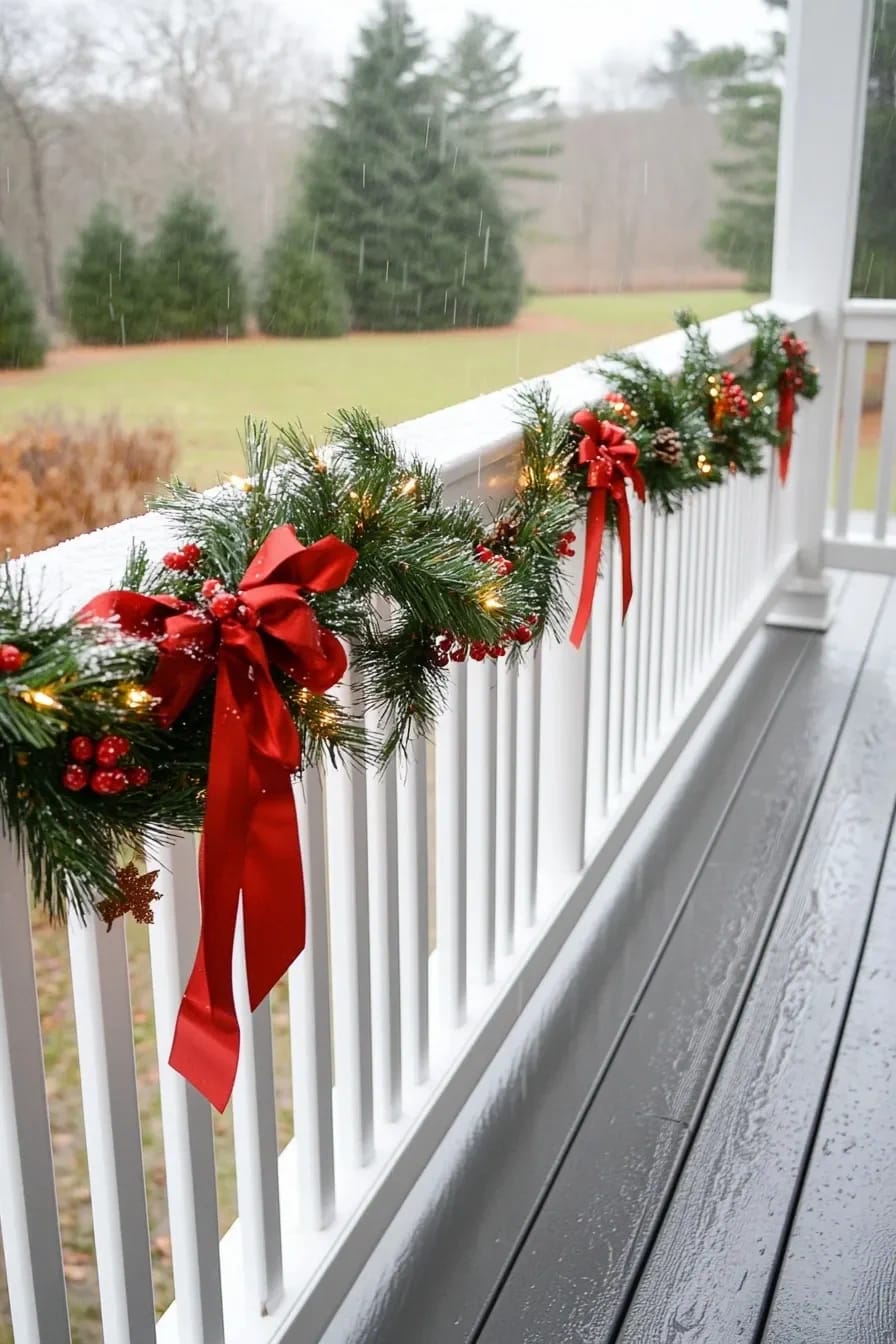
Expect UV fade anyway if you are decorating a south-facing porch in the lower half of the country, where the red will be noticeably pinker by mid-January. Buy the outdoor ribbon as a consumable, one season at a time, rather than as something you store.
If you only have one afternoon, do it in this order
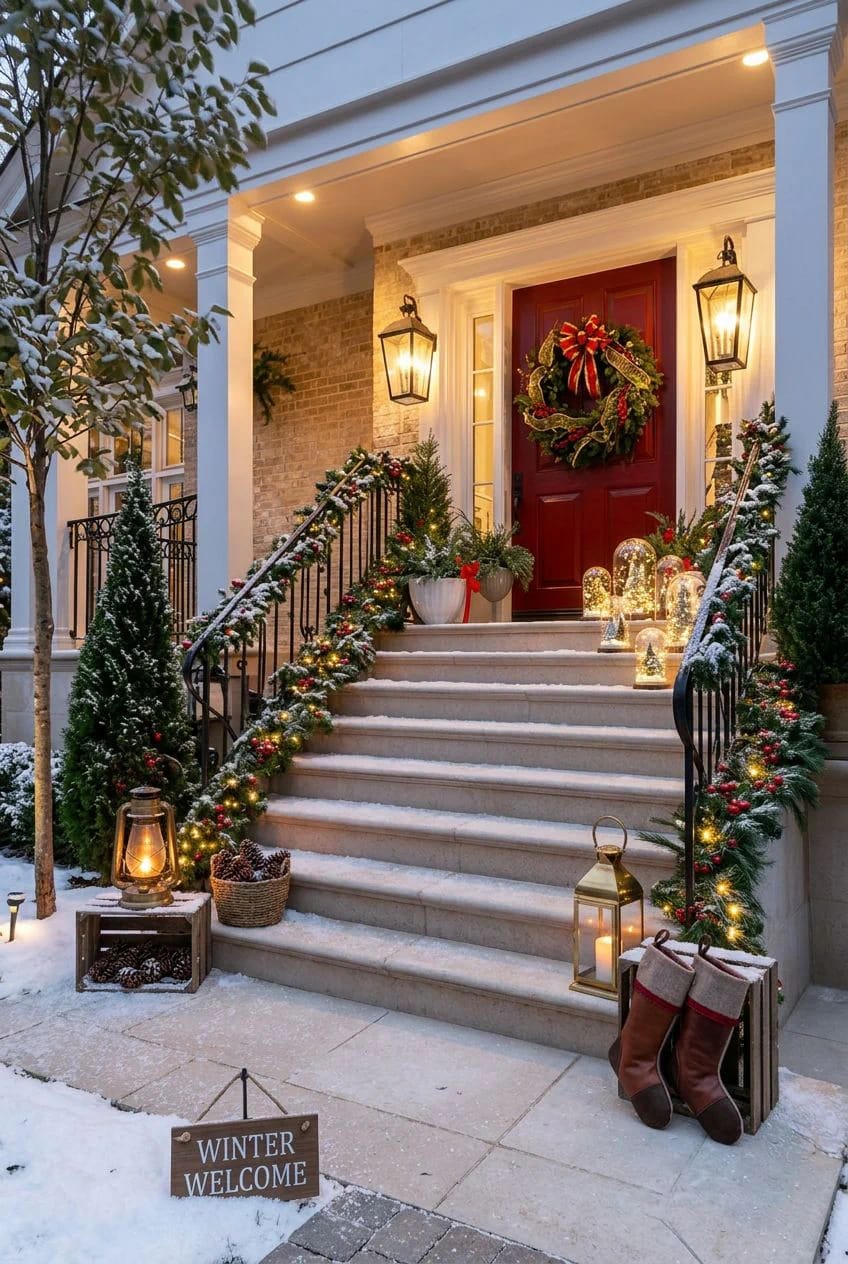
Stair rail first. It is the largest continuous surface in the house, it is the first thing anyone sees from the front door, and the spiral takes about twenty minutes once the garland is already on. The newel post bow goes on immediately after, while the roll is already open and you can still judge the scale against what you just wrapped.
Candlesticks and the two end chairs next, then stop and actually look at the room before you tie anything else. Most of the failure in ribbon decorating is quantity, not placement, and the point at which it goes wrong is almost always three items past where you should have quit.
One thing I could not pin down: nobody sells wired velvet with any honest claim about how it survives storage. The wire in the cheaper rolls kinks permanently once you re-roll it, and a bow that has been flattened in a bin since January will not open back up properly no matter how much you fluff it. Buy assuming a two-year life, and keep the newel post bow loosely stuffed in a paper bag rather than folded.
Related Posts
- Christmas Tree With Red Velvet Ribbon and Bows: 12 Ways to Style It Without Looking Overdone
- Classic Red and Green Christmas Decor Ideas for the Whole House
- 21 Best Red and White Christmas Decor Ideas 2024
- Traditional Red Front Door Christmas Decorations That Actually Work With the Red
- 21 Decorating With Trees for Christmas: Ideas for a Magical Home
- Whimsical Christmas Living Room Decor, Minus the Restraint