
A 20 by 20 foot yard is 400 square feet, which is smaller than most one-bedroom apartments and about the size of two parked cars. Every small backyard idea below is built for that footprint or less: no re-grading, no retaining walls, nothing that needs a contractor with a mini excavator on a trailer. What the constraint buys you is precision. In a yard this size the difference between a space you use and one you look at through the window comes down to four or five decisions about the floor, the walls, and where the heat source sits.
One order-of-operations note, because it saves real money: floor first, then walls, then furniture, then light. Most people run it backwards. They buy the sectional in April and discover in June that the grass under it has died in a rectangle and the fence behind it is the colour of wet cardboard.
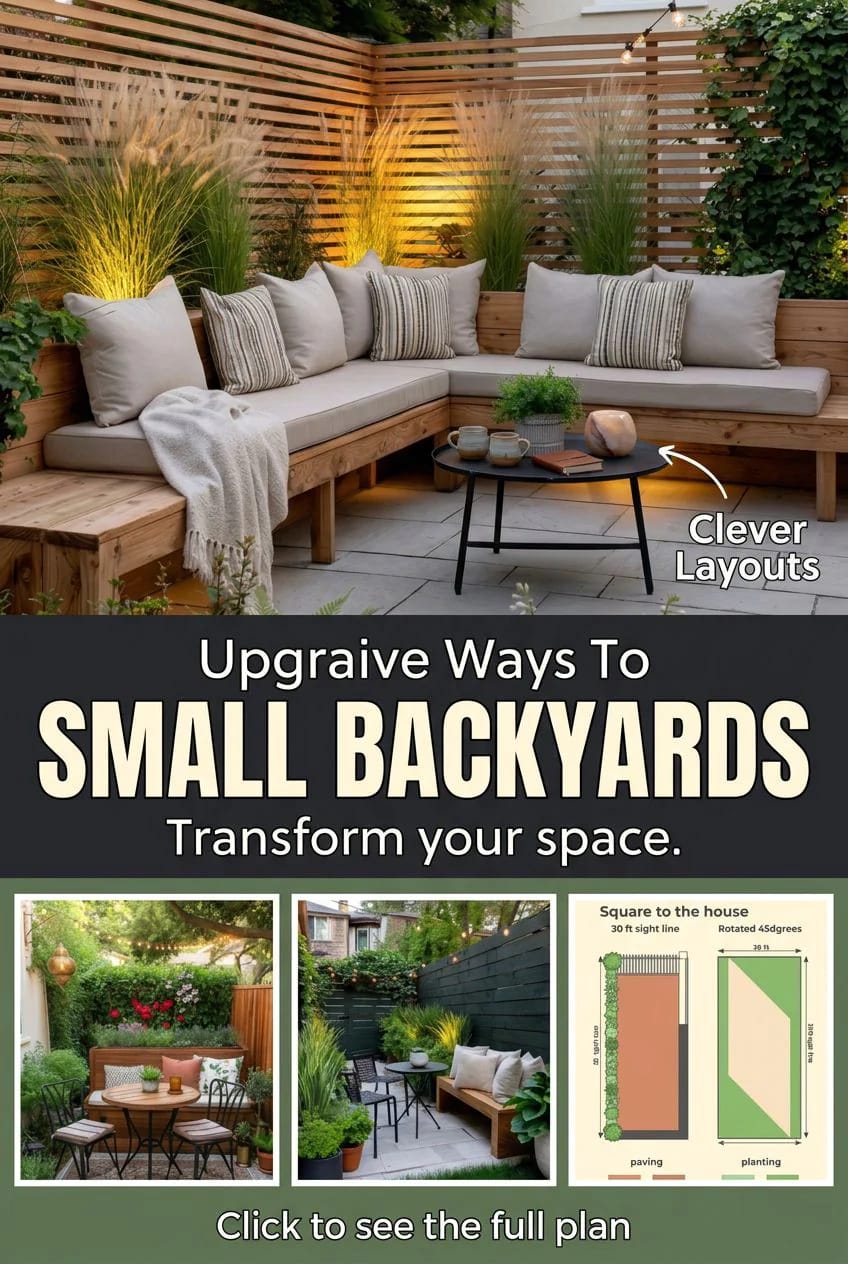
1. Pull the lawn out and lay a gravel floor
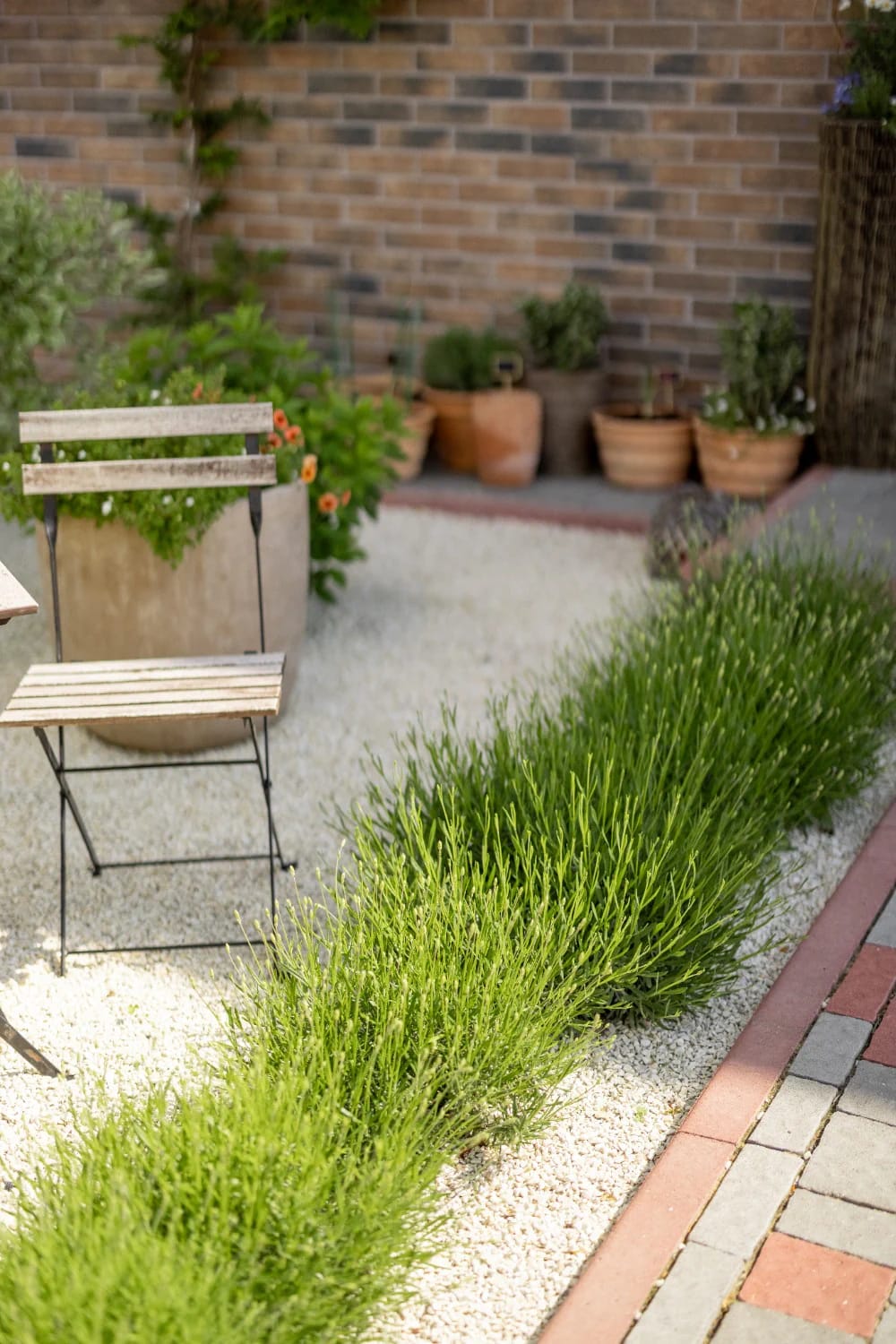
Grass in a small backyard is a maintenance contract you signed by accident. Two hundred square feet of lawn needs the same mower, the same trimmer, the same shed space and the same Saturday as two thousand, and it will still wear through to mud along the line everyone walks. Gravel costs somewhere in the region of two to six dollars a square foot if you do the work yourself, which for a 400 square foot yard is a weekend and a rented plate compactor rather than a quote.
The version that fails is the one poured straight onto soil. It sinks, it grows weeds through the middle, and within a year it is soil with stones in it. The version that works is boring and layered, and the layering is the whole job.
What goes under the gravel
Excavate about six inches, lay geotextile fabric across the subsoil, then three to four inches of crushed base compacted in two passes, then two to three inches of your surface stone. Edge the whole thing with steel or aluminium edging pinned every two feet, or the gravel will migrate into your beds and your neighbour’s side return by the second winter. Skip the flimsy weed membrane sold in garden centres for laying directly under decorative stone; it does not stop weeds that germinate in the dust that collects on top, and it shreds when you rake.
Stone size matters more than colour
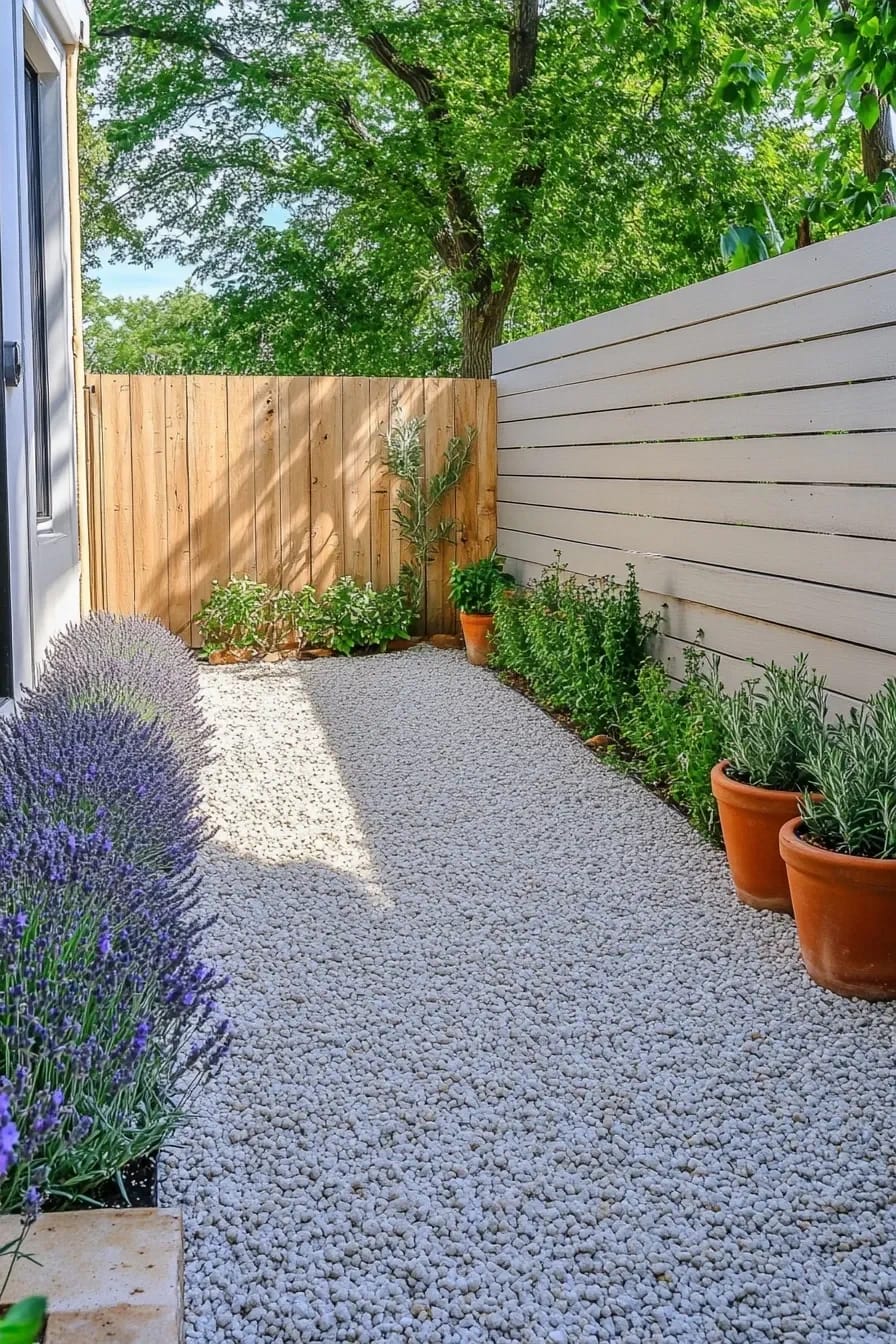
Go for 3/8 inch angular chip. It locks together underfoot and chair legs stay put. Pea gravel is rounded, it rolls, and every chair with a narrow leg sinks into it; decomposed granite compacts almost to a solid surface but tracks indoors on the soles of shoes for the entire first summer. A few surfaces worth ruling in or out:
- Grey crushed basalt or granite chip: the default, and it stays neutral as it weathers.
- White marble chip. Glare in full sun, and it greens up with algae in shade within two seasons.
- Slate paddlestone, which reads darker when wet and pairs well with the kind of low-water planting used in rock gardens built around stone rather than lawn, though it is the priciest of the three.
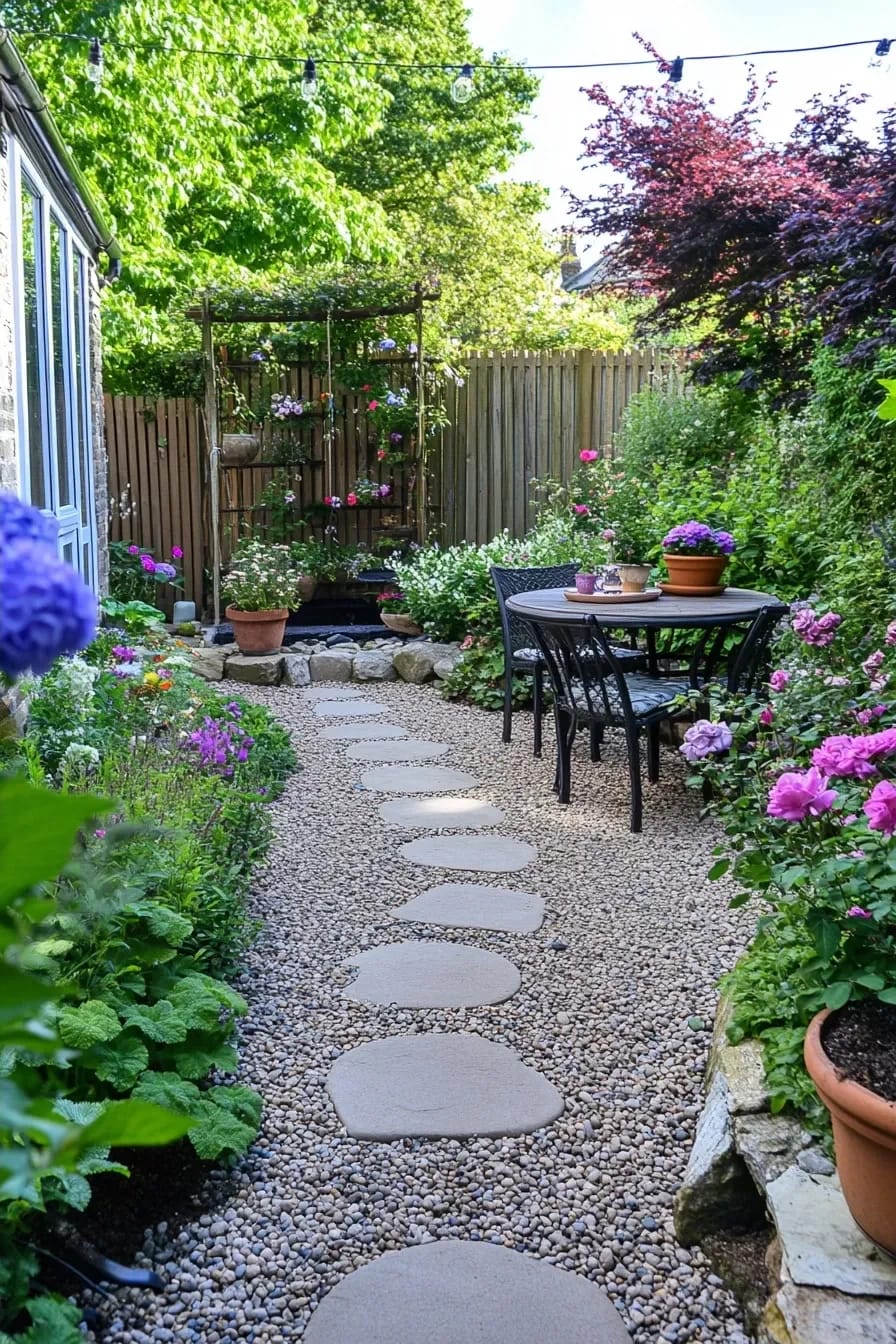
2. Set the layout on a diagonal so the yard reads longer
Rotate everything 45 degrees. In a 20 by 30 foot yard the longest available sight line is not the 30 foot run down the fence, it is the 36 foot diagonal from corner to corner, and the eye reads whichever line you give it something to travel along. Run the paving corner to corner, put the seating in the far corner, and fill the two leftover triangles with planting so they read as depth rather than as gaps.
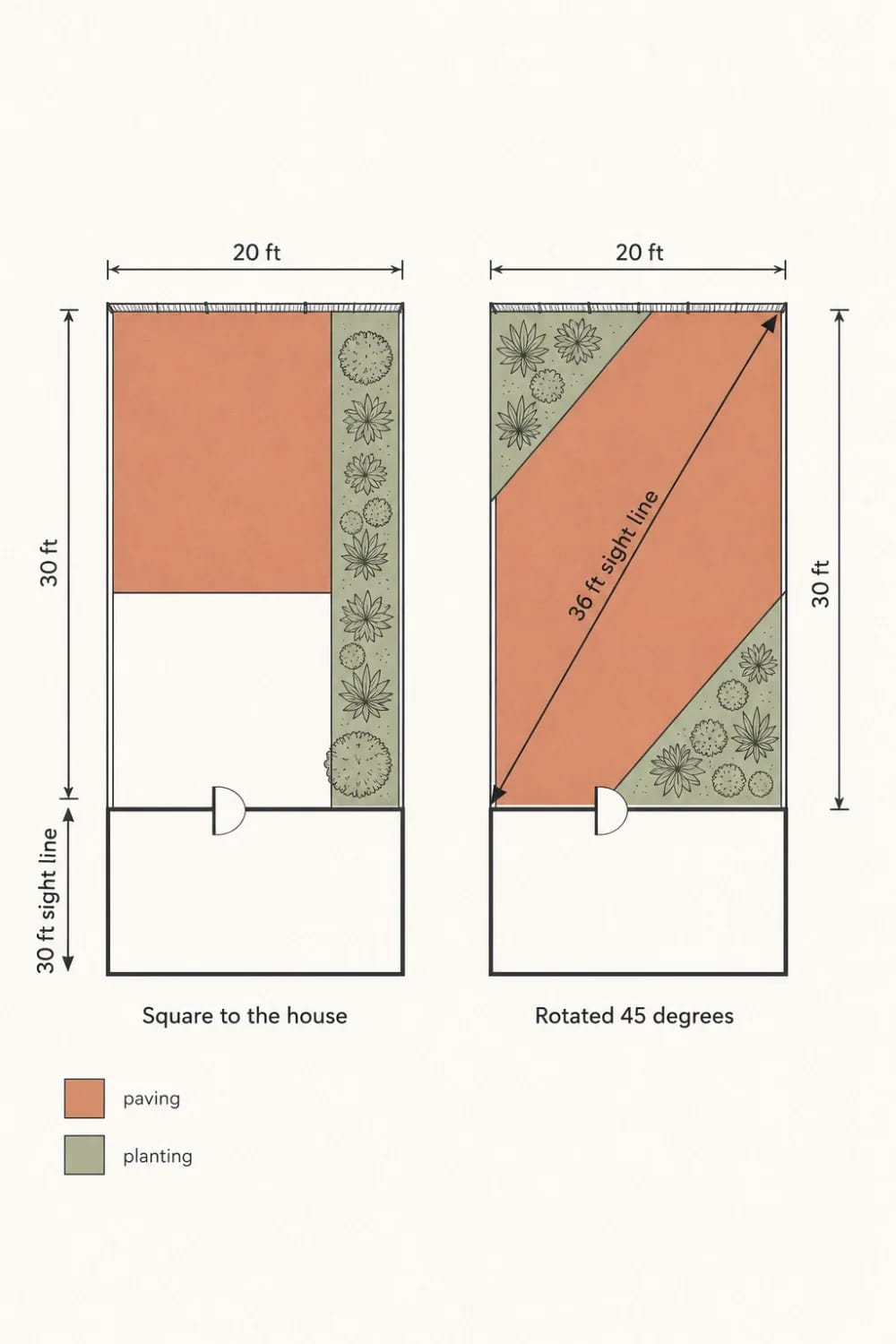
That said, a diagonal costs you floor area. Those triangles are not usable space, and below about twelve feet of yard width the geometry stops paying for itself, so square everything up and put the effort into the walls instead. If you want to see the move at other proportions, it shows up repeatedly across small backyard designs where the paving is turned off the house line.
3. Build the seating into the fence line
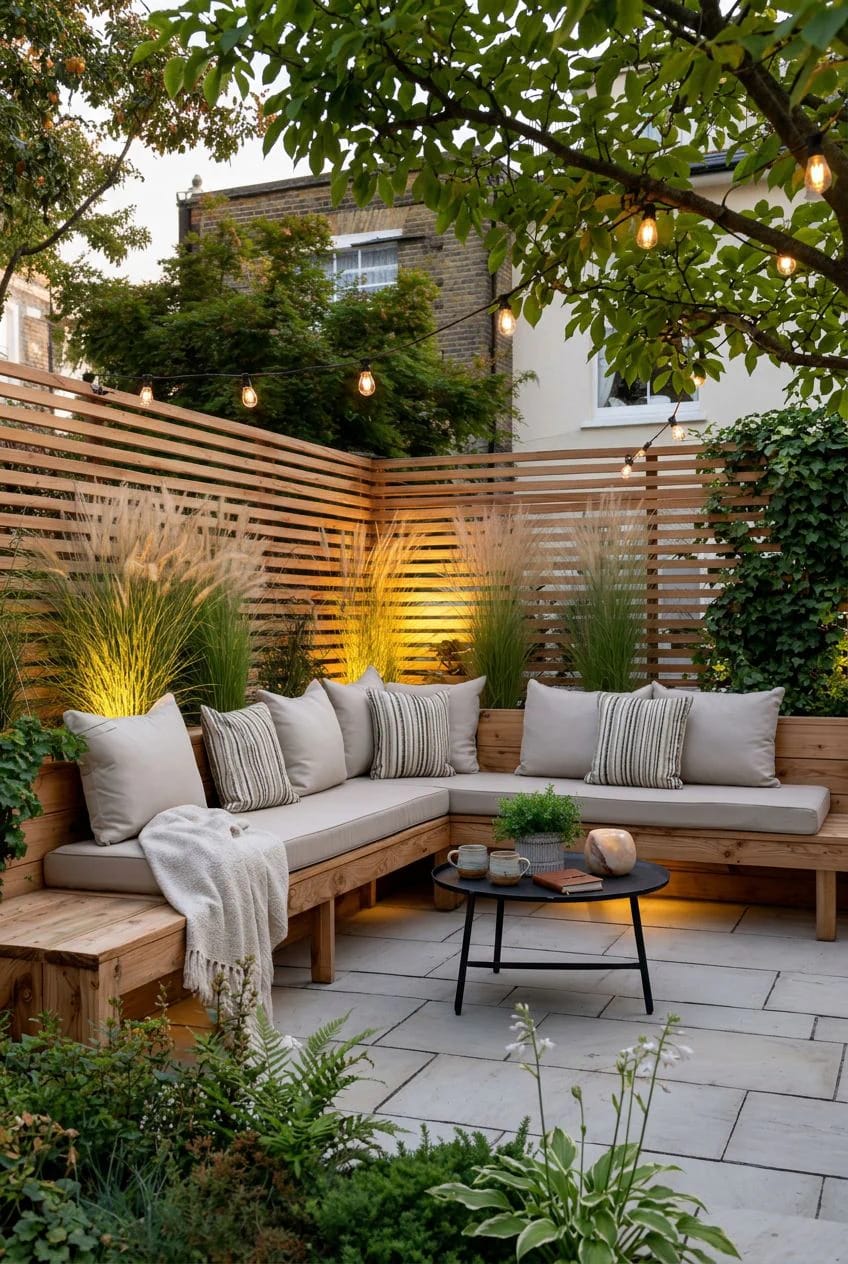
A bench fixed along the boundary frees the entire middle of the yard, which freestanding furniture never does. Build it 17 to 18 inches to the top of the seat, 16 to 18 inches deep, from 2×4 cedar with 3/8 inch gaps between slats so rain drains instead of pooling. Carry the load on posts set into the ground or on a ledger bolted to the fence posts, never to the fence boards; boards are nailed to rails and will tear out under three adults.
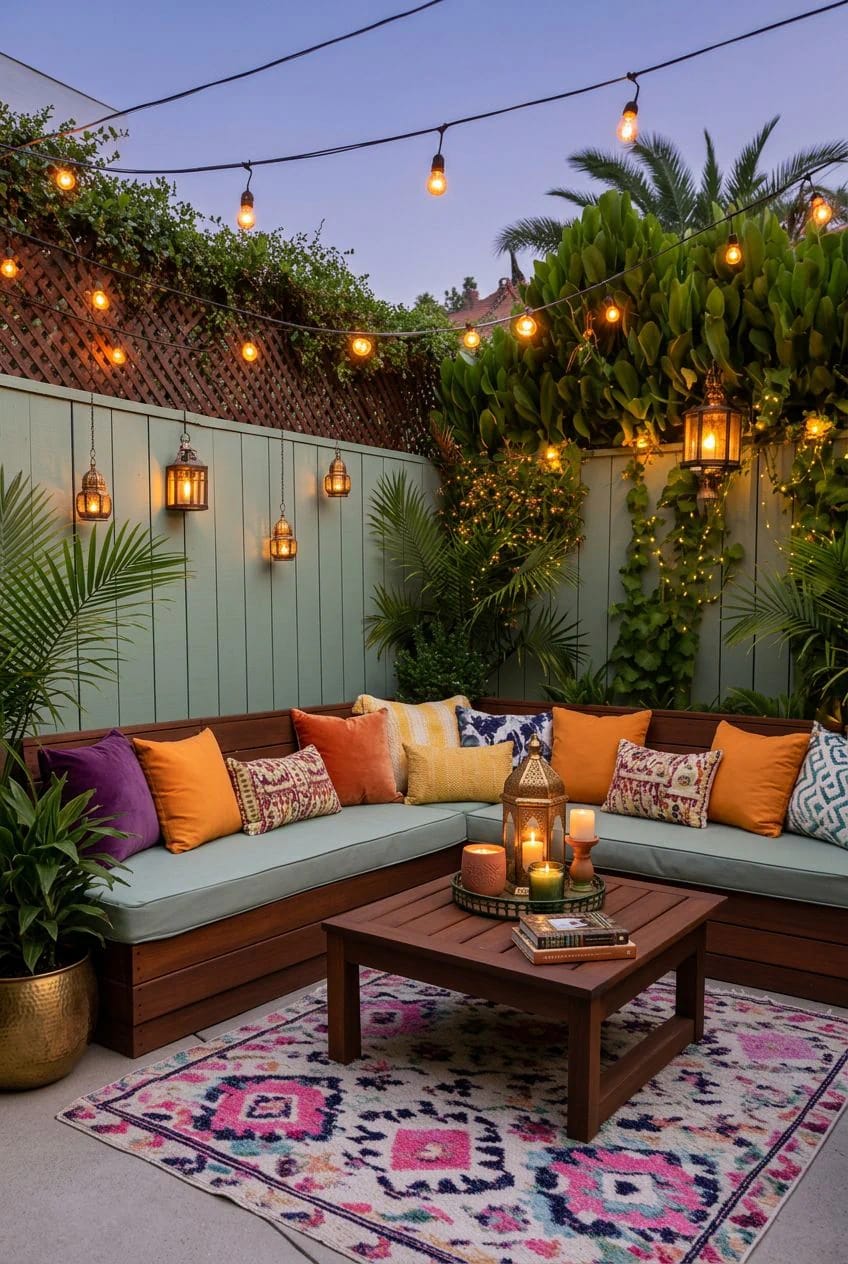
An L of bench along two boundaries seats five people in the floor area a two-seat sofa occupies, and it does it without legs to rake around. Cushions are optional and mildly annoying: they live indoors, they get forgotten, and a bench with a smooth sanded seat gets sat on more often than one that requires admin. If you want the softer version, the seating arrangements that treat the bench as the centrepiece rather than the leftover are worth borrowing from.
4. Make the fire pit run on gas
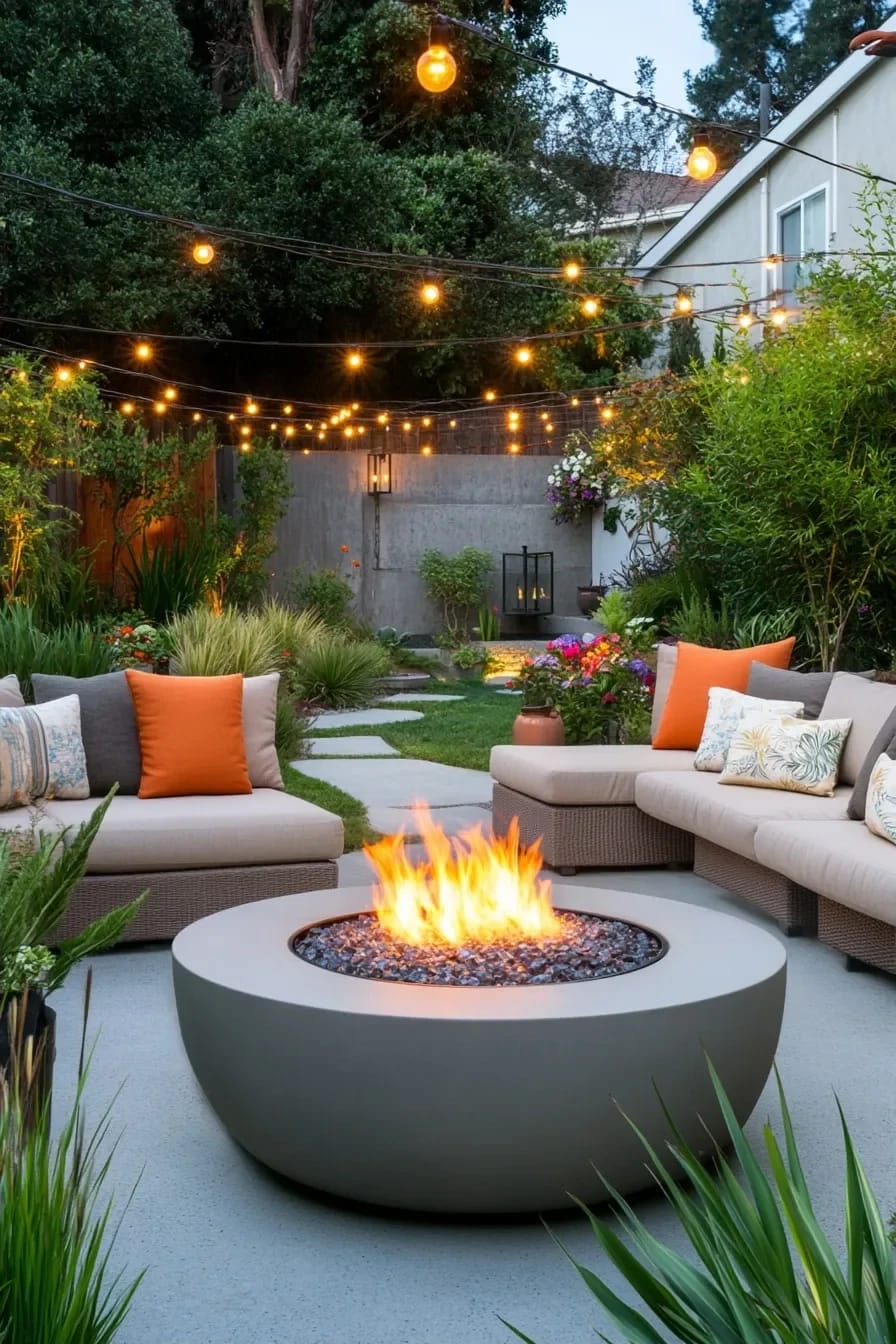
A wood-burning pit will not fit in a 400 square foot yard, and this is the one item on the list where the constraint is legal rather than aesthetic. NFPA guidance puts the minimum at 10 feet from any structure, and municipal codes commonly land between 10 and 25 feet from houses, sheds, fences and overhanging branches. Run the tape across a 20 foot wide yard with a wooden fence on both sides and a house at one end and you will find there is no point in it that satisfies the rule. Gas changes the arithmetic: listed gas fire features are typically cleared to 36 inches from combustible construction, because there are no embers to travel.
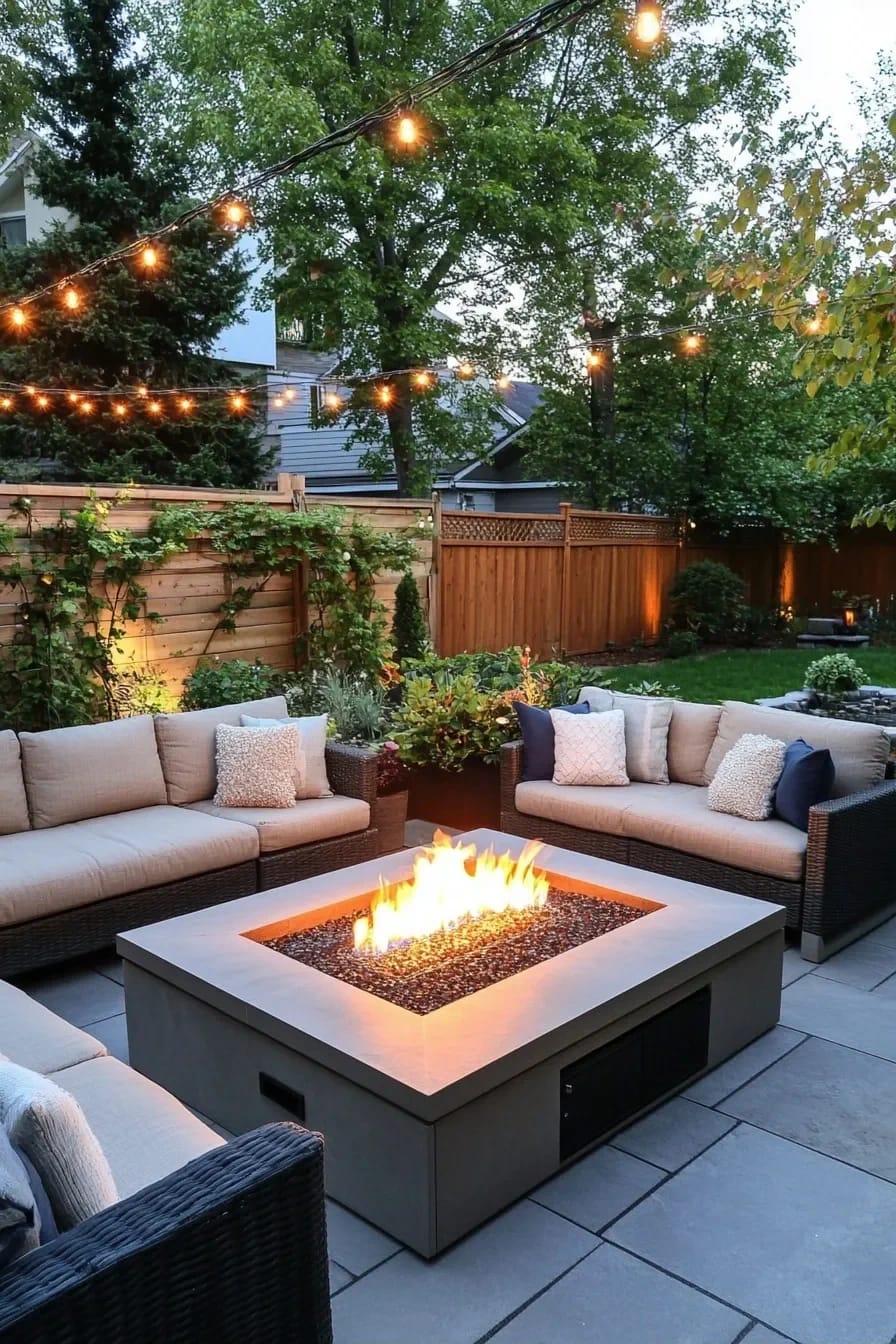
Where the pit can actually sit
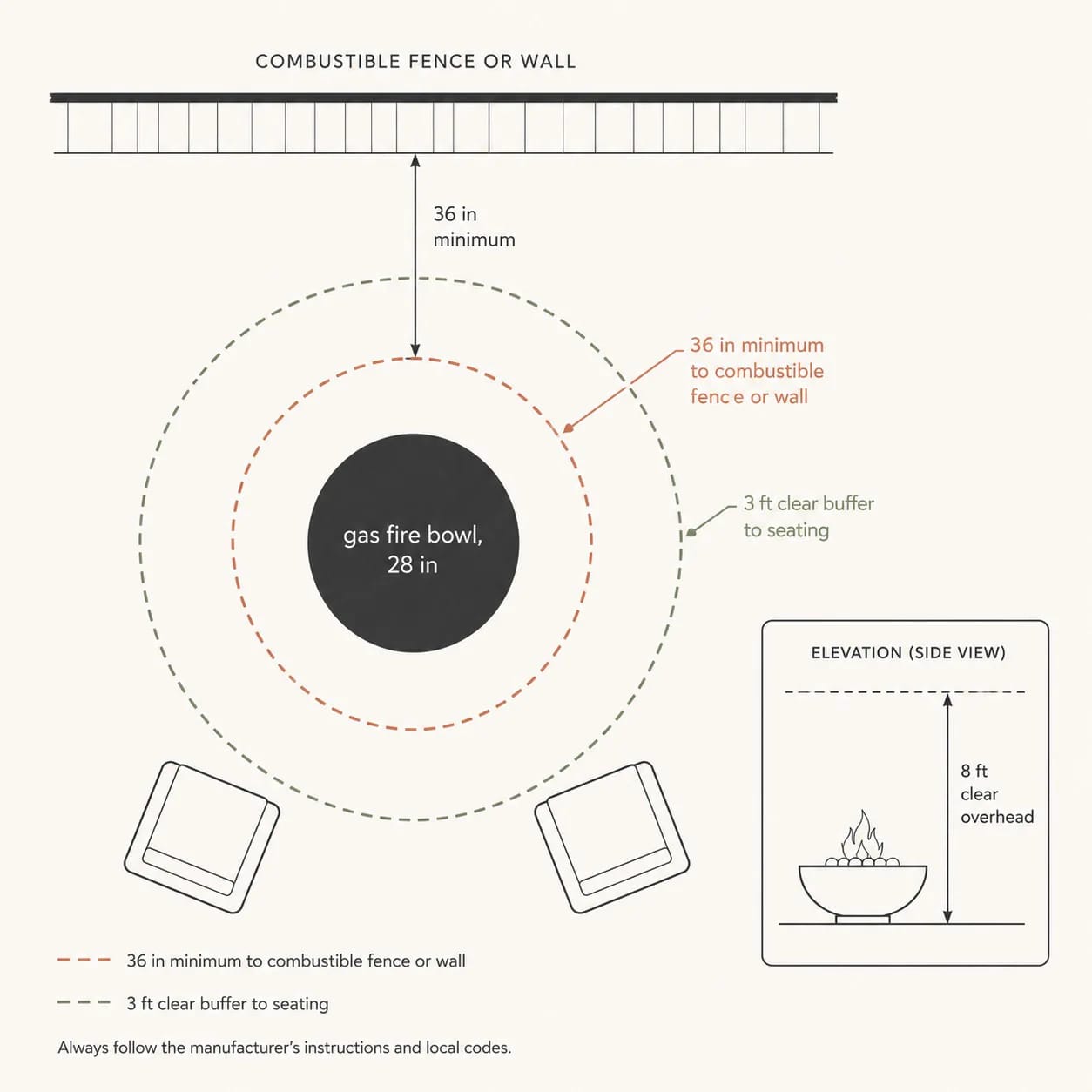
Keep three feet of non-combustible floor between the rim and anything anyone sits on, and keep eight feet clear overhead, which rules out putting it under a pergola or the low limb of a neighbour’s maple. Codes vary by municipality and I could not find a national rule that survives contact with an actual fire marshal, so make the phone call before you buy anything with a gas line attached. One more opinion, freely offered: the 44 inch bowls that dominate the shelves are sized for a yard nobody reading this owns. A 24 to 30 inch bowl throws heat at the same three people and leaves you room to walk past it.
5. Plant the walls, not the floor
Vertical square footage is the only surface a small backyard has in surplus. Six-foot fences on three sides of a 20 by 20 yard give you roughly 360 square feet of vertical plane against 400 square feet of floor, and planting the walls costs you no standing room at all.
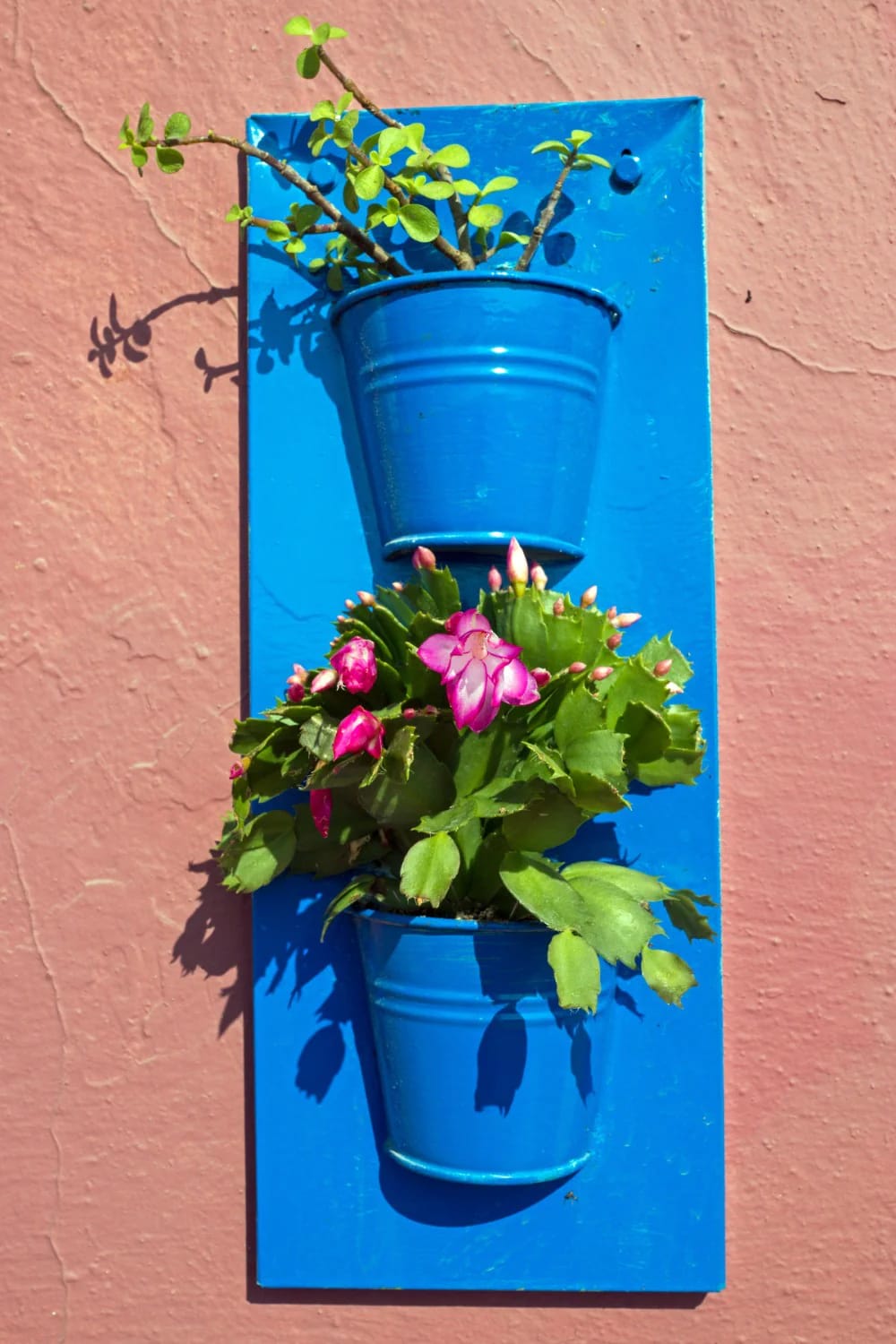
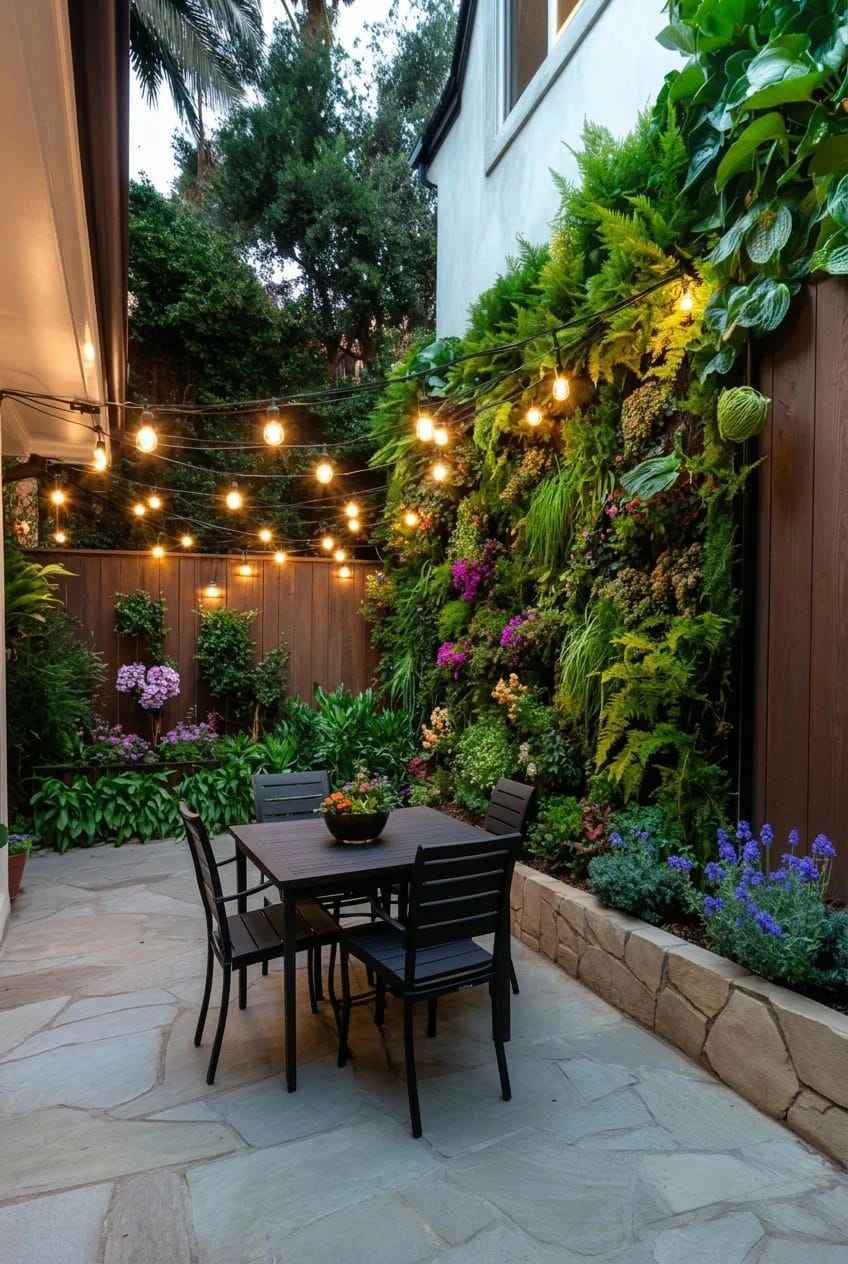
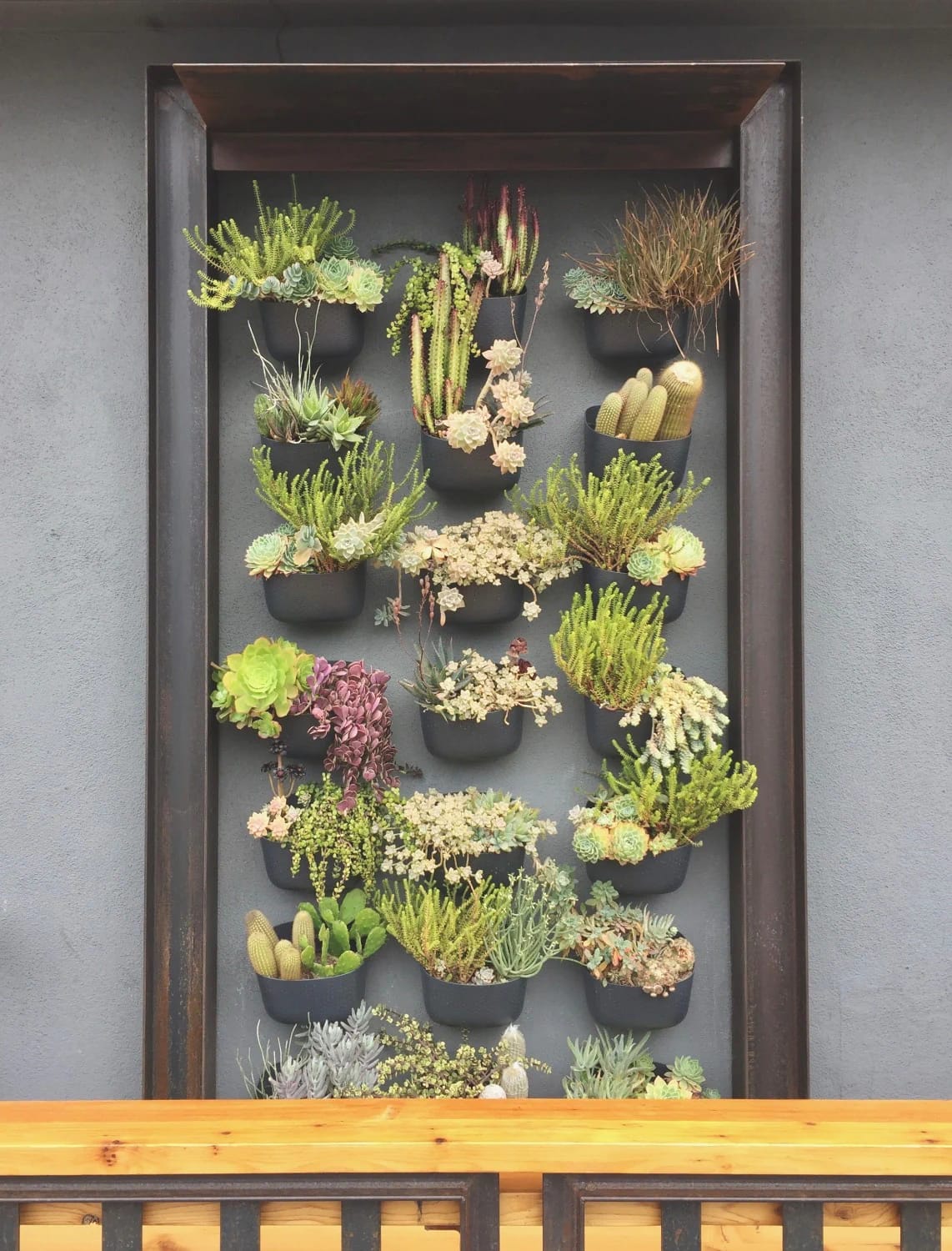
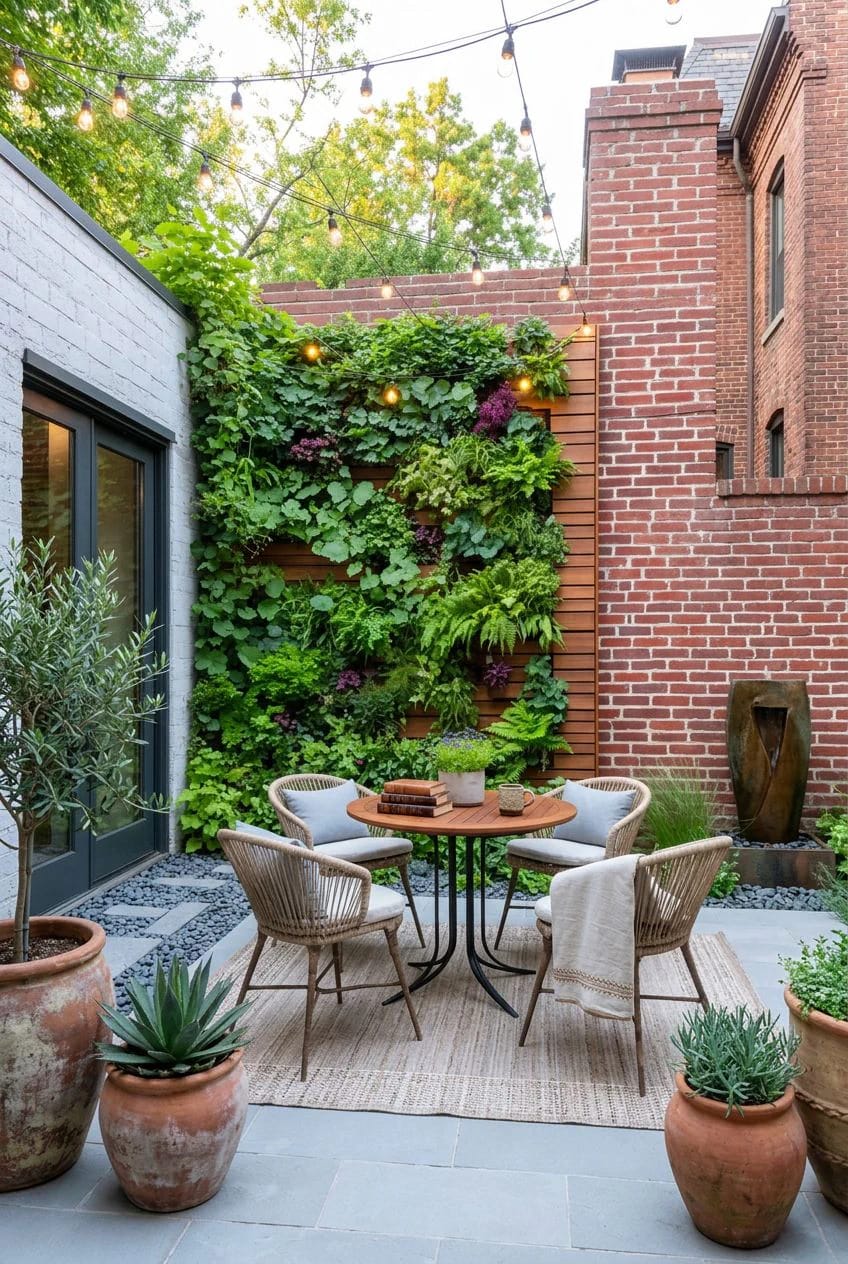
Wires beat trellis panels. Run 2mm galvanised or stainless cable through eye bolts held two inches off the boards, tension it with turnbuckles, and train star jasmine or climbing hydrangea along it; the air gap keeps the timber drying and lets you drop the whole planting away from the fence when a board needs replacing. Pocket planters and felt wall systems are the popular alternative and they die in July, every year, because a two-litre pocket in full sun dries out inside a day. Put one on drip irrigation or do not put one up at all. For the masonry version of the same idea, the treatments used on courtyard walls that carry planting rather than just enclosing the space transfer directly to a fence.
6. Hang string lights on a catenary, not on the fence tops
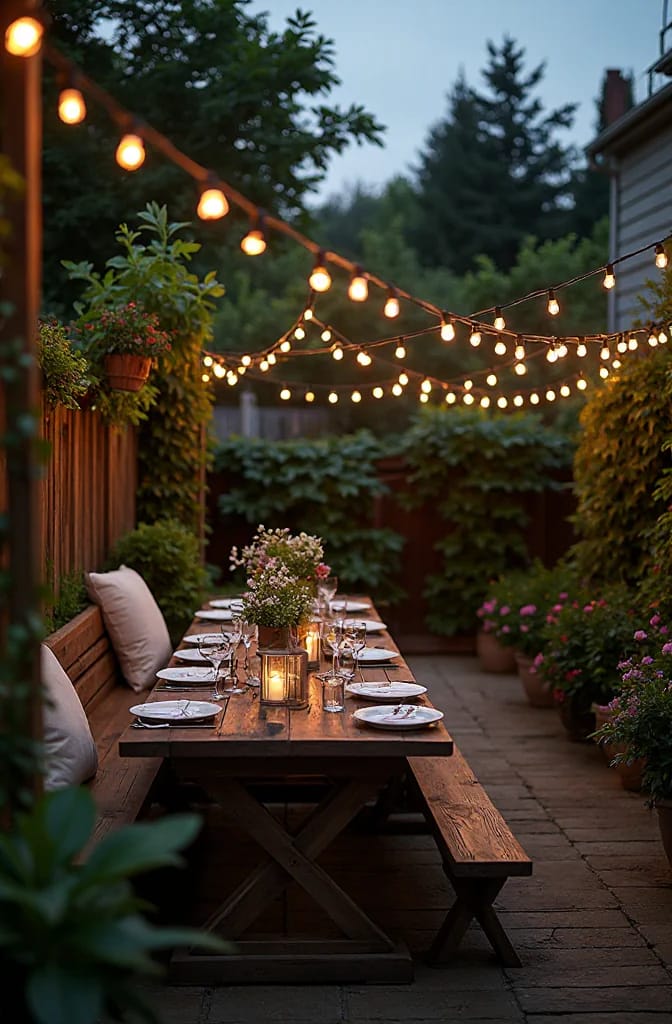
Lights carried on a tensioned cable across the middle of the yard put the glow above your head, where it lights faces and leaves the boundary dark. Lights stapled along the fence tops do the opposite: they draw a bright rectangle around the exact edges you are trying to make disappear, and the wind saws the cord against the timber until it fails. Use 1/8 inch stainless cable, turnbuckles at both ends, and hang the bulbs from the cable rather than letting the light cord take the load.
When there are no trees to hang from
Set two 4×4 posts in concrete at opposite corners, or, if digging is not an option, stand 2 inch galvanised pipe in a 25 gallon planter filled with concrete and plant around the base. Either way the low point of the sag wants to be eight to nine feet up, which is high enough to walk under and low enough to feel like a ceiling.
Warm bulbs, and put them on a dimmer
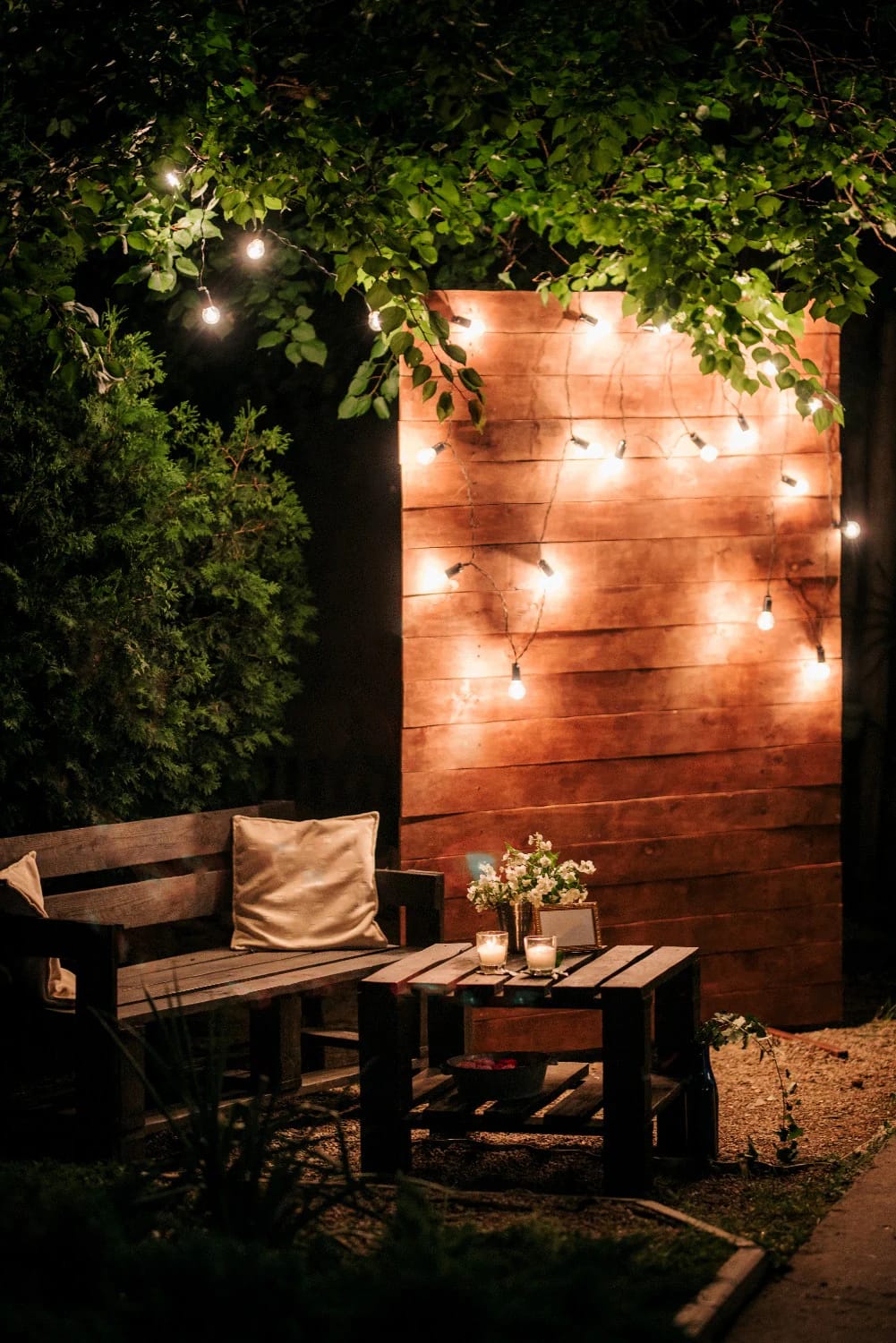
Stay between 2200K and 2700K. Anything at 3000K and above turns the yard the colour of a filling station forecourt, which is a strange thing to spend two hundred dollars achieving. Put the run on a dimmer or a smart plug that steps the brightness down after ten, and resist the urge to add a second string; one line across the space reads deliberate, three lines read like a beer garden.
7. One multi-stem tree beats twelve pots
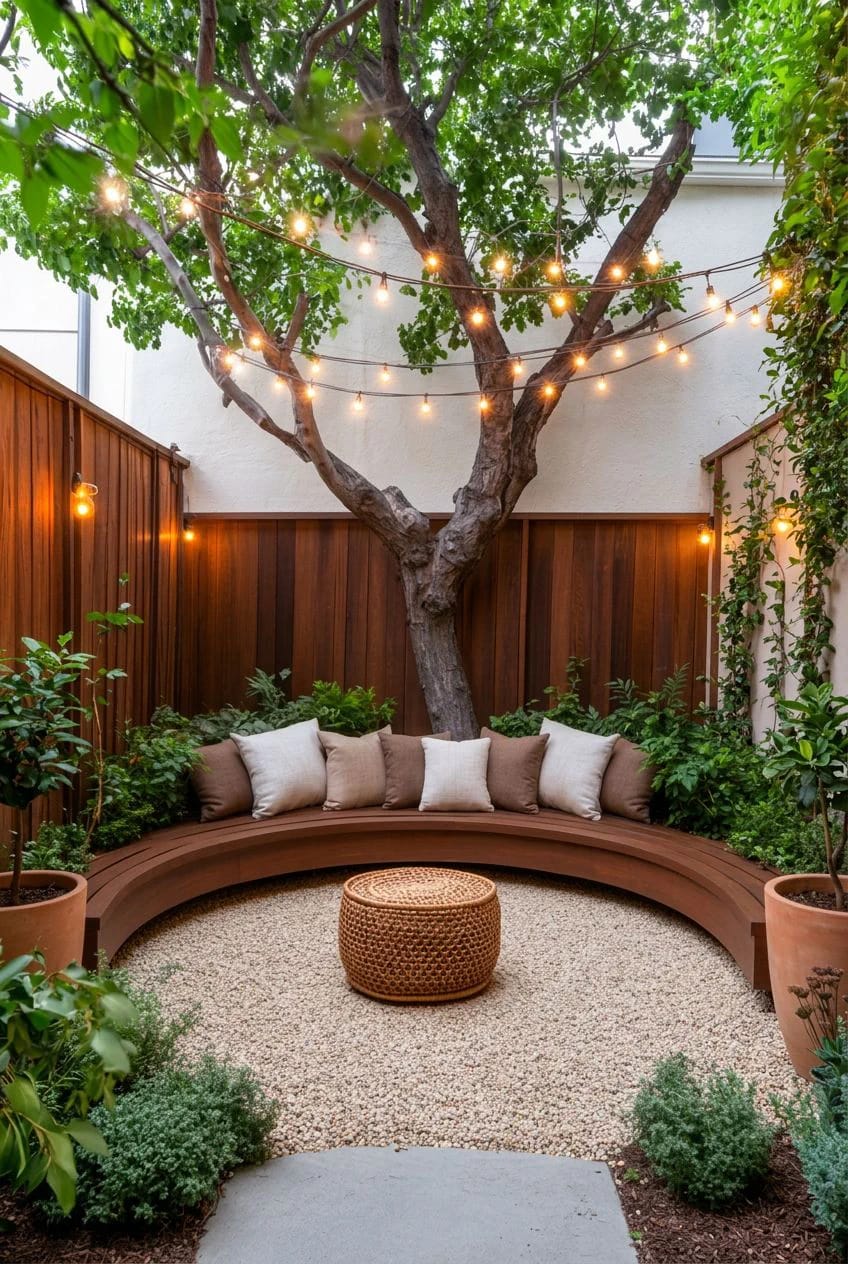
Buy one plant big enough to be a feature and stop. A multi-stem serviceberry or a Japanese maple in shade gives you a canopy at ten to fifteen feet, dapples the whole yard, and asks for water once a week in its first two summers and almost never after that. Twelve pots give you twelve waterings, twelve chances to forget, and a floor you cannot sweep. Keep any in-ground tree eight to ten feet clear of the house, and skip anything from the willow or poplar families entirely.
8. Paint the fence black or a deep green, never beige
Dark boundaries recede and pale ones advance, which is why the honey-orange cedar stain sold by the pallet makes a small yard feel like the inside of a shipping crate. Painted near-black or in a deep green, the fence stops being the first thing you see and the planting in front of it gains contrast it never had.
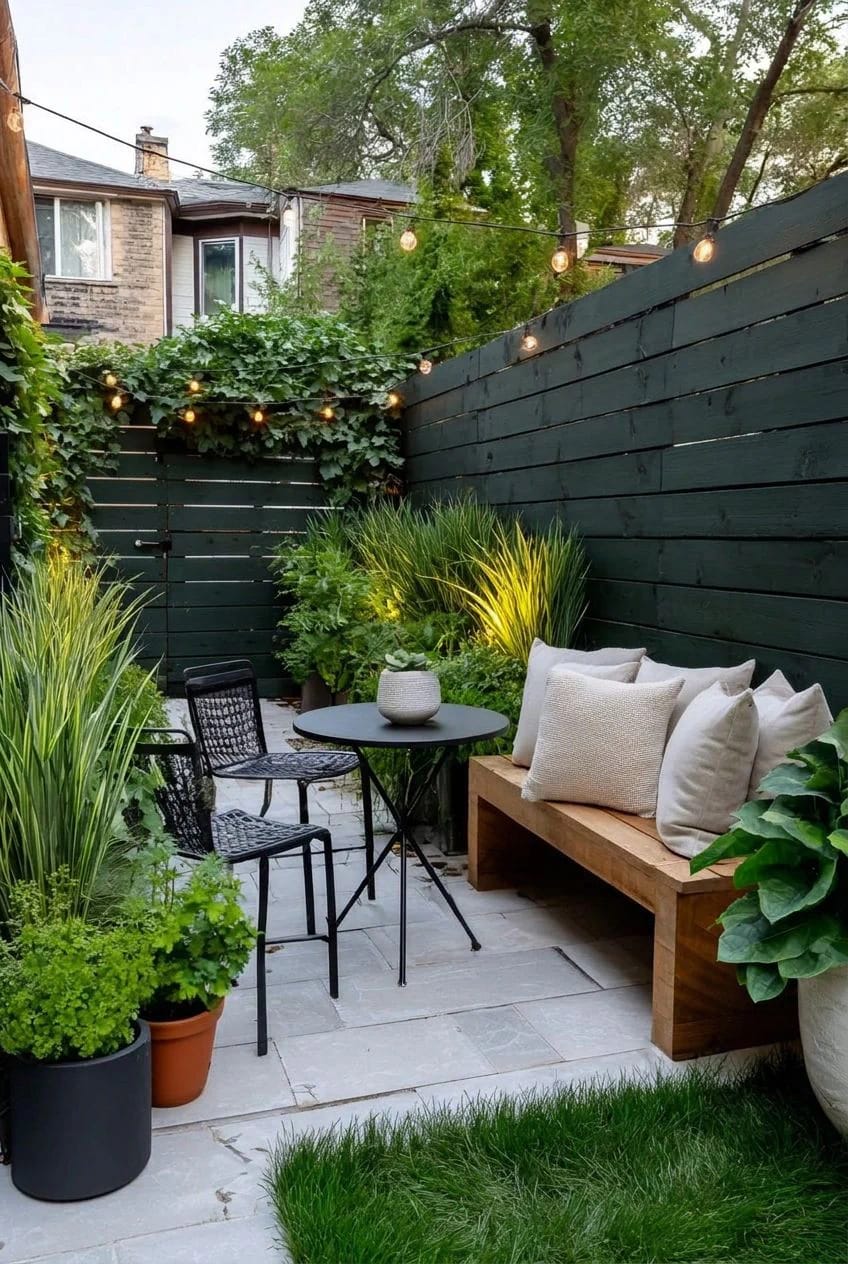
Use an opaque stain rather than exterior paint on rough-sawn timber. It soaks in rather than forming a film, so it fades instead of peeling and the recoat in four years is a wash and one pass rather than a scrape. Expect roughly 200 to 250 square feet of coverage per gallon on rough boards, which is far less than the tin claims, and buy the third gallon now rather than matching a batch later. Benjamin Moore Black Forest Green and Farrow & Ball Studio Green are the two shades I would put money on; both go almost black in shade and read green only when the sun hits them. If the boundary itself is the weak point rather than its colour, the structural fixes in these privacy fence builds are the place to start.
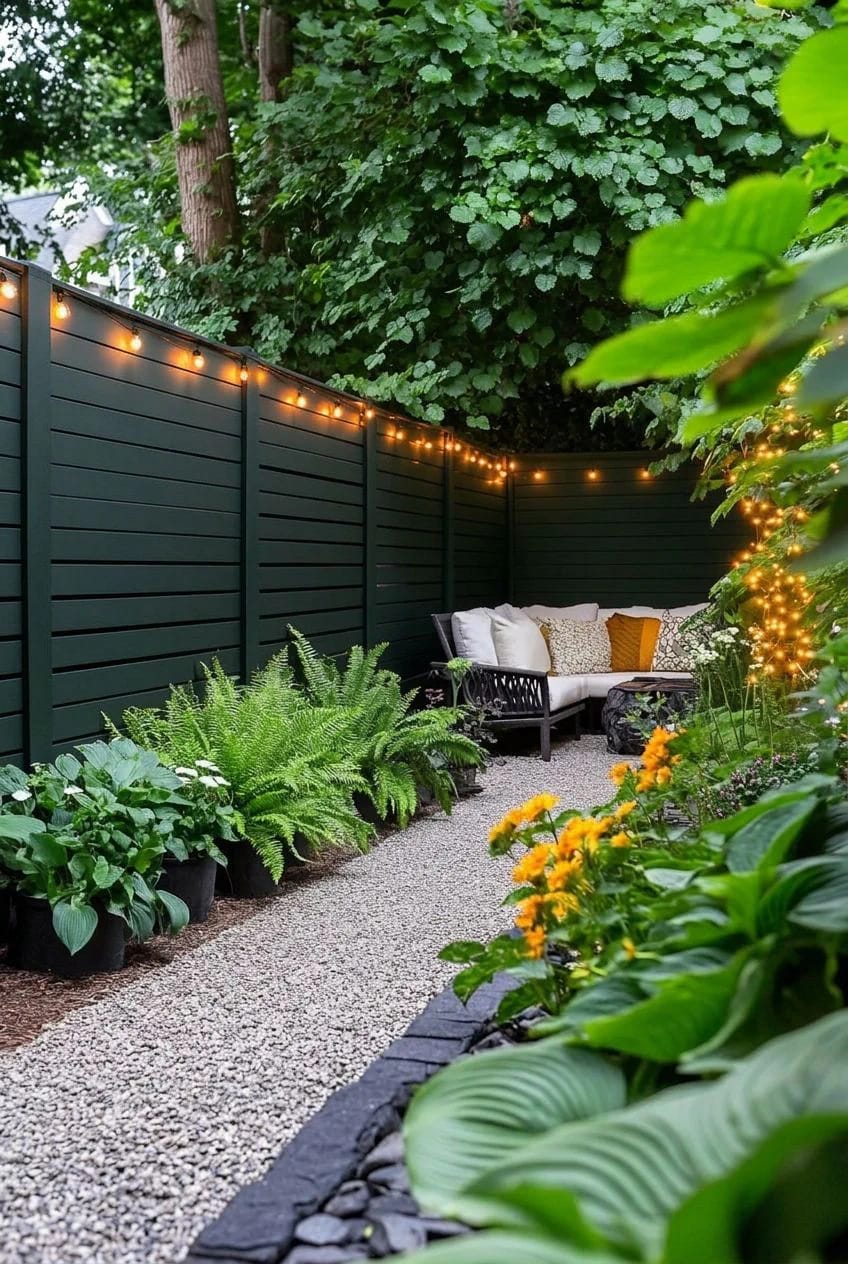
 27 Unique Backyard Privacy Designs for A Serene Outdoor Oasis Screening options for overlooked yards, including the ones that work without raising the fence height.
9. Buy one oversized piece and one big rug, not a four-piece set
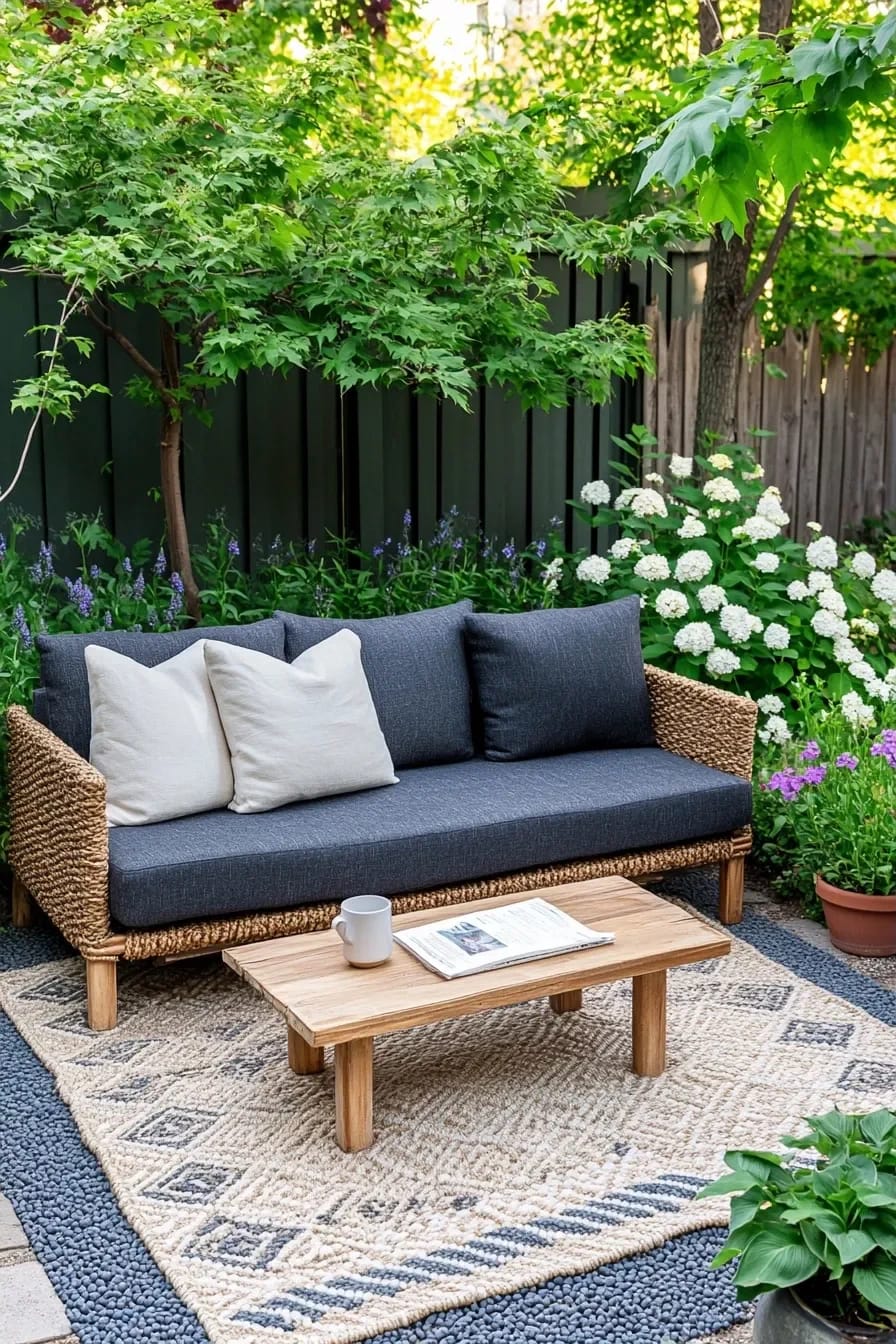
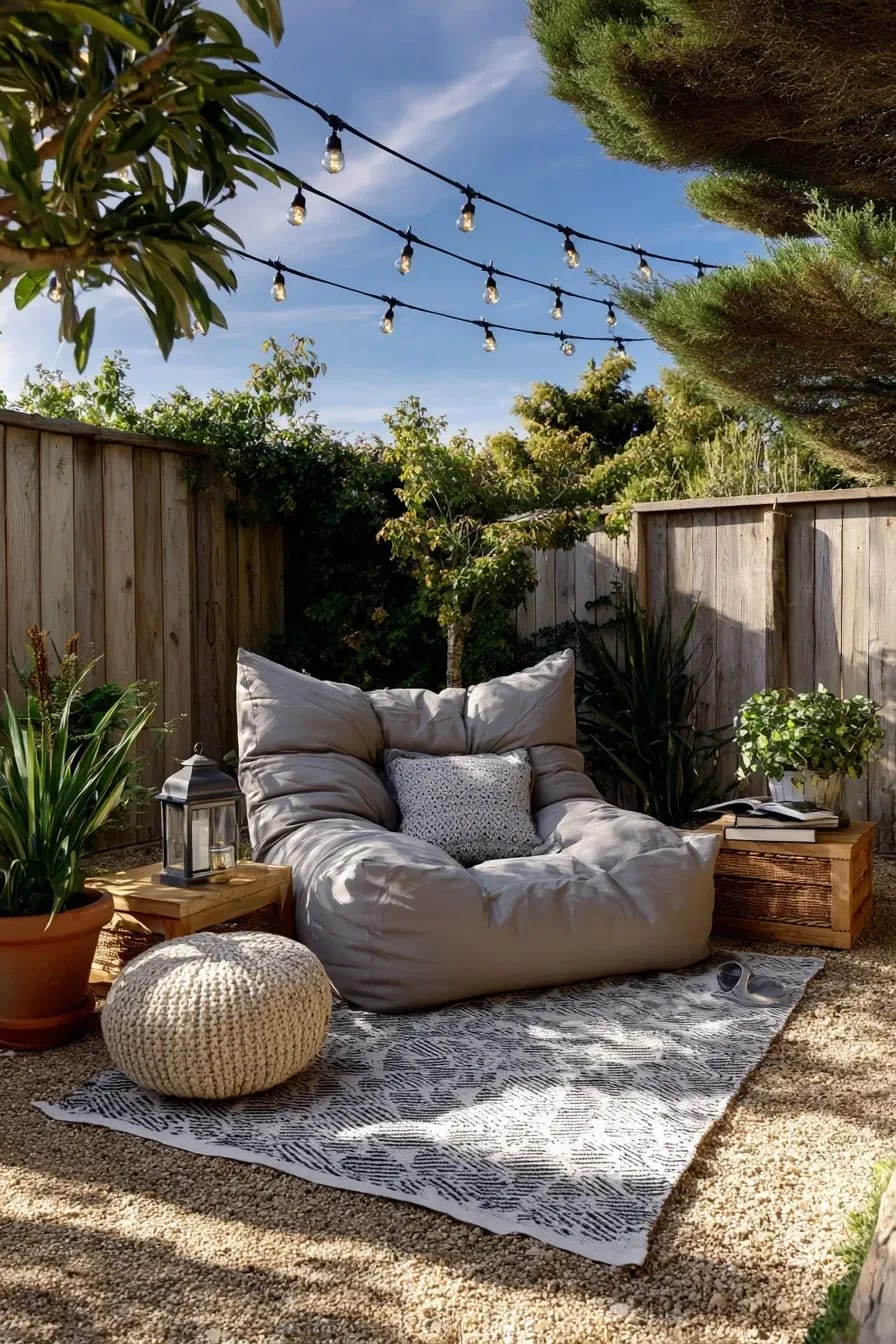
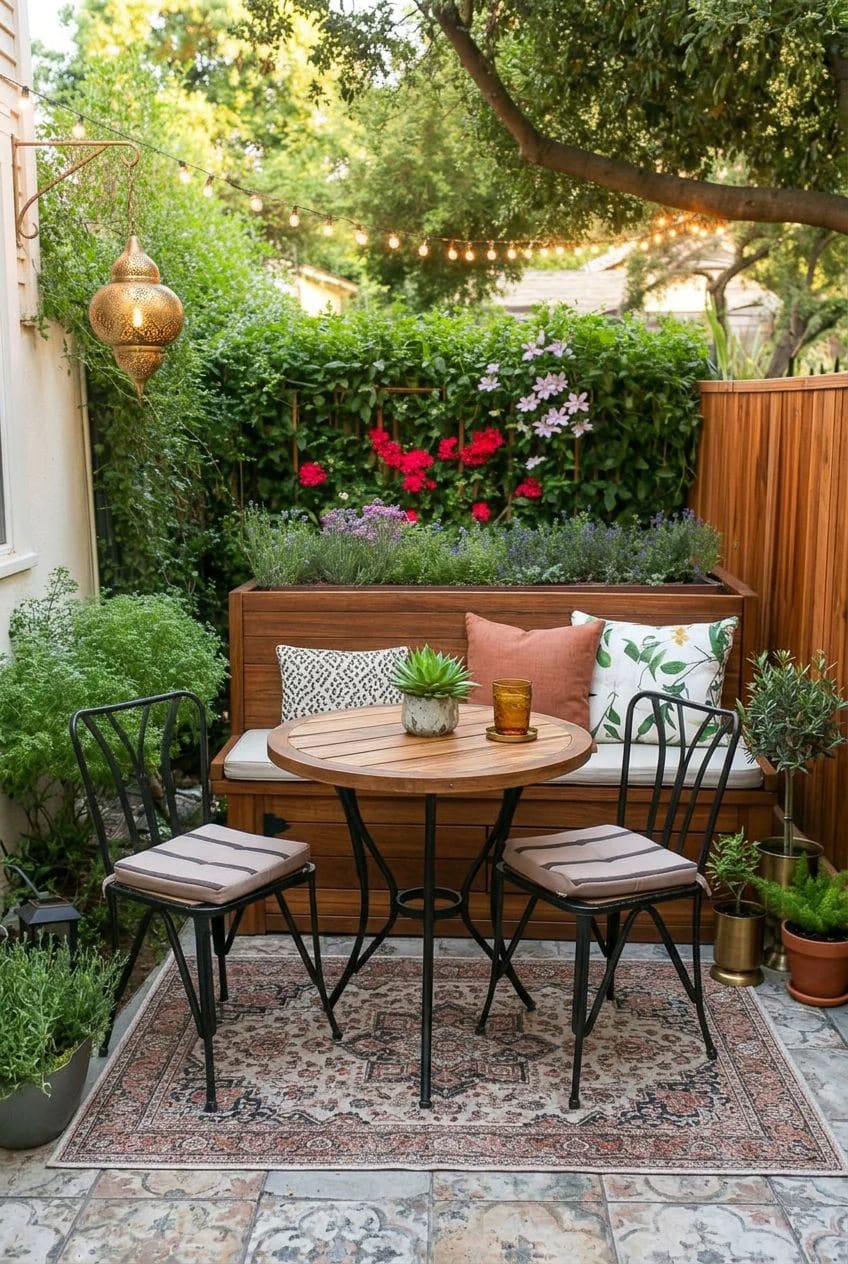
The four-piece bistro set is what makes a small yard look smaller. Two little chairs, a tiny table and a bench chop 400 square feet into four separate objects with gaps between them, whereas one deep sofa and one large rug read as a single defined room. Go 6 by 9 feet on the rug if the space allows, 5 by 8 at minimum, and get the front legs of the furniture onto it. Polypropylene flatweave is the material worth buying: it hoses off, it dries in an hour, and it does not hold the smell that jute and cotton develop by August. Cost-conscious versions of this move run all through these budget small patio setups.
10. A wall spout does more than a pond
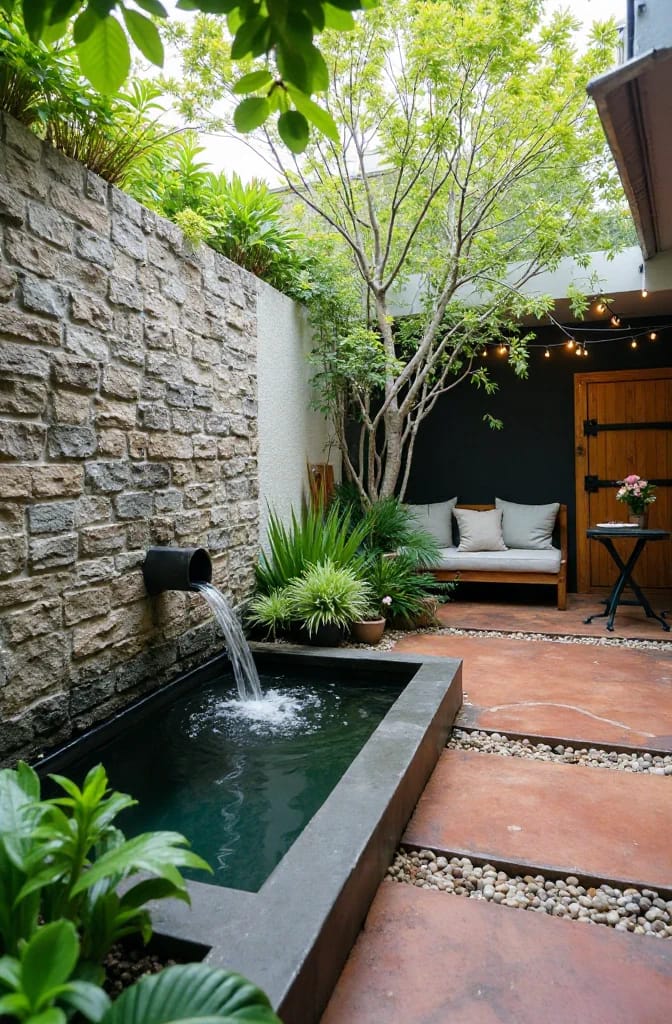
Moving water in a small backyard is noise management, not decoration. A spout mounted on the fence falling into a hidden reservoir under the gravel runs on a 100 to 200 gallon-per-hour recirculating pump, needs a GFCI outlet within reach, and covers the specific frequencies of a neighbour’s television and conversation two gardens over. Ponds in this footprint collect mosquito larvae, algae and leaves, in that order, and eighteen inches of standing water is a genuine hazard with small children around.
The bigger-ticket alternative, if the budget stretches and the yard drains, is going the other way entirely and putting in water you can get into; the plunge and dipping pool layouts sized for tiny yards start at a footprint about the size of the sofa in the last section.
11. Put the hose, the cushions and the bin in one storage bench
Everything ugly in a small backyard is ugly because it has nowhere to live. The hose coils on the gravel, the cushions stack on a chair, the recycling sits by the back door, and no amount of planting fixes a yard with four pieces of visible plastic in it.
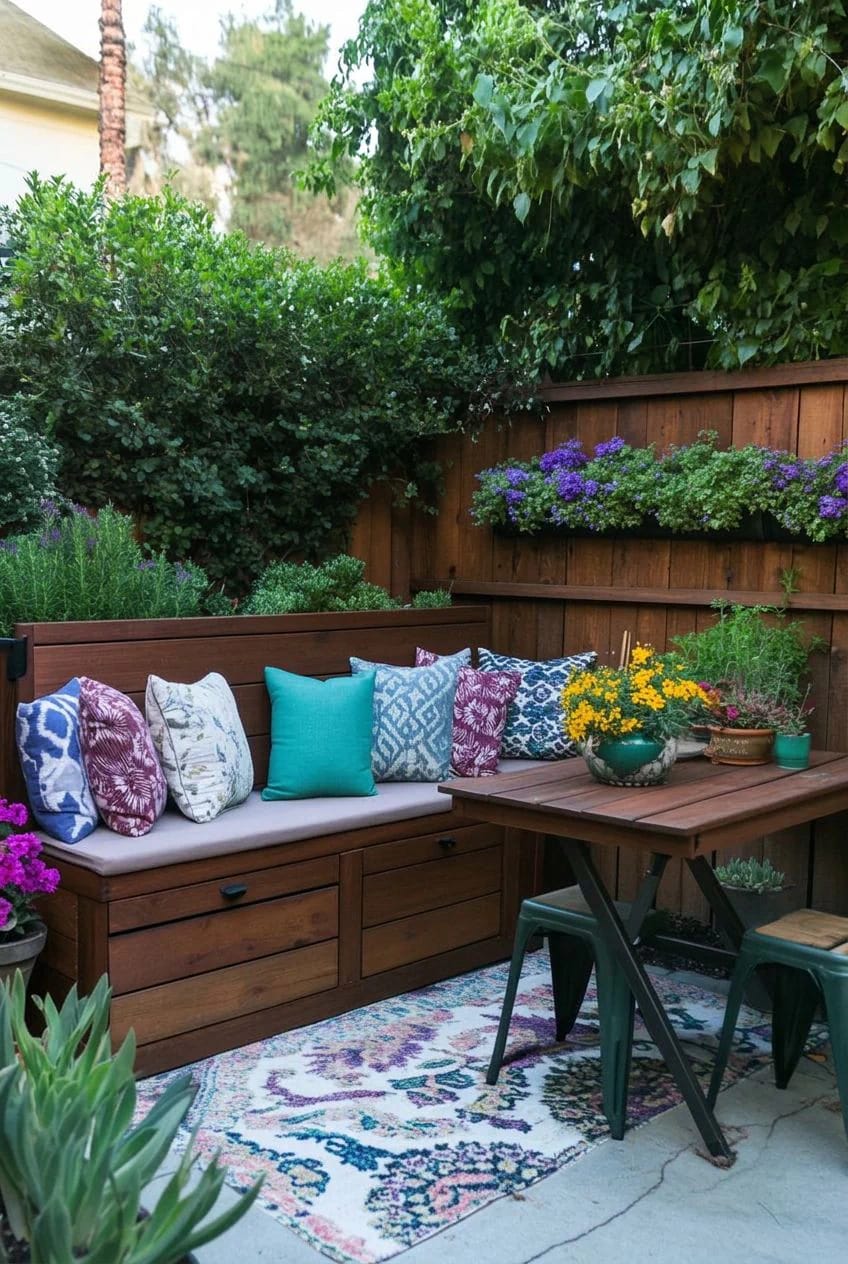
A 50 to 70 gallon deck box swallows all three, and if you build it rather than buy it, a cedar version with a sloped, hinged lid doubles as the seat at the end of the bench run from idea three. Slope matters more than it sounds: a flat lid ponds water at the hinge line and the plywood core of the cheap boxes swells within two winters. The side return is where it goes, out of the sight line from the back door, next to the tap.
Related Posts
- 31 Inspiring Small Backyard Ideas to Transform Your Space
- 15 Smaller Backyard Landscaping Ideas That Maximize Space & Style
- 27 New Small Backyard Designs to Copy For Your Outdoor Space
- 15 Budget-Friendly Small Patio Ideas You’ll Love
- 20 Mini Garden Ideas For Small Spaces
- 20 Creative Garden Art Ideas to Elevate Small Yards