
A red front door is the hardest color to decorate for Christmas, because the obvious move (pile on more red) is usually the wrong one. The reds fight each other, the whole entry goes muddy, and you can't figure out why the photo looks off. Everything below is built around that one problem: how to hang a wreath, frame the doorway, choose your metals, and light the whole thing so the decorations flatter a red door instead of clashing with it. Start with the wreath sizing and the gold-versus-silver call; those two fix most entries before you spend another dollar.
1. Start with one oversized fresh fir wreath, not a skimpy 18-inch ring
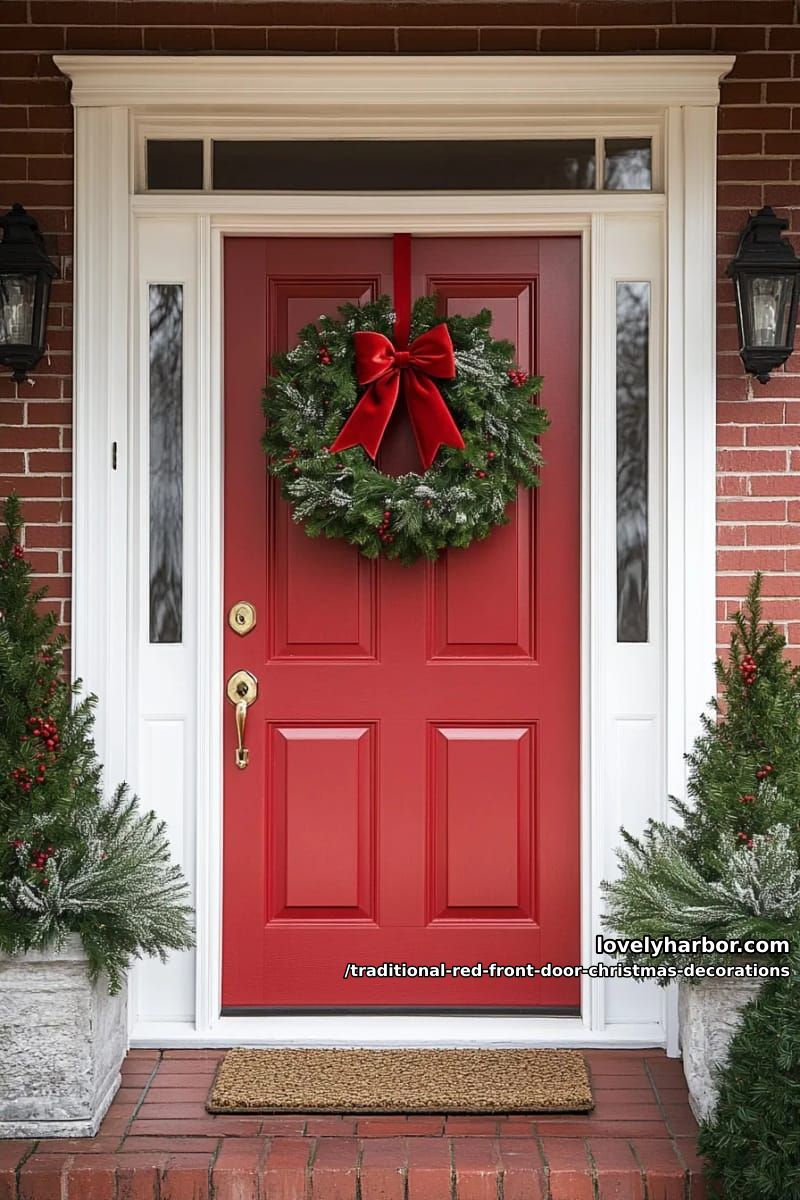
A 22 to 24 inch wreath is the correct size for a standard 36-inch door; the 18-inch rings stacked by the grocery store register look stranded once they're up. Buy one good fresh Fraser fir wreath and add a single wired velvet bow rather than a wreath that arrives pre-decorated with twelve plastic baubles (the Pottery Barn pre-lit version photographs like a hotel lobby). Fresh fir holds its needles for weeks in cold air and gives you a base you can actually work with.
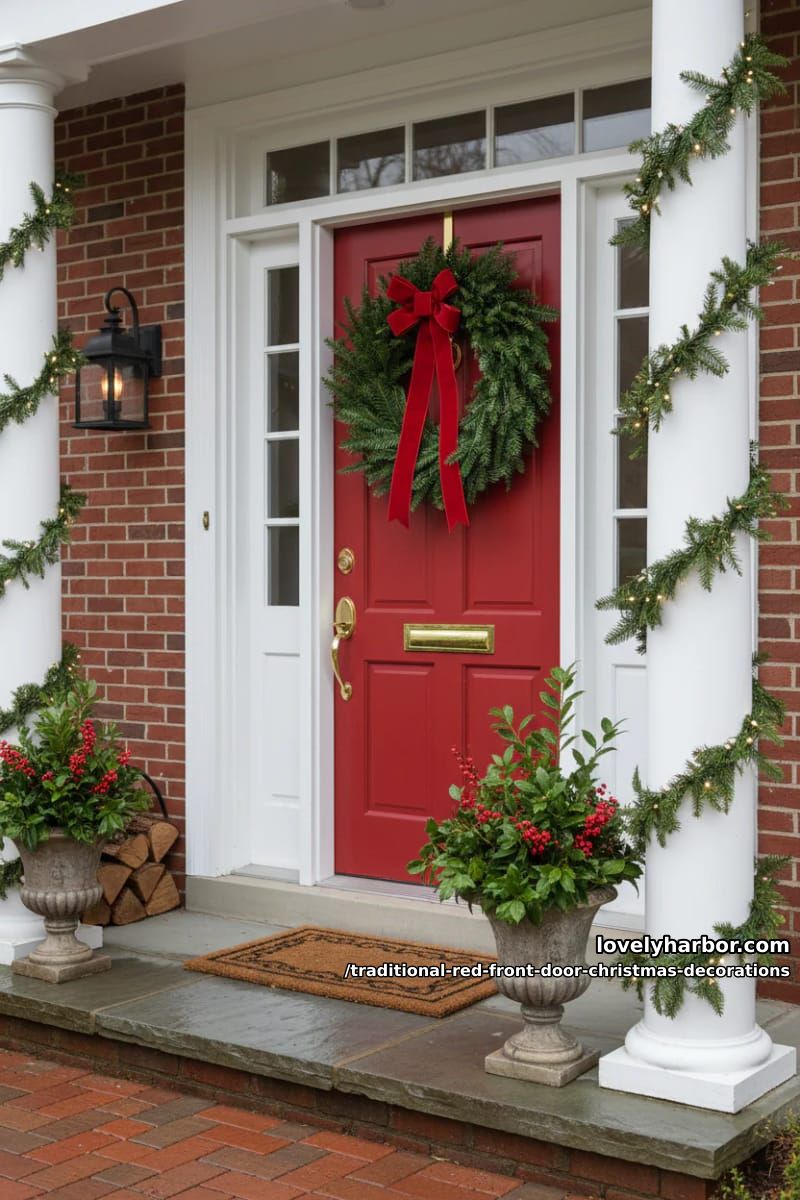
How you hang it depends entirely on what your red door is made of, and most people guess wrong.
Steel door: a magnetic wreath hanger grabs hard and holds 5 to 10 lbs, no marks. Won’t work on the next two.
Fiberglass or solid wood: magnets do nothing. Use a steel over-the-door hook (skip the brittle plastic ones) or a Command outdoor hook rated to roughly 20°F.
Storm or glass door: a two-piece magnetic set with one magnet on each side of single-pane glass, good to about a quarter-inch thick.
2. Frame the whole red door in garland, not just a wreath on it
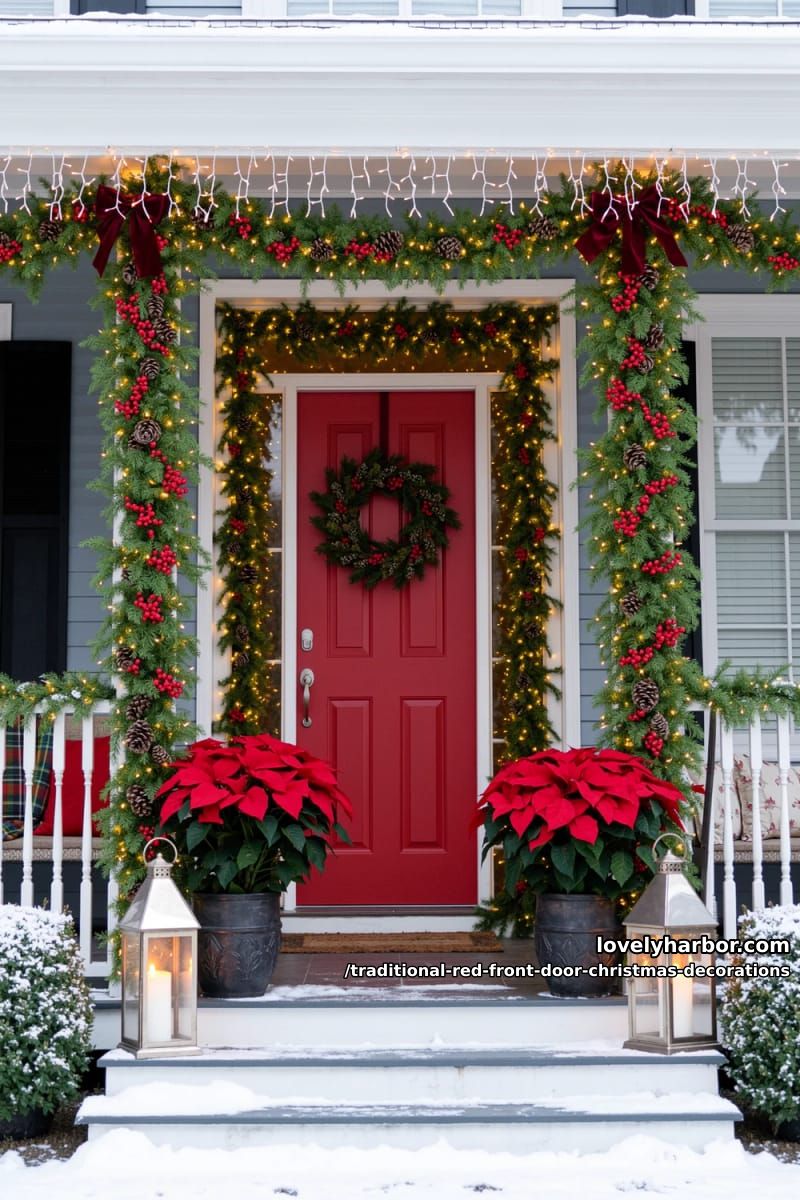
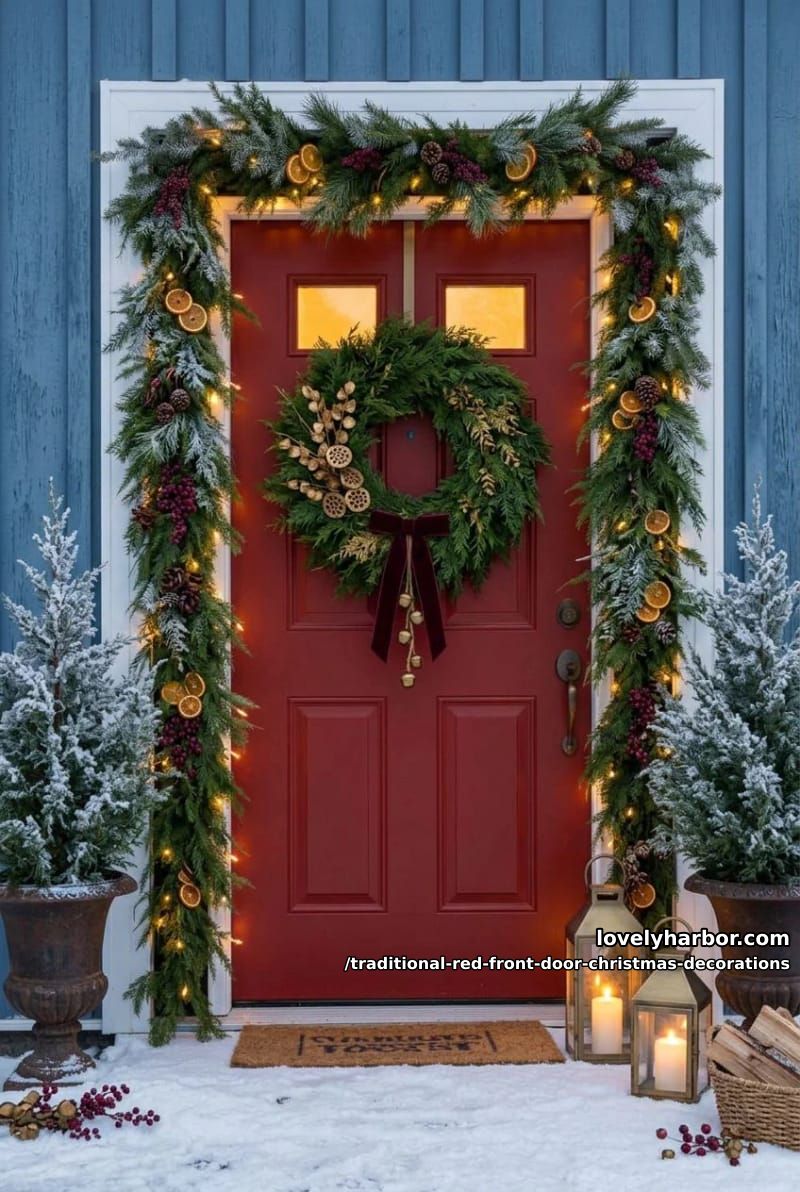
Running garland up both jambs and across the lintel turns a flat door into an arched entry, and the door-arch look is what's spreading on Pinterest this year for a reason: it reads instantly traditional. Fresh fir garland runs about $3 to $3.50 a foot, so a typical doorway is roughly 18 to 20 feet, call it $60 or so. Faux is the other route, and a 6-foot Balsam Hill strand is around $149, which stings until you spread it over five seasons.
| Greenery | Fresh fir | Faux PE |
|---|---|---|
| Cost | ~$3 to $3.50 / ft | $25 to $150+ per length |
| Lifespan | 3 to 5 weeks outdoors in cold | 5+ seasons |
| Look up close | Real, slightly uneven, scented | Good now, can shine plasticky in daylight |
| Best for | One big season, you want the smell | Reuse, mild climates, no resourcing each year |
3. Against a red door, gold and brass beat silver every time
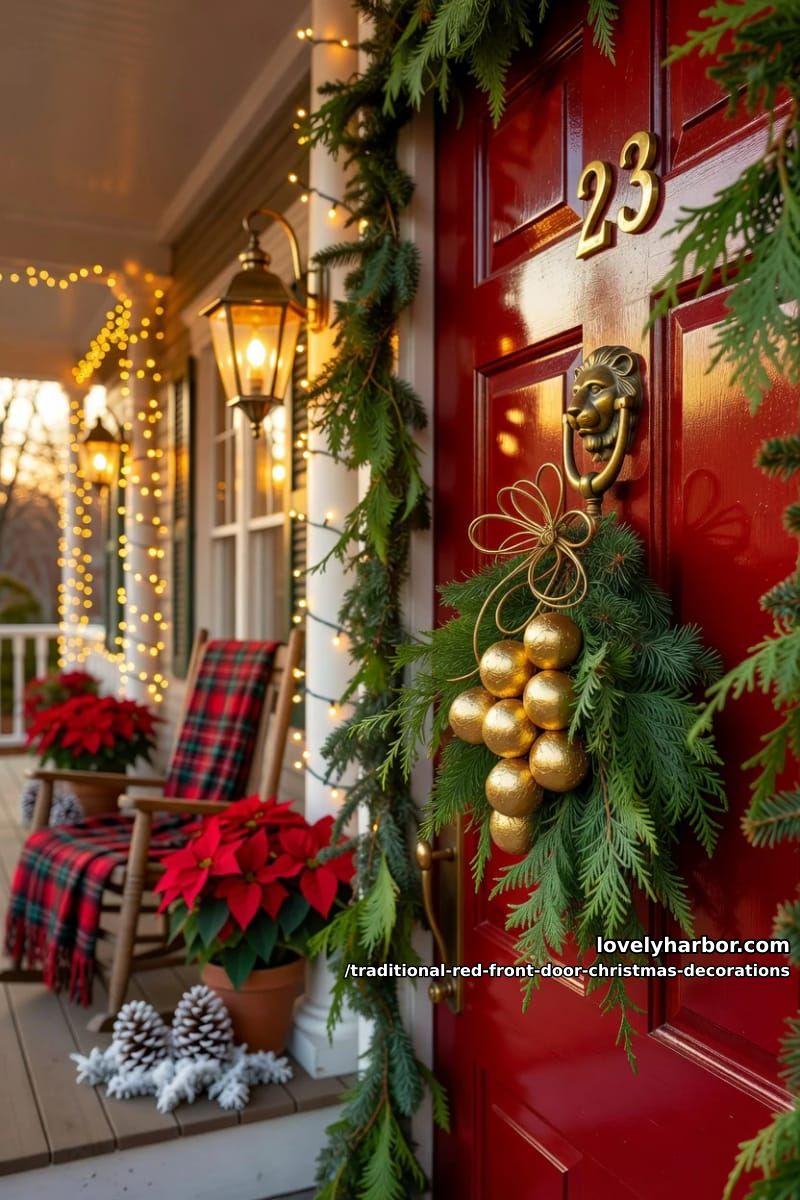
Warm metals harmonize with red; cool ones argue with it. Silver, chrome, and icy blue-white accents drain a red door and push the whole entry toward something clinical, which is the opposite of what you want at a Christmas threshold. Brass house numbers, an aged-bronze knocker, gold ribbon edges, even warm copper bells all pick up the heat already in the door.
One caveat worth knowing before you commit: a matte, slightly orange-leaning red takes to brass and antique gold beautifully, while a blue-based brick red can handle a more muted aged bronze better than a bright shiny gold. Hold the metal up to the door in daylight. If it looks like it's vibrating, it's the wrong gold.
4. Red velvet ribbon matches the door's undertone
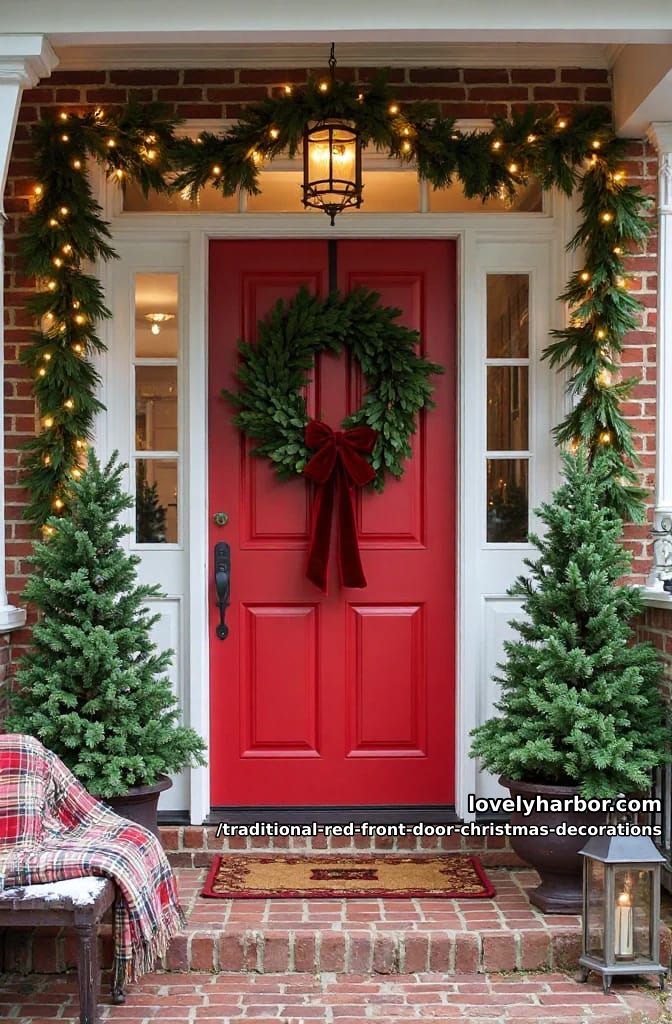
If you're going to layer red on a red door, the two reds have to share an undertone or the whole thing looks bruised. This is the single most common way a red-door entry goes wrong, and it's invisible on a phone screen in the store, then glaring once it's hung in daylight.
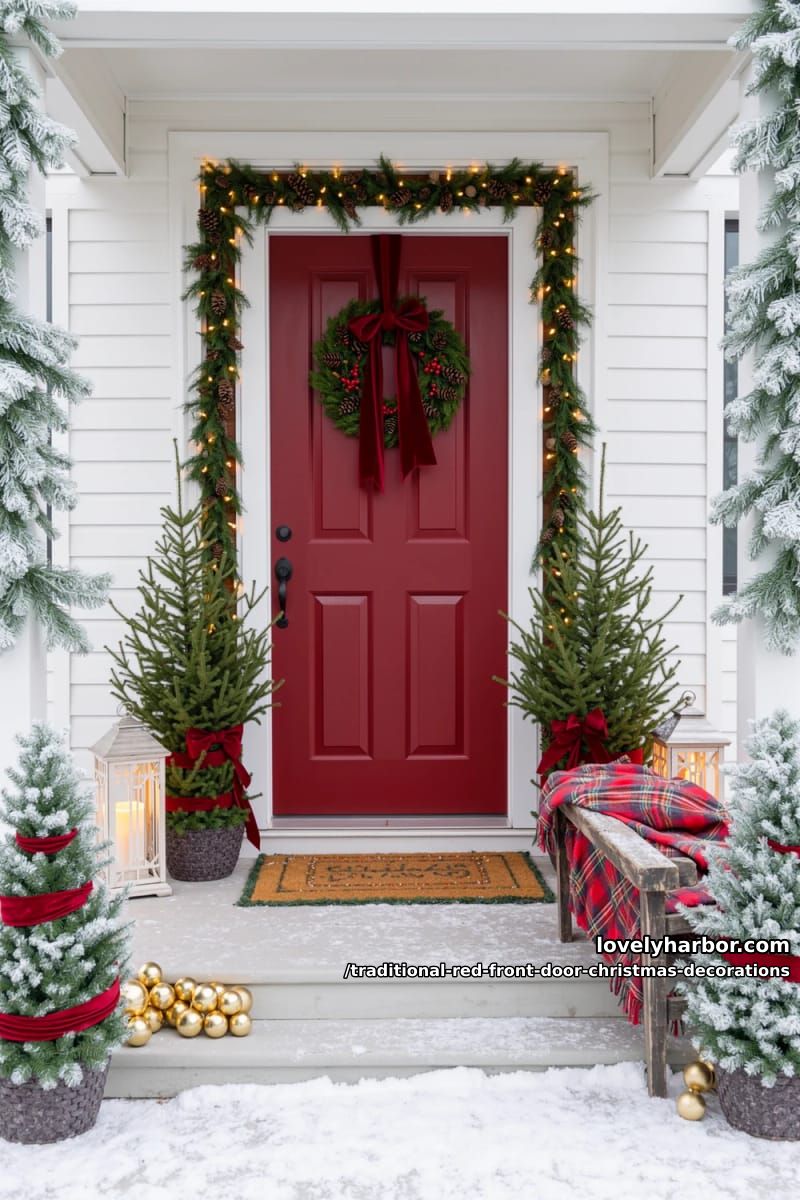
A blue-based burgundy velvet against an orange-leaning red door reads as two different mistakes stacked together. Before you buy 50 yards, hold one sample against the actual door in natural light. And use weatherproof nylon-backed velvet ribbon (the 2.5 inch #40 width is standard); indoor velvet water-stains the first time it rains and starts looking like it was pulled out of a flooded basement.
5. Light the red door in warm white and retire the multicolor strands
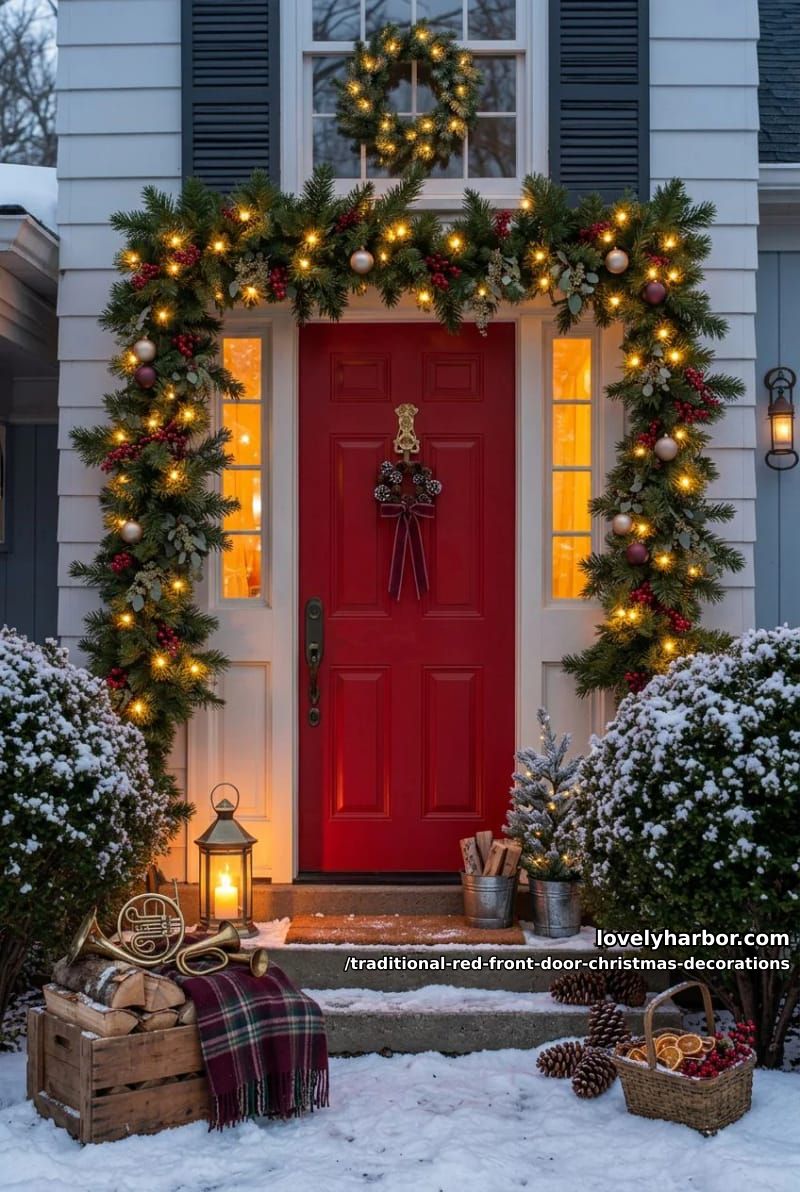
Warm white, somewhere around 2700K, is what makes a traditional red door glow at night; the cool blue-white strands turn the red grey and flat. Multicolor has its place on a Griswold-style yard, but it competes with a red door rather than supporting it. Put whatever you hang on a dusk-to-dawn timer so you're not fumbling with a switch in the cold.
Do this
- Stick to one warm white color temperature across wreath, garland, and any flanking trees.
- Hide the battery packs and wire behind the greenery.
- A single warm uplight at the base of the door, angled up, does more than ten strands.
Avoid
- Mixing warm and cool white in the same sightline.
- Cool 5000K “daylight” bulbs near a red door.
- Letting a blue-white porch fixture overhead undo everything.
6. Flank the door with a matched pair of lit topiary cones
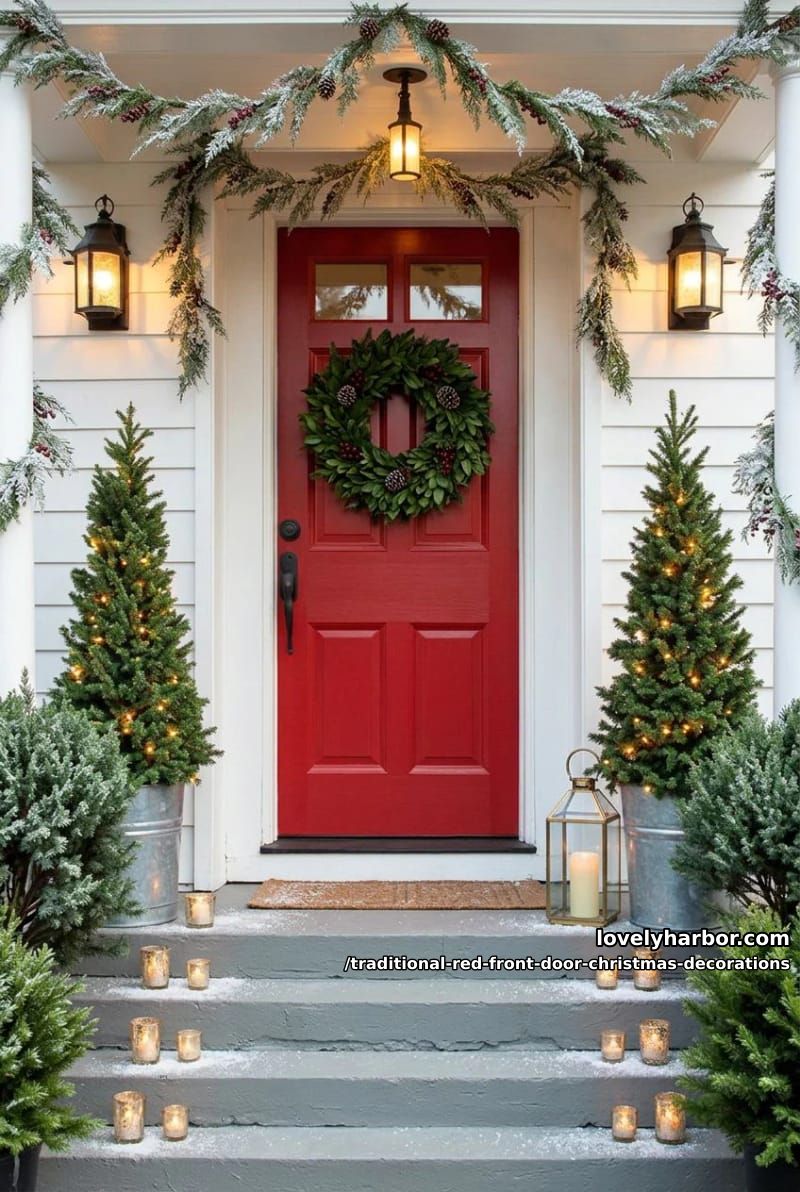
A matched pair of anything flanking the door does the heavy lifting on a traditional look, and topiary cones are the cleanest version: two boxwood or mini-spruce cones in identical galvanized buckets, one each side, both lit warm white. The symmetry is what reads "classic" before you've added a single ornament. Real boxwood cones aren't cheap, so if you rent or want them up year after year, buy pre-lit faux cones and bring them in after the season; nobody clocks the difference from the sidewalk.
7. Set a brass lantern and a fat pillar candle on the step
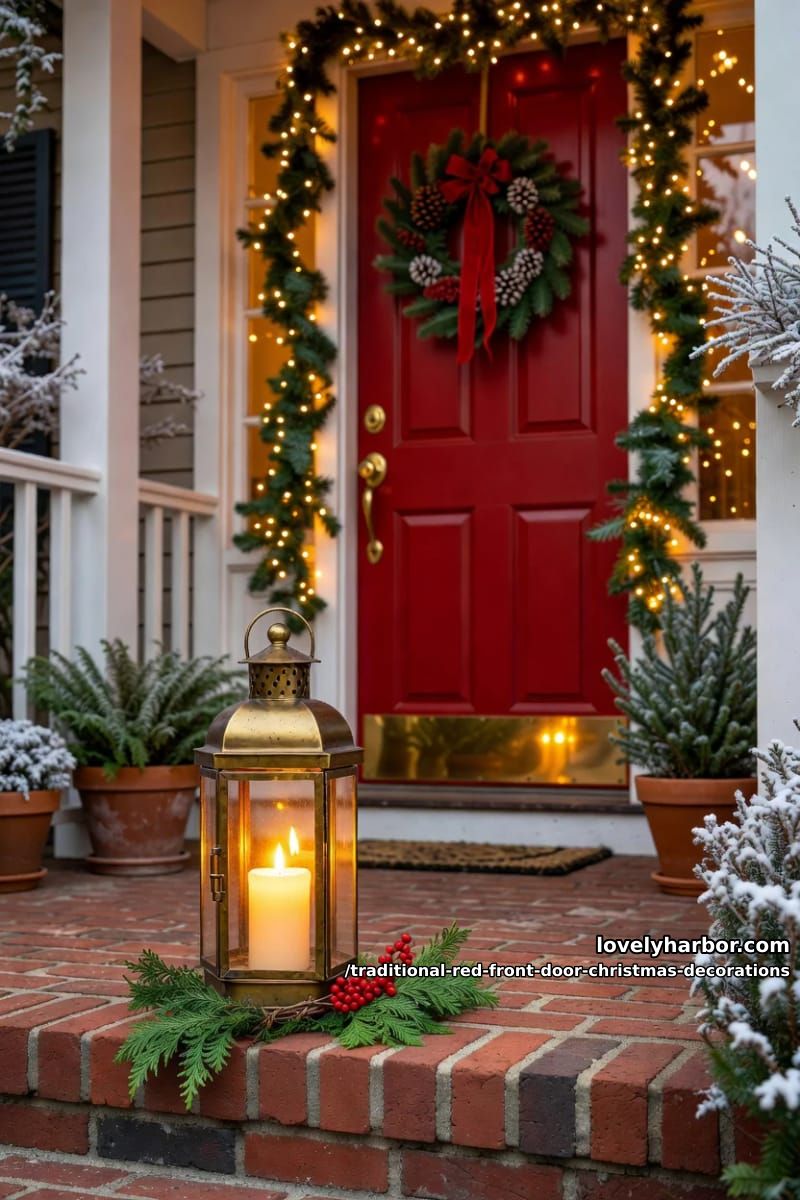
One good brass lantern on the step adds the warm-metal glow without any installation. Thrift it: Goodwill and estate sales are full of brass lanterns for a few dollars, and a flameless LED pillar on a timer means you skip the wind-versus-real-flame problem entirely. Tuck a little cedar at the base so it doesn't sit there looking lonely.
8. Dress the door knocker (or add a monogram) with a single greenery sprig
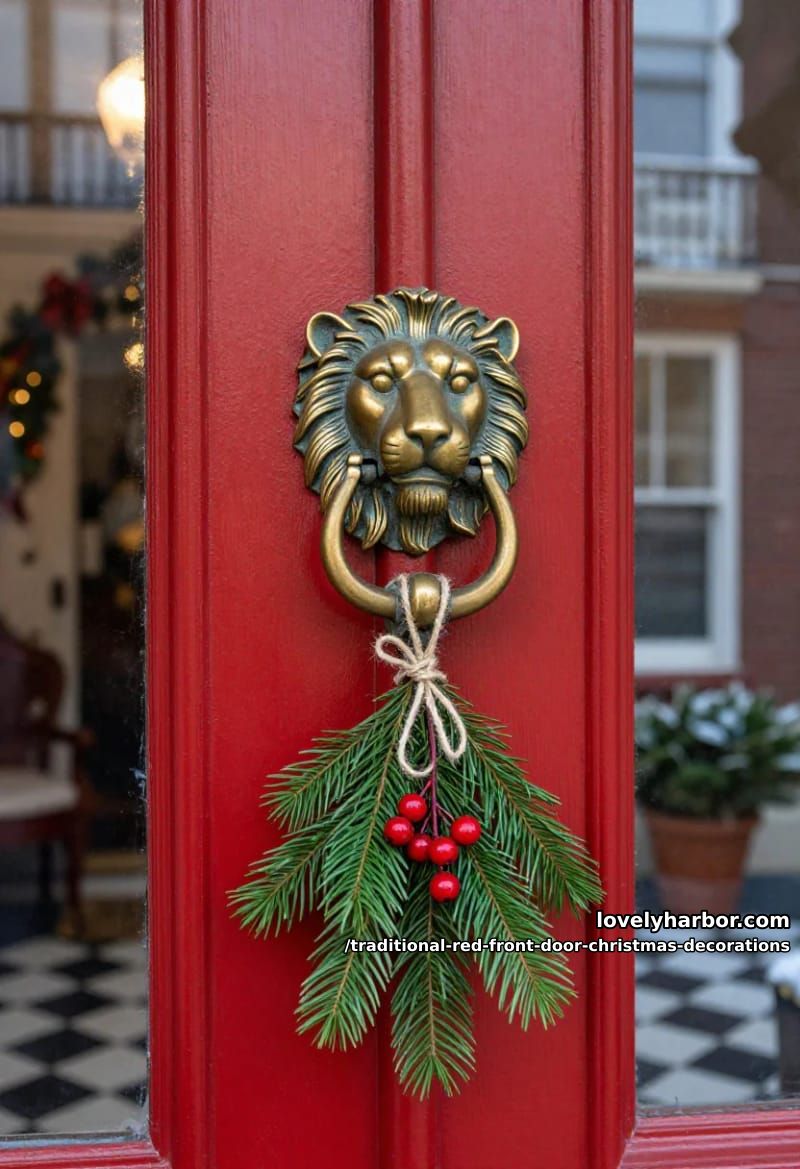
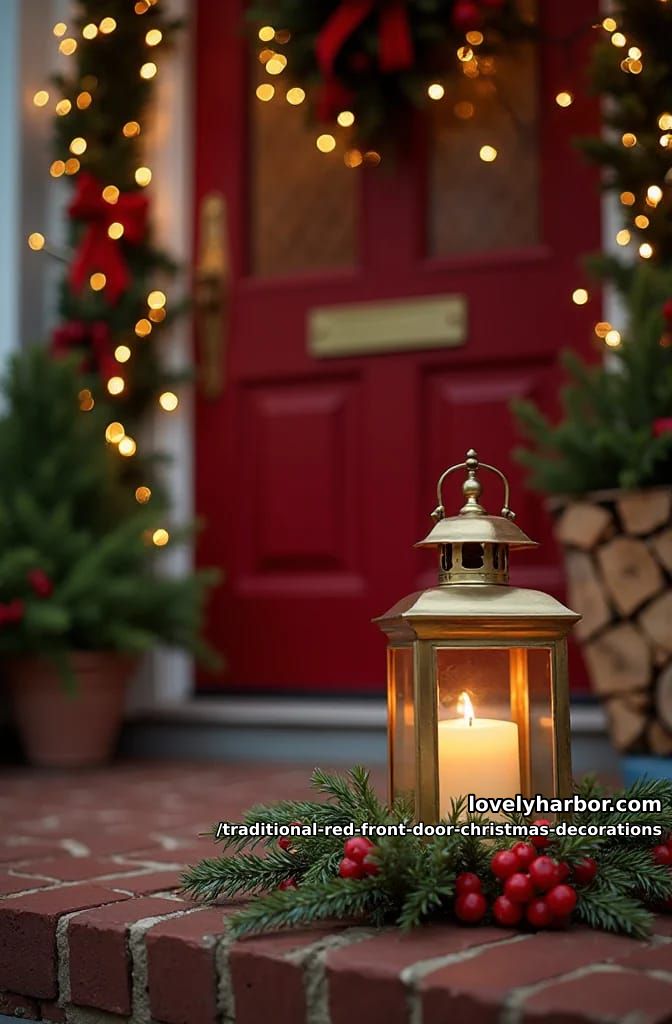
The brass-knocker-on-a-red-door combination is already half a Christmas card, so don't bury it. A single sprig of cedar tied to the knocker with jute, or a brass monogram with one tucked stem, finishes a red door without adding clutter. This is the detail people notice up close when they're standing at your step.
9. Carry the scheme up into window boxes and sill greenery
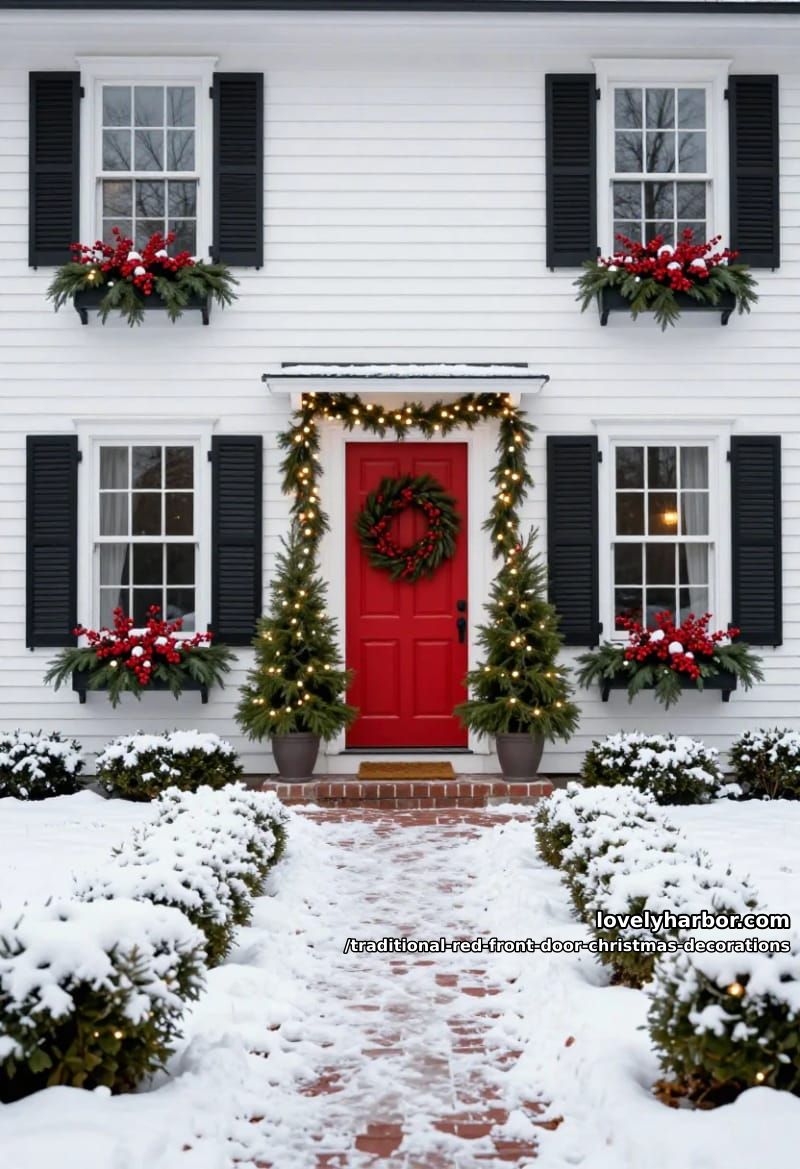
A wreath alone can leave a red door looking like it's floating on a blank wall, so pull the greenery out to the windows that flank it. Matching sill greenery or window boxes with the same fir and warm white lights makes the whole front read as one composition instead of a single decorated spot. Renters: Command's outdoor hooks are weather-rated roughly 20°F to 125°F and peel off clean in January, which is what they're actually for.
10. Use real winterberry and magnolia, not plastic berry picks
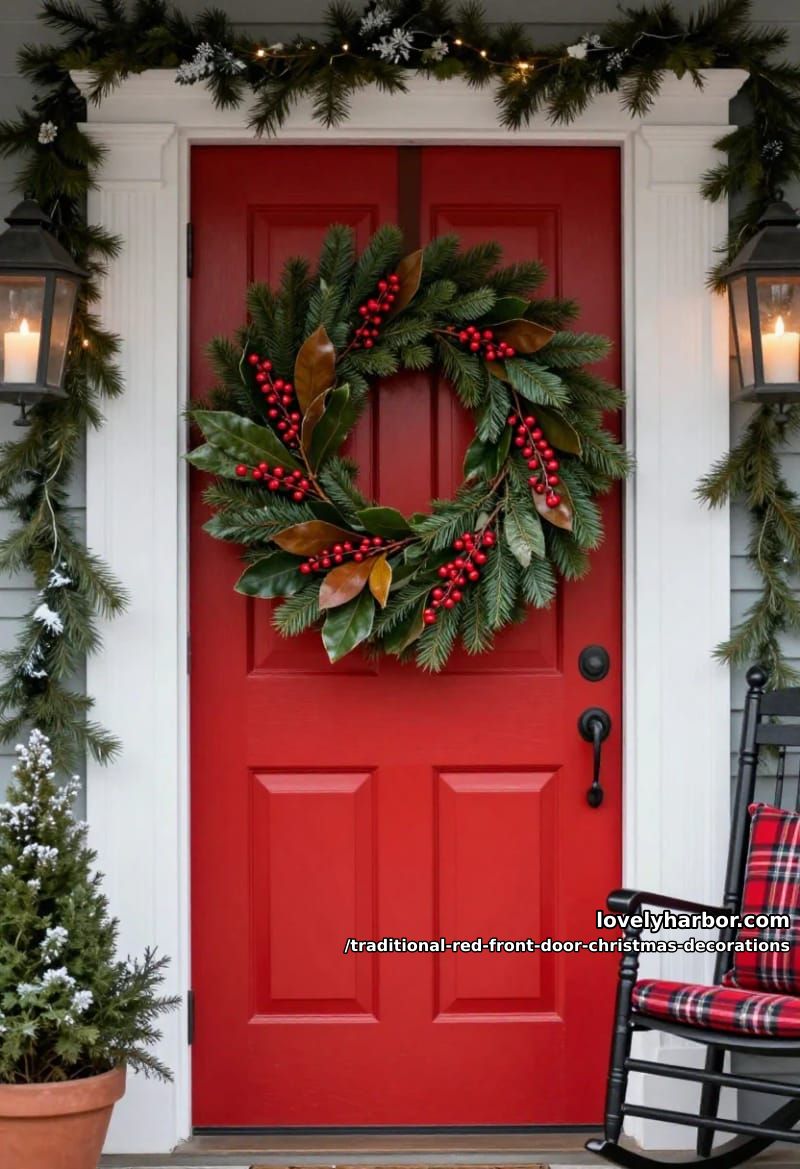
Plastic berry picks announce themselves in daylight, especially against a real door where the eye has something to compare them to. Real winterberry branches (the cut stems florists sell, not a live shrub) hold their glossy red berries for weeks once they dry, and a few magnolia leaves turned to show the brown suede back add a depth no plastic spray imitates. Foraged holly works too if you have access to it, and it costs nothing. I used to default to faux for everything outdoor; then I put real winterberry next to faux on the same wreath one year and never went back, because the fake stuff looked embarrassing beside it.
11. Layer the threshold: coir mat, boot tray, a bucket of birch logs
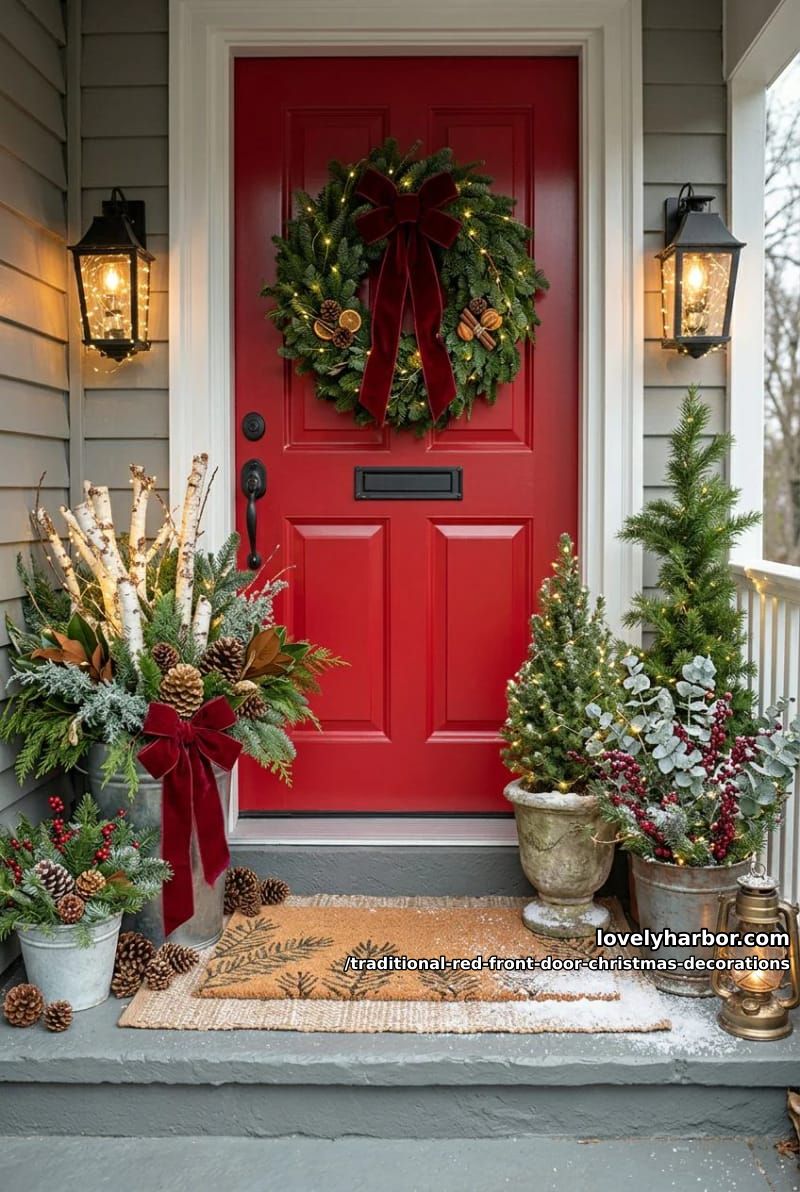
The few square feet right at the door finish the scene, and they're cheap to dress. A plain coir mat, a galvanized boot tray, and a bucket of white birch logs standing on end give the threshold weight without another ornament. It also keeps the snow and salt off the actual decorations, which matters more than it sounds like it should.
Conclusion
Work in this order and you'll save yourself the redo: do the garland and the warm white lights first, hang the flanking topiaries, then put the wreath up last so you can step back and judge it against everything else. The one step nobody wants to hear is to check your reds in actual daylight before committing, because the velvet-against-the-door test from section four is what separates a red entry that looks intentional from one that looks like a bruise. And if you take only one thing: against a red door, reach for brass and gold, not silver.