
Garland is the piece that makes or breaks a Christmas mantel, and the distance between a flat green rope laid across the shelf and something that reads designer comes down to three moves: what you layer underneath, how you drape it, and what you have the restraint to leave off. The seven ideas below are organized around those moves, from the cheap-base-under-a-better-strand trick that every decorator quietly relies on, to a moody dark-green mantel, to the one-garland edit for a small shelf.
All of it works with faux or fresh greenery, and all of it is renter-safe if you stick to Command hooks instead of nails. This is styling, not a from-scratch build, so you can pull most of it off in an afternoon with strands you already own.

Layer a cheap faux base under a better strand for a full mantel garland
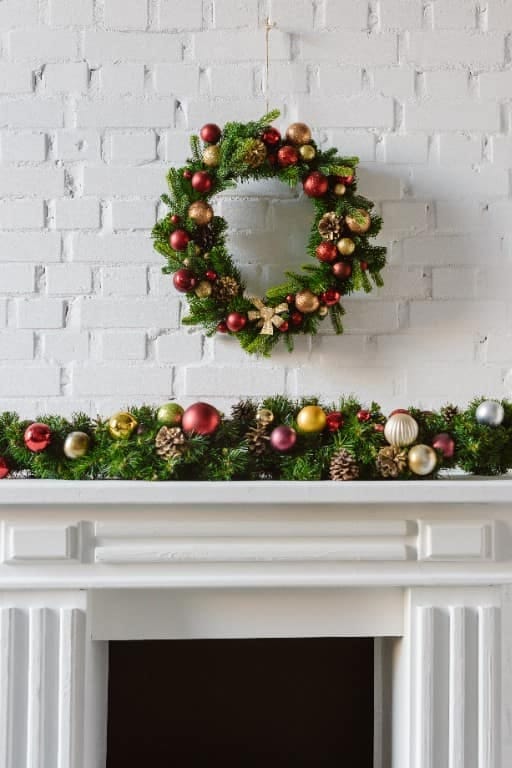
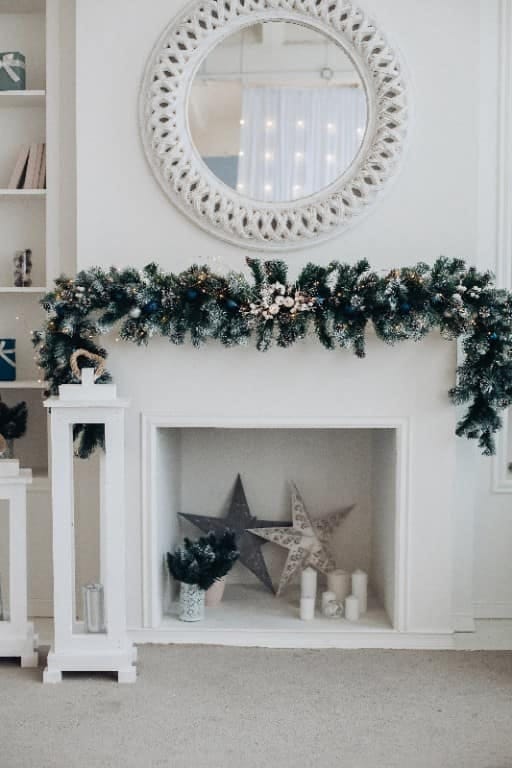
The fullness you see on the mantels you save on Pinterest is almost never one strand. It is a cheap garland doing the bulk-and-drape underneath and a better one layered on top to be the part you actually look at. Buy the fluffy hero strand and you will spend a fortune to cover the length; layer instead, and you get the same weight for a fraction of it.
The base layer nobody actually sees
Start with the least expensive full-length faux garland you can find, because its only job is bulk. A nine-foot faux cedar runs around thirty-five dollars, and nine feet matters: it clears most mantels in a single piece, so you skip the awkward seam that shows up when two shorter strands meet in the middle. Lay it along the top, then pull a scatter of its branches straight up and outward so the layers above have something to nest into.
The strand that does the visible work
On top of that base goes the greenery with better needles: a real-touch Norfolk pine with its soft flat fronds, or a fresh cedar strand if you want the scent and do not mind replacing it. This is where the decorator rule of thumb lands, and it is one worth repeating: one garland reads fine, two reads high-end. Pull a few base branches through the top layer here and there so the whole thing looks grown rather than stacked. (Pottery Barn's lush cedar two-pack was the go-to for exactly this until they cut it to a single pricey five-foot length, which tells you how much the layering crowd valued a cheap second strand.)
How much garland to actually buy
Measure the mantel and multiply by one and a half. That extra half gives you the slack for a soft dip in the center and a little fall at each end without the greenery pulling taut like a clothesline. If you want a real cascade down one side, go closer to double. Fasten the strands to each other at about three points with green floral wire, zip ties, or pipe cleaners while everything is flat on the floor, then hang the joined bundle as one.
Drape the garland asymmetrically so it cascades down one side of the mantel
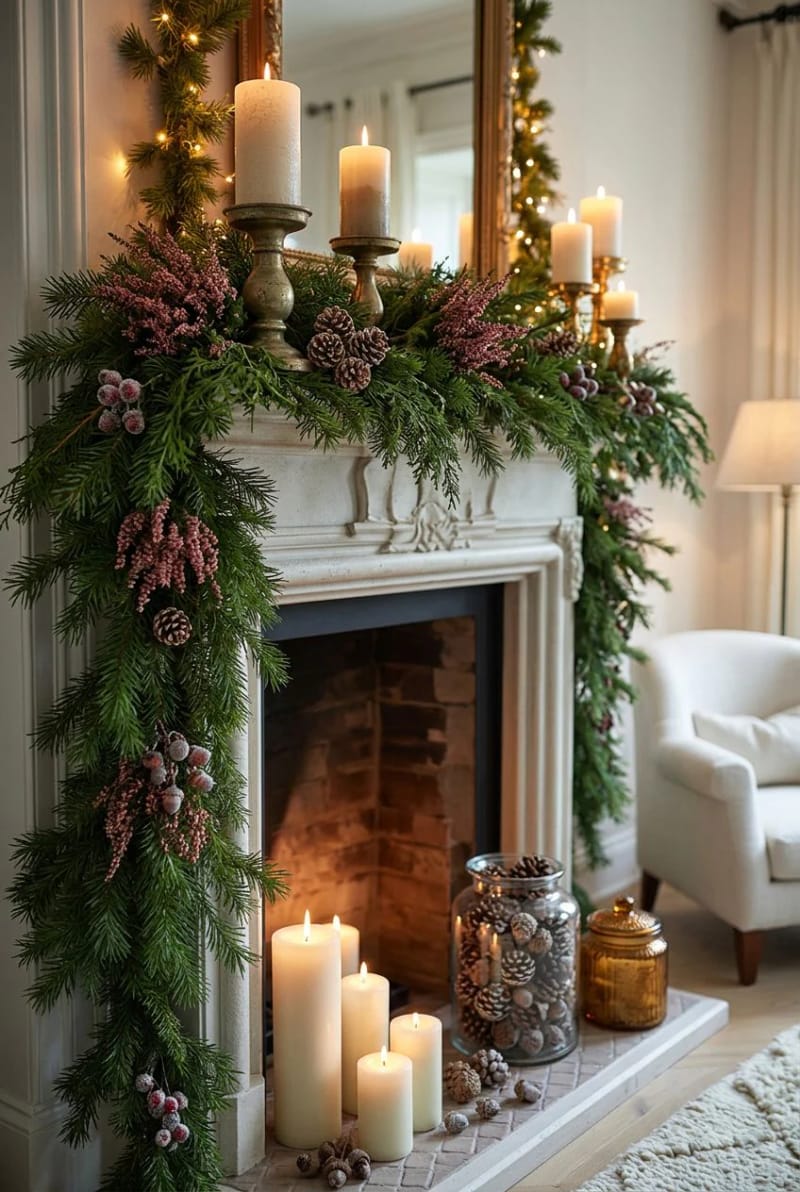
Center the garland perfectly symmetrically and it reads like a store display; weight it to one side and it reads like someone with an eye put it there. The move is simple: run two strands down one end so the greenery spills toward the floor, and let the other end stop short just past the corbel. Balance the heavy side with something visual on the light side, a cluster of stockings or a lone wreath, so the asymmetry looks deliberate instead of lopsided.

Getting it to hold without wrecking the mantel
Command hooks are the renter's default, but read the rating before you trust one. The standard adhesive hooks hold around two pounds, which is fine for lightweight faux and nothing else; once you have layered strands, lights, and picks, switch to the five-pound heavy-duty hooks or the Command garland-specific hangers. Wipe the surface with rubbing alcohol and give the adhesive a full twenty-four hours to cure before you hang anything. Painted wood mantels take screw-in cup hooks well if you would rather have something permanent and truly load-bearing; brick and stone want masonry hooks or brick clips that grip the mortar line, no drilling required.
Go moody with a dark green garland on a black or brick mantel
Skip the bright red-and-gold entirely and let a deep blue-green garland sit against a dark surround for the look that has been quietly climbing all season. A matte black fireplace, or dark exposed brick, turns the greenery into the whole statement, so you need almost nothing else: a few aged-brass bells, maybe one string of warm lights, and stop. The palette does the work that a pile of ornaments would do on a white mantel, which makes this the low-effort idea that photographs the most expensive.

Warm the mantel with brass candlelight and a soft pine garland


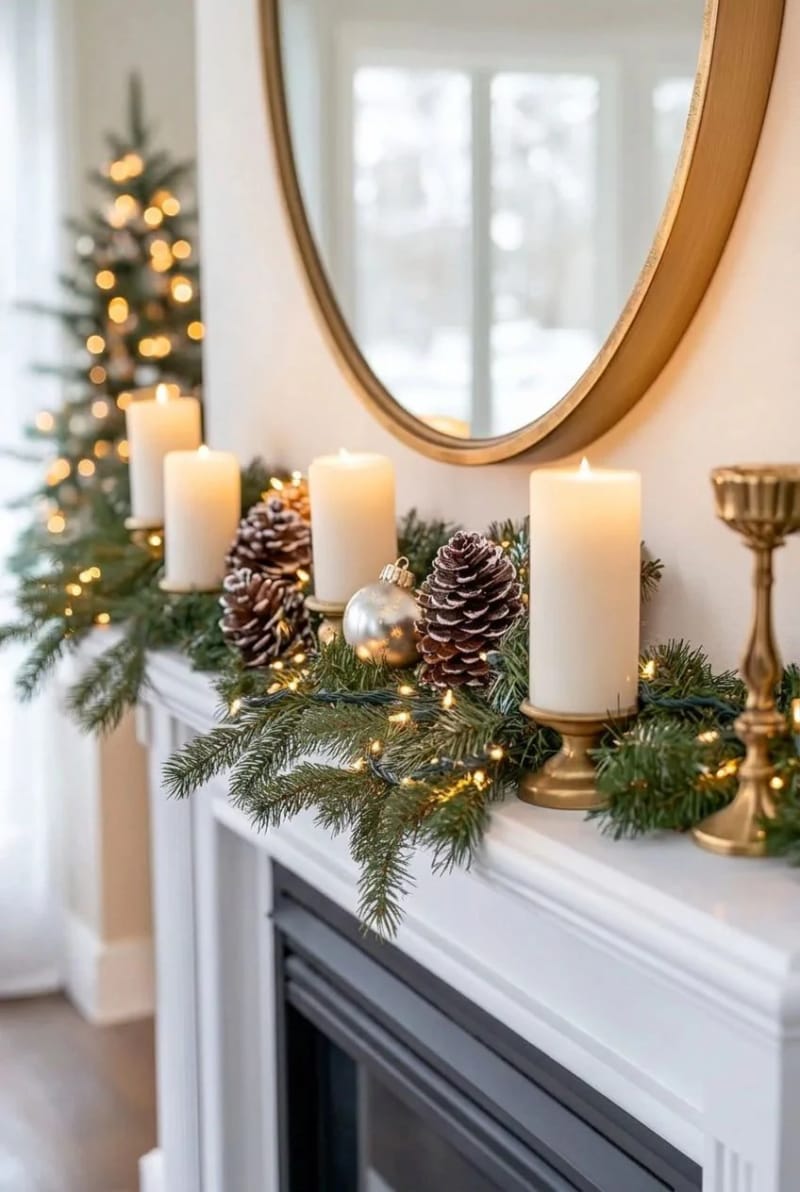
Candlelight is what separates a cottage mantel from a merely decorated one, and brass is the metal that flatters warm greenery instead of fighting it. Cluster candlesticks of different heights behind the garland rather than lining them up like soldiers, and let the flame level sit above the needles so the glow catches the green.
Candles that won't scorch the greenery
Only run open flame if the tapers stand well clear of the foliage, and even then, never leave them lit and unwatched near a strand you have wired in place. The safer glow most people actually use is battery fairy lights with a built-in timer that clicks on at dusk; a set runs about fifteen dollars, and you stick the battery pack to the back edge of the mantel with a small Command strip so nothing dangles. Weave the wire deep into the layers so you read the light, not the string.
Dried oranges, bells, and the rest of the small stuff
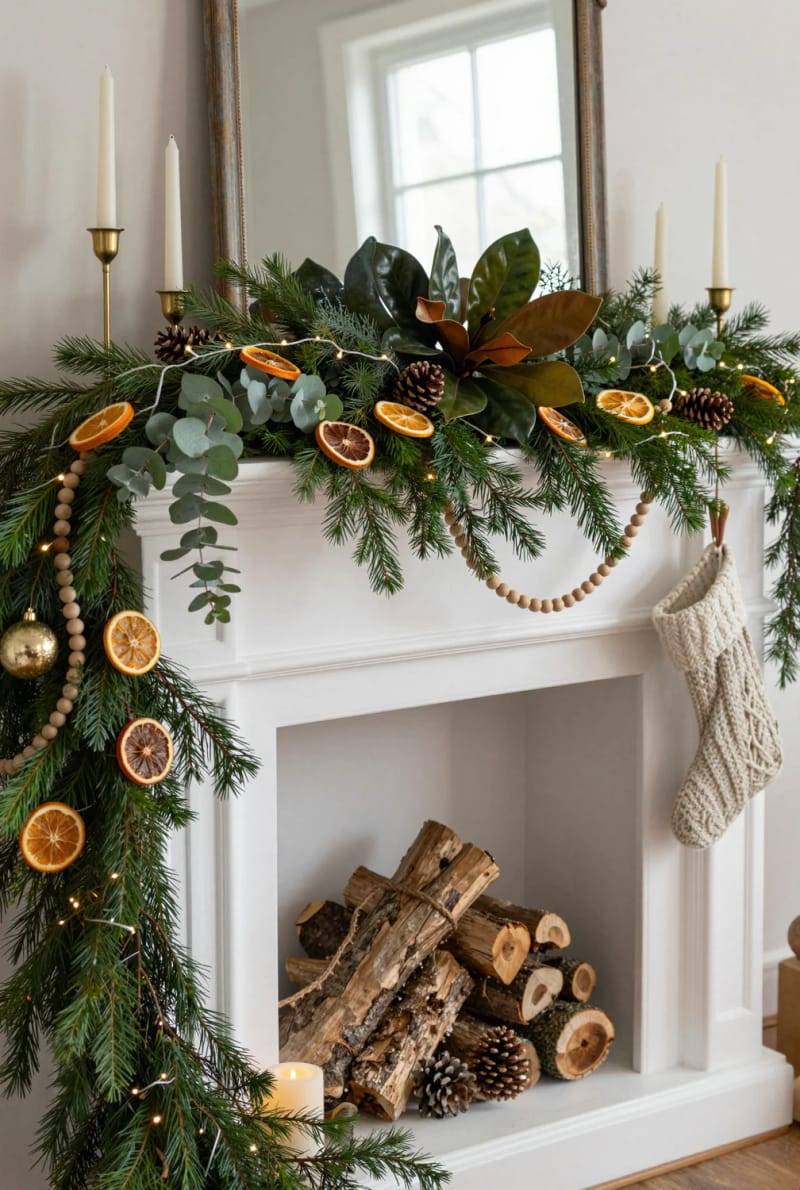
The finishing details are what push this from generic to specific. Dried orange slices thread on with a toothpick and a length of florist wire, or you can buy them pre-dried at a craft store if you would rather not run the oven for three hours. Cinnamon-stick bundles, a few pinecones, and a string of bells hung so they peek through the front give the woodland-cottage texture without adding color noise. Add these last, once the greenery and lights are set.
Weave velvet ribbon through the garland and skip the bow-on-every-peak look
Velvet ribbon is having a moment for a reason: its matte pile reads richer than the glossy satin most kits ship with. Work it into the garland in loose loops rather than tying it in tight bows, and let the wired edge hold a soft swag between tuck points. One larger bow set off-center does more than five identical ones spaced evenly, which is the mistake that makes a mantel look store-bought.

Do this
- Use wired ribbon so the swags actually hold their shape between tucks.
- Pick two ribbon widths in one color family, a wider one for the swag and a narrow one for accents.
- Tuck the ribbon deep into the greenery in a few loose loops, letting some dip below the garland line.
- Make one statement bow and set it off to one side.
Avoid
- Thin unwired spool ribbon that goes limp within a day.
- A matching bow tied at every garland peak.
- Ribbon in a color that argues with the green instead of sitting quietly against it.
- Hot-gluing anything you will want to remove in January.
Edit down to one restrained garland on a small mantel
On a narrow mantel, the fix is less, not more. A single slim eucalyptus-and-cedar strand laid flat along the top, two ivory candles, and one small wreath will out-style a shelf crammed with layered greenery, because the scale finally matches the space. Let a good amount of the mantel show; the negative space is what makes a four-foot shelf look intentional rather than stuffed.
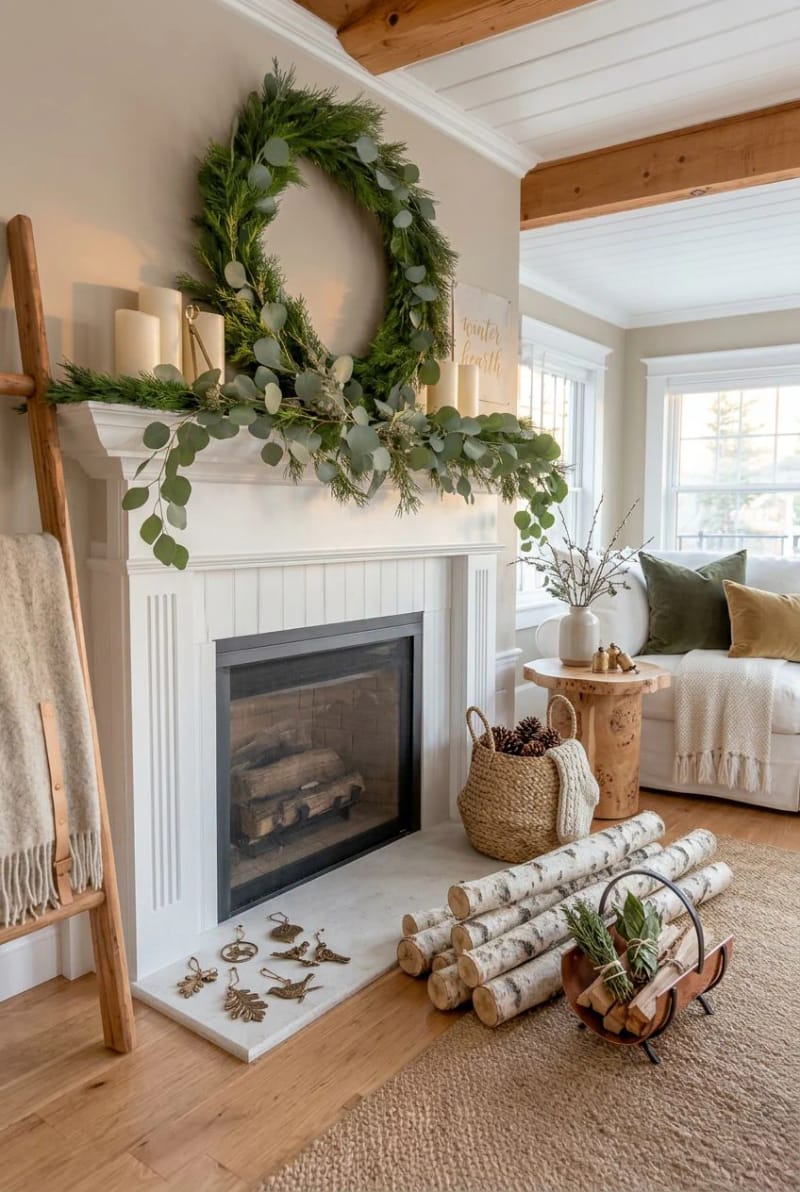
The first is overload: piling on every pick, ornament, and bow until the greenery itself disappears under decoration. If you cannot see the garland’s drape anymore, take a third of it back off. The second is heat. Fresh garland strung directly over a working firebox crisps and drops needles inside a week, so keep real greenery clear of direct heat and mist it every day or two, or use faux over a fireplace you actually light.
Mix your mantel greenery: cedar, eucalyptus, magnolia, and dried citrus
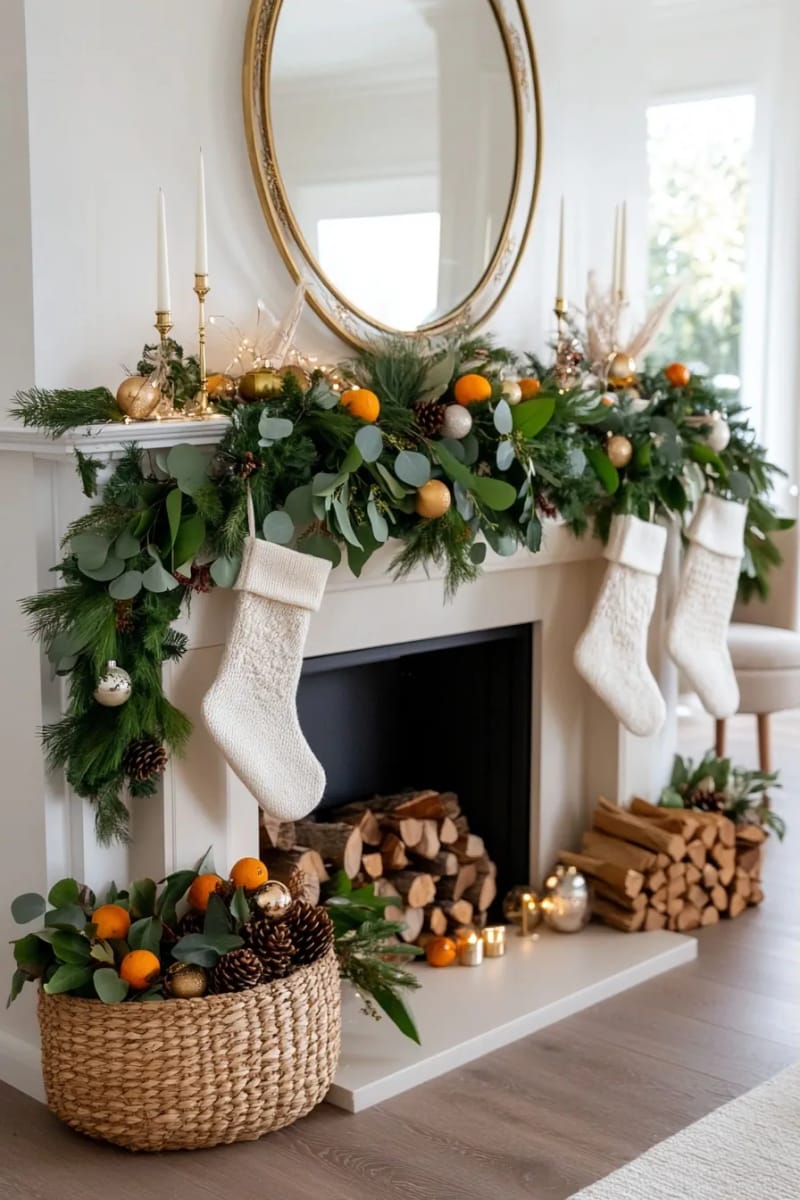
A garland built from one type of green looks flat; three or four textures woven together looks collected. The trick is casting each type for what it does well rather than treating them as interchangeable, so the wispy stuff fills, the structured stuff holds shape, and the broad glossy leaves punctuate. Dried orange slices tucked through the whole thing tie the greens to the brass-and-amber palette below.

| Greenery | Texture and look | Best job on the mantel |
|---|---|---|
| Cedar | Wispy, droopy, soft flat needles | The base layer that fills and trails down the sides |
| Norfolk pine | Soft flat fronds, more structured | The visible top strand you actually look at |
| Cypress | Fine feathery texture, deep green | Filler woven between the two main layers |
| Eucalyptus | Round silver-green leaves, matte | A modern accent threaded through for color break |
| Magnolia | Broad glossy leaves, brown suede backs | A few focal sprigs, never a full run |
Conclusion
If you do nothing else, get the order of operations right: hang the bells and ribbon on front-facing hooks first, lay the cheap faux base and the better strand on top of the mantel second, weave the lights in third, and add the dried oranges and pinecones dead last so nothing gets buried while you are still adjusting. Build it that way and even the moody dark-green version from earlier comes together in one sitting. Fresh cedar sold by the foot or in eighteen-to-twenty-foot strands will always smell better than faux, but it is also the thing you will be sweeping off the hearth by mid-December, so decide up front whether you are decorating for the scent or for the season.