Most of the farmhouse Christmas mantels that go viral are quietly over-decorated, and the reason they still look good is styling, not stuff. The common mistake is treating the mantel like a shelf that needs filling, when it is really one long horizontal line you are layering against a vertical anchor. Get those two things right and you can decorate the whole thing with a garland, a few candles, and a handful of natural bits. The nine ideas below are grouped the way you actually build a mantel: the base layer first, then height and glow, then the fixes for stockings, TVs, and mantels that fight you.
A quick scope note before you scroll. This leans modern farmhouse rather than country-kitsch, so there is no buffalo-check avalanche here, and a few of the ideas are aimed squarely at renters and at anyone with a television parked above the firebox. If that is your situation, jump to the last group; it exists for you.

Build the base: greenery and palette first
1. Drape the garland off to one side, not dead center
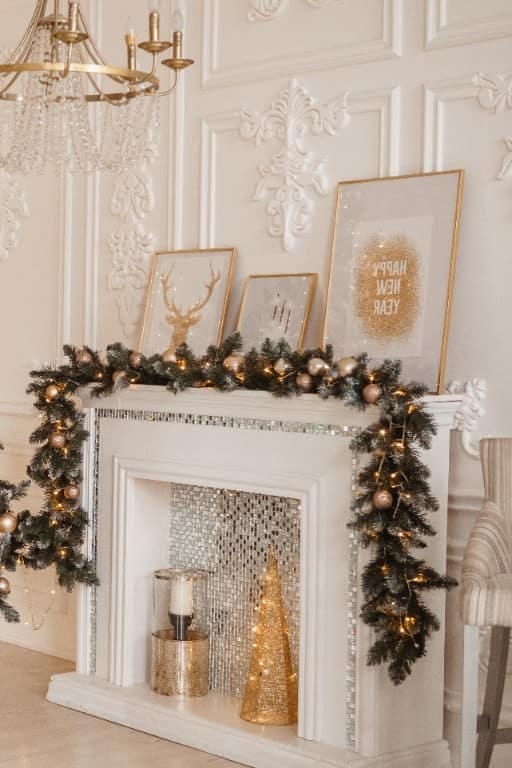
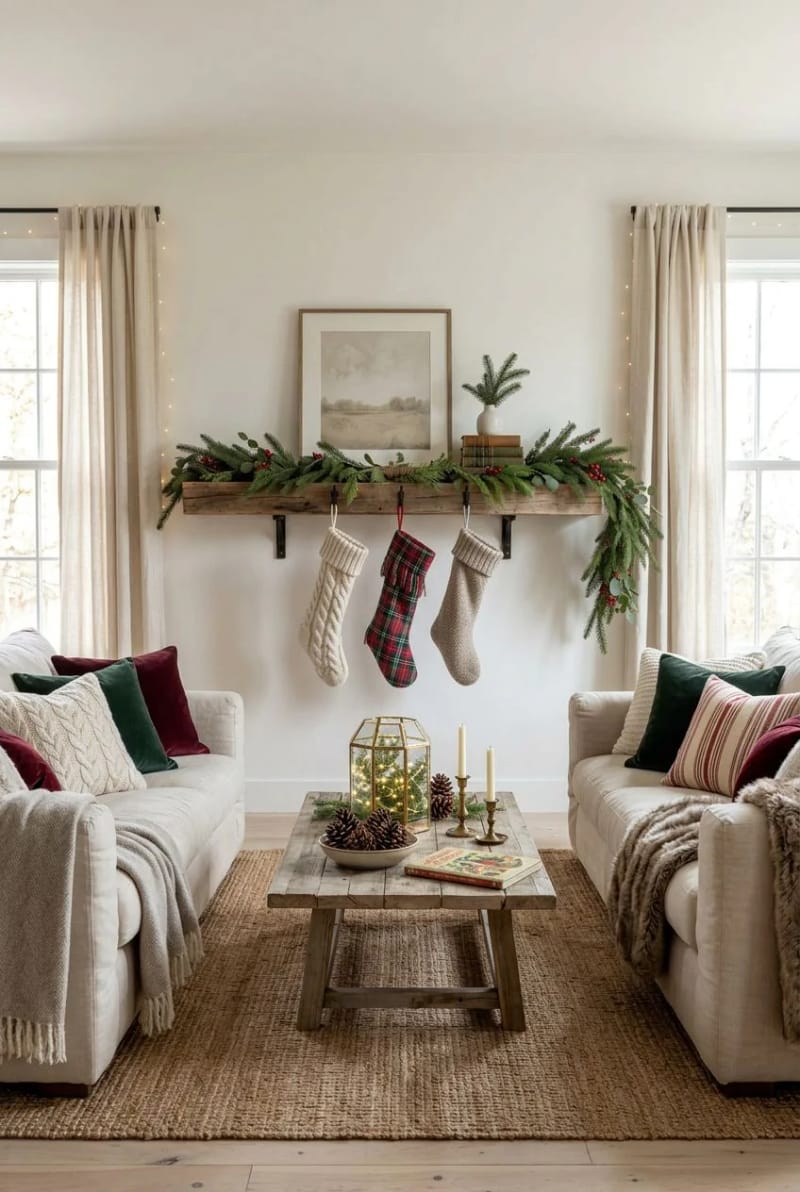
Let the garland pool heavier on one end and trail longer down that side, so it reads like something that grew rather than something that was hung to a level. A symmetrical garland with matching tails is the fastest way to make a mantel look like a catalog page, and not in a good way. Buy or build the garland at roughly one and a half times the mantel width; you need the extra length to get a real drape and a tail that spills past the corbel.
For the base itself, mix textures instead of buying one pre-lit rope of shiny plastic pine (the kind that photographs like a car air freshener and fools nobody in person). Cedar and eucalyptus have movement; standard faux pine does not, so fold a few real cedar or eucalyptus stems into a faux base and let them dry in place. Then tuck picks into the greenery rather than laying them on top: a couple of pinecones, some dried berries, one or two clusters at the heavy end. Fewer, larger clusters look intentional. Sprinkling single berries evenly along the whole run is where it starts to look like a store display.
2. A neutral farmhouse mantel only works if you layer real texture
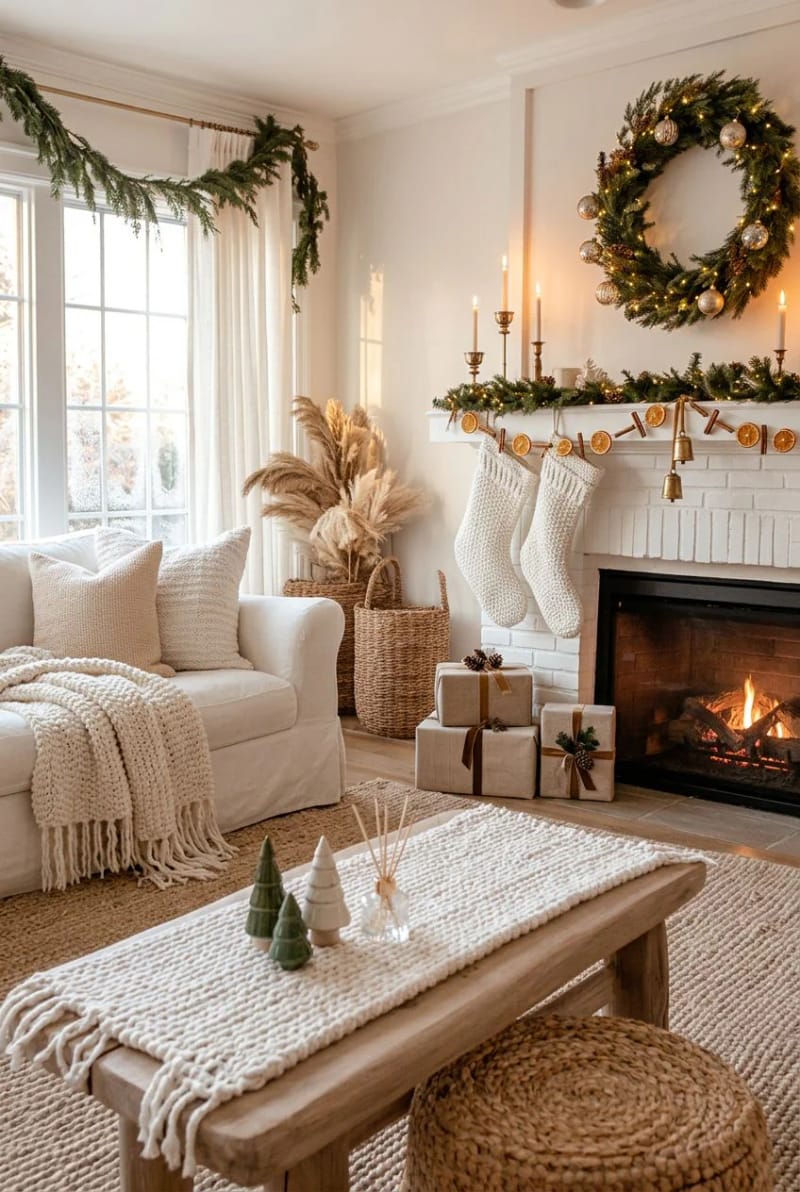
Commit to texture or a neutral mantel goes flat fast. Beige on beige with smooth surfaces is exactly the look that makes a room read like a builder-grade model home or the Hobby Lobby seasonal aisle. What saves it is contrast you can feel rather than see: a chunky knit against smooth ceramic, matte wood beside a little brass, dried pampas or wheat next to tight cedar. Keep the palette to cream, oatmeal, and natural wood, then break the beige with exactly one warm tone. Rust, aged brass, or the amber of dried citrus does the job without dragging you back into full red-and-green. One warm accent per mantel; two and you have started a color scheme you did not mean to start.
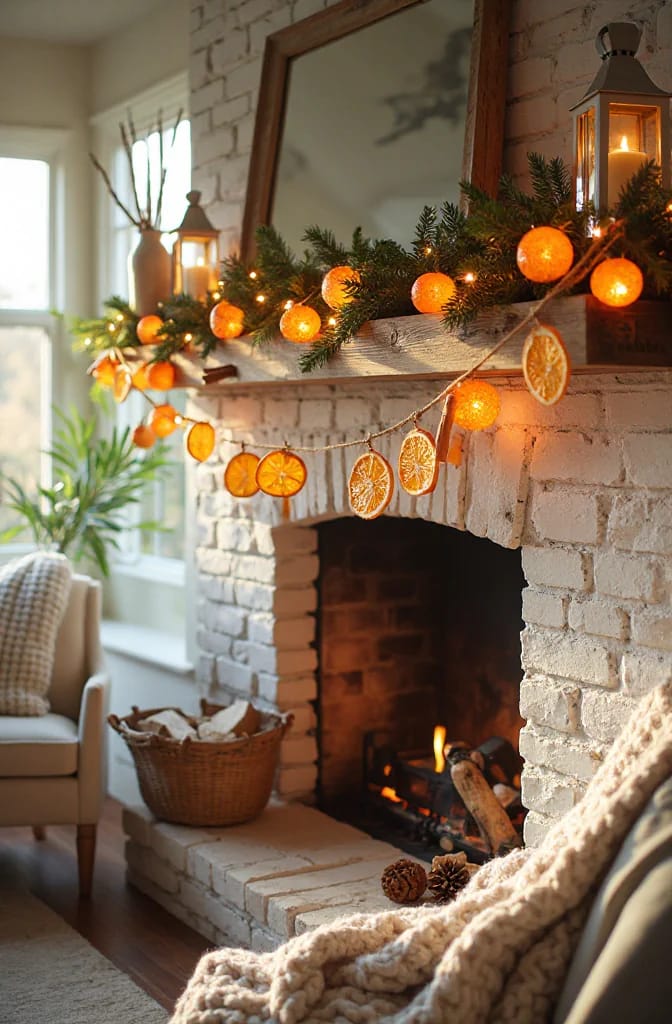
3. String a dried orange garland when the neutrals need warmth without red
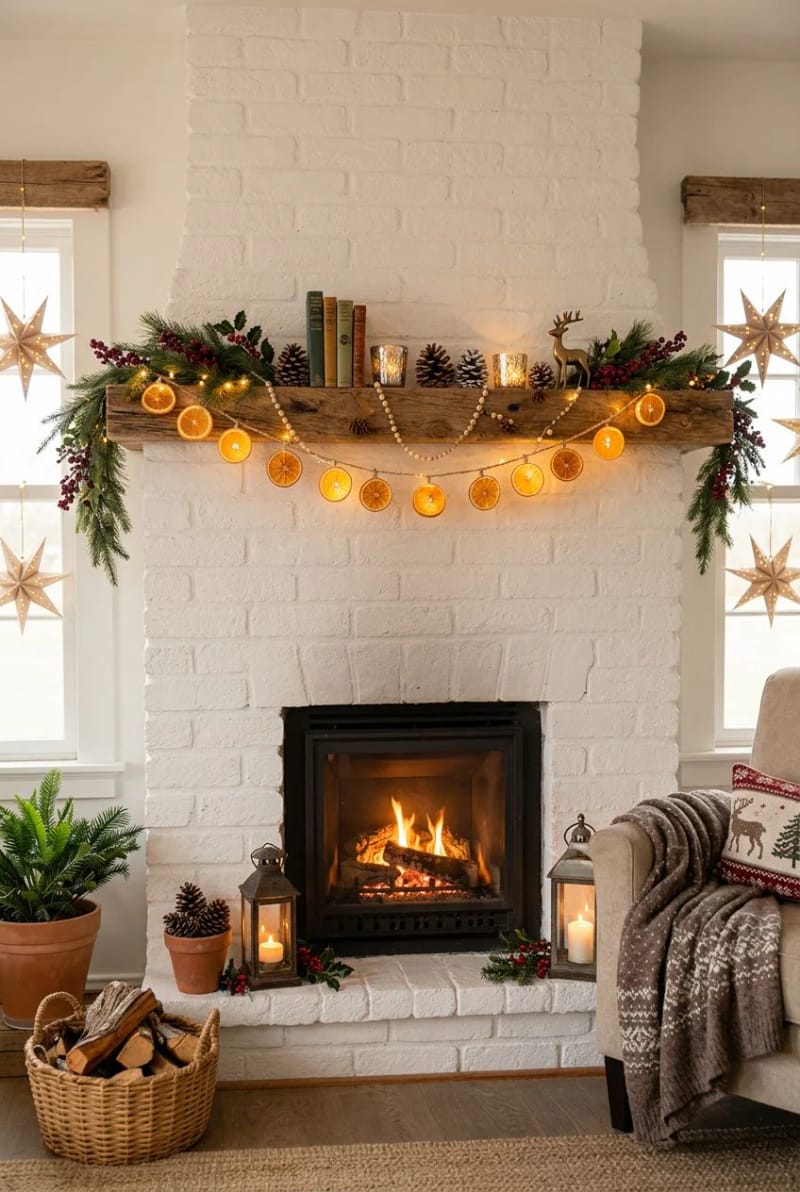
Dried orange slices give you glowing amber color and a real citrus-and-clove smell, which is why they keep showing up on natural-leaning mantels this year. Making them is almost too easy: cut oranges about an eighth to a quarter inch thick, bake at 200°F for a couple of hours (flip them every 30 minutes), then string the cooled slices on jute twine. They pair well with a short list of things you probably already have:
- Cinnamon sticks and star anise, knotted straight onto the twine so they smell as good as they look.
- Small wood beads to break up the run.
- Dried cranberries, if you want a little red without committing to a red mantel.
One honest caveat: they fade and collect dust, so treat them as a one-season decoration and restring next year. If you would rather buy than babysit a tray of oranges, a ready-strung 10-foot dried orange slice and faux-pine farmhouse garland typically runs about $12 to $20.
Add height and a little glow
4. Cluster candles at three heights and keep them clear of the greenery
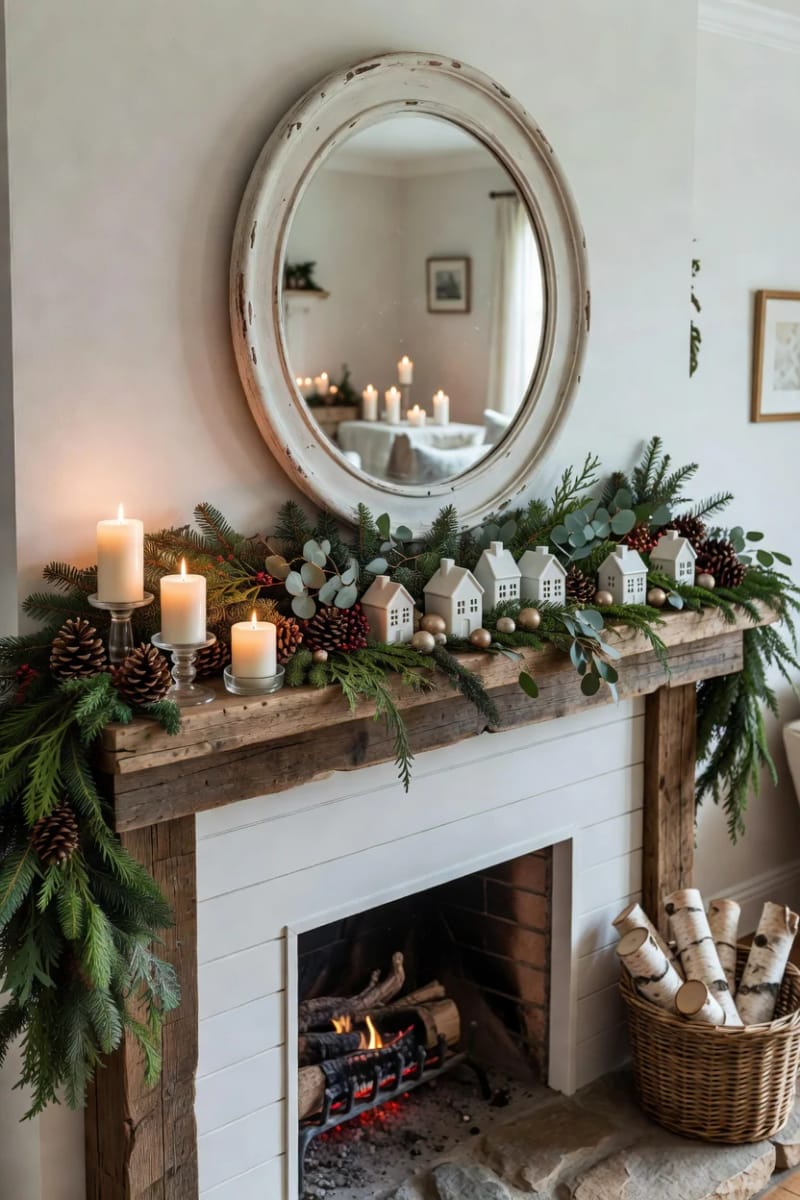
Group candles in odd numbers at three clearly different heights, spaced a few inches apart, so they read as a cluster instead of a row of soldiers. Tapers in simple brass holders on one side, a couple of pillars of different heights, maybe a small lantern to close the group. Warm-white string lights woven low into the garland do the ambient work; skip anything that blinks.
A live flame under a garland of dried cedar, orange slices, and pinecones is a genuine fire risk, not a styling detail. Fire agencies put the rule at 12 inches of clearance between an open flame and anything that can burn, and roughly 60% of home candle fires start when something combustible sits too close. December is the peak month for exactly this. If your candles cannot sit a full foot clear of the greenery, use battery or flameless candles, which now throw a convincing flicker, and keep the real tapers for the coffee table.
5. Stagger bottlebrush trees on stacked books or a small riser
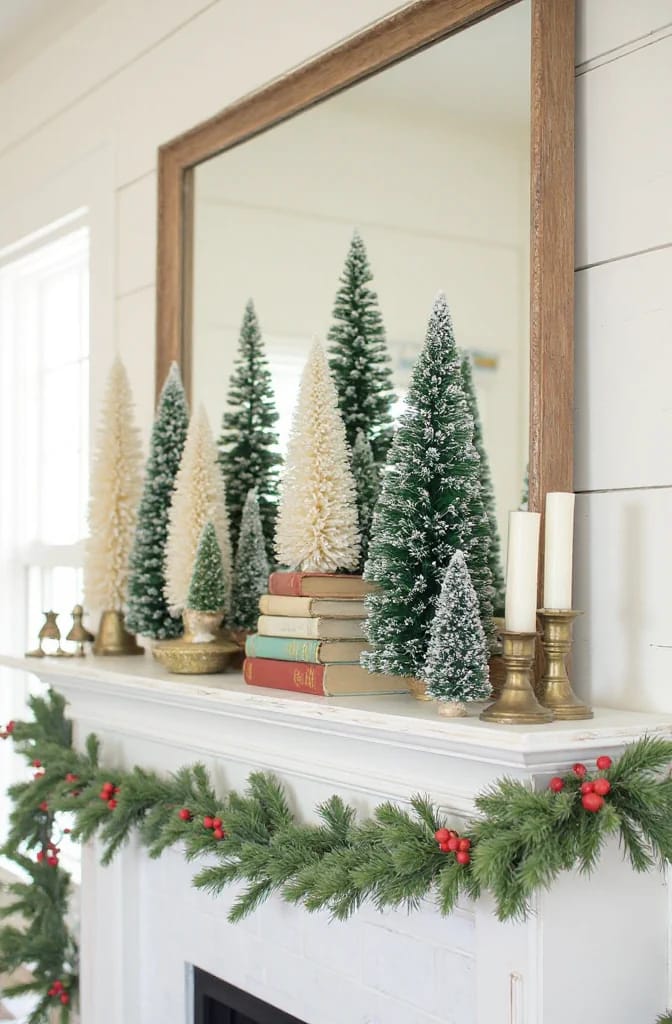
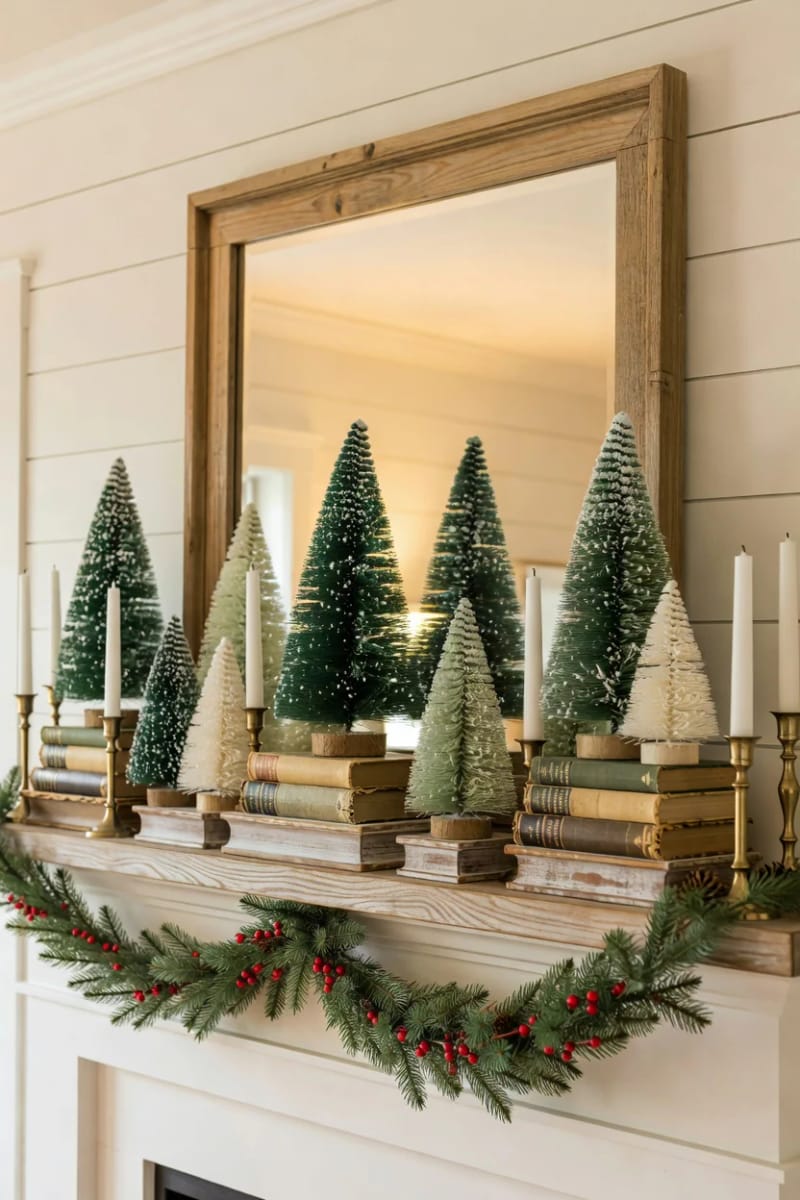
Raise a small grove of bottlebrush trees on a stack of vintage books or a low wood riser so they clear the greenery and actually get seen. Five trees in three or four heights, clustered at one end, beats a lonely pair sitting flat on the mantel. Muted sage, cream, and a single tiny house or two keep it farmhouse rather than kitschy village-display.
Anchors, stockings, and mantels that fight you
6. Lean a mirror or framed print against the wall instead of hanging it
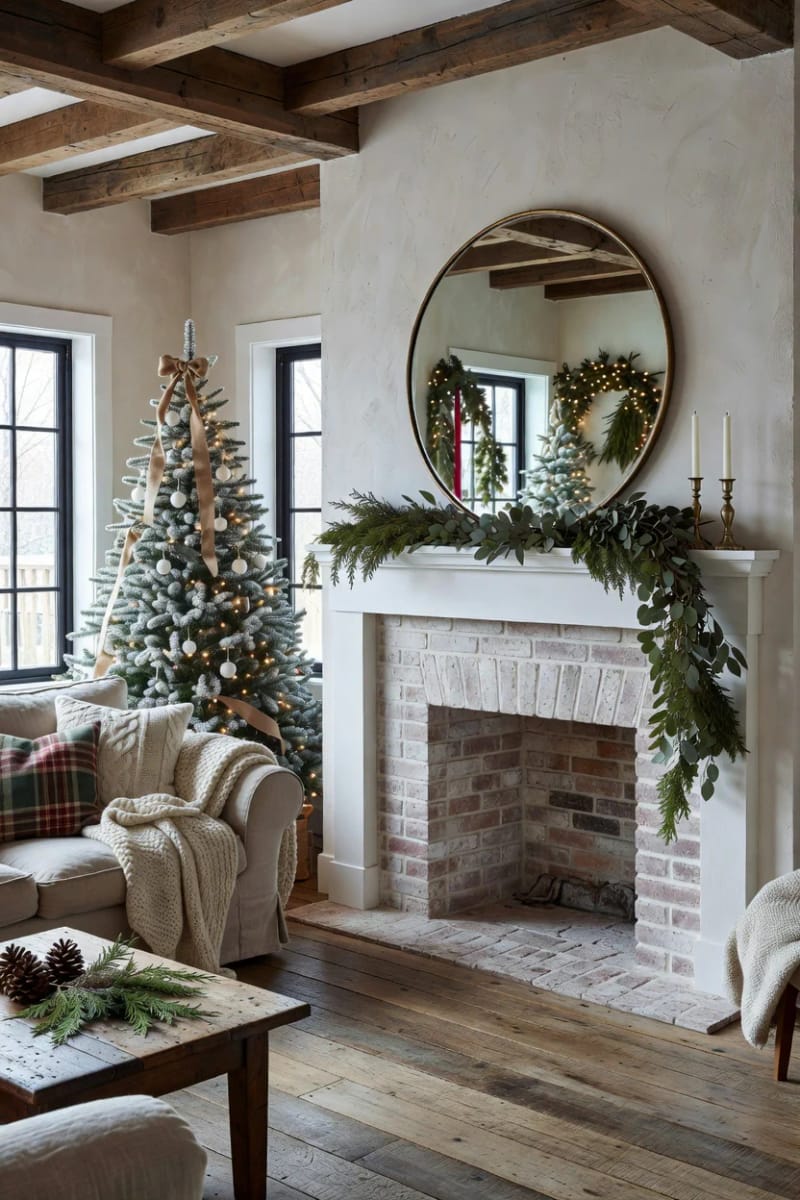
Lean an oversized mirror or a framed print against the wall rather than hanging it, and prop the greenery so it overlaps the bottom edge. Leaning reads more relaxed than a centered, perfectly hung frame, and it gives you a vertical anchor the whole arrangement can lean into. It is also the renter move: no wall anchors, and you can swap the piece out in seconds. A mirror doubles the candlelight, which is the quiet reason designers keep reaching for one.
7. Hang stockings on weighted holders so they stop sliding off

Use weighted metal stocking holders that grip the mantel with a non-slip pad, not the adhesive hooks that let go around the second week of December once the stockings are full. Most weighted holders sit on mantels up to about 2.75 inches thick and hold roughly 10 pounds, which is plenty until someone overstuffs. Space three or four evenly, or cluster them slightly off-center to match a garland that pools to one side.
Heavy metal bases with a non-slip pad that grips the mantel and will not tip when the stockings fill up; a black low-profile set disappears behind the greenery. Sets of four typically run about $12 to $25.

8. Style around the TV above the mantel instead of hiding it
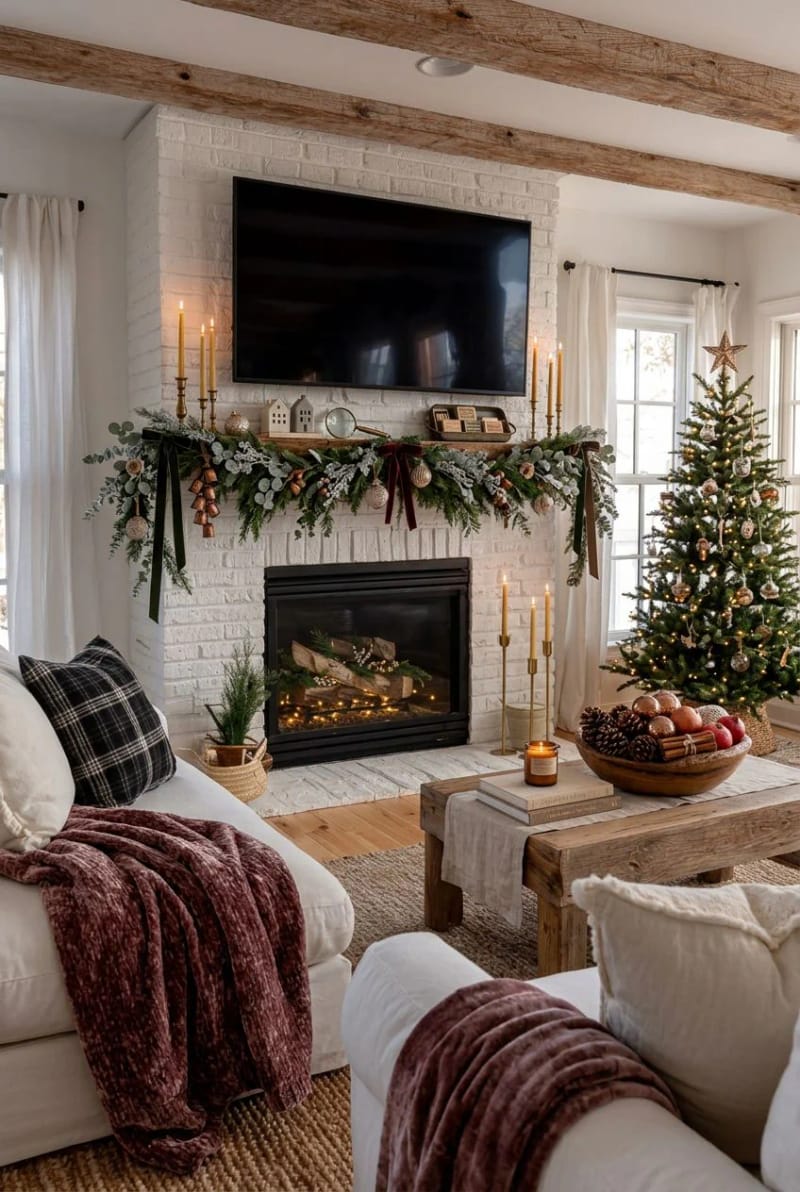
Work around the television rather than trying to smother it; a garland avalanche swagged over the top of a black rectangle just draws more attention to the black rectangle. Keep the decor low and pushed to the two sides so nothing competes with or overlaps the screen: a short garland along the front edge, a book stack and small potted cedar on one side, candlesticks on the other. If the TV frame is glossy silver, that is the thing fighting your farmhouse look, not the decor; a matte black frame or a bezel cover reads far calmer next to greenery.
If you genuinely cannot stand looking at it, lean a framed print or a thin wood panel in front of the dark screen while it is off, sized to cover most of the glass, and simply lift it away when you want to watch. That beats the half-measure of decorating so heavily around the set that the mantel looks cluttered and the TV still shows. One clear choice, hide it or own it, looks better than a nervous compromise between the two.
9. No fireplace? Fake the mantel with a chunky floating shelf
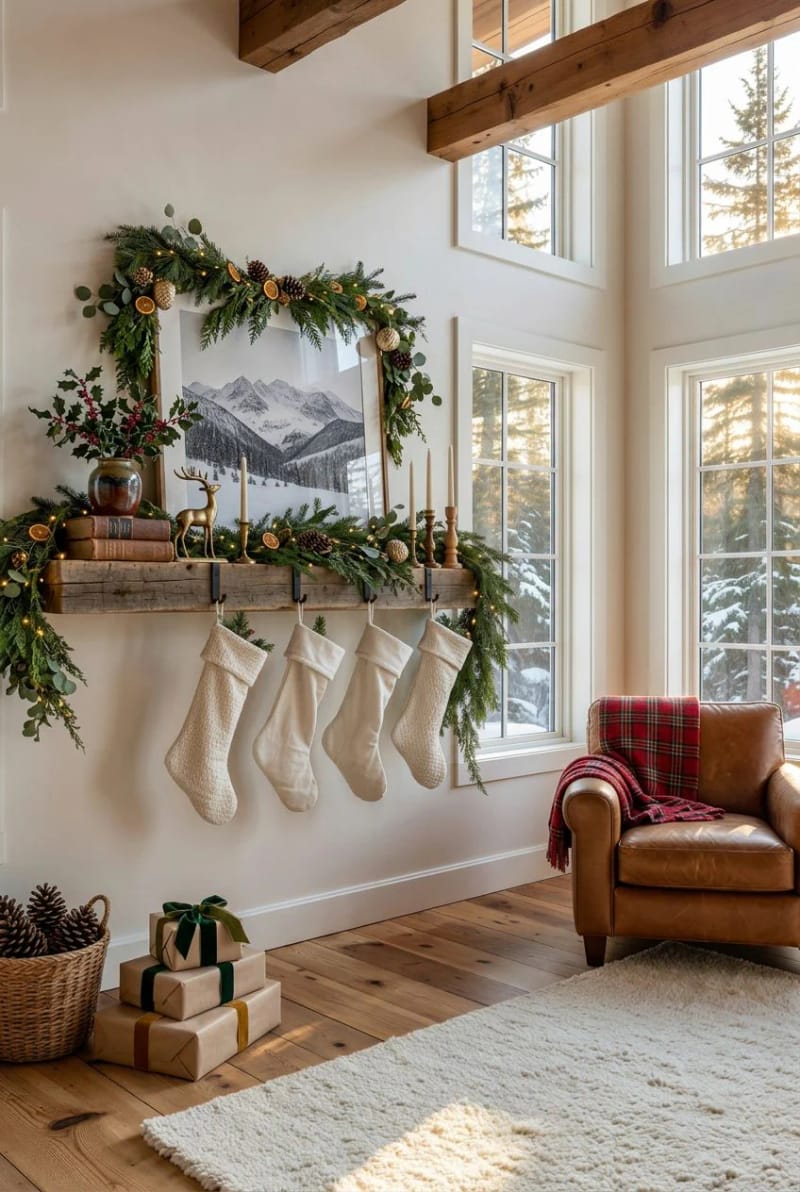
Mount a thick floating shelf at roughly 54 to 60 inches off the floor and decorate it exactly like a real mantel. A slab six to eight inches deep gives you enough surface for a garland, a couple of risers, and stockings on weighted holders, and at that height it anchors the wall the way a firebox would. Renters can hang it on a French cleat and patch two small holes at move-out, or skip the wall entirely with a freestanding faux-mantel console.
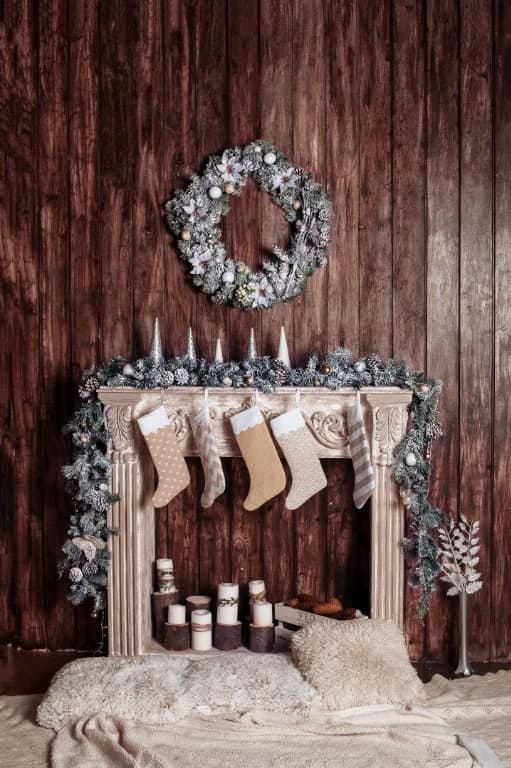
Whatever you do, skip the peel-and-stick cardboard mantel kits; they photograph acceptably from one angle and look like exactly what they are from every other. A plain wood shelf you actually screwed to the wall will outperform them for years.
Conclusion
If you build in order, this goes quickly: hang the garland first and let it pool to one side (idea 1), set your tall anchor next, whether that is a leaning mirror or a cluster of raised bottlebrush trees (ideas 5 and 6), then fill in candles and stockings last so they slot into the gaps rather than dictating the layout. The one thing worth planning around is the dried citrus; it fades and gathers dust, so if you go the orange-garland route, expect to restring it next December rather than storing it. Everything else here packs away and comes back out for years.