
Most rooms filed under rococo online are not rococo; they are Victorian revival furniture in hot pink, photographed under a lot of tulle. The real thing, Paris in the 1730s, was pale, asymmetric, and carved into the walls rather than piled onto the bed, which is useful news if you were bracing for the price of a gilded four poster. The eight ideas below start with the wall treatment that carries most of the style and finish with the version that comes off a rental wall in an afternoon.
A painted mural wall does more rococo work than gilding ever will
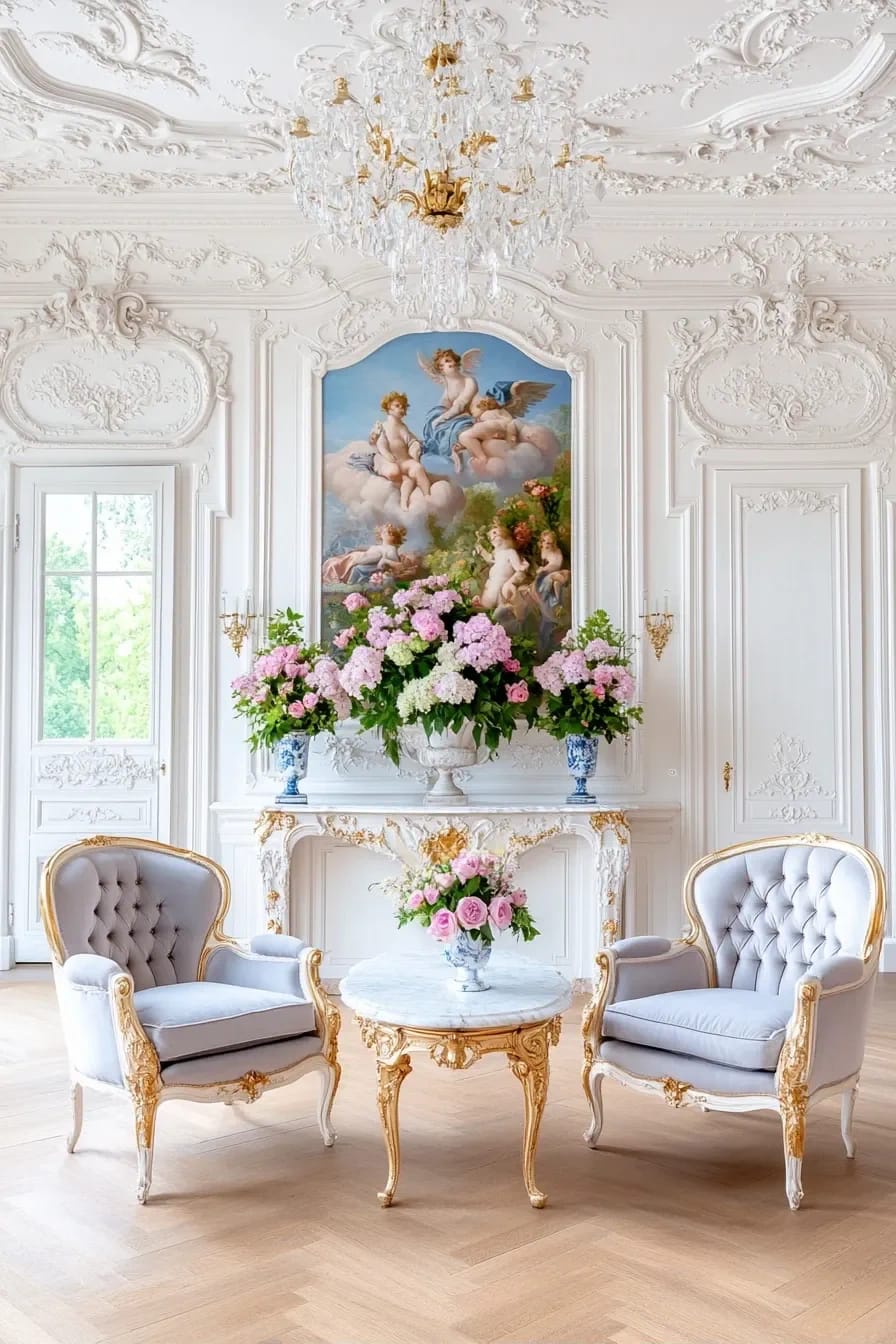
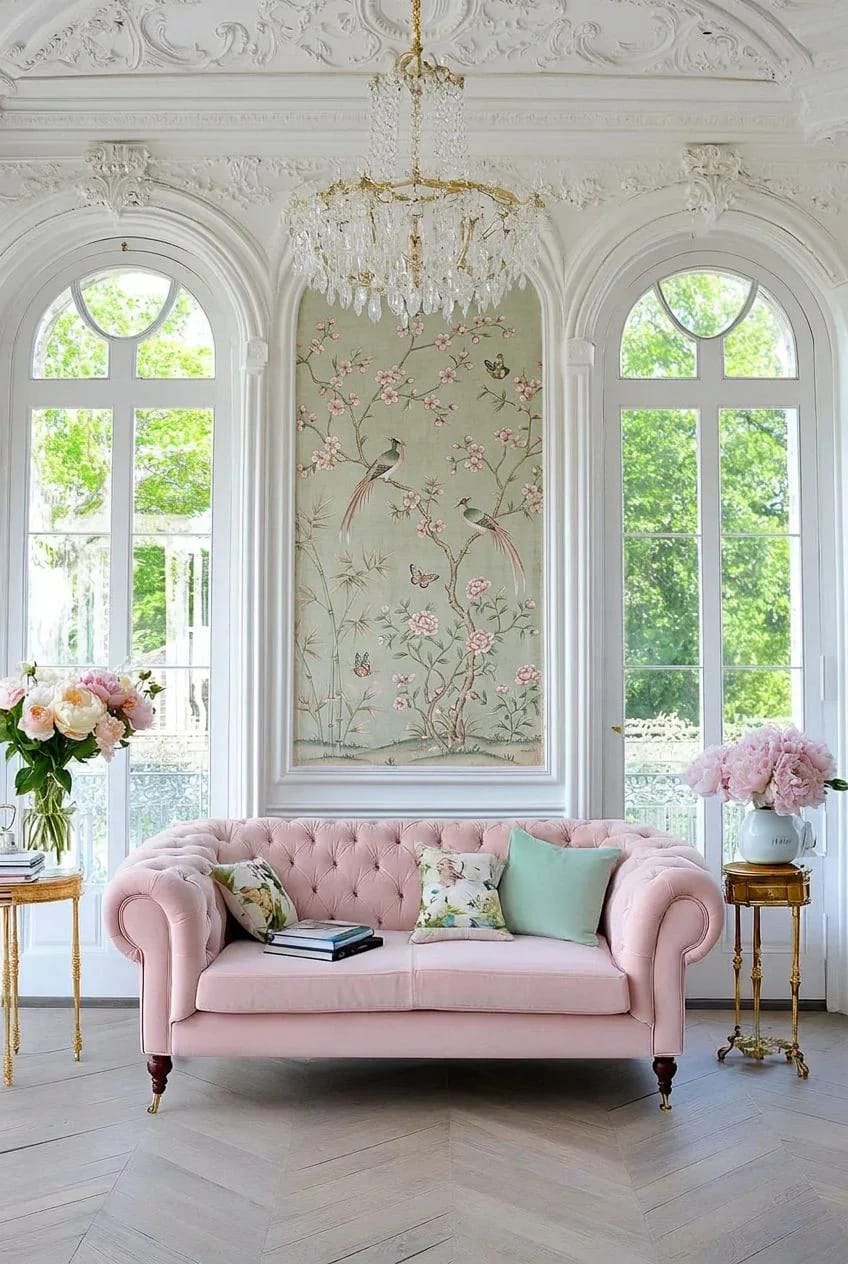
Put your money on the wall, not on furniture. Rococo was a wall style before it was anything else: the salons of the 1730s Paris townhouse were built out of carved boiserie panels, painted overdoors of pastoral scenes, and mirrors set into the panelling, with the furniture arranged lightly against all that. The Salon de la Princesse at the Hôtel de Soubise, finished around 1740, is the room everyone is unconsciously copying, and the thing to notice about it is that almost nothing in the room is loose.
The modern shortcut is a printed mural on a cream or oyster ground: blossom branches, a bit of powder blue sky, gilded scrollwork at the edges. Custom peel and stick sits at roughly $3 to $7 a square foot, so a wall about eight feet by ten runs somewhere between $250 and $550 in material with no installer involved. A hand painted mural from a decorative painter starts around $10 a square foot and climbs fast, which is why almost everyone chooses print, and why choosing which single wall carries the pattern matters more than the pattern itself. Chimney breast or the wall behind the bed. Not the wall with the door in it.
Applied moulding buys you the panelling at trim prices
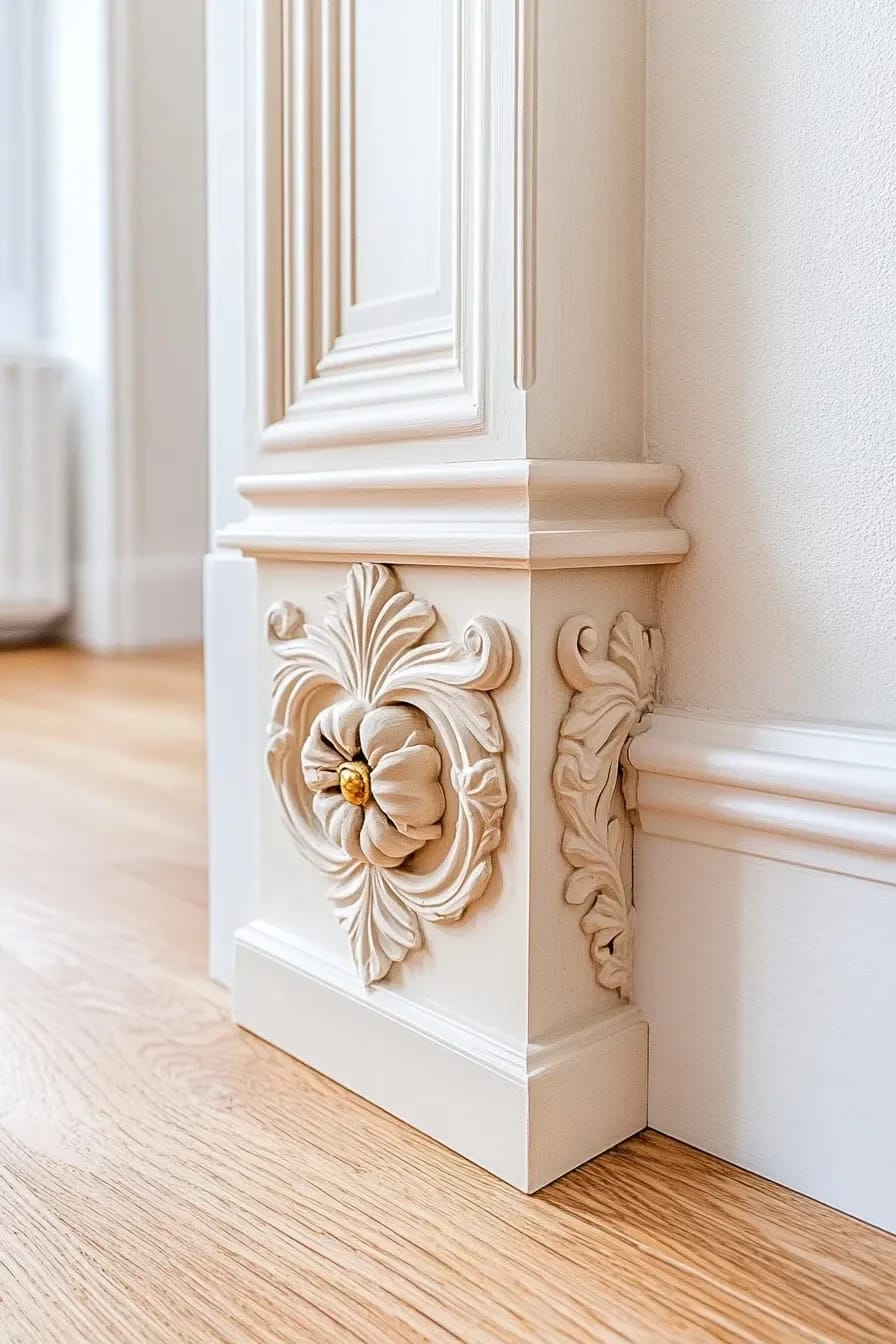
Boiserie is carved wood panelling, and nobody is carving it for you at a sane price; applied picture frame moulding is the honest substitute, and at $1 to $4 a linear foot for MDF or paint grade pine it costs less than a decent rug. A single feature wall runs about $80 to $250 in material. A whole modest room lands near $300 if you cut your own mitres and accept that the first four will be wrong.
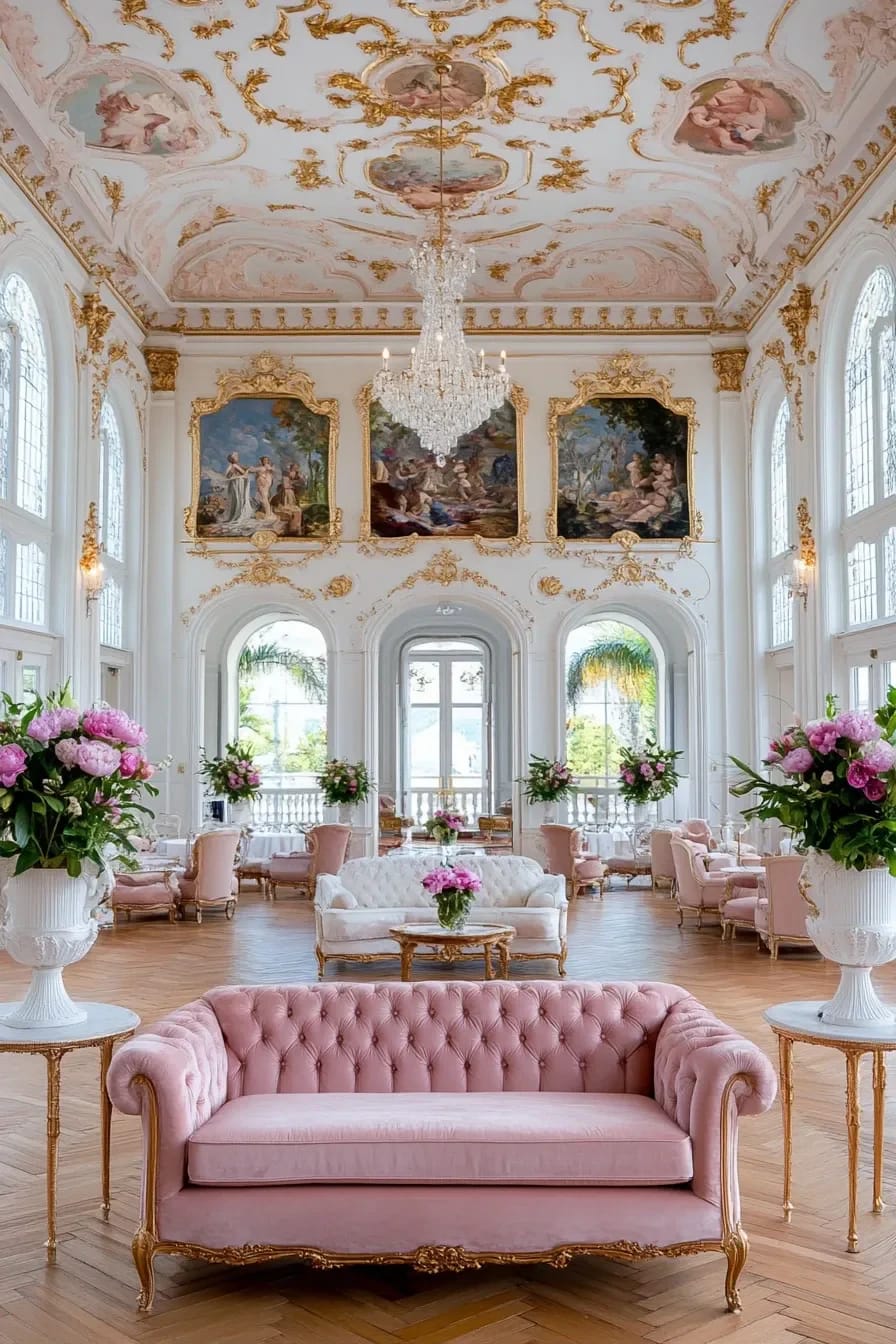
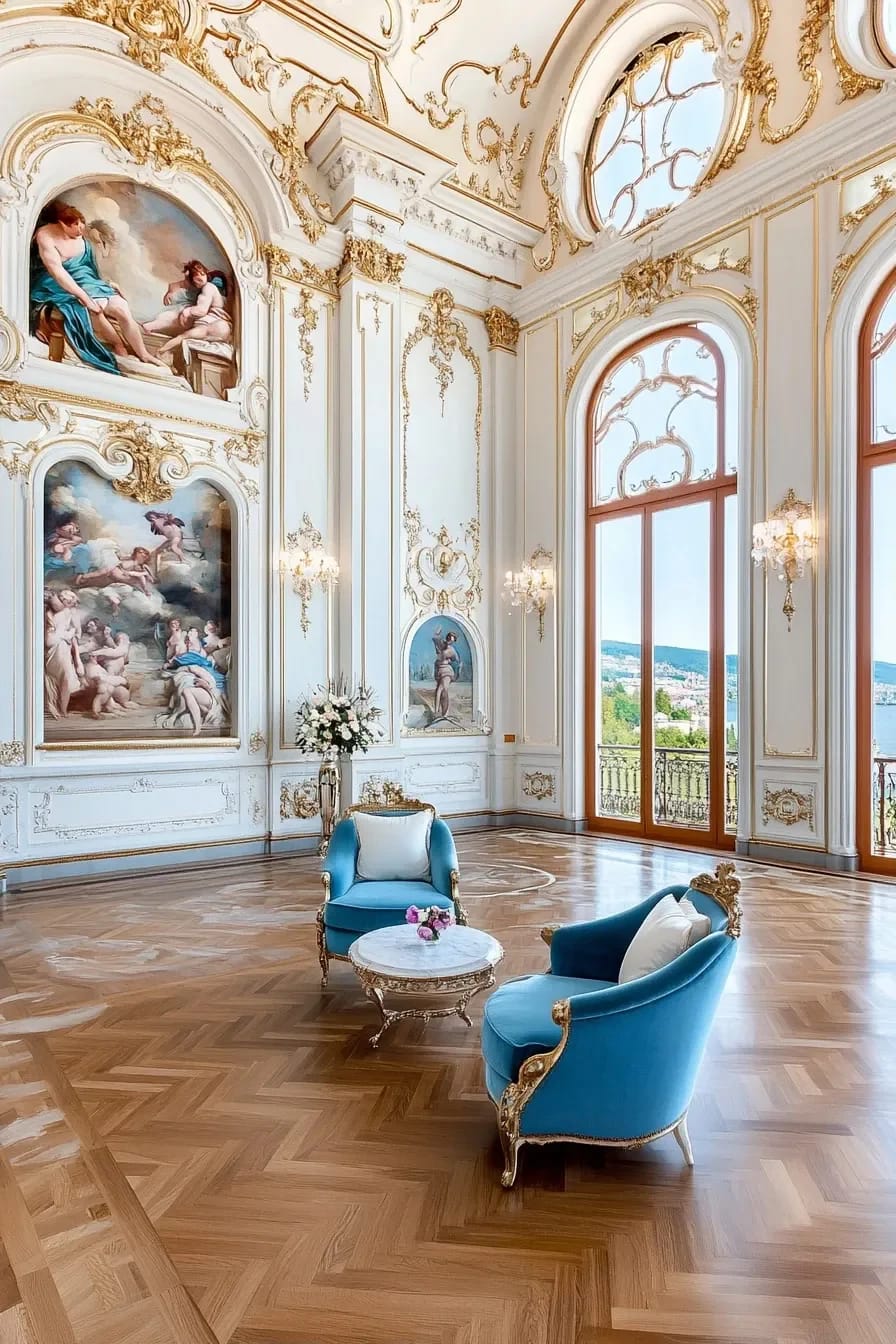
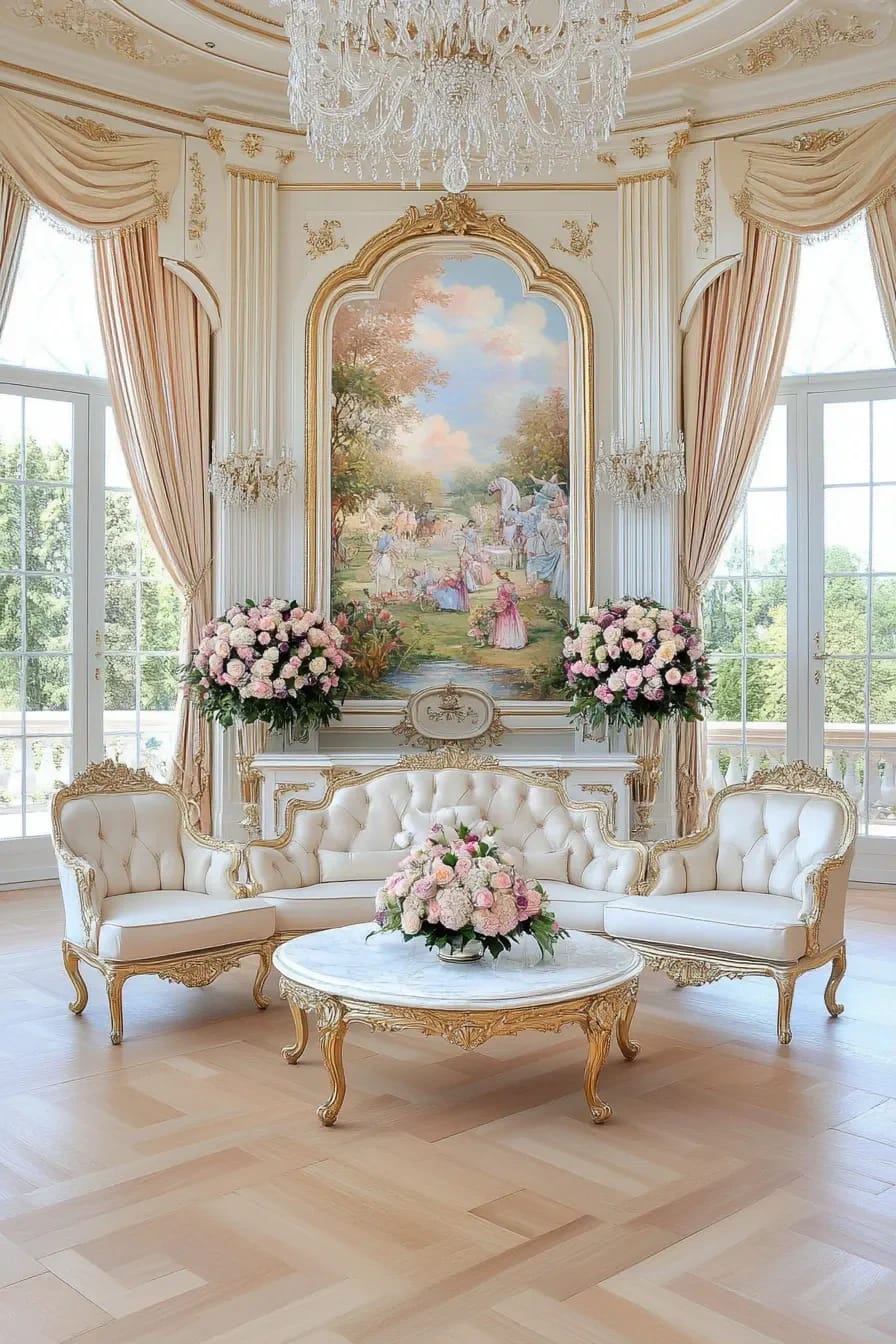
Proportion is the part people get wrong. Panels take their shape from the wall, not from a standard size: keep a consistent margin of four to six inches from skirting, cornice and each other, make the panels on a long wall wider rather than adding more of them, and let the panel above a chimney breast be taller than the ones flanking it. Paint moulding and wall the same color in the same sheen, always. Two tone panelling is a Victorian idea that wandered into the wrong century.
 31 Colorful DIY Wall Murals for a Vibrant Home Update Sample pot method, edge control, and thirty one mural treatments you can do over a weekend.
The rococo palette is paler than Pinterest thinks, and the pink is the risky part
Start from an off white or a grey, then decide whether pink earns a place at all. Eighteenth century French interiors ran to pale grey blue, straw, celadon, and gris de lin, which is a flax grey with a lilac cast and still the most useful color in this whole style. Pink existed, but as porcelain and silk rather than as walls; rose Pompadour, the Sèvres ground color from the late 1750s, is closer to a dusty coral than to anything sold as blush today.
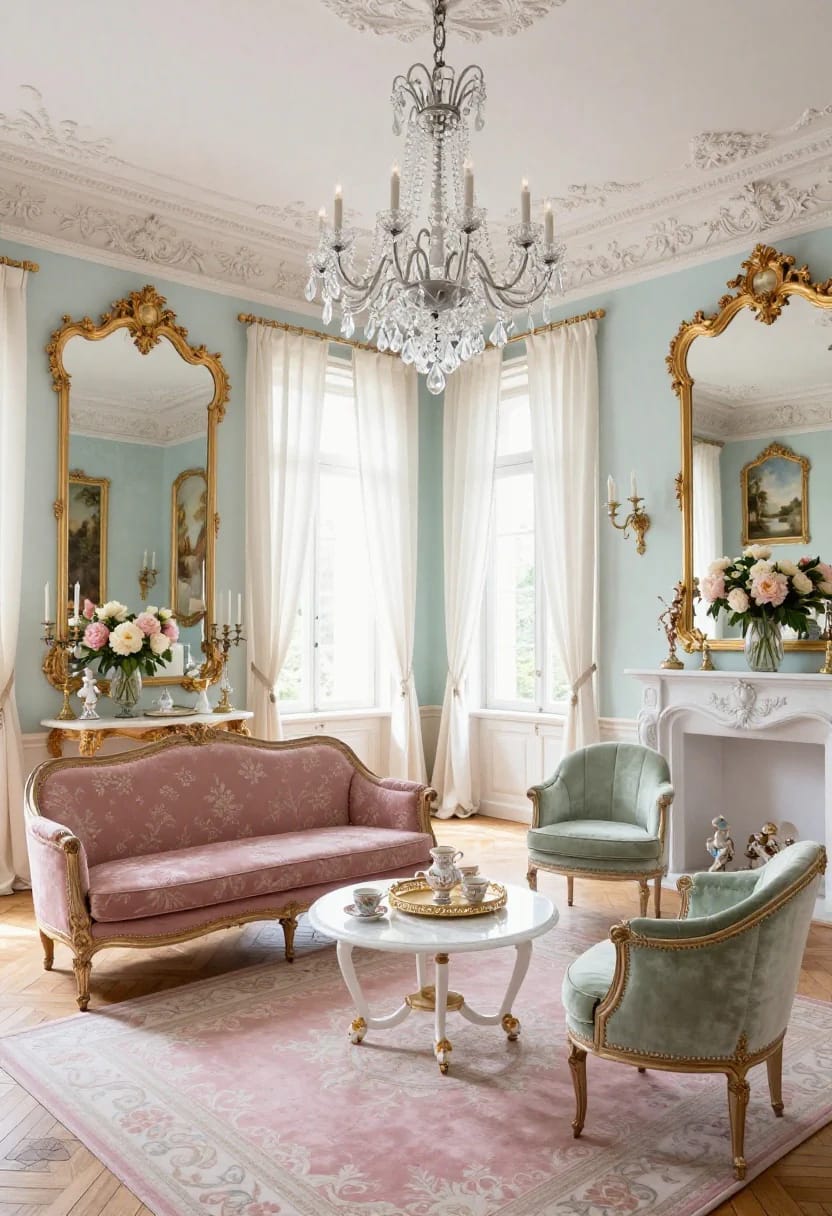
Where pink does work is soft furnishing: one chair, a bolster, a lampshade lining. If you want it on the walls, the pinks that survive daylight are the plaster tones with grey in them, the kind Farrow & Ball sells as Setting Plaster and every other brand has a version of, and they need a matte or eggshell finish because sheen turns pink synthetic instantly. Saturated bubblegum on four walls reads as a teenage bedroom, and no amount of gilt corrects it. If you want the full pink treatment done properly rather than half heartedly, the pink bedroom roundup is the better reference than anything filed under rococo.
The contrarian version, and the one I would choose: skip pink entirely, do the room in gris de lin with straw silk accents, and let a single rose colored object be the only warm thing in it.
Buy one curved rococo piece, not a matching set
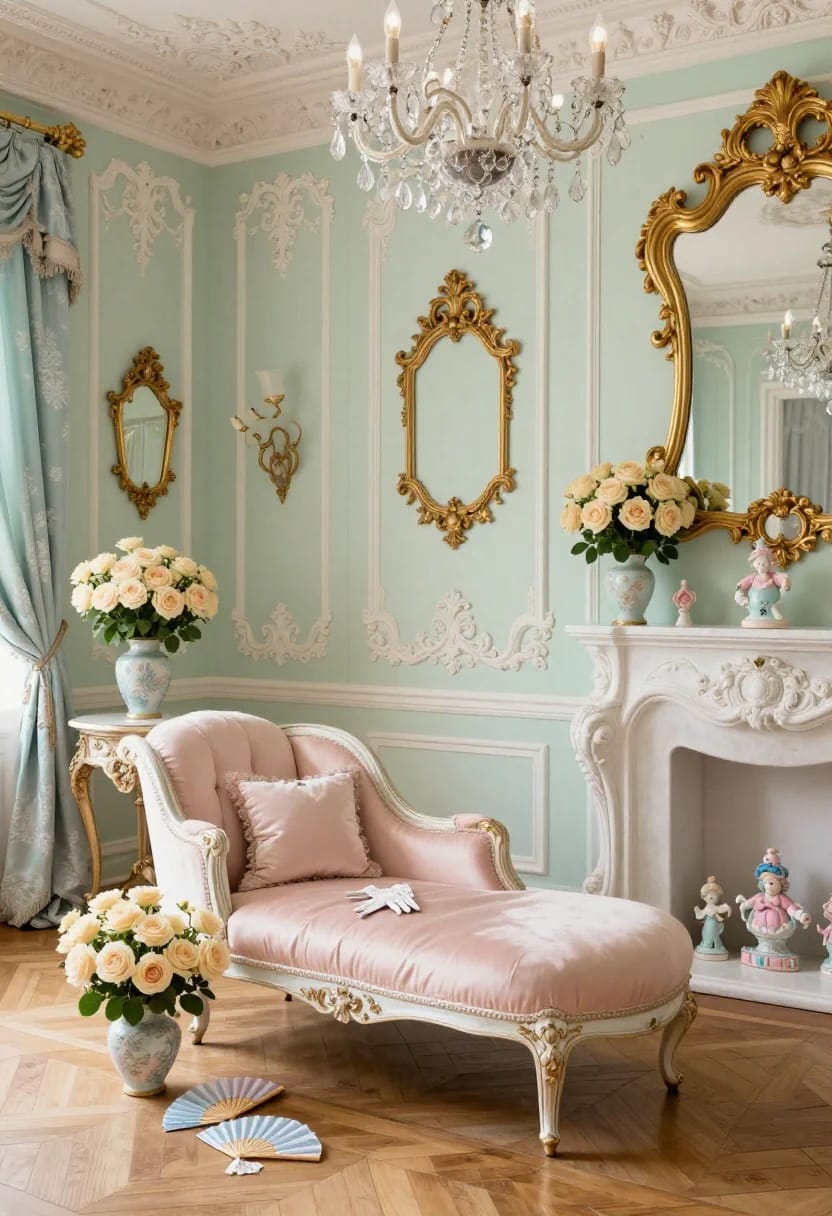
One serious curved piece carries a room; a suite of them turns it into a showroom. The vocabulary is worth knowing because it changes what you search for: a fauteuil is an open armchair, a bergère has upholstered sides and a loose seat cushion, a canapé is the small sofa, and a commode is the bombé fronted chest with the marble top. What makes all of them rococo is the cabriole leg, that S curve out at the knee and in at the ankle, with no straight line anywhere and no visible joint doing obvious work.
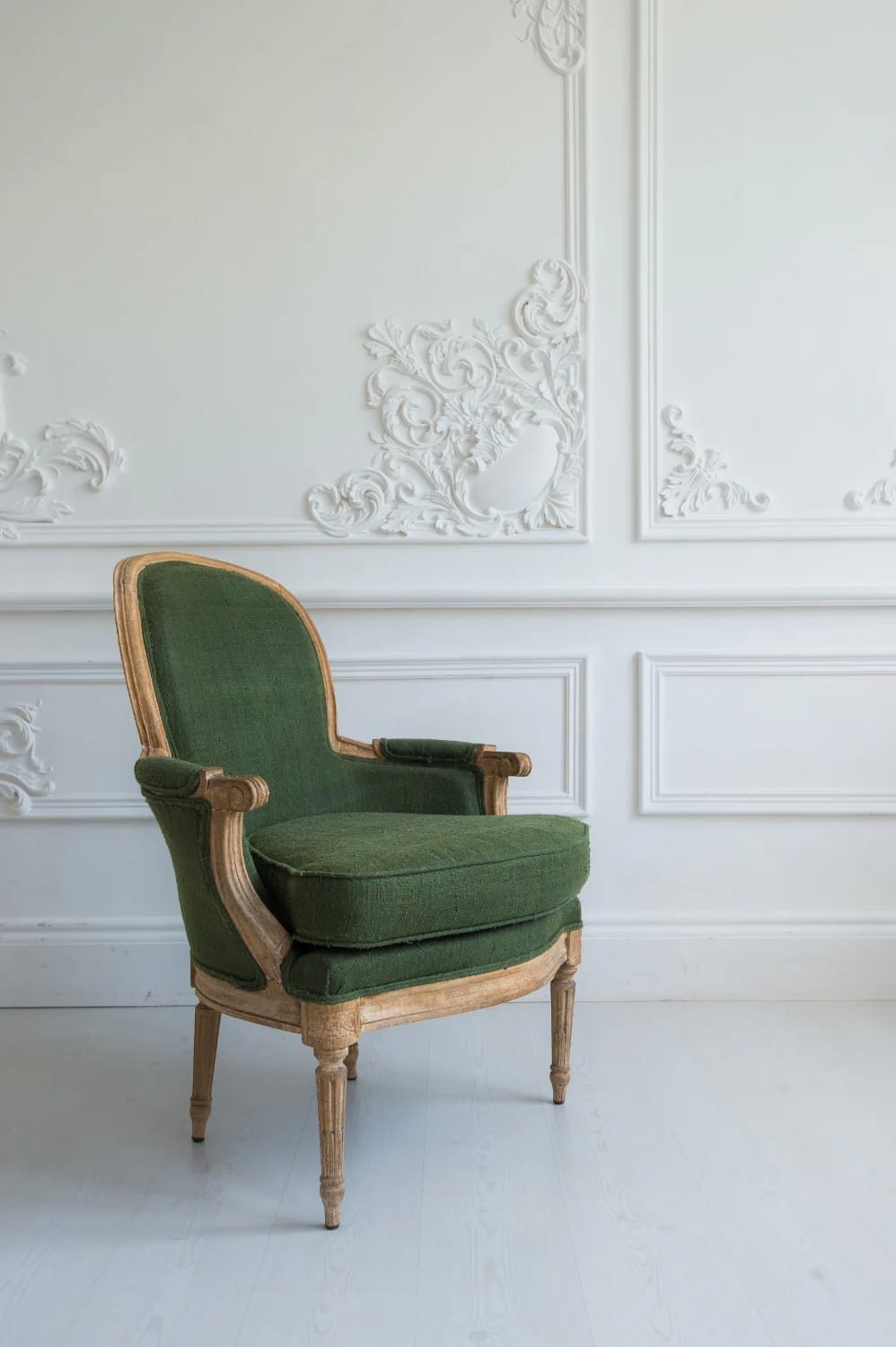
Nearly everything on the market is revival, and that is fine
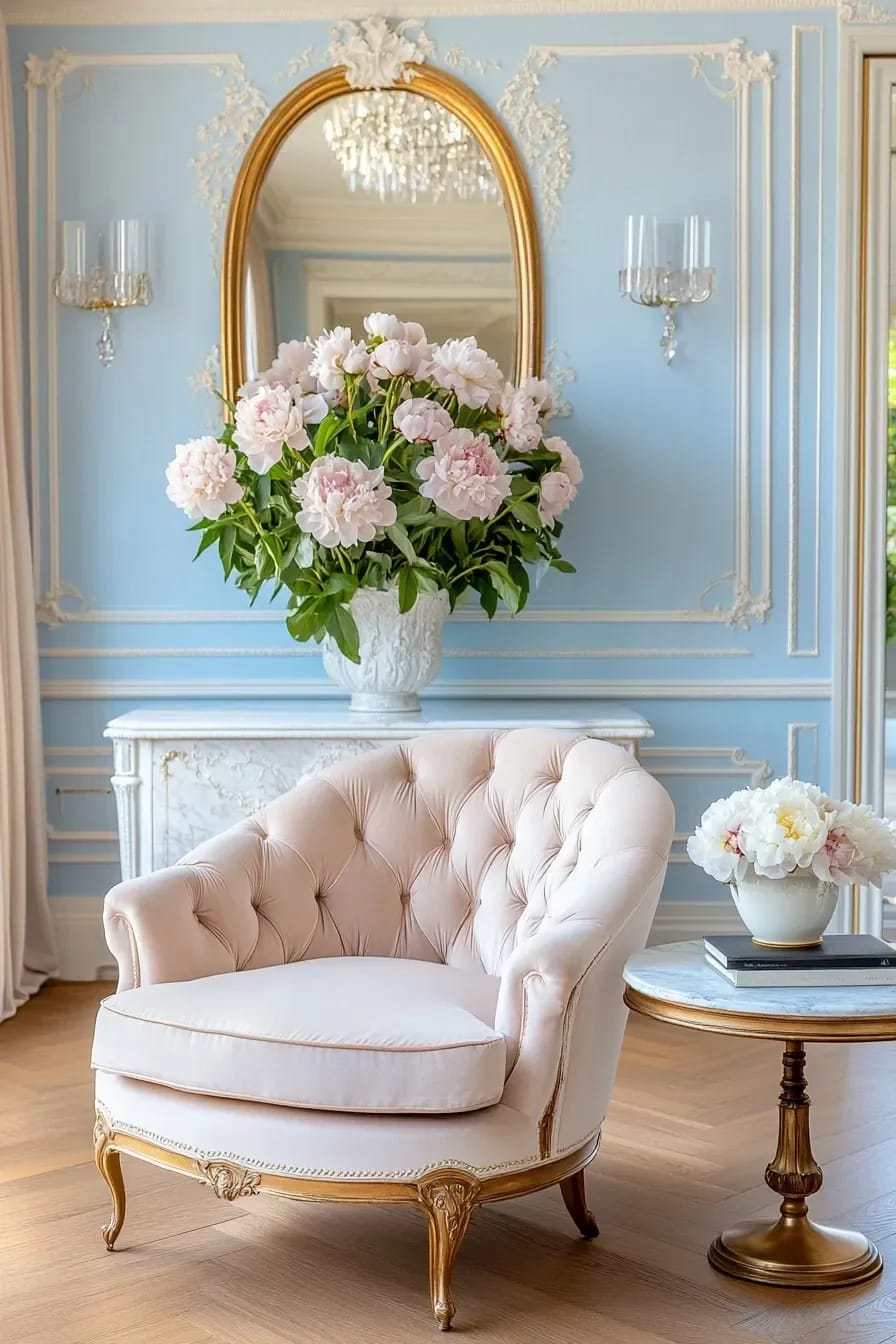
Genuine eighteenth century pieces sit in museums and in the Wallace Collection in London, where you can go and look at the real proportions for free. What resale sites actually sell is Louis XV revival made between roughly 1880 and 1930, plus a lot of 1950s Italian production, and the revival stuff is often better built than anything new at the same price. Expect a wide spread on a carved beech fauteuil, commonly a few hundred dollars at estate sales and considerably more from a dealer who has already had it reupholstered. Check the joints before the carving: rails glued and pegged, not screwed through the back.
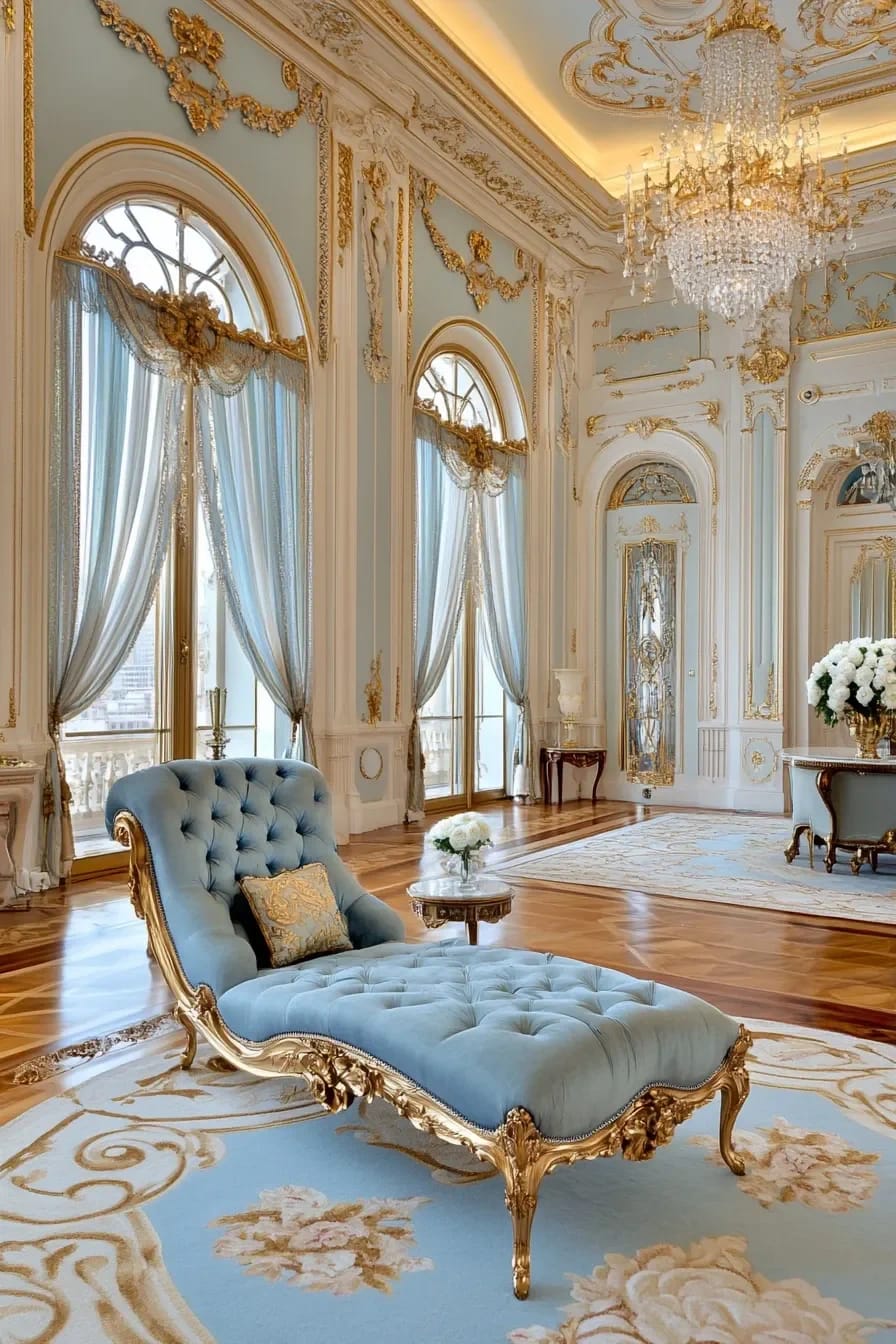
The upholstery is where reproductions give themselves away
Tight, thin, machine flat upholstery in a shiny fabric is what makes a new carved chair look like a prop. Original seats were sprung or stuffed to a domed shape and covered in matte silk, wool damask or plain linen; the cheapest convincing fix on a repro is to have the seat recovered in a heavy matte cloth and to add a loose cushion. Velvet is a Victorian instinct, not a rococo one. I would keep it off the fauteuil and put it on a bolster instead.
Gilt in a rococo room reads right when it is warm and sparing
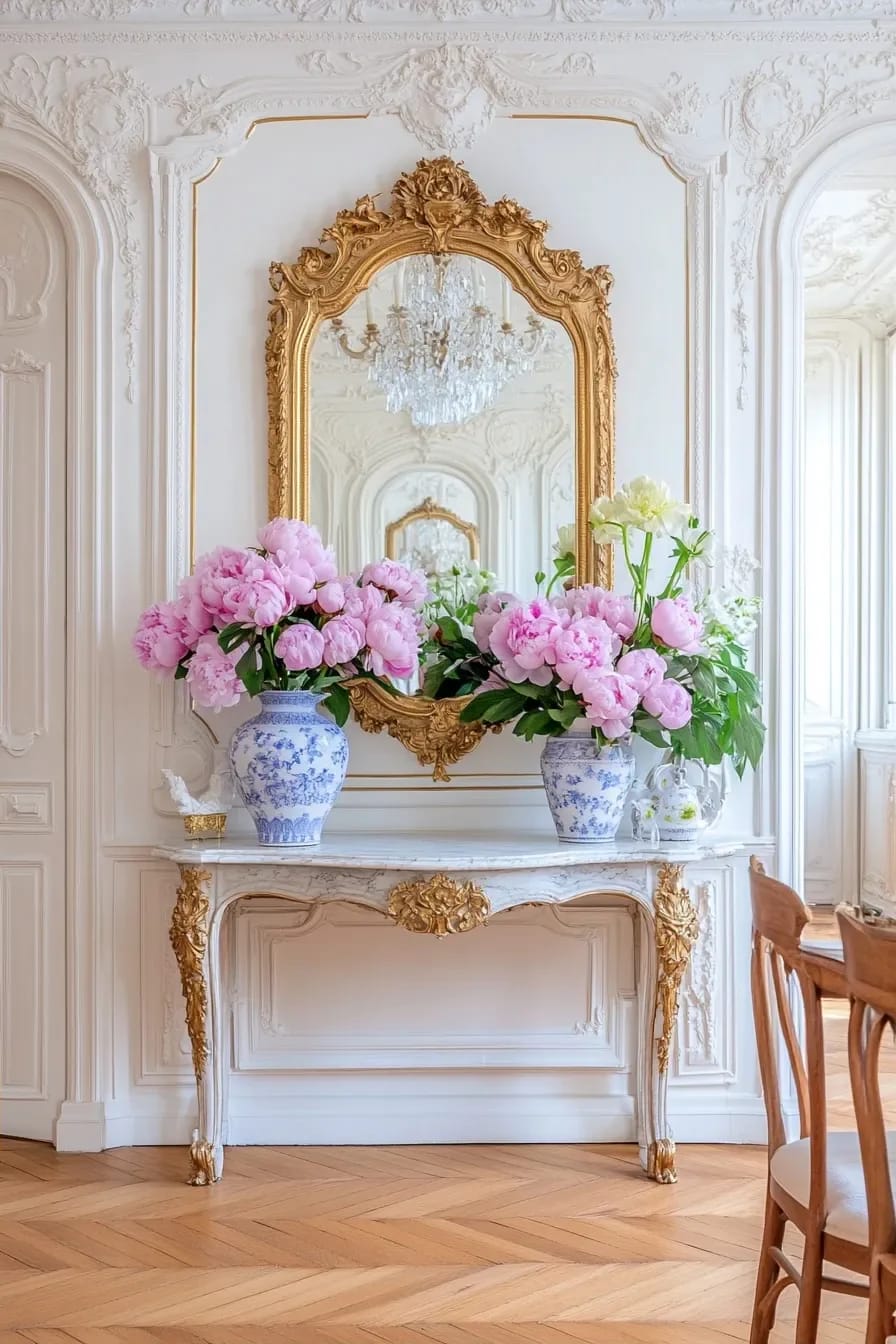
Gold belongs on the frame and the moulding bead, and nowhere else. Historically the gilding sat on carved highlights against a painted ground, which is why an all gold room reads Baroque rather than rococo, and why one warm, worn frame does more than six shiny ones. Three routes, in descending order of expense:
- Water gilding, done by a restorer over gesso and red bole. It is the finish everything else is imitating, and I could not find pricing worth publishing because workshop quotes vary too widely to average. Get two.
- Oil gilding with loose leaf. Slower to learn than it looks, and unforgiving on carved detail.
- Amaco Rub ‘n Buff in European Gold, worked in with a fingertip and buffed back. On a small frame it is convincing.
Gold spray paint is the one to avoid. It dries to a flat brassy green under warm bulbs and it fills the carving, which is the exact detail you were paying for.
Light a rococo room at candle height, not from the ceiling
Get the light low and warm, and half the styling problems solve themselves. These rooms were designed around candles set into mirrored sconces at roughly chest to head height, which throws light up the wall and across the carving rather than down onto the floor. A ceiling downlight does the opposite: it flattens the panel moulding you just paid for.
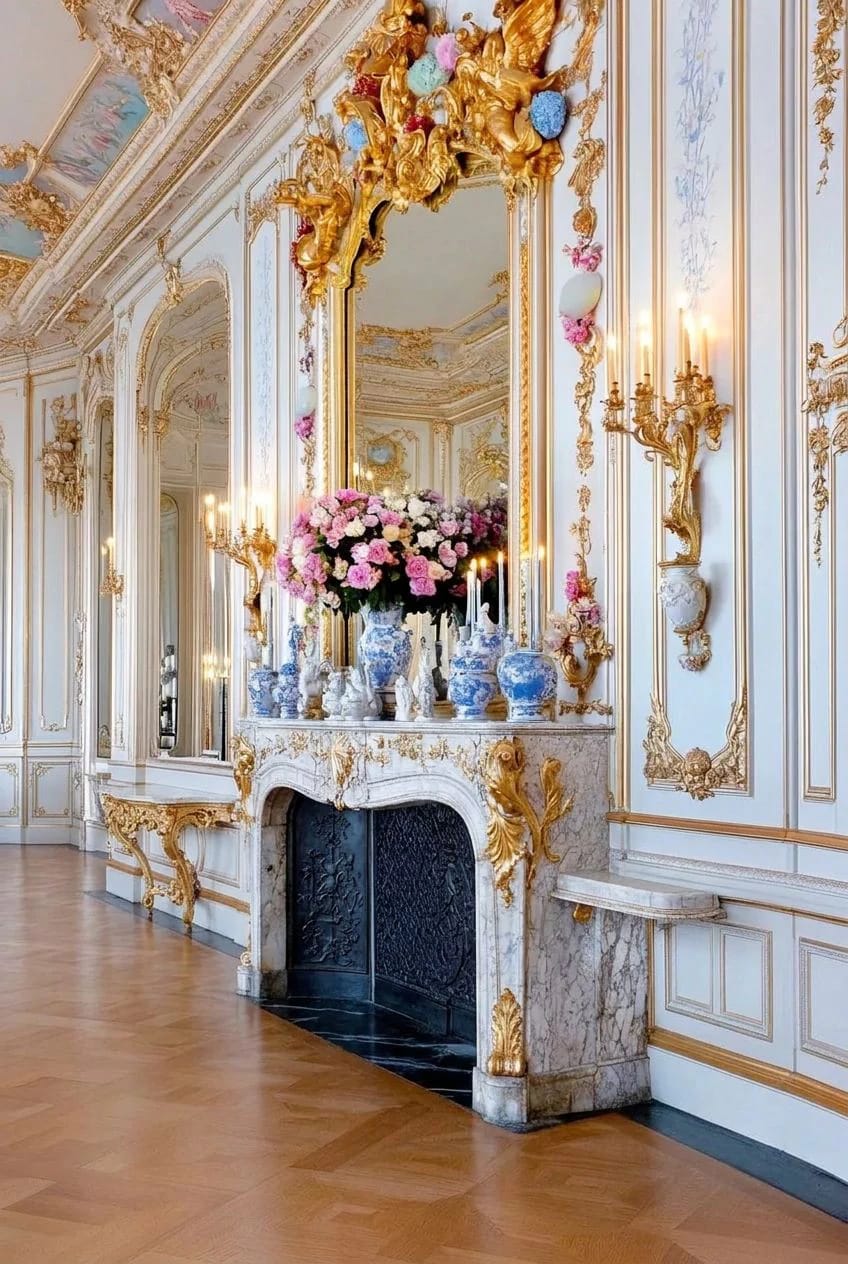
Practical version: bulbs at 2200K to 2700K on a dimmer everywhere, sconces at about 60 inches to center, and a chandelier that is smaller than you think, since the eighteenth century original would have been a modest thing hung low over a card table rather than a hotel lobby fixture. Add one lamp with a pleated silk shade at seated height. If you want the reasoning behind low warm light spelled out in more detail, the moody bedroom notes on layering candle level light cover the same ground for sleeping rooms.
The dressing corner is where a rococo room earns its keep
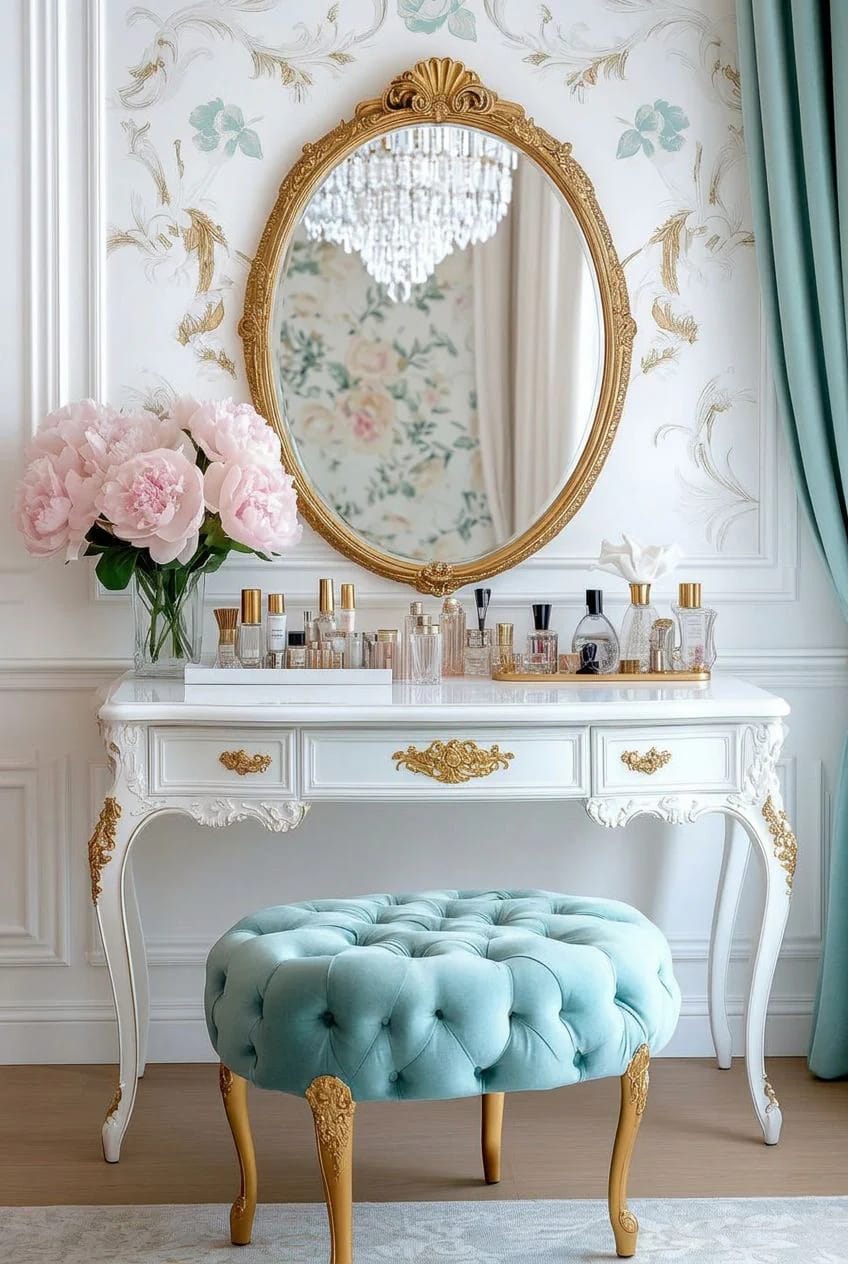
If you only build one rococo thing, build the dressing corner. It is the one part of the style that still matches how people live, it takes about nine square feet, and it absorbs all the small ornamental objects that would look like clutter anywhere else: glass bottles, a hand mirror, a tray, a single porcelain figure.
Do this
- Keep the table shallow, 16 to 18 inches deep, so the chair pulls right up to it.
- Hang the mirror rather than standing it, and hang it low enough to use sitting down.
- One carved stool or a small painted chair. It does not need to match the table.
- Let the surface stay half empty. Bottles grouped at one end, nothing centered.
Avoid
- Hollywood bulb mirrors.
- Acrylic organizers on display; put them in the drawer.
- A mirrored glass table, which is 1930s Hollywood Regency wearing the wrong century’s clothes.
 21 Stylish Vanity Ideas for Your Bedroom Twenty one setups covering alcoves, awkward corners and budget builds, with the seating worked out.
A rococo bathroom survives on one carved mirror and a lot of plain white
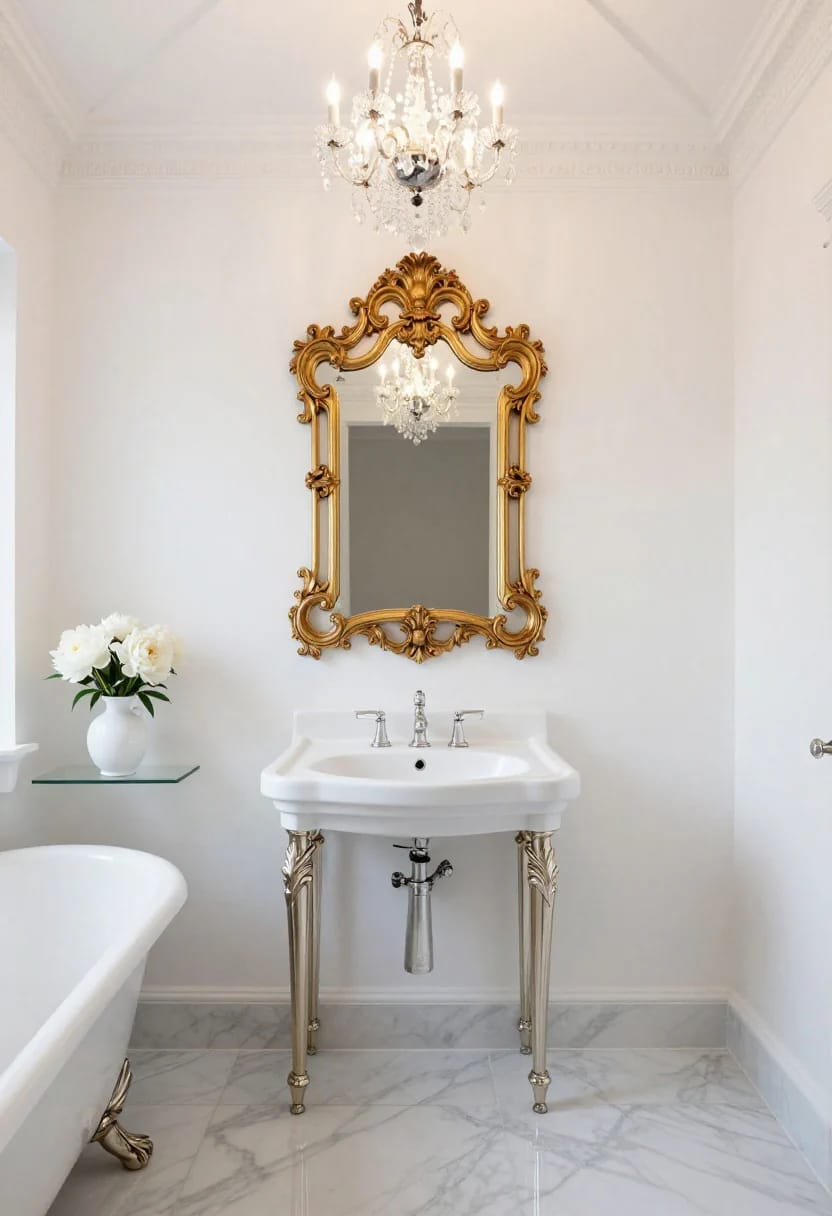
Restrict the ornament to the mirror and the lighting and leave everything else plain. A carved giltwood frame over a marble topped washstand, two candle style sconces at the sides, white or pale grey tile, and that is the whole idea; anything more turns the room into a stage set that also happens to be wet.
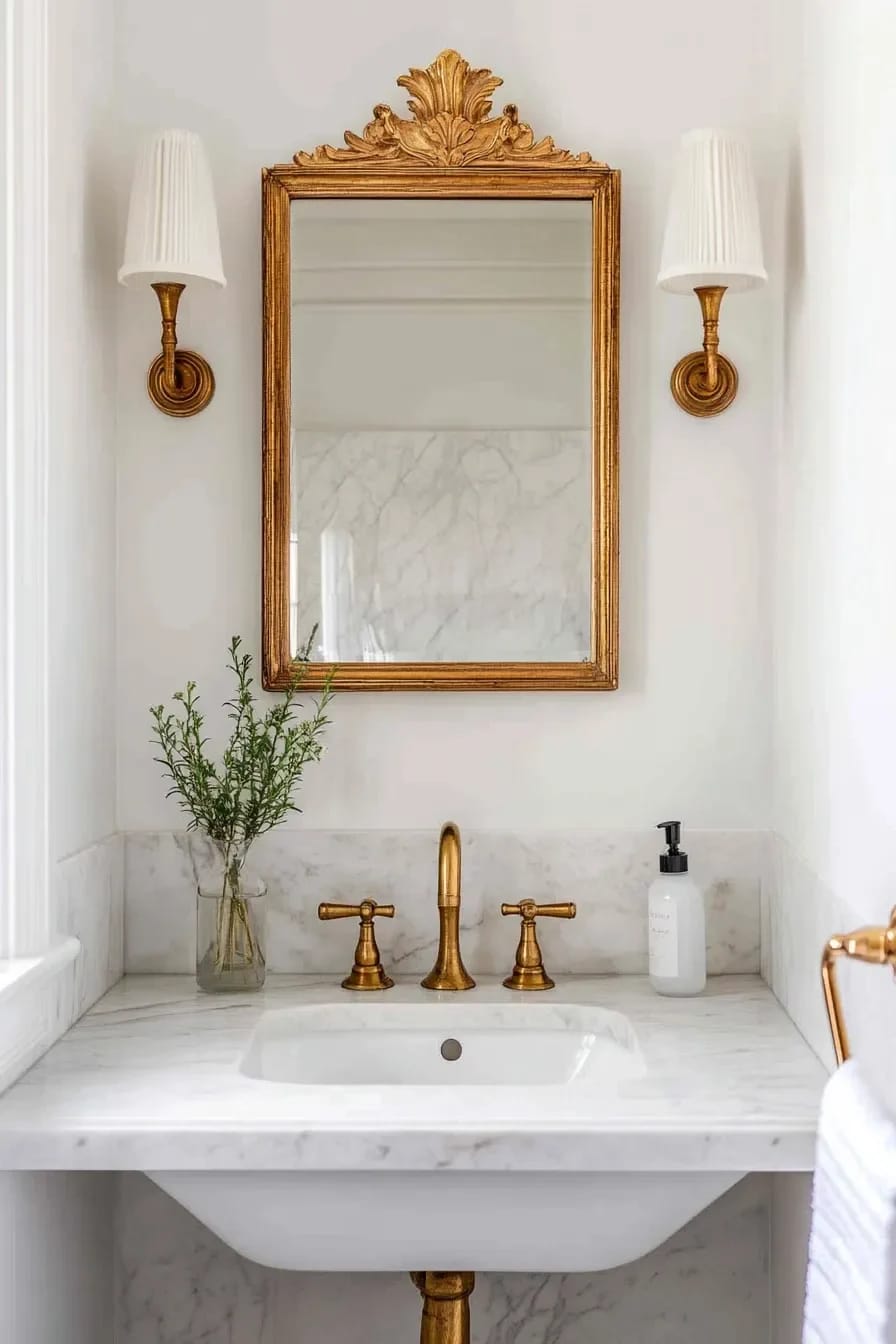
One warning about the mirror: water gilded gesso frames hate humidity, so put the antique in a bedroom and use a resin or oil gilded reproduction in a room with a shower in it. If the vanity itself is where your budget is going, the bathroom vanity comparison is more useful than any styling advice here.
Rococo in a rental: the mural comes off, the mouldings do not
The style adapts to a rental better than almost any other historic look, because its two signature moves are a wall covering and a mirror. Peel and stick mural on one wall, a leaning mirror instead of a hung one, one curved secondhand chair, warm bulbs, done. Nothing drilled. The whole thing reverses in an afternoon with a hairdryer and a bin bag.
Scale is the thing that kills small room versions of this style, since a nine foot mural of a pastoral landscape in a bedroom eleven feet across reads as wallpaper wrapped around your face; choose a pattern with a smaller repeat, keep the ceiling plain white, and let the other three walls stay quiet. The same restraint that makes small living rooms work at all applies here with the volume turned up, because ornament eats visual space faster than furniture does.
Two surfaces defeat it. Orange peel or knockdown texture gives the adhesive almost nothing to hold, so the panels lift at the seams within weeks, and fresh paint is worse: latex needs roughly three to four weeks to cure before anything adhesive goes on it, or the mural takes the paint off with it when it comes down. Wipe the wall with a damp cloth, let it dry fully, and test one panel in a corner for a week before you order the rest.
Sequence matters more than budget here. Do the wall first, live with it a week, then buy the one curved piece, then fix the lighting, and only then think about gold; almost every room that goes wrong went wrong by starting with a gilded mirror and working backwards.
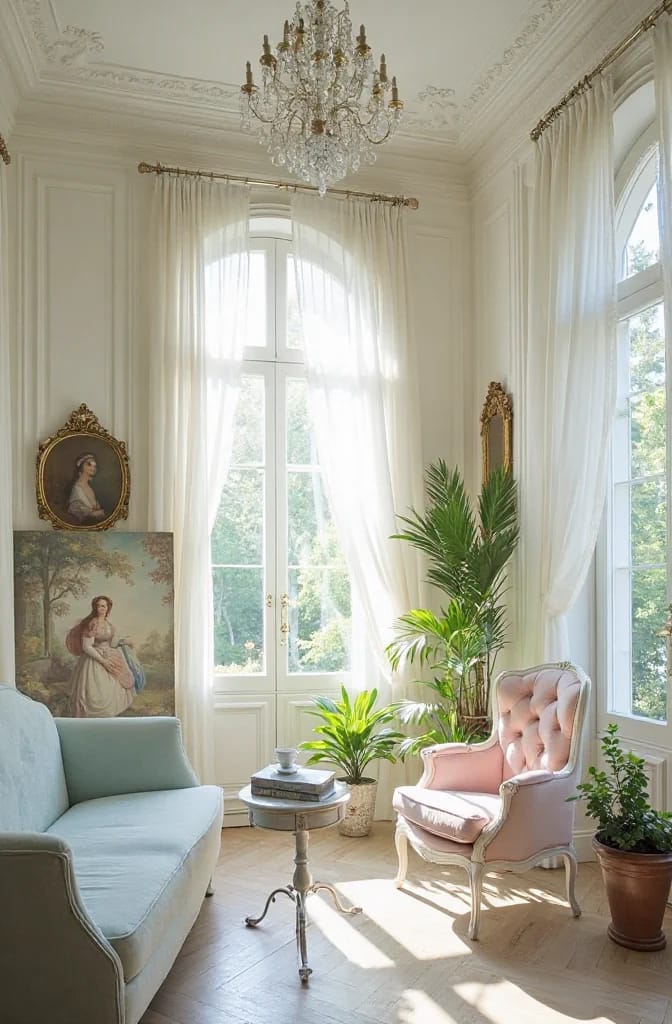
The other thing worth saying plainly is that this style rewards patience over spending. A single well built revival fauteuil found over three months of watching estate sales will do more than a full set of new reproductions bought in one afternoon, and it will cost less.
And if you take only one detail from all of it, take the candle height sconce at 60 inches with a 2200K bulb behind a small pleated shade. It is the cheapest thing on this page and it changes a room more than the mural does.
Related Posts
- Whimsical Christmas Living Room Decor, Minus the Restraint
- Vintage Kitchen Design Ideas That Read Period, Not Costume
- Retro 1950s Christmas Decorations That Look Collected, Not Costumed
- 45 Chic & Modern Boho Living Room Ideas To Copy
- 20 Coastal Boho Living Rooms That Feel Like Vacation
- 15 Aesthetic Modern Coastal Living Room Ideas