
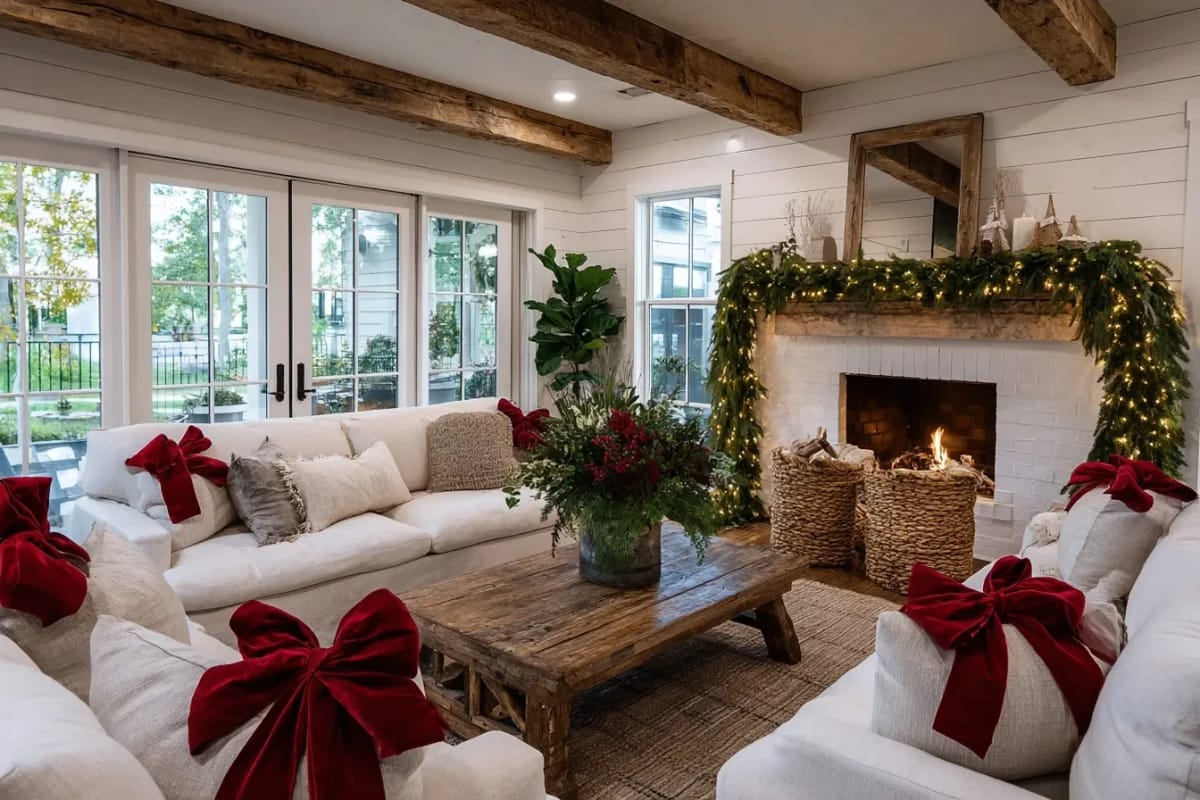
Every December the shelter magazines run the same instruction: retire red and green, try oyster and champagne, or sage and bronze, or whatever the palette of the year happens to be. That advice fixes the wrong thing. What dates a red-and-green room is almost never the pairing itself, which has held up for two centuries; it is the specific shade of red on the ornament box, the plastic yellow-green of the garland, and the habit of splitting the two colors down the middle until the room reads like packaging. Change the shade, the finish, and the ratio, and the same two colors read modern traditional instead of leftover.

Start With the Two Colors Themselves
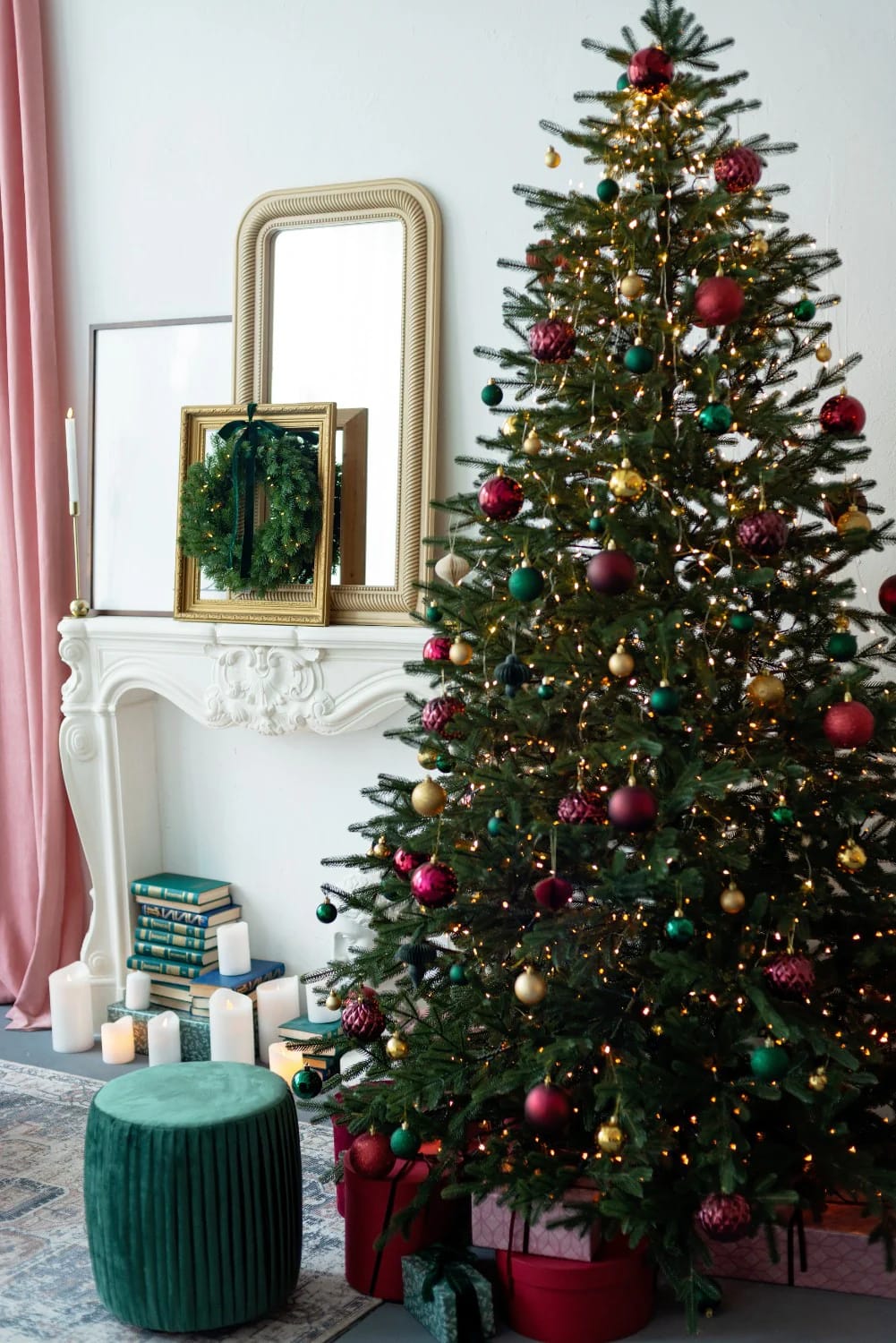
1. Trade the fire-engine red for a red with brown in it
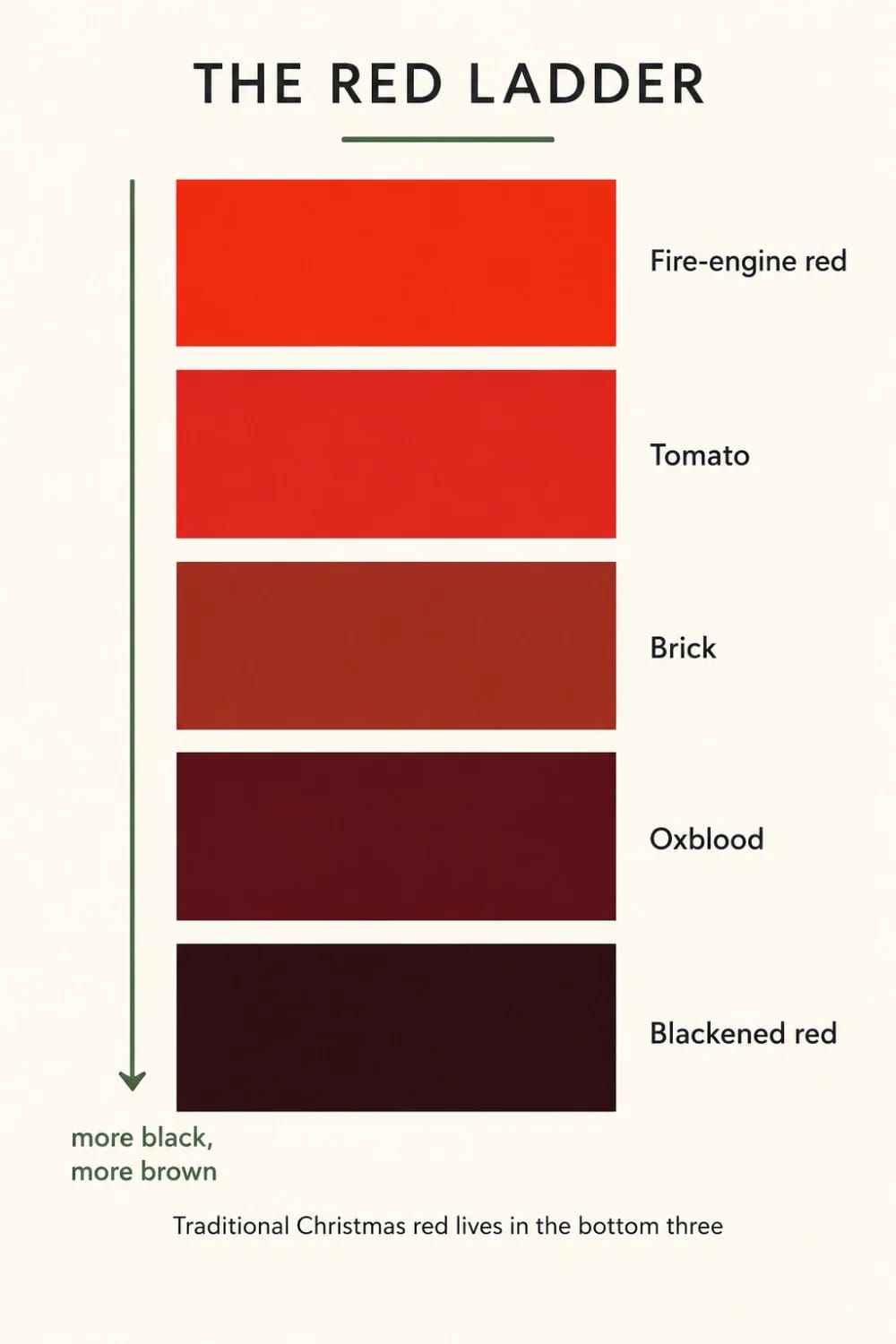
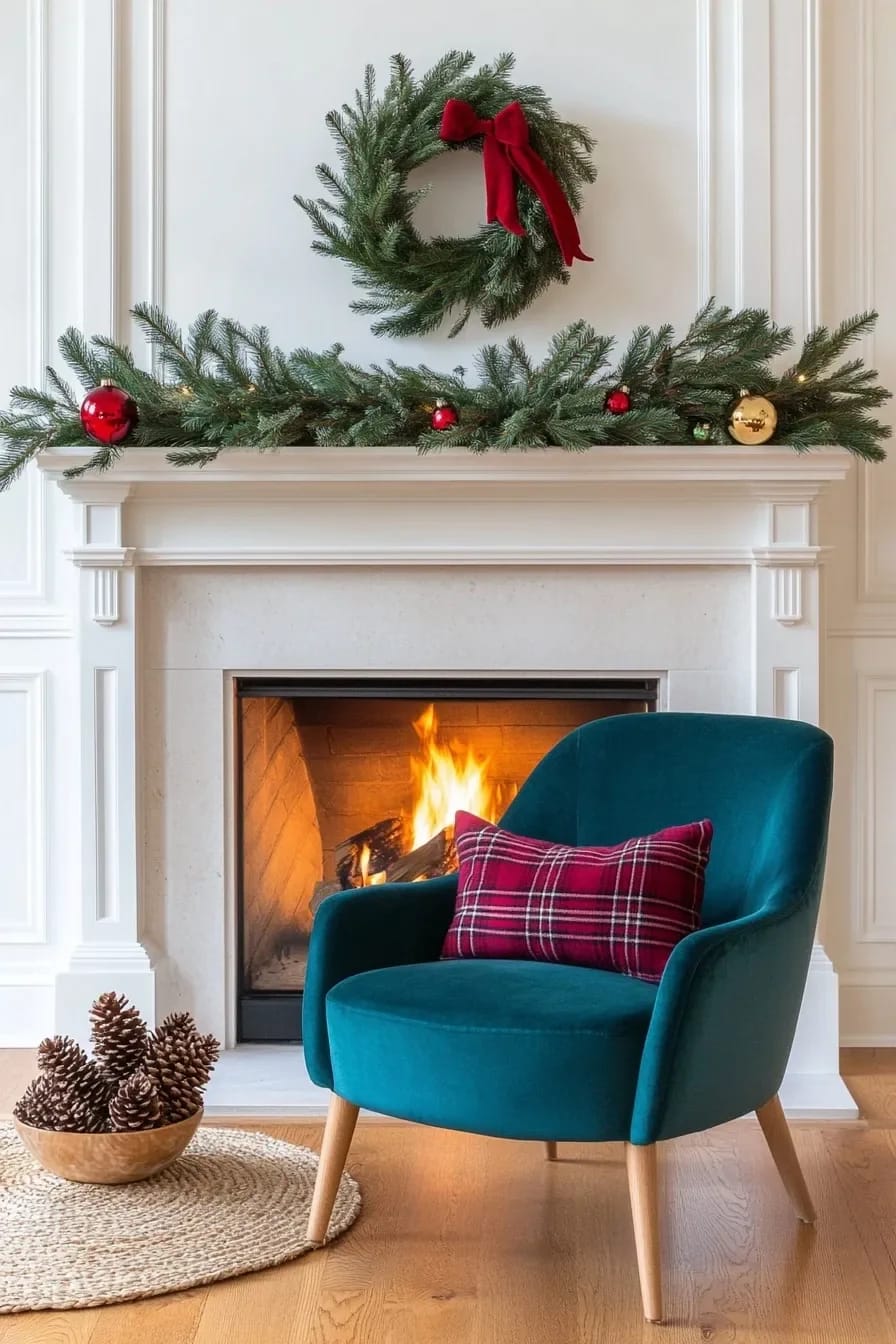
The single change that does the most work is dropping the red half a dozen steps darker and pulling it toward brown. Think madder, oxblood, brick, the red of an old barn door rather than the red of a fire truck. Farrow & Ball describes its Rectory Red No. 217 as a blackened, aged version of a brighter red, which is exactly the move: same hue family, more black and more earth in it, and suddenly the color sits with walnut, brass, and worn leather instead of shouting over them.
Test it under the light you actually use, not daylight. Reds with blue underneath them go faintly purple under a warm bulb, which is why so much “burgundy” holiday ribbon looks off next to a lit tree. Hold the ribbon, the bauble, and the wrapping paper together on the sofa at seven in the evening before you commit to a roll of anything. If you want this worked out surface by surface, our room-by-room plan for classic red and green covers the front door through to the guest bath.
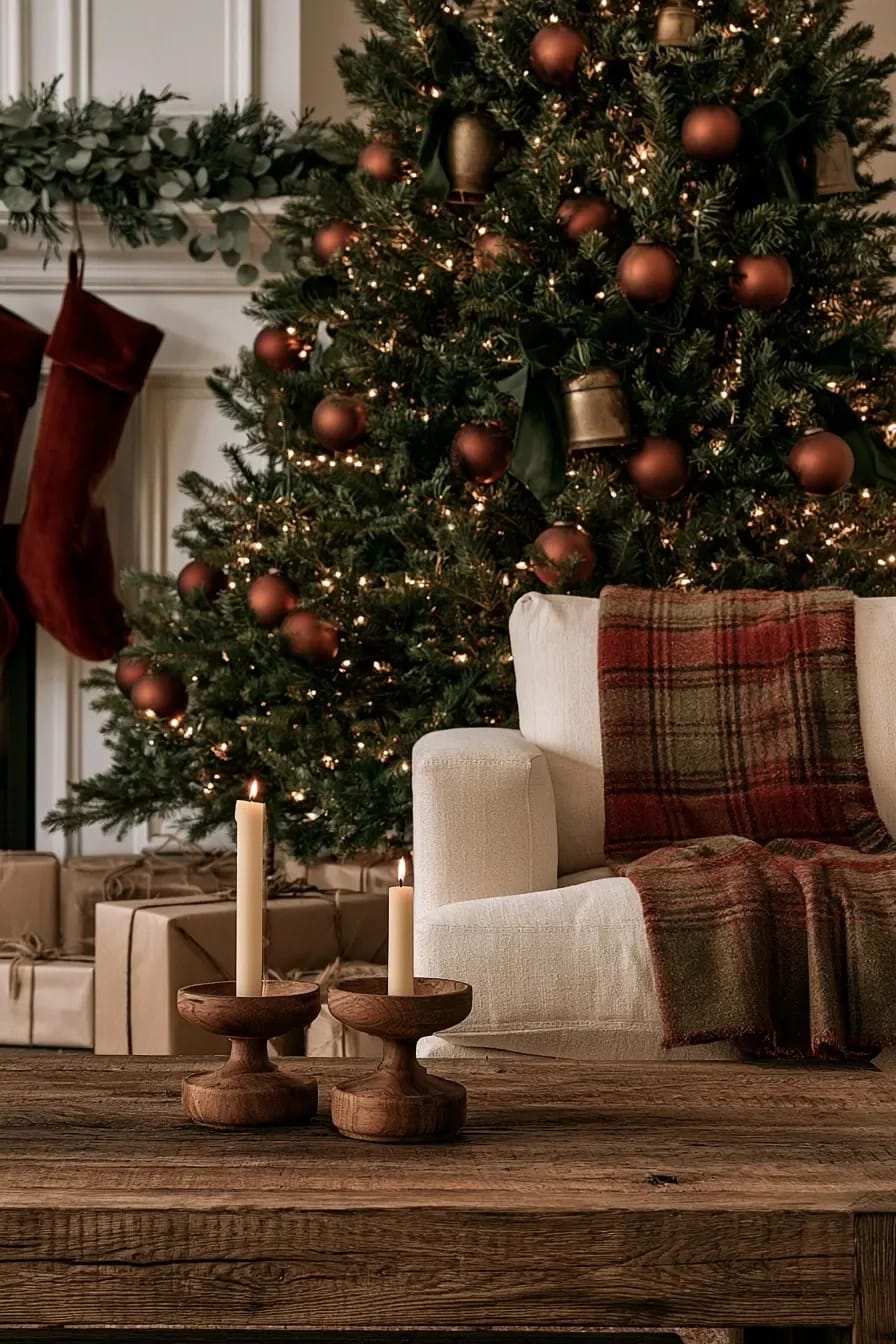
2. Push the green blue, and let real evergreen carry it
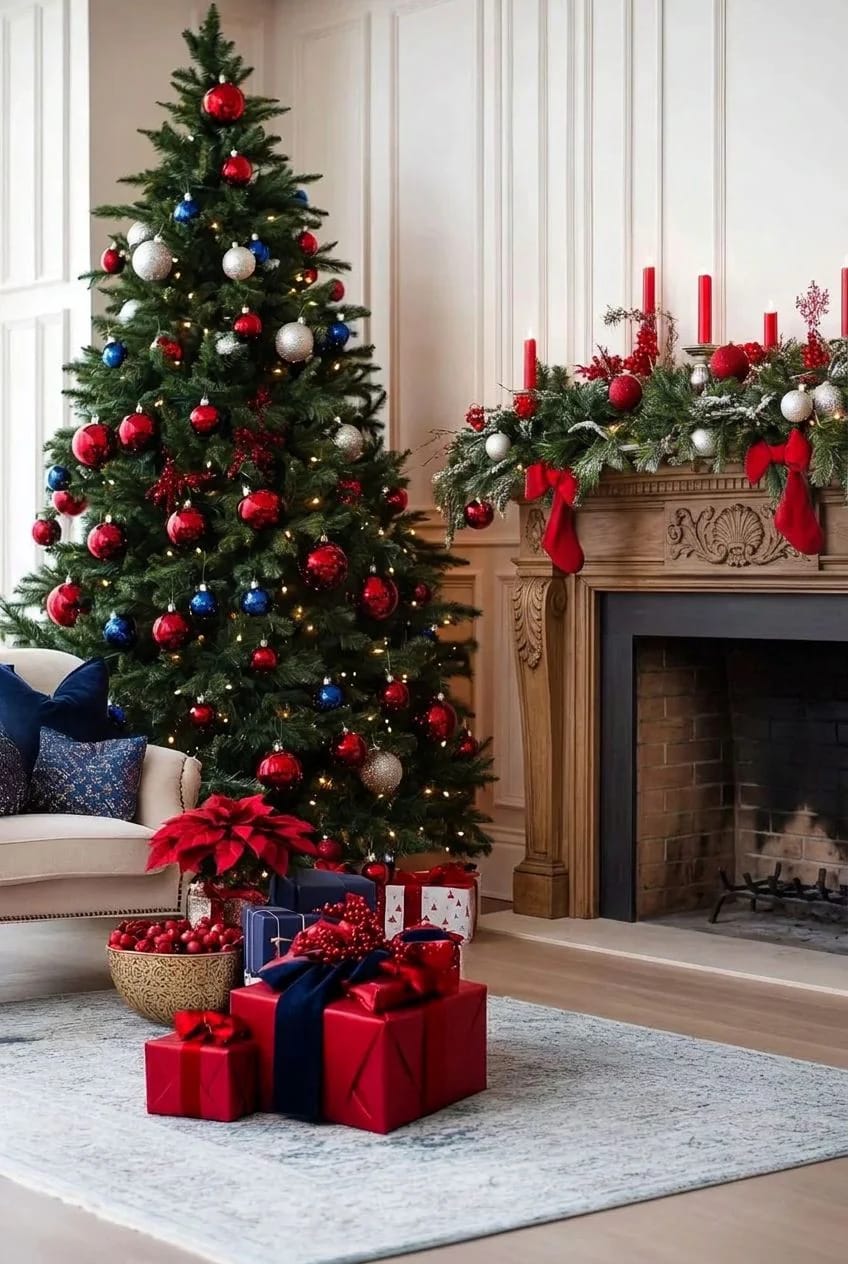
Traditional Christmas green should sit at the blue-black end, near Farrow & Ball's Studio Green No. 93, which the company itself says reads almost black in anything but a well-lit room. Most bagged PVC garland sits at the opposite end, molded in one flat yellow-green with a slight sheen, and no amount of styling rescues it. Real cedar, noble fir, and blue spruce carry that dark cast naturally, they vary needle to needle, and they cost less than people expect: fresh garland from a florist or a farm stand typically runs a few dollars a foot, and a nursery will often sell you an armful of trimmed branches for almost nothing in the week the trees arrive.
Granted, real greenery is a two-week material at best in a heated room, and staircases and doorways are where the drying shows first. If you are buying faux for those spots, buy the ones with mixed tip colors and matte PE needles rather than the shiny single-tone rolls, and skip anything described as glittered or flocked. One thing worth knowing about the greens people reach for at the paint counter: olive-leaning shades like Bancha, which Farrow & Ball calls a darker version of Olive, pull yellow under lamplight and fight the reds in this article rather than backing them up.
| Red | Green that suits it | Green that fights it | Put it on |
|---|---|---|---|
| Oxblood | Blue spruce, near-black green | Yellow-green faux garland | Velvet ribbon, a wool throw |
| Brick | Olive, dried eucalyptus | Glossy emerald | Ceramics, wrapping paper |
| Madder berry | Cedar, boxwood | Mint and pastel greens | Glass ornaments, table linen |
| Fire-engine red | Nothing in this list | All of them | Outdoor bows, the kids’ stockings |
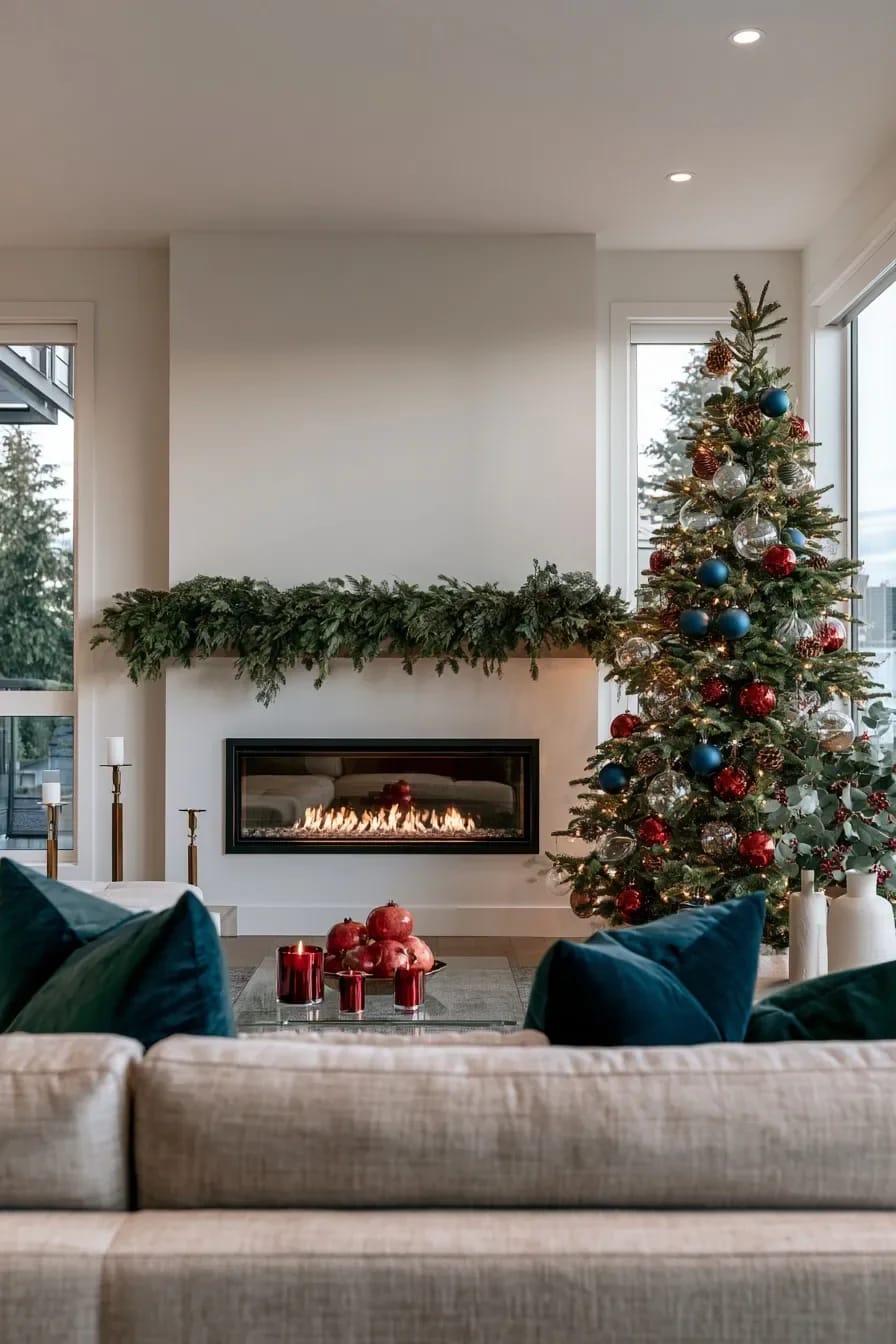
 Christmas Mantel Decor Ideas With Garland That Look Designer, Not Draped-On How to layer, drape, and edit a garland so the shelf reads designed rather than covered.
3. Give green the volume and red the last five percent
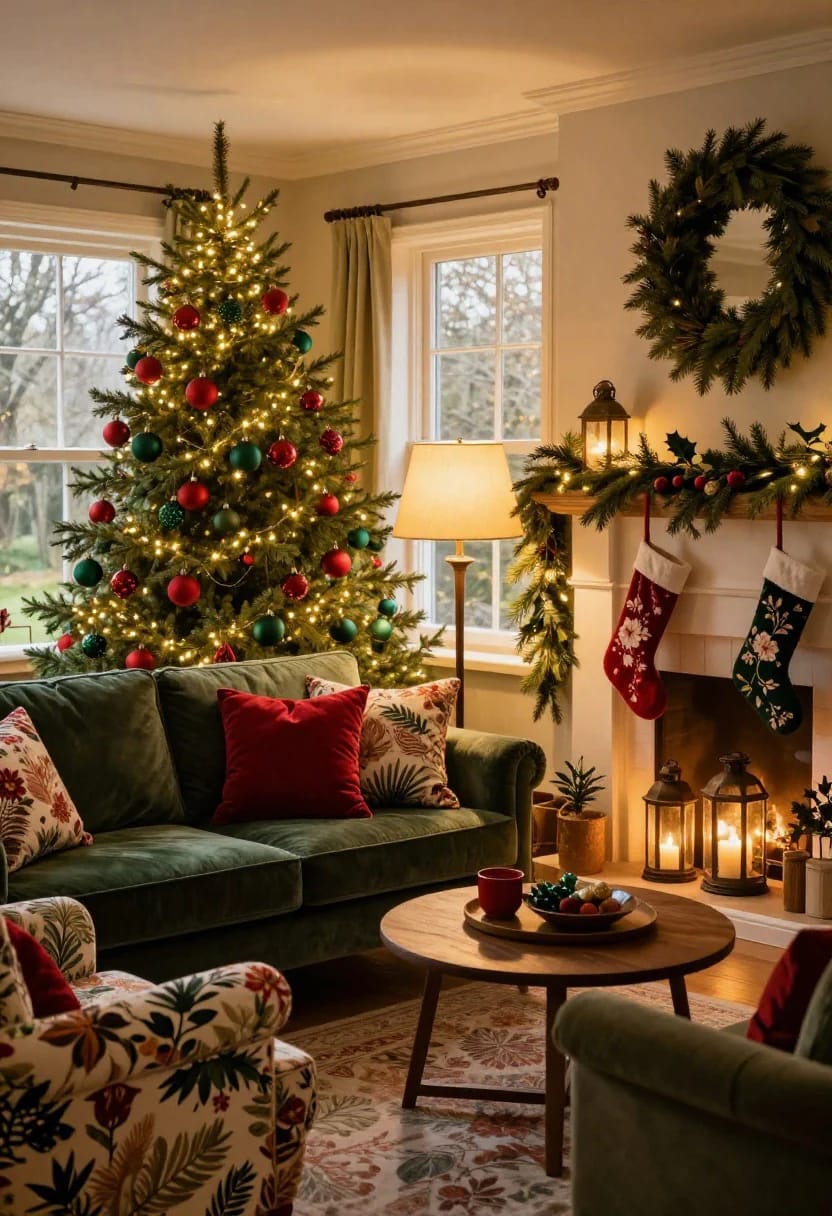
Red is an accent color pretending to be a co-star. In the rooms that hold up, green does nearly all the work (garland, tree, wreaths, a painted door, table linen) and red arrives in a handful of small, deliberate places: a ribbon, a stack of books, a bowl of pomegranates, one blanket. The proportion people actually execute is closer to half and half, and half and half is what makes a room read like packaging.
Alternating red and green in equal amounts (red bauble, green bauble, red stocking, green ribbon) cancels both colors out, because neither one becomes the background and neither becomes the event. Stand in your doorway and count the separate red objects you can see. More than five in one sightline and the room has tipped. Take away the smallest ones first, since they read as clutter before they read as color.
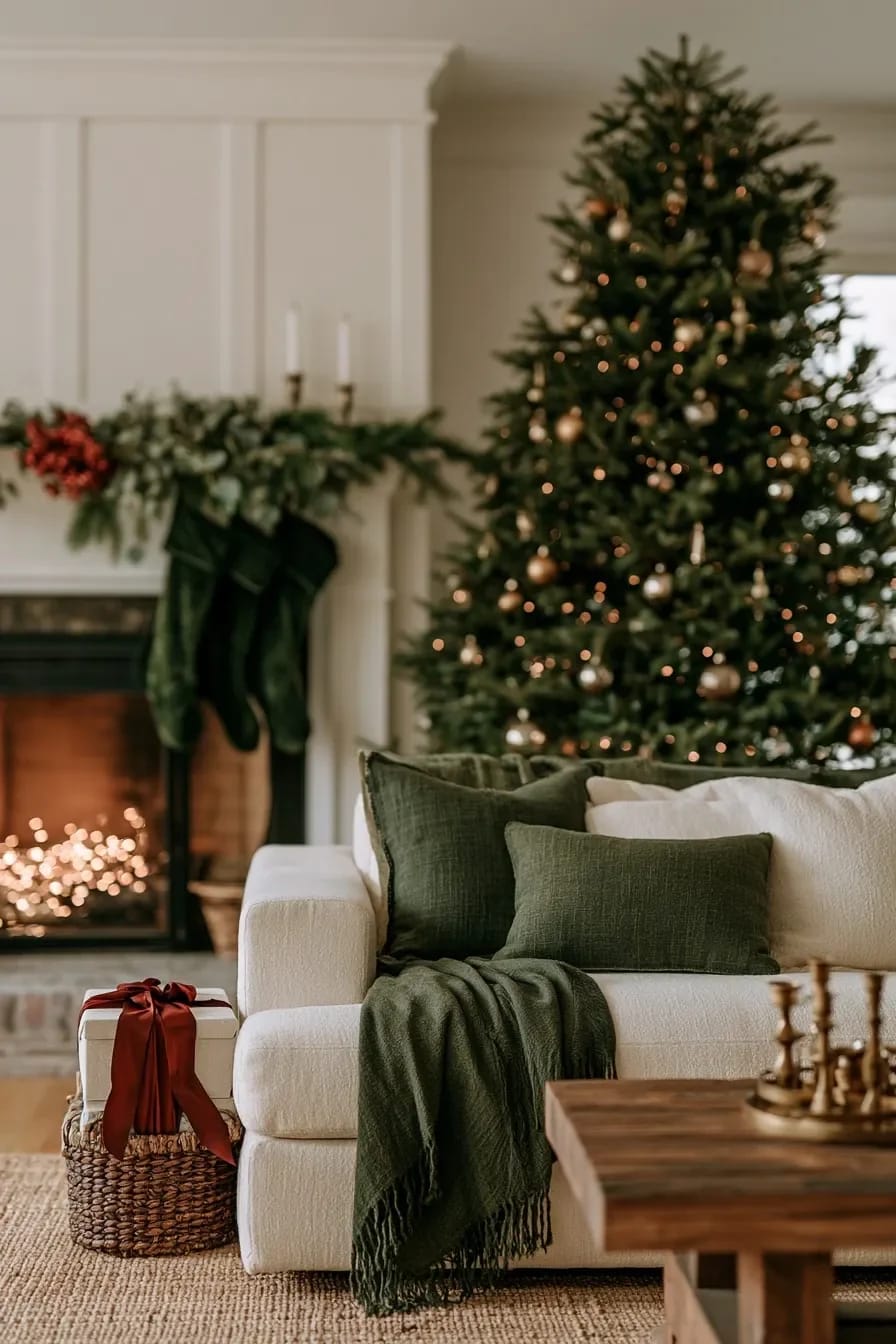
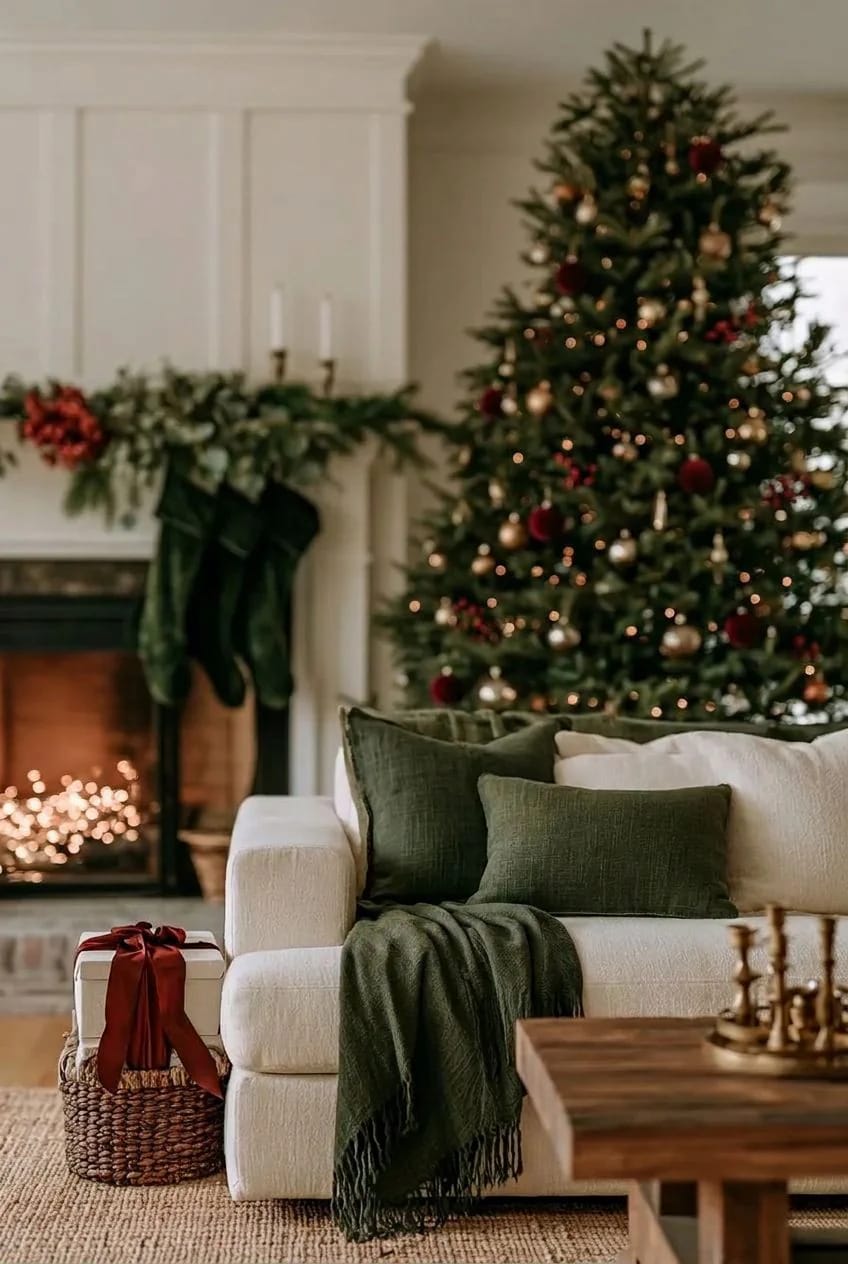
A 12 by 16 living room, updated for about $120
Existing tree and ornaments stay; nothing structural changes.
Start with fifteen feet of fresh cedar or fir garland for the mantel, doubled up so it looks dense rather than laid on, which is usually $40 to $70 depending on where you buy it. Add one ten-yard roll of wide matte velvet ribbon in oxblood, typically $12 to $25, and use it in two places only. Swap the four bulbs in your two table lamps for 2,200K to 2,700K warm dimmables, roughly $20 to $30 for the set. The last of the money goes on one red object with real size to it: a lacquer tray, a wool blanket, a large glazed urn. Everything red that is smaller than a dinner plate goes back in the box, and the box goes in the attic.
Materials Do More of the Updating Than Color Does
4. One width of velvet ribbon, cut long, no wire
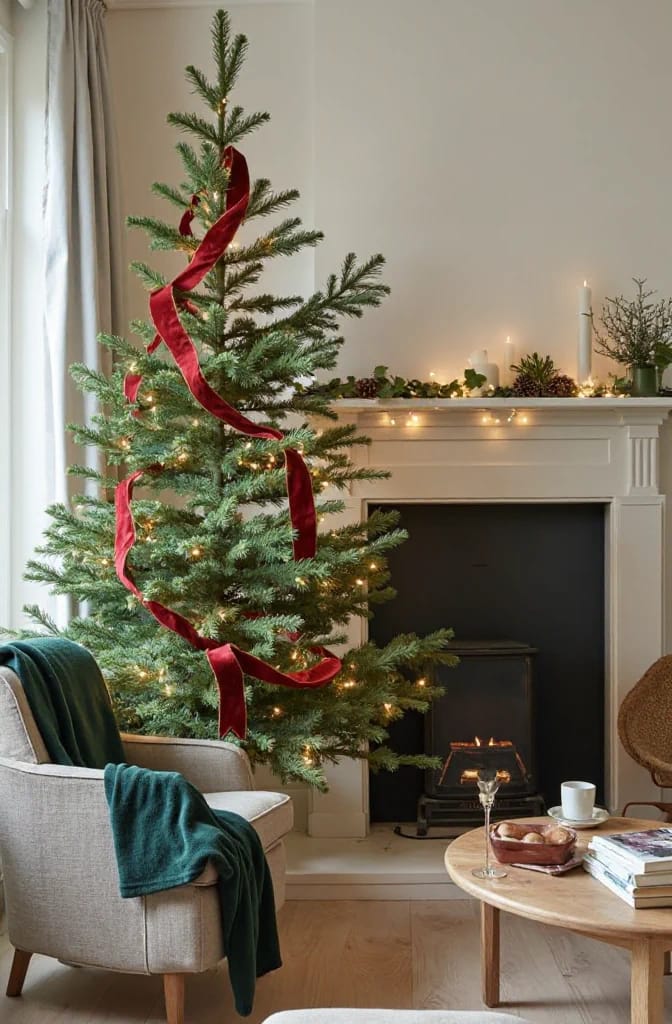
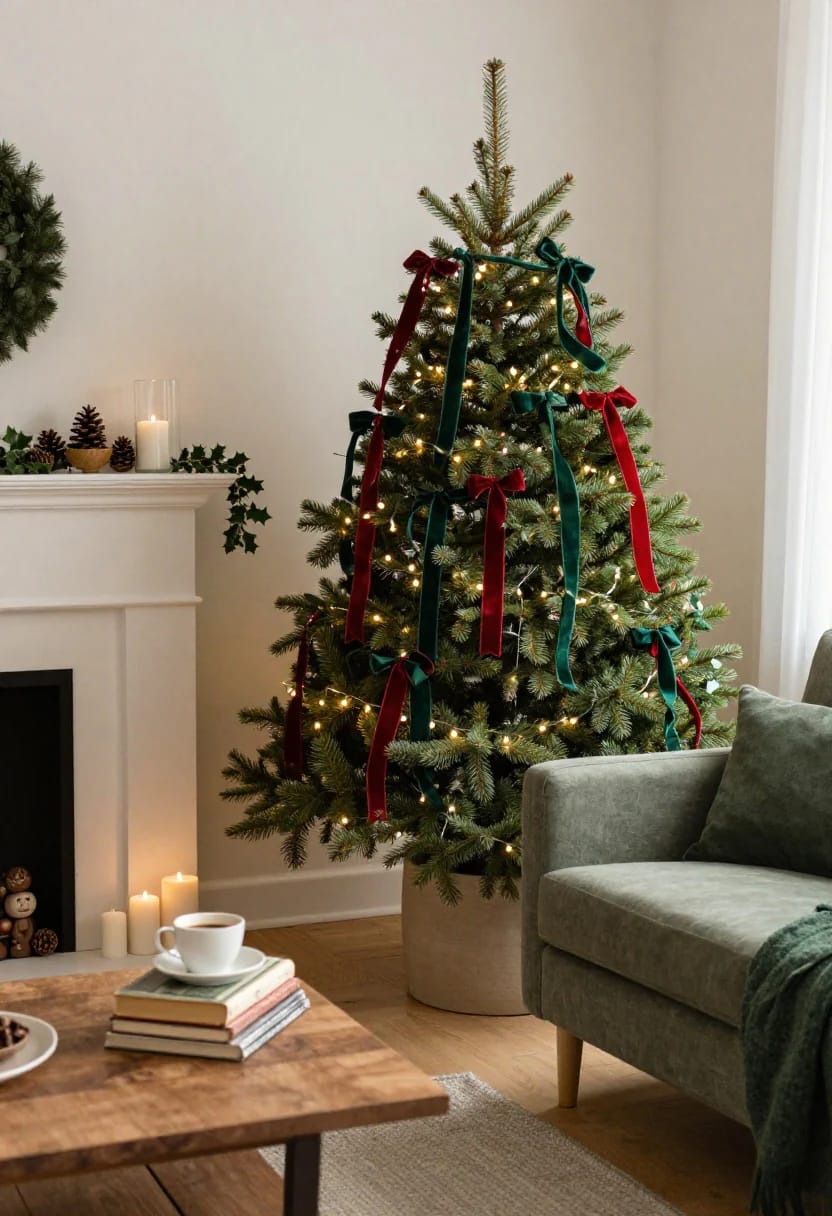
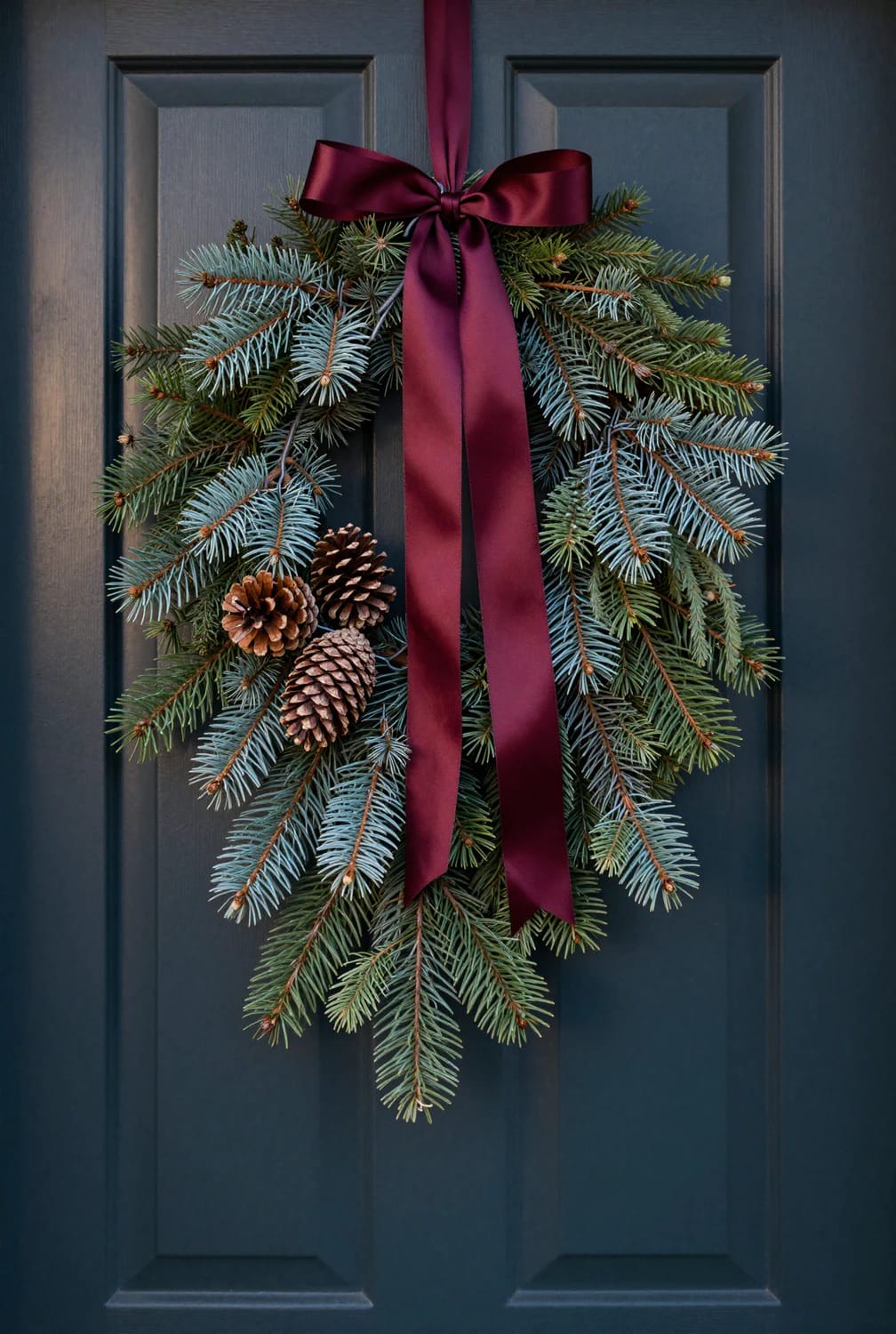
Velvet is the material that makes traditional read expensive, and wired ribbon is the material that makes it read craft store. Buy one width, ideally 2.5 inches or wider, in single-face matte velvet; tie it in flat, loose knots rather than pinched bows; cut the tails long and on the diagonal so they hang instead of flicking upward. Wire exists so a bow keeps a shape it would not hold on its own, which is precisely the look you are trying to leave behind.
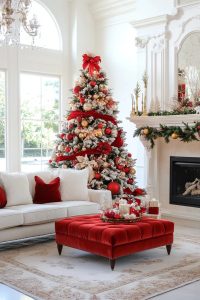 Christmas Tree With Red Velvet Ribbon and Bows: 12 Ways to Style It Without Looking Overdone Width, placement, and how much velvet a tree can carry before it tips into display territory.
5. One tartan, blown up, used exactly once
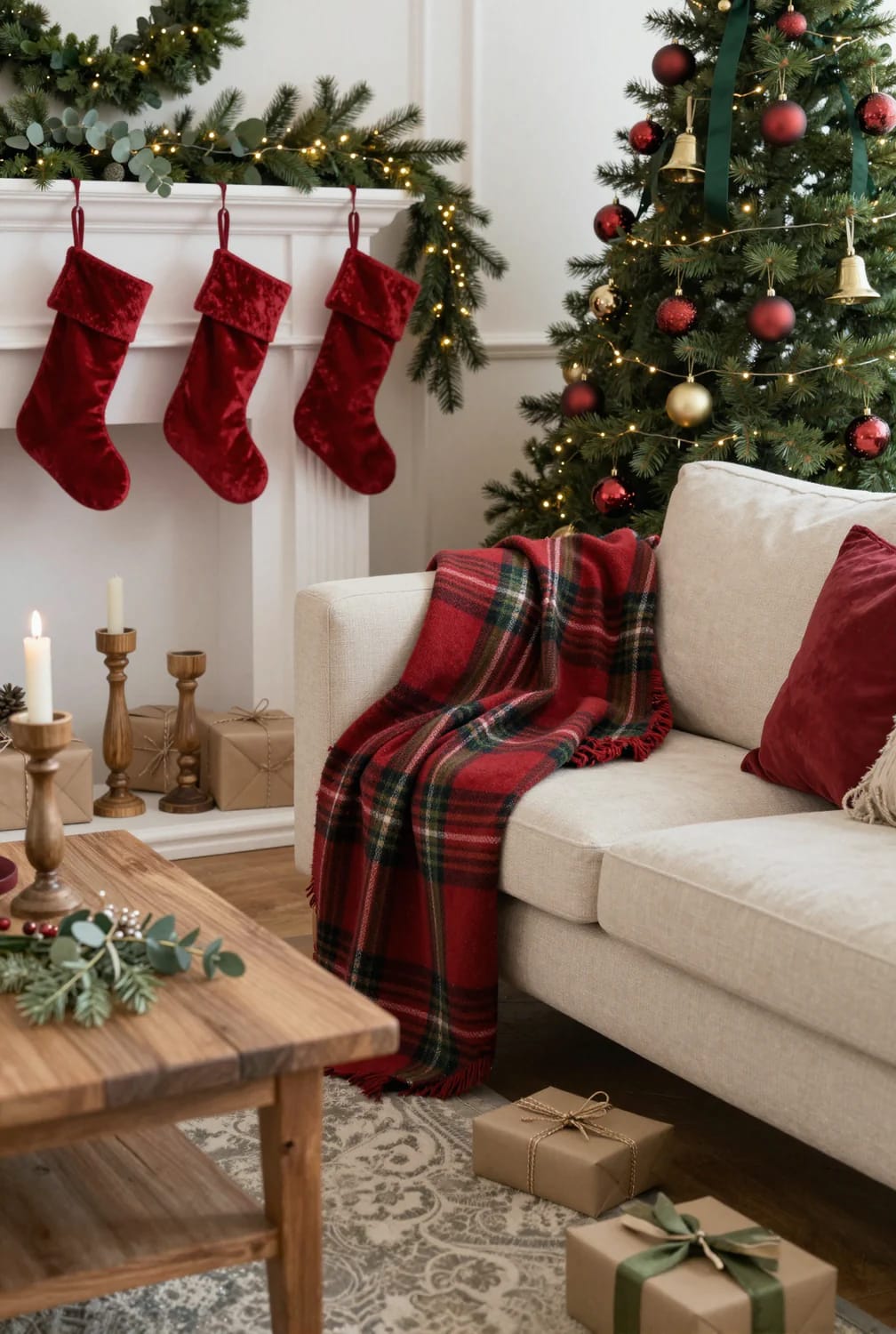
Plaid is having a genuine moment again, driven largely by the Ralph Lauren Home holiday rooms and the preppy tartan wrapping paper that has been quietly dominating Pinterest for two seasons. It works on one condition: a single tartan, at a large scale, appearing in one place. A tablecloth. Or the wrapping paper. Or a throw over the chair by the tree.
6. Matte and bisque ornaments beat anything with glitter on it
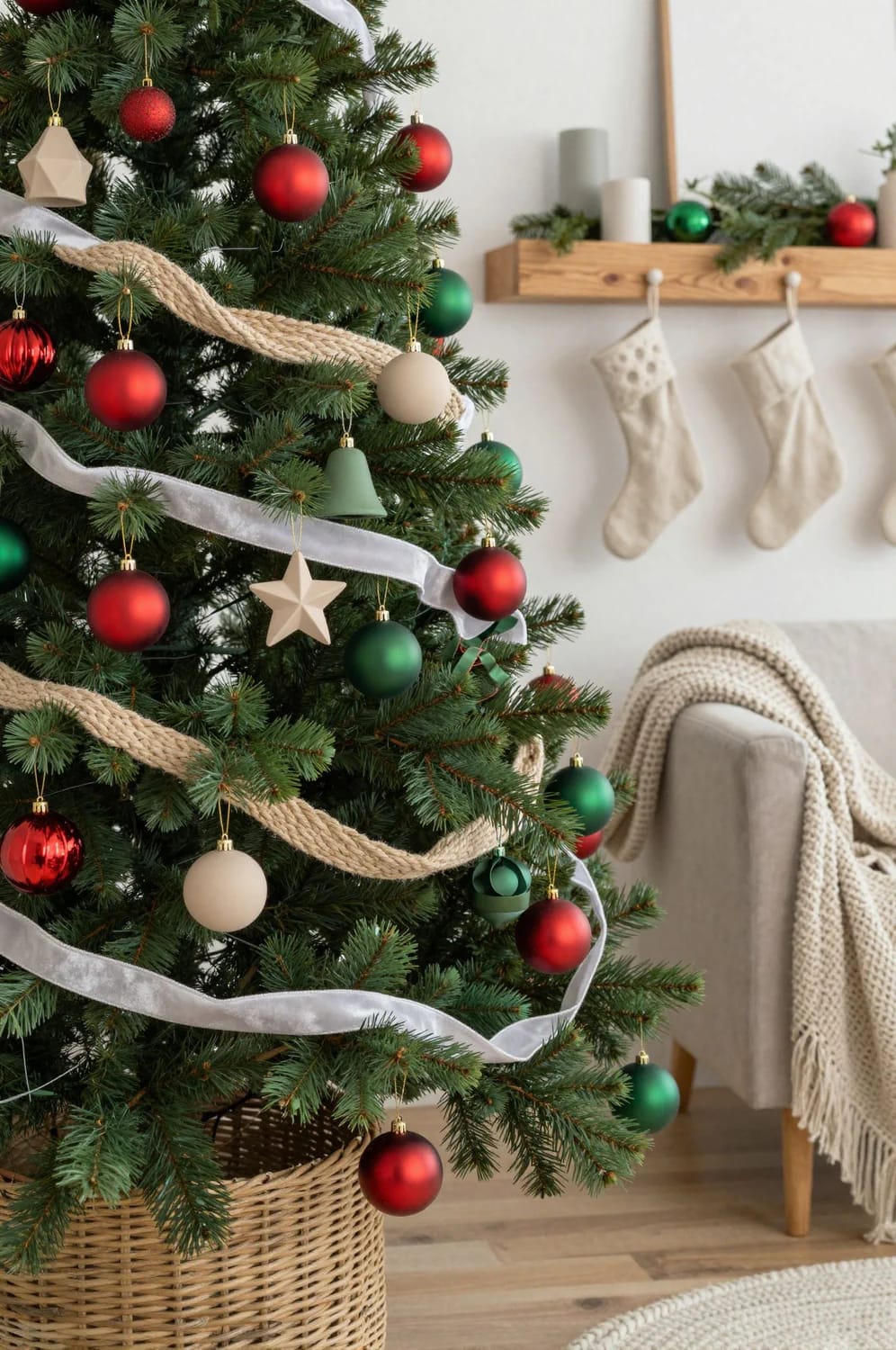
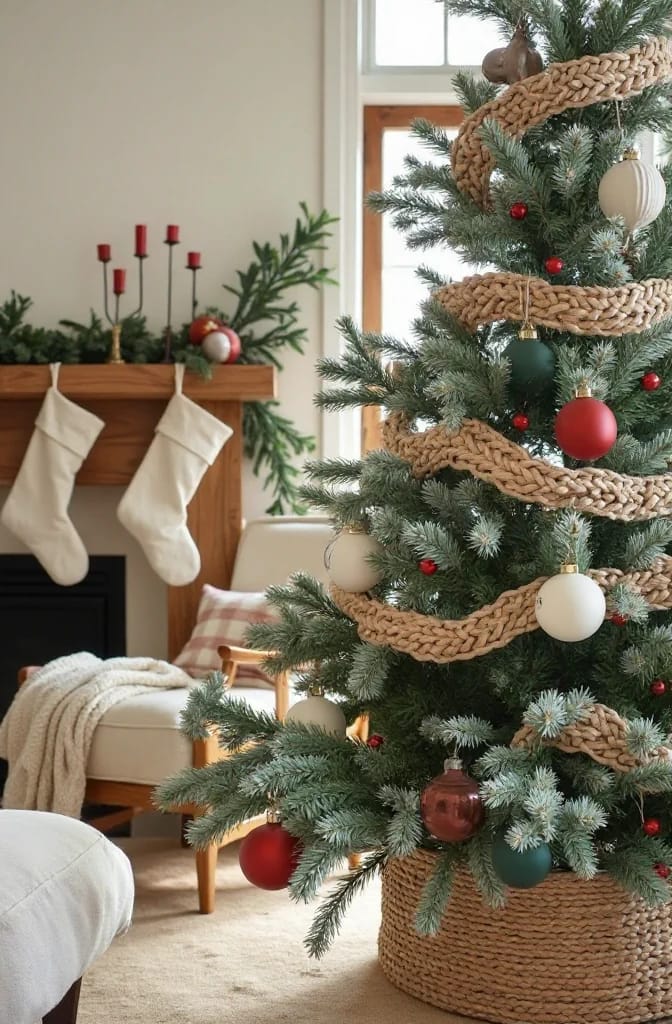
Glitter is the tell. It migrates onto every surface in the house, it photographs as noise, and on a red bauble it turns a decent color into something that reads plastic. Replace the shine with texture instead: unglazed bisque, wool felt, folded paper, dried citrus, and carved and turned wooden ornaments that show grain. The tree ends up quieter and considerably more interesting from three feet away.
7. Pick one metal, make it brass, and refuse the rest
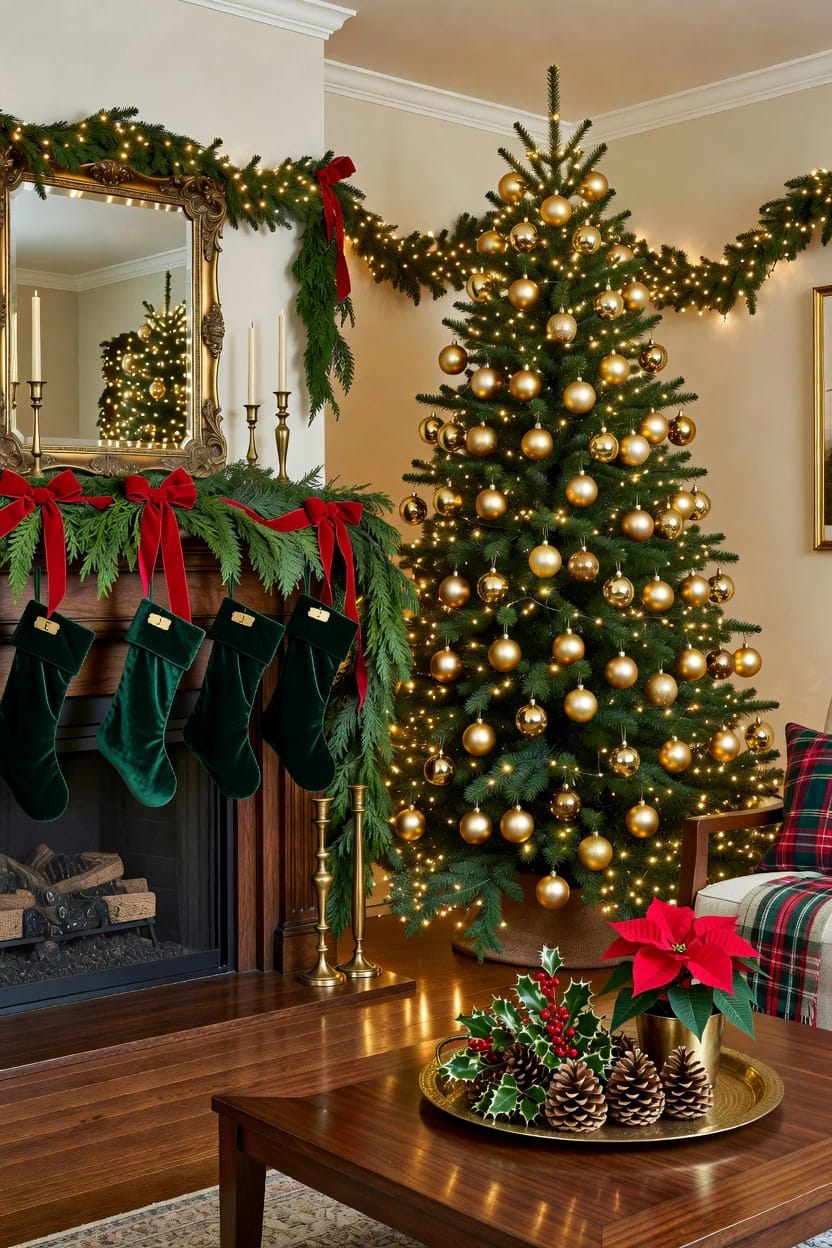
Mixed metals are where a red-and-green room quietly falls apart, because a brassy star, a rose-gold bauble, and a silver tinsel garland read as three different materials fighting in the same three feet of space. Choose brass, ideally unlacquered so it dulls over the season, and be ruthless about the rest. Our piece on gold and glass ornaments makes the same argument from the tree’s side, and the fix is identical: one gold, one finish, applied consistently.
Placement, Scale, and the Light You Turn On
8. One large red object instead of red scattered through the room
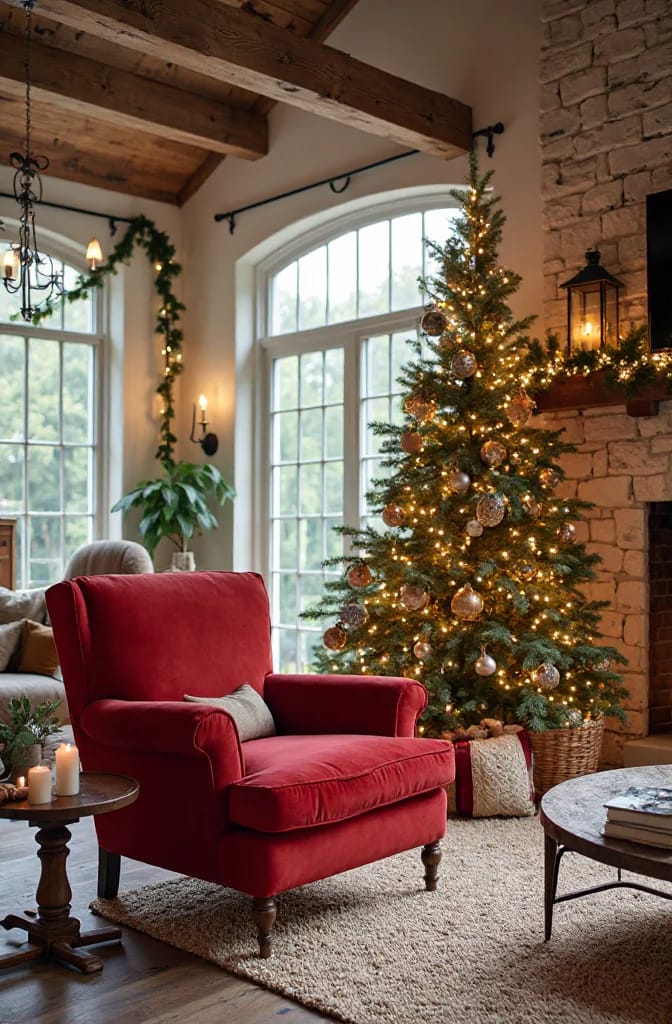
Scale is what separates a collected room from a decorated one. A single substantial red thing (a lacquered tray on the ottoman, a heavy wool blanket, a big glazed urn holding branches, a red-painted door seen from the hall) delivers the color more convincingly than twenty small red items distributed around the room, and it is the one place where secondhand shopping genuinely beats retail: vintage lacquer and old enamelware carry a depth of red that new production rarely matches.
9. Tie Christmas bows onto the furniture, not just the tree
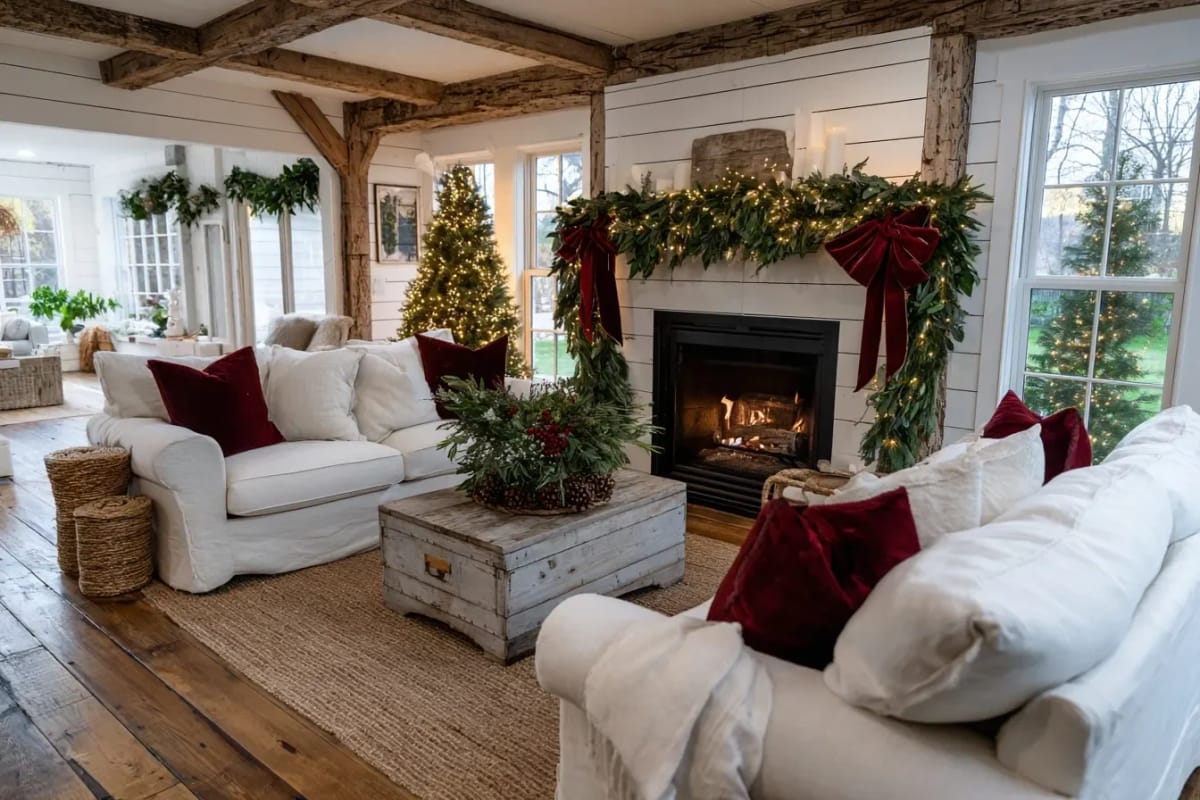
The bow moved off the tree this year and onto everything else, and the version worth copying is the restrained one: a wide velvet band tied around a dining chair back, a pair of bow-front pillows on the sofa, one ribbon down the newel post. Chair backs are the highest-return spot, because a dining room reads as decorated the moment the chairs do and the ribbon comes off in ten minutes on the 27th. Keep it to one piece of furniture per room; a house where every chair, cushion, and door handle is tied looks like a gift shop rather than a room.

10. Drop your Christmas lights to 2,200K and light from lamp height
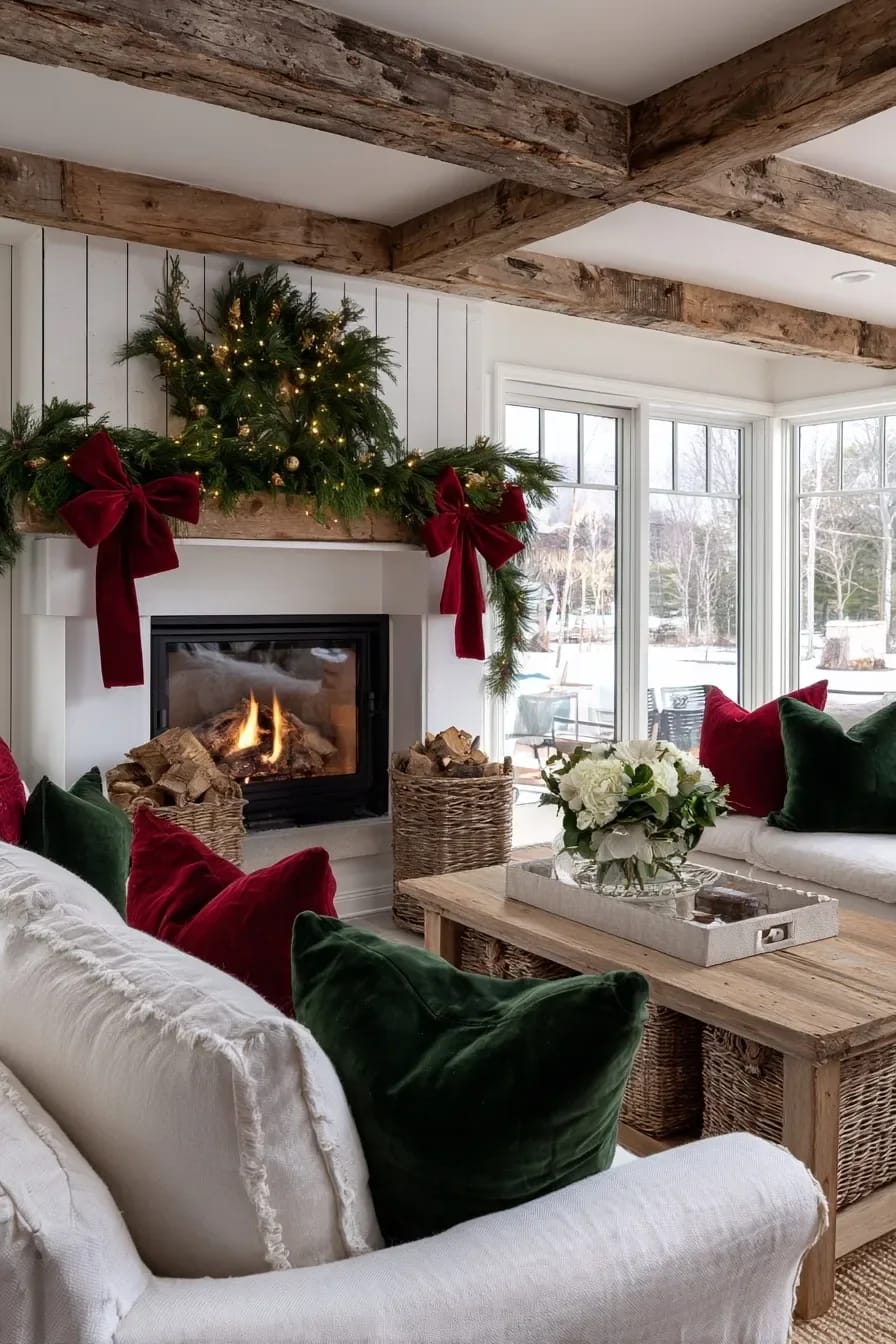
Color temperature does more for a traditional palette than any ornament you can buy, and almost nobody checks it. Old incandescent Christmas bulbs sat at roughly 2,700K, which is the light every remembered childhood tree was lit by; modern LED strings sold as "warm white" run anywhere from about 2,200K at the heavy amber end to 3,200K, where the yellow has mostly gone. Professional installers commonly use around 2,800K. The number is on the box, the marketing phrase is not regulated, and two boxes labeled identically will not match on the same tree.
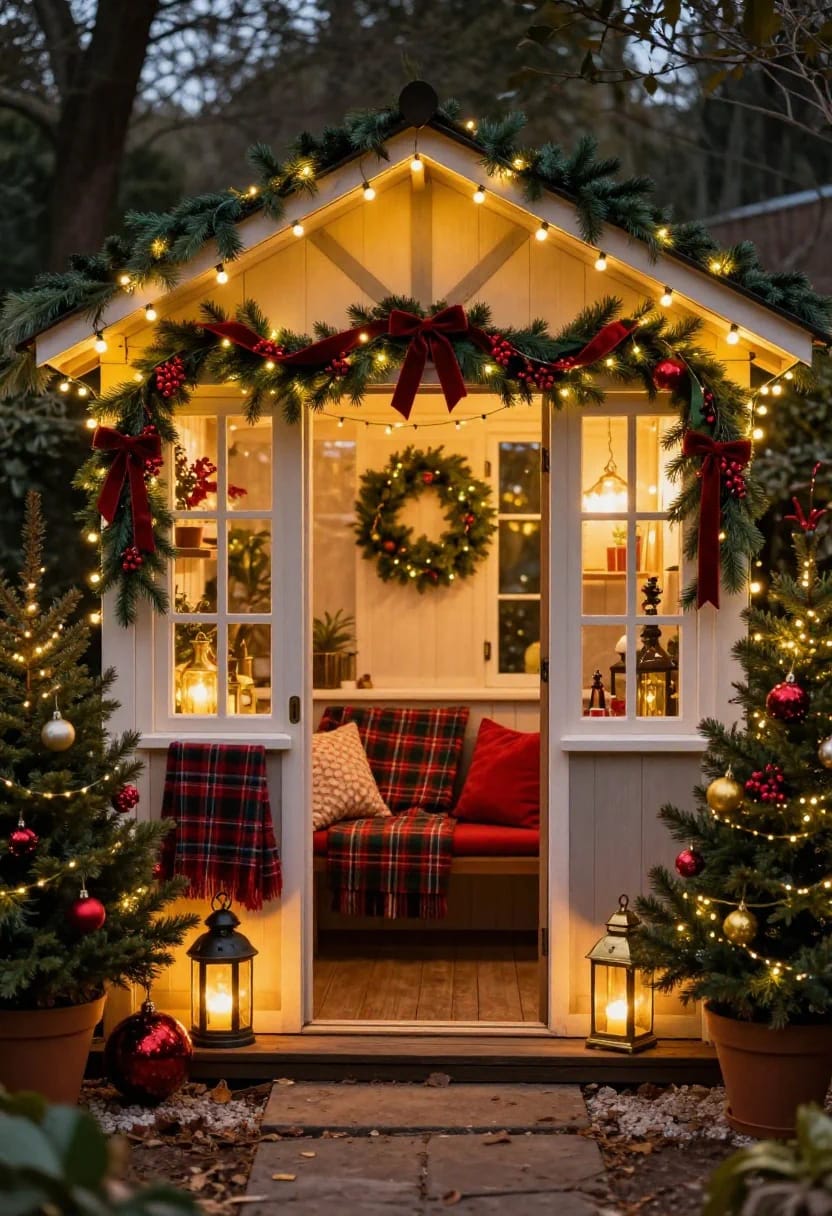
Two habits matter as much as the bulbs. Put the tree string and any window candles on an inexpensive plug-in dimmer or a smart plug so the whole display comes down together in the evening rather than blazing at one level from four in the afternoon. And turn the ceiling fixture off entirely: light the room from table lamps, sconces, and candles at seating height, which is how these rooms were lit before overheads existed and the reason old photographs of them look the way they do. Dark green absorbs an enormous amount of light, so a room heavy on garland needs more lamps than you think, just none of them above head height. The same principle runs through our minimalist approach to the whole home, where one lit object beats five unlit ones.
If You Only Change Three Things
Change the bulbs first, then the ribbon, then subtract. The lighting swap costs less than $30 and shifts the entire room's color in an evening; the velvet does the work of a dozen ornaments; and the subtraction (every red item smaller than a dinner plate going back in the box) is free and probably the most effective of the three. Buying a new palette is the expensive way to fix a problem that is mostly proportion and Kelvin.
Where I would still hedge is the greenery. Fresh cedar and spruce are the difference between this look and its craft-store cousin, but they will drop needles on a warm mantel by the second week, and no amount of misting fixes a garland hung above a working fireplace. If you decorate the first weekend of December and host on the 24th, buy the real thing for the mantel and the table, and accept faux on the staircase where nobody stands close enough to tell.
Related Posts
- Classic Red and Green Christmas Decor Ideas for the Whole House
- Modern Minimalist Christmas Decor Ideas for the Whole Home
- Minimalist Outdoor Christmas Decorations for a Modern Home
- 23 Minimalist Christmas Decor Ideas Perfect for a Modern Home
- 15 Modern Christmas Decor Ideas for 2024
- Farmhouse Christmas Decor: 12 Ideas That Skip the Red-and-Green Cliché