
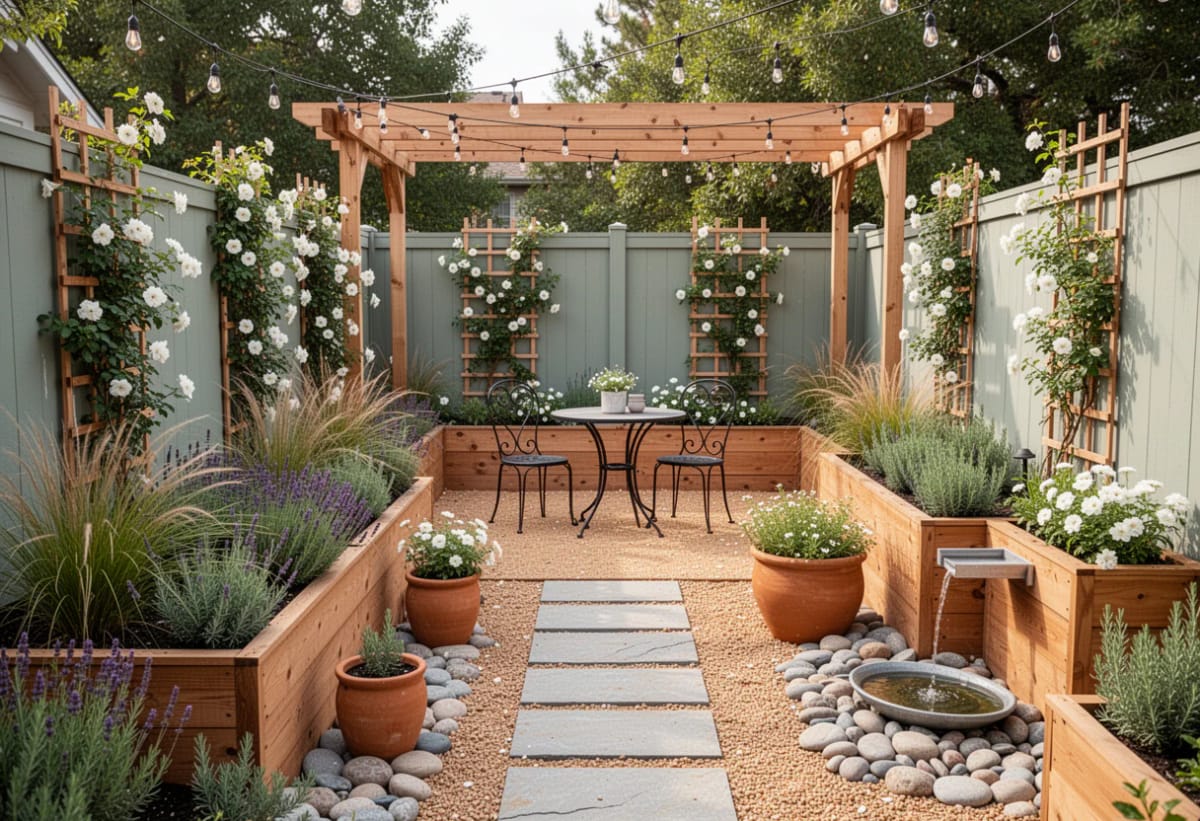
A cubic yard of gravel covers about 108 square feet at three inches deep, which in a lot of small backyards is the entire floor, delivered in one load, done in an afternoon. That ratio is the useful thing about working small: the quantities are so modest that materials you would never consider across half an acre are suddenly affordable here. The catch is that the same smallness punishes clutter, and most small yards fail not because the owner spent too little but because they bought twelve different things and put them all down at once.
What follows is landscaping in the literal sense: the floor, the edges, the level changes, the planting, and the light. Furniture and cushions are a separate purchase and a separate article. Sequence matters more than budget here, so a few of these ideas are worth doing before any of the others, and I'll say which as we go.
1. Lay the paving on the diagonal before you buy a single plant
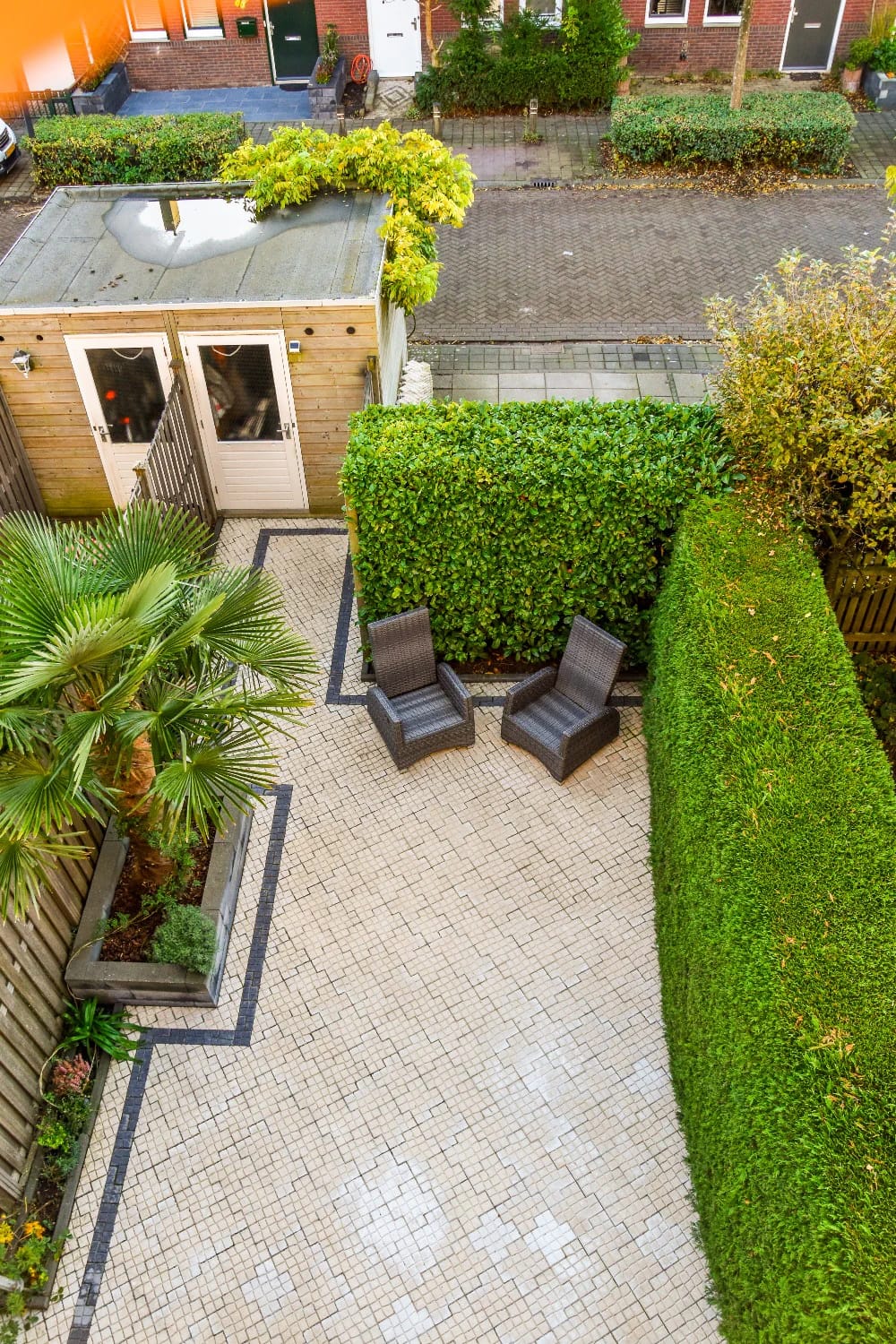
The single most effective decision in a small backyard is the angle of the paving joints, and it costs nothing to get right. Running the courses at forty five degrees to the house wall stretches the longest available sight line across the diagonal of the rectangle, which is always longer than either side; a square yard laid square reads exactly as wide as it is; a square yard laid diagonally reads wider than it measures. Bricklayers charge slightly more for the cuts at the perimeter, usually a few hundred dollars on a patio this size, and it is the cheapest square footage you will ever buy.
Not every yard wants it. Long narrow yards already have a strong axis and fighting it produces a mess of triangular offcuts along both fences. Work out which shape you actually have first, because it decides almost everything downstream, including where the seating goes and which fence gets the planting. Our five courtyard layout archetypes with worked floor plans at three scales are the fastest way to place yourself.
The long rectangle
Twice as deep as it is wide, usually a row-house or townhouse yard. The temptation is to run a path straight down the middle, which reads as a corridor. Break it across the short axis instead, into two or three zones, and hide the far end behind something.
Best for: a sequence of small rooms rather than one open space.
The postage stamp
Roughly square, roughly 300 to 500 square feet, fenced on three sides. Diagonal paving works hardest here. One planted corner, one paved corner, nothing in the centre.
Best for: a single paved floor with planting pushed to the boundaries.
The side-yard sliver
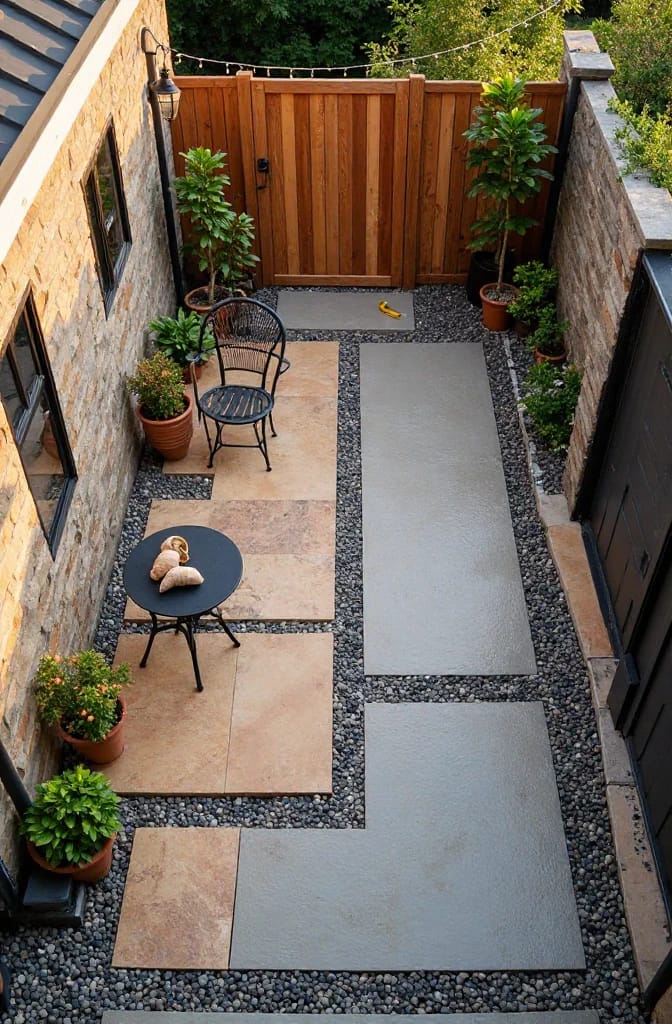
Six to ten feet wide, running the length of the house, often shaded for most of the day and often the only outdoor space there is. Everything in it has to be narrow, so the planting goes vertical and the seating goes against the fence.
Best for: one narrow path, one bench, and climbers on the boundary.
2. Replace the lawn with one continuous gravel floor, not patches
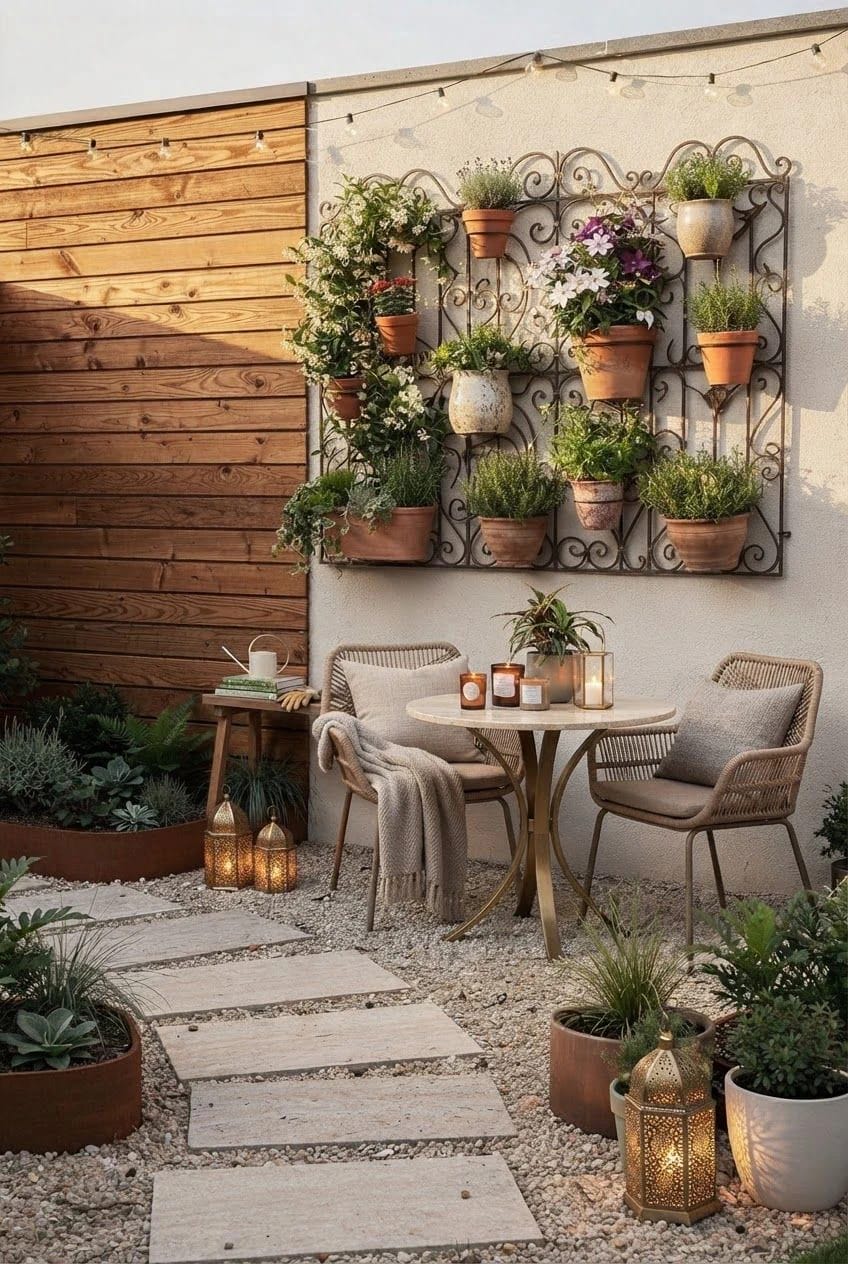
A 400 square foot lawn is not a lawn, it's a chore with a mower attached, and in a fenced yard it rarely gets enough sun to look decent anyway. The strongest move in a small backyard is to take the grass out entirely and run one material edge to edge, then cut the planting beds into it. Patches of lawn between patches of paving between patches of bark is what makes a small yard look like a jumble sale.
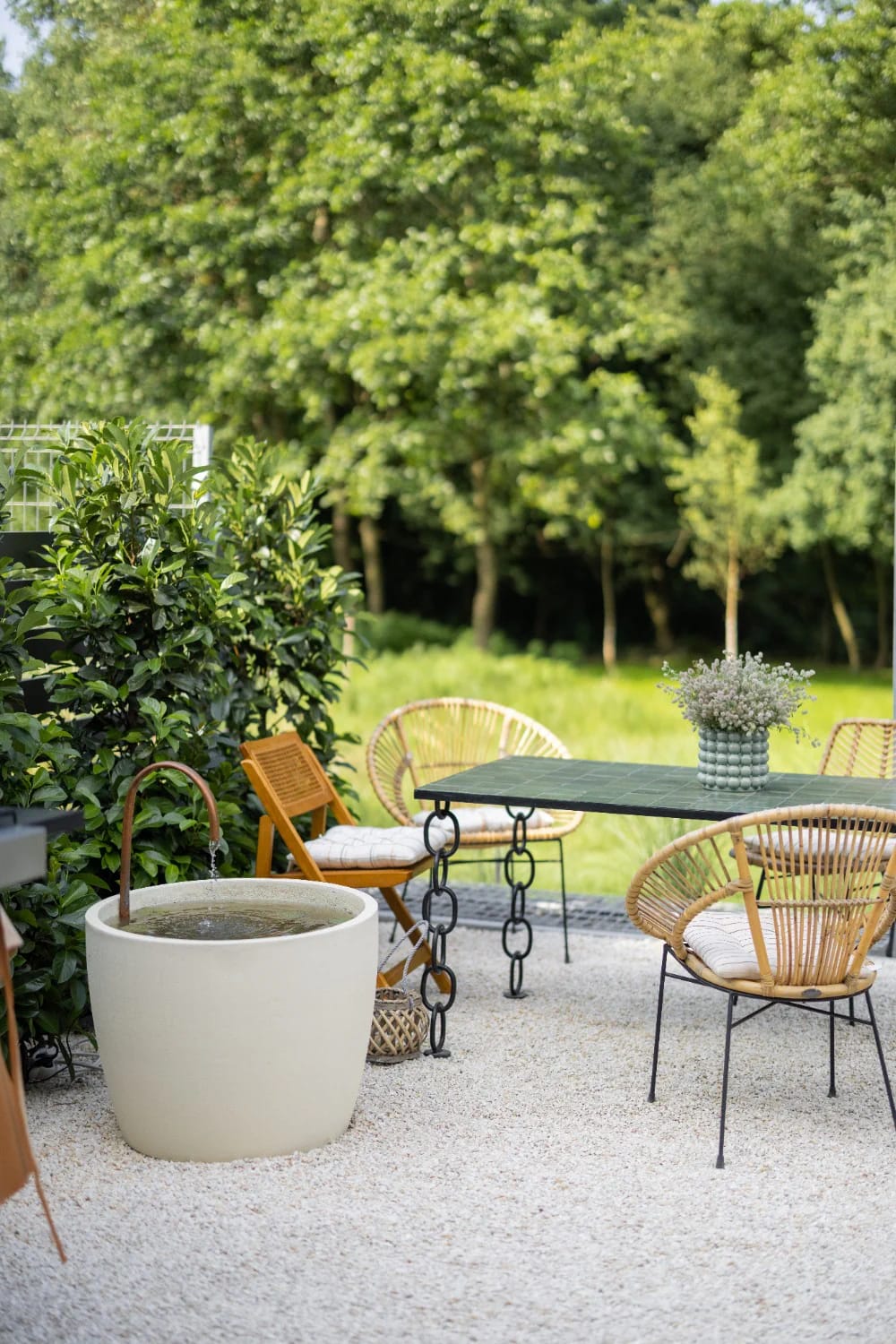
Loose stone is also the one surface a homeowner can genuinely install alone. Excavate three to four inches, compact the subgrade, lay the stone, rake it level. No mortar, no screed rails, no wet saw. If you want the finished look rather than the method, the gravel patio treatments we’ve collected show how differently the same material reads depending on edge and colour.
Which stone actually stays put underfoot
Pea gravel is the one everyone buys and the one that causes the complaints. Rounded stones have nothing to lock against, so they migrate, chair legs sink, and anyone in a heel gives up. Angular material is the answer: crushed chip in the three eighths inch range knits together as it settles, and decomposed granite compacts almost like a soft pavement because the fines bind the larger particles.
| Material | Underfoot | Where it fails |
|---|---|---|
| Pea gravel | Loose, shifting, noisy | Chairs sink; it escapes into the house on shoe treads |
| Decomposed granite | Firm, almost path-like | Ruts and washes on any real slope; needs a stabiliser in wet climates |
| 3/8 in angular chip | Firm, slight crunch | Sharper edges; less comfortable barefoot than DG |
| Bark mulch | Soft, springy | Breaks down in two to three seasons and needs topping up |
The edge is what makes it read as designed
Loose material without a hard edge spreads, and spread gravel looks like neglect within a season. Steel edging is the fix, four to six inches deep, hammered in so only a quarter inch of the top shows. It disappears visually and does all the work; plastic edging heaves and reappears above the surface by the second winter, which is why landscapers keep pulling it out. Six-packs of hammer-in strips like this 4-inch galvanized steel landscape edging with clips cover twenty feet and cost less than a single bag of decent perennials.
 11 Small Backyard Ideas That Work in Under 400 Square Feet Everything here fits a 20 by 20 footprint with no re-grading and no contractor.
3. One multi-stem tree does more for a small backyard than five shrubs
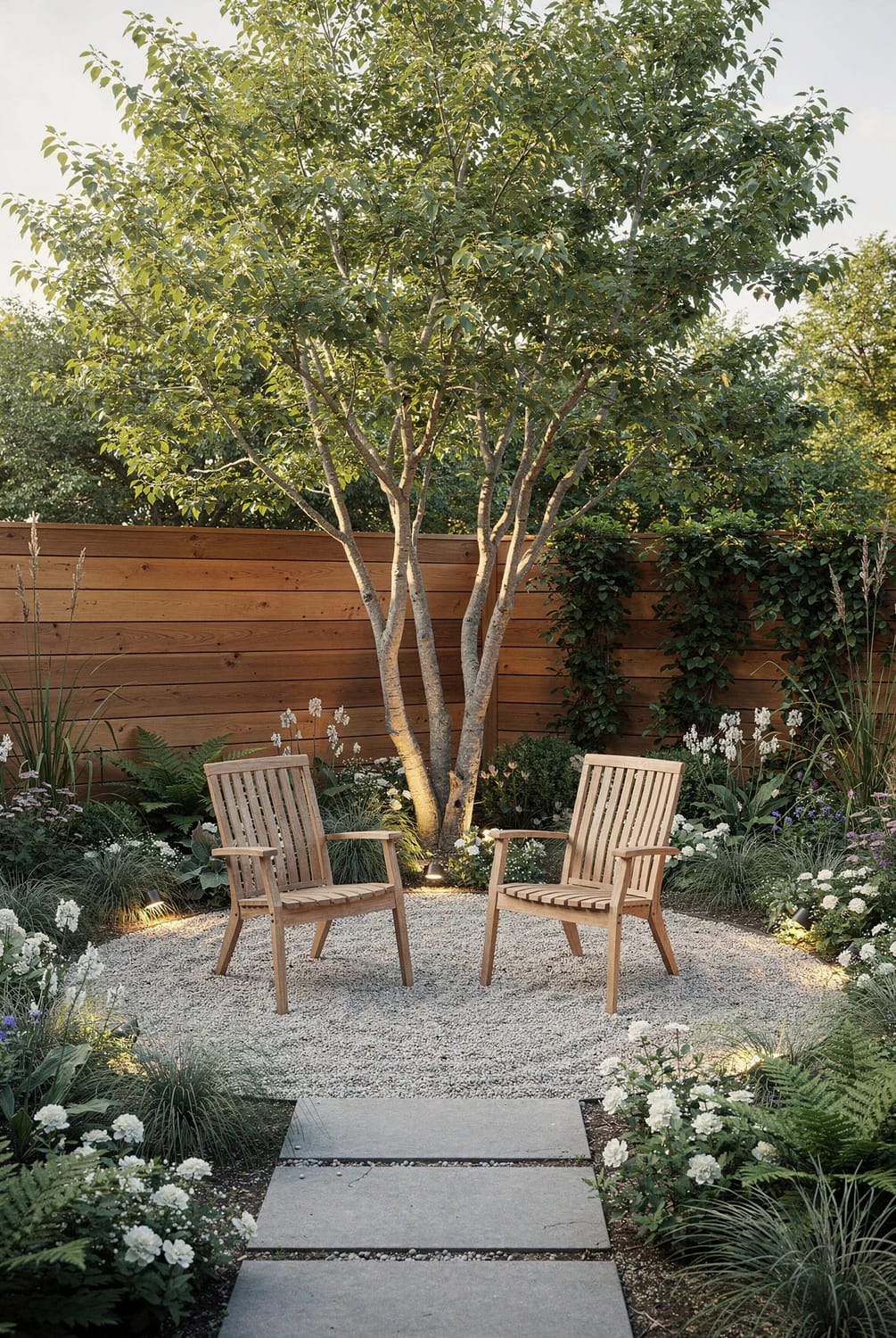
Vertical space is the only dimension a small yard has in surplus, and a single small tree claims it without costing floor area. The trunk footprint is a few square feet; the canopy is fifteen feet across and sits at eye level and above, which is exactly where the neighbour's second-floor window is. Multi-stem forms work best because the branching starts low enough to see through, so you get screening without a solid wall.
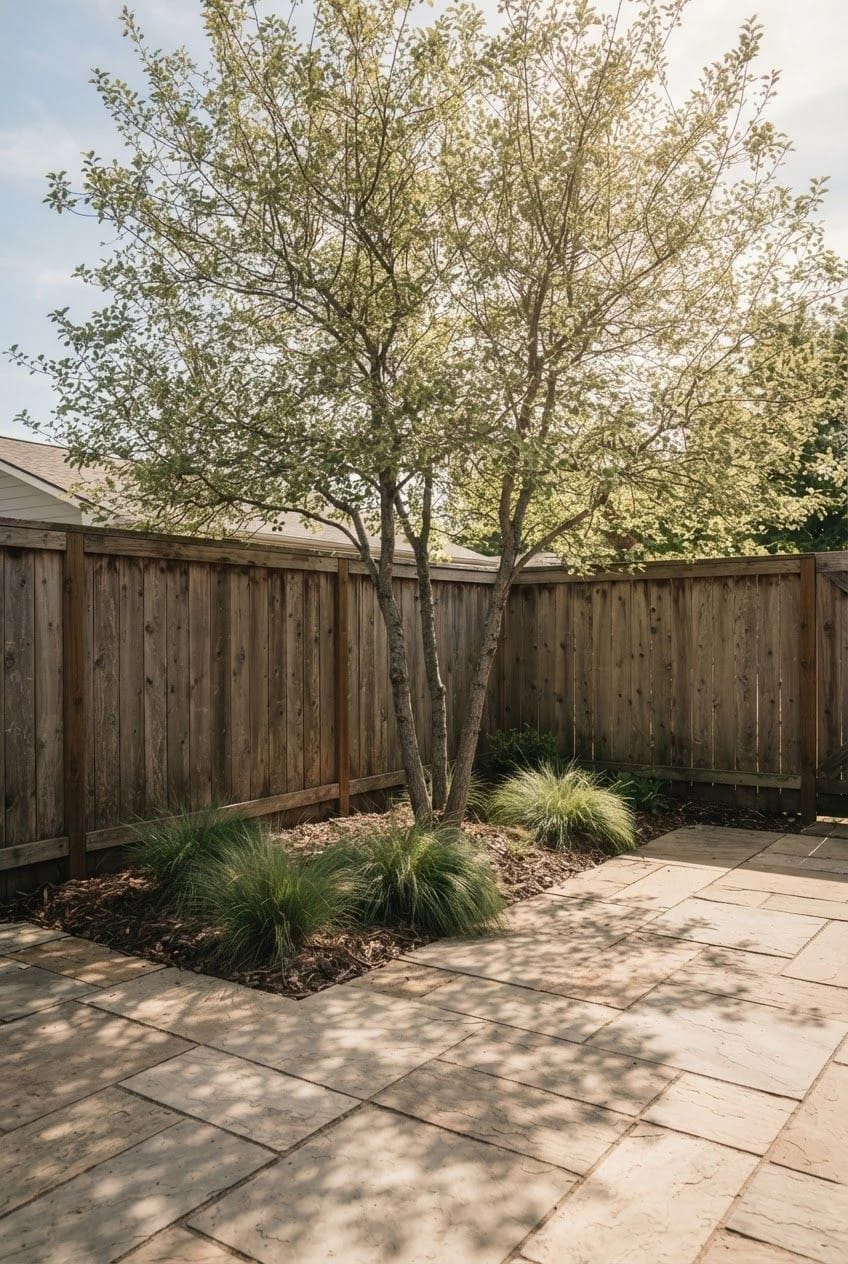
Serviceberry, Japanese maple, and crape myrtle in the warmer half of the country all hold at a manageable size for decades. Skip anything sold as fast growing; in a yard this size, fast growing means you will be paying someone to take it out in nine years. And if the shade lands where you sit, that’s a feature worth planning around rather than fighting, which the shaded patio treatments here handle in more detail.
4. Line the fence with seat-height raised beds and get two things at once
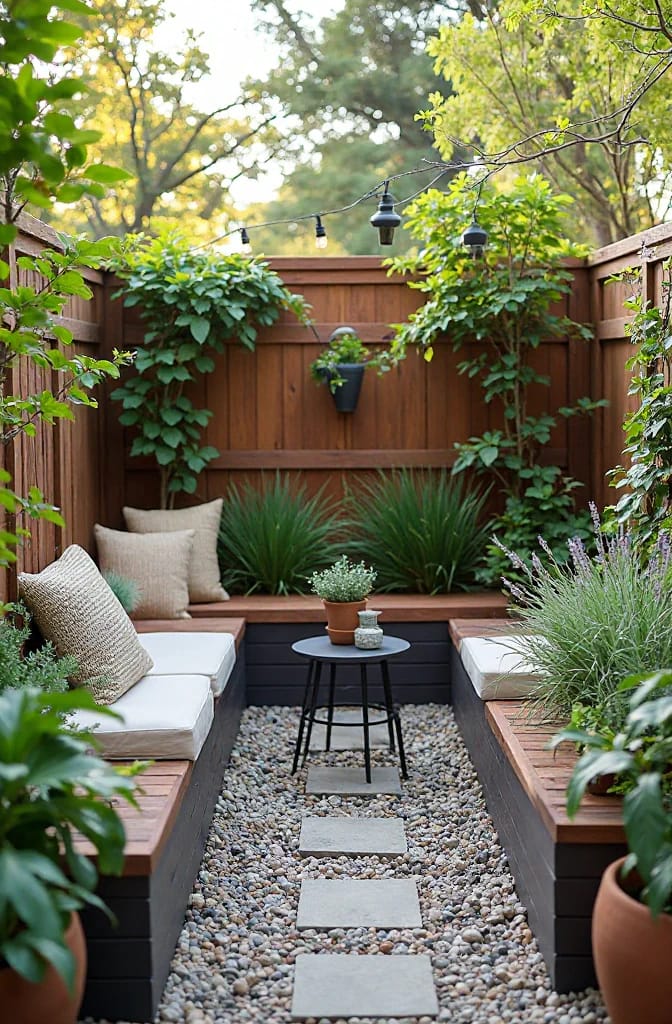
Beds built to somewhere between sixteen and twenty inches high stop being planters and start being furniture. Cap the edge with a two-by-six and you have a bench that never needs storing, never blows over, and never has to be dragged out of the rain, running the whole length of a fence where a bench would have taken a chunk out of the middle of the yard.
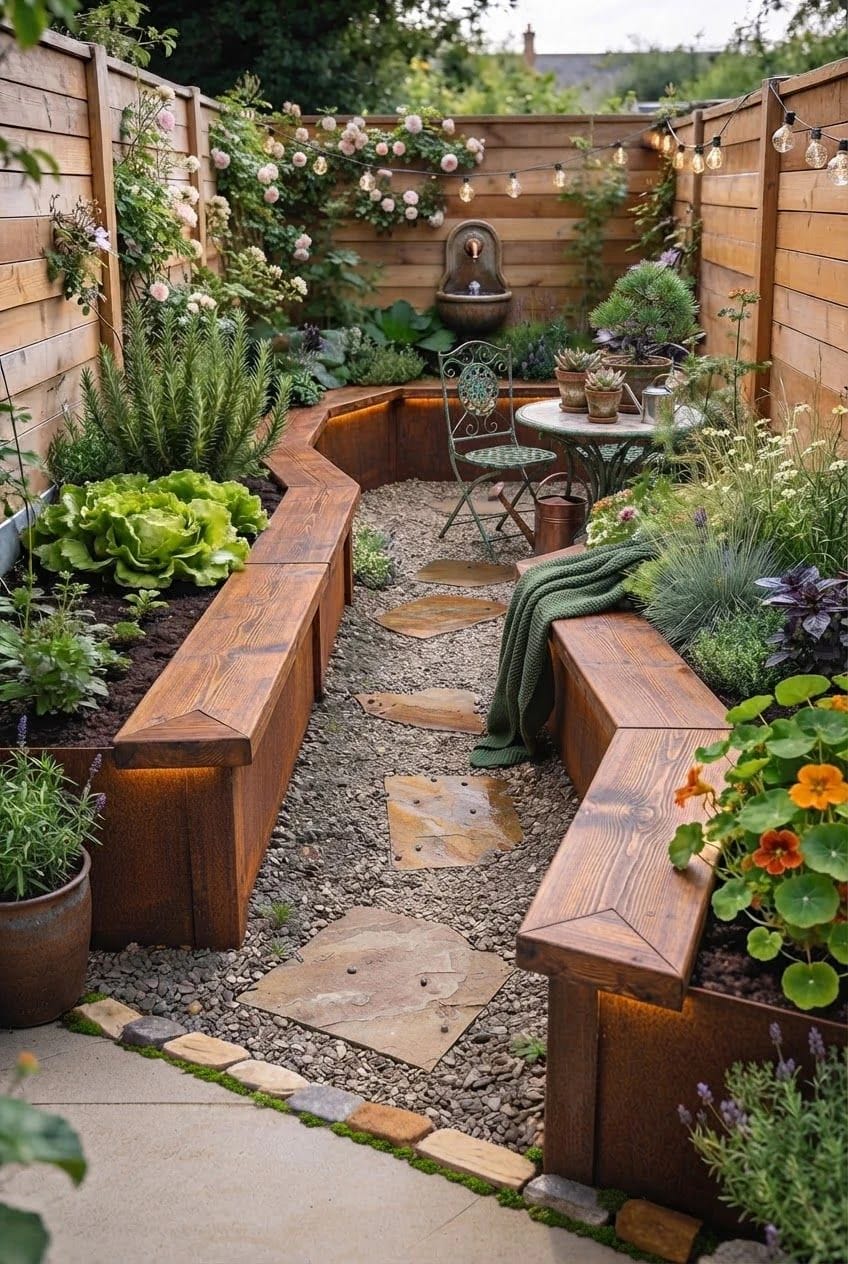
Galvanized steel is the value option here, since a corrugated kit goes up in half an hour and holds its shape for years, where untreated pine boards bow outward under wet soil by the second summer. If you want the bench to be comfortable rather than merely sit-on-able, the seating arrangements in our garden seating area collection are worth a look before you fix the cap width.
An 8 by 2 foot oval bed is the right proportion to run along a fence without eating floor space, and the connecting rods stop the long sides bellying out under wet soil.
Land Guard 8ft galvanized raised garden bed kit, 108 gallon, with connecting rods5. Repeat three plants five times instead of buying fifteen different ones
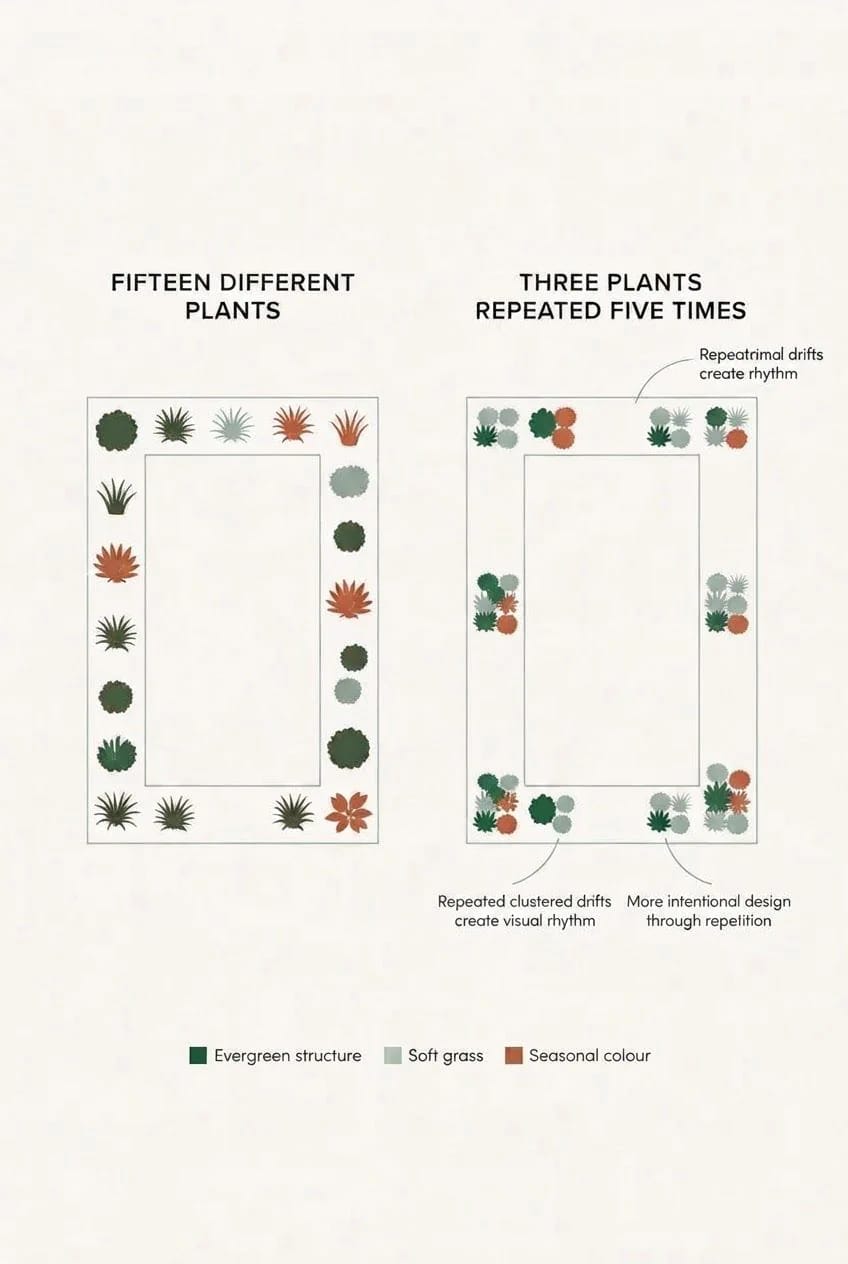
Restraint in the planting list is what separates a small yard that looks designed from one that looks collected. Pick three or four species, buy five of each, and distribute them in drifts rather than dotting one of everything around the perimeter; the eye reads repetition as intention and reads variety, at this scale, as clutter. It also halves your maintenance learning curve, because you only have three watering and pruning habits to remember.
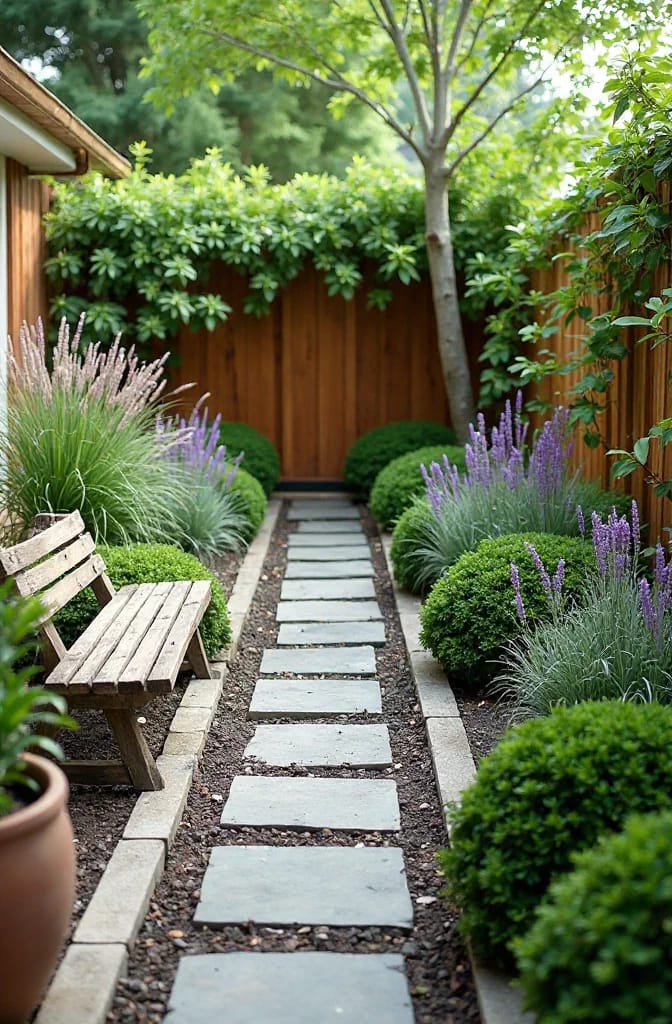
For the evergreen third of that list, the default answer used to be boxwood and I would not plant it now. Boxwood blight has spread widely enough across the United States that nurseries in affected regions treat it as a matter of when. Japanese holly and distylium give you the same clipped green mass without the disease anxiety, and both take a shear.
Buying whatever is flowering on the day you visit is how every yard ends up with fifteen singles. Garden centres stock what looks good that week, which means an April visit fills your cart with spring bloomers and leaves you with nothing from August onward. Write the list at home, order the repeats, and accept that half the plants will look like sticks on the day they arrive.
6. A vertical garden earns its place only on the wall you actually look at
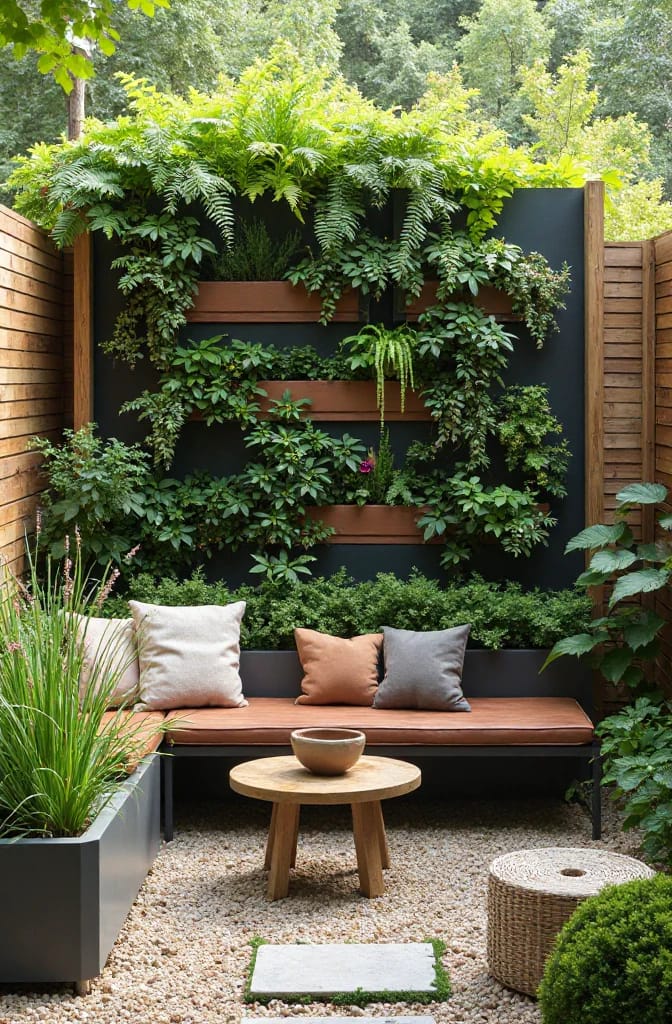
Green walls photograph better than they live. Every one is a container garden turned sideways, which means shallow root volume, fast drying, and a watering schedule that is genuinely unforgiving in July unless you plumb in drip irrigation from the start. Mount one on the fence panel you see from the kitchen window or the sofa, keep it to one panel, and give it a timer.
The failure mode is a wall you installed on the far fence, look at twice a week, and cannot reach with a hose. Shallow trough systems with a top-fed drip line survive; pocket felt systems dry out fastest and are the ones people quietly take down.
 20 Mini Garden Ideas For Small Spaces Shelf gardens, tiered stands and windowsill setups for spaces too narrow for beds.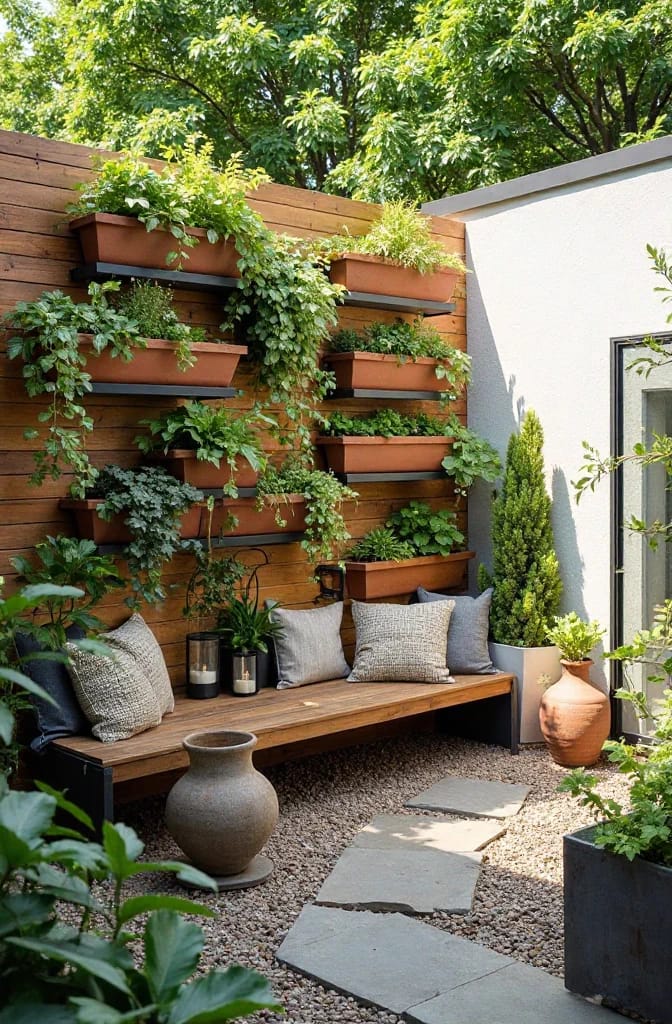
7. One six-inch level change splits a small yard into two rooms
Two spaces feel bigger than one, and the cheapest way to make two is a single step. Six inches is enough: the brain reads the change in plane as a threshold and stops treating the yard as one flat rectangle you can take in at a glance. Anything you cannot see all at once feels larger than it measures.
One step, not three
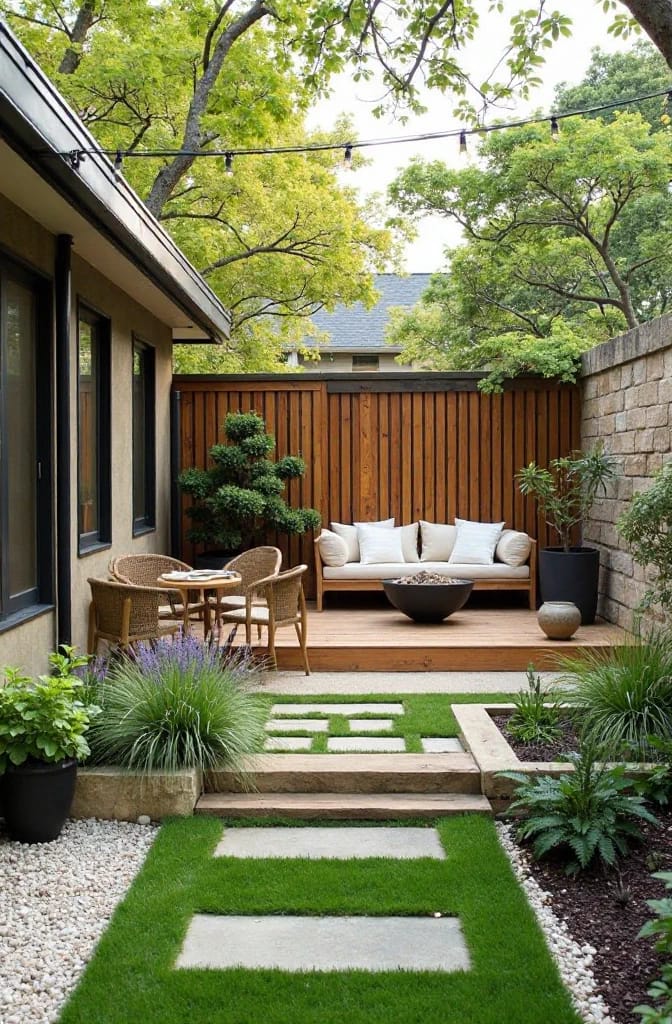
Two or three steps in a small yard turns into a staircase, and a staircase needs a handrail, a landing, and a permit conversation in some jurisdictions. Keep it to one riser faced in weathering steel or a single course of block, and let the planting sit against the low side so the edge reads as intentional rather than as an unfinished retaining wall. Real grade changes are a different problem with different rules, covered in our sloped backyard approaches.
8. Uplight the fence and the tree; skip the string lights strung across the middle
String lights are the default and they are the wrong tool for a small yard. Hung overhead across the centre, they put a bright grid at eye level, drop a visual ceiling onto the one dimension you were trying to open up, and flatten everything behind them into darkness. Two or three uplights aimed at the fence and up into the tree canopy do the opposite: the boundary glows, the canopy reads as a ceiling twelve feet up, and the space appears to continue past the light instead of stopping at it.
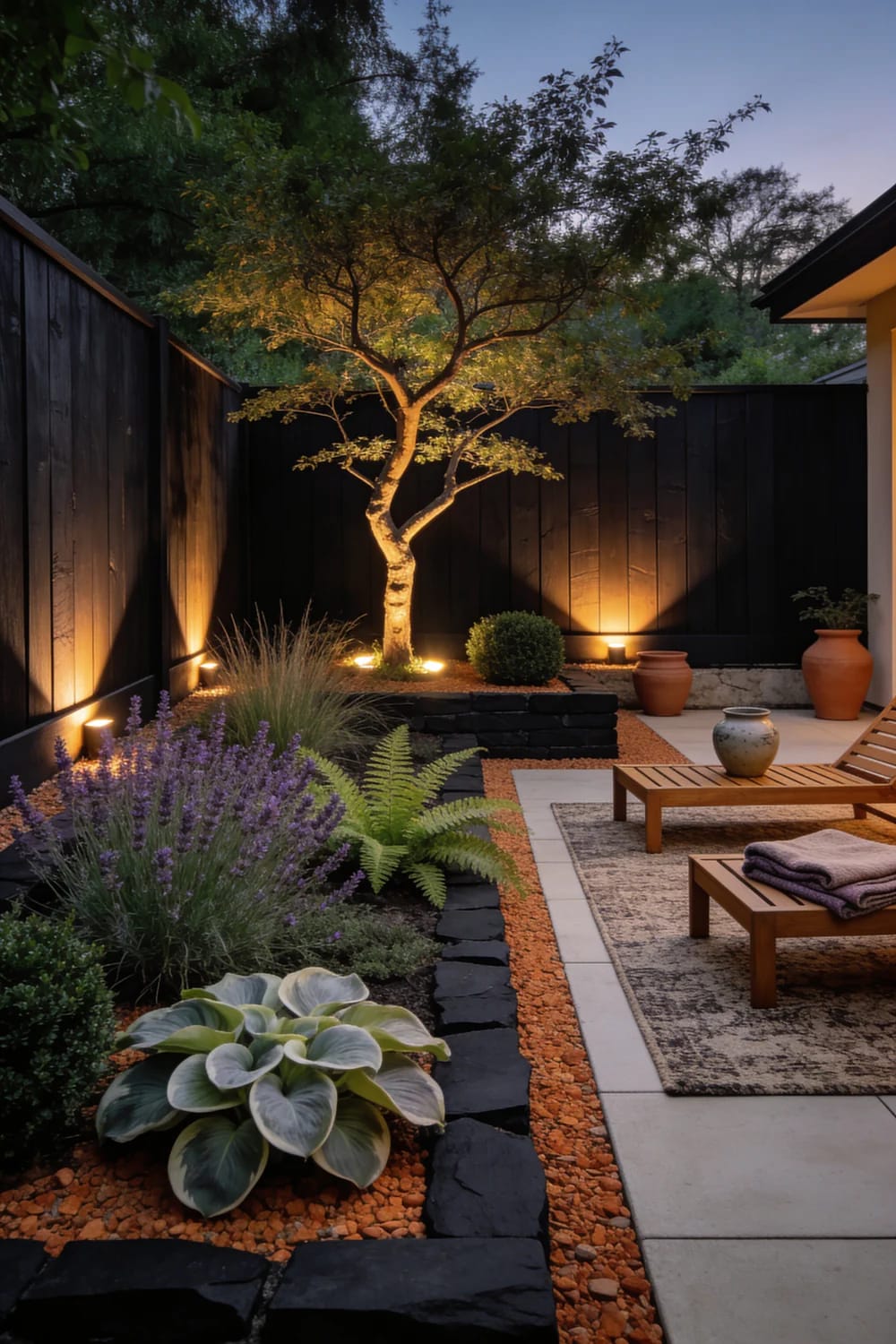
Do this
- Choose 2700K. Anything cooler turns green foliage grey and makes a warm fence look like a parking structure.
- Bury the fixture in the planting so the reader sees the light and not the lamp.
- Size the transformer at roughly 125 percent of your total fixture wattage, so there is headroom to add two more lights next year without redoing the run.
- Aim across a texture. A flat painted fence gives you a bland wash; a slatted or brick one gives you shadow.
Avoid
- Solar stake lights along a path. Four hours of dim blue at 9pm, then nothing.
- Lighting all four boundaries evenly, which erases the depth you just created.
Fixture quality is where the money should go, and it is mostly about the housing rather than the diode. Plastic bodies craze and fill with water; die-cast aluminium is acceptable; solid brass costs three times as much and outlives the yard, which is why professional installers keep specifying it. A brass fixture like this Gardenreet 12V brass landscape uplight with 2700K MR16 bulb takes a replaceable bulb, so a failed lamp is a two-dollar problem and not a dig-it-up problem.
9. Size the fire pit to the clearance you have, not to the photo you saved
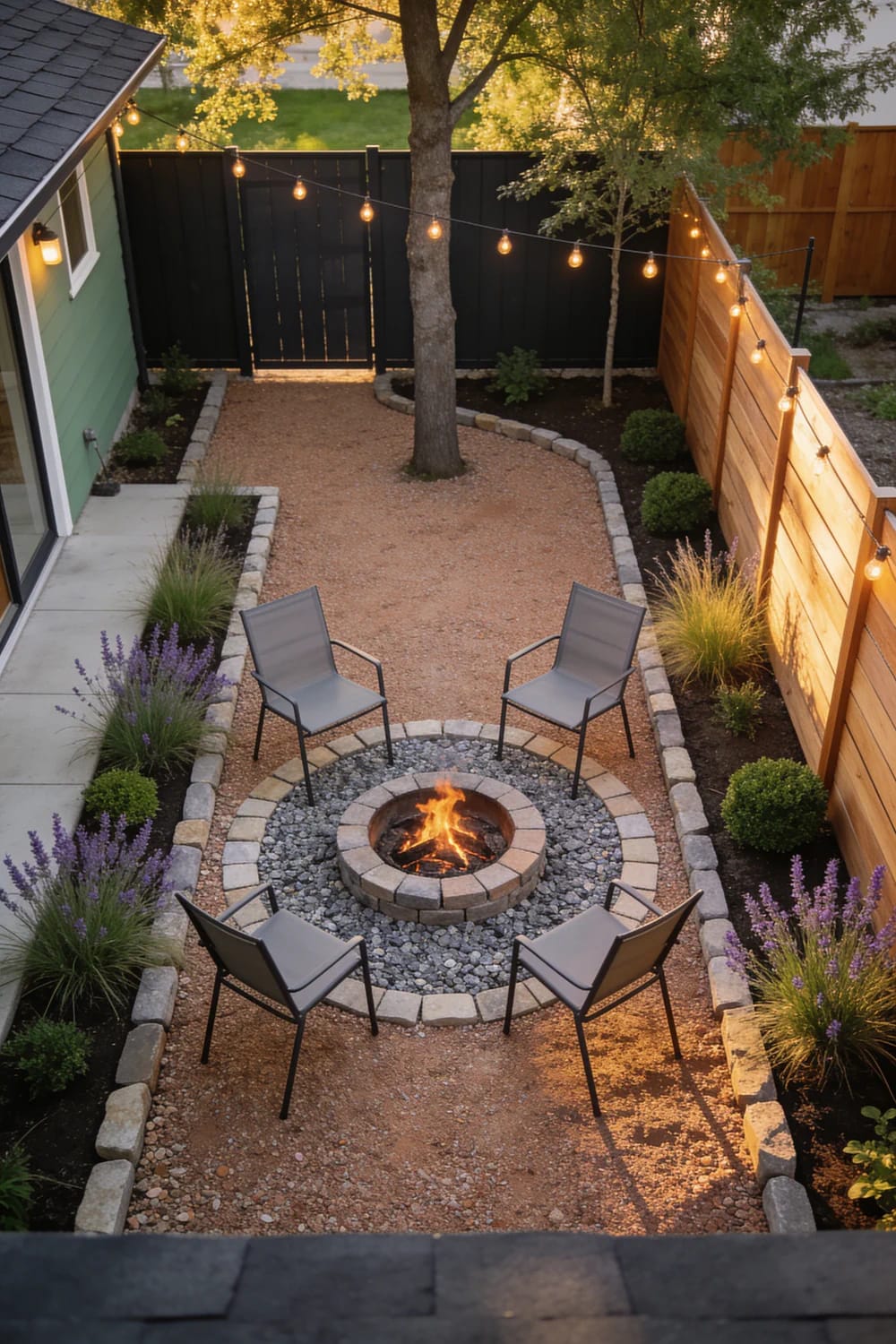
Check your municipal setback before you check anything else, because that number decides whether a fire pit is possible at all. Local rules vary a lot, and plenty of them land somewhere between ten and twenty-five feet of clearance from any structure, fence, or property line; in a thirty-foot-deep yard, that can leave exactly one legal position, or none. A propane bowl is regulated differently from wood in many places, which is often the workaround.
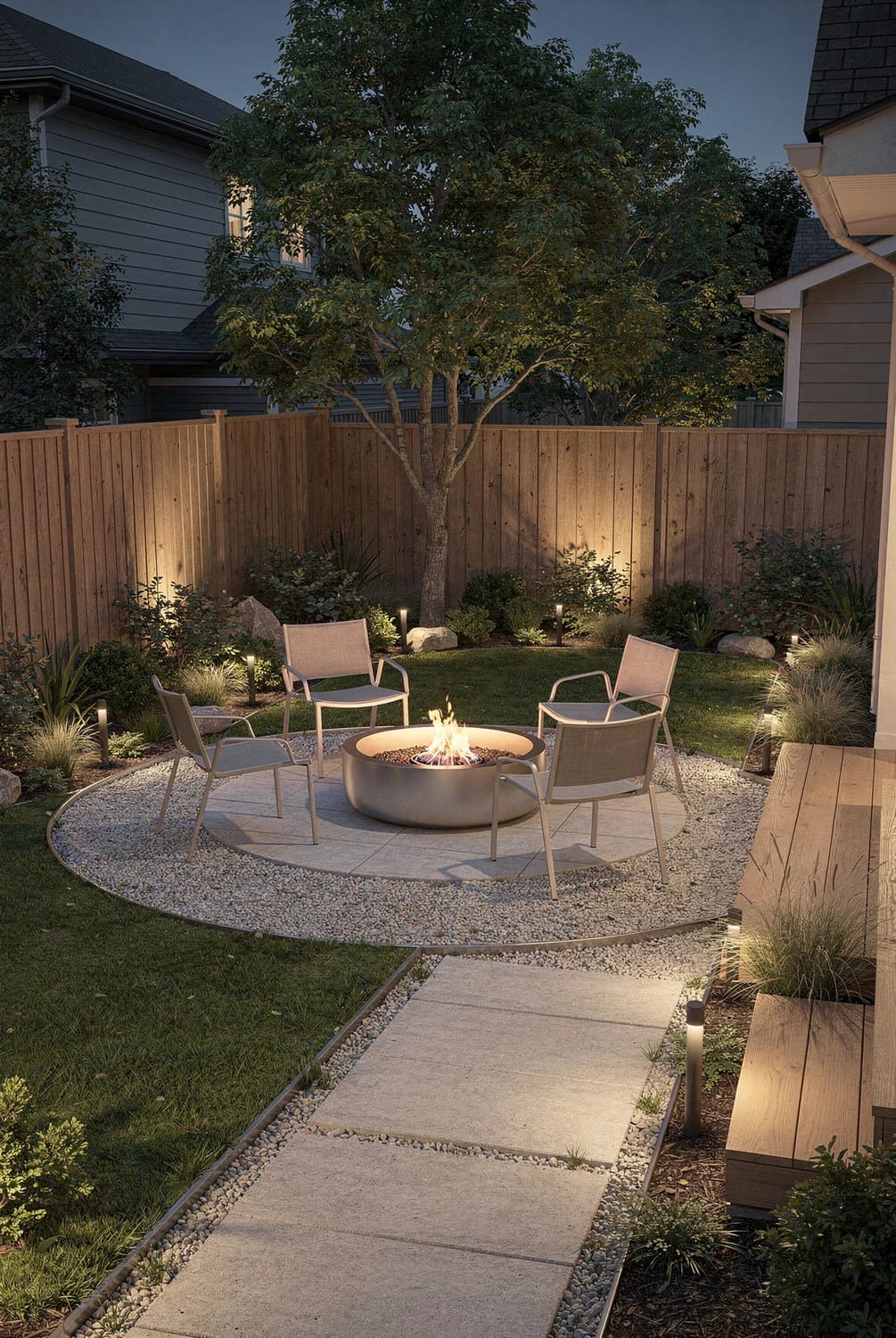
Sizing the circle
Allow three feet of walking space around the pit and about two and a half feet of seat width per person. A 30-inch bowl with four chairs needs a circle roughly twelve feet across, which is most of a small patio, and that is the honest arithmetic nobody puts in the listing photos. Drop to a 22 to 24 inch bowl and the same group fits in nine feet.
What to burn when smoke has nowhere to go
In a yard enclosed by fences on three sides, smoke does not clear, it circulates, and your neighbour’s open window is fifteen feet away. Seasoned hardwood at under twenty percent moisture makes a fraction of the smoke that a damp construction offcut does; a smokeless-style double-wall stove burns cleaner still once it comes up to temperature. Budget setups are covered in our budget-friendly small patio ideas if the pit is the only thing you can afford this year.
10. A gravel and boulder bed is the low-water option that still reads planted
Beds of stone with a handful of specimen plants have been the fastest-spreading small-garden look in Europe for a couple of seasons now, and the logic travels: a mineral surface, three or four boulders set as though they were half-buried, and perhaps a dozen plants with real structure. It survives a heat wave and a two-week vacation, which a border of thirsty perennials in a hot walled yard will not.
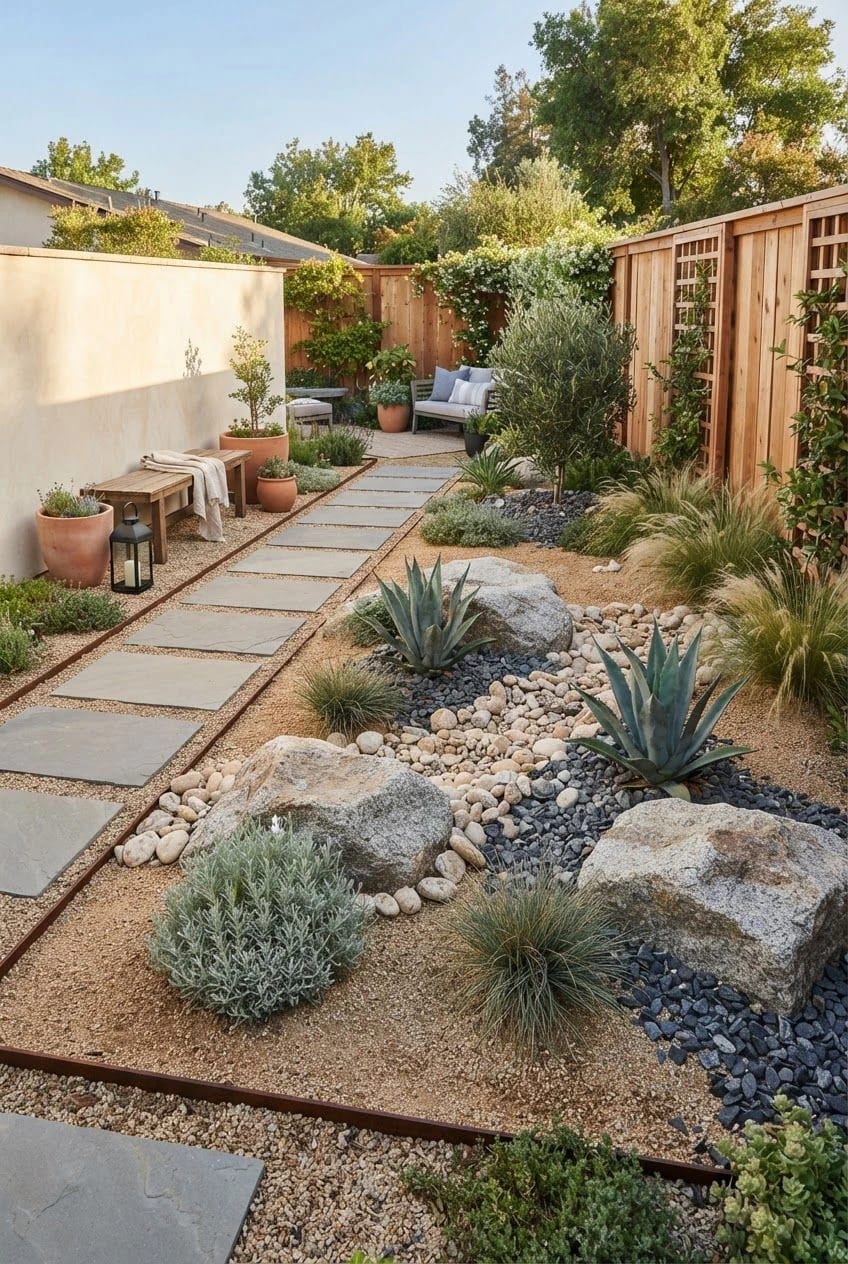
The trick with boulders is burial. A rock sitting on the surface reads as a delivery; the same rock with a third of its bulk below grade reads as geology. Set them before the gravel goes down, not after, and put a hose in the excavation to check nothing sits in a puddle.
The quantity question is the one people get wrong at the yard, so here is the arithmetic for your own bed.
How much stone or mulch this bed needs
Area
Loose volume
Stone by weight
Or bagged, at 0.5 cu ft
Estimates, rounded. Weight assumes about 1.4 tons per cubic yard, typical for dry crushed stone and decomposed granite; bark mulch weighs far less and is sold by volume. Add ten percent for settling and spillage.
One thing not to buy: woven landscape fabric under the stone. Weed seed arrives from above, roots into the gravel itself, and the fabric surfaces within a few years in ugly black ribbons that are miserable to remove. Compact the base properly and spot-treat what comes up.
11. Screen the air conditioner, the bins and the hose reel first
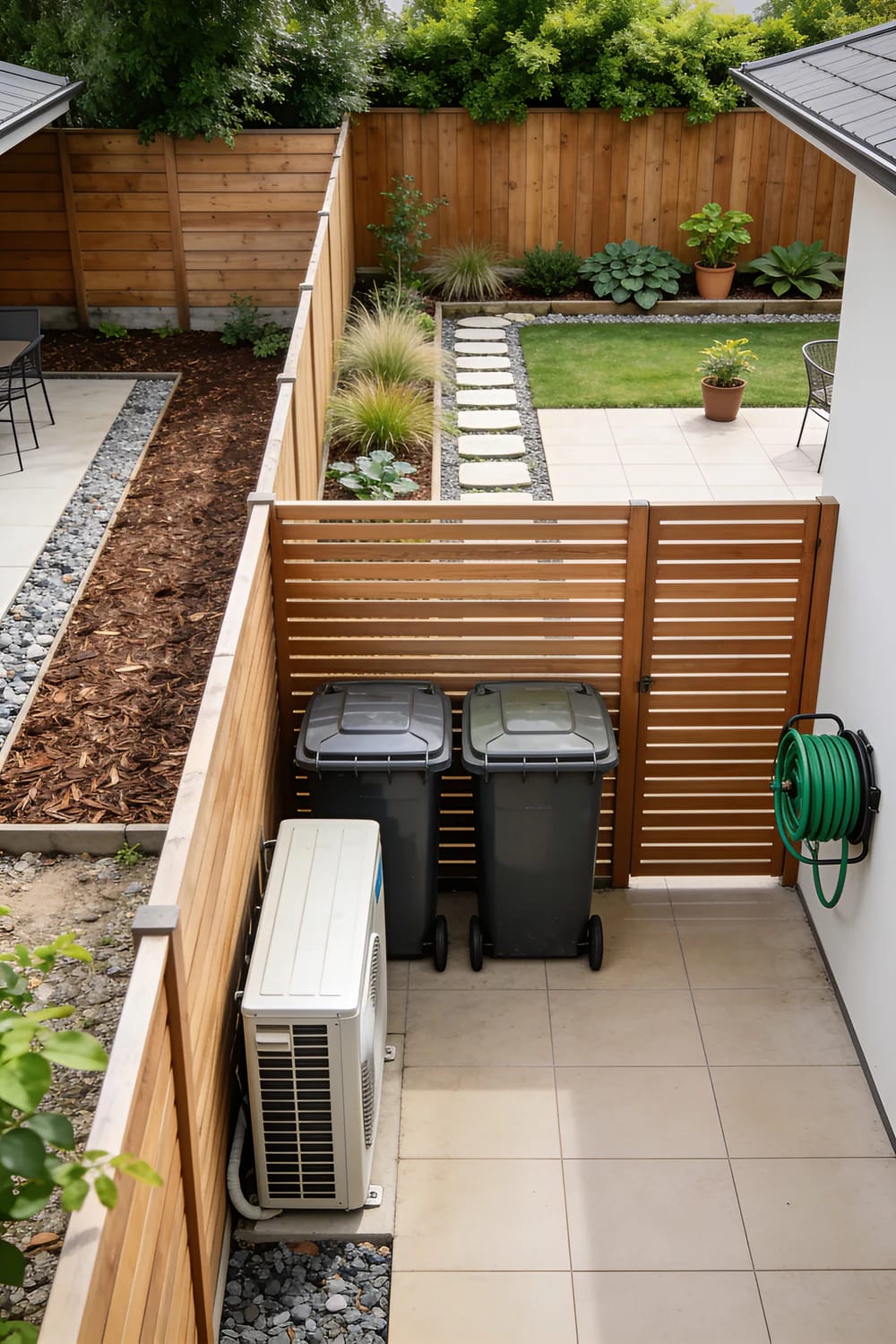
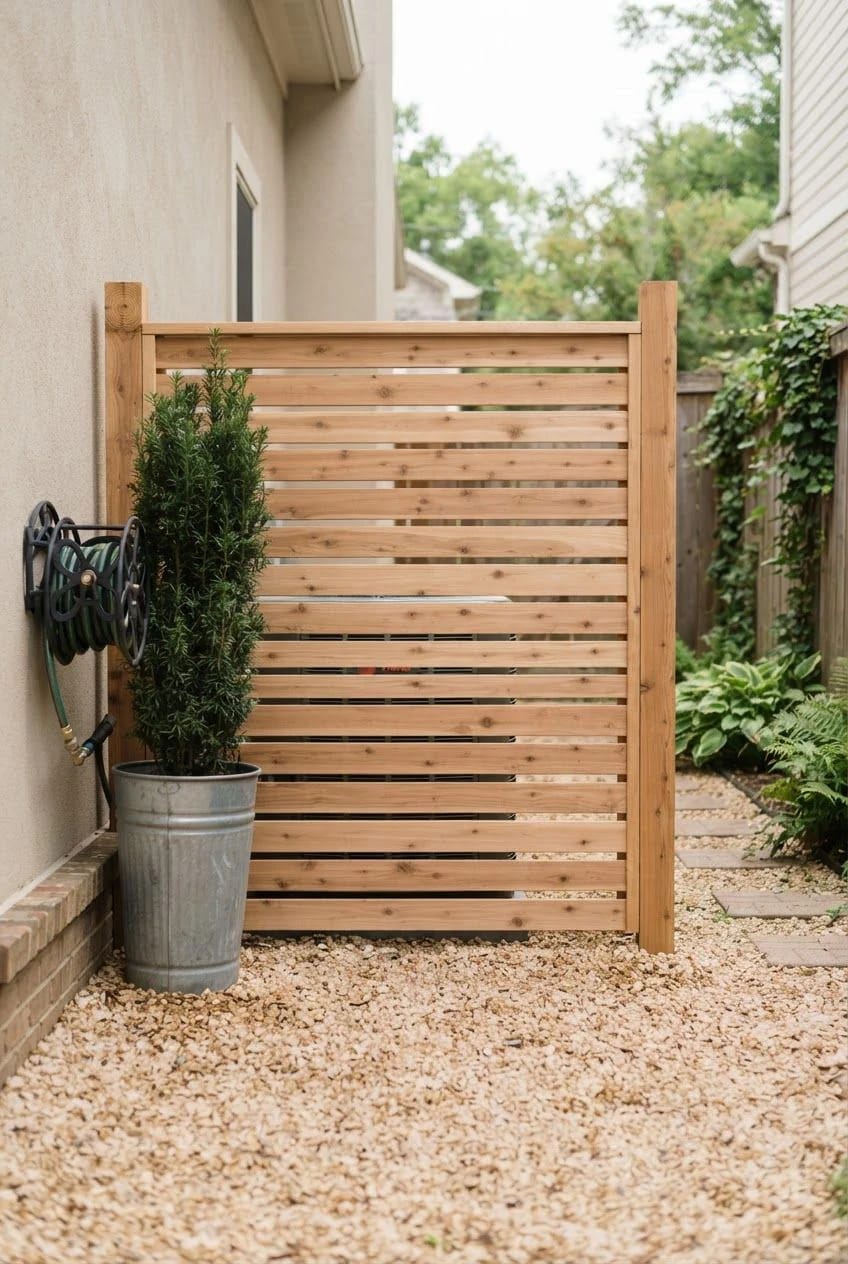
Utilities are the first thing the eye finds in a small yard because there is nowhere else for it to go. A screen of horizontal slats with a consistent gap costs a couple of hundred dollars in cedar and does more visual work than any plant you could buy for the money. Leave airflow: condensers need clearance on all sides, usually a couple of feet, and a screen tight against one is an expensive way to break an air conditioner.
12. A single water bowl in the corner does what a fountain wall cannot
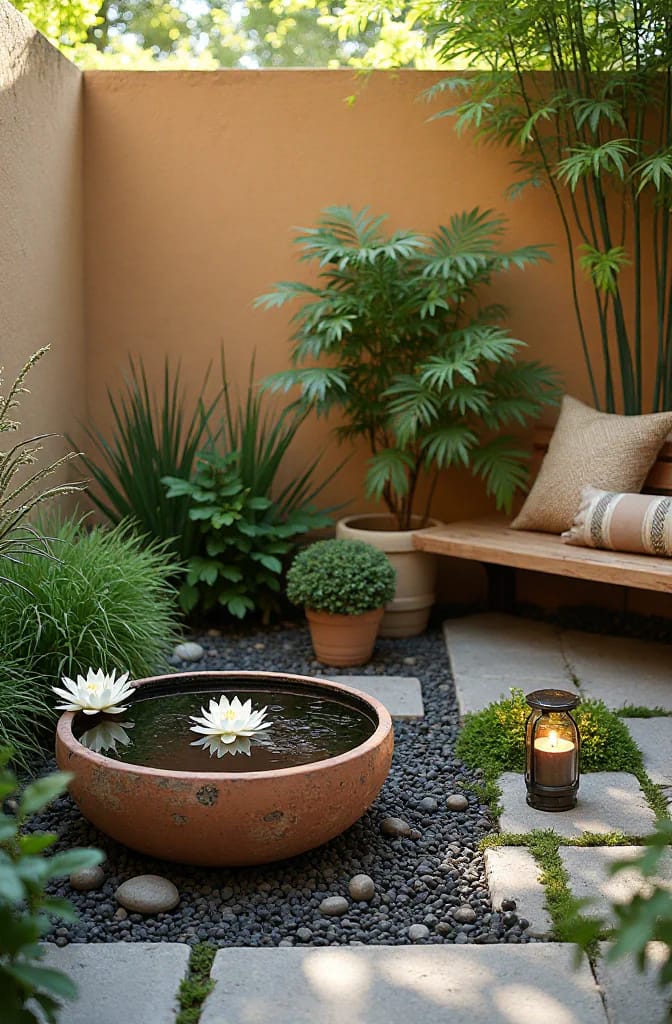
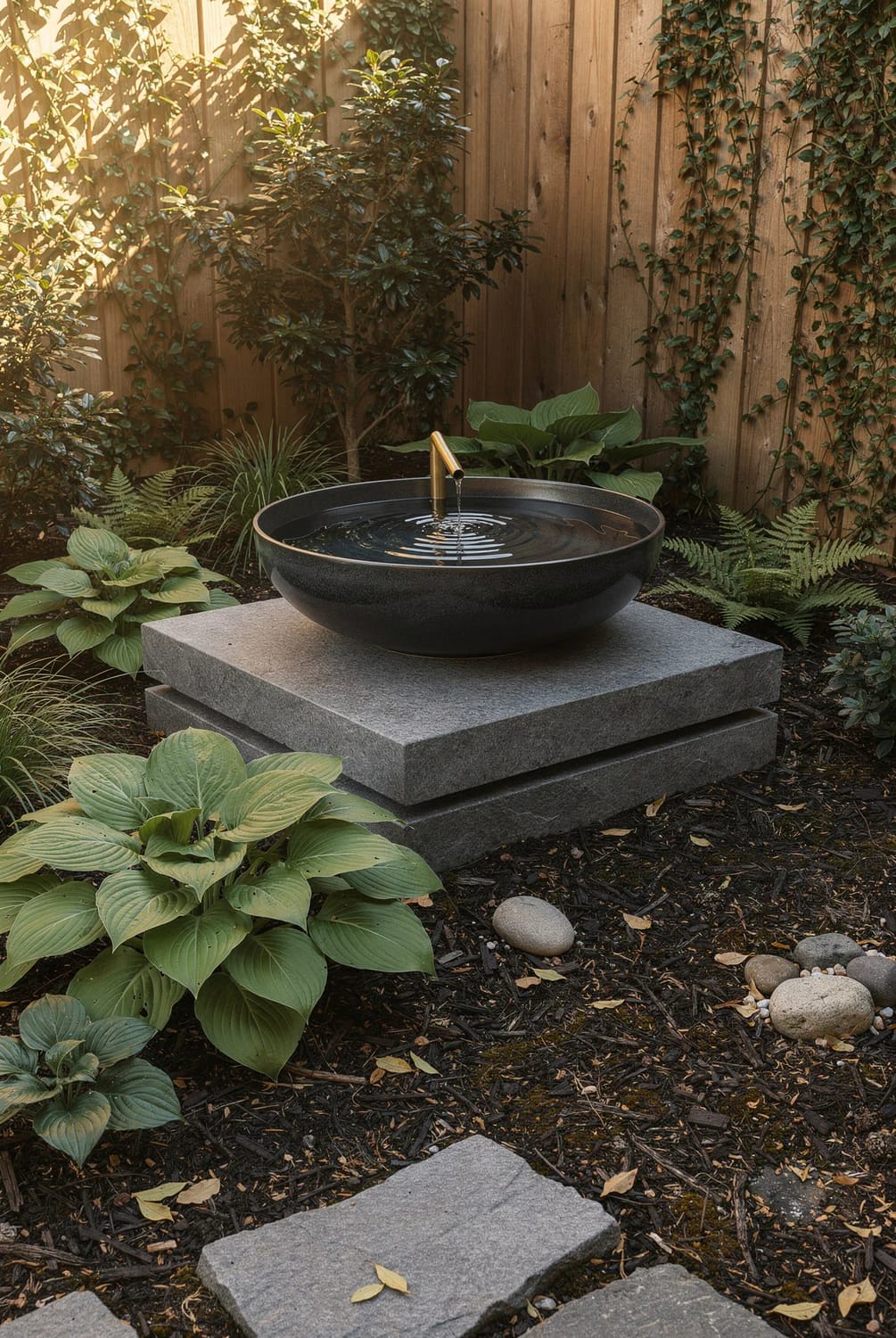
Sound travels further than sight in an enclosed yard, and a twenty-inch bowl with a small recirculating pump throws enough moving water to cover a neighbour’s television. Wall-mounted fountains promise the same and mostly deliver a splash pattern down the wall and a limescale stripe by August. Keep the water still and let the spout do the work; a bowl also gives birds somewhere to drink, which is more animation than most small yards get. If you want the corner to carry a bit more personality, the pieces in our garden art collection for small yards sit well beside water without crowding it.
Order of operations matters more than any single idea on this list. Floor first, because everything else sits on it and because it is the one job that involves a wheelbarrow and a delivery truck; then the tree and the fence line, which take the longest to become what they will be; then the light, last, once you know where you actually sit in the evening. Doing lighting first is the classic sequence error, since the cable run gets buried under the gravel you have not yet ordered.
One honest gap: I could not find a national stone price worth quoting. Delivered rates for decomposed granite and crushed chip swing by a factor of three depending on how far you are from a quarry, and a Denver quote tells a Boston reader nothing. Call two suppliers with your cubic-yard figure from the calculator above and ask both for delivered, not collected.