
A classroom door is the one surface you get to decorate with no budget, no ladder, and an audience of second-graders who will notice the second the reindeer's nose curls off the tape. These nine ideas are built for exactly that: bulletin-board paper, a glue stick, a few dozen small hands, and the door-decorating contest on the last Friday before break. A couple of them will also earn you a quiet word from your building's fire marshal, and I've flagged which ones and why, because nobody tells you that part until the paper is already up.

Wrap the whole door like one giant present

This is the most-pinned classroom door in December, and it’s popular for a reason: one color of paper, two strips of ribbon, and you’re done in a prep period. The whole thing costs a few dollars if you use what’s already in the supply closet, and it reads from the far end of the hallway, which is more than most fussier doors can say. You can push the cost down to almost nothing with the kind of Dollar Tree ribbon and paper tricks that don’t read cheap once they’re up and the bow is doing its job.
Paper it flat so it doesn't bubble by Monday
The failure mode is air pockets. Tape the top edge first, then smooth downward with a flat hand and tape the sides under slight tension, not the corners first. A single width of 48-inch bulletin-board paper (Fadeless comes exactly that wide) covers a standard 36-inch door with overhang to spare, so you rarely need a seam. If you do, run the seam vertically down one edge where the eye doesn't land.
The bow is the part people photograph
Everything hangs on the bow being too big. A bow sized for an actual gift looks apologetic on a seven-foot door; go wider than feels reasonable, build it from wired ribbon or stiffened paper so it holds its loops, and let the tails run long. That said, keep the handle and any vision panel clear, which is not just a design note (see the fireplace section for why the fire marshal cares).
Grow a handprint Christmas tree up the classroom door
Cut green paper handprints, fingers pointing down, and layer them in narrowing rows from the floor to a paper star near the top. It's the "rockin' around the tree" door you've seen ranking, except every branch is a kid's actual hand, which is the entire point: the class built it, so the class defends it in the hallway. Add a brown trunk, a few round ornaments with names on them, and you've turned a decoration into a roster.
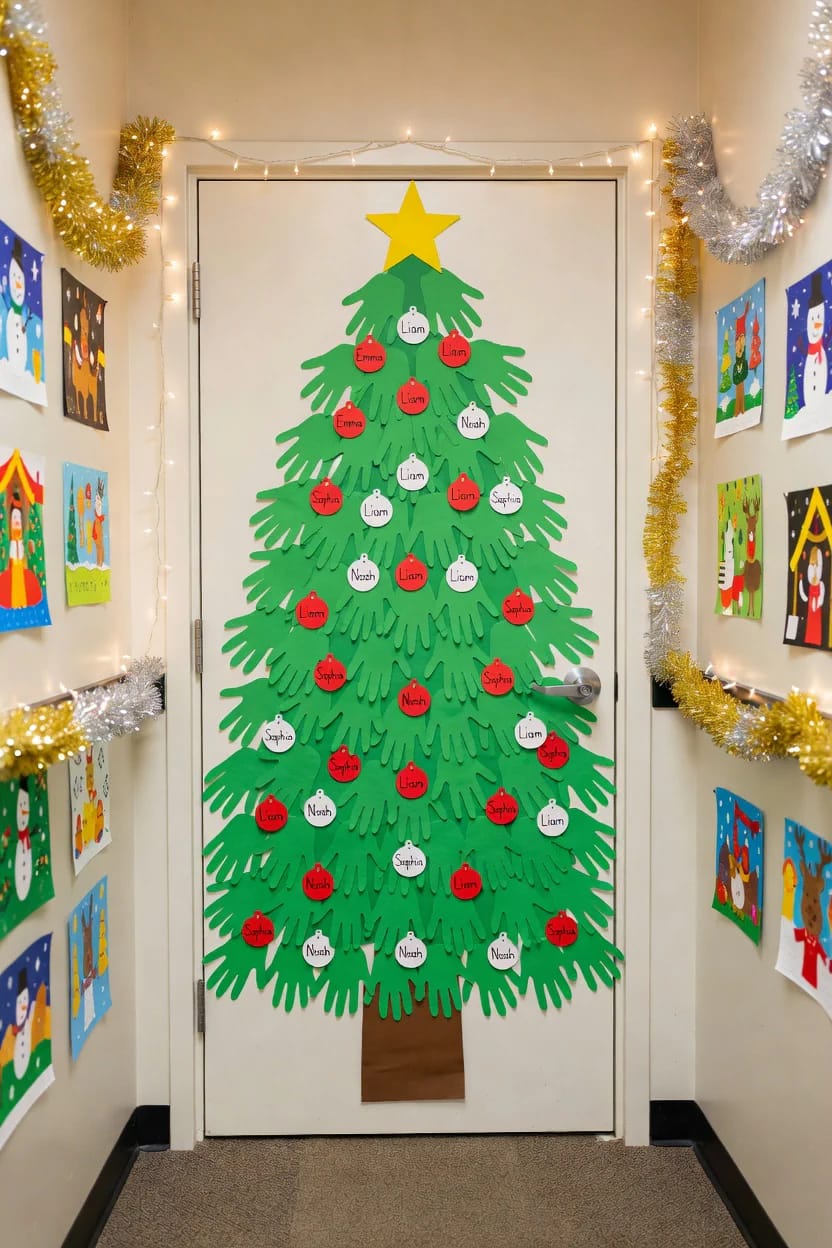
Trace hands early in the week and cut in batches; wet glue will curl the paper, so use a glue stick or double-sided tape and let the older kids do their own placement. Younger classes drift crooked, and honestly a slightly wonky handprint tree looks more like children made it, which judges tend to reward over something that looks like the teacher did it at 6 a.m.
 12 Homemade Christmas Decorations to Make With Kids A dozen kid-made pieces with the usual failure points marked, so the handprints and ornaments survive past January.
Turn the door into a gingerbread house, roofline and all
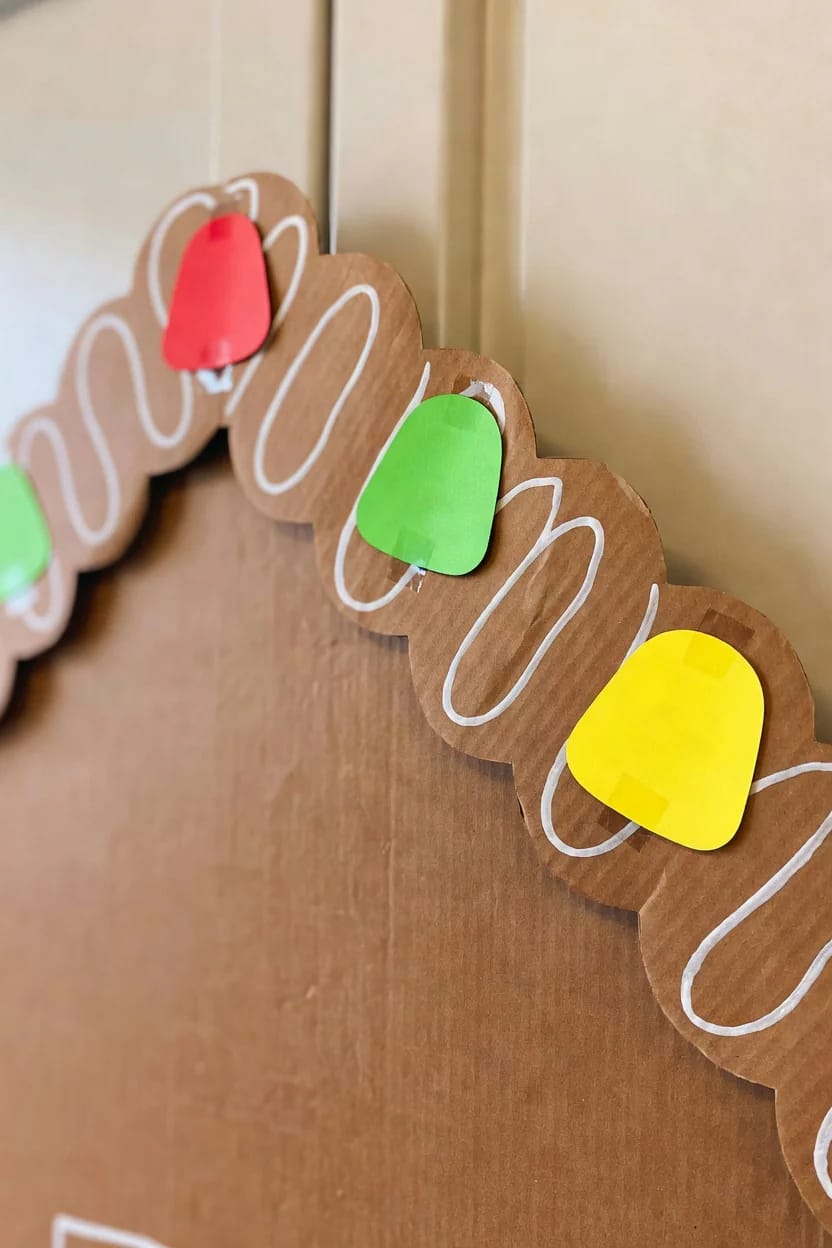
Brown kraft paper over the whole door, a scalloped roof across the top, and wavy white lines that read as piped icing: the gingerbread door is a contest staple because it photographs sweet without a single crumb of sugar. It also scales down for preschool (fewer, bigger candy shapes) and up for older grades (a working paper window, a name-plate "address" over the door).

Get the roofline to read from the hallway
The roof is what sells it, so give the scallops real depth: cut them at least four to five inches tall so the shadow lines are visible from ten feet away. A shallow scallop just looks like a wavy border.
Paper candy beats the real thing
Do not tape actual candy to a door. It attracts ants, it walks off by second period, and a taped-on candy cane is a small object waiting to become a hazard near a doorway. Cut gumdrops and peppermints from construction paper instead, or laminate them so the color survives the month.
Make the door itself the reindeer
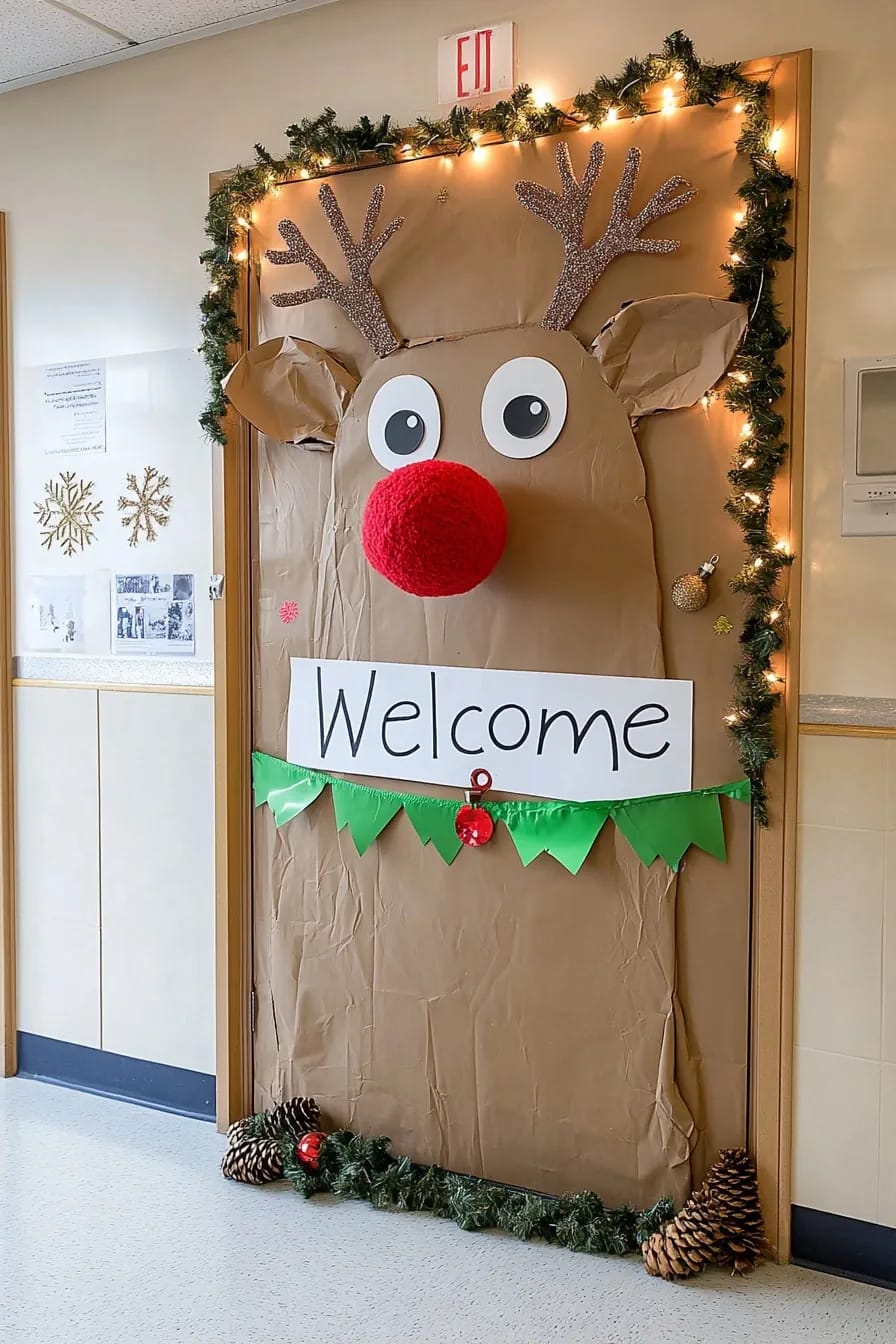
Instead of building a scene on the door, let the door be the face. Antlers branch up over the frame, two eyes near the top, one oversized red nose at the center, and the plain door becomes Rudolph with maybe six cut shapes total. It’s the fastest high-impact door on this list and the one that survives a class of pokers, because there’s almost nothing small to peel off. The same trick works on your front door at home if you want a matching version without the paper wrap.
Turn the door into Santa's nice list, with every kid's name
Unroll a long sheet of cream paper, curl the ends into a scroll, header it "Nice List" in red, and write every student's name down the door. This one ranks and saves well for a reason no design trick explains: kids look for their own name, then their friends', then read the whole thing, which means the door earns attention all month instead of the first day only.
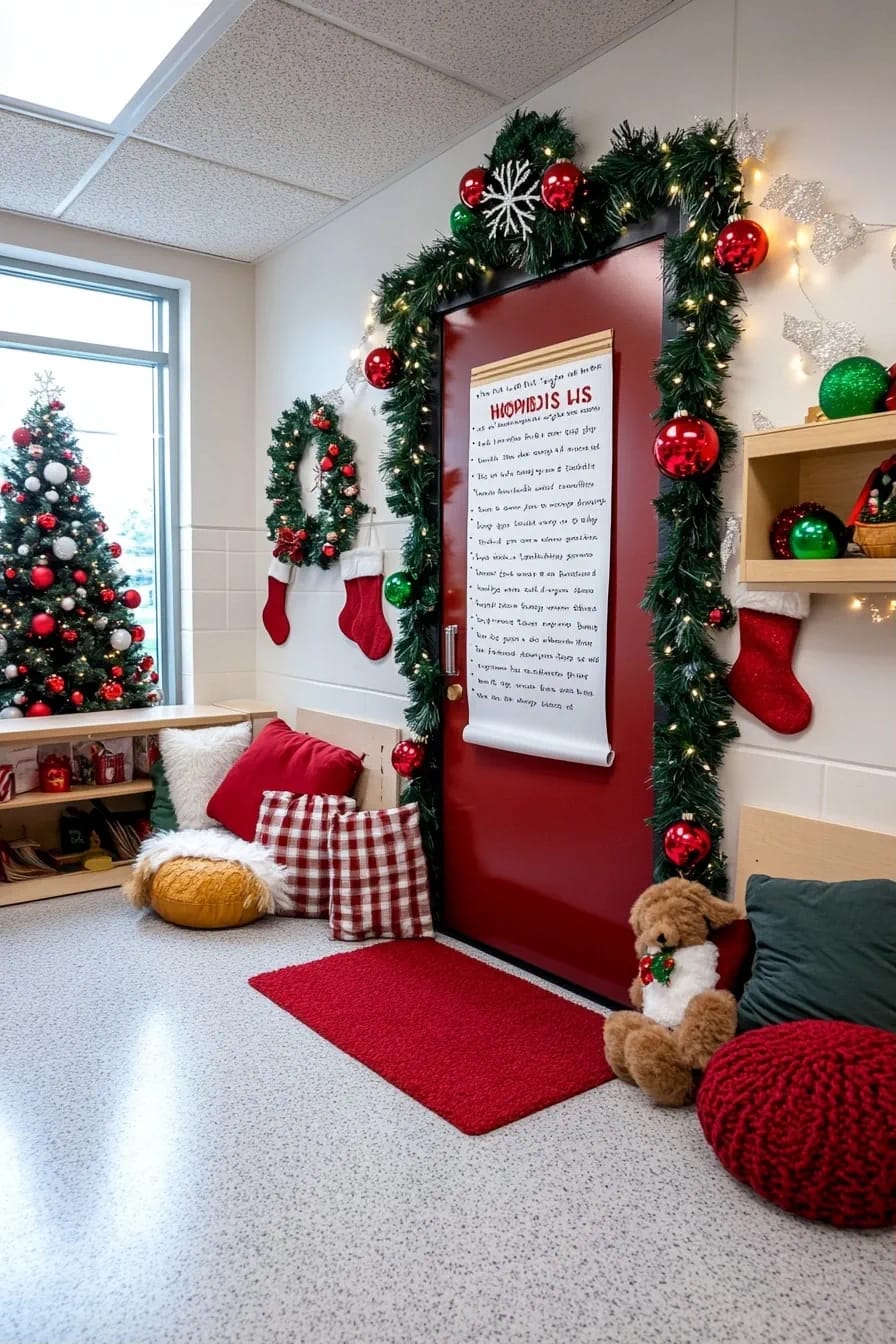
Use first names only, and put every single kid on it. The one way this idea backfires is a name left off by accident, so check your roster against the door before you leave for the day.
Fake a fireplace glow on the door without a single light
The "light it up" doors save well online, but real string lights on a classroom door are the fastest way to get your display taken down, so build the glow out of paper instead. A brick-pattern firebox, layered flames in yellow and orange topped with translucent red cellophane, and rolled brown-paper logs give you a hearth that catches the hallway light and reads as lit, with nothing plugged in and nothing to trip a rule.

Add a paper mantel across the door with a stocking per reading group and you've got a whole scene from two colors of paper and a roll of cellophane. It's the kind of quiet, cozy door that photographs better in daylight than any lit one does, because it isn't fighting the hallway fluorescents.
Fire codes treat paper on a door as combustible decoration, and the rules are stricter than most teachers realize. Many jurisdictions cap combustible decorations at around 20 percent of a wall’s area in a non-sprinklered room, and some fire marshals specifically say corridor doors should not be covered in wrapping paper or other combustible material at all. Whatever you build, the door must still open, latch, and function as an exit, any vision panel stays clear, and nothing blocks the 36 inches of clearance required at the doorway. String lights, live greenery, and rope or string strung across the room are commonly banned outright. Ask your custodian or building admin what your district allows before you commit a full day to papering the whole thing, and keep a photo of the finished door in case you’re asked to prove it’s flame-rated paper.
Build a North Pole workshop across the classroom door
A workshop scene gives you the most room to involve the class, because every kid can cut one elf, one toy, or one tool for the paper workbench. It's the "elf door" people search for, minus the licensing headache.
The backdrop does the heavy lifting
Pale blue paper, a strip of white snow along the bottom, paper icicles across the top frame, and a hand-lettered "Workshop" sign. Build that first and the door already reads before a single elf goes up.

Keep the elves generic
If your school runs a contest with rules, read them: recreating a specific movie's elf or a trademarked character can get an entry disqualified, and some districts are explicit about it. Simple round-faced elves the kids design themselves sidestep the whole question and, again, look more like children made them.
A snowman door that still works in January
Build a three-tier paper snowman on a pale-blue, snowflake-scattered background and skip anything explicitly Christmas, and the door quietly carries you from December into the new year. When break ends, you peel one Santa hat off instead of stripping the whole door and starting over, which is the difference between one project and two. Most of it comes together from cotton batting and a few dollar-store supplies that don’t read cheap once they’re up.
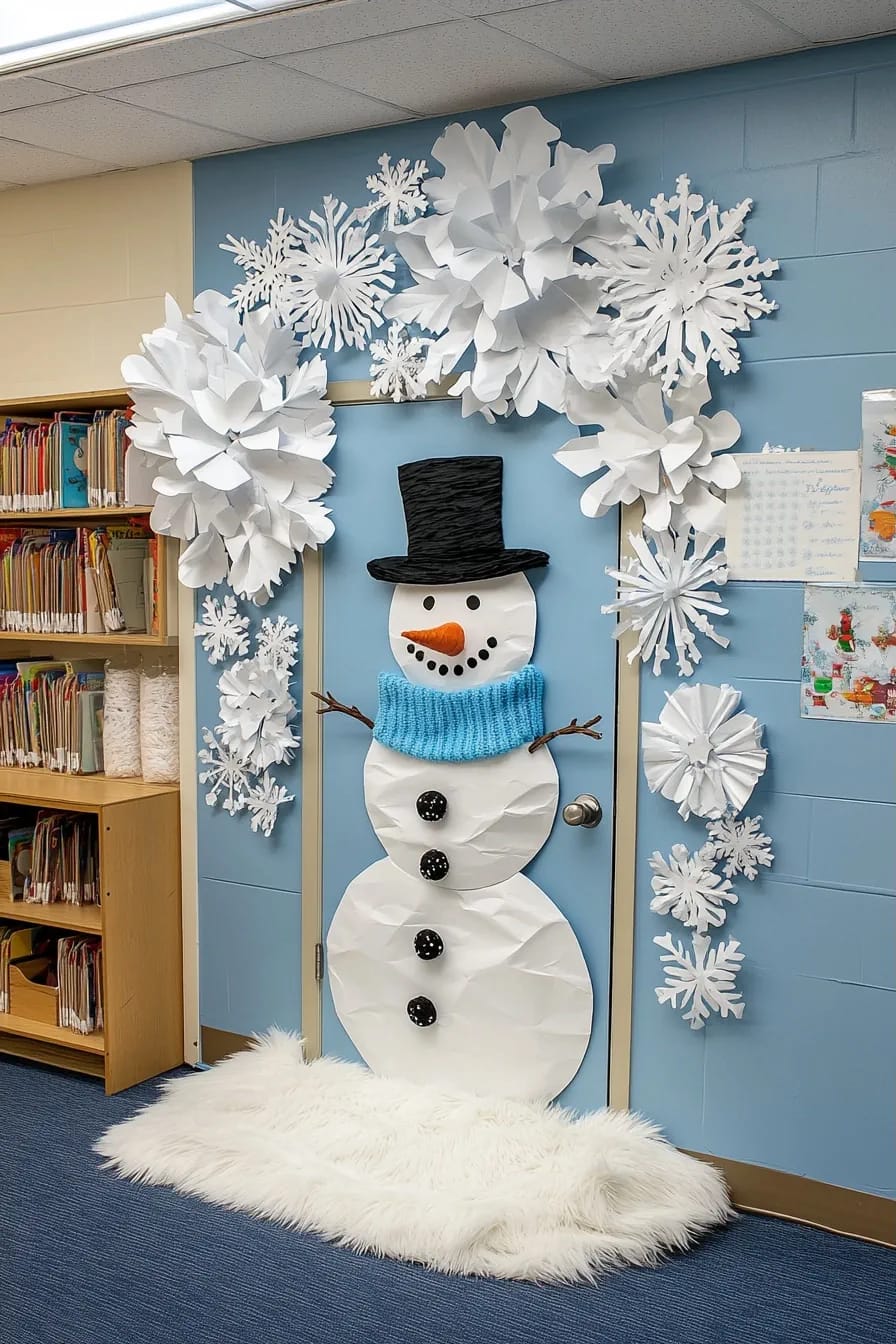
This is the pick for preschool and kindergarten, where a friendly face beats a complicated scene and where you'll be grateful in January not to have a bare door. Give the scarf a knit pattern in your class color and it stops looking generic.

On a classroom door, two colors beat a rainbow
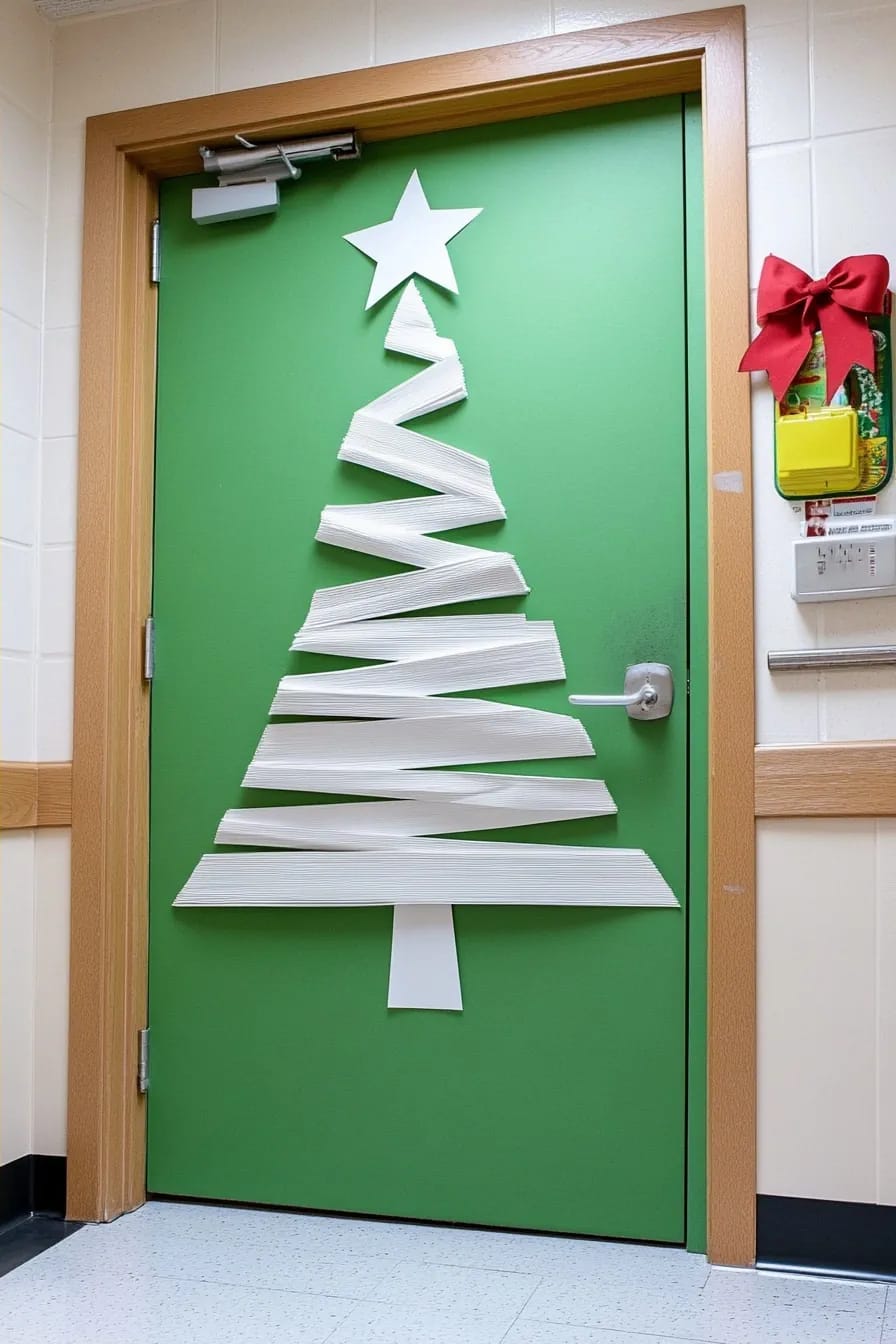
Pick two colors and commit. A door in forest green and white, or red and kraft brown, out-photographs a door using every sheet in the paper cabinet, because a limited palette reads as designed rather than dumped. This is the opposite of the maximalist, more-is-more approach that works for a whole whimsical house, and on a single door in a busy hallway, restraint is what makes yours the one people stop at.
Reads well in the hallway (and the photo)
- One clear idea executed cleanly, in two colors.
- Matte construction or bulletin paper; the color stays true under fluorescents.
- Large shapes with real negative space around them.
- Handle, latch, and any vision panel left uncovered.
Reads busy or gets it taken down
- Every color in the cabinet at once, so nothing is the focal point.
- Glitter, which photographs as gray noise and ends up on thirty faces.
- Puffy 3D pieces that sag off the door by the second week.
- Paper over the whole door with no thought to the fire rule above.
 21 Festive Classroom Christmas Decor Ideas for a Joyful Season Once the door is done, these carry the same near-zero-budget approach onto the bulletin boards, windows, and walls.
If a contest ribbon is the goal
Judges reward one clear idea done cleanly over a door crammed with five, so if you're competing, pick the reindeer-face or the two-color tree and execute it well rather than throwing everything up. Do the fire-rule check first, before you invest a prep day, because the fastest way to lose is to have the whole thing pulled down the morning of judging. And whatever you build, leave the handle and vision panel clear: a door that can't do its actual job is the one thing no ribbon is worth.
Related Posts
- 21 Festive Classroom Christmas Decor Ideas for a Joyful Season
- 12 Homemade Christmas Decorations to Make With Kids
- 15 Unique Sewing Room Christmas Decor Ideas for Creatives
- 15 Creative Craft Room Christmas Decor Ideas For 2025
- 27 Beautiful Christmas Front Door Decor Ideas to Inspire
- 21 Creative Halloween Door Decorations: Ideas for a Festive Welcome