
The stack of worn jeans in your sewing room is the densest, most durable cotton you will ever get for free, and most upcycle projects squander it by leaving the finished thing looking like a pile of jeans glued to an object. The eleven projects below go the other way. They treat denim as a material with its own grammar (indigo, gold topstitch, the ridged felled seam, the frayed edge) and use that grammar to make decor that reads as textile first.
Some lean all the way in, like a back-pocket caddy or a boro throw stitched in white sashiko. Others erase the source entirely, like a one-vat indigo overdye that drops every mismatched wash to a single deep blue. A couple, the coiled seam bowls especially, will not register as denim at all until someone leans in close. A single kilogram of cotton can take around 20,000 liters of water to grow, which is reason enough to keep the worn-out pairs working instead of binning them.

1. A patchwork denim rug graded from light wash to dark
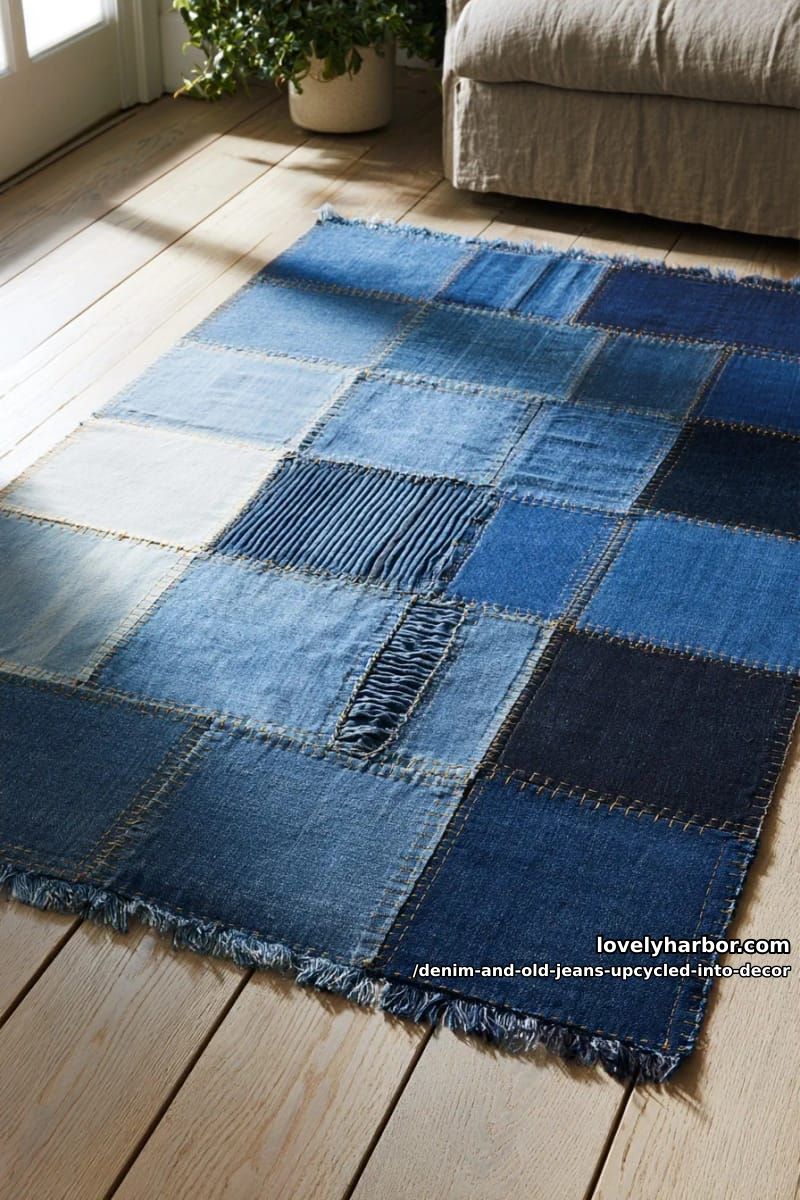
Sort by shade before you cut anything. A denim rug stops looking like salvaged trousers and starts looking like a designed textile the moment the blues run in an order, whether that is a light-to-dark gradient across the rug or concentric rings from a faded center out to indigo. The twill weave and the doubled felled seams are exactly what you want underfoot, since they take traffic far better than a thin cotton rag rug, but they also fight your machine.
How many pairs a rug actually eats
Plan the size against the method, not the other way around.
For a roughly six-foot round or rectangular rug pieced from leg panels, you need around six pairs of adult jeans, and smaller sizes mean you need a few more. Go the woven route instead, building the whole surface from the narrow flat side seams, and the count explodes: one maker used the seams from nearly fifty pairs, and another’s six-by-seven-and-a-half-foot braided-and-coiled rug took about fifty-five pairs and an estimated three hundred hours. A small coiled or crocheted bedside mat is the gentle entry point: two or three pairs cut into strips will do it.
Wash and dry every pair first. Old indigo bleeds and denim shrinks, and you do not want either happening after the rug is assembled. Then expect to snap needles, because layered felled seams are brutal on a home machine. Drop in a heavy 100/16 denim needle, slow the machine down at the seam crossings, and keep spares on the table. SCHMETZ Jean & Denim machine needles, size 100/16 are the cheap insurance here.
2. An arched, Japandi-style room divider overdyed to a moody indigo
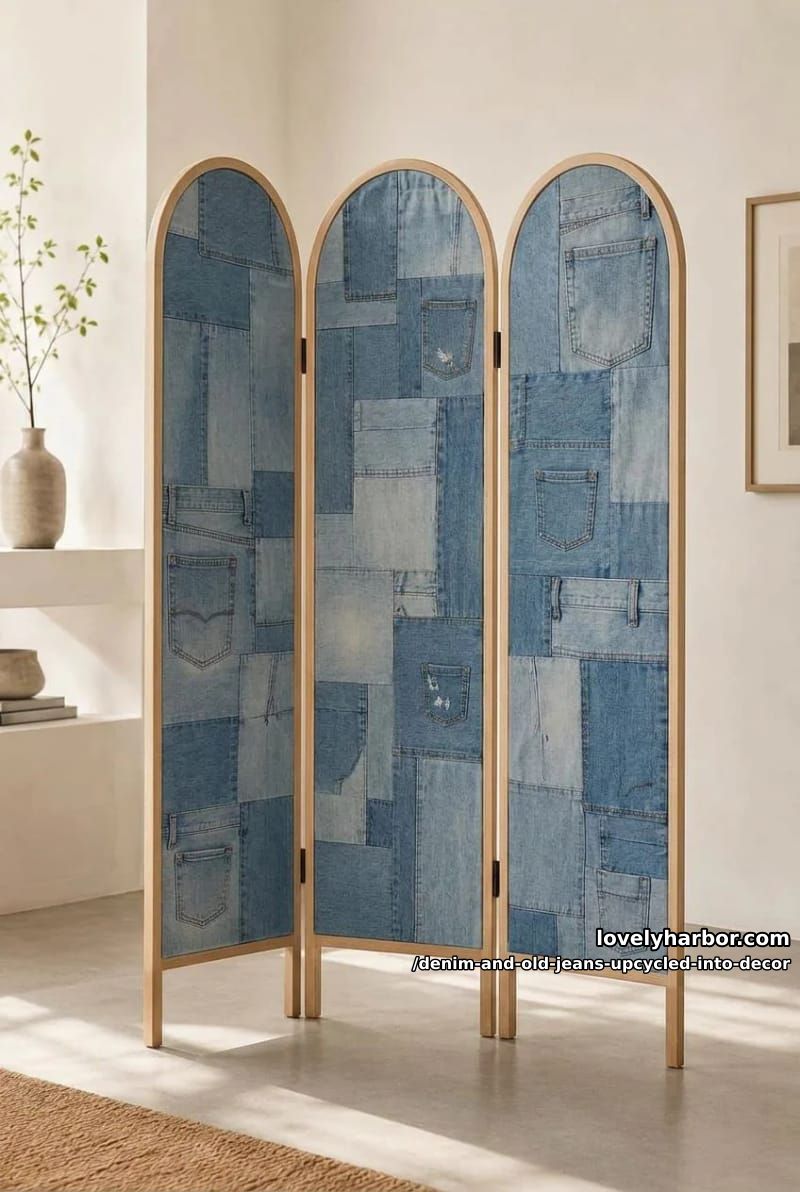
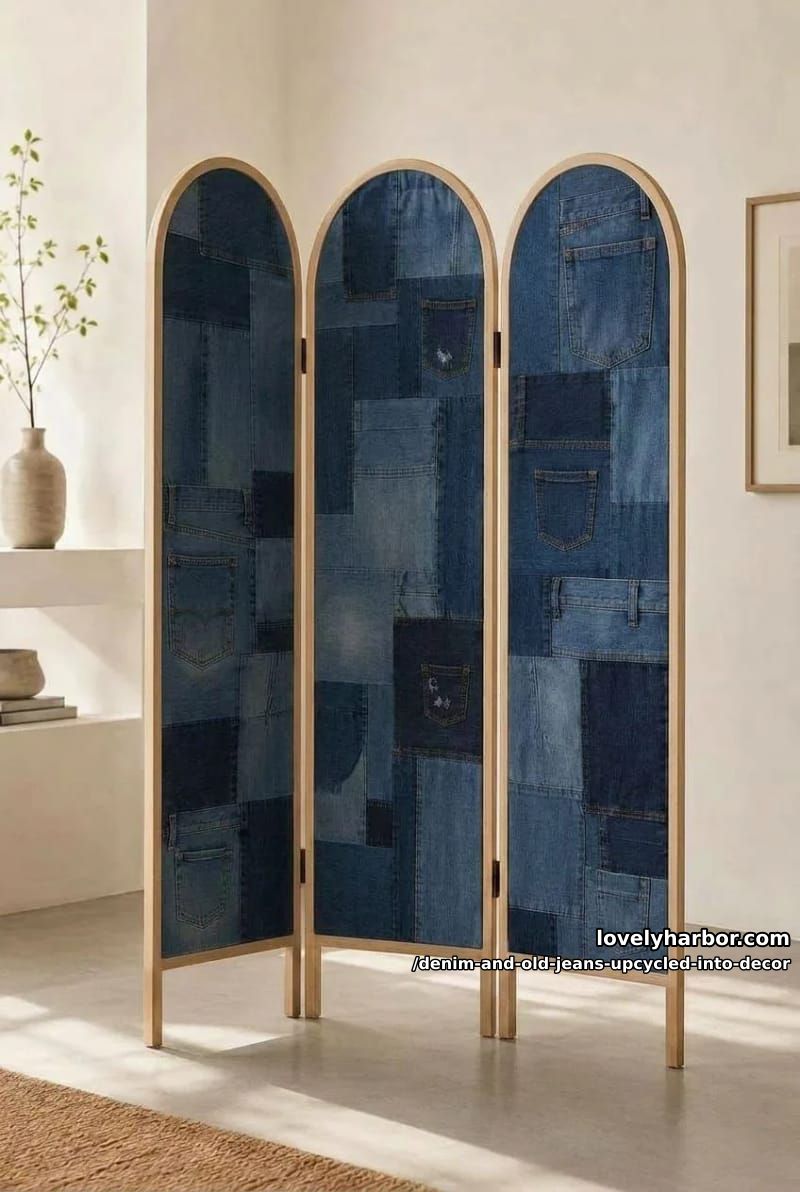
Arched, upholstered folding screens are a Pinterest staple, but covering one in a patchwork of old jeans usually ends up looking like a 90s novelty project. To elevate the aesthetic, piece together your scraps to build the panel covers, letting the heavy felled seams create a subtle geometric grid, and then let the dye vat do the heavy lifting. Dunk the finished covers into one indigo vat before stapling them to your frame, and every jarring wash line, whisker, and fade will collapse into a uniform, inky blue. This is the single fastest way to make a denim project quit looking like a collage of strangers' jeans and instead transform it into a rich, bespoke-looking canvas.
This is the single fastest way to make a denim project quit looking like a collage of strangers' jeans. Dunk the cut pieces, or the whole finished cushion cover, into one indigo vat and every wash line, whisker, and fade collapses to a uniform blue that reads as deliberate. Indigo comes from a plant and is one of the oldest dyes used for fabric, and it is still the color of blue jeans today. If you want pattern instead of a flat field, fold and clamp first: shibori, the Japanese family of resist techniques that dates back to at least the eighth century, works by binding, folding, or clamping the cloth so only the exposed areas take the dye.
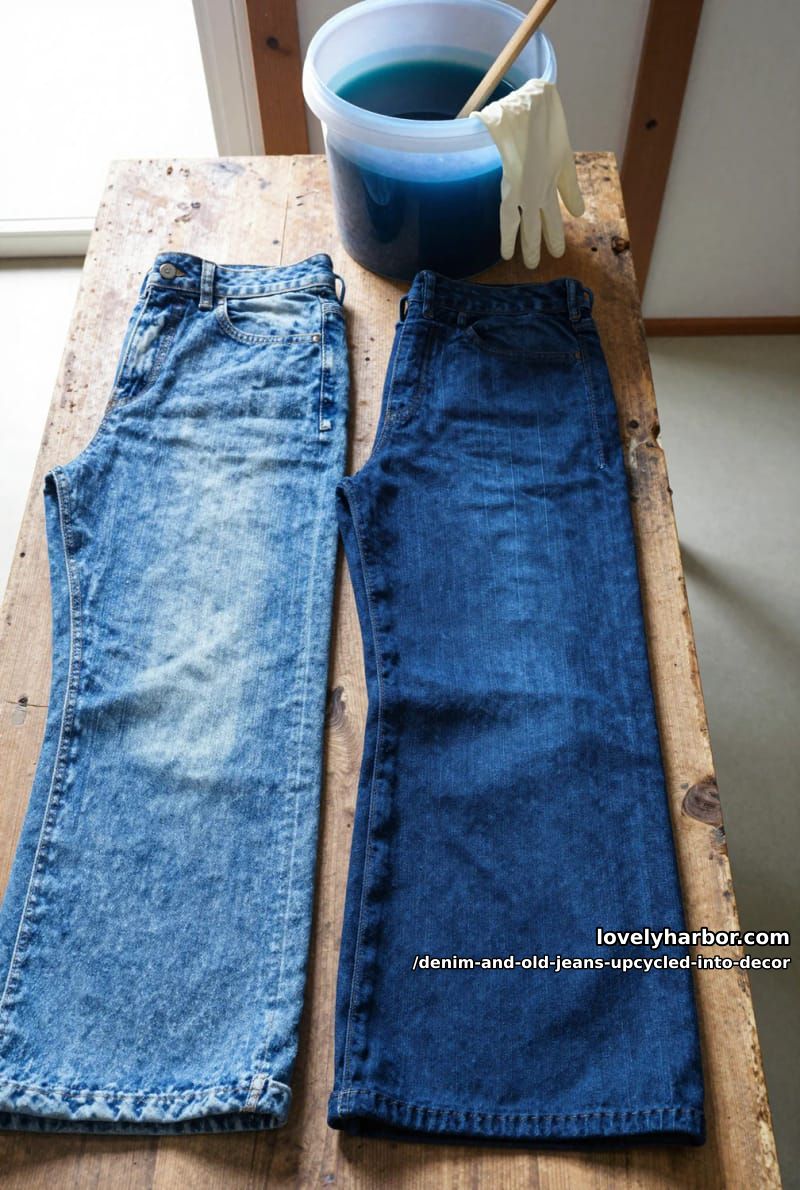
One caution that trips people up. The dye only grabs natural fibers, so a pair that is mostly polyester, or heavy on stretchy elastane, comes out weak and blotchy while the cotton around it goes dark. Check the waistband label before you commit a pile to the bucket.
Pre-reduced indigo means you skip the fussiest part of building a vat, and one kit covers a surprising amount of fabric.

3. Throw pillows that wear their topstitch and felled seams as the pattern
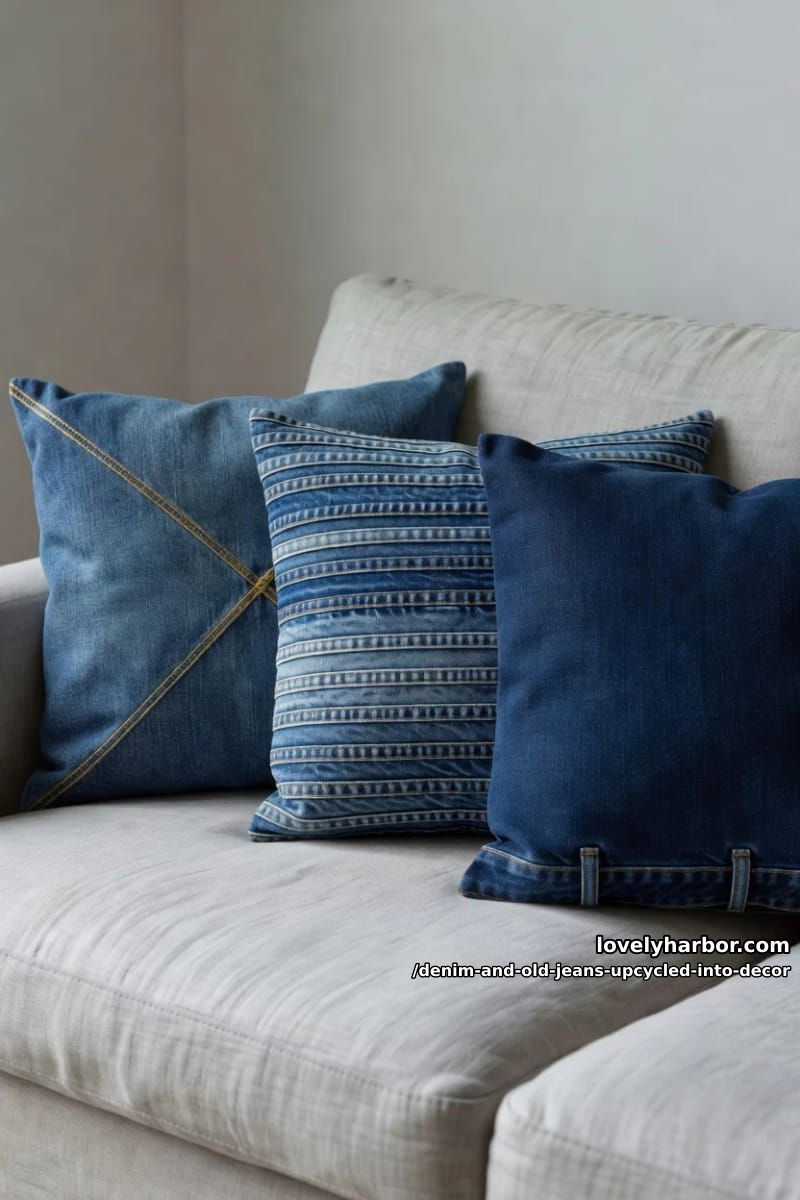
Cut the cushion fronts so the original gold topstitching or a felled seam runs across the face, then resist adding anything else. Denim already gives you a graphic line and a raised ridge for free, and the restraint is what keeps the pillow from looking like a craft project. The heaviest part of the leg makes the most durable cover, and an old waistband with its belt loops makes a closure that looks intentional rather than improvised.

Pick a single denim tell to show on any given object, the topstitch or the pocket or the frayed seam, and suppress the rest. Pile all three onto one cushion and it reads as novelty; let one carry the piece and it reads as design.
4. A back-pocket caddy mounted on a stained board
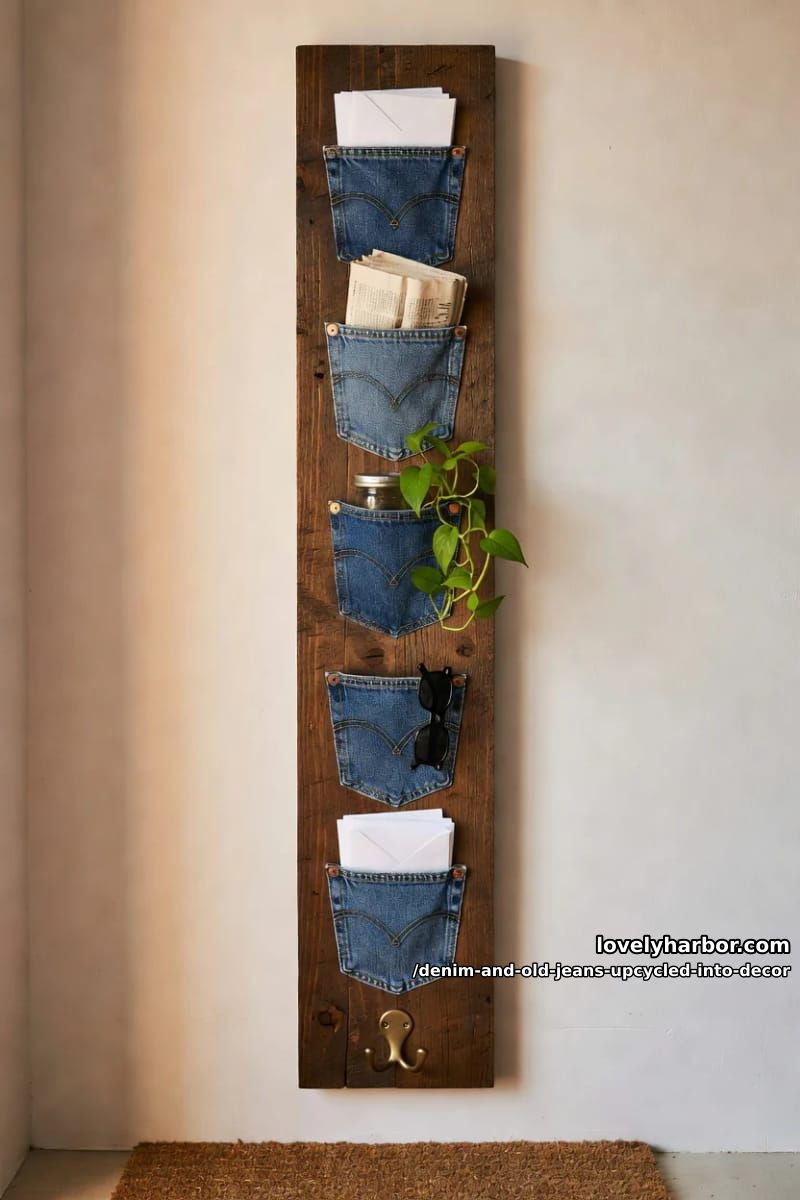
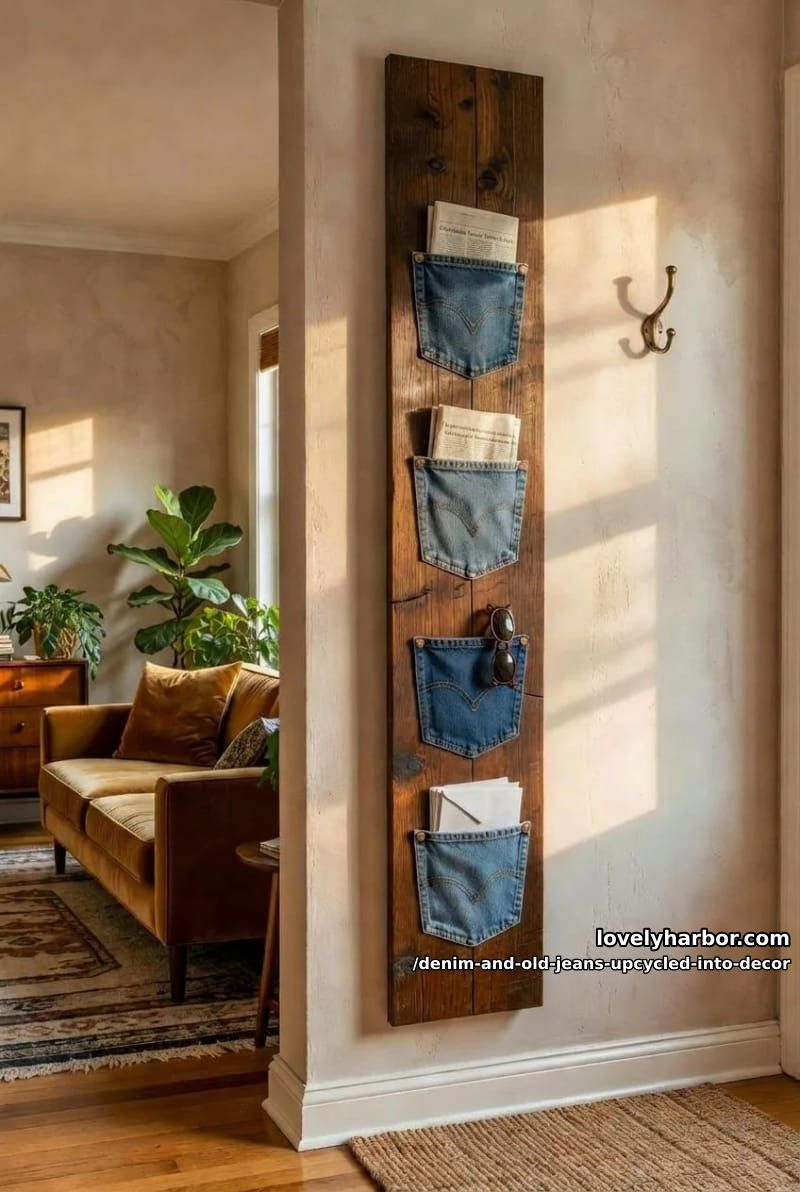
Line up five or six back pockets in a tidy column on a stained board and you get a wall caddy for mail, remotes, charging cables, or a little trailing plant. The pocket organizer is the most clichéd denim project on the internet, so the whole game is in the discipline: uniform pockets, all the same way up, on one quiet backing. The board is doing as much work as the denim.
Do this
- Use pockets that match in size and wash so the column reads as a set.
- Mount them on something with its own material story, like a stained offcut or a length of old fence board.
- Topstitch the pocket edges down again; the original stitching alone will not hold a full caddy.
Avoid
- Mixing pocket sizes, flies, and waistbands on one panel. That is the craft-fair apron look.
- Leaving raw frayed edges everywhere when the rest of the piece is meant to read as finished.
5. A boro throw mended in white sashiko running stitch
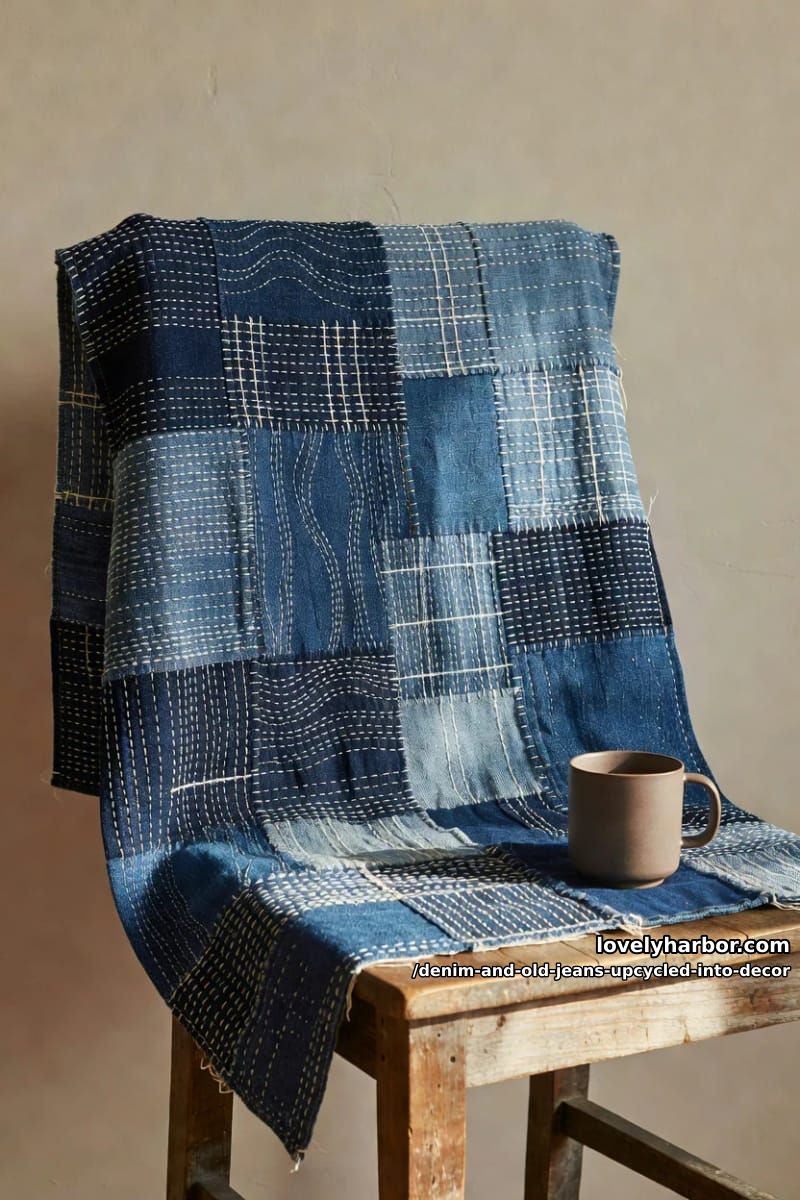
Layer denim squares over a backing cloth and hold them down with long rows of white running stitch, and you have a throw in the boro tradition rather than a quilt. Boro grew out of necessity in rural Japan, where families in the cold northern Tohoku region layered and patched indigo cotton through generations to survive the winters. Sashiko, literally "little stabs," is the running stitch that secures those layers, traditionally worked in white thread on indigo cloth. The match with denim is almost too neat, since both are indigo workwear cotton built to be repaired rather than replaced.

Be honest with yourself about the timeline: this is hand-stitching, worked slowly across a large surface, not a Saturday afternoon. The needles are long so you can load several stitches at once, and a palm thimble does the pushing through the layers. The practice carries the idea of mottainai, a quiet sense that waste is a shame, which is more or less the whole point of upcycling the jeans in the first place.
A starter kit gets you the right long needles, thread, and a palm thimble together, so you are not guessing on tools for your first panel.

6. Coiled bowls and trivets from denim side seams
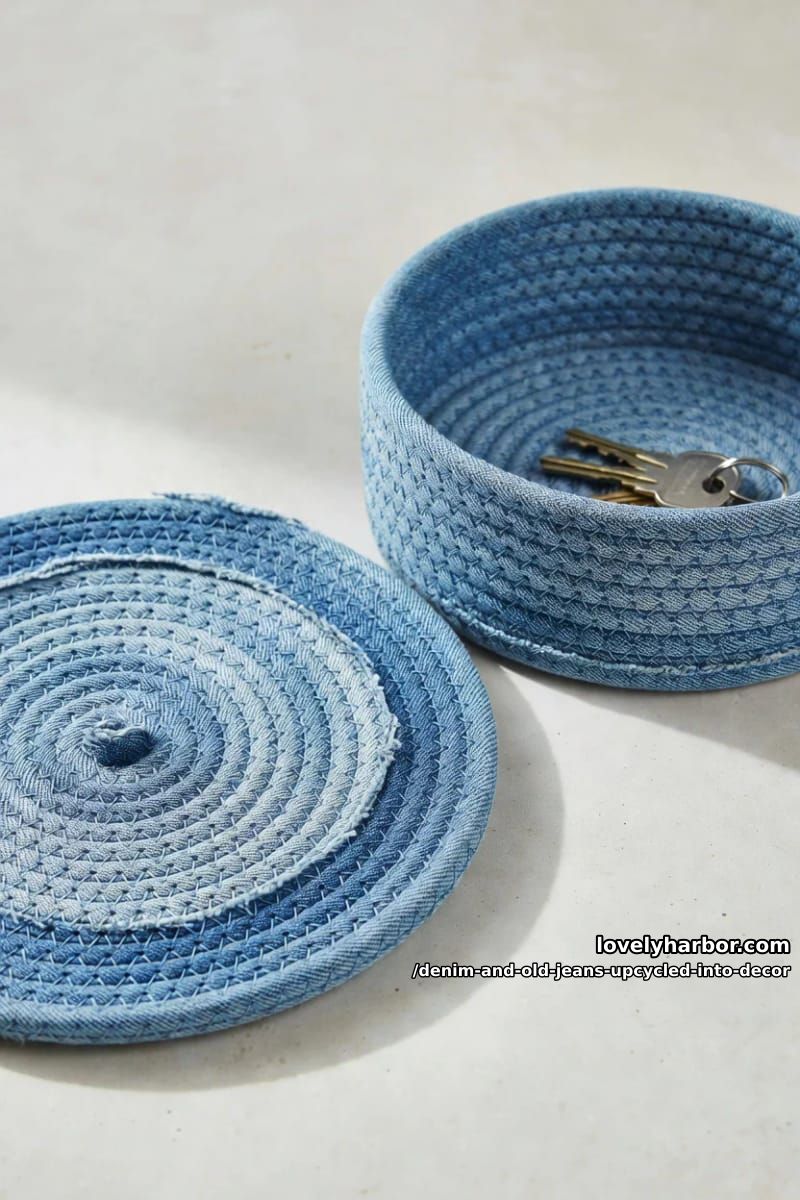
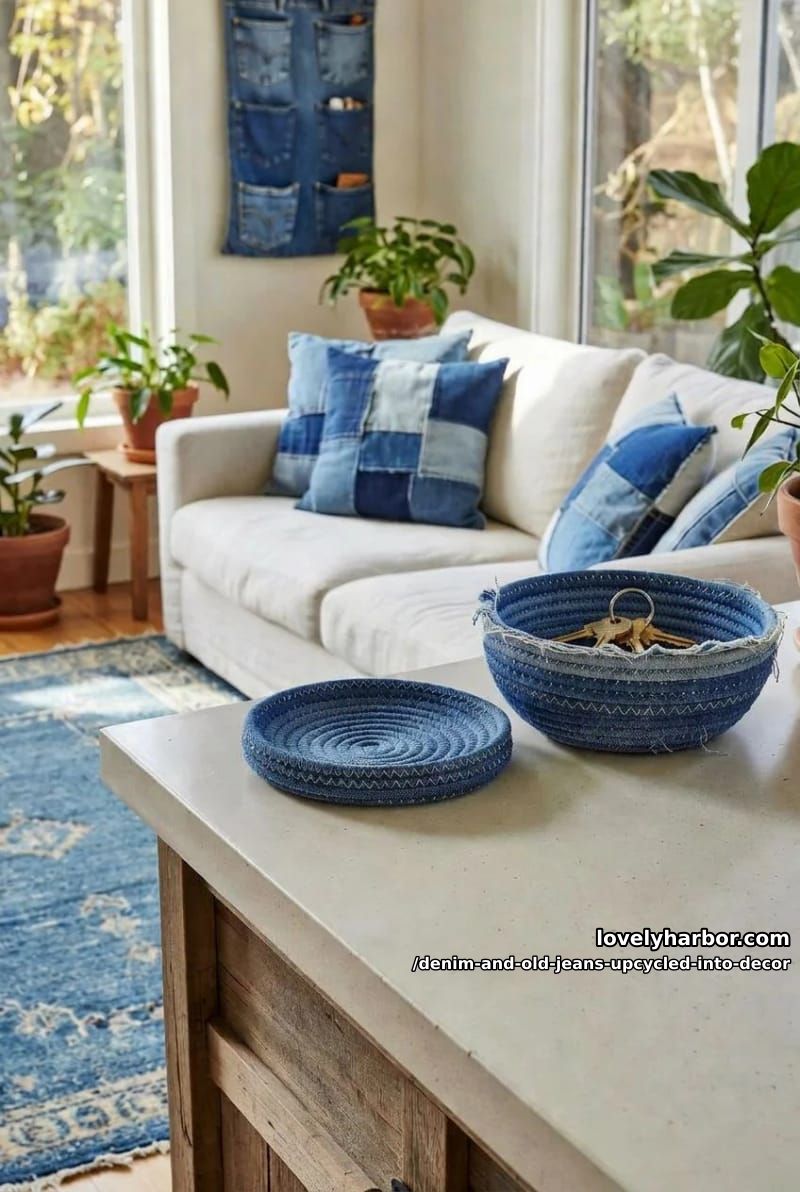
Cut the flat-felled side seams into long continuous strips, coil them into a spiral, and zigzag the coils together as you go. The result is a stiff little bowl or trivet that holds its shape because the seam is already the most rigid part of the jeans. This is the project that surprises people, because nobody guesses denim until they pick it up. It also rescues the one part of a pair that almost every other project throws away. Run a fresh denim needle and go slowly over the coil joins, since you are stitching through several dense layers at once.
7. Woven placemats and a selvedge table runner
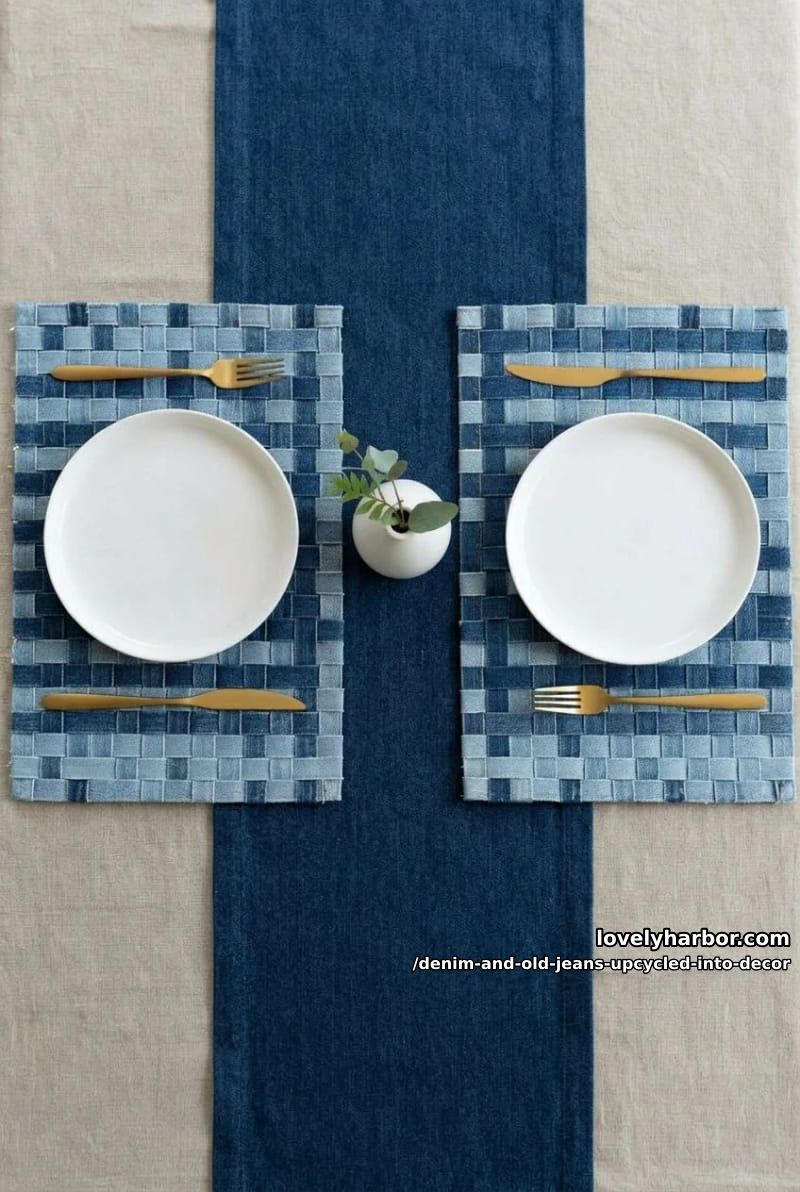
Cut leg panels into inch-wide strips and weave them over-under on a simple cardboard loom for placemats that lie flat and wipe clean. If you happen to be cutting up a pair of selvedge jeans, save the self-finished edge for a runner. Selvedge denim is woven narrow on old shuttle looms that finish the edge so it cannot fray, and it is often marked by a red line. That edge is worth showcasing rather than hiding, because the supply has a real ceiling: Cone Mills' White Oak plant in North Carolina, the last large-scale selvedge mill in the United States, wove its final yard at the end of 2017 after supplying Levi's 501 for generations.
8. A wrapped denim lampshade that throws a blue cast
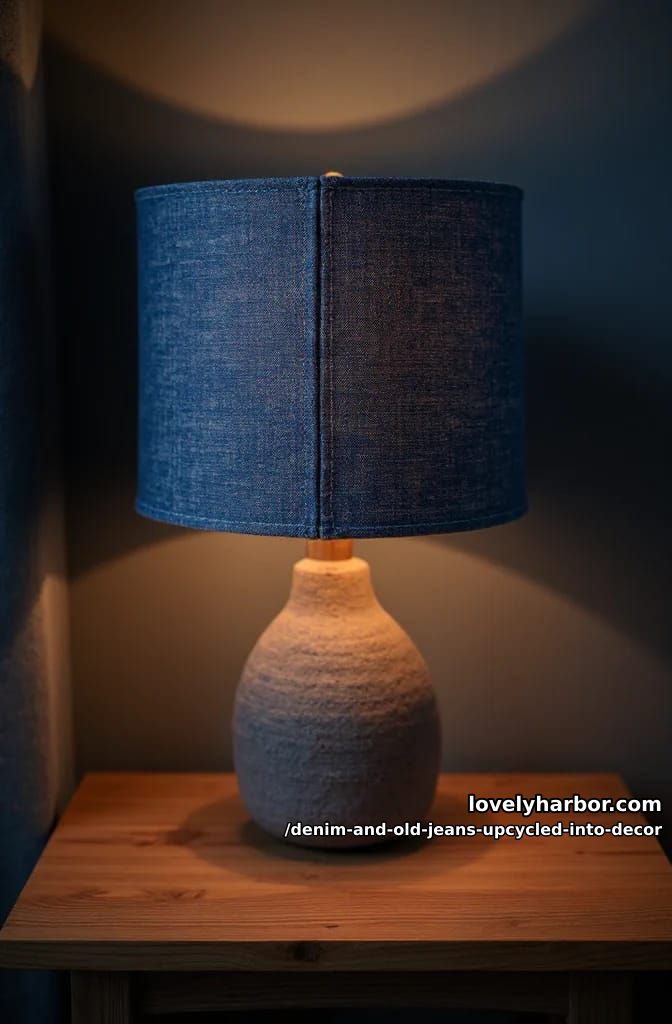
Wrap a plain drum shade in a single denim panel and the light passing through indigo lands warm and faintly blue, which is a far better effect than it sounds. Keep one felled seam running up the side as the only detail and leave it at that. Use an LED bulb rather than a hot incandescent one, both because denim is thick and slow to shed heat and because you are gluing fabric near a light source. A thin chambray-weight pair transmits more glow than a rigid raw pair, so save your heaviest denim for the rug.

9. A frayed indigo wall hanging
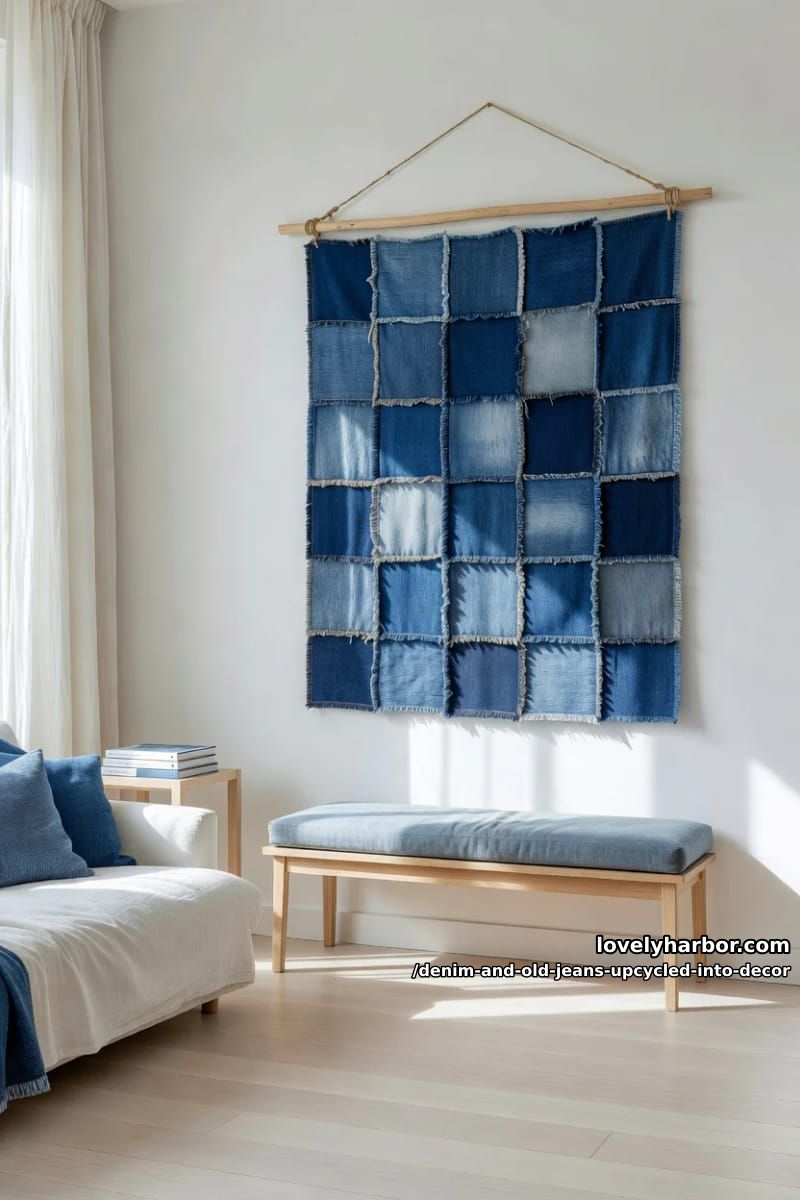
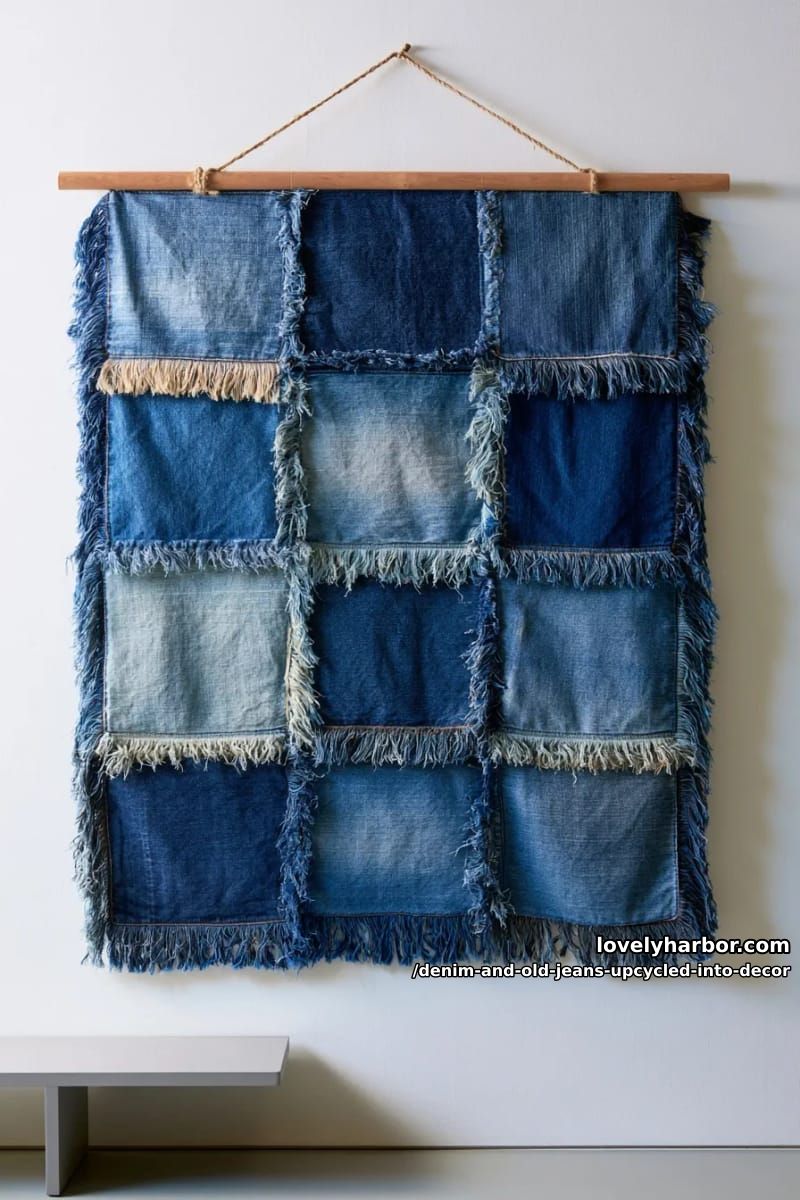
Piece denim squares of varying washes into a flat panel, then fray the seam allowances on the front so soft fringe runs along every join in a grid. Hang it from a dowel and it works as textile art, somewhere between a quilt block and a weaving. The frayed seam is the entire idea here, so push the contrast between washes and let the fringe be generous; a timid version just looks unfinished. A row of these in graduated blues down a stairwell does more than a print from a chain store ever could.
10. Stiffened denim storage bins
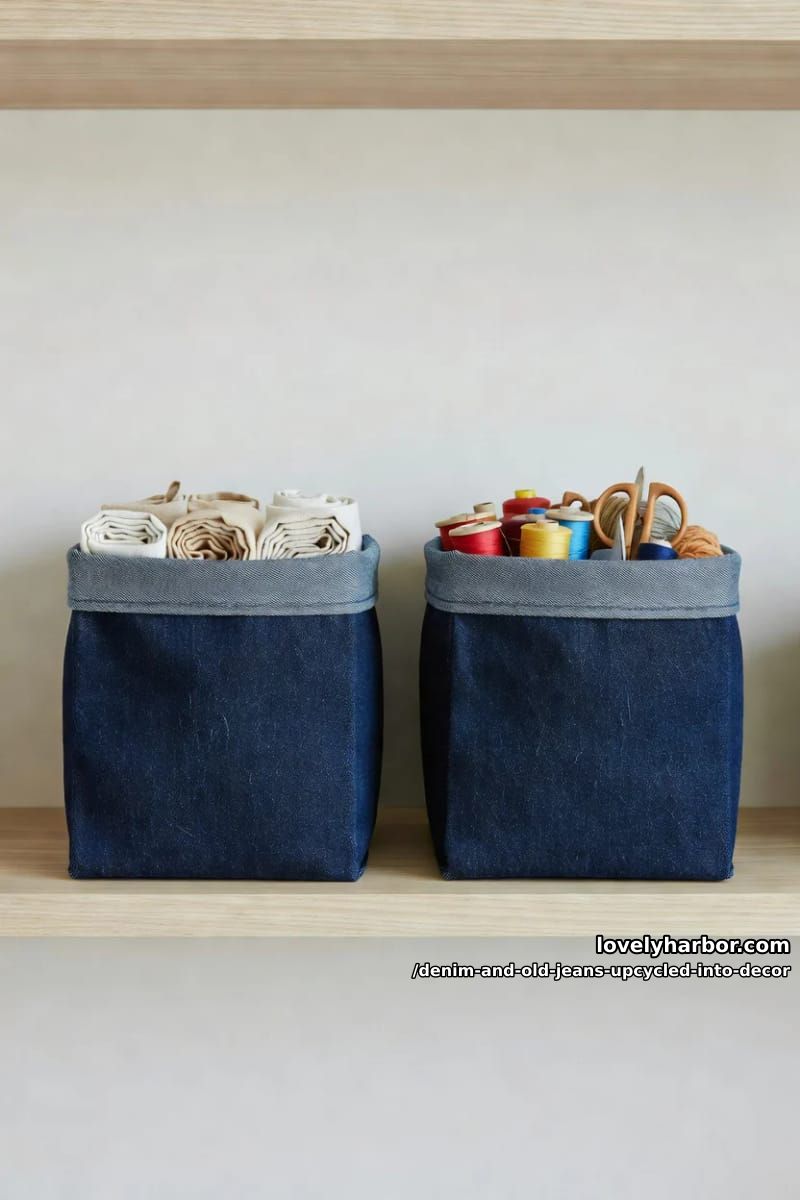
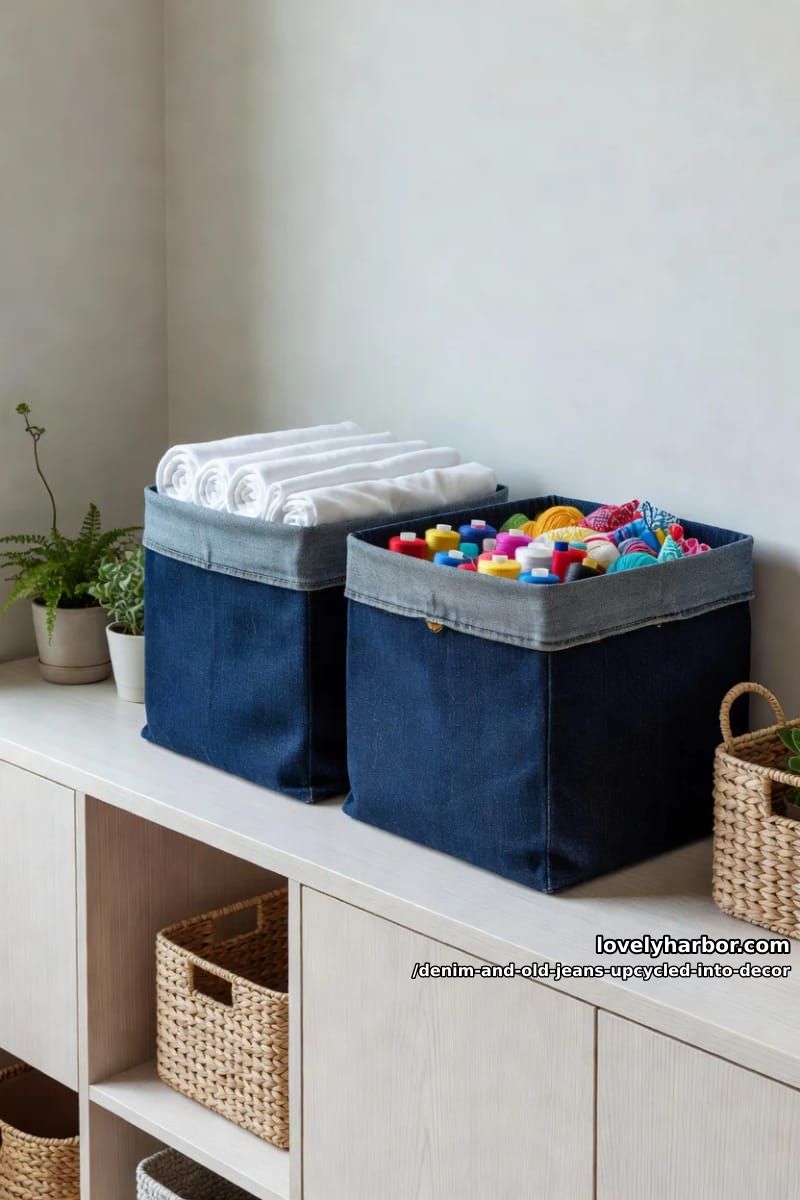
Stiffen denim with fusible interfacing or a fabric stiffener so a bin stands up on its own, fold a contrast cuff at the rim, and you have shelf and entryway storage that costs almost nothing. Quick, useful, not much more to say. Make a few in one sitting while the iron is already hot.
11. A floor pouf stuffed with its own scraps
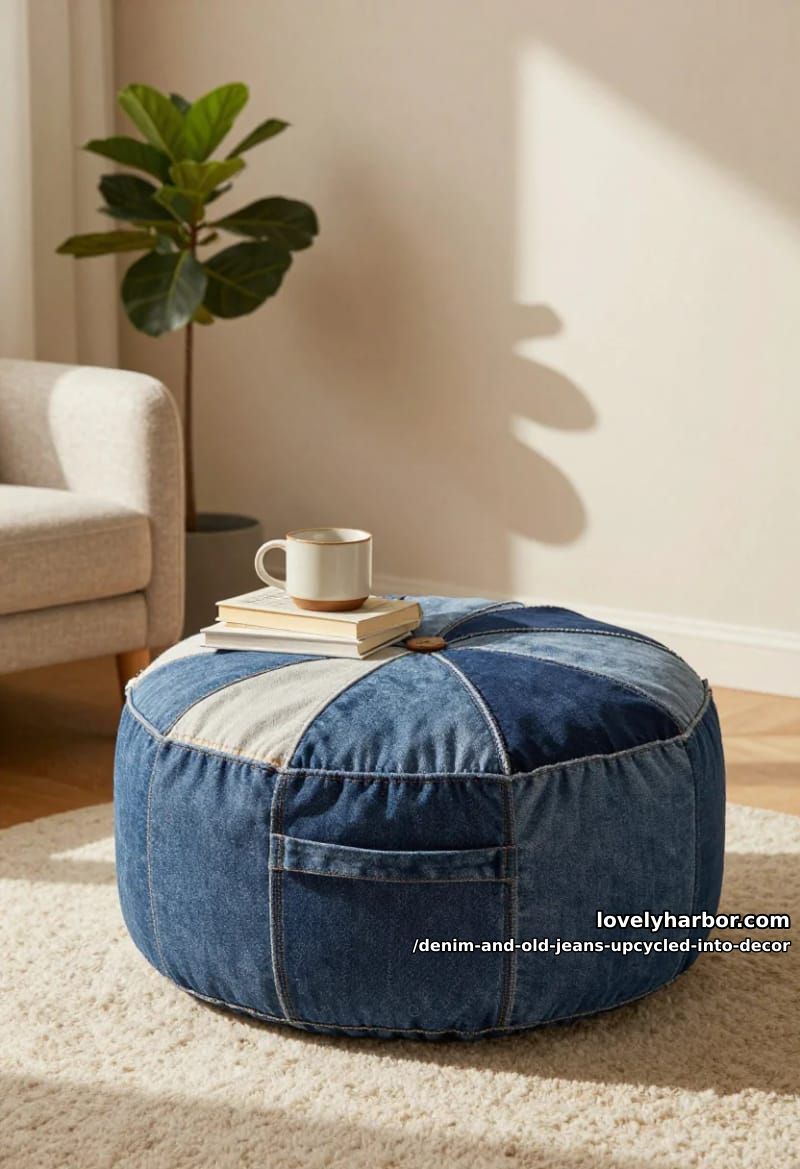
Piece a pouf top from wedge-shaped denim patches, build a sturdy topstitched casing, and stuff it with the denim scraps too small for anything else. That last part closes the loop neatly, since the offcuts that usually go to the bin become the filling. There is a precedent at industrial scale, too. Cotton Incorporated's Blue Jeans Go Green program has collected more than 4.5 million pieces of denim since 2006 and diverted over 2,290 tons from landfills, shredding it into UltraTouch insulation that is roughly 80 percent post-consumer denim. Your pouf is the same instinct, smaller. Pack it firmer than feels necessary, because denim scraps compress fast under a sitting adult.