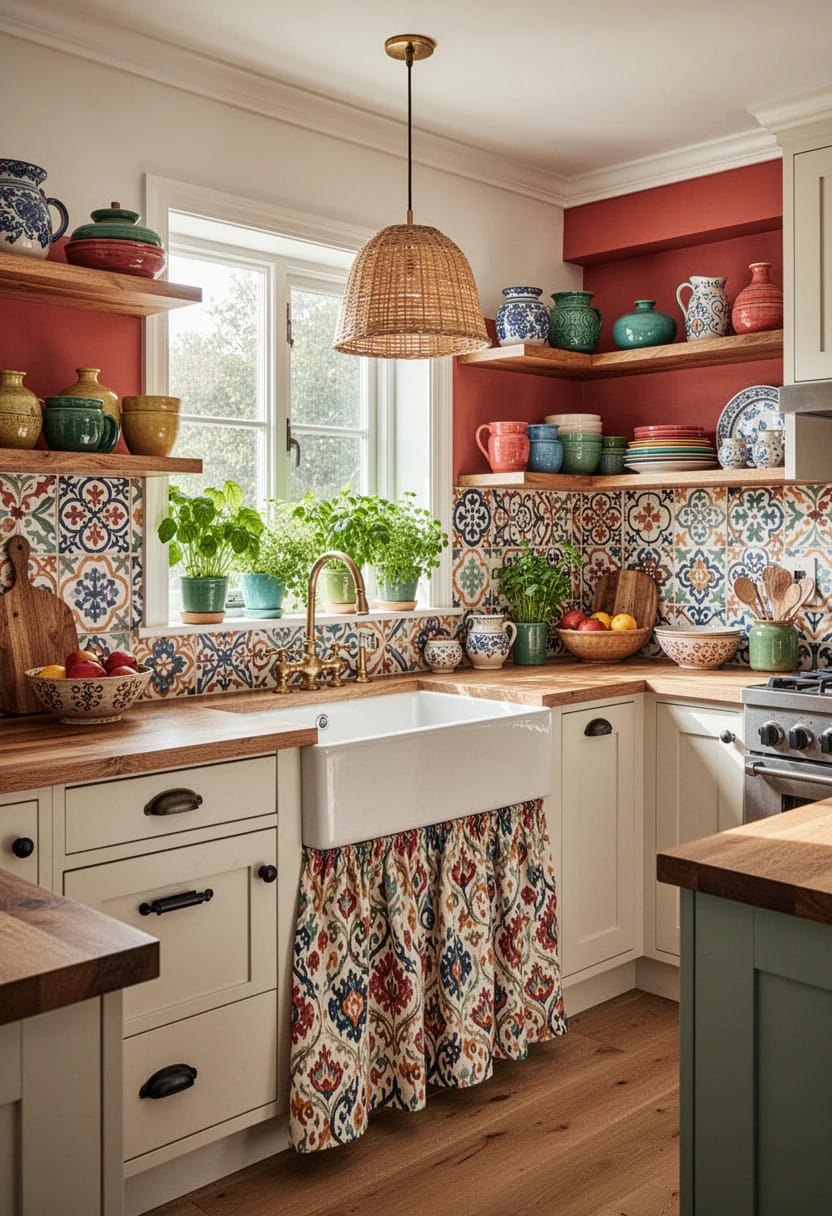
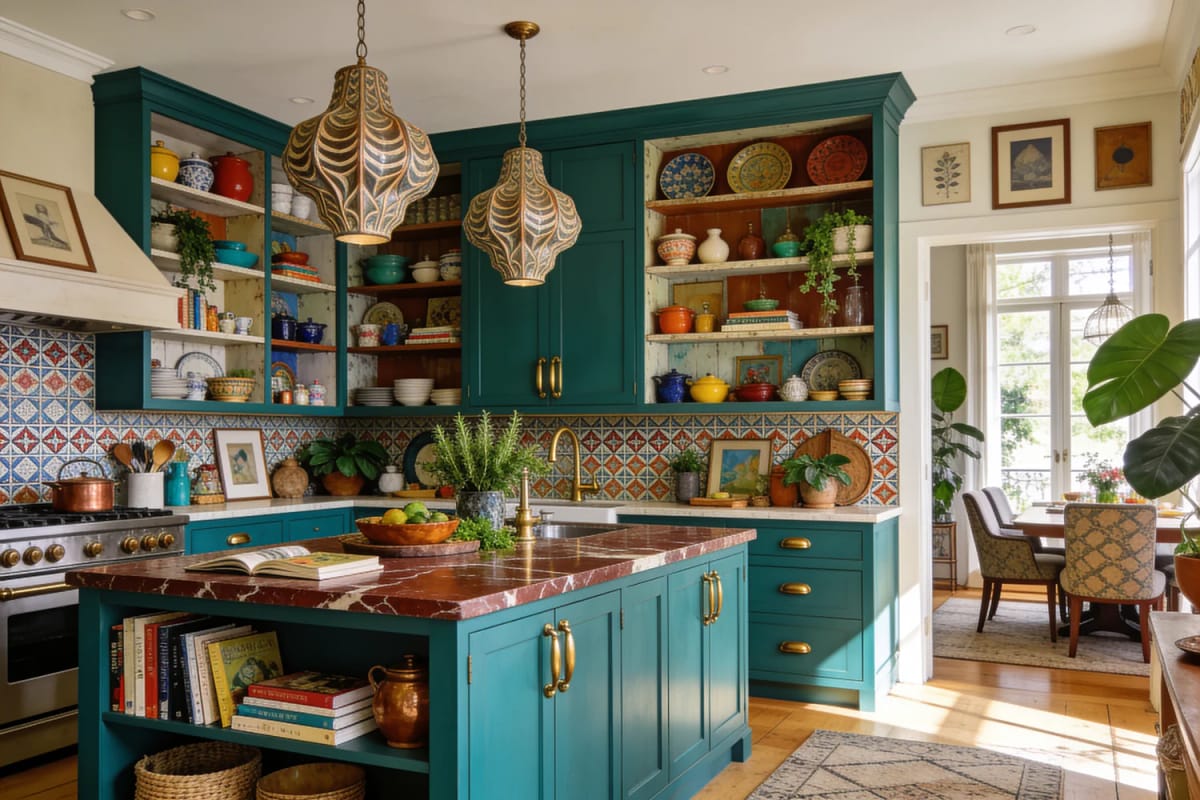
Most eclectic kitchens fall apart at the countertop. Not at the tile, not the art, not the flea-market pendant — at the counter, the surface nobody plans and the one carrying the entire mix. The nine ideas below assume you want the collected version rather than the yard-sale one: a palette with rules, two tile patterns instead of five, one deliberately wrong-scale light, and a rental-safe way to do most of it. Prices are included where I could verify them, and the jobs worth hiring out are flagged as such.
1. Every eclectic kitchen needs one boring surface
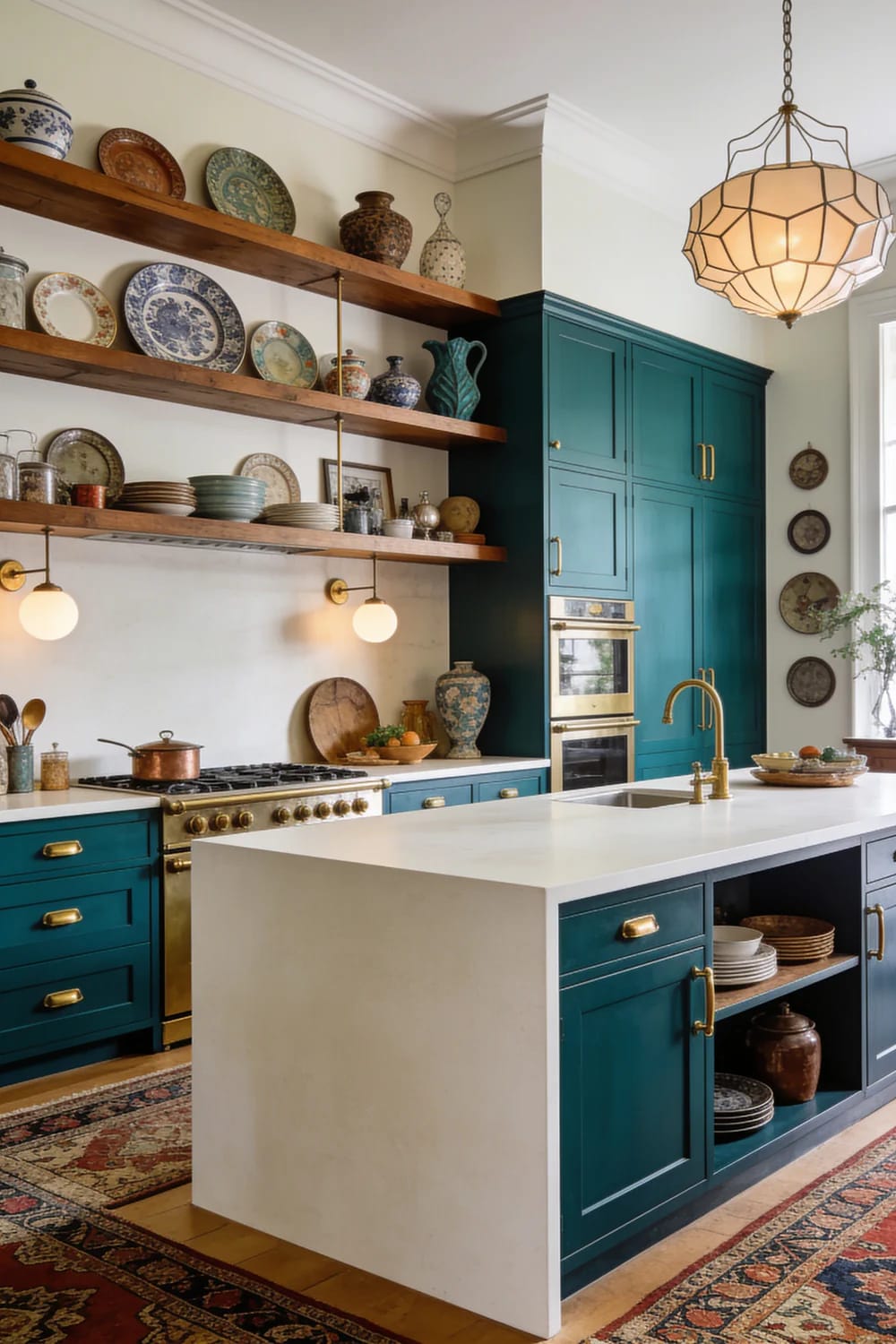
Choose one large surface and make it dull on purpose. Almost always the countertop, because it runs the length of the room and sits at eye level in every photo. Honed soapstone does this well: it costs roughly $70 to $120 per square foot installed, it never needs sealing, and it darkens with oiling into a matte graphite that gives the loud things something to push against. It is also soft (3 to 5 on the Mohs scale), so it will collect scratches from ceramic plates and knife edges within the first year, which some people hate and which is the reason I like it here.
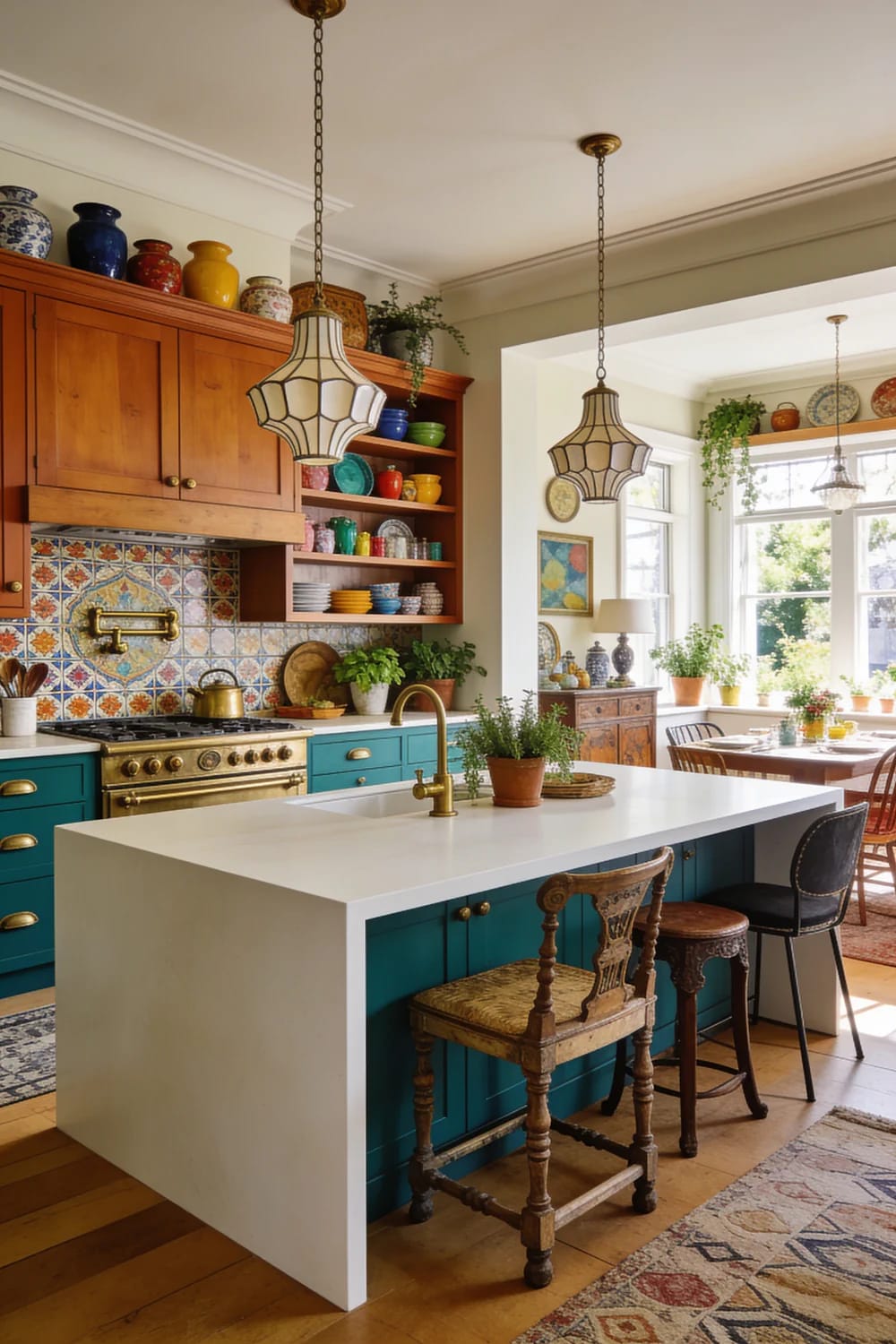
Every colour, glaze and pattern in the room has to resolve against a single unpatterned plane. Counter, floor or cabinet run: pick one, keep it flat, and spend the visual budget everywhere else.
Butcher block is the cheaper version of the same move, at roughly $50 to $150 per square foot installed, or $20 to $40 per square foot in materials if you are cutting down an IKEA slab yourself and can live with oiling it. Granted, this only holds if you resist finishing the wood in something orange. And if the honest answer is that you already have plain white quartz you cannot afford to replace, keep it — a boring counter is the asset, not the compromise.
2. Pick three colors that argue, then repeat each one twice
Three is the working number, and the discipline is repetition rather than restraint. A colour that appears once in an eclectic kitchen looks like a mistake; the same colour appearing twice, in two different materials, reads as intent. Forest green base cabinets, then again in the glaze of the tile. Oxblood on the pantry door, then again in a rug runner. The third colour does the least work and gets the smallest surface — a stool frame, the inside of a glass-front cabinet.
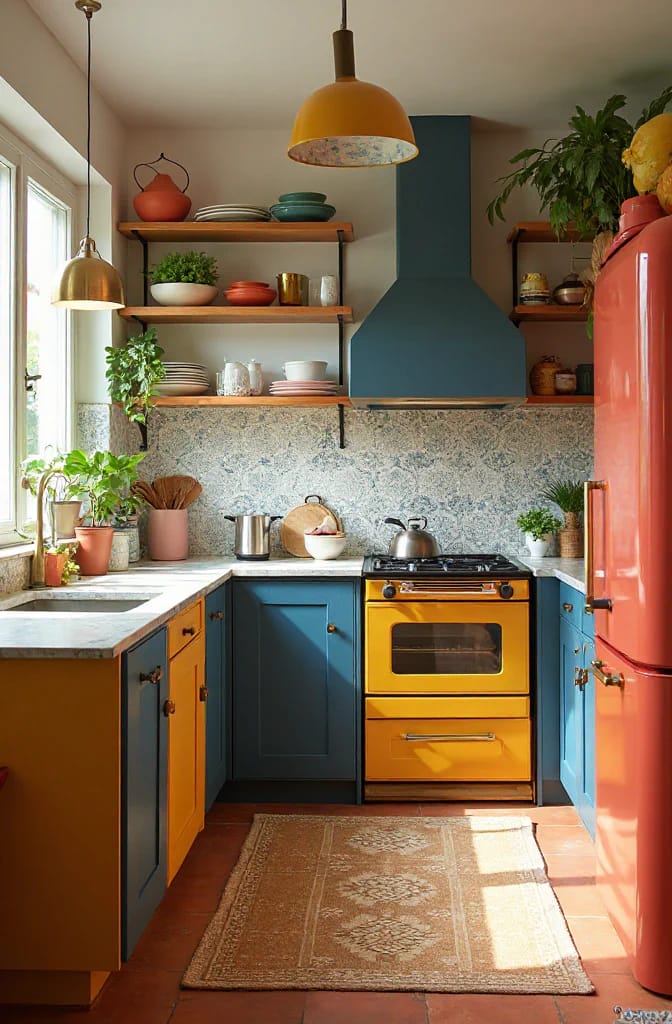
| Three-colour split | Where each one lands | What the kitchen reads as |
|---|---|---|
| Forest green, buttermilk, oxblood | Bases; uppers and trim; pantry door plus one runner | Old European, slightly grand |
| Mustard, chalk white, cobalt | Uppers; walls and ceiling; tile glaze and one stool | Boho crossed with mid-century, the Pinterest-native mix |
| Chocolate brown, blush, brass | Wood island and shelves; walls; taps, knobs, one frame | Warm minimalist, the calmest of the three |
| Black, terracotta, sage | Window frames and hardware; floor tile; a single cabinet run | Mediterranean, and the hardest to keep from going rustic |
3. Two tile patterns in the backsplash, never five
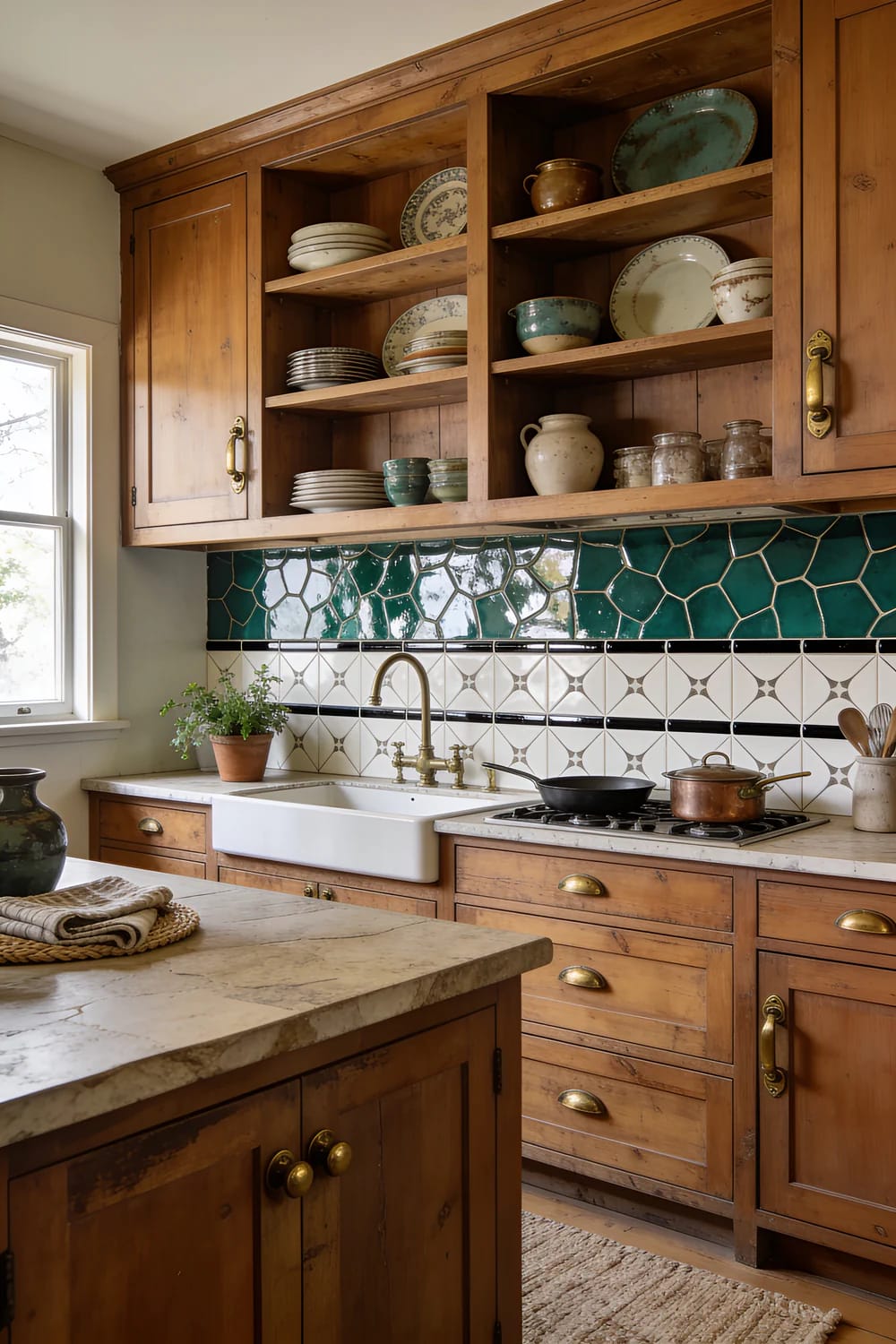
Two patterns, and they must disagree in scale rather than in colour. A busy small-scale pattern (mosaic, hand-cut zellige, an encaustic run of six-inch squares) needs a plain field tile beside it doing nothing, and the plain one should take up more wall. Five patterns is not eclectic, it is a tile showroom that fell over.
Choosing the pair
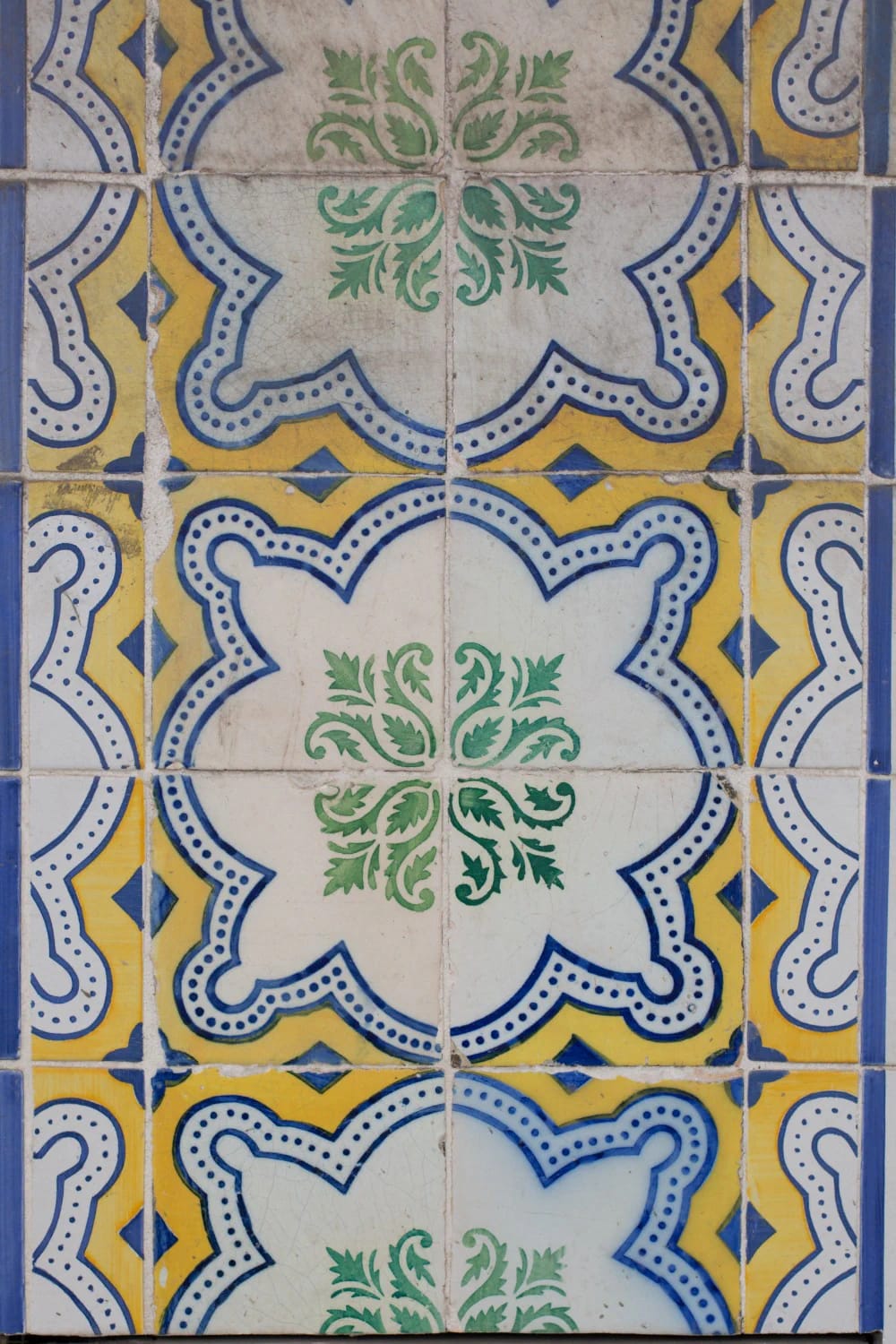
Handmade zellige is the tile most people want here, and it is the one that behaves worst: the glaze pools, the edges are irregular, no two tiles are the same thickness. That variation is why it catches light the way machine tile cannot. Expect roughly $18 to $28 per square foot for genuinely handmade Moroccan tile against $7 to $10 for the mass-produced lookalikes, plus backsplash installation that generally runs $10 to $50 per square foot depending on how fussy the layout gets. Behind the range, run the plain tile; behind the sink, where you look at it while washing up, run the pattern.
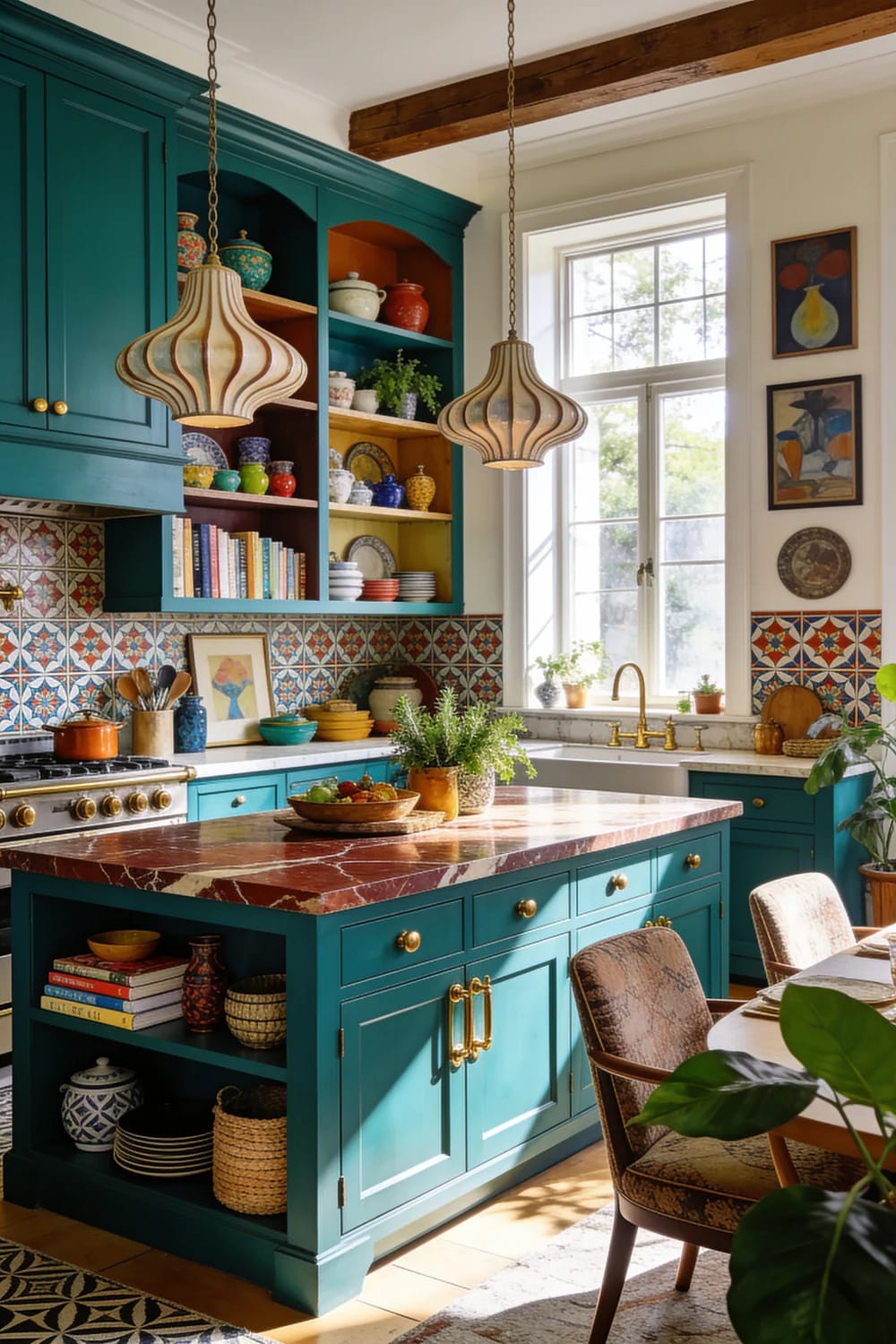
Grout decides whether it looks handmade or homemade
Grout colour is the entire outcome and it costs nothing to get right. A pale grout with hand-cut tile shows every irregular edge as a wobbling white line, which flatters zellige and destroys a crisp geometric encaustic. Dark or colour-matched grout does the reverse: it disappears, and the field reads as one continuous surface.
Porous, unsealed tile drinks pigment out of grout and stains permanently, which is why Clé Tile’s own installation guidance calls for a grout release or penetrating sealer before you grout. Skip that step with a dark grout and a light tile and there is no undo. This is also the tile job I would hire out; uneven thickness makes it a slow, tedious set, and a tiler who has never handled zellige will fight it.
4. Make the kitchen island a piece of furniture
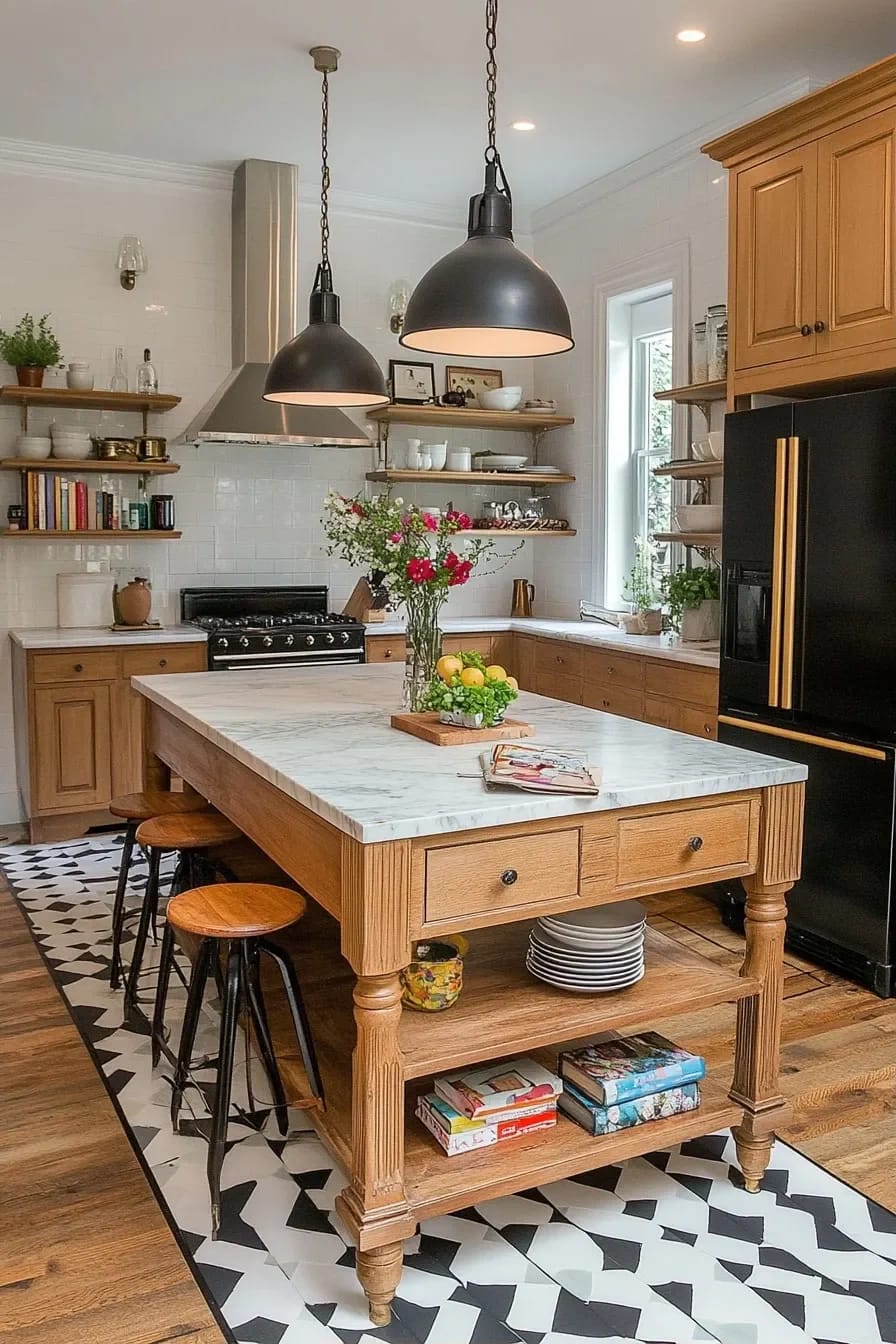
Replace the built-in island with a freestanding piece: a butcher's block, a zinc-topped bakery table, a long farmhouse table with weathered legs. This is the single fastest way out of the fitted-kitchen look, because a room where the cabinetry stops and furniture begins reads as accumulated over years rather than ordered as a set. It also solves the small-kitchen problem, since furniture can be moved and a peninsula cannot.
The measurement people get wrong: most dining tables sit around 30 inches high while counters are 36, so a salvaged table used as a work surface will feel low for chopping and will not take counter stools. Either accept it as a sitting-height prep table, or have a joiner extend the legs — cheap, and less visible than you fear if the extension happens at the foot.
Do this
- Buy the piece with the top you cannot fake: end-grain butcher’s block, worn zinc, marble that has already been abused.
- Check that it clears 36 inches of walkway on the busy side; 42 if two people cook.
- Felt pads under the feet, or the first time you shove it aside you will score the floor you just laid.
Avoid
- Anything veneered. Kitchen humidity lifts veneer at the edges and it never goes back down.
- Distressed-finish reproductions. The wear is printed on, and it looks printed on in daylight.
5. Hang real art in the kitchen (no signs about wine)
Framed paintings belong in a kitchen and almost nobody puts them there. Thrifted oils and student still lifes are the cheapest route into the eclectic look: they carry an era, a palette and a frame, and they cost less than the printed canvas of a lemon that the homeware shop will sell you.
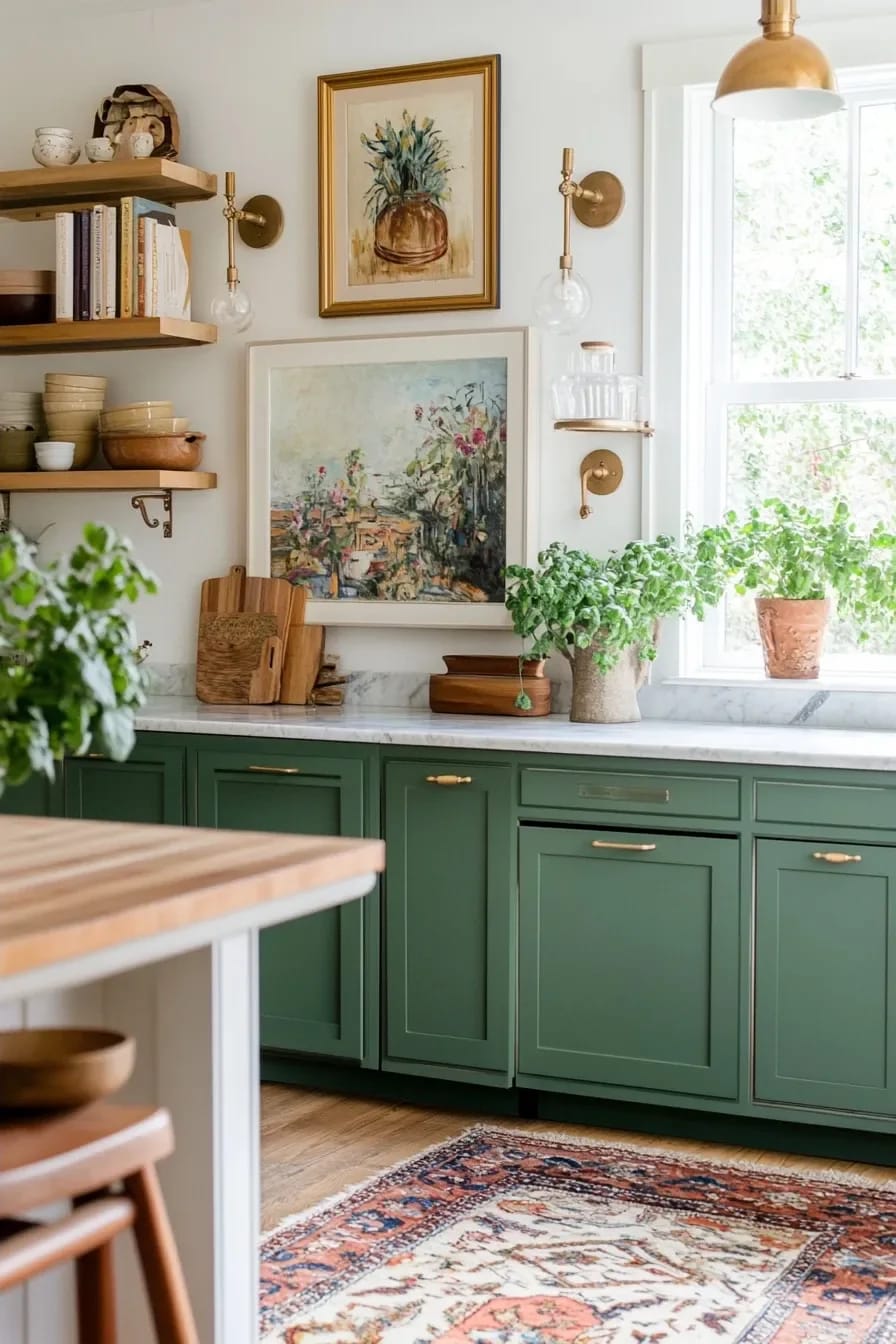
Two practical constraints. Aerosolised fat travels: anything hung within reach of the burners will film over, so keep canvases on the far wall and put glass or acrylic in front of anything you would be sad to scrub. And hang the group low, closer to the counter than the ceiling, so it belongs to the room rather than floating above the cabinets like a hotel corridor.
6. Put the loudest pattern on the kitchen floor
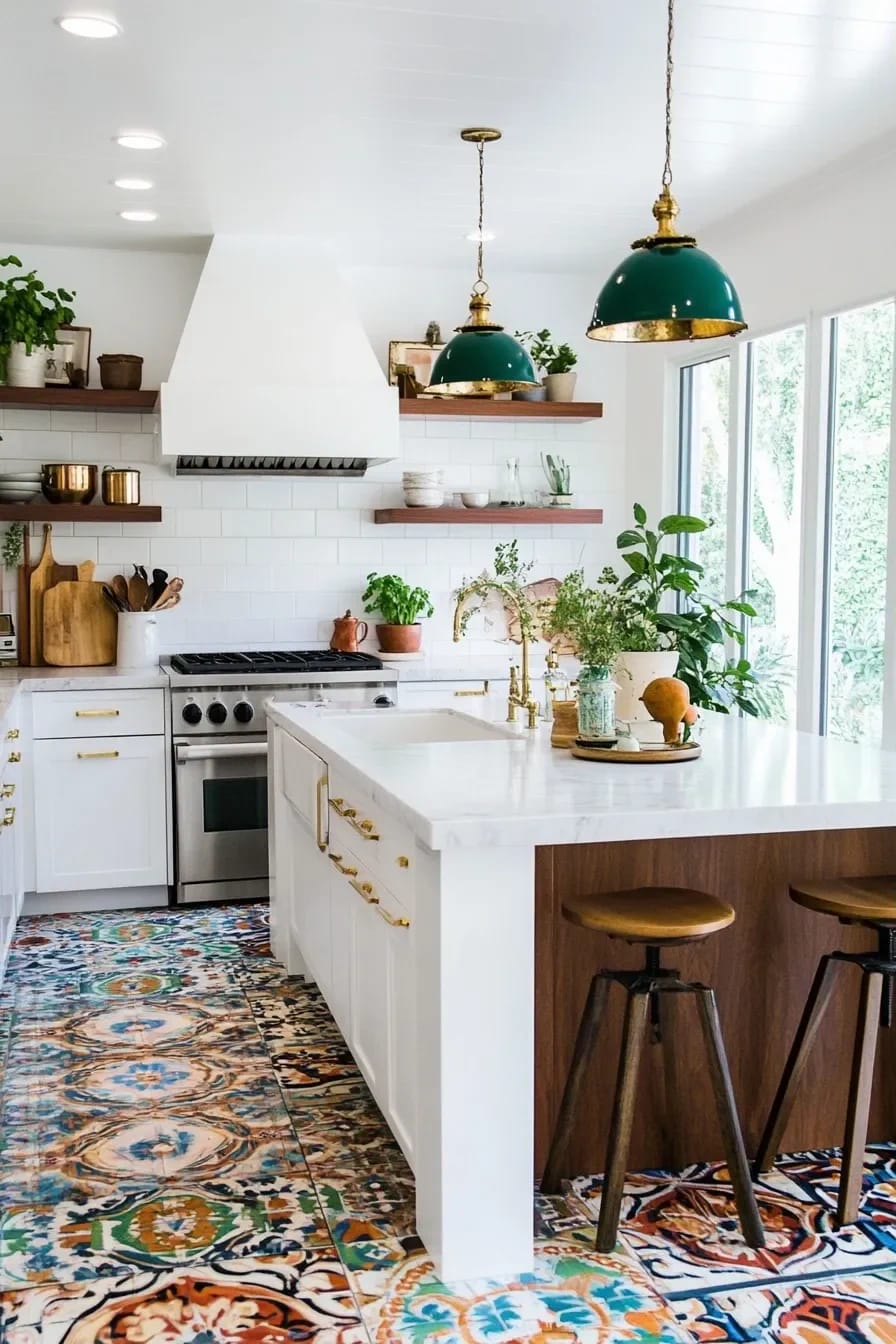
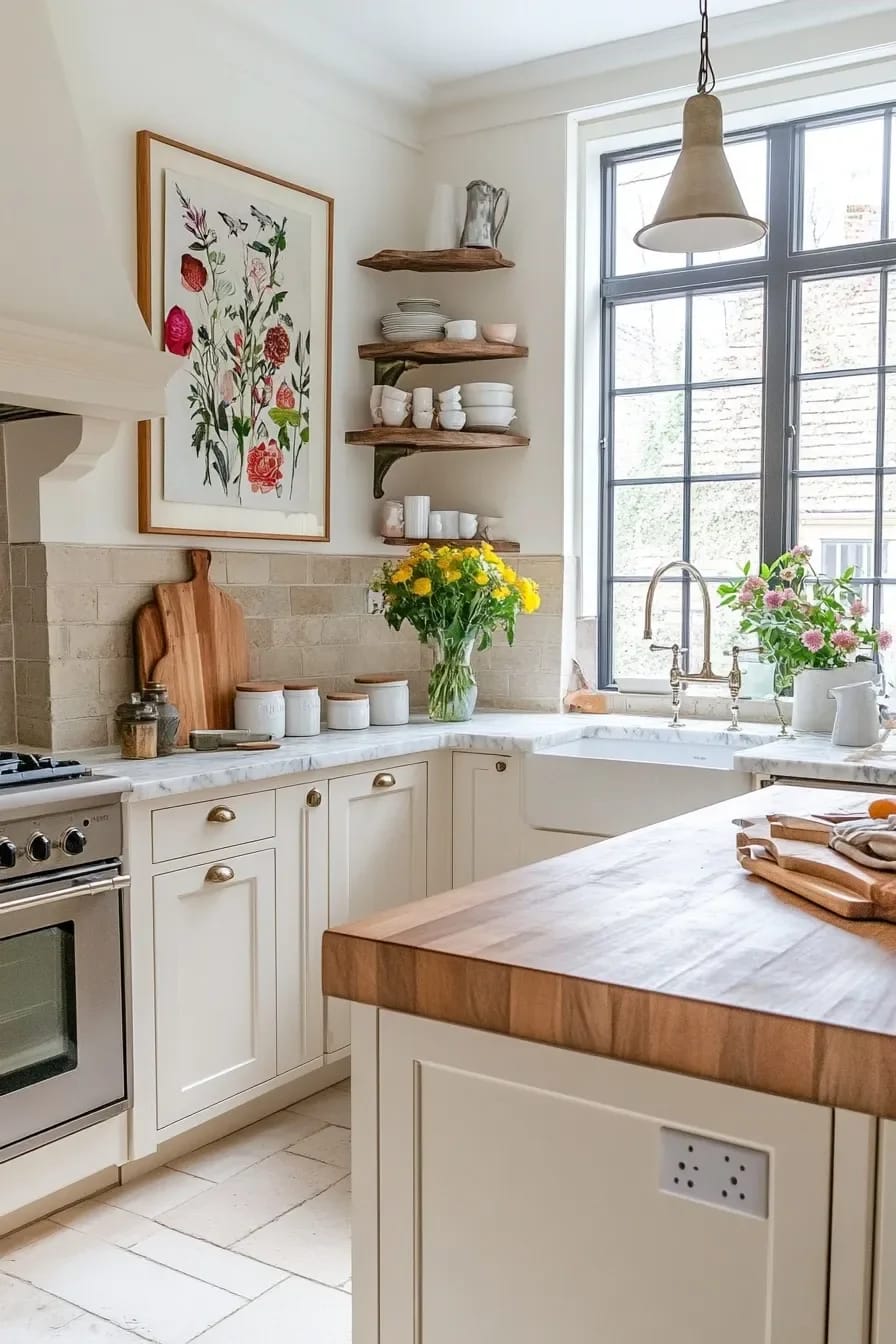
Checkerboard, mosaic and encaustic patterns work harder underfoot than on the wall, because furniture and light break them up and they never compete with the eye-level clutter. The renter-and-budget version is peel-and-stick vinyl at roughly $1 to $5 per square foot, and the honest picture is that it wears: in a kitchen, expect five to ten years before the traffic lane by the sink dulls and the edges start lifting where water sits. Buy the thickest wear layer you can (20 mil is a meaningful step up from the 12 mil most bargain packs use), degrease the subfloor properly, and roll it.
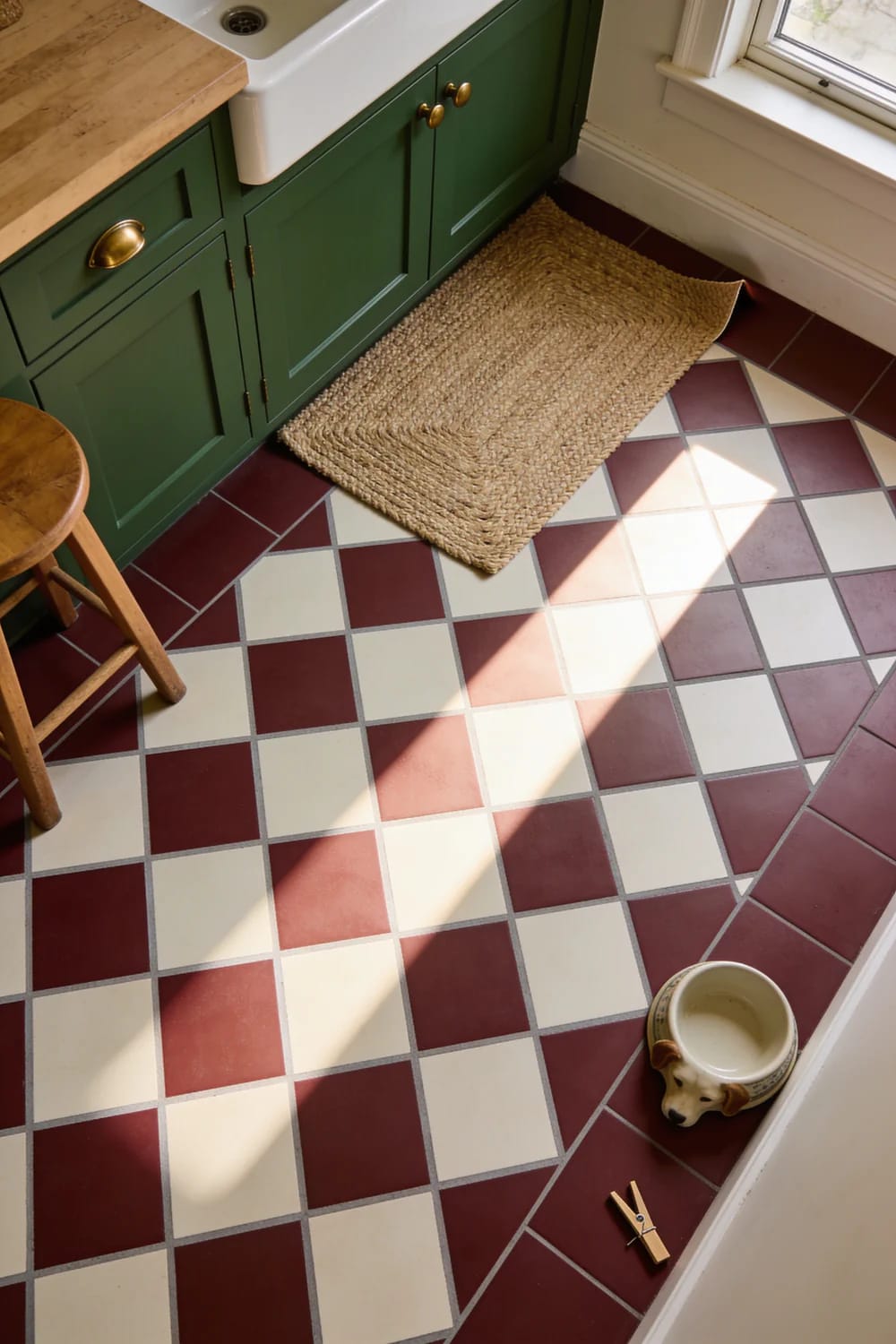
7. Open shelving only works if the dishes mismatch on purpose
Open shelves are not storage in an eclectic kitchen, they are the exhibition. Which means the contents have to survive being looked at daily, and a shelf of matching white plates from one shop is a wasted stage. Mismatched is the point — but mismatched with one thread running through it, or the shelf turns into visual noise and you stop seeing any single piece.
The thread can be colour, era or maker, and only one
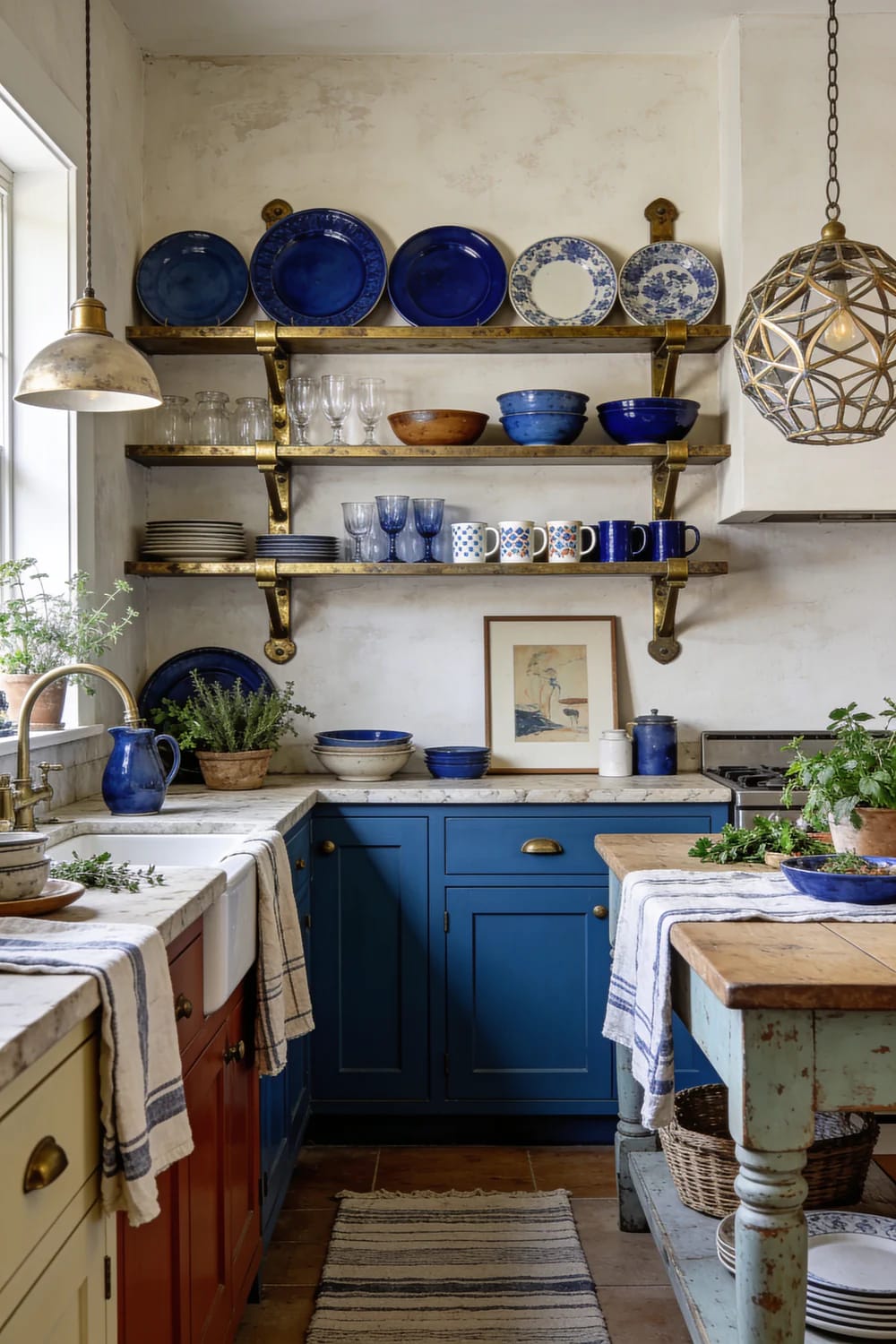
Pick one constraint and let everything else vary. All white-ish glaze, wildly different shapes and eras. Or all 1970s, in every colour they made. Or all from car-boot sales, no two matching, but nothing newer than your grandmother. Then stack by weight rather than by set: heavy stoneware low and to the back, glass forward where light passes through it, the one chipped piece you refuse to throw out at eye level.
8. One oversized vintage light beats three matching pendants
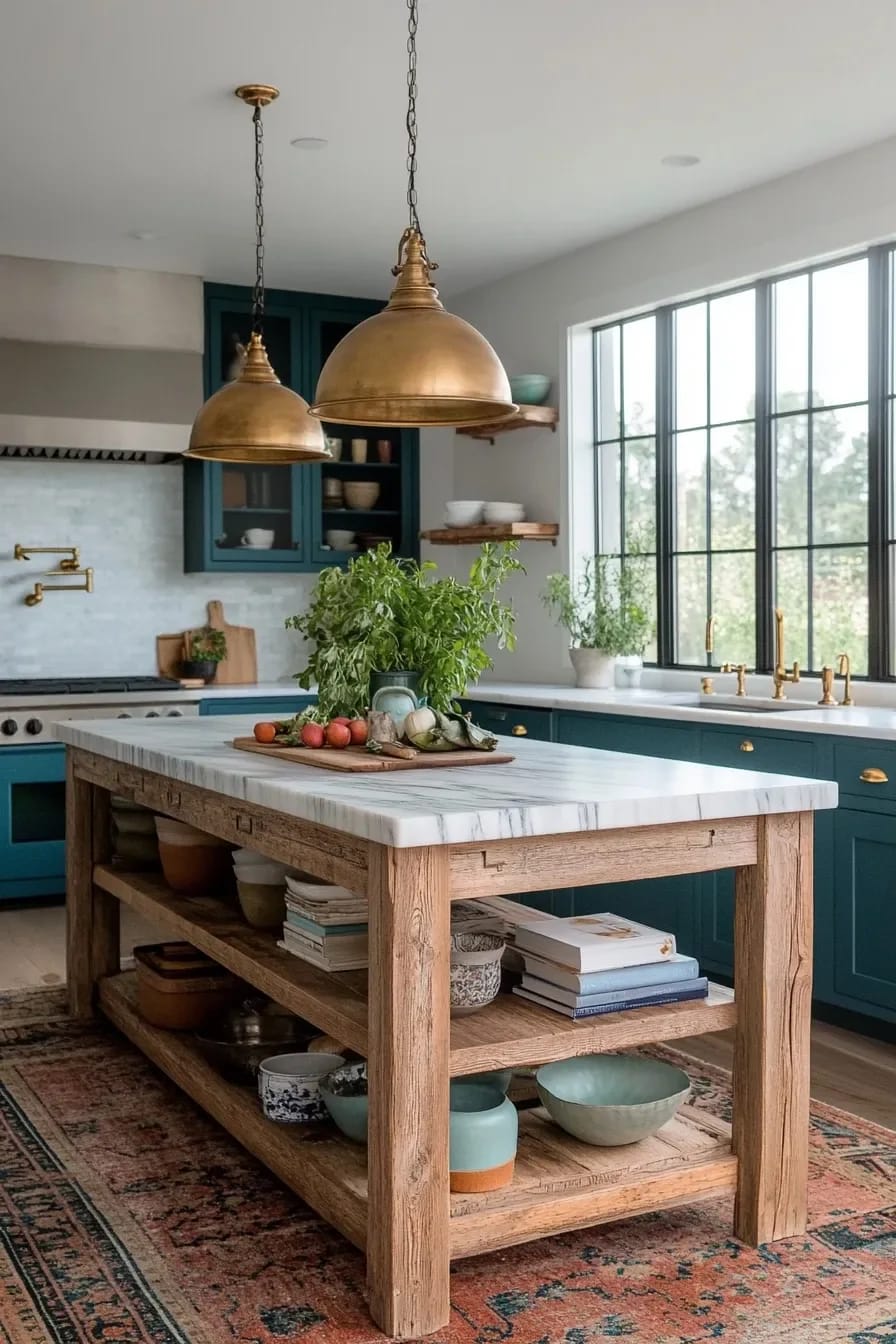
Three identical pendants in a row are the most fitted-kitchen thing you can hang, and they turn an eclectic room back into a showroom. One large fixture, obviously salvaged and obviously too big, does the opposite. It also lights better over a table than a trio of small shades, which mostly light each other.
Go a size up from what the shop suggests
Scale is where nerve fails. A shade that looks alarming in an antiques warehouse looks modest once it is 30 inches above a table in a room with an eight-foot ceiling, because the space around it swallows visual weight. If you are torn between two sizes, take the larger one — and hang it lower than feels correct, roughly 30 to 36 inches above the surface, so it reads as a piece of the room rather than a fitting near the ceiling.
"Works" at the flea market does not mean safe
Old fixtures come with brittle cloth-covered wire, corroded sockets and no earth. Filament Vintage Lighting, a restoration shop that does this daily, puts it plainly: a piece marked "works" at an estate sale still needs inspecting, because old wiring becomes brittle and rotten and turns into a hazard. A basic rewire at a lighting shop runs about $50 in labour plus parts; installing it will cost you an electrician's time on top, generally $50 to $130 an hour, more if the ceiling box needs bracing for the weight. Budget for the rewire when you buy the fixture, not after.
9. In a rental kitchen, change the hardware and the sink skirt
Two changes, both reversible, both landlord-invisible. Swap every knob and pull for unlacquered brass or turned wood, which takes an afternoon and a screwdriver — and keep the original screws in a labelled bag, taped inside a cabinet door, so that reinstating them at move-out takes ten minutes instead of a hardware-shop trip.
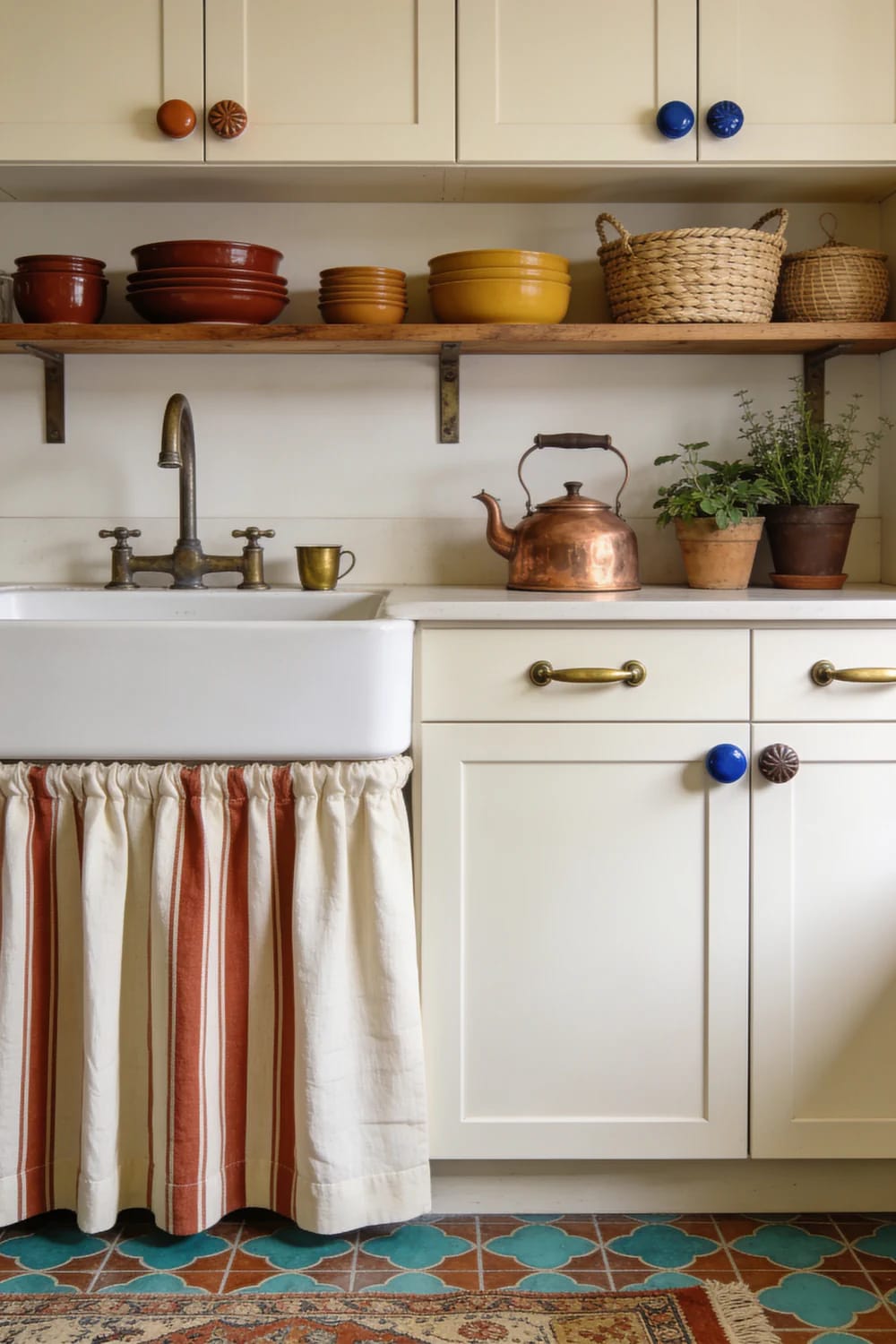
The second change is the sink skirt: a metre of patterned cotton on a tension wire or hook-and-loop tape, hung across the base cabinet under the sink. It hides the bin and the dish soap, it introduces the pattern your landlord's beige units will never give you, and it comes off in one pull. Add plants on the sill for the same reason — they carry colour and irregular shape into a room where every other surface is a rectangle you are not allowed to touch.