
Half of us made these in second grade: red and white pony beads strung onto a green pipe cleaner and bent into a hook. They stuck around for a mechanical reason, not a nostalgic one. A 6mm chenille stem grips a pony bead so hard that the whole ornament holds with zero glue, which is why a kid can mostly build one alone and why a classroom of 24 can finish a pile in an afternoon. What follows is the bead-by-bead method, the stem-and-bead specs that decide whether yours shed beads by January, and a few ways to use them once the tree is full.
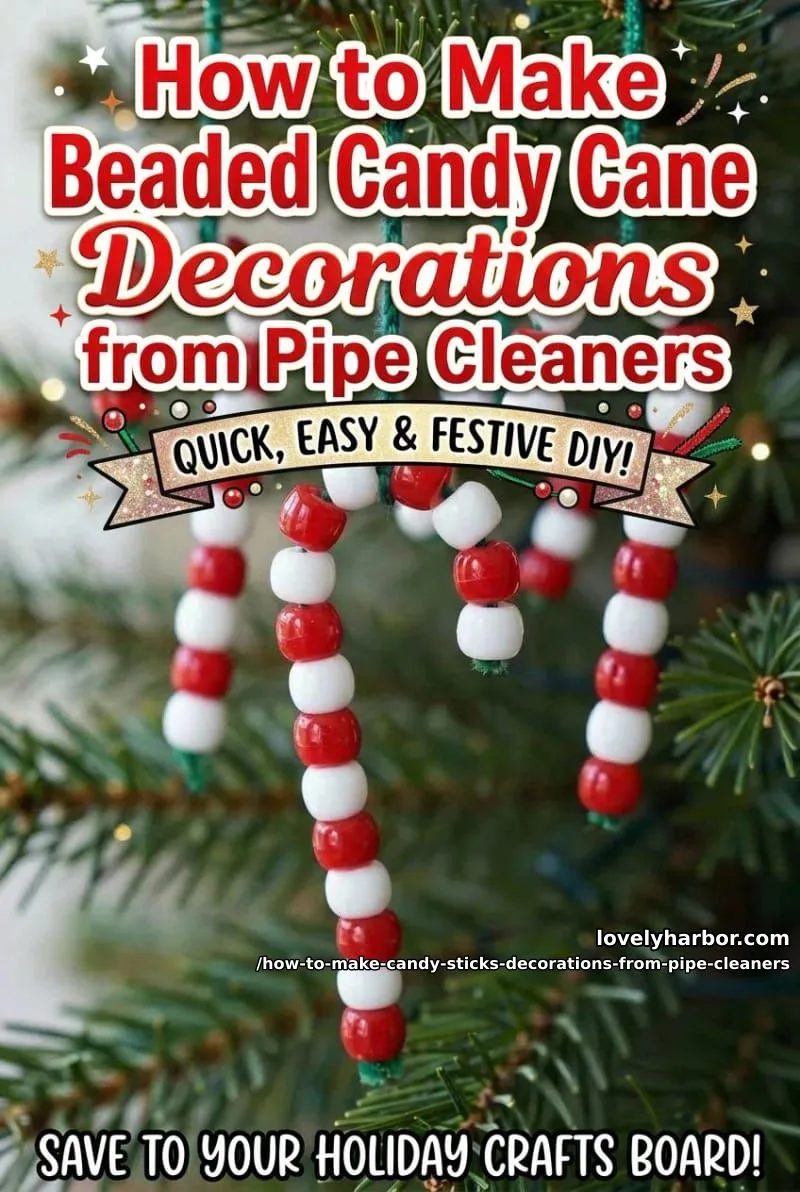
Why a pipe cleaner candy cane actually holds together
A pony bead's hole runs about 4mm across. A craft chenille stem measures 6mm once you count the fuzz wound around its wire core. Push the 6mm stem through the 4mm hole and the fuzz has nowhere to go: it compresses, wedges against the inside wall of every bead, and friction pins each one exactly where it sits. That's the whole trick. No glue, no knots, no crimps.
One December I hot-glued beads onto stems like the ornament was load-bearing, right up until a friend watched me for about ten seconds and pointed out the fuzz was already doing the job. Don't be me. The only spots that need any thought are the two ends, where a bead could slide off, and you handle that with a fold instead of glue.
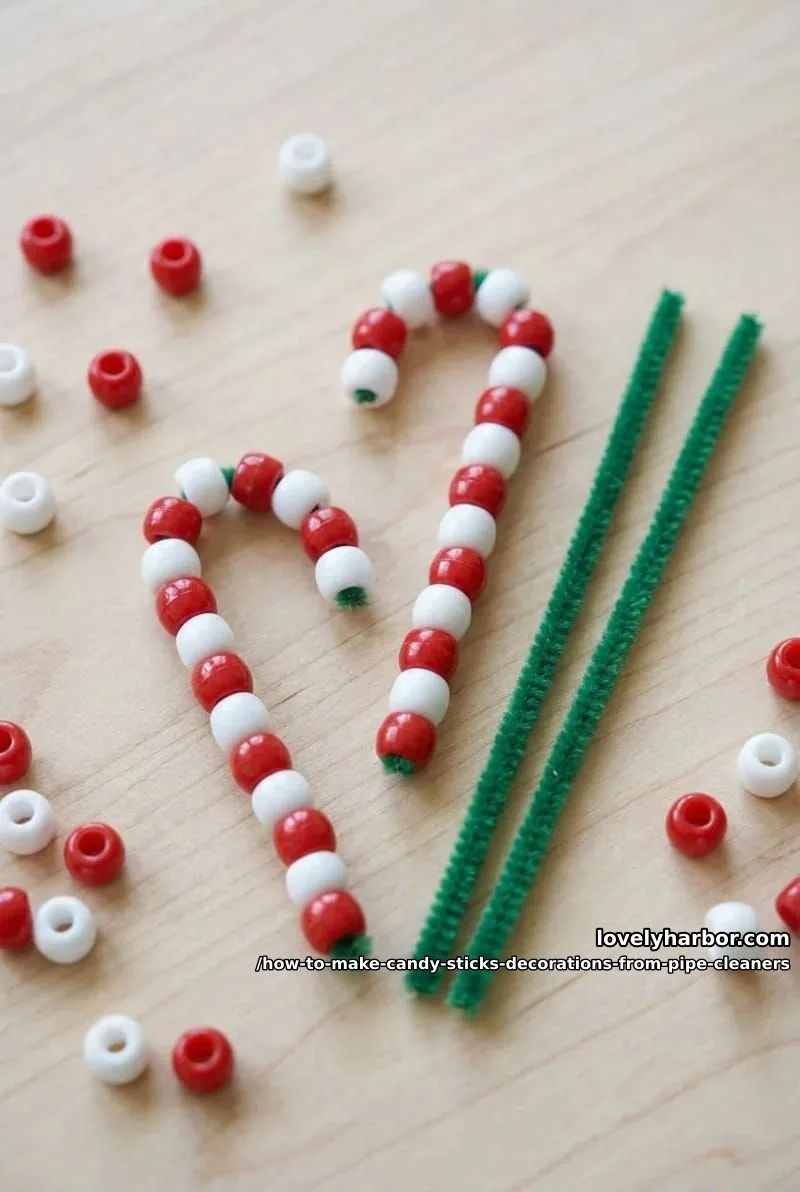
The grip: a 6mm fuzzy stem squeezed into a 4mm bead hole creates constant friction along the bead wall, so beads resist sliding even when the cane is bent into a curve.
The stoppers: fold the last half inch of stem back on itself at each end and you get a doubled bump too fat to pass through a bead hole, which locks the end beads on without any adhesive.
Materials and tools
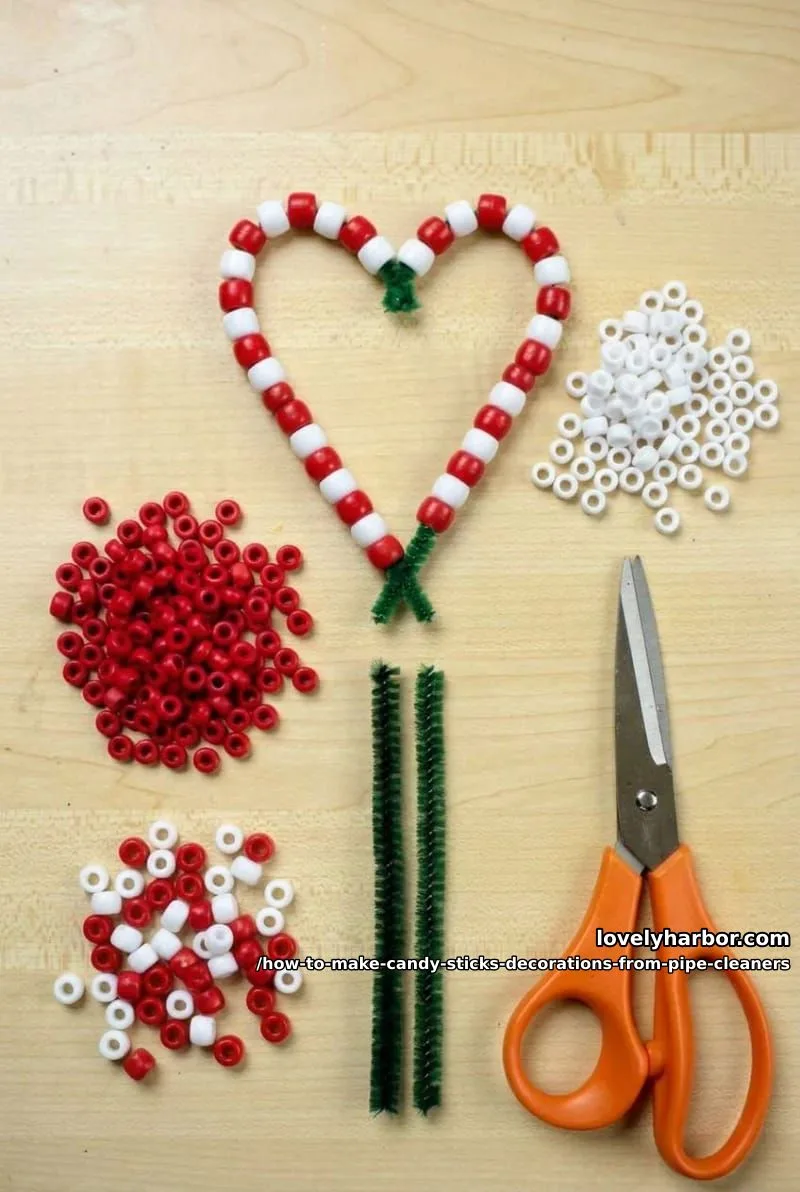
Two consumables and one tool. That's the project. Everything else is optional, and if you already own scissors your real out-of-pocket cost is under fifteen dollars for a pile of beads and stems that will outlast the season.
Materials (consumables)
| Qty | Item | Spec | Price |
|---|---|---|---|
| 1 | Red and white pony beads (candy cane mix) | 6x9mm opaque, ~1200 pieces | $8 to $13 |
| 1 | Green chenille stems / pipe cleaners | 6mm x 12 inch, 100 count | $5 to $9 |
| Materials subtotal | $13 to $22 | ||
Tools (reusable)
| Qty | Item | Spec | Price |
|---|---|---|---|
| 1 | Fiskars all-purpose scissors | 8 inch, to trim and fold stem ends | $6 to $12 |
| 1 | Bead organizer tray(optional) | Sorts red and white into separate wells | $12 to $20 |
| Tools subtotal (scissors only) | $6 to $12 | ||
| Combined total, buying everything from scratch | $19 to $34 |
Prices are approximate ranges as of 2026; verify before purchase. Add the optional sorting tray and the all-in for first-timers lands closer to $50.
If chasing down two separate bags sounds like a hassle, there's a one-box version that ships the beads, the stems, and a roll of ribbon together. The beads in it are round rather than the barrel pony beads pictured here, but they string the same way and the kit is built around exactly this craft.
One box covers a whole table of kids: red, green and white beads, 60 red-and-green stems, and 64 feet of ribbon for hanging loops.

Pick the right beads and stems
This is the part people get wrong, and it's the whole difference between an ornament that survives the storage bin and a sad handful of loose beads by next Christmas. Two specifics matter, and only two: the beads have to be opaque, and the stems have to be 6mm, not the skinny 4mm "economy" ones.
Opaque beads read as candy. The translucent "crystal" pony beads come out washed out, more cough drop than peppermint, and the white ones in particular sink into a foggy grey. On stem color I'll plant a flag: use green. Green disappears between the beads and the exposed tips pass for a tiny candy stem, where white or red stems show off every gap and read as half-finished.
Do this
- Opaque red and white pony beads, 6x9mm
- 6mm chenille stems , the fuzz is what grips a 4mm bead hole
- Full 12-inch stems. You’ll want the length for the hook.
- Go green; it vanishes between the beads
Avoid
- Translucent or “crystal” beads, which come out faded and grey
- 4mm economy stems: too thin, so beads rattle and slip off
- Mini 4x7mm pony beads , holes too tight for a fuzzy 6mm stem
- Anything cut under 10 inches leaves no room to curve a hook
Step 1: Plan your stripe pattern
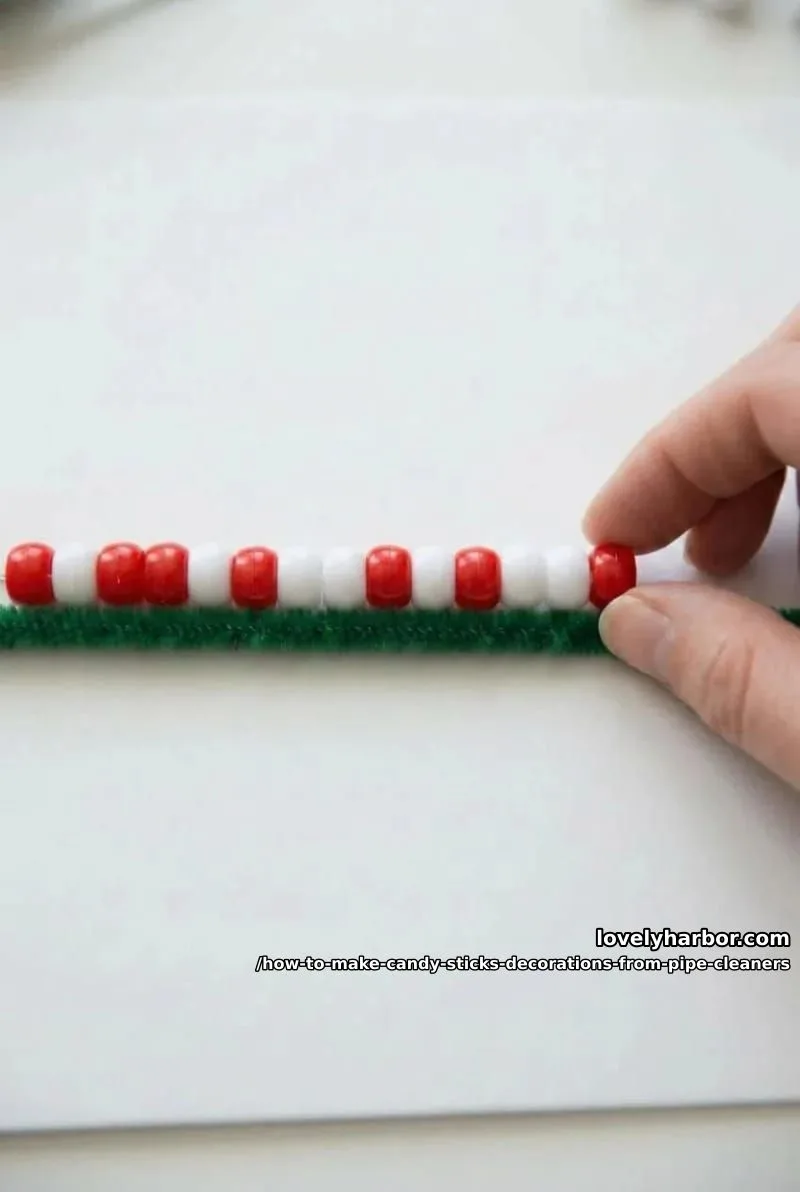
Settle the stripe before a single bead goes on. Once they're threaded, changing the pattern means stripping the whole stem and starting over, so lay the beads out in a line on the table first. Two patterns cover almost everyone:
- Single alternating(red, white, red, white): the tight candy-stripe look, busiest up close.
- Two-and-two(red, red, white, white): a bolder band that reads as a candy cane from across the room, which is what you want on a tree.
Step 2: Fold a stopper at the bottom
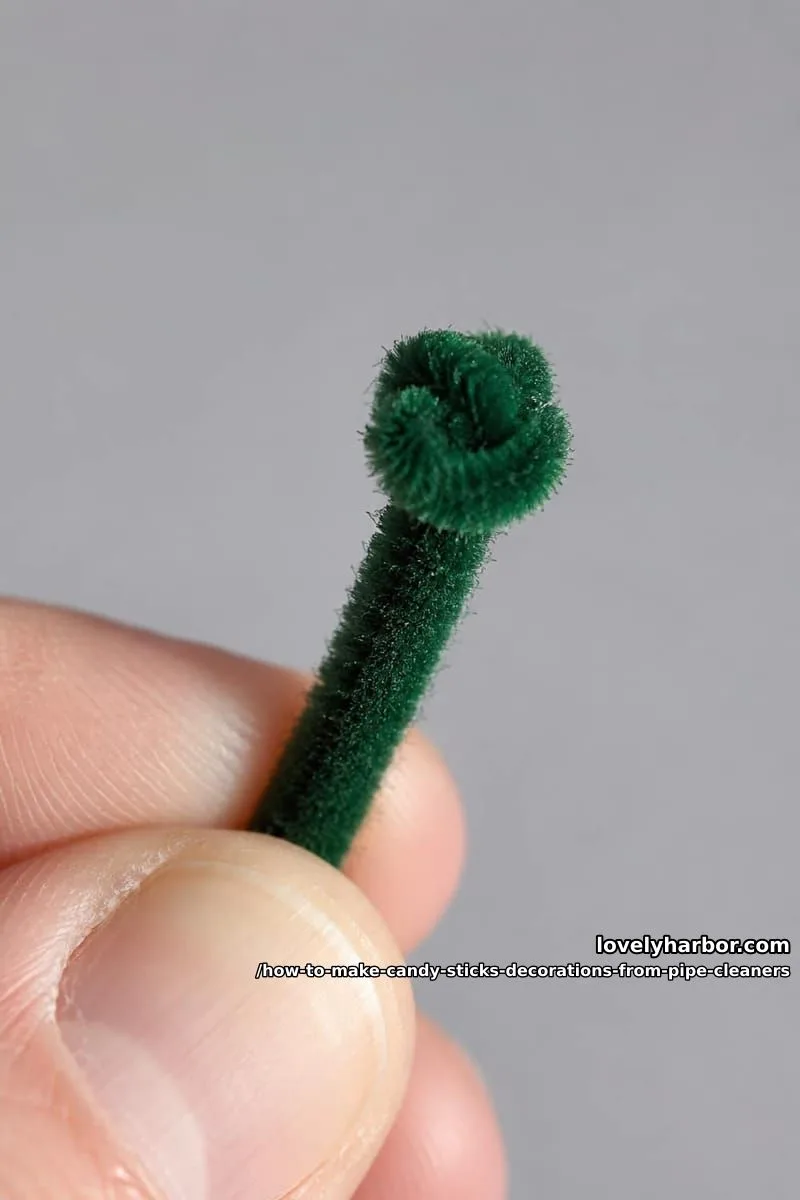
- Fold the tip: bend the last half inch (about 1.5 cm) of one end back on itself and pinch it flat, making a small doubled bump.
- Test it: slide one bead down to the fold. If it stops there and won’t pass, your stopper is fat enough. If it slides over, fold the tip once more.
Alternative method: you can also simply us a drop of hot glue at the tip insert one bead and let it dry before proceeding further. This would create a more neat stopper, but you have to be careful for the glue to not be visible.
Step 3: Thread the beads
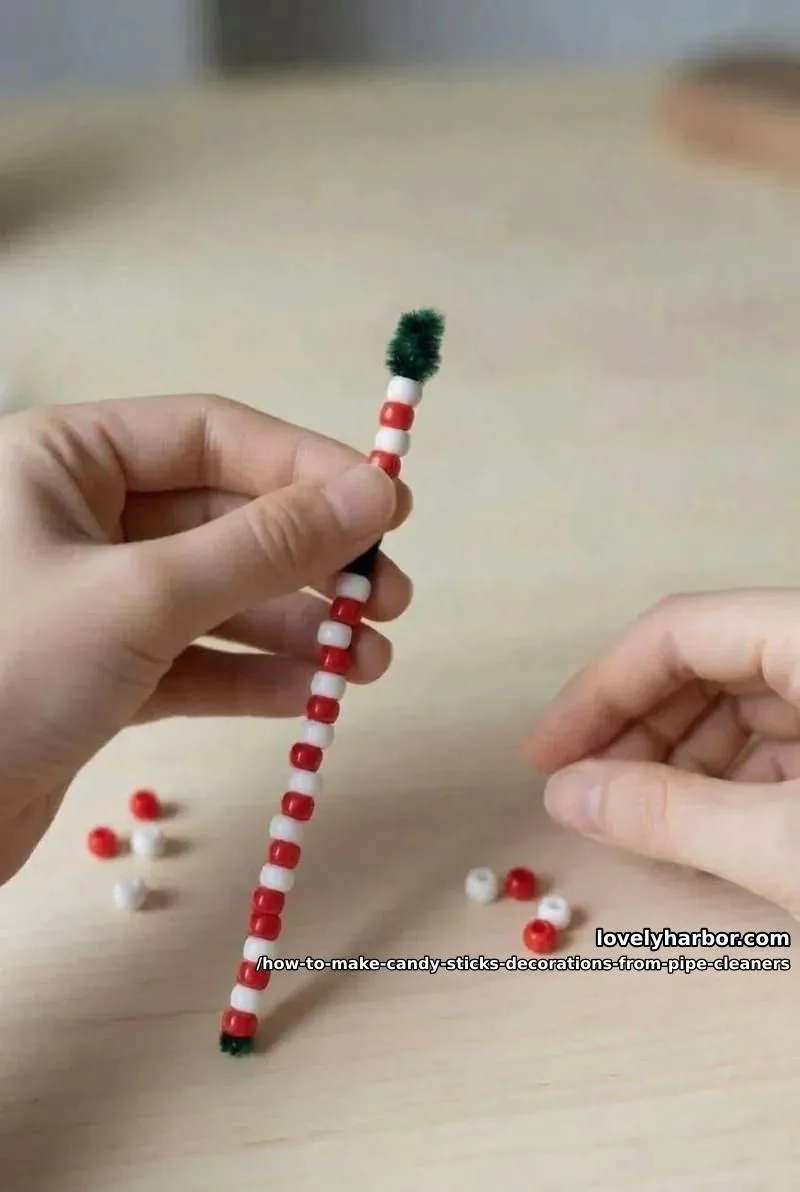
Feed the beads on in your chosen pattern, pushing each one down to meet the last. Stop when you've got roughly half an inch of bare stem left at the top. A 12-inch stem holds about 26 beads, which is 13 of each color in a two-and-two pattern.
- Thread in order: follow the line you laid out so the stripe stays consistent.
- Snug as you go: press each bead firmly against the one below. Loose gaps show green and the cane looks sparse once it’s curved.
- Stop short: leave that half inch of bare stem at the top for the second stopper.
Step 4: Lock the top and bend the hook
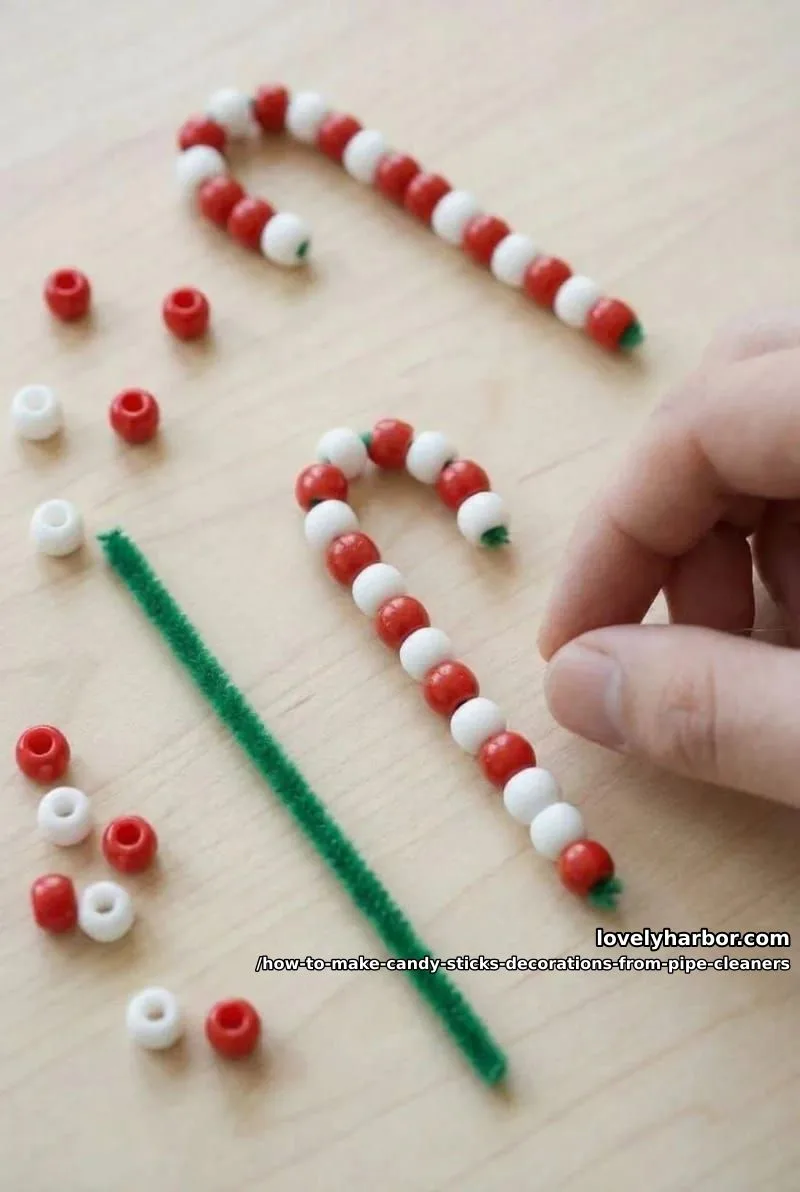
- Fold the top stopper: bend the bare top tip back over the last bead and pinch it flat, the same move you made at the bottom.
- Curve the hook: take the top third of the beaded stick and bend it into a smooth candy cane arc, curving it over your finger or the barrel of a marker so the bend stays rounded instead of kinked.
- Keep the rest straight: the lower two-thirds stays a straight stick; only the top curls.
Step 5: Shape it and hang it
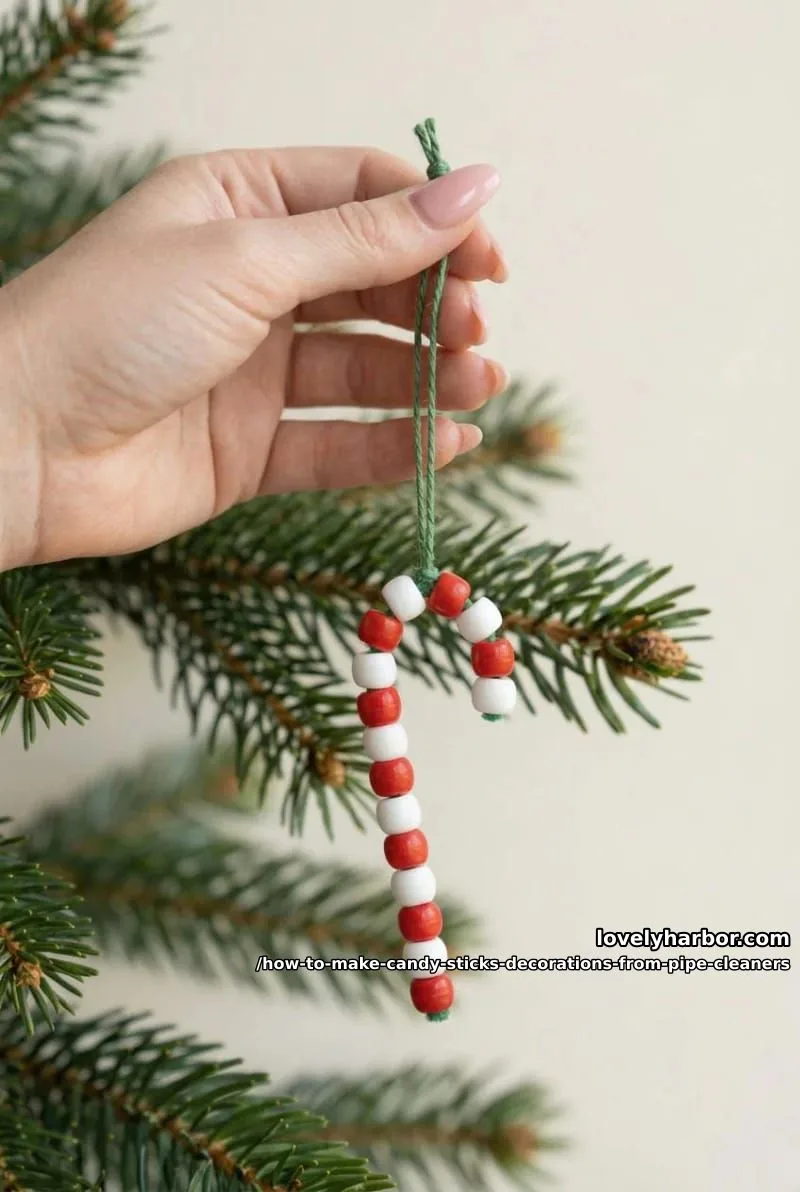
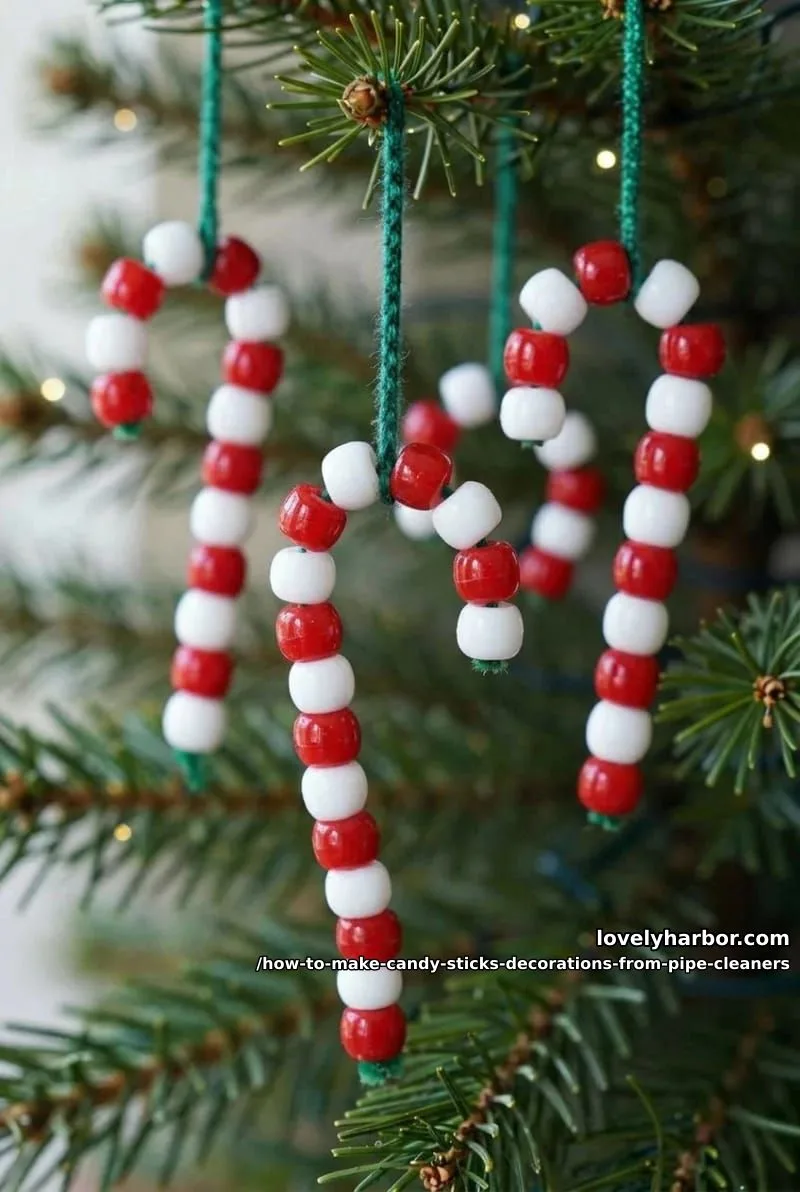
Adjust the arc until both stoppers are tucked out of sight and the curve looks even. The hook is the hanger, so drape it straight over a branch, a garland wire, or a cup hook. For a package topper, tie a length of jute through the curve. Want a flat "candy stick" instead of a cane? Skip the bend, leave the beaded stem straight, and curl just the very top into a tiny loop for hanging.
Mistakes that ruin pipe cleaner candy canes
- Skipping the stopper fold. No folded ends, and the beads walk off the tips the first time someone handles the cane.
- Using 4mm economy stems. Too thin to grip the hole, so the beads rattle, slide, and shed. This is the failure I see most.
- Beading the whole length edge to edge. Leave no bare tip and there’s nowhere to fold a stopper, plus the cut wire pokes out right at the hook.
- Kinking the hook. A sharp fold instead of a smooth arc pulls the beads apart and opens green gaps along the curve.
- Cutting stems too short. Under 10 inches and there isn’t enough length left to form a hook after the beads go on.
- Random color salad. Beads dumped on without a plan read as confetti, not candy. Commit to a stripe.
A 24-cane classroom batch
Class of 24, one bead bag, one stem pack
One 1200-bead bag of red and white pony beads plus one 100-count pack of green stems makes roughly 40 canes, so a class of 24 has a cushion for dropped beads and do-overs. Figure about 26 beads per cane (13 red, 13 white) and one stem each. Set the two colors out in separate cups per table of four, pre-fold the bottom stopper on every stem before the kids sit down, and the beading runs about 10 minutes a cane. All in, you’re under 50 cents per ornament, which is why this craft has kept its spot in classrooms for decades.
Color schemes and ways to use them
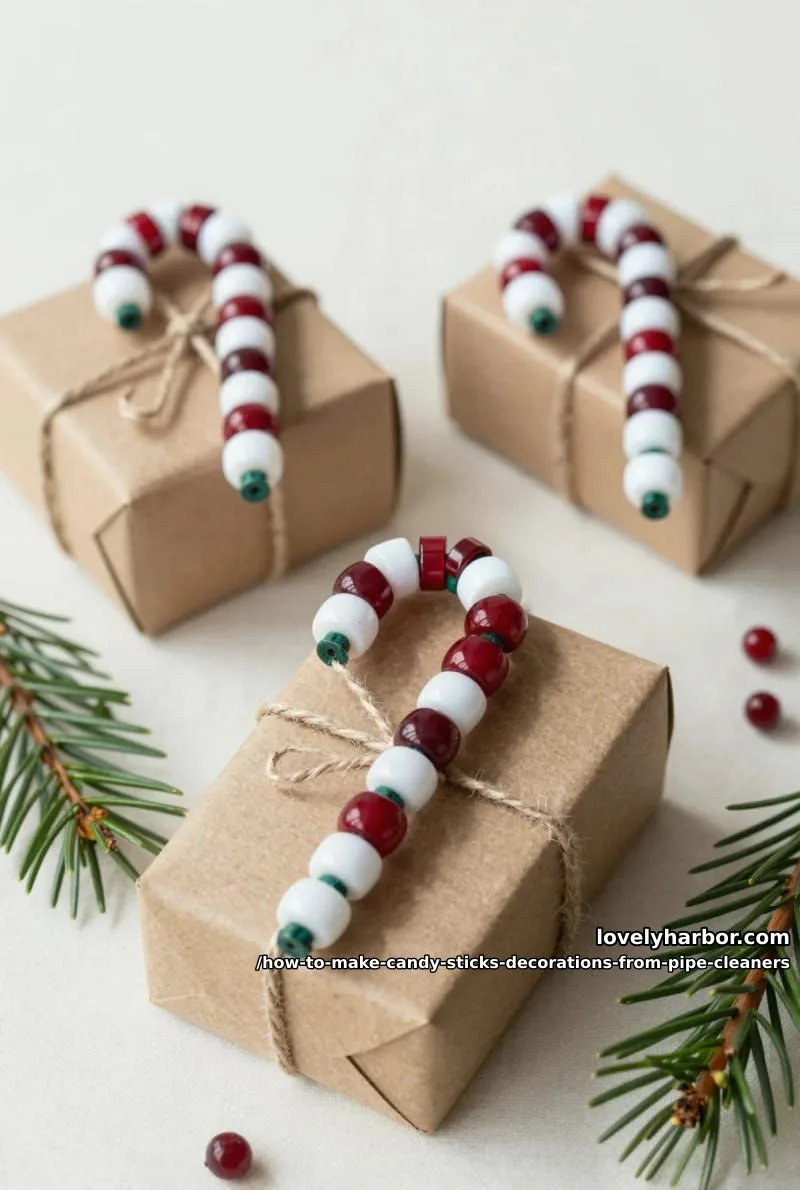
Red and white is the default, but the same technique handles any two-color logic. If you'd rather the stem belong than hide, switch to red stems and run a holly palette.
Classic stripe
Single alternating red and white, the look everyone pictures when you say candy cane.
Peppermint pairs
Two red, two white. A wider band that stays legible from across a room.
Holly cane
Red, white and green repeating on a red stem, leaning into the stem color instead of masking it.
Frosted
White with pale blue, a winter palette that reads cold rather than strictly Christmas.
The holly version wants stems that match the beads rather than disappear behind them:
Essentials by Leisure Arts red chenille stems, 12 inch 6mmOff the tree, the finished canes earn their keep a few ways:
- Package toppers: tie one through the hook with jute or baker’s twine.
- Place-card holders. Skip the bend, curl the top into a small spiral, and slot a name card into the curl.
- Garland: string a long continuous stripe across a joined set of stems and drape it over a window.
- Advent counters: make 24, clip one to a string each morning.
Conclusion
Making a batch? Bead all the sticks flat first and save the hooks for one pass at the end. Straight sticks nest in a shoebox without tangling, and bending the hooks later lets you shape each arc to the branch it's headed for. Almost everything else here is negotiable. The 6mm stem isn't, because that one spec is the reason these are still holding beads on the wire long after the glue-gun version would have come apart.