
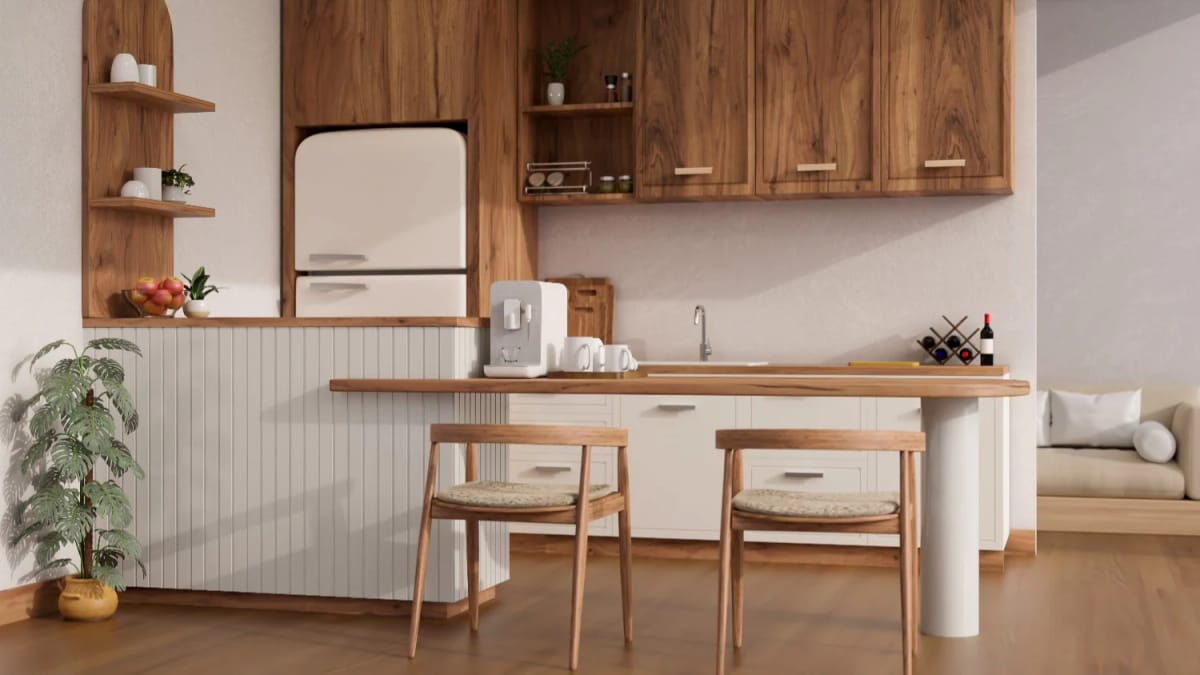
A japandi kitchen is the meeting point of Japanese restraint and Scandinavian warmth, and the whole thing turns on one distinction: warm minimalism versus cold minimalism. Get it wrong and you have a showroom. Get it right and you have a room worth standing in at 7am with coffee. The ten decisions below are what separate the two, from the greige on the walls to the appliances you make disappear.
Two notes before the list. Japandi isn’t a shopping list of objects, it’s a set of proportions, so most of what follows is about restraint rather than things to buy. And it’s having a real moment right now: Apartment Therapy’s 2026 State of Home Design survey, drawn from 140 designers, named it one of the year’s defining aesthetics, which means the cliché versions are multiplying fast. The aim here is to skip those.
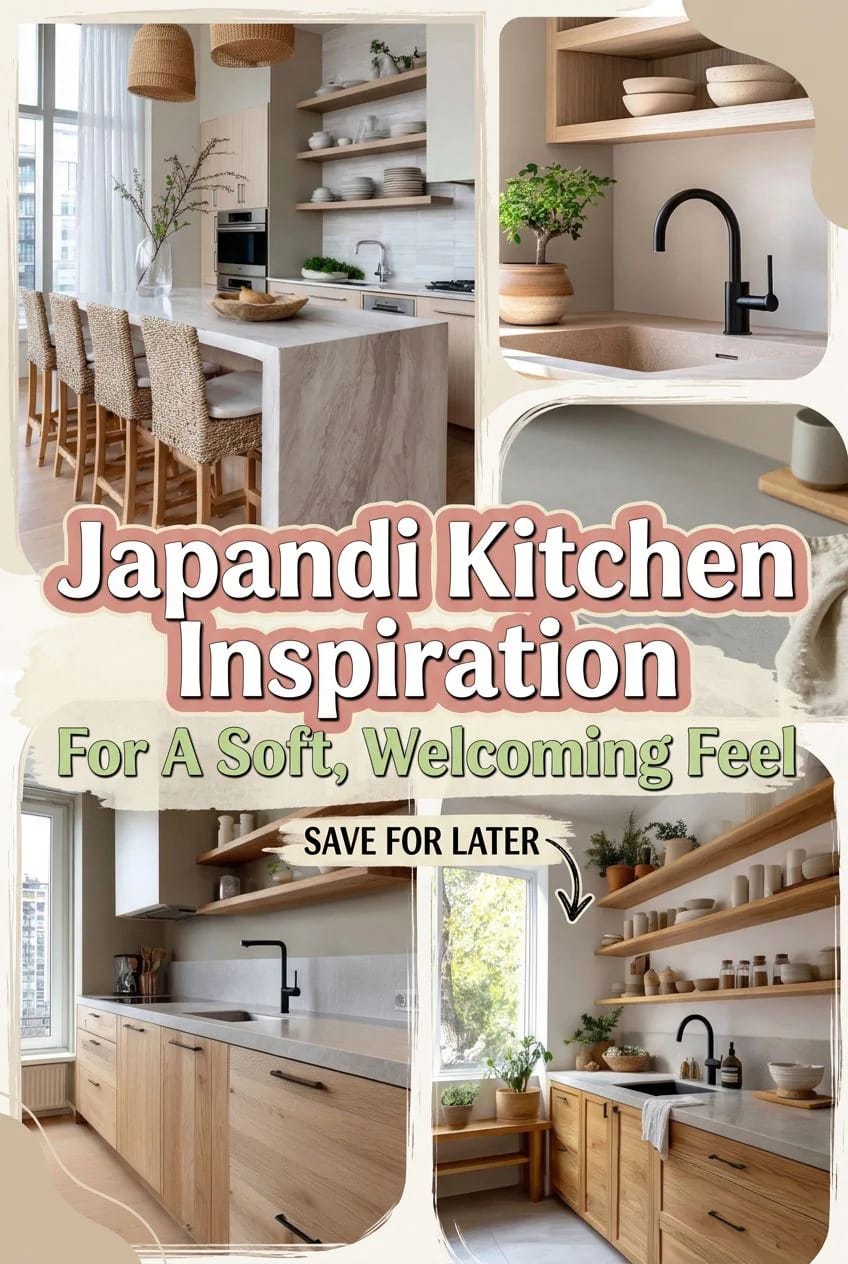
1. Build the japandi palette on warm greige, not white
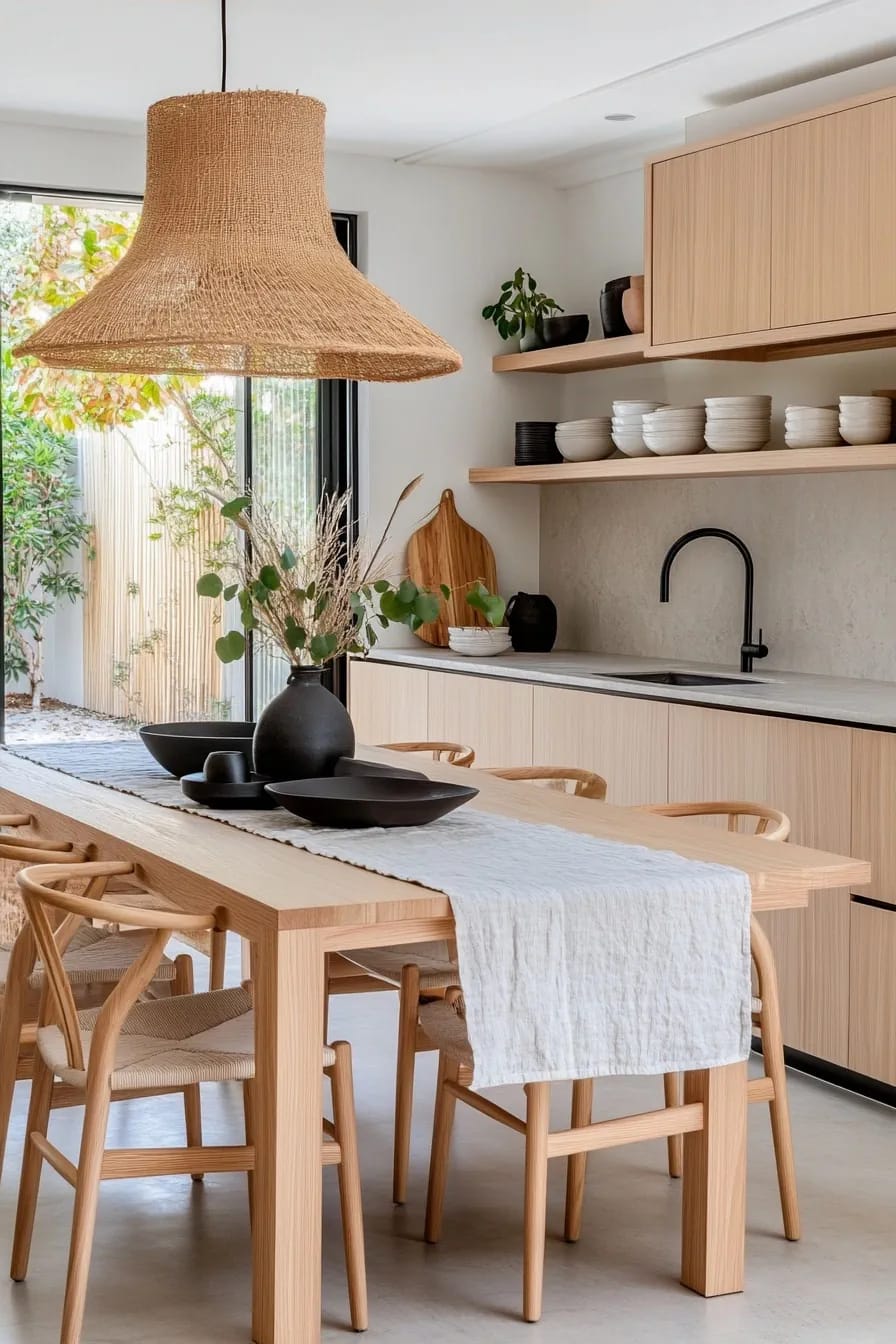
Skip pure white. It’s the single most common japandi mistake, and the fastest way to make a kitchen read Scandinavian-cold instead of japandi-warm. The base you want is a warm greige, a beige-leaning grey with a sandy or faintly green undertone and no blue in it at all. Sherwin-Williams Accessible Beige SW 7036 (LRV around 58) is the one US designers name most often; Benjamin Moore Pale Oak OC-20 sits a step warmer for kitchens that get less light.
| Color | Undertone | Best in | Use it on |
|---|---|---|---|
| SW Accessible Beige 7036 | Warm greige, slight green | Open-plan, good light | Walls, upper cabinets |
| BM Pale Oak OC-20 | Warmer greige, soft gold | Lower-light kitchens | Walls, cabinets |
| SW Shoji White 7042 | Warm white, grey-green | Rooms that skew cool | Warm-white cabinet fronts |
| F&B School House White 291 | Creamy warm white | Small kitchens, trim | Trim, narrow shaker fronts |
| SW Evergreen Fog 9130 | Muted grey-green | Two-tone base cabinets | Lower cabinets, island |
Granted, a swatch that reads warm in the store can turn muddy or yellow on a north wall, so the paint is only half the decision and the bulb is the other half (that’s its own item further down). The 2026 move worth stealing is two-tone cabinetry: a warm white up top, a muted sage or clay on the base, lighter above and grounded below.
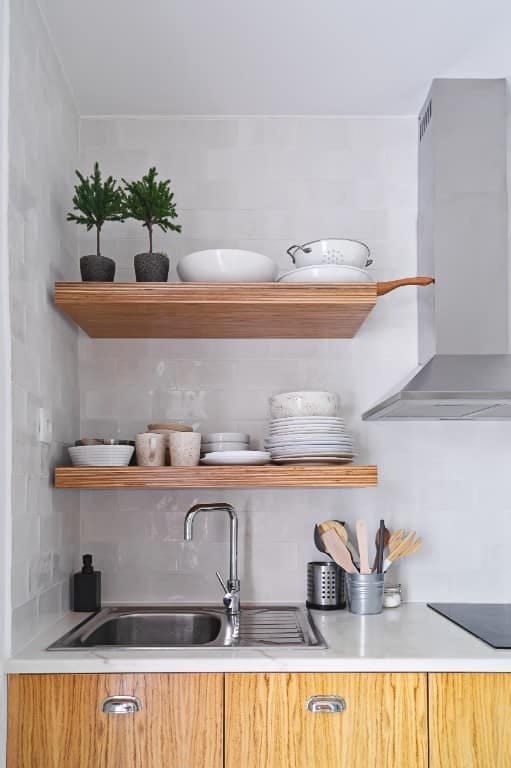
2. Add exactly one black accent, then stop
One matte-black element per kitchen. A tap, or the stems of the pendants, or a single run of slim pulls: pick one, and let it be the only hard, dark line in the room. In a palette this soft, black behaves like sumi ink, defining the edges of the wood and stone. Two black elements start competing with each other, and by the fifth you’ve quietly built a monochrome kitchen with a japandi label stuck on.
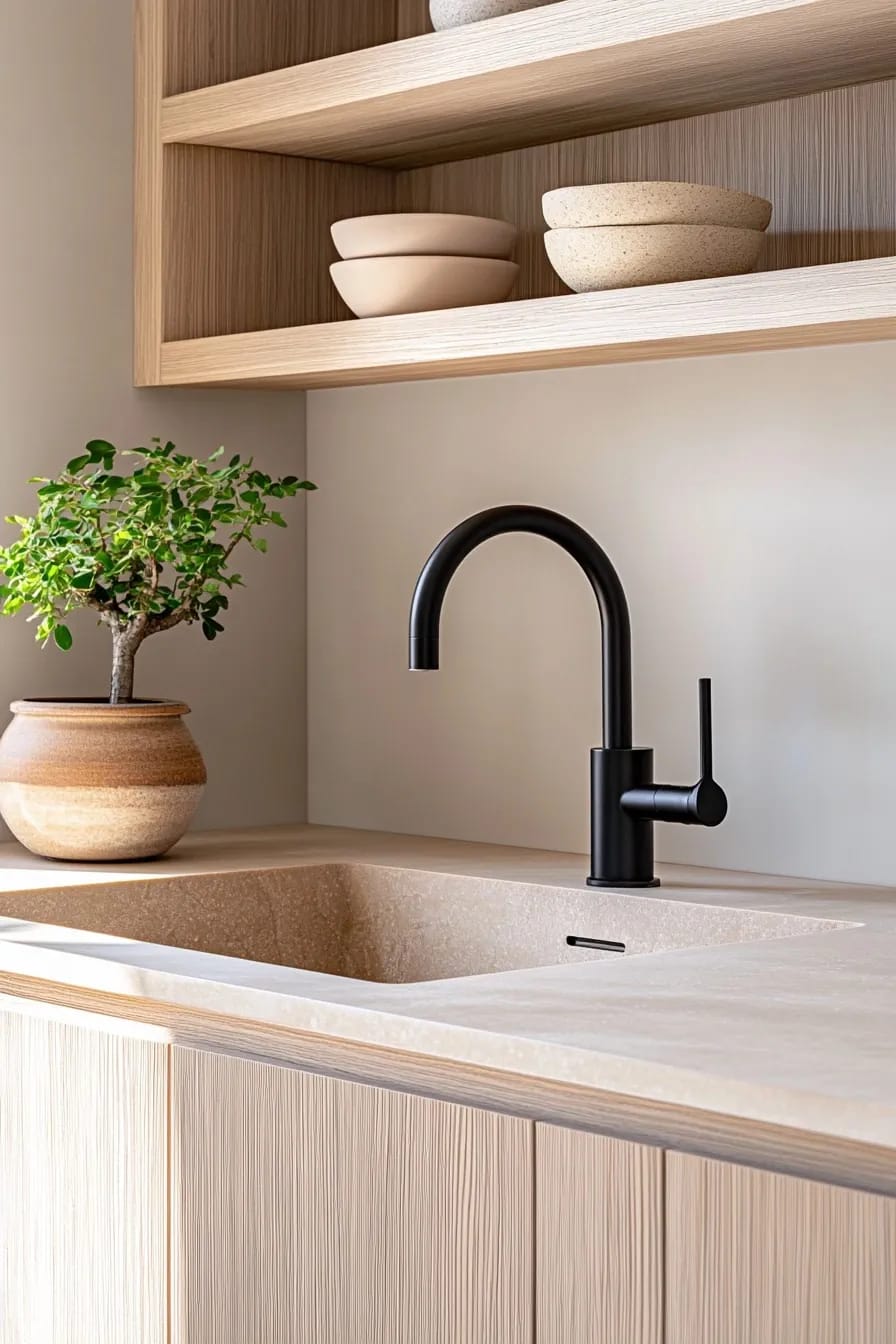
The catch, and the reason restraint matters here, is that matte black shows everything: water spots on a faucet, fingerprints on a flat cabinet front. Put your one accent where hands don’t constantly land. And if you find yourself wanting far more black than a single accent will allow, you don’t really want japandi, you want something moodier, and a black backsplash is the honest way to get there.
The failure mode isn’t too much color, it’s too much sameness. Everything matched, every surface matte, nothing living, no plant, no worn wooden spoon in sight. That’s a display, not a kitchen. Warmth in japandi comes from small imperfections and one or two organic things, so leave room for them on purpose.
3. Choose pale wood, and treat it as a color
Wood is where the warmth in a japandi kitchen actually comes from, which makes the species a color decision rather than a finish you pick at the end. Go pale, in a matte or lightly oiled finish that keeps the grain readable.
Most japandi rooms run on about four tones: one wall color, one soft textile, the wood, and a single accent. The wood carries as much visual weight as the paint, so choose it first and match the greige to it, not the reverse.
Why white oak is the default
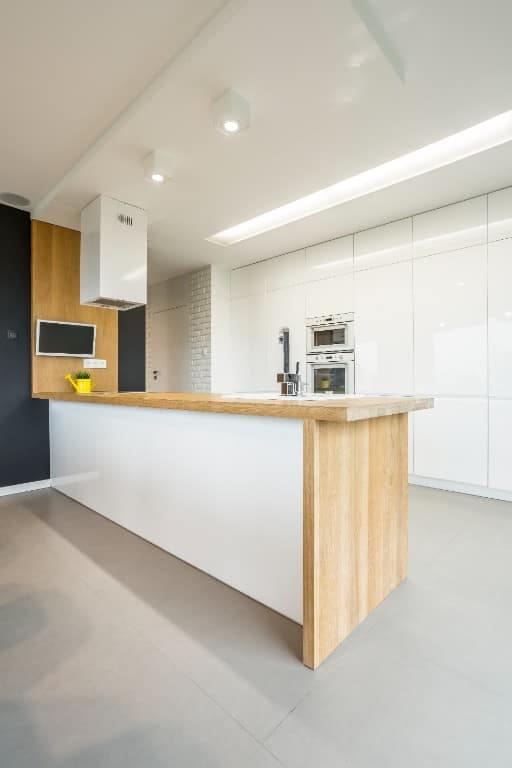
White oak is the safe default because it stays pale and faintly golden without tipping orange, and rift-cut gives you a quiet straight grain instead of the busy cathedral figure that fights minimalism. Ask for it rift or quarter-sawn if you can; it costs more and it’s the difference between calm and loud.
Where walnut and ash actually belong
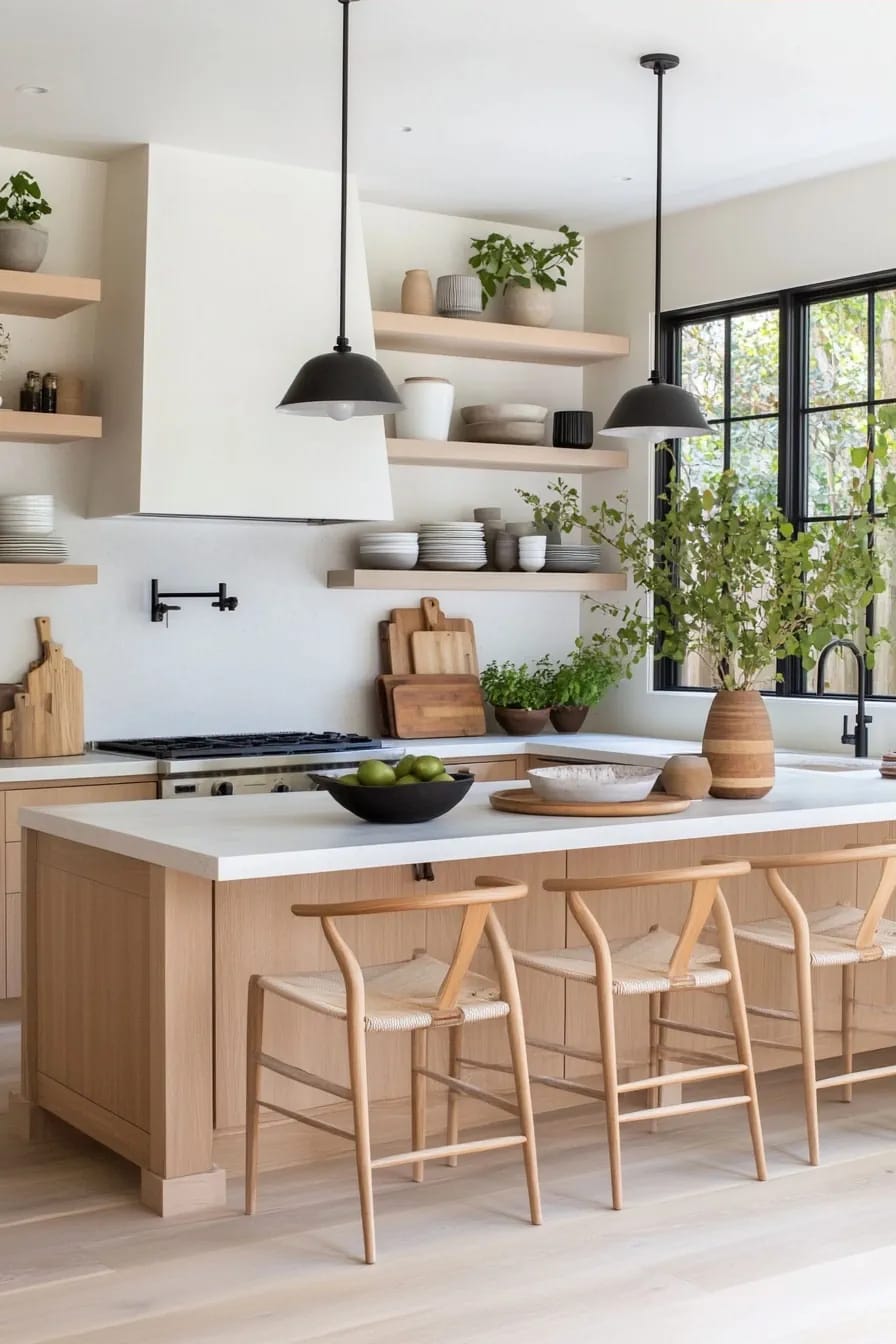
Walnut is the tempting one and usually the wrong one for this style, because it’s dark and red enough to drag the room toward mid-century cigar lounge. I’d keep walnut to a single stool or a cutting board, never the run. Ash goes the other direction, nearly white with a strong grain, which works when your light is warm enough to soften it. If you want to push the whole thing warmer and earthier than strict japandi allows, that adjacent look, the organic modern kitchen, leans into exactly this wood-and-stone warmth with a heavier hand.
4. Go handleless or slim, never ornate
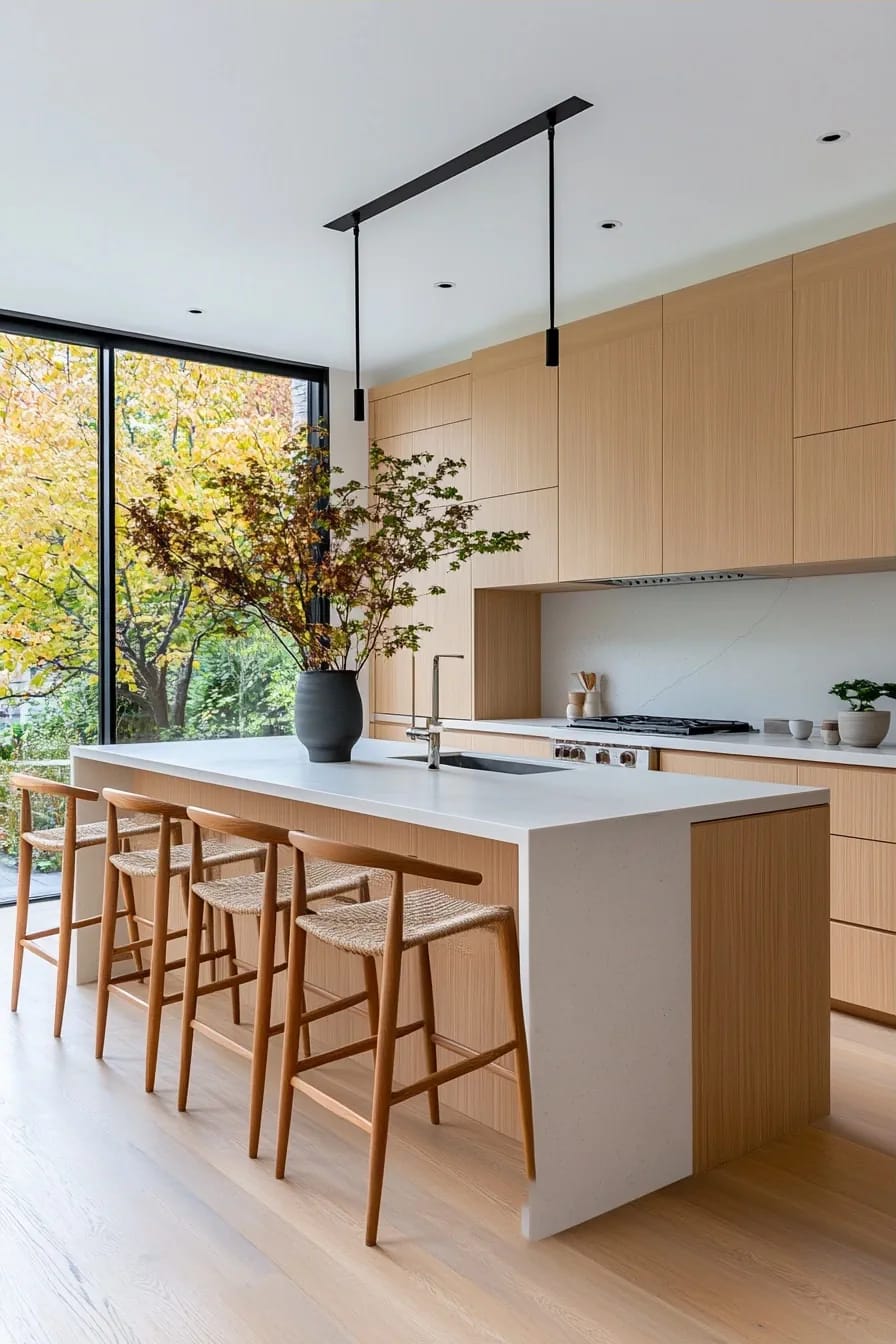
Flat slab fronts, either handleless (push-to-open, or a routed finger channel along the top edge) or a single slim bar pull in your one accent finish. The cabinet face should stay quiet. Shaker is allowed, but only if the frame is narrow; a chunky farmhouse shaker with a bead moulding reads country cottage, not japandi, no matter what color you paint it.
Do
- Flat slab or a narrow, unmoulded shaker
- Push-latch or a routed finger-pull for a clean face
- A matte or satin paint. It absorbs light instead of bouncing it back, which is most of what keeps the room calm.
Avoid
- High-gloss lacquer fronts
- Cup pulls, rope pulls, anything ornate
- Three competing metal finishes across one kitchen
5. Pick a honed worktop over a polished one
Matte, not shiny. A honed (matte-ground) surface belongs in a japandi kitchen because it reads as stone rather than as a glossy retail counter, and it sits quietly next to matte cabinets instead of throwing a bright reflection across the room. Honed soapstone, a limestone-look porcelain, or a matte-finish quartz all do the job.
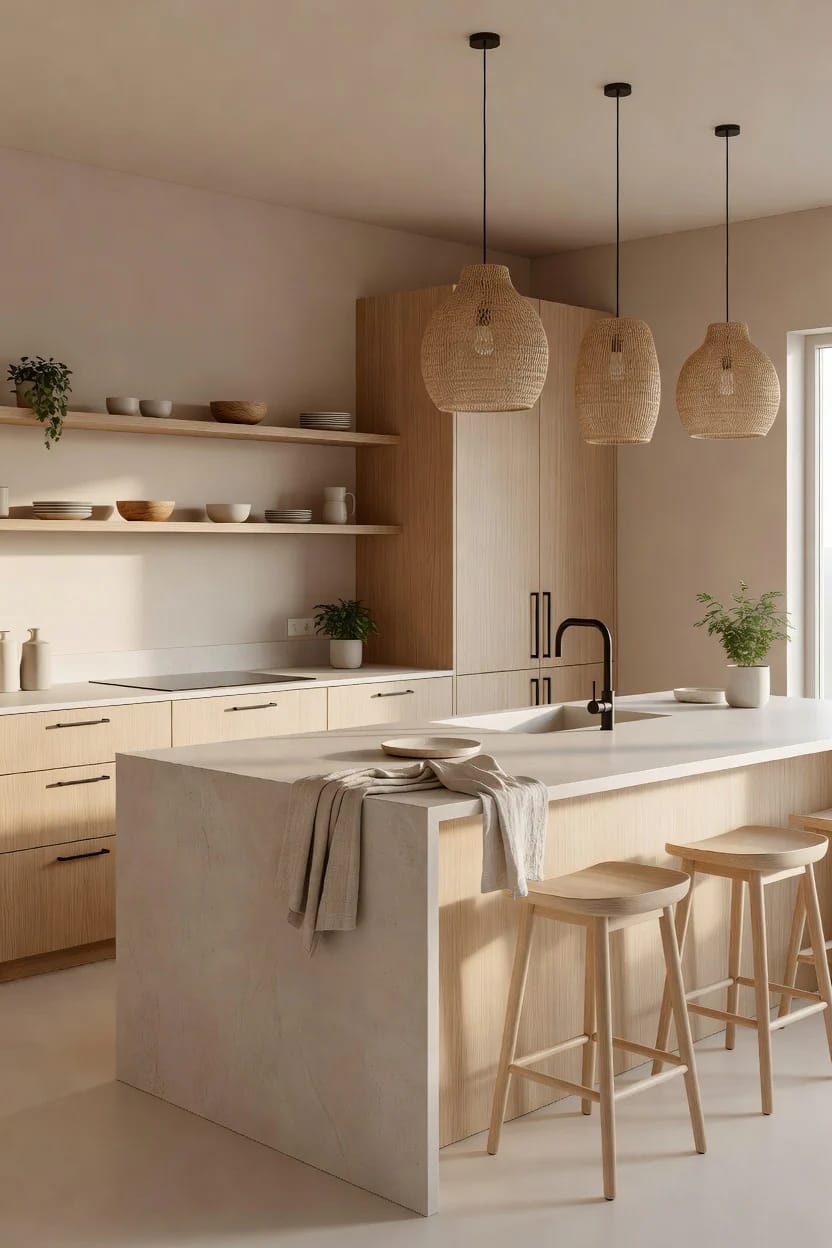
Granted, honed surfaces have their own upkeep: matte hides scratches and etching far better than polished, but it shows oils and fingerprints more, so you wipe more often. Soapstone is the low-drama pick here, non-porous, no sealing required, and you rub in a little mineral oil now and then to even out the patina rather than fight it. Honed marble and limestone are the ones to think twice about, because acids etch dull rings into them under a splash of lemon or wine, and a busy cooktop is exactly where that happens.
6. Light the kitchen warm, and in layers
Warm color temperature, and never a single ceiling fixture doing all the work. Japandi light lives at 2700K to 3000K, the golden-hour end of the scale, because a 4000K daylight bulb turns your carefully chosen warm greige faintly blue and flattens the wood grain you paid for. If you take one number from this article, take that one.
Pendants: paper and rice over glass
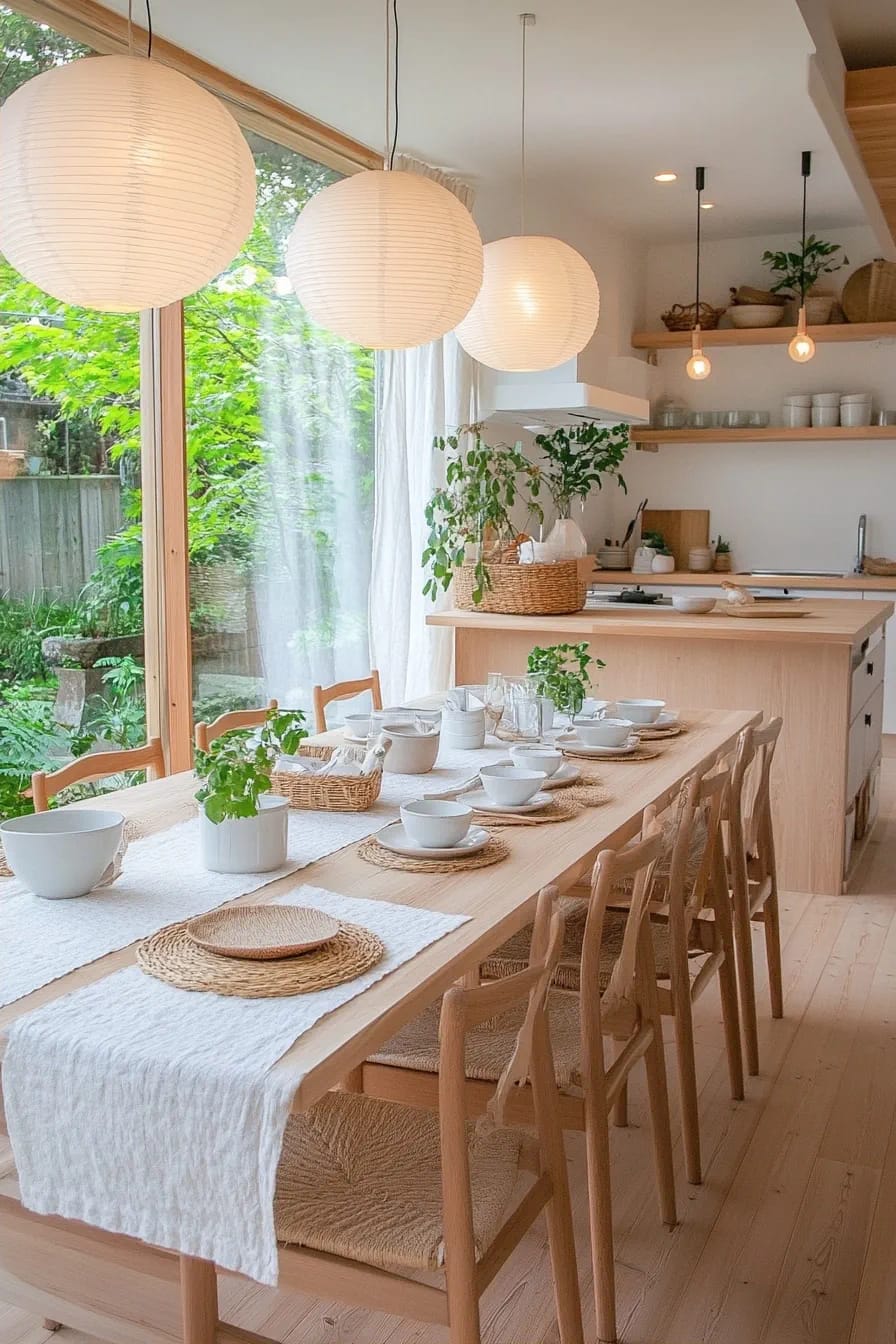
Over an island or a table, reach for a washi-paper, rice-paper, or linen-drum shade. Think Noguchi Akari lanterns, or one of their many honest descendants at a tenth of the price. What you’re avoiding is the exposed-bulb industrial pendant and the clear glass globe, both of which throw a hard bright point of light that argues with the softness of everything around it.
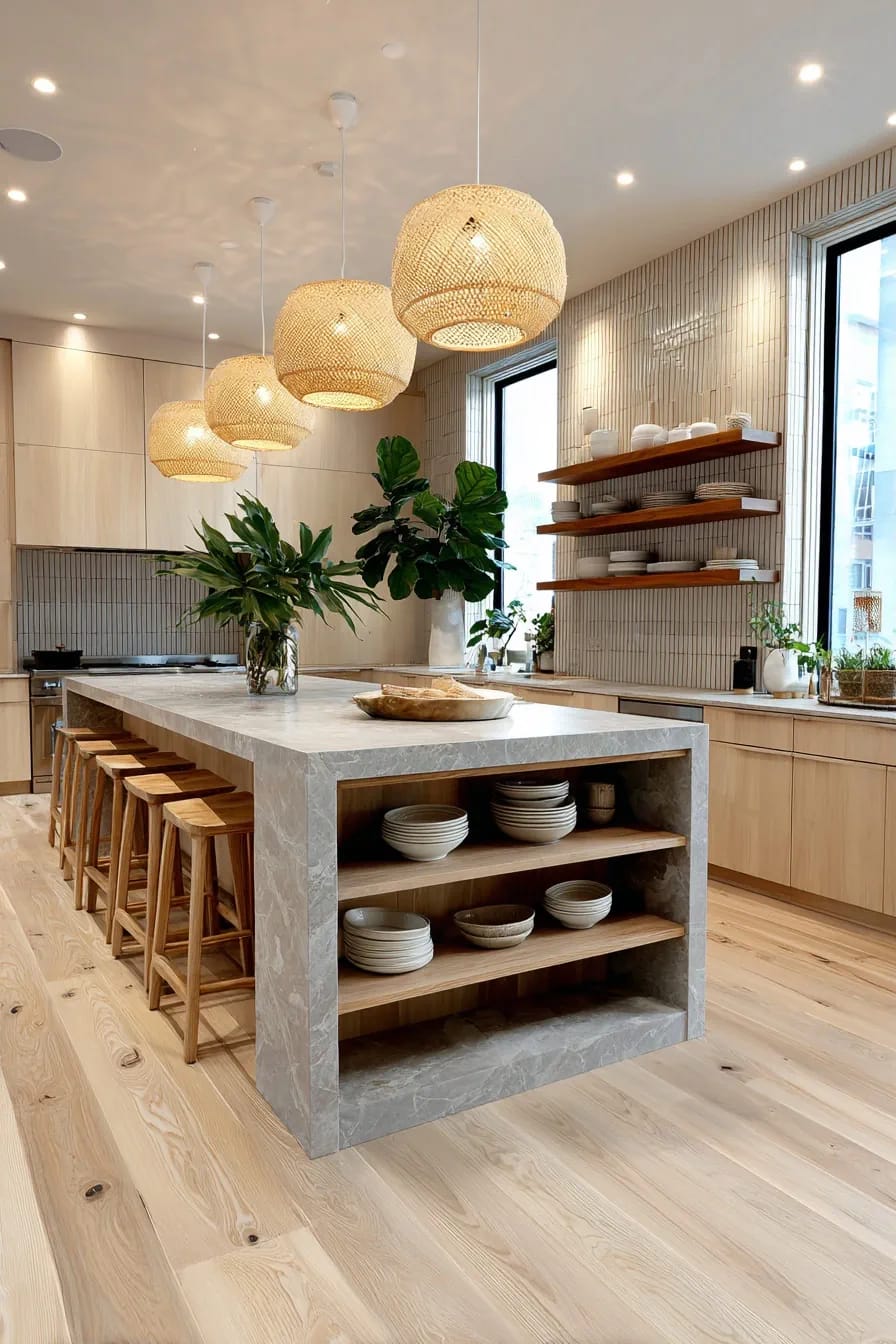
The layer nobody plans: under-cabinet
The layer most people skip is warm, dimmable task light tucked under the upper cabinets, so the counter is usable at night without flipping on a hard overhead. Then add a small lamp on the counter itself. A lamp on the counter is the first thing I’d add: it’s still unexpected in a kitchen, and it’s the most cozy source of light in the room after the sun goes down.
7. Open shelving works only if you edit it hard
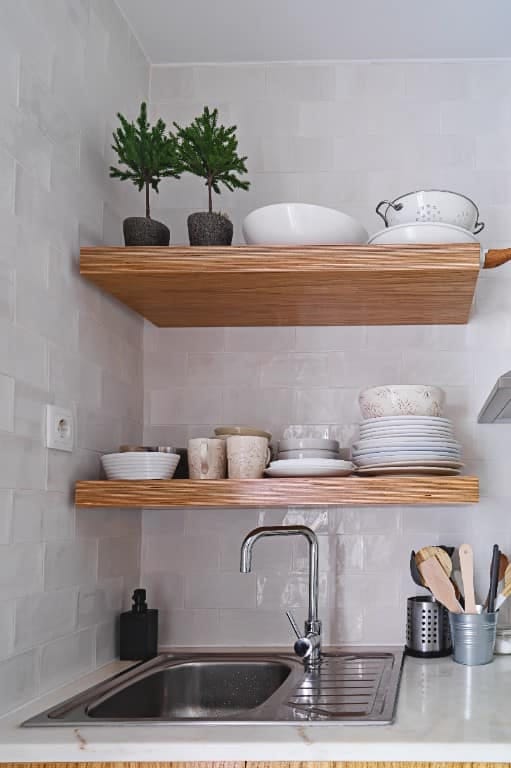
Open shelving is the most photographed japandi move and the one most likely to fall apart in real life, because it only works if you’re ruthless about what goes up. One or two shelves, in the same pale wood as the cabinets, holding a deliberately small set of things: a short stack of handmade bowls, a few glasses, one wooden board. Not the whole cupboard on display (the styled-for-the-catalog version, with the single artful lemon, isn’t how anyone actually lives).
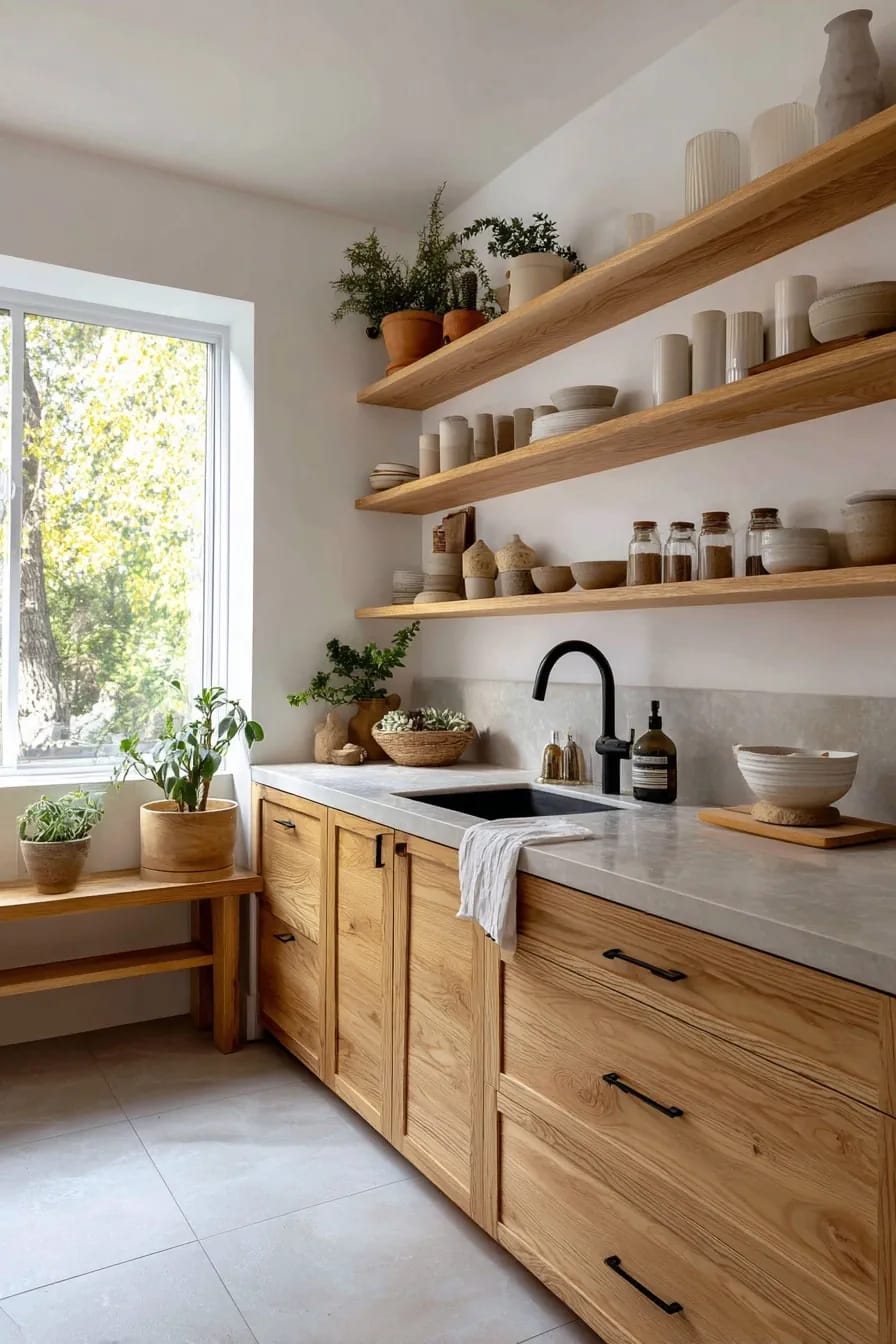
The honest version of this means either owning less or hiding the mismatched mugs in a closed cabinet and reserving the shelf for the pieces that share a palette. If your daily dishes are a jumble of colors and brand logos, closed storage is the more japandi choice, full stop.
8. Bring the warmth in through texture, not more color
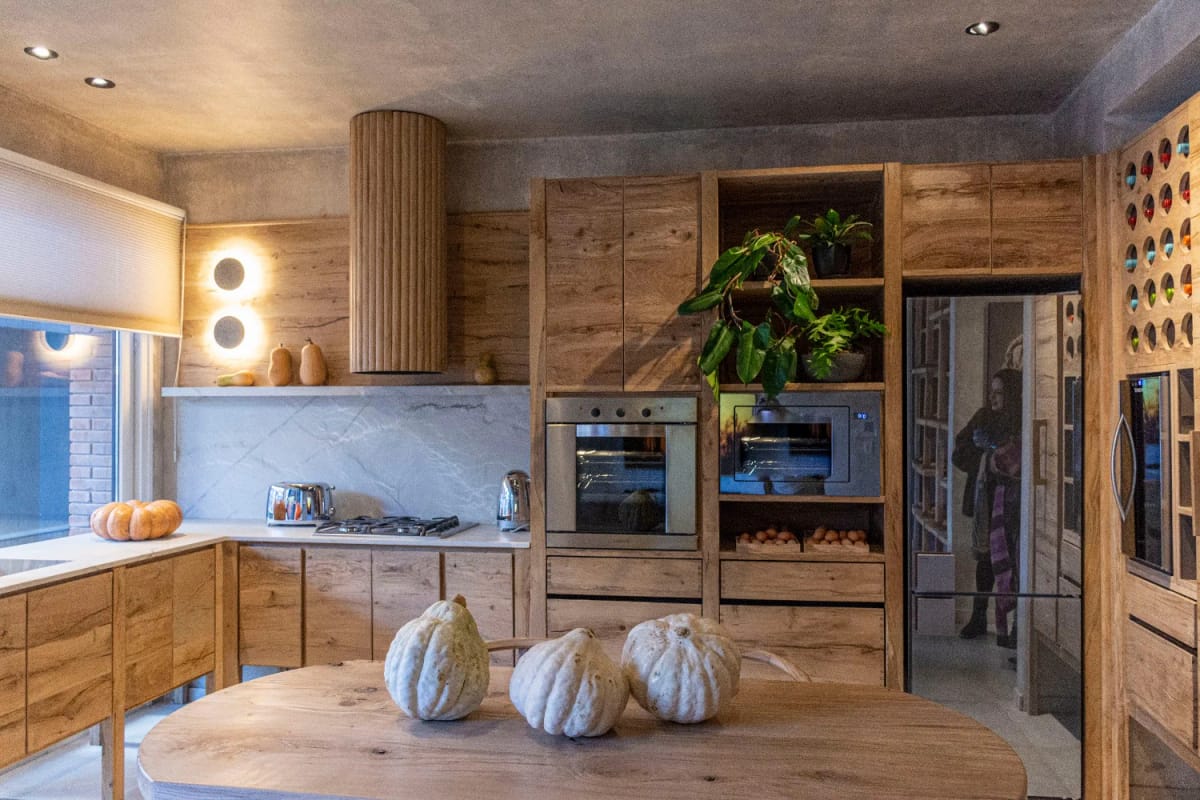
Once the palette is set, warmth comes from texture, not from adding hues. Linen in a tea towel or a Roman blind, stoneware and hand-thrown ceramics, cane or rattan on a stool, a rush or seagrass mat underfoot, a raw clay vessel holding wooden spoons. Every one of those stays inside the greige-oat-clay family; the interest is in how differently the surfaces catch the light.
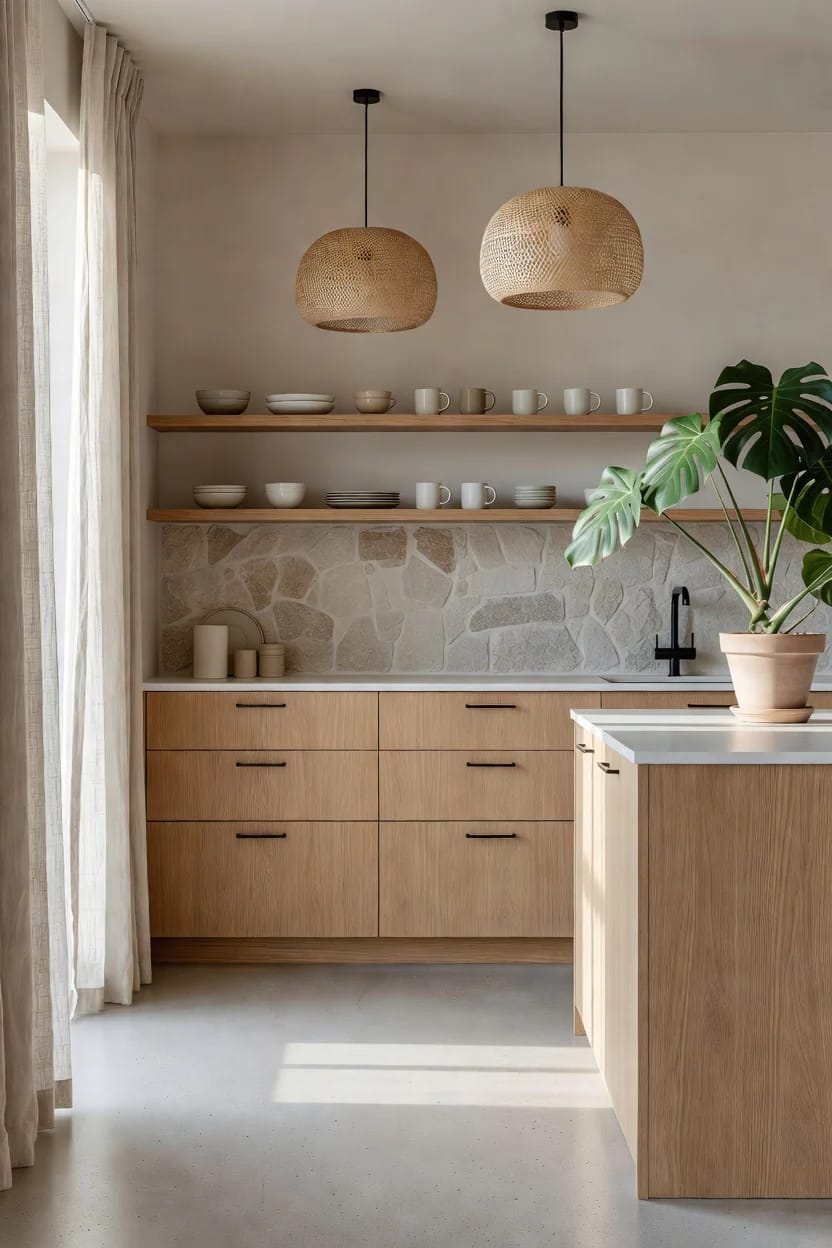
The trick is contrast of surface rather than contrast of color: a smooth glazed bowl set against woven cane, nubby linen laid over the honed stone. Go all-smooth and the room slides straight into hotel lobby, which is the exact failure the whole style is trying to avoid.
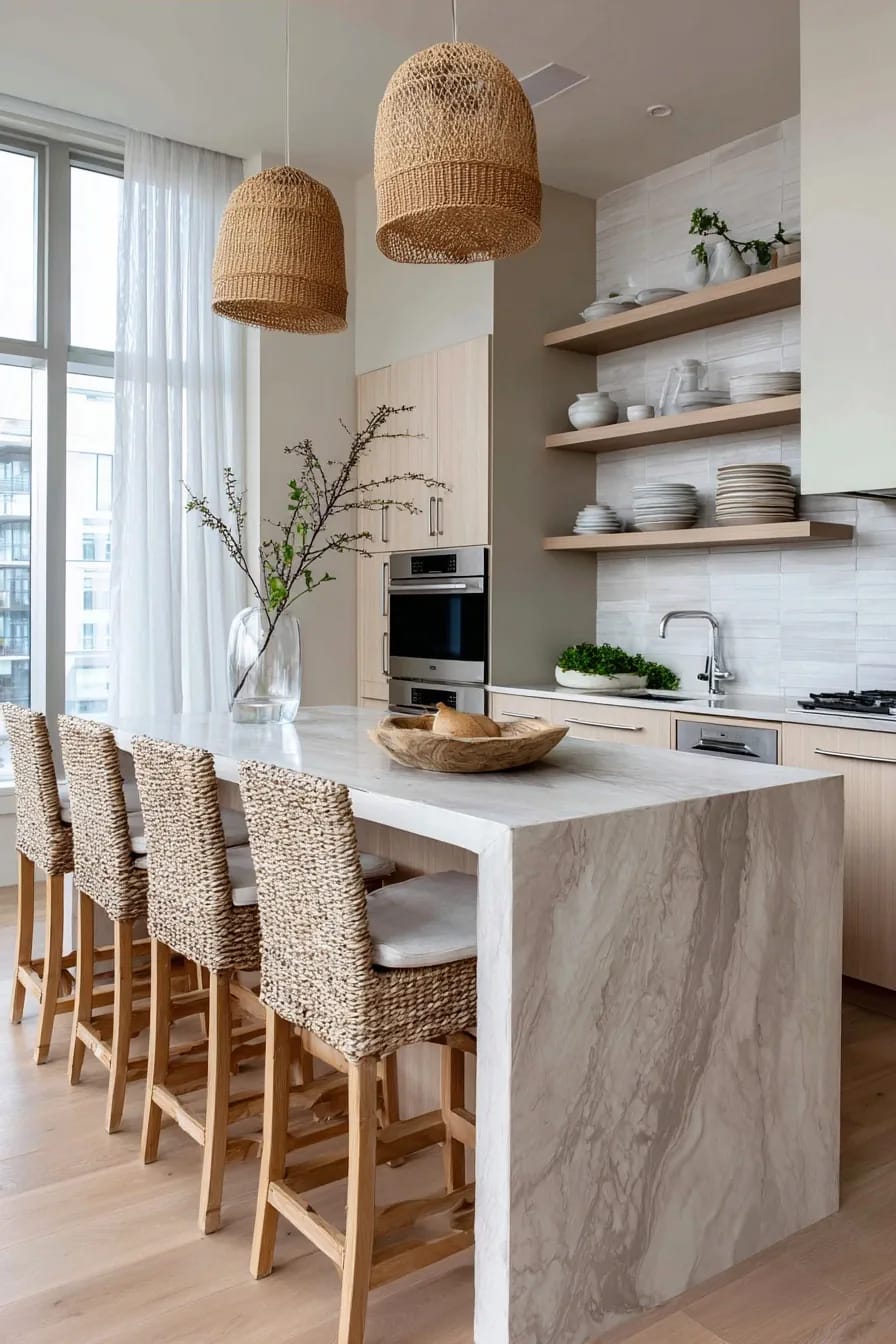
 15 New Japandi Living Room Ideas You’ll Love The same warm palette, pale wood, and paper light, worked out for the room you’ll actually sink into.
9. Scale it down for a small japandi kitchen
Japandi is a gift to a small kitchen, because it’s built on emptiness, and a galley or a studio kitchenette has that discipline forced on it already. You’re not fighting the style, you’re finally being rewarded for the tight footprint.
Scale the wood down, not the palette
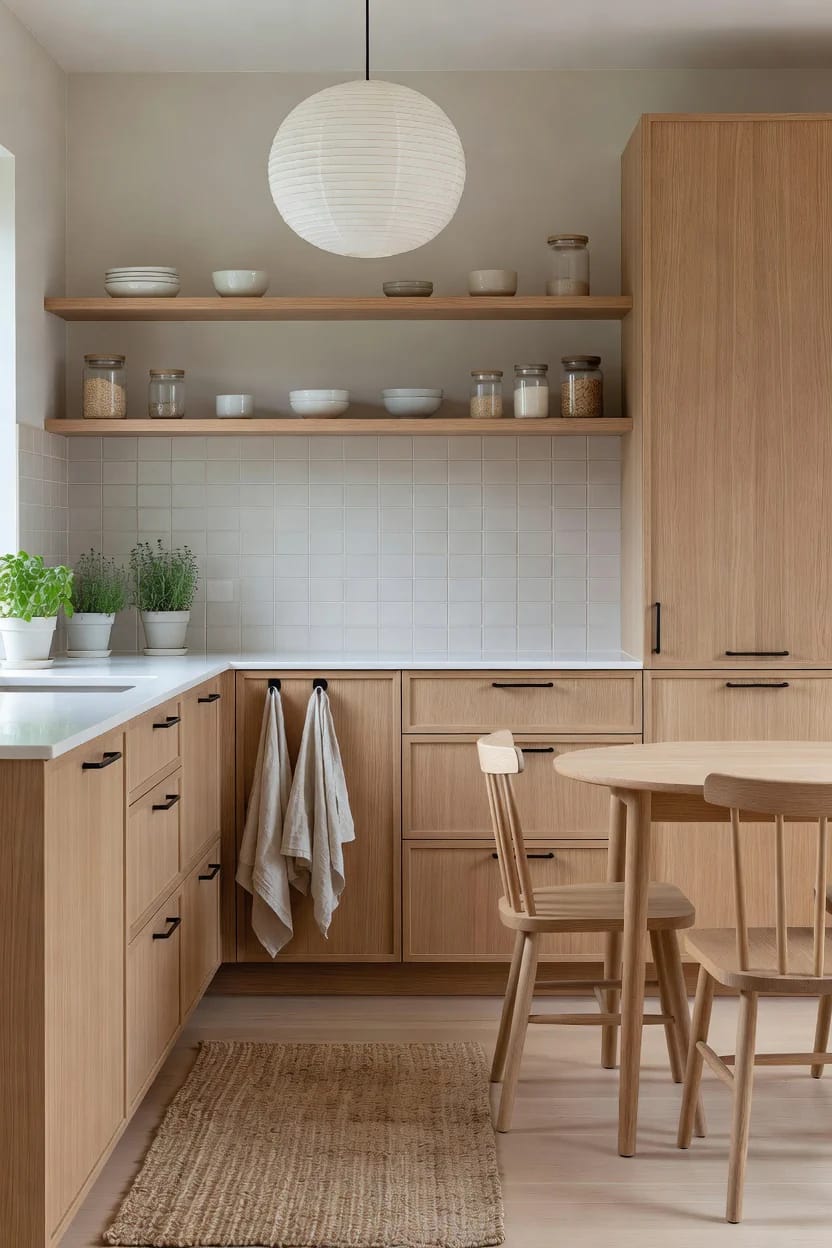
Keep the same greige-and-pale-wood palette, but shrink the grain and the hardware to match the room. A big, bold ash figure swallows a tiny galley; a fine straight-grain oak recedes and lets the walls breathe. Hold the uppers to a single open shelf, or skip them and run the wall clear to the ceiling so the eye reads more height.
Renter moves that survive the deposit
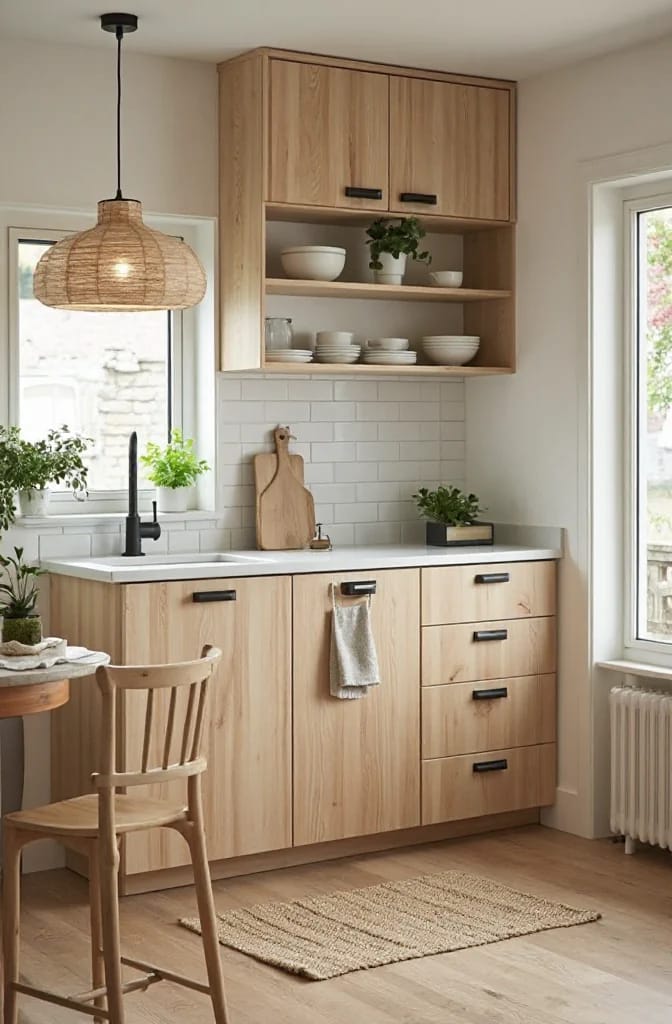
Renting doesn’t lock you out. Swap the existing cabinet pulls for matte-black or oak ones (they unscrew in minutes; keep the originals in a labelled bag for move-out), change one bulb to a warm 2700K, hang a linen café curtain, roll out a rush mat. For prep space without a renovation, a slim rolling cart or a bar-height ledge does most of the work an island would; there are more compact island layouts that fit tight footprints if you have even a little floor to spare.
10. Hide the appliances for one seamless run
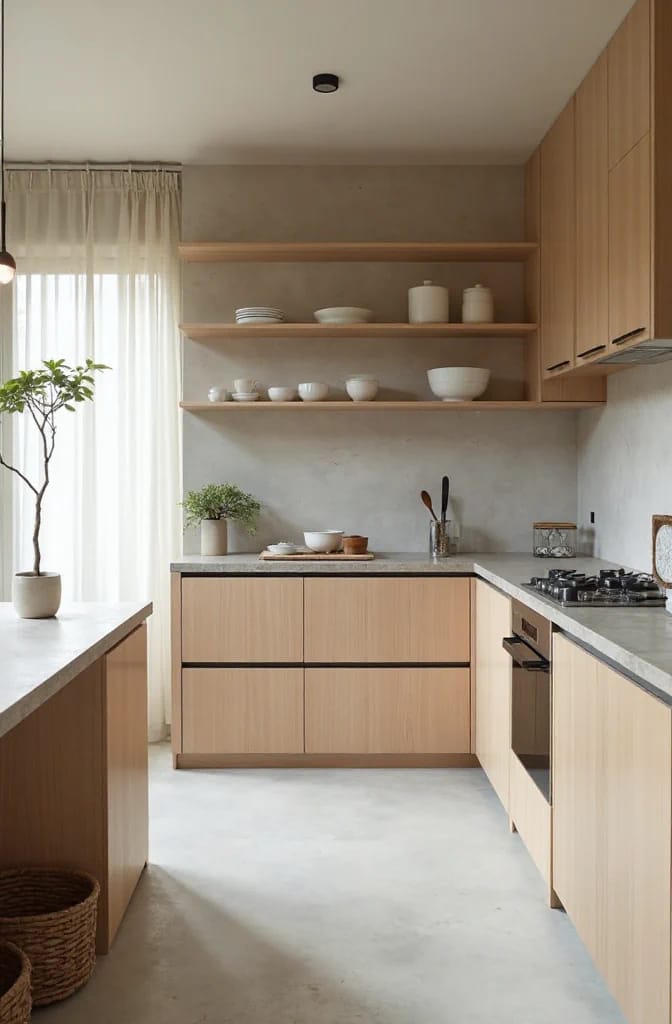
The most japandi thing you can do to a kitchen is make the appliances vanish. Panel-ready or fully integrated fronts turn the fridge and the dishwasher into more of the same quiet cabinet run, so nothing chrome interrupts the wood and the greige.
The catch is money. Panel-ready refrigerators run roughly 20 to 40 percent more than a standard model before you add the custom panel (often another $2,000 or so) and the specialty pulls at $60 to $130 each; mid-tier built-ins from Bosch, KitchenAid, or JennAir sit around $3,000 to $8,000, and the Sub-Zero and Thermador tier climbs into the $8,000 to $15,000 range. If that’s out of reach, the cheat is to panel just the dishwasher and a beverage drawer and pair them with a counter-depth stainless fridge. That buys most of the seamless look for a fraction of the outlay.
One thing nobody selling you the integrated look tends to mention: in fifteen to twenty-five years, when the appliance finally dies, the replacement model probably won’t match the old dimensions, and neither will your aged cabinet panels. You’re betting a cabinetmaker will still be around to cut a matching one. Worth knowing before you commit the entire wall to it.
The order I’d actually do this in
If you’re taking on all ten, the sequence matters more than the list. Settle the wood species first, because it’s the fourth neutral and the greige gets chosen to sit against it, not the other way around.
Then lock the light temperature, since a warm greige under a cold bulb is a wasted paint decision and you want to see the true color before the cabinets are ordered. Cabinets and worktop follow, then the one black accent, and texture goes last, once the room is standing and you can see what it’s genuinely missing.
The disappearing-appliance move is the only one worth deferring when the budget is tight. A warm palette, pale wood, and a properly edited shelf get you most of the way to a real japandi kitchen for the price of paint and restraint, and the integrated fridge can wait for the next kitchen.
Related Posts
- 15 Organic Modern Kitchen Inspiration You’ll Love
- 15 New Japandi Living Room Ideas You’ll Love
- 43 Inspiring Kitchen Decor Ideas: Stylish and Functional Accents
- 39 Cutting-Edge Modern Kitchen Design Ideas: Contemporary Style
- 20 Small Coastal Kitchen Ideas for a Fresh, Breezy Look
- 20 Farmhouse Kitchen Island Designs to Inspire You