
Every idea below uses what is already in your kitchen, recycling bin, or junk drawer, because the premise is that the stores are closed or you are not going. The fastest ones take ten minutes and a pair of scissors; the one slow project (dried citrus) you start while you do everything else. I have sorted them so the cheapest, most forgiving ideas come first and the two that need an hour of patience come later, and I have flagged the one decoration nobody expects to be a decoration: scent.

1. Tie a bow on everything you already own
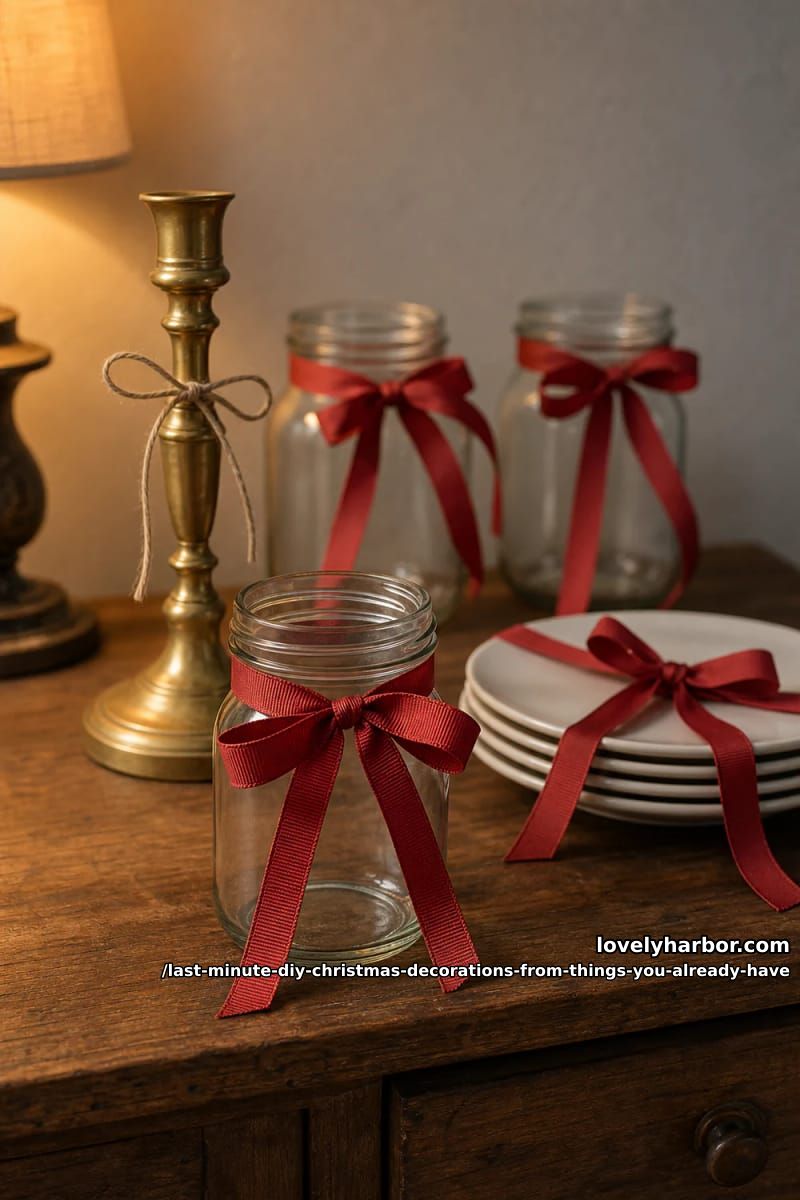
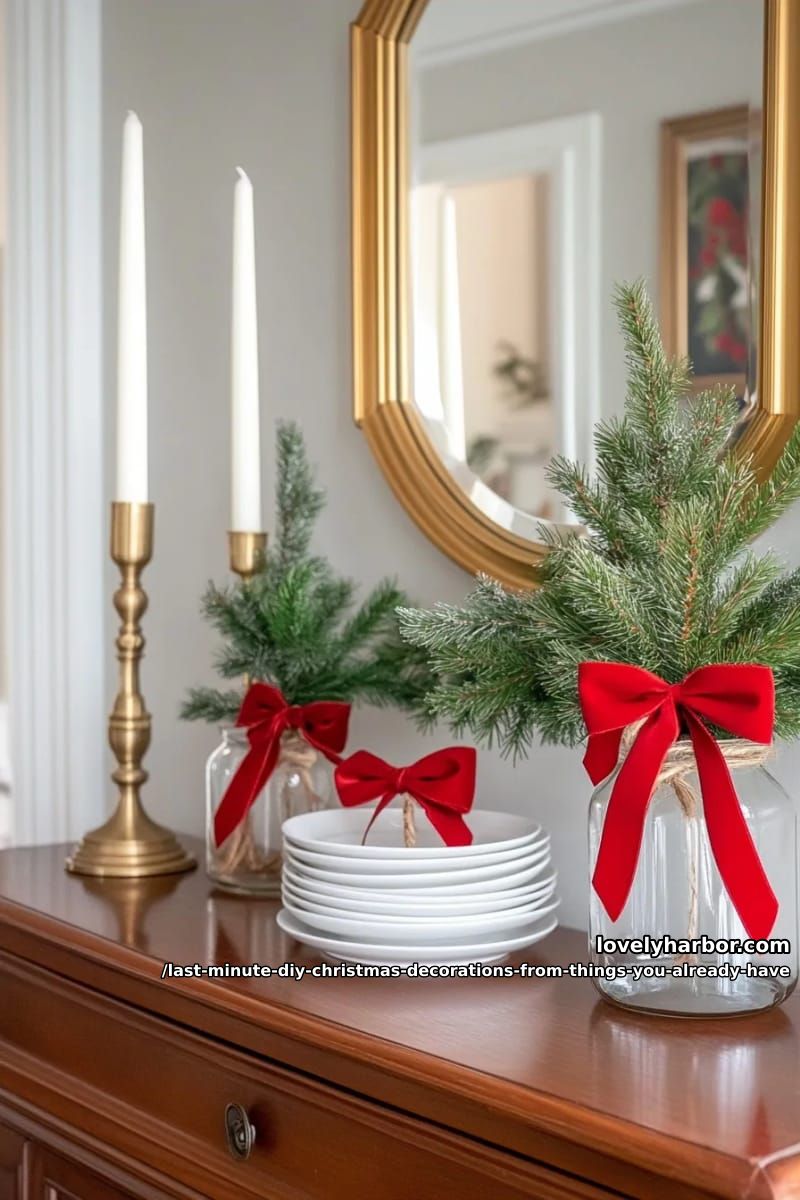
The single highest-return move when you have nothing is to tie a bow on objects you already display. A bow on a stair rail, on the back of a dining chair, around a clear vase, on a drawer pull, on the neck of a wine bottle you are about to bring out anyway. It reads as intent. People assume you decorated.
Use whatever ribbon is in the gift-wrap drawer, or cut strips from an old flannel shirt and fray the edges on purpose. If you only have one good ribbon, cut it into three short bows rather than one long swag; three small gestures spread around a room beat one lonely one. The cheap satin ribbon from a chocolate box looks cheap. Grosgrain, velvet, or torn fabric does not.
2. Snowy jam jar luminaries with pantry salt
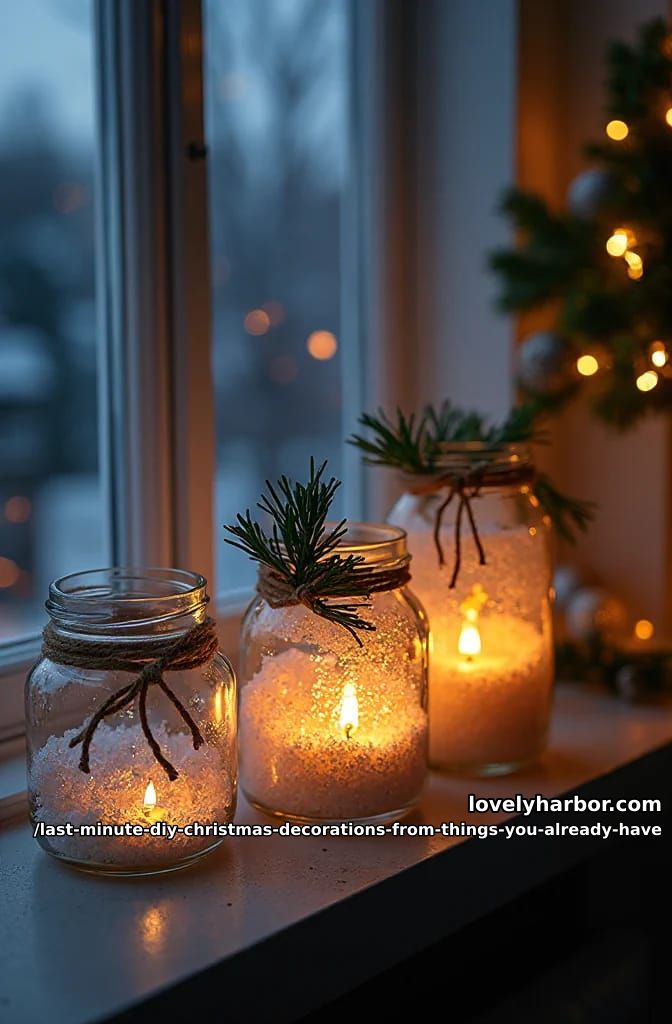
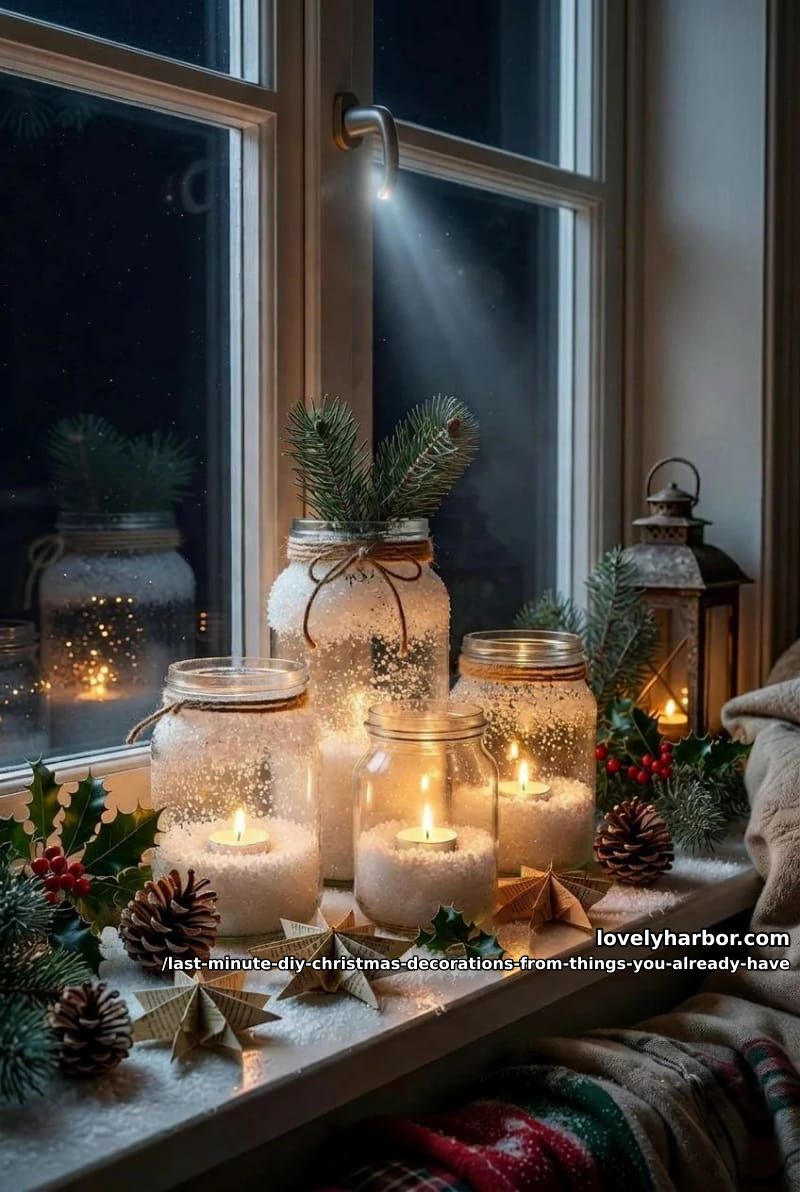
This is the most-pinned idea in the whole category for a reason: a jam jar, white glue thinned with a little water, and any white granular thing you own (epsom salt, coarse sugar, even flour in a pinch) makes a frosted luminary in about fifteen minutes of hands-on time. Brush the glue on the outside, roll the jar in a saucer of salt, let it set, drop in a tea light. Battery tea lights, not real flames, if the jar has anything flammable tied to it.
One honest correction from doing this badly the first time: do not coat the whole jar. Leave the top third clear so the light actually escapes, otherwise you have built a frosted box that glows dull. A smaller mouth (a jam or baby-food jar) holds a twine wrap better than a wide mason mouth, which is why the originals everyone copied used those.
3. A garland of paper stars from a grocery bag
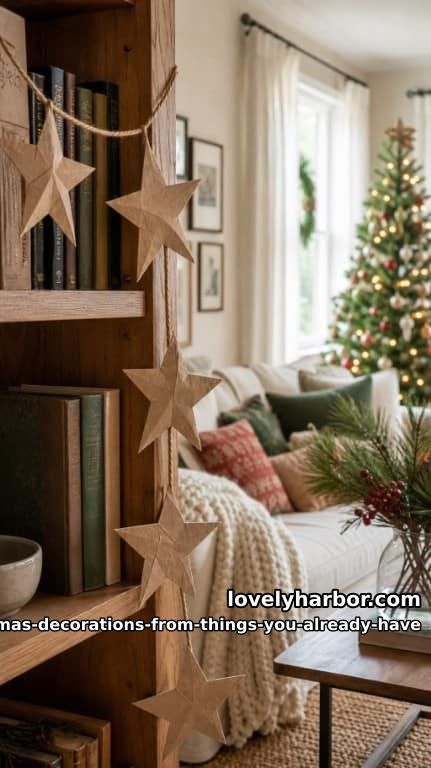
Cut a stack of flat paper stars, punch or just thread them onto string, done. Brown grocery-bag kraft is the secret here because it photographs warmer and more expensive than white printer paper, which reads like a kid's school project. Old book pages and brown packing paper work the same way. If you cannot freehand a five-point star, fold the paper in quarters and cut a fat lopsided heart shape from the folded corner, open it, and nobody will know the difference from across a room.
Twenty minutes gets you about six feet. Vary the star sizes so the line is not a row of identical clones, and let them spin freely on the string rather than gluing them flat.
4. Six-point paper snowflakes, folded the right way

Real snowflakes have six arms, not four, and the difference is the entire reason store-bought paper snowflakes look wrong. Fold a square in half into a triangle, then fold that triangle into thirds (overlapping the sides like a letter), snip the ragged top off straight across, and cut your design into the folded wedge. Unfold to six points. The four-fold version everyone learned in school is faster but it is the tell that you rushed.
Do not cut all the way across the folded wedge from one side to the other, or you will slice your snowflake into separate pieces when you unfold it. Leave a spine of uncut paper running down the folded edge. And press the finished snowflakes flat under a heavy book for an hour before you tape them to the window, or they curl and cast a sad shadow.
5. Stop buying greenery and cut your own
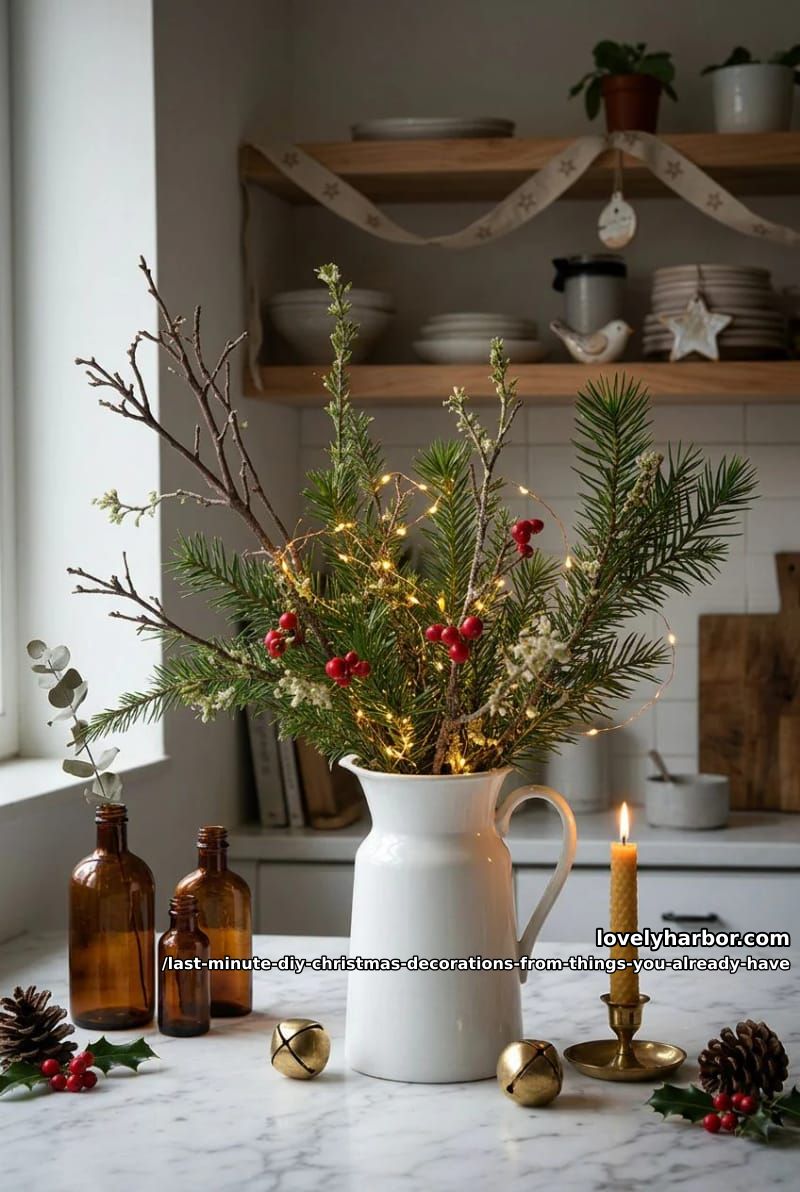
If you have any kind of evergreen within walking distance, a hedge, a yard tree, a neighbor's overgrown juniper you ask about first, you have free decoration that costs nothing and outperforms most things you could buy. Snip a few branches, jam them in a pitcher or a tall jar, done. Pine, spruce, cedar, holly, bare birch twigs, even ivy. The clippings from the bottom of a real tree count.
The counterintuitive part: do not mix it with everything else you own. A pitcher of plain greenery on a bare counter looks like a magazine; the same greenery crammed with baubles, tinsel, and three ribbon colors looks like a yard sale. Restraint is doing the work, not the foraging.
6. Dried citrus, the one project worth starting now
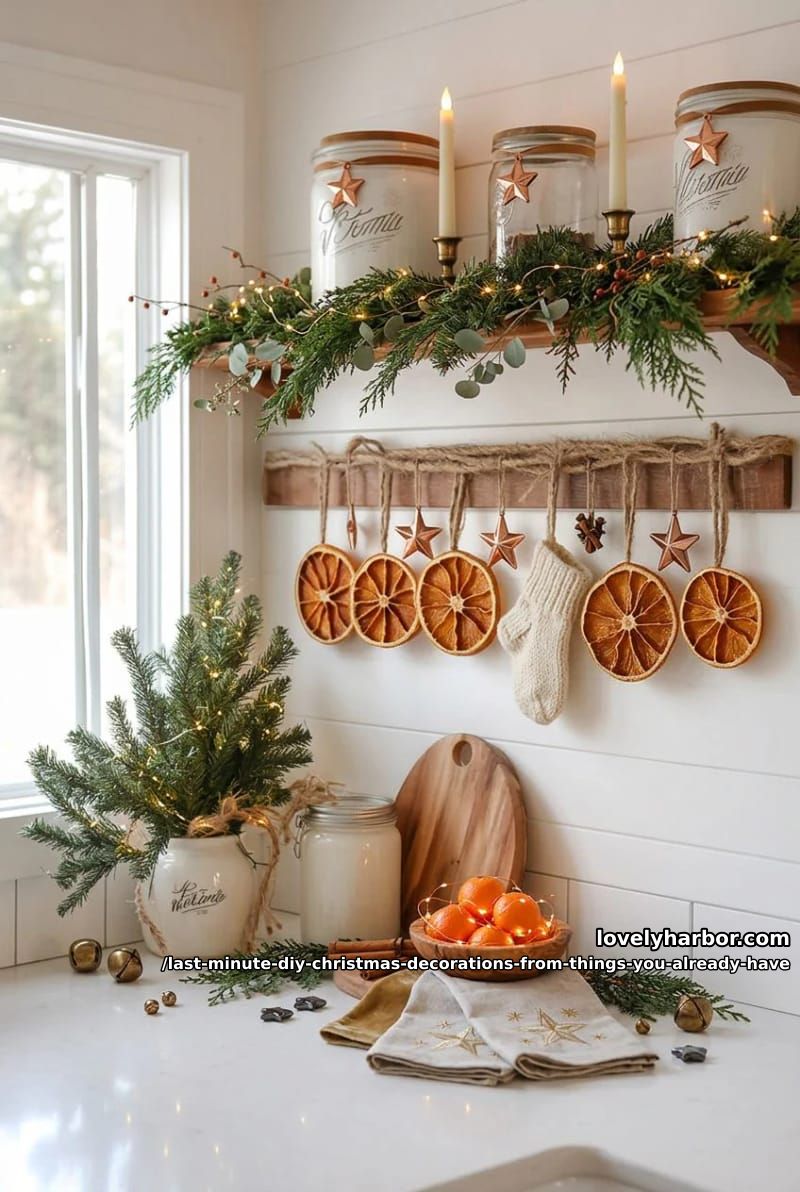
This is the one idea on the list that needs hours instead of minutes, which is exactly why you start it first and let it work while you do everything else. Slice oranges about an eighth to a quarter inch thick, blot them dry on a tea towel, lay them on a rack over a baking sheet, and put them in the lowest oven you have. Thread them on twine as ornaments or a garland; the off-cuts and end pieces go straight into idea number ten.
Temperature: 170 to 200°F. Lower keeps the color bright; higher browns and eventually burns them.
Time: roughly 3 to 6 hours, but it varies wildly with slice thickness and how juicy the fruit is. Some batches take far longer. Flip the slices every half hour to an hour.
Done when: no part of the slice is still gooey or tacky to the touch. Slightly sticky is fine; they finish hardening as they cool.
Shelf life: properly dried slices last years. They darken over time, which some people prefer.
The trendy advice to dust them with powdered sugar before drying for extra vibrance? I tried it, the plain slices looked the same or better, and I have stopped bothering. Your oven, your call.
7. Single branches in bottles, lined up
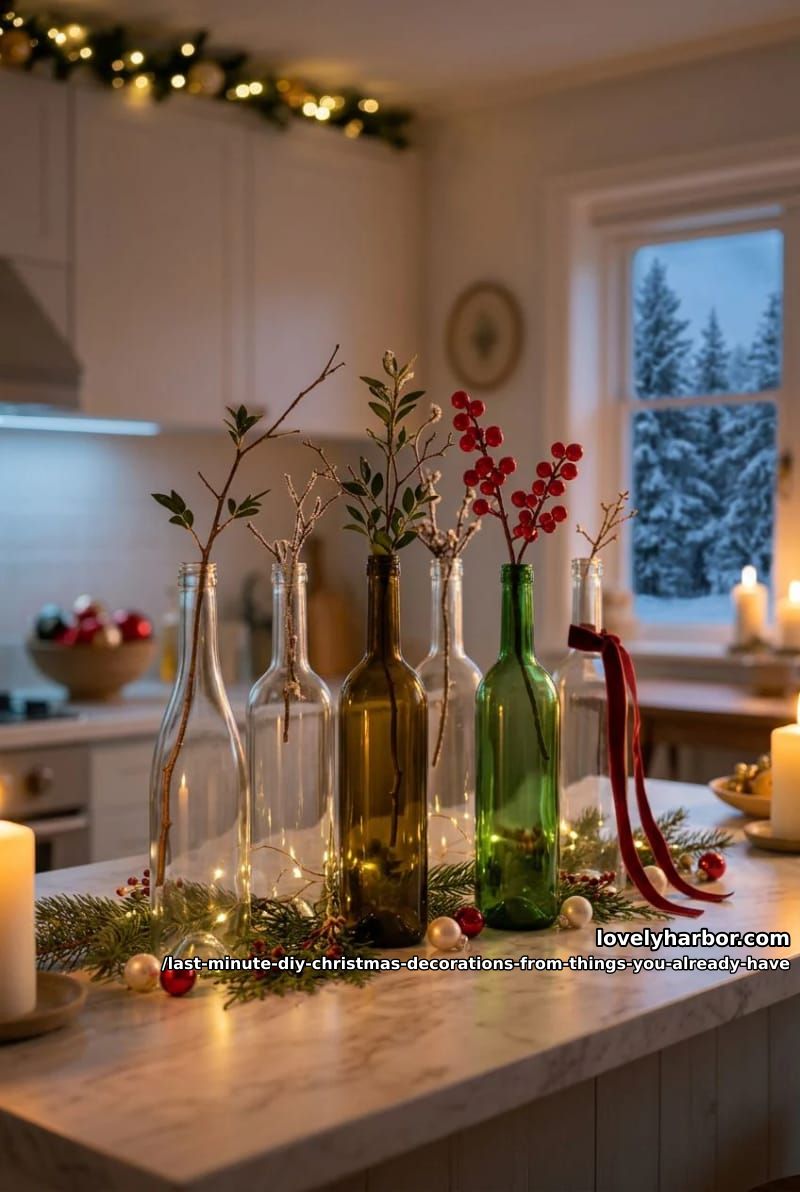
Save the wine and glass bottles you would have recycled, soak the labels off, and stand a single tall branch in each. One stem per bottle, a row of them along a windowsill or mantel. The discipline of one branch each is what makes it look deliberate instead of like clutter; a fistful of stems jammed in reads as a failed bouquet.
Green glass photographs more festive than clear, but a clear bottle with a sprig of holly and three berries does plenty. This is the rare idea that looks better the more bare and graphic it is, so resist the urge to fill them.
8. Cranberries and water in a clear vase
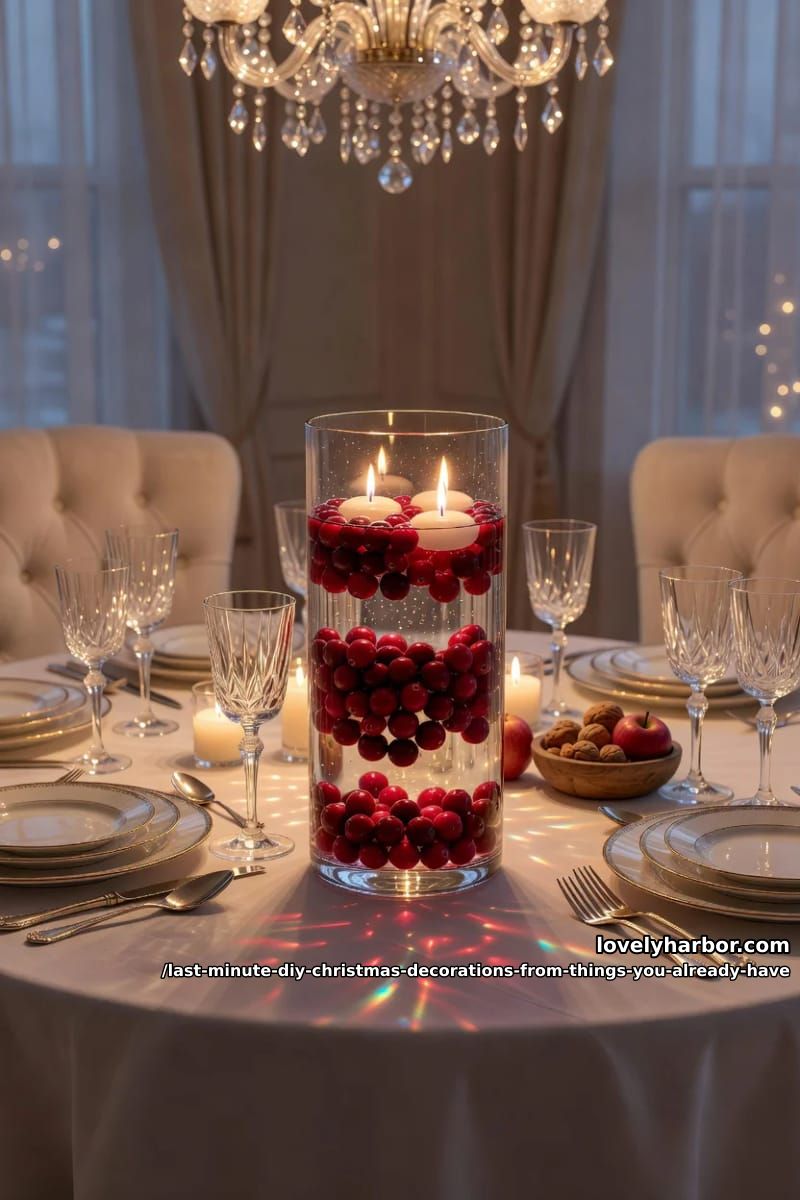
A bag of fresh cranberries in a clear glass vase or jar, topped with water and a floating tea light, is a centerpiece in ninety seconds. The berries hold their color for days and you can eat or cook them after. Drop in a few orange slices or a sprig of rosemary if you have it, but the plain version is already enough.
If you do not have cranberries, the same trick works with whatever has color and survives water: lemon halves, lime wedges, even a handful of fresh rosemary weighted down. The principle is filling clear glass with one saturated color and lighting it from above.
9. A wall tree for when there is no tree
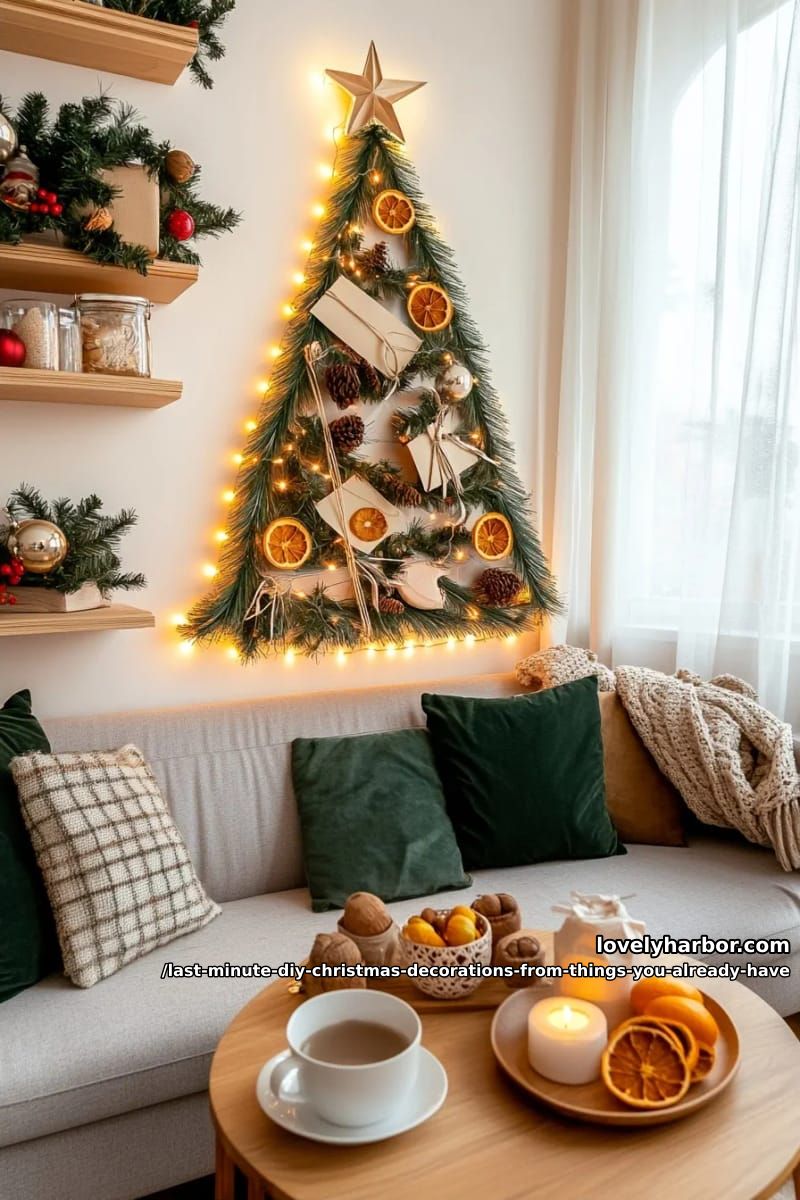
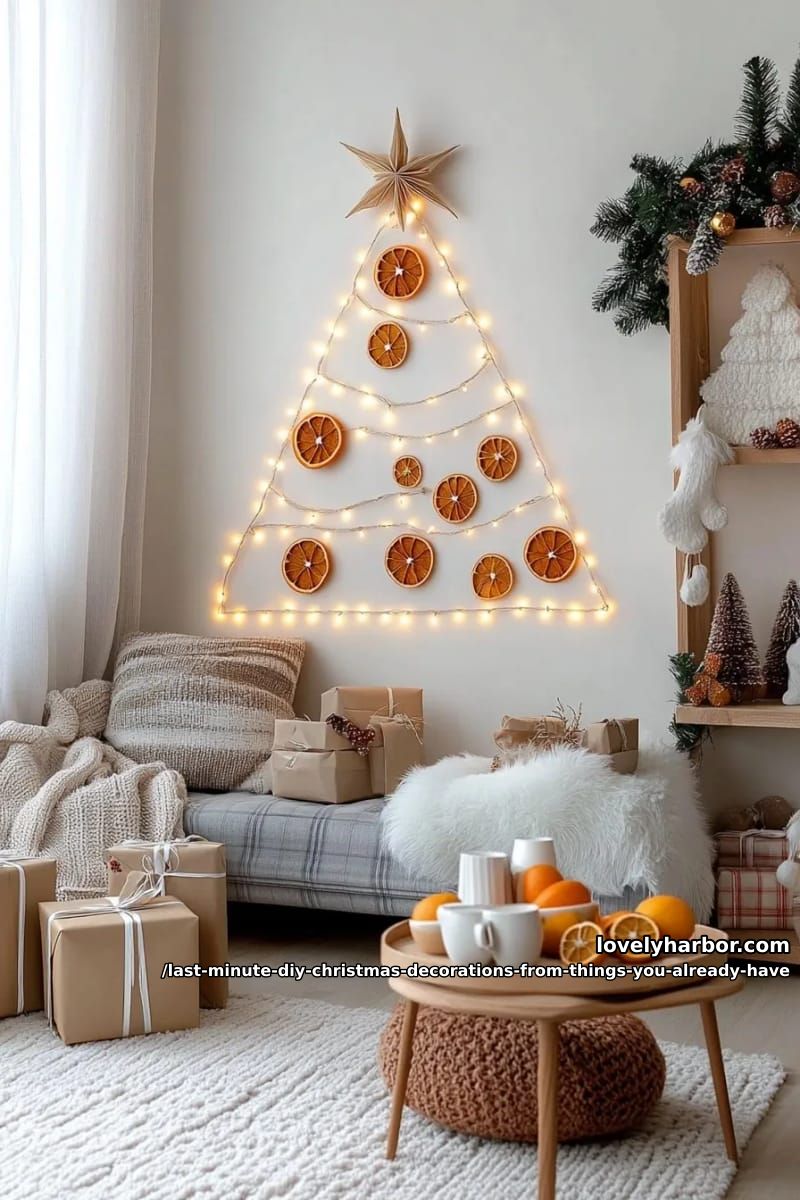
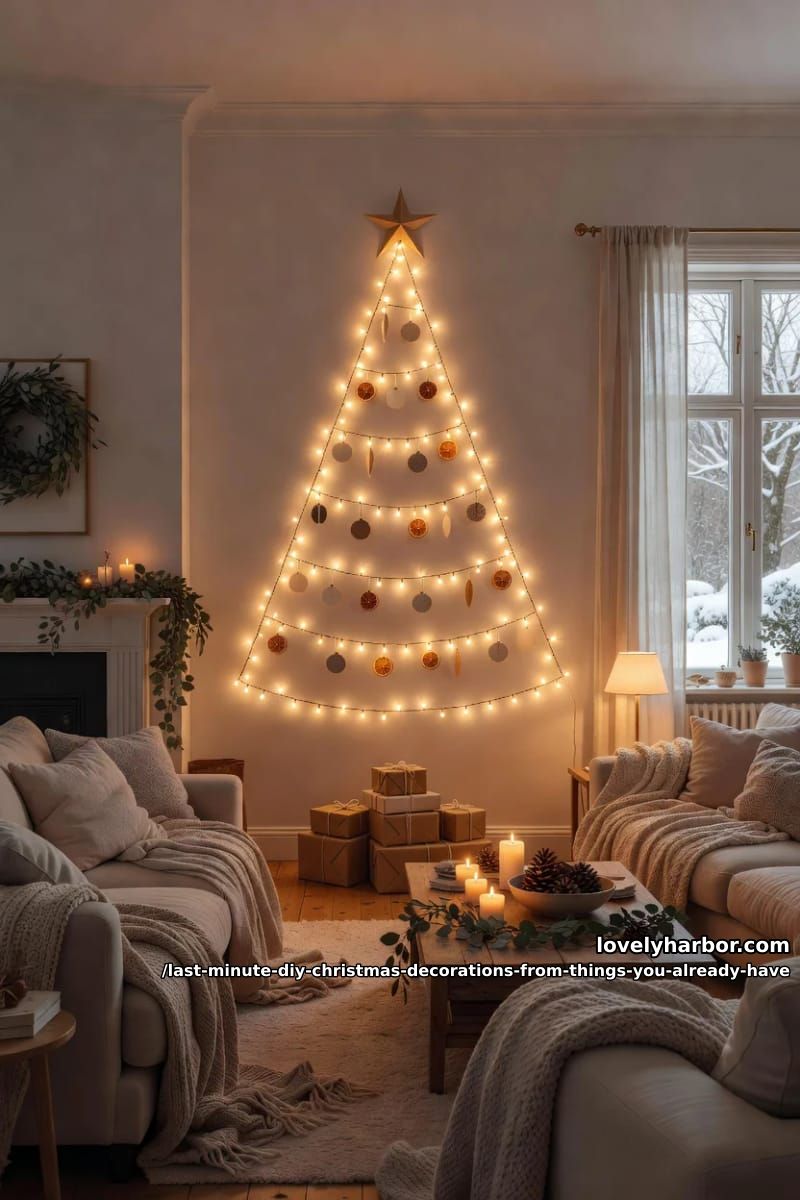
For renters, tiny apartments, studio dwellers, or anyone whose floor space is spoken for, tape or pin a tree shape flat on the wall and decorate inside the outline. A string of lights pinned into a tall triangle is the fastest version; a column of branches taped to the wall works too, as does a flat arrangement of the paper stars and dried citrus from earlier. Command hooks or washi tape come off clean if a deposit is at stake.
People email me skeptical about this one, convinced it looks like a dorm room. The honest answer is that it can, if you use harsh blue-white lights and cheap tinsel. Warm-white lights and a few real-paper or dried-fruit ornaments inside the triangle are the difference.
10. Treat scent as a decoration
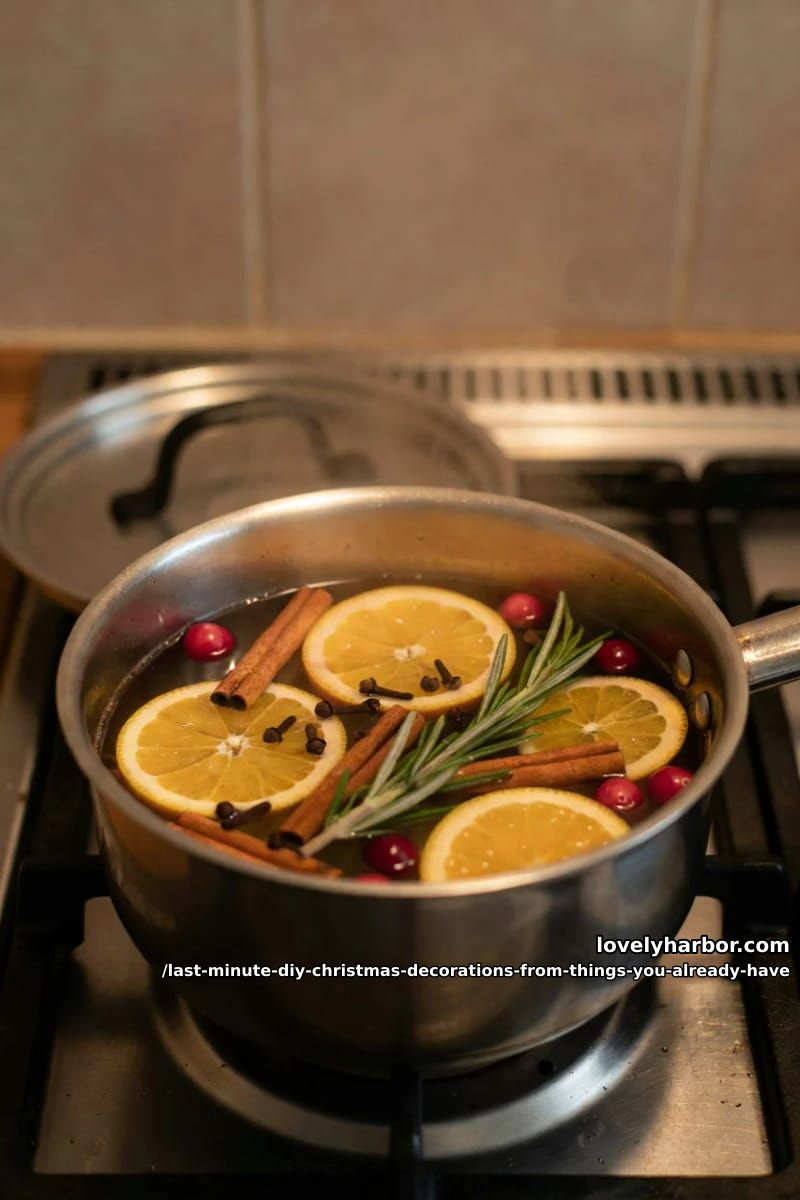
The decoration nobody photographs but everybody notices when they walk in: a pot of water on the lowest simmer with orange (or just the peels and the off-cuts from idea six), a few cinnamon sticks, and a spoonful of cloves. It is the smell people associate with a decorated house, and it costs the price of fruit you were eating anyway.
Keep the water from running dry. On a low simmer it loses roughly an inch an hour, so top it up when you remember, or set a phone timer for every forty-five minutes. Cool it, refrigerate the pot overnight, and the same batch runs for two or three days before it looks tired. None of the spices are mandatory; orange and cinnamon alone are plenty, and a sprig snipped from a real tree stands in for rosemary.
Worth doing
- Use whole spices, not ground; ground cloves cloud the water and you cannot strain and reuse them.
- Save citrus peels in the fridge all week so you have a stash when you want to start one.
- Low simmer only. A hard boil burns through the water and the scent fast.
Skip
- Leaving it fully unattended, especially on a gas burner. It is water, but a dry pot on heat is still a dry pot on heat.
- Drinking it. This is potpourri, not mulled cider.
11. Fold book pages into a standing tree
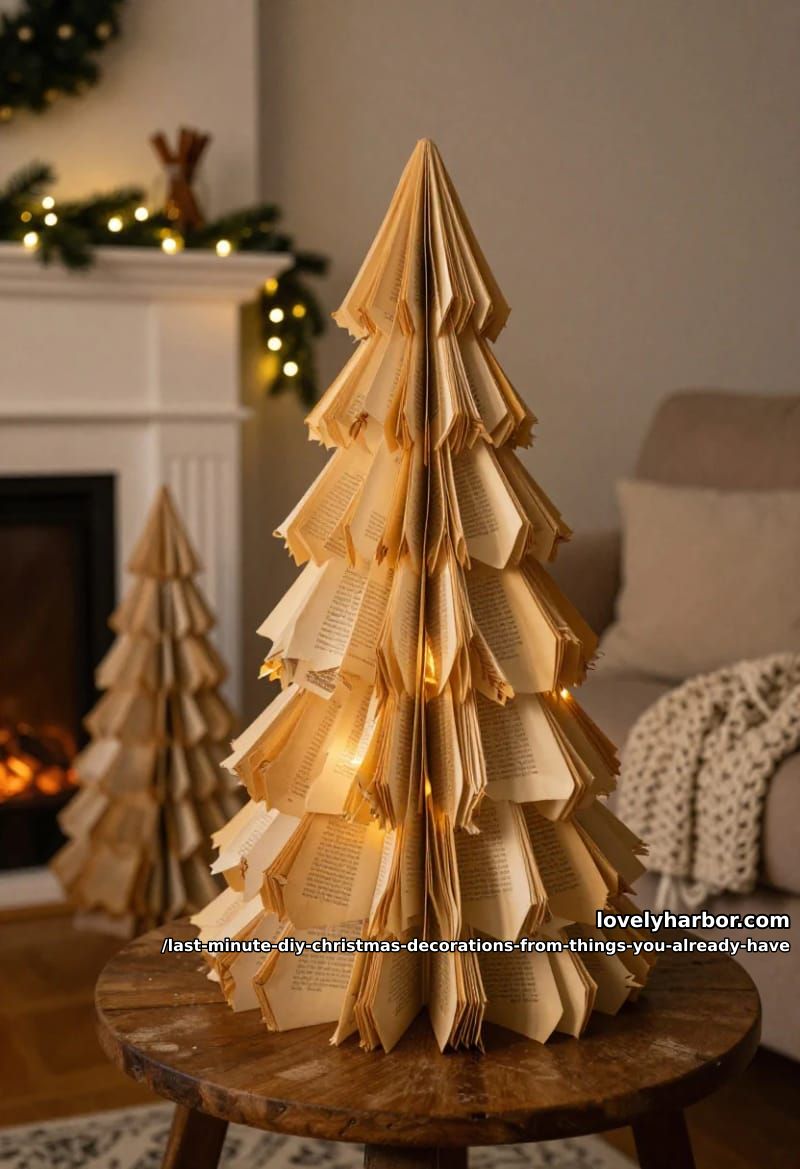
An old paperback you will never reread folds into a small conical tree: fold the top corner of each page down to the spine, then fold again, working through the whole book until the folded pages fan into a cone. It takes a while and it is oddly meditative, which makes it the thing to do on Christmas Eve when you are waiting up anyway.
Yellowed page edges look better than bright white, so a thrift-store paperback beats a new one. Leave it unpainted. The point is the texture of the paper, and gold spray paint (which every other version of this online seems to insist on) just hides it.
Conclusion
If you only do two things tonight, get the citrus into the oven first since it is the slow one, then spend ten minutes tying bows on things you already display while it dries. Those two cover the most ground for the least effort, and the orange off-cuts roll straight into a simmer pot so nothing is wasted. The rest is a question of how much scissor time you have before bed. None of this needs a store, and most of it is in your kitchen right now, which was the whole point.