
You already know the basic idea: two pages from a tired old book, folded into fans, a wooden bead for the head, a loop of twine to hang it. Here's what the tutorials skip. The difference between a crisp little angel and a floppy paper rosette comes down to four small decisions , the paper you tear, where you crease, what glue touches the seam, and whether you bother to seal it. What follows is the build the way I do it now, after a first batch that sagged off the tree by New Year's.

Materials and tools
This is a stash-busting project, which is half the appeal. The one part not worth improvising is the bead: a 16mm to 20mm bead with a hole around 7mm to 10mm swallows doubled jute twine without a fight. The kit below bundles three bead sizes with a spool of jute, so you can match bead to angel size instead of guessing.
Materials (consumables)
| Qty | Item | Spec | Price |
|---|---|---|---|
| 2 | Old book pages (per angel) | Uncoated, yellowed, thin paper; paperback or dictionary stock | $0 to $3 |
| 1 | UOONY natural wood beads, 16/20/25mm, with jute twine (160 pcs) | 7mm to 7.5mm holes; kit includes 10m of jute | $10 to $14 |
| 1 | Natural jute twine, 2mm (optional extra spool) | Only if you want more than the kit’s 10m | $6 to $9 |
| 1 | Aleene’s Original Tacky Glue, 4 oz | Dries clear and flat; for the center seam | $3 to $5 |
| 1 | Ranger Tim Holtz Distress Ink pad, Vintage Photo (optional) | For aging cut edges; Tea Dye also works | $5 to $8 |
| 1 | Mod Podge Clear Acrylic Sealer, 12 oz, Matte (optional) | Locks pleats against humidity; non-yellowing | $8 to $12 |
| Materials subtotal | $26 to $42 | ||
Tools (reusable)
| Qty | Item | Spec | Price |
|---|---|---|---|
| 1 | VENCINK genuine bone folder, 6 in | For scoring and burnishing sharp creases | $6 to $9 |
| 1 | Gorilla mini hot glue gun kit with 30 sticks | For seating the bead only, not the seam | $10 to $16 |
| 1 | Scissors or craft knife, metal ruler, a few binder clips or clothespins | From your craft drawer | $0 |
| Tools subtotal | $16 to $25 | ||
| Combined total (buying everything from scratch) | $42 to $67 | ||
Prices are approximate ranges as of 2026; verify before purchase. If you already own a glue gun and scissors, the real cost lands closer to $26.
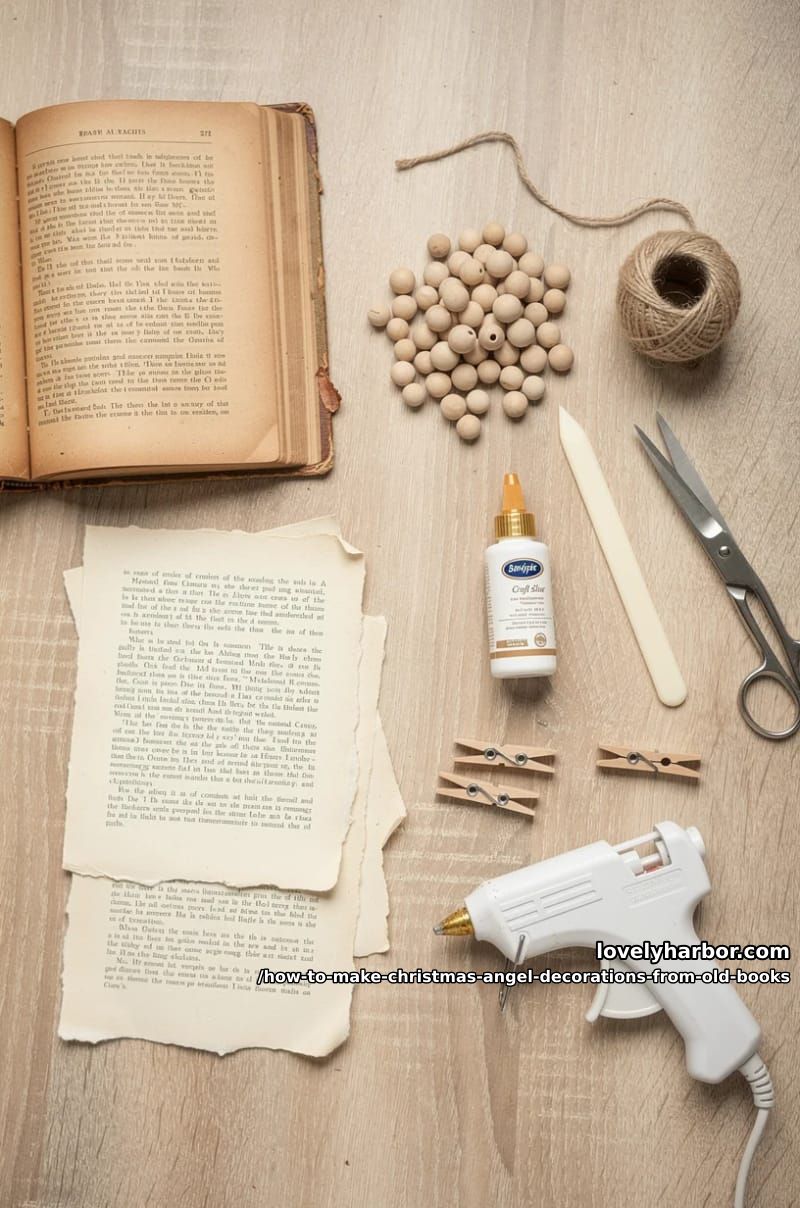
Step 1: Pick (and age) the right pages

Paper choice is what decides whether your fan holds a crease or springs back open the second you let go. Old paperbacks and discarded dictionaries are the sweet spot: the paper is thin, a little acidic, and already that warm tea color, so it folds sharp and reads vintage with no effort at all. A thrift-store hardback with browned pages runs a dollar or two, and one book makes dozens of angels.
Do this
- Yellowed paperback or old novel pages , thin, and they take a knife-edge crease.
- Dictionaries and encyclopedias. The text is dense and small, and one book holds hundreds of pages.
- Sheet music or hymnal pages, where the staff lines add a pattern across the fan.
- Old ledger paper, or anything in a language you don’t read: texture without distracting words.
Avoid
- Glossy magazine and art-book stock. The coating just refuses to hold a fold.
- Heavy cover cardstock , too stiff to pleat at 1 cm.
- Bright white printer paper has no vintage tone, so the finished angel looks like a school project.
- Anything with big full-color photos: the fan chops the image into visual noise.
If your paper leans white, age the cut edges before you fold. Swipe a Vintage Photo or Tea Dye distress pad along each torn edge with a quick dragging motion, or dip the edges in cold black tea and dry them flat under a heavy book. Do this while the page is still a flat sheet , never after folding, because the pleats trap moisture and warp.
Step 2: Fold each page into a crisp fan
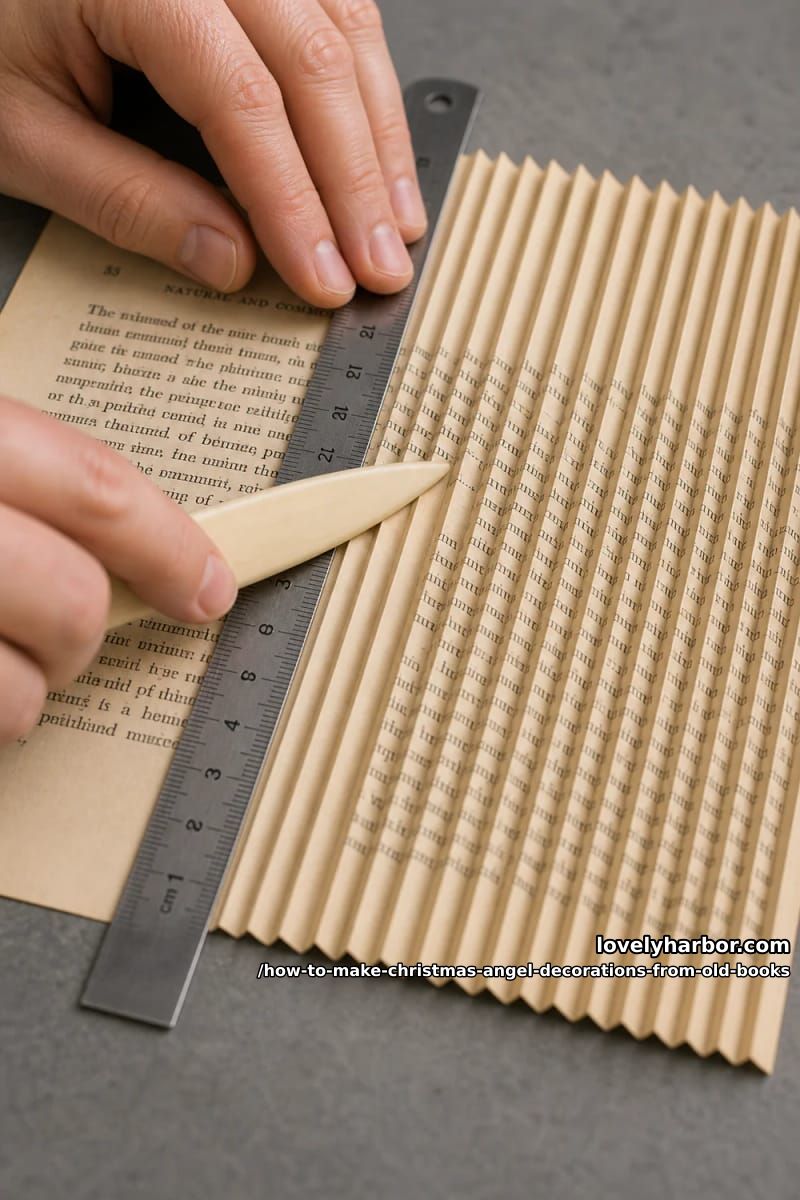
Lay the page flat and fold it into an accordion of even pleats about 1 cm (roughly 3/8 inch) wide. Here is the trick that matters most: run a bone folder along each fold against a ruler , or just fold over the ruler's edge , so every crease is a hard line instead of a soft bend. Soft bends are exactly why fans flop. A standard paperback page, about 11 cm wide, gives you ten to twelve pleats.
Keep the pleat width consistent, because the two halves have to line up later. The book's own line spacing is a decent guide, or you can fold one master pleat and gauge the rest against it. If you're making a batch, fold a whole stack in one sitting , the rhythm beats doing them one at a time, every time.
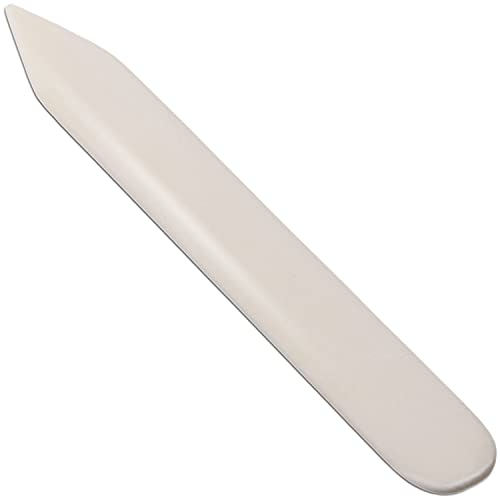
A real bone folder turns a mushy fold into a tailored pleat, and it’s the same tool you’ll burnish every crease with.
Step 3: Crease each fan into one angel half
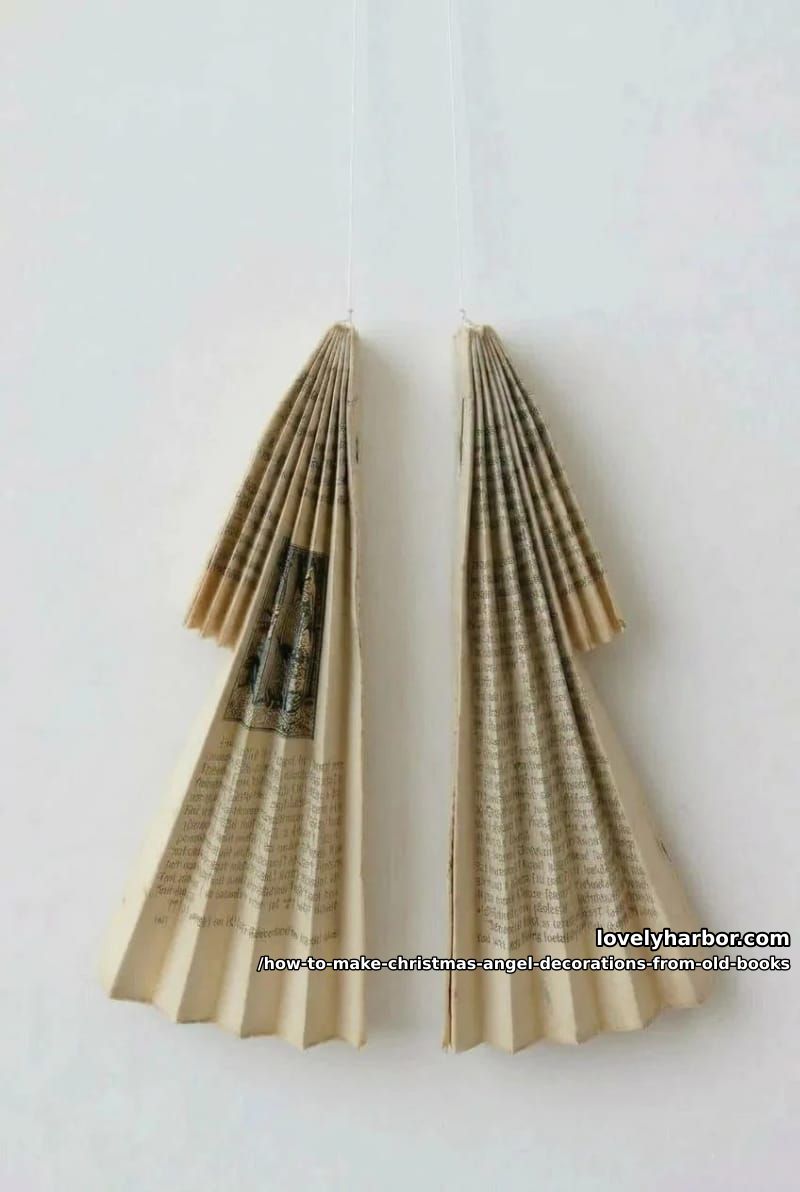
Take the pleated strip and fold it in half, creasing hard at the center so the pleats pivot from that one point. Open it a little and it stands as a quarter-fan: tight at the top, spreading toward the bottom. That single piece is one half of the angel , the gown on one side, the start of a wing up top. Make a second half from your other page, identical to the first.
Step 4: Glue the two halves into the body
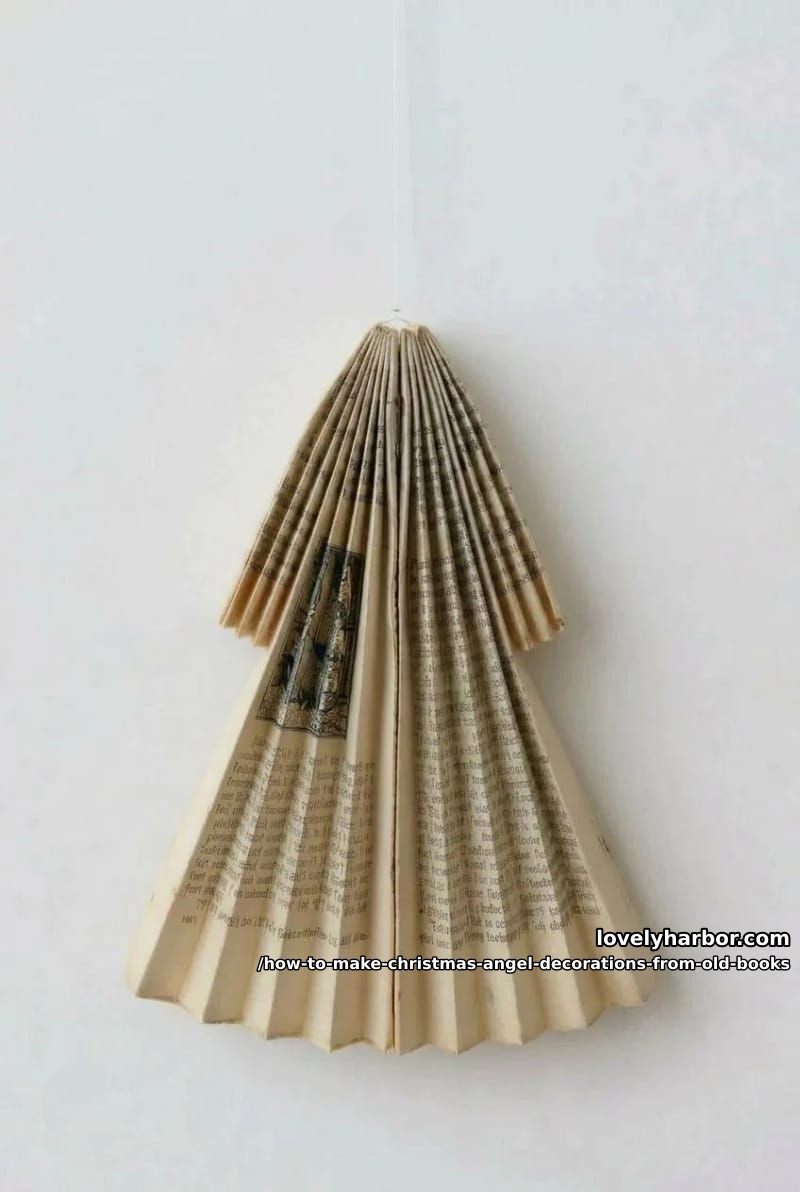
Run a thin line of tacky glue down a portion of the flat center face of one half and under the wings to attach the bottom of the wings to the body, then press the second half against it, creases meeting at the back. The pleats fan out left and right into a full skirt with a point at the top , that point becomes the neck. Pinch the seam, clip it with a binder clip or clothespin, and leave it alone. Tacky glue takes twenty to thirty minutes to grab.
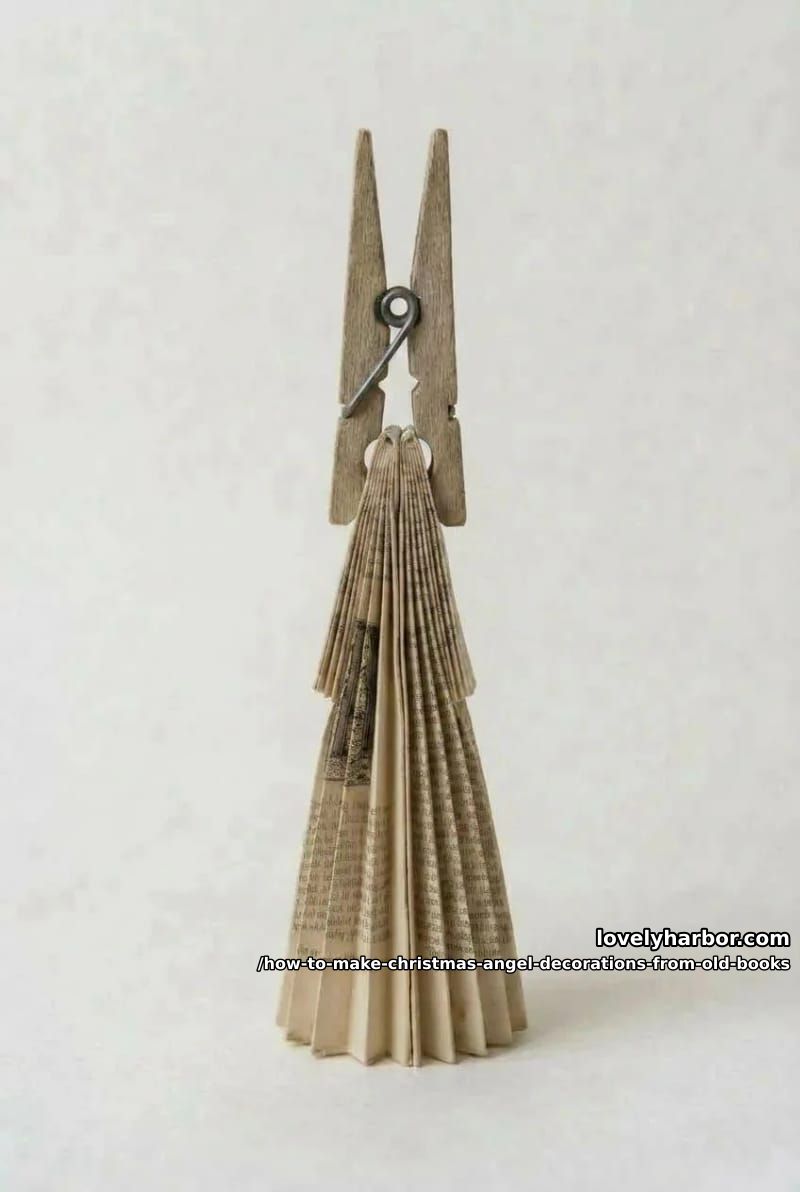
Step 5: Add the bead head and twine hanger
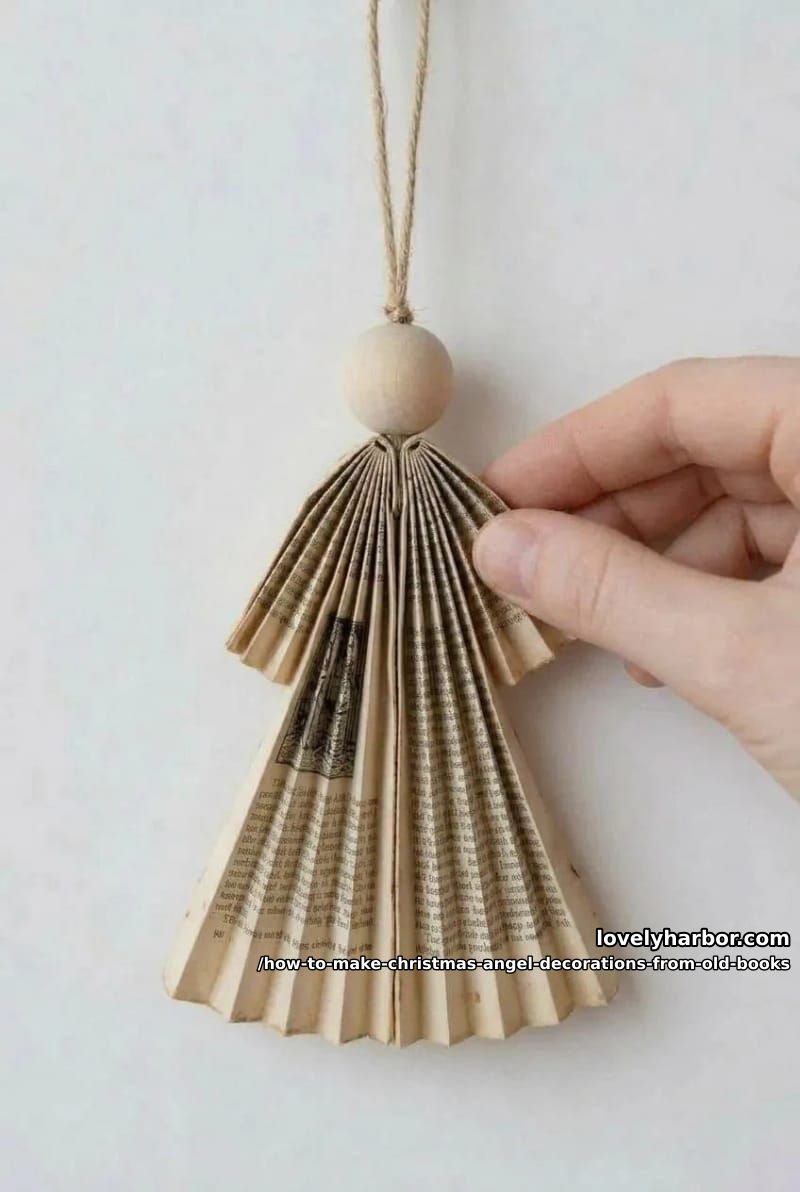
Cut about 20 cm of jute, fold it in half, and push the folded loop up through the bead so the loop pokes out the top for hanging and the two tails hang below. Tie an overhand knot in the tails right under the bead, then dab the knot and the inside of the hole with glue. That knot is the only thing stopping the bead from sliding off, so don't skip it.
Set the knotted tails into the point at the top of the fan and fix the bead there with a small dot of hot glue, pressing the tails between the top pleats. If your bead hole is wider than the twine and the knot pulls through, thread a smaller bead below as a stopper, or just knot the twine twice.
A three-size bead pack means you can scale the head to the fan, and it ships with enough jute for the whole batch of hangers.

Step 6: Shape the wings, seal, and hang

The angels in the photo get their wings from the fan itself: gently pull the top pleats up and out so they flare above the skirt. Want more defined wings? Glue a smaller separate fan, half a page folded the same way, behind the body near the neck. The halo is optional. A loop of thin gold cord or a small gold jump ring glued behind the bead reads as one, though I think the bare twine-and-bead look in the reference photo is cleaner.
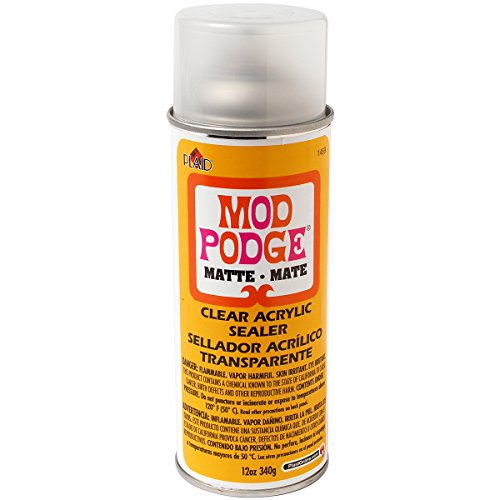
Finish with a light pass of matte sealer from about 25 cm away. Everyone skips this step, and it's the reason cheap paper ornaments uncurl by mid-January: the spray stiffens the pleats and keeps humidity from relaxing your hard creases. Two thin coats beat one wet coat, which can blotch the text.

Matte, not gloss: it protects the pleats without throwing a plasticky shine that kills the old-paper look.
Getting the proportions right
The whole look falls apart if the bead and the fan fight each other. Too big a head and the angel goes top-heavy and tips forward on the branch; too small and it looks pinned-on. Let the page size set the scale, then pick a bead to suit.
Pleat width: 1 cm (3/8 in). Narrower pleats give a fuller, finer fan but take longer; anything wider than 1.5 cm looks chunky.
Page and angel size: a mass-market paperback page (about 11 x 17 cm) makes a finished angel roughly 9 to 10 cm tall. A larger hardback or atlas page scales it up proportionally.
Bead: 16mm to 20mm for that size, with the bead diameter about a fifth of the total angel height. Go to 25mm only on big atlas-page angels.
Hanger: about 20 cm of 2mm jute per angel, doubled through the bead, leaving a loop of 4 to 5 cm.
Four variations worth trying

Once the basic fold is muscle memory, the paper does most of the styling for you. These four are the ones I keep coming back to.
Sheet music angel
Folded from old hymnal or piano-score pages, so the staff lines streak across the fan. Choir-loft energy , and music books go cheap at estate sales.
Gilded-edge angel
Brush or sponge a little gold paint or a gold leafing pen along the fold tips before sealing. The shimmer catches tree lights without going gaudy.
Dictionary angel
The dense two-column type reads as fine texture from across the room. Tiny, uniform, a little old-fashioned, and one old dictionary makes a whole flock.
Place-card angel
Make them half-size from a smaller page and a 12mm bead, then tuck one at each setting as a Christmas-dinner favor with a name tag on the twine.
Mistakes that ruin a book page angel
- Glossy or coated paper. The coating won’t take a crease, so the fan springs open and never holds its shape. Test-fold one pleat before you commit the page.
- Uneven pleats. Mismatched widths between the two halves give you a lopsided angel that leans on the branch. Match pleat counts before gluing.
- Hot glue in the center seam. The cooled ridge holds the pleats apart and the fan refuses to lie flat. Thin line of tacky glue, then clamp.
- Skipping the knot under the bead. The twine slides straight back through the hole and the head pops off. Knot it, then glue the knot.
- No sealer in a humid room. Over a few weeks the pleats relax and the angel goes limp. A light matte spray locks the creases.
- A bead too big for the fan. Top-heavy angels tip face-down. Keep the head around a fifth of the angel’s height.
Build sequence at a glance
Because the aging and sealing steps need drying time, batch the wet work and fold while it dries.
- First 15 minutes: tear your pages and, if needed, ink or tea-stain the edges. Lay them flat to dry, 15 to 20 minutes.
- While they dry: fold the dry pages into fans, about 5 minutes per page.
- Assembly: crease each fan in half, glue the two halves at the seam, clip, and let the tacky glue set 20 to 30 minutes.
- Then: add the bead and twine, shape the wings.
- Finishing: matte spray, dry 20 minutes, second coat, then leave them an hour before hanging.
Conclusion
Tacky glue in the seam, hot glue only on the bead. If you change one thing about how you were going to do this, make it that , it's the whole gap between an angel that sits flat and one that gaps open. Everything after is paper and patience: aged paperback pages hold a sharper crease, and the two minutes of matte spray are what carry the things through January. One honest caveat, since I keep recommending it: the gilded-edge version photographs beautifully and tips into gaudy faster than you'd think, so use less gold than feels right. Fold a dozen in one sitting and you'll have toppers, place cards, and a full branch of them before the tea you stained the edges with goes cold.