
Most “Mexican patio” articles treat the style as a color palette, terracotta, cobalt, sun yellow, and stop there. The real logic is regional: Talavera comes from Puebla, equipales come from Jalisco, Oaxacan rugs are woven on pedal looms in Teotitlán del Valle.
Each material has rules about how it’s used, sealed, paired, and protected from weather. This guide covers the 15 elements that genuinely belong, with the sourcing detail and care specifics most articles skip.

1. Talavera Tile Designs for Patios
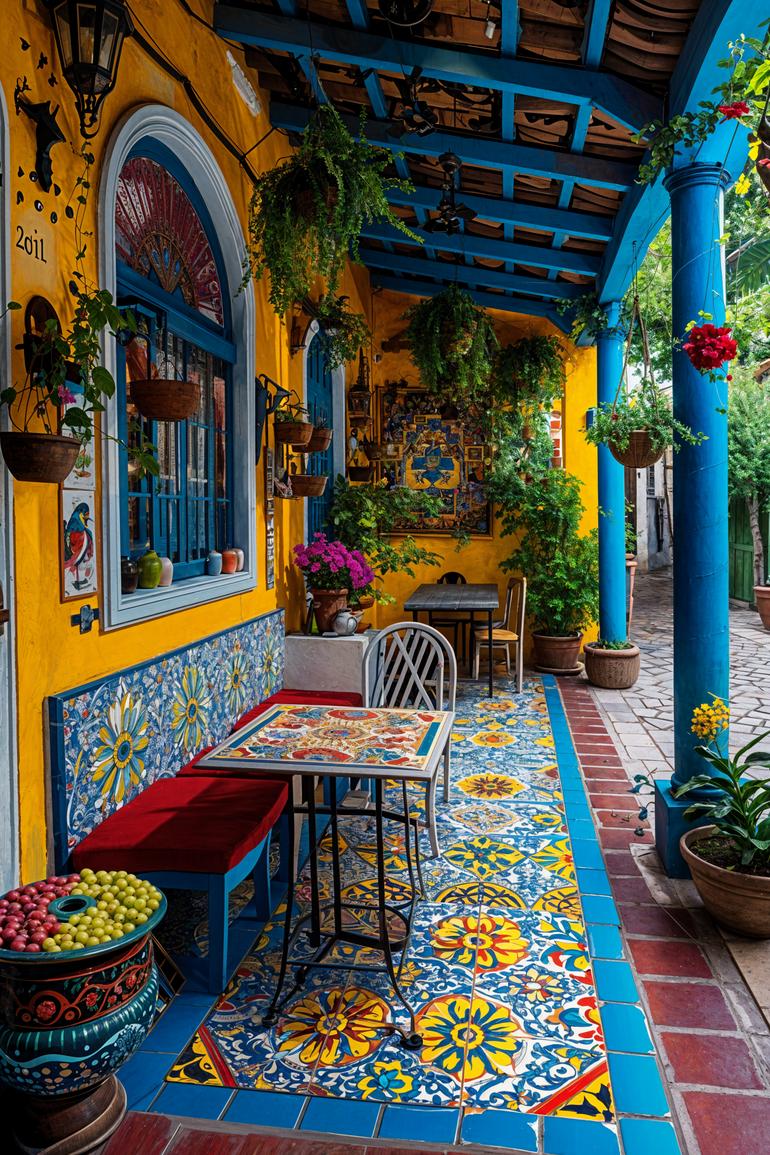
Real Talavera comes from Puebla and Tlaxcala, Mexico, and certified pieces carry a “DO4” denomination of origin holographic label and potter’s signature on the back.
Authentic hand-painted 4×4″ tiles typically run $4–8 each; mass-produced “Talavera-style” tiles from non-certified workshops sell for $1–2 each and use thinner glaze that chips faster.
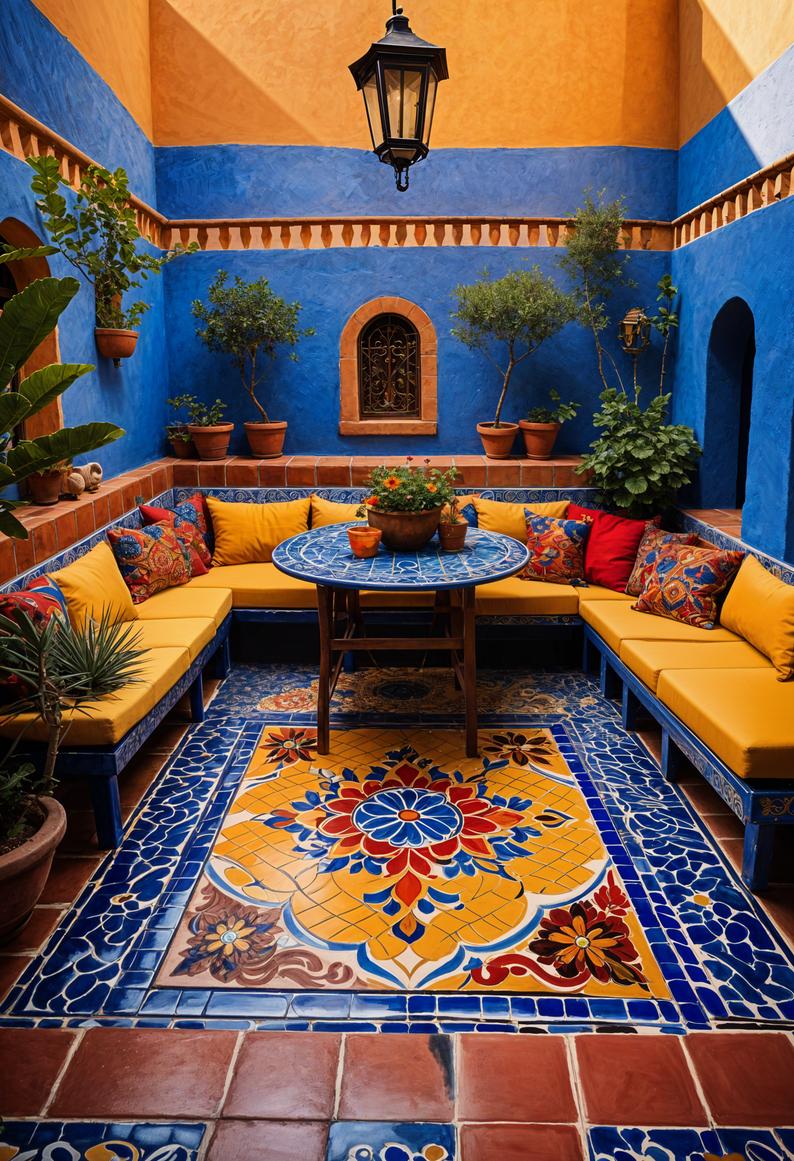
Where to use it on a patio: stair risers, a feature wall, a fountain surround, a tabletop inset, or a grill backsplash. Using it as a full floor field is expensive and visually overwhelming, designers typically use Talavera as an accent against neutral terracotta or plain concrete.
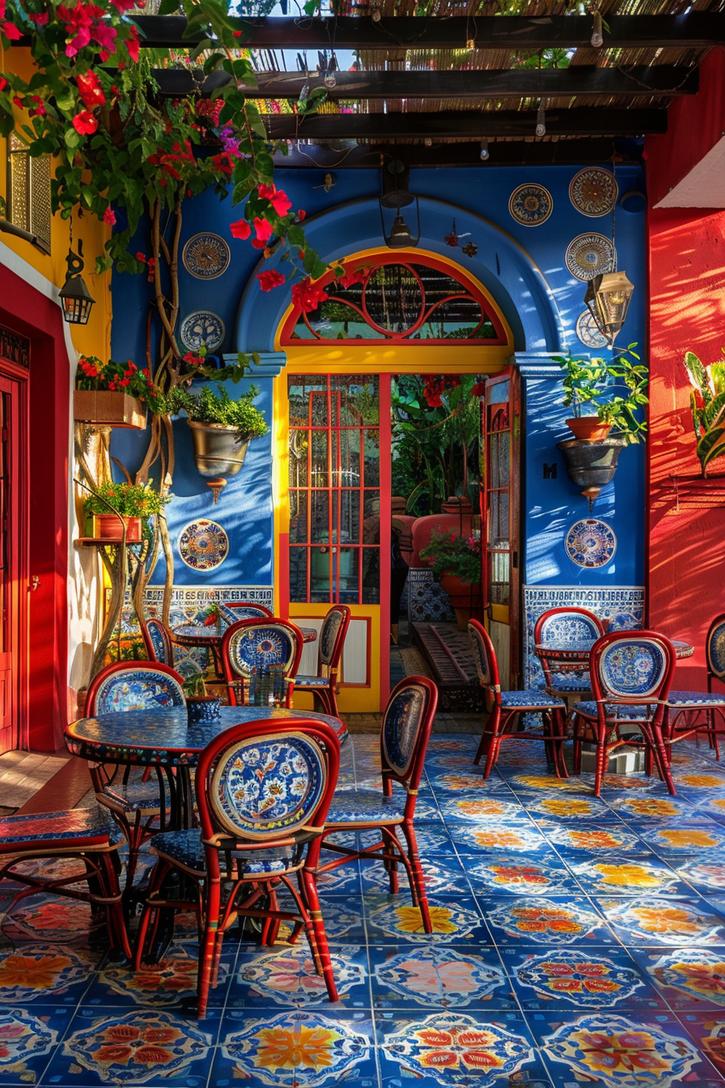
Sealing matters more in freeze zones. Outdoor Talavera needs a penetrating sealer (Miracle Sealants 511 is commonly recommended) every 1–2 years. Without it, the porous clay absorbs water, freezes, and cracks the glaze from underneath. North of zone 7, install Talavera only on covered or vertical surfaces, or substitute with ceramic reproductions like Merola Tile’s ‘Tierra’ series around $4/sq ft.
2. Vibrant Papel Picado Decor Ideas
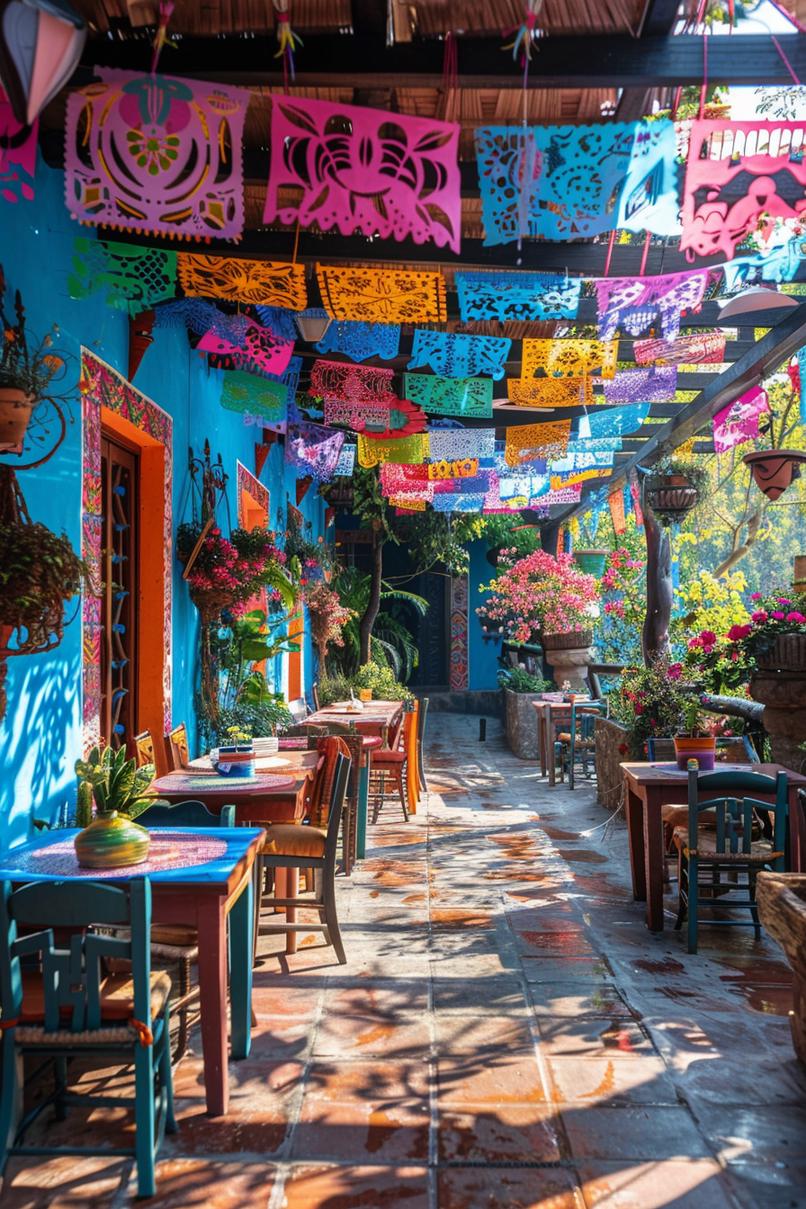
Traditional papel picado is tissue paper, which means it lasts about one rainstorm. For patio use longer than a single event, you need to know which version you’re buying.
- Plastic banners (“papel picado de plástico”) survive rain and sun for a full season, $8–15 for a 16-foot strand
- Hand-cut tissue paper from Puebla workshops is more authentic and detailed but event-only, $20–40 per strand, retired after one use
- Laminated tissue paper splits the difference, detail preserved, plastic-sealed for weather
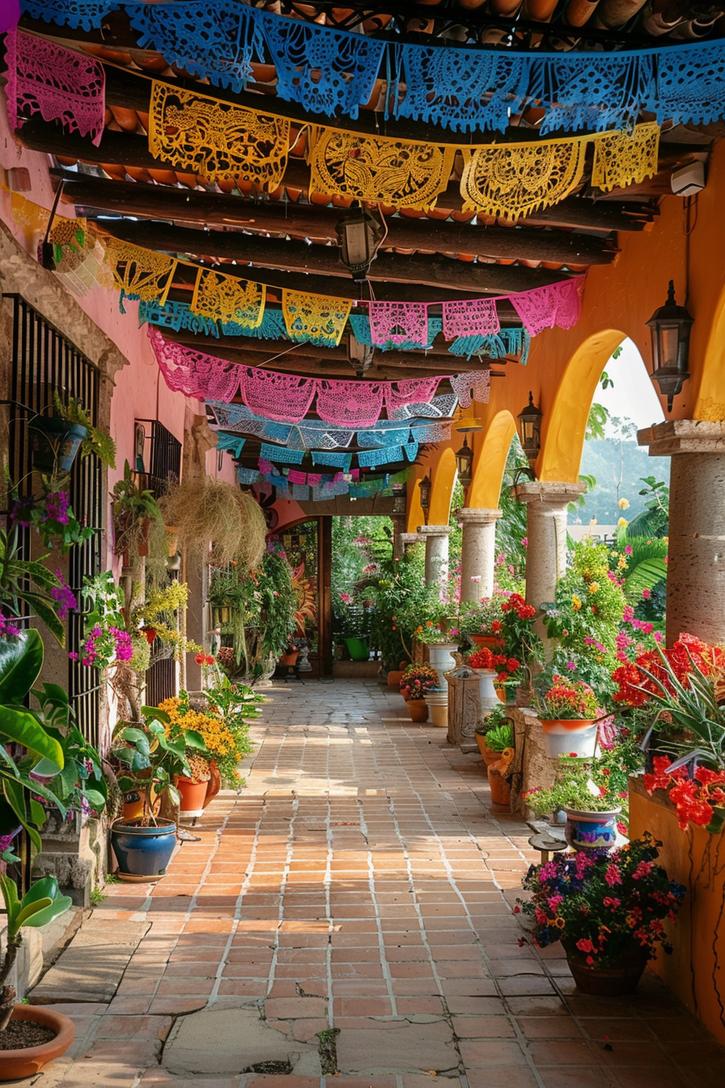
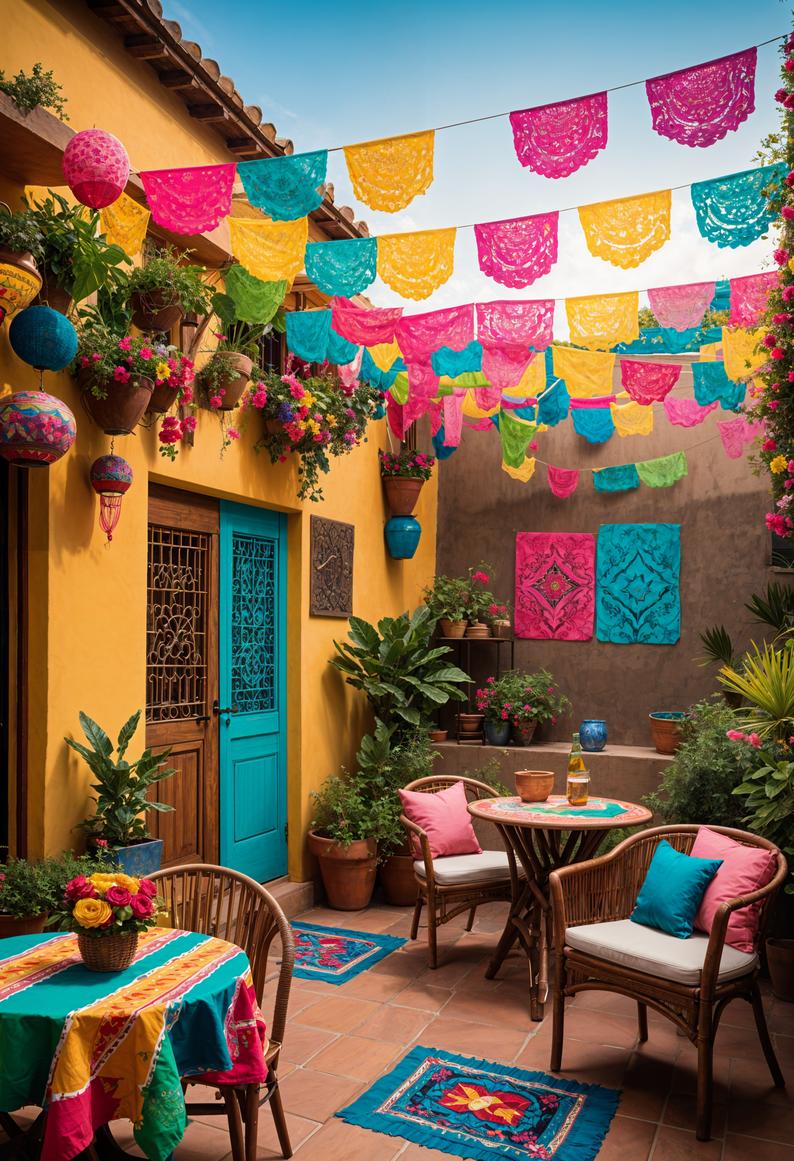
Stringing technique: run strands diagonally across the patio at 8–9 feet high, anchored to pergola beams or eye hooks. Two crossed strands read as celebratory; six strands read as a restaurant patio. Hang perpendicular to your prevailing wind, not parallel, strands hit on the long edge twist and tangle within a day.
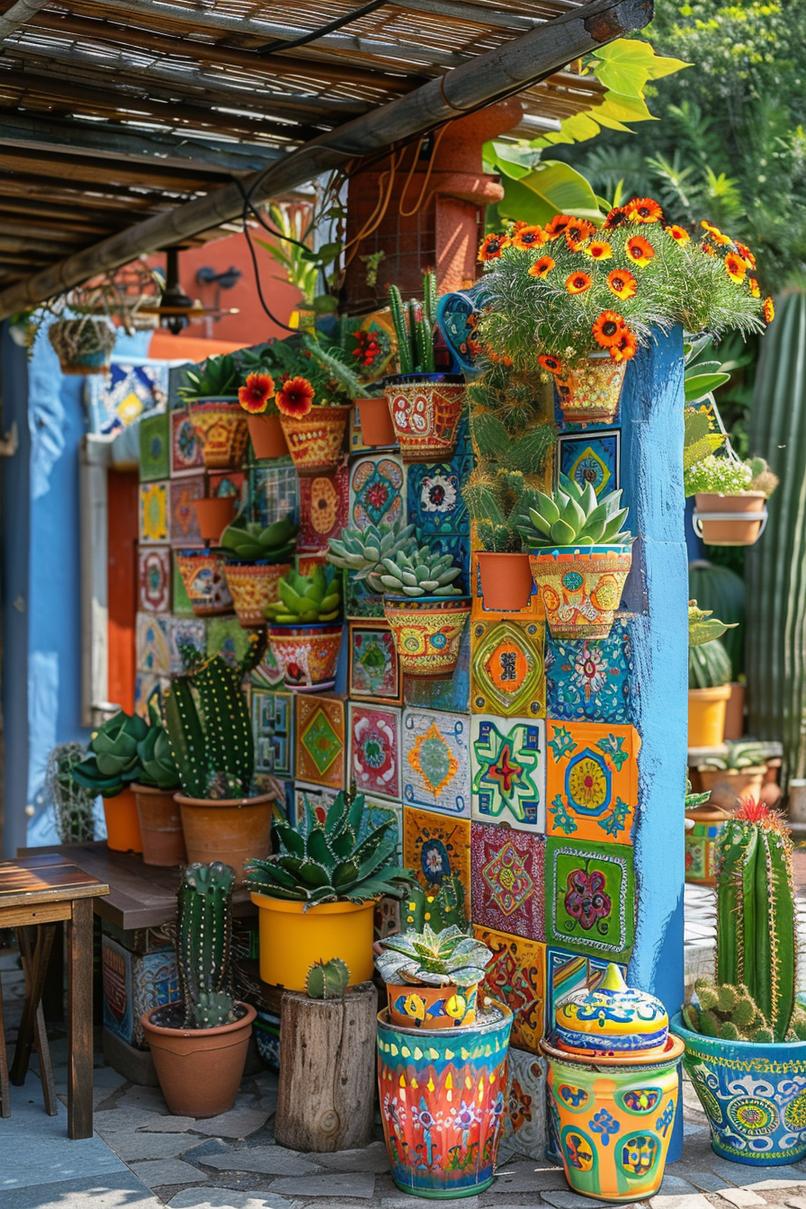
3. Succulent Wall Decor Ideas
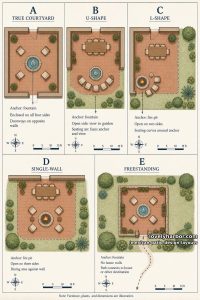
The Planning Phase: Identify your yard archetype and get a dimensioned floor plan with a complete furniture shopping list.
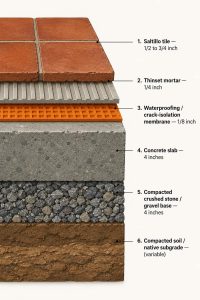
The Build Phase: Avoid costly cracks and drainage issues with our engineering guide to substrates, slope, and freeze-thaw protection.
Vertical succulent walls work well in dry-summer climates and badly almost everywhere else. Check that your patio gets 4–6 hours of direct sun and summer humidity stays below 60% most days. Wetter than that and the substrate stays damp, rot sets in, the wall fails within a season.
Do this
- Shallow vertical planter (3–4″ deep) with sphagnum moss backing
- Echeveria, sedum, and small agave varieties
- Tilt the panel back 10–15° so each pocket holds its own water
- South or west exposure, 6 hours minimum sun
Avoid
- Felt pocket walls (bottom pockets rot first)
- Pastel “designer” succulents — they fade to green in full sun
- Flat vertical mounting with no tilt — water runs straight down
- Shaded north walls (insufficient light, succulents stretch)
4. Authentic Mexican Hammock Styles
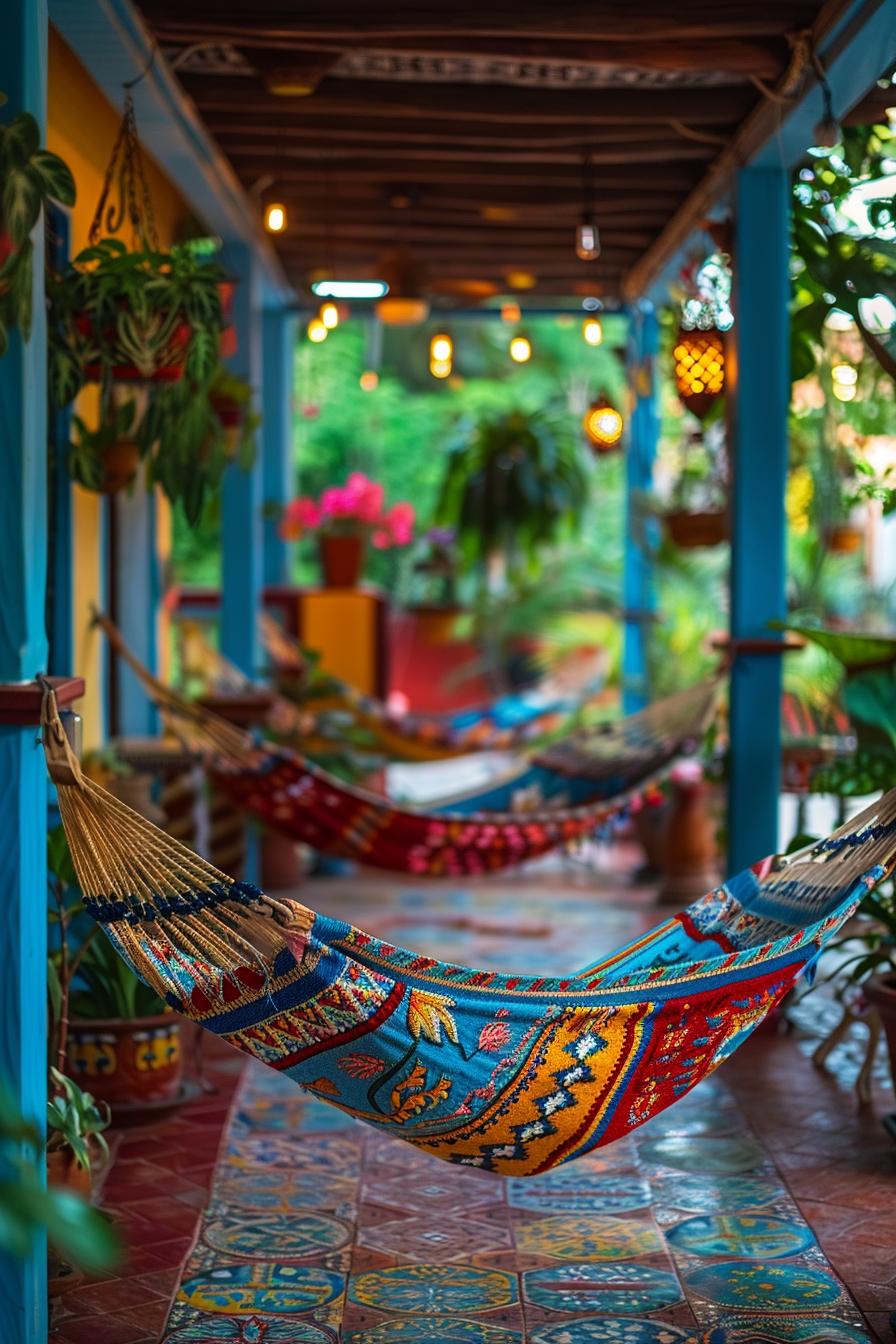
Real Yucatecan hammocks have no spreader bars, the fabric collapses around you in a cocoon. The wooden-bar versions are Brazilian or American style, tip more easily, and aren’t what you want. If the listing shows wooden bars at either end, it’s the wrong product.
Thread count matters more than width. “Matrimonial” and “familial” sizing refer to width, not strength. What determines comfort is the number of threads:
- Sencilla — under 100 threads, digs in, not for adults
- Fina — around 150 threads, the standard everyday hammock
- Especial — around 300 threads, comfortable for long use
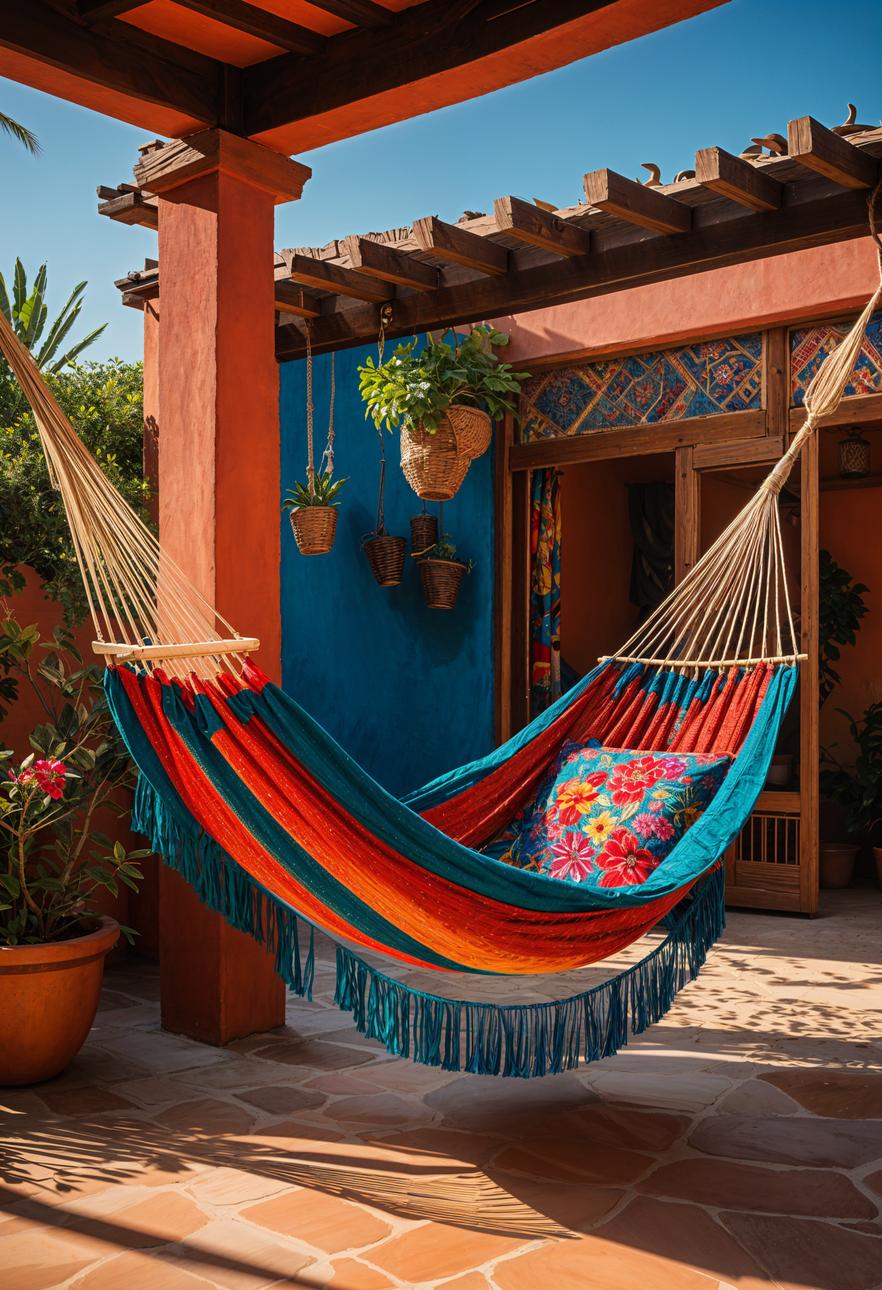
Cotton is softer and reads traditional; nylon survives weather and lasts 3–5x longer outdoors. For an uncovered patio, nylon is the practical choice. Mount end-to-end at 12–14 feet with hooks rated for 400+ pounds, set roughly 5 feet off the ground. The curve should be deep enough that the midpoint sits about chair-seat height, a hammock hung tight is doing it wrong.
5. Vibrant Patio Dining Decor
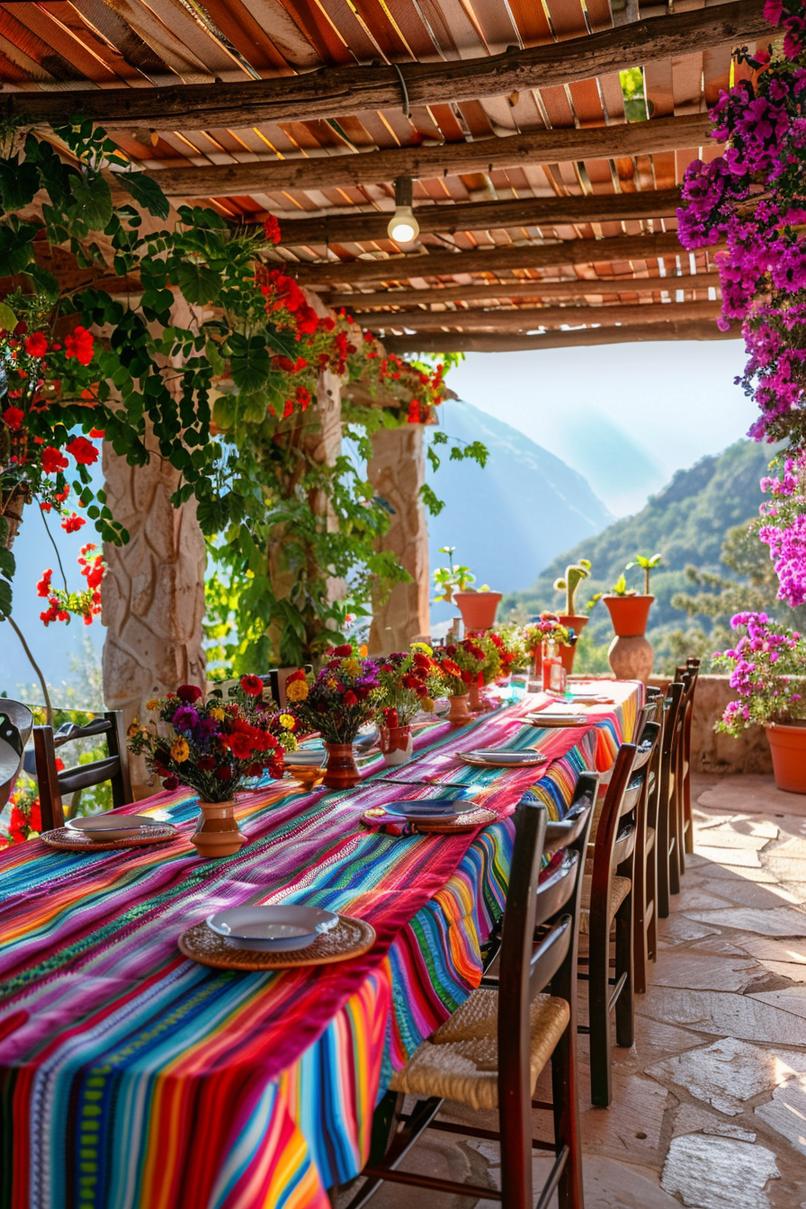
The dining setup is where most “Mexican patio” attempts go theme-restaurant: too many serapes, too many colors, too many objects on one table. The fix is restraint, one bold textile, one accent material, the rest neutral.
The framework that works: one bold textile (serape runner or single-color hand-loomed tablecloth from Chiapas), terracotta or stoneware dishware in neutral tone, clear or amber glassware. The textile carries the color; everything else stays quiet.
Serape sourcing: authentic Saltillo serapes (woven in Coahuila) run $80–250 depending on size and weave tightness. Cheaper serape-style runners from non-Saltillo workshops run $20–40 and are fine for outdoor use where you’ll accept stains. Both versions are machine-washable cold, line-dry only. Real wool serapes shrink the first time they get wet, use cotton or poly reproductions for tablecloths.
6. Mosaic Benches Around Fire Pits
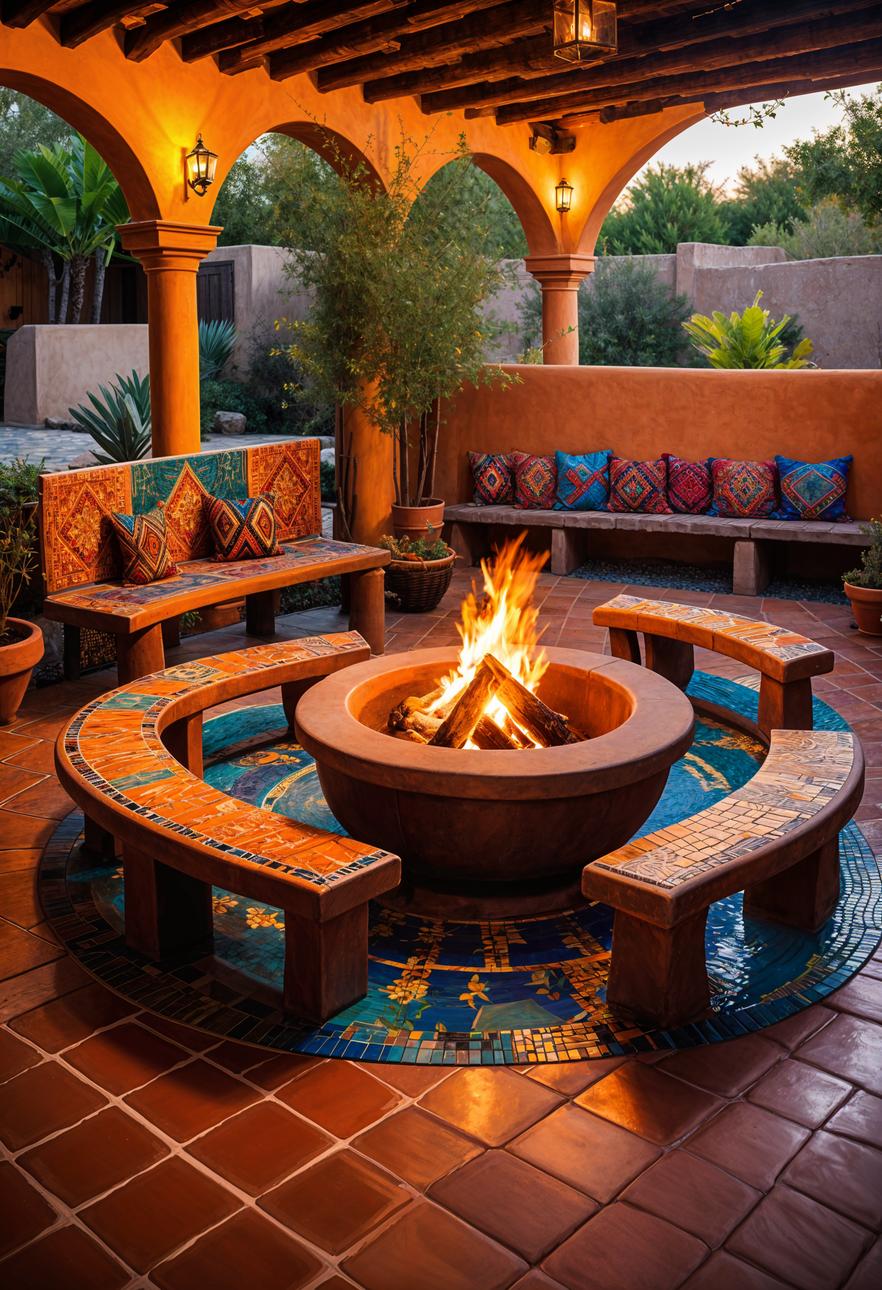
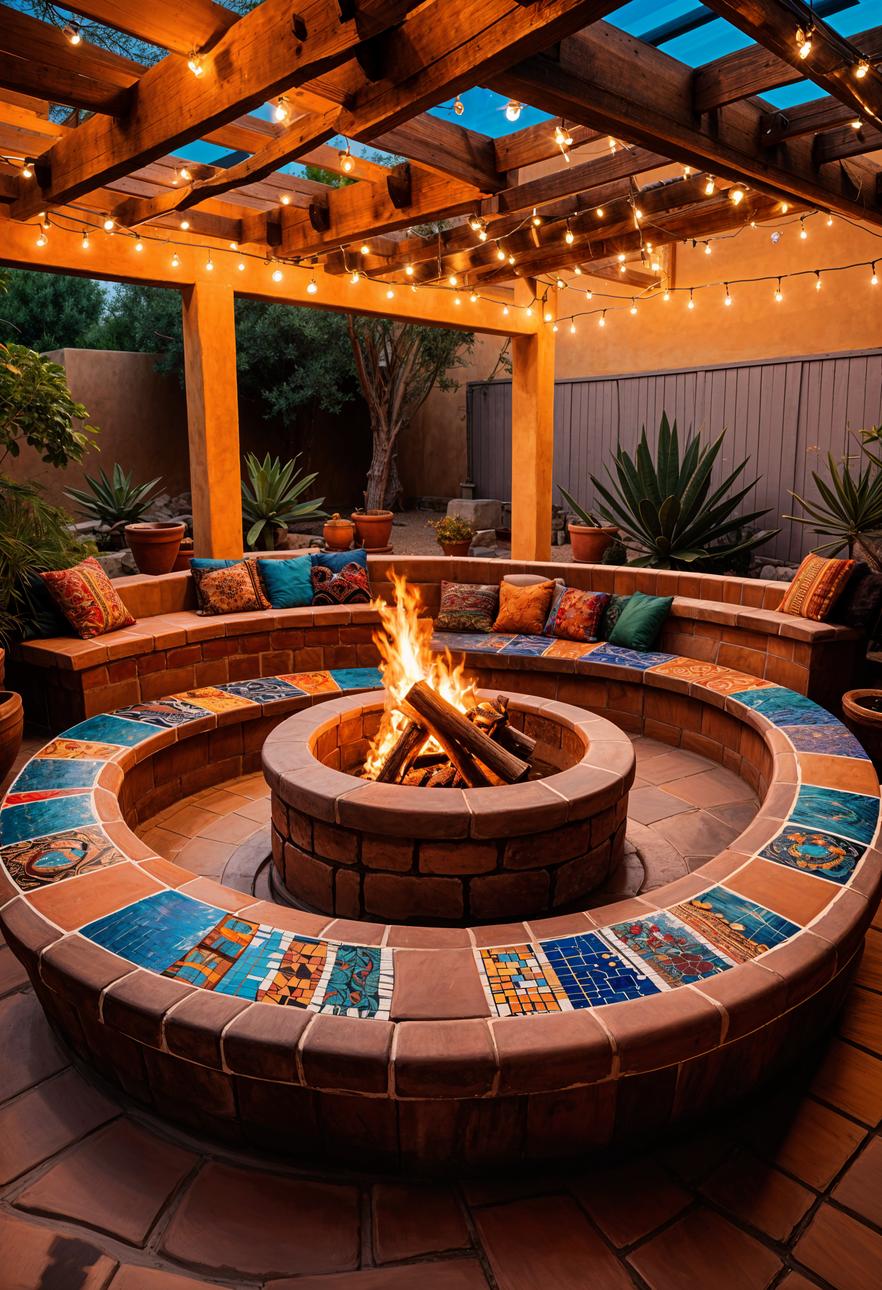
Mosaic seating around a fire feature is a defining element of patios in San Miguel de Allende and Mexican-revival homes in the American Southwest.
Construction is usually a concrete or adobe bench base with hand-cut Talavera or broken-tile mosaic on the seat and sides.
What makes it work:
- Built-in bench at 18″ seat height, curved or L-shape that hugs the fire pit
- Mosaic on the seat face and a horizontal band, full coverage everywhere reads busy
- Grout in warm gray or sand tone, not stark white
- 36–42″ clearance between bench front and fire pit edge
- Outdoor-rated epoxy grout, not cement grout, cement cracks at thermal joints within a winter

Cost reality: commissioned built-in mosaic benches with a connected fire pit typically run $3,000–10,000 installed in the US, depending on size and tile sourcing. DIY versions using a poured concrete base and pre-broken tile from a craft store can be done for $400–800 plus a weekend, but expect a less refined finish.
For evening sitting, add outdoor cushions in solid colors (Sunbrella canvas in natural, navy, or rust), the tile reads cold and hard, which works in the daytime but not at dinner.
7. Colorful Rustic Patio Furniture

“Rustic Mexican patio furniture” usually refers to one of three traditions: equipales (covered in section 15), heavy mezquite (mesquite) farm tables, or painted pine from Michoacán workshops. They’re not interchangeable, different weight, finish, and care requirements.

Mezquite tables are dense, heavy, and dimensionally stable in dry climates. A 6-foot mezquite dining table typically weighs 200–300 pounds and runs $1,500–4,000 imported. In humid climates, mezquite is still workable but needs annual teak oil treatment.
Painted pine (from Pátzcuaro or Tlaquepaque) is lighter, much cheaper ($300–800 for a comparable table), and the painted finish is the design feature. Pine is softer wood — expect dents, color wear at edges, and a 5–10 year outdoor life unless covered.

Cushion pairing rule: bold-painted wood → solid neutral cushions (cream, faded denim, terracotta). Unpainted mezquite or natural pine → that’s where serape-pattern or geometric Mexican textile cushions can go. Bold-on-bold reads visually noisy fast.
8. Artisan Clay Pottery Displays
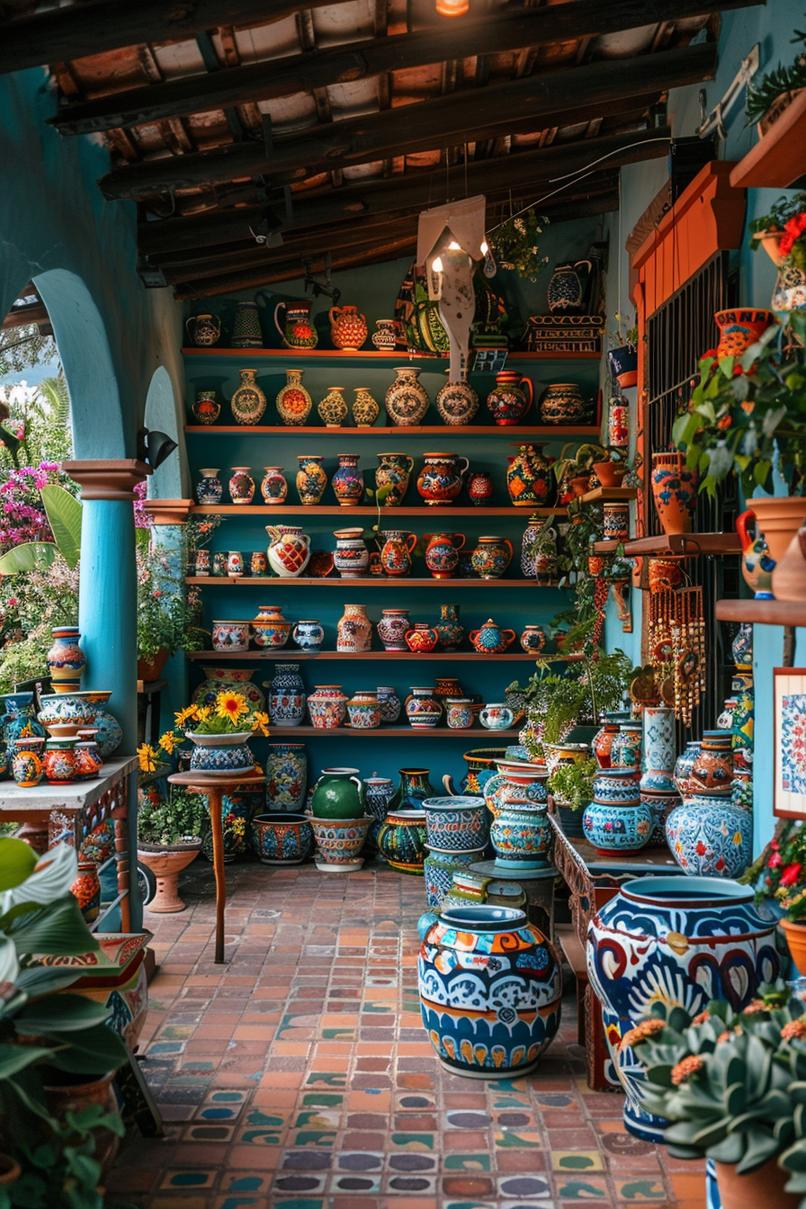
Mexican clay pottery splits into distinct regional traditions, and mixing them randomly is what makes a patio look like a gift shop instead of a curated space. The four most common types:
- Barro negro (Oaxaca) — polished black clay, no glaze, decorative only, won’t hold water for plants
- Barro rojo bruñido (Oaxaca, specifically San Marcos Tlapazola) — burnished red clay, often unglazed, beautiful but porous
- Talavera-glazed pottery (Puebla) — glazed and waterproof, the practical choice for actual planters
- Mata Ortiz (Chihuahua) — collector-grade, $50–2,000+ per piece, depending on artist
The displaying rule of three: group pottery in odd numbers (3 or 5), with at least a 2:1 height ratio between tallest and shortest. A row of similar-height pots reads as a shelf display; staggered heights read intentional. If pottery is holding plants, use Talavera-glazed or unglazed terracotta, and accept that unglazed pieces develop white mineral deposits within a year.
In freeze zones, bring decorative pieces indoors; low-fire Mexican clay shatters when wet soil freezes.
9. Vibrant Folk Art Planters

Hand-painted folk-art planters are one of the easier entry points to this style, a single $40–80 piece can anchor a corner without requiring a full design commitment.
What separates a good one from a tourist piece:
- Glaze on the inside as well as outside (means it’ll hold water properly)
- Pre-drilled drainage hole, ideally larger than 1/2″
- Paint under the glaze, not on top, overglaze paint chips within a season outdoors
- Wall thickness at least 1/4″, thinner pieces crack in freeze cycles

Plant pairings: the painted pattern is already busy, so the plant should be visually simple. Single-species plantings work better than mixed arrangements, one mature agave, one bougainvillea, one citrus tree.
A painted planter with a mixed annual arrangement becomes competing visual noise. One 18″+ statement planter beats five small scattered pieces, and often costs less total.
10. Mexican Lanterns for Outdoor Lighting

Three lantern styles are routinely sold as “Mexican,” and each suits a different patio role:
- Punched-tin lanterns ($40–120) throw small dots of light through pinholes, best for a dining table or intimate seating area where the patterned shadow becomes part of the decor
- Pierced-tin star pendants (10–24″ diameter, $60–200) hang as overheads and throw star-shaped light patterns, best as a single statement over a dining table
- Talavera-tile-clad lanterns, heavier, more decorative, work as table-side feature pieces rather than functional task lighting

Bulb choice matters more than the lantern. Warm-white LEDs at 2200–2700K give the candlelight feel these lanterns were designed for. Anything cooler than 3000K reads industrial and undoes the effect.
For battery options, look for flicker-flame LEDs, the steady ones look like cheap nightlights inside an ornate fixture. Punched-tin rusts within a year outdoors uncoated; one annual spray of clear automotive lacquer ($15/can) slows oxidation considerably.
11. Woven Oaxacan Rugs: Cozy Patio
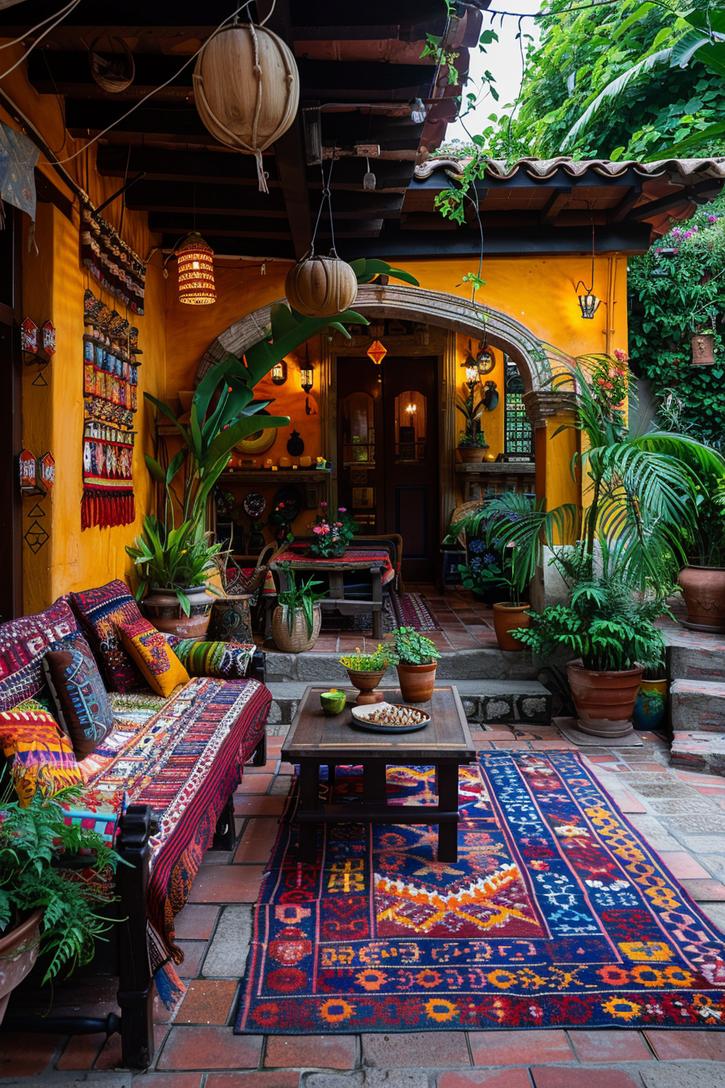
Authentic Oaxacan rugs (tapetes) are woven in Teotitlán del Valle on pedal looms from churro sheep wool, traditionally dyed with cochineal (red), indigo (blue), or wild marigold or pomegranate rind (yellow). A 4×6′ hand-woven rug from a Teotitlán workshop using natural dyes typically runs $300–800; the same size in commercial wool with synthetic dye runs $80–200.

Outdoor reality check: wool rugs are not outdoor rugs. On a covered patio they’ll last 5–10 years; left uncovered through one rainy season they mildew, fade, and the wool felts unevenly. For an actual outdoor surface, use a polypropylene rug printed with similar geometric patterns (Ruggable and Loloi both make versions, $150–400 range) and save the wool tapete for a covered porch.
Sizing rule: under a dining table, the rug should extend 24″ beyond the table edge on all sides so chairs stay on it when pulled out. Under a seating cluster, front legs of all furniture should sit on the rug.
12. Vibrant Trays for Mexican Hospitality

Hand-painted serving trays, typically tin, lacquered wood from Olinalá (Guerrero), or Talavera ceramic, sit in the “useful and visible” category that earns its keep on a patio. Each type has different practical use:
- Olinalá lacquered wood ($40–150) — showpiece option, smells faintly of linaloe wood, hand-painted in layered colors. Hand-wash only, no dishwasher, no prolonged water sitting on the surface
- Punched-tin trays ($25–60) — more durable and weather-tolerant, can live on an outdoor side table year-round in most climates
- Talavera ceramic trays — heavy and prone to chipping at the edges. Better as wall-mounted display than working trays
Keep one large tray (16–20″ long) on the main outdoor table loaded with the daily-use items, a salt cellar, a bottle of mezcal or olive oil, a stack of cocktail napkins. A working tray reads as lived-in; an empty decorative tray reads as styled.
The Planning Phase: Identify your yard archetype and get a dimensioned floor plan with a complete furniture shopping list.
The Build Phase: Avoid costly cracks and drainage issues with our engineering guide to substrates, slope, and freeze-thaw protection.
13. Artisan Tin Mirror Designs

Hand-tooled tin (hojalata) mirrors come primarily from Oaxaca and central Mexico, and they do more than decorate, a well-placed mirror on a small patio doubles perceived light and visually expands the space.
Sizing for impact: a tin mirror under 18″ reads as a small accessory and gets lost outdoors. The size that actually changes the room is 24–36″ diameter or square, hung at eye level on the visually heaviest wall.

Placement that pays off: opposite a planted corner (the mirror reflects greenery), or perpendicular to a window (reflects sky and light into a darker area). Hanging it on a sun-facing wall creates glare and is generally regrettable.
Mirrors should be hung on covered walls, rain hitting the silver backing causes desilvering and black spots within a year or two. Untreated tin tarnishes to a darker patina within 6–12 months outdoors, which most owners find adds character; for bright finish, an annual clear automotive lacquer spray slows oxidation.
14. Vibrant Bougainvillea Pots

Bougainvillea is the visual signature of Mexican patios from Mérida to Mazatlán. It can be grown in pots almost anywhere, but it has specific demands not obvious from a nursery tag.

By climate zone:
- Zones 9–11 (Florida, Gulf Coast, Southern California, Arizona): plant in-ground or in pots, full sun, year-round outdoor
- Zones 7–8 (Southeast, parts of Texas): pot-only, bring indoors below 30°F
- Zones 5–6 (Mid-Atlantic, Midwest): pot-only, summer annual or overwintered in a sunny indoor window
- Below zone 5: not practical outdoor. Substitute with mandevilla for similar color in pots and cooler-night tolerance
Two counter-intuitive rules: keep the pot small (14–18″ for a 3–4 foot plant, bougainvillea flowers when root-constrained, larger pots produce more vine and fewer flowers), and underwater it (water deeply once, then wait until the top 2″ of soil is dry, usually 5–10 days in summer). Over-watering is the most common bougainvillea killer.
15. Classic Chairs for Authentic Vibe
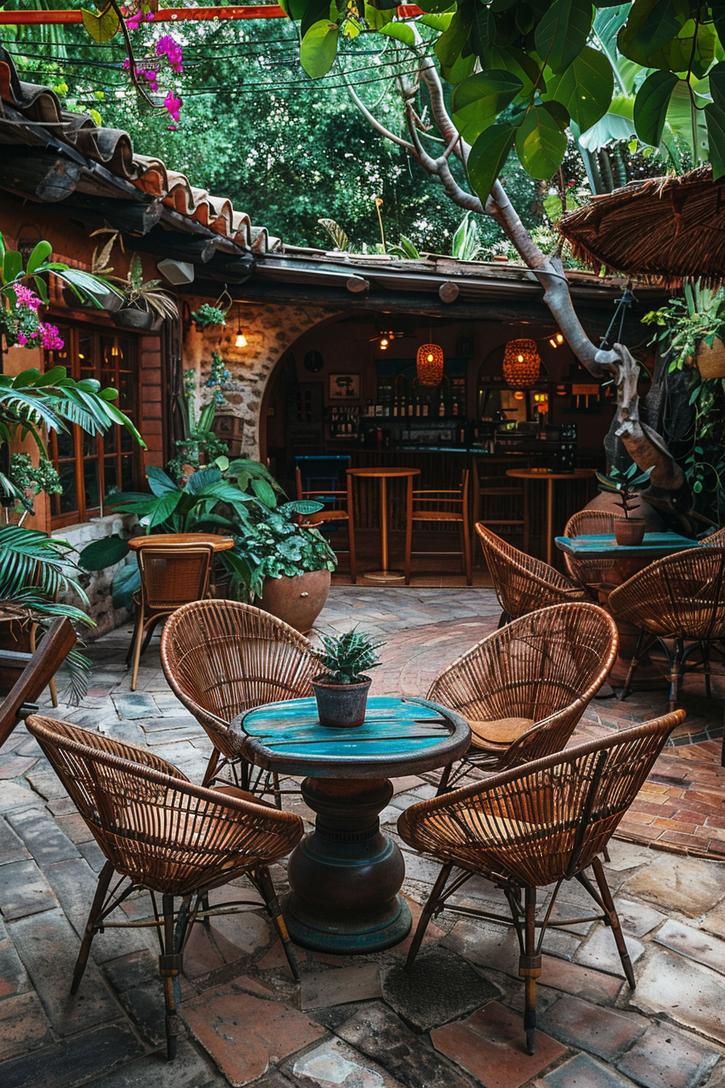
The equipal is the chair you’ve seen in every traditional Jaliscan restaurant: barrel-shaped, native hardwood slat frame, tanned pigskin or cowhide top and back. It’s been made in Zacoalco de Torres, Jalisco, The craft has pre-Hispanic roots, and has been centered in Zacoalco de Torres, Jalisco, for generations. A real one is identifiable on sight.

How to spot a genuine equipal:
- Native hardwood slat construction visible on the underside, not plywood
- Hide stretched over the frame with visible cross-stitched leather lacing along the rim, not glued or stapled
- Slight irregularity in slat spacing, handmade pieces aren’t dimensionally perfect
- Distinct cedar smell, especially when new
Pricing context: a genuine adult equipal chair from a Jalisco workshop typically runs $250–500; premium or oversized chairs reach $700–900. Matching tables run $400–900. Restaurant-supply knockoffs in vinyl over MDF sell for $60–120 and don’t age the same way.
Outdoor care: the leather top dries and cracks in direct sun. Treat annually with neatsfoot oil or leather conditioner (Bickmore Bick 4 is a common choice). Cover during heavy rain. Equipales pair best with rough-finish surfaces, saltillo tile, exposed beam ceilings, unpainted wood. On a sleek modern concrete patio they read as a costume piece rather than a design choice.
Sourcing Reference: Regional Search Terms & Heritage Workshops
The biggest gap in most lifestyle articles is the “last mile”, you fall in love with a look and have no idea where to actually buy it. The terms below are what to search for to get the real thing instead of the generic-import version.
Equipal chairs
Search: “equipales Zacoalco”, “equipal chair Jalisco”. Avoid generic listings that just say “Mexican leather barrel chair.” US-based importers that source directly from Zacoalco de Torres workshops include Mexican Connexion and El Paso Imports. For local pickup, swap meets and Mexican import stores in Texas, Arizona, Southern California, and New Mexico typically carry genuine equipales.
Talavera tile (certified)
Search: “Talavera DO4 certified”, “Talavera Poblana”, “Talavera de la Reyna”, “Uriarte Talavera”. Workshops with the denomination of origin certification include Uriarte, Talavera de la Reyna, and Talavera Armando. For larger volumes of authentic field tile, suppliers like Mexican Tile Designs and Rustico Tile & Stone are reliable importers.
Cantera stone (carved)
Search: “Cantera stone”, “Cantera Mexicana”, “hand-carved Cantera fountain”. The stone is quarried in Guanajuato, Querétaro, and Michoacán. US importers include Stone Imports and Adobe Floors and Tile. Custom carved pieces (columns, fountains, fire surrounds) ship from Mexico in 8–14 weeks and cost less than ordering similar custom stonework from US masons.
Oaxacan tapetes
Search: “Teotitlán del Valle rug”, “Zapotec wool rug”, “tapete Oaxaca”. Look for the weaver’s name in the listing, established families include Mendoza, Bautista, Gutiérrez, and Ruiz. Direct-from-weaver options on Etsy are often the best combination of authenticity and price.
Hammocks (Yucatecan)
Search: “Yucatecan hammock no spreader bar”, “hamaca de Mérida”, “sprang weave hammock”. The brand Hammock Universe and Mayan Hammocks both source from cooperative workshops in the Yucatán. Confirm thread count (look for “Fina” or “Especial” labeling) before buying.
Pottery (by region)
Barro negro: search “barro negro San Bartolo Coyotepec”. Mata Ortiz: search “Mata Ortiz pottery” plus a potter name (Quezada family, Ortiz family). Olinalá lacquerware: search “Olinalá lacquered tray” or “laca Olinalá”. Specialty importers like NOVICA and Direct From Mexico carry curated selections; National Museum of Mexican Art in Chicago) carry collector-grade pieces.
Saltillo serapes
Search: “Saltillo serape Coahuila”, “sarape de Saltillo authentic”. The El Sarape de Saltillo museum and associated workshops in Saltillo, Coahuila are the gold standard. Imported through Mexican Hammock Company and other specialty textile importers.
The Planning Phase: Identify your yard archetype and get a dimensioned floor plan with a complete furniture shopping list.
The Build Phase: Avoid costly cracks and drainage issues with our engineering guide to substrates, slope, and freeze-thaw protection.
Conclusion
A Mexican patio works when the elements share regional logic rather than just color palette. The strongest setup pairs a small number of high-quality pieces, one genuine equipal, one statement folk-art planter, one mid-sized tin mirror, one Saltillo serape on the dining table, against a quiet background of saltillo tile or stained concrete.
Three takeaways worth keeping:
- Buy fewer, better pieces. One $350 equipal beats four $80 wicker chairs painted bright colors. The same logic applies to pottery, tile, and lanterns.
- Match material to climate. Wool tapetes, untreated barro pottery, and cotton hammocks don’t belong on an uncovered patio in a wet climate. Substitute polypropylene rugs, Talavera-glazed planters, and nylon hammocks where weather demands it.
- Restrain the pattern. Talavera, serape, papel picado, folk-art planters, and tin mirror frames are each visually busy on their own. Pick two or three to feature; leave the rest calm.
If you’re starting from scratch, the highest-leverage first purchase is usually the largest piece you can afford, either an equipal seating set or a serious Talavera-glazed planter. Build outward from one anchor rather than buying ten small accessories.
Related Topics: