
The navy-and-shiplap version of coastal design is being retired room by room. What's replacing it pulls from organic modern, warm minimalism, and a particular Australian-Mediterranean strain of beach-house work that treats the ocean as a light source rather than a color palette. Ten material and styling moves below, with prices, brands, and the swaps to skip.
1. Limewash walls in warm putty, not chalky bright white
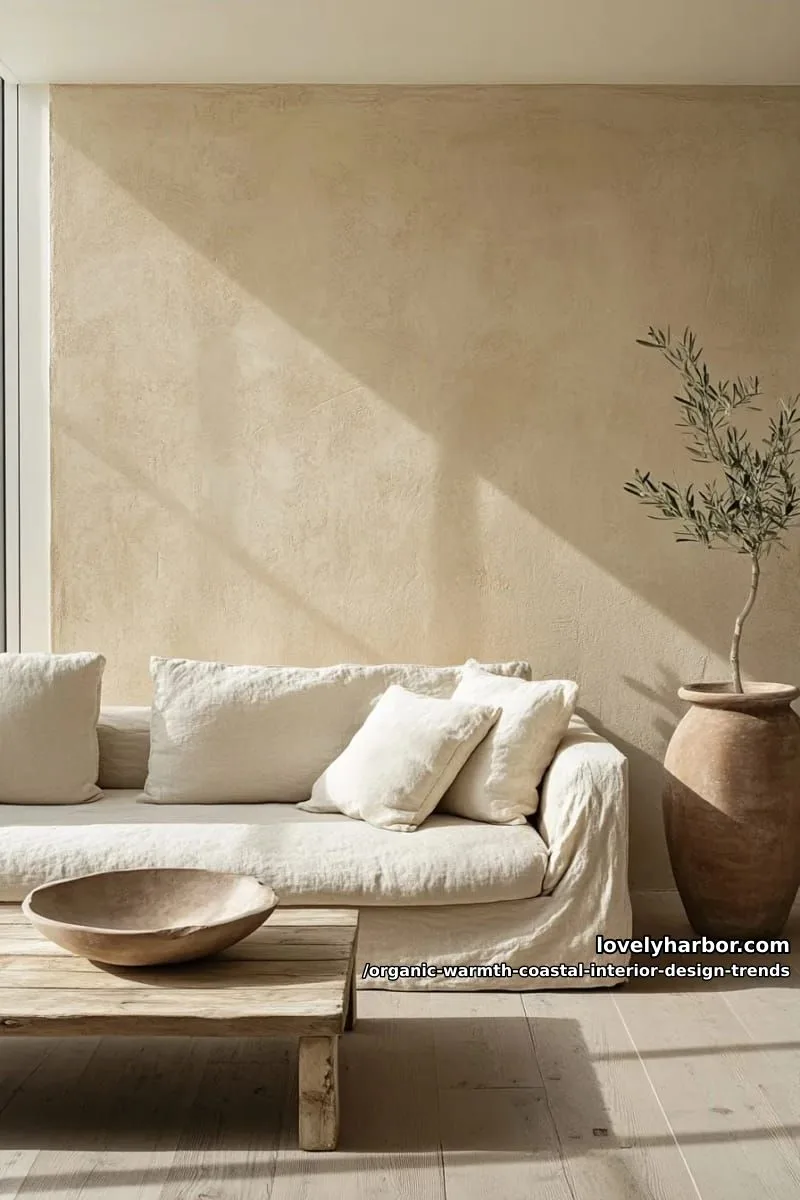
The blue-and-white seaside scheme is being replaced by walls that absorb light instead of bouncing it. Limewash is mineral-based, goes on in two coats, and dries with a brushy variegation flat paint can't fake. Portola Paints' Lime Wash runs about $70 to $90 a gallon and covers roughly 150 to 200 square feet per gallon at two coats. Bauwerk Colour and Romabio Classico are the other names in the category worth knowing. Color matters more than the brand here. Warm putty, bone, or mushroom tones read coastal-organic; chalky bright whites read Mediterranean dairy; cool grays read condo.
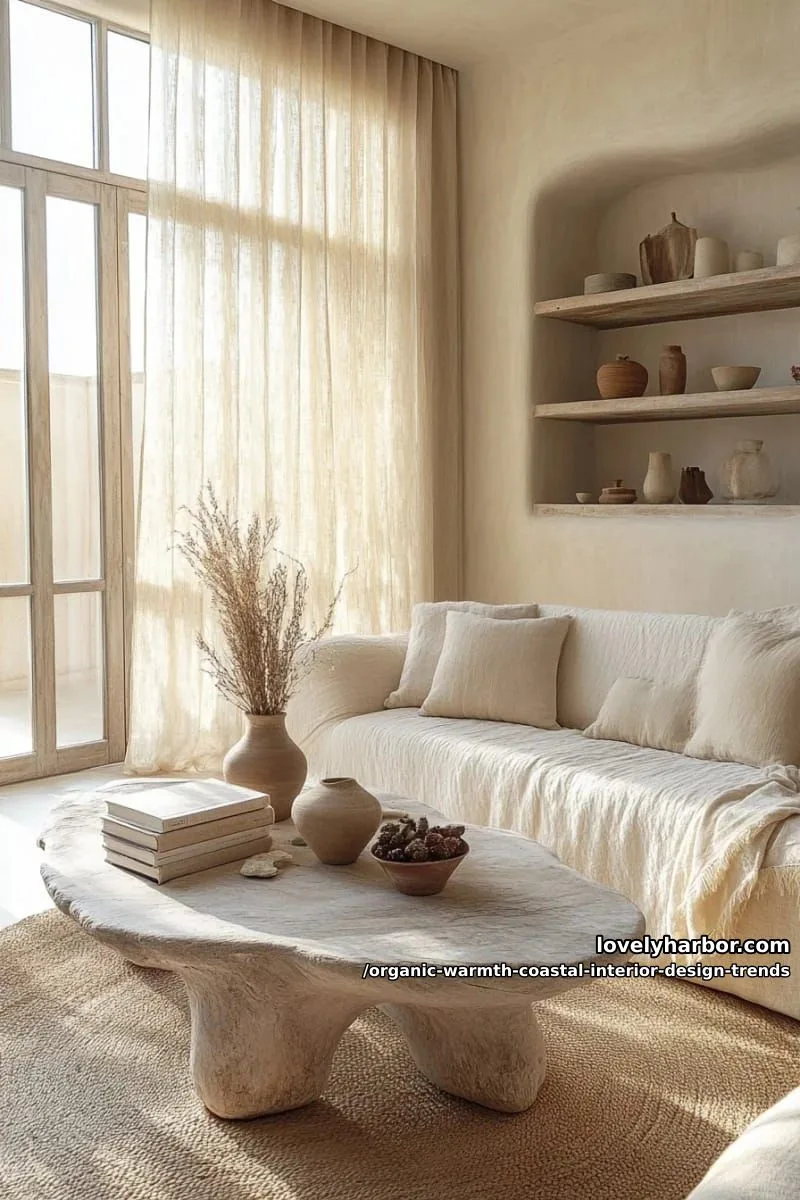
On new drywall, prime first with a stain-blocking water-based primer, then Portola's Limeproof undercoat. Skip the primer and the wall takes color in blotches, and there's no clean fix once you're past the second coat. I learned this on my own living room and ended up sanding back to the substrate.
Portola Paints Lime Wash collection in 61 mineral colors2. The driftwood lamp problem, and what to buy instead
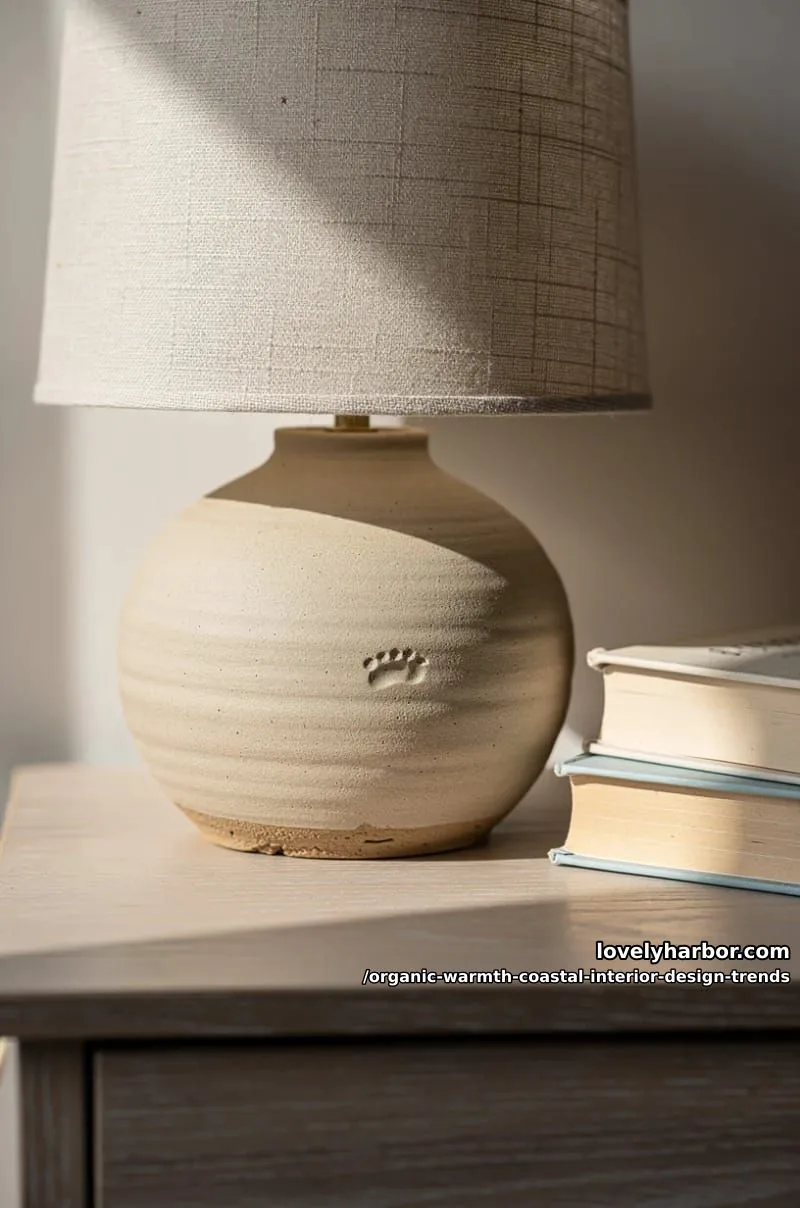
Driftwood table lamps were the coastal default for a long stretch, and most of them looked like dollar-store craft kits hot-glued onto a wine bottle. The replacement is hand-thrown ceramic in matte putty, sand, or cream. Aim for a base 18 to 24 inches tall with a linen drum shade about two-thirds the height of the base. McGee & Co. and Pottery Barn both sell decent versions in the $200 to $500 range. Amazon has workable ones at $80 to $140, with the caveat that "hand-thrown" on a $90 listing means hand-finished, not hand-thrown.

A test that actually works: turn the lamp upside down. If the base has an unglazed foot ring , the visible band where the potter trimmed the clay , you're closer to a real piece. Smooth and uniform on the bottom means slip-cast mold reproduction. Not always a disqualifier at the lower price points, but it tells you what you're paying for.
Do this
- Matte glaze, one neutral, no fired-on patterns.
- Throwing rings visible, hand-finished foot.
- Shade in linen, raffia, or paper , cream or oat.
- Weighted base, at least 4 to 6 lbs. Anything lighter tips when a cat brushes past it.
Avoid
- Shells embedded in resin around the base.
- Capiz shell shades , they yellow within two summers.
- Rope-wrap bases, knotted finials especially.
- Hand-painted starfish, sea-glass blue glaze, the whole genre.
Real clay texture, a proper linen shade, and enough weight to survive a passing cat. Rare combination under $100.

3. Travertine is the new marble
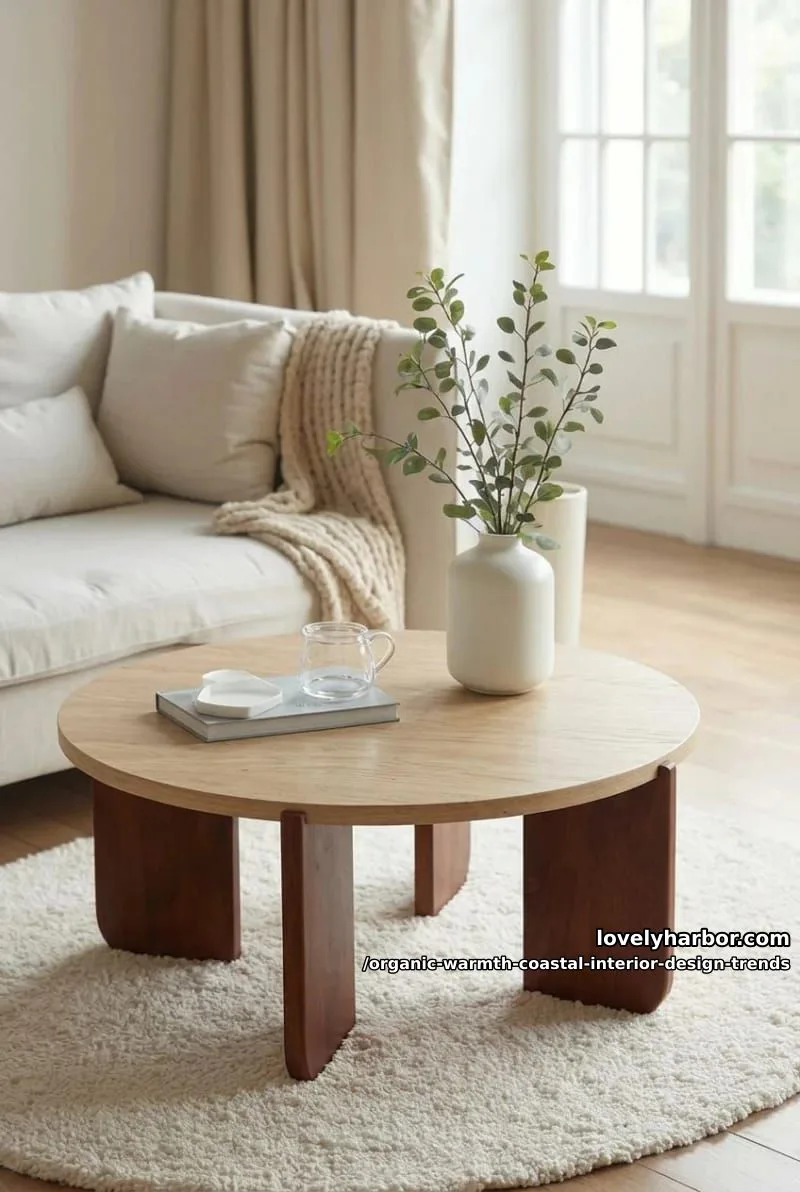
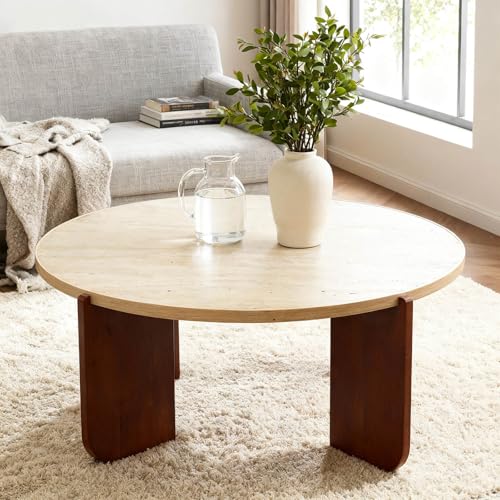
Travertine is what white marble was three years ago: the material the next round of editorial houses are being built around. It works for the coastal-warm crowd because it's beige and pitted rather than cool and dramatically veined, and the pitting reads casual instead of dressy. For a coffee table, look for honed (not polished) finish in the pale beige to ivory range. A solid travertine 36-inch round from a high-end source runs $1,400 to $2,800. A travertine-textured MDF drum from Amazon runs $150 to $250, looks 80 percent as good in photos, and weighs a third as much.
A note from experience: honed travertine stains. Olive oil, red wine, lemon juice, espresso , anything you'd actually drink or cook with. Seal it every six months with a stone sealer (Miracle Sealants 511 is about $25 a quart) and don't entertain on it without coasters if you care. The faux travertine drums sidestep the problem entirely because there's no stone there to absorb anything, which is a real argument for the cheaper version if your living room sees actual life.
A 30-inch faux-travertine drum that reads convincingly from across the room and weighs maybe 40 lbs instead of 200.
4. Belgian linen slipcovers, washed and rumpled
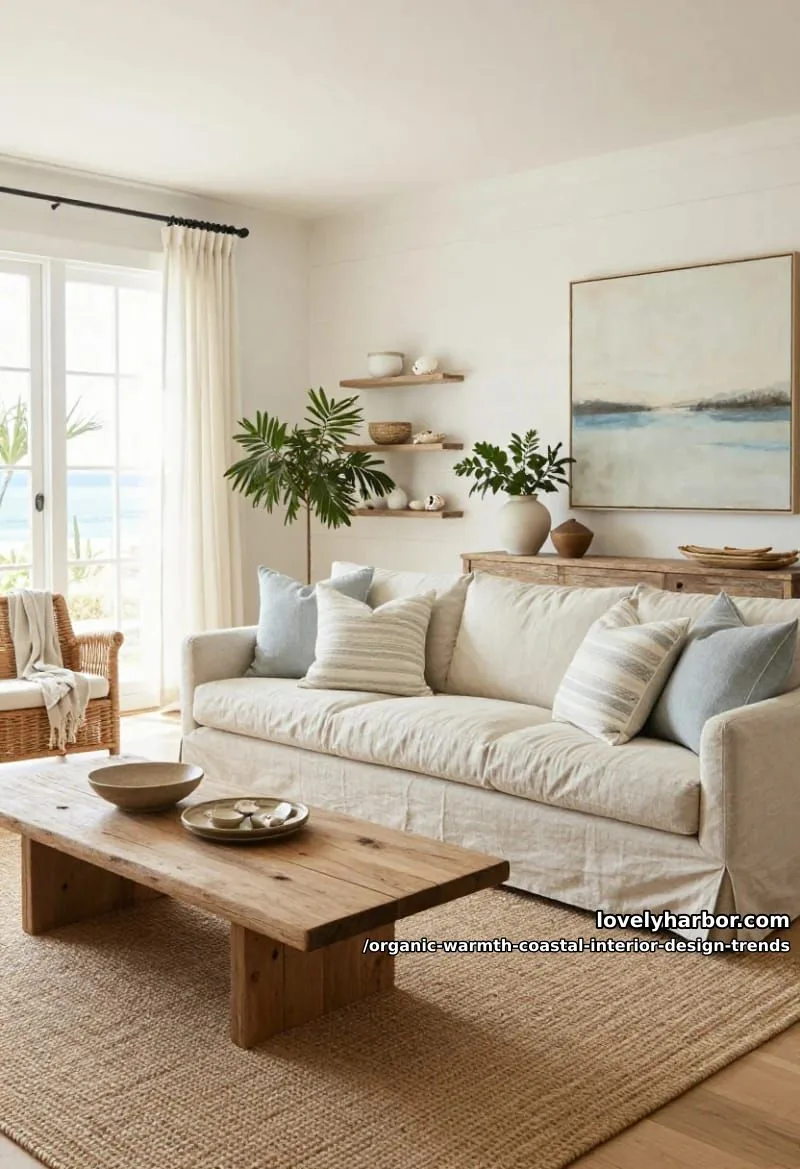
Belgian linen has the right tonal range for a coastal-warm interior: bone, oat, cement, putty, dune. The argument for a slipcover over fixed upholstery is that you can actually take it off and wash it, which is what the marketing always claims and what 90 percent of slipcovers in the wild do not allow. Maiden Home's Dune in Heritage Belgian Linen, Jenni Kayne's Miramar in Libeco linen, McGee & Co.'s Wilhelmina, and RH's Belgian Slipcovered all sit in the $3,000 to $7,000 range. Worth it if you have small children, dogs, or a habit of eating dinner on the sofa.
A real removable slipcover has
- Zippers on every cushion cover, back cushions included.
- A skirt that detaches from the frame separately.
- Pre-washed fabric, so the cover does its shrinking before you do.
- Linen at 14 oz or heavier. That’s what gives you drape and recovery after a wash.
What “slipcovered” often means at retail
- Real upholstery stapled to the frame with a sewn cover on top.
- Hidden zippers on the cushions that don’t actually open.
- A skirt stapled directly to the frame.
- A 6 oz linen-cotton blend that pills inside six months.
5. One large unglazed vessel on the floor

There is one styling move that quietly upgrades a coastal room more than any other: a single outsized unglazed vessel, somewhere between 24 and 36 inches tall, set directly on the floor. Empty, or with one branch. Olive, eucalyptus, pussy willow, dried allium , pick one. Not a bouquet, ever. Atelier Vime in France and Pamela Sunday in New York are the high-end sources. Terrain and McGee & Co. occasionally carry $250 to $500 versions; vintage Italian olive jars on 1stDibs run $400 to $1,200 and are the same idea with provenance attached to the price.
The mistake people make is buying small. A 12-inch vessel on a coffee table is decoration. A 30-inch one on the floor changes the proportions of the entire room. If you have $300 to spend, spend it on one floor piece instead of three mantel pieces. The eye reads scale before it reads anything else, and a single confident object will do work that a shelf of smaller objects cannot.
6. Plaster fireplace surrounds, finally killing shiplap

Shiplap had a fifteen-year run that started with Joanna Gaines and ended somewhere around 2022, when every flipper in the country was installing it sideways. The replacement for the coastal house is hand-troweled plaster: tadelakt, American Clay, or Portola's Roman Clay in matte cream or warm white. Material runs $4 to $9 per square foot; a skilled installer puts that at $14 to $25 per square foot finished. DIY-able if you've done one wall before and accept that the first wall will be the practice wall.
A plaster surround over an existing wood-burning fireplace requires a noncombustible substrate (cement board or masonry) within the clearance zone defined by your local code, typically 6 inches above and to either side of the firebox opening. Skim-coating plaster directly over wood trim near a firebox is both a fire-code violation and a problem for your homeowner’s insurance. If you’re not sure, a stove and chimney inspector will tell you in fifteen minutes for around $150.
7. Vintage rugs layered over a wide jute base
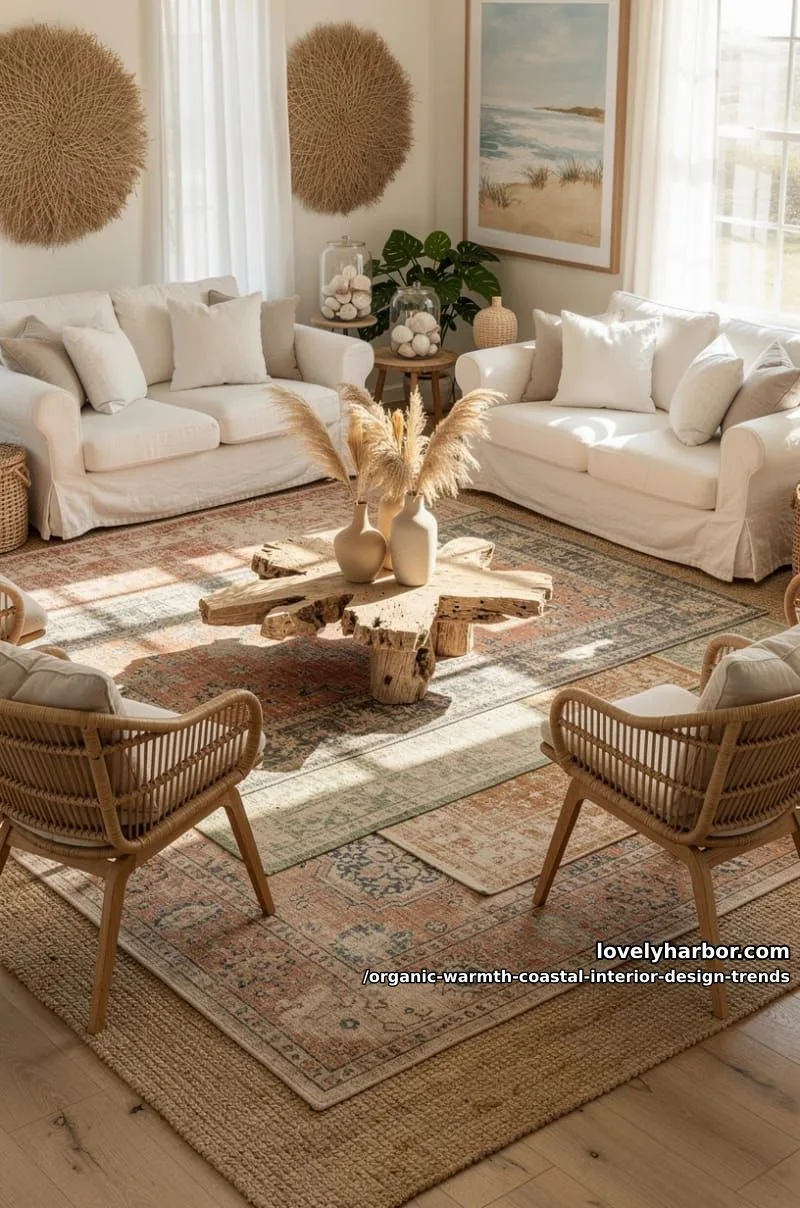
The Pottery Barn jute rug on its own is what every other coastal-warm room has on its floor, and it reads as a tier-two purchase the moment you walk in. The fix is layering , jute or sisal wall-to-wall as the foundation, vintage wool centered on top. A real vintage Beni Ourain in 8×10 runs $1,800 to $4,500 at Mehraban or Nazmiyal, and $700 to $1,400 from Etsy sellers like Beniouraincarpets and Berbers Market. The Etsy savings are real. You're paying less partly because somebody else is shouldering the customs and provenance risk. Both my last two rugs came that way and arrived fine; one took eight weeks longer than promised.
Skip the machine-made "Moroccan-style" rugs at Wayfair and Amazon. Polypropylene pile, printed diamonds, the whole effect collapses the second you stand on it. If the listing says "Beni Ourain inspired" or "Moroccan style," it isn't. The words you want together are "hand-knotted," "100% wool," and "vintage," with a single seller location in Morocco or a known US dealer.
8. Mohair on the chairs, not bouclé
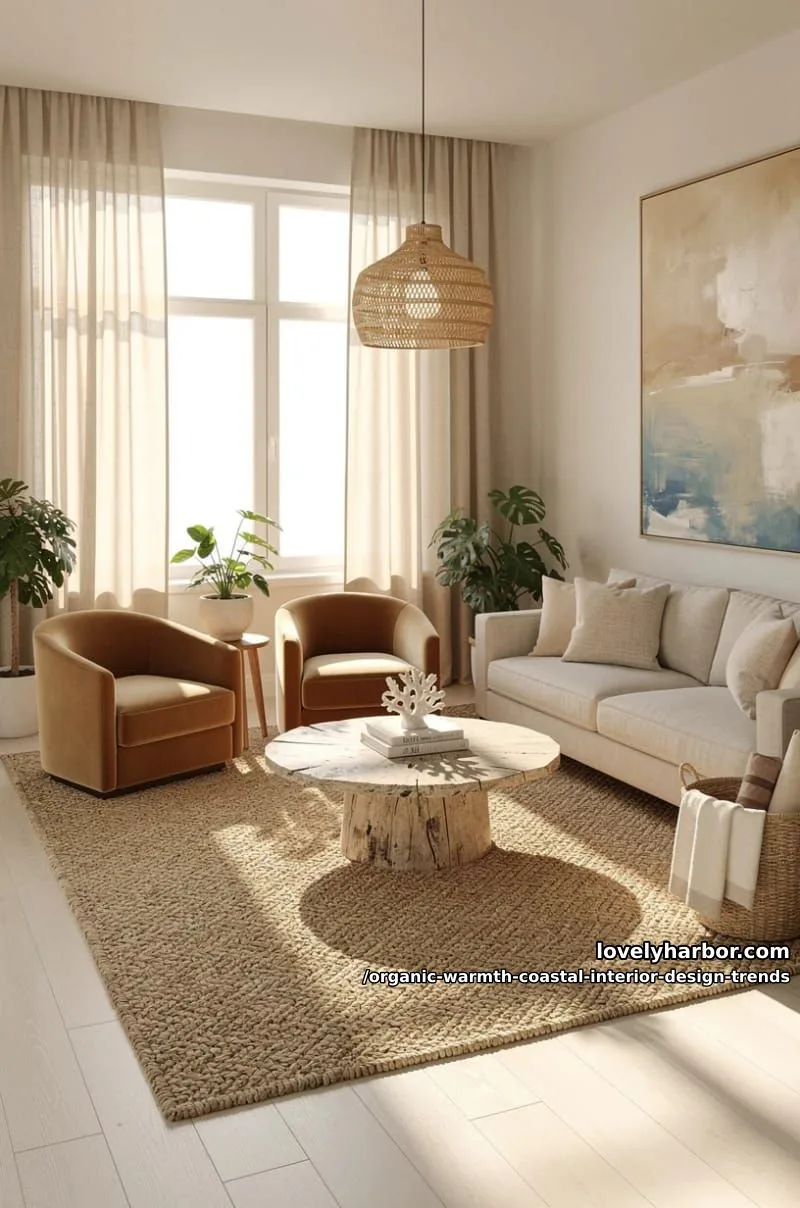
A position some readers will disagree with: bouclé is over. Four years of every dimpled white sofa on Instagram pretending to be a Pierre Jeanneret reissue and the texture is used up. The replacement on chairs , not sofas, the price gets ugly fast , is mohair. Velvety pile woven from goat hair, with a directional sheen and a tonal range that runs through sand, putty, oat, dusty olive. Designer mohair runs $90 to $180 per yard at Holland & Sherry or Schumacher. Reupholstering an existing lounge chair in three yards is a $700 to $1,200 project end to end, depending on whether the upholsterer charges by the hour or by the chair.
It isn't a casual swap. Mohair sheds for the first four to six months, attracts cat hair like a magnet, and is dry-clean only. If your household won't respect a no-shoes-on-the-chair rule, buy the bouclé and accept what bouclé is.
| Property | Bouclé | Mohair |
|---|---|---|
| Texture | Looped, nubby surface | Dense velvet pile |
| Sheen | Matte, no direction | Directional, subtle |
| Wear pattern | Snags on Velcro, pet claws | Crushes in high-use spots |
| Cleaning | Vacuum, spot clean | Dry clean only |
| Yard price | $40 to $80 | $90 to $180 |
| Currently reads as | 2021 trend, fading | 1970s revival, climbing |
9. Coastal art that isn't a beach scene
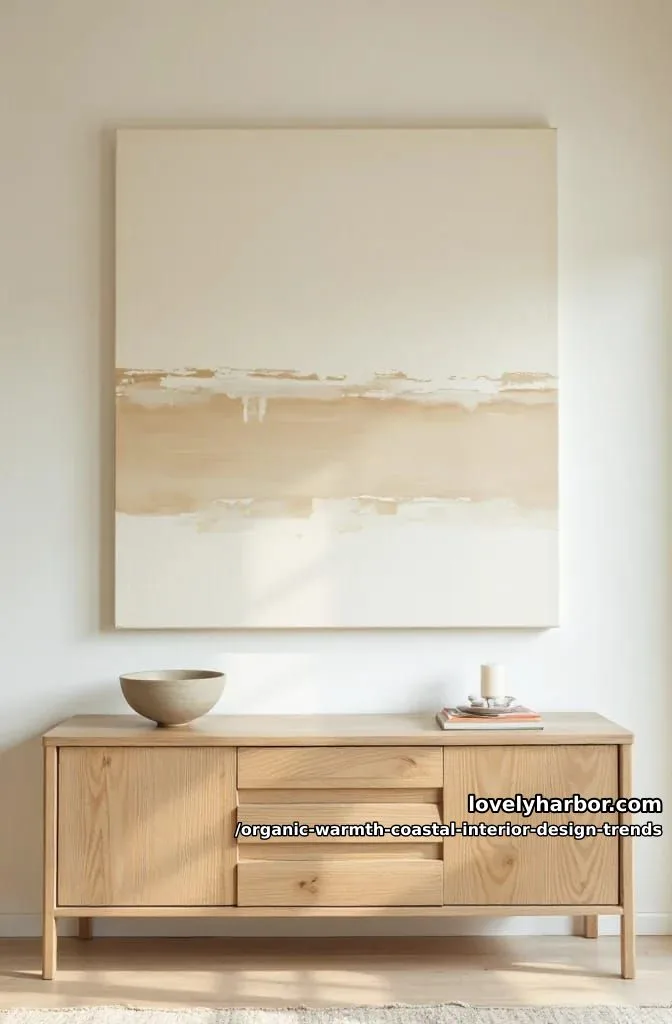
The default coastal house has a watercolor of dunes, a horseshoe crab print, or a navy-and-white sailboat lithograph framed for about $80 at HomeGoods. The replacement is abstract work in a sand-and-cream palette: bands of unbleached linen, color-field washes, plaster-on-canvas pieces by emerging artists in the $300 to $1,500 range. Saatchi Art, Tappan, and Uprise Art all let you filter by neutral palette and price. The 2019 Remodelista feature on Athena Calderone's Brooklyn brownstone , the one with the Eny Lee Parker lamp , is a useful reference for what this looks like at scale.

A horseshoe crab tells the viewer they're at the beach. A wash of warm sand asks them to slow down. I've owned both kinds, and the literal ones came off the wall inside a year because they stopped being interesting to look at. The abstract one is still up ten years later.
10. Rattan pendants overhead, ceramic lamps everywhere else

The glass globe pendant and the chrome arc floor lamp belong to the previous coastal cycle. Replace them with woven rattan, raffia, or seagrass overhead, and let ceramic table lamps handle everything below eye level. Jonathan Y, Serena & Lily, and a handful of Amazon sellers cover the 16 to 24 inch range. Below $80 the weave is loose and the bulb glares through the gaps. The $150 to $300 range is where the weaving is tight enough to actually diffuse a light source.
Practical rule for a dining-table pendant: the bottom edge of the shade sits 30 to 36 inches above the table surface. Higher than that and the fixture looks orphaned in the ceiling. Lower and you can't see across the table from one seat to another. For a round pendant, the shade diameter should be roughly half the width of the table , a 60-inch round takes a 30-inch pendant, give or take.
Hand-woven rattan with a tight enough weave to diffuse properly, in the sweet-spot 16-inch size for a small dining table or a kitchen island light.

Conclusion
Limewash first. Of everything on this list, it's the move that actually changes how light behaves in the room, and once the walls stop reflecting hard back at you, the rest of the materials in this article start reading the way they did in the showroom that sold you on them. Everything else can wait its turn. One thing this article didn't say and probably should have: limewash takes about three weeks to fully cure into its final color. Don't panic in week one when it looks blotchy and the tone seems off. That's the material doing what it does.