
"Coastal spa bathroom" has been hijacked by rope-handled apothecary jars and shell-print shower curtains. A shame, because the actual references , Aman hotels, the Greek islands, a well-aged hammam , have almost nothing in common with that. What follows is the version that holds up after the styling is stripped away: materials, layouts, and a handful of products that survive whether or not your towels happen to be folded into swans.
1. Limewashed walls in oyster grey, not "spa blue"

Flat paint in “Sea Salt” or “Rainwashed” gives you a color, not an atmosphere. Limewash is different. Brushed on in two cross-hatched coats over a primed wall, it breathes with the humidity in the room and builds up the cloudy, slightly mottled depth you see in old Mediterranean bathhouses. Bauwerk Color’s Pumice is a slight blue-grey from their limewash range; Stone is the warmer one most coastal projects end up using. The paint isn’t film-forming, which is the technical reason it survives a steamy bathroom without bubbling , walls breathe, the limewash breathes with them.
One wall color, and let it carry the room. Ceiling, trim, plaster niches all go in the same color two shades lighter , never white. The eye reads the unbroken envelope as expansive and quiet. A sharp white ceiling fights the wall and shrinks the space.
2. A curbless wet room with one linear drain
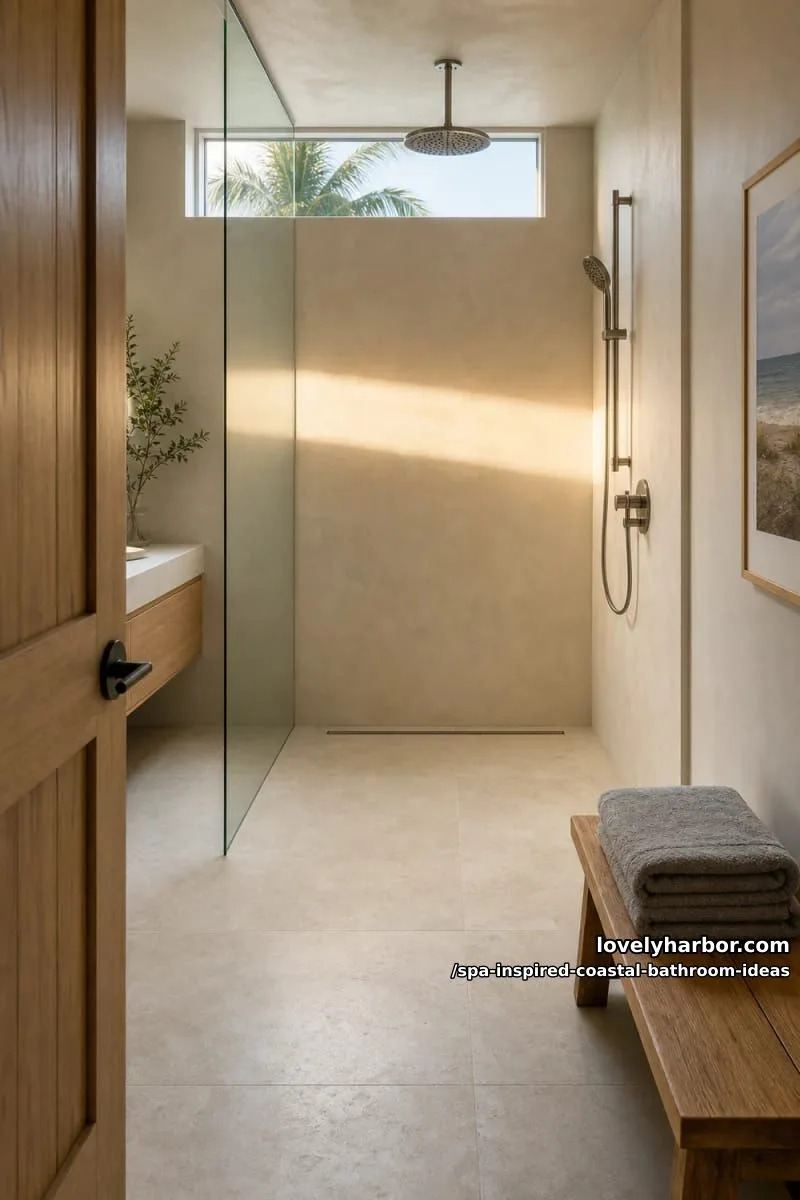
Lose the curb and the room reads bigger before you've touched anything else. Budget around $4,000 to $9,000 above a standard shower install for the membrane work, the drain, and any re-framing if the joists need to drop.
Floor slope: 1/4 inch per foot minimum toward the drain. Anything less and water pools; anything more and the slope reads visibly underfoot.
Drain placement: a single linear drain along the back wall (not a center point drain) lets the floor slope in one direction only, so large-format tiles can stay flat and uncut.
Waterproof membrane: Schluter-KERDI or Laticrete Hydro Ban over the whole wet-room floor, lapping up the walls a minimum of 6 inches. Skipping this is the failure that floods downstairs.
3. Position the tub to catch one specific thing

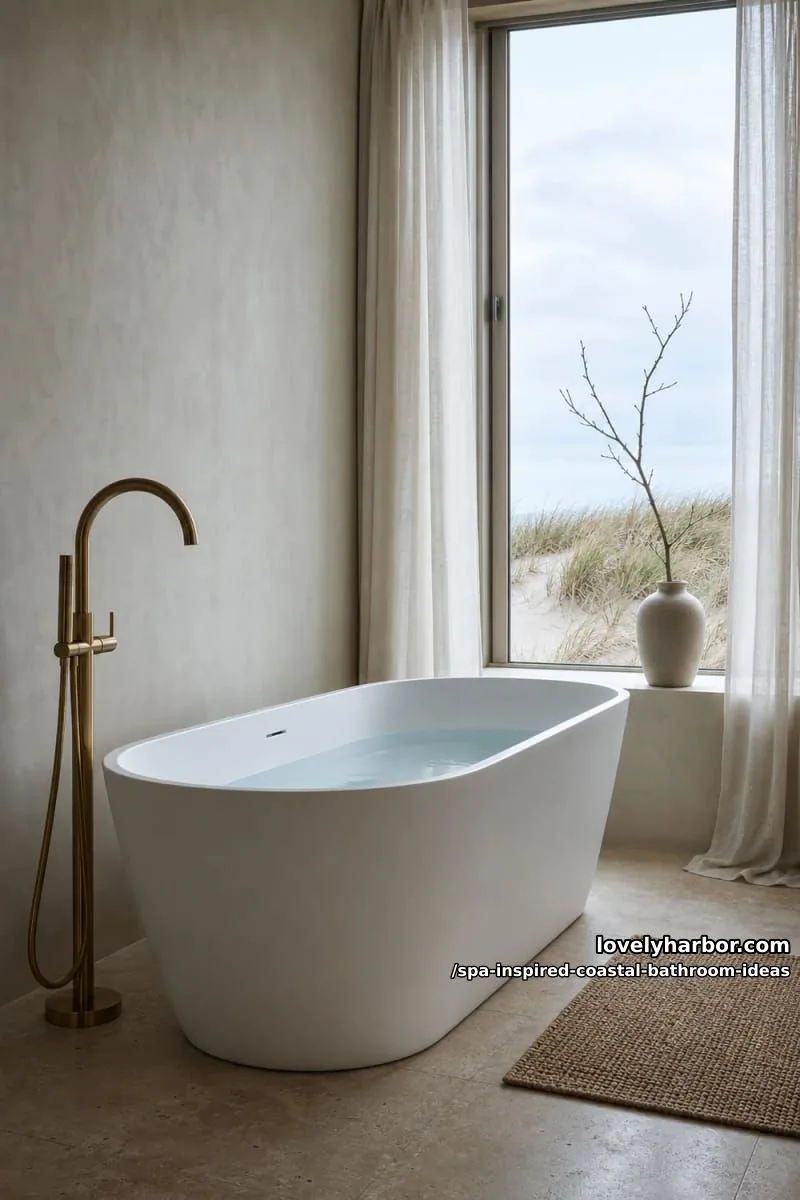
A freestanding tub centered on a blank wall is a stage set. Aim it at something , a window, a tree, a slatted teak screen, a wall-hung painting , and it stops being a sculpture and starts being a place a real person would sit in. Six inches of clearance behind the tub is enough for cleaning and reads as deliberate; a foot or more starts to look like a mistake.
The acrylic vs. stone resin vs. cast iron question matters more than the shape does. Stone resin (Native Trails, Badeloft) holds heat the longest and weighs less than cast iron. Most acrylic tubs under $1,500 are flimsy and bow visibly when you sit in them. A smaller stone-resin tub beats a larger acrylic one, even though that's the opposite of what most catalog photos suggest.
4. A fresh eucalyptus bundle, replaced every three weeks

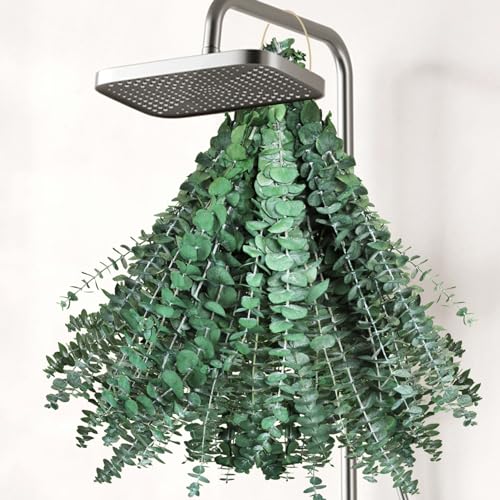
The easiest item on the list to get wrong. The eucalyptus bundles sold at HomeGoods are usually preserved with glycerin and barely scent at all. Fresh-cut silver-dollar eucalyptus (Eucalyptus cinerea), tied with twine and hung from the shower head where it catches the steam but not the direct stream, throws real aromatic oil for about two to three weeks. Then swap it. Old mildew-flecked eucalyptus in a shower is not the spa note you're going for.
Preserved bundles do exist that hold their scent past the first week. This is the one we keep coming back to when fresh isn’t an option.
5. Microcement or tadelakt instead of tile in the wet zone

This is the section I get most worked up about, so bear with me. Tile grids are the surest way to make a bathroom read like a 2008 builder-grade renovation, no matter how nice the tile itself is. The grout is the giveaway: it's a grid, the grid is rectilinear, the eye reads "subway sandwich shop" before it reads "spa." Microcement (a polymer-modified cement coating troweled on in thin layers) and tadelakt (a traditional lime plaster polished out with olive soap) both deliver the seamless, slightly undulating wall that actually evokes a Moroccan hammam or a Greek island taverna bathroom. There's also the practical argument , no grout means no mold lines, no annual scrubbing with a stiff brush, no slow yellowing in the corners.
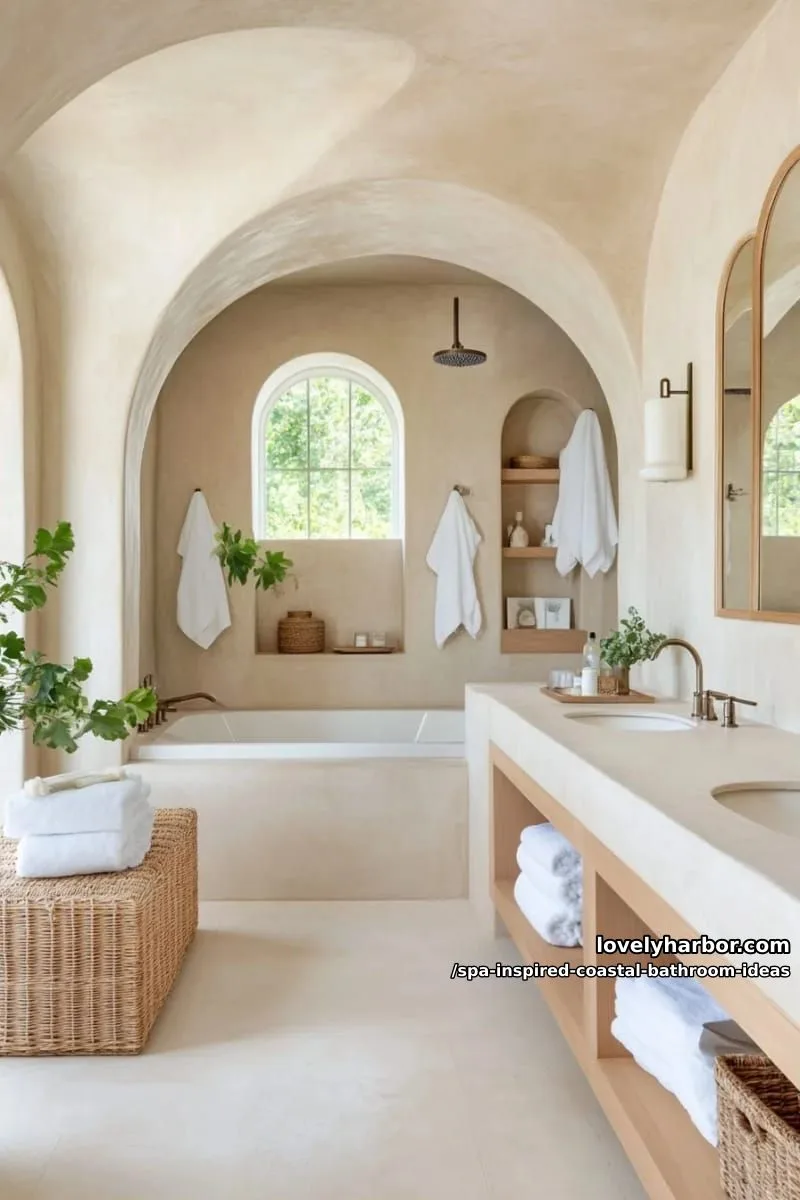
The downside, and it's a real one: both finishes want a specialist. A general contractor can pour you a microcement floor that looks fine. A general contractor will almost always make tadelakt look like cake icing. If your area doesn't have an applicator who has done at least a dozen bathrooms in the material, go microcement instead.
Choose tadelakt if
- You want a hand-finished, slightly curved aesthetic with visible artisan variation
- The wall has curves, niches, or sculptural transitions
- Re-burnishing with olive soap once a year doesn’t bother you
- You have access to a skilled applicator , this is a real constraint, not a footnote
Choose microcement if
- You want a flatter, more uniform finish with a slightly industrial edge
- You’re going over existing tile. Microcement bonds; tadelakt doesn’t.
- The surface includes the shower floor. Tadelakt is wall-only.
- Your installer is a general contractor, not a specialist plasterer
6. A living humidity shelf above the tub
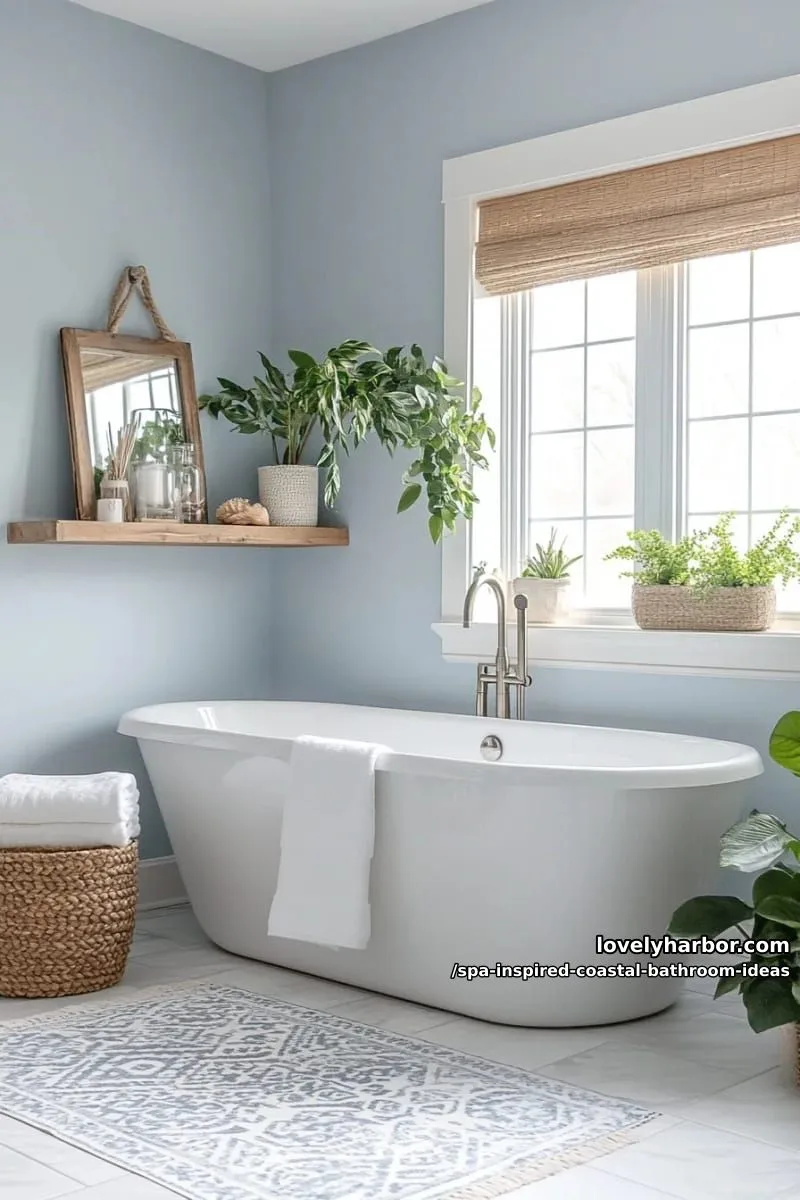
Bathroom plants mostly die from lack of light, not lack of humidity. The plants below want the conditions a bathroom with a window or skylight already provides: high humidity, bright indirect light, warmth. A teak ledge 18 inches above the tub puts them at eye level when you're standing and out of the way when you're soaking. Three to seven, grouped. Not a single token specimen on a corner shelf.
Humidity-loving ferns
Boston fern, maidenhair, blue star fern (Phlebodium aureum), staghorn. They drink the steam and ask very little in return. Maidenhair is the prima donna , it’ll brown the second humidity drops below 50 percent and will not forgive you.
Air plants and epiphytes
Tillandsia in a shallow stone dish, mounted bromeliads, a small orchid. No soil, so no spillage on stone vanities. They photosynthesize through their leaves and pull water from the air.
Trailing humidity climbers
Pothos, philodendron Brasil, English ivy. Drape them off the top of a tall shelf or a corner-mounted hook. They’ll grow visibly in a steamy bathroom and want watering once a week, not three times.
Sculptural standouts
One ZZ plant. Or one small fiddle leaf. Or a mature staghorn mounted on driftwood. One large specimen the way a coffee-table book is one large specimen.
7. Rainfall plus handheld, on a thermostatic valve

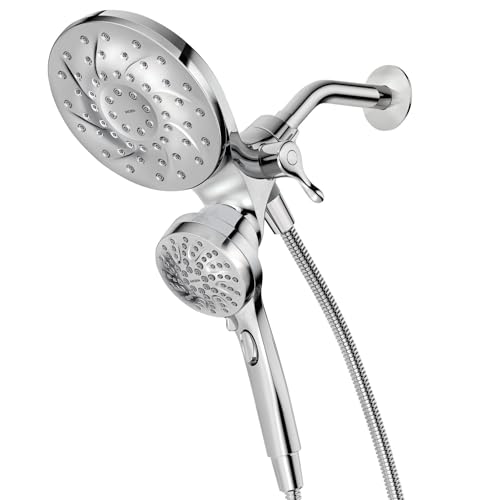
The rainfall-only ceiling head is the showering equivalent of a bathtub with no faucet aimed at you , nice as an experience, useless for rinsing the back of your legs. A combo, on a thermostatic valve so the temperature holds steady when someone flushes a toilet downstream, is the actual spa configuration. Spend on the valve. Hansgrohe Ecostat, Grohe Grohtherm, Brizo Sensori. The heads matter less than people think.

| Rainfall head size | Best for | Watch for |
|---|---|---|
| 8 inch | Smaller showers under 32 sq ft | Spray pattern can feel weak under low water pressure |
| 10 inch | Standard showers, the all-around pick | Needs a ceiling drop, not a wall arm, to actually feel like rain |
| 12 inch | Walk-in wet rooms with high ceilings | Wants 45+ psi static pressure or it just dribbles |
| 16 inch and up | Rarely worth it in a residential setting | Looks like a hotel lobby ceiling tile |
A combo unit that doesn’t require a separate valve job, with a magnetic handheld dock that actually grips the head when you put it back.
8. A salt-finished concrete or honed limestone vanity top

White Carrara has been the default coastal-spa vanity material for fifteen years, which is exactly how long it's taken to start reading as developer-default. A salt-finished concrete top , concrete cast with coarse salt embedded in the surface, then washed out to leave a subtly pitted texture , carries the same visual weight without the predictability. A honed limestone slab does it with more warmth. Both want to be sealed properly. An impregnating sealer like Tenax Hydrex or Miracle Sealants 511, every 12 to 18 months. Not a topical "marble polish" from the cleaning aisle.

9. A heated towel ladder, hardwired to a timer
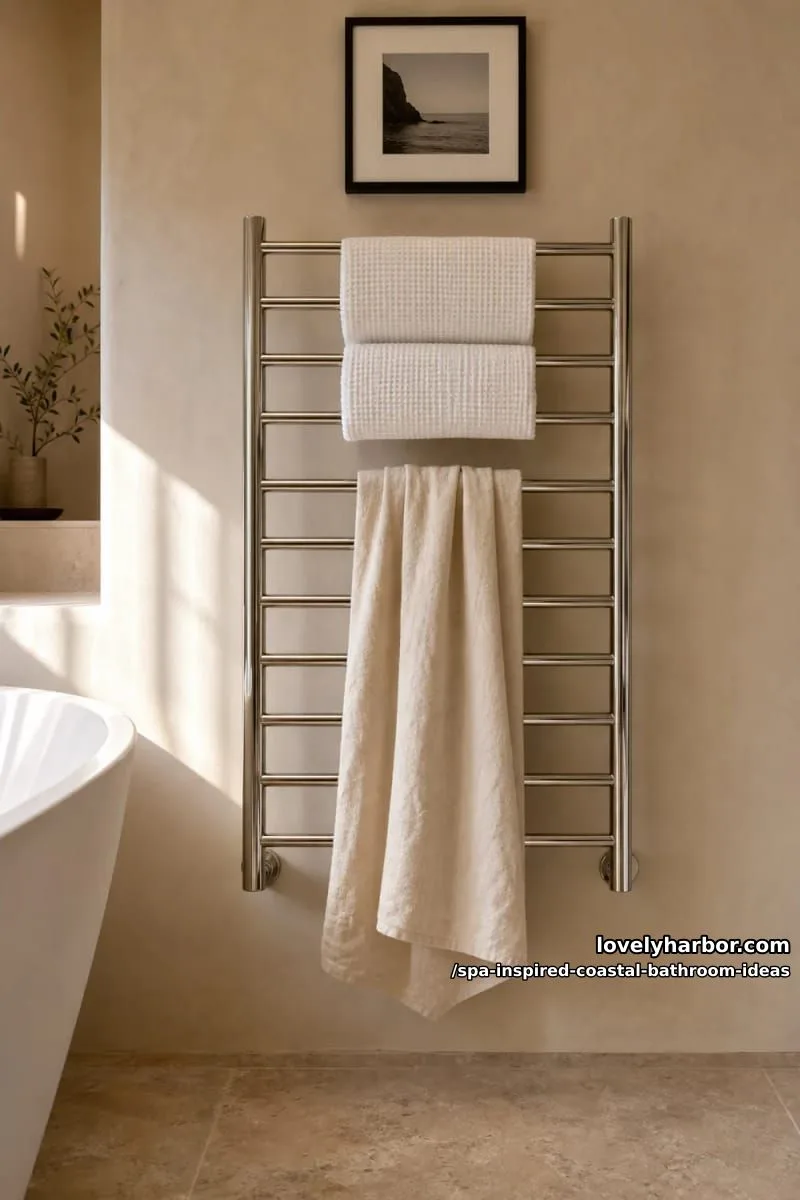
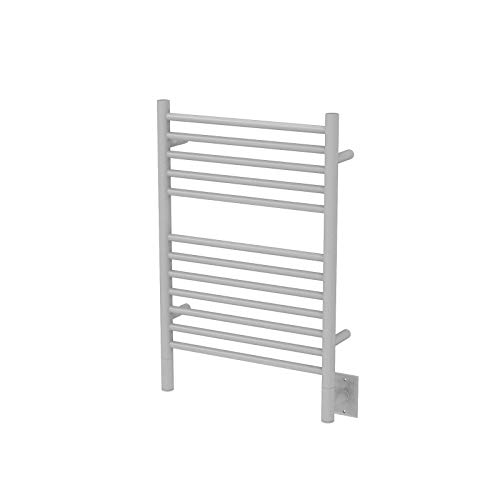
The plug-in versions sold by Wayfair look like medical equipment. Hardwire a ladder rack into a programmable timer on the same circuit and it turns on twenty minutes before your alarm, so your towels are warm by the time you're out of the shower. That's the actual spa difference , not the rack, the timing. Amba's Jeeves line is the industry standard; the models vary primarily in height (from roughly 18 inches to over 60 inches tall), with a standard width of approximately 21¼ inches across most models. Special-order widths from about 12⅝" to 25⅛" are available on select models.

The Jeeves ESW 12-bar is the rack we’ve installed in three projects, and not had a single warranty call on, ten years running.
10. A three-layer lighting plan with everything on dimmers

Recessed cans on a single switch, set to the 3000K bulbs every contractor defaults to, will undo every other choice on this list. What the bathroom needs is three dimmable circuits, each on its own switch: ambient (an overhead fixture or recessed cans), task (sconces at face level beside the mirror , not above it, ever), and accent (a toe-kick or under-vanity LED strip, and if you have a textured wall, a wash on that).
Color temperature: 2700K across all three layers. Full stop. 3000K reads cooler than people expect; anything above 3000K is a dentist’s office. 2200K (sometimes called “warm dim”) is fine for the accent layer only.
CRI: 90+ on every bulb. Lower CRI makes skin look grey in the mirror, which is the one thing nobody wants in the room where they’re getting ready.
Dimmer: ELV (electronic low voltage) or 0-10V dimmers paired to compatible LED drivers. Standard incandescent dimmers cause LED flicker and humming. Lutron Diva ELV is the workhorse pick.
Conclusion
If the budget is finite , and it always is , start with the thermostatic valve and the combo shower. Then the wall finish. The freestanding tub is the most photogenic thing on the list and the first thing I'd cut, because a good walk-in shower with a teak bench delivers more daily spa than a tub almost anyone fills three times a year. One admission while we're here: I've pushed preserved eucalyptus bundles in print for years, and I've come around to thinking the fresh kind, ordered from a California farm, is the only version that does the thing it claims to do. The dried ones photograph beautifully and smell like nothing after the first week.