
The line between a Christmas room that looks genuinely old and one that just looks like a craft-store aisle labeled "vintage" comes down to two things: how faded the colors are, and how much patina you leave alone. Saturated red and green, glossy new ornaments, and a wash of bright white light undo the effect no matter how many feather trees you buy. What follows runs from the palette decision that fixes most of it, through feather trees, Shiny Brite, mercury glass, and Dresden scrap ornaments you can make for a few dollars, down to the one Victorian habit (real candles on the tree) you should not revive.
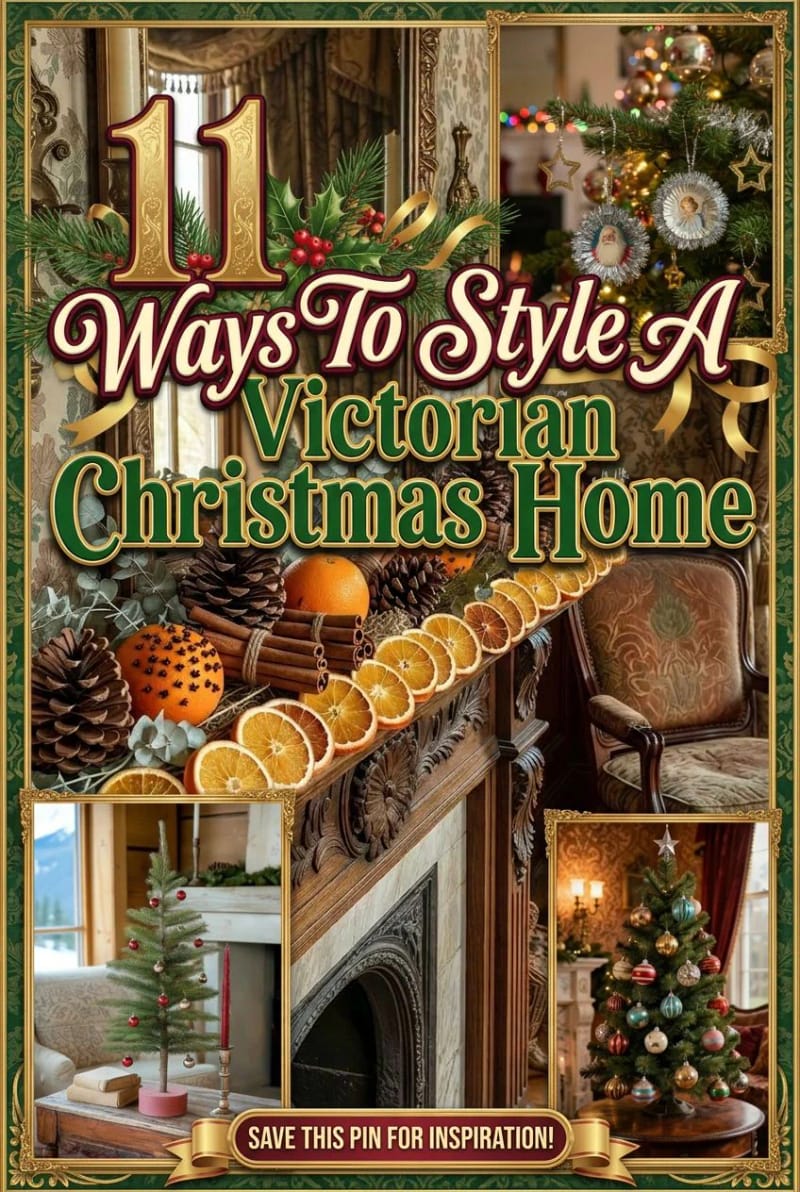
1. A faded, sun-warmed palette reads older than jewel-tone red and green
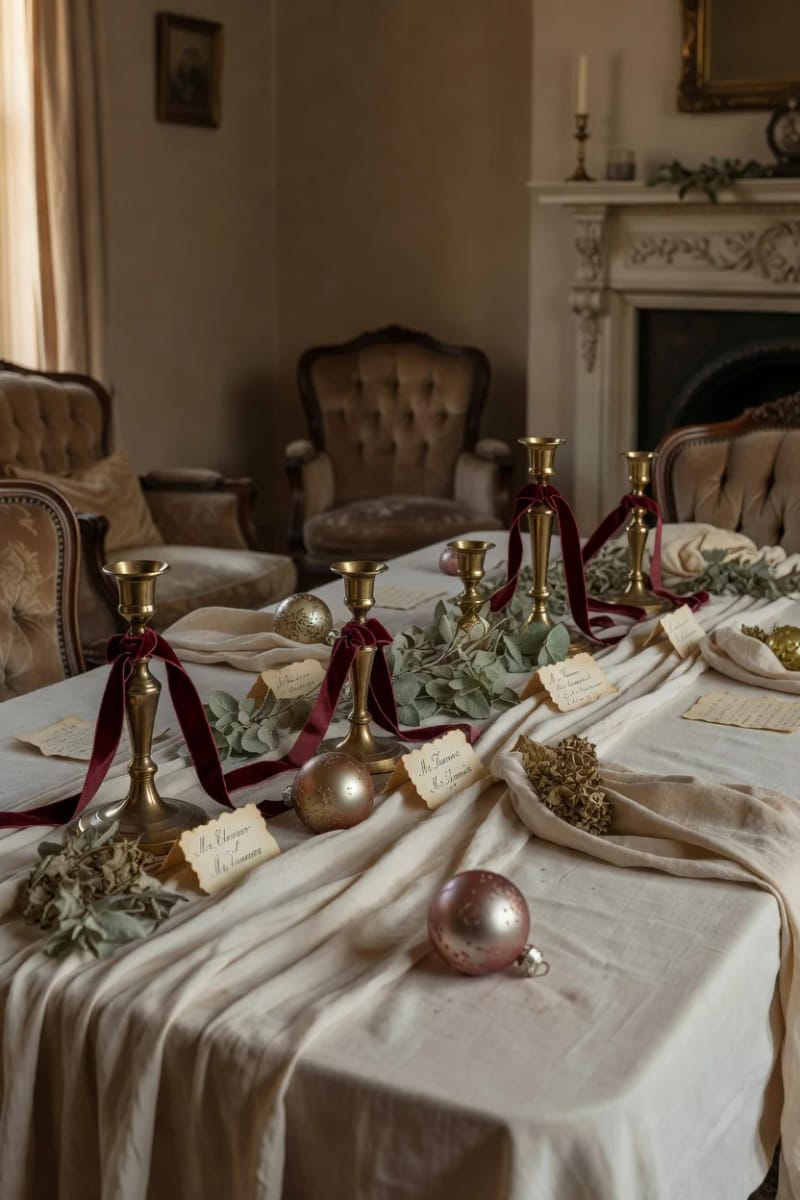
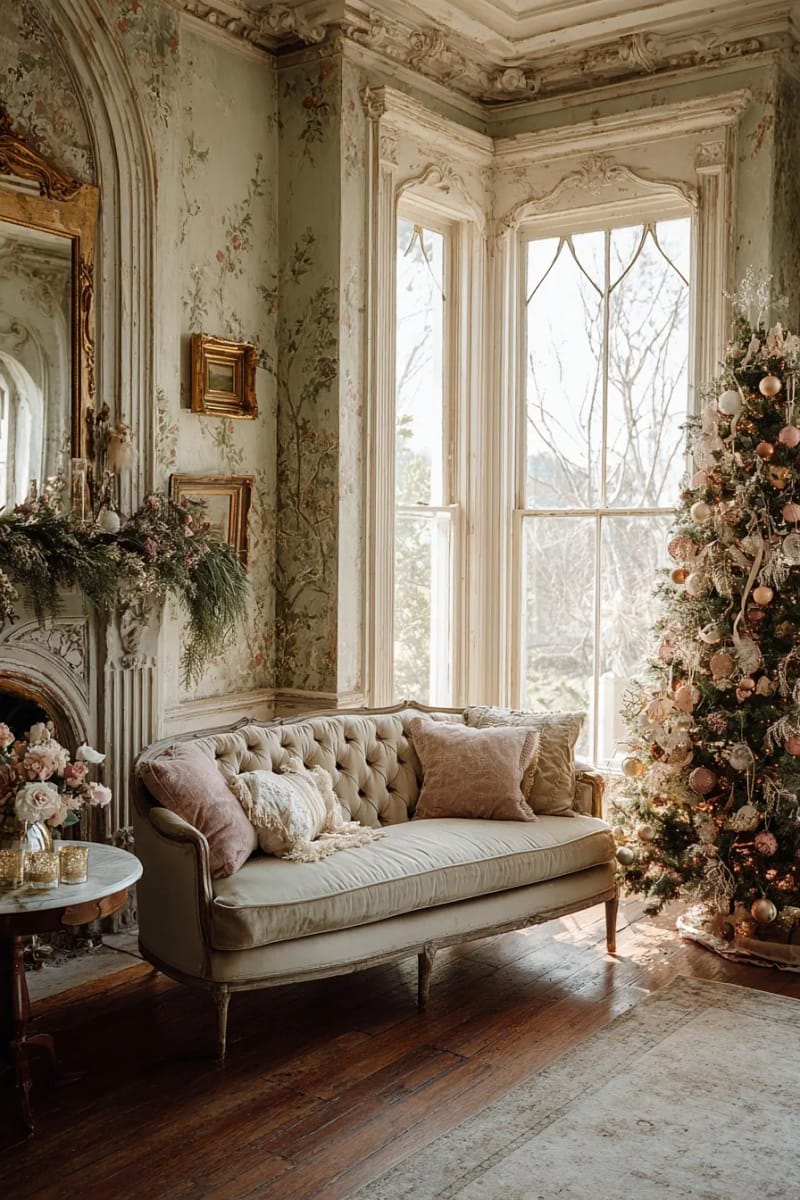
Drain the saturation before you do anything else. The colors that read antique are the ones that have spent decades in the sun: putty, tea-stained cream, oxblood instead of cherry, tarnished gold instead of yellow gold, a sage that has gone grey rather than green. The brightest object in a convincing vintage room is usually a piece of tarnished silver, not a red bow. This is also why so much "vintage Christmas" product misses: the Shiny Brite reproductions are lovely, but straight out of the box they are too clean and too bright to pass for old, and the only fix is to surround them with genuinely dull, soft-toned things so the contrast comes down.
Set the palette before you buy a single ornament. If the dominant tones in the room are faded and warm, almost any vintage-style piece you add will fall into line; if the base is bright and high-contrast, no amount of patina layered on top reads as age.
One practical test: photograph your mantel and pull the saturation down twenty percent in your phone's editor. If it looks better, your real-life version is too loud.
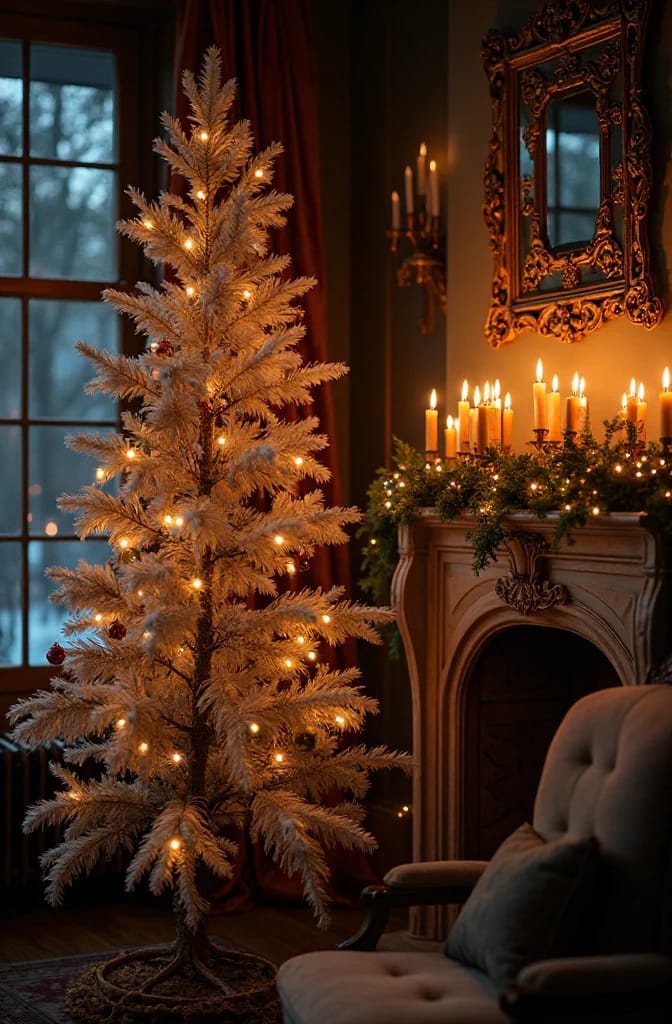
2. Anchor the room with a feather tree, not a full fir
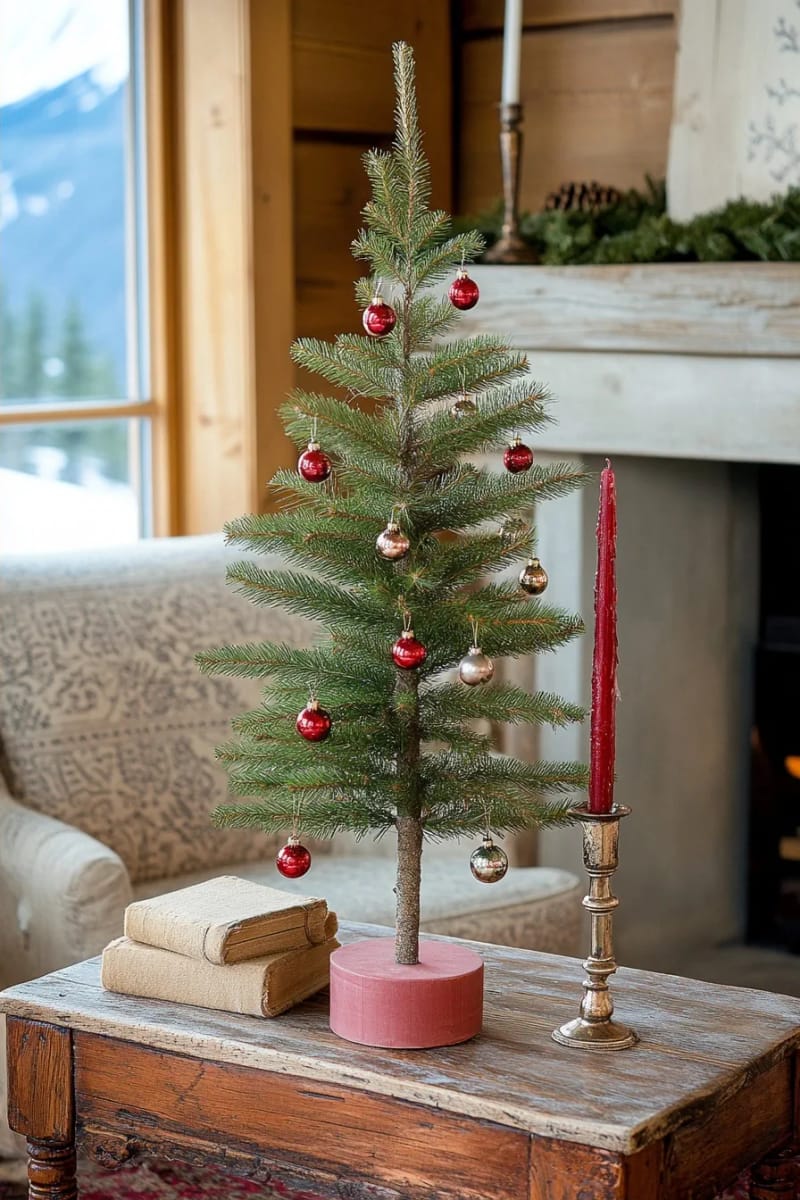
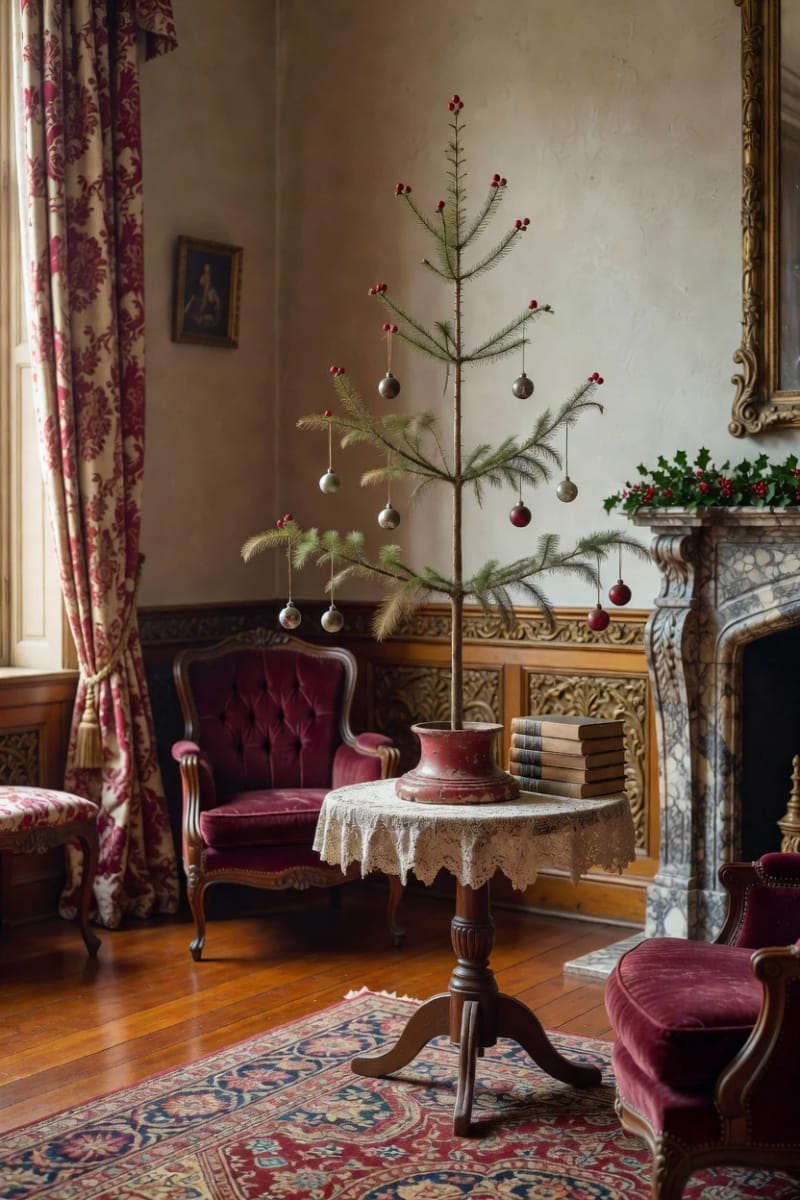
A feather tree is the single piece that does the most work, because its silhouette is unmistakably pre-war and nothing modern fakes it. Germans built the first ones in the 1880s, dyeing goose feathers green and binding them to wire branches, partly in response to deforestation from cutting so many real firs. The wide, deliberate gaps between branches were not a styling choice: they left room for lit candles to burn without setting the next tier alight. German immigrants brought them to Pennsylvania and Texas, and by around 1920 Sears was selling them in sizes from a two-inch tabletop sprig up to eight feet.
Here is the honest part. I spent two seasons hunting an antique German feather tree before admitting that the $400 examples with bald patches and a wobbly base were not worth it over a good reproduction. Authentic ones are fragile and the feathers shed. Unless you are a collector, a faithful repro at a quarter of the price looks the same once it is trimmed, and you will not flinch when a cat investigates it.
| Piece | Antique original | Faithful reproduction |
|---|---|---|
| Feather tree | Roughly $150 to $600, depending on size and how much feather is left; expect shedding and a wobble. | $40 to $200, sturdier base, no shedding, reads identically once decorated. |
| Mercury glass / kugel | Standard silvered ornament $10 to $20; rare amethyst or cobalt kugels can pass $300 at auction. | $5 to $15 each at retail; lighter, single-walled, sold loosely as “mercury glass.” |
| Shiny Brite ornaments | Mixed vintage lots and boxed sets often $20 to $60, condition-dependent. | Christopher Radko’s Shiny Brite line, around $20 to $40 a set, blown in Poland. |
3. Make Dresden and scrap-paper ornaments for almost nothing
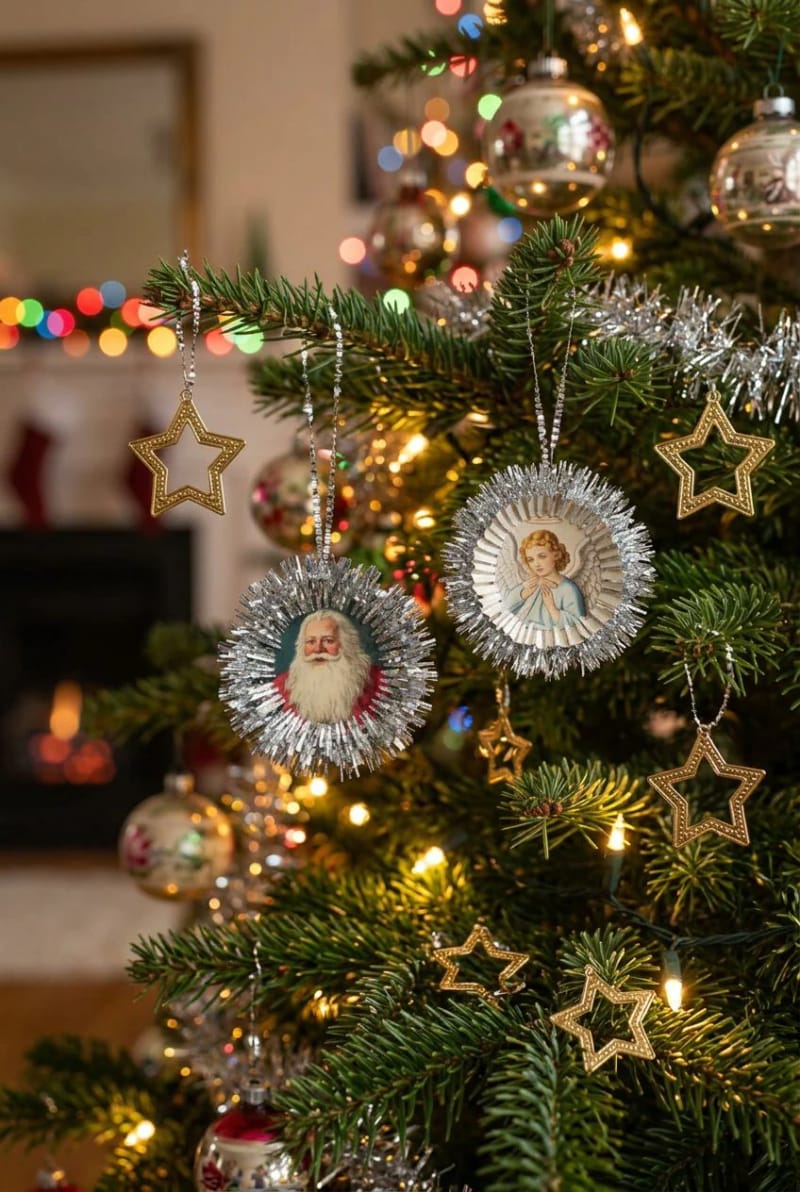
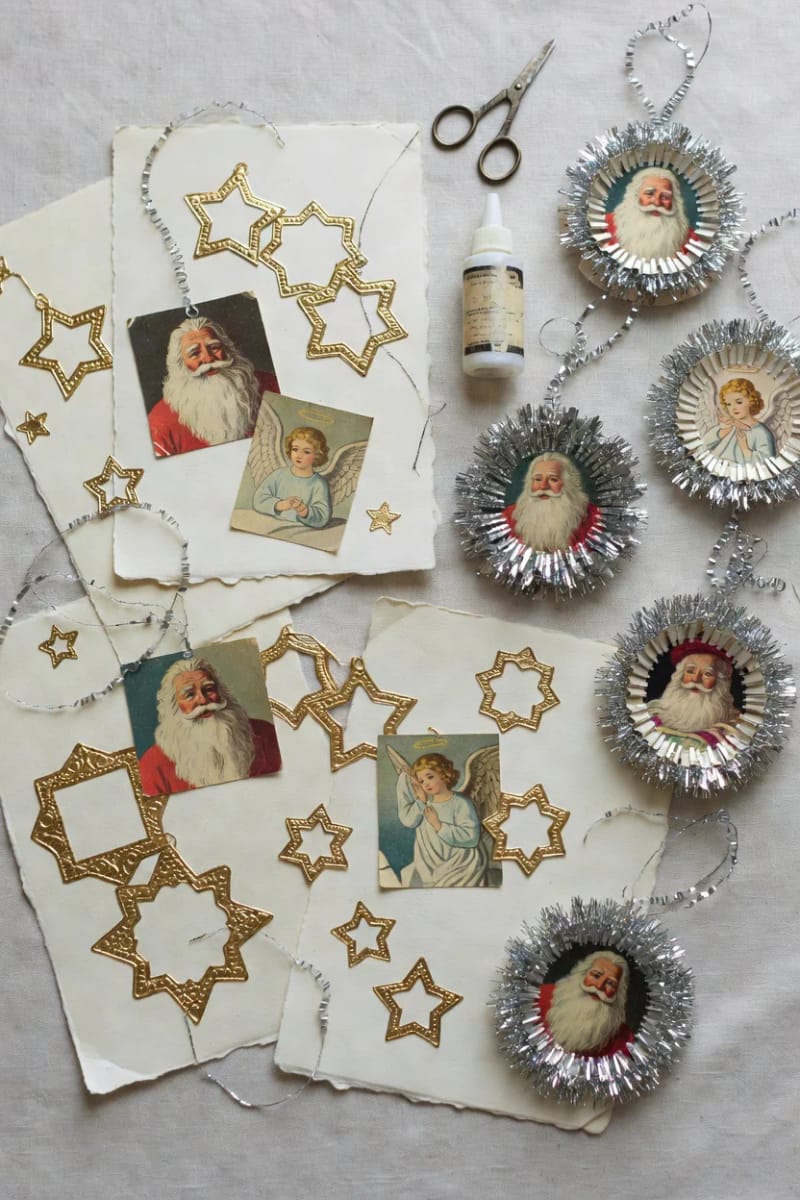
The ornaments Victorians actually hung were often homemade from paper, and they are the cheapest authentic thing on this list. Two materials do the job: scrap, the embossed chromolithograph die-cuts of Santas, angels, and animals that families collected, and Dresden trim, the gold and silver foil-backed paper that German workshops have embossed since the early 1800s. You glue a scrap image to a ring of crinkled metal tinsel, back it with a Dresden star, and you have a tinsel rosette that looks a century old. Three or four steps, an evening, a couple of dollars each.
For supplies, Blümchen and Tinsel Trading both stock real Dresden trims and reproduction scraps rather than the printed-on-cardstock imitations. If you want to see the ceiling of the craft, look at Dresden Star Ornaments, the one-of-a-kind pieces Gail and Glenn Giaimo hand-sign in Ferndale, California, from antique materials. Yours will not be that. They will still beat anything on a big-box shelf.
4. A mismatched Shiny Brite tree beats a coordinated set
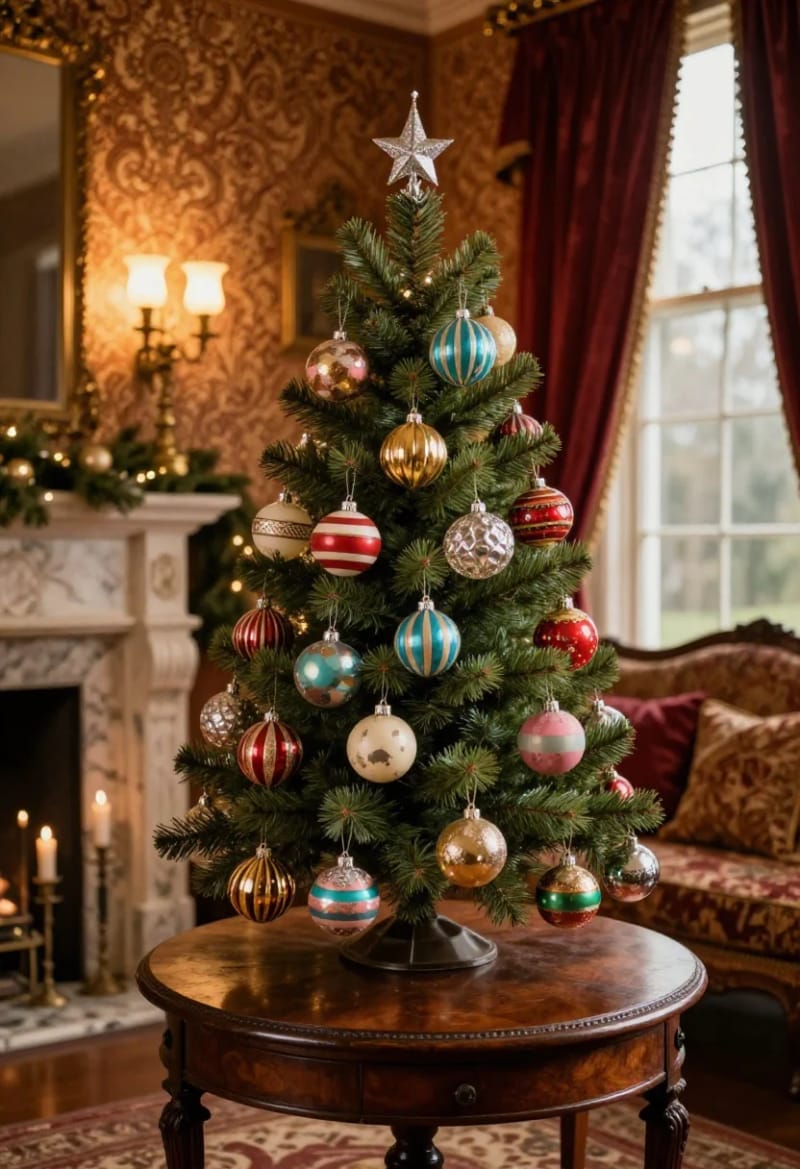
Resist the urge to buy a matched set. The Shiny Brite look is a hodgepodge, and that is historically correct: Max Eckardt launched the brand in 1937, families added a few each year, and a real 1950s tree was an accumulation of striped balls, indented reflectors, and lanterns in clashing colors with crinkled "Made in USA" caps. The company folded in 1962 when cheap plastic took over, and Christopher Radko revived the name for reproductions in 2001. A box of Radko's repros mixed with whatever single orphans you find at estate sales reads more genuine than twelve identical ornaments ever will.
Do this
- Mix shapes and eras freely: a 1950s lantern next to a new striped ball is exactly right.
- Keep the ones with a little lacquer worn off. The clear-glass patches catch light differently and signal age.
- Group loosely by warmth (the faded reds and golds together, the aquas together) so the chaos still has a rhythm.
Avoid
- Color-coordinating to a two-tone scheme. That is a 2010s designer tree wearing a vintage costume.
- Ribbon, picks, and floral sprays woven through. Mid-century trees were glass and tinsel, not florist’s work.
5. Group mercury glass and kugels by tarnish, not color
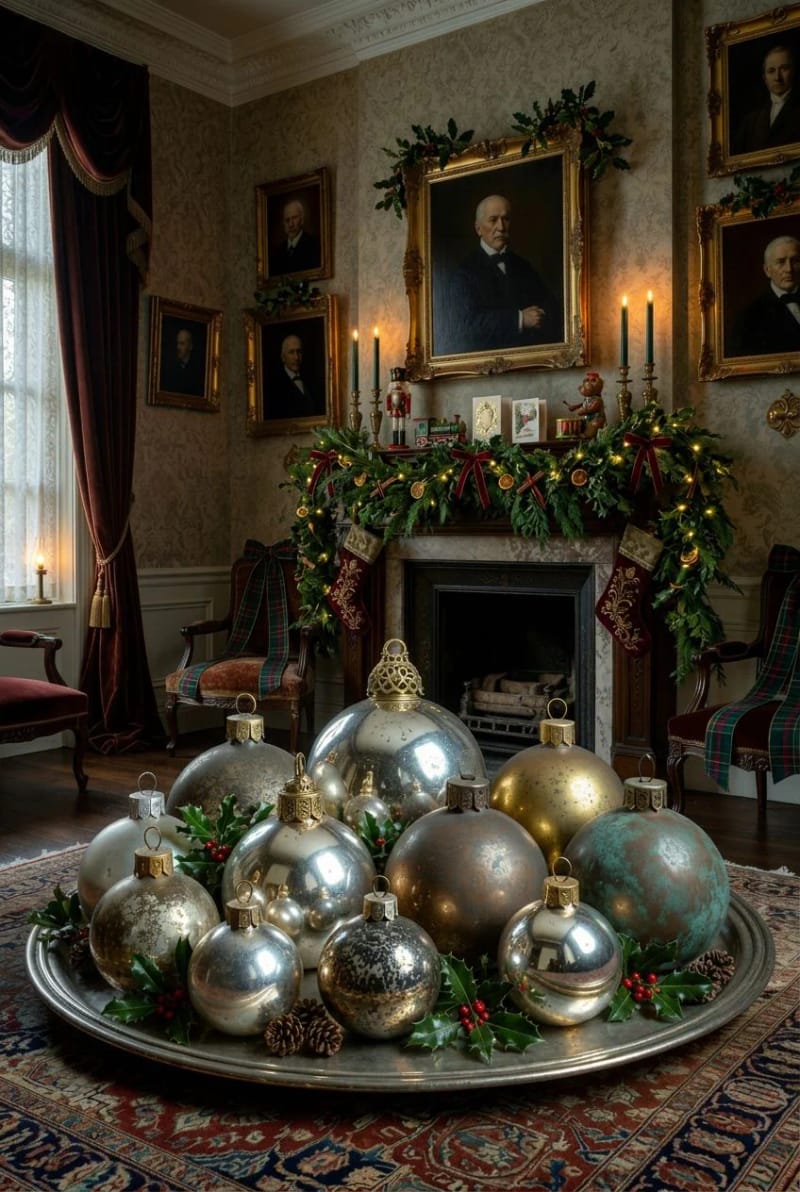
When you cluster silvered glass, sort it by how tarnished each piece is and let color fall where it may. A run from bright silver through mottled to nearly black gives a still-life depth that a color-sorted group never does, and it reads instantly as a collection gathered over time. Most of what gets sold as "mercury glass" is technically a misnomer, by the way: true mercury glass is double-walled with silver sealed between the layers, the "poor man's silver" of the Victorian parlor, and almost all of it predates 1940. The ornaments you will actually buy are single-walled silvered glass. Nobody at the estate sale will correct you.
Kugels are the heavyweights, the earliest glass Christmas baubles, made in Germany roughly 1840 to 1914 and lined with zinc or lead so they need a thick brass cap clamped flush to the neck. A plain silvered kugel runs ten or twenty dollars; the rare colors are another world entirely, and a good amethyst or cobalt can clear three hundred at auction. I don't fully understand why cobalt commands what it does when green is so much cheaper, but it does, reliably, year after year.
6. Bring in antique brass and leave the patina alone
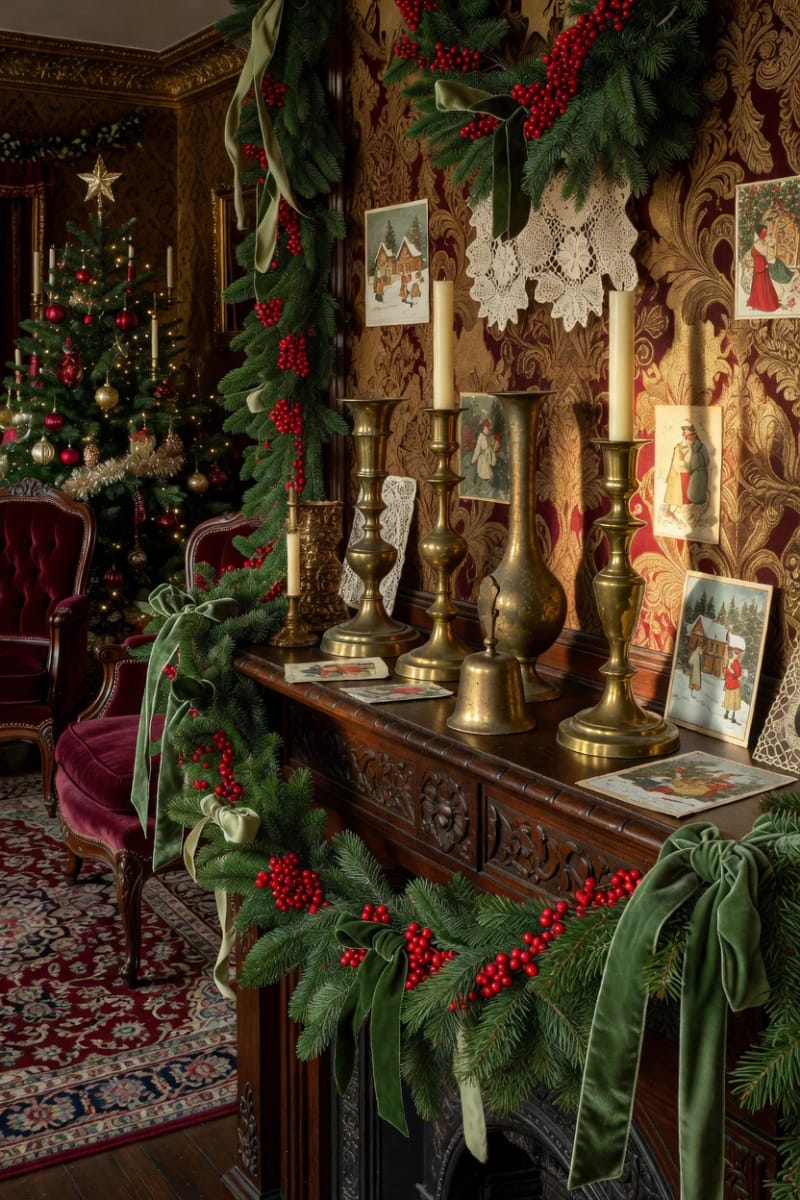
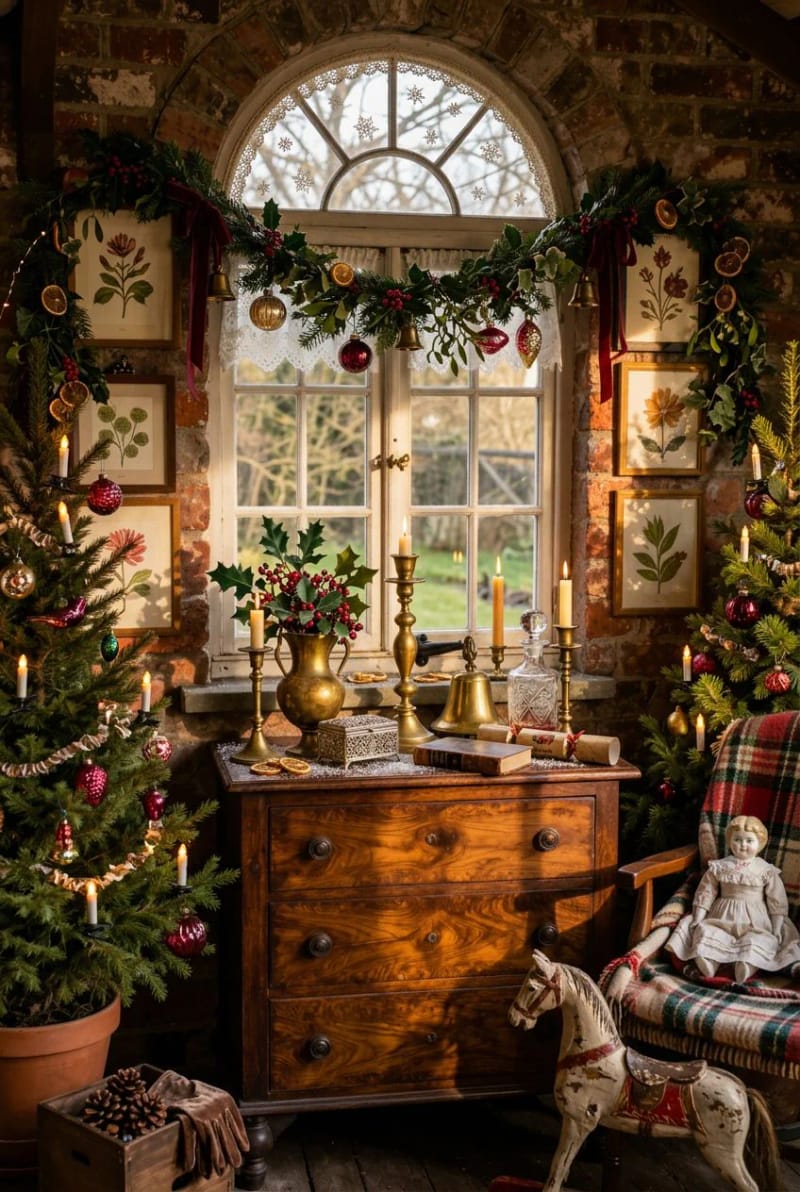
Antique brass is the warm metal that makes the whole scheme feel like a real home and not a set, and the one rule is to leave it tarnished. Candlesticks, a trumpet vase, a hand bell, a small tray: the darkened recesses and honey-brown high spots are what your eye reads as old, and polishing them to a mirror finish throws all of that away. Estate sales and thrift shops are thick with unloved brass for a few dollars a piece, precisely because most people want it shiny.
7. Warm candle glow does more than any string of white LEDs
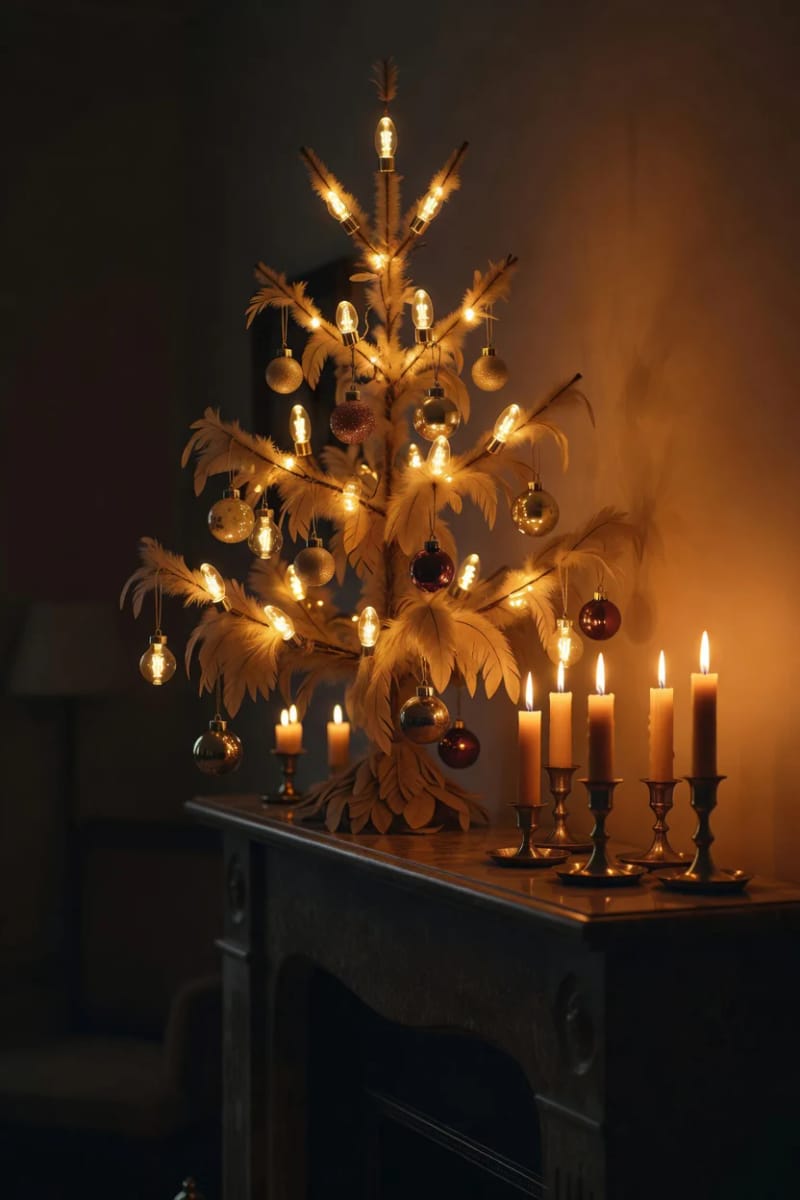
Swap every cool-white light for the warmest amber you can find, and the room ages a decade in an instant. The Victorians lit trees with real candles, which is why feather-tree branches sit so far apart, and that warm, low, flickering quality is most of what we are chasing. You can fake it convincingly now with low-wattage amber bulbs or warm-glow LED tapers, and on the mantel, real beeswax candles set well away from anything that burns.
People email me asking whether real candles on the tree are safe. They are not, and it does not matter how the Victorians managed it (they also kept buckets of water by the tree and lit them for minutes at a time). Never put open flame on a feather tree, a dried garland, or near old tinsel. And if you inherit a strand of vintage string lights with cloth-covered cords, display it unplugged; the wiring and insulation are long past safe.
8. A putz village and bottle-brush trees belong on the mantel
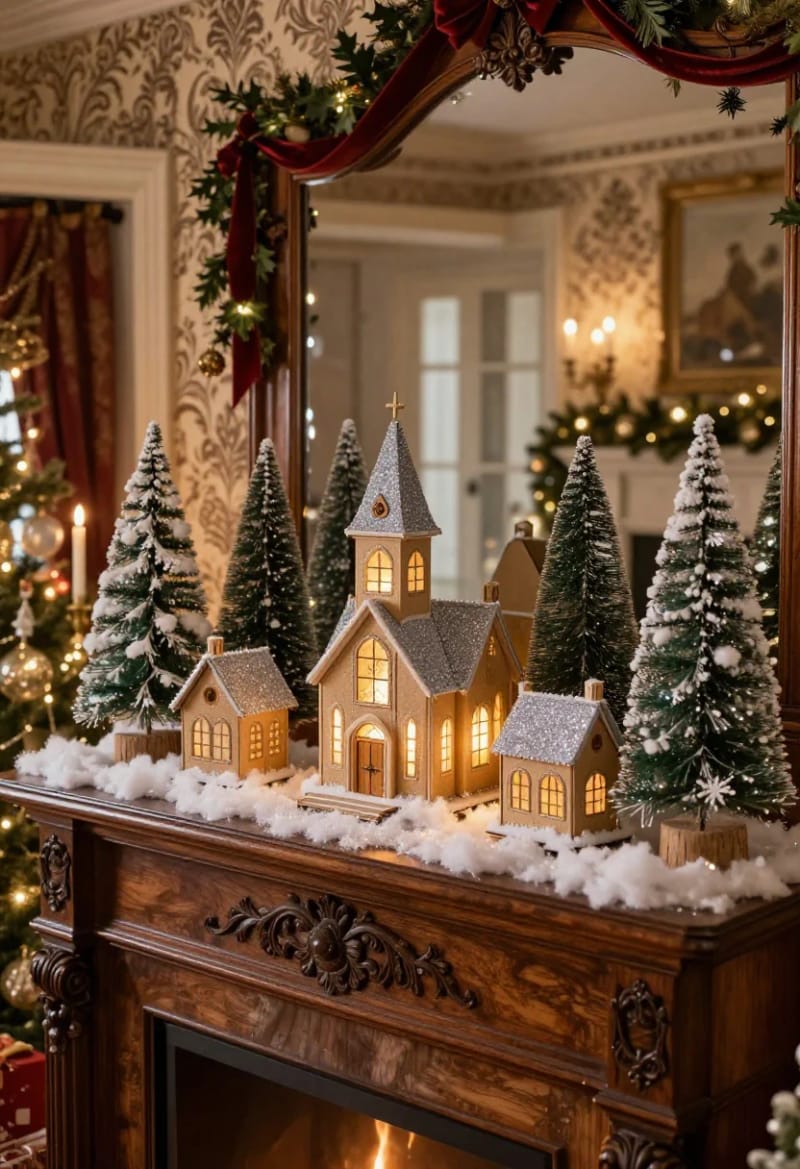
A little glittered village is the most charming low-budget move here, and the mantel is its natural home. "Putz" is just German for decorate, and these started as wooden nativity scenes under the tree before Japanese factories began turning out the cardboard glitter houses (cellophane windows, a hole in the back for a bulb) in the late 1920s. Cluster three to five at varying heights, tuck small bottle-brush trees between them, and lay a drift of cotton batting dusted with glass glitter for snow. Vintage houses run thirty to forty dollars each; Cody Foster makes paper-pulp reproductions if you would rather buy new.
A starter mantel village under $200
Roughly a five-foot mantel, mixing vintage finds and reproductions.
This is the cheapest way to get a finished, photograph-worthy vignette without committing to a whole-room overhaul. Source the candlesticks from a thrift shop and you will land near the low end.
Shopping list
| Qty | Item | Spec | Price |
|---|---|---|---|
| 5 | Bottle-brush trees | 3 to 6 in, some flocked | $12 to $25 |
| 3 | Putz houses | Vintage or paper-pulp repro | $40 to $120 |
| 1 | Cotton batting “snow” | Roll, plus fine glass glitter | $10 to $20 |
| 1 pr | Antique brass candlesticks | Thrifted, left tarnished | $20 to $50 |
| Total | $82 to $215 | ||
Prices are approximate ranges as of 2026 and swing with the season; verify before buying.
9. Hang lametta tinsel one strand at a time
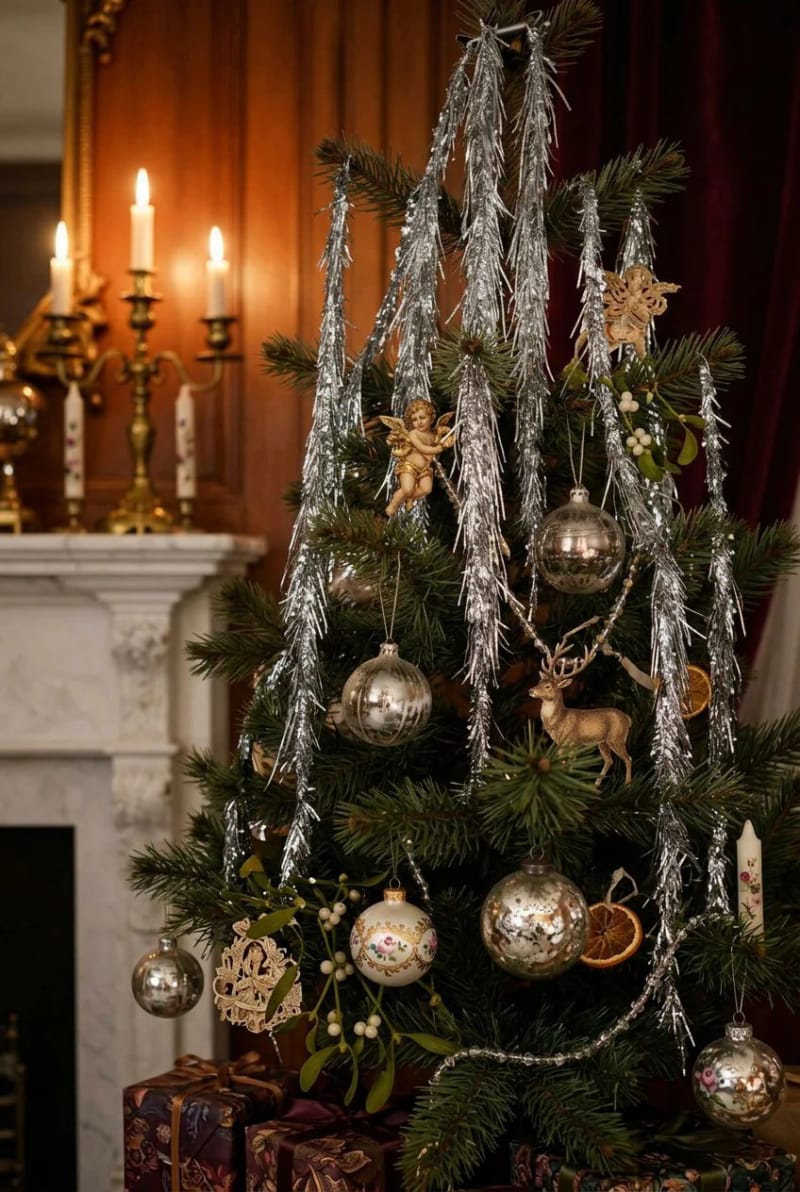
Real metal tinsel hangs straight, and that vertical, heavy drape is what separates a vintage tree from one wearing the shredded plastic stuff that ends up welded to your socks by January. The old German product is stanniol lametta, a lead core coated in inert tin, made until around 1969, with a dull tarnished sparkle nothing like Mylar. You can still find sealed vintage packs, and aluminum eislametta is sold now as a safer substitute. Drape it a few strands at a time over the branch tips. Yes, it is tedious. It is also the difference.
10. A dried orange and clove garland adds a sepia, scented layer
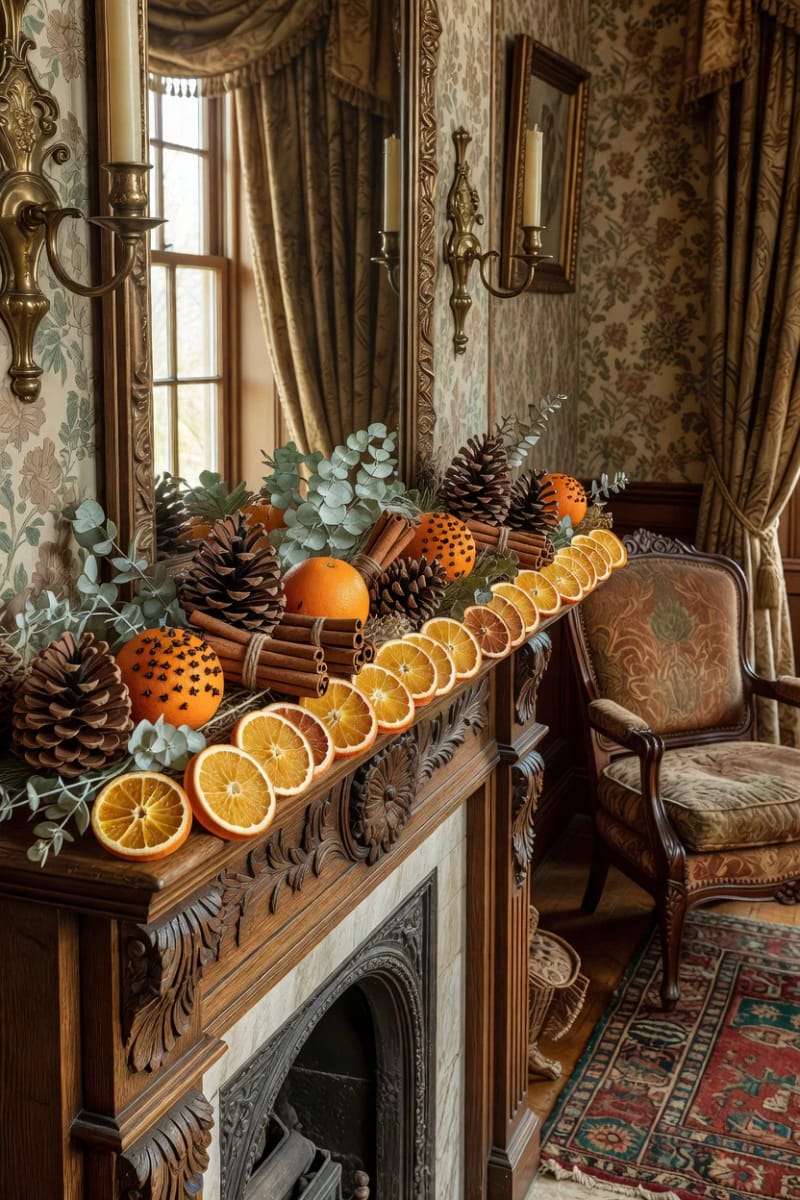
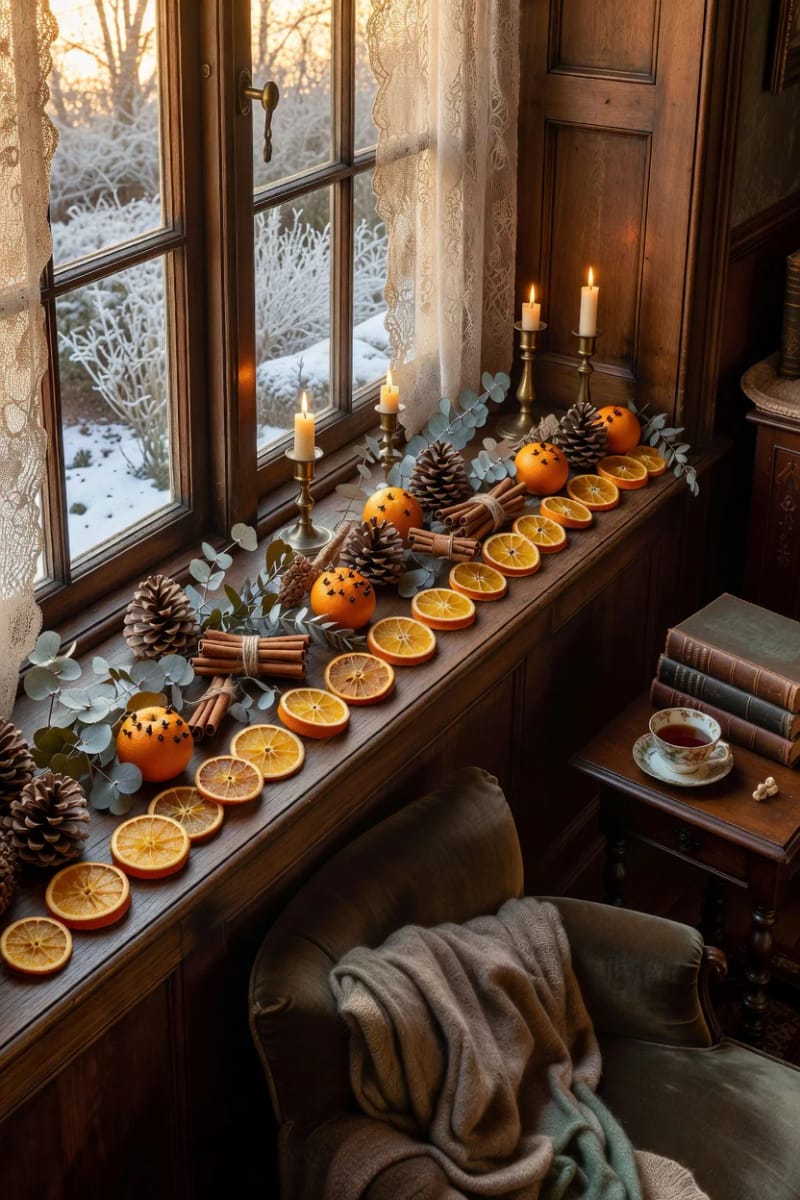
Dried naturals are nearly free, and their color is already the faded amber-and-brown you are paying decorators to fake. Slice oranges thin and dry them low in the oven until translucent, stud a few whole ones with cloves for pomanders, add pinecones, cinnamon bound in twine, and eucalyptus that has gone silvery. Strung along a mantel it gives you the warm tones and, unlike anything bought in a bag, a real scent. It will not last past the season, which is rather the point of buying almost nothing.
11. Show off vintage cards and sheet music under glass
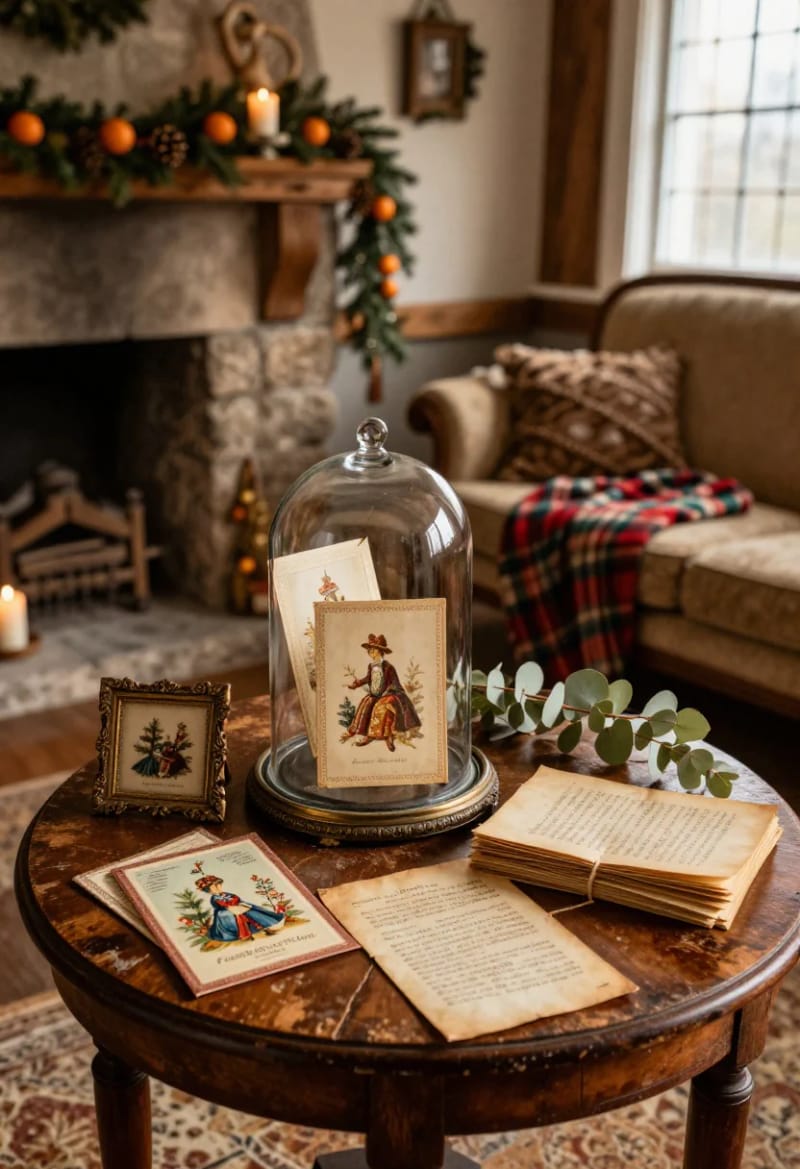
Old Christmas paper is overlooked and cheap, and a small display of it signals a collector's eye. The chromolithograph cards Louis Prang made popular in 1870s America, yellowed postcards, a foxed page of "Silent Night": prop a few in a brass frame, tie a stack in faded ribbon, or set an arrangement under a glass cloche so the foxing and soft creases become the feature. Flea-market boxes are full of it for a dollar or two a card, mostly because people walk past paper looking for objects.
Conclusion
If you do only one thing, settle the palette before you spend a cent: a faded, sun-warmed base makes every later choice easier, and a bright one fights you the whole way. After that, the order that works is the big anchor first (a feather tree, repro is fine), then the grouped mercury glass and tarnished brass that you deliberately leave un-polished, then the cheap, scented, paper layers (the dried-orange garland, the Dresden scraps, the boxed ephemera) that cost almost nothing and read the oldest. And the one rule with no exception: keep the real flame off the tree, however the Victorians did it.