
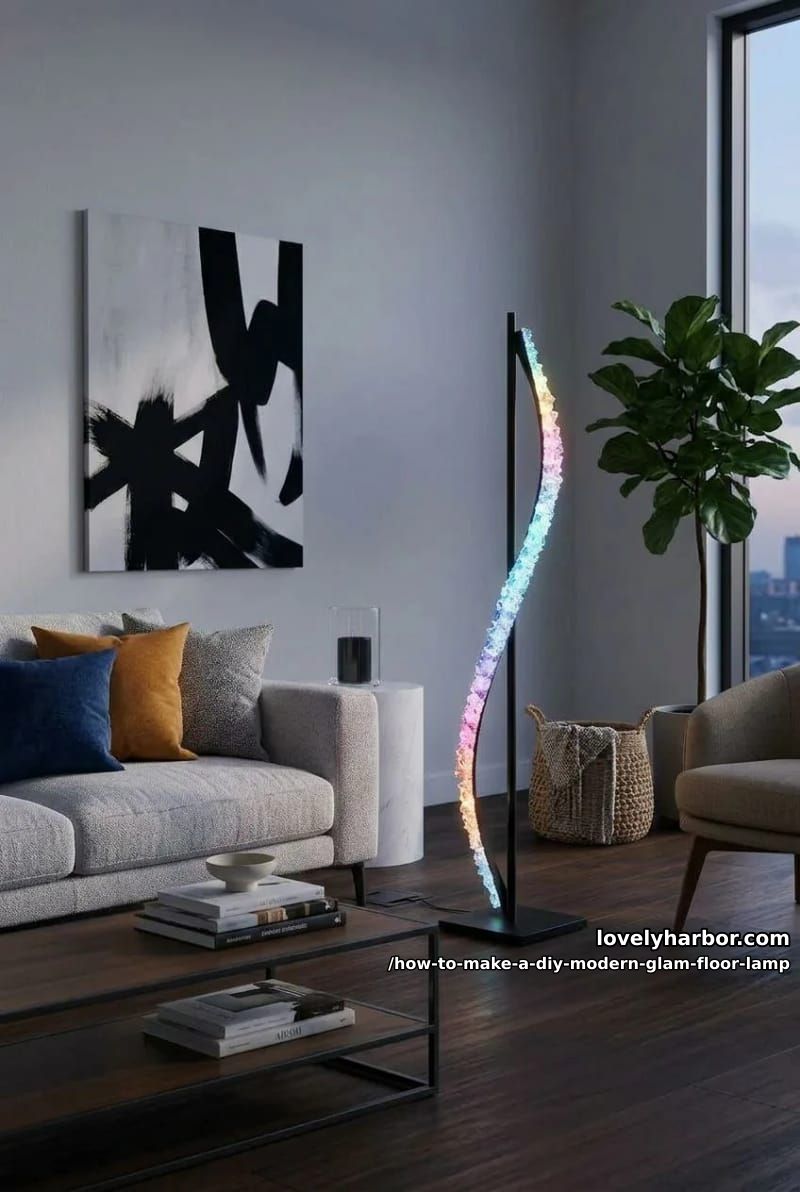
The expensive-looking part of this lamp, the long sparkling curve that arcs away from the pole, is a strip of orange Hot Wheels track. That is the whole trick, and once you see it you cannot unsee it: the flexible plastic toy track bends into a smooth arc, holds its shape when you screw it down at three points, and has a ready-made center channel that an LED strip drops straight into. Everything else is a dowel, a scrap of wood, black spray paint, and a bag of clear acrylic crystals.
Here is how the pieces actually go together, in the order that keeps you from repainting twice.
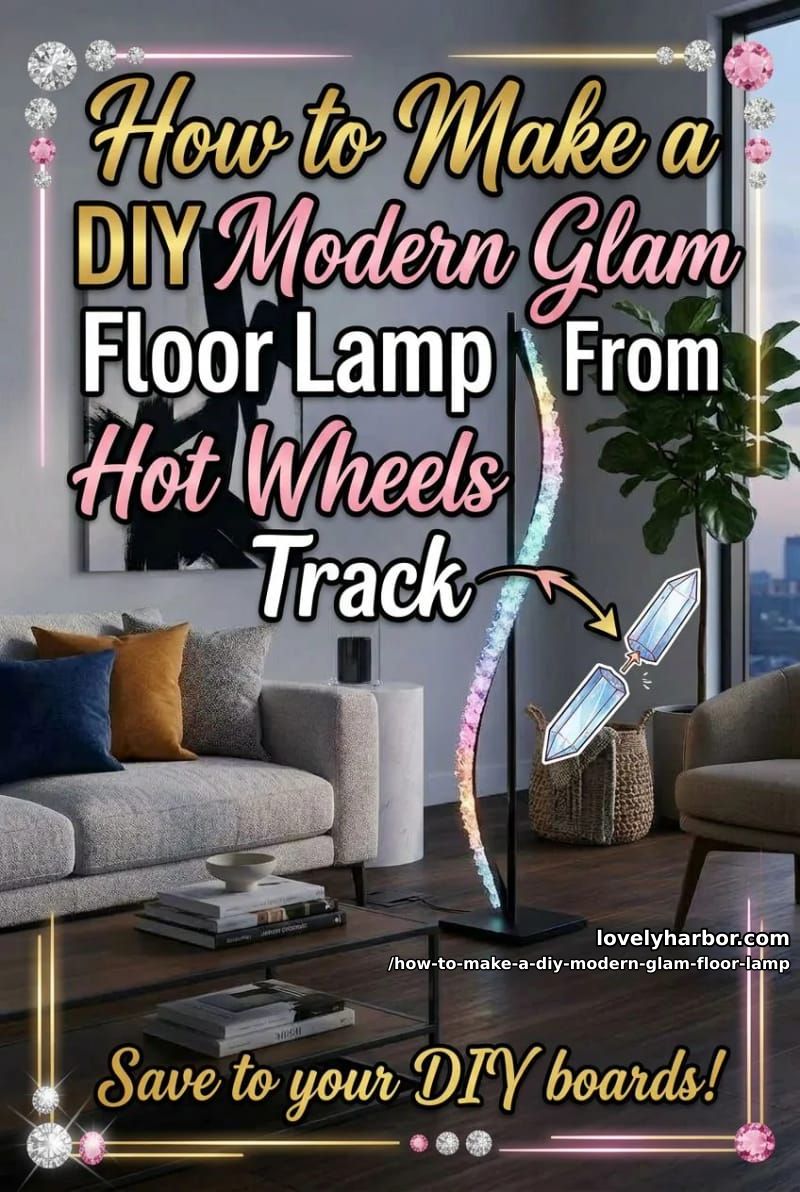
What you need
This splits cleanly into stuff you use up and stuff that stays in your drawer. If you already own a drill and a craft knife, the real project cost is the materials column, which lands under what a single mid-range Target floor lamp runs. The orange color of the track is irrelevant, by the way, since the whole frame gets painted black; buy whatever track is cheapest.
Materials
| Qty | Item | Spec | Price |
|---|---|---|---|
| 1 | Waddell hardwood dowel, 1-1/4 in x 48 in | Thick straight dowel, sold in packs | $10 to $16 |
| 1 | Darice square wood plaque base | ~7 in solid wood, flat | $5 to $10 |
| 2 to 3 | Hot Wheels straight track, orange | Flexible ABS track, combined length longer than the dowel | $10 to $20 |
| 1 set | Small self-tapping screws, assorted | Short, sharp-point, for wood and plastic | $8 to $13 |
| 1 | Rust-Oleum Universal matte black spray paint | All-surface, bonds to plastic and wood | $6 to $10 |
| 1 | Govee warm white LED strip, 16.4 ft | Dimmable, adhesive-backed, plug-in adapter | $11 to $18 |
| 1 | E6000 clear craft adhesive | Dries clear, flexible, bonds acrylic to plastic | $6 to $10 |
| 1 bag | PMLAND clear acrylic ice crystals, ~3 lb | Faceted clear “crushed ice” gems | $10 to $16 |
| Materials subtotal | $66 to $113 | ||
Tools
| Qty | Item | Spec | Price |
|---|---|---|---|
| 1 | BLACK+DECKER 20V MAX cordless drill/driver | Drives screws, drills the base pilot hole | $40 to $55 |
| 1 | Scissors or a utility knife | To cut and score the track | Owned |
| Tools subtotal | $40 to $55 | ||
If you buy everything from scratch
| Combined total | $106 to $168 |
Prices are approximate ranges as of June 2026; verify before purchase.
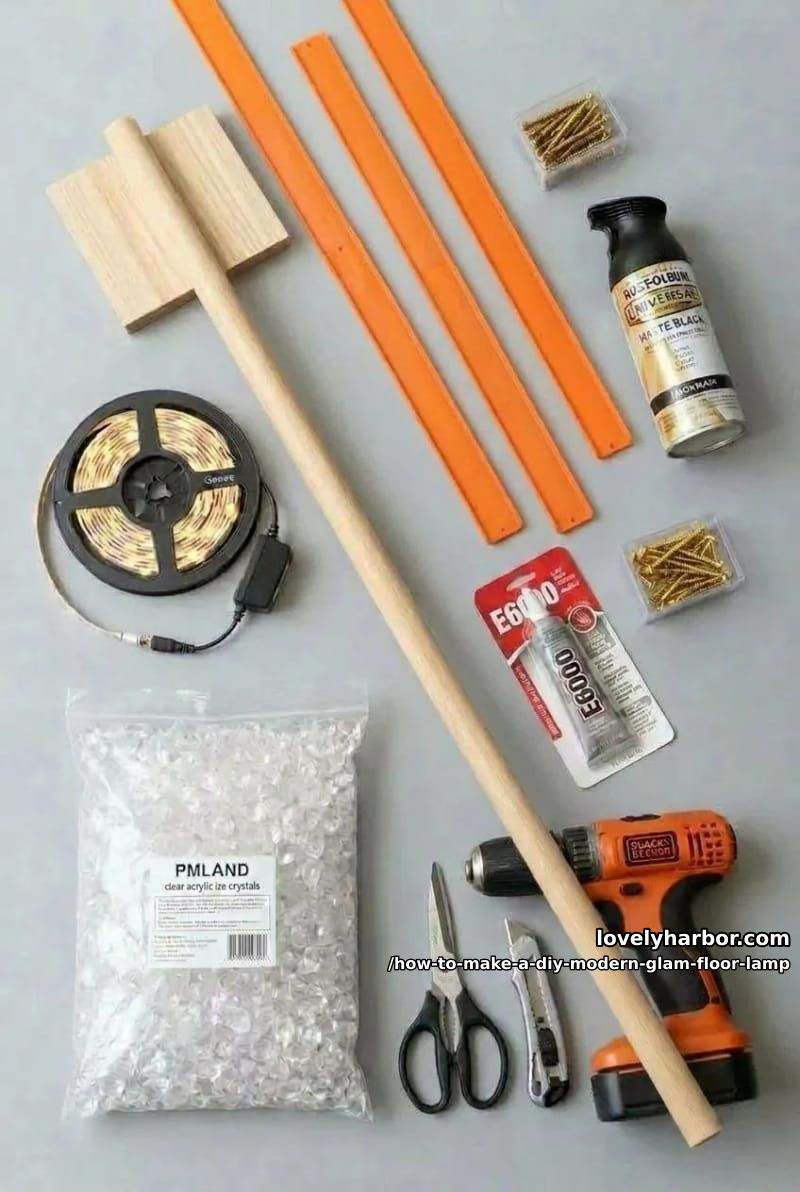
Step 1: Stand the pole on its base
Screw the dowel into the wood plaque from underneath, so no hardware shows on top. Center the dowel on the plaque, hold it plumb, and drive one longer screw up through the bottom face of the base into the end grain of the dowel. End grain grips screws poorly, so this single fastener is the weak point of the whole build; if your drill has a clutch, back it off so you do not split the dowel end.
- Find center. Draw diagonals corner to corner on the plaque; where they cross is your spot.
- Pre-drill. Drill a pilot hole up through the base and a shallow one into the dowel end, narrower than the screw, to stop the wood from cracking.
- Drive the screw from underneath until the dowel sits tight and dead vertical. Wobble it. If it pivots, add a second screw beside the first.
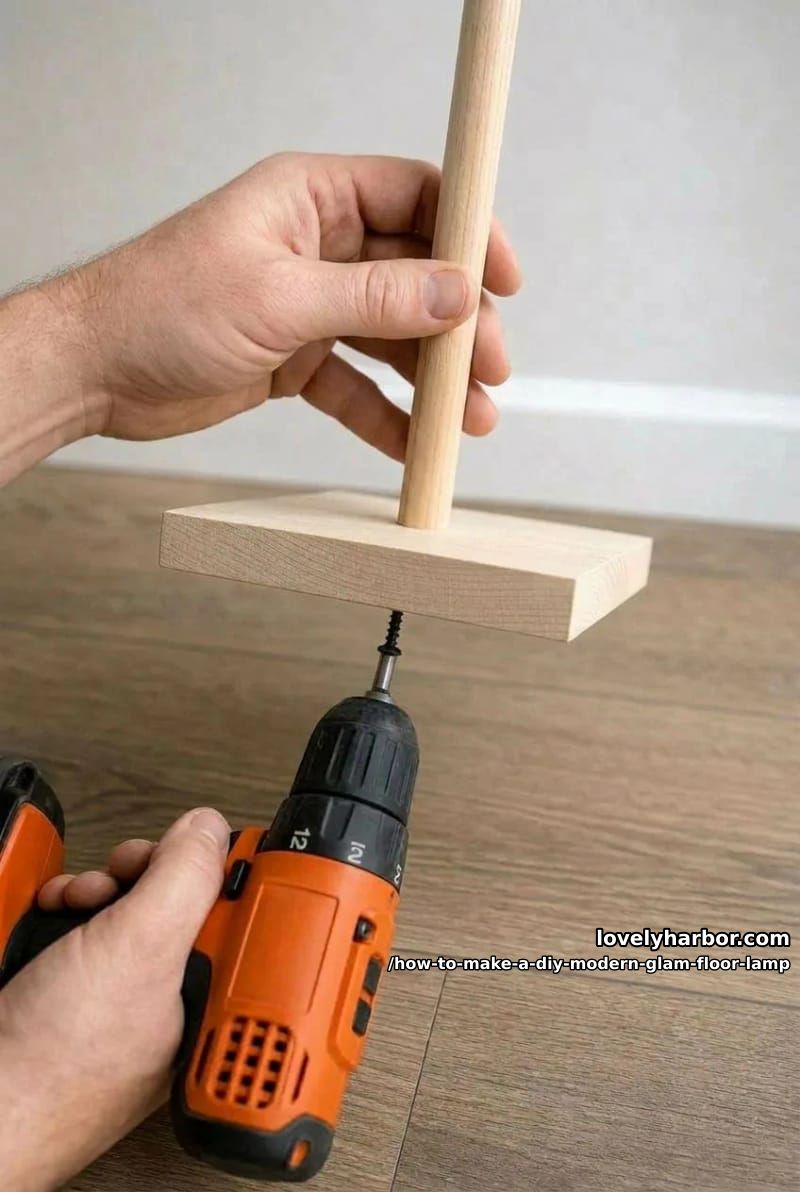
Step 2: Bend the curve
This is the step that decides whether the lamp looks designed or looks like a stick with a wire taped to it, so slow down here. You are fixing the track to the dowel at three points and letting it bow outward in between, which forces the long shallow S you saw at the top. One continuous length of track gives the cleanest line; if you are joining two pieces, overlap them at the middle fixing point so the seam disappears under a screw.
- Anchor the top. Lay the track flat against the dowel near the top and drive one short self-tapping screw straight through the track’s flat channel into the wood.
- Pull the belly out. Hold the track an inch or two off the pole at the middle and screw it down there. The slack between the two screws bows outward on its own. More slack equals a deeper curve.
- Anchor the bottom near the base, letting the lower section bow the opposite way so the two arcs mirror each other.
- Trim any excess track at top or bottom with scissors or a utility knife.
Top and bottom screws are the fixed ends; the track cannot move there.
The middle screw is the inflection point. Pull the track toward the pole here and the sections above and below it spring out in opposite directions.
Curve depth is just leftover length. A track that is 6 inches longer than the straight run between two screws will bow out roughly 2 to 3 inches; want more drama, leave more slack.
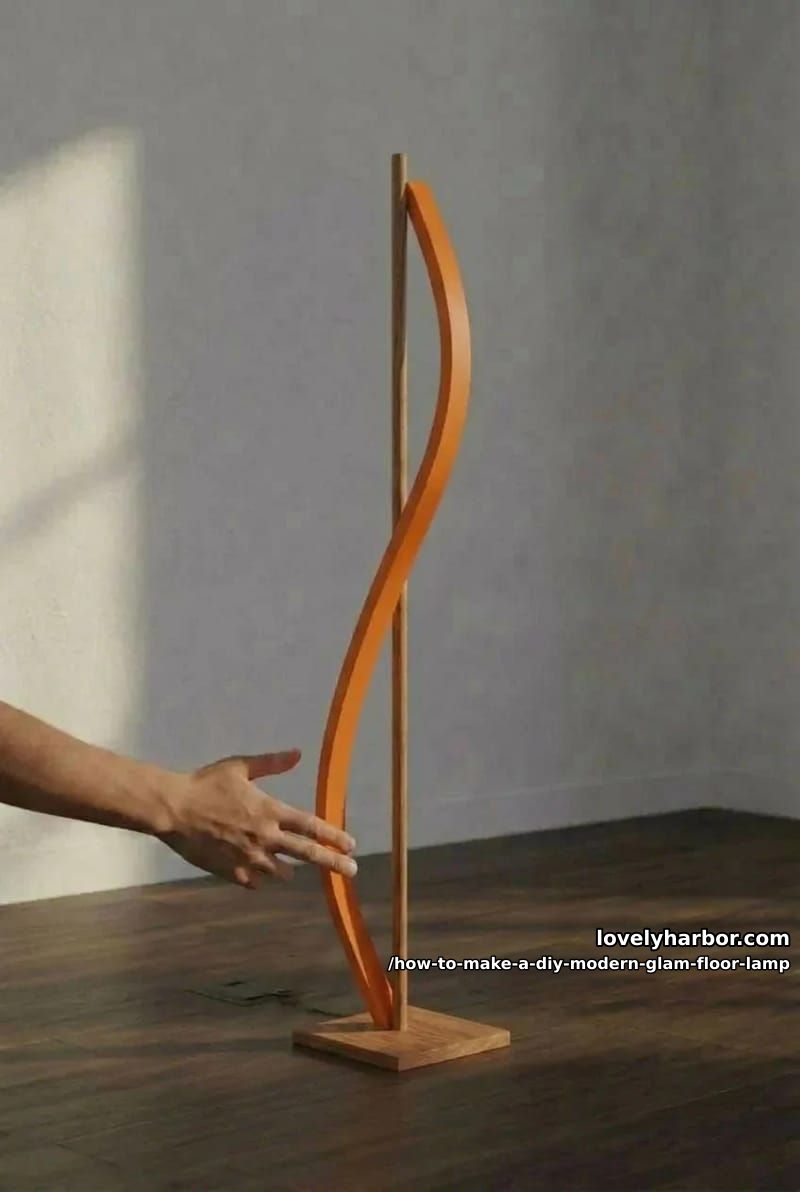
Step 3: Paint the whole thing black
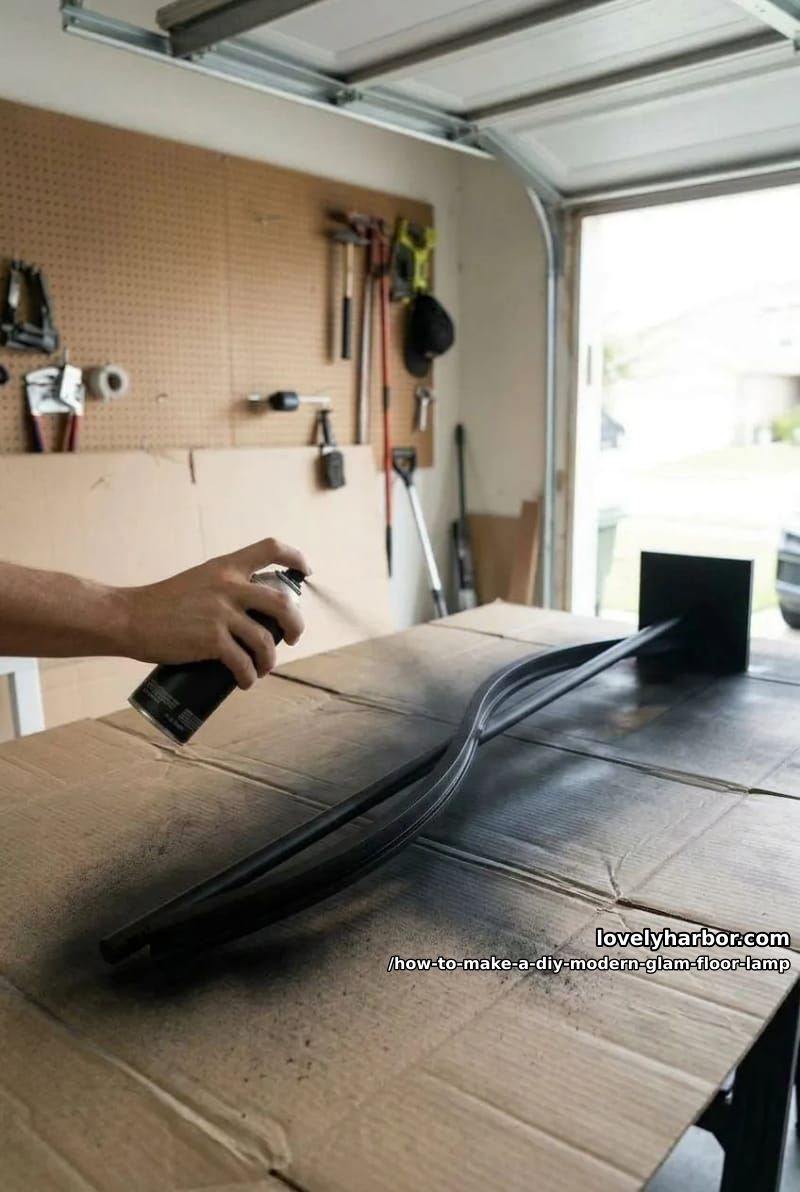
Spray the assembled frame, pole and track and base together, in thin coats from about 10 inches away. The detail most tutorials skip: bare ABS plastic sheds ordinary spray paint, and within a few weeks you get chips and flaking right where the track flexes. A universal, all-surface spray (the Rust-Oleum linked above is rated for plastic) solves this, but lightly scuffing the track with fine sandpaper first buys you real durability. Two or three light coats beat one heavy coat that runs and pools in the channel.
Do
- Scuff the glossy track with 220-grit sandpaper, then wipe off the dust before spraying.
- Use a plastic-rated or universal spray paint.
- Build the color in light passes, letting each flash off for a few minutes.
Avoid
- Standard wood-only spray straight onto unsanded plastic. It looks fine for a week, then peels.
- Flooding the center channel with paint, which leaves a gummy ridge the LED strip will not sit flat against.
- Painting in direct sun or below about 50°F, where the finish goes rough and chalky.
Step 4: Run the light
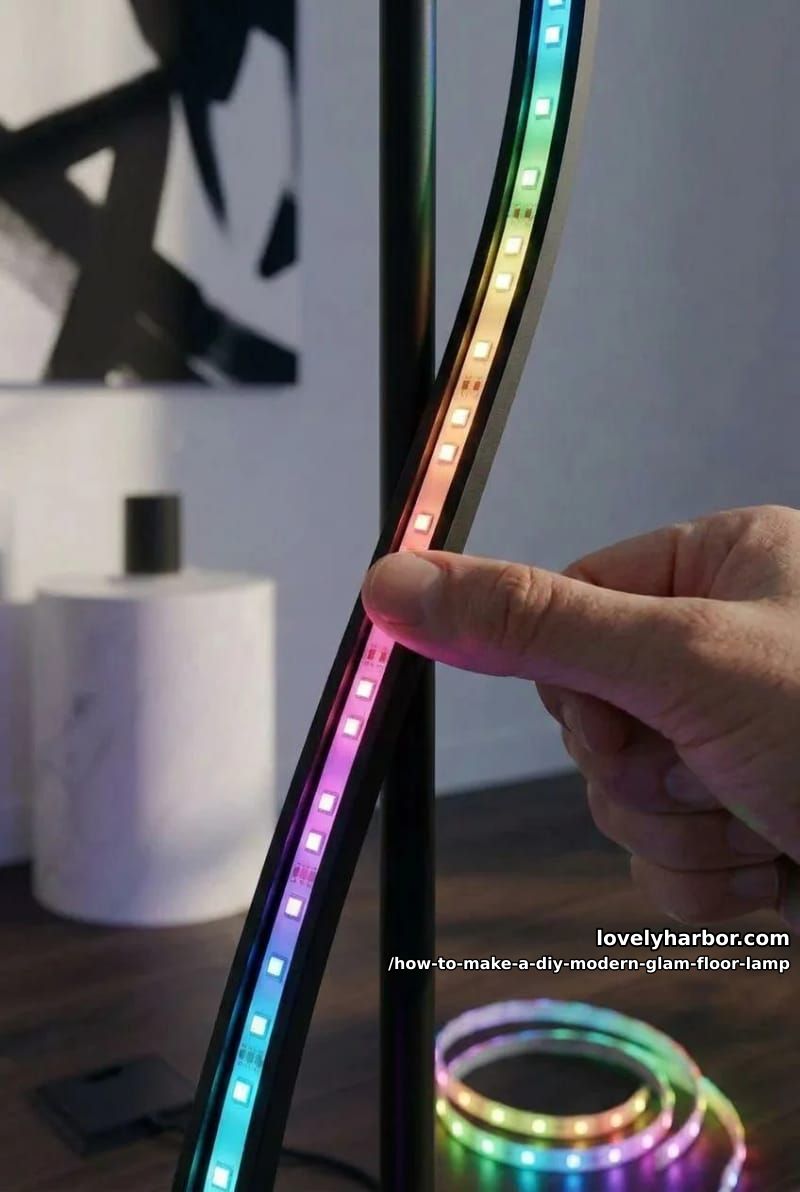
Press a warm-white LED strip into the recessed channel of the painted track, peeling the adhesive backing a few inches at a time as you go. The Hot Wheels channel is almost exactly strip-width, which is the second reason the track is such a good cheat: the LED seats itself in a straight groove and follows the curve without sagging. Run the strip the full length of the arc, then route the thin power lead down the back of the pole.
Bottom: the matte-black track channel, painted, acting as a dark backer so the light reads as a crisp line.
Middle: the LED strip, adhesive side down in the groove, chips facing out.
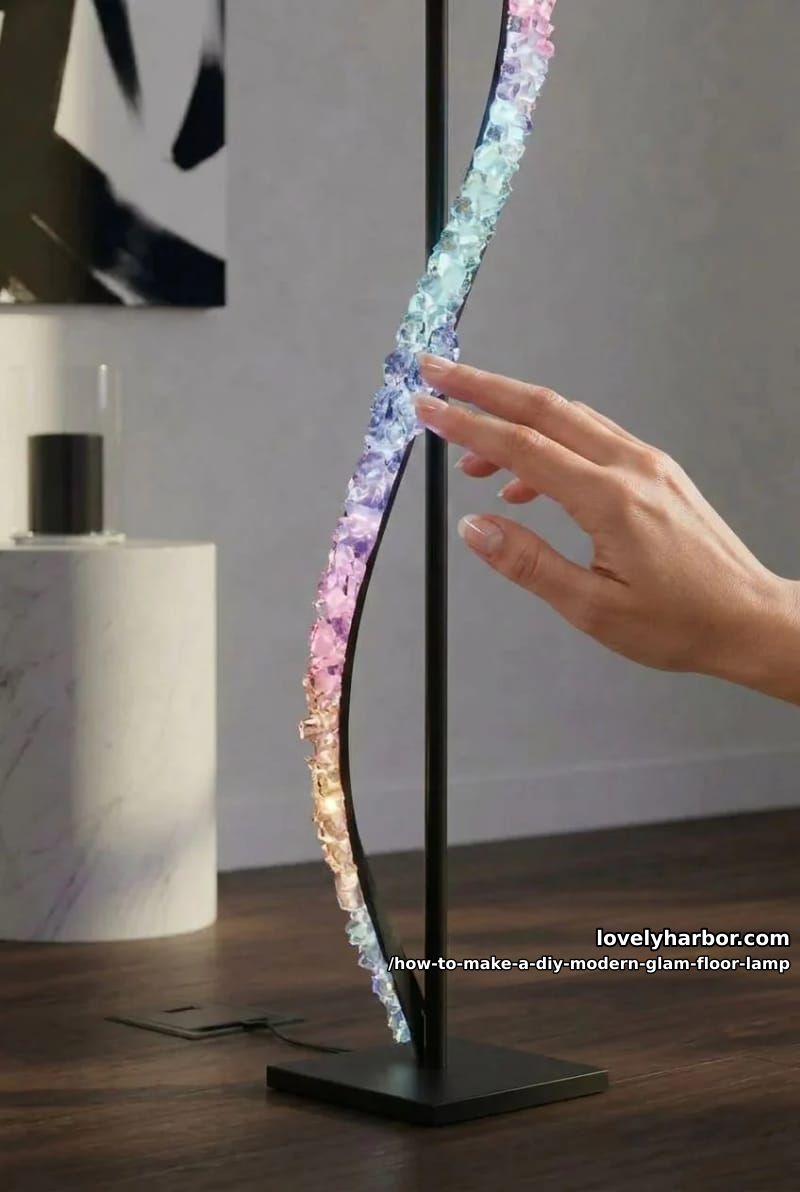
Top: clear acrylic crystals glued over the lit strip, which scatter the light into the sparkle effect.
Warm white gives you the glam-white glow in the finished shot. If you would rather change colors from a remote, swap in a 5050 RGB strip instead; it seats the same way and the crystals diffuse color just as well. Tuck the inline controller and the plug-in adapter behind the base.
Step 5: Crust it with crystals
Glue the clear acrylic crystals over the lit strip in irregular clusters, not a neat single row. Work in short sections with the strip switched on so you can watch the sparkle build and adjust before the E6000 grabs. Dab glue on the back of each crystal, or lay a thin bead along an inch of channel and set several at once; press them so they touch and overlap, because the gaps between stones are what catch and throw the light.
Plan on a few rounds. The first pass always looks sparse, and the instinct to space them evenly is the one to resist. Pile them a little proud of the track edge so the cluster reads as a column of crushed ice rather than a flat decal.
Mistakes that ruin this lamp
- A base that is too small. A four-foot pole on a 4-inch base is a tip-over waiting for a passing cat. Go 6 to 8 inches square, and screw a heavy washer or two under the plaque if it feels light.
- Skipping the plastic prep. Paint peeling off the flex points is the single most common failure. Scuff and use universal spray.
- Curve with no slack. Pull the track tight against the pole and you get a straight line with a kink, not an arc. The bow needs leftover length.
- Gluing over a hot strip. Encasing a cheap high-wattage strip in glue and acrylic traps heat. Stick to a low-voltage 12V strip, which runs cool, and do not bury the power lead in adhesive.
- Crystals in a tidy line. Even spacing kills the crushed-ice look. Cluster and overlap them.
Let the spray paint cure fully and the E6000 cure for 24 to 72 hours before standing the lamp upright or running it for long stretches. Adhesive that is still soft will let crystals slide, and uncured paint near a warm strip can stay tacky. Keep the strip’s power adapter at the base, not wrapped against the pole.
Conclusion
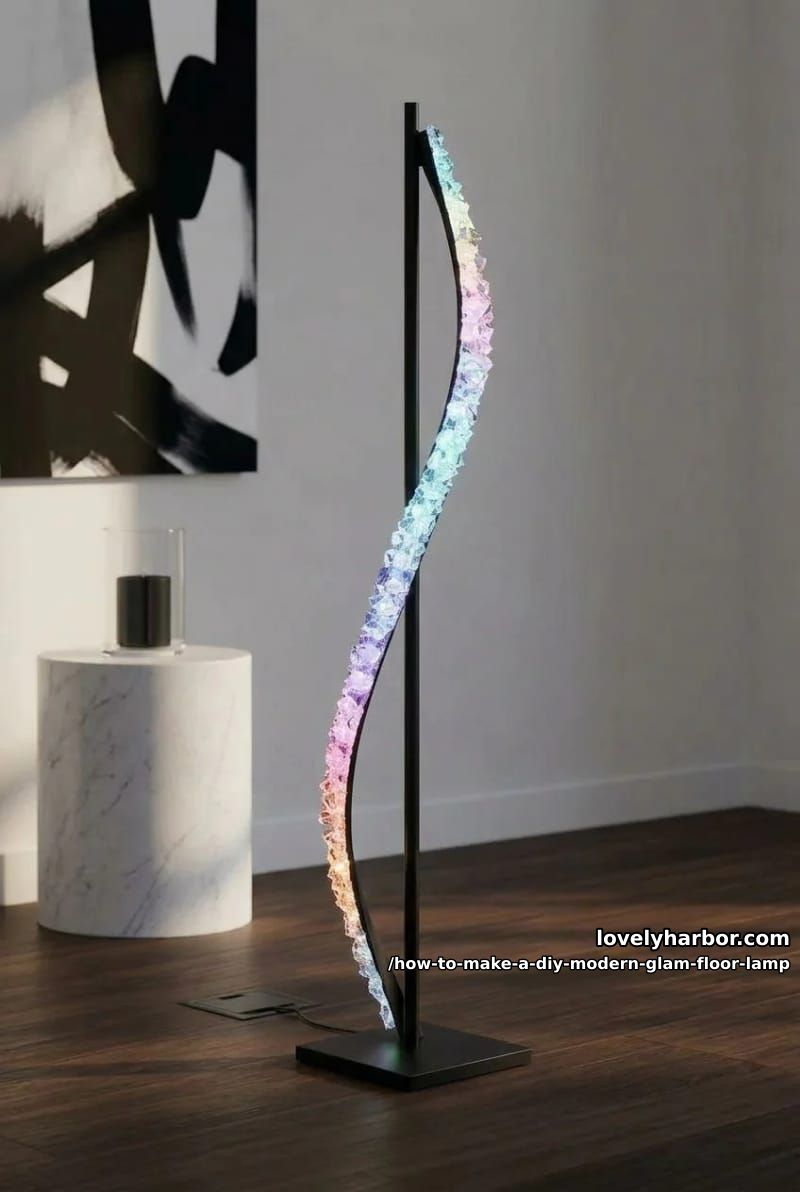
If you only get one thing right, make it the curve in Step 2, because it is the part everyone reads as expensive and the part that takes the most fiddling; the crystals forgive a sloppy hand, the bend does not. I would also resist the urge to paint before you have the track screwed down and happy, since reshaping a painted arc means chipping the finish and respraying. Build the frame, live with the curve for a minute, then commit to black.