
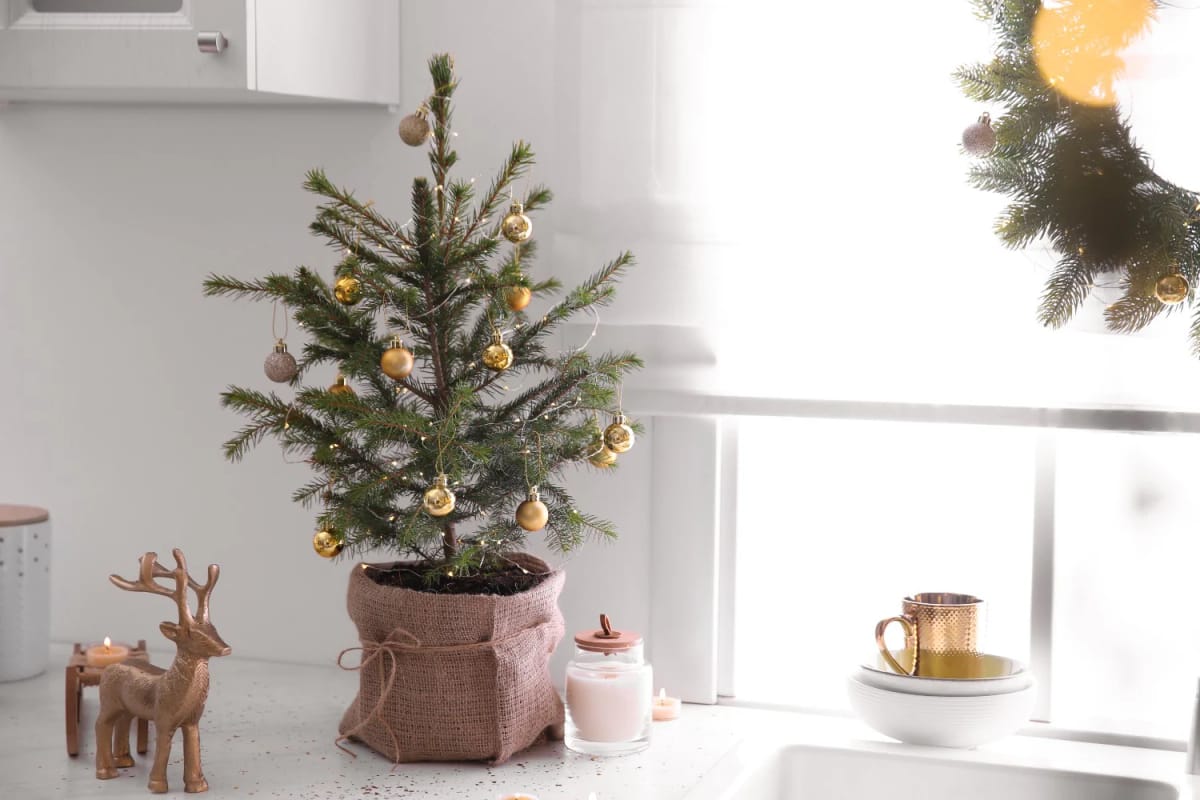
Floor space is the constraint, not budget. In a small apartment the tree competes with the sofa, the walkway and the radiator, so the real question is not which tree looks best in a showroom but which profile surrenders the least floor for the most height. Slim trees and tabletop trees both answer that, and they answer it in completely different ways, which is where most people go wrong before they have even opened the box.
A 6.5 foot slim tree fits where a 4 foot full tree does not
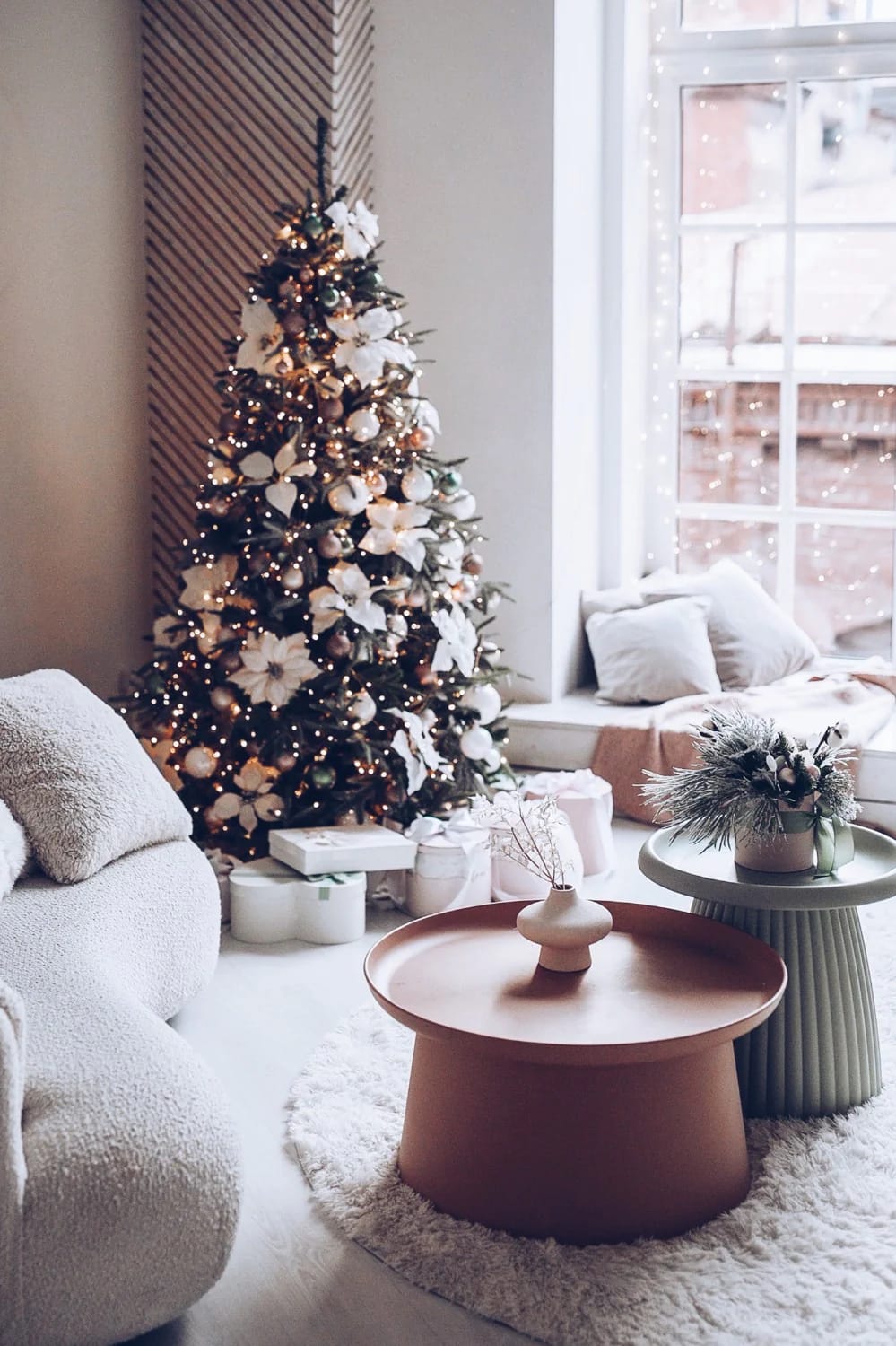
Height is cheap in a small apartment; width is what you pay for. A full 7 foot tree spreads 50 inches or more at the base, a slim tree of the same height runs somewhere around 30 to 40 inches, and a pencil profile narrows to roughly 18 to 24 inches. Changing profile instead of height is how you keep the recognizable cone shape and still hand back most of the floor.
Measure before you shop, and measure the two things nobody measures: the diagonal of the corner from wall to wall, and the clearance between the widest branch tips and the wall behind. Retailers generally suggest leaving about six inches there so the back branches are not crushed flat. Do the ceiling too. A 7 foot tree in a room with 8 foot ceilings leaves you a foot for the topper, which sounds fine until you own a star that is fourteen inches tall.
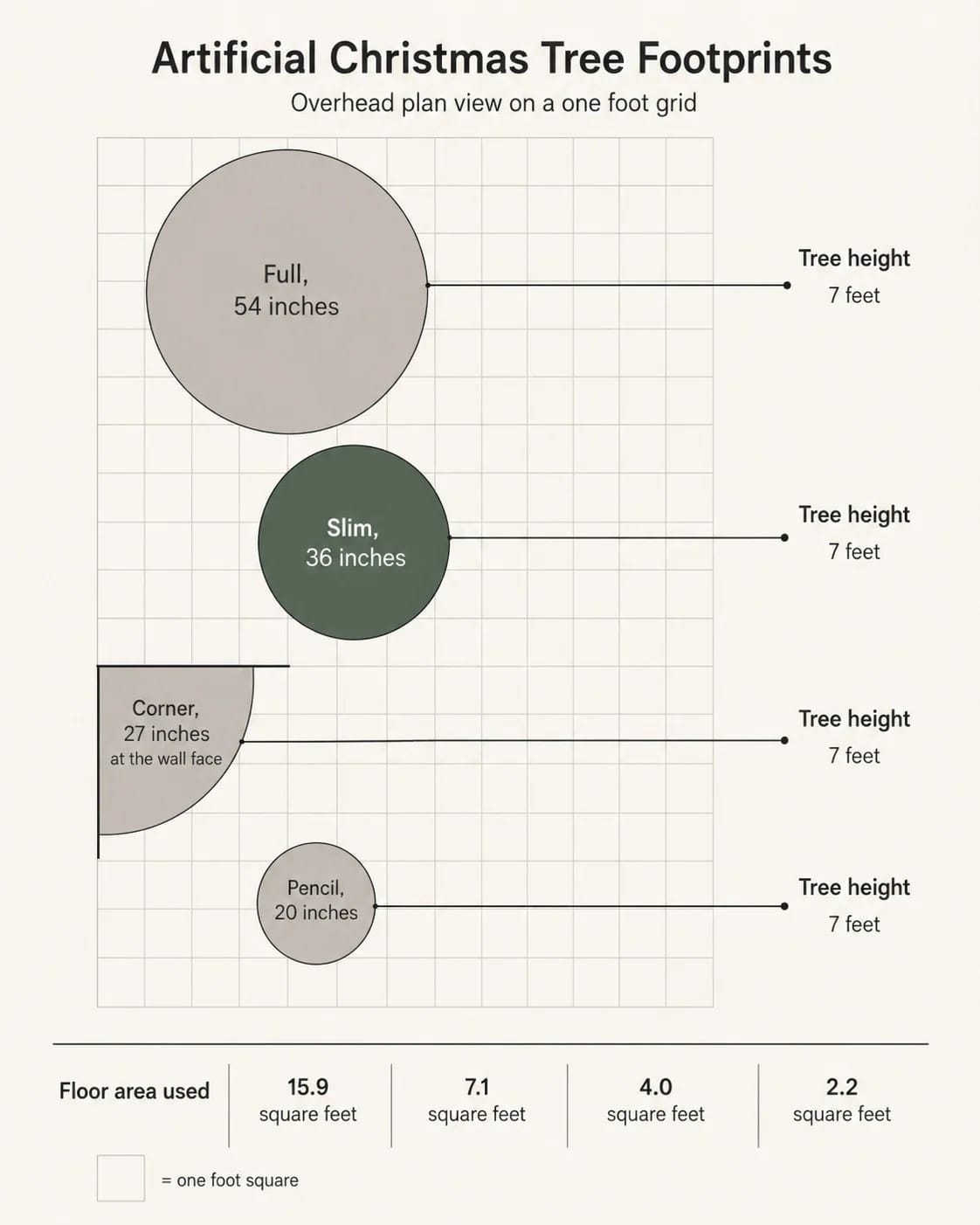
The 4 foot full tree sold as the small space answer is the worst of both worlds. It occupies nearly the floor area of a slim tree twice its height, it sits below eye level so you look down at it, and it reads as a tree somebody apologized for. If the room is genuinely tight enough that you are choosing between the two, the tree is only part of the problem, and the rest of it is usually where the seating sits, which is worth sorting out before you decorate anything at all.
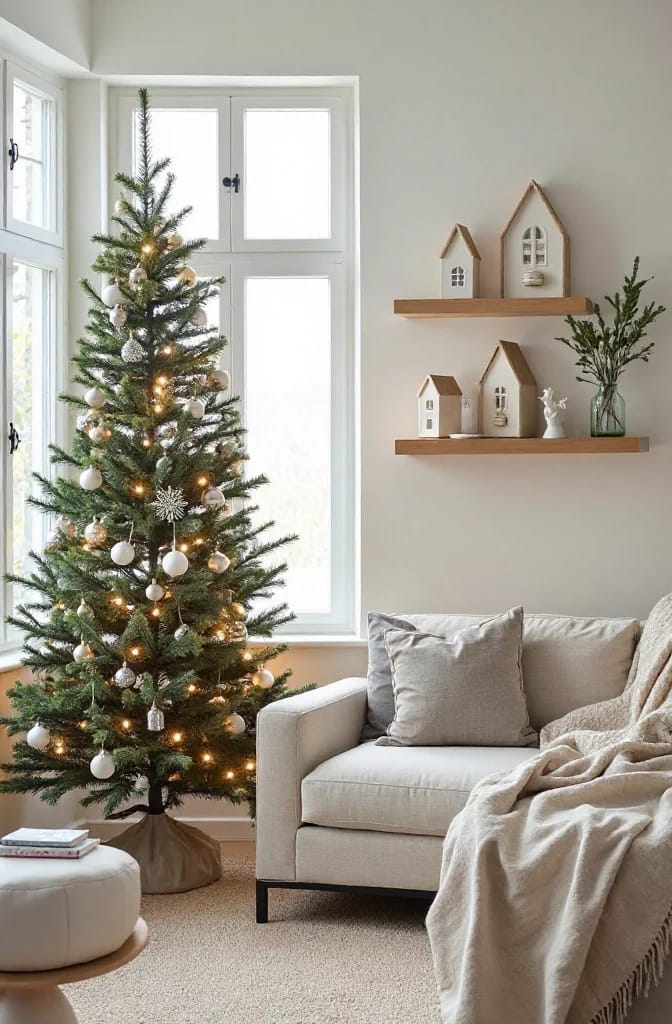
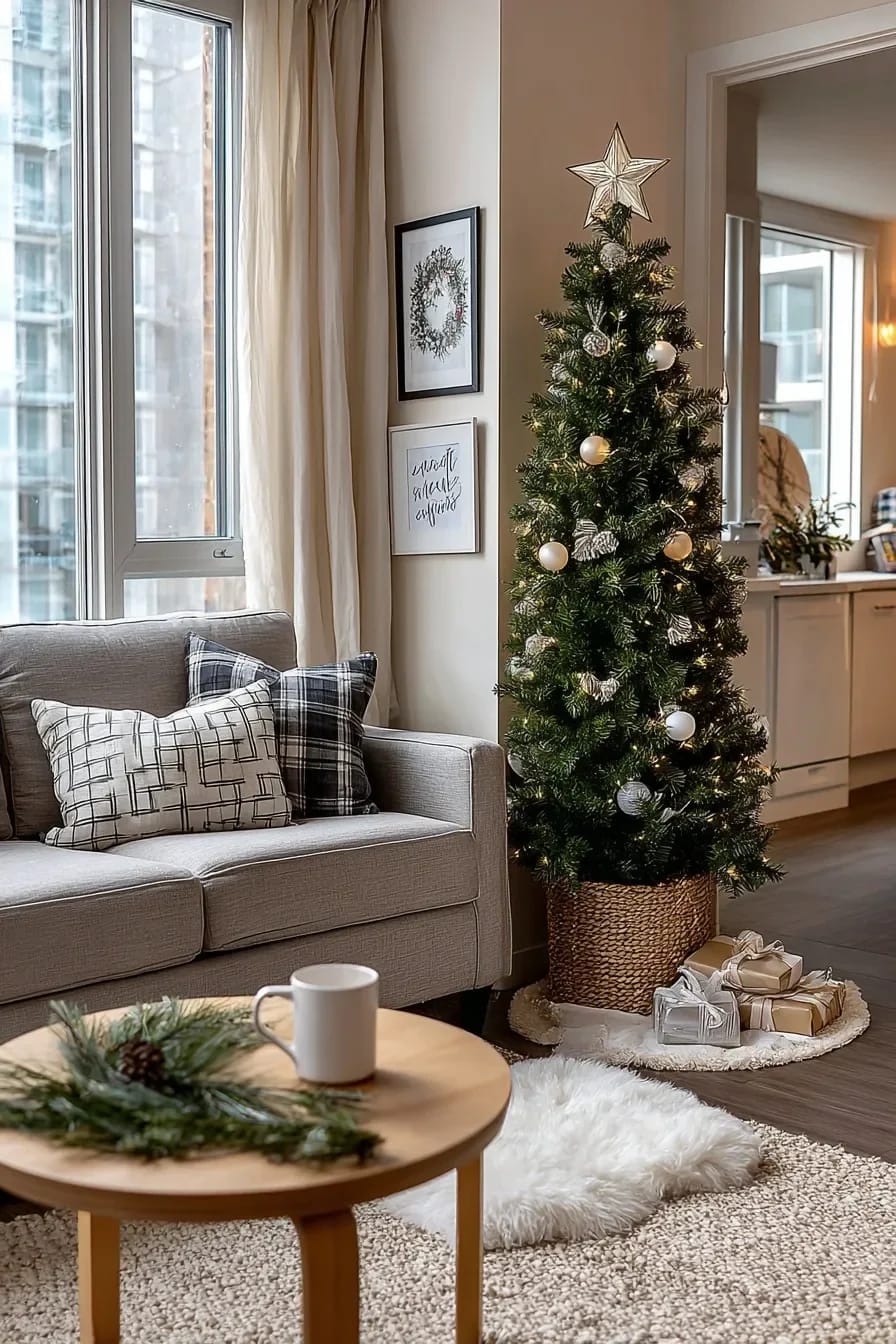
Stand the tabletop tree on storage, not on the coffee table
Put a 2 to 3 foot tree on something hollow that closes. A lidded rattan trunk, a storage ottoman, a flip-top bench in the entry: all of them lift the tree to roughly eye level when you are seated, and all of them swallow the ornament box in January. The coffee table does neither, and it costs you the surface you actually use every evening.
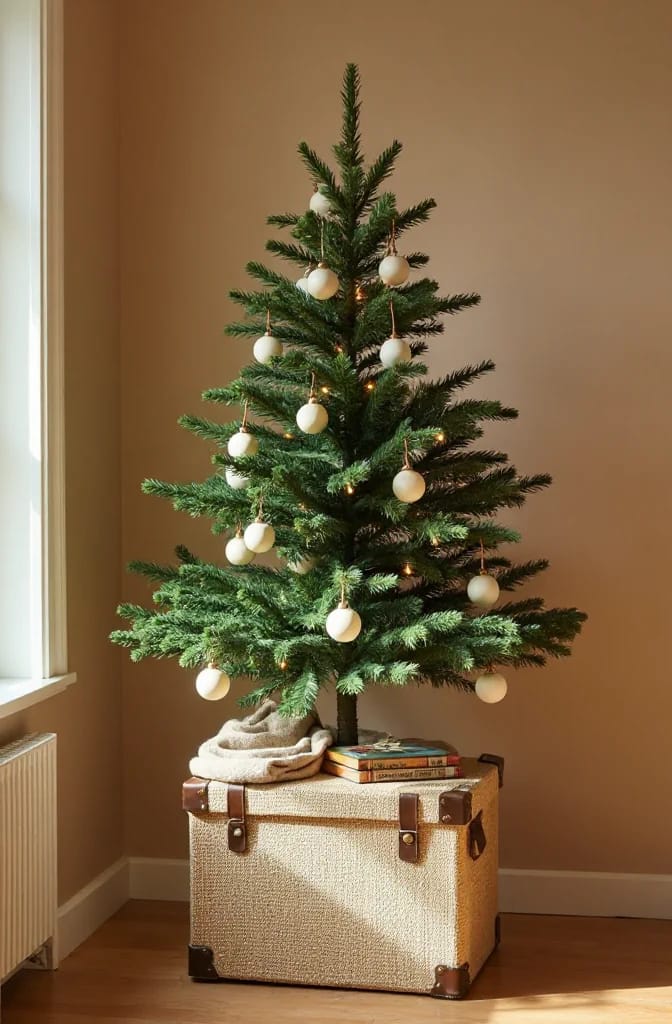
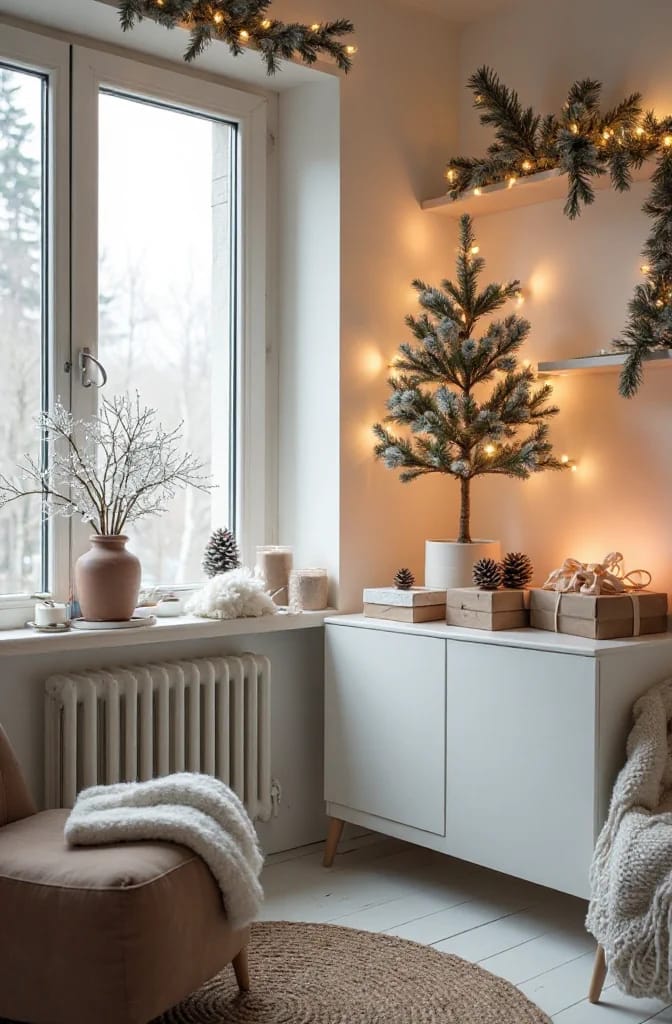
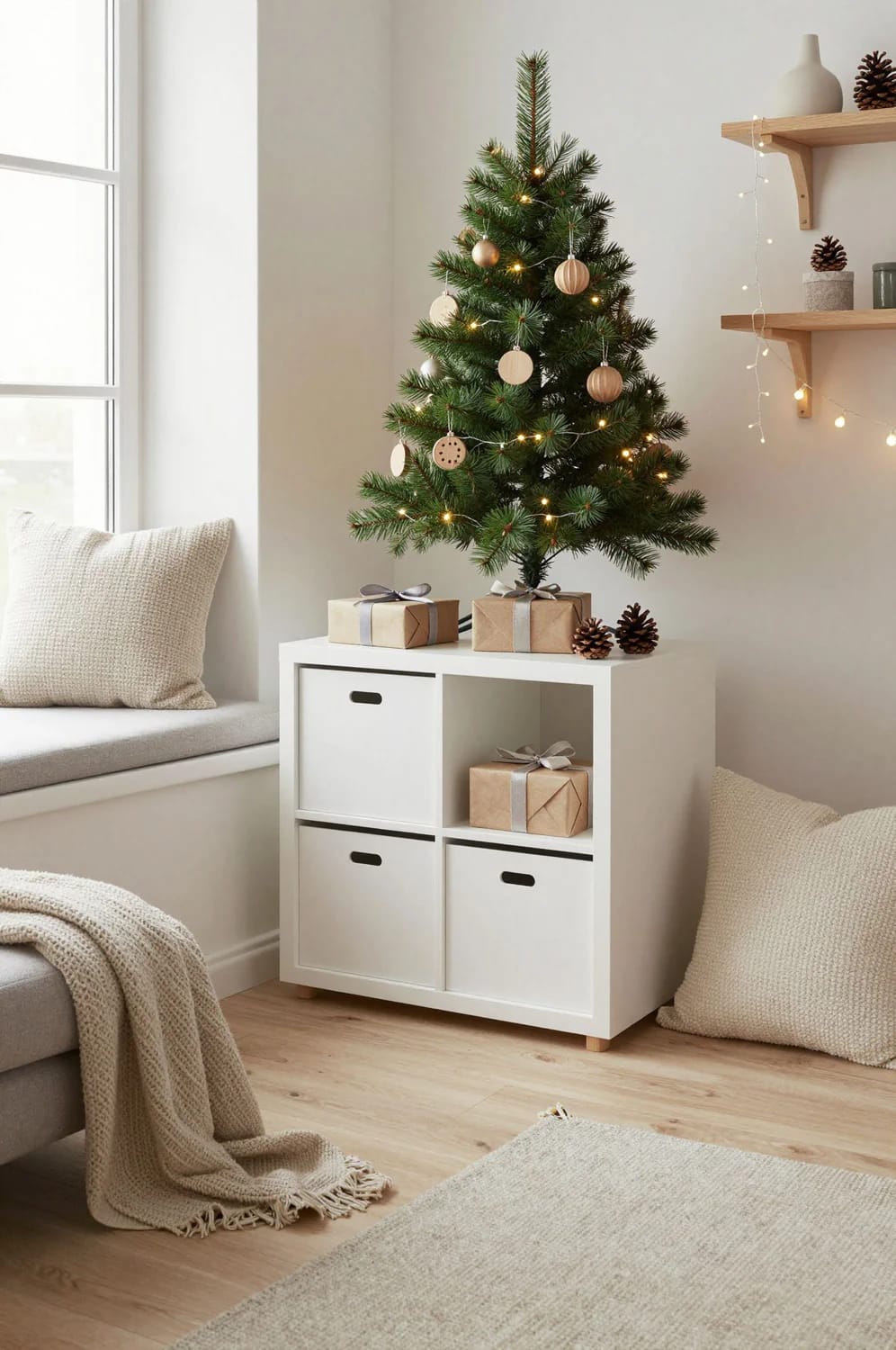
Weight matters more than looks here. A tree sitting 18 inches up has a much higher tipping point than one on the floor, so the base needs mass, and a cheap plastic pot filled with foam will not do it. Fill the pot with pea gravel or a bag of play sand and top it with moss. If you rent, this is also the version that leaves no trace, which puts it in the same family as the rest of the renter-friendly decorating that does not risk your deposit.
A slim tree needs more lights per foot, not fewer
Under-lighting is the single most common failure on a narrow tree. The industry starting point is about 100 lights per vertical foot, with 100 to 150 giving the fuller look, so a 6.5 foot slim tree wants roughly 650 to 900 bulbs rather than the two 100-count strands most people buy.
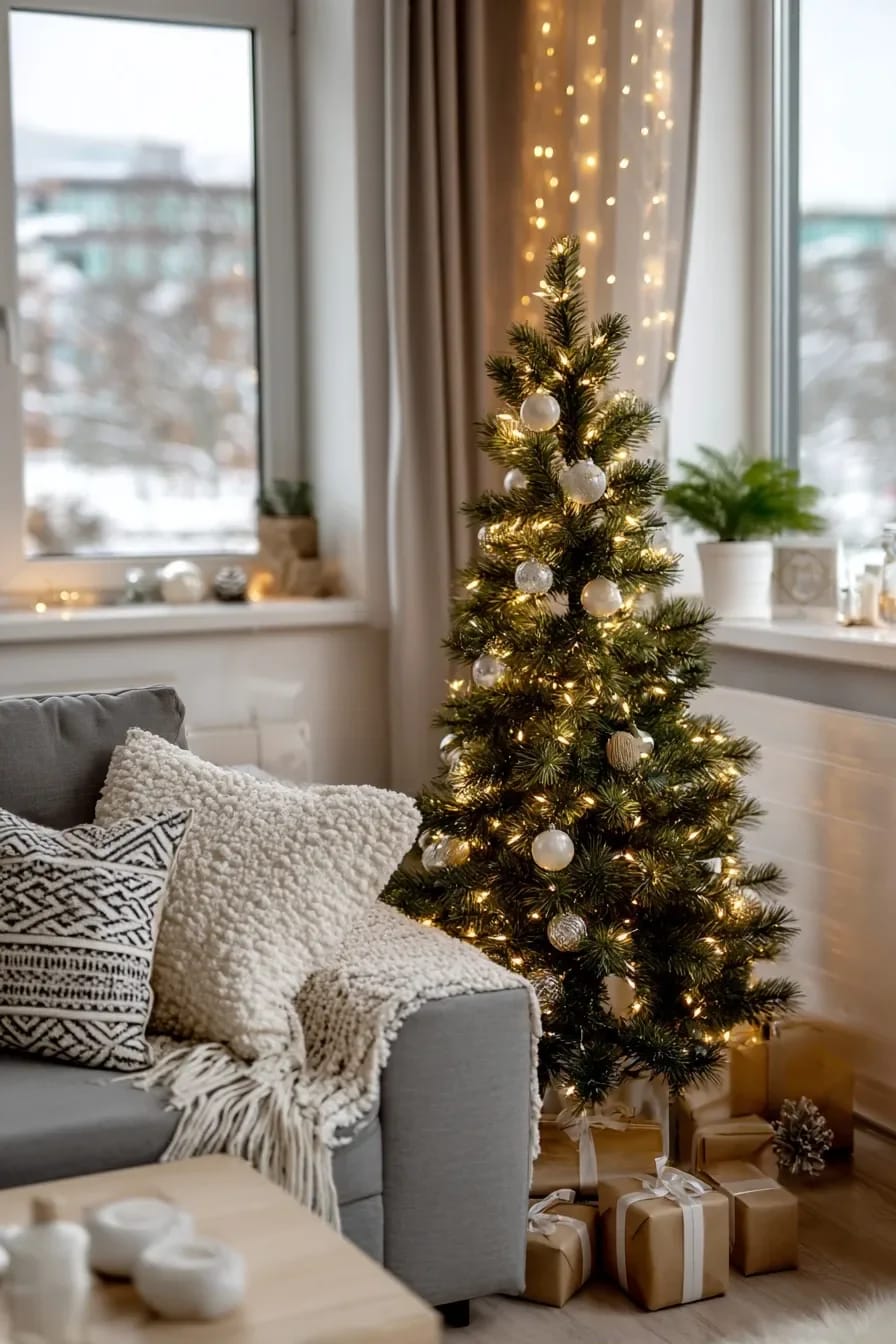
Wrap from the trunk outward rather than circling the outside of the tree. On a slim profile the trunk is only inches from the front branch tips, so a tree lit only around its perimeter looks like a lit outline with a dark stripe up the middle; pushing a third of the strands deep into the interior is what creates the impression of depth that the width is not providing. Keep one color temperature throughout, ideally 2700K to 3000K warm white, and do not mix a warm strand with a cool one because you ran out.
The cord is a real constraint in an apartment and nobody mentions it. A tree by an interior wall usually means a run across a walkway, so plan for a flat cord taped along the baseboard, and put the whole thing on an inexpensive plug-in timer so you are not crawling behind the trunk twice a day.
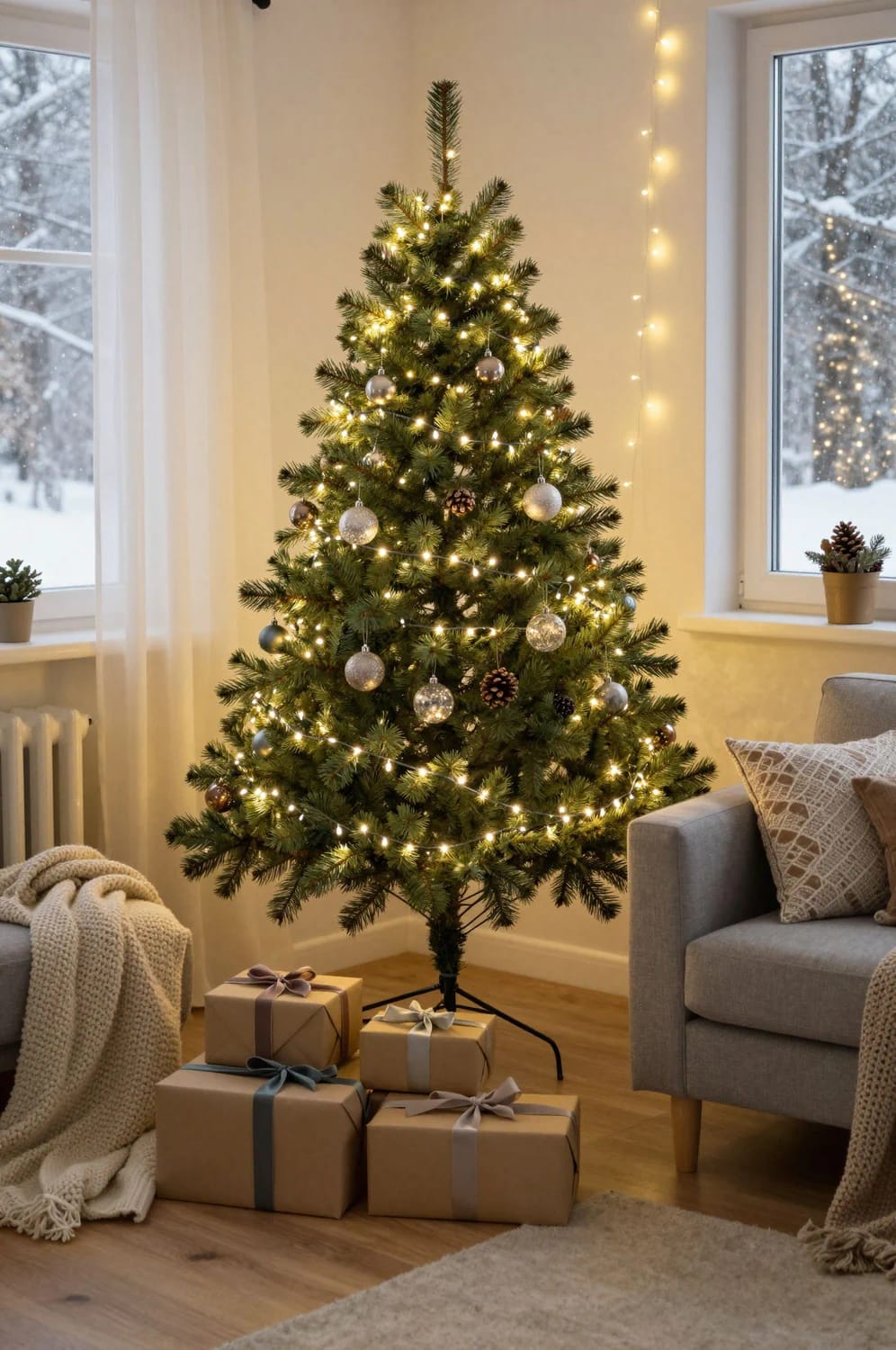
Flat-back and corner trees give the walkway back
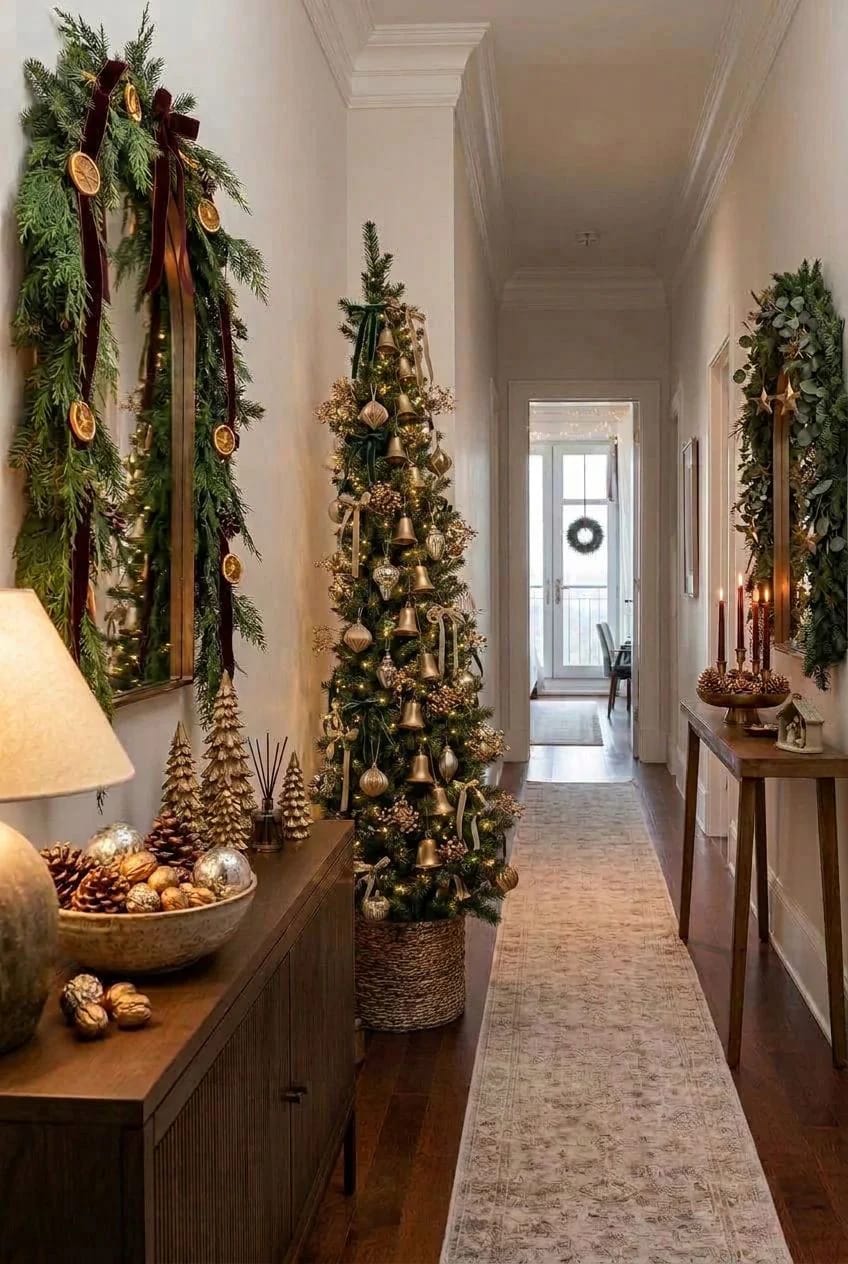
A flat-back tree sits about 13 inches deep against a wall while still presenting a full silhouette from the front, and a corner tree runs closer to 27 inches across its wall face. Both exist for exactly one situation: a wall or corner you never walk around. The catch is that the illusion collapses the instant somebody views it from the side, so this is the wrong tree for a room with two entrances or an open-plan studio where the sofa faces sideways. In a narrow hallway or against the long wall of a galley living room, it is the only shape that keeps the path clear.
Big ornaments on a narrow tree, and about half as many
Scale the ornaments to the tree, not to the box you already own. A pencil profile takes ornaments in the 2 to 4 inch range and looks cluttered above that; a slim tree can carry 4 to 6 inch baubles and needs them, because a handful of large matte spheres reads as intentional from across a small room while forty small ones read as speckle.
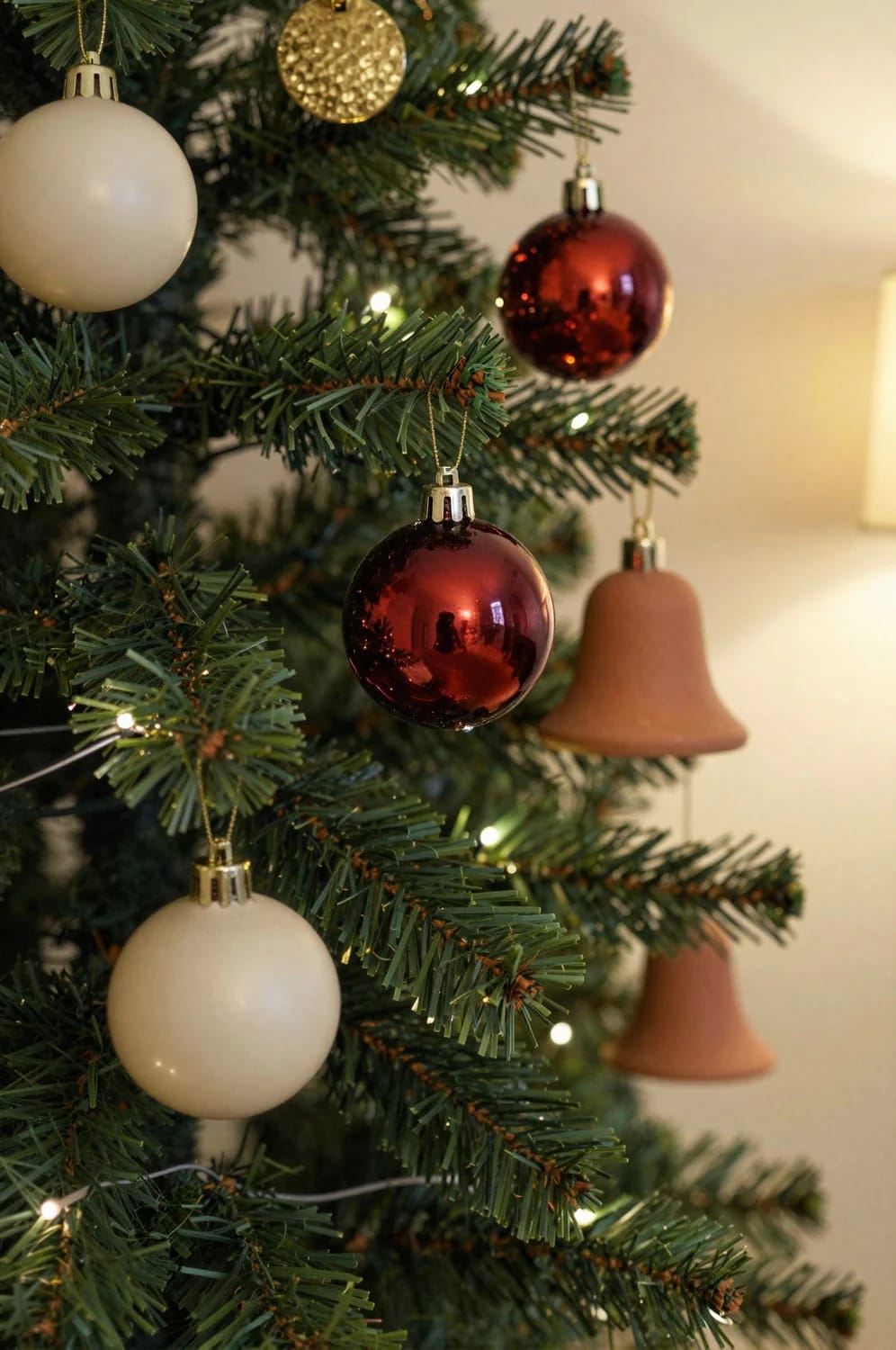
Hang at two depths. Large pieces at the branch tips, a few smaller ones set back near the trunk where the lights catch them, and nothing at all in the bottom eight inches where a skirt or basket will hide it anyway. If you want the collection to feel personal rather than bought as a set, one idiosyncratic piece per foot of tree is enough, and there are plenty of ornaments with an actual story behind them worth building around.
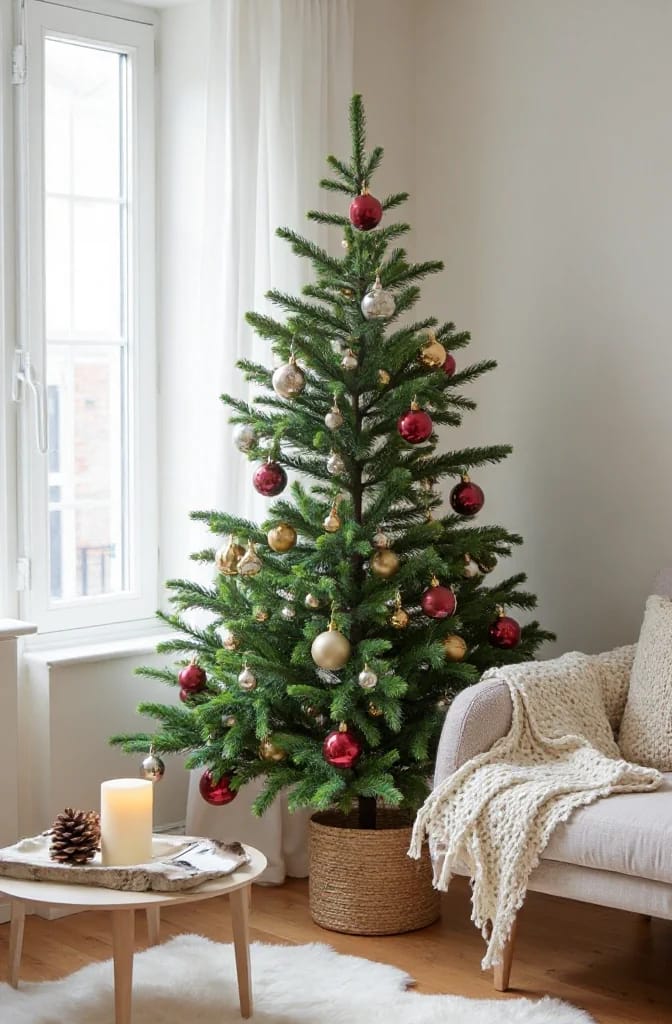
Retire the tree skirt: a basket reads cleaner in a small room
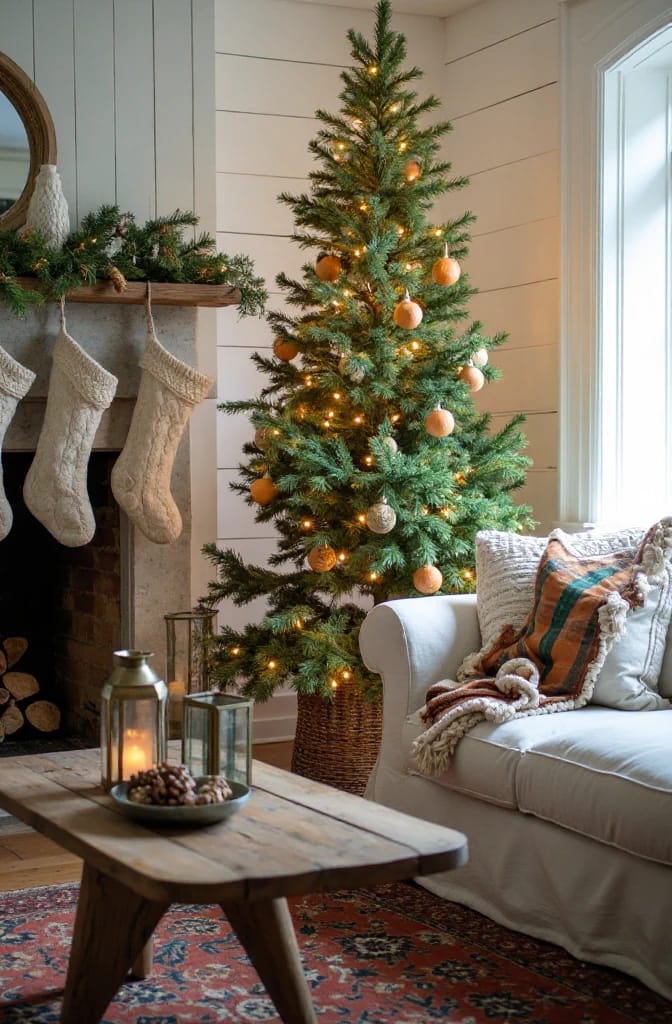
A tree skirt spreads fabric out to a diameter the tree does not have, which is the opposite of what a narrow profile is for. A basket contains the base within the tree's own footprint, hides the stand and the cord in one move, and brings in a woven texture that a small room usually needs more than another length of velvet. Metal collars work too, in matte black or aged brass, though they suit a pencil tree better than a slim one because the proportion stays tight.
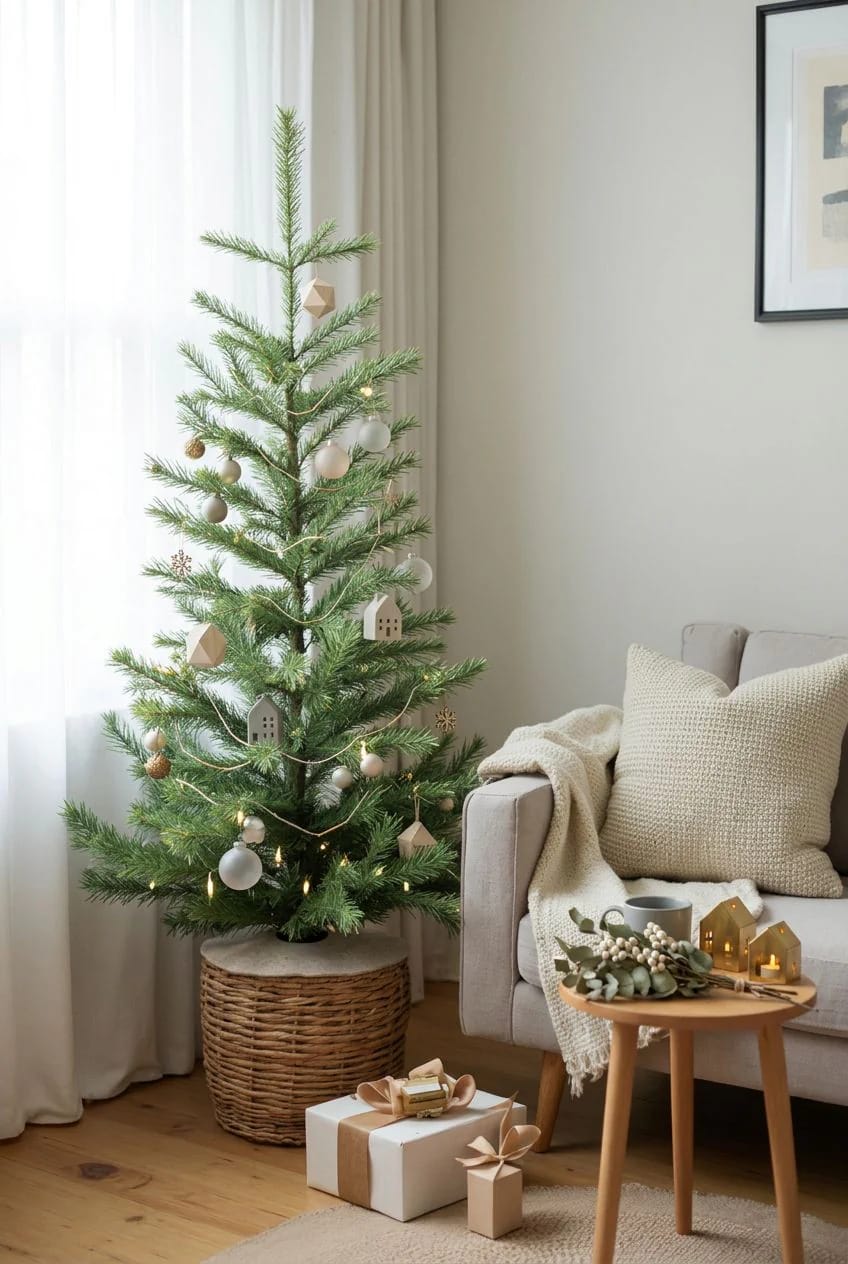
Two colors and one metal is the whole palette
Restrict the palette hard, because a small room shows the whole tree at once. Two colors plus a single metal is the working formula: rust and cream with brass, forest and bone with copper, ink blue and oatmeal with nickel. The eye reads it as a deliberate scheme rather than as the accumulated contents of a storage tub.

Texture is where the variety comes from once the color count is low. Mix matte against glossy against something woven or wooden, and let roughly two thirds of the pieces be matte so the lights are the brightest thing on the tree. Velvet ribbon is the usual exception people reach for and it does work at this scale, provided you treat it as one deliberate layer rather than a spiral around the whole cone, which is a distinction worth getting right before you cut the roll.
The window beats the corner after dark
Put the tree in front of the window and the glass doubles it every evening. The reflection reads as a second tree at depth, which is free volume in a room that has none, and it is the one placement trick that makes a 2 foot tabletop tree look like a decision rather than a concession.
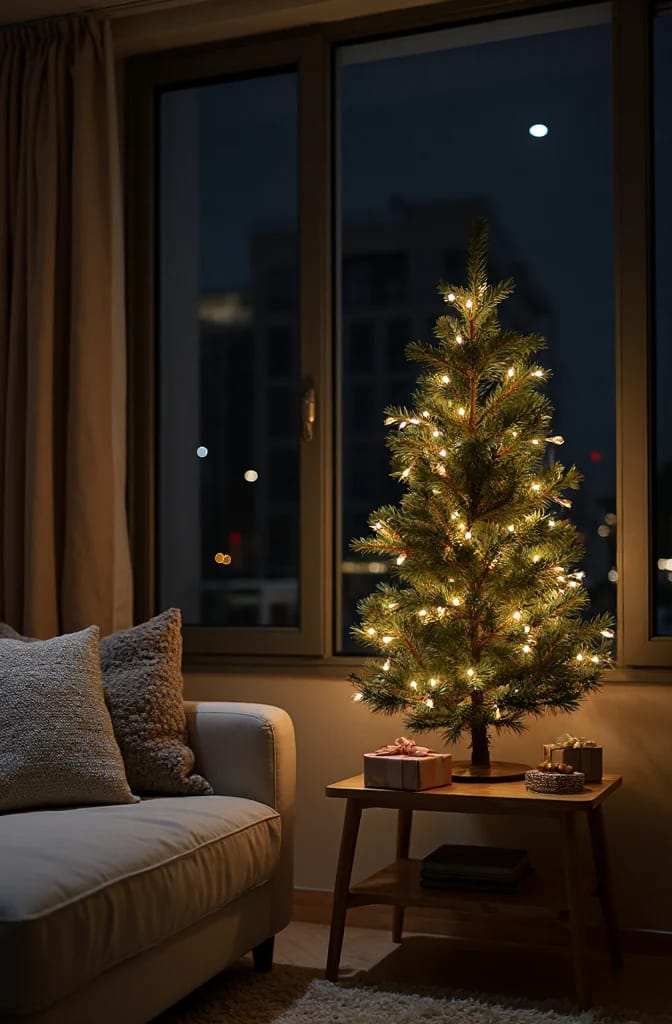
Two conditions, though. There is usually a radiator under an apartment window, and a tree parked on top of a heat source will dry a real tree out fast and make a synthetic one smell like hot plastic, so leave a gap or pick a different window. And if the curtains are long and lined, the tree either moves forward of them or the curtains get tied back for the season; nothing about lights and loose fabric ends well.
Tinsel and aluminum tabletop trees are a choice, not a compromise
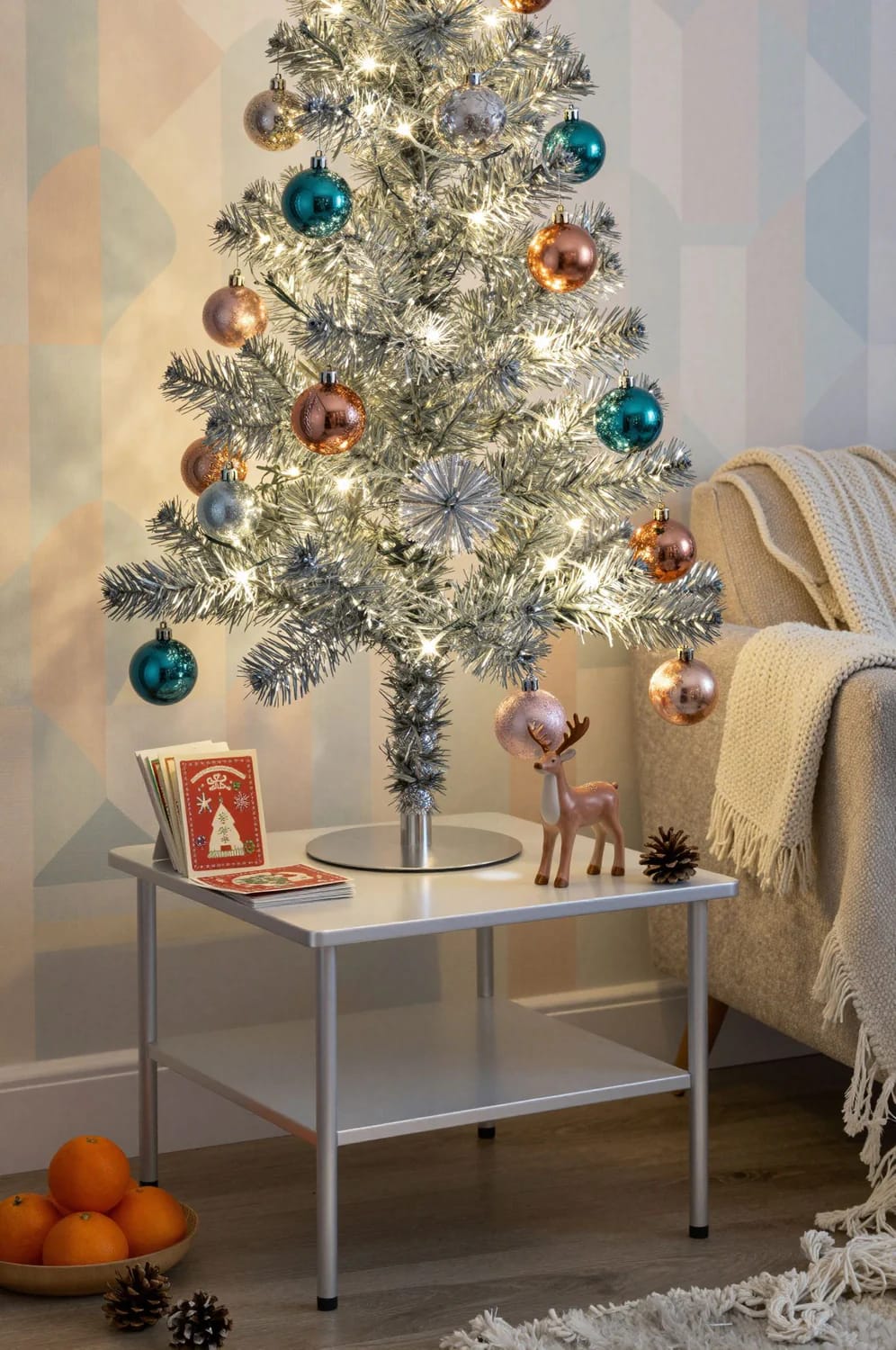
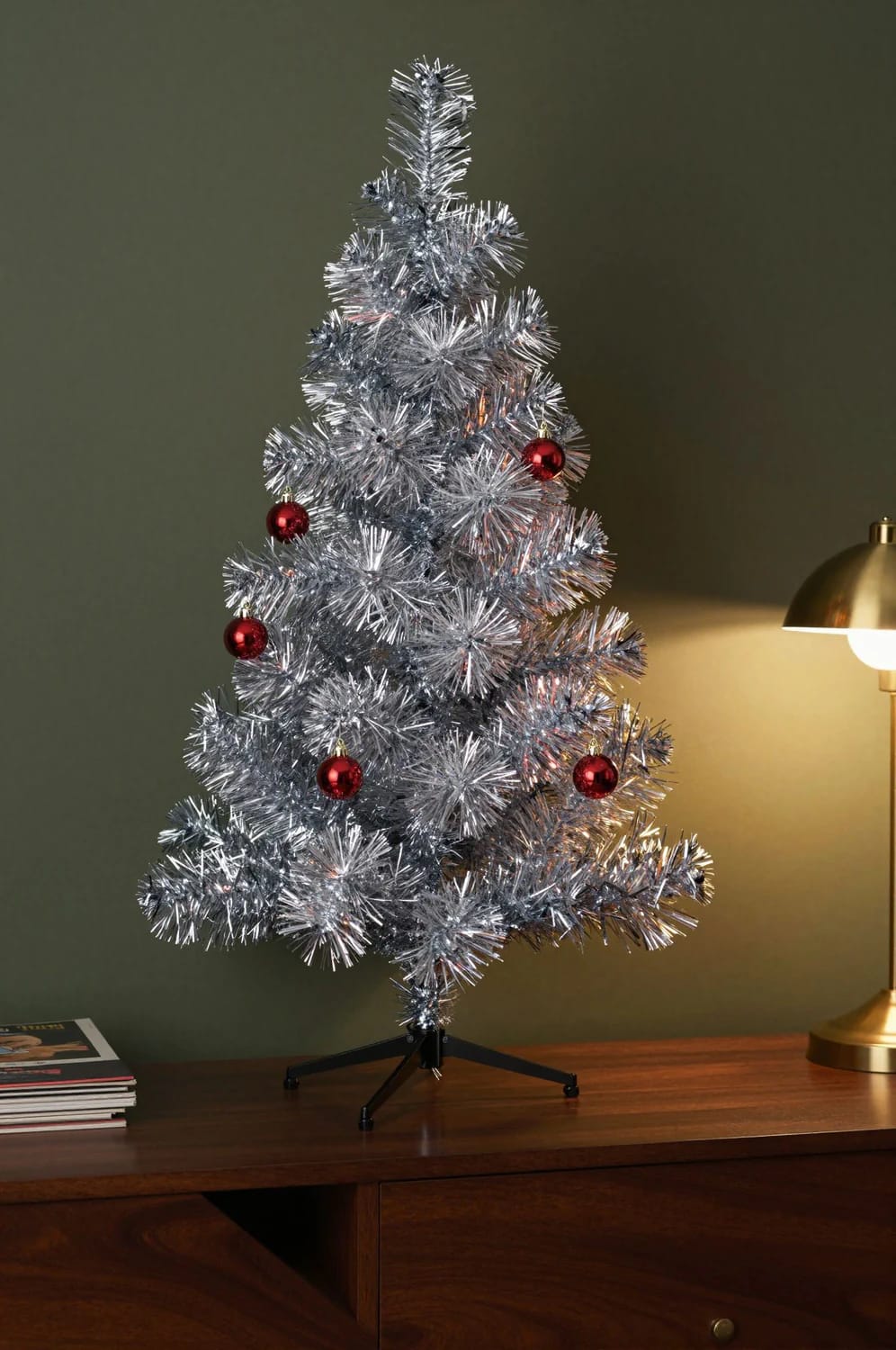
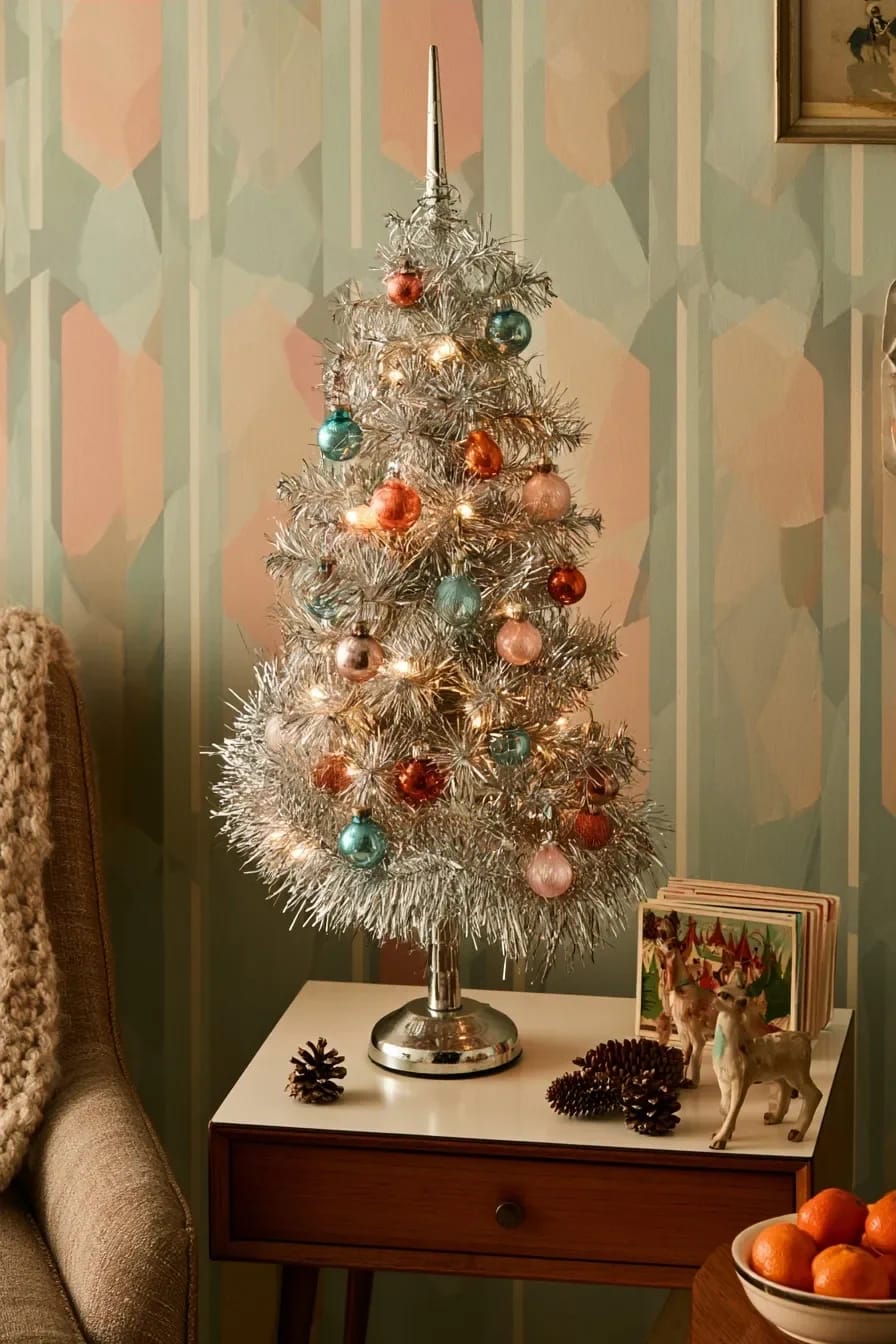
Aluminum trees were mass produced in the United States from the late 1950s and lit by an external color wheel rather than by strings, which is why they never look right with modern warm LEDs draped over them. Bought deliberately, at 2 or 3 feet on a sideboard, a silver bristle tree is one of the few small trees that does not read as a scaled-down version of something else. It also gives a small room a genuinely different register, closer in spirit to a tree with one slightly absurd idea in it than to a traditional green cone.
A bare branch tree for the studio where green is too loud
Skip the needles entirely. A cluster of manzanita or birch branches set in a weighted stoneware pot occupies almost no visual volume, holds twenty ornaments, and folds down to a bundle behind the wardrobe.
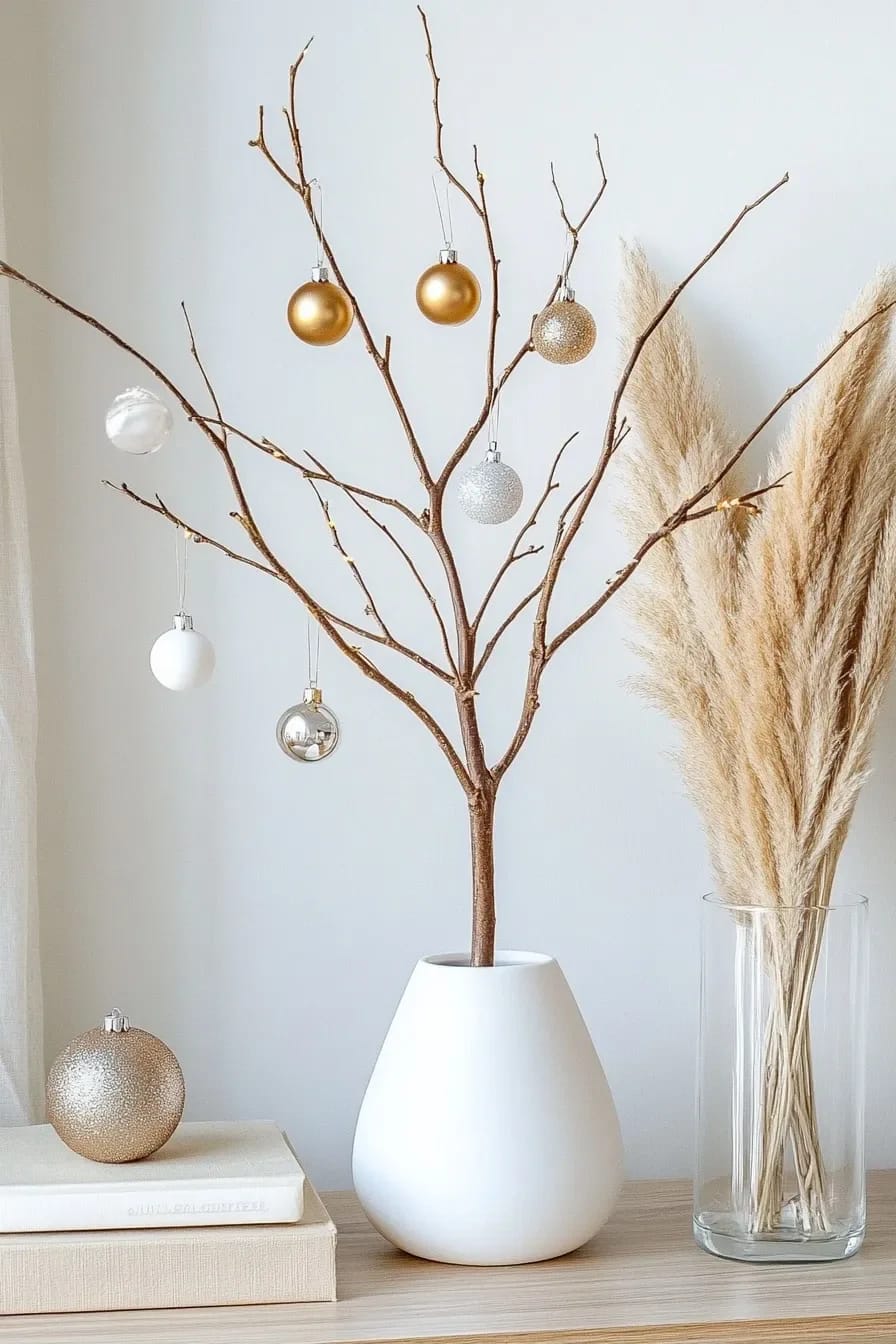
It is not a tree for a family with strong traditions about what a tree is. It is a tree for one or two people in 400 square feet who want the season present without a green cone dominating the only room, and it sits naturally alongside the rest of a pared-back holiday scheme.

Wood beads and dried citrus dress a tabletop tree without adding bulk

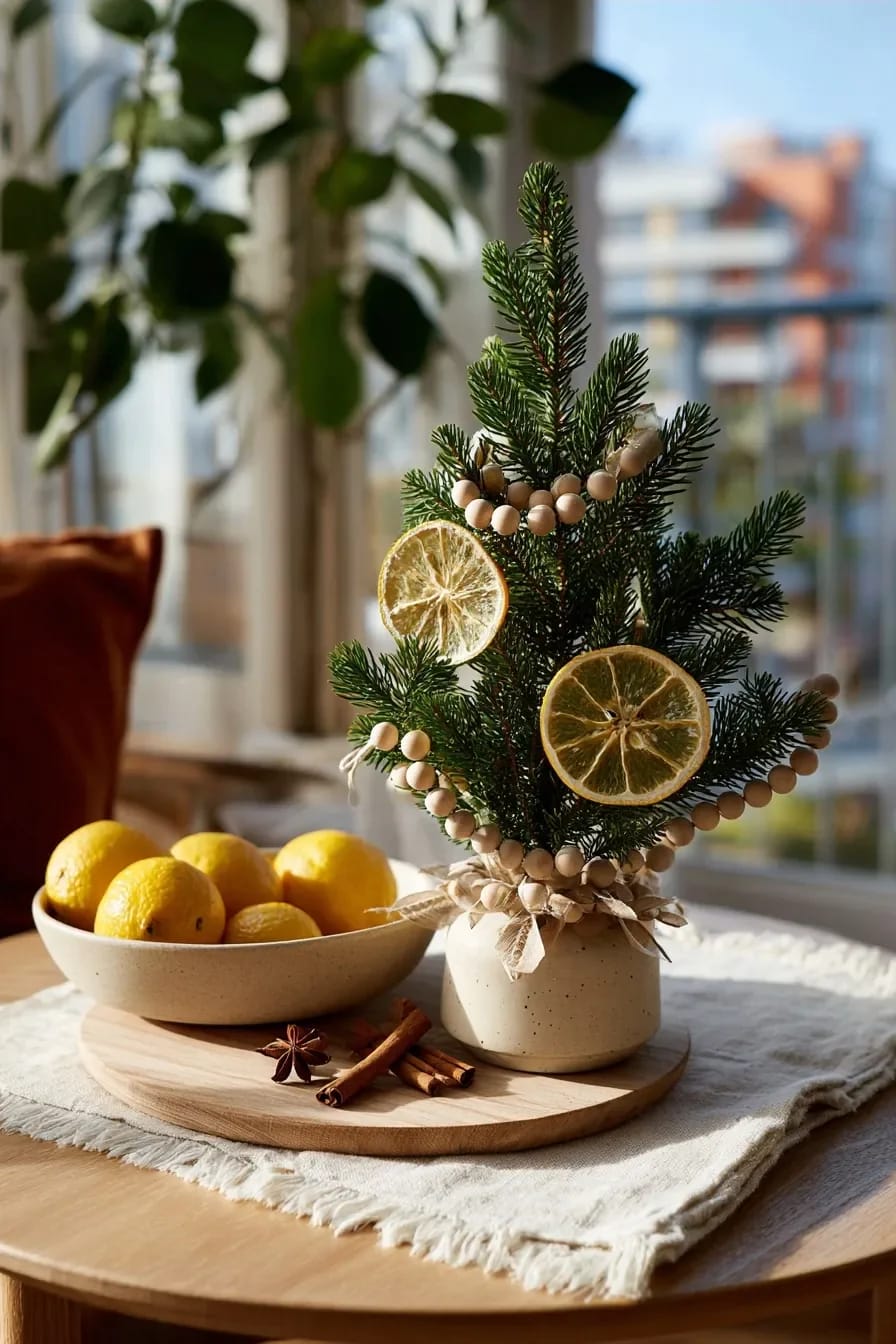
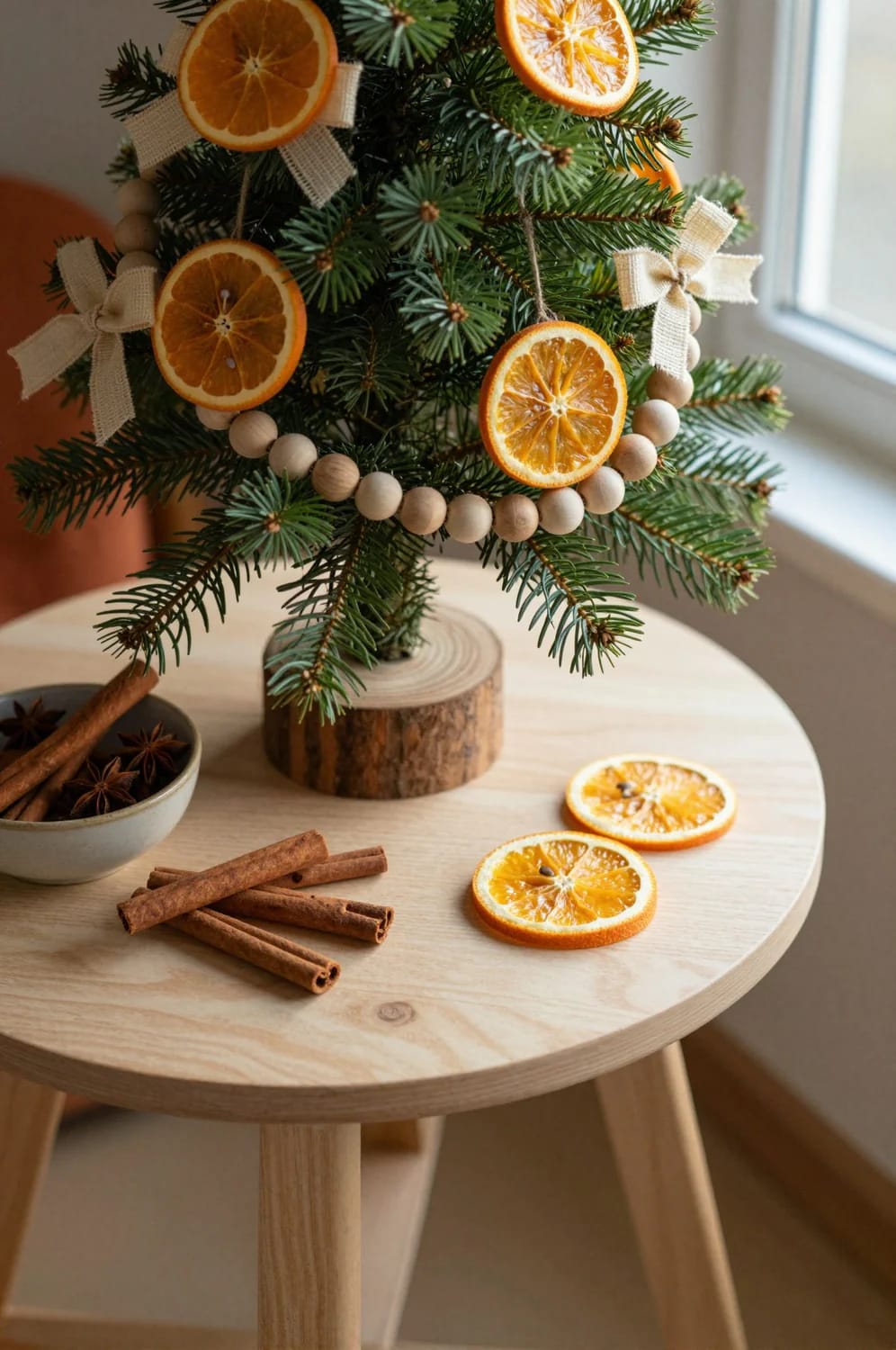
Everything here hangs flat against the branches instead of standing off them, which is exactly what a small tree needs: bulk is the enemy of a 24 inch profile. Dried orange slices take about three hours in a low oven and last two or three seasons if you store them with a silica packet, and unfinished beads develop a slight patina from handling that the sealed ones never do. Keep the count low. A garland, six citrus slices and four bows is a dressed tree; twice that is a wreath that happens to be tree-shaped.
 How to Make a Mini Christmas Tree From Pipe Cleaners The cardstock cone method that makes a six inch tree read as fir instead of as a bottle brush.
Buy the tree for its box as much as for its corner
In an apartment, storage is the constraint that outlives December. Ask what the tree looks like disassembled before you ask what it looks like lit, because a slim 6.5 footer that only breaks into two rigid sections needs a 40 inch run of closet floor that most rentals simply do not have.
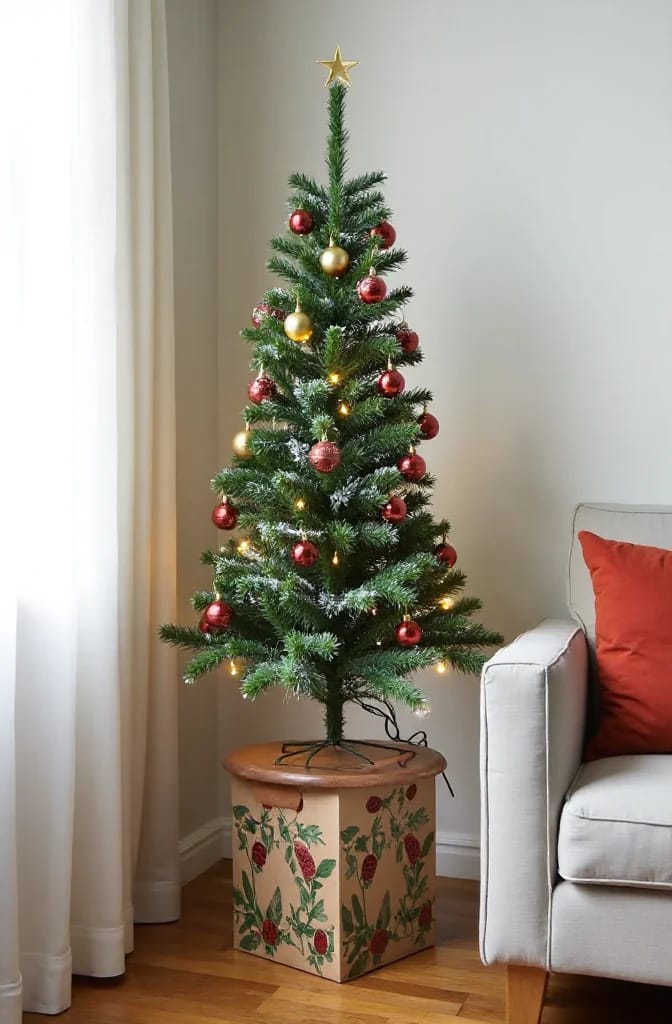
Hinged branch trees fold their limbs upward against the pole and go up in ten minutes, but the folded bundle stays fat. Hook-on branch trees pack genuinely flat and stack in a shallow box under a bed, at the cost of forty minutes of assembly and a bag of individual branches you will eventually mismatch. Tabletop trees dodge the question entirely by living inside a lidded basket that stays out all year as furniture.
One more practical note that decides more purchases than aesthetics do: check whether the tree ships in a printed carton or a zip storage bag. Cartons split at the corners after two seasons of being dragged from a closet, and a replacement bag costs less than the annoyance of taping a box shut every January.
Do it in this order and you will not buy twice
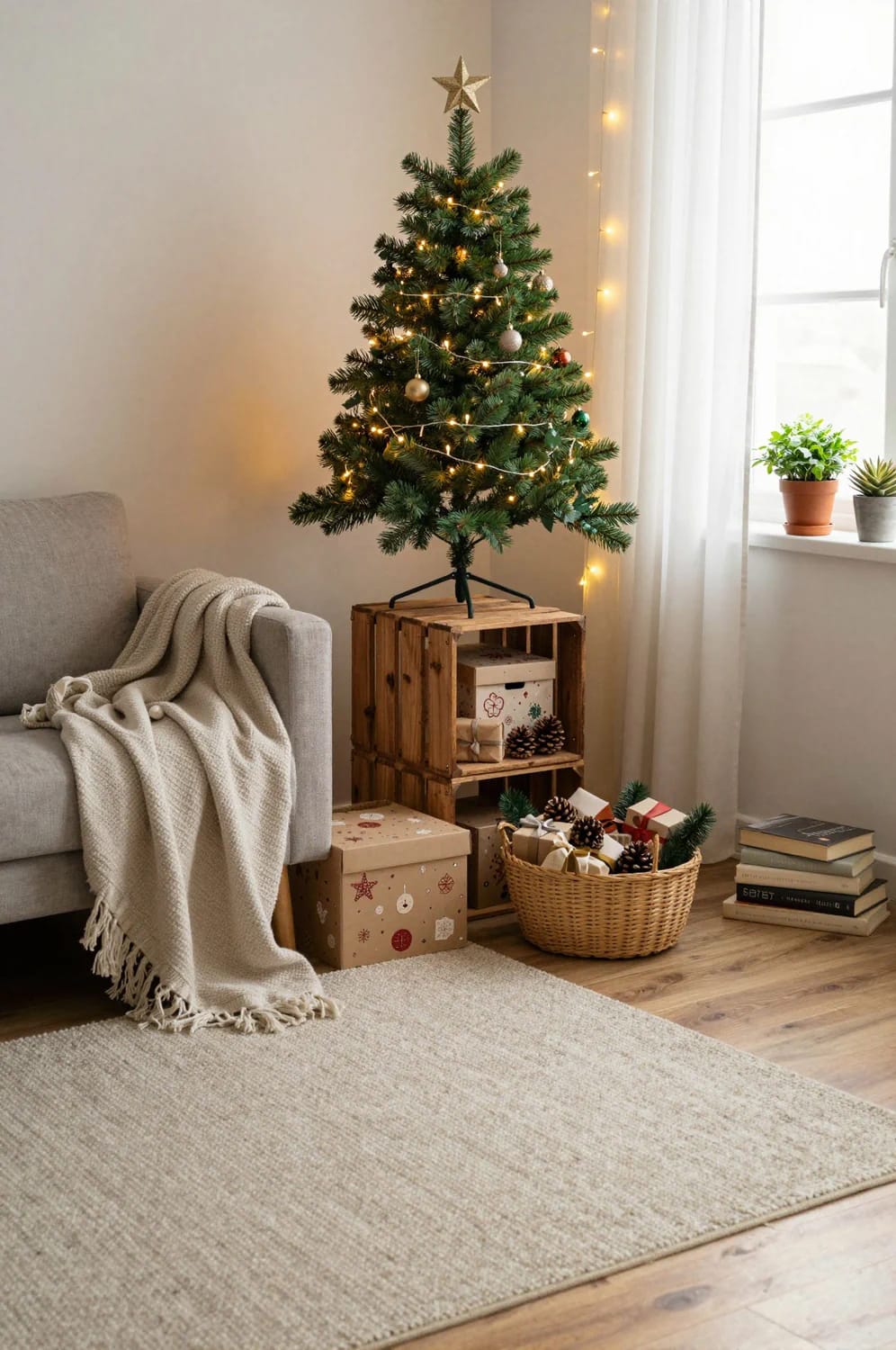
Measure first: corner diagonal, ceiling height minus the topper, and the closet or under-bed space that has to hold it in January. Then choose the profile, then buy the lights to match at 100 to 150 per foot, and only then think about ornaments. Most of the trees that end up in a corner looking wrong were bought in the reverse order.
One admission: I could not find consistent pricing on flat-back and corner trees. The listings I checked varied so widely for the same nominal height that any figure quoted here would be misleading, so treat those two shapes as a specialty purchase and expect to pay more per foot than for a standard slim tree of the same quality.
If you only change one thing this year, change the base. A seagrass basket around the stand, the cord taped down the baseboard behind it, and six inches of clear wall behind the branch tips will do more for how a small apartment reads at Christmas than another box of ornaments.
Related Posts
- 21 Cozy Christmas Decor Ideas for Small Apartments
- Outdoor Christmas Decorations for Small Yards That Don’t Look Crammed
- Small Front Porch Christmas Decor for Apartments That Actually Fits
- Cozy Christmas Living Room Ideas for Small Spaces, Without the Clutter
- 10 Whimsical Christmas Tree Decorating Ideas That Actually Read as Playful, Not Cluttered
- Apartment Christmas Decor for Small Spaces: 11 Renter-Friendly Ideas That Won’t Cost You Your Deposit