
Portola's own technical sheet for its lime wash says the finish cannot be wiped, and warns that harsh cleaners will mark it. That single line explains most of what goes wrong in a boho kitchen: the materials that produce the look , lime, raw wood, unglazed clay, loose weave , are the ones that resent grease, steam and a wet dish towel. The ideas below are the ones that survive contact with a working stove, and each comes with the number it costs and the specific way it fails.
Nothing here is free. Handmade tile has a labor premium, wood counters have a maintenance schedule, and the plaster hood everyone is posting has a real problem if you fry things. I've named all of it.
Renters get their own section at the end, and it isn't a consolation prize , two of the strongest moves on this list come back off the wall.
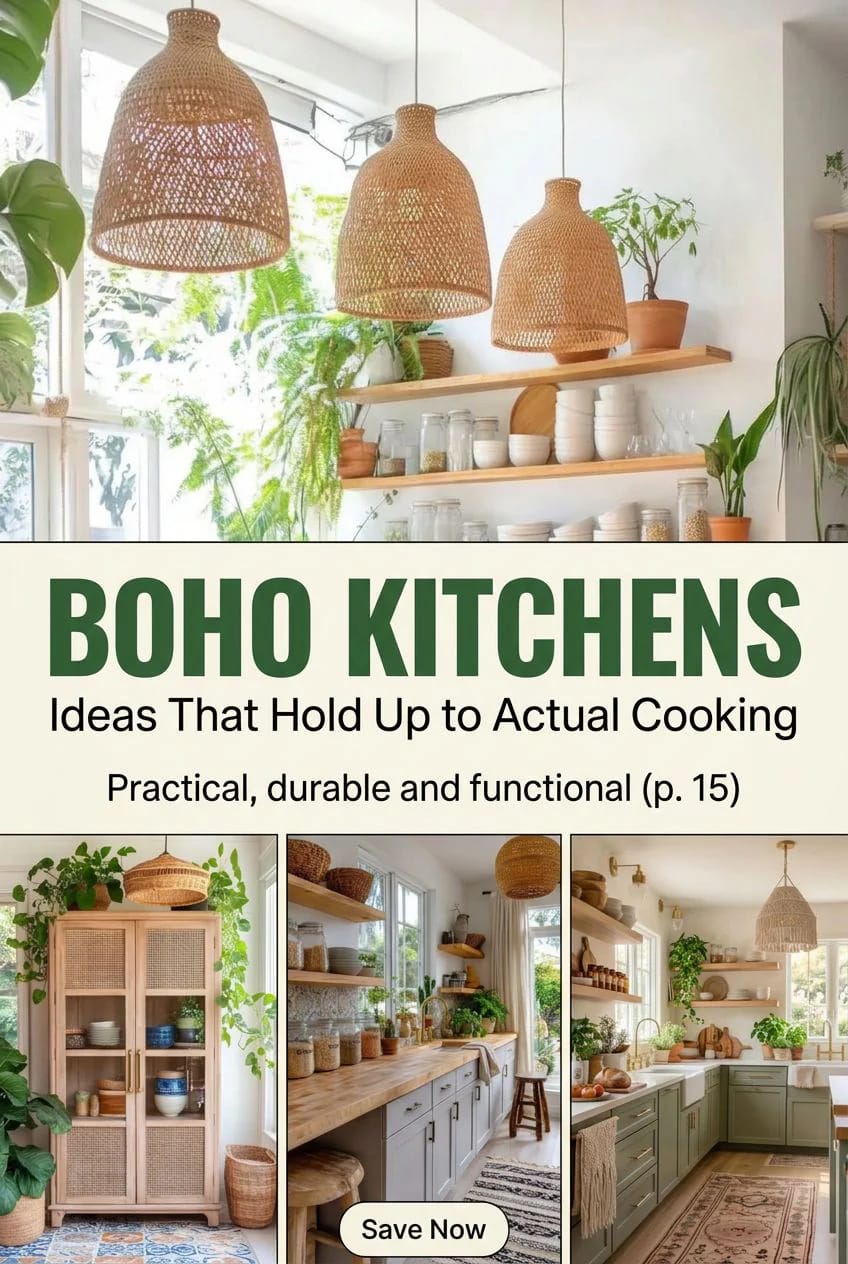
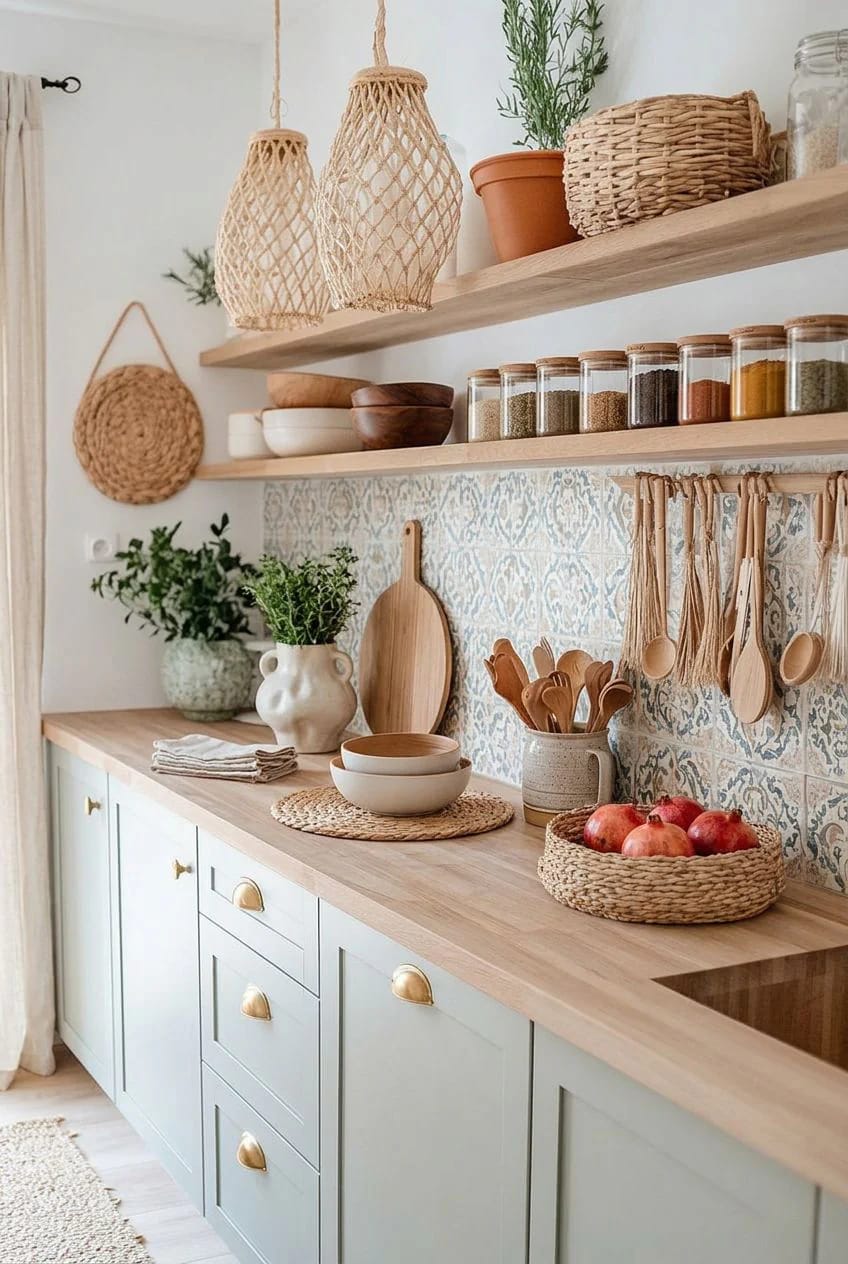
Zellige is the boho kitchen backsplash worth overspending on
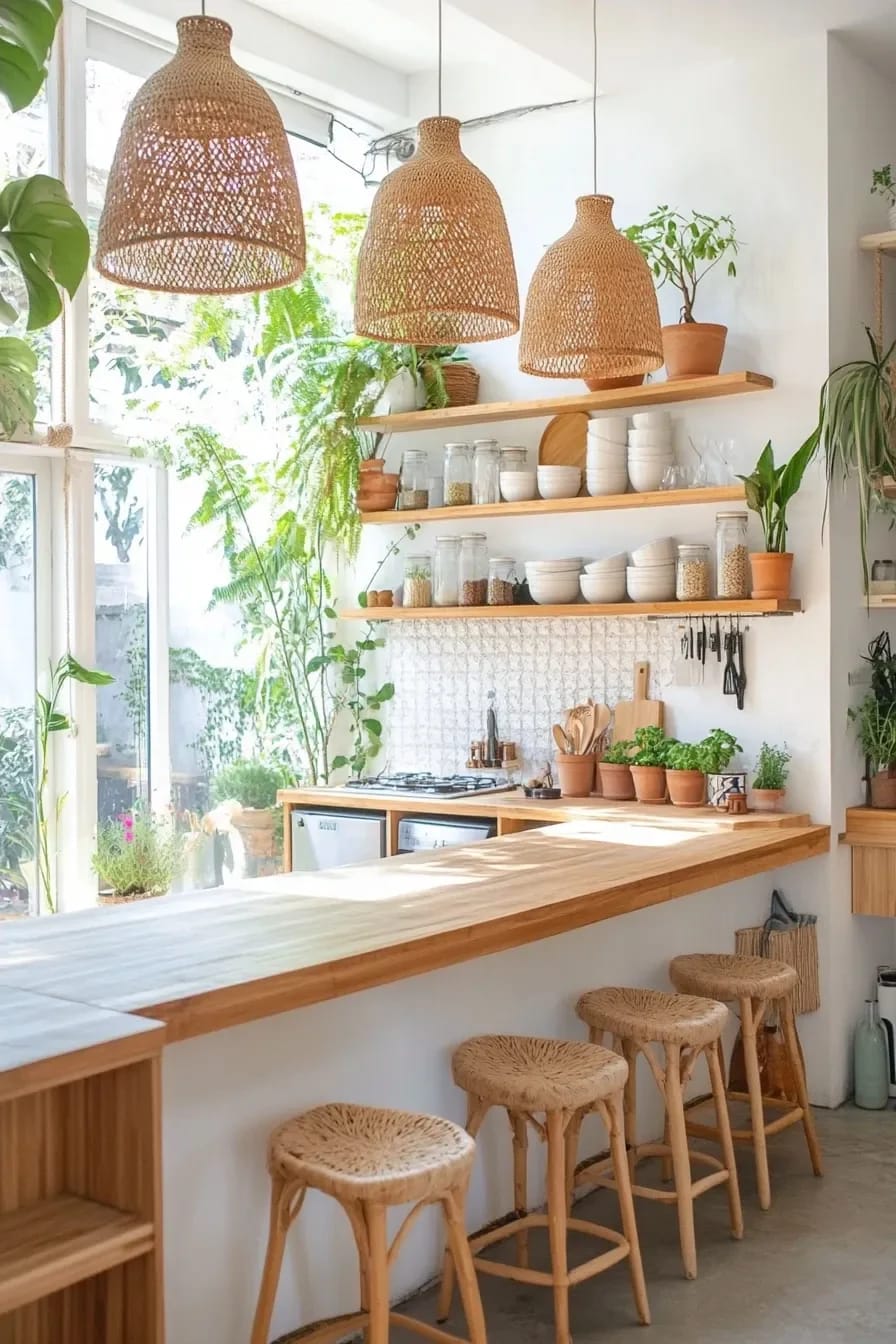
Zellige earns the money because it is not flat. Each tile is pressed and glazed by hand, so the surface pools light in irregular patches instead of returning it in one sheet, and that is the entire reason a boho kitchen with plain white subway tile reads like a rental and one with zellige doesn't. Real Moroccan zellige from a supplier like Zia Tile runs upward of $20 per square foot before labor; ceramic tiles made to imitate the look, such as Tile Club's Mallorca line, start closer to $7 to $11.
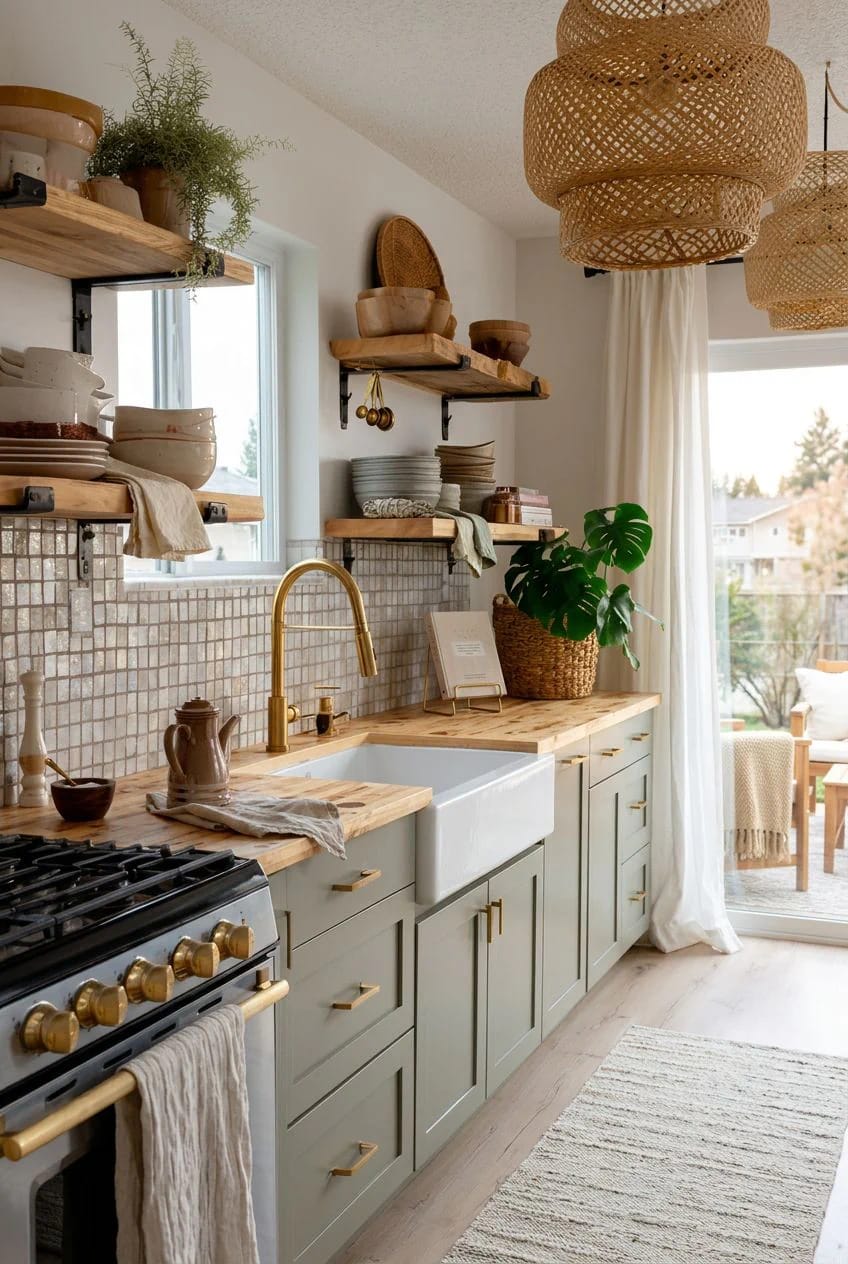
The install is where people get hurt. Glazed zellige gets a short soak before setting, goes into a medium-bed thinset, and is pressed home with the flat of the hand, never tapped with a mallet. Tiles are blended across every box before a single one goes up, because lot-to-lot color drift is real and a wall laid box by box comes out striped. Joints are hairline, around a sixteenth of an inch, and the grout is unsanded. A tile setter who has done it will charge a premium over a straight-lay ceramic job. One who hasn't will tell you it's the same work, and then you'll have a striped wall.
Professional installers add 10 to 15 percent overage on a standard straight lay, and 15 to 25 percent on anything irregular. Handmade tile sits at the top of that range and then some, because the breakage rate on cuts is higher and because a re-order six weeks later arrives in a different lot. Buy 20 to 25 percent over your measured square footage, keep the leftovers, and blend every box on the floor before the thinset comes out.
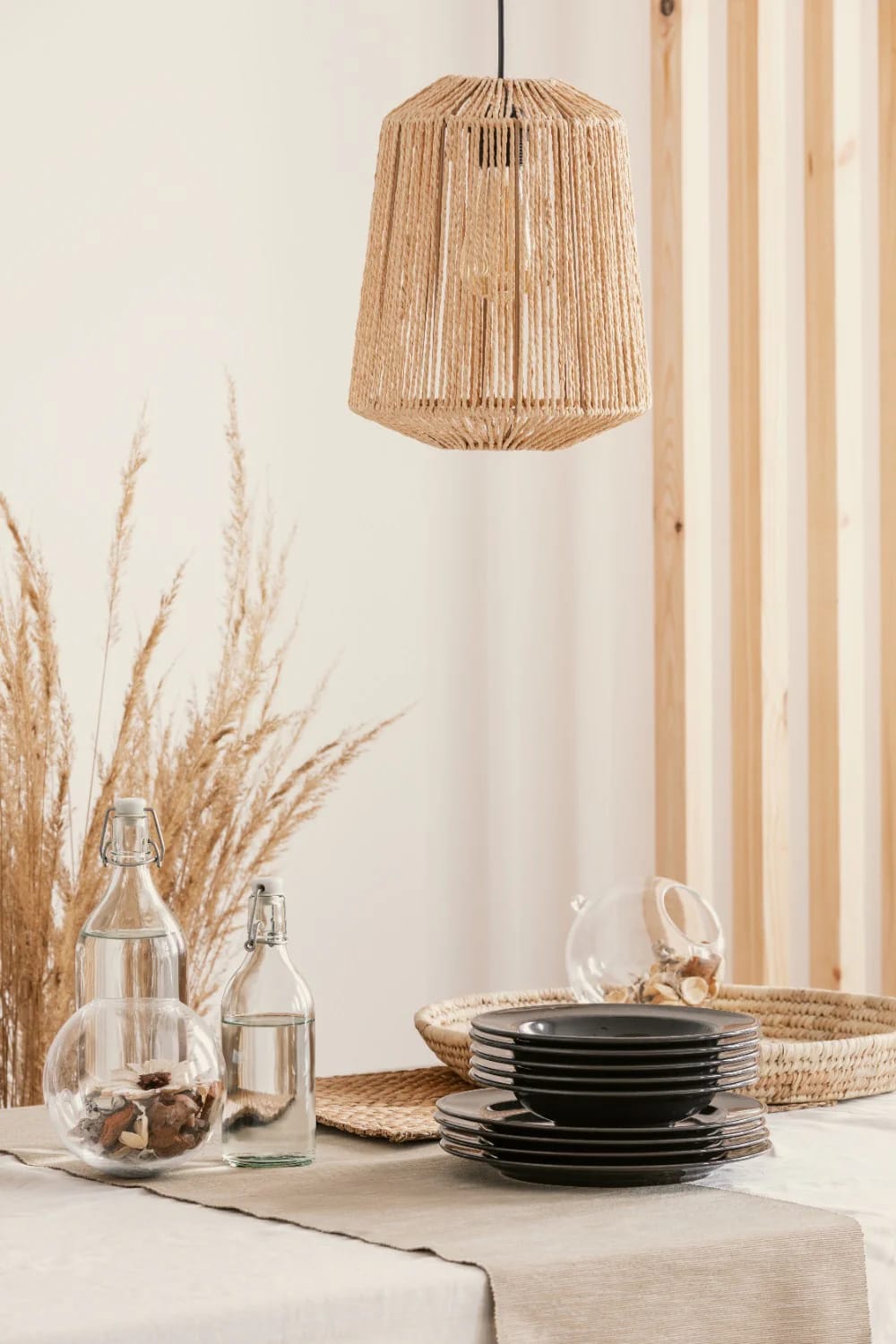
Woven pendants are the picture, not the light
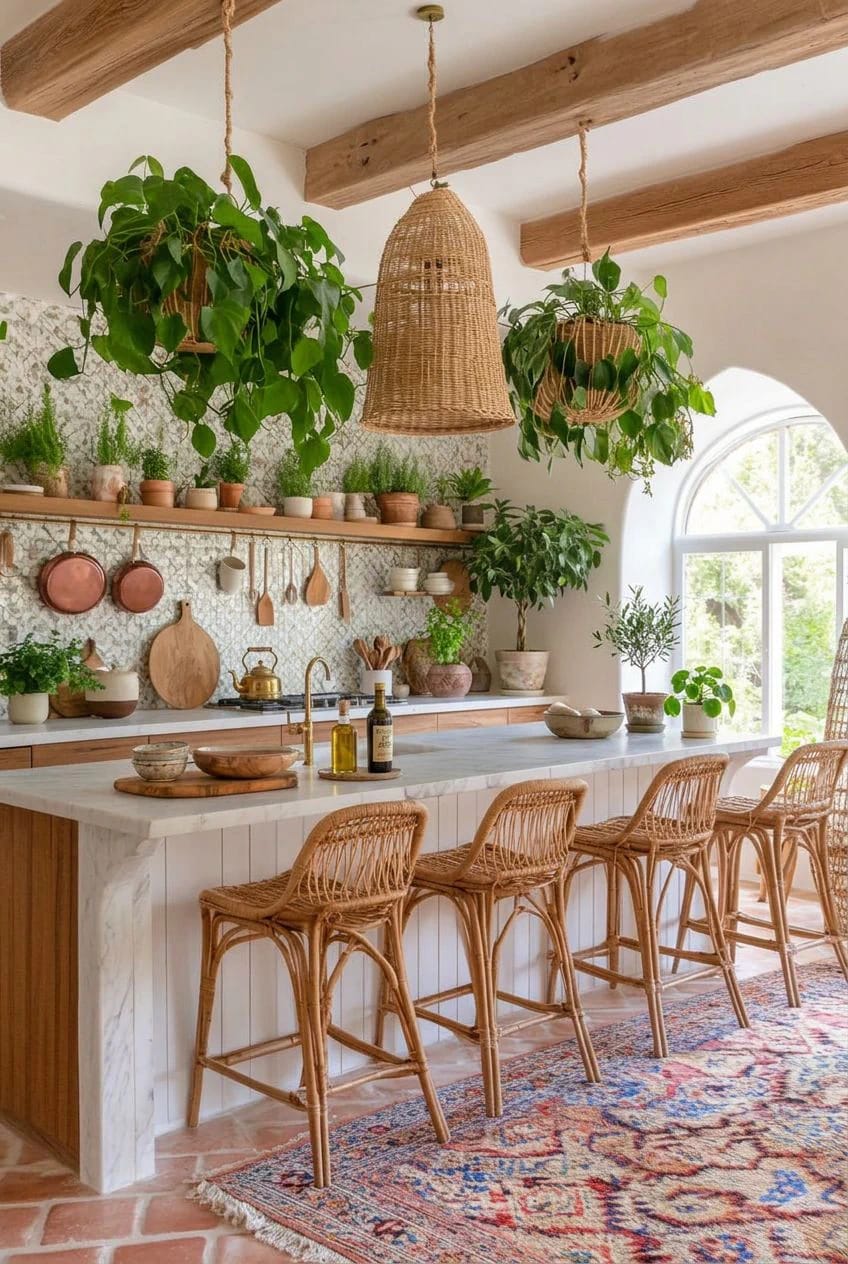
Hang the rattan pendant over the island and then light the kitchen with something else entirely. A basket-weave shade does two things to light: it blocks most of it and it throws a patterned shadow across everything under it, which is charming over a dining table and useless over a chopping board.
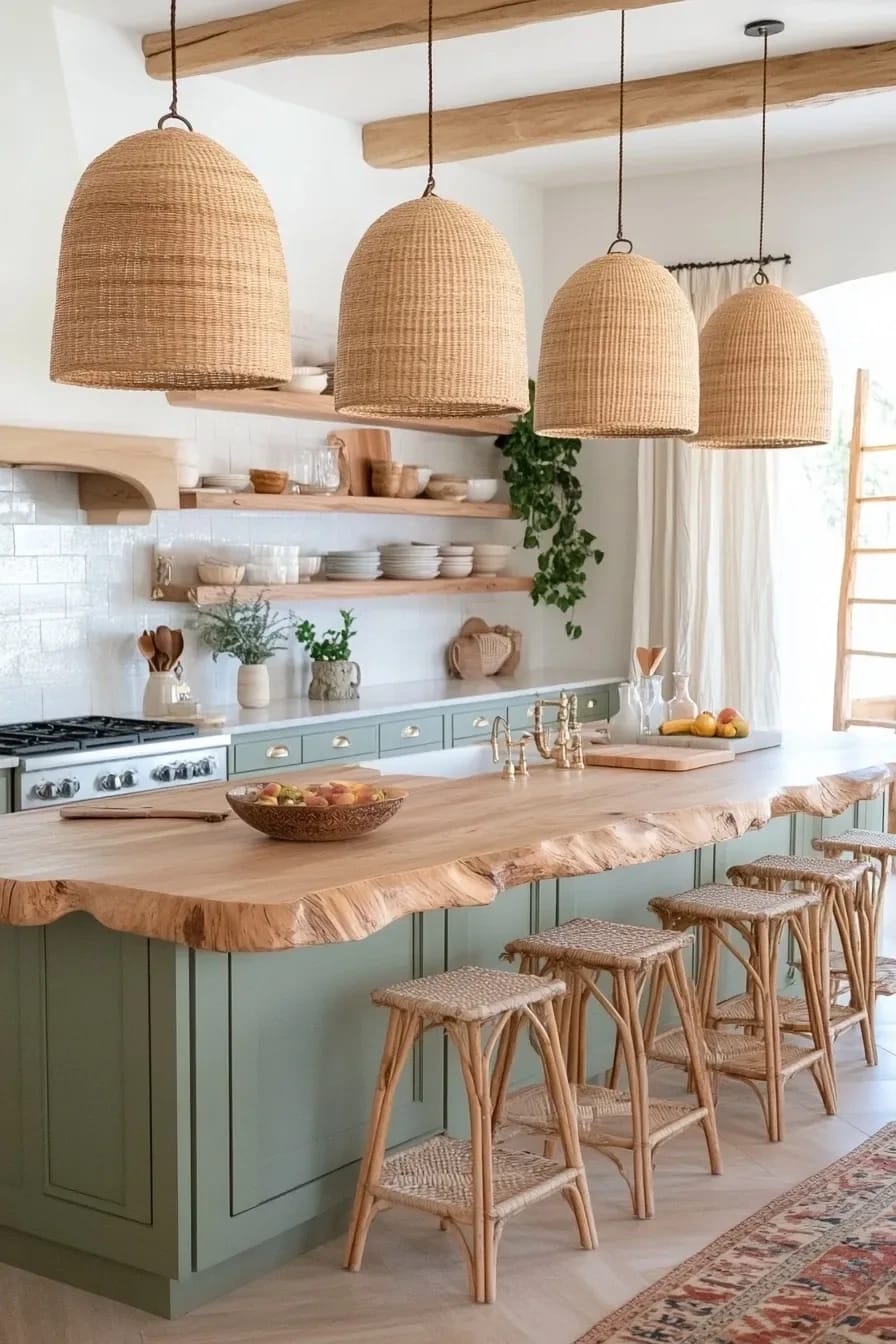
The numbers most guides converge on: roughly 30 to 40 lumens per square foot of floor for ambient light, and 70 to 80 over a working surface. Under-cabinet strips in the 200 to 500 lumens per linear foot range do that job, and they need to sit at the front edge of the wall cabinet, not tucked at the back, or you light the backsplash and cast your own hands into shadow. Buy CRI 90 or better; cheap strips render raw chicken an unhelpful grey.
Limewash the wall, but not the one behind the hob
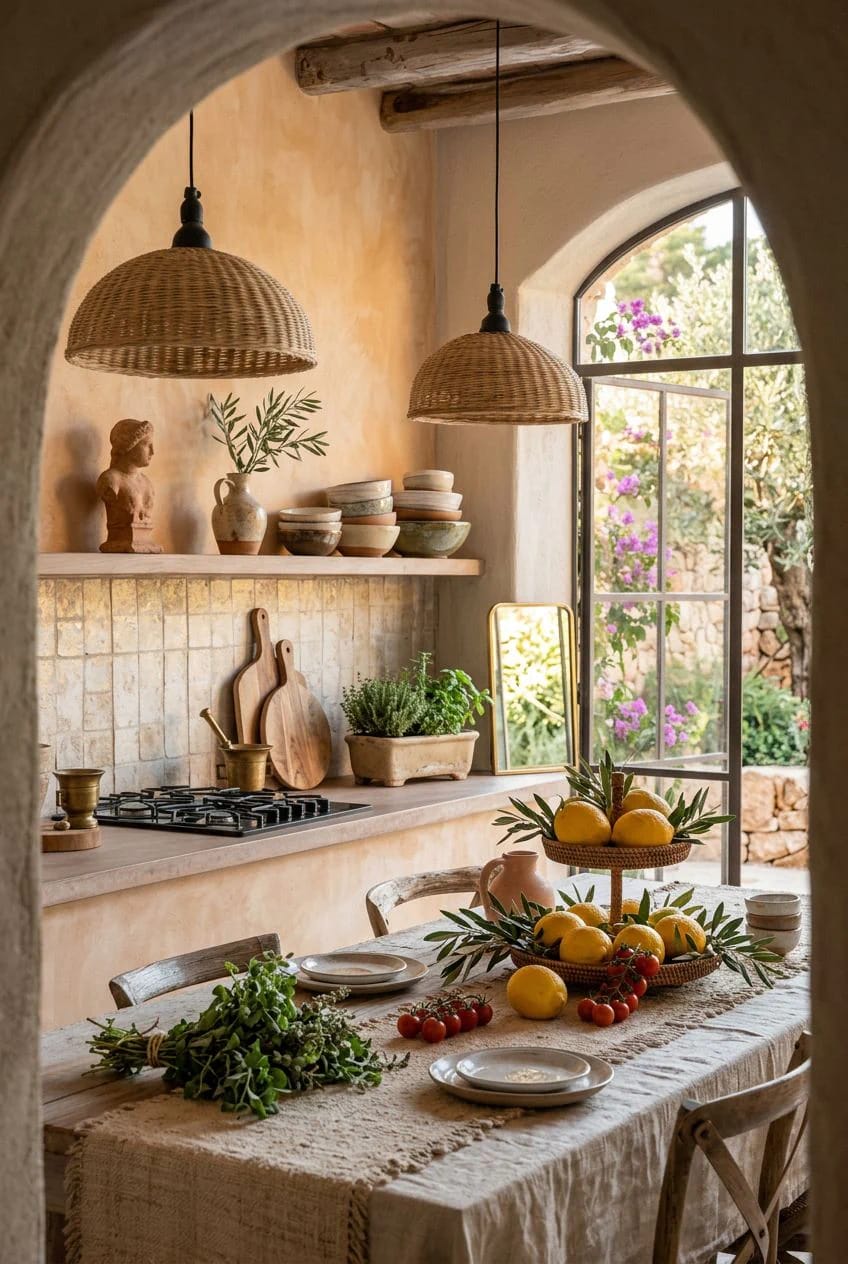
Limewash is the cheapest way to get depth into a boho kitchen and the fastest way to ruin a wall if you put it in the wrong place. Portola's runs about $60 to $80 a gallon and covers 150 to 200 square feet at two coats, brushed on with a wide stain brush over their Limeproof undercoat if you're going onto drywall; Bauwerk works out around 60 square feet per litre. The finish is mineral, breathable, and it moves in the light in a way no eggshell can fake.
It is also, per the manufacturer’s own data sheet, non-wipeable, and the matte sealer they sell for it was never designed to stop oil or grease. So: limewash the wall behind the table, the wall the shelves hang on, the ceiling if you’re brave. Behind the hob, put tile.
Wood counters read boho against putty cabinets, not white ones
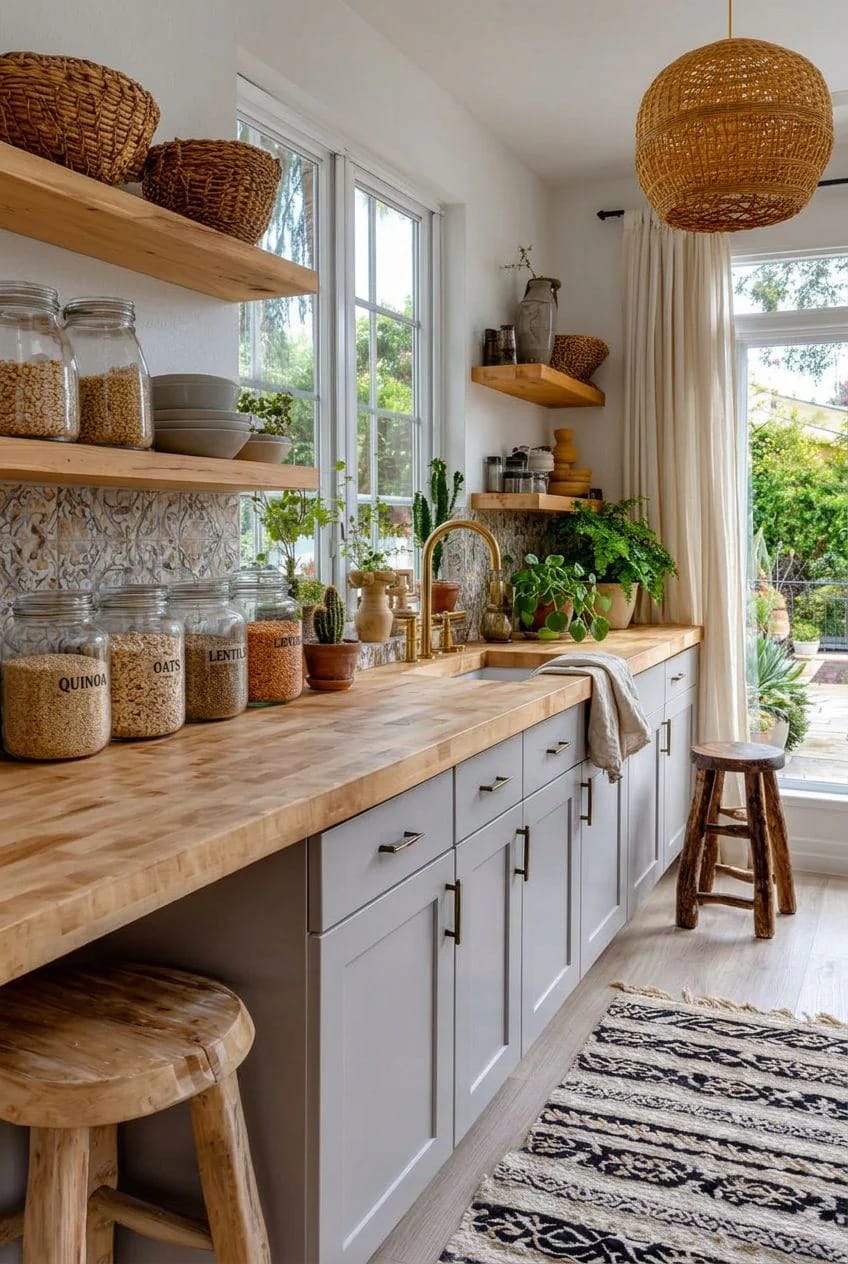
White cabinets with a butcher block top is the internet's default and it lands somewhere near a holiday rental. The pairing that actually works is warm wood against a muddy neutral: putty, mushroom, oatmeal, a greige with a yellow bias. The two Pinterest annotations that keep showing up on kitchens in this cluster are "beige and wood" for a reason.
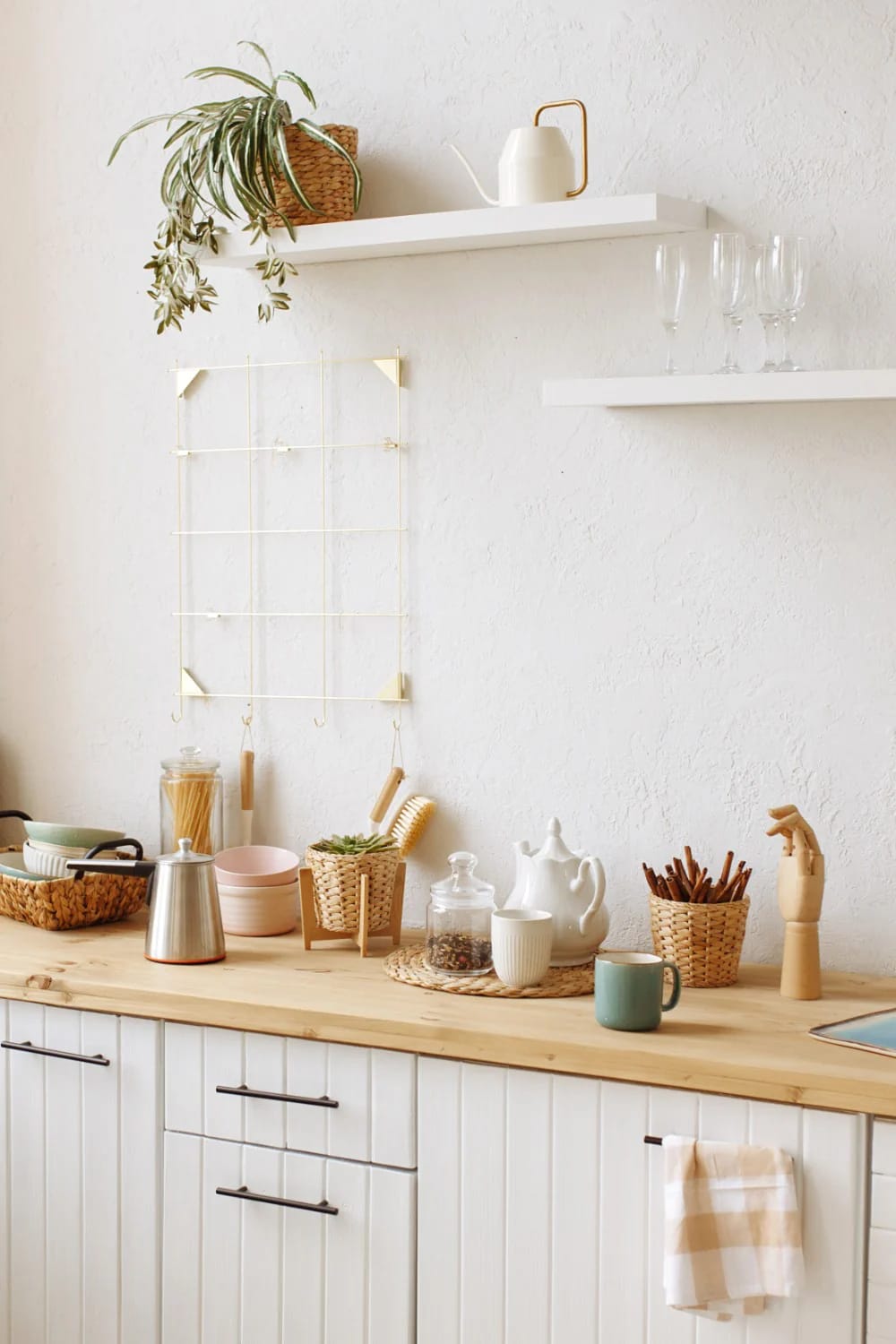
Budget it honestly. Butcher block lands around $40 to $100 per square foot installed, with the national average near $58; the slab alone is $25 to $70. Hard maple is the default at 1,450 on the Janka scale, tight-grained and mid-priced. Walnut costs 40 to 60 percent more and is the one you actually want against a putty cabinet, because the contrast does the work that the cabinet color can't.
The finish decision matters more than the species:
- Mineral oil is food-safe, cheap, and a commitment , daily for the first week, then monthly, forever.
- Waterlox or a hardwax oil like Rubio Monocoat cures into the wood and drops maintenance to a few times a decade. You lose the right to chop directly on it. Most people were using a board anyway.
- Wet carbon-steel knives leave black marks on wood, whatever the finish. A Bar Keepers Friend poultice takes them out.
- Around the sink, wood is the highest-risk zone in the kitchen. Consider stone on that run and wood on the island only.
The plaster range hood is the trend, and a trap if you fry
A curved plaster hood is the single most photographed element in the 2026 boho kitchen, and I'd talk half of you out of it. Lime-based Venetian plaster is decorative first: it cracks around heat and moisture, and it stains from grease even when sealed. Microcement, a polymer-modified cement coating over the same wooden carcass, gives you nearly the same soft monolithic shape and actually resists a wok.
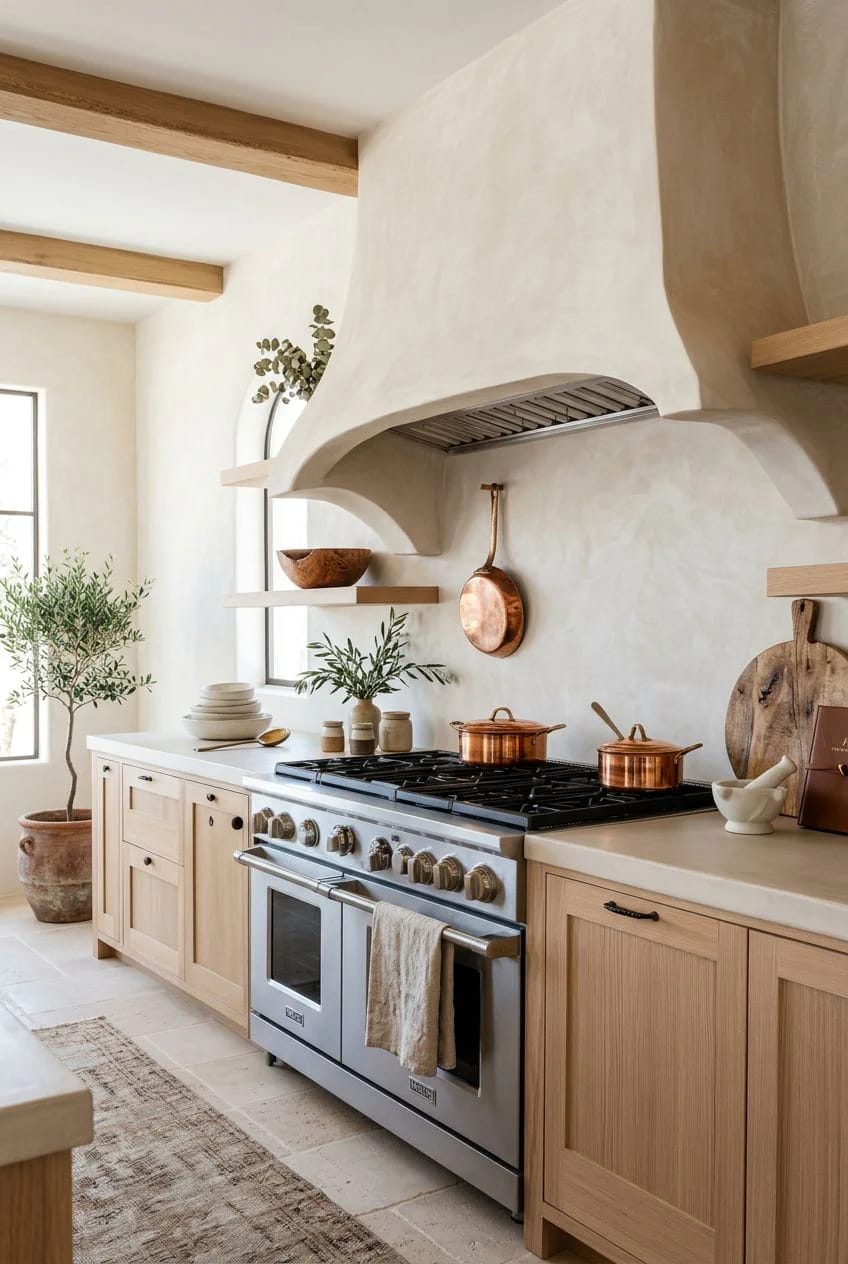
Cost is where I have to be honest about the limits of what I could verify: quotes swing wildly by region and by whether the framing is included. One Toronto studio publishes a starting figure around $2,400 for the plaster application alone, excluding the carcass and prep. A DIY route using a pre-built hood kit is reported to land near $1,000 or under, which is the version worth considering if you're already comfortable with drywall and a trowel.
One open shelf beats a wall of them
Rip out one upper cabinet, put back one thick wood shelf, and stop. A full wall of open shelving photographs beautifully and then quietly asks you to dust and re-wash forty pieces of stoneware you rarely touch. Two-by-eight or two-by-ten solid stock on black iron brackets runs $40 to $80 in materials and takes an afternoon.
Where the grease actually lands
Within roughly three or four feet of a hob, everything develops a film , plates, jars, the underside of the shelf, the bracket screws. That is a fact about aerosolised fat and airflow, not a fault of the shelf. Put the shelf on the far wall, the window wall, the run beside the fridge. Anything within arm's reach of a frying pan wants a door on it.
What earns a place on it
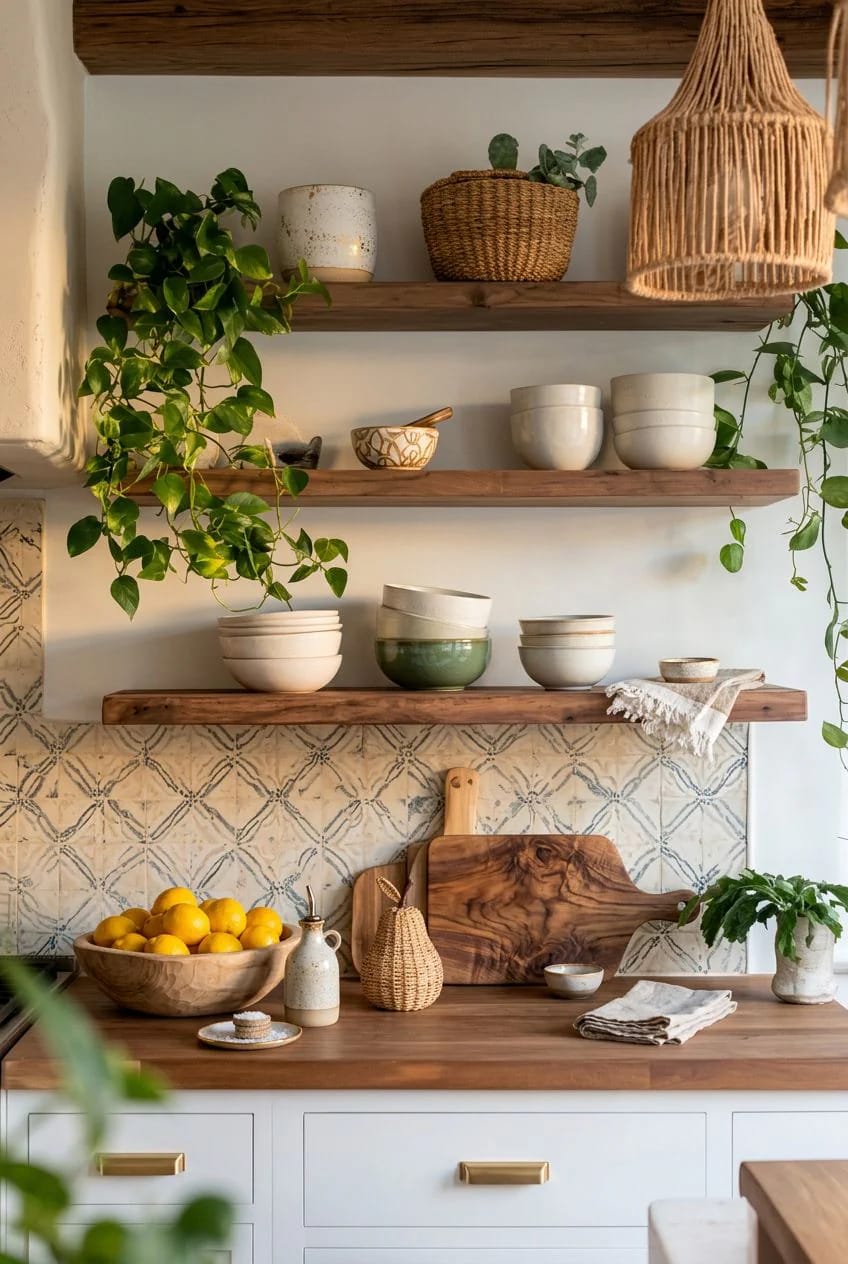
Daily stoneware, one clay jug, one trailing plant. Pothos and string of hearts survive a low-light kitchen wall; basil and rosemary want six hours of direct sun and will die on your shelf while looking reproachful about it. Everything on that shelf should be something your hand reaches for at least once a week , the shelf is storage that happens to be visible, and the moment it becomes a display case it starts collecting objects and losing the plot.
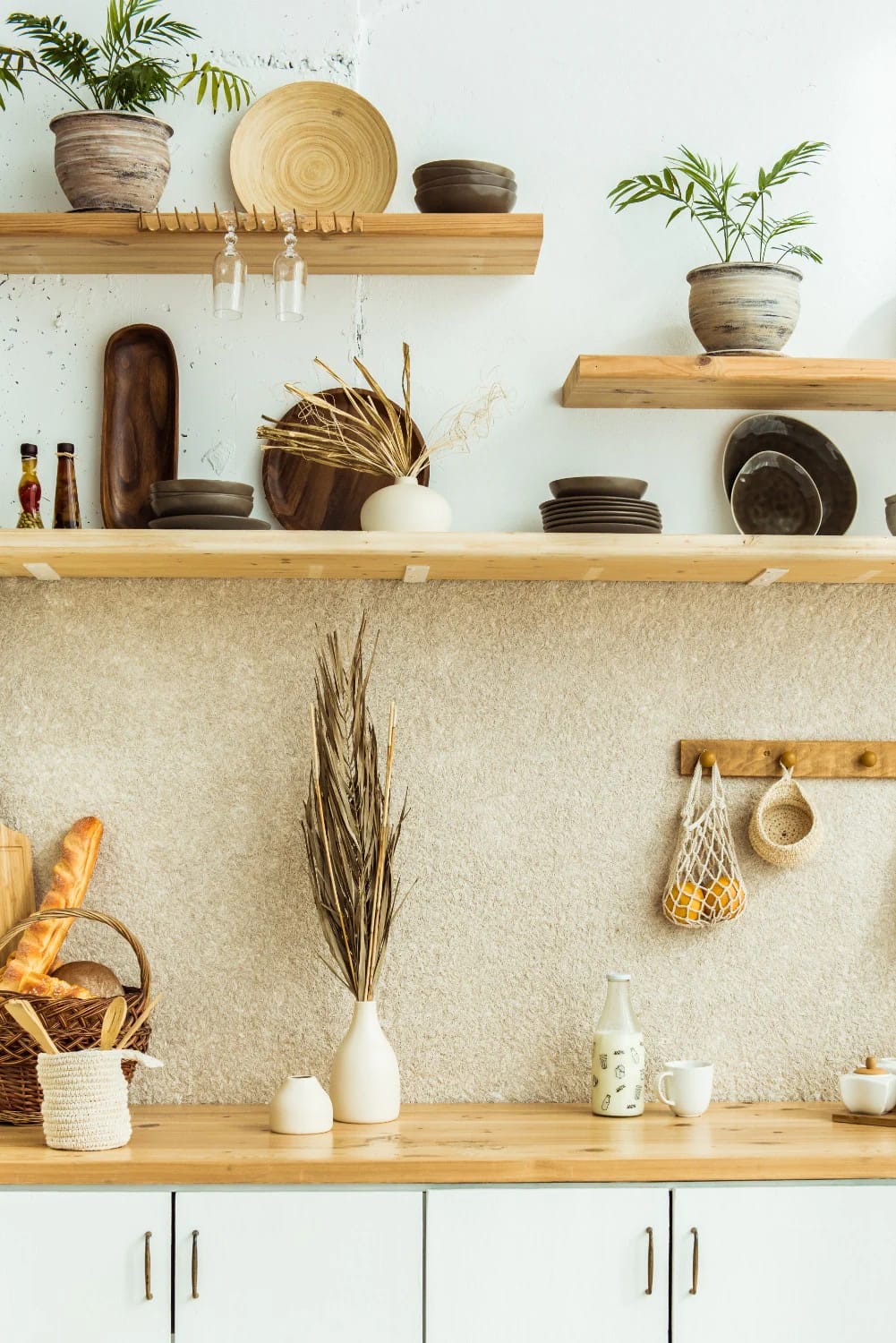
A vintage kilim underfoot, not a printed "boho" mat
Wool flatweave is the correct floor covering for a working kitchen, which is a happy accident of the boho palette rather than a design theory. A kilim has no pile, so nothing traps oil; wool carries lanolin, so a spill beads before it soaks; and the whole thing sits a few millimetres proud of the floor, which means the dishwasher door clears it.
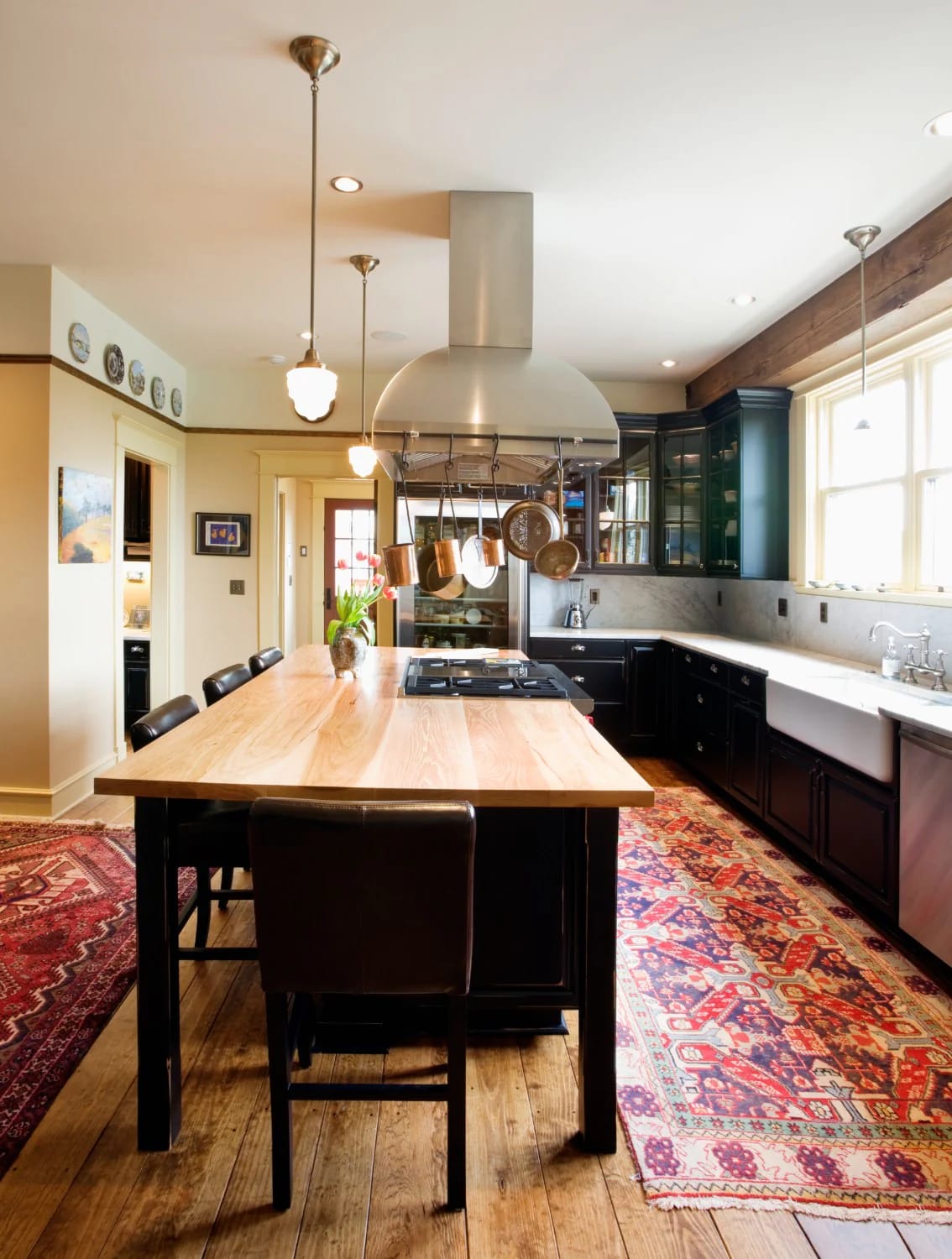
Buy old, or buy new wool from a maker who names the region. What you want to avoid is the printed polyester thing sold as "boho pattern" at big-box price, which reads as a mousepad the second you stand on it. Vintage Turkish runners turn up on Etsy and at Revival for a couple of hundred dollars upward; add a thin non-slip pad or you'll be picking yourself up off the tile.
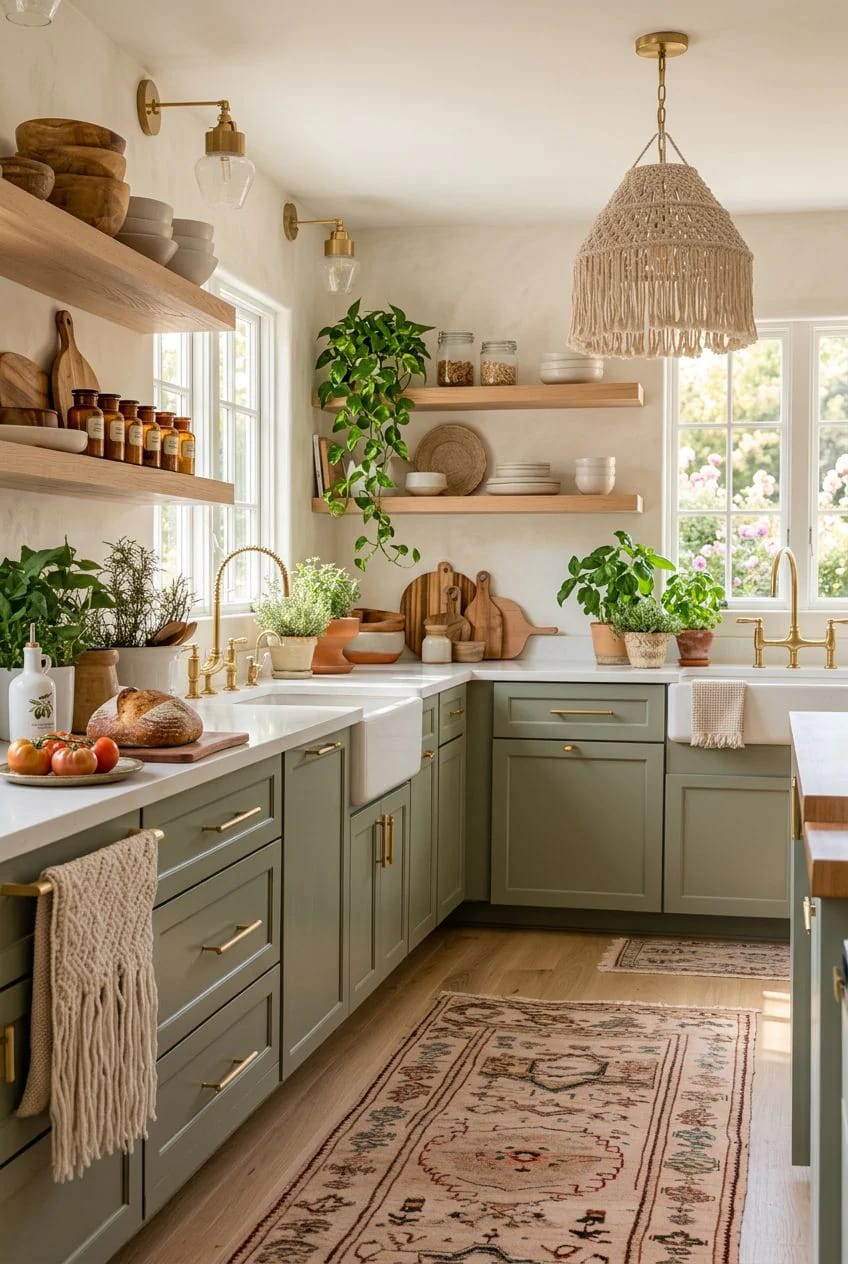
Buy a freestanding piece instead of another run of cabinetry
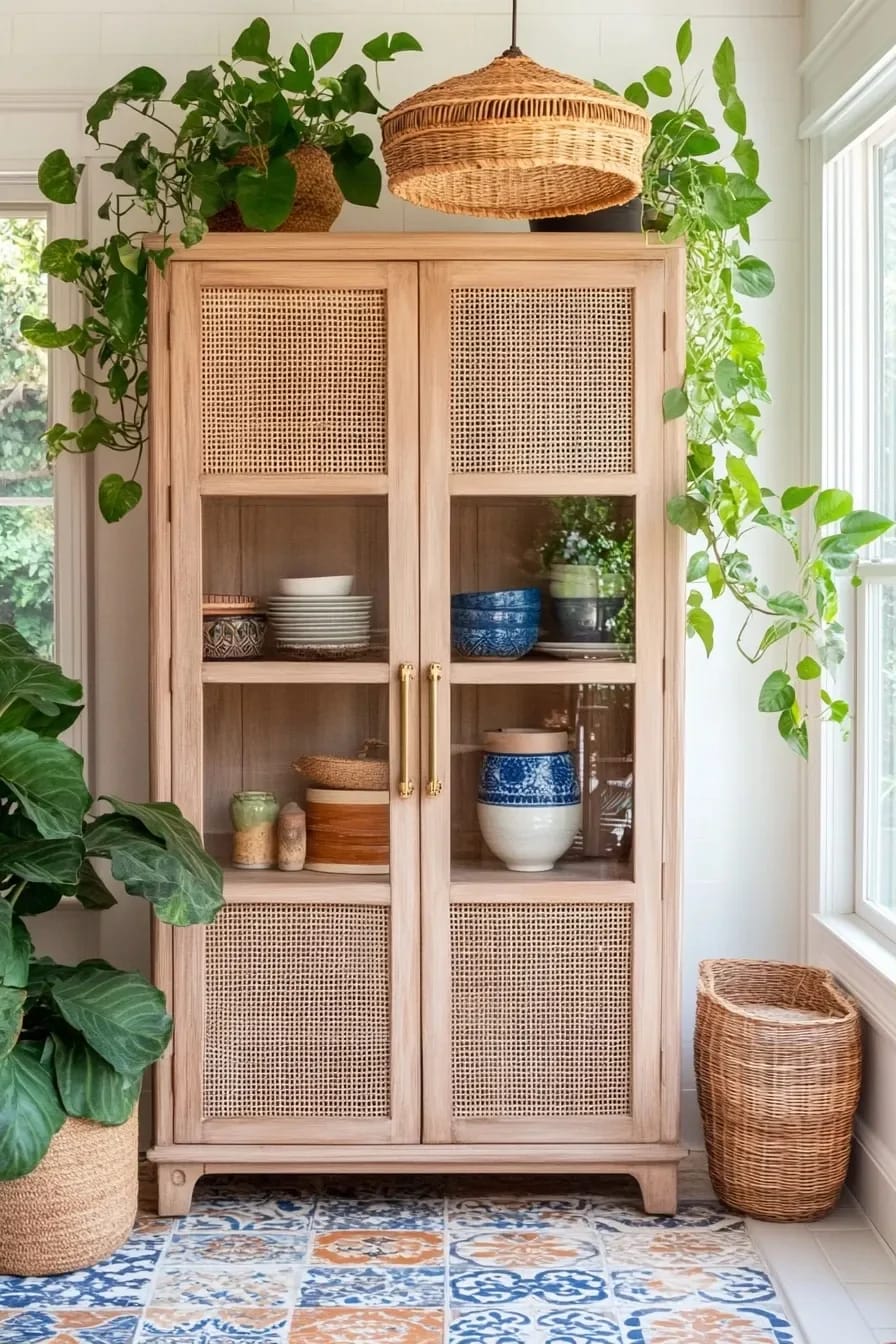
The most convincing boho kitchens have at least one thing in them that is furniture, not joinery. A Hoosier cabinet , the freestanding baking cupboards American manufacturers turned out by the trainload in the 1910s and 1920s, complete with a flour sifter and a pull-out enamel worktop , does more for a room than any amount of open shelving, because the eye reads a break in the run of doors as age. A butcher's trolley on castors does the same job for less money.
Sizing it so the room still works
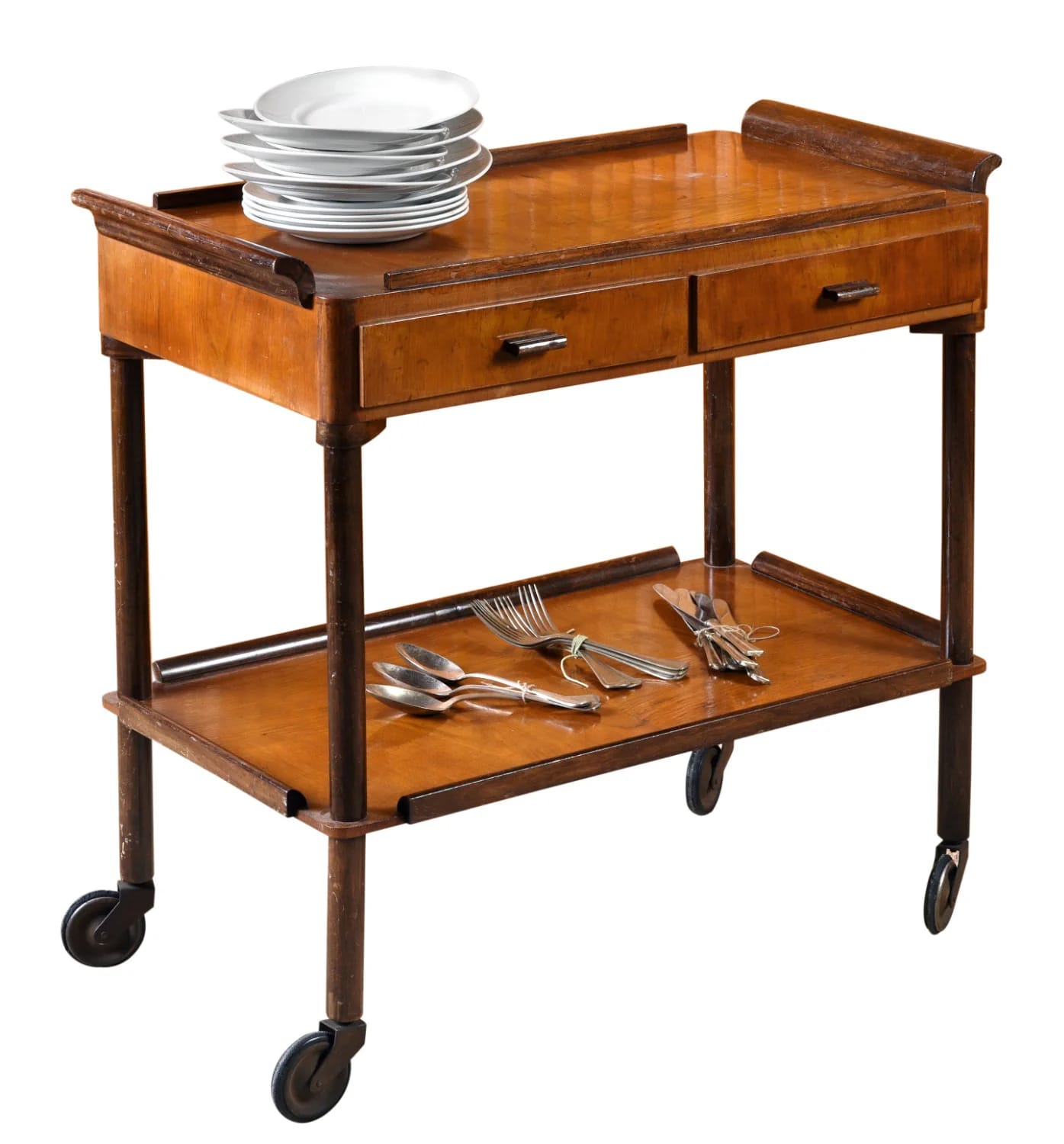
Keep 36 to 42 inches of aisle in front of it, and if it's landing across from a counter run, the standard 3 to 4 feet of clearance still applies, or you'll be sliding past it sideways for the next decade. Measure the depth twice: a lot of antique baking cupboards are 27 to 30 inches deep, considerably more than the 24-inch base cabinet you're used to walking past.
Hang the fruit, not another macramé plant
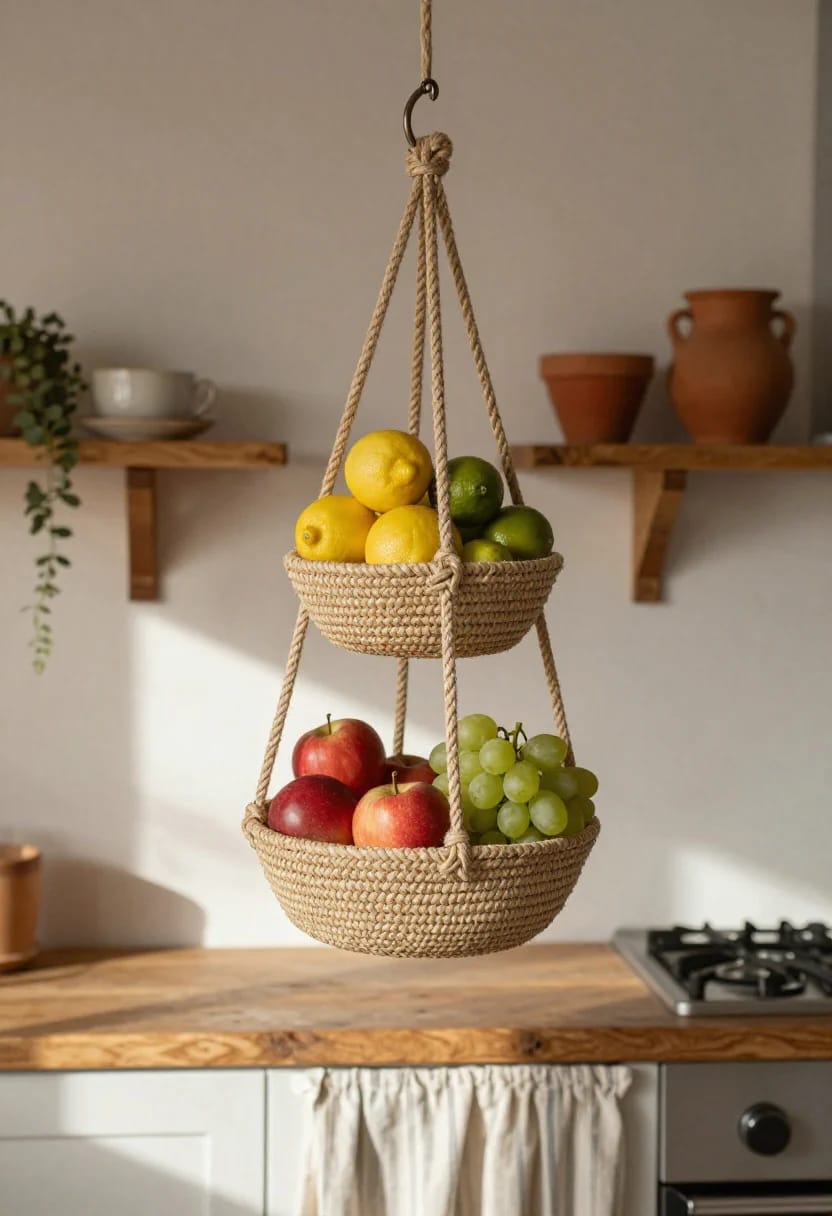
Hanging storage is the one boho idea that gives back counter space instead of taking it. A two-tier basket on a rope costs $20 to $35, holds a week of fruit, and gets the bowl off the worktop; the annotation data on this keyword is full of people searching for exactly this and finding nothing but macramé plant hangers. Hang it from a joist or a properly rated toggle bolt, not a drywall anchor rated for a picture frame. Keep bananas out of it , the ethylene they give off will ripen everything sharing the basket within a couple of days.
The renter's boho kitchen comes back off the wall
Almost everything above has a reversible version, and the reversible versions are what the "boho kitchen apartment" searches are actually asking for. You are not going to zellige a rental. You can do the rest.
What the landlord never has to know about
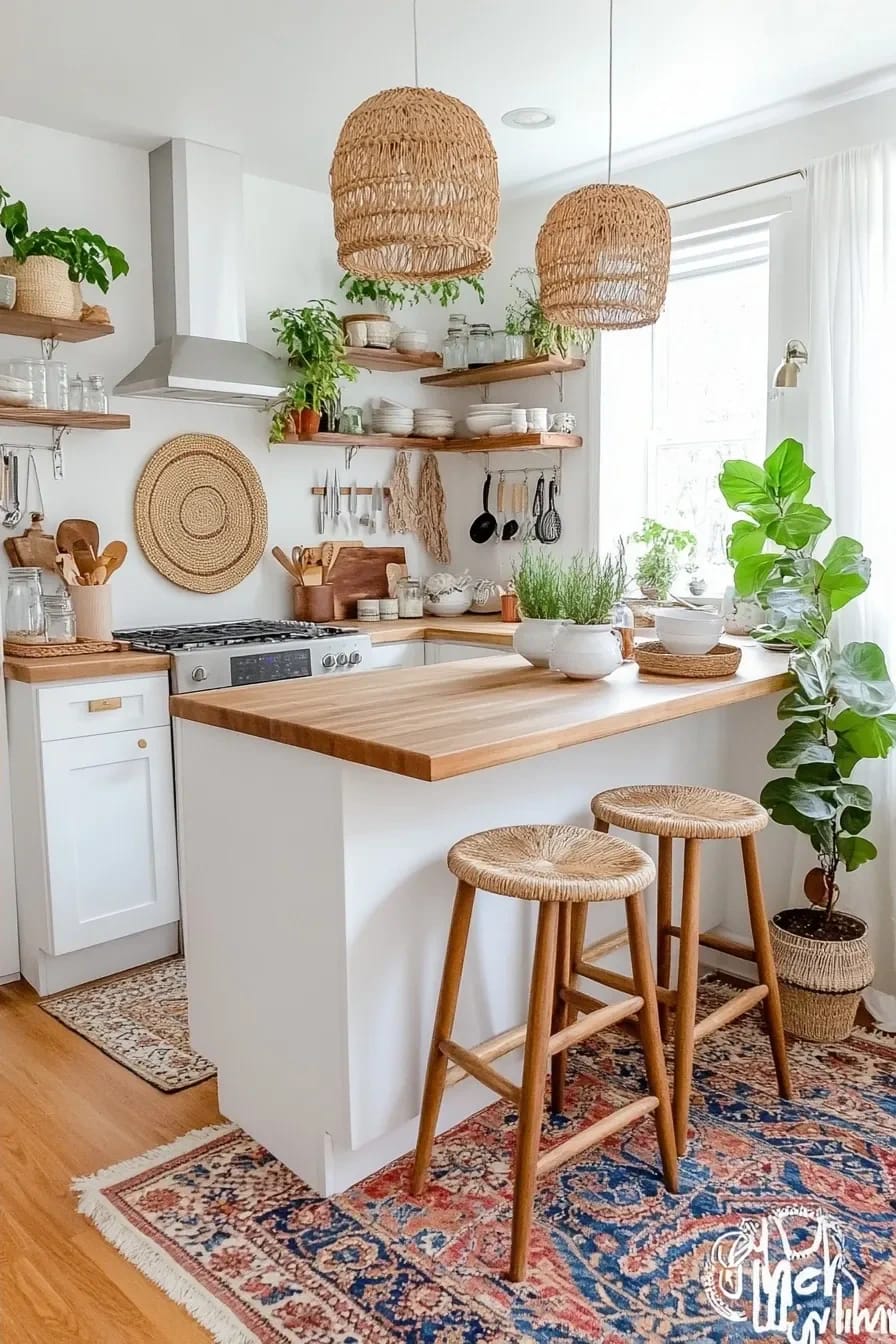
- A curtain skirt on a tension rod under the sink, in a heavy natural linen or a cut-down kilim. Removes the plastic cabinet doors from the picture entirely, costs about $30, and leaves no holes.
- A rolling wood cart as the island you don’t have. It goes with you.
- Peel-and-stick tile, around $10 per square foot, on a smooth non-textured wall away from the hob. On textured drywall it will lift at the corners within a season, so test one tile and give it a month before you commit to the wall.
- Baskets on top of the wall cabinets, where the dead nine inches above the doors currently collects grease and nothing else.
- Swap the ceiling fixture for a woven pendant, and box the original. Twenty minutes with the breaker off, and it goes back before your final inspection.
What isn't worth it
Don't paint the cabinets without written permission; a bad respray costs more to undo than the deposit you were protecting. Don't drill a pot rail into tile you don't own. And skip the peel-and-stick "wood" flooring, which reads as vinyl in every single photo, including yours.