
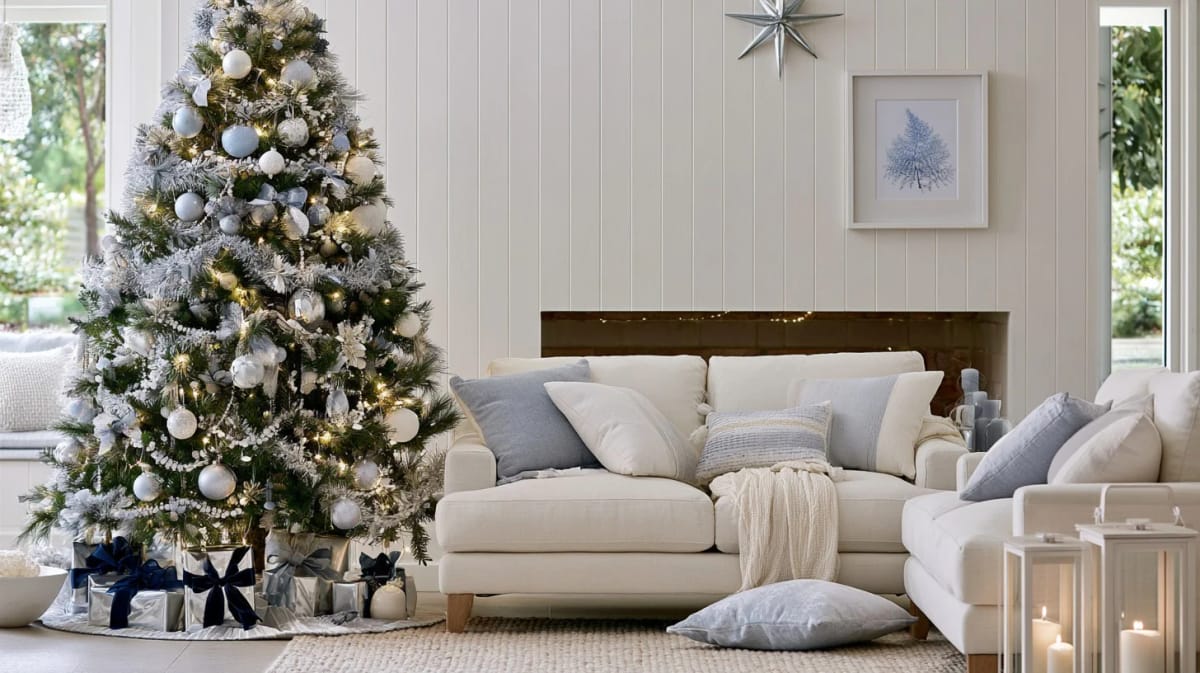
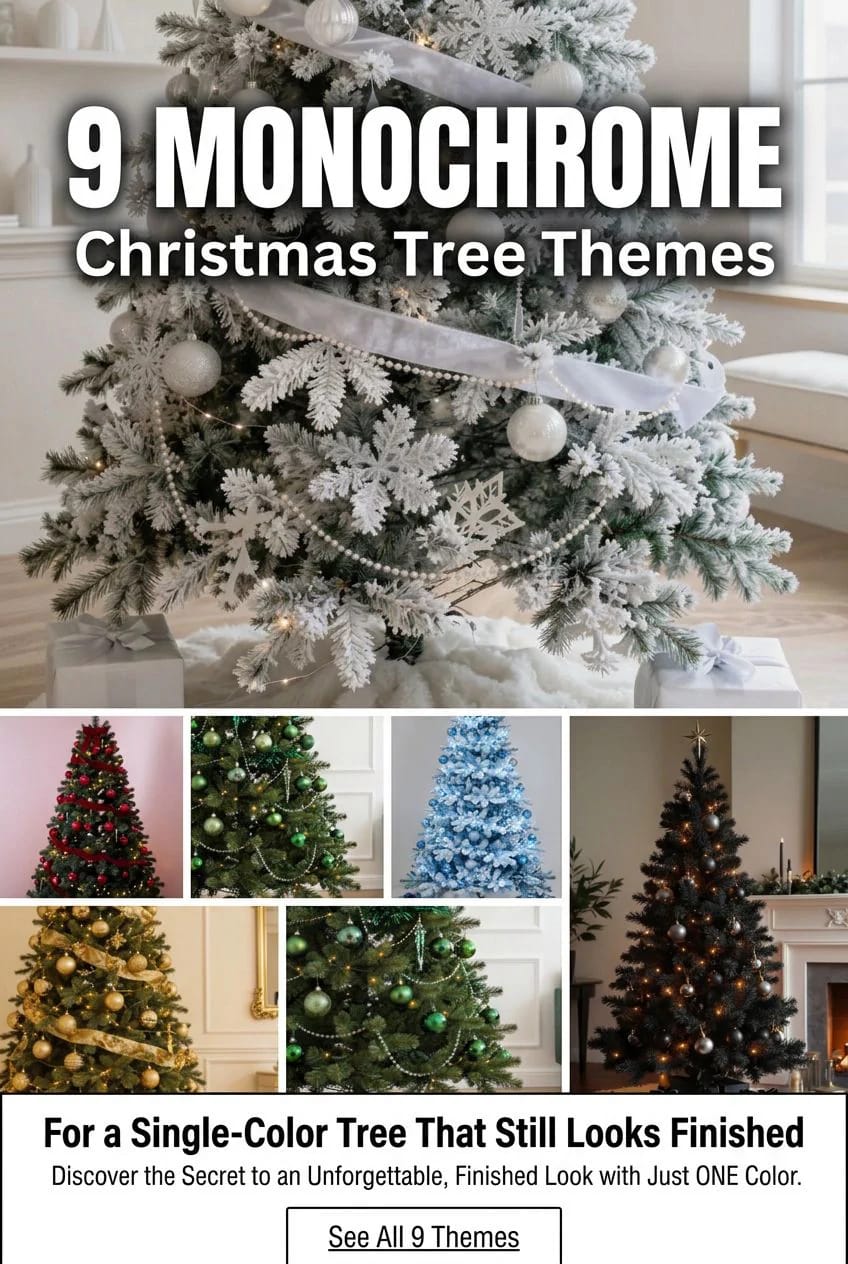
Single-color trees fail for one boring reason: every ornament on them has the same finish. Color is doing all the work, and color by itself cannot build depth, so the tree flattens into one dull mass the second the room lights come on. The nine themes below each solve that a different way, with the finish ratios, bulb temperatures, and ornament sizes that separate a monochrome tree that looks decided from one that looks like you ran out of ornaments.
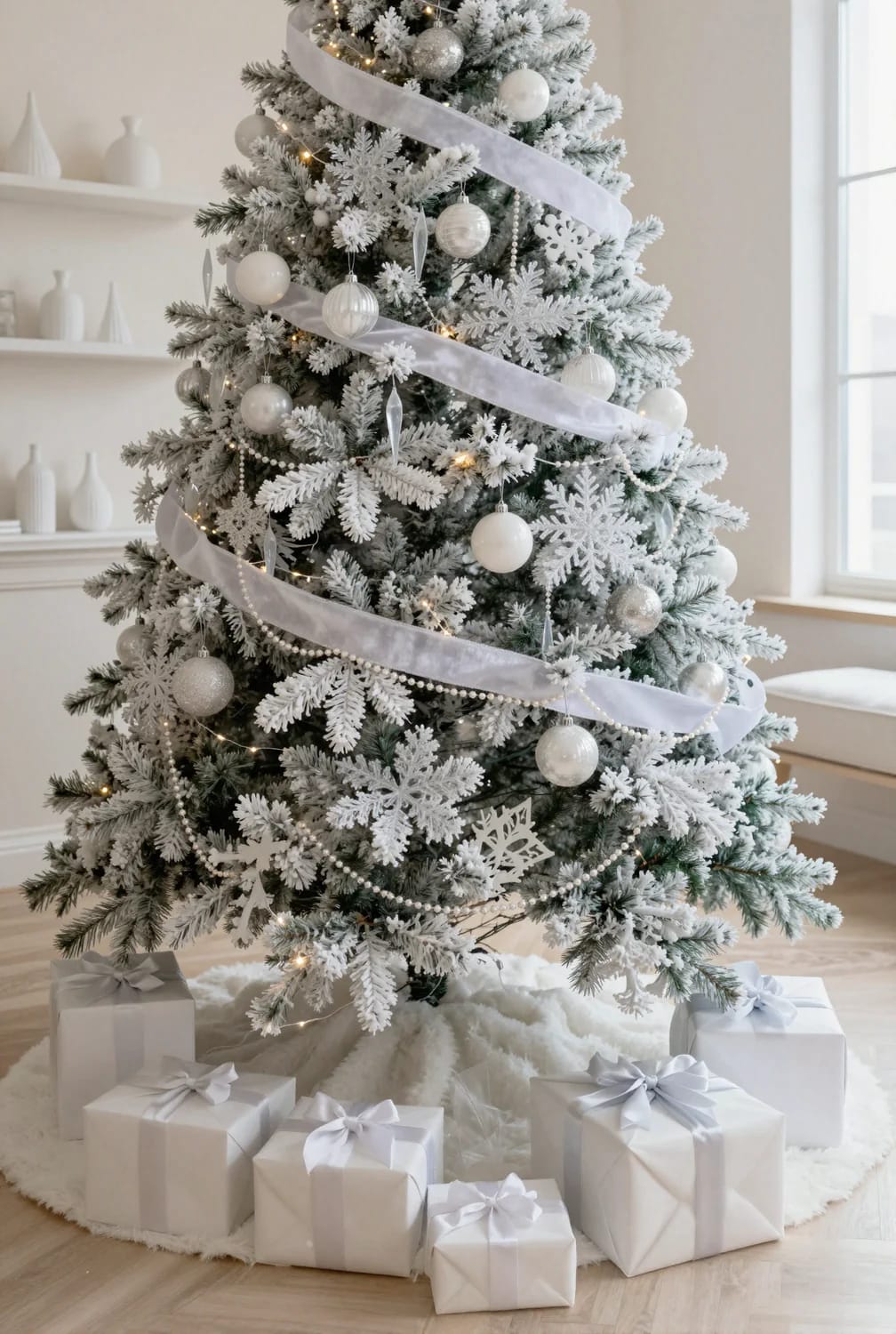
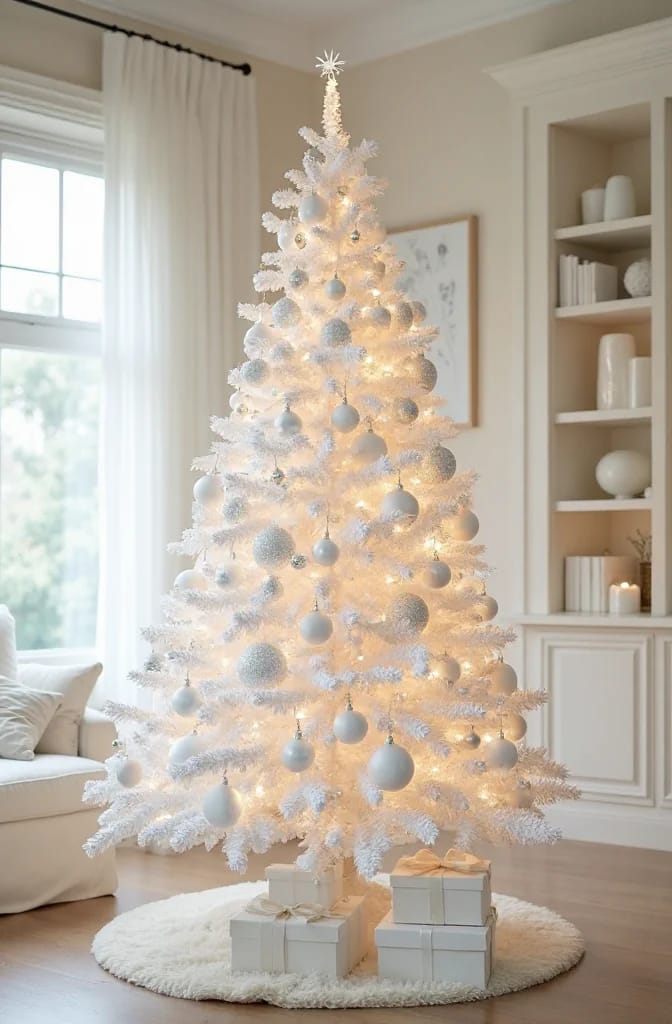
1. All-White Ornaments on a Flocked Tree: Change the Finish, Not the Color

White on white only works when you buy three finishes and ignore the shade entirely. Chalk-matte ceramic absorbs light and gives you the shadow; glass gives you the specular highlight; something woven or fibrous, bouclé fabric balls or capiz discs or a felted wool sphere, gives you the middle tone that keeps the other two from looking like a mistake. A workable split on a seven-foot tree is roughly half matte, a third glass, and the rest textured, weighted so the glass sits deeper in the branches where it catches the string lights instead of the room.
The failure everyone hits is the flocked tree itself. Flocking is already a matte white surface, so matte white ornaments hung on it disappear at six feet, and by evening the whole thing is one grey cone. If your tree is flocked, push the glass share up and the matte share down; if your tree is unflocked green, the matte ornaments have somewhere to sit and the ratio above holds. Balsam Hill's heavier flocked models are the worst offenders here because the flock is dense enough to read as a solid surface rather than as frost on a needle.
This is also the one palette that survives leaving the tree up past New Year, which is why it works so well as the anchor for a minimal scheme that runs through the rest of the house rather than stopping at the living room corner.
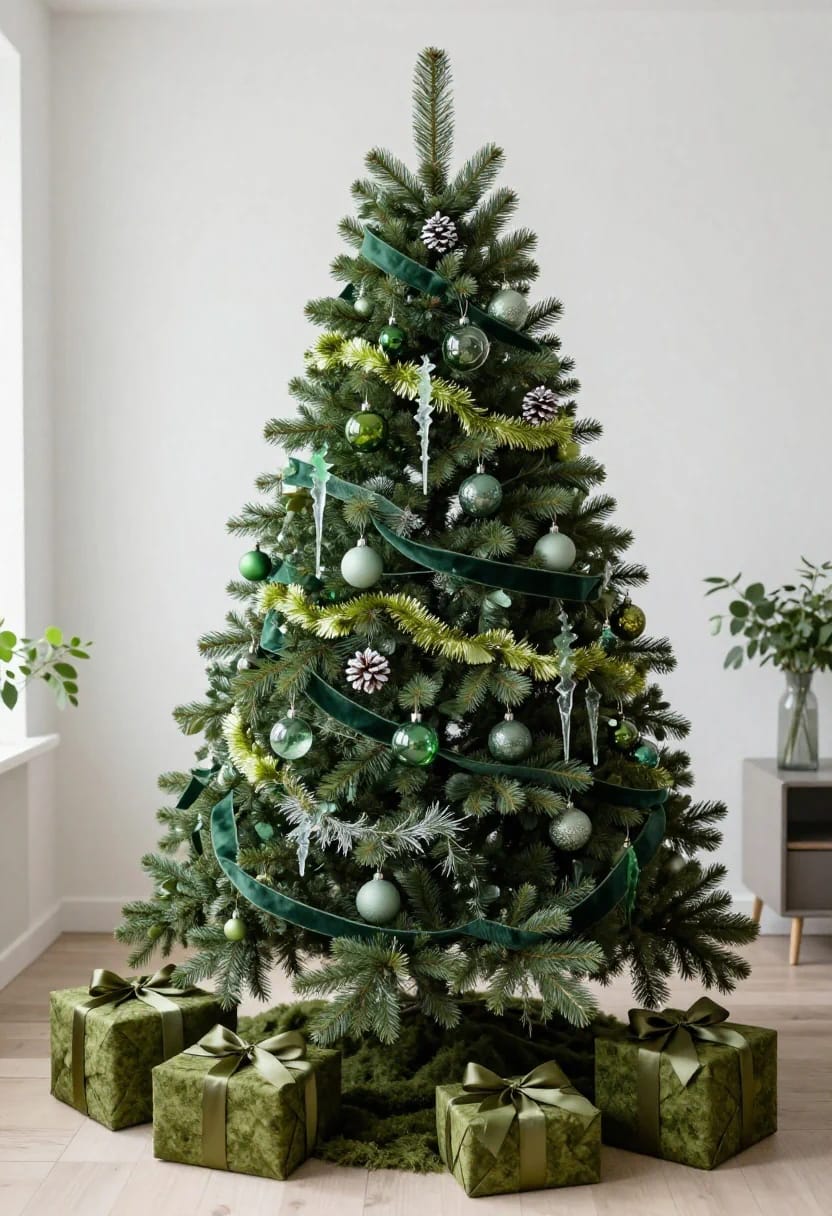
2. Green Ornaments on a Green Tree, Because the Tree Is Already the Color
The cheapest monochrome tree is the one where you keep the tree's own color and decorate into it. Nobody does this, which is exactly why it works: bottle-green glass, satin forest-green balls, matte sage wooden beads, all sitting on dark blue-green needles, so the depth comes entirely from size and sheen rather than from contrast.
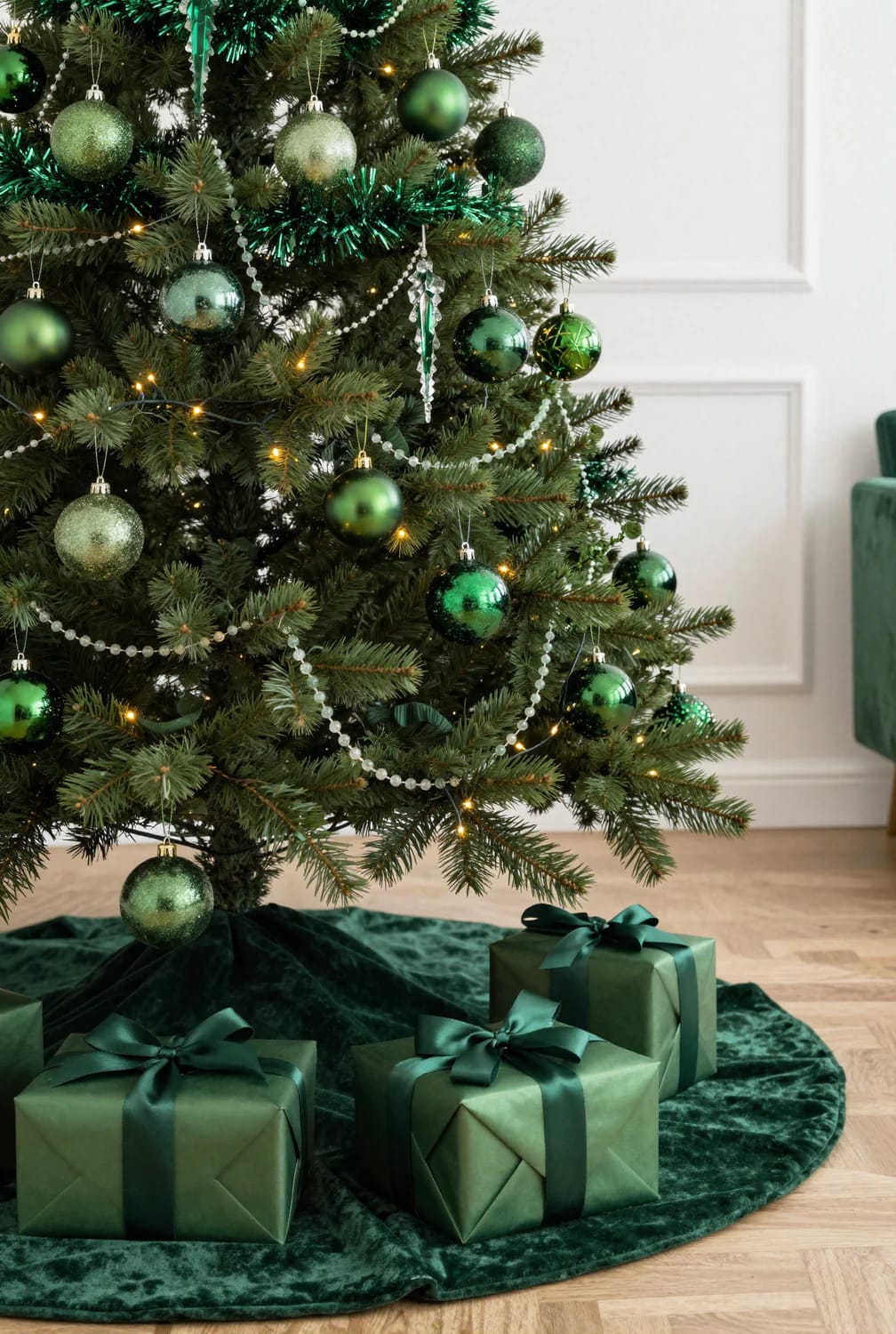
Two rules keep it from looking like an undecorated tree. Stay at or below the needle’s own value, so bottle green and forest green rather than mint or lime, which jump forward and break the effect. And run three ornament diameters, two inches, four inches, six inches, with the largest low and near the trunk. It is the strict opposite of the instinct behind a tree built around one deliberately absurd idea, and it suits a room that already has a lot going on.
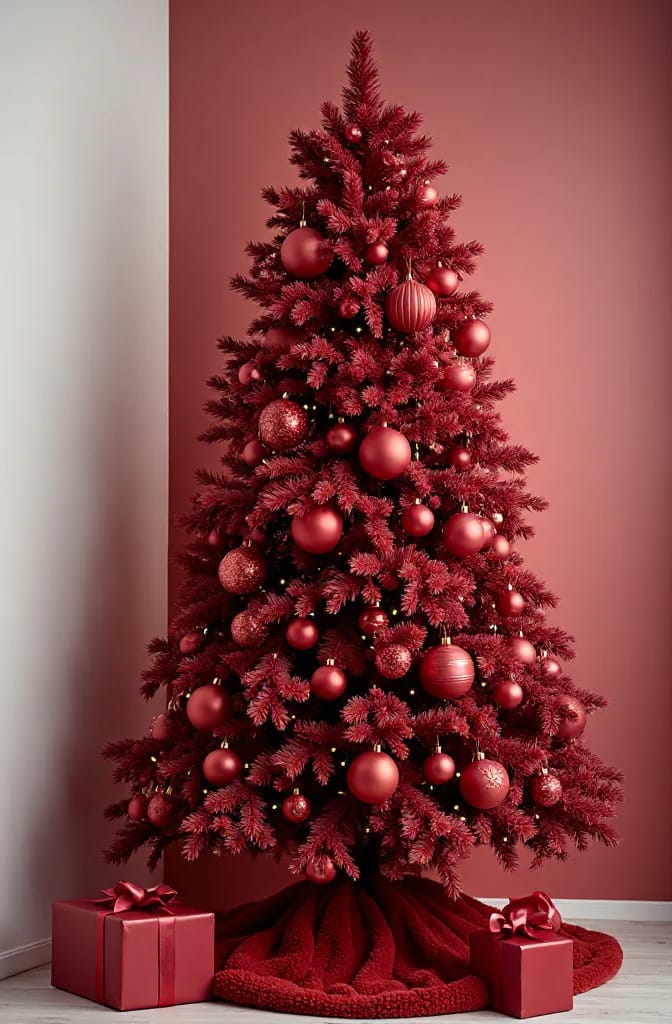
3. All-Red Means One Red: Choose It Against Your Wall Color, Not in the Store
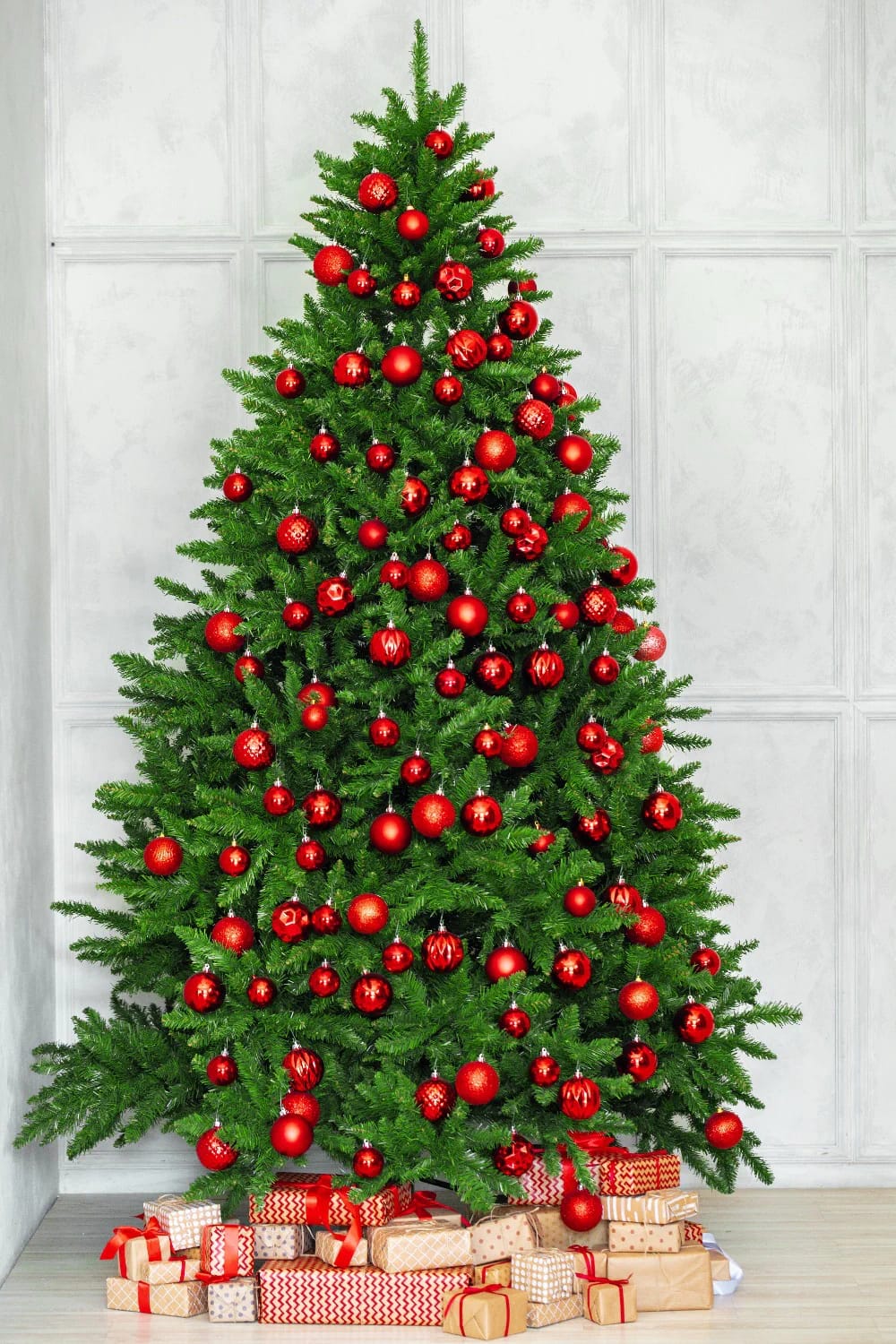
An all-red tree collapses the moment you mix a scarlet, a crimson, and a burgundy, because at three feet away they stop reading as one color and start reading as a sale bin. Pick one and test it against your actual wall, not under store lighting. Warm scarlet holds its shape against grey and greige walls but goes slightly pink against warm white; blue-based crimson does the opposite, staying crisp on cream and turning muddy on cool grey. Burgundy is the safest of the three and the most likely to vanish after dark, so it needs more glass than the others.
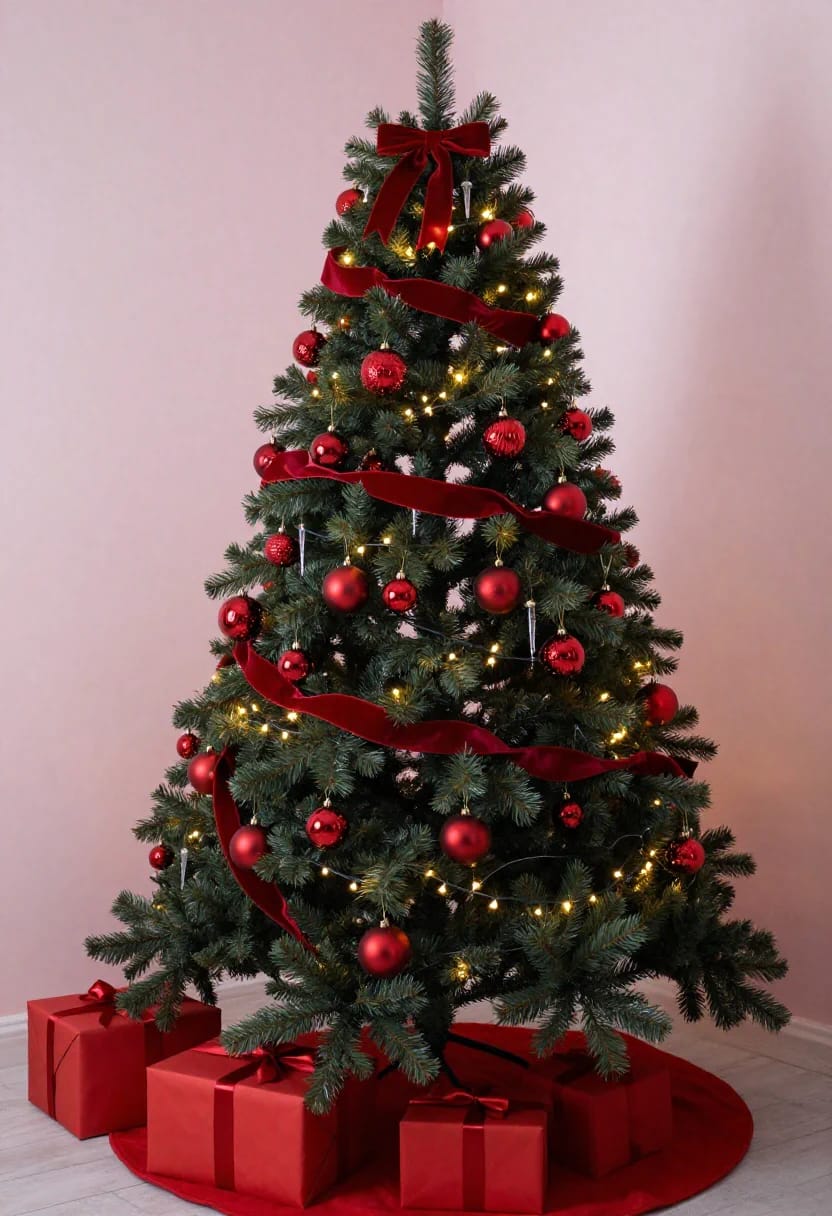
Then split the finishes the same way as the white tree: velvet-flocked balls for the matte weight, lacquered glass for the shine, and a few translucent red glass pieces set deep in the branches. Ribbon is where most red trees go wrong, and the width and placement decisions that keep velvet from looking like a craft-store display matter more on a monochrome tree than on a mixed one, because there is no second color to distract from a badly cut bow.
4. A Black Tree Needs Sheen and a Warm Bulb or It Reads as a Silhouette
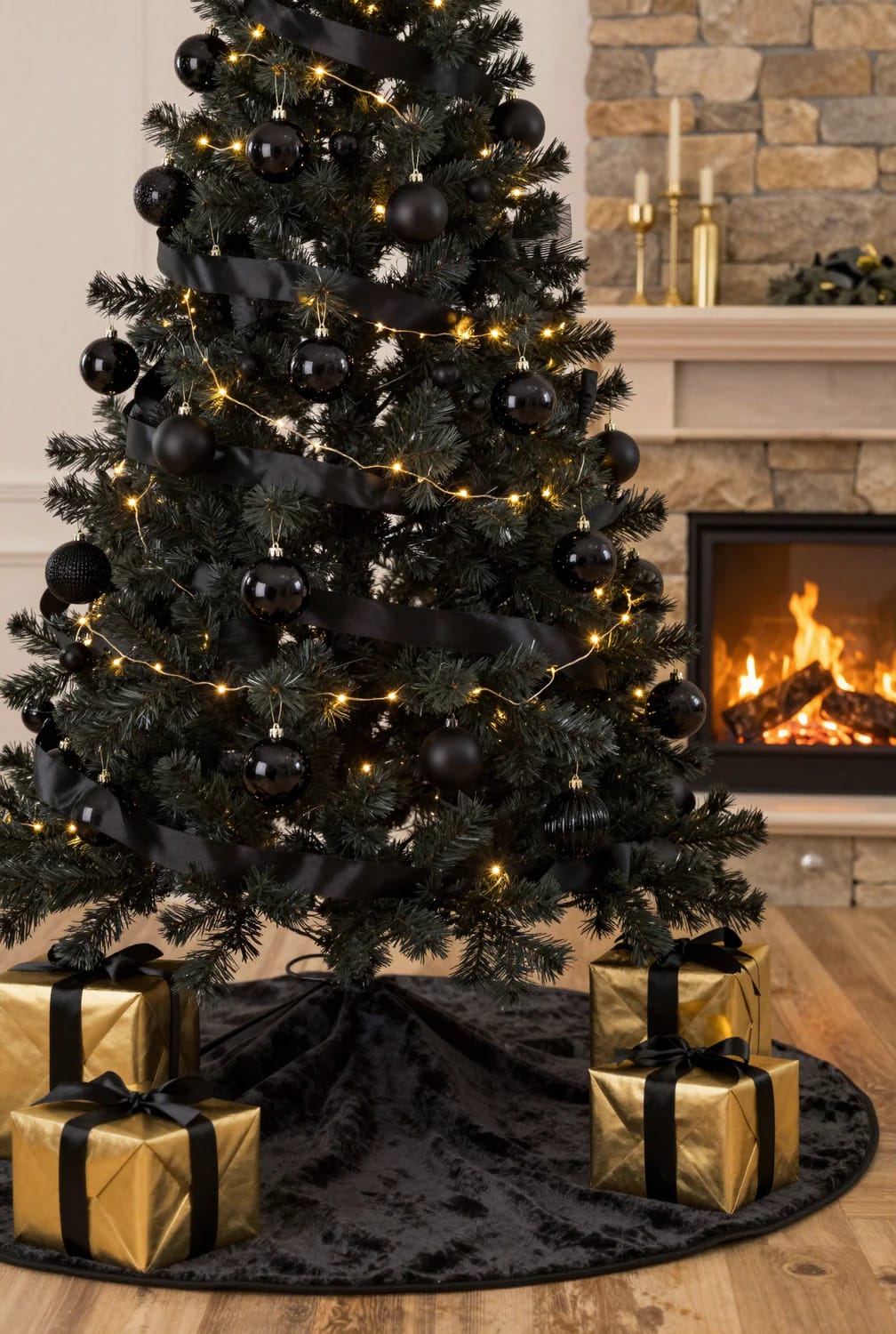
Black is the hardest single color to pull off and the only one where finish is not a refinement but the entire mechanism. Black absorbs light rather than returning it, so a matte black ornament on a black tree gives the eye nothing to fix on; from across the room you get a cone-shaped hole in the wall. Every ornament on a black tree should have a reflective or translucent surface: high-gloss glass, glitter-coated, mirror-finish, smoked glass with a bit of transparency.
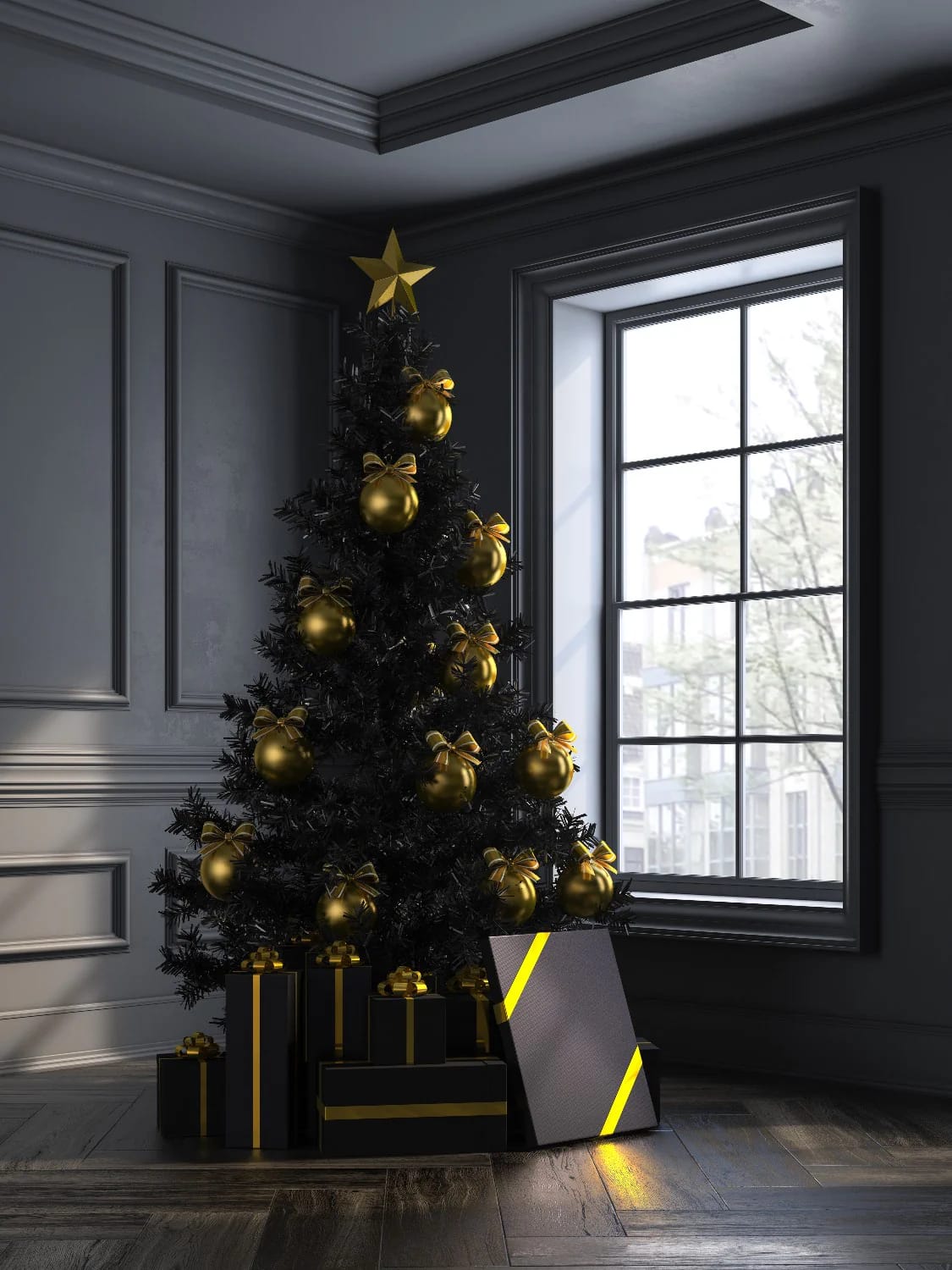
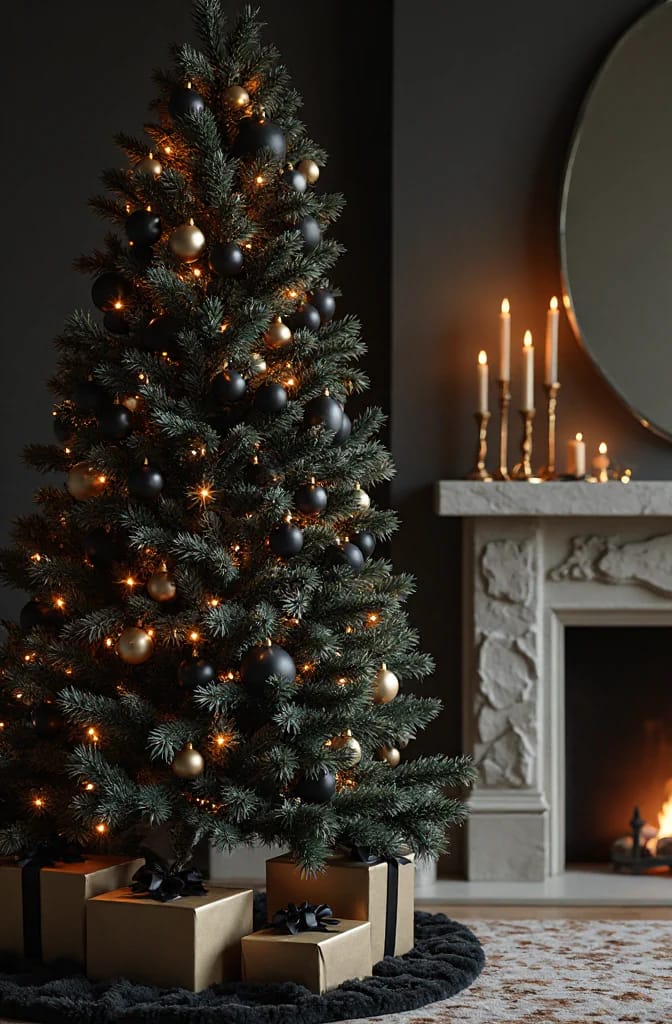
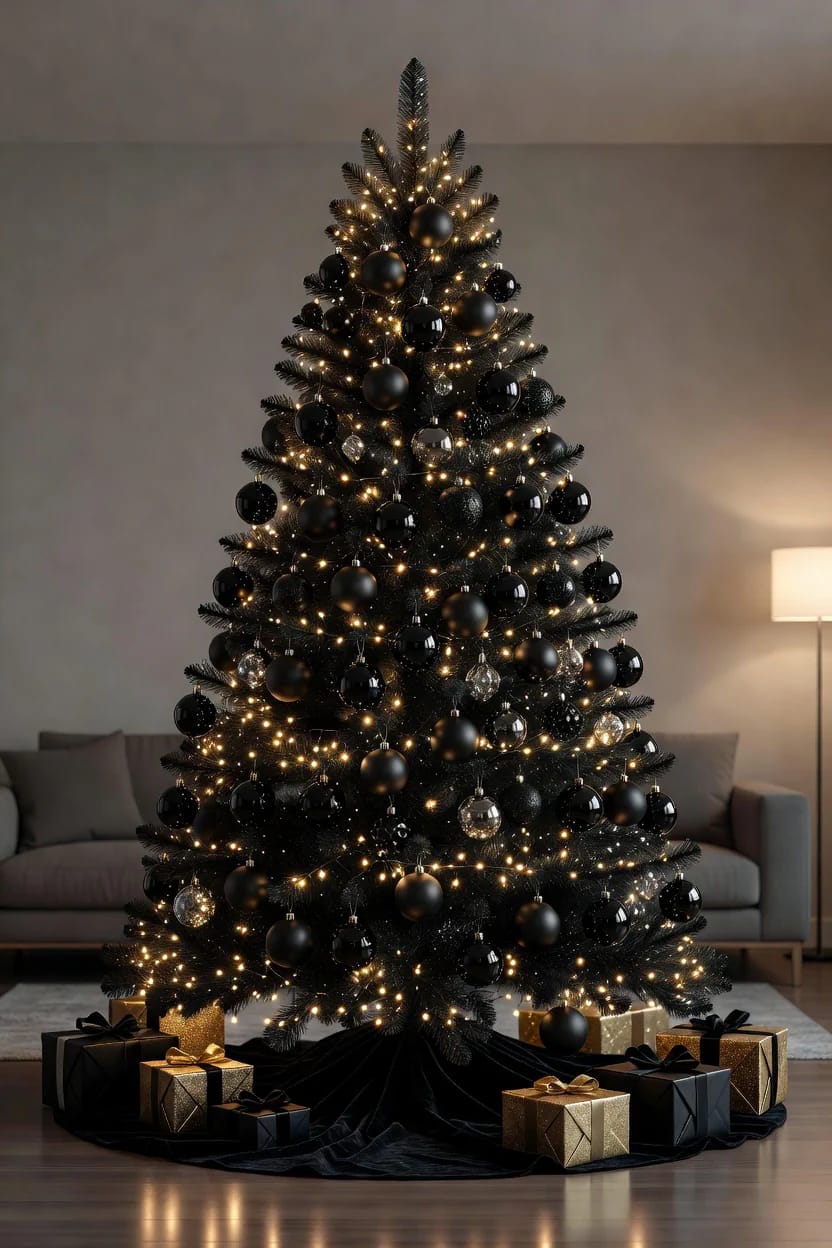
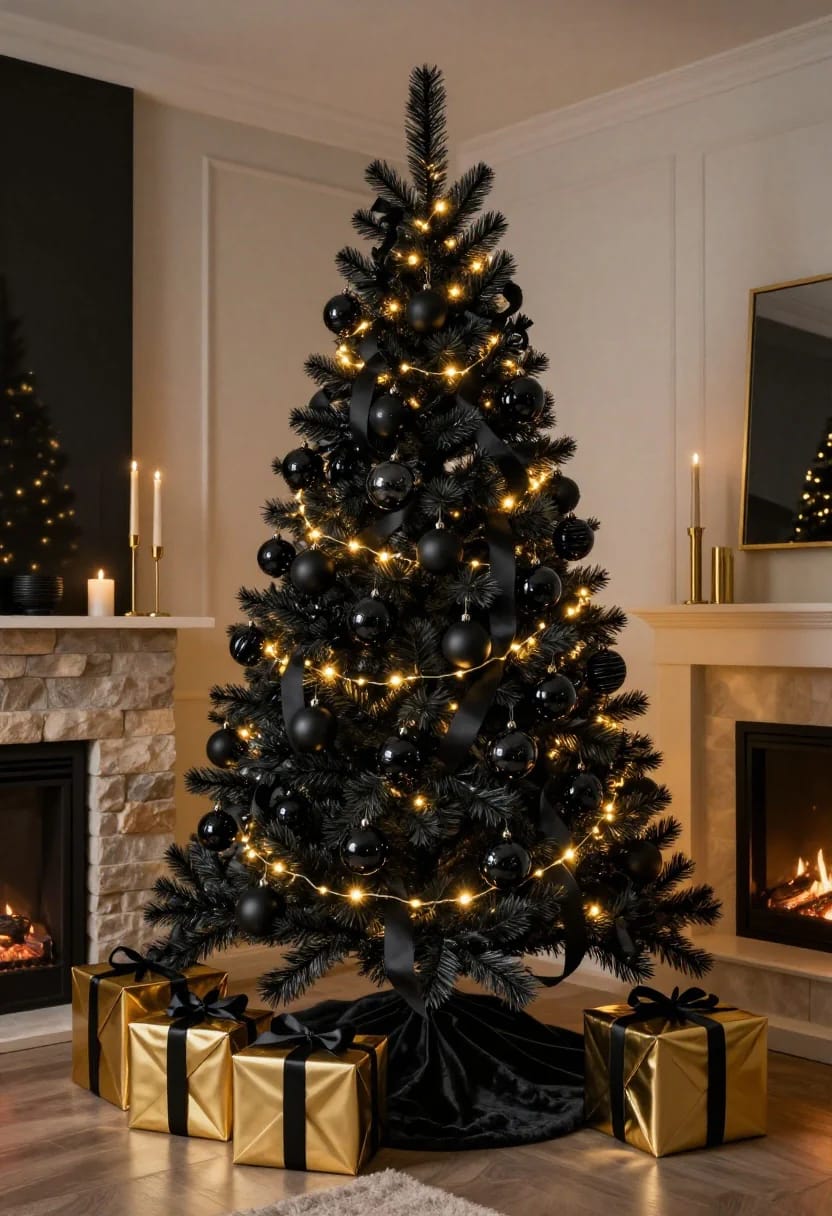
The wall behind it decides whether any of that lands. A black tree in front of a pale putty or bone-white wall reads as a graphic object; the same tree in front of charcoal panelling or a dark bookcase reads as nothing at all. I would not put one in a north-facing room that goes dim by three in the afternoon, and I would not put one anywhere the only light source is a ceiling fixture, because overhead light hits the tops of the ornaments and leaves the sides dead.
Bulbs matter more here than on any other palette. Warm filament-style bulbs in the 2200K to 2700K range give black glass an amber highlight that separates each ornament from the branch behind it; cool white on a black tree produces a hard white pinprick and no gradient. Buy the lights before the ornaments.
Buying a matte black ornament set because it photographed well on a white studio background. Those sets are shot against white, where every edge is visible; on a black or dark green tree, in a lit room, they read as absence. If a set arrives and every piece is flat, keep about a quarter of them for the deepest interior branches and return the rest.
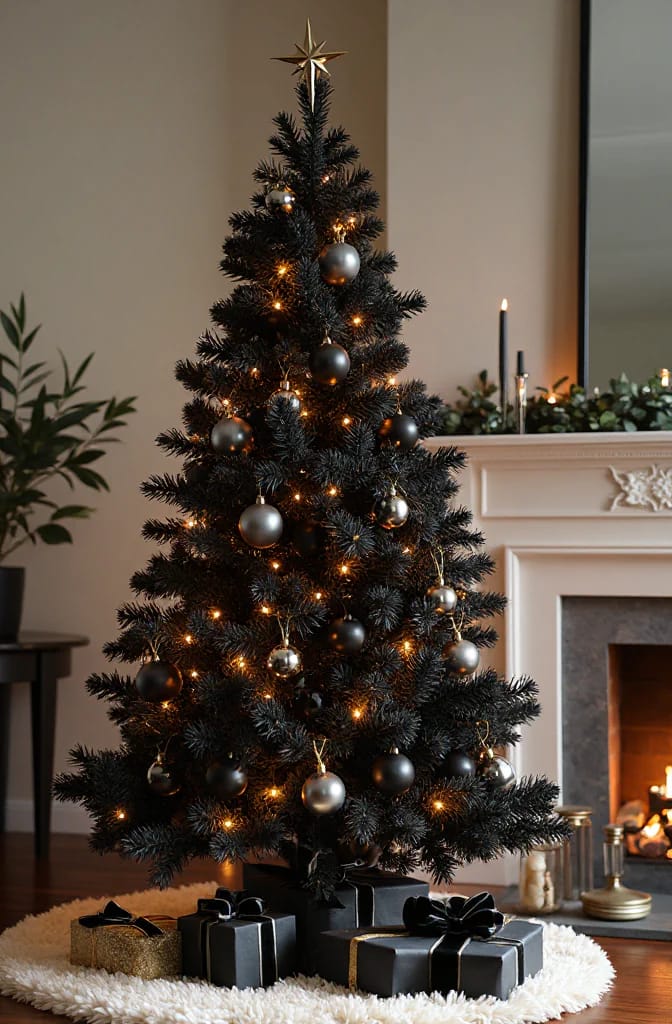
 21 Elegant Black and White Christmas Decor Ideas Where to take the same high-contrast palette once it leaves the tree: stockings, mantel, table.
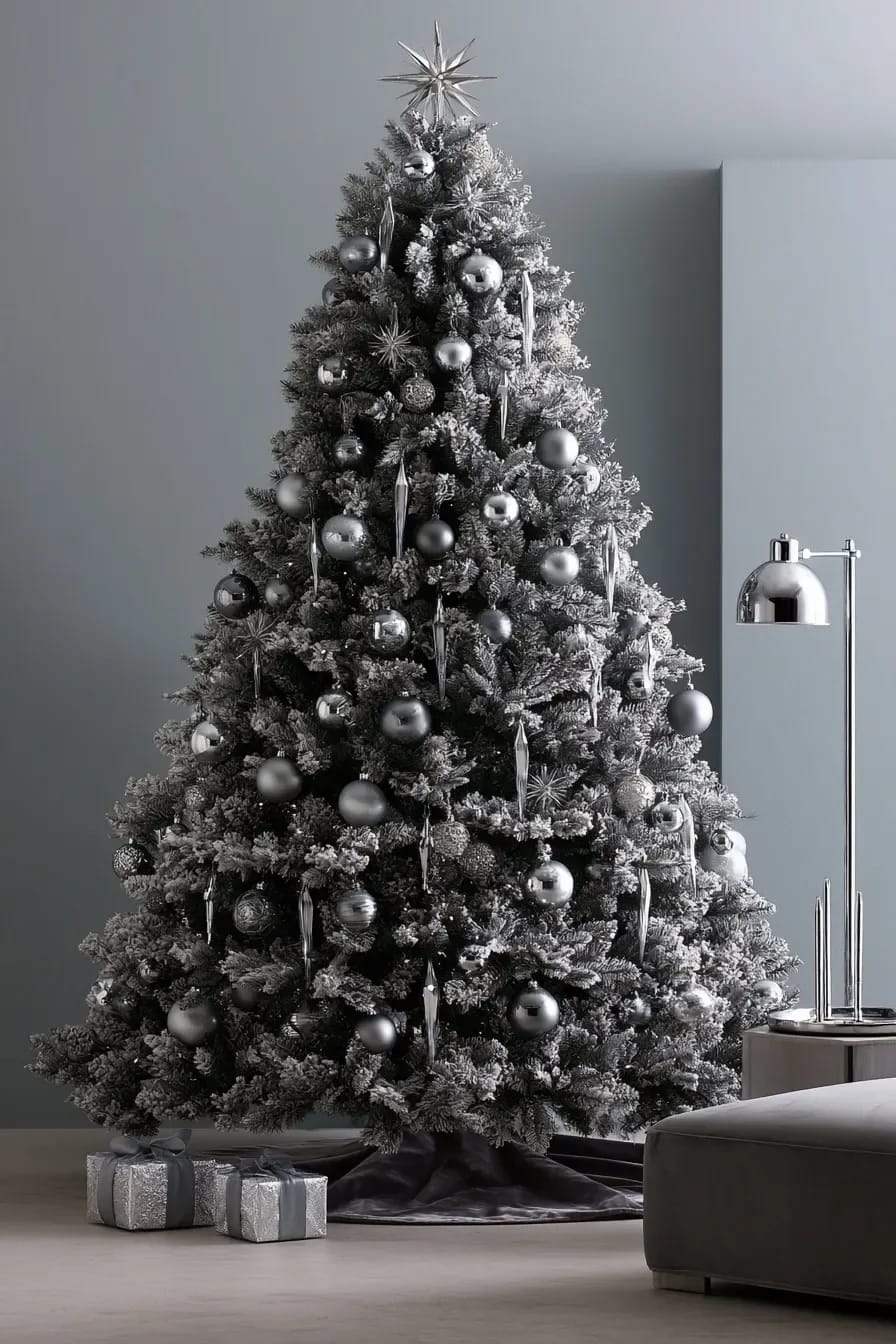
5. Silver Trees Fall Apart When the Metals Don't Match, So Pick Pewter or Chrome
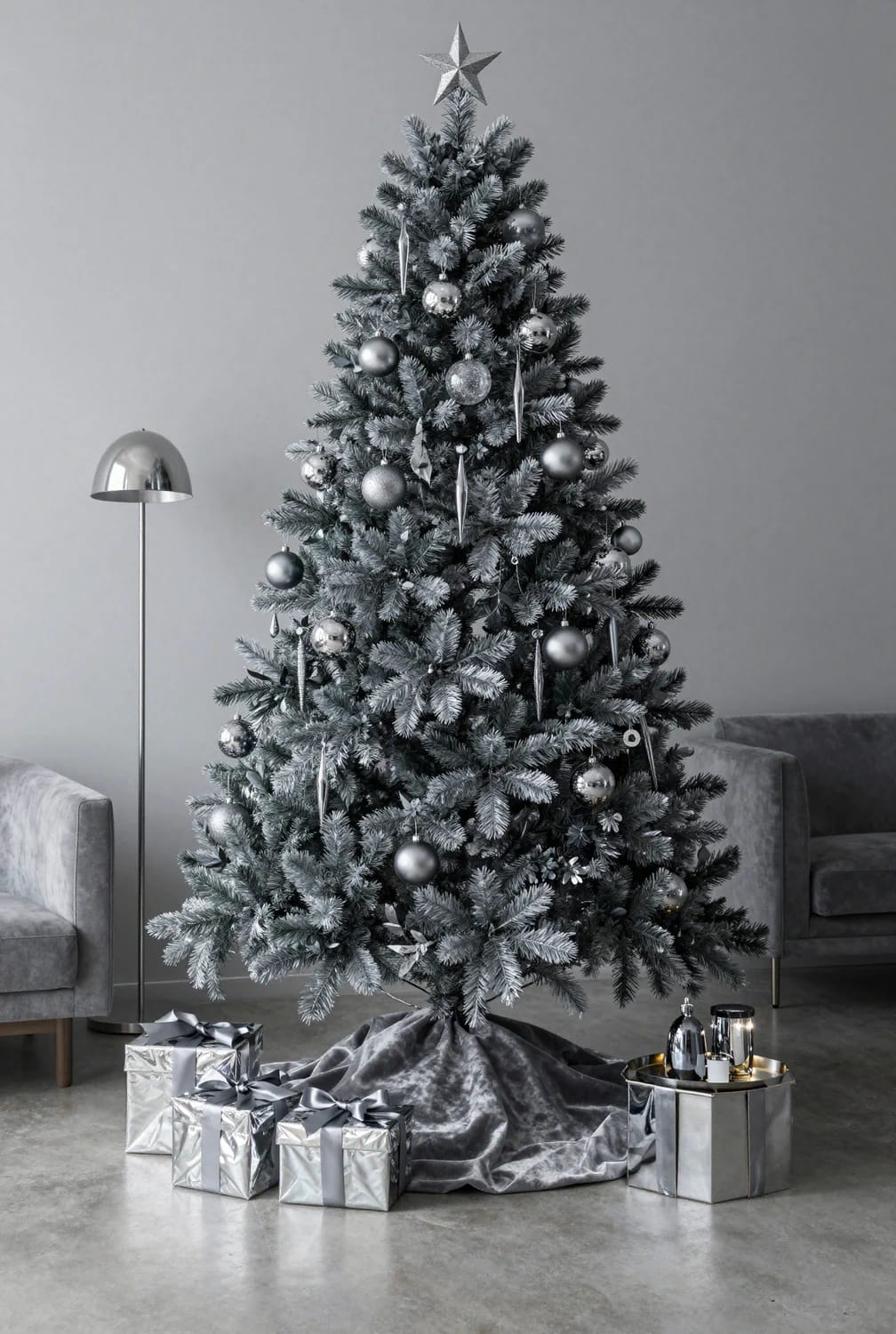
Silver splits into two families that should never share a tree. Pewter, brushed nickel, and antique or mercury silver are all slightly warm greys; chrome, mirror-ball, and bright foil are cold blue-greys. Mix them and the warm pieces look tarnished next to the cold ones, which is the single most common reason a silver tree looks cheap rather than sharp.
Pick a side, then break up the shine with one non-reflective texture, glittered or frosted, at roughly a fifth of the total. Skip tinsel garland entirely. It is the one product that flattens a silver tree instead of building it.
6. Blush Pink Trees Work at Bigger Ornament Sizes, Not Busier Ones
Blush is the one palette where the answer is fewer, larger ornaments. Small pink baubles at high density read as candy; eight six-inch matte balls and a dozen four-inch satin ones on a six-foot tree read as a decision, and the visible bare branch between them is doing real work. Nothing under four inches goes on the tree at all.
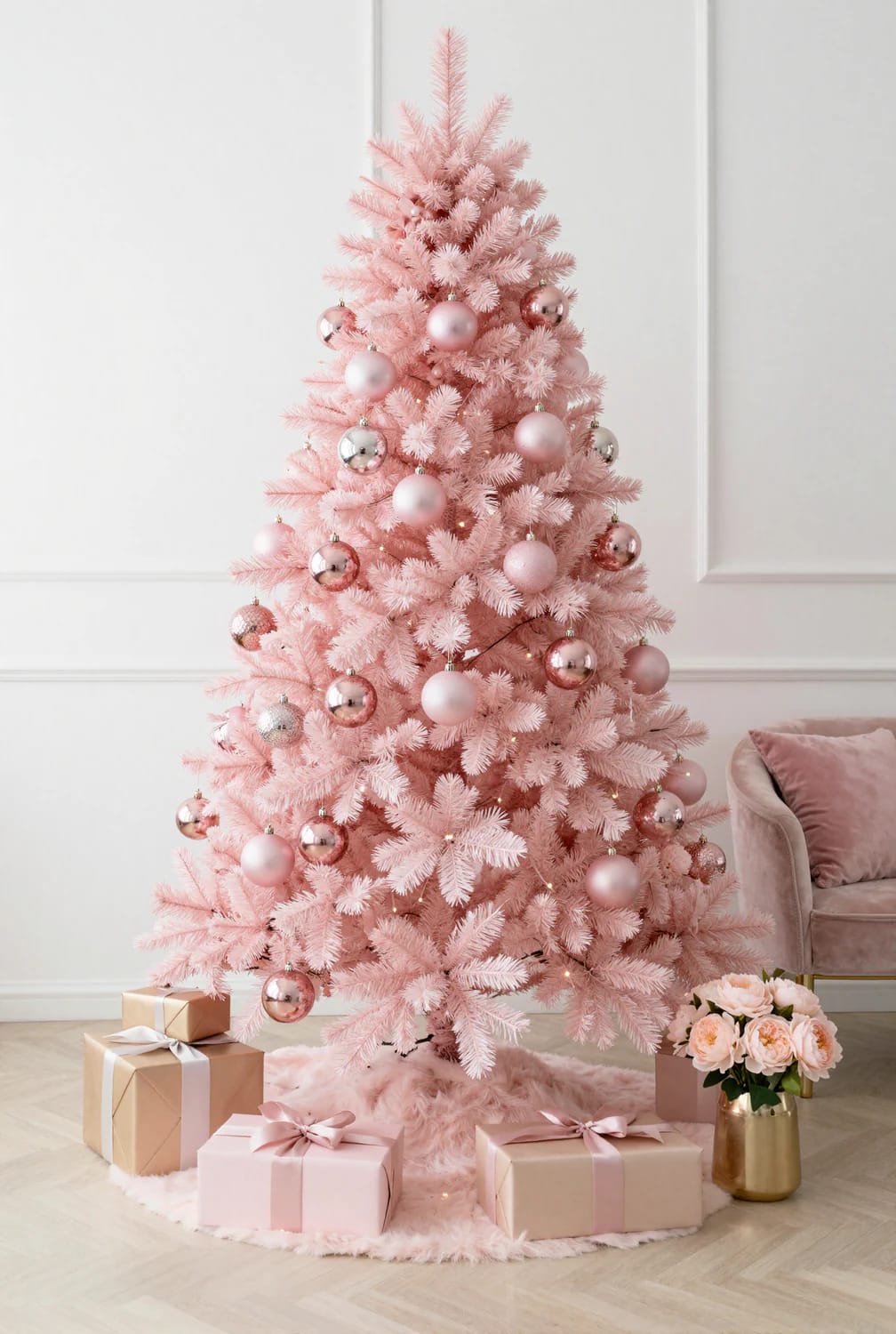
Granted, this only holds if you stay in the dusty half of pink. Blush, clay pink, and dusty rose have enough grey in them to sit against oak and cream without shouting; hot pink and bubblegum do not, and the whole scheme flips from restrained to novelty. If novelty is what you actually want, the disco and ombré end of the pink tree spectrum is a different article and a much better fit. The size rule is also the budget rule, since twenty large ornaments cost less than eighty small ones.
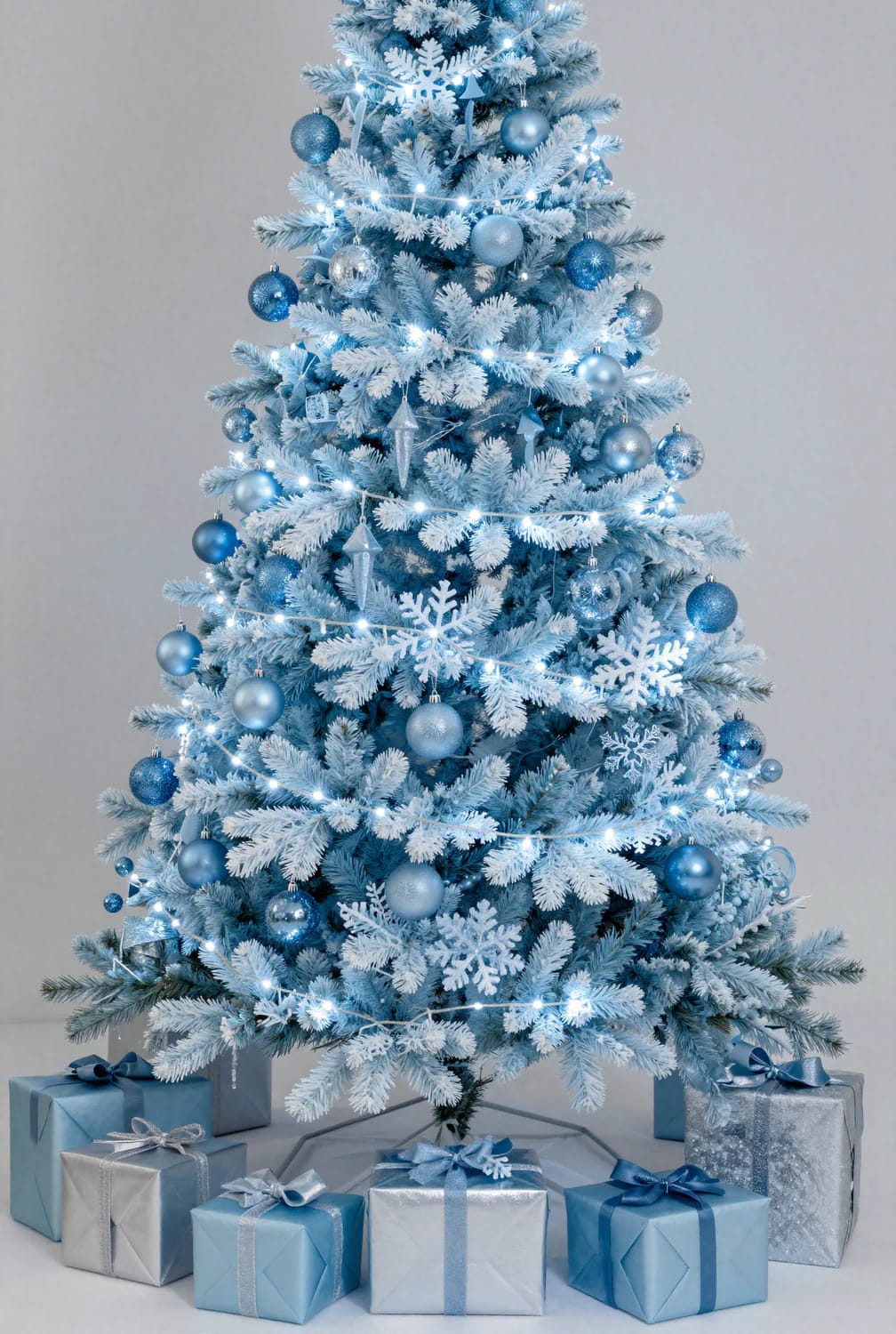
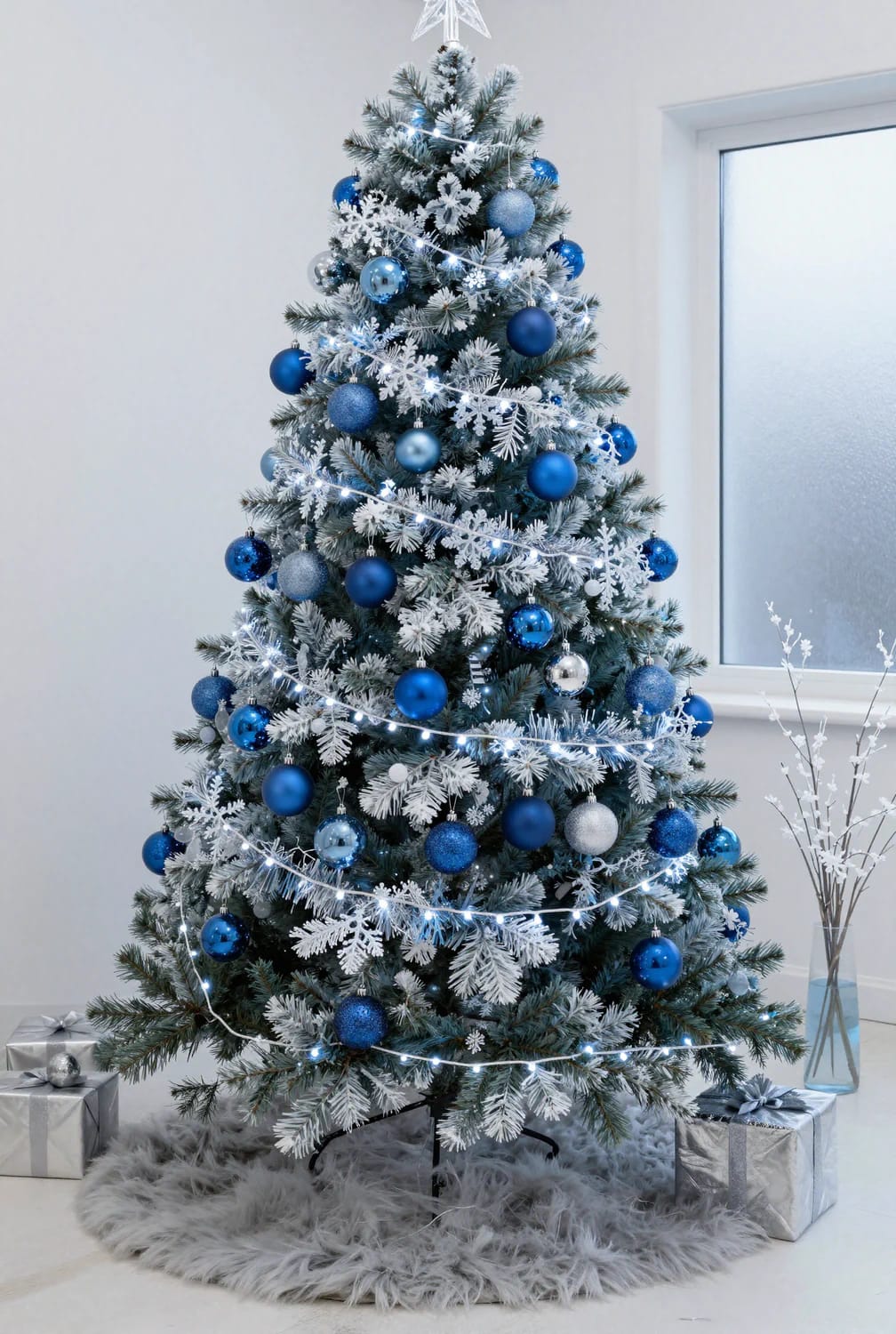
7. Icy Blue With Cool-White Bulbs, Because Warm White Turns It Grey-Green
Blue is the only palette on this list where the wrong bulb destroys the color outright. Warm white light is short on energy at the blue end of the spectrum, so a pale ice-blue ornament lit at 2700K comes back grey with a green cast; the same ornament under a 4000K to 5000K cool white stays blue. Every other theme here tolerates either bulb. This one does not, and it is worth swapping the string lights before you spend anything on ornaments.
| Tree palette | Bulb to buy | What the wrong bulb does |
|---|---|---|
| Icy blue, powder blue | Cool white, 4000K to 5000K | Warm white drains the blue to grey-green |
| Black, smoked glass | Warm filament, 2200K to 2700K | Cool white gives hard pinpricks and no gradient |
| All-red, burgundy | Warm white, 2700K | Cool white pushes warm scarlet toward pink |
| Gold, brass, champagne | Warm white, 2700K | Cool white makes brass look green |
| All-white, flocked | Either, but only one across the whole tree | Mixing two strand temperatures shows as patchy yellow zones |
The last row is the one people ignore. Two half-used boxes of lights from different years are almost never the same temperature, and on a monochrome tree there is no color variation to hide the seam. Committing to one white and building everything around it is the same discipline that makes an exterior display look designed instead of accumulated, and it costs nothing but the willingness to throw out the odd strand.

8. Gold on Gold Works Only If Every Gold Is the Same Temperature
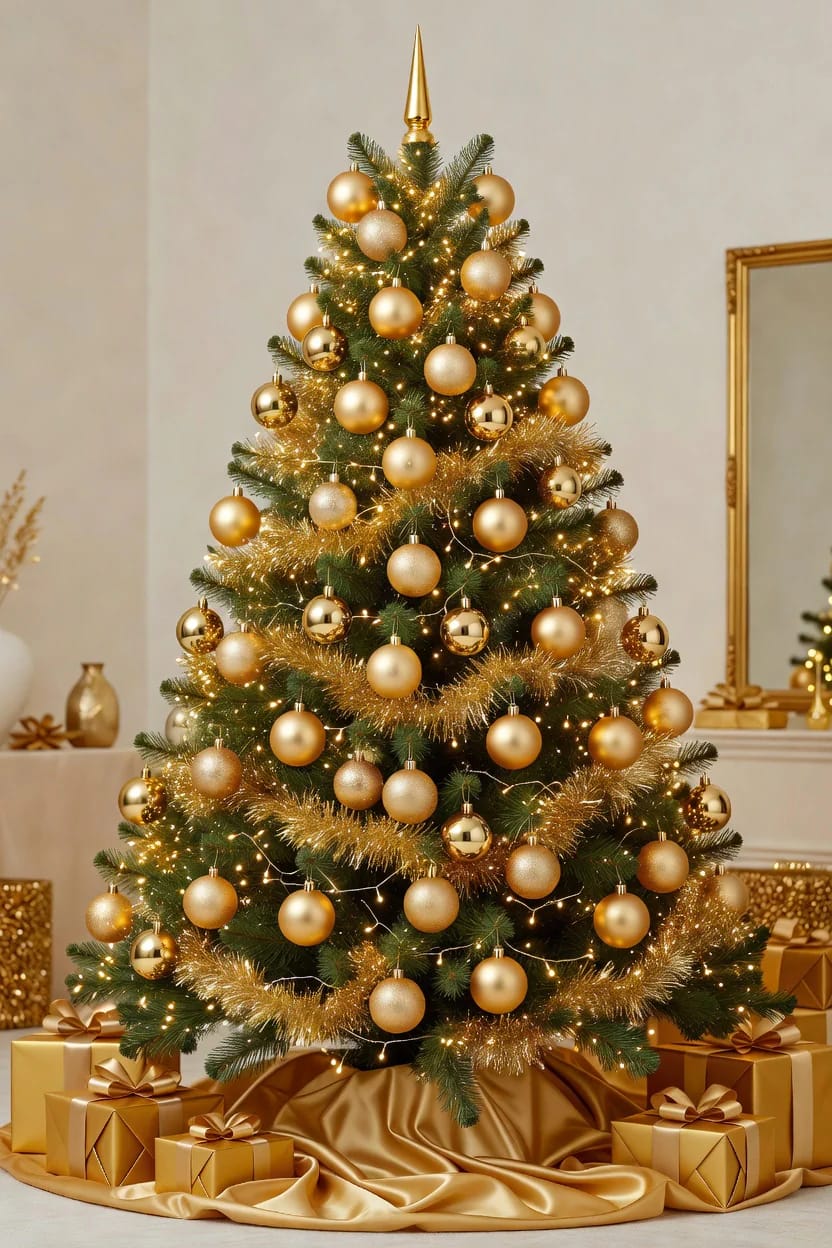
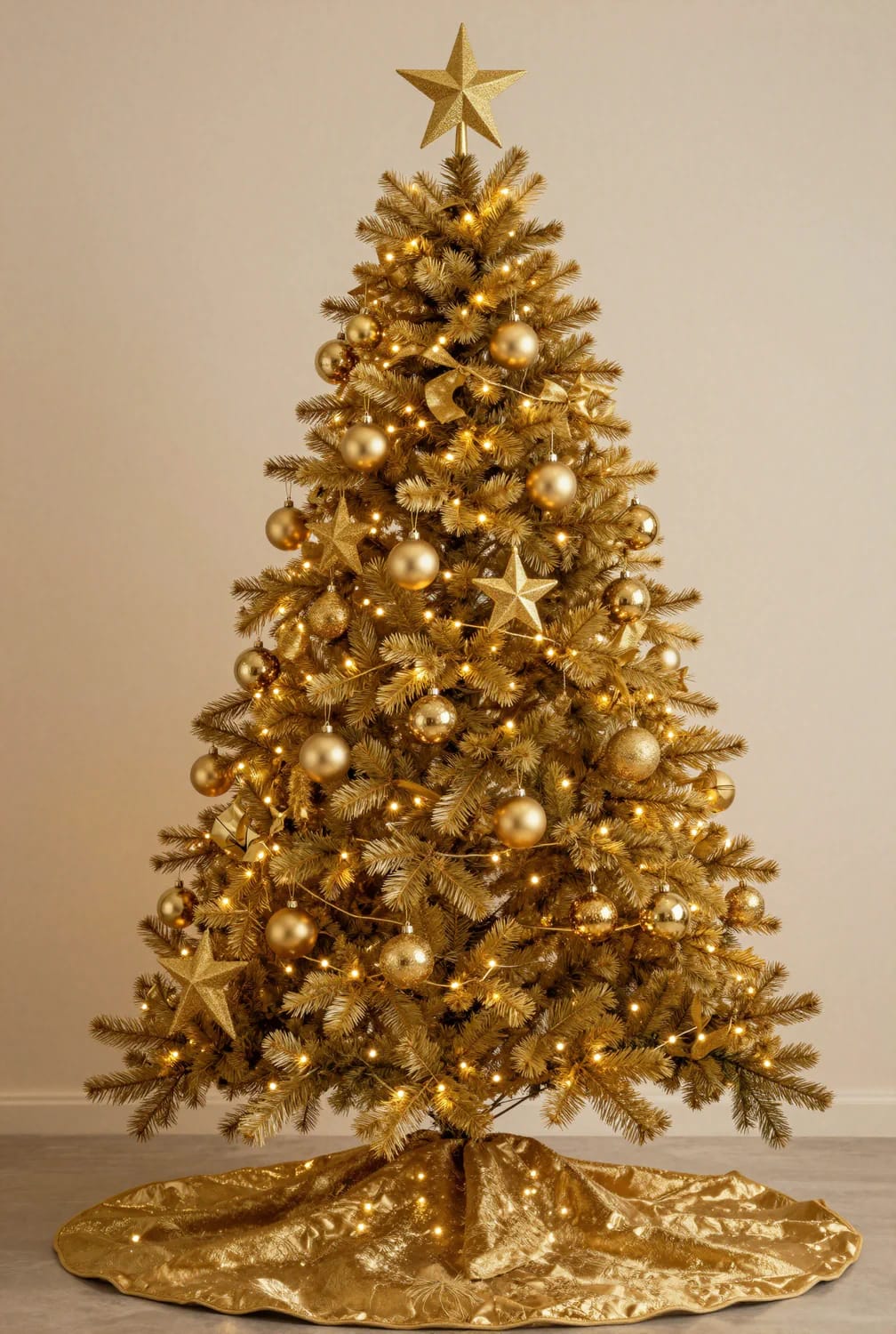
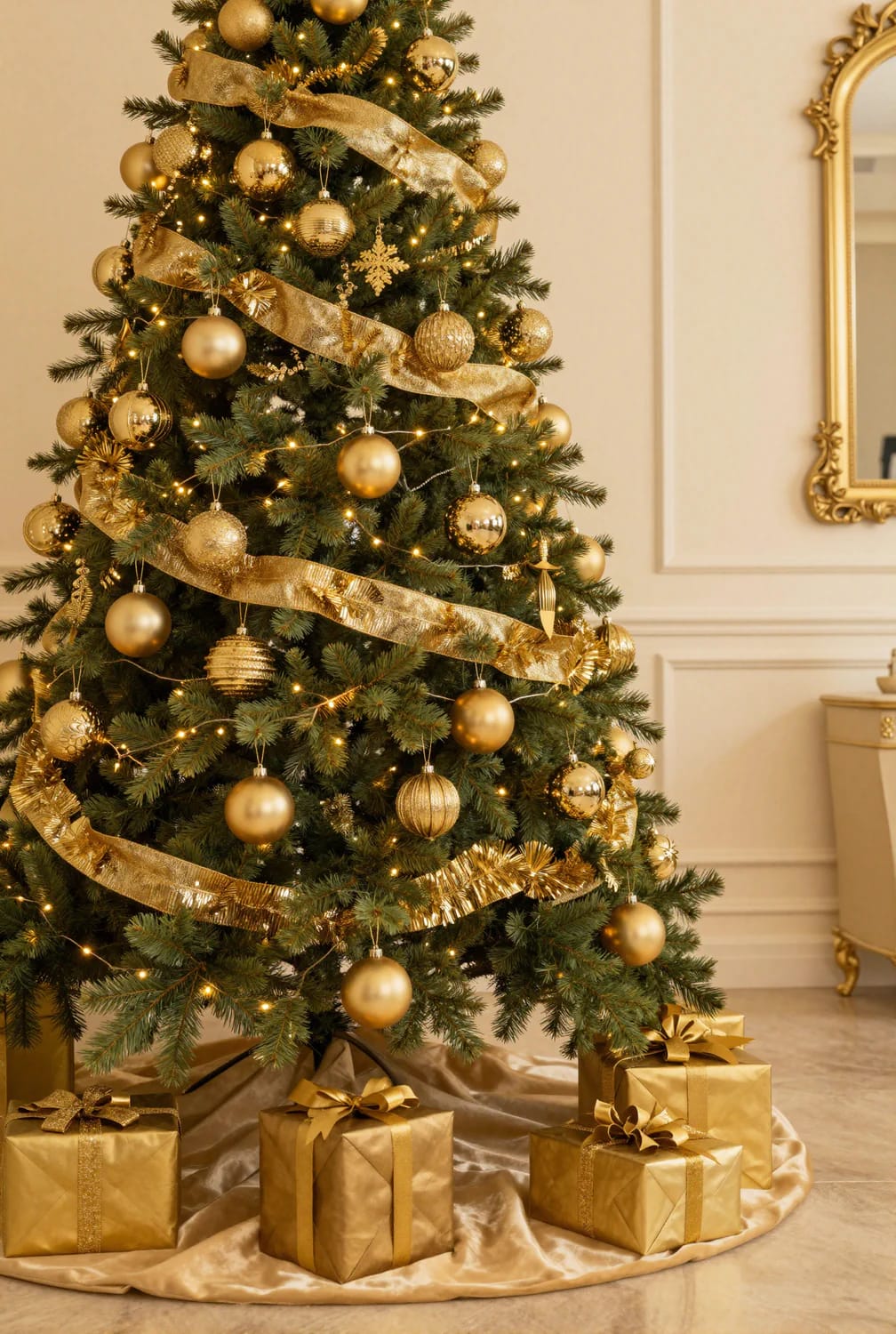
Gold is not one color, and a tree that mixes its families looks like three trees. Sort what you own into groups before anything goes on a branch:
- Warm brass and antique gold, slightly brown, the family most vintage ornaments belong to.
- Champagne and pale gold, closer to a warm silver, which is where most current retail sets sit.
- Rose gold. Genuinely pink, and it does not belong on a gold tree at all.
- Lemon or foil gold, the flat cold yellow of cheap plastic baubles; discard these, because they read as yellow rather than as metal from any distance.
Inside one family, build the depth with three levels of shine: matte brushed, satin, and one high-polish piece per branch section. The tree topper is the exception worth breaking the rule for, since a slightly warmer gold at the very top catches the ceiling light and pulls the eye up.
 Elegant Christmas Tree Ideas with Gold and Glass Ornaments How to stop the golds fighting each other, and which glass finishes actually earn a spot.
9. Terracotta and Clay: The Cheapest Single-Color Tree You Can Actually Build
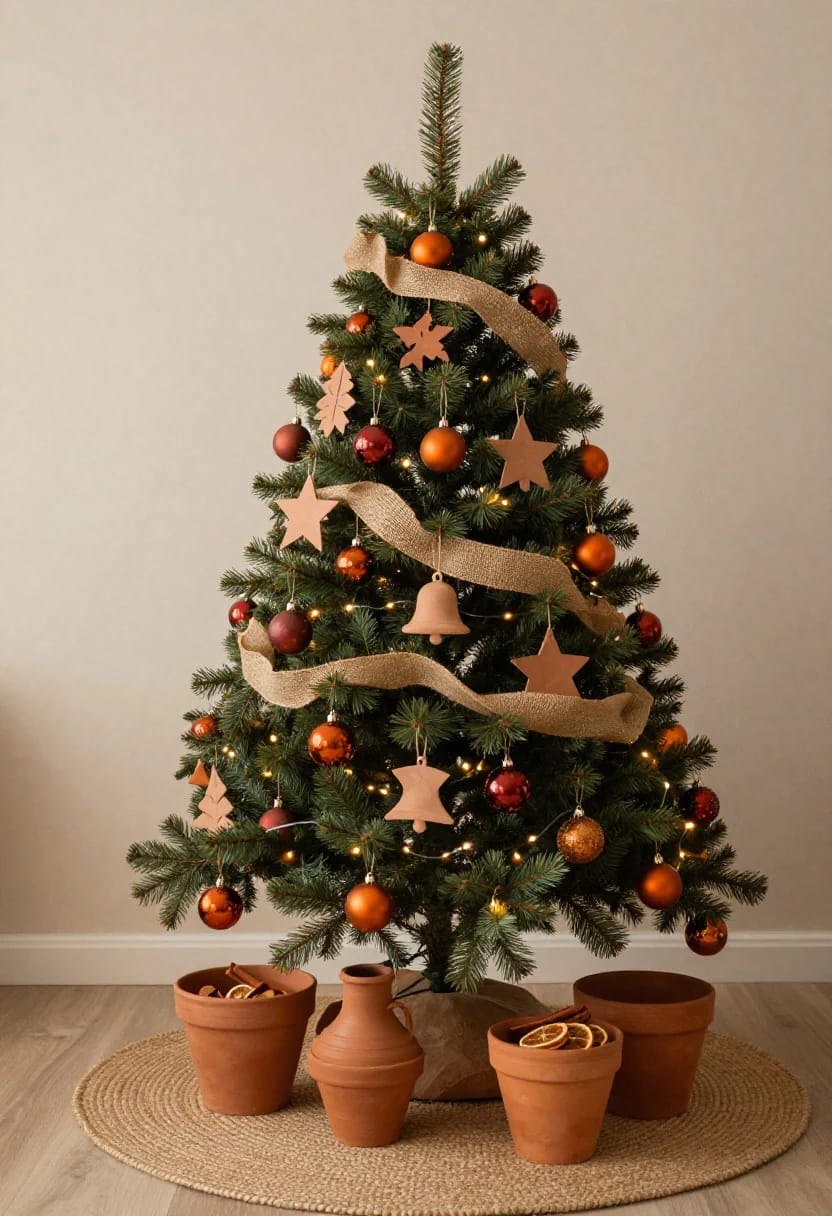
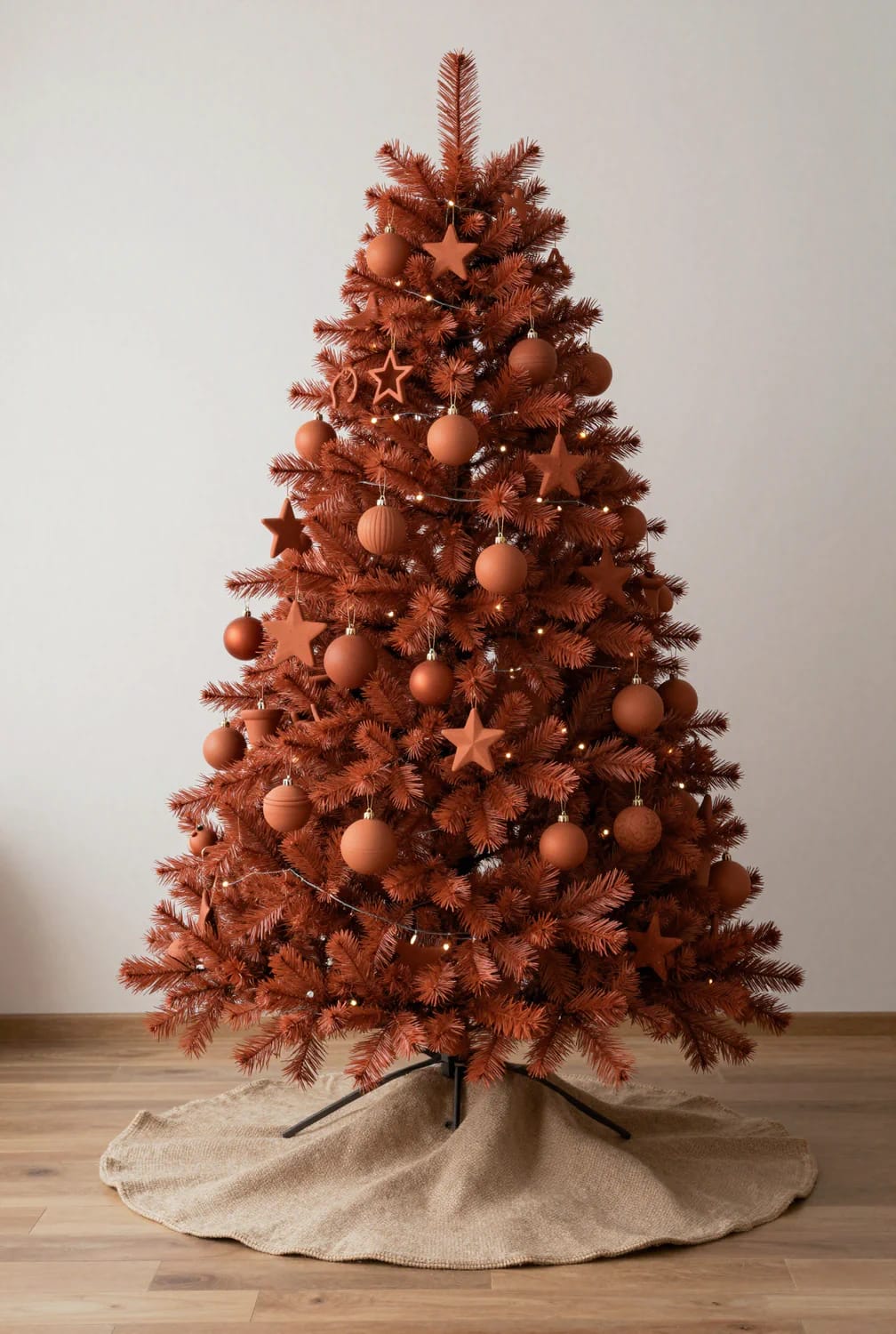
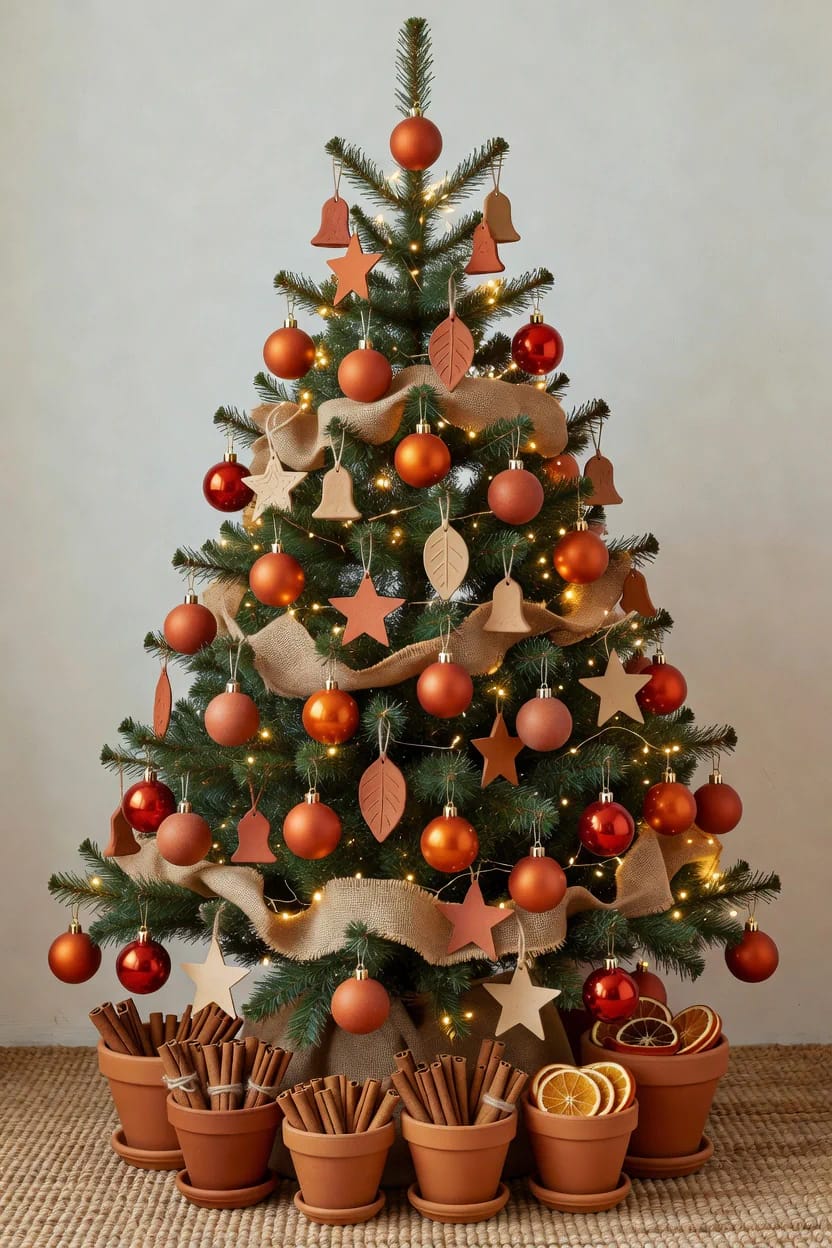
Every ornament on this tree can be made rather than bought, which is why it is the one theme here with a realistic budget of under thirty dollars. A block of air-dry clay, the DAS or Crayola kind sold at Michaels, typically runs about ten to twenty dollars and yields two or three dozen small discs and stars; dried orange slices cost the price of the oranges and three hours in a low oven; kraft paper and jute twine are pennies. The color holds together because unglazed clay, dried citrus, and brown kraft all sit in the same narrow band of warm orange-brown.
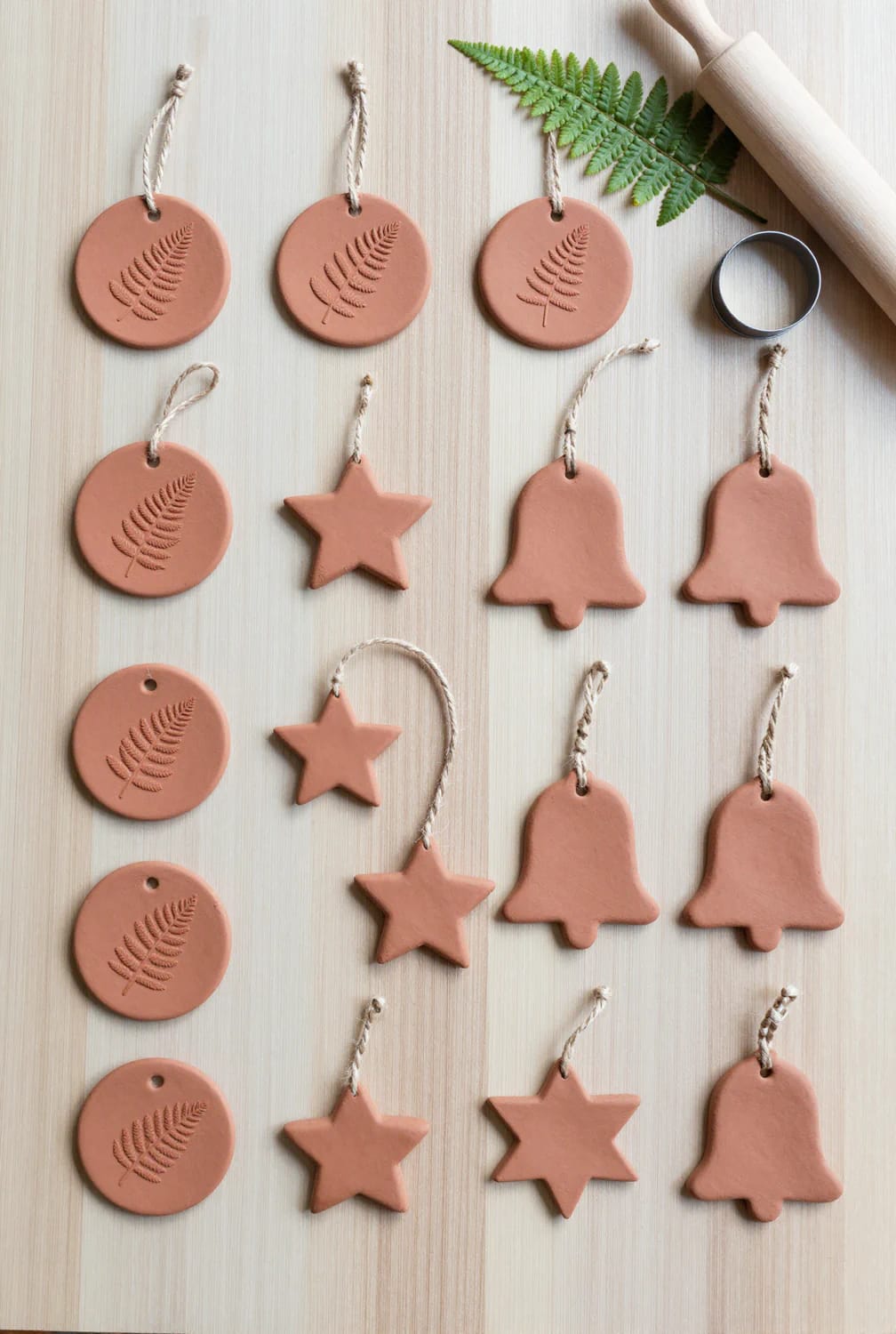
The one thing to buy rather than make is a few unglazed terracotta bells or small pots, because the fired surface is denser and slightly darker than air-dry clay and gives the tree its deepest tone. Without them the whole tree sits at one chalky value and goes soft. There are more handmade ornament shapes worth stealing for this palette than the discs and stars everyone defaults to, and pressed-leaf impressions in the clay hold up better than stamped lettering, which cracks along the letter edges as it dries.
Skip cinnamon sticks. They are the obvious addition, they photograph well, and after ten days indoors they smell like nothing and look like sticks.
Whichever palette you land on, buy in this order: lights first, then the glossiest third of the ornaments, then the matte bulk. That sequence exists because the bulb temperature changes what the ornaments look like in your room (a fact the blue tree makes unavoidable and the gold tree makes expensive), and because the glass and gloss pieces are the ones worth spending on, since they are what stops any single-color tree flattening after dark.
One thing I cannot resolve for you: flocked-tree white varies enormously between brands, from a cool blue-white to something closer to oatmeal, and no product photograph online has ever been reliable on this. If you are going all-white on flocking, order one ornament first and hold it against the tree before committing to a set of forty.
Related Posts
- 23 Kids Christmas Tree Ideas Full of Color, Whimsy, and Holiday Cheer
- 31 Dreamy Christmas Tree Decorations for a Unique Festive Touch
- 9 Warm, Cozy Christmas Living Room Color Schemes (and the One Undertone Rule That Makes Them Work)
- 21 Elegant Black and White Christmas Decor Ideas
- 10 Whimsical Christmas Tree Decorating Ideas That Actually Read as Playful, Not Cluttered
- Modern Minimalist Christmas Decor Ideas for the Whole Home