
Most "natural Christmas" roundups are really just twelve photos of dried oranges in slightly different lighting. This one spreads across the whole house instead: ornaments that catch window light, a garland for the mantel, feeders for the birds, and one wall-hung tree for rooms too small for a real one. A few of these are genuinely quick (the cinnamon bundles take five minutes), a couple ask for an afternoon, and one of them, the pomander, is meant to look slightly worse before it looks right. I have noted which is which so you do not waste a Saturday on the wrong project.

1. Dried orange slice ornaments that glow in the window
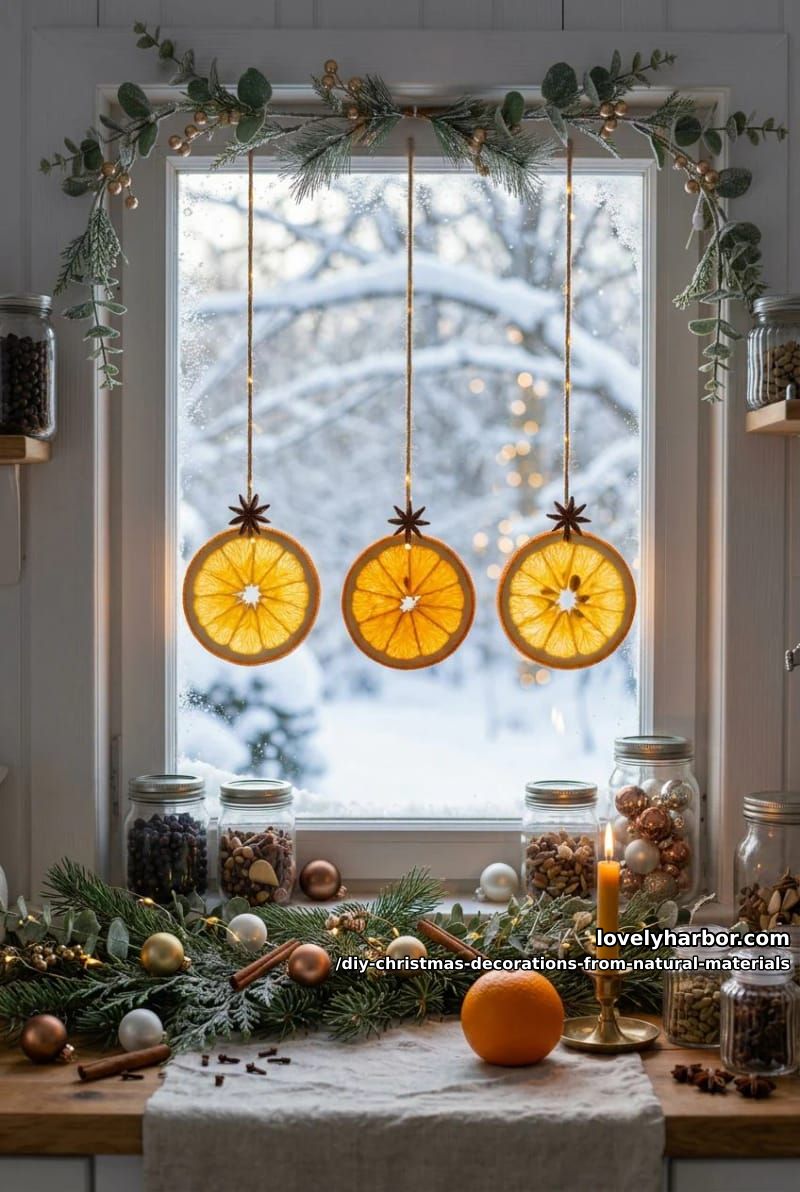
Dry the slices low and slow, or you will spend an afternoon making leathery brown coins. Cut firm seedless oranges (navel or Cara Cara) about an eighth of an inch thick, blot them hard between towels, and hold the oven at its lowest setting, somewhere around 200°F, flipping every 30 minutes. Most batches finish in two to six hours depending on thickness; they are done when translucent and no longer wet in the center, not when crisp. A dehydrator at 130 to 140°F runs longer (closer to 8 to 12 hours) but is almost impossible to burn, which matters if you are also cooking dinner.
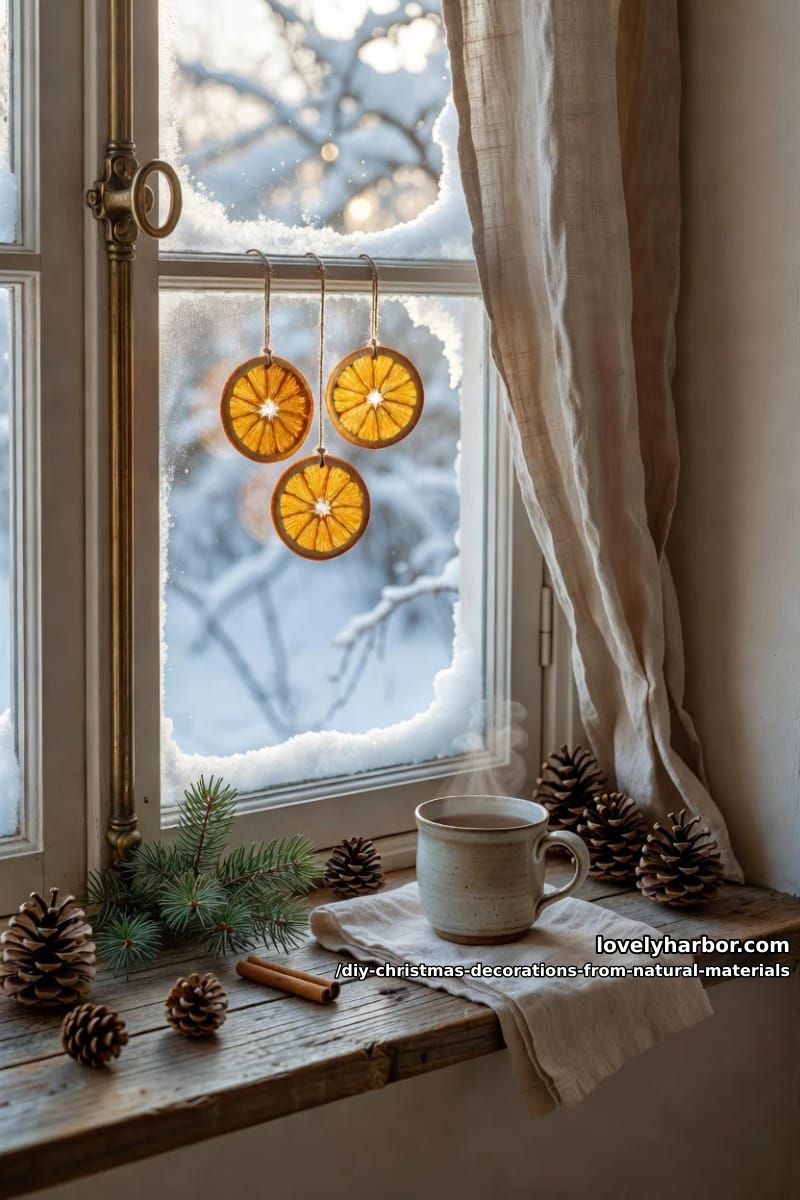
If the edges brown before the middle dries, your oven runs hot, so drop the temperature and keep flipping. And do not store them the day they come out. They keep dehydrating for a few weeks, and slices sealed too early grow mold in the bag. Cool them fully, then leave them on a rack a day before stringing. Done right they last two or three seasons.
2. Beeswax-dipped leaves and ferns for translucent ornaments
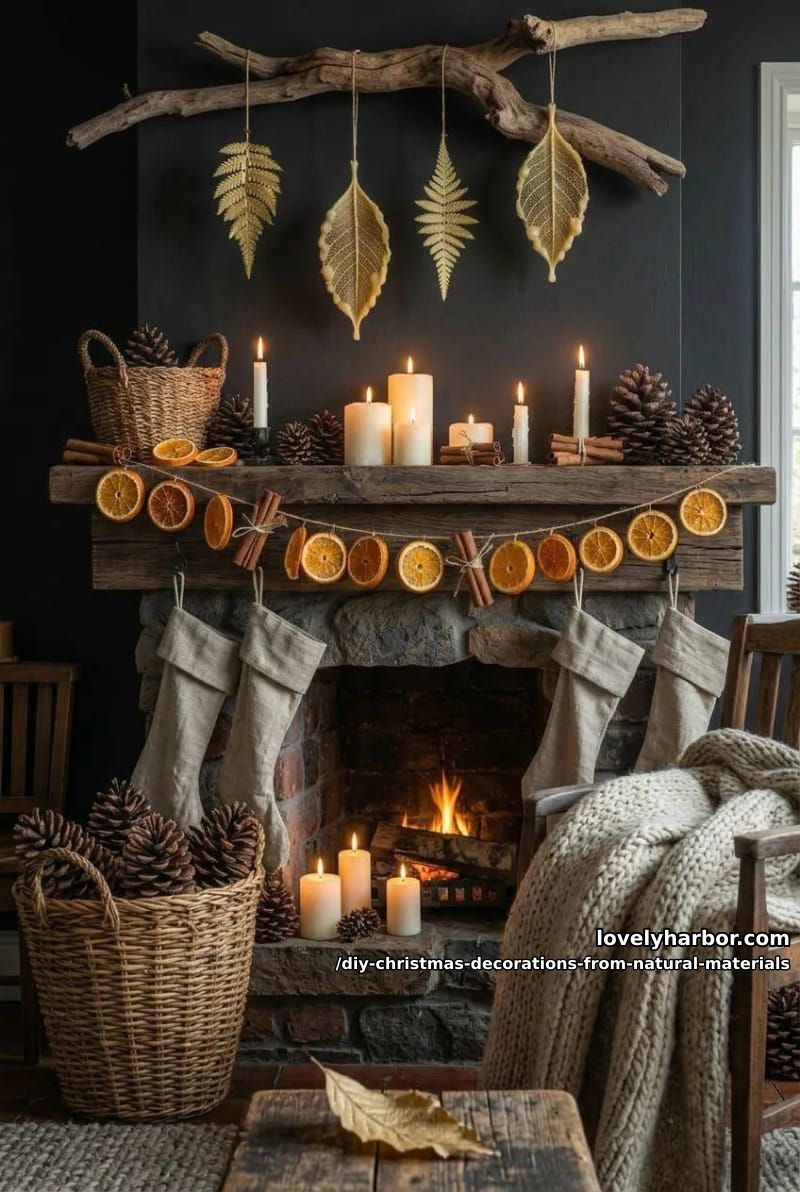
Dip pressed leaves in melted beeswax and they turn into stiff, semi-translucent ornaments with a honey scent. Press oak, magnolia, fern, or skeleton leaves flat in a heavy book for a week first, then hold each by the stem and dunk it once into wax melted gently in a double boiler (beeswax melts around 145°F, so keep it off direct high heat). Lift, let the excess run off, and set it on parchment for a minute to harden. I do not fully understand why a wax-dipped leaf survives a whole season when a bare dried one shatters by New Year's, but it does, and that is the whole appeal: the wax both preserves and gives the leaf a faint glow on the tree.
3. Pinecone gnomes the kids can actually finish
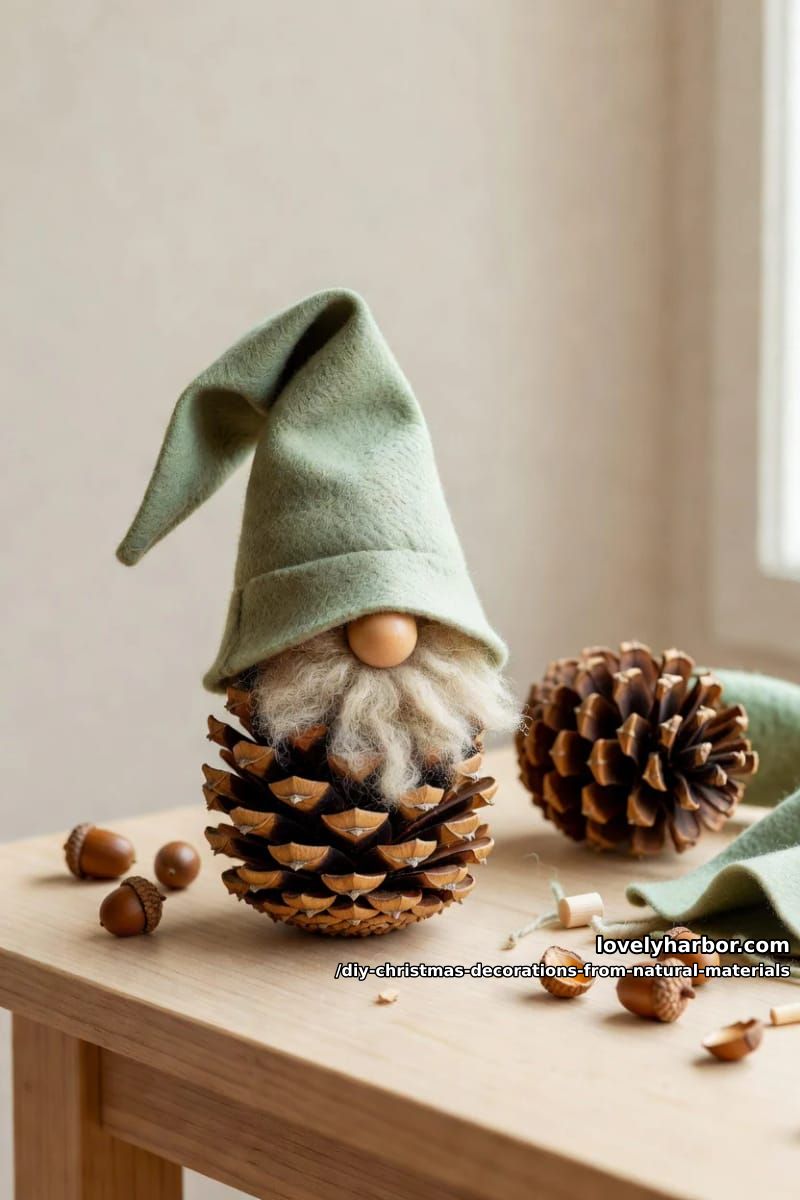
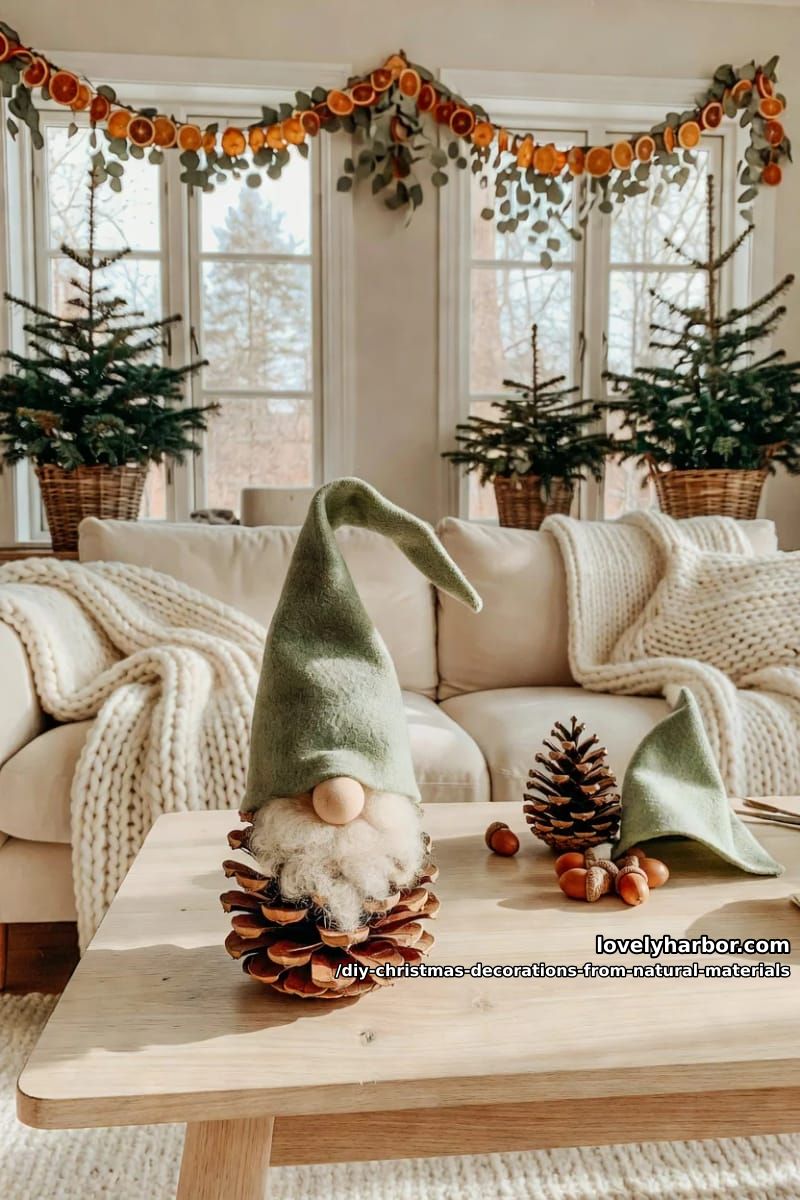
This is the one to hand a six-year-old. A pinecone is the body, a wooden bead is the nose, and a felt cone pulled low becomes the hat that hides everything else (the joke of a gnome is that there is no face). Hot glue works but it is hot, so for younger kids use tacky craft glue and just accept the longer dry time. The felt hat is what sells it, so cut a quarter-circle of wool felt, roll it into a cone, and let it lean. A perfectly straight hat looks like a traffic cone; a slumped one looks alive.
4. Clove-studded orange pomanders, the scent that lasts the season

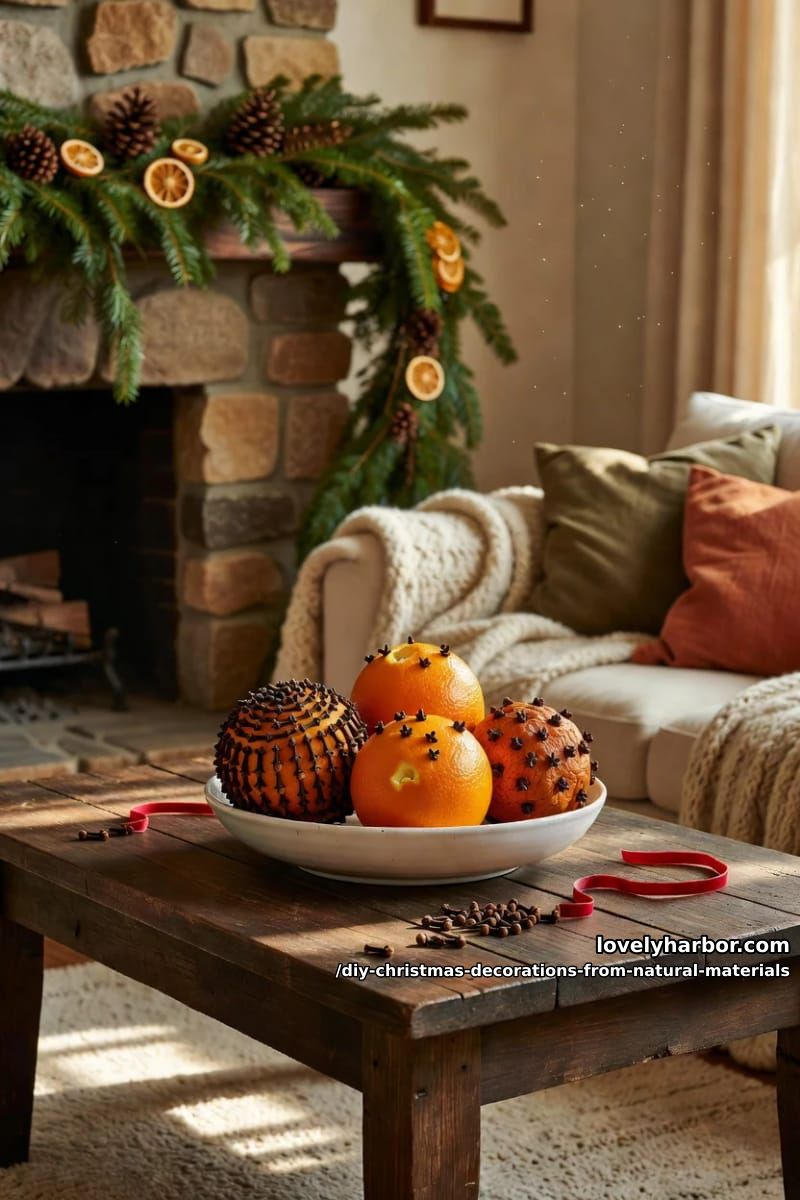
A pomander is a whole orange studded with cloves, and the counterintuitive part is that it is supposed to shrink. Push whole cloves through the skin in rows or a pattern (use a toothpick to pre-poke holes if your thumbs give out, which they will around clove number two hundred). Then roll it in a mix of ground cinnamon and orris root powder, the orris being the fixative that makes the scent last and keeps the fruit from rotting instead of curing. Set it somewhere dry and airy for a few weeks. It will harden, darken, and lose a third of its size, and that shrunken leathery version is the one that perfumes a room for months. People email asking why theirs went moldy: almost always too few cloves, too damp a spot, or no orris root.
5. Star anise blossom ornaments on paper-covered wire
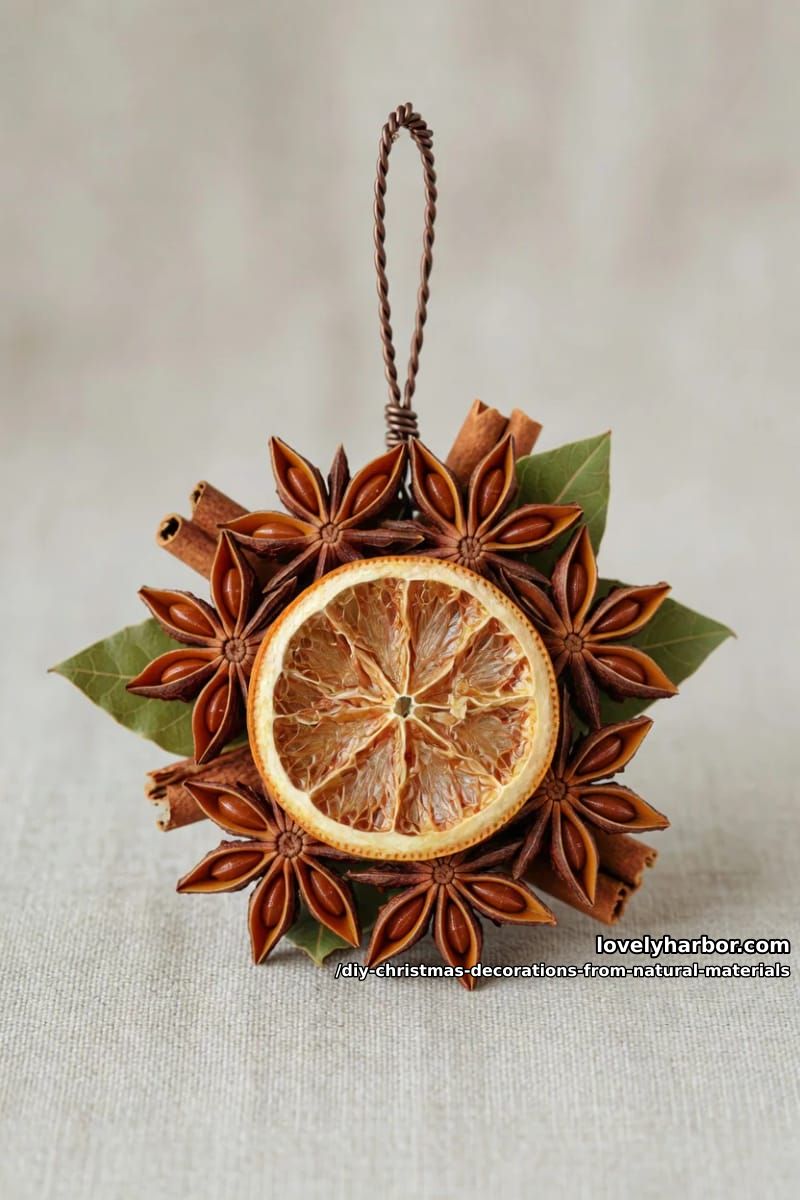
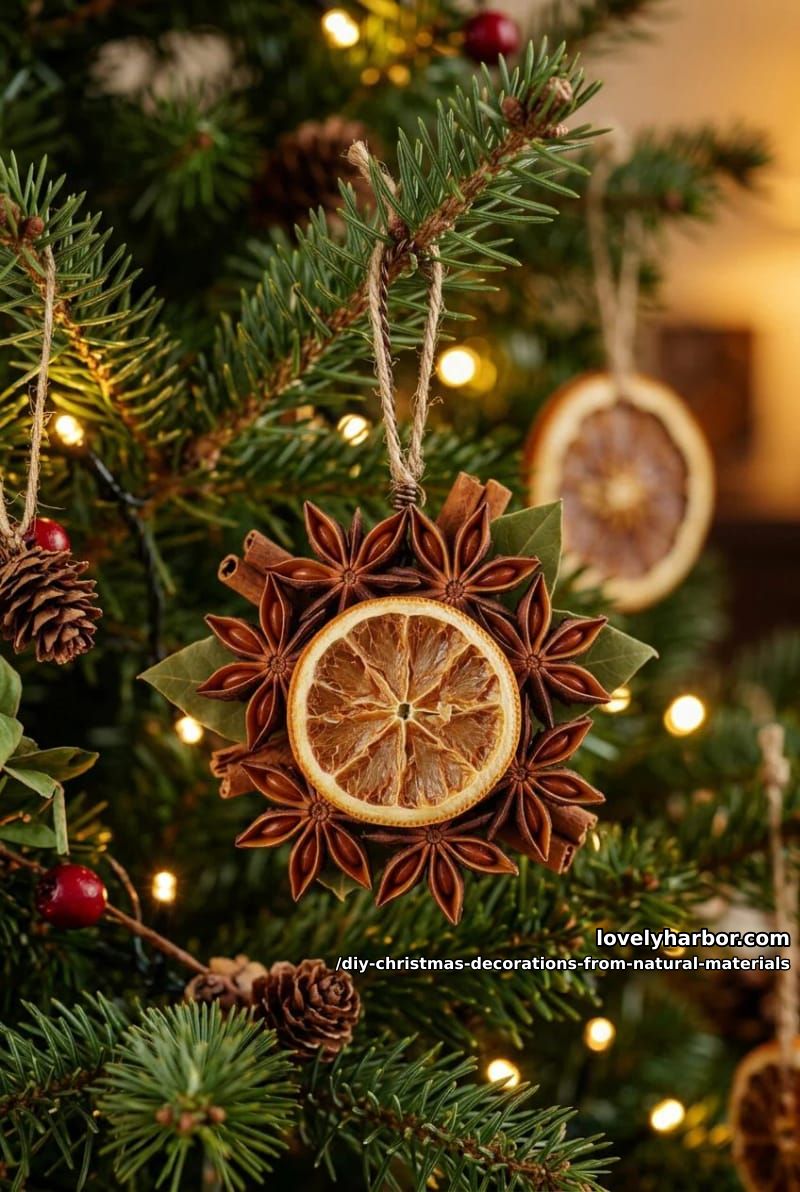
Star anise is the natural material that looks the most deliberately designed, which is why it photographs so well. Arrange six to eight pods in a rosette and bind the stems with brown paper-covered floral wire, or glue them around a dried orange slice for a flower with a glowing center. The pods are brittle, so expect to break a few points; buy a bag with extra rather than the tidy spice-jar quantity. Whole star anise from the bulk bin runs a fraction of the grocery spice-aisle price.
6. Cinnamon stick bundles tied in threes
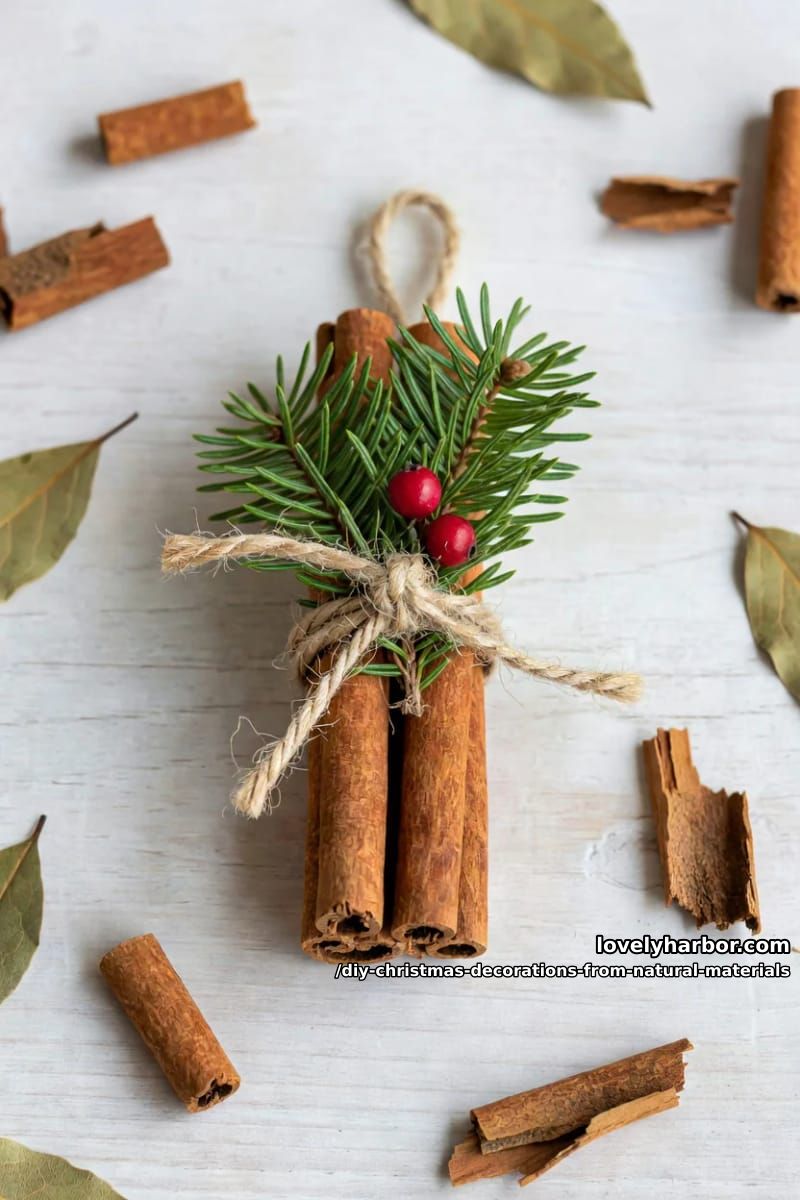
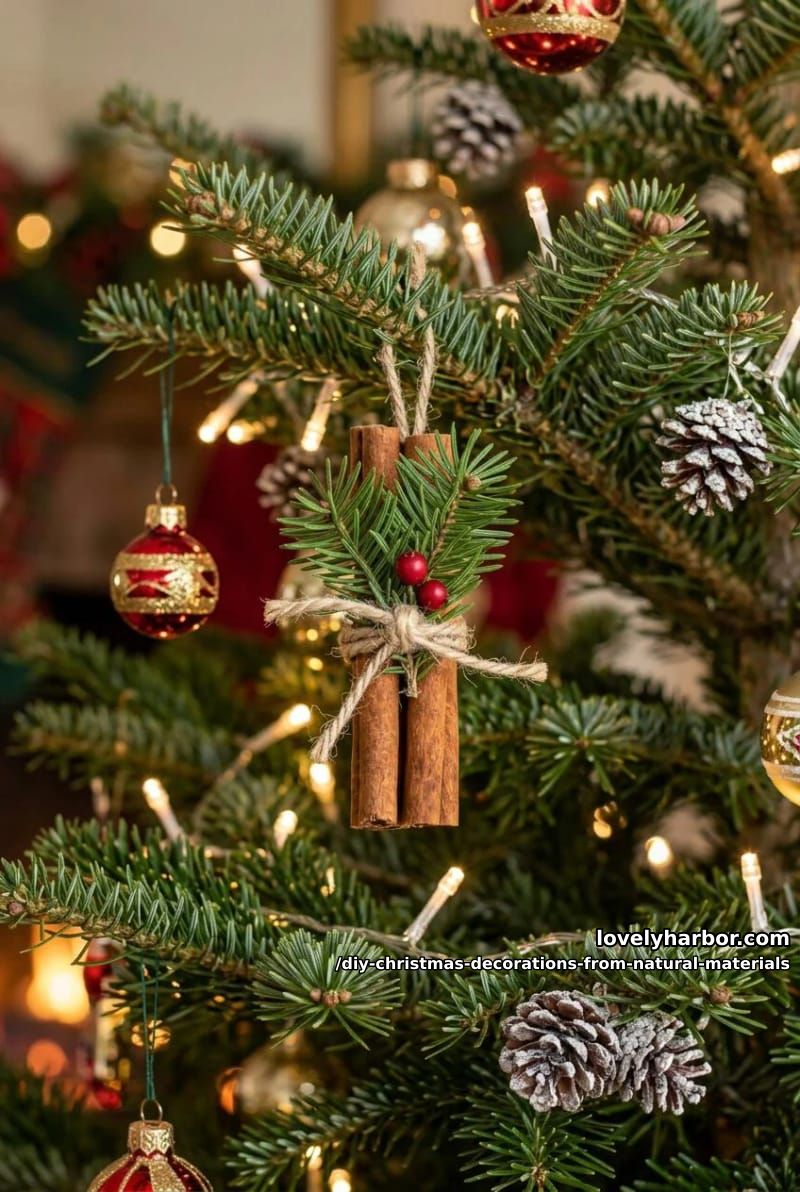
Bundle three cinnamon sticks, wrap twine around the middle, tuck in a bit of greenery, done in five minutes. The only decision that matters is which cinnamon. Cassia sticks (the thick, hard, dark ones in most grocery stores) are cheap, sturdy, and smell strong, which is exactly what you want for decor. Save the fragile, papery Ceylon "true cinnamon" for baking; it crumbles when you tie it and costs more for the privilege. Buy the longest sticks you can find, since six-inch sticks read as decorations and three-inch ones read as leftovers.
7. Salt dough ornaments pressed with real herbs
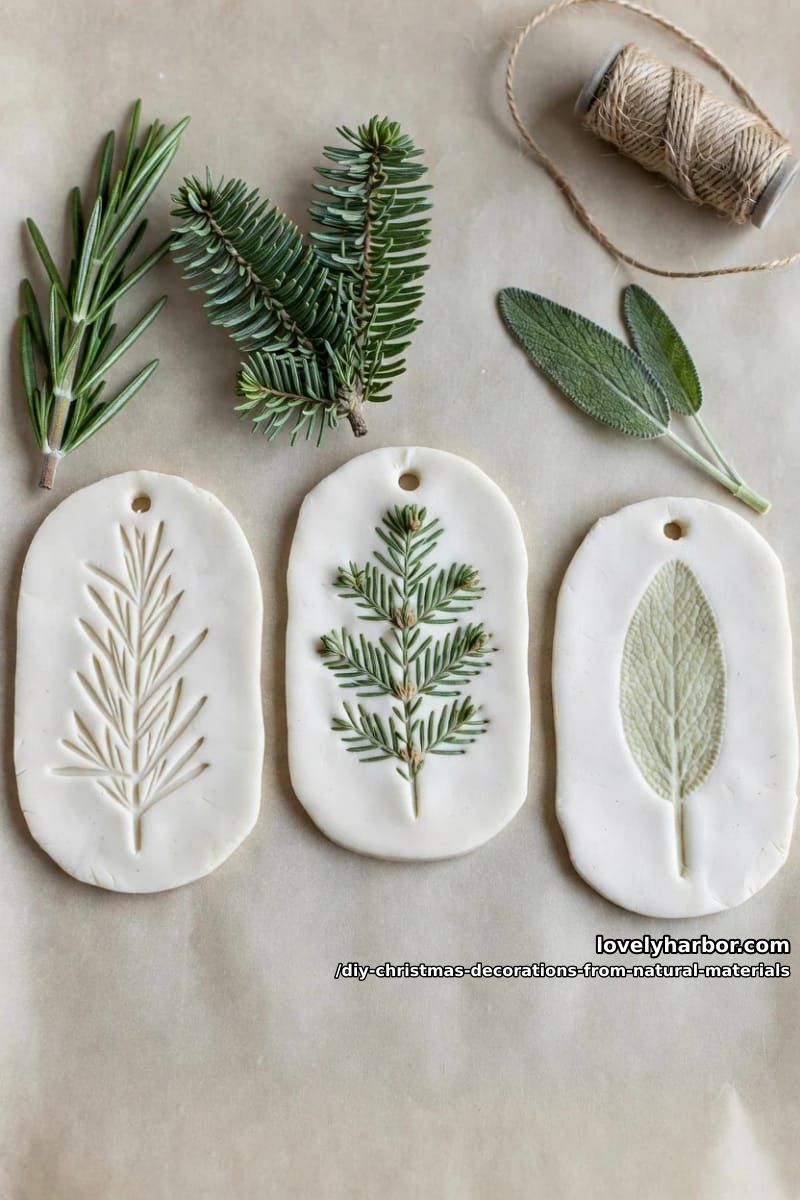
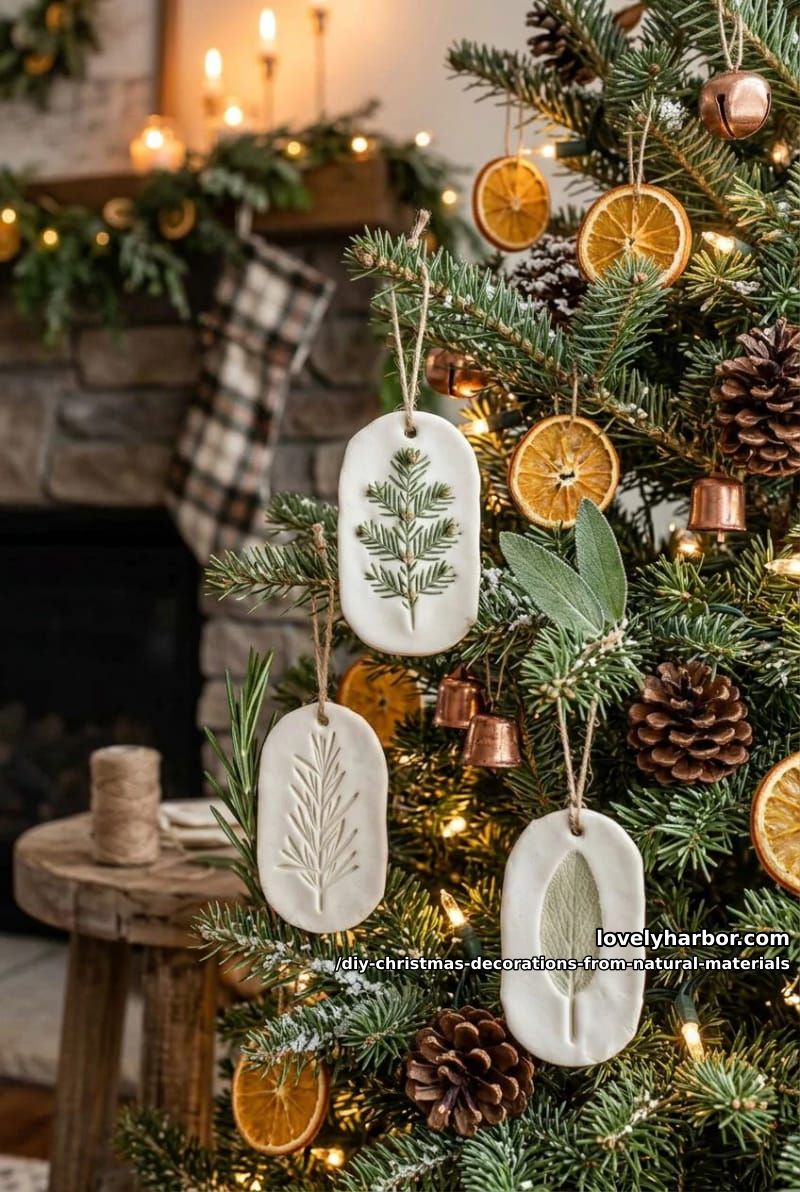
Salt dough is flour, salt, and water in a 2:1:1 ratio (two cups flour, one cup salt, one cup water), kneaded smooth and rolled about a quarter inch thick. Press a rosemary sprig or fir twig firmly into each cut shape, peel it away, and you are left with a botanical fossil. Bake at the oven's lowest setting, around 200°F, flipping every 30 minutes until hard, usually two to three hours. Higher heat puffs and browns them, so resist the urge to rush.
Do
- Use plain all-purpose flour and ordinary table salt. Self-rising flour makes them puff up and lose the imprint.
- Poke the hanging hole with a straw before baking, not after.
- Seal finished ornaments with a couple of thin coats of matte acrylic varnish if you want them to last years rather than one season.
Avoid
- Hanging these anywhere a dog can reach. The salt content is genuinely toxic to dogs if eaten.
- Rolling too thick. Half-inch ornaments take forever to dry through and crack.
8. Twig and yarn stars for a Scandinavian tree
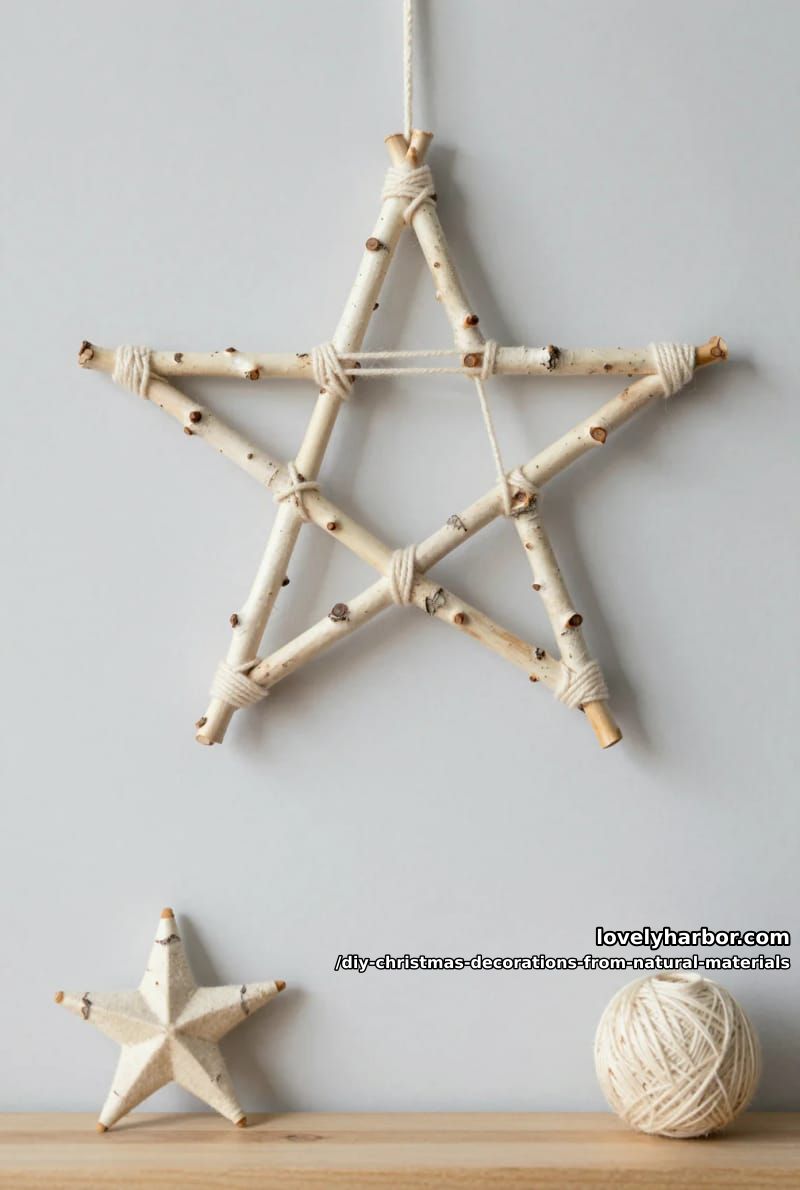
Five straight twigs and a length of yarn make a star, and the imperfect ones look better than the precise ones. Snip pencil-thin twigs to roughly equal lengths, overlap them into a five-point shape, and lash each joint with wool yarn or twine, winding a few times and tying off. Wrap loose yarn across the open middle if you want a web. These cost nothing if you have a tree in the yard, and a cluster of them at different sizes makes a better window display than any single large one.

9. Birdseed cookie-cutter feeders for the window tree

These are the rare decoration the birds eat, and they double as gifts for teachers and neighbors. Pack birdseed into greased metal cookie cutters using gelatin as the binder, then chill or air-dry until firm enough to handle. Skip the corn syrup and honey that older recipes call for; neither is good for birds, and plain unflavored gelatin sets perfectly well on its own (a little jam helps if a batch is crumbly).
Dissolve about 3 tablespoons unflavored gelatin in 1/2 cup hot water, stirring until clear.
Stir in roughly 2 cups birdseed until every seed is coated but the mix is not soupy.
Pack firmly into greased cutters on parchment, poke a hanging hole, and let set at least overnight (closer to 72 hours for toddler-proof ones).
Hang them when it is cold. Warm, wet weather softens the gelatin and they fall apart, so bring them in during a thaw and watch for mold.
10. Acorn-cap and walnut garland for the mantel
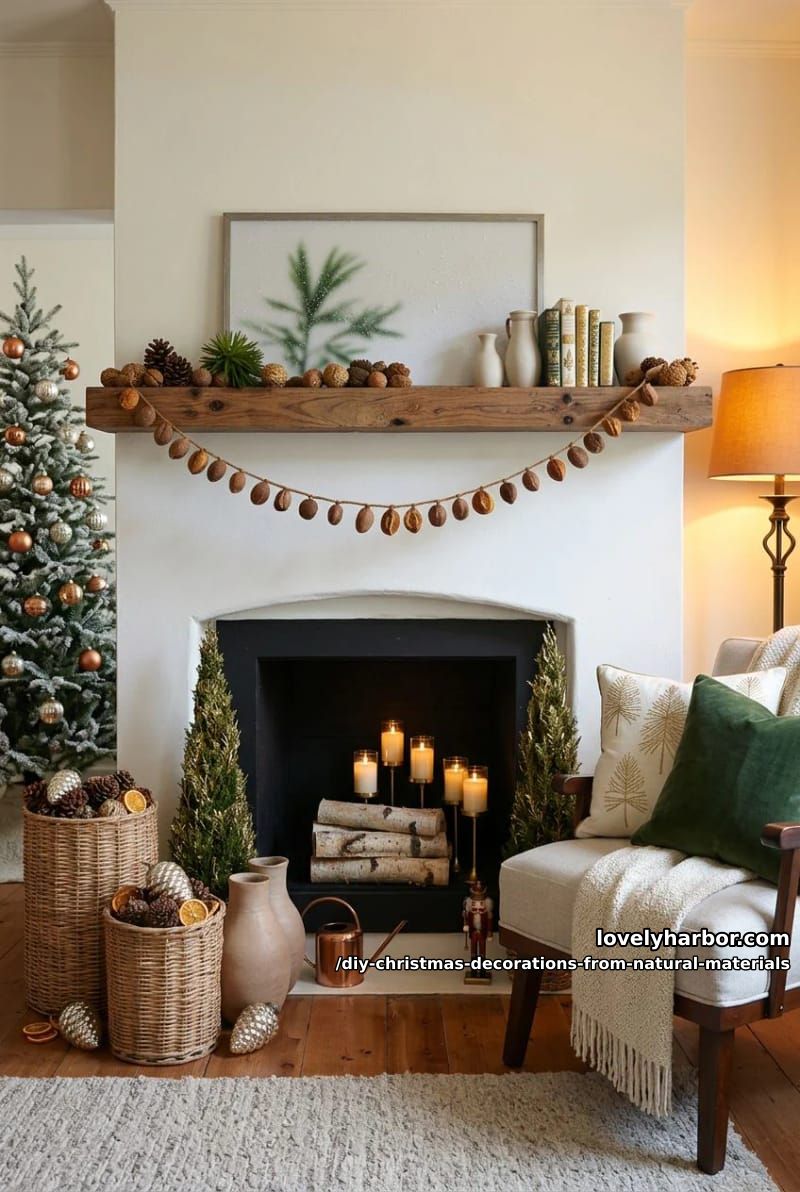
Walnuts and acorns make a heavier, more sculptural garland than the usual cranberry-and-popcorn version. Drill a small hole through walnut shells (or glue caps back onto acorns first, because they fall off otherwise) and thread them on jute with knots between each to keep spacing. If you are foraging acorns, freeze them for 24 hours or bake them low for an hour to kill the weevils already living inside, a step I skipped once and regretted in January. Mix in a few dried orange slices if the all-brown palette feels too monastic.
11. Wood slice ornaments that double as place cards
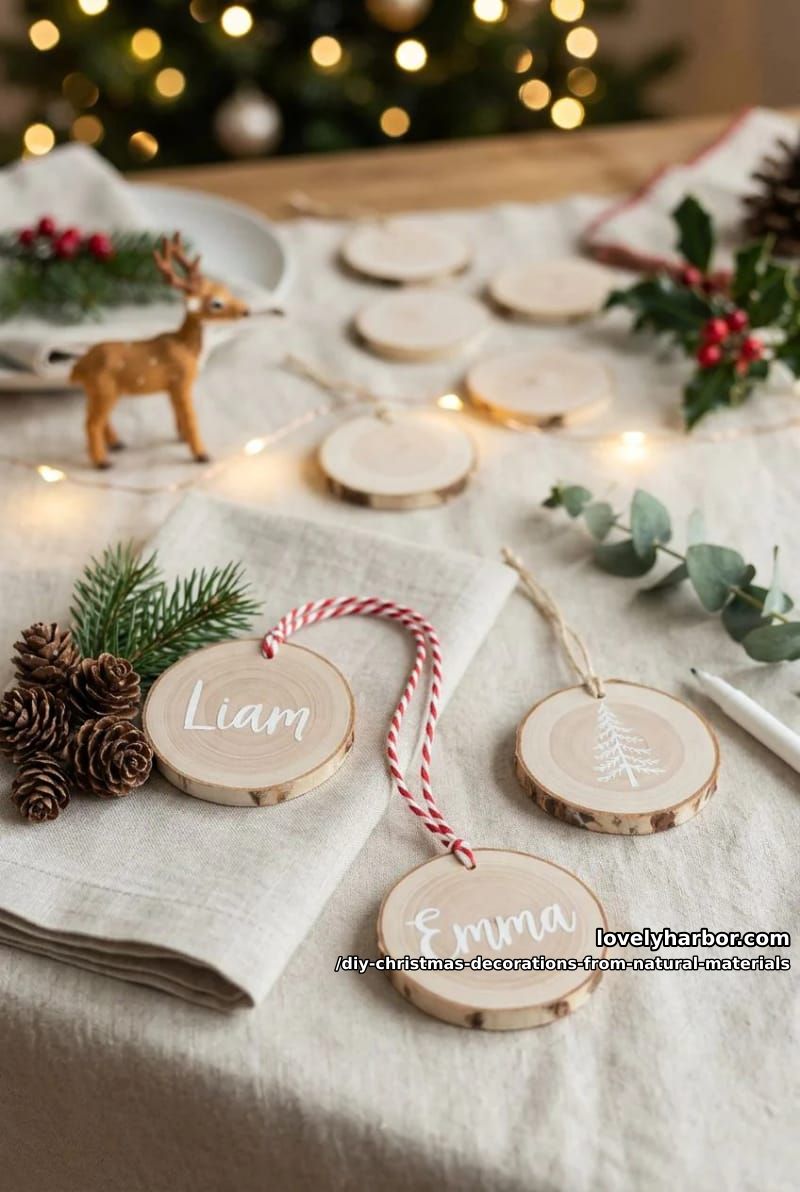
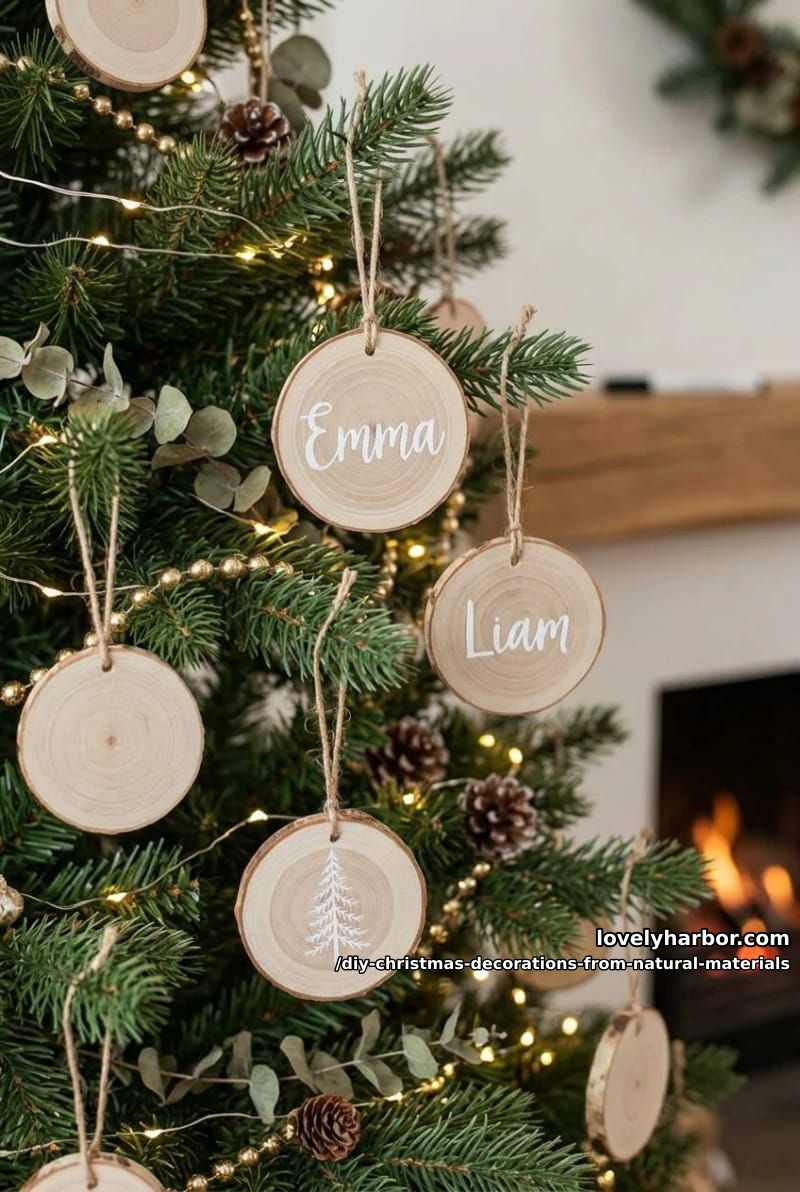
A bag of wood slices solves two problems at once: tree ornaments and holiday place cards. Cross-cut branch slices (birch and aspen sand up palest) take a name in white paint pen for the dinner table and a drilled hole and twine loop for the tree. The same slice can do both jobs across a season if you skip the varnish, which is the move when you are decorating a long table on no budget. For a cleaner look, sand the faces before you write; raw saw marks fight with the lettering.
12. A wall-hung twig Christmas tree for tight rooms
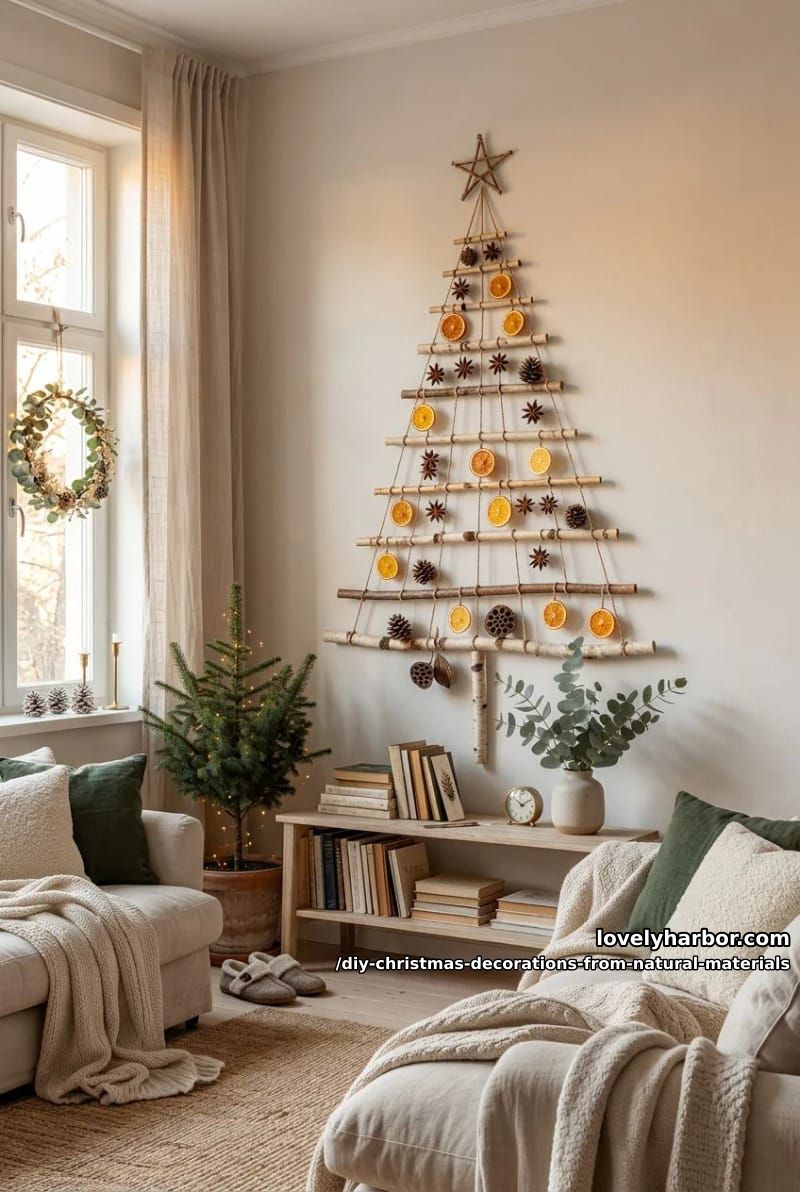
For a studio or a room with no floor to spare, a wall tree is the honest answer. It is just twigs of decreasing length tied to two vertical cords, forming a flat triangle you hang like art. This is also the project where every other idea on this list comes home: orange slices, star anise blossoms, twig stars, and mini pinecones all hang from the crossbars.
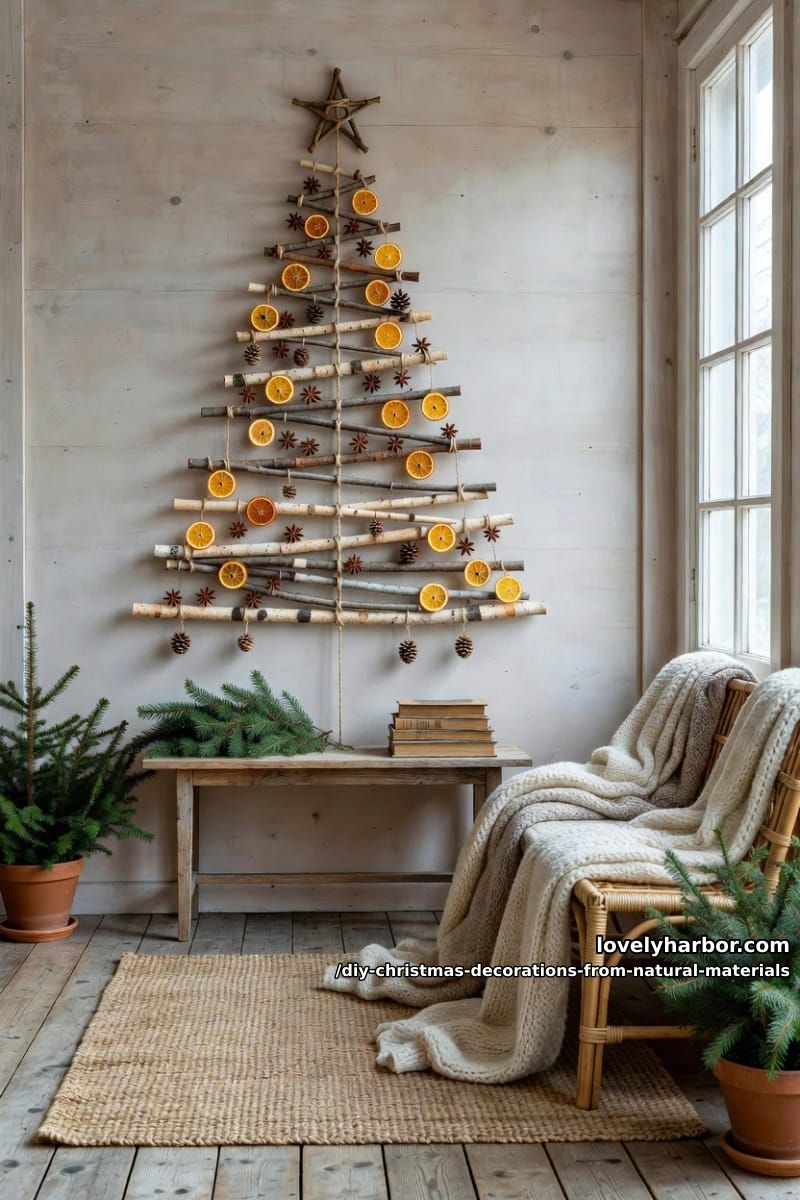
A 3-foot wall tree from yard twigs
About 10 horizontal twigs, two 4-foot lengths of jute, one evening
Cut ten straightish twigs graduating from roughly 20 inches at the base to 3 inches at the top. Lay them out flat in the triangle first, then lash each one to two parallel jute cords with a few wraps and a knot, keeping even gaps. Tie a loop at the top, add a twig star, and hang from a single nail or a Command hook (renters, this is your version, no holes). The whole thing weighs almost nothing, which is the point, and it stores flat behind a door for next year.
Conclusion
If you only make one thing, make the dried oranges, because half the other projects (the garland, the star anise blossoms, the wall tree) borrow them. Start those first since they need the longest drying and the most oven babysitting, then do the pomanders the same week so they have time to cure. Everything else (the cinnamon bundles, the twig stars, the wood slices) is a one-evening job you can leave until the week before. The salt dough and birdseed feeders are the two to save for a day with kids around, just keep the salt dough away from the dog and hang the feeders only once it is properly cold out.