
The decorations that actually sell at a holiday market are rarely the most impressive ones. They are the small, repeatable pieces a shopper can carry home in one hand for the price of a fancy coffee, and the ones whose materials cost you under two dollars so the math works at $5 a piece. This is a list of eleven things that fit that description: wood slice snowmen that move in stacks, scented dough ornaments people smell before they see, and a handful of newer pieces (cast concrete tea lights, dried citrus garlands) that earn a higher price because almost nobody at your local fair is making them yet. It also covers the one mistake that gets handmade sellers a cease-and-desist letter, and where each of these is worth listing once you have a pile of them.
Wood slice snowman ornaments (the reliable craft-fair bestseller)
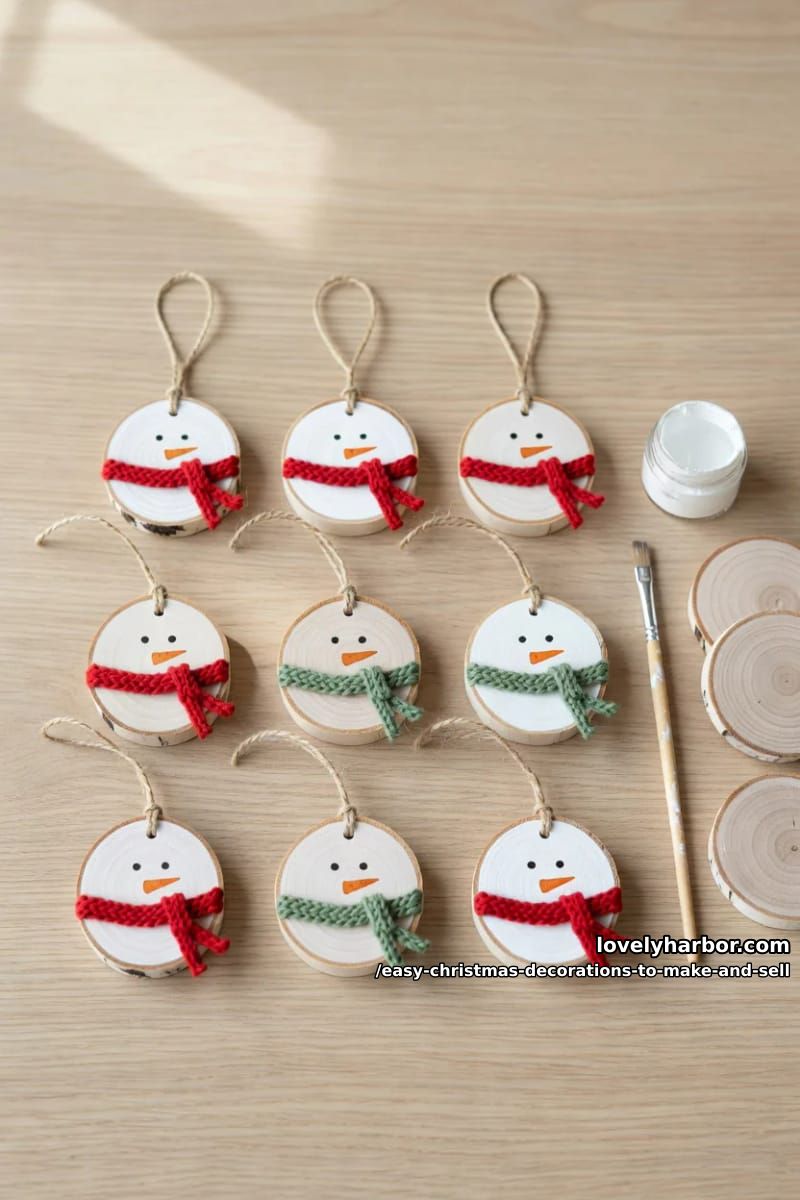
Start here if you have never sold a craft in your life. Wood slice snowmen are cheap to produce, nearly impossible to get wrong, and shoppers buy them in threes and fours because they are reading them as stocking stuffers, not as art. A 2 to 3 inch basswood or birch round, a white face, two dot eyes, an orange nose, and a scrap of ribbon for a scarf is the entire build. The skill ceiling is low and the perceived value is high, which is exactly the combination you want for a first table.

The money question is margin, and this is where wood slices win. A bag of rounds runs about $10 to $18 on Amazon for twenty to thirty pieces, and your paint and twine are pennies per ornament once amortized. Price a single at $5 to $6 and bundle them "any 3 for $12" so the round number does the selling. I learned the bundling trick the slow way: my first year I priced singles at $4 and watched people pick one up, do mental math, and put it back. A $12 bill leaves the wallet faster than three separate four-dollar decisions.
Pricing a batch of 25 wood slice snowmen
One afternoon of painting, sold at a December market
Here is the actual arithmetic on a starter batch, using mid-range Amazon prices as of June 2026. The point is not the exact total, it is that your cost per finished ornament lands near a dollar fifty, which gives you room to absorb a craft-fair table fee or Etsy’s cut and still keep most of the sale.
Shopping list
| Qty | Item | Spec | Price |
|---|---|---|---|
| 1 bag | Basswood or birch slices | 2 to 3 in, ~25 to 30 count, bark on | $12 to $18 |
| 1 set | Acrylic craft paint | white, black, orange at minimum | $6 to $12 |
| 1 | Fine paint pens or detail brush | for faces, less wobble than a brush | $5 to $10 |
| 1 spool | Jute or baker’s twine | hangers, plus scarf scraps | $3 to $5 |
| 1 | Matte sealer | spray or brush-on, weatherproofs the paint | $6 to $10 |
| Total for ~25 ornaments | $32 to $55 | ||
Prices are approximate ranges as of June 2026; verify before purchase.
Mini wooden bead wreaths
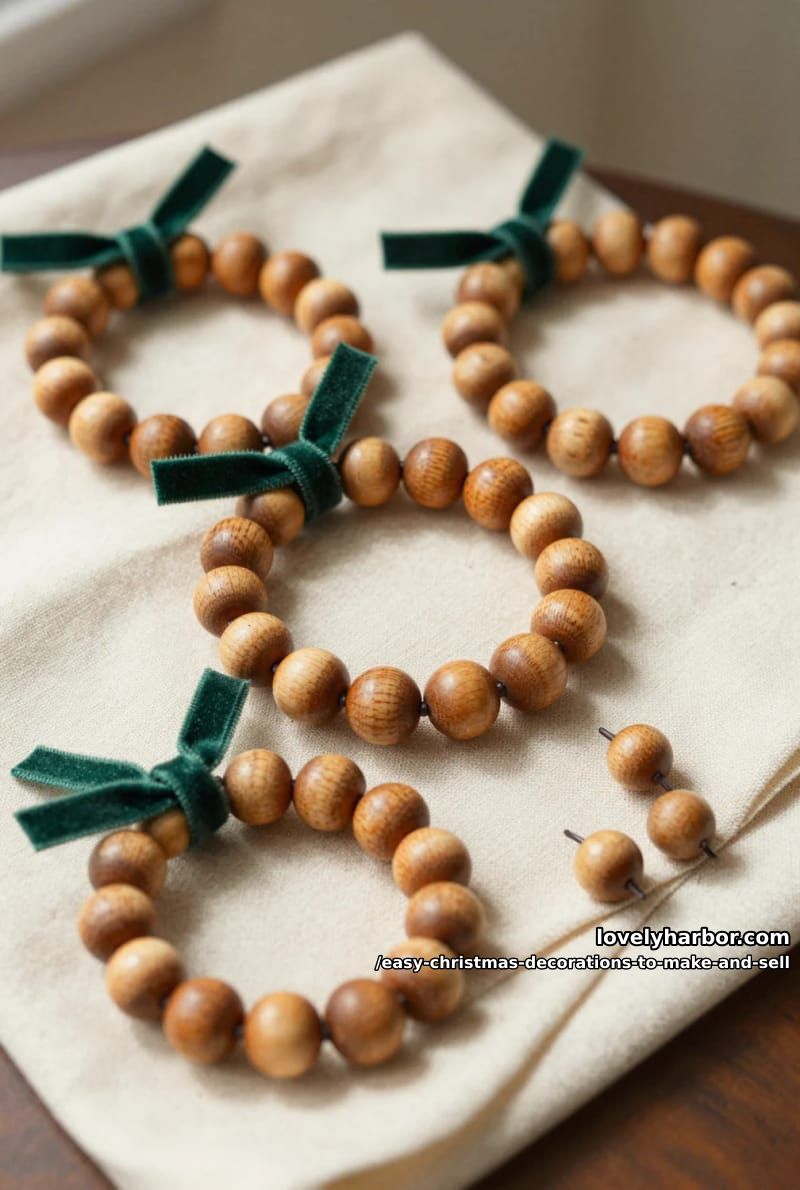
These cost almost nothing and read as far more expensive than they are, which is the whole reason they exploded on Pinterest and TikTok. You thread roughly ten to fourteen wood beads (somewhere around 14 to 16mm, with holes wide enough for the wire) onto a pipe cleaner or a length of 22 to 24 gauge floral wire, bend it into a ring, twist the ends shut, tuck them into a bead to hide the join, and finish with a ribbon loop. Five minutes once you have a rhythm.
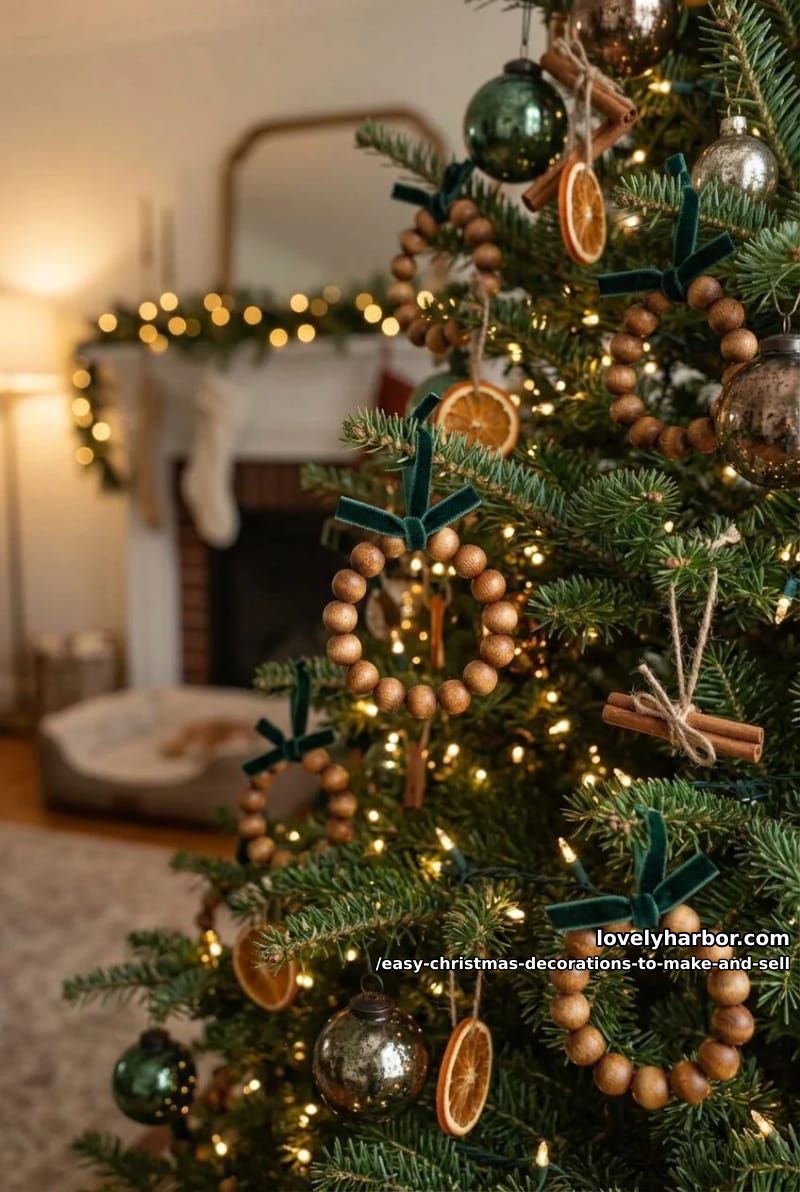
Buy unfinished birch beads rather than the painted dollar-store variety; the natural wood is what gives the wreath its quiet, neutral look, and neutral is what is selling right now. A note on palette generally, since it applies to half this list: the natural-wood, cream, and sage end of the spectrum outsells primary red-and-green at most markets I have done, because shoppers want something that fits a room they have already decorated. Sell these singly at $4 to $5, or as a boxed set of three for a gift-ready bump in price.
Cast concrete tea light holders for the modern buyer
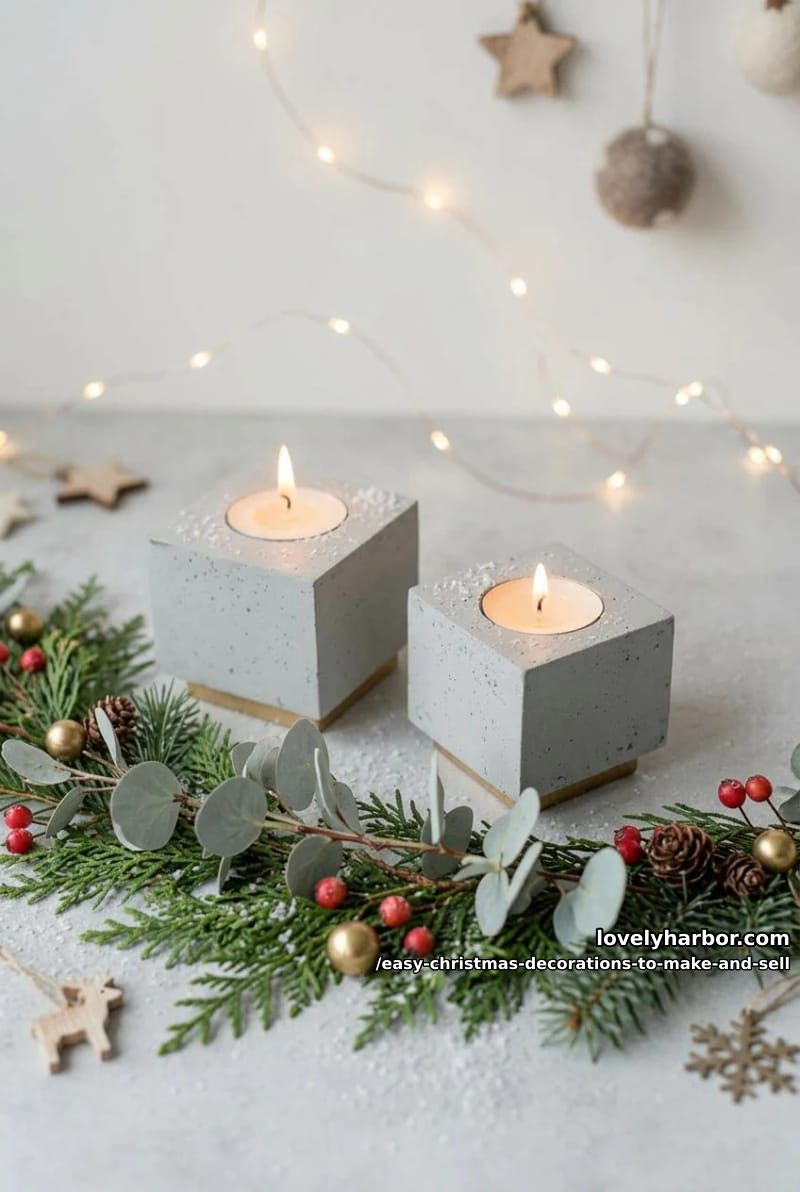
Concrete is the one item here that lets you charge $14 to $20 a piece without anyone blinking, because it photographs like something from a design shop and the buyer assumes it was hard to make. It is not. You mix a fine, sand-free cement (the kind sold for craft casting, not the gravel-heavy bag from the hardware aisle, which will look like a sidewalk), pour it into a silicone mold or a plastic cup, press a smaller cup into the center to form the tea light well, and demold the next day.

The catch worth knowing before you commit a weekend: curing takes 24 hours minimum, so this is not a craft you batch the night before a fair. Sand the edges, seal the surface so it does not chalk, and consider adding a thin line of brass leaf or a color-washed face to justify the higher tag. Granted, the upfront cost of molds is real, maybe $20 to $30, but they last for hundreds of pours.
Cinnamon and applesauce scented ornaments

These sell on a sense the others cannot reach: people smell them across the table and walk over. The dough is roughly equal parts ground cinnamon and unsweetened applesauce, mixed to a stiff, non-sticky paste, rolled to a quarter inch, cut with cookie cutters, and dried low (around 200°F for an hour and a half to two hours, or air-dried over a few days). A batch yields somewhere between a dozen and two dozen depending on your cutter size.
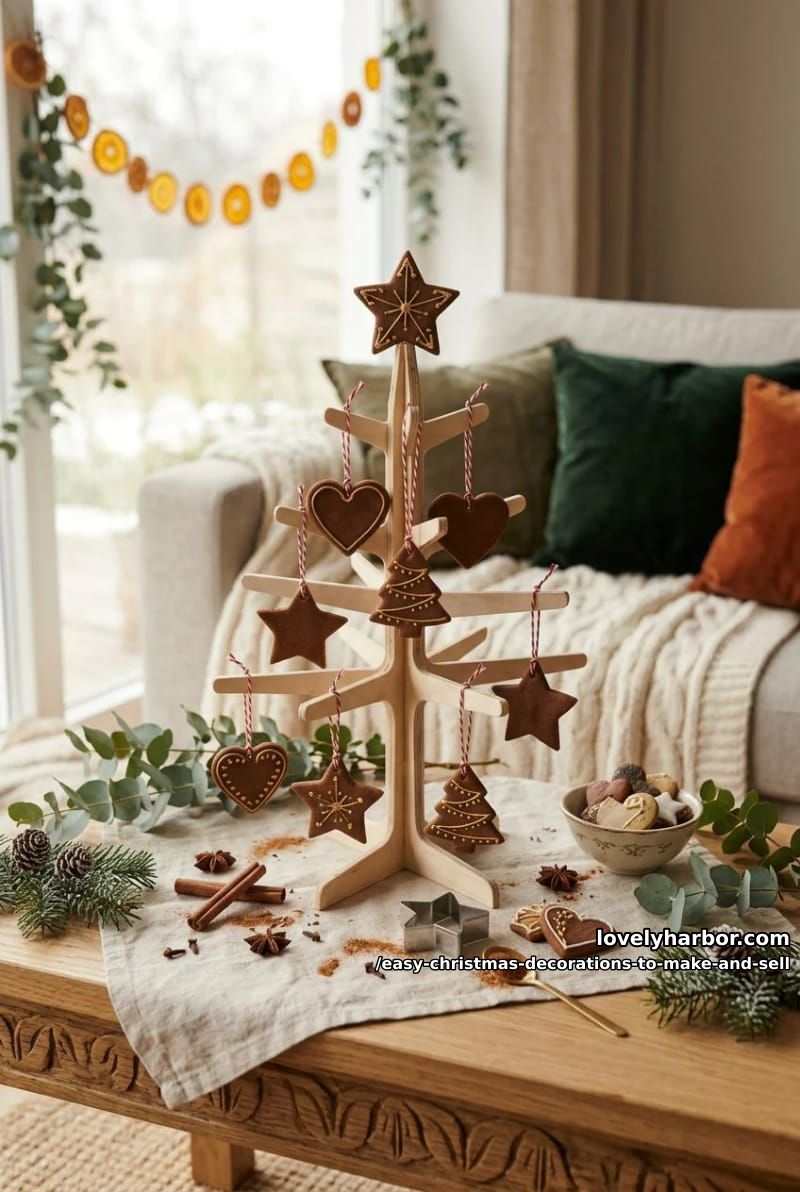
One durability tip that separates a sellable ornament from one that crumbles in a customer's bag: work a tablespoon of white school glue into the dough, a trick several long-time makers swear by, and a teaspoon of salt as a preservative. Buy the cinnamon in bulk, by the way. If you try to make these from the little supermarket spice jars you will spend more on cinnamon than you earn on the ornaments. Price them at $3 to $4 each or as a fragrant bundled set, and tell buyers plainly they are decor, not snacks (someone always asks).
Dried orange and clove garlands
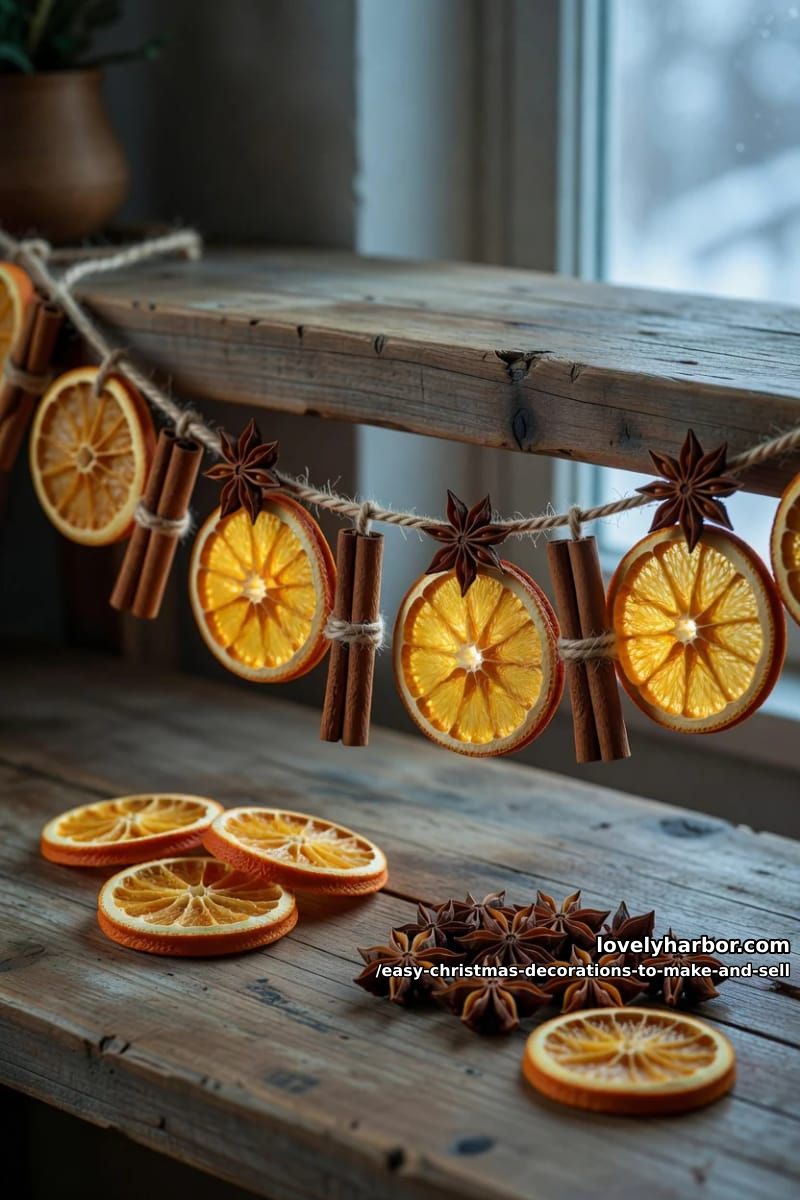
Natural botanical decor commands a premium right now because it photographs beautifully and reads as the opposite of plastic, and a citrus garland costs you a bag of oranges and an afternoon. Slice oranges a quarter inch thick, blot them, and dry them in a low oven (around 200°F for three to four hours, flipping once) or a dehydrator until they are stiff and leathery. String the slices on jute with cinnamon sticks and star anise between them.
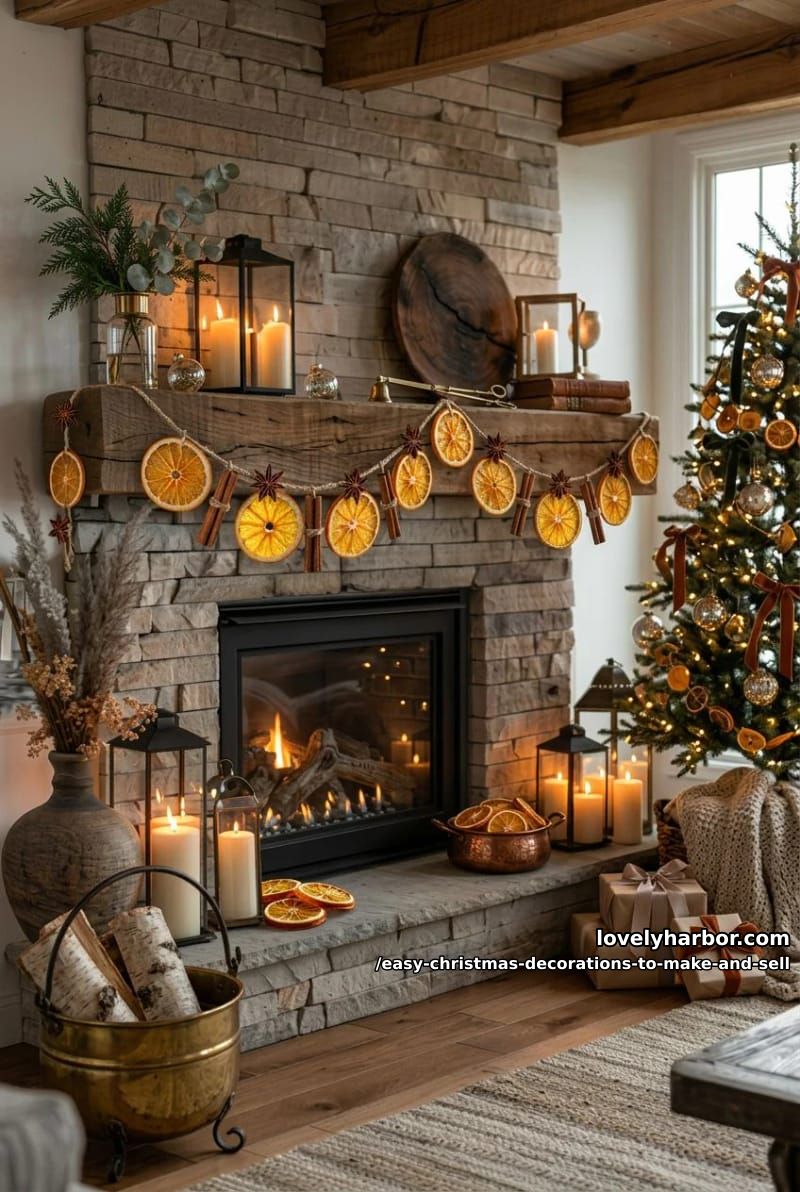
Sell by the length, not the piece, since a five-foot garland feels like a real purchase at $18 to $25 while a single slice feels like nothing. These are also genuinely compostable, which is a selling line worth saying out loud to the eco-minded shopper who is otherwise suspicious of craft-fair stuff.
Wood-burned personalized name ornaments
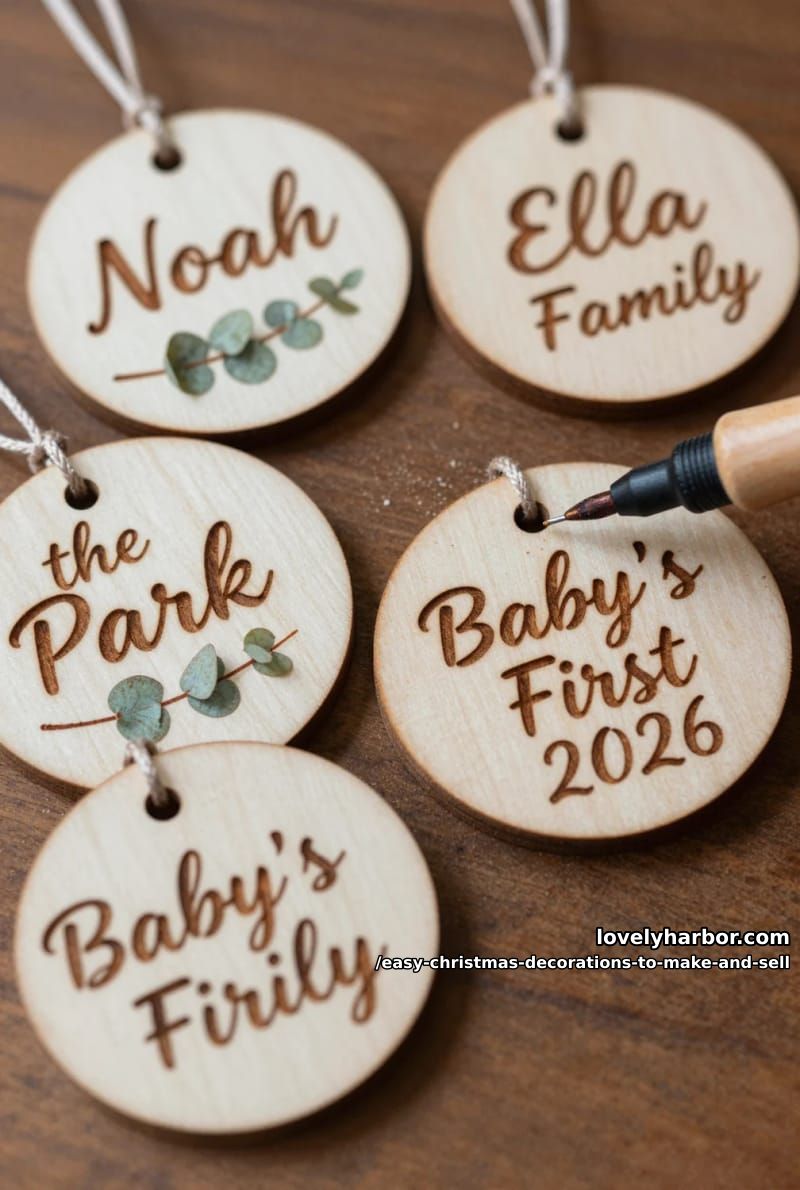
Personalization is where the actual money in this niche lives, and most beginning sellers leave it on the table. A plain wood round sells for $5; the same round with a customer's family name or a baby's first Christmas and the year burned into it sells for $12 to $18, and people will happily order six for the whole extended family. The premium is not for the wood. It is for the fact that nobody else can sell that exact ornament to anyone else.

You need a basic wood-burning pen (about $15 to $25 for a beginner kit) and a steady hand, or a paint pen if burning intimidates you. Practice on scrap first, because the burn is permanent and a wobbly letter is a wasted blank. The trade-off is time: each piece is made to order, so price for the labor, not just the wood, and build the personalization fee into the listing rather than apologizing for it.
Do this at the booth
- Show finished examples with real names so buyers picture their own.
- Price in round numbers and bundle: a “3 for $30” sign converts better than three $11 tags.
- Take a few custom orders on the spot with a deposit and a clear pickup or ship date.
Avoid
- Pricing your time at zero. If a piece takes twenty minutes, it is not a $4 ornament.
- A table crammed edge to edge. Empty space makes the good pieces read as more valuable.
Snowy mason jar luminaries

These are the cheapest lit item you can sell, because the jar is often free. Brush a coat of Mod Podge (the outdoor formula holds up better) onto a clean glass jar, roll it in a mix of epsom salt and a little fine white glitter, let it set, and drop in a battery tea light. The salt catches the light and the whole thing glows like frost.

Save and reuse jars from your own kitchen, or buy a flat of them cheaply; either way your cost is dimes. They sell well at $6 to $10, better in sets of three at staggered heights, and they pack flat-ish if you nest them with paper. The one weakness is shipping, since glass and Etsy do not love each other, so I treat these as a craft-fair and local-pickup item rather than an online listing.
Embroidery hoop mini wreaths
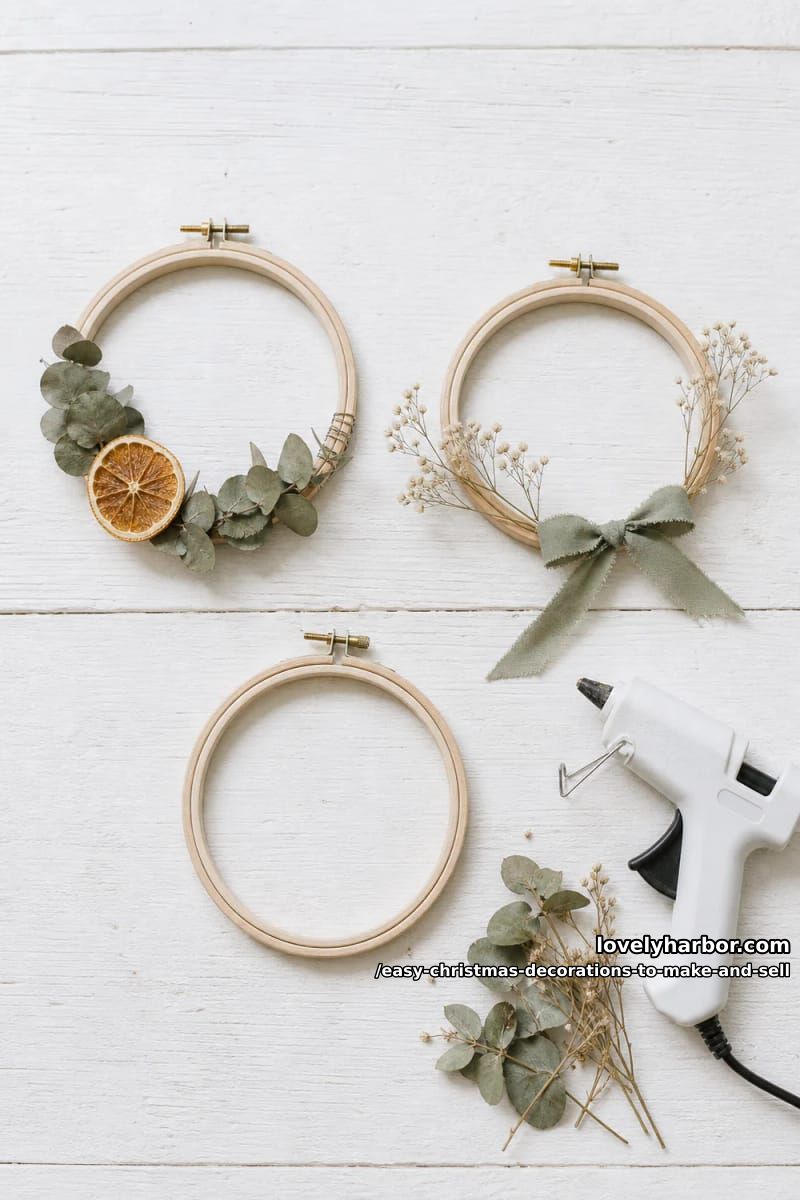
The trick that makes these sell is restraint: you decorate only a third of the hoop and leave the rest of the bare wood ring showing, which is what makes it look intentional rather than like a wreath you ran out of supplies for. A small wooden embroidery hoop costs a dollar or two, and you glue a small cluster of dried greenery, a ribbon, or a few faux berries to one arc of it.
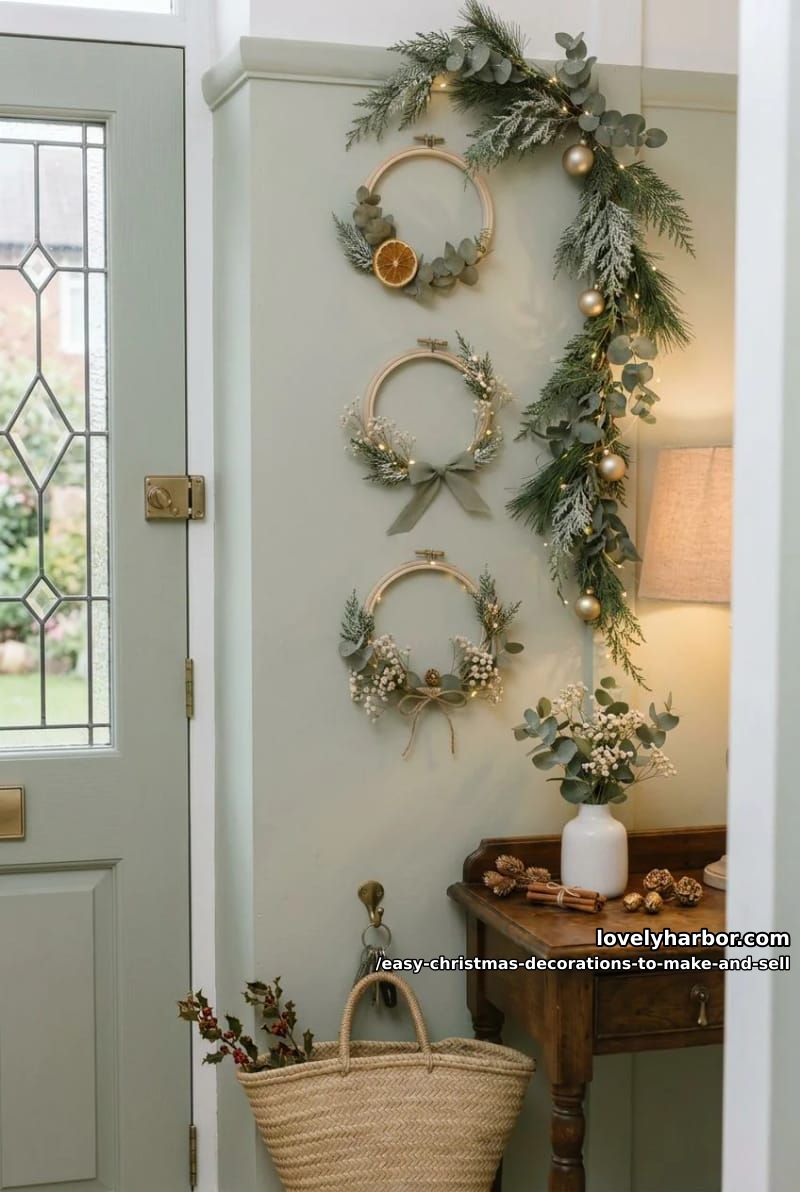
They hang on a door, a cabinet, or a window, and that versatility is worth pointing out on your sign. Price around $10 to $15 depending on size and how much material you load on. Keep a few seasonless versions (dried flowers, no obvious Christmas cue) so the same skill earns you money in February.
Yarn sock gnomes

Gnomes are still selling hard and they are forgiving to make: a sock or a fabric cone for the body, rice or dried beans in the base so they sit upright, a fluff of faux-fur beard, a floppy hat, and a wooden bead nose, with no face to get wrong. Beginners love that last part. They photograph well in a cluster, so make them in coordinating sets and a few sizes.

Be honest with yourself about time, though. A gnome with a hand-sewn hat and a trimmed beard can eat thirty minutes, and at a $12 price point that is not generous pay. The way to make gnomes profitable is to batch the steps (cut all hats, stuff all bodies, glue all beards) rather than building them one at a time.
The temptation with gnomes, dough ornaments, and painted rounds is to make a “Grinch” gnome or a Nightmare Before Christmas piece, because you have seen them sell. Selling crafts that copy Dr. Seuss, Disney, sports logos, or any other protected character or mark is trademark and copyright infringement, even when you made the item by hand and even when you bought “licensed” fabric (which is almost always sold for personal use only). These companies enforce aggressively, and platforms like Etsy will pull your listings and can suspend your shop. Calling it a “Grinch-inspired” ornament in the title makes it worse, not better, because the brand name itself is the problem. Sell your own original characters. The Steamboat Willie version of Mickey entered the public domain in 2024, but the modern, recognizable versions of these characters did not, so do not assume a loophole exists.
Felt ball garland by the foot

Garland sells as a length, which means a single afternoon of threading turns into a $20 to $30 item rather than a $3 one. You can buy bags of pre-made wool felt balls cheaply and simply string them on waxed cord with a needle, controlling the palette so it looks designed (a tight neutral run with one accent color beats a rainbow). If you want to make the balls yourself by wet-felting, you can, but the bought ones free you up to sell volume.
This one crosses over beautifully into nursery and year-round decor, so it is not strictly a Christmas earner. Mention that on the tag and you have widened your buyer pool past December.
Twine-wrapped tabletop cone trees
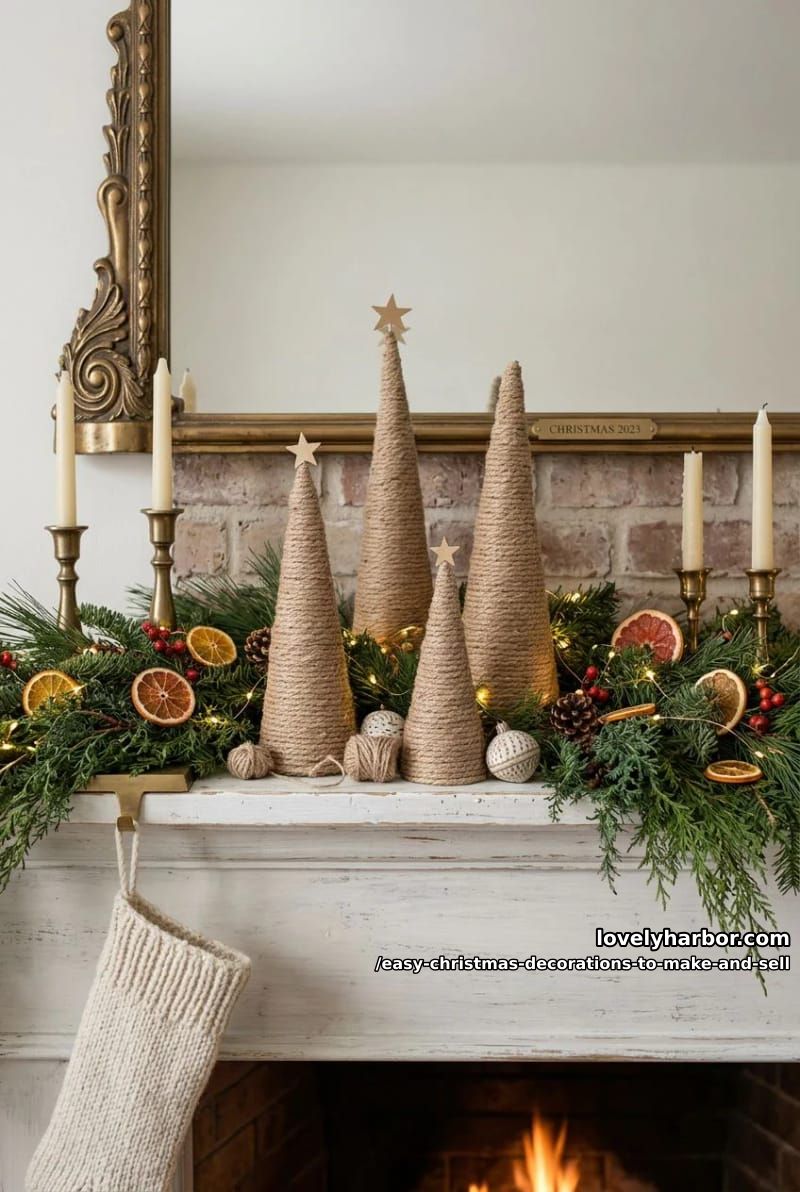
A foam or cardboard cone wrapped tightly in twine, yarn, or strips of fabric becomes a tabletop tree that looks like a boutique piece for under a dollar in materials. Wrap from the base up, gluing as you go, and finish with a small star or a band of ribbon. Make them in graduated heights and sell them as a set of three, which is how people want to style them anyway.
The variations are where you can stand out: book-page cones for a literary buyer, monochrome white yarn for a Scandinavian look, plaid fabric for the farmhouse crowd. Same five-minute technique, three different shoppers.
Once you have a pile of any of these, the question shifts from making to where you list them. The honest answer depends on the item, because a glass luminary and a flat dried-citrus garland do not belong on the same channel.
| Where to sell | What it costs you | Best suited to |
|---|---|---|
| Craft fair or holiday market | A table fee, often $25 to $100+ for the day, plus your time on your feet | Fragile and impulse items: luminaries, gnomes, bundled ornaments people buy on sight |
| Etsy | $0.20 to list, 6.5% of the sale (shipping included), plus 3% and $0.25 to process, roughly 10 to 13% before any ads | Personalized and lightweight pieces worth shipping: wood-burned names, bead wreaths, cone trees |
| Facebook Marketplace and local groups | No platform cut, but no reach beyond your area and a lot of message wrangling | Bulky or fragile items and quick local sell-throughs of a big batch |
| Consignment in a local shop | The shop typically keeps around half the retail price | Steady year-round placement when you would rather make than sell |
One Etsy detail that catches new sellers out: that 6.5% is charged on your shipping too, and once you pass $10,000 in a year, the Offsite Ads fee (12 to 15% on ads-driven sales) becomes mandatory and you cannot opt out. Their Share and Save program drops the transaction fee to 2.5% on sales you bring in through your own link, which is worth setting up before you do any promoting.
Conclusion
If you only make two things this year, make the wood slice snowmen for volume and the wood-burned name ornaments for margin, because together they cover both halves of how a handmade table makes money: cheap pieces that move in stacks and personalized pieces nobody can undercut. Everything else on this list is a way to widen the table and the price range around those two. And before you paint a single thing, reread the part about the Grinch. A holiday's worth of inventory is a miserable thing to throw away because a brand's legal department found your booth.