
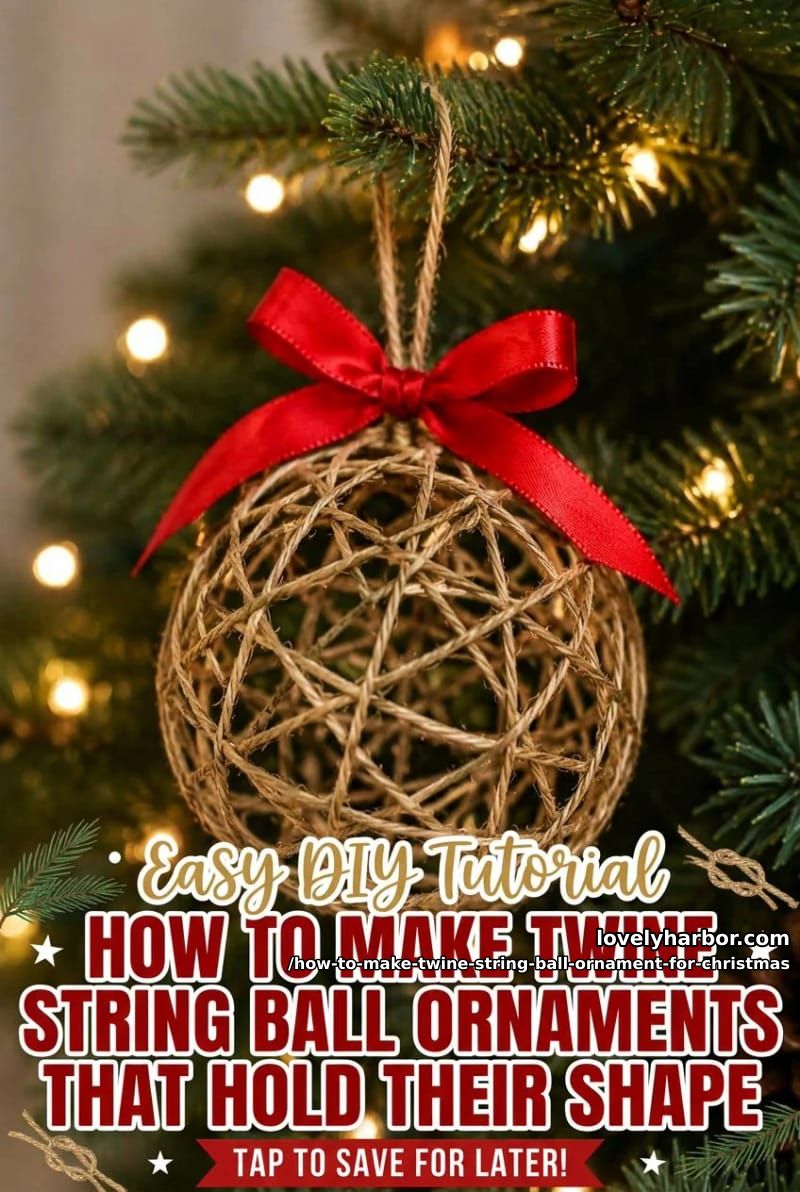
Most twine ball tutorials spend ten photos on the fun part , wrapping gluey string around a balloon , and then one rushed sentence on the step that actually decides whether you end up with an ornament or a flat tangle in the bottom of a storage box. That sentence is almost always "let it dry, then pop the balloon," which dodges the question you came in with: how does the twine get hard enough to stand on its own once the balloon is gone? So that's what's here. The setting step in detail, the stiffener that holds a round shape over several Decembers, and the two moves that keep the ball from caving the second you deflate it.
How the twine actually hardens
Here's the short version: you never harden the twine on its own. No oven step, no setting spray at the end. The twine hardens while it's still on the balloon, because the glue soaked into it dries into a rigid shell. The balloon is just a temporary mold, holding the round shape until that shell sets. So when you ask "how do I harden it before I prick the balloon," the answer is that the hardening already happened, on the balloon, and the pricking comes last.
What turns a floppy, dripping web rigid isn't the string. It's the glue at every spot where the strands cross. The string touching itself, locked by glue , that's the whole trick, which is why you wrap in perpendicular directions, once lengthwise and then once widthwise. Each crossing becomes a tiny weld. A few dozen welds and the cage stands on its own.
The joints do the work, not the strand. One glued thread on its own stays limp. But where two soaked strands cross and dry, the glue fuses them into a stiff little junction. Wrap so the strands cross often and the whole sphere locks up.
Full saturation beats a thick coat. The twine has to be wet all the way through, not just painted on the outside. Dry fibers in the core never stiffen.
Bone-dry is the only finish line. These take almost a full 24 hours to dry completely, and before you pop the balloon you should be able to slip a finger under the strands and feel them fairly stiff with only a little give. Any softness means the glue is still wet inside.
What you'll need
It's a cheap craft, which is part of why it took over Pinterest a decade ago. The string choice matters more than people expect, though. Coarse, fuzzy jute grabs the glue and grabs itself; smooth string slides and stays soft. One blogger ran all three through the same batch and reported that both thick and thin brown jute worked well , the thin even better than thick , while the white cotton twine was an epic fail that looked like glittery spaghetti. The coarseness of the jute is the whole point of this method.
Do this
- Coarse natural jute, 2mm , the fuzzy kind that sheds a little
- Reach for thin jute over thick rope: more crossings, lighter ball
- Bakers twine or sisal for a finer web
Avoid
- Smooth white cotton twine. It slides and won’t stiffen.
- Slick synthetic or nylon cord , glue just beads off it
- Thick rope on its own, which gives too few crossings and sags heavy and wet
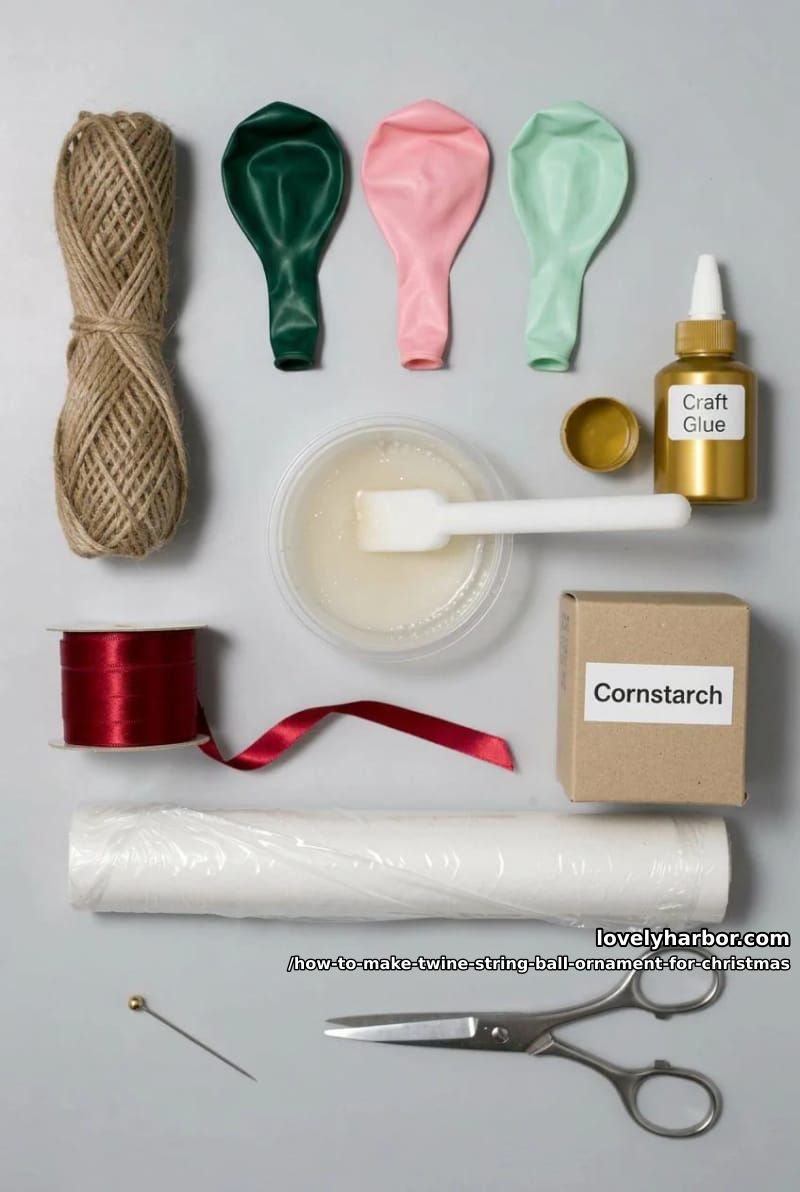
Materials (consumables)
| Qty | Item | Spec | Price |
|---|---|---|---|
| 1 | Tenn Well 2mm natural jute twine, 984-foot roll | Coarse 3-ply brown jute, grips glue | $7 to $12 |
| 1 | Amscan 5-inch latex balloons, 50-count | Small balloons round up nicely | $5 to $9 |
| 1 | Aleene’s Original Tacky Glue, 8 oz | Thick craft glue, dries clear | $4 to $7 |
| 1 | Cornstarch | About 1/2 cup, from the pantry | $0 to $2 |
| 1 | AVANAVA 5/8-inch scarlet double-faced satin ribbon | 50-yard roll, enough for dozens of bows | $6 to $10 |
| 1 | Plastic wrap | Standard kitchen roll (release layer) | $0 to $4 |
| Materials subtotal | $22 to $44 | ||
Tools (reusable)
| Qty | Item | Spec | Price |
|---|---|---|---|
| 1 | Artlicious 1-inch foam brushes, 25-pack | For the paint-on glue method | $6 to $9 |
| 1 | Disposable bowl | Mix the glue here, toss it after | $0 |
| 1 | Scissors | Cut twine, snip the balloon neck | $0 |
| 1 | Straight pin or needle | Starts the slow deflation | $0 |
| Tools subtotal | $6 to $9 | ||
| Combined total (buying everything) | $28 to $53 | ||
Prices are approximate ranges as of May 2026; verify before purchase.
Step 1: Inflate and prep the balloon
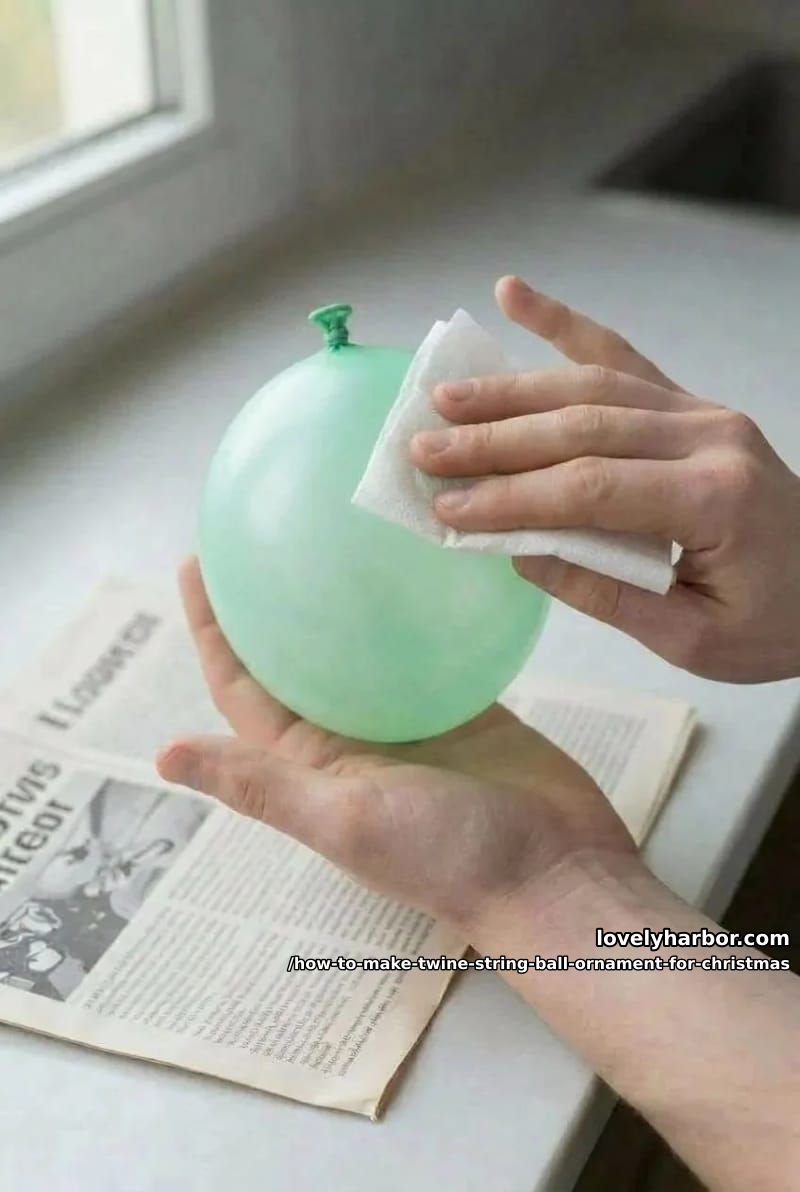
You set the size here, and you can't change it later, so think about your tree first. Five-inch balloons , quite a bit smaller than the regular party kind , are right for ball ornaments. The trick to a sphere instead of a teardrop: blow the balloon up big, then let air back out until it rounds. You get a circle instead of a pear.
Then the release layer, the thing that keeps the glue from cementing itself to the rubber. Wrap the balloon in plastic wrap and removal gets much easier later. Skip the Vaseline. One maker who tried it found it coated the string too and left everything softer than it should have been. If you'd rather not wrap, a quick wipe of cooking spray is the lighter option.
Step 2: Choose and mix your stiffener
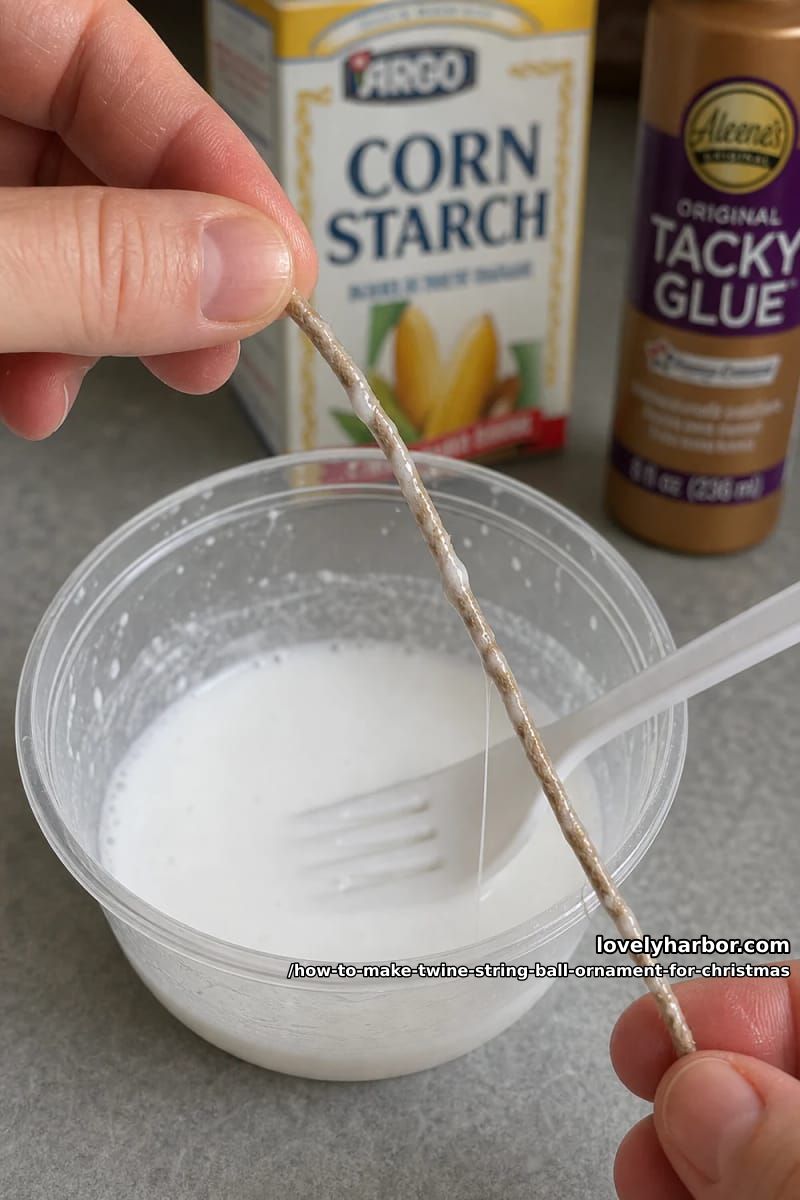
This is the decision that decides whether your ornament survives storage. Plain diluted glue works. It works better with two tweaks: a decent glue and a spoon of cornstarch. Dollar-store glue holds, sure, but the ornaments come out much more flimsy, so a tacky glue thinned at roughly one part glue to one part water earns its place. Aleene's Tacky Glue worked far better than dollar-store glue and made ornaments that were really strong , the twine balls came out even sturdier than the yarn versions.
Want the version that survives a decade in a box? Add cornstarch. Whisk about 4 ounces of school glue, 1/2 cup of cornstarch, and 1/4 cup of warm water together until thick and smooth. You could get away with only glue, or even Mod Podge, but the cornstarch is what gives these ornaments the backbone to keep their shape , and if it stiffens up too much, thin it with a splash of water. The maker who came up with that mix put it plainly: she didn't want to open her box next year and find them all smushed. That's the failure this craft is famous for.
| Stiffener | Stiffness | Dry time | Watch out for |
|---|---|---|---|
| Tacky glue + water (1:1) | Firm, reliable | About 24 hours | Use real tacky glue, not bargain glue |
| Glue + cornstarch + water | Stiffest, holds for years | About 24 hours | Faint white haze if you over-apply |
| Mod Podge (2 parts to 1 water) | Firm, slight sheen | Several hours to overnight | Undiluted is overkill and gummy |
| Fabric stiffener spray | Firm, dries clear | ~1 hour per coat, layered | Starch alone (no glue) can take days |
Two notes on the alternatives. Mod Podge is fine, but people drown it. One tutorial settled on a soupier 1 part water to 2 parts Mod Podge after figuring out that saturating twine in straight Mod Podge is overkill , you're not trying to fossilize it. Fabric stiffener dries cleanest of all, but only the modern formulas pull it off. Liquid starch or fabric stiffener with no glue at all had to sit for almost a week before it was hard enough to hold shape. The sprayable kind is faster: cover the form with plastic wrap first, spray until wet, let it dry roughly an hour, and spray again after it dries for a stiffer result.
The no-mix shortcut: spray, dry, spray again for more backbone. Cleaner hands than the glue-bowl method, and it dries clear.

Step 3: Soak and wrap the twine
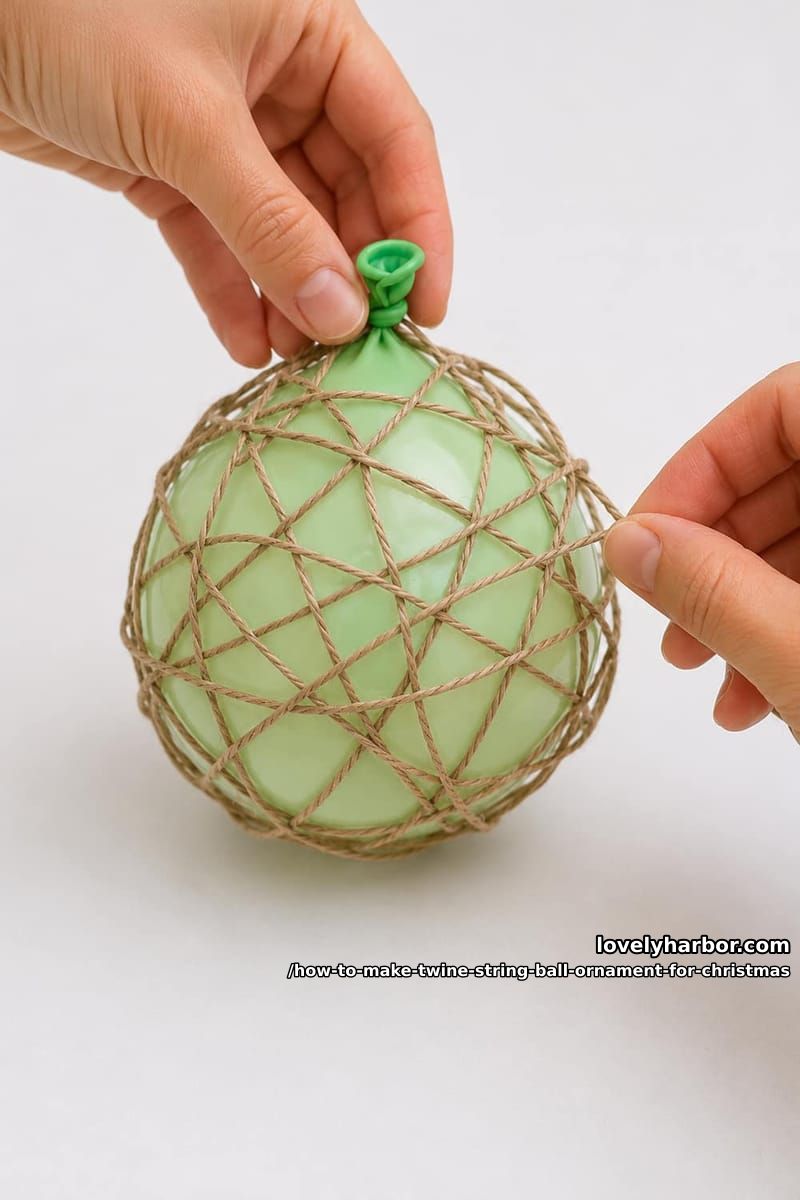
You can dip whole strands, or wrap the string dry and paint glue on with a foam brush. Either way, the twine has to come out wet , not wrung dry. Strip the excess between two fingers so it isn't a dripping mess, but leave it saturated.
- Anchor the end. Tape one end near the knot, or tuck it under the first wrap so it can’t unravel while you work.
- Keep changing direction. Lengthwise, then widthwise, then on the diagonal. Hold the string tight against the balloon the whole time, because a loose strand will unravel on you.
- Build up crossings, not a solid coat. Twelve to fifteen lengths per ball is a good target. More twine, stronger ball.
- Leave one real gap. You need a space somewhere large enough to remove the balloon once everything dries.
- Tuck the tail. Cut the twine and tuck the end under a crossing strand so it disappears.
Step 4: Hang it and let it set hard
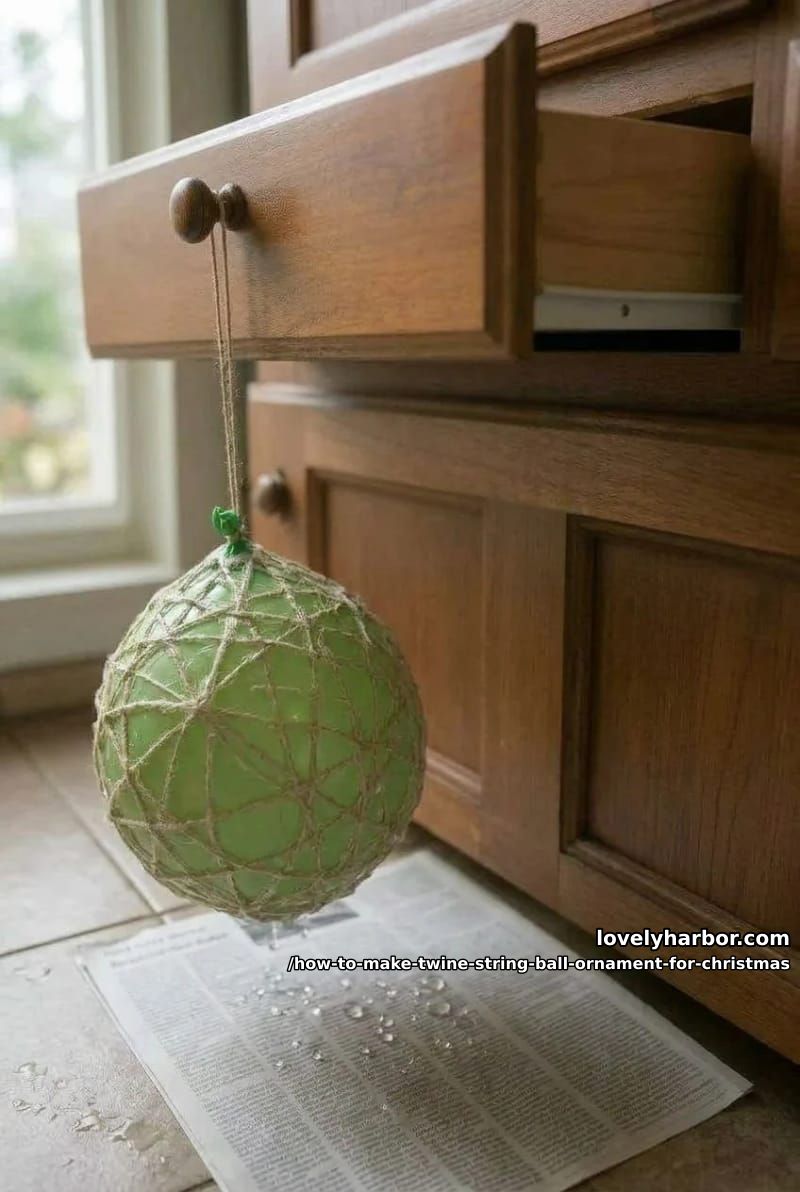
This is the hardening, and it's mostly patience. Tie a thread to the balloon knot and hang it where air can reach every side. Protect the floor while you're at it , the balloon drips glue as it dries. A cabinet handle or a closet rod works fine overnight; ours took almost a full 24 hours to dry completely, newspaper underneath the whole time.
Resist the urge to test it early. The most common ruined-ornament story is just impatience. Give it roughly four times longer than you think it needs, because it has to be genuinely dry before you touch the balloon. Humidity drags that out, so a damp basement in December can cost you a second day. Dry to the touch on the outside isn't the same as set all the way through.
Step 5: Deflate the balloon (don't just pop it)
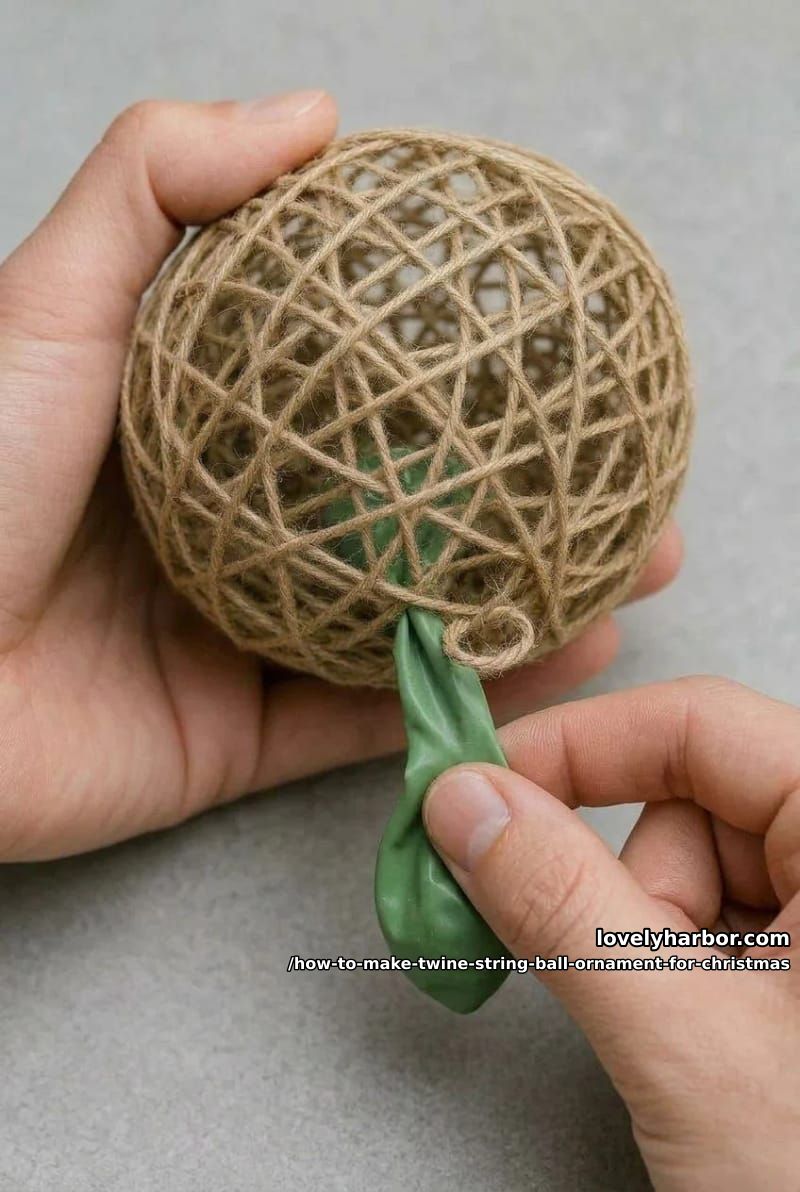
A loud pop is exactly how the ball collapses inward at the finish line , the balloon snaps back fast and drags the twine with it. So go slow. First slip your fingers into the gaps and gently press the balloon away from the twine all the way around, so it won't pull the strands inward as it shrinks. Then cut a small hole at the base: a little snip near the knot, and let the air out slowly, peeling the balloon back from the string as it shrinks so it doesn't collapse the ball.
If a stubborn balloon clings, here's a quiet trick from a maker who kept forgetting her release layer: once the ball is dried completely, gently roll it between your hands with just a little pressure, and the balloon loosens from the string so it doesn't pull the cage in when you pop it. Then draw the deflated balloon and the plastic wrap out through your largest gap, and pick off any stray glue crumbs with your fingers.
Step 6: Add the ribbon and a hanger
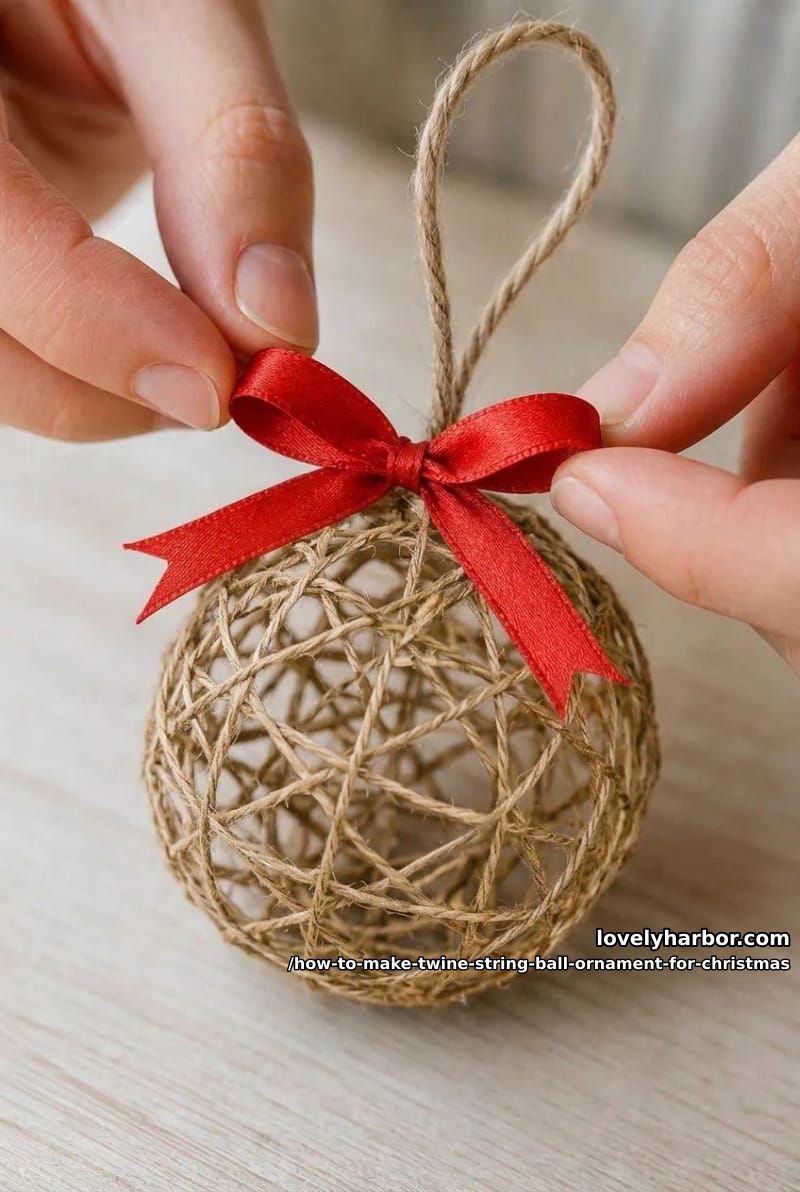
Thread a short loop of twine through the top crossings for a hook, then dress it up. A satin bow at the top does it , red against the natural tan reads as a classic next to the green of a tree. Got young kids or pets? Swap the metal hook for a tied loop of gold thread. And if you want a frostier look, brush a little glue on while it's wet and dust with fine glitter before it dries. Otherwise leave it plain, the rustic version that pairs with pinecones.

Mistakes that wreck a twine ball
Six failure points cover almost every sad photo on the "craft fail" blogs. Most come down to timing and string choice.
- You popped it too soon. A still-soft interior caves the instant the balloon goes. It needs to be super dry before you pop.
- Smooth string. White cotton twine was an epic fail because the coarseness of jute is what makes the method work.
- Too few crossings. The string has to touch itself in a lot of places , those glued contact points are what hold the ball together.
- You patted the glue flat. Now there’s a film bridging the gaps, and you won’t pick it out cleanly later.
- You yanked the balloon. Fast deflation pulls the cage inward. Snip, then ease it out.
- You skipped the release layer. That plastic wrap is what lets the balloon pull free. Without it, the rubber bonds right to the dried glue.
Build timeline
Plan on two days. The only long stretch is the drying, and that part's hands-off.
- Day 1, evening (about 20 minutes of work): inflate, wrap in plastic, mix the stiffener, soak and wrap the twine, then hang to dry.
- Overnight to 24 hours, untouched: let it set , expect close to a full 24 hours, and add a day if your space is humid or cold.
- Day 2: confirm it’s stiff with only slight give, loosen the balloon, snip and slowly deflate, work it out through a gap, pick off the glue bits, then tie on the ribbon and hanger.
Conclusion
The order of operations is the part to hold onto: the twine hardens on the balloon, and the balloon comes out last, slowly. I batch six at a time because the wrapping is the slow part and the drying is free time, and I'd rather lose one ball to a humid basement than babysit a single one. Two honest cautions before you start. The glue can leave a faint film or a slight white cast where you've coated it heavily, which some people read as frost and others as a flaw, so go lighter if it bothers you. And they're water-soluble. Indoor tree only, not a porch in the weather.