
Hygge living rooms come down to two levers at Christmas: light you can lower, and texture you can sink into. Get those two right and a nearly bare room reads warm; get them wrong and a room buried in garland still feels like a furniture showroom at noon. The twelve ideas below are ordered by how much they actually change the room, starting with the lighting swap most people skip, and every one of them works in a rental or a small apartment without a single nail in the wall.

1. Trade the overhead light for low pools of lamplight
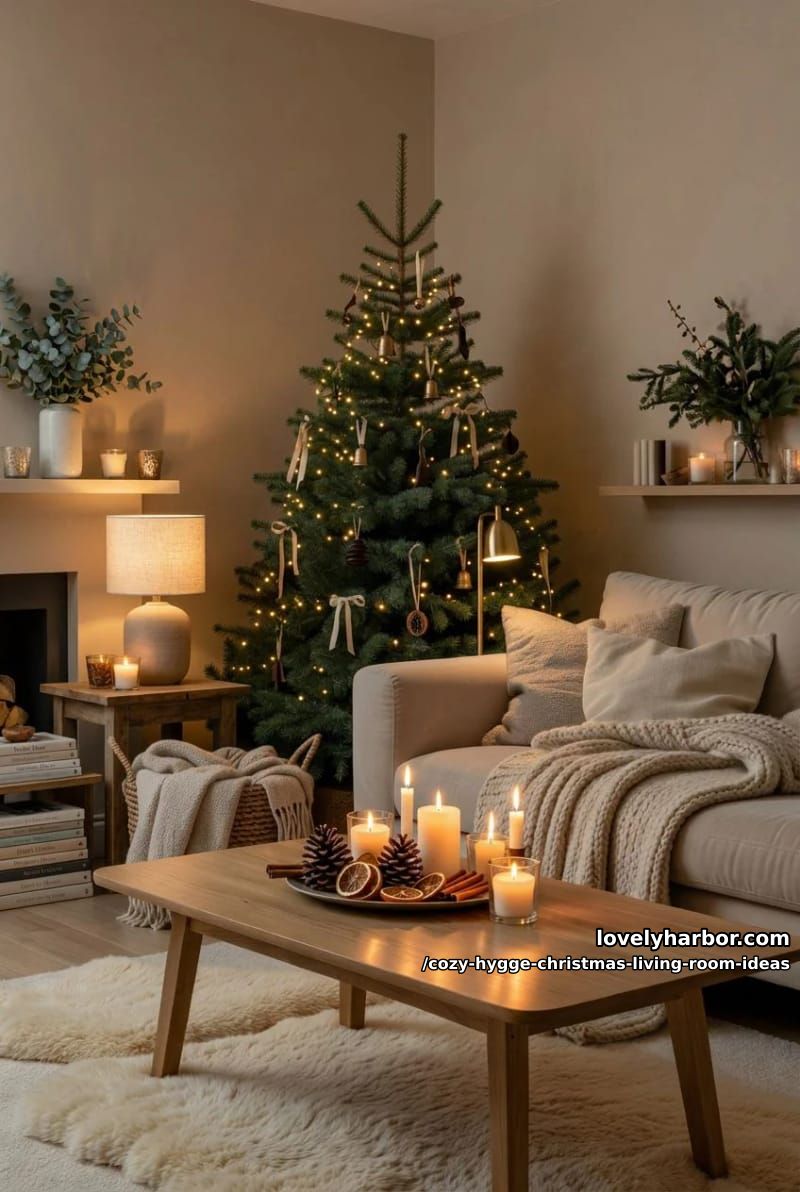
The single biggest change is turning the ceiling light off and lighting the room from three or four low sources instead. A central downlight flattens everything and throws hard shadows under people's eyes; a scatter of table lamps, a floor lamp, and candles at different heights does the opposite, wrapping the room in overlapping circles of light with dark space in between. That contrast between lit and unlit is most of what people mean when they say a room feels hygge.
Granted, this is the one idea on the list that asks for a small purchase if you own zero lamps. But you do not need matched fixtures or anything expensive, just enough warm points of light that no single one has to carry the room.
The bulb number worth checking
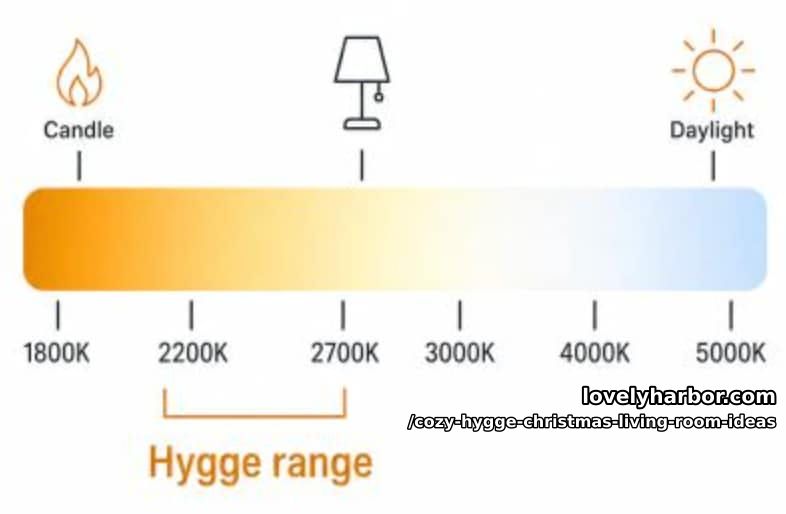
Color temperature matters more than wattage here. Anything labeled "warm white" at 2700K reads cozy; "daylight" or "cool white" at 4000K and above reads like a kitchen at a hardware store, blue and clinical. If you can find 2200K bulbs, even better, since that sits close to candlelight.
Color temperature: aim for 2200K to 2700K. Candle flame is roughly 1800K; standard daylight bulbs are 4000K to 5000K and will fight everything else in the room.
Brightness: keep each lamp modest, around 200 to 450 lumens, and use several. One bright bulb defeats the point.
If you can, buy “warm dim” LEDs that shift further toward amber as you lower them, the way an incandescent did.
Where the light should sit
Keep the light sources low, roughly at seated eye level or below, and spread them to the edges of the room rather than the center. A lamp in each of two opposite corners plus candles on the coffee table covers most living rooms. The goal is that when you sit down, no bulb is glaring at you and the brightest thing in the room is the tree.
2. Cluster real candles in odd numbers
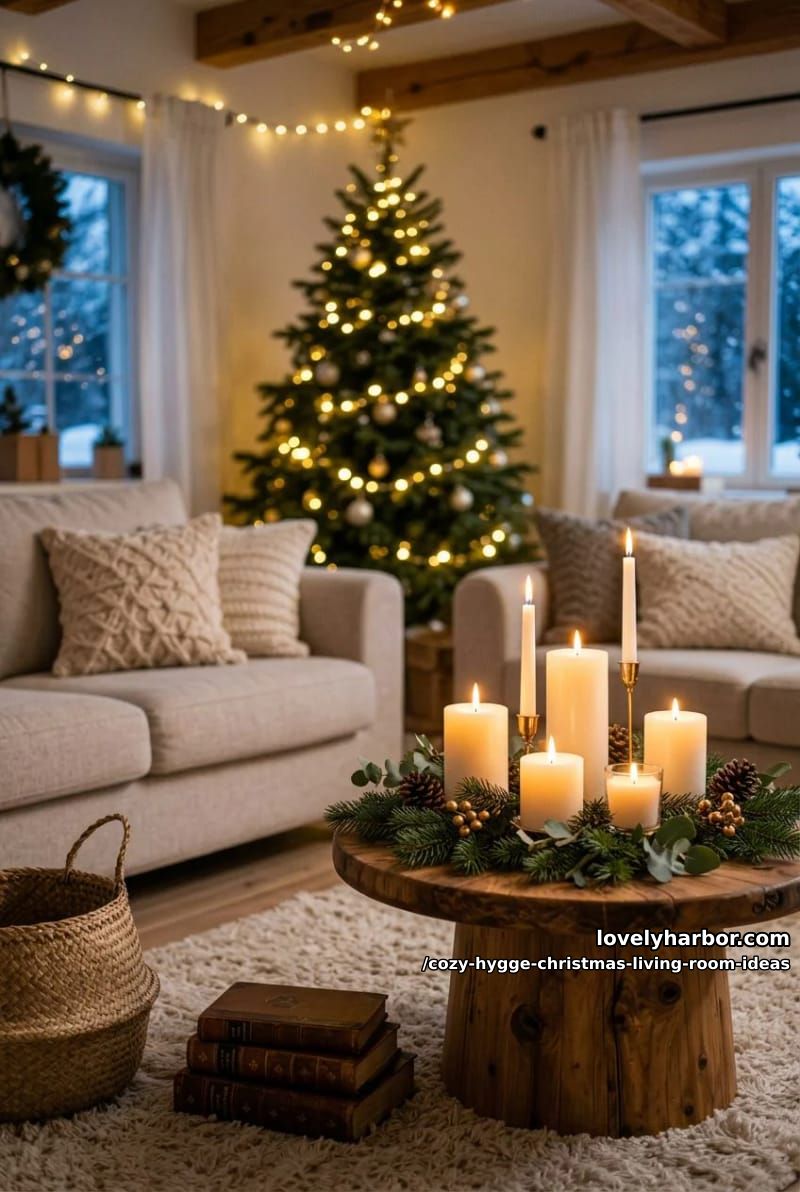
Group candles in odd numbers at three different heights and skip the battery "flicker" ones if you possibly can. I spent one December with plastic flameless candles on every surface and the room looked like a dentist's waiting room at dusk; the light is too even and too cold, and the eye catches the fakeness immediately. Beeswax tapers burn slower and cleaner than cheap paraffin, and a tight cluster of five reads better than candles dotted around singly. (Keep the cluster well back from any fir, paper, or curtains, since dried greenery near an open flame is exactly how living-room fires start.)
3. Layer textiles by weight, not by pile
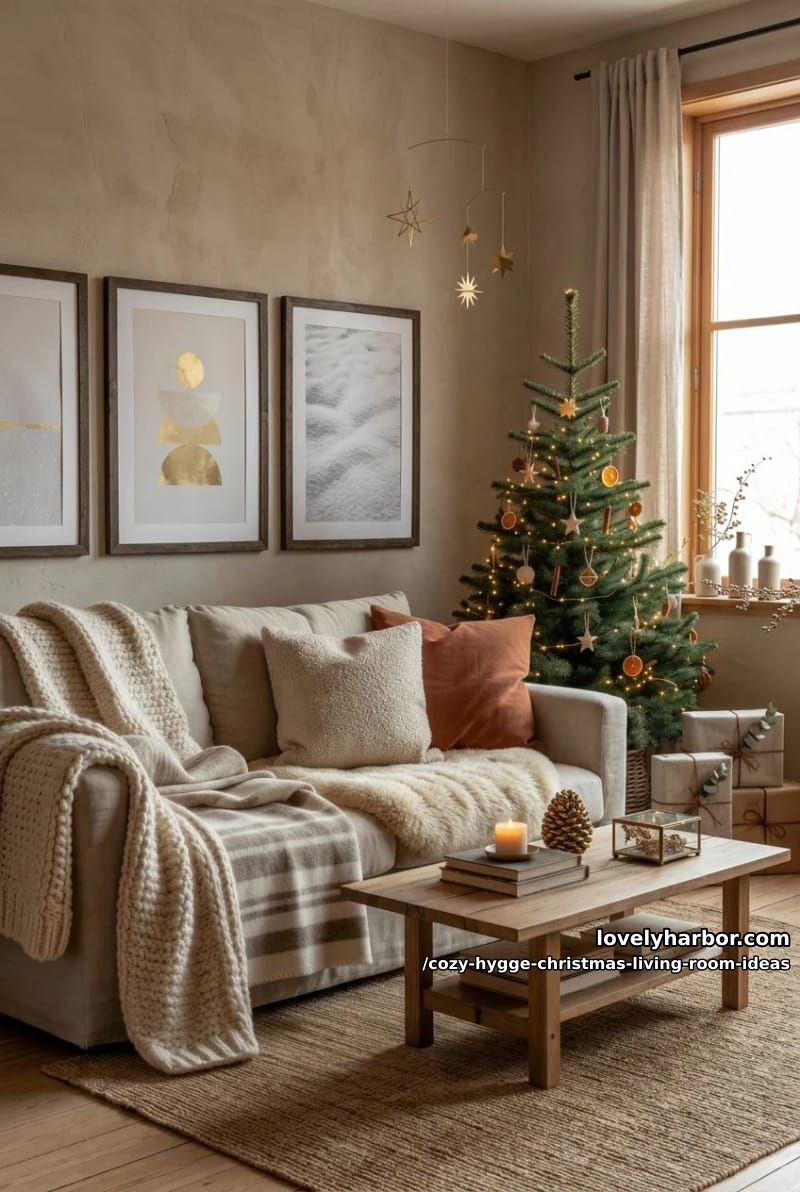
Hygge texture is about contrast in weight, not sheer quantity: pair something heavy and dense (chunky wool, sheepskin) against something fine and smooth (brushed cotton, washed linen). A sofa piled with six matching fleece throws does not read cozy, it reads like a clearance bin. One heavy knit, one flat-weave blanket, and a single sheepskin per seat does more, because the eye and the hand register the difference between the surfaces.
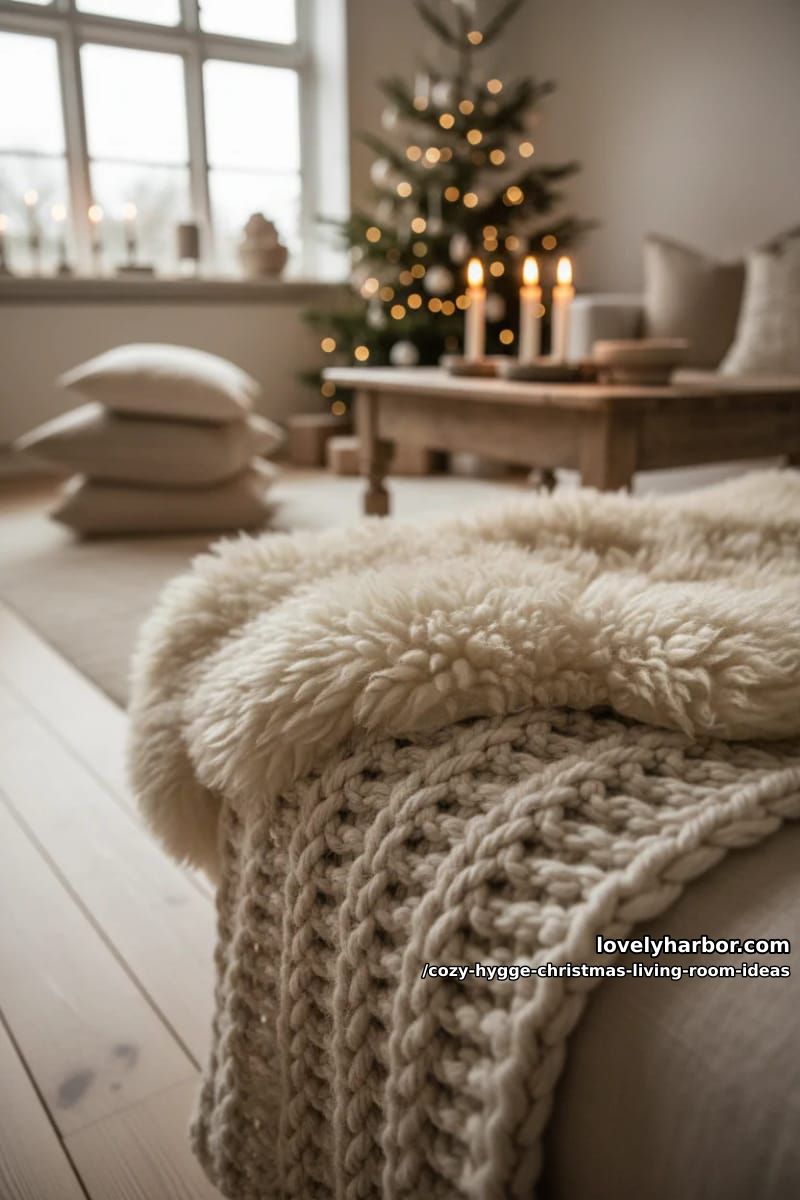
Fiber is where the spend goes furthest. Wool, mohair, and real sheepskin hold heat and look better the more they are used; acrylic "chunky knit" pills within a season and starts to shine under lamplight. If you buy one good thing, make it a heavy wool throw and let the rest be cheap linen and cotton you already own.
Do this
- Mix three weights on one seat: a dense knit, a flat-weave wool, a smooth cotton or linen.
- Keep most of it undyed or in one muted tone so the textures do the work, not the colors.
- Drape, don’t fold into hotel-tidy squares. A throw that has obviously been used reads warmer than one styled into a sharp triangle.
Avoid
- A matching throw-and-two-cushions set bought together; it looks bought together.
- All-synthetic fleece everywhere, which goes flat and slightly shiny within weeks.
4. Keep the Christmas tree quiet and single-material
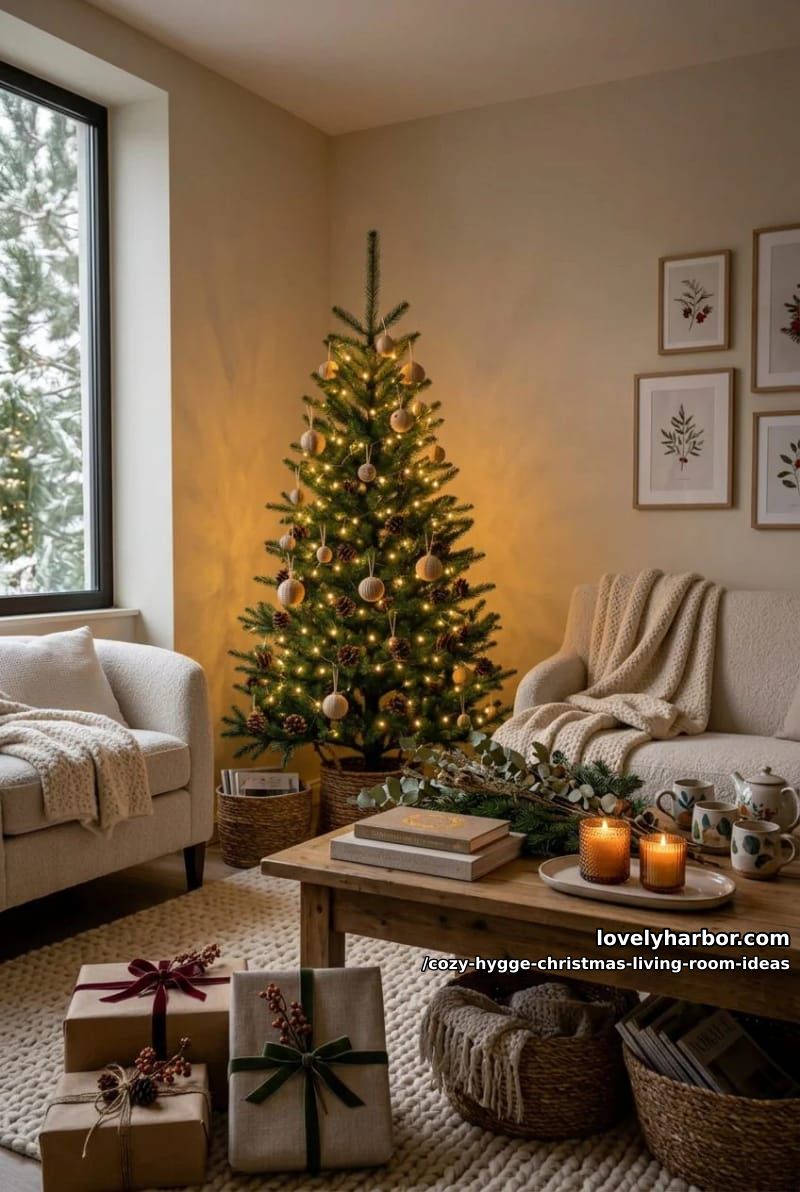
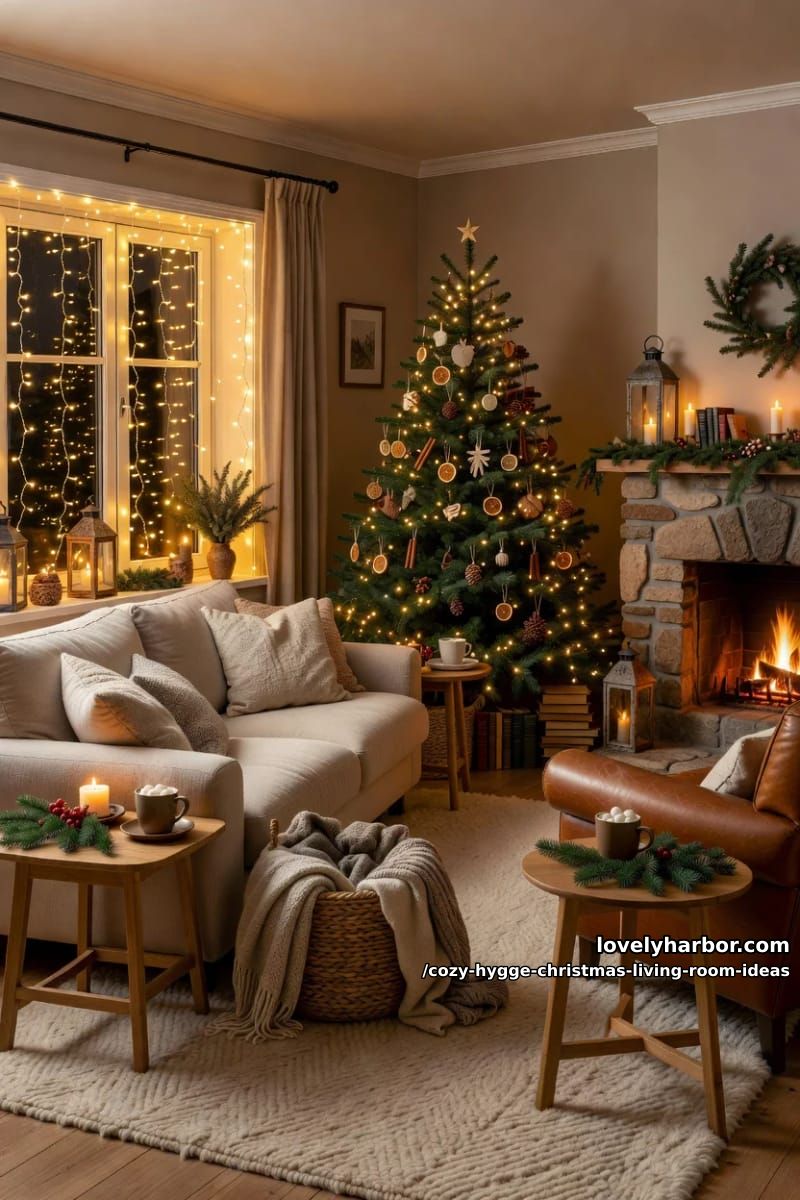
A hygge tree is under-decorated on purpose: warm-white lights, one material of ornament, and a lot of restraint. Wood, straw, paper, or unfinished clay ornaments in a single palette read calm; multicolored baubles plus tinsel plus a light-up topper read like a department-store window. Set the lights to warm white only and stop adding things before you think you are done.
5. Choose a warm neutral palette over red and green
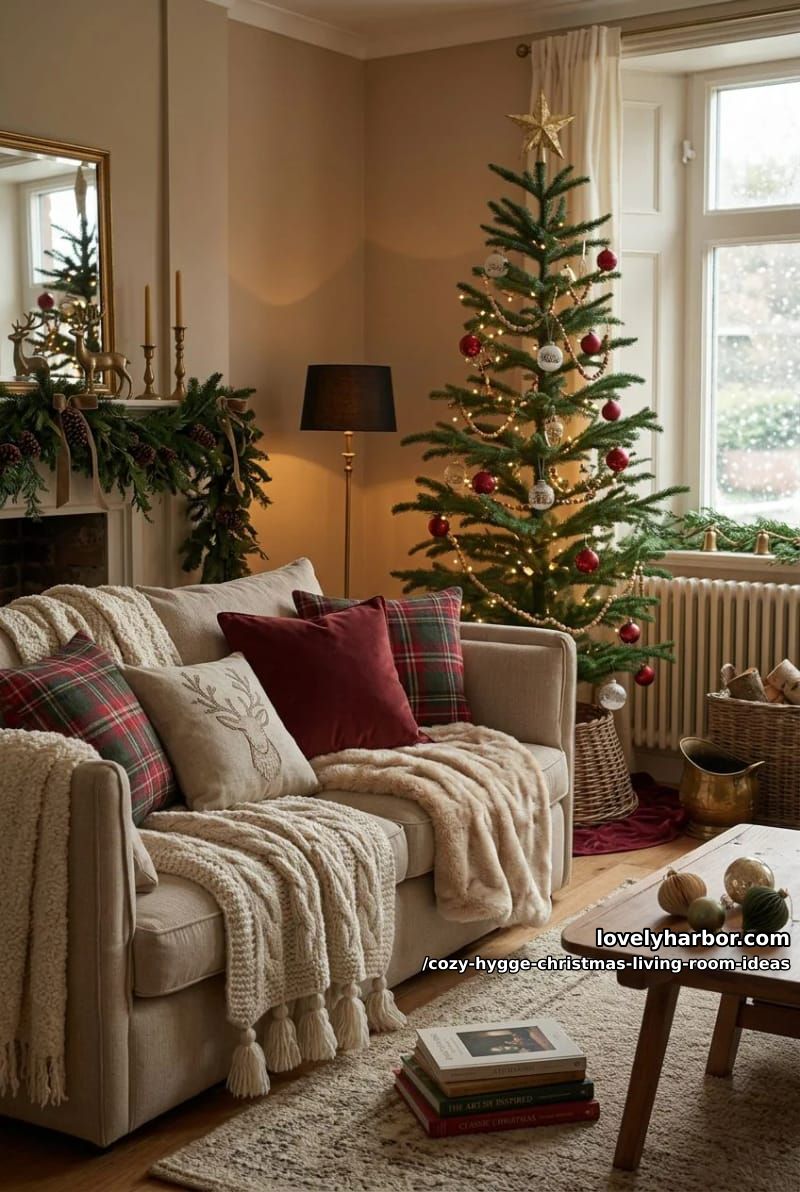
Build the room on a warm neutral base (putty, oatmeal, warm white) with one deep accent, because saturated red and green fights low amber light and goes muddy after dark. The classic holiday palette was built for bright daylight and fluorescent stores, not for a room lit by lamps at 2700K. Neutrals plus natural wood plus the green of a real tree already read as Christmas without a single candy-cane stripe.
| Palette | Base | One accent | Reads as |
|---|---|---|---|
| Warm neutral | Putty, oatmeal, warm white | Oxblood or brass | Calm, Scandinavian, easy to live with past December |
| Traditional | Cream with red and green | Gold | Festive but busy under low light; can tip toward kitsch |
| Moody dark | Charcoal, forest, deep brown | Warm brass, amber candlelight | Enveloping and dramatic; needs good lamp coverage or it goes gloomy |
If you won't give up red and green
Shift both toward their darker, dirtier versions. Oxblood and burgundy instead of pillarbox red; forest, fir, and olive instead of bright kelly green. Those deeper shades sit quietly under lamplight where the bright primaries glare, and they read as holiday without shouting it.
6. Style the mantel low, or fake the fireplace if you rent
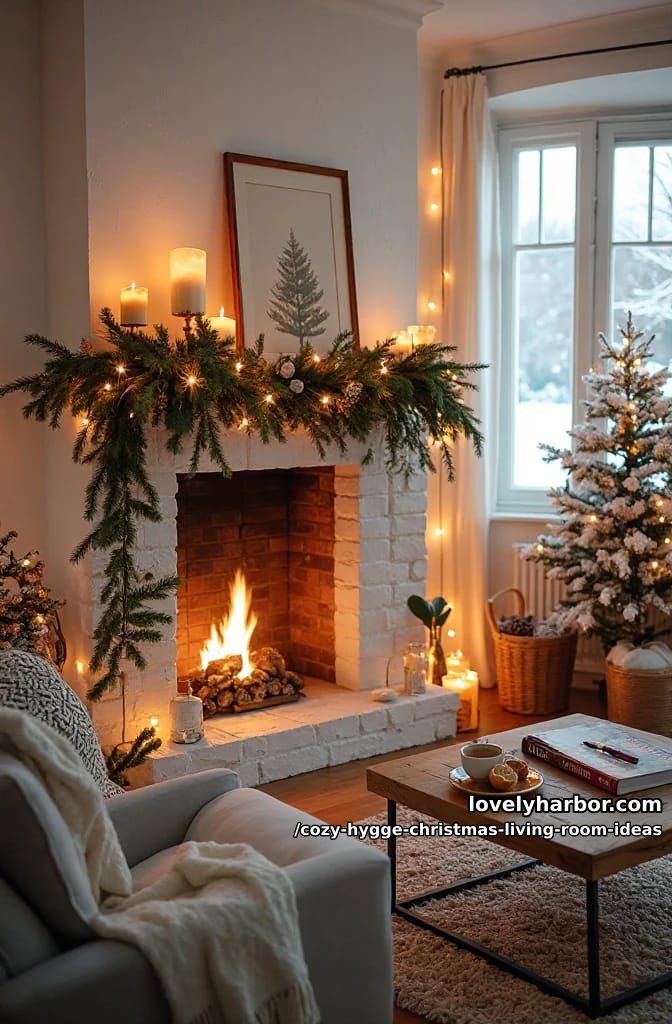
Style the mantel low and lopsided rather than symmetrical, with most of the weight pulled to one end. If you have no fireplace, a tight cluster of pillar candles set on the hearth or in an unused corner does nearly the same job of giving the room a low warm focal point. Renters can lean a length of garland along a console or shelf and get most of the effect with zero hardware.
7. Roll in a hot-drinks cart for the corner
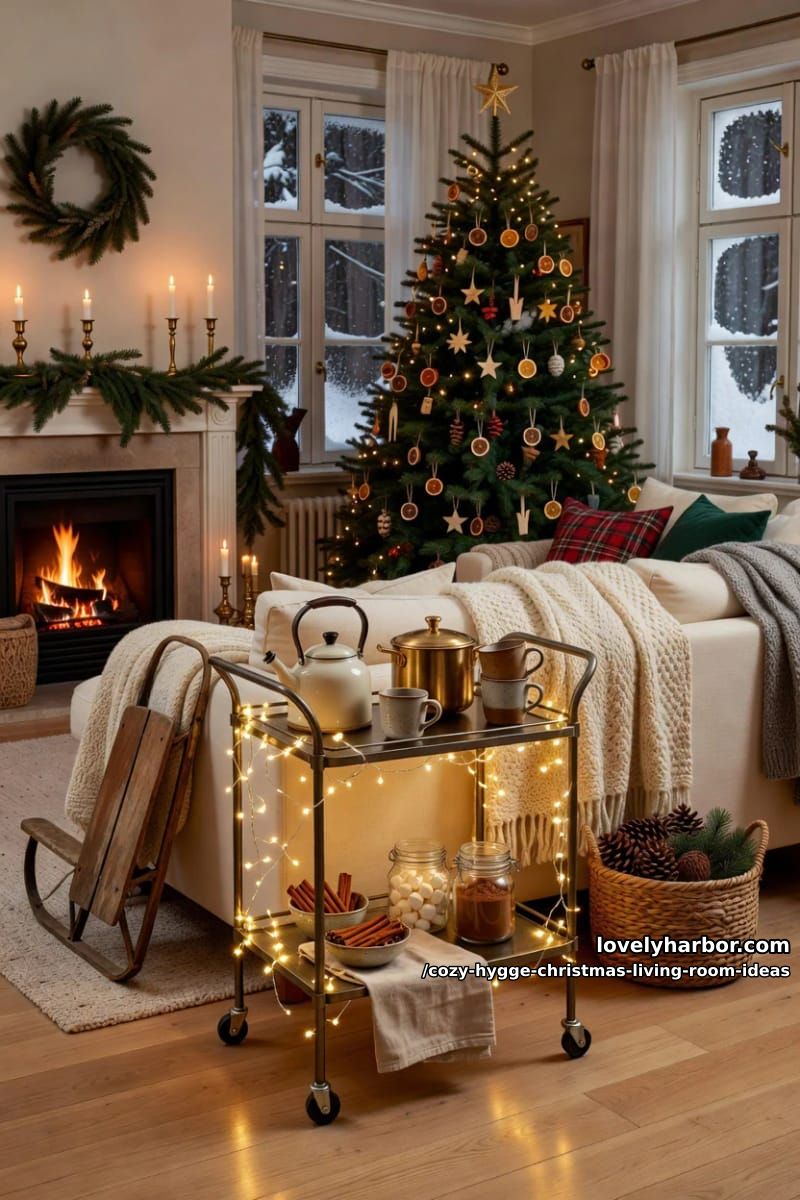
A small bar cart turned cocoa station gives the room a reason for everyone to gather in one warm corner. Yes, it is a little twee, and yes, it works anyway: a kettle or stovetop pot, stacked stoneware mugs, jars of cocoa and marshmallows, a dish of cinnamon sticks, and a short string of warm lights wound along the frame. The function is half the point, since people drift toward where the warm drinks are.
8. Hang paper stars and warm-white string lights
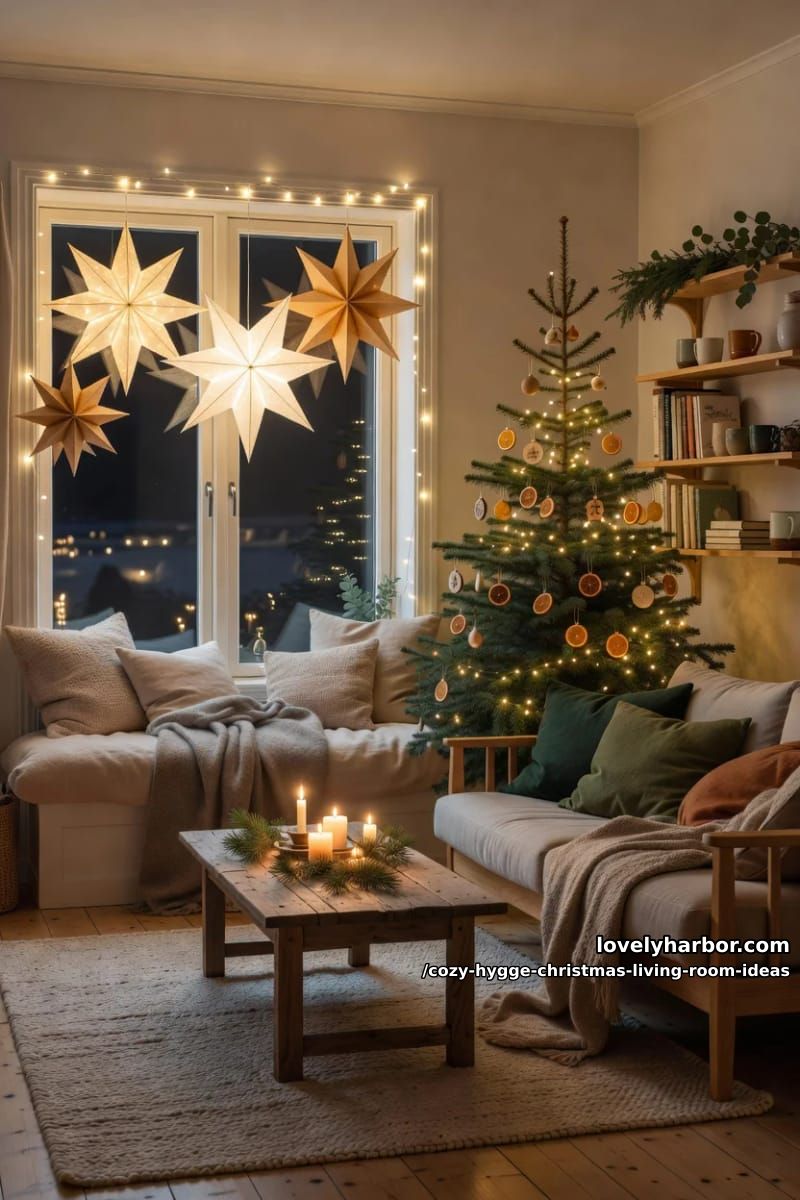
Paper star lanterns (the flat-pack folded kind IKEA sells every December) and a few strands of warm-white string lights do more for the room than any tabletop ornament. The one spec that matters is the same as the bulbs: warm white at 2700K to 3000K, never the bright blue-white "cool white" strings, which read as winter parking lot rather than living room. Hang them at the window and let the dark glass double the glow.
9. Build a floor-level reading nook
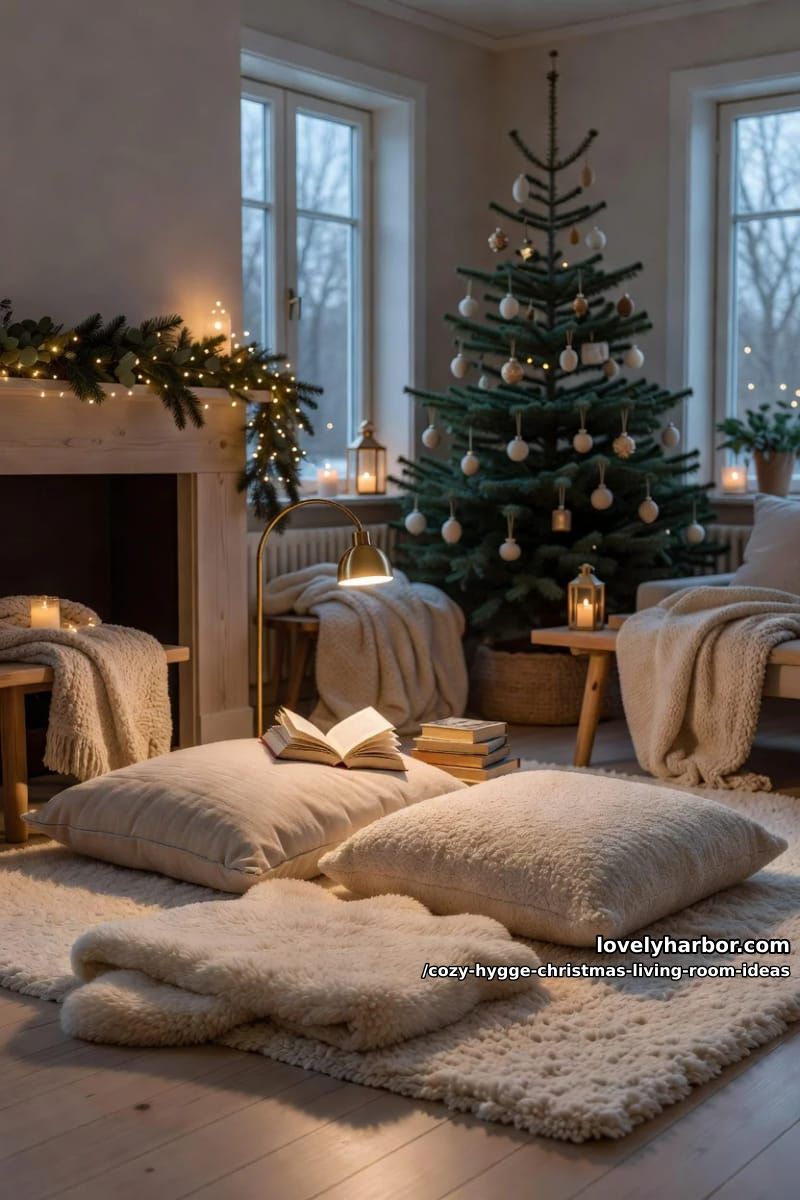
Drop the seating to the floor in one corner: a couple of large floor cushions, a flokati or sheepskin underneath, and a single low lamp. It costs almost nothing, it suits a small apartment where there is no room for another armchair, and it tends to become the spot people actually fight over. Add one throw and a stack of books and leave it at that.
10. Bring in real evergreen for the scent
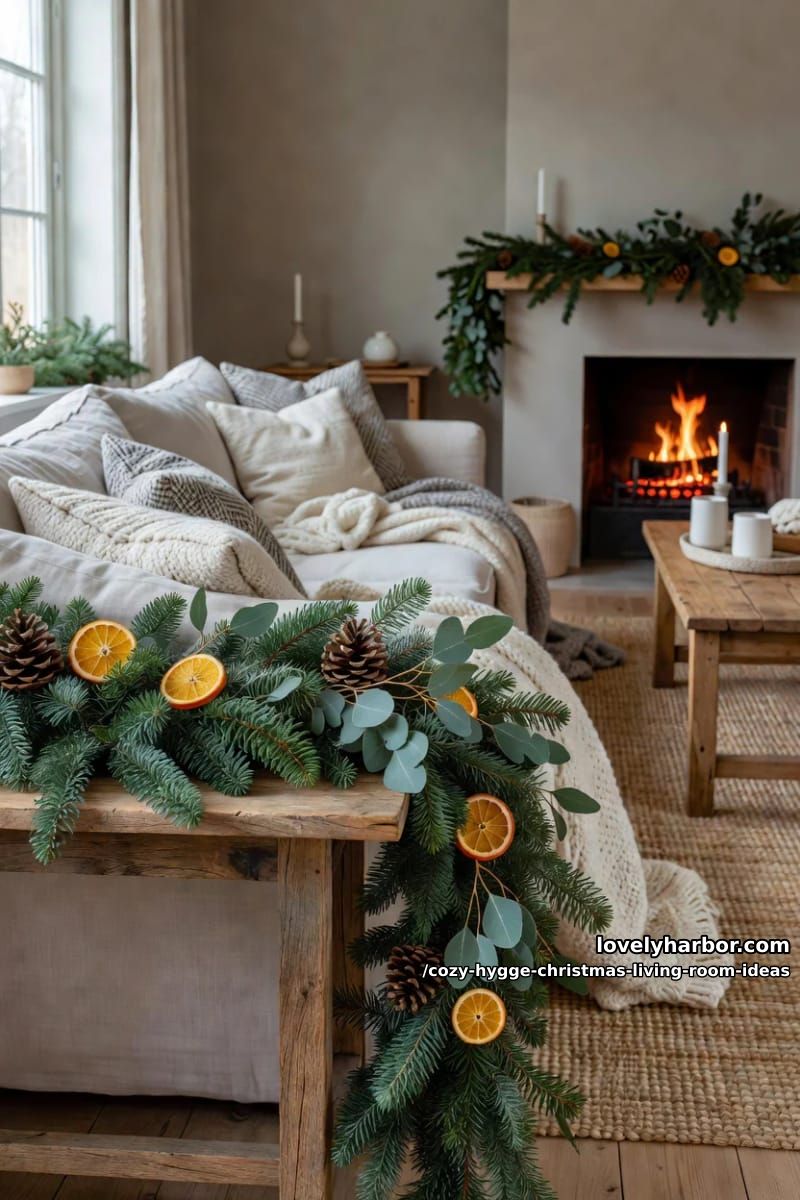
Real fir, pine, or eucalyptus does the one thing faux greenery cannot: it scents the whole room. A single garland on the mantel or a few cut branches in a pitcher carries more atmosphere than a full plastic setup, and it costs a few dollars from a tree lot's offcut pile. The catch is that it dries out within a week or two and gets brittle, so keep it watered where you can and well away from candles and heat vents.
11. Restyle the coffee table around one tray
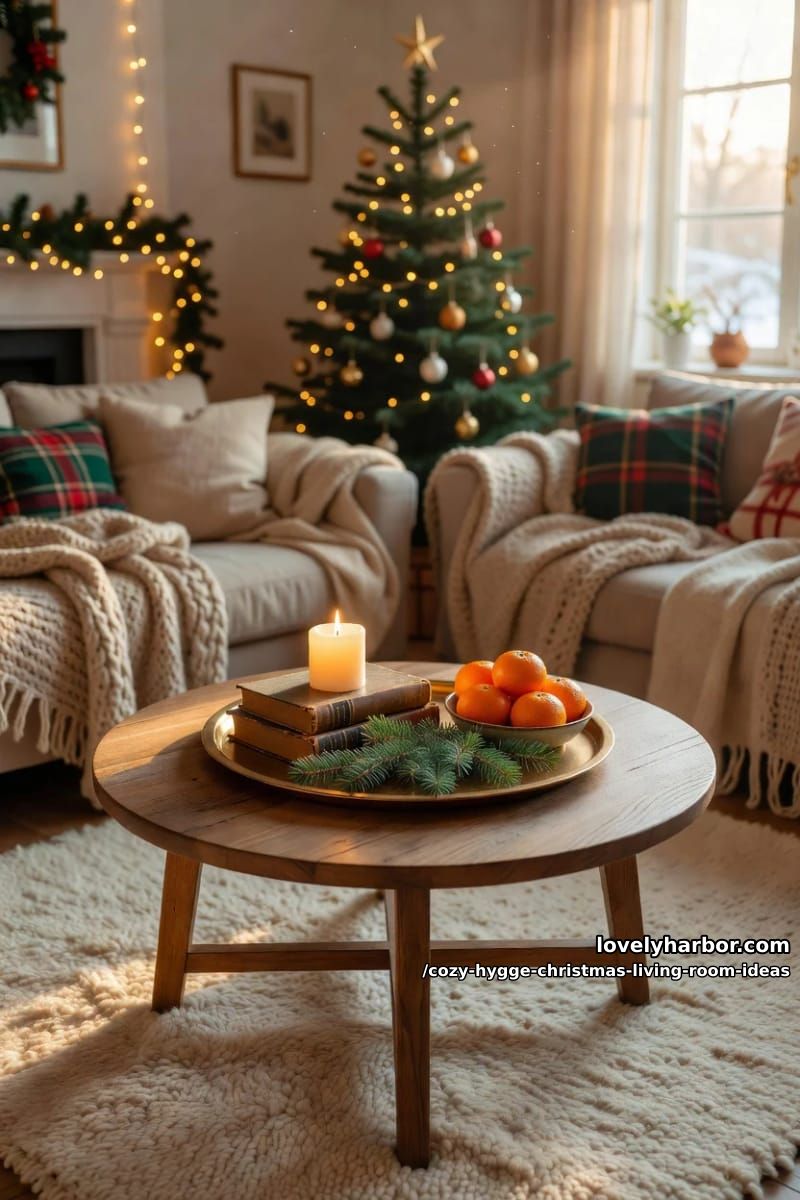
Corral the coffee-table clutter onto one tray and the whole room looks calmer instantly. A candle, a short stack of books, a sprig of fir, a small dish of clementines, and nothing loose around it. The tray gives the eye an edge to stop at, which is most of why styled tables look intentional and yours might not.
12. Get the TV out of the focal point
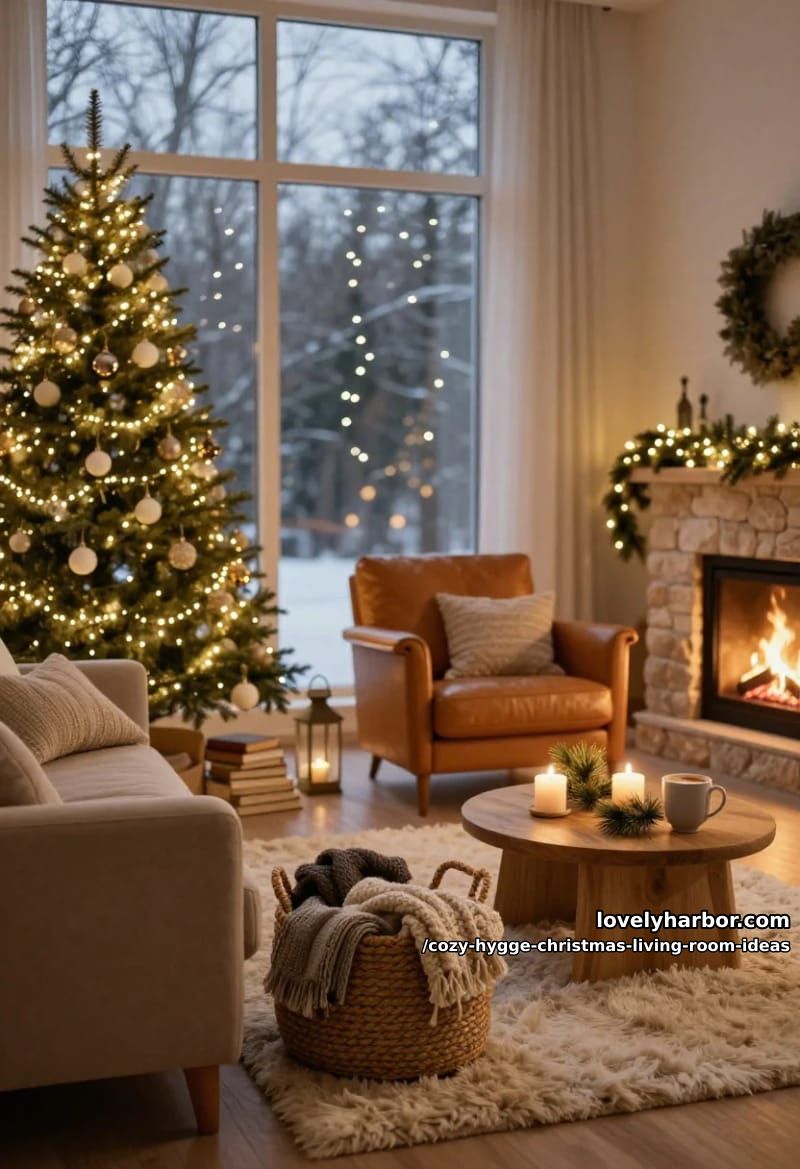
The black rectangle is the least hygge object in any living room, so stop building the seating around it. Angle the sofa and chairs toward the window, the tree, or the fireplace instead, and the screen quietly stops dominating the space even when you have not moved it an inch. If the layout truly cannot avoid it, a length of garland along the top and a lamp beside it at least keeps it from being the only lit thing in a dim room.
Conclusion
If you do only one thing from this list, do the first one. Lamps at 2700K with the ceiling light off will change the room more than every candle, throw, and paper star combined, and it is the change people consistently underestimate because it sounds too simple to matter.
After that, work in order of impact rather than effort: get the textiles layered by weight and the palette pulled back to warm neutrals before you touch the smaller flourishes. The cocoa cart, the coffee-table tray, and the relocated TV are finishing moves, worth doing once the light and the texture are already carrying the room.