
If you already keep a scrap bin and own a glue gun you don't need, this list skips the kid-craft cotton-ball snowmen and goes straight to decorations that hold up in a storage tote and, in a few cases, sell at a fair. Folded fabric ornaments that look quilted with zero stitches, sock gnomes done right, a rag wreath you can finish during one movie: every project here joins with glue, folds, pins, or ties instead of thread, and most of them eat the fabric scraps you've been hoarding since last spring.
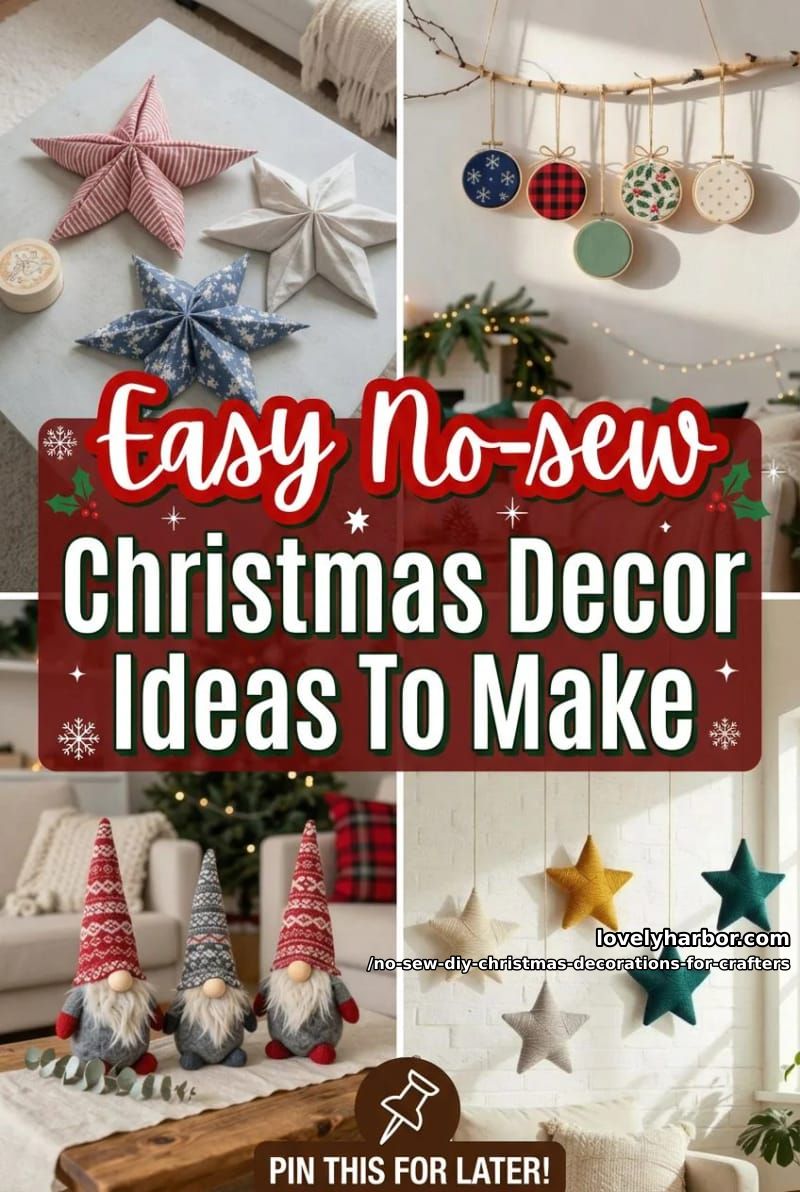
1. No-Sew Folded Fabric Ball Ornaments
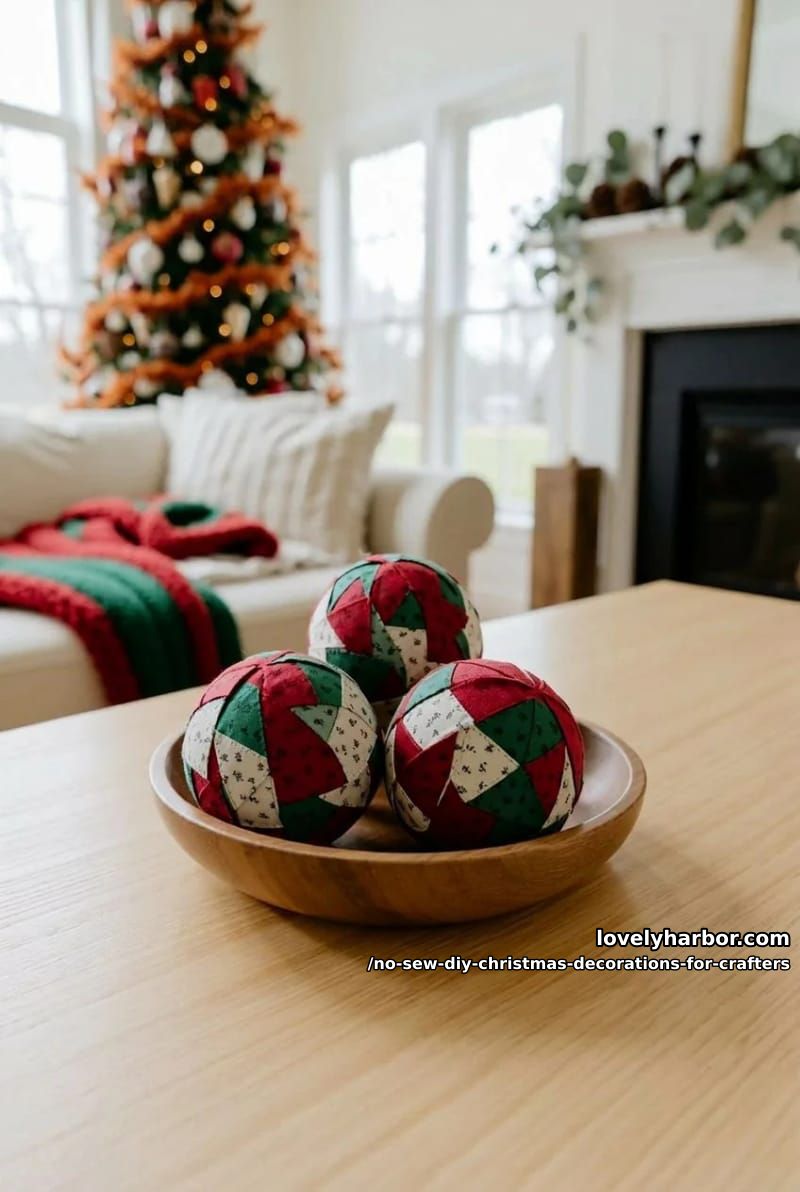
These are the workhorse of no-sew Christmas decor: you score shallow channels into a foam ball, then tuck folded fabric squares into the channels so the edges disappear and the surface looks pieced and quilted. No glue on the visible side, no stitching, and the raw fabric edges are hidden inside the cuts, so fraying never shows. Crafters who grew up calling these "quilted Easter eggs" already know the method; the Christmas version just swaps in holiday cotton and a hanging loop.
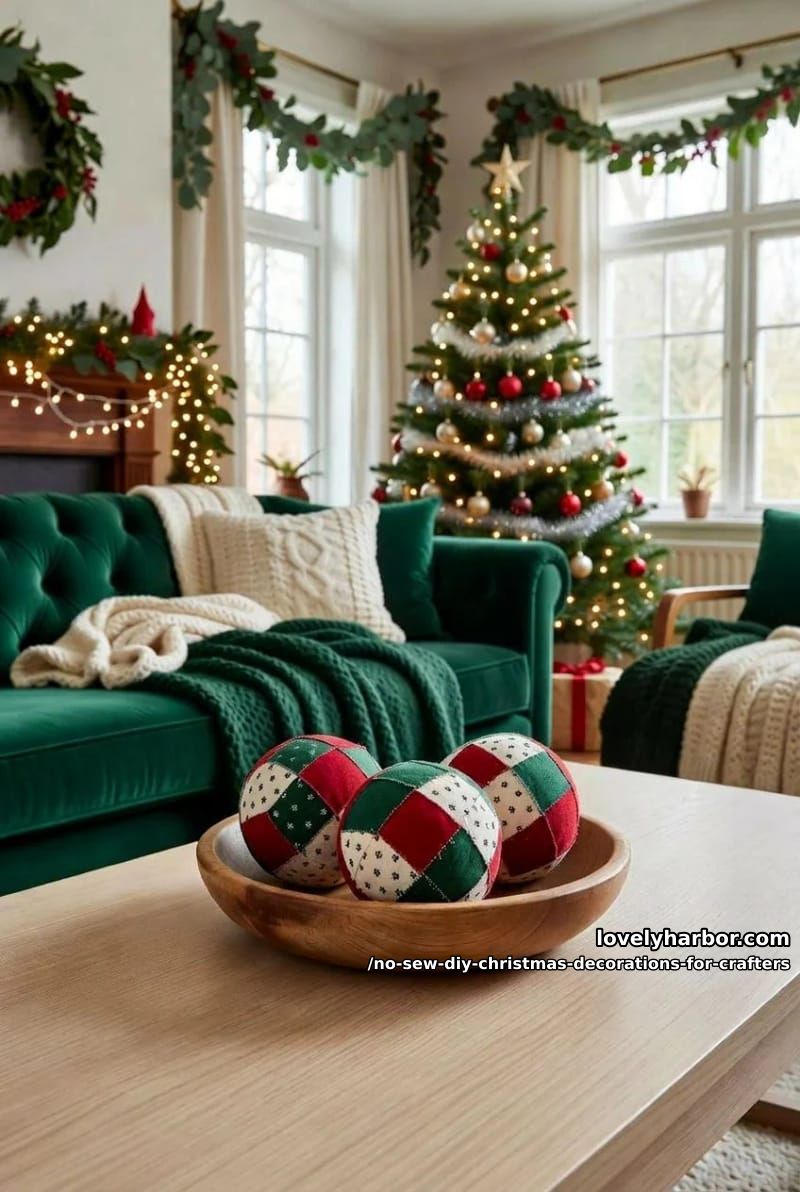
Cut your squares around 2 to 2.5 inches and keep them slightly bigger than you think you need, because the tucking eats fabric fast. Use a smoothfoam ball rather than the white beaded kind that crumbles and sheds little balls all over your table. Five or six fabrics per ornament reads as intentional patchwork; two reads as unfinished.
Core: a dense foam ball, ideally smoothfoam, that holds a clean knife channel without crumbling.
Channel: a shallow score line cut about 3 to 4 mm deep with a butter knife or seam ripper, following the lines you want the patchwork seams to fall on.
Fabric: a square laid flat over a section, its four raw edges pushed down into the surrounding channels with the dull edge of the knife.
Overlap: the next square’s edge tucks into the same channel on top, so each seam buries two raw edges at once and nothing frays.
2. Yarn-Wrapped Cardboard Star Ornaments
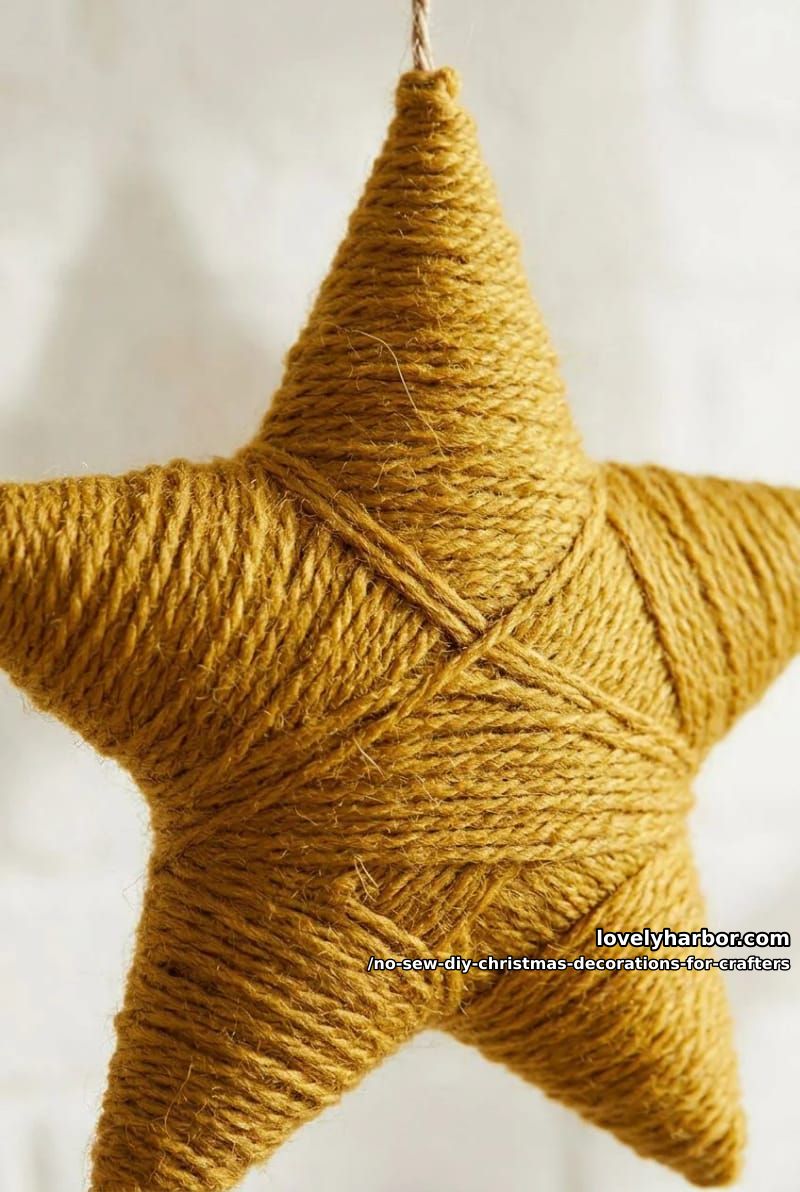
This is the genuinely free one: cut a star (or heart, or simple tree) from a cereal box, wind yarn scraps around it until the cardboard vanishes, and tuck the ends. A maker on Pinterest framed these as "$0 heirloom ornaments out of cardboard and yarn scraps," and the framing is fair, because the only cost is the snippet of yarn you'd otherwise throw out. They photograph far better than they have any right to.
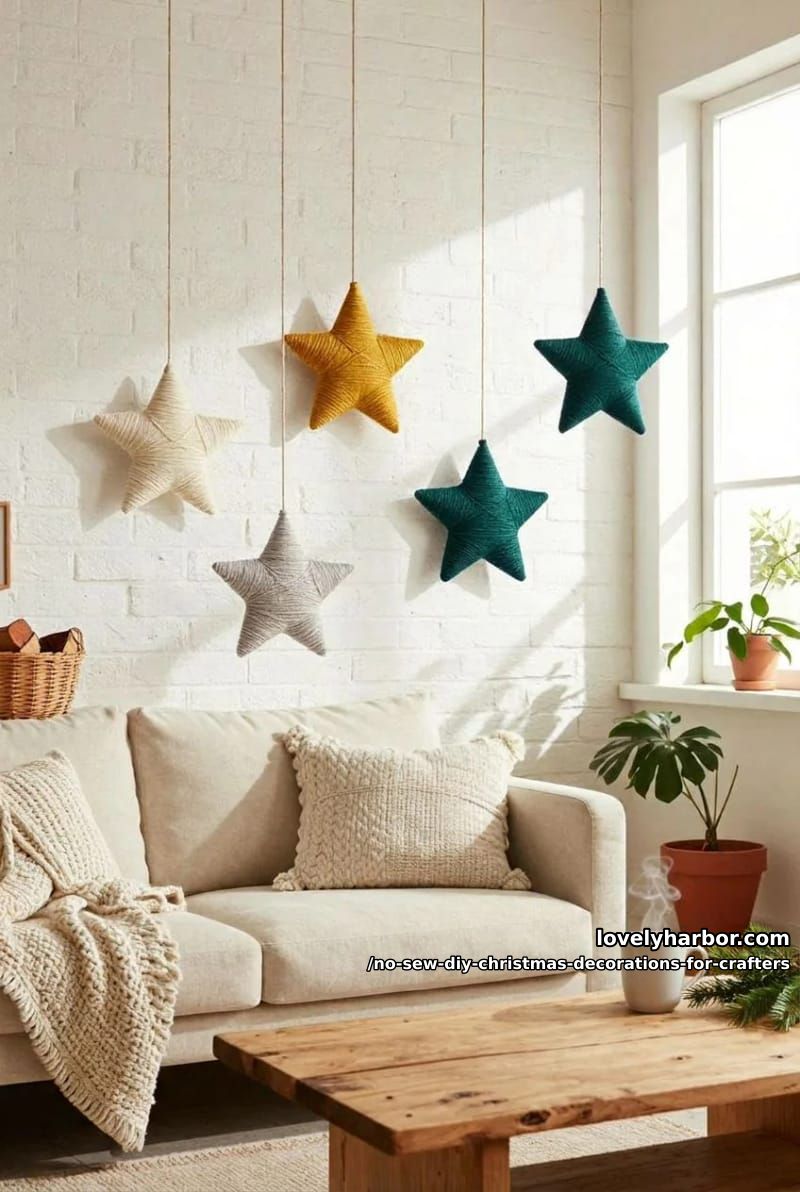
Two things separate a good one from a craft-camp reject. Wrap tightly and keep the strands parallel so the points stay crisp; loose, crossing yarn looks like a bird's nest. And cut a small notch at each inner angle of the star so the yarn seats into the dip instead of sliding across it. Mixing a smooth cotton yarn with one fuzzy mohair across a set gives the batch some range without adding a single material.
3. No-Sew Sock Gnomes
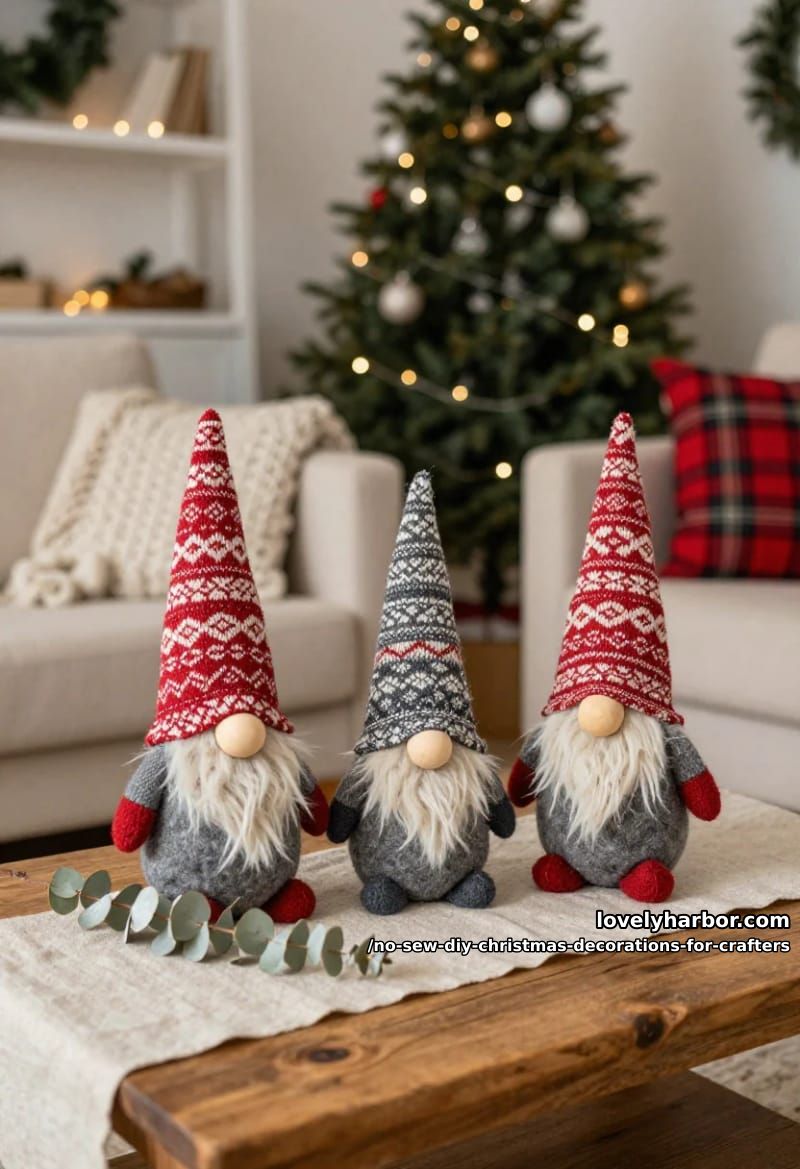
Weight the base, hide the build under the beard, and let the hat lean: that is the whole gnome. Fill the toe of one sock with rice or dried beans for a base that won't tip, fold the cuff down to make the body, cap it with a second sock as the hat, then glue a faux-fur beard so it covers the seam where body meets hat. The bead nose goes on last, low, almost swallowed by the beard.
I will say the unpopular thing: gnomes are saturated. Every craft fair table in December has a row of them now, and if you're making to sell, you'll undercut yourself against forty other sellers. Make them for your own mantel and for gifts, where the handmade fur and the leaning hat actually land, and put your selling energy into something with less competition. If you do sell them, the ones that move are oversized (16 inches plus) or built in unexpected colorways, not the standard red-and-grey.
I used to glue everything with a hot glue gun, then opened a storage tote the next October and half the gnomes had shed their beards in long sad strips, because hot glue goes brittle in an unheated attic and lets go of fur. For anything you store between seasons, anchor the beard with a tacky fabric glue (Aleene’s or similar) and let it cure overnight before assembly. It’s slower, but the gnome survives year two.
4. Folded Fabric Scandinavian Star Ornaments
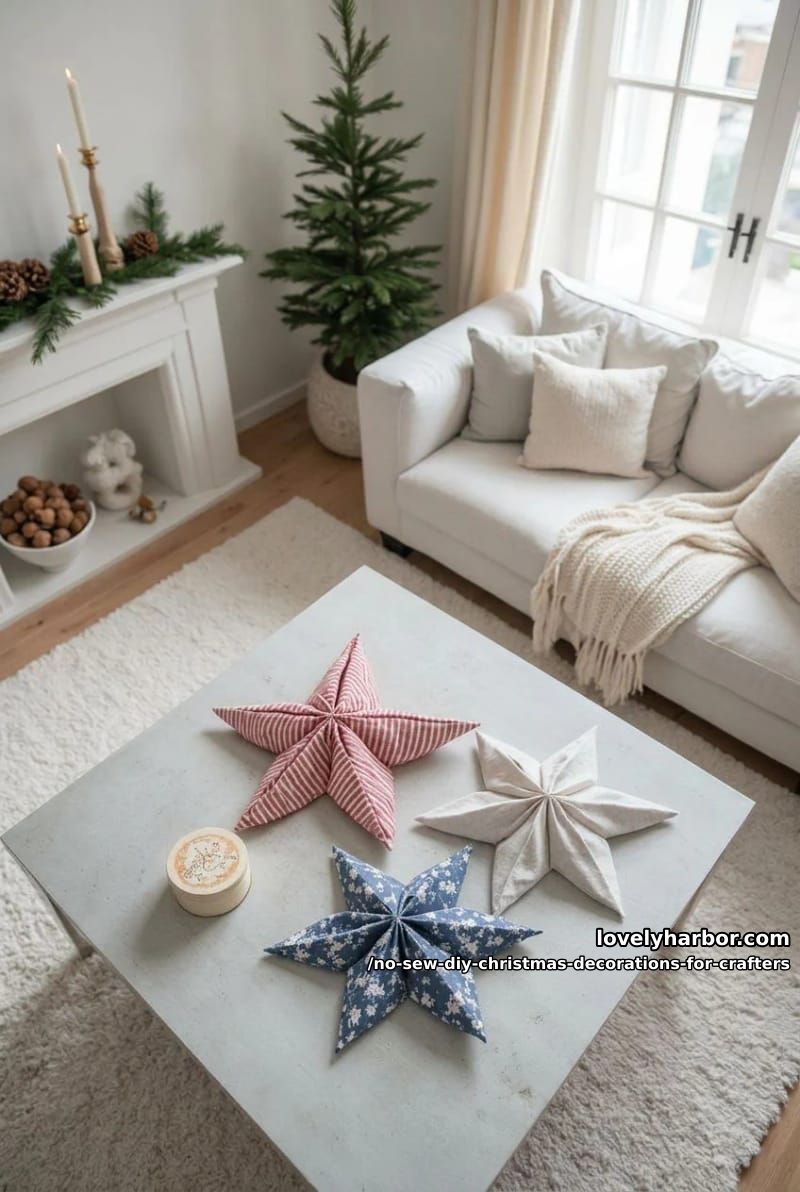
The Scandinavian star is folding origami, just with fabric instead of paper, and it is the project most likely to make people assume you sewed it. You fold squares of cotton into sharp points, then arrange and pin or glue eight of them around a center so they interlock into a layered star. The crispness lives entirely in the pressing, so iron each fold flat before you assemble; soft folds collapse into a blob.
Wool Wren Studio and a handful of other small makers have spread the no-sew version widely on Pinterest in the last two seasons, so it reads as current rather than dated. Use a fabric with enough body to hold a crease (quilting cotton, not flannel) and a print with a tight repeat, because a big motif gets chopped into nonsense by the folds.
5. Fabric-Covered Embroidery Hoop Ornaments
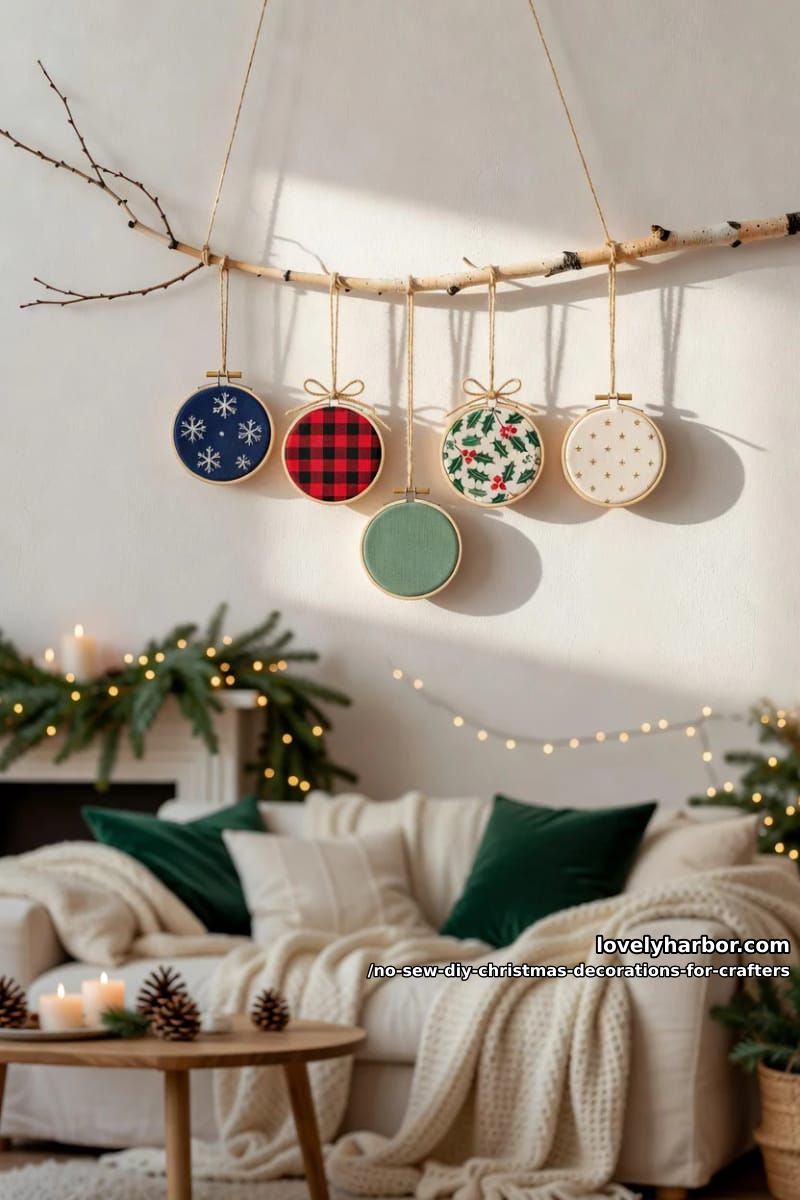
Stretch a favorite fabric across a small wooden embroidery hoop, trim the back, and the hoop itself becomes the frame, no sewing needed. This is the fastest way to turn a single beloved scrap (a piece of a child's outgrown pajamas, a remnant of a holiday tablecloth) into something that reads as deliberate decor. The fabric is held purely by the hoop's tension, so the only "finishing" is trimming the overhang and dabbing a little glue on the back edge.
Three-inch hoops cluster beautifully on a tree; four-inch ones work as standalone wall pieces. Pick fabrics with a clear motif that sits well inside a circle, since the hoop crops everything to a window. A row of these in graduated sizes up a stair wall is one of the few no-sew projects that doesn't read as a craft at all.
6. No-Sew Sock Snowmen
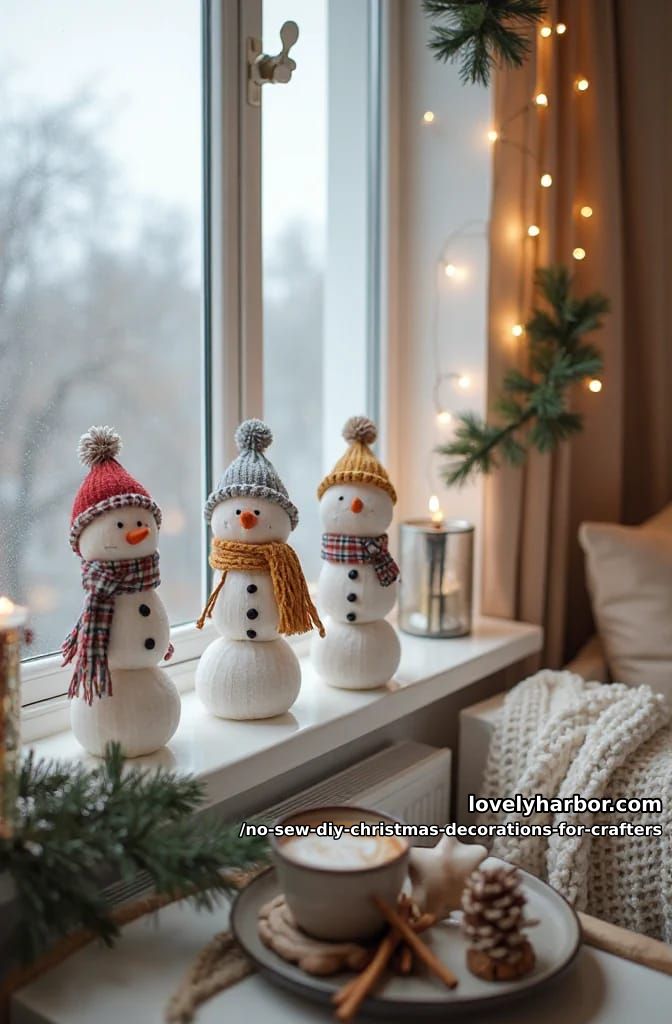
Fill a white sock, tie it into a two-ball stack, and dress it: that's a snowman in under fifteen minutes with no needle anywhere. Rice or polyfill both work, though rice gives the lower ball the weight to sit upright on a shelf. Tie off between the two balls with thread or a rubber band hidden under the scarf, and let the proportions go a little uneven, because a perfectly symmetrical snowman looks manufactured.
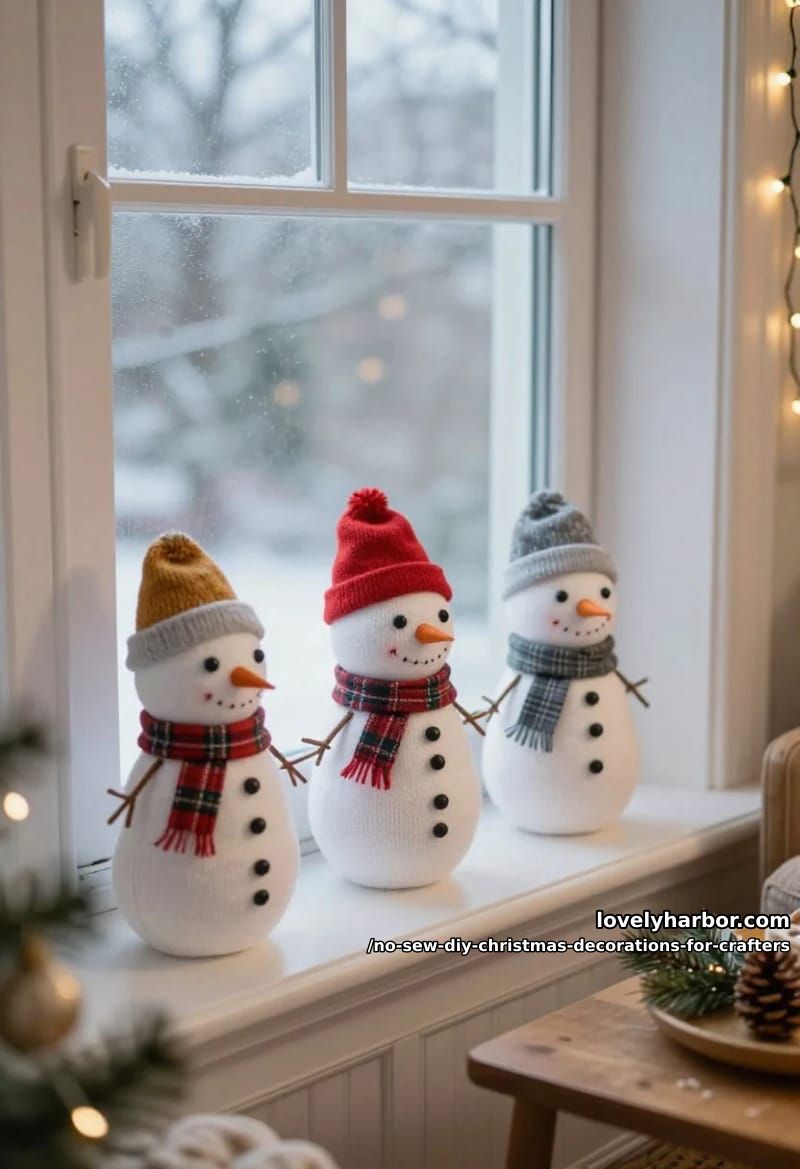
Snowmen, unlike gnomes, still sell. If a fair table is where these are headed, batch them and keep the price honest about the materials, not the hour you spent.
Selling no-sew decor at a fair
- Batch one design in a tight color story; a table of matched pieces sells better than ten one-offs.
- Price for materials plus a fair hourly rate, then round up. Underpricing handmade goods trains buyers to expect $3 ornaments.
- Bring a few oversized statement pieces as the thing people photograph and remember, even if the small ones pay the table fee.
Avoid
- Copying the saturated category. Half the tables already have grey gnomes.
- Visible hot-glue strings and frayed cotton edges. Buyers notice, and it caps your price.
- Mixing every color you own onto one table.
7. No-Sew Felt Ornaments
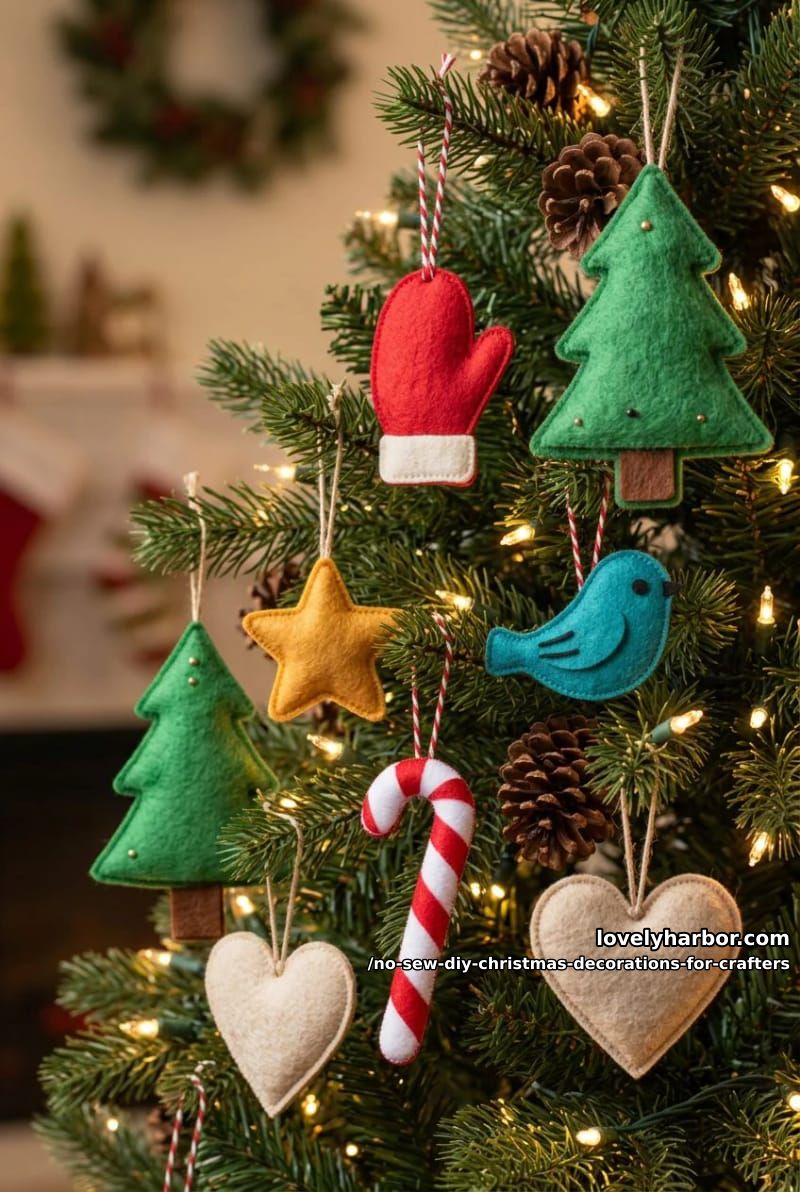
Felt is the only fabric that doesn't fray, which is exactly why it's the no-sew material: cut a shape, glue a second layer on top, add a detail, done. You can stack-cut several layers at once for a batch, and the cut edge is the finished edge, so there's no hem to hide. For crafters, felt is where to start a kid or a nervous beginner, because mistakes don't unravel.
Buy wool or wool-blend felt, not the stiff acrylic craft-store sheets that pill within a season and look like a school project. The wool-blend costs roughly $1 to $2 a sheet against the acrylic's 30 cents, and it's the difference between an ornament that looks bought and one that looks made under duress. The matrix below is the one I'd hand a new no-sew crafter, because picking the join is most of the battle.
| No-sew join | Best for | Survives a storage tote | Watch out for |
|---|---|---|---|
| Fusible web (Heat n Bond, Wonder Under) | Flat fabric layers, felt appliqué, bunting flags | Yes, holds for years | Needs an iron; bonds permanently, so place it right the first time |
| Tacky fabric glue (Aleene’s) | Beards, beads, layered felt, anything you store | Yes, stays flexible | Slow cure; clamp or pin while it sets overnight |
| Hot glue | Fast assembly, props you won’t store long | No, goes brittle in cold attics | Stringing, and it lets go of fur and fabric over winters |
| Ribbon or yarn lacing | Stockings, edges you want as a feature | Yes | Needs punched holes; slower but no adhesive at all |
| Pins into foam | Folded ball and pinecone ornaments | Yes | Use glass-head or sequin pins; cheap pins rust onto pale fabric |
8. Fabric-Scrap Tabletop Cone Trees
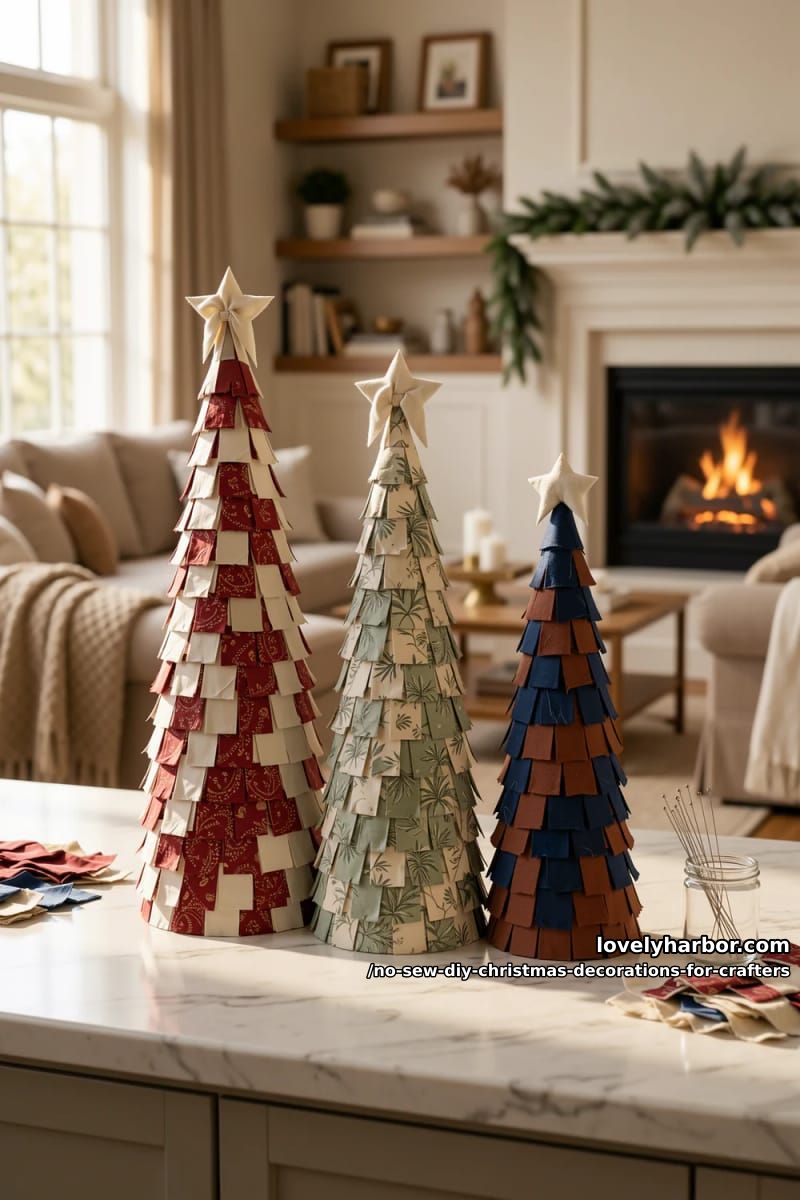
A foam cone plus shingled fabric scraps gives you a tabletop tree that uses the smallest pieces in your bin, the ones too tiny for anything else. Pin or glue folded squares in overlapping rows from the bottom up, each row hiding the raw edge of the one below, the way roof shingles work. A trio in graduated heights makes a centerpiece; a single tall one anchors a console.
Keep the fabric pieces small relative to the cone or the shingling reads chunky. This is also the project where a cohesive palette matters most, because the eye takes in the whole cone at once: pick three or four fabrics that share one common color and the scrappiness reads as designed instead of leftover.
9. Folded Fabric Pinecone Ornaments
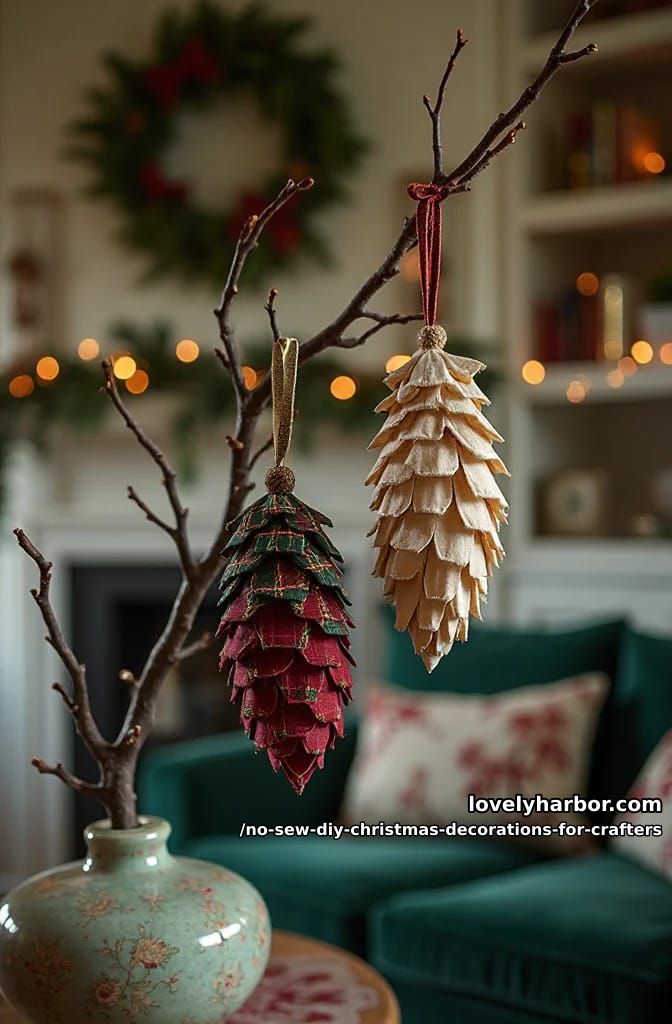
Same fold-and-pin family as the ball ornament, different and more striking object: instead of tucking flat squares into channels, you fold small fabric squares into triangles and pin them in overlapping rows onto a teardrop foam base, so each row of "scales" steps over the one beneath. The result genuinely reads as a pinecone from across a room, and people never guess it's fabric.
This is the slow one on the list, an evening per ornament if you're particular, so save it for a quiet night rather than a batch session. I don't fully know why the pinned versions outlast the glued ones in a hot attic, but they do; the pins flex where dried glue cracks. Use plaid or two-tone fabric so the scale rows read distinctly instead of blurring into one mass.
10. No-Sew Rag Strip Wreath
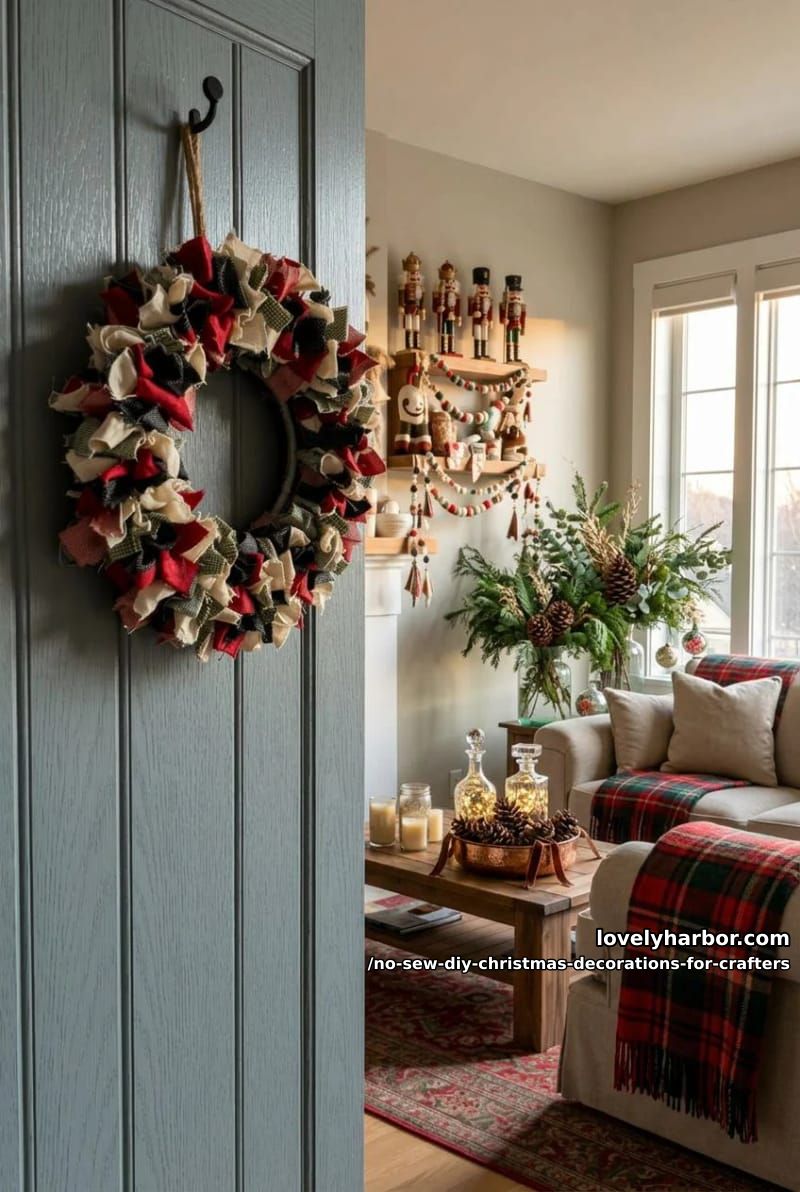
Tear fabric into strips, tie them onto a wire ring in tight double knots until the frame disappears, and you have a wreath with no glue and no stitches, just hundreds of little knots. Torn edges fray on purpose here, so this is the rare project where fraying is the look, which makes it forgiving for anyone nervous about raw edges. A 14-inch wire wreath frame runs a couple of dollars, or cut a ring from heavy cardboard if you're going fully free.
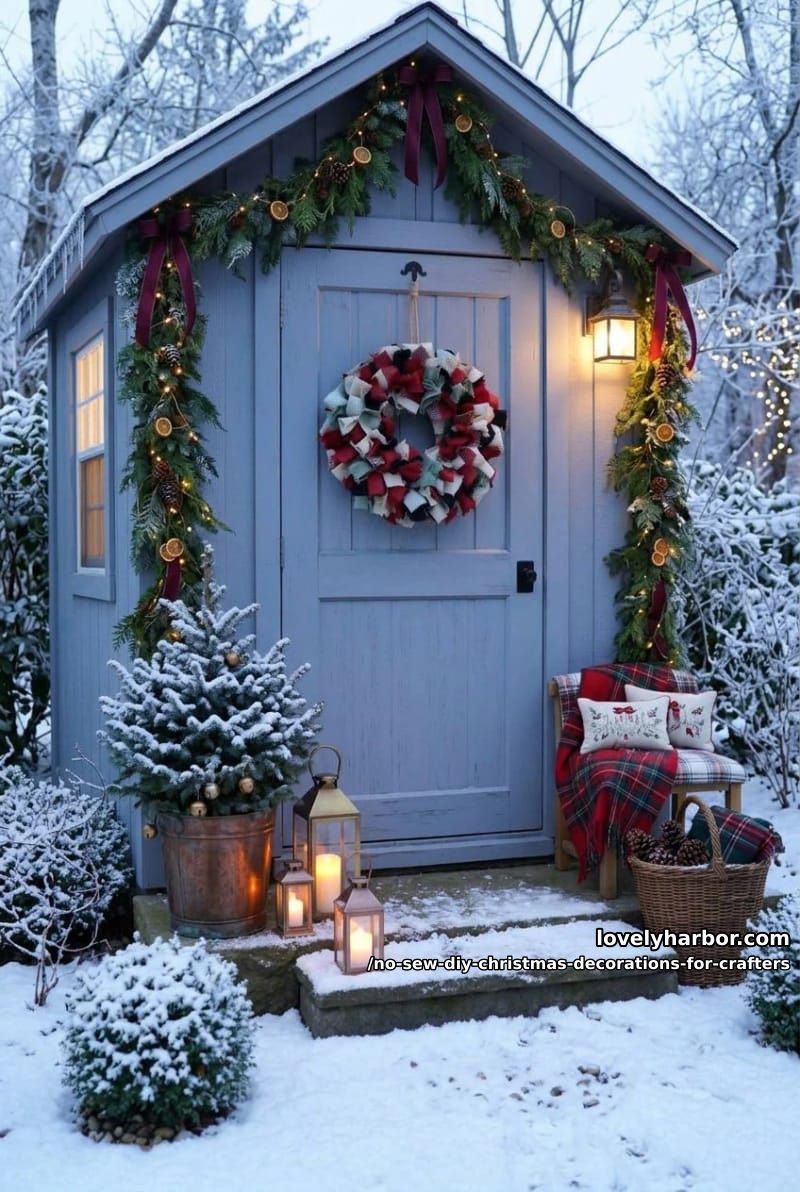
Strips around 1 inch wide by 6 to 7 inches long pack densely without looking sparse, and you'll need more than you expect, often a full yard of mixed fabric for a medium wreath. Knot them facing the same direction and push each new knot tight against the last so no frame shows through. It's mindless work, ideal for doing in front of a screen, and it devours the ugly fabric you'll never use for anything else.
11. No-Sew Fleece Stockings
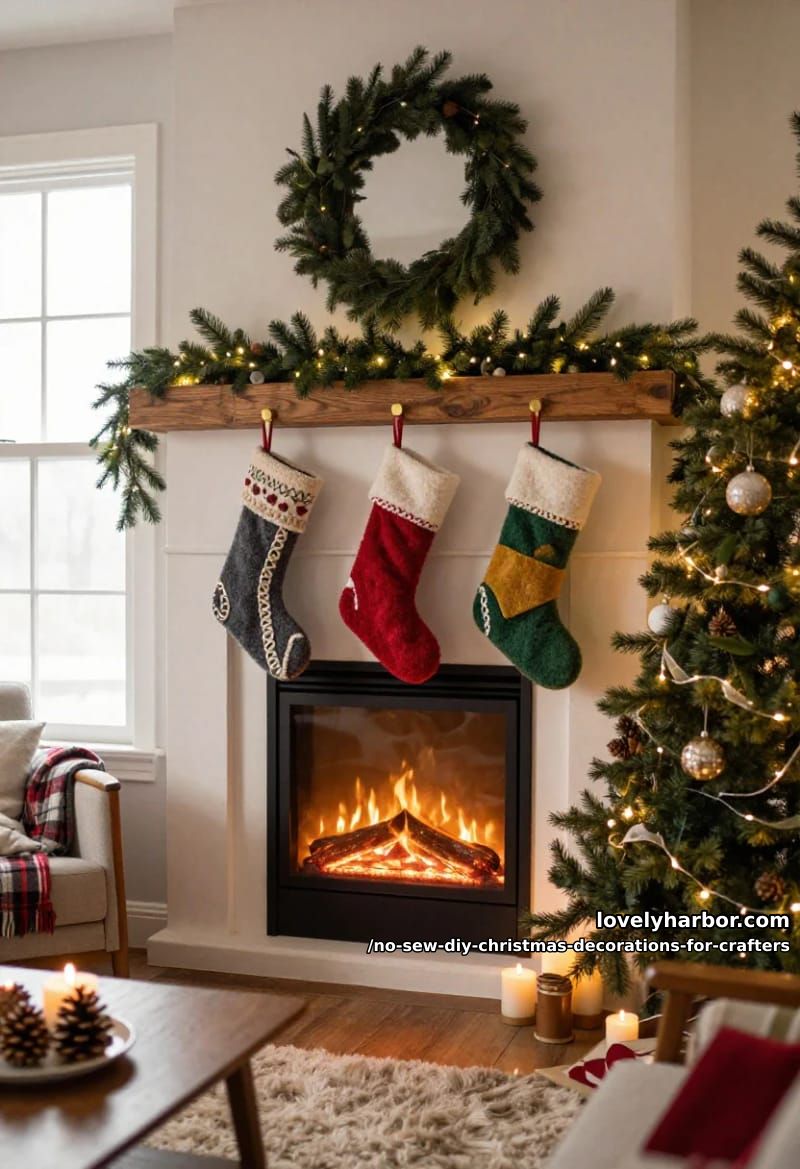
Two fleece layers laced together with yarn makes a sturdy, washable stocking and turns the join into the decoration. Cut two stocking shapes, punch evenly spaced holes around the edge with a hole punch, then whipstitch or blanket-lace through them with a contrasting yarn or ribbon. Fleece doesn't fray, so the edges stay clean and the lacing is purely structural-meets-pretty.
If lacing feels fussy, fusible web bonds the two layers along the seam in minutes, though you lose the contrast-stitch look. Make the cuff a separate folded piece in a second color so there's somewhere to add a monogram pin or a sprig later.
12. No-Sew Fabric Bunting Garland
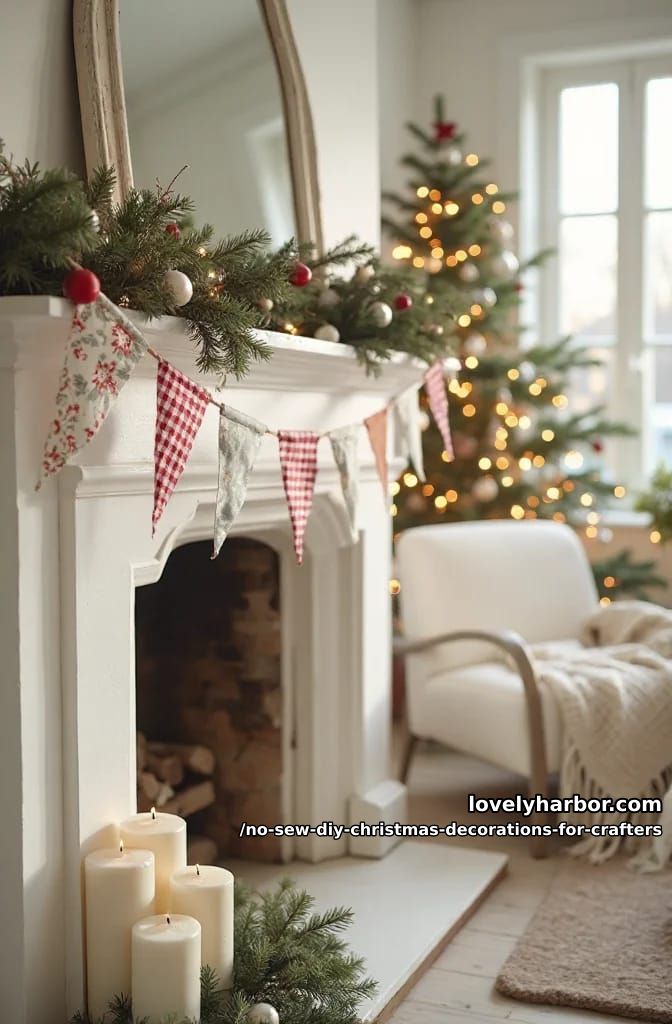
Cut triangles with pinking shears, fold the top edge over a length of twine, and fuse or glue it down: a full bunting garland in an afternoon with no hem and no machine. The zigzag pinked edge resists fraying, so the flags stay crisp through storage. This is the most useful no-sew project to make in bulk, because one garland dresses a mantel, a stair rail, or a fair booth backdrop, and it folds flat to store.
Fuse the fold with Heat n Bond rather than glue if you want it to survive years of folding; glued folds eventually pop open at the crease. Below is roughly what a weekend batch costs if you're starting a small selling stash rather than raiding the scrap bin.
Weekend craft-fair starter batch
Enough to make a dozen ornaments, three cone trees, and two bunting garlands from fresh supplies.
Buying new instead of using scraps changes the math, so this is the honest floor for a small selling stash. Reuse anything you already own and it drops fast.
Shopping list
| Qty | Item | Spec | Price |
|---|---|---|---|
| 1 pk | Smoothfoam balls | 3 in, pack of 6 | $5 to $8 |
| 6 | Fat quarters | Quilting cotton, holiday prints | $12 to $24 |
| 1 pk | Wool-blend felt sheets | Assorted, 8 to 10 sheets | $8 to $14 |
| 2 | Foam cones | 9 to 12 in | $6 to $10 |
| 1 | Tacky fabric glue | Aleene’s or equivalent, 4 oz | $3 to $5 |
| 1 roll | Natural jute twine | ~100 ft | $3 to $6 |
| 1 pk | Glass-head pins | Box of 100+ | $3 to $5 |
| Total | $40 to $72 | ||
Prices are approximate ranges as of 2026; verify before purchase. Pinking shears and an iron are assumed on hand.
Conclusion
If you're new to no-sew, do these in roughly this order: felt ornaments first to build confidence with glue and cut edges, then the cone trees and bunting to learn fusing, and save the folded fabric balls and the pinned pinecones for an evening when you actually want to slow down, because those two reward patience and punish rushing. Anything destined for a storage tote gets tacky fabric glue or pins, not the hot glue gun, unless you enjoy reattaching beards every October. And if you're making to sell, look hard at the gnome shelf before you add to it.